


Abstract
Isoflavone-enriched soybean leaves (IESL) extract supplemented with blueberry, green grape, or strawberry puree was fermented using a defined mixed culture of lactic acid bacteria, an acetic acid bacterium, and a yeast to produce kombucha-like beverages. The consortium was designed primarily to promote isoflavone bioconversion rather than to reproduce a traditional kombucha culture. Metabolite profiles and in vitro antioxidant and antibacterial activities were compared before and after 12 days of fermentation. Final pH decreased to approximately 3.4, while titratable acidity increased from 0.47–0.58 to 4.63–4.79% (w/v, as acetic acid equivalents), accompanied by increased viable cell counts. Acetic acid accounted for over 90% of quantified organic acids. Isoflavone glycosides decreased, whereas total aglycones increased from 12.82–23.50 to 74.02–84.44 μg/mL. Total phenolic, flavonoid, and soluble anthocyanin contents decreased, together with antioxidant activities measured by DPPH, ABTS, and FRAP assays. Radical scavenging and reducing capacities decreased by approximately 7–25%. Inhibition zones were observed against two of eight foodborne pathogens before fermentation and all eight afterward, with final diameters of 11.8–17.4 mm. Overall, the formulations showed distinct metabolite profiles and contrasting changes in antioxidant and antibacterial activities after fermentation.
1. Introduction
Kombucha is a fermented beverage produced by the inoculation of sugared infusions of Camellia sinensis with a symbiotic culture of bacteria and yeast (SCOBY). This culture consists primarily of acetic acid bacteria and yeasts and is frequently accompanied by lactic acid bacteria. During fermentation organic acids and diverse metabolites are formed that contribute to its reported antioxidant and antibacterial activities [1,2,3].
Recent studies have explored alternative plant-derived substrates beyond traditional black and green teas for the development of kombucha and kombucha-like beverages. These approaches broaden the range of substrates used for fermented beverages, whose functional properties may vary with substrate composition and fermentation conditions [1,4,5].
Isoflavone-enriched soybean leaves (IESL) are prepared by treating soybean plants with ethephon. This treatment increases the levels of isoflavones like genistin and daidzin in the leaves. Studies have suggested that IESL may have potential for use as functional food ingredients [6,7,8]. Isoflavones occur either as glycosides or as aglycones. Aglycones exhibit greater intestinal absorption, bioavailability, antioxidant activity, and affinity for estrogen receptors comparatively to glycosides [9,10,11]. Bacterial fermentation is known to promote the bioconversion of various plant-derived isoflavone glycosides into their aglycone forms through β-glucosidase activity [12,13]. These findings suggest that IESL could be a good ingredient for fermentation, which may change its isoflavone content and functional benefits [14,15].
The use of kombucha with fruits, herbs, or plant extracts has shown to provide additional anthocyanins, flavonoids, and organic acids. These compounds can affect the fermentation process and may change the antioxidant and antibacterial activities [1,16]. Blueberries, green grapes, and strawberries contain different types of anthocyanins and flavonoids. They have been reported to show antioxidant and antibacterial activities. Therefore, comparing IESL-based formulations containing different fruit purees may help characterize differences in metabolite profiles and in vitro antioxidant and antibacterial activities [17,18,19]. Previous studies have also shown that the amount and type of antioxidant compounds and pigment can change in both amount and composition during fermentation. As a result, the antioxidant and antibacterial activities may also change in different ways. Fermentation can be viewed as a bioprocess that bioconverts, rather than simply increasing the functional properties of a product [2,20,21].
In this study, fruit-supplemented IESL extract was fermented using a defined mixed culture of lactic acid bacteria, an acetic acid bacterium, and a yeast rather than a traditional kombucha starter. The alternative substrate and microbial consortium were selected primarily to promote isoflavone bioconversion rather than to reproduce a traditional kombucha fermentation system. Accordingly, “kombucha-like” is used throughout this manuscript to describe this non-traditional fermentation approach, and the resulting beverages are not classified as traditional kombucha.
Therefore, this study aimed to explore the development of IESL-based fermented beverages through kombucha-like fermentation and to compare their organic acid and isoflavone profiles and in vitro antioxidant and antibacterial activities before and after fermentation across formulations containing different fruits.
2. Materials and Methods
2.1. Materials and Reagents
IESL used in this study were purchased from Jayeonae Biolab Co., Ltd. (Sancheong, Republic of Korea). Sucrose (CJ CheilJedang Corp., Seoul, Republic of Korea) was used as the carbohydrate source for fermentation. Blueberry puree (BB, 62 °Brix), green grape puree (GG, 87 °Brix), and strawberry puree (SB, 84 °Brix) were obtained from Areumteo Co., Ltd. (Pyeongtaek, Republic of Korea). Organic acid standards (oxalic, succinic, malic, ascorbic, lactic, acetic, citric, formic, and fumaric acids) were purchased from Sigma-Aldrich Co. (St. Louis, MO, USA). Isoflavone standards (daidzin, glycitin, genistin, malonyldaidzin, malonylglycitin, malonylgenistin, daidzein, ononin, glycitein, genistein, and formononetin) were obtained from the same supplier. High-performance liquid chromatography (HPLC)-grade solvents, including water (H2O), methanol (MeOH), ethanol (EtOH), and acetonitrile (ACN), were obtained from J.T. Baker (Phillipsburg, NJ, USA). Unless otherwise stated, all other chemicals and reagents were purchased from Sigma-Aldrich Co. (St. Louis, MO, USA).
2.2. Preparation of Starter Cultures
A mixed culture of nine strains was used for fermentation. It consisted of seven lactic acid bacteria (LAB; Lactiplantibacillus plantarum P1201, Levilactobacillus brevis WCP02, Lacticaseibacillus casei KCTC 3109, Limosilactobacillus fermentum KCTC 3112, Lacticaseibacillus paracasei KCTC 3166, Lactobacillus amylovorus KCTC 3597, and Lactobacillus farciminis KCTC 3681), one yeast (Saccharomyces cerevisiae SY28), and one acetic acid bacterium (AAB; Acetobacter pasteurianus A8). The KCTC strains were obtained from the Korean Collection for Type Cultures (KCTC; Jeongeup, Republic of Korea). This mixed culture was designed for kombucha-like fermentation by including the major microbial groups associated with kombucha fermentation, while placing particular emphasis on the conversion of isoflavone glycosides in IESL into their aglycone forms. Accordingly, seven LAB strains were included to promote this bioconversion rather than to reproduce the microbial proportions of a traditional SCOBY. The AAB strain was included for acetic acid production, whereas the yeast strain was included for carbon dioxide production, with the aim of contributing to effervescence. Each strain was pre-cultured individually under optimal conditions with shaking. LAB were cultivated in MRS broth (Difco, Becton Dickinson and Company, Sparks, MD, USA) at 30 °C for 48 h. The yeast was grown in YPD broth (Difco, Becton Dickinson and Company, Sparks, MD, USA) at 25 °C for 48 h. AAB was cultured in a modified GYCEA liquid medium (3% glucose, 0.5% yeast extract, 1% CaCO3, 4% ethanol) as modified from Cho et al. [22] at 25 °C for 48 h. After sterilization of the medium, filter-sterilized ethanol (99.5%) was aseptically added to a final concentration of 4% (v/v).
2.3. Preparation of IESL-Based Kombucha-like Beverages with Different Fruits (BB, GG, and SB)
The processing stages of IESL-based kombucha-like beverages with different fruits (BB, GG, and SB) are illustrated in Figure S1. To prepare the fermentation substrate, 20 g of dried IESL was added to 2 L of distilled water. It was heated to 100 °C for 60 min, and then filtered. Each fruit puree (30 g) was added separately to 270 mL of the IESL extract (1.4 °Brix). Sucrose was then added to adjust the initial soluble solids content to 10 °Brix (the amounts added were estimated at approximately 8.5, 0.1, and 1.1 g for BB, GG, and SB, respectively, based on a simplified mass balance assuming an extract density of 1 g/mL). The mixtures were autoclaved at 121 °C for 15 min and then cooled. Each of the nine strains was inoculated individually at 0.5% (v/v), resulting in a total inoculum of 4.5% (v/v). The cell density of each pre-culture was not standardized by optical density or viable cell counts before inoculation. A single fermentation batch was prepared for each fruit formulation using a 1 L wide-mouth glass bottle fitted with a sponge stopper. The samples were fermented under static conditions at 30 °C for 12 days in an incubator. No floating cellulosic pellicle was observed during fermentation. An IESL-only control (CT), containing IESL extract and sucrose but no fruit puree, was also prepared and fermented under the same conditions.
Samples collected on days 0 and 12 were used to compare the initial and final characteristics of the fruit formulations. For the time-course analysis of isoflavones, fermentation was extended to day 16, and samples from the fruit formulations and CT were collected on days 0, 4, 8, 12, and 16; the results are presented in Table S2. CT was analyzed only for isoflavones. Samples intended for compositional and biological activity analyses were centrifuged at 5000× g for 20 min, and the supernatants were stored at −80 °C until further analysis.
2.4. Physicochemical and Microbiological Analyses
The total soluble solids (°Brix) of each IESL-based kombucha-like beverage sample containing different fruits were measured from day 0 to day 12 of fermentation using a refractometer (PR-101α, ATAGO Co., Ltd., Tokyo, Japan). The pH was determined using a pH meter (Orion Star A211, Thermo Scientific, Waltham, MA, USA). Total titratable acidity was determined by neutralization titration with 0.1 N NaOH and expressed as acetic acid equivalents (% w/v). The values were calculated using Equation (1):
where F is factor of 0.1 N NaOH.
The viable cell numbers of LAB, yeast, and AAB were measured using the spread plate method. Samples collected on days 0 and 12 were serially diluted ten-fold with sterile distilled water and spread onto selective media appropriate for each type of microorganism. LAB were counted using MRS agar according to the Korean Food Code. The plates were incubated at 30 °C for 48 h, and the colonies were counted. Yeast counts were determined using YPD agar supplemented with chloramphenicol (100 mg/L) to suppress bacterial growth. These plates were incubated at 25 °C for 48 h before counting colonies. For AAB counting, GYCEA agar was prepared according to Cho et al. [22]. The prepared plates were incubated at 25 °C for 48 h. AAB colonies were identified and counted based on the clear zones formed due to the breakdown of CaCO3 by the acids produced. All microbial counts results were expressed as log CFU/mL.
2.5. Analysis of Organic Acids by HPLC
The organic acid contents of IESL-based kombucha-like beverages containing different fruits were analyzed using HPLC (Agilent 1200 system, Agilent Technologies Inc., Santa Clara, CA, USA) based on a modified version of the method described by Lee et al. [21]. Samples collected on days 0 and 12 of fermentation were filtered through a 0.2 μm syringe filter (Whatman, Cytiva, Marlborough, MA, USA) before analysis. A TSKgel ODS-100V column (4.6 × 250 mm, 5 μm; Tosoh Corp., Tokyo, Japan) was used, and the column temperature was maintained at 40 °C. The mobile phase consisted of 0.1% phosphoric acid. The flow rate was 1.0 mL/min, and the injection volume was 20 μL. Organic acids were detected at 210 nm using a diode array detector over a total run time of 15 min. The concentrations of organic acids in the samples were calculated from calibration curves prepared using organic acid standards at 0.025, 0.05, 0.075, 0.1, 0.25, 0.5, 0.75, and 1 mg/mL. The results were expressed as mg/mL. All calibration curves for the individual organic acids showed good linearity, with correlation coefficients (R2) greater than 0.998. The limits of detection (LODs) and quantification (LOQs) were estimated for each organic acid using LOD = 3.3 σ/S and LOQ = 10 σ/S, respectively. Five calibration curves were constructed for each analyte using the corresponding peak areas from five replicate measurements at each standard concentration. Here, σ represents the sample standard deviation of the y-intercepts of the five calibration curves, and S represents their mean slope. The estimated analyte-specific LODs and LOQs are presented in Table S1.
2.6. Analysis of Isoflavones by HPLC
The isoflavone contents of IESL-based kombucha-like beverages containing different fruits were analyzed using HPLC (Agilent 1200 system, Agilent Technologies Inc., Santa Clara, CA, USA) based on a modified version of the method described by Lee et al. [15]. Samples collected on days 0, 4, 8, 12, and 16 of fermentation were filtered through a 0.2 μm syringe filter (Whatman, Cytiva, Marlborough, MA, USA) prior to analysis. A Lichrospher 100 RP-18 column (LichroCART 125–4, 5 µm, 125 mm × 4 mm; Merck KGaA, Darmstadt, Germany) was used, and the column temperature was maintained at 30 °C. The mobile phase consisted of solvent A (water containing 0.2% acetic acid, v/v) and solvent B (ACN containing 0.2% acetic acid, v/v). The flow rate was 1.0 mL/min, and the injection volume was 20 μL. Solvent B was used according to the following gradient program: 0% at 0 min, 10% at 15 min, 20% at 25 min, 25% at 30 min, and 35% at 45–50 min. Isoflavones were detected at 254 nm using a diode array detector. Isoflavone concentrations in the samples were calculated by substituting the peak areas into the regression equations of calibration curves constructed from standard solutions at 1, 5, 10, 25, 50, 75, and 100 μg/mL. The results were expressed as μg/mL. Each calibration curve for the individual isoflavone standards showed good linearity, with correlation coefficients (R2) greater than 0.998. The LOD and LOQ for each isoflavone were estimated from five calibration curves using the same calculation procedure described in Section 2.5. The estimated analyte-specific LODs and LOQs are presented in Table S1.
2.7. Determination of Total Phenolic Contents (TPC) and Total Flavonoid Contents (TFC)
Samples of IESL-based kombucha-like beverages with different fruits, collected on days 0 and 12 of fermentation, were filtered through a 0.45 μm membrane filter and used to determine TPC and TFC.
TPC was determined using a modified Folin–Ciocalteu method described by Lee et al. [15]. 0.5 mL of the filtered sample was mixed with 0.5 mL of 25% Na2CO3 solution and incubated for 3 min. Then, 0.25 mL of 2 N Folin–Ciocalteu reagent (Sigma-Aldrich Co., St. Louis, MO, USA) was added, and the mixture was thoroughly mixed. After incubation at 30 °C in the dark for 1 h, the absorbance was measured at 750 nm using a spectrophotometer (UV-1800, Shimadzu Corp., Kyoto, Japan). TPC was calculated using a calibration curve constructed with gallic acid as the standard and expressed as mg gallic acid equivalents (GAE)/mL.
TFC was determined using a diethylene glycol colorimetric method modified for this study [15]. For the assay, 0.5 mL of the filtered sample was mixed with 0.01 mL of 1 N NaOH and 1 mL of diethylene glycol (Sigma-Aldrich Co., St. Louis, MO, USA) and incubated at 37 °C for 1 h. The absorbance was then measured at 420 nm using a spectrophotometer. TFC was calculated from a calibration curve constructed with rutin as the standard and expressed as mg rutin equivalents (RE)/mL. For both assays, calibration curves were constructed using the respective standard solutions at concentrations of 10, 25, 50, 75, and 100 μg/mL.
2.8. Determination of Soluble Anthocyanin Contents (SAC)
The SAC of IESL-based kombucha-like beverages with different fruits was determined spectrophotometrically according to the method of Cho et al. [20]. The samples were centrifuged at 13,000 rpm for 10 min, and the resulting supernatants were analyzed. The absorbance was measured at 530 nm using a spectrophotometer (UV-1800, Shimadzu Corp., Kyoto, Japan) equipped with a 10 mm quartz cell. The SAC was calculated using an absorption coefficient of 98.2 and the corresponding dilution factor. The results were expressed as mg/L.
2.9. Evaluation of Antioxidant Activities
For antioxidant activity analysis, all samples were filtered through a 0.45 μm membrane filter. 2,2-diphenyl-1-picrylhydrazyl (DPPH) and 2,2′-azino-bis(3-ethylbenzothiazoline-6-sulfonic acid) (ABTS) radical scavenging activities were determined according to the method of Lee et al. [13]. Ferric reducing antioxidant power (FRAP) was measured using a modified version of the method described by Wu et al. [18].
For the DPPH radical scavenging assay, 0.2 mL of the sample was mixed with 0.8 mL of 0.1 mM DPPH solution. The mixture was incubated in the dark for 30 min. The absorbance was measured at 517 nm using a spectrophotometer. The results were expressed as mg ascorbic acid equivalents (AAE)/mL.
For the ABTS radical scavenging assay, ABTS radical cation (ABTS+) solution was prepared by mixing 7 mM ABTS with 2.45 mM potassium persulfate at a ratio of 1:1, v/v. The mixture was incubated in the dark for 12–16 h. This solution was then diluted with methanol to obtain an absorbance of 0.70 ± 0.02 at 734 nm. Subsequently, 0.1 mL of the sample was added to 0.9 mL of the diluted ABTS solution, and the mixture was incubated for 3 min. The absorbance was measured at 734 nm, and the results were expressed as mg trolox equivalents (TE)/mL.
For the FRAP assay, FRAP reagent was prepared by mixing 300 mM acetate buffer (pH 3.6), 10 mM 2,4,6-tripyridyl-s-triazine solution in 40 mM HCl, and 20 mM FeCl3 solution at a ratio of 10:1:1 (v/v/v). Then, 0.05 mL of the sample was added to 0.95 mL of FRAP reagent, and the mixture was thoroughly mixed and incubated at 37 °C in the dark for 15 min. The absorbance was measured at 590 nm, and the results were expressed as mg FeSO4·7H2O equivalents (FSE)/mL. For all three assays, calibration curves were constructed using the respective standard solutions at concentrations of 10, 25, 50, 75, and 100 μg/mL.
2.10. Evaluation of Antibacterial Activities
Strains used for antimicrobial activity evaluation were obtained from KCTC. Eight foodborne pathogenic strains were used: Bacillus cereus KCTC 1012, Escherichia coli KCTC 1682, Listeria monocytogenes KCTC 3569, Salmonella bongori KCTC 12347, Salmonella enterica KCTC 12456, Shigella flexneri KCTC 2517, Staphylococcus aureus KCTC 1916, and Vibrio parahaemolyticus KCTC 41664. All strains were activated by cultivation in tryptic soy broth/agar (TSB/TSA; Difco, Becton Dickinson and Company, Sparks, MD, USA) at 37 °C for 24 h with shaking. For the halophilic strain V. parahaemolyticus, 2% NaCl was also added to the TSB.
The antibacterial activities of all samples were measured using a modified paper disc diffusion method. TSA was cooled to approximately 45–50 °C, and 1 mL of each cultured indicator strain (1 × 10⁷–108 CFU/mL) was inoculated into the molten agar. The mixture was well mixed and poured into Petri dishes. After the agar had completely solidified, sterilized paper discs (8 mm diameter; Advantec, Tokyo, Japan) were placed on the agar surface. Fifty microliters of undiluted IESL-based kombucha-like beverages with different fruits from day 0 and day 12 were applied to each disc. Following incubation at 37 °C for 24 h, the antibacterial activity was evaluated by measuring the diameter (mm) of the inhibition zones (clear zones) formed around the discs. For the representative plate images shown in Figures S2–S9, 2-, 5-, and 10-fold diluted samples were also tested using sterile distilled water. Sterile distilled water was used as the negative control. No pH-adjusted or acetic acid–matched control was included.
2.11. Statistical Analysis
Fermentation was performed once for each fruit formulation, and each analysis was performed in five replicates using samples from the same fermentation. Data are presented as mean ± SD. Statistical analyses and data visualization were performed using R (version 4.3.2) in RStudio (version 2024.04.0; Posit Software, PBC, Boston, MA, USA). One-way ANOVA was used to compare the six sample groups (BB, GG, and SB at days 0 and 12), followed by Tukey’s test (p < 0.05). In addition, principal component analysis (PCA) and heatmap visualization were performed to evaluate overall similarities among samples and to examine the clustering patterns of metabolites.
3. Results and Discussion
3.1. Comparison of Physicochemical Properties and Viable Cell Numbers in Different IESL-Based Kombucha-like Beverages
Fermentation of IESL-based kombucha-like beverages with different fruits led to changes in physicochemical properties and viable cell numbers. It included a decrease in pH and sugar content and an increase in titratable acidity and microbial populations (Table 1). The pH of all samples decreased from 4.45–4.75 at day 0 to 3.41–3.46 at day 12. In contrast, titratable acidity increased approximately 8.0- to 10.2-fold over the same period, with final values following the order GG (4.79%) > BB (4.78%) > SB (4.63%). Although the initial soluble solids content was adjusted to 10 °Brix in all formulations, this did not ensure identical sugar composition, and differences in fruit-derived sugars and other soluble constituents may have contributed to the fermentation patterns observed among the formulations. Soluble solids (°Brix) decreased from 9.90–10.70 to 4.00–4.50. It indicated substantial utilization of fermentable substrates in all samples. LAB counts increased by approximately 0.6–2.4 log CFU/mL between day 0 and day 12, whereas yeast counts reached 7.30–7.83 log CFU/mL at the end of fermentation in all samples. AAB counts also increased from 4.57–4.70 to 6.06–7.42 log CFU/mL in all samples.
Table 1.
Comparison of physicochemical properties and viable cell numbers in different IESL-based kombucha-like beverages before and after fermentation.
The three IESL-based kombucha-like beverages showed changes that are commonly seen during kombucha and mixed-culture fruit fermentations. The pH and soluble solids decreased while titratable acidity and viable counts increased [3,23]. These changes were mainly related to the activities of the microorganisms used in fermentation. S. cerevisiae breaks down sucrose and produces ethanol. A. pasteurianus then converts ethanol into acetic acid, and the LAB produces lactic acid and contributes to further acidification [2,24,25]. The decrease in pH from 4.45–4.75 to 3.41–3.46 and the increase in titratable acidity from 0.47–0.58 to 4.63–4.79% indicate acidification during fermentation, consistent with the general pattern described for kombucha beverages prepared from alternative plant-based substrates [1,16,26]. This suggests that the IESL extract supplemented with fruit puree was suitable for fermentation. Microbial growth differed among the fruit formulations. SB showed the smallest increases in LAB (+0.64 log CFU/mL) and AAB (+1.49 log CFU/mL) and had the lowest final titratable acidity (4.63%). BB and GG showed larger increase in LAB and AAB counts (2.1–2.7 log CFU/mL). SB also had the lowest initial pH (4.45) and the highest initial organic acid content (Table 2), mainly due to citric and formic acids. It is plausible that the higher acidity at the beginning of fermentation may have partly limited bacterial growth. These differences in microbial growth between the fruits may also be related to the changes in isoflavones discussed below.
Table 2.
Comparison of organic acid contents in different IESL-based kombucha-like beverages before and after fermentation.
3.2. Comparison of Organic Acid Compositions in Different IESL-Based Kombucha-like Beverages
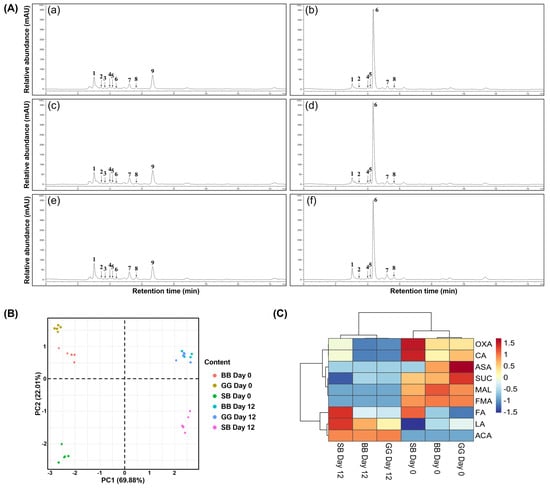
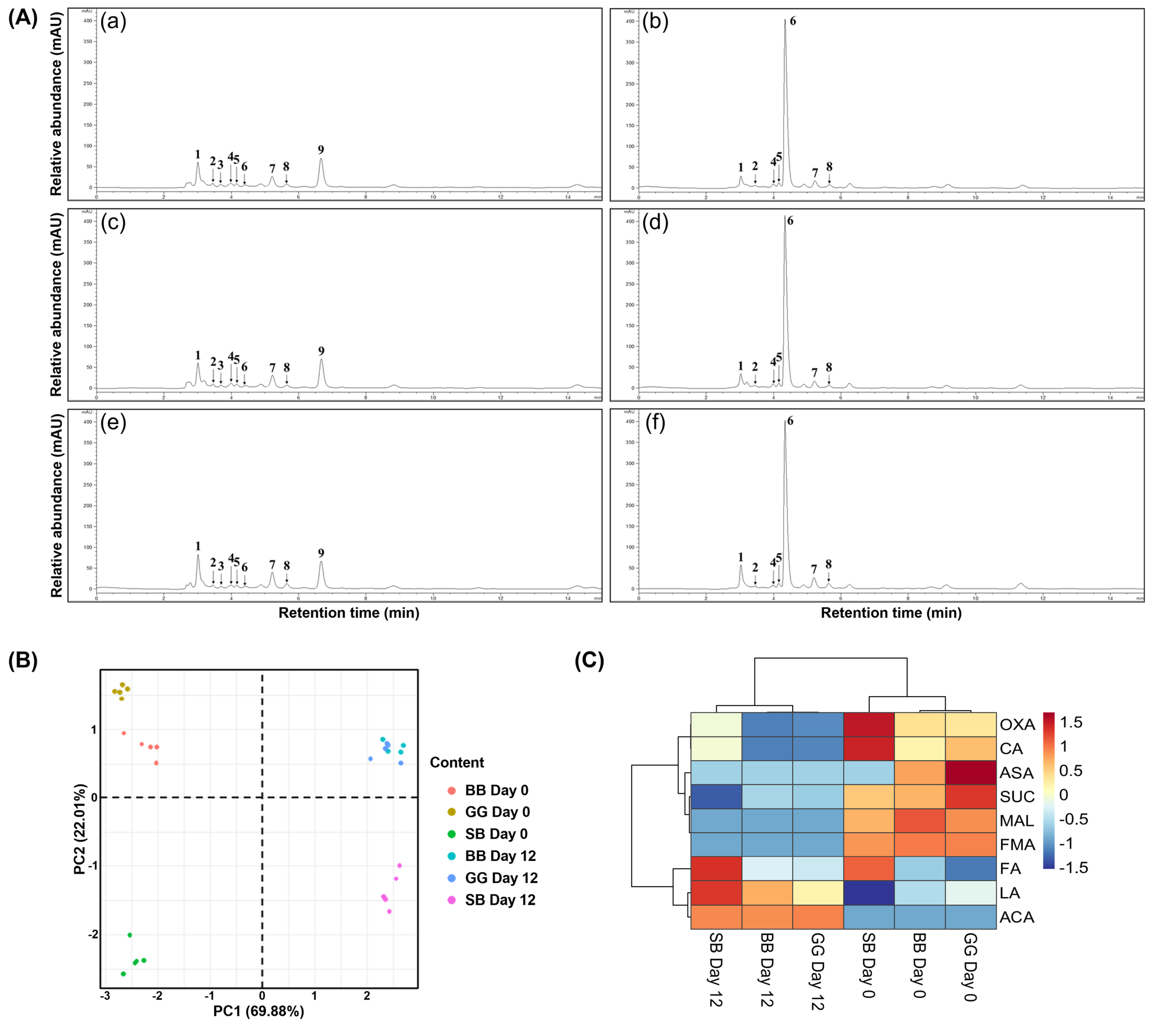
Fermentation caused a lot of changes in the organic acids in the IESL-based kombucha-like beverages with different fruits. Several organic acids from the fruits and IESL decreased during fermentation, while acetic acid increased and became the main organic acid (Table 2, Figure 1A). At day 0, the samples contained a variety of organic acids, including malic, citric, ascorbic, fumaric, lactic, succinic, oxalic, and formic acids. The total organic acid content was ranged from 4.45 to 5.40 mg/mL. After 12 days of fermentation, the total organic acid contents increased to 45.52–46.32 mg/mL, approximately 8.4- to 10.4-fold higher than the initial values. This increase was mainly attributable to acetic acid, which increased from 0.18–0.39 mg/mL to 41.48–43.46 mg/mL and accounted for more than 90% of the total organic acids in all samples. Malic and fumaric acids were not detected at day 12. Ascorbic acid was detected at lower concentrations than at day 0. Citric acid also decreased. These changes suggest that several organic acids were consumed or degraded during fermentation. Principal component analysis separated day-0 and day-12 samples along the first principal component (PC1, 71.79%). The heatmap also showed a clear shift in the organic acid profile: the day-0 samples contained varying levels of several acids, whereas acetic acid was the predominant signal after fermentation, with lactic acid also contributing to the profile (Figure 1B,C). At day 12, titratable acidity expressed as acetic acid equivalents (46.3–47.9 mg/mL) was higher than the acetic acid concentrations determined by HPLC (41.48–43.46 mg/mL) (Table 1 and Table 2). Other titratable acidic constituents may contribute to this difference, although their individual contributions were not determined in this study.
Figure 1.
Comparison of organic acid HPLC chromatograms, PCA scores plot, and heatmap analysis for IESL-based kombucha-like beverages with different fruits (BB, GG, and SB) before and after fermentation. (A) Organic acid HPLC chromatograms: (a) BB Day 0, (b) BB Day 12, (c) GG Day 0, (d) GG Day 12, (e) SB Day 0, (f) SB Day 12. Peaks: 1, oxalic acid; 2, succinic acid; 3, malic acid; 4, ascorbic acid; 5, lactic acid; 6, acetic acid; 7, citric acid; 8, formic acid; 9, fumaric acid. (B) Principal component analysis (PCA) score plot. Each point represents one of five analytical replicates of a single fermentation batch. (C) Hierarchical clustering and heatmap analysis, where red and blue indicate relatively high and low compound concentrations, respectively. Abbreviations: OXA, oxalic acid; SUC, succinic acid; MAL, malic acid; ASA, ascorbic acid; LA, lactic acid; ACA, acetic acid; CA, citric acid; FA, formic acid; FMA, fumaric acid; BB, blueberry kombucha-like beverage; GG, green grape kombucha-like beverage; SB, strawberry kombucha-like beverage.
The acetic acid–centered remodeling of the organic acid profile in the three kombucha-like beverages is related to the activities of yeast, LAB, and AAB [5,23]. Ethanol produced by S. cerevisiae from sucrose is oxidized to acetic acid by the membrane-bound, PQQ-dependent alcohol and aldehyde dehydrogenases of AAB, and Acetobacter species can additionally oxidize lactate to acetate and acetoin [24,25]. The latter reaction offers a plausible explanation for the modest net increase in lactic acid (from 0.53–0.62 to 0.64–0.69 mg/mL) despite a 0.6–2.4 log CFU/mL increase in LAB counts. Some of the lactic acid formed by the LAB was probably consumed by A. pasteurianus. Therefore, the final measured lactic acid concentration may reflect a balance between production and oxidation rather than the total amount produced by LAB. The non-detection of malic and fumaric acids after fermentation, together with the decreases in ascorbic acid, citric acid (33–48%), and succinic acid, suggests that fruit- and IESL-derived organic acids may have been utilized or degraded during fermentation. Malate and citrate can be metabolized by L. plantarum and related LAB through malolactic and citrate lyase pathways. Ascorbic acid can also be readily oxidized under the aerobic, low-pH conditions created by AAB [2,5]. Formic acid consistently increased in all samples, from 0.75–1.32 to 0.96–1.45 mg/mL. The metabolic pathway responsible for this increase was not determined in this study. One limitation of the analytical panel should be noted: gluconic and glucuronic acids, which are characteristic products of AAB oxidative fermentation in kombucha [27], were not quantified, so the total organic acid content reported here should be regarded as a lower bound. Taken together, the initial organic acids supplied by IESL and the fruit purees can be regarded not merely as flavor-contributing components but as metabolic substrates that, through the consecutive activities of yeast, LAB, and AAB, drive the transition toward an acetic acid–dominant profile.
3.3. Comparison of Isoflavone Compositions in Different IESL-Based Kombucha-like Beverages
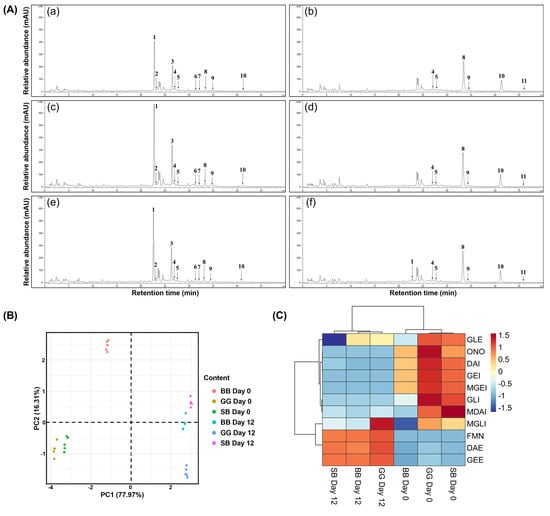
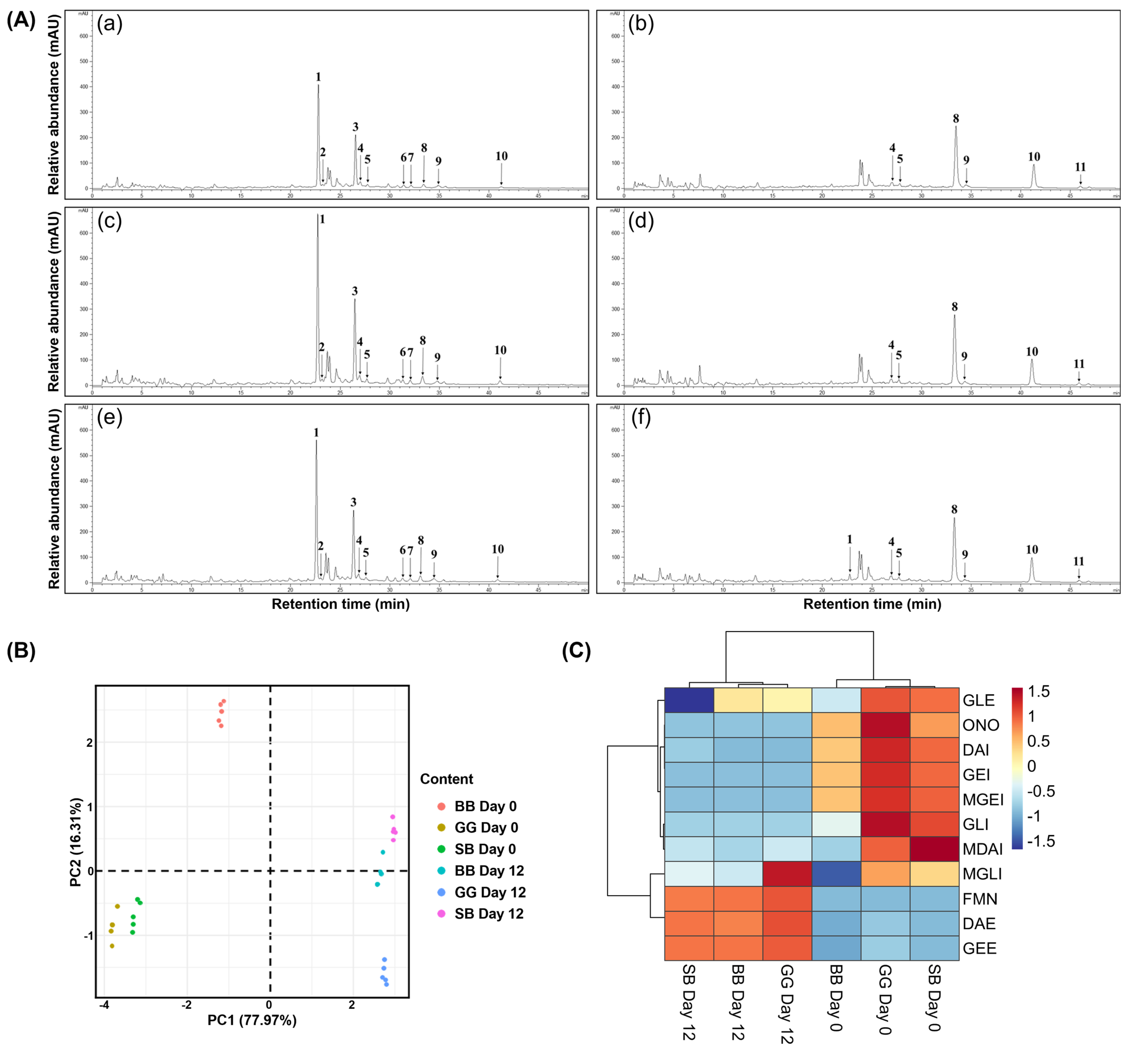
Fermentation markedly altered the isoflavone composition of IESL-based kombucha-like beverages with different fruits, shifting the profiles from glycoside-dominant to aglycone-rich forms (Table 3, Figure 2A). According to Table 3, the total isoflavone glycoside content, which initially ranged from 161.18 to 278.92 μg/mL, was not detected in BB and GG after 12 days of fermentation and remained only at a low level in SB (13.52 μg/mL, daidzin only). In particular, glycitin, genistin, and ononin were not detected in any samples after fermentation. In contrast, the total aglycone contents increased sharply in all formulations at day 12, reaching 77.50, 84.44, and 74.02 μg/mL in BB, GG, and SB, respectively. Among these, BB showed the greatest increase, with the total level of aglycones increasing by approximately 6.0-fold compared with the initial value. Time-course data in Table S2 showed that this shift occurred progressively. Total glycosides in BB and GG fell to 6.23 and 0.00 μg/mL by day 8, whereas aglycones accumulated mainly between days 4 and 12 and with a slight decrease (about 5–7%) at day 16. In the CT, glycosides were also not detected at day 12, and the total aglycone content (40.72 μg/mL) was lower than those in the fruit-supplemented samples (74.02–84.44 μg/mL); however, because a single batch was prepared for each formulation, this difference should be interpreted with caution. Multivariate statistical analysis further highlighted these compositional changes. PCA clearly separated day-0 and day-12 samples along the first principal component (PC1, 77.97%), indicating substantial changes in isoflavone profiles and related metabolites during fermentation (Figure 2B). Consistently, the heatmap clustered the isoflavone aglycones together in the fermented samples, indicating that these compounds shared similar accumulation patterns after fermentation (Figure 2C).
Table 3.
Comparison of isoflavone contents in different IESL-based kombucha-like beverages before and after fermentation.
Figure 2.
Comparison of isoflavone HPLC chromatograms, PCA scores plot, and heatmap analysis for IESL-based kombucha-like beverages with different fruits (BB, GG, and SB) before and after fermentation. (A) Isoflavone HPLC chromatograms: (a) BB Day 0, (b) BB Day 12, (c) GG Day 0, (d) GG Day 12, (e) SB Day 0, (f) SB Day 12. Peaks: 1, daidzin; 2, glycitin; 3, genistin; 4, malonyldaidzin; 5, malonylglycitin; 6, malonylgenistin; 7, ononin; 8, daidzein; 9, glycitein; 10, genistein; 11, formononetin. (B) Principal component analysis (PCA) score plot. Each point represents one of five analytical replicates of a single fermentation batch. (C) Hierarchical clustering and heatmap analysis, where red and blue indicate relatively high and low compound concentrations, respectively. Abbreviations: DAI, daidzin; GLI, glycitin; GEI, genistin; MDAI, malonyldaidzin; MGLI, malonylglycitin; MGEI, malonylgenistin; ONO, ononin; DAE, daidzein; GLE, glycitein; GEE, genistein; FMN, formononetin; BB, blueberry kombucha-like beverage; GG, green grape kombucha-like beverage; SB, strawberry kombucha-like beverage.
The decrease in isoflavone glycosides and the concomitant accumulation of daidzein and genistein are consistent with the possible involvement of microbial β-glucosidases in glycoside hydrolysis during fermentation [28,29,30]. Several of the strains used here are established β-glucosidase producers: L. plantarum efficiently deglycosylates daidzin and malonyl-daidzin [31], and L. brevis WCP02 was previously selected for IESL fermentation partly on the basis of its β-glucosidase activity [15]. LAB β-glucosidases generally show maximal activity under mildly acidic conditions (pH 4–5) [15]. The time-course data showed a marked decrease in glycosides by day 8 (Table S2), suggesting that much of the observed change occurred during the early and intermediate stages of fermentation.
Three features of the data refine this picture. First, the malonyl-glycosides behaved differently from the simple glycosides: malonyl-genistin was not detected after fermentation, whereas malonyl-daidzin and malonyl-glycitin remained detectable at 5.6–7.6 μg/mL in all fermented samples. The persistence of malonyl-glycosides may reflect differences in their susceptibility to microbial conversion. This possibility is consistent with the substrate-dependent deglycosylation patterns reported during Lactobacillus fermentation of soybean extracts [31]. Second, glycitein decreased in SB from 11.41 to 4.77 μg/mL, while glycitin was not detected after fermentation. This pattern may reflect glycitein degradation during LAB fermentation [31], and the different patterns observed in BB and GG suggest that this process may depend on the sample matrix. Third, in SB, daidzin remained detectable after 12 days (13.52 μg/mL), and it also showed the smallest increase in LAB counts (Table 1). However, the relationship between these observations and β-glucosidase activity could not be confirmed because enzyme activity was not measured.
The marked difference in initial isoflavone content among the three day-0 samples (188.94–325.64 μg/mL total isoflavones), despite identical IESL loading, was unexpected and may reflect fruit-specific matrix effects, such as association of isoflavones with fruit polysaccharides or pigments that are removed on centrifugation; this point warrants verification. Total isoflavones decreased by 52–70% in the fruit-supplemented samples and by 78% in CT at day 12 compared with day 0 (Table S2). Most of this decrease occurred by day 8, but its cause remained unclear. Isoflavones were quantified in centrifuged supernatants. The decrease may therefore partly reflect the removal of cell- or particle-associated isoflavones, including poorly soluble aglycones, although this possibility was not examined.
From a functional standpoint, isoflavone aglycones are more readily absorbed and show higher bioavailability, stronger antioxidant activity, and higher affinity for estrogen receptors than their glycosides [9,32,33], and LAB fermentation of IESL has previously been shown to increase daidzein and genistein 11- to 14-fold [15]. These findings suggest that fermentation may be useful for producing IESL-based beverages enriched in isoflavone aglycones [9,30]. Non-detection under the analytical conditions used does not establish the complete absence of a compound and should not, by itself, be interpreted as evidence of complete consumption, degradation, or hydrolysis. In addition, an uninoculated control was not included, so changes unrelated to microbial activity cannot be excluded. CT was analyzed only for isoflavones, so the contribution of fruit addition to the other parameters could not be evaluated. In addition, each formulation was fermented in a single batch, and differences among formulations should therefore be interpreted with caution.
3.4. Comparison of TPC, TFC, SAC, and Antioxidant Activities in Different IESL-Based Kombucha-like Beverages
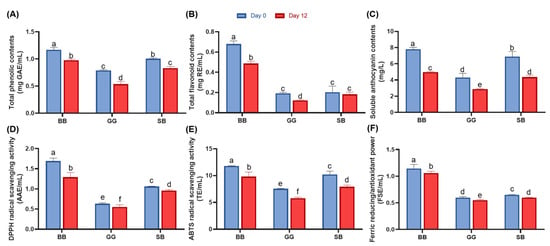
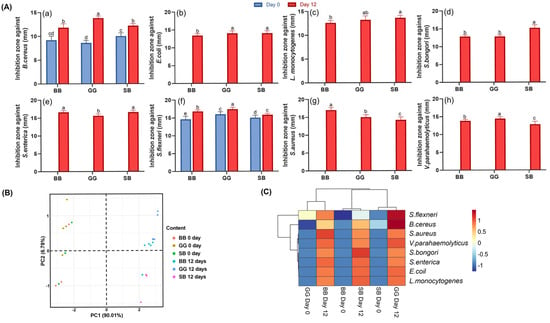
TPC, TFC, and SAC were lower at day 12 than at day 0 in all fruit formulations (Figure 3A–C). On day 12, BB showed higher TPC (0.979 mg GAE/mL), TFC (0.487 mg RE/mL), and SAC (4.963 mg/L) than GG, which had the lowest values among the formulations. These compositional differences were consistent with the patterns observed for antioxidant activities (Figure 3D–F). Although DPPH and ABTS radical scavenging activities and FRAP decreased from their initial levels, the activities at day 12 followed the order BB > SB > GG across all three assays. In particular, DPPH radical scavenging activity in BB was approximately 2.3 times that in GG on day 12.
Figure 3.
Comparison of TPC, TFC, SAC, and antioxidant activities for IESL-based kombucha-like beverages with different fruits (BB, GG, and SB) before and after fermentation. (A) Total phenolic contents (TPC); (B) total flavonoid contents (TFC); (C) soluble anthocyanin contents (SAC); (D) DPPH radical scavenging activity; (E) ABTS radical scavenging activity; (F) ferric reducing antioxidant power (FRAP). BB, blueberry kombucha-like beverage; GG, green grape kombucha-like beverage; SB, strawberry kombucha-like beverage. Values are presented as mean ± SD (n = 5 analytical replicates from a single fermentation). Different lowercase letters indicate significant differences among the six sample groups (one-way ANOVA followed by Tukey’s test, p < 0.05).
The decrease in TPC, TFC, SAC, and antioxidant capacity after fermentation, together with the preserved ranking BB > SB > GG, suggests that the fruit matrix may be associated with the level of antioxidant activity retained after fermentation [5,16]. Several processes can account for the losses. Anthocyanins can be unstable during fermentation because of changes in pH and oxidation. They may also be degraded or transformed by microbial enzymes [20,21,34]. In addition, the Folin–Ciocalteu assay responds to reducing compounds such as ascorbic acid, which decreased during fermentation (Table 2), so part of the apparent decrease in TPC may reflect the loss of ascorbate rather than of phenolics. The superior retention in BB is consistent with the anthocyanin chemistry of the three fruits: blueberry anthocyanins are mainly delphinidin-, petunidin-, and malvidin-type glycosides. The hydroxyl and methoxyl groups of blueberry anthocyanins may contribute to their radical-scavenging and electron-donating capacity. Green grape, by contrast, contributes flavan-3-ols and hydroxycinnamates but essentially no anthocyanins [35,36]. Co-pigmentation by co-existing flavonoids and phenolic acids has been shown to stabilize anthocyanins in kombucha analogues [33], and the higher initial phenolic load of BB may have provided more co-pigments. It is also noteworthy that antioxidant capacity declined even though isoflavone aglycones, which are stronger radical scavengers than their glycosides, increased 3.6- to 6.0-fold; at the concentrations present (74–84 μg/mL), their contribution to the DPPH, ABTS, and FRAP values was likely small compared with the loss of fruit-derived phenolics and ascorbate. The fruit-dependent retention of phenolics and antioxidant activity may therefore be mainly related to differences in the initial composition and stability of fruit phenolics, which also impose distinct selective pressures on the fermenting microorganisms [5,17,26,35], rather than to the accumulation of isoflavone aglycones.
3.5. Comparison of Antibacterial Activities in Different IESL-Based Kombucha-like Beverages
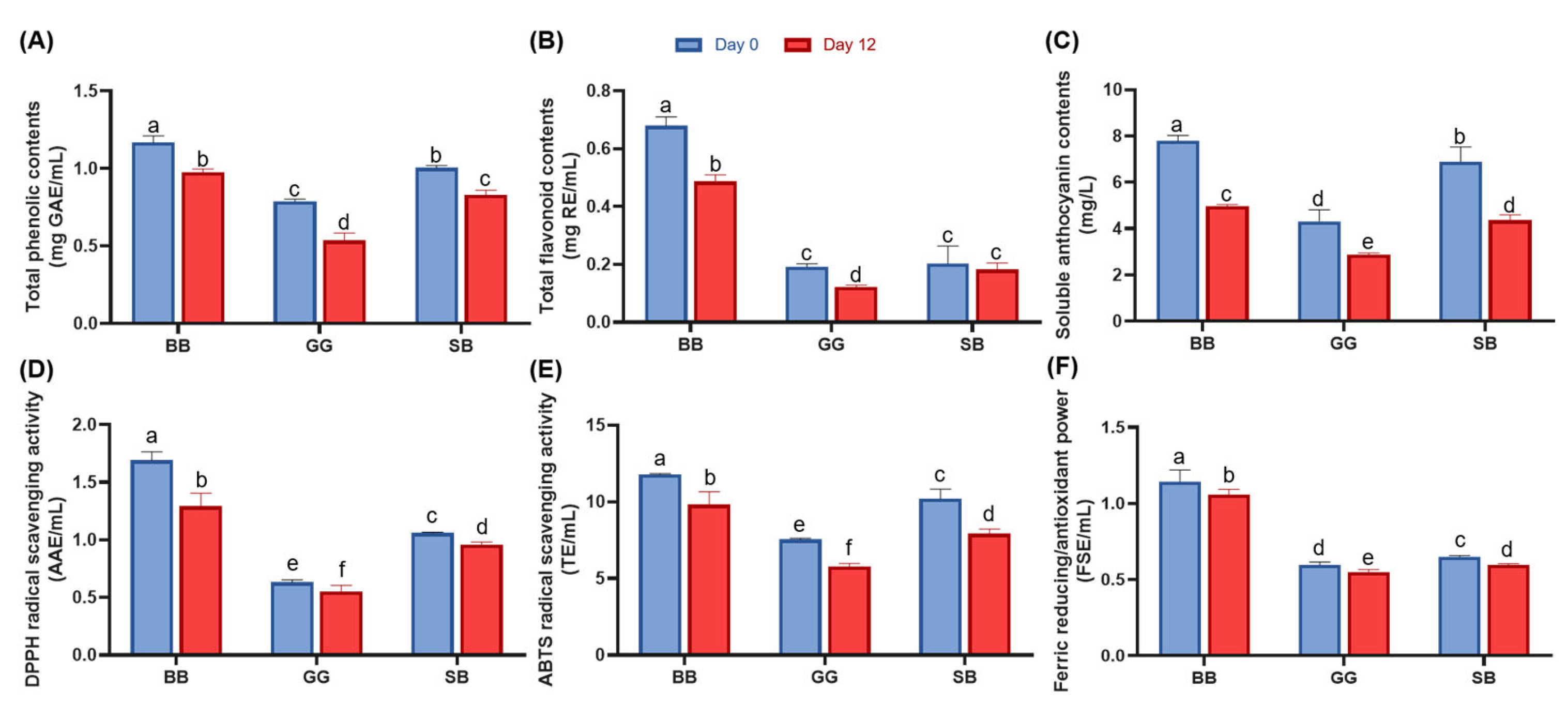
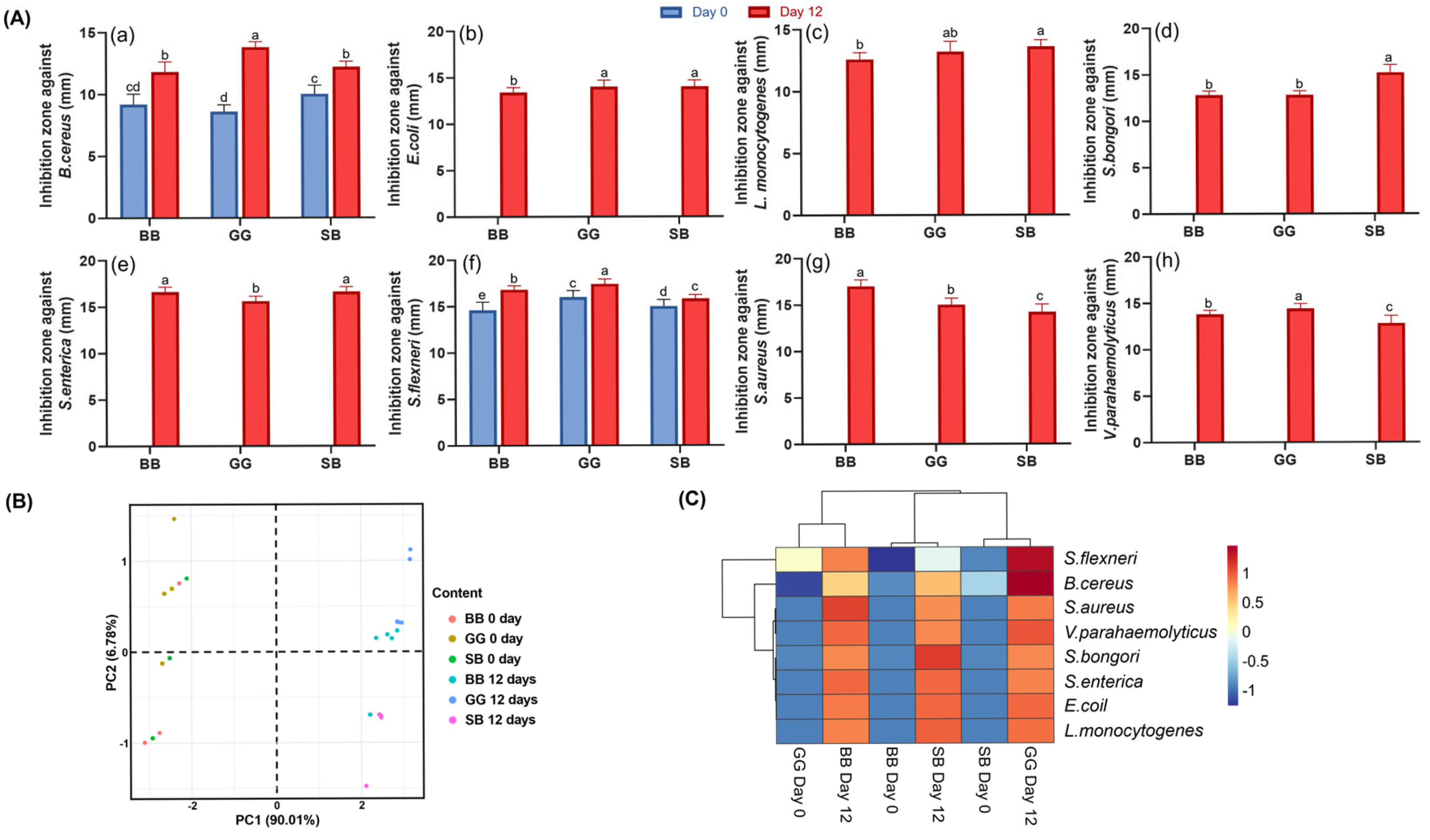
Fermentation of IESL-based kombucha-like beverages with different fruits enhanced antibacterial activities against eight foodborne pathogenic bacteria by day 12, as evidenced by increased inhibition zone diameters, and broadened the antibacterial spectrum (Figure 4). Images of inhibition zones for each tested strain are provided in Supplementary Figures S2–S9. At the initial fermentation stage (day 0), only B. cereus and S. flexneri exhibited relatively small inhibition zones, whereas no detectable antibacterial activity was observed against the other pathogens. In contrast, the day-12 samples showed larger inhibition zones against all eight tested strains, indicating an overall increase in the antibacterial spectrum and activity after fermentation (Figure 4A). PCA clearly separated day-0 and day-12 samples along PC1 (90.01%), indicating substantial changes in antibacterial activity during fermentation (Figure 4B). Heatmap analysis revealed that day-0 samples showed minimal activity against most strains, whereas day-12 samples formed a distinct cluster with enhanced inhibition against all eight pathogens (Figure 4C).
Figure 4.
Comparison of antibacterial activity, PCA score plots, and heatmap analyses for IESL-based kombucha-like beverages with different fruits (BB, GG, and SB) before and after fermentation. (A) Inhibition zone diameter (mm): (a) Bacillus cereus, (b) Escherichia coli, (c) Listeria monocytogenes, (d) Salmonella bongori, (e) Salmonella enterica, (f) Shigella flexneri, (g) Staphylococcus aureus, (h) Vibrio parahaemolyticus. BB, blueberry kombucha-like beverage; GG, green grape kombucha-like beverage; SB, strawberry kombucha-like beverage. Values are presented as mean ± SD (n = 5 analytical replicates from a single fermentation). Different lowercase letters indicate significant differences among the six sample groups for each bacterial strain (one-way ANOVA followed by Tukey’s test, p < 0.05). (B) Principal component analysis (PCA) score plot. Each point represents one of five analytical replicates of a single fermentation batch. (C) Hierarchical clustering and heatmap analysis, where red and blue represent relatively high and low contents, respectively.
The broadening of the antibacterial spectrum from two to all eight pathogens after fermentation coincided with the accumulation of acetic acid and isoflavone aglycones and with the fall in pH [5,14]. Weak organic acids such as acetic acid (pKa 4.76) are predominantly undissociated at pH 3.4; they diffuse across the bacterial membrane and dissociate in the cytoplasm, lowering intracellular pH, dissipating the proton motive force, and causing anion accumulation [2,37,38]. Acetic acid is accordingly regarded as the principal antimicrobial component of kombucha [39]. Consistent with this mechanism, the day-0 samples, in which the acid load was low and the pH was 4.45–4.75, inhibited only B. cereus and S. flexneri. Although the three kombucha-like beverages had similar final pH values (3.41–3.46) and total organic acid contents (45.52–46.32 mg/mL), their inhibition zone diameters varied with the formulation and bacterial strain tested. GG, which had the numerically highest acetic acid concentration (43.46 mg/mL) and the highest total isoflavone aglycone content (84.44 μg/mL), produced the largest inhibition zones against several strains. Isoflavone aglycones, particularly genistein and daidzein, are more lipophilic than their glycosides and have been reported to inhibit foodborne pathogens by perturbing membrane integrity and interfering with nucleic acid synthesis [19,40], and an acidic environment may further increase their partitioning into bacterial membranes [11,12]. The fruit polyphenols retained after fermentation, which varied markedly among the samples (Figure 3), may also have contributed to the strain-specific pattern. It should be noted, however, that the disc diffusion assay used sterile water as the negative control and did not include a pH-adjusted or acetic acid–matched control. Previous studies have reported that kombucha retains only part of its antibacterial activity after neutralization to pH 7 [41,42]. In the present study, however, sterile water was the only negative control, and neither pH-neutralized samples nor acetic acid–matched controls were included. The fermented samples showed antibacterial activity against all eight tested pathogens under the assay conditions. However, the respective contributions of acidity, isoflavone aglycones, and fruit polyphenols to the observed inhibition cannot be distinguished. Further experiments using pH-neutralized samples and acid-matched controls, together with determination of the minimum inhibitory concentrations of individual compounds, are needed to clarify these contributions.
4. Conclusions
In this study, IESL extract supplemented with blueberry, green grape, or strawberry puree was used to produce kombucha-like beverages. Fermentation was accompanied by a shift from isoflavone glycosides toward aglycones and the development of an acetic acid–dominant organic acid profile. Antioxidant activities decreased after fermentation, with BB retaining the highest levels of antioxidant-related constituents. In contrast, the fermented samples inhibited all eight tested foodborne pathogens. These results characterize the compositional and biological activity changes observed in the fruit-containing formulations before and after fermentation. The shift in isoflavone profiles was consistent with microbial bioconversion, although the underlying mechanism was not directly established. Similarly, the antibacterial results reflect the activity of the tested samples but do not distinguish the contributions of acidity and other components. Independent fermentation batches are needed to assess reproducibility. Further studies should also extend the analysis of the IESL-only control beyond isoflavones and include uninoculated controls to distinguish changes associated with inoculation from those occurring without it. Direct measurement of β-glucosidase activity, together with antibacterial assays using pH-neutralized samples, acid-matched controls, and individual isoflavones, would help clarify the mechanisms underlying the observed changes. Evaluation of in vivo efficacy, sensory properties, and storage stability is also needed to assess the potential of these formulations as functional beverages.
Supplementary Materials
The following supporting information can be downloaded at: https://www.mdpi.com/article/10.3390/fermentation12110519/s1, Table S1: Estimated limits of detection and quantification for organic acids and isoflavones analyzed in this study; Table S2: Changes in isoflavone contents of different IESL-based kombucha-like beverages during fermentation; Figure S1: Processing stages of IESL-based kombucha-like beverages with different fruits (BB, GG, and SB); Figure S2: Antibacterial activity of IESL-based kombucha-like beverages with different fruits (BB, GG, and SB) against Bacillus cereus before and after fermentation; Figure S3: Antibacterial activity of IESL-based kombucha-like beverages with different fruits (BB, GG, and SB) against Escherichia coli before and after fermentation; Figure S4: Antibacterial activity of IESL-based kombucha-like beverages with different fruits (BB, GG, and SB) against Listeria monocytogenes before and after fermentation; Figure S5: Antibacterial activity of IESL-based kombucha-like beverages with different fruits (BB, GG, and SB) against Salmonella bongori before and after fermentation; Figure S6: Antibacterial activity of IESL-based kombucha-like beverages with different fruits (BB, GG, and SB) against Salmonella enterica before and after fermentation; Figure S7: Antibacterial activity of IESL-based kombucha-like beverages with different fruits (BB, GG, and SB) against Shigella flexneri before and after fermentation; Figure S8: Antibacterial activity of IESL-based kombucha-like beverages with different fruits (BB, GG, and SB) against Staphylococcus aureus before and after fermentation; Figure S9: Antibacterial activity of IESL-based kombucha-like beverages with different fruits (BB, GG, and SB) against Vibrio parahaemolyticus before and after fermentation.
Author Contributions
Conceptualization, H.R.K. and K.M.C.; methodology, H.R.K., D.Y.C., H.Y.L. and M.A.H.; software, M.Y.J.; validation, D.Y.C., H.Y.L. and J.B.J.; formal analysis, J.B.J., M.Y.J. and M.L.; investigation, H.R.K., D.Y.B., Y.R.J. and D.C.S.; resources, K.M.C.; data curation, H.R.K.; writing—original draft preparation, H.R.K.; writing—review and editing, D.Y.C., H.Y.L., M.A.H., J.H.L. and K.M.C.; visualization, H.R.K.; supervision, J.H.L. and K.M.C.; project administration, K.M.C.; funding acquisition, K.M.C. All authors have read and agreed to the published version of the manuscript.
Funding
This work was supported by the Basic Science Research Program through the National Research Foundation (NRF) funded by the Ministry of Education (RS-2023-00245096 and RS-2025-25400419) and the Ministry of Science and ICT (RS-2024-00346785), Republic of Korea.
Institutional Review Board Statement
Not applicable.
Informed Consent Statement
Informed consent was obtained from all subjects involved in the study.
Data Availability Statement
Data reported in this study is contained within the article. The underlying raw data is available on request from the corresponding author.
Conflicts of Interest
The authors declare no conflicts of interest.
References
- Anantachoke, N.; Duangrat, R.; Sutthiphatkul, T.; Ochaikul, D.; Mangmool, S. Kombucha Beverages Produced from Fruits, Vegetables, and Plants: A Review on Their Pharmacological Activities and Health Benefits. Foods 2023, 12, 1818. [Google Scholar] [CrossRef] [Scilit]
- Jayabalan, R.; Marimuthu, S.; Swaminathan, K. Changes in content of organic acids and tea polyphenols during kombucha tea fermentation. Food Chem. 2007, 102, 392–398. [Google Scholar] [CrossRef] [Scilit]
- Villarreal-Soto, S.A.; Beaufort, S.; Bouajila, J.; Souchard, J.P.; Taillandier, P. Understanding kombucha tea fermentation: A review. J. Food Sci. 2018, 83, 580–588. [Google Scholar] [CrossRef] [Scilit]
- Chandran, A.; Wyka, J.; Klein, G.-R.; Stefanska, B.; Kolniak-Ostek, J. Shaping the Bioactive Properties of Kombucha Drinks by Using Raw Materials Alternative to Tea. Molecules 2026, 31, 1170. [Google Scholar] [CrossRef] [Scilit]
- Su, J.; Tan, Q.; Tang, Q.; Tong, Z.; Yang, M. Research progress on alternative kombucha substrate transformation and the resulting active components. Front. Microbiol. 2023, 14, 1254014. [Google Scholar] [CrossRef] [Scilit]
- Ban, Y.J.; Song, Y.H.; Kim, J.Y.; Baiseitova, A.; Lee, K.W.; Kim, K.D.; Park, K.H. Comparative investigation on metabolites changes in soybean leaves by ethylene and activation of collagen synthesis. Ind. Crops Prod. 2020, 154, 112743. [Google Scholar] [CrossRef] [Scilit]
- Yoo, D.Y.; Jung, S.; Kang, J.S.; Baek, J.H.; Park, K.H.; Lee, D.H.; Kang, S.S.; Kim, H.J. Isoflavone-Enriched Soybean Leaves (Glycine max) Alleviate Cognitive Impairment Induced by Ovariectomy and Modulate PI3K/Akt Signaling in the Hippocampus of C57BL6 Mice. Nutrients 2022, 14, 4753. [Google Scholar] [CrossRef] [Scilit]
- Yoo, D.Y.; Xie, C.-L.; Jeong, J.Y.; Park, K.H.; Kang, S.S.; Lee, D.H. Isoflavone-enriched soybean leaves (Glycine max) restore loss of dermal collagen fibers induced by ovariectomy in the Sprague Dawley rats. Lab. Anim. Res. 2024, 40, 1–6. [Google Scholar] [CrossRef] [Scilit]
- Izumi, T.; Osawa, S.; Obata, A.; Tobe, K.; Saito, M.; Kataoka, S.; Kikuchi, M.; Piskula, M.K.; Kubota, Y. Soy Isoflavone Aglycones Are Absorbed Faster and in Higher Amounts than Their Glucosides in Humans. J. Nutr. 2000, 130, 1695–1699. [Google Scholar] [CrossRef] [Scilit]
- Messina, M. Soy foods, isoflavones, and the health of postmenopausal women. Am. J. Clin. Nutr. 2014, 100, 423S–430S. [Google Scholar] [CrossRef] [Scilit]
- Sofyantoro, F.; Frediansyah, A. Isoflavone aglycones: Sources, bioavailability enhancement strategies, and health benefits. J. Food Compos. Anal. 2025, 148, 108613. [Google Scholar] [CrossRef] [Scilit]
- Alharbi, N.A. Polyphenol metabolites in fermented foods: Biotransformation, bioavailability, and functional roles. Front. Nutr. 2026, 13, 1767453. [Google Scholar] [CrossRef] [Scilit]
- Lee, H.Y.; Kim, H.S.; Lee, G.Y.; Seo, Y.H.; Cho, D.Y.; Bin Jeong, J.; Jang, M.Y.; Kim, D.H.; Bang, D.Y.; Kim, H.R.; et al. Enhancement of isoflavone aglycones, GABA, and mineral bioavailability in Apios americana Medikus by co-fermentation with Lactiplantibacillus plantarum LAB02 and Levilactobacillus brevis BMK484. Food Chem. X 2026, 35, 103745. [Google Scholar] [CrossRef] [Scilit]
- Lee, H.-Y.; Cho, D.-Y.; Jeong, J.-B.; Lee, J.-H.; Lee, G.-Y.; Jang, M.-Y.; Lee, J.-H.; Cho, K.-M. Chemical Compositions before and after Lactic Acid Fermentation of Isoflavone-Enriched Soybean Leaves and Their Anti-Obesity and Gut Microbiota Distribution Effects. Nutrients 2024, 16, 1693. [Google Scholar] [CrossRef] [Scilit]
- Lee, H.-Y.; Lee, J.-H.; Cho, D.-Y.; Jeong, J.-B.; Lee, G.-Y.; Jang, M.-Y.; Lee, J.-H.; Cho, K.-M. Enhancing the Phytochemicals and Antioxidant Abilities of Isoflavone-Enriched Soybean Leaves Through Inoculation with Lacticaseibacillus paracasei LAB47 and Levilactobacillus brevis WCP02. Foods 2025, 14, 1008. [Google Scholar] [CrossRef] [Scilit]
- Morales, D.; Gutiérrez-Pensado, R.; Bravo, F.I.; Muguerza, B. Novel kombucha beverages with antioxidant activity based on fruits as alternative substrates. LWT 2023, 189, 115482. [Google Scholar] [CrossRef] [Scilit]
- Aguilera, J.M. Berries as Foods: Processing, Products, and Health Implications. Annu. Rev. Food Sci. Technol. 2024, 15, 1–26. [Google Scholar] [CrossRef] [Scilit]
- Wu, X.; Beecher, G.R.; Holden, J.M.; Haytowitz, D.B.; Gebhardt, S.E.; Prior, R.L. Lipophilic and Hydrophilic Antioxidant Capacities of Common Foods in the United States. J. Agric. Food Chem. 2004, 52, 4026–4037. [Google Scholar] [CrossRef] [Scilit]
- Lucas-Bautista, J.A.; Cárdenas-Valdovinos, J.G.; Mena-Violante, H.G.; Pacheco-Aguilar, J.R.; Mendoza, S. Antimicrobial Activity of Berries Anthocyanin Extracts against Phytopathogenic Bacteria. J. Mex. Chem. Soc. 2025, 69, 542–554. [Google Scholar] [CrossRef] [Scilit]
- Cho, H.K.; Lee, J.Y.; Seo, W.T.; Kim, M.K.; Cho, K.M. Quality Characteristics and Antioxidant Effects during Makgeolli Fermentation by Purple Sweet Potato-rice Nuruk. Korean J. Food Sci. Technol. 2012, 44, 728–735. [Google Scholar] [CrossRef] [Scilit]
- Lee, J.-H.; Lee, Y.-B.; Seo, W.-D.; Kang, S.-T.; Lim, J.-W.; Cho, K.-M. Comparative Studies of Antioxidant Activities and Nutritional Constituents of Persimmon Juice (Diospyros kaki L. cv. Gapjubaekmok). Prev. Nutr. Food Sci. 2012, 17, 141–151. [Google Scholar] [CrossRef] [Scilit]
- Cho, K.M.; Shin, J.H.; Seo, W.T. Production of Korean Domestic Wheat (keumkangmil) Vinegar with Acetobacter pasteurianus A8. Korean J. Food Sci. Technol. 2013, 45, 252–256. [Google Scholar] [CrossRef] [Scilit][Green Version]
- Jayabalan, R.; Malbaša, R.V.; Lončar, E.S.; Vitas, J.S.; Sathishkumar, M. A Review on Kombucha Tea—Microbiology, Composition, Fermentation, Beneficial Effects, Toxicity, and Tea Fungus. Compr. Rev. Food Sci. Food Saf. 2014, 13, 538–550. [Google Scholar] [CrossRef] [Scilit]
- Tran, T.; Grandvalet, C.; Verdier, F.; Martin, A.; Alexandre, H.; Tourdot-Maréchal, R. Microbial Dynamics between Yeasts and Acetic Acid Bacteria in Kombucha: Impacts on the Chemical Composition of the Beverage. Foods 2020, 9, 963. [Google Scholar] [CrossRef] [Scilit]
- Bouchez, A.; De Vuyst, L. Acetic acid bacteria in sour beer production: Friend or foe? Front. Microbiol. 2022, 13, 957167. [Google Scholar] [CrossRef] [Scilit]
- Barbosa, E.L.; Netto, M.C.; Junior, L.B.; de Moura, L.F.; Brasil, G.A.; Bertolazi, A.A.; de Lima, E.M.; Vasconcelos, C.M. Kombucha fermentation in blueberry (Vaccinium myrtillus) beverage and its in vivo gastroprotective effect: Preliminary study. Future Foods 2022, 5, 100129. [Google Scholar] [CrossRef] [Scilit]
- Cheepchirasuk, N.; Kaewkod, T.; Suriyaprom, S.; Intachaisri, V.; Ngamsaard, P.; Tragoolpua, Y. Functional metabolites and inhibitory efficacy of kombucha beverage on pathogenic bacteria, free radicals and inflammation. Sci. Rep. 2025, 15, 1–19. [Google Scholar] [CrossRef] [Scilit]
- Donkor, O.; Shah, N. Production of β-Glucosidase and Hydrolysis of Isoflavone Phytoestrogens by Lactobacillus acidophilus, Bifidobacterium lactis, and Lactobacillus casei in Soymilk. J. Food Sci. 2007, 73, M15–M20. [Google Scholar] [CrossRef] [Scilit]
- Hati, S.; Vij, S.; Singh, B.P.; Mandal, S. β-Glucosidase activity and bioconversion of isoflavones during fermentation of soymilk. J. Sci. Food Agric. 2014, 95, 216–220. [Google Scholar] [CrossRef] [Scilit]
- Hsiao, Y.-H.; Ho, C.-T.; Pan, M.-H. Bioavailability and health benefits of major isoflavone aglycones and their metabolites. J. Funct. Foods 2020, 74, 104164. [Google Scholar] [CrossRef] [Scilit]
- Lim, Y.J.; Lim, B.; Kim, H.Y.; Kwon, S.-J.; Eom, S.H. Deglycosylation patterns of isoflavones in soybean extracts inoculated with two enzymatically different strains of lactobacillus species. Enzym. Microb. Technol. 2020, 132, 109394. [Google Scholar] [CrossRef] [Scilit]
- Intharuksa, A.; Arunotayanun, W.; Na Takuathung, M.; Chaichit, S.; Prasansuklab, A.; Chaikhong, K.; Sirichanchuen, B.; Chupradit, S.; Koonrungsesomboon, N. Daidzein and Genistein: Natural Phytoestrogens with Potential Applications in Hormone Replacement Therapy. Int. J. Mol. Sci. 2025, 26, 6973. [Google Scholar] [CrossRef] [Scilit]
- Pabich, M.; Materska, M. Biological Effect of Soy Isoflavones in the Prevention of Civilization Diseases. Nutrients 2019, 11, 1660. [Google Scholar] [CrossRef] [Scilit]
- Rocha-Guzmán, N.; González-Laredo, R.; Moreno-Jiménez, M.; Gallegos-Infante, J.; Mancera-Rodríguez, J.; Rosales-Villarreal, M. Kombucha analogs from maqui juice: Consortium age and sugar concentration effects on anthocyanin stability and its relationship with antioxidant activity and digestive enzyme inhibition. Food Chem. 2023, 421, 136158. [Google Scholar] [CrossRef] [Scilit]
- Li, H.; Zhang, C.; Deng, Z.; Zhang, B.; Li, H. Antioxidant activity of delphinidin and pelargonidin: Theory and practice. J. Food Biochem. 2022, 46, e14192. [Google Scholar] [CrossRef] [Scilit]
- Xu, Y.; Jin, B.; Yin, P.; Cheng, K.; Li, Q.; Ding, H. Targeting cancer with delphinidin: From molecular insights to therapeutic implications. Front. Pharmacol. 2026, 17, 1778570. [Google Scholar] [CrossRef] [Scilit]
- Ji, Q.-Y.; Wang, W.; Yan, H.; Qu, H.; Liu, Y.; Qian, Y.; Gu, R. The Effect of Different Organic Acids and Their Combination on the Cell Barrier and Biofilm of Escherichia coli. Foods 2023, 12, 3011. [Google Scholar] [CrossRef] [Scilit]
- Yoon, J.-H.; Oh, M.-S.; Lee, S.-Y. Effectiveness of organic acids for inactivating pathogenic bacteria inoculated in laboratory media and foods: An updated minireview. Food Sci. Biotechnol. 2024, 33, 2715–2728. [Google Scholar] [CrossRef] [Scilit]
- Nyiew, K.; Kwong, P.J.; Yow, Y. An overview of antimicrobial properties of kombucha. Compr. Rev. Food Sci. Food Saf. 2022, 21, 1024–1053. [Google Scholar] [CrossRef] [Scilit]
- Hummelova, J.; Rondevaldova, J.; Balastikova, A.; Lapcik, O.; Kokoska, L. The relationship between structure and in vitro antibacterial activity of selected isoflavones and their metabolites with special focus on antistaphylococcal effect of demethyltexasin. Lett. Appl. Microbiol. 2014, 60, 242–247. [Google Scholar] [CrossRef] [Scilit]
- Al-Mohammadi, A.-R.; Ismaiel, A.A.; Ibrahim, R.A.; Moustafa, A.H.; Abou Zeid, A.; Enan, G. Chemical Constitution and Antimicrobial Activity of Kombucha Fermented Beverage. Molecules 2021, 26, 5026. [Google Scholar] [CrossRef] [Scilit]
- Sreeramulu, G.; Zhu, Y.; Knol, W. Kombucha Fermentation and Its Antimicrobial Activity. J. Agric. Food Chem. 2000, 48, 2589–2594. [Google Scholar] [CrossRef] [Scilit]

Disclaimer/Publisher’s Note: The statements, opinions and data contained in all publications are solely those of the individual author(s) and contributor(s) and not of MDPI and/or the editor(s). MDPI and/or the editor(s) disclaim responsibility for any injury to people or property resulting from any ideas, methods, instructions or products referred to in the content. |
© 2026 by the authors. Licensee MDPI, Basel, Switzerland. This article is an open access article distributed under the terms and conditions of the Creative Commons Attribution (CC BY) license.