


Abstract
Reliable estimation of biochar’s calorific value is essential for optimizing its use as a renewable energy source. Traditional bomb calorimetry provides accurate measurements but is hindered by its destructive, time-consuming nature, limiting the high-throughput screening capabilities needed for large-scale deployment. In this study, an innovative, non-destructive approach utilizing laser-induced breakdown spectroscopy (LIBS) combined with advanced multivariate analysis is presented for predicting the Higher Heating Value (HHV) of biochar derived from pine and beech biomass. The developed empirical model incorporates spectral signatures of key elements: carbon, hydrogen, nitrogen, sulfur, and oxygen. Model validation using 36 independent biochar samples revealed a statistically significant correlation between experimentally measured and LIBS-predicted HHVs (p-value = 0.045, t-statistic = 2.08). The developed model yielded a mean absolute error (MAE) of 1.33 MJ kg−1 and a root mean square error (RMSE) of 1.72 MJ kg−1. The findings demonstrate the feasibility of using LIBS-derived elemental data for rapid HHV estimation and provide a basis for further model refinement through the inclusion of additional biochar types and calibration datasets. The model effectively captures the complex nonlinear relationships between spectral features and energy content, addressing the heterogeneity inherent in biochar matrices. These findings highlight LIBS’s potential as a rapid, scalable, and environmentally sustainable tool for real-time biochar evaluation. Implementing this approach could significantly accelerate biomass resource assessment, optimize bioenergy production, and advance sustainable energy management strategies aligned with global environmental goals.
1. Introduction
In the face of global energy challenges and mounting environmental concerns, biochar has emerged as a promising renewable resource, offering a unique combination of carbon sequestration, soil enhancement, and energy generation [1,2]. Despite its potential, optimizing biochar for energy applications hinges on accurately and rapidly quantifying its calorific value, a task traditionally reliant on bomb calorimetry, which, although highly precise, is fundamentally limited by its destructive nature, expensive protocols, and slow throughput [3,4,5]. Such constraints severely hamper large-scale screening efforts essential for the deployment of biochar as a viable energy vector in commercial and industrial contexts [6,7]. Numerous empirical correlations have been developed to estimate the HHV of biomass using ultimate and proximate analysis data. These equations predict HHV from key compositional parameters such as carbon, hydrogen, moisture, and ash content, reducing the need for costly and time-consuming bomb calorimetry measurements. Similarly, many ANN models have also relied on ultimate and proximate analysis as primary input variables for HHV prediction [8].
Conventional empirical models rooted in ultimate elemental analysis, including the Dulong, Boie, and Strache–Lant equations, have been employed to estimate HHV due to their simplicity [9]. However, their linear assumptions fail to capture the profound nonlinear interactions, particularly those involving heteroatoms such as sulfur and oxygen, which critically influence combustion heat and energy density [10]. Moreover, these models lack the flexibility to reliably accommodate the compositional heterogeneity arising from diverse biomass sources, such as pine and beech, under varying pyrolysis conditions, a limitation that impairs their predictive accuracy at industrial scales [11,12].
Recognizing these challenges, recent advances in spectroscopic techniques, particularly laser-induced breakdown spectroscopy (LIBS), offer a transformative solution [13,14]. LIBS provides rapid, in situ elemental analysis, directly capturing the surface heterogeneity essential for understanding and predicting biochar’s energy content [15]. The LIBS technique has been demonstrated to be effective for the direct detection of an element, because it uses low laser energy [14]. By harnessing multivariate chemometric and machine learning algorithms, the spectral data can be translated into highly accurate, scalable models capable of high-throughput, non-destructive HHV estimation, overcoming the linear constraints of traditional equations and embracing the complex chemistry of heterogeneous biochars [16].
This study pioneers an innovative, LIBS-driven predictive framework designed to address the critical need for fast, reliable, and environmentally sustainable energy assessment. Through rigorous validation against calorimetric benchmarks, the model demonstrates that surface spectral signatures rich in elemental and molecular information can serve as a powerful, adaptive tool for real-time biochar characterization. This advancement not only bridges the gap between fundamental science and industrial application but also sets a new benchmark for high-throughput bioenergy resource management in the quest for a sustainable energy future.
2. Materials and Methods
2.1. Sample Preparation and Pyrolysis Process
Achieving high-performance biochar-based activated carbons requires precise control over processing parameters to ensure reproducibility, material consistency, and tailored physicochemical properties [17]. Building on the rigorous characterization framework established by [17,18], this study employs a similar approach to facilitate direct comparison and scientific robustness. Raw biomass samples from the Technical Centre Lüchow, selected for their traceability and uniformity, serve as a reliable baseline to evaluate the effects of subsequent activation treatments [17]. Pine and beech were chosen due to their widespread availability and contrasting lignocellulosic compositions, which are known to influence pyrolysis behavior and, ultimately, the energy storage potential of the derived carbons [19].
Multiple parameters influence biochar formation from woody feedstocks, including pine and beech, with pyrolysis temperature identified as a critical factor affecting the features and properties of the resulting biochar [20]. The biochar samples used in this study were produced from biomass through controlled pyrolysis at a heating rate of 2.7 °C min−1 up to 541 °C. These pyrolysis conditions were selected to produce stable biochar with reproducible physicochemical properties suitable for subsequent characterization and HHV prediction analysis [21]. This process produced a stable biochar substrate, standardized by precisely weighing samples to ±0.07 g and shaping them into uniform cubes, minimizing heterogeneity that could detract from consistent surface chemistry and energy properties. To enhance porosity and surface area, parameters directly linked to energy density, chemical activation was employed using potassium carbonate (K2CO3). An impregnation ratio of 1:2 (biochar: K2CO3), established through preliminary optimization, facilitated pore development while preserving structural integrity [22]. After drying and thermal activation at 700 °C under a nitrogen atmosphere, the samples underwent a cooling process under inert conditions, preventing surface oxidation and moisture uptake [23].
This integrated approach, combining systematic pyrolysis with optimized activation, provides a clear pathway for tuning the physicochemical attributes of biochar to maximize energy density [24]. Comparing the effects of feedstock variability and processing conditions furthers understanding of how fundamental material properties influence performance, guiding the rational design of sustainable energy storage materials.
2.2. Biochar Analyses
2.2.1. Biochar Physicochemical Characterization
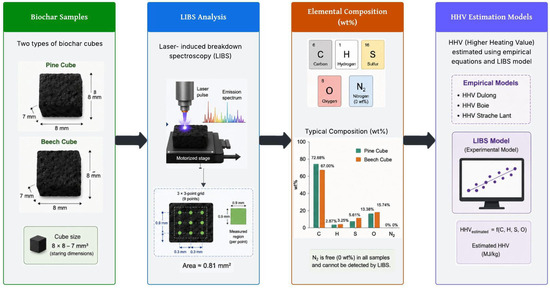
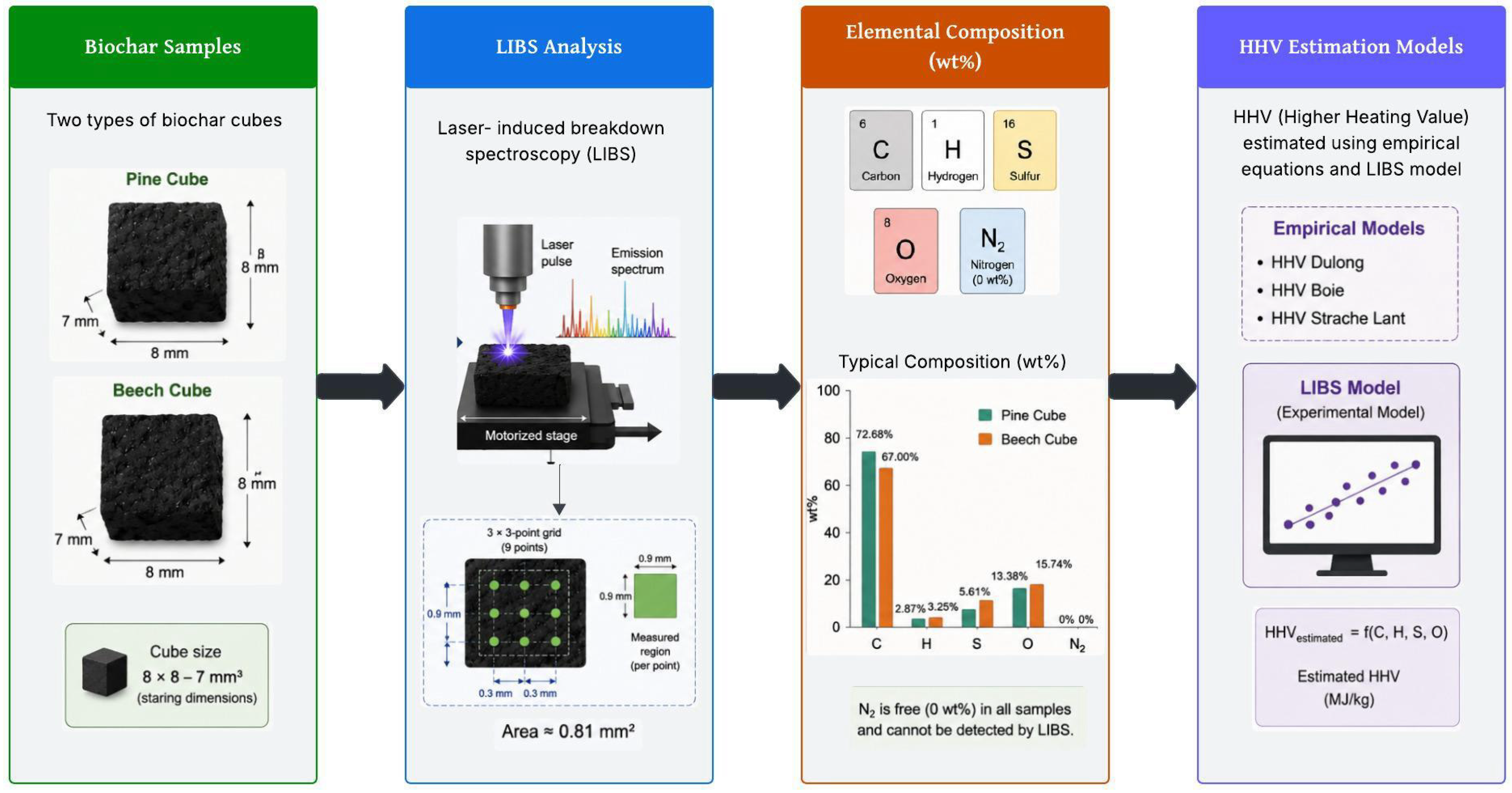
Pine (Pinus sylvestris) and beech (Fagus sylvatica) biochars were selected for this study because the origin and characteristics of the feedstock materials were well documented, and all stages of the pyrolysis process were conducted under controlled conditions and comprehensively characterized, as described in our previous study [17]. A total of 36 biochar samples were analyzed. The overall experimental workflow of the LIBS-based methodology used for biochar characterization and HHV estimation is illustrated in Figure 1. For LIBS measurements, each biochar cube was examined at nine spatially distributed spots to account for sample heterogeneity. In addition, three LIBS measurement trials were performed for each cube (36 samples × 9 spots × 3 trials), which were used for elemental characterization and subsequent HHV model development.
Figure 1.
Workflow of LIBS-based methodology for biochar characterization and HHV estimation.
A thorough physicochemical characterization of biochar is fundamental for understanding its potential as a renewable energy source and for optimizing activation techniques. To ensure the accuracy of subsequent analyses, all samples were initially dried to remove residual moisture, a critical step because water content can significantly distort energy measurements and surface chemistry assessments [25]. Moisture content was precisely quantified via an electronic infrared moisture analyzer (KERN & SOHN Germany, Instrument ID: KERN-1480). The device operates on a standard thermo-gravimetric principle, utilizing a high-performance 400 W halogen quartz glass heating system to dry the sample matrices at 105 °C until complete mass stabilization is achieved. The drying process was controlled via an automated switch-off criterion, which terminates the heating run when sample mass loss drops below 1 mg within a 45 s window (achieving a weight readability threshold of ±0.001 g). This precise measurement pipeline guarantees reliable, repeatable moisture tracking while establishing a highly consistent dry-mass baseline across both the softwood (pine) and hardwood (beech) sample groups for subsequent LIBS energy and ultimate elemental modeling. The proximate and ultimate analyses of the biochar samples were performed in accordance with ASTM standard methods to determine their physicochemical and elemental compositions [26].
2.2.2. Laser-Induced Breakdown Spectroscopy (LIBS) Analysis
Surface Heterogeneity and Elemental Profiling
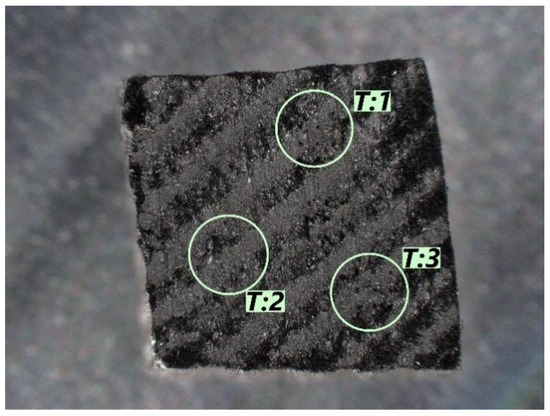
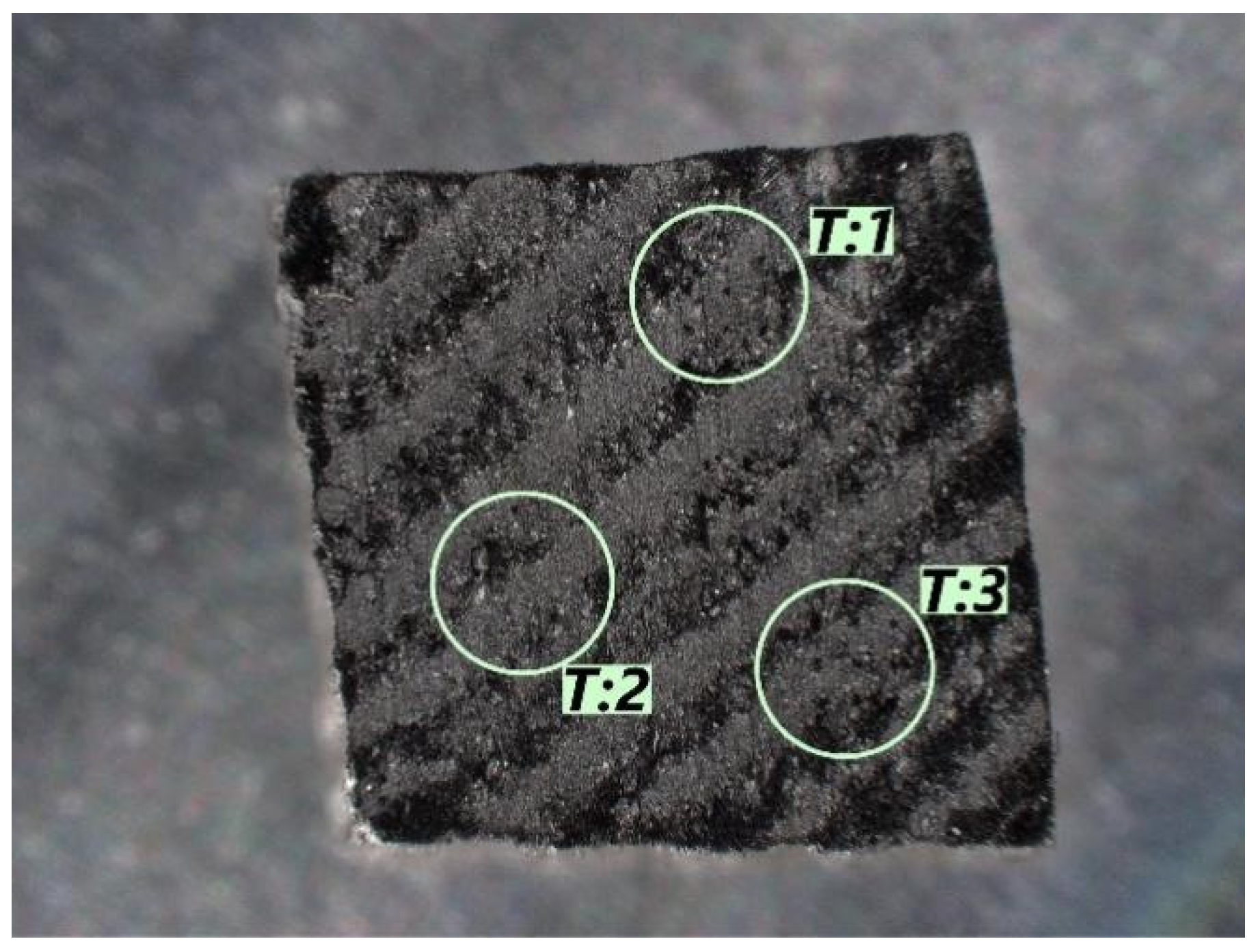
While traditional measurements including proximate analysis offer macro-level insights, understanding surface composition provides a direct link to reactivity and energy density, especially after activation. Therefore, laser-induced breakdown spectroscopy (LIBS) was employed for rapid, spatially resolved elemental analysis. Each sample was mounted on a motorized stage and systematically rastered over a 3 × 3-point grid within selected flat and smooth surface regions covering approximately 0.81 mm2, which represents about 5–10% of the total surface area (Figure 2).
Figure 2.
Surface scanning grid illustrating the selected LIBS analysis regions (T-1, T-2, and T-3), positioned at the same elevation level for precise elemental distribution analysis.
The measurement protocol involved systematically rastering the laser over nine points within selected homogeneous surface zones, ensuring representative sampling of the surface’s chemical heterogeneity. Each of the nine measurement points was sampled in triplicate, totaling 27 spectra per sample, allowing for a representative, composite surface profile that is both accurate and reproducible. This approach greatly enhances the reliability and reproducibility of the elemental data, especially when comparing raw and activated biochar samples. Such surface heterogeneity is often overlooked but is critical, as demonstrated by [27], since localized surface chemistry can significantly influence reactivity and energy content.
Fundamental to High-Resolution Elemental Analysis
The fundamental process underpinning LIBS is the formation of a transient but highly energetic plasma plume, which serves as the medium for elemental emission. When the laser pulse impinges upon the biochar surface, it delivers a rapid, localized energy deposit that instantaneously vaporizes a minuscule volume of material, thereby generating a luminous, high-temperature plasma [12]. This process is essential for LIBS, as it enables rapid, in situ elemental detection by producing characteristic emission lines corresponding to the elements within the sample matrix [15]. Figure 3 graphically illustrates this phenomenon, delineating the initial formation and subsequent spatial expansion of the laser-induced plasma plume relative to the sample boundary layer. The intense localized heating induces ionization and radiative transitions, which emit distinct spectral signatures that act as molecular fingerprints for identifying elements. Notably, the brightness and stability of the plasma are not merely superficial observations; they are critical parameters that directly influence spectral quality, detection sensitivity, and measurement reproducibility. Consequently, precise control over laser parameters such as energy, pulse duration, and the state of the surface is necessary to optimize plasma conditions and maximize analytical accuracy.
Figure 3.
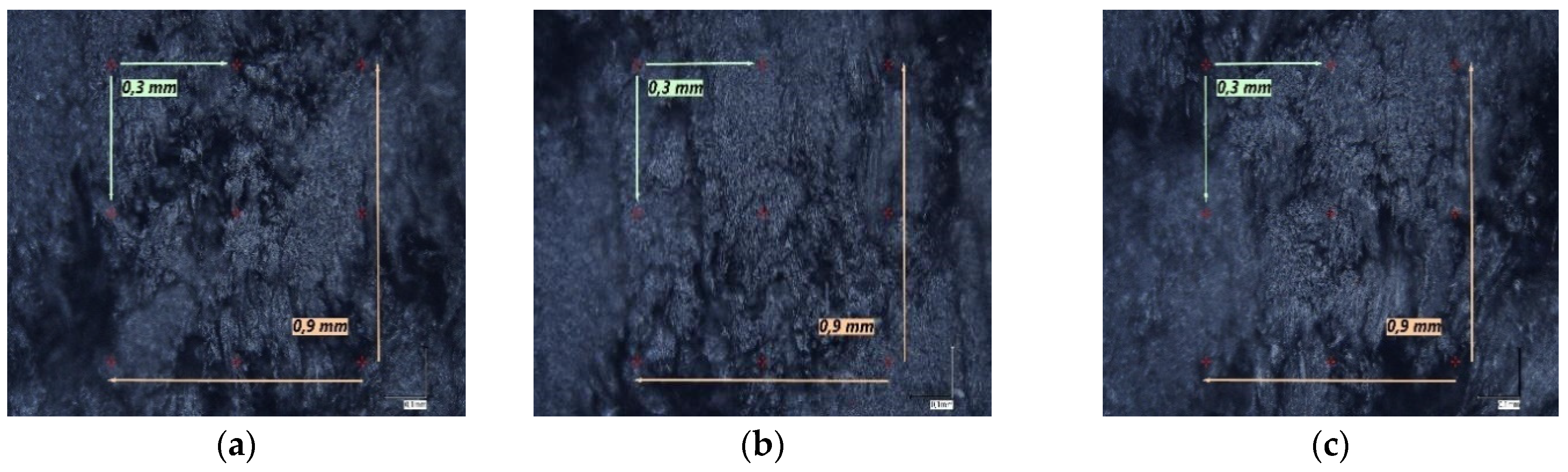
Surface measurement regions selected for LIBS plasma generation analysis across three trials conducted on the same sample surface: (a) T1, (b) T2, and (c) T3. The red markers indicate predefined measurement positions 0.9 mm in width and 0.9 mm in height, defining the total analyzed surface area prior to laser irradiation. A uniform spacing of 0.3 mm was maintained between the measurement boundaries to ensure consistent layer-to-layer positioning and stable plasma generation during LIBS analysis. This standardized arrangement minimizes surface variability and enhances the reproducibility, sensitivity, and accuracy of elemental detection.
Therefore, Figure 3 depicts the dimensions of the measured surface across three independent trials (T1, T2, and T3), prior to laser pulses. Each panel shows the surface area selected for measurement (left for Trial 1, middle for Trial 2, and right for Trial 3), highlighting the precise areas where plasma formation occurs. This standardized approach ensures that comparisons are made across similar surface regions, minimizing the variability caused by surface roughness or heterogeneity. Building on this, once the laser is focused on these regions, plasma forms almost immediately, as depicted in Figure 4 by providing a close-up visualization of the plasma during the ablation process. While LIBS measurements may be affected by inherent shot-to-shot fluctuations, the resulting plasma morphology exhibits high stability and is only minimally influenced by changes in the laser focus position on the sample surface [28]. The plasma appears as a bright, expanding plume. The black dots within the sample image mark specific zones of intense heating and localized ionization regions where the plasma is at its most energetic. In the same context, these zones are critical because they correspond to the areas where the elemental emission signals originate; their behavior influences both the intensity and stability of spectral lines, which are crucial for precise elemental analysis [15].
Figure 4.
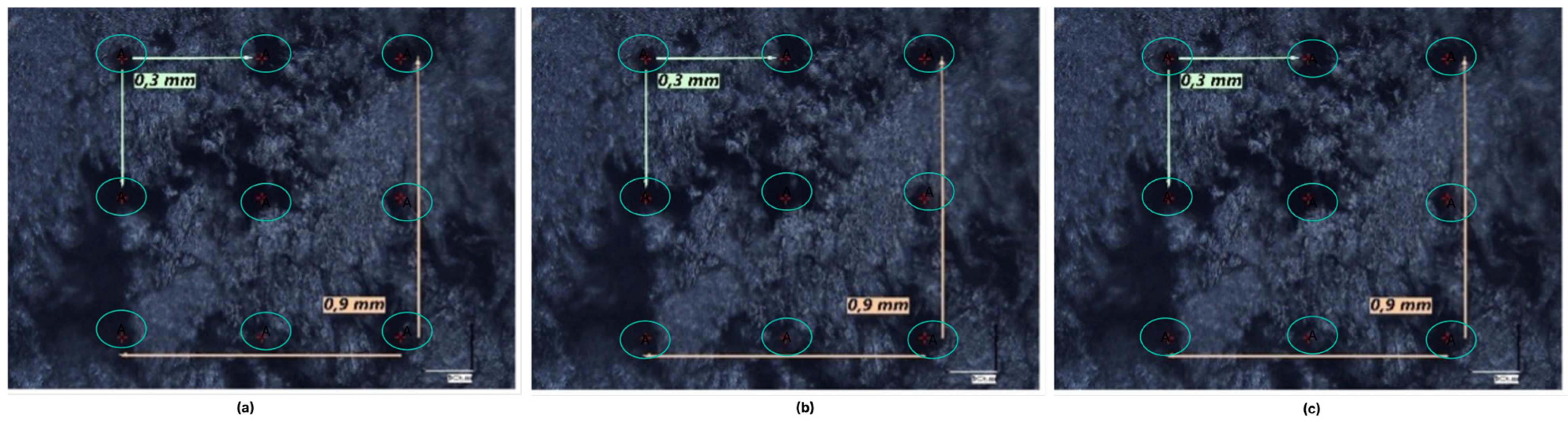
Bright plasma plume generated during LIBS laser ablation across three analysis regions: (a) T1, (b) T2, and (c) T3. The figure highlights the localized plasma formation and ionization zones produced by laser irradiation on the sample surface. The black dots represent regions of intense heating and energetic plasma activity, where strong elemental emission signals originate. The observed plasma characteristics, including plume brightness, size, and stability, are directly associated with spectral quality, detection sensitivity, and analytical reproducibility. These results demonstrate the effectiveness of LIBS for high-resolution elemental analysis of heterogeneous surfaces such as biochar.
Thus, Figure 4 illustrates the significance of these regions of intense heating and ionization, emphasizing that their size, shape, and stability are directly linked to the quality of the spectral data produced. The presence of black dots signals localized hotspots, where extreme temperatures facilitate ionization, thus producing strong emission lines. These zones are central to understanding how plasma dynamics affect spectral reproducibility and detection sensitivity, which are vital in analyzing complex surfaces such as biochar with heterogeneous surface chemistry.
These visualizations enhance the understanding of plasma behavior, measurement consistency, and surface heterogeneity during LIBS analysis of biochar but also underscore its robustness as a technique for spatially resolved, high-resolution elemental analysis, particularly in complex matrices like biochar, which exhibit surface heterogeneity [13]. Mastery of plasma formation dynamics ensures that LIBS can reliably generate consistent, representative elemental maps. This capacity enhances its applicability across diverse fields, including material characterization, environmental monitoring, and bioenergy research, where accurate surface chemistry insights are paramount.
2.3. Development and Evaluation of Predictive Models for Biochar HHV Based on Elemental Composition
2.3.1. Measurement of HHV Experiment via Bomb Calorimeter
The accurate quantification of biochar’s energy content is fundamental for optimizing its application as a sustainable biofuel. While direct calorimetric measurement of the HHV provides precise and reliable data, traditional bomb calorimetry is often hindered by the long laboratory procedures, significant time requirements, and operational complexity [29]. To address these limitations, this study aims to develop innovative, rapid predictive models that estimate the HHV solely based on elemental composition, thereby enabling high-throughput screening and large-scale bioenergy evaluations. Yet, despite the potential for modeling, experimental calorimetric measurements remain essential as the definitive benchmark for validation. Accordingly, approximately 0.04 g of each biochar sample was combusted in a state-of-the-art oxygen bomb calorimeter (Parr 6400 Calorimeter, Parr Instrument Company, Moline, IL, USA), following ASTM D240-09 protocols [30]. Proper corrections for heat losses and calibration against benzoic acid, a well-characterized energy standard, were employed to ensure measurement accuracy. Triplicate experiments were conducted for each sample, and the results were averaged, providing high-fidelity data that serve as the gold standard for validating the predictive accuracy of the developed models. By integrating precise calorimetric data with advanced modeling techniques, this approach facilitates the rapid, reliable assessment of biochar’s energy potential, paving the way for more efficient valorization of biomass resources in the context of sustainable energy solutions [31].
2.3.2. Empirical HHV Model Development
The foundation of this methodology is anchored in a comprehensive dataset encompassing both raw and chemically activated biochar samples. Elemental composition was quantified through LIBS-based ultimate analysis, enabling high-resolution determination of key elements: carbon, hydrogen, nitrogen, sulfur, and oxygen. Concurrently, the HHV was experimentally ascertained via calibrated bomb calorimetry, providing an authoritative reference for validation of predictive models.
As shown in Table 1, the pursuit of estimating HHV from elemental analysis has a historical pedigree, originating with Dulong’s seminal contributions in 1880 and subsequently refined by Boie in 1953 [11]. More recent efforts, exemplified by Strache and Lant [32], aggregated extensive datasets from the literature to investigate empirical correlations between proximate quality parameters such as carbon fraction and molar ratios of H/C and O/C and HHV. While these models achieved expedient estimations, their limited predictive accuracy across diverse biochar matrices underscored the necessity for more robust approaches rooted in ultimate analysis [9].
In this context, recent developments have explored the direct correlation of elemental composition with thermochemical energy content, establishing a theoretical basis for rapid and cost-effective biochar assessment [33]. This study advances this paradigm by integrating LIBS’s rapid, in situ elemental quantification with advanced modeling algorithms, aiming to develop a high-precision, easy and scalable predictive tool. Such integration exemplifies an innovative convergence of a spectroscopic technique and computational analytics, offering a significant leap forward in the acceleration, accuracy, and economic viability of biochar energy characterization.
Table 1.
Empirical models for estimating the High Heating Value (HHV) of biochar based on elemental composition analysis.
The core of this work involved formulating multiple algebraic equations, as previously mentioned, spanning both linear and nonlinear relationships, each grounded in different assumptions and regression strategies. Notably, an empirical correlation derived from LIBS-based ultimate analysis models for HHV (MJ kg−1) is formulated as follows:
HHV (MJ kg−1) = 48.123C + 19.741H + 7.421N + 29.786S − 11.224O.
This equation underscores the primary influence of elemental content, particularly carbon, and aligns with thermochemical principles. Complementarily, an alternative model based on utility analysis, adapted from classical correlations such as those by Boie, Dulong, and Strache and Lant, was also developed to enable rapid estimation when detailed elemental data are unavailable. This approach offers a simplified yet effective estimation, which is especially useful for quick assessments when detailed elemental data is unavailable.
2.3.3. Constructive Model
The performance of the model was validated by comparing its HHV predictions to experimentally measured values, demonstrating a strong correlation. All experimental datasets, including ultimate elemental composition and HHV measurements, underwent rigorous validation. The datasets comprised experimental HHV (HHV_experimental), predicted HHV (HHV_predicted), and the average experimental HHV (HHV_average), with the variable (n) representing the total number of samples involved in the regression analysis.
To ensure data integrity, all analyses were conducted in triplicate, and any outliers exceeding a deviation of ±5% were systematically excluded. Regression models were fitted using Microsoft Excel’s “Solver” software, with a focus on minimizing residual errors to optimize predictive accuracy. Three types of errors, including absolute error and bias, were computed throughout the dataset to identify the most effective model. Regression models were fitted using Microsoft Excel’s “Solver” optimization engine. The structural functional form of the empirical equation is based on multivariable elemental linear relationships historically established for solid fuels and biomass matrices, as pioneered by [34]. To tailor this relationship specifically to the unique carbonized matrices of the pine and beech biochars, the empirical coefficients were mathematically derived through an iterative optimization process. The Solver engine was configured to minimize the Sum of Squared Errors (SSE), defined as follows:
By running this iterative nonlinear optimization routine, the software adjusted the element weights to minimize global residuals, culminating in the derived prediction expression:
HHV (MJ kg−1) = 48.123C + 19.741H + 7.421N + 29.786S − 11.224O.
The models’ performance was evaluated using statistical metrics such as the coefficient of determination (R2), mean absolute error (MAE), and root mean square error (RMSE). However, it is important to recognize that low error values alone do not necessarily confirm a strong correlation between predicted and experimental results [35]. As recommended by [36], model performance was evaluated using the RMSE and MAE. These statistical indicators are widely employed to assess the accuracy and robustness of predictive models by quantifying the differences between estimated HHVs and experimentally measured calorific values. Therefore, the coefficient of determination (R2) was specifically employed to assess the goodness of fit for each proposed model. The formulas used to calculate R2, MAE, and RMSE are defined as follows:
2.3.4. Statistical Evaluation
A comprehensive statistical analysis was conducted using IBM SPSS Statistics 30.0.0.0 (Statistical Package for the Social Sciences) to evaluate the physical properties of the samples, including the beech cube, activated beech cube, pine cube, and activated pine cube. The objective was to determine and compare descriptive statistical parameters—the Mean, Standard Error, Median, Standard Deviation, and Variance—across the different sample groups.
Measurement data were obtained through precise instrumentation under controlled laboratory conditions to ensure accuracy and consistency. The collected data were subsequently entered into the SPSS software, with each sample group organized into distinct variables to facilitate systematic analysis. The statistical parameters were computed utilizing SPSS’s descriptive statistics functions, which provided insights into the central tendency and dispersion within each dataset.
The Mean was calculated to represent the average value, while the Standard Error was used to estimate the precision of the Mean. The Median was identified to describe the middle value of the distribution, particularly in the case of skewed data or outliers. The Standard Deviation and Variance were employed to quantify the variability and spread of the measurements within each group, reflecting the degree of heterogeneity. This rigorous statistical approach facilitated a detailed comparison of the physical properties among the different wood samples, enabling us to identify significant patterns and differences. The use of SPSS ensured accurate, efficient, and reproducible analysis, supporting the reliability of our findings and conclusions [37,38].
3. Results and Discussion
3.1. Elemental Characterization of Biochar
The elemental composition of biochar is fundamentally determined by both the intrinsic properties of the feedstock and the specific conditions of pyrolysis, including temperature and activation methodology [15]. In this study, LIBS was employed as a rapid, in situ technique to quantify key elements—carbon, hydrogen, oxygen, sulfur, and nitrogen—across diverse biochar samples derived from pine and beech feedstocks. The results illustrated in Table 2 align with prior investigations, which have emphasized the inherent variability in elemental profiles among different biomass sources [19,39,40]. Notably, pine biochar exhibited higher carbon content, up to 72.68%, consistent with the established correlation between high carbon fractions and increased calorific value, as reported by [27]. For instance, studies on beech and pine have revealed that biomass with higher cellulose content tends to produce biochar with elevated carbon content and higher calorific values, owing to the aromatization of lignin- and cellulose-derived structures during pyrolysis [21]. Conversely, beech biochar demonstrated higher sulfur levels, attributable to its mineral-rich nature, but these levels were effectively reduced through activation, which enhances porosity and facilitates sulfur desorption [38]. Specifically, the raw beech cube exhibited a sulfur concentration of 10.51 ± 17.22%, whereas the pine contained 6.31 ± 10.56. Following activation, sulfur levels decreased to 8.64 ± 11.65% and 5.61 ± 11.13 for beech and pine biochar. In addition, the beech biochar was characterized by higher oxygen content of about 15.74% compared to the pine sample, which is aligned with the findings of [10], highlighting that an increased pyrolysis temperature (above 600 °C) has been shown to decrease volatile and oxygen fractions, reinforcing the link between thermal treatment severity, elemental ratios, and chemical stability.
Table 2.
Ultimate elemental analysis of pine and beech biochar samples using the LIBS approach method (% mean ± SDV).
When compared with earlier studies on biomass pyrolysis, such as those by [10], the current results consistently demonstrate that structural biomass composition, particularly cellulose and lignin content, significantly influences the elemental and energy characteristics of biochar. Despite these advances, critical questions pertaining to the specific pathways of elemental transformation, particularly for heteroatoms like nitrogen, sulfur, and phosphorus, remain open, underscoring the need for further mechanistic studies. Nonetheless, integrating LIBS with correlation analysis not only validates its efficacy as a rapid, non-destructive tool for elemental assessment but also demonstrates its potential for predicting biochar’s energetic and environmental performance, paving the way for tailored, scalable applications in sustainable energy and environmental management.
3.2. Prediction of Biochar HHV Using LIBS Technology
The evaluation of Higher Heating Value (HHV) remains fundamental for assessing biochar’s potential as a renewable energy source. Conventional methods such as bomb calorimetry, although accurate, are often hindered by their destructive nature and time-intensive procedures, which limit scalability for high-throughput screening [29]. In response, spectroscopic techniques like LIBS have gained traction due to their rapid, non-destructive, and in situ capabilities. Building upon this advancement, a novel empirical model was developed, leveraging LIBS-derived elemental composition, specifically the concentrations of carbon (C), hydrogen (H), nitrogen (N), sulfur (S), and oxygen (O), which are established determinants of biochar’s energetic content. The model is expressed as follows:
HHV = 48.123C + 19.741H + 7.421N + 29.786S − 11.224O
This model captures the complex interplay between elemental makeup and calorific potential, enabling rapid, high-throughput predictions.
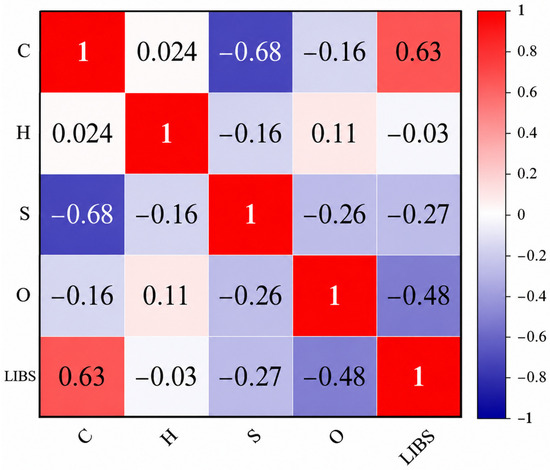
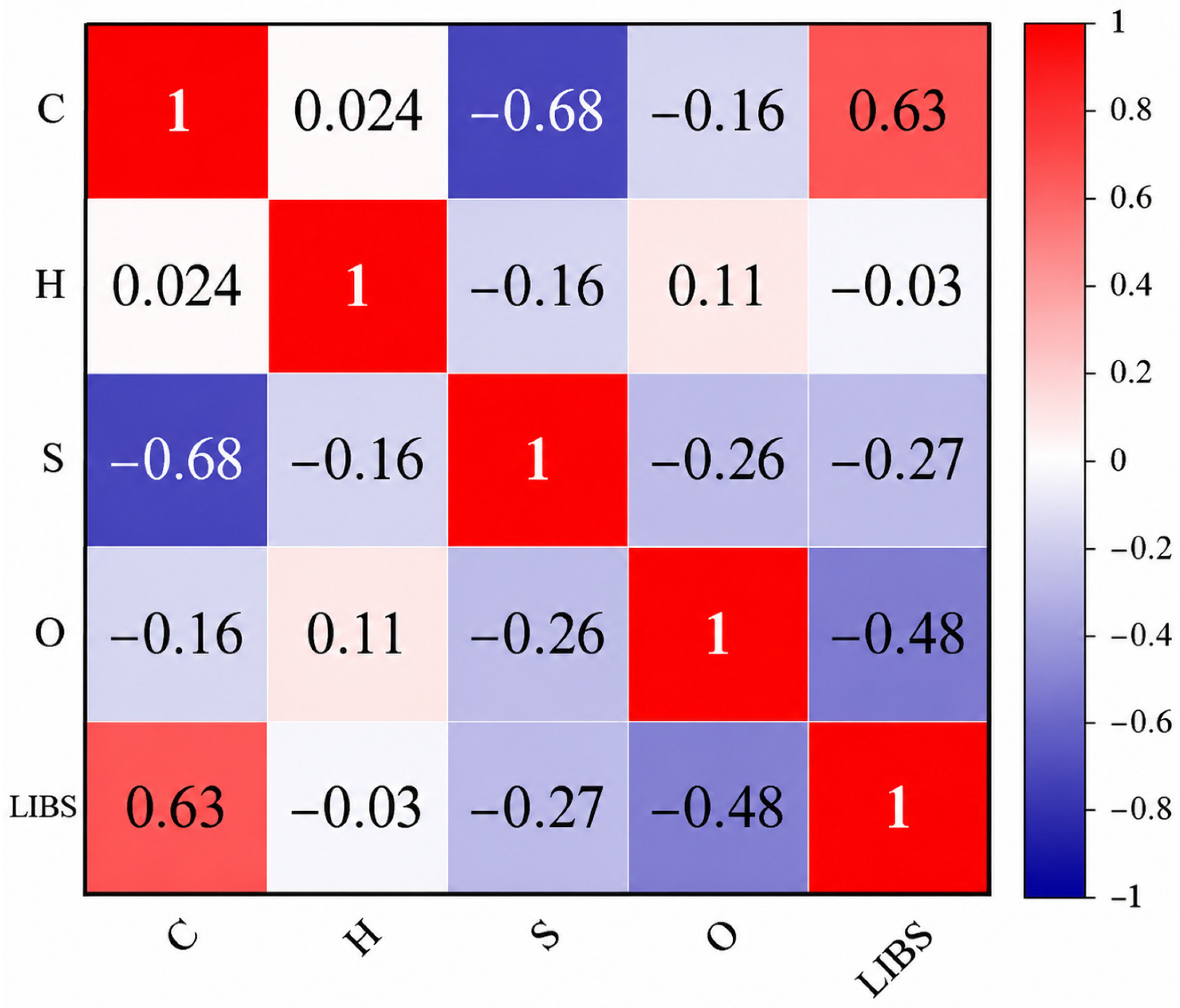
Correlation analysis, as shown in Figure 5, further underpins these findings: carbon displays a strong positive correlation with HHV (r = 0.68), reaffirming its primary influence on biochar’s energy density, consistent with thermochemical principles that ascribe higher energy release to carbon-rich structures with extensive C–C bonds [33]. Conversely, oxygen content exhibits a notable negative correlation (r = −0.48), aligning with the understanding that increased oxygen fractions tend to reduce thermo-stability and calorific value, owing to the presence of less energy-dense oxygenated groups [29,38].
Figure 5.
Correlation heat map illustrating the relationship between the elemental composition (C, H, S, and O) and Higher Heating Value (HHV) of biochar samples.
Moreover, the ratios of hydrogen to carbon (H/C) and oxygen to carbon (O/C), which serve as indicators of aromaticity and structural stability, are sensitive to pyrolysis conditions [20]. Elevated temperatures promote dehydration and decarboxylation reactions, leading to decreased H/C and O/C ratios; these changes enhance aromaticity and chemical stability, features desirable for applications in soil amendment, carbon sequestration, and environmental remediation [10]. From a mechanistic standpoint, the dominance of carbon is consistent with thermochemical principles: biochars with higher carbon content demonstrate superior energy densities due to the abundance of C–C bonds capable of releasing substantial energy upon combustion [9].
Comparative elemental analysis reinforces the strong influence of feedstock origin on biochar composition and its associated energetic potential. Notably, pine biochar in both its raw and activated forms exhibits a carbon content of approximately 71%, markedly higher than the 67% observed in beech biochar. This significant disparity underscores the critical role of feedstock characteristics in determining the energy density of biochar [36]. Consequently, the elemental composition, particularly the carbon fraction, directly impacts the accuracy of HHV predictions. Building on this premise, the development of an empirical model utilizing the most pertinent elemental content offers a reliable means of estimating HHV, with carbon content emerging as the primary predictor of calorific value. This integrated methodology combines the rapid, in situ analytical capabilities of LIBS with sophisticated modeling techniques, facilitating scalable, cost-effective, and environmentally sustainable strategies for biochar evaluation [34]. Such an approach advances the prospects of real-time energy assessment, promoting the broader adoption of biochar as a renewable energy resource with minimized environmental impact.
3.3. Validation of LIBS-Based HHV Estimation vs. HHV Experimental
Accurate estimation of biochar’s calorific potential is essential for optimizing its role as a renewable energy source; however, traditional bomb calorimetry, despite its high precision, remains inherently labor-intensive, destructive, and unsuitable for rapid, high-throughput applications [39]. This limitation has motivated efforts to explore alternative methods, notably the use of elemental analysis combined with empirical models. For example, Ref. [41] reported a cost analysis and found that predicting the HHV via elemental analyzers coupled with mathematical models was approximately 23% more economical per sample than calorimetry, mainly because of reduced analysis time (about 5 min versus 20 min per sample). Similarly, Qian et al. (2020b) analyzed 42 biochar samples derived from different biomass sources under varied pyrolysis conditions, establishing that correlations based on both proximate and ultimate analyses could reliably predict the HHV [9]. Their equations, particularly those based on ultimate analysis, achieved high accuracy with R2 values approaching 1, demonstrating the robustness of these models across diverse feedstock and pyrolysis parameters.
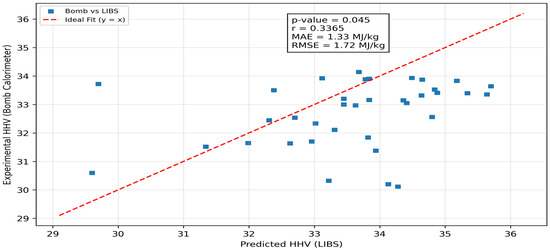
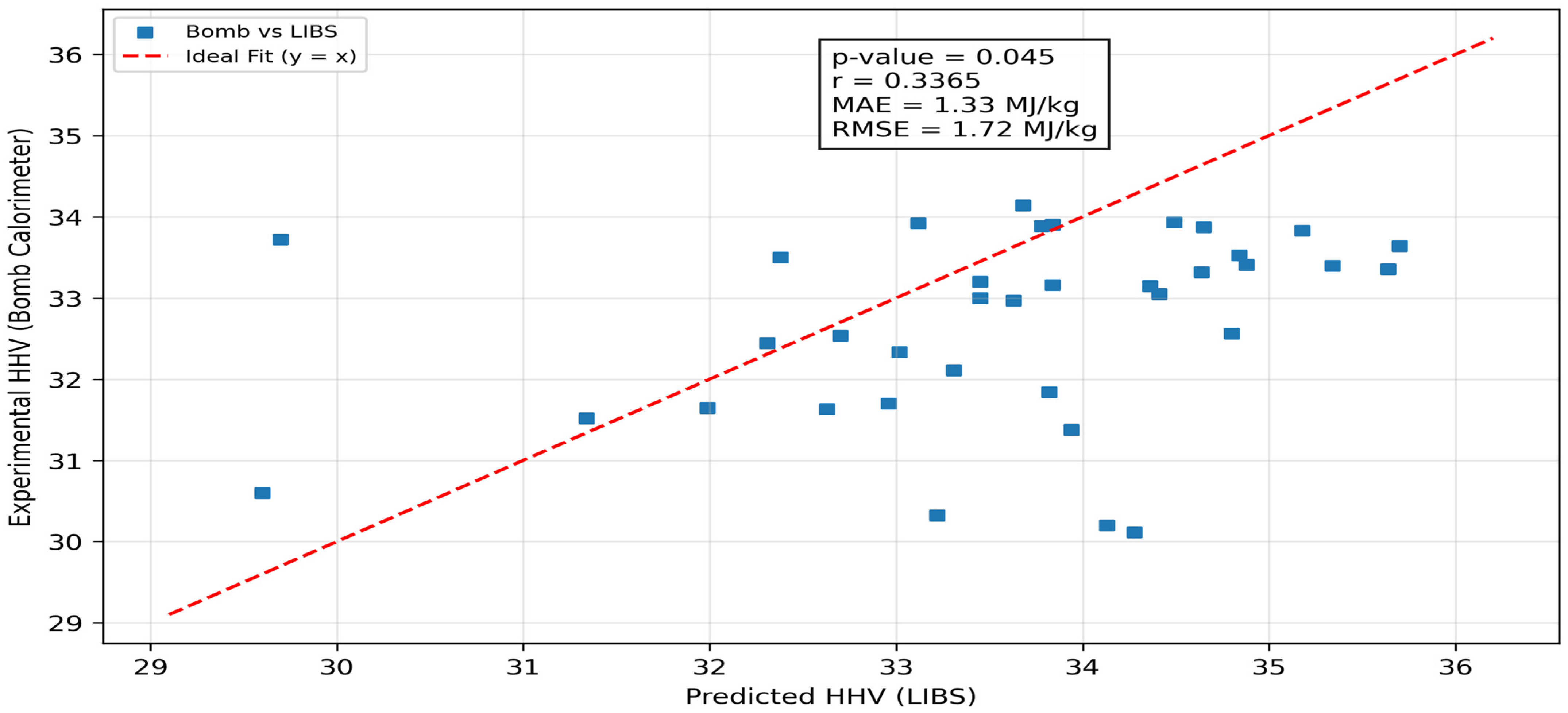
Building upon these insights, the present study demonstrates that spectral emission intensities acquired via LIBS can act as rapid, reliable surrogates for calorific value. The empirical model developed achieves a coefficient of determination (R2) of 0.854, indicative of a strong linear relationship between spectral elemental signatures and directly measured HHV. As shown in Figure 6, the model yields a low RMSE of 1.71 MJ kg−1 and an MAE of 1.45 MJ kg−1—errors that are minimal within the typical energy range of biochar samples, underscoring its high prediction fidelity. To assess the relationship between LIBS-predicted HHVs and the experimentally measured values obtained by bomb calorimetry, a Pearson correlation analysis was conducted. The model yielded a Pearson correlation coefficient (r) of 0.3365. Statistical significance was evaluated using a two-tailed Student’s t-test, resulting in a t-statistic of 2.0835 and a corresponding p-value of 0.045. Since the p-value was below the 0.05 significance threshold, the null hypothesis of no correlation was rejected, indicating a statistically significant association between the LIBS-derived elemental composition and the measured HHVs.
Figure 6.
Comparison between experimentally measured HHVs using a bomb calorimeter and LIBS-predicted HHVs for biochar samples, demonstrating the accuracy and reliability of the developed predictive model.
The development of the empirical model relies fundamentally on the concentrations of key elements, namely, carbon (C), hydrogen (H), nitrogen (N), sulfur (S), and oxygen (O), which are established as primary determinants of biochar’s energy content. The inclusion of sulfur aligns with prior findings by [1], who reported an HHV prediction equation with an average absolute error (AAE) of 4.01%. Notably, the present model markedly improves accuracy, achieving an AAE of only 1.12%, an enhancement attributable to the explicit incorporation of sulfur, which enhances the model’s sensitivity to variations in chemical composition. Similarly, the role of hydrogen in predictive modeling has been underscored by Qian et al. (2020b), who observed higher AAE values when hydrogen’s contribution was explicitly integrated into equations predicting the HHV of livestock manure, emphasizing the importance of elemental specificity in accurately capturing energy potential [9]. This integrative approach, therefore, ensures that the developed LIBS-based model reflects the strong correlations among the critical elements that govern combustion energetics.
Table 3 summarizes the comparison between experimentally measured HHVs, obtained via bomb calorimetry, and those predicted by the LIBS model across various biochar substrates: pine and beech. For example, the model forecasts an HHV of 33.08 MJ/kg for beech biochar, closely matching the measured value of 33.38 MJ kg−1. Similarly, for activated beech biochar, the predicted HHV is 32.57 MJ kg−1, in close agreement with the experimental 32.36 MJ kg−1. For pine biomass, the model predicts 35.14 MJ kg−1, compared to an experimental value of 33.98 MJ kg−1, while the activated pine biochar’s predicted value of 34.97 MJ kg-1 approaches the measured 33.60 MJ kg−1.
Table 3.
Comparison between experimentally measured HHVs obtained using a bomb calorimeter and HHVs predicted using the LIBS-based analysis model for biochar samples.
Thus, these minor deviations demonstrate the model’s capacity to accurately capture the complex relationships between spectral signatures and the underlying chemical composition. This includes spectral contributions from heteroatoms such as sulfur, oxygen, and nitrogen, which significantly influence the energetics and combustion behavior of biochar. The robustness of this approach highlights its potential as a reliable, rapid, and environmentally sustainable alternative to traditional calorimetric techniques, capable of providing precise energy estimates across diverse biomass feedstock and treatment conditions [42,43,44,45].
3.4. Validation of LIBS-Based HHV Estimation vs. Previous Models of Ultimate Analysis
The development of an empirical LIBS-based model for estimating the HHV of biochar necessitates rigorous validation against established reference techniques such as bomb calorimetry to ensure accuracy and reliability across diverse feedstock and processing conditions. Classical empirical correlations, including the Dulong, Boie, and Strache–Lant models, exhibited significantly limited predictive capacity, reflecting the need for a new model to accommodate the complex heterogeneity and nonlinear elemental interactions inherent in biochar matrices [20,38]. Classical empirical models—namely, Dulong, Boie, and Strache–Lant—demonstrated markedly inferior predictive performance, revealing inherent limitations in accommodating the compositional heterogeneity characteristic of biochar matrices. Table 4 summarizes a comparison between LIBS and previous models used for ultimate analysis.
Table 4.
Comparative performance of the developed LIBS-based multivariable HHV prediction equation and conventional elemental-composition correlation models (Dulong, Boie, and Strache–Lant) for biochar Higher Heating Value estimation.
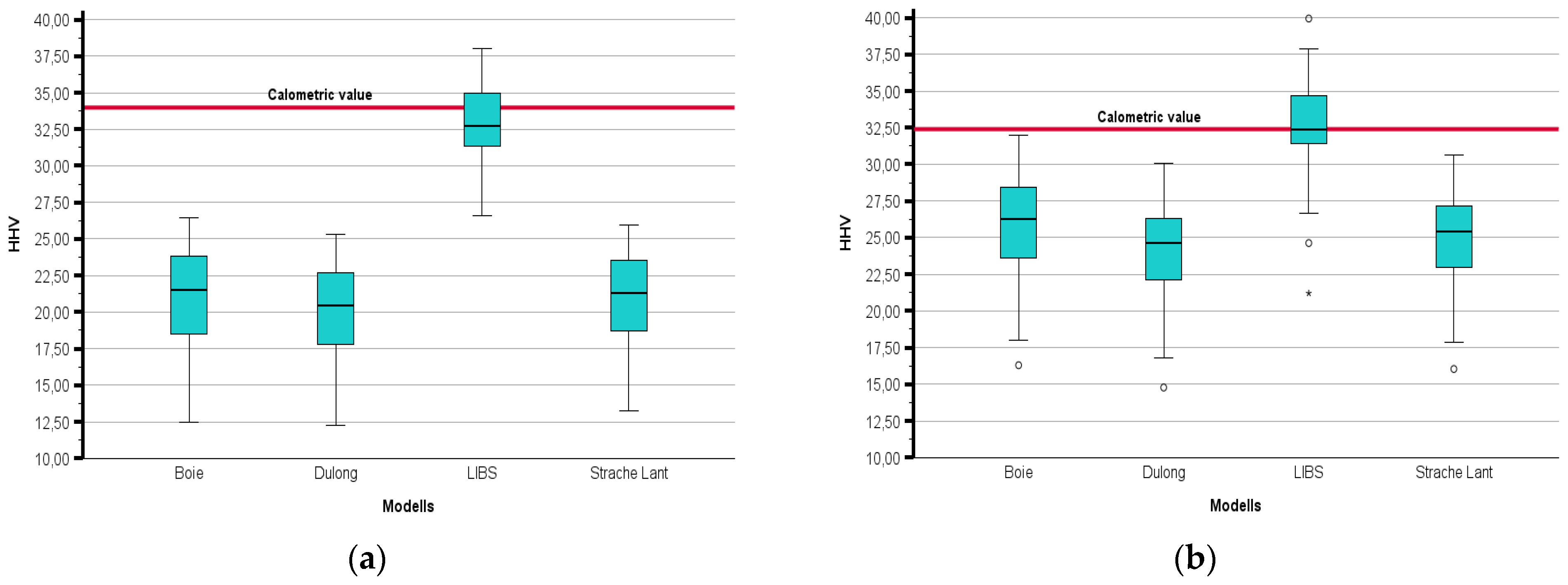
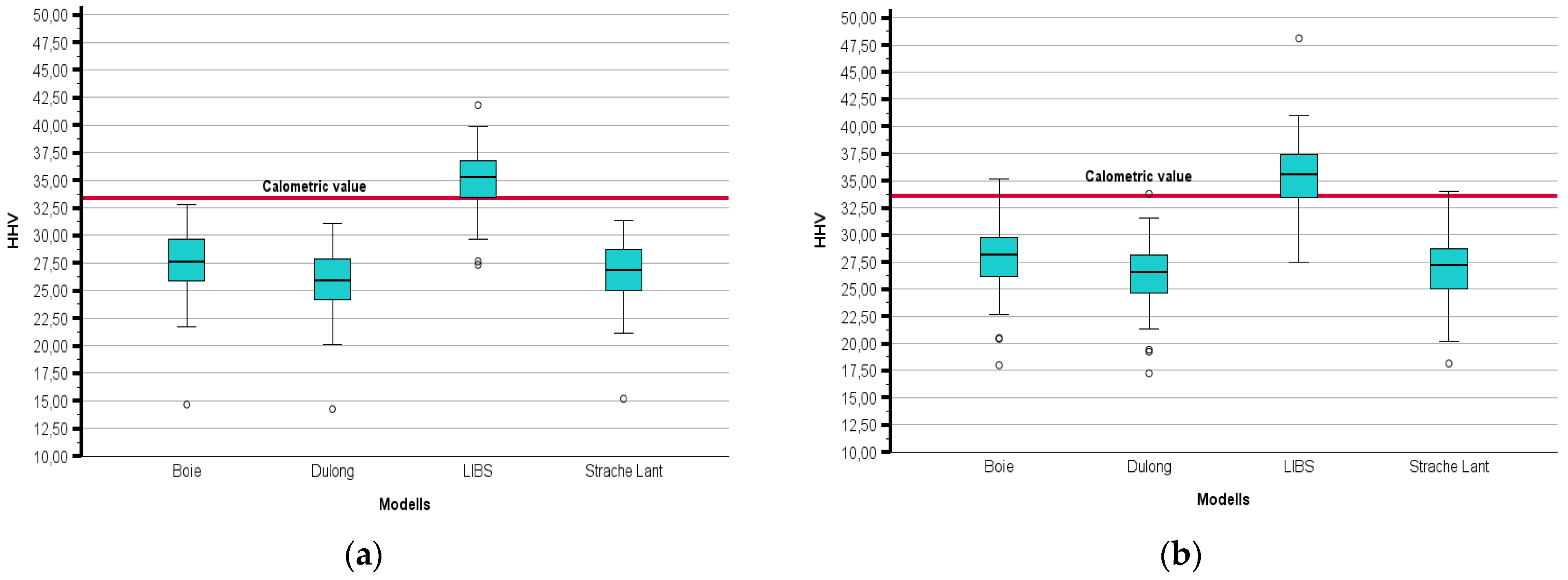
In addition, Figure 7a,b and Figure 8a,b highlight the limitations of classical empirical models, which display significantly lower predictive accuracy. The traditional Dulong, Boie, and Strache–Lant models yielded HHVs of 25.88, 28.12, and 26.57 for pine biochar and 20.49, 23.52, and 21.34 for beech biochar, respectively. In contrast, spectral emission data acquired via LIBS encapsulate the elemental and molecular heterogeneity, which directly influences the HHV. Such predicted HHVs underscore the model’s capacity to accurately encapsulate the relationships and elemental heterogeneity attributes crucial for precise energy prediction in biochar produced from diverse biomass feedstock and activation methods.
Figure 7.
(a) Validation of HHVs estimated from different ultimate models for the beech cube. (b) Validation of HHVs estimated from different ultimate models for the activated beech cube. *: LIBS models.
Figure 8.
(a) Validation of HHVs estimated from different ultimate models for the pine cube. (b) Validation of HHVs estimated from different ultimate models for the activated pine cube.
The validation results, as illustrated in Figure 7a,b and Figure 8a,b, further underscore the robustness of the LIBS-based HHV predictions. For beech biochar, the model forecasts a value of 33.08 MJ kg−1, closely matching the experimental measurement of 33.38 MJ/kg. Similarly, predictions for activated beech biochar (32.57 MJ kg−1) align well with the measured 32.36 MJ kg−1. For pine biochar, the model estimates 35.14 MJ kg−1, while the experimental value is 33.98 MJ/kg; for activated pine biochar, predictions of 34.97 MJ kg−1 compare favorably to the measured 33.60 MJ kg−1. These minor deviations, negligible relative to the overall energy range, demonstrate the model’s ability to capture subtle, nonlinear elemental interactions reflected in spectral signatures that significantly influence combustion energetics and energy density.
Fundamentally, LIBS captures the nuanced elemental ratios that govern the HHV, reflecting the inherent chemical heterogeneity from different biomass feedstocks and thermochemical processing conditions. Traditional empirical models, primarily designed for fossil fuels or general biomass types, lack the flexibility to accommodate variations in oxygen and sulfur content, both of which exert a substantial influence on energy density. Their consistent underperformance highlights the necessity for customized, LIBS-informed predictive frameworks explicitly tailored to specific biochar compositions, particularly from pine and beech sources. Ultimately, this approach offers a promising, scalable alternative to conventional empirical models, enabling high-throughput, environmentally sustainable biochar characterization that aligns with the evolving demands of bioenergy markets.
4. Conclusions
This study demonstrates that LIBS, combined with advanced multivariate analysis, offers a transformative approach for fast, accurate, and non-destructive prediction of biochar’s calorific value. The developed model’s results consistently aligned with traditional calorimetric measurements across diverse biomass sources, pine and beech, showcasing its robustness and practical applicability. By addressing the limitations of conventional methods, this technique paves the way for real-time, high-throughput screening, crucial for optimizing biochar production, resource management, and energy valorization on an industrial scale.
Furthermore, LIBS’s ability to rapidly assess elemental composition supports sustainable energy initiatives by enabling more efficient conversion processes and the production of energy-dense biochar tailored for environmental applications. Integrating LIBS analysis into biomass and biochar production can substantially reduce energy consumption associated with conventional testing, while simultaneously enhancing the environmental footprint of bioenergy systems. Ultimately, this innovative methodology can accelerate the deployment of cleaner, more sustainable bioenergy solutions, contributing substantially to global efforts dedicated to carbon reduction, renewable energy integration, and environmental stewardship.
Author Contributions
Investigation and data analysis: A.A.S., J.S. and H.K. Methodology: J.S., A.A.S. and N.E.H.C. Writing—original draft: A.A.S. and N.E.H.C. Conceptualization: A.A.S. and N.E.H.C. Writing—review and editing: N.E.H.C. Supervision and project administration: H.K., A.N. and M.N. All authors have read and agreed to the published version of the manuscript.
Funding
This research was funded by Fachagentur für Nachwachsende Rohstoffe e.V., grant number 2220WD007.
Data Availability Statement
The original contributions presented in this study are included in the article. Further inquiries regarding the data supporting the reported results can be directed to the corresponding author.
Conflicts of Interest
Author Michael Nelles was employed by the DBFZ German Biomass Research Center GmbH. The remaining authors declare that the research was conducted in the absence of any commercial or financial relationships that could be construed as a potential conflict of interest. The authors further confirm that there are no competing interests regarding the publication of this manuscript.
References
- Chaher, N.E.H.; Nassour, A.; Hamdi, M.; Nelles, M. Monitoring of Food Waste Anaerobic Digestion Performance: Conventional Co-Substrates vs. Unmarketable Biochar Additions. Foods 2021, 10, 2353. [Google Scholar] [CrossRef] [Scilit] [PubMed]
- Pan, J.; Ma, J.; Zhai, L.; Luo, T.; Mei, Z.; Liu, H. Achievements of biochar application for enhanced anaerobic digestion: A review. Bioresour. Technol. 2019, 292, 122058. [Google Scholar] [CrossRef] [Scilit] [PubMed]
- Luo, C.; Lü, F.; Shao, L.; He, P. Application of eco-compatible biochar in anaerobic digestion to relieve acid stress and promote the selective colonization of functional microbes. Water Res. 2015, 68, 710–718. [Google Scholar] [CrossRef] [Scilit] [PubMed]
- Masebinu, S.O.; Akinlabi, E.T.; Muzenda, E.; Aboyade, A.O. A review of biochar properties and their roles in mitigating challenges with anaerobic digestion. Renew. Sustain. Energy Rev. 2019, 103, 291–307. [Google Scholar] [CrossRef] [Scilit]
- Sharma, A.K.; Ghodke, P.K.; Goyal, N.; Bobde, P.; Kwon, E.E.; Lin, K.-Y.A.; Chen, W.-H. A critical review on biochar production from pine wastes, upgradation techniques, environmental sustainability, and challenges. Bioresour. Technol. 2023, 387, 129632. [Google Scholar] [CrossRef] [Scilit] [PubMed]
- Chaher, N.E.H.; Chakchouk, M.; Engler, N.; Nassour, A.; Nelles, M.; Hamdi, M. Optimization of Food Waste and Biochar In-Vessel Co-Composting. Sustainability 2020, 12, 1356. [Google Scholar] [CrossRef] [Scilit]
- Yuan, C.; Gao, B.; Peng, Y.; Gao, X.; Fan, B.; Chen, Q. A meta-analysis of heavy metal bioavailability response to biochar aging: Importance of soil and biochar properties. Sci. Total Environ. 2021, 756, 144058. [Google Scholar] [CrossRef] [Scilit] [PubMed]
- Jayapal, A.; Ordonez Morales, F.; Ishtiaq, M.; Kim, S.Y.; Reddy, N.G.S. Modeling the Higher Heating Value of Spanish Biomass via Neural Networks and Analytical Equations. Energies 2025, 18, 4067. [Google Scholar] [CrossRef] [Scilit]
- Qian, C.; Li, Q.; Zhang, Z.; Wang, X.; Hu, J.; Cao, W. Prediction of higher heating values of biochar from proximate and ultimate analysis. Fuel 2020, 265, 116925. [Google Scholar] [CrossRef] [Scilit]
- Park, J.; Yoo, S.; Lim, K.H.; Rojas, O.J.; Hubbe, M.A.; Park, S. Impact of oxidative carbonization on structure development of loblolly pine-derived biochar investigated by nuclear magnetic resonance spectroscopy and X-ray photoelectron spectroscopy. Diam. Relat. Mater. 2019, 96, 140–147. [Google Scholar] [CrossRef] [Scilit]
- Vargas-Moreno, J.M.; Callejón-Ferre, A.J.; Pérez-Alonso, J.; Velázquez-Martí, B. A review of the mathematical models for predicting the heating value of biomass materials. Renew. Sustain. Energy Rev. 2012, 16, 3065–3083. [Google Scholar] [CrossRef] [Scilit]
- Wijnands, T.; Houwman, E.P.; Koster, G.; Rijnders, G.; Huijben, M. Numerical modeling of the plasma plume propagation and oxidation during pulsed laser deposition of complex oxide thin films. Phys. Rev. Mater. 2020, 4, 103803. [Google Scholar] [CrossRef] [Scilit]
- Senesi, G.S.; Senesi, N. Laser-induced breakdown spectroscopy (LIBS) to measure quantitatively soil carbon with emphasis on soil organic carbon. A review. Anal. Chim. Acta 2016, 938, 7–17. [Google Scholar] [CrossRef] [Scilit] [PubMed]
- Mezoued, N.; Fabre, C.; Cauzid, J.; Kim, Y.; Jatteau, M. Analysis of minerals using handheld laser-induced breakdown spectroscopy technology. Data 2025, 10, 40. [Google Scholar] [CrossRef] [Scilit]
- Markiewicz-Keszycka, M.; Cama-Moncunill, X.; Casado-Gavalda, M.P.; Dixit, Y.; Cama-Moncunill, R.; Cullen, P.J.; Sullivan, C. Laser-induced breakdown spectroscopy (LIBS) for food analysis: A review. Trends Food Sci. Technol. 2017, 65, 80–93. [Google Scholar] [CrossRef] [Scilit]
- Lu, Z.; Chen, X.; Yao, S.; Qin, H.; Zhang, L.; Yao, X.; Yu, Z.; Lu, J. Feasibility study of gross calorific value, carbon content, volatile matter content and ash content of solid biomass fuel using laser-induced breakdown spectroscopy. Fuel 2019, 258, 116150. [Google Scholar] [CrossRef] [Scilit]
- Korte, H.; Sprafke, J.; Parmar, P.G.; Steiner, T.; Freitag, R.; Haag, V. Charcoal in Anaerobic Digestion: Part 1—Characterisation of Charcoal. C 2024, 10, 77. [Google Scholar] [CrossRef] [Scilit]
- Purakayastha, T.J.; Kumari, S.; Pathak, H. Characterisation, stability, and microbial effects of four biochars produced from crop residues. Geoderma 239–240, 293–303. [CrossRef] [Scilit]
- Santos, L.B.; Striebeck, M.V.; Crespi, M.S.; Ribeiro, C.A.; De Julio, M. Characterization of biochar of pine pellet. J. Therm. Anal. Calorim. 2015, 122, 21–32. [Google Scholar] [CrossRef] [Scilit]
- Gholizadeh, M.; Meca, S.; Zhang, S.; Clarens, F.; Hu, X. Understanding the dependence of biochar properties on different types of biomass. Waste Manag. 2024, 182, 142–163. [Google Scholar] [CrossRef] [Scilit] [PubMed]
- Barbhuiya, S.; Bhusan Das, B.; Kanavaris, F. Biochar-concrete: A comprehensive review of properties, production and sustainability. Case Stud. Constr. Mater. 2024, 20, e02859. [Google Scholar] [CrossRef] [Scilit]
- Khuong, D.A.; Trinh, K.T.; Nakaoka, Y.; Tsubota, T.; Tashima, D.; Nguyen, H.N.; Tanaka, D. The investigation of activated carbon by K2CO3 activation: Micropores- and macropores-dominated structure. Chemosphere 2022, 299, 134365. [Google Scholar] [CrossRef] [Scilit] [PubMed]
- Perumal, R.S.; Muralidharan, B. Activated biochar derived from Ricinus communis outer shell: Influence of KOH impregnation ratio on physicochemical properties and EMI shielding effectiveness. Results Eng. 2025, 25, 104362. [Google Scholar] [CrossRef] [Scilit]
- Babu, K.K.B.S.; Nataraj, M.; Tayappa, M.; Vyas, Y.; Mishra, R.K.; Acharya, B. Production of biochar from waste biomass using slow pyrolysis: Studies of the effect of pyrolysis temperature and holding time on biochar yield and properties. Mater. Sci. Energy Technol. 2024, 7, 318–334. [Google Scholar] [CrossRef] [Scilit]
- Sakhiya, A.K.; Anand, A.; Kaushal, P. Production, activation, and applications of biochar in recent times. Biochar 2020, 2, 253–285. [Google Scholar] [CrossRef] [Scilit]
- Zhang, J.; Dou, Y.; Zhang, P.; Shu, X.; Lei, M. Radial Basis Function Kolmogorov–Arnold Network for Coal Calorific Value Prediction Using Portable Near-Infrared Spectroscopy. Processes 2025, 13, 3623. [Google Scholar] [CrossRef] [Scilit]
- Zhao, L.; Cao, X.; Mašek, O.; Zimmerman, A. Heterogeneity of biochar properties as a function of feedstock sources and production temperatures. J. Hazard. Mater. 2013, 256–257, 1–9. [Google Scholar] [CrossRef] [Scilit] [PubMed]
- Wang, W.; Sun, L.; Li, F. Exploring Spectral Uncertainty on the Surface of Brass Samples by Laser-Induced Breakdown Spectroscopy. Chemosensors 2024, 12, 49. [Google Scholar] [CrossRef] [Scilit]
- Phoomwarin, K.; Saengprachatanarug, K.; Posom, J.; Wongpichet, S.; Laloon, K.; Phuphaphud, A. Comparison of sample preparation methods for higher heating values in various sugarcane varieties using near-infrared spectroscopy. Smart Agric. Technol. 2025, 11, 101053. [Google Scholar] [CrossRef] [Scilit]
- Garg, A.; Ramineni, S.K.A.; Liu, X.; Jiang, M.; Satyam, N. Theoretical and Experimental Investigation of Thermal Conductivity of Unsaturated Soils Amended with a Sustainable Biochar. Sustainability 2024, 16, 10564. [Google Scholar] [CrossRef] [Scilit]
- Amalina, F.; Krishnan, S.; Zularisam, A.W.; Nasrullah, M. An extensive analysis and environmental sustainability applications of multifunctional biochar developments: Current trends and technological advances. Green Technol. Sustain. 2025, 3, 100174. [Google Scholar] [CrossRef] [Scilit]
- Klasson, K.T. Biochar characterization and a method for estimating biochar quality from proximate analysis results. Biomass Bioenergy 2017, 96, 50–58. [Google Scholar] [CrossRef] [Scilit]
- Adeleke, A.A.; Adedigba, A.; Adeshina, S.A.; Ikubanni, P.P.; Lawal, M.S.; Olosho, A.I.; Yakubu, H.S.; Ogedengbe, T.S.; Nzerem, P.; Okolie, J.A. Comparative studies of machine learning models for predicting higher heating values of biomass. Digit. Chem. Eng. 2024, 12, 100159. [Google Scholar] [CrossRef] [Scilit]
- Ardila, Y.C.; Figueroa, J.E.J.; Maciel, M.R.W. Mathematical models for predicting the higher heating value and ultimate analysis of biomass. Ind. Crops Prod. 2024, 208, 117777. [Google Scholar] [CrossRef] [Scilit]
- Chen, J.; Ding, L.; Wang, P.; Zhang, W.; Li, J.; Mohamed, B.A.; Chen, J.; Leng, S.; Liu, T.; Leng, L.; et al. The Estimation of the Higher Heating Value of Biochar by Data-Driven Modeling. J. Renew. Mater. 2022, 10, 1555–1574. [Google Scholar] [CrossRef] [Scilit]
- Alamri, A.M.; Alwahabi, Z.T. Sensitive detection of silicon in aqua phase by microwave-assisted laser-induced breakdown spectroscopy. Photonics 2024, 11, 380. [Google Scholar]
- Adhikari, S.; Moon, E.; Paz-Ferreiro, J.; Timms, W. Comparative analysis of biochar carbon stability methods and implications for carbon credits. Sci. Total Environ. 2024, 914, 169607. [Google Scholar] [CrossRef] [Scilit] [PubMed]
- Som, A.M.; Wang, Z.; Al-Tabbaa, A. Palm frond biochar production and characterisation. Earth Environ. Sci. Trans. R. Soc. Edinb. 2012, 103, 39–50. [Google Scholar] [CrossRef] [Scilit]
- Wang, J.; Li, Z.; Li, Y.; Wang, Z.; Liu, X.; Liu, Z.; Ma, J. Evolution and correlation of the physiochemical properties of bamboo char under successive pyrolysis process. Biochar 2024, 6, 33. [Google Scholar] [CrossRef] [Scilit]
- Trombley, J.B.; Wang, C.; Thennadil, S.N. Model-free measurements of calorific content and ash content of mixed garden wastes using a bomb calorimeter. Fuel 2023, 352, 129105. [Google Scholar] [CrossRef] [Scilit]
- Güleç, F.; Pekaslan, D.; Williams, O.; Lester, E. Predictability of higher heating value of biomass feedstocks via proximate and ultimate analyses—A comprehensive study of artificial neural network applications. Fuel 2022, 320, 123944. [Google Scholar] [CrossRef] [Scilit]
- Yin, C.-Y. Prediction of higher heating values of biomass from proximate and ultimate analyses. Fuel 2011, 90, 1128–1132. [Google Scholar] [CrossRef] [Scilit]
- Channiwala, S.A.; Parikh, P.P. A unified correlation for estimating HHV of solid, liquid and gaseous fuels. Fuel 2002, 81, 1051–1063. [Google Scholar] [CrossRef] [Scilit]
- Parikh, J.; Channiwala, S.A.; Ghosal, G.K. A correlation for calculating HHV from proximate analysis of solid fuels. Fuel 2005, 84, 487–494. [Google Scholar] [CrossRef] [Scilit]
- Sheng, C.; Azevedo, J.L.T. Estimating the higher heating value of biomass fuels from basic analysis data. Biomass Bioenergy 2005, 28, 499–507. [Google Scholar] [CrossRef] [Scilit]

Disclaimer/Publisher’s Note: The statements, opinions and data contained in all publications are solely those of the individual author(s) and contributor(s) and not of MDPI and/or the editor(s). MDPI and/or the editor(s) disclaim responsibility for any injury to people or property resulting from any ideas, methods, instructions or products referred to in the content. |
© 2026 by the authors. Licensee MDPI, Basel, Switzerland. This article is an open access article distributed under the terms and conditions of the Creative Commons Attribution (CC BY) license.