


Abstract
Monoethanolamine (MEA) remains the predominant solvent for carbon dioxide (CO2) capture due to its rapid reaction kinetics, substantial absorption capacity, and demonstrated industrial effectiveness. Despite its established status, MEA-based systems are undergoing continuous development to lower energy requirements, enhance solvent stability, and expand operational adaptability. This review provides a critical assessment of recent progress in MEA-based CO2 capture, encompassing molecular-level understanding, advancements in reactor and process design, solvent modification strategies, and system-wide optimization. Recent theoretical and experimental research has improved the understanding of CO2 absorption mechanisms in MEA, highlighting the effects of reaction-product buildup, interfacial phenomena, and free amine availability on mass-transfer efficiency. Reboiler duty and comparable work have significantly decreased as a result of advances in process intensification, improved regeneration systems, and energy-integration techniques. New hybrid strategies that partially decouple capture from thermal regeneration, such as combined absorption–mineralization pathways, show promise for long-term CO2 sequestration. To address regeneration energy, corrosion, degradation, and cyclic stability, this review examines advances in MEA-based solvents, including aqueous blends, non-aqueous and biphasic systems, ionic liquids, and deep eutectic solvent hybrids. It also critically assesses the trade-offs of developments in intensified contactors, surfactants, nanomaterials, and catalysts. The growing role of digital optimization, machine learning, and computational modeling in MEA process design and control is highlighted. Overall, this analysis underscores MEA’s continued importance as a versatile platform for next-generation carbon capture, utilization, and storage.
1. Introduction
One of the most urgent issues related to global climate change is the ongoing increase in anthropogenic carbon dioxide (CO2) emissions [1]. A significant portion of these emissions comes from large point sources, such as waste-to-energy facilities [2], hydrogen plants [3], steel manufacturing [4], cement manufacturing [5], and fossil fuel-based power generation [6]. Due to its compliance with current industrial infrastructure and flue-gas compositions, post-combustion carbon capture (PCC) has emerged as a technically feasible and short-term alternative among the portfolio of mitigation strategies [7,8]. In this regard, the most developed and most used capture approach is still chemical absorption employing aqueous amine solvents [9].
Monoethanolamine (MEA) has long been considered the benchmark solvent for carbon capture due to its rapid reaction kinetics with CO2, high absorption capacity at low partial pressures, and extensive industrial operating history [10]. The commercial implementation of MEA-based systems has established a comprehensive foundation of thermodynamic, kinetic, and process data, which supports the reliable design of absorbers and regenerators [11]. Nevertheless, MEA exhibits several inherent limitations, such as high regeneration energy requirements, solvent degradation, corrosion, and emissions-related challenges. These drawbacks have driven ongoing research to enhance both solvent performance and overall process efficiency.
Since 2021, understanding of CO2 absorption and desorption in MEA-based systems has advanced due to improvements in experimental methods [12,13,14,15,16], molecular simulations [17,18,19], and process modeling [11,20,21,22,23,24]. Molecular-level investigations have elucidated zwitterion formation, carbamate stability, and proton-transfer pathways through ab initio molecular dynamics and metadynamics simulations [17,18,19], which account for performance limitations at low CO2 partial pressures and elevated temperatures. Additionally, kinetic and mass-transfer studies have clarified the influence of free amine availability and solution loading effects [12], as well as interfacial phenomena and reaction-product accumulation that hinder gas–liquid mass transfer [16,17]. Rate-based modeling, dynamic simulation, and advanced control strategies [22,23] indicate that reboiler duty and equivalent work can be substantially reduced at the process scale through enhanced heat integration and operational optimization [20,21]. Innovations such as membrane contactors [25,26] and rotating packed beds [18,27] improve mass-transfer efficiency and reduce equipment size. MEA has also expanded beyond traditional absorption–desorption cycles to include hybrid systems such as absorption–mineralization pathways [28,29,30] and advanced solvent formulations, including aqueous blends [31,32], non-aqueous and biphasic systems [33,34], ionic-liquid hybrids [35,36], and deep eutectic solvents [37].
A comprehensive and critical synthesis of recent advancements in monoethanolamine (MEA)-based CO2 capture is necessary, given the scope of recent discoveries. This review consolidates progress in fundamental reaction mechanisms, reactor-scale mass transfer, process modeling and control, solvent modification strategies, and pilot-scale validation. Drawing on experimental, computational, and system-level research, the review clarifies the current status of MEA technology, identifies ongoing technical challenges, and outlines potential directions for its continued application in next-generation carbon capture, utilization, and storage (CCUS) systems.
This review evaluates recent advances in MEA-based CO2 capture using a multiscale and integrative approach. It addresses molecular-level reaction mechanisms, interfacial mass-transfer behavior, process modeling, pilot-scale validation, and techno-economic analysis. Special emphasis is placed on developments since 2021, such as deep eutectic solvents [37], hybrid absorption–mineralization pathways [28], non-aqueous and biphasic systems [33], ionic-liquid hybrids [35], intensified reactor technologies including rotating packed beds and membrane contactors [18], and theoretical insights from ab initio simulations [17]. The review elucidates how fundamental chemical pathways influence macroscopic process performance and energy requirements by integrating mechanistic understanding with engineering-scale optimization. Furthermore, it critically examines the trade-offs among operational flexibility, corrosion, degradation, regeneration energy, and solvent stability. This work serves as both a comprehensive literature review and a strategic framework to inform future solvent design, process intensification, and the implementation of MEA-based carbon capture technologies in next-generation carbon capture, utilization, and storage (CCUS) systems.
2. Application of Pure MEA for CO2 Capture
2.1. Kinetics, Mass, and Heat Transfer Studies
Ramezani et al. [12] conducted an investigation on the kinetics of CO2 absorption utilizing a string-of-discs contactor in various conditions, specifically in unloaded, loaded, and viscous MEA solutions. Their findings indicate that the total mass-transfer coefficient (KG) increases with temperature; however, it diminishes with higher viscosity and increased CO2 loading. The study elucidates that the primary factor contributing to the reduction in absorption at elevated loadings is the restriction of free amine rather than the resistance of the fluid. It was demonstrated that the concentration of free amine significantly influences mass-transfer behavior more than viscosity does. Furthermore, the study revealed that although viscosity exerted minimal influence on the second-order rate constant, the kinetic parameter KG exhibited a notable decline with increasing viscosity at elevated temperatures. With an Average Absolute Relative Deviation (AARD) of 6.12%, a pseudo-first-order kinetic model was formulated, effectively predicting KG in both unloaded and loaded systems, as well as in viscous MEA solutions. According to the findings, the activation energy was determined to be 40.86 kJ/mol, while the reaction rate constant was expressed as k2 = 1.72 × 10¹¹ exp(−4915.5/T). Additionally, correlations established between density and viscosity indicated expected trends: both properties increased in response to CO2 input and decreased with rising temperature.
Valeh-e-Sheyda and Barati [13] conducted an experimental evaluation of the mass-transfer capability of a hybrid MEA–glycerol solvent for CO2 absorption in a laboratory-packed column. The study investigated the effects of various parameters, including absorption temperature (ranging from 30 to 45 °C), gas flow rate (between 4 and 6 L/min), glycerol concentration (from 5 to 15 wt%), and MEA concentration (spanning 10 to 30 wt%) on CO2 removal efficiency, as well as the total gas-phase mass-transfer coefficient. The concentration of MEA exhibited the most significant influence on both reactions, succeeded by the glycerol content and the gas flow rate. The removal of CO2 and the total gas-phase mass-transfer coefficient experienced enhancements of 4.5% and 24.6%, respectively, when the glycerol concentration was increased from 5% to 15% by weight. An exceptional CO2 removal efficiency of over 98.7% was achieved under optimal conditions, which were established at a temperature of 35.4 °C, a gas flow rate of 4.05 L/min, 29.7 wt% MEA, and 14.2 wt% glycerol. The findings of this study indicate that glycerol serves as an effective means of enhancing mass transfer, thereby providing amine-based CO2 capture systems with a sustainable, biosourced enhancement.
Kayahan et al. [38] conducted a comprehensive investigation into the absorption of CO2 into pure MEA utilizing a spray column, with a focus on reassessing the mass-transfer mechanisms that underpin this system. The authors established that substituting aqueous MEA with pure MEA resulted in a significant enhancement of the overall mass-transfer coefficient, achieving values of 11.7 kmol/m3·kPa·h, which is nearly double the highest performance previously reported for spray columns. Through a meticulous examination of droplet behavior, hydrodynamics, and intermolecular reaction pathways, the research revealed that carbamate formation was the predominant reaction mechanism at MEA concentrations up to 70 wt%. Notably, the enhanced carbamate formation at concentrations of 90–100 wt% has the potential to increase regeneration energy requirements. The study concluded that a judicious design of the spray column, in conjunction with the favorable kinetics associated with pure MEA, presents a viable approach to significantly reduce column height and enhance the efficiency of post-combustion CO2 capture (PCC) operations.
Procopio et al. [15] introduced an experimental methodology aimed at determining and sustaining the maximum CO2 absorption capacity of aqueous MEA solutions within a PCC system. Utilizing a laboratory-scale packed absorption column (Figure 1), the authors identified MEA saturation as reliably indicated by the peak temperature rise resulting from the exothermic reaction between CO2 and MEA. Saturation tests conducted with MEA concentrations ranging from 10% to 30% by weight, along with two solution inventories (0.65 kg and 1.3 kg), demonstrated that increased concentrations of MEA resulted in greater temperature elevations and extended saturation durations. Specifically, temperature increases varied from 7.8 °C at 10% MEA to 17.4 °C at 30% MEA. Continuous-flow investigations confirmed that operating at maximum absorption capacity was ensured by matching the temperature rise seen in saturation testing. In order to optimize low-concentration MEA operation, the study additionally investigated density, viscosity, and refractive index for CO2-free and CO2-saturated MEA solutions up to 30 wt%. The results showed that these parameters consistently increased upon saturation.
Figure 1.
Laboratory-scale packed absorption column used to determine the maximum CO2 absorption capacity of aqueous MEA solutions. Reproduced from Ref. [15] (Procopio et al., Results in Engineering, 2023, https://doi.org/10.1016/j.rineng.2023.101286), licensed under CC BY-NC-ND 4.0.
Zheng et al. [16] conducted a study employing high-speed photographic observations and a three-dimensional reconstruction technique to analyze the mass-transfer behavior of individual CO2 bubbles ascending in low-concentration MEA solutions. The research revealed a distinct two-stage absorption pattern: initially, a deterioration stage in which the bubble diameter stabilized at a constant terminal value while mass-transfer resistance increased, followed by an enhancement stage characterized by a rapid decrease in bubble diameter owing to a swift chemical reaction. It was observed that the terminal bubble diameter increased progressively with higher MEA concentrations. These findings prompted the authors to develop a comprehensive mass-transfer dynamics model that incorporated both reaction-induced bubble-surface contamination and zwitterion-mechanism kinetics. The model demonstrated strong predictive accuracy, as evidenced by the good performance of both the stagnant-cap angle and the instantaneous liquid-side mass-transfer coefficient when validated against empirical data obtained from experiments utilizing a 10 wt% MEA solution. Overall, the study concluded that reaction-product accumulation at the bubble interface severely hinders mass transfer and must be considered in designing amine-based absorption and multiphase reactor systems.
The interaction between CO2 and MEA is governed by exothermic carbamate formation, characterized by a heat of absorption for primary amines ranging from 70 to 90 kJ/mol. The negative Gibbs free energy change in carbamate species reflects their thermodynamic stability, enabling spontaneous absorption at absorber temperatures (typically 30–50 °C). Conversely, as temperature increases, CO2 becomes less soluble, shifting the equilibrium toward carbamate decomposition and facilitating solvent regeneration in the stripper. Thus, temperature serves two key roles: lower temperatures enhance CO2 uptake and product stability, while higher temperatures promote desorption and reduce equilibrium loading. This temperature dependence is essential when determining cyclic capacity and overall process energy consumption.
Together, the above-listed investigations show that whereas MEA systems exhibit naturally fast reaction kinetics, mass-transfer resistance, interfacial contamination, and free-amine depletion increasingly limit realistic absorption performance at higher loadings. Although improvements made through viscosity adjustment or hydrodynamic modifications (such as spray columns or rotating packed beds) may enhance gas–liquid interaction, they do not remove the thermodynamic constraints imposed by temperature-dependent equilibrium and carbamate stability. Therefore, to ensure that kinetic gains translate into process-level efficiency, increases in mass-transfer coefficients must be assessed in conjunction with solvent loading behavior and regeneration energy requirements.
2.2. Combined Absorption-Mineralization Studies
Yan et al. [28] developed an integrated absorption–mineralization (IAM) process that utilized semidry flue gas desulfurization (SFGD) slag to facilitate the combination of CO2 mineralization and absorption using MEA. The system leveraged the Ca(OH)2 concentration of SFGD slag to effectively desorb and sequester CO2 from MEA-rich solutions, achieving a desorption efficiency of 68%. This system was designed to accommodate a flue gas supply of 8350 Nm3/h, with a target of 90% CO2 fixation. The study identified MEA losses attributable to entrainment and gas-phase escape as the primary contributors to indirect CO2 emissions, while it also noted that lower flue gas temperatures enhanced CO2 fixation efficiency. A comprehensive life-cycle evaluation has demonstrated that the loss of MEA constituted the primary contributor to total emissions, with a baseline net CO2 fixation efficiency recorded at 77.8%. The sensitivity analysis indicated that improvements in desorption efficiency, reductions in the mass percentage of MEA in the lean solvent, and an increased number of decanter stages all contributed to a decrease in MEA loss. Under optimal conditions, the net fixation efficiency improved to 87.6%. Overall, this study indicates that the integration of MEA absorption with slag-based mineralization presents a favorable and energy-efficient strategy for industrial CO2 reduction.
Zhang et al. [29] investigated the use of Ca(OH)2 as a mineralizing agent in conjunction with low-concentration MEA as a transfer medium to examine a combined CO2 absorption and mineralization process. The experiments were conducted in a bubble-column slurry, facilitating simultaneous CO2 absorption and conversion into CaCO3 under ambient conditions. The system demonstrated a CO2 capture capacity of 0.98 mol/L at a concentration of 0.05 mol/L MEA, a temperature of 20 °C, and a Ca(OH)2 concentration of 1 mol/L, predominantly yielding calcite with a distinctive chain-like crystal morphology. According to the results of parametric tests, the degree of mineralization was significantly influenced by MEA content, reaction temperature, and Ca(OH)2 concentration, with optimal outcomes achieved at low MEA loading and room temperature. The results of the ten-cycle tests demonstrated stable performance, achieving a final cycle mineralization efficiency of 78.38%. In summary, this study concluded that the low-amine linked absorption-mineralization approach offers a low-energy and efficient technique for capturing carbon dioxide and permanently storing it as CaCO3.
Han and Wee [39] investigated the absorption of CO2 in 100–500 mM MEA solutions and developed an in situ methodology to separately estimate the chemically absorbed CO2 (rCACC) and physically absorbed CO2 (rCACP) by analyzing real-time variations in electrical conductivity. The total absorption capacity (CACT) was determined through experimental measurements, while rCACC was computed based on ion concentrations derived from conductivity data. Their findings demonstrated that the observed conductivities consistently exceeded theoretical predictions, attributed to carbamate hydrolysis and the subsequent formation of bicarbonate species. In lower-concentration MEA solutions (100–200 mM), a significant initial phase of physical absorption was followed by a brief period dominated by chemical absorption, after which physical absorption re-emerged to reclaim equilibrium. Conversely, MEA concentrations of 300 mM or greater exhibited a swift predominance of chemical absorption, with minimal physical uptake and prolonged periods of complete chemical absorption. Overall, the behavior of CO2 absorption was found to be significantly influenced by MEA concentration, with the competitive interaction between chemical and physical pathways primarily occurring in dilute systems.
Gao et al. [40] systematically evaluated seven representative polyamines to elucidate how molecular structure influenced CO2 absorption heat, reaction rate, cyclic capacity, and phase-change behavior. Using high-precision microcalorimetry, the authors directly quantified the heat of absorption of CO2 and demonstrated that it increased with the proportion of primary amine groups, following the order piperazine (PZ) < 2-Methylpiperazine (2MPRZ) < 1-(2-minoethyl)piperazine (AEP) < Tetraethyenepentamine (TEPA) < MEA < 2-(2-Aminoethylamino)ethanol (AEEA) < 3-(Methylamino)propylamine (MAPA) < 1,6-Diaminohexane (HMDA). All polyamines exhibited higher CO2 absorption rates than MEA, while a greater fraction of secondary amines promoted faster desorption and more complete regeneration. CO2 quasi-cycle capacity analysis further showed that secondary amines produced larger cyclic capacities, with 2MPRZ achieving nearly twice that of MEA. The research identified 2MPRZ as a promising phase-change absorbent. Overall, this study provides molecular-level insights that are invaluable for the design of energy-efficient polyamine-based solvents for carbon dioxide capture.
Li et al. [30] conducted a study on an integrated strategy for the capture and mineralization of CO2, utilizing MEA as the absorbent and lime kiln dust (LKD) as the feedstock for mineralization. The process commenced with the absorption of CO2 into a 2.0 M MEA solution from a simulated 10% CO2 flue gas, followed by the addition of LKD to facilitate the precipitation of carbonate species and the regeneration of the solvent. The authors observed that CO2 mineralization was significantly influenced by the solution pH and temperature. Specifically, mineralization was inhibited at pH levels below 10.5 due to inadequate carbonate availability, whereas it was markedly accelerated at elevated pH levels. Furthermore, increasing the slurry temperature from 40 to 60 °C substantially enhanced the kinetics of mineralization and improved MEA regeneration, resulting in CO2 desorption efficiencies ranging from 79% to 83%. The primary mineralization products identified were calcite and aragonite, with LKD demonstrating a CO2 sequestration capacity of approximately 230 g CO2 per kg.
One intriguing technique to partially decouple CO2 capture from energy-intensive heat regeneration is the use of integrated absorption–mineralization systems. These procedures, however, introduce additional complications, including difficulties with handling solids and liquids, methods for MEA loss, and mineralization kinetics that are highly temperature- and pH-sensitive. Although life-cycle analyses show good net fixation efficiencies, insufficient research has been conducted on scalability and long-term solvent stability across multiple mineralization cycles. Therefore, striking a balance between solvent durability, operational simplicity, and mineral sequestration efficiency will be essential to the success of integrated absorption-mineralization systems.
2.3. Aspen Plus Simulation Studies
Yulia et al. [20] employed exergy and exergoenvironmental analyses to enhance a MEA-based PCC absorption system designed for a 320 MW coal-fired power plant. Simulations conducted using Aspen Plus indicated that the optimal parameters for achieving CO2 purity levels exceeding 95% included a flue-gas temperature of 90 °C, a MEA flow rate of 2500 kmol/h, and a reboiler duty of 9.14 megawatts. The energy analysis revealed that heat exchangers, the regenerator, and the absorber were the primary contributors to the system’s irreversibility of 510.97 kilowatts. Additionally, the exergoenvironmental assessment indicated that these components significantly influenced the environmental impacts. The study conclusively demonstrated that targeted operational optimization not only improved thermodynamic performance but also reduced environmental burdens, thereby providing a systematic framework for enhancing large-scale MEA-based carbon capture and storage (CCS) systems.
Ayittey et al. [21] conducted an examination of energy-efficient configurations for PCC utilizing MEA. The study focused on lean vapor compression (LVC), rich solvent preheating (RSP), and the synergistic effects of their combined application. The researchers assessed the influence of these advancements on reboiler duty, equivalent work, and CO2 capture performance using a validated Aspen Plus rate-based model. The implementation of LVC and RSP resulted in notable reductions in total equivalent electrical penalties of 5.24% and 12.94%, respectively, leading to substantial savings in regeneration energy. Furthermore, the integration of LVC and RSP demonstrated a significant reduction in reboiler duty by 37.94% and an equivalent work reduction of 14.48%, achieving the most pronounced improvement in comparison to traditional MEA systems. Additionally, all modified configurations contributed to an enhancement in the efficiency of CO2 capture. The authors concluded that the integration of heat recovery techniques presents considerable energy-saving potential for MEA systems.
Amirkhosrow et al. [22] developed a rate-based model for the absorption of CO2 utilizing MEA and examined the effects of various kinetic expressions, mass-transfer correlations, and film/column discretization procedures on the accuracy of predictions. The model, constructed in Aspen Plus and employing the e-NRTL liquid-phase thermodynamics along with the SRK vapor-phase equation of state (EOS), was calibrated and validated against the 47 pilot-plant trials conducted by Notz et al. [41]. The authors determined that the selection of appropriate kinetic and mass-transfer equations, particularly for reactive absorption in structured packings, significantly influenced the quality of predictions. The most precise predictions of temperature, CO2 partial pressure, and liquid-phase composition profiles were achieved using termolecular kinetic models under standard MEA operational conditions. The optimized model, which incorporated fine axial discretization along with geometric liquid-film discretization, successfully replicated all pilot-plant data with an error margin of ±7%, surpassing the accuracy of other previously published models.
Li et al. [23] developed a dynamic model of an MEA-based PCC system and designed a model predictive control (MPC) strategy using subspace-identified state-space models to improve operational flexibility under variable flue-gas conditions (Figure 2). A steady-state rate-based Aspen Plus model and an equilibrium-based Aspen Dynamics model were constructed, and dynamic tests revealed strong nonlinear interactions between lean solvent flow, flue-gas flow, and instantaneous capture rate. Open-loop disturbance experiments enabled identification of a high-fidelity system model, which served as the basis for the MPC controller. Simulation results demonstrated that MPC achieved superior set-point tracking, negligible overshoot, and faster stabilization compared with a conventional PID controller. The authors concluded that MPC demonstrably enhanced the resilience of systems subjected to step and ramp disturbances, achieving a reduction in integrated absolute error by more than 50%, and significantly augmented the dynamic responsiveness and disturbance rejection capabilities of MEA capture systems.
Figure 2.
Schematic illustration of the model predictive control (MPC) strategy for an MEA-based post-combustion CO2 capture system modeled in Aspen Plus Dynamics. Reproduced from Ref. [23] (Li et al., Processes, 2021, https://doi.org/10.3390/pr9010183), licensed under CC BY 4.0.
Wang et al. [11] conducted a systematic investigation utilizing both experimental and simulation approaches to optimize the concentration of MEA and key process parameters in PCC. By employing pilot-scale data in conjunction with Aspen Plus modeling, the authors validated their process configuration using 20 wt% and 30 wt% MEA solvents. The study determined that 20 wt% MEA represents the optimal concentration, demonstrating superior performance compared to the conventional 30 wt% solution; this is attributable to lower bulge temperatures, fewer degradation concerns, and reduced energy requirements for regeneration. Energy analysis indicated that the cooling duty represented the highest energy demand, while the reboiler heating duty was the predominant contributor to total energy costs. Furthermore, the economic evaluation revealed that operating expenses (OPEX) constituted nearly three times the capital expenditure (CAPEX), thereby significantly influencing total investment costs (Figure 3). It was observed that CO2 concentration and gas flow rate had a more pronounced economic impact than the removal rate.
Figure 3.
Impact of the CO2 removal rate on capital and operating expenditures per ton of CO2 captured at 10 wt% CO2 concentration. Reproduced from Ref. [11] (Wang et al., Front. Energy Res., 2023, https://doi.org/10.3389/fenrg.2023.1230743), licensed under CC BY 4.0.
Hsieh and Lin [24] investigated the influence of solvent content on mass-transfer pinch behavior in CO2 absorbers under realistic, non-isothermal conditions. Utilizing Aspen Plus® modeling, the authors evaluated three absorber configurations: adiabatic, intercooled, and isothermal, across MEA concentrations of 25, 35, and 45 wt%. Their findings identified specific critical lean loadings that considerably increased the required solvent flow rate, a consequence of the severe mass-transfer pinch associated with the development of temperature bulges. The study noted that the 25 wt% MEA demonstrated reduced sensitivity as its heightened liquid flow rate mitigated the temperature bulge effect. Conversely, the high-concentration MEA (45 wt%) exhibited the most pronounced performance degradation and deviated the furthest from ideal isothermal behavior. Notably, for the high-concentration MEA, the application of solvent intercooling effectively diminished the restrictions imposed by temperature bulges, thereby decreasing the minimum liquid requirement to levels close to the critical lean loadings. Overall, the study showed that although a higher concentration of MEA theoretically increases absorption capacity, temperature-bulge effects severely limit practical absorber performance, necessitating intercooling in order to fully realize the advantages of concentrated solvents in industrial CO2 capture systems.
Process-simulation studies consistently demonstrate that regeneration energy and heat-integration efficiency are the primary factors influencing the performance of MEA systems. Although configuration modifications such as intercooling, rich solvent preheating, and lean vapor compression can significantly reduce equivalent work, the extent of these savings depends on the selected thermodynamic models and specified boundary conditions. The comparison of different studies is further complicated by discrepancies in solvent composition, packing arrangement, and discretization methods. Establishing standardized benchmarking criteria for exergy efficiency, equivalent work, and reboiler duty would enhance the comparability and reliability of reported process improvements.
2.4. Molecular and Dynamic Simulation Studies
First-principles molecular dynamics (AIMD), density functional theory (DFT), classical molecular dynamics (MD), and thermodynamic modeling frameworks have all been used in recent theoretical studies of MEA-based CO2 absorption. Enhanced sampling and metadynamics techniques were used to resolve free-energy barriers related to zwitterion formation and carbamate conversion, while DFT-based approaches with generalized-gradient approximation (GGA) functionals were typically used for ab initio simulations to describe electronic interactions and proton-transfer pathways. Solvent-solute interactions and temperature-pressure-dependent energetics were modeled in classical MD simulations using well-established intermolecular force fields. Rate-based Aspen Plus models integrate equations of state, such as the Soave–Redlich–Kwong (SRK) for vapor-phase behavior, and electrolyte-NRTL (e-NRTL) thermodynamic frameworks for the liquid phase at the process scale. Together, these multiscale theoretical techniques provide mechanistic understandings of free-amine availability, reaction-product accumulation, interfacial instability, and their effects on mass-transfer efficiency.
Sinopoli et al. [17] employed first-principles molecular dynamics combined with enhanced sampling techniques to investigate the interfacial stability of the MEA–CO2 zwitterion and its transformation into carbamate at the vapor/liquid water interface. Their findings indicate that the reduced solvation shell at the interface significantly compromised the stability of the zwitterion compared to its stability in bulk water, despite it representing a free-energy minimum at the interface. The dissociation barrier for the interfacial zwitterion was markedly lower (approximately 3 kcal/mol) than that of the bulk zwitterion (approximately 8 kcal/mol), while a barrier of 9 kcal/mol impeded its conversion to carbamate. Furthermore, the return of carbamate to the zwitterion occurred with a modest energy requirement of approximately 2 kcal/mol. The authors concluded that aqueous MEA exhibits fundamental limitations in capturing CO2 at low partial pressures, primarily due to the inherent instability of both zwitterionic and carbamate species at the gas–solution interface.
Yu et al. [18] developed a first-principles rotating packed bed (RPB) model for CO2 absorption utilizing a 30 wt% solution of MEA. This model effectively replicated the vapor-liquid equilibrium, heat and mass transport phenomena, reaction kinetics, and hydraulic characteristics of the RPB. To precisely capture fast reaction kinetics, the authors discretized the liquid film and considered the radial variations in centrifugal forces, building upon an established rate-based packed-bed framework. By incorporating a correction factor into the Onda correlation for effective interfacial area, the authors achieved a significant improvement in the correlation of removal efficiency, reducing the absolute relative deviation from 28.5% to 10% in comparison to laboratory-scale data. Sensitivity analyses indicated that, unlike traditional packed beds, where liquid-side mass-transfer resistance typically prevails, reaction-kinetic resistance became the dominant factor affecting CO2 absorption under conditions of elevated rotational gravity.
Yoon and Hwang [19] investigated the proton-transfer pathways that govern the absorption of CO2 and the regeneration of amine in a 30 wt% aqueous solution of MEA, utilizing ab initio molecular dynamics and metadynamics simulations. The study evaluated four mechanistic pathways, commencing with the formation of the MEA–CO2 zwitterionic intermediate (MEA+COO−). The analysis revealed that the pathway with the lowest free-energy barrier, quantified at merely 2.1 kcal/mol, was characterized by the rapid conversion to carbamic acid (MEACOOH). This pathway demonstrated a significantly lower energy barrier compared to those involving direct proton transfer to MEA, which exhibited a barrier of 5.2 kcal/mol, and to water, which revealed a barrier of 9.0 kcal/mol. According to a zero-dimensional kinetic model derived from the calculated energetics, the MEACOOH/MEACOO− ratio exhibited a marked increase with the input of CO2 and temperature, reaching approximately 25% at α ≈ 0.5 and 413 K. Furthermore, MEACOOH was utilized as a precursor in the regeneration of MEA, underscoring its critical mechanistic role in the process. The authors stressed the significance of carbamic-acid production for creating more thermally robust amine solvents for CO2 collection and concluded that it was a key factor in MEA’s thermal degradation behavior. Assessment of free-energy barriers for zwitterion generation and carbamic acid conversion enables molecular simulations to more accurately evaluate the thermodynamic stability of intermediate species. Temperature significantly influences both forward absorption kinetics and reverse regeneration pathways, as demonstrated by observed activation energies and free-energy profiles. These findings elucidate the role of temperature in governing solvent stability and CO2–MEA reaction equilibria at the molecular scale.
Salehi et al. [42] investigated CO2 absorption utilizing a cement-plant amine column with MEA. This study integrated process simulation, multi-objective optimization, and molecular dynamics (MD) analyses. The authors employed response surface methodology to evaluate the effects of absorber pressure, solvent temperature, and MEA concentration on CO2 removal and loading capacities. Sobol sensitivity analysis revealed that column pressure had the most significant impact on CO2 removal, while MEA concentration was the primary determinant of loading capacity. The optimal conditions were identified as 6.5 bar, 54 °C, and 26 wt% MEA, achieving a CO2 removal rate of 99.98% and a loading capacity of 0.266 mol CO2/mol MEA. Additionally, MD simulations supported these findings, indicating that the capture of CO2 was predominantly influenced by strong electrostatic interactions between the carbon in CO2 and the nitrogen in MEA, with lesser contributions from van der Waals forces. Furthermore, temperature- and pressure-dependent molecular energetics were shown to confirm that the optimized operational parameters minimized system energy while enhancing CO2-MEA binding strength, thus validating the conclusions drawn at the process level.
Recent molecular-scale studies have significantly advanced the mechanistic understanding of proton-transfer energetics, carbamate formation, and zwitterion stability. However, translating these atomistic insights into predictive process-scale performance remains challenging. Many simulations employ idealized interfacial or bulk conditions that do not adequately capture degradation pathways, impurity effects, or long-term cyclic behavior. To develop robust multiscale design frameworks for next-generation MEA systems, it is necessary to integrate experimentally validated rate-based models with energetics derived from density functional theory.
2.5. Waste Heat and Energy Recovery Systems
In a feasibility study focusing on ship-based CO2 collection, conducted by Einbu et al. [43], a post-combustion system utilizing a 30 wt% MEA combined with flue-gas waste-heat recovery was examined. The findings indicated that when CO2 collection rates exceeded 50%, the waste heat generated from the ship’s engines was insufficient to satisfy the thermal regeneration requirements. Consequently, an increased heat supply from a fuel afterburner was necessary, leading to a total fuel consumption increase of approximately 6–9% for liquefied natural gas (LNG) and 8–12% for diesel operations. Furthermore, the study illustrated that variations in absorber height had a minimal impact on specific energy consumption at a constant CO2 capture rate, thereby indicating a degree of flexibility that could be advantageous in evaluating the CAPEX and OPEX trade-offs. In summary, the authors determined that the implementation of onboard MEA-based carbon capture is technically feasible; however, it is constrained by energy limitations. They recommend that further exploration be conducted on optimized heat integration strategies, with a particular emphasis on enhancing the coupling between the waste heat recovery unit and the reboiler.
Zhang et al. [44] conducted a comprehensive study on the enhancement of waste-heat recovery modules, exploring configurations both with and without lean vapor compression (LVC), to assess their effectiveness in improving the energy efficiency of a commercial-scale MEA-based CO2 capture process, which achieves a capture rate of 95% from blast furnace gas. To utilize low-grade waste heat sourced from the stripper top gas, treated gas, and compression stages, the researchers developed and validated process models for individual modules—specifically, the organic Rankine cycle (ORC) and the single-stage absorption heat transformer (SAHT)—as well as for various cascaded combinations, including the two-stage absorption heat transformer (TAHT) and the RC–SAHT. The results demonstrated that, depending on the steam equivalency factor (EF), the single ORC and SAHT modules achieved maximum equivalent electrical energy reductions of 18.67% to 9.33% and 9.43%, respectively, when utilizing R600 as the working fluid in the ORC. Cascade modules have enhanced energy-saving efficiency by approximately 1.3 to 1.6 times compared to single modules, achieving savings ranging from 12.3% to 24.6% and surpassing the performance of low-value configurations (LVC) alone. A techno-economic analysis indicated that all advanced configurations were economically viable, with a savings-to-investment ratio (SIR) exceeding one. Among the various options, direct heat-supply alternatives, particularly those based on single-stage absorption heat technology (SAHT), demonstrated the most favorable payback periods.
Zhang et al. [45] conducted research on the development of an integrated energy-saving superstructure for a coal-fired power plant that employs an MEA-based CO2 capture system. This was achieved by applying superstructure optimization to synthesize various process configurations and synchronize operational parameters. The study evaluated multiple energy-recovery schemes, including lean solution, condensate, and overhead-gas heat utilization, to construct a viable process network. Optimal mathematical models were developed to identify the most effective integrated systems. The optimized configuration leveraged the fifth extracted steam through a back-pressure turbine, improved overhead-gas heat with an absorption refrigerator, and enhanced lean-solution heat recovery via a larger heat exchanger. In comparison to the original process, the optimized system demonstrated a reduction in heat consumption by 18.5% and electric consumption by 59.0%, simultaneously enhancing overall energy efficiency. Economic analysis indicated an annual energy-recovery revenue of 2,478,900 yuan, along with a 1.92-year payback period on investment. Furthermore, sensitivity analysis confirmed that the optimal configuration exhibited stability despite variations in equipment costs, discount rates, and energy pricing indices.
Regeneration duty remains the key energy bottleneck in MEA-based capture, according to waste-heat integration studies. Although improved superstructures, absorption heat transformers, and enhanced ORCs show significant reductions in equivalent energy consumption, their viability varies widely by heat source availability and is site-specific. Thermal constraints are still very limiting in ship-based or mobile systems. Future integration strategies must also consider operational flexibility and economic payback, in addition to thermodynamic efficiency, in the context of changing energy prices. frameworks for designing MEA systems of the future.
2.6. Application of Membrane Contactor
To evaluate CO2 absorption in a hollow-fiber membrane contactor (HFMC) utilizing aqueous MEA, Bozonc et al. [25] developed a comprehensive dynamic model that incorporated both steady-state and transient operational behaviors. This model exhibited strong correlation with existing literature data (R2 > 0.96) and encompassed convection-diffusion transport, CO2–MEA reaction kinetics, and system-specific mass-transfer coefficients. The researchers demonstrated that increased module length, a greater number of fibers, reduced gas flow rates, and elevated MEA liquid flow rates enhanced CO2 removal efficiency (Figure 4). In optimal conditions, the removal efficiencies approached 98%. Furthermore, dynamic simulations indicated that variations in flue-gas flow, reflecting the adaptable operation of power plants, led to fluctuations in CO2 removal effectiveness of up to 7%.
Figure 4.
Effects of (a,b) the number of fibers, and (c,d) the module length on the CO2 removal efficiency at different gas flow rates. Reproduced from Ref. [25] (Bonzonc et al., Energies, 2022, https://doi.org/10.3390/en15197241), licensed under CC BY 4.0.
Tran et al. [26] conducted a rigorous experimental (Figure 5) and conceptual investigation utilizing polypropylene hollow-fiber membrane contactors, with gas flowing through the lumen and liquid occupying the shell side, to study the absorption of CO2 from a 15 vol% CO2–N2 mixture into both water and aqueous MEA. The study examined how variables such as gas and liquid phase velocities, MEA concentration (ranging from 0 to 1.0 M), and gas–liquid pressure differential (from 15 to 85 kPa) influenced CO2 flow and total mass-transfer coefficients. To elucidate the mechanisms of both physical and chemical absorption, the authors proposed a simplified kinetic model based solely on mass balances, assuming non-wetted membranes and employing total mass-transfer coefficients derived from physical absorption using water. The outlet CO2 concentration dynamics and concentration profiles along the fibers were satisfactorily replicated by the model, especially for MEA concentrations below 0.05 M (standard deviation < 15%). Additionally, it forecasted the effective fiber length needed for almost total CO2 removal, emphasizing the significance of membrane wetting and absorbent characteristics in membrane contactor sizing and optimization.
Figure 5.
Experimental configuration for CO2 absorption in Liqui-Cel extra-flow hollow fiber membrane contactors (HFMCs). Reproduced from Ref. [26] (Tran et al., Membranes, 2023, https://doi.org/10.3390/membranes13050494), licensed under CC BY 4.0.
Although membrane contactors offer the advantage of a compact design and enhanced mass transfer, performance remains susceptible to solvent properties, pressure gradients, and membrane wetting. High removal efficiency has been reported in laboratory-scale investigations; however, additional validation is needed to assess long-term membrane stability and fouling resistance under actual flue-gas conditions. The feasibility of this technology for industrial-scale MEA systems will depend on the trade-off between increased interfacial area and membrane durability.
2.7. Application of Catalysts
Orendi et al. [46] conducted a study to examine the catalytic effects of nickel nanoparticles (NiNPs) on MEA in the context of PCC. Their findings indicate that NiNPs consistently improve absorption efficacy across a range of MEA concentrations and temperatures. Notably, CO2 uptake presented the most substantial increase at 20 °C, where MEA–NiNP suspensions exhibited over 7% enhancement at 5 wt% and 20 wt% MEA. Additionally, the study reported significantly reduced saturation times, with reductions of up to 42% observed at 30 wt% MEA. Even at an elevated temperature of 50 °C, the presence of NiNPs continued to enhance absorption, albeit to a lesser degree. Furthermore, this research demonstrated for the first time that NiNPs expedite both oxidative and thermal degradation of MEA, leading to an increased formation of critical degradation byproducts.
Chen et al. [47] conducted a comprehensive investigation into titanium pyrophosphate (TiP2O7) as a catalyst aimed at enhancing the desorption of CO2 from CO2-rich MEA solvents (Figure 6). The performance of TiP2O7 was systematically compared to that of TiO2, TiO(OH)2, and TiC. The TiP2O7 catalyst exhibited synergistic Brønsted acid sites, Lewis acid sites, and Lewis base sites, which facilitated accelerated proton transfer and the decomposition of carbamate. Experimental results utilizing a 30 wt% MEA solution demonstrated that TiP2O7 increased the equilibrium desorption capacity to 300.05 mmol CO2/mol MEA, reflecting a 14.2% improvement over the baseline. Additionally, it raised the maximum desorption rate to 26.3 mmol CO2/(mol·min), resulting in a remarkable enhancement of 41.5%. The use of this catalyst also contributed to a 13% reduction in relative heat duty. Stability assessments indicated minimal structural degradation over ten cycles, with consistent performance in CO2 absorption and desorption.
Figure 6.
Schematic representation of a proposed catalytic CO2 desorption mechanism over a TiP2O7 catalyst. Reproduced from Ref. [47] (Chen et al., Sci. Rep., 2024, https://doi.org/10.1038/s41598-024-81814-z), licensed under CC BY-NC-ND 4.0.
Li et al. [48] developed Fe2O3-modified multi-walled carbon nanotube (Fe2O3-MWCNT) catalysts with the objective of reducing regeneration energy and enhancing CO2 desorption from a 30 wt% solution of MEA. The researchers synthesized Fe2O3-MWCNTs with varying Fe2O3 loadings and conducted a comprehensive analysis of desorption rate, desorption capacity, thermal duty, and cycle stability. The optimal catalyst, which incorporated 30% Fe2O3, achieved a 47.4% increase in the CO2 desorption rate and a 53.8% improvement in the desorbed amount, while simultaneously decreasing the regeneration heat duty by 49.4% in comparison to the blank MEA. Furthermore, the catalyst exhibited nearly consistent absorption and desorption performance over 50 cycles, demonstrating significant stability. Structural and surface analyses revealed that the enhanced Brønsted and Lewis acidity, more robust basic sites, and increased specific surface area collectively facilitated the breakdown of carbamate and bicarbonate and improved proton transport, thus accelerating the regeneration of MEA at 87 °C.
Although catalytic methods show promise in reducing regeneration energy and desorption temperature, they also raise new issues related to solvent degradation and catalyst stability. Long-term solvent integrity is an issue because nanomaterials such as NiNPs and FeO3-MWCNTs can accelerate the oxidative or thermal degradation of MEA, even though they improve regeneration kinetics. Therefore, the goal of future catalyst research should be to minimize harmful chemical interactions with the amine solvent while optimizing regeneration acceleration.
2.8. Surfactant Modification of MEA
Ge et al. [49] conducted a study on the implementation of AEO-7 in a surfactant-based modification of MEA to enhance the efficiency of CO2 absorption in a multi-flow CO2 absorption tower. Their findings indicate that the incorporation of AEO-7 increased CO2 removal efficiency by 17–32% by reducing the surface tension of MEA by 35–42%, thereby enhancing foaming intensity and diminishing mass-transfer resistance. Importantly, AEO-7 achieved these improvements without altering the intrinsic chemical pathway of MEA. The relative significance of various operational parameters was evaluated through orthogonal tests, revealing that the liquid flow rate exerted the most substantial influence on removal efficiency, followed in order by MEA concentration, CO2 concentration, and gas flow rate. The optimal operating conditions, i.e., 60 L/min gas flow, 500 mL/min liquid flow, 8 vol% CO2, and 20 wt% MEA, resulted in a 43.4% enhancement in performance compared to the least favorable scenario.
The intrinsic reaction mechanism remains unchanged, while surfactant-based modifications improve gas–liquid interfacial behavior and reduce mass-transfer resistance. But advances in absorption efficiency could be countered by increased foaming and possible downstream separation issues. An additional systematic study is necessary to determine the compatibility and long-term operational stability of surfactant-modified MEA under cyclic industrial conditions.
2.9. Degradation Studies
Mullen et al. [50] conducted a comprehensive study on the degradation rates of MEA within PCC facilities, specifically comparing operations at 100% added CO2 levels necessary for achieving net-zero emissions with the traditional 95% gross capture rate. The authors illustrated that MEA deterioration escalated noticeably with decreasing lean loadings and increasing absorber residency times. This analysis employed process modeling in conjunction with newly established frameworks for thermal and oxidative degradation. The total consumption of MEA was found to increase from 53 to 208 g MEA per ton of CO2 at the 95% capture rate to between 125 and 257 g MEA per ton of CO2 at the 100% additional capture level across three distinct industrial processes (combined cycle gas turbine, energy from waste, and steam methane reforming), resulting in degradation rate increases of 24% to 138%. Furthermore, the study revealed that while elevated regeneration pressures led to heightened thermal deterioration, the implementation of absorber intercooling substantially mitigated oxidative degradation.
Gomez-Rueda et al. [51] developed a simplified kinetic technique to assess the oxidative degradation of MEA in CO2 capture systems by measuring dissolved oxygen (DO) depletion under controlled circumstances. Using the Oxygen Depletion Instrument (ODIN), the authors proved that DO loss could be consistently connected to MEA oxidation when oxygen only reacted with MEA. Higher temperature, decreased pH, CO2 loading, and dissolved iron enhanced oxygen consumption, leading to oxidative breakdown of MEA. In contrast, additives such as glycerol and chelating agents interfered with DO interpretation by either undergoing parallel oxidation or accelerating degradation, rendering MEA-specific kinetics indeterminate in such instances.
MEA consumption rates are significantly increased by intensified capture targets and lower lean loadings, as indicated by degradation experiments. Higher capture efficiencies naturally increase solvent turnover and byproduct production, although intercooling and pressure optimization reduce oxidative and thermal deterioration. These results highlight how crucial it is to incorporate degradation kinetics into process optimization to avoid underestimating environmental impact and operational costs.
2.10. MEA-Based CO2-Curing System
Han et al. [52] introduced an innovative CO2-curing method that obviates the necessity for large curing chambers, thereby facilitating the transportation of captured CO2 in liquid form. This technique involves immersing cement-based materials in CO2-dissolved MEA solutions, as opposed to conventional exposure to gaseous CO2. The dissolution of CO2 in MEA solutions ranging from 1% to 30% produces reactive carbonate species that interact with the calcium-rich phases of the cement, resulting in carbonation. However, the generation of excessive carbonate in 30% MEA solutions has been found to disrupt macropore formation and diminish strength. In contrast, cement paste that underwent curing in 1% and 10% MEA solutions exhibited enhancements in compressive strength. Furthermore, the effective filling of macropores by carbonates in bottom-ash mortar resulted in continuous strength improvement, even when subjected to 30% MEA. Microstructural analyses confirmed extensive calcite formation and pore refinement in optimally cured samples.
MEA can perform better than traditional absorber-stripper systems, as shown in CO2-curing applications; however, solvent concentration and carbonate speciation are key factors for achieving optimal results. The tight balance between reactive carbonate availability and structural stability is highlighted by the possibility that excessive carbonate production could jeopardize material integrity. It will be necessary to carefully control phase chemistry and evaluate long-term durability to scale such systems.
2.11. Corrosion Studies
Stergioudi et al. [53] investigated the corrosion behavior of stainless steels 304L and 316L in 30 wt% aqueous MEA under both unloaded and CO2-loaded conditions, utilizing potentiodynamic polarization, cyclic polarization, electrochemical impedance spectroscopy (EIS), and scanning electron microscopy with energy dispersive spectroscopy (SEM/EDS). The results indicated that the environment created by the CO2-loaded MEA solutions was significantly more corrosive, with corrosion rates exhibiting a marked increase as the temperature elevated. Specifically, while stainless steel 316L demonstrated a lower overall corrosion rate, it increased from 8.3 μm/year to 67 μm/year across the examined temperature range. In contrast, stainless steel 304L showed a rise in corrosion rates from 27 μm/year at 25 °C to 134 μm/year at 80 °C (Figure 7). The investigation revealed that both alloys exhibited minimal corrosion in unloaded MEA conditions. In loaded MEA, microstructural analysis indicated the formation of FeCO3 and Fe2(OH)2CO3 phases; however, these layers were found to be non-protective and inadequately adherent. The results demonstrated that while 304L displayed superior resistance in unloaded MEA, 316L surpassed 304L in performance under loaded conditions.
Figure 7.
Temperature-dependent corrosion rates of SS 304L and SS 316L in unloaded and CO2-loaded MEA solutions at 25 °C, 40 °C, and 80 °C. Reproduced from Ref. [53] (Stergioudi et al., Corrosion and Materials Degradation, 2022, https://doi.org/10.3390/cmd3030025), licensed under CC BY 4.0.
According to corrosion assessments, material degradation is greatly accelerated in CO2-loaded MEA settings, especially at high temperatures. Corrosion is nevertheless a constant operating concern, even if stainless steels like 316L offer better resistance than 304L under loaded conditions. When choosing materials for large-scale capture installations, the interactions among solvent chemistry, degradation byproducts, and protective film stability must be considered.
2.12. Aerosol Formation
Yu et al. [54] conducted a study utilizing MEA in a chemical absorption system to investigate the formation processes and emission characteristics of aerosols generated during CO2 capture. Following the passage through the absorber tower, the authors observed a substantial increase in aerosol concentrations, with approximately 80% of the particles classified as submicron (i.e., less than 1 μm). Notably, the reduction of CO2 levels was associated with a significant decrease in aerosol emissions, which dropped to merely 24.1% of what would be expected under typical conditions. This finding allowed the researchers to establish that CO2 plays a predominant role in aerosol formation through heterogeneous processes. Furthermore, parametric studies indicated that aerosol generation could be enhanced by elevating the temperature of the flue gas and the absorbent, increasing the liquid-to-gas ratio, augmenting the absorbent concentration, and raising the CO2 loading. The analysis of potential emission reductions revealed that CO2 loading exerted the least influence on reductions, contributing to only 13%, whereas adjustments to absorbent concentration resulted in the most significant impact, facilitating nearly a 50% reduction in emissions.
In MEA systems, aerosol production poses environmental problems and leads to solvent loss. Aerosol formation is inherently tied to CO2 input, temperature gradients, and solvent content, even though parametric adjustments can lower emissions. Therefore, in order to successfully reduce emissions without sacrificing capture efficiency, mitigation strategies must incorporate process control, demister optimization, and solvent management.
2.13. Computational Fluid Dynamics (CFD) Studies
Zahir et al. [27] conducted a thorough investigation into the hydrodynamics and physical absorption capabilities of MEA within a rotating packed bed (RPB) utilizing a computational fluid dynamics (CFD) methodology that they developed and validated. Employing response surface methodology (RSM), artificial neural networks (ANN), and adaptive neuro-fuzzy inference systems (ANFIS), the study systematically examined the effects of MEA concentration, rotational speed, intake velocity, and packing contact angle on liquid dispersion. An analysis of variance (ANOVA) corroborated that the two-dimensional CFD model accurately represented the gas–liquid interface and demonstrated that intake velocity did not significantly influence liquid dispersion. The findings indicated that low MEA concentration, high rotational speed (approximately 1500 rpm), and minimal contact angle were advantageous for enhancing physical absorption, as determined through optimization using RSM. Under optimal conditions, liquid dispersion increased from 5346 to 10,485 1/m, resulting in an enhancement of CO2 mass-transfer efficiency by as much as eight times.
Although many models mainly concentrate on physical absorption and simplified reaction schemes, CFD analyses offer important insights into hydrodynamics and liquid dispersion in enhanced contactors. Predictive reliability would be improved by including temperature-dependent thermodynamics and full reactive absorption kinetics into CFD models. Furthermore, before implementing enhanced hydrodynamic parameters in industrial settings, validation at the pilot scale is crucial.
2.14. Machine Learning Studies
To address the scarcity of reliable correlations for this specific configuration, Di Caprio et al. [14] developed hybrid machine-learning models to estimate the overall mass-transfer coefficient pertaining to the absorption of CO2 in both aqueous and pure MEA within spray columns. The authors employed Ridge regression, decision tree regression (DTr), support vector machine regression (SVMr), and ANN models, integrating first-principles variables with statistical feature engineering, utilizing a dataset compiled from six distinct literature sources. Their findings were assessed against a dimensionless correlation based on Buckingham’s theorem. The models demonstrated median absolute percentage errors of 6.6% and 3.3% on the training set, respectively, with SVMr and DTr exhibiting the highest predictive accuracy. Notably, SVMr achieved exceptional generalization capabilities, resulting in a mere 6.4% error on the test set.
Shukla et al. [55] developed and evaluated machine learning models to predict CO2 absorption efficiency in a MEA-based rotating packed-bed (RPB) absorber. The study involved five algorithms: Random Forest, XGBoost, Gaussian Process Regression (GPR), back-propagation neural network, and radial-basis-function neural network. These models were trained on critical operating variables, including MEA concentration, inlet CO2 fraction, liquid flow rate, rotation speed, temperature, and CO2 loading. Among the algorithms tested, GPR demonstrated the highest performance, achieving an R2 value of 0.9843 and an average absolute deviation percentage (AAD%) of 1.07%. This performance significantly surpassed that of the underlying mechanistic model while requiring less computational effort. Global sensitivity and SHAP analyses indicated that MEA concentration, lean solvent flow rate, and inlet CO2 fraction were the primary contributors to capture performance. By integrating the GPR surrogate with nonlinear programming, the research identified an optimal operational window (ηCO2 ≈ 29.6%) at elevated rotation speeds and high MEA concentrations, thereby illustrating the potential of machine learning-assisted design for enhanced PCC in RPB absorbers.
Abdi-Khanghah et al. [56] employed four machine learning models—Bagging Regression, CatBoost, Gaussian Process Regression utilizing a Rational Quadratic kernel, and Deep Belief Network (DBN)—to predict the CO2 loading capacity of aqueous MEA across varying temperatures, CO2 partial pressures, and solvent concentrations. The statistical evaluation of the experimental data indicated that the DBN model achieved the highest predictive accuracy, as evidenced by superior R2 values, standard deviation, root mean square error (RMSE), and error distribution outcomes. Sensitivity analysis determined that CO2 partial pressure exerted the most significant positive influence on loading capacity, followed by MEA concentration, while temperature demonstrated a negative effect. Further confirmation of these relationships across operating ranges was provided through binary interaction and three-dimensional trend analyses. Additionally, a leverage-based confidence interval assessment corroborated the robustness of the DBN model.
For mass-transfer coefficients and CO2 loading, machine-learning models show good predictive accuracy; however, their reliability depends on the quality of the data and the breadth of the operational range. Surrogate models do not automatically represent mechanical causality, even though they save computational work. Combining first-principles modeling with machine learning may yield more reliable hybrid frameworks for real-time control and process optimization.
2.15. Pilot Scale Studies
In a comprehensive 500 h pilot-scale study, Biermann et al. [57] evaluated the performance of CO2 capture from steam-reformer flue gas, which contains 18 to 20 vol% CO2, utilizing a solvent comprising 30 wt% MEA. The researchers achieved stable operational conditions and validated the energy performance trends forecasted by prior modeling efforts. Notably, the intentional reduction in the capture rate resulted in considerable energy savings through off-design partial-capture operation. Specific reboiler duties (SRD) of 3.6 to 3.8 MJ/kg of CO2 were consistently achieved at approximately 90% capture efficiency. Furthermore, decreased solvent circulation rates contributed to minimal SRD values nearing 3.4 MJ/kg of CO2 at approximately 60% capture, accomplished by lowering absorber temperatures and elevating the bulge within the column. Modeling investigations confirmed that parameters such as packing height, column flooding strategy, and the inlet CO2 concentration significantly influenced reductions in SRD.
To assess advancements in absorption, desorption, and scalability, Prabhu et al. [58] conducted an experimental evaluation of MEA in conjunction with iron oxide nanoparticles (IONPs) within a pilot CO2 capture system operating at a capacity of 10 kg/day (Figure 8). The findings revealed that the integration of magnetite-based IONPs at low concentrations substantially enhanced mass transfer, achieving CO2 loading levels of up to 0.34 mol CO2/mol MEA, while also reducing the regeneration temperature by approximately 7 °C. These enhancements are attributed to the electromagnetic activation of IONPs, which significantly facilitated interfacial transport and enabled internal heat generation during the stripping process. Authors further confirmed that the structural stability and magnetite phase integrity of the IONPs were preserved even after extensive cycling, indicating their suitability for prolonged operational use. When these results are extrapolated to industrial applications, the identified reduction in temperature correlates with an estimated decrease in energy demand for solvent regeneration ranging from 5% to 10%, highlighting significant economic implications.
Figure 8.
Photograph of the 10 kg CO2/day pilot plant for CO2 capture using the thermal swing method with flue gas conditioning and PLC control. Reproduced from Ref. [58] (Prabhu et al., C, 2025, https://doi.org/10.3390/c11020029), licensed under CC BY 4.0.
Although pilot-scale studies confirm that the energy-performance trends predicted by simulation can be replicated in most cases, partial capture and off-design operation introduce additional trade-offs between CO2 removal efficiency and energy savings. Regeneration-temperature reductions from nanoparticle-enhanced systems are encouraging; nevertheless, prior to industrial application, long-term material stability and separation logistics need to be assessed.
3. Application of MEA Blends for CO2 Capture
3.1. Aqueous MEA Blends
Tveit et al. [31] presented new viscosity data for aqueous blends of MEA and PZ under both unloaded and CO2-loaded conditions, measured at temperatures ranging from 303.15 to 373.15 K and at a pressure of 400 kPa. The study encompassed solutions containing 30 wt% MEA with varying concentrations of PZ at 5, 10, and 15 wt%. The results demonstrated that viscosity increased with both PZ concentration and CO2 loading, while a reduction in viscosity was observed with an increase in temperature. The viscosities of unloaded solutions were accurately correlated using the Andrade equation, achieving an average absolute deviation (AAD) of 0.039 mPa·s, which is below the limits of experimental uncertainty. For the CO2-loaded solutions, a modified Setschenow equation provided a robust correlation, resulting in AAD values ranging from 0.03 to 0.04 mPa·s. The authors concluded that these dependable viscosity datasets and corresponding correlations enhance the transport-property database required for absorber hydrodynamic design and mass-transfer modeling in MEA/PZ systems. Although viscosity correlations are crucial for forecasting pressure drop, column hydraulics, and liquid-phase mass transfer, they do not specifically address the thermodynamic driving forces that control CO2 absorption. Gibbs free energy change, enthalpy of absorption, and equilibrium constants related to carbamate and bicarbonate production are thermodynamic characteristics that govern the overall physicochemical behavior of MEA/PZ blends. These factors determine the cyclic loading capacity, regeneration energy need, and reaction spontaneity. Therefore, in order to fully quantify absorber and stripper performance, thermodynamic models (such as electrolyte-NRTL frameworks) must be interpreted in conjunction with transport-property data like viscosity.
Chen et al. [59] conducted a study to evaluate the CO2 capture performance of aqueous blends composed of benzylamine (BZA) and MEA, with a total amine concentration of 6 M at a temperature of 313 K. The research was carried out using three distinct molar ratios: BZA/MEA = 1/2, 1/1, and 2/1. Parameters such as CO2 loading, absorption rate, heat of absorption, and detailed 13C NMR speciation were assessed during batch absorption from a 15% CO2 gas stream. The findings indicated that all blends demonstrated comparably high absorption rates; however, the final CO2 loadings were ranked in the following order: 1/2 > 1/1 > 2/1. This trend suggests that a higher proportion of MEA enhances bicarbonate formation and overall capacity. NMR spectral analysis confirmed that the greater alkalinity of MEA facilitated increased bicarbonate generation. Conversely, elevated concentrations of BZA (greater than 3 M) resulted in the precipitation of poorly soluble BZA carbamate, which negatively impacted the effective capacity. The authors concluded that BZA is more appropriate as an addition to MEA than as a primary solvent, even though dual-primary-amine blends increased the absorption rate without lowering the regeneration energy.
Khoshraftar and Ghaemi [60] employed a central composite design to evaluate the effects of temperature, pressure, MEA concentration, and sorbent dosage in their study on CO2 absorption in aqueous MEA utilizing activated carbon derived from leftover walnut shells. The absorption capacities observed ranged from 0.294 to 0.687 mol/L, with removal efficiencies varying between 19.3% and 52.3%. The experimental CO2 loadings were found to be in the range of 0.44 to 0.72 mol CO2/mol MEA. The introduction of activated carbon consistently enhanced CO2 loading in comparison to MEA alone, particularly under conditions of elevated pressure and reduced temperature. Through response-surface optimization, a maximum anticipated loading of 0.531 mol CO2/mol MEA was achieved under the optimal conditions of 30 °C, 5.19 bar, 7 wt% MEA, and 0.75 g/L of activated carbon.
Apaiyakul et al. [61] conducted a comprehensive investigation into the efficacy of blended MEA–N-methyl-4-piperidinol (MPDL) solvents for PCC. The study involved the formulation of 5.25–6.00 M MEA–MPDL by incorporating 0.25–1.00 M MPDL into a 5 M MEA solution, and these blends were subsequently compared with the neat 5 M MEA. The researchers measured various physical properties, CO2 absorption kinetics, equilibrium capacity, and the regeneration heat duty across temperature ranges pertinent to absorbers (The findings indicated a slight reduction in density and Henry’s constant; however, viscosity and the viscosity of the equilibrium CO2-loaded solution increased, although they remained below 10 mPa·s, thereby ensuring satisfactory hydraulic performance. Within the fast-reaction regime, the blends demonstrated comparable overall reaction rate constants, with an enhancement in the absorption rate constants of 1.2–3.3%, while the absorption capacity exhibited an increase of 13–31% relative to the 5 M MEA. The regeneration heat duty was reduced by 28–47%, giving a relative solvent performance 1.59–2.54 times higher than MEA; 5 M MEA + 1.00 M MPDL was identified as the most promising formulation, though potential corrosion at ≥6 M total amine was highlighted for future assessment.
Gul et al. [62] investigated CO2 absorption employing MEA, PZ, N-methyl-2-pyrrolidone (NMP), and their binary mixtures within a countercurrent packed-bed reactor utilizing Raschig rings (Fig). The experiments were performed at a liquid flow rate of 200 mL/min, a gas flow rate of 2.5 L/min, and a CO2 concentration of 50,000 ppm in order to evaluate removal efficiency, absorption capacity, overall mass-transfer coefficient, and absorption rate. Among the solvents examined, the MEA-PZ blends exhibited the most pronounced synergistic effect, significantly surpassing the performance of individual amines. The combination of 0.03 M MEA and 0.07 M PZ attained the highest metrics across key performance indicators: a removal efficiency of 57.5%, an absorption capacity of 0.148 mol CO2/mol, a mass-transfer coefficient of 2.178 1/min, and an absorption rate of 0.247 mol/L·s. In contrast, NMP demonstrated minimal enhancement when blended with either MEA or PZ.
Zhai et al. [63] conducted a comprehensive study on the fundamental physicochemical properties and CO2 absorption performance of binary mixtures of MEA and diethylenetriamine (DETA) within the temperature range of 298.15 to 318.15 K under ambient pressure conditions. The authors meticulously measured density, viscosity, and surface tension, and analyzed intermolecular interactions. The findings revealed that both density and surface tension increased consistently with the MEA content; conversely, viscosity displayed a non-linear trend, initially rising before experiencing a slight decline at lower temperatures. The observation of a minimum excess molar volume indicated the presence of the most pronounced intermolecular packing. In terms of CO2 absorption, experiments further demonstrated that the MEA–DETA mixtures achieved a remarkable absorption capacity of 0.99 mol CO2 per mol of solvent, significantly surpassing the performance of pure DETA, which achieved only 0.60 mol. This enhanced performance was attributed to reduced volatility and increased surface tension.
Wang et al. [64] conducted experimental research to develop CO2 phase-change absorbents based on MEA and aminoethylpiperazine (AEP) by blending amines with n-propanol, isopropanol, or sulfolane (Figure 9). This approach aims to minimize regeneration energy requirements during CO2 capture from blast furnace gas. A systematic assessment was carried out to evaluate phase-separation behavior, absorption efficiency, and desorption properties by varying the additive-to-water ratio. The findings indicate that MEA systems achieved optimal absorption at a 5:5 additive-to-water ratio, whereas AEP systems demonstrated superior performance at a 7:3 ratio. Notably, AEP/n-propanol/H2O (7:3) exhibited a maximum absorption capacity of 2.03 mol CO2/mol amine, with a low rich-phase ratio of 0.46, coupled with reduced regeneration energy consumption, thus surpassing all other formulations analyzed. In the MEA group, MEA/n-propanol/H2O (5:5) yielded the greatest loading. Furthermore, desorption studies of the rich phase revealed that n-propanol-based systems facilitated rapid CO2 release and exhibited robust cyclic stability.
Figure 9.
Schematic of (a) absorption set-up, (b) desorption set-up, and (c) CO2 loading titration set-up used to test the MEA blended with n-propanol, isopropanol, or sulfolane for CO2 absorption. Reproduced from Ref. [64] (Wang et al., C, 2025, https://doi.org/10.3390/pr13010092), licensed under CC BY 4.0.
Sang et al. [32] investigated the absorption, desorption, and mass-transfer characteristics of blended solvents composed of MEA and methyldiethanolamine (MDEA) within micropacked bed reactors (μPBRs) that utilized ceramic beads. Their research assessed the impact of variables such as liquid and gas superficial velocities, temperature, initial amine concentration, and CO2 loading on absorption efficiency, desorption rates, and the volumetric mass transfer coefficient (kLa). The μPBR demonstrated kLa values ranging from 0.45 to 8.42 1/s during the absorption process, notably surpassing the performance of traditional reactors as well as μPBRs that utilized single amines. The study found that enhancing liquid velocity, reaction temperature, and MEA concentration positively influenced gas–liquid mass transfer. In contrast, increases in gas velocity and initial CO2 loading were found to inhibit kLa. During the desorption phase, the efficiencies recorded were between 19.6% and 52.1%, with desorption rates ranging from 0.08 to 1.46 mmol/min. Furthermore, a predictive correlation for kLa was established, with the majority of the estimates falling within ±20% of the empirical data.
Chen et al. [65] established a comprehensive thermodynamic model for CO2 absorption in semi-aqueous MEA solutions enhanced with NMP. This model utilized the electrolyte NRTL framework to extend the established H2O–MEA–CO2 system. The authors integrated NMP-specific interaction parameters through sequential regression, analyzing extensive datasets encompassing binary, ternary, and quaternary experimental results, including novel CO2 solubility measurements conducted within the temperature range of 313–393 K. The framework effectively captured essential thermodynamic and transport properties, including solubility, excess enthalpy, heat of absorption, heat capacity, viscosity, and density. The findings indicated that an increase in NMP content led to a decrease in CO2 solubility, attributed to the diminished stabilization of ionic species resulting from NMP’s lower dielectric constant. Additionally, the heat of absorption was observed to increase by approximately 10–25 kJ/mol CO2.
Zafari and Ghaemi [66] developed machine learning and statistical models to simulate and optimize CO2 mass-transfer flux in mixed MEA and PZ absorbents through the application of dimensional analysis, Response Surface Methodology (RSM), and ANNs. Utilizing the Buckingham-Pi theorem, they identified key dimensionless groups that govern the absorption process, including loading, film parameter, diffusion-coefficient ratio, and partial-pressure ratio, which were subsequently used as inputs for their models. RSM yielded a significant quadratic correlation with an R2 value of 0.9723, demonstrating trends such as diminished flux at elevated loadings and increased flux in conjunction with higher diffusion coefficients or CO2 partial pressures. The optimization process revealed a maximum flux of 0.0192 mol/m2·s at a loading of 0.296, along with specified conditions for film and pressure ratios. Furthermore, the ANNs, particularly a multilayer perceptron comprising three hidden layers, surpassed the performance of RSM, achieving an R2 value of up to 0.9914 and exhibiting remarkably low mean squared error (MSE) values.
Certain performance measures, such as cyclic capacity and regeneration duty, are improved by aqueous blending techniques; however, these improvements are highly formulation-dependent and often come with an increased risk of corrosion or viscosity at higher total amine concentrations. Thermodynamic characteristics ultimately control cycle performance and energy consumption, even though transport-property correlations increase the reliability of hydraulic designs. Finding formulations with true industrial benefit would be made easier with standardized comparative testing among blends.
3.2. Non-Aqueous MEA Blends
In order to mitigate the regeneration energy penalty and corrosion associated with CO2 capture, Li et al. [33] developed an innovative nonaqueous biphasic solvent system comprising MEA, 2-amino-2-methyl-1-propanol (AMP), dimethyl sulfoxide (DMSO), and N,N,N′,N‴,N‴-pentamethyldiethylenetriamine (PMDETA). This solvent exhibited a phase-splitting behavior, with the CO2-rich phase constituting only 56.8% of the total volume while retaining 95.3% of the overall CO2 loading (0.88 mol/mol). The absorption of CO2 predominantly generated carbamic acid species, which were stabilized through hydrogen-bonding interactions with DMSO, thereby facilitating preferential partitioning into the rich phase, as demonstrated by spectroscopic and quantum-chemical analyses. In comparison to conventional aqueous MEA, this system substantially decreased the sensible heat requirement by 63.1% and the vaporization heat by 94.8%, given that only the nonaqueous CO2-rich phase necessitated regeneration. Corrosion testing indicated that the CO2-loaded biphasic solvent exhibited minimal corrosive effects on carbon steel.
To address the challenges associated with high regeneration energy and corrosion prevalent in traditional aqueous MEA systems, Tian et al. [67] developed a nonaqueous MEA/poly(ethylene glycol)-200 (MEA/PEG200) absorbent. The MEA/PEG200 formulation offers enhanced energy-efficient CO2 capture, attributable to its favorable physicochemical properties, which include a low specific heat capacity, low vapor pressure, and high boiling point. Notably, the 3 M MEA/PEG200 solvent demonstrated superior performance, achieving a desorption rate of 838 mg CO2/L·min, which significantly exceeds the 447 mg CO2/L·min observed with the 3 M MEA/H2O solution, while also exhibiting remarkable cyclic stability with less than 4% variation. Additionally, calculations regarding regeneration energy indicated that the 5 M MEA/PEG200 system required 2.547 MJ/kg CO2, representing a 33% reduction compared to conventional aqueous MEA systems. Long-term corrosion assessments further revealed that, unlike the substantial corrosion experienced in MEA/H2O solutions, the MEA/PEG200 system resulted in relatively minimal degradation of carbon steel even after 400 days of exposure.
Ulus et al. [10] conducted an investigation utilizing a stirred-cell reactor to analyze the absorption and desorption of CO2 in a nonaqueous hexanol-based solvent comprising MEA and MDEA, with a comparative assessment against single-amine systems. The study encompassed a wide range of solvent compositions and operational conditions, focusing on key metrics such as CO2 loading, cyclic capacity loss, and initial absorption rates. To quantify and enhance solvent performance, response surface methodologies and mixture-process design approaches were employed. The findings indicated that with an increase in MEA content, single-response optimization achieved a maximum absorption capacity of 0.83 mol CO2/mol amine and an initial absorption rate of 3.17 × 10⁻¹ kmol/m2·s. A multi-response optimization, yielding a desirability score of 0.903, underscored the necessity of assigning at least a 1.6-fold greater weight to the absorption-rate term to significantly influence the ideal solvent formulation. The authors came to the conclusion that systematic optimization offered a reliable route for creating high-efficiency nonaqueous CO2-capture solvents and that the MEA/MDEA–hexanol combination offered customizable performance.
Jin et al. [68] have developed a nonaqueous biphasic solvent system comprising Tetramethylethylenediamine (TMEDA), MEA, and dimethyl sulfoxide (DMSO) to enhance the efficiency of regeneration energy and mitigate corrosion in amine-based CO2 capture applications. In their study, they screened seven phase splitters along with three primary amines, ultimately determining that only the combination of TMEDA with MEA and DMSO resulted in a homogeneous solution prior to CO2 absorption, followed by a subsequent liquid–liquid phase separation. By employing an optimal mass ratio of 3:3:4, the solvent achieved a CO2 loading of 0.54 mol CO2 per mol MEA, with the CO2-rich lower phase comprising 75 wt% of the total solution. Notably, TMEDA enhanced the absorption capacity of MEA by approximately 10% while concurrently reducing the mass of the rich phase by 25%. Additionally, TMEDA facilitated product aggregation and promoted phase separation driven by polarity without leading to solid precipitation. The solvent exhibited reduced rates of carbon-steel corrosion and demonstrated an estimated regeneration energy requirement of 2.30 GJ/ton CO2, which represents a reduction of approximately 40% compared to 30 wt% MEA.
Ma et al. [69] conducted a comprehensive study on nonaqueous combinations of MEA and N,N-dimethylformamide (DMF) as alternative CO2 absorbents using a static CO2 absorption system, aiming to address the limitations associated with traditional aqueous amines. The findings indicated that the MEA-DMF formulation exhibited a CO2 uptake comparable to that of aqueous MEA, accompanied by a fivefold increase in absorption rate and enhanced thermal stability. The investigation meticulously examined the effects of MEA concentration, temperature, pressure, and water content, ultimately identifying 30 wt% MEA in DMF as the optimal formulation. The results revealed that increasing pressure positively impacted CO2 absorption; conversely, elevated temperatures resulted in a decrease in gas solubility and capacity. DMF functioned as a polar aprotic medium, facilitating the deprotonation of MEA and thereby accelerating absorption kinetics. It was also noted that the addition of water, while reducing the absorption rate, improved capacity marginally.
Ma et al. [34] conducted an investigation into nonaqueous mixtures of MEA and N,N-dimethylformamide (DMF) as alternative absorbents for CO2. The study aimed to address issues related to degradation, corrosiveness, and the energy-intensive regeneration processes commonly associated with traditional aqueous absorption systems. The research involved the measurement of density, dynamic viscosity, and refractive index for both fresh solutions (comprising 10–50 wt% MEA) and CO2-loaded mixtures at temperatures ranging from 298.15 to 333.15 K. Additionally, the equilibrium solubility of CO2 was assessed under pressures between 9.6 and 134.5 kPa. The findings revealed that physical properties increased with both the concentration of MEA and the uptake of CO2, while reductions in temperature led to enhanced CO2 solubility. The authors further confirmed that the carbamate formation was the predominant reaction product.
By limiting the sensible and latent heat contributions associated with water, non-aqueous MEA blends aim to improve thermal efficiency while reducing regeneration energy. Compared with traditional aqueous MEA, these systems often exhibit reduced heat duty and increased cycle capacity. Reduced water content, however, may also change mass-transfer behavior, carbamate stability, and reaction routes. Significant concerns remain, including increased viscosity, issues with solvent compatibility, and material stability under repeated heat cycling. Furthermore, many of the documented benefits are based on controlled laboratory-scale tests. Therefore, even though non-aqueous blends offer a potential approach to reducing energy penalties, actual flue-gas settings are necessary to confirm their long-term operability, degradation behavior, and economic viability.
3.3. MEA-Ionic Liquid Blends
Zainul Anuar et al. [35] employed Response Surface Methodology (RSM) alongside a central composite design (CCD) to evaluate and optimize the solubility of CO2 in a hybrid solvent composed of 30 wt% MEA and tetrabutylphosphonium methanesulfonate ([TBP][MeSO3]). The parameters assessed included density, viscosity, and CO2-loading behavior across ionic liquid (IL) concentrations of 2–20 wt%, temperatures ranging from 30 to 60 °C, and pressures varying between 2 and 30 bar. Fourier-transform infrared (FT-IR) spectroscopy was utilized to confirm chemical absorption through the formation of carbamates in systems incorporating MEA, while physical absorption was observed in the pure IL. A statistically significant quadratic equation (R2 = 0.9879) was developed through regression modeling, indicating that temperature and pressure are the primary factors influencing CO2 solubility, while the content of IL exerts a relatively minor effect. Under optimal conditions, approximately 2.1 wt% IL, at a temperature of 30 °C and a pressure of 30 bar, a predicted CO2 mol% of 0.670 was obtained. The reliability of the model was corroborated through validation experiments (Figure 10), which demonstrated error margins of less than 3.6%. The authors concluded that the CO2 solubility capacity of the hybrid MEA and [TBP][MeSO3] solvent was comparable to that of MEA alone, with the inclusion of the IL potentially offering benefits for regeneration processes.
Figure 10.
CO2 absorption set-up utilized for the evaluation of the effectiveness of a hybrid solvent composed of 30 wt% MEA and tetrabutylphosphonium methanesulfonate ([TBP][MeSO3]). Reproduced from Ref. [35] (Zainul Anuar et al., Processes, 2021, https://doi.org/10.3390/pr13010092), licensed under CC BY 4.0.
Kalatjari et al. [70] developed a new viscosity-prediction framework for MEA–IL (MEA–[Bmim]PF6) solvents in a CO2-capture pilot plant by integrating the pseudo-ideal solution model (PISM) with Eyring’s viscosity equation. Experimental viscosities of MEA–IL blends at different temperatures, pressures, and solvent compositions were measured in both absorber and desorber sections and were compared with multiple models, including Cheng–Meisen, Eyring–Wilson, Aspen Plus (eNRTL), and ProMax. With average absolute deviations of 1.16–1.42% for the 27 wt% MEA/34.2 wt% IL solvent and 1.58–1.87% for the 29 wt% MEA/37.12 wt% IL solvent, the Eyring–PISM formulation produced excellent agreement with experimental data. Other models, however, displayed variances ranging from 5 to 16%.
The density, surface tension, viscosity, thermal expansion, excess molar volume, and excess Gibbs free energy of aqueous mixtures of MEA and ILs, specifically tetrabutylammonium acetate (TBAAc), tetrabutylammonium bromide (TBABr), and tetrabutylammonium hydroxide (TBAOH), were measured experimentally by Perumal and Jayaraman [71] within the temperature range of 283 to 333 K and across a variety of solvent compositions. The obtained results exhibited consistent trends: density increased with the addition of TBABr due to its higher molecular weight, while it decreased with rising temperature and with an increased proportion of TBAAc or TBAOH. Additionally, viscosity was observed to increase with higher IL content in the MEA–TBAAc and MEA–TBABr systems, whereas a reduction in viscosity was noted for the MEA–TBAOH system. Surface tension demonstrated a continuous decrease in response to increasing IL concentration and temperature. Moreover, excess molar volumes exhibited variations from negative to positive values, indicating the presence of distinct hydrogen-bonding interactions, influenced by both temperature and IL composition. All combinations had negative excess Gibbs free energy values, indicating weaker intermolecular interactions in comparison to pure components.
Azhar et al. [72] conducted a study on the solubility of CO2 in a hybrid solvent composed of 30 wt% aqueous MEA and the fluorine-free IL, 1-butyl-3-methylimidazolium dibutylphosphate ([BMIM][DBP]). The research employed response surface methodology (RSM) utilizing a face-centered central composite design. The CO2 solubility experiments were carried out across a range of variables, including 0–20 wt% [BMIM][DBP], temperatures from 30 to 60 °C, and pressures between 2 and 30 bar. These experiments were further supported by measurements of density, viscosity, and heat capacity (Figure 11). The findings indicated that an increase in IL concentration resulted in higher density and viscosity; however, it decreased heat capacity, suggesting potential benefits in energy savings during the regeneration process. The quadratic RSM model produced a robust correlation (R2 = 0.9791) between CO2 mole fraction and the factors of IL content, temperature, and pressure. Analysis revealed that pressure exerted the most significant positive effect, while temperature had a negative impact, and the concentration of the IL demonstrated a comparatively minor influence. Further optimization through the model suggested an optimal configuration at 20 wt% [BMIM][DBP], 41.1 °C, and 30 bar, achieving a CO2 solubility of 0.617 mole fraction, which closely aligns with the measured value of 0.599.
Figure 11.
(a) Density and (b) viscosity of aqueous 30 wt% MEA–(BMIM)(DBP) hybrid solvents at varying (BMIM)(DBP) concentrations and temperatures (30–60 °C) at 1 atm; (c) heat capacity and CO2 absorption capacity of the MEA–(BMIM)(DBP) hybrid solvent. Reproduced from Ref. [72] (Azhar et al., Molecules, 2022, https://doi.org/10.3390/molecules27061779), licensed under CC BY 4.0.
To evaluate absorption performance and the associated reaction mechanisms, Shohrat et al. [73] investigated CO2 capture employing trifluoroacetate-based ionic liquids (ILs), specifically [3-AP][TFA] and [MDEA][TFA], in combination with water, MEA, and MDEA. The initial CO2 absorption capacities of the pure ILs were observed to be below 0.4 mol CO2/mol absorbent. However, the integration with amines markedly improved the uptake efficiency. In particular, the aqueous blends with MDEA achieved a CO2 absorption capacity of 0.93 mol CO2/mol IL, notably at IL:MDEA ratios of 1:6 and 1:4, while the MEA-based formulations reached up to 0.51 mol CO2/mol absorbent. The impact of temperature on CO2 absorption varied according to the solvent employed: it enhanced uptake in MDEA-water systems, whereas it inhibited absorption in MEA compositions. The primary mechanism was validated as a two-step zwitterionic pathway, which also indicated the production of bicarbonate. The study concluded that mixtures of [MDEA][TFA], MDEA, and water exhibit a high capacity for CO2 capture, along with low viscosity and advantageous regeneration characteristics.
Bai et al. [74] investigated both batch absorption tests and a continuous pilot system operating at a flow rate of 1 Nm3/h to assess the efficacy of [Bpy][NO3]–MEA aqueous blends for PCC. The study revealed that a formulation consisting of 30 wt% MEA combined with 10 wt% [Bpy][NO3] achieved a CO2 uptake of 0.13 g CO2 per gram of solvent, while maintaining 74.4% of its initial absorption capacity after five cycles. This IL–amine blend demonstrated enhanced CO2 absorption characteristics and exhibited low viscosity, measured at 3.53 mPa·s, along with notable stability in recyclability. Continuous-flow experiments further indicated that the incorporation of the IL reduced regeneration energy requirements, leading to a 34.2% reduction in energy consumption compared to conventional 30 wt% MEA solutions. Additionally, due to the IL’s low specific heat capacity and non-volatile properties, optimal operational conditions resulted in CO2 removal efficiencies exceeding 96%, supported by reduced sensible and latent heat demands.
Madugula et al. [75] developed a simulation-based model to evaluate hybrid solvents formed by mixing nonaqueous and 30 wt% aqueous MEA with phosphonium-based aprotic heterocyclic anion ILs (AHA-ILs) for CO2 capture. All hybrid solvents exhibited substantially reduced viscosity relative to pure ILs, confirming that MEA effectively improved CO2 diffusivity. However, mixtures with nonaqueous MEA generated outlet temperatures exceeding 120 °C, indicating thermal degradation risk and making them unsuitable for industrial use. On the other hand, by absorbing reaction heat, aqueous MEA reduced excessive temperature rise and allowed for steady operation. Aqueous MEA-containing hybrid solvents produced up to 64% less viscosity than the parent ILs and about 32% less reaction enthalpy than pure MEA.
Khosromanesh and Rashidi [36] conducted a study on the reaction kinetics of CO2 absorption into aqueous MEA glycinate ([MEA][GLY]), an amino-acid-functionalized IL, utilizing a stirred-cell reactor across a temperature range of 298–308 K and IL concentrations from 0.5 to 2.5 M. The findings indicated that both the IL concentration and temperature had a significant positive effect on the overall reaction rate constant, which increased from 2521 1/s at 298 K and 0.5 M to 31,330 1/s at 308 K and 2.5 M. The enhancement factors observed ranged from 40.5 to 177.6, confirming that the behavior is diffusion-controlled. Notably, the intrinsic second-order rate constant surpassed that of MEA at elevated temperatures, and an Arrhenius analysis revealed an activation energy of 54.4 kJ/mol.
Blends of MEA and ILs offer customizable physicochemical properties, reduced solvent volatility, and potential improvements in cycle capacity and CO2 solubility. ILs can alter reaction conditions and improve thermal stability, potentially reducing the energy required for regeneration. Mass-transfer resistance and increased viscosity, especially at higher IL fractions, remain major issues. Furthermore, it is necessary to carefully assess the cost of ionic liquids, their long-term stability in oxidative and thermal environments, and their compatibility with the existing process infrastructure. To ascertain if MEA–IL systems provide long-term benefits over optimized standard MEA procedures, thorough techno-economic analysis and pilot-scale validation are necessary, even though laboratory investigations show promising thermodynamic and kinetic improvements.
3.4. MEA-Based Deep Eutectic Solvent
Zhang et al. [37] conducted a comprehensive study utilizing process modeling and molecular dynamics (MD) simulations to investigate the efficacy of MEA-based deep eutectic solvents (DESs) for CO2 capture. The authors meticulously analyzed the influence of DES composition on CO2 absorption by examining hydrogen-bond interactions, molecular structure, aggregation behavior, and diffusion properties. Acknowledging that high viscosity poses a challenge to the practical application of DES, they evaluated the impact of temperature and water content on both viscosity and absorption performance. Their findings indicated that a concentration of 10% ChCl/MEA (1:6) emerged as the optimal formulation for industrial application among those assessed, based on considerations of interaction energy and diffusion behavior. Additionally, a new post-combustion CO2 capture (PCC) process was designed by incorporating DES features into an Aspen Plus model. Sensitivity analysis revealed that the DES-based system outperformed the conventional MEA system in terms of both capture rate and environmental effect, achieving high CO2 removal efficiency (99.03%) and high product purity (99.06%). The findings highlighted that DESs maintained structural stability during CO2 absorption, could be efficiently regenerated, and decreased CO2–CO2 interactions while enhancing MEA–CO2 interactions. The DES-based system showed greater CO2 recovery and improved environmental performance, confirming its promise as a more effective and environmentally benign solvent for industrial CO2 capture, even if the overall annual cost was higher than that of the standard MEA process.
The mechanism of CO2 absorption involving a deep eutectic solvent (DES) comprising ethylene glycol (EG) and a MEA-based protic ionic liquid (IL), specifically [MEAH][Im], in a 1:3 molar ratio, was elucidated by Cheng et al. [76]. The researchers demonstrated that CO2 underwent reaction via two parallel pathways, resulting in the formation of both carbamate and carbonate species (Figure 12). In the first pathway, the ion [Im]− facilitated the deprotonation of [MEAH]+, yielding neutral MEA, which subsequently led to the formation of MEA-carbamate. In the second pathway, EG was deprotonated to generate HO–CH2–CH2–O−, which subsequently reacted with CO2 to form an EG-carbonate molecule. Experimental findings further confirmed a CO2 absorption capacity of 8.94 wt% at 25 °C and 1 atm. The authors concluded that the behavior of DES is significantly influenced by the acid-base properties and steric environment of its constituents. Furthermore, the recognition of dual-pathway mechanisms is critical for the design of next-generation DESs aimed at enhancing the efficiency of CO2 capture.
Figure 12.
The proposed reaction mechanism between CO2 and [MEAH][Im]-EG (1:3): (a) scheme-1 and (b) scheme-2. Reproduced from Ref. [76] (Cheng et al., Int. J. Mol. Sci., 2022, https://doi.org/10.3390/ijms23031893), licensed under CC BY 4.0.
Huan et al. [77] investigated the impact of regeneration temperature, water content, and the incorporation of HZSM-5 catalyst on the regeneration behavior of choline chloride/MEA deep eutectic solvent (ChCl–MEA DES) following CO2 capture from biogas. The findings revealed a maximum CO2 absorption capacity of 0.519 mol CO2/mol DES and a regeneration efficiency of 99.89% at a temperature of 140 °C with a water content of 75 vol%. The regeneration efficiency demonstrated a significant increase with rising temperature and enhanced water content. The formation of reversible carbamate was confirmed as the predominant mechanism through Fourier-transform infrared (FTIR) and nuclear magnetic resonance (NMR) spectra, indicating that water facilitates protonation and improves mass transfer. Furthermore, through a zwitterionic catalytic pathway, the HZSM-5 catalyst contributed to enhanced selectivity, reduced regeneration energy consumption, and improved desorption rates. The deep eutectic solvent maintained commendable CO2/CH4 selectivity alongside regeneration efficiency exceeding 90% after eight cycles of absorption and regeneration. Overall, the study showed that aqueous ChCl–MEA DES had good regeneration energetics, high selectivity, and outstanding cyclic stability, which supported its applicability for industrial CO2-capture and biogas upgrading.
In a T-junction microchannel, Zhang et al. [78] investigated the mass-transfer behavior and CO2 absorption of choline-chloride/MEA (ChCl–MEA) deep eutectic solvents (DESs), concentrating on the effects of temperature, water content, gas–liquid flow rate, and ChCl–MEA molar ratio. The DES hydrogen-bond network was found to be intact up to 70 wt% water, after which structural deterioration took place. Higher gas flow, lower ChCl–MEA molar ratios, moderate water addition, and higher temperatures were shown to increase CO2 absorption efficiency, absorption rate, loading, and liquid-side mass-transfer coefficient. For a molar ratio of ChCl to MEA equal to 1:6, performance maximized at 70 wt% water, producing the lowest viscosity and maximum mass-transfer characteristics. Despite having a slightly higher viscosity, hydrated DESs (60–70 wt% water) showed equivalent or improved CO2 absorption as compared to normal MEA solution. Fast zwitterion-to-carbamate conversion was confirmed by kinetic analysis, which showed an exceptionally low activation energy of 7.5 kJ/mol at 70 wt% water. Overall, the study found that improved ChCl–MEA DESs had great industrial promise, low regeneration energy, and excellent CO2-capture efficiency.
Al-Fazari et al. [79] conducted a study on imidazole (IMI)–MEA deep eutectic solvents (DESs) prepared at various molar ratios, showcasing their promising potential for CO2 capture applications. The solubility of CO2 exhibited a positive correlation with pressure and an inverse relationship with temperature, achieving a maximum loading of 0.711 mol CO2/mol DES at 30 °C and 10 bar for a 1:4 IMI:MEA mixture. Notably, the incorporation of 50 vol% water substantially increased the capacity to 1.357 mol CO2/mol DES. Thermodynamic parameters, including a reduced Henry’s constant and a negative absorption enthalpy, indicated robust CO2–DES interactions as well as a low energy requirement for regeneration. Additionally, molecular dynamics simulations illustrated that the presence of water diminished the hydrogen bonding between IMI and MEA, thereby exposing reactive amine and hydroxyl sites and enhancing the physisorption of CO2.
Yan et al. [80] investigated a choline-chloride–MEA DES and its aqueous solutions to examine the effects of various operating parameters on the collection of CO2 from biogas. Through the application of ANOVA and response-surface methodologies, the researchers evaluated how temperature, pressure, and water content influenced CO2 absorption capacity, absorption rate, and CO2/CH4 selectivity. The findings indicated that physical absorption was the predominant factor impacting CO2 absorption; the capacity exhibited a substantial increase at elevated pressures and water content, achieving a maximum of 0.608 mol-CO2/mol-DES at a temperature of 20 °C and a pressure of 1.5 MPa. Furthermore, the addition of water resulted in a reduction in viscosity, which enhanced mass transfer capabilities, thereby facilitating higher absorption rates. Both pressure and water content were found to improve selectivity, culminating in a maximum CO2/CH4 selectivity of 25. Kinetic analyses showed that 80% of total CO2 uptake occurred within 5 min, and equilibrium was reached at 20 min.
Yu et al. [81] introduced a novel class of DESs that incorporate cyclodextrins (α-CD, β-CD, γ-CD) in conjunction with MEA for enhanced high-temperature CO2 capture. Among the various formulations tested, βCM3, which was synthesized with a molar ratio of 3:1 for MEA to CD hydroxyl, demonstrated the most effective performance. This formulation maintained a high absorption capacity over a temperature range of 30 to 110 °C, achieving a CO2 uptake of 28.7 wt% within 1 h at 80 °C. Furthermore, the solvent exhibited remarkable cycle stability, retaining over 90% of its operational capacity after 23 cycles. The authors confirmed a circular hydrogen-bond network between MEA and cyclodextrin, which stabilized volatile MEA, enhanced CO2 binding, and facilitated solvent regeneration by reducing carbamate stability.
MEA-DES systems exhibit tunable physicochemical properties, lower volatility, and the ability to boost cyclic capacity compared to ordinary aqueous MEA. Their organized hydrogen-bonding networks can improve CO2 solubility and reduce solvent vapor losses. However, higher viscosity and mass-transfer limits may outweigh thermodynamic benefits, especially in high-loading or industrial flow circumstances. Furthermore, long-term chemical stability, water sensitivity, and regeneration efficiency under repeated thermal cycling have not been adequately validated. While DES-modified systems show promise in laboratory-scale performance, a thorough evaluation of degradation behavior, corrosion impact, and large-scale operability is required to establish whether their benefits transfer into practical industrial implementation.
3.5. MEA-Based Ternary Solvent Systems
Shi et al. [82] investigated the use of a tri-solvent system consisting of MEA, butyl ethanolamine (BEA), and AMP in concentrations of 0.1–0.5, 2, and 2 mol/L, respectively, in conjunction with heterogeneous acid-base catalysts to reduce the heat duty required for regeneration during CO2 capture. The researchers evaluated several performance metrics, including heat duty, cycle capacity, and initial absorption/desorption rates, under experimental conditions of 40 °C for absorption and 90 °C for desorption. The results demonstrated that the tri-solvent formulation exhibited distinct “coordinative effects” that exceeded the performance of the BEA and AMP benchmark (2 + 2 mol/L) in both absorption and desorption processes. Furthermore, the incorporation of additives such as CaCO3, γ-Al2O3, H-ZSM-5, and a blend of γ-Al2O3/H-ZSM-5 in a 2:1 ratio significantly enhanced performance outcomes. The relative heat duty was decreased to 32.9% of a 5 M solution of MEA and 66.5% of a mixture of BEA and AMP in the optimized formulation of 0.3 + 2 + 2 mol/L, utilizing blended acid catalysts. When compared to non-catalytic conditions, initial desorption rates increased by approximately 10–20%, while reductions in catalytic heat duty achieved levels between 65% and 85%. The authors concluded that the integration of bifunctional heterogeneous catalysts with tri-solvent systems exhibiting coordinative effects presents an exceptionally energy-efficient approach for industrial amine-based CO2 capture, suitable for large-scale absorber-desorber operations.
Kazarina et al. [83] investigated the impact of varying compositions of MEA, ethylene glycol (EG), and choline chloride (ChCl) within mixed and ternary solvent systems on the capacity for CO2 absorption, the efficiency of MEA, as well as the associated density and viscosity parameters. The findings reveal that, although the efficiency of MEA decreased with an increase in the MEA fraction, the capacity for CO2 absorption demonstrated a consistent increase as the MEA content rose, underscoring the chemical mechanisms involved in absorption mediated by MEA. Furthermore, the introduction of ChCl resulted in an increase in both density and viscosity, with the most significant changes occurring in MEA-rich mixtures. In comparison to pure liquids, CO2-loaded samples exhibited elevated levels of density and viscosity, particularly at higher concentrations of MEA. The authors came to the conclusion that ChCl mostly served as a structure-breaking addition without enhancing overall CO2-capture performance in MEA–EG systems, whereas EG was a helpful co-solvent with noticeable physical uptake.
Li et al. [84] conducted an investigation into the solubility of CO2 in aqueous mixtures of MEA, AMP, and BEA, and developed predictive models to correlate thermodynamic behavior with empirical findings. The researchers confirmed the reliability of their measurement methodology through the favorable agreement of the experimentally observed CO2 loadings with established values in the existing literature. They further evaluated solubility predictions using artificial neural networks (ANN) and the Kent–Eisenberg (KE) model. While ANN generally yielded fewer deviations in bi-solvent systems (4.9%) compared to KE (8.4%), both models demonstrated a high level of predictive capability. Nonetheless, KE exhibited slightly superior performance in tri-solvent predictions (8.1% versus 8.2%). The authors acknowledged that limitations in data availability due to the novelty of BEA-containing blends impeded the optimization of the ANN and concluded that an increase in temperature adversely impacted predictive accuracy.
To enable rapid CO2 absorption with reduced regeneration energy, Luo et al. [85] developed and evaluated a biphasic solvent system comprising MEA, ethylamine (EAE), and sulfolane in an aqueous medium. Experimental findings indicated that the controlled separation of liquid phases could be achieved by adjusting the ratio of MEA, EAE, and sulfolane. The formulation comprising 3 M MEA, 2 M EAE, and 5 M sulfolane demonstrated superior performance, exhibiting favorable desorption efficiency and a high CO2 loading capacity of 0.32 mol/mol at the phase-separation threshold. This modified biphasic blend yielded concentrated CO2 in the upper phase, enhanced absorption rates, and significantly reduced regeneration energy compared to the conventional 5 M MEA. Classical molecular dynamics simulations suggested that strong hydrogen bonds between carbamate/protonated amines and water, as well as improved intermolecular interactions among amine derivatives, facilitated the aggregation of amine-rich clusters and the self-aggregation of sulfolane, ultimately driving the phase separation process.
Compared with traditional MEA, MEA-based ternary solvent solutions exhibit encouraging synergistic effects, including increased cycle capacity, improved absorption kinetics, and reduced regeneration duty. However, operating temperature, solvent ratios, and catalyst selection all affect performance increases, which are highly formulation-dependent. Increased system complexity, possible stability issues, and uncertainty about corrosion, foaming, and long-term deterioration could result from the addition of a third amine component and heterogeneous promoters. Furthermore, direct comparisons with industrial baselines are limited because reported gains are often achieved in restricted laboratory settings. As a result, even though ternary blends are an attractive optimization approach, their practicality will rely on their ability to exhibit consistent cyclic performance, controllable operational complexity, and distinct net energy benefits in realistic flue-gas conditions.
3.6. MEA—Alcohol Blends
In a study conducted by Aghel et al. [86], the measurement of energy consumption per unit mass of CO2 (E) was investigated through experimental examination of CO2 desorption from MEA when combined with various solvents, including methanol, ethanol, propanol, butanol, and water, utilizing a 0.8 mm microreactor. The research assessed the impact of several factors: solvent content (ranging from 10% to 50% weight), solvent flow rate (between 1 and 5 mL/min), and desorption temperature (spanning 55 to 95 °C). The results indicated that an increase in flow rate corresponded with heightened energy demand, whereas an elevation in temperature led to a reduction in E, attributable to the enhanced desorption process. Moreover, it was observed that E escalated when the CO2 release decreased following the solvent concentration reaching an optimal level of approximately 40 weight percent. Among the evaluated mixtures, the combination of MEA and methanol exhibited the lowest energy consumption, achieving an optimal E of 0.41 MJ/kg CO2, in contrast to 1.39 MJ/kg for the MEA and water combination. The authors concluded that alcohol-assisted MEA systems significantly mitigate desorption energy requirements by as much as 70%, primarily due to reduced viscosity and improved mass transfer performance within the microreactor framework.
By lowering sensible heat requirements, the reported MEA–alcohol blend study indicates that replacing some of the water with alcohol can lessen regeneration heat duty. The conclusions are based on a single study conducted under specific operating conditions; therefore, broader application is still premature. Both absorption kinetics and long-term stability may be affected by the addition of alcohol, which can also alter solvent polarity, reaction equilibria, and vapor-liquid behavior. Additionally, prior to industrial deployment, safety factors, including flammability and solvent volatility, must be carefully evaluated. Consequently, even if the preliminary findings are encouraging, further thorough assessment under various operating circumstances and prolonged cyclic testing are required to ascertain the practical feasibility of MEA–alcohol blends.
3.7. MEA—Hydroxide Blends
Perumal et al. [87] investigated CO2 absorption and solvent regeneration in aqueous blends of MEA and tetrabutylammonium hydroxide ([TBA][OH]) for PCC. Blends containing 20 to 30 wt% MEA and 0 to 10 wt% [TBA][OH] generally showed higher CO2 solubility than the standard 30 wt% MEA, with only the 20 wt% MEA + 10 wt% [TBA][OH] mixture exhibiting a slight decline. Despite this, the 10 wt% [TBA][OH] blend achieved superior absorption and desorption rates, higher regeneration efficiency, and substantially lower viscosity, improving overall mass-transfer performance. During regeneration (Figure 1), these mixtures required less energy, with the 20 wt% MEA + 10 wt% [TBA][OH] system needing only 28.6 kJ/mol CO2, 32% less than the 30 wt% MEA system, due to the ionic liquid’s (ILs) ability to disrupt CO2-rich species and weaken intermolecular interactions. Overall, incorporating small quantities of [TBA][OH] enhanced CO2 capture and significantly reduced regeneration energy, highlighting MEA–IL hybrid solvents as promising low-energy PCC candidates.
By adding potent alkaline components that promote rapid conversion to carbonate and bicarbonate species, the MEA–hydroxide blend strategy aims to enhance CO2 absorption. The addition of hydroxide can drastically change solution chemistry, pH stability, and corrosion behavior, even if reported studies show increased absorption capacity and possible decreases in regeneration duty under specific circumstances. Additionally, material compatibility and solvent degradation pathways may be impacted by elevated alkalinity. Furthermore, performance evaluations are frequently conducted in carefully regulated lab settings, which limits their direct application to industrial systems. Therefore, before considering large-scale deployment, a thorough assessment of long-term stability, corrosion effects, and cyclic operability is necessary, even though MEA–hydroxide blends offer potential thermodynamic and kinetic benefits.
3.8. MEA Blended Nanofluids
Liang et al. [88] investigated the CO2 absorption characteristics of blended amine nanofluids composed of MDEA and MEA. This study utilized a bubbling reactor system to measure the outlet CO2 concentration, cumulative uptake, and enhancement factors. The results demonstrated that the MDEA–MEA blended nanofluids exhibited significantly higher absorption rates and capacities when compared to individual components, MEA or MDEA. The enhancement effect was observed to intensify with an increase in MDEA concentration; conversely, a higher MEA content was found to reduce the mass-transfer advantages conferred by the nanoparticles. Notably, the enhancement factor revealed an optimal relationship with respect to solid content, achieving a maximum value of E = 1.36 at a TiO2 concentration of 0.6 g/L for the 25% MDEA + 5% MEA blend. The authors reached the conclusion that TiO2 nanofluids significantly enhance the absorption of CO2 when used in conjunction with blended amines.
The goal of MEA-blended nanofluids is to improve absorption–desorption performance through increased thermal conductivity, which may speed up mass and heat transfer during regeneration. According to reported findings, regeneration kinetics can be improved and the desorption temperature lowered under controlled circumstances. Agglomeration, possible sedimentation during extended operation, and nanoparticle stability remain major issues. There has not been a thorough evaluation of how suspended particles affect equipment fouling, foaming, corrosion, and solvent degradation. The cost of materials and recovery requirements must also be considered when determining whether adding nanoparticles is economically feasible. Therefore, whereas MEA systems boosted by nanofluids exhibit encouraging laboratory-scale advantages, their industrial relevance hinges on proving long-term stability and controllable operational complexity.
3.9. MEA Blend with Potassium Carbonate
Khan and Kim [89] conducted a study utilizing MEA and 2-methylpiperazine (2MPz) as promoters to enhance the optimization of potassium carbonate (K2CO3)–based CO2 capture under various operational conditions. Their analysis employed response surface methodology (RSM) to evaluate the influence of several parameters—namely temperature, pH, pressure, K2CO3 concentration, and gas loading rate—on CO2 absorption efficiency as well as on the rates of absorption and desorption. The findings indicated that increases in pressure and K2CO3 concentration resulted in a significant enhancement of CO2 loading. Conversely, elevated temperature and increased gas flow rate were found to considerably diminish CO2 loading. The study identified that the optimal net cyclic loading of 0.728 mol CO2/mol was attained at a pH of 9, a pressure of 2 bar, a temperature of 308 K, a gas flow rate of 120 L/h, and a K2CO3 concentration of 2 M. While both promoters increased reactivity, MEA performed better than 2MPz, resulting in quicker absorption rates and higher absorption efficiency (up to 80%) under the same conditions.
Plakia et al. conducted a comparative analysis of CO2 absorption utilizing aqueous MEA and enzymatic potassium carbonate (K2CO3) solvents [90], employing thermodynamic modeling and process simulations (Figure 13). The authors utilized the electrolyte-NRTL (eNRTL) model within Aspen Plus to regress vapor-liquid equilibrium and thermophysical property data, thereby enhancing model accuracy across relevant temperature and concentration ranges. The validated rate-based process models successfully replicated pilot-plant data, demonstrating acceptable variance in CO2 absorption and reboiler duty for both solvents. The findings indicated that MEA exhibited more consistent energy performance and delivered higher capture efficiency at lower liquid-to-gas (L/G) ratios, as evidenced by comparative simulations. Conversely, potassium carbonate, when promoted with carbonic anhydrase, presented potential energy advantages at optimal pressures, achieving lower reboiler duties than MEA in certain scenarios.
Figure 13.
Schematic process flow diagram of the CO2 absorption system showing the absorber column, solvent circulation loop, heat exchanger, and CO2-rich/lean solvent streams. Reproduced from Ref. [90] (Plakia et al., Energies, 2025, https://doi.org/10.3390/en18112981), licensed under CC BY 4.0.
The goal of blending MEA with potassium carbonate is to combine the reduced regeneration energy usually found in carbonate-based systems with the quick kinetics of primary amines. Compared to carbonate solvents used alone, reported research shows increases in cycle capacity and possible decreases in heat duty. The addition of carbonate chemistry, however, alters reaction equilibria, raises solution alkalinity, and may affect precipitation risk and corrosion behavior under heavy loading. Temperature, solvent content, and operating pressure all have a significant impact on performance, making it difficult to directly compare them with traditional MEA criteria. Consequently, even though MEA–K2CO3 blends represent a potential hybrid approach, their implementation will require a thorough assessment of corrosion prevention, long-term stability, and process integration.
3.10. MEA Blend with NaOH
Ameri et al. [91] conducted an experimental investigation into the absorption of CO2 by sodium hydroxide (NaOH) and MEA solutions utilizing a stainless-steel spray column under identical operational conditions (Figure 14). This study aimed to assess the effects of various parameters, including gas flow rate, CO2 concentration, solvent concentration, temperature, and solvent volume. The findings indicated that capture efficiency was consistently enhanced by lower gas flow rates, higher solvent concentrations, larger solvent volumes, elevated temperatures, and reduced CO2 inlet fractions. Notably, NaOH achieved a remarkable removal rate of 95% at a concentration of only 5 wt% and a flow rate of 1.25 L/min, whereas MEA required a concentration of 15 wt% to achieve a 96% removal rate under the same flow conditions. Further analysis revealed that gas residence time emerged as the primary performance factor, particularly when the flow rate was increased to 5.19 L/min, subsequently reducing efficiency to 47% for NaOH and 45% for MEA. The results showed that MEA exhibited significant benefits from increases in temperature, while NaOH maintained an efficiency level of at least 95% with minimal sensitivity to temperature variations.
Figure 14.
Experimental setup for CO2 absorption experiments consisting of a spray column, glass solvent tank, electric heater with magnetic stirrer, peristaltic pump, and gas flow meters. Reproduced from Ref. [91] (Ameri et al., Atmos. Environ., 2025, https://doi.org/10.1016/j.aeaoa.2025.100383), licensed under CC BY 4.0.
By leveraging sodium hydroxide’s strong alkalinity to promote rapid conversion to carbonate and bicarbonate species, blending MEA with NaOH aims to improve CO2 absorption. According to reported results, under specific operating conditions, regeneration energy may decrease while absorption capacity improves. Elevated alkalinity, however, drastically changes the solution’s chemistry and increases the risk of solvent degradation, scaling, and corrosion. The cyclic loading behavior and carbamate stability may also be affected by the high basicity. Furthermore, direct extrapolation to industrial-scale systems is limited because performance gains are often observed in restricted laboratory settings. Therefore, even though MEA–NaOH blends have the potential to increase reactivity, a thorough evaluation of long-term operability, material compatibility, and economic viability is required before practical application.
To facilitate comparison among the various MEA-based blend systems and highlight their impact on overall CO2 capture performance, a consolidated summary is provided in Table 1.
Table 1.
Comparative Summary of MEA-Based Blend Systems and Their Impact on CO2 Capture Performance.
4. Summary, Design Implications, and Future Outlook
4.1. Summary and Conclusions
MEA is widely regarded as the preferred solvent for CO2 capture because of its rapid reaction kinetics, high absorption capacity, extensive operational history, and comprehensive thermodynamic and kinetic data. This review critically examines recent advances in molecular-scale understanding, reactor-level optimization, process integration strategies, and the development of hybrid solvent systems, with particular emphasis on the durability of MEA technology and its future trajectories.
Recent advances in kinetic, mass-transfer, and interfacial research have provided a more comprehensive understanding of CO2 absorption mechanisms in MEA systems. Experimental studies using spray columns, packed columns, bubble columns, and membrane contactors consistently demonstrate that the availability of free amines, interfacial phenomena, and accumulation of reaction products are critical factors influencing absorption performance, particularly at elevated CO2 loadings and MEA concentrations. Mechanistic explanations for reduced capture efficiency at low CO2 partial pressures are supported by molecular dynamics and ab initio simulations, which also reveal intrinsic limitations associated with zwitterion and carbamate stability at gas–liquid interfaces.
Aspen Plus-based simulations and molecular and dynamic modeling demonstrate considerable potential for reducing regeneration energy consumption and enhancing operational flexibility at both process and system levels. Process improvements such as lean vapor compression, solvent intercooling, rich-solvent preheating, and optimized absorber-stripper configurations consistently yield substantial reductions in reboiler duty and associated energy requirements. These findings indicate that advancements in process integration and control sophistication, rather than solvent substitution alone, are increasingly responsible for improvements in energy efficiency within MEA systems.
The development of integrated absorption–mineralization routes, where MEA functions as both a capture medium and a CO2 transfer agent for long-term sequestration through carbonation reactions, represents a significant advancement. Systems utilizing steel slag, lime kiln dust, or Ca(OH)2-rich industrial byproducts demonstrate that solvent regeneration and CO2 storage can be partially decoupled from thermal stripping, which leads to reduced indirect emissions and lower net energy penalties. These approaches position MEA as a versatile platform within broader carbon capture, utilization, and storage (CCUS) frameworks.
Solvent modification techniques, including blended aqueous amines, non-aqueous MEA formulations, ionic-liquid hybrids, deep eutectic solvents (DESs), and biphasic systems, have advanced significantly. These formulations are designed to improve CO2 uptake and reduce energy requirements for regeneration, as well as minimize corrosion, volatility, and solvent degradation. Selective regeneration of CO2-rich phases in non-aqueous and biphasic MEA systems significantly lowers sensible and latent heat demands. DES-based systems offer strong environmental performance and high capture efficiencies, even with higher viscosities.
Catalysts, surfactants, and nanomaterials are examples of complementary technologies that have demonstrated promise in lowering regeneration temperatures, improving mass transfer, and speeding up absorption and desorption kinetics. Nevertheless, these advantages often come with drawbacks, such as accelerated solvent deterioration, instability of the catalyst, and potential corrosion, underscoring the need for a comprehensive performance assessment.
Lastly, a paradigm shift in MEA process design and optimization is represented by the growing use of machine learning (ML), computational fluid dynamics (CFD), and data-driven surrogate models. Rapid optimization across multidimensional operational spaces is enabled by ML-assisted frameworks that routinely exceed classical correlations in predicting mass-transfer coefficients, CO2 loading, and capture efficiency.
MEA remains the industry standard for post-combustion CO2 capture even after the development of many alternative solvent systems. Its well-established corrosion management techniques, comprehensive pilot-scale validation, well-characterized thermodynamics and kinetics, and compatibility with the absorber-stripper infrastructure already in place are the reasons for its benchmark status. Compared to less established options, MEA offers predictable performance and lower implementation risk under typical steam-based regeneration circumstances and moderate flue-gas CO2 concentrations. On the other hand, although showing improved cyclic capacity or decreased regeneration energy at the laboratory scale, many new solvents have issues with viscosity, solvent cost, long-term stability, degradation pathways, material compatibility, and retrofit viability. Consequently, MEA continues to serve as the benchmark for assessing new solvent systems, especially for immediate commercial implementation.
This review shows that MEA-based CO2 capture technology is moving past its mature, incremental-improvement phase toward a systems-integrated, data-driven, and application-diversified platform. This advancement supports next-generation decarbonization strategies in power generation, industrial processes, and emerging carbon capture, utilization, and storage applications.
4.2. Design and Operational Implications
The reviewed findings yield several practical design implications. First, energy-reduction strategies for regeneration should prioritize heat integration, temperature management, and process configuration optimization before considering major solvent reformulation. Second, effective long-term solvent management, including degradation mitigation, corrosion control, and aerosol suppression, is critical for sustaining economic viability. Third, any proposed solvent modification requires a holistic evaluation, accounting for viscosity effects, material compatibility, and operational stability, in addition to thermodynamic improvements.
4.3. Priority Research Directions and Deployment Outlook
Future industrially relevant research should focus on multiscale integration of molecular thermodynamics and process-scale modeling, standardized benchmarking metrics for regeneration duty and equivalent work, long-term cyclic degradation studies under realistic flue-gas compositions, and electrified or hybrid regeneration strategies compatible with low-carbon energy systems.
While ionic-liquid mixes, DES systems, nanofluids, and catalytic additives demonstrate promise in laboratory-scale advances, their large-scale adoption is limited by cost, stability, and retrofit complexity. Optimized aqueous MEA systems, which include process intensification, heat integration, and enhanced control techniques, represent near-term deployable options due to their comprehensive pilot validation and compatibility with current infrastructure.
All things considered, MEA-based CO2 capture is evolving from a sophisticated single-solvent technology to a platform that is systems-integrated, data-driven, and application-diversified. This development positions MEA as a flexible and constantly improved benchmark that supports next-generation decarbonization methods in power generation, industrial processes, and new CCUS applications, rather than only as a legacy solvent.
Funding
Rahul R. Bhosale gratefully acknowledges financial support from the National Science Foundation (NSF Award# 2501431) and the University of Tennessee at Chattanooga.
Data Availability Statement
No new data were created or analyzed in this study.
Acknowledgments
Rahul R. Bhosale gratefully acknowledges financial support from the National Science Foundation (NSF Award# 2501431) and the University of Tennessee at Chattanooga. Support from NSF Award# 2346924 (“Collaborative Research: Explorations: Experiential Learning in Advanced Manufacturing toward Novel and Diverse Career Opportunities for Rural TN Students (EXPAND TN)”) is also acknowledged for enabling broader dissemination and educational outreach, including opportunities to share recent developments in this research area with prospective engineering students.
Conflicts of Interest
The author declares no conflicts of interest.
References
- Yurak, V.V.; Fedorov, S.A. Review of Natural and Anthropogenic Emissions of Carbon Dioxide into the Earth’s Atmosphere. Int. J. Environ. Sci. Technol. 2025, 22, 2719–2736. [Google Scholar] [CrossRef] [Scilit]
- Chen, Y.-C.; Liu, H.-M. Evaluation of Greenhouse Gas Emissions and the Feed-in Tariff System of Waste-to-Energy Facilities Using a System Dynamics Model. Sci. Total Environ. 2021, 792, 148445. [Google Scholar] [CrossRef] [Scilit]
- Olanrewaju, F.B.; Oboh, I.O.; Adesina, O.A.; Anyanwu, C.S.; Ewim, D.R.E. Modelling and Simulation of Hydrogen Production Plant for Minimum Carbon Dioxide Emission. J. Eng. Exact. Sci. 2023, 9, 15394-01e. [Google Scholar] [CrossRef] [Scilit]
- Stavropoulos, P.; Panagiotopoulou, V.C.; Papacharalampopoulos, A.; Aivaliotis, P.; Georgopoulos, D.; Smyrniotakis, K. A Framework for CO2 Emission Reduction in Manufacturing Industries: A Steel Industry Case. Designs 2022, 6, 22. [Google Scholar] [CrossRef] [Scilit]
- Nie, S.; Zhou, J.; Yang, F.; Lan, M.; Li, J.; Zhang, Z.; Chen, Z.; Xu, M.; Li, H.; Sanjayan, J.G. Analysis of Theoretical Carbon Dioxide Emissions from Cement Production: Methodology and Application. J. Clean. Prod. 2022, 334, 130270. [Google Scholar] [CrossRef] [Scilit]
- Marrasso, E.; Roselli, C.; Sasso, M. Electric Efficiency Indicators and Carbon Dioxide Emission Factors for Power Generation by Fossil and Renewable Energy Sources on Hourly Basis. Energy Convers. Manag. 2019, 196, 1369–1384. [Google Scholar] [CrossRef] [Scilit]
- Rezaei, S.; Liu, A.; Hovington, P. Emerging Technologies in Post-Combustion Carbon Dioxide Capture & Removal. Catal. Today 2023, 423, 114286. [Google Scholar] [CrossRef] [Scilit]
- Tataru-Farmus, R.E.; Harja, M.; Tonucci, L.; Coccia, F.; Ciulla, M.; Lazar, L.; Soreanu, G.; Cretescu, I. Green CO2 Capture from Flue Gas Using Potassium Carbonate Solutions Promoted with Amino Acid Salts. Clean Technol. 2025, 7, 99. [Google Scholar] [CrossRef] [Scilit]
- Bhosale, R.R.; Kumar, A.; Almomani, F.; Ghosh, U.; Alnouss, A.; Scheffe, J.; Gupta, R.B. CO2 Capture Using Aqueous Potassium Carbonate Promoted by Ethylaminoethanol: A Kinetic Study. Ind. Eng. Chem. Res. 2016, 55, 5238–5246. [Google Scholar] [CrossRef] [Scilit]
- Ulus, N.; Syed Ali, S.A.; Khalifa, O.; Orhan, O.Y.; Elkamel, A. Optimization of Novel Nonaqueous Hexanol-based Monoethanolamine/Methyl Diethanolamine Solvent for CO2 Absorption. Int. J. Energy Res. 2022, 46, 9000–9019. [Google Scholar] [CrossRef] [Scilit]
- Wang, N.; Wang, D.; Krook-Riekkola, A.; Ji, X. MEA-Based CO2 Capture: A Study Focuses on MEA Concentrations and Process Parameters. Front. Energy Res. 2023, 11, 1230743. [Google Scholar] [CrossRef] [Scilit]
- Ramezani, R.; Bernhardsen, I.M.; Di Felice, R.; Knuutila, H.K. Physical Properties and Reaction Kinetics of CO2 Absorption into Unloaded and CO2 Loaded Viscous Monoethanolamine (MEA) Solution. J. Mol. Liq. 2021, 329, 115569. [Google Scholar] [CrossRef] [Scilit]
- Valeh-e-Sheyda, P.; Barati, J. Mass Transfer Performance of Carbon Dioxide Absorption in a Packed Column Using Monoethanoleamine-Glycerol as a Hybrid Solvent. Process Saf. Environ. Prot. 2021, 146, 54–68. [Google Scholar] [CrossRef] [Scilit]
- Di Caprio, U.; Wu, M.; Vermeire, F.; Van Gerven, T.; Hellinckx, P.; Waldherr, S.; Kayahan, E.; Leblebici, M.E. Predicting Overall Mass Transfer Coefficients of CO2 Capture into Monoethanolamine in Spray Columns with Hybrid Machine Learning. J. CO2 Util. 2023, 70, 102452. [Google Scholar] [CrossRef] [Scilit]
- Procopio, M.N.; Urquiza, G.; Castro, L.; Zezatti, V. Saturation of the MEA Solution with CO2: Absorption Prototype and Experimental Technique. Results Eng. 2023, 19, 101286. [Google Scholar] [CrossRef] [Scilit]
- Zheng, L.; Zhang, B.; Luo, Y.; Guo, K.; Wang, Z.; Liu, K.; Mei, X.; Liu, C. Mass Transfer Dynamics of Single CO2 Bubbles Rising in Monoethanolamine Solutions: Experimental Study and Mathematical Model. Chem. Eng. J. 2023, 465, 142761. [Google Scholar] [CrossRef] [Scilit]
- Sinopoli, A.; Abotaleb, A.; Pietrucci, F.; Gladich, I. Stability of a Monoethanolamine-CO2 Zwitterion at the Vapor/Liquid Water Interface: Implications for Low Partial Pressure Carbon Capture Technologies. J. Phys. Chem. B 2021, 125, 4890–4897. [Google Scholar] [CrossRef] [Scilit] [PubMed]
- Yu, C.-H.; Lin, Y.-J.; Wong, D.S.-H.; Chen, C.-C. Process Modeling of CO2 Absorption with Monoethanolamine Aqueous Solutions Using Rotating Packed Beds. Ind. Eng. Chem. Res. 2022, 61, 12142–12152. [Google Scholar] [CrossRef] [Scilit]
- Yoon, B.; Hwang, G.S. Facile Carbamic Acid Intermediate Formation in Aqueous Monoethanolamine and Its Vital Role in CO2 Capture Processes. Ind. Eng. Chem. Res. 2022, 61, 4475–4479. [Google Scholar] [CrossRef] [Scilit]
- Yulia, F.; Sofianita, R.; Prayogo, K.; Nasruddin, N. Optimization of Post Combustion CO2 Absorption System Monoethanolamine (MEA) Based for 320 MW Coal-Fired Power Plant Application–Exergy and Exergoenvironmental Analysis. Case Stud. Therm. Eng. 2021, 26, 101093. [Google Scholar] [CrossRef] [Scilit]
- Ayittey, F.K.; Saptoro, A.; Kumar, P.; Wong, M.K. Energy-saving Process Configurations for Monoethanolamine-based CO2 Capture System. Asia-Pac. J. Chem. Eng. 2021, 16, e2576. [Google Scholar] [CrossRef] [Scilit]
- Amirkhosrow, M.; Pérez-Calvo, J.-F.; Gazzani, M.; Mazzotti, M.; Nemati Lay, E. Rigorous Rate-Based Model for CO2 Capture via Monoethanolamine-Based Solutions: Effect of Kinetic Models, Mass Transfer, and Holdup Correlations on Prediction Accuracy. Sep. Sci. Technol. 2021, 56, 1491–1509. [Google Scholar] [CrossRef] [Scilit]
- Li, Q.; Zhang, W.; Qin, Y.; An, A. Model Predictive Control for the Process of MEA Absorption of CO2 Based on the Data Identification Model. Processes 2021, 9, 183. [Google Scholar] [CrossRef] [Scilit]
- Hsieh, M.-S.; Lin, Y.-J. Solvent Concentration Effect on Mass Transfer Pinch in CO2 Absorber Using Aqueous Monoethanolamine. J. Taiwan Inst. Chem. Eng. 2024, 156, 105397. [Google Scholar] [CrossRef] [Scilit]
- Bozonc, A.-C.; Cormos, A.-M.; Dragan, S.; Dinca, C.; Cormos, C.-C. Dynamic Modeling of CO2 Absorption Process Using Hollow-Fiber Membrane Contactor in MEA Solution. Energies 2022, 15, 7241. [Google Scholar] [CrossRef] [Scilit]
- Tran, M.L.; Nguyen, C.H.; Chu, K.-Y.; Juang, R.-S. A Simplified Kinetic Modeling of CO2 Absorption into Water and Monoethanolamine Solution in Hollow-Fiber Membrane Contactors. Membranes 2023, 13, 494. [Google Scholar] [CrossRef] [Scilit]
- Zahir, A.; Kumar, P.; Saptoro, A.; Shah, M.; Tiong, A.N.T.; Kurnia, J.C.; Hameed, S. Prediction and Optimization of Liquid Dispersion of Monoethanolamine in a Rotating Packed Bed for CO2 Absorption. Chem. Eng. Res. Des. 2023, 199, 252–267. [Google Scholar] [CrossRef] [Scilit]
- Yan, Z.; Wang, Y.; Yue, H.; Liu, C.; Zhong, S.; Ma, K.; Liao, W.; Tang, S.; Liang, B. Integrated Process of Monoethanolamine-Based CO2 Absorption and CO2 Mineralization with SFGD Slag: Process Simulation and Life-Cycle Assessment of CO2 Emission. ACS Sustain. Chem. Eng. 2021, 9, 8238–8248. [Google Scholar] [CrossRef] [Scilit]
- Zhang, W.; Xu, Y.; Wang, Q. Coupled CO2 Absorption and Mineralization with Low-Concentration Monoethanolamine. Energy 2022, 241, 122524. [Google Scholar] [CrossRef] [Scilit]
- Li, L.; Yu, H.; Puxty, G.; Zhou, S.; Conway, W.; Feron, P. Integrated CO2 Capture and Mineralization Based on Monoethanolamine and Lime Kiln Dust. Ind. Eng. Chem. Res. 2024, 63, 16019–16028. [Google Scholar] [CrossRef] [Scilit]
- Tveit, H.; Eimer, D.A.; Idris, Z. Viscosity Measurement and Correlation of Unloaded and CO2-Loaded Aqueous Blend of Monoethanolamine and Piperazine. J. Chem. Eng. Data 2021, 66, 3853–3858. [Google Scholar] [CrossRef] [Scilit]
- Sang, L.; Zhou, T.; Yang, W.-Y.; Cai, Y.; Zhang, H.-D.; Lang, Y. CO2 Absorption/Desorption and Mass Transfer Performance of MDEA-MEA Blended Solution in Micropacked Bed Reactors. Chem. Eng. Sci. 2025, 307, 121342. [Google Scholar] [CrossRef] [Scilit]
- Li, X.; Zhou, X.; Wei, J.; Fan, Y.; Liao, L.; Wang, H. Reducing the Energy Penalty and Corrosion of Carbon Dioxide Capture Using a Novel Nonaqueous Monoethanolamine-Based Biphasic Solvent. Sep. Purif. Technol. 2021, 265, 118481. [Google Scholar] [CrossRef] [Scilit]
- Ma, L.; Ding, Y.; Zhang, Y.; Zhu, X.; Wang, H.; Cheng, M.; Liao, Q. Investigation of Thermophysical Properties and CO2 Equilibrium Solubility in Nonaqueous Mixtures of Monoethanolamine (MEA) and N,N-Dimethylformamide (DMF). J. Chem. Thermodyn. 2026, 212, 107580. [Google Scholar] [CrossRef] [Scilit]
- Zainul Anuar, M.U.; Taha, M.F.; Md Yunus, N.M.; Mat Ghani, S.M.; Idris, A. An Optimization Study of Carbon Dioxide Absorption into the Aqueous Solution of Monoethanolamine and Tetrabutylphosphonium Methanesulfonate Hybrid Solvent Using RSM-CCD Methodology. Processes 2021, 9, 1186. [Google Scholar] [CrossRef] [Scilit]
- Khosromanesh, M.R.; Rashidi, H. An Insight on Reaction Kinetics of Amino-Acid-Functionalized Ionic Liquid Monoethanolamine Glycinate for CO2 Capture. Sep. Sci. Technol. 2024, 59, 356–364. [Google Scholar] [CrossRef] [Scilit]
- Zhang, W.; Ma, Z.; Liu, X.; Liu, Y.; Hou, Z.; Qi, J.; Ma, Y.; Wang, L.; Wang, Y. Molecular Mechanism and Absorption Performance Evaluation of CO2 Capture from the PCC Process by Monoethanolamine-Based Deep Eutectic Solvents. Ind. Eng. Chem. Res. 2021, 60, 1483–1493. [Google Scholar] [CrossRef] [Scilit]
- Kayahan, E.; Caprio, U.D.; Van den Bogaert, A.; Khan, M.N.; Bulut, M.; Braeken, L.; Van Gerven, T.; Leblebici, M.E. A New Look to the Old Solvent: Mass Transfer Performance and Mechanism of CO2 Absorption into Pure Monoethanolamine in a Spray Column. Chem. Eng. Process.-Process Intensif. 2023, 184, 109285. [Google Scholar] [CrossRef] [Scilit]
- Han, S.-J.; Wee, J.-H. Estimation of the Amount of CO2 Chemically Absorbed in Real Time by Measuring the Electrical Conductivity Variation of Monoethanol-Amine Aqueous Solutions. Energy Fuels 2023, 37, 19715–19725. [Google Scholar] [CrossRef] [Scilit]
- Gao, G.; Jiang, W.; Li, X.; Zhao, Z.; Jiang, C.; Luo, C.; Wu, F.; Zhang, L. Novel Assessment of Highly Efficient Polyamines for Post-Combustion CO2 Capture: Absorption Heat, Reaction Rate, CO2 Cyclic Capacity, and Phase Change Behavior. Sep. Purif. Technol. 2023, 306, 122615. [Google Scholar] [CrossRef] [Scilit]
- Notz, R.; Mangalapally, H.P.; Hasse, H. Post Combustion CO2 Capture by Reactive Absorption: Pilot Plant Description and Results of Systematic Studies with MEA. Int. J. Greenh. Gas Control 2012, 6, 84–112. [Google Scholar] [CrossRef] [Scilit]
- Salehi, E.; Rafie, S.F.; Fattahi, T.; Rafiei, F.; Kashi, F.; Abu-Zahra, N.; Mahmoudi, F. Insights into the Analogy between Process Optimization and Molecular Dynamics Simulation of the CO2-Monoethanolamine Absorption System. J. Clean. Prod. 2025, 531, 146940. [Google Scholar] [CrossRef] [Scilit]
- Einbu, A.; Pettersen, T.; Morud, J.; Tobiesen, A.; Jayarathna, C.K.; Skagestad, R.; Nysæther, G. Energy Assessments of Onboard CO2 Capture from Ship Engines by MEA-Based Post Combustion Capture System with Flue Gas Heat Integration. Int. J. Greenh. Gas Control 2022, 113, 103526. [Google Scholar] [CrossRef] [Scilit]
- Zhang, Z.; Vo, D.-N.; Kum, J.; Hong, S.-H.; Lee, C.-H. Enhancing Energy Efficiency of Chemical Absorption-Based CO2 Capture Process with Advanced Waste-Heat Recovery Modules at a High Capture Rate. Chem. Eng. J. 2023, 472, 144918. [Google Scholar] [CrossRef] [Scilit]
- Zhang, K.; Wang, Z.; Wang, Z.; Liu, H. Integrated Energy-Saving Superstructure and Optimization of the MEA-Absorption CO2 Capture System in a Coal-Fired Power Plant. Energy Fuels 2023, 37, 10531–10543. [Google Scholar] [CrossRef] [Scilit]
- Orendi, H.W.; Joby, K.; Šiller, L. Enhancements of Monoethanolamine CO2 Absorption Rate and Degradation in the Presence of Nickel Nanoparticles Catalysts. J. CO2 Util. 2024, 79, 102654. [Google Scholar] [CrossRef] [Scilit]
- Chen, S.; Chen, L.; Zhang, L. Improving CO2 Desorption Performance in Monoethanolamine Solutions by Adding Titanium Pyrophosphate Catalyst. Sci. Rep. 2024, 14, 30220. [Google Scholar] [CrossRef] [Scilit]
- Li, L.; He, X.; Li, P.; Li, X.; Sun, Y.; Xu, Q.; Dong, S.; Ma, L.; Hai, C.; Fan, M.; et al. Enhanced CO2 Capture Efficiency via Catalytic Fe2O3-Modified Multi-Walled Carbon Nanotubes in Monoethanolamine. Chem. Eng. J. 2025, 522, 167109. [Google Scholar] [CrossRef] [Scilit]
- Ge, Y.; Zhang, Z.; Yang, L.; Liu, F.; Yang, X.; Liu, K. Surfactant-Modified Monoethanolamine for Better Foaming to Enhance CO2 Removal Efficiency. Chem. Eng. J. 2024, 498, 155440. [Google Scholar] [CrossRef] [Scilit]
- Mullen, D.; Braakhuis, L.; Knuutila, H.K.; Gibbins, J.; Lucquiaud, M. Monoethanolamine Degradation Rates in Post-Combustion CO2 Capture Plants with the Capture of 100% of the Added CO2. Ind. Eng. Chem. Res. 2024, 63, 13677–13691. [Google Scholar] [CrossRef] [Scilit]
- Gomez-Rueda, Y.; Kruijne, M.; Cette, D.; Sinha, A.; Monteiro, J. Oxidative Stability of Monoethanolamine in CO2 Capture Using Dissolved Oxygen Measurements. Chem. Eng. J. 2025, 522, 167864. [Google Scholar] [CrossRef] [Scilit]
- Han, S.H.; Jun, Y.; Kim, J.H. The Use of Monoethanolamine CO2 Solvent for the CO2 Curing of Cement-Based Materials. Sustain. Mater. Technol. 2023, 35, e00559. [Google Scholar] [CrossRef] [Scilit]
- Stergioudi, F.; Baxevani, A.; Florou, C.; Michailidis, N.; Nessi, E.; Papadopoulos, A.I.; Seferlis, P. Corrosion Behavior of Stainless Steels in CO2 Absorption Process Using Aqueous Solution of Monoethanolamine (MEA). Corros. Mater. Degrad. 2022, 3, 422–438. [Google Scholar] [CrossRef] [Scilit]
- Yu, X.; Wu, H.; Li, W.; Zhang, Q.; Yang, H. Formation Mechanisms and Emission Characteristics of Aerosol in CO2 Capture by Chemical Absorption Based on Ethanolamine Solution. Energy Fuels 2024, 38, 6230–6237. [Google Scholar] [CrossRef] [Scilit]
- Shukla, C.; Mishra, P.; Talati, I.; Dash, S.K. Machine Learning Modeling and Optimization for the Performance Study of Carbon Capture in a Rotating Packed Bed Absorber with Monoethanolamine Solvent. Process Integr. Optim. Sustain. 2025. [Google Scholar] [CrossRef] [Scilit]
- Abdi-Khanghah, M.; Hadavimoghaddam, F.; Atashrouz, S.; Nasirzadeh, E.; Abuswer, M.A.; Ostadhassan, M.; Mohaddespour, A.; Hemmati-Sarapardeh, A. Toward Predicting CO2 Loading Capacity in Monoethanolamine (MEA) Aqueous Solutions Using Deep Belief Network. Digit. Chem. Eng. 2025, 15, 100235. [Google Scholar] [CrossRef] [Scilit]
- Biermann, M.; Normann, F.; Johnsson, F.; Hoballah, R.; Onarheim, K. Capture of CO2 from Steam Reformer Flue Gases Using Monoethanolamine: Pilot Plant Validation and Process Design for Partial Capture. Ind. Eng. Chem. Res. 2022, 61, 14305–14323. [Google Scholar] [CrossRef] [Scilit]
- Prabhu, S.; Soupramaniane, G.; Saravanane, R. Experimental Investigation of Use of Monoethanolamine with Iron Oxide Nanoparticles in a 10 Kg per Day Pilot CO2 Capture Plant: Implications for Commercialization. C 2025, 11, 29. [Google Scholar] [CrossRef] [Scilit]
- Chen, G.; Chen, G.; Peruzzini, M.; Barzagli, F.; Zhang, R. Investigating the Performance of Ethanolamine and Benzylamine Blends as Promising Sorbents for Postcombustion CO2 Capture through 13 C NMR Speciation and Heat of CO2 Absorption Analysis. Energy Fuels 2022, 36, 9203–9212. [Google Scholar] [CrossRef] [Scilit]
- Khoshraftar, Z.; Ghaemi, A. Presence of Activated Carbon Particles from Waste Walnut Shell as a Biosorbent in Monoethanolamine (MEA) Solution to Enhance Carbon Dioxide Absorption. Heliyon 2022, 8, e08689. [Google Scholar] [CrossRef] [Scilit]
- Apaiyakul, R.; Khuenkaew, W.; Sirirathomsud, O.; Boonprasop, S.; Liu, H.; Gao, H.; Liang, Z.; Tontiwachwuthikul, P.; Sema, T. Insightful Analysis of Physical Properties, Kinetics, Absorption Capacity, and Regeneration Heat Duty of Monoethanolamine and N-Methyl-4-Piperidinol Blended Solvent in Post-Combustion Carbon Capture. Environ. Sci. Pollut. Res. 2024, 31, 52868–52885. [Google Scholar] [CrossRef] [Scilit]
- Gul, A.; Barış, M.; Un, U.T. Carbon Dioxide Absorption Using Monoethanolamine, Piperazine and n-Metil-2-Pirolidon Solvents under Counter Current Regime in Packed Column Reactor. Int. J. Greenh. Gas Control 2024, 131, 104036. [Google Scholar] [CrossRef] [Scilit]
- Zhai, W.; Wang, Y.; Cao, R.; Zang, J.; Ma, K.; Zhang, J. Fundamental Physicochemical Properties, Intermolecular Interactions and CO2 Absorption Properties of Binary Mixed Solutions of Monoethanolamine + Diethylenetriamine. J. Mol. Liq. 2024, 413, 125974. [Google Scholar] [CrossRef] [Scilit]
- Wang, Y.; Cheng, F.; Li, J.; Liu, Y.; Wang, H.; Li, Z.; Yang, X. Development of MEA-Based and AEP-Based CO2 Phase Change Absorbent. Processes 2025, 13, 92. [Google Scholar] [CrossRef] [Scilit]
- Chen, Y.-M.; Chen, Y.-F.; Lin, Y.-J. Thermodynamic Modeling CO2 Absorption in Semi-Aqueous Monoethanolamine with N-Methyl-2-Pyrrolidone Using Electrolyte NRTL Model. Fluid Phase Equilib. 2026, 599, 114532. [Google Scholar] [CrossRef] [Scilit]
- Zafari, P.; Ghaemi, A. Modeling and Optimization of CO2 Capture into Mixed MEA-PZ Amine Solutions Using Machine Learning Based on ANN and RSM Models. Results Eng. 2023, 19, 101279. [Google Scholar] [CrossRef] [Scilit]
- Tian, W.; Ma, K.; Ji, J.; Tang, S.; Zhong, S.; Liu, C.; Yue, H.; Liang, B. Nonaqueous MEA/PEG200 Absorbent with High Efficiency and Low Energy Consumption for CO2 Capture. Ind. Eng. Chem. Res. 2021, 60, 3871–3880. [Google Scholar] [CrossRef] [Scilit]
- Jin, L.; Hou, X.; Zhan, L.; Xie, S.; Gu, L.; Yang, H.; Wang, X.; Qian, X.; Shen, J.; Yang, L. Capturing CO2 Using Novel Nonaqueous Biphasic Solvent TMEDA/MEA/DMSO: Absorption and Phase Splitting Mechanism. Chem. Eng. J. 2024, 484, 149293. [Google Scholar] [CrossRef] [Scilit]
- Ma, L.; Ding, Y.; Zhu, X.; Wang, H.; Cheng, M.; Liao, Q. Monoethanolamine (MEA) and N,N-Dimethylformamide (DMF) with Fast Absorption Rate as Nonaqueous Absorbent for CO2 Capture. J. Environ. Chem. Eng. 2025, 13, 117377. [Google Scholar] [CrossRef] [Scilit]
- Kalatjari, H.R.; Nasr, M.R.J.; Haghtalab, A.; Heydarinasab, A. Improving the Accuracy of the Eyring Equation by Pseudo-ideal Solution Model to Predict the Viscosity of the Mono-ethanol Amine-[Bmim] PF6 Ionic Liquid Blends in CO2 Capturing Pilot Plant. Can. J. Chem. Eng. 2021, 99, S881–S900. [Google Scholar] [CrossRef] [Scilit]
- Perumal, M.; Jayaraman, D. Understanding the Physical and Thermodynamic Properties of Monoethanolamine-ionic Liquids for Solvent Screening in CO2 Capture Process. Asia-Pac. J. Chem. Eng. 2022, 17, e2775. [Google Scholar] [CrossRef] [Scilit]
- Azhar, F.N.A.; Taha, M.F.; Mat Ghani, S.M.; Ruslan, M.S.H.; Md Yunus, N.M. Experimental and Mathematical Modelling of Factors Influencing Carbon Dioxide Absorption into the Aqueous Solution of Monoethanolamine and 1-Butyl-3-Methylimidazolium Dibutylphosphate Using Response Surface Methodology (RSM). Molecules 2022, 27, 1779. [Google Scholar] [CrossRef] [Scilit] [PubMed]
- Shohrat, A.; Zhang, M.; Hu, H.; Yang, X.; Liu, L.; Huang, H. Mechanism Study on CO2 Capture by Ionic Liquids Made from TFA Blended with MEA and MDEA. Int. J. Greenh. Gas Control 2022, 119, 103709. [Google Scholar] [CrossRef] [Scilit]
- Bai, Y.; Wang, K.; Wang, L.; Zeng, S.; Bai, L.; Zhang, X. Experimental Investigation on Post-Combustion CO2 Capture for [Bpy][NO3] and MEA Aqueous Blends with Lower Regeneration Energy. Sep. Purif. Technol. 2023, 327, 124846. [Google Scholar] [CrossRef] [Scilit]
- Madugula, A.C.S.; Jeffryes, C.; Henry, J.; Gossage, J.; Benson, T.J. A Simulation-Based Model Studying Monoethanolamine and Aprotic Heterocyclic Anion Ionic Liquid (AHA-IL) Mixtures for Carbon Capture. Comput. Chem. Eng. 2024, 183, 108599. [Google Scholar] [CrossRef] [Scilit]
- Cheng, J.; Wu, C.; Gao, W.; Li, H.; Ma, Y.; Liu, S.; Yang, D. CO2 Absorption Mechanism by the Deep Eutectic Solvents Formed by Monoethanolamine-Based Protic Ionic Liquid and Ethylene Glycol. Int. J. Mol. Sci. 2022, 23, 1893. [Google Scholar] [CrossRef] [Scilit] [PubMed]
- Huan, Q.; Zhang, Y.; Wibowo, H.; Xu, Z.; Kanchanatip, E.; Zhong, L.; Yan, M. Study on Regeneration Characteristics of Choline Chloride-Monoethanolamine Deep Eutectic Solvent after Capturing CO2 from Biogas. Sep. Purif. Technol. 2022, 302, 122064. [Google Scholar] [CrossRef] [Scilit]
- Zhang, Y.; Zhu, C.; Fu, T.; Gao, X.; Ma, Y. CO2 Absorption Performance of ChCl-MEA Deep Eutectic Solvent in Microchannel. J. Environ. Chem. Eng. 2022, 10, 108792. [Google Scholar] [CrossRef] [Scilit]
- Al-Fazari, F.R.; Mjalli, F.S.; Shakourian-Fard, M.; Kamath, G.; Naser, J.; Murshid, G.; Al Ma’awali, S. Imidazole–Monoethanolamine-Based Deep Eutectic Solvent for Carbon Dioxide Capture: A Combined Experimental and Molecular Dynamics Investigation. J. Chem. Eng. Data 2023, 68, 1077–1090. [Google Scholar] [CrossRef] [Scilit]
- Yan, M.; Huan, Q.; Zhang, Y.; Fang, W.; Chen, F.; Pariatamby, A.; Kanchanatip, E.; Wibowo, H. Effect of Operating Parameters on CO2 Capture from Biogas with Choline Chloride—Monoethanolamine Deep Eutectic Solvent and Its Aqueous Solution. Biomass Convers. Biorefin. 2024, 14, 283–297. [Google Scholar] [CrossRef] [Scilit]
- Yu, J.; Guan, S.; Zhang, X.; Xu, B.; Guan, T.; Li, K.; Wang, J. Deep Eutectic Solvents Based on Cyclodextrin-Monoethanolamine for High-Efficiency Carbon Dioxide Capture under High Temperature. J. Environ. Chem. Eng. 2024, 12, 111625. [Google Scholar] [CrossRef] [Scilit]
- Shi, H.; Yang, X.; Feng, H.; Fu, J.; Zou, T.; Yao, J.; Wang, Z.; Jiang, L.; Tontiwachwuthikul, P. Evaluating Energy-Efficient Solutions of CO2 Capture within Tri-Solvent MEA+BEA+AMP within 0.1+2+2–0.5+2+2 Mol/L Combining Heterogeneous Acid–Base Catalysts. Ind. Eng. Chem. Res. 2021, 60, 7352–7366. [Google Scholar] [CrossRef] [Scilit]
- Kazarina, O.V.; Agieienko, V.N.; Petukhov, A.N.; Vorotyntsev, A.V.; Kazarin, A.S.; Atlaskina, M.E.; Atlaskin, A.A.; Markov, A.N.; Golovacheva, A.A.; Vorotyntsev, I.V. Monoethanolamine + Ethylene Glycol + Choline Chloride: An Effect of the Mixture Composition on the CO2 Absorption Capacity, Density, and Viscosity. J. Chem. Eng. Data 2022, 67, 2899–2912. [Google Scholar] [CrossRef] [Scilit]
- Li, T.; Yang, C.; Tantikhajorngosol, P.; Sema, T.; Shi, H.; Tontiwachwuthikul, P. Experimental Investigations and the Modeling Approach for CO2 Solubility in Aqueous Blended Amine Systems of Monoethanolamine, 2-Amino-2-Methyl-1-Propanol, and 2-(Butylamino)Ethanol. Environ. Sci. Pollut. Res. 2022, 29, 69402–69423. [Google Scholar] [CrossRef] [Scilit]
- Luo, Q.; Yoon, B.; Gao, H.; Lv, J.; Hwang, G.S.; Xiao, M.; Liang, Z. Combined Experimental and Computational Study on the Promising Monoethanolamine + 2-(Ethylamino)Ethanol + Sulfolane Biphasic Aqueous Solution for CO2 Absorption. Chem. Eng. J. 2022, 446, 136674. [Google Scholar] [CrossRef] [Scilit]
- Aghel, B.; Maleki, M.; Sahraie, S.; Heidaryan, E. Desorption of Carbon Dioxide from a Mixture of Monoethanolamine with Alcoholic Solvents in a Microreactor. Fuel 2021, 306, 121636. [Google Scholar] [CrossRef] [Scilit]
- Perumal, M.; Jayaraman, D.; Balraj, A. Experimental Studies on CO2 Absorption and Solvent Recovery in Aqueous Blends of Monoethanolamine and Tetrabutylammonium Hydroxide. Chemosphere 2021, 276, 130159. [Google Scholar] [CrossRef] [Scilit]
- Liang, J.; Han, H.; Li, W.; Ma, X.; Xu, L. Experimental Study on the Absorption Enhancement of CO2 by MDEA-MEA Based Nanofluids. Can. J. Chem. Eng. 2022, 100, 3335–3344. [Google Scholar] [CrossRef] [Scilit]
- Khan, I.A.; Kim, J.-O. Optimization of K2CO3 Exposure Conditions Using Response Surface Methodology for CO2 Capture with 2-Methylpiperazine and Monoethanolamine as Promoters. Chemosphere 2024, 351, 141113. [Google Scholar] [CrossRef] [Scilit] [PubMed]
- Plakia, A.; Papaioannou, C.; Grammelis, P. Thermodynamic and Process Modeling of CO2 Chemical Absorption Process Using Aqueous Monoethanolamine and Enzymatic Potassium Carbonate Solvents: Validation and Comparative Analysis. Energies 2025, 18, 2981. [Google Scholar] [CrossRef] [Scilit]
- Ameri, A.; Najarnezhadmashhadi, A.; Lawal, I.A.; Wu, Z.; Duwig, C.; Kusar, H. Comparative Study of CO2 Capture Efficiency Using Sodium Hydroxide and Monoethanolamine Solutions in a Spray Column. Atmos. Environ. X 2025, 28, 100383. [Google Scholar] [CrossRef] [Scilit]
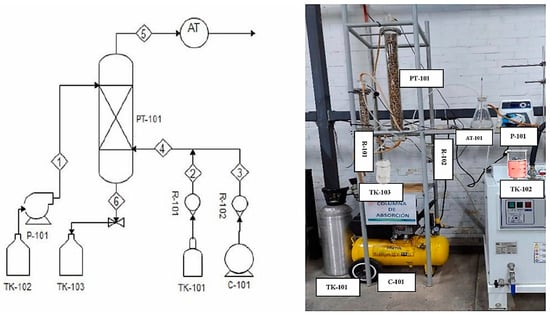
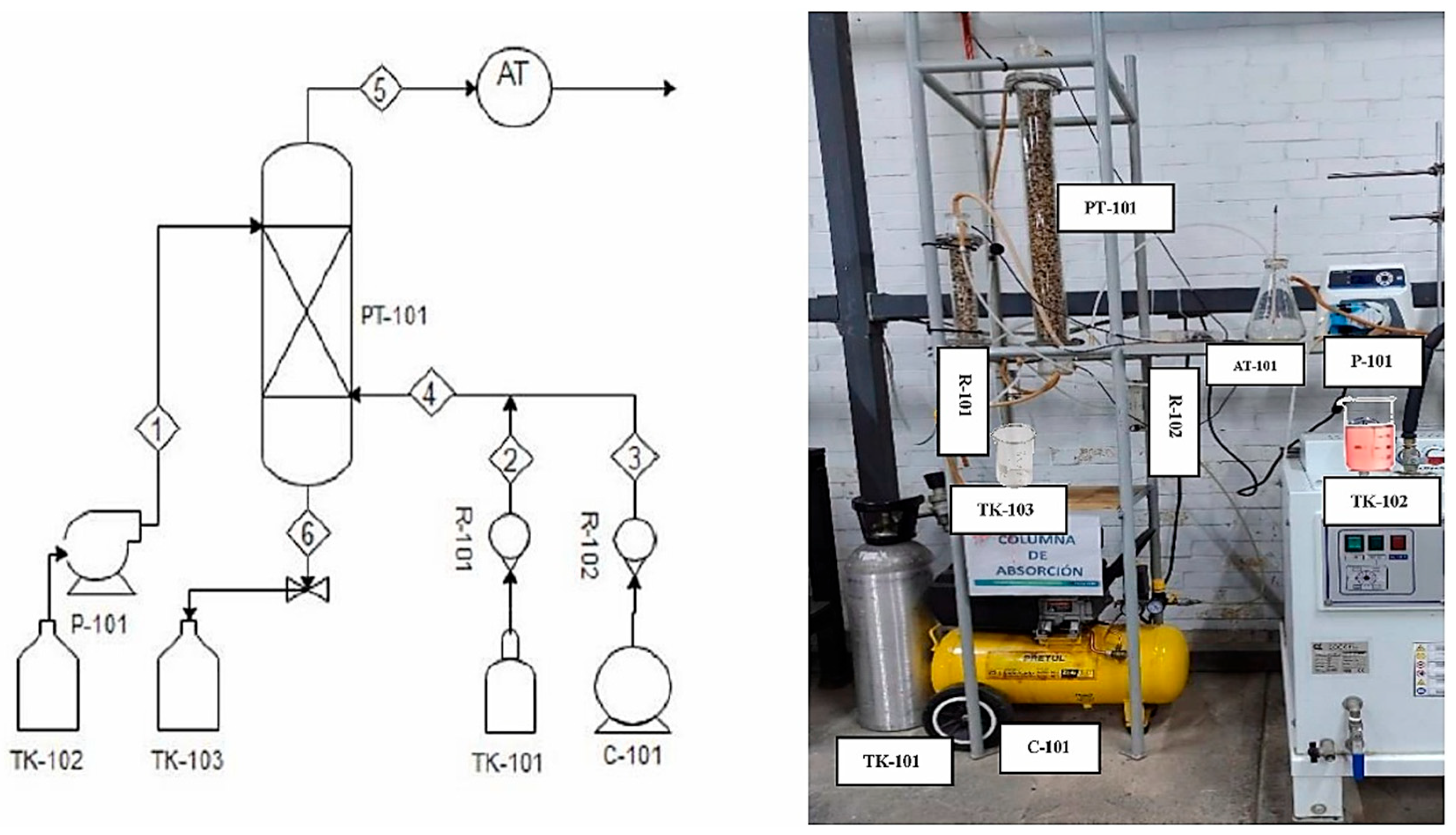
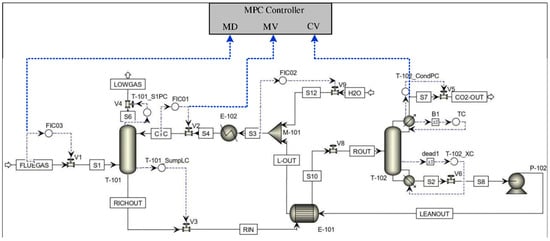
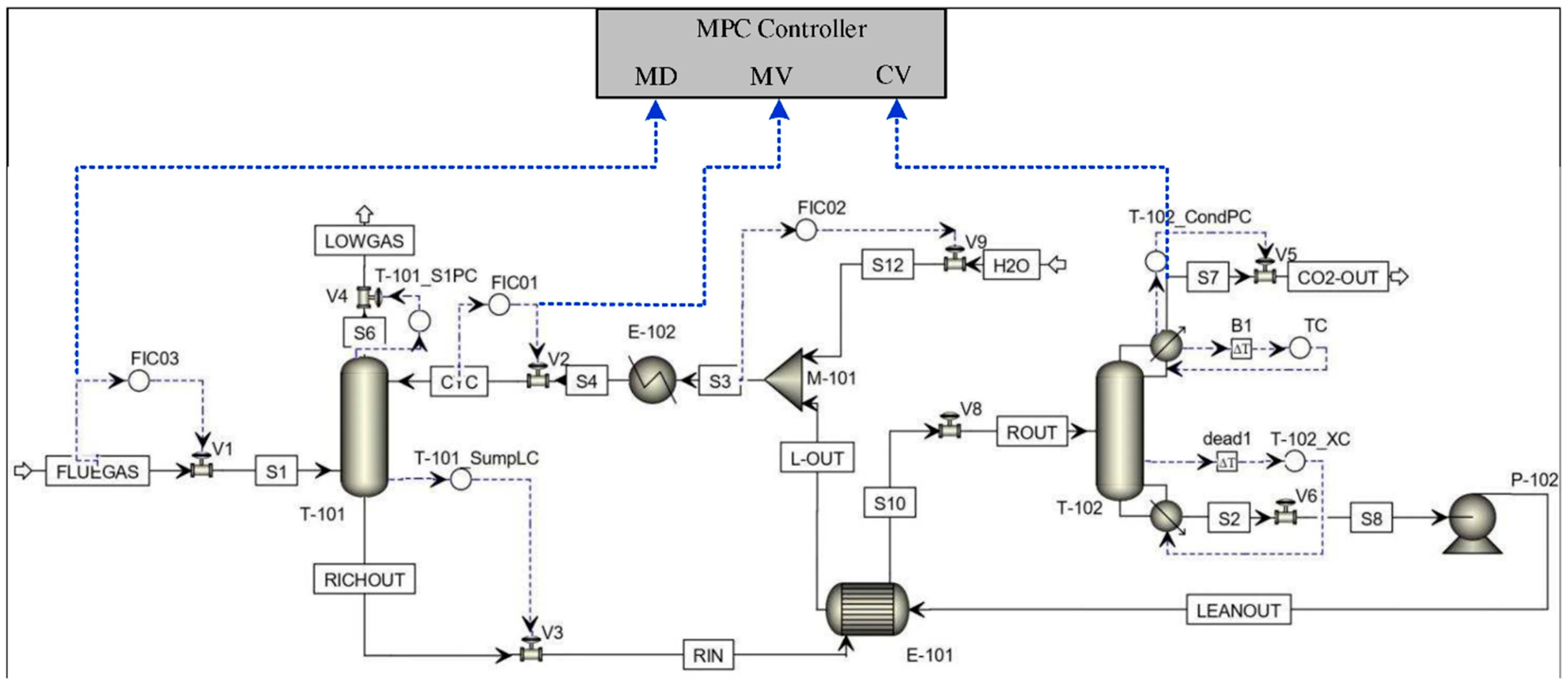
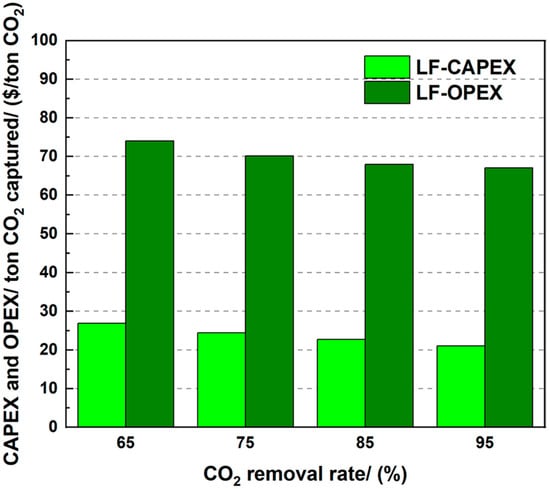
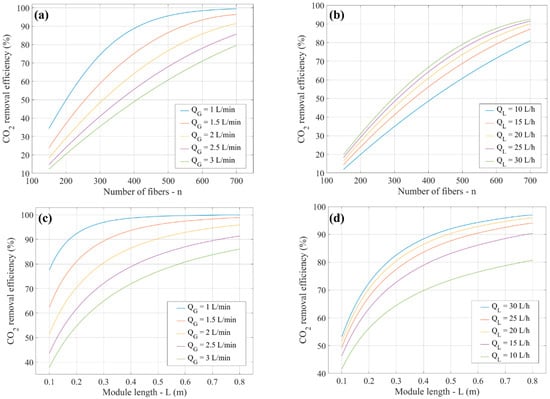
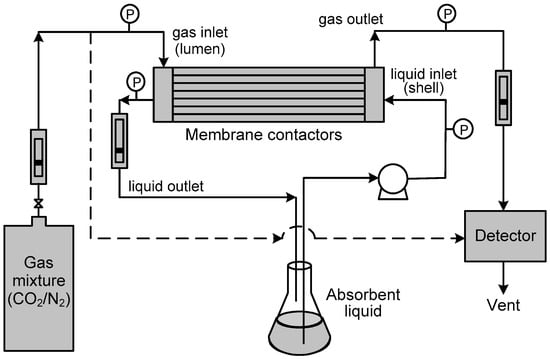
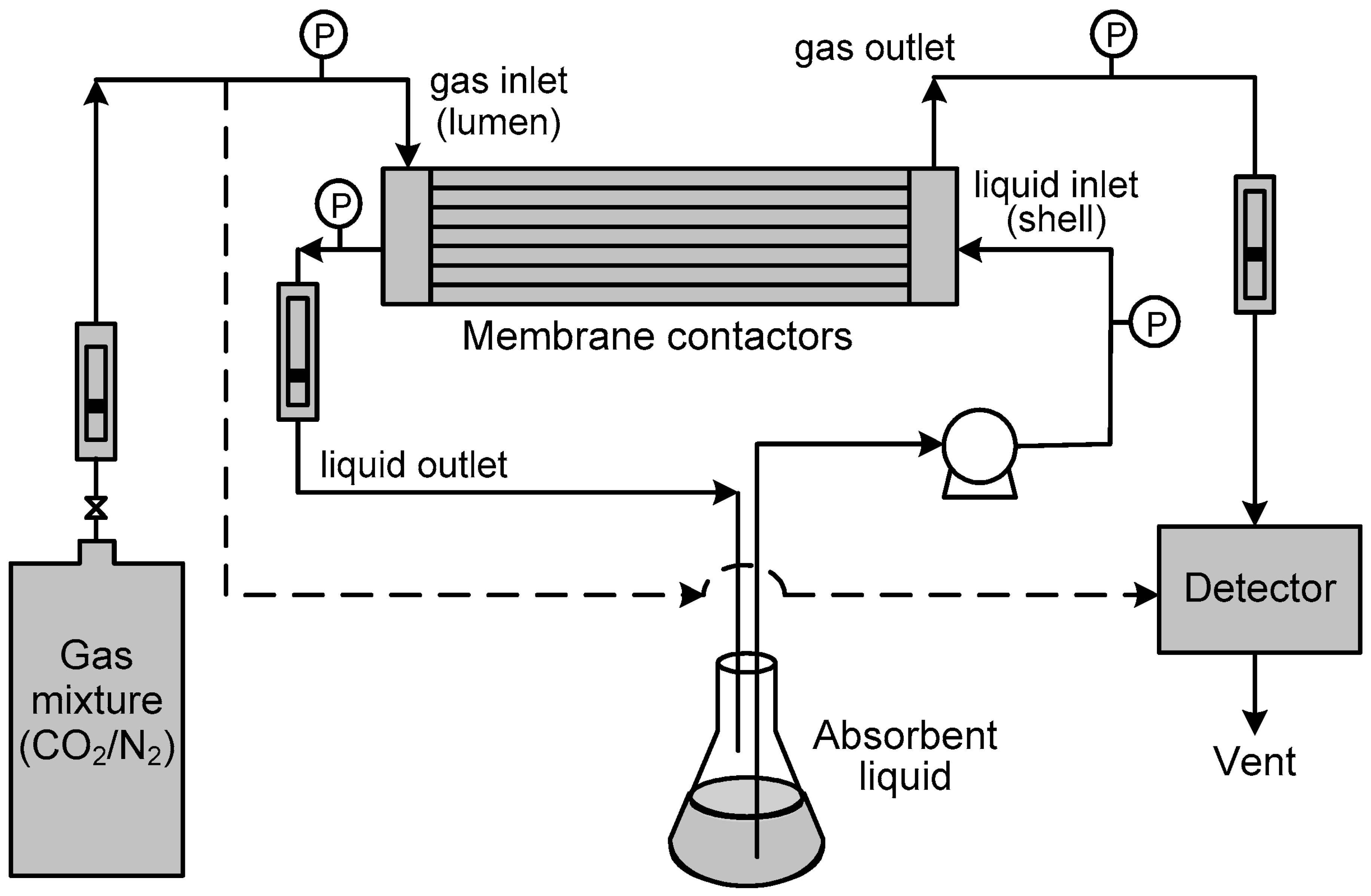
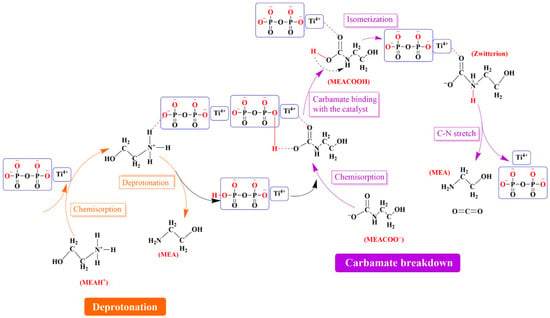
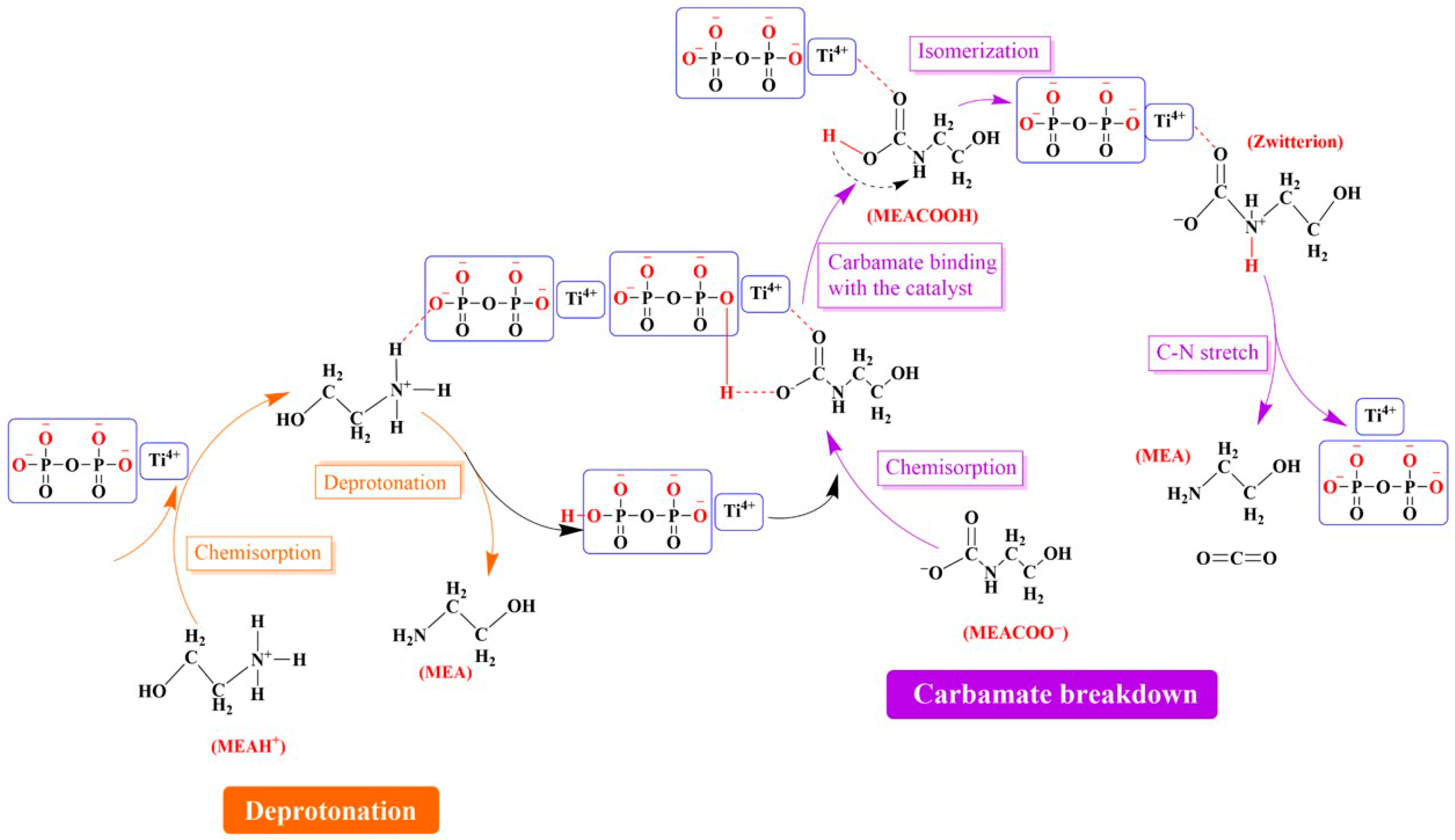
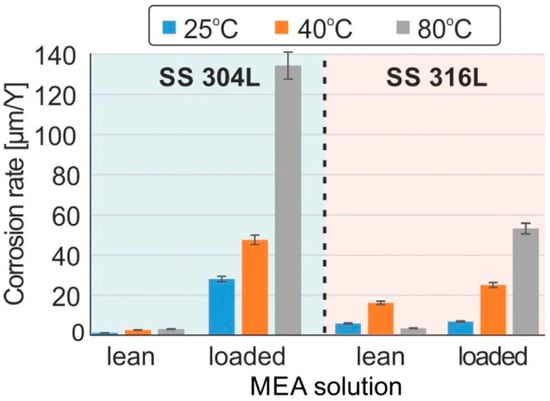
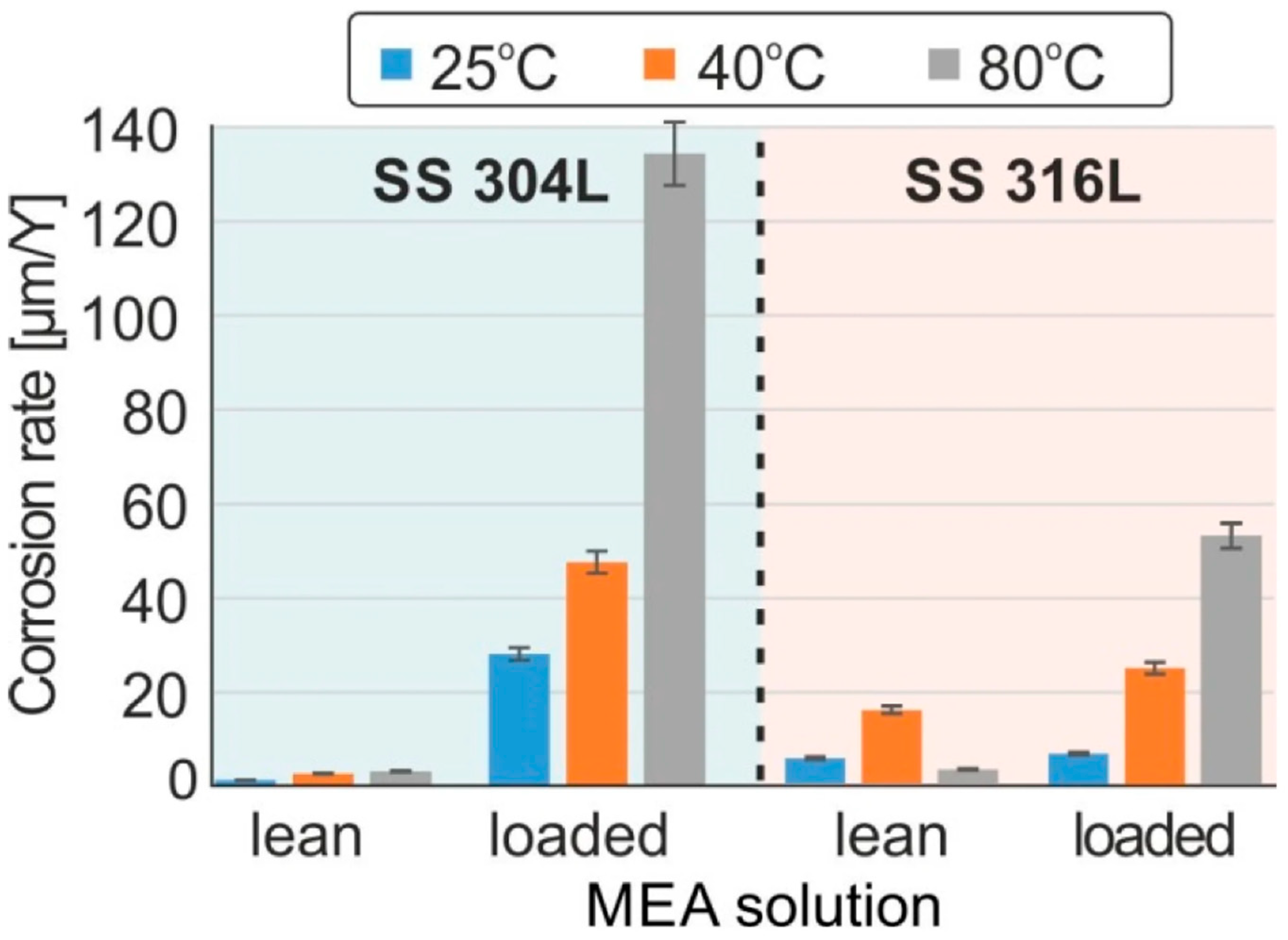
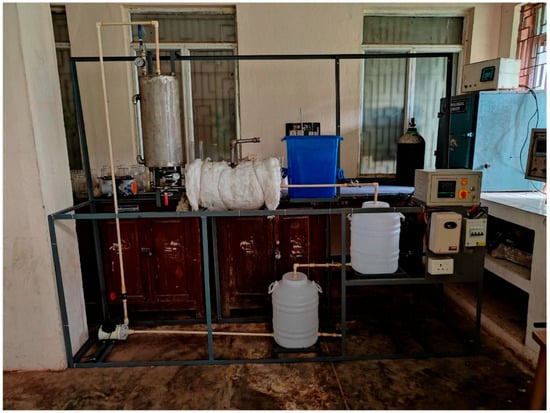
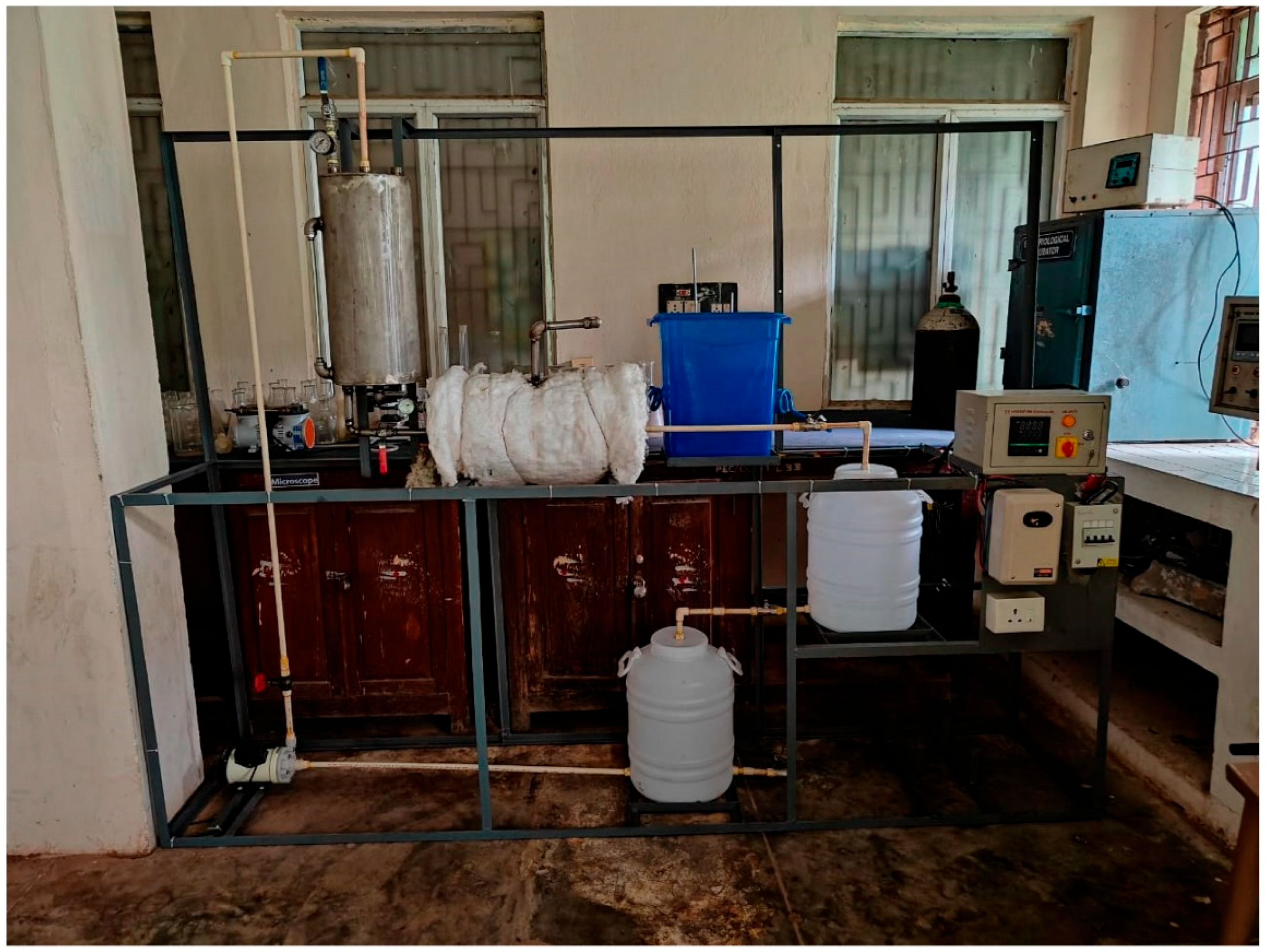
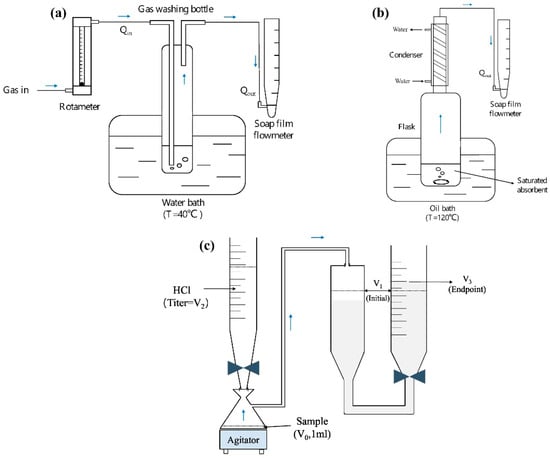
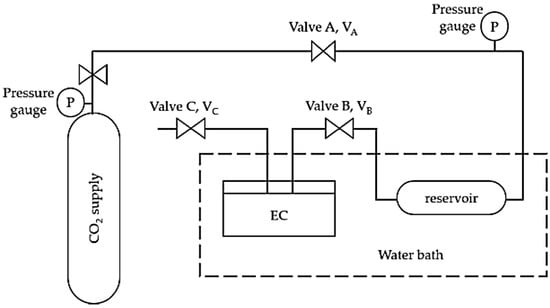
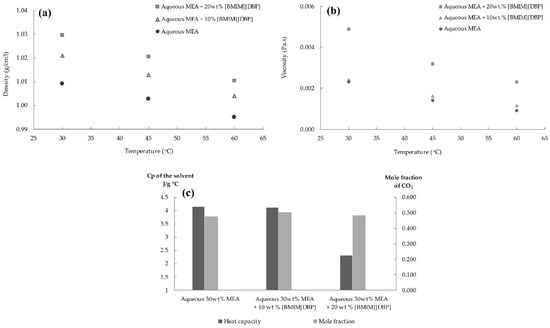
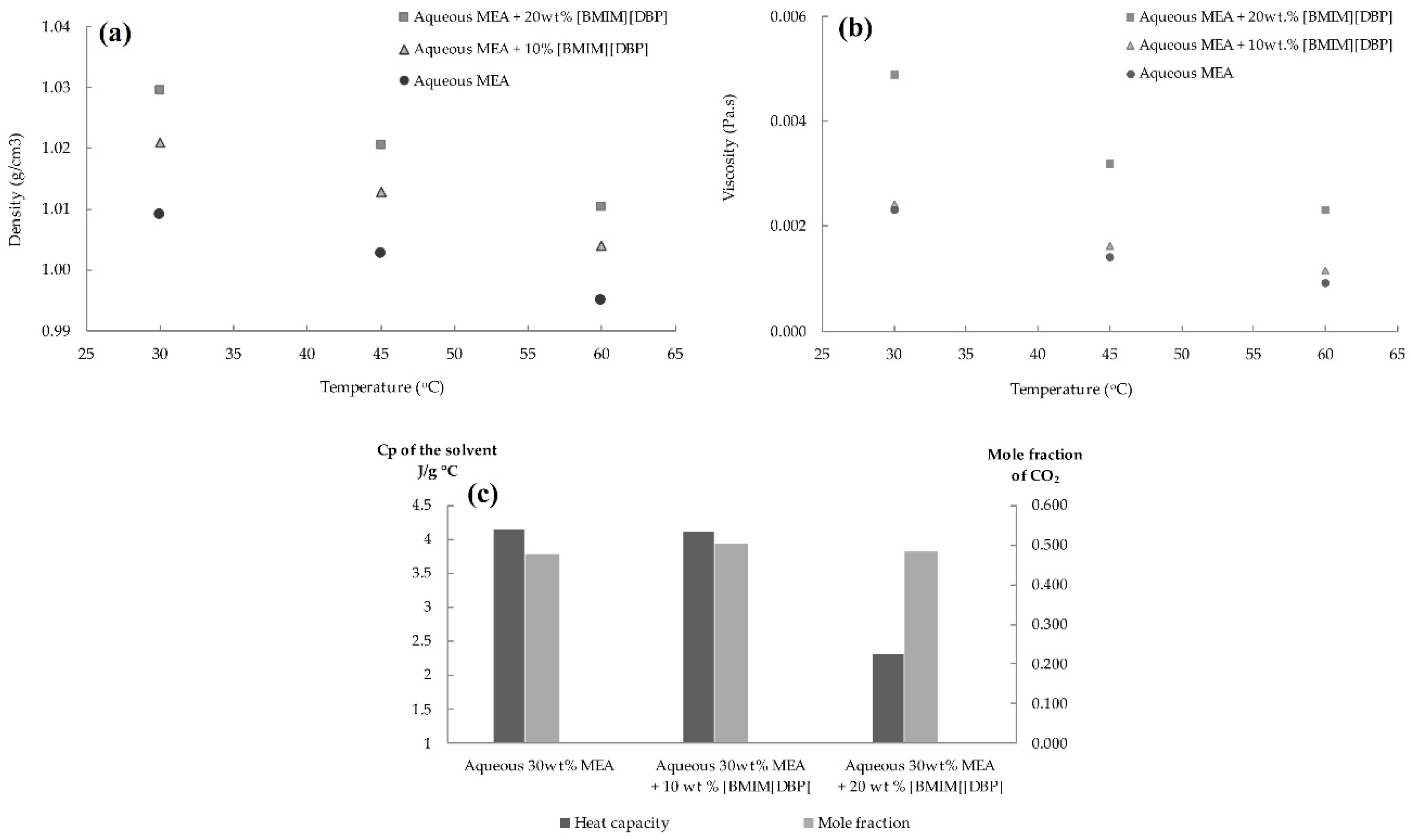
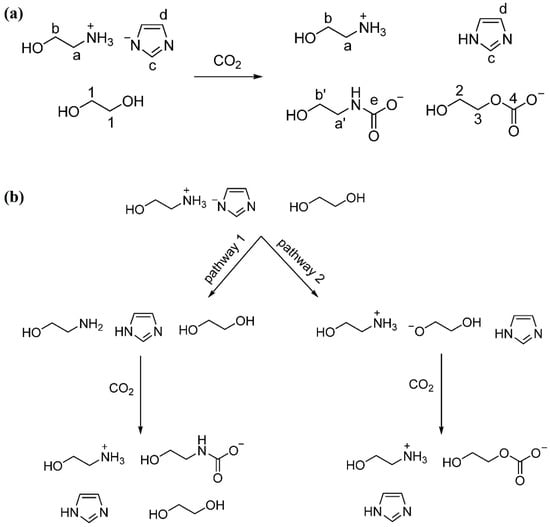
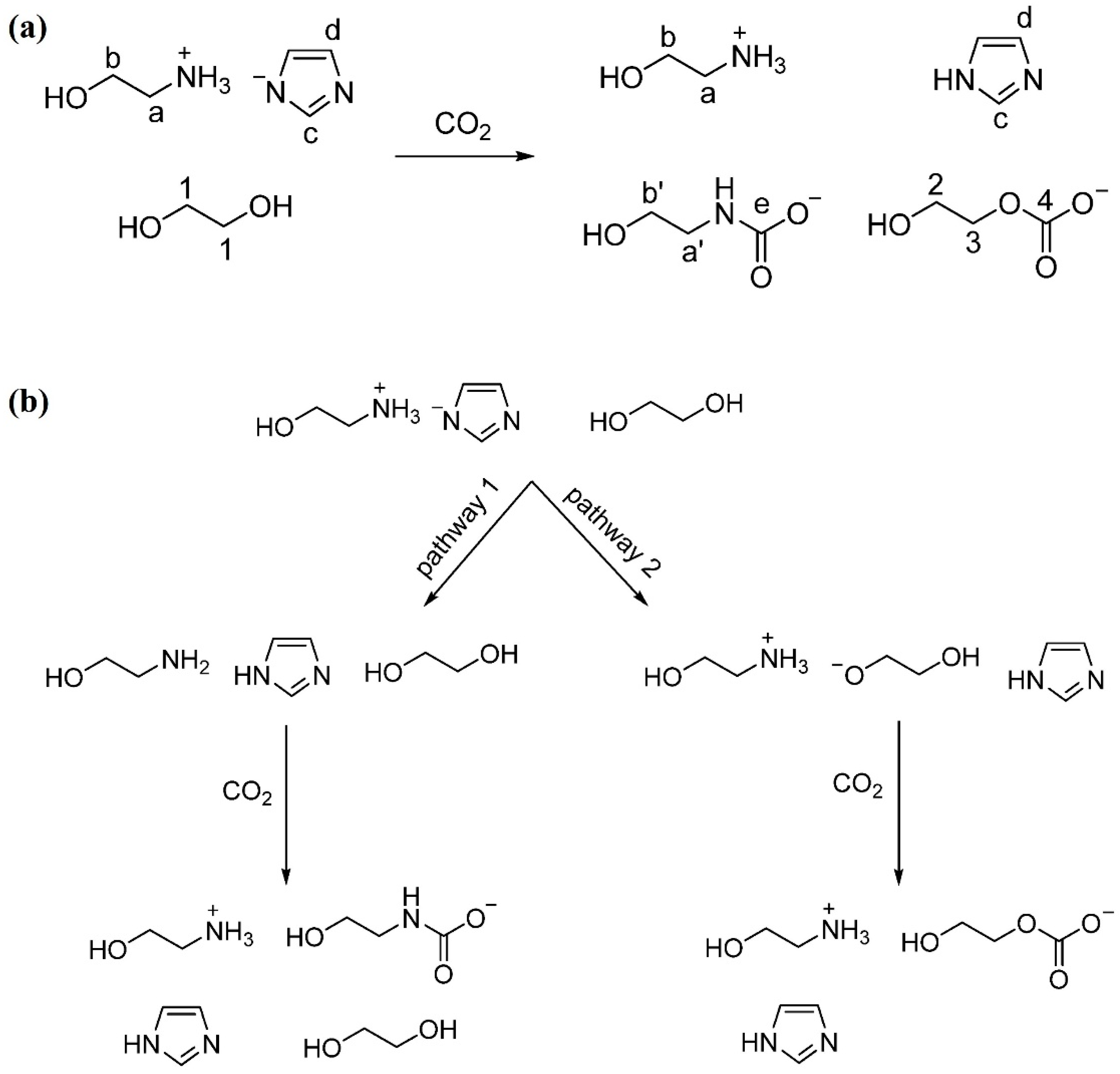
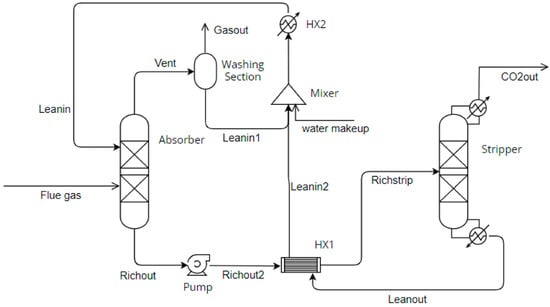
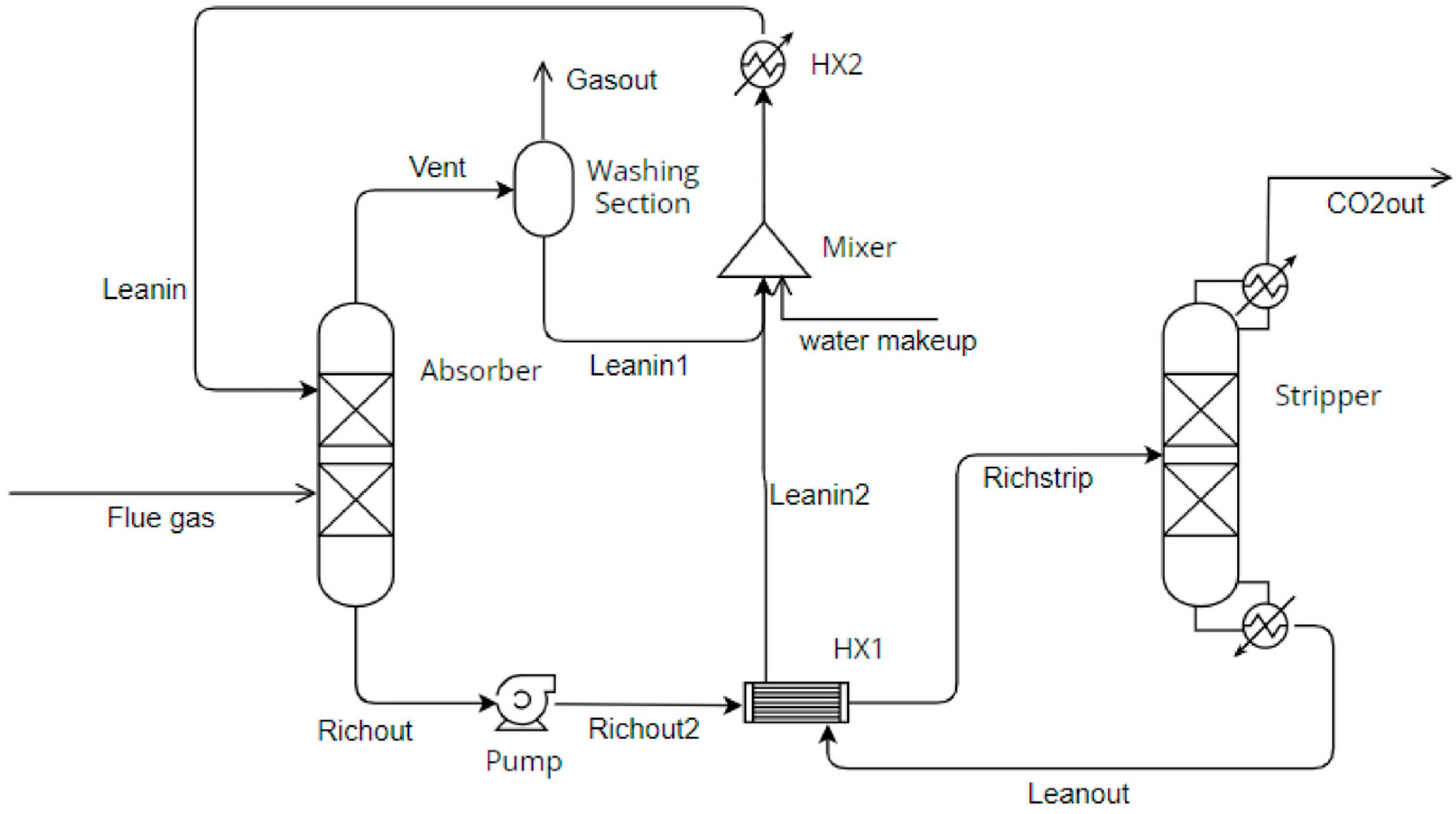
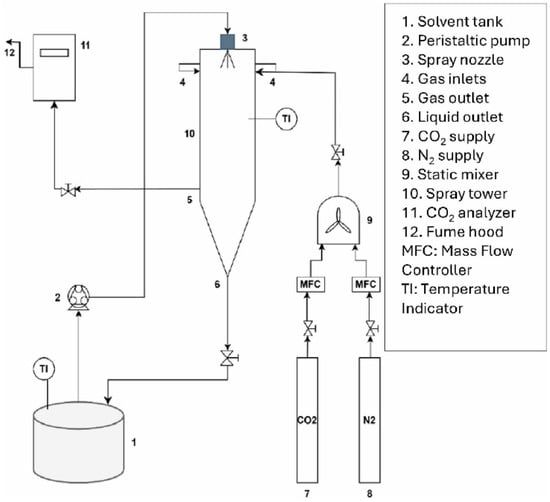
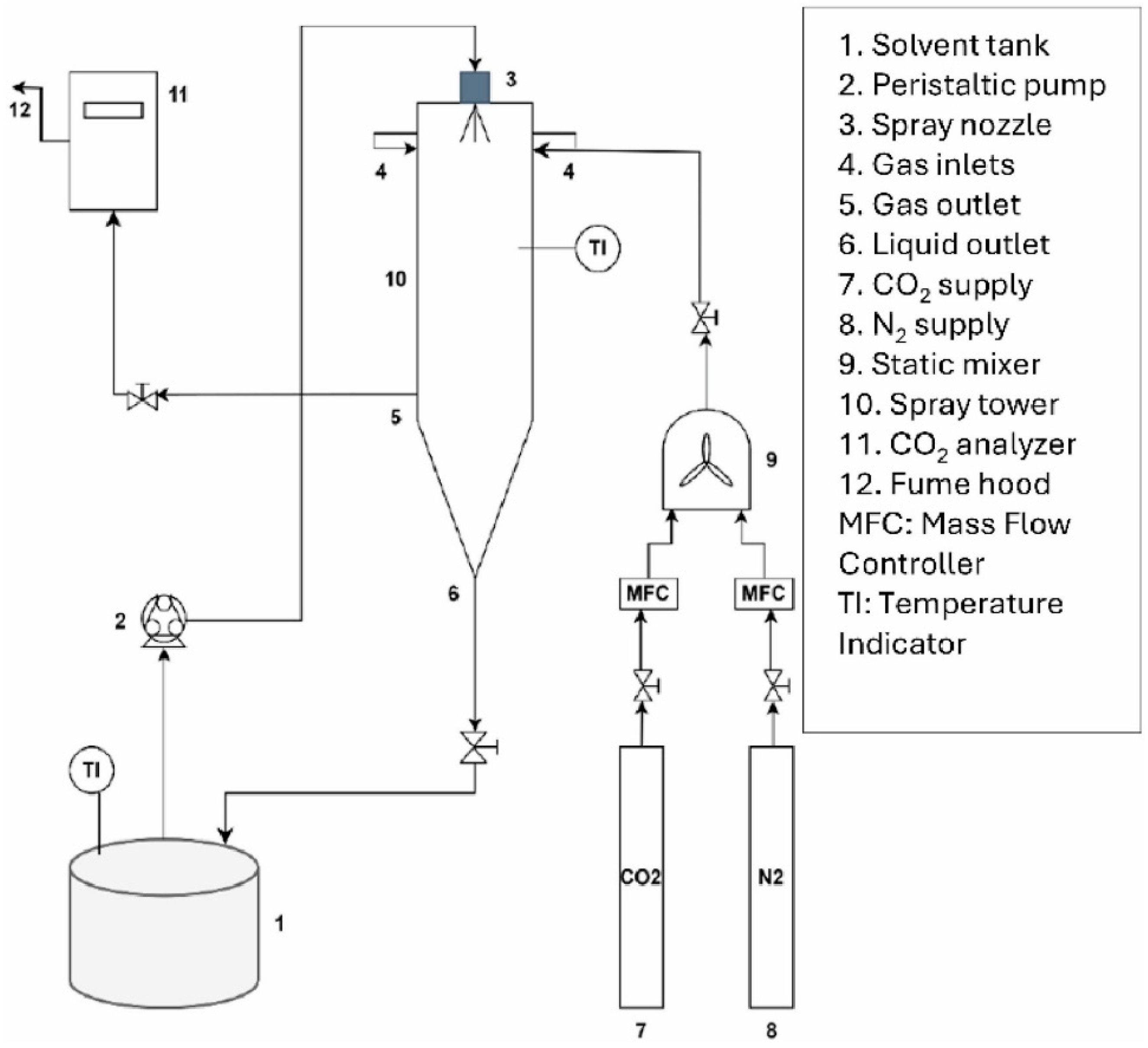

Disclaimer/Publisher’s Note: The statements, opinions and data contained in all publications are solely those of the individual author(s) and contributor(s) and not of MDPI and/or the editor(s). MDPI and/or the editor(s) disclaim responsibility for any injury to people or property resulting from any ideas, methods, instructions or products referred to in the content. |
© 2026 by the author. Licensee MDPI, Basel, Switzerland. This article is an open access article distributed under the terms and conditions of the Creative Commons Attribution (CC BY) license.