


Abstract
Long-term water flooding in heterogeneous Changqing Oilfield reservoirs leaves substantial residual oil trapped in low- and ultra-low-permeability pores, where small pore throats, strong capillarity, and high seepage resistance restrict waterflood sweep efficiency and residual oil mobilization. To address the wide carbon-number distribution, strong low-permeability heterogeneity, and fracture-induced channeling in Block X of the Changqing Oilfield, we proposed a synergistic strategy combining interfacial modification and preferential-pathway regulation. We constructed a C14(PO)4SO3Na (TDS)-synergized microsphere–microgel system comprising the interfacial modifier TDS, microspheres, and microgel particles. Core flooding showed that TDS alone outperformed conventional surfactants (Cocamidopropyl betaine, CAB-35). In heterogeneous models, the microsphere/TDS system achieved 54.45% recovery; in fractured models, microgel showed better plugging and flow-diversion performance than microspheres. Using a 0.3 PV microgel pre-slug followed by a 0.7 PV microgel/TDS mixture, Model II reached 45.58% recovery, indicating that plugging preferential pathways before synergistic flooding is an optimal injection strategy. Microvisualization revealed that water flooding readily channeled through large pores, high-permeability pathways, and fractures. In micromodel experiments, the composite system increased areal sweep efficiency to 60.4%, 49.8%, and 66.4% for low-, high-, and ultra-low-permeability models, respectively. In comparison, core flooding gave recovery factors of 54.45% (heterogeneous matrix) and 45.58% (fractured Model II). Produced-fluid and core SEM results indicated that regulating particles migrated, were retained, bridged, and possibly re-migrated in pore throats, increasing flow resistance in preferential pathways and diverting subsequent fluids to unswept zones.
1. Introduction
As global energy demand grows and conventional oil resources become harder to develop, enhanced oil recovery (EOR) has become a key technical route to ensure energy security and maintain stable, incremental oil production. After long-term water flooding, a large amount of crude oil remains in reservoir pores as residual oil [1,2]. This issue is particularly severe in low- and ultra-low-permeability reservoirs, where small pore throats, strong heterogeneity, pronounced capillary forces, and high seepage resistance hinder conventional water flooding from sweeping microscale pores, making residual oil initiation and migration difficult and restricting recovery improvement [3,4]. Consequently, reducing resistance to residual oil initiation, improving oil-washing efficiency, and enhancing remaining-oil mobilization in low-permeability reservoirs are key problems that must be addressed for further development. These challenges are especially evident in heterogeneous reservoirs of the Changqing Oilfield.
Chemical flooding is an important EOR technology. Surfactant flooding can weaken capillary and adhesion constraints on residual oil by reducing oil–water interfacial tension, regulating rock wettability, promoting oil emulsification and dispersion, and improving oil–water interfacial properties, thereby enhancing oil mobilization and migration [5,6,7]. Nanoparticles, microspheres, and microgels can further contribute to interfacial modification and preferential-pathway regulation. However, the complex conditions of low-permeability reservoirs impose high requirements on interfacial activity, thermal and salt tolerance, low adsorption loss, and reservoir adaptability [8]. Conventional oil-displacement systems often suffer from interfacial activity decay, increased adsorption loss, insufficient stability, or limited displacement efficiency under high salinity, high Ca2+/Mg2+ concentrations, and complex pore-throat conditions, and thus cannot fully meet the demands of efficient development of complex low-permeability reservoirs [9]. Therefore, developing oil-displacement systems with well-defined structures, stable performance, strong interfacial regulation ability, and suitability for low-permeability reservoirs is of great significance for improving residual oil mobilization and advancing chemical EOR.
Tahir et al. used the Austrian alkali-polymer (AP) flooding pilot test as an example to optimize oil recovery in mature fields, focusing on enhancing rock–fluid and fluid–fluid interactions through AP formulation screening, while balancing cost and slug efficiency [10]. The study evaluated emulsion stability, interfacial tension, and rheology to determine optimal chemical concentrations, and analyzed fluid dynamics in heterogeneous reservoirs using low- and high-permeability core floods. Results showed that the AP slug performed best at an alkali concentration of 7500 ppm, particularly forming microscopically unstable emulsions when interacting with high-acid-value dead oil. Although the AP from Supplier B exhibited mechanical stability issues during single-phase displacement, it still outperformed that from Supplier A, whereas polymer-based slugs achieved higher additional oil recovery in both high- and low-permeability cores. Furthermore, simulating in situ aging of the AP slug—where anionic character increases over time—demonstrated that this process can reduce costs and improve injection performance. Bolysbek et al. systematically categorized and analyzed methods for measuring and controlling wettability, along with their application limitations [11]. Measurement techniques mainly include spontaneous imbibition methods such as Amott–Harvey and USBM, contact angle measurements, and approaches based on fluid uptake characteristics using IR and NMR, whose accuracy and applicability vary depending on rock and fluid properties. Wettability control methods include low-salinity water flooding, surfactant flooding, and carbonated water injection: low-salinity water enhances water-wetness and improves oil recovery; surfactants alter interfacial tension and wettability; and carbonated water injection promotes a shift toward more water-wet conditions on rock surfaces. Additionally, mineral dissolution and precipitation can modify pore structure, capillary pressure, and relative permeability, thereby affecting wettability and oil recovery efficiency. Shangguan et al. focused on low-permeability sandstone reservoirs in the Changqing Oilfield, integrating SEM, NMR, and CT digital core technologies to systematically analyze oil–water distribution and residual oil evolution during prolonged water flooding [12]. Results indicated that pore-throat size and connectivity are the primary factors controlling reservoir permeability; after high pore volume (PV) water injection, microscopic residual oil mainly exists as dispersed droplets, thin films, small-scale clusters, or columns. Although long-term water flooding expands the swept volume, local displacement efficiency decreases, and reservoir heterogeneity hinders sustained sweep efficiency. Residual oil characteristics are jointly controlled by local connectivity, wettability, and pore-throat morphology, providing theoretical support for understanding residual oil distribution patterns and improving recovery in low-permeability reservoirs. Belhaj et al. addressed the challenge in distinguishing multiple mechanisms in low-salinity–surfactant composite flooding in tight carbonate reservoirs, combining interfacial tension, zeta potential, contact angle, high-temperature–high-pressure core flooding, and numerical simulation [13]. Results revealed that enhanced recovery from diluted seawater primarily stems from electrostatic modification and a shift in wettability from oil-wet to weakly oil-wet, rather than reduced interfacial tension (IFT); addition of A-1 significantly lowered IFT to approximately 0.178 mN/m, weakening capillary trapping. Sequential injection of SW, 1%dSW, and 1%dSW+A-1 contributed 42.65%, 24.21%, and 9.11% OOIP, respectively, while standalone injection of 1%dSW+A-1 achieved 65.82% OOIP. This system synergistically improves oil recovery by stabilizing water films via low salinity, enhancing wettability, and reducing IFT through surfactants, offering experimental and simulation evidence for low-salinity–surfactant composite flooding. Shangguan et al. proposed a HK-0417/ALT-603 core-shell nanoparticle/surfactant composite system and evaluated its synergistic enhancement effects through microscale visualization, natural core tests, and pilot trials in the Changqing Oilfield [14]. Results demonstrated that the system increases flow resistance in high-water-cut zones, redirects fluid flow into poorly swept areas, reduces interfacial tension, breaks up and disperses residual oil, and achieves superior sweep and displacement efficiency compared to single agents. The plugging rate of natural cores (1.76–7.02 mD) ranged from 75.47% to 80.54%. Response surface optimization yielded a profile control segment of 0.41 PV, a displacement segment of 0.61 PV, and an injection rate of 0.19 mL/min, predicting an EOR of 18.52%. In field tests, the water injection pressure increased from 5.8 MPa to 7.0 MPa, the comprehensive water cut decreased from 90.6% to 85.3%, and the monthly decline rate dropped from 0.5% to 0.2%, demonstrating favorable staged response and application potential. Murad et al. investigated the effects of polymer molecular weight, chemical composition, and mechanical pre-shear on residual resistance factor (RRF) and in situ rheology during displacement in Berea sandstone cores [15]. Results showed that after polymer adsorption, brine flow exhibited non-Darcy characteristics with permeability dependent on flow rate; inertial effects were significant at reservoir-relevant velocities, causing conventional Darcy-based interpretations to overestimate RRF. RRF increased with molecular weight, primarily controlled by the interaction between effective hydrodynamic size and pore scale rather than concentration. Mechanical pre-shear significantly reduced both RRF and nonlinear flow contributions, indicating that laboratory measurements using un-sheared solutions might overestimate field injectivity damage. Polymers containing ATBS displayed low RRF but high apparent viscosity, suggesting that chemical composition can surpass molecular weight as the dominant factor. This study emphasizes the necessity of using non-Darcy analysis for evaluating polymer flooding performance.
Existing research has advanced in areas such as low-salinity/surfactant flooding, polymer flooding, wettability alteration, alkali-polymer (AP) flooding, and nanocomposite systems. However, several limitations remain: studies have primarily focused on homogeneous or single-scale cores, with insufficient investigation into applicability for Changqing’s low-to-ultra-low permeability, highly heterogeneous, and fractured reservoirs; interface modification and preferential flow path control are often studied independently, leaving the synergistic mechanisms and structure-activity relationships among TDS and microspheres/microgels unclear; the matching relationship between particle size, crosslinking strength, deformation capacity, and pore-throat/fracture structures is not well defined, which may lead to near-wellbore retention or plugging.
To address the wide carbon-number distribution of crude oil, strong low-permeability heterogeneity, and fracture-induced channeling in Block X of the Changqing Oilfield, this study proposes a synergistic strategy combining interfacial modification and preferential-pathway regulation. It constructs a system composed of interfacial-modifier TDS, microspheres, and microgel particles. The synthesis and EOR performance of this system are systematically investigated. The oil-dispersing agent system developed in this research has a clear structure, stable performance, and strong interfacial regulation capability. It is suitable for low-permeability reservoir conditions and is of great significance for improving the utilization rate of remaining oil and advancing chemical flooding technology for enhanced oil recovery.
2. Results and Discussion
2.1. Performance Evaluation of TDS and Microgels
(1) FTIR
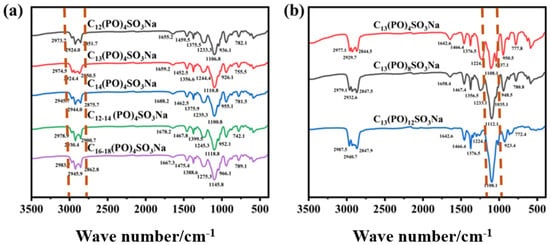
The FTIR spectra of the surfactant TDS are shown in Figure 1. Figure 1a indicates that the FTIR spectra of TDS samples with different hydrophobic carbon chains are generally similar. The absorption peaks between 2970 and 2850 cm−1 correspond to the C—H stretching vibrations of —CH3 and —CH2— groups; those between 1460 and 1370 cm−1 are attributed to the bending vibrations of —CH2— and —CH3; and the strong absorption band in the region of 1250–1000 cm−1 results from the superposition of the C—O—C stretching vibrations of polyoxypropylene segments and the S—O vibrations of sulfonate groups. As the composition of the hydrophobic carbon chain varies, the positions and intensities of the main characteristic peaks change only slightly, indicating that altering the carbon chain length does not affect the overall functional group structure of the samples.
Figure 1.
Infrared spectrum of the TDS: (a) Cn(PO)4SO3Na (n = 12, 13, 14, 12~14, 16~18); (b) C13(PO)nSO3Na (n = 4, 8, 12).
Figure 1b compares C13(PO)4SO3Na, C13(PO)8SO3Na, and C13(PO)12SO3Na. All three compounds retain the characteristic peaks associated with alkyl C—H stretching, alkyl bending vibrations, and sulfonate groups. As the number of PO units increases from 4 to 8 and then to 12, the absorption band around 1100 cm−1 becomes significantly stronger and broader, which is related to the increased number of ether linkages and a higher proportion of polyoxypropylene segments. The presence of the sulfonate-related peaks suggests that the PO chain length primarily modulates the ratio of polyether segments without changing the type of functional groups in the product. In summary, the FTIR results confirm that the target functional groups in TDS were successfully formed, and variations in carbon chain length and PO addition number mainly influence the segment composition and relative content.
(2) LC-MS
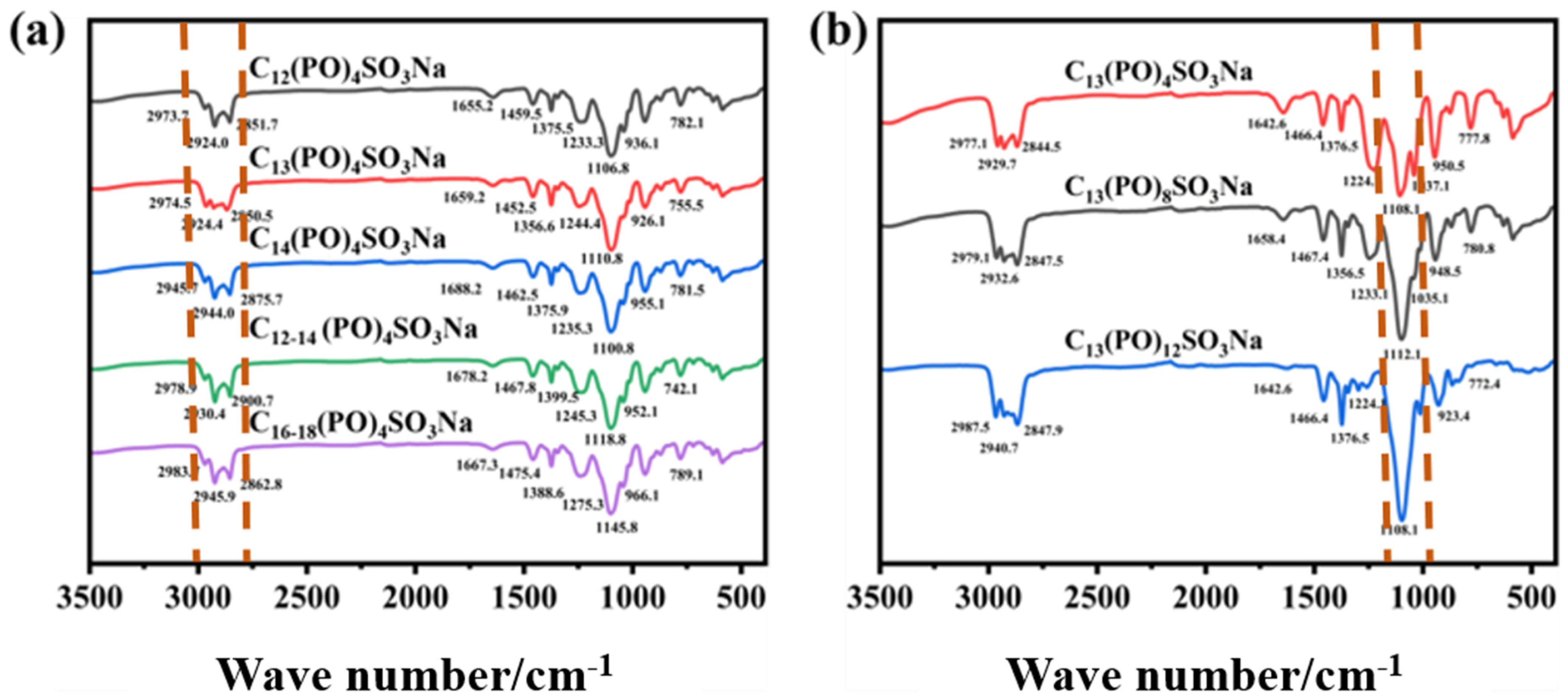
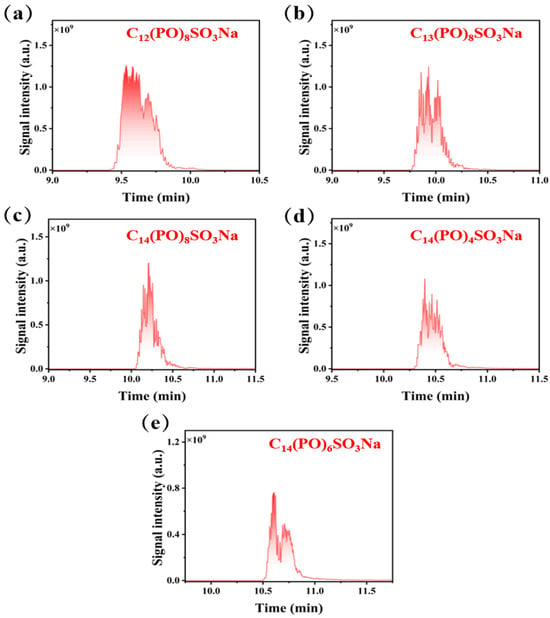
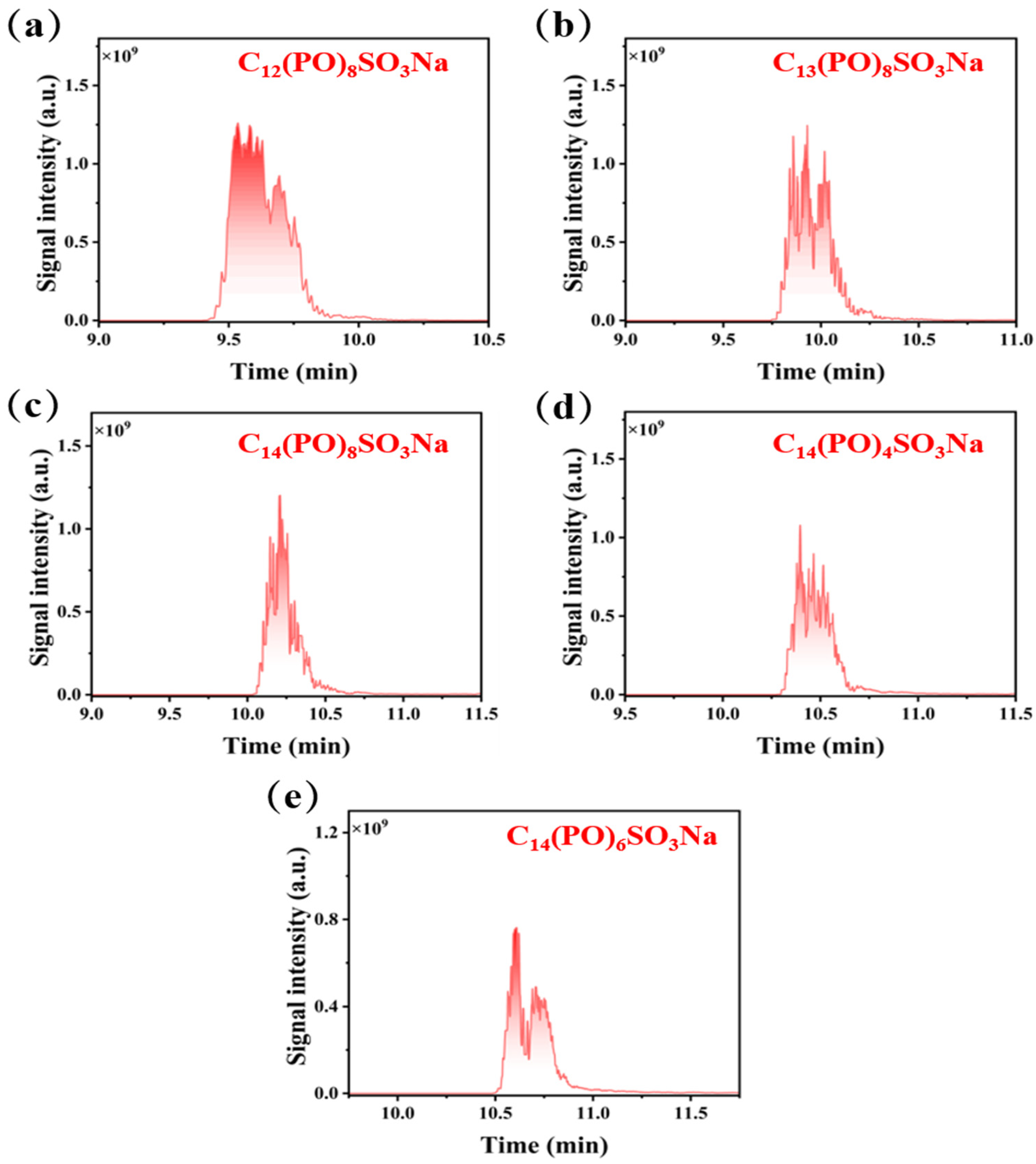
The chromatograms of the interface modifiers with different carbon chains and PO numbers are shown in Figure 2. As shown in the figure, sodium sulfonates of fatty alcohols with different carbon chain lengths all exhibit significant responses on a C18 reversed-phase chromatographic column. However, the peak shapes are not single symmetric peaks but rather clusters of peaks with certain widths and multiple local maxima. For samples with the same PO addition number of 8, the main elution ranges for C12(PO)8SO3Na, C13(PO)8SO3Na, and C14(PO)8SO3Na are approximately 9.45–9.85, 9.75–10.25, and 10.05–10.45 min, respectively. As the carbon chain length increases from C12 to C14, retention times gradually increase. This indicates that carbon chain length is a key factor influencing their reversed-phase chromatographic retention behavior: an increased number of methylene groups enhances molecular hydrophobicity, strengthening both hydrophobic and dispersive interactions with the C18 stationary phase, requiring a higher proportion of organic solvent for elution, thus leading to longer retention times. This chromatographic method effectively distinguishes products with different carbon chain lengths and is suitable for analyzing carbon chain composition and homolog distribution.
Figure 2.
The chromatograms of the interface modifiers with different carbon chains and PO numbers: (a) C12(PO)8SO3Na; (b) C13(PO)8SO3Na; (c) C14(PO)8SO3Na; (d) C14(PO)4SO3Na; (e) C14(PO)6SO3Na.
When the carbon chain length is fixed at C14, the degree of PO addition also significantly affects retention behavior. The main elution ranges for C14(PO)4SO3Na, C14(PO)6SO3Na, and C14(PO)8SO3Na are approximately 10.30–10.70, 10.50–10.90, and 10.05–10.45 min, respectively. Retention is relatively stronger at PO = 6, while retention time decreases at PO = 8, showing an overall non-monotonic trend. This may result from the dual effects of ether oxygen atoms and methyl groups within the PO segments: ether oxygen increases molecular polarity and strengthens interaction with the mobile phase, whereas methyl groups enhance hydrophobicity; together, these factors determine the final retention behavior. Additionally, all peaks show noticeable broadening, shoulder peaks, and multiplicity, indicating that, apart from the target PO adducts, the actual product mixture may contain adjacent PO homologues, unreacted starting materials, and by-products.
(3) TGA
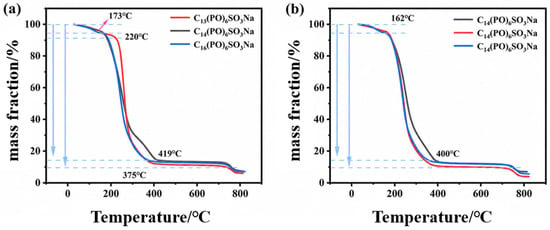
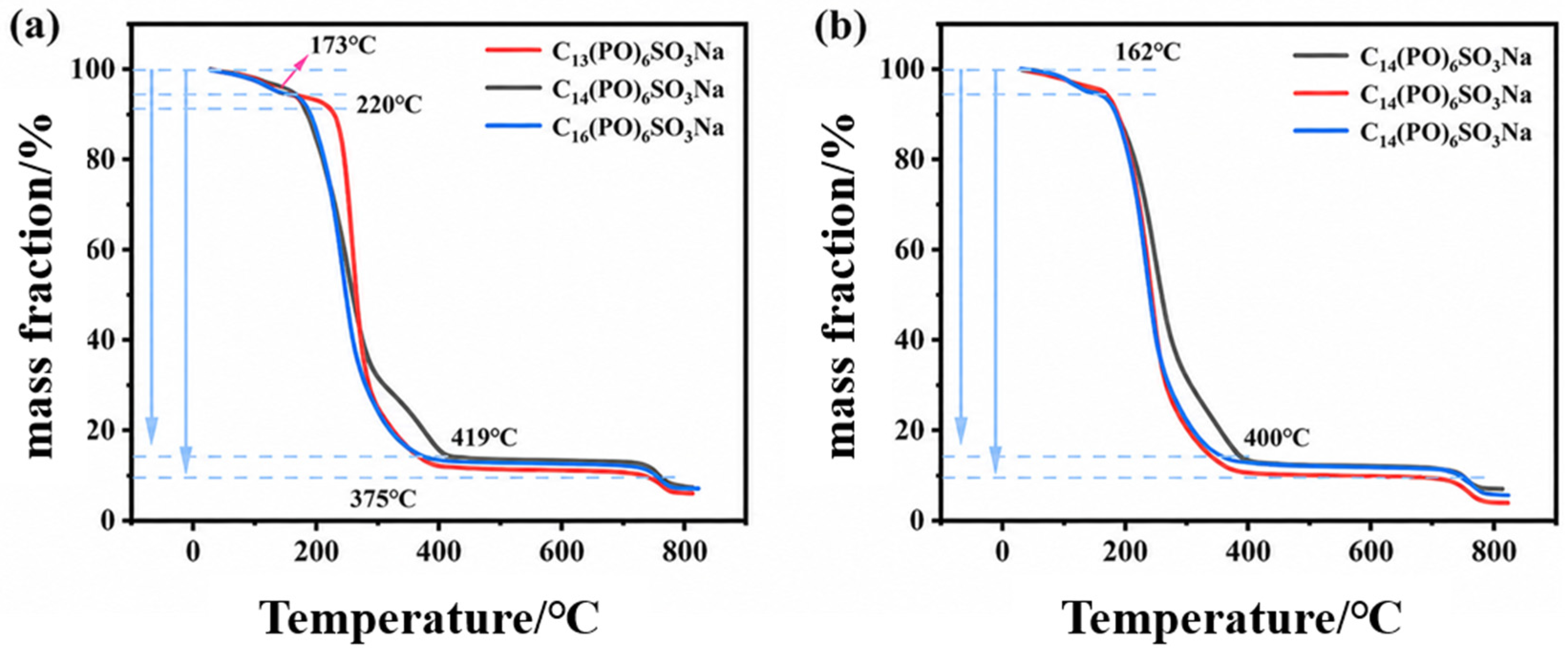
Figure 3a shows the thermogravimetric curves of C13(PO)6SO3Na, C14(PO)6SO3Na, and C16(PO)6SO3Na. The weight loss trends are largely consistent, with the main decomposition range concentrated between 200 and 400 °C, indicating that altering the hydrophobic carbon chain length does not significantly affect the primary thermal degradation behavior under identical PO numbers. However, differences exist among the samples in terms of initial decomposition temperature and residual mass, suggesting that carbon chain length has a limited influence on thermal stability, while overall thermal stability remains primarily governed by the PO segments and the sulfonate structure. Figure 3b presents the thermogravimetric curves of C14(PO)4SO3Na, C14(PO)6SO3Na, and C14(PO)8SO3Na, which also exhibit similar main weight loss intervals, demonstrating that varying the number of PO units does not significantly alter the primary thermal decomposition stage. As the number of PO units increases, the proportion of polyoxypropylene segments in the molecule rises, resulting in slight differences in the extent of weight loss during the main decomposition phase and the final residual mass.
Figure 3.
The TG analysis curves of different structural interface modifiers: (a) Cm(PO)6SO3Na (m = 13, 14, 16); (b) C14(PO)nSO3Na (n = 4, 6, 8).
(4) 1H NMR
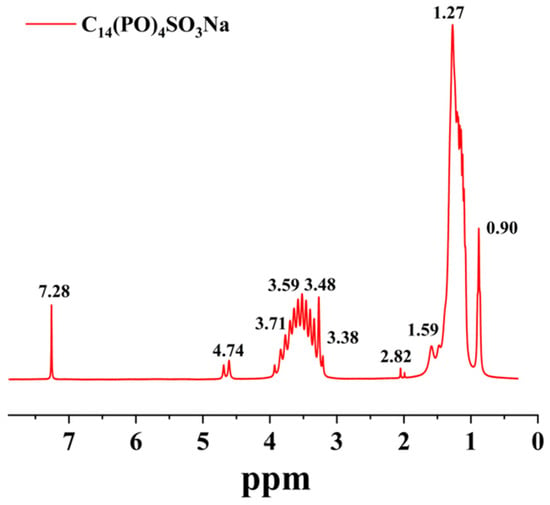
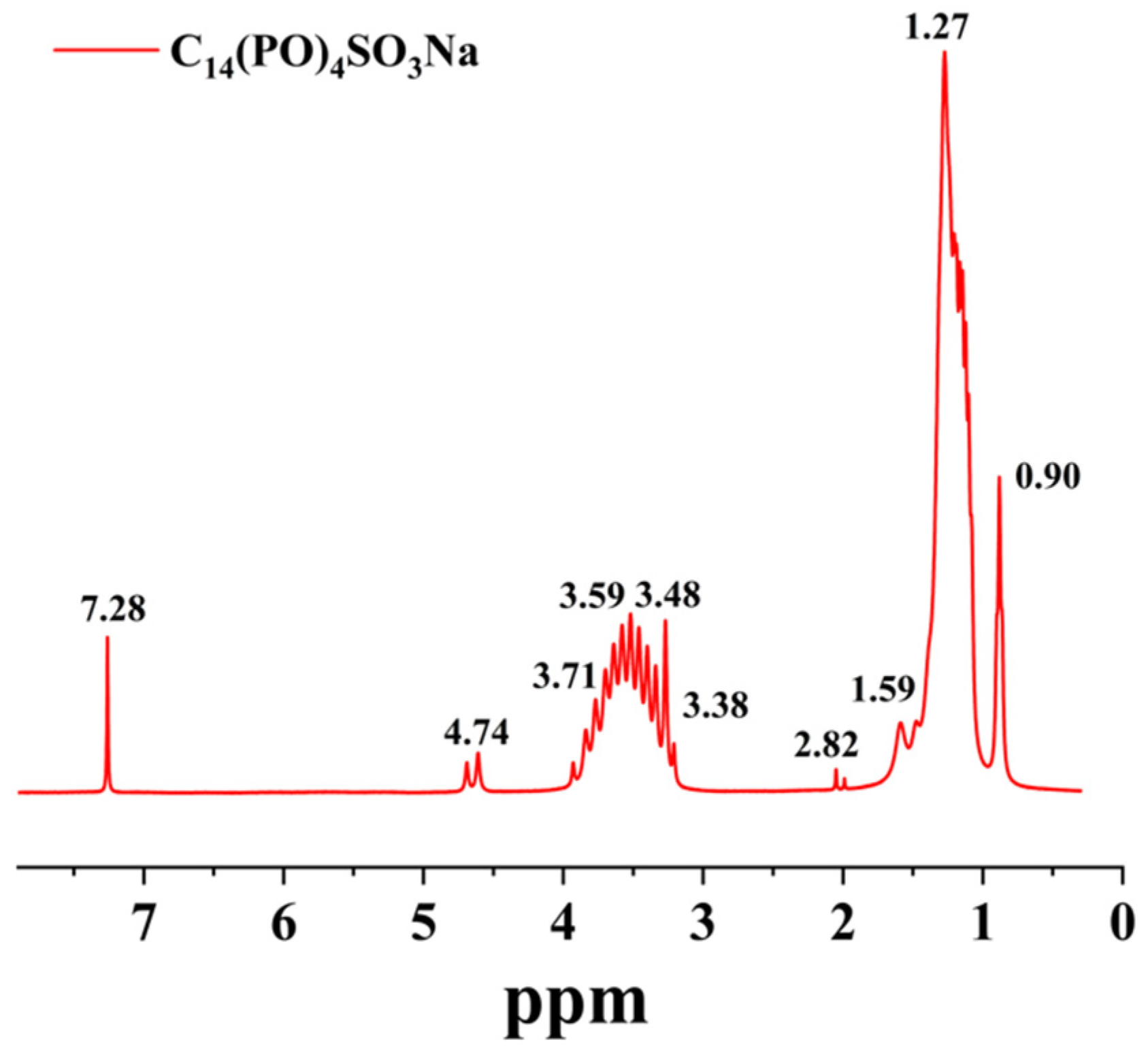
The nuclear magnetic hydrogen spectrum of C14(PO)4SO3Na is shown in Figure 4. Taking C14(PO)4SO3Na as an example, its 1H NMR spectrum exhibits four main characteristic hydrogen signals: δ 0.83–0.95 corresponds to the terminal —CH3 group of the alkyl chain, with an integration normalized to 3.00; δ 1.10–1.66 corresponds to methylene protons in the long alkyl chain and the —CH3 group in the PO side chain, with an integration of 36.15; δ 3.23–3.86 corresponds to —CH2— and —CH— protons adjacent to ether oxygen atoms, with an integration of 13.15; δ 4.62–4.84 corresponds to the methine protons connected to —OSO3−, with an integration of 1.05. Peaks near δ 7.28 and δ 1.59 are residual solvent and water peaks, respectively, and are not included in structural integration.
Figure 4.
The nuclear magnetic hydrogen spectrum of C14(PO)4SO3Na.
As shown in Table 1, using the terminal —CH3 integration (3.00) as a reference, the theoretical number of hydrogens from the C14 alkyl methylene groups in the δ 1.10–1.66 region is 24. Subtracting this value from the total integration gives the —CH3 integration for the PO side chains as 36.15 − 24 = 12.15, leading to an average PO addition number p = 12.15/3 = 4.05. From the hydrogen count in the δ 3.23–3.86 region, which satisfies the formula 3p + 1, we obtain p = (13.15 − 1)/3 = 4.05. Both calculations yield consistent results, indicating that the average PO addition number of the product is approximately 4. All characteristic peaks match the expected structure of C14(PO)4SO3Na, confirming successful synthesis of the target compound.
Table 1.
The integral values of all chemical shifts in the nuclear magnetic resonance spectrum of the C14(PO)4SO3Na molecule.
The absence of full peak deconvolution introduces some uncertainty in the NMR-derived PO number. However, the consistency between two independent integration methods and the LC-MS validation supports the reported average value. Future work will apply higher-field NMR and advanced deconvolution methods to further resolve the PO distribution.
(5) SEM
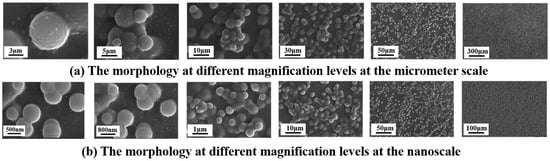
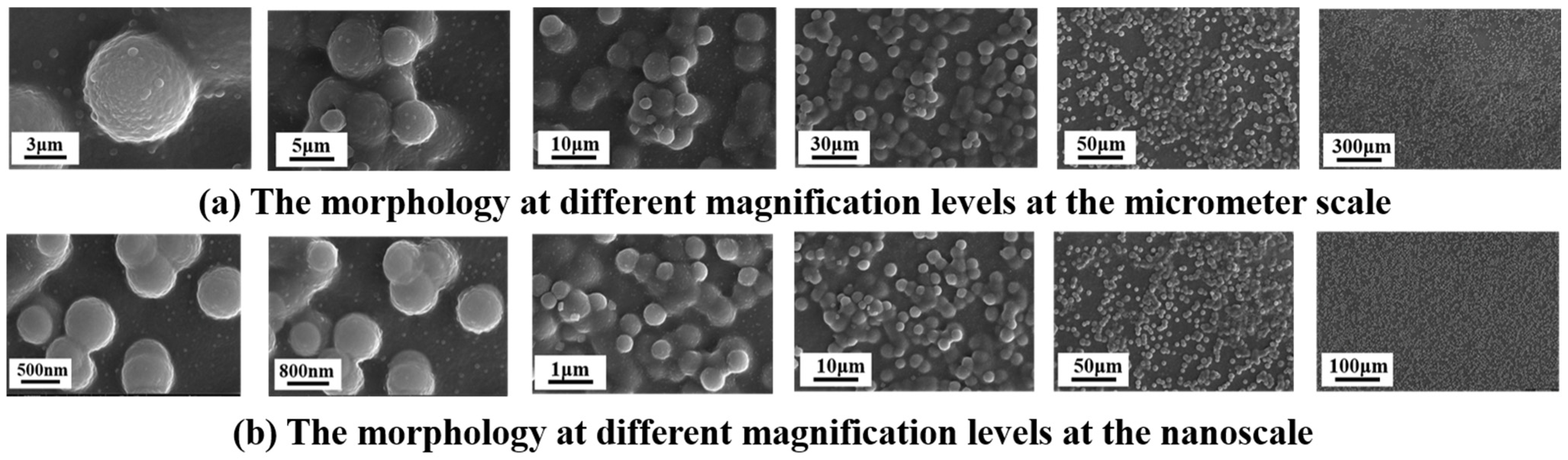
To investigate the effects of preparation conditions on microgel size and distribution, SEM was used to observe both micrometer- and nanometer-scale microgels, as shown in Figure 5. Both types of particles were predominantly spherical or near-spherical, with clear boundaries and relatively uniform distribution across large fields of view, without obvious continuous agglomeration, indicating good particle formation in the preparation system. The micrometer-sized microgels were larger in size, with local contact and slight adhesion observed, making them suitable for bridging and plugging in larger pores and high-permeability channels. In contrast, the nanometer-sized microgels had smaller particle sizes and higher number density, offering potential for penetration into fine pores and migration into deeper regions. Significant differences in particle size were observed under different reaction conditions, demonstrating that microgel particle size can be effectively controlled by adjusting crosslinking degree, emulsification conditions, and reaction parameters. This provides a basis for matching particle size to various pore-throat scales and enabling size-selective plugging tendency in heterogeneous reservoirs.
Figure 5.
The morphologies of microgel under different synthesis conditions.
The effects of crosslinking strength and deformability were discussed mainly based on experimental phenomena and literature. A systematic parametric study varying crosslinking strength, elastic modulus, and deformation capacity was not performed. Therefore, the critical Dp/Dt thresholds for bridging/plugging versus penetration were not established as a complete regime map. The commonly used criteria, such as the critical bridging ratio of approximately 1/3 and the migration/retention range of 1/7 < Dp/Dt < 1/3, are empirical and may shift with particle deformability, pore geometry, wettability, and flow rate.
The fracture width distribution and its dynamic variation during injection were not fully characterized. Fracture apertures can change under effective stress and particle plugging, which may further affect the Dp/Df matching and the optimal injection strategy.
The incremental sweep efficiency decreased from 47.9% at 5 µm to 43.9% at 10 µm and further to 19.2% at 25 µm. This trend suggests a size-selective plugging tendency, in which microgels are more effective at plugging and diverting flow in smaller pore throats. However, because the microgel D50 and pore-throat size distributions were not measured, and only three pore-throat sizes were tested, a quantitative critical pore-throat radius cannot be extracted. Future work will measure the microgel size distribution and test a wider range of pore-throat sizes to establish a quantitative particle–pore-throat matching chart.
2.2. Oil Recovery Efficiency Under Different Models
2.2.1. Heterogeneous Matrix Core Flooding Experiments
Model I experiments used parallel core samples with permeabilities of 1 mD and 5 mD to simulate the heterogeneous reservoir matrix. As shown in Table 2, the oil recovery effects of the three surfactants were compared, and oil recovery experiments were also carried out in combination with microspheres to study the synergistic oil recovery performance.
Table 2.
Experiment plan for Model I (1 mD and 5 mD parallel matrix cores).
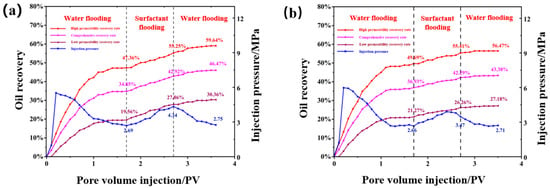
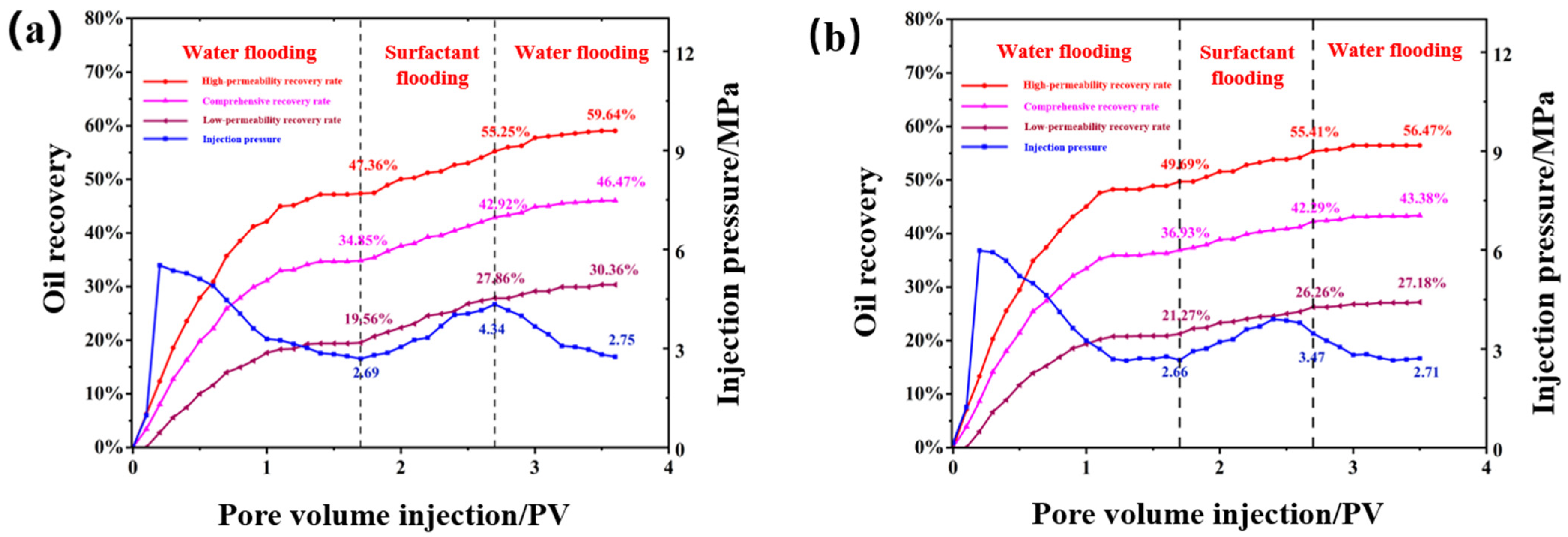
Model I used parallel cores with permeabilities of 1 mD and 5 mD to compare the oil recovery performance of TDS and CAB-35. After primary water flooding, the recovery factor in the high-permeability core was significantly higher than that in the low-permeability core, indicating that injected water primarily flowed through high-permeability pathways, highlighting the model’s strong heterogeneity. After surfactant injection, the final recovery factors for the high- and low-permeability cores in the TDS group were 59.64% and 30.36%, respectively, achieving an overall recovery of 46.47%. TDS increased cumulative recovery by 12.28% during chemical flooding and subsequent water flooding, outperforming CAB-35 (6.45%) and demonstrating superior residual oil mobilization capability. The pressure rise after TDS injection was significant, indicating its ability to increase flow resistance and improve fluid distribution [16]. However, the difference in recovery between the high- and low-permeability cores remained substantial, suggesting limited plugging capacity of single surfactants, which can serve as a control for subsequent composite plugging experiments using microspheres and microgels [17]. The experimental results of the two flooding systems are shown in Figure 6.
Figure 6.
The oil recovery efficiency of three oil displacement systems: (a) TDS; (b) CAB-35.
During the subsequent water flooding stage for Groups 1–2 (TDS alone and CAB-35 alone), the incremental oil recovery was negligible (<0.1% OOIP), and no measurable oil was produced. This indicates that the remaining oil after single-surfactant flooding was difficult to mobilize by water flooding alone, likely due to capillary trapping, wettability alteration, and a lack of flow diversion.
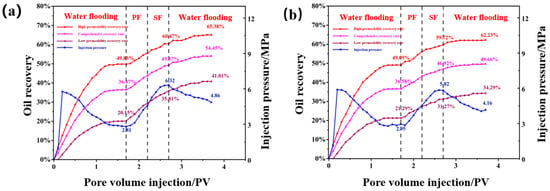
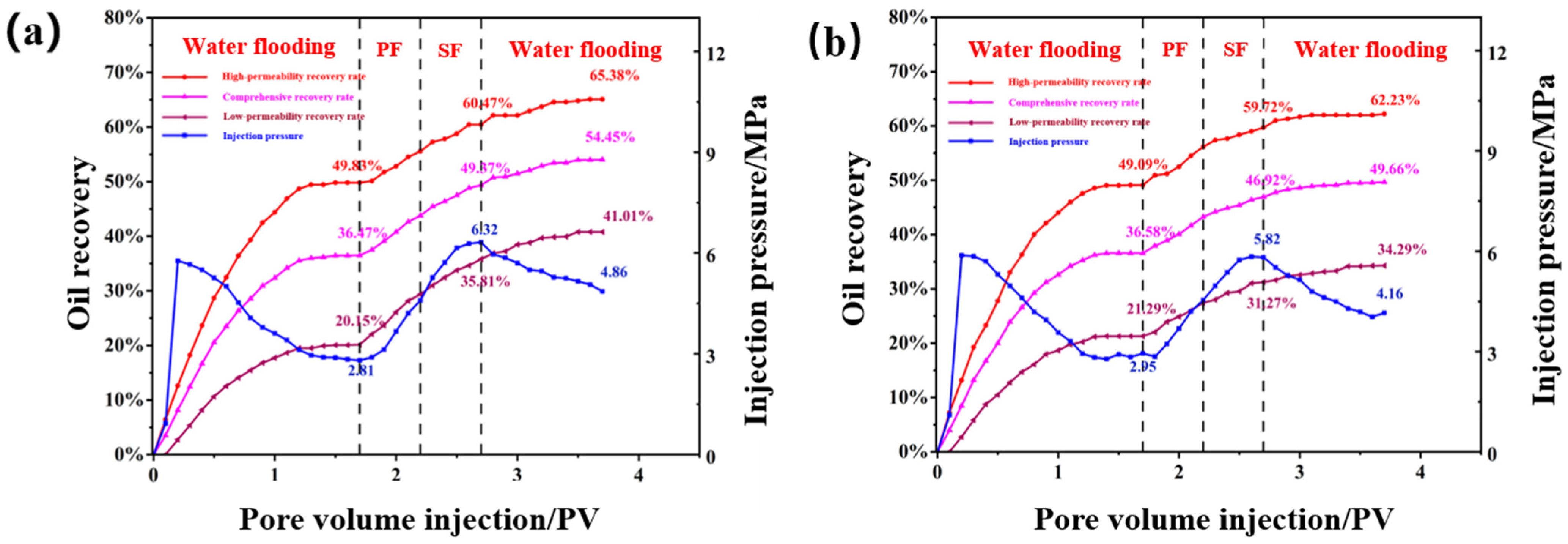
Groups 3–4 were subjected to sequential injections of 0.5 PV microspheres followed by 0.5 PV surfactant after primary water flooding. Compared to Groups 1–2, where only surfactants were injected, the recovery in low-permeability cores improved significantly across all three composite systems, indicating that microspheres effectively blocked high-permeability channels, allowing subsequent flooding agents and injected water to penetrate more into low-permeability zones [18]. The overall recovery rates for microsphere + TDS and microsphere + CAB-35 were 54.45% and 49.66%, respectively—representing increases of 7.98% and 6.28% compared to their corresponding single-surfactant systems. Among them, microsphere + TDS achieved a cumulative recovery improvement of 17.98% during chemical flooding and subsequent water flooding, with the low-permeability core reaching a final recovery of 41.01%, delivering the best overall performance. The experimental results of the combined microsphere-flooding efficiency with the three surfactant systems are shown in Figure 7.
Figure 7.
The oil recovery efficiency of microspheres combined with three oil displacement systems: (a) Microsphere + TDS; (b) Microsphere + CAB-35 (SF: surfactant flooding; PF: particle flooding).
After microsphere injection, the pressure in both experimental groups rose significantly and remained elevated throughout the subsequent water flooding stage, confirming effective plugging and flow diversion by microspheres [19]. Overall comparison reveals a favorable synergistic effect between microsphere-induced sweep enhancement and TDS-driven oil displacement efficiency, making microsphere + TDS the preferred system among Groups 3–4.
2.2.2. Fractured Heterogeneous Core Flooding Experiments
The same fractured core samples (with different matrix permeabilities) were used to simulate dual heterogeneous reservoirs, and parallel core oil displacement experiments were conducted. The oil displacement experiment scheme was the same as that of Model II, and the oil displacement efficiency of different displacement systems was studied. The experimental plan for Model II is shown in Table 3.
Table 3.
Experiment plan of Model II (1 mD matrix core and 5 mD fracture cores).
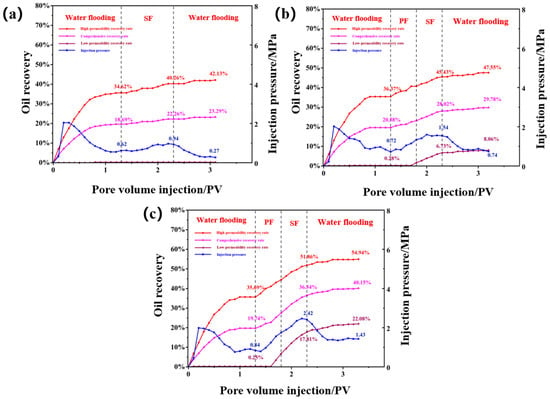
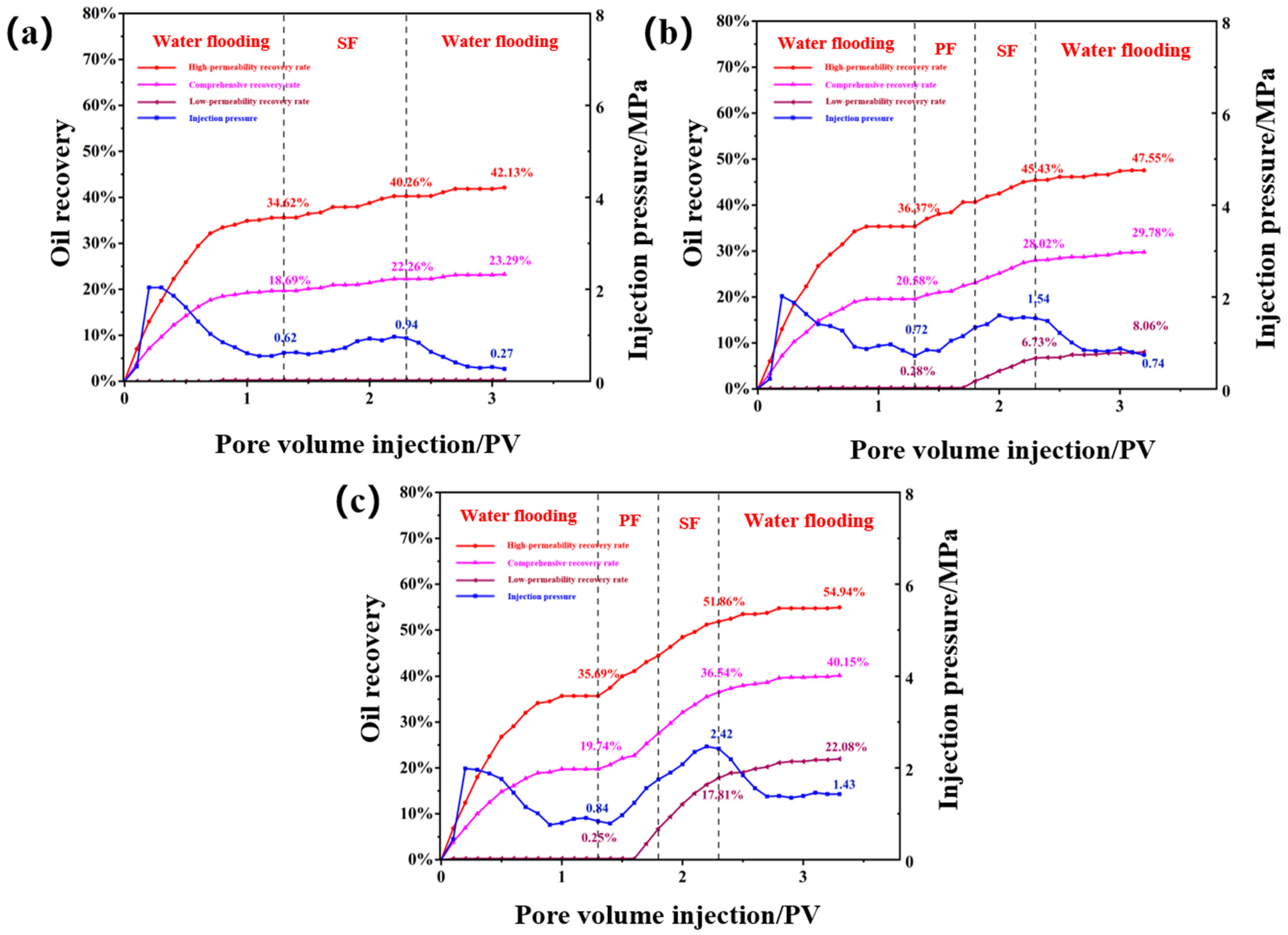
Groups 5–7 employed Model II, composed of approximately 1 mD matrix cores and 5 mD fracture cores. After primary water flooding, the recovery in the low-permeability matrix core was nearly zero, while the fracture core achieved recoveries of 34.62–36.37%, indicating stronger heterogeneity and greater channeling in Model II. The overall recovery rates for TDS, microsphere + TDS, and microgel + TDS were 23.29%, 29.78%, and 40.15%, respectively. Notably, microgel + TDS increased recovery in the low-permeability core to 22.08%, achieving a cumulative improvement of 20.41% during chemical flooding and subsequent water flooding, significantly outperforming microsphere + TDS and single TDS. Pressure curves showed that microgel + TDS exhibited the most pronounced pressure increase and sustained pressure maintenance, indicating strong plugging capability of microgels against fractures [20,21]. The test results of oil displacement efficiency under different flooding systems in Model II are shown in Figure 8.
Figure 8.
Oil recovery efficiency of the oil recovery agent under different oil displacement systems in Model II: (a) TDS; (b) microsphere + TDS; (c) microgel + TDS (SF: surfactant flooding; PF: particle flooding).
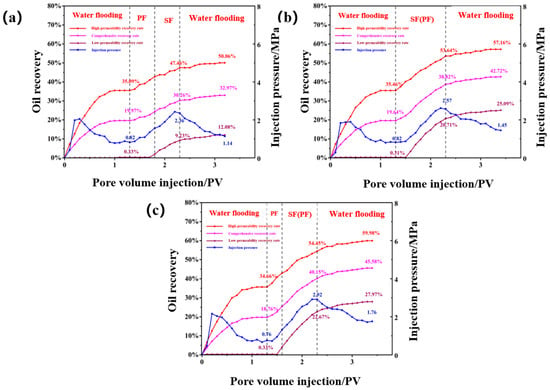
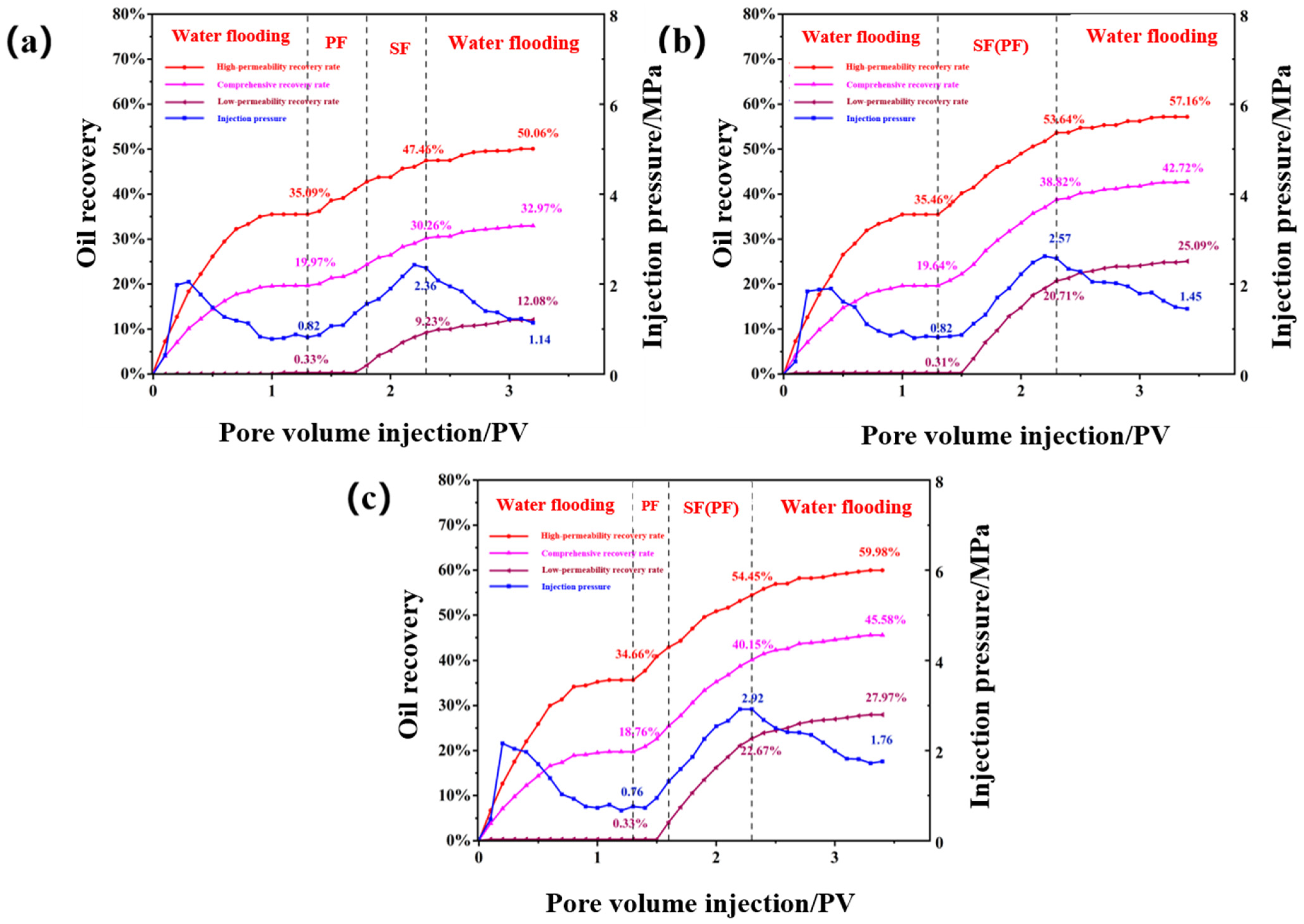
Groups 8–10 used Model II to evaluate the oil recovery performance of different injection sequences involving microgels and TDS. The overall recovery after primary water flooding ranged from 18.76% to 19.97% across the three groups, showing minimal differences and good comparability. When 0.5 PV TDS was injected first, followed by 0.5 PV microgel, the overall recovery reached 32.97%, but the recovery in the low-permeability core was only 12.08%, indicating that TDS tended to channel along high-permeability paths before effective fracture plugging occurred [22]. After using the “microgel + TDS” mixed fluid, the overall recovery factor increased to 42.72%, with a recovery rate of 25.09% in low-permeability cores, indicating that combined injection effectively combines the plugging and blocking function of microgels with the oil displacement capability of TDS. The optimal result was achieved by first injecting 0.3 PV of microgel particles, followed by 0.7 PV of the mixed fluid, achieving an overall recovery factor of 45.58%, with chemical flooding and subsequent water flooding together increased recovery by 26.82%, reaching 27.97% in low-permeability cores. Pressure curves showed that when the microgel pre-packer was combined with the mixed fluid, pressure rise and maintenance were most pronounced, suggesting this method preferentially seals fractures and promotes flow diversion [23]. The oil displacement efficiency test results for different injection methods in Model II are shown in Figure 9.
Figure 9.
Oil recovery efficiency of the oil displacement agent under different injection methods for Model II: (a) 0.5 PV TDS + 0.5 PV microgel; (b) “microgel + TDS” mixed solution; (c) 0.3 PV microgel particles + 0.7 PV “microgel + TDS” mixed solution (SF: surfactant flooding; PF: particle flooding).
The results from 10 experiments indicate that in heterogeneous and fractured cores, injected water primarily flows along high-permeability pathways or fractures, making it difficult to effectively mobilize crude oil in low-permeability zones. In Model I, the overall recovery factor achieved by TDS alone was 46.47%, higher than that of conventional surfactants; when combined with microspheres, the recovery further increased to 54.45%, demonstrating that TDS has strong oil displacement capability, while microspheres enhance sweep efficiency through plugging and blocking effects.
In the fractured Model II, the overall recovery factor with TDS alone was 23.29%, whereas it increased to 40.15% when combined with microgel, outperforming the microsphere–TDS composite system. This indicates that microgels possess superior deformation mobility, fracture sealing, and flow diversion capabilities, making them more suitable for strongly fractured, heterogeneous reservoirs [18].
Different injection sequences significantly affect displacement performance. When 0.3 PV of microgel particles was injected first, followed by 0.7 PV of the microgel–TDS mixture, the overall recovery factor in Model II reached 45.58%. Overall, the microgel pre-packer preferentially blocks dominant flow channels, while the subsequent mixed fluid maintains the plugging effect and enables TDS to exert its interfacial displacement capacity, thereby synergistically expanding macroscopic sweep coverage and improving microscopic displacement efficiency [24].
2.3. Micromodel Sweep Efficiency Evaluation
(1) Heterogeneous Models at Different Pore Scales
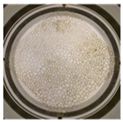
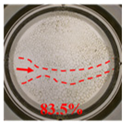
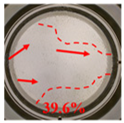
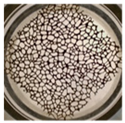
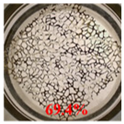
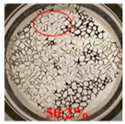
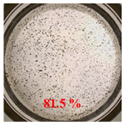
To evaluate the sweep improvement effect of interface-modified and regulated displacement systems across different reservoir types, visualized displacement experiments were conducted on low-permeability, high-permeability, and ultra-low-permeability heterogeneous models with average pore-throat radii of 10, 25, and 5 μm, respectively. After water flooding, all models developed distinct dominant flow paths, leaving large areas unswept. Converted based on residual oil area ratios, the sweep efficiency of the low-permeability model increased from 16.5% (water flooding) to 60.4%, an increase of 43.9%; the high-permeability model improved from 30.6% to 49.8%, a gain of 19.2%; and the ultra-low-permeability model rose from 18.5% to 66.4%, an increase of 47.9%. Residual oil areas decreased significantly across all three models, indicating that the system can expand sweep coverage across various pore-throat scales [25,26]. Although the high-permeability model had relatively high water-flooded sweep, larger pores reduced particle bridging and retention effects, resulting in smaller improvements from chemical flooding. In contrast, the low- and ultra-low-permeability models showed poor water-flood performance, leading to more significant improvements after injection of the composite system. This is because particles block dominant pathways and redirect flow, while TDS reduces oil–water interfacial tension, improves rock wettability, and weakens capillary forces holding residual oil. Their synergistic action allows displacing fluids to enter previously unswept regions, significantly enhancing sweep efficiency in low- and ultra-low-permeability models.
TDS formed stable O/W emulsions across the tested salinity range (0.04 × 10⁴–15 × 104 mg/L), with no emulsion inversion. After 24 h of treatment at 0.2%, TDS reduced the contact angle of oil–wet sandstone to approximately 42°, compared with 48° for CAB-35, indicating a stronger wettability alteration toward water-wet conditions. These interfacial properties, together with the observed emulsification, are consistent with a reduction in capillary resistance to residual oil mobilization.
Schematic illustrations of displacement performance in different heterogeneous models are shown in Table 4. It should be noted that the sweep efficiencies obtained from micromodel experiments are two-dimensional areal values and are not directly comparable to the volumetric recovery factors obtained from core flooding. They are used here to qualitatively and semi-quantitatively evaluate flow diversion and residual oil mobilization at the pore scale.
Table 4.
Schematic diagram of oil recovery effects under different heterogeneous models.
To benchmark the EOR performance of the proposed system, Table 5 compares the recovery factors obtained in this study with representative chemical EOR systems reported in the literature. Shangguan et al. reported a predicted EOR of 18.52% for a core–shell nanoparticle/surfactant system in Changqing low-permeability cores (1.76–7.02 mD), with field water cut reduced by 5.3%. Tahir et al. achieved 41.04% OOIP recovery using a nanosuspension in high-permeability sand packs (~1710–2000 mD), which was 14.09% higher than polymer gel flooding. Bolysbek et al. demonstrated a 28.24% increase in oil production rate after microgel treatment in a heterogeneous reservoir (24.8–3721.4 mD) at the well-group scale. In comparison, the present TDS-synergized microspheres and microgel system achieved 45.58% recovery in a fractured heterogeneous model and increased sweep efficiency to 60.4%, 49.8%, and 66.4% for low-, high-, and ultra-low-permeability models, respectively. These values are competitive with or superior to those reported for similar nanoparticle/surfactant and microgel-based systems, particularly under the challenging conditions of low-permeability heterogeneity and fracture-induced channeling. The superior performance is attributed to the synergistic combination of microgel-based preferential-pathway plugging and TDS-induced interfacial modification, which simultaneously improves macroscopic sweep and microscopic displacement efficiency.
Table 5.
Comparison of recovery factors between the present system and reported chemical EOR systems.
(2) Displacement Process Observations
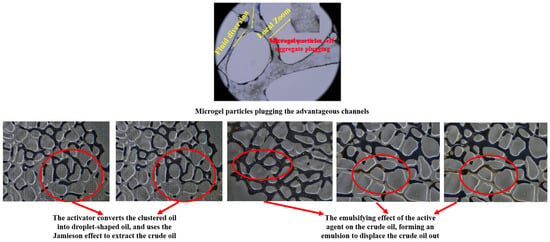
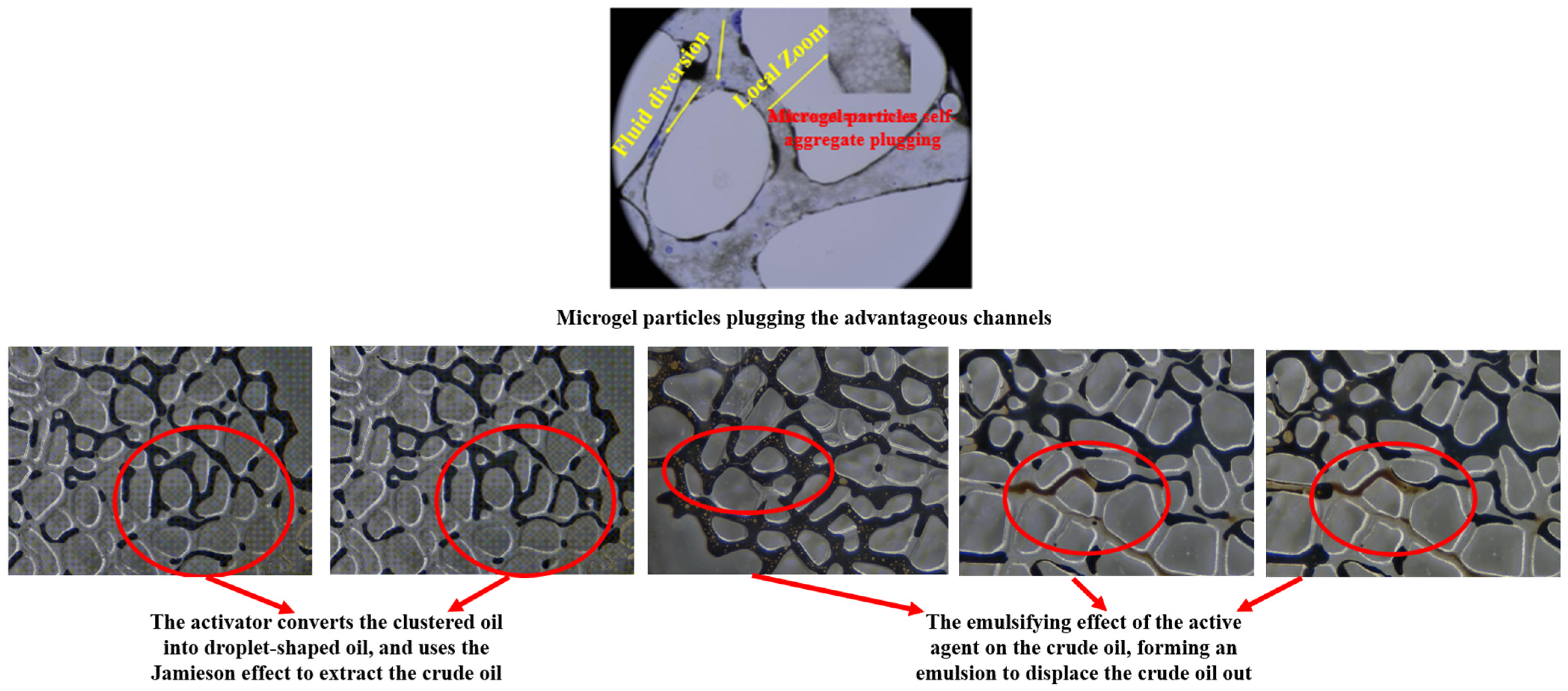
To clarify how interface-modified and regulated displacement systems improve sweep efficiency, we used microscopic visualization techniques to observe microgel migration and residual oil mobilization, as shown in Figure 10. After microgel particles migrate into pore throats, they form localized blockages through adsorption, deformation, and bridging, increasing flow resistance and pressure gradient in dominant pathways, thereby diverting subsequent displacing fluids toward uninvaded pores and improving fluid distribution [27,28]. Meanwhile, TDS significantly reduces oil–water interfacial tension and weakens crude oil adhesion to pore walls, causing clustered and film-like residual oil to stretch, detach, and break into small oil droplets [29]. Some droplets accumulate at pore throats, inducing the Jamin effect, and deform under continuous pressure differential to pass through; others emulsify and are subsequently produced with the displacing fluid [30]. Thus, this system combines the advantages of microgel-based dominant pathway plugging and TDS interface-driven oil displacement: the former enhances macroscopic sweep efficiency by redirecting fluid flow, while the latter improves microscopic residual oil recovery through detachment, emulsification, and dispersion. Together, these mechanisms synergistically achieve simultaneous improvements in both sweep and displacement efficiency.
Figure 10.
Interface modification and regulation of the microscopic oil displacement process and liquid flow direction of the oil displacement agent.
Based on the experimental results, the developed TDS-synergized microsphere and microgel system is recommended for heterogeneous low- and ultra-low-permeability sandstone reservoirs with permeabilities of 0.1–2.0 mD, crude oils with wide carbon-number distributions, and formation waters with moderate to high salinity and hardness. The optimal application window is at reservoir temperatures below 80 °C and pressures below 20 MPa, with a 0.3 PV microgel pre-slug followed by a 0.7 PV microgel/TDS mixture. Outside these ranges, the particle size, crosslinking strength, and interfacial modifier structure should be re-optimized, and additional laboratory and numerical studies are required before field application.
Microvisualization revealed that water flooding channeled through large pores, high-permeability pathways, and fractures. After chemical flooding, microgels migrated, deformed, bridged, and possibly re-migrated in pore throats, while TDS reduced interfacial tension and promoted emulsification. These observations indicate that flow diversion and residual oil mobilization occurred.
3. Conclusions
A TDS-synergized microsphere and microgel system was developed for heterogeneous Changqing Oilfield reservoirs by combining interfacial modification with preferential-pathway regulation. Core flooding showed that TDS alone outperformed conventional surfactants. In heterogeneous models, the microsphere/TDS system achieved 54.45% recovery, whereas in fractured models, microgel exhibited better plugging and flow-diversion performance than microspheres. The injection strategy of 0.3 PV microgel pre-slug followed by 0.7 PV microgel/TDS mixture yielded 45.58% recovery in Model II, confirming that pre-plugging preferential pathways before synergistic flooding is favorable.
Microvisualization revealed that water flooding channeled mainly along large pores, high-permeability pathways, and fractures. In micromodel experiments, the composite system increased areal sweep efficiency to 60.4%, 49.8%, and 66.4% for low-, high-, and ultra-low-permeability models, respectively. In core flooding, the microsphere/TDS system achieved 54.45% recovery in heterogeneous matrix cores, and the 0.3 PV microgel pre-slug + 0.7 PV microgel/TDS strategy achieved 45.58% recovery in the fractured heterogeneous model (Model II). Particles migrated, were retained, bridged, and possibly re-migrated in pore throats, increasing flow resistance in preferential pathways and diverting subsequent fluids to unswept zones. Meanwhile, TDS reduced oil–water interfacial tension, improved wettability, and promoted emulsification, enhancing residual oil mobilization. The synergy of macroscopic flow diversion and microscopic oil displacement improved both sweep and displacement efficiencies.
Future work will optimize microsphere/microgel size, crosslinking strength, and deformability according to permeability, pore-throat size, fracture width, and heterogeneity. This will establish particle–pore-throat matching and avoid excessive near-wellbore retention or plugging, providing a basis for staged plugging and enhanced oil recovery in heterogeneous low-permeability reservoirs.
4. Materials and Methods
4.1. Synthesis and Characterization of TDS and Microgels
4.1.1. Synthesis of the Samples
(1) TDS
We synthesized TDS via alkoxylation and sulfation. The fatty alcohol (Sinopharm Chemical Reagent Co., Ltd., Shanghai, China) was alkoxylated with propylene oxide (Sinopharm Chemical Reagent Co., Ltd., Shanghai, China) in a high-pressure reactor using KOH (Sinopharm Chemical Reagent Co., Ltd., Shanghai, China) as a catalyst. After dehydration at 110 °C and −0.1 MPa for 1 h, propylene oxide was slowly added at 125 °C until the pressure dropped to −0.1 MPa. The product was neutralized with acetic acid (Sinopharm Chemical Reagent Co., Ltd., Shanghai, China) at 60 °C and filtered to remove potassium acetate, yielding the alkoxy polyether intermediate. The intermediate was then sulfated with sulfamic acid (Sinopharm Chemical Reagent Co., Ltd., Shanghai, China) in batches at the target temperature for 2–4 h. When the acid value stabilized or conversion exceeded 95%, NaOH (Sinopharm Chemical Reagent Co., Ltd., Shanghai, China) solution was added for deamination to obtain TDS. Based on the carbon-number distribution of the Panguiliang Chang 6 reservoir, we synthesized TDS-1–TDS-17 using C12–C18 fatty alcohols and varying propylene oxide contents. Using C14(PO)4SO3Na as a model, the synthesis conditions were optimized by varying temperature, catalyst dosage, and polyether:sulfamic acid ratio. The synthesis of C14(PO)4SO3Na under different reaction conditions and the content of active substances are shown in Table 6. The active matter content was determined by two-phase titration [24]. Under the optimized synthesis conditions (110 °C, polyether: sulfamic acid = 1:1.2, 0.5% catalyst), TDS-28 (C14(PO)4SO3Na) achieved the highest active-matter content of 91.4%. This indicates that the synthesis parameters are optimal for this homologue, but it does not by itself establish that TDS-28 is the optimal structure for enhanced oil recovery.
Table 6.
The synthesis of C14(PO)4SO3Na under different reaction conditions and the content of active substances.
Under simulated Changqing reservoir conditions (60 °C, formation water salinity of approximately 12,000–13,000 mg/L, Ca2+ ≈ 355 mg/L, Mg2+ ≈ 80 mg/L), TDS exhibited a lower equilibrium IFT (10−3–10−2 mN/m) and a lower CMC (10−4–10−3 mol/L) than CAB-35 (10−1–100 mN/m and 10−3–10−2 mol/L, respectively). TDS also altered the wettability of oil–wet sandstone more effectively, reducing the contact angle from 100–120° to 25–50°, compared with 60–85° for CAB-35. These interfacial properties, together with its favorable emulsification and low adsorption loss (0.5–2.0 mg/g rock for TDS vs. 1.0–3.0 mg/g rock for CAB-35), contributed to the higher oil recovery observed in core flooding. However, viscosity (≈1.0–1.5 mPa·s for both TDS and CAB-35), emulsification, and chromatographic effects may also play secondary roles, and their relative contributions require further investigation.
(2) Microgels
Microgel particles were synthesized via a water-dispersion method. First, acrylamide (AM) (Sinopharm Chemical Reagent Co., Ltd., Shanghai, China), 2-acrylamido-2-methylpropane sulfonic acid (AMPS) (Sinopharm Chemical Reagent Co., Ltd., Shanghai, China), octadecyl methacrylate (Sinopharm Chemical Reagent Co., Ltd., Shanghai, China), and methylene bisacrylamide (MBA) (Sinopharm Chemical Reagent Co., Ltd., Shanghai, China) were sequentially added to deionized water and stirred until fully dissolved. Polyvinyl alcohol (Sinopharm Chemical Reagent Co., Ltd., Shanghai, China) and ammonium sulfate (Sinopharm Chemical Reagent Co., Ltd., Shanghai, China) were then introduced into the solution as dispersant and dispersion medium, respectively, followed by thorough stirring to ensure complete dissolution, forming a homogeneous, transparent solution. The pH was adjusted to neutral. The solution was purged with nitrogen to remove oxygen, heated to 60 °C, and then initiated with ammonium persulfate (APS) (Sinopharm Chemical Reagent Co., Ltd., Shanghai, China). A stable aqueous dispersion system formed, maintained at 60 °C for 4–6 h, before cooling down to 40 °C [31].
4.1.2. Characterization of the Samples
(1) Fourier-Transform Infrared Spectroscopy (FTIR, Thermo Fisher Scientific, Waltham, MA, USA)
Samples were mixed with spectroscopic-grade KBr (Sinopharm Chemical Reagent Co., Ltd., Shanghai, China) in a 1:100 ratio and pressed into pellets. Background spectra were collected using pure KBr. Scanning range: 500–4000 cm−1, resolution: 4 cm−1, 32 scans. After baseline correction, smoothing, and normalization, characteristic absorption peaks of raw materials and products were compared to confirm the formation of alkyl chains, polyoxypropylene segments, and sulfonate groups.
(2) Mass Spectrometry (LC-MS, Agilent Technologies, Santa Clara, CA, USA)
Samples were separated under HPLC conditions using ESI− mode, with capillary voltage set at −3.0 kV, drying gas temperature at 325 °C, flow rate at 10 L·min−1, nebulizer pressure at 35 psi, and scanning range m/z 100–1500. Molecular ions, adduct ions, and characteristic fragment ions were identified. The number and distribution of PO units were analyzed based on the mass difference of approximately 58 Da between adjacent PO homologues.
(3) Thermogravimetric Analysis (TGA, Netzsch, Selb, Germany)
Approximately 10 mg of sample was placed in an alumina crucible (Sinopharm Chemical Reagent Co., Ltd., Shanghai, China) and purged with N2 at 50 mL·min−1 for 20 min. The temperature was increased from 30 °C to 800 °C at 20 °C·min−1 under N2 atmosphere. TG and DTG curves were recorded. Parameters including initial weight loss temperature, onset decomposition temperature, peak degradation temperature, weight loss percentage, and residual mass were analyzed.
(4) Nuclear Magnetic Resonance (1H NMR, Sigma-Aldrich, St. Louis, MO, USA)
Samples were dissolved in deuterated chloroform (Aladdin, Shanghai, China) to prepare a 35 mg·mL−1 solution and approximately 0.60 mL was transferred into a 5 mm NMR tube. Chemical shifts were referenced to δ = 7.26 ppm, recorded at 298 K, scanning range 0–12 ppm, pulse angle 30°, relaxation delay 5 s, and 32 scans. After phase and baseline correction, signals corresponding to terminal alkyl protons, PO chain segments, and neighboring protons of sulfonate groups were assigned. The average number of PO units was calculated by integrating signals from methyl, methylene, and methine protons in the PO segment relative to the terminal alkyl protons, and compared with theoretical values.
(5) Scanning Electron Microscopy (SEM, ZEISS, Oberkochen, Germany)
Samples were freeze-dried for 24 h, fixed, and sputter-coated with gold (approximately 60 s, 3–5 nm thickness). Acceleration voltage: 5 kV, working distance: 8–10 mm, magnification: 500–50,000×. Sphericity, surface morphology, particle size distribution, and aggregation degree of microspheres and microgels were observed, and particle sizes were measured and analyzed statistically.
4.2. Oil Recovery Efficiency
Heterogeneous and fractured microfluidic chips were selected; the average pore throat radius was approximately 5 μm, 10 μm, and 25 μm. Clean and dry them, and then connect them to an apparatus for visualizing oil displacement. Inject dimethyl silicone oil at 0.05–0.2 mL·min−1 to fully saturate the pores, and then treat at 60 °C for 24 h to render the surface oleophilic. Next, inject crude oil at 0.05–0.2 mL·min−1 until complete saturation, and age at 60 °C for 48 h. Install the chip and capture the initial oil-saturated image. At 60 °C, perform water flooding at 0.005 mL·min−1, continuously recording video and periodically capturing images to monitor the water front, dominant flow paths, and residual oil distribution until no significant change in residual oil morphology occurs over 30 min. Subsequently, inject interface-modified and regulated displacing agents to observe oil film detachment, emulsification, and Jamin effect, along with microgel adsorption, bridging, plugging, and flow diversion [32]. Continue until the effluent becomes clear and no further changes in residual oil morphology are observed over 30 min.
4.3. Sweep Efficiency
After cleaning, drying, and weighing, core samples were tested for air permeability. Porosity was determined by vacuum saturation with formation water. Place the core into a holder and inject formation water at a rate of 0.1 mL·min−1 until pressure and fluid production stabilize. Then, continue injecting crude oil at the same rate until pure oil is continuously produced at the outlet, followed by injecting 0.5 PV of crude oil to establish irreducible water saturation. Calculate the initial oil saturation and age the sample at 60 °C for 48 h. Use a parallel core displacement setup with two cores of different permeability mounted in separate holders, maintained at 60 °C and a backpressure of 10 MPa, with a total injection rate of 0.1 mL·min−1. Perform primary water flooding until the water cut reaches 98% and stabilizes [33]. Next, inject the oil recovery system according to the designated scheme: single-agent flooding with 1 PV of TDS, conventional surfactant (CAB-35); segmented injection with the first 0.5 PV of microsphere/microgel followed by 0.5 PV of surfactant; mixed injection of 1 PV of microgel–TDS composite system; pre-adjustment injection with 0.3 PV of microgel followed by 0.7 PV of the composite system. Record liquid production, oil production, water cut, and pressure after every 0.1 PV injected. After chemical flooding, continue water flooding until the water cut reaches 98% and stabilizes, and then verify the injection–production mass balance.
Author Contributions
Conceptualization, Y.S. and T.W.; methodology, L.L.; validation, T.W., J.J. and J.W.; formal analysis, H.P.; investigation, H.P.; resources, Y.S.; data curation, L.L.; writing—original draft preparation, T.W.; writing—review and editing, J.J.; visualization, J.W.; supervision, T.W. All authors have read and agreed to the published version of the manuscript.
Funding
This research received no external funding.
Institutional Review Board Statement
Not applicable.
Informed Consent Statement
Not applicable.
Data Availability Statement
The original contributions presented in this study are included in the article. Further inquiries can be directed to the corresponding author.
Acknowledgments
The authors would like to extend their sincere gratitude to Yangtze University for the invaluable educational foundation and academic support that have significantly contributed to the development of this work, and express their sincere gratitude to Exploration and Development Research Institute of PetroChina Changqing Oilfield Company for material support and for providing access to laboratory facilities that were essential for the successful completion of this study. Additionally, the authors also express their sincere appreciation to the anonymous reviewers for their valuable and constructive comments.
Conflicts of Interest
Authors Yangnan Shangguan, Lei Liu, Junhong Jia and Jinghua Wang were employed by the PetroChina Changqing Oilfield Company. The remaining authors declare that the research was conducted in the absence of any commercial or financial relationships that could be construed as a potential conflict of interest.
References
- Gao, C.; Yuan, Y.; Fan, W.; Song, J.; Lei, X.; Ma, J.; Yang, C. Experimental Study on CO2–Crude Oil Phase Behavior, Miscibility and Threshold Pressure Gradient for CCUS in Ultra-Low Permeability Reservoir. Processes 2026, 14, 2970. [Google Scholar] [CrossRef] [Scilit]
- Zhang, X.; Yu, J.; Ma, K.; Zhang, L.; Wang, Y.; Shi, F. Visualized Experimental Investigation of Flow-Field Reconstruction and Enhanced Oil Recovery by Heterogeneous-Phase Composite Flooding in Complex Narrow-Channel Reservoirs. Gels 2026, 12, 752. [Google Scholar] [CrossRef] [Scilit] [PubMed]
- Li, J.; Liu, F.; Liu, M.; Song, K.; Xu, R.; Luo, Y.; Bao, C.; Li, M. Effect of Pore-Throat Structure and Displacement Fluid Type on Relative Permeability in Low-Permeability Sandstone Reservoirs. Energies 2026, 19, 4089. [Google Scholar] [CrossRef] [Scilit]
- Wang, P.; Zhou, F.; Ding, Y.; Xu, C.; Wu, M.; Shen, Y.; Sun, J. Pore-Structure-Aware Prediction of Pressure-Dependent Pore-Volume Compressibility in Ultra-Deep Fractured-Vuggy Carbonate Reservoirs. Processes 2026, 14, 2952. [Google Scholar] [CrossRef] [Scilit]
- Jiang, S.; Chen, L.; Wang, D.; Sheng, W.; Shi, M.; Xue, M.; Zeng, H.; Hu, L.; Long, X. Chemical Plugging Systems for Preventing Gas Channeling in CO2 Flooding: Progress and Prospects. Pet. Sci. 2026, 23, 4999–5019. [Google Scholar] [CrossRef] [Scilit]
- Li, H.; He, J.; Jing, R.; Wang, S.; Li, A.; Chen, T.; Du, D.; Zhang, S. Quantum Dot-Hybridized Temperature- and Salt-Resistant Polyacrylamide for Enhanced Oil Recovery in High-Temperature and High-Salinity Reservoirs. Polymers 2026, 18, 2084. [Google Scholar] [CrossRef] [Scilit] [PubMed]
- Luo, X.; Xu, X.; Li, Z.; Zhou, Y.; Zhao, H.; Huang, L.; Sun, Q.; Huang, J. Chemical Plugging Optimization for Channeling Control During CO2 Flooding Using Multi-Surrogate Collaborative Prescreening. Processes 2026, 14, 2716. [Google Scholar] [CrossRef] [Scilit]
- Ding, J.; Cheng, T.; Fu, C.; Huang, B.; Yang, E.; Qu, M.; Liu, S.; Wu, J. Synthesis and Characterization of Self-Dispersion Monodisperse Silica-Based Functional Nanoparticles for Enhanced Oil Recovery (EOR) in Low-Permeability Reservoirs. Processes 2024, 12, 2349. [Google Scholar] [CrossRef] [Scilit]
- Wang, Y.; He, S.; Zhang, S.; Chen, Y.; Nian, M.; Zhang, D.; Zhang, Y. Construction of Sulfonated Poly(aryl ether ketone) Nanomicelles and Their Dispersion–Displacement Synergistic Mechanism in Deep Oil Recovery. Processes 2026, 14, 1682. [Google Scholar] [CrossRef] [Scilit]
- Tahir, M.; Hincapie, R.; Clemens, T.; Steineder, D.; Farzaneh, A.; Mikulic, S. Alkali-Polymer Flooding in an Austrian Brownfield: From Laboratory to Field—Insights. Polymers 2024, 16, 3607. [Google Scholar] [CrossRef] [Scilit] [PubMed]
- Bolysbek, D.; Uzbekaliyev, K.; Assilbekov, B. Rock Wettability Alteration Induced by the Injection of Various Fluids: A Review. Appl. Sci. 2024, 14, 8663. [Google Scholar] [CrossRef] [Scilit]
- Shangguan, Y.; Li, B.; Gao, C.; Jia, J.; Zhang, Y.; Wang, J.; Xu, T. Occurrence State and Time-Shift Characteristics of Residual Oil in Low-Permeability Reservoirs After Long-Term Waterflooding in Changqing Oilfield. Energies 2025, 18, 2001. [Google Scholar] [CrossRef] [Scilit]
- Belhaj, A.F.; Fakir, S.H.; Javadi, A.H.; Sarma, H.K. Integrated Experimental and Core-Scale Modeling Study of Hybrid Low-Salinity Surfactant EOR in Tight Carbonates. Appl. Sci. 2026, 16, 7253. [Google Scholar] [CrossRef] [Scilit]
- Shangguan, Y.; Wang, J.; Tang, K.; Guan, H.; Feng, F.; Bai, Y.; Wang, Q.; Huang, R.; Yuan, G.; Liang, T. Synergistic Mechanisms of Core–Shell Nanoparticle/Surfactant Combination Systems in Low-Permeability Reservoirs, Injection Parameter Optimization, and Field Pilot Response. Processes 2026, 14, 1516. [Google Scholar] [CrossRef] [Scilit]
- Murad, A.; Skauge, A.; Skauge, T. Polymer Retention Leading to Non-Darcy Flow in Porous Media—Influence of Molecular Weight, Composition and Mechanical Degradation. Colloids Interfaces 2026, 10, 30. [Google Scholar] [CrossRef] [Scilit]
- Chen, X.; Zhu, J.; Li, Y.; Liu, Z.; Liu, J.; He, H.; Liu, S. Reservoir Equilibrium Development Method by Combined Conformance Control of Polymer/Gel-Dispersed Fluids. Gels 2026, 12, 543. [Google Scholar] [CrossRef] [Scilit] [PubMed]
- Chekalov, A.; Ivanova, A.; Sokolov, A.; Sukhorukov, G.; Cheremisin, A.; Yuan, C. Novel Encapsulated Surfactants for Enhanced Oil Recovery in Carbonate Reservoir Conditions: Interfacial and Wetting Behavior. Adv. Geo-Energy Res. 2025, 18, 272–286. [Google Scholar] [CrossRef] [Scilit]
- Wang, L.; Wang, T.; Wang, J.; Tian, H.; Chen, Y.; Song, W. Enhanced Oil Recovery Mechanism and Technical Boundary of Gel Foam Profile Control System for Heterogeneous Reservoirs in Changqing. Gels 2022, 8, 371. [Google Scholar] [CrossRef] [Scilit] [PubMed]
- Chowdhury, S.; Shrivastava, S.; Kakati, A.; Sangwai, J. Comprehensive Review on the Role of Surfactants in the Chemical Enhanced Oil Recovery Process. Ind. Eng. Chem. Res. 2022, 61, 21–64. [Google Scholar] [CrossRef] [Scilit]
- Mejia, L.; Zhu, P.; Hyman, J.; Mohanty, K.; Balhoff, M. Coreflood on a chip: Core-scale Micromodels for Subsurface Applications. Fuel 2020, 281, 118716. [Google Scholar] [CrossRef] [Scilit]
- Ye, Y.; Liu, Y.; Guan, B.; Yang, Z.; He, L.; Xiao, P.; Wang, X.; Li, S. Study on Micro-Displacement Mechanism and Reservoir Compatibility of Soft Dispersed Microgel. Gels 2023, 9, 177. [Google Scholar] [CrossRef] [Scilit] [PubMed]
- Ovsepian, M.; Salami, Y.; Karamov, T.; Du, D.; Dobysh, I.; Cheremisin, A.; Yuan, C. Multifunctional Nanofluids for Enhanced Oil Recovery by Simultaneous in Situ Mobility Control and Displacement Efficiency Improvement. Adv. Geo-Energy Res. 2026, 19, 231–241. [Google Scholar] [CrossRef] [Scilit]
- Goudarzi, A.; Zhang, H.; Varavei, A.; Taksaudom, P.; Hu, Y.; Delshad, M.; Bai, B.; Sepehrnoori, K. A laboratory and Simulation Study of Preformed Particle Gels for Water Conformance Control. Fuel 2015, 140, 502–513. [Google Scholar] [CrossRef] [Scilit]
- Zhao, S.; Pu, W.; Wei, B.; Xu, X. A Comprehensive Investigation of Polymer Microspheres (PMs) Migration in Porous Media: EOR Implication. Fuel 2019, 235, 249–258. [Google Scholar] [CrossRef] [Scilit]
- Rozhkova, Y.A.; Burin, D.A.; Galkin, S.V.; Yang, H. Review of Microgels for Enhanced Oil Recovery: Properties and Cases of Application. Gels 2022, 8, 112. [Google Scholar] [CrossRef] [Scilit] [PubMed]
- Lin, Y.; Shi, B.; Shi, Y.; Wang, S.; Zhang, Q.; Zhou, S.; Liu, T.; Su, Y.; Li, Y.; Yang, D. Structural Design of a Controllably Degradable Polyacrylamide Hydrogel for Petroleum Recovery. Energy Fuels 2026, 40, 19956–19970. [Google Scholar] [CrossRef] [Scilit]
- Jiali, M.; Mikhailov, N. Effect of Capillary Number on the Residual Oil Saturation during Chemical Flooding. Georesursy 2025, 27, 233–242. [Google Scholar] [CrossRef] [Scilit]
- Wang, T.; Wang, L.; Song, W.; Fan, H.; Cheremisin, A.; Yuan, C. Temperature- and Salt-Tolerant 2-Acrylamide-2-methylpropanesulfonic Acid/AM@SiO2 Microgel Particles: Synthesis and Enhanced Oil Recovery Performance Evaluation. Ind. Eng. Chem. Res. 2023, 62, 14879–14890. [Google Scholar] [CrossRef] [Scilit]
- Lv, D.; Li, J.; Bo, Q.; Xie, Z.; Dai, C.; Zhao, G. A Novel Profile Control Agent in High-Temperature and High-Salinity Reservoirs: Dispersed Particle Gel Prepared from Modified Nanographite-Strengthened Bulk Gel. Energy Fuels 2023, 37, 19487–19498. [Google Scholar] [CrossRef] [Scilit]
- Mo, J.; Mikhailov, N.; Wang, H. Influence of Reservoir Microstructure on the State of Residual Oil According to Nuclear Magnetic Resonance (NMR) Spectroscopy. Georesursy 2024, 26, 100–108. [Google Scholar] [CrossRef] [Scilit]
- Wang, T.; Wang, L.; Qin, H.; Zhao, C.; Bai, Z.; Meng, X. Identification of Gas Channeling and Construction of a Gel-Enhanced Foam Plugging System for Oxygen-Reduced Air Flooding in the Changqing Oilfield. Gels 2022, 8, 373. [Google Scholar] [CrossRef] [Scilit] [PubMed]
- Zhao, Y.; Zeng, Y.; Bai, X.; Zeng, X.; Xin, C.; Wang, L. An Integrated Experimental and Numerical Study on Water-Cut Control and Production Enhancement Strategies for Low-Permeability Reservoirs Under Edge-Water Encroachment. Energies 2026, 19, 3712. [Google Scholar] [CrossRef] [Scilit]
- Klemm, B.; Picchioni, F.; Raffa, P.; Mastrigt, F. Star-Like Branched Polyacrylamides by RAFT polymerization, Part II: Performance Evaluation in Enhanced Oil Recovery (EOR). Ind. Eng. Chem. Res. 2018, 57, 8835–8844. [Google Scholar] [CrossRef] [Scilit] [PubMed]


Disclaimer/Publisher’s Note: The statements, opinions and data contained in all publications are solely those of the individual author(s) and contributor(s) and not of MDPI and/or the editor(s). MDPI and/or the editor(s) disclaim responsibility for any injury to people or property resulting from any ideas, methods, instructions or products referred to in the content. |
© 2026 by the authors. Licensee MDPI, Basel, Switzerland. This article is an open access article distributed under the terms and conditions of the Creative Commons Attribution (CC BY) license.