


Abstract
Hybrid alginate hydrogels offer a versatile platform for integrating the structural properties of biopolymeric networks with the functionality of inorganic and biomass-derived fillers. In this study, calcium-alginate hydrogels incorporating thermally treated bentonite, olive pomace, or kraft lignin were prepared by ionotropic gelation to investigate how filler identity influences hydrogel properties and Rhodamine B (RhB) adsorption. The hybrid materials were characterized by Fourier-transform infrared spectroscopy (FTIR), scanning electron microscopy (SEM), Brunauer–Emmett–Teller (BET) surface area analysis, and determination of the point of zero charge (pHpzc). Their adsorption behavior was evaluated through kinetic, equilibrium, pH, ionic-strength, and regeneration studies. Despite the very low N2-accessible surface areas measured in the dry state, the hydrogels exhibited markedly different adsorption performances, indicating that dry-state BET surface area alone does not account for RhB uptake and highlighting the importance of filler chemistry, surface-charge characteristics, and the accessibility of adsorption domains within the hydrated network. Adsorption kinetics were better described by the pseudo-second-order model, while intraparticle diffusion analysis indicated a multistep mass-transfer process. Equilibrium data were empirically well described by the Langmuir model, with fitted maximum adsorption capacities ranging from 12.4 to 212.7 mg·g−1. Bentonite-containing hydrogels exhibited the highest capacities, following the order AB110 > AB200 > AB400. Increasing the bentonite thermal-treatment temperature decreased the fitted maximum adsorption capacity while increasing the Langmuir affinity parameter, revealing a capacity–affinity trade-off. The lignocellulosic fillers produced lower-capacity adsorption systems with distinct apparent affinities and responses to solution conditions. After five adsorption–desorption cycles, the bentonite- and lignin-containing hydrogels retained more than 80% of their initial adsorption performance, whereas the olive-pomace-containing formulations retained approximately 70%. Overall, the results demonstrate that incorporating chemically distinct mineral and lignocellulosic fillers into a common calcium-alginate network provides an effective strategy for tuning the structure–property–adsorption relationships and reusability of hybrid hydrogels, supporting their further development as sustainable adsorbent materials for water-remediation applications.
1. Introduction
Alginate has emerged as a versatile biopolymer for the development of functional hydrogels owing to its renewable origin, biocompatibility, abundance of carboxylate groups, and ability to form three-dimensional networks through ionic crosslinking with divalent cations such as Ca2+ under mild aqueous conditions. The resulting calcium-alginate hydrogels combine high water uptake with good structural integrity and can incorporate a wide variety of inorganic and organic components within their polymeric network [1,2]. This versatility has stimulated considerable interest in alginate-based hybrid hydrogels for environmental applications, particularly as adsorbent materials, where immobilization within the gel matrix can facilitate the handling, separation, and reuse of finely divided adsorbents.
The incorporation of functional fillers provides an effective strategy for tailoring the physicochemical properties and adsorption performance of alginate hydrogels. Depending on their chemical nature, these components can modify the microstructure, surface chemistry, charge characteristics, accessibility of adsorption sites, and interactions between the hydrogel and dissolved contaminants. In this context, both inorganic minerals and biomass-derived materials offer attractive possibilities, although they introduce markedly different chemical environments into the alginate network. Natural and waste-derived fillers are particularly interesting because they combine functional properties with low cost, availability, and the possibility of valorizing renewable resources and industrial or agricultural by-products, thereby contributing to circular-economy strategies [3,4,5]. The potential of biomass residues as sustainable adsorbents for dye removal has also been demonstrated using other agricultural by-products. For example, Goyal et al. [6] investigated litchi seed-derived biowaste as a natural surfactant and adsorbent for Rhodamine B removal, highlighting the potential of plant-derived residues for water-treatment applications. Although these materials differ from polymer-supported hybrid adsorbents, such findings support the broader strategy of converting biomass residues into functional materials for pollutant removal. In this context, incorporating olive pomace and kraft lignin into calcium-alginate hydrogels offers an alternative approach in which biomass-derived components are immobilized within a recoverable polymeric matrix.
Among inorganic fillers, bentonite is widely used in adsorption processes because of its layered aluminosilicate structure, high cation-exchange capacity, permanent negative charge, and chemical stability. When incorporated into an alginate matrix, bentonite can provide additional adsorption domains while being immobilized within a macroscopic hydrogel structure that facilitates material recovery. Moreover, thermal treatment can modify the structural organization and surface chemistry of bentonite, potentially affecting the accessibility, density, and energetic distribution of adsorption sites [7]. These changes provide an opportunity to investigate how modification of the inorganic phase is reflected in the adsorption properties of the resulting hybrid hydrogel.
Biomass-derived fillers provide a complementary approach to the functionalization of alginate hydrogels. Lignin and olive pomace are particularly attractive because of their renewable or waste-derived origin and their chemically heterogeneous surfaces. Lignin contains aromatic structures together with phenolic, hydroxyl, and methoxyl groups, whereas olive pomace is a complex lignocellulosic residue containing multiple oxygen-containing functionalities. These chemical features can promote interactions with organic molecules through hydrogen bonding, electrostatic interactions, π–π interactions, hydrophobic interactions, and other specific or nonspecific interactions. Their incorporation into alginate hydrogels therefore provides a means of combining the processability of the polysaccharide network with the chemical functionality of lignocellulosic materials. In addition, the valorization of kraft lignin and olive pomace contributes to more sustainable resource management in the pulp and paper and olive oil sectors [8,9,10,11].
One potential application of these hybrid hydrogels is the removal of synthetic dyes from aqueous media. Dye-containing effluents from textile, paper, cosmetic, printing, and pharmaceutical industries remain an important environmental concern because many synthetic dyes are resistant to biodegradation and can persist in aquatic environments, reducing light penetration and photosynthetic activity and potentially affecting aquatic ecosystems. Furthermore, several commercial dyes and their degradation products have been associated with toxic, mutagenic, and carcinogenic effects [12,13]. Among them, Rhodamine B (RhB) is widely used in textile dyeing, printing, biotechnology, and analytical applications because of its intense coloration and chemical stability. Its high water solubility and resistance to biological degradation, together with concerns regarding adverse effects associated with prolonged exposure, have motivated extensive research into its removal from aqueous media [14,15].
Different technologies have been investigated for the treatment of dye-containing wastewater, including membrane filtration, coagulation–flocculation, advanced oxidation processes, photocatalysis, electrochemical methods, and biological treatments. Although these approaches can achieve high removal efficiencies, their practical application may be limited by operational costs, energy consumption, sludge generation, membrane fouling, or reduced effectiveness in complex effluents [16,17]. Adsorption remains attractive because of its operational simplicity, broad applicability, ease of integration, and comparatively low operating costs. In this context, hybrid hydrogels based on renewable polymers and low-cost fillers offer the additional advantage of combining adsorption functionality with straightforward material recovery and potential reuse.
Despite the growing number of studies on alginate-based hybrid adsorbents, most investigations have focused on a single modifier or a single class of fillers. Direct comparisons between inorganic and lignocellulosic fillers incorporated into the same hydrogel matrix remain comparatively scarce, particularly when the materials are prepared using equivalent synthesis procedures and evaluated under identical experimental conditions. Consequently, the extent to which filler chemistry controls the structure–property–adsorption relationships of alginate-based hybrid hydrogels remains insufficiently understood. Establishing these relationships is particularly relevant because adsorption performance in hydrated polymeric networks cannot necessarily be interpreted solely from conventional dry-state surface properties; instead, filler chemistry, hydrogel microstructure, surface charge, accessibility of adsorption domains, and mass transfer through the hydrated network may collectively determine adsorption behavior.
In this context, the present work develops a series of hybrid calcium-alginate hydrogels incorporating thermally activated bentonite, kraft lignin, and olive pomace to systematically investigate the influence of inorganic and lignocellulosic fillers on hydrogel properties and RhB adsorption. All materials were prepared using the same ionotropic gelation approach and evaluated under identical experimental conditions, allowing direct comparison of their physicochemical characteristics and adsorption behavior. The hybrid hydrogels were characterized by Fourier-transform infrared spectroscopy (FTIR), scanning electron microscopy (SEM), Brunauer–Emmett–Teller (BET) surface area analysis, and determination of the point of zero charge (pHpzc). Their functional performance was evaluated through kinetic and equilibrium adsorption experiments together with studies of pH, ionic strength, and adsorption–desorption cycling. By correlating filler composition and hydrogel characteristics with adsorption capacity, affinity, mass-transfer behavior, and reusability, this study aims to establish structure–property–adsorption relationships that can guide the design of sustainable alginate-based hybrid hydrogels for water remediation.
2. Results and Discussion
2.1. Physicochemical Characterization of the Hybrid Hydrogels
2.1.1. FTIR Analysis
The FTIR spectra of the hybrid alginate hydrogels are presented in Figures S1–S7 (Supplementary Materials), and the assignments of the main absorption bands are summarized in Table S1. All formulations exhibited the characteristic absorption bands of calcium-crosslinked alginate together with the vibrational features associated with the incorporated bentonite, olive pomace, or kraft lignin, confirming the presence of both the alginate matrix and the corresponding filler in the hybrid materials.
The bentonite-containing hydrogels (AB110, AB200, and AB400; Figures S1–S3, respectively) retained the characteristic hydroxyl, adsorbed-water, and aluminosilicate vibrations of bentonite, together with the asymmetric and symmetric stretching bands of alginate carboxylate groups associated with the Ca2+-crosslinked network [18,19,20,21]. The preservation of these characteristic signals indicates that the mineral phase remained chemically identifiable after incorporation into the alginate network.
Similarly, the olive-pomace-containing hydrogels (AOP80 and AOP90; Figures S4 and S5) and lignin-containing hydrogels (AL80 and AL90; Figures S6 and S7) exhibited absorption bands associated with hydroxyl groups, aliphatic C–H bonds, aromatic structures, methoxyl groups, and other oxygen-containing functionalities characteristic of lignocellulosic biomass and kraft lignin [22,23,24,25,26]. Only minor variations in band intensity were observed within each series, consistent with the different filler-to-alginate ratios used in the formulations.
No new absorption bands or pronounced shifts in the characteristic signals of alginate or the incorporated fillers were observed after hydrogel preparation. These results indicate that ionotropic gelation preserved the main chemical functionalities of the individual components and provide no evidence of the formation of new covalent bonds between the fillers and the alginate matrix. The formation of the hybrid materials is therefore consistent with the retention of the original components within the Ca2+-crosslinked alginate network, where non-covalent interactions such as hydrogen bonding and electrostatic interactions may contribute to interfacial association between the polymer and the fillers [21,27,28,29,30,31].
Overall, FTIR analysis demonstrates that incorporation of bentonite, olive pomace, and lignin into the alginate matrix preserves the characteristic functional groups of both the polymer and the fillers. Carboxylate groups from alginate, mineral surface functionalities from bentonite, and oxygen-containing and aromatic groups from the lignocellulosic fillers remain available as potential interaction sites. The different chemical environments introduced by these fillers are therefore expected to contribute to the distinct adsorption behaviors observed for the hybrid hydrogels, as discussed in the following sections.
2.1.2. SEM Morphology
Representative SEM micrographs of the bentonite- and lignocellulosic-containing hybrid alginate hydrogels are shown in Figure 1 and Figure 2, respectively. All formulations maintained the overall integrity of the calcium-alginate matrix after drying; however, clear differences in surface and internal morphology were observed depending on the nature of the incorporated filler. These observations indicate that filler identity strongly influences the microstructural organization of the resulting hybrid materials.
Figure 1.
SEM micrographs of bentonite-modified alginate hydrogel beads (AB110, AB200, and AB400, arranged from left to right). (a) External morphology at 30× magnification. (b) Cross-sectional morphology at 500× magnification.
Figure 2.
SEM micrographs of olive pomace- and lignin-modified alginate hydrogel beads. (a) External morphology of AOP80 (left) and AOP90 (right) at 35× magnification. (b) Cross-sectional morphology of AOP80 (left) and AOP90 (right) at 500× magnification. (c) External morphology of AL80 (left) and AL90 (right) at 35× magnification. (d) Cross-sectional morphology of AL80 (left) and AL90 (right) at 500× magnification.
The bentonite-containing hydrogels (AB110, AB200, and AB400; Figure 1) exhibited relatively compact structures with mineral-containing domains distributed within the alginate matrix. Cross-sectional micrographs revealed localized microvoids and structural irregularities, indicating a heterogeneous organic–inorganic microstructure. Although some morphological variations can be observed among the three formulations, the available SEM images do not provide sufficient evidence to establish a systematic relationship between bentonite thermal-treatment temperature and the compactness or homogeneity of the resulting hydrogel structure. Consequently, any influence of bentonite thermal pretreatment on the internal organization of the alginate matrix remains uncertain [28,29].
A distinctly different microstructure was observed for the lignocellulosic-containing hydrogels (Figure 2). The olive-pomace-containing materials (AOP80 and AOP90) exhibited the highest degree of morphological heterogeneity, with irregular lignocellulosic fragments embedded within the alginate matrix and interparticle voids and discontinuities distributed throughout the examined cross-sections. This heterogeneous organization is consistent with the complex particulate nature of olive pomace and its incorporation into the polymeric matrix.
In contrast, the lignin-containing hydrogels (AL80 and AL90) exhibited a comparatively more homogeneous internal morphology. Lignin appeared to be more uniformly distributed throughout the continuous alginate matrix, and no large agglomerates were evident in the examined regions. Compared with the AOP formulations, the more uniform morphology of the AL materials indicates that olive pomace and kraft lignin are accommodated differently within the calcium-alginate matrix.
The external SEM micrograph of AL90 (Figure 2c) shows a central depression that gives the bead a doughnut-like appearance. This feature may represent an incidental morphological irregularity arising during bead formation or subsequent drying, rather than an intrinsic characteristic of the AL90 formulation. Local variations in droplet formation, gelation, or drying-induced contraction could potentially contribute to this morphology. However, the available observations do not allow its precise origin or reproducibility to be established.
Overall, SEM analysis revealed three distinguishable microstructural patterns associated with filler identity: compact mineral-rich domains in the bentonite-containing hydrogels, a highly heterogeneous architecture containing irregular lignocellulosic fragments and interparticle voids in the olive-pomace-containing materials, and a comparatively homogeneous filler distribution in the lignin-containing hydrogels. These morphological differences should be considered together with the surface and adsorption properties discussed below when interpreting the behavior of the different hybrid hydrogels.
It should also be emphasized that SEM characterization was performed on dried samples. Consequently, the observed morphology represents the dry-state structure of the materials and should not be regarded as a direct representation of the hydrogel network under the hydrated and swollen conditions prevailing during RhB adsorption. Rehydration may alter the dimensions, organization, and accessibility of the polymeric network; therefore, direct relationships between dry-state SEM features and solute transport or adsorption performance should be interpreted with caution.
2.1.3. BET Surface Area Analysis
The BET specific surface areas of the hybrid alginate hydrogels are summarized in Table 1. The bentonite-containing materials exhibited very low N2-accessible specific surface areas, with values of 0.1777, 0.0541, and 0.1420 m2·g−1 for AB110, AB200, and AB400, respectively. For the olive-pomace- and lignin-containing hydrogels, reliable BET surface areas could not be determined under the experimental conditions used and are therefore reported as not determined (n.d.). For comparison, the BET specific surface areas of the original fillers were 89.05, 93.43, and 89.80 m2·g−1 for bentonite thermally treated at 110, 200, and 400 °C, respectively, and 1.04 and 1.42 m2·g−1 for olive pomace and kraft lignin, respectively. Incorporation of the thermally treated bentonites into the alginate matrix resulted in a pronounced decrease in nitrogen-accessible specific surface area, with apparent reductions exceeding 99% relative to the original mineral fillers. This decrease may be associated with partial coverage of bentonite particles by the crosslinked alginate matrix, changes in particle arrangement, and structural modifications during drying. However, these contributions cannot be distinguished from the available measurements. For olive-pomace- and lignin-containing hydrogels, the absence of reliable BET values prevents a quantitative comparison before and after gelation. Furthermore, these results reflect the textural properties of dried materials and should not be directly extrapolated to adsorption-site accessibility under hydrated conditions.
Table 1.
BET surface area and point of zero charge (pHpzc) of hybrid alginate-based adsorbents.
The low BET values obtained for the AB series indicate that the dried hybrid materials provide only a limited surface area accessible to N2 at 77 K. In addition, no monotonic relationship was observed between bentonite thermal-treatment temperature and BET surface area. The specific surface area decreased from AB110 to AB200 and subsequently increased for AB400, indicating that the effect of thermal treatment on the dry-state textural properties cannot be described by a simple temperature-dependent trend.
These results should be interpreted considering the different physical states involved in textural characterization and adsorption experiments. BET measurements were performed on dried and degassed samples using N2 at 77 K, whereas RhB adsorption was conducted in aqueous solution. Drying may induce contraction or rearrangement of the alginate network, reducing the accessibility of internal domains to nitrogen molecules. In contrast, upon contact with water, hydration and possible swelling of the polymeric network may modify the spacing between polymer chains and facilitate the penetration of RhB molecules toward adsorption sites associated with the alginate matrix and the incorporated fillers. Furthermore, RhB adsorption depends not only on the accessible surface area but also on the chemical nature and affinity of the available adsorption sites. Consequently, the low BET surface areas measured in the dry state are not necessarily inconsistent with the comparatively high adsorption capacities observed in aqueous solution. However, because the hydrated structure and swelling behavior were not independently characterized, their specific contributions to RhB adsorption cannot be quantified from the present results.
This distinction becomes particularly relevant when the BET results are compared with the equilibrium adsorption behavior discussed below. Despite their very low dry-state BET surface areas, the bentonite-containing hydrogels exhibited substantial RhB adsorption capacities. Moreover, the BET surface areas followed the order AB110 > AB400 > AB200, whereas the maximum adsorption capacities obtained from the Langmuir model followed a different sequence, AB110 > AB200 > AB400. Therefore, no direct relationship between dry-state BET surface area and maximum RhB adsorption capacity was observed within the AB series.
Taken together, these results indicate that dry-state N2-accessible surface area alone is not an adequate descriptor of RhB adsorption performance in these hybrid alginate hydrogels. Adsorption behavior should instead be interpreted by considering the BET results together with other physicochemical and adsorption-related properties, including filler chemistry, surface-charge characteristics, the nature and abundance of potential interaction sites, and their accessibility after contact with the aqueous phase. The contribution of these factors is further examined through the pHpzc, kinetic, equilibrium, pH, and ionic-strength results discussed in the following sections.
2.1.4. Point of Zero Charge (pHpzc)
The ΔpH versus initial pH curves obtained for the hybrid alginate hydrogels are presented in Figure 3, and the corresponding pHpzc values are summarized in Table 1. Clear differences were observed among the formulations, demonstrating that the nature of the incorporated filler strongly influences the acid–base and surface-charge characteristics of the hybrid materials.
Figure 3.
Determination of the point of zero charge (pHpzc) of the hybrid alginate hydrogels. (a) ΔpH as a function of initial pH for bentonite-based hydrogels. (b) ΔpH as a function of initial pH for olive pomace- and lignin-based hydrogels.
The bentonite-containing hydrogels exhibited comparatively high pHpzc values of 7.6, 8.4, and 7.0 for AB110, AB200, and AB400, respectively. The variation within the AB series indicates that the thermal treatment applied to the bentonite influenced the acid–base characteristics of the resulting hybrid materials. AB200 exhibited the highest pHpzc, whereas further increasing the treatment temperature to 400 °C resulted in a decrease to pHpzc = 7.0. Thermal treatment of clay minerals can modify surface hydroxyl groups, exchangeable species, and the acid–base behavior of mineral surfaces; therefore, changes in the bentonite phase may contribute to the observed differences among the AB formulations [32,33,34]. For example, a study on thermally treated sodium bentonite reported a progressive increase in pHpzc from 7.6 at 60 °C to 8.3 at 200 °C and 8.8 at 400 °C [35]. Although the value reported at 200 °C is like that obtained for AB200, the decrease observed for AB400 differs from the increasing trend reported for the original bentonite. This difference may reflect the influence of the calcium-crosslinked alginate matrix and filler–polymer interactions on the overall surface-charge characteristics of the hybrid materials. However, because the pHpzc values of the original thermally treated bentonites were not determined in the present study, the individual contributions of the mineral phase and alginate matrix cannot be established. Therefore, the observed trend should be interpreted as a characteristic of the hybrid formulations rather than a direct reflection of the behavior of the isolated bentonite.
A markedly different behavior was observed for the lignocellulosic-containing hydrogels. The AOP formulations exhibited pHpzc values of 5.6 and 5.7 for AOP80 and AOP90, respectively, whereas values of 5.5 and 4.7 were obtained for AL80 and AL90. These values were substantially lower than those of the bentonite-containing materials and are consistent with the presence of oxygen-containing functionalities characteristic of olive pomace and kraft lignin, including carboxylic, phenolic, and hydroxyl groups [36]. Lignin additionally contains abundant phenolic and methoxyl functionalities that contribute to its characteristic acid–base behavior [37]. The chemically heterogeneous composition of olive pomace may likewise contribute to the pHpzc values observed for the AOP formulations [38].
Comparison of the different formulations therefore reveals a clear distinction between the bentonite- and lignocellulosic-containing hydrogels. The AB series exhibited pHpzc values close to neutral or moderately basic conditions, whereas the AOP and AL series showed more acidic pHpzc values. These differences are consistent with the distinct chemical environments identified by FTIR and demonstrate that filler selection provides an effective means of modifying the acid–base and charge characteristics of the alginate-based hybrid materials.
The pHpzc values are also relevant for interpreting RhB adsorption as a function of solution pH. As a general approximation, the net surface charge of a material tends to become more positive below its pHpzc and more negative above it. Accordingly, at near-neutral pH, the lignocellulosic-containing hydrogels are expected to exhibit a predominantly negative net surface charge, whereas the charge state of the bentonite-containing materials depends more strongly on the thermal-treatment temperature. AB110 and AB200 have pHpzc values above neutral pH, indicating that their comparatively high RhB adsorption cannot be explained solely in terms of electrostatic attraction between a negatively charged surface and the cationic dye.
These results indicate that surface-charge characteristics represent only one contribution to RhB uptake by the hybrid hydrogels. Other interactions associated with the chemical nature of the fillers may also contribute to adsorption and are examined together with the kinetic, equilibrium, pH, and ionic-strength results in the following sections.
2.2. Adsorption Performance
2.2.1. Adsorption Kinetics
The adsorption kinetics of RhB onto the hybrid alginate hydrogels are presented in Figure 4. All formulations exhibited a similar overall kinetic profile, characterized by relatively rapid RhB uptake during the initial stage followed by a progressive decrease in adsorption rate until equilibrium was reached after approximately 100–120 h. The faster initial uptake is consistent with the initially high concentration gradient between the aqueous phase and the hydrogel and with the greater availability of unoccupied adsorption sites at the beginning of the experiment [39,40].
Figure 4.
Adsorption kinetics of Rhodamine B onto the alginate-based hybrid hydrogels. (a) Bentonite-containing hydrogels (AB series). (b) Olive pomace- and lignin-containing hydrogels (AOP and AL series). Experimental data are shown as symbols; dashed curves represent the pseudo-first-order model, whereas solid curves correspond to the pseudo-second-order model.
As adsorption proceeded, the concentration gradient decreased, and an increasing fraction of the available adsorption domains became occupied, resulting in progressively slower RhB uptake. The relatively long times required to reach equilibrium are consistent with the macroscopic dimensions of the hydrogel beads and the need for RhB molecules to be transported from the bulk solution toward adsorption sites located within the rehydrated material. Such transport can involve several consecutive mass-transfer processes, including transport across the external liquid boundary layer and diffusion within the hydrated polymeric matrix [41,42]. Although swelling was not experimentally evaluated in this study, it is an important factor to consider when interpreting RhB adsorption by alginate-based hydrogels. In general, hydration and swelling of polymeric networks can increase the accessibility of internal adsorption sites by modifying the spacing between polymer chains and facilitating the penetration of dye molecules. However, diffusion through the hydrated network may still be influenced by its crosslinking density, structural organization, and filler distribution. Therefore, swelling could potentially affect both the adsorption capacity and the uptake rate of RhB, although its specific contribution cannot be established from the present experimental results.
Although the formulations displayed similar overall kinetic profiles, differences in adsorption rate and uptake were observed among the materials. To quantitatively compare their kinetic behavior and assess the possible contribution of diffusion processes, the experimental data were analyzed using the pseudo-first-order (PFO), pseudo-second-order (PSO), and Weber–Morris intraparticle diffusion models [43]. The PFO and PSO parameters are summarized in Table 2, whereas the Weber–Morris parameters are reported in Table 3. The corresponding nonlinear kinetic fits and intraparticle diffusion plots are presented in Figure 4 and Figures S8–S10, respectively.
Table 2.
Kinetic parameters for Rhodamine B adsorption onto hybrid alginate-based adsorbents.
Table 3.
Intraparticle diffusion parameters for Rhodamine B adsorption onto hybrid alginate-based adsorbents.
Pseudo-First-Order and Pseudo-Second-Order Models
The kinetic parameters obtained from the PFO and PSO models are summarized in Table 2. For all formulations, the PSO model provided a better empirical description of the experimental data than the PFO model. The coefficients of determination (R2) obtained for the PSO model ranged from 0.969 to 0.994, compared with 0.896–0.955 for the PFO model. In addition, the equilibrium adsorption capacities estimated using the PSO model were in closer agreement with the experimental values. Thus, within the models evaluated in this study, the PSO equation provided the best representation of the RhB adsorption kinetics.
A better fit to the PSO model has also been reported for the adsorption of RhB and other cationic dyes onto alginate-based adsorbents, biochars, and lignocellulosic materials [39,40,44]. However, the superior statistical fit of the PSO equation should be regarded primarily as an empirical description of the kinetic data and does not, by itself, establish a specific adsorption mechanism or identify the rate-controlling step. Mechanistic interpretation therefore requires consideration of the kinetic results together with the diffusion analysis and the physicochemical characteristics of the materials.
Within the bentonite-containing series, the PSO equilibrium adsorption capacity increased from 3.226 mg·g−1 for AB110 to 4.747 mg·g−1 for AB400, while the corresponding k2 values increased from 0.063 to 0.096 g·mg−1·h−1. Thus, under the kinetic experimental conditions (C0 = 50 mg·L−1), increasing the bentonite thermal-treatment temperature was associated with both greater RhB uptake and a higher PSO rate constant. These qe values correspond to adsorption at a single initial RhB concentration and should not be interpreted as the maximum adsorption capacities of the materials. Indeed, as discussed in Section 2.2.2, the equilibrium isotherms reveal a different trend in maximum adsorption capacity. Thermal treatment can modify the structural and surface properties of bentonite and thereby affect its adsorption behavior [45,46]; however, the kinetic data alone do not allow these effects to be assigned to a specific structural modification.
The lignocellulosic-containing hydrogels exhibited comparatively high qe values under the kinetic experimental conditions, with PSO estimates ranging from 4.051 to 4.806 mg·g−1. Their k2 values were generally lower than those of the bentonite-containing materials. These differences demonstrate that filler identity influences the kinetic response of the hybrid hydrogels. Nevertheless, because the PSO parameters are model-dependent and adsorption occurs simultaneously with mass transfer through the rehydrated materials, differences in k2 should not be interpreted independently as direct measurements of intrinsic adsorption rates or interaction strengths [40,47].
Intraparticle Diffusion Model
To further assess the contribution of mass-transfer processes, the experimental kinetic data were analyzed using the Weber–Morris intraparticle diffusion model [43]. The corresponding plots are presented in Figures S8–S10, and the calculated parameters are summarized in Table 3.
For all formulations, the Weber–Morris plots exhibited two distinguishable linear regions, indicating that RhB uptake cannot be described by a single diffusion regime over the entire adsorption period. The first region was characterized by higher apparent diffusion constants (kid,1), whereas substantially lower values (kid,2) were obtained for the second region. This behavior is consistent with an initial stage of comparatively rapid mass transfer followed by a slower stage as RhB penetrates further into the rehydrated material and the system approaches equilibrium.
Importantly, none of the linear regions extrapolated through the origin, as indicated by the non-zero intercept (C) values. According to the Weber–Morris approach, this indicates that intraparticle diffusion was not the sole process governing the overall adsorption rate and that resistance associated with the external boundary layer may also contribute to RhB uptake [43]. The relatively large dimensions of the hydrogel beads and their rehydration during adsorption are consistent with the occurrence of multiple mass-transfer resistances in these systems [41,42].
Differences in the apparent diffusion parameters were observed among the formulations, with the bentonite-containing hydrogels generally exhibiting higher first-stage kid values than the lignocellulosic-containing materials. These results confirm that filler identity affects the kinetic and mass-transfer behavior of hybrid hydrogels. However, the Weber–Morris model does not independently identify the physical origin of each linear region, and the two regions should therefore be interpreted as evidence of multiple transport regimes rather than as definitive assignments to individual diffusion mechanisms.
Overall, the kinetic results indicate that RhB adsorption by the hybrid alginate hydrogels involves a combination of adsorption and mass-transfer phenomena. The PSO model provides the best empirical description of the uptake curves among the kinetic models evaluated, while the Weber–Morris analysis indicates that more than one transport regime contributes to the adsorption process and that intraparticle diffusion is not the sole rate-controlling process. The differences among formulations further demonstrate that incorporation of bentonite, olive pomace, or lignin modifies the kinetic response of the alginate-based materials, complementing the differences in chemical and microstructural characteristics identified by FTIR, SEM, BET, and pHpzc analyses.
2.2.2. Adsorption Isotherms
The equilibrium adsorption behavior of RhB onto the hybrid alginate hydrogels was investigated over a broad range of dye concentrations, and the resulting isotherms are presented in Figure 5. All formulations exhibited an increase in equilibrium adsorption capacity (qe) with increasing equilibrium RhB concentration (Ce), although clear differences in isotherm shape and adsorption capacity were observed depending on the incorporated filler.
Figure 5.
Adsorption isotherms of Rhodamine B onto the alginate-based hybrid hydrogels. (a) Bentonite-containing hydrogels (AB series). (b) Olive pomace-containing hydrogels (AOP series). (c) Lignin-containing hydrogels (AL series). Experimental data are shown as symbols; solid lines represent the fits obtained with the Langmuir model, whereas dashed lines correspond to the Freundlich model.
At low equilibrium concentrations, the adsorption isotherms showed a relatively steep initial increase in qe, consistent with favorable RhB uptake when a large fraction of the adsorption domains remained unoccupied. As Ce increased, the increase in adsorption capacity became progressively less pronounced, particularly for the bentonite-containing hydrogels. According to the classification proposed by Giles et al. [48], the observed profiles can be described as L-type isotherms, which are generally associated with favorable adsorption from solution. Similar equilibrium profiles have been reported for RhB adsorption onto alginate-based hydrogels and other biopolymeric adsorbents [49,50].
Differences among the three groups of hybrid hydrogels were nevertheless evident. The bentonite-containing materials showed a more pronounced tendency toward a plateau at high equilibrium concentrations, consistent with progressive saturation of the adsorption capacity over the investigated concentration range. In contrast, the AOP and AL formulations exhibited more gradual changes in qe with increasing Ce. This behavior is compatible with the chemically heterogeneous nature of the lignocellulosic fillers and the presence of adsorption domains with different interaction environments [51,52].
To quantitatively compare the equilibrium behavior of the materials, the experimental data were analyzed using the nonlinear Langmuir and Freundlich models. The corresponding parameters are summarized in Table 4, and the fitted curves are shown in Figure 5.
Table 4.
Langmuir and Freundlich isotherm parameters for Rhodamine B adsorption onto hybrid alginate-based adsorbents.
Langmuir Model
The Langmuir model provided the best overall empirical description of the equilibrium data, with coefficients of determination (R2) ranging from 0.975 to 0.998 (Table 4). The good agreement with the Langmuir equation indicates that this model provides a useful representation of the progressive saturation behavior observed experimentally. However, considering the heterogeneous chemical and microstructural nature of the hybrid hydrogels, the quality of the Langmuir fit should not be interpreted as direct evidence of adsorption on an ideal homogeneous surface or of a strictly monolayer adsorption mechanism.
The maximum adsorption capacities estimated from the Langmuir model (qm) strongly depended on filler identity and followed the order:
AB110 (212.7) > AB200 (201.7) > AB400 (133.9) > AOP80 (53.6) > AOP90 (39.7) > AL80 (16.9) > AL90 (12.4 mg·g−1).
The substantially higher qm values obtained for the AB series demonstrate the strong effect of bentonite incorporation on the adsorption capacity of the hybrid hydrogels. Bentonite provides a layered aluminosilicate phase containing negatively charged sites and exchangeable cations that can contribute to the uptake of cationic species. Within this series, increasing the bentonite thermal-treatment temperature resulted in a progressive decrease in the fitted qm, from 212.7 mg·g−1 for AB110 to 133.9 mg·g−1 for AB400. Thermal treatment of bentonite can induce dehydration, dehydroxylation, and structural rearrangements that modify the distribution and accessibility of adsorption sites [53,54]. The present equilibrium data are therefore consistent with a progressive reduction in the adsorption capacity of the bentonite phase after thermal treatment, although the individual structural changes responsible for this trend cannot be established from the adsorption isotherms alone.
Interestingly, the Langmuir affinity parameter (KL) showed the opposite trend within the AB series, increasing from 0.0014 L·mg−1 for AB110 to 0.0104 L·mg−1 for AB400. Thus, the decrease in fitted maximum capacity with increasing thermal-treatment temperature was accompanied by an increase in the apparent affinity described by the Langmuir model. This capacity–affinity trade-off may be associated with thermally induced modifications in the structure and surface properties of bentonite. Heating can promote the removal of interlayer water and changes in the hydration environment of exchangeable cations, potentially affecting the basal spacing, accessibility of interlayer regions, and distribution of adsorption sites. A reduction in the number of accessible sites could contribute to the lower fitted qm values, whereas changes in the chemical environment of the remaining sites may influence the apparent affinity represented by KL. Similar capacity–affinity trade-offs have been reported for thermally modified clay adsorbents [55,56]. However, because changes in interlayer spacing and site accessibility were not directly characterized in this study, these explanations remain hypothetical. Nevertheless, KL should be interpreted as a model-dependent affinity parameter rather than as a direct measurement of adsorption energy or interaction strength.
The lignocellulosic-containing hydrogels exhibited considerably lower fitted maximum capacities but higher KL values, particularly for the AL formulations. This indicates that, within the Langmuir representation, the lignin-containing materials display comparatively high apparent affinity for RhB at low equilibrium concentrations despite their limited overall adsorption capacity. The presence of phenolic, hydroxyl, methoxyl, carboxylic, and aromatic functionalities in lignin provides chemically diverse environments capable of interacting with RhB [9,51]. However, the contribution of specific interactions such as hydrogen bonding or π–π interactions cannot be established from the Langmuir parameters alone and is considered together with the pH and ionic-strength results below.
Adsorption favorability was further evaluated using the dimensionless Langmuir separation factor (RL). For all formulations and concentrations investigated, the calculated RL values remained within the range 0 < RL < 1, corresponding to favorable adsorption according to the Langmuir criterion. The lower RL values obtained for the lignin-containing hydrogels are consistent with their comparatively high KL values.
Freundlich Model
The equilibrium data were also analyzed using the nonlinear Freundlich model to evaluate adsorption behavior without assuming a finite saturation capacity. Although the Langmuir model generally provided the better overall fit, the Freundlich equation also described the experimental data reasonably well, with R2 values ranging from 0.892 to 0.996. The ability of both models to represent the equilibrium data is consistent with the heterogeneous nature of the hybrid materials and indicates that the adsorption behavior cannot be reduced to an idealized single type of adsorption site.
The Freundlich exponent expressed as 1/n was below unity for all formulations, which is consistent with favorable adsorption over the investigated concentration ranges. Differences in 1/n were observed among the material series. The bentonite-containing hydrogels exhibited values ranging from 0.546 to 0.833, whereas lower values were obtained for the lignin-containing materials, particularly AL90 (1/n = 0.215). The AOP formulations exhibited intermediate behavior.
These differences are compatible with the presence of chemically distinct adsorption environments in the three types of hybrid hydrogel. Lignin and olive pomace contain combinations of phenolic, hydroxyl, methoxyl, carboxylic, and aromatic functionalities that can generate a broad range of interactions with RhB [52,57]. Heterogeneous adsorption behavior has similarly been reported for lignin-based hydrogels and other biomass-derived materials used for RhB adsorption [51]. Nevertheless, the Freundlich 1/n parameter should be regarded as an empirical descriptor of isotherm nonlinearity rather than as a direct quantitative measurement of surface heterogeneity.
The Freundlich constant KF also varied substantially among the formulations, with comparatively high values for AB400 and AL90. Because KF depends on both adsorption capacity and the Freundlich exponent and carries units that vary with n, direct comparisons of KF among materials with different n values should be made cautiously. Consequently, the interpretation of adsorption affinity in the present study is based primarily on the overall shape of the experimental isotherms and the combined Langmuir and Freundlich parameters rather than on KF alone.
Overall, the equilibrium results reveal a clear effect of filler identity on the adsorption behavior of the hybrid alginate hydrogels. Bentonite incorporation produced the highest adsorption capacities, with AB110 reaching a Langmuir qm of 212.7 mg·g−1, whereas the lignocellulosic-containing materials exhibited lower maximum capacities but, particularly in the case of lignin, higher apparent affinity according to the Langmuir model. Within the bentonite series, increasing thermal-treatment temperature resulted in a capacity–affinity trade-off, with decreasing qm and increasing KL. These findings demonstrate that adsorption capacity and apparent affinity can be independently modulated through filler selection and pretreatment. Their mechanistic significance is further evaluated below by considering the effects of solution pH and ionic strength together with the physicochemical characteristics of the hybrid hydrogels.
2.2.3. Effect of pH and Ionic Strength
The effects of solution pH and ionic strength on RhB adsorption by the hybrid alginate hydrogels are presented in Figure 6. Both variables clearly affected adsorption performance, providing additional information on the role of surface charge and solution chemistry in the interaction between RhB and the different hybrid materials.
Figure 6.
Influence of pH and ionic strength on the Rhodamine B removal efficiency of the hybrid alginate hydrogels. (a) Effect of initial pH. (b) Effect of ionic strength.
Effect of Solution pH
As shown in Figure 6a, RhB removal increased markedly as the solution pH increased from 3 to 7 for all formulations. Removal efficiencies ranged from 45.2 to 58.4% at pH 3 and increased to 84.0–93.0% at pH 7. A slight decrease was subsequently observed at pH 9, although adsorption remained high, with removal efficiencies ranging from 78.1 to 88.1%.
The increase in RhB adsorption between pH 3 and 7 is consistent with progressive changes in the protonation state of oxygen-containing functional groups within the hybrid materials. Carboxylic, hydroxyl, and phenolic functionalities can become increasingly deprotonated as pH increases, thereby increasing the negative character of the adsorption domains and favoring interaction with cationic RhB species [40,44,47]. This interpretation is broadly consistent with the pHpzc results, particularly for the AOP and AL formulations, which exhibited pHpzc values between 4.7 and 5.7.
However, the relationship between pHpzc and RhB adsorption was not identical for all formulations. The bentonite-containing hydrogels exhibited comparatively high removal efficiencies even though AB110 and AB200 had pHpzc values of 7.6 and 8.4, respectively. Thus, their adsorption behavior cannot be explained solely by electrostatic attraction between negatively charged adsorption domains and cationic RhB. Additional interactions, including possible cation exchange between RhB and exchangeable cations in bentonite, as well as hydrogen bonding involving oxygen-containing functional groups of the alginate matrix, may also contribute to RhB adsorption.
The similar pH-dependent adsorption trends observed for all formulations, despite their different pHpzc values, suggest that RhB removal is not governed exclusively by the net surface charge of the hydrogels. All materials share a calcium-crosslinked alginate matrix containing oxygen-bearing functional groups, which may contribute to their common response to pH. Furthermore, local adsorption-site characteristics and additional interactions, such as ion exchange in bentonite-containing hydrogels and hydrogen bonding in lignocellulosic formulations, may contribute to RhB uptake independently of the overall pHpzc. Therefore, the observed behavior likely reflects the combined influence of surface charge, filler chemistry, and the common alginate matrix.
A slight reduction in removal efficiency was observed at pH 9. Changes in the ionization state of the functional groups within the hybrid materials and in the aqueous behavior of RhB may contribute to this decrease. Competition involving species present in the solution may also affect adsorption under alkaline conditions [49,52]. Nevertheless, the present experiments do not allow the individual contribution of these effects to be distinguished.
Among the investigated materials, AB400 exhibited the highest RhB removal efficiency throughout the studied pH range, whereas the AOP formulations generally showed the lowest values. This result should be distinguished from the maximum adsorption capacities obtained from the equilibrium isotherms. The pH experiments were performed at a fixed RhB concentration and therefore reflect adsorption performance under those specific conditions rather than the saturation capacity of the materials. Accordingly, the high removal efficiency of AB400 does not contradict the substantially higher Langmuir qm obtained for AB110. At the fixed RhB concentration used in the pH experiments, removal efficiency depends on adsorption behavior within that specific concentration range rather than on the maximum adsorption capacity. Therefore, materials with substantially different Langmuir qm values may exhibit similar removal efficiencies, particularly when differences in apparent adsorption affinity compensate for differences in maximum capacity.
Effect of Ionic Strength
The influence of ionic strength was evaluated by increasing the NaCl concentration from 0.01 to 0.50 M (Figure 6b). RhB removal progressively decreased with increasing NaCl concentration for all formulations, demonstrating that the ionic composition of the aqueous phase influences dye adsorption.
The magnitude of this effect depended on filler identity. The AOP formulations exhibited the largest decrease in removal efficiency, approximately 24%, whereas the AL hydrogels showed the smallest decrease, approximately 16%. The bentonite-containing materials displayed intermediate reductions of approximately 17–19%.
The decrease in adsorption with increasing NaCl concentration is consistent with the contribution of electrostatic interactions to RhB uptake. Increasing electrolyte concentration can screen electrostatic interactions between charged adsorption domains and RhB and can also introduce competition between Na+ and cationic dye species for negatively charged sites [40,45]. Similar ionic-strength effects have been reported for alginate-, clay-, and lignocellulosic-based adsorbents used for cationic dye removal [49,52].
The different sensitivity of the formulations to ionic strength also indicates that electrostatic interactions are unlikely to contribute equally to adsorption in all three material series. The greater reduction observed for the AOP hydrogels is consistent with a comparatively stronger dependence on ionic interactions under the investigated conditions. Conversely, the lower sensitivity of the AL formulations suggests that interactions less affected by electrolyte concentration may make a relevant contribution to RhB adsorption. Considering the aromatic and oxygen-containing functionalities of lignin, hydrogen bonding and π–π interactions are plausible contributions [9,51], although the present ionic-strength experiments do not independently demonstrate these specific mechanisms.
For the bentonite-containing hydrogels, the intermediate sensitivity to ionic strength is consistent with the contribution of several types of interactions. In addition to electrostatic effects, the exchange properties of the layered aluminosilicate phase may contribute to the uptake of cationic RhB [45]. Again, the relative contribution of electrostatic attraction and ion-exchange processes cannot be quantitatively separated from the present experiments.
Overall, the combined pH and ionic-strength results demonstrate that charge-related interactions make an important contribution to RhB adsorption by the hybrid alginate hydrogels, but they are not sufficient to explain the differences among the formulations. Filler identity modifies both the acid–base characteristics of the materials and their sensitivity to electrolyte concentration, indicating that RhB uptake results from the combined influence of surface charge, filler chemistry, site accessibility, and mass-transfer processes. Specific interactions such as ion exchange, hydrogen bonding, and π–π interactions are chemically plausible contributions and are considered together with the complete set of characterization and adsorption results in the proposed adsorption mechanism.
2.3. Regeneration and Reusability
The regeneration and reusability of the hybrid alginate hydrogels were evaluated over five consecutive adsorption–desorption cycles using an ethanol/0.1 M NaCl solution (1:1, v/v) as the regenerating medium. Figure 7 shows the evolution of RhB removal efficiency, while Table 5 summarizes the corresponding values and performance retention after five cycles.
Figure 7.
Removal efficiency of Rhodamine B during five successive adsorption–desorption cycles. (a) Bentonite-containing hydrogels (AB series). (b) Olive pomace- and lignin-containing hydrogels (AOP and AL series).
Table 5.
Reusability of the alginate-based hybrid hydrogels over five consecutive adsorption–desorption cycles.
All formulations remained recoverable and reusable over five cycles, although RhB removal efficiency progressively decreased depending on filler identity. Similar behavior has been reported for alginate-based composite hydrogels and biomass-derived adsorbents [40,58,59] and may result from incomplete desorption, reduced accessibility of adsorption sites, or changes induced by repeated adsorption–desorption treatments.
The bentonite-containing hydrogels retained 81.8–86.2% of their initial removal efficiency after five cycles, with AB400 showing the highest retention (86.2%). The lignin-containing formulations exhibited comparable performance, retaining 84.0% (AL80) and 81.7% (AL90). The aromatic and oxygen-containing functionalities of lignin may contribute to reversible interactions with RhB [9], although the regeneration experiments do not establish the reversibility of individual adsorption mechanisms.
In contrast, the olive-pomace-containing hydrogels showed greater performance losses, retaining 71.8% (AOP80) and 70.4% (AOP90) of their first-cycle removal efficiency. This behavior may reflect the heterogeneous composition of olive pomace, changes in adsorption-site accessibility, or incomplete dye desorption, as observed for other regenerated lignocellulosic adsorbents [40]. However, the relative contributions of these processes cannot be distinguished from the present results.
Importantly, the regeneration experiments were conducted at an initial RhB concentration of 50 mg·L−1, rather than under the saturation conditions used for the equilibrium isotherms. Accordingly, the retention values (RE5/RE1 × 100) describe the preservation of removal efficiency under fixed experimental conditions and should not be directly compared with Langmuir maximum adsorption capacities. The different trends observed for adsorption capacity and performance retention demonstrate that these properties must be considered separately when evaluating the practical potential of the hybrid hydrogels.
Overall, bentonite- and lignin-containing hydrogels exhibited better performance retention than olive-pomace-containing formulations, highlighting the influence of filler identity on reusability under the investigated regeneration conditions.
2.4. Structure–Property–Adsorption Relationships and Proposed Mechanism
The combined characterization and adsorption results indicate that RhB uptake by the hybrid alginate hydrogels depends on filler chemistry, surface-charge characteristics, adsorption-site accessibility, and mass transport through the hydrated polymeric network. These factors contribute differently depending on the incorporated mineral or lignocellulosic filler.
FTIR analysis confirmed the presence of alginate and filler-specific functional groups without evidence of readily detectable new covalent bonds, suggesting that non-covalent interactions may contribute to the organization of the hybrid materials. SEM revealed distinct dry-state microstructures: comparatively compact matrices for bentonite-containing hydrogels, heterogeneous structures with irregular fragments for olive-pomace-containing materials, and a more homogeneous filler distribution for lignin-containing formulations. However, these observations cannot be directly extrapolated to the hydrated state during adsorption.
Similarly, the very low N2-accessible BET surface areas of the bentonite-containing hydrogels did not correlate with their maximum RhB adsorption capacities, while reliable BET values could not be obtained for the AOP and AL formulations. This apparent discrepancy reflects the limitations of dry-state textural characterization for interpreting adsorption in aqueous media. Hydration and possible swelling may modify the accessibility of internal adsorption domains and facilitate dye transport through the polymeric network [40,41]. Nevertheless, because swelling and hydrated-state microstructure were not independently characterized, their specific contributions remain uncertain.
Surface-charge characteristics provide further insight into the adsorption behavior. The bentonite-containing hydrogels exhibited pHpzc values of 7.0–8.4, compared with 4.7–5.7 for the lignocellulosic formulations. The increase in RhB adsorption between pH 3 and 7, together with its decrease as NaCl concentration increased from 0.01 to 0.50 M, supports the involvement of charge-related interactions. However, the adsorption behavior of AB110 and AB200 cannot be explained solely by the net surface charge inferred from pHpzc, indicating that additional interactions contribute to RhB retention.
Kinetic and equilibrium results support this interpretation. The pseudo-second-order (PSO) model provided the best empirical description of RhB uptake, whereas the Weber–Morris analysis revealed two transport regimes with non-zero intercepts, indicating that intraparticle diffusion was not the sole rate-controlling process [39,43]. These findings are consistent with the combined influence of external mass transfer and diffusion through the hydrated hydrogel network, without allowing their individual contributions to be quantified.
Equilibrium adsorption also revealed a strong dependence on filler identity. Bentonite-containing hydrogels exhibited the highest Langmuir maximum adsorption capacities (AB110 > AB200 > AB400). Increasing the bentonite thermal-treatment temperature decreased the fitted maximum capacity from 212.7 to 133.9 mg·g−1 while increasing the apparent affinity parameter KL from 0.0014 to 0.0104 L·mg−1. This capacity–affinity trade-off suggests that thermal pretreatment modifies the distribution or accessibility of adsorption sites, although the specific structural changes responsible cannot be established from the adsorption data alone.
The proposed adsorption mechanism therefore involves different contributions depending on filler identity. For bentonite-containing hydrogels, electrostatic interactions and ion exchange associated with the charged aluminosilicate framework and exchangeable cations are plausible contributors to RhB uptake [45]. These interactions may help explain their comparatively high adsorption capacities despite their low dry-state BET surface areas.
For lignin-containing hydrogels, phenolic, hydroxyl, methoxyl, and aromatic functionalities provide potential adsorption domains. Hydrogen bonding and interactions involving aromatic structures, including π–π interactions, may contribute alongside charge-related interactions [9,51]. The relatively weak dependence of RhB adsorption on ionic strength is consistent with contributions from interactions less sensitive to electrostatic screening, although these specific mechanisms were not directly demonstrated.
Olive-pomace-containing hydrogels exhibited intermediate adsorption capacities and greater sensitivity to ionic strength. Their heterogeneous lignocellulosic composition provides oxygen-containing functional groups that may participate in RhB adsorption [22,60]. The observed electrolyte sensitivity suggests a comparatively important contribution from charge-related interactions, while hydrogen bonding and other filler-dependent interactions may also occur. Their relative contributions cannot be distinguished from the available experimental evidence.
The calcium-alginate matrix itself may also contribute to RhB adsorption through its carboxylate and hydroxyl groups, which can participate in electrostatic interactions and hydrogen bonding with the dye. Consequently, the adsorption behavior of the hybrid hydrogels should be considered as the combined contribution of the alginate matrix and the incorporated fillers. However, because unmodified calcium-alginate beads were not evaluated separately in this study, their individual contribution to RhB uptake cannot be quantified. Therefore, the adsorption capacities reported here should not be interpreted as arising exclusively from the fillers. Further studies including unmodified alginate hydrogels as a reference material would help distinguish the contributions of the polymeric matrix and the modifying components.
Regeneration results further demonstrate the influence of filler identity on material performance. After five adsorption–desorption cycles, bentonite- and lignin-containing hydrogels retained approximately 82–86% of their initial removal efficiency, compared with 70–72% for olive-pomace-containing formulations. However, these results do not establish the reversibility of individual molecular interactions or the stability of specific adsorption sites.
Overall, RhB adsorption by the hybrid hydrogels is best interpreted as the combined result of charge-related and filler-dependent non-electrostatic interactions, together with mass transport through the hydrated alginate network. The relative importance of these contributions depends on filler identity and, for bentonite-containing formulations, thermal pretreatment. This structure–property–adsorption framework highlights filler selection as a means of tailoring adsorption capacity, apparent affinity, and reusability without attributing the observed behavior to a single adsorption mechanism.
2.5. Comparative Performance and Practical Considerations
Table 6 compares the maximum RhB adsorption capacities of the developed hydrogels with those of representative adsorbents reported in the literature. Although differences in experimental conditions and equilibrium models limit direct comparisons, these data provide useful context for evaluating their relative performance.
Table 6.
Comparison of Rhodamine B adsorption capacities of representative alginate-based adsorbents reported in the literature.
The bentonite-containing hydrogels exhibited the highest Langmuir maximum adsorption capacities (212.7, 201.7, and 133.9 mg·g−1 for AB110, AB200, and AB400, respectively), exceeding those of several adsorbents listed in Table 6, although other engineered composites achieved higher values. The olive-pomace- and lignin-containing formulations showed lower capacities. Nevertheless, maximum capacity alone does not fully describe adsorbent performance, as apparent affinity, adsorption kinetics, and reusability also vary with filler identity.
The materials were prepared by calcium-induced ionotropic gelation in aqueous medium, without additional covalent crosslinking or multistep chemical functionalization. This common preparation route allows adsorption properties to be tailored through filler selection and, for bentonite, thermal pretreatment. Within the AB series, increasing the treatment temperature decreased the fitted maximum capacity while increasing the Langmuir affinity parameter, indicating a capacity–affinity trade-off. The lignin-containing hydrogels combined lower maximum capacities with comparatively high apparent affinity and retained approximately 82–84% of their initial removal efficiency after five cycles. In contrast, the olive-pomace-containing formulations showed intermediate capacities but lower performance retention (approximately 70–72%). Thus, the most suitable formulation depends on the relative importance of capacity, affinity, and reusability for a given application.
The use of renewable alginate, abundant bentonite, and industrial by-products such as olive pomace and kraft lignin offers opportunities for resource-efficient material development and biomass valorization [2,16]. However, the environmental and economic benefits of the overall preparation, adsorption, and regeneration processes remain to be established through life-cycle, energy-consumption, and cost assessments.
Several limitations must be considered before practical application. Adsorption experiments were conducted with synthetic RhB solutions under controlled batch conditions, whereas industrial wastewater may contain competing dyes, inorganic ions, and dissolved organic matter. Moreover, continuous-flow performance, fixed-bed operation, long-term mechanical stability, and large-scale regeneration were not investigated.
An additional consideration is the relatively long time required to reach adsorption equilibrium (approximately 100–120 h). Nevertheless, the experimental kinetic data (Figure 4) indicate that, after approximately 48 h, the hydrogels had achieved 86–96% of the adsorption amounts measured at 120 h, depending on the formulation. Thus, substantial RhB uptake occurs before complete equilibrium, although contact times of approximately 48 h remain relatively long for conventional wastewater treatment. Improving adsorption kinetics and evaluating performance at shorter contact times are therefore important priorities.
Structural characterization also presents a limitation. SEM and N2 adsorption measurements were performed on dried materials, whereas RhB adsorption occurred in aqueous solution. Drying may alter the polymer network and the accessibility of internal domains; consequently, dry-state morphology and BET surface area cannot be directly extrapolated to adsorption conditions. Characterization of hydrated hydrogels, including quantitative swelling measurements, would help clarify the relationships between network structure, solute transport, and adsorption performance.
Future work should therefore evaluate the most promising formulations in real or simulated wastewater, multicomponent contaminant systems, and continuous-flow or fixed-bed configurations, while assessing mechanical stability and regeneration under operating conditions. Extending adsorption studies to other dyes and emerging contaminants would also help establish the broader applicability of the observed structure–property–adsorption relationships.
Overall, the comparison highlights the potential of calcium-alginate hydrogels as a versatile platform whose adsorption properties can be tailored through mineral or lignocellulosic filler selection. Further optimization and validation under realistic operating conditions are required to determine their practical suitability for wastewater treatment.
3. Conclusions
Hybrid calcium-alginate hydrogels incorporating thermally treated bentonite, olive pomace, and kraft lignin were successfully prepared by ionotropic gelation. Comparative results demonstrate that filler identity strongly influences the physicochemical properties, adsorption behavior, and reusability of these materials. Bentonite-containing hydrogels exhibited the highest Langmuir maximum adsorption capacities, reaching 212.7 mg·g−1 for AB110. Increasing the bentonite thermal-treatment temperature decreased the fitted maximum capacity while increasing the apparent affinity parameter, revealing a capacity–affinity trade-off. Olive-pomace- and lignin-containing hydrogels showed lower capacities but distinct adsorption characteristics.
RhB adsorption depended on the combined influence of filler chemistry, surface-charge characteristics, adsorption-site accessibility, and mass transport. The low BET surface areas measured in the dry state did not correlate directly with adsorption capacities in aqueous solution, highlighting the limitations of dry-state characterization for describing hydrated hydrogels. The pH and ionic-strength results supported the involvement of charge-related interactions, together with plausible filler-dependent contributions such as ion exchange, hydrogen bonding, and interactions involving aromatic domains. Adsorption kinetics were best described empirically by the pseudo-second-order model, while the Weber–Morris analysis indicated multiple mass-transfer regimes.
After five adsorption–desorption cycles, bentonite- and lignin-containing hydrogels retained approximately 82–86% of their initial removal efficiency, compared with 70–72% for olive-pomace-containing formulations. These differences demonstrate that maximum adsorption capacity and reusability are distinct performance criteria that can be tailored through filler selection.
Overall, the results establish a structure–property–adsorption framework for designing hybrid alginate adsorbents incorporating mineral and biomass-derived fillers. However, the relatively long adsorption times and the absence of hydrated-state structural characterization limit the assessment of their practical performance. Future studies should investigate swelling behavior, adsorption kinetics under shorter contact times, and performance in complex wastewater matrices and continuous-flow systems to evaluate their suitability for water-remediation applications.
4. Materials and Methods
4.1. Materials
Rhodamine B (RhB; Panreac Química SLU, Barcelona, Spain) was used as the model cationic dye. A stock solution of 1000 mg·L−1 was prepared using deionized water (18.2 MΩ·cm) and subsequently diluted to the required concentrations for the adsorption experiments.
Sodium alginate (medium viscosity, Sigma-Aldrich, St. Louis, MO, USA) was used as the polymeric matrix, and calcium chloride dihydrate (CaCl2 2H2O, ≥98%, Sigma-Aldrich) was used as the ionic crosslinking agent.
Commercial bentonite (Merck Life Science S.L., Madrid, Spain) was used as the inorganic filler. Prior to incorporation into the alginate matrix, the bentonite was ground, sieved to a particle size < 200 μm, and thermally treated at 110, 200, or 400 °C for 24 h.
Olive pomace was obtained from a local olive oil mill (Felix S.C.A., Almería, Spain). The biomass was washed with deionized water, oven-dried at 60 °C for 48 h, ground, and sieved to a particle size < 200 μm. Kraft lignin (Indulin AT, MeadWestvaco Corporation, Charleston, SC, USA) was used without further treatment.
Hydrochloric acid (HCl), sodium hydroxide (NaOH), sodium chloride (NaCl), and all other chemicals used in the experiments were of analytical grade and used as received.
4.2. Preparation of Hybrid Alginate Hydrogels
Hybrid alginate hydrogels were prepared by Ca2+-induced ionotropic gelation following a modified procedure based on previous studies [60,66]. For formulations containing 80 wt.% filler, 8 g of the selected material (thermally treated bentonite, olive pomace, or kraft lignin) was dispersed in 100 mL of deionized water under mechanical stirring. Subsequently, 2 g of sodium alginate and an additional 100 mL of deionized water were added. For formulations containing 90 wt.% filler, 9 g of olive pomace or kraft lignin and 1 g of sodium alginate were used following the same procedure. The resulting suspensions were stirred for 1 h to ensure homogeneous dispersion of the filler within the alginate phase.
The resulting mixtures were added dropwise into 250 mL of 0.25 M CaCl2 solution under gentle stirring using a Watson Marlow peristaltic pump (model 505S) through a tubing system connected to four Pasteur pipettes. Upon contact with the Ca2+ solution, spherical hydrogel beads formed immediately through ionic crosslinking of the alginate chains. The beads were maintained in the CaCl2 solution for 30 min to complete the gelation process, recovered by filtration, and thoroughly rinsed with deionized water to remove excess Ca2+ and other non-retained species. The resulting hybrid hydrogels were air-dried for 48 h and stored in a desiccator until characterization and adsorption experiments.
The formulations were designated according to filler type, filler content, and, in the case of bentonite, thermal-treatment temperature. Hydrogels containing 80 and 90 wt.% olive pomace were designated AOP80 and AOP90, respectively, whereas those containing 80 and 90 wt.% kraft lignin were designated AL80 and AL90. Bentonite-containing hydrogels were prepared with 80 wt.% clay thermally treated at 110, 200, or 400 °C and were designated AB110, AB200, and AB400, respectively.
The filler-to-alginate ratios were selected based on the preparation procedure described in previous studies [60,66], with the aim of incorporating a high proportion of mineral or lignocellulosic filler while maintaining the formation of homogeneous and structurally coherent hydrogel beads through calcium-induced ionotropic gelation. Accordingly, filler contents of 80 and 90 wt.% were employed, depending on the formulation, to favor the incorporation of the modifying material without compromising bead formation. These proportions were selected primarily based on hydrogel preparation requirements rather than through a specific optimization of RhB adsorption capacity. Therefore, the present study focuses on comparing the adsorption behavior of the selected hybrid formulations rather than determining the optimal filler loading for RhB removal.
4.3. Physicochemical Characterization
4.3.1. Fourier-Transform Infrared Spectroscopy
The chemical characteristics of the hybrid alginate hydrogels were investigated by Fourier-transform infrared spectroscopy (FTIR) using a Bruker ALPHA spectrometer (Bruker Optics GmbH, Ettlingen, Germany). Spectra were recorded over the range 4000–400 cm−1 using the KBr pellet method, with a spectral resolution of 4 cm−1 and 32 accumulated scans.
4.3.2. Field-Emission Scanning Electron Microscopy
The external and cross-sectional morphologies of the dried hybrid hydrogels were examined by field-emission scanning electron microscopy (FESEM) using a Sigma 300 VP microscope (Zeiss, Oberkochen, Germany). Prior to analysis, the dried beads were fractured to expose their internal structure, mounted on aluminum stubs using conductive carbon tape, and sputter-coated with a thin gold layer.
4.3.3. BET Specific Surface Area
The specific surface area of the dried hybrid hydrogels was determined from N2 adsorption–desorption measurements at 77 K using a Micromeritics Gemini VII 2390 surface area analyzer. Before analysis, the samples were degassed at 110 °C for 2 h using a FlowPrep 060 (Micromeritics Instrument Corporation, Norcross, GA, USA) degassing unit. Specific surface areas were calculated according to the Brunauer–Emmett–Teller (BET) method.
Because these measurements were performed on dried samples using N2 as the adsorptive gas, the resulting BET values describe the dry-state textural properties of the materials and should not be interpreted as a direct measurement of the accessible adsorption space of the hydrated hydrogel network.
4.3.4. Point of Zero Charge
The point of zero charge (pHpzc) was determined using the pH-drift method. Aliquots of 50 mL of 0.01 M NaCl solution were adjusted to initial pH values ranging from 1 to 10 using 0.1 M HCl or 0.1 M NaOH. Subsequently, 0.10 g of each material was added to the corresponding solution, and the suspensions were shaken at 150 rpm and 25 ± 1 °C for 24 h.
After equilibration, the final pH was measured and ΔpH was calculated as the difference between the initial and equilibrium pH values (pHi − pHe). The pHpzc was determined from the intersection of the ΔpH versus initial pH curve with the x-axis.
4.4. Batch Adsorption Experiments
The adsorption performance of the hybrid alginate hydrogels was evaluated using RhB as the model adsorbate. Unless otherwise specified, batch experiments were performed by contacting 0.25 g of material with 25 mL of RhB solution in 100 mL Erlenmeyer flasks. The suspensions were shaken at 150 rpm and 25 ± 1 °C for the required contact time.
During contact with the aqueous phase, the initially dried materials were allowed to rehydrate and swell while RhB adsorption proceeded. After the specified contact time, the liquid phase was separated by filtration, and the residual RhB concentration was determined using a GENESYS 150 UV–Vis spectrophotometer (Thermo Fisher Scientific, Waltham, MA, USA) at 554 nm.
The adsorption capacity at time t, qt (mg·g−1), was calculated according to Equation (1):
where C0 and Ct (mg·L−1) are the initial and time-dependent RhB concentrations, respectively, V (L) is the solution volume, and m (g) is the mass of material used in the adsorption experiment. At equilibrium, Ct = Ce and qt = qe, where Ce (mg·L−1) is the equilibrium RhB concentration and qe (mg·g−1) is the equilibrium adsorption capacity.
RhB removal efficiency was calculated according to Equation (2):
Unless otherwise stated, all experiments were performed in triplicate, and the results are reported as mean ± standard deviation (SD).
4.4.1. Adsorption Kinetics
Adsorption kinetics were investigated using an initial RhB concentration of 50 mg·L−1 under the general experimental conditions described in Section 4.4. Samples were collected at predetermined contact times until equilibrium was reached. Equilibrium was considered to have been attained when no significant variation in RhB concentration was observed over three consecutive measurements.
The experimental kinetic data were analyzed using the pseudo-first-order (PFO), pseudo-second-order (PSO), and Weber–Morris intraparticle diffusion models. The corresponding equations and model definitions are provided in the Supplementary Information (Section S1).
The PFO and PSO parameters were estimated by nonlinear least-squares regression. The Weber–Morris model was evaluated from linear regression of qt versus t1/2. All regression analyses were performed using OriginPro 2018 (OriginLab Corporation, Northampton, MA, USA).
4.4.2. Adsorption Equilibrium
Equilibrium adsorption experiments were conducted to compare the RhB adsorption behavior of the different hybrid alginate hydrogels. Because of the markedly different adsorption capacities of the investigated materials, initial RhB concentrations ranging from 10 to 1000 mg·L−1 were used for the bentonite-containing hydrogels (AB series), whereas concentrations ranging from 10 to 200 mg·L−1 were used for the olive-pomace- and lignin-containing hydrogels (AOP and AL series).
The contact time used in the equilibrium experiments corresponded to that previously established from the kinetic experiments. All other conditions were maintained as described in Section 2.4.
The equilibrium data were analyzed using the nonlinear Langmuir and Freundlich models. The corresponding equations and model definitions are provided in the Supplementary Information (Section S2). The dimensionless Langmuir separation factor (RL) was additionally calculated to assess adsorption favorability. Model parameters were estimated by nonlinear least-squares regression using OriginPro (OriginLab Corporation, Northampton, MA, USA).
4.5. Effect of Solution pH and Ionic Strength
The influence of solution pH on RhB adsorption was investigated at initial pH values of 3, 5, 7, and 9. Before addition of the hybrid hydrogel, the initial pH of the RhB solutions was adjusted using 0.1 M HCl or 0.1 M NaOH. Adsorption experiments were subsequently conducted under the general conditions described in Section 2.4.
The influence of ionic strength was investigated using NaCl as the background electrolyte at concentrations of 0.01, 0.05, 0.10, and 0.50 M. All other experimental conditions were maintained as described in Section 2.4.
The effects of pH and ionic strength on RhB adsorption were evaluated in terms of removal efficiency according to Equation (2).
4.6. Regeneration and Reusability
The reusability of the hybrid alginate hydrogels was evaluated over five consecutive adsorption–desorption cycles. The adsorption step of each cycle was performed under the experimental conditions described in Section 2.4.
After each adsorption cycle, the beads were recovered by filtration and rinsed with deionized water. RhB desorption and material regeneration were then carried out by immersing the recovered beads in an ethanol/0.1 M NaCl solution (1:1, v/v) under continuous stirring for 2 h at room temperature. After regeneration, the materials were washed with deionized water and reused directly in the subsequent adsorption cycle.
The adsorption capacity was determined after each cycle, and the ability of the hybrid hydrogels to preserve their adsorption performance during repeated use was expressed as adsorption-capacity retention relative to the first cycle, according to Equation (3):
where qe,n is the equilibrium adsorption capacity measured after the nth adsorption–desorption cycle and qe,1 is the equilibrium adsorption capacity obtained during the first cycle.
Supplementary Materials
The following supporting information (adsorption kinetic and isotherm models; FTIR spectra, figures, and tables; and intraparticle diffusion plots) can be downloaded at: https://www.mdpi.com/article/10.3390/gels12110987/s1. Figure S1. FTIR spectrum of the AB110 bentonite–alginate composite hydrogel; Figure S2. FTIR spectrum of the AB200 bentonite–alginate composite hydrogel; Figure S3. FTIR spectrum of the AB400 bentonite–alginate composite hydrogel; Figure S4. FTIR spectrum of the AOP80 olive pomace–alginate composite hydrogel; Figure S5. FTIR spectrum of the AOP90 olive pomace–alginate composite hydrogel; Figure S6. FTIR spectrum of the AL80 lignin–alginate composite hydrogel; Figure S7. FTIR spectrum of the AL90 lignin–alginate composite hydrogel; Figure S8. Weber–Morris intraparticle diffusion plots for Rhodamine B adsorption onto the bentonite-containing hydrogels (AB series); Figure S9. Weber–Morris intraparticle diffusion plots for Rhodamine B adsorption onto the olive pomace-containing hydrogels (AOP80 and AOP90); Figure S10. Weber–Morris intraparticle diffusion plots for Rhodamine B adsorption onto the lignin-containing hydrogels (AL80 and AL90); Table S1. Main FTIR absorption bands identified in the hybrid alginate-based adsorbents and their assignments.
Author Contributions
Conceptualization, F.F.-C.; literature search, F.F.-C.; data curation, F.F.-C. and L.G.-F.; formal analysis, F.F.-C. and L.G.-F.; visualization, F.F.-C. and L.G.-F.; supervision, F.F.-C. and L.G.-F.; writing—original draft, F.F.-C.; writing—review & editing, L.G.-F. funding acquisition, F.F.-C. All authors have read and agreed to the published version of the manuscript.
Funding
This work was supported by the University of Almería through the UAL-FEDER2020 Projects program (Grant UAL2020-RNM-B2071), co-financed by the European Regional Development Fund (ERDF/FEDER), and by the Spanish Ministry of Science and Innovation under Grant PID2022-140875OB-C31.
Institutional Review Board Statement
Not applicable.
Informed Consent Statement
Not applicable.
Data Availability Statement
The original contributions presented in this study are included in the article/Supplementary Materials. Further inquiries can be directed to the corresponding author.
Acknowledgments
During the preparation of this work, the authors used ChatGPT (GPT-6, OpenAI) to improve the grammar, readability, and clarity of the manuscript. After using this tool, the authors reviewed and edited the content as needed and take full responsibility for the content of the published article.
Conflicts of Interest
The authors declare no conflict of interest.
References
- Lee, K.Y.; Mooney, D.J. Alginate: Properties and Biomedical Applications. Prog. Polym. Sci. 2012, 37, 106–126. [Google Scholar] [CrossRef] [Scilit]
- Sun, R.; Gao, S.; Zhang, K.; Cheng, W.T.; Hu, G. Recent Advances in Alginate-Based Composite Gel Spheres for Removal of Heavy Metals. Int. J. Biol. Macromol. 2024, 268, 131853. [Google Scholar] [CrossRef] [Scilit]
- Alam, A.; Hassan, A.; Sultana, Z.; Das, N. Natural Polymer-Based Bioadsorbents for Wastewater Treatment. RSC Sustain. 2025, 3, 5027–5050. [Google Scholar] [CrossRef] [Scilit]
- Elgarahy, A.M.; Eloffy, M.G.; Guibal, E.; Alghamdi, H.M.; Elwakeel, K.Z. Use of Biopolymers in Wastewater Treatment: A Brief Review of Current Trends and Prospects. Chin. J. Chem. Eng. 2023, 64, 292–320. [Google Scholar] [CrossRef] [Scilit]
- Wang, T.; Jiang, M.; Yu, X.; Niu, N.; Chen, L. Application of Lignin Adsorbent in Wastewater Treatment: A Review. Sep. Purif. Technol. 2022, 302, 122116. [Google Scholar] [CrossRef] [Scilit]
- Goyal, A.; Singh, P.; Chamoli, P.; Raina, K.K.; Shukla, R.K. Eco-Friendly Biowaste-Based Natural Surfactant for Lyotropic Assemblies and Bio-Adsorbent for Dye Removal. Inorg. Chem. Commun. 2021, 133, 108871. [Google Scholar] [CrossRef] [Scilit]
- He, H.; Chai, K.; Wu, T.; Qiu, Z.; Wang, S.; Hong, J. Adsorption of Rhodamine B from Simulated Waste Water onto Kaolin-Bentonite Composites. Materials 2022, 15, 4058. [Google Scholar] [CrossRef] [Scilit]
- Duval, A.; Lawoko, M. A Review on Lignin-Based Polymeric, Micro- and Nano-Structured Materials. React. Funct. Polym. 2014, 85, 78–96. [Google Scholar] [CrossRef] [Scilit]
- Fattahi, N.; Fattahi, T.; Kashif, M.; Ramazani, A.; Jung, W.K. Lignin: A Valuable and Promising Bio-Based Absorbent for Dye Removal Applications. Int. J. Biol. Macromol. 2024, 276, 133763. [Google Scholar] [CrossRef] [Scilit]
- Kadhom, M.; Albayati, N.; Alalwan, H.; Al-Furaiji, M. Removal of Dyes by Agricultural Waste. Sustain. Chem. Pharm. 2020, 16, 100259. [Google Scholar] [CrossRef] [Scilit]
- Morán-Alarcón, L.C.; Galán-Martín, Á.; Contreras, M.d.M.; Castro, E. Recent Advances and Future Perspectives in the Valorization of Olive Biomass for Sustainable Biorefinery Applications. Renew. Sustain. Energy Rev. 2026, 226, 116438. [Google Scholar] [CrossRef] [Scilit]
- Berradi, M.; Hsissou, R.; Khudhair, M.; Assouag, M.; Cherkaoui, O.; El Bachiri, A.; El Harfi, A. Textile Finishing Dyes and Their Impact on Aquatic Environs. Heliyon 2019, 5, e02711. [Google Scholar] [CrossRef] [Scilit]
- Yagub, M.T.; Sen, T.K.; Afroze, S.; Ang, H.M. Dye and Its Removal from Aqueous Solution by Adsorption: A Review. Adv. Colloid Interface Sci. 2014, 209, 172–184. [Google Scholar] [CrossRef] [Scilit]
- Oladoye, P.O.; Kadhom, M.; Khan, I.; Hama Aziz, K.H.; Alli, Y.A. Advancements in Adsorption and Photodegradation Technologies for Rhodamine B Dye Wastewater Treatment: Fundamentals, Applications, and Future Directions. Green Chem. Eng. 2024, 5, 440–460. [Google Scholar] [CrossRef] [Scilit]
- Zhang, X.; Gan, X.; Cao, S.; Shang, J.; Cheng, X. Efficient Removal of Rhodamine B in Wastewater via Activation of Persulfate by MnO2 with Different Morphologies. Water 2023, 15, 735. [Google Scholar] [CrossRef] [Scilit]
- Crini, G.; Lichtfouse, E. Advantages and Disadvantages of Techniques Used for Wastewater Treatment. Environ. Chem. Lett. 2019, 17, 145–155. [Google Scholar] [CrossRef] [Scilit]
- Shabir, M.; Yasin, M.; Hussain, M.; Shafiq, I.; Akhter, P.; Nizami, A.S.; Jeon, B.H.; Park, Y.K. A Review on Recent Advances in the Treatment of Dye-Polluted Wastewater. J. Ind. Eng. Chem. 2022, 112, 1–19. [Google Scholar] [CrossRef] [Scilit]
- Badita, C.R.; Aranghel, D.; Burducea, C.; Mereuta, P. Characterization of sodium alginate based films. Rom. J. Phys. 2020, 65, 602. [Google Scholar]
- Grant, G.T.; Morris, E.R.; Rees, D.A.; Smith, P.J.C.; Thom, D. Biological Interactions between Polysaccharides and Divalent Cations: The Egg-Box Model. FEBS Lett. 1973, 32, 195–198. [Google Scholar] [CrossRef] [Scilit]
- Makarova, A.O.; Derkach, S.R.; Khair, T.; Kazantseva, M.A.; Zuev, Y.F.; Zueva, O.S. Ion-Induced Polysaccharide Gelation: Peculiarities of Alginate Egg-Box Association with Different Divalent Cations. Polymers 2023, 15, 1243. [Google Scholar] [CrossRef] [Scilit]
- Papageorgiou, S.K.; Kouvelos, E.P.; Favvas, E.P.; Sapalidis, A.A.; Romanos, G.E.; Katsaros, F.K. Metal–Carboxylate Interactions in Metal–Alginate Complexes Studied with FTIR Spectroscopy. Carbohydr. Res. 2010, 345, 469–473. [Google Scholar] [CrossRef] [Scilit]
- Akar, T.; Tosun, I.; Kaynak, Z.; Ozkara, E.; Yeni, O.; Sahin, E.N.; Akar, S.T. An Attractive Agro-Industrial by-Product in Environmental Cleanup: Dye Biosorption Potential of Untreated Olive Pomace. J. Hazard. Mater. 2009, 166, 1217–1225. [Google Scholar] [CrossRef] [Scilit]
- Boeriu, C.G.; Bravo, D.; Gosselink, R.J.A.; Van Dam, J.E.G. Characterisation of Structure-Dependent Functional Properties of Lignin with Infrared Spectroscopy. Ind. Crops Prod. 2004, 20, 205–218. [Google Scholar] [CrossRef] [Scilit]
- Kaur, K.; Kaur, R.; Kaur, H. A Systematic Review of Lignocellulosic Biomass for Remediation of Environmental Pollutants. Appl. Surf. Sci. Adv. 2024, 19, 100547. [Google Scholar] [CrossRef] [Scilit]
- Macena, M.; Cruz-Lopes, L.; Grosche, L.; Santos-Vieira, I.; Esteves, B.; Pereira, H. Characterization of Lignocellulosic Byproducts from the Portuguese Forest: Valorization and Sustainable Use. Materials 2025, 18, 4716. [Google Scholar] [CrossRef] [Scilit]
- Pagnanelli, F.; Viggi, C.C.; Toro, L. Development of New Composite Biosorbents from Olive Pomace Wastes. Appl. Surf. Sci. 2010, 256, 5492–5497. [Google Scholar] [CrossRef] [Scilit]
- Castro-Yobal, M.A.; Contreras-Oliva, A.; Saucedo-Rivalcoba, V.; Rivera-Armenta, J.L.; Hernández-Ramírez, G.; Salinas-Ruiz, J.; Herrera-Corredor, A. Evaluation of Physicochemical Properties of Film-Based Alginate for Food Packing Applications. E-Polymers 2021, 21, 82–95. [Google Scholar] [CrossRef] [Scilit]
- Madejová, J. FTIR Techniques in Clay Mineral Studies. Vib. Spectrosc. 2003, 31, 1–10. [Google Scholar] [CrossRef] [Scilit]
- Madejová, J.; Pálková, H. Review of the Application of Infrared Spectroscopy in Studies of Acid-Treated Clay Minerals. Clays Clay Miner. 2024, 72, e30. [Google Scholar] [CrossRef] [Scilit]
- Shewring, N.I.E.; Jones, T.G.J.; Maitland, G.; Yarwood, J. Fourier Transform Infrared Spectroscopic Techniques to Investigate Surface Hydration Processes on Bentonite. J. Colloid Interface Sci. 1995, 176, 308–317. [Google Scholar] [CrossRef] [Scilit]
- Zaghouane-Boudiaf, H.; Boutahala, M.; Arab, L. Removal of Methyl Orange from Aqueous Solution by Uncalcined and Calcined MgNiAl Layered Double Hydroxides (LDHs). Chem. Eng. J. 2012, 187, 142–149. [Google Scholar] [CrossRef] [Scilit]
- Moustafa, M.T. Preparation and Characterization of Low-Cost Adsorbents for the Efficient Removal of Malachite Green Using Response Surface Modeling and Reusability Studies. Sci. Rep. 2023, 13, 4493. [Google Scholar] [CrossRef] [Scilit]
- Abotaleb, A.; Gladich, I.; Mroue, K.; Abounahia, N.; Alkhateeb, A.; Al-Shammari, A.; Tong, Y.; Al-Masri, D.; Sinopoli, A. Impact of Thermal Treatment on Halloysite Nanotubes: A Combined Experimental-Computational Approach. Heliyon 2024, 10, e39952. [Google Scholar] [CrossRef] [Scilit]
- Cheng, Y.; Xing, J.; Bu, C.; Zhang, J.; Piao, G.; Huang, Y.; Xie, H.; Wang, X. Dehydroxylation and Structural Distortion of Kaolinite as a High-Temperature Sorbent in the Furnace. Minerals 2019, 9, 587. [Google Scholar] [CrossRef] [Scilit]
- Quintero-Jaramillo, J.A.; Carrero, J.I.; Sanabria-González, N.R. Caffeine Adsorption on a Thermally Modified Bentonite: Adsorbent Characterization, Experimental Design, Equilibrium and Kinetics. Colloids Interfaces 2024, 8, 26. [Google Scholar] [CrossRef] [Scilit]
- Longo, L.; Baldassin, D.; Di Michele, A.; Bittencourt, C.; Menegazzo, F.; Signoretto, M. Activation Strategies for Rice Husk Biochar: Enhancing Porosity and Performance as a Support for Pd Catalysts in Hydrogenation Reactions. Catal. Sci. Technol. 2025, 15, 5101–5115. [Google Scholar] [CrossRef] [Scilit]
- Cletus Odili, C.; Morenike Ajibola, A.; Winner Sojobi, J.; Omolara Ogunbiyi, O.; Olayinka Ogunsanya, A.; Ben Okoubulu, A.; Omoghegbe-Aigbojie Igbinigie, G.; Osi-Goyeyi Daramola, D.; Emmanuel Kayode, O.; Samuel Oyegunle, T.; et al. Chemistry of Lignin. In Lignin—Renewable Materials-Chemistry, Trends, Technology and Applications; IntechOpen: Rijeka, Croatia, 2025. [Google Scholar]
- Tsoupras, A.; Panagopoulou, E.; Kyzas, G.Z. Olive Pomace Bioactives for Functional Foods and Cosmetics. AIMS Agric. Food 2024, 9, 743–766. [Google Scholar] [CrossRef] [Scilit]
- Ho, Y.S.; McKay, G. Pseudo-Second Order Model for Sorption Processes. Process Biochem. 1999, 34, 451–465. [Google Scholar] [CrossRef] [Scilit]
- Hubbe, M.A.; Azizian, S.; Douven, S. Implications of Apparent Pseudo-Second-Order Adsorption Kinetics onto Cellulosic Materials: A Review. Bioresources 2019, 14, 7582–7626. [Google Scholar] [CrossRef] [Scilit]
- Ahmed, E.M. Hydrogel: Preparation, Characterization, and Applications: A Review. J. Adv. Res. 2015, 6, 105–121. [Google Scholar] [CrossRef] [Scilit]
- Wu, D.; Gao, Y.; Li, W.; Zheng, X.; Chen, Y.G.; Wang, Q. Selective Adsorption of La3+ Using a Tough Alginate-Clay-Poly(n-Isopropylacrylamide) Hydrogel with Hierarchical Pores and Reversible Re-Deswelling/Swelling Cycles. ACS Sustain. Chem. Eng. 2016, 4, 6732–6743. [Google Scholar] [CrossRef] [Scilit]
- Weber, W.J.; Morris, J.C. Kinetics of Adsorption Carbon from Solutions. J. Sanit. Eng. Div. 1963, 89, 31–59. [Google Scholar] [CrossRef] [Scilit]
- Tran, H.N.; You, S.J.; Hosseini-Bandegharaei, A.; Chao, H.P. Mistakes and Inconsistencies Regarding Adsorption of Contaminants from Aqueous Solutions: A Critical Review. Water Res. 2017, 120, 88–116. [Google Scholar] [CrossRef] [Scilit]
- Bergaya, F.; Lagaly, G. General Introduction: Clays, Clay Minerals, and Clay Science. Dev. Clay Sci. 2013, 5, 1–19. [Google Scholar] [CrossRef] [Scilit]
- Toor, M.; Jin, B.; Dai, S.; Vimonses, V. Activating Natural Bentonite as a Cost-Effective Adsorbent for Removal of Congo-Red in Wastewater. J. Ind. Eng. Chem. 2015, 21, 653–661. [Google Scholar] [CrossRef] [Scilit]
- Crini, G. Non-Conventional Low-Cost Adsorbents for Dye Removal: A Review. Bioresour. Technol. 2006, 97, 1061–1085. [Google Scholar] [CrossRef] [Scilit]
- Giles, C.H.; MacEwan, T.H.; Nakhwa, S.N.; Smith, D. 786. Studies in Adsorption. Part XI. A System of Classification of Solution Adsorption Isotherms, and Its Use in Diagnosis of Adsorption Mechanisms and in Measurement of Specific Surface Areas of Solids. J. Chem. Soc. (Resumed) 1960, 163, 3973–3993. [Google Scholar] [CrossRef] [Scilit]
- Chang, S.; Zhang, X.; Wang, C.; Bai, J.; Li, X.; Liang, W.; Mao, Y.; Cai, J.; Li, Y.; Jiang, Y.; et al. Efficient Adsorption of Rhodamine B Using Synthesized Mg–Al Hydrotalcite/Sodium Carboxymethylcellulose/ Sodium Alginate Hydrogel Spheres: Performance and Mechanistic Analysis. Heliyon 2024, 10, e30345. [Google Scholar] [CrossRef] [Scilit]
- Malik, S.A.; Dar, A.A.; Banday, J.A. Kinetic and Adsorption Isotherm Studies of Malachite Green Dye onto Surfactant-Tailored Alginate Hydrogel Beads: An Influence of Surfactant Hydrophobicity. Int. J. Biol. Macromol. 2024, 263, 130318. [Google Scholar] [CrossRef] [Scilit]
- Jannat, U.T.; Haque, M.A.; Aumi, S.A.; Ray, S.K.; Moniruzzaman, M.; Jahan, M.S.; Ali Shaikh, M.A.; Ehsan, M.Q. Waste-Derived-Lignin Based Hydrogel as a Reusable Adsorbent for Efficient Removal of Dyes from Aqueous Solution. RSC Adv. 2026, 16, 25596–25613. [Google Scholar] [CrossRef] [Scilit]
- Kim, J.C.; Kim, J.; Park, J.; Oh, J.K.; Choi, I.G.; Kwak, H.W. Highly Efficient and Sustainable Alginate/Carboxylated Lignin Hybrid Beads as Adsorbent for Cationic Dye Removal. React. Funct. Polym. 2021, 161, 104839. [Google Scholar] [CrossRef] [Scilit]
- Rostami, E.; Norouzbeigi, R.; Kelishami, A.R. Thermal and Chemical Modification of Bentonite for Adsorption of an Anionic Dye. Adv. Environ. Technol. 2018, 4, 1–12. [Google Scholar] [CrossRef] [Scilit]
- Zivica, V.; Palou, M.T. Physico-Chemical Characterization of Thermally Treated Bentonite. Compos. B Eng. 2015, 68, 436–445. [Google Scholar] [CrossRef] [Scilit]
- Martinez Stagnaro, S.Y.; Volzone, C.; Rueda, M.L. Influence of Thermal Treatment on Bentonite Used as Adsorbent for Cd, Pb, Zn Retention from Mono-Solute and Poly-Solute Aqueous Solutions. Mater. Res. 2012, 15, 549–553. [Google Scholar] [CrossRef] [Scilit][Green Version]
- Nones, J.; Nones, J.; Riella, H.G.; Poli, A.; Trentin, A.G.; Kuhnen, N.C. Thermal Treatment of Bentonite Reduces Aflatoxin B1 Adsorption and Affects Stem Cell Death. Mater. Sci. Eng. C 2015, 55, 530–537. [Google Scholar] [CrossRef] [Scilit]
- Boukerzaza, I.-M.; Boulhouchet, B.; Kebabi, B.; Mennour, A. Adsorption of rhodamine b onto olive pomace: Isotherms, kinetics and infrared studies. Environ. Eng. Manag. J. 2021, 20, 1963–1971. [Google Scholar] [CrossRef] [Scilit]
- Kausar, A.; Iqbal, M.; Javed, A.; Aftab, K.; Nazli, Z.i.H.; Bhatti, H.N.; Nouren, S. Dyes Adsorption Using Clay and Modified Clay: A Review. J. Mol. Liq. 2018, 256, 395–407. [Google Scholar] [CrossRef] [Scilit]
- Momina; Shahadat, M.; Isamil, S. Regeneration Performance of Clay-Based Adsorbents for the Removal of Industrial Dyes: A Review. RSC Adv. 2018, 8, 24571–24587. [Google Scholar] [CrossRef] [Scilit]
- Flores-Céspedes, F.; Villafranca-Sánchez, M.; Fernández-Pérez, M. Alginate-Based Hydrogels Modified with Olive Pomace and Lignin to Removal Organic Pollutants from Aqueous Solutions. Int. J. Biol. Macromol. 2020, 153, 883–891. [Google Scholar] [CrossRef] [Scilit]
- Raza, S.; Ghasali, E.; Hayat, A.; Zhang, P.; Orooji, Y.; Lin, H. Sodium Alginate Hydrogel-Encapsulated Trans-Anethole Based Polymer: Synthesis and Applications as an Eradicator of Metals and Dyes from Wastewater. Int. J. Biol. Macromol. 2024, 254, 127153. [Google Scholar] [CrossRef] [Scilit]
- Deveci, İ. Synthesis of Na-Alginate Templated Montmorillonite-Silica Composite as Adsorbent for Removal of Rhodamine B. Adsorption 2024, 30, 729–746. [Google Scholar] [CrossRef] [Scilit]
- Şenol, Z.M.; Arslanoğlu, H.; Keskin, Z.S.; Mehmeti, V.; El Messaoudi, N. Biosorption of Rhodamine B and Sunset Yellow Dyes on Cross-Linked Chitosan-Alginate Biocomposite Beads: Experimental and Theoretical Studies. Int. J. Biol. Macromol. 2025, 298, 139264. [Google Scholar] [CrossRef] [Scilit]
- Alotaibi, A.M.; Alnawmasi, J.S.; Alshammari, N.A.H.; Abomuti, M.A.; Elsayed, N.H.; El-Desouky, M.G. Industrial Dye Absorption and Elimination from Aqueous Solutions through Bio-Composite Construction of an Organic Framework Encased in Food-Grade Algae and Alginate: Adsorption Isotherm, Kinetics, Thermodynamics, and Optimization by Box–Behnken Design. Int. J. Biol. Macromol. 2024, 274, 133442. [Google Scholar] [CrossRef] [Scilit]
- Elamin, N.Y.; Mubarak, M.F.; Elamin, M.R.; Altalhi, A.A.; Hassan, A.M.; Mohamed, E.A. Bio-Inspired Synthesis of Hierarchical Porous Alginate-Hydroxyapatite-Carbonaceous Composites for Synergistic Remediation of Heavy Metal and Organic Contaminants: Kinetics, Thermodynamics, and Long-Term Cyclic Regeneration Efficacy. Int. J. Biol. Macromol. 2026, 362, 152145. [Google Scholar] [CrossRef] [Scilit]
- Flores Céspedes, F.; Villafranca Sánchez, M.; Pérez García, S.; Fernández Pérez, M. Modifying Sorbents in Controlled Release Formulations to Prevent Herbicides Pollution. Chemosphere 2007, 69, 785–794. [Google Scholar] [CrossRef] [Scilit]
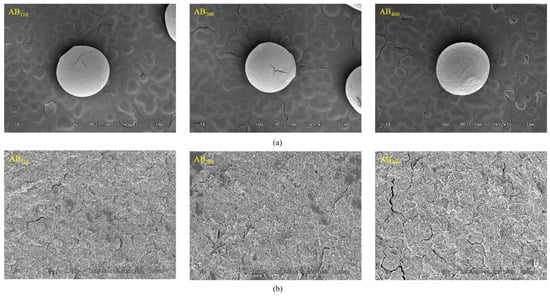
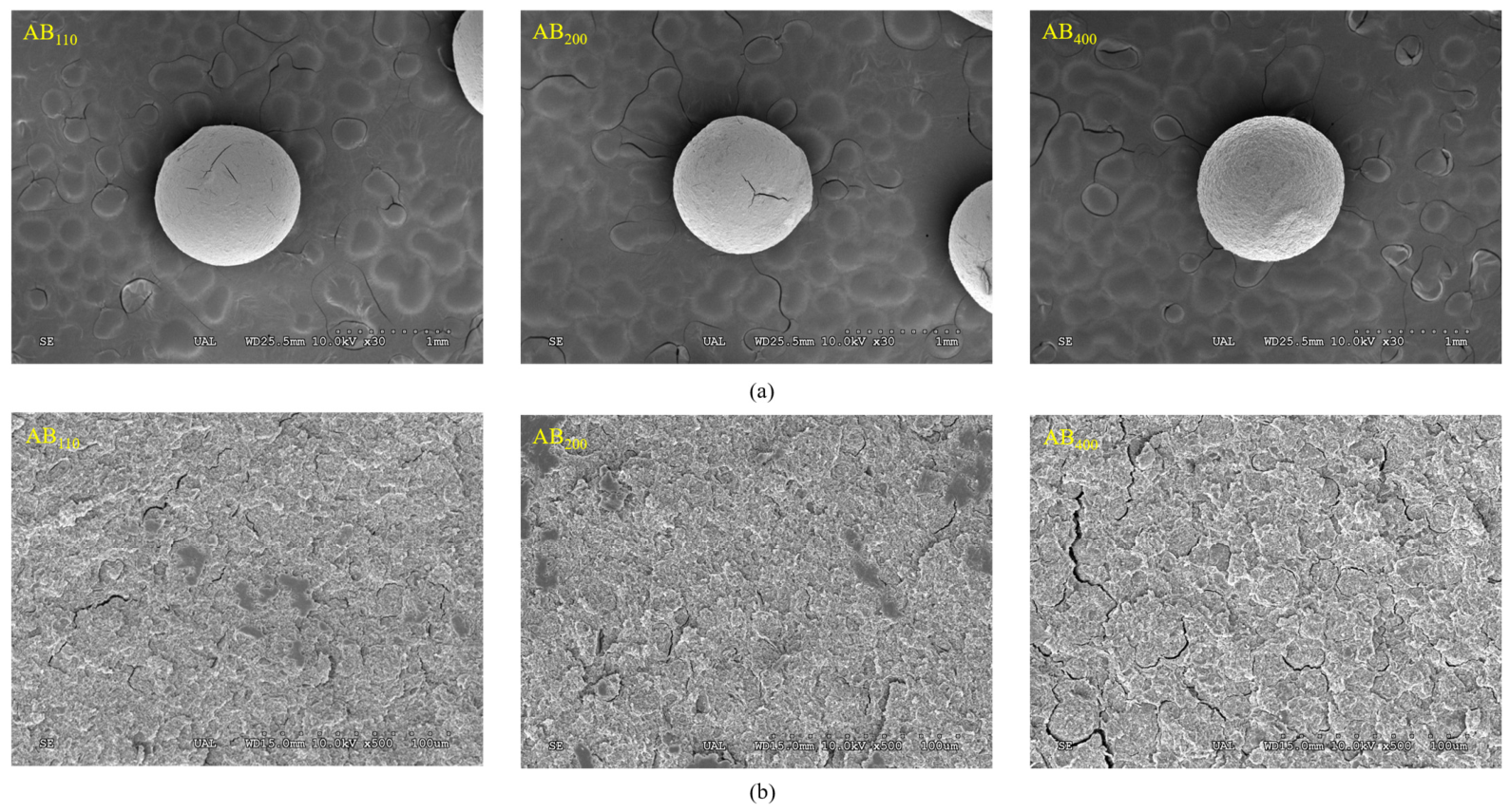
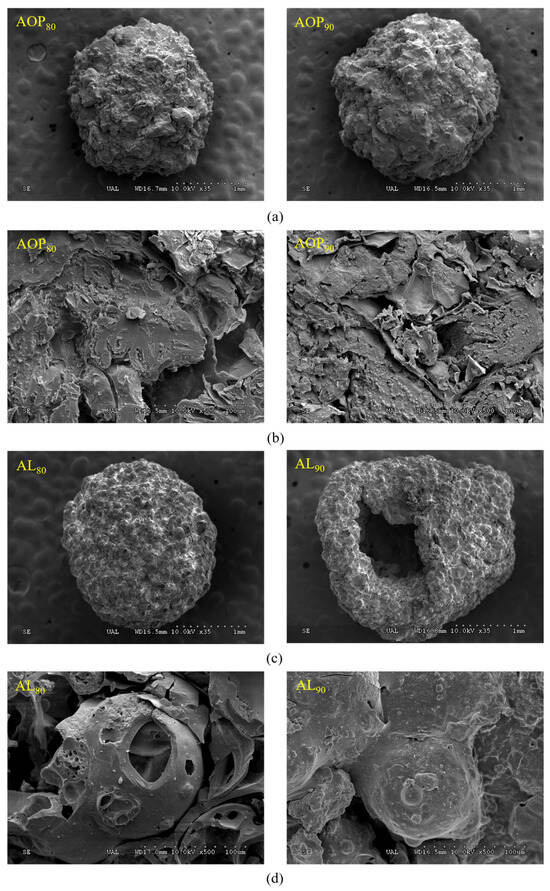
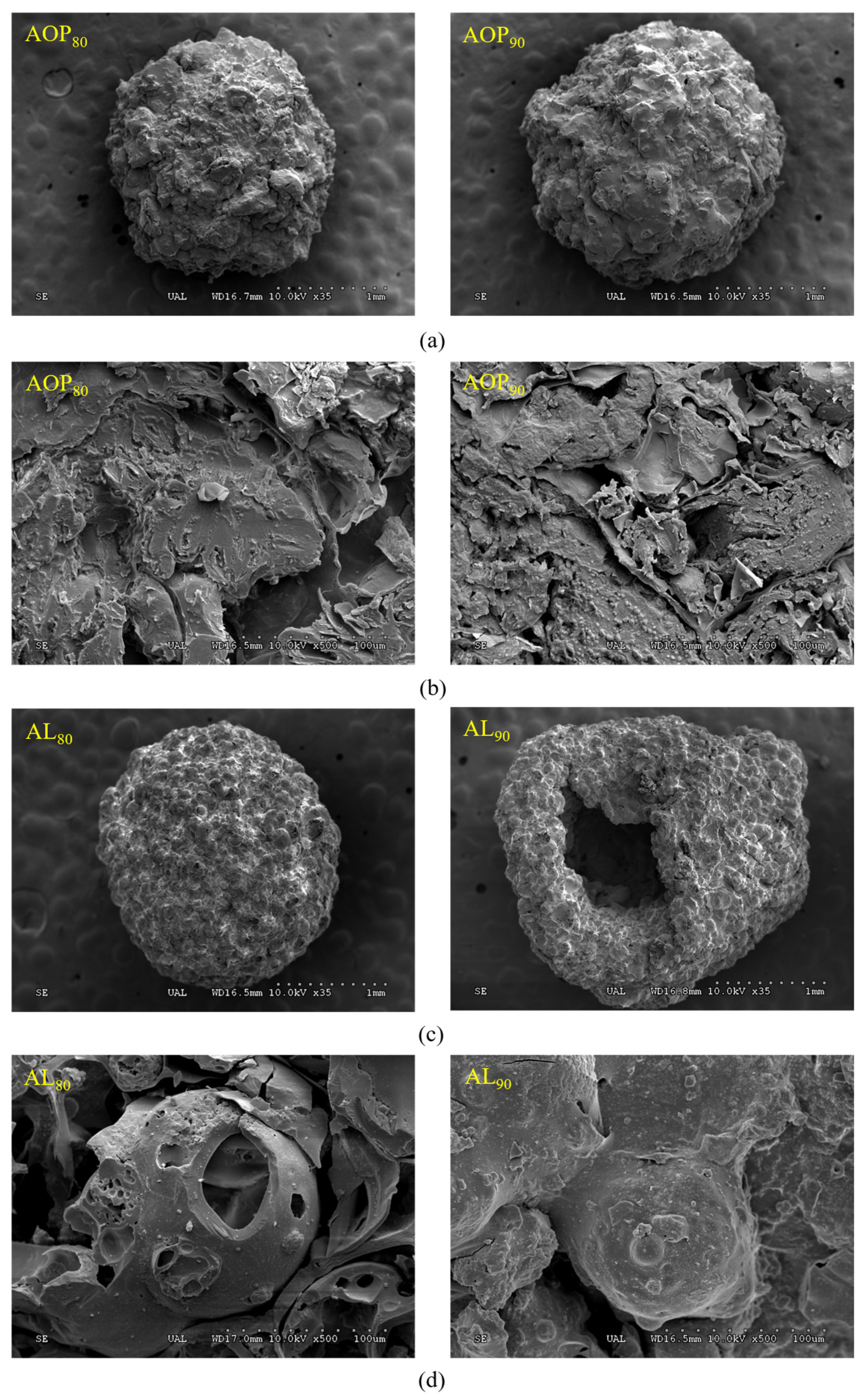
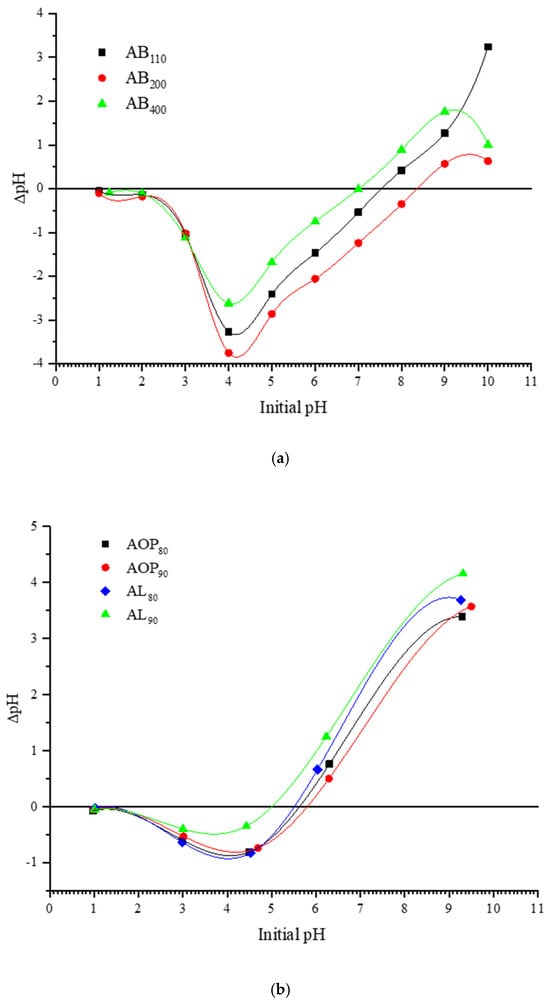
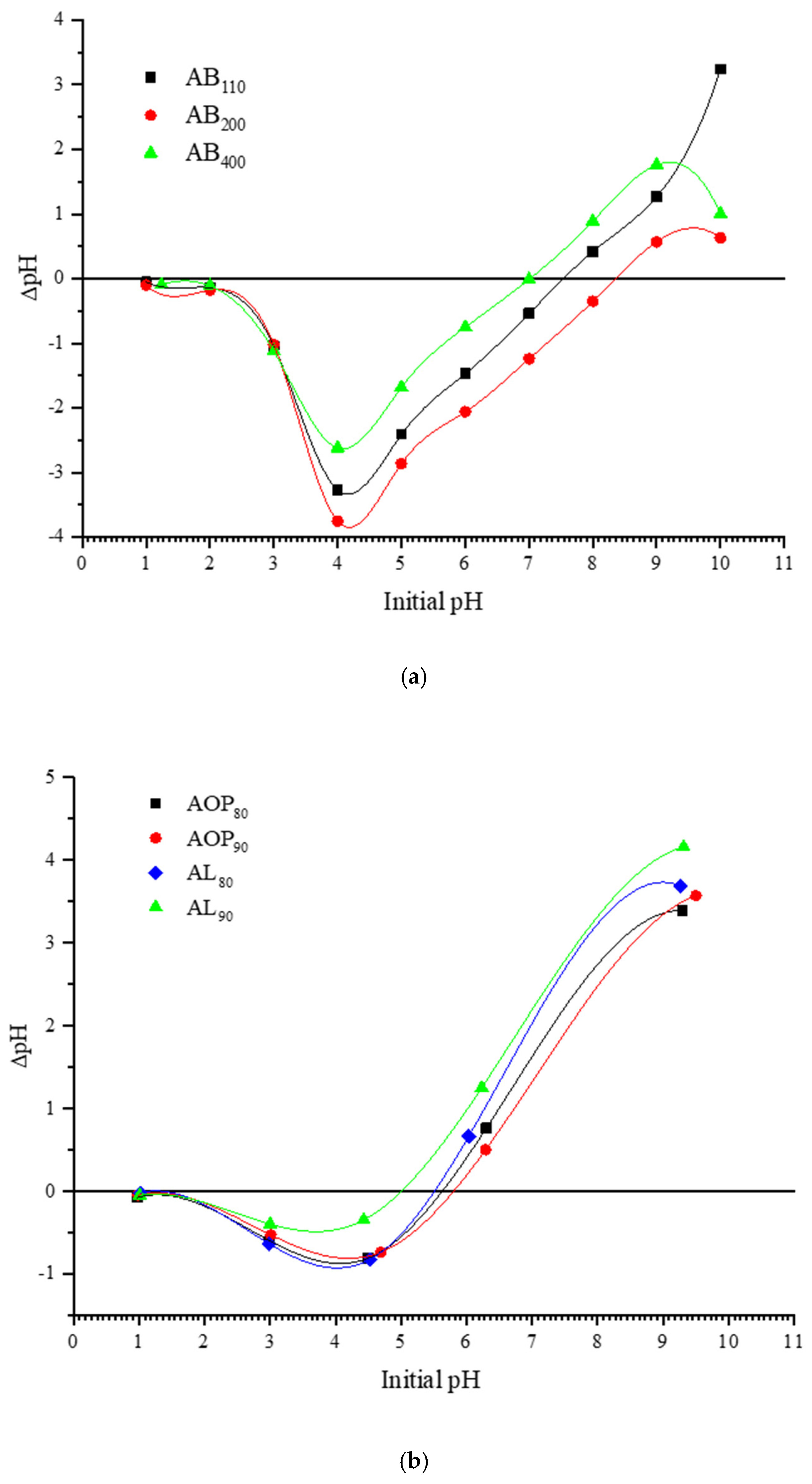
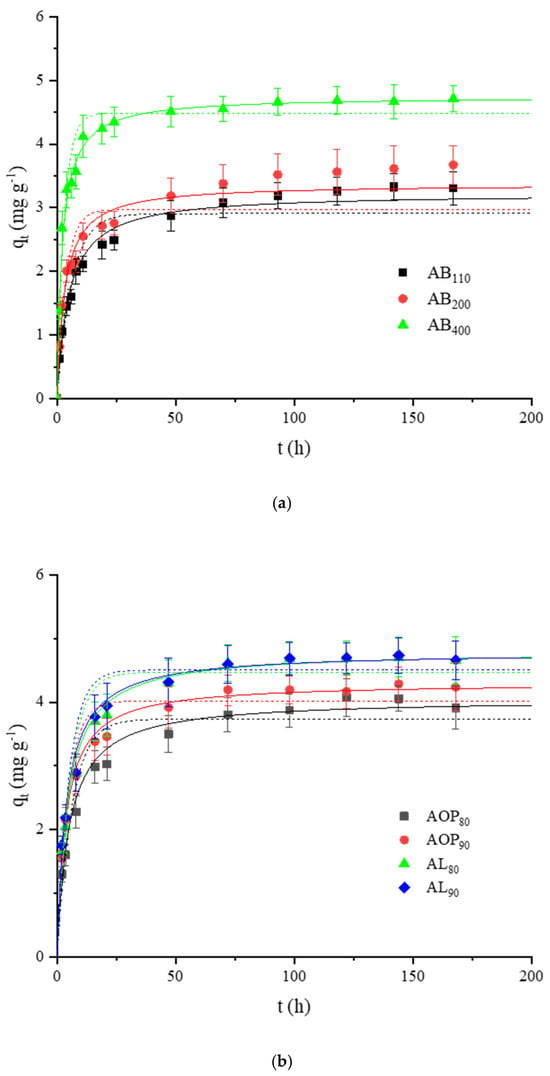
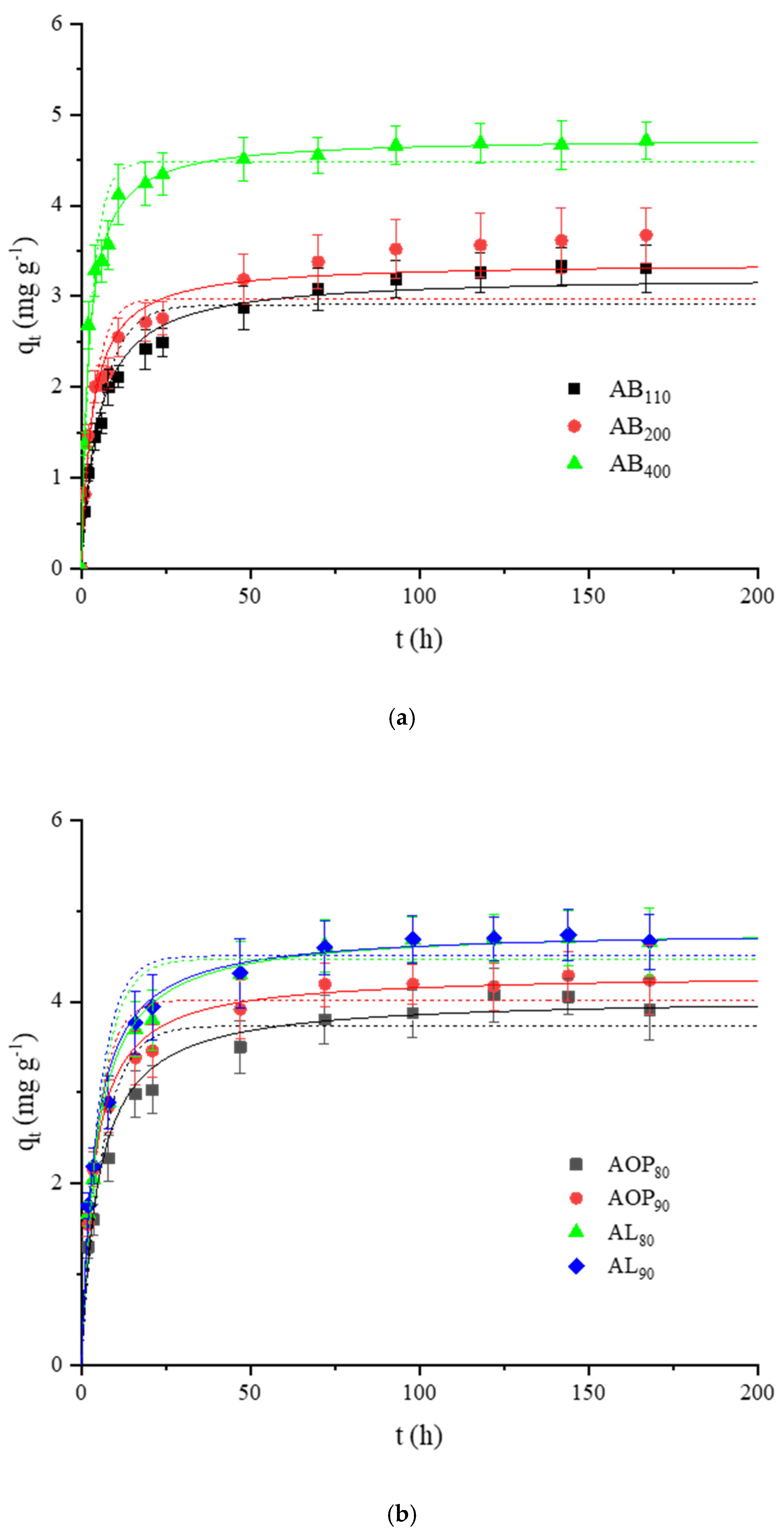
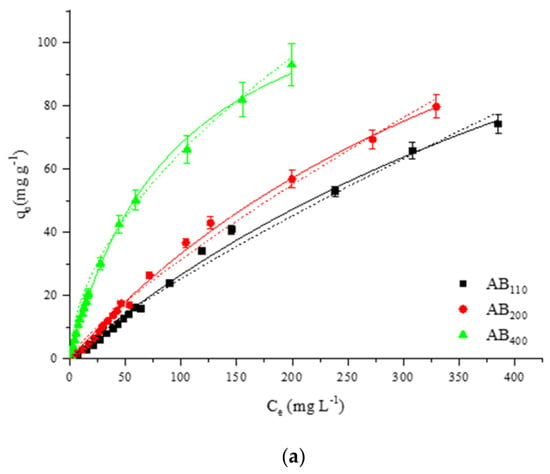
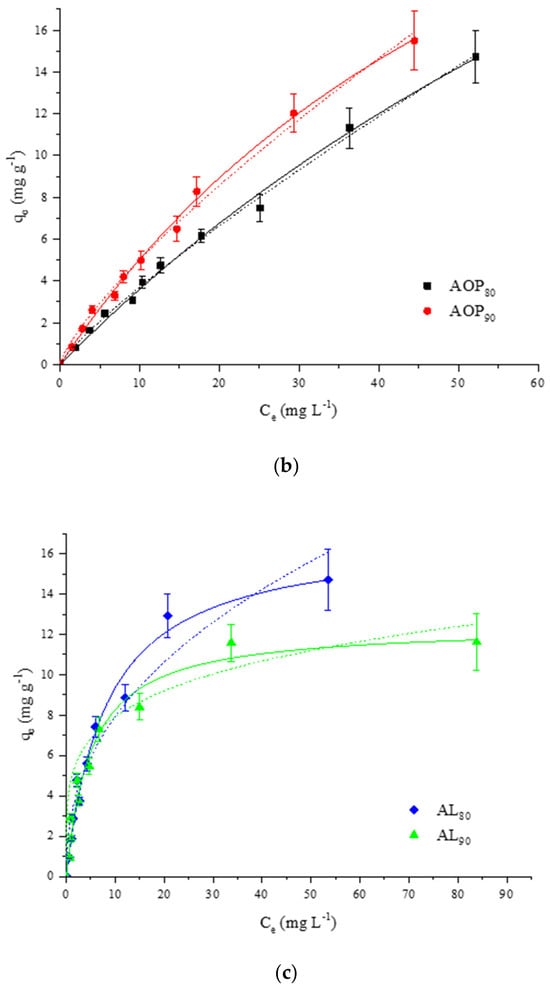
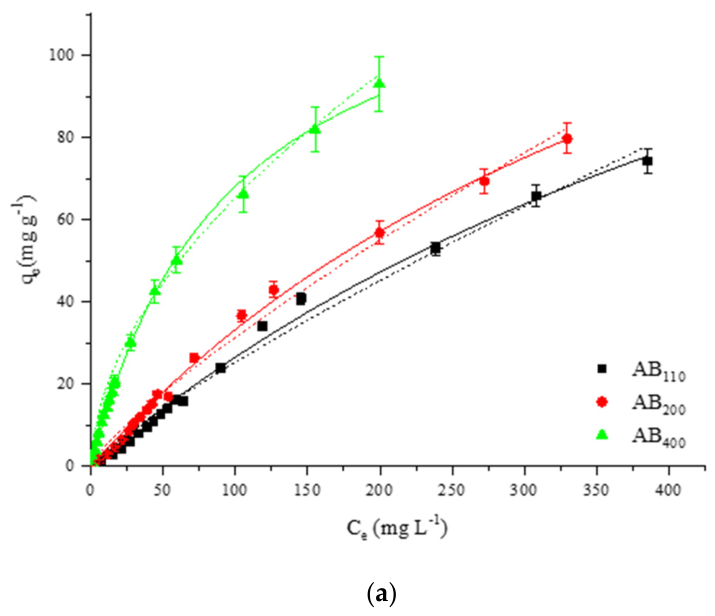
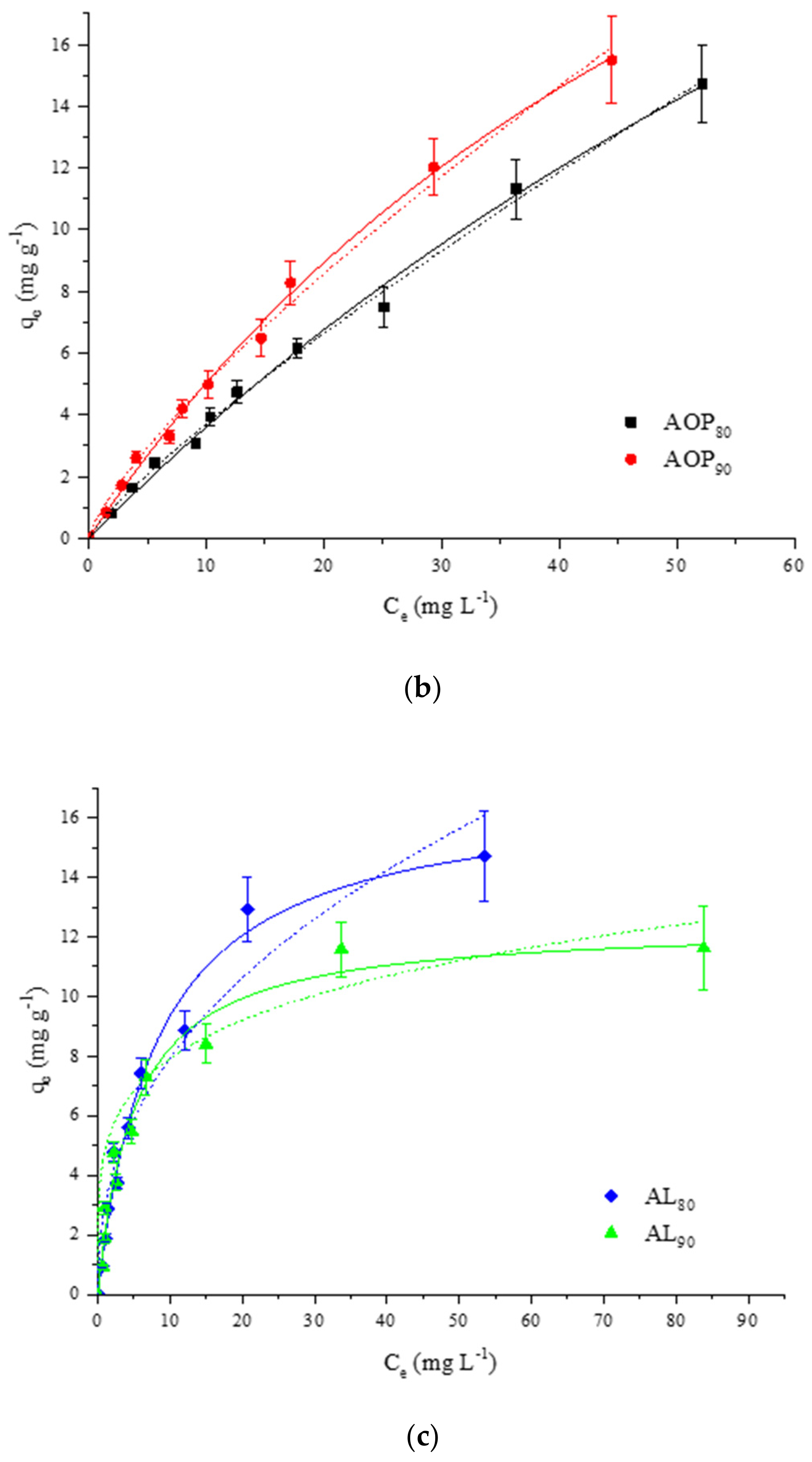
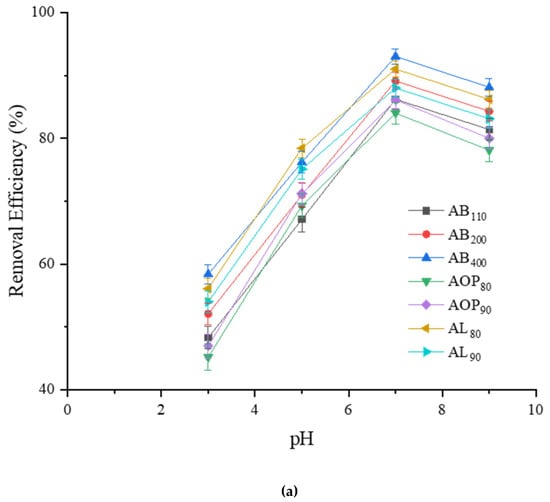
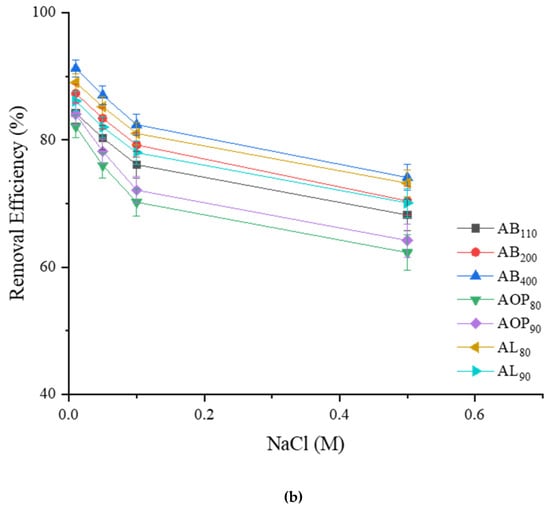
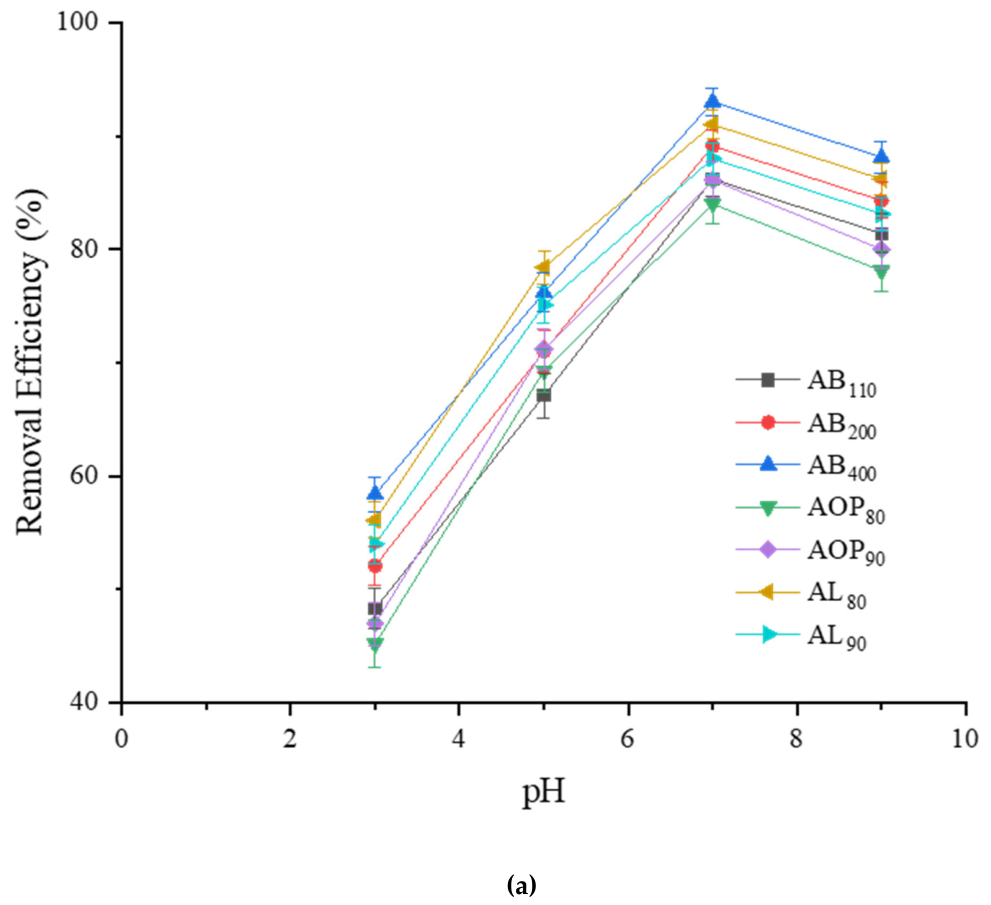
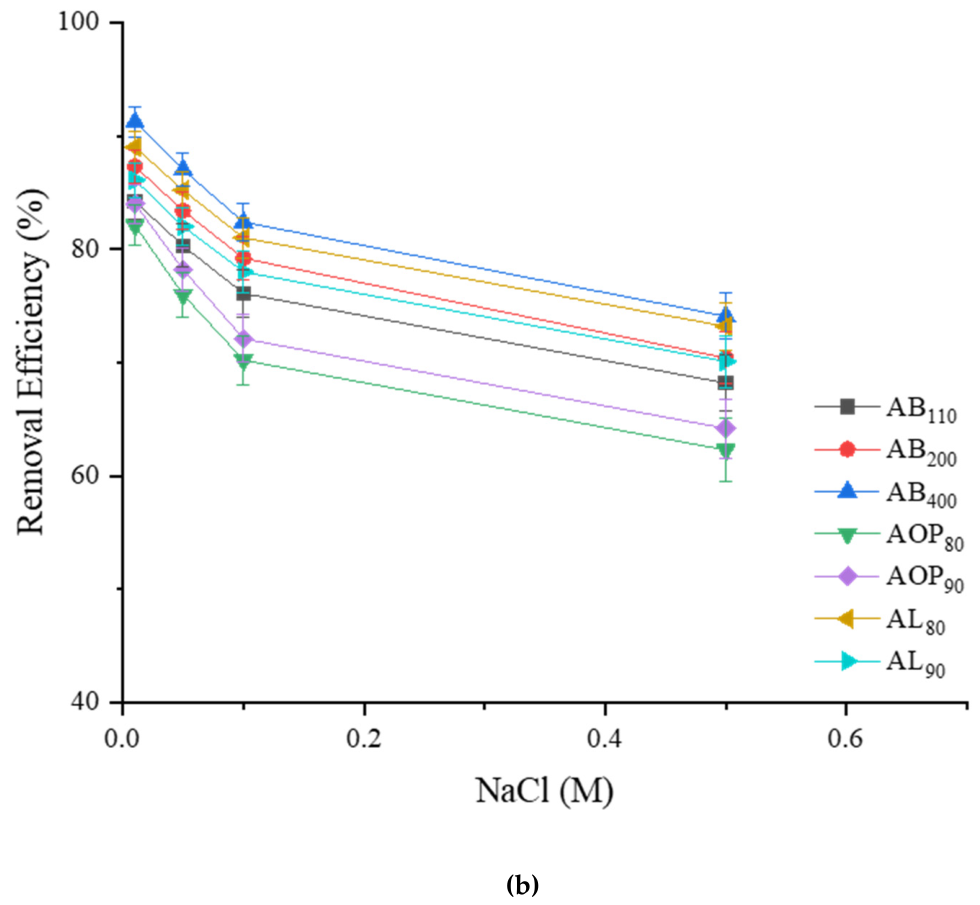
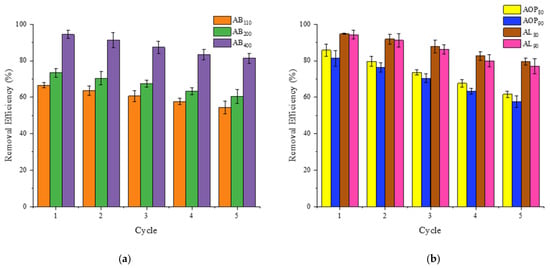
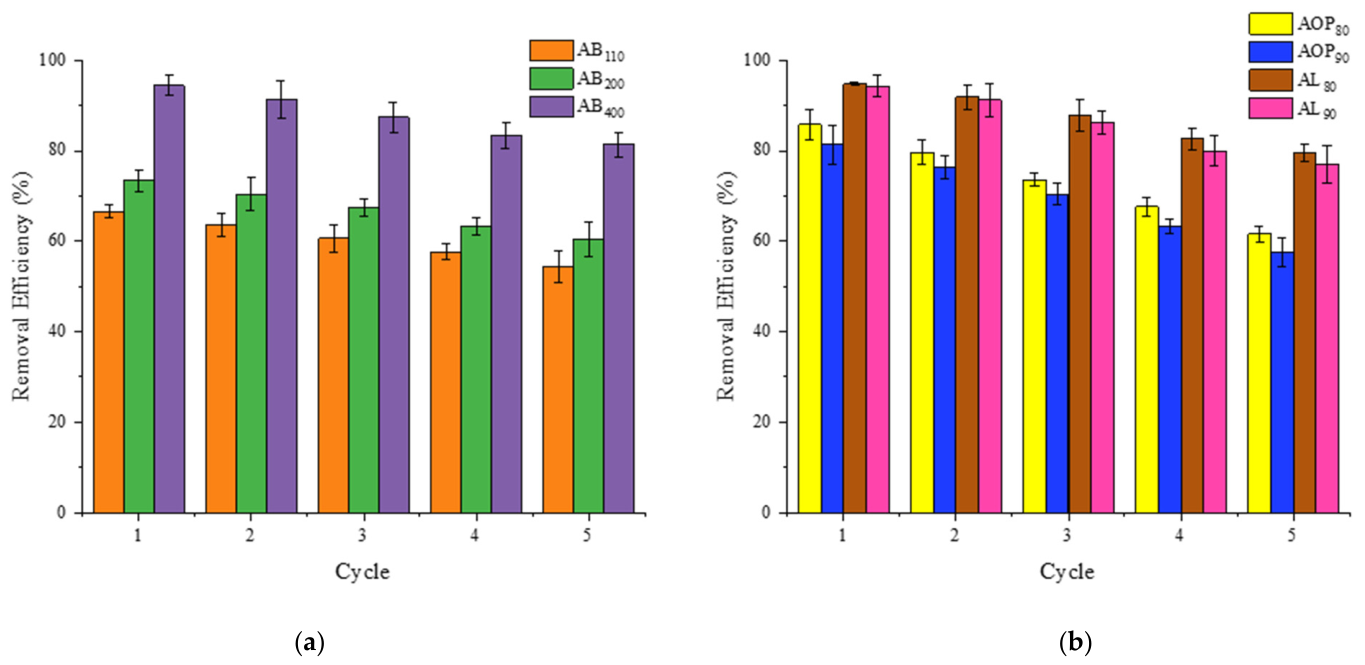

Disclaimer/Publisher’s Note: The statements, opinions and data contained in all publications are solely those of the individual author(s) and contributor(s) and not of MDPI and/or the editor(s). MDPI and/or the editor(s) disclaim responsibility for any injury to people or property resulting from any ideas, methods, instructions or products referred to in the content. |
© 2026 by the authors. Licensee MDPI, Basel, Switzerland. This article is an open access article distributed under the terms and conditions of the Creative Commons Attribution (CC BY) license.