Understanding the Progression of Chronic Kidney Disease in Cats: From Pathophysiology to Emerging Biomarkers

 , ,
, ,  and
and
Simple Summary
Abstract
1. Introduction
1.1. Feline Chronic Kidney Disease (CKD): Epidemiology, Etiology and Risk Factors
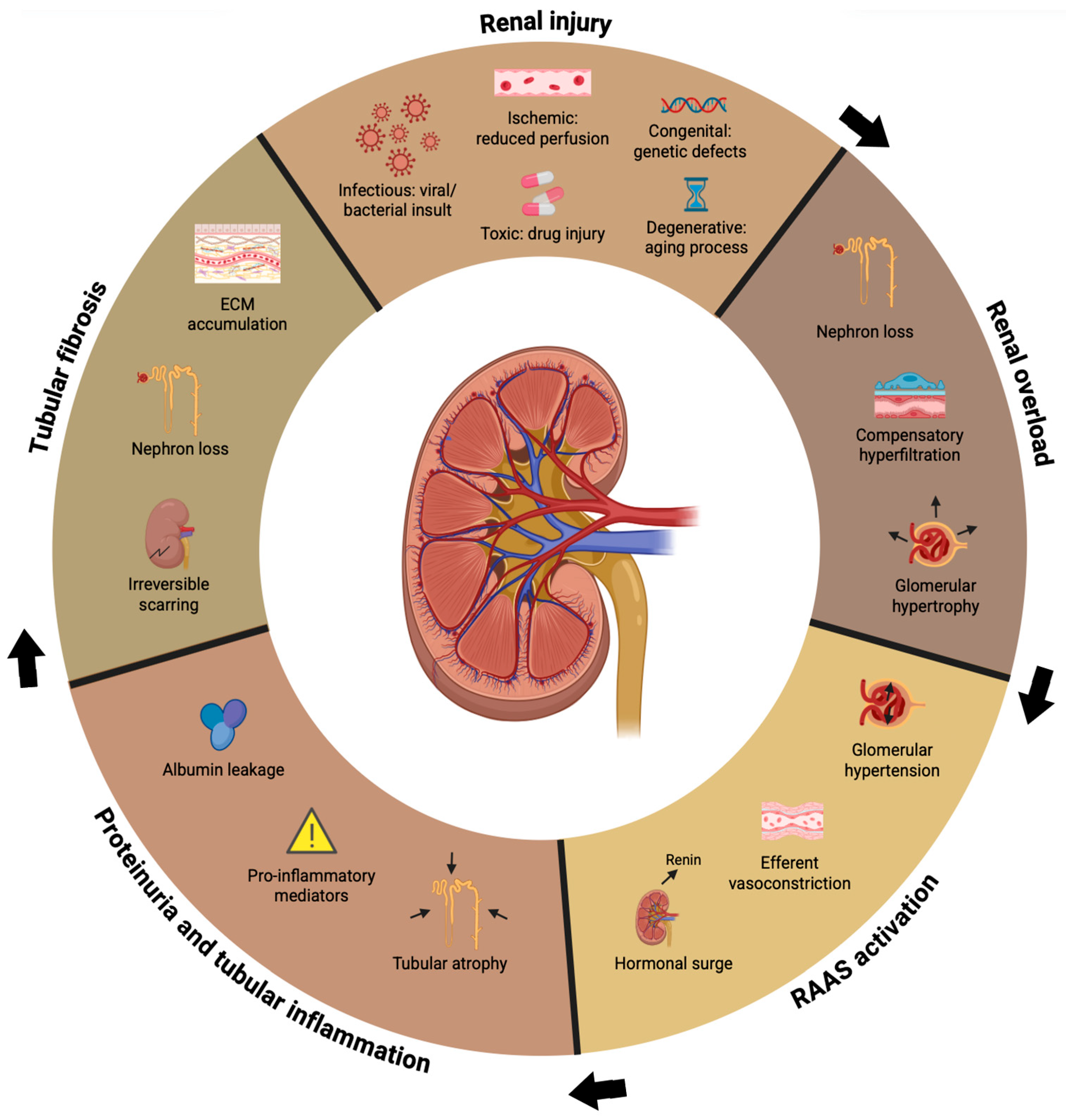
1.2. Pathophysiology of Feline Chronic Kidney Disease Progression
1.2.1. Kidney Morphologic Changes
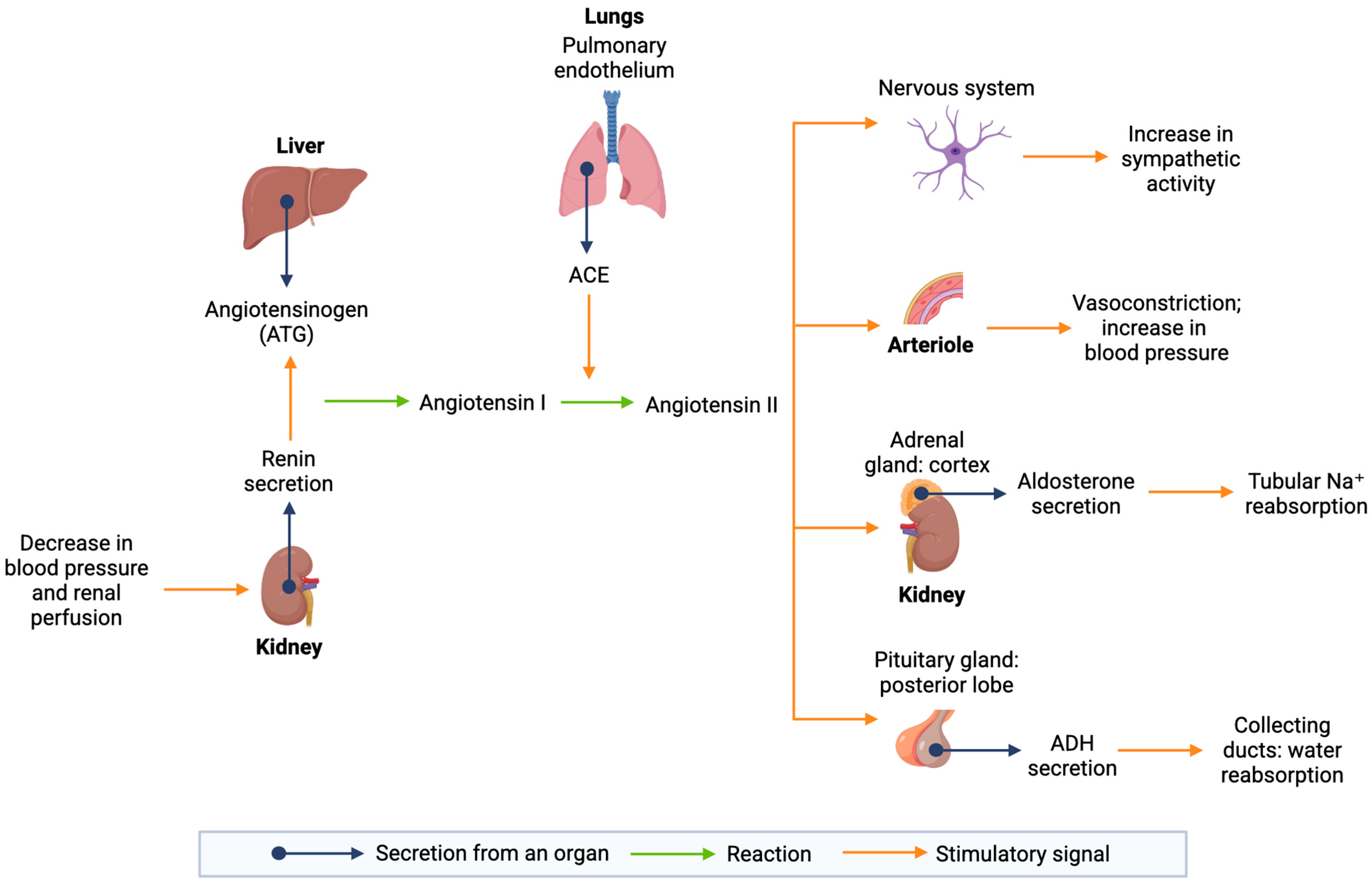
1.2.2. RAAS Activation, Hypoxia, and Oxidative Stress
1.2.3. Proteinuria and Mineral Disorders
1.2.4. Anemia, Azotemia, and Uremic Syndrome
2. Search Strategy
3. Current Diagnostic Landscape
3.1. Medical History, Physical Assessment and Clinical Signs
3.2. IRIS Staging and Substaging
3.3. Traditional Laboratory Markers and Their Limitations
4. Emerging Biomarkers: Bridging the Diagnostic Gap
Clinical Hierarchy and Practical Application
5. Clinical Monitoring and Prognostic Value
The Clinical Paradox of Early Diagnosis and the Ethics of Analgesia
6. Conclusions and Future Directions
Author Contributions
Funding
Institutional Review Board Statement
Informed Consent Statement
Data Availability Statement
Conflicts of Interest
References
- Conroy, M.; Brodbelt, D.C.; O’Neill, D.; Chang, Y.; Elliott, J. Chronic kidney disease in cats attending primary care practice in the UK: A VetCompass™ study. Vet. Rec. 2019, 184, 526. [Google Scholar] [CrossRef] [PubMed]
- Dadousis, C.; Whetton, D.A.; Mwacalimba, K.; Merlo, A.; Wright, A.; Geifman, N. Renal Disease in Cats and Dogs—Lessons Learned from Text-Mined Trends in Humans. Animals 2024, 14, 3349. [Google Scholar] [CrossRef]
- Polzin, D.J. Chronic Kidney Disease in Small Animals. Vet. Clin. N. Am. Small Anim. Pract. 2011, 41, 15–30. [Google Scholar] [CrossRef] [PubMed]
- Brown, C.A.; Elliott, J.; Schmiedt, C.W.; Brown, S.A. Chronic Kidney Disease in Aged Cats: Clinical Features, Morphology, and Proposed Pathogeneses. Vet. Pathol. 2016, 53, 309–326. [Google Scholar] [CrossRef]
- Hartmann, K.; Pennisi, M.G.; Dorsch, R. Infectious Agents in Feline Chronic Kidney Disease. Adv. Small Anim. Care 2020, 1, 189–206. [Google Scholar] [CrossRef]
- Marino, C.L.; Lascelles, B.D.X.; Vaden, S.L.; Gruen, M.E.; Marks, S.L. Prevalence and classification of chronic kidney disease in cats randomly selected from four age groups and in cats recruited for degenerative joint disease studies. J. Feline Med. Surg. 2014, 16, 465–472. [Google Scholar] [CrossRef]
- Chen, H.; Dunaevich, A.; Apfelbaum, N.; Kuzi, S.; Mazaki-Tovi, M.; Aroch, I.; Segev, G. Acute on chronic kidney disease in cats: Etiology, clinical and clinicopathologic findings, prognostic markers, and outcome. J. Vet. Intern. Med. 2020, 34, 1496–1506. [Google Scholar] [CrossRef]
- Greene, J.P.; Lefebvre, S.L.; Wang, M.; Yang, M.; Lund, E.M.; Polzin, D.J. Risk factors associated with the development of chronic kidney disease in cats evaluated at primary care veterinary hospitals. J. Am. Vet. Med. Assoc. 2014, 244, 320–327. [Google Scholar] [CrossRef]
- Trevejo, R.T.; Lefebvre, S.L.; Yang, M.; Rhoads, C.; Goldstein, G.; Lund, E.M. Survival analysis to evaluate associations between periodontal disease and the risk of development of chronic azotemic kidney disease in cats evaluated at primary care veterinary hospitals. J. Am. Vet. Med. Assoc. 2018, 252, 710–720. [Google Scholar] [CrossRef]
- Finch, N.C.; Syme, H.M.; Elliott, J. Risk Factors for Development of Chronic Kidney Disease in Cats. J. Vet. Intern. Med. 2016, 30, 602–610. [Google Scholar] [CrossRef]
- Piyarungsri, K.; Pusoonthornthum, R. Risk and protective factors for cats with naturally occurring chronic kidney disease. J. Feline Med. Surg. 2017, 19, 358–363. [Google Scholar] [CrossRef]
- Lyons, L.A.; Biller, D.S.; Erdman, C.A.; Lipinski, M.J.; Young, A.E.; Roe, B.A.; Qin, B.; Grahn, R.A. Feline Polycystic Kidney Disease Mutation Identified in PKD1. J. Am. Soc. Nephrol. 2004, 15, 2548–2555. [Google Scholar] [CrossRef] [PubMed]
- Sato, R.; Uchida, N.; Kawana, Y.; Tozuka, M.; Kobayashi, S.; Hanyu, N.; Konno, Y.; Iguchi, A.; Yamasaki, Y.; Kuramochi, K.; et al. Epidemiological evaluation of cats associated with feline polycystic kidney disease caused by the feline PKD1 genetic mutation in Japan. J. Vet. Med. Sci. 2019, 81, 1006–1011. [Google Scholar] [CrossRef] [PubMed]
- Jepson, R.E. Current Understanding of the Pathogenesis of Progressive Chronic Kidney Disease in Cats. Vet. Clin. N. Am. Small Anim. Pract. 2016, 46, 1015–1048. [Google Scholar] [CrossRef] [PubMed]
- Magalhães, T.R.; Corbee, R.J.; Queiroga, F.L.; Lourenço, A.L. Acceptance and preference of a commercial dry renal diet in healthy cats: An in-home proof-of-concept trial. J. Anim. Physiol. Anim. Nutr. 2026, in press. [Google Scholar] [CrossRef]
- Reynolds, B.S.; Lefebvre, H.P. Feline CKD: Pathophysiology and risk factors—What do we know? J. Feline Med. Surg. 2013, 15, 3–14. [Google Scholar] [CrossRef]
- Lawson, J.S.; Jepson, R.E. Feline comorbidities: The intermingled relationship between chronic kidney disease and hypertension. J. Feline Med. Surg. 2021, 23, 812–822. [Google Scholar] [CrossRef]
- Taylor, S.S.; Sparkes, A.H.; Briscoe, K.; Carter, J.; Sala, S.C.; Jepson, R.E.; Reynolds, B.S.; Scansen, B.A. ISFM Consensus Guidelines on the Diagnosis and Management of Hypertension in Cats. J. Feline Med. Surg. 2017, 19, 288–303. [Google Scholar] [CrossRef]
- De Freitas, M.N.; De Freitas, M.S.; Da Silva, T.F.; Lopes, J.M.; Gonçalves, J.A.C.N.; Mendonça, A.J.; Bortoloni, J.; Néspoli, P.E.B.; de Almeida, A.D.B.P.F.; Sousa, V.R.F. Blood pressure and proteinuria in older cats and cats with chronic kidney disease. Vet. World 2025, 18, 527–533. [Google Scholar] [CrossRef]
- Sparkes, A.H.; Caney, S.; Chalhoub, S.; Elliott, J.; Finch, N.; Gajanayake, I.; Langston, C.; Lefebvre, H.P.; White, J.; Quimby, J. ISFM Consensus Guidelines on the Diagnosis and Management of Feline Chronic Kidney Disease. J. Feline Med. Surg. 2016, 18, 219–239. [Google Scholar] [CrossRef]
- Lawson, J.; Elliott, J.; Wheeler-Jones, C.; Syme, H.; Jepson, R. Renal fibrosis in feline chronic kidney disease: Known mediators and mechanisms of injury. Vet. J. 2015, 203, 18–26. [Google Scholar] [CrossRef]
- Arata, S.; Ohmi, A.; Mizukoshi, F.; Baba, K.; Ohno, K.; Setoguchi, A.; Tsujimoto, H. Urinary Transforming Growth Factor-β1 in Feline Chronic Renal Failure. J. Vet. Med. Sci. 2005, 67, 1253–1255. [Google Scholar] [CrossRef]
- Martino-Costa, A.L.; Malhão, F.; Lopes, C.; Dias-Pereira, P. Renal Interstitial Lipid Accumulation in Cats with Chronic Kidney Disease. J. Comp. Pathol. 2017, 157, 75–79. [Google Scholar] [CrossRef]
- Chakrabarti, S.; Syme, H.M.; Brown, C.A.; Elliott, J. Histomorphometry of Feline Chronic Kidney Disease and Correlation With Markers of Renal Dysfunction. Vet. Pathol. 2013, 50, 147–155. [Google Scholar] [CrossRef]
- Thatcher, S.E. A Brief Introduction into the Renin-Angiotensin-Aldosterone System: New and Old Techniques. In The Renin-Angiotensin-Aldosterone System; Thatcher, S.E., Ed.; Springer: New York, NY, USA, 2017; pp. 1–19. [Google Scholar]
- Kaufman, D.P.; Basit, H.; Knohl, S.J. Physiology, Glomerular Filtration Rate. In StatPearls; StatPearls Publishing: Treasure Island, FL, USA, 2023. [Google Scholar]
- Martyniak, A.; Tomasik, P.J. A New Perspective on the Renin-Angiotensin System. Diagnostics 2022, 13, 16. [Google Scholar] [CrossRef]
- Breshears, M.A.; Confer, A.W. The Urinary System. In Pathologic Basis of Veterinary Disease, 6th ed.; Zachary, J.F., Ed.; Elsevier: St. Louis, MO, USA, 2017; pp. 617–681. [Google Scholar]
- De Brito Galvao, J.F.; Nagode, L.A.; Schenck, P.A.; Chew, D.J. Calcitriol, calcidiol, parathyroid hormone, and fibroblast growth factor-23 interactions in chronic kidney disease. J. Vet. Emerg. Crit. Care 2013, 23, 134–162. [Google Scholar] [CrossRef]
- Brown, S.A. Oxidative Stress and Chronic Kidney Disease. Vet. Clin. N. Am. Small Anim. Pract. 2008, 38, 157–166. [Google Scholar] [CrossRef] [PubMed]
- Keegan, R.F.; Webb, C.B. Oxidative Stress and Neutrophil Function in Cats with Chronic Renal Failure. J. Vet. Intern. Med. 2010, 24, 514–519. [Google Scholar] [CrossRef] [PubMed]
- Krofič Žel, M.; Tozon, N.; Nemec Svete, A. Plasma and Erythrocyte Glutathione Peroxidase Activity, Serum Selenium Concentration, and Plasma Total Antioxidant Capacity in Cats with IRIS Stages I–IV Chronic Kidney Disease. J. Vet. Intern. Med. 2014, 28, 130–136. [Google Scholar] [CrossRef] [PubMed]
- Yu, S.; Paetau-Robinson, I. Dietary Supplements of Vitamins E and C and b-Carotene Reduce Oxidative Stress in Cats with Renal Insufficiency. Vet. Res. Commun. 2006, 30, 403–413. [Google Scholar] [CrossRef]
- Syme, H.M. Proteinuria in Cats: Prognostic Marker or Mediator? J. Feline Med. Surg. 2009, 11, 211–218. [Google Scholar] [CrossRef]
- Kidder, A.C.; Chew, D. Treatment Options for Hyperphosphatemia in Feline CKD: What’s Out there? J. Feline Med. Surg. 2009, 11, 913–924. [Google Scholar] [CrossRef]
- Korman, R.M.; White, J.D. Feline CKD: Current therapies—What is achievable? J. Feline Med. Surg. 2013, 15, 29–44. [Google Scholar] [CrossRef] [PubMed]
- Quimby, J.M. Update on Medical Management of Clinical Manifestations of Chronic Kidney Disease. Vet. Clin. N. Am. Small Anim. Pract. 2016, 46, 1163–1181. [Google Scholar] [CrossRef] [PubMed]
- Gest, J.; Langston, C.; Eatroff, A. Iron Status of Cats with Chronic Kidney Disease. J. Vet. Intern. Med. 2015, 29, 1488–1493. [Google Scholar] [CrossRef] [PubMed]
- Jepson, R.E.; Brodbelt, D.; Vallance, C.; Syme, H.M.; Elliott, J. Evaluation of Predictors of the Development of Azotemia in Cats. J. Vet. Intern. Med. 2009, 23, 806–813. [Google Scholar] [CrossRef]
- Tyagi, A.; Aeddula, N.R. Azotemia. In StatPearls; StatPearls Publishing: Treasure Island, FL, USA, 2023. [Google Scholar]
- Zemaitis, M.R.; Foris, L.A.; Katta, S.; Bashir, K. Uremia. In StatPearls; StatPearls Publishing: Treasure Island, FL, USA, 2024. [Google Scholar]
- Van Mulders, L.; Vanden Broecke, E.; De Paepe, E.; Mortier, F.; Vanhaecke, L.; Daminet, S. Alterations in gut-derived uremic toxins before the onset of azotemic chronic kidney disease in cats. J. Vet. Intern. Med. 2025, 39, e17289. [Google Scholar] [CrossRef]
- Paepe, D.; Daminet, S. Feline CKD: Diagnosis, staging and screening—What is recommended? J. Feline Med. Surg. 2013, 15, 15–27. [Google Scholar] [CrossRef]
- Grelová, S.; Karasová, M.; Tóthová, C.; Kisková, T.; Baranová, D.; Lukáč, B.; Fialkovičová, M.; Micháľová, A.; Kunay, L.; Svoboda, M. Relationship between FGF 23, SDMA, Urea, Creatinine and Phosphate in Relation to Feline Chronic Kidney Disease. Animals 2022, 12, 2247. [Google Scholar] [CrossRef]
- Geddes, R.; Aguiar, J. Feline Comorbidities: Balancing hyperthyroidism and concurrent chronic kidney disease. J. Feline Med. Surg. 2022, 24, 641–650. [Google Scholar] [CrossRef]
- Groves, E. Diagnosis of the cat with early chronic kidney disease. Companion Anim. 2020, 25, 118–124. [Google Scholar] [CrossRef]
- Hall, J.A.; Yerramilli, M.; Obare, E.; Yerramilli, M.; Jewell, D.E. Comparison of Serum Concentrations of Symmetric Dimethylarginine and Creatinine as Kidney Function Biomarkers in Cats with Chronic Kidney Disease. J. Vet. Intern. Med. 2014, 28, 1676–1683. [Google Scholar] [CrossRef]
- International Renal Interest Society (IRIS) Ltd. IRIS Staging of CKD. Available online: https://www.iris-kidney.com/iris-guidelines-1 (accessed on 26 January 2026).
- McLeland, S.M.; Cianciolo, R.E.; Duncan, C.G.; Quimby, J.M. A Comparison of Biochemical and Histopathologic Staging in Cats With Chronic Kidney Disease. Vet. Pathol. 2015, 52, 524–534. [Google Scholar] [CrossRef]
- Elliott, J.; Cowgill, L.D. Diagnostic algorithms for grading acute kidney injury and staging the chronic kidney disease patient. In BSAVA Manual of Canine and Feline Nephrology and Urology, 3rd ed.; British Small Animal Veterinary Association: Gloucester, UK, 2017; pp. 151–160. [Google Scholar]
- Magalhães, T.R.; Lourenço, A.L.; Corbee, R.J.; Queiroga, F.L. Clinical management of feline chronic kidney disease in Portugal: A questionnaire-based study. J. Feline Med. Surg. 2023, 25, 1098612X231206125. [Google Scholar] [CrossRef]
- Magalhães, T.R.; Lourenço, A.L.; Corbee, R.J.; Guerra, I.; Queiroga, F.L. Caregivers’ perspectives on feline chronic kidney disease in Portugal: A questionnaire-based study. J. Feline Med. Surg. 2025, 27, 1098612X251377486. [Google Scholar] [CrossRef]
- Bailey, D.B.; Rassnick, K.M.; Prey, J.D.; Dykes, N.L. Evaluation of serum iohexol clearance for use in predicting carboplatin clearance in cats. Am. J. Vet. Res. 2009, 70, 1135–1140. [Google Scholar] [CrossRef] [PubMed]
- Finch, N. Measurement of glomerular filtration rate in cats: Methods and advantages over routine markers of renal function. J. Feline Med. Surg. 2014, 16, 736–748. [Google Scholar] [CrossRef]
- Finch, N.; Heiene, R. Early detection of chronic kidney disease. In BSAVA Manual of Canine and Feline Nephrology and Urology, 3rd ed.; British Small Animal Veterinary Association: Gloucester, UK, 2017; pp. 130–142. [Google Scholar]
- Van Hoek, I.; Lefebvre, H.P.; Peremans, K.; Meyer, E.; Croubels, S.; Vandermeulen, E.; Kooistra, H.; Saunders, J.; Binst, D.; Daminet, S. Short- and long-term follow-up of glomerular and tubular renal markers of kidney function in hyperthyroid cats after treatment with radioiodine. Domest. Anim. Endocrinol. 2009, 36, 45–56. [Google Scholar] [CrossRef] [PubMed]
- Robertson, J. A Practical Approach to Using the IRIS CKD Guidelines and the IDEXX SDMA® Test in Everyday Practice. In Proceedings of the 2017 Hill’s Global Symposium, Washington, DC, USA, 5–6 May 2017. [Google Scholar]
- Levy, J.K.; Crawford, P.C.; Werner, L.L. Effect of age on reference intervals of serum biochemical values in kittens. J. Am. Vet. Med. Assoc. 2006, 228, 1033–1037. [Google Scholar] [CrossRef] [PubMed]
- Kongtasai, T.; Paepe, D.; Meyer, E.; Mortier, F.; Marynissen, S.; Stammeleer, L.; Defauw, P.; Daminet, S. Renal biomarkers in cats: A review of the current status in chronic kidney disease. J. Vet. Intern. Med. 2022, 36, 379–396. [Google Scholar] [CrossRef]
- Loane, S.C.; Thomson, J.M.; Williams, T.L.; McCallum, K.E. Evaluation of symmetric dimethylarginine in cats with acute kidney injury and chronic kidney disease. J. Vet. Intern. Med. 2022, 36, 1669–1676. [Google Scholar] [CrossRef]
- Stockman, J. Dietary phosphorus and renal disease in cats: Where are we? J. Feline Med. Surg. 2024, 26, 1098612X241283355. [Google Scholar] [CrossRef]
- Schenck, P.A.; Chew, D.J. Prediction of serum ionized calcium concentration by serum total calcium measurement in cats. Am. J. Vet. Res. 2010, 71, 1113–1120. [Google Scholar]
- Van Den Broek, D.H.N.; Chang, Y.M.; Elliott, J.; Jepson, R.E. Chronic Kidney Disease in Cats and the Risk of Total Hypercalcemia. J. Vet. Intern. Med. 2017, 31, 465–475. [Google Scholar] [CrossRef]
- Sieberg, L.G.; Quimby, J.M. Retrospective study of the efficacy of oral potassium supplementation in cats with kidney disease. J. Feline Med. Surg. 2020, 22, 539–543. [Google Scholar] [CrossRef]
- Elliott, J.; Syme, H.M.; Reubens, E.; Markwell, P.J. Assessment of acid-base status of cats with naturally occurring chronic renal failure. J. Small Anim. Pract. 2003, 44, 65–70. [Google Scholar] [CrossRef] [PubMed]
- Pérez-López, L.; Boronat, M.; Melián, C.; Brito-Casillas, Y.; Wägner, A.M. Kidney function and glucose metabolism in overweight and obese cats. Vet. Q. 2020, 40, 132–139. [Google Scholar] [CrossRef] [PubMed]
- Yadav, S.N.; Ahmed, N.; Nath, A.J.; Mahanta, D.; Kalita, M.K. Urinalysis in dog and cat: A review. Vet. World 2020, 13, 2133–2141. [Google Scholar] [CrossRef] [PubMed]
- Rishniw, M.; Bicalho, R. Factors affecting urine specific gravity in apparently healthy cats presenting to first opinion practice for routine evaluation. J. Feline Med. Surg. 2015, 17, 329–337. [Google Scholar] [CrossRef]
- Reppas, G.; Foster, S.F. Practical urinalysis in the cat: 1: Urine macroscopic examination ‘tips and traps’. J. Feline Med. Surg. 2016, 18, 190–202. [Google Scholar] [CrossRef]
- Hindar, C.; Chang, Y.; Syme, H.M.; Jepson, R.E. The association of bacteriuria with survival and disease progression in cats with azotemic chronic kidney disease. J. Vet. Intern. Med. 2020, 34, 2516–2524. [Google Scholar] [CrossRef]
- Siu, K.; Diaz, A.; Chadwick, A.; Keys, D.; Shropshire, S.; Summers, S.C. Urine bacterial culture growth and association with urine sedimentation and clinical findings in cats with acute kidney injury. J. Feline Med. Surg. 2022, 24, e295–e301. [Google Scholar] [CrossRef]
- White, J.D.; Stevenson, M.; Malik, R.; Snow, D.; Norris, J.M. Urinary tract infections in cats with chronic kidney disease. J. Feline Med. Surg. 2013, 15, 459–465. [Google Scholar] [CrossRef] [PubMed]
- Grauer, G.F. Measurement, Interpretation, and Implications of Proteinuria and Albuminuria. Vet. Clin. N. Am. Small Anim. Pract. 2007, 37, 283–295. [Google Scholar] [CrossRef] [PubMed]
- Grauer, G.F. Proteinuria: Measurement and Interpretation. Top. Companion Anim. Med. 2011, 26, 121–127. [Google Scholar] [CrossRef]
- Vilhena, H.C.R.; Santos, R.R.; Sargo, T.J.; Lima, T.B.; Dias, S.S.; Pastorinho, M.R.; Queiroga, F.L.; Silvestre-Ferreira, A.C. Urine protein-to-creatinine concentration ratio in samples collected by means of cystocentesis versus manual compression in cats. J. Am. Vet. Med. Assoc. 2015, 246, 862–867. [Google Scholar] [CrossRef] [PubMed]
- Geddes, R.F.; Finch, N.C.; Elliott, J.; Syme, H.M. Fibroblast Growth Factor 23 in Feline Chronic Kidney Disease. J. Vet. Intern. Med. 2013, 27, 234–241. [Google Scholar] [CrossRef]
- Chen, H.; Avital, Y.; Peterson, S.; Ouyang, Z.; Yerramilli, M.; Aroch, I.; Segev, G. Urinary Cystatin B as a marker of acute kidney injury in cats. Vet. J. 2024, 308, 106262. [Google Scholar] [CrossRef]
- Ferlizza, E.; Campos, A.; Neagu, A.; Cuoghi, A.; Bellei, E.; Monari, E.; Dondi, F.; Almeida, A.; Isani, G. The effect of chronic kidney disease on the urine proteome in the domestic cat (Felis catus). Vet. J. 2015, 204, 73–81. [Google Scholar] [CrossRef]
- Van Hoek, I.; Daminet, S.; Notebaert, S.; Janssens, I.; Meyer, E. Immunoassay of urinary retinol binding protein as a putative renal marker in cats. J. Immunol. Methods 2008, 329, 208–213. [Google Scholar] [CrossRef]
- Lapointe, C.; Bélanger, M.C.; Dunn, M.; Moreau, M.; Bédard, C. N-Acetyl-β-d-Glucosaminidase Index as an Early Biomarker for Chronic Kidney Disease in Cats with Hyperthyroidism. J. Vet. Intern. Med. 2008, 22, 1103–1110. [Google Scholar] [CrossRef] [PubMed]
- Magalhães, T.R.; Lourenço, A.L.; Gregório, H.; Queiroga, F.L. Therapeutic Effect of EPA/DHA Supplementation in Neoplastic and Non-neoplastic Companion Animal Diseases: A Systematic Review. In Vivo 2021, 35, 1419–1436. [Google Scholar] [CrossRef] [PubMed]
- Quimby, J. Management of Chronic Kidney Disease. In Clinical Small Animal Internal Medicine; Bruyette, D.S., Ed.; Wiley: Hoboken, NJ, USA, 2020; pp. 1165–1173. [Google Scholar]
- Monteiro, B.P.; Steagall, P.V. Chronic pain in cats: Recent advances in clinical assessment. J. Feline Med. Surg. 2019, 21, 601–614. [Google Scholar] [CrossRef]
- Gowan, R.A.; Lingard, E.A.; Johnston, L.; Stansen, W.; Brown, S.A.; Malik, R. Retrospective Case—Control Study of the Effects of Long-Term Dosing with Meloxicam on Renal Function in Aged Cats with Degenerative Joint Disease. J. Feline Med. Surg. 2011, 13, 752–761. [Google Scholar] [CrossRef] [PubMed]



| Classification Parameter | Reference Interval | Stage/Substage ** | Clinical Significance |
|---|---|---|---|
| I. Primary staging | |||
| Blood creatinine μmol/L mg/dL | <140 <1.6 | Stage 1 | Non-azotemic; presence of renal abnormalities |
| 140–250 1.6–2.8 | Stage 2 | Mild renal azotemia; clinical signs absent or present | |
| 251–440 2.9–5.0 | Stage 3 | Moderate renal azotemia; systemic clinical signs may be present | |
| >440 >5.0 | Stage 4 | Severe renal azotemia; increased risk of uremic syndrome | |
| SDMA μg/dL | <18 | Stage 1 | Non-azotemic; presence of renal abnormalities |
| 18–25 | Stage 2 | Mild renal azotemia; clinical signs absent or present | |
| 26–38 | Stage 3 | Moderate renal azotemia; systemic clinical signs may be present | |
| >38 | Stage 4 | Severe renal azotemia; increased risk of uremic syndrome | |
| II. Substaging based on proteinuria | |||
| UPC value | <0.2 | Non-proteinuric | Potential microalbuminuria |
| 0.2–0.4 | Borderline proteinuric | Requires monitoring; potential microalbuminuria | |
| >0.4 | Proteinuric | Strong predictor of disease progression | |
| II. Substaging based on blood pressure | |||
| Systolic blood pressure mmHg | <140 | Normotensive | Minimal risk of future lesions in target organs |
| 140–159 | Prehypertensive | Low risk of future lesions in target organs | |
| 160–179 | Hypertensive | Moderate risk of future lesions in target organs | |
| >180 | Severely hypertensive | High risk of future lesions in target organs | |
| Marker | Sample | Primary Application | Clinical Limitations /Challenges | Availability | Reference |
|---|---|---|---|---|---|
| Gold Standard | |||||
| Iohexol | Serum | Precise GFR measurement | Clinically impractical; requires multiple blood samplings | Specialized | [53,54] |
| iCa | Serum | Mineral status | Requires anaerobic handling; essential to bypass tCa unreliability | Commercial | [62,63] |
| Traditional | |||||
| Creatinine | Serum | GFR surrogate | Low sensitivity; affected by muscle mass, breed and age | Commercial | [55,56,57,58] |
| BUN | Serum | Nitrogenous waste | Easily skewed by high-protein diets or gastrointestinal bleeding | Commercial | [56] |
| Phosphorus | Serum | Mineral metabolism | Often masked by FGF-23/PTH compensation in early stages | Commercial | [3,55,64] |
| Potassium | Serum | Electrolyte stability | Serum levels do not reflect total body stores | Commercial | [3,55,64] |
| tCa | Serum | Mineral balance | High specificity but very low sensitivity | Commercial | [62,63] |
| USG | Urine | Renal concentrating function | Influenced by non-renal factors; may remain normal in early CKD | Commercial | [54,68] |
| UPC ratio | Urine | Proteinuria/substaging | High variability; requires exclusion of inflammation/UTIs | Commercial | [73,74,75] |
| Established | |||||
| SDMA | Serum | Early/stable GFR assessment | Specificity under investigation; potential breed-related variations | Commercial | [47,59,60] |
| Emerging | |||||
| FGF-23 | Plasma/serum | Early indicator of mineral derangement | Broad reference intervals in geriatric cats; requires careful interpretation | Specialized | [76] |
| sCysC | Serum | Muscle-independent GFR marker | Lacks species-specific tests; overlapping results; confounded by hyperthyroidism | Research only | [59] |
| uCysB | Urine | Active tubular injury detection | Detects damage while creatinine remains stable; limited clinical availability | Emerging | [77,78,79] |
| RBP | Urine | Proximal tubule damage marker | Primarily used in research settings; specific for reabsorption failure | Research only | [77,78,79] |
| NGAL/NAG | Urine | Correlation with tubular insult | High individual variability; skewed by UTIs or systemic stress | Research only | [59,80] |
| Marker | Clinical Status | Practitioner’s Takeaway | Reference |
|---|---|---|---|
| SDMA | Established | Use for early screening; commercially available in most reference laboratories | [47,59,60] |
| FGF-23 | Available | Useful for monitoring mineral disorders; requires specialized referral laboratories | [76] |
| sCysC | Low Utility | Not recommended for routine use due to lack of feline-specific validation and thyroid interference | [59] |
| uCysB | Emerging | High potential for detecting active tubular injury, but limited commercial access | [77,78,79] |
| RBP | Research | Restricted to academic settings for proximal tubule assessment; reflects reabsorption failure | [77,78,79] |
| NAG/NGAL | Research | Valuable for scientific studies; not currently recommended for routine clinical use | [59,80] |
Disclaimer/Publisher’s Note: The statements, opinions and data contained in all publications are solely those of the individual author(s) and contributor(s) and not of MDPI and/or the editor(s). MDPI and/or the editor(s) disclaim responsibility for any injury to people or property resulting from any ideas, methods, instructions or products referred to in the content. |
© 2026 by the authors. Licensee MDPI, Basel, Switzerland. This article is an open access article distributed under the terms and conditions of the Creative Commons Attribution (CC BY) license.
Share and Cite
Rosa, S.; Silvestre-Ferreira, A.C.; Martins, R.; Queiroga, F.P. Understanding the Progression of Chronic Kidney Disease in Cats: From Pathophysiology to Emerging Biomarkers. Vet. Sci. 2026, 13, 199. https://doi.org/10.3390/vetsci13020199
Rosa S, Silvestre-Ferreira AC, Martins R, Queiroga FP. Understanding the Progression of Chronic Kidney Disease in Cats: From Pathophysiology to Emerging Biomarkers. Veterinary Sciences. 2026; 13(2):199. https://doi.org/10.3390/vetsci13020199
Chicago/Turabian StyleRosa, Sofia, Ana C. Silvestre-Ferreira, Rui Martins, and Felisbina Pereira Queiroga. 2026. "Understanding the Progression of Chronic Kidney Disease in Cats: From Pathophysiology to Emerging Biomarkers" Veterinary Sciences 13, no. 2: 199. https://doi.org/10.3390/vetsci13020199
APA StyleRosa, S., Silvestre-Ferreira, A. C., Martins, R., & Queiroga, F. P. (2026). Understanding the Progression of Chronic Kidney Disease in Cats: From Pathophysiology to Emerging Biomarkers. Veterinary Sciences, 13(2), 199. https://doi.org/10.3390/vetsci13020199