


Simple Summary
Chicken manure from large layer farms is wet, smells strongly, and is costly to handle. Drying it with the warm exhaust air of the layer house removes most of the water without burning fuel, but the process works well only when the outside air is not too humid and the house is ventilated sufficiently. In the monsoon climate of China, the exhaust is too humid in summer and the ventilation rate is too low in winter, so solar energy, biomass furnaces, or heat pumps are added as auxiliary heat sources. This review explains how each of the three combinations works, how much energy it uses, and what has been achieved on commercial farms. Biomass-assisted drying is the most economical and the most robust; heat pump-assisted drying performs best in humid weather but requires the highest initial investment; solar assistance works only in sunny periods. A seasonal combination of solar and biomass support, with heat pumps where combustion is restricted, is recommended, and the main problems that remain are heat control, equipment integration, and tail-gas purification.
Abstract
Drying chicken manure with residual heat from chicken house ventilation has become an increasingly common treatment route that supplies dried manure for organic fertilizer production. The process uses the sensible and latent heat of the exhaust air; compared with prolonged storage or open-air drying of raw manure, it consumes less energy, loses less nitrogen, and emits far less ammonia. Cutting ammonia and odor at the source also improves the air quality of the house and thus the health and welfare of the flock. Under the monsoon climate of China, however, the high humidity of the exhaust air in summer and the sharply reduced ventilation rate in winter make it hard to keep the process running stably all year on residual heat alone. Coupling residual heat with green energy sources such as solar energy, biomass, and heat pumps has therefore become the main technical route for improving the process. This paper reviews the heat and mass transfer principles of this residual heat drying process and its application in China and abroad and compares three combined drying technologies—residual heat–solar, residual heat–biomass, and residual heat–heat pump—in terms of the working principle, energy characteristics, research progress, and economics. Residual heat–solar drying is limited by the intermittency of solar radiation and cannot supply heat all year. Residual heat–heat pump drying dehumidifies effectively without combustion emissions but requires high capital investment and a large amount of electricity in operation; at the low winter temperatures of northern China, its coefficient of performance falls markedly and the achievable heating temperature is limited. Residual heat–biomass drying supplies heat stably at a fuel cost far below that of coal or gas, covers the heat shortage in winter and rainy periods, and uses locally available agricultural and forestry residues; overall, it performs best in both economics and engineering adaptability. Finally, based on domestic production practice, an integrated residual heat–biomass–solar multi-energy complementary drying system is proposed as the main direction for the low-carbon resource utilization of chicken manure in China. The analysis provides a basis for the selection and engineering application of chicken manure drying technologies.
1. Introduction
As poultry farms grow in scale, chicken manure output rises and its disposal increasingly constrains the development of the industry [1,2]. Fresh manure is rich in nitrogen, phosphorus, potassium, and organic matter and is a good raw material for organic fertilizer; its treatment routes include aerobic composting, anaerobic fermentation [3,4], and drying and granulation to produce granular fertilizer. In practice, however, fresh manure is 70–80% water, putrefies within days, releases odor, carries pathogens, and is bulky and expensive to store and transport, so it must be dewatered and stabilized before it can be stored, transported, or further processed [5,6]. Drying becomes difficult under humid ambient conditions, when the material deteriorates before its moisture content falls to a safe level [7], and the moisture content also governs the efficiency of the downstream thermochemical conversion of the litter [8].
Conventional drying methods include open-air sun drying, coal- and oil-fired hot-air drying, and electric heating drying. Open-air sun drying depends on the weather, takes 3–7 d, and causes ammonia emissions and secondary pollution around the farm [9]. Coal- and oil-fired hot-air drying burns fuel directly, emits pollutant gases, and no longer meets current emission limits. Electric heating drying consumes more energy per unit of water removed and is less economical. Microwave drying requires expensive equipment, has low throughput, and decomposes the organic matter of the manure [9].
Drying chicken manure with residual heat from chicken house ventilation uses the exhaust air as the drying medium. The heat comes mainly from the metabolic heat of the birds: inside closed houses it keeps the indoor air 5–15 °C warmer than the outside air throughout the year, at a relative humidity of 50–80% [10]. The exhaust carries recoverable sensible and latent heat, of which the latent part accounts for 60–70% of the total. It can therefore serve directly as the heat source for low-temperature convective drying without fossil fuel input [11], and the technology has been adopted commercially in Europe since 2010.
China spans a wide range of climates, with hot summers, cold winters, and frequent cold-air outbreaks in spring and autumn. During the plum rain season in southern China and during wet-pad cooling in summer, the relative humidity of house exhaust can exceed 85%; in the cold northern winter, ventilation is reduced to keep the house warm, and the residual heat becomes insufficient [7]. Under prolonged overcast and rainy weather, the moisture content of the manure cannot be held below the 30% threshold required for resource utilization, and the accumulating manure emits ammonia and degrades the air inside the house and around the farm [12]. The same problem has been reported in Chinese layer houses that use evaporative cooling pads [13], and it persists in most of the environmental control systems now in use [14]. Drying with residual heat alone therefore cannot accommodate the diverse climates of China or provide stable drying throughout the year.
To overcome the limits of a single residual heat source, Chinese institutions and enterprises have combined residual heat from chicken house ventilation with solar energy, biomass, and heat pumps [15,16]. Solar energy is clean and renewable; when sunlight is sufficient, it adds heat and lowers the humidity of the drying medium [17,18]. Biomass combustion of locally available agricultural and forestry residues covers the winter heat shortage [19]. Heat pumps recover low-grade heat and upgrade it to raise the temperature of the drying medium [20]; solar-assisted heat pump drying, in which the two sources are coupled in a single system, has been reviewed separately [21].
Reviews of poultry litter drying compare the drying methods themselves [6], but they do not compare the auxiliary heat sources that keep a residual heat dryer running through the year, and they do not place the published energy indices on a common basis. Three questions therefore remain open: how each auxiliary source compensates for the seasonal deficit of ventilation residual heat, what energy cost per ton of wet manure each route carries, and which engineering bottlenecks still prevent large-scale application. A comparison made at the same farm scale, on the same moisture basis, and within the same low-temperature window is still missing.
This review therefore aims to (i) clarify the heat and mass transfer principle and the energy characteristics of drying with residual heat from chicken house ventilation; (ii) compare the working principle, the energy characteristics, and the research progress of the residual heat–solar, residual heat–biomass, and residual heat–heat pump routes; and (iii) identify the bottlenecks that limit their application and the directions for further development. To make the published indices comparable, the comparison relates to a 100,000-layer farm treating about 15 t of wet manure per day. The scope is limited to low-temperature drying within 15–50 °C, driven by recovered ventilation heat and assisted by solar energy, biomass combustion, or a heat pump; composting, anaerobic digestion, and high-temperature drying are used only as reference routes. The comparison is intended to give farms and equipment manufacturers a basis for choosing an auxiliary heat source by climate region and by residue availability rather than by capital cost alone.
The remainder of this paper is organized as follows. Section 2 describes the literature search methodology. Section 3 presents the working principle, the energy characteristics, and the research progress of residual heat drying alone. Section 4 applies the same three-part structure to the three combined technologies and compares them. Section 5 discusses the main problems that remain, and Section 6 gives the conclusions.
2. Literature Search Methodology
This review was compiled from a structured search rather than by narrative selection so that the comparison in Section 4 rests on a defined body of literature. Records were retrieved from the Web of Science Core Collection, Scopus, and the China National Knowledge Infrastructure (CNKI) for the period 2000–2026 and were supplemented by citation tracking and by the technical documents of equipment manufacturers. Three groups of terms were combined with Boolean operators: material and process (“chicken manure”, “layer manure”, “poultry litter”, “manure drying”, “low-temperature drying”, “convective drying”), heat source (“residual heat”, “waste heat recovery”, “ventilation exhaust air”, “solar-assisted drying”, “biomass combustion”, “heat pump drying”), and performance (“energy consumption”, “drying rate”, “moisture content”, “ammonia emission”). Because the retained studies differ in farm scale, ambient conditions, and moisture basis, the reported energy indices were recalculated on a common per-ton basis (per ton of wet manure unless stated otherwise; fuel use and the related emissions are expressed per ton of dried manure) and are compared as ranges rather than as single values. All the schematic diagrams in the manuscript were drawn by the first author based on the research findings. The literature screening was conducted manually; AI tools were used only for language polishing.
3. Principles and Research Progress of Chicken Manure Drying Technology Based on Residual Heat from Chicken House Ventilation
3.1. Working Principle
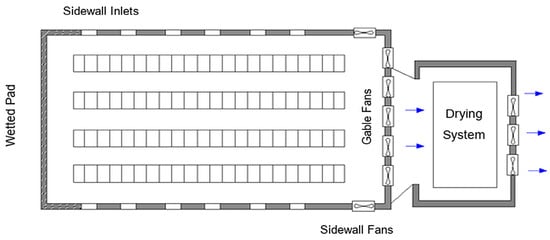
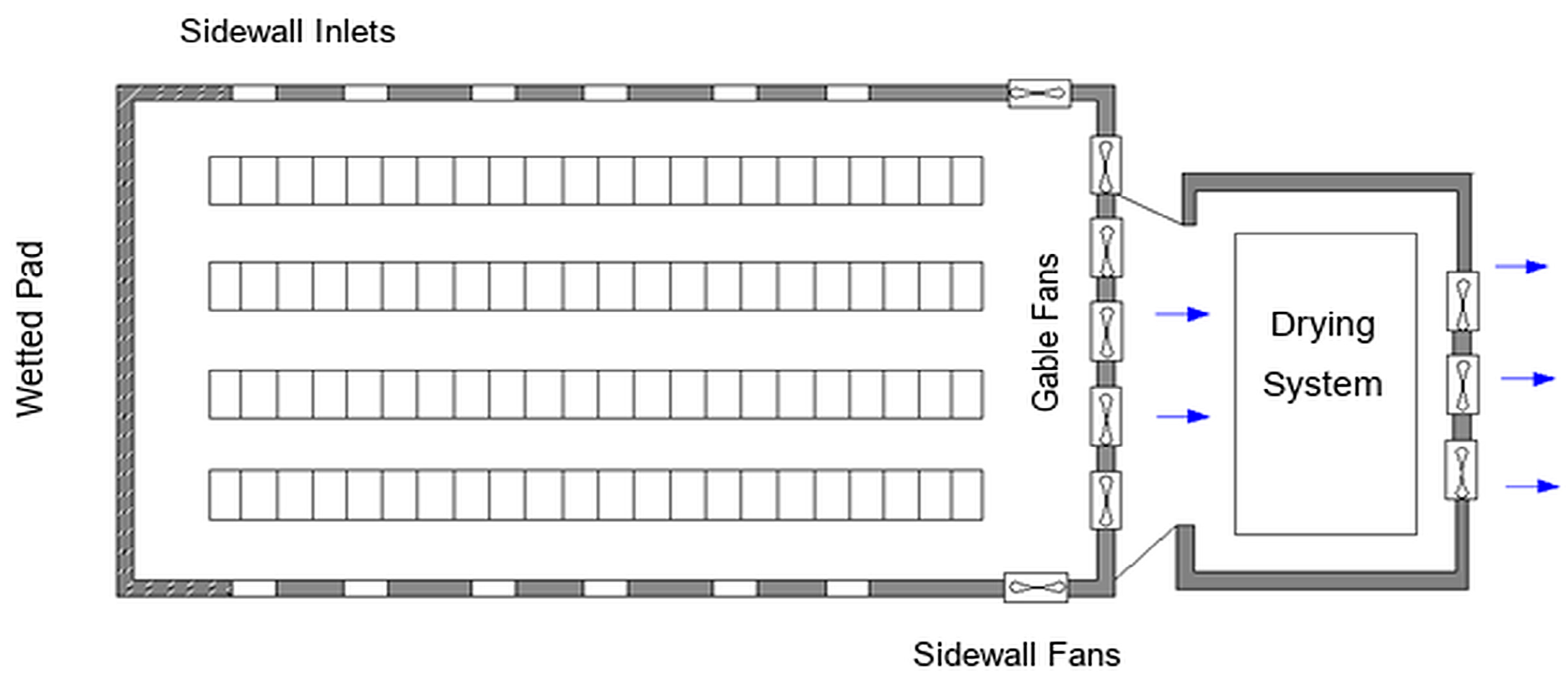
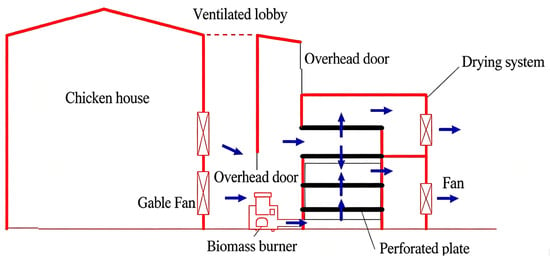
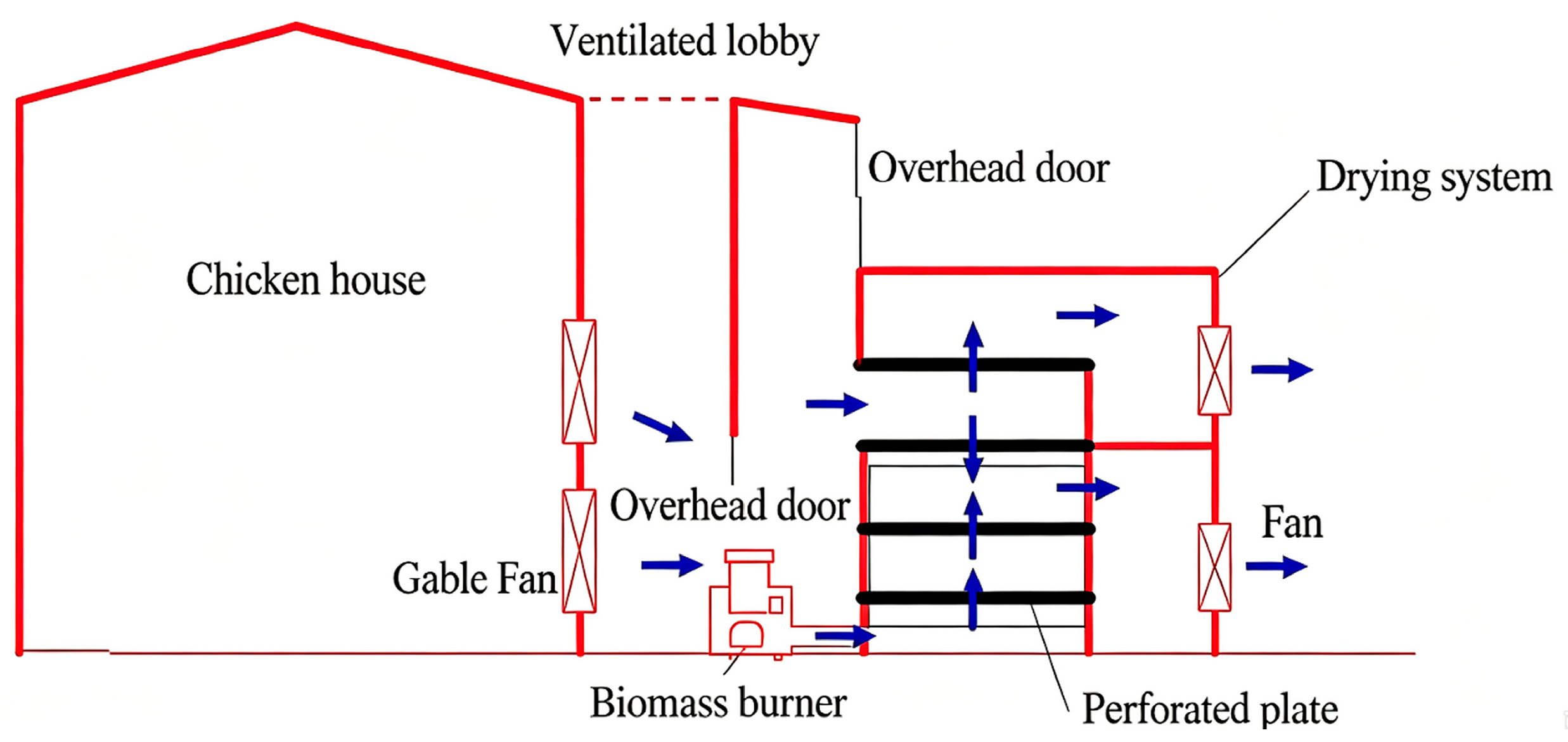
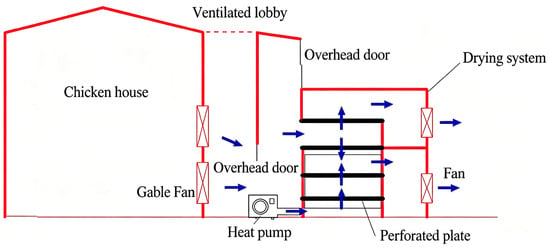
Drying with residual heat from chicken house ventilation is a low-temperature convective process that couples heat and mass transfer. The warm, humid exhaust air drawn out by the negative-pressure ventilation system serves as the drying medium [22], and moisture is removed by convective heat transfer and mass exchange. The process involves three successive steps. Metabolic heat from the hens raises the temperature and humidity of the house air, which the negative-pressure fans then draw to the drying unit through sealed ducts. The air then passes upward through fresh manure at 70–80% moisture spread on multi-layer mesh-belt or plate carriers, vaporizing free and capillary water. Finally, the water-laden air is treated by tail-gas equipment before being released, and the manure is dewatered continuously until it reaches the moisture level required for resource utilization [23]. Figure 1 shows the layout of the chicken house and the drying system.
Figure 1.
Layout of the chicken house and the residual heat drying system.
The overall heat balance equation of the process is expressed as
where QT is the heat delivered by the exhaust to the dryer (kJ/h); QS is the sensible heat of the exhaust (heat transferred by temperature change, kJ/h); QL is the latent heat of the exhaust (heat transferred by the phase change of water vapor, kJ/h); and q is the heat loss of the system (kJ/h).
QT = QS + QL − q
3.2. Energy Characteristics
The latent heat in the exhaust air accounts for 60–70% of the total available heat and is the main energy source for moisture evaporation from the manure [10]. The sensible heat mainly raises the manure temperature, and the heat loss of the system, mostly from duct and equipment dissipation, accounts for 5–10% of the total heat.
Only the fans consume power; no additional heating device is needed. The electricity consumption is about 2.0–3.5 kW·h per ton of manure.
3.3. Research Progress
By about 2015, standardized equipment and large-scale application had been established in the Netherlands. Multi-layer plate and mesh-belt residual heat dryers from companies such as HYTEM and Vervaet process manure continuously, reducing its moisture content from 75% to 15–20% within 48 h [23]. The technology has also spread to Germany, Belgium, and other countries, where the equipment integrates online temperature–humidity monitoring, variable-frequency airflow control, and biological deodorization. After the drying tail gas passes through a biofilter, its ammonia concentration drops to about 10 mg/m3 [24], a level that meets the emission requirements set for intensive poultry rearing in Europe [25,26]. Residual heat drying equipment from the German company Qalovis has been used in Europe, the Americas, and West Asia. Winkel et al. evaluated manure drying tunnels on Dutch layer farms and found that the tunnels also acted as dust filters, lowering emissions of particulate matter, ammonia, and odor. Zheng et al. [27] monitored a large chicken house with 425,000 birds in the Midwestern United States for six months. The daily average ammonia concentration in the house with a manure drying tunnel was kept below 42.3 mg/m3 and fell linearly with rising outside temperatures, which confirms that manure drying tunnels improve indoor air quality.
Engineering practice in Europe shows that in mild regions with small temperature and humidity fluctuations, residual heat from ventilation alone can meet the year-round drying demand. Relative to conventional drying, the technology saves energy and reduces ammonia emissions.
Research on the utilization of this residual heat began early in China. At first, heat was exchanged between the indoor exhaust air and the outdoor fresh air to preheat the inlet air of the house. Yuan et al. [28] used heat-pipe exchangers to recover heat from the exhaust of closed houses in winter, recovering more than 50% of it and preheating the inlet air to 15.3 °C, which improved layer performance and confirmed the value of the residual heat. Since 2015, the technology has been applied to chicken manure drying in China, and about 700 sets of drying equipment are now in operation in Hubei, Hunan, Guangdong, Guangxi, Anhui, Henan, Hebei, Sichuan, Jiangsu, and Fujian. Field surveys of commercial farms conducted by Chinese researchers show that in suitable spring and autumn conditions, the moisture content of the manure can be reduced to below 30% at a lower energy consumption per unit than conventional hot-air drying [7]. Li et al. [29] reported a manure drying project at Tongle Ecological Agriculture Co., Ltd., in Huangshan, Anhui, where about 200,000 layers are housed and the residual heat drying system reduces the moisture content of the manure from 75% to below 20% within 48 h. Field measurements on equipment in central China, however, showed that residual heat drying alone meets the continuous demand only during part of spring and autumn, so its year-round adaptability is limited.
Under this monsoon regime, most regions of China have hot summers and cold winters, and southern China has wet summers and high humidity all year. These conditions strongly restrict the stable year-round use of residual heat drying, and two problems dominate in practice.
First, drying performance deteriorates under the humid conditions of summer. During the plum rain season in the south (June–July) and the hot summer period nationwide (July–September), wet-pad cooling must be used to control the house temperature, which raises the relative humidity of the exhaust above 85%. The humidity of the drying medium then approaches saturation, and its dewatering capacity falls sharply. In field surveys conducted by Chinese researchers, the drying rate dropped by 40–60% and the drying cycle was extended beyond 48 h. The moisture content cannot be brought down to the 30% threshold required for resource utilization, and in some regions, the manure even becomes moldy, which lowers the quality of the recovered product. Long drying cycles and long material residence time in the equipment are the main causes of the excessive ammonia emissions on farms in southern China.
Second, low temperatures and reduced airflow in winter leave too little heat. In northern China and the Yangtze River basin, ambient temperatures from December to February are generally below 5 °C. To keep the house warm, ventilation is reduced by more than 50%, which cuts both the total exhaust flow and the total residual heat [14]. The exhaust temperature falls below 15 °C, and the heat supply gap of the drying system widens. In continuous overcast, rainy, and cold weather, the moisture content stays above 30% for long periods, and the accumulating manure increases storage pressure and drives anaerobic fermentation, causing secondary pollution.
Residual heat drying alone therefore cannot be applied stably at large scale throughout the year in China, and auxiliary heat sources must be added to cover the seasonal shortfalls of the stand-alone process. Conventional options such as natural drying and high-temperature rapid drying consume a large amount of energy and cause secondary pollution, so preference is given to processes that are easy to operate and efficient in energy use. At present, Chinese farms and equipment manufacturers are combining residual heat with solar energy, biomass, and heat pumps to improve the efficiency and stability of the stand-alone process.
4. Principles, Energy Characteristics, and Research Progress of Combined Drying Technologies Using Green Energy
When residual heat from chicken house ventilation is combined with green energy, the residual heat serves as the base heat source and solar energy, biomass, and heat pumps act as auxiliary sources. The aim is to complement the heat sources across seasons and working conditions, raise the temperature of the drying medium, lower its relative humidity, and keep the moisture content of the manure below 30% throughout the year while cutting conventional energy use and pollutant emissions. Because the raw manure is dewatered promptly and continuously, its storage time is shortened and ammonia and odor are suppressed at the source.
4.1. Residual Heat–Solar Combined Drying Technology
4.1.1. Working Principle
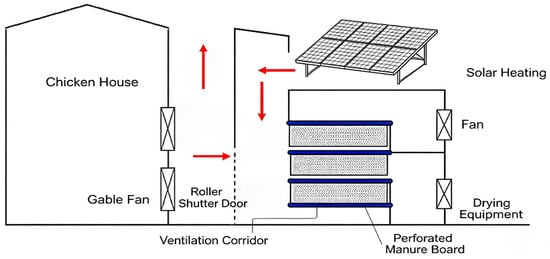
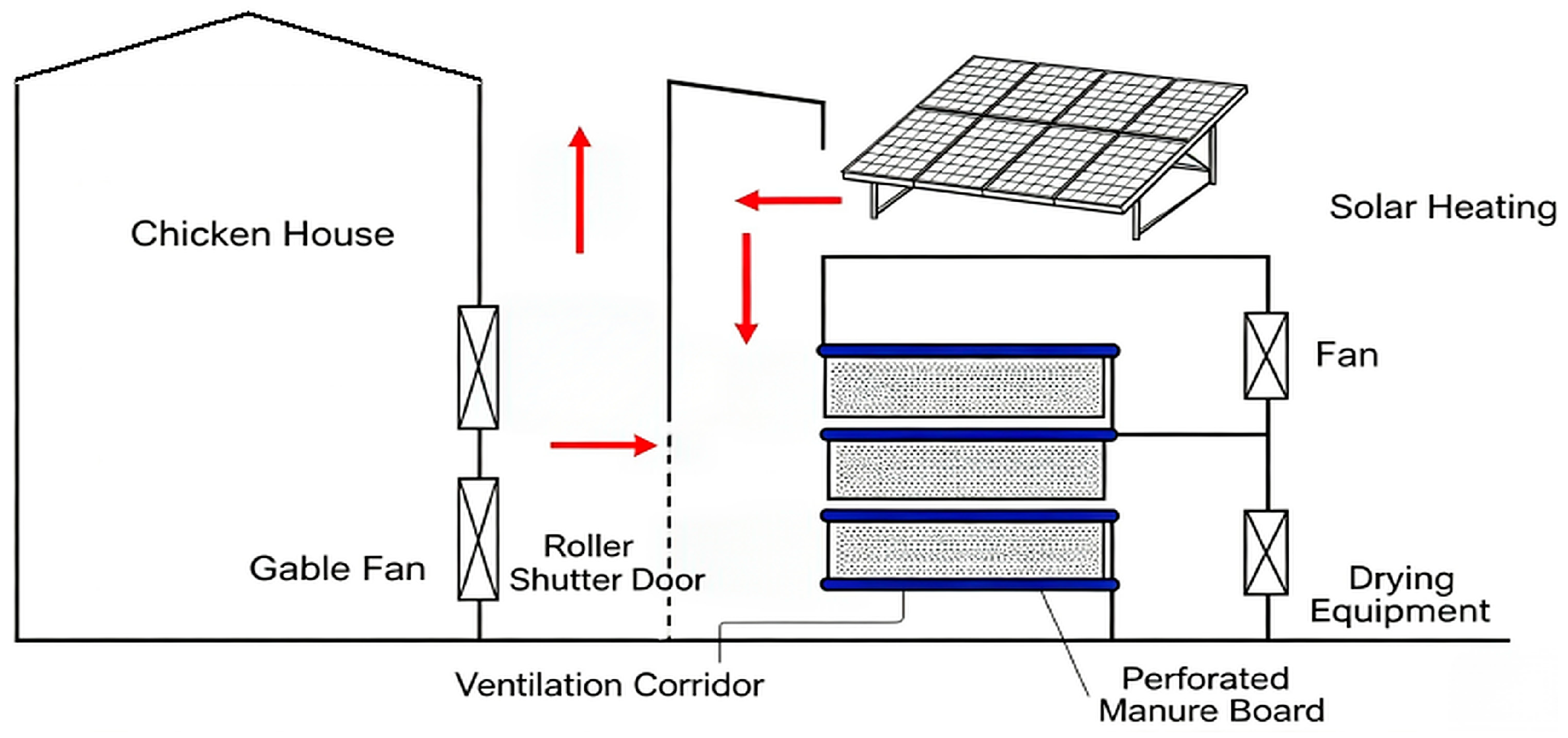
Residual heat–solar combined drying couples low-temperature residual heat with solar thermal energy. Solar radiation supplements the heat and lowers the relative humidity of the drying medium, complementing the residual heat across seasons and working conditions [30,31]. Figure 2 shows the process.
Figure 2.
Schematic diagram of the residual heat–solar combined drying process.
Two operating modes are available, depending on the season and ambient temperature:
(1) Summer mode: Exhaust humidity is high (relative humidity above 85%), and the drying medium can absorb little moisture. The solar collector heats ambient fresh air and thereby lowers its relative humidity. This air is mixed with the exhaust in a set ratio before entering the dryer, which lowers the humidity of the medium, raises its moisture-absorbing capacity, and thus improves the low drying rate in summer.
(2) Winter mode: The residual heat is insufficient (exhaust temperature below 15 °C). The solar collector absorbs radiation and heats the ambient air, and this air is combined with the recovered exhaust heat. Together, the two sources raise the drying medium to 25–35 °C and cover the winter heat shortage.
4.1.2. Energy Characteristics
The energy consumption of residual heat–solar (collector-free) combined drying is mainly the electricity consumed by the fans and the automatic control system; no fuel is burned, and no combustion emissions are produced. On a 100,000-layer farm treating 15 t of wet manure per day, the system uses 20–30 kW·h of electricity per day, or 1.3–2.0 kW·h per ton of manure, which is 85–90% less than conventional hot-air drying.
From an economic point of view, the collector-free residual heat–solar system has the lowest capital expenditure (CAPEX) of the three routes. Based on equipment quotations from Chinese manufacturers, the auxiliary solar air-heating unit for a 100,000-layer farm treating 15 t of wet manure per day costs about CNY 50,000–80,000 (about USD 7000–11,000). The operating expenditure (OPEX) is dominated by fan electricity and is about CNY 4000–7000 per year, so at the current price of organic fertilizer, the payback period is about 1–2 years, the shortest of the three routes. The absence of collectors and thermal storage keeps both the investment and the running cost low; the same absence, however, restricts operation to the sunny season, so the annual output is lower than that of the other two routes.
Solar energy is intermittent, so at night and during prolonged rain, the auxiliary source fails and drying has to fall back on the residual heat from house ventilation, with no guarantee of drying quality. Dependence on irradiation also makes the technology a poor match for the plum rain season in southern China and for regions with little winter sunshine.
4.1.3. Research Progress
Because solar collectors are costly and take up a large amount of land, collector-based solar thermal systems for chicken manure drying are still mostly limited to small-scale laboratory trials. Summer solar radiation is abundant in most of China, and simple solar schemes have been developed accordingly. China Agricultural University and Henan Jinfeng Livestock and Poultry Equipment Co., Ltd., proposed a summer process based on solar heat. In this design, the house exhaust is discharged through the ventilation corridor instead of being fed to the dryer, and ambient air is first heated by solar radiation and then drawn into the drying unit under fan-induced negative pressure, so the manure is dried by through-flow at a higher rate. In field cases in Hubei, solar-heated ambient air shortened the drying cycle by about 20 h on sunny summer days. In rainy weather, the drying rate did not differ significantly from that of drying with residual heat from chicken house ventilation (p > 0.05), and in other seasons, or when the ambient temperature was below 28 °C, drying with residual heat was more efficient. Solar drying is therefore suitable only when summer radiation is strong; at other times, and especially in winter when sunshine is short, its contribution is limited.
To overcome these shortcomings, Chinese researchers and engineers have used air-source heat pumps and biomass combustion furnaces as auxiliary heat sources, which stabilize the inlet air temperature of the dryer and allow continuous drying in rainy weather and in the cold seasons.
4.2. Residual Heat–Biomass Combined Drying Technology
4.2.1. Working Principle
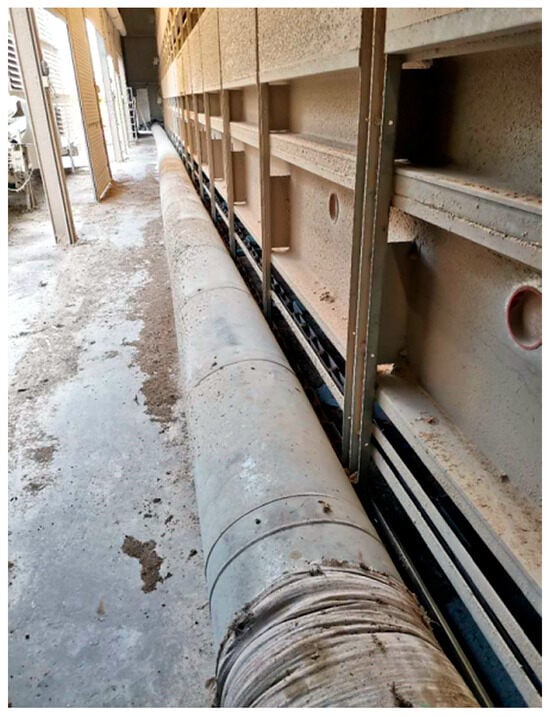
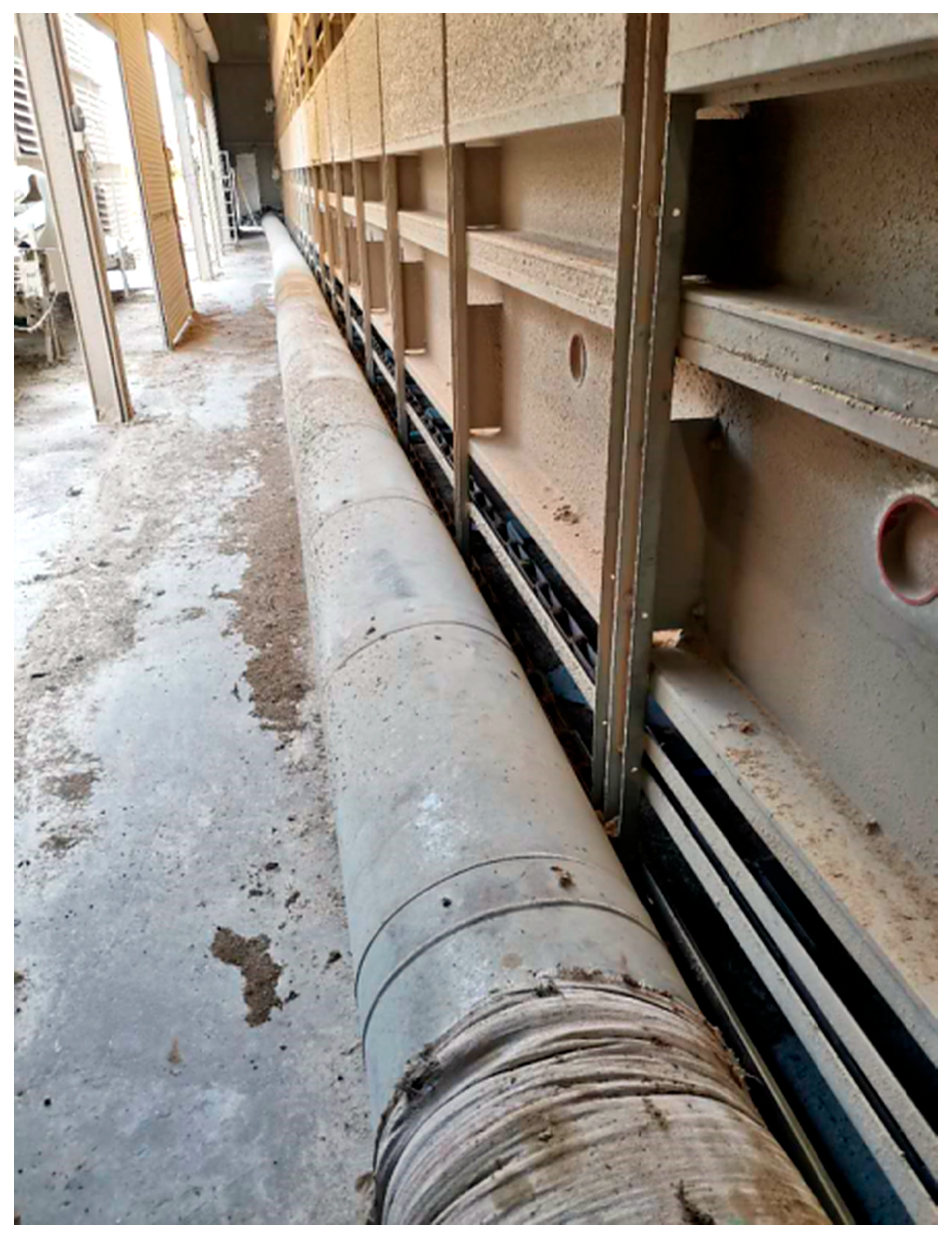
To raise the drying rate in winter, on rainy days, and in other adverse periods, coal-fired hot-air furnaces were first used in China to heat the inlet air. The hot air was ducted to the lower air inlet of the dryer for through-flow drying of the lower manure layers, and this approach was widely used in Hubei, Hunan, Guangdong, Guangxi, Anhui, Henan, and Jiangsu. Field practice showed that such auxiliary heat sources improved drying in rainy weather and met the cyclic drying requirement in winter, bringing the moisture content below 30% [12]. These sources raised energy consumption and released harmful gases; coal-fired furnaces, in particular, emitted large amounts of SO2, CO, CO2, NOx, and particulate matter, which degrade air quality around the farm, and they have been banned in most regions [32]. While deploying and optimizing residual heat drying systems, Chinese researchers developed residual heat–biomass combined drying, which couples the low-grade residual heat with biomass thermal energy. In engineering practice in China, biomass pellets from agricultural and forestry residues (straw, sawdust, rice husks) are burned in a hot-air furnace that delivers air at 60–120 °C. This air is mixed with the house exhaust in a set ratio to give a drying medium at a stable 25–50 °C, which covers the residual heat shortfall in winter and the rainy season. Figure 3 shows the system. Figure 4 shows the field installation of the auxiliary hot-air supply duct at the lower air inlet of the drying unit.
Figure 3.
Schematic diagram of the residual heat–biomass combined drying system.
Figure 4.
Field installation of an auxiliary hot-air supply duct at the lower air inlet of a drying unit.
Biomass is renewable within a short-term carbon cycle [33,34]. Its operation follows three steps. In the units now in service, the pellets burn fully in the hot-air furnace, and the hot air enters the mixing duct, where it is blended with the house exhaust and held at 25–50 °C by a temperature controller so that the organic matter in the manure is not decomposed and little ammonia is released. The mixed air then enters the dryer through the lower air inlet (Figure 4) and exchanges heat and mass with the manure.
The heat balance equation of this technology can be expressed as
where Qm is the net heat of the mixed air entering the dryer (kJ/h); Qw is the residual heat from the chicken house ventilation (kJ/h); Qb is the heat released by biomass combustion (kJ/h); and q is the heat loss during mixing (kJ/h).
Qm = Qw + Qb − q
Operation is divided into two modes according to the season and ambient temperature. (1) Summer mode: The furnace is not started on sunny days. On rainy days, it produces high-temperature hot air that raises the drying medium to 35–50 °C before it enters the dryer, which resolves the low drying rate of rainy summer weather.
(2) Winter mode: When ambient temperatures are between −5 and 10 °C and the residual heat is inadequate, the biomass furnace supplies high-temperature hot air. Mixed with the house exhaust, this air enters the dryer and raises the temperature of the drying medium, covering the heat shortage at low winter temperatures.
4.2.2. Energy Characteristics
Residual heat–biomass combined drying consumes fan electricity, biomass fuel, and electricity for dust removal. Biomass fuel costs far less than coal or natural gas, so operating costs are low [19]. In an engineering estimate for a 100,000-layer farm treating 15 t of wet manure per day at about 75% moisture, the system uses 22.5–37.5 kW·h of electricity and 0.4–0.6 t of biomass fuel per day (straw pellets, calorific value 15–18 MJ/kg). Electricity use is 1.5–2.5 kW·h per ton of manure, and fuel use is 85–128 kg per ton of dried manure. For the same farm, the energy saving relative to conventional hot-air drying is 70–80%.
Economically, the residual heat–biomass system has a moderate CAPEX, about CNY 0.10–0.15 million (about USD 14,000–21,000) for the same farm, because a biomass furnace, a fuel store, and a dust-removal unit are required in addition to the dryer. Its OPEX is dominated by fuel. At a pellet price of CNY 600–800 per ton, one firing day costs about CNY 240–480 for 0.4–0.6 t of fuel; because the furnace is started only when the residual heat is unable to carry the load, that is, on rainy days in summer and on cold winter days, over about 100 days a year, the annual fuel cost is about CNY 0.02–0.05 million and the annual OPEX including electricity and maintenance is about CNY 0.03–0.07 million. This is higher than the OPEX of the other two routes, but it stays far below the fuel cost of coal- or gas-fired hot-air drying of the same capacity, and the capital cost is about one-third of that of the heat pump route. With year-round operation, the payback period is about 2–3 years, longer than that of the collector-free solar route and shorter than that of the heat pump.
Biomass combustion produces a small amount of flue gas containing particulate matter and CO2, and fuel storage and crushing require space, which makes the technology unsuitable for farms with limited land. Because the biomass hot air raises the temperature of the drying medium, ammonia volatilization must also be held in check by strict temperature control.
4.2.3. Research Progress
Biomass drying was studied earlier in Europe and North America. Using abundant forestry residues, Nordic countries built industrial-scale drying for wood chips, sawdust, and bark, mostly by rotary, pneumatic, and superheated-steam drying. Deep dewatering raises the calorific value, combustion efficiency, and storage stability of biomass fuels [35]. Several large layer farms in Jiangsu, Guangxi, and Sichuan have built combined drying systems with 50–200 kW biomass hot-air furnaces, which hold the mixed-air temperature at 25–50 °C and avoid nutrient degradation from excessive heating [12]. In the farms monitored in these studies, these systems raised the winter drying rate by 50–70%, kept the manure moisture content below 25% during prolonged rain, and shortened the winter drying cycle from 48 h to within 24 h. They also use agricultural and forestry residues locally, so livestock manure and crop residues are both recovered.
4.3. Residual Heat–Heat Pump Combined Drying Technology
4.3.1. Working Principle
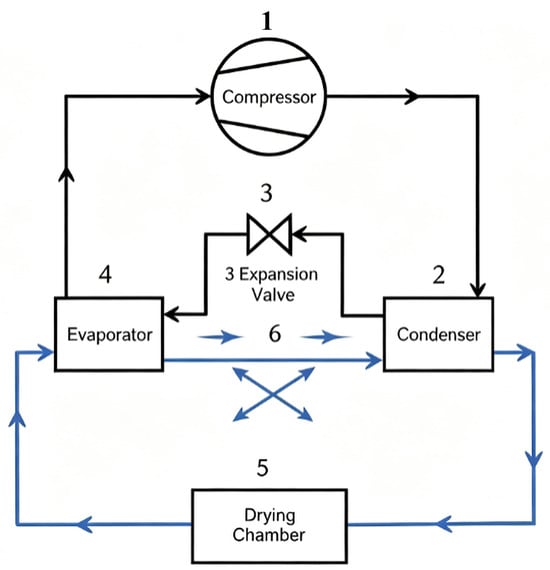
Heat pump drying is based on the reversed Carnot cycle and cyclic heat recovery; it dewaters manure in a closed system, with low energy consumption, suppressed odor, and limited nutrient loss. A heat pump drying system has two coupled loops, the refrigerant cycle and the closed air cycle of the drying chamber, and usually uses R134a. Driven by a small amount of compressor electricity, it upgrades low-grade ambient heat, and its heating coefficient of performance (COP) reaches 3.0–4.4, well above that of electric or direct-fired heating [15]. In the refrigerant cycle, the low-temperature, low-pressure refrigerant is compressed into a hot high-pressure gas, releases heat to the circulating air in the condenser and liquefies, and then passes through the electronic expansion valve into the evaporator, where it absorbs heat from the hot humid air, vaporizes completely, and returns to the compressor. The 35–50 °C hot air flows through the mesh belts and exchanges heat convectively with the manure, carrying away its capillary and adsorbed water. The humid return air is pre-cooled in the recuperator and then cooled to the dew point in the evaporator, where its water vapor condenses. The dehumidified air is preheated in the recuperator, heated in the condenser, and recirculated. Figure 5 shows both loops.
Figure 5.
Schematic diagram of the heat pump drying system (1: compressor; 2: condenser; 3: expansion valve; 4: evaporator; 5: drying chamber; 6: recuperator).
Residual heat–heat pump combined drying couples the residual heat from chicken house ventilation with heat pump energy conversion. An air-source heat pump recovers low-grade heat from the house exhaust or the ambient air and upgrades it through compressor work into 35–50 °C hot air, which is combined with the residual heat to provide a stable heat supply throughout the year. Figure 6 shows the system.
Figure 6.
Schematic diagram of the residual heat–heat pump combined drying system.
Operation is likewise divided into two modes. (1) Summer mode: The heat pump stays off on sunny days. On rainy days, when the house exhaust is humid and rich in latent heat, the evaporator recovers residual heat from the ventilation or the ambient air; the heat is upgraded by the compressor and released in the condenser, raising the drying medium to 35–50 °C. This heated air is blended with the house exhaust and sent to the dryer, which lowers the relative humidity of the medium, raises its moisture-absorbing capacity, and thus improves the low drying efficiency of rainy summer weather.
(2) Winter mode: When ambient temperatures fall between −5 and 10 °C and the residual heat becomes deficient, the evaporator extracts low-grade heat from the house exhaust or the ambient air. The heat is compressed and upgraded to 35–50 °C, and the hot air is sent to the dryer, which raises the temperature of the drying medium and covers the heat shortage at low winter temperatures.
4.3.2. Energy Characteristics
Energy consumption is mainly the electricity used by the fans and the heat pump. On a 100,000-layer farm treating 15 t of wet manure per day, the system uses 45–75 kW·h of electricity per day, or 3.0–5.0 kW·h per ton of manure, which is 60–70% less than conventional hot-air drying. Because the heat supply does not depend on solar radiation or precipitation, the drying operation is not interrupted by the weather, although the unit efficiency still falls at low ambient temperatures.
Initial investment is high: in the cost assessment, heat pump units and residual heat recovery devices account for 50–60% of the equipment investment, and the auxiliary heat source of this route for a 100,000-layer farm costs about CNY 0.30–0.40 million (about USD 42,000–56,000), excluding the existing drying house and the civil works. The annual OPEX is about CNY 12,000–18,000, higher than the fan electricity of the solar route but far below the fuel cost of the biomass route. The high upfront cost is nevertheless recovered only gradually because the COP falls in winter and the compressor requires regular servicing, so the payback period is about 3–4 years, still the longest of the three; the weakness of this system is therefore the capital cost rather than the running cost. Efficiency falls at low temperatures: in field measurements at 0 °C and below, the COP dropped to 2.5–3.0 and the energy consumption per unit rose by 20–30%, so application in cold regions is costly. Operation and maintenance are also demanding because the compressor and heat exchangers need regular servicing at a higher cost than the other two technologies.
4.3.3. Research Progress
Deymi-Dashtebayaz et al. [36] built a thermodynamic model of a closed heat pump dryer and, with food waste as the drying material, carried out parametric analysis and multi-objective optimization to determine the optimal evaporator and condenser temperatures and the refrigerant. The same group [37] proposed a wind–solar hybrid heat pump drying system and assessed its energy, exergy, economic, and environmental performance in different climate zones of Russia, confirming that coupling renewable energy reduces the energy consumption of heat pump drying. Both studies used food waste rather than manure, and heat pump drying of chicken manure has received little attention. In large North American farms, by contrast, heat pumps serve mainly as auxiliary heat sources for the houses rather than being used for manure drying. In China, dedicated research on heat pump drying of chicken manure began after 2010 [15,38]. Huang [15] designed a single-stage recuperative closed heat pump drying unit, completed the thermal calculation and the selection of the compressor, heat exchangers, and fans, optimized the air-duct structure with CoolPack and SolidWorks, built a three-layer mesh-belt continuous prototype, and carried out field pilot tests. Feng [38] designed a multi-stage closed-loop cross-flow heat pump drying system with high-, medium-, and low-temperature zones and two heat pump modules coupled to cross-flow recuperators; the simulated COPs of the two modules were 4.36 and 4.10, and the Wang and Singh model best described the thin-layer drying kinetics of chicken and pig manure. Wang et al. [39] studied how layer thickness, manure form, and process parameters affect the convective drying rate of chicken manure and estimated the thermal efficiency of the process. Song et al. [40] studied the optimal operation of a heat pump drying system throughout the entire drying process based on the material drying characteristics. Some Chinese chicken farms and organic fertilizer plants now use heat pump systems for manure drying. Low-temperature drying preserves the organic matter of the manure and suits organic fertilizer production. Existing heat pump dryers operate independently of other heat sources and therefore consume more energy than combined systems in which the residual heat carries the base load. Combined residual heat–heat pump drying of chicken manure is still rarely applied, although a layer farm under Henan Shuanghui Group has adopted it in production.
4.4. Comparison and Discussion of the Three Drying Technologies
The three combined drying technologies—residual heat–solar, residual heat–biomass, and residual heat–heat pump—all take the residual heat from chicken house ventilation as their base heat source and add green energy to overcome the poor year-round stability of the residual heat-only mode. They differ in energy input, heat and mass transfer mechanism, pollutant emission, economics, and regional adaptability.
The most fundamental difference lies in the energy supply and in the heat and mass transfer mechanism. The residual heat from chicken house ventilation is a time-varying source dominated by low-grade latent heat; its enthalpy depends on flock age, stocking density, ventilation control, and the outside weather, so the heat output is unsteady [7,14]. Under sufficient solar irradiation, the residual heat–solar (collector-free) system raises the enthalpy and lowers the relative humidity of the drying medium. This offsets the weakness of residual heat-only drying in humid summer weather and raises the drying rate. Solar energy, however, varies between day and night, weakens with the season, and is uncertain in rainy weather. Most field applications in China heat air directly with solar energy and use neither solar collectors nor thermal storage, so effective heat supplementation is not possible under low irradiation, and poor drying in winter and the rainy season remains unresolved. Solar collectors and heat storage would extend the operating time, but they would raise the initial investment and restrict the technology to small and medium farms.
In the residual heat–biomass system, fuel chemical energy and the residual heat complement each other. Its output is not limited by day and night or by the weather, and the combustion output can be adjusted to the manure treatment load, so reduced winter ventilation does not create a heat shortage. The residual heat–heat pump system is electrically driven and upgrades low-grade heat; unlike direct electric heating, it works through the reversed Carnot cycle, and the COP is the key indicator of its efficiency and economy [15]. In the plum rain season in southern China, the relative humidity of the house exhaust stays above 85%. Simple heating lowers only the relative humidity of the drying medium, not its absolute humidity, whereas the heat pump removes water vapor by condensation, which is the main advantage of heat pump technology in humid drying conditions.
The performance of air-source heat pumps is sensitive to ambient temperatures. In the cold northern winter, repeated frosting and defrosting of the evaporator consumes extra energy, so the COP falls, energy consumption rises, and the hot air may not reach the required drying temperature.
All three combined processes use a medium-to-low-temperature regime within 15–50 °C. Compared with conventional high-temperature hot-air drying, this regime limits the decomposition of organic matter and the nitrogen loss of the manure and preserves its nutrients. Because the manure is dewatered continuously at the source, its storage time is shortened and ammonia volatilization during later storage and handling is curbed. Air quality inside the house and around the farm is improved, and the lower ammonia concentration benefits bird welfare [27,41]; monitoring in commercial layer houses equipped with manure drying tunnels confirms the reduction in ammonia emissions [24]. Of the three technologies, only residual heat–biomass drying produces flue gas and dust from fuel combustion, and it therefore carries a slight tail-gas pollution risk.
The disadvantage of the residual heat–biomass route is the CO2 emitted during its operation. The furnace, however, is only an auxiliary heat source: it is started when the residual heat of the ventilation air is unable to carry the drying load—that is, on rainy summer days and on cold winter days—so it fires on about 100 days a year instead of running continuously. At 0.4–0.6 t of pellets per firing day, it releases about 0.6–1.1 t of CO2 per firing day. Part of this emission can be offset within the farm boundary: shelterbelts, windbreaks, and the green belts around the houses fix carbon during the growing season, and planting a few hectares around the site can take up a measurable share of the annual release. Such planting is a mitigation measure to be assessed site by site, not a reason to treat the emission as zero.
The flue gas also carries NOx, SO2, CO, and fine particulate matter. Because the furnace fires intermittently and the excess-air ratio is controlled, the concentrations are low and the annual load is small compared with continuous coal firing; the stack nevertheless stands close to the houses and to the farm boundary, and under low-wind winter conditions, the plume can reach nearby dwellings. Cyclone or bag filtration is therefore the minimum requirement, and a taller stack or a position away from the boundary is advisable where the farm borders a village. Whether denitrification is needed depends on the emission limit that applies to small biomass furnaces, which differs between provinces.
The choice of technology should not rest on initial capital investment alone. The comparison covers system power consumption, labor and maintenance costs, fuel costs, equipment depreciation, and the income from the recovered products, using the energy consumption, capital investment, and payback data for a 100,000-layer farm. The estimated CAPEX ranges from about CNY 50,000–80,000 for the collector-free solar route, through about CNY 0.10–0.15 million for the biomass route, to about CNY 0.30–0.40 million for the heat pump route; the annual OPEX ranges from about CNY 4000–7000 for the solar route and CNY 12,000–18,000 for the heat pump to about CNY 0.03–0.07 million for the biomass route, where fuel accounts for most of it; and the payback period ranges from about 1–2 years for the solar route, through 2–3 years for the biomass route, to 3–4 years for the heat pump. Where agricultural and forestry residues are abundant and there is space for fuel storage and tail-gas purification, residual heat–biomass drying requires only a moderate initial investment, has operating costs well below those of fossil fuel drying and a short payback period; it gives the best economic return over the year and suits 100,000-layer farms, especially in the cold north. Residual heat–heat pump drying dehumidifies well and abates pollutant gas emissions in the humid plum rain climate of the south, but its construction cost is high, and its system-level power consumption is about twice that of the residual heat–biomass process. Frosting and defrosting in the northern winter add further energy losses, and maintenance requires higher competence from electromechanical operators. Residual heat–biomass drying is therefore preferred where local residues are sufficient and the raw-material collection radius stays within about 30 km, as in the surveyed Chinese farms; where environmental regulations restrict combustion furnaces, heat pump-assisted drying is the alternative. Table 1 compares the three technologies on these parameters.
Table 1.
Comparison of the main parameters and performance of the three green energy combined drying technologies.
The residual heat–heat pump system removes water vapor by condensation and preserves manure quality in the humid environment of southern China, but its initial investment, operating electricity consumption, efficiency loss at low ambient temperatures, and maintenance demand limit its economics and engineering adaptability on large layer farms. The residual heat–solar (collector-free) system is clean and easy to retrofit, but its output depends on the weather and is unreliable when used alone. The residual heat–biomass system supplies energy independently of weather, has operating costs well below those of fossil fuel drying and a short payback period, and covers the low winter temperatures of the north with only slight tail-gas pollution. Its cost-effectiveness and engineering feasibility are the highest of the three, and it fits the needs of large Chinese layer farms. On this basis, a residual heat–biomass–solar system would combine the stable output of biomass with solar heat, smooth the output fluctuations of a stand-alone solar system, and reduce the fuel consumption of biomass-only operation. Solar energy can be used for drying in summer and residual heat coupled with biomass furnaces in other seasons; this is the configuration best suited to Chinese layer farms.
Seen from an international perspective, the three routes have different industrial embodiments. In northwestern Europe (The Netherlands, Germany, and Belgium), residual heat manure drying tunnels have been standard equipment on layer farms since about 2015 and are often operated as dust filters as well as dryers; in North America, drying tunnels are used mainly to hold the in-house ammonia concentration below 42.3 mg/m3, and heat pumps are applied to house heating rather than to manure drying; in East Asia, and particularly in China, the rapid growth of large layer farms has driven the combination of residual heat with solar, biomass, and heat pumps. These regional differences reflect climate, farm scale, and the local availability of residues and electricity, and they indicate that no single configuration is universally optimal; the choice should be adapted to local conditions rather than transferred unchanged from one continent to another.
5. Major Problems Facing Current Technologies
5.1. Imperfect Regulation of Multiple Heat Sources Makes Precise Heat Control Difficult
Changes in flock age, day–night adjustments of the ventilation strategy, and fluctuations in outside temperature and humidity all make the enthalpy of the residual heat vary dynamically. Most current dryers use threshold-based on–off control, in which the hot-air temperature is the only signal for starting and stopping the auxiliary heat sources. Such control does not integrate parameters such as manure moisture content, drying medium enthalpy, exhaust latent heat, and real-time weather data, so thermal regulation remains coarse [42]. Conventional control systems also lack a closed-loop feedback system that links heat source output, drying medium enthalpy, and manure dewatering efficiency, so the auxiliary heat output often mismatches the actual drying demand in both timing and magnitude. In humid, rainy weather the heat output may be too low, and the discharged material fails to meet the moisture standard; under strong solar radiation, the auxiliary heat input may be excessive, and energy is wasted. In Chinese farming practice, manure moisture is still measured mainly by manual sampling and laboratory testing, which introduces considerable error and hinders the standardization of drying equipment. Machine learning and machine vision offer feasible ways to regulate drying precisely, but predictive control for multi-energy coupled manure drying is still mostly at the laboratory stage, and few mature engineering applications exist.
5.2. Poor Integration of Complete Equipment and Low Utilization of Recovered Residual Heat
Most existing combined drying equipment for chicken manure is retrofitted: biomass hot-air furnaces, heat pump units, and other modules are attached externally to traditional residual heat dryers, without an integrated, purpose-built design. Duct resistance and airflow distribution have not been optimized by simulation, so the matching between components is poor. In addition, much of the latent heat in the water vapor of the tail gas is discharged directly without recovery.
5.3. Insufficient Collaborative Purification of Waste Gas and Imperfect Pollutant Control
Low-temperature drying reduces the total ammonia volatilization from chicken manure, but the long residence time of the material and local temperature fluctuations still produce ammonia, hydrogen sulfide, and other odorous pollutants continuously. Residual heat–biomass drying also produces particulate matter and polluting gases such as SO2, NOx, and NH3. Most current installations use dust screens or the biofilter processes developed for livestock houses, without adapting them to drying tail gas, which has a high water vapor content and large temperature fluctuations. The filter medium therefore waterlogs easily, and its pollutant-removal efficiency drops quickly.
6. Conclusions
(1) Residual heat from chicken house ventilation alone cannot provide year-round continuous drying of chicken manure on large Chinese farms; it must be coupled with auxiliary heat sources.
(2) Residual heat–solar combined drying is limited by the intermittency of solar radiation and can serve only as an auxiliary heat source in periods of abundant summer sunshine. Residual heat–biomass combined drying is independent of weather and season, supplies heat at a low fuel cost, and consumes local agricultural and forestry residues; it is the most cost-effective and engineering-ready of the three and suits large farms in the cold north and in regions with abundant residues. Residual heat–heat pump combined drying dehumidifies well but requires high equipment investment, operating electricity, and maintenance, and its efficiency degrades at low ambient temperatures; it is a backup heat source in the humid plum rain regions of the south and where combustion furnaces are restricted.
(3) For the promotion of chicken manure drying in China, a seasonal strategy of “residual heat–solar in summer and auxiliary heat in winter and rainy weather” is recommended. When summer sunshine is abundant, residual heat–solar drying is run first because it is clean, saves energy, and costs little to operate; in winter or rainy weather, when ventilation residual heat is insufficient, the system switches to residual heat–biomass drying to keep production continuous throughout the year. The choice of scheme should rest on a life-cycle calculation covering equipment investment, fuel and electricity costs, and organic fertilizer revenue so that operating costs are offset and both economic benefit and a stable heat supply are secured. Beyond the energy benefit, drying the manure at the source lowers ammonia and odor concentrations in the house and reduces the pathogen load, so the practice also serves flock health and welfare.
Author Contributions
Conceptualization, X.L. and L.X.; data curation, H.H.; formal analysis, Z.S.; funding acquisition, L.X.; investigation, Q.W.; methodology, Z.S.; resources, L.X.; software, X.L.; supervision, T.L.; writing—original draft, X.L.; writing—review and editing, X.L. All authors have read and agreed to the published version of the manuscript.
Funding
This work was supported by the Natural Science Foundation of Henan (242300420475) and the Key Project of Science and Technology of Henan Province (242102111177).
Institutional Review Board Statement
Not applicable.
Informed Consent Statement
Not applicable.
Data Availability Statement
The original contributions presented in this study are included in the article. Further inquiries can be directed to the corresponding author.
Acknowledgments
The authors gratefully acknowledge the dedicated work and contributions of every member of the author team: Xuanyang Li, Lei Xi, Haoran Huang, Zhifang Shi, Tongshuai Liu, and Qiong Wang. Artificial intelligence tools were used to polish the language and improve the readability of this manuscript; the authors reviewed the AI-assisted text and take full responsibility for the content of this article.
Conflicts of Interest
Xuanyang Li is a part-time Deputy Director for Science and Technology at Henan Duosai Environmental Protection Equipment Co., Ltd. The remaining authors declare that the research was conducted in the absence of any commercial or financial relationships that could be construed as a potential conflict of interest.
References
- Li, X.; Li, B.; Zheng, W.; Wang, Q.; Tong, Q. Drying performance of manure drying system with waste heat of poultry house in summer. Trans. Chin. Soc. Agric. Eng. 2019, 35, 188–194. (In Chinese) [Google Scholar] [CrossRef]
- Li, X.; Li, B.; Tong, Q. The effect of drying temperature on nitrogen loss and pathogen removal in laying hen manure. Sustainability 2020, 12, 403. [Google Scholar] [CrossRef] [Scilit]
- Manogaran, M.D.; Shamsuddin, R.; Mohd Yusoff, M.H.; Lay, M.; Siyal, A.A. A review on treatment processes of chicken manure. Clean. Circ. Bioecon. 2022, 2, 100013. [Google Scholar] [CrossRef] [Scilit]
- Song, Y.; Qiao, W.; Zhang, J.; Dong, R. Process performance and functional microbial community in the anaerobic digestion of chicken manure: A review. Energies 2023, 16, 4675. [Google Scholar] [CrossRef] [Scilit]
- Li, X.; Zheng, W.; Li, B.; Tong, Q. Optimization of low-temperature drying of laying-hen manure using response surface methodology. J. Air Waste Manag. Assoc. 2020, 70, 206–218. [Google Scholar] [CrossRef] [Scilit] [PubMed]
- Khodadadi, M.; Masoumi, A.A.; Sadeghi, M. Drying, a practical technology for reduction of poultry litter (environmental) pollution: Methods and their effects on important parameters. Poult. Sci. 2024, 103, 104277. [Google Scholar] [CrossRef] [Scilit] [PubMed]
- Li, X.; Kang, X.; Xi, L.; Dou, Q.; Shi, Z. Study on low temperature drying characteristics of chicken manure in a humid environment. Appl. Sci. 2023, 13, 7957. [Google Scholar] [CrossRef] [Scilit]
- Mau, V.; Gross, A. Energy conversion and gas emissions from production and combustion of poultry-litter-derived hydrochar and biochar. Appl. Energy 2018, 213, 510–519. [Google Scholar] [CrossRef] [Scilit]
- Khodadadi, M.; Masoumi, A. Recent drying technologies used for drying poultry litter (principles, advantages and disadvantages): A comprehensive review. Poult. Sci. 2025, 104, 104677. [Google Scholar] [CrossRef] [Scilit] [PubMed]
- Oliveira, J.L.; Ramirez, B.C.; Xin, H.; Wang, Y.; Hoff, S.J. Ventilation performance and bioenergetics of Dekalb White hens in a modern aviary system. Biosyst. Eng. 2020, 199, 149–161. [Google Scholar] [CrossRef] [Scilit]
- Aboltins, A.; Kic, P. Forced convection in drying of poultry manure. Agron. Res. 2015, 13, 215–222. Available online: https://agronomy.emu.ee/vol13_1.html (accessed on 19 September 2026).
- Li, X.; Kang, X.; Xi, L.; Dou, Q.; Shi, Z.; Liu, T.; Wang, L. Drying characteristics of chicken manure under a variable temperature process. Appl. Sci. 2025, 15, 4093. [Google Scholar] [CrossRef] [Scilit]
- Wang, Y.; Zheng, W.; Li, X.; Wan, D. Vertical walls-evaporative cooling pad and gable-exhaust-air-ventilation system improving poultry house thermal environment in Northwest region of China. Trans. Chin. Soc. Agric. Eng. 2018, 34, 202–207. (In Chinese) [Google Scholar]
- Li, B.; Wang, Y.; Zheng, W.; Tong, Q. Research progress in environmental control key technologies, facilities and equipment for laying hen production in China. Trans. Chin. Soc. Agric. Eng. 2020, 36, 212–221. (In Chinese) [Google Scholar]
- Huang, F. Design of Heat Pump Chicken Manure Drying System and Study on Chicken Manure Drying Characteristics. Master’s Thesis, Huazhong Agricultural University, Wuhan, China, 2022. (In Chinese) [Google Scholar]
- Zou, L.; Liu, Y.; Yu, M.; Yu, J. A review of solar assisted heat pump technology for drying applications. Energy 2023, 283, 129215. [Google Scholar] [CrossRef] [Scilit]
- EL-Mesery, H.S.; EL-Seesy, A.I.; Hu, Z.; Li, Y. Recent developments in solar drying technology of food and agricultural products: A review. Renew. Sustain. Energy Rev. 2022, 157, 112070. [Google Scholar] [CrossRef] [Scilit]
- Prenafeta-Boldú, F.X.; Fernández, B.; Viñas, M.; Noguerol, J.; Soler, J.; Illa, J. Combined acidification and solar drying of pig slurries for nutrient recovery and controlled atmospheric emissions. Agronomy 2021, 11, 222. [Google Scholar] [CrossRef] [Scilit]
- Mutlu, Ö.Ç.; Büchner, D.; Theurich, S.; Zeng, T. Combined use of solar and biomass energy for sustainable and cost-effective low-temperature drying of food processing residues on industrial scale. Energies 2021, 14, 561. [Google Scholar] [CrossRef] [Scilit]
- Deymi-Dashtebayaz, M.; Mostafa, A.; Asadi, M.; Hosseinzadeh, D.; Khutornaya, J.; Sergienko, O. Recent developments in heat pump dryers focusing on methods of supplying and reducing their energy consumption. J. Therm. Anal. Calorim. 2024, 149, 9751–9775. [Google Scholar] [CrossRef] [Scilit]
- Zhou, J.; Zeng, C.; Wang, Z.; Lyu, W.; Tang, Y.; Wu, D.; Ji, W.; Yuan, Y. Indirect expansion solar assisted heat pump system: A review. Sustain. Energy Technol. Assess. 2022, 53, 102409. [Google Scholar] [CrossRef] [Scilit]
- Su, M.; Aerts, J.M.; Norton, T. A review of current research and development for mechanical ventilation systems in poultry houses. Energy Build. 2026, 353, 116903. [Google Scholar] [CrossRef] [Scilit]
- Winkel, A.; Mosquera, J.; Aarnink, A.J.A.; Koerkamp, P.W.G.; Ogink, N.W. Evaluation of manure drying tunnels to serve as dust filters in the exhaust of laying hen houses: Emissions of particulate matter, ammonia, and odour. Biosyst. Eng. 2017, 162, 81–98. [Google Scholar] [CrossRef] [Scilit]
- Rosa, E.; Arriaga, H.; Merino, P. Ammonia emission from a manure-belt laying hen facility equipped with an external manure drying tunnel. J. Clean. Prod. 2020, 251, 119591. [Google Scholar] [CrossRef] [Scilit]
- European Union. Directive (EU) 2024/1785 of the European Parliament and of the Council of 24 April 2024 amending Directive 2010/75/EU on industrial emissions (integrated pollution prevention and control) and Council Directive 1999/31/EC on the landfill of waste. Off. J. Eur. Union 2024, L, 2024/1785. Available online: https://eur-lex.europa.eu/eli/dir/2024/1785/oj (accessed on 19 September 2026).
- Giner Santonja, G.; Georgitzikis, K.; Scalet, B.M.; Montobbio, P.; Roudier, S.; Delgado Sancho, L. Best Available Techniques (BAT) Reference Document for the Intensive Rearing of Poultry or Pigs; EUR 28674 EN; Publications Office of the European Union: Luxembourg, 2017. [Google Scholar] [CrossRef]
- Zheng, W.; Xiong, Y.; Gates, R.S.; Wang, Y.; Koelkebeck, K. Air temperature, carbon dioxide, and ammonia assessment inside a commercial cage layer barn with manure-drying tunnels. Poult. Sci. 2020, 99, 3885–3896. [Google Scholar] [CrossRef] [Scilit] [PubMed]
- Yuan, X.; Li, B.; Yu, H. Application of thermal pipe heat-exchangers to waste heat recycling in closed hen house. Trans. Chin. Soc. Agric. Eng. 2001, 17, 91–95. (In Chinese) [Google Scholar]
- Li, Y.; Wang, X.; Jiang, Y.; Cheng, Y.; Liu, Y.; Wu, C.; Ling, G.; Wang, F.; Geng, S. A case study on resource utilization of livestock and poultry manure: Chicken manure drying project of Tongle Ecological Agriculture Co., Ltd. China Anim. Ind. 2020, 23, 46–47. (In Chinese) [Google Scholar]
- Unar, S.G.K.; Khatri, S.A.; Mirjat, N.H.; Shaikh, P.H.; Zaidi, S.A.R.A.; Arain, M.F. Solar drying technologies: A review of design, efficiency, and environmental impacts. Renew. Sustain. Energy Rev. 2026, 226, 116339. [Google Scholar] [CrossRef] [Scilit]
- Boateng, I.D. A review of solar and solar-assisted drying of fresh produce: State of the art, drying kinetics, and product qualities. J. Sci. Food Agric. 2023, 103, 6137–6149. [Google Scholar] [CrossRef] [Scilit] [PubMed]
- Zhang, Y.; Li, W.; Wu, F. Does energy transition improve air quality? Evidence derived from China’s Winter Clean Heating Pilot (WCHP) project. Energy 2020, 206, 118130. [Google Scholar] [CrossRef] [Scilit]
- Ye, X.; Shen, C.; Zhang, J. Regional characteristics of livestock and poultry manure production and sustainable resource utilisation technologies in China—A review. Sustainability 2026, 18, 1844. [Google Scholar] [CrossRef] [Scilit]
- Proskurina, S.; Mendoza-Martinez, C. Expectations for bioenergy considering carbon neutrality targets in the EU. Energies 2023, 16, 5314. [Google Scholar] [CrossRef] [Scilit]
- Stenström, S. Drying of biofuels from the forest—A review. Dry. Technol. 2017, 35, 1167–1181. [Google Scholar] [CrossRef] [Scilit]
- Deymi-Dashtebayaz, M.; Davoodi, V.; Khutornaya, J.; Sergienko, O. Parametric analysis and multi-objective optimization of a heat pump dryer based on working conditions and using different refrigerants. Energy 2023, 284, 129231. [Google Scholar] [CrossRef] [Scilit]
- Deymi-Dashtebayaz, M.; Kheir Abadi, M.; Asadi, M.; Khutornaya, J.; Sergienko, O. Investigation of a new solar-wind energy-based heat pump dryer for food waste drying based on different weather conditions. Energy 2024, 290, 130328. [Google Scholar] [CrossRef] [Scilit]
- Feng, S. Design and Performance Study of a Multi-Stage Closed-Loop Cross-Flow Heat Pump Drying System. Master’s Thesis, Guangdong University of Technology, Guangzhou, China, 2025. (In Chinese) [Google Scholar]
- Wang, J.; Huang, F.; Xie, F.; Li, H.; Wang, Y. Study on influencing factors of convective drying characteristics of chicken manure and thermal efficiency estimation. In Proceedings of the 2022 Annual Scientific and Technological Conference of the Chinese Society for Environmental Sciences; Chinese Society for Environmental Sciences: Beijing, China, 2022; pp. 1095–1105. (In Chinese) [Google Scholar]
- Song, J.; Zhang, P.; ElGamal, R.; Kishk, S.; Peng, J.; Liu, C.; Wang, L. Study on optimal operation of heat pump drying system throughout the entire drying process based on the material drying characteristics. Processes 2025, 13, 3883. [Google Scholar] [CrossRef] [Scilit]
- Fabbri, C.; Valli, L.; Guarino, M.; Costa, A.; Mazzotta, V. Ammonia, methane, nitrous oxide and particulate matter emissions from two different buildings for laying hens. Biosyst. Eng. 2007, 97, 441–455. [Google Scholar] [CrossRef] [Scilit]
- Miraei Ashtiani, S.H.; Martynenko, A. Toward intelligent food drying: Integrating artificial intelligence into drying systems. Dry. Technol. 2024, 42, 1240–1269. [Google Scholar] [CrossRef] [Scilit]

Disclaimer/Publisher’s Note: The statements, opinions and data contained in all publications are solely those of the individual author(s) and contributor(s) and not of MDPI and/or the editor(s). MDPI and/or the editor(s) disclaim responsibility for any injury to people or property resulting from any ideas, methods, instructions or products referred to in the content. |
© 2026 by the authors. Licensee MDPI, Basel, Switzerland. This article is an open access article distributed under the terms and conditions of the Creative Commons Attribution (CC BY) license.