


Simple Summary
Gastrointestinal nematodes are an important constraint on sheep and goat production for many small-scale farmers, and their control relies heavily on anthelmintics. However, repeated use of these drugs can select for resistant parasite populations and reduce treatment effectiveness. This study assessed the efficacy of anthelmintics against gastrointestinal nematodes in naturally infected sheep and goats from smallholder farms in St. Kitts using the faecal egg count reduction test and larval culture. Because individual flocks were generally small, the different anthelmintics were evaluated in groups of animals from different farms rather than all treatments being compared within the same flock. Reduced efficacy consistent with resistance was observed in goat groups treated with albendazole, moxidectin, and ivermectin and in sheep groups treated with fenbendazole, moxidectin, and ivermectin. Monepantel and derquantel–abamectin remained effective in the groups evaluated, while levamisole was effective in sheep but produced a borderline or inconclusive response in goats because its classification differed between the analytical methods. Haemonchus spp. predominated in pre- and post-treatment cultures. These findings demonstrate variation in anthelmintic efficacy among the treatment groups evaluated and highlight the need for continued monitoring and evidence-based parasite-control strategies in small ruminants in St. Kitts.
Abstract
Anthelmintic resistance (AR) in gastrointestinal nematodes (GINs) is an increasing threat to the health and productivity of small ruminants, but contemporary information on the efficacy of commonly used anthelmintics in sheep and goats in St. Kitts is limited. This study evaluated the efficacy of selected anthelmintic treatments against GINs in naturally infected sheep and goats from smallholder farms in St. Kitts using the fecal egg count reduction test (FECRT), complemented by coproculture to characterize the nematode genera present before and after treatment. Because flock sizes were generally small and insufficient, numbers of eligible animals were not available within individual farms to establish adequately sized groups for all treatments. Hence, the anthelmintics were evaluated in separate treatment groups across selected farms rather than concurrently within individual flocks. Anthelmintic efficacy was assessed using FERCT estimates and 90% confidence intervals, with resistance interpreted according to established criteria. In goats, reduced efficacy consistent with resistance was observed in the albendazole, moxidectin, and ivermectin treatment groups using both analytical approaches. The response to levamisole was borderline or inconclusive because its classification differed between the analytical methods, whereas monepantel and derquantel–abamectin showed high efficacy. In sheep, reduced efficacy consistent with resistance was observed in the fenbendazole, moxidectin, and ivermectin treatment groups, whereas levamisole, monepantel, and derquantel–abamectin showed high efficacy. Haemonchus predominated in pre- and post-treatment larval cultures; however, the pooled nature of the coproculture data precluded definitive attribution of resistance to individual nematode genera. These findings provide evidence of reduced anthelmintic efficacy in several treatment groups evaluated, rather than demonstrating widespread multidrug resistance across sheep and goat populations in St. Kitts. They highlight the need for continued, appropriately designed surveillance of anthelmintic efficacy to support evidence-based and sustainable gastrointestinal nematode control in small ruminants in St. Kitts.
1. Introduction
Small ruminant production provides important livelihood and food-production opportunities for farmers, particularly in tropical and subtropical regions. However, productivity is constrained by limited feed resources, access to veterinary services and parasite infestations including gastrointestinal nematode (GIN) infections. Control of GIN infections relies substantially on the use of anthelmintics, but repeated exposure of parasite populations to these drugs can select for anthelmintic resistance (AR), potentially reducing treatment efficacy and compromising sustainable parasite control [1].
Among the GINs affecting small ruminants in the Caribbean are Oesophagostomum spp., Strongyloides spp. and Haemonchus spp. [2]. Of the GINs, Haemonchus spp. is particularly important because of its high fecundity and pathogenicity and its ability to thrive under climatic conditions that support development and survival of free-living parasite stages [3,4]. Anthelmintics remain an important component of GIN control, although frequent blanket treatment is increasingly recognized as unsustainable where strategies to preserve drug efficacy are not incorporated into parasite-control programs [5]. This practice has led to the emergence of anthelmintic-resistant strains of GINs, especially Haemonchus contortus, the primary species in small ruminants, resulting in substantial unquantified financial losses due to morbidity and mortality, and the costs of helminth control.
Small ruminants, particularly sheep and goats, are socio-economically important, providing a key source of livelihood for smallholder farmers in St. Kitts, a Caribbean twin-island country with Nevis in the West Indies. On St. Kitts, the livestock sector is mainly based on small-ruminant production, with approximately 14,000 sheep distributed across 802 holdings and 14,400 goats across 894 holdings [6,7]. Production systems range from low-input, free-range systems to more intensive management, with animals utilizing both private and government-owned land. The relatively small size of individual holdings is an important feature of the production system because it presents practical constraints for field studies requiring large numbers of eligible animals from a single flock.
In St. Kitts, the control and treatment of gastrointestinal parasites in sheep and goats rely heavily on the use of anthelmintics. Fenbendazole and ivermectin are available to farmers through the Department of Agriculture, while albendazole was previously supplied, and other anthelmintics may be imported with appropriate authorization [8]. However, contemporary, multi-farm information on the field efficacy of different anthelmintic classes against GINs in sheep and goats in St. Kitts remains limited. This information is important because treatment recommendations are most useful when informed by evidence that the products being administered retain adequate efficacy against the parasite populations for which they are used.
Reduced anthelmintic efficacy and resistance among small-ruminant GINs have been reported elsewhere in the Caribbean [2,8]. Studies in Trinidad have demonstrated reduced efficacy of several commonly used anthelmintics in sheep, while surveys in Guadeloupe identified resistance to multiple anthelmintic classes on goat farms [9,10]. These findings reinforce the importance of monitoring anthelmintic efficacy under local production conditions rather than assuming that treatment performance is consistent across geographical locations, farms, and parasite populations.
Several approaches can be used to investigate anthelmintic efficacy and resistance in livestock, including controlled efficacy tests, fecal egg count reduction tests (FECRTs), in vitro assays, and molecular approaches [11,12,13]. The FECRT provides an estimate of treatment efficacy by comparing fecal egg counts before and after anthelmintic administration and remains an important field method for evaluating anthelmintic efficacy and identifying responses consistent with resistance [14]. The interpretation of FECRT findings, nevertheless, requires consideration of study design, treatment-group characteristics, fecal egg counting methods, statistical analysis, and confidence intervals.
Therefore, this study aimed to assess the field efficacy of selected anthelmintic treatments against gastrointestinal nematodes in naturally infected sheep and goats on smallholder farms in St. Kitts using the fecal egg count reduction test, complemented by coproculture to characterize the nematode genera present before and after treatment. Given the small size of individual holdings, this study was undertaken as a multi-farm field evaluation rather than as a direct head-to-head comparison of all anthelmintics within individual flocks.
2. Material and Methods
2.1. Study Area
This study was conducted on ten randomly selected smallholder sheep and goat farms in St. Kitts, a Leeward island in the Caribbean with an area of 174 km2. St. Kitts has a tropical marine climate, with warm temperatures ranging from 24 °C to 31 °C and distinct wet (August–September) and dry (January–April) seasons. Annual rainfall ranges from 1000 mm in coastal areas to over 3800 mm at high elevations, and St. Kitts has a high humidity of 70–78% [15]. The farms were located predominantly at lower elevations, with none situated at higher-elevation areas, which are covered by protected rainforests.
Sheep and goat holdings in St. Kitts are generally small, ranging from approximately 10 to 80 animals, with most farms having an average of 20 animals [16]. Animals are predominantly managed under extensive or semi-extensive systems, and communal or shared grazing areas are commonly utilized. Consequently, gastrointestinal nematode populations are likely to be exchanged among animals and across holdings through shared grazing.
2.2. Animals and Experimental Design
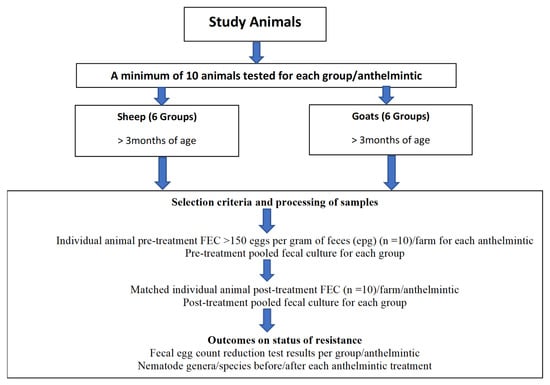
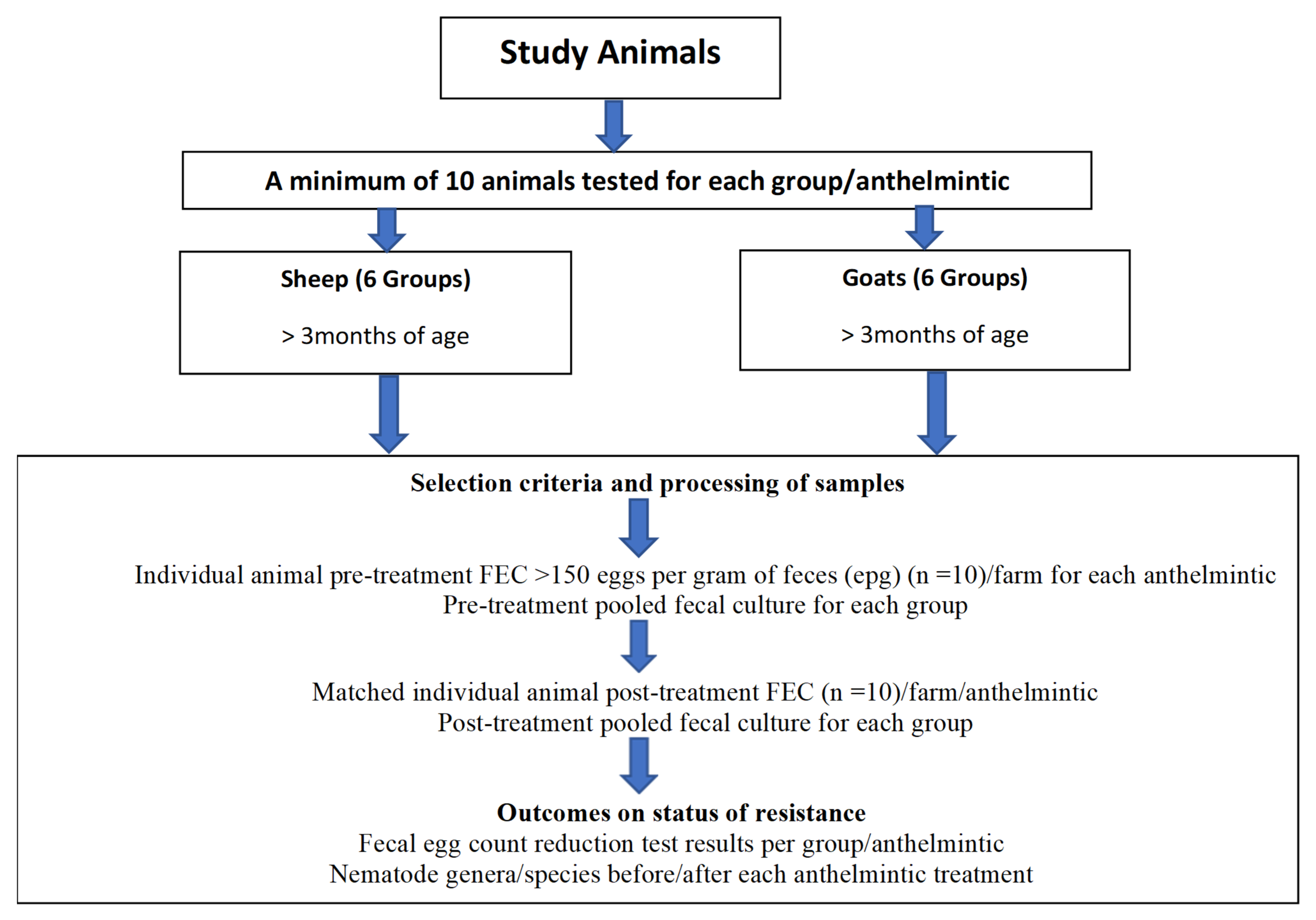
This study was designed as a multi-farm field evaluation of the efficacy of selected anthelmintics against gastrointestinal nematodes in naturally infected sheep and goats. Ten smallholder farms were randomly selected for inclusion in this study. Since individual sheep and goat holdings in St. Kitts are generally small, there were insufficient numbers of eligible animals within individual farms to establish adequately sized treatment groups for all anthelmintics evaluated. Consequently, the complete panel of anthelmintics was not tested concurrently within each farm. Instead, eligible animals from the selected farms were allocated to an anthelmintic treatment group according to the study design shown in Figure 1. This design was considered appropriate for a field-based assessment under local production conditions, where sheep and goats are predominantly managed extensively and may have access to shared grazing areas, facilitating exposure and exchange of gastrointestinal nematode populations among holdings. This study therefore primarily evaluated the field efficacy of individual anthelmintics within their respective treatment groups, rather than directly comparing the efficacy of all anthelmintics against a single within-farm parasite population.
Figure 1.
Multi-farm study design for evaluating the efficacy of selected anthelmintics against gastrointestinal nematodes in sheep and goats using the fecal egg count reduction test (FECRT).
Sheep and goats aged > 3 months, with no known anthelmintic treatment in the preceding two months and with a pre-treatment FEC > 150 eggs per gram (epg) of feces, were eligible for inclusion (Figure 2). Animals satisfying these criteria were randomly selected from the respective farms, ear-tagged, weighed and allocated to the designated treatment group. A target of at least 10 animals per treatment group was used, subject to the number of eligible animals available within each farm and potential losses to follow-up.
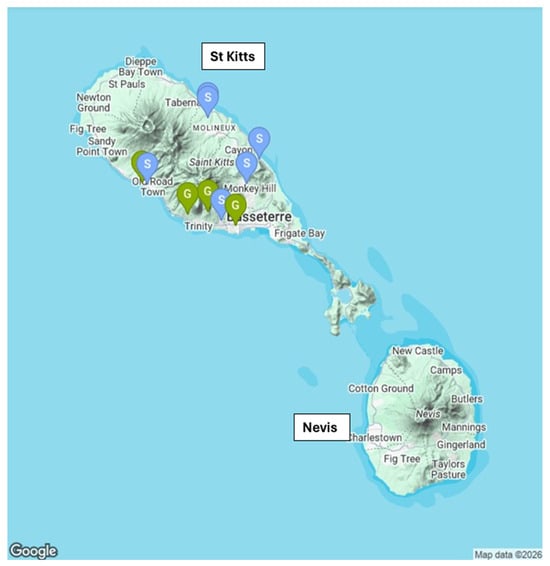
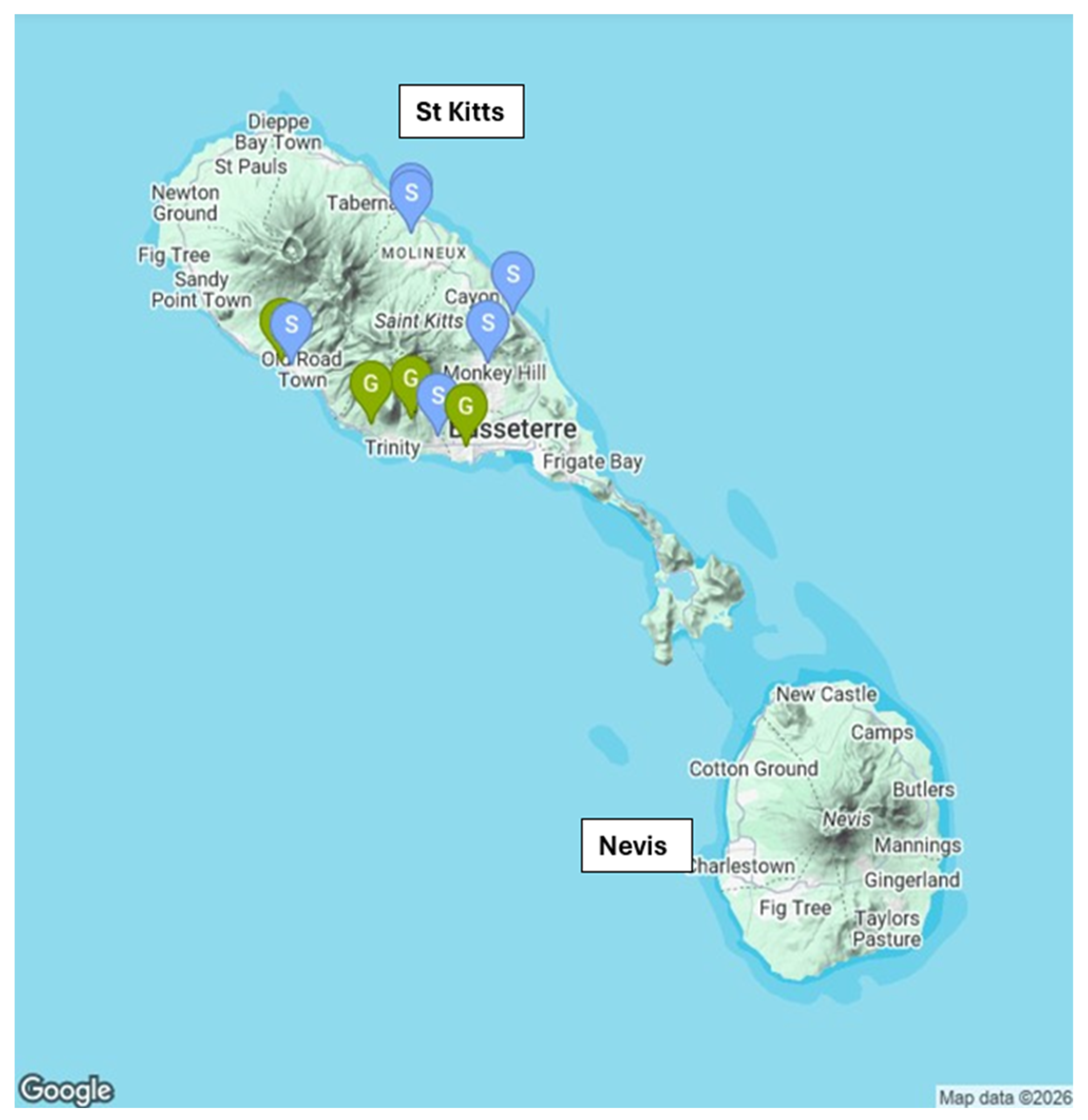
Figure 2.
Geographic distribution of sampling locations in St. Kitts. Goat sampling locations are shown in green and sheep sampling locations in blue. The map was created using Google Maps [Google, Mountain View, CA, USA; accessed on 15 October 2026].
On day 0, individual pre-treatment fecal samples were collected before administration of the assigned anthelmintic. Sheep received the recommended dose, whereas goats received 1.5–2 times the recommended dose, as appropriate for the respective compound (Table 1) [17]. All anthelmintics used were administered orally using a calibrated drench gun. Post-treatment fecal samples were collected individually at the specified sampling time for each treatment group.
Table 1.
Names of anthelmintics tested for efficacy and the oral doses administered to sheep and goats in St. Kitts.
Samples were placed in clearly labelled fecal cups, stored in a cooler box, and transported to the laboratory on the same day. Samples not analyzed on the day of collection were stored in a refrigerator at approximately 5 °C and analyzed within 5 days.
2.3. Fecal Egg Counts, Coproculture and Parasite Identification
Fecal samples were collected directly from the rectum, and a subsample was processed to determine the pre-treatment fecal egg count (FEC) using the McMaster technique [14]. Briefly, 4 g of feces was mixed with 56 mL of magnesium sulphate (MgSO4) flotation solution (specific gravity 1.2), strained, thoroughly homogenized, and loaded into McMaster counting chambers [CHALEX, LLC, Park City, UT, USA]. The analytical sensitivity of the method was 50 epg. The remaining fecal material from animals that met the inclusion criteria was pooled within each treatment group and used for pre-treatment and post-treatment coprocultures (Figure 2).
Approximately 15 g of feces from each treatment group, collected before and after treatment, was used for coproculture. Samples were mixed with sawdust and maintained at ambient temperature (24–31 °C) and humidity (70–78%) for 12 days. Third-stage larvae (L3) were recovered using the Baermann technique [18]. A total of 100 L3 larvae from each pooled culture were identified to the genus level using standard morphological keys and descriptors (Central Veterinary Laboratory Parasitology Department [19]. When fewer than 100 L3 larvae were recovered from a pooled culture, all recovered larvae were identified.
2.4. Data Analysis
Anthelmintic efficacy was assessed using FECRT, based on changes in individual animal FECs between pre- and post-treatment sampling. Fecal egg count data were analyzed using the online FECRT analytical tool [FECRT, version 1.1.0; accessed on 21 October 2025 from https://www.fecrt.com and the Delta non-parametric method [20], with interpretation informed by published WAAVP recommendations. Each animal served as its own control for estimating the reduction in fecal egg output following treatment. Treatment efficacy was expressed as percentage FECR with corresponding confidence intervals. For interpretation of reduced efficacy and evidence consistent with anthelmintic resistance, the criteria specified by the respective FECRT methodology were applied. According to the criteria of Coles et al. (1992) [21], a parasite population was classified as resistant when FECR was <95% and the lower confidence limit was <90%. Because the different anthelmintics were not all evaluated concurrently against the same parasite population within a single farm, efficacy estimates were interpreted primarily at the level of the individual farm-treatment group. Comparisons among anthelmintics were therefore considered descriptive rather than direct comparative estimates of efficacy against an identical within-farm parasite population.
A total of 154 animals (72 sheep and 82 goats) fulfilled the inclusion criteria of having a pretreatment FEC of at least 150 epg and no history of recent anthelmintic treatment. Additionally, 16 sheep and goats that met the inclusion criteria were excluded from the final analysis due to being outliers, such as animals showing an increase in epg, potentially indicating incorrect dosing.
3. Results
3.1. Gastrointestinal Nematode Composition Before and After Treatment
Gastrointestinal nematode larvae were identified from pooled fecal cultures obtained before and after treatment from the respective goat and sheep treatment groups. Haemonchus spp. were the predominant larvae identified in most pre-treatment cultures in both host species. The L3 from the pre-treatment fecal cultures of goats were predominantly Haemonchus (range 58–100%), followed by Cooperia (range 0–37%) and Trichostrongylus (range 0–15%), with Teladorsagia recorded in only one group at 4% (Table 2). Following treatment, Haemonchus spp. remained the predominant genus recovered from the albendazole, moxidectin, and ivermectin groups, comprising 71–100% of the larvae identified. Cooperia spp. and Trichostrongylus spp. were also recovered from some post-treatment cultures. Few larvae were recovered following levamisole and monepantel treatment, whereas no larvae were recovered from the derquantel–abamectin group. In sheep, Haemonchus spp. represented 38–64% of larvae identified in pre-treatment pooled cultures, followed by Cooperia spp. (10–29%), Trichostrongylus spp. (3–25%), and Teladosargia spp. (0–20%) (Table 3). Haemonchus spp. predominated among the larvae recovered following treatment with fenbendazole, moxidectin, levamisole, and monepantel. No larvae were recovered from the post-treatment cultures of the ivermectin and derquantel–abamectin groups.
Table 2.
Species distribution of goat gastrointestinal nematodes determined by larval culture and identification before and after treatment with six different anthelmintics.
Table 3.
Species distribution of sheep gastrointestinal nematodes determined by larval culture and identification before and after treatment with six different anthelmintics.
3.2. Fecal Egg Count Reduction Following Treatment in Goats
The number of goats tested across the various treatment groups ranged from 8 to 16 and 7 to 16, respectively. Mean pre-treatment fecal egg counts ranged from 1117 to 7067 eggs per gram (EPG), whereas post-treatment means ranged from 3 to 563 EPG (Table 4).
Table 4.
Fecal egg count reduction percentages of six different anthelmintics in six goat flocks according to two different calculation methods.
Reduced anthelmintic efficacy consistent with resistance was observed in the albendazole, moxidectin, and ivermectin treatment groups using both analytical approaches. For albendazole, the 90% confidence intervals for fecal egg count reduction were 86.0–97.3% using the Delta method and 82.7–96.8% using the WAAVP method. The corresponding confidence intervals were 70.7–94.0% and 63.2–93.3% for moxidectin, and 85.9–96.6% and 83.1–96.2% for ivermectin.
The classification of the response to levamisole differed between analytical approaches. The Delta method classified the treatment response as susceptible (90% CI: 90.5–99.2%), whereas the WAAVP method classified the response as resistant (90% CI: 86.3–98.7%). The response to levamisole in goats was therefore considered borderline/inconclusive based on the discordance between the two analytical approaches. The highest treatment responses were observed with derquantel–abamectin and monepantel. Both treatments were classified as effective using the two analytical methods. The 90% confidence intervals were 99.8–100% and 99.5–100% for derquantel–abamectin, and 96.4–99.8% and 94.0–99.6% for monepantel, respectively (Table 4).
3.3. Fecal Egg Count Reduction Following Treatment in Sheep
The number of sheep included in the individual treatment groups ranged from 7 to 16. Mean pre-treatment FECs ranged from 767 to 2967 EPG, compared with post-treatment means ranging from 13 to 536 EPG (Table 5).
Table 5.
Fecal egg count reduction percentages of six different anthelmintics in six sheep flocks according to two different calculation methods.
Reduced efficacy consistent with resistance was observed in the fenbendazole, moxidectin, and ivermectin treatment groups using both analytical approaches. For fenbendazole, the 90% confidence intervals were 12.0–91.5% using the Delta method and 36.6–88.9% using the WAAVP method. For moxidectin, the corresponding intervals were 89.7–98.8% and 85.8–98.4%, respectively. Ivermectin was also classified as resistant using both approaches, with 90% confidence intervals of 45.8–87.2% and 33.2–86.1%, respectively.
In contrast, levamisole was classified as effective by both analytical approaches, with 90% confidence intervals of 96.7–99.5% and 95.7–99.4%. Monepantel and derquantel–abamectin were similarly classified as effective using both methods. The corresponding 90% confidence intervals were 97.9–100% and 94.4–99.9% for monepantel, and 99.8–99.9% and 98.5–99.8% for derquantel–abamectin (Table 5).
3.4. Post-Treatment Nematode Composition in Relation to FECRT Findings
Post-treatment coproculture demonstrated that Haemonchus spp. predominated in several treatment groups in which incomplete fecal egg count reduction was observed. In goats, Haemonchus spp. were recovered following treatment with albendazole, moxidectin, and ivermectin, while Cooperia spp. and Trichostrongylus spp. were also recovered from some groups. In sheep, Haemonchus spp. predominated among larvae recovered from several post-treatment cultures.
These findings indicate that Haemonchus spp. constituted an important component of the residual gastrointestinal nematode populations following treatment. However, because larval identification was performed using pooled treatment-group cultures, the presence of a particular genus after treatment was not considered sufficient, independently, to assign genus-specific resistance. The classification of treatment response was therefore based primarily on FECRT results at the treatment-group level, with coproculture providing additional information on nematode composition.
4. Discussion
This study evaluated fecal egg count responses following treatment with different anthelmintics in sheep and goats from smallholder farms in St. Kitts. Reduced fecal egg count responses consistent with anthelmintic resistance were observed in several of the treatment groups evaluated, although the pattern varied according to host species and anthelmintic. In goats, reduced efficacy was observed in the albendazole, moxidectin, and ivermectin treatment groups using both analytical approaches [20], whereas high fecal egg count reductions were observed following treatment with monepantel and derquantel–abamectin. In sheep, reduced efficacy was observed in the fenbendazole, moxidectin, and ivermectin treatment groups, while levamisole, monepantel, and derquantel–abamectin showed responses consistent with susceptibility.
The FECRT remains the recommended field method for assessing anthelmintic efficacy and diagnosing anthelmintic resistance, although its interpretation depends on appropriate experimental design, fecal egg counting procedures, statistical analysis, and treatment-group characteristics [14,20]. Current WAAVP guidance specifically addresses these aspects of FECRT design and interpretation and provides separate recommendations for scientific studies and routine field evaluation [14]. Thus, the findings of the present study provide evidence of reduced anthelmintic efficacy in several of the treatment groups investigated. However, because individual anthelmintics were evaluated in different animal groups, the findings should not be interpreted as direct comparisons of drug efficacy against identical parasite populations.
Reduced efficacy of benzimidazoles and macrocyclic lactones is particularly relevant because these drug classes have been widely used for gastrointestinal nematode control in small ruminants and have been associated with the development of anthelmintic resistance [5,11]. In St. Kitts, fenbendazole and ivermectin are provided to farmers through the Department of Agriculture, while albendazole has previously been available and farmers may import other anthelmintics with approval from the Chief Veterinary Officer [8]. Previous studies in the Caribbean have similarly reported reduced efficacy of benzimidazoles and macrocyclic lactones, including resistance in gastrointestinal nematodes of sheep in Trinidad and goats in Guadeloupe [9,10]. The present findings therefore add to evidence that reduced anthelmintic efficacy warrants consideration in gastrointestinal nematode control programs in the Caribbean. Nevertheless, comparisons among studies should be made cautiously because differences in study design, parasite populations, prior treatment exposure, fecal egg counting methods, and statistical approaches may influence FECRT results [14,20]. The importance of standardized study design and efficacy assessment is also emphasized in the recently updated WAAVP guidelines for evaluating anthelmintics in ruminants [22].
The response to levamisole requires particularly cautious interpretation. In sheep, both analytical approaches classified the treatment response as susceptible, whereas in goats the Delta method classified the response as susceptible while the WAAVP approach classified it as resistant. The levamisole response in goats should therefore be considered borderline or inconclusive rather than definitive evidence of resistance. Differences in pharmacokinetics between sheep and goats may contribute to variation in treatment response, and differences in host responses to gastrointestinal nematode infection between sheep and goats have also been reported [23]. However, the present study was not designed to investigate the mechanisms underlying these differences. Consequently, further investigation using adequately powered and appropriately standardized treatment groups would be required before firm conclusions can be drawn regarding the resistance status of gastrointestinal nematodes to levamisole in goats in St. Kitts. Current WAAVP guidance emphasizes the importance of treatment-group characteristics and statistical interpretation when evaluating FECRT outcomes [14,22].
In contrast, high fecal egg count reductions were observed following treatment with monepantel and derquantel–abamectin in both sheep and goat treatment groups. Both analytical approaches classified the responses to these treatments as susceptible. These findings indicate that monepantel and derquantel–abamectin retained high efficacy against the gastrointestinal nematode populations evaluated in the respective treatment groups. However, because these treatments were not evaluated against identical parasite populations as the other anthelmintics, the results should not be interpreted as demonstrating their comparative superiority. This distinction is important because contemporary guidelines for evaluation of anthelmintic efficacy emphasize standardized study populations, study design, and assessment criteria to enable meaningful interpretation and comparison of efficacy findings [22]. Furthermore, the observed efficacy should not be extrapolated to all sheep and goat gastrointestinal nematode populations in St. Kitts without broader surveillance.
Haemonchus spp. were the predominant gastrointestinal nematodes identified in most pre-treatment pooled cultures and were also frequently recovered following treatment. The predominance of Haemonchus in the study is consistent with its recognized epidemiological importance in small ruminants in tropical, subtropical, and warm temperate environments [3,4]. Previous Caribbean investigations have similarly reported Haemonchus among the important gastrointestinal nematodes of small ruminants [2,9]. In the present study, Haemonchus spp. predominated in post-treatment cultures from several groups, showing incomplete fecal egg count reduction, indicating that this genus constituted an important component of the gastrointestinal nematode populations persisting following treatment.
Importantly, however, the coproculture findings do not independently establish genus-specific anthelmintic resistance. Coprocultures in the present study were prepared from pooled fecal samples within treatment groups; therefore, recovery of a particular nematode genus following treatment does not, by itself, demonstrate resistance of that genus to the administered anthelmintic. The FECRT should consequently remain the principal basis for interpreting treatment response, with coproculture providing complementary information about the composition of the residual nematode population. WAAVP guidance recognizes fecal egg counts and fecal larval counts among the approaches used when assessing anthelmintic efficacy while emphasizing defined study design and efficacy criteria [22].
This distinction is particularly important when interpreting the predominance of Haemonchus spp. Although recovery of Haemonchus following treatment indicates its persistence within the respective pooled treatment-group cultures, the present study does not establish that the same Haemonchus population was resistant to multiple anthelmintic classes. Consequently, the present data should not be interpreted as definitive evidence of multidrug-resistant Haemonchus spp. Demonstration and characterization of such resistance would require an experimental design that permits resistance to different compounds to be assessed within appropriately comparable parasite populations, together with suitable approaches for parasite identification and resistance characterization [14,22].
The occurrence of reduced fecal egg count responses in several treatment groups nevertheless has important implications for gastrointestinal nematode control in small ruminants in St. Kitts. Frequent and indiscriminate use of anthelmintics can contribute to selection for resistant parasite populations, emphasizing the importance of sustainable parasite-control approaches [5]. Continued use of an anthelmintic without knowledge of its efficacy may also compromise parasite-control programs. Periodic assessment of treatment efficacy is therefore important for evidence-based anthelmintic use, and the FECRT remains the principal field approach for evaluating anthelmintic efficacy and diagnosing resistance [14].
However, the present findings should not be interpreted as establishing the prevalence or geographical distribution of anthelmintic resistance across St. Kitts. Further investigations involving appropriately designed and replicated treatment groups across multiple farms would be needed to determine the distribution of reduced efficacy among parasite populations on the island. The updated WAAVP guidelines provide a useful framework for future studies by addressing study-animal selection, study design, methods of assessment, interpretation of results, and standards for defining anthelmintic efficacy [22].
An important practical consideration in the design of the present study was the smallholder nature of sheep and goat production in St. Kitts. Flocks are generally small, with an average of approximately 30 animals per holding, which substantially limits the number of eligible animals that can be enrolled from an individual farm after applying inclusion criteria such as age, treatment history, and minimum pre-treatment fecal egg count. Conducting a multi-anthelmintic efficacy study within a single flock would require sufficient numbers of eligible animals to populate several adequately sized treatment groups, which was generally not feasible under these production conditions. Consequently, the different anthelmintics were evaluated in eligible animal groups from different farms rather than all treatments being evaluated concurrently within a single flock. This approach allowed the efficacy of several commonly used and newer anthelmintics to be investigated under field conditions representative of smallholder production in St. Kitts, but it necessarily limits direct comparisons among treatments because the groups may have harbored different parasite populations. The findings should therefore be interpreted as treatment-group-specific estimates of anthelmintic efficacy rather than head-to-head comparisons of the different anthelmintics. This practical constraint highlights the challenges of conducting sufficiently powered multi-treatment FECRT studies in smallholder production systems and reinforces the need for careful consideration of treatment-group size, parasite egg counts, and study design when interpreting FECRT data [14,22].
5. Study Limitations
Notwithstanding these practical constraints, several limitations arising from the study design should be considered when interpreting the findings. First, individual anthelmintics were evaluated in different animal groups and parasite populations. Consequently, differences in treatment response cannot be attributed exclusively to the anthelmintics administered. This feature of the study design also limits the ability to demonstrate resistance to multiple anthelmintics within the same parasite population. Experimental design is recognized as an important determinant of FECRT performance and interpretation, and the current WAAVP FECRT guideline specifically addresses experimental design, statistical analysis, and interpretation as central components of resistance assessment [14].
Second, treatment-group sizes were relatively small and differed among groups. Some groups also fell below the intended enrollment because of animal losses and exclusions. These factors may reduce the precision of estimated fecal egg count reductions and should be considered when interpreting the associated confidence intervals. Both the statistical performance of FECRT and the relationship between treatment-group size and the number of parasite eggs counted have received particular attention in efforts to improve FECRT standardization [14,20]. The current WAAVP guideline recognizes different treatment-group options depending on the expected number of eggs counted, illustrating why sample size and egg-count information need to be considered together when assessing test performance. Third, some animals with increased post-treatment fecal egg counts were excluded because of incorrect dosing and/or loss of administered anthelmintic was suspected. Such exclusions may affect estimated treatment efficacy and should therefore be considered when interpreting the results. We have consequently acknowledged this explicitly rather than assuming that the excluded observations necessarily represented treatment failure. Lastly, coproculture was performed using pooled fecal samples, and relatively few larvae were recovered from some post-treatment cultures. These factors limit the extent to which treatment responses can be attributed to individual nematode genera. Future studies could combine standardized FECRT designs with approaches capable of providing stronger genus- or species-specific characterization of the parasites persisting after treatment. Current efficacy guidance explicitly encompasses parasite characterization, fecal egg counts, fecal larval counts, and species identification within the broader framework for evaluating anthelmintic efficacy in ruminants [22].
Overall, this study demonstrated substantial variation in fecal egg count responses following anthelmintic treatment in the sheep and goat groups evaluated. Reduced efficacy consistent with resistance was observed in several treatment groups, particularly those treated with benzimidazoles and macrocyclic lactones, whereas high fecal egg count reductions were observed following treatment with monepantel and derquantel–abamectin and, in sheep, levamisole. Haemonchus spp. predominated in several residual post-treatment cultures, although the pooled nature of the coproculture data precludes definitive attribution of resistance to this or other individual nematode genera.
Consequently, the findings are most appropriately interpreted as evidence of reduced anthelmintic efficacy within the treatment groups evaluated rather than evidence of widespread multidrug resistance across sheep and goat populations in St. Kitts. This more conservative interpretation is consistent with the emphasis of current WAAVP guidance on appropriate experimental design, statistical analysis, and careful interpretation when using FECRT to diagnose anthelmintic resistance [14,22]. Nevertheless, the findings provide an important basis for expanded surveillance using study designs capable of more precisely establishing the distribution and magnitude of anthelmintic resistance and informing sustainable gastrointestinal nematode control in small ruminants.
Author Contributions
S.M. conceived and designed the study. W.M.T., A.C. and J.K. conducted fieldwork and sample collection. W.M.T., S.M., I.B. and J.K. performed laboratory analysis. J.K., W.M.T. and S.M. carried out data analysis. W.M.T., A.C., I.B., J.K. and S.M. wrote the paper. All authors have read and agreed to the published version of the manuscript.
Funding
Funding was provided through the Ross University School of Veterinary Medicine FY25 Intramural Grant number 41045-2025.
Institutional Review Board Statement
This study received approval from the Institutional Animal Care and Use Committee (IACUC), with protocol number 000001062, approved on 9 July 2024.
Informed Consent Statement
Informed consent was obtained from all subjects involved in the study.
Data Availability Statement
The original contributions presented in this study are included in the article. Further inquiries can be directed to the corresponding author.
Acknowledgments
The authors would like to thank the Chief Veterinary Officer of St. Kitts, Kofi Sylvester, for his assistance with identifying farmers and facilitating sample collection, and Patrick Pithua for preparing the map used in this study.
Conflicts of Interest
The authors have no conflicts of interest to declare.
References
- Sautier, M.; Chiron, P. Challenges and opportunities for reducing anthelmintic use in ruminant livestock systems: Insights from a sheep farmer survey in France. Prev. Vet. Med. 2023, 221, 106078. [Google Scholar] [CrossRef] [Scilit]
- Chikweto, A.; Tiwari, K.; Bhaiyat, M.I.; Carloni, J.; Pashaian, K.; Pashaian, A.; De Allie, C.; Sharma, R.N. Gastrointestinal parasites in small ruminants from Grenada, West Indies: A coprological survey and a review of necropsy cases. Vet. Parasitol. Reg. Stud. Rep. 2018, 13, 130–134. [Google Scholar] [CrossRef] [Scilit]
- Flay, K.J.; Hill, F.I.; Muguiro, D.H. A Review: Haemonchus contortus infection in pasture-based sheep production systems, with a focus on the pathogenesis of anaemia and changes in haematological parameters. Animals 2022, 12, 1238. [Google Scholar] [CrossRef] [Scilit]
- Arsenopoulos, K.V.; Fthenakis, G.C.; Katsarou, E.I.; Papadopoulos, E. Haemonchosis: A challenging parasitic infection of sheep and goats. Animals 2021, 11, 363. [Google Scholar] [CrossRef] [Scilit]
- Kenyon, F.; Hutchings, F.; Morgan-Davies, C.; van Dijk, J.; Bartley, D.J. Worm control in livestock: Bringing science to the field. Trends Parasitol. 2017, 33, 669–677. [Google Scholar] [CrossRef] [Scilit]
- Ministry of Agriculture, F.a.M.R. St Kitts and Nevis Agricultural Transformation and Growth Strategy 2022–2031; Ministry of Agriculture: Canberra, ACT, Australia, 2022.
- (FAO), F.a.A.O.o.t.U.N. World Census of Agriculture: Saint Kitts and Nevis; FAO: Rome, Italy, 2000. [Google Scholar]
- Carter, J.; Ketzis, J.K. Case report: Assessment of a quarantine treatment for sheep on the Caribbean Island of St. Kitts. Vet. Parasitol. Reg. Stud. Rep. 2022, 27, 100660. [Google Scholar] [CrossRef] [Scilit]
- George, N.; Persad, K.; Sagam, R.; Offiah, V.; Adesiyun, A.; Harewood, W.; Lambie, N.; Basu, A. Efficacy of commonly used anthelmintics: First report of multiple drug resistance in gastrointestinal nematodes of sheep in Trinidad. Vet. Parasitol. 2011, 183, 194–197. [Google Scholar] [CrossRef] [Scilit]
- Mahieu, M.; Ferré, B.; Madassamy, M.; Mandonnet, N. Fifteen years later, anthelmintic resistances have dramatically spread over goat farms in Guadeloupe. Vet. Parasitol. 2014, 205, 379–384. [Google Scholar] [CrossRef] [Scilit]
- Coles, G.; Jackson, F.; Pomroy, W.; Prichard, R.; von Samson-Himmelstjerna, G.; Silvestre, A.; Taylor, M.; Vercruysse, J. The detection of anthelmintic resistance in nematodes of veterinary importance. Vet. Parasitol. 2006, 136, 167–185. [Google Scholar] [CrossRef] [Scilit]
- Hassan, N.M.; Ghazy, A.A. Advances in diagnosis and control of anthelmintic resistant gastrointestinal helminths infecting ruminants. J. Parasit. Dis. 2022, 46, 901–915. [Google Scholar] [CrossRef] [Scilit]
- Taylor, M.; Hunt, K.; Goodyear, K. Anthelmintic resistance detection methods. Vet. Parasitol. 2002, 103, 183–194. [Google Scholar] [CrossRef] [Scilit]
- Kaplan, R.M.; Denwood, M.J.; Nielsen, M.K.; Thamsborg, S.M.; Torgerson, P.R.; Gilleard, J.S.; Dobson, R.J.; Vercruysse, J.; Levecke, B. World Association for the Advancement of Veterinary Parasitology (WAAVP) guideline for diagnosing anthelmintic resistance using the faecal egg count reduction test in ruminants, horses and swine. Vet. Parasitol. 2023, 318, 109936. [Google Scholar] [CrossRef] [Scilit]
- Ministry of Sunstainable Develpoment, F.o.S.K.a.N. National Action Programme For Combating Desertification And Land Degradation. In United Nations Convention to Combat Desertification; Ministry of Sunstainable Develpoment, F.o.S.K.a.N.: Manama, Belize, 2007. [Google Scholar]
- Huggins, D. Assessment of Knowledge, Attitudes and Practices of Small Ruminant Farmers in St. Kitts and Nevis Related to Parasitic Disease, and Anthelmintic Use; Ross University School of Veterinary Medicine: Basseterre, Saint Kitts and Nevis, 2026. [Google Scholar]
- Maurizio, A.; Škorpíková, L.; Ilgová, J.; Tessarin, C.; Dotto, G.; Reslová, N.; Vadlejch, J.; Marchiori, E.; di Regalbono, A.F.; Kašný, M. Faecal egg count reduction test in goats: Zooming in on the genus level. Vet. Parasitol. 2024, 327, 110146. [Google Scholar] [CrossRef] [Scilit]
- Dinaburg, A. The efficiency of the Baermann apparatus in the recovery of larvae of Haemonchus contortus. J. Parasitol. 1942, 28, 433–440. [Google Scholar] [CrossRef] [Scilit]
- Department, C.V.L.P. Manual of Veterinary Parasitological Laboratory Techniques; HM Stationery Office: London, UK, 1971; Volume 418. [Google Scholar]
- Levecke, B.; Kaplan, R.M.; Thamsborg, S.M.; Torgerson, P.R.; Vercruysse, J.; Dobson, R.J. How to improve the standardization and the diagnostic performance of the fecal egg count reduction test? Vet. Parasitol. 2018, 253, 71–78. [Google Scholar] [CrossRef] [Scilit]
- Coles, G.; Bauer, C.; Borgsteede, F.; Geerts, S.; Klei, T.; Taylor, M.; Waller, P. World Association for the Advancement of Veterinary Parasitology (WAAVP) methods for the detection of anthelmintic resistance in nematodes of veterinary importance. Vet. Parasitol. 1992, 44, 35–44. [Google Scholar] [CrossRef] [Scilit]
- Burden, D.; Bartley, D.; Besier, R.; Claerebout, E.; Elliott, T.; Höglund, J.; Rehbein, S.; Torres-Acosta, J.; Van Wyk, J.A.; Yazwinski, T. World Association for the Advancement of Veterinary Parasitology (WAAVP): Of the guideline for evaluating efficacy of anthelmintics in ruminants (bovine, ovine, caprine). Vet. Parasitol. 2024, 329, 110187. [Google Scholar] [CrossRef] [Scilit]
- Macaldowie, C.; Jackson, F.; Huntley, J.; Mackellar, A.; Jackson, E. A comparison of larval development and mucosal mast cell responses in worm-naıve goat yearlings, kids and lambs undergoing primary and secondary challenge with Teladorsagia circumcincta. Vet. Parasitol. 2003, 114, 1–13. [Google Scholar] [CrossRef] [Scilit]

Disclaimer/Publisher’s Note: The statements, opinions and data contained in all publications are solely those of the individual author(s) and contributor(s) and not of MDPI and/or the editor(s). MDPI and/or the editor(s) disclaim responsibility for any injury to people or property resulting from any ideas, methods, instructions or products referred to in the content. |
© 2026 by the authors. Licensee MDPI, Basel, Switzerland. This article is an open access article distributed under the terms and conditions of the Creative Commons Attribution (CC BY) license.