


Simple Summary
Caseous lymphadenitis is a chronic bacterial disease of sheep and goats caused by three pathogens: Corynebacterium pseudotuberculosis, Trueperella pyogenes, and Staphylococcus aureus. It causes significant economic losses worldwide. Current vaccines offer limited protection. In this study, we weakened these three bacteria through repeated laboratory subculturing (500, 260, and 220 passages, respectively) to create live attenuated vaccine candidates. When tested in mice and goats, the attenuated strains induced strong immune responses and provided high protection against virulent challenge: 83.3% for C. pseudotuberculosis and 100% for both T. pyogenes and S. aureus. These results demonstrate that serial subculturing is a simple and effective method for developing multivalent live attenuated vaccines against caseous lymphadenitis, offering a practical strategy to reduce disease burden in sheep and goat production.
Abstract
Caseous lymphadenitis is a chronic infectious disease causing substantial economic losses to the sheep and goat industry worldwide. The disease is associated with a polymicrobial etiology involving C. pseudotuberculosis, T. pyogenes, and S. aureus. While inactivated vaccines provide partial protection, live attenuated vaccines offer the advantage of inducing both humoral and cell-mediated immune responses. In this study, we aimed to develop live attenuated vaccine candidates for the three major caseous lymphadenitis-associated pathogens through serial subculturing. Primary strains CpS1-1 (C. pseudotuberculosis), TpS1-1 (T. pyogenes), and SaS9-1 (S. aureus) were subjected to continuous in vitro passage to generate attenuated derivatives CpS1-500 (500 passages), TpS1-260 (260 passages), and SaS9-220 (220 passages). Pathogenicity evaluation in mice and goats demonstrated that all three passaged strains exhibited significantly reduced virulence compared to their parental counterparts, with attenuated local abscess formation, pyrexia, growth retardation, and mortality. Immunization with the attenuated strains elicited robust humoral and cell-mediated immune responses, as evidenced by elevated specific antibody levels and increased IFN-γ, TNF-α, and IL-12 production. Challenge experiments revealed that CpS1-500 conferred 83.3% (5/6) protection against virulent C. pseudotuberculosis challenge, while TpS1-260 and SaS9-220 provided 100% (6/6) protection against their respective virulent strains. These findings demonstrate that serial subculturing is an effective approach for generating live attenuated vaccine candidates against caseous lymphadenitis-associated pathogens, with the passaged strains showing promise for further development as multivalent live vaccines for caseous lymphadenitis prevention.
1. Introduction
CLA is a chronic infectious disease affecting sheep and goats worldwide, characterized by the formation of caseous abscesses in superficial lymph nodes and internal organs [1,2]. The disease causes significant economic losses through reduced wool production, decreased body weight, carcass condemnation, and impaired reproductive performance [3,4]. While C. pseudotuberculosis has long been considered the primary etiological agent of CLA [5], accumulating evidence indicates that T. pyogenes and S. aureus are also frequently isolated from CLA-like abscesses and are capable of independently inducing comparable clinical manifestations [6,7]. Our previous epidemiological investigation in Northwest China revealed that S. aureus (62.4%), C. pseudotuberculosis (17.4%), and T. pyogenes (15.7%) were the predominant bacteria isolated from CLA abscesses, with all three species capable of inducing caseous abscess formation through wound inoculation [8].
Beyond productivity losses, CLA-associated abscesses raise One Health concerns because all three isolates can be relevant to human health under specific exposure conditions. C. pseudotuberculosis is generally regarded as an infrequent but underestimated zoonotic agent; human cases present mainly as necrotizing granulomatous lymphadenitis, cutaneous or wound abscesses, and rarely pneumonia, usually following contact with ruptured abscess pus, contaminated skin wounds, raw goat milk or undercooked meat, or laboratory aerosols [9]. Occupational groups such as sheep/goat farmers, veterinarians, shearers and diagnostic staff are at greatest risk. T. pyogenes is not part of normal human flora and causes sporadic human infection—including wound abscesses, arthritis, sepsis and endocarditis—most often in immunocompromised patients or those with farm-animal contact, so it should be managed as an opportunistic zoonotic pathogen [10]. S. aureus is of particular One Health importance because commensal, methicillin-susceptible and livestock-associated MRSA clones circulate between small ruminants, dairy products, slaughterhouse environments and humans; transmission can occur through direct contact, milking, dressing of abscesses, meat handling and contaminated fomites and can be compounded by antimicrobial resistance [11]. From a preventive perspective, controlling the three pathogens at the flock level is not only a herd-health measure but also a public-health intervention: reducing abscess prevalence, diagnostic manipulation of pus, and empirical antibiotic use should lower occupational exposure and the selective pressure for resistant staphylococci. Multivalent immunization against the polymicrobial etiology of CLA therefore fits a One Health strategy linking animal health, worker safety and antimicrobial stewardship (Table 1).
Table 1.
Overview of the three major caseous lymphadenitis (CLA)-associated microorganisms.
Currently, no highly effective vaccine is available for CLA prevention, and existing commercial vaccines—primarily inactivated formulations targeting C. pseudotuberculosis—provide only partial protection [12,13]. Inactivated vaccines typically induce robust humoral immunity but are less effective at stimulating cell-mediated immune responses, which are crucial for controlling intracellular pathogens such as C. pseudotuberculosis [14,15]. Live attenuated vaccines, by contrast, offer the advantage of mimicking natural infection, thereby eliciting both humoral and cellular immune responses and conferring more durable protection [16,17].
Serial passage in vitro has been successfully employed to generate live attenuated vaccines for various bacterial pathogens. The most notable example is the Bacille Calmette–Guérin (BCG) vaccine, which was derived from a virulent Mycobacterium bovis isolate through 230 serial passages over a 13-year period (1908–1921) on glycerol-potato-bile medium [18,19]. BCG remains the only licensed vaccine against tuberculosis and has been administered to billions of individuals worldwide [20]. Similarly, the Brucella suis vaccine strain S2, widely used for brucellosis control in China since 1971, was obtained by serial transfer of a virulent B. suis biovar 1 strain [21,22]. These successful examples underscore the potential of serial passage as a practical approach for generating attenuated vaccine candidates.
For C. pseudotuberculosis, several attenuated mutants have been investigated as vaccine candidates. aroQ mutants showed reduced lymph node persistence and vaccination site reactogenicity but failed to elicit protective immunity in sheep, suggesting over-attenuation [23,24]. In contrast, the PLD-deficient mutant Toxminus, when used as a live vaccine, elicited protective immune responses associated with IFN-γ production and in vivo persistence [25,26]. For T. pyogenes, a live-attenuated vaccine candidate generated through sequential passage and antibiotic treatment demonstrated downregulated virulence gene expression and protective effects in mice [27]. For S. aureus, live-attenuated small-colony variant (SCV) vaccines have been shown to induce balanced humoral and cell-mediated responses superior to killed formulations [28,29].
Despite these advances, no live attenuated vaccine has been developed that simultaneously targets the three major CLA-associated pathogens. Given the polymicrobial etiology of CLA, a multivalent approach incorporating attenuated strains of C. pseudotuberculosis, T. pyogenes, and S. aureus may offer superior protection. In this study, we applied serial subculturing to attenuate clinical isolates of these three pathogens and comprehensively evaluated the virulence, immunogenicity, and protective efficacy of the resulting passaged strains in mouse and goat models, aiming to establish a foundation for developing a multivalent live vaccine against CLA.
2. Materials and Methods
2.1. Bacterial Strains and Culture Conditions
The primary strains used in this study were CpS1-1 (C. pseudotuberculosis), TpS1-1 (T. pyogenes), and SaS9-1 (S. aureus), previously isolated from caseous abscesses of goats with CLA and stored at −80 °C in our laboratory [8]. All strains were cultured on brain heart infusion (BHI) agar supplemented with 5% bovine serum at 36 ± 1 °C under aerobic conditions. For liquid culture, strains were grown in BHI broth supplemented with 5% bovine serum at 36 ± 1 °C with shaking at 200 rpm.
2.2. Serial Subculturing
Each primary strain was subjected to continuous serial passage on BHI agar supplemented with 5% bovine serum. Single colonies were picked and streaked onto fresh plates every 24 h for successive generations. The passaged derivatives obtained were CpS1-500 (500 passages), TpS1-260 (260 passages), and SaS9-220 (220 passages), selected based on preliminary pathogenicity screening in mice every 20 passages.
2.3. Growth Curve Determination
Overnight cultures of primary and passaged strains were inoculated at 1% (v/v) into 35 mL of BHI broth supplemented with 5% bovine serum and incubated at 36 ± 1 °C with shaking at 200 rpm. Optical density at 600 nm (OD600) was measured every 2 h for 24 h. Each strain was tested in triplicate, and mean values were plotted against time.
2.4. Animal Experiments
2.4.1. Mice
Specific pathogen-free female Kunming mice (18–30 g) were purchased from Chengdu Dashuo Experimental Animal Co., Ltd., Chengdu, China. All animal procedures were approved by the Institutional Animal Care and Use Committee of Northwest A&F University.
For pathogenicity evaluation, groups of 10 mice were subcutaneously injected with 0.2 mL of bacterial suspension (108 CFU/mL) of primary or passaged strains. Mice were observed for 7 days for abscess formation and mortality.
For median lethal dose (LD50) determination, groups of 6 mice were intraperitoneally injected with 0.2 mL of serial 10-fold dilutions of primary strains. Mortality was recorded over 14 days, and LD50 values were calculated using the Reed–Muench method. Passaged strains were tested at 100× LD100 of their respective primary strains.
2.4.2. Goats
A total of 42 healthy male dairy goats (30–35 kg) seronegative for C. pseudotuberculosis, T. pyogenes, and S. aureus antibodies were obtained from the Experimental Animal Center of Northwest A&F University. Goats were randomly divided into 7 groups (n = 6 each): CpS1-1, CpS1-500, TpS1-1, TpS1-260, SaS9-1, SaS9-220, and PBS control. Each goat received 1 mL of bacterial suspension (108 CFU/mL) or sterile PBS via subcutaneous injection in the neck.
Body temperature was recorded twice daily for 7 days post-inoculation. Body weight was measured every 7 days for 28 days. Abscess formation and mortality were recorded daily for 30 days. Maximum abscess diameters were measured for affected animals.
2.5. Immune Response Evaluation
Blood samples were collected from goats on days 7, 14, 21, and 28 post-inoculation. Serum was separated for specific antibody detection using ELISA kits for C. pseudotuberculosis (Jiangsu Jingmei Biotechnology Co., Ltd., Yancheng, China) and S. aureus (Shanghai Tongwei Industrial Co., Ltd., Shanghai, China), and an in-house ELISA for T. pyogenes as previously described [30]. Plasma was collected for cytokine analysis using commercial ELISA kits for goat IFN-γ, TNF-α, and IL-12 (Jiangsu Meimian Biotechnology Co., Ltd., Taizhou, China).
2.6. Challenge Protection Test
On day 30 post-immunization with passaged strains, goats were challenged subcutaneously with 1 mL of 108 CFU/mL of the corresponding virulent primary strain (CpS1-1 for the CpS1-500-immunized group; TpS1-1 for the TpS1-260-immunized group; SaS9-1 for the SaS9-220-immunized group). Goats were observed for 30 days for abscess formation and mortality.
2.7. Statistical Analysis
Data were analyzed using SPSS 26.0 software. Differences between groups were assessed by one-way ANOVA with multiple comparisons or Student’s t*-test as appropriate. A p-value < 0.05 was considered statistically significant. Graphs were generated using GraphPad Prism 8.
3. Results
3.1. Selection of Attenuated Passaged Strains
Serial subculturing of the three primary strains was monitored by assessing pathogenicity in mice every 20 passages. The primary strains CpS1-1, TpS1-1, and SaS9-1 caused 100% abscess formation and 40%, 20%, and 10% mortality in mice, respectively. In contrast, the passaged derivatives caused no abscess formation or mortality at the same inoculum dose. The full dataset of pathogenicity screening across all tested passage generations is provided in Supplementary Table S1. For all three strains, abscess incidence and mortality in mice decreased progressively with increasing passage number. CpS1-500 (500 passages), TpS1-260 (260 passages), and SaS9-220 (220 passages) were identified as the derivatives with substantially reduced virulence (Table 2).
Table 2.
In vivo pathogenicity of primary and serially passaged strains in mice: abscess incidence and mortality after subcutaneous inoculation.
3.2. Growth Characteristics of Primary and Passaged Strains
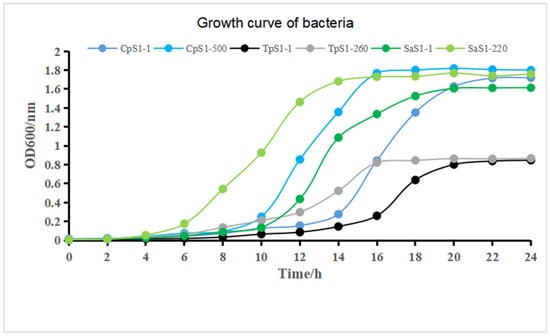
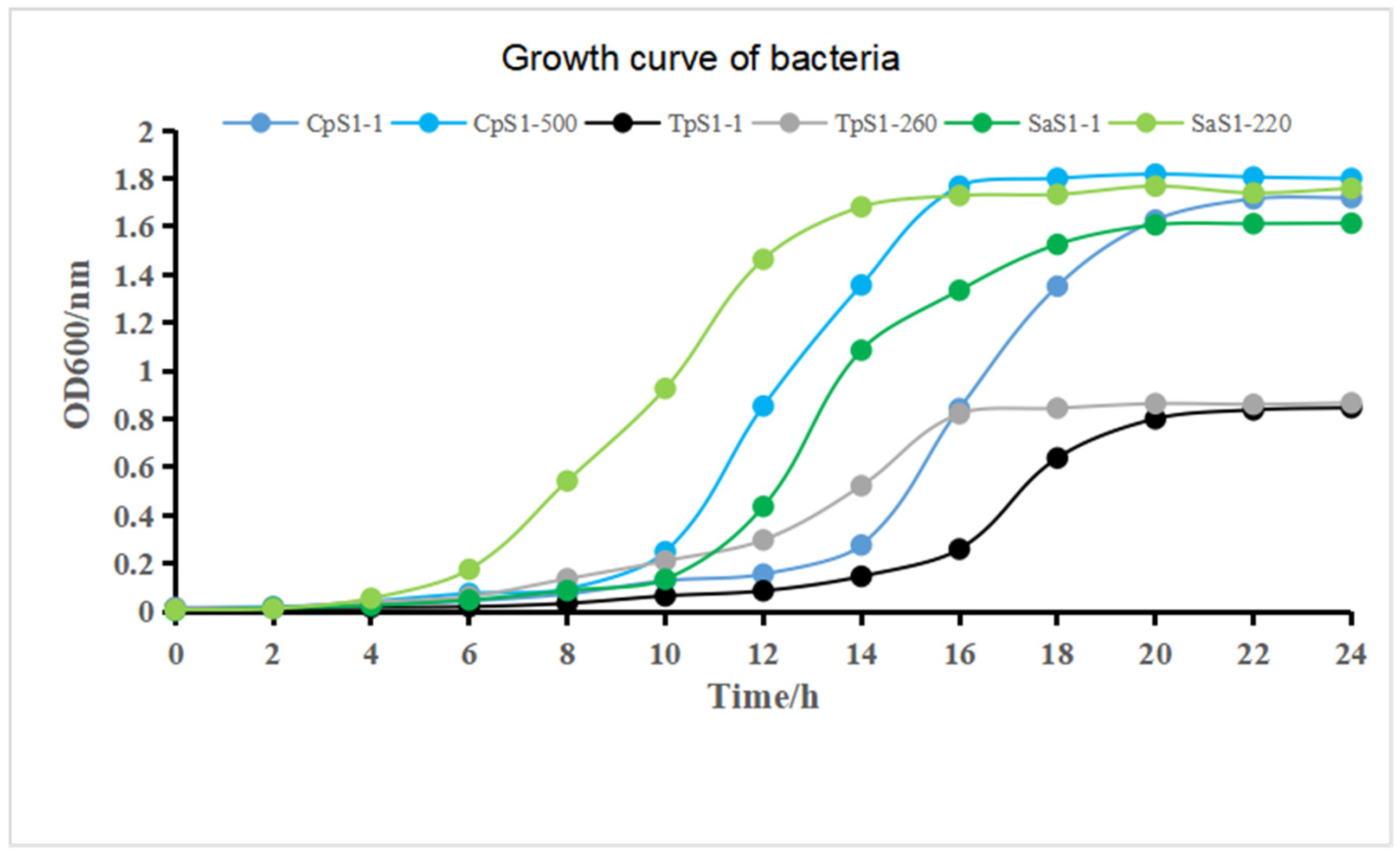
Growth curve analysis revealed that all three passaged strains exhibited accelerated growth compared to their parental counterparts (Figure 1). CpS1-500 entered logarithmic phase approximately 10 h post-inoculation compared to 14 h for CpS1-1, reaching stationary phase by 16 h versus 22 h. Similarly, TpS1-260 and SaS9-220 entered logarithmic phase earlier (12 h and 6 h, respectively) than their primary strains (16 h and 8 h, respectively). These results indicate that serial passage enhanced the in vitro growth rate of all three bacterial species.
Figure 1.
Growth curves of primary and serially passaged strains in BHI broth supplemented with 5% bovine serum. Optical density at 600 nm was recorded every 2 h for 24 h.
3.3. LD50 Determination in Mice
The LD50 values for the primary strains were determined as CpS1-1, 1.58 × 10⁸ CFU; TpS1-1, 1.93 × 10¹⁰ CFU; and SaS9-1, 8.97 × 10¹⁰ CFU (Table 3). When passaged strains were administered at 100× LD100 of their respective primary strains, no mortality was observed in any group over 14 days, confirming the substantial reduction in lethal virulence.
Table 3.
Determination of the median lethal dose (LD50) of primary strains in mice after intraperitoneal injection.
3.4. Pathogenicity of Primary and Passaged Strains in Goats
3.4.1. Body Temperature
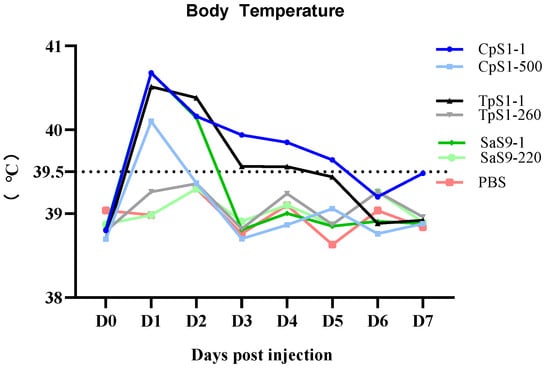
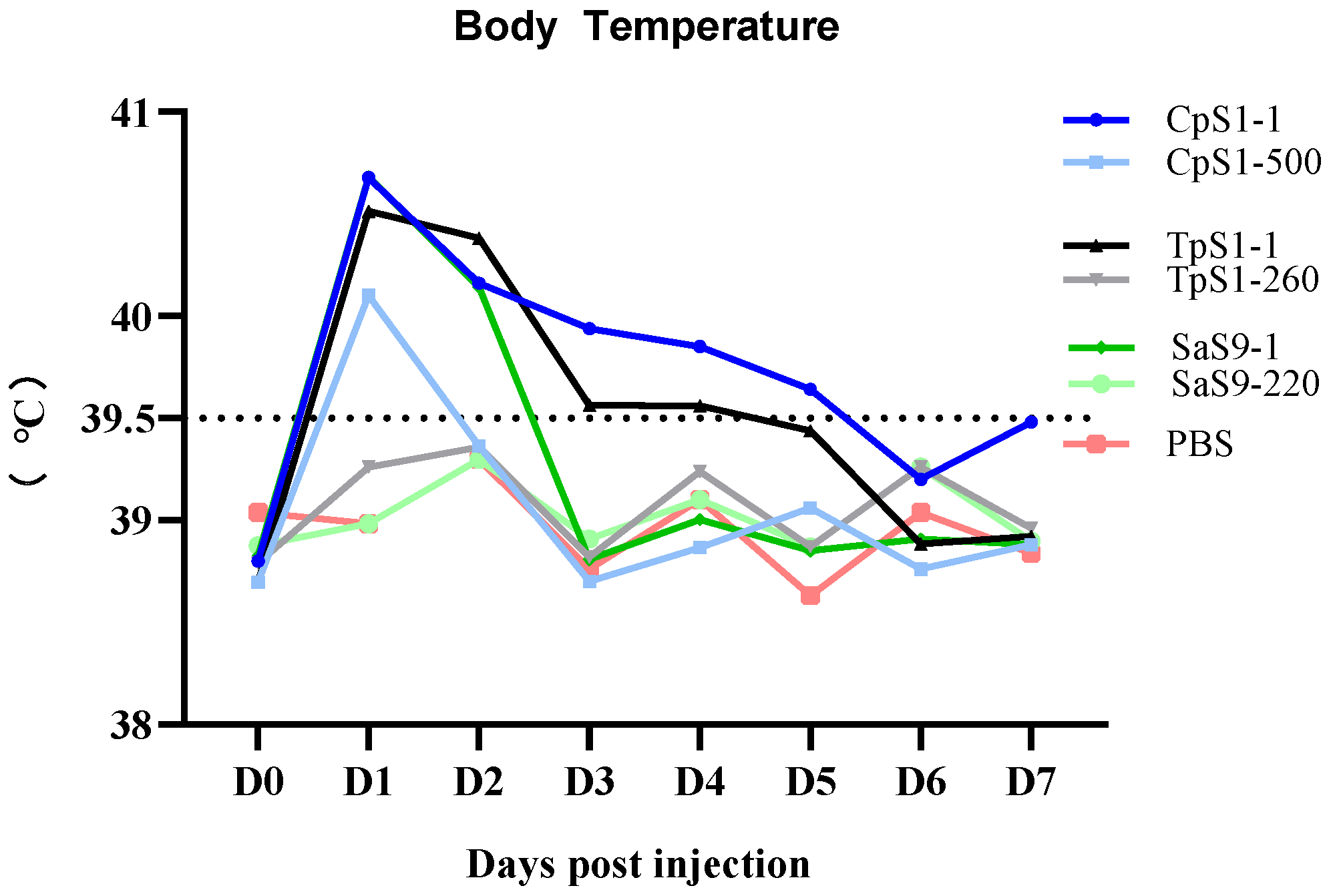
Primary strains CpS1-1, TpS1-1, and SaS9-1 induced significant pyrexia (>39.5 °C) lasting 6, 4, and 2 days, respectively. In contrast, passaged strains CpS1-500, TpS1-260, and SaS9-220 caused minimal temperature elevation, with only CpS1-500 inducing a transient fever (>40 °C) on day 1 that returned to normal by day 2 (Figure 2).
Figure 2.
Rectal temperature changes in goats during the first 7 days after subcutaneous inoculation with primary or passaged strains. Data are shown as mean ± SD.
3.4.2. Body Weight
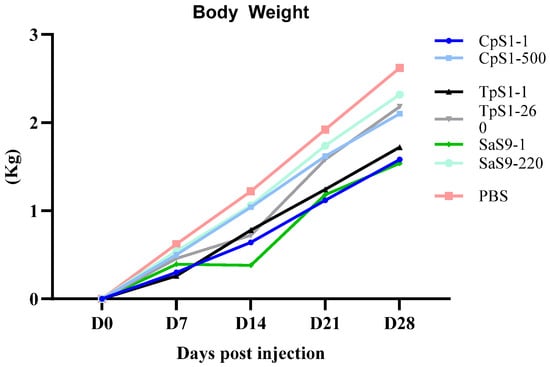
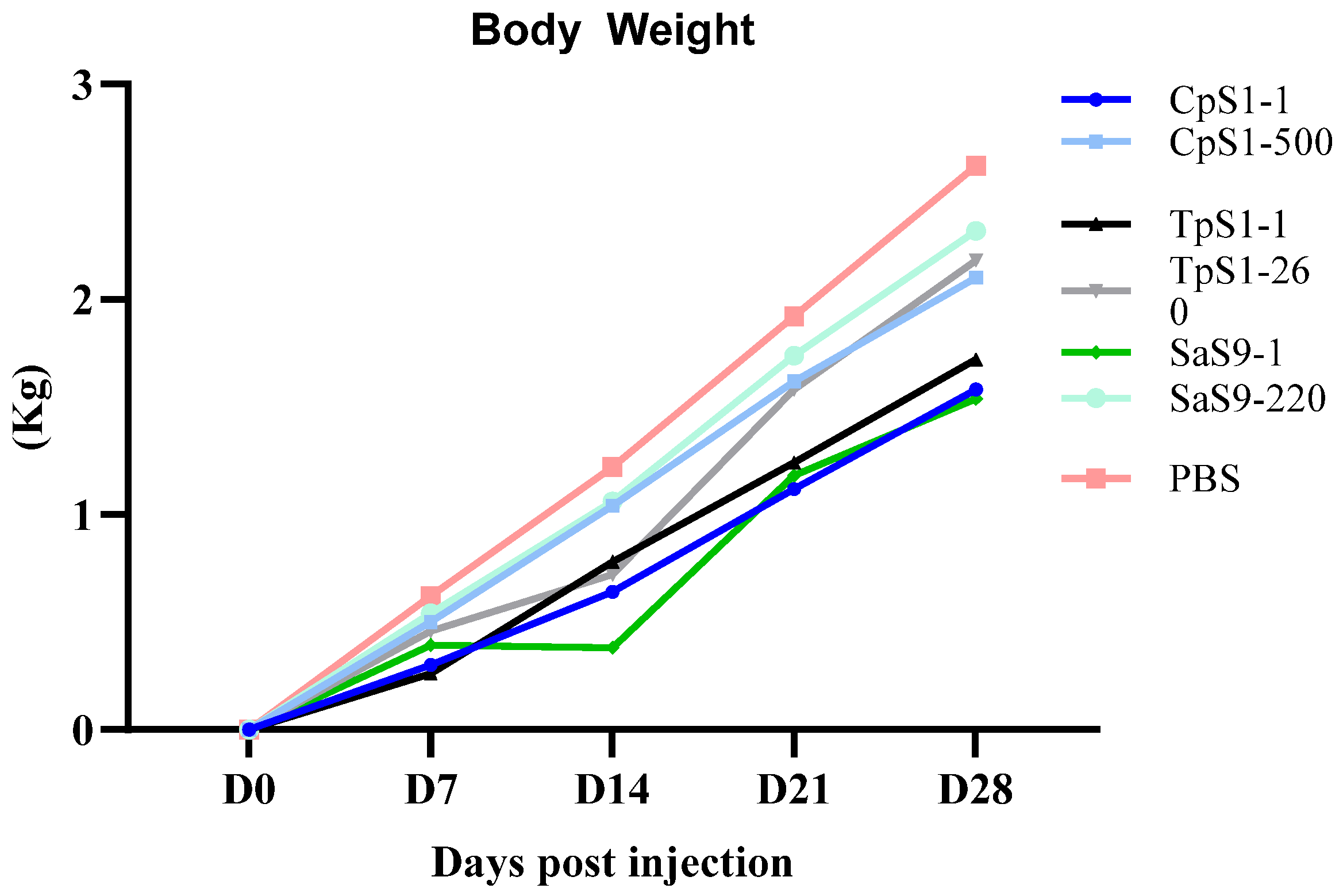
Over the 28-day observation period, goats inoculated with primary strains showed significantly reduced average daily weight gain compared to PBS controls. Goats receiving passaged strains exhibited initial growth retardation during the first 14 days but subsequently recovered to weight gain levels comparable to controls, indicating that attenuation reduced the negative impact on growth performance (Figure 3).
Figure 3.
Body weight changes in goats over a 28-day period after inoculation with primary or passaged strains.
3.4.3. Abscess Formation and Mortality
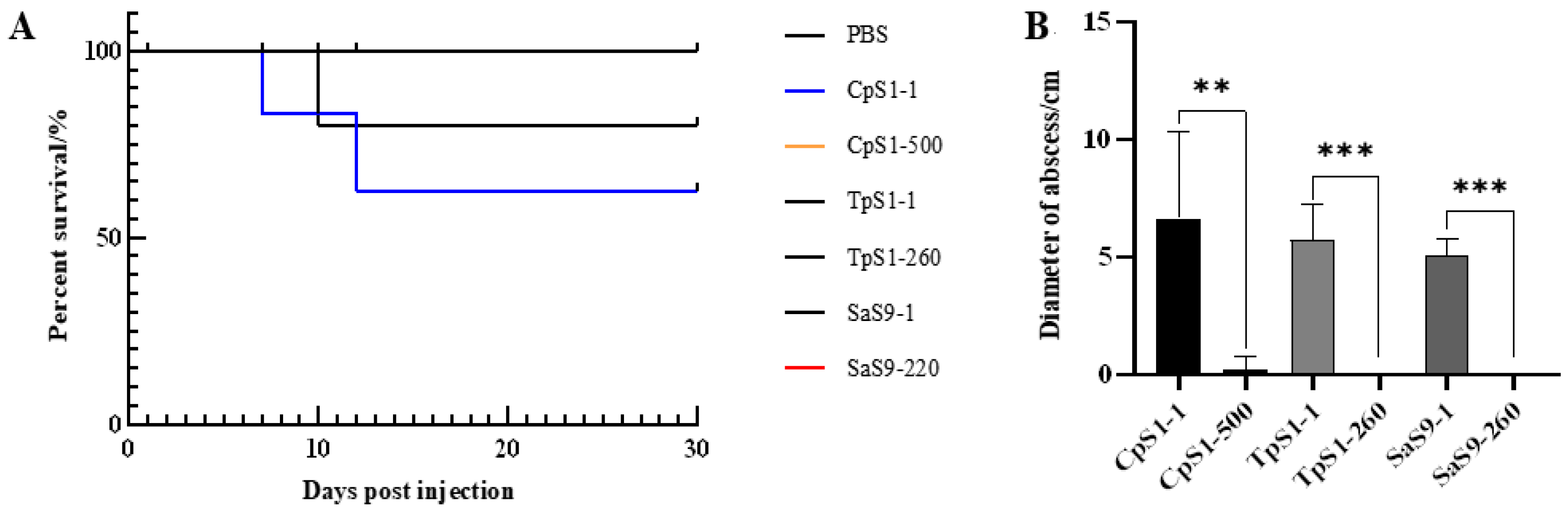
In all groups, abscesses were exclusively localized at the injection site in the neck region. No additional superficial abscesses were observed at other anatomical sites throughout the 30-day observation period. Each affected goat developed a single abscess at the injection site. Representative photographs of abscesses at the injection site in goats inoculated with the strains are shown in Figures S1–S6 (Supplementary Materials). Primary strains CpS1-1, TpS1-1, and SaS9-1 caused 100% (6/6) abscess formation in inoculated goats, with mortality rates of 33.3% (2/6), 16.7% (1/6), and 0%, respectively. In contrast, CpS1-500 caused only 16.7% (1/6) abscess formation with no mortality, while TpS1-260 and SaS9-220 caused no abscess formation or mortality (Figure 4A). Maximum abscess diameters were significantly smaller in the CpS1-500 group compared to the CpS1-1 group (p < 0.01) (Figure 4B). For goats inoculated with the primary strains, the mean maximum abscess diameters were 6.71 ± 3.02 cm (range: 2.15–10.57 cm) in the CpS1-1 group, 5.79 ± 0.94 cm (range: 3.22–7.16 cm) in the TpS1-1 group, and 5.09 ± 0.68 cm (range: 4.33–5.96 cm) in the SaS9-1 group (Table 4). In the CpS1-500 group, only one goat developed an abscess at the injection site, with a maximum diameter of 1.12 cm. No abscesses developed at the injection site or elsewhere in goats inoculated with TpS1-260 or SaS9-220.
Table 4.
Clinical outcomes in goats after subcutaneous inoculation with primary or passaged strains: abscess development, mortality, and maximum abscess diameter. * Values marked with asterisks indicate abscess diameter at time of death.
Figure 4.
Survival curve (A) and comparison of abscess diameter (B) in experimental goats. **: p < 0.01; ***: p < 0.001.
3.5. Immune Responses to Primary and Passaged Strains in Goats
3.5.1. Humoral Immune Responses
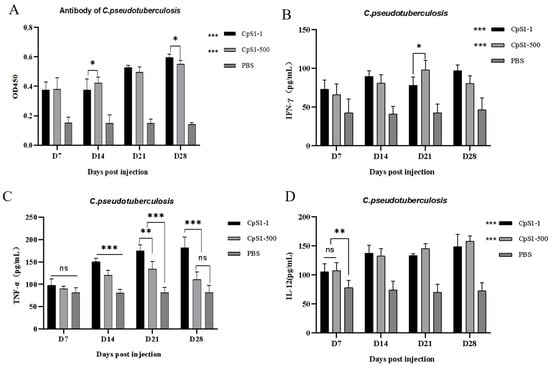
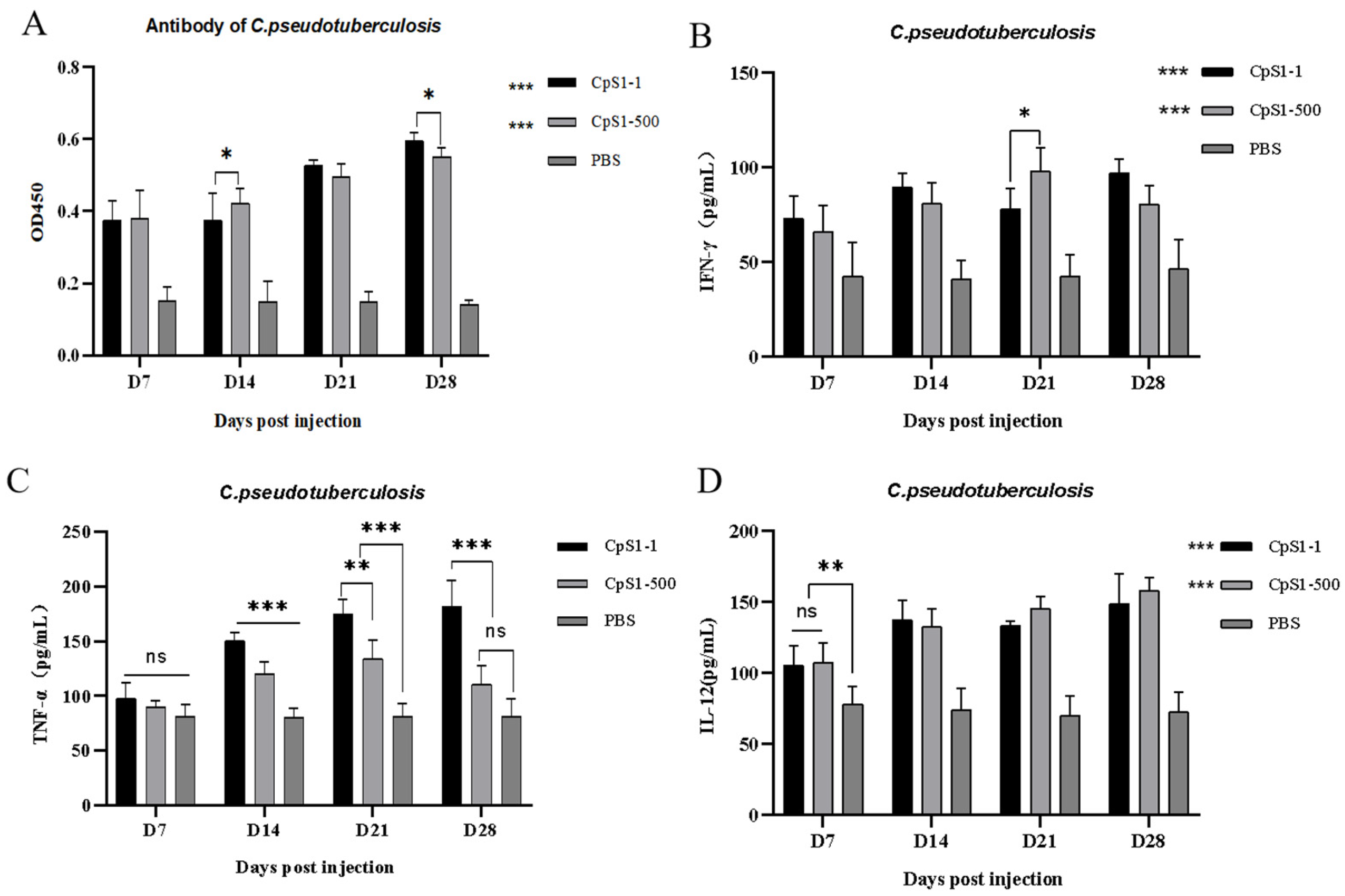
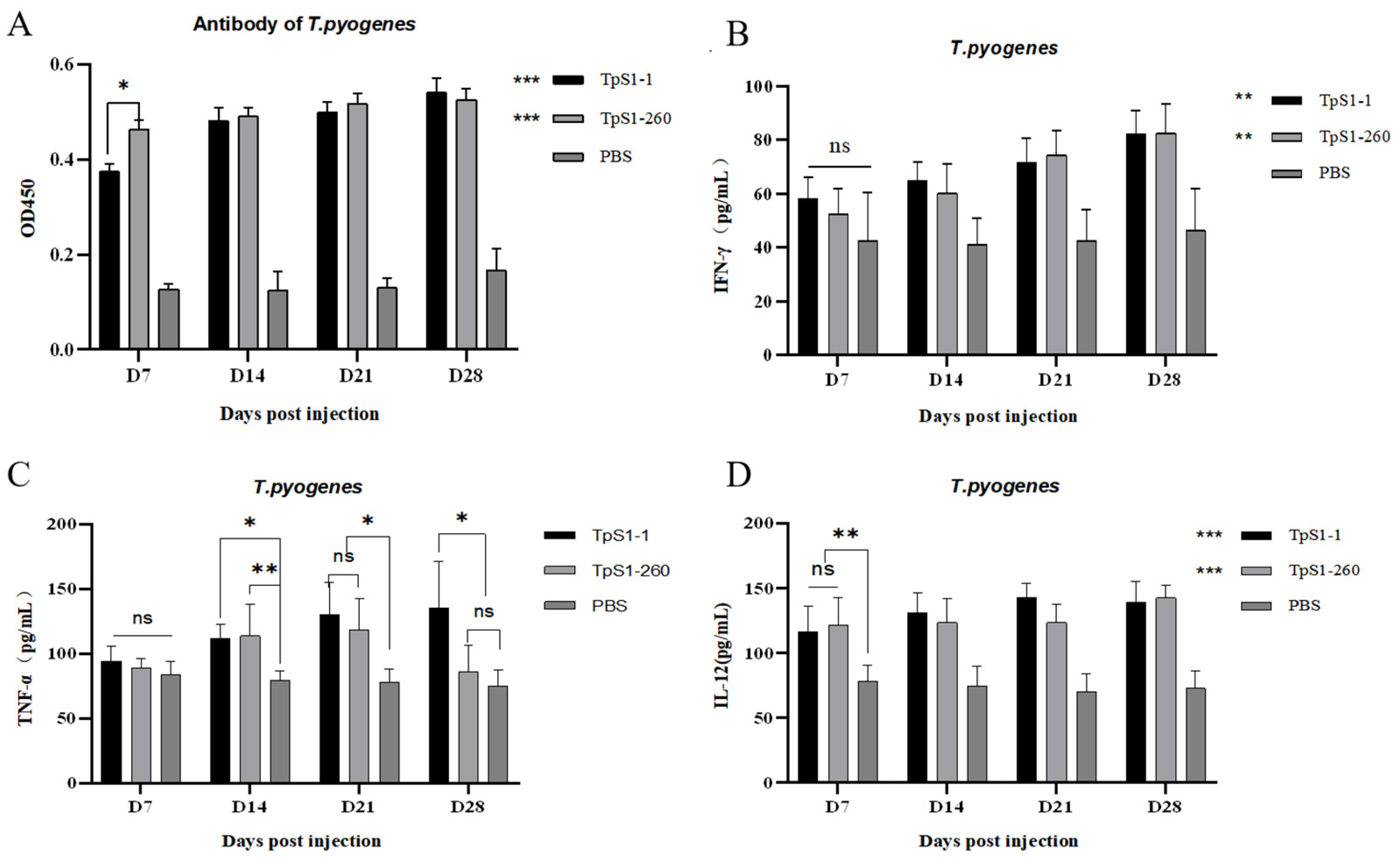
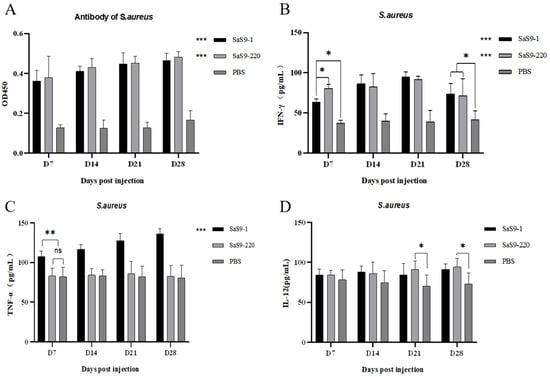
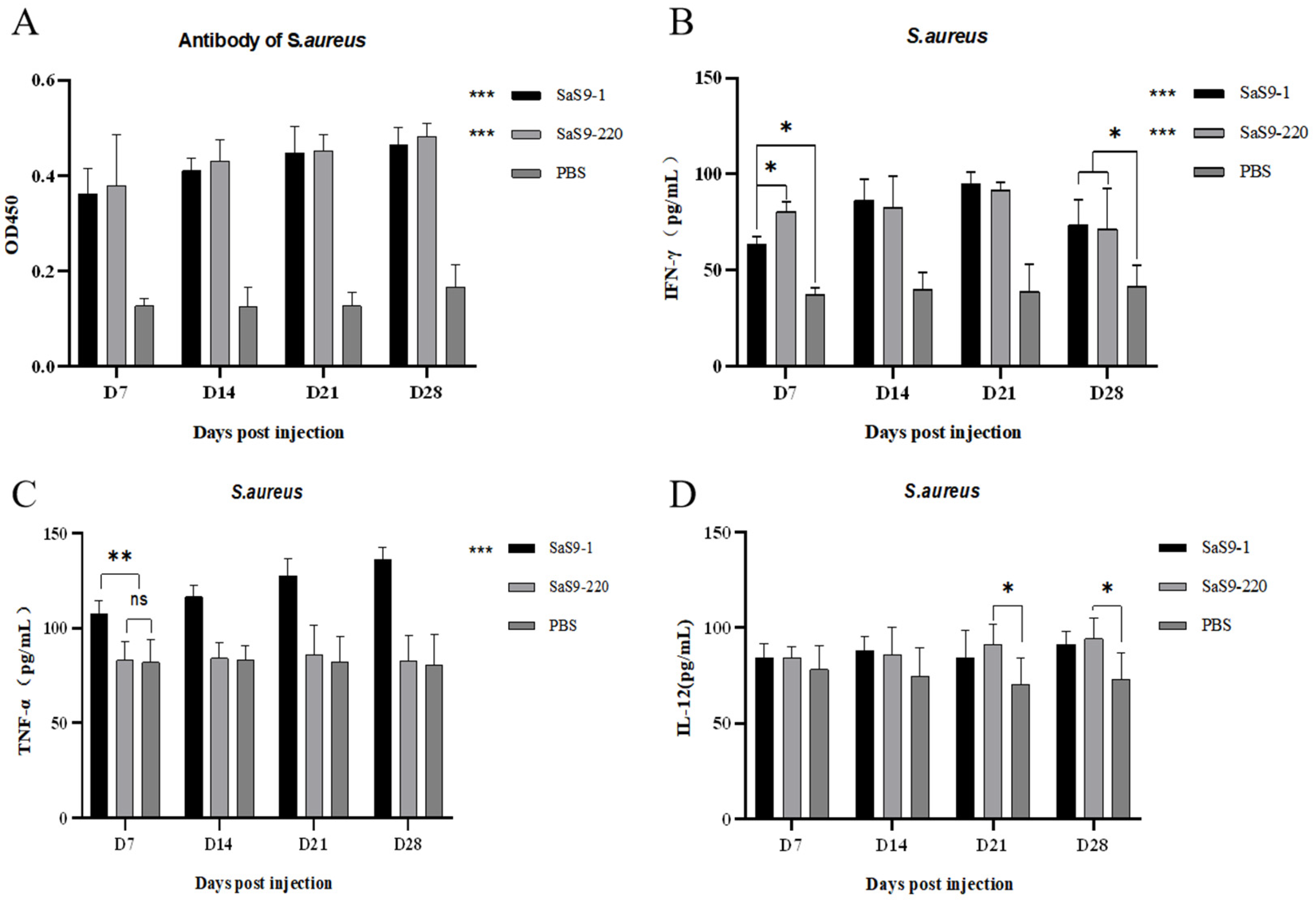
All three passaged strains induced significant specific antibody responses comparable to their primary counterparts (Figure 5A, Figure 6A and Figure 7A). For C. pseudotuberculosis, both CpS1-1 and CpS1-500 groups showed significantly elevated antibody levels compared to controls at all time points (p < 0.001). Interestingly, at day 14, the CpS1-500 group exhibited significantly higher antibody levels than the CpS1-1 group, though this trend reversed by day 28. For T. pyogenes and S. aureus, no significant differences in antibody levels were observed between primary and passaged strain groups at most time points (p > 0.05), indicating that serial passage did not compromise the immunogenicity of these strains.
Figure 5.
Immune responses of experimental goats to different strains of C. pseudotuberculosis. Antibody (A); IFN-γ (B); TNF-α (C); IL-12 (D); ns: p > 0.05; *: p < 0.05; **: p < 0.01; ***: p < 0.001.
Figure 6.
Immune responses of experimental goats to different strains of T. pyogenes. Antibody (A); IFN-γ (B); TNF-α (C); IL-12 (D); ns: p > 0.05; *: p < 0.05; **: p < 0.01; ***: p < 0.001.
Figure 7.
Immune responses of experimental goats to different strains of S. aureus. Antibody (A); IFN-γ (B); TNF-α (C); IL-12 (D); ns: p > 0.05; *: p < 0.05; **: p < 0.01; ***: p < 0.001.
3.5.2. Cell-Mediated Immune Responses
IFN-γ levels were significantly elevated in all primary and passaged strain groups compared to controls (p < 0.001) (Figure 5B, Figure 6B and Figure 7B). No significant differences in IFN-γ production were observed between primary and passaged strain groups for C. pseudotuberculosis (except day 21) and T. pyogenes, indicating that the ability to induce Th1-type responses was preserved after attenuation.
TNF-α production showed distinct patterns among the three pathogens (Figure 5C, Figure 6C and Figure 7C). For CpS1-500, TNF-α levels were significantly lower than CpS1-1 at days 14 and 28 (p < 0.001), suggesting reduced inflammatory tissue damage. For TpS1-260, TNF-α levels were comparable to TpS1-1 at early time points but returned to control levels by day 28. For SaS9-220, TNF-α levels remained at control levels throughout the observation period, significantly lower than SaS9-1.
IL-12 production was significantly elevated in all immunized groups compared to controls, with no significant differences between primary and passaged strain groups for any of the three pathogens (Figure 5D, Figure 6D and Figure 7D), indicating that the intracellular lifestyle and ability to stimulate Th1 differentiation were maintained after attenuation.
3.6. Protective Efficacy of Passaged Strains
Challenge experiments demonstrated that immunization with passaged strains conferred significant protection against virulent challenge (Table 5). CpS1-500-immunized goats showed 83.3% (5/6) protection against CpS1-1 challenge, with only one goat developing an abscess (maximum diameter 2.4 cm) that matured and ruptured on day 6 post-challenge. TpS1-260 and SaS9-220 provided complete protection (100%, 6/6) against their respective virulent strains, with no abscess formation or mortality observed.
Table 5.
Protective efficacy of immunization with passaged strains against homologous virulent challenge in goats: morbidity, mortality, and protection rate.
4. Discussion
Serial passage in vitro has long been recognized as a practical approach for generating live attenuated vaccines, with BCG representing the most successful and enduring example [18,19,31]. The BCG vaccine was derived through 230 serial passages of a virulent M. bovis isolate over 13 years, resulting in cumulative mutations that progressively reduced virulence while preserving immunogenicity [32,33]. Similarly, the Brucella suis vaccine strain S2 was obtained by serial transfer and has been used extensively in China since 1971 [21,22]. In the present study, we applied this classical approach to generate attenuated derivatives of the three major CLA-associated pathogens—C. pseudotuberculosis, T. pyogenes, and S. aureus—and comprehensively evaluated their potential as live vaccine candidates.
The attenuation achieved through serial passage was substantial for all three species. CpS1-500, TpS1-260, and SaS9-220 all exhibited markedly reduced pathogenicity in both mice and goats compared to their parental strains. Notably, the number of passages required for effective attenuation differed among the three species: 500 passages for C. pseudotuberculosis versus 260 and 220 passages for T. pyogenes and S. aureus, respectively. This differential rate of attenuation likely reflects species-specific differences in genomic plasticity, mutation rates, and the genetic basis of virulence. C. pseudotuberculosis, being a facultative intracellular pathogen with multiple virulence determinants including PLD, mycolic acid, and iron-regulated factors [34,35], may require more extensive genetic changes to achieve comparable attenuation. This observation is consistent with the finding that aroQ mutants of C. pseudotuberculosis may be overly attenuated for use as vaccines [23,24], suggesting a delicate balance between sufficient attenuation and retained immunogenicity for this pathogen.
At the molecular level, the differential attenuation thresholds likely reflect the number and functional redundancy of virulence determinants carried by each species. In C. pseudotuberculosis, phospholipase D (PLD), mycolic acids, and iron-regulated factors act in concert to promote intracellular survival and dissemination; serial passage on artificial media, which lacks host-derived selective pressures, may favor the stepwise silencing of these determinants [34,35]. In T. pyogenes, pyolysin (PLO) is the dominant cholesterol-dependent cytolysin responsible for tissue necrosis and abscess formation; the complete loss of abscess-inducing ability in TpS1-260 suggests that PLO expression or secretion was functionally abrogated during passage [36]. In S. aureus, the accessory gene regulator (agr) quorum-sensing system controls the expression of α-hemolysin, leukocidins, and other exotoxins; repeated subculture in nutrient-rich medium is known to select for agr-defective variants with markedly reduced toxin production and virulence, which is consistent with the attenuated phenotype of SaS9-220 [37,38].
The growth curve analysis revealed that all three passaged strains exhibited accelerated in vitro growth compared to their parental counterparts. This phenomenon has been observed in other serially passaged pathogens and may reflect adaptation to laboratory culture conditions, including loss of virulence-associated genes that are costly to maintain [37]. The enhanced growth rate may also contribute to the safety profile of these strains, as rapid in vitro growth does not necessarily correlate with in vivo fitness [38].
The immune response analysis demonstrated that all three passaged strains retained robust immunogenicity despite attenuation. Both humoral and cell-mediated immune responses were induced at levels comparable to or only slightly reduced from the primary strains. This is particularly important for C. pseudotuberculosis, where cell-mediated immunity, particularly IFN-γ production, plays a critical role in protection [14,15,39]. Our finding that CpS1-500 induced IFN-γ levels comparable to CpS1-1 suggests that the attenuated strain retains the ability to stimulate Th1-type responses, which is essential for controlling intracellular infection [40,41]. This is consistent with previous reports that live attenuated C. pseudotuberculosis strains elicit protective immune responses associated with IFN-γ production [25,26].
The differential TNF-α responses between primary and passaged strains are noteworthy. TNF-α is a pro-inflammatory cytokine involved in granuloma formation and tissue necrosis [42]. The significantly lower TNF-α levels observed in goats receiving passaged strains, particularly CpS1-500 and SaS9-220, suggest reduced inflammatory tissue damage, which may contribute to the improved safety profile of these vaccine candidates. This is consistent with the reduced abscess sizes and absence of mortality observed in these groups.
IL-12, a key cytokine for Th1 differentiation and control of intracellular pathogens [43,44], was induced at comparable levels by both primary and passaged strains across all three species. This indicates that the attenuated strains maintain the ability to stimulate protective cell-mediated immune responses, which is crucial for vaccine efficacy against facultative intracellular pathogens like C. pseudotuberculosis.
The challenge protection results are particularly encouraging. CpS1-500 provided 83.3% protection against virulent C. pseudotuberculosis challenge, while TpS1-260 and SaS9-220 provided complete protection (100%). These protection rates compare favorably with those reported for other live attenuated C. pseudotuberculosis vaccines. For instance, Hodgson et al. reported that the PLD-negative Toxminus strain, when used as a live vaccine, elicited protective immunity in sheep [25,26]. Simmons et al. found that aroQ mutants failed to protect sheep from infection but did reduce clinical severity [23,24]. The superior protection conferred by TpS1-260 and SaS9-220 may reflect the predominantly extracellular lifestyle of these pathogens, against which antibody-mediated immunity may be more effective [36,45].
The successful attenuation of all three pathogens through serial passage, combined with their retained immunogenicity and protective efficacy, suggests that a multivalent live vaccine incorporating CpS1-500, TpS1-260, and SaS9-220 could be developed for comprehensive CLA prevention. Such a vaccine would address the polymicrobial etiology of CLA [6,7,8] and potentially offer superior protection compared to monovalent vaccines targeting only C. pseudotuberculosis. The safety profile of the passaged strains—minimal pyrexia, reduced growth retardation, and absence of mortality—supports their potential for field application.
Several limitations of this study should be acknowledged. First, the genetic basis of attenuation in the passaged strains remains to be elucidated. Whole-genome sequencing and comparative genomic analysis would help identify the specific mutations responsible for reduced virulence and may inform future rational vaccine design [46]. Second, the duration of protective immunity and the optimal immunization schedule require further investigation. The efficacy of combining the three attenuated strains into a single multivalent formulation needs to be evaluated, as potential interference between vaccine components could occur. Third, challenge experiments in this study used only homologous parental strains; cross-protection against heterologous isolates from different geographical regions or different host species remains to be determined. Fourth, all animal experiments were conducted only in goats, which represent a single host system. Given that ovine caseous lymphadenitis differs from the caprine form in lesion distribution, immune response dynamics, and production-system context, the safety, immunogenicity, and protective efficacy of the passaged strains must be further validated in sheep under field conditions before any practical application. Finally, in sheep and goats, CLA can manifest as a visceral form characterized by abscesses in the lungs, liver, kidneys, spleen, and thoracic or abdominal lymph nodes, in addition to the more readily detectable superficial form [47,48,49]. Internal abscesses are typically not visible externally and can only be definitively detected through post-mortem examination [49,50,51]. In the present study, the reasons for observing animals for 30 days post-inoculation without performing necropsy were (1) the experimental design required prolonged observation of the animals to monitor whether delayed abscess formation would occur at the injection site; (2) it was necessary to evaluate the duration of protective immunity and to monitor antibody responses over time, which required the animals to remain alive throughout the study; and (3) during the entire experimental period, all animals were monitored daily for clinical signs, including rectal temperature and general condition, and no abnormalities suggestive of systemic infection or visceral involvement were observed. However, this approach precluded the detection of potential visceral lesions. Given that the internal form of CLA is more common in sheep and that visceral involvement is a major contributor to mortality and carcass condemnation [47,48], future studies should incorporate necropsy at defined endpoints to comprehensively evaluate the protective efficacy of the attenuated vaccine candidates against both superficial and visceral CLA. This would also enable histopathological confirmation of the nature and severity of any internal lesions, as has been performed in previous CLA pathogenesis studies [52].
In conclusion, this study demonstrates that serial subculturing is an effective approach for generating live attenuated vaccine candidates against the three major CLA-associated pathogens. The passaged strains CpS1-500, TpS1-260, and SaS9-220 exhibit substantially reduced virulence while retaining robust immunogenicity and conferring significant protection against virulent challenge. These findings provide a foundation for the development of a multivalent live vaccine for the prevention of CLA, addressing a critical gap in the control of this economically important disease.
5. Conclusions
In conclusion, this study demonstrates that continuous serial subculturing is an effective approach for generating live attenuated vaccine candidates against the three major CLA-associated pathogens. The passaged strains—CpS1-500, TpS1-260, and SaS9-220—exhibited substantially reduced pathogenicity in both mice and goats while retaining robust immunogenicity, inducing both humoral and cell-mediated immune responses comparable to those elicited by their parental strains. Notably, immunization with CpS1-500, TpS1-260, and SaS9-220 conferred 83.3%, 100%, and 100% protection, respectively, against virulent challenge in goats, highlighting their strong potential as safe and effective live vaccine candidates for the prevention of ovine caseous lymphadenitis.
Supplementary Materials
The following supporting information can be downloaded at: https://www.mdpi.com/article/10.3390/vetsci13100996/s1, Figure S1: Representative photographs of abscesses at the injection site in goats inoculated with the CpS1-1; Figure S2: Representative photographs of abscesses at the injection site in goats inoculated with the CpS1-500; Figure S3: Representative photographs of abscesses at the injection site in goats inoculated with the TpS1-1; Figure S4: Representative photographs of abscesses at the injection site in goats inoculated with the TpS1-260; Figure S5: Representative photographs of abscesses at the injection site in goats inoculated with the SaS9-1; Figure S6: Representative photographs of abscesses at the injection site in goats inoculated with the SaS9-220; Table S1: Pathogenicity test results of different passage strains in mice.
Author Contributions
Conceptualization, Z.Y. and Y.J.; methodology, B.W.; software, Y.W.; validation, B.W., Y.W. and X.Q.; formal analysis, B.W.; investigation, B.W.; resources, B.W.; data curation, B.W.; writing—original draft preparation, B.W.; writing—review and editing, B.W. and X.B.; visualization, B.W.; supervision, Z.Y.; project administration, B.W.; funding acquisition, Z.Y. All authors have read and agreed to the published version of the manuscript.
Funding
This research was funded by Key Scientific Research Program of Shaanxi Provincial Department of Education (No. 24JR171, 24JR170), Internal Scientific Research Fund Project of Shaanxi A&F Technology University (SJ2023-001, GZ2025-03).
Institutional Review Board Statement
The animal study protocol was approved by the Northwest A&F University Laboratory Animal Ethics Committee (protocol code DY2022-05-016 and date of approval 16 May 2022).
Data Availability Statement
The original contributions presented in this study are included in the article/Supplementary Material. Further inquiries can be directed to the corresponding authors.
Conflicts of Interest
The authors declare no conflicts of interest.
References
- Baird, G.J.; Fontaine, M.C. Corynebacterium pseudotuberculosis and its role in ovine caseous lymphadenitis. J. Comp. Pathol. 2007, 137, 179–210. [Google Scholar] [CrossRef] [Scilit]
- Oliveira, M.; Barroco, C.; Mottola, C.; Santos, R.; Lemsaddek, A.; Tavares, L.; Semedo-Lemsaddek, T. First report of Corynebacterium pseudotuberculosis from caseous lymphadenitis lesions in Black Alentejano pig (Sus scrofa domesticus). BMC Vet. Res. 2014, 10, 218. [Google Scholar] [CrossRef] [Scilit]
- Paton, M.W.; Mercy, A.R.; Wilkinson, F.C.; Gardner, J.J.; Ellis, T.M. The effects of caseous lymphadenitis on wool production and bodyweight in young sheep. Aust. Vet. J. 2010, 65, 117–119. [Google Scholar]
- Rizvi, S.; Green, L.E.; Glover, M.J. Caseous lymphadenitis: An increasing cause for concern. Vet. Rec. 1997, 140, 586–587. [Google Scholar]
- Stanford, K.; Brogden, K.A.; McClelland, L.A.; Kozub, G.C.; Audibert, F. The incidence of caseous lymphadenitis in Alberta sheep and assessment of impact by vaccination with commercial and experimental vaccines. Can. J. Vet. Res. 1998, 62, 38–43. [Google Scholar]
- de la Fuente, R.; de las Heras, M.; Torrijos, C.; de Tejada, P.D.; Pérez-Sancho, M.; Carrión, F.J.; Orden, J.A.; Dominguez-Bernal, G. Short communication: Isolation frequency of bacteria causing lymphadenitis and abscesses in small ruminants in central Spain. Small Rumin. Res. 2017, 154, 5–8. [Google Scholar] [CrossRef] [Scilit]
- Yitagesu, E.; Alemnew, E.; Olani, A.; Asfaw, T.; Demis, C. Survival Analysis of Clinical Cases of Caseous Lymphadenitis of Goats in North Shoa, Ethiopia. Vet. Med. Int. 2020, 74, 329–332. [Google Scholar]
- Wang, B.; Wei, Y.C.; Bai, X.D.; Wang, C.X.; Feng, H.; Yang, Z.Q. Investigation and analysis of pathogenic bacteria in caseous lymphadenitis-like abscesses of goats and sheep in parts of Shaanxi and Gansu Provinces. Chin. J. Vet. Sci. 2022, 42, 2427–2433. [Google Scholar]
- Heggelund, L.; Gaustad, P.; Håvelsrud, O.E.; Blom, J.; Borgen, L.; Sundset, A.; Sørum, H.; Frøland, S.S. Corynebacterium pseudotuberculosis Pneumonia in a Veterinary Student Infected During Laboratory Work. In Open Forum Infectious Diseases; Oxford University Press: Oxford, UK, 2015; Volume 2. [Google Scholar]
- Rzewuska, M.; Kwiecień, E.; Chrobak-Chmiel, D.; Kizerwetter-Świda, M.; Stefańska, I.; Gieryńska, M. Pathogenicity and Virulence of Trueperella pyogenes: A Review. Int. J. Mol. Sci. 2019, 20, 2737. [Google Scholar] [CrossRef] [Scilit]
- Alkuraythi, D.M.; Alkhulaifi, M.M. Methicillin-resistant Staphylococcus aureus prevalence in food-producing animals and food products in Saudi Arabia: A review. Vet. World 2024, 17, 1753–1764. [Google Scholar] [CrossRef] [Scilit]
- De Pinho, R.B.; de Oliveira Silva, M.T.; Bezerra, F.S.B.; Borsuk, S. Vaccines for caseous lymphadenitis: Up-to-date and forward-looking strategies. Appl. Microbiol. Biotechnol. 2021, 105, 2287–2296. [Google Scholar] [CrossRef] [Scilit]
- Brogden, K.A.; Cutlip, R.C.; Lehmkuhl, H.D. Immunogenicity of Corynebacterium pseudotuberculosis and the effect of adjuvants in mice. J. Comp. Pathol. 1985, 95, 167–173. [Google Scholar] [CrossRef] [Scilit]
- Moura-Costa, L.; Bahia, R.; Carminati, R.; Vale, V.; Paule, B.; Portela, R.; Freire, S.; Nascimento, I.; Schaer, R.; Barreto, L.; et al. Evaluation of the humoral and cellular immune response to different antigens of Corynebacterium pseudotuberculosis in Canindé goats and their potential protection against caseous lymphadenitis. Vet. Immunol. Immunopathol. 2008, 126, 131–141. [Google Scholar] [CrossRef] [Scilit]
- Vale, V.L.C.; Silva, M.D.C.; de Souza, A.P.; Trindade, S.C.; de Moura-Costa, L.F.; dos Santos-Lima, E.K.N.; de Oliveira Nascimento, I.L.; Cardoso, H.S.P.; de Jesus Marques, E.; Paule, B.J.A.; et al. Humoral and cellular immune responses in mice against secreted and somatic antigens from a Corynebacterium pseudotuberculosis attenuated strain. BMC Vet. Res. 2016, 12, 195. [Google Scholar] [CrossRef] [Scilit]
- Garg, D.N.; Chandiramani, N.K. Cellular and humoral immune responses in sheep experimentally injected with killed and live Corynebacterium pseudotuberculosis. Zentralblatt Bakteriol. Mikrobiol. Hyg. Ser. A 1985, 260, 117–125. [Google Scholar] [CrossRef] [Scilit]
- El-Enbaawy, M.I.; Saad, M.M.; Selim, S.A. Humoral and cellular immune responses of a murine model against Corynebacterium pseudotuberculosis antigens. Egypt. J. Immunol. 2005, 12, 13–19. [Google Scholar]
- Calmette, A. La vaccination préventive contre la tuberculose par le “BCG”. Ann. Inst. Pasteur. 1927, 41, 201–232. [Google Scholar]
- Pym, A.S.; Brodin, P.; Brosch, R.; Huerre, M.; Cole, S.T. Loss of RD1 contributed to the attenuation of the live tuberculosis vaccines Mycobacterium bovis BCG and Mycobacterium microti. Mol. Microbiol. 2002, 46, 709–717. [Google Scholar] [CrossRef] [Scilit]
- World Health Organization. BCG vaccine: WHO position paper. Wkly. Epidemiol. Rec. 2018, 93, 73–96. [Google Scholar]
- Di, D.-D.; Jiang, H.; Tian, L.-L.; Kang, J.-L.; Zhang, W.; Yi, X.-P.; Ye, F.; Zhong, Q.; Ni, B.; He, Y.-Y.; et al. Comparative genomic analysis between newly sequenced Brucella suis vaccine strain S2 and the virulent Brucella suis strain 1330. BMC Genom. 2016, 17, 741. [Google Scholar] [CrossRef] [Scilit]
- Bosseray, N.; Plommet, M. Brucella vaccines. In Animal Brucellosis; CRC Press: Boca Raton, FL, USA, 1990; pp. 323–340. [Google Scholar]
- Simmons, C.P.; Hodgson, A.L.; Strugnell, R.A. Attenuation and vaccine potential of aroQ mutants of Corynebacterium pseudotuberculosis. Infect. Immun. 1997, 65, 3048–3056. [Google Scholar] [CrossRef] [Scilit]
- Simmons, C.P.; Dunstan, S.J.; Tachedjian, M.; Krywult, J.; Hodgson, A.L.M.; Strugnell, R.A. Vaccine potential of attenuated mutants of Corynebacterium pseudotuberculosis in sheep. Infect. Immun. 1998, 66, 474–479. [Google Scholar] [CrossRef] [Scilit]
- Hodgson, A.L.; Tachedjian, M.; Corner, L.A.; Radford, A.J. Protection of sheep against caseous lymphadenitis by use of a single oral dose of live recombinant Corynebacterium pseudotuberculosis. Infect. Immun. 1994, 62, 5275–5280. [Google Scholar] [CrossRef] [Scilit]
- Hodgson, A.L.; Krywult, J.; Corner, L.A.; Rothel, J.S.; Radford, A.J. Rational attenuation of Corynebacterium pseudotuberculosis: Potential cheesy gland vaccine and live delivery vehicle. Infect. Immun. 1992, 60, 2913–2919. [Google Scholar] [CrossRef] [Scilit]
- Beikzadeh, B.; Ashrafi Tamai, I.; Zahraei Salehi, T. Construction of live-attenuated Trueperella pyogenes by antibiotic treatment and sequential passage: Methods for vaccine development. Arch. Microbiol. 2023, 205, 147. [Google Scholar] [CrossRef] [Scilit]
- Côté-Gravel, J.; Brouillette, E.; Malouin, F. Vaccination with a live-attenuated small-colony variant improves the humoral and cell-mediated responses against Staphylococcus aureus. PLoS ONE 2019, 14, e0227109. [Google Scholar] [CrossRef] [Scilit]
- Tuchscherr, L.; Löffler, B.; Proctor, R.A. Persistence of Staphylococcus aureus: Multiple metabolic pathways impact the expression of virulence factors in small-colony variants (SCVs). Front. Microbiol. 2020, 11, 1028. [Google Scholar] [CrossRef] [Scilit]
- Wang, C.X. Establishment of Indirect ELISA for Detection of Antibodies Against Trueperella pyogenes and Its Preliminary Application. Master’s Thesis, Northwest A&F University, Xianyang, China, 2022. [Google Scholar]
- Oettinger, T.; Jørgensen, M.; Ladefoged, A.; Hasløv, K.; Andersen, P. Development of the Mycobacterium bovis BCG vaccine: Review of the historical and biochemical evidence for a genealogical tree. Tuber. Lung Dis. 1999, 79, 243–250. [Google Scholar] [CrossRef] [Scilit]
- Behr, M.A.; Wilson, M.A.; Gill, W.P.; Salamon, H.; Schoolnik, G.K.; Rane, S.; Small, P.M. Comparative genomics of BCG vaccines by whole-genome DNA microarray. Science 1999, 284, 1520–1523. [Google Scholar] [CrossRef] [Scilit]
- Mahairas, G.G.; Sabo, P.J.; Hickey, M.J.; Singh, D.C.; Stover, C.K. Molecular analysis of genetic differences between Mycobacterium bovis BCG and virulent M. bovis. J. Bacteriol. 1996, 178, 1274–1282. [Google Scholar] [CrossRef] [Scilit]
- Dorella, F.A.; Pacheco, L.G.; Oliveira, S.C.; Miyoshi, A.; Azevedo, V. Corynebacterium pseudotuberculosis: Microbiology, biochemical properties, pathogenesis and molecular studies of virulence. Vet. Res. 2006, 37, 201–218. [Google Scholar] [CrossRef] [Scilit]
- Aquino de Sá Mda, C.; Gouveia, G.V.; Krewer Cda, C.; Veschi, J.L.; de Mattos-Guaraldi, A.L.; da Costa, M.M. Distribution of PLD and FagA, B, C and D genes in Corynebacterium pseudotuberculosis isolates from sheep and goats with caseous lymphadenitis. Genet. Mol. Biol. 2013, 36, 265–268. [Google Scholar] [CrossRef] [Scilit]
- Jost, B.H.; Billington, S.J. Arcanobacterium pyogenes: Molecular pathogenesis of an animal opportunist. Antonie Van Leeuwenhoek 2005, 88, 87–102. [Google Scholar] [CrossRef] [Scilit]
- Somerville, G.A.; Proctor, R.A. At the crossroads of bacterial metabolism and virulence factor synthesis in Staphylococci. Microbiol. Mol. Biol. Rev. 2009, 73, 233–248. [Google Scholar] [CrossRef] [Scilit]
- Vesga, O.; Groeschel, M.C.; Otten, M.F.; Brar, D.W.; Vann, J.M.; Proctor, R.A. Staphylococcus aureus small colony variants are induced by the endothelial cell intracellular milieu. J. Infect. Dis. 1996, 173, 739–742. [Google Scholar] [CrossRef] [Scilit]
- de Souza, A.P.; Vale, V.L.C.; Silva, M.D.C.; de Oliveira Araújo, I.B.; Trindade, S.C.; Moura-Costa, L.F.D.; Rodrigues, G.C.; Sales, T.S.; Santos, H.A.D.; de Carvalho-Filho, P.C.; et al. MAPK involvement in cytokine production in response to Corynebacterium pseudotuberculosis infection. BMC Microbiol. 2014, 14, 230. [Google Scholar] [CrossRef] [Scilit]
- Trinchieri, G. Interleukin-12 and the regulation of innate resistance and adaptive immunity. Nat. Rev. Immunol. 2003, 3, 133–146. [Google Scholar] [CrossRef] [Scilit]
- Flynn, J.L.; Chan, J. Immunology of tuberculosis. Annu. Rev. Immunol. 2001, 19, 93–129. [Google Scholar] [CrossRef] [Scilit]
- Keane, J.; Gershon, S.; Wise, R.P.; Mirabile-Levens, E.; Kasznica, J.; Schwieterman, W.D.; Siegel, J.N.; Braun, M.M. Tuberculosis associated with infliximab, a tumor necrosis factor α-neutralizing agent. N. Engl. J. Med. 2001, 345, 1098–1104. [Google Scholar] [CrossRef] [Scilit]
- Trinchieri, G.; Pflanz, S.; Kastelein, R.A. The IL-12 family of heterodimeric cytokines: New players in the regulation of T cell responses. Immunity 2003, 19, 641–644. [Google Scholar]
- Fortune, S.M.; Solache, A.; Jaeger, A.; Hill, P.J.; Belisle, J.T.; Bloom, B.R.; Rubin, E.J.; Ernst, J.D. Mycobacterium tuberculosis inhibits macrophage responses to IFN-γ through myeloid differentiation factor 88-dependent and -independent mechanisms. J. Immunol. 2004, 172, 6272–6280. [Google Scholar] [CrossRef] [Scilit]
- Lowy, F.D. Staphylococcus aureus infections. N. Engl. J. Med. 1998, 339, 520–532. [Google Scholar] [CrossRef] [Scilit]
- Pacheco, L.G.C.; Castro, T.L.P.; Carvalho, R.D.; Moraes, P.M.; Dorella, F.A.; Carvalho, N.B.; Slade, S.E.; Scrivens, J.H.; Feelisch, M.; Meyer, R.; et al. A role for sigma factor σ(E) in Corynebacterium pseudotuberculosis resistance to nitric oxide/peroxide stress. Front. Microbiol. 2012, 3, 126. [Google Scholar] [CrossRef] [Scilit][Green Version]
- Sultana, N.; Khan, M.A.H.N.A.; Pervin, M.; Sultana, S.; Mostaree, M.; Tabassum, A.; Islam, M. Comprehensive pathological insights and molecular detection of caseous lymphadenitis caused by Corynebacterium pseudotuberculosis in slaughtered sheep, goats, and cattle. J. Adv. Vet. Anim. Res. 2026, 13, 351–360. [Google Scholar] [CrossRef] [Scilit]
- Won, H.; Nam, E.; Shim, Y.; Moon, J.Y.; Jung, B.Y.; Shin, M.K. Development of a bacterin-toxoid vaccine using a Korean isolate for protection against caseous lymphadenitis in goats. Vet. Res. 2026, 57, 22. [Google Scholar] [CrossRef] [Scilit]
- Markova, J.; Langova, D.; Babak, V.; Kostovova, I. Ovine and Caprine Strains of Corynebacterium pseudotuberculosis on Czech Farms-A Comparative Study. Microorganisms 2024, 12, 875. [Google Scholar] [CrossRef] [Scilit]
- Sultana, N.; Pervin, M.; Sultana, S.; Islam, M.; Mostaree, M.; Khan, M.A.H.N.A. Pathological study and molecular detection of zoonotic diseases in small ruminants at slaughterhouses in Mymensingh, Bangladesh. Vet. World 2022, 15, 2119–2130. [Google Scholar] [CrossRef] [Scilit]
- Torky, H.A.; Saad, H.M.; Khaliel, S.A.; Kassih, A.T.; Sabatier, J.M.; Batiha, G.E.; Hetta, H.F.; Elghazaly, E.M.; De Waard, M. Isolation and Molecular Characterization of Corynebacterium pseudotuberculosis: Association with Proinflammatory Cytokines in Caseous Lymphadenitis Pyogranulomas. Animals 2023, 13, 296. [Google Scholar] [CrossRef] [Scilit]
- El Damaty, H.M.; El-Demerdash, A.S.; Abd El-Aziz, N.K.; Yousef, S.G.; Hefny, A.A.; Abo Remela, E.M.; Shaker, A.; Elsohaby, I. Molecular Characterization and Antimicrobial Susceptibilities of Corynebacterium pseudotuberculosis Isolated from Caseous Lymphadenitis of Smallholder Sheep and Goats. Animals 2023, 13, 2337. [Google Scholar] [CrossRef] [Scilit]

Disclaimer/Publisher’s Note: The statements, opinions and data contained in all publications are solely those of the individual author(s) and contributor(s) and not of MDPI and/or the editor(s). MDPI and/or the editor(s) disclaim responsibility for any injury to people or property resulting from any ideas, methods, instructions or products referred to in the content. |
© 2026 by the authors. Licensee MDPI, Basel, Switzerland. This article is an open access article distributed under the terms and conditions of the Creative Commons Attribution (CC BY) license.