


Abstract
Oil recovery from carbonate reservoirs is one of the critical challenges in the oil industry due to the strongly oil-wet nature, natural fractures, and the heterogeneity of carbonate rocks. Subsequently, waterflooding can only displace oil from large fractures, leaving the majority of oil trapped in the rock matrix. This work suggests that nanofluid flooding, as a predesigned flooding method, is an alternative to conventional waterflooding. Various concentrations of silica nanofluid at different nanoparticle concentrations were formulated and systematically investigated for their characteristics, stability at reservoir conditions, and their influence on wettability and oil recovery. Silica nanoparticles were sustainably synthesized from waste materials to ensure the feasibility and environmental friendliness of the process. Results indicated that the synthesized silica has an amorphous crystalline nature characterized by nano-sized particles. Additionally, treating silica nanoparticles with a silane group significantly enhances the stability of nanofluids in a high-salinity environment. Most interestingly, by comparing the amount of oil recovered, the results revealed that implementing nanofluid flooding as a secondary oil recovery, rather than waterflooding, can produce around 12% more oil, in addition to eliminating a whole waterflooding step. This is the first study to alter the traditional flooding scenario and directly conduct nanofluid flooding as secondary oil recovery, without being preceded by waterflooding, using sustainably synthesized nanoparticles. Considering the water crisis in the Middle East, this approach can save substantial amounts of water, which improves the sustainable development of communities.
1. Introduction
Despite global efforts to find and adopt alternative energy sources, crude oil remains the primary energy source and a key driver of economic development. The energy crisis in Europe, resulting from Russia’s halt of hydrocarbon fuel supplies due to the Russian–Ukrainian war, has starkly proven that the world is far from replacing fossil fuels with renewable or alternative energy sources [1,2]. Moreover, the production of millions of electric cars requires additional energy sources, mainly hydrocarbons, to supply the electricity for these electric vehicles [3,4,5]. However, the majority of oil reserves worldwide have reached the mature stage, as indicated by the decline in hydrocarbon production from conventional oil reservoirs [6,7]. Such a decline in oil production can dramatically reduce the global fuel supply, drive up oil prices, and affect global economic stability. Approximately 30% of the original oil-in-place (OOIP) can be recovered through conventional (primary) oil production methods, leaving around two-thirds of the oil trapped in the porous media [8]. Further, even after secondary oil recovery (waterflooding), more than 60% of the OOIP for light oil (e.g., 30–35° American Petroleum Institute (API), gravity) and up to 90% for heavy oil (around 15° API) will remain unrecovered [9]. Therefore, the ongoing topic is how to delay abandonment by producing oil in a feasible manner.
Waterflooding is a widely used secondary oil recovery technique, employed since 1865, making it the oldest, cheapest, and most common enhanced oil recovery (EOR) technique. For decades, the availability of water and the absence of environmental risks have made waterflooding an attractive approach for maintaining pressure and displacing oil towards production wells, thus improving overall oil recovery rates. However, the sweep efficiency of waterflooding is determined by the significant viscosity difference between oil and water, as well as by capillary forces in porous media, which are related to porosity and permeability and thus to rock type. In this context, the low viscosity of water compared to oil causes it to bypass the oil, leading to fingering and early water breakthrough. Moreover, uneven flooding due to varying permeability or fractures, particularly in carbonate reservoirs, can dramatically limit the sweep efficiency of waterflooding. Such limitations make it essential to develop innovative EOR techniques. Despite thousands of studies and field tests of EOR projects, it is clear that EOR is a complicated, expensive, and economically infeasible approach in most cases, particularly in unconventional oil reservoirs [10].
Carbonate reservoirs, which contain approximately 50% of the remaining discovered oil worldwide, are typically characterized by naturally fractured, oil-wet to mixed-wet, and complex pore structures in highly heterogeneous formations. Typically, before the invasion of oil, carbonate formation is strongly water-wet [11,12,13]. However, the positive zeta potential of the carbonate rocks, the effect of brine electrolytes, and the presence of asphaltenes and organic acids in the oil intensify the oil-wet to mix-wet nature of carbonate formations [14]. Such an oil-wet formation tightly retains the oleic phase at the microscale. Consequently, waterflooding can only displace oil from fractures and large pores, leaving a huge amount of oil trapped in smaller pores [15]. Thus, conventional waterflooding is insufficient to increase oil production from oil-wet carbonate reservoirs [16]. Meanwhile, during water flooding in a water-wet reservoir, water occupies the smallest pores, displacing oil into larger pores and thereby facilitating its entry into the production stream [15]. In this context, around 75% of the OOIP can be recovered if the wettability is sufficiently altered from oil-wet to water-wet [17]. The great challenge here is to alter the wettability to a water-wet condition.
Wettability alteration for enhanced oil recovery can be conducted via alkaline flooding [18], surfactant flooding [19,20], polymer-surfactant flooding [21], and, recently, nanofluid flooding [16,22,23,24]. Nanofluids can be a dispersion of nanoparticles (NPs) in water, or a combination of nanoparticles, surfactant, or nanoparticle–surfactant–polymer suspension [25]. Surfactant flooding has been investigated practically, but its efficiency has been very poor. This is mainly due to the loss of surfactant monomers due to adsorption on the rock’s surfaces [26]. The addition of a polymer as a cosurfactant can enhance the efficiency of the surfactant-flooding process [21]; however, it dramatically increases costs, thereby impacting the project’s feasibility.
Nanofluid flooding, a merging trend in subsurface applications, has shown high potential in EOR projects. Twenty years ago, Ju et al. [27] were the first to present mechanisms for nanofluid flooding using hydrophilic silica nanoparticles (10–500 nm) dispersed in water. They announced that oil recovery can be significantly improved through permeability decline by flooding with a nanofluid containing 0.02–0.3 wt% nanoparticles. Ten years later, Al-Anssari [28] conducted a comprehensive study on the effect of a wide concentration range (0.005–1 wt% SiO2 nanoparticles) of silica nanofluid flooding on the wettability of strongly oil-wet carbonate surfaces, considering harsh subsurface conditions, including high temperature and salinity. The study revealed that it is crucial to formulate a stable nanodispersion at reservoir conditions for efficient EOR projects [28]. Furthermore, such silica nanofluid flooding is very beneficial for carbon capture and storage, particularly in CO2-EOR projects [28]. Using a transparent glass model, Rostami et al. [29] investigated the capability of nanofluid flooding to enhance oil recovery under dynamic conditions at various salinity levels. Their results showed a significant improvement in oil recovery after nanofluid flooding, and, surprisingly, the presence of salt helps produce more oil. This is mainly due to the rapid adsorption of nanoparticles onto porous media in the presence of the salt electrolyte, which is not favorable in real applications. The milestone for nanofluid application in subsurface projects is to formulate a stable nanofluid, since subsurface flooding is a long-term approach. Stable nanofluids can be formulated by augmenting the nanoparticle surface with surfactants, polymers, surfactant–polymer combinations, or silanization with silane to produce hybrid nanoparticles. Arain et al. [30] comprehensively investigated the adsorption–desorption scenarios of pure and hybrid (treated with 3-aminopropyl triethoxysilane [31,32]) silica nanoparticles on carbonate surfaces at reservoir conditions using scanning electron microscopy (SEM) images and energy-dispersive spectroscopy (EDS) measurements after nanofluid flooding. Their results showed that the presence of a suitable load of nanoparticles in the injected aqueous phase is responsible for activating the structural disjoining effect of nanoparticles and displacing the stuck oil on the surface. Furthermore, the displacement efficiency of nanofluid flooding can be synergistically enhanced when combined with polymer by increasing the viscosity ratio between the oil and the displacing nanofluid [33]. Lately, Mahdi et al. [16] conducted several flooding processes in a glass micromodel porous medium to examine the recovery rate after each flooding step. In their work, after cleaning and preparation steps, the model was first flooded with brine and then saturated with crude oil at 50 °C (for both the injected crude oil and the micromodel itself). Subsequently, after saturation with crude oil, the brine-flooding process was followed by nanofluid flooding, and the recovery rate was estimated at each step of flooding. Results confirmed the ability of nanofluid flooding to produce additional oil after the breakthrough of waterflooding.
While numerous studies have examined nanofluid flooding for incremental oil recovery, all have conducted it as a tertiary method, after conventional waterflooding. In contrast, this study implements nanofluid flooding as a secondary oil recovery step, directly replacing waterflooding rather than following it. Thus, nanofluids with various silica nanoparticle types (pure and hybrid) and concentrations (0.001–0.05 wt%) were systematically used in flooding experiments and in treating oil-wet calcite surfaces. Consequently, this eliminates the need for a full round of waterflooding, substantially reducing water consumption. Results were compared with conventional secondary oil recovery (water flooding) and with nanofluid flooding as a tertiary oil recovery following water flooding. Given the global water crisis, particularly in the Middle East, including Iraq, and understanding the technical issues associated with injecting seawater into carbonate formations, this study provides the first insight into formulating predesigned and engineered (smart) liquids for an efficient flooding purpose, which saves substantial amounts of water and supports the sustainable development of communities.
2. Materials and Methods
2.1. Materials
Sodium chloride (NaCl) and calcium chloride (CaCl2) from Sigma-Aldrich (Sydney, Australia) were used to formulate brine according to the API ratio (20% CaCl2 and 80% NaCl of total salinity). Homemade DI water (measured conductivity 0.02 mS/cm) was used to formulate various fluids. Carbon dioxide (99.9%, CO2) from British Oxygen Company (BOC), Sydney, Australia, was used to remove air from the cores and increase the pressure to the desired conditions. Ethanol (ACS reagent, ≥99.5), nitric acid (HNO3, 65%), hydrochloric acid (HCl, 37%), and sodium hydroxide (NaOH) were purchased from Sigma-Aldrich. Indiana limestone cores (from Kocurek Industries, Inc., Houston, TX, USA) with an average porosity of 12–14% and a permeability of 2–4 mD were used as representatives of carbonate reservoirs. Crude oil (from the Amarah oil field/south fields, Missan, Iraq) was used as dead oil to saturate the cores. The physical properties of the crude oil are listed in Table 1. Bentonite, a silica-rich material, was supplied by the Missan Oil Company (Missan, Iraq) and utilized as an eco-friendly source for the sustainable synthesis of silica nanoparticles. In this context, drilling activities typically produce tons of bentonite as waste products, which pose economic and environmental issues. Utilizing these waste materials to produce silica nanoparticles is a cutting-edge approach to support the sustainable development of communities.
Table 1.
Physical properties of the used crude oil.
2.2. Synthesis of Silica Nanoparticles and Formulation of Nanofluids
The bentonite was first sieved using a 100-micron stainless steel mesh. The resulting powder was then thermally treated via heating to 600 °C for 2 h in a vacuum drying oven (GVO-270, Grande Top, Guangzhou, China). A 50 g sample of dried bentonite powder was mixed with 500 mL of 2.5 M hydrochloric acid at 85 °C for 90 min and then filtered to extract the high-silica-content bentonite. This filtered silica-rich bentonite was then washed with water and filtered several times to neutralize the clay’s acidity. Subsequently, to produce the sodium silicate solution, the filtrate of bentonite was reacted with an excess amount of 2 M sodium hydroxide at 85 °C for 90 min, at a ratio of 1:9 bentonite to NaOH. The solution was filtered to remove residue and any undesirable impurities, then neutralized with nitric acid and ethanol at 50 °C. Eventually, the neutralized aqueous phase was centrifuged (Centrifuge, 304 Stainless, 100–4000 rpm, 15 mL Capacity, StonyLab, Nesconset, NY, USA) at a rate of 2000 rpm for 25 min, and the obtained silica was dried at 110 °C for 240 min to achieve the nano-sized (100 ± 20 nm) silica [34].
Formulation of silica nanofluids was conducted via dispersing the desired weight of silica nanoparticles in 50 mL of equilibrated water using an ultrasonic homogenizer (Model 3000MP Ultrasonic Homogenizer, Bilogogics Inc., Changzhou, China). The sonicator’s titanium tip was partially inserted into the base fluid [35], and the sonication was performed at a power of 240 W for 10 min. Note that carbonate rocks can typically be dissolved in freshwater, which dramatically impacts the results of core flooding [36]. Further, the formation liquid in carbonate oil reservoirs is always in equilibrium with the pore media. Consequently, to mimic the real scenario in carbonate oil reservoirs, DI water was equilibrated with carbonate before being used to formulate brines or nanofluids. To achieve this, off-cuts of calcite samples were first thoroughly washed, then immersed in DI water with continuous stirring and pH monitoring [28]. Initially, the dissolution of carbonate results in a noticeable change in pH. Once the pH stabilizes for 10 min, the water is then equilibrated with carbonate and can be used for further experiments after filtration [37].
2.3. Contact Angle Measurement
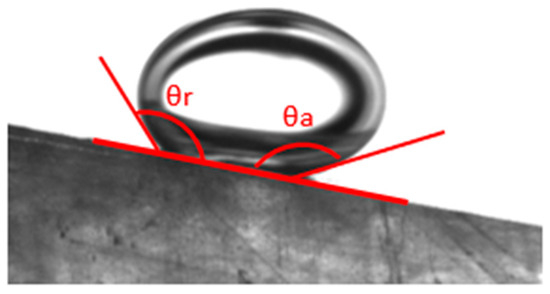
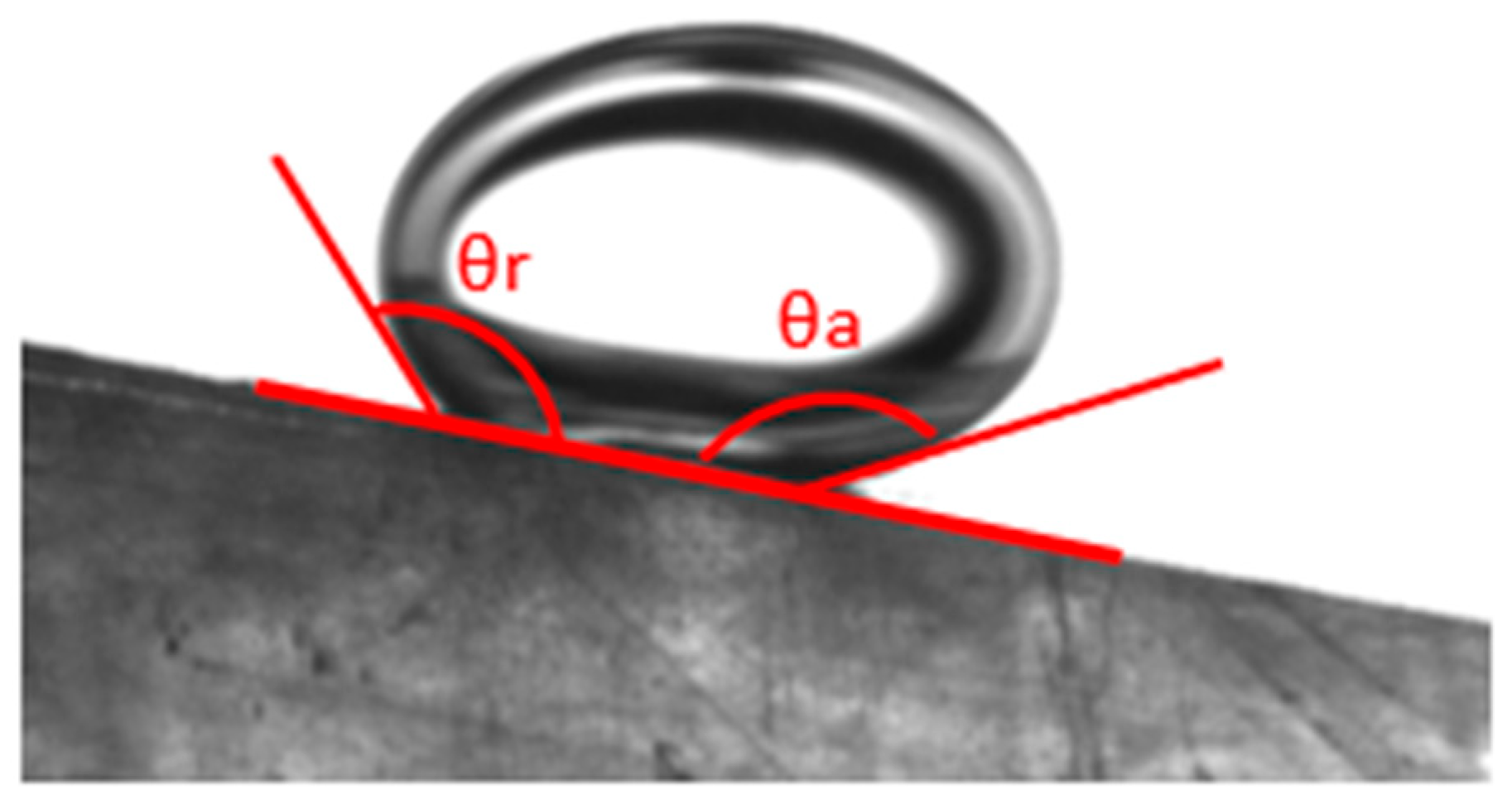
The contact angle is globally a direct assessment of wettability, which is the surface’s affinity for water or oil. In this study, advancing (θa) and receding (θr) water contact angles of various carbonate surfaces were measured directly using the tilted surface technique (Figure 1). Calcite (CaCO3) substrates, representative of carbonate formations, were purchased from Ward Science (San Luis Obispo, CA, USA). The wettability of pure calcite is strongly water-wet [38]. Thus, calcite samples were aged with crude oil to mimic the conditions in oil reservoirs. Initially, the substrates were rinsed with water and methanol to remove dust, surface debris, and inorganic contaminants. The samples were then treated in air plasma (HPT–100, Henniker Plasma, Henniker, UK) for 5 min. Treating with air plasma provides efficient plasma cleaning and surface activation to improve adhesion [39]. Subsequently, calcite samples were immersed in a vessel filled with crude oil at a calcite-to-crude oil weight ratio of 1:10. These samples were aged in the crude oil for 30 days at 70 °C. Eventually, the samples were removed from the aging vessel using a clean tong, washed with water and ethanol to remove any reversibly adsorbed oil, and dried. At this point, the calcite samples were ready for contact angle measurement or further treatment (aging) with water or nanofluid. If further treatment was required, depending on the test, the oil-aged (oil-wet) samples were immersed in equilibrated water or a nanofluid at a calcite-to-liquid phase weight ratio of 1:10. When aged with nanofluid, the calcite samples were placed vertically in the aging vessel to avoid the physical deposition of settled NPs due to gravity. Furthermore, after nano-treatment, the aged samples were washed with water to remove reversibly attached NPs. The advancing and receding contact angles of a water drop on a calcite surface immersed in decane were measured. Decane was chosen as a model oil for its transparency. Each measurement was repeated 3 times, and repeatability was very good with a standard deviation of ±3°.
Figure 1.
Representation of water advancing (θa) and receding (θr) contact angles on a tilted surface.
2.4. Core Flooding Measurement
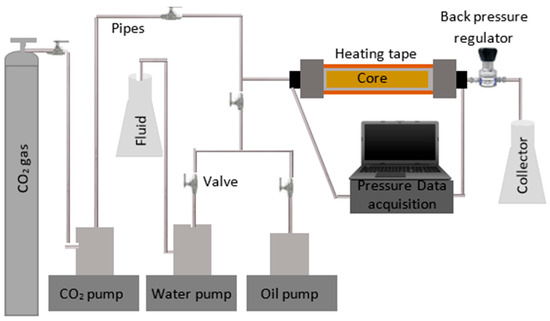
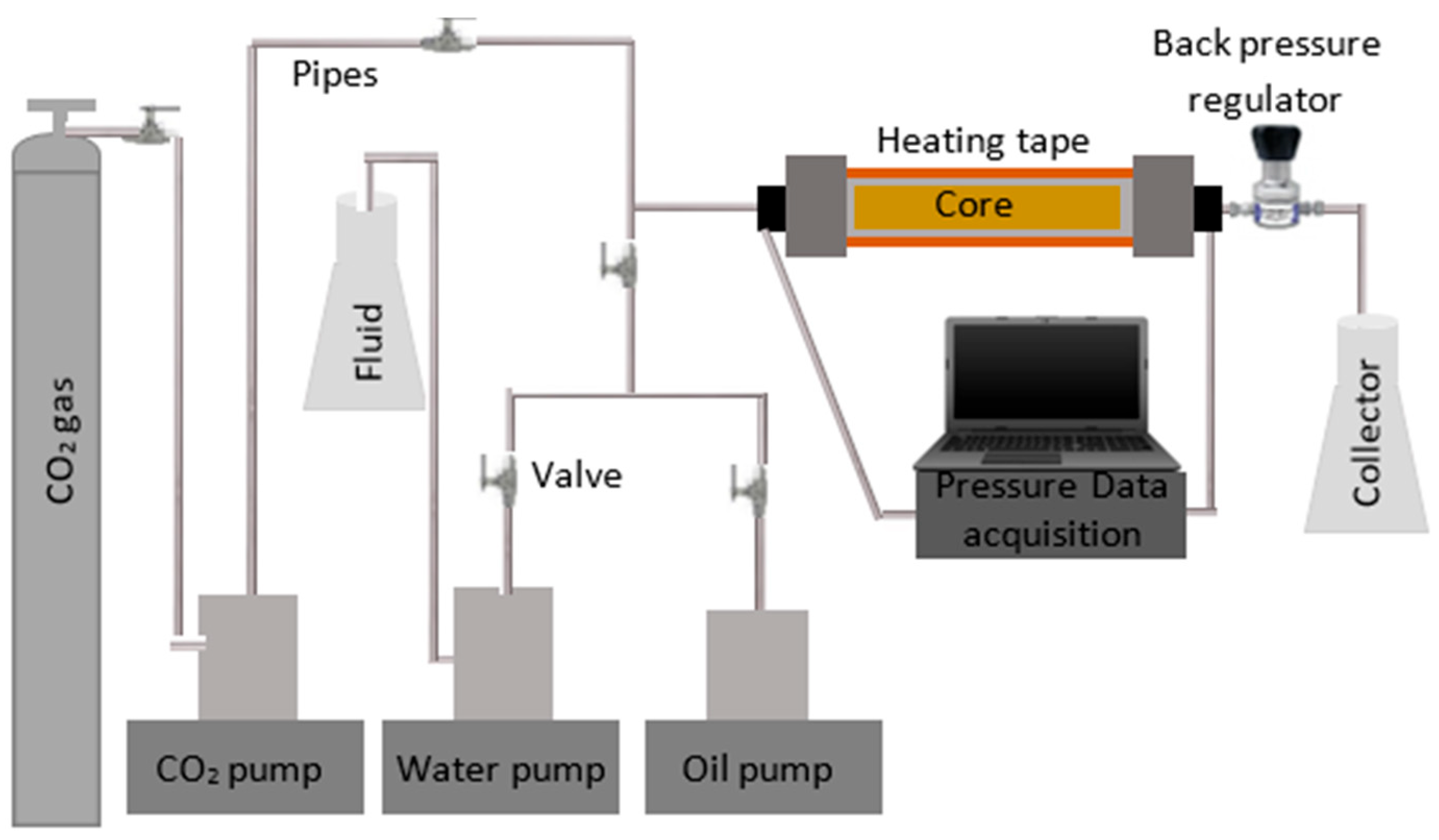
The schematic diagram of the flooding apparatus is shown in Figure 2. The core flooding tests were conducted to evaluate the oil recovery rate from the carbonate reservoir after each flooding step [40]. In this context, silica nanofluid flooding was conducted in two different ways. In one scenario, nanofluid flooding was conducted as a tertiary oil recovery following water flooding [28]. Meanwhile, in the other scenario, nanofluid flooding was conducted directly as a secondary oil recovery without conducting water flooding. The increase in oil recovery is calculated by comparing the amount of oil recovered during a specific flooding strategy (e.g., nanofluid flooding followed by waterflooding) to a baseline recovery (e.g., waterflooding followed by nanofluid flooding). Experimentally, the core was initially inserted into the rubber sleeve and then secured in the core holder. At this point, air is removed from the core via injecting low-pressure carbon dioxide gas (1.75 MPa CO2) for 60 min using a high-precision syringe pump (500D high-pressure syringe pump, TELEDYNE ISCO, Lincoln, NE, USA). Due to its relatively high diffusivity, CO2 can efficiently displace air from the core, mimicking the real scenario in oil reservoirs. Then, the core and all pipelines were evacuated for 3 h to remove most of the injected CO2 and prepare the core for various saturation steps. The minor trapped amount of CO2 in the core will then dissolve into the API brine during subsequent brine saturation steps. The core was then preheated to the desired temperature using heating tape. The core was initially saturated with API brine at an injection rate of 0.1 mL/min, simulating the typical formation-fluid velocity in oil reservoirs (nearly Darcy velocity of 0.3 m/day) using a high-precision syringe pump (260D high-pressure syringe pump, TELEDYNE ISCO). The confining pressure was maintained at 2.75 MPa, and once a stable pressure drop was reached, the permeability of the core was evaluated using Darcy’s law. The core was then saturated with crude oil using the third high-precision syringe pump (260D high-pressure syringe pump, TELEDYNE ISCO, Lincoln, NE, USA) with an injection rate of 0.1 mL/min. The oil-saturation step continued until the water drainage was <1%. The oil-saturated core was aged for 30 days at the desired temperature of 50 °C. At this point, the core was ready for oil recovery steps, including direct injection of nanofluid or nanofluid flooding after conventional water flooding. In both scenarios, the nanofluid was re-sonicated just before feeding into the syringe pump to ensure stable dispersion of nanoparticles during injection. Subsequently, a final brine flooding was conducted after aging the core with nanofluid for 48 h to evaluate the potential to produce more oil after aging with nanoparticles. The produced oil was collected in a standard glass collector.
Figure 2.
Schematic diagram of the flooding apparatus.
3. Results and Discussion
3.1. Silica Nanoparticles Characterizations
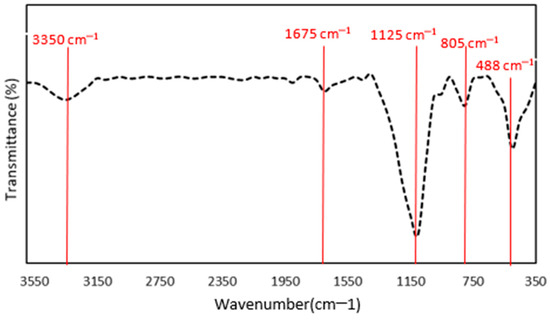
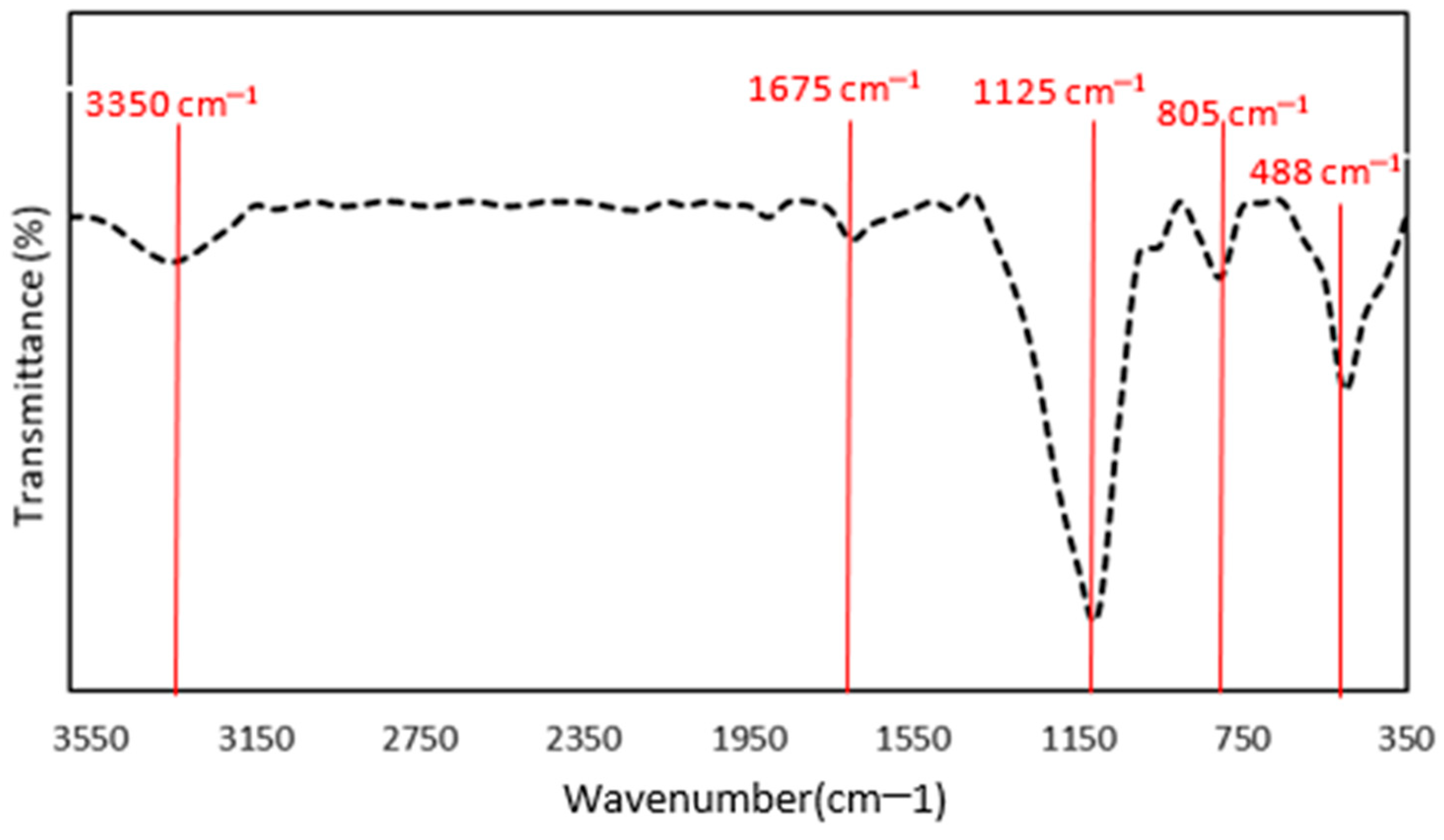
The FTIR spectrographs and interpretation for the nano-silica sample synthesized sustainably from waste bentonite are reported in Figure 3. According to the reported data, silica was dominated by silanol () and siloxane () groups without reporting any traces of impurity bands in the range (1800–3150 cm−1). The band at 3350 cm−1 is attributed to the stretching vibration of the () group. The band located at 1675 cm−1 is attributed to the bending vibration of the water molecule in the group. The bond in 1125 cm−1 is related to the unequal stretching vibration of . The bond in 805 cm−1 is related to the unequal stretching vibration of bond. Eventually, the band at 488 cm−1 is attributed to the bending of the siloxane group. In the synthesis process of silica nanoparticles from waste bentonite, silanol groups () were formed due to the solubilization of sodium silicate with HCl, while siloxane groups () were formed from a subsequent condensation reaction [34,41].
Figure 3.
FTIR spectra of silica nanoparticles synthesized sustainably from waste bentonite.
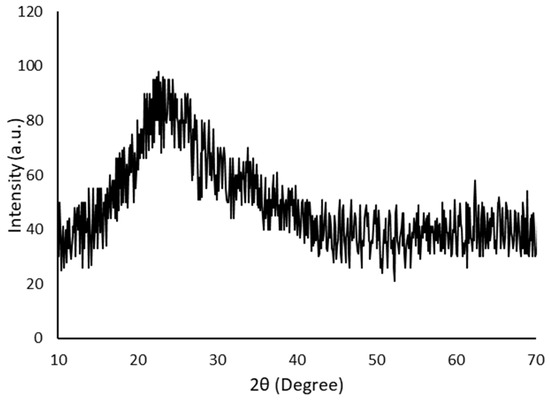
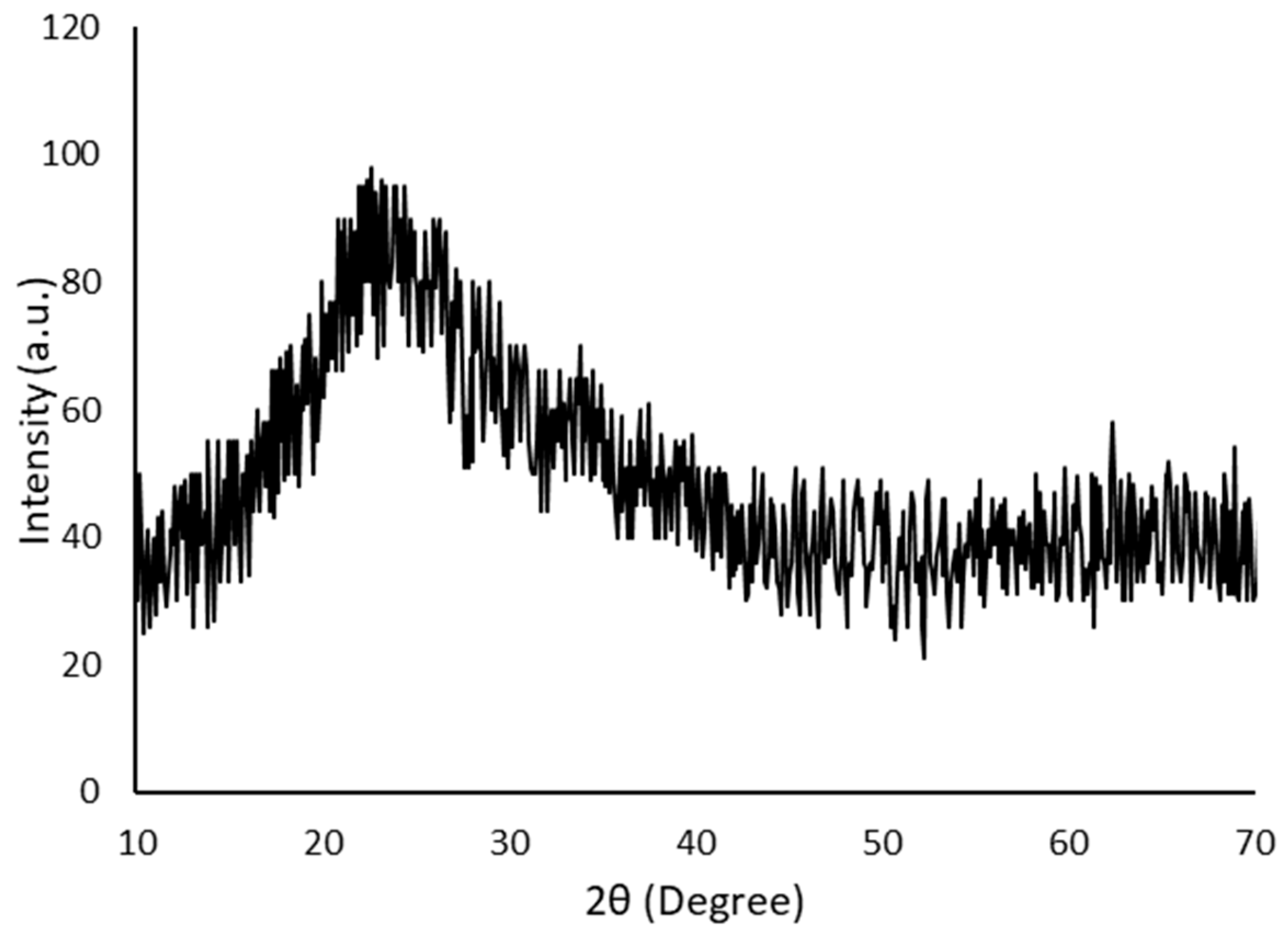
The X-ray diffraction (XRD) pattern of silica nanoparticles produced from waste bentonite is shown in Figure 4, which reveals the amorphous nature of the particles. Abroad hump at 2θ angle of 22.3° was reported, which is consistent with that of the commercially available silica nanoparticle on the market and that produced from agricultural waste [41,42]. Further, no sharp peaks were indicated along the range of scanning angle from 10° to 70°, which confirms the absence of any crystalline order.
Figure 4.
XRD of silica nanoparticles synthesized sustainably from waste bentonite.
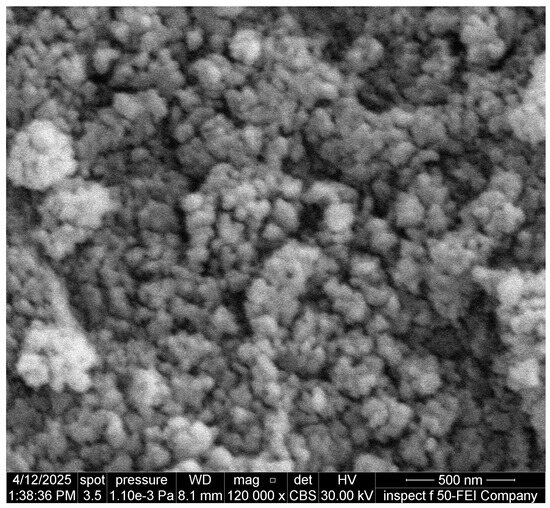
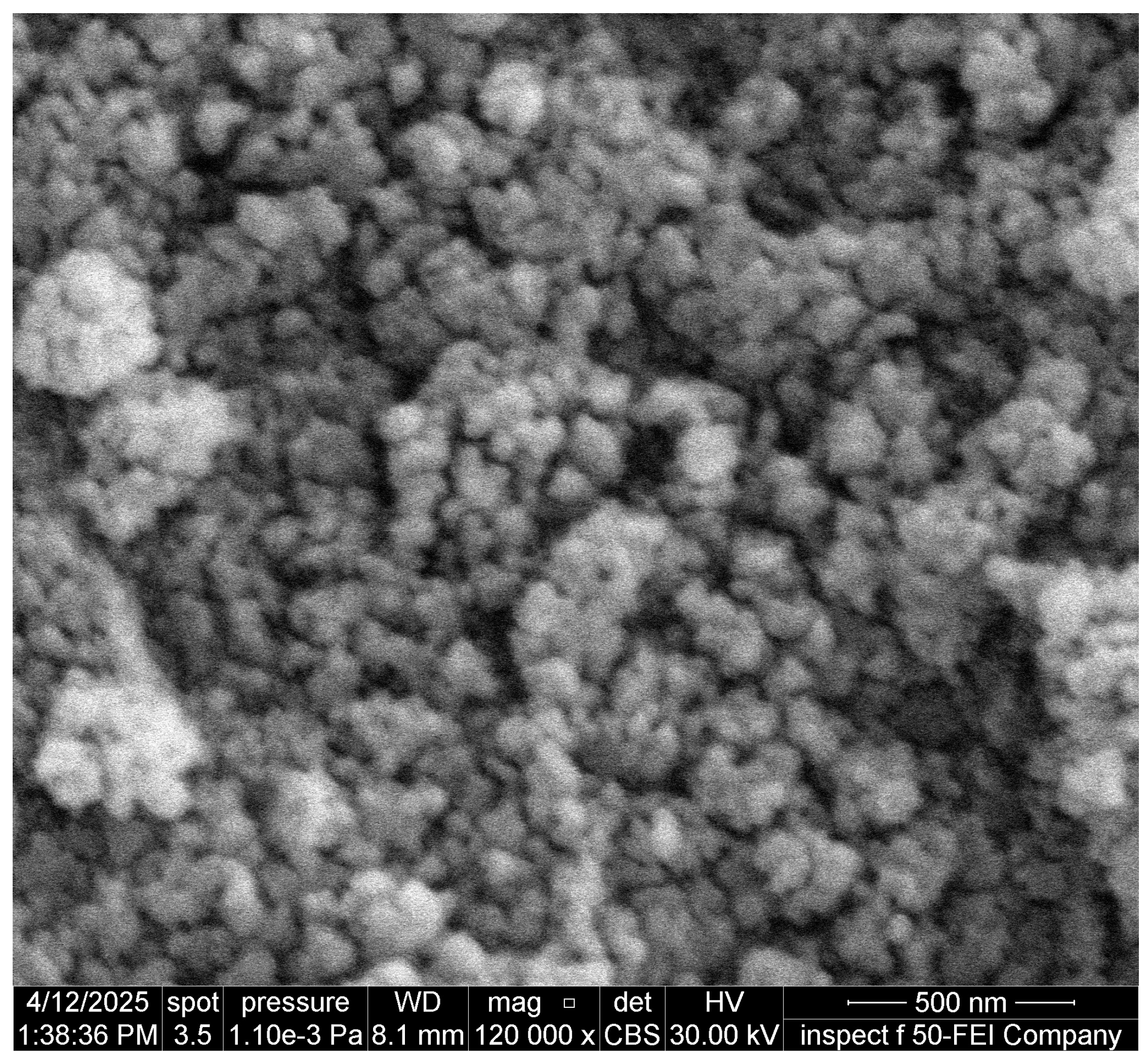
The non-crystalline and amorphous nature of the synthesized silica was confirmed by scanning electron microscopy (SEM, Phenom XL Desktop SEM, ThermoFisher Scientific, Waltham, MA, USA) image (Figure 5). Due to the device limitations, only aggregates of silica nanoparticles were observed rather than the spherical shape of the particle. Such aggregation is associated with the surface energy and Brownian motion of nanoparticles upon contact with the aqueous phase (typically water). The elemental surface composition analysis, conducted using an energy-dispersive spectrometer (EDS) (Phenom XL Desktop EDS, ThermoFisher Scientific, Waltham, MA, USA), revealed two strong peaks for O (52.3 wt%) and Si (47.8 wt%), indicating the absence of any significant contaminants.
Figure 5.
SEM images of silica nanoparticles synthesized sustainably from waste bentonite and deposited in a calcite substrate.
3.2. Contact Angle Measurements
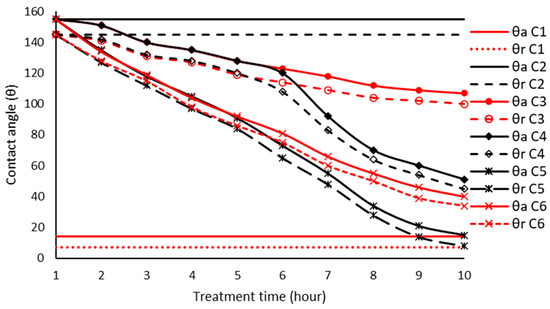
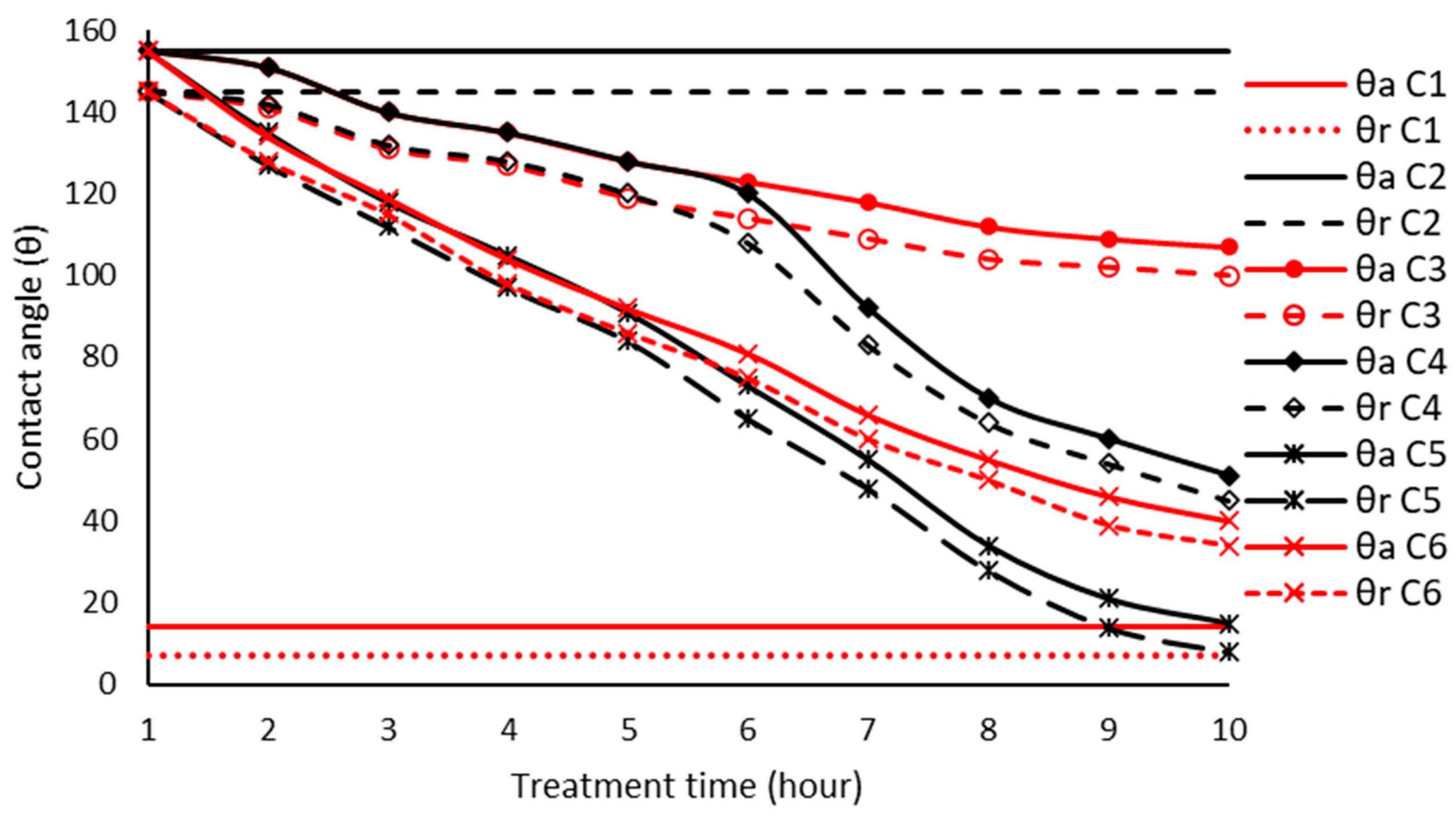
The water contact angle on the calcite surface after various surface treatment steps was systematically measured at reservoir conditions (15 MPa and 70 °C) using a high-pressure, high-temperature optical vessel (Figure 6). Each calcite sample was named following the conducted treatment process, as indicated in Table 2. Each test was repeated three times, and the standard deviation of the measurements was ±3° for both advancing and receding contact angles.
Figure 6.
Advancing (θa, solid lines) and receding (θr, dashed line) water contact angle, at reservoir conditions, on the calcite surface after various treatment steps.
Table 2.
Code numbers of various samples.
The lower and upper double horizontal lines represent the advancing (θa, solid lines) and receding (θr, dashed lines) contact angles of pure (C1, θa = 14°, and θr = 7°) and oil-aged (C2, θa = 155°, and θr = 146°) calcite, respectively, without further flooding. Results indicated that water flooding can barely reduce the contact angle of oil-wet calcite (e.g., θa reduced by 48° after 10 h of immersion in water, reaching ≈107°). Thus, water flooding even for 10 h is insufficient to alter the wettability of oil-wet calcite into water-wet (θ < 90°). Moreover, after 7 h of flooding, no significant reduction in contact angle is observed. This clearly indicates that water cannot detach the oil film from the rock surface, supporting the statement that water flooding can displace oil from fractures and large pores without imbibing into the rock matrix [8]. Dividing the flooding period into water flooding and nanofluid flooding, respectively, enhances the efficiency of the flooding process, significantly reducing the contact angle and altering the wetting status to water-wet (i.e., θ < 90°). Experimentally, the contact angle behavior with water flooding (first 5 h) was identical to that with water flooding. However, moving the calcite sample from the water vessel to the nanofluid vessel significantly reduces the contact angle, resulting in a strongly water-wet state (i.e., θa = 53°, θr = 45°). Most interestingly, when the combined flooding process began with nanofluid flooding for 5 h, followed by water flooding, the results showed two major positive points: first, the total reduction in contact angle was greater (i.e., θa = 40°, θr = 34°). Second, the efficiency of water in reducing the contact angle is higher when used after nanofluid flooding by 11%. Eventually, immersing the oil-wet calcite in the nanofluid for 10 h restores the wettability of oil-wet calcite to its original wetness status (i.e., θa = 14°, θr = 7°), indicating complete displacement of the oil film from the calcite surface, consistent with reported data in the field [16,43,44,45,46].
3.3. Core Flooding Measurements
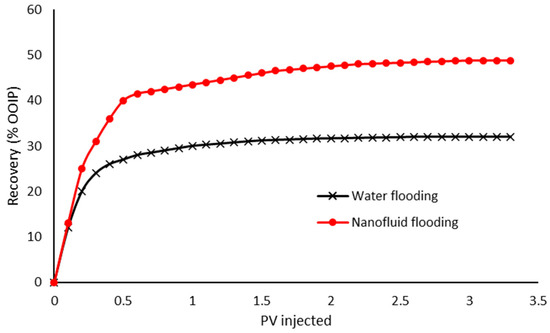
Core flooding tests were conducted to investigate the effects of various flooding sequences, including water flooding, water followed by nanofluid flooding, nanofluid followed by water flooding, and nanofluid flooding, on oil recovery. To avoid busy figures, the study first compares the difference between waterflooding and nanofluid (0.05 wt% silica nanoparticles in equilibrated water) flooding (Figure 7). Each test was conducted three times to ensure the reliability of the results.
Figure 7.
Compare water flooding and nanofluid (0.05 wt% SiO2 nanoparticles at 15 MPa and 70 °C) flooding as a secondary oil recovery step.
As indicated in Figure 7, conducting nanofluid flooding as secondary oil recovery roughly produced 11–13% more oil than conventional water flooding. In most cases, water flooding relies on viscous forces and pressure maintenance [47], whereas nanofluid flooding utilizes synergistic mechanisms to enhance the oil recovery factor. Several mechanisms have been proposed to explain this enhancement in oil recovery. The structural disjoining pressure effect of nanoparticles, which acts to detach the oleic phase, as suggested by several studies [16,22,28,45,48,49,50], can lead to increased oil recovery. Moreover, the influence of injected nanoparticles on the rock’s permeability can also explain the increase in oil recovery. Permeability modification via nanoparticles can improve the role of the aqueous phase for oil displacement [43,51,52]. Furthermore, silica nanoparticles have a noticeable effect on reducing the oil–water interfacial tension [25,27,43,53,54]. This reduction in interfacial tension is key to facilitating oil displacement from porous media via aqueous-phase flooding.
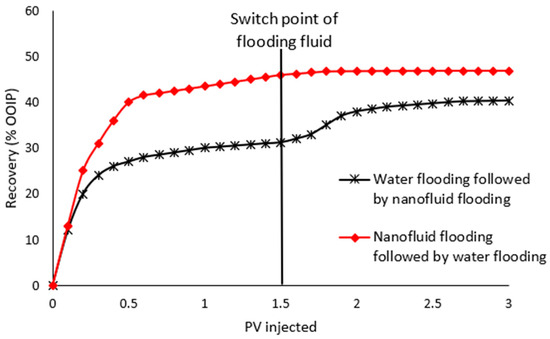
The influence of various flooding scenarios was also investigated (Figure 8) to compare between starting with water flooding followed (injecting 1.5 PV water) by nanofluid flooding (injecting 1.5 PV nanofluid), and the opposite sequence.
Figure 8.
Comparison of two flooding scenarios, water (1.5 PV) followed by nanofluid (1.5 PV) flooding, and vice versa at 15 MPa and 70 °C.
As shown in Figure 8, for the same total amount of water and nanofluid flooding, the order of the injection sequence has a significant impact on the oil displacement efficiency. Characteristically, starting with nanofluid flooding followed by conventional water flooding can produce 13 ± 3% more oil compared to starting with water flooding followed by nanofluid flooding, for an equal volume of fluids. Moreover, the injection of 1.5 PV nanofluid followed by 1.5 PV water yields almost the same displacement efficiency (≈46.9% OOIP) for the process of injecting 3 PV nanofluid (≈48.8% OOIP), introducing a drastic feasible potential in oil recovery projects. Mechanistically, starting with nanofluid flooding at a low injection rate (0.1 mL/min) allows the nanoparticles to play their various roles, including the structural disjoining effect [48], the liquid–liquid interfacial effect [55], and the penetration effect into the smallest pore [56]. Typically, most of these effects are mainly associated with the small size of nanoparticles and the subsequent high surface energy and Brownian motion of these nano-sized powders [57,58]. The later waterflooding, after nanofluid flooding, will easily displace and sweep the oil that was detached and displaced by the nanoparticles.
3.4. Pressure Drop Measurements During Core Flooding
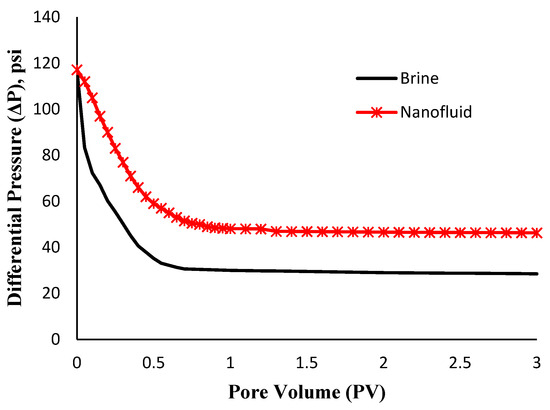
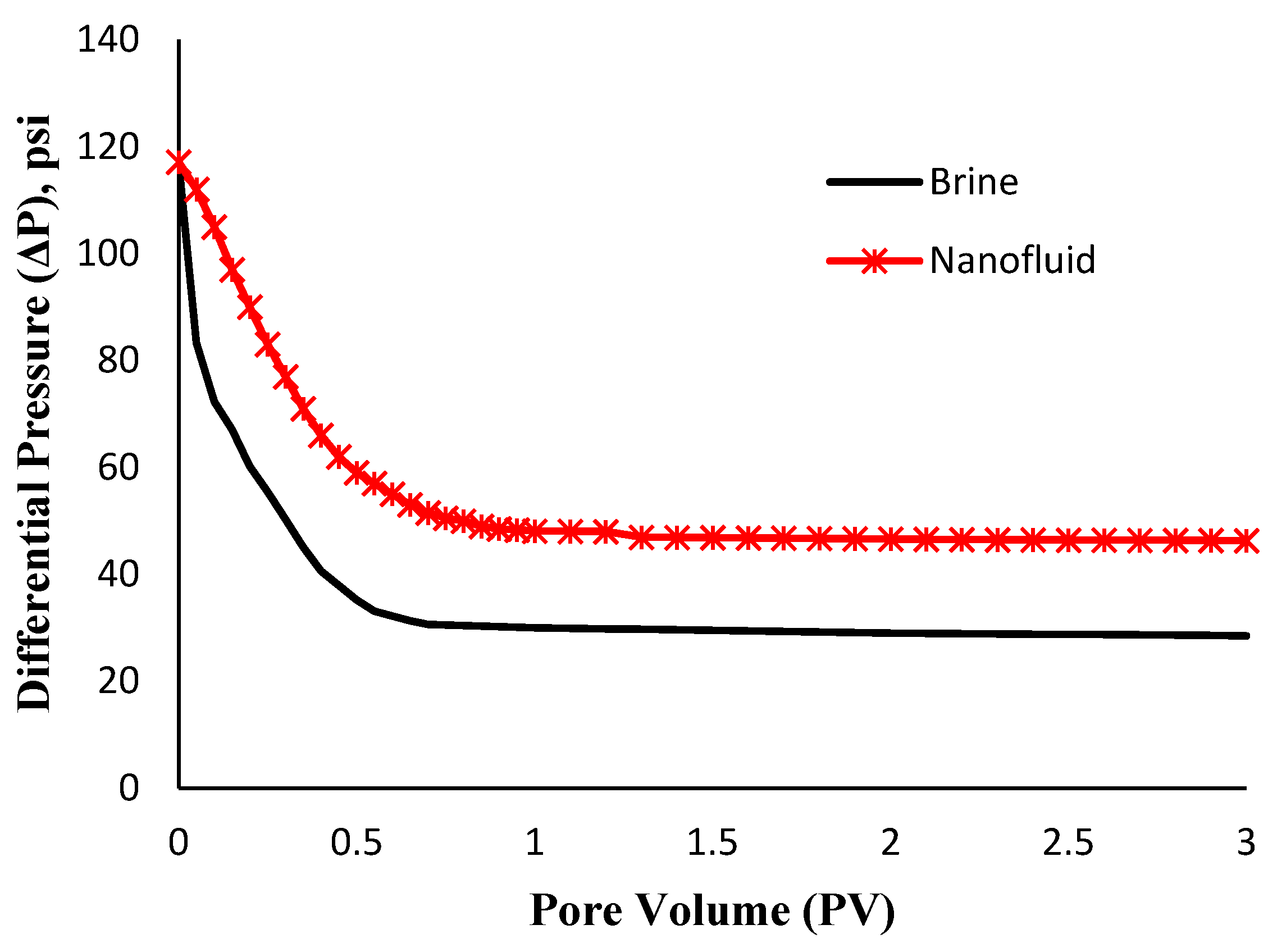
The assessment of colloidal transport and retention is key to a feasible nanofluid-flooding process in EOR projects. Although water flooding challenges are typically managed via engineering techniques, nanofluid flooding remains an ongoing challenge due to the complexity and instability of dispersion, which can lead to severe formation damage [36]. Miscalculating this challenge can turn promising nanofluid flooding into permanent formation damage, resulting in significant economic loss and, subsequently, premature well abandonment. Practically, the differential pressure drops during flooding steps are crucial for evaluating the current changes in permeability, a direct indication of the formation damage. The differential pressure drops (ΔP) with respect to the injected pore volume (PV) were reported and compared for water and nanofluid flooding (Figure 9).
Figure 9.
Differential pressure data for 3 injected PV of brine and 0.01 wt% silica nanofluid.
Figure 9 reports the differential pressure data along the core during the injection of 3 PV of brine and 0.01 wt% silica nanofluid. Typically, results showed no dramatic increase in differential pressure as flooding progressed for both injection processes. Surprisingly, as in water flooding, differential pressure decreased with the injection of 3 PV nanofluid, reaching a constant value of around 1.2 PV. Such a reduction and subsequent stability of differential pressure indicate the absence of plugging or cake formation, which is mainly attributable to the small size and relatively low concentration of silica NPs in the dispersion, as well as to the adsorption capacity of the core porous media. This absence of formation damage supports the potential of nanofluids as an alternative to traditional waterflooding, consistent with recently reported data [36].
4. Conclusions
The application of sustainably synthesized silica nanoparticles in nanofluid flooding is an efficient alternative to conventional water flooding in the oil recovery industry, as introduced in this study. Waste bentonite from well drilling can serve as a sustainable source for synthesizing green silica nanoparticles. Such amorphous nano-silica disperses efficiently in water, forming a nanofluid for oil recovery. The oil recovery factor can be improved by 12%, from 32 to 44%, when replacing conventional water flooding with silica nanofluid flooding. Furthermore, dividing the flooding processes into two stages, water and nanofluid flooding, showed feasible potential for the EOR project. Starting with nanofluid flooding, followed by water flooding, is more efficient at displacing oil than the reverse. Furthermore, differential pressure measurement across the core during water or nanofluid flooding reports no potential formation damage or permeability changes. However, the differential pressure with nanofluid was, as expected, higher than that with water flooding, but remained within safe limits. Such an optimal flooding scenario reduces the required nanofluid by 50% while maintaining the same recovery factor (i.e., 49%). On the other hand, contact angle measurements showed that the adsorption of silica nanoparticles on oil-wet surfaces can restore wettability to the desirable water-wet state, thereby enhancing incremental oil recovery. Thus, nanofluid flooding is more efficient than water flooding for incremental oil recovery when injected correctly. This approach conserves substantial water, supporting the community’s sustainable development, particularly in Iraq, where a recent water crisis has been a significant concern.
Author Contributions
S.A.-A. (Conceptualization, methodology, validation, formal analysis, investigation, writing—review and editing, visualization, and project administration); D.S. (Conceptualization, methodology, data curation); H.A.H. (software); A.H.A.-T. (validation); H.A.A. (investigation); M.M. (software, data curation); Z.-U.-A.A. (validation, formal analysis, resources, writing—original draft preparation, visualization). All authors have read and agreed to the published version of the manuscript.
Funding
This research received no external funding.
Data Availability Statement
The data presented in this study are available on request from the corresponding author.
Acknowledgments
The authors acknowledge Al-Naji University and Curtin University for supporting.
Conflicts of Interest
The authors declare no conflicts of interest.
References
- Martínez-García, M.Á.; Ramos-Carvajal, C.; Cámara, Á. Consequences of the energy measures derived from the war in Ukraine on the level of prices of EU countries. Resour. Policy 2023, 86, 104114. [Google Scholar] [CrossRef] [Scilit]
- Henderson, J. The impact of the Russia-Ukraine war on global gas markets. Curr. Sustain. Renew. Energy Rep. 2024, 11, 1–9. [Google Scholar] [CrossRef] [Scilit]
- Kapustin, N.O.; Grushevenko, D.A. Long-term electric vehicles outlook and their potential impact on electric grid. Energy Policy 2020, 137, 111103. [Google Scholar] [CrossRef] [Scilit]
- Cerruti, G.; Chiola, M.; Bianco, V.; Scarpa, F. Impact of electric cars deployment on the Italian energy system. Energy Clim. Change 2023, 4, 100095. [Google Scholar] [CrossRef] [Scilit]
- Du, Y.; Zhang, J.; Chen, Y.; Liu, Z.; Zhang, H.; Ji, H.; Wang, C.; Yan, J. Impact of electric vehicles on post-disaster power supply restoration of urban distribution systems. Appl. Energy 2025, 383, 125302. [Google Scholar] [CrossRef] [Scilit]
- Deng, Y.; Yang, Y.; Yang, T. Three systems of the oil and gas formation in the world. Pet. Res. 2025, 10, 1–27. [Google Scholar] [CrossRef] [Scilit]
- Kothawade, T.R.; Deshmukh, M.; Kumar, G.; Pathan, A.; Sangwai, J. Harnessing biochemical innovations for sustainable oil recovery: Perspectives from the Indian context on green enhanced oil recovery (GEOR) methods for matured petroleum fields. Environ. Sci. Pollut. Res. 2025, 32, 7894–7932. [Google Scholar] [CrossRef] [Scilit]
- Mohammed, M.; Babadagli, T. Wettability alteration: A comprehensive review of materials/methods and testing the selected ones on heavy-oil containing oil-wet systems. Adv. Colloid Interface Sci. 2015, 220, 54–77. [Google Scholar] [CrossRef] [Scilit] [PubMed]
- Ali, S.F.; Thomas, S. Enhanced Oil Recovery-What We Have Learned. J. Can. Pet. Technol. 2000, 39, 7–11. [Google Scholar] [CrossRef] [Scilit]
- Henthorne, L.; Pope, G.A.; Weerasooriya, U.; Llano, V. Impact of Water Softening on Chemical Enhanced Oil Recovery Project Economics. In Proceedings of the SPE Improved Oil Recovery Conference, Tulsa, OK, USA, 12–16 April 2014; p. SPE-169165-MS. [Google Scholar]
- Anderson, W.G. Wettability Literature Survey-Part 1: Rock/Oil/Brine Interactions and the Effects of Core Handling on Wettability. J. Pet. Technol. 1986, 38, 1125–1144. [Google Scholar] [CrossRef] [Scilit]
- Anderson, W.G. Wettability literature survey-part 4: Effects of wettability on capillary pressure. J. Pet. Technol. 1987, 39, 1283–1300. [Google Scholar] [CrossRef] [Scilit]
- Anderson, W.G. Wettability literature survey part 5: The effects of wettability on relative permeability. J. Pet. Technol. 1987, 39, 1453–1468. [Google Scholar] [CrossRef] [Scilit]
- Standnes, D.C.; Austad, T. Wettability alteration in chalk: 2. Mechanism for wettability alteration from oil-wet to water-wet using surfactants. J. Pet. Sci. Eng. 2000, 28, 123–143. [Google Scholar] [CrossRef] [Scilit]
- Wang, J.; Song, H.; Wang, Y. Investigation on the micro-flow mechanism of enhanced oil recovery by low-salinity water flooding in carbonate reservoir. Fuel 2020, 266, 117156. [Google Scholar] [CrossRef] [Scilit]
- Mahdi, M.; Al-Anssari, S.; Arain, Z.-U.-A. Influence of nanofluid flooding on oil displacement in porous media. Iraqi J. Chem. Pet. Eng. 2023, 24, 19–30. [Google Scholar] [CrossRef] [Scilit]
- Snosy, M.F.; Abu El Ela, M.; El-Banbi, A.; Sayyouh, H. Comprehensive investigation of low salinity waterflooding in carbonate reservoirs. J. Pet. Explor. Prod. Technol. 2022, 12, 701–724. [Google Scholar] [CrossRef] [Scilit]
- Pei, H.; Zhang, G.; Ge, J.; Tang, M.; Zheng, Y. Comparative Effectiveness of Alkaline Flooding and Alkaline–Surfactant Flooding for Improved Heavy-Oil Recovery. Energy Fuels 2012, 26, 2911–2919. [Google Scholar] [CrossRef] [Scilit]
- Al-Azani, K.; Abu-Khamsin, S.; Al-Abdrabalnabi, R.; Kamal, M.S.; Patil, S.; Zhou, X.; Hussain, S.M.S.; Al Shalabi, E. Oil Recovery Performance by Surfactant Flooding: A Perspective on Multiscale Evaluation Methods. Energy Fuels 2022, 36, 13451–13478. [Google Scholar] [CrossRef] [Scilit]
- Belhaj, A.F.; Fakir, S.H.; Javadi, A.H.; Sarma, H.K. Improving the Performance of Smart Waterflooding Through Surfactant-Assisted Process for a Carbonate Oil Reservoir. In Proceedings of the SPE Western Regional Meeting, Palo Alto, CA, USA, 16–18 April 2024; p. SPE-218844-MS. [Google Scholar]
- Ahmed, M.E.; Sultan, A.S.; Al-Sofi, A.; Al-Hashim, H.S. Optimization of surfactant-polymer flooding for enhanced oil recovery. J. Pet. Explor. Prod. Technol. 2023, 13, 2109–2123. [Google Scholar] [CrossRef] [Scilit]
- Rezaei, A.; Khodabakhshi, A.; Esmaeili, A.; Razavifar, M. Effects of initial wettability and different surfactant-silica nanoparticles flooding scenarios on oil-recovery from carbonate rocks. Petroleum 2022, 8, 499–508. [Google Scholar] [CrossRef] [Scilit]
- Tang, W.; Wu, P.; Da, C.; Alzobaidi, S.; Harris, J.; Hallaman, B.; Hu, D.; Johnston, K.P. Synergy of surface modified nanoparticles and surfactant in wettability alteration of calcite at high salinity and temperature. Fuel 2023, 331, 125752. [Google Scholar] [CrossRef] [Scilit]
- Jang, H.; Lee, W.S.; Lee, J. Performance evaluation of surface-modified silica nanoparticles for enhanced oil recovery in carbonate reservoirs. Colloids Surf. A Physicochem. Eng. Asp. 2024, 681, 132784. [Google Scholar] [CrossRef] [Scilit]
- Sharma, T.; Suresh Kumar, G.; Sangwai, J.S. Enhanced oil recovery using oil-in-water (o/w) emulsion stabilized by nanoparticle, surfactant and polymer in the presence of NaCl. Geosystem Eng. 2014, 17, 195–205. [Google Scholar] [CrossRef] [Scilit]
- Wang, L.; Mohanty, K. Enhanced Oil Recovery in Gasflooded Carbonate Reservoirs by Wettability-Altering Surfactants. SPE J. 2014, 20, 60–69. [Google Scholar] [CrossRef] [Scilit]
- Ju, B.; Fan, T.; Ma, M. Enhanced oil recovery by flooding with hydrophilic nanoparticles. China Particuology 2006, 4, 41–46. [Google Scholar] [CrossRef] [Scilit]
- Al-Anssari, S.F.J. Application of Nanotechnology in Chemical Enhanced Oil Recovery and Carbon Storage. Ph.D. Thesis, Curtin University, Perth, Australia, 2018. [Google Scholar]
- Rostami, P.; Sharifi, M.; Aminshahidy, B.; Fahimpour, J. Enhanced oil recovery using silica nanoparticles in the presence of salts for wettability alteration. J. Dispers. Sci. Technol. 2019, 41, 402–413. [Google Scholar] [CrossRef] [Scilit]
- Arain, Z.-U.L.A.; Al-Anssari, S.; Ali, M.; Memon, S.; Bhatti, M.A.; Lagat, C.; Sarmadivaleh, M. Reversible and irreversible adsorption of bare and hybrid silica nanoparticles onto carbonate surface at reservoir condition. Petroleum 2020, 6, 277–285. [Google Scholar] [CrossRef] [Scilit]
- He, W.; Wu, D.; Li, J.; Zhang, K.; Xiang, Y.; Long, L.; Qin, S.; Yu, J.; Zhang, Q. Surface modification of colloidal silica nanoparticles: Controlling the size and grafting process. Bull. Korean Chem. Soc. 2013, 34, 2747–2752. [Google Scholar] [CrossRef] [Scilit]
- London, G.; Carroll, G.T.; Feringa, B.L. Silanization of quartz, silicon and mica surfaces with light-driven molecular motors: Construction of surface-bound photo-active nanolayers. Org. Biomol. Chem. 2013, 11, 3477–3483. [Google Scholar] [CrossRef] [Scilit]
- Alomair, O.A.; Alajmi, A.F. A novel experimental nanofluid-assisted steam flooding (NASF) approach for enhanced heavy oil recovery. Fuel 2022, 313, 122691. [Google Scholar] [CrossRef] [Scilit]
- Zulfiqar, U.; Subhani, T.; Husain, S.W. Synthesis and characterization of silica nanoparticles from clay. J. Asian Ceram. Soc. 2016, 4, 91–96. [Google Scholar] [CrossRef] [Scilit]
- Mondragon, R.; Julia, J.E.; Barba, A.; Jarque, J.C. Characterization of silica–water nanofluids dispersed with an ultrasound probe: A study of their physical properties and stability. Powder Technol. 2012, 224, 138–146. [Google Scholar] [CrossRef] [Scilit]
- Arain, Z.-U.-A.; Al-Anssari, S.; Ali, M.; Awan, F.U.R.; Keshavarz, A.; Sangwai, J.; Sarmadivaleh, M.; Iglauer, S. Mobility of Hydrophilic and Hydrophobic Nanoparticles in Carbonate Reservoirs: Application to Subsurface Projects. Int. J. Energy Res. 2026, 2026, 6673426. [Google Scholar] [CrossRef] [Scilit]
- Alroudhan, A.; Vinogradov, J.; Jackson, M.D. Zeta potential of intact natural limestone: Impact of potential-determining ions Ca, Mg and SO4. Colloids Surf. A Physicochem. Eng. Asp. 2016, 493, 83–98. [Google Scholar] [CrossRef] [Scilit]
- Lucia, F.J.; Kerans, C.; Jennings, J.W., Jr. Carbonate Reservoir Characterization. J. Pet. Technol. 2003, 55, 70–72. [Google Scholar] [CrossRef] [Scilit]
- Lisco, F.; Shaw, A.; Wright, A.; Walls, J.M.; Iza, F. Atmospheric-pressure plasma surface activation for solution processed photovoltaic devices. Sol. Energy 2017, 146, 287–297. [Google Scholar] [CrossRef] [Scilit]
- Shi, Y.; Mohanty, K.; Panda, M. Coreflood tests to evaluate enhanced oil recovery potential of wettability-altering surfactants for oil-wet heterogeneous carbonate reservoirs. SPE J. 2022, 27, 2882–2894. [Google Scholar] [CrossRef] [Scilit]
- Nayak, P.; Datta, A. Synthesis of SiO2-nanoparticles from rice husk ash and its comparison with commercial amorphous silica through material characterization. Silicon 2021, 13, 1209–1214. [Google Scholar] [CrossRef] [Scilit]
- Ma, X.; Zhou, B.; Gao, W.; Qu, Y.; Wang, L.; Wang, Z.; Zhu, Y. A recyclable method for production of pure silica from rice hull ash. Powder Technol. 2012, 217, 497–501. [Google Scholar] [CrossRef] [Scilit]
- Bayat, E.A.; Junin, R.; Samsuri, A.; Piroozian, A.; Hokmabadi, M. Impact of Metal Oxide Nanoparticles on Enhanced Oil Recovery from Limestone Media at Several Temperatures. Energy Fuels 2014, 28, 6255–6266. [Google Scholar] [CrossRef] [Scilit]
- Roustaei, A.; Bagherzadeh, H. Experimental investigation of SiO2 nanoparticles on enhanced oil recovery of carbonate reservoirs. J. Pet. Explor. Prod. Technol. 2014, 5, 27–33. (In English) [Google Scholar] [CrossRef] [Scilit]
- ShamsiJazeyi, H.; Miller, C.A.; Wong, M.S.; Tour, J.M.; Verduzco, R. Polymer-coated nanoparticles for enhanced oil recovery. J. Appl. Polym. Sci. 2014, 131, 1–13. [Google Scholar] [CrossRef] [Scilit]
- Zargartalebi, M.; Barati, N.; Kharrat, R. Influences of hydrophilic and hydrophobic silica nanoparticles on anionic surfactant properties: Interfacial and adsorption behaviors. J. Pet. Sci. Eng. 2014, 119, 36–43. [Google Scholar] [CrossRef] [Scilit]
- Fathi, S.J.; Austad, T.; Strand, S. Water-Based Enhanced Oil Recovery (EOR) by “Smart Water”: Optimal Ionic Composition for EOR in Carbonates. Energy Fuels 2011, 25, 5173–5179. [Google Scholar] [CrossRef] [Scilit]
- Nikolov, A.; Kondiparty, K.; Wasan, D. Nanoparticle Self-Structuring in a Nanofluid Film Spreading on a Solid Surface. Langmuir 2010, 26, 7665–7670. [Google Scholar] [CrossRef] [Scilit]
- Kondiparty, K.; Nikolov, A.; Wu, S.; Wasan, D. Wetting and Spreading of Nanofluids on Solid Surfaces Driven by the Structural Disjoining Pressure: Statics Analysis and Experiments. Langmuir 2011, 27, 3324–3335. [Google Scholar] [CrossRef] [Scilit]
- Hendraningrat, L.; Li, S.; Torsæter, O. A coreflood investigation of nanofluid enhanced oil recovery. J. Pet. Sci. Eng. 2013, 111, 128–138. [Google Scholar] [CrossRef] [Scilit]
- Hamouda, A.; Karoussi, O. Effect of Temperature, Wettability and Relative Permeability on Oil Recovery from Oil-wet Chalk. Energies 2008, 1, 19–34. [Google Scholar] [CrossRef] [Scilit]
- Mohammadi, S.; Mahmoudi Alemi, F. Permeability impairment and oil recovery changes in porous media due to asphaltenes deposition during natural gas injection: An experimental study. Fuel Commun. 2023, 17, 100096. [Google Scholar] [CrossRef] [Scilit]
- Haroun, M.; Al Hassan, S.; Ansari, A.; Al Kindy, N.; Abou Sayed, N.; Ali, B.; Sarma, H. Smart nano-EOR process for Abu Dhabi carbonate reservoirs. In Proceedings of the Abu Dhabi International Petroleum Exhibition and Conference, Abu Dhabi, United Arab Emirates, 11–14 November 2012; p. SPE-162386-MS. [Google Scholar]
- Lu, G.; Duan, Y.-Y.; Wang, X.-D. Surface tension, viscosity, and rheology of water-based nanofluids: A microscopic interpretation on the molecular level. J. Nanoparticle Res. 2014, 16, 2564. (In English) [Google Scholar] [CrossRef] [Scilit]
- Garbin, V.; Crocker, J.C.; Stebe, K.J. Nanoparticles at fluid interfaces: Exploiting capping ligands to control adsorption, stability and dynamics. J. Colloid Interface Sci. 2012, 387, 1–11. [Google Scholar] [CrossRef] [Scilit] [PubMed]
- Skaug, M.J.; Wang, L.; Ding, Y.; Schwartz, D.K. Hindered Nanoparticle Diffusion and Void Accessibility in a Three-Dimensional Porous Medium. ACS Nano 2015, 9, 2148–2156. [Google Scholar] [CrossRef] [Scilit] [PubMed]
- Goudarzi, S.; Shekaramiz, M.; Omidvar, A.; Golab, E.; Karimipour, A.; Karimipour, A. Nanoparticles migration due to thermophoresis and Brownian motion and its impact on Ag-MgO/Water hybrid nanofluid natural convection. Powder Technol. 2020, 375, 493–503. [Google Scholar] [CrossRef] [Scilit]
- Saleem, S.; Animasaun, I.L.; Yook, S.-J.; Al-Mdallal, Q.M.; Shah, N.A.; Faisal, M. Insight into the motion of water conveying three kinds of nanoparticles shapes on a horizontal surface: Significance of thermo-migration and Brownian motion. Surf. Interfaces 2022, 30, 101854. [Google Scholar] [CrossRef] [Scilit]

Disclaimer/Publisher’s Note: The statements, opinions and data contained in all publications are solely those of the individual author(s) and contributor(s) and not of MDPI and/or the editor(s). MDPI and/or the editor(s) disclaim responsibility for any injury to people or property resulting from any ideas, methods, instructions or products referred to in the content. |
© 2026 by the authors. Licensee MDPI, Basel, Switzerland. This article is an open access article distributed under the terms and conditions of the Creative Commons Attribution (CC BY) license.