


Abstract
Background: The growth of e-commerce has intensified last-mile delivery challenges, including failed deliveries, delivery-time uncertainty, and pressure on urban logistics. Smart parcel lockers (SPLs) offer a technology-enabled out-of-home delivery solution, yet limited evidence explains consumer adoption in Saudi Arabia. This study examines which factors motivate Saudi consumers to adopt SPLs, how trust shapes adoption intention, and whether perceived risk affects intention, using an extended UTAUT2 framework. Methods: Data were collected through an online self-administered questionnaire from 415 residents in Saudi Arabia, and the model was analyzed using partial least squares structural equation modelling (PLS-SEM). Results: Performance expectancy was the strongest determinant of behavioral intention. Effort expectancy, social influence, trust, facilitating conditions, and hedonic motivation also had significant positive effects, whereas price value and perceived risk did not directly influence intention. Conclusions: The study contributes to SPL adoption literature by validating an extended UTAUT2 model in an underexamined Saudi context and highlighting the role of trust in technology-enabled LMD acceptance.
1. Introduction
The rapid expansion of e-commerce has intensified pressure on last-mile delivery (LMD), the final stage through which parcels are delivered to consumers. LMD is widely regarded as one of the most complex and costly parts of e-commerce logistics because it involves delivery speed, cost efficiency, reliability, flexibility, customer satisfaction, and environmental performance. Traditional home delivery remains the dominant delivery mode in many markets; however, it is increasingly associated with recipient unavailability, repeated delivery attempts, failed deliveries, traffic congestion, high delivery costs, and increased emissions [1,2,3]. These challenges have encouraged logistics providers, online retailers, and policymakers to explore alternative delivery models that can improve LMD efficiency while responding to consumers’ growing expectations for convenient, reliable, and flexible parcel receipt.
Smart parcel lockers (SPLs) have emerged as one of the most prominent self-service solutions for improving LMD. SPLs are automated locker systems that allow consumers to collect parcels from designated locations using digital access methods such as PIN codes, QR codes, mobile applications, or one-time passwords. Compared with traditional home delivery, SPLs offer several potential benefits, including 24/7 access, reduced dependence on courier recipient coordination, fewer failed deliveries, greater collection flexibility, and improved delivery consolidation [1,4,5,6]. From a logistics perspective, SPLs can reduce the number of individual home stops by allowing couriers to deliver multiple parcels to one collection point, thereby improving route efficiency and supporting more sustainable LMD operations [1,7]. However, the successful commercialization of SPLs depends not only on operational efficiency but also on consumers’ willingness to adopt and continue using them, since it requires consumer participation in their overall experience [8,9].
Saudi Arabia’s e-commerce market provides a relevant context for examining SPL adoption because it is expanding, while LMD systems continue to face local operational and behavioral challenges. Statista Market Insights projects that revenue in Saudi Arabia’s e-commerce market will reach USD 15.88 billion in 2026 and USD 19.52 billion by 2030, with user penetration increasing from 57.4% to 65.1% over the same period [10]. This growth increases the need for reliable and flexible delivery alternatives. Recent Saudi research shows that LMD quality, including delivery speed, tracking, delivery timing, delivery-location options, and payment preferences, influences online retail experience and customer behavior [11]. Although Saudi consumers have become more familiar with online shopping and digital payments, traditional retail practices and door-to-door delivery remain embedded in consumption behavior [12,13].
SPLs are also becoming more visible in the Saudi logistics market. Industry evidence indicates that operators such as RedBox provide 24/7 parcel pick-up and drop-off services through smart-locker networks, reporting more than 10 million parcel deliveries and plans to expand to 10,000 smart lockers across the MENA region by 2030 [14]. Despite this commercial development, empirical research on Saudi consumers’ acceptance of SPLs remains limited. Existing Saudi studies have mainly examined related topics such as crowd logistics, drone delivery, delivery quality, online shopping behavior, and online shopping risk, rather than consumers’ behavioral intention to adopt SPLs specifically [11,12,13,15,16].
The Saudi LMD environment has characteristics that may shape SPL adoption, including logistics infrastructure, addressing accuracy, driver availability, legislation, trust, cultural norms, rapid urban growth, car dependency, parking pressure, and congestion [15,17]. These conditions suggest that SPL adoption may depend not only on individual technology perceptions but also on whether consumers perceive locker delivery as useful, easy to use, supported by adequate conditions, trustworthy, and low risk. Therefore, a theoretical model for SPL adoption in Saudi Arabia should capture both consumer technology acceptance and delivery-service concerns.
UTAUT2 provides a suitable theoretical basis for this study because SPLs are voluntary, consumer-facing, technology-enabled delivery services. Consumers are likely to evaluate SPLs according to performance expectancy, effort expectancy, social influence, facilitating conditions, hedonic motivation, and price value, which correspond to the core consumer-oriented constructs of UTAUT2 [18]. However, SPL adoption is not only a technology acceptance decision; it is also a logistics service decision involving unattended parcel storage, digital authentication, provider dependability, parcel safety, privacy, and service reliability. Accordingly, this study extends UTAUT2 by incorporating trust and perceived risk, which are among the most common extensions in consumer technology acceptance research [19,20]. Trust is included to capture consumers’ confidence in the reliability and security of SPLs [6,21,22,23,24,25], while perceived risk captures concerns about parcel loss, privacy breaches, system failure, failed access, or unsuccessful collection [13,16,21,26]. Therefore, applying UTAUT2 alone may not fully capture the service-specific concerns associated with SPLs. Consumers do not only evaluate whether lockers are useful or easy to use; they also evaluate whether parcels will be stored safely, whether personal and delivery information will be protected, whether the locker will function when needed, and whether the provider will resolve service problems.
Despite growing international research on SPLs and related self-service parcel delivery systems, important gaps remain. First, much of the existing evidence has been developed in China, Taiwan, Singapore, Europe, and other mature logistics contexts, where delivery infrastructure and consumer habits differ from Saudi Arabia [5,6,8,21,22,23,25,27,28,29,30,31,32]. Second, Saudi-based studies have examined related LMD and e-commerce topics, but direct evidence on Saudi consumers’ behavioral intention to adopt SPLs remains scarce [11,12,13,15,16]. Third, prior adoption studies often emphasize functional beliefs, whereas SPL adoption requires the simultaneous evaluation of technological usability and logistics-service concerns such as trust, privacy, parcel security, and risk. These gaps highlight the need for a context-sensitive model that explains SPL adoption in Saudi Arabia by integrating UTAUT2 with trust and perceived risk. This study is guided by the following research questions:
RQ1. What factors motivate consumers in Saudi Arabia to choose SPLs as an alternative to traditional home delivery?
RQ2. How do Trust and Perceived Risk affect consumers’ intention to adopt SPLs?
This study contributes to the literature in three ways. First, it extends SPL adoption research to Saudi Arabia, a rapidly growing e-commerce and logistics market where direct empirical evidence on SPL acceptance remains limited. Second, it contextualizes UTAUT2 by integrating technology-related beliefs with logistics-service concerns, reflecting the dual nature of SPLs as both digital self-service technologies and delivery-service infrastructure. Third, the study extends SPL adoption research by testing the internal relationship between performance expectancy and effort expectancy, showing whether ease of use strengthens consumers’ perceived usefulness of SPLs, rather than treating both constructs only as independent predictors of behavioral intention. Finally, it clarifies the role of trust and perceived risk by modelling trust as both a direct predictor of behavioral intention and a mediator linking performance expectancy and social influence on behavioral intention, while modelling perceived risk as a potential deterrent.
2. Theoretical Framework and Hypothesis Development
2.1. Theoretical Framework
Prior technology-adoption research has produced several models explaining users’ acceptance and use of new technologies across different contexts. Among the most influential is the Unified Theory of Acceptance and Use of Technology (UTAUT), introduced by Venkatesh [33]. UTAUT was developed by synthesizing major technology-adoption theories, including the Theory Of Reasoned Action (TRA) [34], The Technology Acceptance Model (TAM) [35], the Theory of Planned Behavior (TPB) [36], the motivational model, the combined TAM–TPB model, the model of personal computer utilization (MPCU), Social Cognitive Theory (SCT), and Innovation Diffusion Theory (IDT/DOI) [33]. The original UTAUT framework was developed mainly for organizational contexts and emphasized four core determinants of technology acceptance: Performance Expectancy (PE), Effort Expectancy (EE), Social Influence (SI), and Facilitating Conditions (FC).
With the growth of consumer-centered technologies, UTAUT was later extended into UTAUT2, which adapted the model to consumer contexts by incorporating three additional constructs: Hedonic Motivation (HM), Price Value (PV), and habit [18,20]. UTAUT2, therefore, combines extrinsic evaluations, such as usefulness and ease of use, with consumer-oriented factors such as enjoyment, value, and repeated use behavior. Venkatesh [18] reported that UTAUT2 improved the explanatory power of the original UTAUT model by explaining a higher proportion of variance in behavioral intention and technology use. Subsequent reviews and meta-analytic studies confirm that UTAUT2 remains one of the most widely used frameworks in consumer technology-adoption research, although its constructs often need to be adapted to the specific technology, user group, and adoption context under investigation [19,20].
UTAUT2 has been applied across a wide range of consumer technology settings, including mobile banking, mobile payments, e-learning, smart services, and digital platforms. In the LMD sector, UTAUT2 and UTAUT-based models have also been used to examine acceptance of emerging delivery technologies such as autonomous delivery vehicles, drone delivery, delivery robots, and SPLs [5,8,13,26,37,38,39]. For example, Kapser and Abdelrahman [37] extended UTAUT2 to examine acceptance of autonomous delivery vehicles in Germany and found that price sensitivity, performance expectancy, hedonic motivation, perceived risk, social influence, and facilitating conditions influenced behavioral intention, while effort expectancy was not significant. Kapser et al. [38] further extended UTAUT2 in the context of autonomous delivery vehicles by incorporating trust in technology, perceived risk, innovativeness, price sensitivity, and gender, showing that trust in technology directly influenced behavioral intention and negatively influenced perceived risk. These studies are useful for the present research because they show that emerging LMD technologies often require context-specific extensions to UTAUT2, especially when consumers have limited direct experience with the technology. However, because they focus on autonomous delivery vehicles rather than SPLs, they are used here only as supporting evidence from related LMD technology-adoption research.
In the SPL context, prior studies also support the relevance of UTAUT-based constructs. Zhou [5] found that performance expectancy, effort expectancy, social influence, and facilitating conditions positively influenced consumers’ intention to use self-service parcel delivery, while perceived risk negatively influenced behavioral intention. More recently, Chuong [26] examined customers’ intention to use smart lockers using a UTAUT-based framework and showed that service-specific factors, including social influence, facilitating conditions, perceived value, functionality, reliability, privacy/security, and service diversity, can shape intention directly and/or indirectly. Similarly, Yang [8] found that SPL adoption, as an incremental e-commerce delivery innovation, is mainly driven by perceived performance and facilitating conditions. These findings indicate that SPL adoption is influenced not only by technology-related perceptions but also by logistics-service characteristics.
Trust and Perceived Risk are among the most common extensions in consumer technology-acceptance research, suggesting their relevance when technologies involve uncertainty, provider dependence, privacy concerns, or perceived service risk [19,20]. In the SPL context, Trust reflects consumers’ confidence that the locker system and service provider can store parcels securely, provide reliable access, protect delivery information, and resolve service problems. Perceived Risk reflects concerns about parcel loss, privacy breaches, system failure, failed access, or unsuccessful collection. Incorporating these constructs allows the model to capture both the confidence-building role of trust and the deterrent effect of perceived risk. Additionally, prior research has identified trust as an unresolved issue in technology-enabled delivery. Olsson et al. [40] noted that consumer trust and readiness remain challenges in unattended delivery, while Wang et al. [41] explicitly called for further research on technology trust in self-service contexts. Tsai et al. [42] likewise highlighted trust as requiring further investigation in SPL adoption. However, these studies did not establish trust as a mediator between performance expectancy or social influence and behavioral intention, leaving these indirect relationships to be examined empirically.
Trust plays two theoretically distinct roles in this study. First, trust is treated as a direct antecedent of behavioral intention because SPL use requires consumers to rely on an unattended, technology-enabled delivery system. Consumers must believe that the locker system and service provider can store parcels securely, authenticate access correctly, protect delivery information, and resolve service problems. In this sense, trust directly strengthens behavioral intention by reducing uncertainty about using the service [21,43,44]. Second, trust is modelled as a mediating mechanism because consumers may develop trust based on their evaluations of the service and the social signals surrounding it. When SPLs are perceived as useful and performance-enhancing, consumers may infer that the system is competent and dependable. Similarly, positive social influence may reassure consumers that SPLs are acceptable and reliable. Trust therefore explains how performance expectancy and social influence are translated into behavior.
UTAUT2 is particularly suitable for this study because SPLs in Saudi Arabia represent a voluntary, consumer-facing, technology-enabled delivery service rather than a mandatory organizational technology. The Saudi SPL context also has characteristics that may shape the applicability of UTAUT2. Because SPLs remain emerging, behavioral intention is more appropriate than actual use or habit. Because home delivery remains familiar, consumers are likely to evaluate SPLs through performance expectancy and effort expectancy, asking whether lockers improve delivery convenience and whether the collection process is easy to use. At the same time, the Saudi LMD environment involves infrastructure, addressing, and service-availability challenges, making facilitating conditions especially relevant. Social influence is also theoretically meaningful because new delivery services may be evaluated through social networks and shared consumer experience. Finally, because SPLs require unattended parcel storage, digital authentication, and reliance on a third-party provider, trust and perceived risk are necessary extensions to UTAUT2 in this context.
Accordingly, this study extends UTAUT2 by incorporating trust and perceived risk as additional constructs, as illustrated in Figure 1. The study uses six selected UTAUT2 constructs: PE, EE, SI, FC, HM, and PV. Use behavior is excluded because SPLs remain relatively emerging in Saudi Arabia, and many consumers have limited direct usage experience. As a result, measuring actual use behavior would not accurately capture the adoption process at this stage. Habit is also excluded because habit formation requires repeated and routinised use of a technology, which is unlikely when consumers have not yet interacted with SPLs frequently. Similar reasoning has been applied in emerging LMD technology studies, where use behavior and habit were excluded because the technology was not yet widely available or consumers had not developed repeated usage patterns [37,38]. Therefore, behavioral intention is treated as the main outcome variable in this study, as it is more appropriate for examining early-stage adoption of SPLs in the Saudi context. Trust is also modelled as a mediating mechanism, but through a different theoretical logic. Consumers may develop trust when they perceive SPLs as useful and performance-enhancing, because perceived usefulness can signal that the system is competent, dependable, and capable of improving the delivery process. Similarly, social influence may strengthen trust because positive recommendations, observed use, and social endorsement can reassure consumers about the reliability and acceptability of the service. Trust therefore explains how performance expectancy and social influence are translated into behavioral intention. In contrast, perceived risk is modelled as a direct negative predictor of behavioral intention because concerns about parcel loss, privacy breaches, system failure, failed access, or unsuccessful collection may reduce consumers’ willingness to use SPLs [16,21]. This distinction allows the model to capture two separate mechanisms: the confidence-building role of trust and the deterrent role of perceived risk.
Figure 1.
Conceptual model. Dashed arrows refer to mediators, and lined arrows refer to direct effects.
2.2. Literature Review and Hypothesis Development
2.2.1. Performance Expectancy (PE)
PE, a key determinant of BI, is the degree to which technology benefits consumers in performing specific tasks [18]. It incorporates five constructs: Extrinsic Motivation (Motivational Model), Perceived Usefulness (TAM), Job Fit (MPCU), Relative Advantage (IDT), and Outcome Expectations (SCT) [33,45].
In this study, PE is conceptualized as the extent to which online consumers perceive that using SPLs will enhance delivery efficiency, facilitate secure and swift parcel transactions, minimize waiting times, and improve overall convenience. Prior research on technology adoption and LMD solutions has consistently identified PE as a significant predictor of BI [5,6,21,39,46,47]. For instance, Zhou [5] identified PE as a critical determinant of SPLs adoption, specifically when they are perceived as time- and effort-saving solutions. Although convenience and perceived value are often modeled as distinct predictors, prior studies frequently attribute them to similar functional benefits such as time savings, effort reduction, and service efficiency [5,23,26,28,29,48,49,50,51]. This creates conceptual proximity with PE, making it important to clarify its distinct role in influencing adoption intention. Therefore, this study examines PE as a distinct predictor and proposes that consumers who perceive SPLs as useful, time-saving, and delivery-enhancing are more likely to intend to use them.
H1.
PE positively influences consumers’ BI to use SPLs.
2.2.2. Effort Expectancy (EE)
EE is the degree of ease associated with using a technology or system [18,33]. It is conceptually similar to the perceived ease of use in TAM and complexity in IDT [33,45]. The underlying assumption of EE is that when users perceive a system as easy to use and require minimal effort, they are more likely to adopt and integrate it into their daily activities [35,52].
Time is a critical factor for online consumers seeking convenient, efficient, and low-effort solutions for managing their purchases and deliveries [28,53]. As a result, EE is defined in this study as the perceived ease of using SPLs to send or receive parcels efficiently.
Kapser et al. [37] found EE to be non-influential and argue that users’ familiarity with mobile applications used in the autonomous delivery vehicle process minimizes perceived effort, making EE less relevant. However, in self-service parcel delivery, ease of use remains relevant because consumers must interact with an automated delivery interface [5,6,39,40,46,47,54]. Zhou et al. [5] and Cai et al. [39] found that EE significantly influences users’ intentions to adopt SPLs, and that perceived complexity may arise if users find the locker difficult to navigate, experience challenges in scanning QR codes, or struggle with PIN authentication. In the Saudi context, where SPLs are still emerging, and many consumers may have limited direct experience with locker-based delivery, perceived ease of use is expected to reduce cognitive and procedural barriers and strengthen adoption intention. Therefore, we propose the following hypothesis:
H2.
EE positively influences consumers’ BI to use SPLs.
Although EE and PE are treated as separate predictors in the original UTAUT and UTAUT2 models, later UTAUT2 extensions have incorporated the path of EE → PE as an internal mechanism. This relationship is theoretically grounded in TAM, which argues that technologies perceived as easier to use are more likely to be perceived as useful because lower effort reduces the cognitive and procedural burden of obtaining system benefits [35,52]. Tamilmani [19] further noted that several UTAUT2 extensions have adopted this internal relationship by linking EE with PE. A recent study on the intention to use e-banking applying UTAUT2 also supports this extended path [55]. In the SPL context, this path is relevant because consumers must independently complete parcel collection through locker instructions, mobile applications, QR codes, PINs, or one-time passwords; therefore, simpler procedures may make SPLs appear more efficient and useful [48]. Accordingly, this study proposes that consumers who perceive SPLs as easy to use are more likely to perceive them as performance-enhancing.
H3.
EE positively influences PE.
2.2.3. Social Influence (SI)
SI refers to the extent to which consumers perceive that important others, such as family members, friends, peers, or colleagues, believe they should use a particular technology [17,32]. In UTAUT, SI is theoretically related to subjective norms in TRA and TPB, as well as to social factors and image in earlier adoption models [33,36,43]. SI is particularly relevant when the technology is new, socially visible, or not yet fully familiar to potential users, because consumers may rely on external opinions and social cues to reduce uncertainty and evaluate whether the innovation is acceptable. In the SPL context, SI may shape behavioral intention through peer recommendations, word-of-mouth, family opinions, social media exposure, and observed use by others [5,6,26,39,40,49]. When consumers receive positive signals from trusted social contacts or perceive that SPLs are becoming socially accepted, they may be more willing to consider lockers as a convenient and reliable delivery alternative. Recent SPL research supports this logic. Zhou [5] found that SI positively influenced consumers’ intention to use self-service parcel delivery services, while Chuong [26] showed that SI significantly influenced customers’ intention to use smart-locker services. Evidence from related digital self-service contexts also indicates that SI can shape behavioral intention when consumers rely on external opinions to evaluate unfamiliar digital services [55,56,57]. Therefore, it is expected that consumers who perceive stronger social support for SPLs are expected to show higher behavioral intention to use them.
H4.
SI positively influences consumers’ BI to use SPLs.
2.2.4. Trust (TR)
TR refers to consumers’ confidence that a technology and its service provider will perform reliably, securely, and in accordance with users’ expectations [43]. In technology-based delivery services, TR is particularly important because consumers rely on an automated system and a third-party provider without direct interpersonal contact. In the SPL context, TR reflects consumers’ belief that the locker system can store parcels securely, authenticate access correctly, protect delivery information, and enable successful collection without loss, damage, or service failure [21,47,50,58].
Recent SPL studies show that TR is central to consumers’ adoption decisions because users must depend on the technical system, the service provider’s competence, and the reliability of the delivery process [21,47]. Related LMD studies also confirm that TR is a key determinant of BI when users evaluate unfamiliar automated services [38,59]. Therefore, consumers who trust the reliability, security, and service integrity of SPLs are more likely to intend to use them.
H5.
Trust positively influences the intention to use SPLs.
SI may also shape consumers’ TR in SPLs. When consumers observe family members, friends, peers, or other trusted users recommending or using a new delivery service, these social cues can reduce uncertainty and provide indirect evidence that the service is reliable and socially acceptable [60]. This is particularly relevant for SPLs because many consumers may have limited direct experience with locker-based delivery and may therefore rely on word-of-mouth, social media, and observed use to evaluate the system.
SI has been shown to strengthen initial trust when technology is still emerging because users often form confidence based on the opinions and experiences of important referents [61]. In the SPL context, positive recommendations and shared experiences may signal that lockers are secure, convenient, and dependable, thereby strengthening consumers’ trust in the system and the service provider. Accordingly, stronger SI is expected to enhance consumers’ TR in SPLs. Thus, we propose the following hypothesis:
H6.
SI positively influences trust in SPLs.
Furthermore, PE may further enhance trust because consumers are more likely to trust a system that they perceive as useful, efficient, and capable of delivering expected service benefits [59]. In SPL, consumers’ trust is likely to increase when they believe that lockers improve delivery efficiency, reduce waiting time, provide secure parcel collection, and offer greater control over delivery timing. These expected performance benefits signal that the system is competent and dependable.
Recent evidence from an integrated UTAUT model of autonomous vehicle acceptance shows that PE can strongly increase trust, suggesting that perceived technological benefits help users infer reliability and system dependability [59]. Similarly, SPL research indicates that perceived usefulness and service trust are closely linked in consumers’ evaluation of locker-based delivery services [21]. Therefore, when consumers perceive SPLs as effective and beneficial, they are more likely to TR so that the system and provider can fulfil their delivery-related expectations.
H7.
PE positively influences trust in SPL.
2.2.5. Facilitating Condition (FC)
FC refers to the extent of individuals’ perception that the necessary infrastructure, resources, and support (accessibility, technological compatibility, ease of integration, and customer support) are available to help them use a given technology [18,33]. In SPL, FC reflects the extent to which consumers perceive that locker services are accessible, technically compatible with online shopping and mobile applications, easy to integrate into delivery routines, and supported by reliable customer assistance. These conditions are especially important for SPLs because consumers must be able to locate nearby lockers, receive clear delivery notifications, authenticate access smoothly, and obtain support when collection problems occur [5,6,26,39].
Additionally, FC has been consistently highlighted as one of the significant predictors of the BI behind SPL [5,6,8,26,39]. When users find the availability of necessary resources backed by reliable infrastructure and support, user adoption rates significantly increase [8]. Consequently, their BI to adopt technology increases. Thus, we propose the following hypotheses:
H8.
FC positively influences consumers’ BI to use SPLs.
2.2.6. Hedonic Motivation (HM)
HM is defined as the pleasure or enjoyment derived from using technology [18], and it was introduced to reflect the consumer context, where adoption decisions are not driven only by functional benefits but also by users’ emotional and experiential responses to technology-enabled services.
Prior studies have supported the positive role of HM in the acceptance of new technology [8,18,19,36,37,62]. For example, Yuen [63] applied an extended UTAUT2 model to survey consumers in Vietnam regarding their acceptance of Shared Autonomous Vehicles (SAVs). They found that HM was a significant positive predictor of the intention to use SAVs, confirming that users who perceive SAVs as enjoyable are more likely to adopt them. Moreover, HM is often most influential among early adopters, as they tend to explore and embrace new technologies out of curiosity and excitement [62]. Research on unattended LMD experience also highlights that consumer experience is shaped not only by functionality, but also by the way digital and physical service interactions are designed [40].
SPLs are often integrated with mobile applications that allow users to track parcels, receive notifications, and unlock lockers via smartphones. Previous research on mobile-based services suggests that enjoyment derived from mobile interactions enhances users’ BI to adopt technology [64]. Given that SPL services are largely conducted through mobile platforms, HM is expected to positively influence users’ BI in using SPLs, particularly during the early stages of adoption. Therefore, consumers who perceive SPLs as enjoyable, convenient, and technologically engaging may use them.
H9.
HM positively influences consumers’ BI to use SPLs.
2.2.7. Price Value (PV)
PV refers to the tradeoff between the perceived benefits of using a technology and its monetary costs [18]. Including PV in UTAUT2 is grounded in the understanding that customers are more likely to adopt new technology when it is not restricted by budget constraints [18,20]. In SPL, PV reflects consumers’ perceptions that locker-based delivery is reasonably priced and provides good value relative to the convenience, flexibility, delivery reliability, secure storage, and time savings it offers [24,28,65]. Recent research supports the relevance of economic value in smart locker and LMD decisions. Zhang and Zhang [6] examined the impact of PV on consumers’ intentions to use SPLs in rural China, and they found that perceived costs significantly influenced adoption behavior. Similarly, LMD choice research shows that delivery cost is a central attribute in consumer decision-making, while willingness to pay varies according to delivery speed, parcel value, delivery security, and the availability of safe delivery alternatives [9,24,28,65]. Qualitative evidence on alternative delivery places also indicates that lower costs and financial value can support consumer acceptance of parcel lockers and related unattended delivery solutions [65]. Therefore, consumers who perceive SPLs as offering good value for money, either through lower delivery charges, free collection options, or benefits that justify any additional cost, are expected to show stronger intention to use them. Therefore, we propose the following hypothesis:
H10.
PV positively influences consumers’ BI to use SPLs.
2.2.8. Perceived Risk (PR)
PR refers to an individual’s subjective assessment of the potential negative outcomes of using an online service or technology. This can lead to uncertainty or conflict during decision-making [44,66]. In SPL, PR reflects concerns about parcel loss or theft, package damage, failed access, system malfunction, delayed retrieval, privacy leakage, unauthorized collection, or misuse of personal and delivery information [28,30,47,49]. These concerns are particularly relevant because SPLs require consumers to rely on an automated delivery interface and a third-party service provider rather than direct interaction with a courier. Recent research supports the deterrent role of PR in technology-enabled LMD. Zhou [5] found that PR significantly reduced online consumers’ behavioral intention to use self-service parcel delivery services, with risk measured through financial, security/privacy, performance, social, and time-related concerns. Related evidence from autonomous delivery vehicle research shows that PR negatively influences consumers’ intention to use innovative LMD technologies, particularly when users anticipate malfunction, unsafe interaction, or service uncertainty [37]. In unattended delivery contexts, security, privacy, delivery reliability, and safe parcel storage have also been identified as important conditions shaping consumers’ willingness to use alternative delivery options [21,24,28,30,39,47,67]. Saudi research on drone delivery acceptance further indicates that privacy risk can negatively influence consumers’ evaluations of LMD technology attributes, reinforcing the relevance of risk perception in technology-enabled delivery services [13]. Thus, we hypothesize the following:
H11.
PR negatively influences consumers’ BI to use SPLs.
3. Methodology
3.1. Questionnaire Design and Measurement
This study adopted a descriptive analytical approach to address the research questions, which involves describing the phenomenon under investigation, analyzing survey data, and testing hypotheses [68]. Furthermore, a quantitative cross-sectional survey design to examine Saudi consumers’ BI to use SPLs. The model included PE, EE, SI, FC, HM, PV, PR, and TR as predictors of BI, with TR also examined as a mediating variable.
The questionnaire consisted of two main sections. The first section collected demographic information and respondents’ familiarity with SPLs, while the second section measured the constructs included in the conceptual model. All measurement items were adapted from validated technology acceptance and online-service studies and modified to fit the SPL context in Saudi Arabia. Items were measured using a five-point Likert scale ranging from 1 = strongly disagree to 5 = strongly agree. The full list of measurement items is provided in Table A3 in Appendix A.
PE, EE, SI, FC, HM, and PV were adapted from [18]. PR was adapted from [44], TR from [43] and BI from [18,27]. The questionnaire was prepared in English and translated into Arabic to ensure accessibility for respondents. A back-translation procedure was applied to confirm equivalence between the English and Arabic versions [69]. Before answering the adoption-related questions, respondents were provided with a brief explanation and images of SPLs to ensure a common understanding of the service.
All measurement items were adapted and validated from previous research on technology acceptance and online service, with wording adjusted for the SPLs in Saudi Arabia. Each item was measured using a five-point Likert scale ranging from 5 = strongly agree to 1 = strongly disagree.
The questionnaire included the following items:
- PE reflected the degree to which individuals believe that using SPLs enhances convenience and efficiency. PE was measured using four items. Example: “I think using SPLs would be useful in my daily life.”
- EE assessed the perceived ease of using SPLs. EE was measured using four items. Example: “I think using SPLs would be easy.”
- SI reflected the extent to which trusted individuals encourage the use of SPLs. SI was measured using four items. Example: “People who are important to me think I should use SPL.”
- FC refers to the knowledge and support available to facilitate the use of SPLs. FC was measured using four items. Example: “I can get help from others when I have difficulties using SPLs.”
- HM captured the enjoyment or pleasure derived from using SPLs. HM was measured using three items. Example: “Using SPLs would be enjoyable.”
- PV refers to users’ evaluations of the cost of SPLs compared with the perceived benefits. PV was measured using three items. Example: “SPLs are reasonably priced.”
- PR refers to the assessment of general, financial, and privacy-related risks associated with using SPLs. PR was measured using four items. Example: “Overall, using SPLs as a delivery option would be risky.”
- TR reflected beliefs regarding the reliability and trustworthiness of SPLs. TR was measured using four items. Example: “SPL services are trustworthy.”
- BI reflected on the intention to use SPLs. BI was measured using five items adapted from. Example: “I intend to use SPLs.”
3.2. Pilot Study and Internal Consistency
Before the main data collection, a pilot study was conducted with 60 individuals from the target population who were not included in the final sample. The pilot test was used to assess the clarity of the questionnaire and the internal consistency of the measurement scales. Cronbach’s alpha was used to evaluate internal consistency, with values of α ≥ 0.70 generally considered acceptable in applied research [70]. The pilot results confirmed that the questionnaire items were internally consistent and suitable for the main survey. The results are presented in Table 1.
Table 1.
Pearson correlation coefficients.
3.3. Data Collection and Sampling
The target population consisted of residents in Saudi Arabia, particularly individuals familiar with e-commerce services and parcel delivery. Because the study examined behavioral intention rather than actual SPL usage, respondents were not required to have prior direct experience with SPLs. However, all participants received the same brief explanation and images of SPLs before answering the adoption-related questions to ensure a common understanding of the service.
Data was collected between February 2025 and August 2025 using an online self-administered questionnaire created through Google Forms. A non-probability sampling approach was used, combining convenience and snowball sampling. The survey link was initially distributed through university networks, professional contacts, and social media platforms, including [WhatsApp, Instagram, and email groups]. The invitation message explained the study purpose, voluntary participation, anonymity, and confidentiality. Participants who were willing to take part accessed the survey through the online link and were also encouraged to share it with other eligible residents in Saudi Arabia. Online survey distribution was appropriate because it enabled access to geographically dispersed respondents at relatively low cost and provided convenience for participants [71,72].
The required sample size was estimated using an a priori sample size calculator for structural equation modelling developed by Soper [73]. Based on a medium effect size, statistical power of 0.90, significance level of α = 0.05, nine latent constructs, and thirty-five observed indicators, the minimum recommended sample size was 190 respondents. A total of 475 responses were collected, exceeding the minimum requirement. After removing incomplete questionnaires using listwise deletion, 415 valid responses were retained for analysis. Listwise deletion was applied because incomplete responses could not be reliably imputed [74]. The final sample was therefore sufficient for parameter estimation and hypothesis testing in SEM [75].
Respondents were asked about their familiarity with SPLs at the beginning of the survey. Approximately 74% indicated that they were aware of SPLs, while 26% were not previously familiar with them. These respondents were retained because the study examined BI rather than actual usage behavior, and all participants received the same explanation of SPLs before completing the questionnaire. A closing question also showed that approximately 60% of respondents were willing to use SPLs, supporting the relevance of the sample for adoption analysis. Further details are provided in Appendix A Table A1 and Table A2.
The demographic profile of the respondents is presented in Table 2. The sample consisted of 415 residents in Saudi Arabia, with a relatively balanced gender distribution: 52% were male, and 48% were female. Most respondents were between 28 and 37 years old (32.8%), followed by those aged 38–47 years (27%), 18–27 years (14.5%), 48–57 years (13.5%), and older than 57 years (12.3%). Regarding education, the largest group held a college degree (45.1%), followed by respondents with a high school diploma (21.4%), postgraduate qualifications (20.5%), and undergraduate students (12.8%). Only one respondent reported not completing high school (0.2%). In terms of employment status, most respondents were employed or self-employed (79.3%), while 15.4% were not working and 5.3% were students. This indicates that the sample includes respondents from different demographic backgrounds, although those with higher education levels and employed/self-employed status are more represented.
Table 2.
Demographic characteristics.
However, since the study used a non-probability online survey; therefore, the sample should be interpreted in light of its recruitment approach. Because the survey was distributed through digital, academic, professional, and social networks, respondents with higher educational attainment and stronger digital engagement may be overrepresented. However, this approach can be suitable for examining SPL adoption intention among residents familiar with e-commerce and parcel delivery services.
3.4. Data Analysis Strategy
Data analysis was conducted using IBM SPSS Statistics 21 and SmartPLS 4.1.1.8. SPSS was used for data screening, descriptive statistics, and preliminary reliability analysis. Partial least squares structural equation modelling (PLS-SEM) was then conducted using SmartPLS 4 to assess the measurement and structural models.
PLS-SEM was appropriate because the study examined a prediction-oriented model with multiple constructs, indicators, direct relationships, and mediation effects. It is also suitable for analyzing complex models and does not require strict normality assumptions [70,76]. The measurement model was assessed using indicator reliability, internal consistency reliability, convergent validity, and discriminant validity. The structural model was evaluated using path coefficients, significance levels, confidence intervals, coefficient of determination (R2), predictive relevance (Q2), and indirect effects. Bootstrapping was used to test the significance of the direct and mediation relationships. Multicollinearity was also assessed before interpreting the structural model.
4. Results
4.1. Common Method Variance and Bias
Because the data were collected through a single self-administered questionnaire at one point in time, Common Method Bias (CMB) was assessed using both procedural and statistical measures. Procedurally, several steps were taken to reduce potential response bias, including assuring respondents of anonymity and confidentiality, making participation voluntary, avoiding the collection of personally identifiable information, and using clear and context-specific item wording to reduce ambiguity and evaluation apprehension [77]. Statistically, Harman’s single-factor test was first conducted as a preliminary diagnostic assessment. The results showed that the first unrotated factor explained 38.728% of the total variance, which is below the commonly used 50% threshold. This indicates that no single factor accounted for the majority of variance in the data [77]. As an additional diagnostic check, Variance Inflation Factor (VIF) values were examined for both the inner and outer models. Following Hair et al. [78], VIF values below 5.0 indicate that collinearity is not a critical concern in PLS-SEM. The inner VIF values ranged from 1.000 to 2.190, while the outer VIF values ranged from 1.284 to 4.611, all below the recommended threshold. Collectively, these results suggest that common method bias was unlikely to substantially influence the findings.
4.2. Assessment of the Measurement Model
The measurement model was assessed by evaluating multicollinearity, reliability, convergent validity, and discriminant validity, as suggested by Hair [70,79]. The results are presented in Table 3, Table 4 and Table 5.
Table 3.
Reliability and Convergent Validity Results.
Table 4.
Fornell and Larcker Criterion.
Table 5.
Discriminant Validity HTMT.
4.2.1. Multicollinearity Evaluation
Multicollinearity was assessed using the variance inflation factor (VIF). All VIF values were below the recommended threshold of 5.0, indicating that multicollinearity was not a concern in the proposed model [78].
4.2.2. Reliability and Convergent Validity
Internal consistency was assessed using Cronbach’s alpha (CA) and composite reliability (CR). As shown in Table 3, CA values ranged from 0.792 to 0.936, exceeding the recommended threshold of 0.70. Similarly, CR values ranged from 0.866 to 0.959, confirming acceptable to excellent internal consistency reliability for all constructs [70,79]. Item reliability was assessed using outer loadings and their statistical significance. During measurement model assessment, PE4 and BI4 were removed because of insufficient outer loadings. The final model retained 33 indicators, with outer loadings ranging from 0.656 to 0.949. Although loadings above 0.708 are preferred, indicators between 0.40 and 0.70 may be retained when reliability and average variance extracted (AVE) remain acceptable, and the item contributes to construct content validity [70]. All retained outer loadings were statistically significant, with t-statistics ranging from 9.403 to 140.072 and p-values below 0.001, supporting indicator reliability [70,78].
Convergent validity was assessed (AVE). As shown in Table 3, all AVE values exceeded the recommended threshold of 0.50, ranging from 0.620 to 0.887. Therefore, the results confirm that the measurement model achieved acceptable reliability and convergent validity [70,80].
4.2.3. Discriminant Validity
Discriminant validity was assessed using the Fornell–Larcker criterion and the heterotrait–monotrait ratio (HTMT). According to the Fornell–Larcker criterion, the square root of the AVE for each construct should exceed its correlations with other constructs [80]. As shown in Table 4, the diagonal values ranged from 0.787 to 0.942 and were higher than the corresponding inter-construct correlations, indicating that the Fornell–Larcker criterion was satisfied. In addition, HTMT was examined as a more stringent assessment of discriminant validity [81]. As shown in Table 5, the HTMT values ranged from 0.090 to 0.870, and all values were below the recommended threshold of 0.90 [70,82,83]. Therefore, both the Fornell–Larcker and HTMT results confirmed that discriminant validity was adequately established in this study. Further details are presented in Table 4 and Table 5.
4.3. Structural Model Assessment
The explanatory and predictive power of the structural model was assessed using R2 and PLSpredict. R2 indicates the proportion of variance explained in each endogenous construct, and its interpretation depends on the research context [70]. The results indicate that the model has adequate explanatory power, particularly for behavioral intention, the main variable outcome of this study.
Predictive relevance was assessed using the PLSpredict procedure [84]. All endogenous constructs had positive Q2 predict values (BI = 0.454, PE = 0.221, and TR = 0.225), indicating predictive relevance because values greater than zero suggest that the model has predictive capability [70,82]. Among the endogenous constructs, BI showed the strongest predictive relevance.
RMSE and MAE were also reported as prediction error metrics, where lower values indicate smaller prediction errors. The RMSE values were 0.742 for BI, 0.887 for PE, and 0.885 for TR, while the MAE values were 0.596 for BI, 0.718 for PE, and 0.678 for TR. These results show that the model produced the lowest prediction errors for BI compared with PE and TR. Overall, the results support the model’s explanatory power and predictive relevance.
4.3.1. Analysis of Direct Effect
The structural model was evaluated using bootstrapping procedures in SmartPLS to examine the significance of the hypothesized relationships. Table 6 presents the path coefficients (β), standard deviations, t-values, p-values, and hypothesis decisions.
Table 6.
Results of the Structural Model.
The results showed that EE had a significant positive effect on BI (β = 0.297, t = 6.300, p < 0.000). EE also significantly influenced PE (β = 0.475, t = 12.555, p < 0.00). FC significantly influenced BI (β = 0.084, t = 2.166, p = 0.030). Similarly, HM demonstrated a significant positive effect on BI (β = 0.160, t = 4.149, p < 0.000). PE emerged as the strongest predictor of BI (β = 0.606, t = 13.823, p < 0.000). PE also significantly influenced TR (β = 0.319, t = 6.594, p < 0.000). In contrast, PR insignificantly influenced BI (β = 0.004, t = 0.110, p = 0.913). Likewise, PV showed an insignificant effect on BI (β = 0.006, t = 0.192, p = 0.848). Therefore, neither hypothesis was supported. SI significantly affected BI (β = 0.047, t = 2.677, p = 0.007). Moreover, SI significantly influenced TR (β = 0.1587, t = 3.186, p = 0.001). Finally, TR had a significant positive effect on BI (β = 0.297, t = 6.474, p < 0.000).
4.3.2. Analysis of Mediation (Indirect Effect)
The mediation analysis was conducted to examine the indirect relationships among the study constructs. The results revealed that PE had a significant indirect effect on BI through TR (β = 0.095, t = 4.832, p < 0.000). Furthermore, EE significantly influenced BI through PE (β = 0.243, t = 9.009, p < 0.000). The findings also demonstrated that SI had a significant indirect effect on BI through TR (β = 0.047, t = 2.677, p = 0.007). Table 6 present further details.
5. Discussion
This study examined Saudi consumers’ behavioral intention to use SPLs by extending UTAUT2 with TR and PR. Overall, the findings show that BI is shaped mainly by PE, EE, FC, HM, TR, and Habit, whereas PV and PR did not exert direct effects. These results suggest that consumers evaluate SPLs primarily as practical LMD solutions whose adoption depends on perceived usefulness, ease of use, social reassurance, confidence in the service, accessibility, and the experiential appeal of self-service delivery.
PE was the strongest determinant of BI. This indicates that Saudi consumers are most likely to adopt SPLs when they believe that lockers improve the parcel delivery process. In this study, usefulness appears to be associated with flexible parcel collection, reduced dependence on courier availability, fewer missed deliveries, and greater control over parcel receipt. This finding is consistent with recent self-service parcel delivery and SPLs studies showing that perceived usefulness, performance, and convenience are central to adoption decisions [5,6,8]. In Saudi Arabia, this result is particularly meaningful because consumers appear to evaluate SPLs according to whether they solve practical delivery problems rather than whether they are simply innovative. It also aligns with Saudi LMD research showing that delivery quality, tracking, timing, and delivery-location options shape the online retail experience [11].
EE was also found to positively influence BI, showing that ease of use remains important in Saudi consumers’ evaluation of SPLs. Although consumers are increasingly familiar with digital applications, SPLs still require interaction with notifications, locker interfaces, digital codes, and mobile-based collection procedures. Therefore, consumers may be more willing to use SPLs when the process is perceived as simple, understandable, and manageable. This finding is consistent with [5], who found that ease of use influenced intention to adopt self-service parcel delivery, and with [21], who identified perceived ease of use and perceived usefulness as important mechanisms in parcel-locker adoption. In this context, effort expectancy is not merely a technical feature; it helps reduce uncertainty during early adoption.
SI positively influenced BI, suggesting that social reassurance contributes to SPL adoption. Consumers may rely on family members, friends, online reviews, retailers, or logistics-related communication when evaluating whether SPLs are acceptable and reliable. This result is consistent with Zhuo et al. [5], who found social influence significant in self-service parcel delivery, and Chuong et al. [26], who showed that social influence shapes SPL usage intention. In the Saudi context, this finding suggests that shared experience and social endorsement can support the acceptance of unfamiliar delivery innovations, particularly when consumers have limited direct experience with locker-based delivery.
TR was another significant determinant of BI. This finding indicates that consumers’ willingness to use SPLs depends on confidence that the locker system and service provider can secure parcels, authenticate access correctly, protect delivery information, and support successful parcel collection [27,47]. This result is consistent with An et al. [21], who showed that trust is central to SPL adoption because consumers depend on both the technology and the service provider. It also aligns with research on automated and technology-based delivery services, where trust becomes important when users evaluate services involving limited direct human interaction [38,59]. This finding is also relevant to the Saudi consumer because LMD innovation is shaped by trust, cultural acceptance, addressing systems, and logistics conditions, all of which were found to be crucial factors in LMD adoption [15].
FC was also found to positively influence BI in this study, indicating that SPL adoption depends on whether consumers perceive locker delivery as accessible and practically usable in their daily routines. This result suggests that consumers do not evaluate SPLs only as a digital technology, but also as part of a wider delivery infrastructure. The finding is consistent with [5,6,26], who found facilitating conditions to be important in self-service parcel delivery and SPL adoption. It also aligns with out-of-home delivery research showing that SPL can improve delivery efficiency by reducing failed delivery attempts and consolidating deliveries, but that such benefits depend on adequate locker infrastructure and accessibility [1,9].
HM in this study was identified as having a positive influence over BI, suggesting that SPL adoption is not explained only by functional benefits. Consumers may perceive SPLs as modern, convenient, and engaging because they provide an autonomous, digitally enabled, and self-directed delivery experience, which makes it part of the appeal and therefore HM relevance. This finding is consistent with research on emerging LMD technologies showing that HM can influence adoption when users perceive a delivery innovation as novel or enjoyable [37]. It also resonates with research on unattended LMD experience, which shows that consumers evaluate such services through both functional and experiential dimensions [40]. In this study, HM should therefore be understood as the appeal of using a smart self-service delivery system, rather than entertainment alone.
Two factors, PV and PR, were not found to have a direct significant effect on BI. PV did not have a significant direct effect on BI, indicating that monetary value was not an important driver of SPL adoption intention in this Saudi sample. This result may reflect the profile of respondents, who were mainly educated and employed, as reported in the sample characteristics Table 2. For these consumers, SPLs may be evaluated primarily through expected service benefits, ease of use, perceived enjoyment, social endorsement, availability of supporting conditions, and confidence in the service provider, rather than as a price-saving alternative. This interpretation is consistent with prior UTAUT2 evidence showing that the PV and BI relationship is context-dependent and becomes weaker when monetary differences are not salient [19]. It is also supported by Tang et al. [22], who found that service price did not significantly predict satisfaction with IoT-based parcel lockers, whereas service convenience, reliability, fault handling, and service diversity were significant predictors. Similarly, Klein and Popp [46] reported no significant direct effect of perceived costs on parcel-locker usage intention, indicating that cost perceptions may operate through broader service evaluations rather than directly shaping intention. The contrast with Zhang and Zhang [6], who found PV significant among rural Chinese SPL users, further supports the contextual nature of PV; in their rural setting, consumers were more concerned with whether locker convenience and reliability justified the monetary cost. Thus, the insignificant PV effect does not imply that price is irrelevant, but that functional service value might be more influential than monetary value in explaining SPL adoption intention in the present study.
PR did not exert a significant direct effect on BI, suggesting that risk perceptions were not a decisive barrier to SPL adoption once trust and other adoption beliefs were considered. This differs from Zhou et al. [5], who found that service-related risks reduced intention to use self-service parcel delivery. However, prior findings indicate that the effect of risk depends on its source and the mechanism through which it operates. Security concerns can increase preference for parcel lockers when home delivery is perceived as unsafe [27], whereas external health risks can enhance the perceived value or usefulness of contactless delivery [47,49]. Evidence relevant to the Saudi context is similarly differentiated; Alrawad et al. [16] found that only specific risk dimensions influenced online purchase decisions and that prior online-shopping experience reduced consumers’ sensitivity to such risks, while Alhothali et al. [13] showed that risk may influence LMD technology adoption indirectly through broader technology evaluations. Furthermore, Saudi Arabia’s continuing investment in digital infrastructure, cybersecurity governance, and logistics modernization under Vision 2030 may further increase familiarity with technology-enabled delivery services [85,86]. Together with the predominantly educated and employed sample and the significant role of trust in the present model, this suggests that respondents regarded SPL-related risks as manageable or reflected them through provider trust and service evaluations rather than as a direct barrier to intention.
The mediation findings further clarify how SPL BI is formed. The indirect effect of PE through TR suggests that usefulness strengthens BI partly because it increases confidence in the SPL system. Consumers who perceive SPLs as effective and convenient may also infer that the service is dependable and capable of meeting delivery expectations. This supports the view that TR is not only a direct driver of adoption, but also a mechanism through which perceived service performance is translated into intention. This interpretation is consistent with parcel locker and technology-enabled transport research highlighting the role of TR in linking perceived technology benefits with acceptance [21,59]. The indirect effect of EE through PE shows that ease of use increases BI partly by strengthening perceived usefulness. Consumers may not intend to use SPLs simply because the system is easy; rather, ease of use makes the service appear more efficient, manageable, and beneficial for parcel collection. Finally, the indirect effect of SI through TR indicates that SI contributes to adoption by strengthening confidence in the service. When consumers receive positive signals from peers, online communities, or other users, these signals may increase trust in the reliability and acceptability of SPLs. Together, these indirect effects show that SPL adoption is not formed through isolated beliefs, but through connected mechanisms in which PE, EE, SI, and TR jointly shape BI.
6. Implication and Future Research Directions
6.1. Theoretical Implications
This study advances SPL adoption literature by testing an extended UTAUT2 framework in Saudi Arabia, an underexamined LMD context. Prior SPL studies have applied UTAUT, TAM, Protection Motivation Theory, Perceived Value Theory, Diffusion of Innovation, and service-related models [6,21,22,23,26,27,42,49,65]. This study adds to that work by integrating TR and PR into UTAUT2 to explain consumer acceptance of SPLs.
The study contributes to theory by showing that SPL adoption should be understood as the acceptance of a technology-enabled delivery service rather than as the acceptance of a digital system alone. Consumers’ intention was explained not only by core UTAUT2 factors, such as PE, EE, SI, FC, and HM, but also by TR. This indicates that SPL adoption research should integrate both technology-related beliefs and delivery-service confidence within a single adoption framework.
A central theoretical contribution concerns the role of trust. Trust acted as both a direct determinant of behavioral intention and a mediating mechanism linking PE and SI on BI. This suggests that perceived usefulness and social reassurance contribute to SPL adoption partly because they increase consumers’ confidence in the reliability and dependability of the service.
Finally, the nonsignificant effects of PR and PV show that extended UTAUT2 constructs may be context-dependent. In the Saudi SPL context, risk and price did not directly shape BI, suggesting that their influence may depend on service maturity, pricing visibility, technology type, and the extent to which trust and usefulness reduce uncertainty. Thus, the study provides a more context-sensitive explanation of how consumers evaluate SPLs in an emerging LMD market.
6.2. Managerial Implications
The findings offer practical guidance for logistics providers, e-commerce platforms, and SPL operators. First, SPLs should be promoted as practical delivery solutions that improve customer experience, not merely as innovative technologies. Marketing communication should emphasize flexible collection, reduced missed deliveries, secure parcel storage, and greater control over parcel receipt. Since usefulness and trust were central to adoption, messages based on convenience, reliability, and service confidence are likely to be more effective than messages focused mainly on risk avoidance. Second, managers should reduce the effort required to use SPLs. This requires simple locker interfaces, clear collection instructions, reliable QR code or PIN authentication, and bilingual support in Arabic and English. The SPL option should also be clearly displayed during online checkout, with accurate information on locker location, collection deadline, parcel-size suitability, and real-time delivery status. These actions can make SPLs easier to understand and more compatible with consumers’ daily routines. Third, operational reliability should be treated as a core adoption condition. SPL operators need to ensure accurate delivery notifications, regular locker maintenance, sufficient locker capacity, fast fault handling, and accessible customer support. Clear procedures for delayed, lost, damaged, or uncollected parcels are also important because they strengthen trust and reduce uncertainty. Finally, pricing should be transparent but should not be the only adoption message. Because price value did not directly influence behavioral intention, managers should not rely mainly on low-cost promotion. Instead, SPLs should be positioned around convenience, service reliability, flexibility, and trust, while allowing consumers to compare locker delivery clearly with home delivery and premium delivery options.
6.3. Policy Implications
Policymakers in Saudi Arabia should consider SPLs as part of the urban LMD infrastructure rather than only as private logistics assets. This is important because SPLs require fixed, accessible, and well-planned locations in residential, commercial, and transport-connected areas. Saudi urban-transport research shows that population growth and urban density can intensify pressure on road infrastructure, parking demand, traffic, and emissions when land-use and transport planning are not integrated [17]. Therefore, municipal authorities can support SPL deployment by coordinating suitable locker locations with logistics providers, e-commerce platforms, property owners, universities, retail centers, and transport nodes. Such coordination can help improve accessibility while avoiding poor placement, pedestrian obstruction, parking pressure, and uneven service coverage across neighborhoods.
Environmental assessment should also be included in SPL planning. Out-of-home delivery systems may reduce CO2 emissions when delivery consolidation and fewer failed home deliveries outweigh any additional customer trips to collect parcels [1,3,9]. This is particularly relevant in Saudi cities where traffic congestion, car dependence, and emission-related transport challenges have been noted [17]. Accordingly, Saudi authorities and logistics providers should evaluate SPL pilot projects using measurable indicators such as failed-delivery rates, vehicle kilometers travelled, delivery consolidation, parking effects, walking distance, consumer access, and estimated CO2 emissions. Recent Saudi LMD research also emphasizes the need to assess sustainable delivery practices, route optimization, and carbon-footprint reduction in future delivery systems [11].
Regulatory support is also needed to strengthen trust and accountability. Although perceived risk did not directly influence behavioral intention in this study, trust was a significant adoption factor. Therefore, policy guidelines should clarify responsibilities related to parcel loss, authentication, data protection, CCTV use, service failure, and complaint resolution. This is consistent with Saudi LMD research showing that innovative delivery models face challenges related to legislation, trust, culture, delivery addresses, and operational coordination [15]. Clear standards and public–private coordination would help make SPLs a trusted, accessible, and environmentally accountable component of Saudi Arabia’s LMD ecosystem.
6.4. Limitations and Future Research Opportunities
This study has several limitations that should be considered when interpreting the findings. First, because SPLs are still emerging in Saudi Arabia, the study focused on BI rather than actual use behavior. This was appropriate for the current adoption stage, as many consumers may not yet have repeated experience with SPLs. For the same reason, habit was not included in the model. Future research should revisit actual usage, usage frequency, continuance intention, and habit once SPL services become more widely available and routinely used. Second, cross-sectional design limits the ability to capture changes in consumer perceptions over time. TR, PR, PV, and usefulness may change as consumers gain direct experience with SPLs and as locker networks become more visible and accessible. Longitudinal studies would help explain how adoption intention develops before and after actual use. Third, the nonsignificant effects of perceived risk and price value should be examined further. Although perceived risk did not directly predict behavioral intention in this study, this does not mean that privacy, security, or parcel-safety concerns are irrelevant. Risk-related concerns may operate indirectly through trust, perceived security, service quality, or provider credibility. Since the present model did not explicitly test perceived risk as an antecedent of trust, future research should examine whether different risk dimensions influence SPL adoption through TR or other mechanisms. Similarly, PV may become more important when SPL pricing becomes clearer or when consumers compare locker delivery with home delivery and premium delivery options. Fourth, the study focused on Saudi Arabia, which may limit the applicability of the findings to other delivery markets. Future research could compare SPL adoption across Saudi regions and Gulf countries, particularly where infrastructure, delivery habits, population density, and locker availability differ. Fifth, although the online non-probability sampling approach was appropriate for reaching residents familiar with e-commerce and parcel delivery, it may limit the generalizability of the findings. Future studies could use probability-based or stratified sampling to compare SPL adoption across Saudi regions, age groups, education levels, income groups, and levels of e-commerce experience. Finally, this study focused on consumer adoption factors and did not directly measure operational, environmental, or policy outcomes. Future studies should examine how SPLs affect failed deliveries, delivery efficiency, traffic congestion, customer travel behavior, and CO2 emissions.
7. Conclusions
This study investigated Saudi consumers’ intention to adopt SPLs for LMD by applying an extended UTAUT2 framework incorporating TR and PR. Based on data from 415 residents and PLS-SEM analysis, the study provides empirical evidence on how consumers evaluate SPLs in an emerging delivery-service context. The findings show that SPL adoption in Saudi Arabia is driven primarily by perceived functional value. PE was the strongest determinant of BI, indicating that consumers are most responsive to SPLs when they see clear benefits for improving parcel collection and delivery convenience. Other significant factors, including EE, SI, TR, FC, and HM, indicate that adoption also depends on usability, social reassurance, confidence in the service, practical accessibility, and the appeal of self-service delivery. The nonsignificant effects of PV and PR suggest that, at this stage of SPL development, consumers may not evaluate locker adoption mainly through direct cost comparison or risk concerns. Instead, PE, TR, FC, EE, SI and HM appear to be more central in shaping intention. The mediation results further show that adoption intention is formed through linked mechanisms, where EE strengthens PE, PE builds TR, and SI supports TR formation. Overall, the study confirms that SPL acceptance in Saudi Arabia is shaped by a combination of service usefulness, consumer confidence, and readiness of the delivery environment.
Author Contributions
Conceptualization, L.H.A. and M.A.S.; methodology, L.H.A.; validation, L.H.A. and M.A.S.; formal analysis, L.H.A.; investigation, L.H.A.; writing—original draft preparation, L.H.A.; writing—review and editing, L.H.A. and M.A.S.; supervision, M.A.S. All authors have read and agreed to the published version of the manuscript.
Funding
This research received no external funding.
Institutional Review Board Statement
Ethical review and approval were waived for this study by the Research Ethics Committee (REC) of the Unit of Biomedical Ethics due to legal regulations (Saudi Law of Ethics of Research on Living Creatures and its Implementing Regulations; NCBE regulations), as the study was classified as non-interventional research (Reference No. 36-26, dated 21 June 2026). The study was conducted in accordance with all regulations issued by the National Committee of Bioethics (NCBE)—King Abdul Aziz City for Science and Technology.
Informed Consent Statement
Informed consent was obtained electronically from all participants before they proceeded to the questionnaire. Participation was voluntary, and respondents were informed about the study’s purpose, anonymity, confidentiality, and their right to withdraw before submitting their responses.
Data Availability Statement
The original contributions presented in this study are included in the article. Further inquiries can be directed to the corresponding author.
Conflicts of Interest
The authors declare no conflicts of interest.
Abbreviations
The following abbreviations are used in this manuscript:
| SPL | Smart Parcel Locker |
| SPLs | Smart Parcel Lockers |
| LMD | Last-Mile Delivery |
| BI | Behavioral Intention |
| UTAUT2 | Unified Theory of Acceptance and Use of Technology 2 |
| PE | Performance Expectancy |
| EE | Effort Expectancy |
| SI | Social Influence |
| HM | Hedonic Motivation |
| PV | Price Value |
| FC | Facilitating Conditions |
| TR | Trust |
| PR | Perceived Risk |
| PLS-SEM | Partial Least Squares-Structural Equation Modelling |
Appendix A. Questionnaire Design
Table A1.
Frequency distribution of respondents interest in using SPLs.
Table A2.
Frequency of distribution respondents heard about SPLs.
Table A3.
Scale Measurements (Part 2).
References
- Janinhoff, L.; Klein, R.; Sailer, D.; Schoppa, J.M. Out-of-Home Delivery in Last-Mile Logistics: A Review. Comput. Oper. Res. 2024, 168, 106686. [Google Scholar] [CrossRef] [Scilit]
- Zhu, X.; Cai, L.; Lai, P.L.; Wang, X.; Ma, F. Evolution, Challenges, and Opportunities of Transportation Methods in the Last-Mile Delivery Process. Systems 2023, 11, 509. [Google Scholar] [CrossRef] [Scilit]
- Pourmohammadreza, N.; Jokar, M.R.A.; Van Woensel, T. Last-Mile Logistics with Alternative Delivery Locations: A Systematic Literature Review. Results Eng. 2025, 25, 104085. [Google Scholar] [CrossRef] [Scilit]
- Ma, B.; Wong, Y.D.; Teo, C.-C. Parcel Self-Collection for Urban Last-Mile Deliveries: A Review and Research Agenda with a Dual Operations-Consumer Perspective. Transp. Res. Interdiscip. Perspect. 2022, 16, 100719. [Google Scholar] [CrossRef] [Scilit]
- Zhou, M.; Zhao, L.; Kong, N.; Campy, K.S.; Xu, G.; Zhu, G.; Cao, X.; Wang, S. Understanding Consumers’ Behavior to Adopt Self-Service Parcel Services for Last-Mile Delivery. J. Retail. Consum. Serv. 2020, 52, 101911. [Google Scholar] [CrossRef] [Scilit]
- Zhang, M.; Zhang, H. The Use of Smart Lockers in China’s Smart Villages Construction: Expanding UTAUT with Price Value and Technical Anxiety. Sage Open 2024, 14, 21582440241287593. [Google Scholar] [CrossRef] [Scilit]
- Mohri, S.S.; Ghaderi, H.; Van Woensel, T.; Mohammadi, M.; Nassir, N.; Thompson, R.G. Contextualizing alternative delivery points in last mile delivery. Transp. Res. Part E Logist. Transp. Rev. 2024, 192, 103787. [Google Scholar] [CrossRef] [Scilit]
- Yang, Y.; Xie, D.; Lai, P.-L.; Wang, X. Adoption of Incremental and Radical Innovations in E-Commerce Delivery: Evidence from Smart Lockers and Autonomous Drones Using the UTAUT Model. J. Theor. Appl. Electron. Commer. Res. 2025, 20, 139. [Google Scholar] [CrossRef] [Scilit]
- Tsai, J.-F.; Ngo, H.N.; Che, Z.-H. Last-Mile Delivery during COVID-19: A Systematic Review of Parcel Locker Adoption and Consumer Experience. Acta Psychol. 2024, 249, 104462. [Google Scholar] [CrossRef] [Scilit] [PubMed]
- Statista. eCommerce—Saudi Arabia|Statista Market Forecast. Available online: https://www.statista.com/outlook/emo/ecommerce/saudi-arabia#revenue (accessed on 6 March 2026).
- Aljohani, K. The Role of Last-Mile Delivery Quality and Satisfaction in Online Retail Experience: An Empirical Analysis. Sustainability 2024, 16, 4743. [Google Scholar] [CrossRef] [Scilit]
- Al Hamli, S.S.; Sobaih, A.E.E. Factors Influencing Consumer Behavior towards Online Shopping in Saudi Arabia Amid COVID-19: Implications for E-Businesses Post Pandemic. J. Risk Financ. Manag. 2023, 16, 36. [Google Scholar] [CrossRef] [Scilit]
- Alhothali, G.T.; Mavondo, F.T.; Alyoubi, B.A.; Algethami, H. Consumer Acceptance of Drones for Last-Mile Delivery in Jeddah, Saudi Arabia. Sustainability 2024, 16, 5621. [Google Scholar] [CrossRef] [Scilit]
- Dwadall, M. Smart Lockers Grow in Saudi Arabia, RedBox Targets 10,000 Lockers by 2030. Available online: https://www.logisticsmiddleeast.com/logistics/redbox-targets-10000-smart-lockers-across-mena-by-2030 (accessed on 30 June 2026).
- Alharbi, A.; Cantarelli, C.; Brint, A. Crowd Models for Last Mile Delivery in an Emerging Economy. Sustainability 2022, 14, 1401. [Google Scholar] [CrossRef] [Scilit]
- Alrawad, M.; Lutfi, A.; Alyatama, S.; Al Khattab, A.; Alsoboa, S.S.; Almaiah, M.A.; Al-Khasawneh, A.L. Assessing Customers Perception of Online Shopping Risks: A Structural Equation Modeling-Based Multigroup Analysis. J. Retail. Consum. Serv. 2023, 71, 103188. [Google Scholar] [CrossRef] [Scilit]
- Aljoufie, M. The Impact Assessment of Increasing Population Density on Jeddah Road Transportation Using Spatial-Temporal Analysis. Sustainability 2021, 13, 1455. [Google Scholar] [CrossRef] [Scilit]
- Venkatesh, V.; Thong, J.Y.L.; Xu, X. Consumer Acceptance and Use of Information Technology: Extending the Unified Theory of Acceptance and Use of Technology1. MIS Q. 2012, 36, 157–178. [Google Scholar] [CrossRef] [Scilit]
- Tamilmani, K.; Rana, N.P.; Dwivedi, Y.K. Consumer Acceptance and Use of Information Technology: A Meta-Analytic Evaluation of UTAUT2. Inf. Syst. Front. 2021, 23, 987–1005. [Google Scholar] [CrossRef] [Scilit]
- Tamilmani, K.; Rana, N.P.; Wamba, S.F.; Dwivedi, R. The Extended Unified Theory of Acceptance and Use of Technology (UTAUT2): A Systematic Literature Review and Theory Evaluation. Int. J. Inf. Manag. 2021, 57, 102269. [Google Scholar] [CrossRef] [Scilit]
- An, H.S.; Park, A.; Song, J.M.; Chung, C. Consumers’ Adoption of Parcel Locker Service: Protection and Technology Perspectives. Cogent Bus. Manag. 2022, 9, 2144096. [Google Scholar] [CrossRef] [Scilit]
- Tang, Y.M.; Chau, K.Y.; Xu, D.; Liu, X. Consumer Perceptions to Support IoT Based Smart Parcel Locker Logistics in China. J. Retail. Consum. Serv. 2021, 62, 102659. [Google Scholar] [CrossRef] [Scilit]
- Tsai, Y.T.; Tiwasing, P. Customers’ Intention to Adopt Smart Lockers in Last-Mile Delivery Service: A Multi-Theory Perspective. J. Retail. Consum. Serv. 2021, 61, 102514. [Google Scholar] [CrossRef] [Scilit]
- Lai, P.-L.; Jang, H.; Fang, M.; Peng, K. Determinants of Customer Satisfaction with Parcel Locker Services in Last-Mile Logistics. Asian J. Shipp. Logist. 2022, 38, 25–30. [Google Scholar] [CrossRef] [Scilit]
- Cieśla, M. Perceived Importance and Quality Attributes of Automated Parcel Locker Services in Urban Areas. Smart Cities 2023, 6, 2661–2679. [Google Scholar] [CrossRef] [Scilit]
- Chuong, H.N.; Uyen, V.T.P.; Ngan, N.D.P.; Tram, N.T.B.; Tran, L.N.B.; Ha, N.T.T. Exploring a New Service Prospect: Customer’ Intention Determinants in Light of Utaut Theory. Cogent Bus. Manag. 2024, 11, 2291856. [Google Scholar] [CrossRef] [Scilit]
- Chen, C.-F.; White, C.; Hsieh, Y.-E. The Role of Consumer Participation Readiness in Automated Parcel Station Usage Intentions. J. Retail. Consum. Serv. 2020, 54, 102063. [Google Scholar] [CrossRef] [Scilit]
- Merkert, R.; Bliemer, M.C.J.; Khan, F. Consumer Preferences for Innovative and Traditional Last-Mile Parcel Delivery. Int. J. Phys. Distrib. Logist. Manag. 2022, 52, 261–284. [Google Scholar] [CrossRef] [Scilit]
- Chen, L.; Wu, P.; Dou, Y.; Wu, Y. Investigating Senders’ Switching Intention to Smart Lockers: An Extension of Push-Pull-Mooring Model. J. Retail. Consum. Serv. 2023, 74, 103414. [Google Scholar] [CrossRef] [Scilit]
- Wang, X.; Wong, Y.D.; Kim, T.Y.; Yuen, K.F. Does Consumers’ Involvement in e-Commerce Last-Mile Delivery Change after COVID-19? An Investigation on Behavioural Change, Maintenance and Habit Formation. Electron. Commer. Res. Appl. 2023, 60, 101273. [Google Scholar] [CrossRef] [Scilit]
- Chen, J.; Li, R.; Ma, J.; An, Q. Stationary versus Mobile Parcel Lockers: Which Self-Service Technology Moves the Consumers in the Last Mile of Urban Areas? Travel Behav. Soc. 2024, 35, 100742. [Google Scholar] [CrossRef] [Scilit]
- Li, Z.; Wu, M.; Teo, C.C.; Yuen, K.F. An Investigation of Consumer Switching Intention on the Use of Automated Courier Station from a Signaling Perspective. J. Retail. Consum. Serv. 2024, 78, 103768. [Google Scholar] [CrossRef] [Scilit]
- Venkatesh, V.; Morris, M.G.; Davis, G.B.; Davis, F.D. User Acceptance of Information Technology: Toward A Unified View. MIS Q. 2003, 27, 425–478. [Google Scholar] [CrossRef] [Scilit]
- Fishbein, M.; Ajzen, I. Belief, Attitude, Intention, and Behavior: An Introduction to Theory and Research. Philos. Rhetor. 1977, 6, 244–245. [Google Scholar] [CrossRef] [Scilit]
- Davis, F.D. Perceived Usefulness, Perceived Ease of Use, and User Acceptance of Information Technology. MIS Q. 1989, 13, 319–340. [Google Scholar] [CrossRef] [Scilit] [PubMed]
- Ajzen, I. The Theory of Planned Behavior. Organ. Behav. Hum. Decis. Process. 1991, 50, 179–211. [Google Scholar] [CrossRef] [Scilit]
- Kapser, S.; Abdelrahman, M. Acceptance of Autonomous Delivery Vehicles for Last-Mile Delivery in Germany—Extending UTAUT2 with Risk Perceptions. Transp. Res. Part C Emerg. Technol. 2020, 111, 210–225. [Google Scholar] [CrossRef] [Scilit]
- Kapser, S.; Abdelrahman, M.; Bernecker, T. Autonomous Delivery Vehicles to Fight the Spread of Covid-19—How Do Men and Women Differ in Their Acceptance? Transp. Res. Part Policy Pract. 2021, 148, 183–198. [Google Scholar] [CrossRef] [Scilit]
- Cai, L.; Yuen, K.F.; Xie, D.; Fang, M.; Wang, X. Consumer’s Usage of Logistics Technologies: Integration of Habit into the Unified Theory of Acceptance and Use of Technology. Technol. Soc. 2021, 67, 101789. [Google Scholar] [CrossRef] [Scilit]
- Olsson, J.; Hellström, D.; Vakulenko, Y. Customer Experience Dimensions in Last-Mile Delivery: An Empirical Study on Unattended Home Delivery. Int. J. Phys. Distrib. Logist. Manag. 2023, 53, 184–205. [Google Scholar] [CrossRef] [Scilit]
- Wang, X.; Wong, Y.D.; Sun, S.; Yuen, K.F. An Investigation of Self-Service Technology Usage during the COVID-19 Pandemic: The Changing Perceptions of “Self” and Technologies. Technol. Soc. 2022, 70, 102032. [Google Scholar] [CrossRef] [Scilit] [PubMed]
- Tsai, J.-F.; Ngo, H.-N.; Che, Z.-H.; Lin, M.-H. Sustainable Solutions in E-Commerce: An Examination of Customer Acceptance of Automated Delivery Stations in Vietnam. Sustainability 2024, 16, 4570. [Google Scholar] [CrossRef] [Scilit]
- Gefen, D. E-Commerce: The Role of Familiarity and Trust. Omega 2000, 28, 725–737. [Google Scholar] [CrossRef] [Scilit]
- Featherman, M.S.; Pavlou, P.A. Predicting E-Services Adoption: A Perceived Risk Facets Perspective. Int. J. Hum.-Comput. Stud. 2003, 59, 451–474. [Google Scholar] [CrossRef] [Scilit]
- Dwivedi, Y.K.; Rana, N.P.; Jeyaraj, A.; Clement, M.; Williams, M.D. Re-Examining the Unified Theory of Acceptance and Use of Technology (UTAUT): Towards a Revised Theoretical Model. Inf. Syst. Front. 2019, 21, 719–734. [Google Scholar] [CrossRef] [Scilit]
- Klein, P.; Popp, B. Last-Mile Delivery Methods in E-Commerce: Does Perceived Sustainability Matter for Consumer Acceptance and Usage? Sustainability 2022, 14, 16437. [Google Scholar] [CrossRef] [Scilit]
- Jang, S.; Hong, D.; Lee, C. Exploring the Behavioral Adoption of Automated Parcel Locker Systems under COVID-19. Transp. Policy 2024, 151, 1–11. [Google Scholar] [CrossRef] [Scilit]
- Wang, X.; Wong, Y.D.; Teo, C.C.; Yuen, K.F.; Feng, X. The Four Facets of Self-Collection Service for e-Commerce Delivery: Conceptualization and Latent Class Analysis of User Segments. Electron. Commer. Res. Appl. 2020, 39, 100896. [Google Scholar] [CrossRef] [Scilit]
- Wang, X.; Wong, Y.D.; Qi, G.; Yuen, K.F. Contactless Channel for Shopping and Delivery in the Context of Social Distancing in Response to COVID-19 Pandemic. Electron. Commer. Res. Appl. 2021, 48, 101075. [Google Scholar] [CrossRef] [Scilit]
- Altuntaş Vural, C.; Aktepe, Ç. Why Do Some Sustainable Urban Logistics Innovations Fail? The Case of Collection and Delivery Points. Res. Transp. Bus. Manag. 2022, 45, 100690. [Google Scholar] [CrossRef] [Scilit]
- Quan, N.H.; Binh, N.T.; Ly, B.T. Impact of Smart Locker Use on Customer Satisfaction of Online Shoppers in Vietnam. Humanit. Soc. Sci. Commun. 2022, 9, 403. [Google Scholar] [CrossRef] [Scilit] [PubMed]
- Taylor, S.; Todd, P. Assessing IT Usage: The Role of Prior Experience. MIS Q. 1995, 19, 561–570. [Google Scholar] [CrossRef] [Scilit] [PubMed]
- Harter, A.; Stich, L.; Spann, M. The Effect of Delivery Time on Repurchase Behavior in Quick Commerce. J. Serv. Res. 2025, 28, 211–227. [Google Scholar] [CrossRef] [Scilit]
- Wu, R.; Li, P. Continuance Intention to Use Self-Delivery Boxes: An Empirical Study in Tianjin, China. J. Retail. Consum. Serv. 2023, 70, 103152. [Google Scholar] [CrossRef] [Scilit]
- Penney, E.K.; Agyei, J.; Boadi, E.K.; Abrokwah, E.; Ofori-Boafo, R. Understanding Factors That Influence Consumer Intention to Use Mobile Money Services: An Application of UTAUT2 with Perceived Risk and Trust. Sage Open 2021, 11, 21582440211023188. [Google Scholar] [CrossRef] [Scilit]
- Abu-Taieh, E.M.; AlHadid, I.; Abu-Tayeh, S.; Masa’deh, R.; Alkhawaldeh, R.S.; Khwaldeh, S.; Alrowwad, A. Continued Intention to Use of M-Banking in Jordan by Integrating UTAUT, TPB, TAM and Service Quality with ML. J. Open Innov. Technol. Mark. Complex. 2022, 8, 120. [Google Scholar] [CrossRef] [Scilit]
- Al-Okaily, M.; Alalwan, A.A.; Al-Fraihat, D.; Alkhwaldi, A.F.; Rehman, S.U.; Al-Okaily, A. Investigating Antecedents of Mobile Payment Systems’ Decision-Making: A Mediated Model. Glob. Knowl. Mem. Commun. 2024, 73, 45–66. [Google Scholar] [CrossRef] [Scilit]
- Wang, X.; Wong, Y.D.; Yuen, K.F. Does COVID-19 Promote Self-Service Usage among Modern Shoppers? An Exploration of Pandemic-Driven Behavioural Changes in Self-Collection Users. Int. J. Environ. Res. Public Health 2021, 18, 8574. [Google Scholar] [CrossRef] [Scilit] [PubMed]
- Kenesei, Z.; Ásványi, K.; Kökény, L.; Jászberényi, M.; Miskolczi, M.; Gyulavári, T.; Syahrivar, J. Trust and Perceived Risk: How Different Manifestations Affect the Adoption of Autonomous Vehicles. Transp. Res. Part Policy Pract. 2022, 164, 379–393. [Google Scholar] [CrossRef] [Scilit]
- Friedkin, N.E. A Structural Theory of Social Influence, 1st ed.; Cambridge University Press: Cambridge, UK, 1998. [Google Scholar] [CrossRef] [Scilit]
- Zhang, T.; Tao, D.; Qu, X.; Zhang, X.; Zeng, J.; Zhu, H.; Zhu, H. Automated Vehicle Acceptance in China: Social Influence and Initial Trust Are Key Determinants. Transp. Res. Part C Emerg. Technol. 2020, 112, 220–233. [Google Scholar] [CrossRef] [Scilit]
- Shaw, N.; Sergueeva, K. The Non-Monetary Benefits of Mobile Commerce: Extending UTAUT2 with Perceived Value. Int. J. Inf. Manag. 2019, 45, 44–55. [Google Scholar] [CrossRef] [Scilit]
- Yuen, K.F.; Huyen, D.T.K.; Wang, X.; Qi, G. Factors Influencing the Adoption of Shared Autonomous Vehicles. Int. J. Environ. Res. Public Health 2020, 17, 4868. [Google Scholar] [CrossRef] [Scilit] [PubMed]
- Alalwan, A.A. Mobile Food Ordering Apps: An Empirical Study of the Factors Affecting Customer e-Satisfaction and Continued Intention to Reuse. Int. J. Inf. Manag. 2020, 50, 28–44. [Google Scholar] [CrossRef] [Scilit]
- Asdecker, B. Building the E-Commerce Supply Chain of the Future: What Influences Consumer Acceptance of Alternative Places of Delivery on the Last-Mile. Logistics 2021, 5, 90. [Google Scholar] [CrossRef] [Scilit]
- Featherman, M.S.; Hajli, N. Self-Service Technologies and e-Services Risks in Social Commerce Era. J. Bus. Ethics 2016, 139, 251–269. [Google Scholar] [CrossRef] [Scilit]
- El Moussaoui, A.E.; Benbba, B.; Jaegler, A.; El Moussaoui, T.; El Andaloussi, Z.; Chakir, L. Consumer Perceptions of Online Shopping and Willingness to Use Pick-Up Points: A Case Study of Morocco. Sustainability 2023, 15, 7405. [Google Scholar] [CrossRef] [Scilit]
- Saunders, M.N.; Lewis, P.; Thornhill, A. Research Methods for Business Students (Eighth); Pearson Education Limited: Harlow, UK, 2019. [Google Scholar]
- Brislin, R.W. Back-Translation for Cross-Cultural Research. J. Cross-Cult. Psychol. 1970, 1, 185–216. [Google Scholar] [CrossRef] [Scilit]
- Hair, J.F.; Hult, G.T.M.; Ringle, C.M.; Sarstedt, M.; Danks, N.P.; Ray, S. Partial Least Squares Structural Equation Modeling (PLS-SEM) Using R: A Workbook; Springer International Publishing: Berlin/Heidelberg, Germany, 2021. [Google Scholar]
- Wright, K.B. Researching Internet-Based Populations: Advantages and Disadvantages of Online Survey Research, Online Questionnaire Authoring Software Packages, and Web Survey Services. J. Comput.-Mediat. Commun. 2006, 10, JCMC1034. [Google Scholar] [CrossRef] [Scilit]
- Singh, S.; Sagar, R. A Critical Look at Online Survey or Questionnaire-Based Research Studies during COVID-19. Asian J. Psychiatry 2021, 65, 102850. [Google Scholar] [CrossRef] [Scilit] [PubMed]
- Soper, D.S. A-Priori Sample Size Calculator for Structural Equation Models [Software]. 2022. Available online: https://www.danielsoper.com/statcalc (accessed on 6 March 2026).
- Newman, D.A. Missing Data: Five Practical Guidelines. Organ. Res. Methods 2014, 17, 372–411. [Google Scholar]
- Kline, R.B. Principles and Practice of Structural Equation Modeling; Guilford Publications: New York, NY, USA, 2023. [Google Scholar]
- Henseler, J.; Ringle, C.M.; Sarstedt, M. A New Criterion for Assessing Discriminant Validity in Variance-Based Structural Equation Modeling. J. Acad. Mark. Sci. 2015, 43, 115–135. [Google Scholar] [CrossRef] [Scilit]
- Podsakoff, P.M.; MacKenzie, S.B.; Lee, J.Y.; Podsakoff, N.P. Common Method Biases in Behavioral Research: A Critical Review of the Literature and Recommended Remedies. J. Appl. Psychol. 2003, 88, 879–903. [Google Scholar] [CrossRef] [Scilit] [PubMed]
- Hair, J.F.; Risher, J.J.; Sarstedt, M.; Ringle, C.M. When to Use and How to Report the Results of PLS-SEM. Eur. Bus. Rev. 2019, 31, 2–24. [Google Scholar] [CrossRef] [Scilit]
- Shrestha, N. Detecting Multicollinearity in Regression Analysis. Am. J. Appl. Math. Stat. 2020, 8, 39–42. [Google Scholar] [CrossRef] [Scilit]
- Fornell, C.; Larcker, D.F. Evaluating Structural Equation Models with Unobservable Variables and Measurement Error. J. Mark. Res. 1981, 18, 39–50. [Google Scholar] [CrossRef] [Scilit]
- Rasoolimanesh, S.M. Discriminant Validity Assessment in PLS-SEM: A Comprehensive Composite-Based Approach. Data Anal. Perspect. J. 2022, 3, 1–8. [Google Scholar]
- Sarstedt, M.; Ringle, C.M.; Hair, J.F. Partial Least Squares Structural Equation Modeling. In Handbook of Market Research; Homburg, C., Klarmann, M., Vomberg, A., Eds.; Springer International Publishing: Cham, Switzerland, 2022; pp. 587–632. [Google Scholar] [CrossRef] [Scilit]
- Franke, G.; Sarstedt, M. Heuristics versus Statistics in Discriminant Validity Testing: A Comparison of Four Procedures. Internet Res. 2019, 29, 430–447. [Google Scholar] [CrossRef] [Scilit]
- Shmueli, G.; Sarstedt, M.; Hair, J.F.; Cheah, J.H.; Ting, H.; Vaithilingam, S.; Ringle, C.M. Predictive Model Assessment in PLS-SEM: Guidelines for Using PLSpredict. Eur. J. Mark. 2019, 53, 2322–2347. [Google Scholar] [CrossRef] [Scilit]
- Saudi Vision 2030—National Industrial Development and Logistics Program. Saudi Vision 2030. Available online: https://www.vision2030.gov.sa/en/explore/programs/national-industrial-development-and-logistics-program (accessed on 10 July 2026).
- Saudi Arabia—Information and Communications Technology. Available online: https://www.trade.gov/country-commercial-guides/saudi-arabia-information-and-communications-technology (accessed on 12 July 2026).
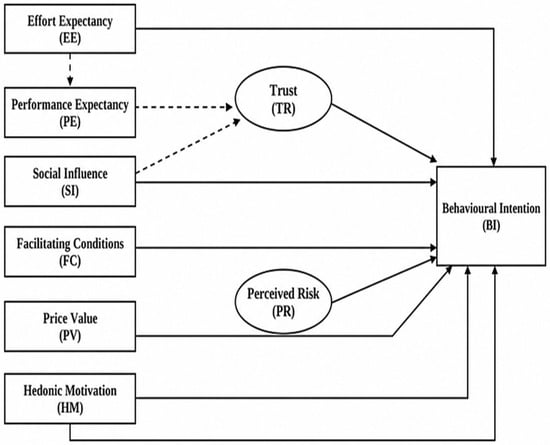
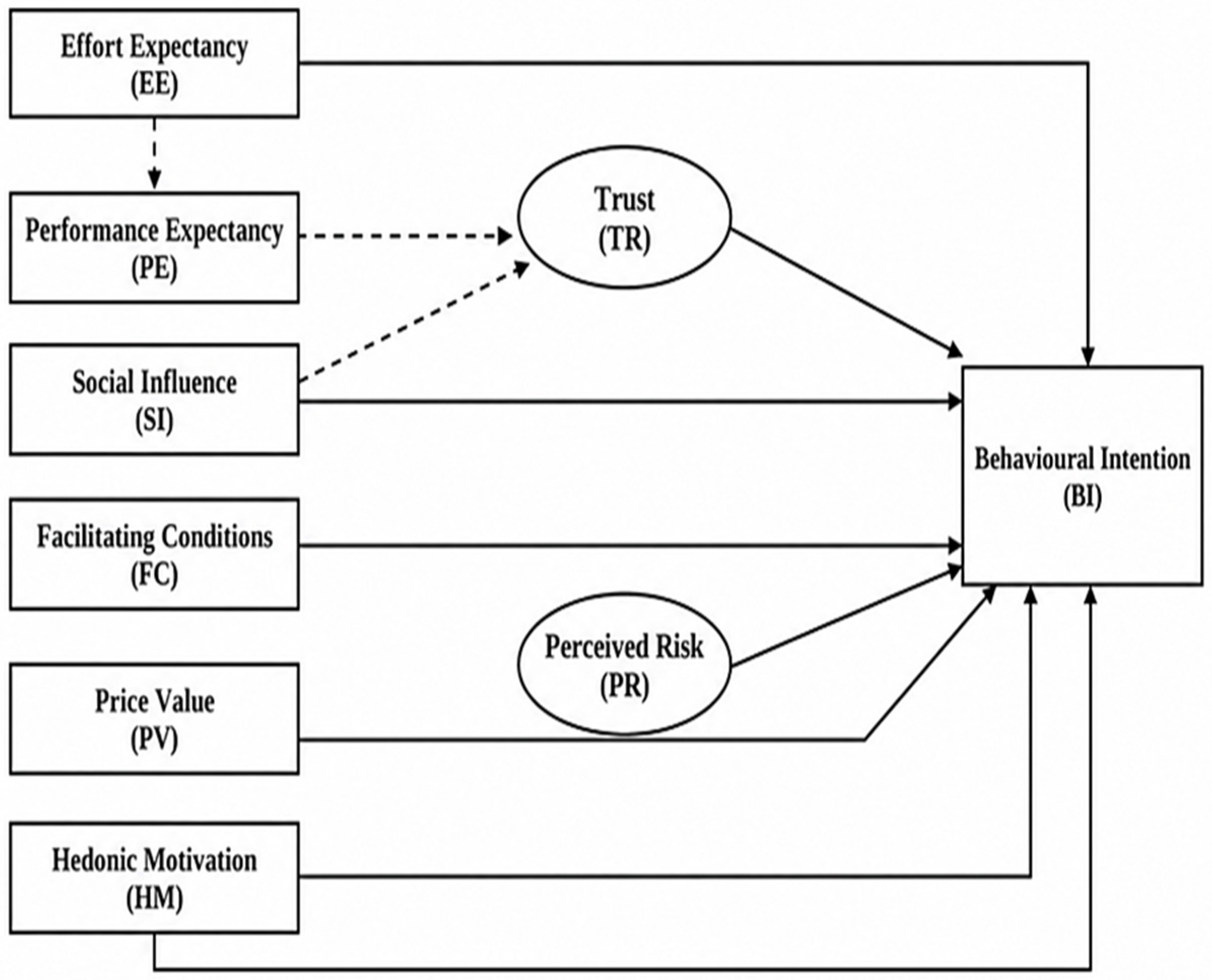

Disclaimer/Publisher’s Note: The statements, opinions and data contained in all publications are solely those of the individual author(s) and contributor(s) and not of MDPI and/or the editor(s). MDPI and/or the editor(s) disclaim responsibility for any injury to people or property resulting from any ideas, methods, instructions or products referred to in the content. |
© 2026 by the authors. Licensee MDPI, Basel, Switzerland. This article is an open access article distributed under the terms and conditions of the Creative Commons Attribution (CC BY) license.