


Abstract
Background: The COVID-19 pandemic has underscored the critical importance of supply chain resilience. However, little is known about firms’ willingness to implement logistics and supply chain resilience strategies (SCRESTs), and how this willingness varies across contexts. This study investigates the willingness of Japanese manufacturing firms to implement SCRESTs and examines how the pandemic has influenced this willingness. Methods: Using survey data from 549 Japanese manufacturing firms collected from March to April 2022, we employed binary choice models and the average treatment effect on the treated (ATET) analysis to examine the factors influencing the willingness to implement SCRESTs before and during/after the pandemic. Results: Firms demonstrated significantly higher willingness to implement SCRESTs during/after the pandemic compared with before. Company size, industry sector, logistics strategy, implementation obstacles, and past SCREST implementation significantly influenced willingness across both periods. The ATET analysis confirmed that past SCREST implementation positively affects future willingness. Conclusions: The pandemic served as a catalyst for enhanced supply chain resilience awareness among Japanese manufacturers. Sector-specific interventions addressing both informational and structural barriers are essential to sustain and strengthen the willingness to implement SCRESTs, particularly in strategically important sectors where financial incentives alone may prove insufficient.
1. Introduction
Logistics and supply chains (SCs) have emerged as critical infrastructure supporting economic activity as production and consumption activities have become internationally fragmented. Beyond their commercial roles, logistics and SCs have increasingly influenced national security considerations, economic stability, and technological competitiveness. Over the last few decades, firms have established global SCs that offer benefits such as higher productivity, lower labor costs, and access to scarce foreign resources [1]. The international dispersion of sourcing and production has intensified structural complexity and cross-firm interdependence within SCs [2]. In recent years, a series of exogenous shocks, including environmental, political, and geopolitical events, have exposed latent fragilities embedded in globally dispersed and complex SCs [3,4,5].
The COVID-19 pandemic subjected SCs to prolonged and simultaneous disruptions, revealing gaps between their assumed resilience and actual adaptive capacity [6]. The world economy, which was already facing the headwinds of trade wars and geopolitical conflicts, experienced a further economic downturn after the inception of the COVID-19 pandemic [7]. Empirical evidence from the pandemic suggests that resilience capabilities were insufficiently embedded in many SCs prior to the crisis [8]. Thus, SC resilience has become a crucial research topic [9,10]. Many studies have acknowledged the significance of SC resilience and proposed it as a way to combat SC disruptions [11,12,13,14,15]. Prior studies suggest that firms with stronger resilience capabilities experienced reduced exposure to disruption-related losses and exhibit superior resource coordination [16,17]. Thus, building resilient SCs has become increasingly important for firms across the world [18,19] to handle future shocks and disruptions.
Firms invest in various strategies to mitigate the financial impact of these disruptions. Reducing risks and their negative effects on logistics and SC activities are the biggest challenges for management today. Flexible strategies can help build resilient SCs by managing risks and uncertainties [20]. In this study, such logistics and supply chain resilience strategies (SCRESTs) refer to the coordinated strategies that enhance a firm’s capacity for anticipation, absorption, adaptive response, and post-disruption recovery [21].
Because resilience investments are discretionary and forward-looking, decision-makers’ interpretation of risk strongly shape whether resilience initiatives are prioritized and enacted [22,23]. The implementation of SCRESTs by firms is a fundamental method of enhancing SC resilience. Despite extensive conceptual development, empirical insights into how firms operationalize logistics and SC-oriented resilience strategies remain fragmented and context-dependent. While prior research has documented SCRESTs and policy initiatives, little is known about how pandemic-induced disruption has reshaped firms’ intentions to adopt such strategies. To address the gaps in literature and practice, we surveyed the willingness of Japanese firms to implement SCRESTs and raised three research questions (RQ):
- RQ 1: How did Japanese manufacturing firms’ willingness to implement SCRESTs differ before and during/after the COVID-19 pandemic?
- RQ 2: What firm-level and structural factors influenced the willingness to implement SCRESTs across these periods?
- RQ 3: Does the prior implementation of SCRESTs causally influence firms’ willingness to adopt such strategies in the future?
Building on our earlier work on logistics and SC resilience in the Japanese context, this study makes several distinct and novel contributions. Firstly, it extends the analysis by shifting the focus from the descriptive assessment of SCRESTs to firms’ willingness to implement them, which represents forward-looking and discretionary investment decisions that have received limited empirical attention. Secondly, this study examines whether pandemic-induced disruptions have altered firms’ perspectives in implementing SCRESTs using paired analysis to capture changes in willingness. Thirdly, this study identifies and empirically tests the firm-level and experiential factors shaping willingness in the post-COVID-19 environment. Finally, by estimating the average treatment effect of past SCREST implementations on future willingness, this study provides new causal insights that have not been previously addressed. In previous studies, Maharjan and Kato [21] mainly focused on documenting the impact of COVID-19 on logistics and SCs based on expert interviews, and evaluated the effectiveness of implemented SCRESTs [24].
Japan provides a particularly relevant context for examining firms’ willingness to implement SCRESTs. As one of the world’s leading manufacturing economies and a key supplier in global value chains, disruptions affecting Japanese firms often generate ripple effects across international supply networks. At the same time, Japan is highly exposed to systemic shocks, including natural disasters and large-scale disruptions, which have historically underscored the importance of SC preparedness. Moreover, structural characteristics of Japanese industry, such as long-term interfirm relationships and keiretsu-type networks, may shape firms’ strategic responses to risk and uncertainty in ways that differ from contexts. These features make Japan an informative and theoretically meaningful setting for investigating the willingness to implement SCRESTs.
The remainder of this paper is organized as follows. Section 2 reviews the relevant literature on SCREST implementation, focusing on the willingness to implement SCREST. Section 3 presents the methods used to answer the research questions, while Section 4 presents the survey and data. Section 5 presents the empirical results for each research question. Section 6 presents a discussion of the findings, and Section 7 concludes.
2. Literature Review
2.1. Significance of Logistics and SC Resilience
SCs operate across multiple organizational and geographic boundaries; hence, they are structurally exposed to diverse sources of uncertainty, making vulnerability a persistent systemic condition rather than an exceptional state. The concept of SC risk is closely associated with the notion of SC vulnerability, which refers to exposure to serious disturbances that can cause negative effects or consequences [25,26]. Resilience is defined as the ability to face SC vulnerabilities [27]. One of the first discussions on SC resilience emerged in the early 2000s by Rice and Caniato [28], and several definitions have been presented since then [29]. SC resilience is referred to as the ability of SCs to preserve their original state after a disturbance [10,30]. Following the author’s prior work, logistics and SC resilience can be understood as a system-level capability that enables firms to anticipate disruptions, absorb their impacts, and recover quickly to return to their initial state, or grow by moving to a new and more desirable state [31].
SC resilience has gained significant attention after the COVID-19 pandemic, which heavily impacted consumers and businesses alike [32,33]. Publications on SC resilience doubled in 2021 and 2022, underscoring its growing importance in managing SC risks [10]. Through a bibliometric analysis, Rhomri and Laqrib [10] identified resilient and agile SCs amid disruptions as one of the key themes. The interdependencies within SC networks play a critical role in SC resilience by proactively managing and adapting to disruptions [34]. Furthermore, ref. [21] highlighted that the implementation of SCRESTs is essential to enhance system resilience. However, evidence from the pandemic indicates that resilience considerations have not been systematically embedded into the strategic planning process of many firms [35]. Consequently, serious questions have been raised about the resilience of global SCs. Therefore, an expanding body of research now converges on the view that strengthening SC resilience is imperative for firms operating in globally dispersed networks [18,36,37].
2.2. Logistics and Supply Chain Resilience Strategies
Prior studies have proposed a wide range of SCRESTs, including multiple sourcing, safety stock, and facility/supplier fortification; node density, complexity, and criticality; facility redundancy, lateral transshipment, multiple allocation of facilities and customers, alternative bill of materials, demand coverage, segregation/dispersion, flexible capacity at the facilities, reassigning of customers, and expansion of facility capacity [24]. These SCRESTs include a combination of proactive and reactive strategies, and can be broadly distinguished by their focus on structural redundancy, operational flexibility, and network reconfiguration. They concluded that there is a lack of strategies aimed at enhancing the resilience of SC links, and an abundance of strategies targeted at enhancing the resilience of SC nodes. Zhu [19] summarized measures for improving SC resilience, such as diversification and dual sourcing, vertical integration of SCs, decentralization of manufacturing capacity, SC visibility, localization of SC, SC flexibility, digital transformation, and government policy and assistance. Paul and Saha [20] conducted a systematic literature review of flexible strategies for SC resilience, categorized as supply, transportation and distribution, manufacturing and operational, and SC-level strategies.
During the COVID-19 pandemic, firms adopted multilayered response strategies to recover from the pandemic and prepare for future “unknown” disruptions revolving around an array of main actions. These include increasing the production and distribution capacity of SCs and related utilization levels, improving workforce management at plants and distribution centers, restructuring logistics and SC networks (e.g., facility location and inventory allocation), introducing new partnerships with logistics service providers and suppliers of raw materials, revisiting order allocation strategies, streamlining product portfolios to focus on a reduced product range, being less sensitive to disruptions, and being more manageable under constrained fulfilment capacity conditions [23,38,39].
The benefits of SCRESTs in mitigating COVID-19 impacts were investigated through mixed-methods research by Japanese manufacturing logistics and SC professionals, offering valuable empirical insights on assessing the impact of SCRESTs [40]. Cinti et al. [34] explored the immediate response of Italian firms within global SCs during COVID-19 through semi-structured interviews and secondary data. They applied SC network theory to define the dimensions of the supply network resilience framework, including SC structure, interdependencies, coordination/collaboration, positioning, and temporary organization. Qi et al. [41] measured the positive impact of integration practices such as information sharing, joint planning, logistics cooperation, and procurement automation on SC resilience in an e-commerce platform, as well as product flexibility on SC resilience through an empirical investigation of the Chinese e-commerce platform. The positive impact of top management support, communication, organizational culture, and product complexity on SC resilience was confirmed, and the positive impact of SC resilience on SC performance was assessed via a mixed-method approach for the Chinese healthcare sector with regard to COVID-19 [33]. Trakoonsanti et al. [42] examined the impact of pharmaceutical SC strategies on the accessibility of pharmaceutical products, lower operational costs, inventory management, logistical performance, and SC resilience, and found a positive influence of SC strategies on all variables.
2.3. Willingness to Implement SCRESTs
Prior empirical evidence suggests that disruption exposure can act as a cognitive trigger, reshaping managerial evaluation of the costs and benefits associated with resilience investments. Prataviera et al. [23] investigated the relationship of the impact of SC disruption on perceptions toward developing SCRESTs in the future, focusing on manufacturers in grocery SCs in Italy. They found that the main element affecting perceptions about future SCRESTs is the impact of experience on the manufacturing side of the SC process. Regarding the factors affecting resilience strategy implementation, Künzli [43] investigated the impact of firm age, firm size, managerial education, and managerial experience on organizational resilience by surveying small and medium-size enterprises (SMEs) in the Netherlands. They revealed that among all variables, only personal characteristics (levels of education and experience of managers) were positively related to the level of organizational resilience. Todo et al. [44] investigated the robustness and resilience of SCs during the pandemic by studying firms in Southeast Asia and India. They found that both larger and newer firms are likely to have to resilient and robust SCs, which have led to their higher performance.
Despite the growing recognition of logistics and SC resilience in the literature, research on how SCRESTs are adopted across industries and how organizational characteristics shape this adoption remains relatively scarce. A bibliometric analysis found that only 31 out of 623 publications between 2004 and 2022 focused on the Japanese context [10]. A recent systematic review by Paul and Saha [20] identified SCRESTs with diverse methodological approaches and their impact on performance as key research themes. Despite extensive conceptual development, empirical investigations into the determinants of firms’ willingness to implement SCRESTs, particularly within the Japanese industrial context, remain limited. Furthermore, the effects of the COVID-19 pandemic on firms’ willingness to implement SCRESTs, as well as the underlying influencing factors, remain underexplored. Methodologically, much of the existing empirical work relies on descriptive or correlational approaches, with limited attention to the causal assessment of prior implementation experience. Moreover, sectoral heterogeneity in resilience behavior during systemic disruption has received insufficient empirical investigation. To address these gaps, this study conducts an empirical investigation to (1) assess the impact of the COVID-19 pandemic on firms’ willingness to implement SCRESTs, (2) identify the key factors influencing this willingness, and (3) examine whether the prior implementation of SCRESTs influence firms’ future willingness to implement SCRESTs.
3. Methods
Table 1 lists eleven different SCRESTs: multiple sourcing, facility dispersion, backup supplier, lateral transshipment, rerouting, facility fortification, facility redundancy, inventory prepositioning, adding extra production capacity, collaboration with suppliers, and business continuity planning (BCP). These SCRESTs include a combination of proactive, reactive, qualitative, and quantitative strategies. The selection of these 11 SCRESTs was based on (1) findings from the systematic literature review conducted by [24] (author’s original work), (2) a review of the literature on articles published during the pandemic, and (3) findings from interviews with logistics and supply chain professionals by [21] (author’s original work). The list was further refined to ensure relevance to the Japanese manufacturing context and clarity of interpretation for survey respondents. Prior to full deployment, the questionnaire was pretested with a small group of industry practitioners and academic experts to assess clarity, relevance, and completeness. Minor wording adjustments were made based on their feedback to improve precision and reduce ambiguity.
Table 1.
List of SCRESTs.
We implemented three different methods to address the three research questions raised in this study. McNemar’s test was selected to address RQ1, which is specifically designed to analyze paired dichotomous outcomes measured in the same participants, making it appropriate for identifying whether the impact of the COVID-19 pandemic has led to an enhanced willingness to implement SCRESTs [45,46]. A binary choice model was implemented to address RQ2, which is appropriate for analyzing the relationship between a set of explanatory variables and a dichotomous outcome, such as identifying factors influencing the willingness of firms to implement SCRESTs. The average treatment effect on the treated (ATET) was employed to address RQ3, which allows the estimation of the causal effect of firms’ prior implementation and future willingness to implement SCRESTs.
3.1. McNemar’s Test
McNemar’s test, a statistical method used to analyze paired nominal data, was performed to address RQ1. It was applied to a 2 × 2 contingency table (Table 2) with a dichotomous trait, with matched pairs of subjects, to determine whether the row and column marginal frequencies were different. In other words, the existence of a “marginal homogeneity” was examined. The 2 × 2 contingency table presents the outcomes of the two tests on a sample of N participants.
Table 2.
2 × 2 Contingency table for McNemar’s test.
The null hypothesis of marginal homogeneity states that the two marginal probabilities for each outcome are the same, that is, pa + pb = pa + pc and pc + pd = pb + pd, where pa, pb, pc, and pd are the theoretical probabilities of occurrences in cells of the corresponding labels with observations a, b, c, and d, respectively.
H0.
There is no significant difference between the willingness to implement SCRESTs before and during/after the COVID-19 pandemic, i.e., H0: pb = pc.
H1.
There is a significant difference between the willingness to implement SCRESTs before and during/after the COVID-19 pandemic, i.e., H1: pb ≠ pc.
The McNemar test statistics can be represented using Equation (1).
Under the null hypothesis, with a sufficiently large number of discordant cells, b and c has a chi-squared distribution with one degree of freedom. If the result is significant, this provides sufficient evidence to reject the null hypothesis in favor of the alternative hypothesis that pb ≠ pc., which would mean that the marginal proportions are significantly different from each other.
3.2. Binary Choice Model
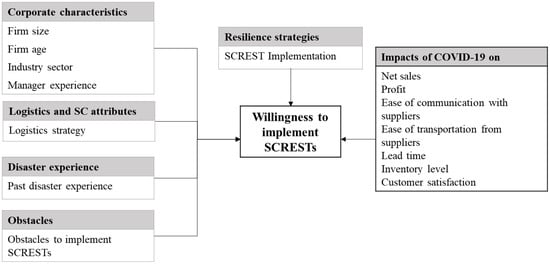
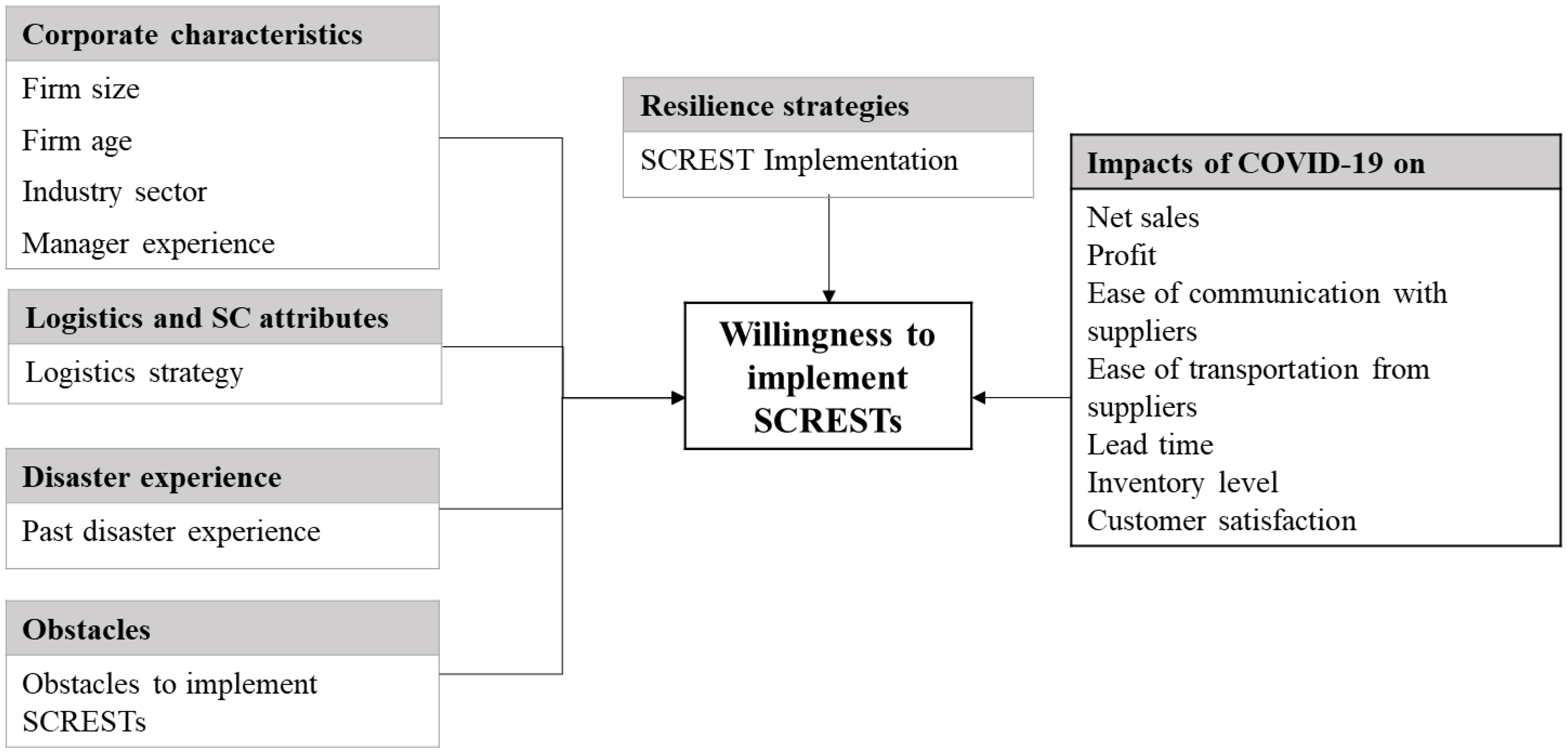
We empirically analyzed the willingness of firms to implement SCRESTs using econometric models to address RQ2. As the willingness to implement SCRESTs is affected by many factors, and willingness is elicited in the form of willingness or unwillingness, it can be regarded as a binary choice; hence, it cannot be analyzed through simple linear regression [47,48]. Therefore, we formulated two binary choice models to identify the factors influencing the willingness to implement SCRESTs before and during/after the pandemic. The dependent variable represented a discrete choice regarding the willingness of each respondent to implement SCRESTs, while the independent variables represented the factors influencing the willingness to implement SCRESTs. This study employed a binary logit model to analyze the key driving factors affecting the willingness of Japanese firms to implement SCRESTs. Figure 1 shows a schematic of the factors influencing the willingness to implement SCRESTs during the pandemic.
Figure 1.
Schematic of the factors influencing the willingness to implement SCRESTs during the pandemic.
Furthermore, we set two models to represent pre-pandemic and during/after pandemic scenarios to address RQ2. The pre-pandemic model hypothesized that the willingness to implement SCRESTs before the COVID-19 pandemic was influenced by the firm size, firm age, industrial sector, manager experience, logistics strategy, past disaster experience, obstacles faced before the pandemic, and the implementation of SCRESTs. The during-pandemic model hypothesized that the willingness to implement SCRESTs was influenced by the organization size, age of the company, industrial sector, manager experience, logistics strategy, past disaster experience, obstacles faced during the pandemic, implementation of SCRESTs, and impacts of the COVID-19 pandemic. The impact of the COVID-19 pandemic includes effects on firm performance (net sales and profit), logistics, and SC activities (i.e., ease of communication with suppliers, ease of access to transportation from suppliers, lead time, inventory level, and customer satisfaction).
The probability that a firm is willing to implement SCRESTs based on the binary logit model can be expressed using Equation (2) [49].
where is the probability of choosing option j for firm n and is the utility function of option j for firm n.
The utility function was assumed to be linear. Equations (3) and (4) demonstrate the utility functions associated with the independent variables for the willingness to implement SCRESTs before and during/after the pandemic, respectively.
where j represents an alternative (j = 0, 1) and n represents a firm; X1 is the firm size, which was set to 1 when the firm was a large-scale enterprise and 0 otherwise; and X2 is the age, which was set to 1 when the firm was older than 20 years and 0 otherwise. X3 represents the industrial sector, which was set to 1 when the firm belonged to the transport equipment and machinery manufacturing, pharmaceutical, semiconductor and device, or textile industry, and 0 otherwise. X4 represents the experience, which was set to 1 when the experience of the respondent was longer than 15 years, and 0 otherwise. X5 represents the logistics strategy that reflects the firm’s overall approach to logistics management, which was set to 1 when the firm used its own logistics assets and 0 otherwise. X6 represents the past disaster experience, which was set to 1 when the company had experienced disasters in the past and 0 otherwise. X7 captures the perceived barriers to implementing SCRESTs, which was set to 1 when the firm faced obstacles (such as financial constraints, lack of information, organizational resistance, or operational complexity) to implement SCRESTs and 0 otherwise. X8 represents SCREST implementation, which was set to 1 when the firm had already implemented SCRESTs and 0 otherwise.
Finally, X9 represents the COVID-19 impact on net sales, profit, ease of communication with suppliers, ease of transportation form suppliers, lead time, inventory level, and customer satisfaction, measured using a five-point scale, vector of coefficients, and the error term . Logit models were estimated using the maximum likelihood method and solved using STATA 17.0.
3.3. Average Treatment Effect on Treated
The ATET is a concept in causal inference that measures the average effect of a treatment on the entities that received the treatment. We employed the ATET to further examine RQ2 because by focusing on the effect of the treatment (i.e., implementation of SCRESTs) on entities that actually implemented it, the ATET can provide more accurate estimates of the effectiveness of the treatment for the population of interest [50,51]. We estimated the average effect of the past implementation of SCRESTs on future willingness by comparing the willingness to implement SCRESTs between firms with (treated group) and without (control group) SCRESTs before the pandemic using propensity score matching. This was done to assess the impact of implementing SCRESTs before the pandemic more precisely by comparing the future willingness of firms with and without SCRESTs. The difference in the willingness between firms with and without SCRESTs was computed using one-to-one matching. The propensity score model included key structural characteristics, e.g., company size and industry sector, which are theoretically and empirically associated with both SCREST adoption and resilience behavior. Matching quality was assessed within the propensity score matching (PSM) procedure to ensure improved comparability between the treated and control firms along the selected covariates. This approach helps mitigate observable selection bias and allows for a more credible estimation of the treatment effects.
The formula for calculating the ATET using the PSM estimator, as outlined by Becker and Ichino [52], is as follows:
where the ATET in Equation (5) measures the effect of the past implementation of SCRESTs on the future willingness to implement them. D denotes the treatment (past implementation of SCRESTs) status of the firms. and are ATET measures of the effect of prior implementation of SCRESTs on the observed outcomes of future willingness, X is a vector of the observed characteristics, denotes the propensity score of each company given the observed covariates, and ATETPSM is the difference in outcomes between the willingness and unwillingness appropriately matched by the propensity score . The ATET was estimated using PSM. We used a logit model to estimate each company’s propensity score using covariates of the industry sector and company size. All statistical analyses, including the ATET estimation, were conducted using STATA 17.0.
4. Survey and Data
4.1. Survey
This study focused on Japanese manufacturing firms because the manufacturing sector is a key pillar of Japan’s economy, contributing significantly to its status as the world’s third-largest economy by GDP and a recognized global manufacturing powerhouse [53]. In FY 2019–20, manufacturing accounted for approximately 20% of Japan’s GDP, with major contributions from the automotive industry and other sectors [53].
Empirical data were collected from four major manufacturing subsectors in Japan: transport equipment and machinery, pharmaceuticals, semiconductor and devices, and textiles. These sectors were selected based on their economic significance and strategic importance. The transport equipment and machinery manufacturing sector has the largest share of Japan’s manufacturing output, accounting for approximately 20% of all manufacturing industries in Japan. Japan’s pharmaceutical industry is one of the largest globally, comprising approximately 7% of the global market, and has been identified as a high-potential growth area [54]. Japan is recognized for producing high-quality semiconductors both within and outside Japan. The Japanese government has prioritized this industry as part of its economic security agenda [55,56]. Japan is the world’s third-largest importer of textiles and apparel, with imports valued at USD 37.14 billion in 2019 [57,58].
Given Japan’s high exposure to natural and man-made disasters, strengthening national resilience is a major policy concern [59]. Since 2014, under the “policy promoting initiatives to build national resilience,” the transportation and logistics sectors have been recognized as critical to enhancing national preparedness and flexibility [60]. In support of these efforts, the Japanese government has implemented several initiatives, including earmarked subsidies for implementing SCRESTs [61], promoting investments in Japan to strengthen SCs, and broader regional initiatives to enhance SC resilience in the Indo-Pacific region [62].
Primary data were collected using a structured questionnaire in Japan between 29 March and 15 April 2022. The survey was conducted by a professional survey firm using a stratified sampling approach based on firm size and industry sector to ensure adequate representation across key categories. Within each stratum, firms were randomly selected from the survey firm’s database. The questionnaire included questions regarding the profile of firms, attributes of respondents, and their willingness to implement SCRESTs. A total of 8000 firms that met the selection criteria were contacted nationwide through a combination of mail and web-based outreach. The target respondents were logistics and SC professionals. A total of 549 valid responses were obtained, yielding a response rate of approximately 7%.
4.2. Descriptive Statistics
Table 3 presents the descriptive statistics of the respondents’ profiles. Out of the 549 valid responses, 5.3% were from large enterprises (LEs) and 94.7% were from SMEs. This finding suggests that SMEs dominate the survey sample. Furthermore, 62% of the total responses were from the transport machinery and equipment manufacturing industry, followed by the textile manufacturing industry (19%), pharmaceutical manufacturing industry (11%), and semiconductor and device manufacturing industry (7%). The highest proportion of firms was in the age ranges of 11–20 years (36%) and 21–50 years (44%). In terms of logistics and SC strategies, the highest proportion (44%) of firms fully outsourced their logistics activities to third-party logistics companies, 31% partially used their own logistics assets, 14% fully used in-house logistics assets, 8% partially used third-party logistics companies, and the remaining 3% chose other options. In terms of managerial experience, 49% of respondents had 20 or more years of experience. While survey-based research may be subject to nonresponse bias, the distribution of responding firms across major industry categories and size groups is consistent with national manufacturing statistics. No systematic response patterns were observed that would suggest a strong nonresponse bias.
Table 3.
Profile of respondents (firm size, sector, and other characteristics). (Source(s): Authors’ own work.)
4.3. Willingness to Implement SCREST
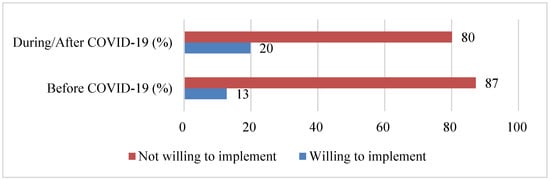
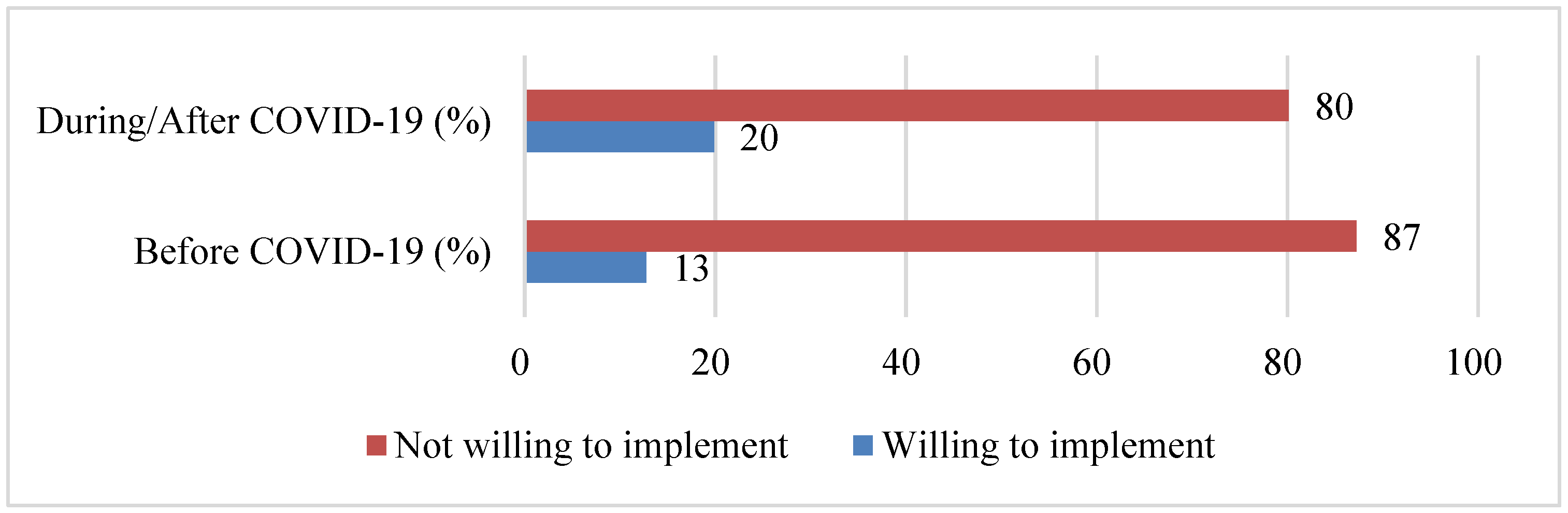
Figure 2 shows the willingness to implement SCRESTs before and during/after the pandemic. Before the COVID-19 pandemic, 13% of respondents stated that they were willing to implement SCRESTs. Among these, 14% were LEs and the remaining 56% were SMEs. The proportion of firms that implemented SCRESTs before the pandemic was 9%, which was lower than the stated willingness. During the pandemic, the proportion of firms that stated that their willingness to implement SCRESTs increased to 20%. Among the firms willing to implement SCRESTs during/after the pandemic, 11% were LEs and the remaining 89% were SMEs.
Figure 2.
Predicted willingness to implement SCRESTs before and during/after the pandemic. Source(s): Authors’ own work.
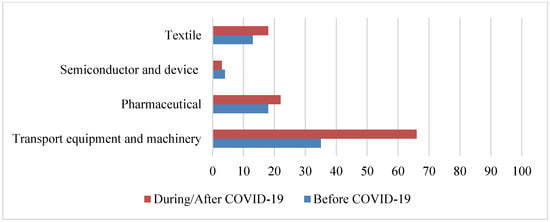
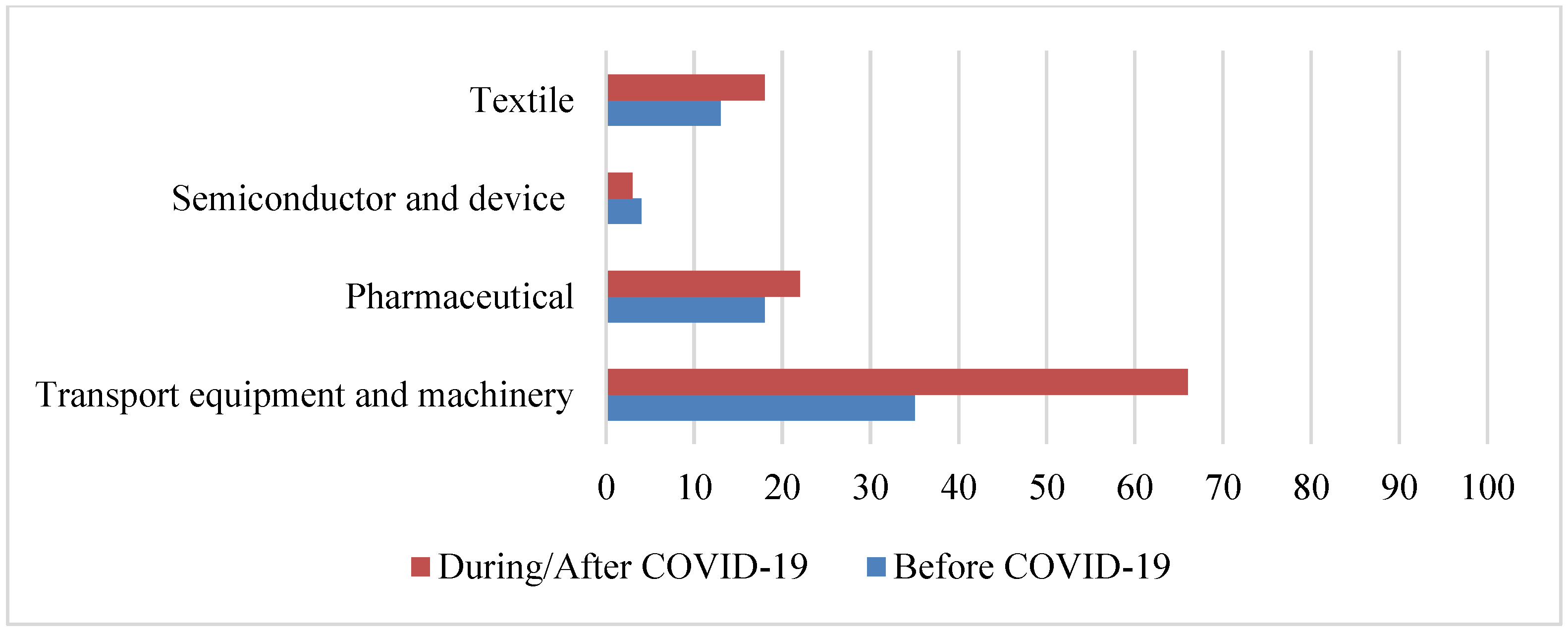
Figure 3 shows the willingness to implement SCRESTs based on the industrial sector. The transport equipment and machinery manufacturing sector had the highest proportion of firms willing to implement SCRESTs, both before and during/after the pandemic, followed by the pharmaceutical, textile, and semiconductor and device manufacturing industries. Overall willingness increased by 56% from before the pandemic. The transport equipment and machinery manufacturing sector had the highest proportionate increase (89%) in the number of firms willing to implement SCRESTs. Although semiconductor and device manufacturing is considered a highly important sector from the perspective of national security by the Japanese government, the proportion of firms willing to implement SCRESTs has decreased by 25%. This was the only industrial sector where a decrease in willingness was observed.
Figure 3.
Predicted willingness to implement SCREST based on the industrial sector. Source(s): Authors’ own work.
5. Results
5.1. Impact of the COVID-19 Pandemic on the Willingness to Implement SCRESTs
Table 4 lists the counts for the 2 × 2 contingency table for McNemar’s test. The number of firms willing to implement SCRESTs before the pandemic did not equal the number of firms willing to implement it during/after the pandemic. This suggests that we can reject the null hypothesis and accept the alternative hypothesis that stated that there was a significant difference between the willingness to implement SCREST before and during/after the COVID-19 pandemic. We further investigated whether the impact of the pandemic was the reason for the increase in willingness among the studied firms. McNemar’s test resulted in a chi-square value of 17.89 with one degree of freedom, and the exact McNemar’s significance probability was 0.1%. The reported McNemar’s chi-square value of 17.89 with one degree of freedom exceeds the critical value of 3.84 at the 5% significance level, indicating that the COVID-19 pandemic had a significant impact on the change in firms’ willingness to implement SCRESTs among the Japanese firms studied in the four manufacturing sectors.
Table 4.
Counts for 2 × 2 contingency table for McNemar’s test.
5.2. Factors Influencing the Willingness to Implement SCRESTs
Table 5 lists the estimation results of the logit models before and during/after the pandemic. Among all the variables tested, the company size and logistics strategy were found to be statistically significant at the 5% level. The obstacles to implementing SCRESTs before the pandemic and existing SCRESTs were statistically significant at the 0.1% level in the pre-pandemic case. In the during/post-pandemic case, the industrial sector (semiconductor and device manufacturing) variables were statistically significant at the 5% level, logistics strategy was statistically significant at the 1% level, and obstacles to implementing SCRESTs during the pandemic were statistically significant at the 0.1% level. The reported pseudo R2 values in Table 5 are consistent with expectations for cross-sectional survey data in logistic models, where pseudo R2 statistics are typically lower than conventional ordinary least squares R2 measures. The values suggest that the model captures meaningful variations in firms’ willingness to implement SCRESTs, while acknowledging that unobserved factors may also influence adoption behavior.
Table 5.
Estimation results of willingness choice models at pre-pandemic and during/post-pandemic.
The coefficient for the semiconductor sector was negative and statistically significant. This indicates that, holding other factors constant, firms in the semiconductor industry are less likely to express a willingness to implement SCRESTs compared to other sectors. This may be due to substantial Japanese government support, including earmarked funding and industrial policy measures, which partially mitigate perceived risks and reduce the urgency for firms to adopt additional SCRESTs independently.
Surprisingly, none of the factors related to the pandemic’s impact were statistically significant. Although the COVID-19 pandemic caused widespread and severe disruptions, the estimated results indicate that pandemic-related impacts did not affect a firm’s willingness to implement SCRESTs. A plausible explanation is that the pandemic functioned as a systemic shock that affected most firms simultaneously, thereby reducing cross-firm variations in perceived impacts. Overall, the results imply that the COVID-19 pandemic acted more as a contextual trigger than a heightened general awareness of risk. At the same time, the actual adoption willingness of SCRESTs was conditioned by firm-specific capabilities and constraints rather than the severity of the pandemic impacts per se.
5.3. Impact of Past Implementation of SCRESTs on Future Willingness
Table 6 shows that there is a statistically significant difference between firms that did and did not implement SCRESTs in terms of their future willingness to implement SCRESTs at 1% significance level. The sign of the ATET coefficient is positive, indicating that the willingness of firms that implemented SCRESTs before the pandemic is significantly higher than that of firms that did not implement it before the pandemic. Hence, our analysis indicates that past implementation of SCRESTs has a positive effect on the future willingness.
Table 6.
Estimation results of willingness to implement SCRESTs post-pandemic.
6. Discussion
The discussion section is arranged around the three research questions raised in this study.
6.1. The Impact of the COVID-19 Pandemic on Willingness to Implement SCRESTs
The survey findings highlight a gradual but uneven increase in the willingness to implement SCRESTs among Japanese firms in the four manufacturing sectors. While the overall willingness to implement SCRESTs increased during and after the COVID-19 pandemic, the pattern was sector-dependent. Notably, the semiconductor and device manufacturing sector, despite being prioritized by the Japanese government as critical to national security and economic resilience, was the only sector that exhibited a 25% decrease in willingness. This counterintuitive decline suggests a complex interplay of sector-specific pressures such as global demand volatility, production bottlenecks, and perceived resilience through government backing. The cautious uptake of SCRESTs across sectors may also reflect structural features of Japanese business culture such as long-term supplier relationships, risk sharing within keiretsu networks, and strong disaster awareness, which contribute to an implicit form of resilience. These embedded practices may reduce the perceived need for formalized, strategic interventions such as SCRESTs, particularly among firms with established internal coordination mechanisms.
The results of McNemar’s test revealed that the COVID-19 pandemic increased the willingness to implement SCRESTs among Japanese firms in the four manufacturing sectors. While it is difficult to assess whether this level of willingness is high or low owing to the lack of comparable data from other countries and time periods, it highlights a critical need for future improvement in Japan. This urgency is underscored by two key factors. First, willingness is the primary determinant of whether firms actually implement SCRESTs. Second, Japan’s high exposure to natural disasters makes it particularly vulnerable to operational disruptions. Given Japan’s central role in global SCs, disaster-induced interruptions can have far-reaching consequences beyond its borders. Therefore, strengthening SCREST adoption is essential not only to ensure business continuity within Japan, but also to safeguard the stability of global supply networks that depend on Japanese industries.
6.2. Factors Influencing Firms’ Willingness to Implement SCRESTs
The results of the binary logit models revealed that before the pandemic, only the company size, logistics strategy, obstacles to implementing SCREST before the pandemic, and existing SCREST implementation were statistically significant in influencing willingness to implement SCRESTs. During and after the pandemic, the significant factors shifted to include the industrial sector (semiconductor and device manufacturing), logistics strategy, obstacles encountered during the COVID-19 pandemic, and SCREST implementation during that period. These findings suggest that targeted emphasis on these significant variables can effectively increase a company’s willingness to adopt SCRESTs. The statistically significant coefficient for the semiconductor and device manufacturing sector underscores the role of sector-specific policy contexts in shaping resilience behavior. Government support for this industry may lower firm-level incentives for further SCREST adoption, suggesting that policy- and firm-level interventions should be carefully coordinated to encourage proactive resilience investments. Importantly, the results also underscore the strong link between willingness and the actual implementation of SCRESTs, highlighting that efforts to boost willingness may directly translate into greater adoption of SCRESTs.
While McNemar’s test indicated that the COVID-19 pandemic had a significant effect on increasing willingness, none of the variables that directly measured the impact of the pandemic were statistically significant in the logit models. When exposure to disruption was relatively uniform, impact-related variables lost their explanatory power in distinguishing willingness across firms. Instead, the willingness to implement SCRESTs appears to be driven primarily by structural and organizational characteristics, such as firm size, logistics strategy, sectoral positioning, and perceived implementation obstacles. These factors shape firms’ capacity, preparedness, and decision-making processes, which are more persistent and discriminating than short-term shock experiences. This finding suggests that experiencing disruption alone is insufficient to induce proactive resilience investments. Rather, firms’ strategic orientation and internal constraints determine whether disruption is translated into forward-looking resilience actions.
This apparent contradiction points to the complexity of the factors driving willingness and highlights the need for further investigation. Therefore, we identified the exploration of additional influencing factors as an important direction for future research.
Our findings align in part with previous research but also reveal distinct differences. For example, while our study identified firm size as a significant factor influencing the willingness to implement SCRESTs before the pandemic, Künzli [43] found that in the context of SMEs in the Netherlands, organizational resilience was more strongly associated with the personal characteristics of managers, specifically their education and experience, rather than firm size or age. This contrast suggests that the drivers of resilience-related behaviors may differ between contexts or industries, and that individual-level factors may play a greater role in smaller firms, while organizational factors, such as size and logistics strategies, may be more influential in larger or more industrially integrated firms. Todo et al. [41] found that both larger and newer firms in Southeast Asia and India demonstrated higher resilience and robustness during the COVID-19 pandemic, which contributed to stronger performance. This supports our finding that firm size continues to influence preparedness actions such as SCRESTs, at least before the pandemic. However, our study also revealed a unique insight: while the willingness to implement SCRESTs increased during the pandemic, none of the variables directly capturing the impact of the pandemic were statistically significant in the logit models. This suggests that while the pandemic triggered behavioral shifts, the underlying drivers of willingness may be more complex and indirect than initially assumed. Taken together, these comparisons underscore the importance of exploring both organizational and managerial factors, as well as contextual variables, in understanding the adoption of resilience-enhancing practices such as SCRESTs. Further cross-contextual studies are needed to untangle these influences and develop more targeted strategies to foster SC resilience.
6.3. Influence of the Past Implementation of SCRESTs on Firms’ Future Willingness to Implement SCRESTs
The results of the ATET analysis revealed that firms that implemented SCRESTs before the COVID-19 pandemic demonstrated a significantly higher willingness to implement them in the future compared to those that did not. This finding suggests that past experiences have a positive and reinforcing effect on future proactive behavior, which is a novel contribution of this study to the literature on SC resilience. This finding is consistent with prior research that highlights the role of experiential learning in shaping organizational responses to risks. For example, Grötsch [63] demonstrated that firms with prior disruption experience are more likely to adopt proactive risk management strategies. Baghersad et al. [64] found that past exposure to disruptions mitigated the negative impacts of subsequent events, indicating learning effects over time. In the Japanese context, Okada and Shirahada [65] showed that firms affected by the Great East Japan Earthquake used that experience to redesign more resilient SCs. Recent findings by Maharjan and Kato [21] suggested that existing SCRESTs contributed to more effective responses during the COVID-19 pandemic. Given Japan’s vulnerability to natural disasters and its integral role in the global supply network, this reinforcing effect underscores the importance of promoting initial SCRESTs implementation, ultimately cultivating a long-term commitment to resilience.
7. Conclusions
This study examined the willingness of Japanese firms in four key industry sectors, transport equipment and machinery manufacturing, pharmaceutical manufacturing, semiconductor and device manufacturing, and textile manufacturing, to implement SCRESTs. It investigated both the influencing factors and relationship between past implementation and future willingness. While the critical role of SC resilience was widely acknowledged, especially in the wake of global disruptions, empirical data-driven research on this topic remains limited in the Japanese context. This study addressed this gap by providing new evidence on sectoral differences, behavioral drivers, and policy relevance.
This study demonstrated a post-pandemic increase in Japanese manufacturing firms’ willingness to adopt SCRESTs, although this trend varies across sectors. The notable decline observed in the semiconductor industry, despite its national strategic importance for Japan, highlights the need for closer alignment between public initiatives and firm-level realities. The findings also revealed that firms with past SCREST implementation were significantly more likely to express future willingness to implement SCRESTs, reinforcing the value of experiential learning in resilience planning. These findings underscore the complexity of factors influencing SCREST adoption in Japan.
7.1. Implications
Building on the findings of our study, we present theoretical and practical implications.
Theoretical implications: This study advances the academic discourse on logistics and SC resilience by extending the investigation to firms’ willingness to implement strategies before and during/after disruptions. Contrary to much of the existing literature that focuses on defining resilience capabilities or evaluating performance outcomes, this study introduces a new behavioral dimension by examining firms’ willingness to implement SCRESTs. This perspective contributes to the proactive–reactive resilience debate by highlighting how disruptive events influence strategic intent, not only operational outcomes. Second, the study explores both internal and external factors influencing willingness, demonstrating that firm-level characteristics, structural constraints, and temporal effects of disruption jointly shape resilience behavior. These findings suggest that major disruptions, such as COVID-19, may function as catalysts that reinforce or amplify existing structural determinants rather than acting as isolated drivers of change. Third, by providing multi-industry evidence from Japan, this study contributes to the contextualization of resilience theory by demonstrating how institutional and sector-specific environments influence strategic responses. Collectively, these insights extend resilience research beyond capability assessment toward a more dynamic and behaviorally grounded understanding of SC strategy.
Practical implications: In recent years, the Japanese government has launched several initiatives aimed at strengthening national SC resilience, particularly in light of lessons from the COVID-19 pandemic and geopolitical tensions. Notably, earmarked funding has been allocated to incentivize the reshoring of manufacturing, particularly in the semiconductor industry. Other initiatives include support for SC diversification, digitalization, disaster preparedness frameworks, and risk data platforms to enhance visibility and preparedness. These national efforts reflect a broader policy shift toward formalizing SC resilience across strategic sectors. However, the observed decline in the willingness to implement SCRESTs within the semiconductor industry suggests that financial incentives alone may not be sufficient. Firms in this sector may perceive government prioritization as a substitute for internal resilience efforts or may lack clarity on how SCRESTs align with sector-specific realities. This highlights the need for sector-sensitive policy design, including improved communication of the benefits of implementing SCRESTs, integration into existing operational frameworks, and targeted capacity-building for industries in which informal resilience mechanisms have traditionally prevailed. To maximize the impact of resilience policies, government interventions should not only provide financial support but also address informational and structural barriers that inhibit adoption, particularly in sectors of high strategic importance.
7.2. Limitations and Future Research
While this study offers new insights into the willingness of Japanese firms to implement SCRESTs, it has limitations that open up directions for future research. A key challenge lies in the empirical nature of the study, particularly the sector-specific variations and reliance on self-reported willingness as a proxy for actual implementation. Although McNemar’s test indicated that the COVID-19 pandemic may have contributed to increased willingness, none of the pandemic-related variables were statistically significant in the regression models. This suggests that unobserved or more nuanced factors, such as managerial perceptions, SC complexity, or institutional trust, may influence willingness but remain unexplained in the current framework.
Moreover, the decline in willingness within the semiconductor and device manufacturing industry, despite strong government support, points to potential misalignments between policy initiatives and firm-level decision-making. Future research should explore the interaction between formal government incentives and embedded business practices, particularly in sectors deemed critical for national resilience. Expanding the study across more sectors, incorporating longitudinal data, and integrating qualitative insights would offer a more comprehensive understanding of how firms evaluate and adopt SCRESTs over time.
Author Contributions
Conceptualization, R.M. and H.K.; methodology, R.M.; software, R.M.; formal analysis, R.M. and S.C.; investigation, R.M.; resources, R.M.; data curation, R.M.; writing—original draft preparation, R.M.; writing—review and editing, R.M. and S.C.; supervision, H.K.; funding acquisition, S.C. All authors have read and agreed to the published version of the manuscript.
Funding
The APC was funded by the KAKENHI-Grant-in-Aid for Scientific Research (B) Project number 25K03366.
Institutional Review Board Statement
Ethical review and approval were waived for this study because, under Japanese national regulations, ethics committee approval is required for medical and biological research involving human subjects, as defined by the Ethical Guidelines for Medical and Biological Research Involving Human Subjects (2021 revision) (https://www.mhlw.go.jp/content/001457376.pdf, accessed on 18 January 2026), issued jointly by the Ministry of Education, Culture, Sports, Science and Technology and the Ministry of Health, Labour and Welfare of Japan. The present study consisted solely of an anonymous questionnaire survey targeting adult professionals in Japanese firms and did not involve medical intervention, biological sampling, health-related personal data, or vulnerable populations. Accordingly, this research does not fall within the categories requiring ethics committee review under applicable Japanese legislation. Therefore, formal IRB approval was not required.
Informed Consent Statement
Informed consent was obtained from all subjects involved in the study.
Data Availability Statement
The raw data used in this study supporting the findings of this article can be made available by the authors on request.
Conflicts of Interest
The authors declare no conflicts of interest.
Abbreviations
The following abbreviations are used in this manuscript:
| ATET | Average Treatment Effect on the Treated |
| ATETPSM | Average Treatment Effect on the Treated Propensity Score Matching |
| BCP | Business Continuity Planning |
| LEs | Large Enterprises |
| METI | Ministry of Economy Trade and Industry |
| PSM | Propensity Score Matching |
| SC | Supply Chain |
| SCRESTs | Supply Chain Resilience Strategies |
| SMEs | Small and Medium-size Enterprises |
References
- López, C.; Ishizaka, A. A hybrid FCM-AHP approach to predict impacts of offshore outsourcing location decisions on supply chain resilience. J. Bus. Res. 2019, 103, 495–507. [Google Scholar] [CrossRef] [Scilit]
- Golgeci, I.; Yildiz, H.E.; Andersson, U.R. The rising tensions between efficiency and resilience in global value chains in the post-COVID-19 world. Transnatl. Corp. J. 2020, 27, 127–141. [Google Scholar] [CrossRef] [Scilit]
- Lechler, S.; Canzaniello, A.; Roßmann, B.; von der Gracht, H.A.; Hartmann, E. Real-time data processing in supply chain management: Revealing the uncertainty dilemma. Int. J. Phys. Distrib. Logist. Manag. 2019, 49, 1003–1019. [Google Scholar] [CrossRef] [Scilit]
- Sadeek, S.N.; Hanaoka, S. Assessment of text-generated supply chain risks considering news and social media during disruptive events. Soc. Netw. Anal. Min. 2023, 13, 96. [Google Scholar] [CrossRef] [Scilit]
- Vural, C.A.; Balci, G.; Balci, E.S.; Gocer, A. Looking inside the panarchy: Reorganisation capabilities for food supply chain resilience against geopolitical crises. Supply Chain Manag. 2025, 30, 1–19. [Google Scholar] [CrossRef] [Scilit]
- Herold, D.M.; Nowicka, K.; Pluta-Zaremba, A.; Kummer, S. COVID-19 and the pursuit of supply chain resilience: Reactions and lessons learned from logistics service providers (LSPs). Supply Chain Manag. 2021, 26, 702–714. [Google Scholar] [CrossRef] [Scilit]
- Das, D.; Datta, A.; Kumar, P.; Kazancoglu, Y.; Ram, M. Building supply chain resilience in the era of COVID-19: An AHP-DEMATEL approach. Oper. Manag. Res. 2022, 15, 249–267. [Google Scholar] [CrossRef] [Scilit]
- Kiers, J.; Seinhorst, J.; Zwanenburg, M.; Stek, K. Which strategies and corresponding competences are needed to improve supply chain resilience: A COVID-19-based review. Logistics 2022, 6, 12. [Google Scholar] [CrossRef] [Scilit]
- Gebhardt, M.; Spieske, A.; Birkel, H. The future of the circular economy and its effect on supply chain dependencies: Empirical evidence from a Delphi study. Transp. Res. Part E Logist. Transp. Rev. 2022, 157, 102570. [Google Scholar] [CrossRef] [Scilit]
- Rhomri, M.; Laqrib, Y.Z. A bibliometric analysis of research on supply chain resilience: Using Scopus and Web of Science. Sustain. Manuf. Serv. Econ. 2025, 4, 100032. [Google Scholar] [CrossRef] [Scilit]
- Klibi, W.; Martel, A.; Guitouni, A. The design of robust value-creating supply chain networks: A critical review. Eur. J. Oper. Res. 2010, 203, 282–293. [Google Scholar] [CrossRef] [Scilit]
- Brandon-Jones, E.; Squire, B.; Autry, C.W.; Petersen, K.J. A contingent resource-based perspective of supply chain resilience and robustness. J. Supply Chain Manag. 2014, 50, 55–73. [Google Scholar] [CrossRef] [Scilit]
- Dehghani, E.; Jabalameli, M.S.; Jabbarzadeh, A.; Pishvaee, M.S. Resilient solar photovoltaic supply chain network design under business-as-usual and hazard uncertainties. Comput. Chem. Eng. 2018, 111, 288–310. [Google Scholar] [CrossRef] [Scilit]
- Barbieri, P.; Boffelli, A.; Elia, S.; Fratocchi, L.; Kalchschmidt, M.; Samson, D. What can we learn about reshoring after COVID-19? Oper. Manag. Res. 2020, 13, 131–136. [Google Scholar] [CrossRef] [Scilit]
- Xu, S.; Zhang, X.; Feng, L.; Yang, W. Disruption risks in supply chain management: A literature review based on bibliometric analysis. Int. J. Prod. Res. 2020, 58, 3508–3526. [Google Scholar] [CrossRef] [Scilit]
- Ponomarov, S.Y.; Holcomb, M.C. Understanding the concept of supply chain resilience. Int. J. Logist. Manag. 2009, 20, 124–143. [Google Scholar] [CrossRef] [Scilit]
- Ambulkar, S.; Blackhurst, J.; Grawe, S. Firm’s resilience to supply chain disruptions: Scale development and empirical examination. J. Oper. Manag. 2015, 33–34, 111–122. [Google Scholar] [CrossRef] [Scilit]
- Coronavirus Is Proving We Need More Resilient Supply Chains. Available online: https://hbr.org/2020/03/coronavirus-is-proving-that-we-need-more-resilient-supply-chains (accessed on 15 January 2026).
- Zhu, G.; Chou, M.C.; Tsai, C.W. Lessons learned from the COVID-19 pandemic exposing the shortcomings of current supply chain operations: A long-term prescriptive offering. Sustainability 2020, 12, 5858. [Google Scholar] [CrossRef] [Scilit]
- Paul, A.; Saha, S.C. A systematic literature review on flexible strategies and performance indicators for supply chain resilience. Glob. J. Flex. Syst. Manag. 2025, 26, S207–S231. [Google Scholar] [CrossRef] [Scilit]
- Maharjan, R.; Kato, H. Logistics and supply chain resilience of Japanese companies: Perspectives from impacts of the COVID-19 pandemic. Logistics 2023, 7, 27. [Google Scholar] [CrossRef] [Scilit]
- Creazza, A.; Colicchia, C.; Dallari, F. Who cares? Supply chain managers’ perceptions regarding cyber supply chain risk management in the digital transformation era. Supply Chain Manag. 2021, 27, 30–53. [Google Scholar] [CrossRef] [Scilit]
- Prataviera, L.B.; Creazza, A.; Melacini, M.; Dallari, F. Heading for tomorrow: Resilience strategies for post-COVID-19 grocery supply chains. Sustainability 2022, 14, 1942. [Google Scholar] [CrossRef] [Scilit]
- Maharjan, R.; Kato, H. Resilient supply chain network design: A systematic literature review. Transp. Rev. 2022, 42, 739–761. [Google Scholar] [CrossRef] [Scilit]
- Colicchia, C.; Strozzi, F. Supply chain risk management: A new methodology for a systematic literature review. Supply Chain Manag. 2012, 17, 403–418. [Google Scholar] [CrossRef] [Scilit]
- Christopher, M.; Peck, H. Building the resilient supply chain. Int. J. Logist. Manag. 2004, 15, 1–14. [Google Scholar] [CrossRef] [Scilit]
- Wieland, A.; Wallenburg, C.M. Dealing with supply chain risks: Linking risk management practices and strategies to performance. Int. J. Phys. Distrib. Logist. Manag. 2012, 42, 887–905. [Google Scholar] [CrossRef] [Scilit]
- Rice, J.B., Jr.; Caniato, F. Building a secure and resilient supply network. Supply Chain Manag. Rev. 2003, 7, 22–30. [Google Scholar]
- Ivanov, D. Introduction to Supply Chain Resilience, 1st ed.; Springer: Cham, Switzerland, 2021. [Google Scholar]
- Pu, G.; Yang, R.; Wu, M. The effect of interorganizational citizenship behavior on supply chain resilience: An organizational learning perspective. Supply Chain Manag. 2025, 30, 476–495. [Google Scholar] [CrossRef] [Scilit]
- Hohenstein, N.-O.; Fiesel, E.; Hartmann, E.; Giunipero, L. Research on the phenomenon of supply chain resilience: A systematic review and paths for further investigation. Int. J. Phys. Distrib. Logist. Manag. 2015, 45, 90–117. [Google Scholar] [CrossRef] [Scilit]
- Khourshed, N.; Beshr, M. Evaluating supply chain performance measurement system (SCPMS) lifecycle during unexpected events. Prod. Manuf. Res. 2024, 12, 2345616. [Google Scholar] [CrossRef] [Scilit]
- Xiao, Q.; Khan, M.S. Exploring factors influencing supply chain performance: Role of supply chain resilience with a mixed-method approach—Empirical evidence from the Chinese healthcare sector. Cogent Bus. Manag. 2024, 11, 2287785. [Google Scholar] [CrossRef] [Scilit]
- Cinti, A.; Marcone, M.R.; Sabatini, A.; Temperini, V. Enhancing supply chain resilience through the supply network approach. J. Bus. Ind. Mark. 2025, 40, 858–876. [Google Scholar] [CrossRef] [Scilit]
- Van Hoek, R. Research opportunities for a more resilient post-COVID-19 supply chain—Closing the gap between research findings and industry practice. Int. J. Oper. Prod. Manag. 2020, 40, 341–355. [Google Scholar] [CrossRef] [Scilit]
- Craighead, C.W.; Ketchen, D.J.; Darby, J.L. Pandemics and supply chain management research: Toward a theoretical toolbox. Decis. Sci. 2020, 51, 838–866. [Google Scholar] [CrossRef] [Scilit]
- Verma, S.; Gustafsson, A. Investigating the emerging COVID-19 research trends in the field of business and management: A bibliometric analysis approach. J. Bus. Res. 2020, 118, 253–261. [Google Scholar] [CrossRef] [Scilit]
- Chowdhury, P.; Paul, S.K.; Kaisar, S.; Moktadir, M.A. COVID-19 pandemic-related supply chain studies: A systematic review. Transp. Res. Part E Logist. Transp. Rev. 2021, 148, 102271. [Google Scholar] [CrossRef] [Scilit]
- Trabucco, M.; De Giovanni, P. Achieving resilience and business sustainability during COVID-19: The role of lean supply chain practices and digitalization. Sustainability 2021, 13, 12369. [Google Scholar] [CrossRef] [Scilit]
- Maharjan, R.; Kato, H. Can logistics and supply chain resilience strategies minimize the impacts of disruptions: Evidence from Japan. Int. J. Logist. Manag. 2024, 35, 1465–1482. [Google Scholar] [CrossRef] [Scilit]
- Qi, Y.; Wang, X.; Zhang, M.; Wang, Q. Developing supply chain resilience through integration: An empirical study on an e-commerce platform. J. Oper. Manag. 2022, 69, 477–496. [Google Scholar] [CrossRef] [Scilit]
- Trakoonsanti, L.; Trakulsunti, Y.; Sommanawat, K.; Norasedsophon, S.; Areerakulkan, N. Exploring supply chain adaptations in the pharmaceutical sector: Insights from Thailand’s experience during the COVID-19 pandemic. OPSEARCH 2025, 1–26. [Google Scholar] [CrossRef] [Scilit]
- Künzli, S. Why Are Some Firms More Resilient than Others? The Effect of Firm and Managerial Characteristics on Organizational Resilience. Master’s Thesis, University of Groningen, Groningen, The Netherlands, 2016. [Google Scholar]
- Todo, Y.; Oikawa, K.; Ambashi, M.; Kimura, F.; Urata, S. Robustness and resilience of supply chains during the COVID-19 pandemic: Findings from a questionnaire survey on the supply chain links of firms in ASEAN and India. ERA Discuss. Pap. 2021, unpublished work. [Google Scholar]
- McNemar, Q. Note on the sampling error of the difference between correlated proportions or percentages. Psychometrika 1947, 12, 153–157. [Google Scholar] [CrossRef] [Scilit] [PubMed]
- Kumar-M, P.; Mishra, A. Inferential statistics for the hypothesis testing of non-parametric data. In R for Basic Biostatistics in Medical Research; Srinivasan, A., Mishra, A., Kumar-M, P., Eds.; Springer: Singapore, 2024. [Google Scholar]
- Pan, X.; Li, M.; Wang, M.; Zong, T.; Song, M. The effects of a smart logistics policy on carbon emissions in China: A difference-in-differences analysis. Transp. Res. Part E Logist. Transp. Rev. 2020, 137, 101939. [Google Scholar] [CrossRef] [Scilit]
- Pan, X.; Uddin, M.K.; Ai, B.; Pan, X.; Saima, U. Influential factors of carbon emissions intensity in OECD countries: Evidence from symbolic regression. J. Clean. Prod. 2019, 220, 1194–1201. [Google Scholar] [CrossRef] [Scilit]
- Ben-Akiva, M.; Lerman, S. Discrete Choice Analysis: Theory and Application to Travel Demand; MIT Press: Cambridge, MA, USA, 1985. [Google Scholar]
- Li, M. Using the propensity score method to estimate causal effects: A review and practical guide. Organ. Res. Methods 2012, 16, 188–226. [Google Scholar]
- Abdia, Y.; Kulasekera, K.B.; Datta, S.; Boakye, M.; Kong, M. Propensity scores based methods for estimating average treatment effect and average treatment effect among treated: A comparative study. Biom. J. 2017, 59, 967–985. [Google Scholar] [CrossRef] [Scilit]
- Becker, S.O.; Ichino, A. Estimation of average treatment effects based on propensity scores. Stata J. 2002, 2, 358–377. [Google Scholar] [CrossRef] [Scilit]
- Manufacturing as an Attractive Sector. Available online: https://www.jetro.go.jp/ext_images/en/invest/img/attractive_sectors/form/AS2024_manufacturing_en.pdf (accessed on 16 January 2026).
- Pharmaceutical Industry in Japan—Statistics & Facts. Available online: https://www.statista.com/topics/4544/pharmaceutical-industry-in-japan/ (accessed on 16 January 2026).
- Japan Lays Out ‘National Project’ for Chips After Lost Decades. Available online: https://www.japantimes.co.jp/news/2021/06/04/business/japan-chip-strategy/ (accessed on 16 January 2026).
- Togashi, M. Japan Prioritizes Semiconductor Industry in Bid to Enhance Economic Security. Available online: https://www.iiss.org/blogs/analysis/2022/03/japan-prioritises-semiconductor-industry-in-bid-to-enhance-economic-security (accessed on 16 January 2026).
- Japan—The Key Asian Market of Textile and Apparel. Available online: https://www.indiantextilemagazine.in/japan-the-key-asian-market-of-textile-and-apparel/ (accessed on 16 January 2026).
- Japan, Australia, and India Target Indo-Pacific Supply-Chain Code. Available online: https://asia.nikkei.com/Spotlight/Supply-Chain/Japan-Australia-and-India-target-Indo-Pacific-supply-chain-code (accessed on 16 January 2026).
- Todo, Y.; Nakajima, K.; Matous, P. How do supply chain networks affect resilience of firms to natural disasters? Evidence from the Great East Japan Earthquake. J. Reg. Sci. 2015, 55, 209–229. [Google Scholar] [CrossRef] [Scilit]
- Fundamental Plan for National Resilience. Available online: https://www.cas.go.jp/jp/seisaku/kokudo_kyoujinka/en/fundamental_plan.html (accessed on 16 January 2026).
- Todo, Y. Focus of Economic Security: Excessive Onshoring Is Weakening Supply Chains. Available online: https://www.rieti.go.jp/en/papers/contribution/todo/08.html (accessed on 16 January 2026).
- Suzuki, K. Investing in Supply Chain Resilience in the Indo-Pacific. Available online: https://www.cgai.ca/investing_in_supply_chain_resilience_in_the_indo_pacific (accessed on 11 April 2022).
- Grötsch, V.M.; Blome, C.; Schleper, M.C. Antecedents of proactive supply chain risk management: A contingency theory perspective. Int. J. Prod. Res. 2013, 51, 2842–2867. [Google Scholar] [CrossRef] [Scilit]
- Baghersad, M.; Zobel, C.W.; Lowry, P.B.; Chatterjee, S. The roles of prior experience and location on the severity of supply chain disruptions. Int. J. Prod. Res. 2022, 60, 5051–5070. [Google Scholar]
- Okada, M.; Shirahada, K. Organizational learning for sustainable semiconductor supply chain operation: A case study of a Japanese company in cross-border M&A. Sustainability 2022, 14, 15316. [Google Scholar]

Disclaimer/Publisher’s Note: The statements, opinions and data contained in all publications are solely those of the individual author(s) and contributor(s) and not of MDPI and/or the editor(s). MDPI and/or the editor(s) disclaim responsibility for any injury to people or property resulting from any ideas, methods, instructions or products referred to in the content. |
© 2026 by the authors. Licensee MDPI, Basel, Switzerland. This article is an open access article distributed under the terms and conditions of the Creative Commons Attribution (CC BY) license.