


Abstract
This study compared oat yoghurt (OY), almond yoghurt (AY), oat–almond yoghurt (OAY), and an unfermented oat–almond milk (OAM) to clarify how blending and lactic fermentation affect fermented plant-based alternatives to yoghurt. Nutritionally, OAY showed a balanced profile (protein 2.87 g/100 g; fat 5.18 g/100 g), intermediate between AY (3.29 g/100 g, 8.89 g/100 g) and OY (2.39 g/100 g, 3.30 g/100 g). Fermentation enhanced physical stability, as OAY showed higher water-holding capacity (58.08%) and high viscosity (5381.49 mPa·s), together with the highest viable lactic acid bacteria count (7.1 log10 CFU/g). Scanning electron microscopy revealed that co-fermentation formed a denser, more cohesive multiphase gel network with reduced pore size compared with OAM and AY. All samples exhibited shear-thinning behavior; dynamic rheology indicated weak gel features (G′ > G″), and OAY showed the highest G′, implying a reinforced network likely associated with interactions between oat β-glucan and almond proteins during fermentation. Volatile profiling by GC–MS identified 117 compounds, and OAY exhibited the greatest total volatiles (523.02 μg/kg), exceeding OY (397.43 μg/kg) and OAM (195.73 μg/kg), indicating improved aroma complexity and consumer acceptability. In conclusion, our study will provide quantifiable formulations for the development of highly acceptable oat and almond-based plant-based yoghurt. Most importantly, it also offers additional dairy products for individuals with gluten allergies and lactose intolerance.
1. Introduction
Milk allergy ranks among the most prevalent food allergies in infancy and early childhood [1], with multiple studies indicating that the majority of affected children may outgrow this allergic reaction as they age [2]. Conversely, lactose intolerance affects approximately 65% of the global population, being particularly prevalent in East Asia [3]. Consequently, plant-based dairy alternatives are gaining increasing popularity among consumers due to their sustainable production characteristics. The primary motivations for choosing plant-based alternatives over traditional milk stem from concerns regarding animal welfare, environmental protection, and health considerations. Plant-based yoghurts are produced by fermenting plant-based suspensions or aqueous extracts using specific microbial culture [4]. It primarily utilizes plant-based products with high protein content as raw materials, typically sourced from legumes, nuts, and grains [5]. Compared to traditional animal-derived fermented yoghurts, plant-based yoghurts have emerged as a developmental trend within dairy products due to their broader dietary adaptability, richer variety of ingredients, and cholesterol-free profile [6]. Nevertheless, due to the compositional complexity of plant proteins and polysaccharides and their distinct buffering and gelation behaviors, plant-based yoghurts frequently suffer from weak gel networks, pronounced syneresis [7], coarse mouthfeel, and undesirable “raw/green” off-notes [8]. These technological and sensory limitations remain key barriers to broader consumer acceptance and industrial application.
Oats (Avena sativa L.) and almonds (Prunus dulcis (Mill.) D. A. Webb.), as nutrient-rich plant-based raw materials, hold significant potential in the development of health foods. Oats are abundant in β-glucans and dietary fiber, with their β-glucans shown to aid in regulating blood sugar, lowering cholesterol, and improving gut health [9]. Oat protein has a well-balanced amino acid profile, with a higher lysine content than conventional cereals, which can compensate for the lysine deficiency in proteins from other cereal grains [10]. Almonds are renowned for their high content of unsaturated fatty acids and high-quality protein. Studies have shown that almonds have a protein content ranging from 20% to 25%, making them a high-protein plant-based food [11]. However, almond protein exhibits relatively low lysine content [12], necessitating combination with other proteins to optimize amino acid balance. Both raw materials are plant-based materials, typical representatives of coarse grains and nuts, enabling nutritional complementarity. Furthermore, both are suitable for lactic acid bacteria fermentation [13], rendering them excellent raw materials for plant-based fermentation. Fermentation enhances the digestibility and bioavailability of nutrients while generating or releasing bioactive compounds [14]. Although quality changes in oat- or nut-based fermented matrices have been reported [15,16], systematic evidence is still limited regarding how oat–almond co-fermentation shapes product quality across multiple scales, especially when benchmarked against both unfermented systems and single-ingredient fermented counterparts.
Therefore, this research compared oat yoghurt (OY), almond yoghurt (AY), oat–almond yoghurt (OAY), and an unfermented oat–almond milk (OAM) to elucidate the effects of ingredient combination and lactic fermentation on the quality of plant-based yoghurt alternatives. This research analyzed the structural assembly, rheological properties, and volatile composition of the mixed system in comparison to its individual components and an unfermented counterpart, this research seeks to clarify the mechanisms underlying quality improvement in composite fermented plant-based alternatives to yoghurt, thereby facilitating the development of products suitable for consumers with specific dietary requirements.
2. Materials and Methods
2.1. Materials and Reagents
The raw materials used for the preparation of the yoghurt substitutes included oats, almonds, and sucrose. Oats were purchased from October Rice Field Group Co., Ltd. (Shenyang, China), and almonds were obtained from Maoming Baifude Ecological Food Co., Ltd. (Maoming, China). Sucrose was sourced from COFCO Group Co., Ltd. (Beijing, China).
For fermentation, a commercial direct-vat-set starter culture (Type YO-MIX725) was employed, which was purchased from Danisco (China) Co., Ltd. (Shanghai, China). This starter culture consisted of a mixed strain formulation containing Streptococcus salivarius subsp. thermophilus, Lactobacillus acidophilus, Lactobacillus delbrueckii subsp. bulgaricus, and Bifidobacterium animalis subsp. lactis.
Chemical reagents used in the analyses were of analytical grade. Na2CO3, NaOH, cyclohexanone, and methanol were purchased from China National Pharmaceutical Group Chemical Reagents Co., Ltd. (Shanghai, China). For microbiological analysis, MRS agar was obtained from Beijing Luqiao Technology Co., Ltd. (Beijing, China). Folin–Ciocalteu reagent was sourced from Beijing Solarbio Science & Technology Co., Ltd. (Beijing, China), and gallic acid was provided by Tianjin Guangfu Fine Chemical Research Institute (Tianjin, China).
2.2. Preparation of Fermented Plant-Based Alternative to Yoghurts
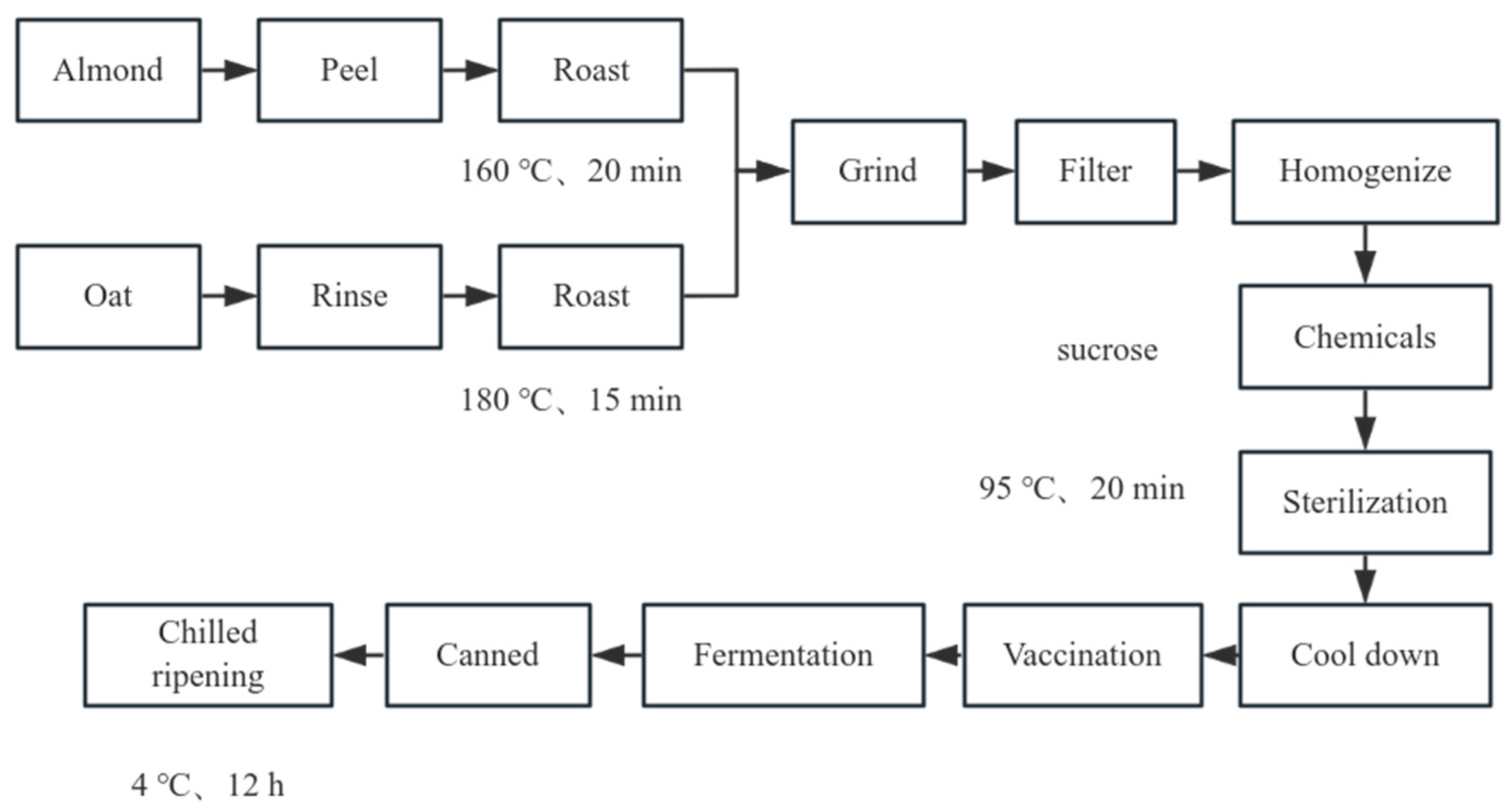
The operational steps for fermenting a plant-based alternative to yoghurt were referenced from Wang [17] with minor modifications. OAY, OY and AY were produced using the same processing procedure, differing only in raw material composition. For OAY, roasted and peeled almonds were mixed with roasted oats at a mass ratio of 4:6, whereas OY and AY were prepared using roasted oats and roasted almonds as the sole raw material, respectively.
All raw materials were blended with distilled water at a solid/liquid ratio of 1:10 (g:mL, dry weight basis) using a high-speed blender (PBJ-09, Meihua Life Electric Appliance Co., Ltd., Chengdu, China). The resulting slurry was filtered through an 80-mesh sieve and homogenized at 25 MPa for three cycles using a high-pressure homogenizer (WH-1500, Suzhou Antos Nano Technology Co., Ltd., Suzhou, China). Sucrose (6%, w/v) was then added and fully dissolved. The mixtures were pasteurized at 95 °C for 20 min and subsequently cooled to the inoculation temperature. A commercial direct-vat-set starter culture (0.1%, w/v) was added, followed by fermentation at 40 °C for 8 h. After fermentation, all yoghurt samples were stored at 4 °C until further analysis.
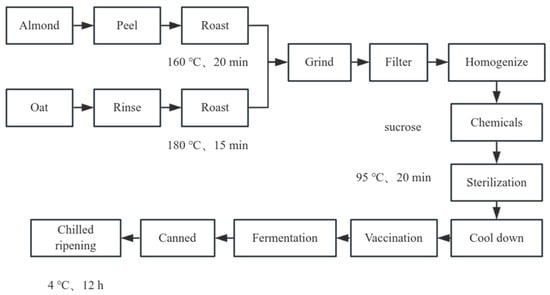
The preparation of oat almond milk (OAM) was referenced from Zhai et al. [18] with minor modifications. Roasted and peeled almonds were mixed with roasted oats at a mass ratio of 4:6 and processed following the same blending, filtration, homogenization (25 MPa, three cycles), sucrose addition (6%, w/v), and pasteurization conditions as described for the yoghurt samples. After pasteurization, the mixture was cooled and stored at 4 °C without fermentation. The specific operational procedure is shown in Figure 1.
Figure 1.
Fermented plant-based alternative to yoghurt process flow diagram.
2.3. Nutritional Information
Our research refers to the method described by Oğuz [19]: the protein content of yoghurt was determined by the Kjeldahl method, and the fat content was measured using the Soxhlet extraction method. The carbohydrate content was estimated using the difference method. Total solids content (TSC) was determined according to Obaroakpo [20]: 50 g of yoghurt sample was placed in a constant temperature oven (model T535, Beideng Jinghui Technology Co., Ltd., Shenzhen, China) and dried in an oven at 100 ± 5 °C for 2 h, then cooled in a desiccator for 0.5 h before final weighing. The calculation formula is as follows:
- m1 denotes the total mass of the beaker and sample (g);
- m2 denotes the total mass of the beaker and sample after drying to constant weight (g);
- m3 denotes the mass of the beaker after drying to constant weight (g).
2.4. Physicochemical Analysis
pH was determined using a digital pH meter (model pH-100, Shanghai Lichen Instrument Technology Co., Ltd., Shanghai, China). Total titratable acidity (TTA) was measured as follows: 10 g of sample was homogenously mixed with 90 mL of distilled water, then titrated with 0.1 mol/L NaOH solution until the endpoint pH of 8.3 was reached. The volume (mL) of titrant consumed during this process served as the quantitative unit for acidity. The determination method for water-holding capacity (WHC) was modified from the approach described by Wang et al. [21]. Specifically, 10 g of yoghurt sample was weighed into a centrifuge tube and centrifuged at 4 °C for 30 min at 4000 rpm. The supernatant was discarded, and the residual sample weight and total weight of the centrifuge tube were recorded. Viscosity was measured using a viscometer (model NDJ-5S8S, Shanghai Lichen Instrument Technology Co., Ltd., Shanghai, China) at a rotational speed of 60 rpm.
2.5. Microbiological Analysis
The total lactic acid bacteria count (TLC) for the four sample groups was enumerated on MRS agar. Diluted samples were evenly spread onto plates and incubated at 37 °C for 48 h. The TLC was expressed as colony-forming units per gram of yoghurt (CFU/g) [22].
2.6. Texture Analysis
The texture analyzer (model Universal TA, Shanghai Tengbo Instrument Technology Co., Ltd., Shanghai, China) employed a flat-bottomed cylindrical probe (SMS P/75). Test parameters were as follows: pre-test speed 2.0 mm/s, test speed 2.0 mm/s, post-test speed 2.0 mm/s, cycle count 2, trigger force 5 g, and compression interval pause time 5 s. Each sample was measured three times, with the mean value recorded [23]. Hardness, adhesiveness, chewiness, resilience, and cohesiveness were measured for four sets of samples.
2.7. Microstructure
Four sets of yoghurt samples preserved at 4 °C were uniformly thinly coated onto the inner walls of Petri dishes. After freezing in liquid nitrogen, they were promptly placed in a vacuum freeze-dryer for desiccation (model LGJ-10, Beijing Qihang Technology Co., Ltd., Beijing, China). Subsequently, gold coating was applied via ion sputtering. The samples were then prepared for scanning electron microscopy (SEM) (model SU8100, manufactured by Hitachi High-Tech Corporation, Tokyo, Japan) observation. Finally, the microstructure of the yoghurt samples was photographed and examined at an acceleration voltage of 10 kV and a magnification of 6000× [24].
2.8. Rheological Properties
The rheometer (model HAAKE Mars40, Thermo Fisher Scientific, Suzhou, China) was equipped with a stainless steel flat plate system with a diameter of 40 mm, a plate spacing of 1000 μm, and a measurement temperature of 4 °C [25]. Viscosity characteristics were measured using a flow sweep program, with shear rates ranging from 0.01 to 100 s−1 (logarithmically increasing). Dynamic viscoelasticity was measured using a frequency sweep program, with frequencies ranging from 0.1 to 100 Hz and a strain value set at 2% (within the linear viscoelastic range). The results for the storage modulus (G′) and loss modulus (G″) were plotted on logarithmic–logarithmic coordinates.
2.9. Electronic Nose and GC-MS
The electronic nose method (model PEN3, AIRSENSE GmbH, Schwerin, Germany) was modified based on the method described by Wu [26]. A 5 mL sample was placed in a 20 mL headspace vial and incubated at 50 °C in a water bath for 30 min, after which volatile flavor compounds were determined using the electronic nose. The GC-MS analysis (model TSQ8000, Thermo Fisher Scientific, Suzhou, China) was modified according to the method of Huang Kai [22]. 5 mL of yoghurt sample was weighed and 2 µL of internal standard (cyclohexanone) added. The mixture was placed in a 50 mL solid-phase microextraction (SPME) vial. A manual syringe fitted with a 2 cm, 50/30 µm DVB/CAR/PDMS Stable Flex fiber was inserted. The sample was thermostated at 60 °C on a magnetic stirrer (stirring speed 150 rpm) for 50 min of headspace extraction. Upon completion, the fiber was immediately withdrawn and inserted into the gas chromatograph inlet (temperature 250 °C) for 6 min of thermal desorption prior to injection.
2.10. Preparation of Yoghurt Extract
Place a 10 g yoghurt sample in a 50 mL centrifuge tube and add 15 mL of acidified methanol. Homogenize the mixture at 12,000 rpm for 1 min, then refrigerate at −20 °C for 1 h to ensure complete protein precipitation. Subsequently, centrifuge at 7000 rpm for 10 min at 4 °C. Filter the supernatant through a 0.22 µm membrane for subsequent determination of polyphenol content and antioxidant activity [27].
2.10.1. Total Phenolic Content
Total phenolic content (TPC) was performed with slight modifications to the method described by Zuo [28]: A total of 1 mL of diluted yoghurt extract was mixed with 2 mL of Folin–Ciocalteu reagent. After thorough mixing, the reaction was allowed to proceed for 6 min. Subsequently, 2 mL of 10% Na2CO3 solution was added, and the mixture reacted at room temperature for 60 min. Absorbance was measured at a wavelength of 765 nm. A standard calibration curve was generated using a series of gallic acid solutions (4, 8, 12, 24, 32, 40 μg/mL). Total phenolic compounds were estimated based on the gallic acid calibration curve, with the results expressed as gallic acid equivalents (TPC, mg GAE/100 g).
2.10.2. DPPH Radical Scavenging Activity
This was based on the method of Bolek [29], with minor modifications. Briefly, 2 mL of DPPH solution was mixed with 2 mL of sample extract. Following thorough mixing, the reaction mixture was incubated in darkness for 30 min. Absorbance (Aa) was subsequently measured at 517 nm. The control group (Ab) employed 2 mL of absolute ethanol in place of the sample extract. The DPPH radical scavenging rate was calculated using the following formula:
2.10.3. ABTS Radical Scavenging Activity
This was based on Aljewicz’s method with minor modifications [13]. Briefly, 2 mL of ABTS working solution was added to a test tube, followed by 1 mL of sample extract. The mixture was shaken to ensure thorough mixing and allowed to react for 10 min at room temperature in the dark. The absorbance (Aa) was measured at 734 nm. For the control group (Ab), 1 mL of anhydrous ethanol was used in place of the sample solution. The formula for calculating the ABTS radical scavenging rate is as follows:
2.10.4. Hydroxyl Radical Scavenging Activity
We referred to the method of Wang [30] with minor modifications. In separate test tubes, sequentially add 2 mL of 9 mmol/L ferrous sulphate solution, 2 mL of 9 mmol/L salicylic acid/ethanol solution, the sample solution, and 2 mL of 8.8 mmol/L hydrogen peroxide solution. After shaking the mixture for 10 s, allow the reaction to proceed at room temperature for 1 h. Following the reaction, measure the absorbance (A1) at 510 nm. For the blank control (A0), replace the sample solution with distilled water. The hydroxyl radical scavenging rate is calculated using the following formula:
2.11. Sensory Evaluation
Ten food science students aged 22–28 with balanced gender distribution evaluated four sample groups. Water was provided during tasting breaks. The sensory attributes assessed included acidity, color, taste, odor, texture and acceptance for each sample. A five-point scale (0 = extremely dislike; 1 = dislike; 2 = moderately dislike; 3 = neither like nor dislike; 4 = moderately like; 5 = extremely like) was used to quantify sensory characteristics. The overall sensory score was calculated based on these evaluations.
2.12. Data Processing and Analysis
All experiments were repeated three times. The results are presented as the mean ± standard deviation. Statistical analysis was performed using IBM SPSS Statistics (version 26.0). One-way analysis of variance (ANOVA) was conducted, followed by Tukey’s post hoc test for multiple comparisons. Values were considered statistically significant at p < 0.05. Figures and tables were generated using Origin 2025 (OriginLab Crop., Northampton, MA, USA) and GraphPad Prism 10.1.2 (GraphPad Software, Inc., La Jolla, CA, USA).
3. Results and Discussion
3.1. Nutritional Analysis
Prior to the nutritional analysis, the manufacturing conditions were optimized to ensure product stability. As shown in Table 1, AY exhibits significantly higher protein content (3.29 g/100 g) and fat content (8.89 g/100 g) compared to the other samples, likely attributable to the inherently higher protein and fat levels inherent in almonds. OAY exhibited protein (2.87 g/100 g) and fat (5.18 g/100 g) contents intermediate between AY and OY, effectively addressing the low protein content of oat yoghurt and the high fat content of almond yoghurt. No significant differences in nutritional components were observed between OAY and OAM. Furthermore, during fermentation, fats may break down into fatty acids, resulting in OAY’s fat content being lower than that of OAM. This trend has also been observed in the production of pumpkin yoghurt [31]. The carbohydrate content of OAY (6.17 g/100 g) was slightly lower than that of OAM. This reduction in carbohydrates may be attributed to the hydrolysis of carbohydrates by amylase secreted by microorganisms [32]. Microorganisms may also utilize carbohydrates as an energy source during fermentation [33]. OY exhibits the highest total solids content (14.35 g/100 g), likely attributable to oats’ inherent high carbohydrate and soluble dietary fiber content [34].
Table 1.
Nutritional composition of different samples.
3.2. Physicochemical and Microbiological Analysis
As shown in Table 2, significant differences exist in the physicochemical characteristics of the four sample groups. Research indicates that the optimal pH range for commercial fermented dairy products is 3.27 to 4.59 [18]. Both AY and OAY fell within this optimal pH range. Total acidity (TTA) exhibited a negative correlation with pH. The acidity levels of AY, OY, and OAY all met the requirement of acidity ≥ 70 °T stipulated in the Chinese standard GB 19302-2025 [35]. OY exhibited significantly higher water-holding capacity (WHC) than the other three groups, attributable to the strong hydrophilicity of oat β-glucan [36], which reduces water separation through interfacial interactions. AY demonstrated the lowest WHC, as almond protein readily flocculates at pH 4.2, forming a porous structure incapable of effective water retention [37]. Data indicate that the trend in WHC aligns with viscosity. Following fermentation, OAY exhibited higher viscosity than OAM. This suggests that acids produced during lactic acid fermentation promote plant protein gelation, thereby establishing a more robust network structure [38]. Furthermore, the total lactic acid bacteria counts in AY, OY, and OAY all exceeded the limits stipulated by the Chinese standard GB 19302-2025 [35]. Among these, the composite yoghurt OAY exhibited a higher total lactic acid bacteria count than the single-ingredient yoghurts OY and AY.
Table 2.
Physicochemical and microbiological analysis of different samples.
3.3. Texture and Microstructure
3.3.1. Texture Characterization Analysis
Texture most directly reflects a product’s sensory and quality characteristics [39]. Evaluating yoghurt texture involves assessing hardness, adhesiveness, elasticity, cohesiveness, and stickiness. As shown in Table 3, OY exhibited the highest values for hardness, adhesiveness, and stickiness, yet its elasticity and cohesiveness were lower than OAY. Fermentation significantly improved the textural properties of the samples [40]. Following fermentation, OAY and OAM exhibited significant differences in hardness, adhesiveness, elasticity, and viscous texture. This occurs because acids produced by lactic acid bacteria during fermentation induce protein denaturation and cross-linking, forming a stronger gel structure that effectively encapsulates water and fat [41]. In comparison, AY exhibited the lowest values across all textural characteristics and demonstrated significant differences from the other samples. This may be attributable to the incompatibility between the starter culture and the almond-based yoghurt matrix, resulting in incomplete fermentation.
Table 3.
Textural characteristics of different samples.
3.3.2. Microstructural Analysis
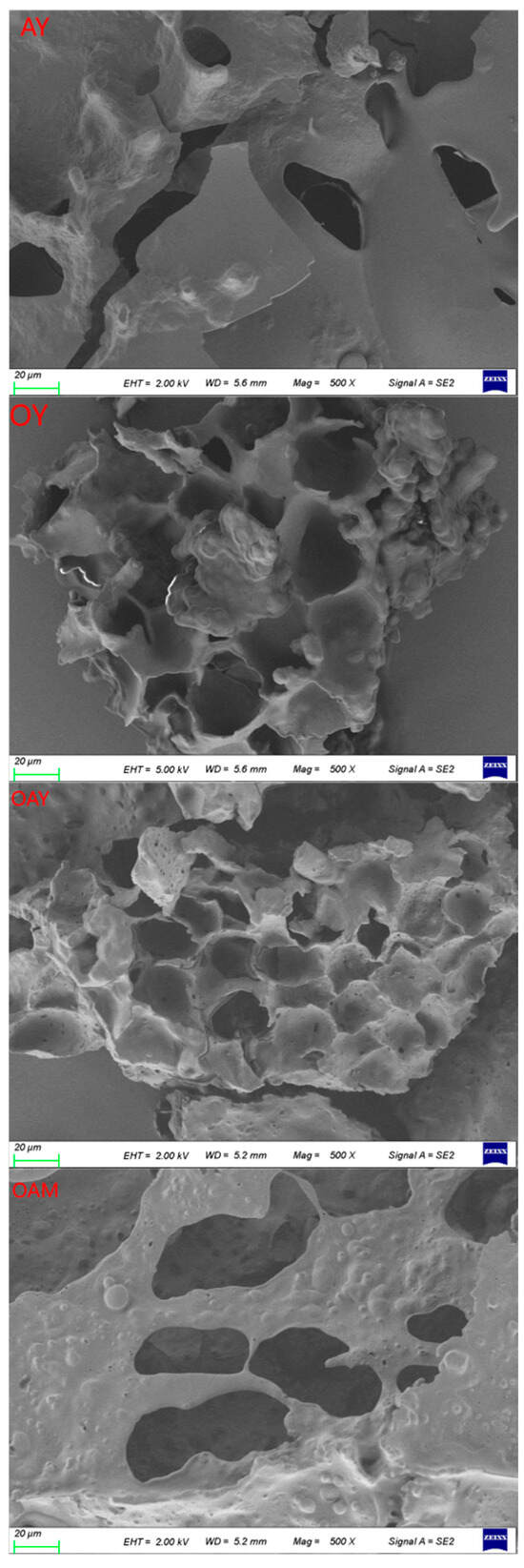
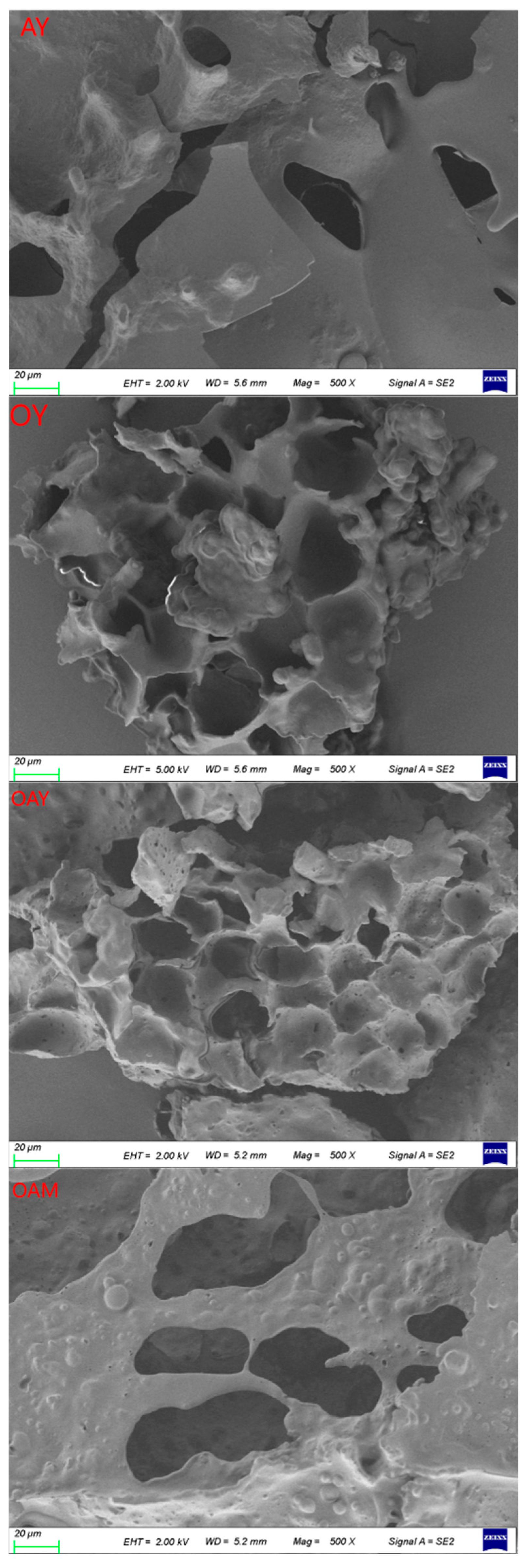
Changes in texture may be related to microstructure. Low-temperature scanning electron microscope images of each yoghurt sample are shown in Figure 2. Compared to OY, AY exhibits a looser, less compact structure with visible larger pores. This may be attributed to the high-viscosity dietary fibers in oats (such as β-glucan), which possess strong water-holding capacity and colloid-strengthening effects. These fibers form composite gels with the protein network, thereby creating a denser, more uniform structure [42]. Moreover, OAM exhibits a loose structure with larger pores, demonstrating low internal cohesion and a lack of gel network formation. Following fermentation, the interaction between almond protein and fat within OAY generates a more complex, multiphase gel network system. This results in a structure characterized by enhanced cohesiveness and compactness, alongside a significant reduction in pore size. This uniform, dense three-dimensional network structure facilitates the adhesion of extracellular polysaccharides produced by probiotics [43]. Extracellular polysaccharides can enhance the WHC and viscosity of yoghurt [44].
Figure 2.
Microstructure of different yoghurt samples at 100× magnification: AY (almond yoghurt), OY (oat yoghurt), OAY (oat almond yoghurt), OAM (oat almond milk).
3.4. Rheological Behavior
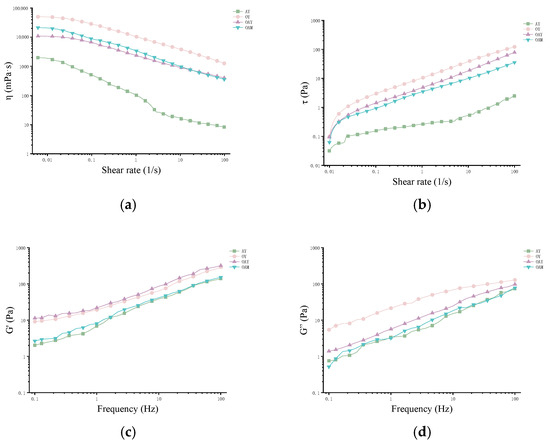
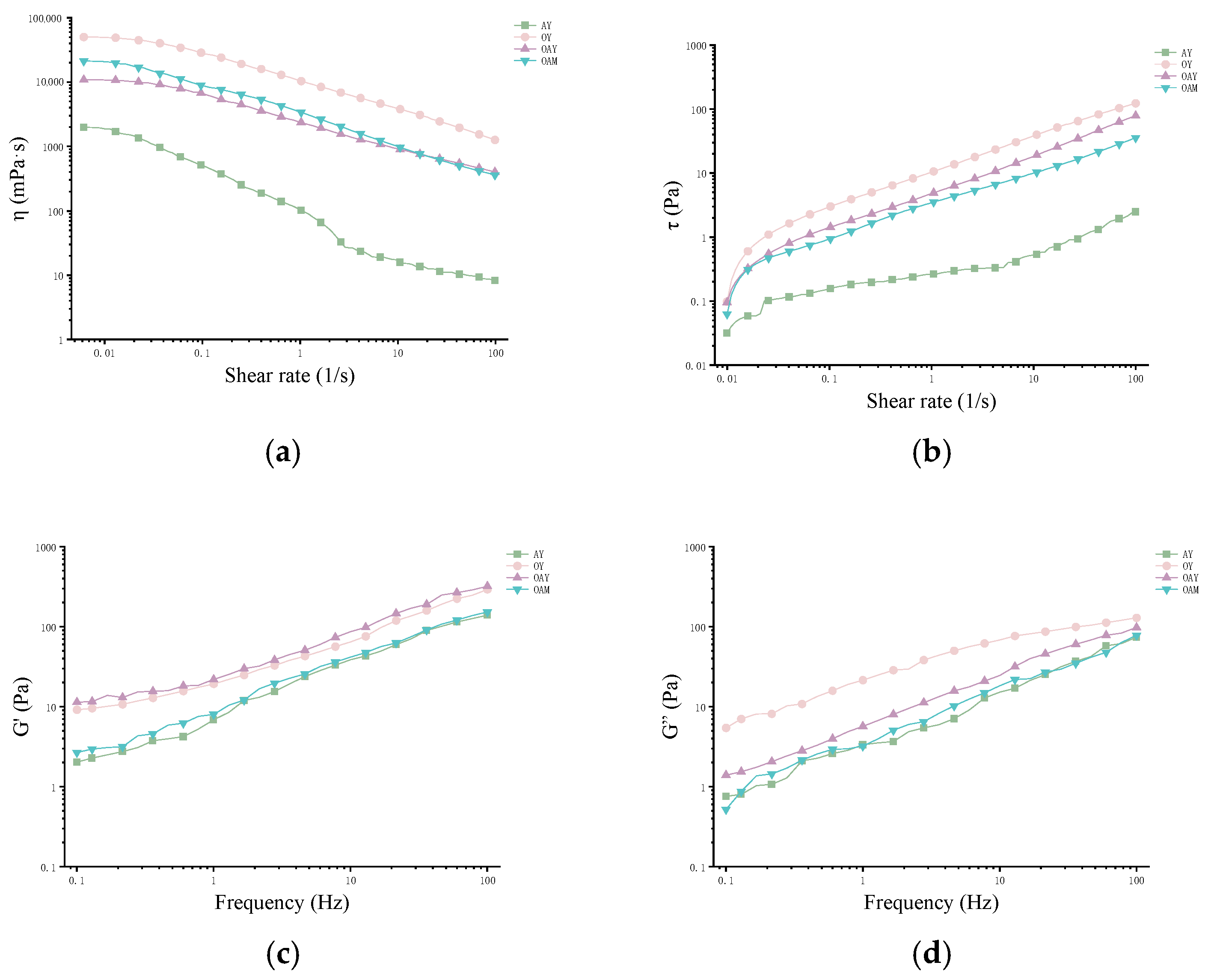
The investigation of rheological properties plays a significant role in product transportation, handling, and consumption. As shown in Figure 3, all samples exhibited shear thinning behavior across the tested shear rate range, characteristic of pseudoplastic fluids. This indicates that their microstructure undergoes reversible or partially reversible disruption and reorganization under shear stress [45]. The apparent viscosity at a shear rate of 50 s−1 was selected for comparing different samples, as this value is considered relevant to consumers’ perception of food viscosity [46]. The apparent viscosity of AY was slightly lower than the reported value for dairy-based yoghurt (approximately 2.3 ± 0.3 Pa·s) [47], indicating that AY has a slightly thinner consistency than dairy-based yoghurt. The apparent viscosity values of the other three samples were higher than that of dairy-based yoghurt, suggesting that these samples possess a higher viscosity. The stress/shear rate curves in Figure 3b reveal a distinct yield stress in the low shear rate region for the fermented samples. The dietary fibers present in OY and OAY, such as oat β-glucan, may enhance gel continuity through filling and physical cross-linking effects, thereby increasing yield stress and structural strength.
Figure 3.
Rheological properties of different yoghurt samples: (a) apparent viscosity; (b) stress; (c) storage modulus; (d) loss modulus.
To further investigate the internal structure of the yoghurt, dynamic rheological parameters were measured, including the storage modulus (G′) and loss modulus (G″). As shown in Figure 3c,d, all four sample groups exhibited G′ > G″, characteristic of typical weak gel-like solid behavior [48]. With increasing frequency, both G′ and G″ exhibited a gradual upward trend, indicating that the gel network structure possesses good structural stability and frequency insensitivity. OAY exhibited the highest G′. This may stem from the potential formation of interpenetrating or phase-separated composite networks between oat β-glucan and almond protein during fermentation. The β-glucan solution phase may fill the pores of the protein gel phase, forming a continuous phase structure that significantly enhances the mechanical strength and deformation resistance of the overall network. This phenomenon has also been verified in studies of quinoa/soy yoghurt [24].
3.5. Analysis of Volatile Flavor Compounds
3.5.1. Electronic Nose
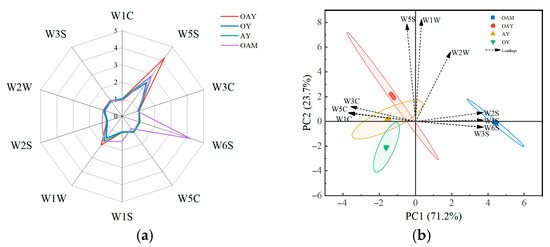
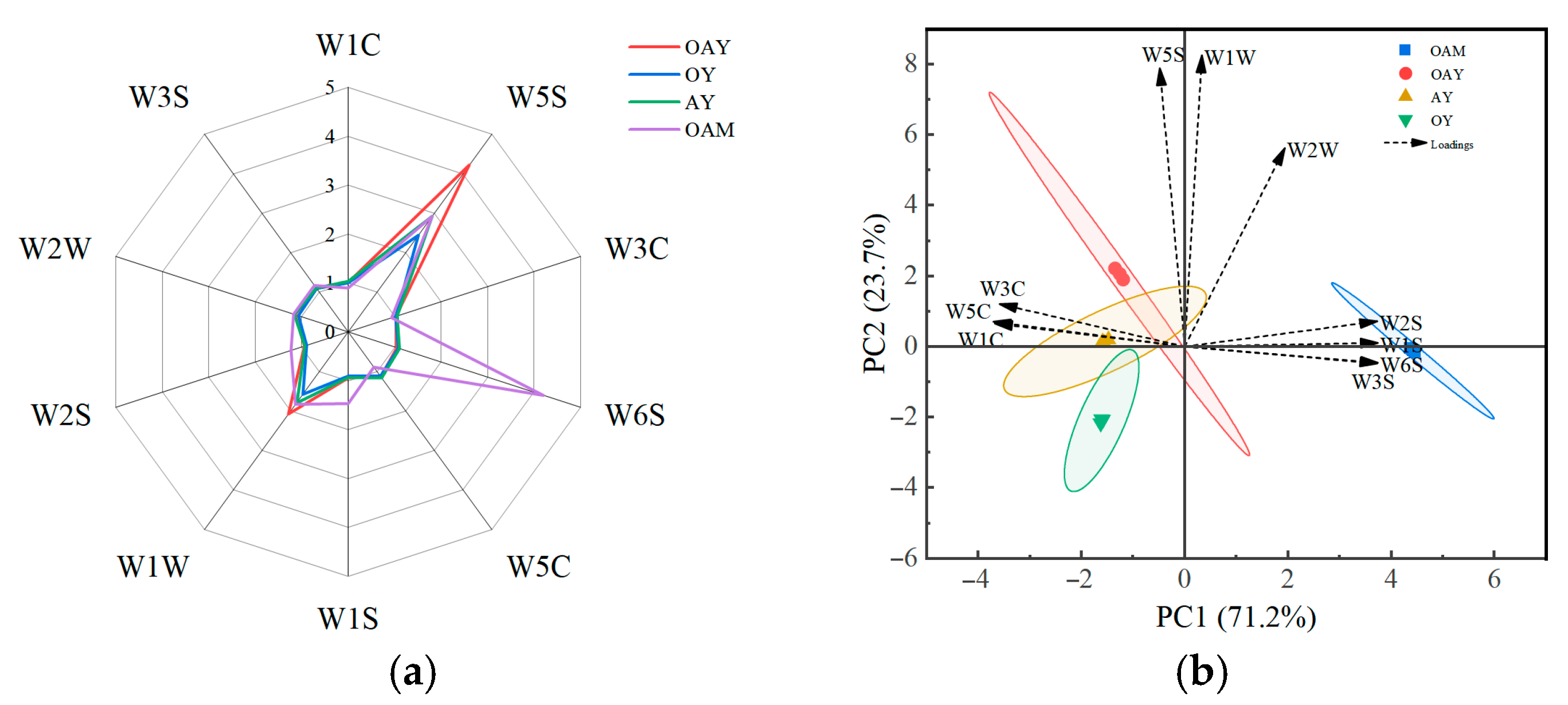
Figure 4a displays a radar chart of electronic nose sensor responses for four distinct yoghurt samples. The diagram reveals that volatile compounds in all four yoghurt samples elicited responses from every sensor. The performance characteristics of the electronic nose sensor are described in Table 4. The W5S, W6S, and W1W sensors—sensitive to nitrogen oxides, hydrogen, sulfides, and terpenes—exhibited more pronounced response variations. This indicates these three sensors made significant contributions to detecting volatile compounds within the yoghurt samples.
Figure 4.
(a) Radar chart of sensor response intensity for different yoghurt samples; (b) PCA and loadings analysis of the aromas of different yoghurt samples.
Table 4.
PEN3 electronic nose sensor performance description.
Analysis of the contribution rates of sensors to discrimination reveals that along the PC1 axis, sensors W1C, W5C and W3C are positioned at a considerable distance from sensors W2S, W1S, W6S and W3S, distributed respectively along the positive and negative axes of PC1. This indicates that aromatic components exhibit stronger correlations with OAY, OY, and AY, while alcohols, aldehydes, ketones, alkanes, and hydrogen compounds show stronger correlations with OAM. Furthermore, principal component analysis (PCA) was conducted on the volatile compounds in different yoghurt samples. The results are presented in Figure 4b. The cumulative contribution rate of PC1 and PC2 reached 94.9%, sufficiently reflecting the sample information and indicating that PC1 and PC2 can be used to describe the primary characteristics of the aroma compounds in the samples. The OAM sample occupied a distinct, non-overlapping region in the scatter plot compared to the other samples, indicating the electronic nose’s ability to effectively differentiate fermented yoghurt from unfermented yoghurt. Although the ellipses representing OAY, OY, and AY partially overlapped, the electronic nose could not fully distinguish the flavor characteristics of these yoghurt samples. Consequently, GC-MS analysis was employed to further characterize the flavor compounds present in the samples, demonstrating significant differentiation primarily by W5S, W1W, and W2W.
3.5.2. Gas Chromatography/Mass Spectrometry (GC-MS) Analysis
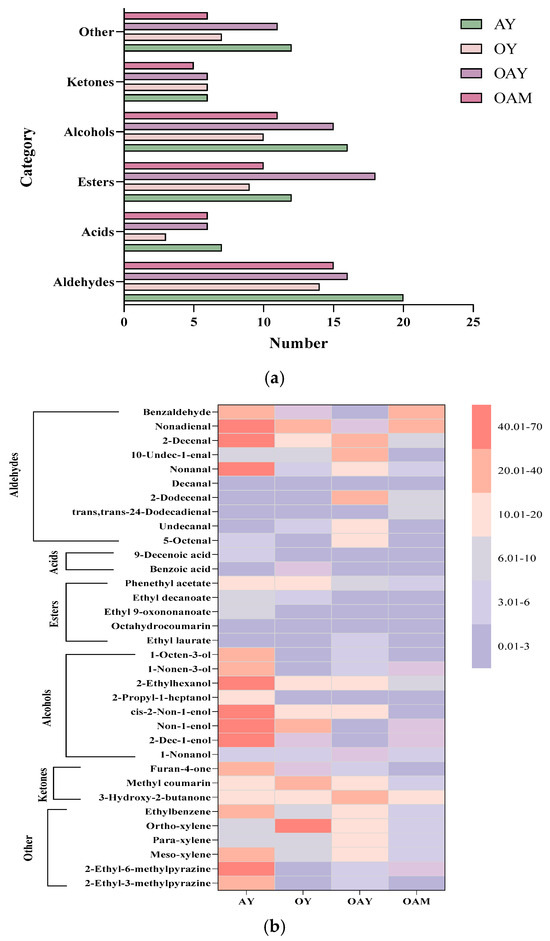
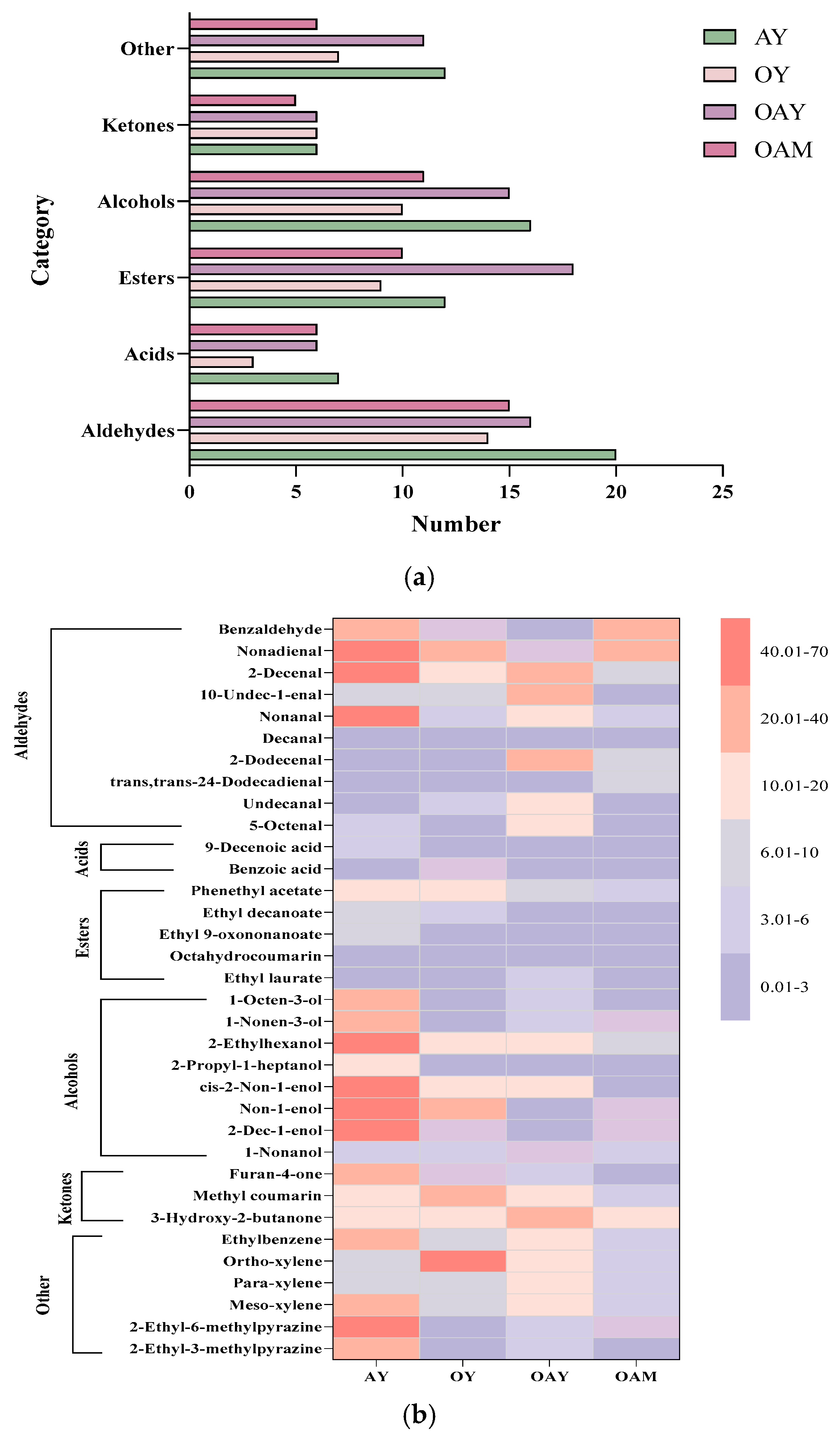
Four sets of yoghurt samples underwent pretreatment prior to sampling and analysis. Volatile flavor compounds in five sets of yoghurt were enriched using solid-phase microextraction (SPME), followed by separation and detection via gas chromatography/mass spectrometry (GC-MS). A total of 117 volatile compounds were detected across the four yoghurt samples, encompassing aldehydes, acids, esters, ketones, alcohols, hydrocarbons, alkenes, pyrazines, and other compounds. The results are presented in Figure 5a. Researchers have discovered that the flavor profile of yoghurt is formed by the combined action of multiple flavor compounds, including alcohols, acids, aldehydes, ketones, and esters. However, not every flavor compound plays a decisive role in the sample’s taste; only those exceeding the sensory threshold can be perceived and contribute to specific flavor characteristics [49,50]. Detailed results are presented in the Appendix A. Based on this table, common volatile compounds across the four groups of yoghurt samples were summarized, and a heatmap was generated to compare their content variations, as shown in Figure 5b.
Figure 5.
(a) Number of volatile flavor compounds in different yoghurt samples; (b) heatmap analysis of volatile compounds in different yoghurt groups.
Aldehydes constitute key components of the characteristic flavor profile in yoghurt. They typically originate from processes such as fatty acid metabolism, amino acid transamination reactions, and Strecker degradation, while also serving as primary sources of various oxidative flavor compounds [51]. According to the Supplementary Table and data in Figure 5, 2-decene-1-aldehyde, 10-undecenal, nonanal, decanal, 2-dodecenal, 5-octenal, and undecanal were detected in all four yoghurt sample groups. Nonanal exhibits rose and citrus aromas, while 5-octenal exhibits grassy, fatty, citrus, and cantaloupe-like notes. These compounds constitute important flavor components in yoghurt. Notably, the concentration of 10-undecenal exhibited significant variation before and after fermentation in OAY (31.54 μg/kg) and OAM (1.94 μg/kg), a finding also illustrated in Figure 6. Furthermore, benzaldehyde was detected in three groups of samples without oats, while cis-7-tetradecanal was found in three groups without almonds. Compared to the other three groups, pure oat fermented yoghurt (OY) exhibited relatively lower aldehyde content. Aldehyde compounds possess low sensory thresholds and constitute an important component of yoghurt flavor compounds.
Figure 6.
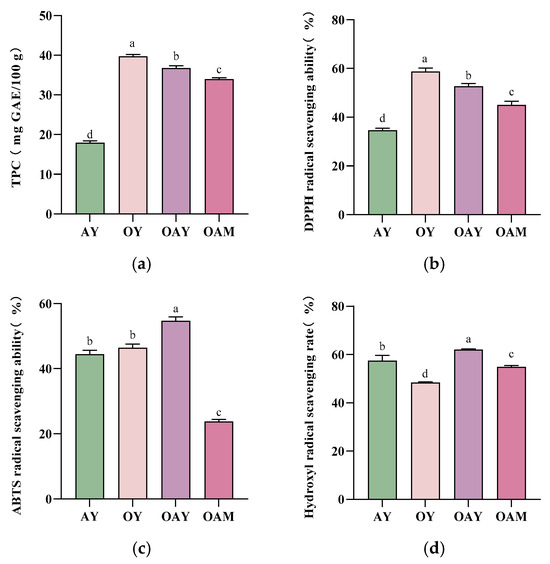
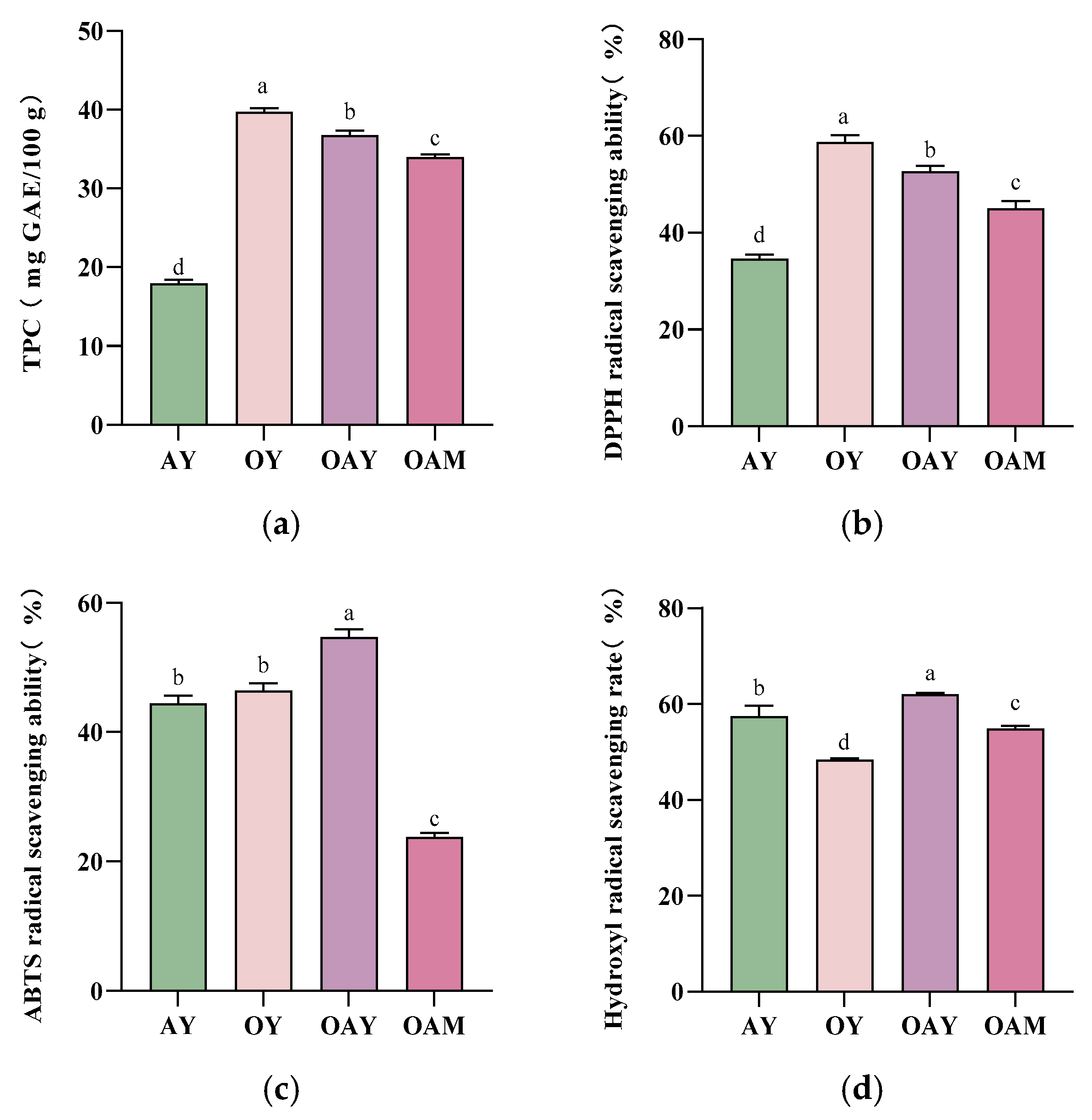
Total phenolic content and antioxidant activity of different yoghurt groups: (a) total phenolic content of different yoghurt samples; (b) DPPH radical scavenging rate; (c) ABTS radical scavenging rate; (d) hydroxyl radical scavenging rate. Identical letters in the figure indicate no significant difference (p < 0.05), while different letters denote significant differences (p < 0.05).
Acidic compounds, as the primary flavor components in yoghurt, are predominantly perceived through taste. 9-Dechlorobenzoic acid exhibits a fatty, waxy character with subtle fruity and milky undertones, detected in all four yoghurt categories. Benzoic acid and hexanoic acid were identified in three of the samples—excluding OY. Acidic compounds primarily result from lactic acid bacteria metabolizing sugars and amino acids. They constitute one of yoghurt’s principal flavor components, providing a refreshing palate sensation [52].
Esters constitute another crucial class of flavor compounds in yoghurt. They typically possess low detection thresholds and make a significant contribution to the overall flavor profile [53]. Among the detected ester compounds, substantial differences were observed across the four sample groups. In AY, ethyl undecenoate and ethyl phenylacetate were predominantly detected, exhibiting floral, fruity, wine-like, and whisky-like aroma characteristics. In OY, ethyl phenylacetate was the predominant compound detected. In OAY, ethyl tridecanoate and octyl phenylacetate were the main esters detected, contributing aromas dominated by sweet rose and honey, alongside subtle nuances of fruitiness and animal notes. The ester content in OAM is relatively low, which can be attributed to esters typically originating from metabolic processes dominated by lactic acid bacteria acting in concert with other microorganisms, and being regulated by fermentation conditions and post-ripening parameters [54].
A rich array of alcohol compounds was detected across the four yoghurt groups. All four groups contained 1-octen-3-ol, cis-2-nonen-1-ol, and 2-propyl-1-heptanol. 1-Octen-3-ol exhibits odors reminiscent of lavender, rose, mushroom, and hay, while cis-2-nonen-1-ol possesses green, greasy, and cucumber-like aromas. Although alcohols constitute a significant proportion of the volatile flavor compounds in yoghurt, their contribution to the overall flavor is relatively minor due to their generally higher sensory thresholds compared to other volatile compounds present in yoghurt.
Ketones are key compounds influencing yoghurt flavor, typically formed through processes such as unsaturated fatty acid oxidation, amino acid degradation, and microbial metabolism. Tetrahydropyranone, 3-hydroxy-2-butanone (acetylacetone), and 2-nonanone were detected in all four sample groups. Tetrahydropyranone has a grassy aroma; 3-hydroxy-2-butanone contributes creamy, buttery and yoghurt-like notes; and 2-nonanone exhibits a cheesy character. The number of ketone types detected showed little variation between samples: OAM contained five, while the other samples contained six.
Aromatic hydrocarbons such as toluene and ethylbenzene were detected in all four groups of yoghurts. Some of these aromatic compounds originated directly from the raw materials or were produced through the degradation or redox reactions of macromolecules within them, while others resulted from microbial metabolic activity. Additionally, certain pyrazines, alkanes, and alkenes were detected, all of which contribute to characteristic flavor profiles and enhance the natural perception of yoghurt’s taste.
A comprehensive analysis of four yoghurt samples revealed that OAY contained a slightly lower variety of volatile compounds than AY, yet higher than both OY and OAM. Furthermore, OAY exhibited a total volatile compound content of 523.02 μg/kg, surpassing both OY (397.43 μg/kg) and OAM (195.73 μg/kg). Compared to single-ingredient yoghurts and pre-fermented samples, the mixed-ingredient fermented yoghurt (OAY) exhibited richer and more complex flavor characteristics, rendering it more readily accepted by consumers.
3.6. Analysis of Total Phenolic Content and Antioxidant Activity
Figure 6 illustrates the total phenolic content and antioxidant capacity of different samples. Phenolic compounds have garnered significant attention due to their efficacy and safety in treating human diseases such as cancer and cardiovascular disorders [55]. As depicted in Figure 6a, the total phenolic content of the three yoghurt samples containing oat components was significantly higher than that of AY (p < 0.05). This may be attributed to the substantial presence of phenolic substances in oats, including phenolic acids, flavonoids, and phytate [56]. In almonds, phenolic compounds are primarily distributed in the pericarp [57]; however, the raw material used in AY during the production process described in Section 2.2 was blanched almonds. Comparing OAY and OAM revealed a significant increase in total phenolic content in the fermented yoghurt samples (p < 0.05). This phenomenon arises from the synergistic effects of lactic acid bacteria’s enzymatic action, disruption of cell wall structures, and microbial metabolic transformations. This collaborative process releases phenolic compounds—which were previously bound and difficult to detect—into a free state while partially generating new bioactive constituents. Consequently, the total phenolic content exhibits a marked increase. This has been confirmed during the fermentation of soybean yoghurt [58] and quinoa yoghurt [42].
To investigate the antioxidant activity of yoghurt extracts, various methods including DPPH, ABTS, and hydroxyl radical scavenging activity were employed for evaluation. As shown in Figure 6, the DPPH radical scavenging rate increased with rising polyphenol content, consistent with previous research findings [59]. In contrast, the ABTS and hydroxyl radical scavenging rates did not exhibit the same trend. This discrepancy stems from the differing phenolic compositions of the oat and almond raw materials. Oats primarily contain ferulic acid, whereas almonds are rich in other types of phenolic compounds. These distinct phenolic substances may exhibit variations in their antioxidant mechanisms, thereby leading to differing scavenging effects on ABTS and hydroxyl radicals [13,60,61]. Moreover, during fermentation, microorganisms release bound phenolic compounds through enzymatic action, generating bioactive peptides and organic acids. This process enhances synergistic interactions between oat polysaccharides, almond-derived polyphenols, and vitamin E [56,62]. This process releases multiple products with antioxidant activity, including free amino acids, peptides, and other small-molecule compounds. These products possess hydrogen-donating capacity, enabling effective radical scavenging [63]. Consequently, OAY exhibited significantly higher ABTS and hydroxyl radical scavenging rates compared to the other three sample groups (p < 0.05).
3.7. Sensory Evaluation Analysis
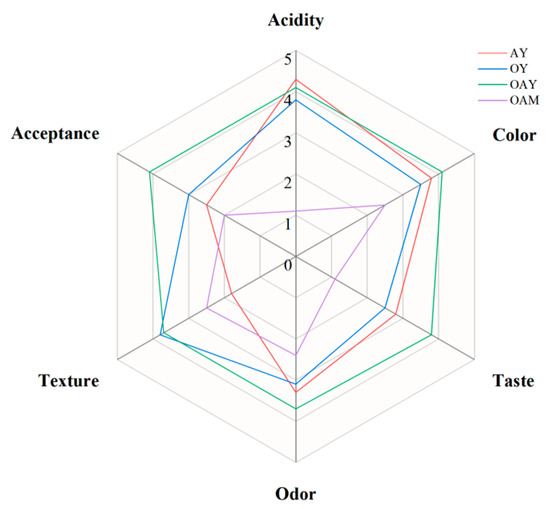
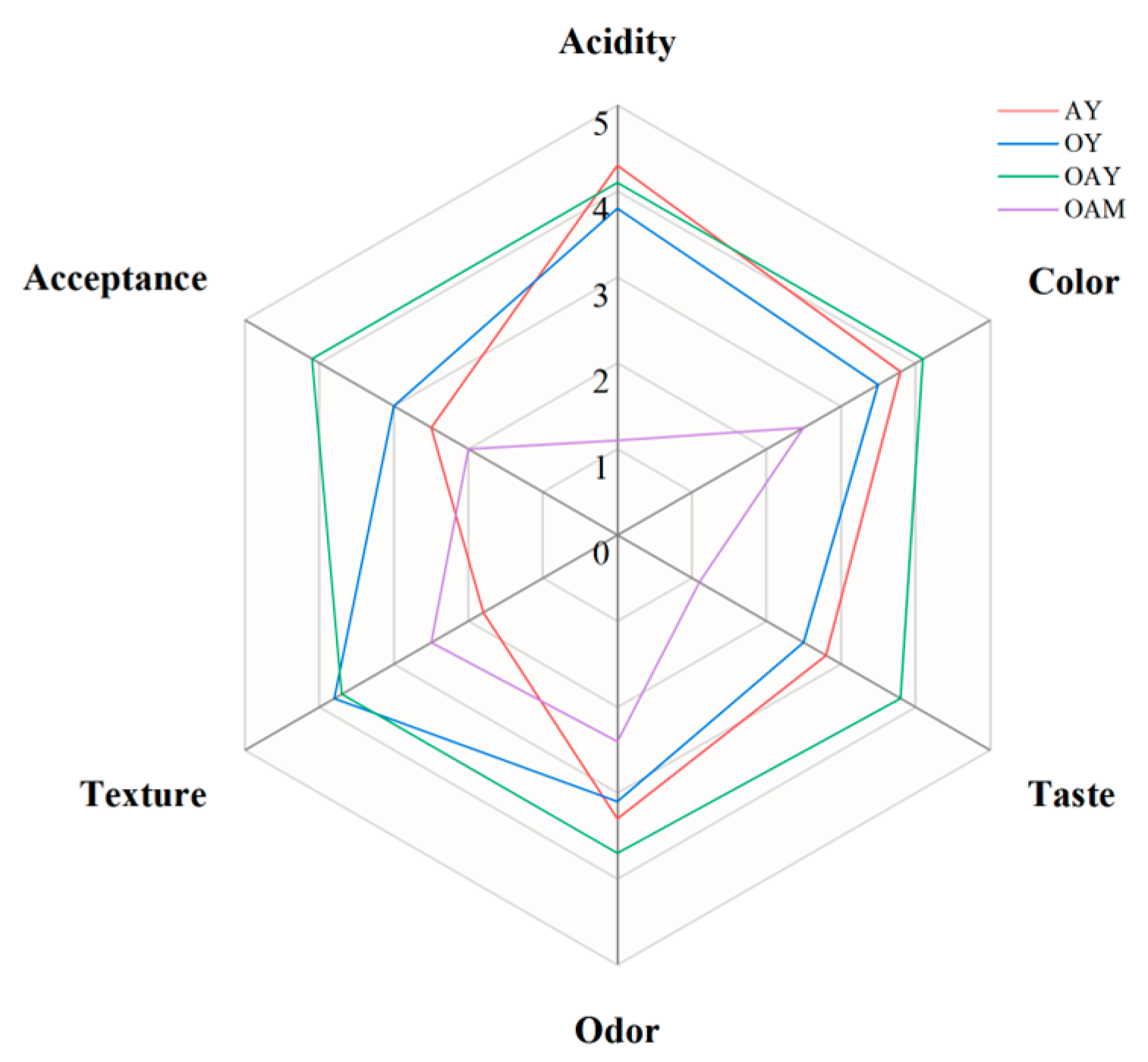
The sensory attributes of AY, OY, OAY and OAM are presented in Figure 7. Studies have demonstrated that fermentation significantly improves the sensory quality of plant-based products [64]. Fermented samples generally received higher scores than the unfermented OAM. OAM exhibited the lowest acidity, flavor and overall acceptance, which is consistent with its higher pH and the absence of fermentation-derived aroma compounds (Section 3.2). Among fermented samples, OAY showed a well-balanced acidity and achieved the highest scores in taste, odor and overall acceptance. This improvement can be attributed to oat–almond co-fermentation, which enhanced flavor complexity, as supported by the higher abundance of volatile compounds identified by GC–MS (Section 3.5). OY obtained the highest texture score, likely due to the strong water-holding and thickening effects of oat β-glucan, while OAY also demonstrated favorable texture perception, in agreement with its dense multiphase gel structure and rheological properties (Section 3.3 and Section 3.4). Overall, oat–almond co-fermentation effectively improved the sensory quality and acceptability of plant-based yoghurt.
Figure 7.
Sensory evaluation scores of different samples.
4. Conclusions
This study systematically compared OY, AY, OAY and OAM to evaluate the effects of raw material combination and lactic fermentation on the quality of plant-based yoghurt alternatives in terms of physicochemical properties, structural and rheological behavior, volatile flavor profile, antioxidant-related activities, and sensory attributes. The results demonstrated that oat–almond co-fermentation effectively integrated the nutritional and structural characteristics of both raw materials, resulting in a more balanced nutritional composition and significantly improved textural stability, flavor complexity, and overall sensory acceptance compared with single-ingredient yoghurts and the unfermented system. The interaction between oat β-glucan and almond proteins during fermentation was associated with the formation of a dense multiphase gel network, thereby enhancing water-holding capacity, viscosity, and gel strength in the OAY group. Moreover, co-fermentation promoted the generation of volatile flavor compounds, alleviated the inherent raw plant notes of the plant-based matrix, and enhanced antioxidant potential through the release of bound phenolic compounds. Consistently, the sensory evaluation results indicated that OAY exhibited higher overall acceptance than the other samples.
However, there were still some limitations in this study. Only one oat–almond ratio and a single commercial starter culture were evaluated, and storage stability and the bio-accessibility of active compounds during in vitro digestion were not investigated. So, future studies could further explore the application potential of oat–almond fermented plant-based yoghurt substitutes by optimizing formulation ratios, investigating differences in fermentation strains, evaluating shelf life quality changes, and assessing digestive behavior, to provide a more comprehensive assessment.
Author Contributions
Conceptualization; methodology; writing—original draft, M.M.; methodology; writing—review and editing, M.L.; visualization; writing—review and editing, D.F.; supervision; funding acquisition, J.W. All authors have read and agreed to the published version of the manuscript.
Funding
This research was funded by the Innovation Engineering Project of the Chinese Academy of Agricultural Sciences (CAAS-ASTIP-2026-IFND).
Institutional Review Board Statement
This study was conducted according to the guidelines of the Declaration of Helsinki and approved by the Ethics Committee of the Institute of Food and Nutrition Development, Ministry of Agriculture and Rural Affairs (Ethical Committee Procedure Number: 20250327-02, approved on 27 March 2025).
Informed Consent Statement
Informed consent was obtained from all the subjects involved in this study.
Data Availability Statement
The original contributions presented in this study are included in the article. Further inquiries can be directed to the corresponding author.
Conflicts of Interest
The authors declare no conflict of interest.
Appendix A. Analysis of Volatile Compounds in Different Yogurt Samples
| Order | Compound Name | Olfactory Characteristics | Content (μg/kg) | |||
| AY | OY | OAY | OAM | |||
| Aldehydes | ||||||
| 1 | artificial almond oil | Bitter almond, cherry, nut | 29.66 | - | 1.06 | 29.91 |
| 2 | nonadienal | Floral and fruity aroma, oily | 69.23 | 34.4 | - | 26.8 |
| 3 | 2-Decenal | Intense citrus peel, fat, waxy | 60.84 | 11.78 | 39.62 | 6.32 |
| 4 | 2-nonenal | Strong fat, cucumber, and melon-like | 60.84 | - | 30.1 | 0.53 |
| 5 | 10-undecen-1-ene | A pungent, orange-like aroma | 6.31 | 10 | 31.54 | 1.94 |
| 6 | aldehyde C-9 | Rose, citrus | 64.65 | - | 14.13 | 3.36 |
| 7 | trans-2-hexenal | Fresh fruits, green leaves, and a refreshing aroma | 3.55 | - | 1.54 | 1.94 |
| 8 | anti-2-dodecyl-1-ol | Coriander flavor | 0.63 | - | - | - |
| 9 | capraldehyde | Sweet, citrus, waxy, and floral | 1.04 | - | 2.4 | - |
| 10 | myristic aldehyde | Iris-like odor | 0.43 | |||
| 11 | 2-dodecanal | Intense, citrus and orange peel-like aroma | 0.48 | - | 20.96 | 6.32 |
| 12 | (Z)-9-tetradecenal | Citrus-like, iris-like, and iris root-like | 0.48 | - | - | - |
| 13 | erythrocitrin | Intense orange, tangerine, and orange-like colors | 0.48 | - | - | - |
| 14 | cis-7-tetradecenal | Citrus-like, iris-like, iris root-like | 0.48 | - | - | - |
| 15 | 9-Heptadecenal | Aromatic aroma | 0.48 | 3.31 | - | - |
| 16 | 2,4-Decadienal | Exhibits a strong chicken aroma and chicken oil flavor | 0.63 | - | - | - |
| 17 | anti, anti-2,4-dodecadienal | Oleoresin, fatty and milk aroma, citrus-like | 0.48 | 2.8 | 1.15 | 6.32 |
| 18 | 10-18-aldehyde | Wax, citrus, and soap-like odors | 7.7 | - | - | - |
| 19 | hexahydrobenzaldehyde | Aldehyde aroma, green grass aroma | - | 3.76 | - | - |
| 20 | 2-Ethylhexanal | Fresh grass and fatty aroma | - | 2.87 | - | - |
| 21 | octanal | Citrus, fatty, and waxy aromas | - | 1.27 | 19.81 | - |
| 22 | peach aldehyde | Intense peach-like aroma | 5.69 | - | - | - |
| 23 | undecanal | Rose, floral, fruity, and sweet orange | - | - | 12.33 | 2.02 |
| 24 | 5-Octenal | Greenish aroma, fat, citrus-like and melon-like | - | 0.76 | 16.53 | 0.49 |
| 25 | 3-Methoxypropionaldehyde | Green grass, sweet fragrance | - | - | - | 7.37 |
| 26 | (Z)-2-heptenal | Fat, green grass, lipid-like substance | - | 14.58 | - | 1.62 |
| Acids | ||||||
| 1 | arachidonic acid | Fish oil and fatty aroma | 4.94 | - | - | - |
| 2 | cis-18-carb-11-ene | Milkshake | 0.44 | - | - | - |
| 3 | trans-18-carb-13-ene | Lavender milk fragrance | 0.44 | - | - | - |
| 4 | 3-hydroxylauryic acid | Fatty odor and soap-like smell | 0.66 | - | - | - |
| 5 | trans-13-eicosapentaenoic acid | lipa | 4.50 | - | - | - |
| 6 | 9-Decanoic acid | Fatty acids and waxy aroma, with slight fruity and frankincense notes | - | 0.43 | 2.02 | - |
| 7 | benzoic acid | Slightly almond-like aroma | - | - | 0.96 | - |
| 8 | octadecenic acid | Lard | - | - | 1.06 | - |
| 9 | 3,5-Dimethoxycinnamic acid | Faintly aromatic, sweetly scented | - | 1.21 | - | 0.57 |
| 10 | cis-5,8,11,14,17-eicosapentaenoic acid | Fish oil flavor | - | - | - | 1.38 |
| esters | ||||||
| 1 | 10-oleoyl ethyl ester | Edible, fruity, and wine aromas | 20.31 | - | 1.25 | - |
| 2 | phenylethyl acetate | Rose fragrance, honey-like aroma, apple scent, cocoa and whisky-like notes | 15.24 | 13.2 | - | - |
| 3 | nonyl acetate | Mushroom and gardenia fragrance | 5.23 | - | 1.38 | - |
| 4 | 10-Butyl-14-ene-1-ol acetate | Aromatic fruit flavor | 6.96 | - | - | - |
| 5 | dihydroactinidiolide | Tea aroma, hay aroma, sweet fruit aroma, and a faint mint-like scent | 5.69 | - | - | - |
| 6 | tetradecenolide | Coconut and nuts | 5.69 | - | - | - |
| 7 | ethyl 5-methyl-nonyl phosphate | Fruit, sweet, and apple-like aromas | 8.27 | - | - | - |
| 8 | ethyl caprate | Fruit aroma, sweet aroma, and a brandy-like fragrance | 8.27 | - | 1.23 | 0.65 |
| 9 | ethyl 9-oxononyl phosphate | Fruit aroma, waxy notes, and a subtle hint of grass | 8.27 | - | 1.15 | 0.61 |
| 10 | tridecylbenzene | Faint waxy fragrance | - | 9.11 | - | - |
| 11 | valeric acid-10-undecenyl ester | Fruity | - | 2.68 | - | - |
| 12 | triethylstearate | Fruit, wax, and brandy-like aromas | - | - | 18.75 | - |
| 13 | octyl phenylacetate | The sweet fragrance of roses and honey, with notes of fruit and animal musk | - | - | 18.89 | - |
| 14 | (Z)-9-Ethyl octadecenoate | The fragrance of flowers | - | - | 1.83 | - |
| 15 | heptyl formate | Pear and apple-like fruit fragrance, floral aroma, iris and rose scents | - | 2.54 | 2.31 | - |
| 16 | levoepine | A fragrance reminiscent of roses, with undertones of apple and pineapple, accompanied by a sweetness akin to apples | - | - | 1.15 | - |
| 17 | methyl caprylate | Aroma of wine, fruit, and citrus | - | - | 1.15 | - |
| 18 | methyl linolenate | A mild, characteristic aroma of fat and wax | - | - | 1.83 | - |
| 19 | γ-dodecyl lactone | Aroma of cream, peaches, and pears | - | - | 1.54 | 0.32 |
| 20 | methyl 8-methyl-nonyl ester | The fragrance of fruit | - | - | 1.25 | - |
| 21 | ethyl pelargonate | Fats, fruits, and brandy-like aromas | - | - | 1.25 | 0.85 |
| 22 | 8-hydrocoumarin | Sweet coconut and vanilla-like fragrance | - | - | 1.44 | - |
| 23 | ethyl laurate | Fruity, waxy, fatty | - | 0.75 | - | 0.65 |
| 24 | tetradecanolide | Musk, peach, cream | - | - | - | 0.4 |
| 25 | 2-Methylbutyl formate | Fruit aroma, sweet aroma, similar to rum | - | - | - | 17.93 |
| alcohols | ||||||
| 1 | 1-octen-3-ol | Mushroom, lavender, rose, and hay scents | 20.31 | 2.87 | 4.81 | 0.4 |
| 2 | 1-nonen-3-ol | Aromatic odor | 20.31 | 2.84 | 4.47 | - |
| 3 | 2-Ethylhexanol | Sweet taste with a faint floral aroma | 60.84 | 11.78 | - | 6.32 |
| 4 | n-caprylic alcohol | Citrus, orange peel, and rose-like scents | 25.31 | - | 6.25 | - |
| 5 | 3,7-Dimethyl-1-octanol | Sweet rose fragrance with lemongrass and geranium notes, sweet with a spicy undertone | 25.31 | - | - | - |
| 6 | tetrahydrolychol | Lavender-like floral fragrance with a hint of green and spicy notes | 11.01 | - | - | - |
| 7 | 2-Propyl-1-heptanol | Fatty and citrus-like aroma | 11.01 | 0.96 | 2.5 | - |
| 8 | 1-Butanol | Aromatic, fatty, and cucumber-like fragrance | 64.65 | 10.03 | 14.13 | - |
| 9 | anti-2-undecenol | Floral fragrance, fruity aroma | 65.69 | - | 2.4 | - |
| 10 | nonenol | The aroma of wax melon/cucumber | 62.1 | 20.31 | 1.83 | - |
| 11 | 2-Decene-1-ol | Wax, fresh air, citrus, rose, and yarrow | 67.12 | - | 2.4 | - |
| 12 | 1-Nonyl alcohol | Citrus, rose-like, and fatty aromas | 3.55 | 3.19 | - | 3.12 |
| 13 | decenol | Rose, wax, and aldehyde fragrances | 0.63 | - | - | - |
| 14 | 1-hexadecanol | Rose fragrance | 4.91 | - | 9.52 | - |
| 15 | 2,5-Pentadecadien-1-ol | The fresh fragrance of cucumber and watermelon rinds | 6.66 | - | 1.25 | - |
| 16 | cyclohexadecanol | Mild notes of wood, powder, and musk-like aromas | 7.74 | - | - | - |
| 17 | isorosanone | Pine and herbaceous aromas | - | 9.11 | - | - |
| 18 | 2-Butyl-1-octanol | Fruit aroma and sweetness | - | 1.97 | - | - |
| 19 | undecyl alcohol | Citrus aroma | - | 3.19 | - | - |
| 20 | dodecene-3-ol | Fatty aroma, citrus scent, waxy odor, and soap-like smell | - | - | 4.81 | - |
| 21 | carveol | The fragrance of lavender and coriander | - | - | 1.15 | - |
| 22 | 1-Octen-3-ol | A greenish aroma reminiscent of mushrooms and soil, with notes of herbs, medicinal plants, and violet leaves | - | - | 19.81 | 2.59 |
| 23 | N-nonadecanol | Sweet and creamy notes with a hint of rose and citrus | - | - | 7.79 | 3.12 |
| 24 | 1-hepten-3-ol | Mushrooms, soil | - | - | - | 2.59 |
| 25 | benzil alcohol | Faint floral and sweet fragrance | - | - | - | 2.83 |
| 26 | phenethyl alcohol | Rose, honey, floral fragrance | - | - | - | 1.21 |
| 27 | isopinocampheol | Pine, camphor, mint | - | - | - | 0.36 |
| ketone | ||||||
| 1 | 5-methyl-1-phenylhex-5-ene-1-one | Fruit aroma or green aroma | 15.24 | 12.11 | - | - |
| 2 | pyran-4-one | Herbaceous odor similar to hay | 39.77 | - | 3.32 | 2.92 |
| 3 | exalton | Musk fragrance | 6.35 | - | - | - |
| 4 | 4-methylcyclopentadecanone | Mellow musk, powder, and wood fragrance | 6.57 | - | 2.69 | - |
| 5 | methyl coumarin | Aromatic notes, coumarin-like sweetness, and nutty undertones | 11.22 | 20.13 | - | - |
| 6 | ionone | Warm woody notes with a pronounced violet fragrance | - | 0.64 | - | - |
| 7 | 6-methyl-3-heptanone | Fruit aroma, grassy aroma | - | 2.87 | 3.56 | - |
| 8 | 6-methyl-5-hepten-2-one | Fruit aroma and lemongrass aroma | - | - | 1.06 | - |
| 9 | 3-hydroxy-2-butanone | The aroma of cream, butter, and yoghurt | - | - | 18.97 | 16.89 |
| 10 | 2-nonyl ketone | Fruit aroma, sweet aroma, similar to cheese | - | - | - | 2.02 |
| 11 | cyclopentadecanonum | Sandalwood, Aucklandia | - | - | - | 0.81 |
| 12 | 2-(2-octenyl)cyclopentanone | Fruit fragrance, jasmine | - | - | - | 0.45 |
| hydrocarbons, alkenes, pyrazines, and other compounds | ||||||
| 1 | ethylbenzene | Aromatic odor | 37.65 | 8.34 | 16.77 | 4.29 |
| 2 | o-xylene | Aromatic odor | 246.39 | 50.51 | 15.52 | 4.41 |
| 3 | p-xylene | Aromatic odor | 256.81 | 8.58 | 15.38 | 5.32 |
| 4 | m-xylene | Aromatic odor | 38.73 | 8.54 | 15.38 | 4.29 |
| 5 | 2,5-Dimethylpyrazine | The aroma of roasted beans and the scent of chocolate and cream | 34.53 | - | 4.33 | - |
| 6 | 2,6-dimethylpyrazine | The smell of coffee and roasted peanuts | 35.32 | - | 4.32 | - |
| 7 | 2-Ethyl-6-methylpyrazine | Nuts, baked aromas, and roasted potatoes | 50.21 | 1.34 | 4.23 | - |
| 8 | 2-Ethyl-3-methylpyrazine | Nutty aroma, peanut aroma, grain-like aroma, bread aroma | 27.73 | - | 4.45 | - |
| 9 | 2-ethanyle-3,5-dimethylpyrazine | The aroma of whisky and roasted peanuts | 39.77 | - | - | - |
| 10 | 3-Ethyl-2,5-dimethylpyrazine | The roasted cocoa and almonds emit a similar aroma | 41.11 | - | 7.21 | - |
| 11 | 4,6,9-Tetradecatriene | Fatty aroma, green aroma, or an aroma similar to that of cucumber or melon | 6.21 | - | - | - |
| 12 | 2-Butylfuran | Herbal and fruit aromas | - | 34.77 | - | - |
| 13 | 2-pentylfuran | The aromas of bean, fruit, earth, green, and vegetables | 69.23 | 34.4 | - | - |
| 14 | terpenoid | Mint-like aroma | - | - | 1.06 | - |
| 15 | caryophyllene oxide | Cinnamomum, pungent, faint camphor odor | - | - | - | 0.4 |
| 16 | cinnamene | Mugwort, pungent, earthy, and faint camphor-like | - | - | 1.25 | - |
| 17 | azulene | Cinnamomum cassia, camphor, faint fragrance | - | - | - | 3.12 |
References
- Abrams, E.M.; Kim, H.; Gerdts, J.; Protudjer, J.L.P. Milk allergy most burdensome in multi-food allergic children. Pediatr. Allergy Immunol. 2020, 31, 827–834. [Google Scholar] [CrossRef] [Scilit]
- Sridhar, K.; Bouhallab, S.; Croguennec, T.; Renard, D.; Lechevalier, V. Recent trends in design of healthier plant-based alternatives: Nutritional profile, gastrointestinal digestion, and consumer perception. Crit. Rev. Food Sci. Nutr. 2023, 63, 10483–10498. [Google Scholar] [CrossRef] [Scilit]
- Acharya, P.; Fernandes, A.; Chatli, M.K.; Rana, T. Chapter 27—Lactose intolerance—A global problem? In Handbook of Milk Production, Quality and Nutrition; Rana, T., Ed.; Academic Press: Cambridge, MA, USA, 2025; pp. 329–345. [Google Scholar]
- Dhar, P.; Sanghvi, G.; Singh, R.; Roopashree, R.; Bhowmik, A.; Sharma, M.; Nayak, P.K.; Nath, P.C.; Sridhar, K. Emerging trends in plant-based yogurt: Novel raw materials, bio-functionality, stability, and sustainability perspectives—A review. Trends Food Sci. Technol. 2025, 166, 105402. [Google Scholar] [CrossRef] [Scilit]
- Xu, J.T.; Sun, Y.J.; Guo, S.T. Scientific Consensus and Reflections on the Future Development of Plant-based Foods. Sci. Technol. Cereals Oils Foods 2024, 32, 45–53. [Google Scholar] [CrossRef]
- Faber, I.; Rini, L.; Schouteten, J.J.; Bom Frøst, M.; De Steur, H.; Perez-Cueto, F.J.A. The mediating role of barriers and trust on the intentions to consume plant-based foods in Europe. Food Qual. Prefer. 2024, 114, 105101. [Google Scholar] [CrossRef] [Scilit]
- Yin, X.; Li, J.; Zhu, L.; Zhang, H. Advances in the formation mechanism of set-type plant-based yogurt gel: A review. Crit. Rev. Food Sci. Nutr. 2024, 64, 9412–9431. [Google Scholar] [CrossRef] [Scilit] [PubMed]
- Esmi, F.; Izadpanah, M.; Soleimaninejad, M.; Noori, A.A.; Soltan, J. Off-Flavour Challenges in Plant Proteins: Mechanisms, Advanced Oxidation Technologies, and Opportunities for Flavour Improvement—A Critical Review. Food Bioprocess Technol. 2025, 18, 9973–10003. [Google Scholar] [CrossRef] [Scilit]
- Sardella, C.; Burešová, B.; Kotíková, Z.; Paznocht, L.; Vanara, F.; Orsák, M.; Blandino, M. The effects of milling and processing on bioactive compounds in bread wheat and tritordeum. Food Compos. Anal. 2026, 149, 108591. [Google Scholar] [CrossRef] [Scilit]
- Olalere, O.A.; Guler, F.; Chuck, C.J.; Leese, H.; Castro-Dominguez, B. Mechanochemical extraction of edible proteins from moor grass. RSC Mechanochem. 2024, 1, 375–385. [Google Scholar] [CrossRef] [Scilit] [PubMed]
- Melhaoui, R.; Kodad, S.; Houmy, N.; Belhaj, K.; Mansouri, F.; Abid, M.; Addi, M.; Mihamou, A.; Sindic, M.; Serghini-Caid, H.; et al. Characterization of Sweet Almond Oil Content of Four European Cultivars (Ferragnes, Ferraduel, Fournat, and Marcona) Recently Introduced in Morocco. Scientifica 2021, 2021, 9141695. [Google Scholar] [CrossRef] [Scilit]
- Sun, T.; Liu, M.; Wang, X.; Yang, R.N.; Li, J.; Zhou, X.J.; Che, H.L. Analysis and comprehensive evaluation of nutritional components of almonds from different cultivars in Xinjiang. J. Food Saf. Qual. 2025, 16, 234–244. [Google Scholar] [CrossRef]
- Aljewicz, M.; Majcher, M.; Nalepa, B. A Comprehensive Study of the Impacts of Oat β-Glucan and Bacterial Curdlan on the Activity of Commercial Starter Culture in Yogurt. Molecules 2020, 25, 5411. [Google Scholar] [CrossRef] [Scilit]
- Ruiz Rodríguez, L.G.; Zamora Gasga, V.M.; Pescuma, M.; Van Nieuwenhove, C.; Mozzi, F.; Sánchez Burgos, J.A. Fruits and fruit by-products as sources of bioactive compounds. Benefits and trends of lactic acid fermentation in the development of novel fruit-based functional beverages. Food Res. Int. 2021, 140, 109854. [Google Scholar] [CrossRef] [Scilit] [PubMed]
- Dhiman, S.; Kaur, S.; Thakur, B.; Singh, P.; Tripathi, M. Nutritional Enhancement of Plant-Based Fermented Foods: Microbial Innovations for a Sustainable Future. Fermentation 2025, 11, 346. [Google Scholar] [CrossRef] [Scilit]
- Mattison, C.P.; Aryana, K.J.; Clermont, K.; Prestenburg, E.; Lloyd, S.; Grimm, C.C.; Wasserman, R.L. Microbiological, Physicochemical, and Immunological Analysis of a Commercial Cashew Nut-Based Yogurt. Int. J. Mol. Sci. 2020, 21, 8267. [Google Scholar] [CrossRef] [Scilit]
- Wang, X.L. Study on the Preparation and Its Impact on Quality of Oat-Based Fermented Milk. Master’s Thesis, Jiangnan University, Wuxi, China, 2023. [Google Scholar]
- Zhai, J.; Zheng, J.; Jia, Q.; Zhuang, Y.; Gu, Y.; Fan, X.; Ding, Y. Comparative nutritional and physicochemical analysis of plant-based walnut yogurt and commercially available animal yogurt. LWT 2024, 212, 116959. [Google Scholar] [CrossRef] [Scilit]
- Oğuz, İ.; Oğuz, H.İ.; Ürün, İ.; Attar, Ş.H.; Atasever, S.; Kafkas, N.E. Determination of Aroma and Protein Contents in Organic Lycium barbarum L. and Lycium chinense Miller Fruits in Different Ripening Periods. Erwerbs-Obstbau 2022, 65, 1171–1183. [Google Scholar] [CrossRef] [Scilit]
- Obaroakpo, J.U.; Liu, L.; Zhang, S.; Lu, J.; Pang, X.; Lv, J. α-Glucosidase and ACE dual inhibitory protein hydrolysates and peptide fractions of sprouted quinoa yoghurt beverages inoculated with Lactobacillus casei. Food Chem. 2019, 299, 124985. [Google Scholar] [CrossRef] [Scilit]
- Wang, Q.; Li, Q.; Zhang, H.; Wu, J.; Qin, W.; Cai, J. The Physicochemical, Nutritional, and Antioxidative Properties of Plant-Based Quinoa Yogurt. Food Sci. Nutr. 2025, 13, e70910. [Google Scholar] [CrossRef] [Scilit]
- Huang, K.; Liu, Y.; Zhang, Y.; Cao, H.; Luo, D.-K.; Yi, C.; Guan, X. Formulation of plant-based yoghurt from soybean and quinoa and evaluation of physicochemical, rheological, sensory and functional properties. Food Biosci. 2022, 49, 101831. [Google Scholar] [CrossRef] [Scilit]
- Zhu, Y.Y.; Zhao, G.; Wang, A.L. Processing Technology of A New Type of Oat Yogurt and Its Physical and Chemical Properties Analysis. Sci. Technol. Food Ind. 2022, 43, 184–192. [Google Scholar] [CrossRef]
- Liu, W.X. Study on the Preparation Process and Storage Stability of Yellow Serofluid Fruit Yogurt. Master’s Thesis, Xiangtan University, Xiangtan, China, 2022. [Google Scholar]
- Clark, S.; Michael, M.; Schmidt, K.A. Rheological Properties of Yogurt: Effects of Ingredients, Processing and Handling. In Rheology of Semisolid Foods; Joyner, H.S., Ed.; Springer International Publishing: Cham, Switzerland, 2019; pp. 203–229. [Google Scholar]
- Wu, W.L. Development and Hypnotic Property Study of Plant-Based Lotus Seed Yogurt. Master’s Thesis, Fujian Agriculture and Forestry University, Fuzhou, China, 2025. [Google Scholar]
- Cebeci, F.; Şahin-Yeşilçubuk, N. The matrix effect of blueberry, oat meal and milk on polyphenols, antioxidant activity and potential bioavailability. Int. J. Food Sci. Nutr. 2014, 65, 69–78. [Google Scholar] [CrossRef] [Scilit]
- Zuo, Y.H.; Hu, T.G.; Zhu, Y.Q.; Xu, Y.J.; Tang, Y.Q.; Yu, Y.S. Studies on the Extraction of Active Substances from Pomegranate Peel and Its Steady State Embedding of W/O/W Emulsion. J. Chin. Inst. Food Sci. Technol. 2024, 24, 167–183. [Google Scholar] [CrossRef]
- Bolek, S. Olive stone powder: A potential source of fiber and antioxidant and its effect on the rheological characteristics of biscuit dough and quality. Innov. Food Sci. Emerg. Technol. 2020, 64, 102423. [Google Scholar] [CrossRef] [Scilit]
- Wang, R.; He, M.; Yuan, X.C.; Zhou, Y.; Xue, M. Study on the in vitro Free Radical Scavenging Activity of Mulberry Polysaccharides. J. Anhui Agric. Sci. 2012, 40, 775–776+779. [Google Scholar] [CrossRef]
- Onimawo, I.A.; Nmerole, E.C.; Idoko, P.I.; Akubor, P.I. Effects of fermentation on nutrient content and some functional properties of pumpkin seed (Telfaria occidentalis). Plant Foods Hum. Nutr. 2003, 58, 1–9. [Google Scholar] [CrossRef] [Scilit]
- Savas, B.S.; Akan, E. Oat bran fortified raspberry probiotic dairy drinks: Physicochemical, textural, microbiologic properties, in vitro bioaccessibility of antioxidants and polyphenols. Food Biosci. 2021, 43, 101223. [Google Scholar] [CrossRef] [Scilit]
- Olukomaiya, O.O.; Adiamo, O.Q.; Fernando, W.C.; Mereddy, R.; Li, X.; Sultanbawa, Y. Effect of solid-state fermentation on proximate composition, anti-nutritional factor, microbiological and functional properties of lupin flour. Food Chem. 2020, 315, 126238. [Google Scholar] [CrossRef] [Scilit]
- Fernández-Garía, E.; McGregor, J.U.; Traylor, S. The Addition of Oat Fiber and Natural Alternative Sweeteners in the Manufacture of Plain Yogurt1. J. Dairy Sci. 1998, 81, 655–663. [Google Scholar] [CrossRef] [Scilit] [PubMed]
- GB 19302-2025; National Food Safety Standard Fermented Milk. National Health Commission (NHC): Beijing, China, 2025.
- Ma, K.Y.; Hu, X.Z. Optimization of Production Process and Product Characteristics of Oat Plant-Based Yogurt. Mod. Food Sci. Technol. 2024, 45, 184–191. [Google Scholar] [CrossRef]
- Tandukar, R. Developing Vegan Yogurt Utilizing Plant-Based Milks from Soybean, Almond, Coconut, Quinoa, and Pinto Beans. Master’s Thesis, University of Wisconsin—Stout, Madison, WI, USA, 2024. [Google Scholar]
- Zeng, J.; Wang, Z.; Liu, G.; Jia, X.; Zhou, P.; Li, P.; Zhao, Z.; Zhang, Y.; Tang, X.; Liu, D.; et al. Black rice stepwise fermentation enhances yogurt gel quality: Solidification rate, texture, LAB distribution and viability persistence. Food Chem. 2025, 488, 144878. [Google Scholar] [CrossRef] [Scilit]
- Zannini, E.; Jeske, S.; Lynch, K.M.; Arendt, E.K. Development of novel quinoa-based yoghurt fermented with dextran producer Weissella cibaria MG1. Int. J. Food Microbiol. 2018, 268, 19–26. [Google Scholar] [CrossRef] [Scilit]
- Ma, Y.; Li, Y.X.; Li, B.L. Effect of Lactobacillus helveticus LH43 as an Adjunct Starter Culture on Yogurt Quality and Protein Conformation. Food Sci. 2025, 46, 134–141. [Google Scholar] [CrossRef]
- Zheng, Y.R. Effects of Milk Base, Starter Cultures, and Processing on the Microstructure of Yogurt. J. Chin. Inst. Food Sci. Technol. 2016, 16, 165–175. [Google Scholar] [CrossRef]
- Liu, Y.Y. Study on the Preparation, Nutrition and Quality of Quinoa Yogurt. Master’s Thesis, University of Shanghai for Science and Technology, Shanghai, China, 2022. [Google Scholar]
- Xu, Z.; Guo, Q.; Zhang, H.; Wu, Y.; Hang, X.; Ai, L. Exopolysaccharide produced by Streptococcus thermophiles S-3: Molecular, partial structural and rheological properties. Carbohydr. Polym. 2018, 194, 132–138. [Google Scholar] [CrossRef] [Scilit] [PubMed]
- Ren, W.; Liang, H.; Li, B.; Li, J. Towards ideal plant-based yogurts: Evaluating component and processing effects on mouthfeel and stability. J. Future Foods 2025, 5, 455–469. [Google Scholar] [CrossRef] [Scilit]
- Ren, W.W. Investigating the Influence of Carboxymethylcellulose on the Mouthfeel of Soy Yogurt Based on Rheological and Tribological Studies. Master’s Thesis, Huazhong Agricultural University, Wuhan, China, 2024. [Google Scholar]
- Devnani, B.; Ong, L.; Kentish, S.E.; Scales, P.J.; Gras, S.L. Physicochemical and rheological properties of commercial almond-based yoghurt alternatives to dairy and soy yoghurts. Future Foods 2022, 6, 100185. [Google Scholar] [CrossRef] [Scilit]
- Jeske, S.; Zannini, E.; Arendt, E.K. Past, present and future: The strength of plant-based dairy substitutes based on gluten-free raw materials. Food Res. Int. 2018, 110, 42–51. [Google Scholar] [CrossRef] [Scilit]
- Pachekrepapol, U.; Kokhuenkhan, Y.; Ongsawat, J. Formulation of yogurt-like product from coconut milk and evaluation of physicochemical, rheological, and sensory properties. Int. J. Gastron. Food Sci. 2021, 25, 100393. [Google Scholar] [CrossRef] [Scilit]
- Wang, X.; Kong, X.; Zhang, C.; Hua, Y.; Chen, Y.; Li, X. Comparison of physicochemical properties and volatile flavor compounds of plant-based yoghurt and dairy yoghurt. Food Res. Int. 2023, 164, 112375. [Google Scholar] [CrossRef] [Scilit]
- Lasekan, O.; Abbas, K. Analysis of volatile flavour compounds and acrylamide in roasted Malaysian tropical almond (Terminalia catappa) nuts using supercritical fluid extraction. Food Chem. Toxicol. 2010, 48, 2212–2216. [Google Scholar] [CrossRef] [Scilit]
- Yu, H.; Wan, D.H.; Li, Z.; Zhu, W.B.; Wang, J.B.; Wang, H.F. Comparison of volatile substances in yogurt based on different additives. China Food Addit. 2024, 35, 194–199. [Google Scholar] [CrossRef]
- Yang, J.T. Generation and Control of Flavor in Fermented Milk (Part 2). China Herbiv. 1996, 37–39. [Google Scholar]
- He, H.J.; Zou, H.; Sun, N.; Yang, Y.Y.; Zhang, X.T.; Zhao, Y.P. Comparative Study on Volatile Flavor Compounds of Purple Sweet Potato Yogurt and Plain Yogurt. Mod. Food Sci. Technol. 2014, 30, 225–230. [Google Scholar] [CrossRef]
- Cheng, H. Volatile flavor compounds in yogurt: A review. Crit. Rev. Food Sci. Nutr. 2010, 50, 938–950. [Google Scholar] [CrossRef] [Scilit]
- Dominguez, M.; Irigoyen, A.; Vargas, A.; Ludwig, I.; De Peña, M.-P.; Cid, C. Influence of culinary process on free and bound (poly)phenolic compounds and antioxidant capacity of artichokes. Int. J. Gastron. Food Sci. 2021, 25, 100389. [Google Scholar] [CrossRef] [Scilit]
- Sang, S.; Chu, Y. Whole grain oats, more than just a fiber: Role of unique phytochemicals. Mol. Nutr. Food Res. 2017, 61, 1600715. [Google Scholar] [CrossRef] [Scilit]
- Milbury, P.E.; Chen, C.-Y.; Dolnikowski, G.G.; Blumberg, J.B. Determination of flavonoids and phenolics and their distribution in almonds. Agric. Food Chem. 2006, 54, 5027–5033. [Google Scholar] [CrossRef] [Scilit]
- Luo, Y.; Liu, R.S.; Wang, Z.Y.; Chai, L.J.; Lu, Z.M.; Shi, J.S.; Zhang, X.J.; Xu, Z.H. Analysis of the Characteristics of Soymilk Fermented by Lactic Acid Bacteria with Different β-Glucosidase Activities. J. Food Sci. 2023, 44, 155–164. [Google Scholar] [CrossRef]
- Aslan, M.; Bilgiçli, N. Improvement of functional cake formulation with fermented soy (Glycine max) and lupin (Lupinus albus L.) powders. Int. J. Gastron. Food Sci. 2021, 26, 100429. [Google Scholar] [CrossRef] [Scilit]
- Kähkönen, M.P.; Hopia, A.I.; Vuorela, H.J.; Rauha, J.-P.; Pihlaja, K.; Kujala, T.S.; Heinonen, M. Antioxidant activity of plant extracts containing phenolic compounds. Agric. Food Chem. 1999, 47, 3954–3962. [Google Scholar] [CrossRef] [Scilit]
- Younis, K.; Qadri, O.S.; Prasad, S.; Yousuf, O. Effect of almond processing on nutritional value and health outcomes. Food Chem. Adv. 2025, 9, 101113. [Google Scholar] [CrossRef] [Scilit]
- Wang, Y.L.; Kang, X.R.; Tao, L.; Zhang, Q.; Wang, Z.L.; Tian, Y.Y. Interaction Mechanism between Protein and Polyphenol and Its Application. J. Chin. Inst. Food Sci. Technol. 2024, 24, 357–372. [Google Scholar] [CrossRef]
- Feng, C.; Wang, B.; Zhao, A.; Wei, L.; Shao, Y.; Wang, Y.; Cao, B.; Zhang, F. Quality characteristics and antioxidant activities of goat milk yogurt with added jujube pulp. Food Chem. 2019, 277, 238–245. [Google Scholar] [CrossRef] [Scilit]
- Becila, F.Z.; Bouasla, A.; Turchiuli, C.; Almeida, G.; Moulin, G.; Bekhouche, F. Fermentation effects on physical, microstructural, cooking and sensory characteristics of a traditional Algerian couscous based on fermented wheat Lemzeïet. Food Biosci. 2023, 53, 102505. [Google Scholar] [CrossRef] [Scilit]

Disclaimer/Publisher’s Note: The statements, opinions and data contained in all publications are solely those of the individual author(s) and contributor(s) and not of MDPI and/or the editor(s). MDPI and/or the editor(s) disclaim responsibility for any injury to people or property resulting from any ideas, methods, instructions or products referred to in the content. |
© 2026 by the authors. Licensee MDPI, Basel, Switzerland. This article is an open access article distributed under the terms and conditions of the Creative Commons Attribution (CC BY) license.