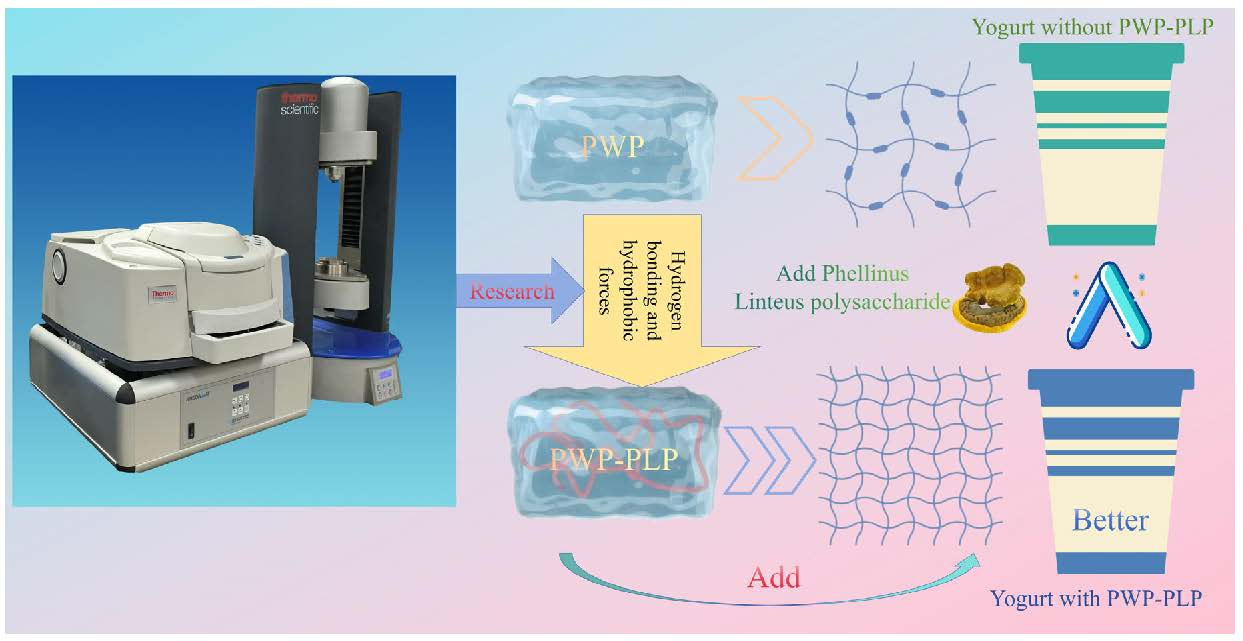
Characterization of the Hydrogel-Binding Mechanism of Phellinus linteus Polysaccharides and Polymerized Whey Protein by SR-IR Technology and Its Application in Goat Milk Yogurt

 ,
,  , , ,
, , , 

Abstract
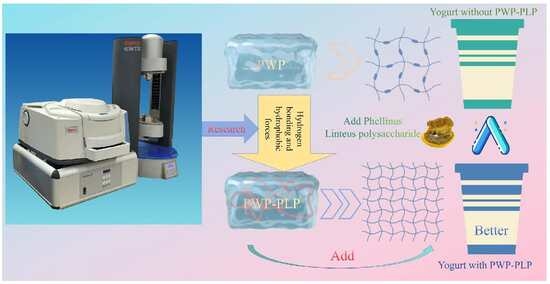
Share and Cite
Wang, Q.; Zhang, X.; Li, Y.; Xiang, H.; Tao, W.; Wu, J.; Fan, J.; Xi, H.; Wang, L.; Hou, J.; et al. Characterization of the Hydrogel-Binding Mechanism of Phellinus linteus Polysaccharides and Polymerized Whey Protein by SR-IR Technology and Its Application in Goat Milk Yogurt. Foods 2026, 15, 699. https://doi.org/10.3390/foods15040699
Wang Q, Zhang X, Li Y, Xiang H, Tao W, Wu J, Fan J, Xi H, Wang L, Hou J, et al. Characterization of the Hydrogel-Binding Mechanism of Phellinus linteus Polysaccharides and Polymerized Whey Protein by SR-IR Technology and Its Application in Goat Milk Yogurt. Foods. 2026; 15(4):699. https://doi.org/10.3390/foods15040699
Chicago/Turabian StyleWang, Qingyun, Xingyu Zhang, Yilong Li, Huiyu Xiang, Weibing Tao, Jiafu Wu, Jiping Fan, Huangchen Xi, Lin Wang, Juncai Hou, and et al. 2026. "Characterization of the Hydrogel-Binding Mechanism of Phellinus linteus Polysaccharides and Polymerized Whey Protein by SR-IR Technology and Its Application in Goat Milk Yogurt" Foods 15, no. 4: 699. https://doi.org/10.3390/foods15040699
APA StyleWang, Q., Zhang, X., Li, Y., Xiang, H., Tao, W., Wu, J., Fan, J., Xi, H., Wang, L., Hou, J., & Sun, X. (2026). Characterization of the Hydrogel-Binding Mechanism of Phellinus linteus Polysaccharides and Polymerized Whey Protein by SR-IR Technology and Its Application in Goat Milk Yogurt. Foods, 15(4), 699. https://doi.org/10.3390/foods15040699