


Abstract
Fruit leathers, also called fruit rolls, are healthy snacks that are popular amongst children. Apple cocoa rolls were prepared using apple puree (AP) and either raw commercial cocoa powder (RC), cocoa husk powder (CW), or a blend of both. This study aimed to valorize the food industry’s by-product and characterize the physicochemical and sensory properties of the obtained leathers. This approach intended to verify whether a substitution of cocoa is possible with a use of a by-product derived from the same plant. The snacks were prepared by mixing concentrated apple puree with cocoa powder at 2.5% (w/w) and drying on sheets at 55 °C until constant mass was reached. Each formulation was evaluated for its effect on sensory attributes, structure, wetting, mechanical, antioxidant, chemical, and optical properties. The color and the texture of the developed fruit leathers were affected by the components and the drying process. CW as a fine powder showed a good compatibility with the fruit matrix and the RC. The obtained snacks were characterized by dark chocolate color, while the AP samples were significantly lighter. Different microstructural reorganizations were observed, which also resulted in surface roughness. The addition of CW lowered the water vapor sorption rate in prepared snacks. The water contact angle ranged from 44.43° to 61.56°, indicating the hydrophilic nature of the material. Additionally, Fourier-transform infrared spectroscopy indicated compatibility of AP, RC, and CW. Sensory analysis revealed that fruit leathers with a mix of CW + RC were preferred by panelists for texture. This idea poses a feasible and cost-effective solution to prepare a clean-label product with incorporation of a by-product.
1. Introduction
Fruit leathers are types of snacks that are prepared from fruits, traditionally a concentrate or a puree, utilizing drying techniques [1,2]. The obtained product is typically thin, has a distinct chewy texture, and carries the flavor of the fruit used. They can be considered highly nutritional convenience foods, as they are much more shelf-stable than fresh fruits, whilst still containing antioxidants, minerals, and fiber [3,4]. Additionally, various bioactive compounds can be added to fruit leathers. Neog et al. [5] incorporated encapsulated phytochemicals extracted from norabogori fruit into leathers based on the same fruit and xanthan gum. The final product was characterized by high acceptance in sensory evaluations and improved nutritional value. The rising popularity of fruit leathers can be attributed to their nutritional density [6]. They serve as a healthy alternative to conventional snacks. Furthermore, their production demonstrates the possibility of using by-products generated by the food industry, such as fruit peels, which can increase the snack’s sustainability. Menezes Rodrigues et al. [7] developed and characterized snack leathers, also called pestils, which were based on chayote and cucumber peels and agar-agar. The mentioned study demonstrated the use of by-products in the production of nutritious vegetable pestils. Another study explored the use of dragon fruit and mandarin orange peels in the production of fruit leathers, providing a feasible valorization stream [8]. Siamese orange peels were also successfully used as an additive for fruit leathers [9]. Generally, multiple aspects, such as product availability, nutritional value, and flavor, need to be considered to produce snacks with optimal properties.
Apples (Malus domestica) are among the fruits that are produced in the largest amounts worldwide [10]. They are an affordable, widely available ingredient for producing fruit leathers. Subsequently, they are a great source of vitamins, phenolic compounds, and minerals [11,12]. Pectin is another crucial constituent of apples, as it has excellent gelling properties [13], which eliminates the need to incorporate gelling additives into fruit leathers. It has been linked to improved texture and reduced water activity in snacks [14], making apples an excellent base for the development of fruit rolls [15]. Additional criteria for choosing base fruit in the production of leathers are the natural sweetness of the raw material [16]. Ersoyak et al. [17] reported using apples as a natural sweetener for beetroot-based leather snacks. Apples can also be a base for functional snacks enriched in whey protein and folic acid [18]. They were also incorporated into multifruit leathers together with plums, peaches, acáchul berry powder, and papaya [2,15,19,20].
Cocoa tree (Theobroma cacao L.) is an important agricultural commodity that is cultivated to obtain cocoa powder and cocoa butter. Cocoa powder is a valuable product used in chocolate production, confectionery, and the beverage industry [21,22]. Cocoa beans undergo multiple processes during the production of cocoa powder, which highly influence the final color, stability, and solubility of the product [23]. Additionally, the powder has a high nutritional value, as it is rich in iron, magnesium, phenolic, and flavonoid compounds [23,24]. However, studies show that different commercial powders significantly vary in their nutritional composition and mineral and bioactive compound content [25,26]. Given the processing requirements and the high price of cocoa powder, alternatives to its use are gaining popularity.
Cocoa bean shells (CW), which can be used to replace cocoa powder in certain products, are a by-product of cocoa production and are obtained during the de-hulling of cocoa beans. The yearly production of CW is estimated to exceed 700 thousand tons [27], making its proper disposal and valorization a significant issue for the food industry. Taking everything into account, CW nutritional composition is similar to that of raw cocoa, with the exception of CW having significantly lower fat content and a high fiber content [28]. It is also known for its high polyphenol and theobromine content [29]. Rossin et al. [30] incorporated CW into ice cream and investigated the potential of polyphenols and methylxanthines in CW to protect against intestinal barrier damage. The results validated the possibility of using CW in functional food products.
Replacing RC with CW has been previously attempted for various food products. Salvatore et al. [31] substituted 25% and 50% of cocoa nibs with CW in the production of dark chocolate. The resulting product was characterized with better nutritional qualities, as it contained more fiber and less fat than the traditional chocolate. CW was also used as a wheat flour alternative [32]. The authors attempted to substitute different amounts of flour in cookies and examined the resulting cookies’ properties and nutritional values. Despite the enrichment with phenolic and flavanol compounds, a high concentration of CW caused issues with dough homogeneity and excessive hardness of the cookies. A different study on cookies used defatted cocoa bean shells to replace flour, and an increase in nutritional value and phenolic compounds was reported. However, the resulting product also had a significant increase in hardness. A study on chocolate cakes was another example of substituting wheat flour with CW [33]. The results, except for the sample with 100% substitution, indicated consumer preference for cakes in which flour was replaced with CW. Nonetheless, production of confectionery products is not the only potential application of CW. It has also been successfully incorporated into bread, cocoa spread, functional iced tea, jam, and burger patties [34,35,36,37,38]. To the best of the authors’ knowledge, cocoa and cocoa shells were not previously used in the development of fruit leather snacks. Utilization of food industry by-products in the production of fruit leathers is limited to the use of fruit peels. Accordingly, this study aims to produce and characterize apple cocoa fruit leathers and to explore the possibility of replacing RC with CW as a way of implementing circular economy principles. The developed snacks are to serve as a healthy snack product that has a clean label and appeals to health-conscious consumers.
2. Materials and Methods
2.1. Materials
Apples of the Golden Delicious variety were supplied by the Experimental Orchard of Warsaw University of Life Sciences (Warsaw, Poland). Non-alkanized CW powder (10 µm) was supplied by Green Field Sp. z o.o. Sp. k. (Warsaw, Poland). Commercial defatted RC (DecoMorreno, MASPEX, Wadowice, Poland) was also used.
2.2. Methods
2.2.1. Apple Puree Preparation
Apples were manually washed under running water, dried using paper towels, and cut into quarters, and the cores were removed. Prepared fruit pieces were then blended and heated to 100 °C for 10 min with continuous stirring in the Vorwerk Thermomix TM4 kitchen appliance (Vorwerk SE & Co. KG, Wuppertal, Germany). The puree obtained was then cooled to room temperature.
2.2.2. Puree Characterization
A refractometer (PAL-3, Atago Instruments, Tokyo, Japan) was used for the analysis of total soluble solids content in apple puree (AP). The juice from the puree was squeezed and used in the measurement, which was performed in three replicates. The results were obtained in °Brix. The obtained apple puree was smooth and had a bright yellow color. The total soluble solids of the puree were measured at 22.63 ± 0.03 °Brix.
2.2.3. Fruit Leather Preparation and Characterization
Cocoa powders were manually stirred into AP. Table 1 presents the detailed composition of the fruit leathers. The obtained purees were poured on byko-charts test cards (model A4 PA-2824, Eurotom Sp. z o.o., Warsaw, Poland) with a thickness of 0.35 mm. Then, a slotter applicator and an automatic layering table (ZAA 2300, Zehntner Testing Instruments, Sissach, Switzerland) were used to evenly spread the leathers. The layers were applied at a speed of 90 mm/s, resulting in a thickness of 2500 μm. Convective drying was carried out in a laboratory-scale convective dryer, with an integrated scale, at 55 °C with an air velocity of 1.5 m/s. Sample mass during drying was measured every 5 min, and the drying process was carried out until 2 identical measurements and one that varied by a maximum of 0.1 g were obtained. Additionally, an AquaLab Series3TE device (Decagon Devices, Inc., Pullman, Washington, DC, USA) with an accuracy of ±0.001 was used to ensure that the water activity of the product was below 0.3. Dried snacks were stored in a climate chamber model KBF 240 (Binder GmbH, Tuttlingen, Germany) at 25 °C and a relative humidity of 50%. Before the water vapor sorption kinetics and water vapor sorption isotherms analyses, fruit leathers were dried again in a vacuum dryer (Memmert V0 500, Memmert GmbH, Schwabach, Germany) at 30 °C and a pressure of 1.5 kPa for 48 h. Dried samples were then stored in a desiccator on phosphorus pentoxide (P2O5).
Table 1.
Formulation of fruit leathers based on apple puree (AP), cocoa waste (CW), and raw cocoa (RC).
2.2.4. Microstructure
To examine the microstructure of fruit leathers, a digital microscope (VHX-X1 series) and laser confocal microscope (VK-X3000 series) (KEYENCE INTERNATIONAL (Mechelen, Belgium) NV/SA) were used with a magnification of 100×. Roughness parameters were measured on a microscopic image performed by a laser confocal microscope. Therefore, a simple measurement was performed on a representative sample of each type.
2.2.5. Fourier-Transform Infrared Spectroscopy
Fourier-transform infrared spectroscopy (FT-IR) of the samples was determined using a Cary-630 spectrometer (Agilent Technologies, Cary, NC, USA). The total attenuated reflection (ATR) technique was applied, and the spectra were recorded in the absorption range of 4000–650 cm−1 at a resolution of 4 cm−1. Each obtained spectrum was an average of 32 interferograms and was presented as a dependence of absorbance on wavenumber.
2.2.6. Color
A colorimeter CR-400 (Konica Minolta, Tokyo, Japan) was used to measure the color of fruit rolls in the CIE L*a*b* system. The colorimeter was calibrated using a white plate prior to the measurements. The parameters studied were L* from black (0) to white (100), a* from green (−) to red (+), and b* from blue (−) to yellow (+). The total color difference (∆E) was calculated according to the following equation [39].
where ∆L*, Δa*, and ∆b* are the differences between the parameter corresponding to the color of the experimental sample and the parameter corresponding to the control fruit leather. SpectraMagic NK color data software (Version SM-S100w 3.10.0004) was used to record the data, with ten repetitions for each type of fruit leather.
2.2.7. Thickness
The thickness of fruit leathers was measured using an electronic ProGage thickness tester (Thwing-Albert Instrument Company, West Berlin, NJ, USA) with an accuracy of 0.1 µm. The measurements were performed in at least three replicates.
2.2.8. Mechanical Properties
The mechanical properties of the snacks were measured using a TA-XT2i texture analyzer (Stable Microsystems, Haslemere, UK) via the standard ASTM D882 method [40] for the measurement of tensile strength (TS) and elongation at break (EAB). To prepare the samples for the measurements, they were cut into rectangles with a size of 100 × 25 mm. Leathers were stretched at a rate of 1 mm/s until breakage, with an initial separation distance of 25 mm. Additionally, to better characterize the sensory properties of the product, adhesiveness was measured. The measurement was performed according to a method described by Barman et al. [3]. Each measurement was carried out in eight replicates.
2.2.9. Wetting Properties
Dry Matter
The dry matter of fruit leathers was determined after drying the product. The analysis was conducted in three replicates using a laboratory dryer (SUP 65 WG, WAMED, Warsaw, Poland). Drying was performed at 105 °C to constant mass. The calculations were performed using the initial mass and the mass after drying. An analytical scale (RADWAG PS 600/C/2, RADWAG, Radom, Poland) was used.
The dried samples were further used to evaluate water vapor sorption kinetics and isotherms.
Water Contact Angle
A goniometer (DataPhysics Instruments, OCA 25, Filderstadt, Germany) was used to determine the water contact angle of the samples. The sessile drop method was implemented; a 10 μL drop of distilled water at a speed of 10 μL/s was released on the air side of the surface of the leather. Measurements were performed in six repetitions; SCA20_U software (version 5.0.37) recorded the results.
Water Vapor Sorption Kinetics
A total of 50 ± 5 mg of samples were cut into small pieces and kept at a constant ambient relative humidity of 75% at 25 ± 1 °C using a saturated sodium chloride (NaCl) solution. Samples in three replicates were measured periodically after 0.5, 1, 3, 6, 9, 12, 24, 48, 72, and 96 h using a laboratory dryer (SUP 65 WG, WAMED, Warsaw, Poland).
Water Vapor Sorption Isotherms
An Aquadyne DVS-2HT dynamic water vapor sorption analyzer (Quantachrome Instruments, Anton Paar Sp. Z o.o., Warsaw, Poland) was used to determine the water vapor sorption isotherms of the fruit leathers in three replicates. Each sample was weighed to 20 ± 1 mg and then placed in a glass pan. The samples were subjected to relative humidities from 0% to 90% until equilibrium at 25 °C was reached. The equilibrium criterion at each relative humidity was a mass change rate (dm/dt) ≤ 0.002% min−1 over 10 min. The data were analyzed using Microsoft Excel 2019 with DVS Standard Analysis software (version Air3) and processed using OriginPro 8.0 (OriginLab Corporation, Northampton, MA, USA).
2.2.10. Antioxidant Properties
Fruit leather extracts were prepared by combining 25 mL of 80% (v/v) aqueous ethanol solution with 2 g of finely cut fruit leathers. The mixture was shaken for 24 h using a vortex and filtered. Then, the filtrate was transferred into 50 mL volumetric flasks and filled to volume with 80% (v/v) aqueous ethanol solution. Obtained extracts were also used to determine the antioxidant properties and total phenolic content of the fruit snacks. The measurements of antioxidant capacity were performed using a spectroscopic method and quantified the sample’s ability to neutralize the 2′-Azino-bis(3-ethylbenzothiazoline-6-sulfonic acid) (ABTS) and 2,2-diphenyl-1-picrylhydrazyl (DPPH) radicals. The analysis was conducted according to the method described by Karwacka et al. [41]. The results were expressed as milligrams of Trolox equivalents per 100 g of the dry mass. A Trolox standard calibration curve was prepared using Trolox solutions at concentrations ranging from 0 to 250 μg/mL.
The % radical inhibition was calculated according to the following equation:
ABTS Radical Scavenging Activity
Stock ABTS solution was diluted with 80% (v/v) ethanol until an absorbance at a wavelength of 734 nm was in the range of 0.68–0.72. Then, 10 µL of extracts were placed in a 96-well plate together with 250 µL of the ABTS solution. For the blank, ethanol was used instead of the extract. The 96-well plate was shaken and incubated in a dark environment for 6 min. After the incubation, the absorbance was measured at 734 nm by a multiplate spectrophotometer (Multiskan Sky, Thermo Electron Co., Waltham, MA, USA). For each extract, there were three replicates.
The calibration curve equation for the ABTS radical is as follows:
DPPH Radical Scavenging Ability
The DPPH radical scavenging activity was performed in the same way as ABTS; however, the incubation time was 30 min, and the wavelength which was used for measurements was 515 nm. A stock DPPH solution was used.
The calibration curve equation for the DPPH radical is as follows:
2.2.11. Total Phenolic Content
Total phenolic content (TPC) was measured via the spectroscopic method described by Jedlińska et al. [42]. Distilled water was used to dilute 10 µL of extracts before placing them in a 96-well plate, and then 40 µL of Folin–Ciocalteu reagent and 250 µL of sodium carbonate were added to each well. Each sample had 3 replicates. After the reactions were carried out for 1 h in the dark, absorbance was measured at 750 nm against a blank sample using a multiplate spectrophotometer (Multiskan Sky, Thermo Electron Co., Waltham, MA, USA). The TPC was then calculated with reference to a calibration curve prepared for chlorogenic acid (CGA), and the results were expressed as an equivalent of milligrams of CGA per 100 g of the dry mass.
2.2.12. Sensory Analysis
The fruit leathers were prepared a day prior to the analysis and were stored in a climate chamber model KBF 240 (Binder GmbH, Tuttlingen, Germany). CW, RC, and CW + RC samples were examined. The evaluation was conducted by 30 untrained panelists, who were staff members and university students. A hedonic test with a 5-point scale was used; a score of 5 meant excellent, and 1 meant unacceptable. The attributes evaluated were appearance, color, texture, chewiness, flavor, aroma, and overall quality. The test was performed on RC, CW, and CW + RC; the control sample was not presented to the panellists as it did not represent the intended apple cocoa flavor.
2.2.13. Statistical Analysis
One-way analysis of variance (ANOVA) with Tukey’s post hoc test was performed using Statistica 13.3 (StatSoft Inc., Tulsa, OK, USA) to detect significant differences in the properties of the samples at a significance level of 0.05.
3. Results and Discussion
3.1. Effect of Cocoa Shell Husk on Microstructure of Apple Cocoa Fruit Leathers
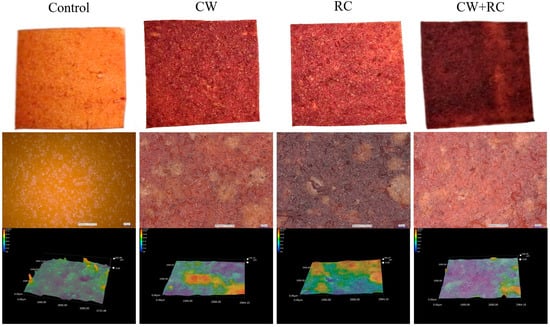
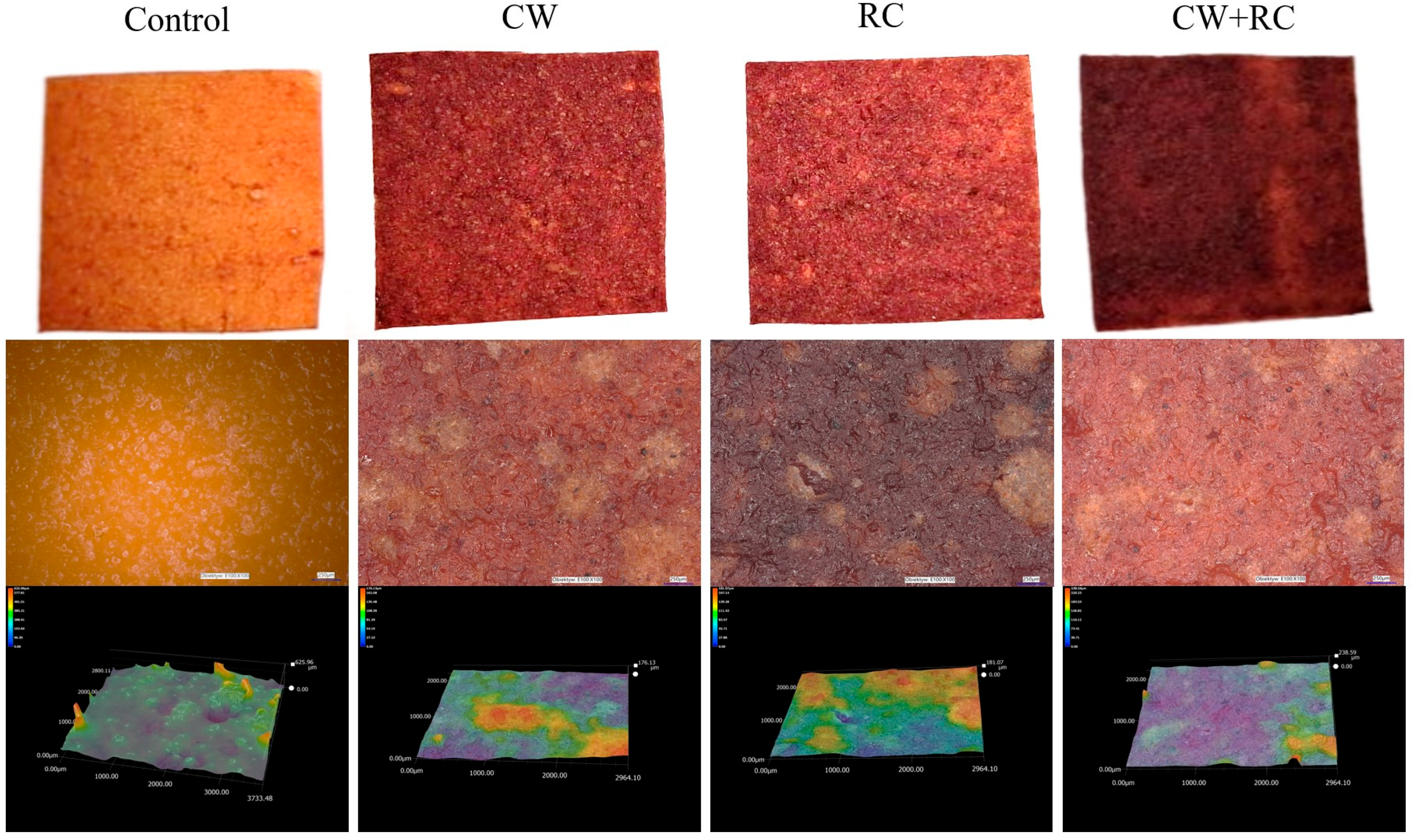
Microstructure evaluation was performed to assess the structure and homogeneity of fruit leathers. Figure 1 presents the digital photographs, sample surface, and topography. The analysis revealed differences between control and experimental samples. Control had a yellow color and was characterized by a glossy, almost transparent surface; the presence of beige particles was also noted. Additionally, topographical irregularities and sharp peaks were found. On the contrary, all experimental samples had a matte surface. CW and CW + RC had a light brown-red color, while RC was dark brown. The microstructure analysis of CW, RC, and CW + RC revealed similar surface characteristics of the samples, slight surface roughness, and even distribution of particles. Topographical irregularities in CW and RC were potentially caused by the particle sizes of the cocoa-based powders. Considering the topography, CW + RC had the smoothest surface, indicating good ingredient compatibility and high homogeneity. Reported particles were suspected to be apple pieces left after the pureeing process.
Figure 1.
Digital photographs, microstructure, and topography of fruit leathers based on apple puree (AP), cocoa waste (CW), and raw cocoa (RC).
The following surface parameters of the fruit leathers were examined: average roughness (Ra), root mean squared roughness (Rq), maximum peak height (Rp), and peak valley (Rz) (Table 2). The highest average roughness was reported for control (19.95 µm) and the lowest for CW (4.44 µm). Amongst experimental samples, RC exhibited the highest Ra. Rq ranged from 5.78 (CW + RC) µm to 29.01 µm (control). Similarly, for Rp and Rz, the highest values were reported for the control, and the lowest for CW + RC. Considering all examined parameters, RC had the highest roughness amongst samples with the addition of cocoa ingredients, indicating that CW influenced the fruit roll’s roughness more than RC. This can be potentially caused by RC powder’s particle size, as it was finer than CW. Additionally, CW contains less fat and more fiber, which can influence the product’s homogeneity and, in turn, its roughness. The results of the roughness analysis correspond to the microstructure of the fruit leathers, since CW + RC was the sample characterized by the smoothest surface and topography, while control, RC, and CW all exhibited multiple irregularities and peaks on their surfaces. Surface roughness is a crucial parameter that influences the drying rate of food products. Joardder et al. [43] investigated moisture removal rates of different plant-based products during convective drying. It was found that curved food slices exhibited higher moisture diffusivity than planar slices.
Table 2.
Surface roughness parameters of fruit leathers based on apple puree (AP), cocoa waste (CW), and raw cocoa (RC).
3.2. Effect of Cocoa Shell Husk on Chemical Structure of Apple Cocoa Fruit Leathers
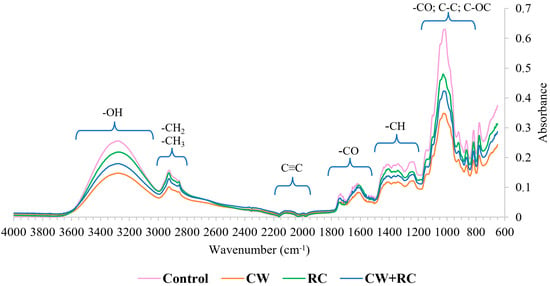
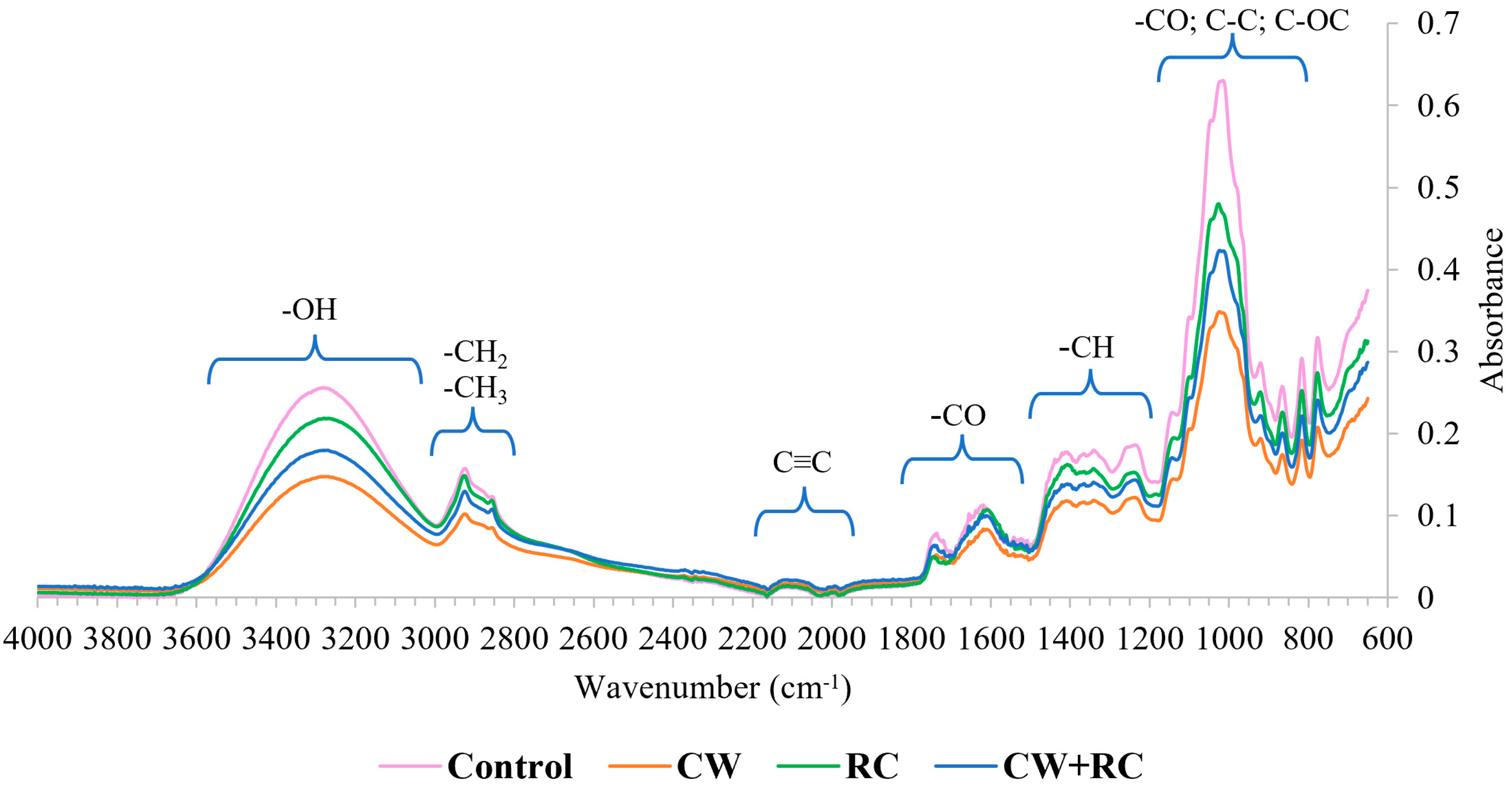
FTIR analysis (Figure 2) was conducted to investigate physicochemical properties and compatibility of the fruit leathers and ingredients used. A broad band was detected in the range 3600–3000 cm−1 and was associated with the presence of hydroxyl groups [44]. The highest absorbance within this band was attributed to the control and RC samples, indicating that the addition of CW lowered the amount of -OH bonds. Hydrogen bonding may be caused by pectin interacting with saccharides in the samples [45]. Stretching vibrations of aliphatic CH2 and CH3 could be observed at 3000–2800 cm−1. Similarly, the highest absorbances were observed for the control and RC. At 2200–2000 cm−1, a low band, characteristic of the alkyne group (C≡C), was detected. The amide band (-CO) was present at an absorbance of 1800–1500 cm−1 [2]. In the range of 1500–1200 cm−1, a band that identifies methine groups (-CH) was found. Notably, the highest absorbance in that area was noted for the control sample and the lowest for CW. Similar dependency was reported within the range indicative of C-O, C-C, and C-OC bonds (1200–600 cm−1).
Figure 2.
Fourier-transform infrared spectra of fruit leathers based on apple puree (AP), cocoa waste (CW), and raw cocoa (RC).
While no significant differences in the presence of functional groups were found, absorption peaks for -OH, CH2, CH3, -CH, -CO, C-C, and C-OC varied between different samples. It can be concluded that no new chemical substances were formed after the addition of CW and RC to apple-based fruit leathers, indicating good compatibility of cocoa ingredients with apple puree.
3.3. Effect of Cocoa Shell Husk on Color of Apple Cocoa Fruit Leathers
Color is a crucial parameter that affects consumers’ perception of foodstuffs. Color parameters of apple cocoa fruit leathers are presented in Table 3. Experimental samples were visually brown, while the control sample had a dark yellow color.
Table 3.
L*, a*, and b* color parameters and the total color difference (∆E) of fruit leathers based on apple puree (AP), cocoa waste (CW), and raw cocoa (RC).
L* is used to describe lightness; the higher the value, the lighter the sample. Regarding the snack samples, the control (40.21 ± 0.63) sample was characterized by the color closest to white, and the RC (30.99 ± 0.11) with the darkest shade. Values for CW and CW + RC were 32.44 ± 0.23 and 31.34 ± 0.16, respectively. However, no significant differences (p ≤ 0.05) were reported between RC and CW + RC in terms of L*. Those results can be attributed to the initial colors of cocoa ingredients, as RC and CW have a dark brown color. The next color parameter examined was a*, which is used to describe closeness to red (above 0) or green (below 0). The results ranged from 3.88 ± 0.20 (RC) to 9.19 ± 0.09 (control), demonstrating that the addition of both CW and RC significantly influenced the color of fruit leathers. In relation to parameter b*, which indicates closeness to yellow (above 0) and blue (below 0), the control sample measured at 11.68 ± 0.08, while the experimental samples ranged from −1.82 ± 0.09 to 0.95 ± 0.24. The lowest value was noted for RC. The significant differences between the control and other samples are caused by the initial color of the apple puree and the influence of the cocoa ingredients.
Total color difference (∆E) is used to describe the discrepancy between the tested samples and the reference. Apple cocoa leathers were compared to the control samples. The results for CW, RC, and CW + RC were 13.64 ± 0.32, 17.18 ± 1.15, and 16.21 ± 0.30. It can be concluded that both cocoa additives cause significant and visible color change, as generally ∆E > 2 is considered to be a visible difference. However, it was also observed that the addition of CW had the smallest effect on all color parameters of fruit leathers. Therefore, samples with the addition of CW might not be associated with cocoa as much as the samples with RC. Similar results were reported by Soares et al. [46] who partially replaced wheat flour with cocoa bean shell powder in cookies. The resulting product had a darker color and was characterized by a high ∆E when compared to traditional cookies.
3.4. Effect of Cocoa Shell Husk on Thickness and Mechanical Properties of Apple Cocoa Fruit Leathers
The thickness of apple cocoa fruit leathers is presented in Table 4. It ranged from 0.63 ± 0.15 (C) to 0.81 ± 0.12 (CW) mm. The addition of CW significantly increased the thickness of AP leathers, while the addition of RC did not. Leathers made from a blend of both cocoa ingredients (CW + RC) had a thickness of 0.76 ± 0.03 mm. The high fiber content of CW was the potential cause of the thickness increase. Similar behavior was noted by Oldoni et al. [47]; the authors developed pectin edible films which were enriched with mango pulp with a fiber content of 11.55–17.14%. The addition of mangoes resulted in an increase in film thickness.
Table 4.
Thickness, dry matter, tensile strength (TS), elongation at break (EAB), and adhesiveness of fruit leathers based on apple puree (AP), cocoa waste (CW), and raw cocoa (RC).
Mechanical properties influence the texture of foodstuffs and, therefore, affect consumers’ perceptions of the product. Tensile strength (TS), elongation at break (EAB), and adhesiveness (A) of fruit leathers were measured (Table 4).
TS of fruit snacks ranged from 11.92 ± 1.09 to 16.45 ± 2.65 MPa. The highest TS was observed in the control sample, indicating that the incorporation of cocoa products reduced the mechanical strength of the leather. The lowest values were reported for snacks with the incorporation of RC (11.92 ± 1.09 for RC and 14.30 ± 1.35 for CW + RC). CW did not significantly influence the TS of the samples. Considering EAB, control exhibited the highest value (65.81 ± 10.62%) and RC the lowest (47.67 ± 4.35%). The addition of CW also lowered the EAB (62.72 ± 7.48%); however, the difference was not statistically significant (p ≤ 0.05). The EAB for CW + RC was measured at 57.19, indicating that RC negatively affects the EAB of apple fruit leathers. Adhesiveness is an important textural property that highly influences the overall liking of the food product. Adhesiveness ranged from 7.62 ± 0.79 J to 13.12 ± 2.97 J, with CW exhibiting the highest value and RC the lowest. Additional cocoa ingredients significantly influenced the adhesiveness of fruit leathers; nevertheless, a mix of both CW and RC did not cause a significant difference when compared with the control sample.
3.5. Effect of Cocoa Shell Husk on Wetting Properties of Apple Cocoa Fruit Leathers
The dry matter content of fruit leathers is presented in Table 4. The values ranged from 99.43 ± 0.13% (RC) to 99.62 ± 0.03% (CW). The results correspond to the final product after drying. The samples were dried to a constant mass, and their wa after drying was approximately 0.3; therefore, the dry mass content was very high. High values were an anticipated result of drying the snacks, as this aimed to provide shelf stability and the desired sensory attributes.
Water contact angle analysis was performed to assess the wettability and surface hydrophilicity of fruit leather snacks (Table 5). Measurements were performed on two sides of the snacks, the upper side (air) and the lower side (support). The results ranged from 44.43 ± 4.52° (RC air) to 61.56 ± 3.55 ° (control air), suggesting a hydrophilic (θ < 90°) nature of the product. Regarding the air sides of the apple-based fruit leathers, control exhibited the highest θ, whilst all experimental samples had significantly lower water contact angles. They were measured at 48.15 ± 4.70, 44.43 ± 4.52, and 52.73 ± 4.73 for CW, RC, and CW + RC, respectively, indicating that the mixture of two cocoa ingredients provided wetting properties that were the closest to control apple-based pestils. Nevertheless, low values of CW and RC suggest a more hydrophilic nature, which may be important for the storage and consumption of the food product. All support sides of the samples were characterized with a similar high smoothness of the surface, and the θ ranged from 45.88 ± 5.36° to 47.41 ± 5.64°. No significant differences were reported amongst the support sides of all samples.
Table 5.
The water contact angle (θ) of fruit leathers based on apple puree (AP), cocoa waste (CW), and raw cocoa (RC).
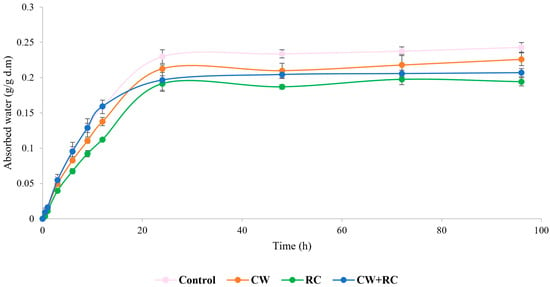
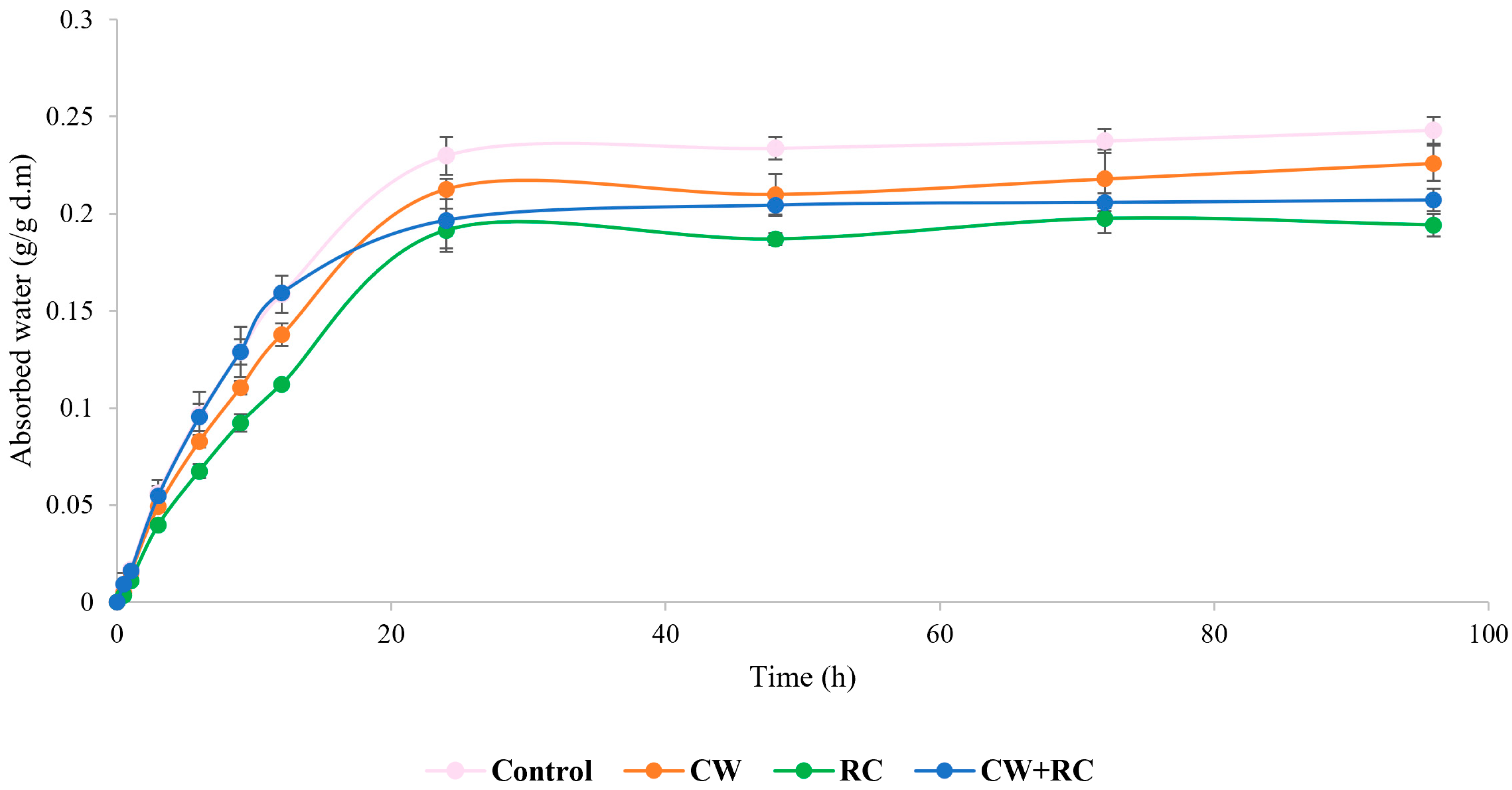
Water vapor sorption kinetics are used to indicate the moisture adsorption of a sample, which is extremely important for the safety and quality of foodstuffs. The results of this analysis are presented in Figure 3. It was observed that throughout 96 h of analysis, the control sample consistently absorbed the most moisture. RC was characterized by the lowest absorption rates, and CW, amongst experimental samples, by the highest. The CW + RC blend had a high absorption rate during the first 12 h; however, in the remaining time, the absorption rate lowered and reached its equilibrium at approximately 45–50 h. The final absorbed water amount of CW + RC was lower than CW and higher than RC. The results align with the water contact angle analysis and the samples’ hydrophilicity.
Figure 3.
Water vapor sorption kinetics of fruit leathers based on apple puree (AP), cocoa waste (CW), and raw cocoa (RC).
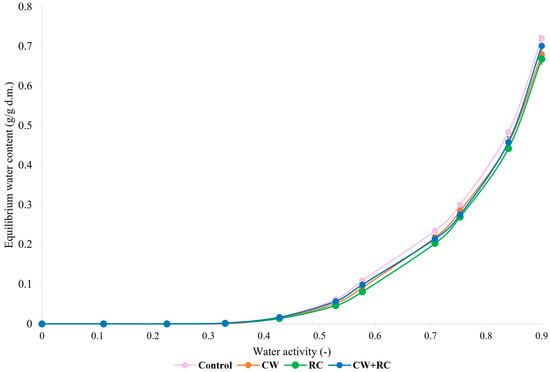
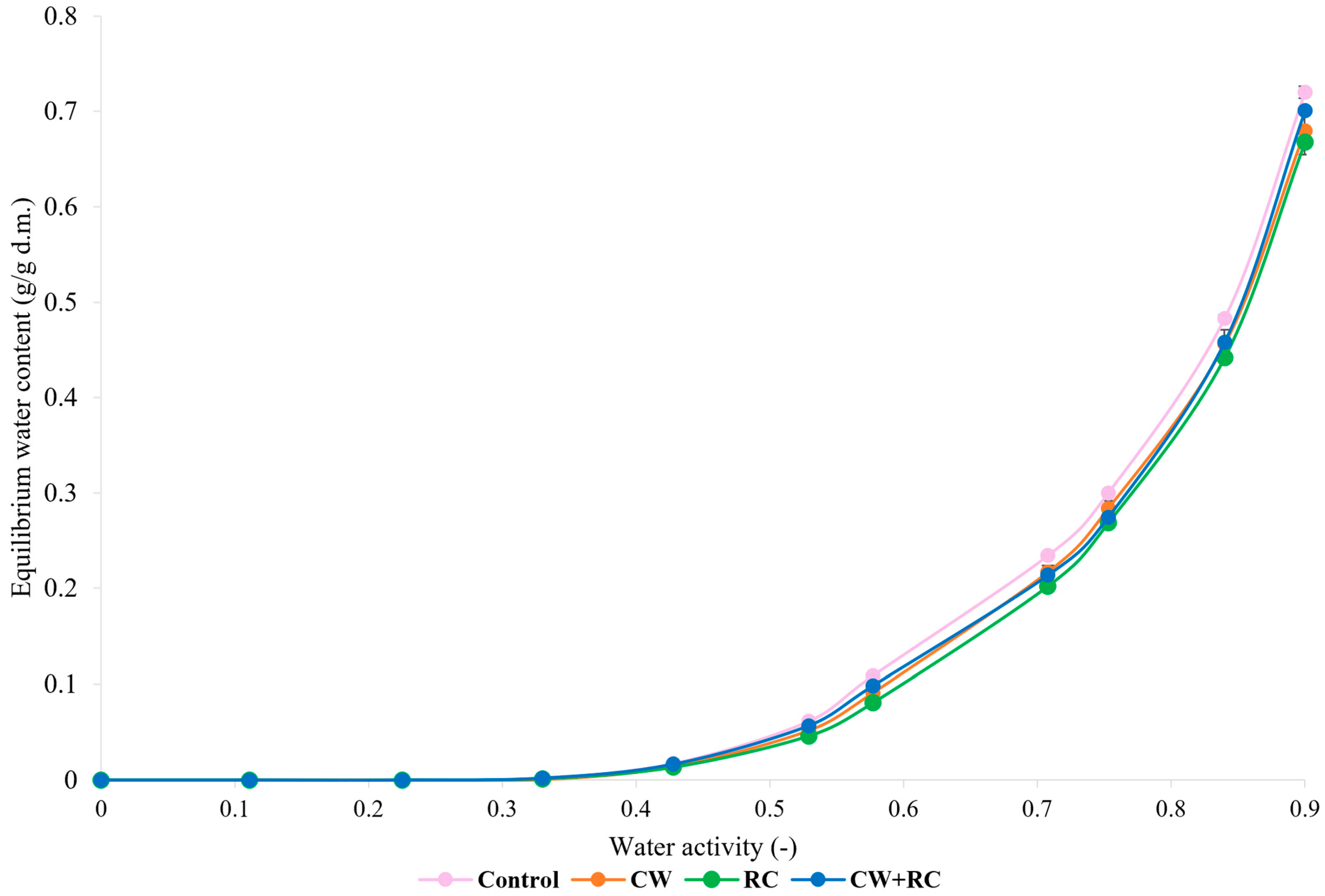
Water vapor sorption isotherms (DVS) show the relationship between the water activity and water content of the sample (Figure 4). The resulting isotherms can be described as type II sigmoid, which is common for foodstuffs rich in sugars [14,15,45,48]. There was no increase in water content within wa of 0.0 to 0.3. In the environment with wa >0.3, the water content rose. Control was characterized by the highest rise and final water content, while for RC, the lowest increase was reported. However, there were only slight differences among samples, as the final equilibrium water content of all the samples ranged from 0.67 ± 0.00 (RC) to 0.72 ± 0.01 (control) g/g d.m.
Figure 4.
Water vapor sorption isotherms of fruit leathers based on apple puree (AP), cocoa waste (CW), and raw cocoa (RC).
In summation, all wetting properties analyses indicated that control samples had the highest wettability and RC the lowest. Samples with the addition of CW were characterized by medium hydrophilicity, which is important information regarding the future packaging and storage of the fruit rolls.
3.6. Effect of Cocoa Shell Husk on Antioxidant Activity of Apple Cocoa Fruit Leathers
Antioxidants are associated with a range of health benefits and protection against various diseases [49]. Furthermore, they are also used as active agents for shelf-life extension in food products [50]. The antioxidant activity of apple cocoa fruit leathers was assessed by ABTS and DPPH methods (Table 6).
Table 6.
Antioxidant activity and total polyphenol content (TPC) of fruit leathers based on apple puree (AP), cocoa waste (CW), and raw cocoa (RC).
The results for the ABTS method ranged from 2.36 ± 0.27 (CW + RC) to 4.12 ± 0.44 (control) mg TE/100 g d.m., indicating that RC lowered the antioxidant capacity of apple fruit leathers. The analysis by the DPPH method revealed the highest value for CW (3.74 ± 0.33) and the lowest for RC (3.26 ± 0.51). CW differed significantly from RC (p < 0.05), whereas control and CW + RC did not differ significantly from CW and RC. Overall, the antioxidant activity of all samples was low when compared to studies of fruit rolls based on different fruits. Nour [51] investigated DPPH scavenging activity of pestils made from Murano and Malaga varieties of strawberry. The author reported the scavenging activity to be 20.95 ± 0.78 and 21.19 ± 1.05 mmol Trolox/100 g. With the purpose of improving the antioxidant activity of fruit leathers, the introduction of new ingredients should be considered. As an example, Mphaphuli et al. [52] added Natal Plum to mango fruit leathers, which resulted in a significant increase in antioxidant activity of all samples. Different studies successfully used wild bilberry and blackcurrant pomace powders to enrich pear fruit leathers [53].
3.7. Effect of Cocoa Shell Husk on Total Phenolic Content of Apple Cocoa Fruit Leathers
Polyphenols are chemical substances that exhibit antioxidant activity and are associated with a reduced risk of chronic diseases and metabolic disorders [54]. Moreover, they possess antibacterial activity and anti-biofilm properties [55]. Thus, they can be used as natural additives that aid in the shelf-life extension of food products. Table 6 presents the TPC of apple cocoa fruit leathers.
The TPC ranged from 1497.15 (CW) to 1871.95 (RC) mg CGA/100 g d.m. There were no significant differences reported between the samples, suggesting that CW and RC have no effect on the phenolic content of apple leathers. Despite the high polyphenolic content of CW, its addition did not significantly influence the TPC in both samples (CW and CW + RC). The loss of polyphenols might have been potentially caused by the sterilization of cocoa shells during the production of the powder. Rojo-Poveda et al. [56] studied TPC of CW from cocoa beans of different varieties and geographic origins. Comparison of 88 samples revealed values ranging from 6.10 to 42.97 mg GAE/g CW, indicating that powders vary significantly and that TPC depends on multiple factors. This finding has highlighted the need to determine the nutritional value and TPC of different CW powders to create fruit snacks with anticipated health benefits. Additionally, the choice of apple variety can also influence the TPC of the final product. Xu et al. [57] investigated phenolic compounds and antioxidant activity of seven cultivars of apples, including Gale Gala, Starking, Honeycrisp, Fuji, Qinguan, Golden Delicious, and Qinyang. Amongst the seed extracts of all chosen cultivars, Honeycrisp had the highest TPC and Golden Delicious the lowest. Those findings suggest that different varieties of apples might result in fruit leathers with improved TPC.
3.8. Effect of Cocoa Shell Husk on Sensory Properties of Apple Cocoa Fruit Leathers
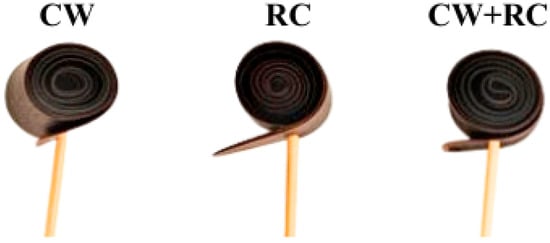
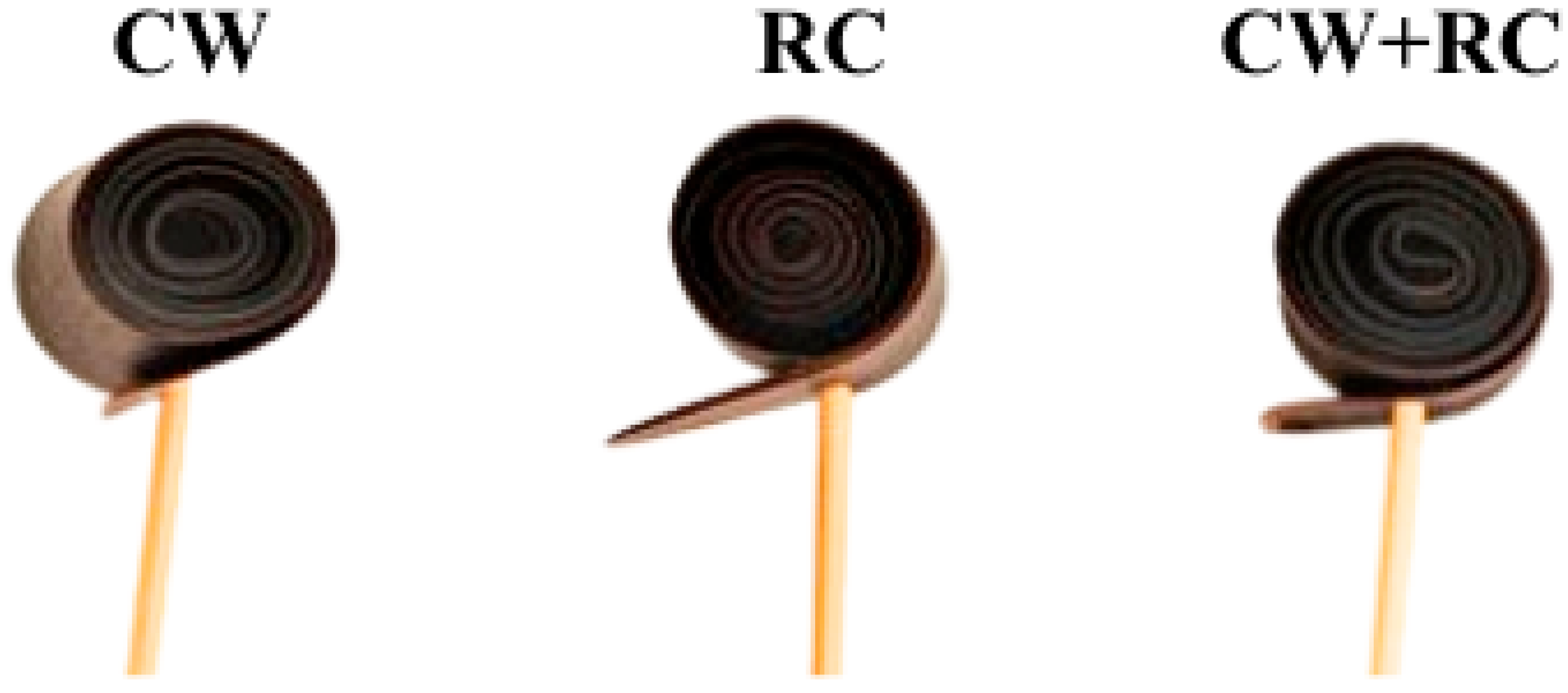
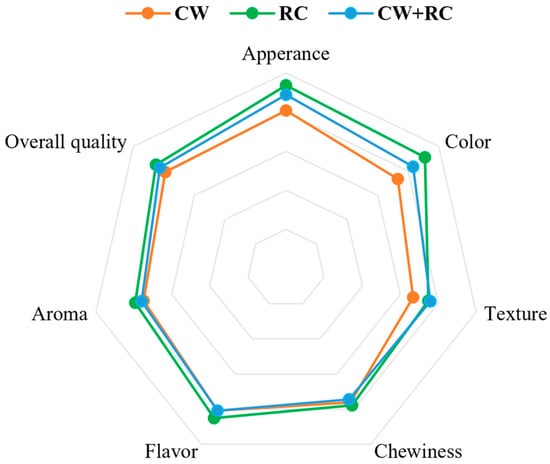
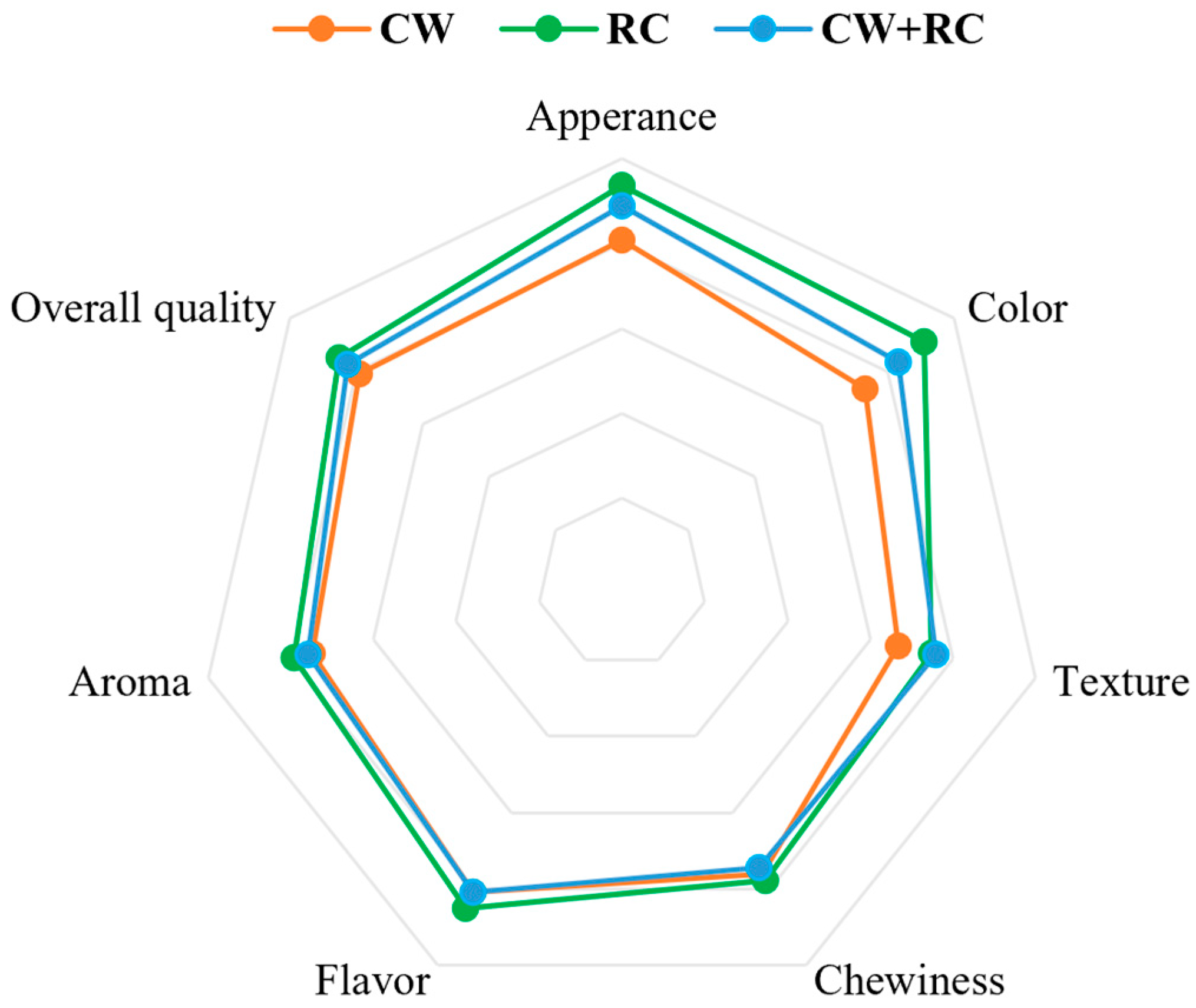
The final fruit leather product is presented in Figure 5. Sensory attributes evaluated were appearance, color, texture, chewiness, flavor, aroma, and overall quality (Figure 6). The panelists were given only the samples with the addition of cocoa ingredients (RC and CW), as the aim of the study was to produce snacks with apple cocoa flavor. In terms of appearance, RC and CW + RC received the highest scores (4.68 and 4.45). Similar observations were noted for leather color, as both samples with the addition of RC received scores above 4 (4.55 for RC and 4.17 for CW + RC). Considering the texture, CW + RC received the highest score of 3.79, while RC received a score of 3.74. Similar results were reported for aroma; RC scored 3.96, and CW + RC scored 3.79. For chewiness, RC (3.89) and CW (3.81) achieved the highest scores. It was also revealed that CW and CW + RC both attained 4.04 for flavor liking, indicating a similar flavor profile of the samples containing CW.
Figure 5.
Digital photographs of fruit leathers based on apple puree (AP), cocoa waste (CW), and raw cocoa (RC) used for sensory analysis.
Figure 6.
Sensory attributes of fruit leathers based on apple puree (AP), cocoa waste (CW), and raw cocoa (RC).
Taking into consideration mechanical properties (Figure 4) and also sensory analysis results, it can be concluded that the addition of only CW negatively impacts the fruit leathers. Panelists reported lower likeness for texture, which is highly linked to the high adhesiveness of snacks. However, in terms of chewiness, there were no significant differences between all samples. With regard to TS, EAB, and adhesiveness, CW + RC samples have a great potential to be accepted by consumers.
The overall quality of samples was reported to be 3.96, 4.26, and 4.13 for CW, RC, and CW + RC, respectively. It can be concluded that leathers with CW had a slightly smaller acceptance rate. However, snacks with the blend of RC and CW have the potential of being enjoyed by consumers, while having less environmental impact. Further studies are necessary to verify the changes in nutritional value, especially the fiber content.
4. Conclusions
The results of the study revealed that the CW is a convenient and feasible partial substitution for RC in apple-based fruit leathers. The microstructure and surface analyses revealed good homogeneity of the samples and significant color change in the experimental samples. FTIR revealed good compatibility with all ingredients. Texture analysis showed good mechanical strength and acceptable adhesiveness of the product. Total color difference between the control and fruit leather with cocoa products ranged from 13.64 to 17.18, as the control sample was dark yellow and the experimental samples were brown. Overall, the pestils were characterized by medium wettability and low antioxidant activity. Enrichment of the control sample with CW and RC did not affect the TPC significantly. The sensory attributes of the snacks revealed that RC and CW + RC had the highest overall acceptability. CW samples scored significantly lower in terms of texture, color, and appearance, while maintaining good aroma, flavor, and chewiness. The blend of both cocoa ingredients possesses optimal sensory and mechanical properties and has a high economic potential. Future directions of this research should explore different ratios of CW and RC, additional analyses of the nutritional values, and shelf-life studies of the final product. Sourcing CW from different cocoa varieties might yield fruit snacks with higher polyphenol content and antioxidant activity.
Author Contributions
Conceptualization, S.G.; methodology, S.G. and A.Ł.; software, A.Ł. and S.G.; validation, S.G.; formal analysis, A.Ł.; investigation, A.Ł.; resources, A.Ł. and S.G.; data curation, A.Ł. and S.G.; writing—original draft preparation, A.Ł.; writing—review and editing, A.Ł. and S.G.; visualization, S.G.; project administration, S.G.; funding acquisition, S.G. All authors have read and agreed to the published version of the manuscript.
Funding
This research received no external funding.
Institutional Review Board Statement
The organoleptic assessment was conducted in full agreement with the national and international regulations in compliance with the Declaration of Helsinki [58]. For the organoleptic assessment of the samples, the risk assessment was done before the experiment, and the samples did not cause any risks to the subjects. Risk assessment for organoleptic assessment was conducted on the basis of hazard identification, including microbiological hazards (total viable count (TVC) and total count of yeast and mold (TYM)), chemical hazards (to minimize the hazard during the study, apples from SGGW Experimental Orchard and commercially available cocoa and cocoa bean shell powders were used, and all used materials were evaluated to not contain any potential allergens), and physical hazards (checked for lack of glass, plastic, metal, etc.). All hygiene procedures were ensured when the samples were subjected to technological processes and during preparation for organoleptic assessment. The organoleptic assessment was done on small amounts of the sample, and before it, the microbial tests were carried out. The personal information and data of the participants were anonymous according to the General Data Protection Regulation of the European Parliament [59].
Informed Consent Statement
The informed consent for participation was obtained from all subjects involved in the study.
Data Availability Statement
The original contributions presented in this study are included in the article. Further inquiries can be directed to the corresponding author.
Acknowledgments
The authors acknowledge GreenField Sp. z o.o. Sp. k. (Warsaw, Poland) for providing the cocoa bean shell for this study and Dawid Chojnowski from KEYENCE INTERNATIONAL (Mechelen, Belgium) NV/SA for support in conducting film microstructure analysis.
Conflicts of Interest
The authors declare no conflicts of interest.
References
- Aini, N.; Nurfadilah Azzahra, S.; Setyawati, R.; Sustriawan, B.; Eko Kusuma Kurniawan, R.; Sabila Arsyistawa, H.; Putri Roro Arianti, E. Fruit Leather Melon Formulation with Supplementation of Pineapple Puree, Carrageenan and Sorbitol. E3S Web Conf. 2025, 609, 02005. [Google Scholar] [CrossRef] [Scilit]
- Nizamlioglu, N.M.; Yasar, S.; Bulut, Y. Chemical versus Infrared Spectroscopic Measurements of Quality Attributes of Sun or Oven Dried Fruit Leathers from Apple, Plum and Apple-Plum Mixture. LWT 2022, 153, 112420. [Google Scholar] [CrossRef] [Scilit]
- Barman, M.; Das, A.B.; Badwaik, L.S. Effect of Xanthan Gum, Guar Gum, and Pectin on Physicochemical, Color, Textural, Sensory, and Drying Characteristics of Kiwi Fruit Leather. J. Food Process Preserv. 2021, 45, 2. [Google Scholar] [CrossRef] [Scilit]
- Sharew, G.A.; Woldemariam, H.W. Optimization of Bee Pollen Addition on the Physicochemical, Antioxidant, and Sensory Properties of Functional Mango (Mangifera indica L.) Fruit Leather. Appl. Food Res. 2025, 5, 101222. [Google Scholar] [CrossRef] [Scilit]
- Neog, U.; Dhar, P.; Kumari, T.; Nickhil, C.; Deka, S.C.; Pandiselvam, R. Optimization of Microwave-Assisted Process for Extraction of Phytochemicals from Norabogori Fruit (Prunuspersica L. Batsch) and Its Application as Fruit Leather. Biomass Conv. Bioref. 2025, 15, 4899–4913. [Google Scholar] [CrossRef] [Scilit]
- Sarma, O.; Kundlia, M.; Chutia, H.; Mahanta, C.L. Processing of Encapsulated Flaxseed Oil-rich Banana-based (Dwarf cavendish) Functional Fruit Leather. J. Food Process Eng. 2023, 46, e14282. [Google Scholar] [CrossRef] [Scilit]
- Menezes Rodrigues, G.D.; Garcia, V.A.D.S.; Vanin, F.M.; Yoshida, C.M.P.; Carvalho, R.A.D. Chayote and Cucumber Peels as Raw Material for Edible Leathers (Pestils): Valorization of Vegetable Residues. LWT 2025, 232, 118430. [Google Scholar] [CrossRef] [Scilit]
- Dharma, A.S.B.; Widodo, F.; Lo, D. Physicochemical and Sensory Analysis of Fruit Leather Made from Orange Peel and Dragon Fruit Peel with Isomalto-Oligosaccharides as Sucrose Substitute. Food Sci. Technol. 2024, 12, 62–70. [Google Scholar] [CrossRef] [Scilit]
- Aryawan, K.D.D.; Putra, I.G.A.M.; Sadyasmara, C.A.B.; Dewi, I.G.A.B.M.; Sekarhita, P.C. Sensory Properties and Antioxidant Activity of Siamese Orange (Citrus nobilis L.) Fruit Leather. SEAS Sust. Envir. Agric. Sci. 2024, 8, 96–102. [Google Scholar] [CrossRef] [Scilit]
- Riram, K.; Maibam, P.S.; Kumari, K.; Srikanth, P. Development of Nutrition Rich Mixed Fruit Leather from Apple and Papaya: A Review. BIO Web Conf. 2024, 110, 02005. [Google Scholar] [CrossRef] [Scilit]
- Dana, H.; Sonia, A. Physicochemical Properties of Apple Purees and Peel Extract for Potential Use in Pastry Products. Appl. Sci. 2024, 14, 2011. [Google Scholar] [CrossRef] [Scilit]
- Lyu, F.; Luiz, S.F.; Azeredo, D.R.P.; Cruz, A.G.; Ajlouni, S.; Ranadheera, C.S. Apple Pomace as a Functional and Healthy Ingredient in Food Products: A Review. Processes 2020, 8, 319. [Google Scholar] [CrossRef] [Scilit]
- Osuna, M.B.; Romero, C.A.; Rivas, F.P.; Judis, M.A.; Bertola, N.C. Apple Pectin Based Film with Apis Mellifera Honey and/or Propolis Extract as Sources of Active Compounds. Food Biophys. 2025, 20, 13. [Google Scholar] [CrossRef] [Scilit]
- Silva, L.; Miano, A.C. Formulation of Fruit Leathers as Nutritious Snacks: A Review. J. Food Process Eng. 2026, 49, e70311. [Google Scholar] [CrossRef] [Scilit]
- Vázquez-Sánchez, A.Y.; Corfield, R.; Sosa, N.; Salvatori, D.; Schebor, C. Physicochemical, Functional, and Sensory Characterization of Apple Leathers Enriched with Acáchul (Ardisia Compressa Kunth) Powder. LWT 2021, 146, 111472. [Google Scholar] [CrossRef] [Scilit]
- Alam, M.; Rawat, M.; Kaur, S.; Dar, B.N.; Nanda, V. Transformation of Quality Attributes of Fruit Leathers Using Diverse Hydrocolloids: Recent Application and Future Perspective. J. Food Process Eng. 2024, 47, e14782. [Google Scholar] [CrossRef] [Scilit]
- Ersoyak, N.; Acoglu Celik, B.; Koc Alibasoglu, E.; Bekar, E.; Unal, T.T.; Yetan, E.; Kamiloglu, S.; Akpinar Bayizit, A.; Copur, O.U.; Aral Baskaya, I.; et al. Production of Red Beetroot (Beta vulgaris L.) Pestil as an Alternative Healthy Snack: Effects of Traditional, Thermosonication, and Microwave Pretreatments on Physicochemical, Sensorial, Nutritional, and Chemometric Profiles. Foods 2025, 14, 1784. [Google Scholar] [CrossRef] [Scilit]
- Corfield, R.; Allievi, M.C.; Rivero, R.; López, T.A.; Pérez, O.E.; Salvatori, D.; Schebor, C. An Apple and Acáchul Berry Snack Rich in Bioaccessible Antioxidants and Folic Acid: A Healthy Alternative for Prenatal Diets. Foods 2024, 13, 692. [Google Scholar] [CrossRef] [Scilit]
- Javaria, S.; Marwat, A.; Nadeem, M.; Zerlasht, M.; Kareem, A.; Rubab, I.; Munir, M. Development and Physico-Chemical Characterization of Apple-Peach Fruit Leather. Pak. J. Agric. Res. 2021, 34, 1. [Google Scholar] [CrossRef] [Scilit]
- Supriya, K.; Arora, P.; David, J.; Kumar, N.C. Development of fruit leather by blending papaya and apple. Asian J. Microbiol. Biotechnol. Environ. Sci. 2023, 25, 851–856. [Google Scholar] [CrossRef] [Scilit]
- Anoraga, S.B.; Shamsudin, R.; Hamzah, M.H.; Sharif, S.; Saputro, A.D. Cocoa By-Products: A Comprehensive Review on Potential Uses, Waste Management, and Emerging Green Technologies for Cocoa Pod Husk Utilization. Heliyon 2024, 10, e35537. [Google Scholar] [CrossRef] [Scilit]
- Kongor, J.E.; Owusu, M.; Oduro-Yeboah, C. Cocoa Production in the 2020s: Challenges and Solutions. CABI Agric. Biosci. 2024, 102, 1. [Google Scholar] [CrossRef] [Scilit]
- Molina-Chaux, A.; Chavarro, J.; Muñoz-Labrador, A.; Villamiel, M. Exploring the Quality Parameters of Commercial Cocoa Powder Samples: A Prospective Study. J. Food Sci. 2026, 91, e71139. [Google Scholar] [CrossRef] [Scilit]
- Andres-Lacueva, C.; Monagas, M.; Khan, N.; Izquierdo-Pulido, M.; Urpi-Sarda, M.; Permanyer, J.; Lamuela-Raventós, R.M. Flavanol and Flavonol Contents of Cocoa Powder Products: Influence of the Manufacturing Process. J. Agric. Food Chem. 2008, 56, 3111–3117. [Google Scholar] [CrossRef] [Scilit]
- Razola-Díaz, M.D.C.; Aznar-Ramos, M.J.; Verardo, V.; Melgar-Locatelli, S.; Castilla-Ortega, E.; Rodríguez-Pérez, C. Exploring the Nutritional Composition and Bioactive Compounds in Different Cocoa Powders. Antioxidants 2023, 12, 716. [Google Scholar] [CrossRef] [Scilit]
- Silva, M.B.; Santos, H.M.; Pereira, J.C.C.; Sousa, H.C.; De Jesus, R.M.; Leão, D.J.; Santos, L.S.; Ferrão, S.P.B. Mineral Profile of Cocoa Powder: Analytical Approach in Commercial Samples. J. Sci. Food Agric. 2026, 106, 7056–7065. [Google Scholar] [CrossRef] [Scilit]
- Rahmat Yuneri, D.; Syarifuddin, A. Cocoa Bean Shell By-Products as Potential Ingredients for Functional Food and Beverage—A Review. BIO Web Conf. 2024, 96, 01006. [Google Scholar] [CrossRef] [Scilit]
- Sánchez, M.; Laca, A.; Laca, A.; Díaz, M. Cocoa Bean Shell: A By-Product with High Potential for Nutritional and Biotechnological Applications. Antioxidants 2023, 12, 1028. [Google Scholar] [CrossRef] [Scilit]
- Bragagnolo, F.S.; Strieder, M.M.; Mendiola, J.A.; Montero, L.; Cifuentes, A.; Rostagno, M.A.; González-Miquel, M.; Ibáñez, E. Simplifying Revalorization of Cocoa Bean Shells through New Sustainable Approaches. Sep. Purif. Technol. 2026, 395, 137851. [Google Scholar] [CrossRef] [Scilit]
- Rossin, D.; Barbosa-Pereira, L.; Iaia, N.; Sottero, B.; Danzero, A.C.; Poli, G.; Zeppa, G.; Biasi, F. Protective Effect of Cocoa Bean Shell against Intestinal Damage: An Example of Byproduct Valorization. Antioxidants 2021, 10, 280. [Google Scholar] [CrossRef] [Scilit]
- Salvatore, I.; Beretta, C.; Rudel, M.; Kirchsteiger-Meier, E.; Bolliger, C.; Stucki, M.; Müller, N. Technical Feasibility, Quality and Environmental Impact of a Partial Replacement of Cocoa Nibs with Cocoa Bean Hulls in Chocolate Bars. Foods 2026, 15, 558. [Google Scholar] [CrossRef] [Scilit]
- Soares, I.D.; Cirilo, M.E.M.; Junqueira, I.G.; Vanin, F.M.; Rodrigues, C.E.D.C. Production of Cookies Enriched with Bioactive Compounds through the Partial Replacement of Wheat Flour by Cocoa Bean Shells. Foods 2023, 12, 436. [Google Scholar] [CrossRef] [Scilit]
- Nogueira Soares Souza, F.; Rocha Vieira, S.; Leopoldina Lamounier Campidelli, M.; Abadia Reis Rocha, R.; Milani Avelar Rodrigues, L.; Henrique Santos, P.; De Deus Souza Carneiro, J.; Maria De Carvalho Tavares, I.; Patrícia De Oliveira, C. Impact of Using Cocoa Bean Shell Powder as a Substitute for Wheat Flour on Some of Chocolate Cake Properties. Food Chem. 2022, 381, 132215. [Google Scholar] [CrossRef] [Scilit]
- Rozek, M.E.; Osei, E.D.; Amotoe-Bondzie, A.; Slukova, M.; Ivanišová, E.; Afoakwah, N.A. Rheological, Physical, Oxidative and Sensory Properties of Bread Enriched with Upcycled Cocoa Bean Shell. Int. J. Gastron. Food Sci. 2025, 42, 101360. [Google Scholar] [CrossRef] [Scilit]
- Barišić, V.; Ačkar, Đ.; Lončarević, I.; Petrović, J.; Benšić, M.; Paulik, D.; Doko, K.; Jozinović, A.; Babić, J.; Šubarić, D.; et al. Cocoa Shell as a Bulking Agent in Nutritionally Improved Cocoa Spreads with Sugar Substitutes. Curr. Res. Nutr. Food Sci. 2024, 12, 1118–1130. [Google Scholar] [CrossRef] [Scilit]
- Dos Anjos Lopes, S.M.; Martins, M.V.; De Souza, V.B.; Tulini, F.L. Evaluation of the Nutritional Composition of Cocoa Bean Shell Waste (Theobroma cacao) and Application in the Production of a Phenolic-Rich Iced Tea. J. Culin. Sci. Technol. 2023, 21, 818–828. [Google Scholar] [CrossRef] [Scilit]
- Nguyen, V.-L.; Tran, M.-T.; Nguyen-Thi, T.-D.; Nguyen, M.-A.; Le, M.-T.; Nguyen, T.-M.; Nguyen, Q.-D. Valorization of Cocoa (Theobroma cacao L.) Pod Husks as a Fruit Pulp Substitute in Mango Jam Formulations: Effects on Jam Qualities during Storage and Sensory Discrimination. Sustain. Food Technol. 2025, 3, 333–342. [Google Scholar] [CrossRef] [Scilit]
- Delgado-Ospina, J.; Lucas-González, R.; Viuda-Martos, M.; Fernández-López, J.; Pérez-Álvarez, J.Á.; Martuscelli, M.; Chaves-López, C. Potential of the Cocoa Shell to Improve the Quality Properties of a Burger-like Meat Product. Food Process. Preserv. 2022, 46, 1. [Google Scholar] [CrossRef] [Scilit]
- Do A. Sobral, P.J.; Dos Santos, J.S.; García, F.T. Effect of Protein and Plasticizer Concentrations in Film Forming Solutions on Physical Properties of Edible Films Based on Muscle Proteins of a Thai Tilapia. J. Food Eng. 2005, 70, 93–100. [Google Scholar] [CrossRef] [Scilit]
- ASTM D882-18; Standard Test Method for Tensile Properties of Thin Plastic Sheeting. ASTM: West Conshohocken, PA, USA, 2018.
- Karwacka, M.; Galus, S.; Janowicz, M. The Effect of Apple Pomace Powder and Calcium Ions on Selected Physicochemical Properties of Freeze-dried Carrot-orange-ginger Snacks. J. Sci. Food Agric. 2024, 104, 1713–1722. [Google Scholar] [CrossRef] [Scilit]
- Jedlińska, A.; Rybak, K.; Samborska, K.; Barańska-Dołomisiewicz, A.; Skarżyńska, A.; Trusińska, M.; Witrowa-Rajchert, D.; Nowacka, M. Hybrid Drying Method: Influence of Pre-Treatment and Process Conditions of Ultrasound-Assisted Drying on Apple Quality. Appl. Sci. 2025, 15, 5309. [Google Scholar] [CrossRef] [Scilit]
- Joardder, M.U.H.; Alsbua, R.; Akram, W.; Karim, M.A. Effect of Sample Rugged Surface on Energy Consumption and Quality of Plant-Based Food Materials in Convective Drying. Dry. Technol. 2021, 39, 1339–1348. [Google Scholar] [CrossRef] [Scilit]
- Al-Amrani, M.; Al-Alawi, A.; Al-Marhobi, I. Assessment of Enzymatic Browning and Evaluation of Antibrowning Methods on Dates. Int. J. Food Sci. 2020, 2020, 1–9. [Google Scholar] [CrossRef] [Scilit]
- Duong, T.-N.-D.; Cu, Q.-B.; Hoang, Q.-B. Influence of Pectin Formulation and Drying Temperature on Drying Kinetics and Quality Attributes of Coffee Cherry Pulp Leather. Discov. Food 2026. [Google Scholar] [CrossRef] [Scilit]
- Soares, I.D.; Junqueira, I.G.; Cirilo, M.E.M.; Vanin, F.M.; Rodrigues, C.E.D.C. Defatted Cocoa Bean Shells as an Alternative Flour for Cookie Production within a Circular Economy Approach. Food Res. Int. 2025, 221, 117543. [Google Scholar] [CrossRef] [Scilit]
- Oldoni, F.C.A.; Bernardo, M.P.; Oliveira Filho, J.G.; De Aguiar, A.C.; Moreira, F.K.V.; Mattoso, L.H.C.; Colnago, L.A.; Ferreira, M.D. Valorization of Mangoes with Internal Breakdown through the Production of Edible Films by Continuous Solution Casting. LWT 2021, 145, 111339. [Google Scholar] [CrossRef] [Scilit]
- Brunauer, S.; Deming, L.S.; Deming, W.E.; Teller, E. On a Theory of the van Der Waals Adsorption of Gases. J. Am. Chem. Soc. 1940, 62, 1723–1732. [Google Scholar] [CrossRef] [Scilit]
- Pruteanu, L.L.; Bailey, D.S.; Grădinaru, A.C.; Jäntschi, L. The Biochemistry and Effectiveness of Antioxidants in Food, Fruits, and Marine Algae. Antioxidants 2023, 12, 860. [Google Scholar] [CrossRef] [Scilit]
- Petcu, C.D.; Tăpăloagă, D.; Mihai, O.D.; Gheorghe-Irimia, R.-A.; Negoiță, C.; Georgescu, I.M.; Tăpăloagă, P.R.; Borda, C.; Ghimpețeanu, O.M. Harnessing Natural Antioxidants for Enhancing Food Shelf Life: Exploring Sources and Applications in the Food Industry. Foods 2023, 12, 3176. [Google Scholar] [CrossRef] [Scilit]
- Nour, V. Physico-Chemical, Antioxidant and Sensorial Properties of Fruit Leathers Made from “Malga” and “Murano” Strawberry Cultivars. Ukr. Food J. 2021, 10, 736–748. [Google Scholar] [CrossRef] [Scilit]
- Mphaphuli, T.; Manhivi, V.E.; Slabbert, R.; Sultanbawa, Y.; Sivakumar, D. Enrichment of Mango Fruit Leathers with Natal Plum (Carissa macrocarpa) Improves Their Phytochemical Content and Antioxidant Properties. Foods 2020, 9, 431. [Google Scholar] [CrossRef] [Scilit]
- Blejan, A.M.; Nour, V.; Codină, G.G. Physicochemical and Functional Characterization of Pear Leathers Enriched with Wild Bilberry and Blackcurrant Pomace Powders. Agronomy 2024, 14, 2048. [Google Scholar] [CrossRef] [Scilit]
- Rana, A.; Samtiya, M.; Dhewa, T.; Mishra, V.; Aluko, R.E. Health Benefits of Polyphenols: A Concise Review. J. Food Biochem. 2022, 46, 2. [Google Scholar] [CrossRef] [Scilit]
- Sun, S.; Liu, Z.; Lin, M.; Gao, N.; Wang, X. Polyphenols in Health and Food Processing: Antibacterial, Anti-Inflammatory, and Antioxidant Insights. Front. Nutr. 2024, 11, 1456730. [Google Scholar] [CrossRef] [Scilit]
- Rojo-Poveda, O.; Zeppa, G.; Ferrocino, I.; Stévigny, C.; Barbosa-Pereira, L. Chemometric Classification of Cocoa Bean Shells Based on Their Polyphenolic Profile Determined by RP-HPLC-PDA Analysis and Spectrophotometric Assays. Antioxidants 2021, 10, 1533. [Google Scholar] [CrossRef] [Scilit]
- Xu, Y.; Fan, M.; Ran, J.; Zhang, T.; Sun, H.; Dong, M.; Zhang, Z.; Zheng, H. Variation in Phenolic Compounds and Antioxidant Activity in Apple Seeds of Seven Cultivars. Saudi J. Biol. Sci. 2016, 23, 379–388. [Google Scholar] [CrossRef] [Scilit]
- World Medical Association. World Medical Association Declaration of Helsinki: Ethical principles for medical research involving human subjects. JAMA J. Am. Med. Assoc. 2000, 284, 3043–3045. [Google Scholar] [CrossRef] [Scilit]
- European Parliament and Council of the European Union. Regulation (EU) 2016/679 (General Data Protection Regulation). Off. J. Eur. Union 2016, L119, 1–88. Available online: https://eur-lex.europa.eu/legal-content/EN/TXT/?uri=CELEX:02016R0679-20160504 (accessed on 8 August 2025).









Disclaimer/Publisher’s Note: The statements, opinions and data contained in all publications are solely those of the individual author(s) and contributor(s) and not of MDPI and/or the editor(s). MDPI and/or the editor(s) disclaim responsibility for any injury to people or property resulting from any ideas, methods, instructions or products referred to in the content. |
© 2026 by the authors. Licensee MDPI, Basel, Switzerland. This article is an open access article distributed under the terms and conditions of the Creative Commons Attribution (CC BY) license.