


Abstract
This study characterized the volatile organic compounds of sweet breads formulated with 2% and 4% orange (Citrus sinensis) (C.S.) and lime (Citrus limetta Risso) (C.L.) peel flours by integrating gas chromatography–mass spectrometry (GC-MS) and multivariate analysis. A total of 165 volatile compounds belonging to 11 chemical families were identified. Citrus peel flour significantly modified the volatile profile (p ≤ 0.05), primarily reducing furans, carboxylic acids, aldehydes, ketones, and pyrazines while increasing terpenes, aldehydes, alcohols, and esters. Monoterpenes reached their highest relative abundance in C.L. 2% (45.029 ± 2.284%), whereas sesquiterpenes progressively increased to 6.183 ± 0.762% in C.L. 4%. Several volatile compounds were tentatively identified in the formulations enriched with citrus peel flours. Limonene exhibited the highest relative abundance (14.957 ± 1.406%) in the C.L. 2% formulation, followed by the aldehydes neral (0.258 ± 0.041%) and citral (0.592 ± 0.102%), both detected in the C.L. 4% formulation. Other identified compounds included terpene alcohols, such as geraniol, citronellol, linalool, terpinen-4-ol, and α-terpineol, as well as esters, including geranyl acetate, (Z)-3,7-dimethylocta-2,6-dien-1-yl acetate, and α-terpinyl acetate. These findings provide scientific evidence regarding changes in the profile of volatile compounds associated with the incorporation of citrus peel into sweet breads and support its practical application for diversifying the characteristics of sweet breads while promoting the valorization of agroindustrial byproducts.
1. Introduction
In recent years, growing interest in healthier and more nutritious foods has driven the development of new baked goods made with alternative ingredients that provide health-promoting compounds [1,2]. However, the inclusion of these ingredients also raises the need to understand how their chemical composition can influence the characteristics of these products [3].
Wheat flour is the most commonly used ingredient in breadmaking due to the technological properties of gluten; however, its substitution with other flours has been extensively studied to improve its nutritional and functional value. These blended flours can provide higher amounts of fiber, lipids, antioxidants, and other health-promoting compounds [4,5]. In a previous study, we evaluated the risk-benefit ratio of incorporating Citrus sinensis (orange) and Citrus limetta Risso (lime) peel flours into sweet breads at inclusion levels of 2% and 4%. The results showed that these formulations exhibited adequate technological feasibility and provided significant nutritional and functional benefits; furthermore, it was determined that the risk values were less than 1, even at a 4% inclusion level, indicating a non-significant toxic risk and supporting the safety and feasibility of these formulations for further studies in baked goods [6].
The aroma of bread is associated with a complex mixture of volatile organic compounds (VOCs) from different chemical families, with alcohols being the most abundant, followed by aldehydes, ketones, esters, acids, hydrocarbons, pyrazines, furans, and sulfur-containing compounds [7,8]. More than 300 to 400 volatile molecules have been identified in bread, such as (E)-2-nonanal (green, tallow), 3-methyl-1-butanol (balsamic, alcoholic), hexanal (green), and 2,3-butanedione [7,9]. These compounds are formed primarily by the metabolic activity of yeast and lactic acid bacteria, by the oxidation of lipids in the flour during mixing, and by Maillard reactions on the dough surface [10,11].
The composition of volatile compounds in baked goods can vary with the ingredients used and the chemical changes that occur during processing [7,12]. Several studies have used gas chromatography coupled with mass spectrometry (GC-MS) to characterize these compounds in flours and baked goods made with novel plant-based food ingredients [13,14]. Furthermore, the characterization of flours made from the peels of various citrus fruits has revealed the chemical diversity of these raw materials, primarily due to terpenes such as limonene, β-myrcene, linalool, α-pinene, and valencene, highlighting their potential for various food applications [15]. However, it remains unclear how citrus species and incorporation level influence the volatile profile of baked goods. Therefore, this study offers a novel perspective by comparing the volatile compound profiles of sweet breads made with C.S. and C.L. peel flours, incorporated at 2% and 4%. This approach allows analysis of both differences among citrus species and variations in incorporation level, contributing to an understanding of how these raw materials affect the volatile composition of the sweet bread matrix.
2. Materials and Methods
2.1. Production of Citrus Flours
Citrus fruits C. sinensis (C.S.) and C. limetta Risso (C.L.) were harvested when ripe from orchards located in the Magdalena district, Chachapoyas province, Amazonas region, Peru. The fruits were then transported to the Engineering Laboratory at the Toribio Rodríguez de Mendoza National University of Amazonas, where they were disinfected with 0.1% sodium hypochlorite. The peels were manually separated from the remaining parts and cut into pieces measuring approximately 1 cm2. The peels were weighed and placed on stainless steel trays for drying in a convection tray dryer (GUNT AMBURG, CE130, G.U.N.T. Gerätebau GmbH, Barsbüttel, Germany) at 60 °C until they reached a constant weight (approximately 6–7 h). Once the samples were dehydrated, the grinding process began, followed by sieving (0.5 mm sieve). The flours were vacuum-packed and stored at −20 °C until analysis. The physicochemical characterization of the flours was performed previously and is reported in our earlier study [6], which describes the main physicochemical indicators of both flours.
2.2. Formulation of Sweet Breads
The sweet breads made by C.S. and C.L. with 2% and 4% (representing the substitution of the wheat flour fraction) were produced mechanically, according to the formulation in Table 1. First, the sugar was dissolved in water for 2 min. Next, the remaining ingredients (wheat flour/citrus peel flour, sugar, vegetable shortening, freeze-dried dry yeast, and eggs) were added to the mixture and kneaded for 5 min to obtain a homogeneous dough. The dough was then rounded and shaped. Once the dough was shaped, it was left to proof for 2 h at 27 °C. Next, the baking stage began at 180 °C for 15 min in a rotary oven [6]. The amount of water added was kept constant across all formulations to maintain consistent processing conditions and to evaluate the effect of the substitution level on product characteristics. The ingredients are expressed per 100 g of total formulation.
Table 1.
Ingredients Used in the Preparation of Sweet Breads.
2.3. Volatile Compounds
The volatile compounds (VOCs) in sweet bread were extracted using headspace solid-phase microextraction (HS-SPME) with a divinylbenzene/carboxene/poly (dimethylsiloxane) (DVB/CAR/PDMS) fiber 50/30 μm thick (Supelco, Sigma-Aldrich NV, Bornem, Belgium) and analyzed using a gas chromatography–mass spectrometry system (7890B GC System and 5977B MSD, Agilent Technologies®, Santa Clara, CA, USA), following the method described by Si et al. [16] and Mori-Mestanza et al. [17] with modifications. Two grams of sample were used; these were transferred to a 20 mL vial and subsequently sealed hermetically with an aluminum cap and a PTFE/silicone septum. For each formulation, three analytical replicates obtained from the same batch of sweet bread were analyzed. The samples were conditioned for 15 min at 60 °C in a digital heater (VWR, model No. 949VWHB2EUA), followed by 40 min of fiber exposure inside the vial at the same temperature to allow for the adsorption of volatile compounds. The fiber was then inserted into the manual injection port of the GC-MS system, which involved thermal desorption of the compounds extracted by the fiber (250 °C for 5 min).
GC conditions: DB-5MS UI capillary column (60 m × 250 µm × 1 µm) with helium as the carrier gas (flow rate: 1 mL/min). The oven temperature program was set as follows: the column temperature was initially maintained at 40 °C for 4 min, then increased at 6 °C/min to 230 °C for 12 min. Injection was performed in splitless mode.
Mass spectrometry conditions: the ion source temperature was set to 230 °C and the transfer line temperature to 280 °C. Electron ionization mode was used with an electron energy of 70 eV. The mass scan range was m/z 33 to 650, and data were acquired in full-scan mode.
The chromatographic peaks were deconvoluted using Agilent MassHunter Unknowns Analysis (version 10.1, build 10.1.733.0, Agilent Technologies). VOCs were identified by comparing them with the NIST 17 mass spectrum library and by calculating retention indices (RI) from injections of the C8–C20 n-alkane standard into the GC system under the same conditions. For filtering and validating the identified compounds, a delta RI range of −40 to 40 and a mass factor greater than 70% were used. Because no reference standards or compound-specific calibration curves were used, the detected VOCs were reported as tentative identifications, and their abundances were expressed relative to one another rather than as absolute concentrations. Therefore, differences between formulations are interpreted as variations in the relative abundance of the compounds within the analytical profiles rather than as quantitative changes in their concentrations.
2.4. Statistical Analysis
All statistical analyses were performed using RStudio (version 4.5.2). Volatile organic compound (VOC) data were analyzed using analysis of variance (ANOVA) to assess differences among formulations, followed by Tukey’s honestly significant difference (HSD) test for multiple comparisons. Differences were considered statistically significant at p < 0.05. Principal component analysis (PCA) was subsequently performed on the volatile compound data obtained by GC–MS. The results were visualized using biplots to explore relationships and differences among formulations.
3. Results and Discussion
3.1. Volatile Organic Compounds Expressed as Relative Abundances by Chemical Family
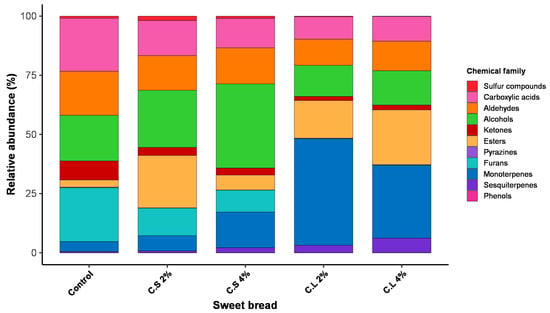
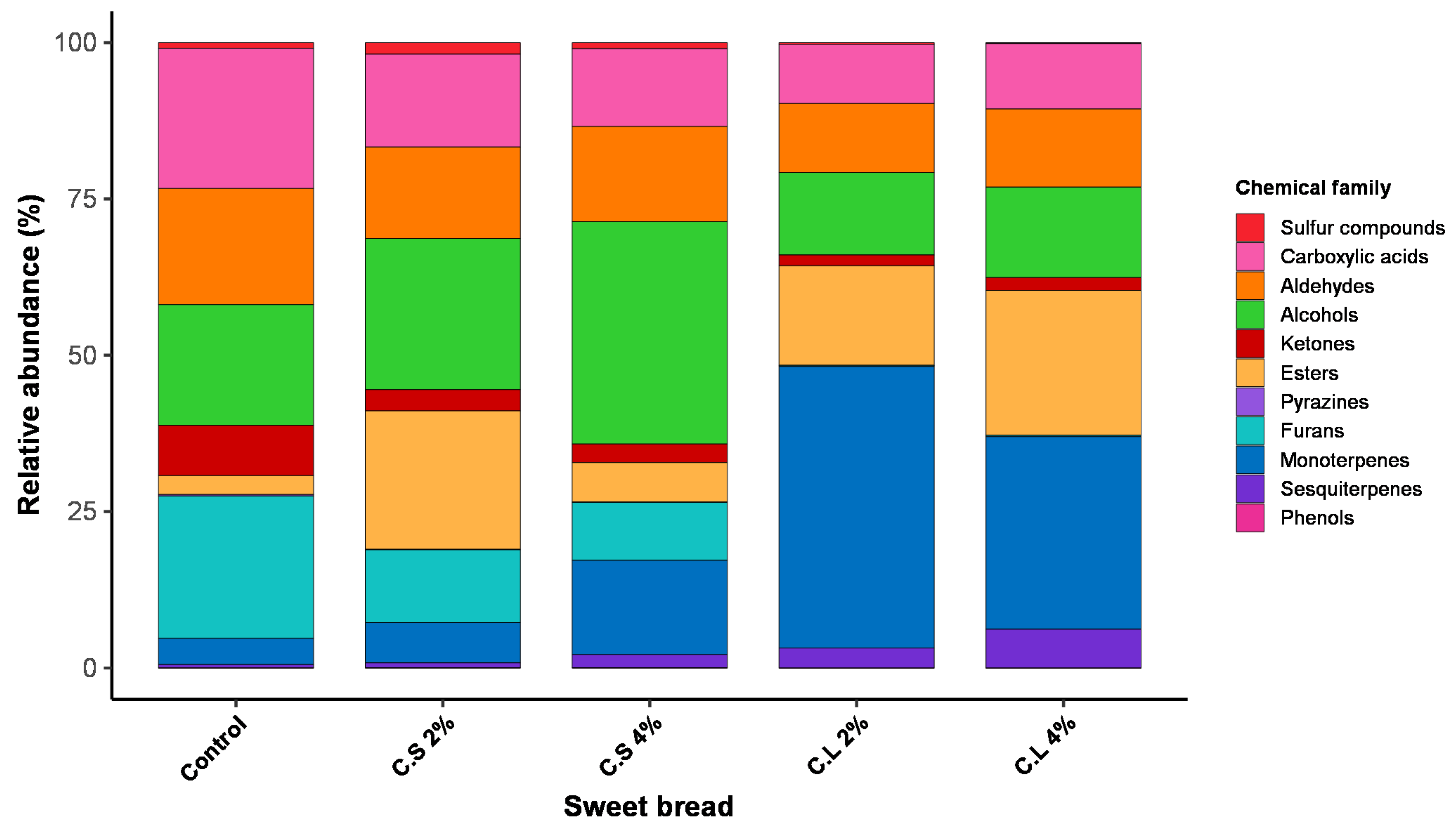
The volatile compounds identified in the different sweet bread formulations totaled 165 tentatively identified constituents (Table S1, Figure 1). Figure 1 shows the relative distribution of the chemical families of the detected volatile compounds (alcohols, sulfur-containing compounds, carboxylic acids, aldehydes, ketones, esters, pyrazines, furans, monoterpenes, sesquiterpenes, and phenols). The relative abundance (%) of each compound was calculated based on its chromatographic area relative to the total area of the detected compounds. Subsequently, compounds belonging to the same chemical family were grouped by summing their relative abundances in order to determine the relative contribution of each family to each formulation. Thus, the 11 chemical families accounted for 100% of the volatile compound profile in each formulation. Each bar represents 100% of the compounds detected in each sample, while the segments represent the percentage contribution of each chemical family. In the control sample, furans (22.77%) and carboxylic acids (22.43%) accounted for the largest relative contributions, followed by aldehydes (18.61%) and pyrazines (0.21%). These compounds are generally formed during fermentation, lipid oxidation, caramelization, and Maillard reactions [8,18]. In the formulations incorporating C.S. flour, alcohols predominated (35.61%), while in the formulations with C.L. flour, monoterpenes (45.03%) and sesquiterpenes (3.18%) stood out. The greater contribution of these latter groups in the C.L. formulation could be related to the inclusion of terpenic compounds naturally present in this citrus fruit [19].
Figure 1.
Profile of volatile compounds classified into chemical families based on the formulation of sweet breads: Note: Control, C.S. (C. sinensis peel flour), C.L. (C. limetta Risso peel flour); Volatile organic compounds expressed as relative abundances by chemical family.
3.2. Analysis of Variance of Volatile Organic Compounds by Chemical Family
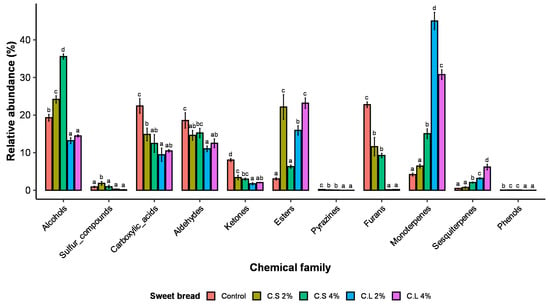
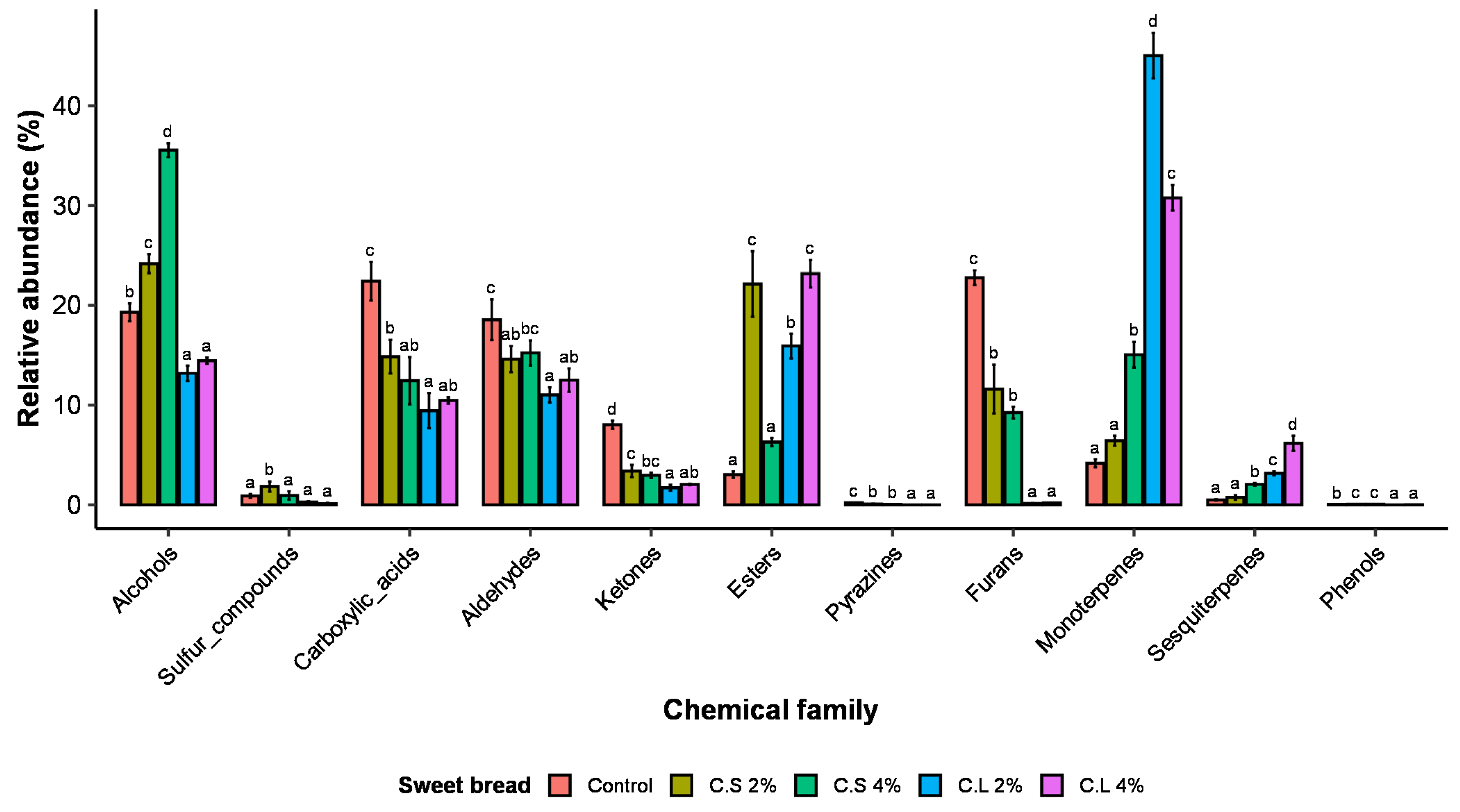
The profile of volatile compounds showed significant differences (p ≤ 0.05) among the formulations. A marked change in the chemical composition of the sweet bread was observed as a result of the incorporation of citrus flours (see Figure 2).
Figure 2.
Relative abundance of chemical families of volatile compounds in sweet breads. The bars indicate the standard deviation (n = 3). Different letters indicate statistically distinct groups among the types of sweet bread according to Tukey’s test (sig. ≤ 0.05). Note: Control, C.S. (C. sinensis peel flour), C.L. (C. limetta Risso peel flour).
In the control sample, the chemical groups that showed significant differences were furans (22.772 ± 0.731%) and carboxylic acids (22.43 ± 1.944%), followed by aldehydes (18.567 ± 2.038%), ketones (8.046 ± 0.409%), and pyrazines (0.211 ± 0.017%). The addition of citrus flours caused a significant reduction in these groups, particularly furans, with a decrease in relative abundance observed in samples with 2% and 4% C.L., yielding values of 0.154 ± 0.025% and 0.208 ± 0.024%, respectively. Likewise, other groups, such as carboxylic acids, ketones, and pyrazines, tended to decrease progressively relative to the control sample. Changes in their concentrations were likely influenced by modifications to the product matrix and by the specific incorporation of the raw material, which has a characteristic volatile profile [19,20]. However, its incorporation favored the presence of terpenic compounds.
Monoterpenes increased from 4.175 ± 0.402% in the control sample to 15.055 ± 1.284% in the 4% C.S. sample, reaching a maximum of 45.029 ± 2.284% in the 2% C.L. sample, while sesquiterpenes showed lower concentrations but a more gradual increase, ranging from 0.5 ± 0.059% in the control to 6.183 ± 0.762% in C.L. 4%. This pattern suggests particular significance in formulations containing C.L., in which monoterpenes are the predominant group (Figure 1). Various studies have reported that this group is the most prevalent in citrus fruits, especially in the peels, where they account for between 91.84% and 96.7% of the total detected compounds [21,22]. However, compared with the final product, the terpenes are still present, albeit at lower concentrations. Pico et al. [11] reported that baking promotes both the release and loss of volatile compounds from the bread matrix into the oven environment. Therefore, baking conditions could significantly influence the chemical composition of the final product.
Alcohols also showed varying responses depending on the formulation. The formulations containing 2% and 4% C.S. showed a significant increase, reaching values of 24.178 ± 0.957% and 35.563 ± 0.691%, respectively, compared to the control sample (19.302 ± 0.887%), although they exhibited a lower relative abundance of aldehydes (14.612 ± 1.31% and 15.237 ± 1.259%) compared to the control. These observations could be related to a possible conversion of aldehydes into alcohols, a process in which the enzyme alcohol dehydrogenase is involved [23]. Likewise, the final composition of these chemical groups could be influenced by transformations associated with fermentation and baking [11,20].
Similarly, esters constituted another group that responded favorably to the incorporation of these flours. Their relative abundance increased from 3.039 ± 0.32% in the control to 22.136 ± 3.283% in the 2% C.S. treatment, while the 4% C.S. treatment (6.305 ± 0.413%) showed no significant differences compared to the control. Meanwhile, the formulations with 2% and 4% C.L. (15.93 ± 1.237% and 23.172 ± 1.373%, respectively) also showed a higher abundance of this group. Esters are compounds that can be formed during fermentation as a result of yeast metabolic activity or through the oxidation of lipids, primarily via the action of acetyltransferases on alcohols [11]. However, during baking, they may be lost due to heat-catalyzed hydrolysis [10,11]. Therefore, the higher abundance observed in formulations containing citrus flours could be due to a combination of their formation during fermentation and their incorporation into the formulations. However, the behavior observed in C.S. 4% would indicate that the responses of the esters were not proportional to the level of flour incorporation.
Sulfur-containing compounds are found primarily in the crust of bread, formed through non-enzymatic Maillard reactions, which involve the interaction between amino acids and sugars, leading to the formation of brown pigments (melanoidins) [8]. This group exhibited a distinctive pattern, with a significant increase in the 2% C.S. sample (1.846 ± 0.513%) compared to the control (0.9 ± 0.189%); in contrast, the phenol group remained at relatively low concentrations.
3.3. Chemical Families of Volatile Organic Compounds
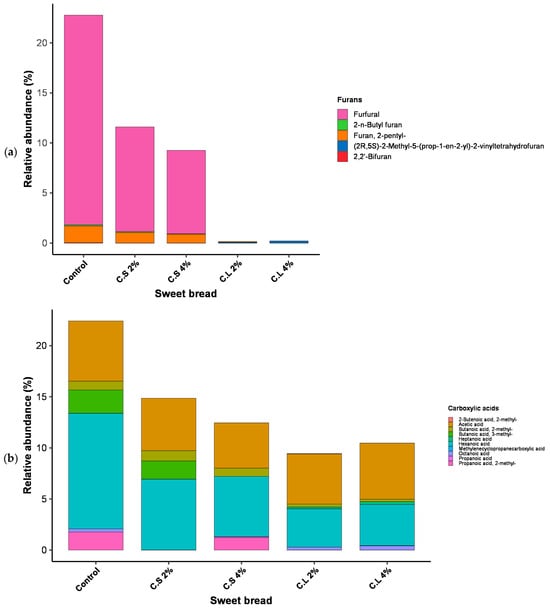
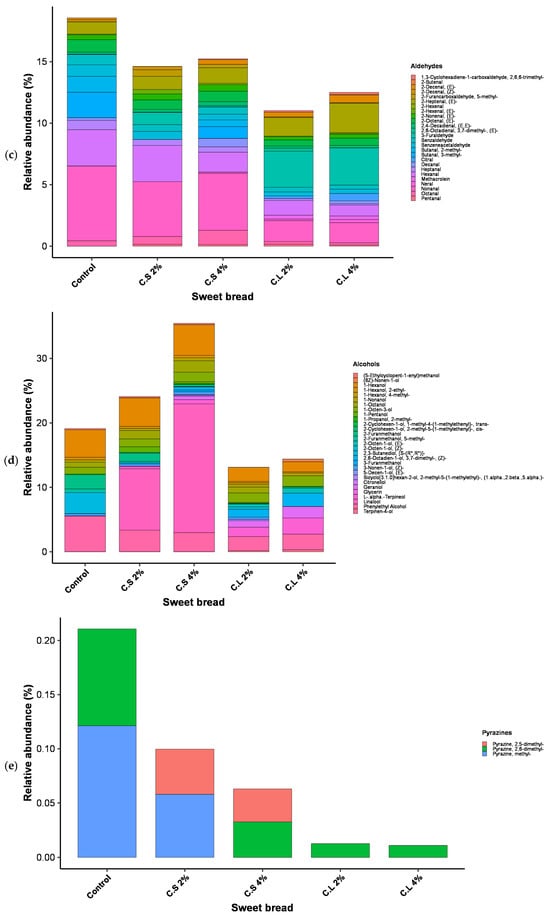
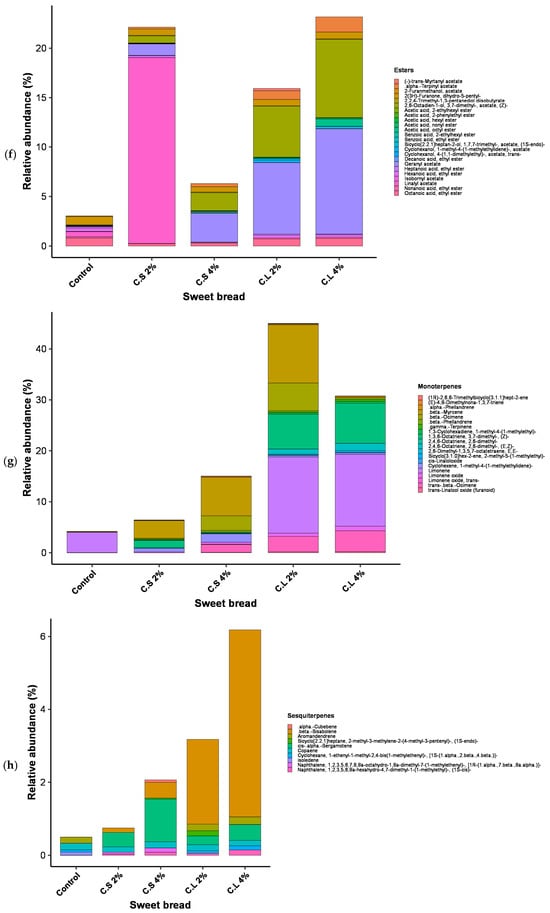
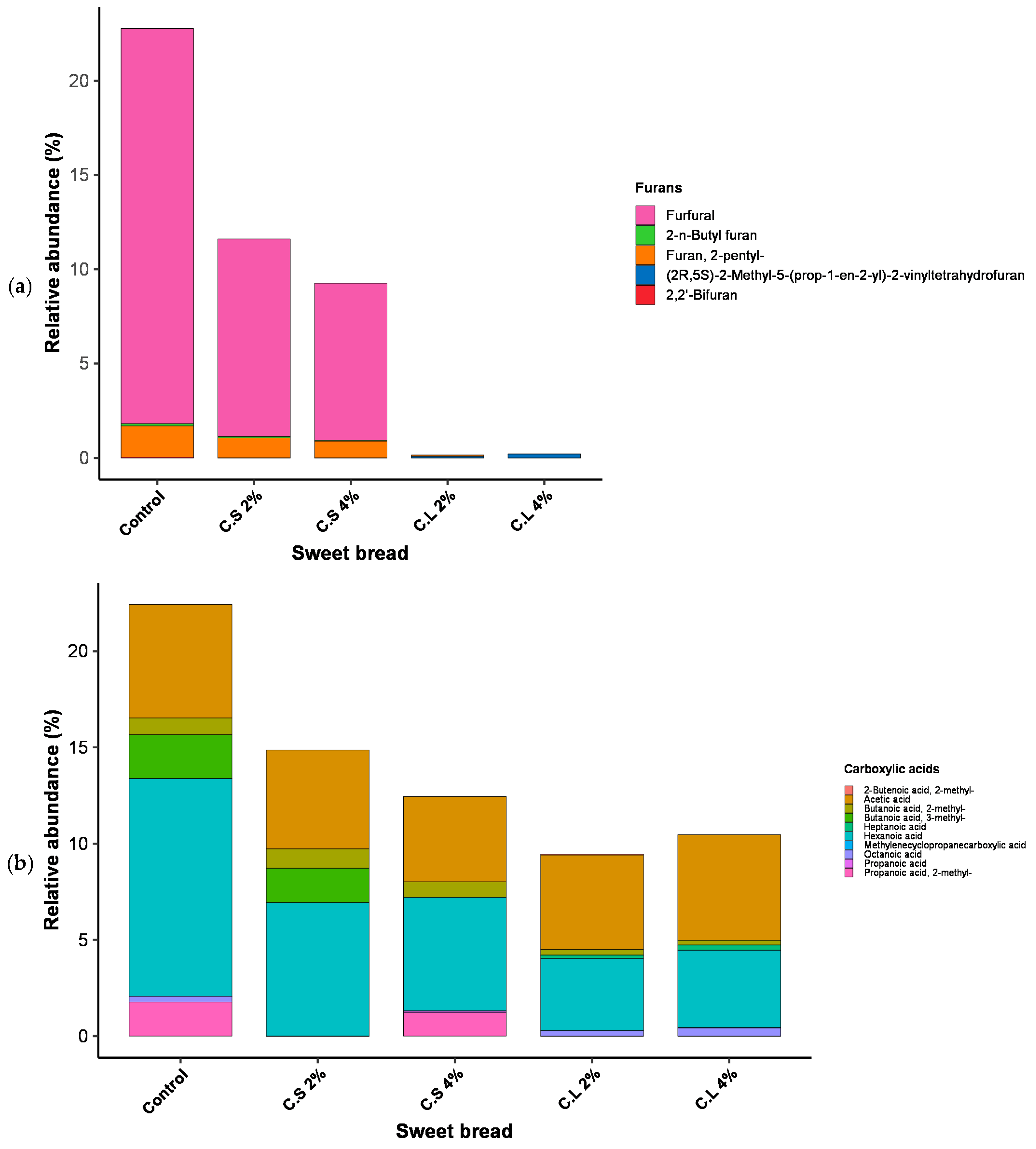
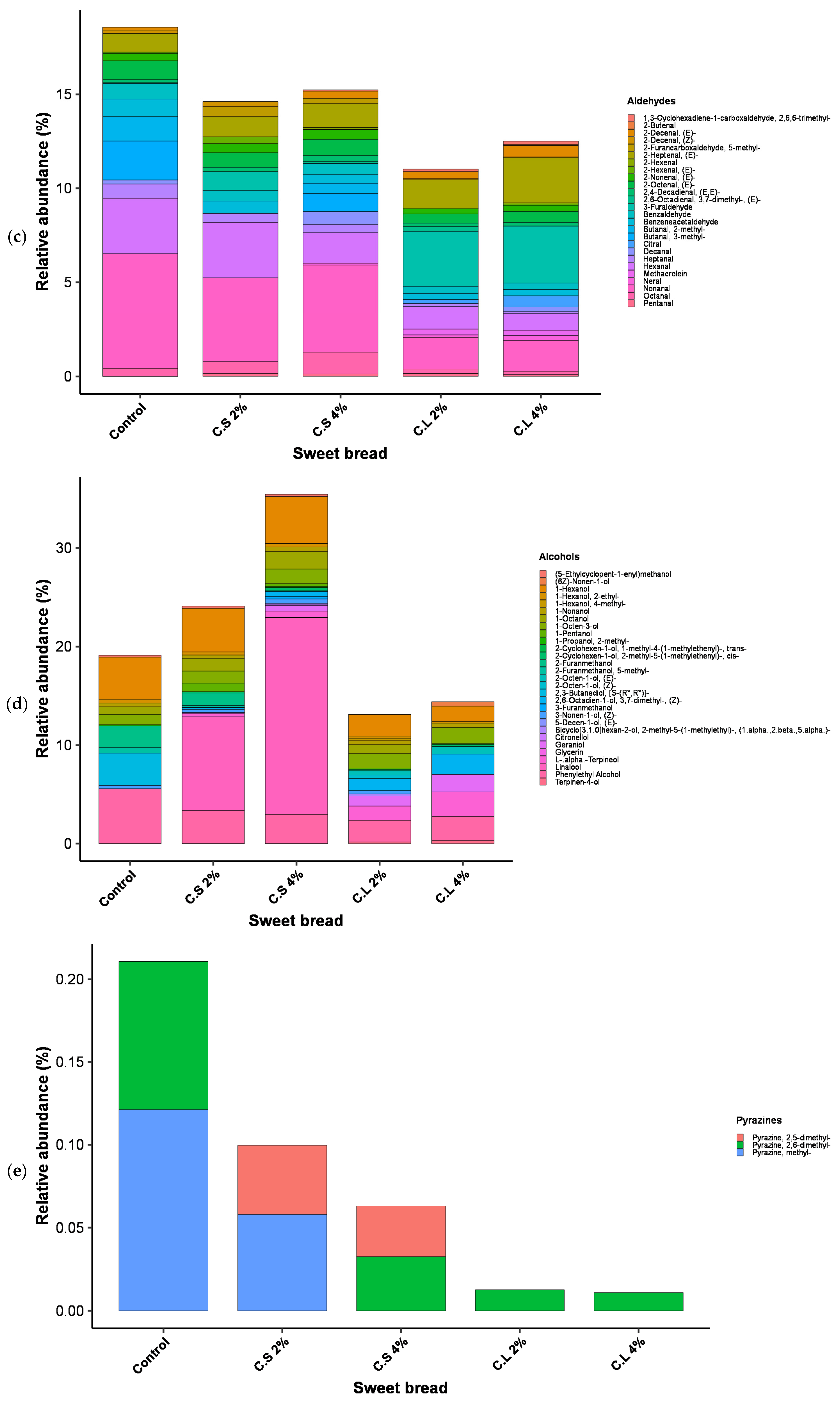
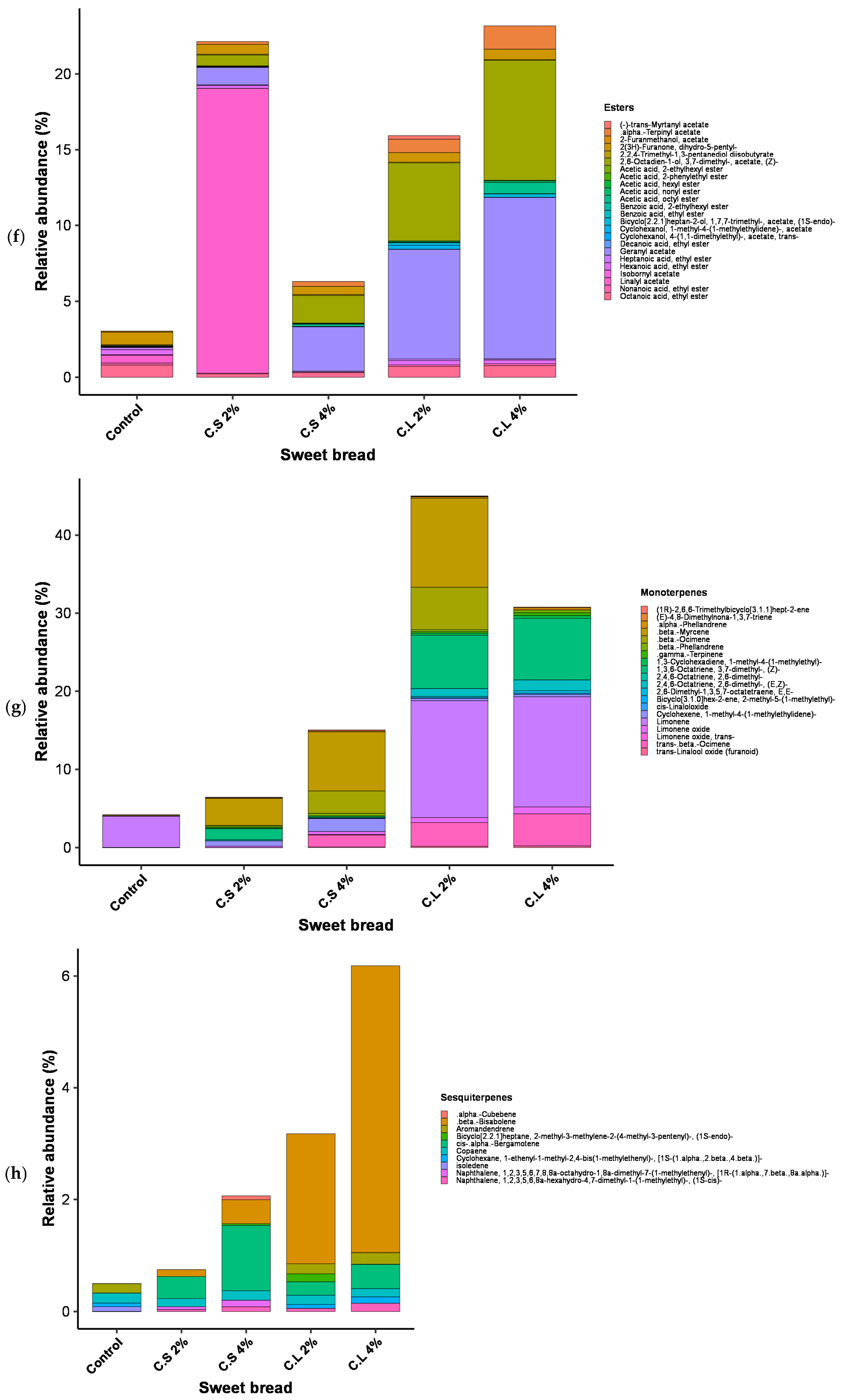
In order to further characterize the volatile profile of sweet bread formulations, the compounds corresponding to the main chemical families identified in Figure 1 were analyzed individually. Within these groups, furans, carboxylic acids, aldehydes, alcohols, esters, pyrazines, monoterpenes, and sesquiterpenes were considered because of their contributions to the volatile profile and the variations observed among formulations. Figure 3 and Table S1 show the relative abundance of the identified compounds within each of these families.
Figure 3.
Relative abundance profile of the volatile compounds from the main chemical families present in the different sweet bread formulations: (a) furans; (b) carboxylic acids; (c) aldehydes; (d) alcohols; (e) pyrazines; (f) esters; (g) monoterpenes; (h) sesquiterpenes. Relative abundances are expressed as percentages of the total chromatographic area of the detected peaks (n = 3). Note: Control, C.S. (C. sinensis peel flour), C.L. (C. limetta Risso peel flour).
3.3.1. Furans
In the furan family (Figure 3a), five compounds were identified, among which furfural and 2-pentylfuran had the highest relative abundances. Both compounds showed their highest values in the control sample, followed by C.S. 2% and C.S. 4%, while they were not detected in the formulations with C.L. 2% and C.L. 4%. The presence of these compounds may be related to mechanisms such as caramelization and Maillard reactions that occur during baking [8,24]. These observed differences could be related to changes in formulation composition and in the availability of precursors, although it is not possible to attribute this absence to a single mechanism based on the results [15].
3.3.2. Carboxylic Acids
A total of 10 carboxylic acids were identified in the formulations, among which hexanoic acid, acetic acid, and 2-methylbutanoic acid stood out due to their higher relative abundances (Figure 3b). These compounds were present in all formulations, although they were most abundant in the control sample. On the other hand, heptanoic acid and octanoic acid were detected only in the C.L. 2% and C.L. 4% formulations, while propanoic acid, 2-methylpropanoic acid, and 3-methylbutanoic acid were found only in some of the C.S. 2% and C.S. 4% formulations and in the control. The presence of these compounds is consistent with findings from studies of volatile compounds in gluten-free breads and fermented doughs, in which these acids have been identified as significant components of the volatile profile [10,11,25]. These compounds are typically generated during fermentation or through non-enzymatic lipid oxidation reactions [8]. Therefore, the differences observed among formulations could be related to changes in dough composition resulting from the incorporation of different citrus flours, given that during fermentation, microbial enzymes cause biochemical changes in carbohydrates and proteins that can alter the formation of certain volatile compounds [26].
3.3.3. Aldehydes
Among the 26 aldehydes identified, hexanal, heptanal, octanal, nonanal, (E)-2-heptenal, (E)-2-octenal, (E)-2-nonenal, (E)-2-decenal, (E,E)-2,4-decadienal, and benzaldehyde were present in all five sweet bread formulations, while the remaining aldehydes were present only in certain formulations (Figure 3c). The control sample contained the highest number of compounds in this family (18), the most representative of which were nonanal, hexanal, and 3-methylbutanal. The presence of these compounds is consistent with various studies reported on baked goods, which also indicate that their presence is related to different biochemical transformations occurring during bread production [10,16,26,27]. Hexanal, one of the most common compounds in the evaluated formulations, can be derived from lipid oxidation and from the fermentative metabolism of microorganisms [26], while 3-methylbutanal can form from amino acids during Strecker reactions and also as a product of the Maillard reaction during baking [18,26]. Furthermore, the formation of some aldehydes may be related to the oxidation of unsaturated acids [28]. Hexanal, (E,E)-2,4-decadienal, (E)-2-octenal, and (E)-2-heptenal are formed through the decomposition of linoleic acid, while octanal, nonanal, and (E)-2-nonenal are derived primarily from oleic acid [18,23]. Therefore, the presence of these aldehydes in all formulations would be associated with the oxidation of the lipids present in the mixture, and their absence or low production in certain formulations would be related to the ability of heterofermentative lactic acid bacteria to reduce the aldehydes to other compounds [28].
On the other hand, the addition of citrus flours positively affected the formation of new aromatic aldehydes, such as neral (0.258 ± 0.041%) and citral (0.592 ± 0.102%), in the 4% C.L. formulation (Table S1), which were not detected in the control sample. These compounds are characteristic of essential oils derived from citrus peels; therefore, their presence could be attributed to their inclusion in the formulations [29,30]. This behavior suggests that, in addition to the aldehydes generated during fermentation, these flours may have contributed their own precursors, thereby helping differentiate the aldehyde composition of the formulations.
3.3.4. Alcohols
Within the alcohol family, 29 compounds were identified, of which phenylethyl alcohol, 1-hexanol, 1-octen-3-ol, 1-nonanol, and 2-ethyl-1-hexanol were the most prominent in all sweet bread formulations (Figure 3d). Phenethyl alcohol and 1-hexanol were most prevalent in the control sample, while 1-octen-3-ol was most prominent in the 4% C.L. formulation. Meanwhile, 1-nonanol and 2-ethyl-1-hexanol showed variations across the formulations, with no consistent pattern associated with the incorporation of citrus flours.
Short-chain alcohols are produced during the fermentation of sugars, while long-chain alcohols are produced through the metabolism of amino acids [18]. In this regard, studies have reported that alcohols such as 1-propanol, 2-methyl-1-propanol, 3-methyl-1-butanol, and 2-methyl-1-butanol tend to increase during the fermentation process due to the metabolic activity of yeasts [10]. Furthermore, these compounds are part of the amino acid transformation pathways described for dough fermentation, such as the formation of 3-methyl-1-butanol (isoamyl alcohol) from leucine and 2-methyl-1-propanol from valine [8], which would explain the differences observed among the sweet bread formulations.
The addition of C.S. and C.L. flours led to the formation of new aromatic alcohols, including geraniol, citronellol, linalool, terpinen-4-ol, and α-terpineol, resulting in a notable difference relative to the control sample. Their abundance depended on the type of citrus flour used. The presence of these compounds was to be expected, as they have been reported as characteristic volatile compounds of citrus peel essential oils, which vary with factors such as geographical conditions, variety, and ripeness [30,31,32]. Likewise, these compounds have been identified in breads enriched with aromatic plant materials [33], suggesting that their incorporation modifies the product’s volatile profile.
3.3.5. Pyrazine
Pyrazines are volatile compounds associated with characteristic aromas in baked goods and are formed primarily during heating [34]. In this study, three pyrazines were identified: methyl pyrazine, 2,6-dimethyl pyrazine, and 2,5-dimethyl pyrazine (Figure 3e). The first two were more prevalent in the control sample, while their presence was low or undetectable in some of the C.S. and C.L. formulations. On the other hand, 2,5-dimethylpyrazine was not detected in the control sample but was detected in the formulations containing 2% and 4% C.S.
The differences observed can be attributed to the conditions under which these compounds form and are retained during baking. Ren et al. [34] note that as baking time increases, pyrazines may be present at low concentrations in the crumb, whereas they tend to be more abundant in the crust. Similarly, Nor Qhairul Izzreen et al. [35] identified 2,5-dimethylpyrazine and 2,6-dimethylpyrazine in the bread crust and reported that processing conditions can enhance the formation of Maillard reaction products. This is consistent with the identification of these types of pyrazines in sweet bread formulations.
On the other hand, the absence of pyrazines in certain formulations does not necessarily mean these compounds did not form during baking; rather, their absence may reflect their high volatility, which can lead to loss during heating [18]. Therefore, the differences observed among formulations could depend both on variations in their formation during baking and on their volatilization.
3.3.6. Esters
The esters present in bread are primarily formed through esterification reactions between fatty acids and alcohols during fermentation [16]. In the present study, a total of 24 esters were detected, nine of which were present in all formulations (Figure 3f). Among them were, in particular, esters derived from carboxylic acids, such as ethyl octanoate, hexanoate, heptanoate, and nonanoate. The presence of these compounds is consistent with reports from fermented doughs and baked goods [10,16,25]. Some of these compounds may be related to yeast activity during fermentation. Pico et al. [10] reported that ethyl lactate levels increase during this stage due to yeast activity. Heating may also affect the abundance of these compounds by promoting reactions between alcohols and acids during thermal processing [36]. This explains why the presence of these components in the different sweet bread formulations is associated with the fermentation processes.
In addition to the esters mentioned above. New terpenic esters were identified as a result of the incorporation of citrus flours that were not present in the control, such as geranyl acetate; 2,6-octadien-1-ol, 3,7-dimethyl-, acetate, (Z)-; and α-terpinyl acetate, once again demonstrating their contribution to the volatile fraction of sweet bread. Some of these compounds have been reported in various studies [32,37].
3.3.7. Monoterpenes and Sesquiterpenes
Monoterpene and sesquiterpene hydrocarbons generally dominate the volatile fraction of citrus fruits [21]. In the present study, these groups were particularly prominent in formulations containing C.S. and C.L. flours, consistent with the characteristic composition of citrus fruits [32]. Among the monoterpenes, 20 compounds were identified (Figure 3g). Limonene was the predominant compound in the formulations containing C.L., reaching its highest concentration of 14.957 ± 1.406% in the 2% C.L. formulation (Table S1). Furthermore, this formulation exhibited the greatest diversity of terpenoid compounds compared to the 2% C.S. and 4% C.S. formulations. Among the compounds detected, particularly in the formulations containing C.L. and C.S., were trans-β-ocimene, β-phellandrene, β-ocimene, γ-terpinene, and limonene oxide. Limonene and β-myrcene were also found in the control, although in lower abundances.
The predominance of limonene observed in formulations containing C.S. and C.L. is consistent with the literature. This compound is one of the main constituents of citrus peel essential oil and accounts for between 36 and 96 percent of the essential oil’s composition, depending on the type of citrus fruit [29]. Similarly, Toprakçı et al. [32] identified limonene and myrcene as the main volatile components of the peels of various citrus fruits, while in orange peel, they identified individual compounds such as limonene, myrcene, α-pinene, linalool, octanal, and decanal. In another study, D-limonene accounted for 67.72% in C.S. and 37.05% in C.L.; however, in the present study, the highest abundance was observed in C.L., suggesting that differences between varieties influence its abundance [19].
As for sesquiterpenes, 10 compounds were identified (Figure 3h), with copaene, aromandendrene, α-cubebene, and β-bisabolene standing out in the formulations containing C.S. and C.L. The presence of these compounds complements the terpene profile observed in the enriched formulations.
Although there are few studies that specifically evaluate the volatile compound composition in sweet breads made with C.S. and C.L. flours, the presence of monoterpenes and sesquiterpenes in the final product may be related to their contribution from the raw material. In this regard, the detection of these compounds after baking suggests that a fraction of them was retained following thermal processing. This behavior is of great interest because citrus fruits are an important source of bioactive compounds; furthermore, studies on baked goods have indicated that incorporating citrus peel flours can modify the phenolic composition and antioxidant activity of the product, which are closely related to its volatile composition [6,19,38,39].
3.4. Multivariate Analysis
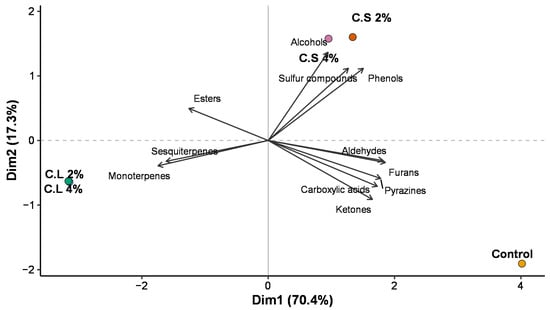
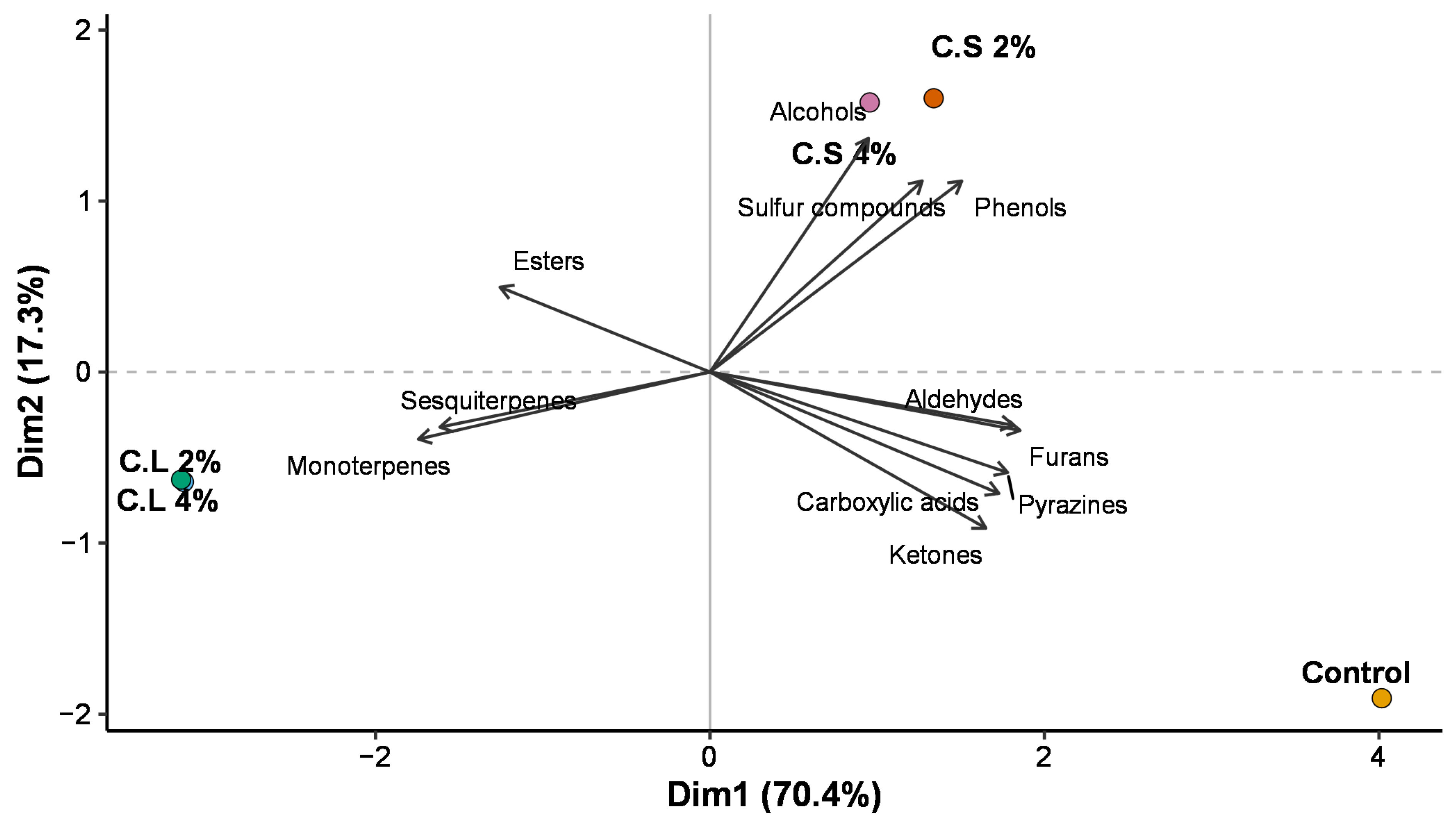
To visualize the differences between the formulations based on their volatile compound profiles, a principal component analysis (PCA) was performed (Figure 4). The first principal component explained 70.4% of the variance, and the second principal component explained 17.3%, accounting for 87.7% of the total variability. It is clearly observed that the formulations with C.L. 2% and C.L. 4% are close to each other, indicating a similarity in their volatile profile (monoterpenes and sesquiterpenes), whereas C.S. 2% and C.S. 4% were located in the positive region of Dim1 and exhibited a different chemical profile, with greater proximity to the families of alcohols, phenols, and sulfur-containing compounds. In contrast, the control sample was distinct from the formulations containing C.L. and C.S. flours, showing an association with aldehydes, furans, pyrazines, carboxylic acids, and ketones. In this regard, the PCA distribution is consistent with previously identified differences in chemical family composition, suggesting that incorporating these flours modified the volatile profile of the sweet breads.
Figure 4.
Principal component biplot of sweet bread formulations and the chemical families of volatile compounds. Note: Control, C.S. (C. sinensis peel flour), C.L. (C. limetta Risso peel flour).
4. Conclusions
The sweet bread formulations made with flours from the peels of Citrus limetta Risso and Citrus sinensis showed differences in their volatile composition, evidenced primarily by the distribution of the identified chemical families. Citrus limetta Risso peel flour showed a greater contribution of monoterpenes and sesquiterpenes, with the 2% formulation presenting the highest relative abundance of monoterpenes, whereas the 4% formulation showed a progressive increase in sesquiterpenes. In contrast, increasing the proportion of citrus peel flour was associated with changes in several other volatile families, indicating that the two citrus sources exerted differentiated effects on the volatile profile. Among the formulations evaluated, the 2% Citrus limetta Risso treatment exhibited the most distinctive terpene-rich profile, suggesting that this inclusion level may be particularly suitable for exhibiting a distinctive terpene-rich volatile profile.
Principal component analysis explained 87.9% of the total variability and enabled differentiation of the formulations based on their volatile compound composition. These results show that citrus species and incorporation level are relevant factors in characterizing the chemical differences among the sweet bread formulations studied. However, the results are limited to the evaluated incorporation levels and do not permit the establishment of a universal optimal level.
Future research should evaluate the stability of characteristic volatile compounds during storage and their dynamic changes throughout shelf life, optimize key technological parameters, and assess the industrial adaptability and process performance of citrus peel flour-based bread formulations.
Supplementary Materials
The following supporting information can be downloaded at https://www.mdpi.com/article/10.3390/foods15213931/s1. Table S1: Relative abundance (%) of the volatile organic compounds identified in sweet breads.
Author Contributions
Conceptualization; methodology; software; validation; formal analysis; funding acquisition; investigation; resources; writing—original draft preparation; writing—review and editing; supervision; visualization, K.L.V.-G. and G.A.G.; Conceptualization; formal analysis; investigation; methodology; validation; resources; writing—original draft preparation; visualization, D.M.-M., L.D.M.-A., E.A.A.-S. and D.E.G.-Y. All authors have read and agreed to the published version of the manuscript.
Funding
The APC was financed by the Universidad Nacional Toribio Rodríguez de Mendoza de Amazonas: Vicerrectorado de Investigación.
Institutional Review Board Statement
Not applicable.
Informed Consent Statement
Not applicable.
Data Availability Statement
The original contributions presented in this study are included in the article. Further inquiries can be directed to the corresponding author.
Acknowledgments
The authors would like to thank the Doctoral Program in Sustainable Development Sciences at the Universidad Nacional Toribio Rodríguez de Mendoza de Amazonas. They also thank the Consejo Nacional de Ciencia, Tecnología e Innovación Tecnológica (CONCYTEC) and the Programa Nacional de Investigación Científica y Estudios Avanzados (PROCIENCIA), within the framework of Competition E033-2023-01-BM “Interinstitutional Alliances for Doctoral Programs” under grant number PE501084305-2023. Special thanks to the Plant Physiology and Biotechnology Research Laboratory (FISIOBVLAB—INDES-CES), Universidad Nacional Toribio Rodríguez de Mendoza de Amazonas.
Conflicts of Interest
The authors declare no conflicts of interest.
References
- Lebwohl, B.; Rubio-Tapia, A. Epidemiology, Presentation, and Diagnosis of Celiac Disease. Gastroenterology 2021, 160, 63–75. [Google Scholar] [CrossRef] [Scilit]
- Demissie, Y.F.; Cherinet, M.T.; Worku, A.F.; Jima, B.R. Effect of Blending Ratio and Baking Temperature on Nutritional Quality and Sensory Acceptability of Bread Developed from the Blends of Wheat, Sweet Lupine Flour and Moringa Leaf Powder. Food Chem. Adv. 2026, 11, 101305. [Google Scholar] [CrossRef] [Scilit]
- Cirrincione, F.; Ferranti, P.; Ferrara, A.; Romano, A. A Critical Evaluation on the Valorization Strategies to Reduce and Reuse Orange Waste in Bakery Industry. Food Res. Int. 2024, 187, 114422. [Google Scholar] [CrossRef] [Scilit]
- Pelinson Tridapalli, L.; Cardoso, F.A.R.; Iwamura, L.S.; Droval, A.A.; Marques, L.L.M.; Bona, E.; Beneti, S.C.; Cristaldo Heck, S.; Fuchs, R.H.B. Characterisation of Gluten-Free Breads Made with Sorghum, Teff, and Yacon Flour Using Rapid Sensory Characterisation Methodologies. Int. J. Food Sci. Technol. 2023, 58, 2625–2634. [Google Scholar] [CrossRef] [Scilit]
- Vilcanqui-Pérez, F.; Chaquilla-Quilca, G.; Sarmiento-Casavilca, V.H.; Céspedes-Orosco, C.N.; Ventura-Saldivar, Y. Nutritional, Physical and Sensory Characteristics of Bread with the Inclusion of Germinated Basul (Erythrina edulis) Flour. J. Food Sci. Technol. 2021, 59, 2117–2126. [Google Scholar] [CrossRef] [Scilit]
- Vasquez-Gomez, K.L.; Muñoz-Astecker, L.D.; Mori-Mestanza, D.; Auquiñivin-Silva, E.A.; Grandez-Yoplac, D.E.; Guadalupe, G.A. Risk and Benefit Assessment of Incorporating Citrus Peel Flour into Sweet Bread. Appl. Food Res. 2026, 6, 102234. [Google Scholar] [CrossRef] [Scilit]
- Pico, J.; Gómez, M.; Bernal, J.; Bernal, J.L. Analytical Methods for Volatile Compounds in Wheat Bread. J. Chromatogr. A 2016, 1428, 55–71. [Google Scholar] [CrossRef] [Scilit]
- Pico, J.; Bernal, J.; Gómez, M. Wheat Bread Aroma Compounds in Crumb and Crust: A Review. Food Res. Int. 2015, 75, 200–215. [Google Scholar] [CrossRef] [Scilit]
- Sanmartín, G.; Sánchez-Adriá, I.E.; Salvador, A.; Prieto, J.A.; Estruch, F.; Randez-Gil, F. Quantitative Assessment of Volatile Profile and Sensory Perception of Artisan Bread Made in the City of Valencia. Foods 2024, 13, 3872. [Google Scholar] [CrossRef] [Scilit]
- Pico, J.; Martínez, M.M.; Bernal, J.; Gómez, M. Evolution of Volatile Compounds in Gluten-Free Bread: From Dough to Crumb. Food Chem. 2017, 227, 179–186. [Google Scholar] [CrossRef] [Scilit]
- Pico, J.; Khomenko, I.; Capozzi, V.; Navarini, L.; Biasioli, F. Real-Time Monitoring of Volatile Compounds Losses in the Oven during Baking and Toasting of Gluten-Free Bread Doughs: A PTR-MS Evidence. Foods 2020, 9, 1498. [Google Scholar] [CrossRef] [Scilit]
- De Flaviis, R.; Sacchetti, G.; Mastrocola, D. Wheat Classification According to Its Origin by an Implemented Volatile Organic Compounds Analysis. Food Chem. 2021, 341, 128217. [Google Scholar] [CrossRef] [Scilit]
- Porrello, A.; Orecchio, S.; Maggio, A. Matrix-Matched Quantification of Volatile Organic Compounds (VOCs) in Gluten Free Flours and Bakery Products. Food Chem. X 2024, 22, 101399. [Google Scholar] [CrossRef] [Scilit]
- Nigro, G.; Gasparre, N.; Vurro, F.; Pasqualone, A.; Rosell, C.M. Lupin Flour as a Wheat Substitute in Conventional and Sourdough Breadmaking: Impact on Bread Physicochemical Properties and Volatile Profile. Eur. Food Res. Technol. 2025, 251, 1145–1156. [Google Scholar] [CrossRef] [Scilit]
- Galvan-Lima, Â.; Cunha, S.C.; Martins, Z.E.; Soares, A.G.; Ferreira, I.M.P.L.V.O.; Farah, A. Headspace Volatolome of Peel Flours from Citrus Fruits Grown in Brazil. Food Res. Int. 2021, 150, 110801. [Google Scholar] [CrossRef] [Scilit]
- Si, X.; Li, S.; Zhang, C.; Zhao, W.; Zhang, A.; Li, H.; Liu, J. Effects of Different Fermentation Agents on the Quality of Foxtail Millet Steamed Bread during Processing. J. Future Foods 2026, 6, 921–933. [Google Scholar] [CrossRef] [Scilit]
- Mori-Mestanza, D.; Cieza-Irogoin, A.; Oliva-Cruz, M.; Culqui-Arce, C.; Iliquín-Fernández, R.E.; Medina-Mendoza, M.; Cayo-Colca, I.S.; Yoplac, I.; Maldonado-Ramirez, I.; Bardales, W.; et al. Fortification of Physicochemical Properties and Aromatic Profile in Chocolates Enriched with Microcapsules of Essential Oils from Citrus Peel. ACS Food Sci. Technol. 2026, 6, 1230–1245. [Google Scholar] [CrossRef] [Scilit]
- Katsi, P.; Kosma, I.S.; Michailidou, S.; Argiriou, A.; Badeka, A.V.; Kontominas, M.G. Characterization of Artisanal Spontaneous Sourdough Wheat Bread from Central Greece: Evaluation of Physico-Chemical, Microbiological, and Sensory Properties in Relation to Conventional Yeast Leavened Wheat Bread. Foods 2021, 10, 635. [Google Scholar] [CrossRef] [Scilit]
- Vasquez-Gomez, K.L.; Mori-Mestanza, D.; Caetano, A.C.; Idrogo-Vasquez, G.; Culqui-Arce, C.; Auquiñivin-Silva, E.A.; Castro-Alayo, E.M.; Cruz-Lacerna, R.; Perez-Ramos, H.A.; Balcázar-Zumaeta, C.R.; et al. Exploring Chemical Properties of Essential Oils from Citrus Peels Using Green Solvent. Heliyon 2024, 10, e40088. [Google Scholar] [CrossRef] [Scilit]
- Caponio, G.R.; Annunziato, A.; Vacca, M.; Difonzo, G.; Celano, G.; Minervini, F.; Ranieri, M.; Valenti, G.; Tamma, G.; De Angelis, M. Nutritional, Antioxidant and Biological Activity Characterization of Orange Peel Flour to Produce Nutraceutical Gluten-Free Muffins. Food Funct. 2024, 15, 8459–8476. [Google Scholar] [CrossRef] [Scilit]
- Elmaidomy, A.H.; Mohamed, E.M.; Bahr, H.S.; Abdelmohsen, U.R. Volatile Composition of Essential Oils from Major Egyptian Citrus Cultivars: A Multivariate Chemometric Approach. Sci. Rep. 2026, 16, 20746. [Google Scholar] [CrossRef] [Scilit]
- da Silva, F.T.; dos Santos, F.N.; Fonseca, L.M.; de Souza, E.J.D.; dos Santos Hackbart, H.C.; da Silva, K.G.; Biduski, B.; Gandra, E.A.; Dias, A.R.G.; Zavareze, E.d.R. Oleogels Based on Germinated and Non-Germinated Wheat Starches and Orange Essential Oil: Application as a Hydrogenated Vegetable Fat Replacement in Bread. Int. J. Biol. Macromol. 2023, 253, 126610. [Google Scholar] [CrossRef] [Scilit]
- Zhogoleva, A.; Alas, M.; Rosenvald, S. Characterization of Odor-Active Compounds of Various Pea Preparations by GC-MS, GC-O, and Their Correlation with Sensory Attributes. Future Foods 2023, 8, 100243. [Google Scholar] [CrossRef] [Scilit]
- Srivastava, R.; Bousquières, J.; Cepeda-Vázquez, M.; Roux, S.; Bonazzi, C.; Rega, B. Kinetic Study of Furan and Furfural Generation during Baking of Cake Models. Food Chem. 2018, 267, 329–336. [Google Scholar] [CrossRef] [Scilit]
- Reale, A.; Di Renzo, T.; Boscaino, F.; Nazzaro, F.; Fratianni, F.; Aponte, M. Lactic Acid Bacteria Biota and Aroma Profile of Italian Traditional Sourdoughs from the Irpinian Area in Italy. Front. Microbiol. 2019, 10, 464068. [Google Scholar] [CrossRef] [Scilit]
- De Luca, L.; Aiello, A.; Pizzolongo, F.; Blaiotta, G.; Aponte, M.; Romano, R. Volatile Organic Compounds in Breads Prepared with Different Sourdoughs. Appl. Sci. 2021, 11, 1330. [Google Scholar] [CrossRef] [Scilit]
- Pétel, C.; Onno, B.; Prost, C. Sourdough Volatile Compounds and Their Contribution to Bread: A Review. Trends Food Sci. Technol. 2017, 59, 105–123. [Google Scholar] [CrossRef] [Scilit]
- Martín-Garcia, A.; Comas-Basté, O.; Riu-Aumatell, M.; Latorre-Moratalla, M.; López-Tamames, E. Changes in the Volatile Profile of Wheat Sourdough Produced with the Addition of Cava Lees. Molecules 2022, 27, 3588. [Google Scholar] [CrossRef] [Scilit]
- Güzel, B.; Canlı, O.; Murat Hocaoğlu, S. Method Development and Validation for Accurate and Sensitive Determination of Terpenes in Bio-Based (Citrus) Oils by Single Quadrupole Gas Chromatography-Mass Spectrometry (GC/MS). Microchem. J. 2023, 191, 108903. [Google Scholar] [CrossRef] [Scilit]
- Wedamulla, N.E.; Fan, M.; Choi, Y.J.; Kim, E.K. Citrus Peel as a Renewable Bioresource: Transforming Waste to Food Additives. J. Funct. Foods 2022, 95, 105163. [Google Scholar] [CrossRef] [Scilit]
- Scurria, A.; Sciortino, M.; Presentato, A.; Lino, C.; Piacenza, E.; Albanese, L.; Zabini, F.; Meneguzzo, F.; Nuzzo, D.; Pagliaro, M.; et al. Volatile Compounds of Lemon and Grapefruit IntegroPectin. Molecules 2020, 26, 51. [Google Scholar] [CrossRef] [Scilit]
- Toprakçı, İ.; Balci-Torun, F.; Deniz, N.G.; Ortaboy, S.; Torun, M.; Şahin, S. Recovery of Citrus Volatile Substances from Orange Juice Waste: Characterization with GC-MS, FTIR, 1H- and 13C-NMR Spectroscopies. Phytochem. Lett. 2023, 57, 177–184. [Google Scholar] [CrossRef] [Scilit]
- Nouska, C.; Irakli, M.; Georgiou, M.; Lytou, A.E.; Skendi, A.; Bouloumpasi, E.; Chatzopoulou, P.; Biliaderis, C.G.; Lazaridou, A. Physicochemical Characteristics, Antioxidant Properties, Aroma Profile, and Sensory Qualities of Value-Added Wheat Breads Fortified with Post-Distillation Solid Wastes of Aromatic Plants. Foods 2023, 12, 4007. [Google Scholar] [CrossRef] [Scilit]
- Ren, A.; Zhang, Y.; Bian, Y.; Liu, Y.J.; Zhang, Y.X.; Ren, C.J.; Zhou, Y.; Zhang, T.; Feng, X.S. Pyrazines in Food Samples: Recent Update on Occurrence, Formation, Sampling, Pretreatment and Analysis Methods. Food Chem. 2024, 430, 137086. [Google Scholar] [CrossRef] [Scilit]
- Izzreen, M.N.Q.; Hansen, Å.S.; Petersen, M.A. Volatile Compounds in Whole Meal Bread Crust: The Effects of Yeast Level and Fermentation Temperature. Food Chem. 2016, 210, 566–576. [Google Scholar] [CrossRef] [Scilit]
- Wang, Y.H.; Yang, Y.Y.; Zhang, J.Y.; Zhang, Q.D.; Xu, F.; Li, Z.J. Characterization of Volatiles and Aroma in Chinese Steamed Bread during Elaboration. J. Cereal Sci. 2021, 101, 103310. [Google Scholar] [CrossRef] [Scilit]
- Manyako, K.E.; Chiyanzu, I.; Mulopo, J.; Abdulsalam, J. Pilot-Scale Evaluation of Concentrating Solar Thermal for Essential Oil Extraction and Comparison with Conventional Sources for Use in Agro-Based Industrial Applications. ACS Omega 2022, 7, 20477–20485. [Google Scholar] [CrossRef] [Scilit]
- Taglieri, I.; Sanmartin, C.; Venturi, F.; Macaluso, M.; Bianchi, A.; Sgherri, C.; Quartacci, M.F.; De Leo, M.; Pistelli, L.; Palla, F.; et al. Bread Fortified with Cooked Purple Potato Flour and Citrus Albedo: An Evaluation of Its Compositional and Sensorial Properties. Foods 2021, 10, 942. [Google Scholar] [CrossRef] [Scilit]
- Shyu, Y.S.; Lu, T.C.; Lin, C.C. Functional Analysis of Unfermented and Fermented Citrus Peels and Physical Properties of Citrus Peel-Added Doughs for Bread Making. J. Food Sci. Technol. 2013, 51, 3803–3811. [Google Scholar] [CrossRef] [Scilit]

Disclaimer/Publisher’s Note: The statements, opinions and data contained in all publications are solely those of the individual author(s) and contributor(s) and not of MDPI and/or the editor(s). MDPI and/or the editor(s) disclaim responsibility for any injury to people or property resulting from any ideas, methods, instructions or products referred to in the content. |
© 2026 by the authors. Licensee MDPI, Basel, Switzerland. This article is an open access article distributed under the terms and conditions of the Creative Commons Attribution (CC BY) license.