Article

Measurement of the Attenuation Coefficient in Fresh Water Using the Adjacent Frame Difference Method


Institute of Marine Optoelectronic Equipment, Harbin Institute of Technology at Weihai, Weihai 264209, China
*
Authors to whom correspondence should be addressed.
Photonics 2022, 9(10), 713; https://doi.org/10.3390/photonics9100713

Submission received: 30 July 2022 / Revised: 15 September 2022 / Accepted: 24 September 2022 / Published: 30 September 2022
(This article belongs to the Section Optical Interaction Science)

Abstract

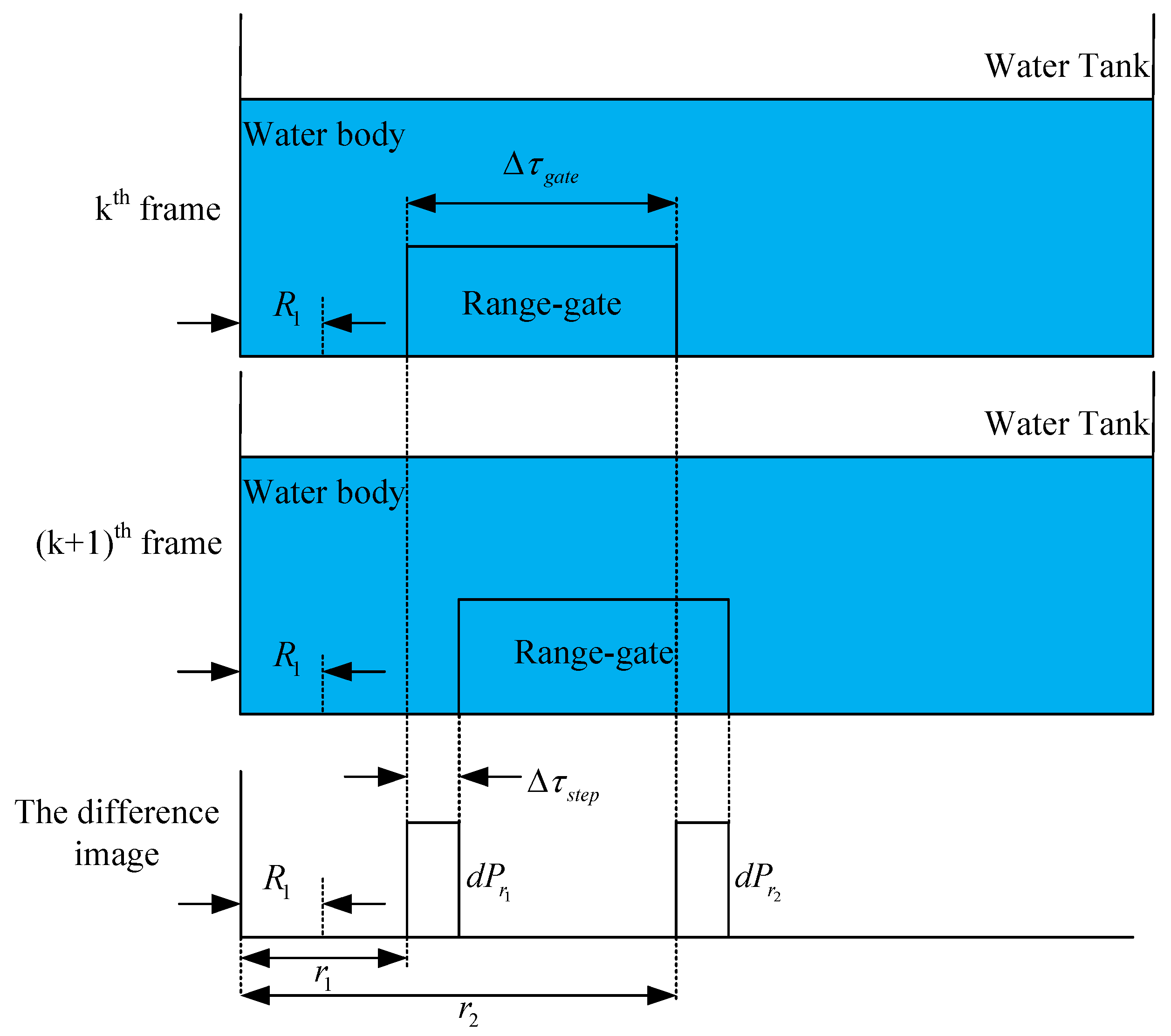
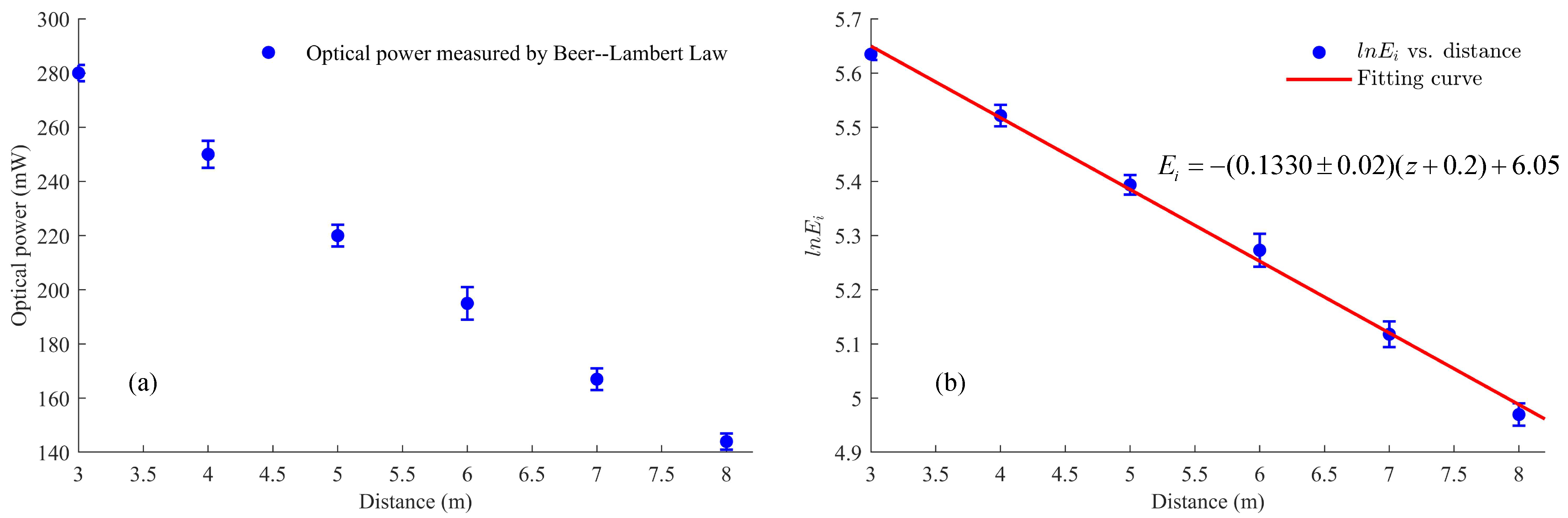
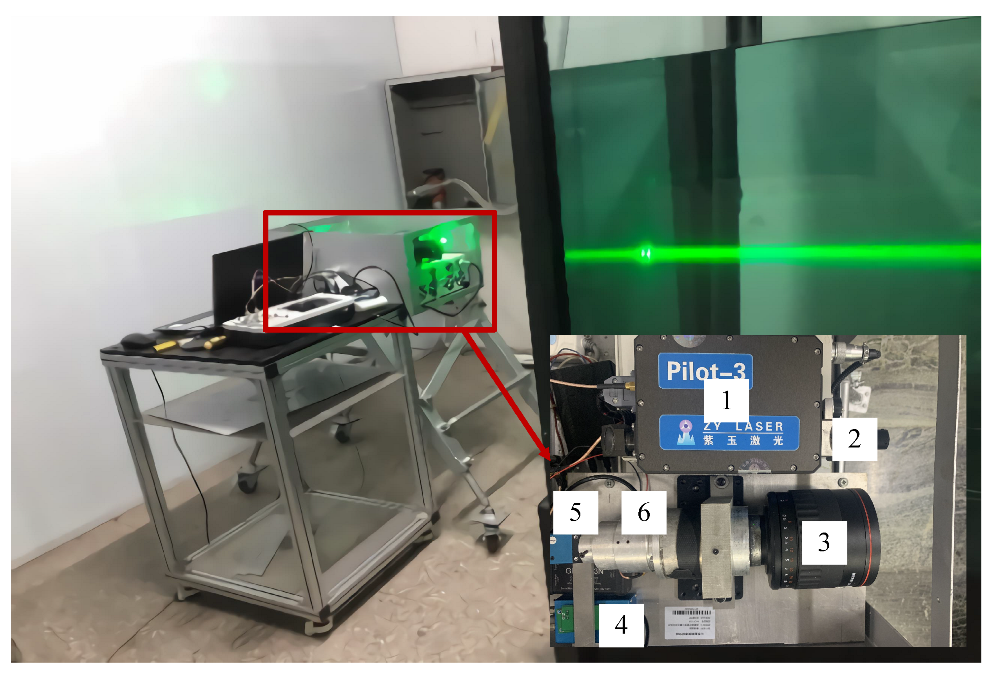
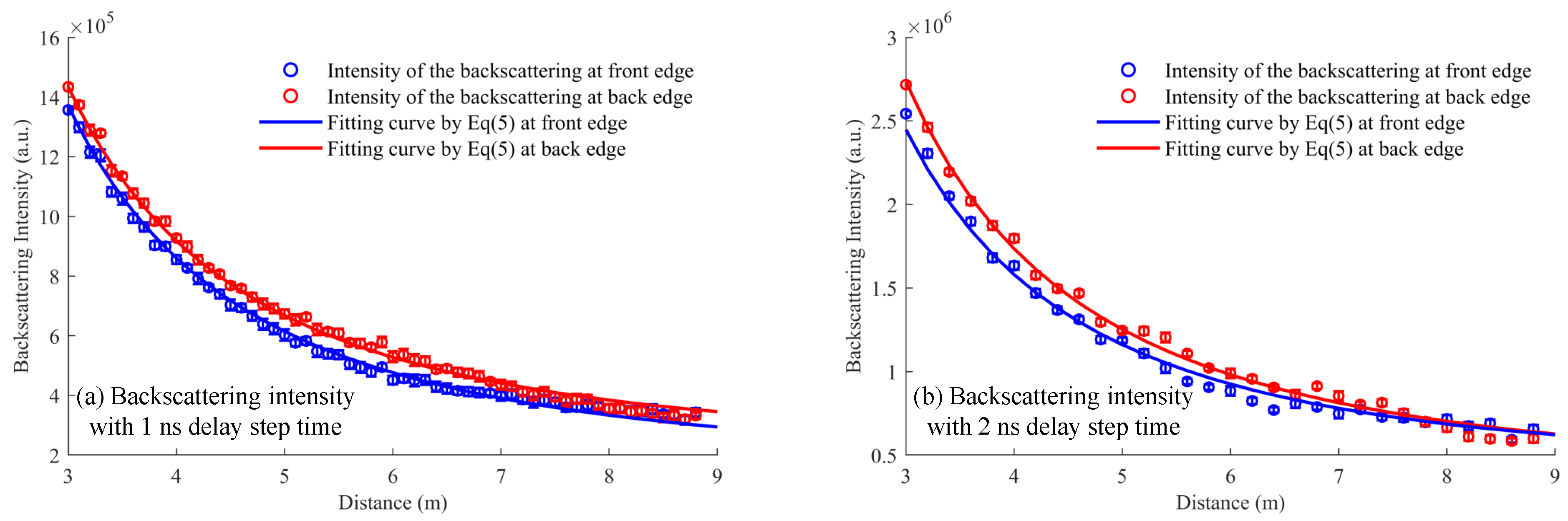
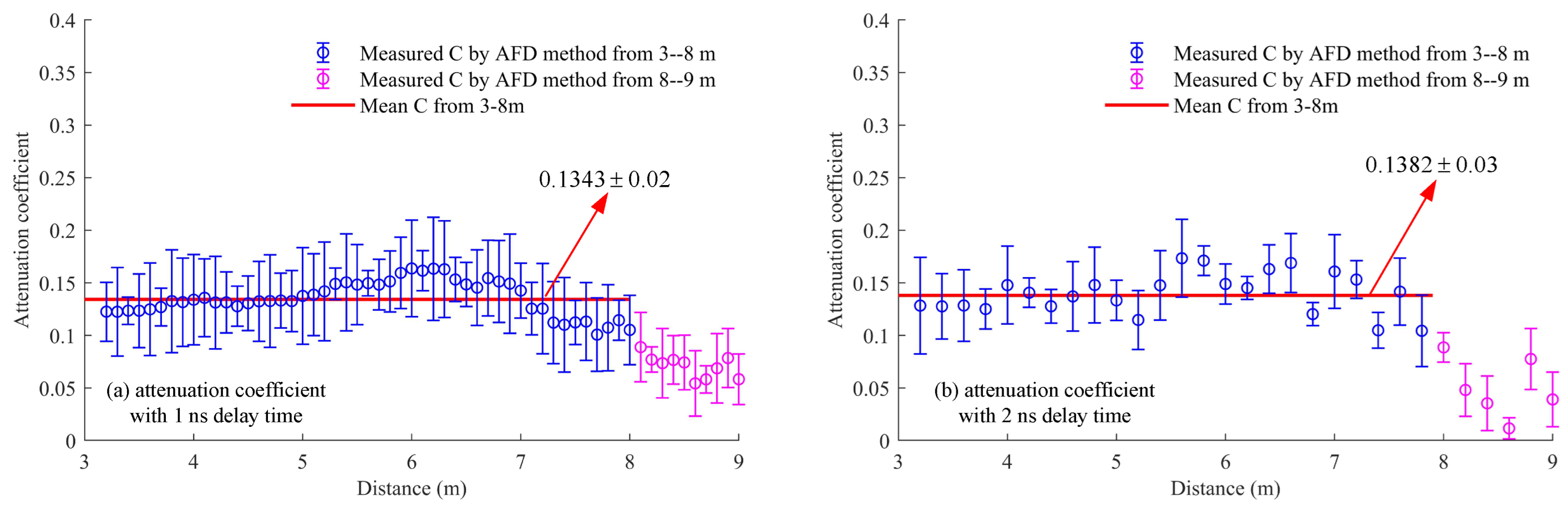
The attenuation coefficient of a water body is one of the important factors for describing its features. However, its remote measurement in real time is still a challenge. In this paper, we demonstrated a novel method to realize real-time remote measurements of the attenuation coefficient of fresh water using flash imaging lidar based on the adjacent frame difference (AFD) method and a water body backscattering model. In general, we firstly investigated the relationship between the backscattering intensity and the attenuation coefficient based on the backscattering model of the water body. Then, the backscattering intensity at the front and back edges of the range-gate obtained by the AFD method was brought into this relationship to obtain the attenuation coefficient. Experiments on the measurements of the average attenuation coefficient of the 532 nm laser in fresh water at 3–8 m were further carried out using our self-developed flash lidar with the AFD method. The acquired water attenuation coefficients were 0.1334±0.02 and 0.1382±0.03 with a delay step time of 1 ns and 2 ns in the AFD method, respectively. We compared these values to the one achieved following the conventional Beer–Lambert law (0.1330±0.02), and they matched well with each other. These results fully illustrated the feasibility and reliability of the proposed method for measuring the attenuation coefficient of water bodies.
Keywords: water attenuation coefficient; adjacent frame difference method; backscattering model; Beer–Lambert law water attenuation coefficient; adjacent frame difference method; backscattering model; Beer–Lambert law