


Abstract
Traditional Chinese papercutting is an important form of intangible cultural heritage characterized by intricate structures, repeated motifs, and prominent symmetrical organization. Existing digital studies of traditional art commonly emphasize classification, restoration, style transfer, or visual reconstruction, while computational frameworks that combine interpretable structural characterization with generative exploration remain comparatively limited. This study therefore presents an exploratory framework integrating image standardization, quantitative structural-feature analysis, Principal Component Analysis (PCA), and Deep Convolutional Generative Adversarial Network (DCGAN)-based synthesis. The image corpus was standardized by grayscale conversion, Gaussian filtering, Otsu thresholding, morphological processing, resizing, and normalization. Foreground occupancy, edge density, connected-component complexity, and horizontal and vertical symmetry were extracted as interpretable structural descriptors. PCA was applied to the resulting feature matrix to examine variation among samples. The DCGAN used a 100-dimensional latent vector and generated 64 × 64 single-channel outputs; training progression was documented through generator/discriminator loss curves and fixed-latent-vector samples up to epoch 2000. The generated examples qualitatively exhibited repeated motifs and symmetrical organization also observed in the source corpus. Because no FID, IS, SSIM, Dice, or other formal generative-quality metric, model benchmark, raw-versus-preprocessed ablation, or expert cultural-authenticity assessment was performed, the generative findings are interpreted as proof-of-concept observations rather than quantitative validation. The framework provides an exploratory basis for linking measurable structural characteristics with generative modeling in the computational study of traditional Chinese papercutting.
1. Introduction
Chinese papercutting is a long-standing form of folk art and intangible cultural heritage whose visual language is characterized by cut-out contours, repeated motifs, dense positive–negative spatial relationships, and frequent bilateral or radial organization. Digital technologies have increasingly been applied to the documentation, interpretation, preservation, and design exploration of cultural heritage. Recent studies have demonstrated the use of artificial intelligence for intangible cultural heritage innovation and visual applications [1,2]. In parallel, generative and reconstruction-oriented approaches have been used for historical landscape restoration, traditional craft-pattern reconstruction, and artifact inpainting [3,4,5]. However, existing studies have primarily focused on artistic style transfer, image reconstruction, or visual generation, while relatively limited attention has been given to combining interpretable structural descriptors with generative modeling for traditional papercutting patterns. These studies demonstrate the potential of generative methods for heritage-related visual tasks, but they primarily emphasize restoration, transformation, or image synthesis rather than an explicit combination of interpretable structural descriptors with generative exploration. Computer-vision research on artistic and heritage imagery has also addressed style classification, geometric-form classification, artwork reconstruction, and traditional shadow-image classification [6,7,8,9]. Related applications include heritage-science classification, visual-design systems, mural-image classification, and defect detection in historic structures [10,11,12,13]. Collectively, this literature shows that computational methods can extract meaningful visual regularities from cultural materials. However, traditional papercutting poses a distinct representational challenge because foreground occupancy, edge density, connected-component structure, and symmetry can vary substantially even when the works share recognizable compositional conventions. A workflow that first quantifies these properties and then examines their relation to generative synthesis can therefore provide a more interpretable computational perspective than generation alone.
Accordingly, the present study does not propose a novel GAN architecture or claim that DCGAN is superior to newer GAN or diffusion approaches. DCGAN was selected as a well-established, comparatively transparent baseline architecture that permits the generative component to be examined alongside an interpretable structural-analysis pipeline [14]. The objectives were: (1) to standardize heterogeneous papercutting images for computational analysis; (2) to quantify foreground occupancy, edge density, connected-component complexity, and horizontal/vertical symmetry; (3) to visualize variation in the resulting structural-feature space using PCA; and (4) to explore whether a standard DCGAN can produce papercutting-like patterns that qualitatively exhibit some structural characteristics observed in the source corpus. Quantitative benchmarking, ablation analysis, and expert assessment are outside the scope of the present proof-of-concept study and are treated explicitly as limitations.
2. Methodology
2.1. Dataset Description
The study used a publicly accessible Chinese papercutting image collection assembled in the original project. The corpus contained traditional handcrafted designs with geometric ornamentation, cultural symbols, floral and radial compositions, abstract forms, and strongly symmetrical layouts. Image files were screened for readability, format consistency, and suitability for image processing before a representative subset was used for structural analysis and DCGAN training. The exact repository URL, total source-corpus size, and final training-sample count were not preserved in the archived project materials available for the present revision; these details are therefore not reconstructed retrospectively. This provenance limitation is reported explicitly to avoid presenting unverifiable dataset information as fact.
2.2. Data Preprocessing
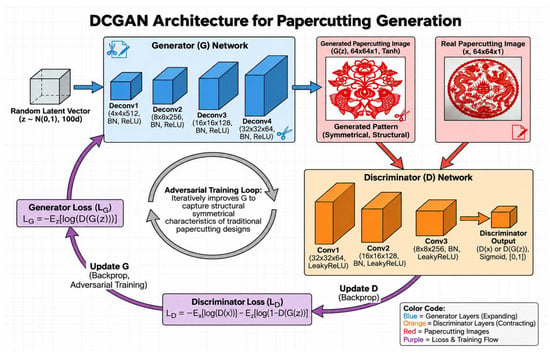
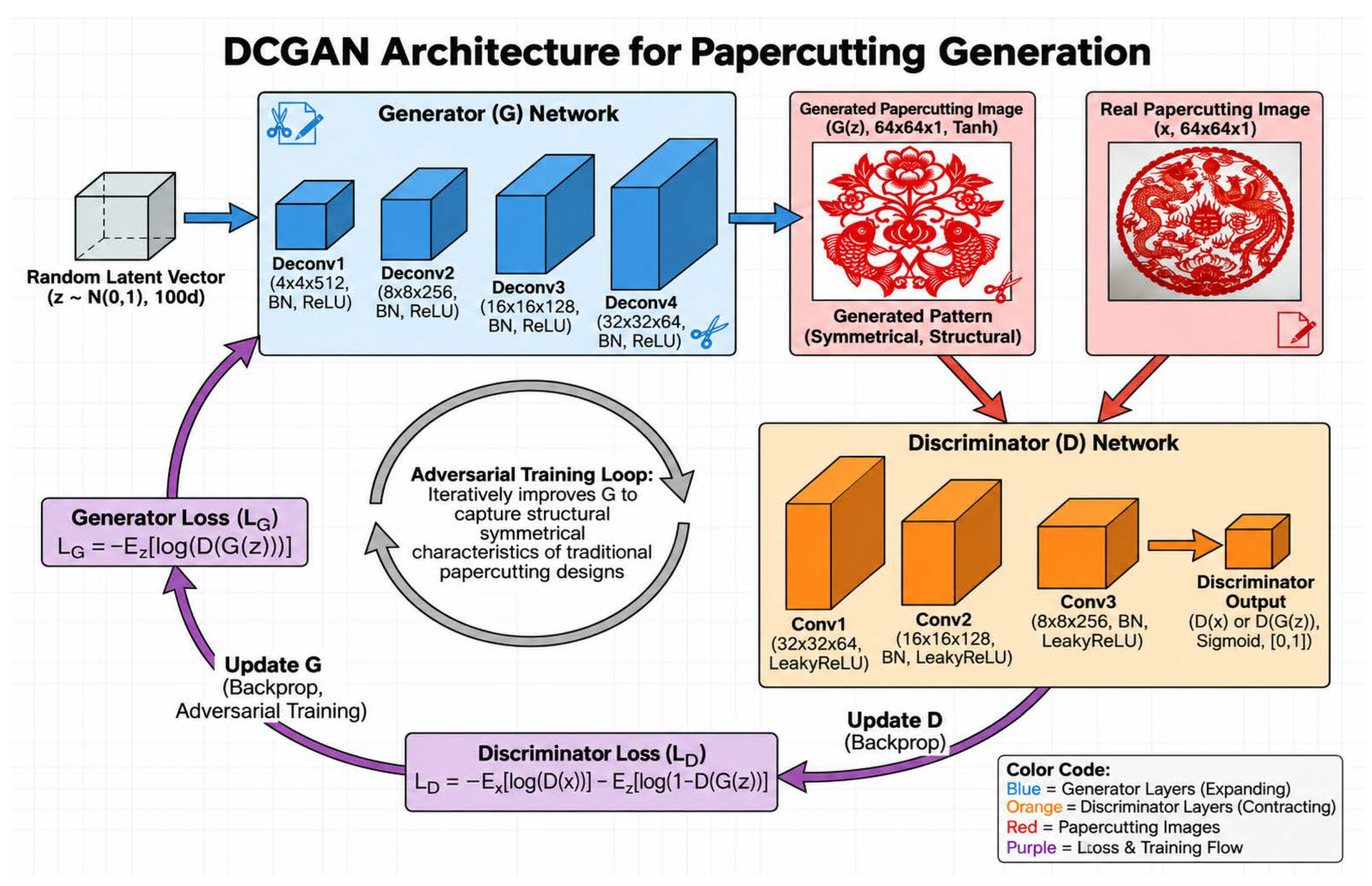
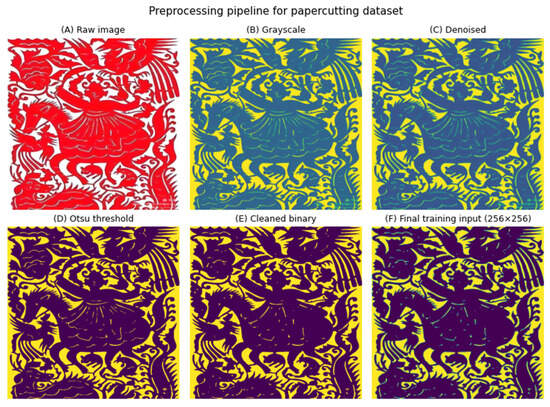
Preprocessing was performed to obtain a consistent structural representation of heterogeneous papercutting images. OpenCV, an open-source computer-vision library [15], was used for image transformation and morphological processing, while NumPy supported numerical array operations [16]. Images were converted to grayscale to reduce color variation, smoothed with a Gaussian filter to suppress small high-frequency artifacts, and segmented by Otsu thresholding to separate foreground papercutting structures from the background. Morphological opening and closing were then used to remove isolated noise and improve local contour continuity. The standardized preprocessing output is 256 × 256 pixels. Separately, the DCGAN architecture shown in Figure 1 operates on 64 × 64 × 1 image tensors. The revised manuscript distinguishes these two representations rather than treating the preprocessing output resolution and the GAN input resolution as identical. Preprocessing is interpreted here as input standardization; because no raw-versus-preprocessed ablation experiment was performed, no causal claim is made that preprocessing improved generative performance.
Figure 1.
Overall DCGAN architecture.
2.3. Structural Feature Extraction and Descriptive Analysis
Descriptive analysis quantified four aspects of papercutting structure using NumPy and Pandas: foreground occupancy, edge density, connected-component complexity, and symmetry. Foreground occupancy was defined as the proportion of foreground pixels in the binary mask. Edge density represented the proportion of edge pixels detected by the Canny operator. Connected-component count was used as an operational descriptor of fragmentation/structural complexity. Horizontal and vertical symmetry were evaluated by comparing each binary representation with its horizontally and vertically flipped counterparts. These measures were summarized and visualized using histograms, scatter plots, box plots, and correlation maps. Table 1 summarizes the role and interpretation of each structural descriptor.
Table 1.
Structural descriptors used for quantitative characterization of papercutting images.
2.4. Analysis of Feature Space (PCA Embedding)
Principal Component Analysis (PCA) was applied with scikit-learn [17] to the matrix of extracted structural features rather than directly to raw image pixels. The PCA input comprised foreground occupancy, edge density, connected-component complexity, horizontal symmetry, and vertical symmetry. Two principal components were retained for visualization of continuous variation in the measured feature space. The PCA plot was used descriptively to examine dispersion and relative proximity of samples with similar combinations of measured structural features. No claim is made that PCA-space proximity independently validates perceptual or visual similarity, because no separate image-similarity metric was calculated.
2.5. Structural Analysis
Additional structural analysis examined relationships among foreground occupancy, edge density, connected-component complexity, and symmetry measures. Correlation plots and distribution summaries were used to identify combinations of features that varied together and features that remained comparatively stable across the corpus. The analyses indicated that structural density and component complexity varied substantially, whereas horizontal and vertical symmetry scores were comparatively concentrated. These observations characterize the analyzed image corpus; they are not interpreted as evidence that the preprocessing pipeline improves GAN performance or that any generated image is culturally authentic.
2.6. Generative Model DCGAN Implementation
A Deep Convolutional Generative Adversarial Network (DCGAN) was implemented in PyTorch [18] as the generative component of the framework, following the general architectural principles of DCGAN [14]. As documented in Figure 1, the generator receives a 100-dimensional latent vector sampled from a standard normal distribution. Successive transposed-convolution stages expand the representation through 4 × 4 × 512, 8 × 8 × 256, 16 × 16 × 128, and 32 × 32 × 64 feature maps before producing a 64 × 64 × 1 output image. Batch normalization and ReLU activation are used in the intermediate generator stages, with Tanh at the output. The discriminator in Table 2 contracts a 64 × 64 × 1 image through convolutional feature maps of 32 × 32 × 64, 16 × 16 × 128, and 8 × 8 × 256 before sigmoid-based real/fake classification. LeakyReLU is used in the discriminator, with batch normalization in the later convolutional stages. The architecture itself is standard and is not presented as a methodological innovation; novelty is limited to the application framework combining interpretable structural analysis and exploratory papercutting synthesis.
Table 2.
Summary of the DCGAN architecture used in this study.
2.7. Model Training Strategy
The DCGAN was trained by alternating discriminator and generator updates using binary cross-entropy adversarial loss and the Adam optimizer [19]. A fixed latent vector was retained to visualize generation progression across training. The reported training run included samples at epochs 1, 10, 50, 100, 250, 500, 1000, and 2000 and therefore establishes a total training duration of 2000 epochs for the reported run. Generator and discriminator loss trajectories were recorded as descriptive indicators of adversarial training dynamics. The archived manuscript and figures do not preserve the batch size, learning rate, Adam β1/β2 values, or weight-initialization settings; these parameters are explicitly reported as unavailable rather than retrospectively inferred. Table 3 summarizes all architecture and training information that can be verified from the archived materials.
Table 3.
DCGAN architecture and training information recoverable from the archived manuscript and figures.
3. Results
3.1. Diversity Analysis
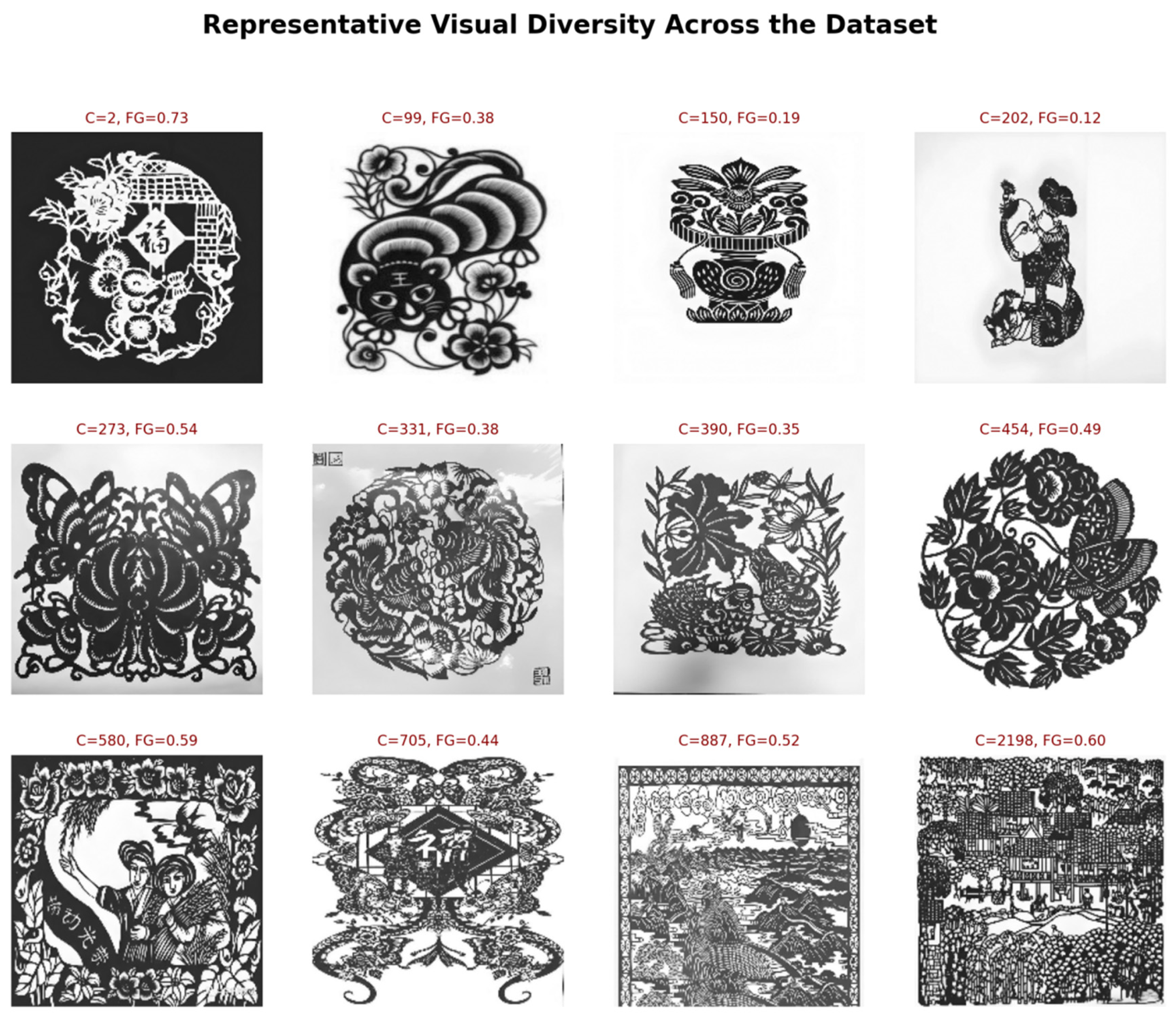
As shown in Figure 2, the analyzed papercutting images exhibited substantial variation in structural density and visual composition. Representative samples spanned a broad range of foreground occupancy and connected-component counts, indicating differences in the proportion of filled regions and in structural fragmentation. Dense images contained larger foreground proportions, whereas lower-occupancy images contained more open background space. Variation in connected-component counts further indicated that some images contained many isolated or fine elements while others showed more consolidated structures. The figure therefore documents heterogeneity in the analyzed corpus across floral, symbolic, figurative, and composite patterns. These observations describe the source material used in the study but do not by themselves establish generative-model performance or cultural representativeness of a broader population of papercutting works.
Figure 2.
Representative traditional Chinese papercutting samples illustrating variations in structural density and connected-component complexity.
3.2. Descriptive Statistical Analysis
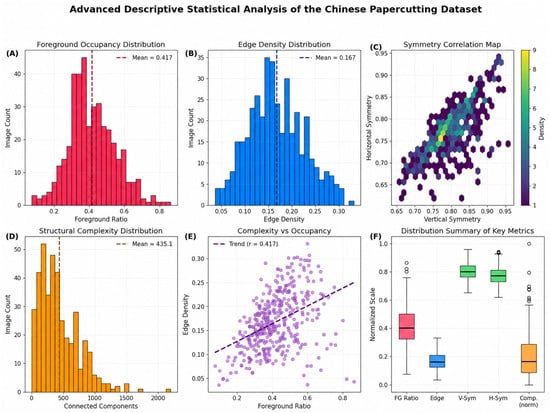
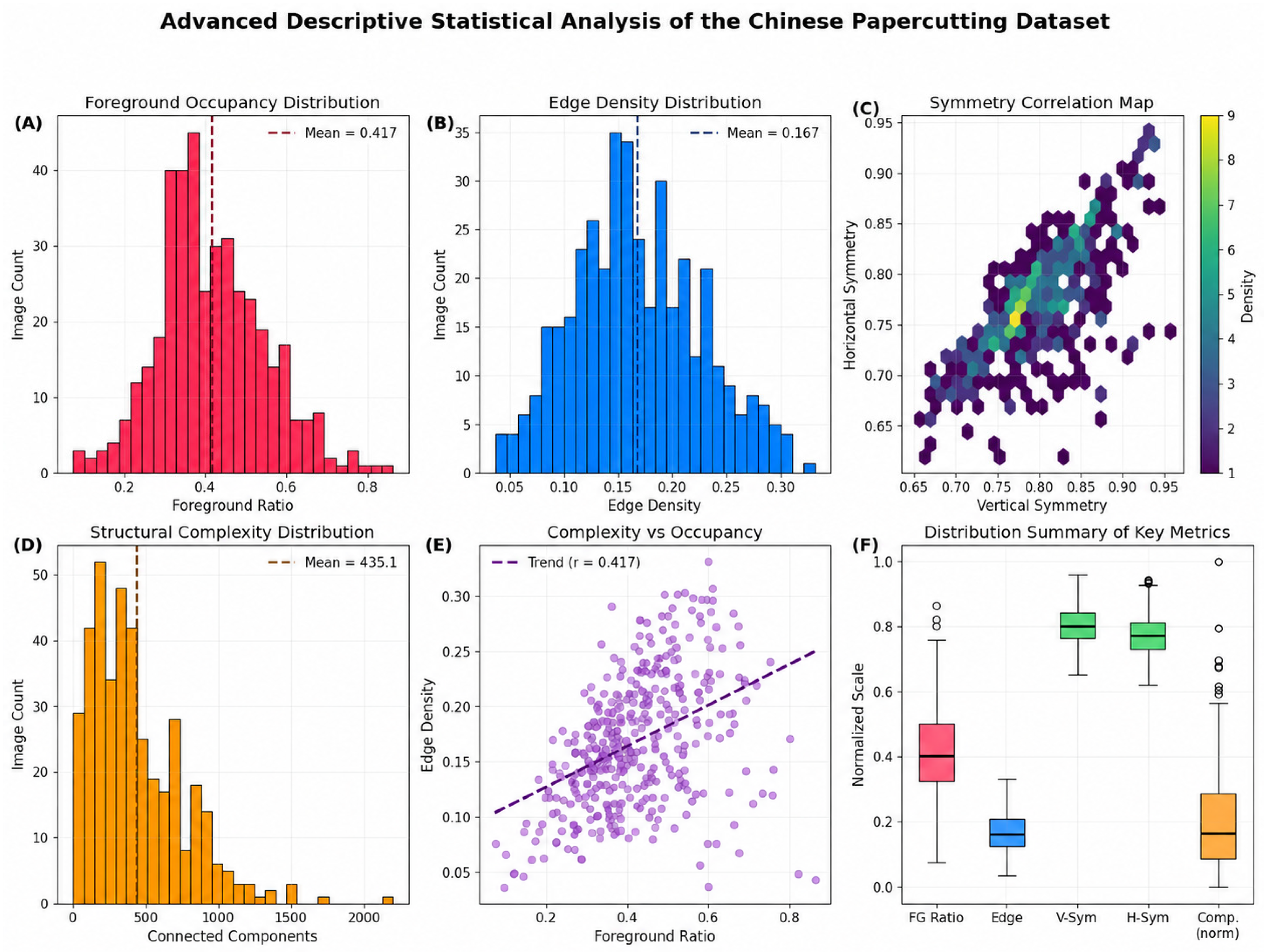
Figure 3 summarizes the measured structural characteristics of the analyzed papercutting corpus. Mean foreground occupancy was approximately 0.417 (Figure 3A), while mean edge density was approximately 0.167 (Figure 3B). The horizontal and vertical symmetry measures showed a positive association (Figure 3C), indicating that images scoring highly on one measured symmetry direction often also scored highly on the other. Connected-component complexity showed broad dispersion (Figure 3D). The plotted relationship between structural complexity and foreground occupancy showed a moderate positive association (r = 0.417; Figure 3E). The summary plot (Figure 3F) further illustrates that the symmetry measures were comparatively concentrated, whereas occupancy and component complexity varied more widely. These statistics characterize the dataset’s measured structural heterogeneity; they are not interpreted as evidence of cultural authenticity or as proof that the dataset necessarily yields better generative performance.
Figure 3.
Descriptive statistical analysis of structural characteristics in the papercutting dataset. (A) Distribution of foreground occupancy; (B) distribution of edge density; (C) correlation between horizontal and vertical symmetry; (D) distribution of connected-component complexity; (E) relationship between structural complexity and foreground occupancy; (F) summary of key structural features.
3.3. PCA Embedding (Feature Space Analysis)
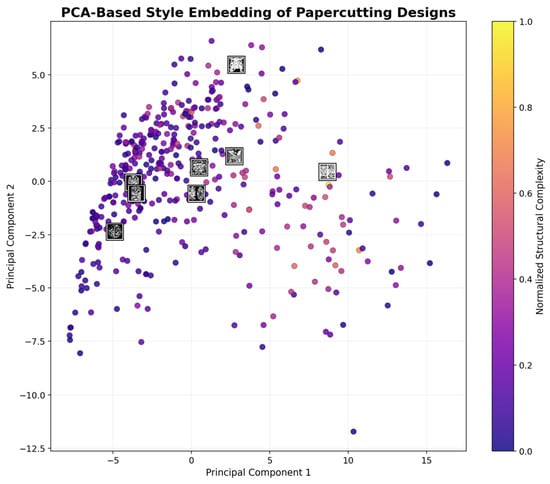
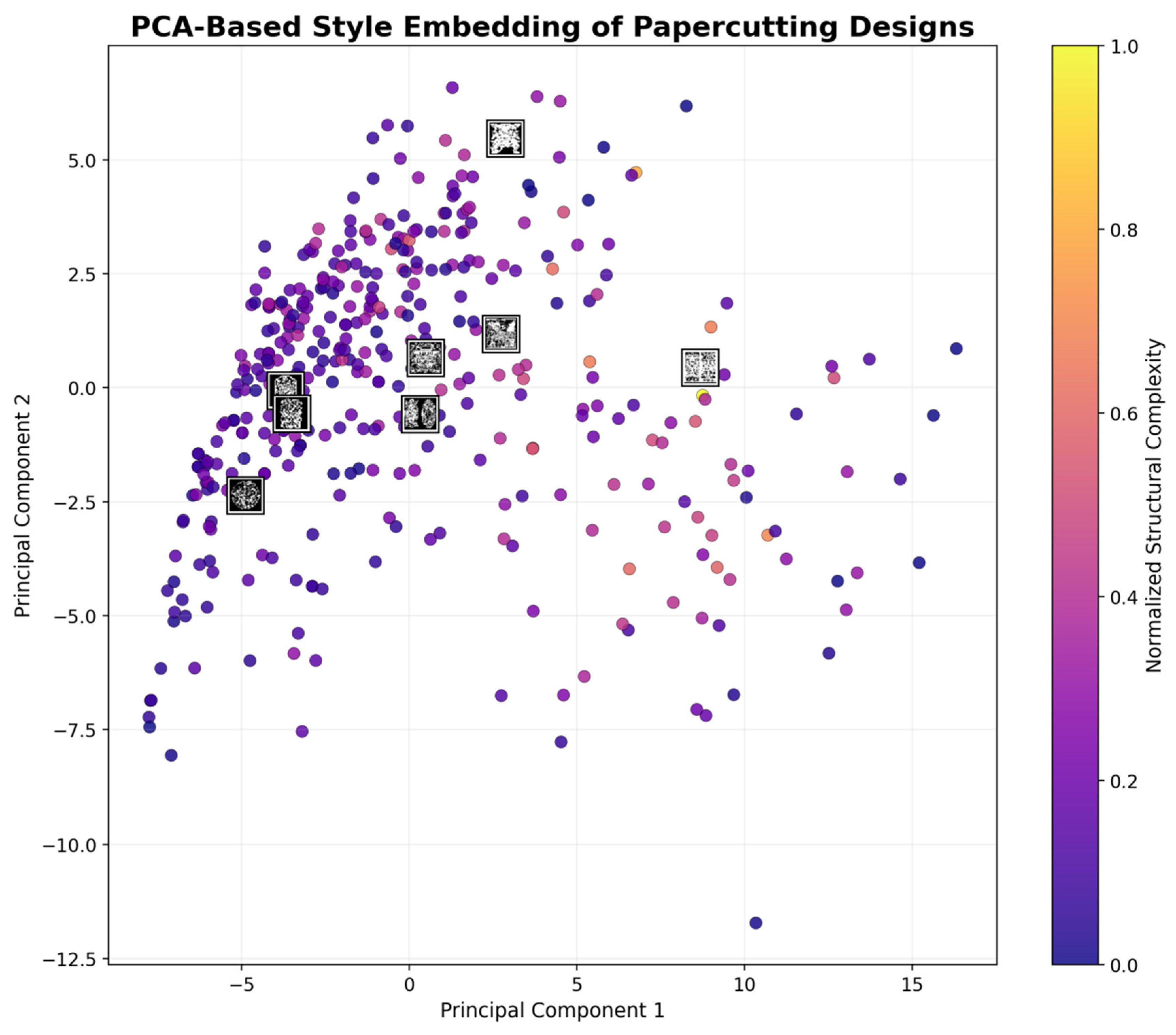
Figure 4 presents the two-dimensional PCA projection based on the extracted structural-feature matrix. The broad dispersion of samples indicates continuous variation in the measured structural descriptors rather than sharply separated categories. Samples with similar combinations of foreground occupancy, edge density, connected-component complexity, and symmetry tended to occupy closer regions of the projection, whereas structurally different feature combinations were more widely separated. The color mapping illustrates variation in normalized structural complexity across the projection. Because no independent perceptual-similarity metric was used, proximity in this PCA space is interpreted only as similarity in the measured feature combinations and not as validated visual resemblance between images.
Figure 4.
Principal component analysis (PCA) embedding of papercutting samples based on extracted structural features.
3.4. Preprocessing of Dataset
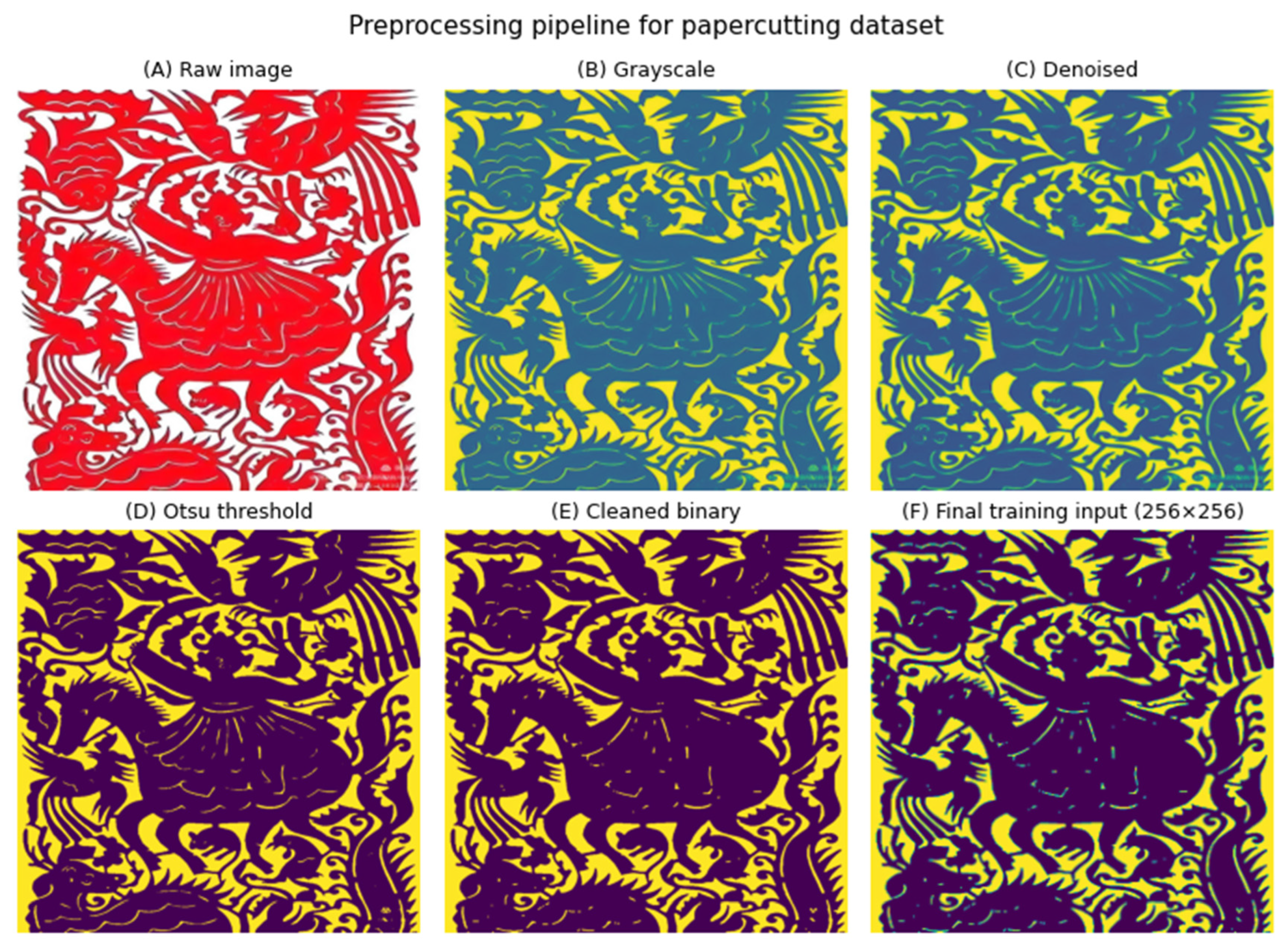
Figure 5 documents the preprocessing workflow from the original color image to a standardized structural representation. Grayscale conversion reduces color information while retaining intensity-defined contours; Gaussian denoising suppresses small artifacts; Otsu thresholding produces a foreground-background segmentation; and morphological refinement removes isolated regions and improves local connectivity. The final standardized representation shown in Figure 5 is 256 × 256 pixels. This figure demonstrates how heterogeneous raw images were transformed into consistent representations for structural analysis. It does not demonstrate that preprocessing improves DCGAN performance, because no controlled raw-versus-preprocessed comparison was undertaken. The GAN architecture itself uses 64 × 64 × 1 image tensors, as separately specified in Figure 1.
Figure 5.
Image preprocessing pipeline for traditional Chinese papercutting patterns. (A) Original image; (B) grayscale conversion; (C) Gaussian denoising; (D) Otsu thresholding; (E) morphological processing; (F) final standardized image for model training.
3.5. Distribution and Correlation Analysis
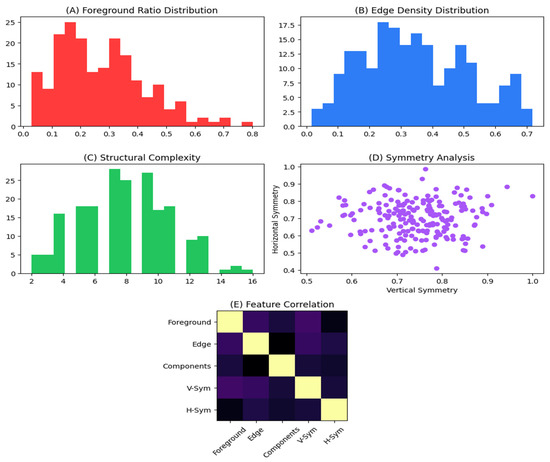
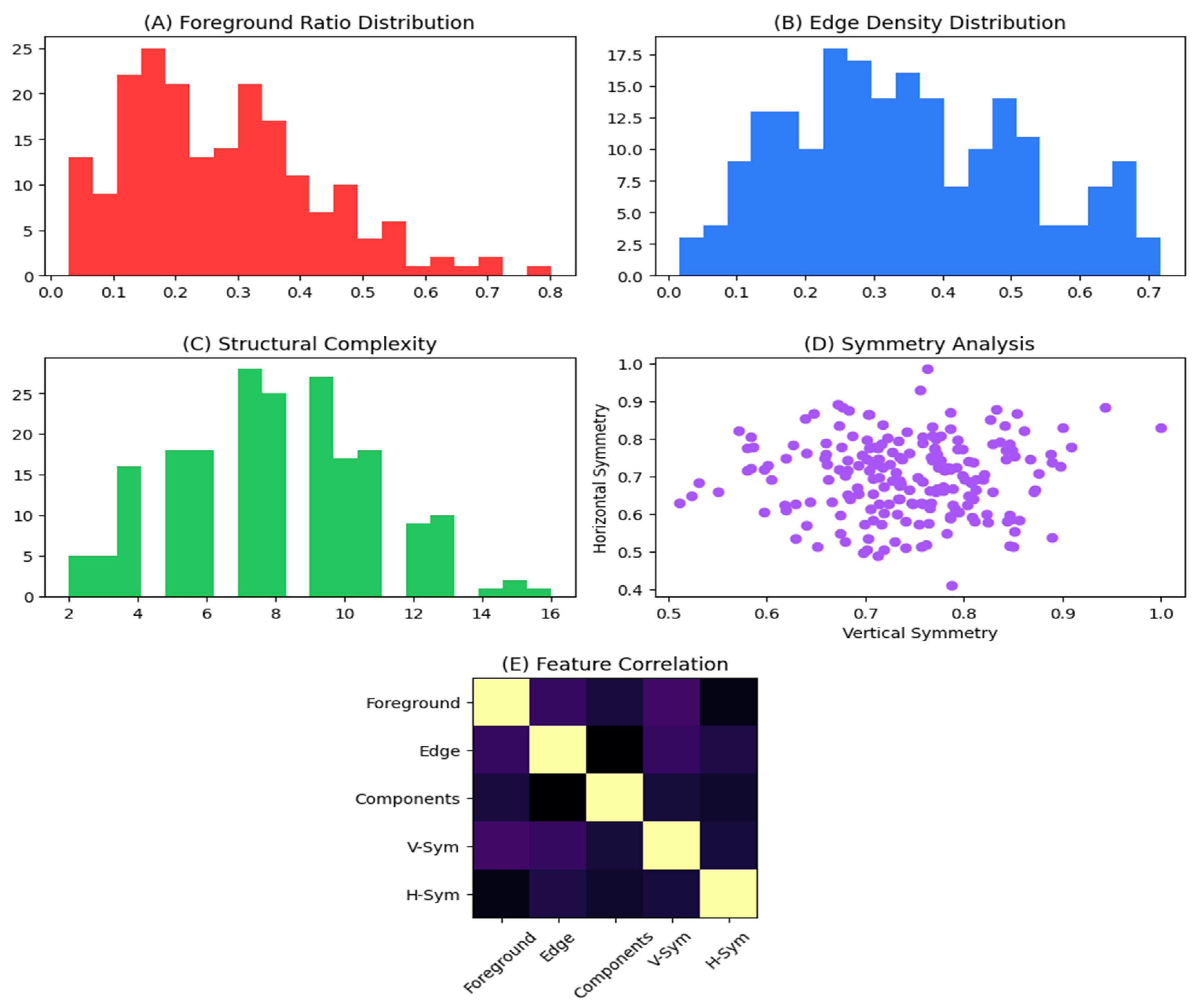
Figure 6 provides a complementary distribution-and-correlation view of the same structural descriptors summarized in Figure 3. Here, the emphasis is on the full distributions of foreground occupancy, edge density, connected-component complexity, and horizontal/vertical symmetry together with their correlation matrix. Foreground occupancy and edge density varied across the analyzed corpus, connected-component complexity included both moderate and higher-complexity samples, and the symmetry scores were concentrated in relatively high ranges. The correlation matrix indicates that no single descriptor fully accounts for the observed structural variation. To address redundancy, the revised text no longer repeats the interpretive claims made for Figure 3; Figure 3 is used for descriptive summaries and selected pairwise relationships, whereas Figure 6 is retained specifically as the consolidated distribution/correlation view.
Figure 6.
Distribution and correlation analysis of major structural features in the papercutting dataset. (A) Foreground occupancy distribution; (B) edge density distribution; (C) connected-component complexity distribution; (D) symmetry distribution; (E) correlation matrix of extracted structural features.
3.6. Feature Extraction and Structural Processing Analysis
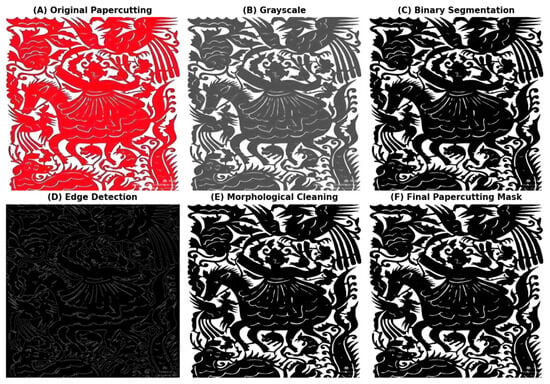
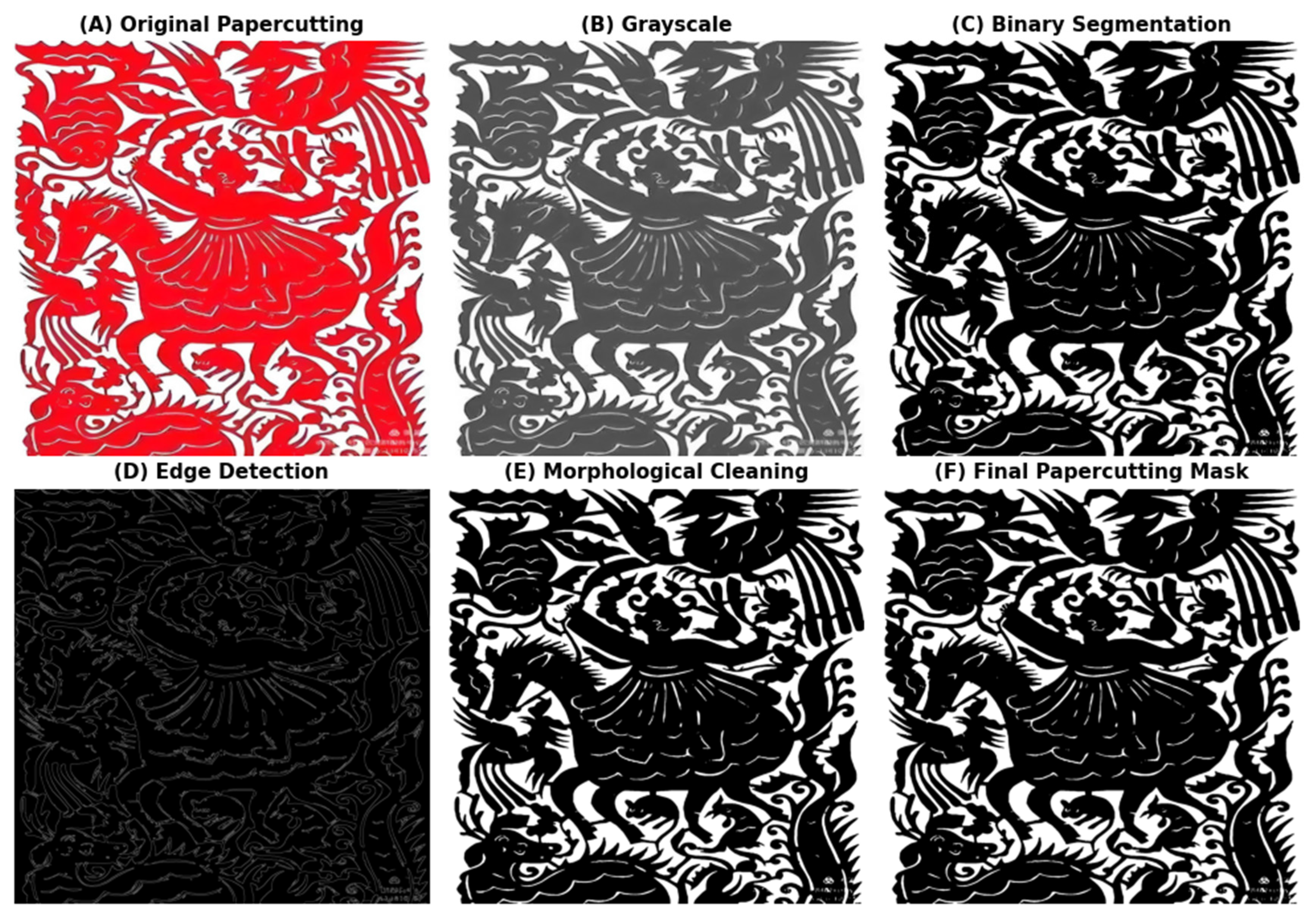
Figure 7 illustrates feature-oriented structural processing using a representative papercutting image. In contrast to Figure 5, which documents the general standardization sequence used to prepare images, Figure 7 focuses on intermediate representations relevant to feature extraction: grayscale structure, binary segmentation, detected edges, morphological refinement, and the final structural mask. The edge representation supports edge-density characterization, while the binary/morphological representations support occupancy, connected-component, and symmetry analysis. The revised text therefore distinguishes the analytical purpose of Figure 7 from the input-standardization purpose of Figure 5 and removes repetitive claims about improved generative performance.
Figure 7.
Structural feature extraction and image-processing workflow for papercutting pattern analysis. (A) Original papercutting image; (B) grayscale representation; (C) binary segmentation; (D) edge detection; (E) morphological refinement; (F) final structural mask.
3.7. DCGAN Model Performance and Generated Output Analysis
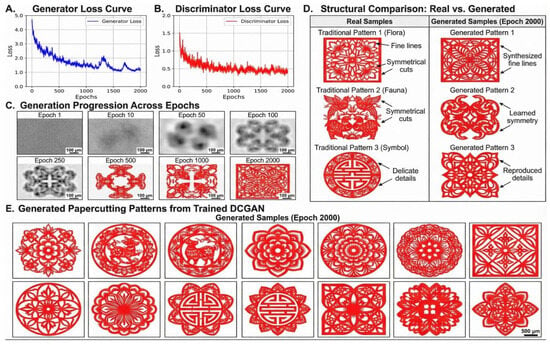
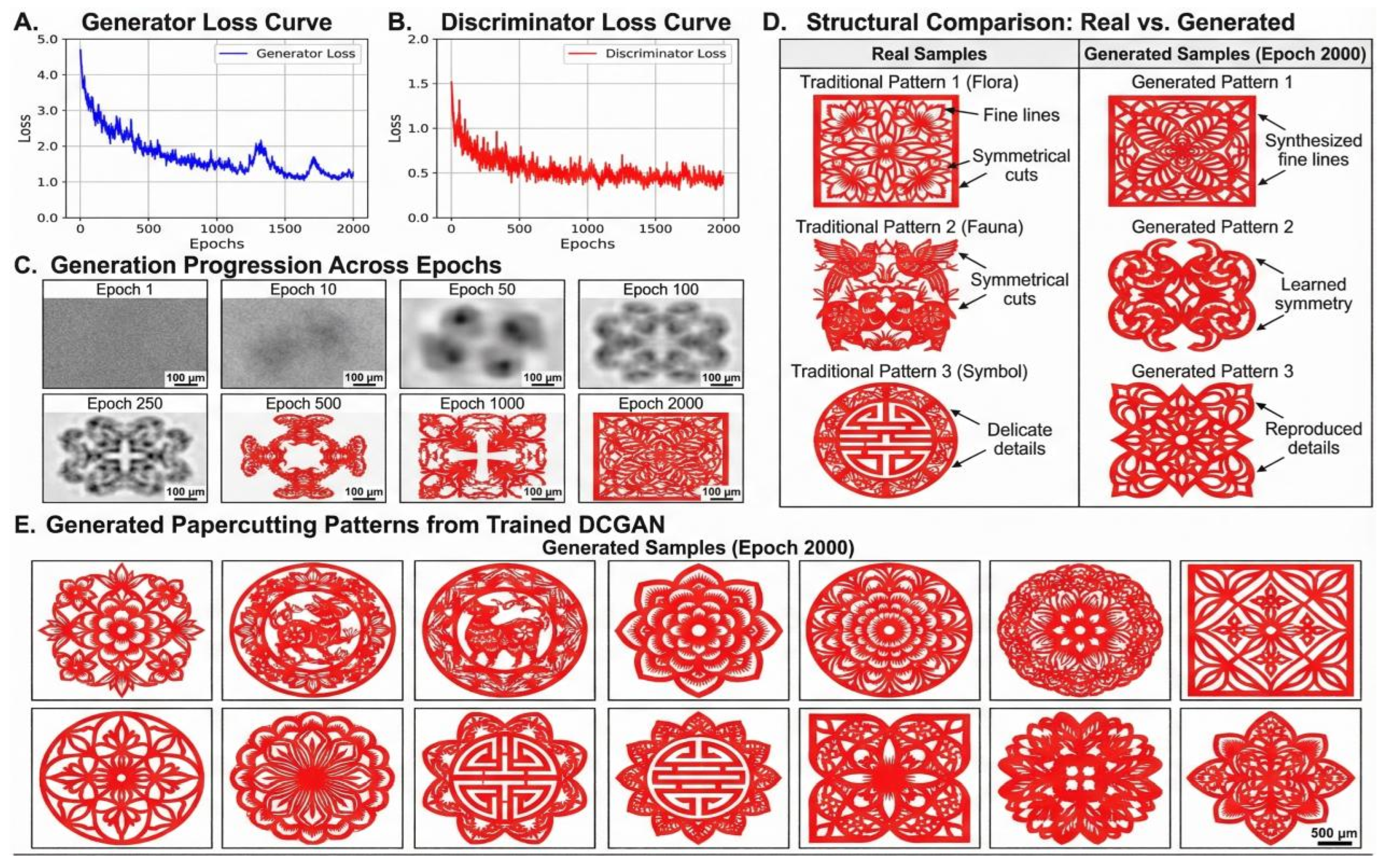
Figure 8 summarizes the observed DCGAN training behavior and generated outputs. The generator and discriminator loss curves (Figure 8A,B) decreased from their initial levels and subsequently fluctuated over training; these curves are reported descriptively and are not used to claim formal convergence or absence of mode collapse. Fixed-latent-vector samples (Figure 8C) show a progression from noise-like early outputs toward increasingly organized forms over epochs 1–2000. The side-by-side examples in Figure 8D qualitatively illustrate repeated motifs, bilateral/radial organization, and fine cut-like structures in both real and generated examples. Figure 8E shows additional generated samples with floral, radial, symbolic, and geometric appearances. Because the study did not calculate FID, IS, SSIM, Dice, LPIPS, or another formal quality/diversity metric, and because no WGAN, StyleGAN, conditional GAN, diffusion, or other baseline was trained, these observations should be interpreted as qualitative proof-of-concept evidence only. They do not establish quantitative fidelity, diversity, superiority over alternative models, or cultural authenticity.
Figure 8.
Training performance and generated outputs of the DCGAN model. (A) Generator loss curve; (B) discriminator loss curve; (C) evolution of generated samples across training epochs; (D) qualitative comparison between real and generated papercutting patterns; (E) representative diverse samples generated by the trained DCGAN.
4. Discussion
The present study combines interpretable structural analysis with exploratory generative modeling to examine traditional Chinese papercutting computationally. The structural results indicate a corpus in which foreground density and connected-component complexity vary considerably while measured symmetry is comparatively consistent. This combination is relevant because papercutting visual organization is not captured by a single descriptor: works may share symmetry conventions while differing substantially in density, fragmentation, and local edge structure. PCA further supports this interpretation by showing continuous variation in the measured feature space rather than in discrete stylistic clusters.
The generative component should be interpreted within this limited objective. DCGAN was selected because its convolutional generator-discriminator structure is simple, established, and transparent enough to serve as a baseline proof-of-concept [14]. More advanced models cited in the literature, including attention-based or conditional GAN frameworks for heritage restoration and craft-pattern reconstruction [3,4], hybrid generative approaches [5], and structure-aware generative methods in other visual domains [20], may provide stronger fidelity or control. The present study does not experimentally compare those methods with DCGAN and therefore does not claim that DCGAN is the optimal architecture for papercutting generation.
The preprocessing and structural-analysis stages also require cautious interpretation. Standardization makes heterogeneous images easier to compare computationally, but the current design does not isolate the effect of preprocessing on the generative output. Accordingly, the revised manuscript no longer states that preprocessing caused better GAN performance. Similarly, the PCA represents similarity in the measured structural descriptors rather than independently validated perceptual similarity. The structural measures should therefore be understood as interpretable descriptors, not as direct measures of aesthetic quality or cultural authenticity.
Several limitations are central to interpreting the findings. First, generated images were evaluated qualitatively; no FID, IS, KID, SSIM, Dice, LPIPS, or comparable quantitative metric was computed. Second, no direct benchmark against WGAN, StyleGAN, conditional GANs, diffusion models, or other generative architectures was performed. Third, no controlled experiment compared raw and preprocessed training data. Fourth, cultural authenticity was not assessed by papercutting artists, heritage specialists, or other domain experts. Fifth, the archived project materials available for this revision do not preserve the exact source-repository URL, complete sampling log, final training-sample count, batch size, learning rate, Adam β values, or weight-initialization settings. These limitations constrain reproducibility and the strength of conclusions that can be drawn. Future work should use a fully documented and shareable dataset, preregistered preprocessing and training settings, quantitative quality/diversity metrics, controlled ablation studies, comparisons with newer generative architectures, and structured expert evaluation.
Within these boundaries, the study’s contribution is an interpretable workflow rather than a claim of state-of-the-art image synthesis. By placing measurable structural descriptors before generative exploration, the framework provides a basis for studying how density, connectivity, edge organization, and symmetry can be described alongside generative outputs. This perspective may support future computational studies of traditional visual heritage when combined with stronger benchmarking and expert cultural validation [7,21,22].
5. Conclusions
This study developed an exploratory computational framework integrating image standardization, interpretable structural-feature analysis, PCA, and DCGAN-based synthesis for traditional Chinese papercutting patterns. Foreground occupancy, edge density, connected-component complexity, and symmetry provided measurable descriptions of variation within the analyzed corpus, while PCA visualized continuous variation in the resulting feature space. The standard DCGAN produced qualitative papercutting-like outputs exhibiting repeated motifs and symmetrical organization over the reported 2000-epoch training run. These outputs are not presented as quantitatively validated or culturally authenticated generations. The absence of formal generative-quality metrics, model benchmarking, preprocessing ablation, expert assessment, and complete archived provenance/training metadata limits the conclusions. Future studies should address these limitations with fully documented datasets, quantitative evaluation, comparative models, and domain-expert assessment. The principal value of the present work is therefore the integration of interpretable structural analysis with proof-of-concept generative exploration rather than a claim of superior generative performance.
Author Contributions
Conceptualization, W.J. and J.C.; methodology, W.J.; software, W.J.; validation, W.J. and J.C.; formal analysis, W.J.; investigation, W.J.; resources, W.J. and J.C.; data curation, W.J.; writing—original draft preparation, W.J.; writing—review and editing, W.J. and J.C.; visualization, W.J.; supervision, J.C.; project administration, J.C. All authors have read and agreed to the published version of the manuscript.
Funding
This research received no external funding.
Data Availability Statement
The data supporting the findings of this study are available from the corresponding author upon reasonable request.
Conflicts of Interest
The authors declare no conflicts of interest.
References
- He, J.; Tao, H. Applied Research on Innovation and Development of Blue Calico of Chinese Intangible Cultural Heritage Based on Artificial Intelligence. Sci. Rep. 2025, 15, 12829. [Google Scholar] [CrossRef] [Scilit] [PubMed]
- Yu, H. Application of the Artificial Intelligence System Based on Graphics and Vision in Ethnic Tourism of Subtropical Grasslands. Heliyon 2024, 10, e31442. [Google Scholar] [CrossRef] [Scilit] [PubMed]
- Fang, L.; Han, B.; Bi, M.; Wang, L.; Wang, D. Dcaf-Gan: Enhancing Historical Landscape Restoration with Dual-Branch Feature Extraction and Attention Fusion. PLoS ONE 2025, 20, e0334532. [Google Scholar] [CrossRef] [Scilit] [PubMed]
- Huang, B.; Mo, L. Segcycle-Spade: An End-to-End Framework for Semantic Segmentation-Based Automated Extraction and Artistic Reconstruction of Traditional Craft Patterns Using Conditional Gan. PLoS ONE 2025, 20, e0329100. [Google Scholar] [CrossRef]
- Swathi, B.; Rao, D.B.J. Automated Image Inpainting for Historical Artifact Restoration Using Hybridisation of Transfer Learning with Deep Generative Models. Sci. Rep. 2026, 16, 4810. [Google Scholar] [CrossRef] [Scilit] [PubMed]
- Liang, S.; Pan, L.; Mohammadzadeh, F.; Khishe, M.; Kh, T.I.; Shambour, Q.Y.; Ghazal, T.M. Enhancing Artistic Style Classification through a Novel Artfusionnet Framework. Sci. Rep. 2025, 15, 36178. [Google Scholar] [CrossRef] [Scilit] [PubMed]
- Ghosh, M.; Obaidullah, S.M.; Gherardini, F.; Zdimalova, M. Classification of Geometric Forms in Mosaics Using Deep Neural Network. J. Imaging 2021, 7, 149. [Google Scholar] [CrossRef] [Scilit] [PubMed]
- Moradi, M.; Ghorbani, R.; Sfarra, S.; Tax, D.M.J.; Zarouchas, D. A Spatiotemporal Deep Neural Network Useful for Defect Identification and Reconstruction of Artworks Using Infrared Thermography. Sensors 2022, 22, 9361. [Google Scholar] [CrossRef] [Scilit] [PubMed]
- Fu, Q.; Hu, Q. Study of Chinese Shadow Mapping Classification with the Application of Deep Learning Algorithms. Comput Intell. Neurosci. 2022, 2022, 7050260. [Google Scholar] [CrossRef] [Scilit] [PubMed]
- Andric, V.; Kvascev, G.; Cvetanovic, M.; Stojanovic, S.; Bacanin, N.; Gajic-Kvascev, M. Deep Learning Assisted Xrf Spectra Classification. Sci. Rep. 2024, 14, 3666. [Google Scholar] [CrossRef] [Scilit] [PubMed]
- Luo, H.; Zeng, Q. Study on the Application of Visual Communication Design in App Interface Design in the Context of Deep Learning. Comput Intell. Neurosci. 2022, 2022, 9262676. [Google Scholar] [CrossRef] [Scilit] [PubMed]
- Wang, S.; Liu, S.; Jin, M.; Fan, P. Multi-Scale Feature Pyramid Network with Bidirectional Attention for Efficient Mural Image Classification. PLoS ONE 2025, 20, e0328507. [Google Scholar] [CrossRef] [Scilit] [PubMed]
- Zhang, G.; Dou, X.; Li, L. Intelligent Defect Detection of Ancient City Walls Based on Computer Vision. Sensors 2025, 25, 5042. [Google Scholar] [CrossRef] [Scilit] [PubMed]
- Radford, A.; Metz, L.; Chintala, S. Unsupervised Representation Learning with Deep Convolutional Generative Adversarial Networks. In Proceedings of the International Conference on Learning Representations (ICLR), San Juan, PR, USA, 2–4 May 2016. [Google Scholar]
- Bradski, G. The OpenCV Library. Dr. Dobb’s J. 2000, 25, 120–126. [Google Scholar] [CrossRef] [Scilit]
- Harris, C.R.; Millman, K.J.; van der Walt, S.J.; Gommers, R.; Virtanen, P.; Cournapeau, D.; Wieser, E.; Taylor, J.; Berg, S.; Smith, N.J.; et al. Array programming with NumPy. Nature 2020, 585, 357–362. [Google Scholar] [CrossRef] [Scilit] [PubMed]
- Pedregosa, F.; Varoquaux, G.; Gramfort, A.; Michel, V.; Thirion, B.; Grisel, O.; Blondel, M.; Prettenhofer, P.; Weiss, R.; Dubourg, V.; et al. Scikit-learn: Machine Learning in Python. J. Mach. Learn. Res. 2011, 12, 2825–2830. [Google Scholar]
- Paszke, A.; Gross, S.; Massa, F.; Lerer, A.; Bradbury, J.; Chanan, G.; Killeen, T.; Lin, Z.; Gimelshein, N.; Antiga, L.; et al. PyTorch: An Imperative Style, High-Performance Deep Learning Library. In Advances in Neural Information Processing Systems; Curran Associates, Inc.: Red Hook, NY, USA, 2019; Volume 32, pp. 8024–8035. [Google Scholar]
- Kingma, D.P.; Ba, J. Adam: A Method for Stochastic Optimization. In Proceedings of the International Conference on Learning Representations (ICLR), San Diego, CA, USA, 7–9 May 2015. [Google Scholar]
- Wei, Z.; Long, J.; Zhang, Z.; Xue, X.; Sun, Y.; Li, Q.; Liu, W.; Shen, J.; Zhang, Z.; Li, X.; et al. Structure-Aware Completion of Plant 3d Lidar Point Clouds Via a Multi-Resolution Gan-Inversion Network. Front. Plant Sci. 2025, 16, 1698843. [Google Scholar] [CrossRef] [Scilit] [PubMed]
- Tasir, A.M.; Khalid, M.N.A. A Novel Deep Neural Model for Efficient and Scalable Historical Place Image Classification. Sci. Rep. 2025, 15, 42745. [Google Scholar] [CrossRef] [Scilit] [PubMed]
- Wang, Y. Hybrid Model Integrating Levit Transformer and Distillation Techniques for Pattern Detection and Dance Classification. Sci. Rep. 2025, 16, 33. [Google Scholar] [CrossRef] [Scilit] [PubMed]

Disclaimer/Publisher’s Note: The statements, opinions and data contained in all publications are solely those of the individual author(s) and contributor(s) and not of MDPI and/or the editor(s). MDPI and/or the editor(s) disclaim responsibility for any injury to people or property resulting from any ideas, methods, instructions or products referred to in the content. |
© 2026 by the authors. Licensee MDPI, Basel, Switzerland. This article is an open access article distributed under the terms and conditions of the Creative Commons Attribution (CC BY) license.