


Abstract
The rapid growth of technology is not only providing ease in life but also increasing energy demands. To meet these requirements, fossil fuel sources are primarily used in different parts of the world. To efficiently satisfy energy demands, many countries are installing offshore floating photovoltaic plants. But installing FPVs on a large scale hinders the ability of sunlight, which is a necessary element for marine life food, to reach the depths of the sea. This research study aims to assess the impact on algae growth of varying irradiance resulting from offshore photovoltaic power plants. A mathematical model is developed using differential equations to examine the population dynamics of aquatic organisms that depend on algae as their primary food source. To determine the impact of irradiance on algae growth, a simulation is done on five different irradiance coverage levels (0, 25, 50, 75, and 100%). The simulation is conducted in MATLAB R2020a, and the ordinary differential equations (ODEs) are solved by using multiple factors that are considered to gauge the growth of algae in a low-irradiance environment. The simulation results show a significant decay in algae growth due to irradiance blockage and an increasing number of days. The developed simulated model shows that 100% coverage leads to rapid exponential decay in the population growth of algae, up to 94.95% in 100 days. When 50% solar panel coverage is considered, the algae population increases from 100 g to about 305.56 g over 100 days, corresponding to a 205.56% increase. Lastly, in the absence of solar panel coverage, the algae population grows rapidly from 100 g to approximately 997.77 g, which represents an 897.77% increase. This scenario reflects the natural logistic growth of algae when sufficient sunlight and environmental resources are available. Algae decaying over an increasing number of days will disturb the entire marine life ecosystem and impact many endangered species that depend on algae.
1. Introduction
There has been a substantial rise in energy consumption due to industrialization and growing populations. Mankind has heavily relied on fossil fuels to satisfy its energy needs for a considerable period [1]. In developed countries the power grid is facing different challenges that include the availability of natural resources and their cost [2]. However, recent technical progress has enabled these countries to create clean energy sources [3]. Renewable energy specifically focuses on obtaining adequate natural resources from weather processes [4]. Solar energy is a significant energy source that is harnessed using photovoltaic modules, solar concentrators, and various other technologies. Floating power plants have recently been installed to enhance renewable energy production alongside land utilization [5]. FPVs will benefit low-cost energy production without any additional infrastructural requirements [6]. Despite FPVs’ high reliability for producing energy, they have a detrimental impact on marine life.
Algae are among the most ancient organisms on Earth. The biomass undergoes growth via light, salts, and CO2, and it can be used to harvest ethanol and other bioproducts. Algae exhibit diverse morphologies that include microalgae, i.e., unicellular microorganisms measuring less than 25 microns in diameter. Marine environments have different larger algae species, including kelps and brown seaweeds, reaching up to 180 feet in length [7]. Algae use light to collect CO2 from water and release oxygen via photosynthesis [8]. Photosynthesis is the intrinsic process of transforming light into chemical bond energy, which is then deposited as organic carbon molecules [9]. Algae use photosynthesis to synthesize natural food particles by converting carbon dioxide and water. Due to the scarcity of plants in water, algae play a crucial role in the survival of almost all aquatic organisms, such as clams, fish, octopuses, worms, and shrimps. The process of algal photosynthesis leads to the generation of oxygen through organic molecules. Algae generate around 30–50% of the world’s total oxygen that is needed for human metabolism and other terrestrial organisms. Since 2011, new floating photovoltaic systems have been implemented globally on a large scale. Various uses to produce energy involve mounting photovoltaic arrays on bodies of water, which include lakes and large artificial water reservoirs [10].
The utilization of FPV plants has significantly increased in recent years, rising from 0.01 GW in 2014 to 1.1 GW in 2018, with a further 0.5 GW increase in the preceding year. However, the cumulative solar capacity has passed 500 GW [11]. To achieve the maximum output, different supporting equipment has been used to support the physical structures, which include moorings, modules, and cables. Pontoon structures consist of polyethene, emphasizing the use of fiberglass materials for reinforcement. In addition, galvanized steel frames are also used, made up of anti-corrosive materials [12]. By traditional methods, steel ropes are used to secure the whole solar floating power plant. Nylon ropes can be used to address the challenges of high winds and gusts since they provide flexibility and convenient movement alternatives, mitigating corrosion and flexibility issues. Floating power plants employ various types of photovoltaic panels; previous research has indicated that monocrystalline photovoltaic panels do not demonstrate favorable performance in challenging marine conditions [13]. Conversely, modern materials such as CdTe have exhibited significant results in power generation and adaptability to saltwater environments [14]. Multiple researchers are now conducting experiments involving the inclusion of carbon perovskite in floating solar power plants, specifically focusing on third-generation modules [15].
According to [16], floating solar power plants significantly affect freshwater availability by reducing evaporation rates, leading to water conservation. FPVs are beneficial in mitigating evaporation in dams and reservoirs for countries experiencing water scarcity for household and agricultural purposes [17]. The Kingdom of Saudi Arabia is planning a potential 1 MW floating power station on three dam sites that can save a huge amount of water from evaporating [18]. According to recent research in Iran, implementing floating power plants has effectively mitigated the water shortage by conserving 10% of water from six prominent lakes [19]. Numerous empirical investigations have been undertaken to determine the effects of floating solar power plants on algae growth in freshwater. Italian researchers demonstrated that the use of FPVs effectively inhibits the production of algae [20]. Medium-sized FPVs reduced the growth of algae blooms. However, large-sized FPVs disturbed the natural equilibrium of marine life, thus eradicating the formation of algae. Research investigations indicate that FPV electricity has a dual effect of diminishing algae growth and reducing zooplankton abundance, which is essential for sustaining the fish feeding cycle [21]. Another study was conducted to gauge the growth of algae inside a reservoir, and subsequently, water samples were tested over eight months using a spectrophotometer. The study’s findings indicate that reducing algal biomass in the reservoir improves water quality [22]. A study was conducted to examine the impact of algae development, revealing that substantial FPVs may lead to restricted transmittance, which slows down the photosynthetic process by obstructing irradiance [23]. FPVs reduce sunlight penetration, disturbing the food-making process [24]. They also disturb the thermal structure of water columns, which alters the living conditions of various aquatic species [25].
In [26], the research outcomes show that utilizing microgrids as floating power plants and offshore wind turbines affects the marine and aquatic environment. The installation of FPVs halts the process of photosynthesis due to the unavailability of sunlight [27]. Previously, a study was conducted that applied a mathematical model to compute the impact of irradiance on algae growth with different PV array design considerations [28]. Inconsistent evaporation and nutrition deficiency were observed when applying a hydrodynamic non-linear model to estimate FPV coverage effects [29]. Along with that, different chemicals involved in manufacturing solar panels can impact aquatic and marine life [30]. Several experimental and analytical approaches have been adopted to find the influence of sunlight on algae growth [31,32]. The environmental and atmospheric impact on the growth of algae depends on the amount of sunlight received [33]. The research studies discussed above highlight the need for accurate evaluation of algae growth in FPVs in a marine environment. Mass evaluation has not been addressed analytically in previous studies; this would also help accurately determine the impact of irradiance on algae growth, which is one of the major elements in the marine life food chain. In this research study, a mathematical framework is developed to evaluate the growth of green algae. Section 2 discusses the methodology of the research study conducted. Section 3 describes the mathematical framework to evaluate the impact of FPVs on algal growth. Section 4 outlines the results of this research study.
2. Materials and Methods
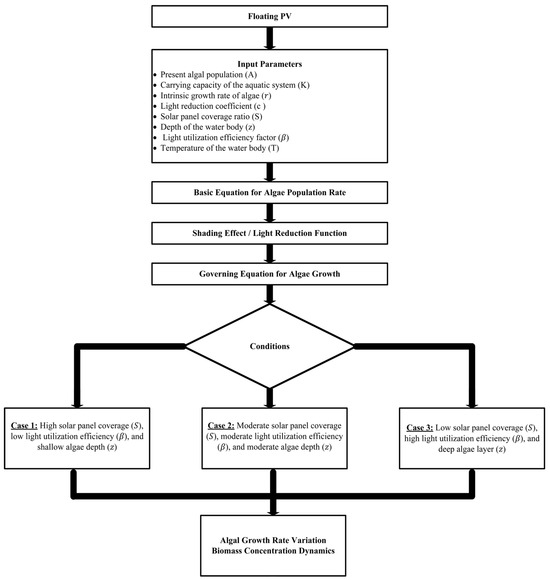
The biological balance of aquatic life is threatened by the increase in the installation of FPVs on freshwater lakes and seas. Large-scale installation lowers the water’s oxygen level while also substantially interfering with algae growth over time. This study develops an analytical model to find the impact of FPVs on algae growth under varying environmental and physical conditions. An algal population model is developed using a first-order differential equation that denotes growth rate as a function of basic biological characteristics. The model is expanded to include basic elements that include PV panel coverage (S), light utilization efficiency (α), and algae depth (z). Three different operational and installation scenarios are described to evaluate system behavior under different FPV configurations:
- Case 1: high PV panel coverage, low light utilization efficiency, and shallow algae depth.
- Case 2: moderate panel coverage, moderate efficiency, and moderate depth.
- Case 3: low panel coverage, high efficiency, and deep algae layer.
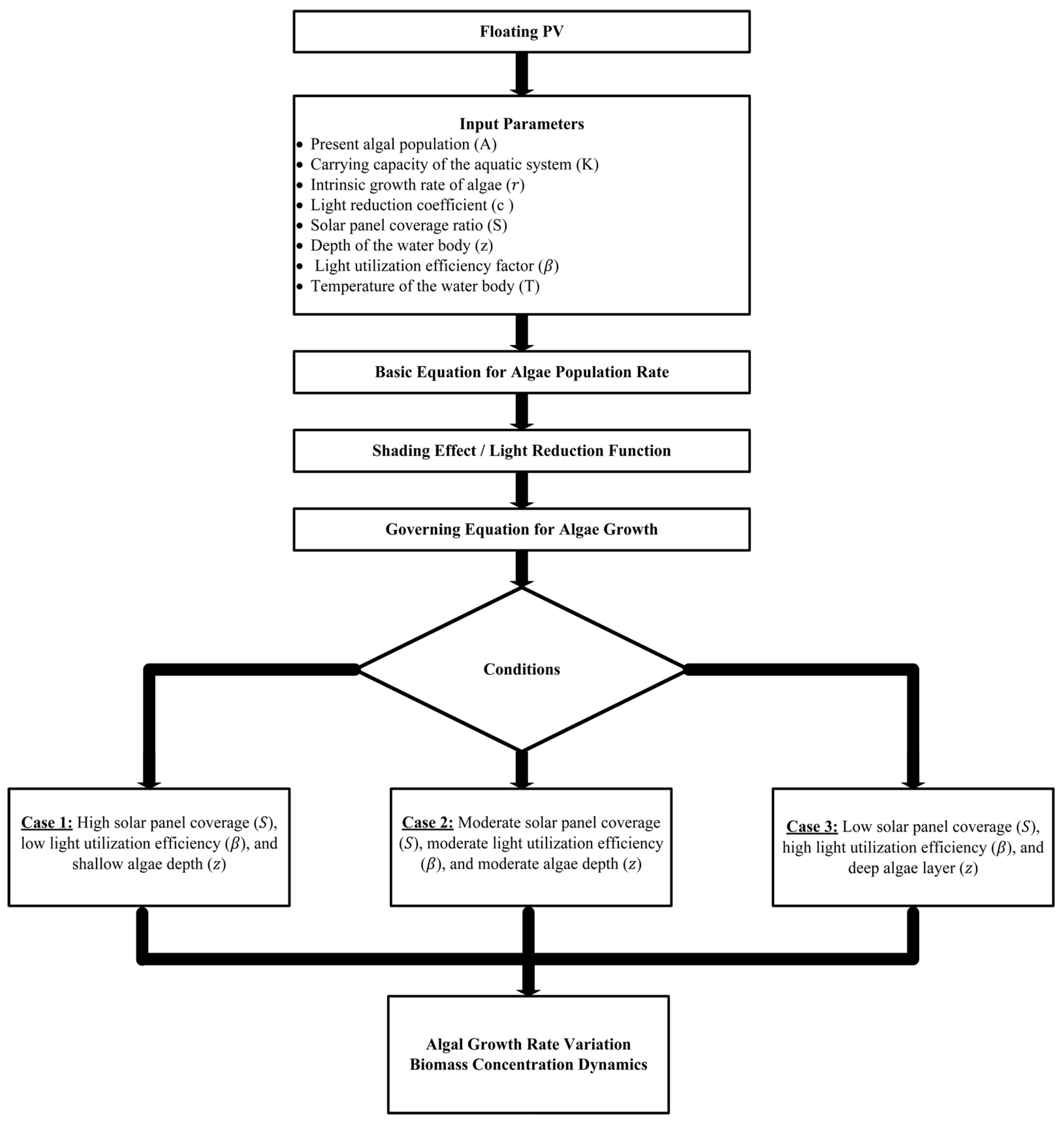
For each case, the governing equations are analyzed to find variations in algal growth rates and system responses. A comparative analysis is performed to assess how FPV coverage influences biological activity and overall ecosystem dynamics. The concentration of different species in aquatic systems varies as time progresses. An ordinary differential equation is applied in this model that aims to describe the relationship between the algae growth process and FPV installations. It covers various factors, including solar panel coverage, attenuation of irradiance, light utilization efficiency, and algae population dynamics. Figure 1 describes a comprehensive approach to determining algae growth at different irradiance levels.
Figure 1.
Methodological framework.
2.1. Dynamics of Algae Population
The algae population dynamics are described by a logistic algae growth equation, which provides a fundamental framework for understanding the sequential growth of algal populations in the aquatic marine system. The association between the algae population growth rate, represented by , and its present population size is represented by “A”; this is the maximum population a marine ecosystem can handle within a specific time. It is a critical point beyond which further algae population growth is increasingly constrained. The carrying capacity of water represented by “K”. Equation (1) demonstrates the balance between different environmental constraints and the growth of algae with respect to a given time period.
In Equation (2), the growth rate “r” plays a significant role in showing the growth of the algae population in an ideal scenario. It describes the maximum development rate without any resource deficiency. However, when the current population of algae is very small, the factor . Then, Equation (2) becomes , which means the exponential growth of algae due to a high availability of resources.
2.2. Algae Population Dynamics Before PV Panel Installation
The logistic differential equation is solved analytically to determine the temporal change in the algae population. The solution to this differential equation can be derived by using the variable separable method, and the results indicate growth of the algae population from its initial state towards an equilibrium level. Equation (2) is simplified by using the variable separable method, then integrated with respect to time “t” through which a general solution is obtained and described in Equation (5).
where “C” is the constant of integration.
Applying the initial condition to Equation (5), we find the value of the constant of integration.
Substituting the value of C in Equation (5), we find the particular solution for the algae population. The particular solution is described in Equation (6).
Equation (6) represents the sigmoid growth curve. As “t” approaches infinity, the exponential term approaches 0. So, , which describes the algae population stabilizing at the carrying capacity of the water reservoir.
2.3. Algae Population Dynamics After PV Panel Installation
Evaluating the conditions of marine ecosystems requires an understanding of the dynamics of algae growth. Photosynthesis plays an essential role in oxygen production for the marine food chain. Equation (7) shows the association between the natural growth of algae and PV panels’ influence on the irradiance available for the food production process.
The growth of algae depends on various factors that are essential for stability and for enhancing the food production processes that support microorganisms and aquatic life. These factors include light reduction, represented by “c”; PV panel coverage, represented by “S”; depth of the sea, represented by “z”; and utilization of light efficiency, represented by “”. The depth “z” is taken as a constant for simplicity. This follows the classical Beer–Lambert law used to describe how light decreases with water depth. The attenuation term is included in the mathematical model to account for the decrease in algal growth caused by reduced light availability due to PV panels.
Let and ; then, Equation (7) becomes the following:
where the effective growth rate of algae is represented by . After integrating into Equation (8), we have
The solution represented in Equation (9) explicitly shows the influence of environmental factors on the algae population. The term simultaneously reduces the effective growth rate , and the effective carrying capacity is represented by This indicates that the population grows slowly and achieves a lower maximum biomass compared to the ideal scenario without PV panels. The fraction of surface covered by the PV panel, represented by “S”, highlights that larger coverage results in a significant reduction in algae growth, while the exponential term describes how light diminishes with depth, showing that algae populations decrease with increasing depth in the water reservoir.
This mathematical model does not explicitly include other ecological factors, including substrate consumption, nutrient availability, temperature, pH, humidity, and zooplankton feeding pressure. However, these factors play an important role in algal growth under natural environmental conditions and should be considered in future extensions of the mathematical model. Furthermore, this study is specifically designed to examine the impact of light, which is directly influenced by the coverage of floating PV panels.
3. Results
This section presents the results derived from the mathematical expression discussed above. Three different cases are discussed based on PV panel coverage. Case 1 consists of full PV panel coverage on the water surface, which means 100% of the water reservoir is covered with PV panels. Case 2 involves moderate coverage (approximately 50% PV panel coverage), while case 3 involves no PV panels (0% installed), which ultimately maximizes the efficient utilization of sunlight. The mathematical model was simulated using MATLAB.
3.1. Case1: High PV Panel Coverage
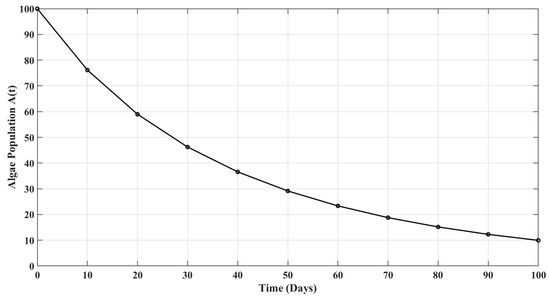
In this case, the surface of the water reservoir is completely covered by PV panels, leaving only a minimal depth of water beneath the reservoir surface for algae. Due to limited exposure to sunlight, the efficiency of light utilization is low. Consequently, the reduced efficiency in sunlight utilization slows down the photosynthesis process, ultimately halting algal growth. During the simulation, the initial weight of the algae was set to 100 g; however, the population declined rapidly over time, reaching only 5 g after 100 days, as shown in Table 1.
Table 1.
Days vs. population growth under full PV panel coverage (100%).
The results demonstrate that when the water reservoir surface is completely covered by PV panels, algal growth is drastically slowed down during the 100-day period. The population fails to approach the carrying capacity and stabilizes at a very low equilibrium, as shown in Figure 2.
Figure 2.
Case 1 growth of algae population with high PV panel coverage.
3.2. Case 2: Moderate PV Panel Coverage
In the second case, the surface of the water reservoir is covered by PV panels at rates of 25%, 50%, and 75%, resulting in a reduced amount of sunlight reaching the reservoir compared to case 1. Simultaneously, the moderate light utilization efficiency of the algae indicates an intermediate capacity to convert available light into energy for growth during photosynthesis. The algae are also located at a mid-depth in the water column, where the effects of light attenuation and PV panel coverage on their growth dynamics are evenly distributed.
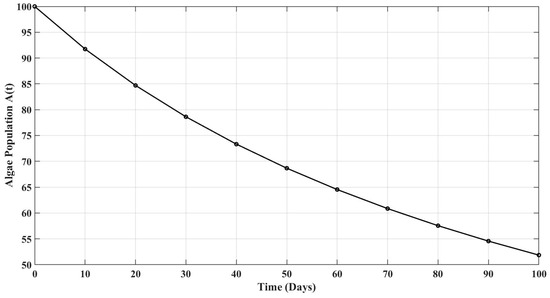
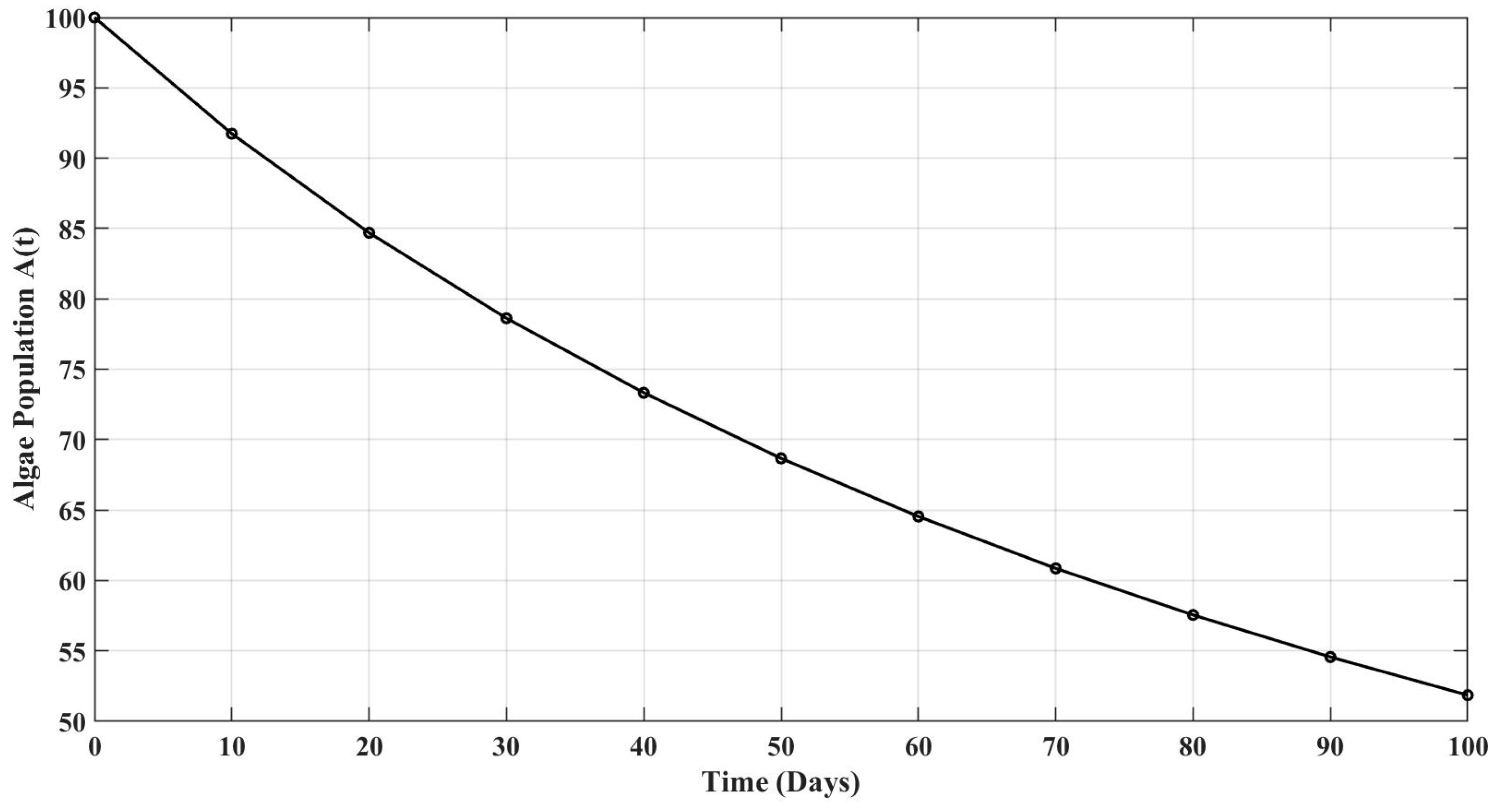
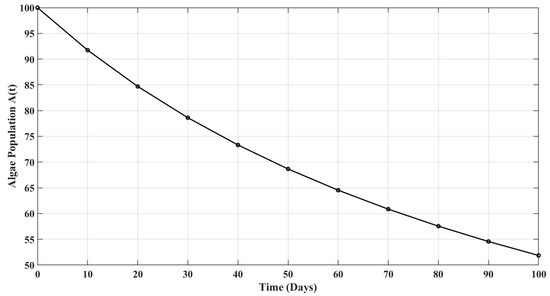
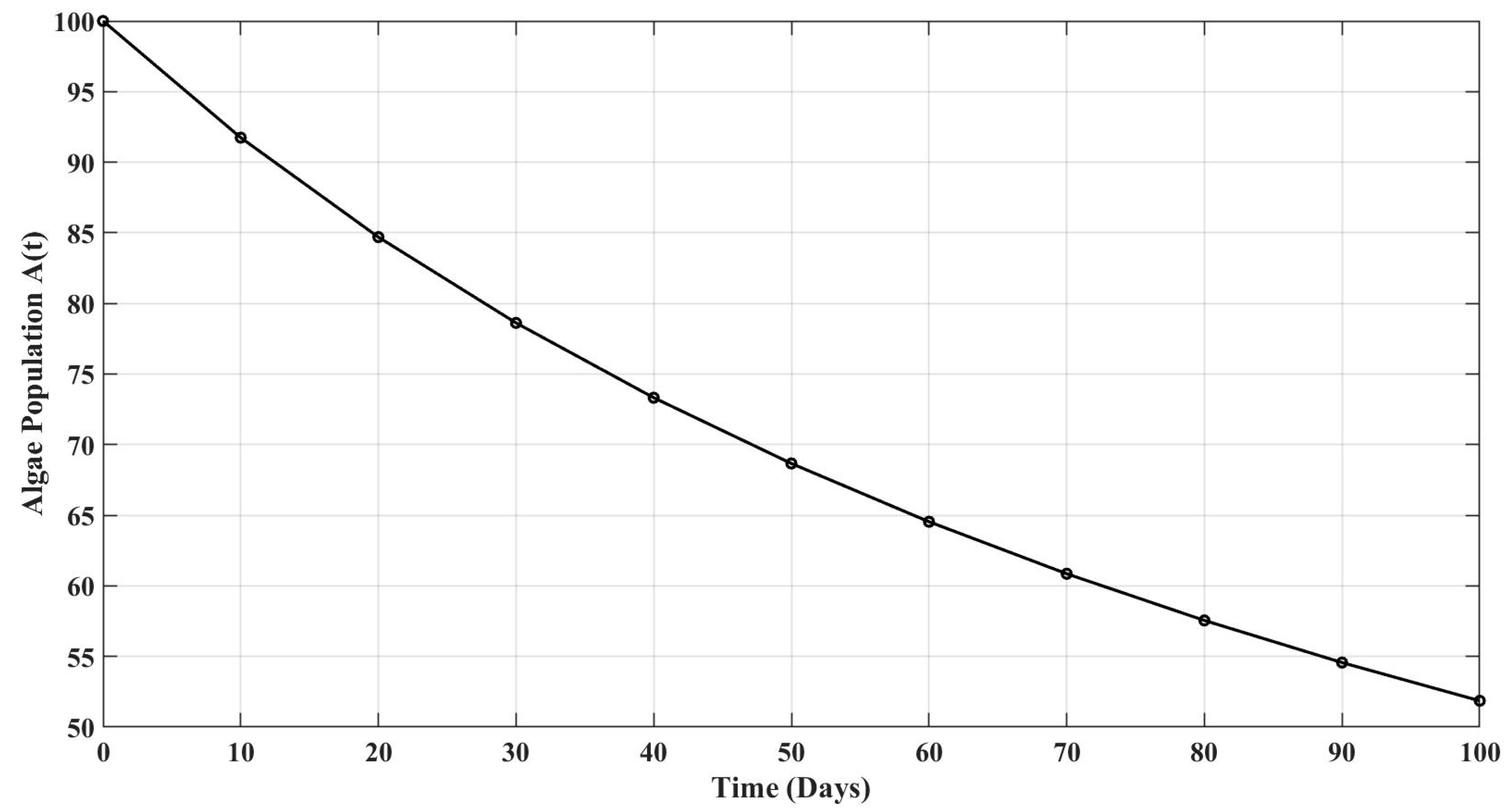
PV panels covering 25%, 50%, and 75% of the surface area of the water reservoir significantly reduce the amount of sunlight reaching the algal population, as shown in Table 2. Figure 3 shows that the impact on the growth rate at 75% coverage is less than in case 1. The initial population of 100 g of algae decreases to 51.85 g over the 100-day period.
Table 2.
Days vs. population growth under moderate PV panel coverage (25%, 50%, 75%).
Figure 3.
Case 2 growth of algae population with 75% PV panel coverage.
The results demonstrate the effects observed during the period when PV panels cover 75% of the water reservoir surface. Algal growth is slow over the 100-day period, and the population fails to approach the carrying capacity, stabilizing at a very low equilibrium, as shown in Figure 3.
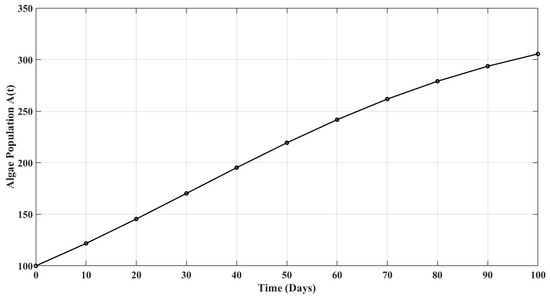
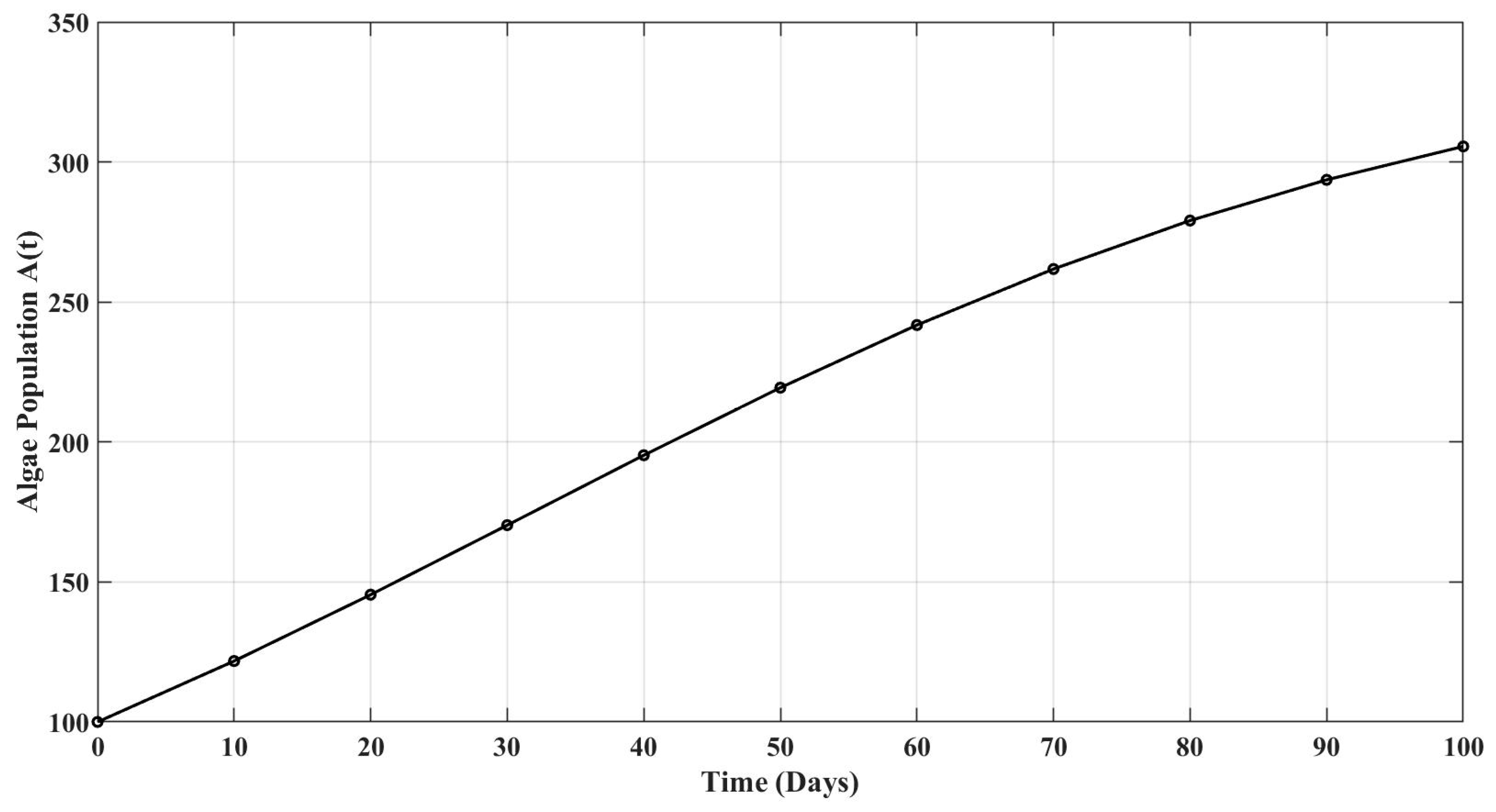
Figure 4 demonstrates that the impact on the growth rate at 50% coverage is less than in case 1. The initial population of 100 g of algae increases to 305.56 g over the 100-day period.
Figure 4.
Case 2 growth of algae population with 50% PV panel coverage.
Figure 5 illustrates that the impact on the growth rate is less than in case 1 with 25% coverage. The initial population of 100 g of algae increases to 769.27 g over the 100-day period.
Figure 5.
Case 2 growth of algae population with 25% PV panel coverage.
3.3. Case 3: No PV Panel Coverage
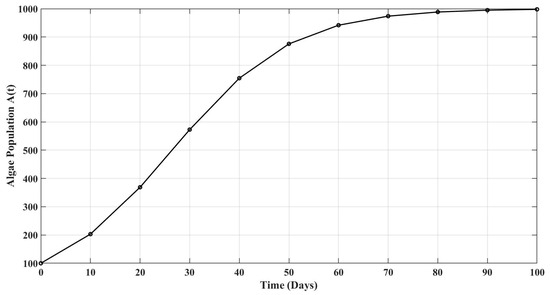
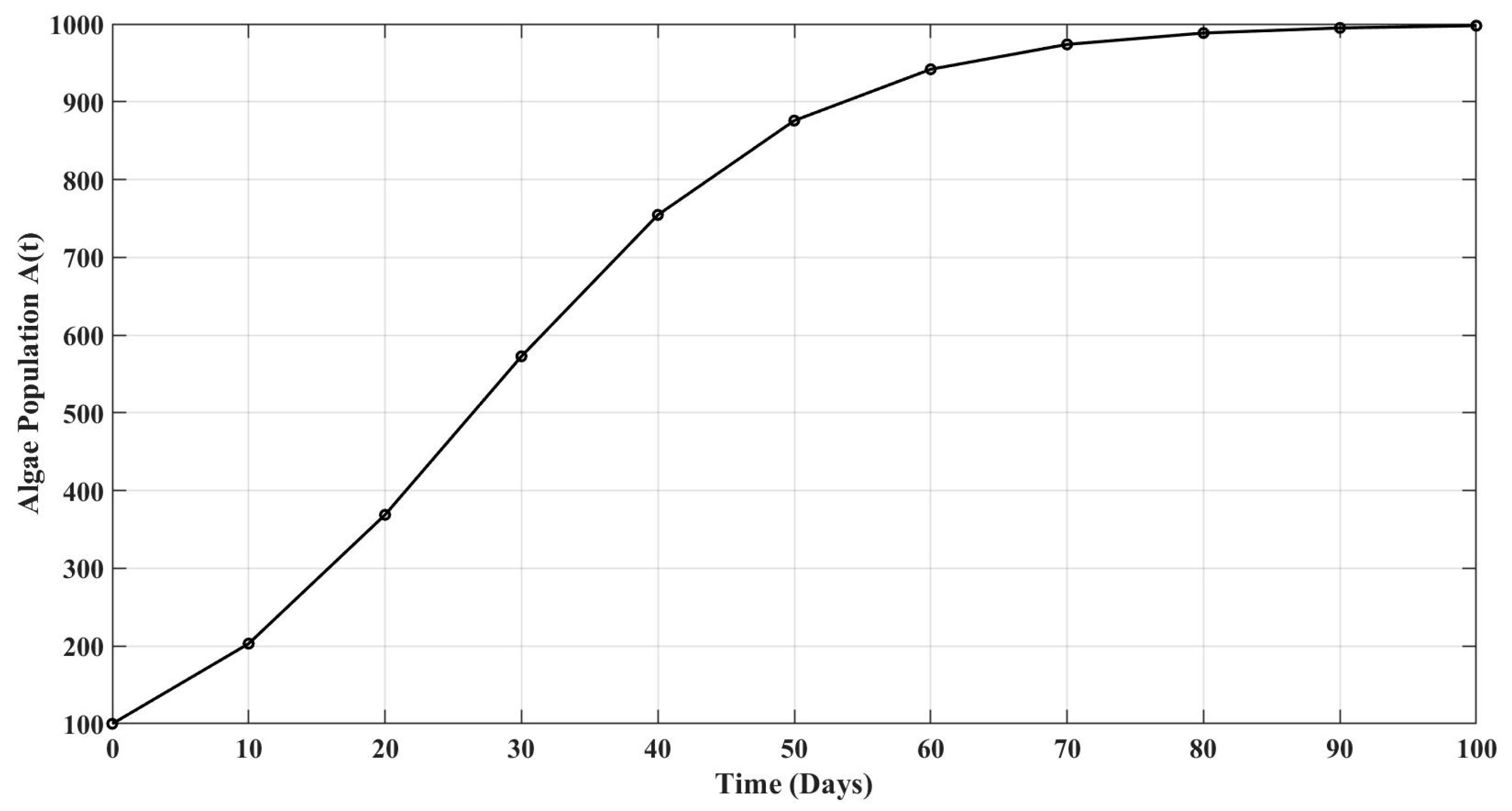
Without PV panel coverage, more sunlight reaches the algae, even at greater depths within the water reservoir. Algae are highly efficient at utilizing available light to convert it into energy for growth. When no PV panels are installed in the water reservoir, the algae face no restrictions on sunlight, allowing them to grow rapidly due to the abundant light available for photosynthesis, even at greater water depths. Consequently, over the 100-day period, the algal population grows rapidly. Starting at 100 g, the algal population more than triples, reaching approximately 1000 g by the end of the simulation, as shown in Table 3. This exponential increase illustrates the favorable conditions for algae population growth in this scenario.
Table 3.
Days vs. population growth under no PV panel coverage (0%).
The results indicate that in the absence of PV panel coverage on the water reservoir surface, algae growth increases over a period of 100 days as compared to case 1 and case 2. Additionally, the algal population approaches the carrying capacity of the water reservoir. This algal growth was simulated on computational software, which demonstrates a stable growth over the 100-day period, as illustrated in Figure 6.
Figure 6.
Case 3 growth of algae population with no PV panel coverage.
The results highlight the major role of light availability in algae growth in aquatic environments. A decline in biomass production under maximum PV panel coverage indicates that reduced sunlight can effectively limit algal growth. This is particularly important for water bodies where excessive algae growth can cause environmental issues. In this context, FPVs can offer an additional environmental advantage by reducing the amount of sunlight entering the water, thereby maintaining the algae production level.
Furthermore, the comparison between partial- and no-coverage cases indicates that a moderate level of shading can significantly impact the population dynamics. This suggests that algae growth is sensitive to changes in light conditions, and even minor differences in surface coverage can lead to major variations over time. Therefore, the design and placement of PV panels can help maintain a balance between energy production and the ecological health of aquatic systems.
3.4. Comparison of Experimental and Analytical Results
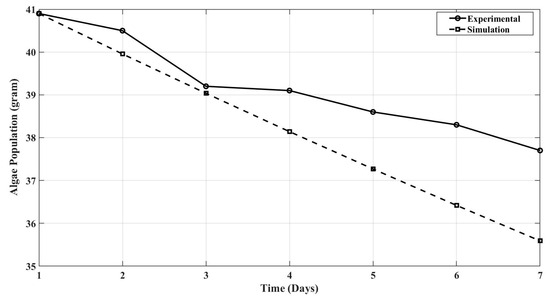
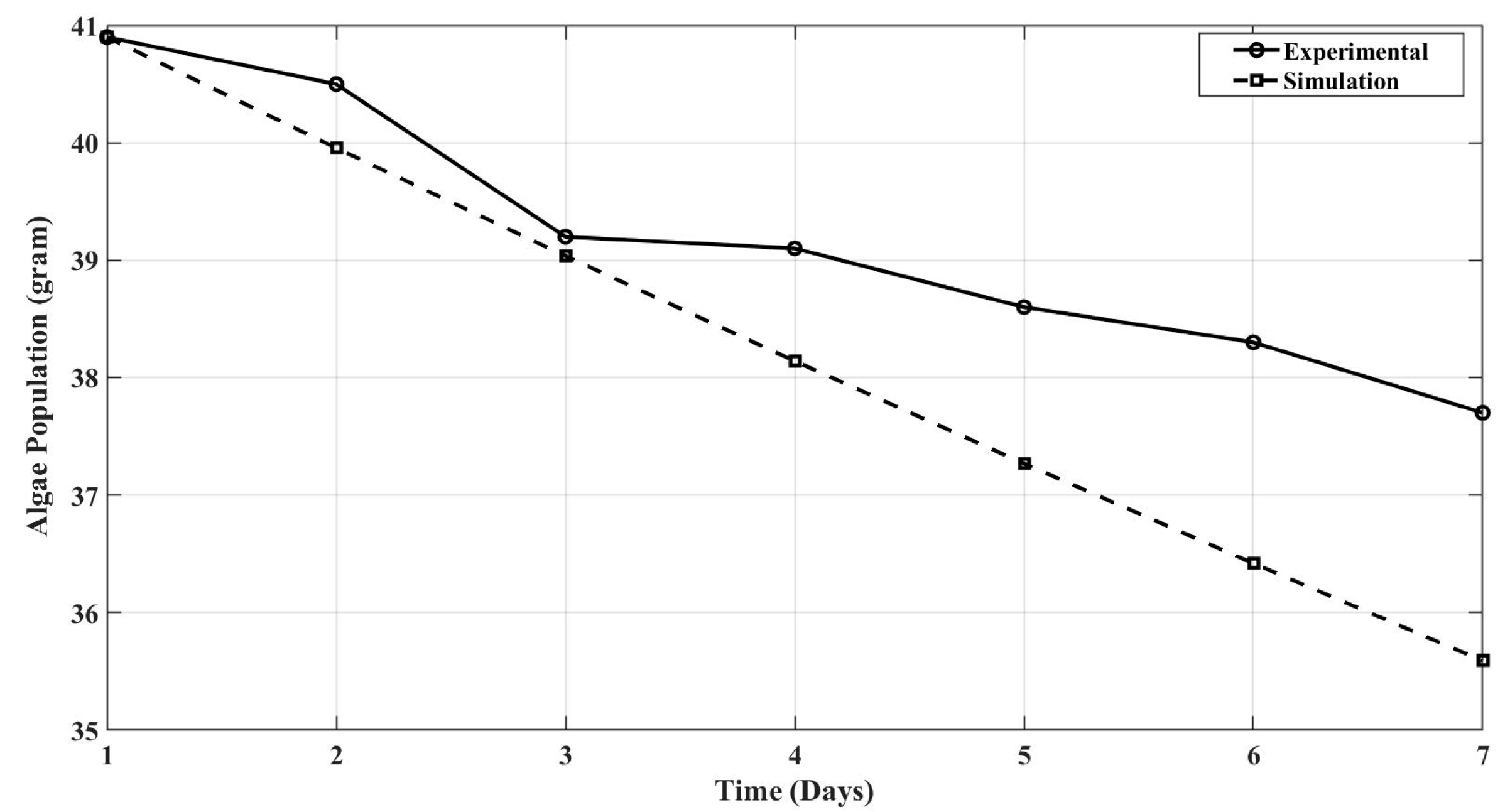
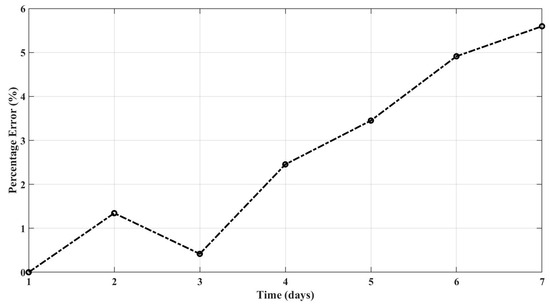
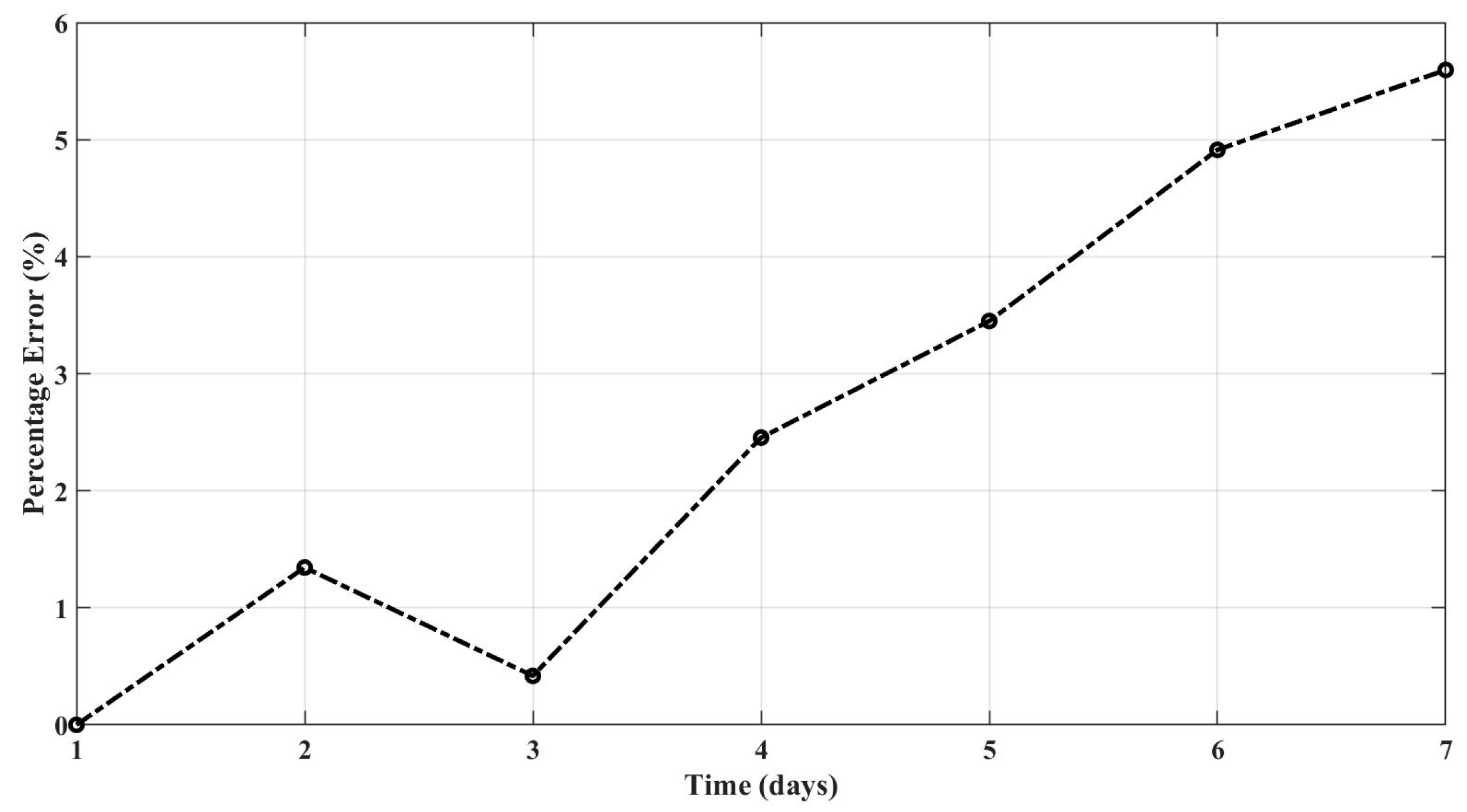
Here, the simulation results are compared with the experimental data presented in [31], which pertains to full PV panel coverage. The simulation was done based on the experimental data for seven days. The comparison reveals a significant decrease in algal growth over the seven-day period, from 40.9 g to 37.7 g. The developed mathematical model closely aligns with the experimental observations. A total error deviation of 5.60% was observed from day 1 to day 7 between the experimental and simulation results. Table 4 provides a detailed comparison between the experimental and simulation results.
Table 4.
Comparison of experimental vs simulation results on 100% PV panel coverage.
The comparison between the experimental and simulated results under full PV panel coverage is depicted in Figure 7.
Figure 7.
Experimental vs. simulated results with full PV panel coverage.
To evaluate the mathematical model’s accuracy, the percentage error between the experimental and simulation results was calculated. The comparison of the previously reported results with the simulated results depicted in Figure 8. indicates an overall deviation of 5.6%, confirming that the developed mathematical model provides a reliable representation of algae population growth under different coverage conditions.
Figure 8.
Error analysis of experimental and simulated results.
4. Discussion
The results of this research study show that floating photovoltaic plants significantly reduce algal growth due to the absence of irradiance, which ultimately slows down the photosynthesis process. A previous study [34] indicates that a semitransparent layer of PV panels regulates light transmission, thereby aiding algae growth. Another research study [35] indicates that the absence of light leads to a reduction in algae, particularly microalgae, which disrupts the marine ecosystem. Furthermore, [36] relates to these findings, as it indicates that reduced light levels decrease chlorophyll-a concentrations in algae, inhibiting their growth. Overall, these findings highlight the importance of FPV deployment not only in the energy sector but also regarding its impact on the stable growth of underwater aquatic and marine life.
5. Conclusions
This research study examines the population dynamics of algal growth under varying environmental conditions and irradiance levels. The developed mathematical model establishes relationships between different variables that influence algal growth. The study takes into account several factors, including panel coverage, algae depth, and the ability to utilize sunlight, in order to assess algal growth. The developed model discusses three possible conditions. In case 1, the maximum PV panel coverage allows the minimum amount of light to reach beneath the reservoir surface. In case 2, the PV panel coverage is 25–75% of that in case 1. Case 3 shows that having no PV panel coverage allows maximum sunlight to reach the algae underneath the reservoir surface. The developed model was simulated in computational software, with the computer processor running at 3.00 GHz. The model shows that in case 1, there is a rapid exponential decay in the algal population, with a decline of up to 94.95% over 100 days. In contrast, when 50% solar panel coverage is considered, the algae population increases from 100 g to approximately 305.56 g over 100 days, corresponding to a 205.56% increase. However, this growth rate is much lower than it would be without PV panels because the sunlight is only partially reduced. Finally, in the absence of PV panel coverage, the algae population grows rapidly from 100 g to approximately 997.77 g, which represents an 897.77% increase. This scenario reflects the natural logistic growth of algae when sufficient sunlight and environmental resources are available. This demonstrates that the unavailability of sunlight can halt the process of photosynthesis and hinder algae growth. Ultimately, different marine life and aquatic organisms rely on algae as a food source. Further research and experimental investigations can explore the other factors influencing algae growth and their interactions with other ecological phenomena.
Author Contributions
Conceptualization, K.F. and B.A.; methodology, K.F.; software, S.I. and B.A.; validation, S.A., K.F., and M.A.E.; investigation, S.A.; resources, writing—original draft preparation, K.F. and A.A.A.; writing—review and editing, S.A. and A.A.A.; visualization, M.A.E.; supervision, S.I.; project administration, S.A.; funding acquisition. All authors have read and agreed to the published version of the manuscript.
Funding
The authors thank Prince Sultan University for paying the Article Processing Charges of this article.
Data Availability Statement
The raw data supporting the conclusions of this article will be made available by the authors upon request.
Conflicts of Interest
The authors declare no conflicts of interest.
References
- Ali, B.; Khan, A.A. Real-Time Distribution System Analysis and Load Management Algorithm for Minimizing Harmonics. Rev. Roum. Sci. Tech. Électrotech. Énerg. 2021, 66, 237–242. [Google Scholar]
- Salehi, M.H.; Moradian, M.R.; Shahgholian, G.; Moazzami, M. Multi-Objective Optimization in Virtual Power Plants for Day-Ahead Market Considering Flexibility. Math. Comput. Appl. 2025, 30, 96. [Google Scholar] [CrossRef] [Scilit]
- Song, J.; Choi, Y. Analysis of the Potential for Use of Floating Photovoltaic Systems on Mine Pit Lakes: Case Study at the Ssangyong Open-Pit Limestone Mine in Korea. Energies 2016, 9, 102. [Google Scholar] [CrossRef] [Scilit]
- Metwane, M.K.; Maposa, D.; Sigauke, C. Vine Copula Modelling of Extreme Temperature, Wind Speed, and Relative Humidity Towards Enhancement of Renewable Energy Production. Math. Comput. Appl. 2026, 31, 19. [Google Scholar] [CrossRef] [Scilit]
- Solomin, E.; Sirotkin, E.; Cuce, E.; Selvanathan, S.P.; Kumarasamy, S. Hybrid Floating Solar Plant Designs: A Review. Energies 2021, 14, 2751. [Google Scholar] [CrossRef] [Scilit]
- Nyoni, K.J.; Maronga, A.; Tuohy, P.G.; Shane, A. Hydro–Connected Floating PV Renewable Energy System and Onshore Wind Potential in Zambia. Energies 2021, 14, 5330. [Google Scholar] [CrossRef] [Scilit]
- Chapman, R.L. Algae: The World’s Most Important “Plants”—An Introduction. Mitig. Adapt. Strateg. Glob. Change 2013, 18, 5–12. [Google Scholar] [CrossRef] [Scilit]
- Elrayies, G.M. Microalgae: Prospects for Greener Future Buildings. Renew. Sustain. Energy Rev. 2018, 81, 1175–1191. [Google Scholar] [CrossRef] [Scilit]
- Falkowski, P.G.; Raven, J.A. Aquatic Photosynthesis; Princeton University Press: Princeton, NJ, USA, 2013. [Google Scholar]
- Galdino, M.A.E.; de Almeida Olivieri, M.M. Some Remarks about the Deployment of Floating PV Systems in Brazil. J. Electr. Eng. 2017, 5, 10–19. [Google Scholar] [CrossRef] [Scilit]
- Haas, J.; Khalighi, J.; De La Fuente, A.; Gerbersdorf, S.U.; Nowak, W.; Chen, P.-J. Floating Photovoltaic Plants: Ecological Impacts versus Hydropower Operation Flexibility. Energy Convers. Manag. 2020, 206, 112414. [Google Scholar] [CrossRef] [Scilit]
- Luo, W.; Zhang, X.; Tian, X.; Cheng, Z.; Wen, B.; Li, X.; Luo, Y. Conceptual Design and Model Test of a Pontoon-Truss Type Offshore Floating Photovoltaic System with Soft Connection. Ocean Eng. 2024, 309, 118518. [Google Scholar] [CrossRef] [Scilit]
- Zhang, D.-Q.; Tian, H.-W.; Yuan, Z.-M.; Yu, S.-R.; Du, J.-F.; Li, H.-J. Dynamic Characteristics of a Novel Floating Offshore Photovoltaic System with Flexible Rope-Net Connection. Ocean Eng. 2025, 342, 123155. [Google Scholar] [CrossRef] [Scilit]
- Alrashidi, H.; Issa, W.; Sellami, N.; Ghosh, A.; Mallick, T.K.; Sundaram, S. Performance Assessment of Cadmium Telluride-Based Semi-Transparent Glazing for Power Saving in Façade Buildings. Energy Build. 2020, 215, 109585. [Google Scholar] [CrossRef] [Scilit]
- Bhandari, S.; Ghosh, A.; Roy, A.; Mallick, T.K.; Sundaram, S. Compelling Temperature Behaviour of Carbon-Perovskite Solar Cell for Fenestration at Various Climates. Chem. Eng. J. Adv. 2022, 10, 100267. [Google Scholar] [CrossRef] [Scilit]
- Abdelal, Q. Floating PV; an Assessment of Water Quality and Evaporation Reduction in Semi-Arid Regions. Int. J. Low-Carbon Technol. 2021, 16, 732–739. [Google Scholar] [CrossRef] [Scilit]
- Farrar, L.W.; Bahaj, A.S.; James, P.; Anwar, A.; Amdar, N. Floating Solar PV to Reduce Water Evaporation in Water Stressed Regions and Powering Water Pumping: Case Study Jordan. Energy Convers. Manag. 2022, 260, 115598. [Google Scholar] [CrossRef] [Scilit]
- Saeed, A.; Rehman, S.; Al-Sulaiman, F.A. Study of a Grid-Connected Floating Photovoltaic Power Plant of 1.0 MW Installed Capacity in Saudi Arabia. Heliyon 2024, 10, e35180. [Google Scholar] [CrossRef] [Scilit] [PubMed]
- Fereshtehpour, M.; Sabbaghian, R.J.; Farrokhi, A.; Jovein, E.B.; Sarindizaj, E.E. Evaluation of Factors Governing the Use of Floating Solar System: A Study on Iran’s Important Water Infrastructures. Renew. Energy 2021, 171, 1171–1187. [Google Scholar] [CrossRef] [Scilit]
- Nagananthini, R.; Nagavinothini, R.; Balamurugan, P. Floating Photovoltaic Thin Film Technology—A Review. In Intelligent Manufacturing and Energy Sustainability; Smart Innovation, Systems and Technologies; Reddy, A.N.R., Marla, D., Simic, M., Favorskaya, M.N., Satapathy, S.C., Eds.; Springer: Singapore, 2020; Volume 169, pp. 329–338. [Google Scholar]
- Exley, G.; Hernandez, R.R.; Page, T.; Chipps, M.; Gambro, S.; Hersey, M.; Lake, R.; Zoannou, K.-S.; Armstrong, A. Scientific and Stakeholder Evidence-Based Assessment: Ecosystem Response to Floating Solar Photovoltaics and Implications for Sustainability. Renew. Sustain. Energy Rev. 2021, 152, 111639. [Google Scholar] [CrossRef] [Scilit]
- Cuce, E.; Cuce, P.M.; Saboor, S.; Ghosh, A.; Sheikhnejad, Y. Floating PVs in Terms of Power Generation, Environmental Aspects, Market Potential, and Challenges. Sustainability 2022, 14, 2626. [Google Scholar] [CrossRef] [Scilit]
- Refaai, M.R.A.; Dhanesh, L.; Ganthia, B.P.; Mohanty, M.; Subbiah, R.; Anbese, E.M. Design and Implementation of a Floating PV Model to Analyse the Power Generation. Int. J. Photoenergy 2022, 2022, 3891881. [Google Scholar] [CrossRef] [Scilit]
- Benjamins, S.; Williamson, B.; Billing, S.-L.; Yuan, Z.; Collu, M.; Fox, C.; Hobbs, L.; Masden, E.A.; Cottier-Cook, E.J.; Wilson, B. Potential Environmental Impacts of Floating Solar Photovoltaic Systems. Renew. Sustain. Energy Rev. 2024, 199, 114463. [Google Scholar] [CrossRef] [Scilit]
- Liu, Z.; Ma, C.; Li, X.; Deng, Z.; Tian, Z. Aquatic Environment Impacts of Floating Photovoltaic and Implications for Climate Change Challenges. J. Environ. Manag. 2023, 346, 118851. [Google Scholar] [CrossRef] [Scilit]
- Bali, S.; Thangalakshmi, S.; Balaji, R. Renewable Energy Options for Seaports. In Proceedings of the OCEANS 2022-Chennai; IEEE: Piscataway, NJ, USA, 2022; pp. 1–6. [Google Scholar]
- Long, M.C.; Lindsay, K.; Holland, M.M. Modeling Photosynthesis in Sea Ice-covered Waters. J. Adv. Model. Earth Syst. 2015, 7, 1189–1206. [Google Scholar] [CrossRef] [Scilit]
- Exley, G.; Page, T.; Thackeray, S.J.; Folkard, A.M.; Couture, R.-M.; Hernandez, R.R.; Cagle, A.E.; Salk, K.R.; Clous, L.; Whittaker, P.; et al. Floating Solar Panels on Reservoirs Impact Phytoplankton Populations: A Modelling Experiment. J. Environ. Manag. 2022, 324, 116410. [Google Scholar] [CrossRef] [Scilit]
- Abdelal, Q.; Alshakhatreh, R. Simulating Floating Solar Photovoltaic Impact on Evaporation Reduction and Water Quality: Applications in Semi-Arid Environments. Water Conserv. Sci. Eng. 2025, 10, 120. [Google Scholar] [CrossRef] [Scilit]
- Sun, H.; Zhao, W.; Mao, X.; Li, Y.; Wu, T.; Chen, F. High-Value Biomass from Microalgae Production Platforms: Strategies and Progress Based on Carbon Metabolism and Energy Conversion. Biotechnol. Biofuels 2018, 11, 227. [Google Scholar] [CrossRef] [Scilit] [PubMed]
- Ali, B.; Fatima, K.; Mahnoor. Mathematical Model Validation of Floating PV Parks Impact on the Growth of Green Algae Using Experimental Chamber. Energy Sources Part Recovery Util. Environ. Eff. 2023, 45, 804–816. [Google Scholar] [CrossRef] [Scilit]
- Fatima, K. Impact Estimation of Offshore Floating Solar Parks on Algae Using Ordinary Differential Equations. J. Indep. Stud. Res. Comput. 2021, 19, 42–48. [Google Scholar] [CrossRef] [Scilit]
- Liu, P.; Zhu, M.; Leong, Y.; Zhang, Y.; Zhang, Z.; Zhang, D. An Experimental Study of the Rheological Properties and Stability Characteristics of Biochar-Algae-Water Slurry Fuels. Energy Procedia 2017, 105, 125–130. [Google Scholar] [CrossRef] [Scilit]
- Yin, L.; Zhou, Y.; Jiang, T.; Xu, Y.; Liu, T.; Li, N.; Zhou, K.; Yu, L.; Guo, C.; Murto, P.; et al. Semitransparent Polymer Solar Cells Floating on Water: Selected Transmission Windows and Active Control of Algal Growth. J. Mater. Chem. C 2021, 9, 13132–13143. [Google Scholar] [CrossRef] [Scilit]
- Floating Photovoltaics (FPVs): Impacts on Algal Growth in Reservoir Systems. Available online: https://aggietranscript.faculty.ucdavis.edu/floating-photovoltaics-fpvs-impacts-on-algal-growth-in-reservoir-systems/ (accessed on 15 April 2026).
- Oliveira, P.M.B.; Almeida, R.M.; Cardoso, S.J. Effects of Floating Photovoltaics on Aquatic Organisms: A Review. Hydrobiologia 2025, 852, 3155–3170. [Google Scholar] [CrossRef] [Scilit]

Disclaimer/Publisher’s Note: The statements, opinions and data contained in all publications are solely those of the individual author(s) and contributor(s) and not of MDPI and/or the editor(s). MDPI and/or the editor(s) disclaim responsibility for any injury to people or property resulting from any ideas, methods, instructions or products referred to in the content. |
© 2026 by the authors. Licensee MDPI, Basel, Switzerland. This article is an open access article distributed under the terms and conditions of the Creative Commons Attribution (CC BY) license.