


Abstract
Green Analytical Chemistry (GAC) provides a framework for reducing hazardous reagents, energy consumption, and waste. The topic has gained momentum across many chemical industries over the past 25 years; however, progress in implementing sustainable methods and conducting greenness assessments within forensic laboratories has been comparatively slow. The purpose of this review is to highlight green approaches to analytical separation methods, including greenness assessment metrics, that have been reported in the literature for forensic chemistry and toxicology applications and to raise awareness of GAC in the forensic field. Recent scientific literature highlights promising advances in greener sample preparation and chromatographic approaches, particularly in forensic toxicology and seized-drug analysis. Emerging trends include the use of green solvents, bio-based and deep eutectic solvent systems, and the rapid expansion of microextraction techniques such as SPME, LPME, MEPS, FPSE, and DLLME, which reduce solvent volumes, minimize waste, and support higher-throughput workflows. Parallel developments in portable and miniaturized chromatographic instrumentation such as miniaturized LC–MS systems with increased detection specificity and Lab-on-a-Chip applications show promise for in situ measurements in the field. Ambient ionization mass spectrometry—in particular, DESI and DART—has had a major impact on forensic chemistry by providing tools for the rapid and direct analysis of chemical compounds in complex matrices with little or no sample preparation. Greenness assessment tools—including AGREE, AGREEprep, Eco-Scale, GAPI, and BAGI—are increasingly applied to evaluate analytical methods in forensic chemistry and toxicology, including those used for novel psychoactive substances. Although many green methodologies are well documented, their routine implementation remains limited. The continued integration of green solvents, microextractions, portable instrumentation, and standardized greenness metrics will be essential for advancing sustainable forensic separations.
1. Introduction
One of the most common tasks performed in the forensic laboratory is the separation of an analyte from a mixture and/or matrix. For example, in DUID (driving under the influence of drugs) cases, forensic toxicologists extract body fluids such as blood, urine, or oral fluid to detect the presence of and subsequently determine the amount of drugs in order to assess whether a person is capable of safely operating a motor vehicle at the time of collection. Alternatively, the analyst may choose to separate one or more interfering substances (interferents) from a seized drug sample, thus allowing for measurement of the analyte; for example, extracting acetaminophen from an Oxycontin® tablet in order to achieve a purer extract of oxycodone.
Today, there are a vast number of analytical separation techniques available to the forensic chemist. The most commonly used analytical instrumental separation technique in the crime laboratory is chromatography. Gas chromatography–mass spectrometry (GC–MS) has been the gold standard for seized drug analysis since its development. In forensic toxicology, liquid chromatography–mass spectrometry (LC–MS) and, more recently, LC–tandem MS (LC–MS/MS) have been the primary instrumental separation techniques for the analysis of biological fluids. Gas and liquid chromatography as well as other separation methods such as capillary electrophoresis (CE) are powerful analytical techniques because they can be automated, are highly efficient, provide rapid analysis, and are robust, dependable, and versatile when interfaced with spectroscopic techniques such as mass spectrometry (MS) and infrared spectroscopy (IR). However, chromatographic analysis has high energy requirements, especially when interfaced to a spectroscopic instrument/detector. LC–MS systems can consume up to six times more energy per run than simpler setups due to high-power and cooling requirements as well as prolonged idle times. These methods also consume large amounts of solvent and often require multiple steps for sample preparation [1,2,3].
Classic sample preparation procedures such as solid-phase-extraction (SPE) and liquid–liquid extraction (LLE) are separation techniques that have been commonly performed in the forensic toxicology laboratory for the analysis of drugs and toxins in biological samples for a long time. Although microextraction sample preparation techniques such as solid-phase microextraction (SPME) and liquid-phase microextraction (LPME) have been developed and reported in the literature, these miniaturized green procedures have not become common practice in crime laboratories [4]. Despite the fact that these procedures are highly recommended from a green perspective and they reduce solvent/reagent usage and waste, there are several reasons why they have not been adopted into routine practice in the crime laboratory. First and most important is that the crime laboratories, for the most part, are overrun with casework and struggle to keep up with the work. Many laboratories are understaffed and burdened with large caseloads, causing them to struggle to maintain a satisfactory turn-around time. Method development takes time away from completing casework, so this becomes a time and personnel management issue. Personnel training and validations must be completed before new greener methods can be instituted into the standard operating procedures. There are also instrument/reagents costs involved in changing to new greener procedures. In addition to these challenges, there may also be somewhat of a general lack of awareness in the forensic community of green approaches, such as the understanding of green solvents, which could also be a reason for hesitancy to switch to microextraction techniques. All of these obstacles must be overcome before greener methods will begin to be implemented into forensic laboratories.
Despite the safety procedures and precautions taken in the forensic laboratory, health and environmental risks exist whenever dangerous materials and chemicals are present. The concerns for health, safety, and environmental implications are universal throughout the scientific community and have resulted in the desire for sustainable alternative solutions. The purpose of this manuscript is to highlight green approaches to analytical separation methods, including greenness assessment metrics, that have been reported in the literature for forensic chemistry and toxicology applications.
The introduction of the concept of environmentally friendly analytical chemical methods was first suggested in 1987 [5]. About a decade later, strategies such as miniaturization, containment, and reagent replacement were highlighted through “clean” analytical methods [6], including ways in which chromatography could become greener [7,8]. Then, in 1996, Paul Anastas and John Warner introduced the idea of green chemistry [9]. These initial principles of green chemistry were developed for organic chemistry synthesis.
Since then, Green Analytical Chemistry (GAC) has emerged, emphasizing the development of sustainable analytical methods [10,11]. GAC is a branch of green chemistry where more attention is given from an analytical viewpoint to the risks inherent in sample types, reagents and solvents used, energy consumption associated with the instruments, and laboratory waste and emissions, all resulting from the numerous steps of sample preparation and analytical methodologies. These principles are pertinent to the work performed by forensic chemists and forensic toxicologists and, if pursued, will lead to a more sustainable environment.
The development of GAC in 2013 laid out a foundation and incentive for the analytical chemistry community to move toward developing greener and environmentally friendly analytical methods through twelve guiding principles [12]. These principles focus on direct and in situ sample analysis, reducing the number of samples, sample size, automation, and health and safety hazards by reducing the use of hazardous chemicals, lowering energy consumption, and lowering waste generation by focusing on analyst safety [12].
Of particular note are the following principles of GAC: the direct analysis of samples should be applied to avoid sample treatment, there should be a minimal number of samples, the sample size should be as small as possible, and in situ measurements should be performed to reduce the impact on the environment and the health and safety of the analyst [12]. Even though greener sample preparation and extraction procedures were developed prior to the presentation of GAC [13,14], the GAC principles proposed direct the analysis of samples to avoid sample preparation and pre-treatment altogether. Although the direct analysis of crime scene evidence is the best possible scenario in forensic science, it is not feasible for many types of evidence samples. Different sample matrices (seized drugs, edibles, and biological fluids such as blood, oral fluid, and urine) require sample pre-treatment, especially for chromatographic analysis. The concept of green sample preparation (GSP) was introduced in 2022 as a more practical alternative to the GAC principles [15]. GSP put forth ten principles to address the sample treatment step in a greener way [15]. Therefore, rather than eliminating this step, GSP principles present a more practical approach to sample preparation and provide an outline of parameters for evaluating the greenness of different sample preparation methods. The GSP parameters outlined are in situ sample preparation, non-toxic solvents/reagents, renewable materials, automation, higher throughput, analyst safety, and the minimization of energy consumption, waste, and chemicals [15]. For separation methods, chromatography in particular, the major areas of opportunity to improve sustainability are the solvents used for sample preparation (green solvents and microextractions), mobile phases (solvents and compressed gases), energy consumption by instrumentation, and waste reduction [16].
2. Green Solvents and Sample Preparation
Approaches to developing green methods focus on keeping the ecosystem clean and aim to lessen the risks related to toxic chemical usage and negative impacts on health and safety. Most green separation techniques prioritize reduction and replacement, rather than recycling, which has relevance in larger scale preparative separation technologies that are not pertinent to the forensic laboratory. Sample preparation, typically required in separation techniques, is a major portion of the workload in a forensic laboratory and should be an important focus for improving sustainability. The GAC guidelines [12] and GSP guidelines [15] both recommend using safer solvents and reagents, advising that toxic reagents should be minimized, avoided, or substituted whenever possible.
In the chemical industry, there has been a strong effort towards sustainability by changing to green solvents when possible, along with the reduction of both solvent consumption and the amount of waste disposal. Solvents are essential and routinely used in the forensic chemistry and toxicology laboratory for a wide variety of reasons, such as sample preparation, extraction, and as mobile phases for chromatography. Although solvent usage in the crime laboratory accounts for only a small fraction of the total chemical industry consumption, the amounts used are still significant. Each year, it is estimated that liquid chromatography applications in the chemical industry—including crime laboratories—consume more than fifty million liters of solvents [17,18,19]. The purpose of using green solvents is to minimize environmental, health, and safety risks and to reduce waste associated with solvent use in production and in the chemical laboratory [17].
Solvent selection typically depends on method performance, cost, and availability. However, since the creation of GAC [12] and GSP [15] principles, safety and environmental impact are now a major consideration. Gu and Jerome [20] proposed a list with twelve criteria for a green solvent, including solvent availability, low cost, recyclability, biodegradability, and low toxicity. Indirect effects from production, use, and disposal must also be taken into consideration. These include health and safety, the depletion of non-renewable resources, potential solvent recycling, energy consumption in synthesis, and waste treatment [21].
Although no solvent meets all twelve criteria, several alternative solvents have been suggested [22,23]. Several green solvent selection guides have been proposed to reduce the use of toxic and environmentally unfriendly solvents and are available in the literature [24,25,26,27,28,29,30,31,32,33,34,35,36,37,38], including a more recent work that introduced a novel green solvent selection guide, termed GreenSOL, specifically designed for analytical chemistry, and should be applicable to the forensic chemistry and toxicology laboratory [17]. Selecting an appropriate solvent for a specific application requires consideration of several factors such as polarity, solubility, volatility, physical properties (boiling point, flammability), and cost.
A special issue on the topic of green sample preparation was published in the journal Separations, entitled “Development of Alternative Green Sample Preparation Techniques” [39], which provided an update on recent trends in green sample preparation. This special issue contains a collection of 11 contributions that describe the state of the art in the development of green extraction technologies, from green materials for microextraction to the development of new sampling device geometries for enhanced extraction efficiency and analysis throughput. Seven of the papers in the issue are review articles describing important aspects of green sample preparation. The information contained in these articles provides a valuable resource for analysts seeking to improve the sustainability of their sample preparation procedures.
In 1997, Lentini and Armstrong [40] were among the first to suggest adopting greener solvents in forensic chemistry laboratories. This study compared carbon disulfide (CS2) with diethyl ether as an extraction solvent for eluting adsorbed fire debris samples. CS2 has long been the “solvent of choice” for the elution of ignitable liquid residues (ILR) from charcoal strips used in the laboratory analysis of fire debris samples. The choice of CS2 stems from its selection by the industrial hygiene community because of its strong elution power at displacing solutes adsorbed on charcoal, and because of its minimal response with a flame ionization detector (FID) [41]. Most forensic laboratories have replaced the FID with a mass spectrometer and now routinely use mass spectrometry (MS) as a detector for the analysis of fire debris samples. During the analysis, the mass spectrometer source filament is routinely turned off while the solvent is eluted, and therefore, any solvent that does an adequate job of displacing the analyte from the sorbent will provide acceptable results. Since laboratories now use GC–MS, CS2 is no longer needed to prevent a peak in the chromatogram that would occur if another solvent were used. Also, since CS2 is a dangerous, flammable, and toxic solvent (not to mention the pungent smell) changing to diethyl ether, or another less toxic solvent, for the analysis of fire debris extracts by GC–MS is a much greener and safer alternative.
Overall, cost-effective methods using green solvents and minimizing energy usage can result in reducing health and environmental risks and prevent excess waste. A significant reduction in the use of solvents can be achieved through the use of LPME and dispersive liquid–liquid microextractions (DLLME). The development of microextraction techniques such as SPME and LPME are alternatives to the traditional extraction procedures of SPE and LLE that are routinely used in forensic drug and toxicology laboratories.
The recent development and use of LPME and alternative green solvents have emerged as attractive alternatives to using substantial amounts of toxic solvents. New types of green solvents that are safer to use and environmentally friendly are ionic and magnetic–ionic liquids, deep eutectic solvents (DES), switchable hydrophilicity solvents, bio-based solvents, and supramolecular solvents (SUPRAS) [42].
The use of green extraction phases for sample preparation for the analysis of organic compounds using chromatographic techniques has been reported for various matrices and analytes, including forensic toxicology and seized-drug analysis [43]. In 2023, Birk et al. [4] published a review on the green chemistry developments and perspectives for sample treatment in forensic methodologies. They reported a compilation of techniques using green solvents in the forensic scenario [4]. Table 1 lists some additional applications of green solvents in forensic science that have been reported in the literature.
Table 1.
Publications of forensic science techniques reported using green solvents.
In 2022, Armenta [23] evaluated the current green solvents as alternatives to conventional solvents and their advantages and drawbacks. Green solvents included in the evaluation were subcritical water; supercritical fluids; bio-based solvents, such as methanol, ethanol, d-limonene, and Cyrene®; surfactant-based solutions including SUPRAS; hydrotropes; DESs with special emphasis in natural deep eutectic solvents; and ionic liquids.
Subcritical water is liquid water at temperatures and pressures below its critical point (Tc = 374.15 °C, Pc = 217.75 atm). As the temperature rises, the physicochemical properties of subcritical water change. For example, the viscosity, dielectric constant, and surface tension decrease while the diffusion coefficient increases with temperature [51]. Therefore, even fewer polar compounds can be extracted with subcritical water at elevated temperatures and pressures. However, subcritical water extraction needs sophisticated equipment, has high energy demand, and does not perform as well as traditional solvent extraction for some compounds [23]. Supercritical fluids are a greener alternative to traditional solvents and overcome many of the limitations of traditional solvents [52]. An attractive advantage of supercritical fluids is that they provide an easy way to extract and preconcentrate by changing the physical state of the fluid. More information and applications of supercritical fluid extraction and chromatography are provided in Section 3.4.
Bio-based solvents are produced from a renewable origin such as agricultural crops and forestry. They also can result from industrial waste and biomass of marine origin [23]. Bio-based ethanol is the most produced bio solvent. Other examples are D-limonene, glycerol, ethyl acetate, and menthol. It should be noted that bio-based solvents are not always a greener alternative to petroleum-based solvents because, in some instances, the production of bio-based solvents can increase the environmental impacts related to agriculture [23]. Bio-renewable solvents lack petroleum byproducts like benzene, aldehydes, and ethers, and can directly replace traditional solvents. They are safer for both the environment and laboratory staff. As an example, Coulter [50] replaced a petroleum-based solvent (hexane) with a bio-based bio-renewable green solvent (2-Methyloxolane; 2-methyltetrahydrofuran) and incorporated bio-renewable versions of routine solvents (e.g., isopropanol and ethyl acetate) to quantify fentanyl and fentanyl analogs in oral fluid with LC–MS/MS. El-Deen [49] compared different monoterpenes as relatively green bio-based solvents for low density-dispersive liquid–liquid microextraction (LD-DLLME) of different non-steroidal anti-inflammatory drugs (NSAIDs) from aqueous samples with conventional halogenated solvents. The results indicated that D-limonene could extract the hydrophobic compounds with higher percent recovery compared with other bio-based and halogenated solvents [49].
In 2021, Kori [53] reviewed studies on using cloud point extraction coupled with back extraction (CPE–BE) to detect alkaloids, drugs, and organophosphorus compounds in complex matrices. The authors proposed that this method has the potential to be expanded for applications in forensic science. In 2009, the term supramolecular solvents (SUPRAs) was created to rename colloid-rich phases in cloud point extraction systems to emphasize their solvent character and to differentiate them from molecular, deep eutectic, and ionic liquid solvents [54]. The substitution of organic solvents by surfactants in extractions has been considered a positive aspect from a GAC point of view. However, the aquatic toxicity of some surfactants should be considered in this process. The use of surfactants during extraction has several advantages, such as small volumes of solvents and the ability to preconcentrate thermally labile analytes. SUPRAs are considered smart solvents because they have tunable properties that can be controlled by pH and/or salt addition [54]. SUPRAs are not volatile or flammable and have hydrophobic or polar groups that can be appropriately controlled for target analytes and used as an alternative to organic solvents in LPME. For example, SUPRA-based (1-decanol/THF) LPME has been used for the preconcentration of mercury and aluminum in hair samples [55,56]. In addition, a SUPRA extraction solvent was used with the solidification of floating organic drop microextraction (SFODME) of methadone from plasma and saliva [57]. In another forensic application, SUPRAs were used to extract DFSA substances from urine [48].
Ionic liquids are compounds composed of ions with melting points below 100 °C [58]. They have unique physiochemical properties that allow them to be tuned by smart synthesis cations such as imidazolium, benzimidazolium, and pyrrolidinium with anions such as alkyl sulfonate, tetrafluoroborate, and chloride. Ionic liquids have emerged as potential green solvents due to their negligible vapor pressure, wide solubility range, and high thermal stability. They can serve as alternatives to traditional organic solvents, and their properties can be tailored by modifying the cation–anion pair or introducing functional groups [59]. However, there are drawbacks to using ionic liquids. Fluorinated anions need to be avoided, and the synthesis of ionic liquids is not very environmentally friendly since organic solvents and other waste-generating sample preparation steps are involved [60,61].
Deep eutectic solvents (DESs) are ecofriendly solvents consisting of a combination of a hydrogen bond acceptor and a hydrogen bond donor with a eutectic point lower than that of the theoretical ideal mixture [47]. DESs have a high capacity for biodegradability. A subcategory of DES is Natural Deep Eutectic Solvents (NADEs), which are formed with all-natural compounds. One of the most useful NADEs used to replace organic solvents in extractions is the combination of menthol with organic acids. NADEs have been used as extractions for drugs in urine [47], including the extraction of NPSs [62].
Sample preparation is usually the least environmentally friendly step in analytical methods, and the fewer the steps, the greener the method. Reducing waste from sample preparation by minimizing solvent usage has been the focus of most efforts towards sustainability. Other than greener solvents, modern approaches to address the GAC principles with a more sustainable analytical methodology have led to miniaturization and automation, resulting in techniques such as micro-solid phase extraction (µ-SPE) and SPME. Avoiding plastic SPE cartridges is a desirable choice if possible, and these microextraction techniques help avoid this waste.
The techniques that have seen the most focus include LLE, SPE, SPME, DLLME, microextraction by packed sorbent (MEPS), and fabric-phase sorptive extraction (FPSE). Forensic chemists often are confronted with the task of separating various novel psychoactive substances. For this type of analysis, good sample preparation is essential before analyzing the samples with instruments such as GC–MS, LC–MS, or LC–MS/MS. In 2022, D’Ovidio [63] published a review focused on novel applications of microextraction techniques of biological and forensic analyses.
Studies in forensic toxicology using microextraction techniques such as SPME and LPME have appeared in the literature for quite some time now despite not being embraced as a routine tool in the forensic laboratory. Table 2 lists several recent studies of microextraction techniques applied to forensic-related problems. A recent review by Birk [4] presents a comprehensive examination of the developments and perspectives of green chemistry in the sample treatment for forensic applications. Green aspects of sample preparation methods for biological analysis have also recently been discussed by Martinez-Perez-Cejuela and Gionfriddo [64], and a recent review provided an account of the evolution of DLLME for the period of 2018–2023 [65].
Table 2.
Publications of forensic science applications of microextractions.
Various microextraction techniques, including μ-SPE methods, that are of forensic interest have been reported in the literature. μ-SPE has been used to identify ketamine, benzodiazepines, and other sedative–hypnotic drugs in various matrices [66,67,68]. A green method for the analysis of seven selected antidepressant drugs in post-mortem samples using FPSE followed by high-performance liquid chromatography–photodiode array detection (HPLC–DAD) has been described [69]. The real-time monitoring and verification of schedule-I chemicals in the vapor phase combining a chemical detector and SPME–GC–FID for the detection of nerve and blister agents was developed by Varshney [70]. By combining SPME with rapid GC–MS, ignitable liquid residues in fire debris can be analyzed in less than 20 min of total workflow time [71]. SPME offers minimal setup time, making it the fastest screening method when paired with rapid GC–MS compared to other extraction techniques [71].
Wang [81] recently reported on the trends in microextraction methods for opioids in complex samples. This review highlighted innovations in LPME and SPME, such as surfactant-assisted single-drop microextraction (SA-SDME) and hollow fiber LPME (HF-LPME) with amine-functionalized mesoporous foam. These recent improvements result in high recovery rates while significantly reducing solvent use. Advancements in SPME, including molecularly imprinted polymers (MIPs) and graphene oxide nanosheets, provide high specificity and allow for repeated use, yielding excellent recovery rates. Additionally, new materials like electrochemically co-deposited sol–gel/Cu nanocomposite fibers and magnetic substances help boost efficiency and shorten processing times. These novel approaches have shown to improve analytical precision and address the principles of green chemistry, resulting in the high-throughput detection of opioids in various matrices [81].
A recently published text covers green analytical methods, microextractions, and miniaturized sample preparation for forensic drug analysis [82]. The text provides a comprehensive overview of green analytical methods in forensic drug analysis, green sample preparation, in situ analysis, and on-site sample preparation. Rao [83] reported on some current research trends on the development of green analytical methodology for the detection of selected illicit drugs in different matrices. The primary green analytical techniques are chromatography, microextraction-based techniques, spectroscopy, and sensor-based equipment [83]. The first two techniques, chromatography and microextractions, are of primary interest for this review. Although extensively documented through scientific literature publications, SPME, LPME, and other microextraction methods, including μ-SPE, remain uncommon in routine forensic laboratory workflow.
3. Green Aspects of Instrumental Separation Techniques
When considering instrumental separation techniques, the concepts put forth by GAC and GSP must be effective in meeting the demands of the separation methods as far as the figures of merit, cost, and efficiency requirements. This can be a challenge with modern laboratory analytical techniques that have high sensitivity and specificity and are frequently applied for the analysis of a wide range of analytes in different matrices. Beyond solvents, other improvements can enhance the greenness of chromatographic methods such as automation, the miniaturization and implementation of portable instruments, the use of renewable sources of carrier gas and greener mobile phases, the reduction of solvent consumption by using narrower diameter columns in liquid chromatography (LC), and the application of greener separation techniques such as supercritical fluid chromatography (SFC).
3.1. Portable Chromatographic Instrumentation
Which methods are chosen for a specific analysis largely depends on whether the sample is tested on-site or in a laboratory. Although certain samples can be transported to the laboratory with relative ease, this process requires both energy and personnel resources for proper handling. Transporting the sample means it will need to be preserved, which may include refrigeration, freezing, or the addition of preservatives to maintain the integrity of the sample. The use of portable instrumentation can enhance the sustainability of analysis. On-site analysis (preferred by GAC) may be a desirable alternative in some cases, but this type of analysis typically exhibits reduced sensitivity and accuracy relative to laboratory-based approaches. In addition, portable instruments need to be transported to the site along with reagents, compressors or compressed gases, and a power source. These instruments are not intended to replace laboratory instrumentation, and as a result, they generally lack the ability to perform to the same detection and performance levels of those laboratory instruments. The main intent of the portable instrument is to be used to determine a preliminary analysis that can be confirmed later at the laboratory. Technical advances in miniaturization, including chromatographic, spectroscopic, and mass spectrometric instrumentation, are enabling these techniques to slowly transition out of the laboratory and into the field. With this consideration, on-site analytical methods with portable instrumentation or field sampling kits are becoming commercially available and are generally faster, cost less, simpler to operate, and are a much greener alternative [83,84].
Over the last decade, there has been an ever-continuing interest in the use of portable instrumentation for use in forensic scenarios. In 2021, Patel and Lurie [85] reviewed the use of field-portable separation devices for forensic analysis. Performance comparison evaluations of portable instruments with laboratory instruments are the best way to evaluate the value of these miniaturized systems. Validation studies on miniaturized high-pressure LC systems with micro and nanoflow have produced results that show that these instruments can reliably separate and identify compounds such as drugs, metabolites, and commercial chemicals in a variety of matrices. Miniaturized LC–MS systems add increased detection specificity that rivals laboratory systems. Miniaturized GC systems have undergone validation studies demonstrating that their analytical performance, particularly figures of merit such as accuracy, precision, and sensitivity, is comparable to that of conventional benchtop instruments. These systems have proven effective for the determination of volatile and semi-volatile organic compounds in complex forensic matrices, including explosive residues, fire debris, and chemical warfare agents [85,86].
Alternative methods for in-field detection, other than the use of separation devices, have included different field-portable analytical techniques such as Raman spectroscopy [87,88,89], Fourier transform infrared spectroscopy (FTIR) [90,91], paper spray ionization–mass spectrometry (PSI–MS) [92], field-portable or transportable mass spectrometers [93,94,95,96,97], and Raman spectroscopy combined with DART–MS [92,98].
X-ray fluorescence spectrometry (XRF) is an analytical technique normally used in a laboratory setting for the chemical characterization of materials. The development of field-portable XRF instrumentation (fp-XRF) has provided a means for rapid in situ chemical analysis, which has also been applied to the analysis of trace evidence in forensic investigations [99]. The technique was applied to case studies that included metal contamination, forensic soil analysis, and the verification of human remains and was compared to laboratory-based p-XRF [99]. The results of the comparison showed that fp-XRF was time-efficient and cost-effective for material characterization when compared with other trace evidence methods. The analytical precision was sufficient for in situ analysis out in the field for the rapid identification of specific analytes. Laboratory-based p-XRF resulted in greater accuracy than the field-based p-XRF [99].
Attenuated Total Reflectance FTIR (ATR–FTIR) has been used to detect NBOMes and lysergic acid diethylamide (LSD) in situ on blotter papers; however, the discriminating power is not ideal because of the paper matrix [100]. Blotter papers are a common matrix for dosing hallucinogenic drugs and other NPSs. The analysis of these blotter papers is usually conducted by lengthy sample preparation using solvent extraction and filtration followed by GC–MS or LC–MS. Direct analysis by ATR–FTIR with no sample preparation is a much simpler and faster approach for drug identification in such cases.
Field-portable Raman spectroscopy is commonly used, but handheld Raman spectrometers frequently struggle to identify the different substances found in mixtures like seized drugs. Spectral deconvolution is an issue with portable and handheld instruments because the diluent in a mixture becomes the prominent component of the spectrum [87,101]. However, improvements in technology and instrumentation are being made to overcome this challenge. For example, portable Raman was used in an airport to discriminate between cocaine, 3,4-methylenedioxymethamphetamine (MDMA), and amphetamine in a mixture containing cutting agents. Good quality spectra were obtained within 30 s without spectral processing [102]. Raman spectroscopy offers the advantage that it can be used to analyze samples directly through packaging on both solids and liquids without loss of precision or accuracy, producing good spectral discrimination of analytes such as illicit drugs [98].
Chang et al. [103] evaluated using handheld Raman and transportable linear ion trap mass spectrometry instrumentation under controlled laboratory conditions to identify seized drug mixtures. Field-portable and miniaturized mass spectrometry instrumentation can overcome the limitations associated with seized drug mixtures. There are several commercially available field-portable or transportable mass spectrometers, which enable direct sampling, chromatographic separation, or tandem MS analysis [94,95,96,97]. Most of the miniature MS systems use ion traps or quadrupole mass filters. Major achievements and research efforts have been made for miniaturizing mass spectrometers. Snyder et al. [104] published a review in 2016 on miniature and fieldable mass spectrometers, and more recently, Fan et al. [105] provided an overview of the recent advancements in the miniaturization of MS systems. In recent years, several on-site rapid detection methods have been reported using miniature MS systems for the fast screening of different types of illicit drugs [106,107,108,109,110].
Ambient ionization mass spectrometry (AMS) has had a major impact on forensic chemistry by providing tools for the rapid and direct analysis of chemical compounds in complex matrices with little or no sample preparation [111]. AMS has provided the ability to rapidly detect substances at crime scenes and airports and in toxicology samples. More than 4000 publications have been reported in the literature for the analysis of forensic samples in the last decade [111]. Among the most significant AMS techniques employed in these studies were desorption electrospray ionization (DESI) and direct analysis in real time (DART) mass spectrometry. Their speed of analysis, sensitivity, and versatility have made them very powerful analytical techniques for forensic scenarios. Chen et al. [112] identified organic pigments in automotive paint using FTIR and DART–MS without the need for complex sample preparation demonstrating their ability for field application.
Ambient ionization mass spectrometer ion sources are an excellent fit for miniature mass spectrometers. The simplification of sampling and ionization allows for high throughput and efficient ion transport [104]. The development of portable devices such as the MasSpec Pen has expanded DESI’s potential for in vivo applications [113]. The portability of AMS instruments allows for their use in the field for applications such as military operations and emergency response. Miniaturized mass spectrometers enable the rapid detection of chemical warfare agents (CWA), toxic industrial chemicals (TICs), explosives, and illicit substances. Brown et al. [114] used DART and a portable mass spectrometer for the rapid identification of common and designer drugs on-site. More well-known applications include rapid screening at airports and compound detection in forensic clandestine drug investigations, where the speed of analysis is of the utmost importance. Ion mobility spectrometers (IMS) are particularly suitable for this application due to their high sensitivity and fast response times [115].
In comparison, field-portable chromatographic instrumentation can overcome limitations associated with mixtures [85]. For instance, portable GC–MS instruments have been used to analyze seized drugs, achieving detection limits as low as 0.01 mg/mL [87,116,117].
When comparing portable systems with benchtop instruments, rigorous comparison studies are essential. As an example, Fiorentin et al. [86] evaluated a portable GC–MS system and validated its performance with a comparable benchtop model. Both systems readily detected 24 commonly encountered anesthetics and stimulants, including caffeine, lidocaine, procaine, and cocaine. The accuracy of identification was in the range of 90–100% for all drugs, demonstrating strong agreement between screening and confirmatory results. A small number of false negatives were observed, primarily attributed to the insufficient limits of detection of the portable GC–MS system [85,86].
Continuous vapor sampling of volatile organic compounds using capillary microextraction of volatiles (CMV) coupled to a portable GC–MS instrument using a commercially available PSI-Probe has been used to analyze gasoline residues [118] and detect volatile compounds associated with explosives as low as 0.3 ng [119].
Interest has also been growing rapidly in small-footprint LC-based systems, which are commercially available and designed for portability [120,121,122,123,124,125]. This has included portable nano-flow LC systems, which were shown to deliver impressive performance [126,127,128]. Advances in modular portable liquid chromatography now feature micro-syringe pumps that hold as little as 20 µL and incorporate miniature switching valves [129,130,131]. In earlier work, liquid chromatography (LC) was coupled with a portable mass spectrometer, enabling personnel at the scene to rapidly screen suspected drug evidence [132].
A newly developed portable capillary liquid chromatograph was utilized for separating 20 illicit drug compounds [128]. The system consists of two high-pressure syringe pumps capable of delivering capillary-scale flow rates at pressures up to 10,000 psi with capillary LC columns packed with sub-2 μm particles. This study demonstrated that this compact LC instrument is highly effective for the analysis of forensic drug-related applications. It simplifies system operation, significantly reduces solvent usage, and minimizes waste generation—key advantages for sustainable, on-site analysis [128]. For more information on the advances that are enabling portable HPLC instrumentation as a viable on-site alternative for the analysis of crime scene evidence, see the review by Rahmi et al. [120].
Field-deployable ion chromatography has a great deal of potential in the field of forensic science. It has been shown that ion chromatography (IC) is a green analytical method. This is due to its low solvent use, which reduces reagent toxicity and hazardous waste. IC also requires minimal sample preparation compared to older techniques [133]. Along with these advantages, the utilization with greener eluents, and a high potential for automation, IC is ideal for separating ions in situ within complex sample matrices [134]. Junho et al. [135] recently developed an ion chromatographic method for analyzing explosive residues in criminal investigations and applied it to study ions in an Automated Teller Machine (ATM) for residues from emulsion and pipe bomb explosions. The method was capable of analyzing eight cations and 18 anions using suppressed ion chromatography with conductivity detection. This work introduced significant methodological advancements in the analysis of explosive residues mitigating ion interferences and improving sample preservation and also introduced the ability to distinguish emulsion-based explosives from gunpowder [135].
Capillary electrophoresis (CE) is a rapid separation technique that is used routinely for DNA testing in forensic science. This method, however, has other forensic applications and can also be miniaturized and used for field testing. CE instruments have good sensitivity and resolving power. The technique can analyze samples relatively quickly with minimal use of reagents. For example, a simple isotachophoretic (tITP)–CE method was developed on a commercial fully automated portable CE instrument with an integrated swab-based extraction system to detect methamphetamine and its precursor pseudoephedrine in clandestine laboratories as well as in biological fluids with a limit of detection (LOD) of 0.02 μg/swab [136].
Lab-on-a-Chip (LOC) technology is a big step towards sustainability and addressing the first GAC principle of in situ sample preparation. LOC has been an increasingly popular area of research for the detection of drugs of abuse. McNeil et al. [137] published a review that documented 45 publications on LOC methods for the detection of drugs of abuse, including NPSs. The LOC devices were capable of analyzing a wide range of different matrices. The authors noted that a total of 18 countries have been involved in LOC research into detection of drugs of abuse [138].
Miniaturized green technology has applications in the forensic serology field. A portable forensic sperm cell purification instrument based on continuous flow acoustophoretic was constructed for the on-site pretreatment of forensic samples in sexual assault crimes. This portable instrument removed the contaminants and isolated the sperm cells automatically without the use of cell lysis buffer [139]. A bubble-based acoustofluidic filtration (BAF) microfluidic device was developed that employs cross-flow filtration (CFF) to separate cells with high efficiency for forensic short tandem repeat (STR) analysis. The device demonstrated exceptional cell separation with a significant increase in the male donor DNA ratio, while female allele peak heights were undetectable [140]. A fully integrated on-chip sequence-specific microdevice for DNA purification, PCR, and sample clean up, as well as a CE microchip for forensic human identification, have been developed. The device can be used to produce full nine-plex STR profiles from 2.5 ng of DNA and obtain STR profiles from oral swabs in about 3 h [141]. LOC technology has promising practical applications for forensic science because it brings so many advantages towards advancing the sample preparation towards sustainability.
3.2. Gas Chromatography
Gas chromatography is one of the greener instrumental separation techniques since it does not require toxic solvents and uses inert carrier gases instead. Helium is by far the most common carrier gas used in GC because it is inert and provides good peak resolution with reasonable retention times when used with capillary columns. However, helium is in short supply and is not a renewable resource [142]. Due to the global helium shortage, a renewable source of carrier gas is extremely attractive. Substituting another inert gas for helium as the carrier gas can improve the sustainability of GC. Nitrogen and hydrogen can both substitute for helium as GC carrier gases. Nitrogen is the greenest and least costly alternative since it is a renewable gas and does not require expensive generators like hydrogen [16]. Nitrogen can be generated directly from the air using membrane filters or carbon molecular sieves to remove oxygen, water, and other impurities. This capability makes nitrogen readily available, less costly, and safe. For example, Warner et al. [143] developed a much greener gas chromatography–infrared spectroscopy (GC–IRD) method using nitrogen carrier gas for the analysis of 29 substituted cathinones and fentanyl analogs. Helium (nitrogen switch) conservation modules are also available for installation on the instrumentation to conserve carrier gas consumption [142].
3.3. Liquid Chromatography
Efforts to develop green and eco-friendly separation processes have been going on for the past 25 years in the pharmaceutical industry. These improvements have included the major analytical techniques of LC. The pharmaceutical industry has led the way to transition from less eco-friendly liquid chromatographic procedures such as long columns with extended run times and large volumes of toxic and non-renewable solvents in mobile phases. Over the last two decades, the development of ultra-high-performance liquid chromatography (UHPLC) columns has made great strides in reducing the solvent usage. UHPLC employs sub-2 µm particle sizes and operates at pressures up to 1500 bar, producing higher resolution, greater sensitivity, and faster analysis times than conventional LC. Since the mobile flow rates are lower than traditional HPLC, it is considered a green approach for LC. It is especially effective for the analysis of complex mixtures of NPSs and other drugs and toxins in different matrices, including blood, urine, and oral fluid. HPLC uses a substantial number of solvents for mobile phases. Reduction of the internal diameter translates into slower mobile phase flow rates and hence fewer solvents and reagents. Satisfyingly, UHPLC is used by many forensic toxicology laboratories along with MS for screening, identifying, and quantifying drugs and toxins in biological fluids [138,144,145]. In 2024, Vervei et al. [146] reported a sustainable HPLC–MS/MS method developed to quantify 18 common drugs of abuse and metabolites, including tetrahydrocannabinol (THC) and hydroxy-tetrahydrocannabinol (OH-THC), in volumetric dried blood spots (DBSs) using a C18 column with the following dimensions: 100 mm× 2.1 mm, 1.7 µm.
An encouraging and interesting focus of research in green approaches to LC is the application of alternative organic solvents as mobile phases to reduce the negative impact on the environment and harmful health effects. For years, acetonitrile and methanol have been the most widely used organic modifiers in reversed-phase HPLC (RP-HPLC). These solvents, however, pose severe risks due to their toxicity and flammability [147,148]. Kalisz et al. [19] explored the potential of and reviewed applications of sustainable alternative solvents for RP-HPLC, which included ethanol, isopropanol, acetone, organic carbonates (propylene carbonate and dimethyl carbonate), Cyrene® (dihydrolevoglucozene), and ethyl lactate. An example of the use of the more organic alternative solvent, ethanol, demonstrated that escitalopram and etizolam were able to be analyzed by RP-HPLC using a C18 column and a mobile phase of ethanol and phosphate buffer (60/40 v/v) [149]. In another example, a sustainable RP-HPLC method that used the eco-friendly solvent isopropanol as an organic mobile phase constituent was developed and validated for the simultaneous determination of dorzolamide, brinzolamide, and timolol [150].
Recycling liquid chromatography is a well-established technique but is seldom applied in the forensic laboratory. Campagnin et al. [151] recently used twin-column recycling chromatography for the purification of a Cannabis extract by using a green solvent, ethanol, as the mobile phase. Under continuous conditions, THC was completely removed from a Cannabis extract rich in cannabidiol (CBD).
3.4. Supercritical Fluid Extraction and Chromatography
Supercritical fluid extraction (SFE) is an attractive green alternative to conventional solvent extraction. Carbon dioxide is the most commonly used supercritical fluid because it is non-toxic, non-flammable, readily available, inexpensive, and easily separated by evaporation. It has low polarity, so it can dissolve and extract non-polar solutes relatively easily. Small volumes of organic modifiers are usually added to the supercritical fluid to overcome solubility issues. The most common modifier is ethanol, but methanol, water, and ethyl acetate have also been used. The combination of liquid or supercritical fluid CO2 and bio-based solvents can be used as a green extraction solvent [23]. These advantages also make supercritical fluid chromatography (SFC) a green alternative to liquid chromatography.
A major disadvantage of SFE and SFC is that they require sophisticated equipment and demand high energy. SFE requires high amounts of energy to pressurize and heat the fluid, which can be costly. Additionally, SFE does not meet the energy requirement for the sixth principle of green chemistry [9]. Several applications to forensic chemistry using SFC have been reported in the literature [152,153,154,155,156,157,158].
4. Greenness Assessment of Separation Techniques
Determining whether a separation method or technique is green may seem to be an ominous task because of the various and sometimes numerous steps in the methodology. Some consideration in an analysis usually includes sample preparation from various matrices and high energy instrumentation that may include hyphenated components. This undertaking is even more complex due to the number of different choices in which the greenness of methods can be assessed. In recent years, at least 17 different metrics have been developed and proposed to quantitatively assess the greenness of analytical methods, including separation techniques used in the forensic laboratory [64]. These metrics are a valuable tool to assess and compare the greenness of methods and to identify areas in a procedure to improve method sustainability. There have been several reviews of these metric tools describing their purpose, including tutorials on how to apply the metrics to analytical techniques [159,160,161,162,163,164] and sample preparation [165].
One example of the earlier-developed green metric tools is the Analytical Eco-Scale, reported in 2012 by Galuszka et al. [166]. This has been one of the most applied green metric tools to date. The metric tool calculates a numeric score based on deducting penalty points from a maximum eco-scale green score of 100. The greenness score is based on four “green” factors: type and amount of solvent/reagent usage, energy consumption, occupational hazards, and waste production. A method is considered green if the point total is > 75, acceptable if it is between 50 and 75, and least green if it is <50. Coulter et al. [50] applied the eco-scale metric to evaluate a method for the detection of fentanyl and its analogs in oral fluid using LC–MS/MS. Their results showed that the compilation and calculation of penalty points for this method reached a total of 27, resulting in a total eco-scale score of 73, which falls into the acceptable range.
In another forensic application, Varshny et al. [70] reported the real-time monitoring of chemical warfare agents using SPME–GC–FPD. They assessed the method using two greenness metrics, the Analytical Greenness Metric for Sample Preparation (AGREEprep) [167] and the Blue Applicability Grade Index (BAGI) [168]. The AGREEprep metric score uses all of the GSP ten principles [169] (listed in Figure 1a) to reach a final score between 0 to 1, with 1 being a totally green procedure. The AGREEprep assessment for this method showed a final score of 0.71, as shown in Figure 1a in the form of a pictogram that indicates an eco-friendly procedure. Most greenness metric tools display the results as a pictogram, which provides easy and convenient observation and interpretation of the results. BAGI is a supplementary metric tool for the greenness assessment metrics and is a quantitative assessment of the analytical method’s blueness reflecting the procedure’s practicality and fit-for-purpose. The method assesses 10 key parameters (listed in Figure 1b) with a score range of 25 to 100. The asteroid pictogram in Figure 1b shows a BAGI assessment score of 77.5, which reflects the method’s strong relevance with real world application. The hue color scale of the pictogram reflects the compliance of the method with the listed criteria (ranging from dark blue for high compliance to white for no compliance) [168].
Figure 1.
Greenness assessment AGREEprep (a); blueness assessment (BAGI) (b) (reprinted with permission [70]).
Ververi et al. [146] used the BAGI metric to assess a method to quantify 18 common drugs of abuse and metabolites, including THC and OH-THC, in dried blood spots (DBS) using UHPLC–MS/MS. The BAGI assessment of the method resulted in a final score of 65 points. Figure 2 shows several pictograms of the assessment, including the final score and the results of specific features chosen of the procedure. The results show the blueness assessment for different key features, which allows the analyst to examine and weigh the different contributions of sustainability to the final method [146].
Figure 2.
BAGI pictogram: examples of score obtained and final score (red circles highlight specific features of the procedure, e.g., multi-element analysis provides dark blue, significant of high compliance; instrumentation provides light blue; and liquid–liquid extraction being required results in white, significant of no compliance). For the interpretation of the references to color in this figure legend, the reader is referred to the web version of the reference (reprinted with permission [146]).
The greenness was assessed for another forensic toxicology method that involved the analysis of date-rape drugs in urine using paper-supported polystyrene membrane SPME and CE–MS [66]. Six different greenness metrics were used to assess the greenness of the procedure: AGREEprep [167], AGREE [169], ComplexGAPI [170], Sample Preparation Metric for Sustainability (SPMS) [171], hexagonal metric [172], and White Analytical Chemistry (WAC) [173]. These six metrics were tested to compare the agreement of the results of each of the evaluation tools. Figure 3 shows the pictograms that represent the assessment results from each metric tool.
Figure 3.
Graphical results of (A) AGREEprep, (B) AGREE, (C) WAC, (D) SPMS, (E) ComplexGAPI, and (F) hexagonal metric assessments (reprinted with permission [66]).
The AGREEprep metric is a very helpful tool to assess sample preparation, while the AGREE metric is a tool that is more focused on evaluating the overall greenness of an analytical method. The final scores of both metrics are in good agreement for this SPME–CE–MS method [66]. The White Analytical Chemistry (WAC) metric evaluates the method according to the ten GAC principles and also considers the analytical efficiency, economics, and practicality of the method [173]. The Sample Preparation Metric for Sustainability (SPMS) model is another metric for assessing sustainability of a method’s sample preparation. This metric considers four parameter categories: sample extraction, sample preparation, energy consumption, and waste [171]. The ComplexGAPI (complementary green analytical procedure index) assessment metric evaluates such parameters as sample collection, transportation, storage, sample preparation, solvents, and reagents, as well as the instrumentation used in a method [170]. The hexagonal metric evaluates sample preparation, analytical quality, cost, and toxicity of reagents and solvents, as well as the safety of the method. For more information and detailed descriptions of the different metrics, the reader is referred to the cited references for each metric. The use of several assessment tools allows the analyst to identify the different ecofriendly portions of a method and areas where sustainable improvements can be made. The evaluation of the developed method for the determination of date-rape drugs in urine using the six described assessment metrics resulted in a high greenness score [66].
In another application, the AGREEprep assessment metric tool was used to evaluate the eco-friendliness of a natural deep eutectic solvent (NADES)-based LPME–LC–MS/MS method [47]. The AGREEprep assessment of the developed method was compared to traditional SPME, SPE, and DLLME procedures. The results are depicted in Table 3 and show that the LPME method is better from a greenness viewpoint, with an overall score of 0.64, than those using SPE, SPME, and DLLME. The use of toxic solvents, such as dichloromethane in SPE and DLLME and other organic solvents in SPME, led to penalties and lower green scores for those techniques. Urine sample volume used in the proposed LPME method was higher than those in the other methods, which increased the penalization and lowered the score of the LPME method [47].
Table 3.
Comparison of the AGREEPrep score for four methods for the analysis of drugs in urine: LPME, SPME, SPE, and DLLME [47].
An environmentally friendly method using electromembrane extraction (EME) of 15 drugs of abuse, prescription drugs, and metabolites from hair followed by LC–MS/MS was reported [76]. The method involves micropulverization of the hair, with a 15 min electromembrane extraction using only 10 µL of organic solvent per sample. An AGREEprep metric was used to assess the greenness of this method and the standard method, which involves overnight incubation and conventional LLE. The EME procedure using micropulverized hair scored 0.49 compared to the incubated hair and LLE method, which had a very low score of 0.15. The resulting pictograms from the assessments can be seen in Figure 4A,B. Based on the scores and the abundance of red colors on the pictogram for the LLE method (Figure 4B), it can clearly be seen that the LLE method is not very green, while the EME procedure scored higher and is a much more eco-friendly method, even though a score of 0.49 is not indicative of a high degree of greenness. This brings attention to the fact that there is no real consensus level for the greenness of hair analysis. In fact, this is the first greenness assessment of this type of forensic toxicological analysis of hair. It is important, however, that this assessment shows how the analysis of hair by LLE can be made more environmentally friendly using a different extraction method and less solvent. The detailed AGREEprep reports for this study can be found online in the supplemental material within reference [76].
Figure 4.
AGREEPrep assessment of sample preparation using (A) micropulverized hair followed by EME; (B) hair incubated overnight followed by LLE (reprinted with permission [76]).
The National Environmental Method Index (NEMI) [177] was the first and is the oldest greenness assessment tool. NEMI is based on four factors: persistent, bio-accumulative and toxic (PBT); corrosive; hazardous; and waste. NEMI assessment produces a pictogram as shown in Figure 5 with four quadrants representing the four factors. It represents an environmental/safety profile of reagents used in chromatographic analysis. Each quadrant is colored white or green. White indicates less greenness of the analytical method and green indicates more greenness of the method. Therefore, green quadrants indicate a more eco-friendly and green chromatographic method.
Figure 5.
Example of NEMI pictogram.
Bartolo et al. [178] performed a study to assess the environmental impact of the use of HPLC and UHPLC methods for the analysis of cannabinoids in Cannabis oil. They compared eight studies from the literature using NEMI, Analytical Eco-Scale, AGREE, and GAPI to assess the greenness of each method. The HPLC methods consisted of the following detection systems: HRMS (n = 1), DAD (n = 2), UV (n = 1), UV and MS (n = 2), and MS/MS (n = 2). Seven out of the eight methods received a score ranging between 50 to 73 using the Analytical Eco-Scale, indicating that these methods were acceptable as green methods. One method scored as an excellent green method, achieving a score of 80.
Alharthy et al. [179] performed a green assessment of 23 chromatographic methods used for the analysis of methamphetamine when combined with four commonly abused drugs: Captagon® (fenethylline), cannabinoids, tramadol, and heroin. Three green assessment metric tools, NEMI, Analytical Eco-Scale, and AGREE, were used to assess the methods. The NEMI metric was determined to be insufficient to discriminate greenness between the chromatographic methods. The Analytical Eco-Scale metric was able to show good discrimination and AGREE was determined to be the best greenness assessment tool based on its ability to assess the qualitative and quantitative features shown in the AGREE pictograms. The authors were able to determine the most environmentally friendly HPLC methods for analysis of each combination of drug mixed with methamphetamine [179].
Wang et al. [81] recently reported on the role of microextraction for the analysis of opioids. In the last decade, there has been a surge of overdose deaths in the United States, largely due to the opioid crisis. In their report, they emphasized the role of microextractions in improving sustainability of analysis and the continued development of cutting-edge microextraction techniques and how they can be used for the detection of opioids in a forensic setting. Specifically, LPME and SPME have been the leading techniques in a surge of innovation that includes techniques such as surfactant-assisted single-drop microextraction (SA-SDME) and hollow-fiber LPME (HF-LPME) with amine-functionalized mesoporous foam [81]. These developments improve analytical precision and are consistent with the principles of green chemistry. A comprehensive comparative analysis of seven different LPME techniques and five different SPME techniques was performed in this report, which included using the AGREE tool for assessing the greenness of the methods [81]. The AGREE greenness scores ranged from 0.73 to 0.92 for the LPME techniques and ranged from 0.83 to 0.97 for the SPME techniques [81]. It is interesting that the AGREE scores are higher for SPME. Without looking deeper into the AGREE calculations, one could assume the lower scores for the LPME techniques are largely due to the solvents used in the procedures. Nevertheless, the integration of either or both techniques provides a green approach for the detection of opioids and other drugs, including NPSs.
More examples of greenness assessments of separation methods in forensic science can be found in Table 4.
Table 4.
Examples of greenness assessments of separation methods in forensic science.
5. Future of Sustainability in the Forensic Laboratory
A review of the recent literature has shown an increase toward greener sample-preparation strategies for separation techniques in the forensic sciences. In particular, the rapid development of more sustainable analytical methodology has occurred over the last decade, which has included miniaturization and solventless techniques. Forensic toxicology applications and methods using microextractions have been reported at an encouraging rate. Microextraction techniques such as SPME, DLLME, and µ-SPE have demonstrated viability and effectiveness as alternatives for the traditional LLE and SPE extraction of NPSs and other drugs in biological fluids. With the capability now to automate microextractions and sample preparation, this technology should become routine in crime labs within the near future.
Over the past several years, the use of eco-friendly solvents in chromatographic methods for forensic applications has expanded considerably. Emerging evidence suggests that green solvents, including subcritical water, supercritical fluids, and bio-based solvents such as methanol, ethanol, D-limonene, and Cyrene®, as well as surfactant-based media such as supramolecular solvents (SUPRAS) and hydrotropes, are becoming viable alternatives to conventional organic solvents. In addition, deep eutectic solvents (DESs), especially natural DESs, and a variety of ionic liquids have gained traction as tunable, low-toxicity extraction media. The application of these solvents in forensic science is being reported with greater frequency for the analysis of drugs in biological fluids. Given the pace of development, the routine implementation of these green solvent systems in forensic sample-preparation protocols should be expected to become more commonplace within the next decade.
To improve the greenness of chromatographic techniques, smaller ID columns and green mobile phases have been implemented in LC separations. Likewise, the substitution of inert carrier gases with renewable sources in GC are efforts towards sustainability that have been reported with forensic applications. With the availability of gas generators, the use of more sustainable, renewable, and inert carrier gases, like hydrogen and nitrogen, are being substituted for the more costly helium. This is a trend that will only continue in the future as helium supplies dwindle. The most impactful development so far has been the increasing implementation of UHPLC into the workflow of forensic toxicology laboratories, which has reduced the amount of toxic solvent waste. Hopefully, forensic science laboratories will begin to initiate the process of recycling mobile phases to cut toxic waste as well as cost.
The majority of forensic chemistry and toxicology testing is conducted in a laboratory setting. The instrumentation has been traditionally performed with large and expensive instruments that consume high amounts of energy. In the past decade, an array of portable instruments has been developed that can be transported to the field or crime scene to expand testing capabilities. Field-portable Raman and IR instruments are now readily available for a number of different applications in the field for forensic scientists and crime scene investigators. Handheld Raman spectrometers are available but struggle with the spectral deconvolution to identify individual drugs when large amounts of diluents are present in the mixture. However, this challenge is being addressed with newer technology, and the use of these instruments in the field will be commonplace in the near future.
Ambient ionization mass spectrometry (AMS) has had a major impact on forensic chemistry by providing tools for the rapid and direct analysis, with little or no sample preparation, of chemical compounds in complex matrices. Among the most significant AMS techniques employed in these studies were DESI and DART mass spectrometry. Their speed of analysis, sensitivity, and versatility have made them very powerful analytical techniques for forensic scenarios. These instruments are already being applied for the analysis of explosives, CWAs, drugs, and other VOCs and SVOCs in airports, military scenarios, and crime scenes. Miniaturized instruments with small footprints are being developed for laboratory use as well. Smaller-footprint LC and GC instruments, including instruments interfaced with mass spectrometry, are now commercially available. Miniaturized LC–MS systems add increased detection specificity that rival laboratory systems. While this instrumentation is becoming smaller and commercially available, with the exception of private and federal agencies, it has yet found routine adoption outside of investigative research.
Lab-on-a-Chip (LOC) technology has also been an increasingly popular area of research, in particular for the detection of drugs of abuse and the extraction of DNA. This represents a promising direction for forensic science, as the technology offers substantial advantages for advancing sample-preparation practices toward greater sustainability. The LOC DNA technology is an especially significant advancement for rapid and sensitive on-site human identification. Additionally, driven by advances in analytical instrumentation over the past decade, it is increasingly evident that the greenest future separation approaches will prioritize direct analysis and the use of portable or remote-sensing technologies. These developments collectively point toward forensic analysis that minimizes solvent consumption, reduces waste, and enables more sustainable, on-site analytical capabilities.
Several different greenness assessment metric tools are available and have been applied to evaluate the greenness for analytical methodology in forensic toxicology. Specifically, the greenness assessment of sample preparation and separation methods used to analyze novel psychoactive substances (NPS) has been reported in the literature. These greenness assessments for both forensic chemistry and forensic toxicology analysis are beginning to appear with increasing frequency. Hopefully, the application of these metric assessments will continue, increase, and become part of the routine validation throughout the forensic community. In the future, it would be helpful if a greenness assessment metric with an added element of practicality was developed specifically for forensic methodology.
All of these technological developments are an encouraging trend; however, these greener methods and techniques need to be integrated into practice in the forensic laboratory. The use of greenness metric tools to assess separation procedures and other analytical protocols should become routine. Assessing the greenness of procedures is important for improving and maintaining sustainability in forensic science.
Funding
This research received no external funding.
Data Availability Statement
No new data were created or analyzed in this study.
Conflicts of Interest
The author declares no conflict of interest.
Abbreviations
The following abbreviations are used in this manuscript:
| AA-EME | Air-Agitated Emulsification Microextraction |
| AGREE | Analytical Greenness Metric |
| AGREEprep | Analytical Greenness Metric for Sample Preparation |
| AMS | Ambient Ionization Mass Spectrometry |
| ATM | Automated Teller Machine |
| ATR–FTIR | Attenuated Total Reflectance–Fourier Transformed Infrared Spectroscopy |
| BAF | Bubble-based Acoustofluidic Filtration |
| BAGI | Blue Applicability Grade Index |
| CBD | Cannabidiol |
| CE | Capillary Electrophoresis |
| CE–MS | Capillary Electrophoresis–Mass Spectrometry |
| CFF | Cross-Flow Filtration |
| CMV | Capillary Microextraction of Volatiles |
| ComplexGAPI | Complementary Green Analytical Procedure Index |
| ComplexMoGAPI | Complementary-Modified Green Analytical Procedure Index |
| CPE–BE | Cloud Point Extraction Coupled with Back Extraction |
| CWA | Chemical Warfare Agent |
| DAD | Diode Array Detector |
| DART–MS | Direct Analysis in Real Time–Mass Spectrometry |
| DBS | Dried Blood Spot |
| DBS–MAE | Dried Blood Spot–Microwave-Assisted Extraction |
| DES | Deep Eutectic Solvent |
| DES–AAE–LLME | Deep Eutectic Solvent–Air-Assisted Emulsification–Liquid/Liquid Microextraction |
| DESI | Desorption Electrospray Ionization |
| DES–LPME | Deep Eutectic Solvent–Liquid-Phase Microextraction |
| DFSA | Drug-Facilitated Sexual Assault |
| DI-SPME | Direct Immersion Solid-Phase Microextraction |
| DLLME | Dispersive Liquid–liquid Microextraction |
| DNA | Deoxyribonucleic Acid |
| DSPE | Dispersive Solid-Phase Extraction |
| DSPE–DES–AA-LLME | Dispersive Solid-Phase Extraction–Deep Eutectic Solvent–Air Assisted-Liquid/Liquid Microextraction |
| EGDN | Ethylene Glycol Dinitrate |
| EME | Electromembrane Extraction |
| FID | Flame Ionization Detector |
| fp-XRF | Field-Portable X-Ray Fluoresence |
| FPSE | Fabric-Phase Sorptive Extraction |
| FTIR | Fourier Transform Infrared Spectroscopy |
| GAC | Green Analytical Chemistry |
| GAPI | Green Analytical Procedure Index |
| GC | Gas Chromatography |
| GC–ECD | Gas Chromatography–Electron Capture Detector |
| GC–FID | Gas Chromatography–Flame Ionization Detector |
| GC–IRD | Gas Chromatography–Infrared Detector |
| GC–MS | Gas Chromatography–Mass Spectrometry |
| GSP | Green Sample Preparation |
| HF-LLME | Hollow-Fiber Liquid–Liquid Microextraction |
| HPLC | High-Performance Liquid Chromatography |
| HPLC–DAD | High-Performance Liquid Chromatography–Diode Array Detector |
| HPLC–MS/MS | High-Performance Liquid Chromatography–Tandem Mass Spectrometry |
| HPLC–PDA | High-Performance Liquid Chromatography–Photo Diode Array |
| HPLC–UV | High-Performance Liquid Chromatography–Ultraviolet Detector |
| HRMS | High-Resolution Mass Spectrometry |
| IC | Ion Chromatography |
| ILR | Ignitable Liquid Residue |
| IR | Infrared Spectroscopy |
| tITP-CE | Isotachophoretic-Capillary Electrophoresis |
| LC | Liquid Chromatography |
| LC–HRMS | Liquid Chromatography–High-Resolution Mass Spectrometry |
| LC–HRMS/MS | Liquid Chromatography–High-Resolution Tandem Mass Spectrometry |
| LC–MS | Liquid Chromatography–Mass Spectrometry |
| LC–MS/MS | Liquid Chromatography–Tandem Mass Spectrometry |
| LD-DLLME | Low Density-Dispersive Liquid–Liquid Microextraction |
| LLE | Liquid–Liquid Extraction |
| LLME | Liquid–Liquid Microextraction |
| LLME–SFO | Liquid/Liquid Microextraction–Solidification of Floating Organic droplets |
| LOC | Lab-on-a-Chip |
| LPME | Liquid-Phase Microextraction |
| LSD | Lysergic Acid Diethyl Amide |
| MDMA | 3,4-methylenedioxymethamphetamine |
| MEPS | Microextraction by Packed Sorbent |
| MIPs | Molecularly Imprinted Polymers |
| MS | Mass Spectrometry |
| NADES | Natural Deep Eutectic Solvent |
| NEMI | National Environmental Method Index |
| NPOE | Nitrophenyloctyl Ether |
| NPS | Novel Psychoactive Substances |
| NSAIDs | Non-Steroidal Anti-Inflammatory Drugs |
| OH-THC | Hydroxy-Tetrahydrocannibinol |
| PBT | Persistent, Bio-accumulative and Toxic |
| PSI–MS | Paper Spray Ionization–Mass Spectrometry |
| RP-HPLC | Reversed-Phase High-Performance Liquid Chromatography |
| SA-SDME | Surfactant-Assisted Single-Drop Microextraction |
| SFC | Supercritical Fluid Chromatography |
| SFE | Supercritical Fluid Extraction |
| SFODME | Solidification of Floating Organic Drop Microextraction |
| SPE | Solid-Phase Extraction |
| µ-SPE | Micro-Solid-Phase Extraction |
| SPME | Solid-Phase Microextraction |
| SPMS | Sample Preparation Metric for Sustainability |
| STR | Short Tandem Repeat |
| SUPRAS | Supramolecular Solvents |
| SVOCs | Semi-Volatile Organic Compounds |
| THC | Tetrahydrocannibinol |
| TIC | Toxic Industrial Chemical |
| UHPLC | Ultra-High-Performance Liquid Chromatography |
| VOCs | Volatile Organic Compounds |
| WAC | White Analytical Chemistry |
| XRF | X-Ray Fluorescence |
References
- Nowak, P.M.; Bis, A.; Rusin, M.; Woźniakiewicz, M. Carbon footprint of the analytical laboratory and the three-dimensional approach to its reduction. Green. Anal. Chem. 2023, 4, 100051. [Google Scholar] [CrossRef] [Scilit]
- Comparing the Energy Consumption of Different UHPLC. Agilent Technologies Technical Overview, publication number DE98788642, 2023. Available online: https://www.agilent.com/cs/library/technicaloverviews/public/te-energy-comparison-uhplc-5994-6214en-agilent.pdf (accessed on 3 January 2026).
- Rao, P.K.; Dey, A.; Pratik, P.; Singh, A.; Kubavat, J. Current Research Trends in Green Analytical Tools for the Detection of Selected Illicit Drugs in Different Matrices. Green. Anal. Chem. 2024, 9, 100109. [Google Scholar] [CrossRef] [Scilit]
- Birk, L.; Pereira dos Santos, B.; de Souza Schwarz, P.; Sleer, S.; Franco de Oliveira, T. Green chemistry: Developments and perspectives for sample treatment in forensic methodologies. WIREs Forensic Sci. 2023, 5, e1497. [Google Scholar] [CrossRef] [Scilit]
- de la Guardia, M.; Armenta, S. Green Analytical Chemistry. In Theory and Practice, 1st ed.; Elsevier B.V.: Oxford, UK, 2013. [Google Scholar]
- de La Guardia, M.; Khalaf, K.D.; Carbonell, V.; Morales-Rubio, A. Clean analytical method for the determination of propoxur. Anal. Chim. Acta 1995, 308, 462–468. [Google Scholar] [CrossRef] [Scilit]
- Welch, C.J.; Wu, N.; Biba, M.; Hartman, R.; Brkovic, T.; Gong, X.; Helmy, R.; Schafer, W.; Cuff, J.; Pirzada, Z.; et al. Greening Analytical Chemistry. TrAC Trends Anal. Chem. 2020, 29, 667–680. [Google Scholar] [CrossRef] [Scilit]
- Plotka, J.; Tobiszewski, M.; Sulej, A.M.; Kupska, M.; Gorecki, T.; Namieśnik, J. Green chromatography. J. Chromatogr. A 2013, 1307, 1–20. [Google Scholar] [CrossRef] [Scilit]
- Anastas, P.T.; Williamson, T.C. Green Chemistry; Designing Chemistry for the Environment; American Chemical Society: Washington, DC, USA, 1996; p. 0841233993. [Google Scholar]
- Namieśnik, J. Trends in environmental analytics and monitoring. Crit. Rev. Anal. Chem. 2000, 30, 221–269. [Google Scholar] [CrossRef] [Scilit]
- Anastas, P.T. Green chemistry and the role of analytical methodology development. Crit. Rev. Anal. Chem. 1999, 29, 167–175. [Google Scholar] [CrossRef] [Scilit]
- Gałuszka, A.; Migaszewski, Z.; Namieśnik, J. The 12 principles of green analytical chemistry and the SIGNIFICANCE mnemonic of green analytical practices. TrAC Trends Anal. Chem. 2013, 50, 78–84. [Google Scholar] [CrossRef] [Scilit]
- Armenta, S.; Garrigues, S.; Esteve-Turrillas, F.A.; de la Guardia, M. Green extraction techniques in green analytical chemistry. TrAC Trends Anal. Chem. 2019, 116, 248–253. [Google Scholar] [CrossRef] [Scilit]
- de la Guardia, M.; Armenta, S. Greening sample treatments. Compr. Anal. Chem. 2011, 57, 87–120. [Google Scholar] [CrossRef] [Scilit]
- López-Lorente, Á.I.; Pena-Pereira, F.; Pedersen-Bjergaard, S.; Zuin, V.G.; Ozkan, S.A.; Psillakis, E. The ten principles of green sample preparation. TrAC Trends Anal. Chem. 2022, 148, 116530. [Google Scholar] [CrossRef] [Scilit]
- Snow, N. How green is your method? Evaluation the sustainability of analytical methods. LCGC Int. 2025, 2, 8–12. [Google Scholar] [CrossRef] [Scilit]
- Stampolacki, E.; Mondello, A.; Alladio, E.; Oliveri, P.; Mazzoleni, A.; Pena-Pereira, F.; Psillakis, E. GreenSOL- Green solvent guide for analytical chemistry based on production-to-end-of-life assessment. TRAC Trends Anal. Chem. 2026, 194, 118531–118542. [Google Scholar] [CrossRef] [Scilit]
- Pena-Pereira, F.; Kloskowski, A.; Namieśnik, J. Perspectives on the replacement of harmful organic solvents in analytical methodologies: A framework toward the implementation of a generation of eco-friendly alternatives. Green. Chem. 2015, 17, 3687–3705. [Google Scholar] [CrossRef] [Scilit]
- Kalisz, O.; Tobiszewski, M.; Nowaczyk, A.; Bocian, S. Exploring the potential of green chemistry in reversed-phase liquid chromatography: A review of sustainable solvents. TrAC Trends Anal. Chem. 2022, 181, 118007. [Google Scholar] [CrossRef] [Scilit]
- Gu, Y.; Jerome, F. Bio-based solvents: An emerging generation of fluids for the design of eco-efficient processes in catalysis and organic chemistry. Chem. Soc. Rev. 2013, 42, 9550–9570. [Google Scholar] [CrossRef] [Scilit]
- Almohasin, J.A.; Balag, J.; Miral, V.G.; Moreno, R.V.; Tongco, L.J.; Lopez, E.C.R. Green solvents for liquid-liquid extraction: Recent advances and future trends. Eng. Proc. 2023, 56, 174. [Google Scholar] [CrossRef] [Scilit]
- Calvo-Flores, F.G.; Monteagudo-Arrebola, M.J.; Dobado, J.A.; Isac- García, J. Green and bio-based solvents. Top. Curr. Chem. 2018, 376, 18. [Google Scholar] [CrossRef] [Scilit]
- Armenta, S.; Esteve-Turrillas, F.A.; Garrigures, S.; de la Guardia, M. Alternative green solvents in sample preparation. Green. Anal. Chem. 2022, 1, 100007. [Google Scholar] [CrossRef] [Scilit]
- Byrne, F.P.; Jin, S.; Paggiola, G.; Petchey, T.H.M.; Clark, J.H.; Farmer, T.J.; Hunt, A.J.; McElroy, C.R.; Sherwood, J. Tools and techniques for solvent selection: Green solvent selection guides. Sustain. Chem. Process. 2016, 4, 7. [Google Scholar] [CrossRef] [Scilit]
- Prat, D.; Hayler, J.; Wells, A. A survey of solvent selection guides. Green. Chem. 2014, 16, 4546–4551. [Google Scholar] [CrossRef] [Scilit]
- Lee, J.L.; Chong, G.H.; Ota, M.; Guo, H.; Smith, R.L. Solvent replacement strategies for processing pharmaceuticals and bio-related compounds—A review. Liquids 2024, 4, 352–381. [Google Scholar] [CrossRef] [Scilit]
- Alfonsi, K.; Colberg, J.; Dunn, P.J.; Fevig, T.; Jennings, S.; Johnson, T.A.; Kleine, H.P.; Knight, C.; Nagy, M.A.; Perry, D.A.; et al. Green chemistry tools to influence a medicinal chemistry and research chemistry based organization. Green. Chem. 2008, 10, 31–36. [Google Scholar] [CrossRef] [Scilit]
- Alder, C.M.; Hayler, J.D.; Henderson, R.K.; Redman, A.M.; Shukla, L.; Shuster, L.E.; Sneddon, H.F. Updating and further expanding GSK’s solvent sustainability guide. Green. Chem. 2016, 18, 3879–3890. [Google Scholar] [CrossRef] [Scilit]
- Curzons, A.D.; Constable, D.C.; Cunningham, V.L. Solvent selection guide: A guide to the integration of environmental, health and safety criteria into the selection of solvents. Clean. Technol. Environ. Policy 1999, 1, 82–90. [Google Scholar] [CrossRef] [Scilit]
- Henderson, R.K.; Jim’enez-Gonz’alez, C.; Constable, D.J.C.; Alston, S.R.; Inglis, G.G.A.; Fisher, G.; Sherwood, J.; Binks, S.P.; Curzons, A.D. Expanding GSK’s solvent selection guide—Embedding sustainability into solvent selection starting at medicinal chemistry. Green. Chem. 2011, 13, 854–862. [Google Scholar] [CrossRef] [Scilit]
- Jim’enez-Gonzalez, C.; Curzons, A.D.; Constable, D.J.C.; Cunningham, V.L. Expanding GSK’s solvent selection guide—Application of life cycle assessment to enhance solvent selections. Clean. Technol. Environ. Policy 2004, 7, 42–50. [Google Scholar] [CrossRef] [Scilit]
- Hargreaves, C.R.; Manley, J.B. Collaboration to Deliver a Solvent Selection Guide for the Pharmaceutical Industry. In ACS GCI Pharmaceutical Roundtable; AIChE Annual Meeting. Conference Proceedings; American Chemical Society: Washington, DC, USA, 2008; Available online: https://www.acs.org/content/dam/acsorg/greenchemistry/industriainnovation/roundtable/solvent-selection-guide.pdf (accessed on 28 October 2025).
- Prat, D.; Pardigon, O.; Flemming, H.-W.; Letestu, S.; Ducandas, V.; Isnard, P.; Guntrum, E.; Senac, T.; Ruisseau, S.; Cruciani, P.; et al. Sanofi’s solvent selection guide: A step toward more sustainable processes. Org. Process Res. Dev. 2013, 17, 1517–1525. [Google Scholar] [CrossRef] [Scilit]
- American Chemical Society (ACS). ACS GCI Pharmaceutical Roundtable Solvent Selection Guide. 2011. Available online: https://www.acs.org/content/dam/acsorg/greenchemistry/industriainnovation/roundtable/acs-gci-pr-solvent-selection-guide.pdf (accessed on 28 October 2025).
- Prat, D.; Wells, A.; Hayler, J.; Sneddon, H.; McElroy, C.R.; Abou-Shehada, S.; Dunn, P.J. CHEM21 selection guide of classical- and less classical-solvents. Green. Chem. 2016, 18, 288–296. [Google Scholar] [CrossRef] [Scilit]
- Tobiszewski, M.; Tsakovski, S.; Simeonov, V.; Namieśnik, J.; Pena-Pereira, F. A solvent selection guide based on chemometrics and multicriteria decision analysis. Green. Chem. 2015, 17, 4773–4785. [Google Scholar] [CrossRef] [Scilit]
- Diorazio, L.J.; Hose, D.R.J.; Adlington, K. Toward a more holistic framework for solvent selection. Org. Process Res. Dev. 2016, 20, 760–773. [Google Scholar] [CrossRef] [Scilit]
- Piccione, P.M.; Baumeister, J.; Salvesen, T.; Grosjean, C.; Flores, Y.; Groelly, E.; Murudi, V.; Shyadligeri, A.; Lobanova, O.; Lothschütz, C. Solvent selection methods and tool. Org. Process Res. Dev. 2019, 23, 998–1016. [Google Scholar] [CrossRef] [Scilit]
- Gionfriddo, E. Development of alternative green sample preparation techniques. Separations 2020, 7, 31. [Google Scholar] [CrossRef] [Scilit]
- Lentini, J.J.; Armstrong, A.T. Comparison of eluting efficiency of carbon disulfide with diethyl ether: The case for laboratory safety. J. Forensic Sci. 1997, 42, 307–311. [Google Scholar] [CrossRef] [Scilit]
- Jennings, W.G.; Nursten, H.E. Gas chromatographic analysis of dilute aqueous systems. Anal. Chem. 1967, 39, 521–523. [Google Scholar] [CrossRef] [Scilit]
- Gonçalves, A.R.; Paredes, X.; Cristino, A.F.; Santos, F.J.; Queirós, C.S. Ionic Liquids-A Review of Their Toxicity to Living Organisms. Int. J. Mol. Sci. 2021, 22, 5612–5662. [Google Scholar] [CrossRef] [Scilit]
- Carasek, E.; Bernardi, G.; do Carmo, S.N.; Vieira, C.M.S. Alternative green extraction phases applied to microextraction techniques for organic compound determination. Separations 2019, 6, 35. [Google Scholar] [CrossRef] [Scilit]
- Lamei, N.; Ezoddin, M.; Abdi, K. Air assisted emulsification liquid-liquid microextraction based on deep eutectic solvent for preconcentration of methadone in water and biological samples. Talanta 2017, 165, 176–181. [Google Scholar] [CrossRef] [Scilit]
- Rajabi, M.; Ghassa, N.; Hemmati, M.; Asghari, A. Emulsification microextraction of amphetamine and methamphetamine in complex matrices using an up-to-date generation of eco-friendly and relatively hydrophobic deep eutectic solvent. J. Chromatogr. A 2018, 1576, 11–19. [Google Scholar] [CrossRef] [Scilit]
- Yaripour, A.M.S.; Farajzadeh, M.A.; Mogaddam, M.R.A. Combination of dispersive solid phase extraction and deep eutectic solvent–based air–assisted liquid–liquid microextraction followed by gas chromatography–mass spectrometry as an efficient analytical method for the quantification of some tricyclic antidepressant drugs in biological fluids. J. Chromatogr. A 2018, 1571, 84–93. [Google Scholar] [CrossRef] [Scilit]
- Garcia-Atienza, P.; Armenta, G. The use of deep eutectic solvent-liquid phase microextraction as green analytical sample treatment for the analysis of drugs in urine. Green Anal. Chem. 2024, 9, 100115. [Google Scholar] [CrossRef] [Scilit]
- Almofti, N.; González-Rubio, S.; Ballesteros-Gómez, A.; Girela, E.; Rubio, S. Green nanostructured liquids for the analysis of urine in drug facilitated sexual assault cases. Anal. and Bioanal. Chem. 2023, 415, 2025–2035. [Google Scholar] [CrossRef] [Scilit]
- El-Deen, A.K.; Shimizu, K. Application of D-Limonene as a Bio-based Solvent in Low Density-Dispersive Liquid–Liquid Microextraction of Acidic Drugs from Aqueous Samples. Anal. Sci. 2019, 35, 1385–1391. [Google Scholar] [CrossRef] [Scilit]
- Coulter, C.; Coulter, C.; Gonzales, J.; Moore, C. Incorporation of an environmentally friendly method for the detection of fentanyl and its analogs in oral fluid. J. Anal. Toxicol. 2025, 49, 719–724. [Google Scholar] [CrossRef] [Scilit]
- Yang, Y. Subcritical water chromatography: A green approach to high temperature liquid chromatography. J. Sep. Sci. 2007, 30, 1131–1140. [Google Scholar] [CrossRef] [Scilit]
- Zougagh, M.; Valcárcel, M.; Ríos, A. Supercritical fluid extraction: A critical review of its analytical usefulness. Trends Anal. Chem. 2004, 23, 399–405. [Google Scholar] [CrossRef] [Scilit]
- Kori, S. Cloud point extraction coupled with back extraction: A green methodology in analytical chemistry. Forensic Sci. Res. 2021, 6, 19–33. [Google Scholar] [CrossRef] [Scilit]
- Ballesteros-Gómez, A.; Rubio, S.; Pérez-Bendito, D. Potential of supramolecular solvents for the extraction of contaminants in liquid foods. J. Chromatogr. A 2009, 1216, 530–539. [Google Scholar] [CrossRef] [Scilit]
- Gouda, A.A.; Alshehri, A.M.; El Sheikh, R.; Hassan, W.S.; Ibrahim, S.H. Development of green vortex-assisted supramolecular solvent-based liquid–liquid microextraction for preconcentration of mercury in environmental and biological samples prior to spectrophotometric determination. Microchem. J. 2020, 157, 105108. [Google Scholar] [CrossRef] [Scilit]
- Gouda, A.A.; Subaihi, A.S.; Abd El Hay, S. Green supramolecular solvent-based liquid-phase microextraction method for spectrophotometric determination of aluminum in food, water, hair and urine samples. Curr. Anal. Chem. 2019, 15, 641–651. [Google Scholar] [CrossRef] [Scilit]
- Ezoddin, M.; Abdi, K. Monitoring of antifungal drugs in biological samples using ultrasonic-assisted supramolecular dispersive liquid–liquid microextraction based on solidification of a floating organic droplet. J. Chromatogr. B 2016, 1027, 74–80. [Google Scholar] [CrossRef] [Scilit] [PubMed]
- Lei, Z.; Chen, B.; Koo, Y.M.; MacFarlane, D.R. Introduction: Ionic liquids. Chem. Rev. 2017, 117, 6633–6635. [Google Scholar] [CrossRef] [Scilit] [PubMed]
- Trujillo-Rodríguez, M.J.; Rocío-Bautista, P.; Pino, V.; Afonso, A.M. Ionic liquids in dispersive liquid-liquid micro-extraction. TrAC Trend Anal. Chem. 2013, 51, 87–106. [Google Scholar] [CrossRef] [Scilit]
- Bystrzanowska, M.; Pena-Pereira, F.; Marcinkowski, Ł.; Tobiszewski, M. How green are ionic liquids?—A multicriteria decision analysis approach. Ecotoxicol. Environ. Saf. 2019, 174, 455–458. [Google Scholar] [CrossRef] [Scilit]
- Płotka-Wasylka, J.; de la Guardia, M.; Andruch, V.; Vilková, M. Deep eutectic solvents vs ionic liquids: Similarities and differences. Microchem. J. 2020, 159, 105539. [Google Scholar] [CrossRef] [Scilit]
- García-Atienza, P.; Martínez-P’erez-Cejuela, H.; Manuel Herrero-Martínez, J.; Armenta, S. Liquid phase microextraction based on natural deep eutectic solvents of psychoactive substances from biological fluids and natural waters. Talanta 2024, 267, 125277. [Google Scholar] [CrossRef] [Scilit]
- D’Ovidio, C.; Bonelli, M.; Rosato, E.; Tartaglia, A.; Ulusoy, H.I.; Samanidou, V.; Furton, K.G.; Kabir, A.; Ali, I.; Savini, F.; et al. Novel Applications of Microextraction Techniques Focused on Biological and Forensic Analyses. Separations 2022, 9, 18–51. [Google Scholar] [CrossRef] [Scilit]
- Martinez-Perez-Cejuela, H.; Gionfriddo, E. Evolution of Green Sample Preparation: Fostering a Sustainable Tomorrow in Analytical Sciences. Anal. Chem. 2024, 96, 7840–7863. [Google Scholar] [CrossRef] [Scilit]
- Notardonato, I.; Avino. Dispersive liquid-liquid micro extraction: An analytical technique undergoing continuous evolution and development-A review of the last 5 years. Separations 2024, 11, 203–218. [Google Scholar] [CrossRef] [Scilit]
- Stelmaszczyk, P.; Bialkowska, K.; Wietecha-Posluszny, R. Paper-supported polystyrene membranes for micro-solid phase extraction of date-rape drugs from urine: A sustainable analytical approach. Anal. Chim. Acta 2024, 1316, 342874. [Google Scholar] [CrossRef] [Scilit] [PubMed]
- Muñoz-Bartual, M.; Arjona-Mudarra, P.; Garrigues, S.; Esteve-Turrillas, F.A. Monolith-coated microcentrifuge tubes for the easy extraction of psychoactive substances from urine samples and liquid chromatography-tandem mass spectrometry determination. Anal. Chim. Acta 2024, 1288, 342136. [Google Scholar] [CrossRef] [Scilit] [PubMed]
- Stelmaszczyk, P.; Iwan, M.; Pawcenis, D.; Wietecha-Posluszny, R. Comparison of ZrO2 particles and polyaniline as additives in polystyrene-based sorbents for micro-solid phase extraction of psychoactive drugs from biofluids. Molecules 2024, 29, 761. [Google Scholar] [CrossRef] [Scilit] [PubMed]
- Locatello, M.; Covone, S.; Rosato, E.; Bonelli, M.; Savini, F.; Furton, K.G.; Gazioglu, L.; D’Ovidio, C.D.; Kabir, A.; Tartaglia, A. Analysis of seven selected antidepressant drugs in post-mortem samples using fabric phase sorptive extraction followed by high performance liquid chromatography-photodiode array detection. Forensic Chem. 2022, 31, 100460. [Google Scholar] [CrossRef] [Scilit]
- Varshney, M.; Sharma, S.P.; Yadav, A.N.; Vimal, M.; Rajkumar; Sathe, M.; Kumar, V. Real-time monitoring and verification of scheduled-I chemicals in vapor phase combining chemical detector and SPME-GC. Forensic Chem. 2025, 44, 100667. [Google Scholar] [CrossRef] [Scilit]
- Capistran, B.A. Implementation of SPME and rapid GC-MS as a screening approach for forensic fire debris applications. Forensic Chem. 2024, 38, 100562. [Google Scholar] [CrossRef] [Scilit]
- Yang, H.-H.; Kao, C.-S.; Lua, A.C.; Chou, T.-Y. Green liquid-liquid microextraction for quantification of ketamine and metabolites in human urine by gas chromatography-mass spectrometry. J. Anal. Toxicol. 2025, 49, 315–321. [Google Scholar] [CrossRef] [Scilit]
- Saraji, M.; Boroujeni, K.; Bidgoli, A.A.H. Comparison of dispersive liquid-liquid microextraction and hollow fiber liquid-liquid-liquid microextraction for the determination of fentanyl, alfentanil, and sufentanil in water and biological fluids by high performance liquid chromatography. Anal. Bioanal. Chem. 2011, 400, 2149–2158. [Google Scholar] [CrossRef] [Scilit]
- da Cunha, K.F.; Oliveira, K.D.; Costa, J.L. Green analytical toxicology method for determination of synthetic cathinones in oral fluid samples by microextraction by packed sorbent and liquid chromatography-tandem mass spectrometry. Forensic Toxicol. 2024, 42, 18–30. [Google Scholar] [CrossRef] [Scilit]
- Oliveira, J.R.I.L.; Rodriques, L.C.; Kahl, J.M.M.; Berlinck, D.Z.; Costa, J.L. Green Analytical Toxicology procedure for determination of ketamine, its metabolites and analogues in oral fluid samples using dispersive liquid-liquid microextraction (DLLME). J. Anal. Toxicol. 2024, 48, 332–342. [Google Scholar] [CrossRef] [Scilit]
- Schüller, M.; Bergh, M.S.-S.; Pedersen-Bjergaard, S.; Ǿiestad, E.L. Electromembrane extraction of drugs of abuse and prescription drugs from micropulverized hair. J. Anal. Toxicol. 2024, 48, 489–498. [Google Scholar] [CrossRef] [Scilit] [PubMed]
- Chromiec, A.; Ordon, K.; Wietecha-Posluszny, R. New green DI-SPME/CE-MS method for quantitative analysis of selected illicit drugs in human whole blood. Green. Anal. Chem. 2023, 5, 100063. [Google Scholar] [CrossRef] [Scilit]
- Fabris, A.L.; Lanaro, R.; Costa, J.L.; Yonamine, M. Development of a dispersive liquid-liquid microextraction for synthetic cathinones in biological fluids based on principles of green analytical toxicology. J. Anal. Toxicol. 2023, 47, 353–365. [Google Scholar] [CrossRef] [Scilit] [PubMed]
- Hrouzkova, S.; Pócsová, T.; Lelkesová, T.; Ulbrich, P. Determination of ethylene glycol dinitrate in environmental and forensic water samples using microextraction by packed sorbent followed by gas chromatography. Separations 2023, 10, 227–237. [Google Scholar] [CrossRef] [Scilit]
- Vincenti, F.; Montesano, C.; Pirau, S.; Gregori, A.; Di Rosa, F.; Curini, R.; Sergi, M. Simultaneous quantification of 25 fentanyl derivatives and metabolites in oral fluid by means of microextraction on packed sorbent and LC-HRMS/MS analysis. Molecules 2021, 26, 5870. [Google Scholar] [CrossRef] [Scilit]
- Wang, M.; Zhang, Y.; Zhang, P.; Zhang, Y.; Yu, L.; Feng, X.; Liu, X. Trends of microextraction methods for opioids in complex samples. J. Chromatogr. A 2026, 1768, 466713. [Google Scholar] [CrossRef] [Scilit]
- Jain, R.; Kabir, A. Green Analytical Methods and Miniaturized Sample Preparation Techniques for Forensic Drug Analysis; Elsevier: Amsterdam, The Netherlands, 2025. [Google Scholar]
- Chemat, F.; Garrigues, S.; de la Guardia, M. Portability in analytical chemistry: A green and democratic way for sustainability. Curr. Opin. Green Sustain. Chem. 2019, 19, 94–98. [Google Scholar] [CrossRef] [Scilit]
- Duan, C.; Li, J.; Zhang, Y.; Ding, K.; Geng, X.; Guan, Y. Portable instruments for on-site analysis of environmental samples. TrAC Trends Anal. Chem. 2022, 154, 116653. [Google Scholar] [CrossRef] [Scilit]
- Patel, S.V.; Lurie, I.S. The use of portable separation devices for forensic analysis: A review of recent literature. Forensic Chem. 2021, 26, 100365. [Google Scholar] [CrossRef] [Scilit]
- Fiorentin, T.R.; Logan, B.K.; Martin, D.M.; Browne, R.; Rieders, E.F. Assessment of a portable quadrupole-based gas chromatography mass spectrometry for seized drug analysis. Forensic Sci. Int. 2020, 313, 110342. [Google Scholar] [CrossRef] [Scilit]
- Alonzo, M.; Alder, R.; Clancy, L.; Fu, S. Portable testing techniques for the analysis of drug materials. Wiley Interdiscip. Rev. Forensic Sci. 2022, 6, e1461. [Google Scholar] [CrossRef] [Scilit]
- Braz, A.; Santos Silva, C.; Peixoto, A.C.; Pimentel, M.F.; Pereira, G.; Caixeta Castro Souza Braga, P.; Martini, A.L.; Lino Fernandes Alĉantara, T. Preliminary study on the identification of synthetic cathinones in street seized samples by Raman spectroscopy and chemometrics. J. Raman Spectrosc. 2021, 52, 901–913. [Google Scholar] [CrossRef] [Scilit]
- Andreou, C.; Hoonejani, M.R.; Barmi, M.R.; Moskovits, M.; Meinhart, C.D. Rapid detection of drugs of abuse in saliva using surface enhanced Raman spectroscopy and microfluidics. ACS Nano 2013, 7, 7157–7164. [Google Scholar] [CrossRef] [Scilit] [PubMed]
- Ramsay, M.; Gozdzialski, L.; Larnder, A.; Wallace, B.; Hore, D. Fentanyl quantification using portable infrared absorption spectroscopy. A framework for community drug checking. Vib. Spectrosc. 2021, 114, 103243. [Google Scholar] [CrossRef] [Scilit]
- Usman, A.G.; Ghali, U.M.; Isik, A. Applications of miniaturized and portable near infrared (NIR), Fourier transform infrared (FT-IR) and Raman spectrometers for the inspection and control of pharmaceutical products. Ank. Üniversitesi Eczacılık Fakültesi Derg. 2020, 44, 188–203. [Google Scholar] [CrossRef] [Scilit]
- Burr, D.S.; Fatigante, W.L.; Lartey, J.A.; Jang, W.; Stelmack, A.R.; McClurg, N.W.; Standard, J.M.; Wieland, J.R.; Kim, J.H.; Mulligan, C.C.; et al. Integrating SERS and PSI-MS with dual purpose plasmonic paper substrates for on-site illicit drug confirmation. Anal. Chem. 2020, 92, 6676–6683. [Google Scholar] [CrossRef] [Scilit]
- Fedick, P.W.; Morato, N.M.; Pu, F.; Cooks, R.G. Raman spectroscopy coupled with ambient ionization mass spectrometry: A forensic laboratory investigation into rapid and simple dual instrumental analysis techniques. Int. J. Mass. Spectrom. 2020, 452, 116326. [Google Scholar] [CrossRef] [Scilit]
- Lawton, Z.; Traub, A.; Fatigante, W.; Mancias, J.; O’Leary, A.; Hall, S.; Wieland, J.; Oberacher, H.; Gizzi, M.; Mulligan, C. Analytical validation of a portable mass spectrometer featuring interchangeable, ambient ionization sources for high throughput forensic evidence screening. J. Am. Soc. Mass. Spectrom. 2017, 20, 1048–1059. [Google Scholar] [CrossRef] [Scilit]
- Cardozo da Silva, L.; Pereira, I.; Colletes de Carvalho, T.; Francisco Allochio Filho, J.; Romão, W.; Gontijo Vaz, B. Paper spray ionization and portable mass spectrometers: A review. Anal. Methods 2019, 11, 999–1013. [Google Scholar] [CrossRef] [Scilit]
- Vircks, K.; Mulligan, C. Rapid screening of synthetic cathinones as trace residues and in authentic seizures using a portable mass spectrometer equipped with desorption electrospray ionization. Rapid Commun. Mass. Spectrom. 2012, 26, 2665–2672. [Google Scholar] [CrossRef] [Scilit]
- Frinculescu, A.; Shine, T.; Ramsey, J.; Couchman, L.; Frascione, N.; Abbate, V. Analysis of drugs seized from amnesty bins at two major United Kingdom summer music festivals using two portable gas chromatography-mass spectrometry (GC- MS) instruments. Drug Test. Anal. 2024, 16, 1241–1253. [Google Scholar] [CrossRef] [Scilit]
- Cooman, T.; Ott, C.E.; Dalzell, K.A.; Burns, A.; Sisco, E.; Arroyo, L.E. Screening of seized drugs utilizing portable Raman spectroscopy and direct analysis in real time- mass spectrometry (DART-MS). Forensic Chem. 2021, 25, 100352. [Google Scholar] [CrossRef] [Scilit]
- Pringle, J.K.; Jeffery, A.J.; Ruffell, A.; Stimpson, I.G.; Pirrie, D.; Bergslien, E.; Madden, C.; Oliver, I.; Wisniewski, K.D.; Cassella, J.P.; et al. The use of portable XRF as a forensic geoscience non-destructive trace evidence tool for environmental and criminal investigations. Forensic Sci. Int. 2022, 332, 111175. [Google Scholar] [CrossRef] [Scilit] [PubMed]
- Neto, J.C. Rapid detection of NBOME’s and other NPS on blotter papers by direct ATR-FTIR spectrometry. Forensic Sci. Int. 2015, 252, 87–92. [Google Scholar] [CrossRef] [Scilit]
- Liu, C.M.; He, H.Y.; Xu, L.; Hua, Z.D. New qualitative analysis strategy for illicit drugs using Raman spectroscopy and characteristic peaks method. Drug Test. Anal. 2021, 13, 720–728. [Google Scholar] [CrossRef] [Scilit] [PubMed]
- Hargreaves, M.D.; Page, K.; Munshi, T.; Tomsett, R.; Lynch, G.; Ewards, H.G.M. Analysis of seized drugs using portable Raman spectroscopy in an airport environment-a proof of principle study. J. Raman Spec. 2008, 39, 873–880. [Google Scholar] [CrossRef] [Scilit]
- Chang, C.; Monjardez, G.; Davidson, J.T. Assessment of a combined handheld Raman spectroscopy and transportable mass spectrometry approach for the analysis of seized drug mixtures. Forensic Sci. Int. 2025, 372, 112512. [Google Scholar] [CrossRef] [Scilit]
- Snyder, D.T.; Pulliam, C.J.; Ouyang, Z.; Cooks, R.G. Miniature and Fieldable Mass Spectrometers: Recent Advances. Anal. Chem. 2016, 88, 2–29. [Google Scholar] [CrossRef] [Scilit]
- Fan, X.; Jiao, B.; Zhou, X.; Zhang, W.; Ouyang, Z. Miniaturization mass spectrometry systems: An overview of recent advancements and a perspective on future directions. Anal. Chem. 2025, 97, 9111–9125. [Google Scholar] [CrossRef] [Scilit]
- Wu, J.; Zhang, Y.; Zhang, M.; Dong, L.; Zou, B.; Jin, J.; Liu, Y.; Yu, D.; Xu, Y.; Fan, Y.; et al. Rapid on-site detection of illicit drugs in urine using C18 pipette-tip based solid-phase extraction coupled with a miniaturized mass spectrometer. J. Chromatogr. A 2024, 1738, 465485. [Google Scholar] [CrossRef] [Scilit]
- Kang, M.; Zhang, W.; Dong, L.; Ren, X.; Zhu, Y.; Wang, Z.; Liang, L.; Xue, J.; Zhang, Y.; Zhang, W.; et al. On-site testing of multiple drugs of abuse in urine by a miniature dualLIT mass spectrometer. Anal. Chim. Acta 2020, 1101, 74−80. [Google Scholar] [CrossRef] [Scilit]
- Guo, X.; Shang, Y.; Lv, Y.; Bai, H.; Ma, Q. Suspect Screening of Fentanyl Analogs Using Matrix-Assisted Ionization and a Miniature Mass Spectrometer with a Custom Expandable Mass Spectral Library. Anal. Chem. 2021, 93, 10152−10159. [Google Scholar] [CrossRef] [Scilit]
- Li, L.; Quintero, X. Rapid orthogonal screening of forensic drugs using a compact UHPLC-PDA/SQD; a complement to GC-MS Forensic Sci. Int. 2021, 318, 110565. [Google Scholar] [CrossRef] [Scilit]
- Li, Y.; Zhang, H.; Yang, B.; Li, X.; Xu, W. Development of a handheld mass spectrometer driven by the sinusoidal frequency scanning technique. Int. J. Mass. Spectrom. 2022, 481, 116915. [Google Scholar] [CrossRef] [Scilit]
- Conceição, N.d.S.; Pereira, A.R.; Trancoso, D.S.; de Almeida, J.V.M.; Carmo, N.S.D.; dos Santos, N.A.; França, H.S.; Chalom, M.Y.; Romão, W. Applications of DESI and DART mass spectrometry in forensic science. J. Am. Soc. Mass. Spectrom. 2025, 36, 2331–2350. [Google Scholar] [CrossRef] [Scilit] [PubMed]
- Chen, T.-H.; Wu, S.-P. Forensic Applications of Direct Analysis in Real Time (DART) Coupled to Q-Orbitrap Tandem Mass Spectrometry for the in Situ Analysis of Pigments from Paint Evidence. Forensic Sci. Int. 2017, 277, 179−187. [Google Scholar] [CrossRef] [Scilit] [PubMed]
- Zhang, J.; Rector, J.; Lin, J.Q.; Young, J.H.; Sans, M.; Katta, N.; Giese, N.; Yu, W.; Nagi, C.; Suliburk, J.; et al. Nondestructive Tissue Analysis for Ex Vivo and in Vivo Cancer Diagnosis Using a Handheld Mass Spectrometry System. Sci. Transl. Med. 2017, 9, eaan3968. [Google Scholar] [CrossRef] [Scilit]
- Brown, H.; Oktem, B.; Windom, A.; Doroshenko, V.; Evans Nguyen, K. Direct Analysis in Real Time (DART) and a Portable Mass Spectrometer for Rapid Identification of Common and Designer Drugs on-Site. Forensic Chem. 2016, 1, 66−73. [Google Scholar] [CrossRef] [Scilit]
- Ahrens, A.; Allers, M.; Bock, H.; Hitzemann, M.; Ficks, A. Detection of Chemical Warfare Agents with a Miniaturized High Performance Drift Tube Ion Mobility Spectrometer Using High Energetic Photons for Ionization. Anal. Chem. 2022, 94, 15440–15447. [Google Scholar] [CrossRef] [Scilit]
- Fiorentin, T.R.; Fogarty, M.; Limberger, R.P.; Logan, B.K. Determination of cutting agents in seized cocaine samples using GC–MS, GC–TMS and LC–MS/MS. Forensic Sci. Int. 2019, 295, 199–206. [Google Scholar] [CrossRef] [Scilit]
- Leary, P.E.; Dobson, G.S.; Reffner, J.A. Development and applications of portable gas chromatography-mass spectrometry for emergency responders, the military, and law-enforcement organizations. Appl. Spectrosc. 2016, 70, 888–896. [Google Scholar] [CrossRef] [Scilit]
- Torres, M.N.; Almirall, J.R. Evaluation of capillary microextraction of volatiles (CMV) coupled to a person-portable gas chromatograph mass spectrometer for the analysis of gasoline residues. Forensic Chem. 2022, 27, 100397. [Google Scholar] [CrossRef] [Scilit]
- Rodriquez, J.L.; Almirall, J.R. Continuous vapor sampling of volatile organic compounds associated with explosives using capillary microextraction of volatiles (CMV) coupled to a portable GC-MS. Forensic Chem. 2021, 26, 100380. [Google Scholar] [CrossRef] [Scilit]
- Rahimi, F.; Chatzimichail, S.; Saifuddin, A.; Surman, A.J.; Taylor-Robinson, S.D.; Salehi-Reyhani, A. A Review of portable high-performance liquid chromatography. The future of the field? Chromatographia 2020, 83, 1165–1195. [Google Scholar] [CrossRef] [Scilit]
- Vasconcelos Soares Maciel, E.; de Toffoli, A.L.; Sobieski, E.; Dominques Nazário, C.D.; Lancas, F.M. Miniaturized liquid chromatography focusing on analytical columns and mass spectrometry: A review. Anal. Chim. Acta 2020, 1103, 11–31. [Google Scholar] [CrossRef] [Scilit]
- Mejía-Carmona, K.; Soares da Silva Burato, J.; Borsatto, J.V.B.; de Toffoli, A.L.; Lancas, F.M. Miniaturization of liquid chromatography coupled to mass spectrometry: 1. Current trends on miniaturized LC columns. TRAC Trends Anal. Chem. 2020, 122, 115735. [Google Scholar] [CrossRef] [Scilit]
- Vargas Media, D.A.; Maciel, E.V.S.; Lancas, F.M. Miniaturization of liquid chromatography coupled to mass spectrometry. 2. Achievements on modern instrumentation for miniaturized liquid chromatography coupled to mass spectrometry. TrAC Trends Anal. Chem. 2020, 128, 115910. [Google Scholar] [CrossRef] [Scilit]
- Sharma, S.; Plistil, A.; Simpson, R.S.; Liu, K.; Farnsworth, P.B.; Stearns, S.D.; Lee, M.L. Instrumentation for hand-portable liquid chromatography. J. Chromatogr. A 2014, 1327, 80–89. [Google Scholar] [CrossRef] [Scilit]
- Murray, E.; Roche, P.; Briet, M.; Moore, B.; Marrin, A.; Diamond, D.; Paull, B. Fully automated, low-cost ion chromatography system for in-situ analysis of nitrite and nitrate in natural waters. Talanta 2020, 216, 120955. [Google Scholar] [CrossRef] [Scilit]
- Sharma, S.; Tolley, L.T.; Tolley, H.D.; Plistil, A.; Stearns, S.D.; Lee, M.L. Hand-portable liquid chromatographic instrumentation. J. Chromatogr. A 2015, 1421, 38–47. [Google Scholar] [CrossRef] [Scilit]
- Zhao, X.; Xie, X.; Sharma, S.; Tolley, L.T.; Plisti, A.; Barnette, H.E.; Brisbin, M.P.; Swensen, A.C.; Price, J.C.; Farnsworth, P.B.; et al. Compact ultrahigh-pressure nanoflow capillary liquid chromatograph. Anal. Chem. 2016, 89, 807–812. [Google Scholar] [CrossRef] [Scilit]
- Foster, S.W.; Xie, X.; Pham, M.; Peaden, P.A.; Patil, L.M.; Tolley, L.T.; Farnsworth, P.B.; Tolley, H.D.; Lee, M.L.; Grinias, J.P. Portable capillary liquid chromatography for pharmaceutical and illicit drug analysis. J. Sep. Sci. 2020, 43, 1623–1627. [Google Scholar] [CrossRef] [Scilit]
- Li, Y.; Dvořák, M.; Nesterenko, P.N.; Stanley, R.; Nuchtavorn, N.; Kujovská Krčmová, L.; Aufartová, J.; Macka, M. Miniaturised medium pressure capillary liquid chromatography system with flexible open platform design using off-the-shelf microfluidic components. Anal. Chim. Acta 2015, 896, 166–176. [Google Scholar] [CrossRef] [Scilit]
- Lam, S.C.; Coates, L.J.; Hemida, M.; Gupta, V.; Haddad, P.R.; Macka, M.; Paull, B. Miniature and fully portable gradient capillary liquid chromatograph. Anal. Chim. Acta 2019, 1101, 199–210. [Google Scholar] [CrossRef] [Scilit] [PubMed]
- Coates, L.J.; Lam, S.C.; Gooley, A.A.; Haddad, P.R.; Paull, B.; Wirth, H.-J. Modular, cost-effective and portable capillary gradient liquid chromatography system for on-site analysis. J. Chromatogr. A 2020, 1626, 461374. [Google Scholar] [CrossRef] [Scilit] [PubMed]
- Abonamah, J.V.; Eckenrode, B.A.; Moini, M. On-site detection of fentanyl and its derivatives by field portable nano-liquid chromatography-electron ionization-mass spectrometry (nLC-EI-MS). Forensic Chem. 2019, 16, 100180. [Google Scholar] [CrossRef] [Scilit]
- Michalski, R.; Pecyna-Utylska, P. Green Aspects of Ion Chromatography versus other methods in the analysis of common inorganic ion. Separations 2021, 8, 235. [Google Scholar] [CrossRef] [Scilit]
- Michalski, R. Applications of ion chromatography for the determination of inorganic cations. Crit. Rev. Anal. Chem. 2009, 39, 230–250. [Google Scholar] [CrossRef] [Scilit]
- Junho, P.R.; Machado, Y.; Orlando, R.M. Development and application of ion chromatography for analyzing explosive residues in criminal investigations: A study of ions in ATM and residues from emulsion and pipe bomb explosions. Forensic Chem. 2025, 42, 100627. [Google Scholar] [CrossRef] [Scilit]
- Atia, M.A.; Kalsoom, U.; Ollerton, S.; Haddad, P.R.; Breadmore, M.C. Methamphetamine detection using portable capillary electrophoresis coupled with a swab-based extraction device. Talanta 2024, 278, 126357. [Google Scholar] [CrossRef] [Scilit]
- McNeil, L.; Megson, D.; Linton, P.E.; Norrey, J.; Bradley, L.; Sutcliffe, O.B.; Shaw, K.J. Lab-on-a-Chip approaches for the detection of controlled drugs, including new psychoactive substances: A systematic review. Forensic Chem. 2021, 26, 100370. [Google Scholar] [CrossRef] [Scilit]
- Barrett, B.S.; Field, J.K.; Sitch, E.; Campbell, W.H.; Euerby, M.R.; Sutcliffe, O.B. Separation and quantification of novel synthetic regioisomeric fentanyls in clinical extracts by high pH reverse-phase LC-MS/MS. Forensic Chem. 2025, 47, 100721. [Google Scholar] [CrossRef] [Scilit]
- Sun, K.; Wang, H.; Wang, L.; Lu, Y.; Liu, R.; Liu, P.; Cheng, J. A portable sperm cell purification instrument based on continuous flow acoustophoretic separation of sperm cells for on-site forensic sample pretreatment. Lab. Chip 2021, 21, 933–941. [Google Scholar] [CrossRef] [Scilit] [PubMed]
- Wan, T.-Y.; Hwa, H.-L.; Lee, T.-T.; Lu, Y.-W. High efficiency sperm enrichment from forensic mock samples in bubble-based acoustic filtration devices for short tandem repeat (STR) analysis. Lab. Chip 2024, 24, 434–445. [Google Scholar] [CrossRef] [Scilit] [PubMed]
- Liu, P.; Li, X.; Greenspoon, S.A.; Scherer, J.R.; Mathies, R.A. Integrated DNA purification, PCR, sample cleanup, and capillary electrophoresis microchip for forensic human identification. Lab. Chip 2011, 11, 1041–1048. [Google Scholar] [CrossRef] [Scilit]
- Agilent Technologies. Addressing the Helium Shortage. Santa Clara, CA. 2013. Available online: https://www.agilent.com/library/usermanuals/public/um_8890_8860_helium_cons_module_accessory_g3529-90020-agilent.pdf (accessed on 27 January 2026).
- Warner, M.L. Analysis of substituted cathinones and fentanyl analogs by gas chromatography-infrared spectroscopy (GC-IRD) using nitrogen carrier gas. Forensic Chem. 2025, 44, 100654. [Google Scholar] [CrossRef] [Scilit]
- Gaur, P.; Engel, L.; Hall, D.R.; Khoo, C.; Sarris, J.; Perkins, D.; Li, C.G.; Low, M. A UHPLC-(ESI)MS/MS method for the determination of the psychedelic secondary metabolite mescaline in San Pedro (Trichocereus spp.) and its applicability for screening mescaline in other cacti varieties. Forensic Chem. 2025, 44, 100659. [Google Scholar] [CrossRef] [Scilit]
- Field, J.K.; Barrett, B.S.; Sitch, E.; Mewis, R.E.; Campbell, W.H.; Euerby, M.R.; Sutcliffe, O.B. Development and comparison of reversed-phase ultra high-performance liquid chromatography (RP-UHPLC) and hydrophilic interaction liquid chromatography (HILIC) approaches to the analysis of regioisomeric fluorofentanyl derivatives and related compounds. Forensic Chem. 2025, 45, 100682. [Google Scholar] [CrossRef] [Scilit]
- Ververi, C.; Gentile, C.; Massano, M.; Salomone, A. Quantitative determination by UHPLC-MS/MS of 18 common drugs of abuse and metabolites, including THC and OH-THC, in volumetric dried blood spots: A sustainable method with minimally invasive sampling. J. Chromatogr. B 2024, 1247, 124337. [Google Scholar] [CrossRef] [Scilit]
- Safety Data Sheet—Acetonitrile, Sigma Aldrich. Available online: https://www.sigmaaldrich.com/US/en/sds/sial/271004?userType=undefined (accessed on 26 January 2026).
- Safety Data Sheet—Methanol, Sigma Aldrich. Available online: https://www.sigmaaldrich.com/US/en/sds/sigald/34860?userType=undefined (accessed on 26 January 2026).
- Perumal, D.D.; Krishman, M.; Lakshmi, K.S. Eco-friendly based stability-indicating RP-HPLC technique for the determination of escitalopram and etizolam by employing QbD approach. Green. Chem. Lett. Rev. 2022, 15, 671–682. [Google Scholar] [CrossRef] [Scilit]
- El Deeb, S.; Adbelsamad, K.; Parr, M.K. Whiter and greener RP-HPLC method for simultaneous determination of dorzolamide, brinsolzamide, and timolol using isopropanol as a sustainable organic solvent in the mobile phase. Separations 2024, 11, 83. [Google Scholar] [CrossRef] [Scilit]
- Campagnin, G.; De Luca, C.; Nosengo, C.; Catani, M.; Cavazzini, A.; Greco, G.; Krauke, Y.; Felletti, S. Sustainable cannabinoids purification through twin-column recycling chromatography and green solvents. Anal. Bioanal. Chem. 2024, 416, 4091–4099. [Google Scholar] [CrossRef] [Scilit] [PubMed]
- Li, L. Enantiomeric Determination of Methamphetamine, Amphetamine, Ephedrine, and Pseudoephedrine using Chiral Supercritical Fluid Chromatography with Mass Spectrometric Detection. Microgram J. 2015, 12, 19–30. Available online: https://www.dea.gov/sites/default/files/pr/microgram-journals/2015/mj12-1_19-30.pdf (accessed on 27 January 2025).
- Breitenbach, S.; Rowe, W.; McCord, B.; Lurie, I. Assessment of ultra high-performance supercritical fluid chromatography as a separation technique for the analysis of seized drugs: Applicability to synthetic cannabinoids. J. Chromatogr. A 2016, 1440, 201–211. [Google Scholar] [CrossRef] [Scilit]
- Segawa, H.; Iwata, Y.T.; Yamamuro, T.; Kuwayama, K.; Tsujikawa, K.; Kanamori, T.; Inoue, H. Enantioseparation of methamphetamine by supercritical fluid chromatography with cellulose-based packed column. J. For. Sci. Int. 2017, 273, 39–44. [Google Scholar] [CrossRef] [Scilit]
- Wang, M.; Wang, Y.-H.; Avula, B.; Radwan, M.M.; Wanas, A.S.; Mehmedic, Z.; van Antwerp, J. Quantitative determination of cannabinoids in cannabis and cannabis products using ultra-high-performance supercritical fluid chromatography and diode array/mass spectrometric detection. J. Forensic Sci. 2017, 62, 602–611. [Google Scholar] [CrossRef] [Scilit]
- Segawa, H.; Okada, Y.; Yamamuro, T.; Kuwayama, K.; Tsujikawa, K.; Kanamori, T.; Iwata, Y.T. Stereoselective analysis of ephedrine and its stereoisomers as impurities and/or by-products in seized methamphetamine by supercritical fluid chromatography/tandem mass spectrometry. Forensic Sci. Int. 2021, 318, 110591. [Google Scholar] [CrossRef] [Scilit]
- Cobo-Golpe, M.; Ramil, M.; Cela, R.; Rodriguez, I. Supercritical fluid chromatography time-of-flight mass spectrometry enantiomeric determination of basic drugs in sewage samples. J. Chromatogr. A 2022, 1673, 463088. [Google Scholar] [CrossRef] [Scilit]
- Smith, C.; Vikingsson, S.; Kronstrand, R.; Swortwood, M.J. Chiral separation and quantitation of methylphenidate, ethylphenidate, and ritalinic acid in blood using supercritical fluid chromatography. Drug Test. Anal. 2023, 15, 579–585. [Google Scholar] [CrossRef] [Scilit]
- Sajid, M.; Plotka-Wasylka, J. Green analytical chemistry metrics: A review. Talanta 2022, 238, 123046. [Google Scholar] [CrossRef] [Scilit]
- Shi, M.; Zheng, X.; Zhang, N.; Guo, Y.; Liu, M.; Yin, L. Overview of sixteen green analytical chemistry metrics for evaluation of the greenness of analytical methods. TrAC Trends Anal. Chem. 2023, 166, 117211. [Google Scholar] [CrossRef] [Scilit]
- Yin, L.; Yu, L.; Guo, Y.; Wang, C.; Ge, Y.; Zheng, X.; Zhang, N.; You, J.; Zhang, Y.; Shi, M. Green analytical chemistry metrics for evaluating the greenness of analytical procedures. J. Pharm. Anal. 2024, 14, 101013. [Google Scholar] [CrossRef] [Scilit] [PubMed]
- Yahya, L.A.; Vakh, C.; Dushna, O.; Kalisz, O.; Bocian, S.; Tobiszewski, M. Guidelines on the proper selection of greenness and related metrics tools in analytical chemistry—A tutorial. Anal. Chmica Acta 2025, 1357, 344052. [Google Scholar] [CrossRef] [Scilit]
- Tadikonda, R.R.; Afreen; Battula, S. Green Analytical Chemistry: A comprehensive review of eco-scale, greenness metrics, and sustainability approaches. J. Drug Deliv. Ther. 2025, 15, 179–182. [Google Scholar] [CrossRef] [Scilit]
- Nowak, P.M. How to correctly evaluate greenness, whiteness and other “colours”? Introducing general rules of a good evaluation practice. Green. Chem. 2025, 27, 6699–6710. [Google Scholar] [CrossRef] [Scilit]
- Sanjuan-Navarro, L.; Benedé, J.L.; Ruvio, S.; Moreno, C.; Pino, V.; Pena-Pereira, J.; Moliner-Martínez, Y. A tutorial on developing metric tools for sample preparation: From green towards sustainable. Anal. Chim. Acta 2026, 1390, 345044. [Google Scholar] [CrossRef] [Scilit] [PubMed]
- Gałuszka, A.; Konieczka, P.; Migaszewski, Z.M.; Namieśnik, J. Analytical Eco-Scale for assessing the greenness of analytical procedures. TrAC Trends Anal. Chem. 2012, 37, 61−72. [Google Scholar] [CrossRef] [Scilit]
- Tobiszewski, M.; Pena-Pereira, F.; Psillakis, E. AGREEprep—Analytical greenness metric for sample preparation. TrAC Trends Anal. Chem. 2022, 149, 116553. [Google Scholar] [CrossRef] [Scilit]
- Manousi, N.; Wojnowski, W.; Płotka-Wasylka, J.; Samanidou, V. Blue applicability grade index (BAGI) and software: A new tool for the evaluation of method practicality. Green. Chem. 2023, 25, 7598–7604. [Google Scholar] [CrossRef] [Scilit]
- Pena-Pereira, F.; Wojnowski, W.; Toabiszewski, M. AGREE-Analytical GREEnness Metric Approach and Software. Anal.Chem. 2020, 92, 10076–10082. [Google Scholar] [CrossRef] [Scilit]
- Plotka-Wasylka, J.; Wojnowski, W. Complimentary green analytical procedure index (ComplexGAPI) and software. Green. Chem. 2021, 23, 8657–8665. [Google Scholar] [CrossRef] [Scilit]
- González-Martín, R.; Gutiérrez-Serpa, A.; Pino, V.; Sajid, M. A tool to assess analytical sample preparation procedures: Sample preparation metric of sustainability. J. Chromatogr. A 2023, 1707, 464291. [Google Scholar] [CrossRef] [Scilit] [PubMed]
- Ballester-Caudet, A.; Campíns-Falcó, P.; Pérez, B.; Sancho, R.; Lorente, M.; Sastre, G.; González, C. A new tool for evaluating and/or selecting analytical methods: Summarizing the information in a hexagon. TrAC Trends Anal. Chem. 2019, 118, 538–547. [Google Scholar] [CrossRef] [Scilit]
- Nowak, P.M.; Wietecha-Posłuszny, R.; Pawliszyn, J. White Analytical Chemistry: An approach to reconcile the principles of Green Analytical Chemistry and functionality. TrAC Trends Anal. Chem. 2021, 138, 116223. [Google Scholar] [CrossRef] [Scilit]
- Staerk, U.; Kulpmann, W.R. High-temperature solid-phase microextraction procedure for the detection of drugs by gas chromatography-mass spectrometry. J. Chromatogr. B 2000, 745, 399–411. [Google Scholar] [CrossRef] [Scilit]
- Fernández, M.M.R.; Van Durme, F.; Wille, S.M.R.; Di Fazio, V.; Kummer, N.; Samyn, N. Validation of an automated solid-phase extraction method for the analysis of 23 opioids, cocaine, and metabolites in urine with ultra-performance liquid chromatography-tandem mass spectrometry. J. Anal. Toxicol. 2014, 38, 280–288. [Google Scholar] [CrossRef] [Scilit]
- Kohler, I.; Schappler, J.; Sierro, T.; Rudaz, S. Dispersive liquid-liquid microextraction combined with capillary electrophoresis and time-of-flight mass spectrometry for urine analysis. J. Pharm. Biomed. Anal. 2013, 73, 82–89. [Google Scholar] [CrossRef] [Scilit]
- Keith, L.H.; Gron, L.U.; Young, J.L. Green analytical methodologies. Chem. Rev. 2007, 107, 2695–2708. [Google Scholar] [CrossRef] [Scilit]
- Bartolo, N.S.; Gallo, L.L.; Szyner, K.; Buhagiar, P.I.; Szijj, J.V. Greenness assessment of analytical methods for determination of cannabinoids in oils using NEMI, Analytical Eco-Scale, AGREE and GAPI. Anal. Methods 2024, 16, 5931–5942. [Google Scholar] [CrossRef] [Scilit]
- Alharthy, S.A.; Alharthi, M.A.; Almalki, S.A.; Alosaimi, S.H.; Ageel, A.H.; Altowairqi, S.A.; Alsalahat, I.; Panda, D.S.; Alsheikh, M.Y.; Naguib, I.A. Green Assessment of Chromatographic Methods used for the analysis of four methamphetamine combinations with commonly abused drugs. Separations 2022, 9, 156–167. [Google Scholar] [CrossRef] [Scilit]
- Stelmaszczyk, P.; Gacek, E.; Wietecha-Posłuszny, R. Green aspects in the procedure of detection ketamine, flunitrazepam, and diazepam in drinks base on dried sample spot analysis. Green Anal. Chem. 2022, 3, 100029. [Google Scholar] [CrossRef] [Scilit]
- Abd-AlGhafar, W.N.; Shabana, R.A.; El-Shaheny, R.; Tolba, M.M. A versatile HPLC method collaborated with NaDES-ultrasound-assisted LLE and machine learning for purity testing and trace analysis of 1,4-benzodiazepines in crime scene evidence, hospital effluents, and pharmaceuticals. Talanta Open 2025, 11, 100475. [Google Scholar] [CrossRef] [Scilit]
- Suthar, K.; Desai, S. Greenness assessment of HPLC-UV method for simultaneous estimation of four antihypertensive drugs. J. Chromatogr. Sci. 2025, 63, bmaf059. [Google Scholar] [CrossRef] [Scilit]
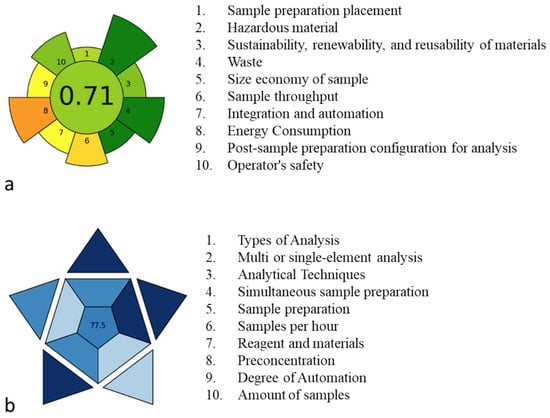
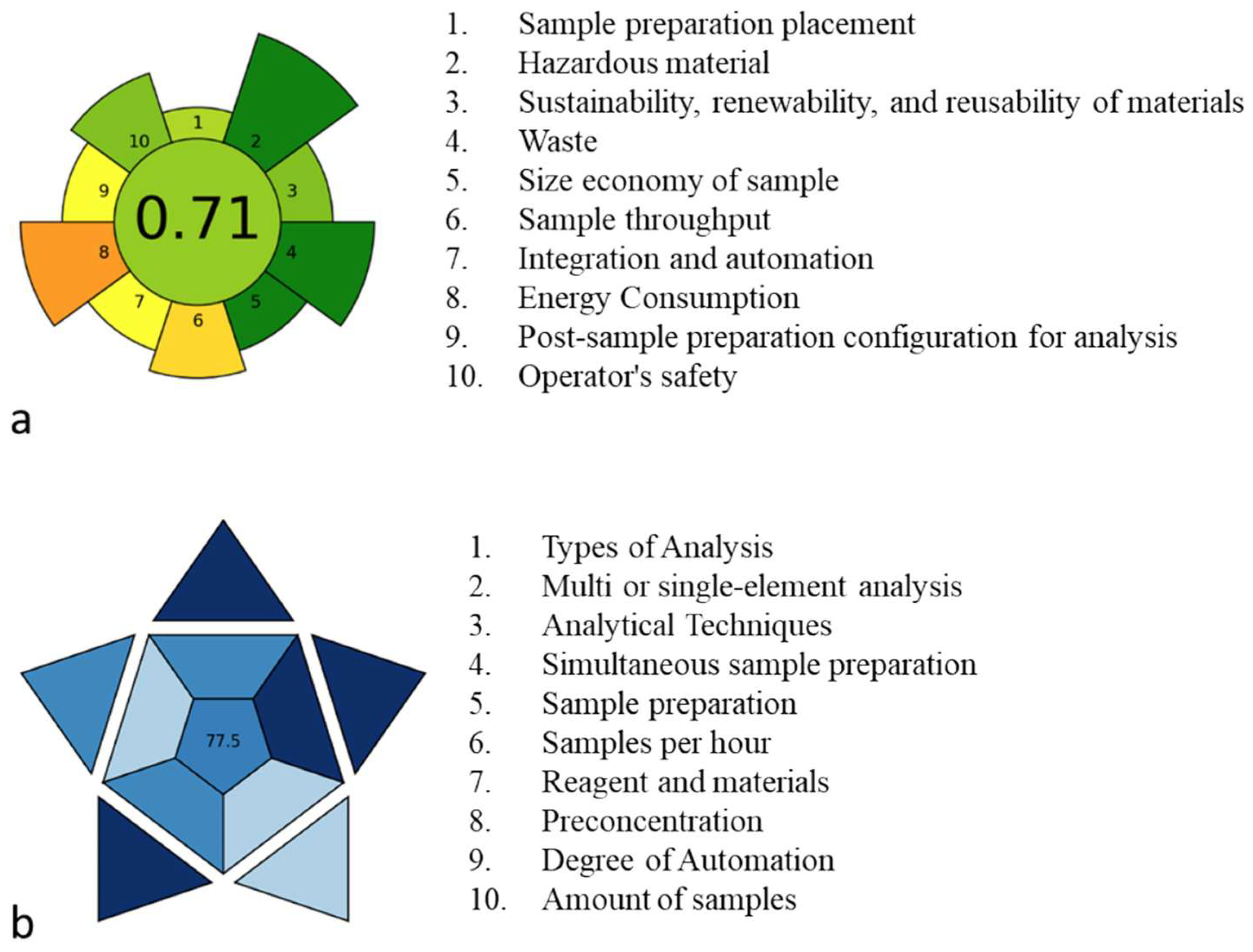
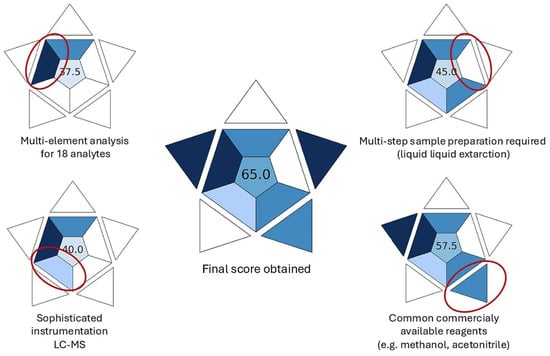
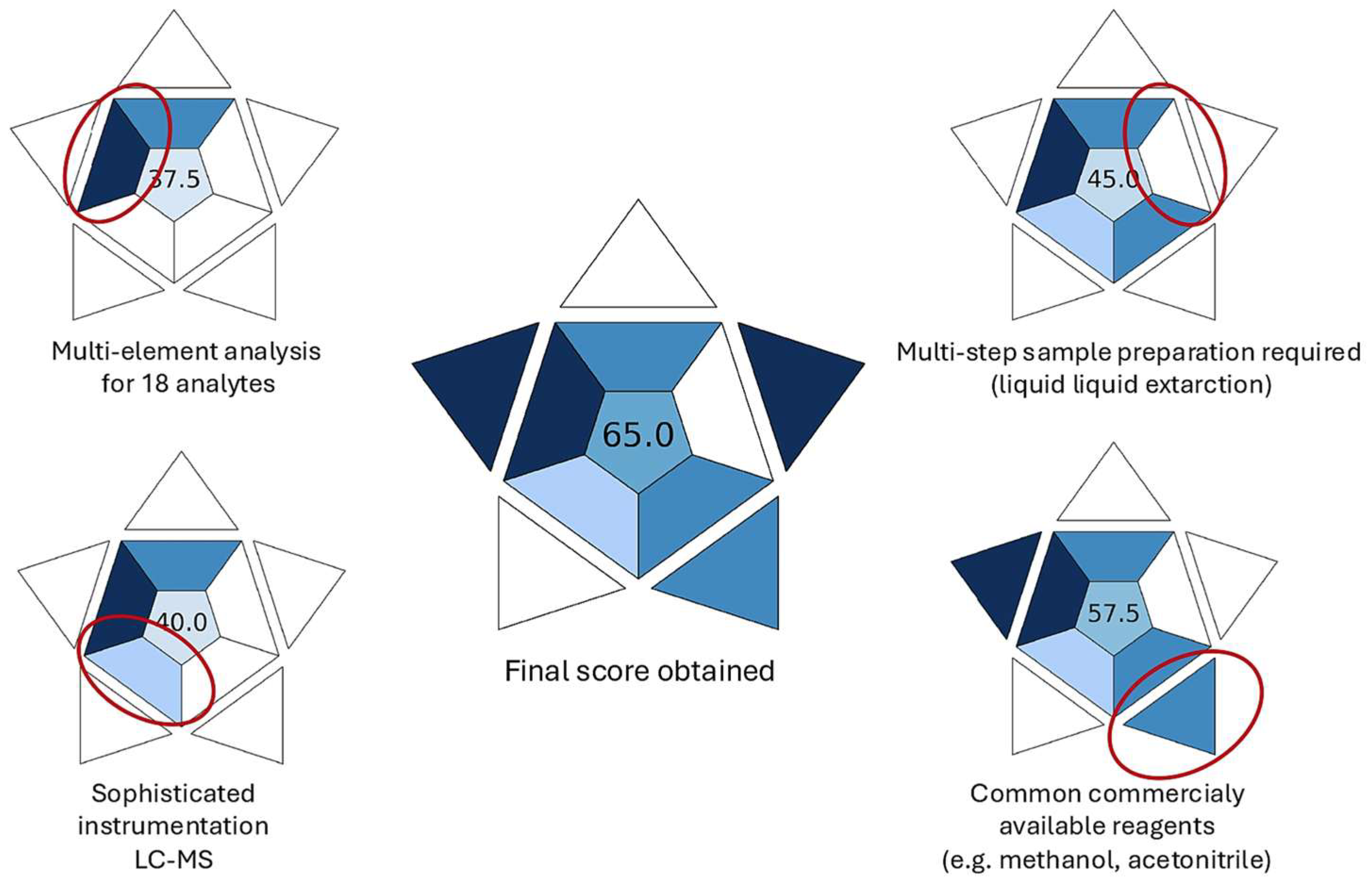
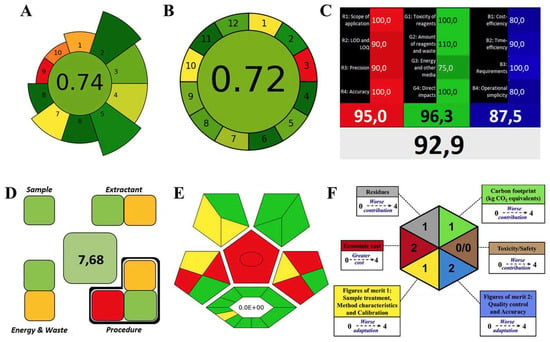
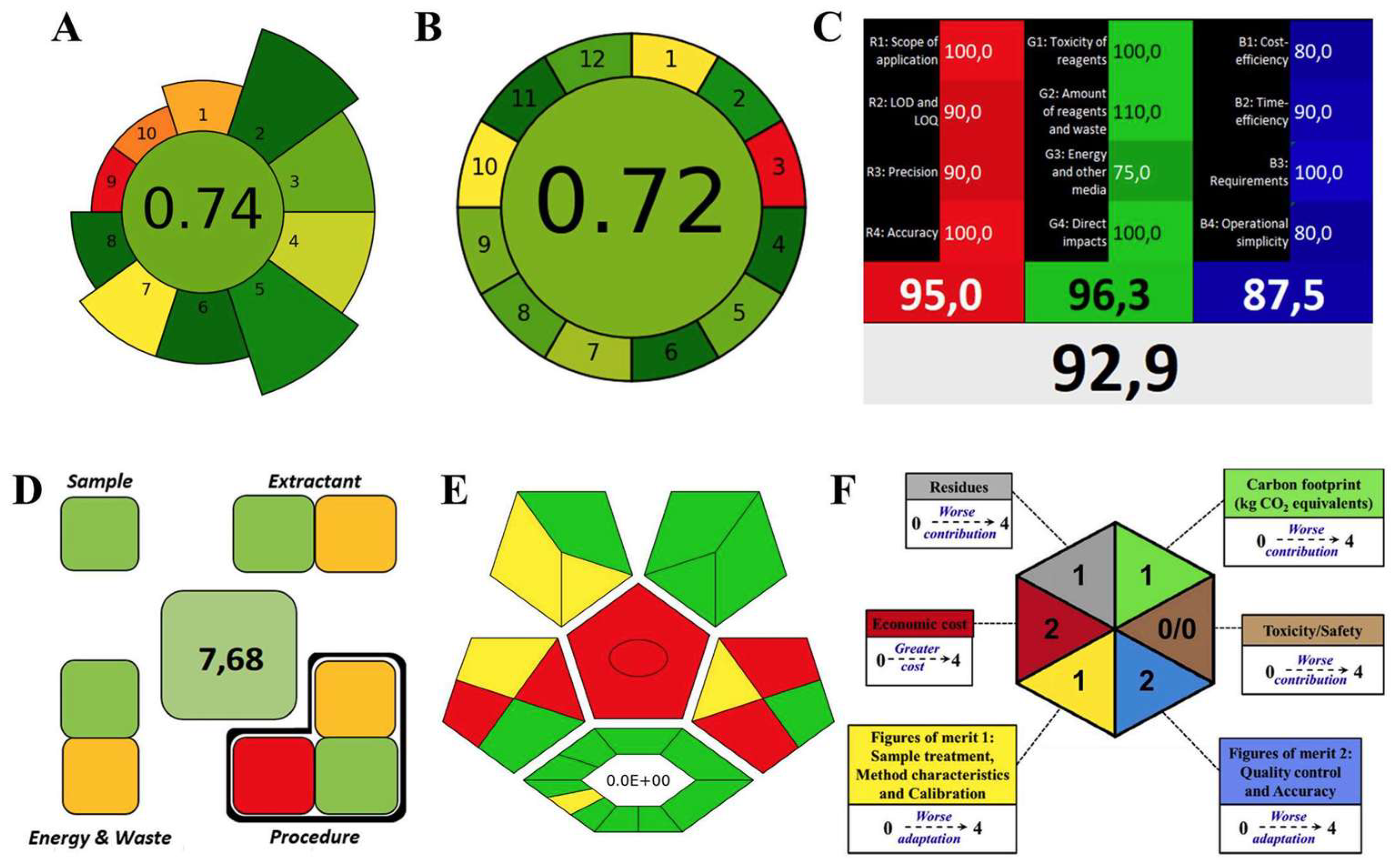
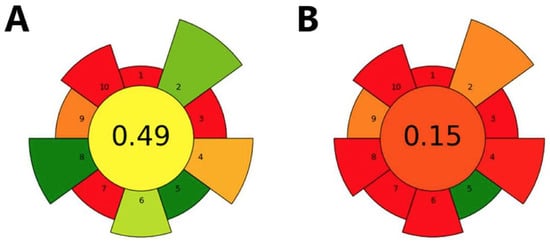
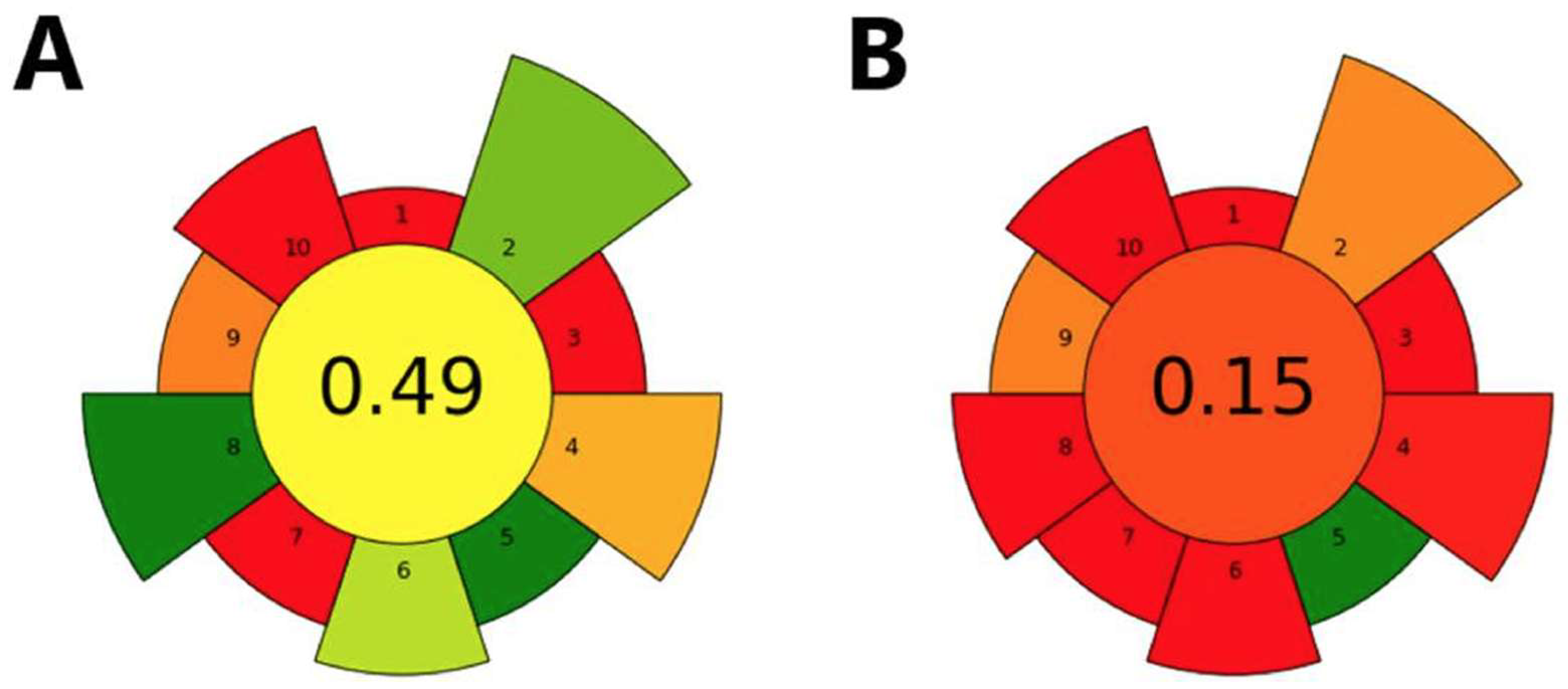
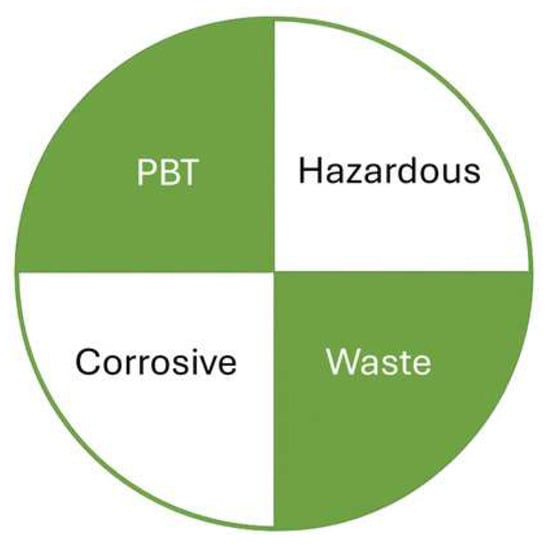
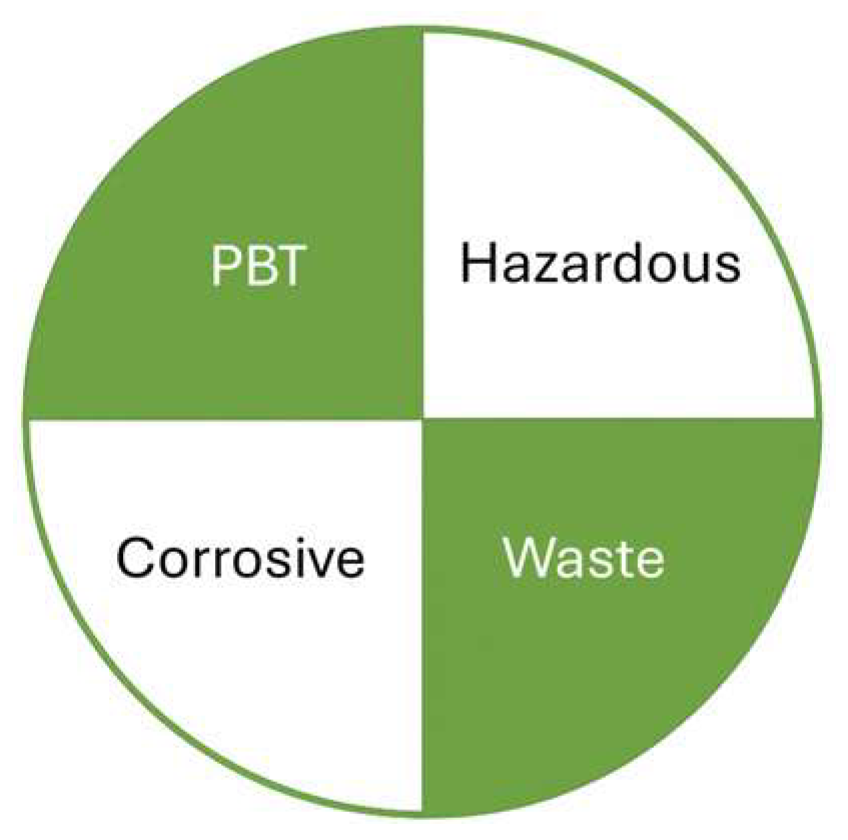

Disclaimer/Publisher’s Note: The statements, opinions and data contained in all publications are solely those of the individual author(s) and contributor(s) and not of MDPI and/or the editor(s). MDPI and/or the editor(s) disclaim responsibility for any injury to people or property resulting from any ideas, methods, instructions or products referred to in the content. |
© 2026 by the author. Licensee MDPI, Basel, Switzerland. This article is an open access article distributed under the terms and conditions of the Creative Commons Attribution (CC BY) license.