


Abstract
Pharmaceuticals have been the focus of research into South Africa’s water resources for the past ten years and more. Five pharmaceutical residues were examined in this investigation in plant, sediment, and river water samples from Durban, SA. Fenoprofen, diclofenac, naproxen, gemfibrozil, and ibuprofen were the compounds of interest; they are some of the most widely used and often prescribed medications globally. Compound concentrations found in sediments and river water ranged from 0.2 to 12.0 ng g−1 and 0.2 to 5.1 µg L−1, respectively. Different plant parts (roots, stems, and leaves) had varying quantities of the target compounds in the Stevia rebaudiana species. The most prevalent drug in Stevia rebaudiana was ibuprofen, which was discovered in roots at the highest concentration of 7.2 ng g−1. Although there was no apparent trend in the amounts identified in different areas of Stevia rebaudiana in this preliminary analysis, it is hypothesized that these pharmaceuticals penetrate into the aquatic plant roots from water and then move into the stem and leaves. The partitioning coefficients (L kg−1) varied from one sampling location to another; fenoprofen, diclofenac, naproxen, gemfibrozil, and ibuprofen and diclofenac ranged from 0.1 to 4.0, 0.9 to 6.8, 0.8 to 3.7, 0.2 to 8.5, and 0.6 to 5.6, respectively. This suggests that environmental factors, including climate and the existence of additional pollutants from water, as well as variations in physicochemical properties, may have an impact on the fates of these pharmaceuticals. Overall, it was found that the target compounds were present in river water, sediments, and Stevia rebaudiana. This suggests that Stevia rebaudiana may reduce water pollution by absorbing pharmaceuticals through its roots.
1. Introduction
Naproxen, gemfibrozil, diclofenac, ibuprofen, and fenoprofen are extensively used drugs that are most often prescribed and bought over the counter [1,2]. Most of these pharmaceutical residues are thought to be discharged into sewage systems after administration, then taken to treatment facilities where they are unable to fully decompose, and are subsequently released back into the environment [3]. The discharge of micropollutants into the environment is acknowledged to be significantly influenced by municipal wastewater treatment facilities (WWTPs). It is thought that aquatic habitats could be ecotoxicologically threatened by these effluents [4]. These drugs’ hydrophilic nature makes it simple for them to transfer in water; as a result, they can easily transition between different environmental media. Additionally, the target compounds’ high-water solubility prevents sewage sludge from absorbing them. Pharmaceutical contamination of the environment has been a result of inadequate sanitation practices in some underdeveloped countries, including some sections of South Africa (SA) [5,6]. Numerous investigations have demonstrated the presence of pharmaceutical residues in drinking water, rivers, lakes, plants, and WWTP discharge. The contents of these residues range from ng L−1 to mg L−1, which is a comparatively modest range [7,8]. However, the lower concentrations are typically below the direct detection limits of analytical instruments, while the complex sample matrices require extensive clean-up. Solid-phase extraction (SPE) is therefore essential both for pre-concentrating trace-level pharmaceuticals and for removing matrix interferents, enabling accurate, sensitive, and reproducible quantification [9].
Before instrumental measurements, a variety of SPE methods have been described in the literature for the analysis of pharmaceuticals utilizing commercially available SPE cartridges [10,11,12]. Furthermore, certain scholars choose to create their own sorbents for preconcentration [13,14,15,16]. This is because commercial sorbents are generally broad-spectrum and bind a wide range of compounds, and when the target analyte is present in a complex matrix, co-extracted interferents can reduce recovery and selectivity. Additionally, custom sorbents such as molecularly imprinted polymers (MIPs) are designed with specific binding sites that are complementary in shape, size, and functional groups to the target molecule [17].
Generally, the lack of particular sorbents that can selectively concentrate and extract the necessary chemicals causes problems in the sample preparation process for pharmaceutical identification and quantification. Over time, MIPs have become increasingly popular as the sorbents of choice for pharmaceutical extraction [18,19,20].
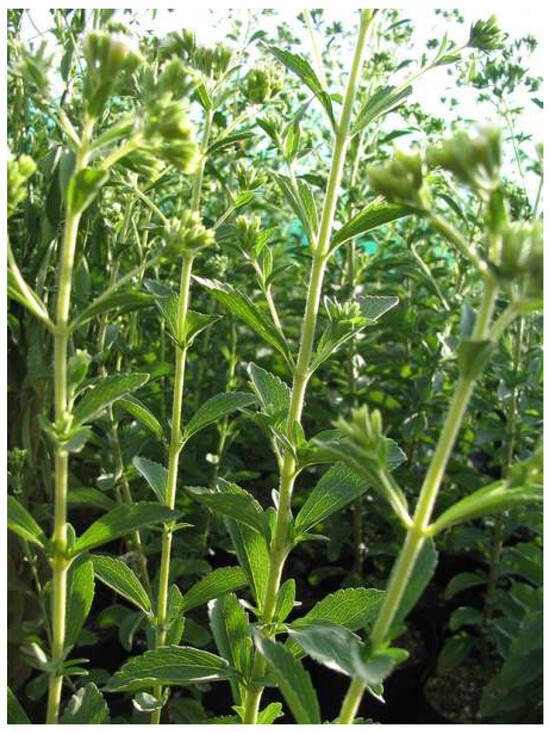
Despite the growing body of literature on pharmaceutical contamination in aquatic environments, critical knowledge gaps persist. First, the majority of MIP-based extraction studies have targeted only a single pharmaceutical compound, limiting their applicability in real-world scenarios where multiple pharmaceuticals co-occur [21,22,23]. Second, African-based research has largely been confined to water matrices, with virtually no investigation into pharmaceutical uptake in plant species grown in or near contaminated environments [24,25]. Third, and most notably, Stevia rebaudiana (Figure 1), a widely cultivated plant with a documented capacity for heavy metal uptake [26,27,28,29,30,31], has never been evaluated for its potential to accumulate pharmaceutical contaminants, despite its proximity to polluted water sources and its direct consumption by humans as a food and nutraceutical product.
Figure 1.
Stevia rebaudiana.
This represents a significant public health and environmental monitoring gap. If Stevia rebaudiana accumulates pharmaceuticals from contaminated soils and irrigation water, human exposure may be occurring through an overlooked dietary pathway. Therefore, the innovation of this study lies in the first simultaneous multi-analyte MIP-based extraction and quantification of naproxen, gemfibrozil, diclofenac, ibuprofen, and fenoprofen across three distinct matrices: river water, sediment, and Stevia rebaudiana plant tissue collected from South African water bodies. This approach advances both analytical methodology (multi-template MIPs for five co-occurring pharmaceuticals) and environmental monitoring (establishing baseline pharmaceutical contamination data in an understudied African region and an unexplored plant matrix).
2. Materials and Methods
2.1. Reagents
Diclofenac sodium salt (99%), naproxen (≥98%), gemfibrozil (≥98%), fenoprofen (99%), ibuprofen (98%), and HPLC grade acetonitrile (99.7%), acetone (≥99.8%), methanol (≥99.8%), dichloromethane (≥99.8%), 2-vinylpyridine (99%), and 1,1′-azobis-(cyclohexanecarbonitrile) (98%) were obtained from Sigma-Aldrich in Steinheim, Germany. Furthermore, 98% formic acid was obtained from Fluka in Steinheim, Germany.
2.2. Analytical Equipment and Apparatus
The quantification and separation of compounds were achieved by utilizing an HPLC instrument from Shimadzu Corporation, obtained from. The quantification and separation of compounds were achieved using an HPLC instrument manufactured by Shimadzu Corporation, Kyoto, Japan, operated using LabSolutions version 5.97 soft-ware (Shimadzu Corporation, Kyoto, Japan). The system comprised a degasser unit (DGU-20A3), a photo diode array detector (SPD-M20A), a 20 µL sample loop, and a pump (LC-20AB). The mobile phase flow rate (0.8 mL min−1) consisted of an isocratic elution using mixed solvents of 0.2% formic acid and acetonitrile in water (60:40—v/v). The separation of compounds was conducted on a Kinetex C18 column (4.6 mm 2.6 µm) obtained from Phenomenex (Torrance, CA, USA). Ibuprofen and diclofenac were detected at 210 nm detector wavelength, while naproxen, gemfibrozil and fenoprofen were detect-ed at 230 nm. A Mettler Toledo multiparameter water quality meter (Mettler Toledo, Greifensee, Switzerland) was used for water quality measurements, while sediment samples were analysed for their physicochemical properties. A vacuum pump (model number: DOA-P730-BN) acquired from Pall Corporation (Fribourg, Switzerland) was connected to a vacuum manifold purchased from Phenomenex (Torrance, CA, USA) to conduct SPE experiments. The source of Strata-X cartridges was Phenomenex, located in Aschaffenburg, Germany. The Mixtasel BLT 23-0v 50/60 Hz centrifuge was acquired from Orto Alresa in Madrid, Spain. Prestige Laboratory in Durban, SA, provided the Moulinex Blender, used to blend the samples. A scientific oven (Series 2000) was pur-chased from United Scientific in SA, whereas Shalom Laboratories provided the Au-tomatic Sweep Frequency Laboratory Ultrasonic Bath.
2.3. Sampling and Sample Pre-Treatment
Samples of water, sediments, and Stevia rebaudiana were obtained from the Mbokodweni River (30°55′12″ S 31°36′01″E), Nagle Dam (29°35′40″ S 30°38′30″ E), and Inanda Dam (29°42′01″ S 30°52′01″ E) situated in the southern, inland, and northern regions of Durban, respectively. Durban is an urban city in the KZN Province of SA. According to the 2023 South African Census, KZN has the country’s second-largest population with 11.54 million residents [32]. The Mbokodweni River is situated one kilometre upstream from a local WWTP (Amanzimtoti WWTP). Nagle and Inanda dams are located on the Umgeni River course. The Umgeni River flows over a 4418 square-kilometre watershed area and is 257 kilometres long [33]. The Umgeni River comprises four dams along its banks (Inanda dam, Midmar dam, Nagle dam, and Albert Falls) that were constructed for water supply. Approximately 500 g of sediment was collected upstream and downstream per sample by means of three independent samples, transferred into clean plastic bags, transported to the laboratory in a cooler box, air-dried, and sieved through a 200 μm stainless-steel mesh. The samples were taken upstream and downstream of each dam. The sediments were deposited in plastic bags. Sediments were air-dried in the laboratory and sieved through a 200 μm stainless-steel mesh. The sediment samples were analyzed for grain size analysis (sand, silt, and clay) using the method noted in the literature [34]. An online program was used to calculate a single-point texture class based on the percentages of sand, silt, and clay [34]. The physicochemical variables measured for each water sample collected at the designated sites include pH, TDS, temperature, salinity, conductivity, and dissolved oxygen. These parameters are typically used to assess water and soil quality. After being collected, the samples, in 1 L containers, were kept in an ice-filled cooler box and then transferred to the laboratory. Once at the laboratory, the water samples underwent filtration using 0.45 μm hydrophilic polypropylene membrane filters (Shalom Laboratories) to eliminate any suspended solids. Afterwards, the pH was modified to our previously optimized value of 4.0 using formic acid and kept in the refrigerator set at 4 °C until it was ready for further processing [35]. Whole Stevia rebaudiana plants were collected upstream and downstream, approximately three plants per location. The plants were sun-dried under ambient conditions until constant mass was achieved and processed within one week. The dried plants were subsequently separated into roots, stems, and leaves for analysis.
2.4. Synthesis of Polymers
The MIP synthesis was prepared, characterized, and optimized as per our previous work [35]. This was achieved by employing a two-stage reaction technique to form a polymer in a bulk polymerization process. The first stage involved dissolving all the templates at 0.1 mmol each in a 250 mL round-bottom flask and then adding 54 μL of 2-vinylpyridine (2-VP) as a monomer and a mixture of acetonitrile/toluene (1:3, v/v). For half an hour, the mixture was agitated at room temperature. The second step involved the addition of 100 mg of 1,1′-azobis (cyclohexanecarbonitrile) as a radical initiator and 4.77 μL ethylene glycol dimethylacrylate as a crosslinker. Nitrogen gas was used to purge the mixture for 10 min, and the reaction was sealed and stirred at 60 °C in an oil bath for 16 h to initiate polymerization. After that, for the next 24 h, the temperature was raised to 80 °C until a solidified polymer was achieved. The final step was to oven-dry the polymer to constant mass.
2.5. Extraction of Target Compounds
2.5.1. Extraction of Pharmaceuticals from Water Samples
With minor adjustments, the SPE method described in the literature was used to extract the target compounds from river water [35]. This was achieved by mounting the Phenomenex Strata–X empty polypropylene single-fritted (3 cc) cartridges into the manifold, which were rinsed with the solvent first. The SPE cartridge was first conditioned with 5 mL of methanol, followed by equilibration with 5 mL of deionized water. A 200 mL water sample was then loaded onto the cartridge at a flow rate of 1 mL min−1. The flow rate was maintained using a vacuum manifold. The sample was subsequently dried under vacuum for 30 min to remove residual moisture. The retained pharmaceutical compounds were then eluted with 10 mL of acetonitrile. The eluate was collected and evaporated to dryness under a gentle stream of nitrogen at 40 °C. The resulting residue was reconstituted in 1 mL of acetonitrile and transferred for HPLC analysis.
2.5.2. Extraction of Pharmaceuticals from Plant Species
An extraction method taken from the literature was modified to perform the extraction [36]. Five grams of the plant material were used in the extraction experiment. Each sample was blended and finely ground using a pestle and mortar after 5 mL of methanol was added with continuous stirring. Therefore, 20 mL of methanol was added to the resultant solution, and the plant components were further crushed with a glass rod. The subsequent slurry was put in a sonicator bath at ambient temperature for 20 min; the resultant slurry was centrifuged at 2500 revolutions per minute (rpm), and the liquid extracted was poured into a 250 mL round-bottom flask. The extraction was carried out once more. A rotary evaporator was used to combine and evaporate the resultant extracts to 1 mL. After diluting the sample with 200 mL of deionized water, it was filtered, and its pH was brought to 4.0. As described in water analysis, the MISPE method was then used to extract and pre-concentrate the target components.
2.5.3. Extraction of Pharmaceuticals from Sediments
Sediment extraction was carried out using a method described in the literature, with minor modifications [36]. This was accomplished by combining 15 g of sediment with a mixture of 10 mL acetone and ethyl acetate (1:1 v/v). The resultant slurry was thoroughly mixed by swirling, then sonicated for 10 min before centrifugation at 2500 rpm. A glass vial was used to decant the liquid combination. The process was redone, and the results were pooled. The extract’s volume was reduced to 1 mL using a moderate flow of nitrogen gas. The resultant extract was diluted to 200 mL with deionized water. This was preceded by a filtering process, hydrolysis, and MISPE according to the technique described for water analysis.
2.6. Method Validation
The analytical method was evaluated during the method development and optimization stages using spiked deionized water, sediment, and plant matrices. Deionized water was spiked with a 5 mg L−1 mixture of the target pharmaceutical compounds and processed according to the developed procedure.
For plant-matrix validation, Lactuca sativa leaves were used as a surrogate blank plant matrix because an analyte-free Stevia rebaudiana matrix was not available during method development. The L. sativa plants were cultivated under laboratory conditions at Mangosuthu University of Technology and were frequently irrigated with analyte-free water to minimize potential background contamination. Five grams of the plant material was spiked with a 5 mg L−1 mixture of the target pharmaceutical compounds prepared in an appropriate organic solvent. The spiked samples were oven-dried at 70 °C for 80 min to remove the organic solvent and were subsequently subjected to the same extraction procedure developed for the plant samples.
Similarly, 15 g of sediment was spiked with the 5 mg L−1 mixture of the target pharmaceutical compounds and processed according to the developed sediment extraction procedure. The analytical performance of the method was evaluated in terms of method detection limits, quantification limits, precision, accuracy and percentage recoveries.
2.7. Statistical Analysis
Data are expressed as mean ± standard deviation of triplicate samples (n = 3). Differences in physicochemical parameters among the three sampling sites were tested by one-way analysis of variance (ANOVA); where a significant site effect was found, pairwise comparisons were interpreted with a Tukey-type correction. Differences between upstream and downstream pharmaceutical concentrations at each site were assessed with Welch’s independent-samples t-test, which does not assume equal variances and is appropriate for small triplicate groups. Because 28 upstream–downstream comparisons were performed across compounds and matrices, a Benjamini–Hochberg false discovery rate (FDR) correction (α = 0.05) was applied to control for multiple testing. The relationship between TDS and total dissolved pharmaceutical load in water was examined using Pearson’s correlation coefficient. Statistical significance was set at p < 0.05.
3. Results and Discussion
This paper sought to give additional evidence on the degree of fenoprofen, diclofenac, naproxen, ibuprofen, and gemfibrozil contamination along these rivers. Physicochemical parameters measured adhered to the WHO water standard specifications for Inanda and Nagle dams (Table 1). The only parameter that was within specification for the Mbokodweni River was pH. The nearby WWTPs may influence these parameters due to the discharge of treated wastewater into the river. Table 2 shows the results obtained for sediments, pH, TDS, conductivity, and texture. All the results were within WHO specifications. Mbokodweni River, Inanda Dam, and Nagle Dam textures were found to be sandy loam, silt loam, and sandy loam, respectively. The parameters do not directly indicate the pharmaceutical concentration of the river, but they describe general water chemistry and suggest dissolved ions. For instance, the obtained pH range (7.4–7.5) is slightly alkaline, close to neutral. This could suggest that pharmaceuticals would remain stable and not rapidly degrade in the river. Also, TDS suggests urban or wastewater influence for salts, minerals, and organic matter; these parameters were typically moderate for Nagle and Inanda Dam at 371 and 450 mg L−1, respectively. In contrast, the Mbokodweni River reported a TDS value of 893 mg L−1, which was above the recommended specification of 800 mg L−1. TDS values above 800 mg L−1 indicate a potential signal of pollution or anthropogenic input through wastewater discharge, industrial effluents, agricultural runoff (fertilizers, manure, salts), urban stormwater, and saline intrusion [37]. One-way ANOVA confirmed a significant difference in TDS among the three sites for both water F(2,6) = 36,555, p < 0.001) and sediment F(2,6) = 14,071, p < 0.001), as well as sediment conductivity F(2,6) = 21,431, p < 0.001), consistent with the markedly elevated TDS recorded at Mbokodweni River. pH and salinity did not differ significantly among sites (pH: F(2,6) = 0.07, p = 0.93; salinity: F(2,6) = 0.04, p = 0.96; sediment pH: F(2,6) = 0.55, p = 0.60), indicating that acid–base conditions were comparable across the catchments despite the contamination gradient.
Table 1.
Mean physicochemical properties measured in river water samples. Standard deviations (n = 3) are given as ± values.
Table 2.
Mean physicochemical properties measured in river sediment samples. Standard deviations (n = 3) are given as ± values.
Mbokodweni River is located ∼1 km upstream from a local WWTP (Amanzimtoti WWTP); hence, its contamination can be linked to the disposal of treated water from the nearby WWTP. A better understanding of the source of pollution can be further investigated by analyzing river water samples collected along the river from the origin of the river to the mouth, where the river enters the sea. However, this is beyond the scope of the present work.
3.1. Validation of Analytical Methods
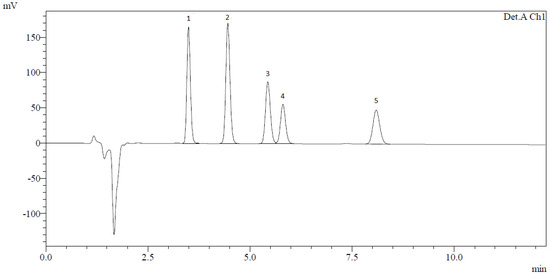
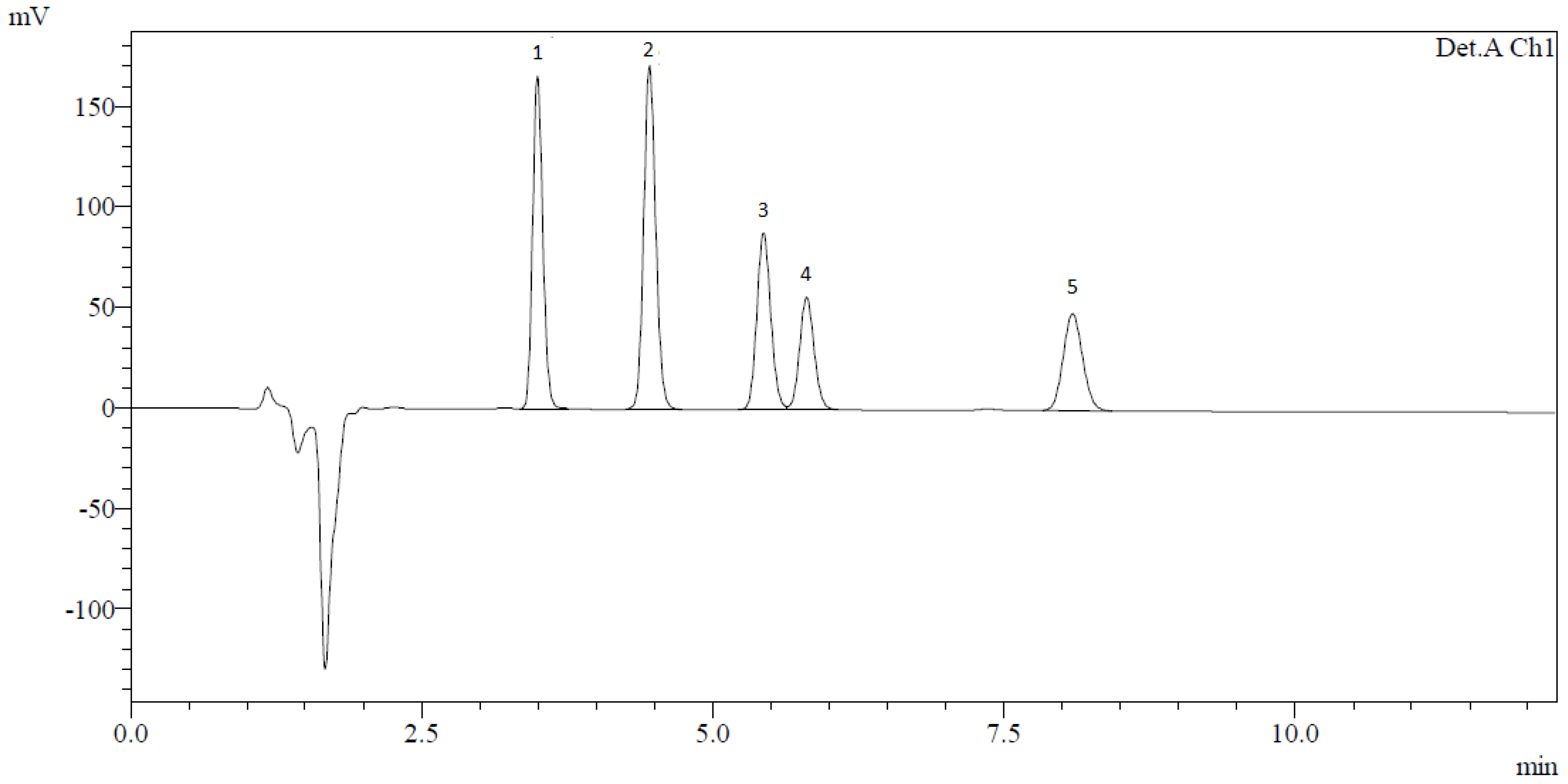
The performance and validation results are presented in Table 3. The analytical approach described in this paper was validated by employing spiked soil and plants taken from the university grounds. The median recoveries of target compounds in sediment and plant samples ranged from 83 to 118%, demonstrating ideal analytical accuracy. The method of analysis was precise due to its low relative standard deviations (RSD), which varied from 1.6 to 12.7%. The low detection, 0.04–0.17 ng g−1, and quantification limits, 0.12–0.86 ng g−1, reported for the analytical procedures indicated excellent sensitivity. The curves used for calibration for each target compound’s concentration (standard solutions) resulted in a linear trend (R2 = 0.996). Such calibration curves were utilized to measure target compounds in all samples. Figure 2 represents the standard mixture chromatogram. The recovery and precision obtained here compare well with prior South African validation studies. For plant tissue, Nkosi et al. validated an MISPE-HPLC method for the same five compounds in Durban vegetables, with recoveries of 45–103% and RSD below 15%. The present study’s plant recoveries (83–118%) exceed this range, indicating a more robust extraction procedure [38]. For water, Madikizela and Chimuka reported 76–98% recovery for naproxen, ibuprofen, and diclofenac using SPE-HPLC. A related SPE-LC-PDA method for South African river and wastewater samples achieved 78–120% recovery. Both ranges align closely with the water recoveries reported in this study [7,39]. For sediments, a method developed for Msunduzi and Mgeni River sediments reported 66–130% recovery, RSD below 20%, and LOD/LOQ of 0.024–1.90 ng g−1. The present method’s sediment LOD (0.04–0.17 ng g−1) and LOQ (0.12–0.86 ng g−1) are comparable or better. Its RSD range (1.6–12.7%) also indicates improved precision [40].
Table 3.
Performance and validation of the analytical methods using spiked soil (ng g−1), plant material (ng g−1), river water (µg L−1), and deionized water samples (n = 3).
Figure 2.
Standard mixture solution (1: naproxen, 2: fenoprofen, 3: diclofenac, 4: ibuprofen, 5: gemfibrozil).
3.2. Quantification of Pharmaceuticals in Environmental Samples
3.2.1. Occurrence of Pharmaceuticals in Stevia rebaudiana
Almost all the studied pharmaceuticals were mainly detected in plant samples (Table 4). The highest concentrations (ng g−1) of fenoprofen, diclofenac, naproxen, gemfibrozil, and ibuprofen in the upstream and downstream samples were 2.5, 3.6, 0.9, 3.7, and 7.2, respectively. The most abundant compound was ibuprofen, ranging from 2.7 to 7.2 ng g−1, with the maximum concentration reported upstream of Nagle Dam. The maximum concentration detected for the Mbokodweni River was for ibuprofen at 5.9 ng g−1, downstream, whereas Inanda Dam reported the maximum concentration for ibuprofen at 5.7 ng g−1, upstream. The predominance of ibuprofen in both rivers likely reflects multiple interacting drivers. Ibuprofen is more widely consumed than all other NSAIDs and continuously discharged to wastewater streams (household excretion and improper disposal), making it a common input to municipal WWTPs. WWTP effluent frequently contributes detectable quantities of pharmaceuticals to receiving waters because removal efficiencies are variable and often incomplete [40]. Additionally, pharmaceuticals detected at higher concentrations in the plants showed the highest concentrations in roots, which could be related to an increased availability of pharmaceuticals for root uptake. The mean concentrations (ng g−1) of fenoprofen, diclofenac, naproxen, gemfibrozil, and ibuprofen in Stevia rebaudiana roots range from 0.9 to 2.5, 0.2 to 3.6, 0.1 to 0.9, 0.1 to 3.7, and 1.4 to 7.2, respectively. The concentrations differed in various regions of Stevia rebaudiana, such as stem and leaves; some compounds were not detected, whereas some frequently occurred below their method quantification limit (MQL). For instance, in the leaves, the concentrations (ng g−1) for fenoprofen, diclofenac, naproxen, gemfibrozil, and ibuprofen were <MQL to 0.4, 0.2–0.8, <MQL to 0.2, 0.1–0.3, and 0.7–5.9, respectively. Lastly, in the stems of Stevia rebaudiana, the concentrations (ng g−1) were 0.9–0.9, 0.1–0.12, 0.1–0.8, 0.2–3.7, and 0.8–4.9 for fenoprofen, diclofenac, naproxen, gemfibrozil, and ibuprofen, respectively. Unlike other matrices involving water and sediments, there is little data available on the presence of pharmaceuticals in Stevia rebaudiana.
Table 4.
Mean concentrations of target compounds at Mbokodweni.
Considering that gemfibrozil, ibuprofen, naproxen, diclofenac, and fenoprofen are weakly acidic pharmaceuticals with pKa values around 4–5, they exist mainly in their ionized and hydrophilic forms at soil and root pH. This enhances their mobility in soil water and facilitates their uptake by plant roots. Once absorbed, their hydrophilicity allows for efficient translocation through the xylem with the transpiration stream, enabling transport from the roots to the leaves [41].
According to the literature, plant root cell membranes, which function as generic transporters, can carry pharmaceutically active substances into plant tissues [42]. Diffusion could then cause the compounds to be taken up and translocated within the plants. Water and dissolved chemicals may penetrate the root zone via the outermost layer of the root ends and hairs, then move through the cortex of the plant, and reach the veins, where pharmaceuticals are carried via xylem/phloem to the plant’s aerial section [43]. Compounds that cannot reach the veins remain in the roots and do not go to the aboveground tissues. Pharmaceuticals’ uptake and accumulation are further influenced by their physicochemical features, such as hydrophobicity, molecular structure, and charge, which dictate whether they reside in neutral or ionic forms in the rhizosphere [44]. Among the target pharmaceuticals, ibuprofen exhibits the highest root-to-leaf translocation due to its combination of moderate hydrophilicity, weak acidity (pKa ≈ 4.9), and relatively low lipophilicity, making it the most mobile compound compared to all the target compounds studied. These properties favour xylem mobility and reduce retention in root tissues. This supports ibuprofen’s abundant concentration in Mbokodweni and Nagle Dam in Stevia rebaudiana [45].
So far, most of the research has concentrated on the absorption of pharmaceuticals by crops in wetland systems using hydroponically produced crops [46,47,48]. There have also been reports of pharmaceutical bioaccumulation in plants irrigated with treated effluent and spiked water [49,50]. Such research proved the possibility of employing plants to remove micropollutants in wetland settings. A review by Li et al. reported that many research papers agreed that artificial wetlands had a high potential for application as an alternate intermediate treatment facility for wastewater or an industrial refining treatment system for pharmaceutical elimination [51]. However, in this subject matter, there are few related studies with definitive outcomes. Vystavna et al. discovered more than 40% elimination capacity for certain pharmaceuticals from a designed wetland; nevertheless, they also suggested that further research should delve into how the development of the wetland influences the elimination of contaminants from effluent [52]. As a result, the current investigation clearly reveals that Stevia rebaudiana can remove a particular amount of target chemicals from water. Pharmaceuticals released into the environment through wastewater reuse, biosolids, and agricultural runoff can be absorbed and accumulated by plants, posing risks to plant health, ecosystems, and food safety. At the same time, plants can remove or transform these compounds, making them valuable tools for phytoremediation. Understanding this dual role is essential for assessing environmental risks and optimizing plant-based strategies to reduce pharmaceutical contamination [53].
3.2.2. Occurrence of Pharmaceuticals in River Sediments
The highest quantities (ng g−1) of fenoprofen, diclofenac, naproxen, gemfibrozil, and ibuprofen in sediment samples were 9.2, 10.9, 12.0, 7.5, and 6.1, respectively (Table 4). The highest pharmaceutical concentrations observed in this study occurred in the Mbokodweni River, with naproxen reaching 12.0 ng g−1 in downstream sediments. This pattern is consistent with the river’s proximity to a WWTP, which is a major point source of pharmaceutical residues. Naproxen is among the most widely consumed NSAIDs in South Africa due to its accessibility, frequent prescription for chronic pain and inflammation, and over-the-counter use, which results in substantial quantities entering domestic wastewater. The WWTP serving the catchment is not specifically designed to remove pharmaceuticals, and naproxen is known to exhibit moderate persistence during biological treatment, leading to partial but incomplete removal. Consequently, downstream sections receive continuous inputs through treated effluent, explaining the elevated sediment concentrations relative to upstream locations [54]. Naproxen’s physicochemical properties, including a moderate logKow (3.2) and pKa (~4.2), promote sorption to sediment organic matter under neutral pH conditions, enhancing its accumulation in benthic sediments where hydrophobic partitioning is favoured [55]. Therefore, the dominance of naproxen downstream of the Mbokodweni WWTP reflects a combination of high usage, incomplete removal during wastewater treatment, and preferential sediment partitioning, resulting in higher environmental burdens compared to other target pharmaceuticals.
The highest concentration reported for Nagle Dam was ibuprofen at 6.1 ng g−1, upstream. Fenoprofen was detected at a high concentration of 6.4 ng g−1 downstream of the Inanda Dam. Unlike in water matrices, very few investigations have been conducted to monitor these pharmaceuticals in South African river sediments [56,57,58]. The target compound concentrations observed in this investigation are often comparable to or lower than those reported by other South African researchers [56,57,58]. Agunbiade and Moodley found ibuprofen at the highest concentration of 11.2 ng g−1 in sediments from the Msunduzi River (SA), as well as diclofenac at concentrations varying from 57.2 to 309 ng g−1. Ibuprofen concentrations in biological solids from the Umgeni River and sediment residues from the Msunduzi River in SA peaked at 15.96 and 659 ng g−1, respectively [59].
Welch’s t-tests (FDR-corrected) confirmed significant upstream–downstream differences in sediment concentrations of fenoprofen (padj = 0.011), diclofenac (padj = 0.006), and gemfibrozil (padj < 0.001) at Mbokodweni, as well as of naproxen (padj < 0.001) and gemfibrozil (padj < 0.001) at Nagle Dam, supporting the interpretation that WWTP discharge drives elevated downstream naproxen accumulation at these sites. No significant upstream–downstream differences were detected at Inanda Dam for any compound (all padj > 0.18).
3.2.3. Occurrence of Pharmaceuticals in River Water
Evidence of each of the five compounds of interest was found in river water (Table 4). The concentrations (µg L−1) of fenoprofen, diclofenac, naproxen, gemfibrozil, and ibuprofen in river water samples ranged from 0.6 to 2.3, 0.5 to 1.6, 0.1 to 5.1, 0.6 to 2.4, and 0.2 to 1.9, respectively. Naproxen was the most prevalent component discovered in the Mbokodweni River, with concentrations ranging from 3.2 to 5.1 µg L−1. This can be linked to contamination caused by the illicit disposal of solid waste containing pharmaceutical ingredients into rivers. Furthermore, the presence of an illegal settlement on the shores of the Mbokodweni River, without any indication of effective purification infrastructure, may contribute to waterway pollution. WWTPs have also been linked to the presence of pharmaceutical ingredients in rivers, eliminating pharmaceuticals from water during the decontamination process [60]. Nagle Dam reported the maximum concentration for gemfibrozil at 2.4 µg L−1 along the upstream. The maximum concentration for Inanda Dam was reported for naproxen at 1.8 µg L−1, along the upstream. These concentrations were lower than those reported by Madikizela and Chimuka (2017) [61]. They detected the maximum concentrations of Mbokodweni river water for naproxen, ibuprofen, and diclofenac at 6.8, 9.7, and 19.2 μg L−1, respectively. Elsewhere, the highest value of 1.3 mg L−1 for ibuprofen was reported in the Lis River in Portugal [62]. In one of the rivers in China, the highest recorded quantities of naproxen and ibuprofen were 0.3 and 1.4 mg L−1, respectively [63]. Conversely, the highest measured concentrations of naproxen, ibuprofen, and diclofenac discovered in Indian rivers were 28, 103, and 200 ng L−1, respectively [64].
3.3. Partition Coefficients
The partition coefficient (K) is a key measure for assessing pharmacological fate and mobility in water–sediment complexes [64]. The partition coefficients were calculated using the amounts detected in water and sediment samples, denoted as (Cwater) and (Csediments), respectively, as shown in Equation (1).
The partition coefficients obtained in Mbokodweni River, Inanda Dam, and Nagle Dam differed for each compound (Table 5). The partitioning coefficients (L kg−1) for fenoprofen, diclofenac, naproxen, gemfibrozil, and ibuprofen ranged from 0.1 to 4.0, 0.9 to 6.8, 0.9 to 3.7, 0.2 to 8.5, and 0.6 to 5.5, respectively. The differences in partition coefficients seen in this investigation were anticipated, since a variety of physicochemical properties may impact such variances. Other elements that may alter partition coefficients include varying degrees of sediment–water interactions as well as variations in sediment particle size and content [65]. The partition coefficients for naproxen, ibuprofen, and diclofenac were previously reported to be 6.5, 3.4, and 10.9 L kg−1, respectively [66]. Sibeko et al. (2019) discovered that the partition coefficients for diclofenac, naproxen, and ibuprofen ranged from 0.1 to 0.9, 4.0 to 3.3, and 1.3 to 1.9, respectively [67]. A Pearson correlation between water TDS and total dissolved pharmaceutical load (sum of the five target compounds) across the three sites was strongly positive (r = 1.00, p = 0.007), consistent with TDS acting as a proxy indicator of anthropogenic/wastewater pharmaceutical loading.
Table 5.
Partition coefficients related to the Mbokodweni River, Inanda Dam, and Nagle Dam.
4. Conclusions
This study confirms that fenoprofen, diclofenac, naproxen, gemfibrozil, and ibuprofen are present across water, sediment, and Stevia rebaudiana tissue in the Mbokodweni River, Inanda Dam, and Nagle Dam in KwaZulu-Natal. Concentrations were consistently highest at Mbokodweni River, which reported TDS levels (893 mg L−1) above the WHO threshold and is located near the Amanzimtoti WWTP, indicating that inadequately treated wastewater discharge and, at Mbokodweni specifically, informal settlement runoff are the primary contamination pathways. Ibuprofen was the most abundant compound recovered in plant tissue (up to 7.2 ng g−1), and naproxen dominated in sediment (up to 12.0 ng g−1) and water (up to 5.1 µg L−1), consistent with their high usage and incomplete removal during conventional wastewater treatment.
Stevia rebaudiana accumulated all five target compounds, predominantly in the roots, with measurable translocation to stems and leaves, most pronounced for ibuprofen, which is consistent with its favourable physicochemical properties for xylem mobility. This demonstrates the plant’s capacity to take up pharmaceutical residues from contaminated water, indicating potential value as a phytoremediation candidate, though the extent of removal achieved under field conditions was not directly quantified in this study. The validated analytical method (recoveries 83–118%, RSD 1.6–12.7%, LOD 0.04–0.17 ng g−1) performed comparably to, and in several respects better than, previously published methods for these compounds in South African and international matrices, supporting confidence in the reported concentrations.
These findings carry a public health dimension: communities relying on untreated river water, particularly in areas near WWTPs or informal settlements, may face chronic low-level pharmaceutical exposure, an area not addressed by current South African drinking-water monitoring frameworks.
This study recommends future studies to confirm removal efficiency through controlled hydroponic trials with Stevia rebaudiana, extension of sampling from river source to mouth across seasons to map the contamination gradient, conduct a formal exposure risk assessment for communities relying on untreated river water, and apply the validated method to additional pharmaceuticals and plant species to compare phytoremediation potential.
Author Contributions
Conceptualization, P.N.M. and S.M.N.; methodology, P.N.M. and S.M.N.; validation, S.M.N.; formal analysis, S.M.N.; investigation, S.M.N.; data curation, P.N.M. and S.M.N.; writing—original draft preparation, S.M.N.; writing—review and editing, P.N.M. and S.M.N.; visualization, P.N.M. and S.M.N.; supervision, P.N.M.; project administration, P.N.M.; funding acquisition, S.M.N. All authors have read and agreed to the published version of the manuscript.
Funding
This research received no external funding.
Data Availability Statement
The original contributions presented in this study are included in the article. Further inquiries can be directed to the corresponding author.
Acknowledgments
The authors gratefully acknowledge the financial support provided by the Technology Innovation Agency (TIA). They also thank the Technology Station in Chemicals—Analytical Services Laboratories for its technical support and Devrani Naicker of the Durban University of Technology for her assistance with HPLC analysis.
Conflicts of Interest
The authors declare no conflicts of interest.
Abbreviations
The following abbreviations are used in this manuscript:
| MISPE | Molecularly Imprinted Solid Phase Extraction |
| SPE | Solid Phase Extraction |
| MIP | Molecularly Imprinted Polymer |
| NIP | Non-Imprinted Polymer |
| HPLC | High Performance Liquid Chromatography |
| KZN | KwaZulu Natal |
| TDS | Total Dissolved Solids |
| pH | Hydrogen Potential |
| 2-VP | 2-Vinyl Pyridine |
| WHO | World Health Organization |
| RSD | Relative Standard Deviation |
| MQL | Method Quantification Limit |
| MDL | Method Detection Limit |
References
- Barfi, B.; Asghari, A.; Rajabi, M.; Goochani, A.; Ahmadi, F. Comparison of ultrasound-enhanced air-assisted liquid-liquid microextraction and low-density solvent-based dispersive liquid-liquid microextraction methods for determination of NSAIDs in human urine samples. J. Pharm. Biomed. Anal. 2015, 111, 297–305. [Google Scholar] [CrossRef] [Scilit]
- Brune, K.; Patrignani, P. New insights into the use of currently available nonsteroidal. J. Pain Res. 2015, 8, 105–118. [Google Scholar] [CrossRef] [Scilit] [PubMed]
- Anastasia, D.; Nikolaou, S.M.; Despo, F. Occurrence patterns of pharmaceuticals in water and wastewater environments. Anal. Bioanal. Chem. 2007, 387, 1225–1234. [Google Scholar] [CrossRef] [Scilit] [PubMed]
- Ternes, T.A.; Herrmann, N.; Bonerz, M.; Knacker, T.; Siegrist, H.; Joss, A. A rapid method to measure the solid-water distribution coefficient (Kd) for pharmaceuticals and musk fragrances in sewage sludge. Water Res. 2004, 38, 4075–4084. [Google Scholar] [CrossRef] [Scilit] [PubMed]
- Segura, P.A.; Takada, H.; Correa, J.A.; El Saadi, K.; Koike, T. Global occurrence of anti-infectives in contaminated surface waters: Impact of income inequality between countries. Environ. Int. 2015, 80, 89–97. [Google Scholar] [CrossRef] [Scilit] [PubMed]
- Madikizela, L.M.; Tavengwa, N.T.; Chimuka, L. Status of pharmaceuticals in African water bodies: Occurrence, removal and analytical methods. J. Environ. Manag. 2017, 193, 211–220. [Google Scholar] [CrossRef] [Scilit] [PubMed]
- Madikizela, L.M.; Chimuka, L. Simultaneous determination of naproxen, ibuprofen and diclofenac in wastewater using solid-phase extraction with HPLC. Water SA 2017, 43, 264–274. [Google Scholar] [CrossRef] [Scilit]
- Elsner, M.; Gwenae, I. Compound-specific isotope analysis (CSIA) of micropollutants in the environment—Current developments and future challenges. Curr. Opin. Biotechnol. 2016, 41, 60–72. [Google Scholar] [CrossRef] [Scilit] [PubMed]
- Marin, S.; Huq, S.; Tackett, B. Single experiment, single plate solid phase extraction (SPE) optimization using 47 drug analytes as an example. Clin. Chem. 2024, 70, 106.643. [Google Scholar] [CrossRef] [Scilit]
- Martín, R.A.P.; Beatriz, A.; Miguel, E.; Sánchez-Brunete, C. Determination of parabens and endocrine-disrupting alkylphenols in soil by GCMS following matrix solid-phase dispersion or in-column microwave-assisted extraction. Anal. Bioanal. Chem. 2011, 402, 2347–2357. [Google Scholar] [CrossRef] [Scilit] [PubMed]
- Gómez, M.J.; Petrović, M.; Fernández-Alba, A.R.; Barceló, D. Determination of pharmaceuticals of various therapeutic classes by solid-phase extraction and liquid chromatography-tandem mass spectrometry analysis in hospital effluent wastewaters. J. Chromatogr. A 2006, 1114, 224–233. [Google Scholar] [CrossRef] [Scilit] [PubMed]
- Almeida, M.M. Overview of sample preparation and chromatographic methods to analysis pharmaceutical active compounds in waters matrices. Separations 2021, 8, 16–26. [Google Scholar] [CrossRef] [Scilit]
- Olcerab, Y.A.; Demirkurta, M.; Demirb, M.M.; Eroglu, A.E. Development of molecularly imprinted polymers as a solid phase extraction sorbent for the determination of ibuprofen in water. R. Soc. Chem. Adv. 2017, 7, 31441–31447. [Google Scholar] [CrossRef] [Scilit]
- Sarafraz-Yazdi, A.; Amiri, A.; Rounaghi, G.; Eshtiagh-Hosseini, H. Determination of non-steroidal anti-inflammatory drugs in water samples by solid-phase microextraction based sol-gel technique using poly(ethylene glycol) grafted multi-walled carbon nanotubes coated fiber. Anal. Chim. Acta 2012, 720, 134–141. [Google Scholar] [CrossRef] [Scilit] [PubMed]
- Aguilar-Arteaga, K.; Rodriguez, J.A.; Miranda, J.; Medina Barrado, J.E. Determination of non-steroidal anti-inflammatory drugs in wastewaters by magnetic matrix solid phase dispersion-HPLC. Talanta 2010, 80, 1152–1157. [Google Scholar] [CrossRef] [Scilit] [PubMed]
- Noche, G.G.; Esther, M.; Fernandez, L.; Luis, J.; Cordero, B.M.; Soledad, M.L. In situ aqueous derivatization and determination of NSAIDs by salting-out-assisted liquid-liquid extraction and Gas Chromatography Mass Spectrometry. J. Chromatogr. A 2011, 1218, 6240–6247. Available online: https://api.semanticscholar.org (accessed on 23 June 2026). [CrossRef] [Scilit] [PubMed]
- Fu, R.; Feng, B. Extraction of traditional Chinese herbal drugs and natural products with microwave-assisted extraction techniques. Chin. J. Chin. Mater. Med. 2003, 28, 804–807. [Google Scholar]
- Martinez-Sena, T.; Armenta, S.; de la Guardia, M.; Esteve-Turrillas, F.A. Determination of non-steroidal anti-inflammatory drugs in water and urine using selective molecular imprinted polymer extraction and liquid chromatography. J. Pharm. Biomed. Anal. 2016, 131, 48–53. [Google Scholar] [CrossRef] [Scilit] [PubMed]
- Li, Z.; Qin, C.; Li, D.; Hou, Y.; Li, S.; Sun, J. Molecularly imprinted polymer for specific extraction of hypericin from Hypericum perforatum L. herbal extract. J. Pharm. Biomed. Anal. 2014, 98, 210–220. [Google Scholar] [CrossRef] [Scilit] [PubMed]
- Caro, E.; Marce, R.M.; Borrull, F.; Cormack, D.C.; Sherrington, D.C. Application of molecularly imprinted polymers to solid-phase extraction of compounds from environmental and biological samples. Trends Anal. Chem. 2006, 25, 143–154. [Google Scholar] [CrossRef] [Scilit]
- Amdany, R.; Chimuka, L.; Cukrowska, E. Determination of naproxen, ibuprofen and triclosan in wastewater using the polar organic chemical integrative sampler (POCIS): A laboratory calibration and field application. Water SA 2014, 40, 325–340. [Google Scholar] [CrossRef] [Scilit]
- Sun, Z.; Schussler, W.; Sengl, M.; Niessner, R.; Knopp, D. Selective trace analysis of diclofenac in surface and wastewater samples using solid-phase extraction with a new molecularly imprinted polymer. Anal. Chim. Acta 2008, 620, 73–81. [Google Scholar] [CrossRef] [Scilit] [PubMed]
- Lindqvist, N.; Tuhkanen, T.; Kronberg, K. Occurrence of acidic pharmaceuticals in raw 530 and treated sewages and in receiving waters. Water Res. 2005, 39, 2219–2228. [Google Scholar] [CrossRef] [Scilit] [PubMed]
- Ngubane, N.P.; Naicker, D.; Ncube, S.; Chimuka, L.; Madikizela, L.M. Determination of naproxen, diclofenac and ibuprofen in Umgeni estuary and seawater: A case of northern Durban in KwaZulu-Natal Province of South Africa. Reg. Stud. Mar. Sci. 2019, 29, 241–250. [Google Scholar] [CrossRef] [Scilit]
- Madikizela, L.M.; Ncube, S. Occurrence and ecotoxicological risk assessment of non-steroidal anti-inflammatory drugs in South African aquatic environment. Chemosphere 2021, 280, 161–171. [Google Scholar] [CrossRef] [Scilit] [PubMed]
- Ertani, A.; Mietto, A.; Maurizio, B.; Nardi, S. Chromium in agricultural soils and crops: A Review. Water Air Soil Pollut. 2017, 228, 1–12. [Google Scholar] [CrossRef] [Scilit]
- Fernandez-Perez, M.; Jimenez-Carmona, M.M.; Luquede-Castro, M.D. Continuous liquid-liquid extraction using modified subcritical water for the demetalisation of used industrial oils. Anal. Chim. Acta 2001, 58, 377–385. [Google Scholar] [CrossRef] [Scilit]
- Tahmasi, S.; Garoosi, G.A.; Ahmadi, J. Cadmium chloride and silver nitrate affect the gene expression, stevioside, and rebaudioside a production in Stevia rebaudiana. Indian J. Pharm. Sci. 2021, 83, 663–670. [Google Scholar] [CrossRef] [Scilit]
- Hajar, E.W.I.; Sakinah, A.M.; Sulaiman, A.Z. Heavy metals accumulation of Stevia rebaudiana from leaves and flowers extraction. Proc. Int. Conf. Drug Dev. Nat. Resour. 2012, 13, 229–232. [Google Scholar]
- Sulaiman, A.Z.B.; Sakinah, A.M. The assessment of heavy metals tolerance in leaves, stems and flowers of Stevia rebaudiana plant. Proc. Environ. Sci. 2014, 20, 386–393. [Google Scholar] [CrossRef] [Scilit]
- Varanuj, C.; Chatchai, M. Stevioside and related compounds: Therapeutic benefits beyond sweetness. Pharm. Ther. 2009, 121, 41–54. [Google Scholar] [CrossRef] [Scilit] [PubMed]
- Leon, S.; Rooyen, S.; Fouché, J.; Mensah, M. Demographic determinants of financial stress and well-being in south africa: Evidence from a longitudinal panel (2019–2021). 2025; preprint. [CrossRef] [Scilit] [PubMed]
- Agboola, O.A.; Downs, C.A.; O’Brien, G.T. Ecological risk of water resource use to the wellbeing of macroinvertebrate communities in the Rivers of KwaZulu-Natal, South Africa. Front. Water 2020, 2, 220–234. [Google Scholar] [CrossRef] [Scilit]
- Thomas, D.; Schütze, B.; Heinze, W.M.; Steinmetz, Z. Sample preparation techniques for the analysis of microplastics in soil: A review. Sustainability 2020, 12, 9074–9082. [Google Scholar] [CrossRef] [Scilit]
- Nkosi, S.M.; Mahlambi, P.N.; Chimuka, L. Synthesis, characterization and optimization of bulk molecularly imprinted polymers from nonsteroidal anti-inflammatory drugs. S. Afr. J. Chem. 2022, 76, 56–64. [Google Scholar] [CrossRef] [Scilit]
- Madikizela, L.; Mdluli, P.; Chimuka, L. An initial assessment of naproxen, ibuprofen and diclofenac in Ladysmith water resources in South Africa using molecularly imprinted solid-phase extraction followed by HPLC-Photodiode array detection. S. Afr. J. Chem. 2017, 70, 145–153. [Google Scholar] [CrossRef] [Scilit]
- Butler, B.A.; Ford, R.G. Evaluating relationships between total dissolved solids (TDS) and total suspended solids (TSS) in a mining-influenced watershed. Mine Water Environ. 2017, 37, 18–30. [Google Scholar] [CrossRef] [Scilit] [PubMed]
- Nkosi, S.M.; Gumede, N.J.; Mahlambi, P.N. Development, optimization, and application of molecularly imprinted polymers-solid phase extraction procedure for the analysis of selected pharmaceuticals in vegetable samples. J. Food Sci. 2025, 90, 113–128. [Google Scholar] [CrossRef] [Scilit] [PubMed]
- Rodríguez-Saldaña, V.; Castro-García, C.; Luna-Díaz, J.M.; Rodríguez-Maese, R.; Leal-Quezada, L.O. Enhancing detection of pharmaceuticals in environmental waters via 3D-printed extraction and ESI-HPLC-MS/MS. Water 2026, 18, 501–523. [Google Scholar] [CrossRef] [Scilit]
- Omar, S.; Al-Khazrajy, A.; Alistair, B.; Boxall, A. Determination of pharmaceuticals in freshwater sediments using ultrasonic-assisted extraction with SPE clean-up and HPLC-DAD or LC-ESI-MS/MS detection. Anal. Methods 2017, 9, 4190–4200. [Google Scholar] [CrossRef] [Scilit]
- Wu, L.; Shi, G.; Liu, Y.; Li, Y.; Liu, C.; Hao, Q.; Cao, W.; Li, Q. Pharmaceuticals in multi-media environment from the Jin River to adjacent marine embayment in Southeast China. Environ. Sci. Pollut. Res. 2023, 30, 29909–29920. [Google Scholar] [CrossRef] [Scilit] [PubMed]
- Tanoue, R.; Sato, Y.; Motoyama, M.; Nakagawa, S.; Shinohara, R.; Nomiyama, K. Plant uptake of pharmaceutical chemicals detected in recycled organic manure and reclaimed wastewater. J. Agric. Food Chem. 2012, 60, 10203–10211. [Google Scholar] [CrossRef] [Scilit] [PubMed]
- Pi, N.; Ng, J.Z.; Kelly, B.C. Bioaccumulation of pharmaceutically active compounds and endocrine disrupting chemicals in aquatic macrophytes: Results of hydroponic experiments with Echinodorus horemanii and Eichhornia crassipes. Sci. Total Environ. 2017, 25, 601–602. [Google Scholar] [CrossRef] [Scilit] [PubMed]
- Miller, E.L.; Nason, S.L.; Karthikeyan, K.G.; Pedersen, J.A. Root uptake of pharmaceuticals and personal care product ingredients. Environ. Sci. Technol. 2016, 50, 525–541. [Google Scholar] [CrossRef] [Scilit] [PubMed]
- Christou, A.; Karaolia, P.; Hapeshi, E.; Michael, C.; Fatta-Kassinos, D. Long-term wastewater irrigation of vegetables in real agricultural systems: Concentration of pharmaceuticals in soil, uptake and bioaccumulation in tomato fruits and human health risk assessment. Water Res. 2017, 109, 24–34, Erratum in Water Res. 2017, 119, 312. [Google Scholar] [CrossRef] [Scilit] [PubMed]
- Peqini, A.; Heyde, B.J.; Brahushi, F. Integrated analysis of the occurrence and in situ sediment–water partitioning of selected pharmaceuticals in a riverine system. Environ. Sci. Eur. 2025, 37, 212–243. [Google Scholar] [CrossRef] [Scilit]
- Herklotz, P.A.; Gurung, P.; Vanden Heuvel, B.; Kinney, C.A. Uptake of human pharmaceuticals by plants grown under hydroponic conditions. Chemosphere 2010, 78, 1416–1421. [Google Scholar] [CrossRef] [Scilit] [PubMed]
- Dodgen, L.K.; Li, J.; Parker, D.; Gan, J.J. Uptake and accumulation of four PPCP/EDCs in two leafy vegetables. Environ. Pollut. 2013, 182, 150–156. [Google Scholar] [CrossRef] [Scilit] [PubMed]
- Duan, Y.P.; Dai, C.M.; Zhang, Y.L.; Chen, L. Selective trace enrichment of acidic pharmaceuticals in real water and sediment samples based on solid-phase extraction using multi-templates molecularly imprinted polymers. Anal. Chim. Acta 2013, 758, 93–100. [Google Scholar] [CrossRef] [Scilit] [PubMed]
- Marsoni, M.; De Mattia, F.; Labra, M.; Bruno, A.; Bracale, M.; Vannini, C. Uptake and effects of a mixture of widely used therapeutic drugs in Eruca sativa L. and Zea mays L. plants. Ecotoxicol. Environ. Saf. 2014, 108, 52–57, Erratum in Ecotoxicol. Environ. Saf. 2015, 118, 217. [Google Scholar] [CrossRef] [Scilit] [PubMed]
- Li, Y.; Zhu, G.N.; Wun, J.; Tan, S.K. A review on removing pharmaceutical contaminants from wastewater by constructed wetlands: Design, performance, and mechanism. Sci. Total Environ. 2014, 468, 908–932. [Google Scholar] [CrossRef] [Scilit] [PubMed]
- Vystavna, Y.; Frkova, Z.; Marchand, L.; Vergeles, Y.; Stolberg, F. Removal efficiency of pharmaceuticals in a full-scale constructed wetland in East Ukraine. Ecol. Eng. 2017, 108, 50–58. [Google Scholar] [CrossRef] [Scilit]
- Mordechay, B.E.; Tarchitzky, J.; Chen, Y.; Shenker, M.; Chefetz, B. Composted biosolids and treated wastewater as sources of pharmaceuticals and personal care products for plant uptake: A case study with carbamazepine. Environ. Pollut. 2017, 232, 164–172. [Google Scholar] [CrossRef] [Scilit] [PubMed]
- Santos, L.H.; Rodríguez-Mozaz, S.; Buttiglieri, G. Pharmaceutical contamination in edible plants grown on soils amended with wastewater, manure, and biosolids: A review. Environ. Chem. Lett. 2025, 35, 98–112. [Google Scholar] [CrossRef] [Scilit]
- Liu, F.; Nielsen, A.H.; Vollertsen, J. Sorption and degradation potential of pharmaceuticals in sediments from a stormwater retention pond. Water 2019, 11, 526–578. [Google Scholar] [CrossRef] [Scilit]
- Kondor, A.C.; Molnár, E.; Jakab, G.; Vancsik, A.; Filep, T. Pharmaceuticals in water and sediment of small streams under the pressure of urbanization: Concentrations, interactions, and risks. Sci. Total Environ. 2022, 808, 250–269. [Google Scholar] [CrossRef] [Scilit] [PubMed]
- Gumbi, B.P.; Moodley, B.; Birungi, G.; Ndungu, P.G. Assessment of NSAIDs by ultrasonic-assisted extraction and GC-MS in Mgeni and Msunduzi river sediments, KwaZulu-Natal, South Africa. Environ. Sci. Pollut. Res. 2017, 24, 20015–20028. [Google Scholar] [CrossRef] [Scilit] [PubMed]
- Matongo, S.; Birungi, G.; Moodley, B.; Ndungu, P. Occurrence of selected pharmaceuticals in water and sediment of Umgeni River, KwaZulu-Natal, South Africa. Environ. Sci. Pollut. Res. 2015, 22, 10298–10308. [Google Scholar] [CrossRef] [Scilit] [PubMed]
- Agunbiade, F.O.; Moodley, B. Occurrence and distribution pattern of acidic pharmaceuticals in surface water, wastewater, and sediment of the Msunduzi River, Kwazulu-Natal, South Africa. Environ. Toxicol. Chem. 2016, 35, 36–46. [Google Scholar] [CrossRef] [Scilit] [PubMed]
- Carmona, E.; Pico, Y. The use of chromato- graphic methods coupled to mass spectrometry for the study of emerging pollutants in the environment the use of methods coupled to mass spectrometry for the study of emerging pollutants in the environment. Crit. Rev. Anal. Chem. 2018, 48, 305–316. [Google Scholar] [CrossRef] [Scilit] [PubMed]
- Madikizela, L.; Chimuka, L. Occurrence of naproxen, ibuprofen, and diclofenac residues in wastewater and river water of KwaZulu-Natal Province in South Africa. Environ. Monit. Assess. 2017, 189, 348. [Google Scholar] [CrossRef] [Scilit] [PubMed]
- Paıga, P.; Santos, L.H.; Ramos, S.; Jorge, S.; Silva, J.G.; Delerue-Matos, C. Presence of pharmaceuticals in the Lis River (Portugal): Sources, fate and seasonal variation. Sci. Total Environ. 2016, 573, 164–177. [Google Scholar] [CrossRef] [Scilit] [PubMed]
- Peng, X.; Yu, Y.; Tang, C.; Tan, J.; Huang, Q.; Wang, Z. Occurrence of steroid estrogens, endocrine-disrupting phenols, and acid pharmaceutical residues in urban riverine water of the Pearl River Delta, South China. Sci. Total Environ. 2008, 397, 158–166. [Google Scholar] [CrossRef] [Scilit] [PubMed]
- Shanmugam, G.; Sampath, S.; Selvaraj, K.K.; Larsson, D.G.J.; Ramaswamy, B.R. Non-steroidal anti-inflammatory drugs in Indian rivers. Environ. Sci. Pollut. Res. 2014, 21, 921–931. [Google Scholar] [CrossRef] [Scilit] [PubMed]
- Chen, K.; Zhou, J.L. Occurrence and behaviour of antibiotics in water and sediments from the Huangpu River, Shanghai, China. Chemosphere 2014, 95, 604–612. [Google Scholar] [CrossRef] [Scilit] [PubMed]
- Koba, O.; Grabicova, K.; Cerveny, D.; Turek, J.; Kolarova, J.; Randak, T. Transport of pharmaceuticals and their metabolites between water and sediments as a further potential exposure for aquatic organisms. J. Hazard. Mater. 2018, 342, 401–407. [Google Scholar] [CrossRef] [Scilit] [PubMed]
- Sibeko, P.A.; Naicker, D.; Mdluli, P.S.; Madikizela, L.M. Naproxen, ibuprofen, and diclofenac residues in river water, sediments and Eichhornia crassipes of Mbokodweni river in South Africa: An initial screening. Environ. Forensics 2019, 20, 129–138. [Google Scholar] [CrossRef] [Scilit]

Disclaimer/Publisher’s Note: The statements, opinions and data contained in all publications are solely those of the individual author(s) and contributor(s) and not of MDPI and/or the editor(s). MDPI and/or the editor(s) disclaim responsibility for any injury to people or property resulting from any ideas, methods, instructions or products referred to in the content. |
© 2026 by the authors. Licensee MDPI, Basel, Switzerland. This article is an open access article distributed under the terms and conditions of the Creative Commons Attribution (CC BY) license.