


Abstract
Schistosomiasis remains a critically neglected tropical disease, and its control relies on the suppression of vector snails of the genus Biomphalaria. The extensive use of niclosamide is limited by its high cost, poor water solubility, and ecotoxicity. In this study, the molluskicidal, ovicidal, ecotoxicological, and biosafety properties of fractions obtained from the ethanolic seed extract of Abelmoschus esculentus were evaluated. Soxhlet extraction and liquid–liquid partitioning yielded five fractions of increasing polarity. LC–QTOF–MS analysis of the active fractions: crude ethanolic extract in ethyl acetate, crude ethanolic extract in acetone, and crude ethanolic extract in ethanol revealed bioactive polyphenols, including glycosylated flavonols, astilbin, catechin/epicatechin, procyanidin dimers, and protocatechuic acid. The ethyl acetate fraction showed the highest molluskicidal activity against adult Biomphalaria glabrata (48 h LC50 = 41.76 mg/L; LC90 = 61.25 mg/L), while crude ethanolic extract in acetone and crude ethanolic extract in ethanol also met the World Health Organization (WHO) efficacy threshold (LC90 < 100 mg/L). Strong ovicidal activity was observed, particularly for the crude ethanolic extract in ethanol (LC50 = 37.82 mg/L) and crude ethanolic extract in ethyl acetate (LC50 = 40.56 mg/L) fractions. The crude ethanolic extract in ethanol and crude ethanolic extract in dichloromethane fractions caused no mortality in Physella acuta or Biomphalaria tenagophila. Biosafety assays demonstrated low cytotoxicity, minimal hemolysis, and no acute toxicity in mice. These findings highlight A. esculentus seed fractions, especially crude ethanolic extract in ethyl acetate, as promising, biodegradable botanical molluskicides for schistosomiasis control.
1. Introduction
Neglected tropical diseases (NTDs) are a group of illnesses associated with socially vulnerable populations and are often affected by a lack of adequate sanitation. These diseases affect more than 1 billion people worldwide [1,2]. Schistosomiasis is an example of an NTD and is caused by parasitic worms of the genus Schistosoma [3,4,5,6].
Schistosomiasis, also known as bilharziasis, is considered the second most relevant parasitic disease in public health, behind only malaria [7]. According to the World Health Organization (WHO), the disease is present in 78 countries, 52 of which are considered endemic [8]. Approximately 600 million people are estimated to live in risk areas, highlighting the importance of effective prevention and control strategies [9,10].
This disease has a complex life cycle, involving intermediate hosts, mollusks of the genus Biomphalaria, and definitive hosts, such as humans [11]. In Brazil, the main species of vector mollusks are Biomphalaria glabrata (B. glabrata) (Say, 1818), Biomphalaria tenagophila (B. tenagophila) (D’orbigny, 1835) and Biomphalaria straminea (B. straminea) (Dunker, 1848), with B. glabrata being the most important epidemiological species because of its wide geographic distribution and high susceptibility to infection by Schistosoma mansoni [5,12].
As a strategy to control the transmission of schistosomiasis, the World Health Organization (WHO) recommends the use of molluskicides, with niclosamide being the recommended compound for controlling vector snails [9]. However, this synthetic substance has low solubility in water and is associated with negative environmental impacts and the emergence of resistance in target species [8,13].
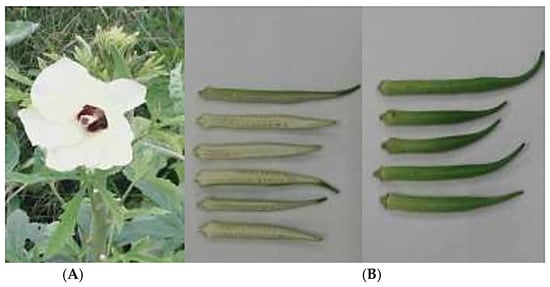
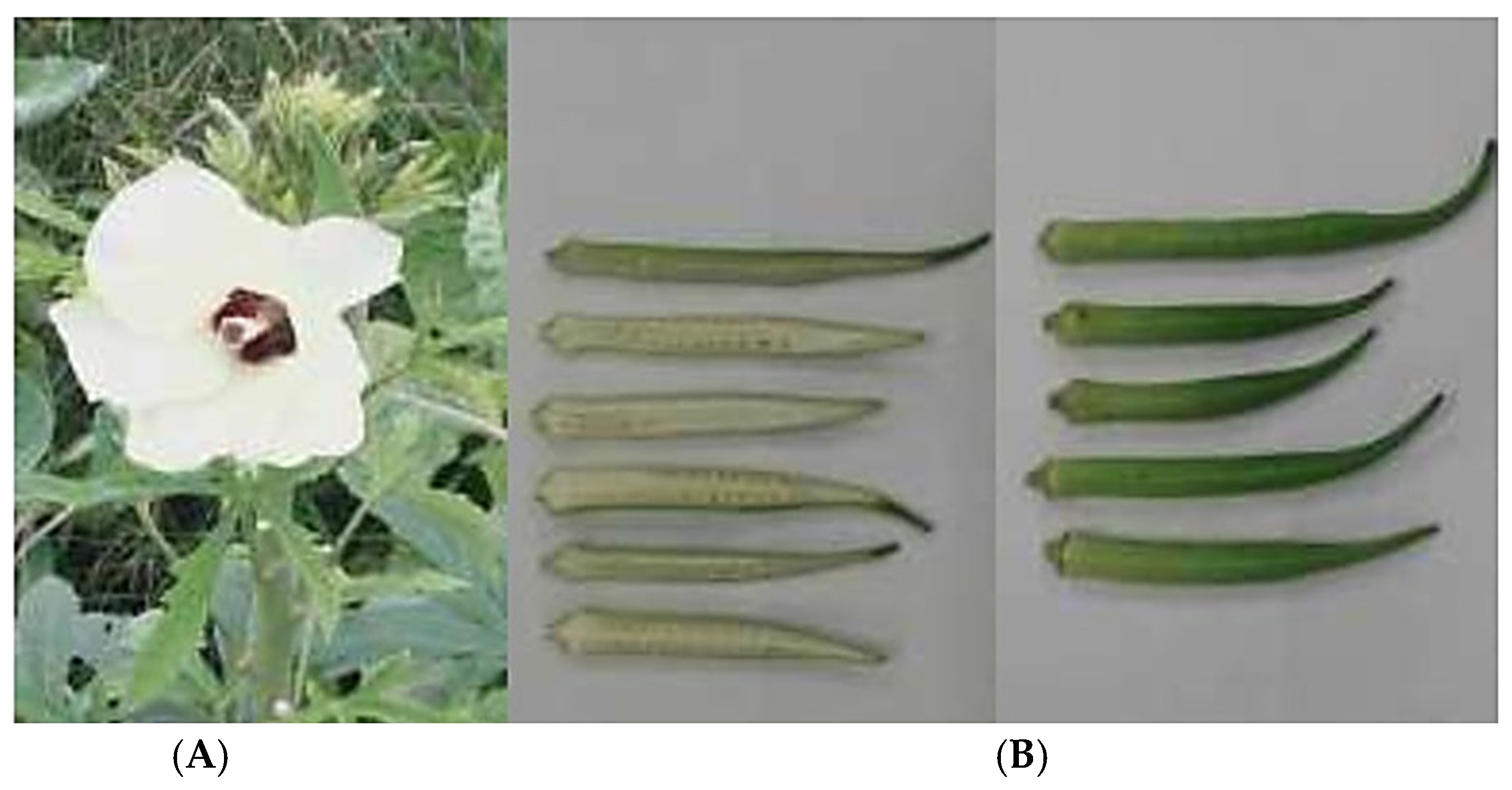
Given the scenario presented, in this study, the effects of the species Abelmoschus esculentus L. (Figure 1), popularly known as okra, on the intermediate host of schistosomiasis were investigated. This plant belongs to the Malvaceae family and has attracted interest in scientific research because of its diverse bioactive properties [5,14]. According to Abdel-Razek et al. (2021) [15], A. esculentus presents relevant pharmacological activities, including antioxidant, antidiabetic, antihyperlipidemic, and anticancer activities, in addition to immunomodulatory properties and potential effects on cancer prevention.
Figure 1.
Species Abelmoschus esculentus—Flower (A); Opened fruit with seeds (B); Whole fruit. Source: Student’s archive.
The present study aimed to evaluate the molluskicidal activity of fractions obtained from the crude ethanolic extract of A. esculentus (okra) seeds, with the goal of controlling the mollusk Biomphalaria glabrata, an intermediate host of Schistosoma mansoni, which is the etiological agent of schistosomiasis. This research sought to identify fractions with bioactive potential that can be used as a sustainable alternative and of plant origin in the fight against the transmission of the disease.
2. Materials and Methods
2.1. Plant Collection and Identification
Seeds of the species Abelmoschus esculentus were collected during the autumn, in the months of May 2016 and April 2018, at Rua Tupinambá, No. 50, Bairro Parati, Municipality of Araruama, State of Rio de Janeiro (Latitude: 22°51′42.72″ S; Longitude: 42°17′40.57″ W). Species identification was performed by Dr. Gerlene Esteves from the Herbarium RB, Rio de Janeiro Botanical Garden Research Institute, RJ. After collection, the seeds were placed in stainless-steel trays and dried in an oven at 45 °C for 24 and 48 h. Subsequently, the dried seeds were ground into a fine powder, which was stored in properly identified glass containers until the preparation and fractionation of the extracts.
2.2. Preparation and Fractionation of Extracts
Initially, the seeds were oven-dried at 45 °C and subsequently ground into a fine powder with an estimated particle size of approximately 0.5–1.0 mm. For extraction, 20 g of the powdered plant material underwent exhaustive extraction in 250 mL of ethanol using a Soxhlet extractor. The extraction was conducted at the solvent’s boiling point and continued until the solvent in the system became clear, lasting approximately 30 min. After obtaining the crude extract (1 g), it was subjected to fractionation using solvents of increasing polarity: hexane, dichloromethane, ethyl acetate, acetone, and ethanol. Each extraction step was performed at the boiling point of the solvent used and continued until the solvent became clear, for approximately 30 min.
The crude extract was mixed with 5 g of silica (SYNTH (Labsynth Produtos para Laboratório Ltda.; São Paulo, Brazil) and concentrated in a rotary evaporator until a solid pellet formed. Fractionation was performed by sequential vacuum elution with the aforementioned solvents, following the order of increasing polarity. As a result, five distinct fractions of the crude ethanolic extract were obtained: the crude ethanolic extract in hexane (Ex. Br. Fr. Hex), crude ethanolic extract in dic)hloromethane (Ex. Br. Fr. DC), crude ethanolic extract in ethyl acetate (Ex. Fr. AcO), crude ethanolic extract in acetone (Ex. Fr. Aceto), and crude ethanolic extract in ethanol (Ex. Fr. ETOH) [16].
2.3. Chemical Identification by Liquid Chromatography–Tandem Mass Spectrometry (LC–QTOF/MS) of Fractions of the Crude Ethanolic Extract of Abelmoschus esculentus Seeds
The samples were prepared and analyzed by liquid chromatography coupled with mass spectrometry (LC–QTOF–MS) at the Farmanguinhos Technology Platform (FIOCRUZ) according to the protocol described by Leite et al. (2024) [5]. The analysis was performed on a Shimadzu (Kyoto, Japan) Nexera UFLC chromatographic system coupled to a Bruker (Billerica, MA, USA) Compact Q-TOF mass spectrometer. A Raptor ARC-18 column (100 mm length × 2.1 mm inner diameter × 2.7 µm particle size) (CL-0254) was used. The samples were diluted in 1.0 mL of methanol, filtered through 0.22 µm membranes, and injected in a volume of 5 µL. The mobile phase consisted of formic acid and acetonitrile, with a flow rate of 0.5 mL/min and a total analysis time of 33.01 min.
The compounds were identified using a Q-TOF orthogonal mass spectrometer (micrOTOF-Q™, Bruker Daltonics), equipped with an electrospray ionization (ESI) source, operating in positive ionization mode. The operating parameters included: mass detection range between 100 and 1000 m/z, capillary voltage of 4500 V, end plate voltage of −500 V, loading voltage of 2000 V, drying gas temperature of 200 °C, drying gas flow of 10.0 mL/min, nebulizer gas pressure of 4 bar, collision energy (MS/MS) of 35 eV and collision gas N2.
The spectrometric data obtained were processed using Bruker Compass Data Analysis 4.2 software (Bruker Daltonics, Billerica, MA, USA). Compound identification was performed by comparing the mass spectra with data available in the LIPID MAPS® database.
2.4. Molluskicidal Assay
The assay was performed on the basis of adaptations of the methodology described by the World Health Organization (WHO, 1965) [17], as modified by Santos et al. (2017) [18], and described in the article by Leite et al. (2024) [5]. Twenty-four-well plates were used to expose snails of the species Biomphalaria glabrata to fractions obtained from Abelmoschus esculentus seeds.
Each well of the plate received one snail, totaling three individuals per concentration tested (n = 3). The snails were exposed to different concentrations of the fractions (5–100 mg/L), as well as to negative (distilled water and 1% DMSO) and positive (2 mg/L niclosamide) controls. Mortality was assessed after 24 and 48 h of exposure. Mortality was defined as deep retraction of the animal into the shell accompanied by the release of hemolymph. Death was confirmed by the absence of a response to mechanical stimulation with a stylet. All tests were performed in triplicate on different days [8,19].
2.5. Toxicity Assay on the Species Biomphalaria tenagophila and Physella acuta
Mollusks of the species Physella acuta (P. acuta) (Draparnaud, 1805) and Biomphalaria tenagophila (B. tenagophila) (D’orbigny, 1835) were collected from the drainage canal at the Oswaldo Cruz Foundation, Manguinhos Campus, Rio de Janeiro, RJ. They were kept in plastic containers containing dechlorinated water and fed lettuce leaves. The mollusks were kept in these containers for at least 48 h before being used in the assays.
P. acuta and B. tenagophila were exposed to various concentrations of A. esculentus fractions using the same methodology used for mollusks of the genus Biomphalaria in 24-well plates [18]. Three mollusks per well and three wells per concentration were used (n = 9). Niclosamide (2 mg/L) was used as positive control, and distilled water and 1% DMSO were used as negative controls. Mortality was assessed after 24 and 48 h of exposure. Mortality was defined as deep retraction of the animal into the shell accompanied by the release of hemolymph. Death was confirmed by the absence of a response to mechanical stimulation with a stylet. All tests were performed in triplicate on different days [8,19].
2.6. Ovicidal Assay
Ovicidal activity assays were conducted using adaptations of the methods described by Oliveira-Filho et al. (2010) [20], Ducrot et al. (2014) [21], and Melo et al. (2019) [22]. Egg capsules were collected on 3 × 3 cm Styrofoam plates previously immersed for 48 h in B. glabrata rearing tanks located in the Lauro Travassos Pavilion of the Oswaldo Cruz Institute, Rio de Janeiro, RJ.
After collection, three egg capsules containing embryos at different stages of development were selected using a stereomicroscope, and the remaining capsules were removed from the plates. The plates containing the adhered egg capsules were then transferred to Petri dishes containing A. esculentus seed fractions at concentrations corresponding to the LC50, LC90, and other experimental concentrations. Niclosamide at 2 mg/L (positive control), distilled water, and 1% DMSO (negative control) were also used as controls. The capsules were evaluated after 24 and 48 h of exposure under a stereomicroscope. Embryonic death was determined by the absence of rotational movement of the embryos within the eggs, by embryo disintegration, or by the presence of morphological alterations. All the assays were performed in triplicate on different days.
2.7. Toxicity Assays
2.7.1. Cell Culture
In the cell viability assay, peritoneal macrophages from adult male Swiss-Webster mice, approximately four weeks old, were used. The animals were sourced from the breeding unit located in the Hélio and Peggy Pereira Pavilion of the Oswaldo Cruz Institute/Fiocruz under license no. L039-2016.
Macrophages were obtained by injecting 10 mL of phosphate-buffered saline (PBS) into the peritoneal cavity of each animal. The cell suspension resulting from peritoneal lavage was collected and centrifuged at 1500 rpm for 5 min. The cell pellet was then resuspended in 1 mL of RPMI medium (Roswell Park Memorial Institute), and cell counts were performed using a Neubauer chamber [23].
2.7.2. Resazurin-Induced Reduction in Cytotoxicity
Peritoneal macrophages (3 × 10⁵ cells/well) were seeded in triplicate in 96-well plates supplemented with RPMI-1640/HEPES medium supplemented with 10% fetal bovine serum (FBS) and incubated at 37 °C with 5% CO2 for 24 h. After cell adhesion, the medium was replaced with RPMI without FBS containing the tested fractions at concentrations of 0.78 to 100 µg/mL, in a final volume of 200 µL, for an additional 24 h.
Next, 20 µL of resazurin (0.15 mg/mL) was added to each well, which was incubated in the dark for 4 to 6 h. Untreated macrophages served as negative control, and those treated with 0.5% Triton X-100 served as a positive control. The data were read on a spectrophotometer (570/595 nm) using SoftMax Pro v5.1 software [23].
2.7.3. In Vitro Hemocompatibility Assay
The hemocompatibility of the fractions was assessed according to the methodology described by Bauer et al. (2012) [24], with modifications. For the assay, the fractions were incubated with a 10% (v/v) human red blood cell suspension for 3 h at 37 °C. After the incubation period, the samples were centrifuged at 6000 rpm, and the degree of erythrocyte lysis was determined by measuring the absorbance of the supernatant at 517 nm using a microplate reader.
Red blood cell suspensions were prepared from blood collected by venipuncture from healthy volunteer donors who freely provided consent for blood donation for the hemocompatibility assay, using 3.8% (w/v) sodium citrate as the anticoagulant (1:9 citrate ratio). The blood was centrifuged at 2200 rpm for 10 min at room temperature to separate the plasma. The red blood cells were then washed three times with saline (0.15 M NaCl) and resuspended at 13% (v/v) in the same solution. For the assay, the samples were tested at a concentration equivalent to 100 times the previously determined LC50. NaCl (0.15 M) and 1% DMSO were used as negative controls; the positive control, 100% hemolysis, was obtained by the addition of 1% Triton X-100.
2.7.4. In Vivo Acute Toxicity Assay
The acute toxicity of the fractions was assessed in male Swiss-Webster mice by intraperitoneal (i.p.) administration of a dose equivalent to 1000 times the previously determined CL50 concentration. The fractions were incubated for 30 min at room temperature before administration. Each animal received 100 µL of the fraction i.p. As a negative control, one group of animals received 100 µL of sterile saline. Ten animals were used per experimental and control group.
Toxicity was monitored 24 h after administration. The occurrence of death (clinical mortality) and behavioral changes were compared between the treatment groups and the control group. The behavioral parameters included general activity level, signs of pain (assessed by facial expressions, such as reduced eye opening, the presence of wrinkles between the nostril and the medial corner of the eye, and the orientation of the ears toward the outside or back), and body temperature, measured with an infrared thermometer specifically for veterinary use, applied to the animals’ ventral region [8].
The experimental protocol was approved by the Animal Use Ethics Committee (CEUA) of the Oswaldo Cruz Institute/Fiocruz under number L043-2018.
2.8. Statistical Analysis
GraphPad (version 5) was used for statistical analysis. The results of the assays were analyzed by ANOVA, followed by Tukey’s test. The results are expressed as the mean ± standard error, with significance levels of *** p < 0.001, ** p < 0.01, and * p < 0.05 compared with the negative control (H2O). The LC50 and LC90 values at 48 h were determined using dispersion analysis and mathematical calculations with a graphical formula generated in Microsoft Office Excel (version 2007).
Statistical analysis of the data obtained from the resazurin reduction assay was performed using GraphPad Prism 7. The raw data in an Excel spreadsheet were tabulated, corrected, and normalized and then transferred to GraphPad Prism (version 7). In this program, the XY table was selected, and the results were then analyzed using nonlinear regression. In the dose–response–inhibition tab, “log(inhibitor) vs. response” was selected. The best-fit values appear in the following window.
3. Results
3.1. Chemical Identification by Liquid Chromatography Coupled with Mass Spectrometry (LC-QTOF/MS) of Fractions of the Species Abelmoschus esculentus
The chemical profiles of the samples were obtained via liquid chromatography–mass spectrometry (LC–MS) and compared with data available on the LipidMaps® platform for fatty acid identification, as well as with specialized literature for flavonoid identification. On the basis of this analysis, the major substances present in the ethyl acetate fraction (Ex. Br. Fr. AcO), acetone fraction (Ex. Br. Fr. Aceto), and the ethanol fraction (Ex. Br. Fr. ETOH) of the ethanolic extract were tentatively identified.
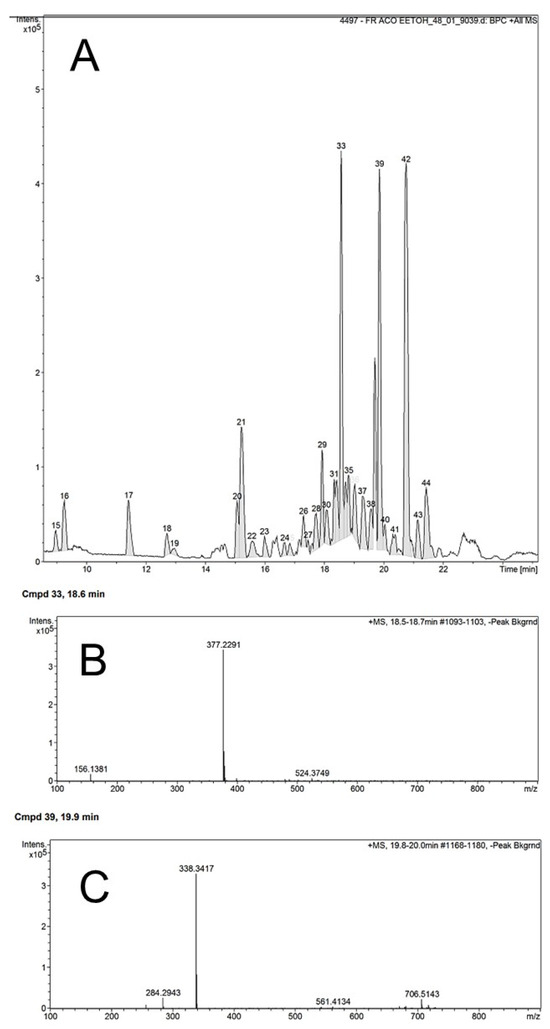
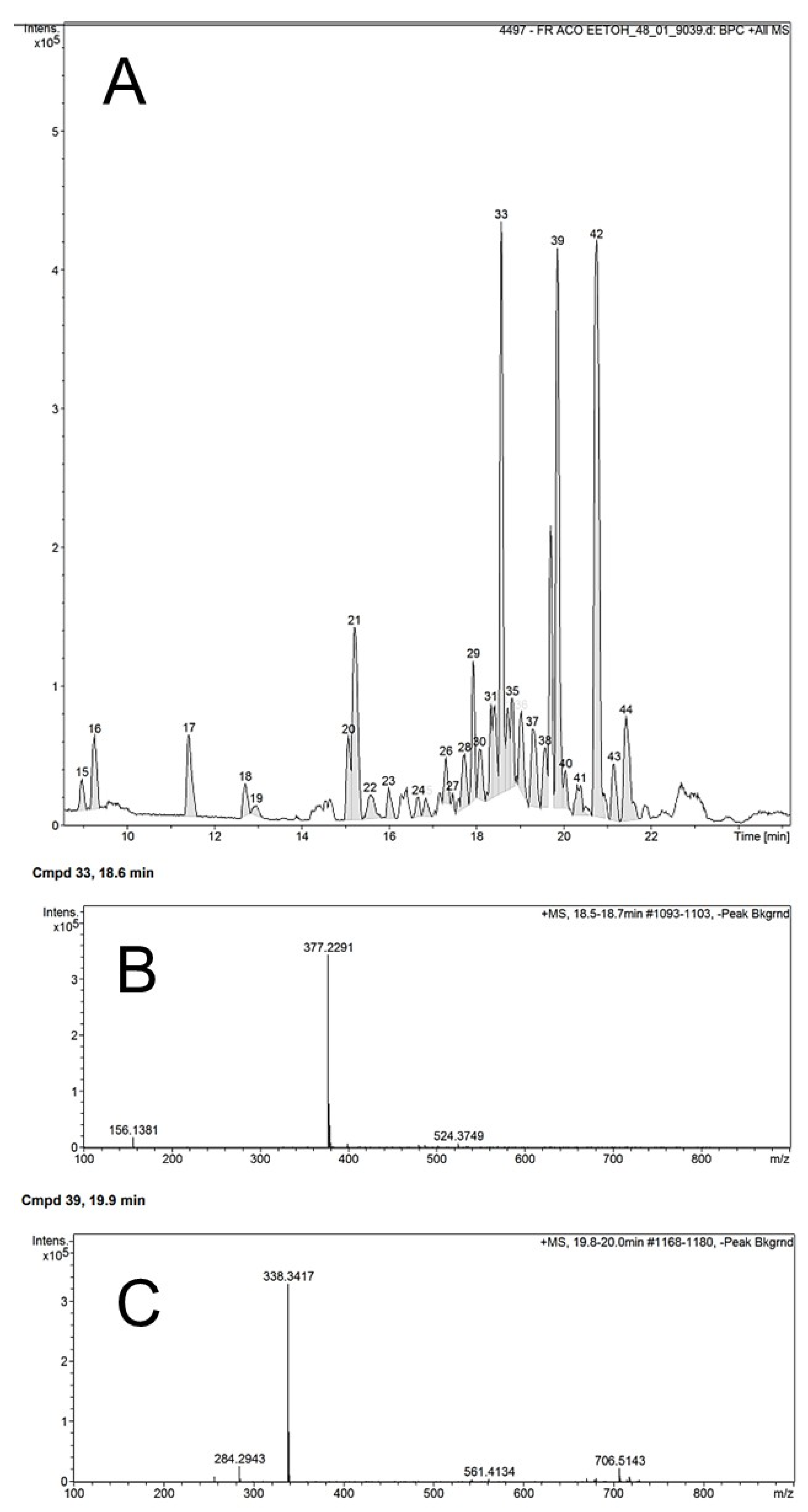
The chromatogram of Ex. Br. Fr. AcO fraction (A) and the mass spectra of the major compounds detected at retention times of 18.6 min (B) and 19.9 min (C) (Figure 2). Analysis of the chromatographic profile suggested the tentative identification of a carnitine, identified as hexacosaheptaenoylcarnitine (CAR 26:7), and a hexosylceramide, identified as hexosylceramide (31:0; O5) (HexCer 31:0; O5), as shown in Table 1. The possible chemical structures of the compounds are presented in the Supplementary Material (Table S1).
Figure 2.
Chromatogram (A) of the ethyl acetate fraction of the ethanolic extract from Abelmoschus esculentus seeds, obtained via liquid chromatography coupled with mass spectrometry (LC–QTOF/MS), and mass spectra of the major compounds corresponding to peaks 33 (B) and 39 (C), used for the chemical identification of the substances.
Table 1.
Major substances (fatty acids) tentatively identified in the ethyl acetate, acetone, and ethanol fractions of the ethanolic extract from Abelmoschus esculentus seeds. The experimental quasimolecular ion (M − H) exp., the quasimolecular ion of substances described in the LipidMaps® database (M − H) lit., and the fragments generated by ionization in the mass spectrometer (m/z) are presented.
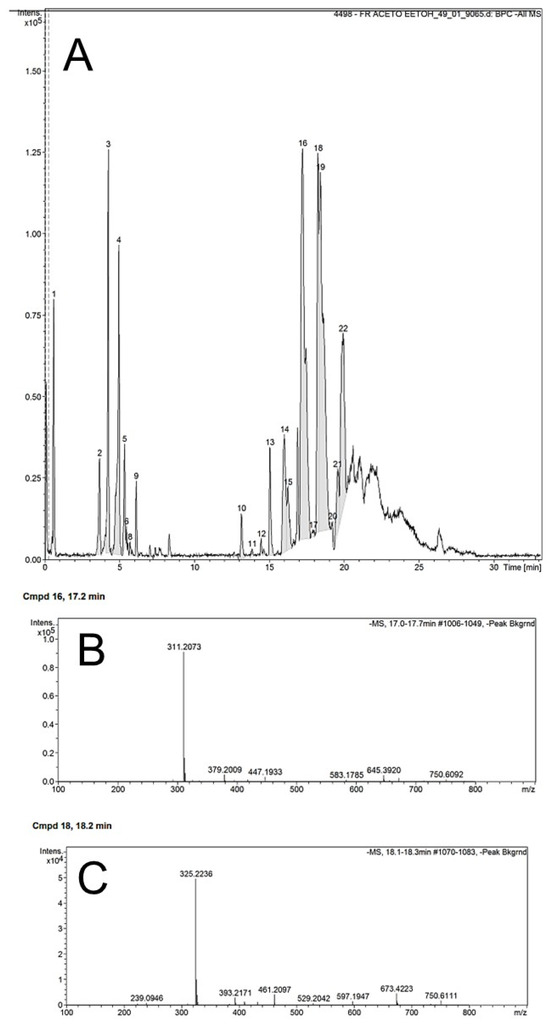
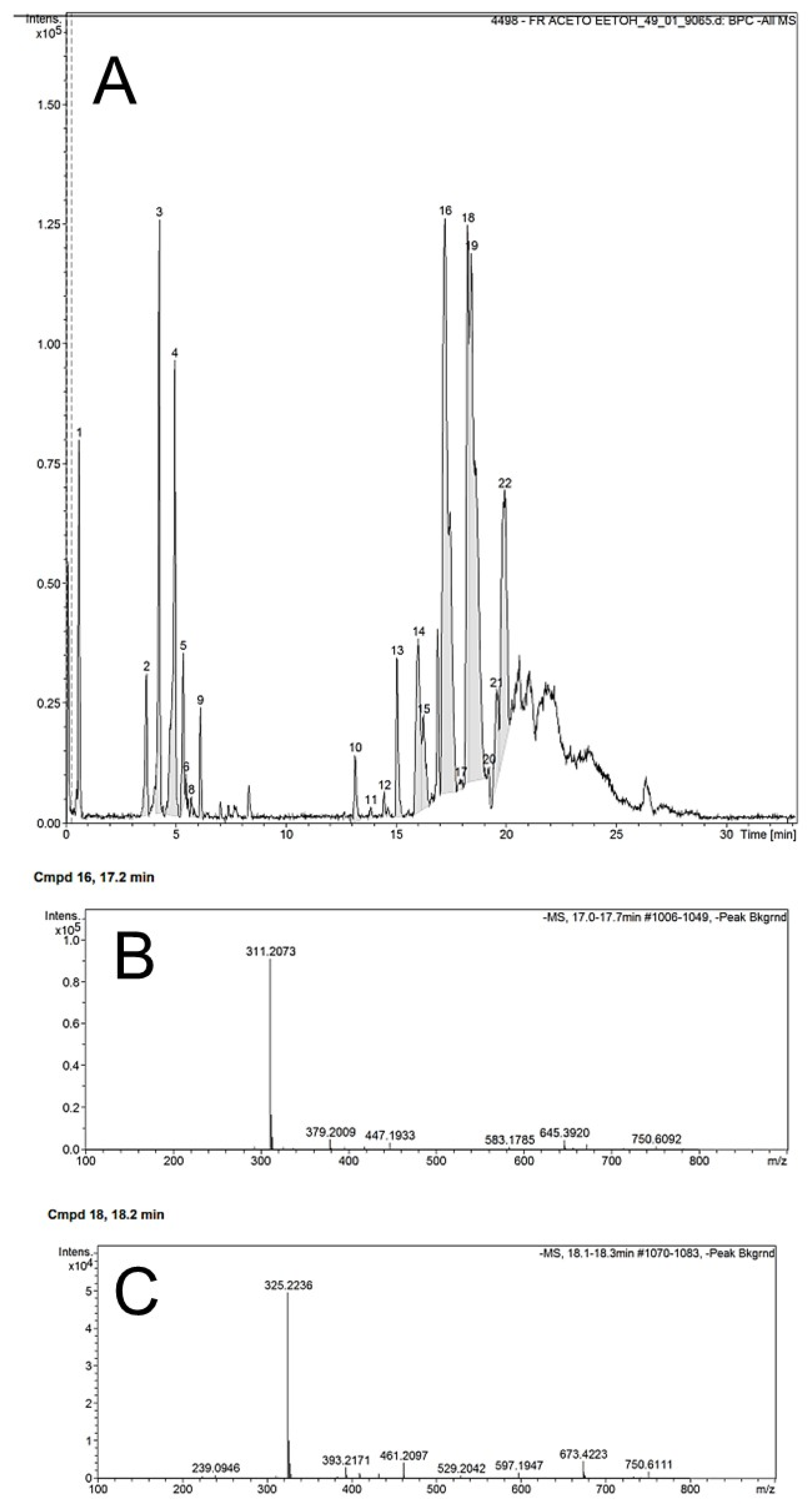
Chromatogram of the acetone fraction of the ethanolic extract (Ex. Br. Fr. Aceto) and the corresponding mass spectra of the major compounds detected at retention times of 17.2 min (B) and 18.2 min (C) are shown in Figure 3. On the basis of LC–QTOF/MS analysis and comparison with the LipidMaps® database, the major constituents were tentatively identified as the ceramides N-(dihydroxyeicosanoyl)-dihydroxypentadecasphingatrienine (Cer 45:3;O6 (25:3 O6/20:0) and N-(dihydroxyheneicosanoyl)-dihydroxytetradecasphingatrienine (Cer 45:3;O6 (24:3 O6/21:0), as summarized in Table 1. The possible chemical structures of the compounds are presented in the Supplementary Material (Table S1).
Figure 3.
Chromatogram (A) of the acetone fraction of the ethanolic extract from Abelmoschus esculentus seeds, obtained by liquid chromatography coupled with mass spectrometry, and mass spectra of the major compounds corresponding to peaks 16 (B) and 18 (C). Chemical identification was performed by LC–QTOF–MS.
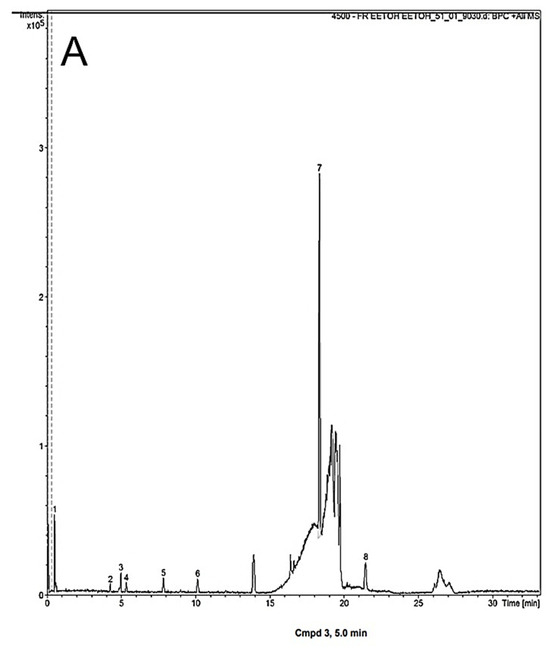
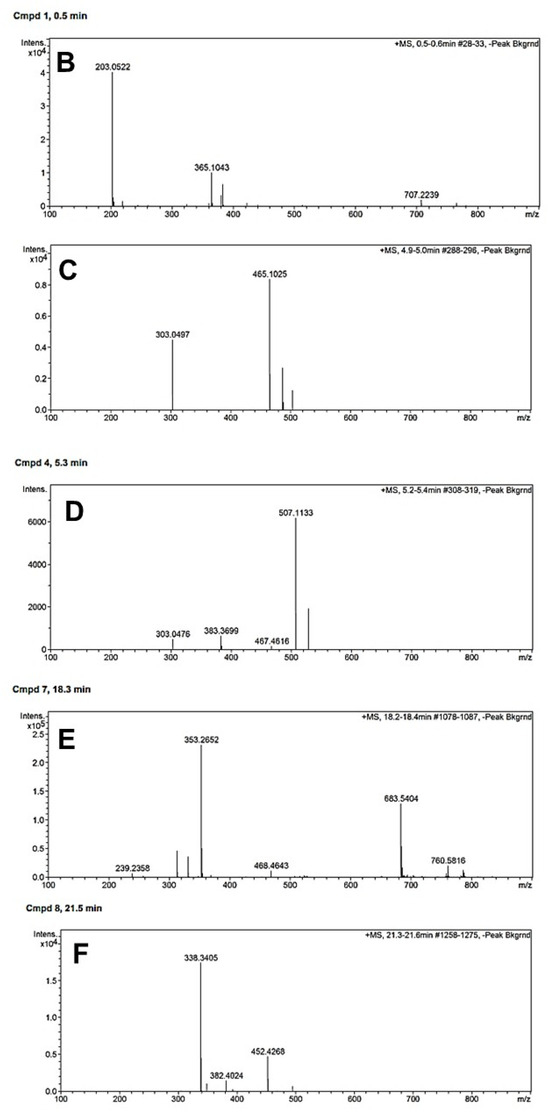
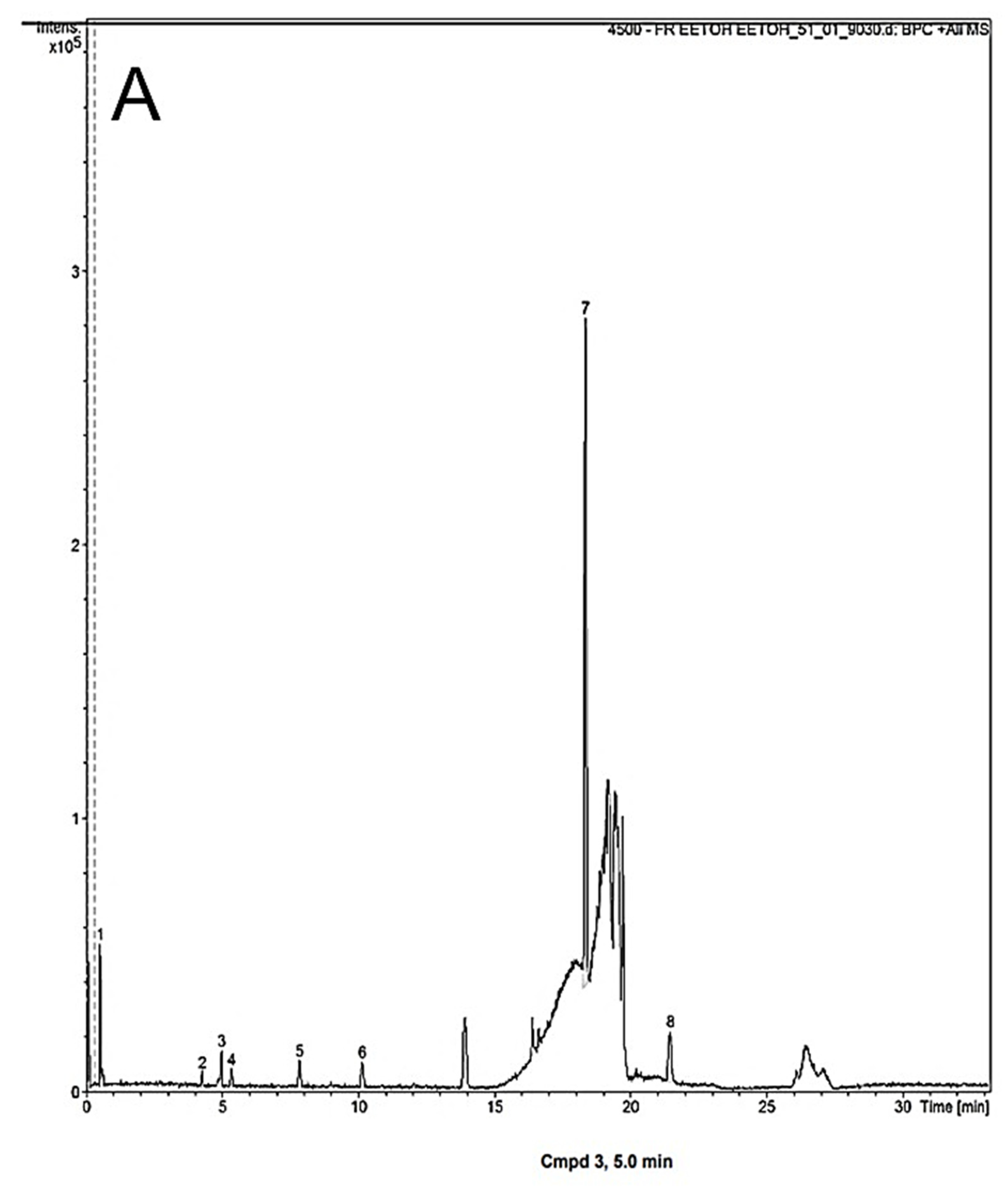
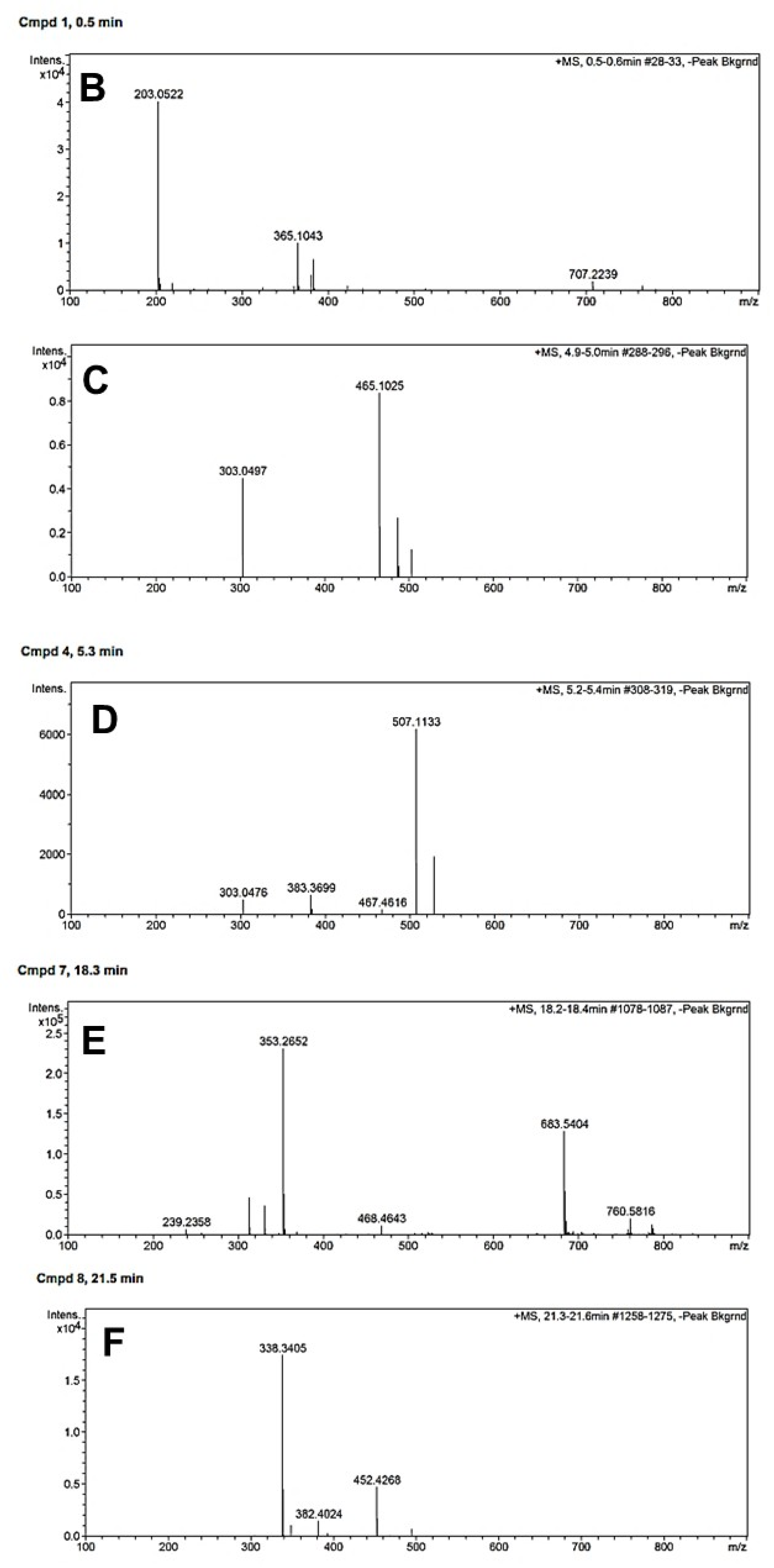
The chromatogram of Ex. Br. Fr. ETOH fraction (A) and mass spectra of the major compounds detected at retention times of 0.5 min (B), 5.0 min (C), 5.3 min (D), 18.3 min (E), and 21.5 min (F) (Figure 4). Analysis of the chromatographic profile revealed the tentative identification of a glycerophosphoethanolamine, identified as 1-docosanoyl-2-(9Z-pentadecenoyl)-glycero-3-phosphoethanolamine; an N-acylethanolamine, identified as N-(13Z-pentacosanoyl)-ethanolamine (Table 1); a peptide, alanylleucine-glucoside; and two flavonoids, quercetin-glucoside and quercetin-acetylglucoside (Table 2). Additionally, the substances 1-docosanoyl-2-(9Z-pentadecenoyl)-glycero-3-phosphoethanolamine and 1,3-hydroxypropan-2-yl-pentadocosamine were tentatively identified. The possible chemical structures of the compounds are presented in the Supplementary Material (Table S1).
Figure 4.
Chromatogram (A) of the ethanol fraction of the ethanolic extract from Abelmoschus esculentus seeds, obtained by liquid chromatography coupled with mass spectrometry, and mass spectra of the major compounds corresponding to peaks 1 (B), 3 (C), 4 (D), 7 (E), and 8 (F), analyzed by LC–QTOF/MS.
Table 2.
Major substances (flavonoids and peptides) tentatively identified in the ethyl acetate, acetone, and ethanol fractions obtained from the ethanolic extract of Abelmoschus esculentus seeds. Protonated quasimolecular mass (M + H) and main fragment ions (m/z) generated by mass spectrometry (MS/MS).
3.2. Molluskicidal Assay
3.2.1. Molluskicidal Activity in Adult Biomphalaria glabrata (10–12 mm)
In the ethyl acetate fraction of the ethanolic extract (Ex. Br. Fr. AcO), mollusk mortality was observed at a concentration of 35 mg/L, and 100% mortality was observed at a concentration of 75 mg/L. After 48 h of exposure, the LC50 concentration was 41.76 mg/L, and the LC90 concentration was 61.25 mg/L. The acetone fraction of the ethanolic extract (Ex. Br. Fr. Aceto) resulted in mortality at a concentration of 25 mg/L and 100% mortality at a concentration of 100 mg/L. This fraction had an LC50 of 56.41 mg/L and an LC90 of 96.40 mg/L after 48 h. For the dichloromethane fraction of the ethanolic extract (Ex. Br. Fr. DC), mortality was observed at 75 mg/L and above, with 100% deaths at the 100 mg/L concentration. The LC50 and LC90 values were 66.67 mg/L and 96.64 mg/L, respectively, after 48 h. The ethanolic fraction of the ethanolic extract (Ex. Br. Fr. ETOH) resulted in mortality at 25 mg/L and above, with 100% deaths at the 100 mg/L concentration. The LC50 and LC90 values were 60.91 mg/L and 98.91 mg/L, respectively. The hexane fraction of the ethanolic extract (Ex. Br. Fr. Hex) showed low toxicity, with 33.33% mortality at a concentration of 100 mg/L. Therefore, we did not calculate the CL50 and CL90 values for this fraction (Table 3).
Table 3.
LC50 and LC90 of fractions of the ethanol extract of Abelmoschus esculentus seeds on adult mollusks (10 to 12 mm) of Biomphalaria glabrata compared to the values recommended by the WHO.
3.2.2. Molluskicidal Activity in Young Biomphalaria glabrata (6–8 mm)
The Ex. Br. The Fr. AcO fraction showed mortality starting at a concentration of 50 mg/L, reaching 100% mortality at 75 mg/L. The LC50 and LC90 values after 48 h were 47.92 mg/L and 72.92 mg/L, respectively. For the Ex. Br. With respect to the Fr. Aceto fraction, mortality was also observed starting at 50 mg/L, with 100% deaths at a concentration of 85 mg/L. This fraction had an LC50 concentration of 51.23 mg/L and an LC90 concentration of 81.72 mg/L. The Ex. Br. The Fr. DC fraction caused mortality starting at a concentration of 100 mg/L, reaching 100% death at 150 mg/L. The LC50 and LC90 values were 101.94 mg/L and 141.04 mg/L, respectively. The Ex. Br. The fraction of Fr. ETOH showed mortality at 65 mg/L and above, reaching 100% mortality at 75 mg/L, with LC50 values of 48.66 mg/L and an LC90 of 75.34 mg/L. Finally, the Ex. Br. The Hex fraction demonstrated low toxicity to young snails (6 to 8 mm) (Table 4).
Table 4.
LC50 and LC90 of fractions of the ethanol extract of Abelmoschus esculentus seeds on young mollusks (6–8 mm) of Biomphalaria glabrata compared to the values recommended by the WHO.
3.2.3. Molluskicidal Activity in Young Biomphalaria glabrata (3–5 mm)
The Ex. Br. The Fr. AcO fraction showed mortality starting at a concentration of 50 mg/L, with 100% deaths at 75 mg/L. The LC50 and LC90 values obtained were 46.56 mg/L and 72.2 mg/L, respectively. For the Ex. Br. With respect to the Fr. Aceto fraction, mortality was observed starting at 75 mg/L and reaching 100% at a concentration of 100 mg/L. The calculated LC50 concentration was 66.03 mg/L, and the LC90 concentration was 95.59 mg/L. The Ex. Br. The Fr. DC fraction showed mortality starting at 100 mg/L, with 100% deaths at 150 mg/L, resulting in an LC50 of 99.2 mg/L and an LC90 of 135.99 mg/L. In the Ex. Br. With respect to the Fr. ETOH fraction, mortality was observed starting at a concentration of 55 mg/L, and 100% lethality was observed at a concentration of 75 mg/L. The LC50 and LC90 values were 47.71 mg/L and 74.41 mg/L, respectively. The Ex. Br. The percentage of the fraction in which the fraction was Hex was depleted was 115 mg/L, with 100% mortality at a concentration of 150 mg/L, with an LC50 of 99.05 mg/L and an LC900 of 136.87 mg/L (Table 5).
Table 5.
LC50 and LC90 of fractions of the ethanol extract of Abelmoschus esculentus seeds on young mollusks (3–5 mm) of Biomphalaria glabrata compared to the values recommended by the WHO.
3.3. Toxicity Assay on the Species Biomphalaria tenagophila and Physella acuta
The environmental toxicity of the fractions obtained from Abelmoschus esculentus was evaluated in mollusks of the species Biomphalaria tenagophila and Physella acuta.
For the Ex. Br. In the Fr. AcO fraction, mollusk mortality occurred at concentrations of 25 mg/L and above, reaching 100% mortality at a concentration of 75 mg/L. This fraction presented LC50 values of 37.21 mg/L and LC90 values of 62.28 mg/L. The Ex. Br. The fraction of Fr. Hex caused 100% mortality at concentrations of 100 mg/L and above, with an LC50 concentration of 34.97 mg/L and an LC90 concentration of 71.05 mg/L. The fractions Ex. Br. Fr. DC and Ex. Br. Fr. ETOH did not cause mortality at concentrations up to 100 mg/L in the mollusks of the species B. tenagophila (Table 6).
Table 6.
LC50 and LC90 of fractions of the ethanol extract of Abelmoschus esculentus seeds on Biomphalaria tenagophila.
Tests carried out with Physella acuta demonstrated different levels of toxicity among the fractions obtained from Abelmoschus esculentus. The fraction Ex. Br. Fr. AcO caused mortality at a concentration of 50 mg/L, with 100% deaths observed at 75 mg/L, resulting in LC50 values of 43.88 mg/L and LC90 of 68.93 mg/L. For the fraction Ex. Br. Fr. Aceto, mortality was observed at 50 mg/L, reaching 100% mortality at a concentration of 100 mg/L, with an LC50 of 65.55 mg/L and an LC90 of 98.49 mg/L. The fraction Ex. Br. Fr. ETOH also caused mortality at a concentration of 50 mg/L, with 100% deaths at 75 mg/L. The fractions Ex. Br. Fr. Hex and Ex. Br. Fr. DC did not have any toxic effect on P. acuta (Table 7).
Table 7.
LC50 and LC90 of fractions of the ethanol extract of Abelmoschus esculentus seeds on Physella acuta.
3.4. Ovicidal Assay
The Ex. Br. The fraction of Fr. Hex showed mortality starting at a concentration of 25 mg/L, reaching 100% mortality at a concentration of 100 mg/L. The LC50 and LC90 values were 43.77 mg/L and 72.30 mg/L, respectively. The Ex. Br. The Fr. DC fraction demonstrated low toxicity, with only 9.62% mortality observed at a concentration of 100 mg/L. Owing to its low lethality, it was not possible to calculate the LC50 and LC90 values. The Ex. Br. The Fr. AcO fraction showed toxicity starting at 25 mg/L, with 100% embryonic mortality recorded at a concentration of 75 mg/L. For this fraction, the LC50 and LC90 values were 40.56 mg/L and 65.84 mg/L, respectively. The Ex. Br. The FA fraction also showed a toxic effect at 25 mg/L and above, reaching 100% mortality at a concentration of 75 mg/L. The LC50 and LC90 values were 59.93 mg/L and 99.16 mg/L, respectively. Finally, the Ex. Br. The Fr. ETOH fraction caused mortality at concentrations of 25 mg/L and above, with 100% of the embryos dying at 75 mg/L. This fraction presented an LC50 concentration of 37.82 mg/L and an LC90 concentration of 60.39 mg/L (Table 8).
Table 8.
LC50 and LC90 values of the fractions of the ethanolic extract of Abelmoschus esculentus seeds on Biomphalaria glabrata embryos.
3.5. Toxicity Assays in Mammalians
The proposed use of these fractions as molluskicides highlights the need to evaluate their safety for humans, especially considering the possibility of direct or indirect exposure. In real-world application scenarios, contact with skin, eyes, and mucous membranes, particle inhalation, or even accidental ingestion may occur. Therefore, investigating the toxicity of these substances is essential for ensuring their viability as safe products for environmental use [25].
3.5.1. Resazurin-Induced Reduction in Cytotoxicity
The fractions Ex. Br. Fr. Hex and Ex. Br. Fr. DC reduced the metabolic activity of peritoneal macrophages starting at a concentration of 50 µg/mL. At a concentration of 100 µg/mL, this reduction was like that observed with positive control, indicating that both fractions, at these concentrations, can interfere with cellular metabolism, inhibiting the reduction in resazurin in mammalian cells. Despite this, both presented CC50 values greater than 100 µg/mL (Table 9), suggesting low cytotoxicity.
Table 9.
CC50 values in the resazurin reduction assay of fractions of the ethanolic extract of Abelmoschus esculentus seeds on mouse peritoneal macrophages.
3.5.2. In Vitro Hemocompatibility Assay
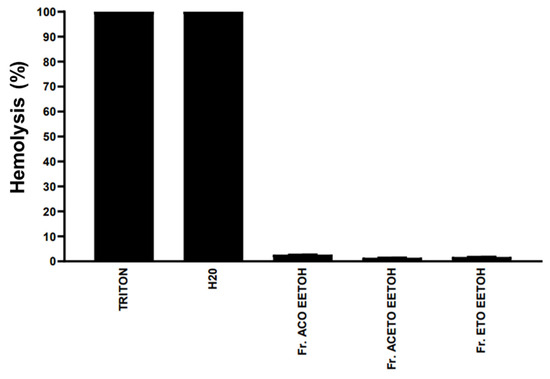
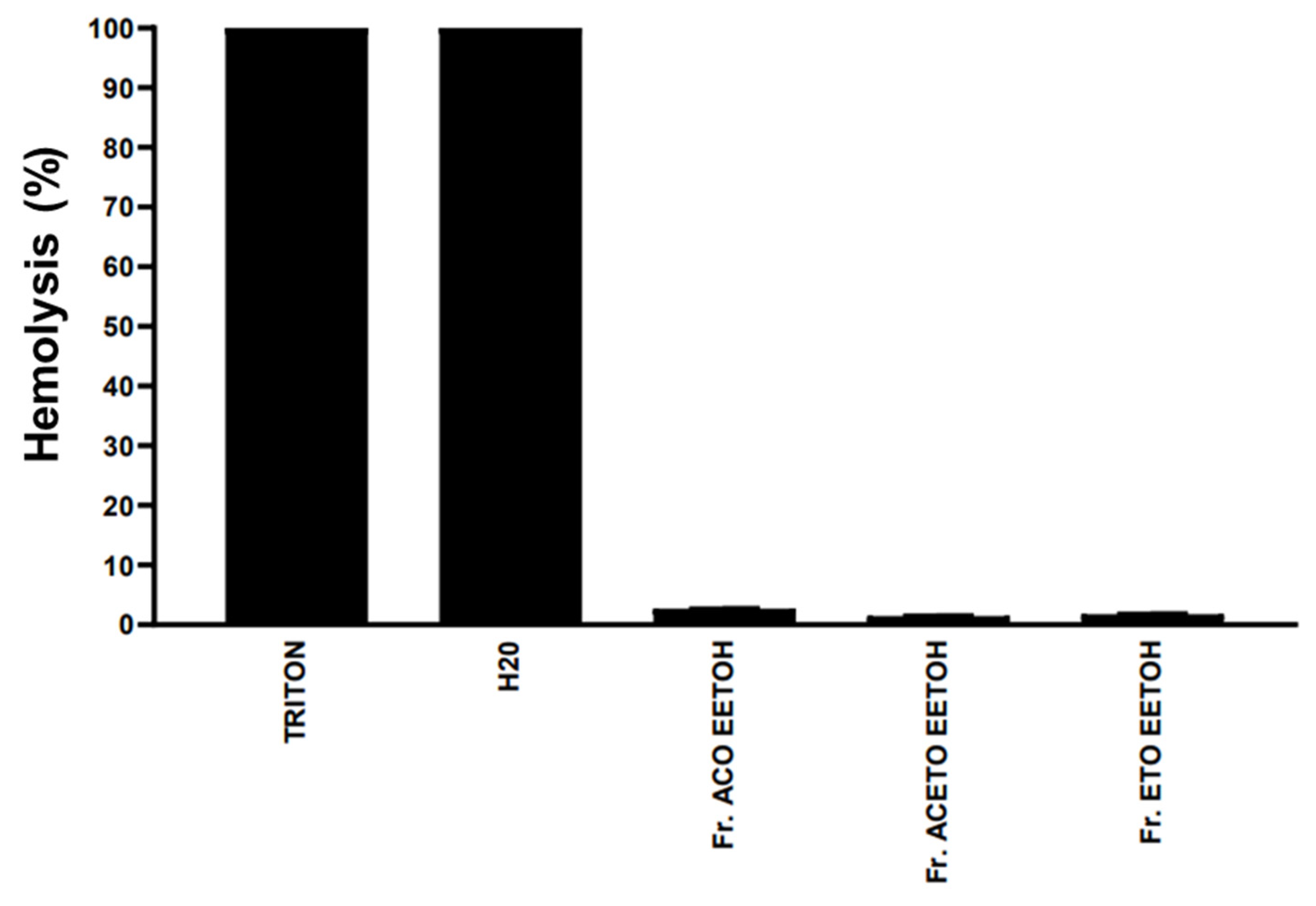
The toxicity of the fractions was also assessed using a hemocompatibility assay in which human red blood cells were incubated for 3 h at 37 °C. The test was applied to the fractions that showed the best ovicidal activity, tested at concentrations 100 times higher than their respective LC50 values: Ex. Br. Fr. AcO (4.176 mg/L), Ex. Br. Fr. Aceto (5.641 mg/L), and Ex. Br. Fr. ETOH (6.091 mg/L) (Figure 5).
Figure 5.
Hemolysis rate (percentage) after 3 h of incubation at 37 °C for the fractions in ethyl acetate (Ex. Br. Fr. AcO), acetone (Ex. Br. Fr. Aceto), and ethanol (Ex. Br. Fr. ETOH) of the ethanol extract of Abelmoschus esculentus seeds, the negative control (H2O), and the positive control (Triton X-100 (1%)).
According to Bauer et al. (2012) [24], hemolysis values less than 10% are considered acceptable for compounds that are candidates for new drugs. The results obtained demonstrated that all the fractions analyzed presented hemolysis rates below this limit, suggesting that at the concentrations evaluated, there is no evidence of significant hemolytic toxicity.
3.5.3. In Vivo Acute Toxicity Assay
The fractions Ex. Br. Fr. AcO (41.760 mg/L), Ex. Br. Fr. Aceto (56.410 mg/L) and Ex. Br. Fr. ETOH (60.910 mg/L), tested at doses 1000 times higher than their respective LC50, did not show acute toxicity in mice. All the animals survived the 24 h period after intraperitoneal administration of the fractions. Furthermore, no changes were observed in the evaluated behavioral parameters, indicating the absence of clinical signs of toxicity under the tested conditions (Table 10).
Table 10.
Survival rate (%) of mice 24 h after intraperitoneal injection of ethyl acetate (Ex. Br. Fr. AcO), acetone (Ex. Br. Fr. Aceto) and ethanol (Ex. Br. Fr. ETOH) fractions of the ethanolic extract of Abelmoschus esculentus seeds, which were administered at doses corresponding to 1000 times the CL50 concentration.
4. Discussion
The search for novel botanical control agents against the intermediate hosts of schistosomiasis constitutes an important component of global public health strategies aimed at controlling this chronic neglected tropical disease, which disproportionately affects socioeconomically and sanitarily vulnerable populations [1,2]. Currently, population suppression strategies for snail hosts of the genus Biomphalaria rely predominantly on the use of synthetic niclosamide, the only commercially available molluscicide recommended by the World Health Organization [9,17]. However, the use of niclosamide presents important challenges, including the potential selection of resistant snail populations, operational costs, and adverse effects on nontarget aquatic organisms due to its broad toxicity [8,13]. In this context, the investigation of plant-derived products represents a potential complementary approach for the control of intermediate snail hosts. Among the species that may be considered for this purpose, Abelmoschus esculentus (okra), including its seeds as an agricultural byproduct, is a candidate of interest due to its diverse phytochemical composition. Therefore, the evaluation of A. esculentus seed extracts and their fractions may provide an initial basis for investigating their potential as botanical molluscicidal agents against Biomphalaria species and, consequently, as a possible complementary tool for schistosomiasis control.
The biological activity observed for A. esculentus seed fractions may be related, at least in part, to the presence of polyphenols and glycosylated flavonols, including quercetin-3-O-gentiobiose, rutin, and isoquercitrin, previously reported among the major antioxidant constituents of the species by Lin et al. (2019) [26]. These compounds may contribute to the observed molluscicidal activity through their ability to interact with cellular components and modulate oxidative processes. In particular, their antioxidant and redox-related properties may influence the balance of reactive oxygen species (ROS), potentially leading to oxidative disturbances when cellular antioxidant defenses are overwhelmed. Such alterations could affect membrane integrity and cellular homeostasis, which may contribute to the physiological impairment and mortality of mollusks.
The potential contribution of phenolic compounds to the biological activity of A. esculentus is also consistent with findings reported for other plant species. For example, Syzygium cumini seed extracts rich in phenolic compounds such as gallic acid, epicatechin, and catechin have demonstrated antioxidant activity in DPPH and ABTS assays [27]. Although antioxidant activity does not necessarily indicate molluscicidal effects, the presence of structurally diverse phenolic compounds in plant extracts may contribute to multiple biological interactions. Therefore, the molluscicidal activity observed in the present study may result from the combined action of different chemical classes rather than from a single constituent.
The biological relevance of phenolic compounds and other plant-derived metabolites has been widely associated with their ability to modulate oxidative processes. Studies with phenolic compounds from Vernonia amygdalina and volatile constituents of clove (Eugenia caryophyllata), such as eugenol, have demonstrated antioxidant activity in complementary assays, including DPPH and FRAP [28,29]. Similarly, compounds from saffron (Crocus sativus), including crocin and safranal, have been associated with antioxidant and protective effects [30]. These findings support the hypothesis that phenolic and other redox-active compounds present in A. esculentus fractions may participate in the modulation of oxidative processes.
Other classes of natural compounds may also contribute to biological activity through complementary mechanisms. Diterpenoids and other redox-active metabolites have been reported to modulate free-radical processes [31], while bioactive peptides may influence cellular antioxidant defenses and intracellular redox balance [32]. Therefore, the activity of A. esculentus fractions may result from the combined effects of different classes of metabolites acting on multiple cellular processes. A possible mechanism is the disruption of redox homeostasis, which could lead to oxidative imbalance and subsequent impairment of essential cellular functions in mollusks.
Beyond their potential activity against schistosomiasis vectors, A. esculentus seeds have been investigated for several biological activities, including antioxidant and anti-inflammatory effects [33,34,35]. These reports provide a broader context for the biological properties of the species, although such effects cannot be directly extrapolated to the molluscicidal activity observed in the present study. In our assays, the evaluated fractions showed low cytotoxicity toward mouse peritoneal macrophages, with CC50 values above 100 μg/mL, and exhibited low hemolytic activity against human erythrocytes [24]. These findings suggest a favorable in vitro safety profile under the conditions evaluated. The low cytotoxicity and hemolysis observed may be associated with the ability of some constituents of A. esculentus to interact with cellular membranes and regulate oxidative processes, as previously suggested for phenolic-rich plant extracts [36].
From a sustainability perspective, the use of agricultural coproducts such as A. esculentus seeds represents an interesting approach for the investigation of plant-derived molluscicidal agents, particularly because these materials may provide an accessible source of bioactive compounds [37]. In the present study, the fractions obtained from okra seeds showed different levels of activity against target and nontarget snails. Although the ethyl acetate fraction (Ex. Br. Fr. AcO) showed moderate toxicity toward the nontarget species Physella acuta (LC50 = 43.88 mg/L), the hexane (Ex. Br. Fr. Hex) and dichloromethane (Ex. Br. Fr. DC) fractions did not produce toxicity under the conditions evaluated. These findings suggest that fraction-specific differences in chemical composition may influence both molluscicidal activity and toxicity toward nontarget organisms.
The ethyl acetate fraction (Ex. Br. Fr. AcO) showed the highest molluscicidal activity against adult B. glabrata, with LC50 and LC90 values of 41.76 and 61.25 mg/L, respectively, which are below the WHO reference value of 100 mg/L [17]. The fractions also affected the development of B. glabrata embryos, with LC90 values of 65.84 mg/L for Ex. Br. Fr. AcO and 60.39 mg/L for Ex. Br. Fr. ETOH. The activity against embryos may be associated with interference in essential physiological processes during development, potentially involving disruption of membrane integrity, oxidative imbalance, or impairment of enzymatic pathways.
The differences in susceptibility observed between aquatic gastropods and mammalian cells may be related to differences in physiology, metabolism, and exposure pathways. In aquatic mollusks, direct contact with the surrounding water may facilitate exposure of external tissues to the bioactive constituents present in the fractions, potentially affecting membrane integrity, osmotic balance, and cellular homeostasis. In addition, interference with metabolic or enzymatic pathways may contribute to the physiological impairment observed after exposure. In mammals, the low cytotoxicity and hemolytic activity observed in the present study may reflect differences in cellular responses and xenobiotic metabolism.
Overall, the results indicate that fractions obtained from A. esculentus seeds, particularly the ethyl acetate fraction (Ex. Br. Fr. AcO), exhibit promising molluscicidal activity against different developmental stages of B. glabrata. The observed activity, together with the low cytotoxicity and hemolytic effects detected under the tested conditions, supports further investigation of these fractions as potential plant-derived molluscicidal agents. However, additional studies are required to identify the compounds responsible for the activity, elucidate their mechanisms of action, and assess long-term toxicity, environmental effects, and responses of a broader range of nontarget organisms before their potential application in schistosomiasis control can be established.
5. Conclusions
The results of this study demonstrate the molluscicidal potential of fractions obtained from crude extracts of Abelmoschus esculentus seeds, particularly the ethyl acetate fraction (Ex. Br. Fr. AcO), which presented LC90 values within the WHO recommendations (≤100 mg/L) for adults, juveniles, and embryos of Biomphalaria glabrata. Furthermore, this fraction demonstrated molluscicidal activity against B. tenagophila and Physella acuta. The Ex. Br. Fr. AcO and Ex. Br. Fr. ETOH fractions also exhibited good hemocompatibility, supporting their potential for further investigation as plant-derived molluscicidal agents. However, the present study did not investigate the mechanisms of action or long-term safety of the active fractions. Further studies should therefore focus on identifying the compounds responsible for the molluscicidal activity, elucidating their mechanisms of action, and evaluating their long-term toxicity and environmental safety. Thus, the Ex. Br. Fr. AcO fraction may be considered a promising candidate for further investigation in the development of plant-based molluscicides for schistosomiasis control.
Supplementary Materials
The following supporting information can be downloaded at https://www.mdpi.com/article/10.3390/separations13100280/s1, Table S1: Substances and probable chemical structures tentatively identified in the ethyl acetate, acetone, and ethanol fractions obtained from the ethanolic extract of Abelmoschus esculentus seeds.
Author Contributions
K.N.F.G. performed the experiments, analyzed and interpreted the data, and wrote the paper. J.C.V.Á.L. performed the experiments and analyzed and interpreted the data. L.d.S.R. performed the experiments and analyzed and interpreted the data. R.D.G.d.A. performed the plant extract identification. I.S. wrote the paper. J.A.A.d.S. provided plant extracts, supervised the study and approved the final version of the manuscript. R.X.F. interpreted the data, supervised the study, and approved the final version of the manuscript. All authors have read and agreed to the published version of the manuscript.
Funding
This work was supported by CNPq (National Council of Research of Brazil) (RXF holds a grant with Fellowship Process Number 302890/2025-4), FAPERJ (Research Support Foundation of the State of Rio de Janeiro): CNE (Scientist from Our State) with Fellowship (process number E-26/203.761/2025) and E-26/210.144/2023; Doutorado Nota 10 (PD10) Program [E-26/201.652/2025] and Coordination for the Improvement of Higher Education Personnel (CAPES) with support through scholarships. The authors have no relevant financial or nonfinancial interests to disclose.
Institutional Review Board Statement
The animal study protocol was approved by the Animal Use Ethics Committee (CEUA) of the Oswaldo Cruz Institute/Fiocruz under number L043-2018.
Data Availability Statement
The original contributions presented in this study are included in the article/Supplementary Material. Further inquiries can be directed to the corresponding author.
Acknowledgments
We thank the Universidade Federal Fluminense and the Postgraduate Program in Science and Biotechnology; the team of the Laboratório de Avaliação e Promoção da Saúde Ambiental, Instituto Oswaldo Cruz; the Laboratório de Malacologia, Instituto Oswaldo Cruz; and the Farmanguinhos Technology Platform. We also thank CNPq (National Council of Research of Brazil), FAPERJ (Research Support Foundation of the State of Rio de Janeiro), and CAPES (Coordination for the Improvement of Higher Education Personel) for their financial support. Financial and material support was obtained from the National Council of Research of Brazil (CNPq), the Research Support Foundation of the State of Rio de Janeiro (FAPERJ) and the Coordination for the Improvement of Higher Education Personnel (CAPES).
Conflicts of Interest
The authors declare that they have no conflicts of interest.
Abbreviations
1% dimethyl sulfoxide (1% DMSO); 50% cytotoxic concentration (CC50); Abelmoschus esculentus (A. esculentus); Biomphalaria glabrata (B. glabrata); Biomphalaria straminea (B. straminea); Biomphalaria tenagophila (B. tenagophila); Crude ethanolic extract in acetone (Ex. Fr. Aceto); Crude ethanolic extract in dichloromethane (Ex. Br. Fr. DC); Crude ethanolic extract in ethanol (Ex. Fr. ETOH); Crude ethanolic extract in ethyl acetate (Ex. Fr. AcO); Crude ethanolic extract in hexane (Ex. Br. Fr. Hex); Lethal concentration 50% (LC50); Lethal concentration 90% (LC90); liquid chromatography coupled with mass spectrometry (LC–QTOF–MS); Neglected tropical diseases (NTDs); Physella acuta (P. acuta); Schistosoma mansoni (S. mansoni); World Health Organization (WHO).
References
- Hao, Y.; Tian, T.; Zhu, Z.; Chen, Y.; Xu, J.; Han, S.; Qian, M.; Zhang, Y.; Li, S.; Wang, Q. Accelerating the Control and Elimination of Major Parasitic Diseases in China—On World NTD Day 2024. China CDC Wkly. 2024, 6, 95–99. [Google Scholar] [CrossRef] [Scilit] [PubMed] [PubMed Central]
- O’Ferrall, A.M.; Musaya, J.; Stothard, J.R.; Roberts, A.P. Aligning antimicrobial resistance surveillance with schistosomiasis research: An interlinked One Health approach. Trans. R. Soc. Trop. Med. Hyg. 2024, 118, 498–504. [Google Scholar] [CrossRef] [Scilit] [PubMed]
- Buonfrate, D.; Ferrari, T.C.A.; Adegnika, A.A.; Russell Stothard, J.; Gobbi, F.G. Human schistosomiasis. Lancet 2025, 383, 2253–2264. [Google Scholar] [CrossRef] [Scilit] [PubMed]
- Fasogbon, I.V.; Ondari, E.N.; Tusubira, D.; Rangasamy, L.; Venkatesan, J.; Musyoka, A.M.; Aja, P.M. Recent focus in non-selex-computational approach for de novo aptamer design: A mini review. Anal. Biochem. 2025, 699, 115756. [Google Scholar] [CrossRef] [Scilit] [PubMed]
- Leite, J.C.V.A.; Rangel, L.d.S.; Gomes, K.N.F.; de Albuquerque, R.D.D.G.; dos Santos, J.A.A.; Faria, R.X. Effects of Abelmoschus esculentus Extracts and Fractions on Embryos and Adult Individuals of Biomphalaria glabrata (Say, 1818) and on Schistosoma mansoni Cercariae. Separations 2024, 11, 99. [Google Scholar] [CrossRef] [Scilit]
- Rossi, B.; Previtali, L.; Salvi, M.; Gerami, R.; Tomasoni, L.R.; Quiros-Roldan, E. Female Genital Schistosomiasis: A Neglected among the Neglected Tropical Diseases. Microorganisms 2024, 12, 458. [Google Scholar] [CrossRef] [Scilit] [PubMed]
- Mutapi, F.; Garba, A.; Woolhouse, M.; Kazyoba, P. Pediatric schistosomiasis: Last mile preparations for deploying pediatric praziquantel. Trends Parasitol. 2024, 40, 687–695. [Google Scholar] [CrossRef] [Scilit] [PubMed]
- Farias Gomes, K.N.; Machado, F.P.; Mota, E.M.; da Silva, A.C.R.; Xavier, M.G.; Menezes, J.T.d.C.e.; do Valle, A.F.; da Silva, L.L.; Leite, B.d.F.; Rocha, L.; et al. Potential of Essential Oils from Cymbopogon winterianus Jowitt: Promising Evaluation for the Control of Mollusks and Embryos of Biomphalaria glabrata and Schistosoma mansoni Cercariae. Pharmaceuticals 2025, 18, 318. [Google Scholar] [CrossRef] [Scilit] [PubMed]
- Ministério da Saúde. Secretaria de Vigilância em Saúde e Ambiente. Departamento de Doenças Transmissíveis. Vigilância da Esquistossomose Mansoni: Diretrizes Técnicas; Ministério da Saúde, Secretaria de Vigilância em Saúde e Ambiente, Departamento de Doenças Transmissíveis: Brasília, Brazil, 2024; p. 116.
- Silva Rangel, L.; Gonzaga, D.T.G.; da Silva, A.C.R.; von Ranke, N.L.; Rodrigues, C.R.; Santos, J.A.A.d.; Boechat, N.; Gomes, K.N.F.; Teixeira, G.P.; Faria, R.X. Molluskicidal and Schistosomicidal Activities of 2-(1H-Pyrazol-1-yl)-1,3,4-thiadiazole Derivatives. Pharmaceuticals 2025, 18, 429. [Google Scholar] [CrossRef] [Scilit] [PubMed]
- Aula, O.P.; McManus, D.P.; Jones, M.K.; Gordon, C.A. Schistosomiasis with a Focus on Africa. Trop. Med. Infect. Dis. 2021, 6, 109. [Google Scholar] [CrossRef] [Scilit] [PubMed]
- Santos, E.R.; Garcia, J.S. Intermediate and definitive hosts of wild Schistosoma mansoni: Ecological niche modeling of hosts in low endemicity areas. Rev. Inst. Med. Trop. S. Paulo 2024, 6, e53. [Google Scholar] [CrossRef] [Scilit] [PubMed]
- Zheng, L.; Deng, L.; Zhong, Y.; Wang, Y.; Guo, W.; Fan, X. Molluscicides against the snail-intermediate host of Schistosoma: A review. Parasitol. Res. 2021, 120, 3355–3393. [Google Scholar] [CrossRef] [Scilit] [PubMed]
- Phoswa, W.N.; Mokgalaboni, K. Comprehensive Overview of the Effects of Amaranthus and Abelmoschus esculentus on Markers of Oxidative Stress in Diabetes Mellitus. Life 2023, 13, 1830. [Google Scholar] [CrossRef] [Scilit] [PubMed]
- Abdel-Razek, M.A.M.; Abdelwahab, M.F.; Abdelmohsen, U.R.; Hamed, A.N.E. A Review: Pharmacological Activity and Phytochemical Profile of Abelmoschus esculentus (2010–2022). R. Soc. Chem. 2023, 13, 15280–15294. [Google Scholar] [CrossRef] [Scilit] [PubMed]
- Gomes, K.N.F.; Rangel, L.; Santos, J.A.A.d.; Xavier, F.R. Bioatividade comparada entre os extratos fracionados em hexano e em acetona das folhas de Plectranthus grandis sobre Biomphalaria glabrata/Compared bioactivity between hexane and acetone fractional extracts from Plectranthus grandis leaves on Biomphalaria glabrata. Braz. J. Anim. Environ. Res. 2020, 3, 4283–4297. [Google Scholar] [CrossRef] [Scilit]
- World Health Organization. Molluskicide Screening and Evaluation. Bull. World Health Organ. 1965, 33, 567–581. [Google Scholar] [PubMed]
- Santos, J.A.A.; Cavalcante, V.P.; Rangel, L.S.; Leite, J.C.V.A.; Faria, R.X. A new technique using low volumes: A new technique to assess the molluskicidal activity using low volumes. Evid.-Based Complement. Altern. Med. 2017, 2017, 10. [Google Scholar] [CrossRef] [Scilit] [PubMed]
- Silva, Y.R.R.; Silva, L.D.; Rocha, T.L.; Santos, D.B.; Bezerra, J.C.B.; Machado, K.B.; Paula, J.A.M.; Amaral, V.C.S. Molluskicidal activity of Persea americana Mill. (Lauraceae) stem bark ethanolic extract against the snail Biomphalaria glabrata (Say, 1818): A novel plant-derived molluskicide? Annais Braz. Acad. Sci. 2020, 92, 2–16. [Google Scholar] [CrossRef] [Scilit] [PubMed]
- Oliveira-Filho, E.C.; Geraldino, B.R.; Coelho, D.R.; De-Carvalho, R.R.; Paumgartten, F.J. Comparative toxicity of Euphorbia milii latex and synthetic molluskicides to Biomphalaria glabrata embryos. Chemosphere 2010, 81, 218–227. [Google Scholar] [CrossRef] [Scilit] [PubMed]
- Ducrot, V.; Askem, C.; Azam, D.; Brettschneider, D.; Brown, R.; Charles, S.; Coke, M.; Collinet, M.; Delignette-Muller, M.L.; Forfait-Dubuc, C.; et al. Development and validation of an OECD reproductive toxicity test guideline with the pond snail Lymnaea stagnalis (Molluska, Gastropoda). Regul. Toxicol. Pharmacol. 2014, 70, 605–614. [Google Scholar] [CrossRef] [Scilit] [PubMed]
- Melo, A.O.; Santos, D.B.; Silva, L.D.; Rocha, T.L.; Bezerra, J.C.B. Molluskicidal activity of polyhexamethylene biguanide hydrochloride on the early life stages and adults of the Biomphalaria glabrata (Say, 1818). Chemosphere 2019, 216, 365–371. [Google Scholar] [CrossRef] [Scilit] [PubMed]
- Faria, A.F.M.; de Souza Ferreira Pereira, C.; Teixeira, G.P.; Galvão, R.M.D.S.; Pacheco, P.A.F.; Bello, M.L.; de Jesus, D.H.; Calabrese, K.; Gonzaga, D.T.G.; Boechat, N.; et al. In vitro evaluation of 2-(1H-pyrazol-1-yl)-1,3,4-thiadiazole derivatives against replicative and infective stages of Trypanosoma cruzi. J. Bioenerg. Biomembr. 2023, 55, 409–421. [Google Scholar] [CrossRef] [Scilit] [PubMed]
- Bauer, M.; Lautenschlaeger, C.; Kempe, K.; Tauhardt, L.; Schubert, U.S.; Fischer, D. Poly (2- ethyl-2-oxazoline) as alternative for the stealth polymer poly (ethylene glycol): Comparison of in vitro cytotoxicity and hemocompatibility. Macromol. Biosci. 2012, 12, 986–998. [Google Scholar] [CrossRef] [Scilit] [PubMed]
- Doan, C.C.; Le, T.L.; Ho, N.Q.C.; La, T.H.L.; Nguyen, V.C.; Le, V.D.; Nguyen, T.P.T.; Hoang, N.S. Bioactive chemical constituents, in vitro anti-proliferative activity and in vivo toxicity of the extract of Curcuma singularis Gagnep rhizomes. J. Ethnopharmacol. 2022, 284, 114803. [Google Scholar] [CrossRef] [Scilit] [PubMed]
- Ogata, F.; Imamura, H.; Hirayama, K.; Makisumi, S. Purification and Characterization of a Trypsin Inhibitor from Abelmoschus esculentus Seeds. Protein J. 2012, 31, 521–528. [Google Scholar] [CrossRef] [Scilit] [PubMed]
- Qamar, M.; Akhtar, S.; Ismail, T.; Wahid, M.; Abbas, M.W.; Mubarak, M.S.; Yuan, Y.; Barnard, R.T.; Ziora, Z.M.; Esatbeyoglu, T. Phytochemical Profile, Biological Properties, and Food Applications of the Medicinal Plant Syzygium cumini. Foods 2022, 11, 378. [Google Scholar] [CrossRef] [Scilit] [PubMed] [PubMed Central]
- Politeo, O.; Jukić, M.; Miloš, M. Comparison of chemical composition and antioxidant activity of glycosidically bound and free volatiles from clove (Eugenia caryophyllata Thunb.). J. Food Biochem. 2010, 34, 129–141. [Google Scholar] [CrossRef] [Scilit]
- Hussen, S.; Endalew, M. Phenolic content and antioxidant activity of Vernonia amygdalina: Conjugation and functionalization implications. BMC Chem. 2023, 17, 45–53. [Google Scholar]
- Assimopoulou, A.N.; Sinakos, Z.; Papageorgiou, V.P. Radical scavenging activity of Crocus sativus L. extract and its bioactive constituents (crocin, safranal). Phytother. Res. 2005, 19, 997–1000. [Google Scholar] [CrossRef] [Scilit] [PubMed]
- Bajpai, V.K.; Baek, K.-H.; Kang, S.C. Redox-active diterpenoids from Metasequoia glyptostroboides and their comparative antioxidant efficacy. Ind. Crops Prod. 2017, 109, 811–817. [Google Scholar]
- Ilie, D.; Iosageanu, A.; Craciunescu, O.; Seciu-Grama, A.M.; Sanda, C.; Oancea, F. Free Radical Scavenging, Redox Balance and Wound Healing Activity of Bioactive Peptides Derived from Proteinase K-Assisted Hydrolysis of Hypophthalmichthys molitrix Skin Collagen. Food Technol. Biotechnol. 2022, 60, 281–292. [Google Scholar] [CrossRef] [Scilit] [PubMed] [PubMed Central]
- Hong, S.; Kim, J.; Lee, H.; Park, S. Natural compounds as therapeutic agents for chronic inflammatory diseases and cancer. Int. J. Mol. Sci. 2023, 24, 4521. [Google Scholar]
- Roy, A.; Shrivastava, S.L.; Mandal, S.M. Functional properties, phytochemical profile, and pharmacological activities of Abelmoschus esculentus L. Moench (Okra): A review. Int. J. Phytomed. 2014, 6, 1–15. [Google Scholar]
- Wahab, M.F.; Saeed, M.; Riaz, M.; Ahmed, S. Therapeutic potential and nutritional properties of Abelmoschus esculentus (Okra): A comprehensive review. Phytother. Res. 2019, 33, 2531–2545. [Google Scholar]
- Huang, X.; Wang, L.; Zhang, Y.; Chen, J.; Liu, Y. Identification and quantification of polyphenols in okra (Abelmoschus esculentus L.) seeds and fruits and their association with cell membrane stabilization. J. Agric. Food Chem. 2020, 68, 8562–8571. [Google Scholar]
- Alazaiza, M.Y.D.; Albahnasawi, A.; Copty, N.K.; Bashir, M.J.K.; Al-Lami, M.K. Sustainable applications of natural coagulants and agricultural byproducts in environmental remediation. J. Environ. Manag. 2023, 340, 118021. [Google Scholar]

Disclaimer/Publisher’s Note: The statements, opinions and data contained in all publications are solely those of the individual author(s) and contributor(s) and not of MDPI and/or the editor(s). MDPI and/or the editor(s) disclaim responsibility for any injury to people or property resulting from any ideas, methods, instructions or products referred to in the content. |
© 2026 by the authors. Licensee MDPI, Basel, Switzerland. This article is an open access article distributed under the terms and conditions of the Creative Commons Attribution (CC BY) license.