


Abstract
This report is a description of the existing neurological service in Georgia, a former Soviet Union country, comparable in area and population to Switzerland. Problems related to medical education, organisation of neurological care, management of the major neurological diseases and some economical issues are analysed and potential solutions outlined. The current medical education system in Georgia is much more developed than those in the former Soviet Union. The MD degree is obtained on graduating from University Medical School and the length of study is 5 years.The education in state medical universities is free of charge for the majority of students who pass the entrance examinations. The next step after graduating is a residency, which lasts 4 years for therapeutic disciplines, including neurology; to obtain it the graduate has to sit Residency Entering Examinations. After the residency, passing the State Medical Certification Examinations is obligatory to achieve the right to carry out medical practice in medical institutions. At present, there are 689 board-certified neurologists in Georgia, i.e. one neurologist per 7837 head of population. With the exception of a few neurological departments, the organisation of the neurological care throughout the country does not meet the demands of the present time. In Tbilisi, capital of Georgia, there are 7 general hospitals with neurological inpatient departments and one specialised neurological hospital, the Sarajishvili Institute of Neurology and Neurosurgery. There are 15 neurological beds per 100 000 inhabitants in Tbilisi with a rather low mean occupancy of 20–30%. The only university and teaching hospitals are in the capital. In the districts there are 5–7 neurological beds in the general regional hospitals, while, only in some large regional centres, there are neurological departments serving the populations of particular regions. There are considerable shortcomings in proper management of neurological diseases in the country, especially in the districts. The main problem is a lack of evidence-based diagnostic and management interventions caused by the lack of diagnostic and therapeutic guidelines on a nationwide level and deficit in knowledge among health care workers. Apart from this, an important drawback is the lack of modern neuroimaging technique in the hospitals and the scarcity of modern medicaments in the pharmaceutical market. Therefore, at present, diagnostic and therapeutic options for patients suffering from major neurological diseases are limited. Important problems are also an insufficient reimbursement of medical care outlays and low salary for health care professionals. In summary, despite substantial progress in recent years in medical education, serious problems still exist, namely, an excess of neurologists relative to available positions and shortcomings in the diagnosis and treatment of neurological diseases and in reimbursing health care expenditure.
General information about Georgia
Georgia is situated in the South Caucasian region bordering the Black Sea at a longitude of 400– 470º E and a latitude of 410–440º N. It has an area of 69 700 km2 and a population of 5 411 000 inhabitants (1995), 56% urban and 44% rural. In the last 5 years, emigration has been high and, according to some unofficial estimates, approximately one million Georgian citizens live outside Georgia. The ethnic profile of the population is 70.1% Georgians, 8.1% Armenians, 6.3% Russians, 5.7% Azeri, 3.0% Ossetians, 1.8% Abkhazians, 1.8% Greeks, 1.0% Ukrainians, 0.6% Kurds, 0.5% Jews and 1.1% others [1].
Georgia has a presidential form of government with a single-chamber parliament. The administrative territorial units consist of 9 districts and 65 regions.The principal towns are Kutaisi (241 100 inhabitants), Rustavi (158 000 inhabitants), Batumi (137 100 inhabitants), Zugdidi (105 000 inhabitants), Sukhumi (no exact information available), Chiatura (70 000 inhabitants), Gori (70 000 inhabitants) and Poti (50 900 inhabitants). The capital is Tbilisi, with approximately 1250 000 inhabitants [1].
The main religion is Christian Orthodox, which coexists with other faiths, such as Muslim, Armenian Gregorian, Catholic, Baptist and Judaism. The official language is Georgian [1].
Some demographic and economical indicators
In May 1998 (the latest official information), the birth rate was estimated to be 11.2% and the mortality rate 7.7%.The gross domestic product (GDP) was $ 995 per capita in 1998 (for comparison, GDP in Switzerland in 2002 was $ 31700) [2]. There is significant unemployment, estimated at 6% by the labour exchange and 20–25% by independent experts [3].
Neurological education
The present medical education system is much more developed than those in the former Soviet Union (SU), which still exists in Russia and the majority of the former SU republics. Briefly, the MD degree is obtained on graduating from University Medical School. The length of study is 5 years, and education in state medical universities is free of charge for the majority of students who pass the entrance examinations. There are also some so-called commercial (private) medical schools in which the student pays for education. The next step after graduating is a residency, which the graduate obtains by passing highly competitive Residency Entering Examinations. Residency lasts 4 years for therapeutic disciplines, including neurology, and 5 years for surgical disciplines.After the residency, passing the State Medical Certification Examinations (SMCE) is obligatory in order to be recognised as a specialist (neurologist, neurosurgeon, internist, general surgeon, gynaecologist, etc.) by the State Postdiploma and Continuous Medical Education Council (SPCMEC) and to obtain the right to carry out medical practice in medical institutions (hospitals and outpatient services) [4]. The number of residency positions is limited and strictly regulated by the government (Ministry of Health, Labour and Social Welfare of Georgia) because of the large number of physicians and the limited number of positions available. At present, there are 689 board-certified neurologists in Georgia [5], i.e. one neurologist per 7837 head of population. For comparison, Switzerland has one neurologist per 29 070 head of population [6]. The above-mentioned discrepancy is partly the heritage of the Soviet medical education system, whose main goal was to produce enormous numbers of medical workers to be available in case of military conflict or war. It is also a result of the commercialisation of medical education in Georgia, i.e. the establishment of several private medical schools in the mid-90s (at that period, licensed by the government) with very low fees providing a poor quality of education. Accordingly, there is unemployment among medical workers in Georgia. To help ameliorate this situation, physicians who were already board-certified have recently been allowed to carry out short-term (12–18 months) residency teaching programmes for reorientation into neighbouring specialties (e.g. from neurology to psychiatry). These short-term programmes, as well as full-time residency programmes elaborated and proposed by the teaching hospitals, are accredited by the SPCMEC [7].
Doctors who either fail or do not sit the residency examinations have the right to start working at a hospital or outpatient medical service as a “doctor’s assistant” if a medical institution (hospital or polyclinic) will provide a position. While working as such, an assistant can fulfil the residency programme. In this case, the educational part of the residency programme must be paid by the employer. Because of this, hospitals and outpatient clinics are not very willing to engage doctors as assistants and the number of such positions is therefore rather limited. After resuming the residency programme, an assistant is eligible to sit the SMCE. A board-certified neurologist may also receive a fellowship to gain experience in a neurological subspecialty [7].
There is also the possibility of working for a PhD (known as an “aspiranture”) in neurology or other disciplines immediately after graduating from Medical University and usually lasting 3 years.
Organisation of the neurological service
With the exception of a few neurological departments, the organisation of the neurological service throughout Georgia has not been modernised. In the districts, there are 5–7 neurological beds in the general regional hospitals, while, in some large regional centres, there are neurological departments serving the populations of particular regions. For instance, there are 3 neurological departments in Kutaisi, 2 in Batumi, 2 in Rustavi, one in Telavi and one in Zugdidi.
In Tbilisi, there are 7 general hospitals with neurological inpatient departments; these include 2 children’s hospitals and one specialised neurological hospital, the Sarajishvili Institute of Neurology and Neurosurgery (SINN). There are 15 neurological beds per 100 000 inhabitants in the capital with a rather low mean occupancy of 20–30%.
The only university and teaching hospitals are in Tbilisi. These are (a) the Neurological Clinic of the SINN, with 40 neurological beds, affiliated to the Georgian State Medical Academy (GSMA) and Javakhishvili State University; (b) the Department of Neurology (20 beds) of the GSMA; and (c) the Departments of Neurology (20 beds) and Child Neurology (20 beds) of Tbilisi State Medical University.
The SINN, which has the largest neurological and neurosurgical hospital in Georgia with suitable teaching and scientific facilities, was founded in 1958 by Professor Peter M. Sarajishvili and led by him until his death in 1984. Professor Sarajishvili was trained at the famous la Salpêtrière Hospital in Paris as a fellow and worked closely with G. Guillain and T. Alajouanine. In the Soviet period, the SINN was appointed as a head SU institution in the field of epileptology. In the former Soviet Union, the SINN was a pioneer in certain areas. In 1946, the first recording in the Soviet Union of an electroencephalogram (EEG) in a clinical setting was performed (P. Sarajishvili, T. Geladze) there and the first clinical EEG laboratory in the Soviet Union was founded in a neurological hospital, which later became the SINN. The first electromyography (EMG) (N. Baratashvili) in the Soviet Union was performed there and the surgical treatment of epilepsy started at the beginning of the 1950s. It is also noteworthy that the first epilepsy video monitoring unit in the Soviet Union was also established in the SINN.
Nowadays, the SINN hospital has 70 beds, 40 (including day-hospital beds) neurological (Department of Neurology), 20 neurosurgical (Department of Neurosurgery) and 10 in the Intensive Care Unit. A 6-bed stroke unit is under construction (expected to start functioning on April 2004) and will be located in the neurological clinic of the GSMA in the centre of the city. The institute also has an outpatient department and rehabilitation unit with a neurologist, 2 neuropsychologists, 2 speech therapists and 3 physiotherapists. The medical staff of the SINN consists of 63 doctors (neurologists, neurosurgeons, neurointensivists and radiologists), 5 doctor-consultants (a cardiologist, an internist, a psychiatrist, a general surgeon and a urologist) and 120 nurses. In terms of technical equipment and facilities, the Department of Radiology of the SINN is equipped with computed tomography (CT), magnetic resonance imaging (MRI), X-ray, an angiography unit and trans-/extracranial Doppler ultrasound. The Electrophysiological Laboratory, a separate unit with EEG, EEG video monitoring unit, EMG and evoked potentials, has a very high workload. However, it should be emphasised that all these imaging techniques are quite obsolete and need to be upgraded. The SINN also has a laboratory with biochemistry and bacteriology for standard blood and urine tests and CSF examination.
Below, we present a short overview of imaging techniques in Georgia. There are 10 CT scanners serving the whole of Georgia, 8 in Tbilisi (including the SINN) and 2 in the regions (Rustavi and Batumi); 4 MRI scanners, 3 in Tbilisi (including the SINN) and one in the districts (Kutaisi); and 7 conventional angiography units, all in Tbilisi (one in the SINN and 6 in general hospitals). The problem in all cases is the lack of modern machines. In the case of the MRI, the maximal magnetic field is 0.2T and, although there are a few CT scanners with angiosequences, these are mainly first-generation machines. So far, there is no functional imaging (PET, SPECT, diffusion/perfusion MRI, perfusion CT, etc.).
The procedure for patient referral to the SINN is as follows. Since the SINN is the only specialised, as well as the leading, neurological institution in Georgia, there are planned and acute admissions from Tbilisi and all the regions of Georgia to the SINN hospital. The breakdown of the means of referral is: emergency medical service 37% (acute admissions), practising neurologists working in the SINN 35% (planned/acute admissions), from other hospitals 9% (mainly acute admissions), from the outpatient department of the SINN 7% (mainly planned admissions) and patients applying directly 12%.
The disorders treated in the SINN hospital are cerebrovascular diseases (41%), tumours of the brain/spine (21%), epilepsy (11%), vertebrogenic disorders (9%), multiple sclerosis (6%), neuromuscular disorders (5%) and other disorders movement, degenerative, infectious, etc.) (8%) (data for 2001).
Stroke management in Georgia
In the SINN, stroke diagnosis and management follow intrainstitutional guidelines elaborated on the basis of the European Stroke Initiative (EUSI) and American Stroke Association (ASA) recommendations for stroke prevention, diagnosis and treatment, and adapted to the situation in Georgia [8,9,10,11]. Unfortunately, not a single case of acute stroke has yet been treated with thrombolytic drugs, firstly, because recombinant tissue plasminogen activator has not been registered in Georgia, and, secondly, despite adequate knowledge of the methodology, we are not equipped enough for thrombolysis within the therapeutic window of 3 hours after stroke onset. In contrast, thrombolysis has been approved in the majority of European countries, including Switzerland, and successfully utilised on the basis of existing guidelines [8,11].
At present, therapeutic intervention in acute stroke in the SINN focuses on electrolyte, fluid, fever, arterial pressure and blood glucose management, together with close monitoring of the patient’s vital and neurological status, the prevention and management of stroke-related complications, secondary prevention and early rehabilitation. Secondary prevention is mainly treatment with aspirin (Clopidogrel is extremely expensive and Aggrenox [or Assasantyne] has not yet been registered). The use of Coumadin (Warfarin) is rather limited, even in cases where it should be considered as a first-line medication, because of problems with the regular proper monitoring of coagulation parameters (prothrombin time and international normalisation ratio), especially in patients living in the regions. The directly acting anticoagulants are only used for deep-vein thrombosis prophylaxis (low doses) or in selected cases with a high risk of recurrent thromboembolism. In 2002, the mean time from stroke onset to hospitalisation in the SINN was 11 hours and the mean duration of hospitalisation 14 days. As mentioned above, the stroke unit is expected to start functioning on April 2004.
However, there are considerable shortcomings in acute stroke care in other hospitals in Georgia, especially in the regions, which result in high mortality and morbidity rates in stroke patients over the country as a whole. For comparison, the one-month case-fatality rate for first-ever stroke in the Georgian population is 32% (unpublished data; results of the first population-based epidemiological study of stroke in Georgia), while, in Switzerland, it is only 8% [12].
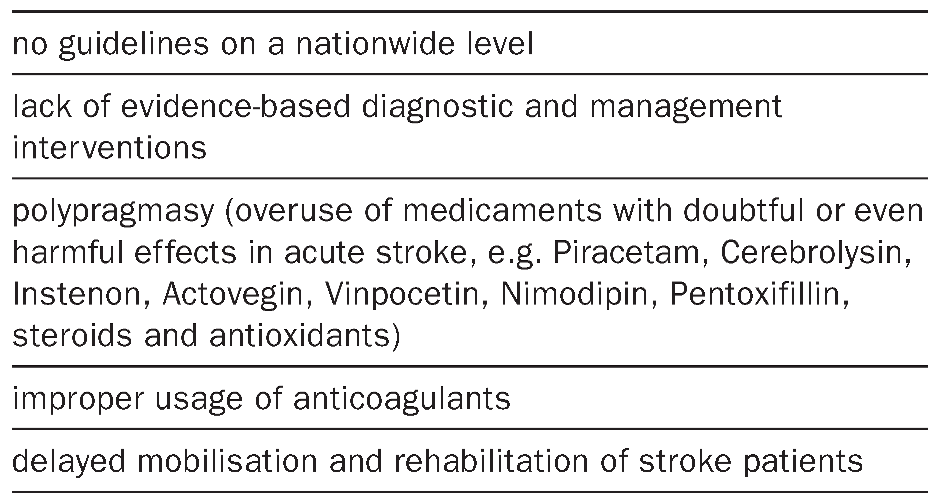
Table 1 is an incomplete list of problems related to stroke care in Georgia.
Table 1.
Problems for the proper care of acute stroke in Georgia.
Other neurological diseases
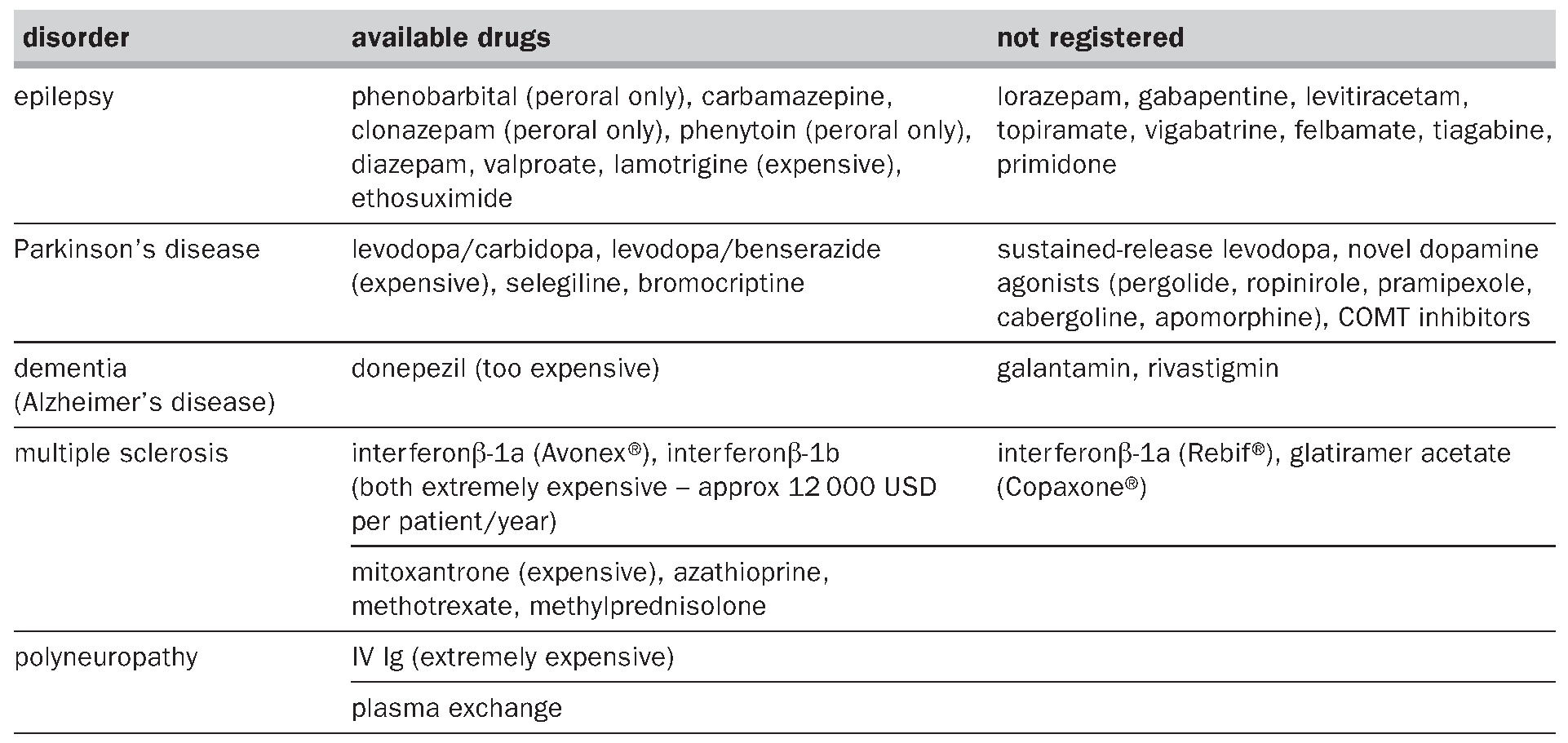
Table 2 lists the problems that make adequate management of some other major neurological diseases difficult in Georgia. Apart from the deficit in knowledge among health care workers about novel diagnostic and therapeutic approaches, one important drawback is the lack of modern medicaments in the Georgian pharmaceutical market. This is mainly due to the high cost of novel drugs, which are not registered in the country for marketing reasons.The registration process itself is a timeand finance-consuming process, and pharmaceutical companies are cautious about registering expensive medications, knowing that sales will be limited and profits low. In summary, at present in Georgia, therapeutic options for patients suffering from major neurological diseases are limited.
Table 2.
Availability of medicaments for the major neurological disorders.
Economical issues
The problem of reimbursing medical charges is currently a matter of active discussion in Georgia. The Municipal Health Programme covers hospital expenditure for urgent medical aid according to so-called diagnostic and treatment standards (prices), with strict upper limits for each disorder in terms of the sum paid and the length of hospital stay. For instance, stroke-related hospital expenses are supported for the first 14 days of hospitalisation up to a sum not exceeding Georgian Lari 400 (approx CHF 280.–) per patient. This is only sufficient to cover hospital daily allowance charges including some inexpensive analyses (blood, urine, CSF) and less expensive medicaments, but excluding neuroimaging (CT, MRI and Doppler) and meals. Any additional charges during the first 14 days and all charges after these 14 days must be paid by the patient. Similar principles are applied for reimbursing hospital expenditure for other urgent neurological conditions.These standards were elaborated in the mid-90s and are far from reflecting the real situation.
In some cases involving a prolonged hospital stay and high outlays, the charges are reimbursed by the State Insurance Company (SIC), but only occasionally, since the SIC is financed mainly by the state budget and partially by the obligatory health insurance tax paid by employers and employees. Taking into account the instability of the state budget (frequent collapses) and the high rate of unemployment, it is easy to understand that the SIC has limited and unstable resources, while private insurance companies have extremely limited coverage, because of the expensiveness of their insurance programmes.
The situation is much graver for patients with chronic neurological diseases who have to pay all treatment charges.
Because of these circumstances, health care workers receive a low salary.
Matters of optimism
Despite the above-mentioned hardships in the health service in Georgia, some causes for optimism nevertheless exist. This optimism is based, firstly, on an ongoing health system reform, which is supported by the World Bank and follows the recommendations of its experts. Main goals for the health system reorientation are increasing the efficacy of health insurance, creating a social security system for health care employers, the reform of drug policy and the accreditation and licensing of medical institutions and personnel. Secondly, a very intensive process of elaborating national diagnostic and therapeutic guidelines and creating novel diagnostic and treatment standards is under way.
It is also very important that a new concept of continuing medical education (CME), based on the European model, is now considered one of the priorities of health system reform. CME has become mandatory, together with relicensing (every 5 years), for every practising physician and this process is quite well organised and supervised by the GSMA. Certification and revalidation is the responsibility of the Georgian State Medical Certification Board [3].
A final cause for optimism is international collaboration. Several young physicians, including neurologists, have obtained postdoctoral and specialised fellowships in leading medical institutions abroad in the last 5–6 years and this process is continuing. One of the authors of this report (A.T.) is currently a stroke fellow in the Department of Neurology at the CHUV in Lausanne and a member of the Georgian team from the SINN, which works on the joint Swiss-Georgian project “Stroke Incidence, Risk Factors and Patterns in Tbilisi, Georgia: A Prospective Population-based Study” in cooperation with Swiss colleagues from the Department of Neurology of the CHUV. This ongoing project funded by the Swiss National Science Foundation in the framework of the Scientific Cooperation between Eastern Europe and Switzerland (SCOPES) was started in September 2000. Apart from this, several successful neurological conferences and workshops, including two regional meetings of the International Stroke Society and the Teaching Course in Neurology of the European Federation of Neurological Societies, involving active participation by international experts in the different fields of neurology have been held in Georgia in the last 4 years and several others are being planned.
Funding
A. Tsiskaridze is supported by Swiss National Science Foundation grant 7GEPJ062287.
References
- The Country Data. Available online: http://www.parliament.ge (accessed on 18 Dec 2003).
- Available online: http://www.indexmundi.com/switzerland/gdp_per_capita.html (accessed on 18 Dec 2003).
- Social-Economic Situation in Georgia, 1997. Available online: http://www.parliament.ge (accessed on 18 Dec 2003).
- Shakarishvili, R. Physician’s Certification in Georgia: Experience and Outlook. In Georgian State Medical Academy Proceedings; Georgian State Medical Academy: Tbilisi, 2002; pp. 1–6, [in Georgian]. [Google Scholar]
- Annual Report 2002; Georgian State Medical Academy: Tbilisi, 2002; [in Georgian].
- Eurostat Annuaire 2000. Vue statistique sur l’Europe et Union Européenne des médecins spécialistes. Compendium 2000. Published in: Livre Blanc de la Neurologie Française, 2001.
- Shakarishvili, R. Establishment of a New System of Postgraduate Professional Training and Continuing Medical Education in Georgia. In Georgian State Medical Academy Proceedings; Georgian State Medical Academy: Tbilisi, [in Georgian]; 2002; pp. 12–19. [Google Scholar]
- Hacke, W; Kaste, M; Bogousslavsky, J; Brainin, M; Chamorro, A; Lees, K; et al. European Stroke Initiative Executive committee and the EUSI Writing Committee. European Stroke Initiative Recommendations for Stroke Management – update 2003. Cerebrovasc Dis 2003, 16, 311–37. [Google Scholar]
- Hacke, W; Kaste, M; Skyhoj Olsen, T; Orgogozo, JM; Bogousslavsky, J. European Stroke Initiative (EUSI) recommendations for stroke management. The European Stroke Initiative Writing Committee. Eur J Neurol 2000, 7, 607–23. [Google Scholar] [CrossRef] [Scilit] [PubMed]
- Hacke, W; Kaste, M; Skyhoj Olsen, T; Orgogozo, JM; Bogousslavsky, J; for the European Stroke Initiative Executive Committee. European Stroke Initiative recommendations for stroke management. Cerebrovasc Dis 2000, 10, 335–51. [Google Scholar]
- Adams, HP, Jr.; Adams, RJ; Brott, T; del Zoppo, GJ; Furlan, A; Goldstein, LB; et al.; Stroke Council of the American Stroke Association Guidelines for the early management of patients with ischaemic stroke. A scientific statement from the Stroke Council of the American Stroke Association. Stroke 2003, 34, 1056–83. [Google Scholar] [CrossRef] [Scilit] [PubMed]
- Brainin, M; Bornstein, N; Boysen, G; Demarin, V. For the EFNS Task Force on Acute Neurological Stroke Care. Acute neurological stroke care in Europe: results of the European Stroke Care Inventory. Eur J Neurol 2000, 7, 5–10. [Google Scholar] [CrossRef] [Scilit] [PubMed]

This is an open-access article distributed under the terms of the Creative Commons Attribution Non-Commercial No Derivatives (CC BY-NC-ND) 4.0 License.