Journal Description
Swiss Archives of Neurology, Psychiatry and Psychotherapy
(SANPP) is a peer-reviewed, open access journal that covers all different subdisciplines of psychiatry, psychotherapy, neurology and neurosciences, published quarterly online by MDPI (since Volume 176, Issue 1 - 2026).
- Open Access— free for readers, with article processing charges (APC) paid by authors or their institutions.
- Rapid Publication: first decisions in 19 days; acceptance to publication in 8 days (median values for MDPI journals in the second half of 2025).
- Recognition of Reviewers: APC discount vouchers, optional signed peer review, and reviewer names published annually in the journal.
subject
Imprint Information
Open Access
ISSN: 2297-7007
Latest Articles
Publisher’s Note: A New Chapter for Swiss Archives of Neurology, Psychiatry and Psychotherapy
Swiss Arch. Neurol. Psychiatry Psychother. 2026, 176(1), 1; https://doi.org/10.3390/sanpp176010001 - 5 Mar 2026
Abstract
Following the successful integration of Cardiovascular Medicine into our portfolio [...]
Full article
Open AccessEditorial
Zug des Lebens
by
EMH Swiss Medical Publishers Ltd.
Swiss Arch. Neurol. Psychiatry Psychother. 2024, 175(3), 69; https://doi.org/10.4414/sanp.2024.1499290698 - 1 Jan 2024
Abstract
Ich wachse bei meiner Tante auf [...]
Full article
Open AccessNews
Extend Survival in Familial Amyloid Polyneuropathy
by
Andreas Steck
Swiss Arch. Neurol. Psychiatry Psychother. 2024, 175(3), 69; https://doi.org/10.4414/sanp.2024.1479363252 - 1 Jan 2024
Abstract
Hereditary transthyretin amyloid polyneuropathy (TTR-PN), also known as familial amyloid polyneuropathy, is a rare fatal systemic disease that causes sensorimotor polyneuropathy, autonomic dysfunction, cardiac failure, and gastrointestinal tract disorders. Death typically ensues within 7–10 years of disease onset [...]
Full article
Open AccessBook Review
Ein besonderes Psychiaterleben
by
Thomas von Salis
Swiss Arch. Neurol. Psychiatry Psychother. 2024, 175(3), 68; https://doi.org/10.4414/sanp.2024.1416350072 - 1 Jan 2024
Abstract
Dieses Motto, das sich der Rezensent ausgedacht hat, bezieht sich auf die Frage, was der Autor uns mit der Darstellung dieses besonderen Psychiaterlebens sagt und auch nicht sagt, nicht sagen kann[...]
Full article
Open AccessBook Review
Sigmund Freud: Gesamtausgabe, Band 23 Das Gesamtregister zur Freud-Gesamtausgabe
by
Joachim Küchenhoff
Swiss Arch. Neurol. Psychiatry Psychother. 2024, 175(3), 68; https://doi.org/10.4414/sanp.2024.1376223886 - 1 Jan 2024
Abstract
Nun ist die grosse Arbeit an der Sigmund Freud Gesamtausgabe (SFG) beendet; das mutige und grosse Projekt, 2015 von Christfried Tögel und dem Psychosozial-Verlag begonnen, wird acht Jahre später mit dem vorliegenden Band 23, der das Register für alle Bände und die Gesamtbibliographie
[...] Read more.
Nun ist die grosse Arbeit an der Sigmund Freud Gesamtausgabe (SFG) beendet; das mutige und grosse Projekt, 2015 von Christfried Tögel und dem Psychosozial-Verlag begonnen, wird acht Jahre später mit dem vorliegenden Band 23, der das Register für alle Bände und die Gesamtbibliographie aller Freud-Texte enthält, abgeschlossen[...]
Full article
Open AccessNews
Guérir de la psychose et de la perversion narcissique de mon père
by
Swiss Arch. Neurol. Psychiatry Psychother. 2024, 175(2), 37; https://doi.org/10.4414/sanp.2024.1331985688 - 1 Jan 2024
Abstract
Ma maman, une Suissesse, issue de la bourgeoisie, était fille unique. Dynamique, généreuse, solaire, elle occupait un poste de laborantine dans un centre médical [...]
Full article
Open AccessNews
Autoimmune Encephalitis
by
Andreas Steck
Swiss Arch. Neurol. Psychiatry Psychother. 2024, 175(2), 37; https://doi.org/10.4414/sanp.2024.1395773404 - 1 Jan 2024
Abstract
Autoimmune encephalitis (AE) is the most common form of encephalitis of noninfectious etiology and is caused by autoantibodies targeting different neural epitopes[…]
Full article
Open AccessBook Review
Zentrum ist die Beziehung
by
Susanne Kunz Mehlstaub
Swiss Arch. Neurol. Psychiatry Psychother. 2024, 175(2), 36; https://doi.org/10.4414/sanp.2024.1388650633 - 1 Jan 2024
Abstract
Beziehungsgestaltung ist eine der Grundvoraussetzungen für eine psychiatrische oder auch psychotherapeutische Behandlung [...]
Full article
Open AccessBook Review
Letzte Texte und Diarium
by
Joachim Küchenhoff
Swiss Arch. Neurol. Psychiatry Psychother. 2024, 175(2), 36; https://doi.org/10.4414/sanp.2024.1311946352 - 1 Jan 2024
Abstract
Mit den nun vorgestellten Bänden wird das grosse Unterfangen der Sigmund Freud Gesamtausgabe (SFG) des Psychosozial-Verlags inhaltlich abgerundet [...]
Full article
Open AccessEditorial
Marked by Anorexia – A Portrait
by
Silke Bachmann
Swiss Arch. Neurol. Psychiatry Psychother. 2024, 175(2), 33; https://doi.org/10.4414/sanp.2024.1326116130 - 1 Jan 2024
Abstract
The drawing on the cover page was created by a young man suffering from anorexia and offers an insight into his perspective of the condition [...]
Full article
Open AccessNews
Air Pollution and Parkinson’s Disease
by
Andreas Steck
Swiss Arch. Neurol. Psychiatry Psychother. 2024, 175(1), 4-5; https://doi.org/10.4414/sanp.2024.1362329777 - 1 Jan 2024
Abstract
The etiology of Parkinson’s disease (PD) is multifactorial and involves both genetic and nongenetic factors [...]
Full article
Open AccessEditorial
Wenn keiner ahnt, wie krank du bist
by
Andrea Ammann
Swiss Arch. Neurol. Psychiatry Psychother. 2024, 175(1), 4-5; https://doi.org/10.4414/sanp.2023.1281920128 - 1 Jan 2024
Abstract
Eine wunderschöne Frau sitzt auf der Couch, auf ihrem Arm liegt ihr sechs Monate altes Baby, das friedlich gestillt wird [...]
Full article
Open AccessBook Review
A Profound Journey through History
by
Jürg Kesselring
Swiss Arch. Neurol. Psychiatry Psychother. 2024, 175(1), 3; https://doi.org/10.4414/sanp.2024.1235381183 - 1 Jan 2024
Abstract
The great master in the large field of epilepsy […]
Full article
Open AccessBook Review
Eine lohnende Lektüre
by
Thomas von Salis
Swiss Arch. Neurol. Psychiatry Psychother. 2024, 175(1), 3; https://doi.org/10.4414/sanp.2024.1362516940 - 1 Jan 2024
Abstract
Nicht nur ein halbes Jahrhundert fachärztlicher Bildung und Erfahrung sind in dieses Buch eingegangen […]
Full article
Open AccessArticle
Exploring the Evolving Sociocultural Frameworks of Substance Use
by
Alexander Smith, Nicholas P. Griffin, Anna Buadze, Daniele Zullino and Michael Liebrenz
Swiss Arch. Neurol. Psychiatry Psychother. 2024, 175(3), 95-96; https://doi.org/10.4414/sanp.2024.1326389362 - 1 Jan 2024
Abstract
►▼
Show Figures
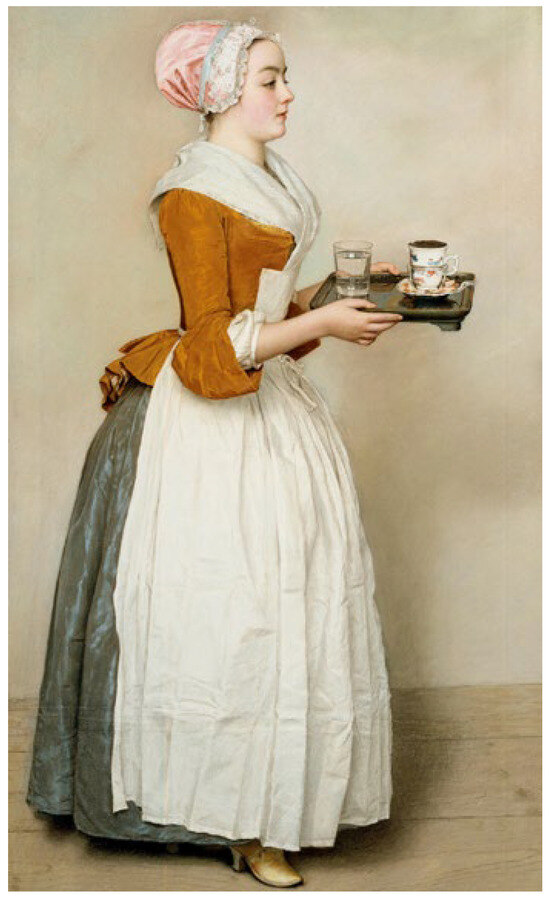
Background: A famed son of Geneva, Jean-Étienne Liotard’s (1702–1789) pastel paintings were epitomised by subtlety and depth [1]
Full article

Figure 1
Open AccessArticle
Classification of Personality Disorders in Adolescence: ICD-10 and ICD-11
by
Nicole Geiger, Marc Graf and Marc Birkhölzer
Swiss Arch. Neurol. Psychiatry Psychother. 2024, 175(3), 92-94; https://doi.org/10.4414/sanp.2024.1421405684 - 1 Jan 2024
Abstract
►▼
Show Figures
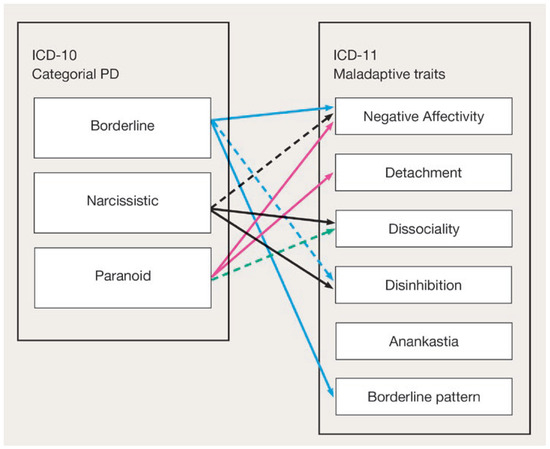
The classification of personality disorders (PDs) has changed fundamentally from ICD-10 to ICD-11; the distinct diagnostic categories of ICD-10 are replaced by a dimensional approach in ICD-11. In ICD-11, various levels of severity are determined by impairments in self-related and interpersonal personality functioning.
[...] Read more.
The classification of personality disorders (PDs) has changed fundamentally from ICD-10 to ICD-11; the distinct diagnostic categories of ICD-10 are replaced by a dimensional approach in ICD-11. In ICD-11, various levels of severity are determined by impairments in self-related and interpersonal personality functioning. All ICD-10 subtypes have been eliminated except for borderline PD. Instead, five optional maladaptive personality traits are now used to characterize personality. Removing the age limit for a PD diagnosis is particularly significant for child and adolescent psychiatry, enabling early identification, treatment, and follow-up in children and adolescents. The clinical application of the new PD model will be illustrated using a case study.
Full article

Figure 1
Open AccessArticle
Congenital Portocaval Shunt as a Cause of Encephalopathy
by
Marco Almeida, Paulo Simão, João Catela and Fernando Matias
Swiss Arch. Neurol. Psychiatry Psychother. 2024, 175(3), 90-91; https://doi.org/10.4414/sanp.2024.1257831489 - 1 Jan 2024
Abstract
►▼
Show Figures
A 74-year-old woman was brought to the emergency department because of a cognitive decline in the past two months. She presented evidence of metabolic encephalopathy on physical examination. In laboratory investigations, the patient only had a slightly abnormal liver function without hyperammonemia. Computed
[...] Read more.
A 74-year-old woman was brought to the emergency department because of a cognitive decline in the past two months. She presented evidence of metabolic encephalopathy on physical examination. In laboratory investigations, the patient only had a slightly abnormal liver function without hyperammonemia. Computed tomography (CT) of the head and lumbar puncture were unremarkable. Magnetic resonance imaging of the brain revealed a symmetric T1-weighted hypersignal in the globus pallidus and cerebral peduncles, suggestive of a hepatic encephalopathy. CT scan of the abdomen and chest revealed an important portocaval shunt. Laxative medication and rifaximin were introduced with good outcome. Closure of the shunt was performed by the interventional radiology team.
Full article

Figure 1
Open AccessArticle
Biais liés au genre chez les étudiant·e·s dans leur évaluation des troubles psychiques
by
Stéphanie Romanens-Pythoud, Evelyne Fournier, Olivier Simon and Emilien Jeannot
Swiss Arch. Neurol. Psychiatry Psychother. 2024, 175(3), 81-89; https://doi.org/10.4414/sanp.2024.1341613882 - 1 Jan 2024
Abstract
Background: Mental health problems affect men and women differently and women have a higher prevalence of mental health issues than men. Overall, women are two to three times more likely to be affected than men. Scientific literature tends to confirm that gender bias
[...] Read more.
Background: Mental health problems affect men and women differently and women have a higher prevalence of mental health issues than men. Overall, women are two to three times more likely to be affected than men. Scientific literature tends to confirm that gender bias among professio¬nals plays a certain role in mental health diagnosis. The aim of this study is to find out whether these biases already exist prior to professional practice by investigating the presence of gender biases in psychology and medical students. Method: The study used two identical versions of online questionnaires and clinical vignettes, differing only in the gender of the character depicted. The vignettes were presented to the parti¬cipants at random. 429 students from the University of Geneva answered the questionnaire and 362 responses were included in the analysis. The study focused on three diagnoses: depression, borderline personality disorder (BPD) and antisocial personality disorder (APD). Results: For the majority of vignettes and diagnoses, the results showed no significant difference in the choice of diagnosis depending on the gender of the portrayed character. The results were significant for the vignette centred on APD and in the diagnosis of BPD with an odds ratio of 0.61 (95% confidence interval 0.38-0.98) (for BPD). In addition, the variable year and faculty of study had a significant influence on the choice of diagnosis for two vignettes (p = 0.006 for the depres¬sion vignette and p <0.001 for the APD vignette). Conclusion: Overall, the study did not identify any gender bias in students’ choice of psychiatric diagnosis. However, it did highlight the influence of year and faculty of study in this decision.
Full article
Open AccessArticle
Evaluation der Bestimmungen zur fürsorgerischen Unterbringung in der Schweiz
by
Matthias Jäger, Florian Hotzy, Manuela Spiess, Regula Ruflin and Anastasia Theodoridou
Swiss Arch. Neurol. Psychiatry Psychother. 2024, 175(3), 76-80; https://doi.org/10.4414/sanp.2024.1326245541 - 1 Jan 2024
Abstract
Aims: The presented article summarizes the topics and recommendations of a large-scale mixed-methods study on behalf of the Swiss Federal Office of Justice. The mandate was to eval uate the implementation of involuntary admission (Fürsorgerische Unterbringung, FU) and coer cion as well as
[...] Read more.
Aims: The presented article summarizes the topics and recommendations of a large-scale mixed-methods study on behalf of the Swiss Federal Office of Justice. The mandate was to eval uate the implementation of involuntary admission (Fürsorgerische Unterbringung, FU) and coer cion as well as measures to promote patients’ autonomy in Switzerland to assess a possible need for revision of the legal articles on the regulation of coercion. Methods: The evaluation is based on a multi-perspective and multi-method survey and analysis method. Multiple stakeholder perspectives were taken into account and several methods (quan titative and qualitative) were used to account for the complex subject matter. Data collection took place in 2021. Results: In principle, the evaluation results indicate that the legal reform was largely able to im plement the intended changes. Nevertheless, there is a need for a legislative adaptation of the provisions on FU and other coercive measures. Conclusions: The recommendations derived from the study can be grouped into six fields of action. 1. Persistent heterogeneity in the implementation of FU and other coercive measures. 2. Information on FU and right of appeal and relevance of incapacity of judgement. 3. FU issued by physicians vs civil authorities. 4. Appropriate facility, diversified treatment and care services and their financing. 5. Institution-specific management of FU and coercion. 6. Aids to promote self-determination.
Full article
Open AccessArticle
L’impact sur la santé mentale des professionnels travaillant en psychiatrie
by
Shyhrete Rexhaj, Giorgio E. Maccaferri, Alexandra Nguyen and Debora Martinez
Swiss Arch. Neurol. Psychiatry Psychother. 2024, 175(3), 70-75; https://doi.org/10.4414/sanp.2024.1394418104 - 1 Jan 2024
Abstract
Background and objective: The health of Europe’s psychiatry and mental health professionals has been severely impacted by the COVID-19 pandemic. The aim of this study was to explore the perception of the negative effects of COVID-19 among mental health professionals in Switzerland from
[...] Read more.
Background and objective: The health of Europe’s psychiatry and mental health professionals has been severely impacted by the COVID-19 pandemic. The aim of this study was to explore the perception of the negative effects of COVID-19 among mental health professionals in Switzerland from July to the end of November 2021. Method: Data was collected between July and the end of November 2021 via an online questionnaire among mental health professionals in Europe. The Swiss data was collected via the same online questionnaire, which was widely distributed at a local level thanks to the efforts of professional associations, psychiatric institutions and health schools. The questionnaire was divided into three sections: organizational adaptations, use of digital tools, and professional and personal experience of the health crisis. The Swiss data on professional and personal experience was analyzed descriptively. Results: A total of 157 caregivers completed the survey (64% women, 36% men). The majority of the respondents were qualified psychiatric nurses (40%), 66.2% of whom worked in the canton of Vaud. Among the participants, 54.1% felt that the COVID-19 pandemic and its management had a negative impact on their mental health. The results showed that 60% of participants described feeling tensed or stressed during the pandemic, 40.1% reported feelings of sadness or depression and 26.1% mentioned feeling less happy than usual. Conclusion: The COVID-19 pandemic had a considerable impact on the mental health of mental health professionals. These professionals are often underrepresented in current studies and are at risk to being further overlooked in formal workplace support offerings. Mobile and early interventions would be useful in promoting the well-being of mental health professionals.
Full article
Journal Menu
► ▼ Journal MenuJournal Browser
► ▼ Journal Browser-
arrow_forward_ios
Forthcoming issue
arrow_forward_ios Current issue - Volumes not published by MDPI
- Vol. 175 (2024)
- Vol. 174 (2023)
- Vol. 173 (2022)
- Vol. 172 (2021)
- Vol. 171 (2020)
- Vol. 170 (2019)
- Vol. 169 (2018)
- Vol. 168 (2017)
- Vol. 167 (2016)
- Vol. 166 (2015)
- Vol. 165 (2014)
- Vol. 164 (2013)
- Vol. 163 (2012)
- Vol. 162 (2011)
- Vol. 161 (2010)
- Vol. 160 (2009)
- Vol. 159 (2008)
- Vol. 158 (2007)
- Vol. 157 (2006)
- Vol. 156 (2005)
- Vol. 155 (2004)
- Vol. 154 (2003)
- Vol. 153 (2002)
- Vol. 152 (2001)
- Vol. 151 (2000)
- Vol. 150 (1999)
- Vol. 149 (1998)
- Vol. 148 (1997)
Highly Accessed Articles
Latest Books
E-Mail Alert
News
Topics