


Abstract
The southern Junggar Basin in Xinjiang is rich in coalbed methane (CBM) resources. Large-scale development is underway in the Sigong River block (SGR block) of the Fukang West Block. Based on an integrated analysis of geological and hydrogeochemical characteristics, this study clarifies the key factors affecting CBM well productivity in the SGR block. Based on gas and water production performance, four distinct productivity types of CBM wells are identified, which are jointly controlled by burial depth, local structural and hydraulic disturbance, and also governed by synergistic interplay between gas content and permeability. The optimal geological combination—comprising the 700–1000 m burial depth, syncline core structure, stagnant hydrodynamic conditions, relatively high gas content, and favorable permeability—collectively contributes to the high-productivity Type I wells with low water production. In contrast, deep coal seams (>1400 m), characterized by reduced gas content and extremely low permeability, correspond to Type IV wells, which exhibit low gas and water production. Type II wells, located in the 1000–1400 m interval, exhibit moderate and variable productivity controlled by the interplay between high gas content and a wide range of permeability. Shallow margins (<700 m) affected by coal combustion and surface water influx produce high-water and low-gas wells (Type III). Geochemical signatures effectively differentiate between these types: closed, stagnant environments (Types I/II) are marked by a Na-Cl-HCO3/Na-HCO3-Cl water type, moderate total dissolved solids, and low sodium chloride coefficients, while open hydrodynamic conditions (Type III) are indicated by Na-SO4-HCO3 water with high sodium chloride coefficients. A δD-H2O/δ18O-H2O ratio of 7–9, combined with favorable TDS and water type, is identified as a key indicator of high productivity. Based on these relationships, a productivity response index model incorporating critical geological and geochemical parameters was developed. This model provides a practical tool for predicting CBM well performance and targeting sweet spots, offering significant value for exploring geologically and hydrologically complex basins.
1. Introduction
Coalbed methane (CBM) productivity is governed by a complex interplay of geological, hydrological, and engineering factors [1]. Among geological controls, structural setting, burial depth, and coal reservoir properties exert primary influences on gas content, permeability, and ultimately well performance [2]. Tectonic deformation plays a decisive role in gas preservation and coal reservoir permeability. In fold-and-thrust belts, synclinal axes often host elevated gas content due to favorable closure and preservation conditions, while steeply dipping limbs are prone to gas dissipation and hydrodynamic recharge [3]. Burial depth exerts a dual effect: gas content generally increases with depth up to a threshold, whereas permeability declines exponentially due to effective stress elevation [4]. Coal thickness, rank, and maceral composition further modulate gas generation and storage capacity [5,6].
CBM drainage entails draining the groundwater in the coal seam and its surrounding rocks; as a result, the reservoir pressure is continuously reduced to the critical desorption pressure, and the gas adsorbed in the coal reservoir begins to desorb, after which it diffuses, seeps, and transports through pores and fractures to the wellbore [7,8]. As it flows, the discharged formation water will physically, chemically, and biologically interact with the coal seam and surrounding rocks, which affects the geochemical composition and properties of the produced water [9,10,11,12,13]. Therefore, as a direct product of drainage, the produced water from CBM wells contains rich geochemical information, which can be used to identify the source of the drainage water and hydrogeological conditions and reveal the geological process that occurs during CBM drainage [14,15,16,17,18,19,20,21]. At an exploratory stage, coal seam water can provide insight into aquifer processes, CBM preservation, and production potential. At the production level, identifying the type of drainage water is essential for preventing future environmental problems linked to CBM production operations [22,23].
Previous scholars who studied the produced water from CBM wells in the southern Qinshui Basin concluded that areas with stagnant groundwater and weak runoff have high salinity and desulfurization coefficients ((rSO42− × 100)/(rCl− + rSO42−)) and low sodium chloride coefficients (rNa+/rCl−), which are conducive to CBM enrichment [24,25]. Wang et al. [24] reported that D, δ18O, and salinity are positively correlated, and a coal seam with a δD/δ18O value less than 0.5 is conducive to high yield. Guo et al. [20] observed that surface water, coal seam water, and fracturing water from CBM wells in western Guizhou are characterized by increasing δD, δ18O, and D drift, and the hydrogen and oxygen isotopic compositions of coal seam water are relatively light for low-yield wells and heavier for high-yield wells. They established response indicators reflecting the degree of D drift and developed identification templates of produced water sources.
In this study, we conducted geochemical analyses of produced water and summarized the production characteristics of CBM wells to reveal the relationships between geochemical indicators and well productivity. We then built an indicator template based on these geochemical parameters.
2. Geological Setting
The Junggar Basin is located in the northern part of Xinjiang, China, and is the second-largest inland basin in China. The current CBM exploration and development activities are mainly concentrated in the southern Junggar Basin, which is adjacent to the northern Tianshan Mountains, and the tectonic division belongs to the Northern Tianshan Mountain Front Thrust Belt. The southern Junggar Basin covers an area of approximately 24,000 km2, and it can be divided into five tectonic belts: the Sikeshu depression, Qigu fault-fold belt, Huomatu anticline belt, Hu’an anticline belt, and Fukang Fault Belt (listed from west to east [26,27,28].
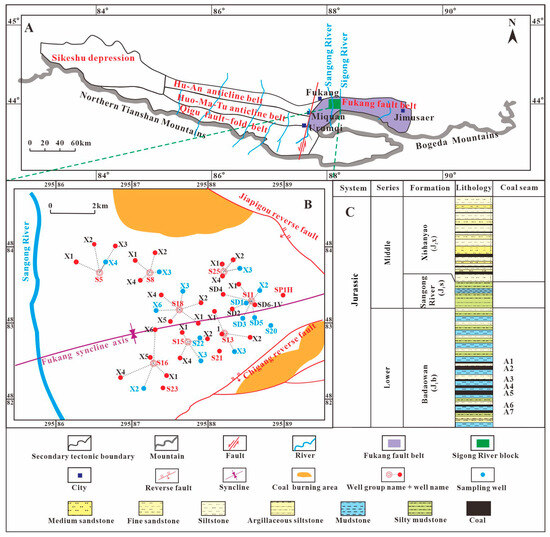
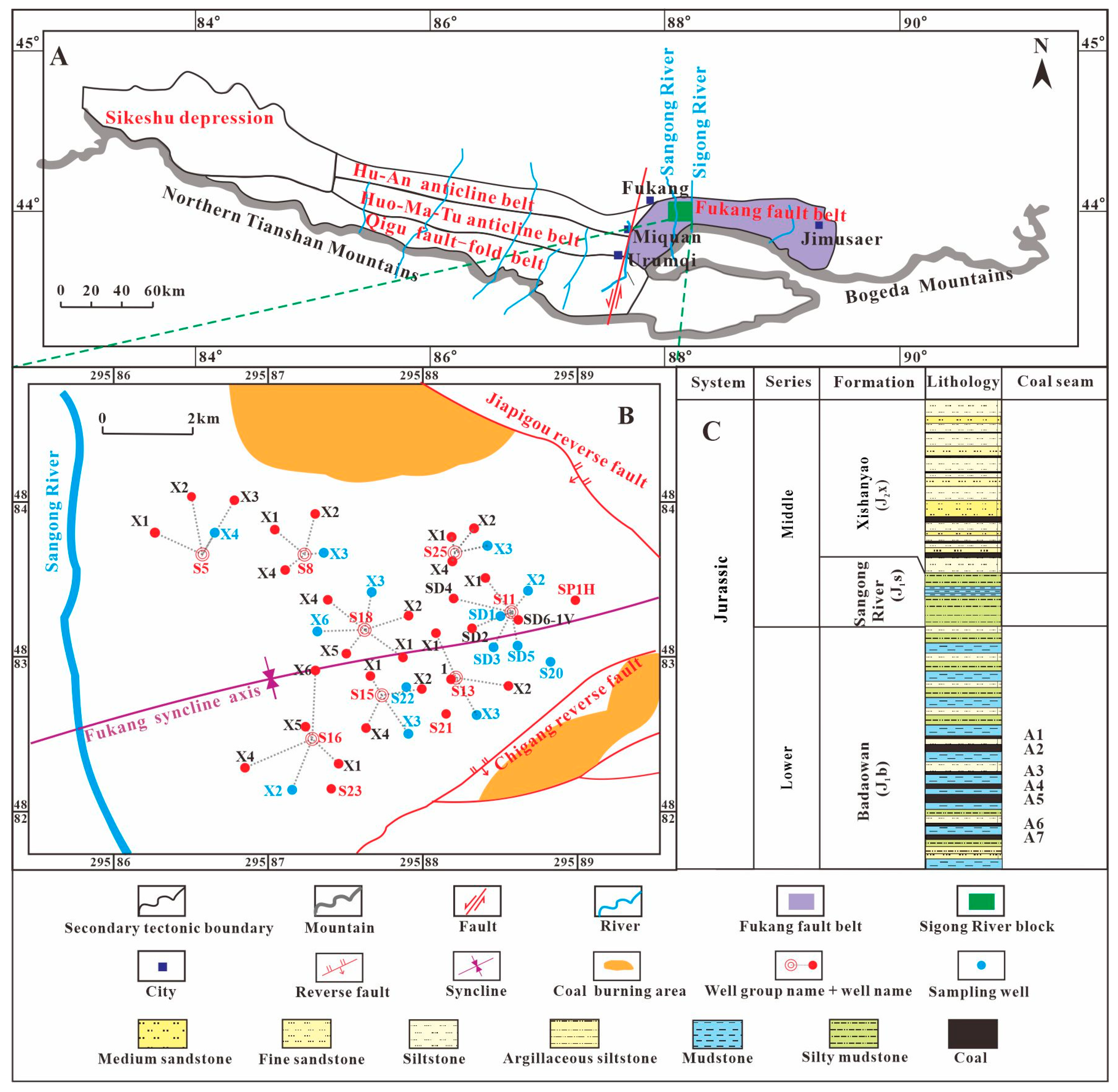
The target study area is the Sigong River development pilot test area (SGR block), located in the Fukang Fault Belt, which is jointly affected by the North Tianshan thrust belt and the eastern Bogeda thrust fault (Figure 1A). The SGR block covers an area of 10 km2; it is bounded by the Sangong and Sigong Rivers to the west and east, respectively, the Chigang reverse fault to the south, and the Jiapigou fault to the north (Figure 1B). The SGR block is structured by Fukang Syncline, with a dip angle of 50–75° on the southern limb and approximately 45° on the northern limb, and the syncline rises up in the east and sinks in the west, with a dip of approximately 50° from east to west. The coal-bearing strata are mainly the Lower Jurassic Badaowan Formation (J1b), which is mainly formed in shore–shallow lake sedimentary environments; the lithology consists of grayish-black mudstone, argillaceous siltstone, fine-grained sandstone, siltstone, and coal, with a small amount of medium and coarse-grained sandstone [29]. The total thickness of the coal-bearing strata ranges from 430 to 500 m. Of the seven coal seams in total, the main coal seams A2 and A5 are very thick and have high gas content (Figure 1C). The burial depth of the main coal seam ranges from 0 to 2200 m, increasing from east to west and from the two limbs to the core of the syncline (Figure 1B). The shallow parts of coal seams on the southern and northern margins and the eastern uplift are exposed and denuded or burned, while the depth of thermally metamorphic coal (coal-burning area) can exceed one thousand meters [26,27]. The maximum vitrinite reflectance (Ro,max) of the coal seam ranges from 0.59% to 0.72%, and the coal type is high-volatile bituminous coal [29].
Figure 1.
Structure map and stratigraphic column of the southern Junggar Basin, Xinjiang. (A) Structure belt division of the southern Junggar Basin and the location of the SGR block (coordinates in latitude/longitude, WGS84) (modified from [26]). (B) Main drilling-hole distribution in the SGR block. (C) Comprehensive stratigraphic column for Jurassic in the SGR block (coordinates in Gauss–Kruger projection, 3° zone 29, central meridian 87° E) (modified from [27,28]).
A series of nearly parallel rivers is distributed in the southern Junggar Basin. The meltwater of snow mountains (Northern Tian Mountains) substantially impacts these rivers and surface runoff activities, resulting in seasonal variation in water flow and recharge to the formation water. Among these rivers, the Sangong and Sigong Rivers are located in the west and east of the SGR block, respectively, and flow through the block from south to north. Fine-grained sedimentary rocks between coal seams act as effective aquitards, which increases the likelihood that each coal seam is in a separate fluid system [28,29].
3. Sampling and Methods
3.1. Data and Sampling
Geological information and drilling well data were collected from the CBM well field and the related open-source literature [26,27,28,29]. The gas and water production data of 43 CBM wells in the SGR block were obtained from the production report, as listed in Table A1. The wells are clustered directional wells and are concentrated in the Fukang Syncline, which includes several drilling holes (SP1, SP1H, S20, S21, S22, and S23), and 8 well groups (S5, S8, S11, S13, S15, S16, S18, and S25). Every well group consists of several multibranch horizontal wells, which are designated by suffixes added to the group name: S20-X1, S20-X2, and so forth. Figure 1 shows the distribution of the main drilling holes and the geological structures of the SGR block. The reservoir data in Table A1, including the gas content, permeability, and reservoir pressure, represent the average values for all samples collected from the well. Gas content was determined using the direct desorption method based on the USBM standard (United States Bureau of Mines) [30], and permeability and reservoir pressure data were obtained from Injection/Falloff Well Testing.
To analyze the geochemical characteristics of the coal seam water, 18 produced water samples were collected from 14 CBM wells completed in the Badaowan Formation. The sampling well name and distribution are provided in Table A2 and Figure 1B, respectively. All wells had been in continuous production for at least 40 months prior to sampling, allowing for complete flowback of stimulation fluids and ensuring that the sampled water represented formation water rather than residual fracturing fluid.
Water samples were collected directly from the wellhead into pre-cleaned, 500 mL high-density polyethylene bottles. Prior to filling, each bottle was thoroughly rinsed at least three times with wellstream water to eliminate potential contamination. The bottles were then completely filled to minimize headspace, tightly sealed, and immediately labeled with the corresponding well identifier and sampling date [28,31].
3.2. Tests for Geochemical Characteristics of Produced Water
The collected water samples were sent to the National Research Center for Geoanalysis (NRCG), China Geological Survey, Beijing, to determine their geochemical characteristics. An ICAP 6300-type inductively coupled plasma–atomic emission spectrometer (ICP-AES; Thermo Fisher Scientific, Waltham, MA, USA) was used to determine the major ion concentrations, water type, and total dissolved solids (TDS), which were analyzed in accordance with the China Oil and Gas Industry Standards [32]. Stable hydrogen and oxygen isotope compositions (δD and δ18O) of the water samples were determined using a Finnigan MAT253 isotope ratio mass spectrometer (IRMS; Thermo Fisher Scientific, Bremen, Germany). The analytical precision was better than ±1‰ for δD and ±0.20‰ for δ18O. All δ18O and δD values are reported relative to the Vienna Standard Mean Ocean Water (VSMOW) standard. The general principles and precision of such IRMS-based water isotope analyses are well-established. The specific laboratory procedures for sample preparation and measurement in our study followed the detailed protocols described by previous researchers [31,33,34]. The raw geochemical test data are provided in Table A2.
3.3. Data Processing and Graphical Analysis Using MATLAB
Based on the raw data from Appendix A Table A1 and Table A2, wells common to both tables and their corresponding data were first screened to construct the foundational dataset for modeling. This dataset includes key parameters such as coal thickness, gas content, permeability, geochemical indicators, and productivity data. The modeling procedure is as follows:
(1) Data preprocessing and correlation analysis: Prior to modeling, the sample data were preprocessed and subjected to Pearson correlation analysis. This step facilitated data cleaning, including outlier removal, missing value imputation or deletion, and the exclusion of features weakly correlated with the target variable. Subsequent sections detail the correlation among parameters, selecting those strongly associated with productivity as model inputs.
(2) Dataset splitting: The original dataset was randomly divided into training and test sets at a 4:1 ratio for model construction and validation, respectively.
(3) Baseline model establishment: Using multiple linear regression, productivity data was set as the dependent variable, and the selected feature variables (gas content, permeability, coal thickness, TDS, sodium chloride coefficient, etc.) were set as independent variables. Coefficients were solved using MATLAB (2020) software to establish a preliminary productivity response index model.
(4) Model adjustment and validation: Based on the preliminary model, weights were reasonably fine-tuned in combination with geological understanding of the study area and expert experience to enhance the model’s interpretability and alignment with actual geological conditions. The adjustments were kept within a reasonable range. The test set was then used to evaluate predictive performance. If the error fell within an acceptable range, the model was considered finalized.
It should be noted that this model aims to provide a preliminary discrimination of CBM well productivity by integrating multiple parameters. Data were not standardized because the purpose of the model is not to compare the relative contributions of individual variables, but to construct a comprehensive discriminant index. Preserving the original physical meaning of the variables enhances the model’s generalizability and transferability across different blocks or datasets.
4. Results and Interpretation
4.1. Gas and Water Production Characteristics of CBM Wells
Based on a systematic review of the production curves for 43 CBM wells in our study block, the initial unstable drainage stage—characterized by rapidly declining water rates and highly fluctuating gas rates—typically lasts for approximately 90 days after well commissioning. Therefore, data from the first 90 days were excluded for all wells when calculating the average daily gas production (ADGP) and average daily water production (ADWP). To capture representative and stabilized production performance, the calculation windows for ADGP and ADWP were defined as follows, accounting for differences in well status:
For wells that were still in production at the time of data collection, ADGP and ADWP were calculated from Day 91 after commissioning until the study cutoff date.
For wells that had been shut in prior to the cutoff date (e.g., wells S5-X2, S8-X2, and S20, which were shut in due to sustained high water production), ADGP and ADWP were calculated from Day 91 after commissioning until their respective shut-in dates.
Finally, four productivity types in the SGR block can be identified according to the ADGP and ADWP, as shown in Table 1.
Table 1.
Classification of CBM wells based on ADGP and ADWP.
Type I is characterized by high gas and low water production, with an ADGP > 5000 m3 and an ADWP < 8 m3. Type II is characterized by medium gas and low water production, with an ADGP ranging from 1000 m3 to 5000 m3 and an ADWP less than 8 m3. Type III is characterized by low gas and high water production, with an ADGP less than 1000 m3 and an ADWP exceeding 8 m3. Type IV is characterized by low gas and low water production, with an ADGP < 1000 m3 and an ADWP < 8 m3.
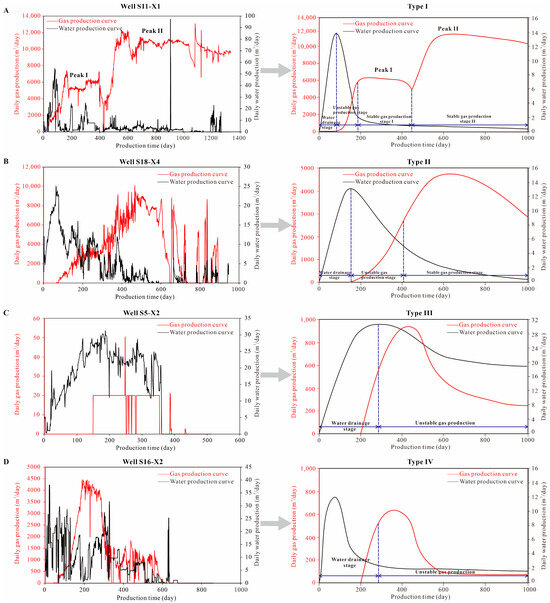
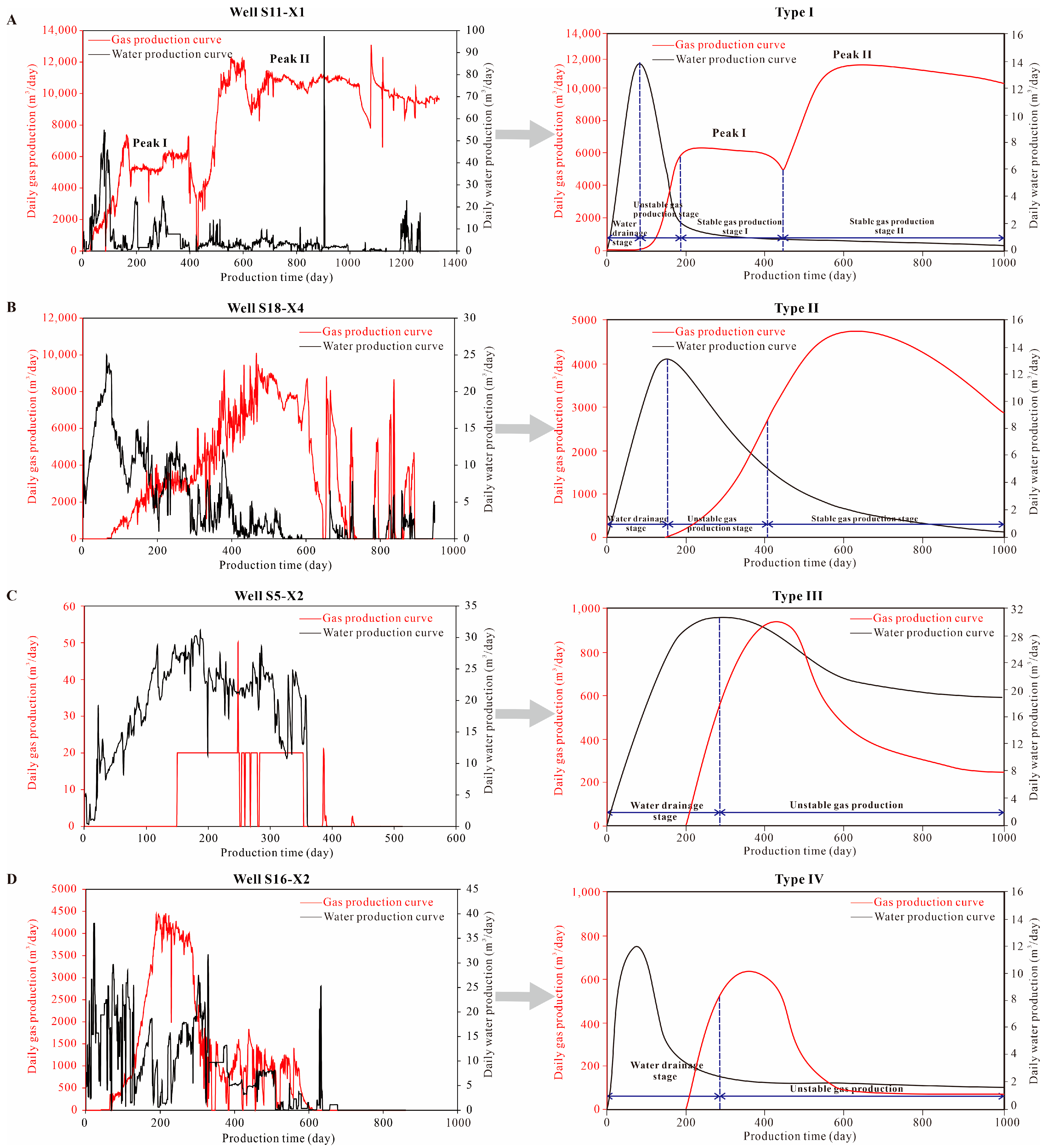
There are nine Type I wells, as listed in Table 1. Except for well S18-X3, located on the northern limb of Fukang syncline, other wells are distributed at the eastern end of the syncline axis. Among these wells, SP1H exhibits the highest gas production, with peak and average daily gas production of 35,848 m3 and 20,562 m3, respectively. S11-X1 ranks second, with peak and average gas daily production of 29,876 m3 and 16,336 m3, respectively. Both wells maintained a daily gas production exceeding 5000 m3 for more than three years. In all Type I wells, water production declined rapidly to a stable level after 3–4 months of drainage. As illustrated in Figure 2A, the gas production profile generally exhibits a bimodal pattern: gas production rises rapidly to an initial peak, followed by a stable production phase, consistent with the results of previous studies [29,35]. After a period of stable production, a second peak occurs, typically higher than the first, and the associated stable production period is also longer.
Figure 2.
Gas and water production profile types of CBM wells. (A) Type I; (B) Type II; (C) Type III; (D) Type IV.
Type II wells accounted for the highest proportion in the study area, with a total of 15 wells, as listed in Table 1. Except for wells S8-X3, SD2, and SD5 and the S8 well group, these Type II wells are mainly located on the southern limb of the syncline and generally have a large burial depth. Taking well S18-X4 as an example, the gas production profile exhibits a broad unimodal pattern, as illustrated in Figure 2B. During approximately 200 days of dewatering, the gas production increased steadily and then plateaued, with a stable production period lasting over 300 days. Although the gas production of these wells is not as high as that of Type I, the water production is lower, which may be related to the greater burial depth and lower water content of the reservoir.
Seven CBM wells are categorized as Type III (Table 1), and these wells are typical low-production wells. The high water production and water content of the reservoir may directly cause the low gas production. Taking well S5-X2 as an example, after about one year of drainage, the water production rate remains as high as 20 m3/day, and the bottomhole pressure is still up to 16 MPa, while only a few dozen cubic meters of gas is produced. As shown in Figure 2C, the gas production profile exhibits a narrow unimodal shape. Similar phenomena occur in wells S5-X3, S8-X2, and S20, where high water content prevents the bottomhole pressure from being effectively reduced and hinders gas desorption. Another common feature of these wells is that the burial depth of the coal seam is generally less than 1000 m.
Twelve wells are classified as Type IV. The burial depth of the coal seam in Type IV wells generally exceeds 1000 m. Although gas production peaks at more than 1000 m3/day for some wells, the stable production time is short, and then gas production declines rapidly, with a low-amplitude unimodal gas production profile (Figure 2D). The water production rate is high during the early drainage stage but decreases quickly, resembling the early-stage water production behavior observed in Type I wells. Overall, after a period of drainage, the water production rate in Type IV wells declines to a relatively low level.
4.2. Geochemical Characteristics of Co-Produced Water
4.2.1. Ion Concentration and Water Type of Coal Seam Water
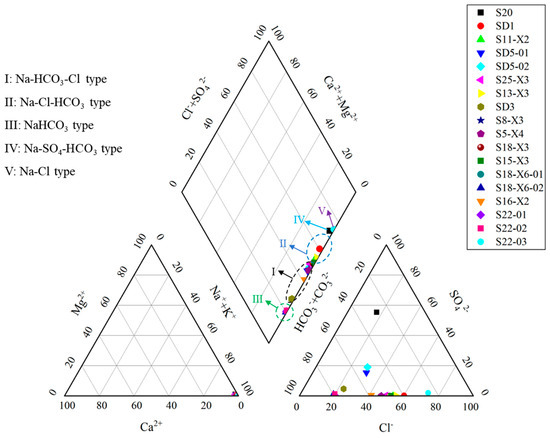
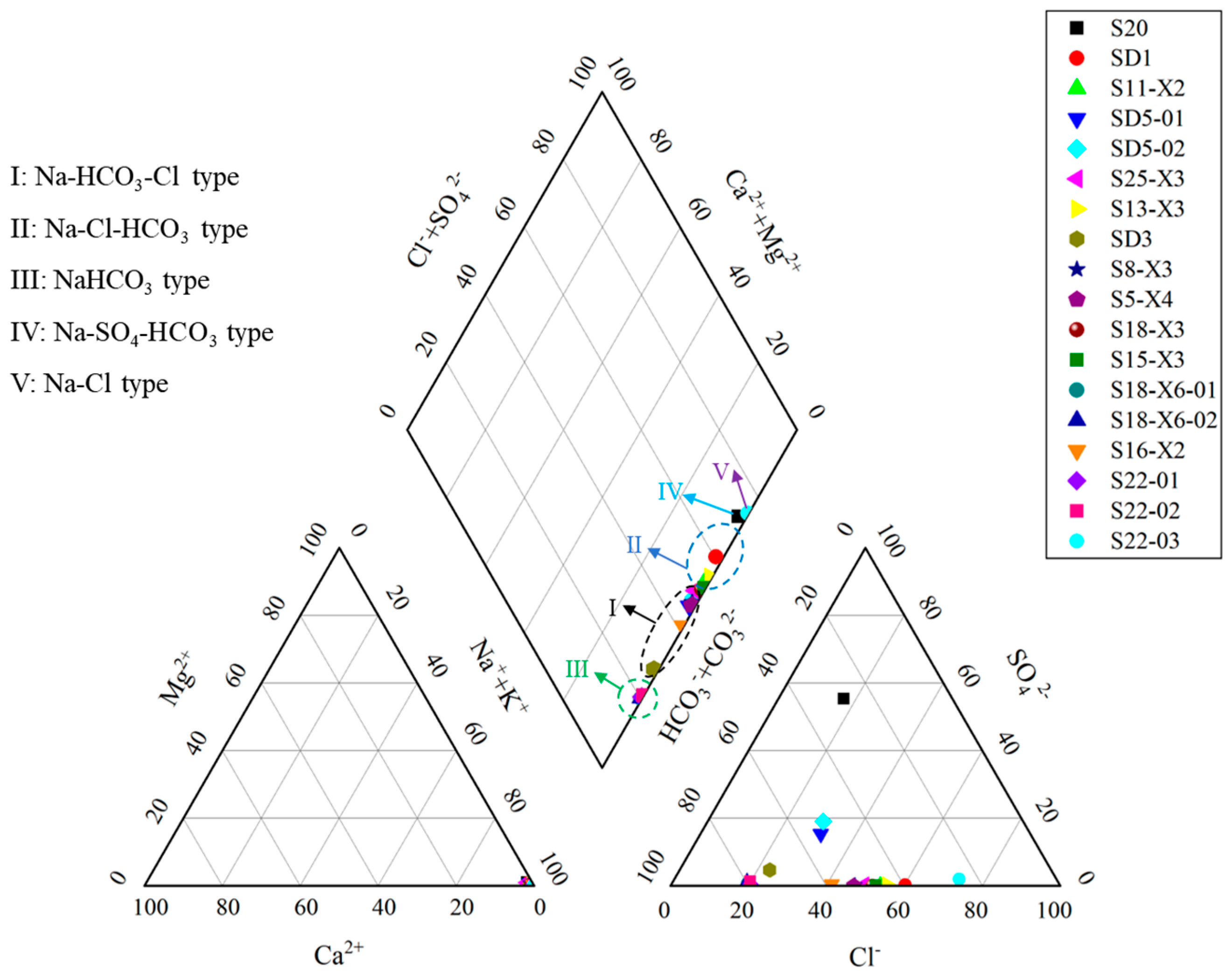
The predominant cation in the produced coal seam water is Na+, followed by Ca2+ and Mg2+. The anions in the coal seam water are mainly HCO3− and Cl−, followed by SO42−, and a few water samples have detectable CO32−. The Piper trilinear diagram plotted in Figure 3 defines the water types based on the relative concentrations of cations and anions. Five types of coal seam water can be identified in the SGR block. It is dominated by the Na-HCO3-Cl type, followed by the Na-Cl-HCO3 and NaHCO3 types, and a few water samples exhibit the Na-SO4-HCO3 (well S20) and Na-Cl (well S22) types. The coexistence of multiple water types indicates that hydrogeochemical conditions vary across the study area. With increasing depth, the coal seam water type transitions from the Na-SO4-HCO3 type to the Na-HCO3/Na-Cl-HCO3 type and finally to the Na-Cl type.
Figure 3.
Piper trilinear diagram of hydrochemical compositions in coal seam water in the SGR block.
The total dissolved solids (TDS) of coal seam water ranges from 7131 to 24,000 mg/L, with an average of 14,210 mg/L. A distinct spatial trend is observed, with lower values in the northern and southern limbs and higher values in the core of the Fukang Syncline. This spatial pattern is consistent with stronger meteoric water recharge in the steeply dipping limb areas.
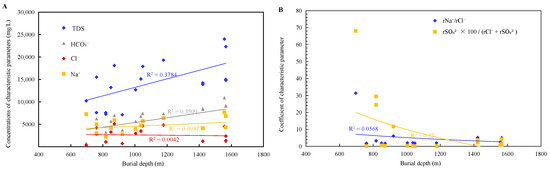
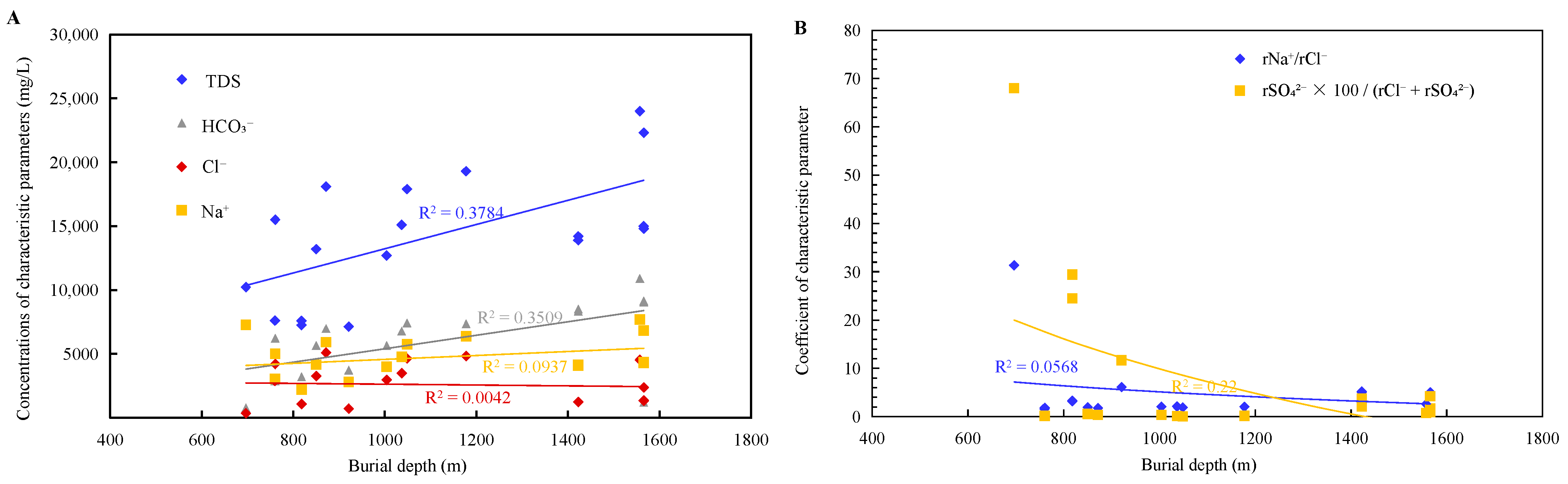
The TDS and the concentration of HCO3− in coal seam water exhibit positive correlations with burial depth (Figure 4A), which indicates that the degree to which the water environment is closed gradually increases from shallow to deep coal seams. Simultaneously, the negative correlation between the desulfurization coefficient ((rSO42− × 100)/(rCl− + rSO42−) ratio) of formation water and burial depth also indicates that as depth increases, the hydrological dynamics tend towards stagnation, and the reducibility and confinement of the formation water environment are continuously enhanced (Figure 4B). However, the weak correlation between the sodium chloride coefficient (rNa+/rCl− ratio) and burial depth suggests that the groundwater system in the study area is not a simple, compaction-dominated closed chemical field. Instead, it may be significantly influenced by complex processes, such as the mixing of multi-source water, water–rock interactions, or the upwelling of deep brines through structural conduits.
Figure 4.
Concentrations (A) and coefficient (B) of characteristic parameters of coal seam water with the burial depth in the SGR block.
4.2.2. Hydrogen and Oxygen Isotopes of Coal Seam Water
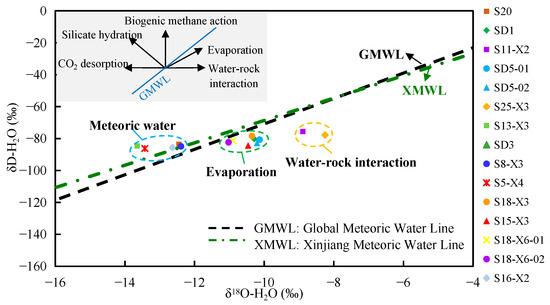
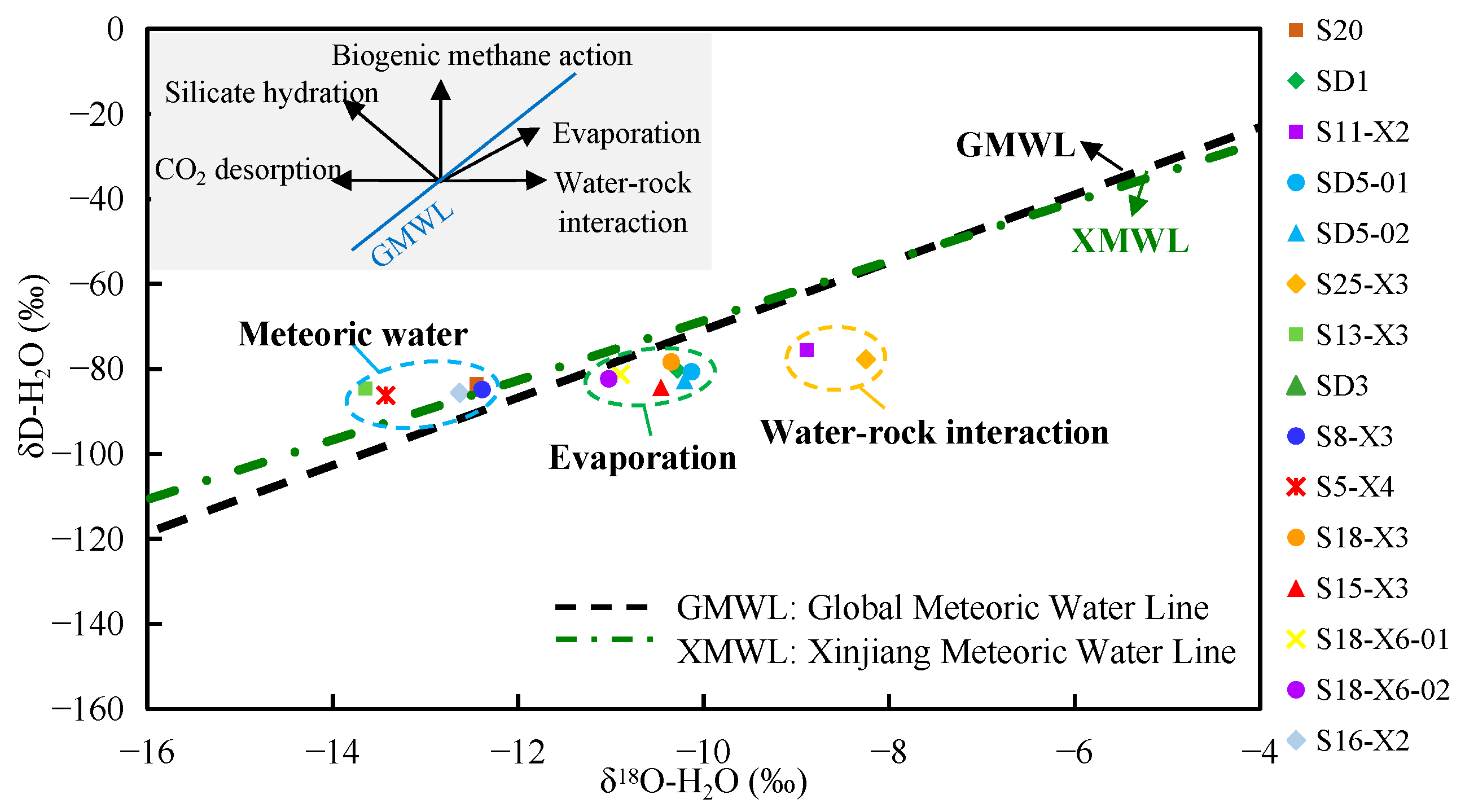
The δ18O and δD values of coal seam water in the SGR block range from −82.79‰ to −72.59‰ and −11.02‰ to −8.14‰, respectively. Craig et al. [36] proposed the Global Meteoric Water Line (GMWL) for studying the H and O isotopic composition of water, with the equation expressed as δD = 8δ18O + 10. Because Xinjiang is far from the ocean and the climate is dry, the δ18O and δD values in the surface water are relatively high. Due to evaporation, the precipitation in Xinjiang is enriched in both δ18O and δD [37,38]. Li et al. [39] established the Xinjiang Meteoric Water Line (XMWL) equation, expressed as δD = 7.21δ18O + 4.5, which can be used in this study. The δD and δ18O data of co-produced water in the SGR block are all distributed near or below the GMWL and XMWL (Figure 5), indicating that the coal seam water mainly originates from atmospheric precipitation and is transformed by water–rock interactions or evaporation during the runoff process [39,40]. The H and O isotopes of coal seam water in the study area are generally heavier than those in the adjacent Baiyanghe River block (BYR) in the Fukang east block, which has been previously discussed by Tang et al. [28], indicating that the coal seam water in the study area has undergone stronger evaporation.
Figure 5.
Cross plot of δD versus δ18O for formation water samples in the SGR block.
5. Discussion
5.1. Geological Responses of Gas and Water Production
5.1.1. Structural Condition, Hydraulic Disturbances and Burial Depth
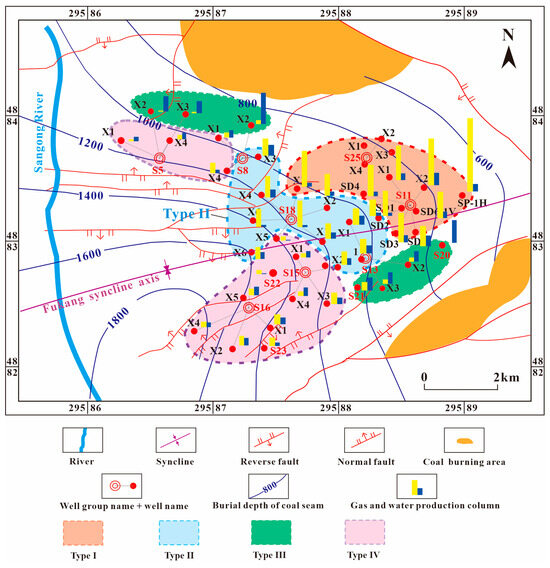
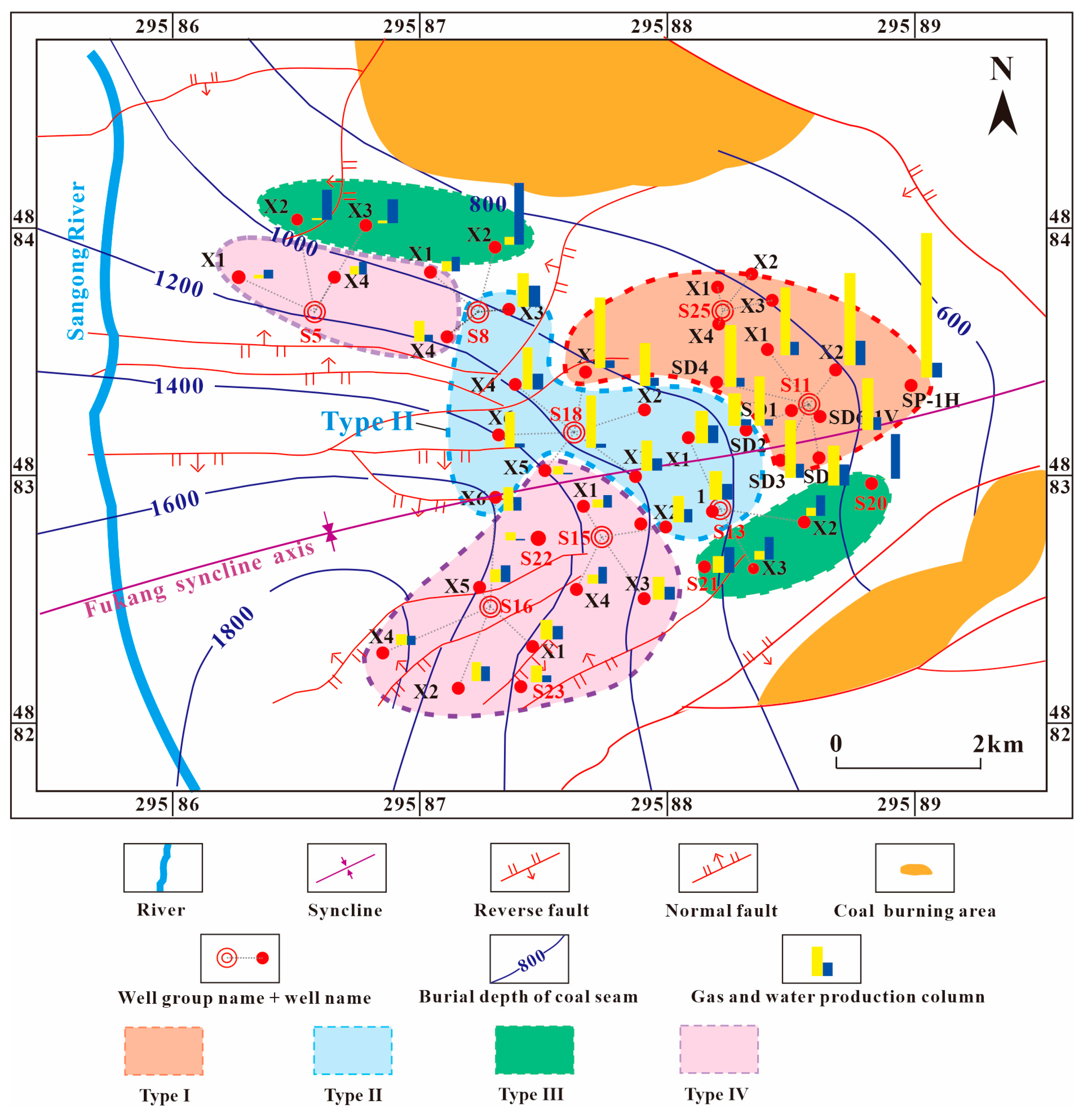
The CBM wells in the SGR block are situated within the Fukang Syncline (Figure 6). The syncline exhibits a northeast-high, southwest-low structural configuration, uplifting towards the northeast, with an axis trending approximately NW-SE. The southern limb of the syncline has a steep dip angle ranging from 50° to 75°, while the northern limb is relatively gentle, with a dip of about 45°.
Figure 6.
Burial depth contour of coal seams and productivity distribution of CBM wells in the SGR block.
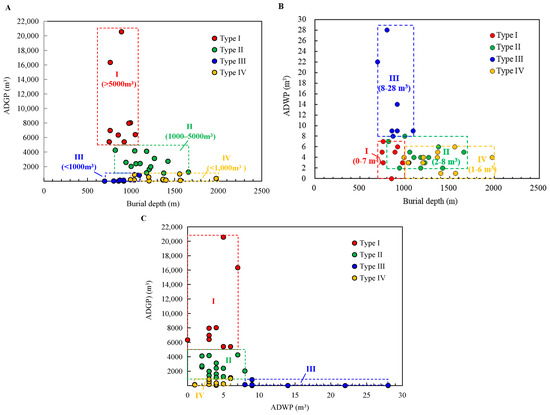
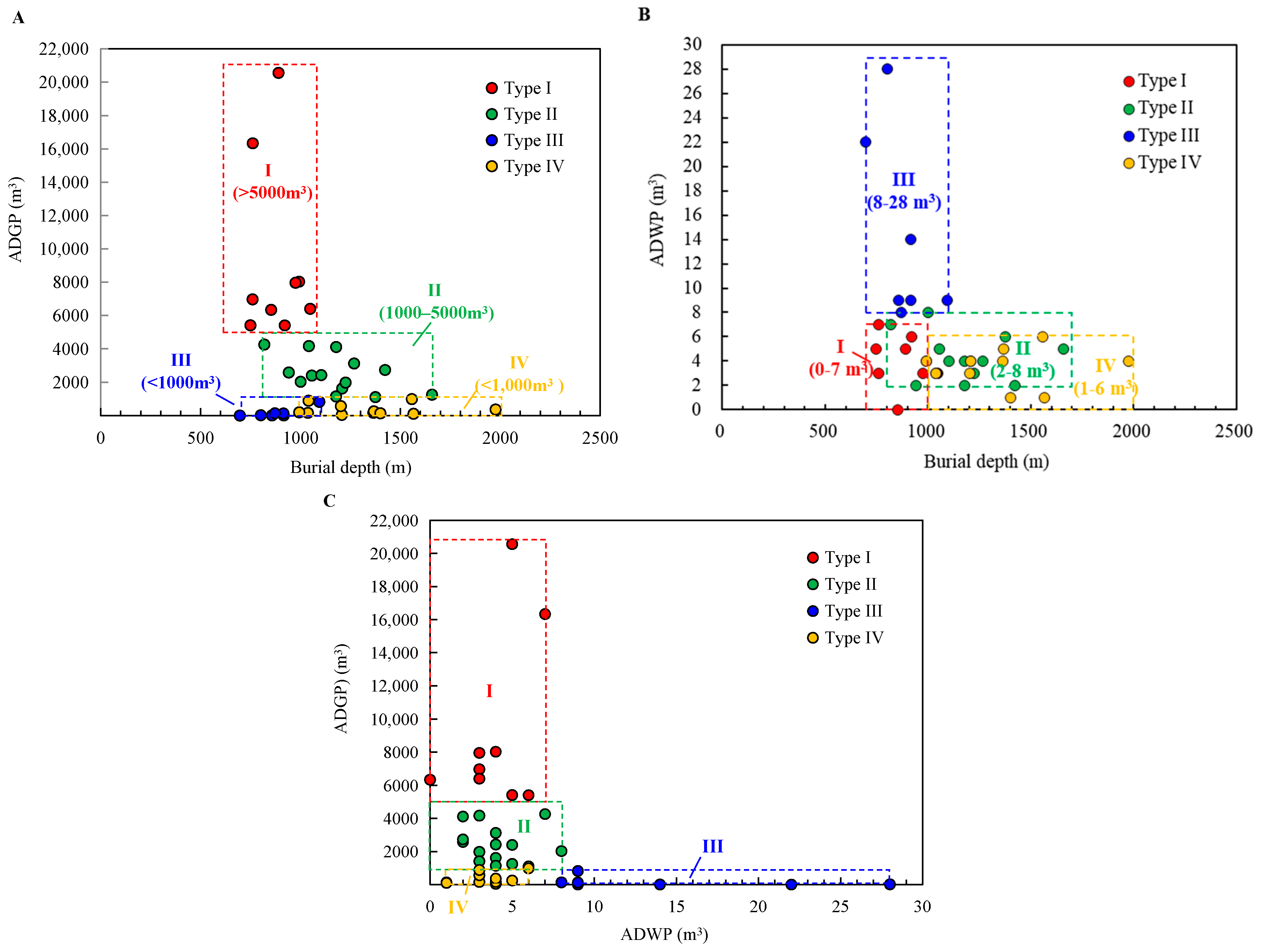
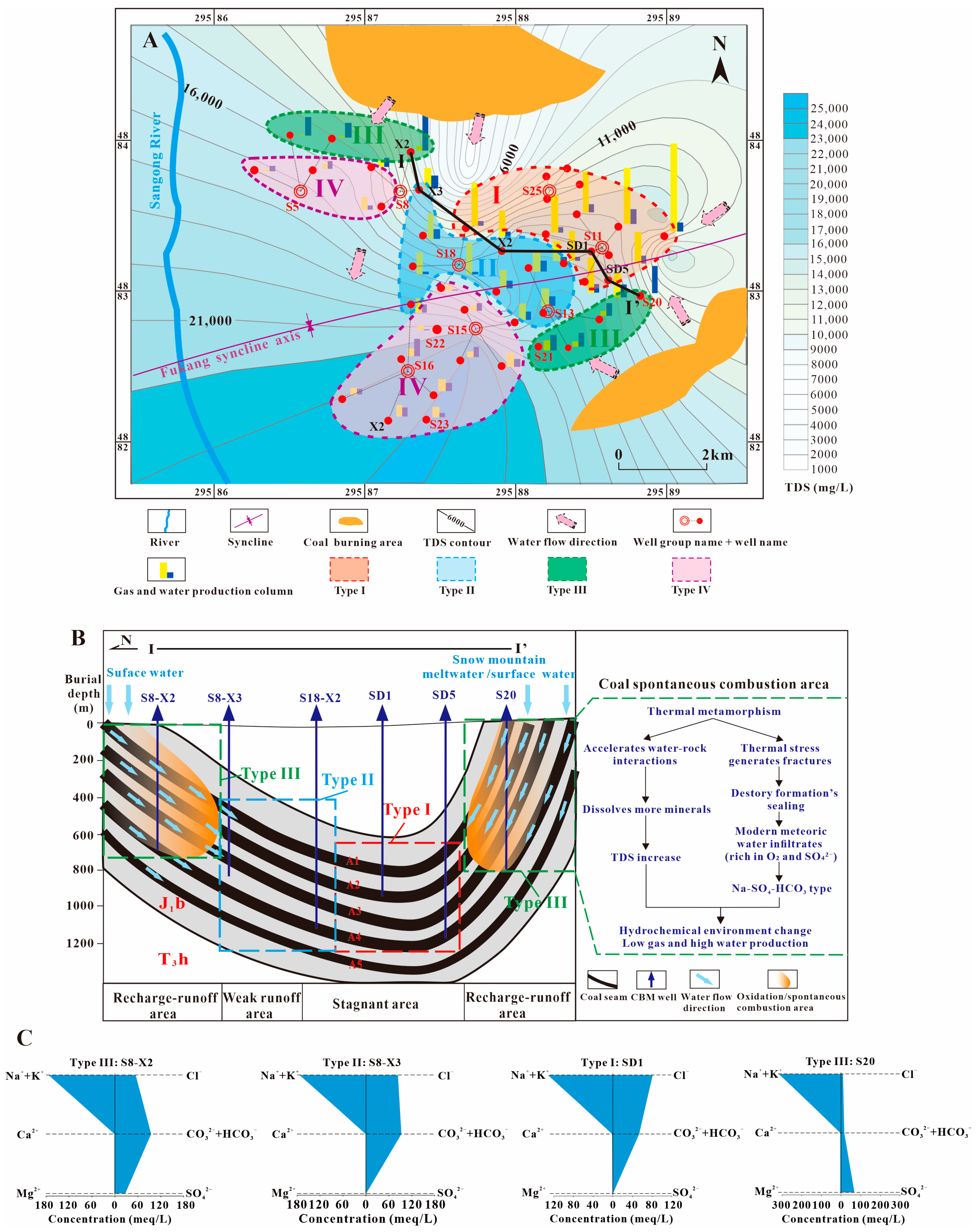
The productivity types exhibit a clear distribution controlled by structural location and burial depth, and is also affected by local hydraulic disturbances, as shown in Figure 6 and Figure 7. High-productivity Type I wells preferentially cluster within the northern limb of the eastern uplift of the Fukang syncline, where there is no fault development and optimal burial depths of 700–1000 m occur (Figure 6). As mentioned above, the gas production profile of Type I wells exhibits a bimodal pattern. This pattern is interpreted as resulting from the hysteresis of gas desorption in deep coal seams along the downdip direction of steeply inclined reservoirs, a phenomenon consistent with the high-dip control reported by Tang et al. [26] and Kang et al. [29]. Medium-productivity Type II wells are distributed along the synclinal axis on both the northern and southern limbs, with depths ranging from 800 to 1400 m. In contrast, Type III wells, with low gas and high water production, are largely situated on the northern and southeastern margins, away from the axis, at depths generally less than 1000 m. According to previous studies [26], these areas are close to coal-burning zones (spontaneous combustion in the coal seam), which can extend to depths exceeding 1000 m. Combustion-enhanced permeability in the coal seam creates high-conductivity pathways, which strengthen the hydraulic connection between the coal seam aquifer and surface water, resulting in water-saturated conditions within the coal seam and its surrounding roof and floor strata. Consequently, the bottomhole pressure cannot be effectively reduced, thereby preventing gas desorption.
Figure 7.
Plots of ADGP (A) and ADWP (B) versus burial depth of coal seams, and relationship between ADGP and ADWP (C).
As can be seen from Figure 7C, ADGP shows an inverse relationship with ADWP. Specifically, wells with medium–high gas production generally have low water production (Types I and II), whereas all wells with high water production have low gas production (Type III), which indicates that water production is the key factor in determining gas production. In the shallow margins affected by combustion zones, enhanced hydraulic connectivity leads to high water production and suppressed gas. In contrast, within the optimal depth window (700–1000 m) near the syncline axis, favorable hydraulic condition and reservoir parameters allow for high gas production with minimal water.
Those Type IV wells, located in the northwestern and southwestern sectors of the Fukang Syncline, have burial depths greater than 1000 m and maximum burial depths exceeding 1800 m. Their low gas production is not constrained by structural and hydraulic conditions but is more likely attributed to significantly reduced permeability caused by the great depth.
5.1.2. Thickness and Number of Co-Production Coal Seams
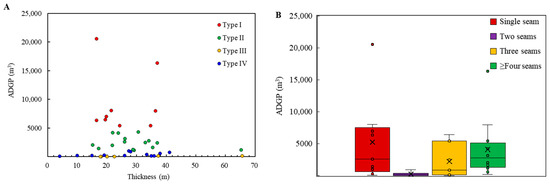
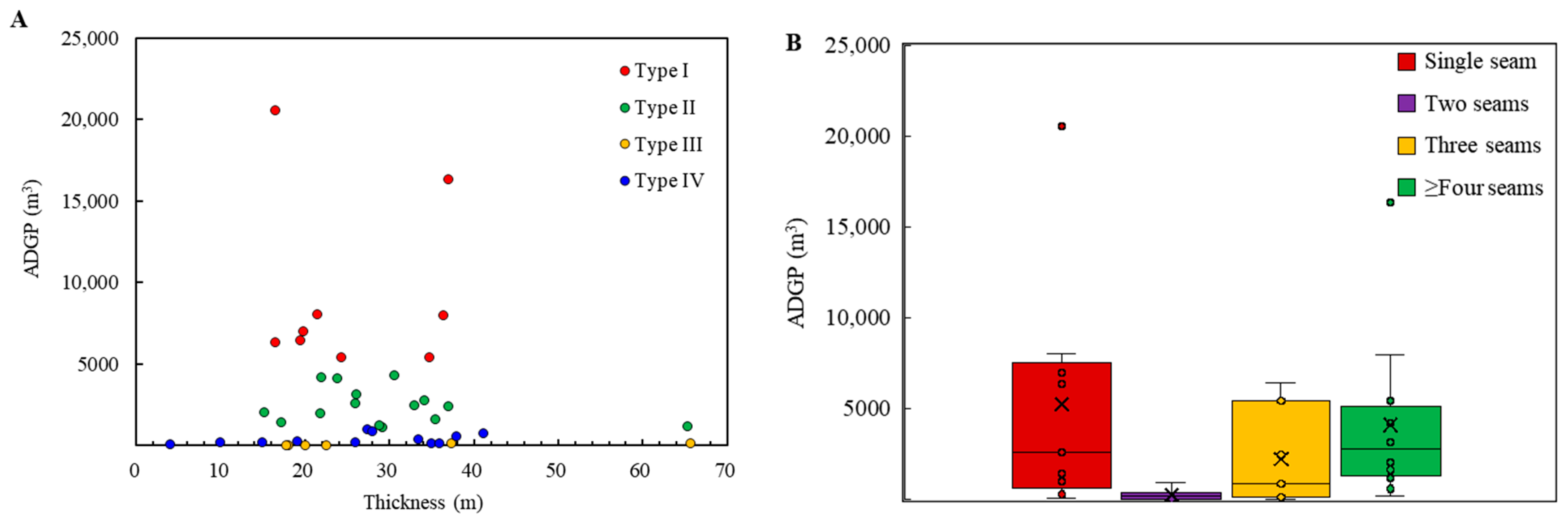
Total coal seam thickness is a critical parameter governing CBM well productivity. Under comparable geological conditions, a greater thickness generally corresponds to a larger gas storage capacity and thus higher gas supply potential [41,42]. Furthermore, given the inherently low porosity and permeability of coal seams, a thick coal seam can create a self-sealing effect, which is conducive to gas retention and effectively inhibits gas escape. In the SGR block, Type I wells exhibit cumulative thicknesses of coal seam between 16.5 and 37.0 m, while Type II wells span a broader range from 15.2 to 65.3 m. Type III wells show thicknesses varying from 18.0 to 65.7 m, whereas Type IV wells display the widest variation, ranging from 4.0 to 41.2 m (Table A1). No clear correlation between ADGP and the cumulative thickness of the coal seam was observed, which is primarily attributed to the CBM drainage methods. In the SGR block, CBM drainage methods include single-layer production and multi-layer co-production, with the number of co-production layers ranging from two to seven, as shown in Table A1. Figure 8 shows that the highest ADGP and the largest number of wells with ADGP exceeding 5000 m3 primarily occur in single-layer drainage methods, mainly targeting the A2 coal seam. Wells with two-layer co-production generally exhibit lower gas production, and all of which are Type III or IV wells. Due to the large cumulative thickness of coal seams, some wells with three-layer and more than four-layer co-production show high gas production, but most of them have moderate gas production. This indicates that during multi-layer co-production, the negative effects of inter-layer interference caused by differences in reservoir pressure, permeability, and gas content between different coal seams may outweigh the positive effects exerted by the increased cumulative thickness of multiple coal seams. For CBM development in multiple coal seam areas, the layer combinations for co-production should be further optimized to minimize the impact of inter-layer interference.
Figure 8.
Plots of ADGP versus thickness of coal seams (A) and the number of co-production layers (B).
5.1.3. Gas Content and Permeability
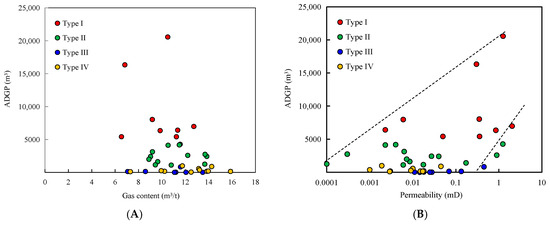
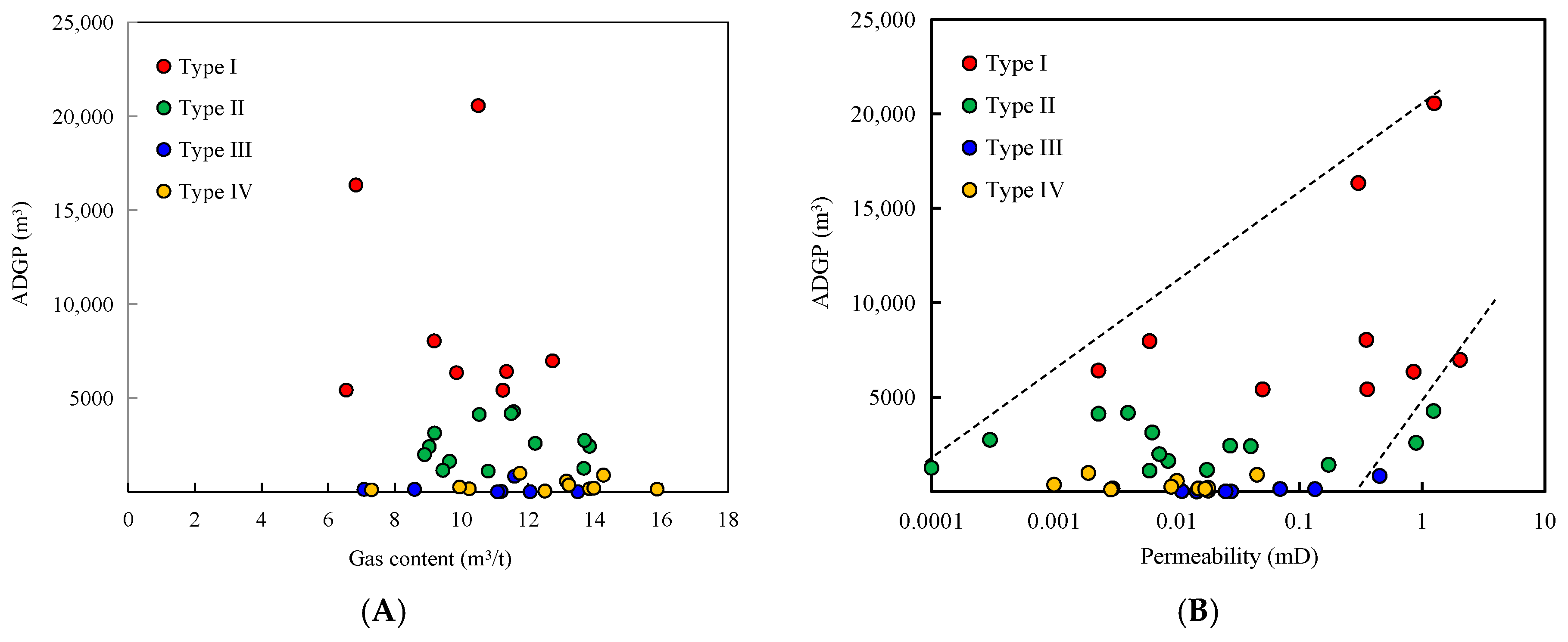
Gas content fundamentally determines the potential gas supply capacity of a coal seam, while permeability is the critical parameter governing the flow capacity of gas and water towards the wellbore. Figure 9A,B show that gas production exhibits no clear correlation with gas content but is positively correlated with permeability, suggesting that gas production is primarily governed by the dual-control effect of gas content and permeability.
Figure 9.
Plots of ADGP versus gas content (A) and permeability (B) of coal seams.
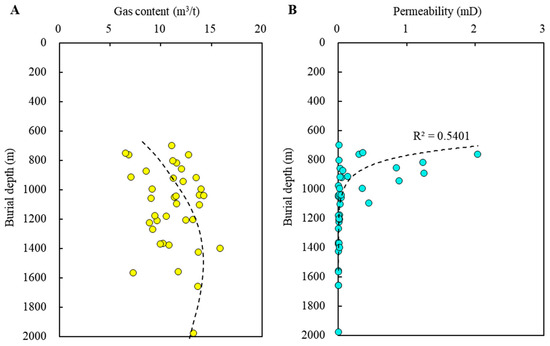
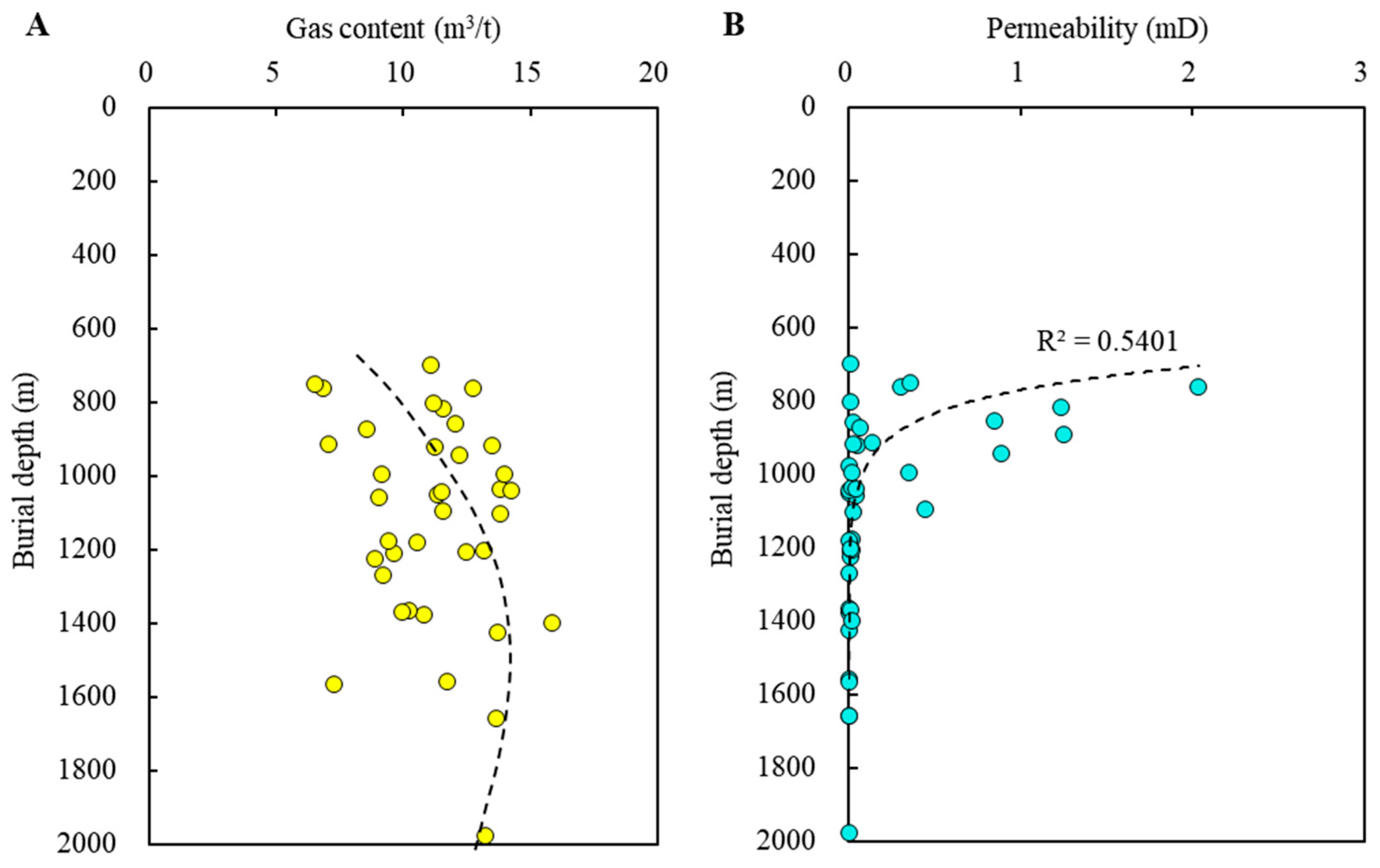
In the depth range of less than approximately 1400 m, the gas content increases with burial depth and is generally at moderate to high levels, which provides the foundational resource for the medium-to-high gas production observed in Type I and Type II wells. However, a critical transition occurs at around 1400 m depth, where the negative effect of increasing temperature on coal’s adsorption capacity begins to outweigh the positive effect of increasing pressure. This leads to a noticeable decrease in gas content beyond this depth (Figure 10A). High-productivity Type I wells, predominantly clustered within the 700–1000 m depth interval, are universally characterized by relative high permeability (mostly >0.1 mD). Wells SP1H and SD1, which are located in the stress-release zone at the hinge of the syncline core, have an especially high permeability, even exceeding 1 mD. This ensures effective desorbed gas flow and high deliverability. However, reservoir permeability exhibits a negative exponential relationship with burial depth due to increasing confining stress. Below 1000 m, in situ permeability drops sharply below 0.1 mD (Figure 10B). This creates a fundamental bottleneck for gas production from deep reservoirs. For instance, despite its relatively high gas content (13.67 m3), well S16-X6, with a large burial depth greater than 1600 m, exhibits lower gas production than other Type II wells, a limitation attributed to its lower permeability (0.0001 mD).
Figure 10.
Plots of gas content (A) and permeability (B) versus burial depth of coal seams.
However, a few Type I wells show relatively low permeability (<0.1 mD) yet achieve high gas production, including wells SD3, SD4 and S18-X3. These wells are characterized by either exceptionally thick coal seams (wells SD3 and SD4, with cumulative coal thicknesses of 34.8 m and 36.4 m, respectively—the thickest among all Type I wells) or high gas content (well S18-X3, with gas content of 11.35 m3/t). In such cases, the larger gas-in-place or greater reservoir thickness compensates for the moderate permeability reduction, allowing sustained gas desorption and production.
Conversely, although permeability > 0.1 mD is a favorable indicator, it does not guarantee high productivity. Several wells exhibit permeability > 0.1 mD but belong to low-productivity Type III, mainly refer to wells S13-X2 and S21. As discussed above and shown in Figure 6, these two wells are affected by coal seam combustion and hydraulic disturbance from surface water communication, resulting in high water production that inhibits gas desorption.
5.1.4. Productivity Zonation
The ultimate productivity of a CBM well is controlled by the synergistic interplay between gas content and permeability, both of which are strongly influenced by burial depth. Additionally, it also affected by local structural and hydraulic disturbance. Based on the integrated analysis of production data, reservoir properties, structural and the hydraulic condition, four depth-dependent productivity zonation in the study area can be defined.
Shallow High-Production Zone (700–1000 m): This represents the optimal “sweet spot” for CBM development in the study area. Wells in this zone benefit from the combination of moderate-to-high gas content and permeability. The high permeability, resulting from relatively low in situ stress and well-preserved cleat systems, enables rapid gas desorption and flow, producing Type I wells (high gas, low water). Notably, all high-productivity wells in the study area are concentrated within this depth window, indicating that these depth-related reservoir conditions are necessary—though not sufficient—for high productivity.
Shallow High-Water Zone (700–1000 m): Within this depth interval, some wells exhibit high water production but low gas rates (Type III). These wells are typically located in areas affected by coal seam spontaneous combustion zones or weathering zones, where enhanced hydraulic connectivity with surface water prevents effective dewatering and pressure drawdown. Although this interval possesses favorable reservoir properties, the presence of such disturbances inhibits gas desorption, leading to poor gas productivity despite its shallow depth. Medium-Depth Moderate-Production Zone (1000–1400 m): In this zone, productivity is more variable and is determined by the balance between high gas content and a wider range of permeability values. Wells can achieve moderate production (Type II) if permeability is sufficient. If permeability is low, production suffers unless compensated by higher pressure and gas content.
Deep Low-Production Zone (>1400 m): In deep reservoirs, a dual negative effect prevails: gas content begins to decline beyond ~1400 m, and permeability is drastically reduced due to high in situ stress. This dual negative impact inevitably leads to low gas production, characteristic of Type IV wells. The generally poor aquifer properties at these depths also result in low water production.
In conclusion, the high-productivity “sweet spot” in the study area (700–1000 m) is essentially a depth interval where the favorable conditions of “moderate-to-high gas content” and “high permeability” optimally coincide. However, it is crucial to avoid spontaneous combustion zones, which have a significant risk of communication between surface water and coal seam water. This prevents effective dewatering and pressure drawdown, thus inhibiting gas desorption.
5.2. Geochemical Responses of Gas and Water Production
5.2.1. Response of Ion Concentration and TDS of Coal Seam Water
The closed groundwater environment is conducive to the enrichment and preservation of CBM [43]. It is generally believed that Ca2+, Mg2+, and SO42− enrichment means that it is close to the oxygen-rich water supply area, representing an open hydrological environment. In contrast, Na+, K+, HCO3−, CO23−, and Cl− enrichment indicates that it is far from the oxygen-rich water supply area, representing a closed hydrological environment [20,44]. In a groundwater retention area with weak hydrodynamic conditions, the lower the desulfurization coefficient ((rSO42− × 100)/(rCl− + rSO42−) ratio) and the sodium chloride coefficient (rNa+/rCl− ratio) of formation water, the more conducive to the enrichment and preservation of CBM [45]; the higher the TDS and the HCO3− concentration of formation water, the higher the gas content of the coal seam [46].
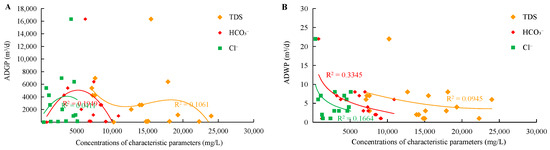
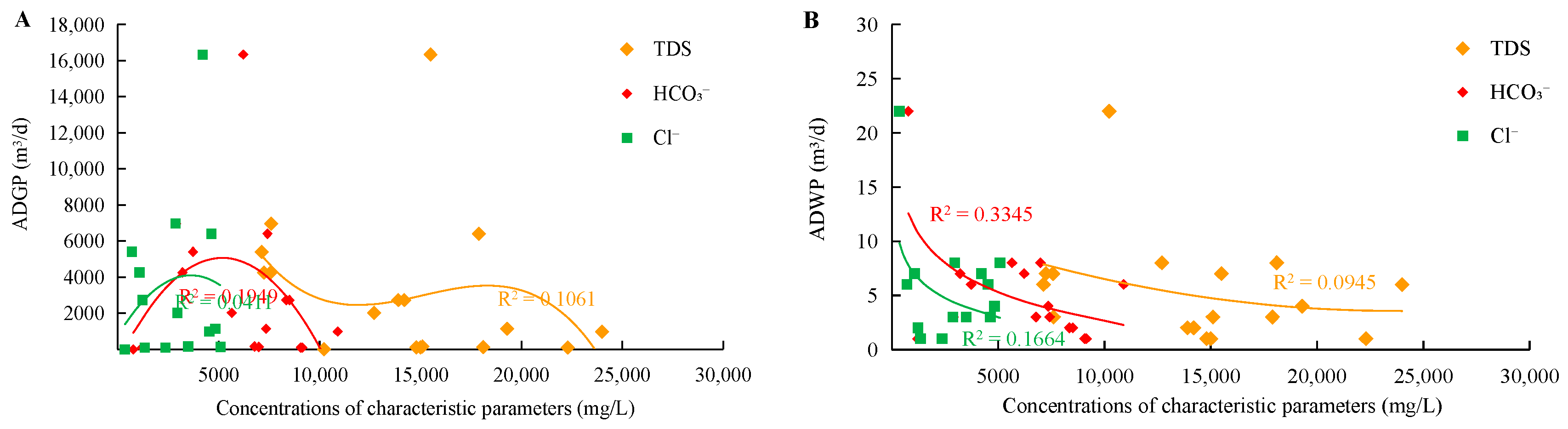
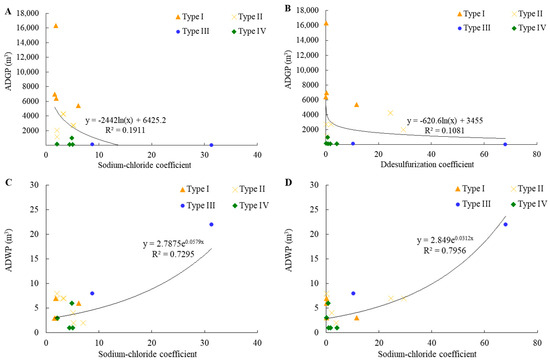
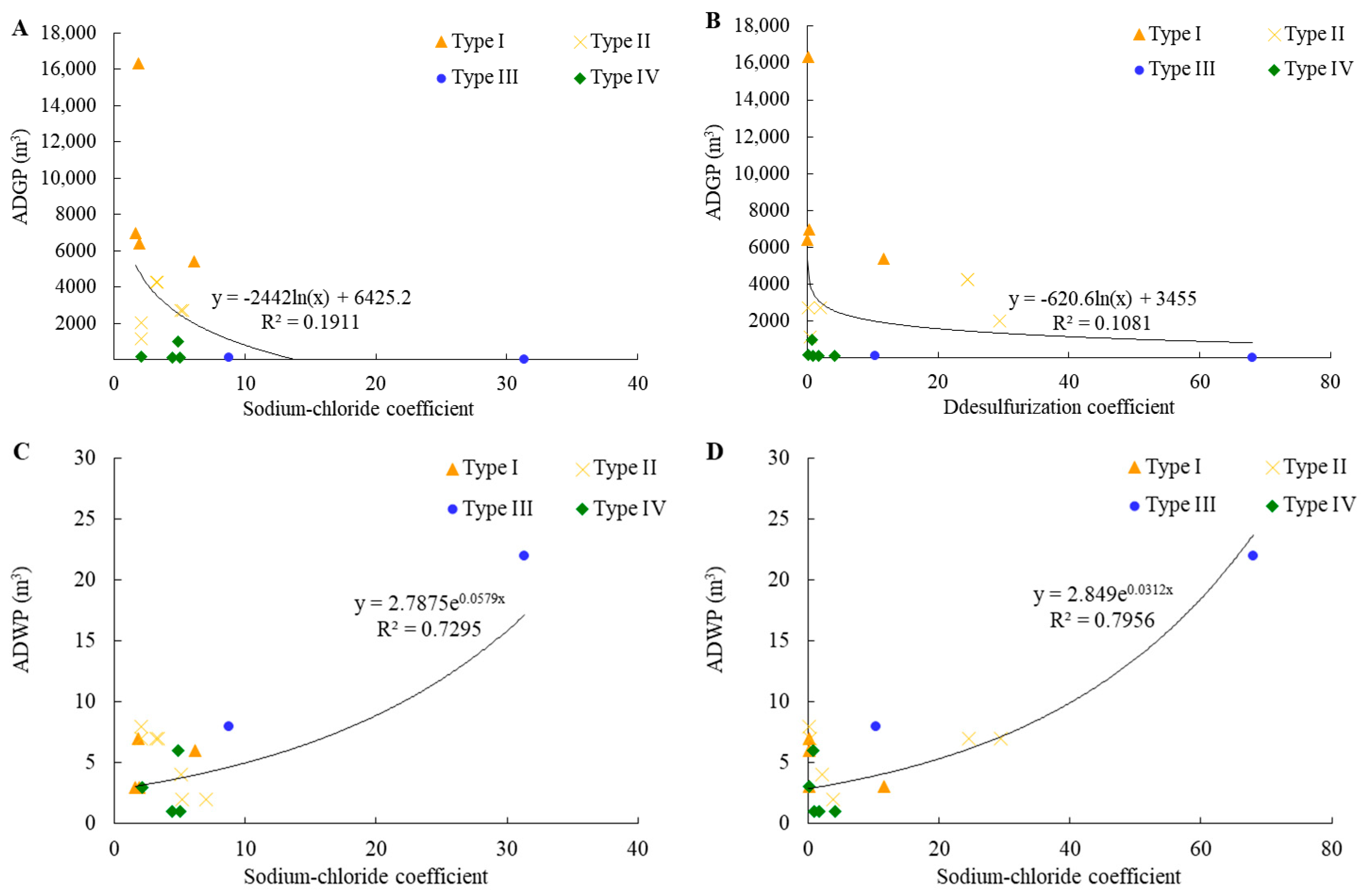
However, Figure 11A reveals a non-linear relationship between ADGP and the TDS, HCO3−, and Cl− concentrations of coal seam water, and in Figure 12A,B, the correlation coefficients between ADGP and both the sodium chloride coefficient and desulfurization coefficient are small. Overall, ADGP initially increases and then decreases as these values rise. The initial increase in ADGP with rising TDS and HCO3− concentration likely reflects favorable CBM preservation conditions under stagnant hydrodynamics. As demonstrated in Figure 13A, the higher-productivity Type I and II wells, primarily located in areas with a TDS of 7000–20,000 mg/L and characterized by Na-Cl-HCO3 and Na-HCO3-Cl water types along with lower rNa+/rCl− and (rSO42− × 100)/(rCl− + rSO42−) ratios, indicate that a stagnant and closed environment is conducive to the enrichment and accumulation of CBM. However, the subsequent decline suggests that beyond an optimal range, the high TDS, primarily controlled by greater burial depth, begins to exert a negative influence. This effect is seen in Type IV wells: although they have good sealing conditions with high TDS (15,000–24,000 mg/L) and Cl− concentration, they exhibit very low production of both gas and water, which is primarily due to the significant burial depth, which reduces gas content and results in extremely low permeability. Consequently, reservoir stimulation becomes highly challenging and often ineffective, severely obstructing gas flow and overall productivity.
Figure 11.
Plots of ADGP (A) and ADWP (B) versus concentrations of characteristic parameters of coal seam water.
Figure 12.
(A) ADGP versus sodium-chloride coefficient; (B) ADGP versus desulfurization coefficient; (C) ADWP versus sodium-chloride coefficient; (D) ADWP versus desulfurization coefficient.
Figure 13.
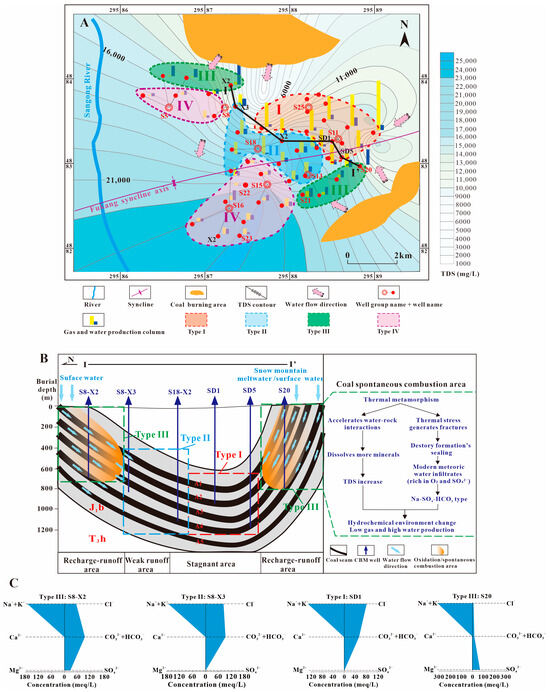
Relationship between coal seam water system and productivity distribution of CBM wells in the SGR block. (A) TDS contour map of coal seam water and productivity distribution. (B) Cross-section along profile line II’ in map A. (C) Stiff diagrams of coal seam water from representative wells in different productivity type areas.
An anomaly was identified in Type III wells, which have shallow burial depths and are affected by coal-burning zones. The Na-SO4-HCO3 water type in Type III wells suggests that the formation’s sealing property has been damaged, with the rNa+/rCl− and (rSO42− × 100)/(rCl− + rSO42−) ratios reaching 31.35 and 8.04, respectively. However, the TDS of Type III wells is not low, ranging between 10,000 and 18,000 mg/L, which may be attributed to the thermal metamorphism induced by the spontaneous combustion of the coal seam (Figure 13B). First, the heat accelerates water–rock interactions, dissolving minerals in the coal seam and surrounding rock and rapidly increasing salinity in situ. Second, the thermal stress generates fractures in the coal seam and surrounding rock, opening previously isolated pathways. This allows modern meteoric water, often rich in O2 and SO42−, to mix with the thermal coal seam water, resulting in the high TDS and SO42− concentrations observed (Figure 13C). The spontaneous combustion of coal has fundamentally reconfigured the local hydrogeology and made the geochemical system of coal seam water extremely complex, which also explains why the relationships between the geochemical parameters of coal seam water, burial depth, and gas production are often non-linear and difficult to define. However, overall, the Cl− concentration in coal seam water shows an increasing trend from Type III to Type II and then to Type I wells, while the SO42− concentration exhibits a decreasing trend (Figure 13C).
In contrast, a general negative correlation is observed between ADWP and TDS, HCO3−, and Cl− concentrations (Figure 11B). Furthermore, the ADWP showed a strong positive correlation with the sodium chloride and desulfurization coefficients (Figure 12C,D). In particular, well S20, which is situated close to the coal-burning zones and characterized by high water production, demonstrates an exceptionally high sodium chloride coefficient and desulfurization coefficient. This indicates that a closed hydrogeological system is inherently associated with low water production, whereas an open hydrogeological system results in high water production. Consequently, these geochemical parameters serve as more effective indicators for characterizing water production potential than for predicting gas production.
5.2.2. Response of Stable Isotopes of Coal Seam Water
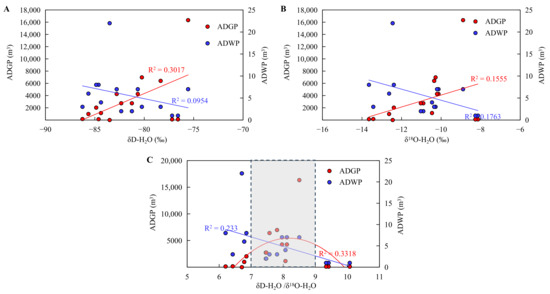
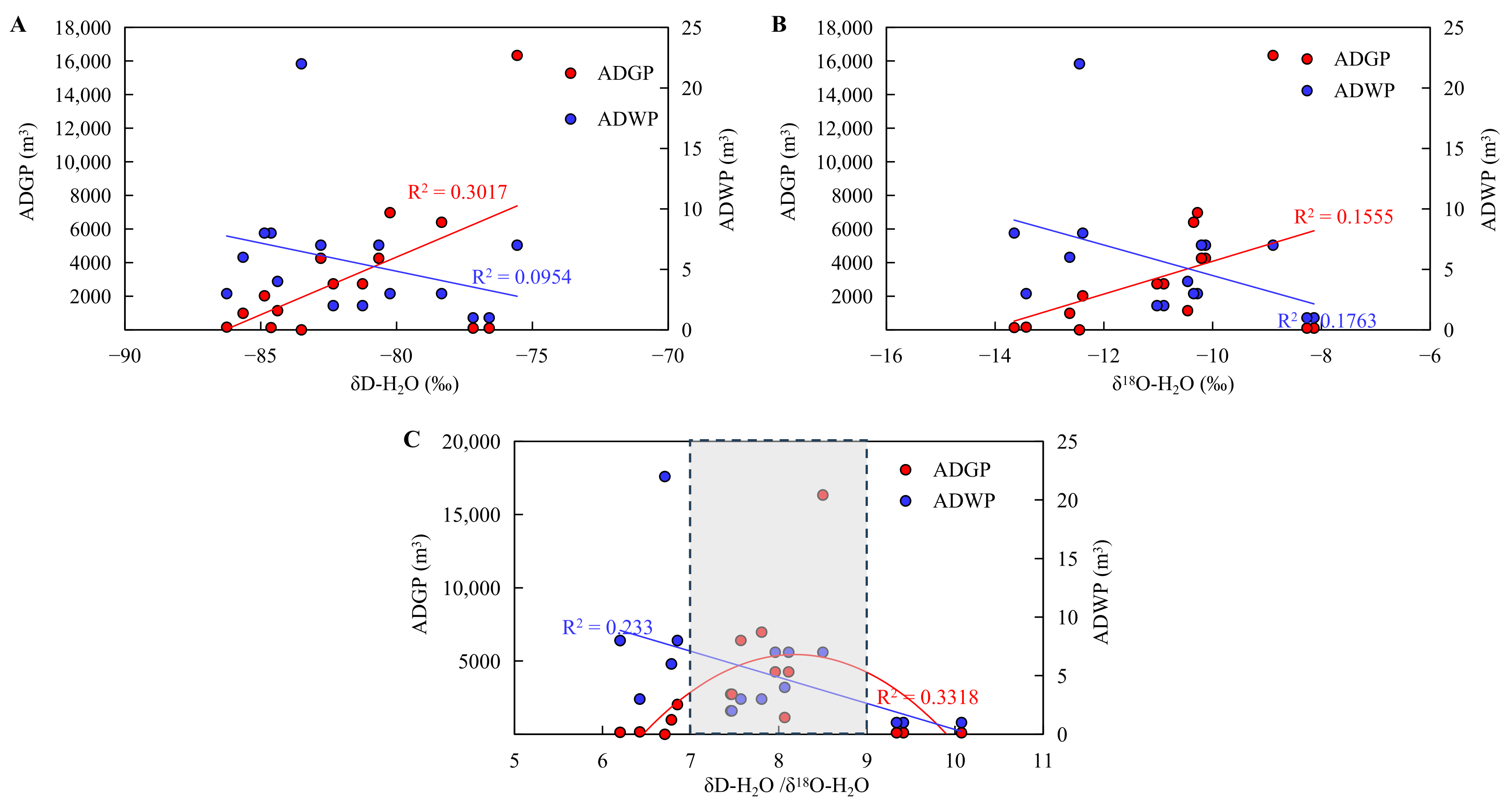
The correlations between the ADGP and ADWP of CBM wells and the stable isotopes of coal seam water were analyzed, as shown in Figure 14. The ADGP shows a weak positive correlation with δD-H2O and δ18O-H2O, whereas ADWP exhibits a weak negative correlation with δD-H2O and δ18O-H2O. This suggests that groundwater runoff and recharge zones—characterized by lighter H and O isotopic signatures and typically oxidizing conditions—are generally unfavorable for CBM enrichment, preservation, and high production. In contrast, stagnant zones with heavier isotopic compositions, often indicative of reducing environments, tend to be more conducive to CBM accumulation, which is consistent with the results of previous studies [24].
Figure 14.
Plots of ADGP and ADWP versus δD-H2O (A), δ18O-H2O (B), and δD-H2O/δ18O-H2O (C).
However, the relatively low correlation coefficients indicate that hydrodynamic conditions are not the sole controlling factor. Further analysis of the relationship between ADGP and the δD-H2O/δ18O-H2O ratio shows that ADGP initially increases and then decreases as the ratio rises, while AWP displays a general decreasing trend. This non-monotonic behavior further underscores that although a stagnant groundwater environment generally favors CBM preservation, excessively deep burial and the associated dual negative effect—namely, reduced gas content and extremely low permeability—are critical factors contributing to the failure to achieve high production in deep coal seams. Figure 14C indicates that a δD-H2O/δ18O-H2O ratio between 7 and 9 favors high gas production with low water production.
5.3. Geological and Geochemical Productivity Response Index
The analysis of the above geological conditions and geochemical characteristics reveals that the productivity of CBM wells in the study area is jointly controlled by geological structure, burial depth, and hydrogeology. These influences are ultimately reflected in quantifiable parameters, such as gas content, permeability, coal seam thickness, and the hydrochemical properties of coal seam water.
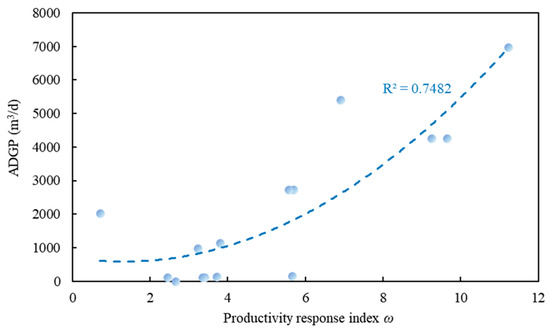
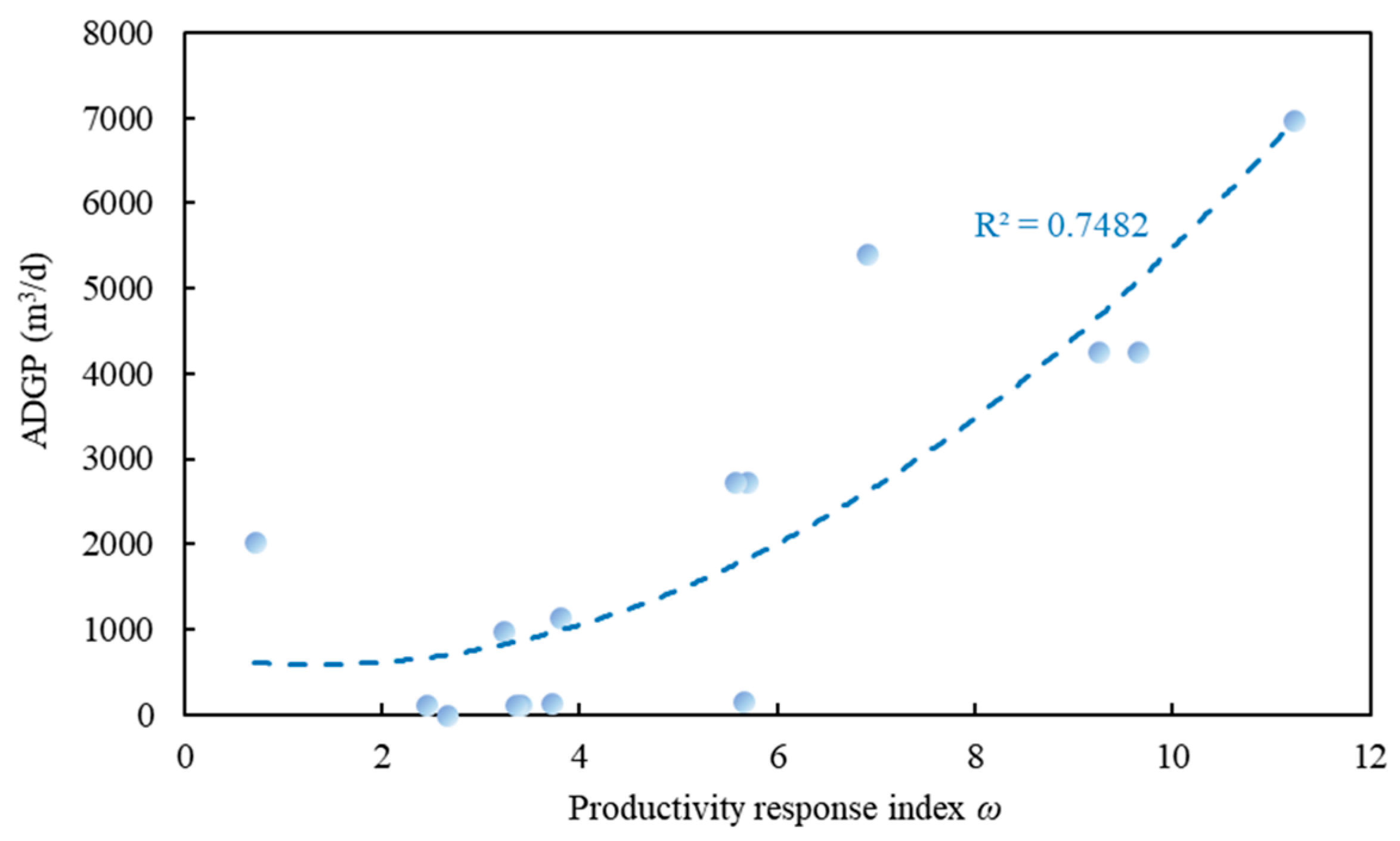
Consequently, a set of geological and geochemical indicators—gas content, permeability, coal seam thickness, TDS, rNa+/rCl− ratio, and δD-H2O/δ18O-H2O ratio—was selected to construct a productivity response index model. Subsequently, a coupling analysis was performed using MATLAB(2020) software based on the interrelationships among these parameters to establish the model. From 16 datasets, three samples were randomly selected as test samples based on a ratio of approximately 4:1 between test and validation samples, while the remaining 13 samples were used for model construction. Subsequently, based on the interrelationships between these parameters, a basic model was first constructed (Formula (1)), and then software was used to write code to solve the coefficients. Through continuous adjustment and sample verification, a productivity response index model was finally constructed (Formula (2)).
where ω represents the productivity response index; X represents the δD-H2O/δ18O-H2O ratio; Y represents the rNa+/rCl− ratio; G represents the gas content; P represents permeability; and T represents the thickness of the coal seam.
As illustrated in Figure 15, a positive correlation is observed between the productivity response index (ω) and ADGP, with ADGP exhibiting an increasing trend as ω rises. This correlation demonstrates that the coupled model based on geological and geochemical indicators effectively reflects the productivity potential of CBM wells. Furthermore, the model provides a quantitative framework for predicting productivity, thereby offering valuable guidance for the optimization of development strategies.
Figure 15.
Plot of ADGP versus productivity response index ω.
6. Conclusions
Based on a comprehensive analysis of the geological conditions and hydrogeochemical characteristics in the SGR block of the Fukang Syncline, this study clarifies the geological controls and geochemical responses governing CBM well productivity. The main conclusions are as follows:
1. CBM well productivity in the study area exhibits four distinct types controlled by burial depth, local structural and hydraulic conditions, and reservoir parameters. Type I wells (high gas, low water) occur with the optimal combination of 700–1000 m burial depth, syncline core structure, stagnant hydrodynamics, high gas content, and favorable permeability. Type II wells (medium gas, low water) occupy the 1000–1400 m interval, where productivity range is affected by the high gas content and the variable permeability. Type III wells (high water, low gas) develop in shallow margins (<700 m) affected by coal combustion and surface water influx, which create open hydrodynamic conditions that inhibit gas desorption. Type IV wells (low gas, low water) correspond to deep coal seams (>1400 m), where high in situ stress reduces gas content and permeability.
2. High- to moderate-productivity Type I/II wells are consistently associated with a Na–Cl–HCO3 or Na–HCO3–Cl water type, moderate TDS (7000–20,000 mg/L), and low sodium chloride coefficients—all signatures of stagnant, closed hydrogeological environments. In contrast, Type III wells (high water yield) exhibit Na–SO4–HCO3 water with elevated sodium chloride coefficients, reflecting open hydrodynamic conditions. Type IV wells display a Na–HCO3–Cl or Na–Cl water type with high TDS, but their productivity is ultimately constrained by deep-seated geological factors. A combination of δD–H2O/δ18O–H2O ratios between 7 and 9, an optimal TDS range, and a favorable water type is most conducive to high CBM productivity.
3. Integrating gas content, permeability, coal thickness, TDS, sodium chloride coefficient, and hydrogen–oxygen isotope ratios, a productivity response index model was developed using MATLAB(2020). This model captures the combined influence of geological and hydrogeochemical parameters on CBM well performance, providing a practical tool for predicting productivity and delineating sweet spots under complex geological and hydrological settings.
Author Contributions
Conceptualization, L.X.; Methodology, L.X.; Validation, W.G. and T.L.; Investigation, Y.Z., T.L. and J.Z.; Data curation, L.X., Y.Z. and W.G.; Writing—original draft, L.X.; Writing—review & editing, S.T.; Supervision, S.T.; Project administration, S.T.; Funding acquisition, S.T. All authors have read and agreed to the published version of the manuscript.
Funding
The research was financially supported by Oil & Gas Major Project (Grant No. 2025ZD1404202) and National Natural Science Foundation of China (Grant Nos. 42372196, 42130802).
Data Availability Statement
The original contributions presented in this study are included in the article. Further inquiries can be directed to the corresponding author.
Conflicts of Interest
The authors declare no conflict of interest.
Appendix A
Table A1.
Reservoir parameters and productivity characteristics of CBM wells in the SGR block.
Table A2.
Geochemical characteristics data of produced coal seam water and gas in the SGR block.
References
- Moore, T.A. Coalbed methane: A review. Int. J. Coal Geol. 2012, 101, 36–81. [Google Scholar] [CrossRef] [Scilit]
- Tao, S.; Tang, D.; Xu, H.; Gao, L.; Fang, Y. Factors controlling high-yield coalbed methane vertical wells in the Fanzhuang block, southern Qinshui basin—Science Direct. Int. J. Coal Geol. 2014, 134, 38–45. [Google Scholar] [CrossRef] [Scilit]
- Karacan, C.Z. Single-well production history matching and geostatistical modeling as proxy to multi-well reservoir simulation for evaluating dynamic reservoir properties of coal seams. Int. J. Coal Geol. 2021, 241, 103766. [Google Scholar] [CrossRef] [Scilit]
- Pan, Z.J.; Connell, L.D.; Camilleri, M. Laboratory characterisation of coal reservoir permeability for primary and enhanced coalbed methane recovery. Int. J. Coal Geol. 2010, 82, 252–261. [Google Scholar] [CrossRef] [Scilit]
- Qin, Y.; Moore, T.; Shen, J.; Yang, Z.; Shen, Y.; Wang, G. Resources and geology of coalbed methane in China: A review. Int. Geol. Rev. 2018, 60, 777–812. [Google Scholar] [CrossRef] [Scilit]
- Mastalerz, M.; Drobniak, A.; Strapoć, D. Variations in pore characteristics in high-volatile bituminous coals: Implications for coal bed gas content. Int. J. Coal Geol. 2018, 195, 206–221. [Google Scholar] [CrossRef] [Scilit]
- Dahm, K.G.; Guerra, K.L.; Munakata-Marr, J.; Drewes, J.E. Trends in water quality variability for coalbed methane produced water. J. Clean. Prod. 2014, 84, 840–848. [Google Scholar] [CrossRef] [Scilit]
- Li, Y.; Pan, J.; Tang, Z.; Wang, H.; Wang, Y.; Lai, P.; Wang, Z.; Du, X. Optimization of deep coalbed methane fracturing fluids in the southern Junggar Basin: Mechanisms, additives, and damage control. J. Environ. Chem. Eng. 2026, 14, 121203. [Google Scholar] [CrossRef] [Scilit]
- Rice, C.A. Production waters associated with the Ferron coalbed methane fields, central Utah: Chemical and isotopic composition and volumes. Int. J. Coal Geol. 2003, 56, 141–169. [Google Scholar] [CrossRef] [Scilit]
- Voast, V.; Wayne, A. Geochemical signature of formation waters associated with coalbed methane. AAPG Bull. 2003, 87, 667–676. [Google Scholar] [CrossRef] [Scilit]
- Taulis, M.; Milke, M. Chemical variability of groundwater samples collected from a coal seam gas exploration well, Maramarua, New Zealand. Water Res. 2013, 47, 1021–1034. [Google Scholar] [CrossRef] [Scilit] [PubMed]
- Dai, S.; Ren, D.; Chou, C.L.; Finkelman, R.B.; Seredin, V.V.; Zhou, Y. Geochemistry of trace elements in chinese coals: A review of abundances, genetic types, impacts on human health, and industrial utilization. Int. J. Coal Geol. 2012, 94, 3–21. [Google Scholar] [CrossRef] [Scilit]
- Yang, Z.B.; Wu, C.C.; Zhu, J.P.; Li, Y.Y.; Qin, Z.H. Research progress on produced water geochemical from CBM wells in China. Coal Sci. Technol. 2019, 47, 110–117. (In Chinese) [Google Scholar]
- Klein, D.A.; Flores, R.M.; Venot, C.; Gabbert, K.; Schmidt, R.; Stricker, G.D.; Pruden, A.; Mandernack, K. Molecular sequences derived from Paleocene Fort Union Formation coals vs. associated produced waters: Implications for CBM regeneration. Int. J. Coal Geol. 2008, 76, 3–13. [Google Scholar] [CrossRef] [Scilit]
- Uenal, B.; Perry, V.; Sheth, M. Trace elements affect methanogenic activity and diversity in enrichments from subsurface coal bed produced water. Front. Microbiol. 2012, 3, 550–562. [Google Scholar] [CrossRef] [Scilit] [PubMed]
- Rice, C.A.; Flores, R.M.; Stricker, G.D.; Ellis, M.S. Chemical and stable isotopic evidence for water/rock interaction and biogenic origin of coalbed methane, Fort Union Formation, Powder River Basin, Wyoming and Montana U.S.A. Int. J. Coal Geol. 2008, 76, 76–85. [Google Scholar] [CrossRef] [Scilit]
- Zhang, S.H.; Tang, S.H.; Li, Z.P.; Pan, Z.J.; Shi, W. Study of hydrochemical characteristics of cbm co-produced water of the Shizhuangnan block in the southern Qinshui basin, China, on its implication of cbm development. Int. J. Coal Geol. 2016, 159, 169–182. [Google Scholar] [CrossRef] [Scilit]
- Du, M.Y.; Wu, C.F.; Zhou, H.; Zhang, S.S.; Zhang, E.C. Geochemical characteristics of produced water from coalbed methane wells and its influence on productivity in Laochang Coalfield, China. Open Geosci. 2020, 12, 1146–1157. [Google Scholar] [CrossRef] [Scilit]
- Qin, Y.; Zhang, Z.; Bai, J.; Liu, D.; Tian, Y. Source apportionment of produced water and feasibility discrimination of commingling CBM production from wells in Southern Qinshui Basin. J. China Coal Soc. 2014, 39, 1892–1898. [Google Scholar]
- Guo, C.; Qin, Y.; Xia, Y.C.; Ma, D.M.; Han, D. Geochemical characteristics of produced water from CBM wells and implications for commingling CBM production: A case study of the Bide—Santang Basin, western Guizhou, China. J. Pet. Sci. Eng. 2017, 159, 666–678. [Google Scholar] [CrossRef] [Scilit]
- Liu, H.H.; Sang, S.X.; Xue, J.H.; Lan, T.H.; Xu, H.J.; Ren, B.; Liu, S.Q. Evolution and geochemical characteristics of gas phase fluid and its response to inter-well interference during multi-well drainage of coalbed methane—Sciencedirect. J. Pet. Sci. Eng. 2018, 162, 491–501. [Google Scholar] [CrossRef] [Scilit]
- Taulis, M.; Milke, M. Coal seam gas water from Maramarua, New Zealand: Characterisation and comparison to United States analogues. J. Hydrol. N. Z. 2007, 46, 1–17. [Google Scholar]
- Zhang, S.; Tang, S.; Li, Z.; Guo, Q.; Pan, Z. Stable isotope characteristics of CBM co-produced water and implications for CBM development: The example of the Shizhuangnan block in the southern Qinshui Basin, China. J. Nat. Gas Sci. Eng. 2015, 27, 1400–1411. [Google Scholar] [CrossRef] [Scilit]
- Wang, B.; Sun, F.; Tang, D.; Zhao, Y.; Song, Z.; Tao, Y. Hydrological control rule on coalbed methane enrichment and high yield in FZ block of Qinshui basin. Fuel 2015, 140, 568–577. [Google Scholar] [CrossRef] [Scilit]
- Shi, W.; Tang, S.H.; Li, Z.C.; Zhang, S.H. Hydrogen-oxygenisotope characteristics of produced water from coal reservoir of Shanxi formation in Qinshui Basin. Coal Geol. Explor. 2017, 45, 62–68. (In Chinese) [Google Scholar]
- Fu, H.; Tang, D.; Pan, Z.; Yan, D.; Yang, S.; Zhuang, X.; Li, G.; Chen, X.; Wang, G. A study of hydrogeology and its effect on coalbed methane enrichment in the southern Junggar Basin, China. AAPG Bull. 2019, 103, 189–213. [Google Scholar] [CrossRef] [Scilit]
- Tang, S.L.; Liu, S.M.; Tang, D.Z.; Tao, S.; Zhang, A.B.; Pu, Y.F.; Zhang, T.Y. Occurrence of fluids in high dip angled coal measures: Geological and geochemical assessments for southern Junggar Basin, China. J. Nat. Gas Sci. Eng. 2021, 88, 103827. [Google Scholar] [CrossRef] [Scilit]
- Tang, S.L.; Tang, D.Z.; Tao, S.; Sun, B.; Zhang, A.B.; Zhang, T.Y.; Pu, Y.F.; Zhi, Y.H. CO2-enriched CBM accumulation mechanism for low-rank coal in the southern Junggar Basin, China. Int. J. Coal Geol. 2022, 253, 103955. [Google Scholar] [CrossRef] [Scilit]
- Kang, J.; Fu, X.; Gao, L.; Liang, S. Production profile characteristics of large dip angle coal reservoir and its impact on coalbed methane production: A case study on the Fukang west block, southern Junggar Basin, China. J. Pet. Sci. Eng. 2018, 171, 99–114. [Google Scholar] [CrossRef] [Scilit]
- United States Bureau of Mines. U.S. Bureau of Mines Statistical Standards; Branch of Statistics and Methods Development, U.S. Bureau of Mines: Washington, DC, USA, 1994.
- Zhang, Y.; Li, S.; Tang, D.; Zhao, X.; Zhu, S.; Ye, J. Structure-and hydrology-controlled isotopic coupling and heterogeneity of coalbed gases and co-produced water in the Yanchuannan block, southeastern Ordos Basin. Int. J. Coal Geol. 2020, 232, 103626. [Google Scholar] [CrossRef] [Scilit]
- SY/T 5523-2016; Method for Analysis of Oilfield Water. National Energy Administration of China: Beijing, China, 2016.
- Wu, C.; Yang, Z.; Qin, Y.; Chen, J.; Zhang, Z.; Li, Y. Characteristics of Hydrogen and Oxygen Isotopes in Produced Water and Productivity Response of Coalbed Methane Wells in Western Guizhou. Energy Fuels 2018, 32, 11203–11211. [Google Scholar] [CrossRef] [Scilit]
- Tang, S.H.; Yang, L.; Jianwei, L. In situ reservoir biogeochemical evaluation and its indicative significance for coalbed methane extraction: Taking the Shizhuangnan Block in the southern Qinshui Basin as an example. J. China Coal Soc. 2024, 49, 555–562. [Google Scholar]
- Pu, Y.; Tang, D.; Tang, S.; Tao, S.; Zhang, A.; Zhang, T. Coalbed methane development effect and geological evaluation under large inclination angle geological coupling condition. Coal Sci. Technol. 2020, 48, 191–199. [Google Scholar]
- Craig, H. Isotopic variations in meteoric waters. Science 1961, 133, 1702–1703. [Google Scholar] [CrossRef] [Scilit]
- Craig, H. The isotopic geochemistry of water and carbon in geothermal areas. In Nuclear Geology of Geothermal Areas; Consiglio Nazionale Delle Ricerche (CNR): Pisa, Italy, 1963; pp. 17–53. [Google Scholar]
- Criss, R.; Taylor, H., Jr. An 18O/16O and D/H study of Tertiary hydrothermal systems in the southern half of the Idaho batholith. Geol. Soc. Am. Bull. 1983, 94, 640–663. [Google Scholar] [CrossRef] [Scilit]
- Li, H.; Jiang, Z.; Wang, Y.; Luo, W. Variation characteristics of stable isotopes in the precipitation of Xinjiang. Res. Soil Water Conserv. 2009, 16, 157–161. [Google Scholar]
- Clark, I. Groundwater Geochemistry and Isotopes; CRC Press: Boca Raton, FL, USA, 2015. [Google Scholar]
- Zhang, Y.; Li, S.; Tang, D.; Liu, J.C.; Lin, W.J.; Feng, X.; Ye, J.C. Geological and engineering controls on the differential productivity of CBM wells in the Linfen block, southeastern Ordos Basin, China, Insights from geochemical analysis. J. Pet. Sci. Eng. 2022, 211, 110159. [Google Scholar] [CrossRef] [Scilit]
- Sun, B.; Tang, S.; Tao, S.; Chen, S.D.; Zhi, Y.H.; Zhang, B.; Wen, Y.J. Geological and Geochemical Responses to Productivity of CBM Wells in the Baiyang River Block of the Southern Junggar Basin, China. Energies 2023, 16, 8063. [Google Scholar] [CrossRef] [Scilit]
- Fu, H.J.; Yan, D.T.; Su, X.B.; Wang, J.W.; Li, Q.; Li, X.; Zhao, W.Z.; Zhang, L.W.; Wang, X.M.; Li, Y.G. Biodegradation of early thermogenic gas and generation of secondary microbial gas in the Tieliekedong region of the northern Tarim Basin, NW China. Int. J. Coal Geol. 2022, 261, 104075. [Google Scholar] [CrossRef] [Scilit]
- Yang, Z.; Wu, C.; Zhang, Z.; Jin, J.; Zhao, L.; Li, Y. Geochemical significance of CBM produced water: A case study of developed test wells in Songhe block of Guizhou province. J. China Univ. Min. Technol. 2017, 46, 710–717. (In Chinese) [Google Scholar]
- Wang, X.; Liu, W.; Shi, B.; Zhang, Z.; Xu, Y.; Zheng, J. Hydrogen isotope characteristics of thermogenic methane in Chinese sedimentary basins. Org. Geochem. 2015, 83–84, 178–189. [Google Scholar] [CrossRef] [Scilit]
- Yu, B.S. Chemical characteristic of produced water of Lunlian CBM well and its intention. China Coalbed Methane 2015, 12, 32–35. (In Chinese) [Google Scholar]

Disclaimer/Publisher’s Note: The statements, opinions and data contained in all publications are solely those of the individual author(s) and contributor(s) and not of MDPI and/or the editor(s). MDPI and/or the editor(s) disclaim responsibility for any injury to people or property resulting from any ideas, methods, instructions or products referred to in the content. |
© 2026 by the authors. Licensee MDPI, Basel, Switzerland. This article is an open access article distributed under the terms and conditions of the Creative Commons Attribution (CC BY) license.