


Abstract
Textile wastewater contains recalcitrant azo dyes and auxiliary chemicals that are resistant to conventional biological treatment, resulting in persistent organic pollution in aquatic ecosystems. While supercritical water oxidation (SCWO) achieves superior chromophore mineralization, its high energy requirements limit industrial scalability. Conversely, biomass-derived activated carbon (BAC) offers a low-cost adsorption solution, but it rapidly becomes saturated with toxic oxidation intermediates. Notably, the literature lacks systematic analyses of hybrid SCWO-BAC systems with integrated thermal energy, which represents a crucial gap in assessing their economic feasibility. This review employed a systematic methodology, selecting studies relevant to the topic from peer-reviewed publications and databases, including Scopus, SciELO, ScienceDirect, and Google Scholar, for critical synthesis. Using SCWO as a pretreatment (which significantly reduces COD load), followed by BAC polishing, results in superior detoxification compared to individual processes. However, three barriers hinder scale-up: (i) chloride ion corrosion in real effluents; (ii) irreversible collapse of BAC pores after multiple regeneration cycles; and (iii) absence of standardized ecotoxicity data for hybrid-treated streams. This work outlines a technological roadmap for integrated supercritical water oxidation and biological activated carbon (SCWO-BAC) systems, targeting economically viable operational parameters for industrial-scale implementation.
1. Introduction
Water is one of the most important resources, both for the preservation and continuity of life on Earth. Possibly the only natural resource that is involved in all aspects of human civilization, from agricultural and industrial development to cultural and religious values in society [1]. Despite its important socioeconomic role, the textile sector is widely recognized as one of the most polluting industrial sectors globally due to its intense water consumption and the generation of highly complex industrial effluents from a physical-chemical point of view.
Among these contaminants, synthetic dyes play a central role: approximately 10% to 15% of the world’s production of these compounds is released into the environment during the dyeing and washing stages, due to their low fixation to textile fibers. Most of these dyes belong to the class of azo dyes, which are recalcitrant organic compounds; many of these compounds are susceptible to the formation of mutagenic or carcinogenic intermediate products under contaminated environmental or treatment conditions. Other pollutants commonly found in textile effluents include hypochlorites, peroxides, solvents, and acids [2]. Dyes such as methylene blue and safranin orange are also used and can cause serious damage [3].
Thus, by increasing the toxic load of the water, the presence of these effluents in water bodies causes severe impacts on aquatic biodiversity. Intense coloration reduces water transparency and prevents the penetration of solar radiation, directly compromising the photosynthetic activity of autotrophic organisms and, consequently, the primary productivity of aquatic environments [4,5].
Textile effluents are complex liquid flows generated during key stages of wet processing, including preparation, dyeing, finishing, and washing, with physicochemical characteristics that vary significantly depending on the type of fiber. The textile industry is among the sectors that consume the most water worldwide, using between 80 and 150 m3 of water per ton of fabric produced, thus generating large volumes of highly variable wastewater [6].
These effluents contain a dangerous mixture of synthetic azo dyes, heavy metals, inorganic salts, surfactants, phenols, nutrients, and settleable solids. The discharge of these effluents seriously compromises water quality, altering the natural color, increasing turbidity, and introducing persistent organic pollutants, frequently violating regulatory standards such as CONAMA Resolution No. 357/2005 [7], which prohibits any alteration in the natural color of Class 1 and 2 water bodies [8].
The toxicity of azo dyes must be analyzed directly and contextually. Many of these compounds and their precursors are suspected or proven carcinogens, as they can undergo reductive cleavage in anaerobic or biological environments, releasing primary aromatic amines, substances with high toxicity and mutagenic potential.
During photocatalytic processes, such as those mediated by TiO2, complete mineralization of dyes does not always occur immediately; long-lasting intermediates are formed, the presence of which can represent a significant environmental risk, even when the original color is removed. The discoloration of textile effluents, although frequently used as an indicator of efficiency, does not guarantee complete decontamination. In many cases, the compounds formed during degradation can be more toxic than the original dye [9].
The textile industry, being the largest consumer of synthetic dyes in the world, represents more than 50% of the global use of these compounds. It uses approximately 10,000 different types of textile pigments with high dyeing power; even at concentrations below 1 mg/L, the coloration of the water is visible. It is estimated that 10% to 15% of the dyes applied do not adhere to the fabrics and are discharged directly into wastewater. In some cases, up to 20% of the dyes used are released into water bodies [10].
The composition of these effluents is highly complex, including synthetic dyes, heavy metals, inorganic salts (such as chlorides and sulfates), surfactants, recalcitrant organic compounds, oils, and greases. Inorganic salts increase the conductivity and salinity of water, compromising its quality and affecting soil fertility in infiltration areas [11,12].
However, conventional biological and physicochemical technologies demonstrate specific limitations, especially due to the low biodegradability and recalcitrant nature of synthetic dyes, resulting in low efficiency in color removal and incomplete mineralization of organic matter [13]. Reviews such as Porto et al., 2024 [14], reinforce the view that employing more advanced technologies promotes treatments for contaminated water.
Activated carbon has become one of the most important and widely used adsorbents due to its high internal porosity and large surface area, which give it a high adsorption capacity [15]. Presented as an excellent option to correct various physicochemical parameters of water, including pH, turbidity, conductivity, total solids, and hardness, in addition to removing odors, unpleasant tastes, and dissolved organic substances, acting mainly through the adsorption mechanism. The effectiveness of this material can be directly related to its porosity, which is evaluated by specific tests during its production and determines its ability to retain contaminants present in the water [16]. It can even be described as one of the most common and effective adsorbents in the removal of textile dyes, due to its high specific surface area and developed porosity.
Despite the difficulty of large-scale implementation in developing countries, studies such as [17] show that this material has good adsorption capacity for methylene blue, being considered competitive with many activated carbon-based materials, especially considering its low cost and residual origin. Several other studies show the effectiveness of adsorption in removing dyes, especially when integrated with alternative materials or complementary processes [18,19,20,21,22].
Advanced oxidation processes (AOPs) offer improved degradation of recalcitrant dyes compared to conventional methods; however, incomplete mineralization often generates toxic aromatic amines and quinones. Supercritical water oxidation (SCWO) achieves near-complete mineralization but faces prohibitive energy demands for industrial scale. Conversely, biomass-derived activated carbon (BAC) provides low-cost adsorption but suffers rapid saturation with oxidation intermediates and fails to mineralize pollutants.
Critically, the literature lacks a systematic analysis of hybrid SCWO-BAC configurations with thermal energy integration, a key strategy to offset SCWO’s energy penalty while extending BAC service life. This review addresses this gap by: (i) critically comparing the performance of SCWO and BAC in textile effluents; (ii) identifying technological barriers to thermal integration; and (iii) proposing a roadmap for pilot-scale validation of SCWO-BAC hybrid systems aimed at operational feasibility.
2. Materials and Methods
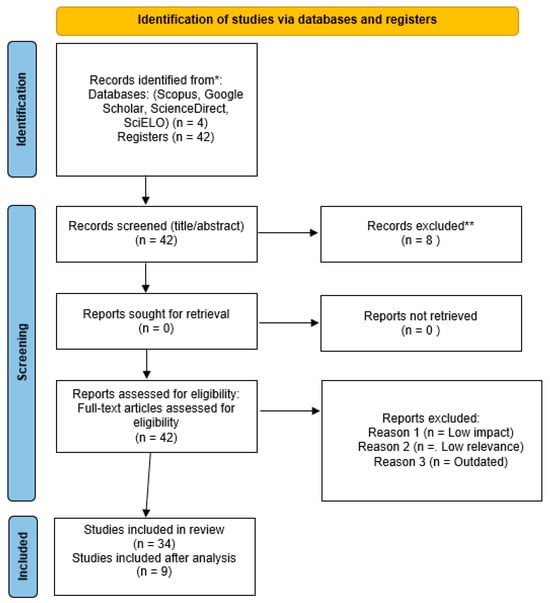
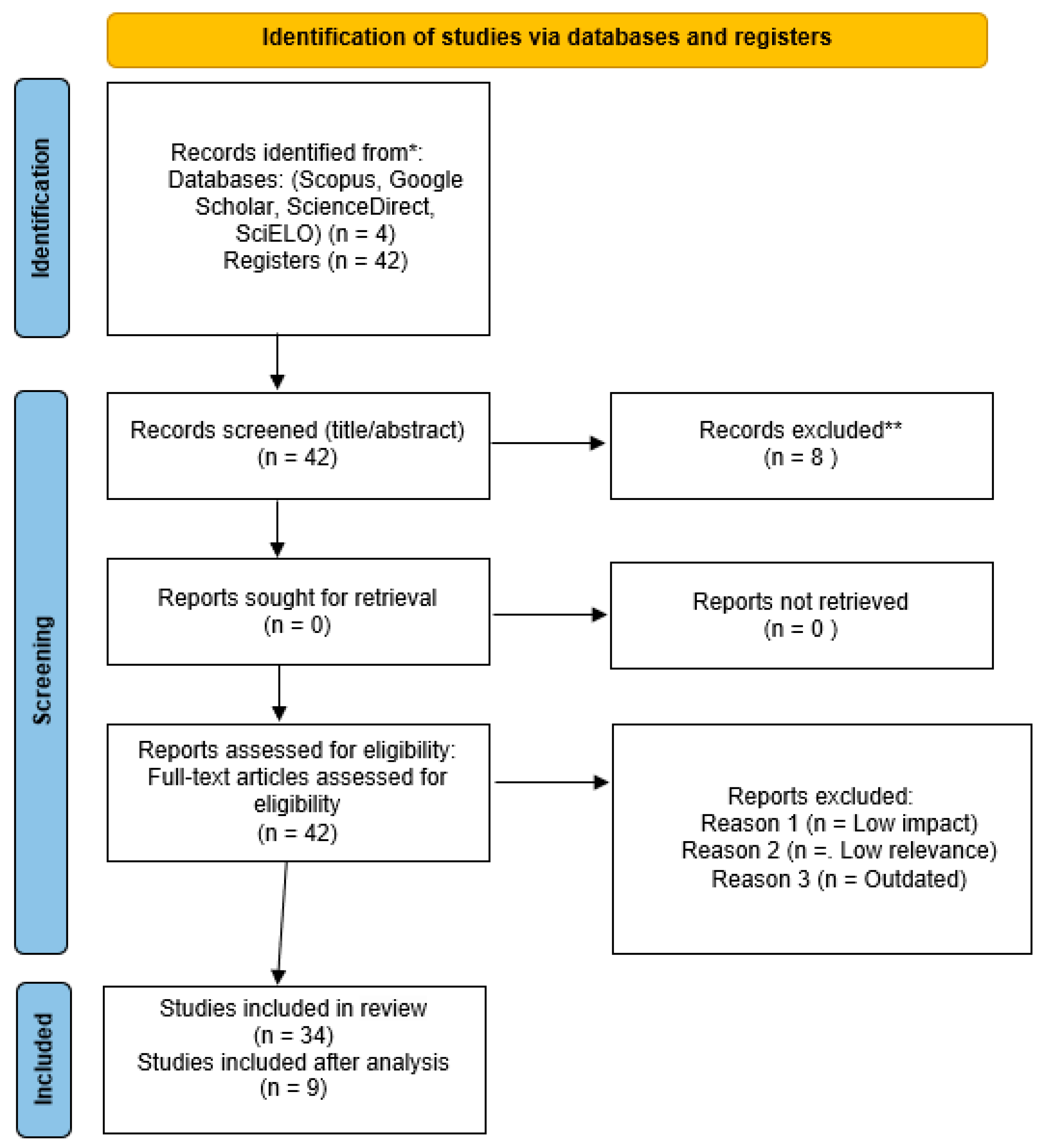
This systematic review followed transparent reporting guidelines for the synthesis of the literature. The search strategy encompassed scientific databases: Scopus, Google Scholar, SciELO (Scientific Electronic Library Online), and ScienceDirect, with publications between 2019 and 2026. Boolean operators combined three thematic groupings: (i) “textile effluent” OR “textile wastewater”; (ii) “supercritical water oxidation” OR “SCWO”; and (iii) “biomass-derived activated carbon” OR “biochar”. Inclusion criteria prioritized articles that reported data on treatment efficiency (color removal, COD/TOC reduction) for textile effluents. Exclusion criteria removed studies that used synthetic solutions with a single dye without industrial relevance or that did not present a toxicity assessment. Data extraction focused on: operational parameters (temperature, pressure, pH), performance metrics (removal efficiency, consumption), and technological limitations (corrosion, saturation). Figure 1 shows a flowchart of the selection process.
Figure 1.
PRISMA 2020 flowchart of the study selection process.
Records were identified using Scopus, Google Scholar, ScienceDirect, and SciELO (n = 42). After removing 8 references deemed irrelevant to the work (e.g., outdated), 34 studies were assessed for eligibility and included in the qualitative synthesis. After further review, 9 more studies were included.
3. Results and Discussion
3.1. Recent Studies: Treatment Technologies
In recent years, there has been a significant increase in scientific production related to the treatment of industrial effluents through advanced technologies and sustainable materials. Several studies have been developed in strategic areas that converge on the central theme of this article: the treatment of textile effluents, oxidation processes under supercritical conditions, and the use of activated carbons obtained from regional biomass. Each of these research lines has evolved independently, contributing technical advances, new materials, and a better understanding of the mechanisms involved. Table 1 shows a performance comparison of some treatment technologies.
Table 1.
Performance comparison of treatment technologies.
In De Campos & Zir (2024) [23], the efficiency presented is general, not specific to a parameter (e.g., BOD, color, solids), showing variable efficiencies by parameter. Therefore, “>80%” is a weighted average or optimistic figure; it does not represent uniform efficiency for all pollutants. This technology, by itself, does not effectively remove recalcitrant dyes (such as azo dyes) or dissolved organic compounds of low biodegradability.
The article Pequeno et al., 2025 [24], demonstrates that coagulation/flocculation is highly effective in removing turbidity from real textile effluent, especially with the use of PAC, achieving good performance. However, the results reveal a critical limitation: COD is not significantly reduced, indicating that dissolved organic compounds, responsible for most of the pollutant load, remain in the effluent. This makes secondary treatment indispensable to meet legal requirements.
In the study by Tones et al., 2020 [25], the CER-CUF system with Al electrodes proved to be a promising technology for the preliminary treatment of cosmetic effluents, combining low operating costs, reasonable efficiency, and operational simplicity. However, integration with a polishing treatment (e.g., biological, adsorption, or advanced oxidation) is recommended to eliminate residual toxicity and ensure compliance with environmental discharge standards.
In the study by Fernandes et al., 2021 [26], the efficiency of “57.1%” refers to the degradation of Ponceau BS (azo dye), not to the total removal of pollutants. The study uses color removal efficiency as an indicator, but does not guarantee mineralization; there may be the formation of more toxic intermediates (such as aromatic amines).
For Benassi et al. In 2021 [27], efficiencies of 79.76 ± 1.45% and 80.43 ± 1.27% after 300 min and 180 min, respectively, refer to the removal of color from indigo blue dye (a resistant dye with an indigoid structure). Note that the efficiency is high, but the time is long (300 min = 5 h), which makes it unfeasible for a continuous industrial flow without optimization. Furthermore, indigo blue (synthetic) is less recalcitrant than azo dyes but more stable than reactive dyes.
The article (Araújo et al., 2024) [27] demonstrates that the advanced oxidation processes (AOPs) tested are highly effective in removing turbidity and color from real textile effluent, emphasizing the economic viability of the alkaline persulfate (Na2S2O8/OH−)-based system. However, despite their high technical efficiency, these AOPs should currently be employed as intermediate polishing steps rather than as final treatment solutions. Therefore, the study is valuable for its integrated approach and cost analysis.
The article by Luo et al. (2025, p. 108477) [28] presents SCWO as an extremely effective solution for phenol destruction, with impeccable technical performance (>75% removal). The approach is scientifically sound and aligns with the established literature on the potential of supercritical oxidation for treating highly toxic effluents. However, an analysis shows a disconnect between technical efficiency and practical feasibility.
The study acknowledges high energy consumption as a major barrier, but does not quantify the net energy balance or economically evaluate the proposal on a relevant scale. Furthermore, using only pure phenol in aqueous solution ignores the real challenges of complex industrial matrices, such as the presence of solids, salts, and mixtures of contaminants, which can induce corrosion, clogging, or inhibition of the reaction.
3.1.1. Biomass Activated Carbon
Biomass is defined as all organic matter of plant or animal origin that can be used to produce energy. It serves as a renewable and clean energy source that can be transformed into heat, electricity, or liquid and gaseous fuels through processes such as direct combustion, gasification, or anaerobic digestion.
Among the technologies for this conversion, pyrolysis stands out as one of the main thermochemical techniques. This process occurs through the thermal degradation of biomass in the absence of oxygen. Activated carbon has become one of the most important and widely used adsorbents due to its high internal porosity and large surface area, which give it a high adsorption capacity [10].
It can even be described as one of the most common and effective adsorbents in the removal of textile dyes, due to its high specific surface area and developed porosity. Despite the difficulty of large-scale implementation in developing countries [17].
It can also be presented as an excellent option for correcting various physical-chemical parameters of water, including pH, turbidity, conductivity, total solids, and hardness; its effectiveness can be directly related to its porosity [16]. Table 2 shows the characteristics of biomass-based activated carbons for comparison purposes.
Table 2.
Characteristics of biomass-based activated carbons.
Even though the studies show good efficiency, they have limitations. For example, the research by Pedroza et al. (2023) [15], which was conducted on a laboratory scale, lacked performance evaluation under real-world industrial effluent conditions (containing complex mixtures of dyes, salts, and other pollutants). Tests on the reuse or regeneration of activated carbon were not performed, which is crucial for economic viability.
Detailed surface characterization of the carbon (such as BET specific area, pore size, functional groups via FTIR) was not presented, limiting the understanding of the molecular mechanisms of adsorption. The study focused only on methylene blue dye, not allowing generalizations to other types of dyes (such as azo dyes, more common in the textile industry). Therefore, although the article demonstrates high removal efficiency (>80%), the conclusions are restricted to the specific experimental conditions tested.
For the study by Joaquín-Medina et al. (2021) [17], the tests were carried out in an ideal synthetic solution, without common interferents found in real effluents (e.g., salts, organic matter, dye mixtures). The study focused only on two model dyes, which limits generalization to other pollutants. Regeneration or reuse steps of the bioadsorbent, essential for practical viability, were not evaluated. The scale was laboratory-level, without tests in a continuous column or under dynamic conditions close to industrial reality.
This article (Vieira et al., 2021) [30] demonstrates that activated carbon derived from macaúba endocarp is a highly effective adsorbent for the removal of atrazine in synthetic aqueous solutions, with removal capacities exceeding 90% in short periods. The combination of robust experimental characterization (BET, FTIR, XRD, SEM) with theoretical analysis based on DFT enriches the understanding of adsorption mechanisms, suggesting a strong chemical affinity between the adsorbent and the herbicide. However, the main limitation lies in the lack of validation in real matrices.
The absence of tests in agricultural effluents or surface waters, which contain dissolved organic matter, inorganic ions, and other pesticides, compromises the extrapolability of the results to practical applications. Furthermore, the lack of evaluation of the material’s regenerability prevents a realistic cost–benefit analysis. Despite this, the work provides a solid foundation for future research focused on the valorization of waste in the production of high-performance adsorbents, as well as its potential application in waters contaminated with other types of pollutants.
The article Módenes et al., 2023 [31], presents adsorption using activated carbon derived from biomass as a promising alternative for removing persistent pharmaceuticals, such as antibiotics and metronidazole, from wastewater. While the article accurately acknowledges the limitations of other technologies (for example, the inefficacy of UV radiation against MTN and the formation of toxic byproducts in oxidative processes), it lacks concrete experimental data. No information is provided regarding quantitative removal efficiency or key operational parameters. Consequently, as this is a research study, the absence of empirical data prevents a robust and comprehensive assessment of the actual viability of the proposed technology on a large scale.
The article (De Almeida et al., 2021) [32] discusses the production of activated carbon from agro-industrial waste for the removal of malic acid in aqueous media, aligning with the trend of valorizing waste in environmental processes. However, it does not present experimental data on optimized operational parameters. It only reports that tests were conducted. Although the use of residual biomass is a clear environmental advantage, more information is needed on regenerability, material stability, and performance in complex matrices for its practical applicability.
In the article by Mantovani et al. (2020) [32], even though it is not an activated carbon, the use of biomass (invasive mussel) shows potential as a low-cost adsorbent for methylene blue removal. Characterization revealed an irregular porous structure, the presence of functional groups such as carbonate and hydroxyl, and a predominant composition of calcium oxides (68.6%) and silica (12.5%), characteristics favorable to adsorption. The work validates the biomass in question as a promising adsorbent for the removal of cationic dyes under mild conditions, aligning with the principles of circular economy and waste valorization. However, for practical application, complementary studies on material regeneration, performance in real matrices, and a detailed economic evaluation of the process on a larger scale would be necessary.
We can see that biomass adsorbents are a great option not only in their final product (adsorbents) but also for the disposal of waste that would often be disposed of improperly. Furthermore, studies such as that of Costa (2022) [33], which uses coffee grounds (generated daily, both as domestic and industrial waste).
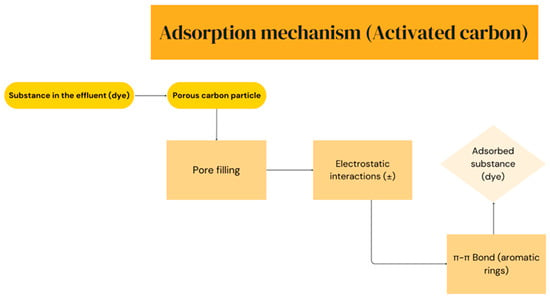
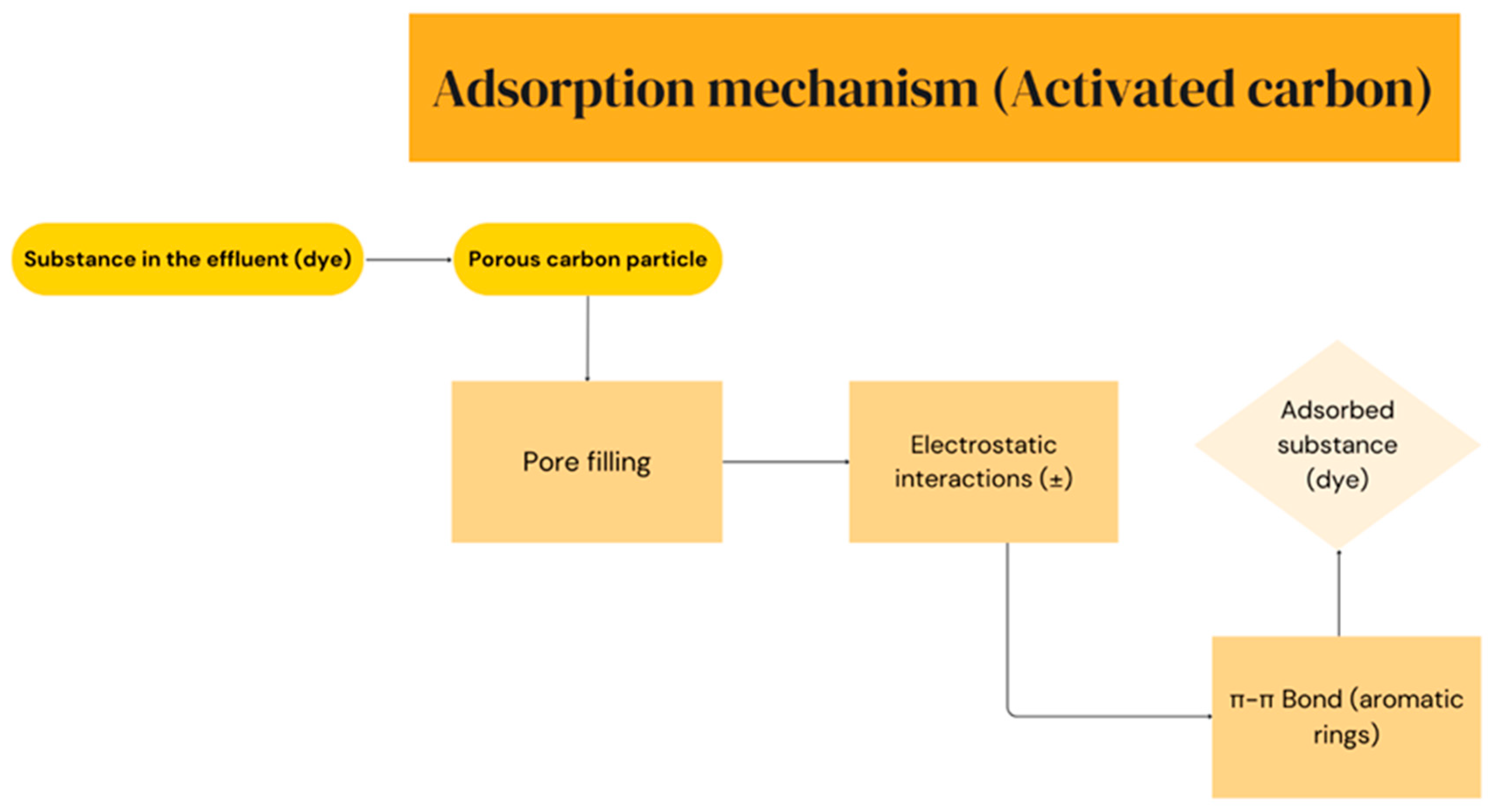
Making a schematic representation of the adsorption mechanisms of dyes on activated carbon derived from biomass, including pore filling, electrostatic interactions, and π–π stacking. Based on references [15,17,32]. As shown in Figure 2.
Figure 2.
Schematic illustration of the main adsorption mechanisms occurring on activated carbon during contaminant removal. ±: indicates positive and negative electrostatic interactions.
3.1.2. Hybrid Treatments
Taken together, the tables corroborate the central hypothesis that the sequential integration of treatments, with effluent recovery using advanced oxidative treatment and in situ regeneration of the coal, emerges as a promising strategy to mitigate the individual limitations of each technology, potentially reducing total energy consumption while ensuring effective final polishing. Table 3 presents these results.
Table 3.
Studies that employ hybrid treatment processes.
The article by Chuiprasert et al. (2026) [34] presents a robust and highly effective hybrid system for effluent treatment, with solid experimental data. The combination of the three stages achieves removal levels superior to what each process could achieve in isolation. However, critical analysis reveals a significant gap: the fate of the sludge generated by coagulation, a hazardous byproduct, is completely ignored in the cost and sustainability assessment. This weakness compromises the closed-loop vision and may represent a substantial hidden cost in real-scale operation. Despite this, the study offers a technically and economically viable solution to a pressing problem.
The article by Prajapati et al. (2026) [35] presents an innovative and highly integrated approach, aligned with the principles of the circular economy, by combining the electro-oxidation of real textile effluent with the co-production of green hydrogen. The 94% efficiency in degradation and the exceptional stability of the electrode (>150 h) are remarkable results, especially considering the use of a complex industrial effluent, not just synthetic dye solutions. The demonstration that treated effluent can replace conventional electrolytes (1 M KOH) in H2 production is a significant practical advance.
However, critical analysis reveals limitations, such as the persistence of hydrophobic surfactants, suggesting that the process does not achieve complete mineralization, leaving potentially toxic byproducts. In addition, the need to add NaCl as an electrolyte and KOH for reuse introduces chemical inputs that may compromise the sustainability of the closed loop. Despite this, the work offers a scalable and energy-efficient platform that goes beyond simple remediation, positioning itself as a dual solution to contemporary challenges.
The article by Badawi and Zaher (2021) [36] presents an effective hybrid system. The combination of steps demonstrates clear synergy, achieving superior removal levels. However, critical analysis also reveals a lack of proper disposal methods for sludge (an unavoidable byproduct) and concerns about nZVI regeneration, with the toxicity of the final effluent representing serious limitations that compromise the vision of a closed-loop system and sustainability.
Regarding sludge, in recent years, approaches have been employed for the treatment of sludge generated in wastewater treatment plants. The research by Cárdenas Torrado and Molina Pérez (2022) [37] presents a critical update on the technologies available for sludge treatment, covering the stages of thickening, stabilization, and dewatering. The analysis was conducted based on a systematic review of the scientific literature in multiple databases, with the methods grouped into conventional and emerging and evaluated based on technical, economic, and environmental criteria.
In research such as that of Reyes-Peces et al., 2024 [38], which deals with organic-inorganic hybrid aerogels and how they emerged as promising materials for applications in environmental remediation, especially due to their combination of high porosity, low density, and high hydrophobicity, overcoming the limitations of traditional silica aerogels, such as mechanical fragility and sensitivity to moisture. Their results reinforce the potential of hybrid aerogels as selective adsorbents for the recovery of organic solvents in aqueous environments, with performance strongly dependent on the synthesis method and the nature of the contaminant. This study also contributes to the vision of using materials in supercritical conditions, not only in water.
The results indicate that, among emerging technologies, direct osmosis stands out as a promising alternative for sludge thickening due to its high-water removal efficiency and low energy consumption. In the stabilization stage, supercritical water oxidation (SCWO) and pyrolysis demonstrated high potential for degrading recalcitrant organic matter and converting sludge into energetically useful or inert products. In dehydration, vacuum filtration, traditionally used, showed significantly improved performance with the use of modified flocculants, establishing itself as an effective and adaptable option. Another designation that shows promise is adsorbents derived from industrial biological sludge [39].
Despite the advances observed, especially in the thickening and stabilization stages, challenges persist related to scalability, implementation cost, and, above all, the assessment of the environmental impact associated with the end use of biosolids. Many studies still lack long-term analyses on the release of heavy metals, organic micropollutants, and toxic compounds after agricultural application or disposal in the soil. Thus, the need for future research that not only optimizes the performance of these technologies but also evaluates in an integrated way their environmental sustainability, economic viability, and compliance with regulatory standards is reinforced. Some review projects discuss the use of AOPs but do not explore the fundamentals and ideas of hybrid systems, such as Dos Santos et al., 2023 [40].
In a general overview of the information, we can formulate Table 4, which presents the advantages and disadvantages of the technologies.
Table 4.
Advantages and disadvantages of different technologies.
Based on the critical and integrated analysis of the data presented, it is possible to perceive that conventional methods (coagulation/flocculation/biological) have low operational costs but fail to remove recalcitrant dyes and generate toxic sludge, creating a secondary disposal problem.
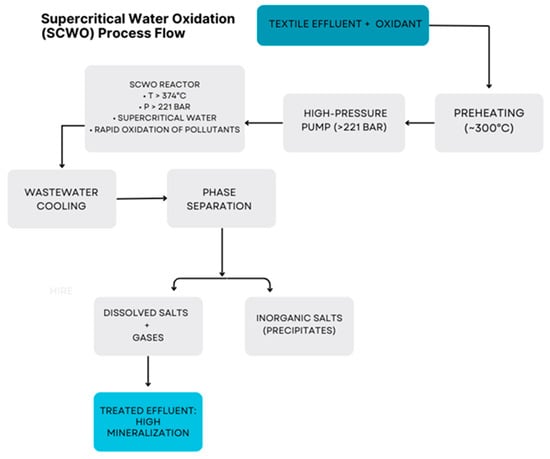
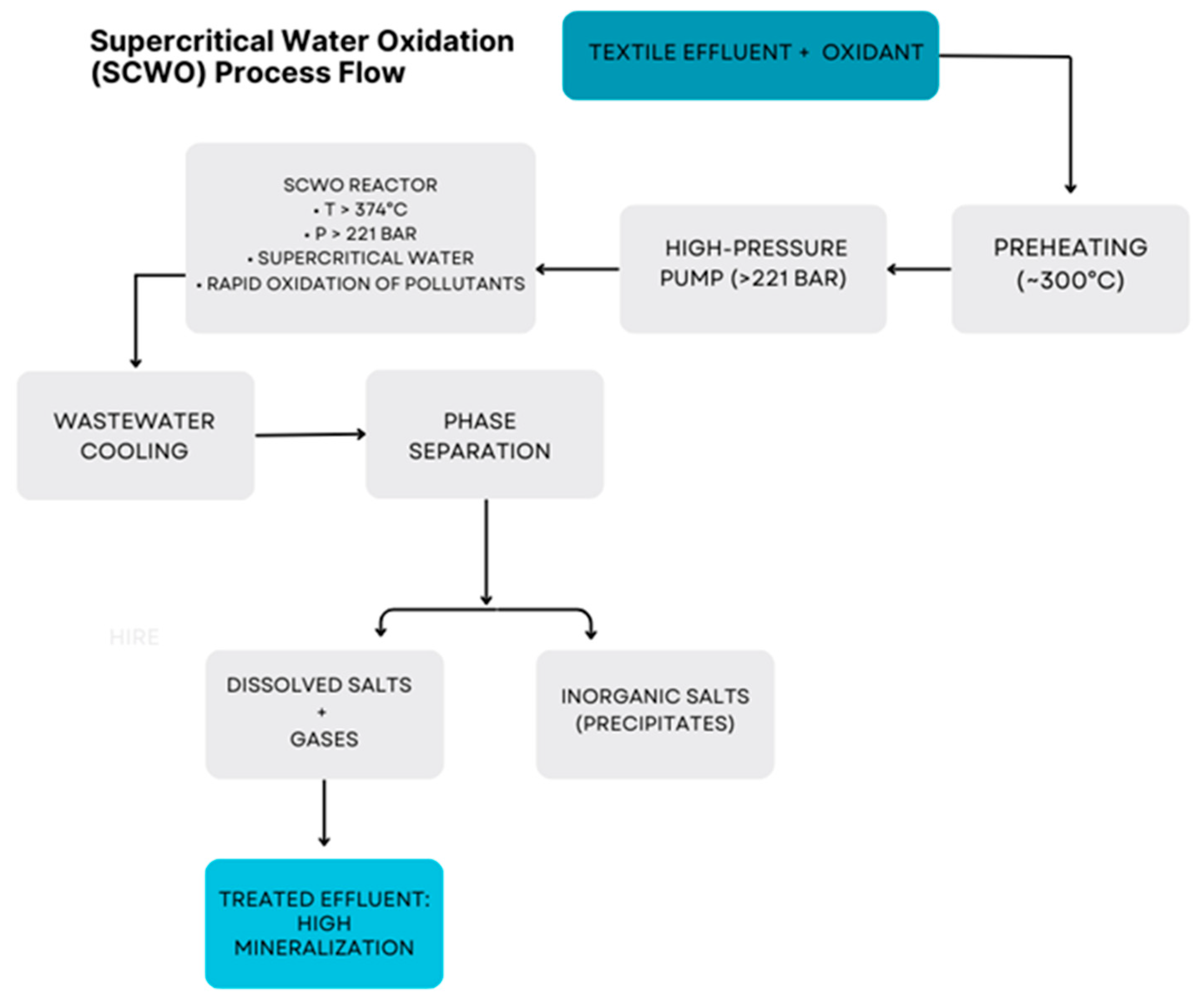
Advanced oxidation processes (AOPs), such as Fenton and photo-Fenton, achieve high color removal but do not effectively mineralize organic matter and form intermediates that are more toxic than the original dye, such as aromatic amines and quinones. Supercritical water oxidation (SCWO) is the only technology capable of almost complete mineralization without sludge generation, converting pollutants into CO2, H2O, and inorganic salts. However, its high energy consumption and severe chloride corrosion limit its industrial application, especially in real effluents rich in salts. Figure 3 illustrates the fundamental operation of the SCWO process.
Figure 3.
Schematic illustration of the main oxidation mechanisms involved in contaminant degradation during supercritical water oxidation (SCWO).
Simplified flow diagram of the supercritical water oxidation (SCWO) process. Textile effluent mixed with an oxidant is preheated and pressurized above the critical point of water (374 °C, 221 bar). Under supercritical conditions, organic pollutants are rapidly and almost completely mineralized into gases and inorganic salts. The treated effluent is then cooled and separated, resulting in a mineralized stream and precipitated salts.
Biomass-based activated carbon (BAC) offers efficient color adsorption at low cost, but it does not degrade pollutants, only transferring them to the solid phase. In addition, it saturates quickly with oxidative intermediates and loses some of its capacity after 3 thermal regeneration cycles. Therefore, no single technology solves the problem sustainably. The integration of more technologies with effluent recovery emerges as a viable strategy to simultaneously mitigate the problems encountered.
3.2. Future Directions
Future work should explore intelligent hybrid systems that integrate SCWO biomass-based activated carbon with real-time thermal recovery, coupled with in situ ecotoxicological toxicity sensors (e.g., biosensors with Daphnia magna or oxidative enzymes) for dynamic adjustment of operating parameters. The typical SCWO process consists of pretreatment, pressurization, preheating, reaction, cooling, depressurization, gas–liquid-solid separation, and oxidation modules [41]. Research exploring the use of other types of treatments within these steps would be valuable.
One perspective is the development of modular SCWO reactors with niobium-doped graphene-based ceramic coatings, capable of resisting chloride corrosion in real textile effluents, combined with moving activated carbon beds thermally regenerated by the hot SCWO effluent itself, eliminating external regeneration steps. Furthermore, it is proposed to valorize the residual salts from supercritical water oxidation (SCWO), rich in sulfates and chlorides, as a precursor for the synthesis of green electrolytes for sodium-ion batteries, transforming waste into resources and closing the cycle within the textile industry itself, aligning with the radical circular economy.
Some future proposals, directly linked to the textile industry, include a more rational use of water and energy, the substitution of raw materials, and the reuse of water, with internal and external recycling. In addition, there is a need to advance in controlled experimental conditions for pilot and real-scale testing, using complex industrial effluents and not just synthetic solutions, to validate the technical and economic viability of these processes in the daily operations of the textile and pharmaceutical industries. Another crucial area is the development of intelligent computational tools and decision algorithms that are empirically validated and incorporated into platforms accessible to engineers, researchers, and others, facilitating the selection of the most appropriate process based on the specific characteristics of each effluent.
The research should also focus on optimizing the production of adsorbent materials, such as activated carbon from residual biomass, seeking quality standards, scalability, and regeneration and reuse methods that make the process economically sustainable. Finally, in-depth studies on the toxicity of the byproducts generated are essential for long-term environmental safety, ensuring that the proposed solutions are truly ecological and sustainable.
Some future proposals would include directly linking to the textile industry, a more rational use of water and energy, the substitution of raw materials, and water reuse with internal and external recycling. Given that methylene blue exhibits significant reduction following oxidative treatment, it would be of considerable interest to investigate the residual toxicity in order to identify improved disposal options for the material [42].
The integration and direct comparison between different wastewater treatment technologies, such as advanced oxidation processes (AOPs) and the use of biomass-derived bioadsorbents, would be essential. It would be crucial to develop studies that evaluate not only the individual efficiency of these technologies but also their application in hybrid systems, such as pretreatment with activated carbon followed by an AOP, or vice versa, to determine synergies that maximize pollutant removal and mineralization with lower energy and operational costs.
Furthermore, there is a need to advance controlled experimental conditions for pilot and real-scale testing, using complex industrial wastewater and not just synthetic solutions, to validate the technical and economic viability of these processes in the daily operations of the textile and pharmaceutical industries.
Another crucial area is the development of intelligent computational tools and decision algorithms that are empirically validated and incorporated into accessible platforms for engineers, researchers, and others, facilitating the selection of the most appropriate process based on the specific characteristics of each wastewater.
Research should also focus on optimizing the production of adsorbent materials, such as activated carbon from residual biomass, seeking quality standards, scalability, and regeneration and reuse methods that make the process economically sustainable. Finally, in-depth studies on the toxicity of byproducts generated by activated carbon adsorbents (ACAs) are essential for long-term environmental safety, ensuring that the proposed solutions are truly ecological and sustainable.
4. Conclusions
The systematic review demonstrated that no single technology sustainably solves the challenge of treating highly polluting effluents, given the complexity of the pollutant matrix, such as in textile effluents, rich in recalcitrant azo dyes, inorganic salts, heavy metals, and toxic organic compounds. Critical analysis of the selected studies reveals a fundamental trade-off between mineralization efficiency, operational cost, generation of secondary waste, and industrial scalability.
Conventional methods (coagulation/flocculation and biological) have low operational costs but fail to remove recalcitrant dyes and generate toxic sludge, creating a final disposal problem that violates circular economy principles. Advanced oxidation processes (AOPs), such as Fenton and photo-Fenton, achieve high color removal but do not effectively mineralize organic matter and form intermediates that are more toxic than the original dye, a risk that is largely ignored in studies that use only discoloration as a success metric.
Supercritical water oxidation (SCWO) emerges as a technology capable of near-complete mineralization without sludge generation, converting pollutants into CO2, H2O, and inorganic salts. However, its industrial viability is severely limited by three critical barriers: (i) high energy consumption; (ii) severe chloride corrosion; and (iii) salt precipitation that clogs pilot-scale reactors. These problems are exacerbated in real, salt-rich effluents, in contrast to laboratory studies using synthetic solutions of pure dye.
On the other hand, biomass-activated carbon (BAC) offers efficient color adsorption at low cost and with renewable raw materials. However, it does not degrade pollutants, only transfers them to the solid phase, and quickly saturates with oxidative intermediates (e.g., AOP amines). Worse still, thermal regeneration is reduced, making the process economically unviable in the long term. Given this scenario, the sequential integration of treatment processes with thermal recovery emerges as the only viable strategy to mitigate individual limitations.
Author Contributions
Conceptualization, L.C.F. and L.N.; methodology, L.F.C. and L.C.F.; validation, L.C.F. and L.N.; formal analysis, L.N.; investigation, L.C.F.; resources, M.H.N.O.S.; data curation, L.N.; writing—original draft preparation, L.C.F.; writing—review and editing, L.F.C. and M.H.N.O.S.; visualization, M.H.N.O.S. and L.F.C.; supervision, L.F.C. and L.N.; project administration, L.F.C. All authors have read and agreed to the published version of the manuscript.
Funding
This research received no external funding.
Data Availability Statement
The original contributions presented in this study are included in the article. Further inquiries can be directed to the corresponding author.
Acknowledgments
The authors acknowledge the Coordination for the Improvement of Higher Education Personnel (CAPES), State University of Maringá (UEM).
Conflicts of Interest
The authors declare no conflicts of interest.
References
- Melo, C.G.; Rosa, J.M.; Borrely, S.I.; Pereira, M.D.C.C. Toxicity of Reactive Blue 21 dye textile effluent subjected to electron beam irradiation. Braz. J. Dev. 2022, 8, 31191–31199. [Google Scholar] [CrossRef] [Scilit]
- Cruz, A.H. Los residuos peligrosos generados en la industria textil peruana para el caso de la Alta costura, fibra de alpaca y curtiembre. Rev. Inst. Investig. Fac. Minas Metal. Y Cienc. Geográficas 2022, 25, 115–133. [Google Scholar] [CrossRef] [Scilit]
- Natal, J.P.S.; Cusioli, L.F.; Magalhães-Ghiotto, G.A.V.; Bergamasco, R.; Gomes, R.G. Removal of methylene blue and safranin orange pollutants from liquid effluents by soy residue. Can. J. Chem. Eng. 2023, 101, 5561–5575. [Google Scholar] [CrossRef] [Scilit]
- Dalari, B.L.S.K.; Giroletti, C.L.; Tomassoni, F.; de Amorim, M.C.D.; Hassemer, M.E.N. Treatability and toxicity study in textile industry effluents treated by heterogeneous photo-Fenton process. Rev. DAE 2020, 222, 6–19. [Google Scholar] [CrossRef] [Scilit]
- Machado, T.P.; Marques, C.; Hamm, J.S.; Silveira, M.V.; Zanchet, L. Preparation and characterization of polymeric membranes from poly(etherimide) for use in the treatment of effluents containing dyes. CIPPUS–Rev. Iniciação Científica 2024, 12, 1–14. [Google Scholar] [CrossRef] [Scilit]
- Manzoor, J.; Sharma, M. Impact of textile dyes on human health and environment. In Impact of Textile Dyes on Public Health and the Environment; IGI Global Scientific Publishing: Hershey, PA, USA, 2020; pp. 162–169. [Google Scholar] [CrossRef] [Scilit]
- National Council for the Environment (CONAMA). Resolution No. 357, of March 17, 2005. Provides for the Classification of Water Bodies and Environmental Guidelines for Their Classification, as Well as Establishes the Conditions and Standards for Effluent Discharge, and Provides Other Measures; Amended by Resolutions No. 410/2009 and No. 430/2011; Official Gazette of the Union: Brasília, Brazil, 2005; pp. 58–63.
- De Lima, K.J. Characterization of textile effluent and treatment proposal using a compact WTP. Eng. Sci. 2023, 11, 41–49. [Google Scholar] [CrossRef] [Scilit]
- Lazar, T. Color chemistry: Synthesis, properties, and applications of organic dyes and pigments. In Color Research & Application, 3rd ed.; Wiley-VCH: Weinheim, Germany, 2005; Volume 30, pp. 313–314. [Google Scholar] [CrossRef] [Scilit]
- Júnior, W.A.G.P.; De Azevedo, F.R.P. Synthetic dyes and their environmental impacts: Challenges, legislation and sustainable technological innovations. Rev. Ibero-Am. Humanidades Ciências Educ. 2024, 10, 3972–3991. [Google Scholar] [CrossRef] [Scilit]
- Khan, W.U.; Ahmed, S.; Dhoble, Y.; Madhav, S. A critical review of hazardous waste generation from textile industries and associated ecological impacts. J. Indian Chem. Soc. 2023, 100, 100–829. [Google Scholar] [CrossRef] [Scilit]
- Doi, S.M.O.; Otaguiri, E.S.; De Souza, A.F. Biodegradation of dyes and effluent from the textile industry by Pleurotus ostreatus and Pycnoporus spp. Braz. J. Anim. Environ. Res. 2021, 4, 3226–3233. [Google Scholar] [CrossRef] [Scilit]
- Manenti, D.R.; Gomes, L.F.S.; Borba, F.H.; Módenes, A.N.; Espinoza-Quiñones, F.R.; Palácio, S.M. Optimization of the photo-Fenton process using artificial irradiation in the degradation of synthetic textile effluent. Engevista 2010, 12, 22–32. [Google Scholar] [CrossRef] [Scilit]
- Porto, C.G.D.; da Silva, G.L.; de Arruda Neto, J.F.; Silva, M.C.R.D.S. Advanced oxidative processes in the treatment of textile effluents applicable to the local production arrangement of clothing in the Agreste region of Pernambuco. Res. Soc. Dev. 2024, 13, e11013144840. [Google Scholar] [CrossRef] [Scilit]
- Pedroza, M.M.; da Silva, A.C.; Barros, P.A.P.C.; da Silva Aguiar Rezende, C.; Lôbo, R.D.N.; Arruda, M.G. Preparation of activated carbon from the pyrolysis of flamboyant pods (Delonix regia). AIDIS J. Eng. Environ. Sci. Res. Dev. Pract. 2023, 16, 779–796. [Google Scholar] [CrossRef] [Scilit]
- da Silva, F.R.M.; da Silva, R.S.; Pereira, K.V.F.F.; Lima, L.V. Low-cost ecological filter for water treatment made from activated carbon derived from the biomass of Jurema Preta (Mimosa hostilis). Rev. Ceará Científico 2023, 2, 41–51. [Google Scholar]
- Joaquín-Medina, E.; Patiño-Saldivar, L.; Ardilas, A.A.A.; Salazar-Hernández, M.; Hernández, J.A. Bioadsorption of methyl orange and methylene blue contained in water using natural brushite (nDCPD) as a bioadsorbent. Tecnol. Y Cienc. Agua 2021, 12, 304–347. [Google Scholar] [CrossRef] [Scilit]
- Delava, J.S.; Santana, V.S.; Ferrari, L.D.F.; Reichert, A.V. Iron oxide photocatalysts supported on activated carbon for the degradation of textile dye. Acta Iguazu 2024, 8, 21–34. [Google Scholar] [CrossRef] [Scilit]
- da Cunha Gonçalves, G.; Nascimento, M.B.D.; Bragião, M.E.; Veit, M.T.; Palácio, S.M. Removal of textile dye by combined adsorption/oxidation action using activated carbon impregnated with iron oxide. Electron. J. Perspect. Sci. Technol. 2019, 11, 68–81. [Google Scholar] [CrossRef] [Scilit]
- Barcellos, I.O.; Feller, J.; Vieira, G.A. Dyeing of acrylic fabric with reuse of Astrazen basic dye solution, treated with Bunge industry residue as adsorbent. Braz. J. Biosyst. Eng. 2021, 15, 577–597. [Google Scholar] [CrossRef] [Scilit]
- Alves, M.F.; de Oliveira, H.A.N.; Janz, F.J.L.; Borges, J.C.A.; Pereira, E.R. Action of different types of organic and inorganic coagulants in the treatment of textile effluent/Ação de diferentes tipos de coagulantes florais e inorgânicos no tratamento de efluente têxtil. Braz. J. Dev. 2022, 8, 21466–21478. [Google Scholar] [CrossRef] [Scilit]
- Silva, G.F.D.M.; de Lima, G.A.; de Sousa, C.K.F.; Rocha, L.G.; Querido, M.M.F.; de Andrade, P.K.B.; Tavares, R.G. Análise comparativa do polichloreto de alumínio (PAC) e tanino como coagulantes no tratamento de efluente têxtil. Rev. Políticas Públicas E Cid. 2025, 14, e1708. [Google Scholar] [CrossRef] [Scilit]
- De Campos, R.F.F.; Zir, M.L. Analysis of the efficiency of a textile effluent treatment plant: A case study in a textile industry in the municipality of Caçador/SC. Nat. Resour. 2024, 14, 53–67. [Google Scholar] [CrossRef] [Scilit]
- Pequeno, L.A.B.; de Almeida, M.E.B.; Tavares, R.G.; Carvalho, M.N. Evaluation of the physicochemical treatment of textile industry effluent using coagulation diagrams. AIDIS J. Eng. Environ. Sci. Res. Dev. Pract. 2025, 17, 326–341. [Google Scholar] [CrossRef] [Scilit]
- Tones, A.R.M.; Alves, A.A.A.; Hoffmann, I.F.; Eyng, E.; Bergamasco, R.; Cusioli, L.F.; Fagundes-Klen, M.R. Cylindrical electrochemical reactor in continuous upward flow: Influence of operational parameters in the treatment of cosmetic effluent. Chem. Eng. Process.–Process Intensif. 2020, 157, 108120. [Google Scholar] [CrossRef] [Scilit]
- Fernandes, S.M.; de Sousa, E.J.R.; de Lima, J.R.; da Paz, C.B.; Salgado, B.C.B.; de Queiroz, D.C.; Araújo, R.D.S. Fenton oxidation of the azo dye Ponceau BS using iron oxide nanoparticles as a catalyst. AIDIS J. Eng. Environ. Sci. Res. Dev. Pract. 2021, 14, 899–916. [Google Scholar] [CrossRef] [Scilit]
- Benassi, J.C.; Sánchez, A.A.C.; da Costa, S.A.; da Costa, S.M. Evaluation of color removal efficiencies and kinetic parameters of Fenton (H2O2/Fe2+) and photo-Fenton (H2O2/Fe2+/UV) processes in the treatment of a textile wastewater containing indigo blue. Braz. J. Dev. 2021, 7, 102327–102347. [Google Scholar] [CrossRef] [Scilit]
- Luo, C.; Fan, X.; Tang, S.; Xi, H. Comparative study of alcohol co-oxidation for enhanced phenol degradation in wastewater under supercritical water oxidation (SCWO) conditions. J. Water Process Eng. 2025, 77, 108477. [Google Scholar] [CrossRef] [Scilit]
- Vieira, W.T.; Bispo, M.D.; de Melo Farias, S.; de Almeida, A.D.S.V.; da Silva, T.L.; Vieira, M.G.A.; Soletti, J.I.; Balliano, T.L. Activated carbon from macauba endocarp (Acrocomia aculeate) for removal of atrazine: Experimental and theoretical investigation using descriptors based on DFT. J. Environ. Chem. Eng. 2021, 9, 105155. [Google Scholar] [CrossRef] [Scilit]
- Módenes, A.N.; Espinoza-Quiñones, F.R.; Borsato, F.P.; Kruger, G.F.; Trigueros, D.E.G. Use of babassu coconut husk charcoal in the removal of the antibiotic metronidazole: Study of kinetics and adsorption isotherms. Lat. Am. Econ. Obs. 2023, 23, e1183. [Google Scholar] [CrossRef] [Scilit]
- de Almeida, M.A.; Coatti, L.; Ghani, Y.A.; Colombo, R. Development of activated carbon from sugarcane bagasse and its application in the adsorption of organic acid. Braz. J. Anim. Environ. Res. 2021, 4, 2955–2965. [Google Scholar] [CrossRef] [Scilit]
- Mantovani, D.; Quesada, H.B.; de Souza Antônio, R.; Cusioli, L.F.; Nishi, L.; Diório, A.; Soares, P.F.; Bergamasco, R.; Vieira, M.F. Adsorption of methylene blue from effluent using golden mussel (Limnoperna fortunei) shell as a low-cost material. Desalination Water Treat. 2020, 188, 232–238. [Google Scholar] [CrossRef] [Scilit]
- Costa, T.M.; De Deus Tomé, V.O. The evaluation of rhodamine FRBT dye removal by adsorption using coffee grounds as an adsorbent material. Rev. E-Techtecnol. Para Compet. Ind. 2022, 15, 1–11. [Google Scholar] [CrossRef] [Scilit]
- Chuiprasert, J.; Boonprasop, S.; Sopawanit, K.; Intraluk, T.; Taithipmathukon, N.; Takkawatakarn, T.; Chaiwat, W. Design and process optimization of an integrated turbidity removal unit in a pilot-scale continuous-flow system using hybrid coagulants for decentralized water treatment. Case Stud. Chem. Environ. Eng. 2026, 13, 101327. [Google Scholar] [CrossRef] [Scilit]
- Prajapati, V.; Patel, R.; Shah, A.; Pataniya, P.M.; Sumesh, C.K. Electrocatalytic upcycling of textile wastewater and green hydrogen production using WSe2/Ti3C2Tx||PCE electrode in a circular economy approach. Fuel 2026, 417, 138662. [Google Scholar] [CrossRef] [Scilit]
- Badawi, A.K.; Zaher, K. Hybrid treatment system for real textile wastewater remediation based on coagulation/flocculation, adsorption and filtration processes: Performance and economic evaluation. J. Water Process Eng. 2021, 40, 101963. [Google Scholar] [CrossRef] [Scilit]
- Cárdenas, T.G.; Molina Pérez, F.J. Alternatives for treating sludge originating from wastewater treatment systems: A review. Engineering 2022, 27, 17945. [Google Scholar] [CrossRef] [Scilit]
- Reyes-Peces, M.; Amaya-Dolores, B.; Morales-Flórez, V.; Santos, D.D.-L.; del Mar Mesa, M.; Esquivias, L.; Rosa-Fox, N.D.-L.; Piñero, M. Effect of the drying procedure on hybrid sono-aereogels for organic solvent remediation. Boletín Soc. Española Cerámica Y Vidr. 2024, 63, 11–22. [Google Scholar] [CrossRef] [Scilit]
- Oda, T.Y.R.; Rezende, A.A.P.; de Cássia Superbi de Sousa, R.; da Silva, C.L. Production and characterization of adsorbents derived from industrial biological sludge/Produção e personagem de adsorventes derivadas de lodo biologia industrial. Braz. J. Dev. 2021, 7, 57081–57092. [Google Scholar] [CrossRef] [Scilit]
- da Rocha dos Santos Silva, M.C.; Barros, J.C.A.; de Aguiar, A.M.A.; de Arruda Neto, J.F.; da Silva, G.L.; da Silva, R.F. Evaluation of environmental impacts in the treatment of textile effluents using advanced oxidative processes (AOP): Literature review from the perspective of life cycle analysis. Rev. Semiárido Visu 2023, 11, 398–416. [Google Scholar] [CrossRef] [Scilit]
- Tang, X.; Zheng, Y.; Liao, Z.; Wang, Y.; Yang, J.; Cai, J. A review of developments in process flow for supercritical water oxidation. Chem. Eng. Commun. 2021, 208, 1494–1510. [Google Scholar] [CrossRef] [Scilit]
- Zago, M.; Mallmann, A.H.; de Oliveira, T.B.; Richard, M. Kinetic evaluation of methylene blue reduction by an advanced oxidative process. Interdiscip. J. Health Biol. Sci. 2025, 9, 45–55. [Google Scholar] [CrossRef] [Scilit]

Disclaimer/Publisher’s Note: The statements, opinions and data contained in all publications are solely those of the individual author(s) and contributor(s) and not of MDPI and/or the editor(s). MDPI and/or the editor(s) disclaim responsibility for any injury to people or property resulting from any ideas, methods, instructions or products referred to in the content. |
© 2026 by the authors. Licensee MDPI, Basel, Switzerland. This article is an open access article distributed under the terms and conditions of the Creative Commons Attribution (CC BY) license.