


Abstract
The valorization of agricultural and other waste residues into biochar represents a promising strategy for sustainable waste management and environmental remediation within a circular economy framework. Engineering multifunctional biochars like agricultural waste-derived biochars (AWDBs) exhibit tunable physicochemical properties governed by feedstock characteristics and thermochemical conversion conditions, enabling their application across water, soil, and sediment systems. While extensive research has demonstrated the effectiveness of biochar in isolated environmental compartments, natural systems function as interconnected water–soil–sediment continua, where pollutants, nutrients, and organic matter dynamically interact. This review critically synthesizes recent advances in the production, properties, and environmental applications of biochars, with a particular focus on their multifunctional performance in coupled environmental systems. Mechanistic insights into contaminant sequestration, nutrient cycling, and microbial interactions across media are discussed, alongside evidence of synergistic and antagonistic effects arising from cross-media processes. Despite significant progress, major knowledge gaps persist, including limited integrated multi-medium studies, lack of standardized assessment methodologies, insufficient understanding of long-term biochar stability, and challenges associated with field-scale implementation. Future research directions are proposed to address these limitations through standardized protocols, engineered multifunctional biochars, long-term monitoring, and policy integration. Advancing a system-based perspective is essential to unlock the full potential of agricultural waste-derived biochars for sustainable and scalable environmental remediation.
1. Introduction
The growing global demand for sustainable agricultural waste management strategies has intensified interest in the valorization of agricultural residues. Global agro-waste generation represents a major untapped biomass resource across agricultural sectors. Crop residues are estimated at ~2802 Mt/year, including ~731 Mt/year of rice straw (with ~667.6 Mt/year produced in Asia), ~354.34 Mt/year of wheat straw, and ~128.02 Mt/year of corn stover, with field productivity reaching up to 4.0 tons/acre/year. Livestock systems contribute substantially to organic waste flows, generating approximately 1500 Mt/year of manure in Europe, predominantly from cattle (1284 Mt/year) and pigs (295 Mt/year). Agro-industrial processing further produces significant residues, such as ~180.73 Mt/year of sugarcane bagasse (projected to increase to ~221 Mt/year) and ~35.19 Mt/year of palm kernel cake. Horticultural and food-processing industries also generate large quantities of organic by-products, with apple pomace accounting for 25–30% of total apple biomass, while national food-sector organic waste volumes reach ~32.0 Mt/year in China, ~15.0 Mt/year in the United States, and ~1.81 Mt/year in India [1]. While these residues are commonly reused as fertilizers or animal feed, improper management not only results in the loss of valuable resources but also exacerbates environmental pressures and biosecurity risks [2,3]. As agricultural production continues to expand, vast quantities of lignocellulosic waste are generated each year, often posing significant disposal challenges and contributing to environmental burdens when left unmanaged [4]. Transforming these residues into value-added products aligns with circular economy principles and offers an opportunity to reduce waste streams while generating functional materials for environmental remediation [5,6,7].
Among such materials, biochar has emerged as a particularly promising solution due to its versatility, relatively low production cost, and potential for integration into multiple environmental applications [8]. Biochar is typically produced through thermochemical conversion processes, such as pyrolysis, gasification, or hydrothermal carbonization, and its physicochemical properties can be tailored through feedstock selection and targeted engineering modifications [9]. Agricultural waste-derived biochars (AWDBs) have attracted increasing attention because they combine sustainable resource utilization with tunable structural and chemical characteristics. These attributes enable agricultural waste-derived biochars to function effectively as sorbents, catalysts, soil amendments, and multifunctional materials across diverse environmental systems [10,11].
Despite the rapidly expanding body of research on biochars derived from agricultural residues for environmental remediation [12,13], fundamental knowledge gaps persist regarding their multifunctional behavior across interconnected environmental compartments, including water, soil, and sediment [14,15,16,17,18]. Most existing studies remain compartmentalized, addressing biochar performance in isolated systems (e.g., aqueous treatment or soil amendment) and thereby overlooking the synergistic interactions and feedback mechanisms that emerge in coupled water–soil–sediment environments that inherently coevolve. Moreover, the mechanistic basis underpinning biochar-mediated processes—such as contaminant sequestration, nutrient cycling, and microbial community modulation—across these media remains insufficiently resolved. Progress in this field is further constrained by the lack of standardized and harmonized protocols for biochar characterization and performance assessment under multi-media conditions, which severely limit cross-study comparability and reproducibility. Critically, the long-term stability, transformation, and potential unintended environmental impacts of agricultural waste-derived biochars in dynamic natural systems are poorly understood, particularly with respect to their cumulative effects on soil fertility, water quality, and sediment geochemistry over environmentally relevant time scales.
2. Feedstock Variability and Pyrolysis Conditions
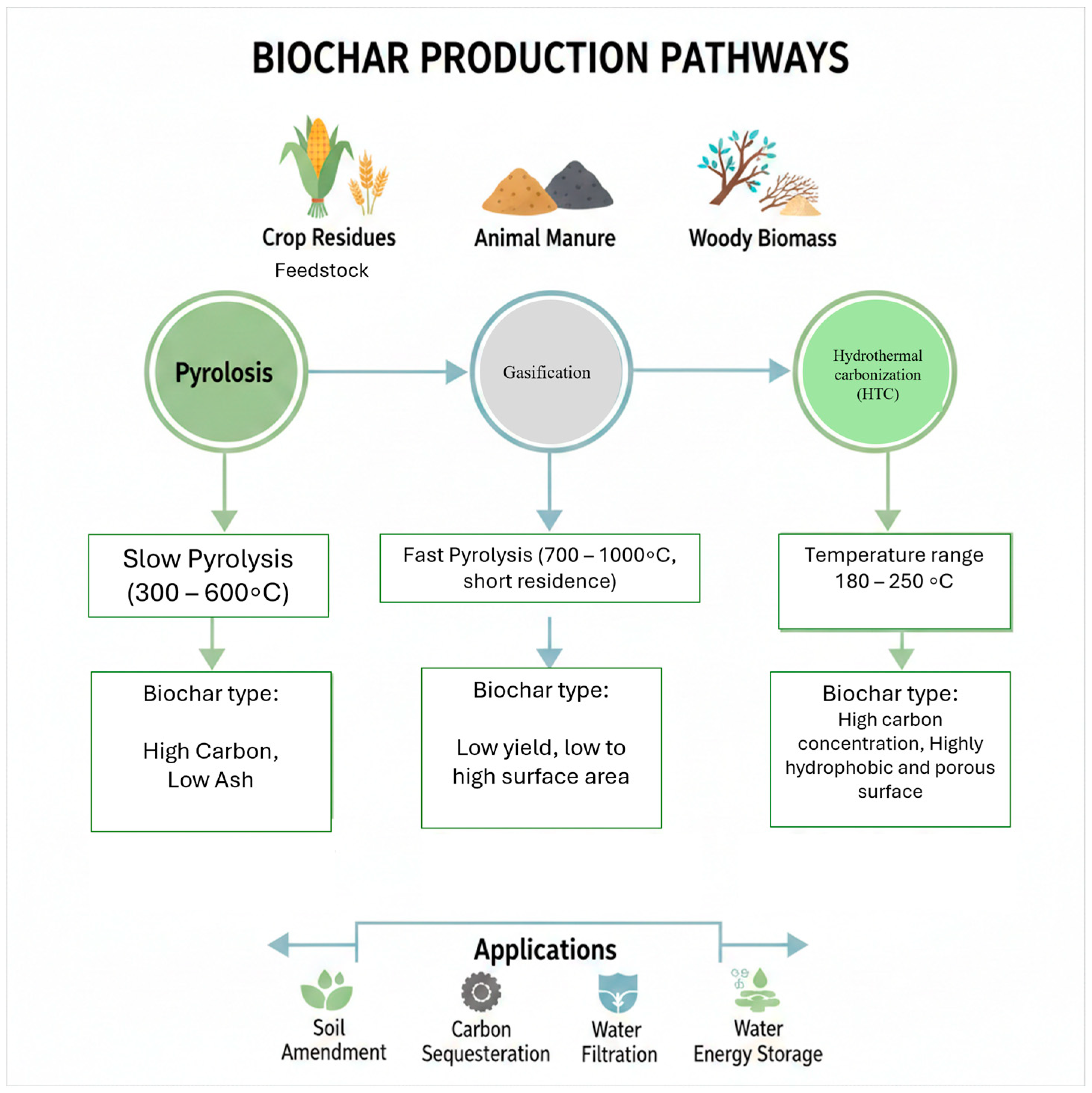
Waste residue-derived biochars are produced from a wide range of biomass feedstocks, including crop straw, woody residues, manure, and other organic agricultural wastes, each imparting distinct physicochemical characteristics to the resulting biochar [17,19]. Feedstock composition strongly governs elemental content, ash fraction, surface functional groups, and mineral phases, thereby influencing biochar reactivity and environmental performance [20]. Straw-based feedstocks typically yield biochars enriched in oxygen-, nitrogen-, and hydrogen-containing functional groups, which enhance surface polarity, charge transfer capacity, and interaction with nutrients and contaminants, particularly when produced at relatively low pyrolysis temperatures [21,22]. In contrast, woody feedstocks generally generate biochars with higher carbon content, greater aromaticity, and increased specific surface area, contributing to structural stability and long-term persistence in environmental systems (Figure 1) [23]. Table 1 provides a comparative overview of typical physicochemical properties of biochar produced from different feedstock materials.
Figure 1.
Different processes for production of biochar.
Pyrolysis temperature is a dominant process parameter controlling biochar properties, often exerting a stronger influence than feedstock type alone [24]. Low-temperature pyrolysis (<400–500 °C) favors the preservation of labile functional groups such as hydroxyl, carboxyl, and amino moieties, resulting in biochars with higher cation exchange capacity and enhanced affinity for polar compounds [25]. As pyrolysis temperature increases, progressive dehydration, decarboxylation, and condensation reactions promote the formation of more aromatic, carbon-rich structures with elevated pH and surface area but reduced surface functionality. High-temperature biochars (>600–800 °C) are therefore characterized by greater recalcitrance and adsorption capacity driven by physical mechanisms, while lower-temperature biochars tend to exhibit stronger chemically mediated interactions with soil constituents and dissolved contaminants [26].
Table 1.
Comparative Summary of Biochar Properties by Feedstock Type: Influence of Biomass Source and Key Literature Insights.
Beyond absolute temperature, feedstock–temperature interactions play a critical role in determining biochar behavior. For example, straw-derived biochars produced at low temperatures may exhibit enhanced adsorption stability due to dense functional group coverage, whereas similar feedstocks subjected to higher temperatures may undergo activation of recalcitrant carbon structures, altering sorption energetics and environmental reactivity [24,28]. These coupled effects highlight the need for application-oriented biochar design, where feedstock selection and pyrolysis conditions are deliberately tailored to target specific environmental functions [33,34]. Consequently, understanding how feedstock variability and thermal conversion parameters jointly control AWDB properties is essential for optimizing biochar production strategies and ensuring consistent performance across complex environmental systems [35].
3. Physicochemical Characteristics Relevant to Pollution Removal
Agricultural residue-derived biochars possess a range of physicochemical properties that make them effective materials for soil and water remediation [10,36]. Table 2 synthesizes findings from selected book chapters and journal articles that examine how feedstock type and thermochemical conversion conditions (e.g., pyrolysis and torrefaction parameters) govern the physicochemical properties, functionality, and application potential of biochar. Across the reviewed studies, production conditions such as temperature, heating rate, and residence time consistently emerge as critical determinants of carbon content, pH, surface area, porosity, and cation exchange capacity. These properties directly influence biochar performance in soil remediation, pollution control, wastewater treatment, and carbon sequestration. The studies collectively highlight the need for a tailored biochar production approach, where process parameters are optimized according to the intended environmental application, while also identifying research gaps related to long-term performance, non-agricultural uses, and large-scale implementation within circular bioeconomy frameworks. Biochars produced at elevated temperatures generally exhibit higher specific surface areas and well-developed micro- and mesoporous structures, which enhance the adsorption of organic contaminants such as polycyclic aromatic hydrocar, pesticides, and dyes through pore filling and π–π interactions [17,37,38]. In contrast, low-temperature biochars retain a higher density of oxygenated functional groups (e.g., carboxyl, hydroxyl, and phenolic groups), which facilitate the immobilization of heavy metals via surface complexation, electrostatic attraction, and ion exchange mechanisms [37,39,40].
Additionally, the alkaline nature of many agricultural biochars, arising from their ash content, can increase soil pH and reduce the mobility and bioavailability of potentially toxic metals [41,42]. The presence of inherent minerals such as Ca, Mg, K, Fe, and Si further contributes to contaminant stabilization through precipitation, co-precipitation, and redox reactions [40,43]. These combined physicochemical features enable agricultural biochars to function as sorbents, soil amendments, and contaminant stabilizers.
Table 2.
Summary of key insights on the influence of feedstock and thermochemical conversion conditions on biochar properties and environmental applications.
Recent literature highlights that biochar aging significantly alters physicochemical properties and contaminant interactions. For example, aging processes were shown to modify water–biochar interactions and surface functionality, with distinct effects from physical and biochemical aging methods [49]. Systematic reviews also report that different aging treatments can differentially impact surface chemistry and heavy metal immobilization, thereby contributing to inconsistencies across studies [50] (Long et al., 2024). Furthermore, aging has been demonstrated to influence specific adsorption capacities for heavy metals such as Cd and As, with variable outcomes depending on aging method and biochar type [51,52]. These findings underscore the need for standardized aging protocols and improved understanding of how water chemistry and competing ions modulate biochar behaviour.
4. Biochar Applications in Water, Soil, and Sediment: State of the Art
As stated previously, biochar has emerged as a versatile material for environmental remediation due to its tunable physicochemical properties, low production cost, and multifunctional performance [8,9]. Over the past decade, extensive research has demonstrated the effectiveness of biochar in water treatment, soil improvement, and sediment remediation [12,13].
4.1. Biochar in Water Treatment: Pollutant Adsorption and Nutrient Recovery
Biochar has been widely investigated as an adsorbent for the removal of inorganic and organic contaminants from aqueous systems [53]. Its porous structure, high surface area, and surface functional groups enable efficient adsorption of heavy metals (e.g., Pb, Cd, Cu, Cr, and As) [54] and organic pollutants such as dyes [55], pharmaceuticals [56], and pesticides [57]. Metal removal is typically governed by mechanisms including surface complexation, ion exchange, electrostatic attraction, and precipitation with mineral components present in the biochar matrix [53,54].
In addition to contaminant removal, biochar has gained attention for nutrient recovery from wastewater streams [58]. Ammonium and phosphate can be effectively captured through cation exchange, electrostatic interactions, and mineral precipitation, particularly when biochars are enriched with Mg, Ca, or Fe species [59,60]. Nutrient-loaded biochars can subsequently be reused as soil amendments, closing nutrient loops and supporting circular economy concepts [61]. Recent studies have demonstrated the integration of biochar into filtration systems, constructed wetlands, and hybrid adsorption–biological treatment processes, highlighting its adaptability to diverse water treatment configurations [62].
4.2. Biochar in Soil: Improving Fertility, Microbial Activity, and Contaminant Immobilization
In soil systems, biochar is primarily applied as an amendment to enhance fertility, improve soil structure, and mitigate contamination. The addition of biochar can increase soil pH, cation exchange capacity, water-holding capacity, and nutrient retention, particularly in degraded or acidic soils [63,64]. These improvements often translate into enhanced plant growth and nutrient use efficiency [64]. Biochar also plays a significant role in shaping soil microbial communities. Its porous structure provides refuge and attachment sites for microorganisms, while labile carbon fractions can stimulate microbial activity and enzyme production [65]. Enhanced microbial abundance and diversity have been linked to improved nutrient cycling and soil resilience [66].
For contaminated soils, biochar is widely used to immobilize heavy metals and organic pollutants. Metals such as Cd, Pb, and Zn are stabilized through adsorption, complexation, and precipitation reactions, reducing their bioavailability and plant uptake [67,68]. Organic contaminants, including polycyclic aromatic hydrocar and pesticides, are sequestered within biochar pores or bound via hydrophobic interactions, thereby lowering their mobility and ecotoxicological risk [69]. These combined benefits position biochar as a multifunctional amendment for sustainable soil management [70].
4.3. Biochar in Sediment Remediation: Heavy Metals and Organic Pollutants
The application of biochar in sediment remediation is an emerging but rapidly growing area of research. Contaminated sediments often act as long-term sources of pollutants to aquatic ecosystems, and biochar has shown promise as a capping or amendment material to reduce contaminant fluxes [71].
Biochar-amended sediments have demonstrated reduced porewater concentrations and bioavailability of heavy metals through sorption and mineral-mediated immobilization [68]. Similarly, strong sorption affinity toward hydrophobic organic contaminants, such as polychlorinated biphenyls and polycyclic aromatic hydrocar, limits their desorption and diffusion into overlying water [72]. Compared to traditional activated carbon, biochar offers advantages in terms of cost, sustainability, and compatibility with benthic ecosystems. However, sediment applications remain less standardized, and long-term field-scale evaluations are still limited [73]. Recent comparative reviews have provided quantitative insights into the relative performance of biochar and activated carbon across diverse environmental media. For instance, biochar and activated carbon exhibit distinct adsorption capacities for heavy metals and organic pollutants, largely dictated by differences in surface area, pore structure, and surface functional groups [74,75]. Meta-analyses indicate that while activated carbon often achieves higher absolute adsorption capacities for certain organic contaminants, biochar may perform more favorably under specific conditions such as nutrient recovery or in the presence of competing ions. Comparative evaluations in gas phase systems further demonstrate variability in performance depending on sorbate species and operational parameters [76]. By integrating these comparative studies, the current work situates biochar performance relative to a benchmark sorbent (activated carbon), thereby offering a more nuanced understanding of its environmental applications and limitations. Although numerous studies have demonstrated the potential of biochar for contaminant removal and soil improvement, several methodological uncertainties limit the broader applicability of these findings. Most of the experimental evidence is derived from short-term batch tests under highly controlled conditions, which do not account for long-term aging, dynamic sorption–desorption equilibria or fluctuating environmental parameters [77,78]. Additionally, many studies utilize contaminant concentrations far exceeding environmentally relevant levels, and simplified matrices devoid of competing ions and dissolved organic matter, thereby overestimating biochar performance [79]. The lack of standardized aging procedures further exacerbates inconsistencies across literature. Future research should prioritize long-duration experiments, complex environmental matrices, and standardized protocols to reduce uncertainty and enhance comparability among studies.
5. Multifunctional Performance in Coupled Water–Soil–Sediment Systems
5.1. Natural Interactions Between Water, Soil, and Sediment Media
Water, soil, and sediment form an interconnected continuum rather than isolated environmental compartments (Table 3). Pollutants, nutrients, and organic matter are continuously exchanged among these media through processes such as leaching, erosion, sedimentation, resuspension, and diffusion [80]. For example, contaminants introduced into soils may be transported to surface waters via runoff or percolation, subsequently accumulating in sediments where they can act as long-term secondary pollution sources [81]. Similarly, sediments can release contaminants back into the water column under changing redox or hydrodynamic conditions [82].
Table 3.
Summary of Biochar Applications and Functional Insights across Water–Soil–Sediment Systems.
These interactions complicate remediation efforts, as interventions targeting a single medium may inadvertently influence pollutant behavior in adjacent systems. Therefore, understanding the coupled dynamics of water–soil–sediment systems is essential for evaluating the true environmental performance of biochar-based remediation strategies.
5.2. Evidence for Synergistic or Antagonistic Effects of Biochar Across Media
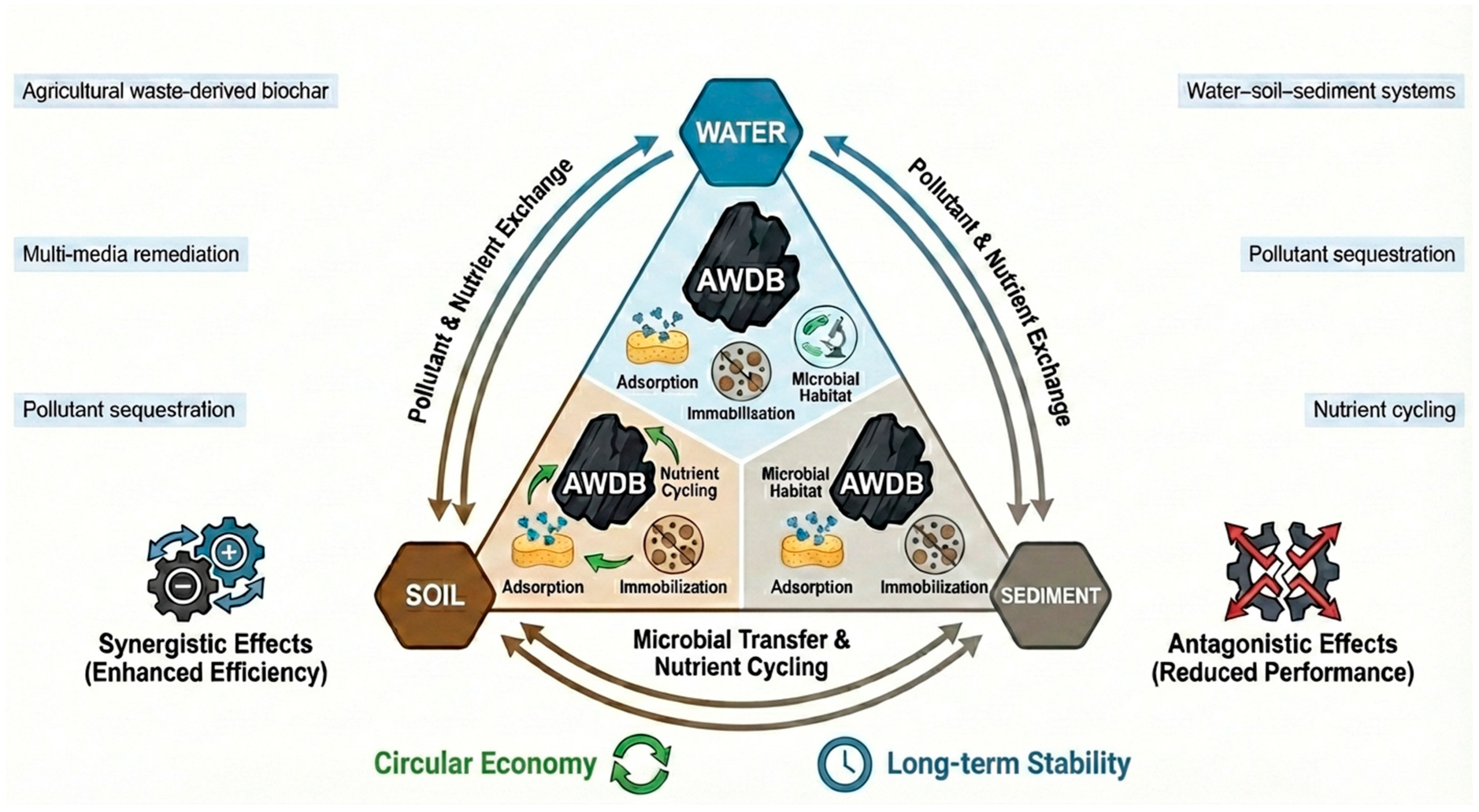
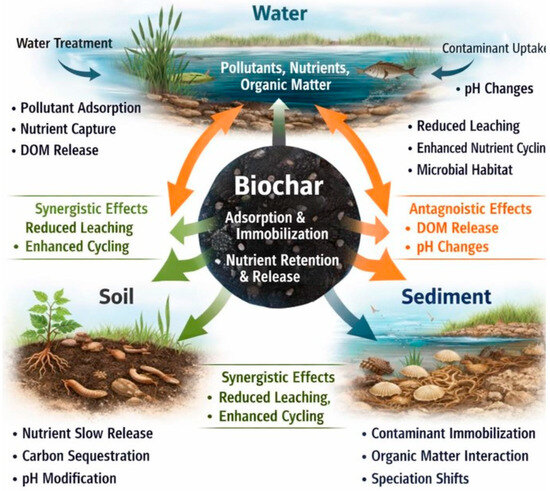
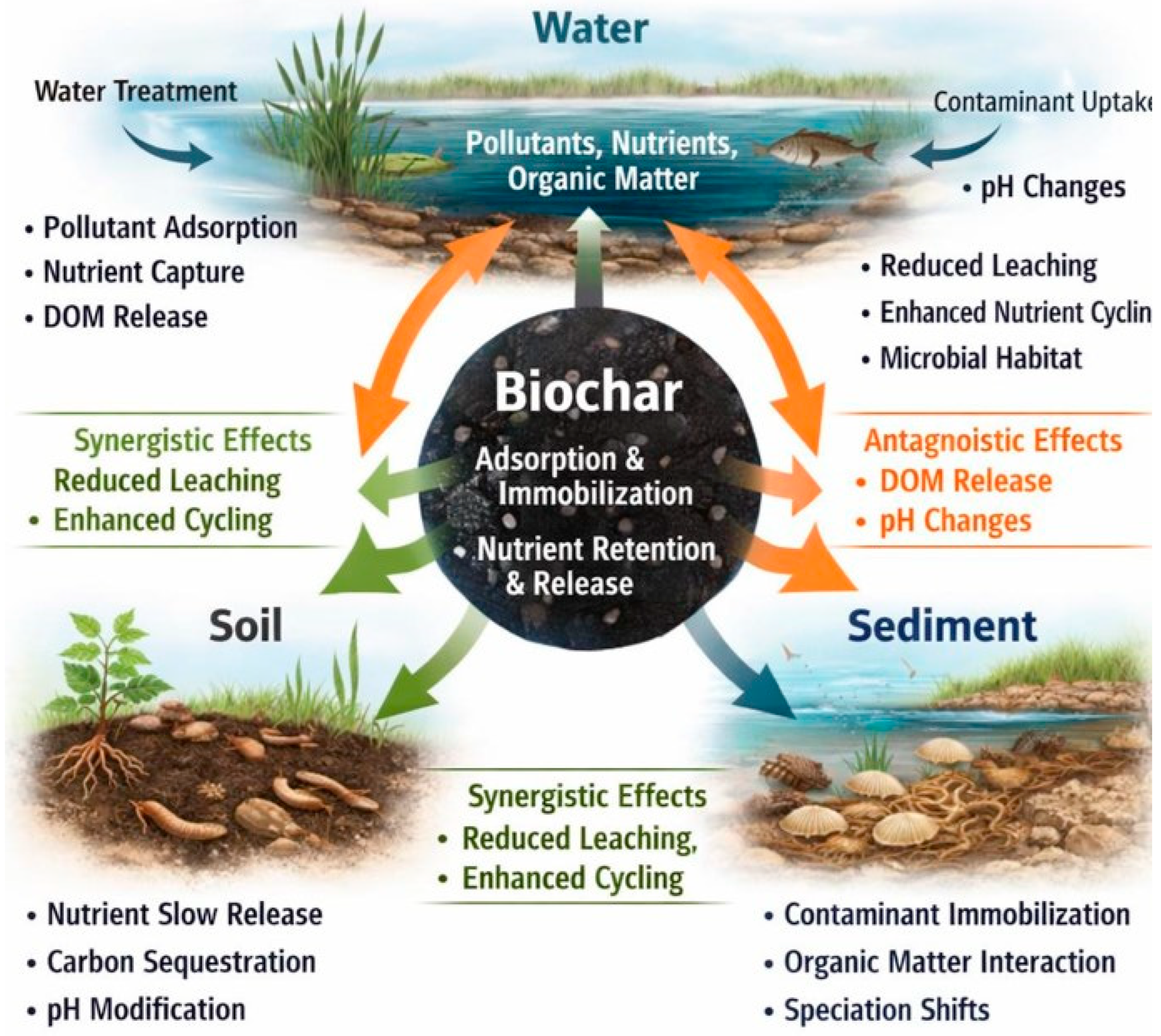
Emerging studies suggest that biochar can exert synergistic effects across coupled environmental media [86,87,88]. For instance, biochar applied to soils can reduce nutrient and contaminant leaching into groundwater and surface waters by enhancing adsorption and retention capacity [66]. Nutrient-enriched biochars used in water treatment can subsequently be recycled into soil, promoting plant growth while minimizing nutrient losses [89]. However, antagonistic effects have also been reported. In some cases, dissolved organic matter released from biochar may increase the mobility of certain metals or organic pollutants in aquatic systems [90]. Similarly, changes in pH or redox conditions induced by biochar amendment in sediments may alter contaminant speciation, potentially enhancing release rather than immobilization [91]. These contrasting outcomes highlight that biochar performance is highly context-dependent and influenced by feedstock, production conditions, application rate, and environmental setting (Figure 2).
Figure 2.
Biochar-Mediated Interactions in Water–Soil–Sediment Systems: Pollutant and Nutrient Dynamics.
5.3. Mechanistic Insights into Pollutant Dynamics, Nutrient Cycling, and Microbial Interactions
At the mechanistic level, biochar influences coupled systems through a combination of physicochemical and biological processes. Pollutant dynamics are governed by adsorption–desorption equilibria, pore diffusion, surface complexation, and mineral-mediated precipitation reactions [80]. Nutrient cycling is affected through enhanced retention of nitrogen and phosphorus species, reduced leaching losses, and gradual nutrient release from biochar surfaces [66,89]. Microbial interactions add further complexity. Biochar provides habitat niches for microorganisms, alters microbial community composition, and can stimulate or suppress microbial-mediated processes such as nitrification, denitrification, and organic matter decomposition [92]. These microbial responses can indirectly affect pollutant transformation and nutrient availability across water–soil–sediment interfaces (Figure 3). Despite growing recognition of these interactions, mechanistic understanding at the system scale remains limited.
Figure 3.
Mechanistic overview of biochar-mediated interactions across water–soil–sediment systems: synergistic and antagonistic effects on pollutants and nutrient cycling.
6. Conclusions and Outlook: Knowledge Gaps, Challenges, and Research Priorities
Agricultural waste-derived biochars (AWDBs) have emerged as multifunctional materials with significant potential for environmental remediation, nutrient recovery, and ecosystem support. Their versatility arises from the ability to tailor physicochemical properties through feedstock selection, pyrolysis conditions, and post-treatment modifications. Laboratory and pilot studies consistently demonstrate that AWDBs can effectively immobilize heavy metals, absorb organic pollutants, enhance soil fertility, and stimulate microbial activity. Current knowledge remains fragmented, primarily due to research that targets single environmental compartments—water, soil, or sediment—under highly controlled conditions. This compartmentalized approach limits the understanding of cross-media interactions, integrated system-level outcomes, and long-term environmental efficacy. There is a clear need for studies that evaluate biochar behavior simultaneously across water–soil–sediment systems to capture cumulative impacts, emergent interactions, and potential unintended consequences. Methodological heterogeneity further hinders comparability and reproducibility. Variations in experimental design, contaminant selection, exposure duration, and performance metrics complicate the translation of laboratory-scale findings to field-scale applications. Moreover, long-term stability and aging processes under realistic environmental conditions remain poorly characterized. Surface oxidation, physical fragmentation, and interactions with natural organic matter can alter adsorption capacity, nutrient release, and contaminant binding mechanisms over time, underscoring the importance of aging studies for predicting field performance.
Compared with conventional sorbents such as activated carbon, biochar offers unique advantages for integrated environmental management. While activated carbon exhibits superior removal of hydrophobic organics in single-compartment systems, biochar provides broader chemical heterogeneity, mineral content, and functional group diversity, enabling simultaneous immobilization of metals, nutrients, and organics. Additionally, biochar production is generally more energy-efficient and cost-effective, contributes to carbon sequestration, and supports microbial communities, thereby reinforcing its multifunctional role within circular economy frameworks. Advancing AWDBs from promising laboratory materials to robust environmental tools requires a systems-oriented research paradigm. Key priorities include: (i) standardized multi-medium assessment protocols that capture performance across water, soil, and sediment matrices; (ii) engineering biochars with tailored multifunctionality, targeting specific contaminant suites while maintaining nutrient retention and microbial compatibility; (iii) long-term field monitoring and ecological risk assessments to understand aging effects, environmental stability, and ecosystem interactions; and (iv) integration with policy and management frameworks, ensuring that scientific advances translate into scalable, sustainable, and economically feasible applications. By addressing these gaps, future research can provide deeper mechanistic insights, enhance predictive capacity for cross-media environmental outcomes, and strengthen the practical implementation of AWDBs as multifunctional, sustainable solutions for environmental management.
Author Contributions
Conceptualization, J.B., M.K.I. and S.M.; methodology, J.B.; formal analysis and investigation, J.B., M.K.I. and S.M.; writing—original draft preparation, J.B. and M.K.I.; writing—review and editing, J.B., M.K.I. and S.M.; visualization, J.B.; supervision, S.M.; project administration, S.M.; funding acquisition, S.M. All authors have read and agreed to the published version of the manuscript.
Funding
This research was supported by the Science Fund of the Republic of Serbia, #6769, Natural based efficient solution for remediation and revitalization of contaminated locations using energy crops—ReNBES.
Data Availability Statement
No new data were created or analyzed in this study.
Acknowledgments
This research was supported by the Science Fund of the Republic of Serbia, #6769, Natural based efficient solution for remediation and revitalization of contaminated locations using energy crops—ReNBES.
Conflicts of Interest
The authors declare no conflicts of interest.
References
- Koul, B.; Yakoob, M.; Shah, M.P. Agricultural Waste Management Strategies for Environmental Sustainability. Environ. Res. 2022, 206, 112285. [Google Scholar] [CrossRef] [Scilit] [PubMed]
- Gržinić, G.; Piotrowicz-Cieślak, A.; Klimkowicz-Pawlas, A.; Górny, R.L.; Ławniczek-Wałczyk, A.; Piechowicz, L.; Olkowska, E.; Potrykus, M.; Tankiewicz, M.; Krupka, M.; et al. Intensive poultry farming: A review of the impact on the environment and human health. Sci. Total Environ. 2023, 858, 160014. [Google Scholar] [CrossRef] [Scilit]
- Sarkar, S.; Skalicky, M.; Hossain, A.; Brestic, M.; Saha, S.; Garai, S.; Ray, K.; Brahmachari, K. Management of Crop Residues for Improving Input Use Efficiency and Agricultural Sustainability. Sustainability 2020, 12, 9808. [Google Scholar] [CrossRef] [Scilit]
- Lackner, M.; Besharati, M. Agricultural Waste: Challenges and Solutions, a Review. Waste 2025, 3, 18. [Google Scholar] [CrossRef] [Scilit]
- Vatieri, C.; Cirillo, T.; Esposito, F. Waste to Worth: Bioplastic Synthesis from Lignocellulosic Food Waste in the Age of the Circular Bioeconomy. Front. Sustain. Food Syst. 2025, 9, 1698348. [Google Scholar] [CrossRef] [Scilit]
- Saxena, S.; Moharil, M.P.; Jadhav, P.V.; Ghodake, B.; Deshmukh, R.; Ingle, A.P. Transforming Waste into Wealth: Leveraging Nanotechnology for Recycling Agricultural Byproducts into Value-Added Products. Plant Nano Biol. 2025, 11, 100127. [Google Scholar] [CrossRef] [Scilit]
- Blasi, A.; Verardi, A.; Lopresto, C.G.; Siciliano, S.; Sangiorgio, P. Lignocellulosic Agricultural Waste Valorization to Obtain Valuable Products: An Overview. Recycling 2023, 8, 61. [Google Scholar] [CrossRef] [Scilit]
- Bano, A.; Aziz, M.K.; Prasad, B.; Ravi, R.; Shah, M.P.; Dos Santos Lins, P.V.; Meili, L.; Prasad, K.S. The Multifaceted Power of Biochar: A Review on Its Role in Pollution Control, Sustainable Agriculture, and Circular Economy. Environ. Chem. Ecotoxicol. 2025, 7, 286–304. [Google Scholar] [CrossRef] [Scilit]
- Varkolu, M.; Gundekari, S.; Omvesh; Palla, V.C.S.; Kumar, P.; Bhattacharjee, S.; Vinodkumar, T. Recent Advances in Biochar Production, Characterization, and Environmental Applications. Catalysts 2025, 15, 243. [Google Scholar] [CrossRef] [Scilit]
- Liu, P.; Boffa, L.; Cravotto, G. Biochar Derived from Agricultural Residues for Wastewater Contaminant Removal. Sustainability 2026, 18, 435. [Google Scholar] [CrossRef] [Scilit]
- Gonçalves, J.O.; Leones, A.R.; de Farias, B.S.; da Silva, M.D.; Jaeschke, D.P.; Fernandes, S.S.; Ribeiro, A.C.; Cadaval, T.R.S., Jr.; de Almeida Pinto, L.A. A Comprehensive Review of Agricultural Residue-Derived Bioadsorbents for Emerging Contaminant Removal. Water 2025, 17, 2141. [Google Scholar] [CrossRef] [Scilit]
- Liu, Z.; Gan, Y.; Luo, J.; Luo, X.; Ding, C.; Cui, Y. Current Status of Emerging Contaminant Models and Their Applications Concerning the Aquatic Environment: A Review. Water 2025, 17, 85. [Google Scholar] [CrossRef] [Scilit]
- Nuruzzaman, M.; Bahar, M.M.; Naidu, R. Diffuse Soil Pollution from Agriculture: Impacts and Remediation. Sci. Total Environ. 2025, 962, 178398. [Google Scholar] [CrossRef] [Scilit]
- Li, P.; Liu, Y.; Sun, Y.; Zhang, C. Biochar Innovations for Organic Pollutant Remediation in Contaminated Soils. Molecules 2026, 31, 432. [Google Scholar] [CrossRef] [Scilit]
- Islam, T.; Li, Y.; Cheng, H. Biochars and Engineered Biochars for Water and Soil Remediation: A Review. Sustainability 2021, 13, 9932. [Google Scholar] [CrossRef] [Scilit]
- Bolan, S.; Hou, D.; Wang, L.; Hale, L.; Egamberdieva, D.; Tammeorg, P.; Li, R.; Wang, B.; Xu, J.; Wang, T.; et al. The Potential of Biochar as a Microbial Carrier for Agricultural and Environmental Applications. Sci. Total Environ. 2023, 886, 163968. [Google Scholar] [CrossRef] [Scilit]
- Sarkar, D.; Panicker, T.F.; Mishra, R.K.; Kini, M.S. A comprehensive review of production and characterization of biochar for removal of organic pollutants from water and wastewater. Water Energy Nexus 2024, 7, 243–265. [Google Scholar] [CrossRef] [Scilit]
- Qin, C.; Wang, H.; Yuan, X.; Xiong, T.; Zhang, J.; Zhang, J. Understanding Structure-Performance Correlation of Biochar Materials in Environmental Remediation and Electrochemical Devices. Chem. Eng. J. 2020, 382, 122977. [Google Scholar] [CrossRef] [Scilit]
- Khawkomol, S.; Neamchan, R.; Thongsamer, T.; Vinitnantharat, S.; Panpradit, B.; Sohsalam, P.; Werner, D.; Mrozik, W. Potential of Biochar Derived from Agricultural Residues for Sustainable Management. Sustainability 2021, 13, 8147. [Google Scholar] [CrossRef] [Scilit]
- Akca, M.O.; Acar Bozkurt, P.; Gokmen, F.; Akca, H.; Yağcıoğlu, K.D.; Uygur, V. Engineering the biochar surfaces through feedstock variations and pyrolysis temperatures. Ind. Crops Prod. 2024, 218, 118819. [Google Scholar] [CrossRef] [Scilit]
- Santos, D.C.B.D.; Evaristo, R.B.W.; Dutra, R.C.; Suarez, P.A.Z.; Silveira, E.A.; Ghesti, G.F. Advancing Biochar Applications: A Review of Production Processes, Analytical Methods, Decision Criteria, and Pathways for Scalability and Certification. Sustainability 2025, 17, 2685. [Google Scholar] [CrossRef] [Scilit]
- Munzeiwa, W.A.; Tsekoa, P.; Kammies, L.R.D.; Chelechele, K.; Oluwalana-Sanusi, A.E.; Chaukura, N. Influence of biomass baseline potential on biochar properties and performance for targeted applications. Discov. Water 2025, 5, 77. [Google Scholar] [CrossRef] [Scilit]
- Hassan, M.; Liu, Y.; Naidu, R.; Parikh, S.J.; Du, J.; Qi, F.; Willett, I.R. Influences of feedstock sources and pyrolysis temperature on the properties of biochar and functionality as adsorbents: A meta-analysis. Sci. Total Environ. 2020, 744, 140714. [Google Scholar] [CrossRef] [Scilit]
- Tomczyk, A.; Sokołowska, Z.; Boguta, P. Biochar physicochemical properties: Pyrolysis temperature and feedstock kind effects. Rev. Environ. Sci. Biotechnol. 2020, 19, 191–215. [Google Scholar] [CrossRef] [Scilit]
- Chatterjee, R.; Sajjadi, B.; Chen, W.-Y.; Mattern, D.L.; Hammer, N.; Raman, V.; Dorris, A. Effect of pyrolysis temperature on physico-chemical properties and acoustic-based amination of biochar for efficient CO2 adsorption. Front. Energy Res. 2020, 8, 85. [Google Scholar] [CrossRef] [Scilit]
- Gupta, A.; Ramachandran, S.; Mayilswamy, N.; Nighojkar, A.; Kandasubramanian, B. Dye-laden sludge-derived biochar for wastewater remediation: A review on pyrolytic engineering, adsorptive interactions, and environmental prospects. Sustain. Chem. Environ. 2025, 11, 100271. [Google Scholar] [CrossRef] [Scilit]
- Mateo, S.; Fabbrizi, G.; Moya, A.J. Lignin from Plant-Based Agro-Industrial Biowastes: From Extraction to Sustainable Applications. Polymers 2025, 17, 952. [Google Scholar] [CrossRef] [Scilit] [PubMed]
- Ippolito, J.A.; Cui, L.; Kammann, C.; Wrage-Mönnig, N.; Estavillo, J.M.; Fuertes-Mendizabal, T.; Cayuela, M.L.; Sigua, G.; Novak, J.; Spokas, K.; et al. Feedstock choice, pyrolysis temperature and type influence biochar characteristics: A comprehensive meta-data analysis review. Biochar 2020, 2, 421–438. [Google Scholar] [CrossRef] [Scilit]
- Maj, I. Significance and Challenges of Poultry Litter and Cattle Manure as Sustainable Fuels: A Review. Energies 2022, 15, 8981. [Google Scholar] [CrossRef] [Scilit]
- Howe, J.A.; McDonald, M.D.; Burke, J.; Robertson, I.; Coker, H.; Gentry, T.J.; Lewis, K.L. Influence of Fertilizer and Manure Inputs on Soil Health: A Review. Soil Secur. 2024, 16, 100155. [Google Scholar] [CrossRef] [Scilit]
- Koprivica, M.; Petrović, J.; Simić, M.; Dimitrijević, J.; Ercegović, M.; Trifunović, S. Characterization and Evaluation of Biomass Waste Biochar for Turfgrass Growing Medium Enhancement in a Pot Experiment. Agriculture 2025, 15, 2206. [Google Scholar] [CrossRef] [Scilit]
- Omotonoko, J.L.Y.; Polozola, M.; Svyantek, A.; Wang, Z. Valorization and Environmental Impacts of Pecan Waste: A Critical Review. Foods 2026, 15, 168. [Google Scholar] [CrossRef] [Scilit]
- He, D.; Luo, Y.; Zhu, B. Feedstock and pyrolysis temperature influence biochar properties and its interactions with soil substances: Insights from a DFT calculation. Sci. Total Environ. 2024, 922, 171259. [Google Scholar] [CrossRef] [Scilit]
- Đukanović, N.; Apostolović, T.; Anojčić, J.; Mutić, S.; Marjanović Srebro, T.; Kozma, G.; Deák, C.; Maletić, S.; Beljin, J. Comparative Study of Biochar from Different Biomass Feedstocks: Toward Sustainable Resource Utilization and Environmental Applications. Molecules 2026, 31, 37. [Google Scholar] [CrossRef] [Scilit]
- Xu, R.; Chen, J.; Yan, N.; Xu, B.; Lou, Z.; Xu, L. High-value utilization of agricultural residues based on component characteristics: Potentiality and challenges. J. Bioresour. Bioprod. 2025, 10, 271–294. [Google Scholar] [CrossRef] [Scilit]
- Itam, D.H.; Horsfall, I.T.; Ekiyor, T.H. Application of Biochar in Soil Remediation: A Decade of Scientometrics and Systematic Review from 2014 to 2024. Results Eng. 2024, 23, 102757. [Google Scholar] [CrossRef] [Scilit]
- Tadesse, A.W.; Huang, M.; Zhou, T. Biochar for Wastewater Treatment: Preparation, Modification, Characterization, and Its Applications. Molecules 2025, 30, 4288. [Google Scholar] [CrossRef] [Scilit]
- Khosravi, A.; Zheng, H.; Liu, Q.; Hashemi, M.; Tang, Y.; Xing, B. Production and Characterization of Hydrochars and Their Application in Soil Improvement and Environmental Remediation. Chem. Eng. J. 2022, 430, 133142. [Google Scholar] [CrossRef] [Scilit]
- Li, X.; Xu, C.; Zhu, L.; Wang, Y.; Chen, Y.; Cai, J. A Systematic Review on Modification Technology of Agricultural and Forestry Waste Biochar: From Raw Material Characteristics to Heavy Metal Adsorption Mechanisms. ChemistrySelect 2025, 10, e202502585. [Google Scholar] [CrossRef] [Scilit]
- Meng, F.; Wang, Y.; Wei, Y. Advancements in Biochar for Soil Remediation of Heavy Metals and/or Organic Pollutants. Materials 2025, 18, 1524. [Google Scholar] [CrossRef] [Scilit] [PubMed]
- Gonzaga, M.I.S.; Matias, M.I.A.S.; Andrade, K.R.; Jesus, A.N.; Cunha, G.C.; Andrade, R.S.; Santos, J.C.J.S. Aged Biochar Changed Copper Availability and Distribution among Soil Fractions and Influenced Corn Seed Germination in a Copper-Contaminated Soil. Chemosphere 2020, 240, 124828. [Google Scholar] [CrossRef] [Scilit]
- Zhang, M.; Riaz, M.; Zhang, L.; El-Desouki, Z.; Jiang, C. Biochar Induces Changes to Basic Soil Properties and Bacterial Communities of Different Soils to Varying Degrees at 25 mm Rainfall: More Effective on Acidic Soils. Front. Microbiol. 2019, 10, 1321. [Google Scholar] [CrossRef] [Scilit]
- Daful, A.G.; Chandraratne, M.R.; Loridon, M. Recent Perspectives in Biochar Production, Characterization and Applications. In Biochar—Production, Characterization and Applications; IntechOpen: London, UK, 2021. [Google Scholar] [CrossRef] [Scilit]
- Mukherjee, A.; Patra, B.R.; Podder, J.; Dalai, A.K. Synthesis of Biochar from Lignocellulosic Biomass for Diverse Industrial Applications and Energy Harvesting: Effects of Pyrolysis Conditions on the Physicochemical Properties of Biochar. Front. Mater. 2022, 9, 870184. [Google Scholar] [CrossRef] [Scilit]
- Blenis, N.; Hue, N.; Maaz, T.M.; Kantar, M. Biochar Production, Modification, and Its Uses in Soil Remediation: A Review. Sustainability 2023, 15, 3442. [Google Scholar] [CrossRef] [Scilit]
- Rajput, V.; Saini, I.; Parmar, S.; Pundir, V.; Kumar, V.; Kumar, V.; Naik, B.; Rustagi, S. Biochar production methods and their transformative potential for environmental remediation. Discov. Appl. Sci. 2024, 6, 408. [Google Scholar] [CrossRef] [Scilit]
- Lehmann, J.; Joseph, S. (Eds.) Biochar for Environmental Management: Science, Technology and Implementation; Routledge: London, UK, 2015. [Google Scholar]
- Ahmad, M.; Rajapaksha, A.U.; Lim, J.E.; Zhang, M.; Bolan, N.; Mohan, D.; Vithanage, M.; Lee, S.S.; Ok, Y.S. Biochar as a sorbent for contaminant management in soil and water: A review. Chemosphere 2014, 99, 19–33. [Google Scholar] [CrossRef] [Scilit] [PubMed]
- Goñi-Urtiaga, A.; Courtier-Murias, D.; Picca, G.; Valentín, J.L.; Plaza, C.; Panettieri, M. Response of water-biochar interactions to physical and biochemical aging. Chemosphere 2022, 307, 136071. [Google Scholar] [CrossRef] [Scilit]
- Long, X.-X.; Yu, Z.-N.; Liu, S.-W.; Gao, T.; Qiu, R.-L. A systematic review of biochar aging and the potential eco-environmental risk in heavy metal contaminated soil. J. Hazard. Mater. 2024, 472, 134345. [Google Scholar] [CrossRef] [Scilit]
- Liang, X.; Chen, S.; Zhang, X.; Hou, Z.; Lin, X.; Chao, L. Effects of different aging methods on the ability of biochar to adsorb heavy metal cadmium and its physical and chemical properties. Environ. Sci. Pollut. Res. 2024, 31, 19409–19422. [Google Scholar] [CrossRef] [Scilit] [PubMed]
- Liu, J.; Huo, Z.; Mo, Y.; Huang, X.; Wen, Y.; Yan, X.; Liu, W.; Yan, B.; Zhou, H. Impacts of biochar aging on its interactions with As(III) and the combined cytotoxicity. Environ. Res. 2024, 249, 118430. [Google Scholar] [CrossRef] [Scilit] [PubMed]
- Trivedi, Y.; Sharma, M.; Mishra, R.K.; Sharma, A.; Joshi, J.; Gupta, A.B.; Achintya, B.; Shah, K.; Vuppaladadiyamd, A.K. Biochar Potential for Pollutant Removal during Wastewater Treatment: A Comprehensive Review of Separation Mechanisms, Technological Integration, and Process Analysis. Desalination 2025, 600, 118509. [Google Scholar] [CrossRef] [Scilit]
- Mane, P.V.; Rego, R.M.; Yap, P.L.; Losic, D.; Kurkuri, M.D. Unveiling Cutting-Edge Advances in High Surface Area Porous Materials for the Efficient Removal of Toxic Metal Ions from Water. Prog. Mater. Sci. 2024, 146, 101314. [Google Scholar] [CrossRef] [Scilit]
- Saghir, S.; Pu, C.; Fu, E.; Wang, Y.; Xiao, Z. Synthesis of High Surface Area Porous Biochar Obtained from Pistachio Shells for the Efficient Adsorption of Organic Dyes from Polluted Water. Surf. Interfaces 2022, 34, 102357. [Google Scholar] [CrossRef] [Scilit]
- Alshehri, M.A.; Pugazhendhi, A. Biochar for Wastewater Treatment: Addressing Contaminants and Enhancing Sustainability—Challenges and Solutions. J. Hazard. Mater. Adv. 2024, 16, 100504. [Google Scholar] [CrossRef] [Scilit]
- Kainth, S.; Sharma, P.; Pandey, O.P. Green Sorbents from Agricultural Wastes: A Review of Sustainable Adsorption Materials. Appl. Surf. Sci. Adv. 2024, 19, 100562. [Google Scholar] [CrossRef] [Scilit]
- Marcińczyk, M.; Ok, Y.S.; Oleszczuk, P. From Waste to Fertilizer: Nutrient Recovery from Wastewater by Pristine and Engineered Biochars. Chemosphere 2022, 306, 135310. [Google Scholar] [CrossRef] [Scilit] [PubMed]
- Tan, M.; Zhao, Y.; Quan, B.; Wu, Q.; Chi, D.; Zhang, W. Synergistic Removal of Ammonium and Phosphate Using Ultrasonic Mg-Based Biochar Composite: Mechanism, Behavior and Green Recycling. J. Environ. Chem. Eng. 2024, 12, 111995. [Google Scholar] [CrossRef] [Scilit]
- Li, J.; Li, B.; Huang, H.; Lv, X.; Zhao, N.; Guo, G.; Zhang, D. Removal of Phosphate from Aqueous Solution by Dolomite-Modified Biochar Derived from Urban Dewatered Sewage Sludge. Sci. Total Environ. 2019, 687, 460–469. [Google Scholar] [CrossRef] [Scilit]
- Kizito, S.; Luo, H.; Lu, J.; Bah, H.; Dong, R.; Wu, S. Role of Nutrient-Enriched Biochar as a Soil Amendment during Maize Growth: Exploring Practical Alternatives to Recycle Agricultural Residuals and to Reduce Chemical Fertilizer Demand. Sustainability 2019, 11, 3211. [Google Scholar] [CrossRef] [Scilit]
- Yu, G.; Huang, J.; Chen, H.; Chen, J.; Ge, S.; Liu, J.; Zhen, D. Recent Advances in the Effects of Biochar on Constructed Wetlands: Treatment Performance and Microorganisms. Separations 2023, 10, 593. [Google Scholar] [CrossRef] [Scilit]
- Yadav, S.P.S.; Bhandari, S.; Bhatta, D.; Poudel, A.; Bhattarai, S.; Yadav, P.; Ghimire, N.; Paudel, P.; Shrestha, J.; Oli, B. Biochar Application: A Sustainable Approach to Improve Soil Health. J. Agric. Food Res. 2023, 11, 100498. [Google Scholar] [CrossRef] [Scilit]
- Shyam, S.; Ahmed, S.; Joshi, S.J.; Sarma, H. Biochar as a Soil Amendment: Implications for Soil Health, Carbon Sequestration, and Climate Resilience. Discov. Soil 2025, 2, 18. [Google Scholar] [CrossRef] [Scilit]
- Wang, Y.; Zhang, M.; Sun, A.; Fu, X.; Peng, Z.; Xu, H.; Xue, C. Biochar Application Enhances Soil Carbon Sequestration in the North China Plain by Improving Soil Properties and Reshaping Microbial Community Structure. Agronomy 2025, 15, 2539. [Google Scholar] [CrossRef] [Scilit]
- Tang, K.H.D. Biochar Amendments for Soil Restoration: Impacts on Nutrient Dynamics and Microbial Activity. Environments 2025, 12, 425. [Google Scholar] [CrossRef] [Scilit]
- Ye, L.; Gao, G.; Li, F.; Sun, Y.; Yang, S.; Qin, Q.; Wang, J.; Bai, N.; Xue, Y.; Sun, L. A comprehensive review on biochar-based materials for the safe utilization and remediation of heavy metal-contaminated agricultural soil and associated mechanisms. J. Environ. Chem. Eng. 2025, 13, 116179. [Google Scholar] [CrossRef] [Scilit]
- Wei, Y.; Ma, J.; Liu, K.; Zhang, S.; Wang, J. Biochar-Based Remediation of Heavy Metal-Contaminated Soils: Mechanisms, Synergies, and Sustainable Prospects. Nanomaterials 2025, 15, 1487. [Google Scholar] [CrossRef] [Scilit]
- Haider, F.U.; Wang, X.; Zulfiqar, U.; Farooq, M.; Hussain, S.; Mehmood, T.; Naveed, M.; Li, Y.; Liqun, C.; Saeed, Q.; et al. Biochar application for remediation of organic toxic pollutants in contaminated soils; An update. Ecotoxicol. Environ. Saf. 2022, 248, 114322. [Google Scholar] [CrossRef] [Scilit]
- Ogbonnaya, U.; Semple, K.T. Impact of Biochar on Organic Contaminants in Soil: A Tool for Mitigating Risk? Agronomy 2013, 3, 349–375. [Google Scholar] [CrossRef] [Scilit]
- Yang, Y.; Ye, S.; Zhang, C.; Zeng, G.; Tan, X.; Song, B.; Zhang, P.; Yang, H.; Li, M.; Chen, Q. Application of biochar for the remediation of polluted sediments. J. Hazard. Mater. 2021, 404, 124052. [Google Scholar] [CrossRef] [Scilit] [PubMed]
- Bielská, L.; Škulcová, L.; Neuwirthová, N.; Cornelissen, G.; Hale, S.E. Sorption, bioavailability and ecotoxic effects of hydrophobic organic compounds in biochar amended soils. Sci. Total Environ. 2018, 624, 78–86. [Google Scholar] [CrossRef] [Scilit]
- Zheng, H.; Liu, X.; Liu, G.; Luo, X.; Li, F.; Wang, Z. Comparison of the ecotoxicological effects of biochar and activated carbon on a marine clam (Meretrix meretrix). J. Clean. Prod. 2018, 180, 252–262. [Google Scholar] [CrossRef] [Scilit]
- Kołodyńska, D.; Krukowska, J.; Thomas, P. Comparison of sorption and desorption studies of heavy metal ions from biochar and commercial active carbon. Chem. Eng. J. 2017, 307, 353–363. [Google Scholar] [CrossRef] [Scilit]
- Li, N.; Zhu, X.; Miao, Y.; Wang, Z.; Lin, C.S.K.; Li, C. Meta-analysis and empirical research on the effectiveness of biochar in remediating tetracyclines pollution in water bodies. Bioresour. Technol. 2025, 435, 132917. [Google Scholar] [CrossRef] [Scilit] [PubMed]
- Abou Alfa, K.; Dushime, G.I.; Bachelart, J.; Ghimbeu, C.M.; Beda, A.; Bernat, P.; Abou Saleh, N.; Platel, V.; Hort, C. Performance-based screening of biochars for CO2 and CH4 adsorption: Integrating approximate adsorption performance indicator with elemental analysis. J. Environ. Chem. Eng. 2025, 13, 118831. [Google Scholar] [CrossRef] [Scilit]
- Kurniawan, T.A.; Othman, M.H.D.; Liang, X.; Goh, H.H.; Gikas, P.; Chong, K.-K.; Chew, K.W. Challenges and opportunities for biochar to promote circular economy and carbon neutrality. J. Environ. Manag. 2023, 332, 117429. [Google Scholar] [CrossRef] [Scilit]
- Mei, Y.; Zhuang, S.; Wang, J. Adsorption of heavy metals by biochar in aqueous solution: A review. Sci. Total Environ. 2025, 968, 178898. [Google Scholar] [CrossRef] [Scilit]
- Qian, J.; Cai, Q.; Zheng, T.; Wu, J.; Sun, F.; He, R.; Kamran, M.A.; Zhan, J.; Huang, X. Competitive and synergistic effects of biochar modified with phosphoric acid and manganese oxide on the removal of Cd and Congo red from wastewater. J. Water Process Eng. 2025, 69, 106675. [Google Scholar] [CrossRef] [Scilit]
- Omo-Okoro, P.; Ofori, P.; Amalapridman, V.; Dadrasnia, A.; Abbey, L.; Emenike, C. Soil Pollution and Its Interrelation with Interfacial Chemistry. Molecules 2025, 30, 2636. [Google Scholar] [CrossRef] [Scilit]
- Gomes, M.; Ralph, T.J.; Humphries, M.S.; Graves, B.P.; Kobayashi, T.; Gore, D.B. Waterborne contaminants in high intensity agriculture and plant production: A review of on-site and downstream impacts. Sci. Total Environ. 2025, 958, 178084. [Google Scholar] [CrossRef] [Scilit]
- Geng, N.; Xia, Y.; Li, D.; Bai, F.; Xu, C. Migration and Transformation of Heavy Metal and Its Fate in Intertidal Sediments: A Review. Processes 2024, 12, 311. [Google Scholar] [CrossRef] [Scilit]
- Zheng, H.; Zhang, C.; Liu, B.; Liu, G.; Zhao, M.; Xu, G.; Luo, X.; Li, F.; Xing, B. Biochar for Water and Soil Remediation: Production, Characterization, and Application. In A New Paradigm for Environmental Chemistry and Toxicology; Jiang, G., Li, X., Eds.; Springer: Singapore, 2020; Chapter 11. [Google Scholar] [CrossRef] [Scilit]
- Qiu, M.; Liu, L.; Ling, Q.; Cai, Y.; Yu, S.; Wang, S.; Fu, D.; Hu, B.; Wang, X. Biochar for the removal of contaminants from soil and water: A review. Biochar 2022, 4, 19. [Google Scholar] [CrossRef] [Scilit]
- Beljin, J.; Đukanović, N.; Anojčić, J.; Simetić, T.; Apostolović, T.; Mutić, S.; Maletić, S. Biochar in the Remediation of Organic Pollutants in Water: A Review of Polycyclic Aromatic Hydrocarbon and Pesticide Removal. Nanomaterials 2025, 15, 26. [Google Scholar] [CrossRef] [Scilit]
- Wang, W.; Wu, S.; Sui, X.; Cheng, S. Phytoremediation of contaminated sediment combined with biochar: Feasibility, challenges and perspectives. J. Hazard. Mater. 2024, 465, 133135. [Google Scholar] [CrossRef] [Scilit]
- Kayoumu, M.; Wang, H.; Duan, G. Interactions between microbial extracellular polymeric substances and biochar, and their potential applications: A review. Biochar 2025, 7, 62. [Google Scholar] [CrossRef] [Scilit]
- Chafik, Y.; Sena-Velez, M.; Henaut, H.; Missbah El Idrissi, M.; Carpin, S.; Bourgerie, S.; Morabito, D. Synergistic Effects of Compost and Biochar on Soil Health and Heavy Metal Stabilization in Contaminated Mine Soils. Agronomy 2025, 15, 1295. [Google Scholar] [CrossRef] [Scilit]
- Ngo Ndoung, O.C.; de Figueiredo, C.C.; Ramos, M.L.G. A scoping review on biochar-based fertilizers: Enrichment techniques and agro-environmental application. Heliyon 2021, 7, e08473. [Google Scholar] [CrossRef] [Scilit] [PubMed]
- Mukherjee, S.; Sarkar, B.; Aralappanavar, V.K.; Mukhopadhyay, R.; Basak, B.B.; Srivastava, P.; Marchut-Mikołajczyk, O.; Bhatnagar, A.; Semple, K.T.; Bolan, N. Biochar–microorganism interactions for organic pollutant remediation: Challenges and perspectives. Environ. Pollut. 2022, 308, 119609. [Google Scholar] [CrossRef] [Scilit] [PubMed]
- El-Naggar, A.; Shaheen, S.M.; Ok, Y.S.; Rinklebe, J. Biochar affects the dissolved and colloidal concentrations of Cd, Cu, Ni, and Zn and their phytoavailability and potential mobility in a mining soil under dynamic redox conditions. Sci. Total Environ. 2018, 624, 1059–1071. [Google Scholar] [CrossRef] [Scilit] [PubMed]
- Ali, A.; Jabeen, N.; Chachar, Z.; Chachar, S.; Ahmed, S.; Ahmed, N.; Laghari, A.A.; Sahito, Z.A.; Farruhbek, R.; Yang, Z. The role of biochar in enhancing soil health & interactions with rhizosphere properties and enzyme activities in organic fertilizer substitution. Front. Plant Sci. 2025, 16, 1595208. [Google Scholar] [CrossRef] [Scilit]

Disclaimer/Publisher’s Note: The statements, opinions and data contained in all publications are solely those of the individual author(s) and contributor(s) and not of MDPI and/or the editor(s). MDPI and/or the editor(s) disclaim responsibility for any injury to people or property resulting from any ideas, methods, instructions or products referred to in the content. |
© 2026 by the authors. Licensee MDPI, Basel, Switzerland. This article is an open access article distributed under the terms and conditions of the Creative Commons Attribution (CC BY) license.