


Abstract
This study evaluated the potential of sawdust as an inducer of carbon for the production of lignocellulolytic (cellulase and xylanase) enzymes by filamentous fungi for biofuel applications. Fourteen soil samples were collected from a phosphate mine in Phalaborwa, South Africa. Filamentous fungi were isolated from these samples using cellulose and xylose media. These isolateswere tested qualitatively and quantitatively for endocellulase and xylanases. Four isolates were found to have promising xylanase activity and these were identified as Amesia atrobrunnea, Penicillium citrinum, Rhizopus azygosporus and Aspergillus quadrilineatus using ITS1/2 sequencing. A time-course assay for xylanase activity revealed that R. azygosporus and A. quadrilineatus exhibited the highest activity. The crude enzymes were extracted from these strains and used for the enzymatic saccharification of the untreated sawdust. The total reducing sugars were estimated using the DNS method. The results for the enzymatic saccharification showed that a high total reducing sugar concentration of 2.35 g/L was released by 20 U/g of crude xylanases from A. quadrilineatus after 60 h of hydrolysis, while the synergistic hydrolysis of sawdust with the commercial cellulase, Celic CTec2, and the crude enzyme of 6 U/g from A. quadrilineatus showed the maximum concentration of total reducing sugars of 1.41 g/L after 72 h. Sawdust proved to be an effective inducer of xylanase production, although it was less effective for cellulase. This study reports that the commercial cellulase was outperformed by the crude enzymes during hydrolysis, highlighting the possibility that commercial enzymes may be replaced by microbial enzymes, thus lowering the environmental hazards of chemical formulations. Sugar yields could potentially be improved through biomass pretreatment, enzyme purification and strain improvement.
1. Introduction
The overuse of non-renewable resources such as fossil fuels contributes towards the increase in greenhouse gases in the atmosphere, ultimately leading to the adverse consequences of global warming and climate change. The global increase in population and industrialisation has led to an increased demand for energy and fuels. The environmental impacts of the over-utilisation of fossil fuels have led to numerous environmental occurrences globally [1]. Therefore, environmentally friendly means of generating and supplying energy should be implemented. Biofuels have shown great promise as an alternative fuel for the world [2,3,4]. Biofuels are produced from naturally occurring resources and are considered an excellent alternative to fossil fuels. The principal characteristic of biofuels is their significantly lower emission of greenhouse gases as compared to fossil fuels. Biofuels can be in liquid, solid and even gaseous states [2,5].
Timbre companies generate waste in the form of saw dust, which is lignocellulosic biomass, while most is used for animal feed, some of it gets incinerated, composted, sent to landfill sites, or just left to degrade in the environment [6], which further exacerbates the pollution problem [7]. Sawdust is an agricultural waste generated by many woodworking activities, such as milling, and its use for biofuel production may reduce environmental pollution [1,8].
Second-generation biofuels have been intensively studied [9]. Second-generation biofuels are generated mostly from waste materials that are readily available in the environment [4]. There are ongoing concerns regarding the production of second-generation biofuels, as the process is often criticised for being neither entirely eco-friendly nor cost-effective [2]. The conversion of lignocellulosic biomass into fermentable sugars involves multiple steps, making the process labour-intensive and technically complex [3,7,10]. However, despite these limitations, second-generation biofuels offer a significant advantage: they do not compete with food production, as they utilise agricultural and forestry waste materials rather than edible crops [11]. Moreover, these biofuels contribute to environmental sustainability by producing lower greenhouse gas emissions and causing less air pollution compared to first-generation biofuels [2].
Filamentous fungi are heterotrophic and reproduce by colonising substrates and developing hyphae. Molds and mushrooms are some examples of filamentous fungi. Filamentous fungi mostly belong to the genera Ascomycota and are frequently employed in industrial biotechnological processes. They have been exploited in numerous ways and submerged fermentation has been employed to exploit several properties. These organisms possess a powerful secretory system to make nutrients bioavailable [12]. Various enzymes have been recovered or extracted from fungi and bacteria. Bacteria and filamentous fungi are species whose enzymes can be employed in industrial bioprocesses. The bacterium Bacillus subtilis and the fungus Aspergillus oryzae are the perfect candidates to produce novel enzymes. A cocktail of enzymes is desired for the complete hydrolysis of lignocellulosic biomass [2]. The high cost of commercial enzymes is often a hindering factor for employing this method industrially for biofuel production. Research is ongoing for optimising the cocktail of enzymes for the biofuel industry [13].
To address cost and efficiency challenges in enzyme production, this study explored the use of sawdust as a low-cost inducer for the microbial production of xylanases and cellulases. The benefits of using sawdust are that it is readily available and abundant in nature; depending on the organisms used, it has a higher enzyme productivity level; simple and can be adapted to industrial processes; and most importantly, it presents a sustainable alternative [14]. Cellulase and xylanase enzymes are essential in the enzymatic hydrolysis of lignocellulosic biomass such as sawdust. These enzymes break down the lignocellulosic materials, such as cellulose and xylan, that make up these biomasses into fermentable sugars [11]. These sugars can then be fermented to bioethanol. Employing microbial enzymes for hydrolysis is important in that it relieves toxic environmental impacts and conserves water and energy. By using sawdust not only as a feedstock but also as an inducer of enzyme production, the biofuel production process may become more economically viable and sustainable [15]. This study evaluated and explored whether sawdust could induce the production of lignocellulolytic enzymes. Furthermore, the study is aimed at extracting crude enzymes and using them in the hydrolysis of saw dust for biofuel production.
2. Materials and Methods
2.1. Sample Collection and Isolation of Fungi
Soil samples were collected near a phosphate mine in Phalaborwa. The soil samples were collected from fourteen sites, and these samples were collected from the roots of the plants. The soil was collected in Ziploc plastic bags and upon arrival at the University, the samples were stored at 4 °C overnight before preparation. Conical flasks, test tubes, pipette tips and distilled water were autoclaved for 15 min at 121 °C and of each soil sample was used, and 10 mL of the sterilised distilled water was added. The conical flasks were incubated in a shaker incubator overnight at 30 °C at 150 rpm. The samples were serially diluted to reduce the microbial load. This was done in duplicates according to Witfeld et al. [16], with modifications; sterile dH2O was used instead of the protease peptone. Cellulose and xylose were used as carbon sources for obtaining isolates from the 14 soil samples.
2.2. Media Preparations
Two substrate-specific media were employed for the isolation of fungi with cellulolytic and xylanolytic activity. The cellulose medium, adapted from Witfeld et al. [16], contained (g/L) carboxymethyl cellulose (Merck Life Science Pty Ltd., Johannesburg, Gauteng, South Africa)), 20; K3PO4 (Merck Life Science Pty Ltd., Johannesburg, Gauteng, South Africa), 1; (NH4)2SO4 (Merck Life Science Pty Ltd., Johannesburg, Gauteng, South Africa)), 0.5; L-asparagine (Merck Life Science Pty Ltd., Johannesburg, Gauteng, South Africa)), 0.5; KCl (Merck Life Science Pty Ltd.), 0.5; yeast extract (Anatech, Johannesburg, Gauteng, South Africa), 0.5; MgSO4 (Merck Life Science Pty Ltd., Johannesburg, Gauteng, South Africa)), 0.2; CaCl2 (Merck Life Science Pty Ltd.), 0.1; Bacteriological agar (Anatech, Johannesburg, Gauteng, South Africa), 15; pH 6.2. This formulation uses cellulose as the sole polymeric carbon source and contains defined nitrogen sources to enhance the selective recovery of cellulolytic fungi.
The xylan medium, adapted from Witfeld et al. [16], contained (g/L) beechwood xylan (Merck Life Science Pty Ltd., Johannesburg, Gauteng, South Africa) 10; yeast extract (Merck Life Science Pty Ltd., Johannesburg, Gauteng, South Africa), 3; peptone (Merck Life Science Pty Ltd., Johannesburg, Gauteng, South Africa), 1.5; NaCl (Merck Life Science Pty Ltd., Johannesburg, Gauteng, South Africa), 3.5; NaNO3 (Merck Life Science Pty Ltd., Johannesburg, Gauteng, South Africa), 1; KH2PO4 (Merck Life Science Pty Ltd., Johannesburg, Gauteng, South Africa), 1; MgSO4·7H2O (Merck Life Science Pty Ltd., Johannesburg, Gauteng, South Africa), 0.3; Bacteriological agar (Anatech, Johannesburg, Gauteng, South Africa), 20; pH 6.2. This medium was designed to selectively recover hemicellulose-degrading fungi.
To each of the media, Chloramphenicol (Merck Life Science Pty Ltd., Johannesburg, Gauteng, South Africa) was added to ensure the cultivation of fungi only. Appropriate aliquots () of the serially diluted soil samples were aseptically spread onto cellulose agar and xylose agar plates using a sterile bent glass rod (hockey stick). The inoculated plates were incubated at 45 °C and 55 °C for seven days. Observations for colony growth and morphology were recorded daily throughout the incubation period. Nine filamentous fungal isolates were recovered, purified and maintained on Yeast Maintenance (YM) agar slants at 45 °C and these were stored at 4 °C.
2.3. Screening Fungal Isolates for Lignocellulolytic Enzymes
The enzymatic screening for endocellulase was based on a carboxymethyl cellulose plate assay and xylanase was based on a xylan plate assay, in which the agar medium was mixed with Congo red (Merck Life Science Pty Ltd., Johannesburg, Gauteng, South Africa) according to Meddeb-Mouelhi [17]. The composition of the medium was malt extract (Merck Life Science Pty Ltd., Johannesburg, Gauteng, South Africa), bacteriological agar (Anatech, Johannesburg, Gauteng, South Africa), chloramphenicol (Merck Life Science Pty Ltd., Johannesburg, Gauteng, South Africa), and carboxymethyl cellulose (Merck Life Science Pty Ltd., Johannesburg, Gauteng, South Africa) plate assay and beechwood xylan (Merck Life Science Pty Ltd., Johannesburg, Gauteng, South Africa)for the xylan plate and 0.01% Congo redck Life Science Pty Ltd., Johannesburg, Gauteng, South Africa). The fungal isolates were cultured on the plates and incubated at 30 °C for five days. The plates were observed daily for the formation of clear halo zones around the colony, which would indicate that the fungal isolates have cellulase or xylanase activity.
2.4. Evaluating Sawdust as an Inducer of Carbon for Lignocellulolytic Enzyme Production
The saw dust used in this study was collected from a timber firm in Mentz, Mankweng, Limpopo province, South Africa. The saw dust was collected in bottles and stored at room temperature until it was dry. Soil and other particulate impurities were removed by passing the material through a Madison test sieve, which also facilitated homogenisation of the saw dust to ensure sample consistency. One gram of sawdust, five 1 mm mycelial discs obtained from five-day-old fungal cultures, and of sterilised fermentation medium ( saw dust, NaNO3 (Merck Life Science Pty Ltd., Johannesburg, Gauteng, South Africa) and KH2PO4 (Merck Life Science Pty Ltd., Johannesburg, Gauteng, South Africa), MgSO4·7H2O (Merck Life Science Pty Ltd., Johannesburg, Gauteng, South Africa), yeast extract (Merck Life Science Pty Ltd., Johannesburg, Gauteng, South Africa), peptone (Merck Life Science Pty Ltd., Johannesburg, Gauteng, South Africa), and NaCl (Merck Life Science Pty Ltd., Johannesburg, Gauteng, South Africa) were aseptically transferred into sterile Erlenmeyer flasks. The contents of the flasks were homogenised by shaking and subsequently incubated in a shaker incubator at 30 °C and 150 rpm for seven days, in duplicate. Daily samplings were performed by aseptically withdrawing of the suspension at 24 h intervals. Upon sampling, the samples were centrifuged at 10,000 rpm for five minutes, and the supernatant containing the crude enzyme was used to study enzyme activity. A quantitative analysis of the enzymatic activity was performed, screening for endocellulase and xylanase.
2.5. Enzyme Assays
2.5.1. Endocellulase Enzyme Activity
Endocellulase activity was determined following the method by Ghose [18]. Carboxymethylcellulose was used as the substrate for endocellulase activity and glucose (Bio-Rad Laboratories Pty (Ltd.), Lasec SA (Pty) Ltd., Ndabeni, Cape Town) was the standard and 3,5-dinitrosalicylic acid (Merck Life Science Pty Ltd., Johannesburg, Gauteng, South Africa) was used to stop the reaction. The reaction was done in a 96-well plate following the method described by Makulana et al. [19]. The absorbance was determined at a wavelength of and the activity of the endocellulase was expressed in katals per millilitre ().
2.5.2. Xylanase Enzyme Activity
The xylanase activity was measured by using birchwood xylan as the substrate [20] and xylose (Bio-Rad Laboratories Pty (Ltd.), Lasec SA (Pty) Ltd., Ndabeni, Cape Town, South Africa) as the standard and 3,5-dinitrosalicylic acid (DNS) [21] was used to stop the reaction. The reaction was done using a 96-well plate and followed the method described by Makulana et al. [22]. The absorbance was determined at . The enzyme activity was expressed in katal per millilitre ().
2.5.3. β-Glucosidase Activity
The p-nitrophenyl-β-D-glucopyranoside (pNPG) (Merck Life Science Pty Ltd., Johannesburg, Gauteng, South Africa) was used as a substrate. The reaction was done in a 96-well microtiter plate. A reaction mixture of containing of an enzyme, of pNPG and of acetate buffer pH 5.0, was incubated at 50 °C for 15 min. After incubation, of Na2CO3 (, ) was added to discontinue the reaction. The standard used was p-nitrophenol. The absorption of the developed yellow colour was read at using a ThermoScientific Multiskan Sky 1530_801175 [23].
2.6. Filter Paper Assay for the Determination of Total Cellulase
Screening for total cellulase in the crude enzyme was done following the method described by Ghose [18]. A Whatman No. 1 filter paper strip (1 × 6 cm) (Merck Life Science Pty Ltd., Johannesburg, Gauteng, South Africa) and of glucose were used as the substrate and standards for the assay, respectively. Dilutions of the enzymes were prepared in a sodium citrate buffer at . The substrate and enzyme were added to the test tubes and incubated for 60 min at 50 °C and 3,5-dinitrosalicylic acid was used to stop the reaction. The sugars released from the filter paper by the cellulase enzymes were measured at on a spectrophotometer. The enzyme activity was calculated according to the following equation: The conversion from U/mL to was done by multiplying the activity by . The commercial cellulase (Cellic CTec2), purchased from Novozymes SA (Pty) Ltd. (Sandton, Gauteng, South Africa), was also screened for total cellulase in the same manner.
2.7. Extraction of Crude Enzyme from Selected Xylanase-Producing Fungal Isolates
For the crude enzyme extraction, of sawdust, of the xylose fermentation medium and nine mycelial discs obtained from five-day-old fungal cultures were placed in sterile Erlenmeyer flasks. The flasks were incubated at 30 °C at . The crude enzymes were extracted after five and seven days for the two fungal (H and I) isolates displaying the highest enzyme activity when the fermentation process was upscaled by increasing the measurements previously used for sawdust-induced production of enzymes. A volume of of the culture media was centrifuged at for 10–15 min. The clear supernatant was used for screening and characterisation of crude enzymes.
2.8. ITS Sequencing
The four fungal isolates (D, E, H, and I) that displayed high enzyme activities were sent to Inqaba Biotechnological Industries (Pty) Ltd., Pretoria, South Africa, for ITS and sequencing and identification. DNA was extracted using the Zymo Research (Catalogue No. D6005) fungal/bacterial DNA MiniPrepTM kit according to the manufacturer’s instructions. The ITS1-5.8S-ITS2 region was amplified using PCR primers ITS-1 (5′-TCC GTA GGT GAA CCT GCG G-3′) and ITS-4 (5′-TCCTCC GCT TAT TGA TAT GC-3′). The NEB OneTaq 2X Master Mix with Standard Buffer (Catalogue No. M04825) was used for amplification with a working volume of . The amplification was performed in 35 cycles, including an initial denaturation at 94 °C for 5 min. Subsequent denaturation was at 94 °C for 30 s, annealing at 50 °C for 30 s and extension at 68 °C for 10 min. A final extension at 72 °C for 10 min was followed by holding at 4 °C. DNA sequencing was done using ABI V3.1 Big dye (Inqaba Biotechnology, Pretoria, South Africa) according to the manufacturer’s instructions on the ABI 3500 XL Instrument. Species were identified by searching databases using BLAST (http://www.ncbi.nlm.nih.gov/BLAST/ accessed 10 December 2025) [24]. The integrity of the PCR amplicons was visualised on a 1% agarose gel (CSL-AG500, Cleaver Scientific Ltd., Pretoria, South Africa) stained with EZ vision Bluelight DNA dye. The NEB Ladder was used on all gels (N3238) as a size standard. The PCR amplicons were enzymatically purified using the ExoSAAP procedure (NEB M0293L; NEB M0371). The amplicons were purified for sequencing using the Zymo Research (ZR-96 DNA sequencing Clean-up kitTM, Catalogue No. D4050) and sequenced in the forward and reverse directions.
2.9. Protein Quantification
Various concentrations of the standard protein bovine serum albumin (BSA) (Thermo Fisher Scientific Inc., Johannesburg, South Africa) (1 mg/mL) were prepared in the range of 50–1000 µg/mL. The assay was performed using 50 µL of each protein standard or unknown sample and 200 µL of dye reagent in microplate wells. Phosphate-buffered saline (PBS) was used as a diluent and as a blank. The contents were mixed by shaking for 60 s. The absorbance values of all the samples and controls were measured after five minutes of incubation at room temperature at 595 nm using a plate reader (ThermoScientific Multiskan Sky 1530_801175) (Thermo Fisher Scientific Inc., Johannesburg, South Africa). The protein concentration was obtained using the equation of the standard curve [25]. The total time to read the absorbance was less than a minute, and the quantitation was done in triplicate.
2.10. Enzymatic Saccharification (Hydrolysis)
Enzymatic saccharification of untreated sawdust was performed using of sawdust and enzyme loadings of and of the crude xylanase extracted from fungal strains I and H, respectively. The reaction consisted of of sodium citrate buffer (), 2.5% sodium azide (Merck Life Science Pty Ltd., Johannesburg, Gauteng, South Africa) and 1% Tween-80 (Merck Life Science Pty Ltd., Johannesburg, Gauteng, South Africa), following the method described by Makulana et al. [19]. The carrier medium was filter sterilised with a nylon filter syringe. The commercial cellulase (Cellic CTec2) was used as the positive control. The hydrolysis was performed at 50 °C at 150 rpm. The samples were withdrawn at 12 h intervals, boiled for five minutes to stop the hydrolysis, centrifuged at for five minutes and the biomass-free supernatant was studied. The DNS method was used to estimate the release of reducing sugars [26].
2.11. Statistical Analysis
All experiments were conducted in triplicate and the results are presented as the mean ± of three experiments. Error bars were calculated as the mean with standard deviation. Statistical tests were performed on GraphPad Prism (version 8.4.2). Two-way ANOVA was used to check if the differences between the enzyme activities, sugars released from enzymatic hydrolysis, were statistically significant, where a p < 0.05 was considered significant. Outliers were identified using the ROUT test (Q = 1%) in GraphPad Prism. Only statistically significant technical outliers were excluded.
3. Results
3.1. Isolation of Fungi
The fungal isolates recovered from cellulose media were denoted as Sc14, Sc8, Sc2 and Sc10, while those recovered from xylose were denoted as Sx14, Sx10, Sx8, and Sx5. Filamentous fungal isolates were observed to thrive on media containing xylose but struggled to grow on media containing cellulose. Xylose was selected as the preferred medium, while 45 °C was the fungal temperature. A total of nine filamentous fungi were isolated, and no microorganisms were recovered at 55 °C.
3.2. Screening Fungal Isolates for Lignocellulolytic Enzymes
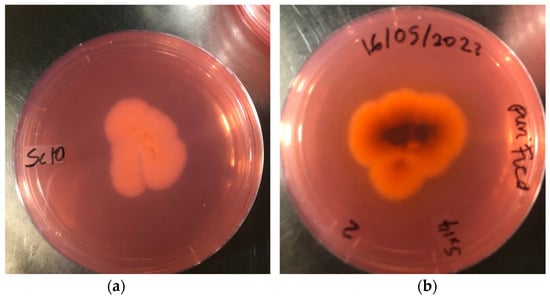
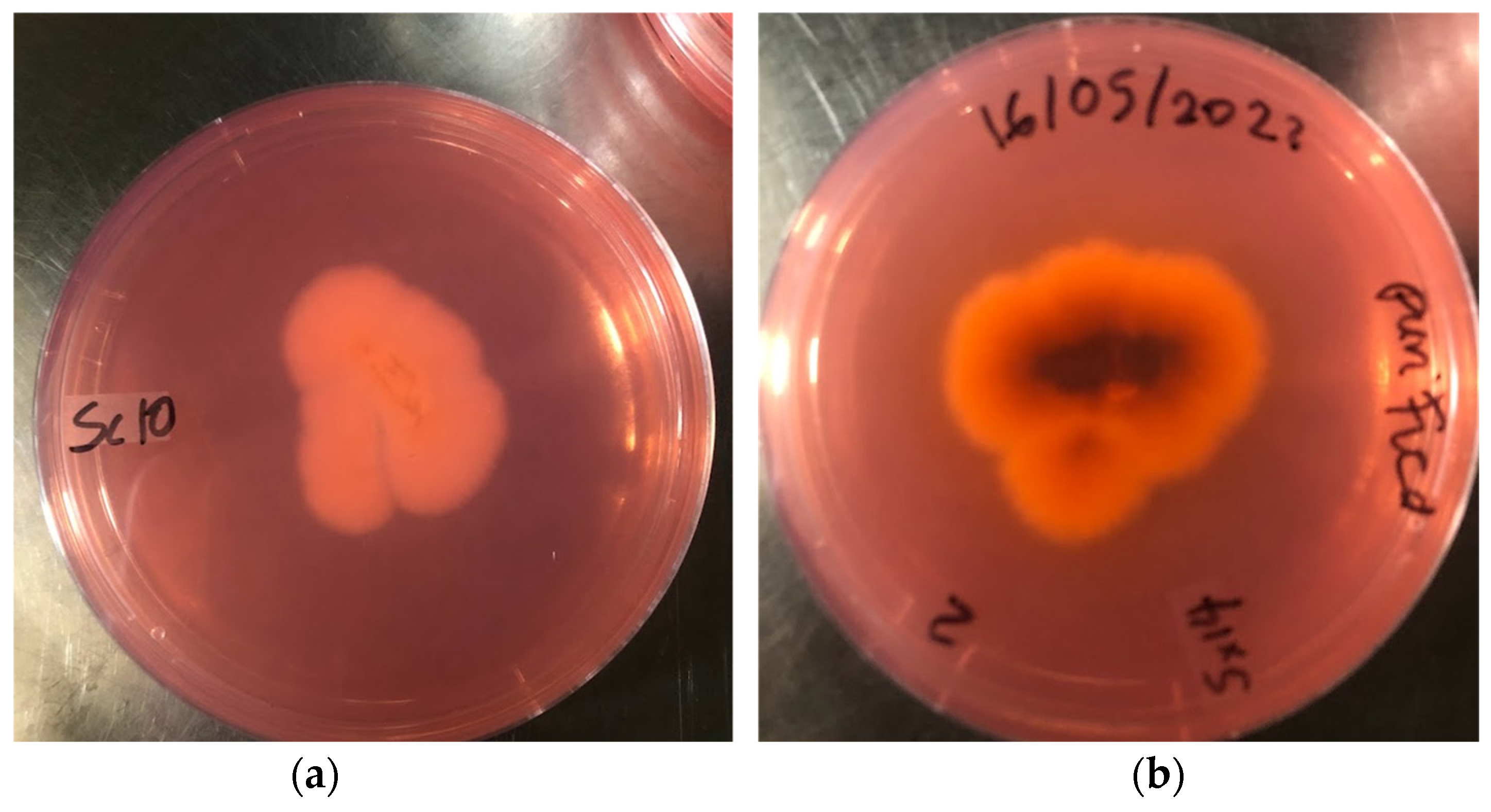
The filamentous fungal isolates were qualitatively screened for cellulase and xylanase enzymes using Congo red with carboxymethylcellulose and birchwood xylan (Figure 1). The presence of a halo zone around the fungal colony reflects the positive results. In this study, only four filamentous fungal isolates (A, B, D & H) from soil sample 14 (Table 1) showed a reaction (observed through the colour change in plate 2(b)); the other plates had neither a reaction nor halo zones.
Figure 1.
Depicts the qualitative analysis using Congo red for cellulase and xylanase production by fungal isolates from soil: (a) shows a conclusively negative test, while (b) shows a partially positive test (although no halo zones).
Table 1.
Qualitative screening of fungal isolates for cellulase and xylanases on Congo red plate with carboxymethylcellulose and birchwood xylan as substrates.
3.3. Evaluation of Sawdust as an Inducer of Carbon for the Production of Xylanase and Endocellulase Enzymes by Fungal Isolates
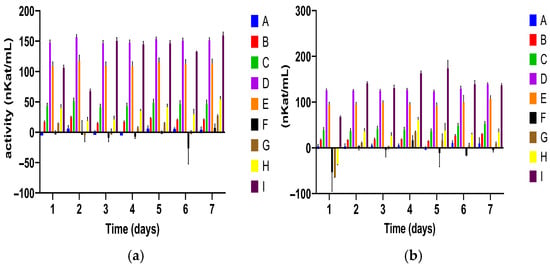
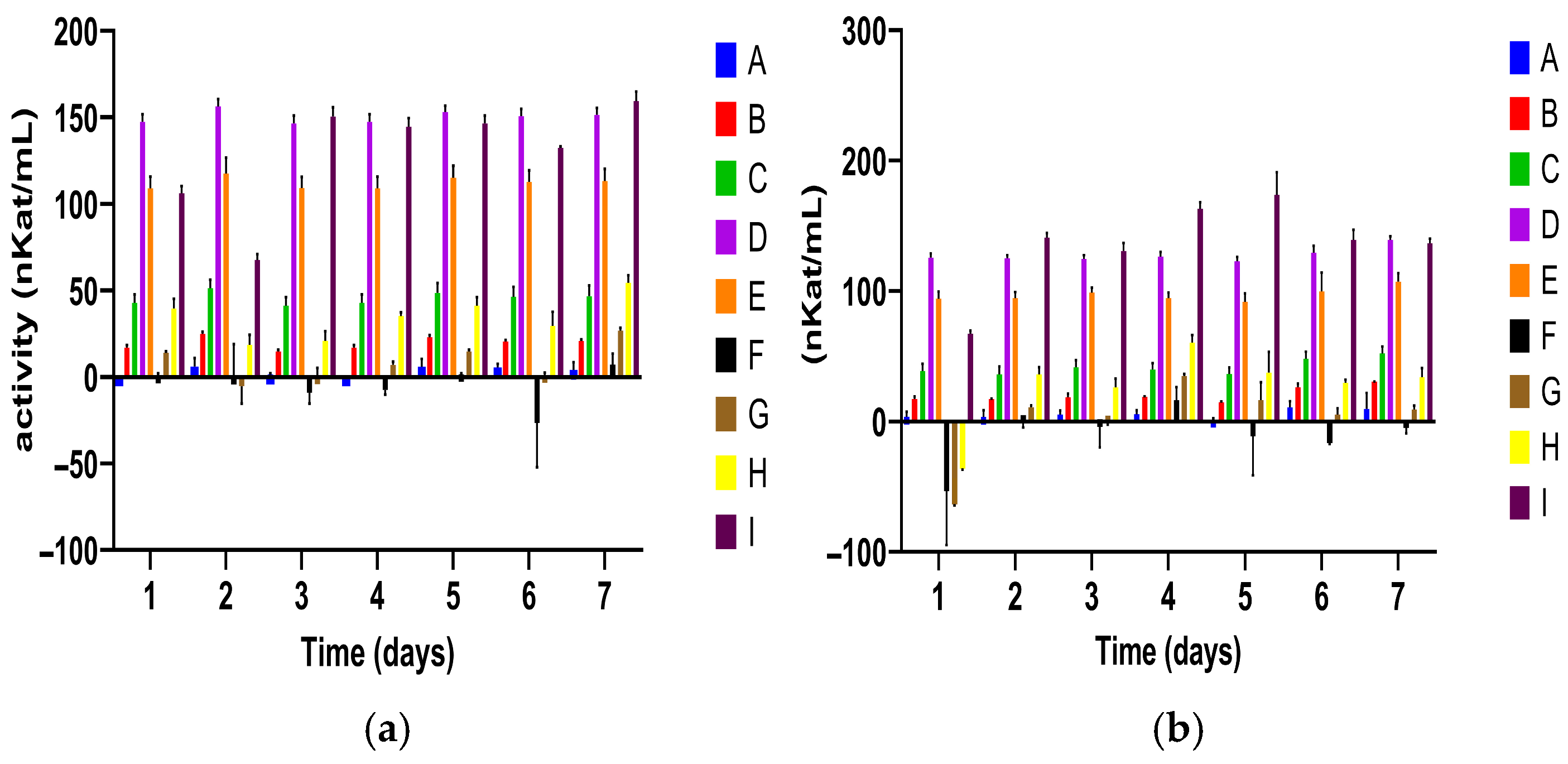
Submerged fermentation using saw dust as the carbon source resulted in variable xylanase and endocellulase production among the fungal isolates. Isolates D, E, H and I were the best producers, with isolate H showing the highest xylanase activity ( after 168 h) and isolate D reaching after only 48 h (Figure 2a). When the fungal isolates were screened for endocellulase production, isolates D and I showed the highest activities at ( and , respectively) (Figure 2b). While isolates A and F showed no detectable activity for either enzyme. Statistical analysis confirmed significant variation in enzyme production among the isolates () for both xylanases and endocellulase. The highest enzyme producers were seen to be fungal isolates D, E, H, and I.
Figure 2.
Xylanases (a) and endocellulases (b) activity in nine filamentous fungal isolates over seven days. Data represent mean ± SD.
3.4. Identification of Selected Strains
All four fungal isolates were identified using ITS-5.8S domain sequencing (Table 2). The fungal isolates identified belong to the Aspergillus—I, Penicillium—D, Amesia—E and Rhizopus—H genus.
Table 2.
Molecular identification of the four selected fungal isolates using ITS sequencing.
3.5. Extraction of Crude Enzyme
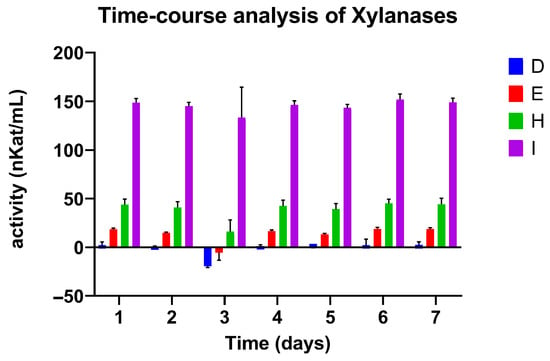
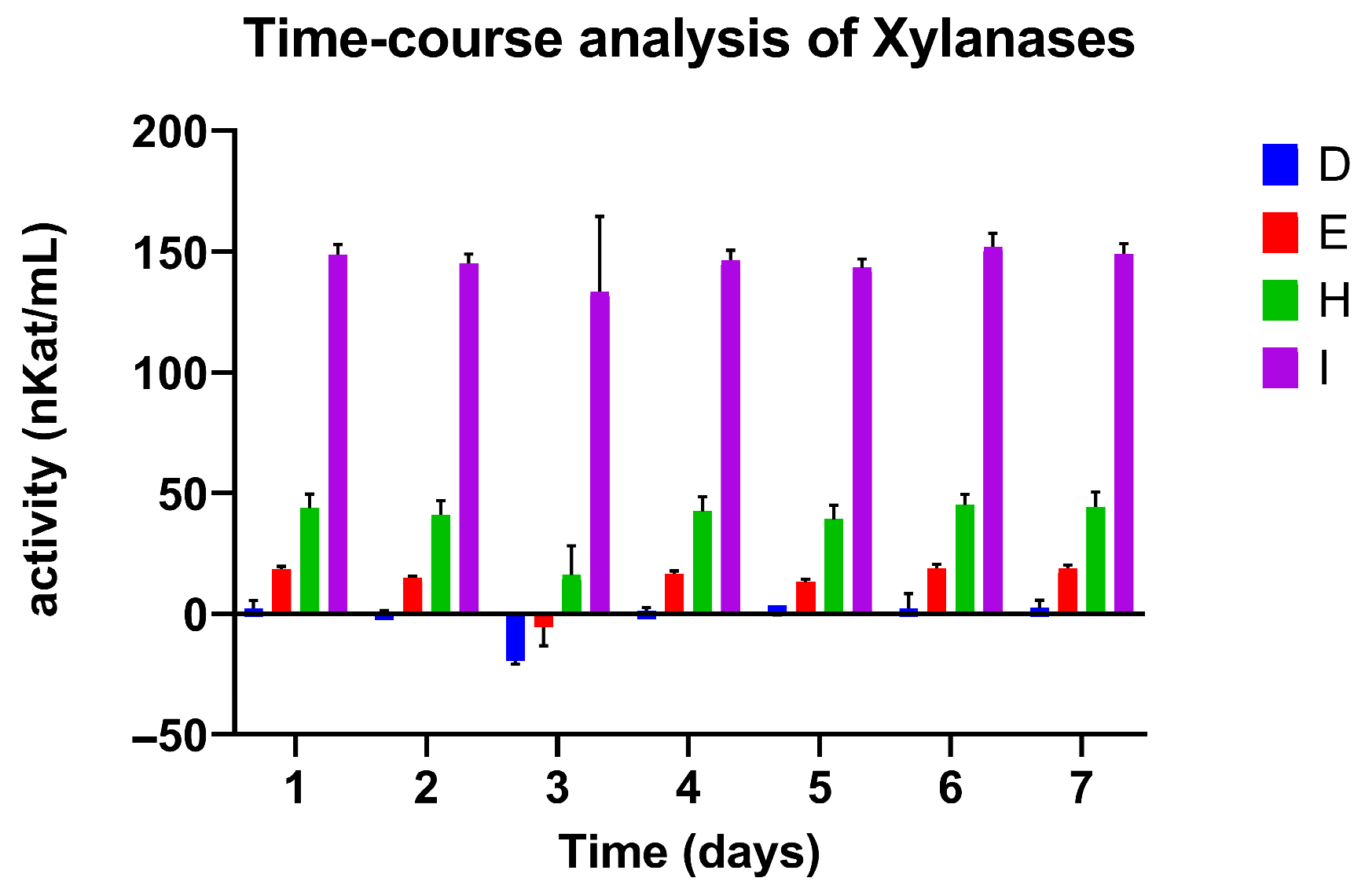
When the fermentation reaction was upscaled, different results were observed. Aspergillus quadrilineatus—H and Rhizopus azygosporus—I, maintained maximum xylanase activity, while Penicillium citrinum (D) and Amesia atrobrunnea (E) have lower enzyme activities. The crude enzyme was extracted from the fungal strains (A. quadrilineatus—H and R. azygosporus—I) that maintained higher xylanolytic activity of and respectively (Figure 3), when substrate loading was increased. The crude enzymes from all four fungal isolates were screened further for total cellulase, xylanases and beta-glucosidase activities (Table 3).
Figure 3.
Time-course xylanase production by the four best producers. Data represent mean ± SD.
Table 3.
Enzyme assays and protein quantitation.
3.6. Enzymatic Saccharification of Sawdust Using Crude Enzyme of a Single Fungal Strain
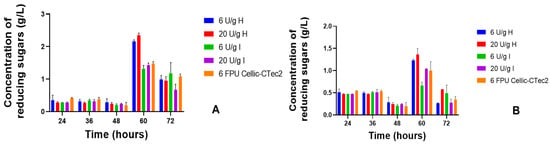
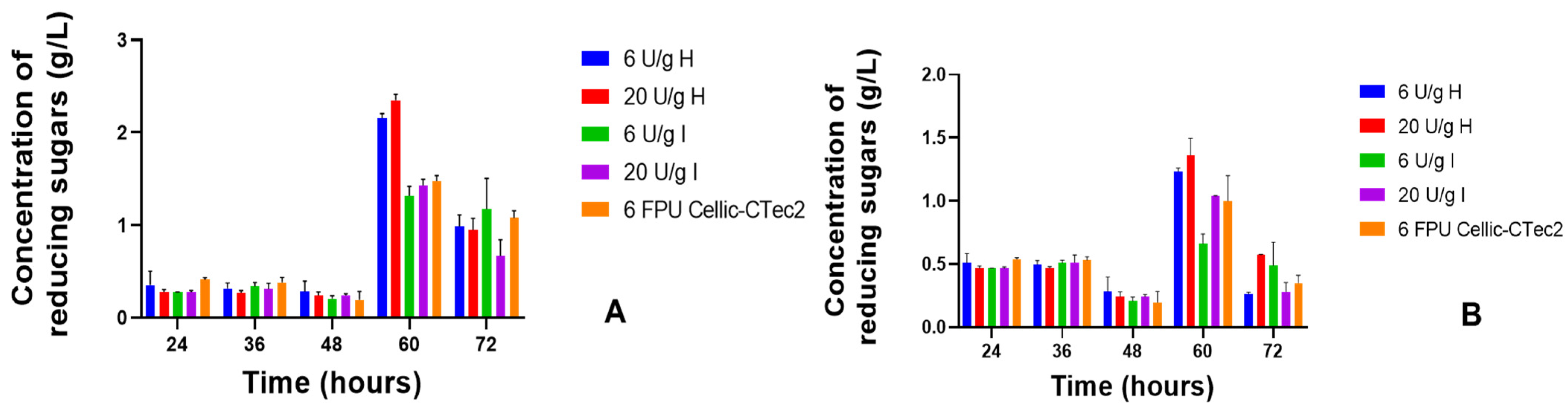
Saccharification is a pivotal step for biofuel production, and the carbohydrates released are proportional to the efficiency of the enzyme. The concentration of reducing sugars demonstrates the viability of fermentation of the hydrolysates. That is, how much of the sugars are released will indicate the conversion to bioethanol. The figures that follow (Figure 4A,B) show the results of the total reducing sugars released after enzymatic hydrolysis of the sawdust using the crude enzymes extracted from Aspergillus quadrilineatus (H) and Rhizopus azygosporus (I) and the commercial cellulase. Cellic CTec2 was used as the positive control and to also complete the synergy. A maximum release of reducing sugars and was recorded when crude enzyme loading of from Aspergillus quadrilineatus (H) was used after 60 h of hydrolysis, while the commercial cellulase, Cellic CTec2, released reducing sugars.
Figure 4.
Concentration of reducing sugars using xylose (A) and glucose (B) standards. TRS (total reducing sugar). Data represent mean ± SD.
3.7. Evaluating the Synergy of the Crude Enzyme with the Commercial Enzyme During the Enzymatic Saccharification of Sawdust
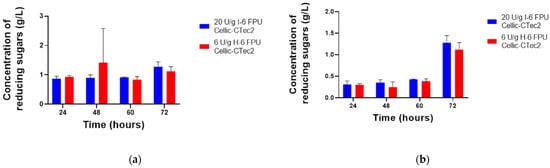
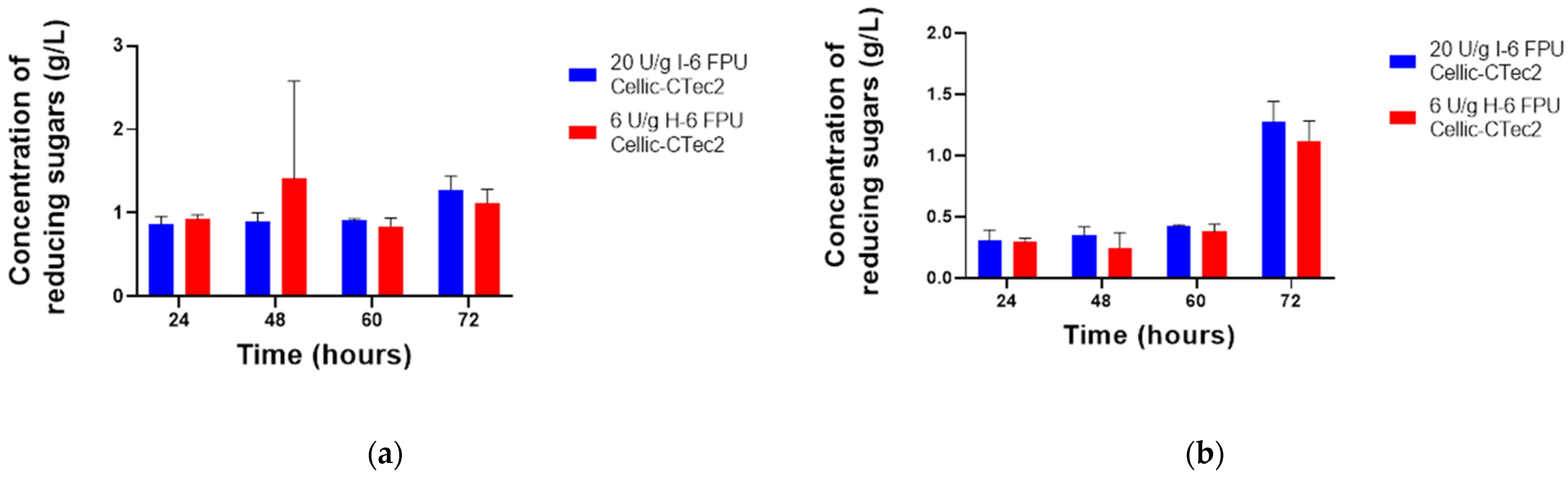
The consortia of crude xylanase from R. azygosporus I () and commercial Cellic CTec2 (6 FPU) resulted in the release of of reducing sugars in 72 h (Figure 5b), while of crude xylanases from A. quadrilineatus H and commercial Cellic CTec2 (6 FPU) had a release of within 48 h of enzymatic hydrolysis (Figure 5a). Overall the higher release of reducing sugars was recorded after 72 h of enzymatic hydrolysis with the enzyme consortia of of crude xylanase from R. azygosporus () and of crude xylanases from A. quadrilineatus (). The enzyme consortium with both crude xylanases from the fungi and the commercial cellulase did not liberate a greater release of reducing sugars than expected. From these results (Figure 5), statistical analysis revealed that there was a significant difference between the concentration of reducing sugars and the hydrolysis time () but no significant difference between these concentrations among the different filamentous fungi ( and ) using glucose and xylose as standards, respectively. For the enzyme consortium, statistical analysis showed that there were no significant differences between the concentrations of reducing sugars with the hydrolysis time, as well as the different enzyme loadings of the enzymes from the two strains ().
Figure 5.
Release of sugar using the consortium of crude xylanase and commercial cellulase with glucose (a) and xylose (b) standards. TRS (total reducing sugar). Data represent mean ± SD.
4. Discussion
The persistent reliance on fossil fuels to sustain global economies has imposed severe environmental costs, particularly through greenhouse gas emissions, which drive climate change and global warming. This highlights the urgent need for greener, sustainable, and environmentally friendly alternatives such as biofuels. In this study, sawdust, an abundant lignocellulosic waste material that is an environmental pollutant, was explored as a carbon source within a biorefinery approach. The objective was to evaluate its ability to induce filamentous fungi to produce lignocellulolytic enzymes, specifically xylanases and endocellulases, which are important in industries such as biofuels. Unlike conventional chemical methods, microbial enzyme production is environmentally friendly, showing its sustainability advantages. Fungal strains were isolated using xylose and cellulose as carbon sources at elevated temperatures (45 and 55 °C) to target thermophiles, which are known for producing thermostable enzymes suitable for harsh industrial processes. Additionally, these media were chosen because the aim was to isolate fungi that are not only rare but also possess a repertoire of genetic functions with substantial biotechnological applications. The biotechnology industry is always in pursuit of more microorganisms with high efficiencies at extreme temperatures in which numerous biotechnology operations occur. A total of nine fungal isolates were recovered, with most growing on media containing xylose. Growth at 45 °C was expected given that soil samples originated from the Phalaborwa region, which regularly experiences such high temperatures. The relatively low number of isolates compared with other studies may be attributed to the isolation conditions and the culture media [23]. ITS sequencing confirmed that the isolates belonged to four genera: Aspergillus, Penicillium, Rhizopus, and Amesia. Notably, species of Aspergillus and Penicillium, which are already well-documented xylanase producers, were also identified [27,28,29]. However, the literature revealed that some of the isolates are known opportunistic human pathogens, highlighting the need for stringent containment if used industrially [30,31,32,33,34].
Qualitative screening using Congo red dye incorporated into the media revealed weak or inconsistent hydrolysis halos. This outcome aligns with previous reports that in-media staining is fast and convenient but less sensitive compared to post-staining methods [35]. Interestingly, one isolate tested negative in qualitative screening but positive in quantitative assays, further reinforcing the need to combine both qualitative and quantitative methods [36]. Quantitative enzyme assays confirmed that sawdust is a suitable inducer of lignocellulolytic enzymes, with Penicillium and Aspergillus species [37] showing the highest xylanase activity. These findings are consistent with earlier reports that sawdust and other agricultural residues promote cellulase and xylanase production [38]. In this study, xylanase activity dominated, followed by endocellulase and then β-glucosidases.
During submerged fermentation with increased substrate loading, only Aspergillus quadrilineatus and Rhizopus azygosporus retained consistent xylanase activity, indicating their robustness and potential for scale-up. Conversely, other isolates exhibited reduced activity, possibly due to factors such as enzyme synergy, substrate type, or cultivation conditions [39]. Although enzyme activities were lower than those reported for industrial standards, this suggests that strain improvement and optimisation will be necessary for industrial application. Penicillium citrinum, for instance, displayed notable β-glucosidase activity, confirming its reputation as a model enzyme producer [40]. Enzymatic saccharification of untreated sawdust using crude fungal enzymes liberated a maximum of of reducing sugars with A. quadrilineatus xylanase, outperforming both commercial cellulase Cellic-CTec2 () and R. azygosporus (). In comparisons with literature, it is clear that pretreatment and enzyme purification significantly improve yields, with other studies reporting much higher reducing sugar concentrations under optimised or chemically pretreated conditions [26]. This suggests that the modest sugar release observed reflects both the crude nature of the enzyme extract and the lack of substrate pretreatment. Most studies employ either biological, thermal or chemical pretreatment methods for removing the lignin that make the hemicellulose and cellulose accessible to enzymes, this study utilised untreated sawdust and without any knowledge of the composition of the substrate, hydrolysis formulations could not be made that may have led to improved enzyme efficiency. Consortium experiments combining crude fungal xylanases with commercial cellulases Cellic CTec2 yielded only modest increases in reducing sugar release, contrary to expectations of strong enzyme synergy [26]. This deviation could be attributed to the crude nature of the enzymes. Nonetheless, the findings confirm that crude enzymes, while less efficient than purified forms, remain cost-effective and environmentally friendly candidates for industrial use. Importantly, the study demonstrates for the first time that A. quadrilineatus, R. azygosporus, and A. atrobrunnea produce lignocellulolytic enzymes. This work establishes sawdust as a viable inducer of lignocellulolytic enzyme production in filamentous fungi, especially Aspergillus and Penicillium. It highlights the limitations of qualitative assays alone, the value of quantitative screening, and the need for strain improvement, enzyme purification, and substrate pretreatment to achieve industrially relevant yields. While crude enzyme activities were modest, the study provides a foundation for further optimisation and validates the potential of these fungi for sustainable biofuel production.
5. Conclusions
The results obtained in this study indicate that sawdust was a successful inducer of carbon for producing lignocellulolytic enzymes by filamentous fungi. Furthermore, enzymatic hydrolysis with the crude enzyme produced low amounts of total reducing sugars, which will be problematic in the biofuel industry. It will be imperative to pretreat the biomass and purify the crude enzyme to obtain better results and to improve the process economics of biofuel production. Strain improvement, such as genetic engineering, could prove efficient in hydrolysis. The four filamentous fungi were identified, and research indicates that they are opportunistic pathogens to immunocompromised individuals and would require stringent biosafety regulations so as to minimise or limit in affecting on the people handling them.
Author Contributions
Conceptualization, L.M. and N.N.P.; methodology, V.J.V.; software, L.M.; validation, L.M. and N.N.P.; formal analysis, investigation, V.J.V.; resources, L.M.; data curation, L.M.; writing—original draft preparation, V.J.V.; writing—review and editing, L.M. and N.N.P.; visualisation, V.J.V., N.N.P. and L.M.; supervision, L.M.; project administration, L.M.; funding acquisition, V.J.V. All authors have read and agreed to the published version of the manuscript.
Funding
This research was funded by the National Research Foundation, grant number PMDS22111872939.
Data Availability Statement
The original contributions presented in this study are included in the article. Further inquiries can be directed to the corresponding author.
Acknowledgments
During the preparation of this manuscript, the author(s) used Grammarly (web-based version, latest version available at the time of writing) for grammar and language editing. The authors have reviewed and edited the output and take full responsibility for the content of this publication.
Conflicts of Interest
The authors declare no conflicts of interest.
References
- Amaefule, D.; Nwakaire, J.; Ogbuagu, N.; Anyadike, C.; Ogenyi, C.; Ohagwu, C.; Egbuhuzor, O. Effect of Production Factors on the Bioethanol Yield of Tropical Sawdust. Int. J. Energy Res. 2023, 2023, 9983840. [Google Scholar] [CrossRef] [Scilit]
- Soni, S.K.; Sharma, A.; Soni, R. Microbial Enzyme Systems in the Production of Second Generation Bioethanol. Sustainability 2023, 15, 3590. [Google Scholar] [CrossRef] [Scilit]
- Periyasamy, S.; Beula Isabel, J.; Kavitha, S.; Karthik, V.; Mohamed, B.A.; Gizaw, D.G.; Sivashanmugam, P.; Aminabhavi, T.M. Recent Advances in Consolidated Bioprocessing for Conversion of Lignocellulosic Biomass into Bioethanol—A Review. Chem. Eng. J. 2023, 453, 139783. [Google Scholar] [CrossRef] [Scilit]
- Bakare, V.; Abdulsalami, M.S.; Onusiriuka, B.C.; Appah, J.; Benjamin, B.; Ndibe, T.O. Ethanol Production from Lignocellulosic Materials by Fermentation Process Using Yeast. J. Appl. Sci. Environ. Manag. 2019, 23, 875. [Google Scholar] [CrossRef] [Scilit]
- Awogbemi, O.; Von Kallon, D.V.; Owoputi, A.O. Biofuel Generation from Potato Peel Waste: Current State and Prospects. Recycling 2022, 7, 23. [Google Scholar] [CrossRef] [Scilit]
- Trevorah, R.M.; Othman, M.Z. Alkali Pretreatment and Enzymatic Hydrolysis of Australian Timber Mill Sawdust for Biofuel Production. J. Renew. Energy 2015, 2015, 284250. [Google Scholar] [CrossRef] [Scilit]
- Nawaz, A.; Huang, R.; Junaid, F.; Feng, Y.; Haq, I.U.; Mukhtar, H.; Jiang, K. Sustainable Production of Bioethanol Using Levulinic Acid Pretreated Sawdust. Front. Bioeng. Biotechnol. 2022, 10, 937838. [Google Scholar] [CrossRef] [Scilit]
- Tulashie, S.K.; Akpari, E.E.A.; Appiah, G.; Adongo, A.; Andoh, E.K. Acid Hydrolysis of Sawdust Waste into Bioethanol. Biomass Convers. Biorefin. 2023, 13, 5743–5756. [Google Scholar] [CrossRef] [Scilit]
- Chukwuma, O.B.; Rafatullah, M.; Tajarudin, H.A.; Ismail, N. Lignocellulolytic Enzymes in Biotechnological and Industrial Processes: A Review. Sustainability 2020, 12, 7282. [Google Scholar] [CrossRef] [Scilit]
- Stephen, J.L.; Periyasamy, B. Innovative Developments in Biofuels Production from Organic Waste Materials: A Review. Fuel 2018, 214, 623–633. [Google Scholar] [CrossRef] [Scilit]
- Adegboye, M.F.; Ojuederie, O.B.; Talia, P.M.; Babalola, O.O. Bioprospecting of Microbial Strains for Biofuel Production: Metabolic Engineering, Applications, and Challenges. Biotechnol. Biofuels 2021, 14, 5. [Google Scholar] [CrossRef] [Scilit] [PubMed]
- Füting, P.; Barthel, L.; Cairns, T.C.; Briesen, H.; Schmideder, S. Filamentous fungal applications in biotechnology: A combined bibliometric and patentometric assessment. Fungal Biol. Biotechnol. 2021, 8, 23. [Google Scholar] [CrossRef] [Scilit] [PubMed]
- Laca, A.; Laca, A.; Díaz, M. Hydrolysis: From cellulose and hemicellulose to simple sugars. In Second and Third Generation of Feedstocks; Elsevier: Amsterdam, The Netherlands, 2019; pp. 213–240. [Google Scholar]
- Ire, F.S.; Chima, I.J.; Ezebuiro, V. Enhanced Xylanase Production from UV-Mutated Aspergillus niger Grown on Corn Cob and Sawdust. Biocatal. Agric. Biotechnol. 2021, 31, 101869. [Google Scholar] [CrossRef] [Scilit]
- Skaggs, R.L.; Coleman, A.M.; Seiple, T.E.; Milbrandt, A.R. Waste-to-Energy Biofuel Production Potential for Selected Feedstocks in the Conterminous United States. Renew. Sustain. Energy Rev. 2018, 82, 2640–2651. [Google Scholar] [CrossRef] [Scilit]
- Devi, R.; Kapoor, S.; Thakur, R.; Sharma, E.; Tiwari, R.K.; Joshi, S.J. Lignocellulolytic Enzymes and Bioethanol Production from Spent Biomass of Edible Mushrooms Using Saccharomyces cerevisiae and Pachysolen tannophilus. Biomass Convers. Biorefin. 2022, 15, 28445–28459. [Google Scholar] [CrossRef] [Scilit]
- Witfeld, F.; Begerow, D.; Guerreiro, M.A. Improved Strategies to Efficiently Isolate Thermophilic, Thermotolerant, and Heat-Resistant Fungi from Compost and Soil. Mycol. Prog. 2020, 20, 325–339. [Google Scholar] [CrossRef] [Scilit]
- Meddeb-Mouelhi, F.; Moisan, J.K.; Beauregard, M. A Comparison of Plate Assay Methods for Detecting Extracellular Cellulase and Xylanase Activity. Enzyme Microb. Technol. 2014, 66, 16–19. [Google Scholar] [CrossRef] [Scilit]
- Ghose, T.K. Measurement of Cellulase Activities; International Union of Pure and Applied Chemistry Applied Chemistry Division Commission on Biotechnology: Durham, NC, USA, 1987; Volume 59. [Google Scholar]
- Makulana, L.; La Grange, D.C.; Moganedi, K.L.M.; Mert, M.J.; Phasha, N.N.; Jansen van Rensburg, E.L. Screening and Isolation of Xylanolytic Filamentous Fungi from the Gut of Scarabaeidae Dung Beetles and Dung Beetle Larvae. Microorganisms 2024, 12, 445. [Google Scholar] [CrossRef] [Scilit]
- Bailey, M.J.; Biely, P.; Poutanen, K. Interlaboratory Testing of Methods for Assay of Xylanase Activity. J. Biotechnol. 1992, 23, 257–270. [Google Scholar] [CrossRef] [Scilit]
- Miller, G.L. Use of Dinitrosalicylic Acid Reagent for Determination of Reducing Sugar. Anal. Chem. 1959, 31, 426–428. [Google Scholar] [CrossRef] [Scilit]
- Livhuwani, M.; Jansen van Rensburg Elbert, L.; Moganedi Kgabo, L.M.; Mert Marlin, J. Screening the Gut of Dung Beetles and Dung Beetle Larvae for Hemi-Cellulolytic Fungi and Enzymes for Application in the Biofuel Industry. PhD Thesis, University of Limpopo, Polokwane, South Africa, 2021. [Google Scholar]
- Masingi, N.N.; Ncube, I. Production and Characterisation of a Β-Glucosidase from a Thermophilic Bacterium and Investigation of Its Potential as Part of a Cellulase Cocktail for Conversion of Lignocellulosic Biomass to Fermentable Sugars. PhD Thesis, University of Limpopo, Polokwane, South Africa, 2020. [Google Scholar]
- Makhuvele, R.; Ncube, I.; Jansen van Rensburg, E.L.; La Grange, D.C. Isolation of Fungi from Dung of Wild Herbivores for Application in Bioethanol Production. Braz. J. Microbiol. 2017, 48, 648–655. [Google Scholar] [CrossRef] [Scilit]
- Nouroozi, V.; Nouroozi, R.V.; Noroozi, M.V.; Ahmadizadeh, M. Determination of Protein Concentration Using Bradford Microplate Protein Quantification Assay. Dis. Diagn. 2015, 4, 11–17. [Google Scholar] [CrossRef] [Scilit]
- Fasiku, S.A.; Bello, M.A.; Odeniyi, O.A. Production of Xylanase by Aspergillus niger GIO and Bacillus Megaterium through Solid-State Fermentation. Access Microbiol. 2023, 5. [Google Scholar] [CrossRef] [Scilit] [PubMed]
- Luong, T.T.H.; Poeaim, S.; Tangthirasunun, N. Isolation and Characterization of Xylanase from a Novel Strain, Penicillium menonorum SP10. Mycobiology 2023, 51, 239–245. [Google Scholar] [CrossRef] [Scilit] [PubMed]
- Azzouz, Z.; Bettache, A.; Boucherba, N.; Prieto, A.; Martinez, M.J.; Benallaoua, S.; de Eugenio, L.I. Optimization of β-1,4-Endoxylanase Production by an Aspergillus niger Strain Growing on Wheat Straw and Application in Xylooligosaccharides Production. Molecules 2021, 26, 2527. [Google Scholar] [CrossRef] [Scilit]
- Jeragh, A.; Ahmad, S.; Khan, Z.; Tarazi, R.Y.; Ajmi, S.; Joseph, L.; Varghese, S.; Vayalil, S. Subcutaneous Phaeohyphomycosis Caused by Amesia atrobrunnea in Kuwait. J. Mycol. Med. 2019, 29, 193–197. [Google Scholar] [CrossRef] [Scilit]
- Beena, H.; Gupta, M.; Kindo, A.J. Pulmonary Infection with Penicillium citrinum in a Patient with Multiple Myeloma. Indian J. Med. Microbiol. 2021, 39, 259–261. [Google Scholar] [CrossRef] [Scilit]
- Ribes, J.A.; Vanover-Sams, C.L.; Baker, D.J. Zygomycetes in Human Disease. Clin. Microbiol. Rev. 2000, 13, 236–301. [Google Scholar] [CrossRef]
- Hesse, S.E.; Luethy, P.M.; Beigel, J.H.; Zelazny, A.M. Penicillium citrinum: Opportunistic Pathogen or Idle Bystander? A Case Analysis with Demonstration of Galactomannan Cross-Reactivity. Med. Mycol. Case Rep. 2017, 17, 8–10. [Google Scholar] [CrossRef] [Scilit]
- Zhang, H.; Zhang, W.; Li, M.; Wang, B.; Zhang, Z. A Case of Aspergillus quadrilineatus Pulmonary Infection in China. Heliyon 2024, 10, e33000. [Google Scholar] [CrossRef] [Scilit]
- Yoon, J.H.; Park, J.E.; Suh, D.Y.; Hong, S.B.; Ko, S.J.; Kim, S.H. Comparison of Dyes for Easy Detection of Extracellular Cellulases in Fungi. Korean Soc. Mycol. 2007, 35, 21–24. [Google Scholar] [CrossRef] [Scilit] [PubMed]
- Farrow, M.F.; Arnold, F.H. High Throughput Screening of Fungal Endoglucanase Activity in Escherichia coli. J. Vis. Exp. 2011, 54, 2942. [Google Scholar] [CrossRef] [Scilit] [PubMed]
- Santa-Rosa, P.S.; Souza, A.L.; Roque, R.A.; Andrade, E.V.; Astolfi-Filho, S.; Mota, A.J.; Nunes-Silva, C.G. Production of Thermostable β-Glucosidase and CMCase by Penicillium Sp. LMI01 Isolated from the Amazon Region. Electron. J. Biotechnol. 2018, 31, 84–92. [Google Scholar] [CrossRef] [Scilit]
- Ćilerdžić, J.; Galić, M.; Stajić, M. From Pomiculture Waste to Biotechnological Raw Material: Efficient Transformation Using Ligninosomes and Cellulosomes from Pleurotus spp. Bioresour. Bioprocess. 2022, 9, 66. [Google Scholar] [CrossRef] [Scilit]
- Houfani, A.A.; Anders, N.; Loogen, J.; Heyman, B.; Azzouz, Z.; Bettache, A.; Büchs, J.; Benallaoua, S. Lignocellulosic Biomass Degradation Enzymes and Characterization of Cellulase and Xylanase from Bosea Sp. FBZP-16. Biomass Convers. Biorefin. 2023, 13, 12085–12103. [Google Scholar] [CrossRef] [Scilit]
- Valle-Pérez, A.U.; Flores-Cosío, G.; Amaya-Delgado, L. Bioconversion of Agave Bagasse to Produce Cellulases and Xylanases by Penicillium citrinum and Aspergillus fumigatus in Solid-State Fermentation. Waste Biomass Valorization 2021, 12, 5885–5897. [Google Scholar] [CrossRef] [Scilit]

Disclaimer/Publisher’s Note: The statements, opinions and data contained in all publications are solely those of the individual author(s) and contributor(s) and not of MDPI and/or the editor(s). MDPI and/or the editor(s) disclaim responsibility for any injury to people or property resulting from any ideas, methods, instructions or products referred to in the content. |
© 2026 by the authors. Licensee MDPI, Basel, Switzerland. This article is an open access article distributed under the terms and conditions of the Creative Commons Attribution (CC BY) license.