


Abstract
The recovery of extracellular polymeric substances (EPS) from activated sludge (AS) represents a promising strategy to transform wastewater treatment plants (WWTPs) into resource recovery facilities within a circular economy framework. In this study, EPS was extracted from an AS process in a full-scale WWTP, highlighting its catalytic and bioflocculant properties, which represent an innovation in the valorization of this biopolymer. The EPS was subsequently characterized in terms of polysaccharides, proteins, and enzymatic activities (amylase and lipase). The bioflocculation performance of the EPS was evaluated using activated sludge mixed liquor. Results showed that EPS recovery yields using 50 °C and 80 °C were 196.3 ± 38.2 mg EPS/g sludge and 283.5 ± 85.4 mg EPS/g sludge, respectively. Enzymatic assays confirmed amylase activity ranging from 100 to 350 U/g sludge according to the extraction temperature. Lipolytic activity (20 U/g sludge) was comparable to values reported in the literature for EPS from biological sludge. The addition of EPS significantly improved the sludge settling velocity (from 0.86 to 4.48 m/h) and the sludge volume index (from 118.6 to 35.5). However, EPS application also increased the resistance to filtration by 50% and reduced cellular respiration by approximately 40%. Overall, the findings demonstrate that EPS from activated sludge acts as an effective bioflocculant with relevant catalytic properties, highlighting its potential as a high-value biotechnological product while also pointing to operational challenges that require further optimization.
1. Introduction
An increasingly studied and implemented strategy to enhance the relevance and value of wastewater treatment processes is to reconceptualize wastewater treatment plants (WWTPs) as resource recovery facilities (RRFs) rather than merely as treatment systems. Stricter regulations regarding effluent treatment levels and the need for self-sufficient or even energy- and resource-positive plants are the primary drivers for the research and development of new WWTP configurations [1]. New concepts in wastewater treatment, sometimes referred to as “biorefineries” or resource recovery facilities (RRFs), encompass circular economy principles and enable the creation and production of high-value-added co-products from residual biomass, which can meet niche market demands [2].
The extraction and recovery of biopolymers from biological sludge is a potential route for obtaining bioproducts, as described by several authors. In The Netherlands, two large-scale demonstration systems are already in operation to showcase the economic feasibility of biopolymer recovery [3]. These biopolymers have similar properties to alginate, which has various pharmaceutical, food, and textile industry applications. For biopolymers extracted from granular sludge, other applications arise, such as in the composition of construction materials, as flame retardants, bioflocculants, and biocatalysts. Their application directly at the WWTP can increase their economic potential, for example, by being used as a bioflocculant or adsorbent with catalytic activity, replacing commercial products, or as an adsorbent material for pollutant removal from water or for nutrient recovery, such as nitrogen and phosphorus [4].
According to Schambeck et al. [5], there is potential for biopolymer recovery from flocculent biomass in activated sludge systems due to the high sludge production of these systems. The extraction of biopolymers from the residual biomass of wastewater treatment systems emerges as an option for recovering a high-value-added product with a wide range of applications [6]. Biopolymer recovery represents an innovative concept for valorizing carbonaceous material instead of converting it into energy. According to the bioproduct recovery value pyramid, biomass should ideally first be transformed and recovered as a biomaterial (highest value) before being destined for final energy use (lowest value), such as its conversion into biogas or other forms of energy [7].
Studies, including those by Sun et al. [8] and Zhang et al. [9], have shown that residual activated sludge can be an effective source of EPS with bioflocculant properties, offering a low-cost and sustainable alternative for wastewater treatment. This approach has been considered an alternative to conventional inorganic and synthetic organic flocculants, such as alum, PAC, and commercial polymers, which are associated with drawbacks, including aluminum-related health concerns, the generation of chemically contaminated sludge, and potential toxic or carcinogenic effects from polymeric residues. In contrast, EPS-based bioflocculants are biodegradable, non-toxic, and do not cause secondary pollution, reinforcing their potential as environmentally favorable flocculation agents. Beyond their bioflocculation potential, EPS recovered from activated sludge can also act as a functional matrix for immobilized enzymes, enabling simultaneous pollutant adsorption and catalytic bioconversion.
More recent studies have been exploring the biomolecules present in EPS produced in activated sludge and aerobic granular sludge reactors. EPS produced by biological sludge consists mainly of proteins, humic compounds, polysaccharides, lipids, and nucleic acids. Adsorption and enzymatic bioconversion are the two main phenomena involved in pollutant removal by activated sludge, both of which occur within the EPS matrix. The diversity of functional groups present in EPS facilitates the adsorption of nutrients, organic micropollutants, heavy metals, and other pollutants of interest. The adsorption of these pollutants also increases their concentration and brings these molecules closer to the active sites of extracellular enzymes, facilitating enzymatic catalysis and their bioconversion [10].
Frølund et al. [11] studied the enzymatic activity contained in the EPS of activated sludge and found that extracellular enzymes are considered an integral part of this polymeric matrix, where they remain immobilized. Large molecular substrates/pollutants such as cellulose, starch, polypeptides, lipoproteins, glycoproteins, and fats are degraded upon contact with the matrix and can be absorbed by the microbial biomass. EPS not only protects enzymes against degradation but also allows proximity between their active sites and substrates. EPS acts as an immobilization agent for extracellular enzymes produced by the microbial biomass. These extracellular enzymes are retained within the EPS, interacting with polysaccharides and becoming immobilized, which increases their thermal stability and resistance to proteolysis [12]. Enzyme immobilization in the EPS matrix prevents their loss to the surrounding medium (mixed liquor), where they could be easily degraded by environmental conditions. Extracellular enzymes also appear to play an important role in degrading the EPS structure itself, to some extent, to maintain its porosity and, consequently, its high capacity for pollutant adsorption. Recovering EPS while preserving enzymatic activity can support the development of biotechnological products such as bioflocculants or catalytic adsorbents for environmental applications. According to Wasmund et al. [13] and Flemming et al. [14], carbohydrate-active enzymes, proteases, and lipases are key constituents of the EPS matrix.
Nabarlatz et al. [15] evaluated the activity of lipase extracted from activated sludge, using ultrasonication as an extraction method. The authors obtained 21 U/g sludge, highlighting that the obtained enzymatic extract could be used as an additive to enhance anaerobic digestion processes for biogas production. Liu and Smith [16] suggested that enzymes extracted from residual biomass from biological treatment processes could serve as an alternative and low-cost enzyme source for various environmental and industrial applications. The authors identified cellulase (13.5 U/g sludge), protease (8.4 U/g sludge), lipase (21 U/g sludge), and amylase activities (39 U/g sludge), using ultrasonication as the extraction method. Toja Ortega et al. [17] evaluated the hydrolytic activity of enzymes responsible for the hydrolysis of complex substrates during the anaerobic phase of a full-scale sequencing batch reactor. The authors state that the hydrolysis of particulate COD is the rate-limiting step for the bioconversion of complex substrates. According to these authors, flocculent sludge has higher hydrolytic activity compared to granular sludge.
Despite the well-documented bioflocculation capacity and enzymatic activity of EPS, these properties have so far been investigated separately, limiting the development of multifunctional bioproducts for wastewater treatment applications. In this context, the objective of this study was to recover EPS extracted from activated sludge of a full-scale WWTP and evaluate its potential as a bioflocculant with catalytic properties, aiming at a bioproduct applicable to sludge flocculation and biodegradation.
2. Materials and Methods
2.1. Materials
For the extraction of EPS, anhydrous sodium carbonate (purity 98.5%), supplied by Êxodo Científica (Sumaré, Brazil), was used. The evaluation of amylase enzymatic activity was carried out using isopropyl alcohol (isopropanol, purity 99.5%), 3,5-dinitrosalicylic acid (DNS, purity 99%), soluble starch (purity 99%), sodium chloride (purity 99%), glucose (purity 99%, supplied by LAFAN, São Paulo, Brazil), and maltose (purity 92%), with all reagents supplied by Êxodo Científica, unless otherwise specified. For buffer solution preparation, dipotassium phosphate (purity 92%), phosphoric acid (purity 85%), and sodium hydroxide (purity 98%, supplied by ALPHATEC, Rio de Janeiro, Brazil) were employed. The evaluation of lipase enzymatic activity was performed using p-nitrophenyl palmitate (purity 98%, supplied by Sigma-Aldrich, Waltham, MA, USA), together with Triton™ X-100 (purity 90%), tris(hydroxymethyl)aminomethane (Tris, purity 99%), and gum arabic (purity 99.5%), all supplied by Êxodo Científica.
2.2. EPS and ALE Recovery from Residual Biomass
Activated sludge (AS) samples were obtained from the aerobic treatment unit of a municipal WWTP operated by CASAN (Santa Catarina Sanitation Company, Florianópolis, Brazil). The facility, known as the Lagoa da Conceição WWTP, is located in Florianópolis, Santa Catarina, and is designed to treat a flow of 50–73 L/s. The biological process consists of a continuous-flow oxidation ditch activated sludge system configured for extended aeration. The mixed liquor sample was collected in the aeration tank and further centrifuged to remove the water. EPS was recovered following a modified version of the alkaline extraction protocol described by Felz et al. [18]. Briefly, 7.5 g of sludge was suspended in 150 mL of a sodium carbonate solution prepared with 0.625 g of Na2CO3 and subjected to constant agitation at 400 rpm at temperatures of 50 °C and 80 °C. After 35 min of extraction, the mixture was cooled to room temperature and subsequently centrifuged at 3000 rpm for 25 min; the supernatant containing solubilized EPS was collected while the solid fraction was discarded. The extracted EPS was subsequently used for physicochemical characterization, enzyme activity assessment, and bioflocculation experiments
Gelation tests were conducted to assess the hydrogel-forming capacity of alginate-like extracellular polymers (ALE) extracts obtained from EPS recovered at 50 °C and 80 °C. ALE was extracted via alkaline extraction with Na2CO3, followed by centrifugation (2150× g, 25 min) and dialysis. The dialyzed extract was acidified with 1 M HCl under gentle stirring (100 rpm, room temperature) to a final pH of 2.2 ± 0.05, yielding acidic ALE, which was subsequently recovered by centrifugation (4000× g, 4 °C, 20 min). The acidic gel was neutralized with 0.5 M NaOH to pH 8.5 to obtain Na-ALE. Ionic hydrogel formation was evaluated by slowly dripping the Na-ALE solution into a 2.5% (w/v) CaCl2 solution. The formation of spherical Ca2+–ALE beads was taken as evidence of ionic hydrogel formation [5].
2.3. Enzyme Activity Analyses
EPS samples collected on different dates were used for EPS extraction and for the evaluation of amylase activity. Lipase activity was assessed in a single EPS sample as a preliminary screening. Lipase activity was determined [19] through a spectrophotometric assay, employing p-nitrophenyl palmitate (p-NPP) as the substrate. During the reaction, the hydrolysis of p-NPP by the extracellular lipase promotes the release of p-nitrophenol, which, in an alkaline medium, exhibits a characteristic yellow coloration.
Amylase activity was determined based on starch hydrolysis and the quantification of reducing sugars released using the 3,5-dinitrosalicylic acid (DNS) colorimetric method. Initially, the buffers, the substrate solution, and a maltose standard curve were prepared and used as references for the analysis. For the evaluation of enzyme stability, a portion of the EPS was stored at 5 °C for six months. After this period, the EPS was brought to room temperature, and the amylase enzymatic activity was evaluated by incubating the enzyme with the starch solution at 37 °C for 10 min, followed by the addition of the DNS reagent as the colorimetric agent. The samples were boiled, cooled, diluted in distilled water, and analyzed at 540 nm using a spectrophotometer (DR3900, HACH, Jundiaí, Brazil). Amylase activity analysis was performed in triplicate.
Experiments were performed in triplicate (n = 3), and the results were expressed as mean values. Statistical analyses were carried out using analysis of variance (ANOVA), and mean comparisons were conducted using Tukey’s test at a 5% significance level (p < 0.05). All statistical procedures were performed using Origin® 2017 software.
2.4. Polysaccharide and Protein Concentration in EPS
The concentration of polysaccharides in the extracted EPS was quantified by an adapted colorimetric assay using anthrone reagent [20]. Calibration curves were prepared using glucose (neutral sugars) and glucuronic acid (uronic acids) as standards. EPS samples were diluted (1:10) and analyzed in triplicate. Absorbance readings were performed in a spectrophotometer (HACH DR3900, Brazil) at 560 and 620 nm, and results were expressed as glucose equivalents (mg GLU/g sludge) and glucuronic acid equivalents (mg GLA/sludge).
Protein content in the EPS was determined using the modified Lowry method [21]. Calibration curves were prepared with bovine serum albumin (BSA) for protein quantification and humic substances to account for potential interference. EPS samples were analyzed in triplicate with a 1:10 dilution factor. Absorbance was measured at 750 nm in a spectrophotometer (HACH DR3900, Brazil). Final protein concentrations were expressed in mg BSA/g sludge after correction for humic substance interference [21].
2.5. Bioflocculation Properties of EPS
The jar tests were performed using six square-based jars with a volume of 2 L, each with six rotating propellers providing equal agitation and rest conditions for all jars. The experimental procedure for each jar test began with an intense mixing phase at 120 rpm for 15 s, followed by slow mixing at 50 rpm for 30 min, and subsequently a 15 min settling period. After the settling time, supernatant and settled solids samples were collected for further analysis.
Each jar was loaded with 1 L of activated sludge mixed liquor, which exhibited an initial pH of 6.73 and a temperature of 25.7 °C. The EPS volumes applied in the jars varied as follows: 0, 50, 100, 150, 200 and 250 mL.
Sludge settling velocity was determined by transferring 1 L of homogenized sample from each jar into graduated cylinder and monitoring the sludge blanket height at fixed time intervals (0–30 min). The sludge volume index (SVI) was calculated according to Standard Methods [22].
The Buchner funnel test was performed according to Lo et al. [23] and Zhang et al. [9]. This test is used to determine the Specific Resistance to Filtration (SRF) and the Filtration Time (FT) in order to identify dewatering characteristics of the treated effluent.
The oxygen uptake rate (OUR) test was performed to evaluate the impact of EPS on microbial respiration and on potential oxygen transfer limitations in the activated sludge mixed liquor, given that one possible application of EPS is its use as an additive to improve activated sludge bioflocculation. OUR measurements were conducted as described in [24]. For this procedure, the mixed liquor sample was aerated for 24 h without the addition of an exogenous substrate in order to reach the endogenous respiration phase. Glucose (C6H12O6, 100 mg/L) and NH4Cl (50 mg/L) were used as substrates for heterotrophic and autotrophic biomass, respectively, and allylthiourea was added as an inhibitor of autotrophic bacteria. Biomass fractionation was calculated according to Activated Sludge Model 1 (ASM1) [25].
3. Results and Discussion
3.1. EPS Recovery Yield and Biochemical Composition
The EPS extraction yields using 50 °C and 80 °C were 196.3 ± 38.2 mg EPS/g sludge and 283.5 ± 85.4 mg EPS/g sludge, respectively. The reduction in the recovery yields suggests that the extraction temperature influences recovery efficiency. Although higher temperatures increase the recovery yields, labile biomolecules like enzymes would suffer denaturation, and this was hypothesized in this work.
Schambeck et al. [5] found recovery yields for activated sludge flocs of 472 mg EPS/g sludge using the same extraction procedure at 80 °C. Higher recovery yields were found by the authors using aerobic granular sludge (495 mg EPS/g sludge), which is inherent to the structure of granules compared to activated sludge.
De Bruin et al. [26] analyzed the recovery of EPS from 16 Activated Sludge reactors located in 13 countries using the same alkaline extraction protocol with 80 °C used in this work and found yields varying from 28.1 to 185 mg EPS/g sludge. Li et al. [27] presented EPS and biopolymer recovery yields from 90 to 190 mg EPS/g sludge from activated sludge biomass. Future improvements could include adjustments in extraction temperature, pH control, or sequential recovery steps aimed at enhancing the solubilization of high-molecular-weight biopolymers without compromising their structural integrity.
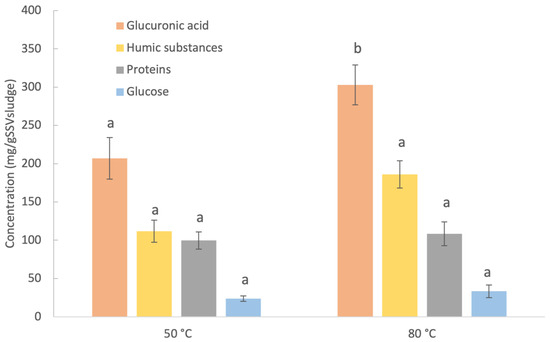
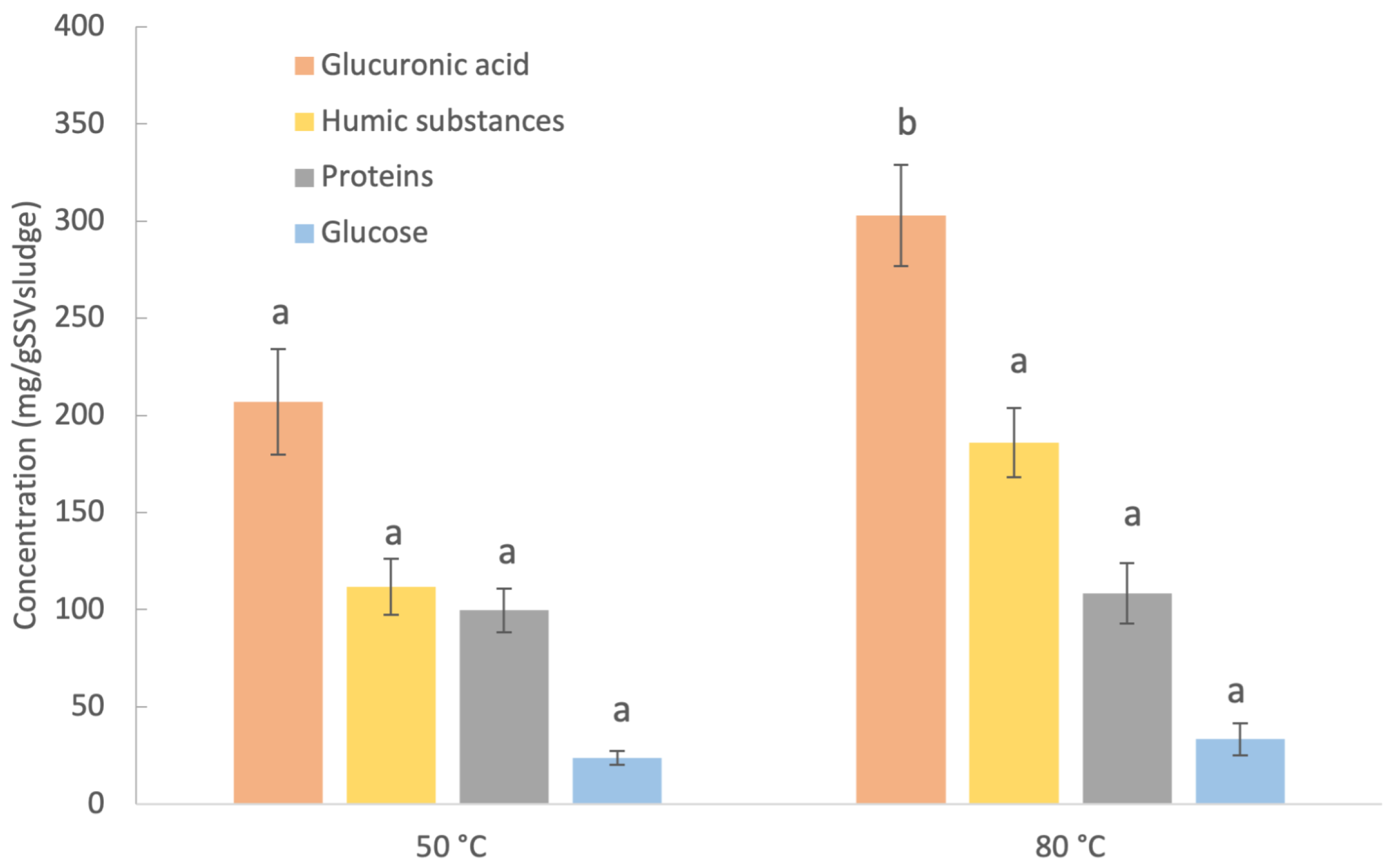
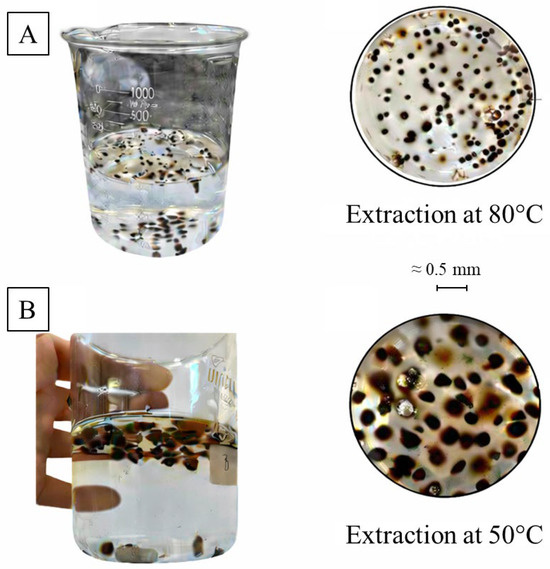
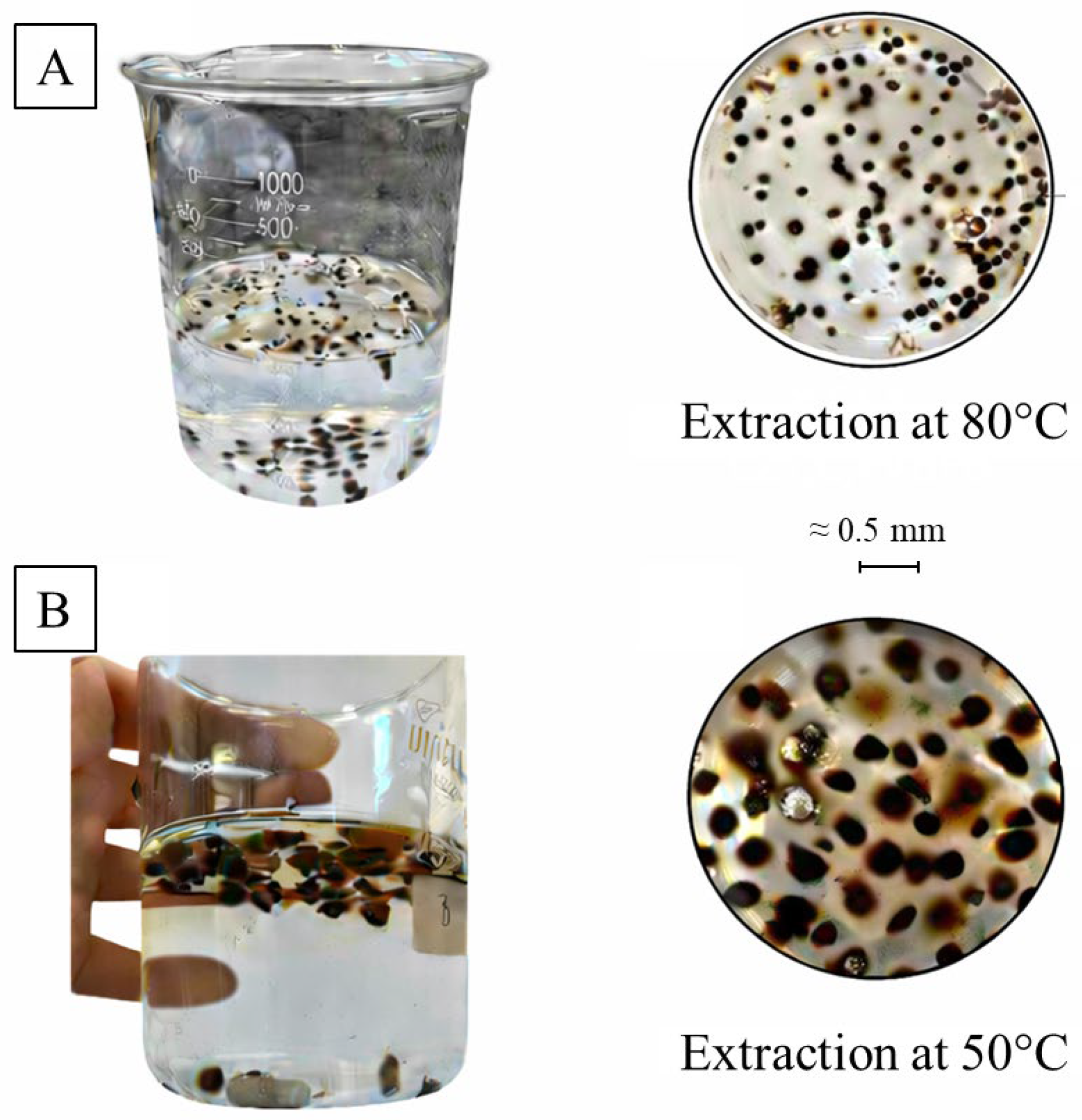
Besides higher extraction yield, higher temperature (80 °C) also favored the polysaccharide and protein concentration (Figure 1). The glucuronic acid is the monomer responsible for the hydrogel properties, and its concentration increased 1.5 times when the temperature was higher. According to the hydrogel test shown in Figure 2, EPS beads extracted at 80 °C were more compact and structurally stable than those extracted at 50 °C, supporting the influence of glucuronic acid concentration. Polysaccharides, quantified as glucose and glucuronic acid equivalents, constituted a significant fraction of the EPS composition. This composition is consistent with previous studies reporting the prevalence of proteins and uronic sugars in EPS matrices. Schambeck et al. [5], using a comparable EPS extraction procedure at 80 °C, reported concentrations of 137 mg/g sludge for proteins, 18 mg/g sludge for glucose, and 48 mg/g sludge for glucuronic acid in activated sludge biomass.
Figure 1.
EPS biochemical composition from activated sludge after extraction at 50 °C and 80 °C. Bars represent mean values ± standard deviation (n = 3). Different letters indicate statistically significant differences between extraction temperatures according to Tukey’s test (p < 0.05).
Figure 2.
Hydrogel-forming properties of EPS recovered from activated sludge after extraction at 80 °C (A) and 50 °C (B).
One-way ANOVA revealed a significant effect of extraction temperature on glucuronic acid concentration (p < 0.05), with higher values obtained at 80 °C. No significant differences were observed for glucose or protein concentrations between temperatures (p > 0.05). Humic substances showed a borderline effect of temperature (p ≈ 0.05), indicating a tendency toward higher values at 80 °C.
The ability of the extracted EPS to form hydrogels in the presence of divalent cations was demonstrated by the formation of stable beads upon contact with calcium chloride solution. This gelation behavior confirms the presence of alginate-like exopolymers (ALE), which are known to play a key role in EPS structuring and flocculation performance. The identification of ALE is particularly relevant to this study, as these polymers are directly associated with calcium-mediated cross-linking mechanisms that enhance particle aggregation and sludge settleability. Moreover, the extraction temperature significantly influenced the biopolymer composition and, consequently, the physicochemical properties of the recovered EPS. The predominance of proteins suggests an enhanced binding capacity through amino and amide functional groups, which promote electrostatic interactions and polymer bridging during bioflocculation. In parallel, the presence of humic substances may contribute to additional structural stability, given their resistance to biodegradation and their role in increasing EPS persistence within sludge systems [5]. From a functional perspective, humic substances may also affect the enzymatic activity associated with the EPS matrix, as these compounds are known to bind extracellular enzymes, stabilizing them while partially reducing their catalytic efficiency [28]. Overall, the combined presence of ALE, proteinaceous components, polysaccharides, and humic substances provides a coherent explanation for the observed bioflocculation performance of the EPS, supporting its potential application as a multifunctional bioproduct in wastewater treatment systems.
3.2. Enzyme Activity
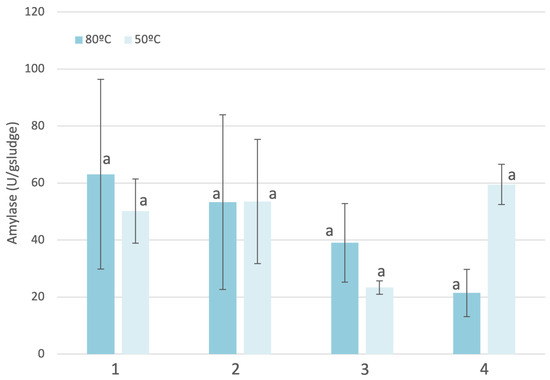
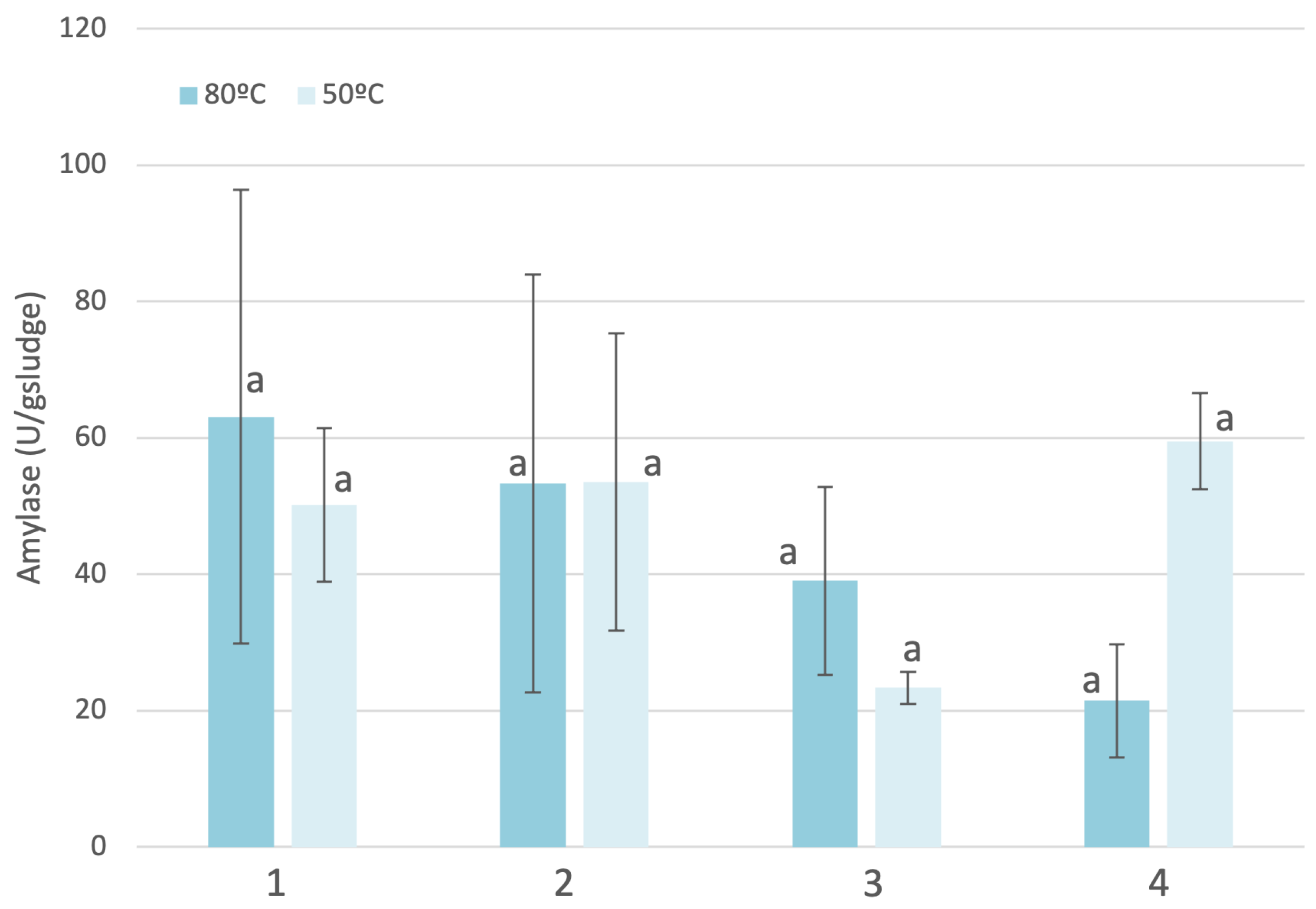
Enzymatic analyses can help determine whether reducing the extraction temperature is an effective strategy to preserve the biological activity of proteins embedded within the EPS matrix. At a 5% significance level, the ANOVA and Tukey test results indicate that varying the temperature between 50 °C and 80 °C does not promote statistically significant changes in amylase activity. A high degree of intragroup variability was observed, which may have contributed to the absence of a significant temperature effect. Moreover, extraction at 80 °C did not reduce enzyme activity as would be expected due to thermal denaturation. Instead, amylase exhibited a degree of thermostability, given the absence of significant differences among replicates and between the 50 °C and 80 °C extraction temperatures.
This apparent thermostability of amylase, evidenced by the lack of significant differences between the 50 °C and 80 °C extraction temperatures (Figure 3), is consistent with previous findings reported in the literature. Liu and Smith [29] evaluated the use of ultrasonication for the extraction of amylase, protease, and cellulase from waste activated sludge and reported a maximum amylase activity of 52.2 U/g VS in samples collected from the aeration tank. Notably, comparable enzymatic activities were also observed in samples obtained from other stages of the treatment line, such as the thickening belt. These results support the hypothesis that enzymes remain protected within the EPS matrix throughout the treatment process, which may mitigate thermal and operational stresses and enable effective enzyme recovery even from thickened sludge.
Figure 3.
Specific amylase activity measured in EPS fractions extracted at 50 and 80 °C. Bars represent mean values ± standard deviation (n = 3). Same letters indicate not statistically significant differences between extraction temperatures according to Tukey’s test (p < 0.05).
Yu et al. [30] evaluated several enzyme extraction procedures for activated sludge biomass, including ultrasonication, EDTA, formaldehyde, formaldehyde combined with ultrasonication, formaldehyde combined with NaOH, and cation-exchange resin. The authors reported amylase activities ranging from 11.4 to 14.9 U/g VS. Most of the amylase activity was recovered in the loosely bound EPS fraction, suggesting that carbohydrates present in the bulk liquid are adsorbed and subsequently degraded by amylases located in this compartment. These amylase activities were related to the loosely bound EPS obtained after the extraction procedure, similar to that obtained in this work.
Ortega and co-workers [31] studied amylase and protease activities in aerobic granular sludge through fluorescent activity assays. Amylase enzyme activity was identified in the outer layer of granules, indicating their relation to the substrates that will be hydrolyzed and the substrate mass transfer limitations.
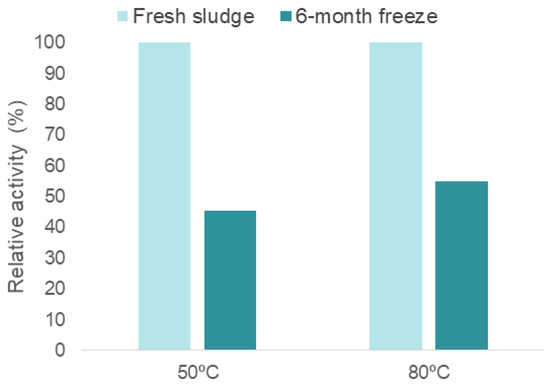
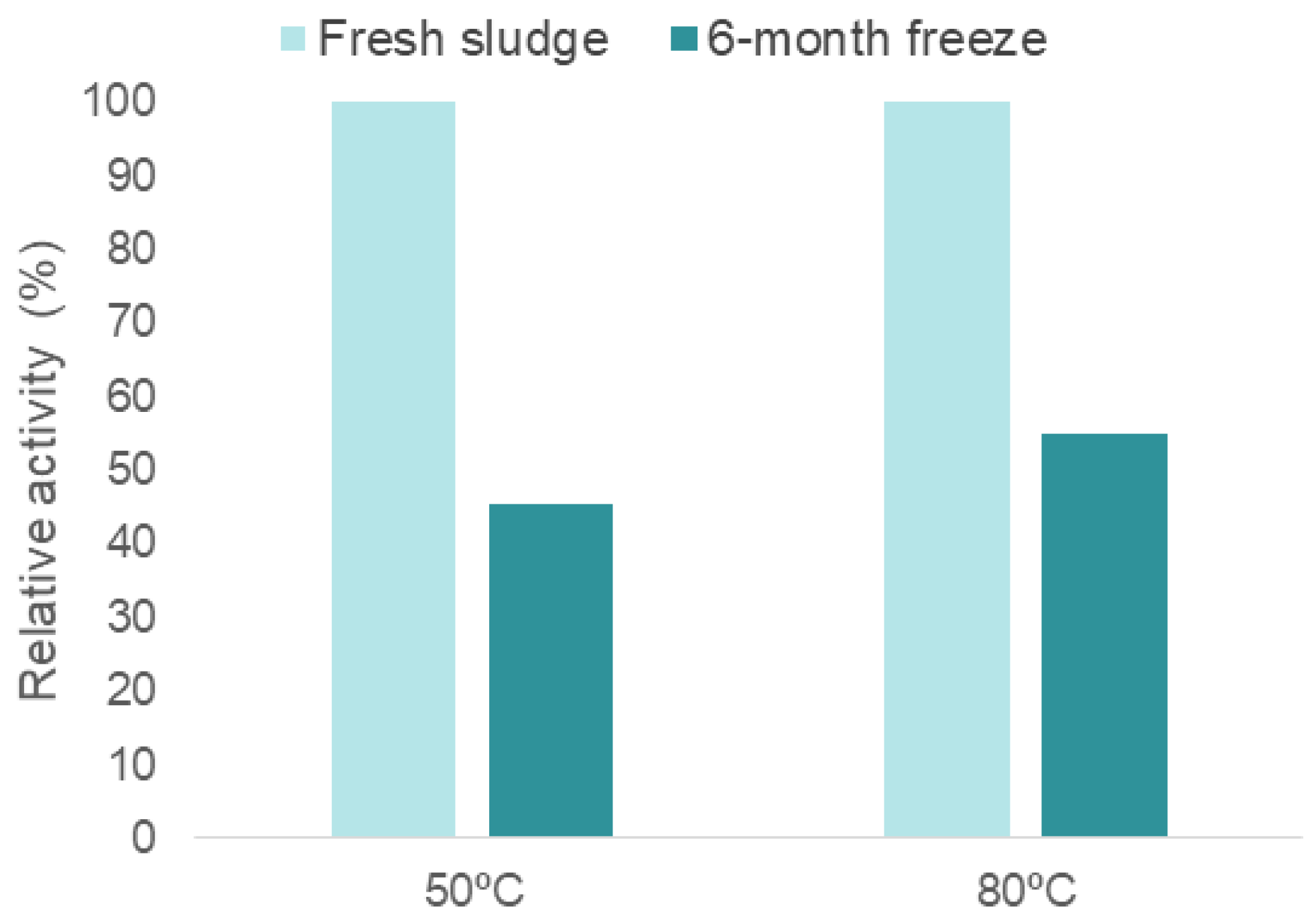
The EPS was stored frozen for six months, after which the stability of the amylase was evaluated. According to Figure 4, approximately 55% of the enzyme activity was lost during the freezing period for the EPS extracted at 50 °C, and about 45% was lost for the EPS extracted at 80 °C. The thawing process may have caused EPS precipitation and potentially exposed the amylase enzymes to denaturation.
Figure 4.
Effect of six-month frozen storage on specific amylase activity.
Lipase activity was measured in a single sample extracted at 50 °C, resulting in 20.8 U/g Sludge. The obtained activity is in the range of other authors’ findings. The hydrolysis of complex substrates in aerobic granular sludge was studied by Toja Ortega et al [17]. The authors found that higher hydrolytic activities were found in flocculent biomass in comparison to the granular fraction. In the mixed sludge fraction the lipase activity of 34 μmol pNP/g sludge/h. Nabarlatz et al. [15] found lipase activities ranging from 2.3 to 22.9 U/g sludge, according to the extraction procedure, which included dialysis, precipitation and lyophilization. Gessesse et al. [32] showed that different extraction factors affect the lipase activity from activated sludge flocs, from 108 to 335 U/g sludge. High lipase activity was obtained using the non-ionic detergent Triton-X.
The majority of studies express enzymatic activity on a sludge mass basis. However, considering that EPS is intended to be used as a bioproduct in its liquid form, reporting activity on a volume basis becomes more appropriate. Moreover, EPS was applied in its liquid form in the bioflocculation tests. Future investigations may determine whether the enzymes embedded within the EPS matrix can withstand drying processes, such as spray drying or lyophilization, for the preparation of a dry product.
Biological macromolecules are abundant in domestic wastewater and can be found as particulates such as cellulose fibers, microbial cells, or colloidal and soluble polymers [17]. Raunkjær et al. [33] originally quantified that lipids and fats may account for up to 40% of the influent COD, while carbohydrates can contribute up to 18%. These ranges were later reiterated by Wasmund et al. [13], who emphasized the importance of these compounds as major nutrient sources in wastewater treatment plants. In this context, the work of Flemming et al. [14] provides a link in that extracellular enzymes embedded in the EPS matrix play a crucial role in hydrolyzing and degrading these macromolecules, thereby driving the biological transformation of organic matter in wastewater treatment systems.
In line with this enzymatic perspective, recent genomic-based investigations have begun to unravel the microbial potential behind these processes. To better understand microbial functions in WWTPs, Wasmund et al. [13] predicted the secreted proteomes of the wastewater microbiota using more than 1000 high-quality metagenome-assembled genomes (MAGs) derived from 23 Danish WWTPs with biological nutrient removal. This genomic approach enabled the identification of secreted hydrolytic enzymes. Many of the MAGs encoding predicted secreted lipases were affiliated with taxa already known for lipase activity, thereby reinforcing the functional relevance of these predictions and supporting the enzymatic mechanisms previously proposed.
3.3. Flocculation Properties of the EPS
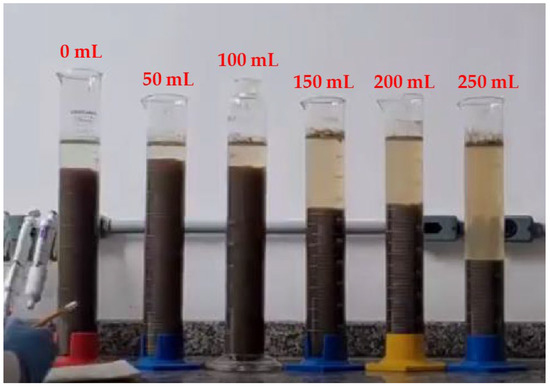
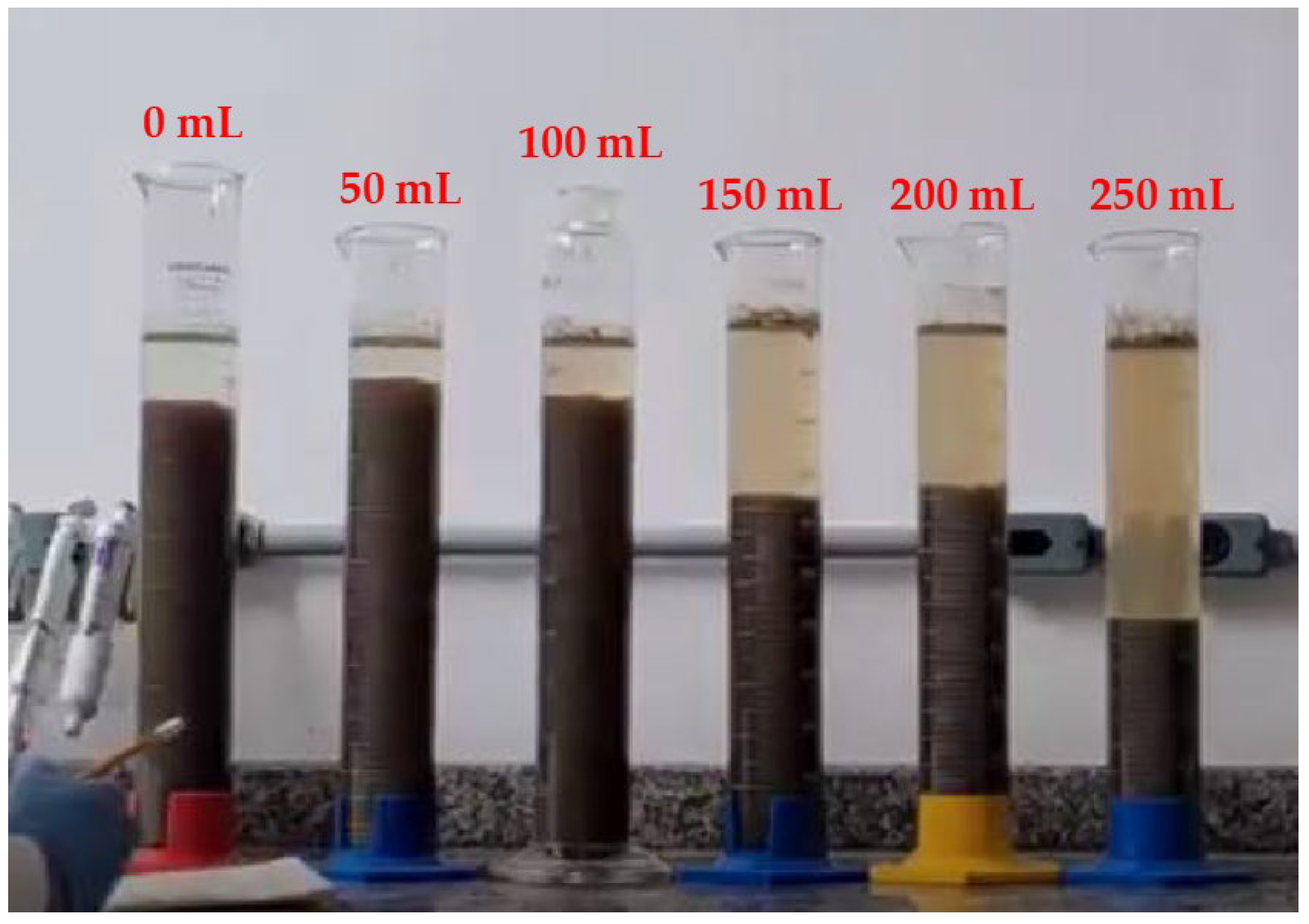
EPS addition markedly influenced the settling dynamics of mixed liquor activated sludge. The highest settling velocity was obtained in jar 6, which received 250 mL of EPS, reaching 4.48 m/h (Table 1). This value was substantially higher than that of the control and confirmed the capacity of EPS to accelerate biomass aggregation and compaction. Correspondingly, the sludge volume index (SVI) improved progressively with EPS dosage, with the best performance also observed in jar 6 (Figure 5). These findings demonstrate that EPS promotes denser flocs and enhances sludge settleability.
Table 1.
Effect of EPS addition over settling velocity and SVI.
Figure 5.
Sludge settling comparison with increasing EPS addition.
When applied to activated sludge mixed liquor, EPS demonstrated a bioflocculant effect, significantly improving aggregation and settling (Figure 6). The addition of EPS led to up to a fivefold increase in settling velocity compared to the control, with consistent improvements in the sludge volume index (SVI), which reached values classified as “optimal” under higher dosages for activated sludge mixed liquor. These findings confirm the capacity of EPS to promote stable floc formation and accelerate clarification in biological sludge. However, some side effects were observed. The EPS application increased the turbidity in the supernatant, suggesting the release of organic matter and nutrients during the process. Together, the results highlight the dual role of EPS: while it enhances flocculation and settling performance, its application also alters effluent quality and microbial activity, aspects that must be carefully evaluated for full-scale implementation.
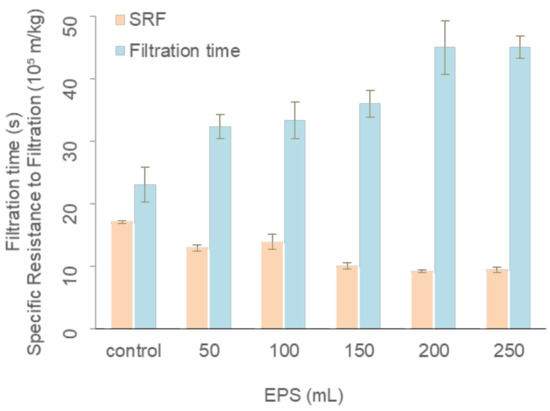
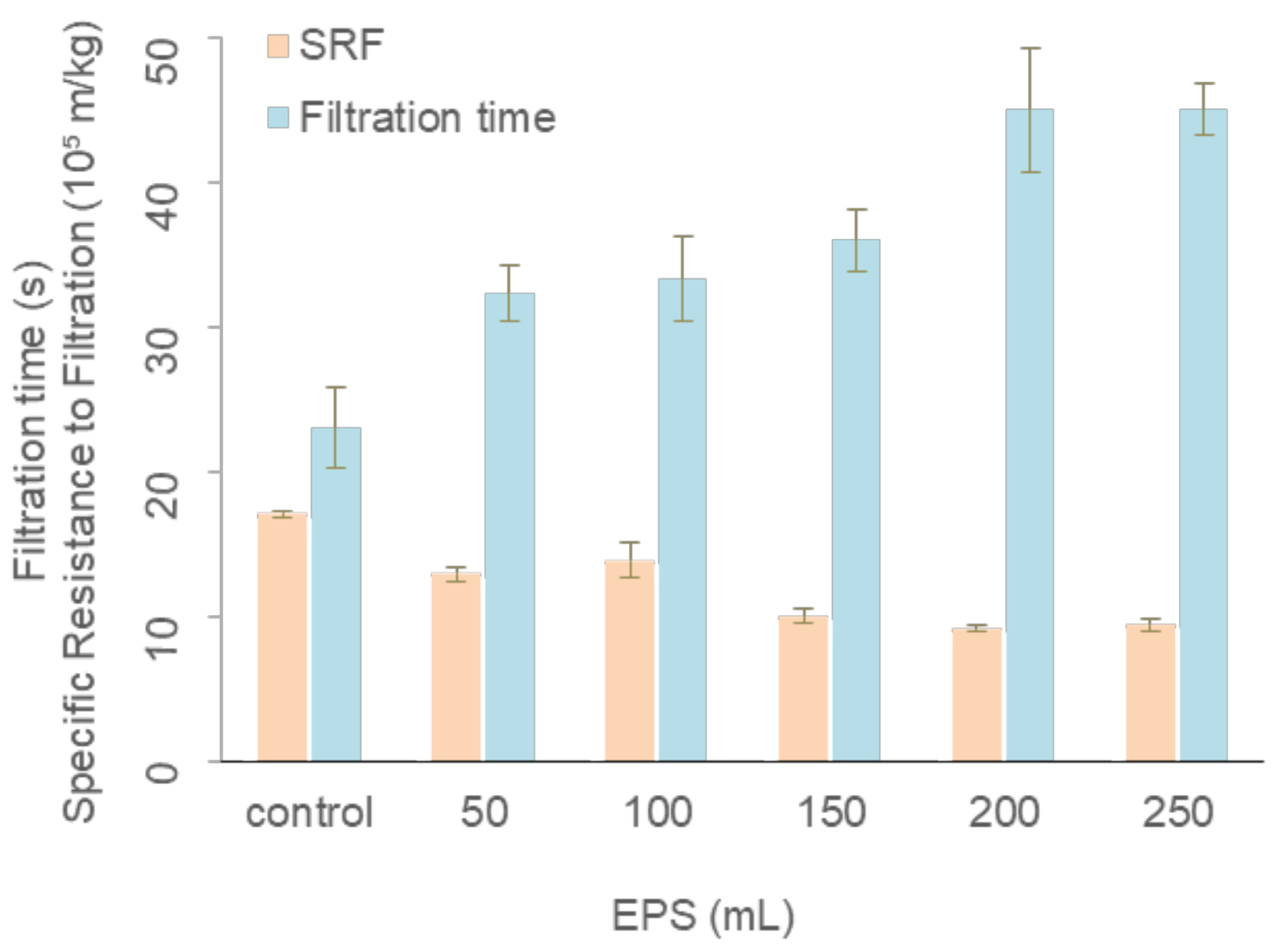
Figure 6.
Specific resistance to filtration and filtration time for increasing EPS addition.
The specific resistance to filtration (SRF) allows identifying the influence that the addition of EPS has on the sludge filtration process. The SRF decreased with increasing EPS dosage, indicating improved floc cohesion and reduced passage of fine particles through the filter matrix. Conversely, the time required to filter 100 mL of mixed liquor with EPS after the jar test (filtration time) increased by nearly 50% at the highest EPS concentration compared to the control. This suggests that while EPS enhances particle retention and reduces SRF, it also tends to clog the filter pores, impairing water passage.
Overall, the results indicate that EPS improves settling and compaction of biological sludge but may worsen dewatering when filtration is the primary thickening or dewatering method. This trade-off emphasizes the importance of tailoring EPS application to treatment configurations where sedimentation rather than filtration is the key solid–liquid separation step.
Sun et al. [8] prepared a bioflocculant using residual activated sludge from a Chinese WWTP. The authors disintegrated the sludge with hydrochloric acid and used the supernatant as the bioflocculant in kaolinite clay suspensions, achieving a 99.5% flocculation rate. Zhang et al. [34] tested the use of a microbial bioflocculant produced by Proteus mirabilis TJ-1 screened out from activated sludge biomass. The bioflocculant resulted in SRF up to 27 (105 m/kg) and up to 8 min of time to filter during the Buchner funnel test. Compared to the control, the bioflocculant improved the sludge dewaterability, whichwas not observed in this study.
Inorganic coagulants and flocculants, such as aluminum sulfate and polyaluminum chloride (PAC), are widely applied due to their high efficiency in removing organic pollutants. However, their use is associated with important drawbacks, including potential health concerns related to aluminum exposure and the generation of large volumes of sludge that require further treatment and disposal. Commercial organic flocculants also pose environmental risks, as their polymeric residues may exhibit neurotoxic or carcinogenic effects [35]. In contrast, natural bioflocculants represent a more sustainable alternative. They are typically biodegradable, non-toxic, and do not lead to secondary pollution, offering economic and environmental advantages over conventional chemical flocculation. Bioflocculants can be produced by various microorganisms, such as Bacillus, Pseudomonas, Serratia, and Azotobacter, or recovered directly from mixed and non-sterile microbial cultures like waste activated sludge [36].
Sludge management is a major challenge for wastewater treatment plants due to its high moisture content (around 80%) and the associated operational costs. Consequently, sludge dewatering represents a critical step in sludge disposal [37]. In this context, enzymatic treatment has emerged as a competitive strategy because the sludge matrix is largely composed of extracellular polymeric substances (EPS) produced by bacteria, which can be disintegrated by specific enzymes. Importantly, the enzymes naturally embedded within the EPS matrix may themselves contribute to the degradation of EPS, potentially enhancing sludge disintegration and improving dewatering performance. On the other hand, the addition of exogenous EPS—as a bioflocculant—tends to increase sludge-bound water and structural resistance, thereby hindering sludge dewatering. This trade-off represents a key bottleneck for the practical application of EPS as a bioflocculant, particularly when considering the further dewatering steps required downstream. Nevertheless, if the use of EPS is envisioned as an in situ pre-treatment for bioflocculated sludge prior to its transfer to an anaerobic digester, this approach may still offer advantages, especially by facilitating hydrolysis and enhancing subsequent anaerobic conversion.
3.4. Impact of EPS on OUR
The impact of EPS addition on microbial activity was evaluated through oxygen uptake assays (Table 2). Compared to the control, the maximum specific oxygen uptake rate (OUR) of the sludge decreased by approximately 40% after the addition of 250 mL of EPS. This reduction suggests that EPS may increase the diffusional barrier surrounding microbial cells, thickening the liquid film, and thereby limiting oxygen transfer. Reduced oxygen availability at the cell surface likely explains the observed decline in metabolic activity.
Table 2.
Oxygen uptake rate of activated sludge mixed liquor before and after EPS addition.
Although the reduction in OUR was primarily attributed to an increased diffusional resistance caused by EPS accumulation around microbial cells, other mechanisms may also be involved. The addition of EPS can alter the physical and biochemical properties of sludge flocs, potentially affecting microbial accessibility to oxygen and substrates beyond simple diffusion limitations. Furthermore, EPS may induce short-term physiological stress or shifts in microbial community structure, temporarily reducing respiratory activity. Another possible contribution is the consumption of dissolved oxygen by biodegradable organic matter associated with EPS, which may compete with microbial respiration during OUR measurements. While these mechanisms were not individually quantified in the present study, their combined effects highlight the need for comprehensive OUR assessment when EPS is proposed as a multifunctional bioflocculant and catalytic additive in activated sludge systems.
These results highlight the importance of carefully assessing the oxygen uptake rate of activated sludge when EPS is proposed as an additive. Since EPS is intended to act simultaneously as a bioflocculant and as a catalytic agent, its interaction with microbial metabolism becomes a critical factor for process stability. In wastewater treatment plants, flocculants and catalysts are typically supplied as separate commercial products, each with distinct operational purposes. The possibility of replacing both products with a single EPS-based additive represents a promising technological advancement. However, any benefits associated with improved flocculation and catalytic activity must be balanced against potential adverse effects on microbial respiration. Therefore, OUR measurements are essential to ensure that EPS application does not compromise biological performance, particularly under aerobic conditions where oxygen transfer is a key limiting factor.
4. Conclusions
The recovery of EPS from mixed liquor in activated sludge systems represents a promising strategy for the valorization of residual streams in wastewater treatment plants. Extraction temperature influenced EPS recovery yield and physicochemical characteristics, as well as the associated enzymatic activities. However, statistical analysis indicated that variations between 50 °C and 80 °C did not result in significant differences in amylase activity, suggesting a degree of enzymatic stability within the EPS matrix rather than thermal enhancement or denaturation.
When applied to activated sludge, the recovered EPS exhibited clear bioflocculant behavior. The observed increase in sludge settling velocity and reduction in SVI confirm the potential of EPS to act as a flocculation enhancer, with possible application in aerobic reactors to improve settling performance in secondary clarifiers. In addition, the presence of active enzymes within the EPS matrix highlights its potential added value as a functional additive for sludge pre-treatment prior to anaerobic digestion or for enzymatic hydrolysis processes aimed at resource recovery.
Nonetheless, some limitations were identified. Despite reducing filtration time, EPS addition increased the specific resistance to filtration, which may negatively affect downstream dewatering processes. Moreover, the reduction in oxygen uptake rate suggests that EPS may influence oxygen transfer under bench-scale conditions. These findings indicate that operational trade-offs should be carefully considered prior to full-scale application.
Overall, the recovery of enzyme-active EPS from activated sludge constitutes a viable pathway for producing a functional bioproduct from wastewater treatment residues. This approach aligns with circular economy principles by promoting resource recovery and reintegration within WWTPs, while emphasizing the need for further studies to optimize application conditions and assess process-scale implications.
Author Contributions
Conceptualization, N.L.J.; Validation, R.d.A.M. and P.B.F.; Formal analysis, I.H.P.J., C.G. and G.U.; Investigation, S.J.A., G.P.d.S., S.K.d.S., C.G. and G.U.; Resources, R.d.A.M., P.B.F., R.H.R.d.C. and N.L.J.; Data curation, N.L.J.; Writing—original draft, G.P.d.S., I.H.P.J. and N.L.J.; Writing—review and editing, N.L.J.; Visualization, G.P.d.S., I.H.P.J. and C.G.; Supervision, N.L.J.; Project administration, R.H.R.d.C. and N.L.J.; Funding acquisition, R.d.A.M., P.B.F., R.H.R.d.C. and N.L.J. All authors have read and agreed to the published version of the manuscript.
Funding
This work was funded by the Coordenação de Aperfeiçoamento de Pessoal de Nível Superior (CAPES), Brazil, through the Move La America Program (Grant No. 88881.016894/2024-01), and by the Conselho Nacional de Desenvolvimento Científico e Tecnológico (CNPq), Brazil, under the Universal Project (Grant No. 403786/2023-1).
Data Availability Statement
The original contributions presented in this study are included in the article. Further inquiries can be directed to the corresponding author.
Conflicts of Interest
The authors declare no conflicts of interest.
References
- Sancho, I.; Lopez-Palau, S.; Arespacochaga, N.; Cortina, J.L. New Concepts on Carbon Redirection in Wastewater Treatment Plants: A Review. Sci. Total Environ. 2019, 647, 1373–1384. [Google Scholar] [CrossRef] [Scilit]
- Cecconet, D.; Capodaglio, A.G. Sewage Sludge Biorefinery for Circular Economy. Sustainability 2022, 14, 14841. [Google Scholar] [CrossRef] [Scilit]
- Wetsus. IWA Resource Recovery Conference Magazine 2025; Wetsus: Leeuwarden, The Netherlands, 2025. [Google Scholar]
- Kehrein, P.; Van Loosdrecht, M.; Osseweijer, P.; Posada, J. Exploring Resource Recovery Potentials for the Aerobic Granular Sludge Process by Mass and Energy Balances—Energy, Biopolymer and Phosphorous Recovery from Municipal Wastewater. Environ. Sci. Water Res. Technol. 2020, 6, 2164–2179. [Google Scholar] [CrossRef] [Scilit]
- Schambeck, C.M.; Girbal-Neuhauser, E.; Böni, L.; Fischer, P.; Bessière, Y.; Paul, E.; Da Costa, R.H.R.; Derlon, N. Chemical and Physical Properties of Alginate-like Exopolymers of Aerobic Granules and Flocs Produced from Different Wastewaters. Bioresour. Technol. 2020, 312, 123632. [Google Scholar] [CrossRef] [Scilit]
- Pronk, M.; Neu, T.R.; Van Loosdrecht, M.C.M.; Lin, Y.M. The Acid Soluble Extracellular Polymeric Substance of Aerobic Granular Sludge Dominated by Defluviicoccus sp. Water Res. 2017, 122, 148–158. [Google Scholar] [CrossRef] [Scilit]
- Feng, C.; Lotti, T.; Canziani, R.; Lin, Y.; Tagliabue, C.; Malpei, F. Extracellular Biopolymers Recovered as Raw Biomaterials from Waste Granular Sludge and Potential Applications: A Critical Review. Sci. Total Environ. 2021, 753, 142051. [Google Scholar] [CrossRef] [Scilit]
- Sun, J.; Zhang, X.; Miao, X.; Zhou, J. Preparation and Characteristics of Bioflocculants from Excess Biological Sludge. Bioresour. Technol. 2012, 126, 362–366. [Google Scholar] [CrossRef] [Scilit]
- Zhang, X.; Sun, J.; Liu, X.; Zhou, J. Production and Flocculating Performance of Sludge Bioflocculant from Biological Sludge. Bioresour. Technol. 2013, 146, 51–56. [Google Scholar] [CrossRef] [Scilit]
- Sheng, G.-P.; Yu, H.-Q.; Li, X.-Y. Extracellular Polymeric Substances (EPS) of Microbial Aggregates in Biological Wastewater Treatment Systems: A Review. Biotechnol. Adv. 2010, 28, 882–894. [Google Scholar] [CrossRef] [Scilit]
- Frølund, B.; Palmgren, R.; Keiding, K.; Nielsen, P.H. Extraction of Extracellular Polymers from Activated Sludge Using a Cation Exchange Resin. Water Res. 1996, 30, 1749–1758. [Google Scholar] [CrossRef] [Scilit]
- Yu, H.-Q. Molecular Insights into Extracellular Polymeric Substances in Activated Sludge. Environ. Sci. Technol. 2020, 54, 7742–7750. [Google Scholar] [CrossRef] [Scilit]
- Wasmund, K.; Singleton, C.; Dahl Dueholm, M.K.; Wagner, M.; Nielsen, P.H. The Predicted Secreted Proteome of Activated Sludge Microorganisms Indicates Distinct Nutrient Niches. mSystems 2024, 9, e00301-24. [Google Scholar] [CrossRef] [Scilit] [PubMed]
- Flemming, H.-C.; Van Hullebusch, E.D.; Little, B.J.; Neu, T.R.; Nielsen, P.H.; Seviour, T.; Stoodley, P.; Wingender, J.; Wuertz, S. Microbial Extracellular Polymeric Substances in the Environment, Technology and Medicine. Nat. Rev. Microbiol. 2025, 23, 87–105. [Google Scholar] [CrossRef] [Scilit] [PubMed]
- Nabarlatz, D.; Stüber, F.; Font, J.; Fortuny, A.; Fabregat, A.; Bengoa, C. Extraction and Purification of Hydrolytic Enzymes from Activated Sludge. Resour. Conserv. Recycl. 2012, 59, 9–13. [Google Scholar] [CrossRef] [Scilit]
- Liu, Z.; Smith, S.R. Enzyme Recovery from Biological Wastewater Treatment. Waste Biomass Valoriz. 2021, 12, 4185–4211. [Google Scholar] [CrossRef] [Scilit]
- Toja Ortega, S.; Pronk, M.; De Kreuk, M.K. Anaerobic Hydrolysis of Complex Substrates in Full-Scale Aerobic Granular Sludge: Enzymatic Activity Determined in Different Sludge Fractions. Appl. Microbiol. Biotechnol. 2021, 105, 6073–6086. [Google Scholar] [CrossRef] [Scilit]
- Felz, S.; Al-Zuhairy, S.; Aarstad, O.A.; Van Loosdrecht, M.C.M.; Lin, Y.M. Extraction of Structural Extracellular Polymeric Substances from Aerobic Granular Sludge. J. Vis. Exp. 2016, 115, 54534. [Google Scholar] [CrossRef] [Scilit]
- Pencreac’h, G.; Baratti, J.C. Hydrolysis of p-Nitrophenyl Palmitate in n-Heptane by the Pseudomonas cepacia Lipase: A Simple Test for the Determination of Lipase Activity in Organic Media. Enzym. Microb. Technol. 1996, 18, 417–422. [Google Scholar] [CrossRef] [Scilit]
- Rondel, C.; Marcato-Romain, C.-E.; Girbal-Neuhauser, E. Development and Validation of a Colorimetric Assay for Simultaneous Quantification of Neutral and Uronic Sugars. Water Res. 2013, 47, 2901–2908. [Google Scholar] [CrossRef] [Scilit]
- Felz, S.; Vermeulen, P.; Van Loosdrecht, M.C.M.; Lin, Y.M. Chemical Characterization Methods for the Analysis of Structural Extracellular Polymeric Substances (EPS). Water Res. 2019, 157, 201–208. [Google Scholar] [CrossRef] [Scilit]
- Baird, R.B.; Eaton, A.D.; Rice, E.W. (Eds.) Standard Methods for the Examination of Water and Wastewater, 23rd ed.; American Public Health Association: Washington, DC, USA; American Water Works Association: Denver, CO, USA; Water Environment Federation: Alexandria, VA, USA, 2017; ISBN 978-0-87553-287-5. [Google Scholar]
- Lo, I.M.C.; Lai, K.C.K.; Chen, G.H. Salinity Effect on Mechanical Dewatering of Sludge with and without Chemical Conditioning. Environ. Sci. Technol. 2001, 35, 4691–4696. [Google Scholar] [CrossRef] [Scilit] [PubMed]
- Andreottola, G.; Oliveira, E.L.D.; Foladori, P.; Dallago, L.; Peterlini, R.; Cadonna, M. Método respirométrico para o monitoramento de processos biológicos. Eng. Sanit. Ambient. 2005, 10, 14–23. [Google Scholar] [CrossRef] [Scilit]
- Henze, M.; Grady, C.P.L.; Gujer, W.; Marais, G.V.R.; Matsuo, T. A General Model for Single-Sludge Wastewater Treatment Systems. Water Res. 1987, 21, 505–515. [Google Scholar] [CrossRef] [Scilit]
- De Bruin, S.; Riisgaard-Jensen, M.; Hansen, S.H.; Van Loosdrecht, M.C.M.; Nielsen, P.H.; Lin, Y. Global Insights into Extracellular Polymeric Substances from Activated Sludge: Yield, Composition, and Microbial Communities. Water Res. 2026, 289, 124726. [Google Scholar] [CrossRef] [Scilit]
- Li, J.; Hao, X.; Gan, W.; Van Loosdrecht, M.C.M.; Wu, Y. Recovery of Extracellular Biopolymers from Conventional Activated Sludge: Potential, Characteristics and Limitation. Water Res. 2021, 205, 117706. [Google Scholar] [CrossRef] [Scilit]
- Frolund, B.; Griebe, T.; Nielsen, P.H. Enzymatic Activity in the Activated-Sludge Floc Matrix. Appl. Microbiol. Biotechnol. 1995, 43, 755–761. [Google Scholar] [CrossRef] [Scilit]
- Liu, Z.; Smith, S.R. Enzyme Activity of Waste Activated Sludge Extracts. Water Sci. Technol. 2019, 80, 1861–1869. [Google Scholar] [CrossRef] [Scilit]
- Yu, G.-H.; He, P.-J.; Shao, L.-M.; Lee, D.-J. Enzyme Activities in Activated Sludge Flocs. Appl. Microbiol. Biotechnol. 2007, 77, 605–612. [Google Scholar] [CrossRef] [Scilit]
- Toja Ortega, S.; Van Den Berg, L.; Pronk, M.; De Kreuk, M.K. Hydrolysis Capacity of Different Sized Granules in a Full-Scale Aerobic Granular Sludge (AGS) Reactor. Water Res. X 2022, 16, 100151. [Google Scholar] [CrossRef] [Scilit]
- Gessesse, A.; Dueholm, T.; Petersen, S.B.; Nielsen, P.H. Lipase and Protease Extraction from Activated Sludge. Water Res. 2003, 37, 3652–3657. [Google Scholar] [CrossRef] [Scilit]
- Raunkjær, K.; Hvitved-Jacobsen, T.; Nielsen, P.H. Measurement of Pools of Protein, Carbohydrate and Lipid in Domestic Wastewater. Water Res. 1994, 28, 251–262. [Google Scholar] [CrossRef] [Scilit]
- Zhang, Z.; Xia, S.; Zhang, J. Enhanced Dewatering of Waste Sludge with Microbial Flocculant TJ-F1 as a Novel Conditioner. Water Res. 2010, 44, 3087–3092. [Google Scholar] [CrossRef] [Scilit]
- Shahadat, M.; Teng, T.T.; Rafatullah, M.; Shaikh, Z.A.; Sreekrishnan, T.R.; Ali, S.W. Bacterial Bioflocculants: A Review of Recent Advances and Perspectives. Chem. Eng. J. 2017, 328, 1139–1152. [Google Scholar] [CrossRef] [Scilit]
- Paul, E.; Bessière, Y.; Dumas, C.; Girbal-Neuhauser, E. Biopolymers Production from Wastes and Wastewaters by Mixed Microbial Cultures: Strategies for Microbial Selection. Waste Biomass Valoriz. 2021, 12, 4213–4237. [Google Scholar] [CrossRef] [Scilit]
- Liu, W.; Zhong, X.; Cheng, L.; Wang, J.; Sun, Y.; Deng, Y.; Zhang, Z. Cellular and Compositional Insight into the Sludge Dewatering Process Using Enzyme Treatment. Environ. Sci. Pollut. Res. 2018, 25, 28942–28953. [Google Scholar] [CrossRef] [Scilit]

Disclaimer/Publisher’s Note: The statements, opinions and data contained in all publications are solely those of the individual author(s) and contributor(s) and not of MDPI and/or the editor(s). MDPI and/or the editor(s) disclaim responsibility for any injury to people or property resulting from any ideas, methods, instructions or products referred to in the content. |
© 2026 by the authors. Licensee MDPI, Basel, Switzerland. This article is an open access article distributed under the terms and conditions of the Creative Commons Attribution (CC BY) license.