


Abstract
The fifth member of the Upper Triassic Xujiahe Formation (T3x5) in the southwestern Sichuan Basin and adjacent areas contains widely developed organic-rich source rocks, which represent a crucial interval for hydrocarbon exploration in the region. Based on 402 core samples from 15 wells, this study systematically evaluates the organic geochemical characteristics, spatial distribution, and hydrocarbon generation potential of these source rocks using total organic carbon (TOC) analysis, organic matter typing, vitrinite reflectance (Ro) measurements, and basin modeling. The TOC content of the T3x5 source rock ranges from 0.50% to 71.73%, with an arithmetic mean of 2.09% (n = 402). Lacustrine mudstones, which dominate the source rock volume (n = 359), have a mean TOC of 1.25%. Organic matter is predominantly of mixed sapropelic-humic type (Type II2). The TOC content generally increases from uplift areas to depressions, reflecting the control of the depositional environment on organic matter preservation. Thermal maturity exhibits a westward increase and eastward decrease, with the western Sichuan depression reaching high to over-mature stages (Ro mostly 1.3–2.0%, locally > 2.0%), while the eastern and southern areas are mainly mature to low-mature (Ro 0.7–1.3%), locally within the condensate–wet gas window. The thickness of the upper submember reaches >320 m, with depocenter 120–280 m in the central–southern part of western Sichuan; the lower submember reaches >240 m, centered in the Chengdu–Deyang area with central thickness 160–220 m. Basin modeling estimates a cumulative gas generation of approximately 1.92 × 10¹⁴ m3 (192 trillion cubic meters), with the highest generation intensity coinciding with the western Sichuan depression. It should be emphasized that this value represents the total generated gas over geological history and does not equate to accumulated or recoverable resources; further evaluation of the migration, expulsion, and accumulation efficiencies is required. Overall, the T3x5 source rocks possess a favorable material base and significant gas generation potential. Tight sandstone reservoirs adjacent to the gas kitchen should be prioritized in future explorations, with differentiated strategies adapted to various maturity zones.
1. Introduction
The Upper Triassic Xujiahe Formation in the Sichuan Basin is one of the most important coal-measure source rock intervals in southwestern China, hosting significant natural gas accumulations [1,2,3]. In recent years, exploration has gradually shifted from conventional structural traps to subtle and lithological traps, and increasing attention has been given to the hydrocarbon generation potential of the Xujiahe Formation, particularly its fifth member (T3x5) [4]. The southwestern part of the Sichuan Basin and adjacent areas (hereafter referred to as the study area), which primarily covers the western depression, the southwestern gentle structural zone, and parts of the central uplift, is a key region for deep natural gas exploration due to its thick succession of lacustrine dark shales and coaly mudstones [5,6].
However, previous studies mainly focused on the overall source rock characteristics of the Xujiahe Formation at the basin scale, with limited systematic evaluation specifically targeting the vertical and lateral variations in organic matter abundance, type, maturity, and hydrocarbon generation potential of the T3x5 member in the southwestern area and adjacent areas [7,8,9,10,11,12]. Although recent works have made progress in understanding the Xujiahe source rocks, no previous study has integrated a large core-based geochemical dataset with calibrated basin modeling to quantify gas generation intensity for both submembers of the T3x5 interval across the southwestern Sichuan Basin and adjacent areas. Guo et al. [13] studied the T3x5 source rocks in the western Sichuan depression, but their work was geographically limited. Furthermore, the thermal evolution history and gas generation intensity of the T3x5 source rocks in the broader southwestern Sichuan Basin remain poorly constrained [11,13].
Integrated, multi-dataset approaches are increasingly recognized as essential in petroleum system studies. For example, Ebrahimabadi et al. demonstrated how statistical algorithms and clustering techniques applied to core and log data can improve the identification of reservoir rock types and flow units [14]. Similar principles apply to source rock evaluation, where integrating organic geochemistry, petrology, and basin modeling provides a more robust basis for resource assessment than any single dataset alone. In this study, we adopt such an integrated approach for the T3x5 source rocks.
To our knowledge, no previous study has integrated a large core-based geochemical dataset with calibrated basin modeling to quantify gas generation intensity for both submembers of the T3x5 interval across the southwestern Sichuan Basin and adjacent areas. This study fills this gap by integrating 402 core samples from 15 wells with organic petrology, TOC, Ro, and basin modeling to provide a comprehensive regional evaluation. The specific novelties of this work are: (1) a refined spatial distribution of the TOC and source rock thickness for both the upper and lower submembers; (2) an updated thermal maturity map based on new Ro data; (3) quantitative gas generation intensity mapping and cumulative gas generation estimates; and (4) a differentiated exploration strategy adapted to various maturity zones.
2. Geological Settings
The Sichuan Basin located in southwestern China, covers an area of approximately 1.8 × 10⁵ km2 [15,16]. Tectonically, it is a multi-cycle superimposed sedimentary basin developed on the Yangtze Plate [17]. Based on structural characteristics, the basin can be subdivided into six tectonic units: the western depression, northern depression, central uplift, eastern high-steep structural zone, southern low-steep structural zone, and southwestern gentle structural zone [18]. From the Sinian to the Middle Triassic, the basin was dominated by subsidence and marine carbonate deposition. Due to tectonic inversion during the Late Triassic to Eocene, the basin experienced uplift and deposited transitional and continental clastic sequences [17,19,20].
The Upper Triassic Xujiahe Formation is a clastic unit consisting of five members (T3x1 to T3x5). Among these, T3x5 is the youngest and corresponds to a period of maximum lacustrine transgression, with widespread deposition of lacustrine dark mudstones, carbonaceous mudstones, and thin coal seams [21,22,23]. In the study area, the T3x5 member is divided into upper and lower submembers based on lithological associations and sedimentary cycles. The sedimentary environments are interpreted to range from shore-shallow lake and delta front in the upper submember to semi-deep lake in the lower submember, with locally developed interdistributary bays and lagoons that favored the accumulation of organic-rich sediments [24,25].
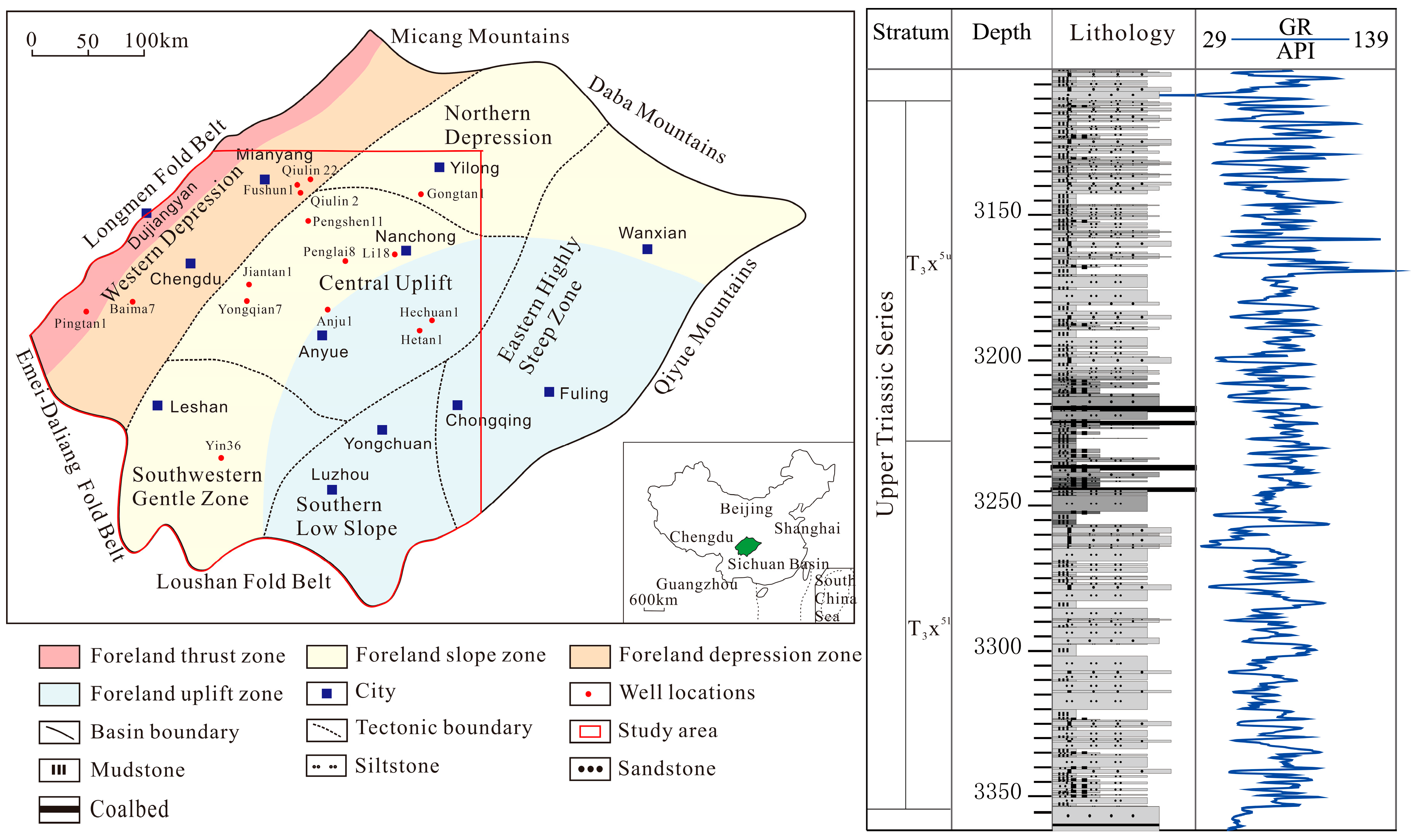
The study area encompassing the western depression, the southwestern gentle structural zone and parts of the central uplift has preserved the T3x5 member from intense erosion. The present-day burial depth ranges from 300 to 3500 m [26,27]. Within this area, thermal maturity varies systematically from west to east: the western part has reached high to over-mature stages (Ro generally >1.3%), while the eastern part remains in the mature to condensate–wet gas window. The T3x5 source rocks are considered to be the primary gas-generating interval in the southwestern Sichuan Basin and adjacent areas (Figure 1).
Figure 1.
Tectonic division of Sichuan Basin with inset map of China and comprehensive geological column of well Qiulin2 in T3x5 showing upper and lower submembers. Modified from [28].
3. Materials and Methods
A total of 402 core samples were collected from 15 wells in the study area (the southwestern Sichuan Basin and adjacent areas). In addition, several outcrop samples from the Dujiangyan section were examined for petrographic comparison; these are not included in the 402-sample core dataset. The samples cover both the upper and lower submembers of the T3x5 member, with lithologies including dark lacustrine mudstones, carbonaceous mudstones, and coals. Special care was taken to select fresh, unweathered portions of the cores for analysis. The samples were stored in sealed bags to prevent contamination and oxidation before laboratory processing.
3.1. TOC Analysis
The total organic carbon (TOC) content of the samples was determined using a Leco-CS744 analyzer (LECO Corporation, St. Joseph, MI, USA). The samples were ground to below 200 mesh and washed with 5% dilute hydrochloric acid to remove carbonate. After repeatedly washing with distilled water and drying, the samples were combusted at 1100 °C in the instrument to obtain the TOC. To ensure data accuracy, the instrument was calibrated with a standard sample after every 10 samples were tested. Quality control was further ensured by analyzing certified reference materials and running duplicate samples every 20 samples, with a relative standard deviation of less than 5%.
3.2. Organic Petrology Analysis
Organic petrology was performed on 15 core samples using polished blocks and particulate pellets. Fresh parts were cut perpendicular to the bedding, crushed to <1 mm, mounted in epoxy resin, and polished with 9, 3, and 1 μm diamond paste. Macerals were identified and counted under transmitted light, reflected white light, and UV fluorescence using a Leica DM4500P microscope (Leica Microsystems Limited, Wetzlar, Germany) equipped with an MPS 200 microphotometer (J & M Analytik AG, Essingen, Germany). The nomenclature follows the ICCP classification [29]. At least 500 maceral points were counted per sample, and vitrinite, liptinite (including alginite and amorphous organic matter), inertinite, and solid bitumen were recorded.
3.3. Vitrinite Reflectance (Ro) Measurement
Vitrinite reflectance (Ro) measurements were conducted on the same polished blocks used for maceral analysis, under reflected light at a wavelength of 546 nm, using a Leica DM4500P microscope equipped with a microphotometer. The instrument was calibrated against a sapphire standard (Ro = 0.589%) and a YAG standard (Ro = 0.889%) before each measurement session. For each sample, a minimum of 30 valid vitrinite reflectance measurements were taken from indigenous vitrinite macerals, avoiding recycled vitrinite, solid bitumen, and vitrinite-like particles. The average Ro value and standard deviation were recorded for each sample. Quality control included daily calibration checks and duplicate measurements on a subset of samples, with a reproducibility of ±0.05% Ro.
3.4. Thermal Evolution Analysis of Source Rocks
Thermal evolution history modeling of source rocks is based on burial history reconstruction and includes thermal and maturity history. By simulating the thermal evolution history, a dynamic understanding of the thermal background, organic matter maturity, and hydrocarbon generation process in the basin can be obtained, providing a basis for analyzing the spatiotemporal configuration of petroleum accumulation conditions and for evaluating petroleum resources. The basin modeling software used in this study is PetroMod (version 2019, IES GmbH, Munich, Germany), which includes the EASY% Ro theoretical model established by Sweeney and Burnham [30]. The EASY% Ro model is currently the most commonly used chemical kinetic predictive model for thermal evolution analysis of source rocks.
3.5. Thickness Mapping
Thickness maps for the upper and lower T3x5 submembers were generated as follows. Formation tops were picked from well logs for 15 wells, and the net-to-gross ratios for dark mudstone were calculated from lithology logs and cores. Total thickness was interpolated using a minimum curvature algorithm, constrained by seismic horizons and published maps [26,27]. Dark mudstone thickness was calculated by multiplying the total thickness by the net-to-gross ratio at each well and was then interpolated across the area. Depositional facies maps were used as a constraint. Erosion or non-deposition areas (e.g., the northwestern basin) were removed. These maps are first-order approximations, with the largest uncertainty where well control is sparse.
4. Results
4.1. Organic Geochemical Characteristics of Source Rocks
4.1.1. Organic Matter Abundance
The TOC content of the T3x5 source rocks in the southwestern Sichuan Basin and adjacent areas was determined on 402 core samples from 15 wells, with values ranging from 0.5% to 71.73% and a mean value of 2.09%. More than 72.4% of the samples have TOC contents greater than 1.0%. The main lithologies of the hydrocarbon source rocks are lacustrine mudstone, carbonaceous mudstone and coal. Among them, lacustrine mudstone is the main lithology of the hydrocarbon source rocks, accounting for 89.3%, while the proportions of carbonaceous mudstone and coal are 9.5% and 1.2%, respectively (Table 1).
Table 1.
Summary of TOC statistics for the T3x5 source rocks in the southwestern Sichuan Basin by submember and lithology.
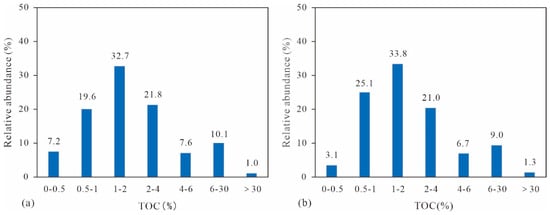
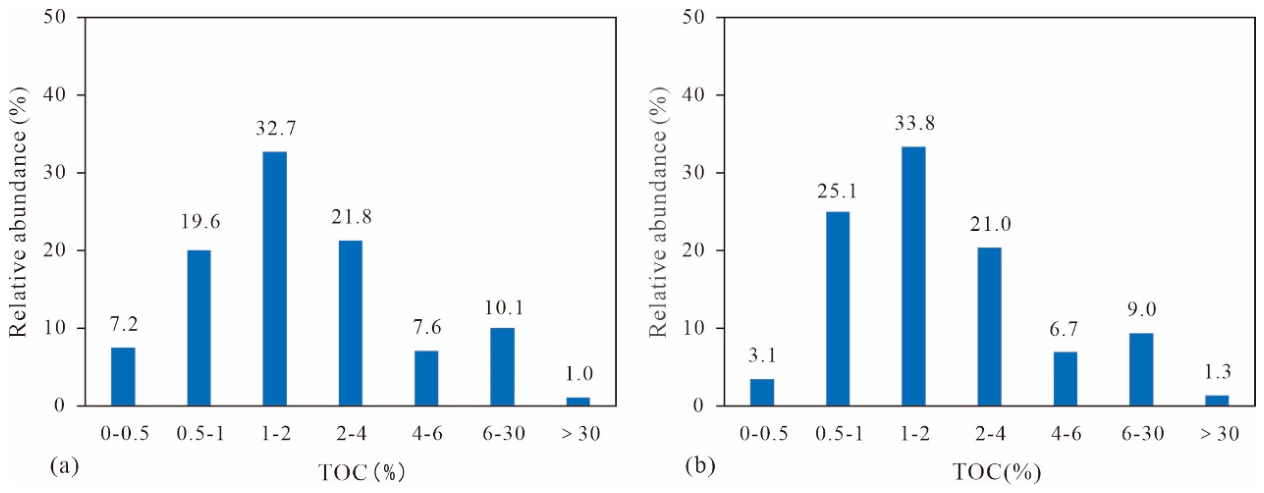
Vertically, the T3x5 member has the highest organic matter abundance among all members of the Xujiahe Formation [7,26]. In the upper submember (n = 186), samples with TOC > 1.0% account for 73.2%, with TOC values ranging from 0.52% to 71.73%, a mean of 2.21%, and a median of 1.61%. In the lower submember (n = 216), samples with TOC > 1.0% account for 71.8%, with TOC values ranging from 0.50% to 38.85%, a mean of 1.98%, and a median of 1.43%. Thus, the upper submember exhibits slightly higher organic matter abundance than the lower submember, as reflected by both the mean TOC and the proportion of samples with TOC > 1.0% (Figure 2).
Figure 2.
TOC histograms of source rocks in the upper submember (a) and lower submember (b) of T3x5 in southwestern Sichuan Basin and adjacent areas.
Laterally, the spatial distribution of the TOC content varies considerably between the two submembers. In the upper submember, multiple high-TOC areas occur mainly in the central–eastern part, which is related to coal development during that period. In the western lacustrine area, TOC is generally 1.5–2.5%. In the southern area, organic matter abundance is relatively low, with TOC generally 0.5–1.0%. For the lower submember, high-abundance source rocks are more extensively developed, particularly in the southwestern part, where the TOC values are generally above 2.5%. The contrasting spatial patterns are interpreted as reflecting the influence of the depositional environments, coal and carbonaceous mudstones developed along the paleo-shoreline, forming isolated high-abundance centers. In contrast, the broader distribution of high-abundance source rocks in the lower submember is associated with more extensive semi-deep to deep lacustrine settings that favored organic matter preservation. Overall, the distribution of high-abundance source rocks in the lower submember is broader than that in the upper submember. The planar differences in organic matter abundance between the two submembers are interpreted as reflecting variations in sedimentary facies, water depth, and proximity to terrigenous input.
4.1.2. Organic Matter Type
Organic petrology analysis was performed on polished thin sections prepared from 15 core samples collected from representative wells in different structural zones of the southwestern Sichuan Basin and adjacent areas.
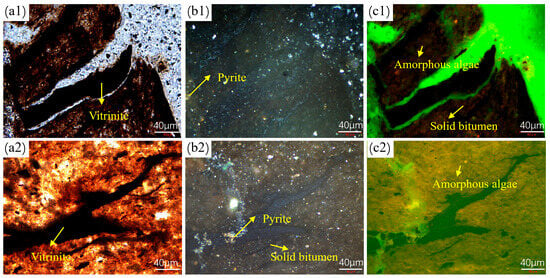
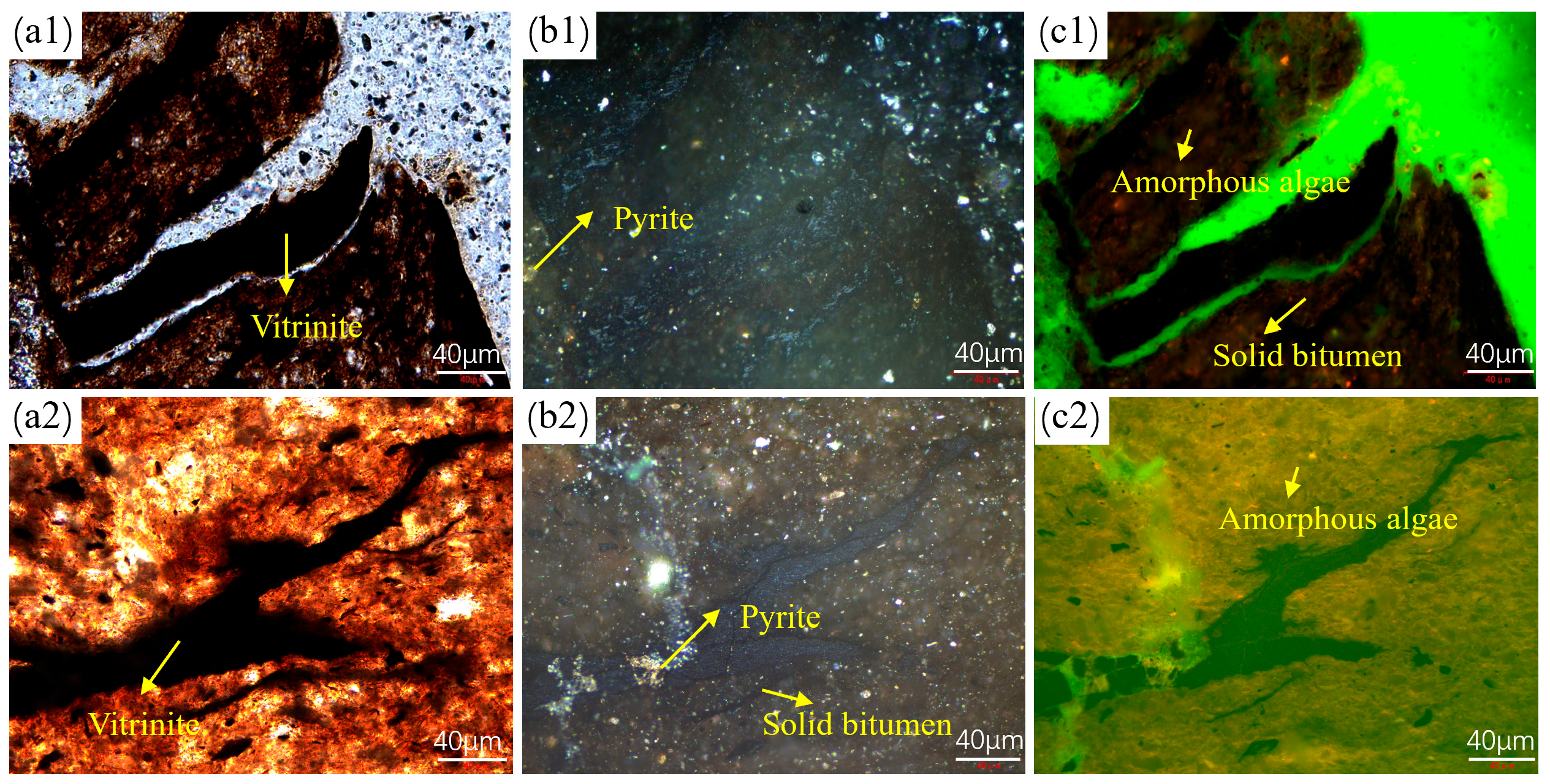
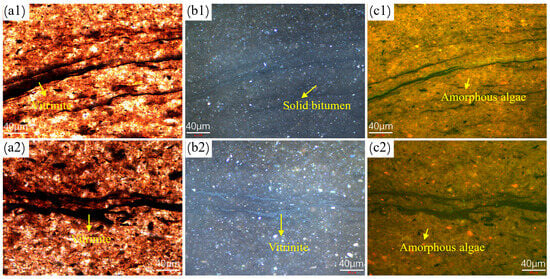
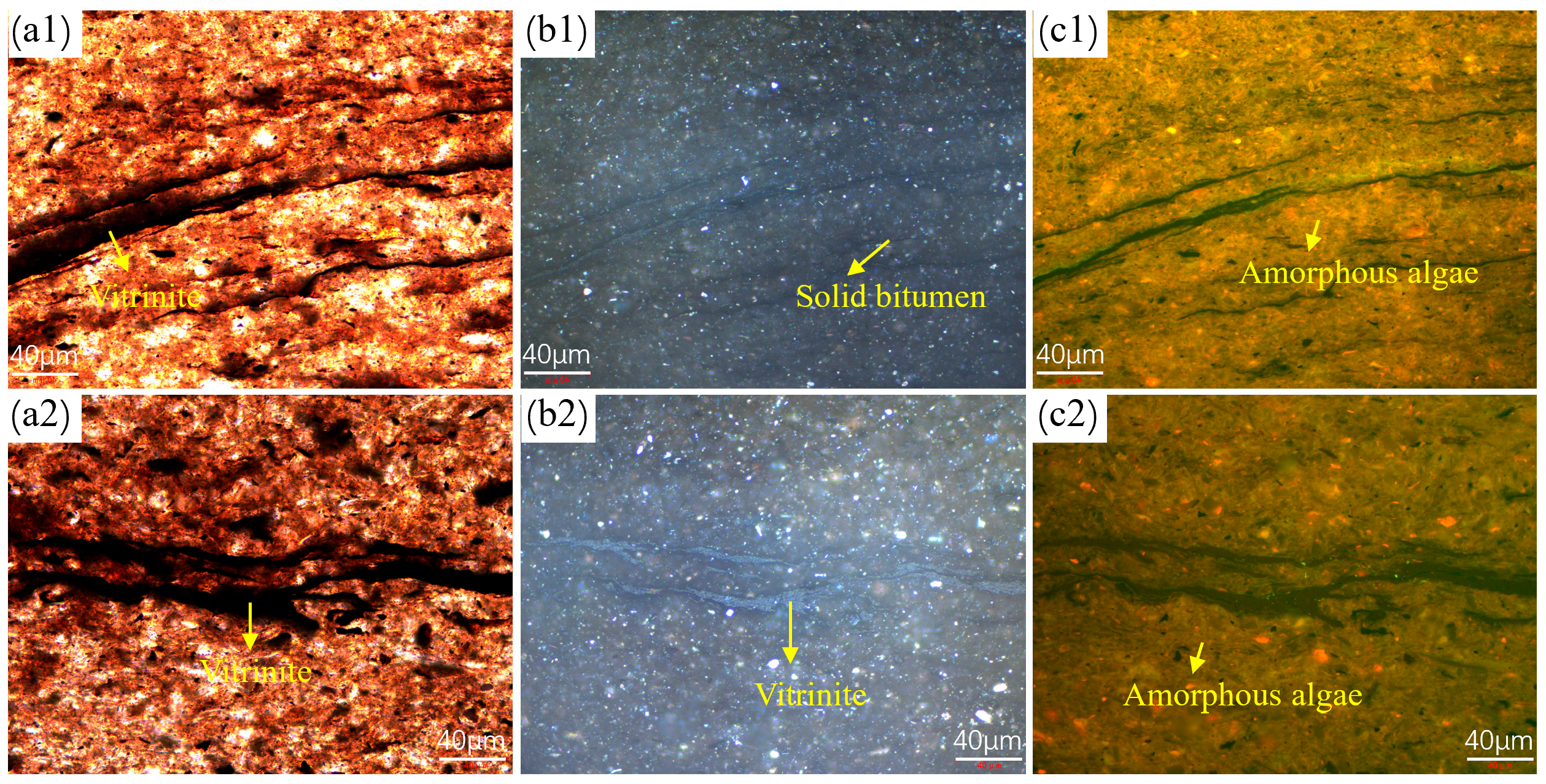
The results show systematic variations in organic matter composition across different depositional settings. In the western Sichuan depression, which is interpreted as a semi-deep to deep lacustrine facies based on sedimentary facies analysis, the relatively quiet water and well-developed aquatic organisms favored the enrichment of sapropelic organic matter. In well Fushun-1, the content of sapropelic macerals such as alginite and amorphous organic matter reaches 64%, suggesting predominantly Type II kerogen. In well Qiulin-2, the T3x5 member also contains abundant amorphous algae (sapropelic group accounting for 51%), associated with framboidal pyrite (grain size < 0.5 μm), consistent with a deep-water environment. Based on these petrographic observations, the organic matter in this well is classified as Type II (Figure 3).
Figure 3.
Organic maceral composition of T3x5 source rocks of wells Fushun-1 (a1–c1) and Qiulin-2 (a2–c2) under transmitted light (a), white reflected light (b) and fluorescent light (c).
In the lower slope area, which is interpreted as a semi-deep to shallow lacustrine environment, the input of higher plants increases relative to the depression, and the organic matter type is mainly mixed (humic–sapropelic). The content of amorphous algae (sapropelic) increases to about 45% in well Jiantan-1, while vitrinite (humic) is still present in significant amounts (42%), along with 13% solid bitumen. In well Yongqian-7, detrital vitrinite and sapropelic amorphous organic matter are developed, with the sapropelic group accounting for about 35%, vitrinite 42%, and solid bitumen 23% (Figure 4).
Figure 4.
Organic maceral composition of T3x5 source rocks in wells Jiantan-1 (a1–c1) and Yongqian-7 (a2–c2) under transmitted light (a), white reflected light (b) and fluorescent light (c).
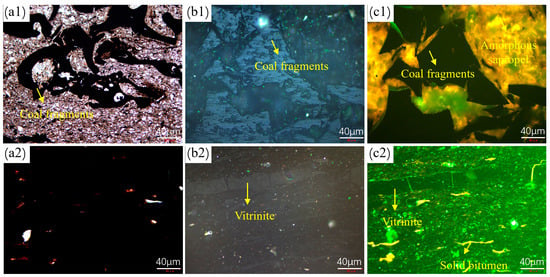
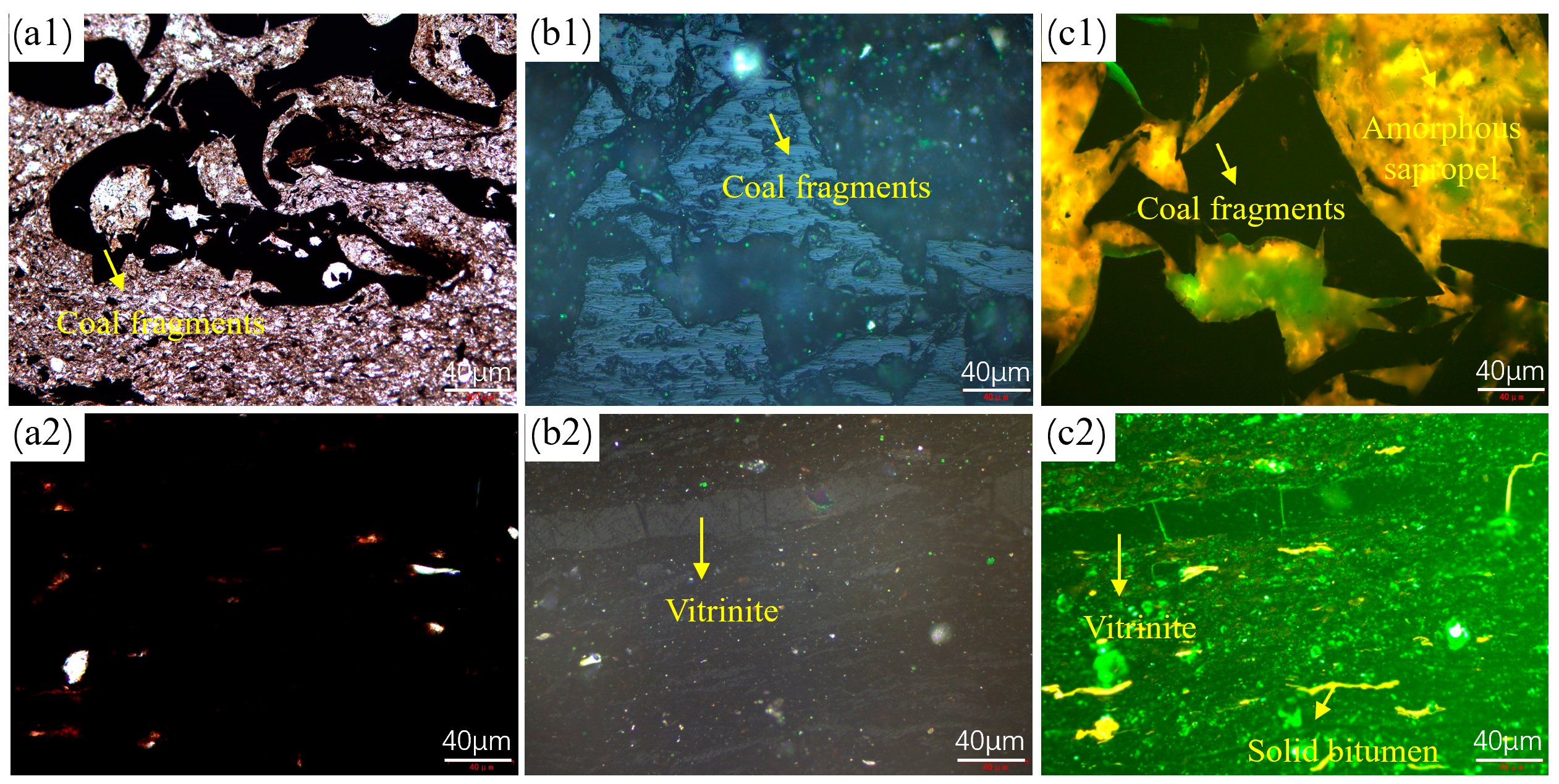
In the upper slope, uplift areas, and basin margins, fluvial-delta sedimentary systems are interpreted to dominate, and the organic matter is mainly derived from terrigenous higher plants, as indicated by the predominance of vitrinite. However, relatively enclosed environments such as interdistributary bays may also contain variable amounts of sapropelic organic matter. For example, in well Yin-36, coal fragments and amorphous sapropel are common, with a measured vitrinite content of 55%, sapropelic group of 25%, and solid bitumen of 20%. In the Dujiangyan outcrop section, coal seams are developed, and the organic matter composition consists of 75% vitrinite, 18% sapropelic group, and 7% solid bitumen, indicating Type III kerogen (Figure 5).
Figure 5.
Organic maceral composition of T3x5 source rocks in well Yin-36 (a1–c1) and the Dujiangyan outcrop (a2–c2) under transmitted light (a), white reflected light (b) and fluorescent light (c).
Traditionally, the Upper Triassic Xujiahe Formation in the Sichuan Basin is considered to be coal-measure source rock derived predominantly from higher plants. However, the organic petrology data indicate that the organic matter composition of the T3x5 source rocks varies considerably with basin structure and depositional setting. Specifically, near the basin margin toward the provenance, higher plant input is dominant, with organic matter classified as Type III kerogen. In contrast, in the lake center and interdistributary bays, where relatively quiet water conditions prevailed, aquatic organisms were well developed, and sapropelic macerals such as algal and amorphous organic matter are abundant, forming Type II kerogen-dominated source rocks.
It should be emphasized that the organic petrology results presented here are based on 15 samples from representative wells. While these samples were carefully selected to cover different structural and depositional settings, the limited sample size introduces uncertainty in regional extrapolation. The organic matter type assignments should therefore be considered indicative rather than definitive. Future work should include a more extensive petrographic sampling program, coupled with molecular geochemical analyses (e.g., saturate and aromatic biomarkers), to validate the kerogen type distribution.
4.1.3. Thermal Maturity of Source Rocks
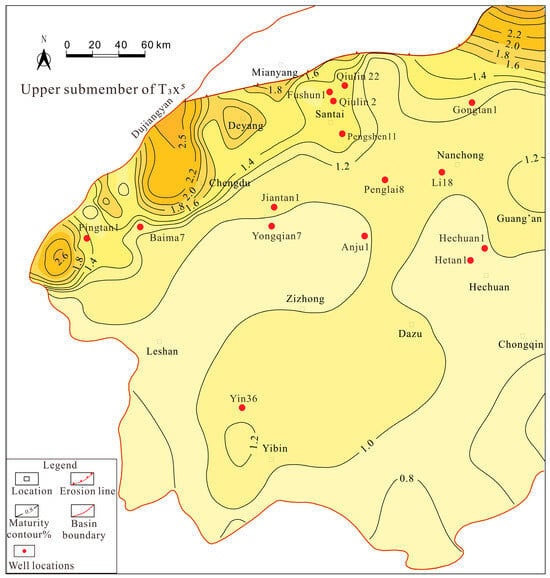
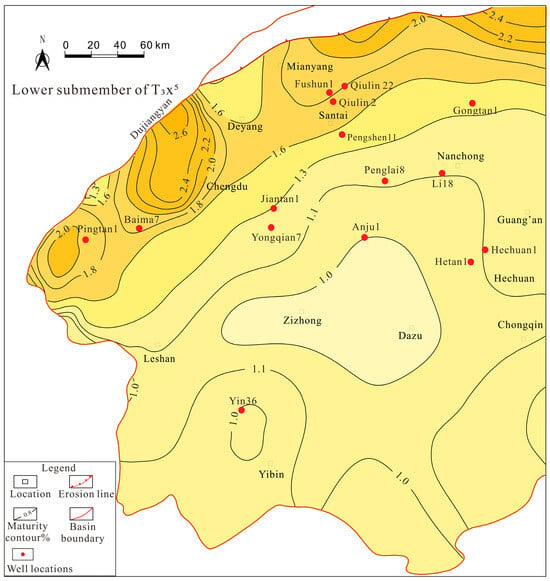
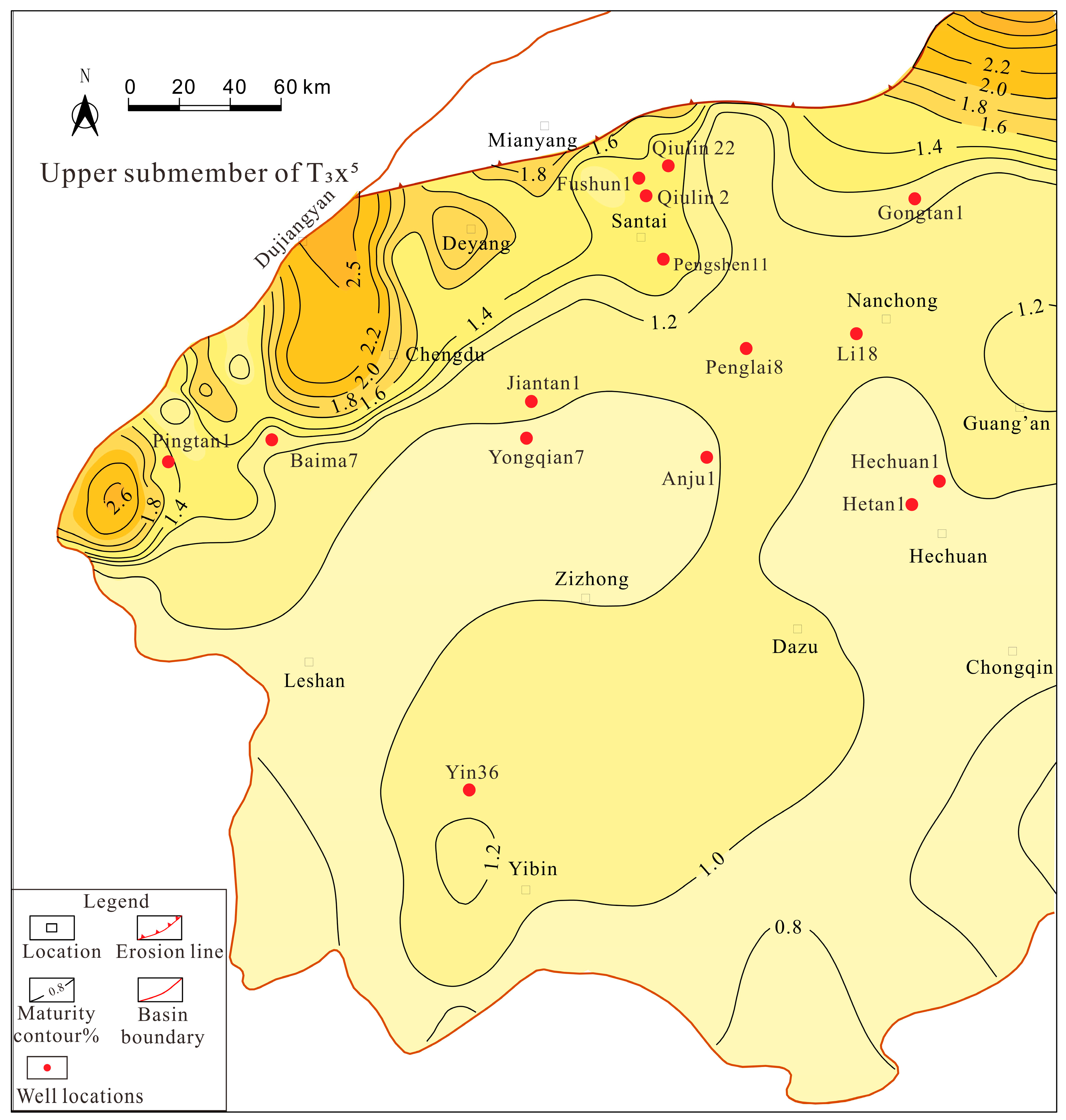
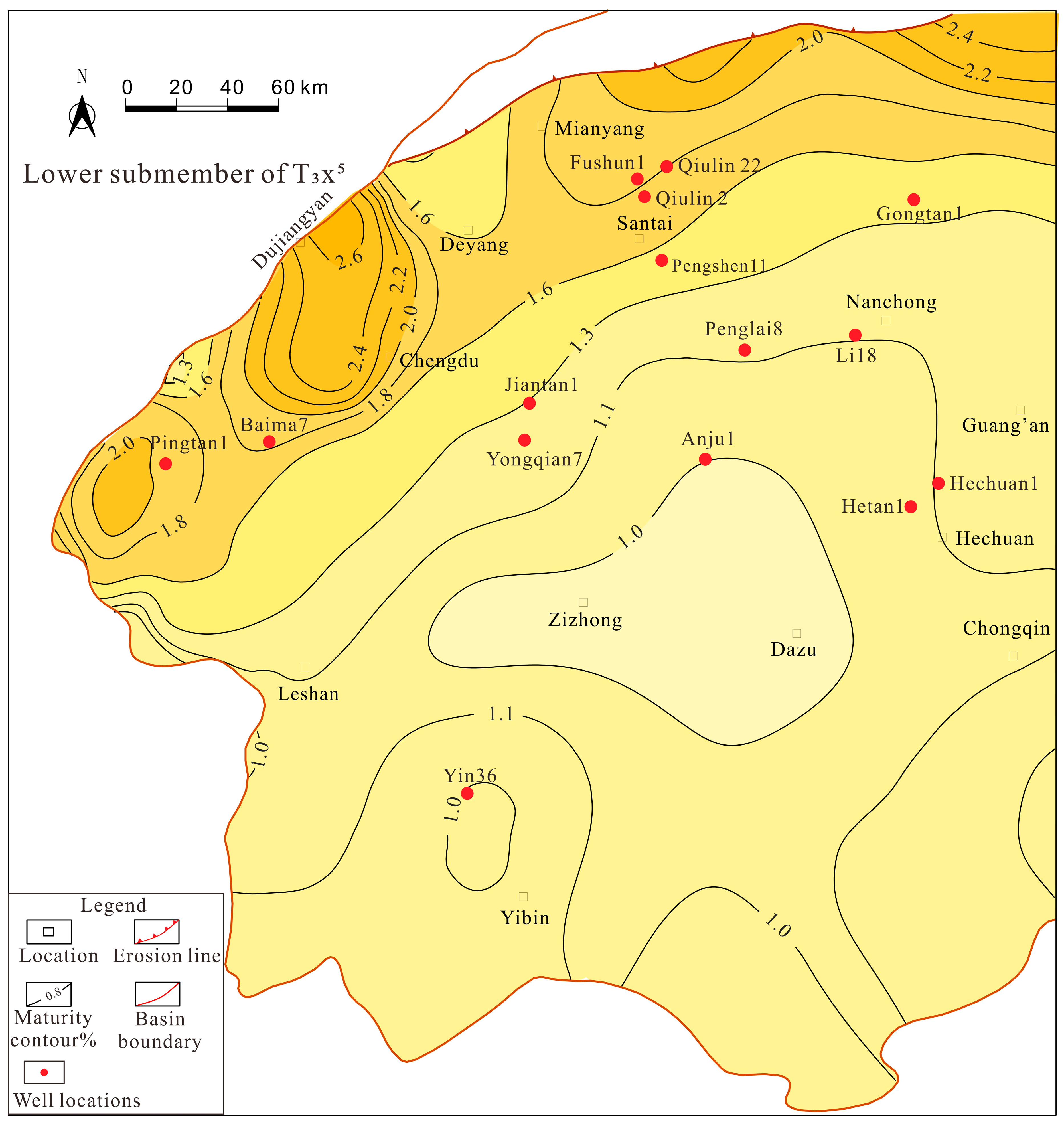
The thermal maturity of the T3x5 source rocks, as indicated by the vitrinite reflectance (Ro), generally decreases from west to east across the study area (Figure 6). The western Sichuan depression experienced substantial subsidence, resulting in high thermal maturity, with Ro values mostly ranging from 1.3% to 2.0% and locally exceeding 2.0% (over-mature stage). Eastward and southward, the Ro values progressively decrease. The lower slope area exhibits Ro values generally between 0.9% and 1.3% (mature to locally high-mature stage), whereas in the central Sichuan and Shunan areas, subsidence was small, and the maturity remains in the early mature stage to mature stage (Ro 0.7–1.0%). The Weiyuan and southern areas are in the early mature to mature stage (Ro 0.7–1.1%), locally within the condensate–wet gas window. Vertically, the lower submember displays slightly higher Ro values than that of the upper submember, with a more extensive area of high maturity, which is attributed to its greater burial depth and earlier attainment of maximum paleotemperatures. Overall, the western Sichuan depression, with high thermal maturity and favorable hydrocarbon generation potential, represents a priority exploration target for the T3x5 member.
Figure 6.
Present-day thermal maturity maps of the upper and lower submembers of T3x5 in the southwestern Sichuan Basin and adjacent areas.
4.1.4. Thickness Distribution of the Source Rocks
The T3x5 member is dominated by shore-shallow lake and delta front deposits. During this period, the lake basin reached its maximum extent, and the distribution of dark mudstones was also extensive. Sand bodies and delta lobes from different provenances exhibit elongate shapes, intersecting to form multiple semi-enclosed bays or lagoons with relatively quiet water, which were favorable for the deposition of organic-rich source rocks. Due to uplift and erosion, the T3x5 member is absent in the northwestern part of the basin.
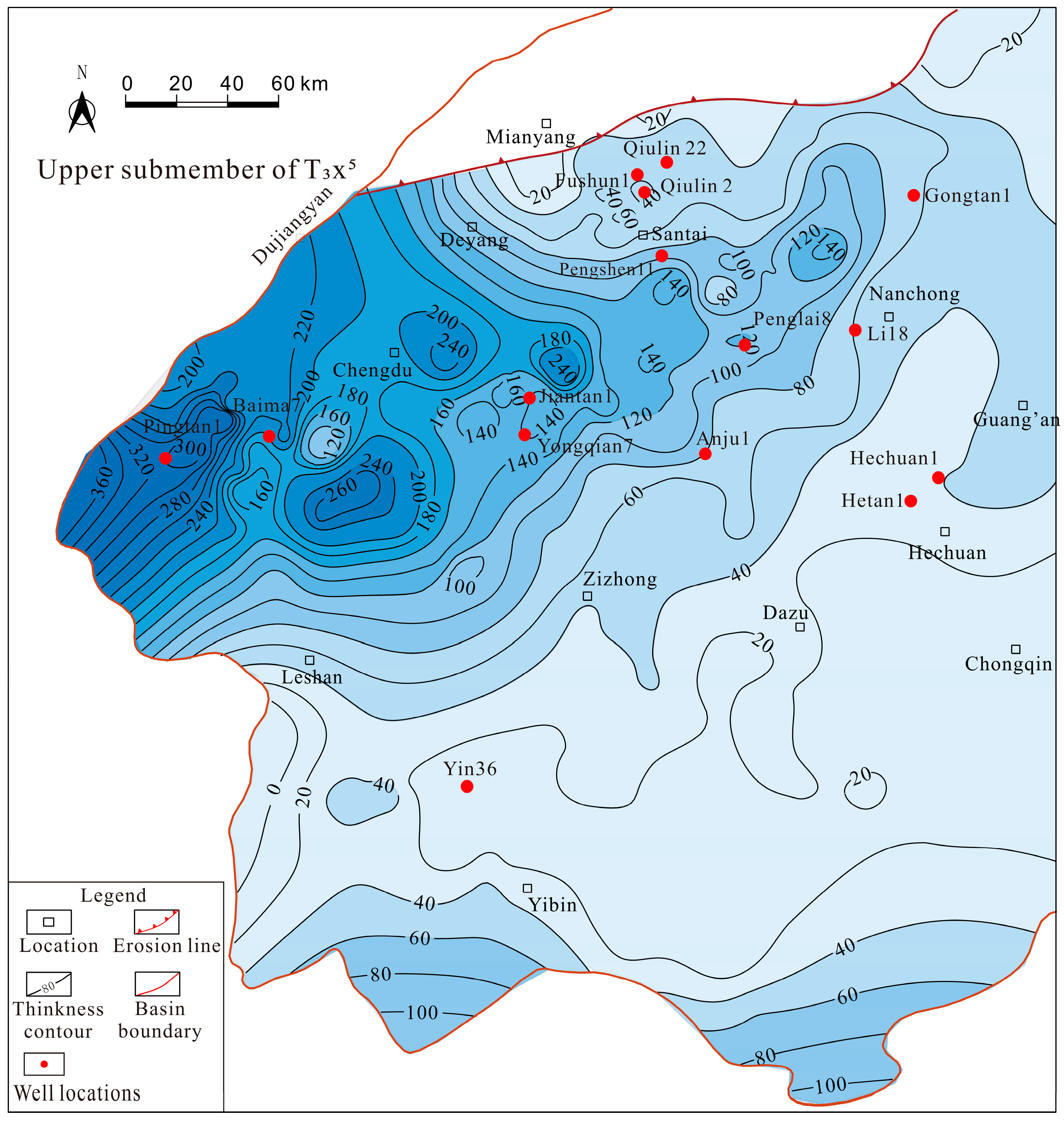
The upper submember dark mudstone is widely distributed in the southwestern, central, and west–central parts of western Sichuan, with thicknesses of 120–280 m and a maximum of >320 m. Eastward, the thickness rapidly decreases to about 40 m in the Leshan–Zizhong–Hechuan–Guang’an–Sanhui–Yilong area and to less than 20 m in the Yibin–Chongqing–Liangping area (Figure 7). In the southern part of the study area, the thickness is generally <20 m, although local depressions may reach 40–60 m (Figure 7).
Figure 7.
Predicted source rock thickness distribution of the upper submember of T3x5 in the southwestern Sichuan Basin and adjacent areas.
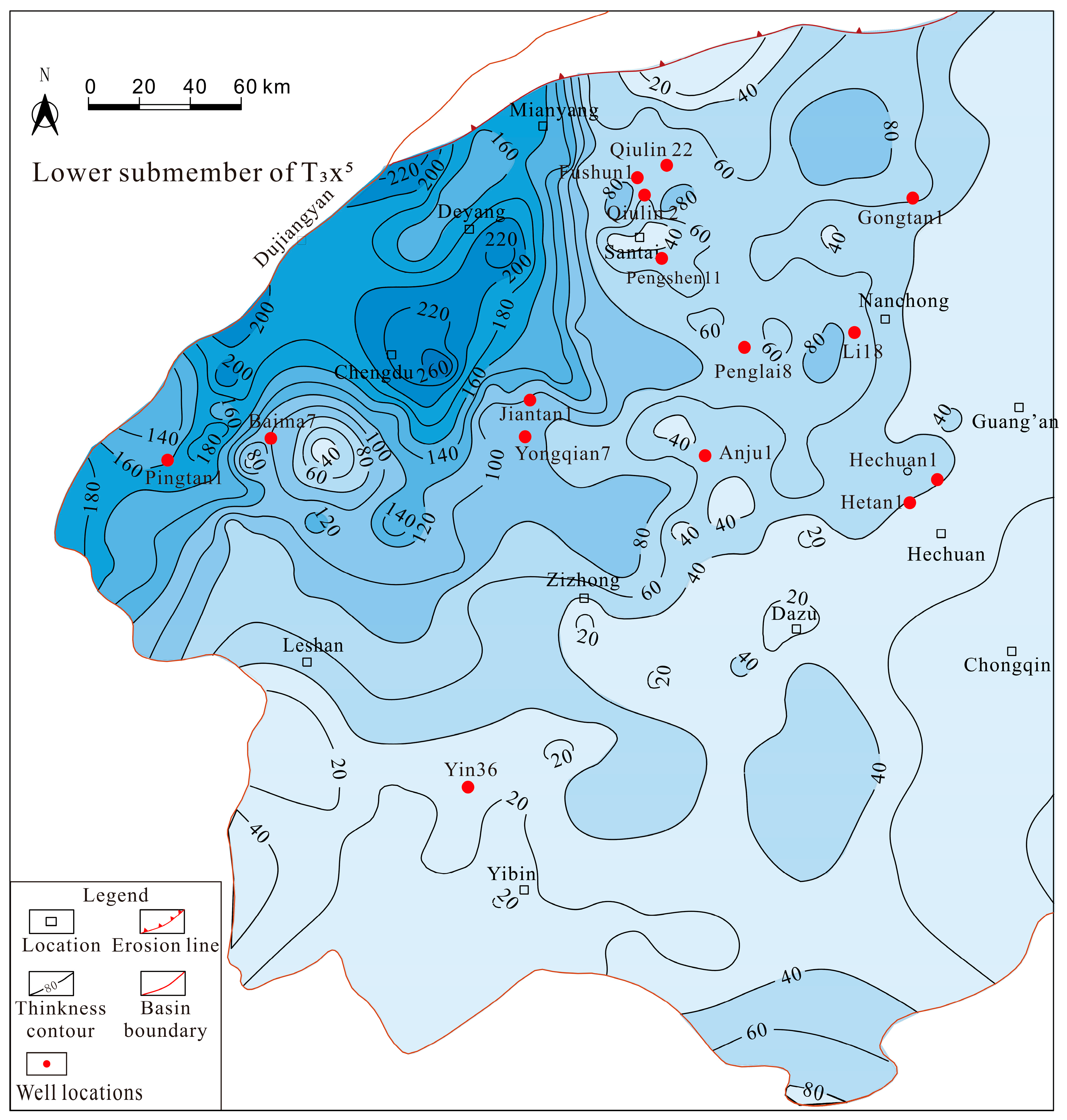
The lower submember dark mudstone is generally thinner than the upper submember and is typically 80–180 m in the central–southern part of western Sichuan. The thickness center is located in the Chengdu–Mianzhu area, with a central thickness of 160–220 m and a maximum exceeding 240 m. Eastward, the thickness rapidly decreases to 40 m in the Leshan–Zizhong–Hechuan–Guang’an–Sanhui–Yilong area and to less than 20 m in the Yibin–Chongqing–Liangping area. Similarly, southern areas are mostly <20 m thick, with local thickening to 40–60 m (Figure 8).
Figure 8.
Predicted source rock thickness distribution of the lower submember of T3x5 in the southwestern Sichuan Basin and adjacent areas.
Laterally, the T3x5 source rock thickness exhibits a general decrease from southwest to northeast, which is interpreted as reflecting the combined influence of foreland basin structure and provenance supply. Sediment provenance was supplied from the north, east, and south, resulting in coarser clastic deposits and relatively poorly developed source rocks in those directions. In the southwest, toward the foreland depression, the mud content increases, and source rocks are thick. Near the provenance, local interdistributary bays contain thick coal seams, which provide hydrocarbon charge for local gas accumulations. It should be noted, however, that even though the T3x5 source rocks are relatively thin in the eastern, northern, and southern Sichuan areas, the development of coal and carbonaceous mudstones with high organic matter abundance can still contribute to large-scale hydrocarbon supply and significant exploration potential. Overall, the T3x5 source rocks are thick and widely distributed, providing a favorable material base for large-scale hydrocarbon generation.
4.2. Evaluation of Hydrocarbon Generation Potential
The hydrocarbon generation potential of source rocks is closely related to the organic matter type, abundance, and thermal maturity. In this study, we evaluated the gas generation potential of the T3x5 source rocks using integrated basin modeling with PetroMod software (version 2019, IES GmbH, Munich, Germany), which incorporates the EASY%Ro kinetic model of Sweeney and Burnham [30] for maturity calibration. The conversion of kerogen to hydrocarbon was simulated using the gas generation kinetics for Type II/III kerogens [31], with parameters adjusted for the coal-measure source rocks of the Xujiahe Formation [13,32].
4.2.1. Hydrocarbon Generation History
Basin modeling was performed using a 1D stratigraphic framework constructed from well-log and lithological data. The input parameters included formation ages and thicknesses, lithological properties (porosity, permeability, thermal conductivity, and heat capacity), erosion thicknesses constrained by vitrinite reflectance and fission-track data, paleo-heat flow history calibrated against present-day heat flow measurements and validated by borehole temperature data, and surface temperature history following the paleoclimatic curve of Wygrala [33].
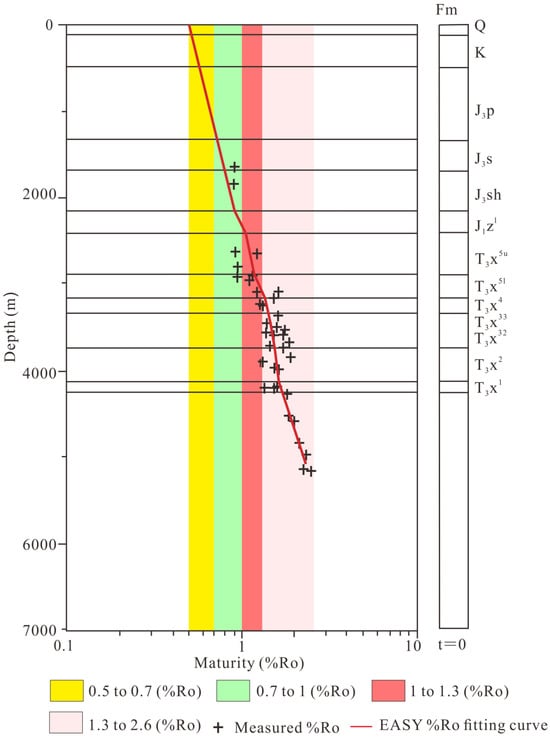
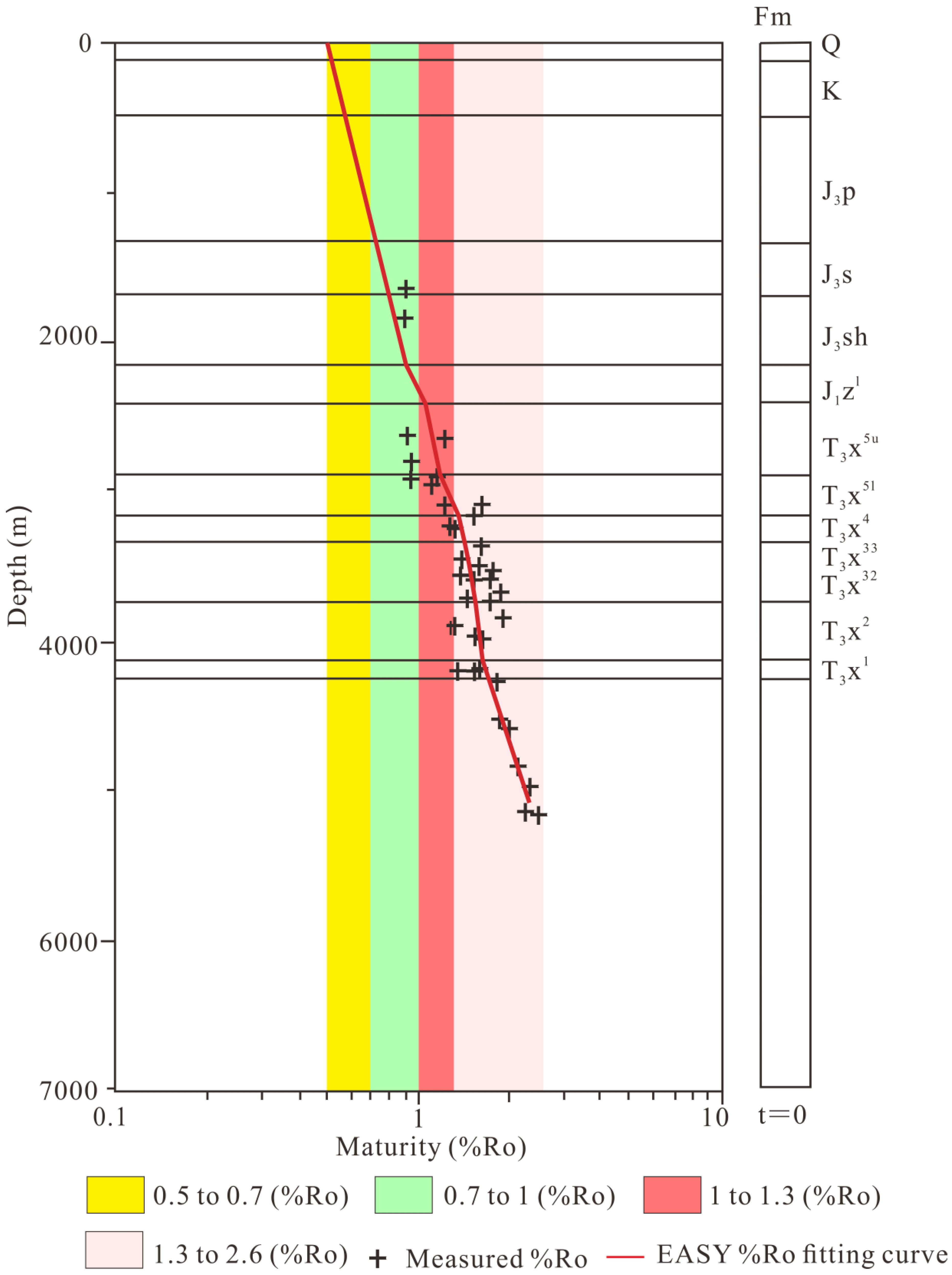
The thermal maturity of source rocks is primarily controlled by temperature and time. Therefore, the basin thermal history (paleogeothermal gradient or paleo-heat flow evolution) is the key factor influencing the hydrocarbon generation history of source rocks. The modeled thermal evolution trend is generally consistent with the measured Ro (Figure 9).
Figure 9.
Fitting of simulated thermal evolution and measured Ro in southwestern Sichuan Basin and adjacent areas.
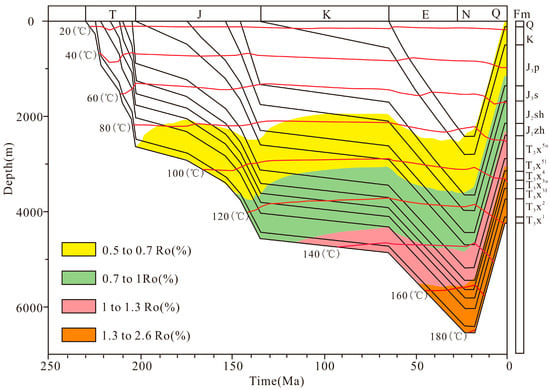
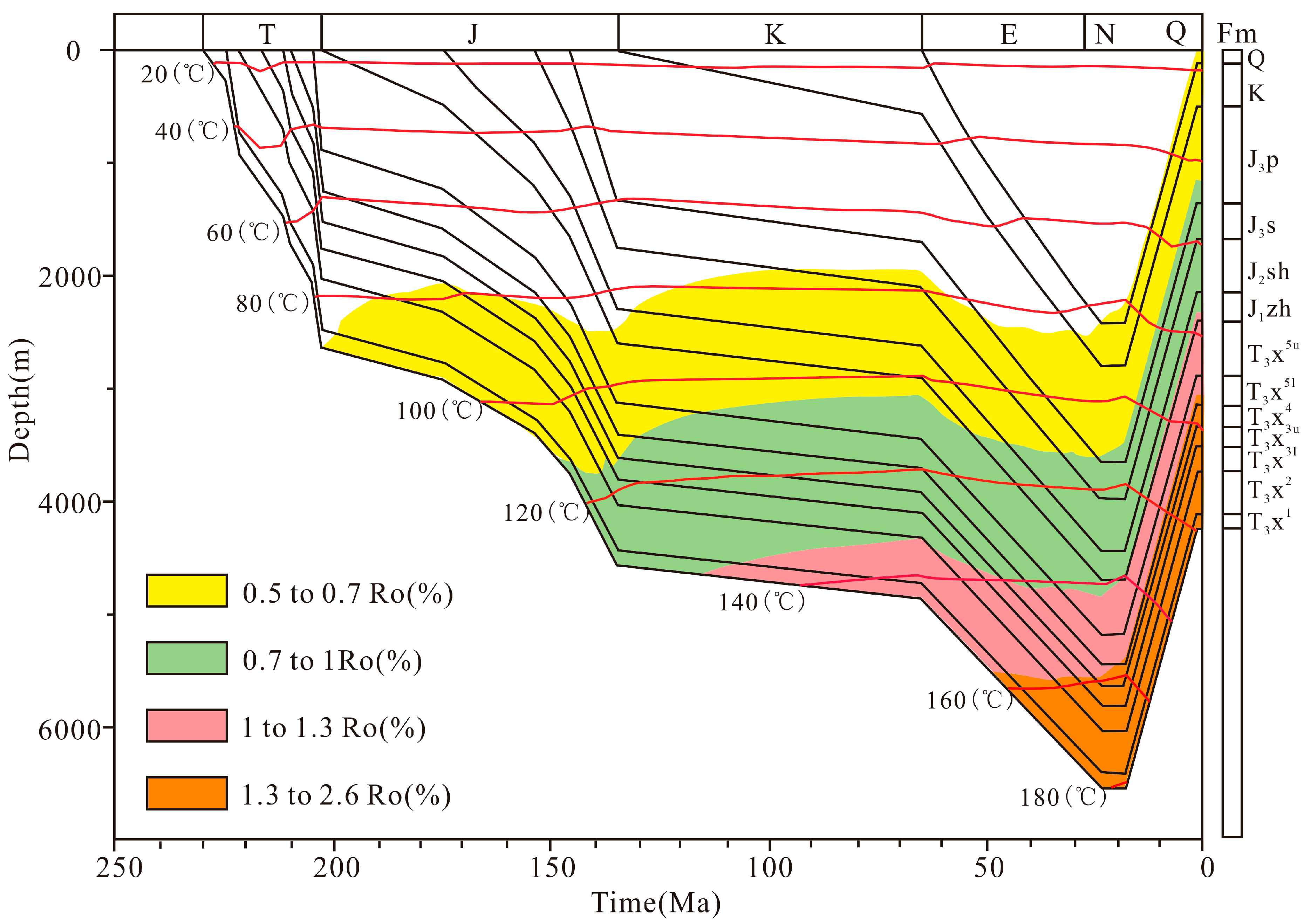
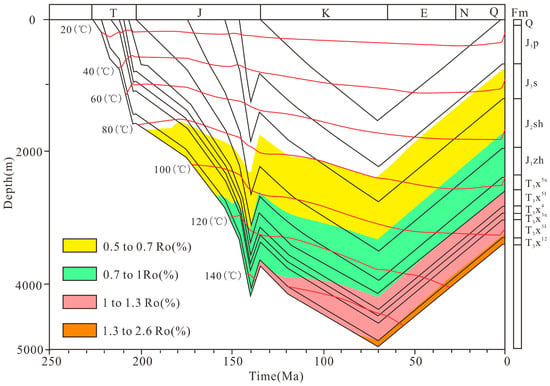
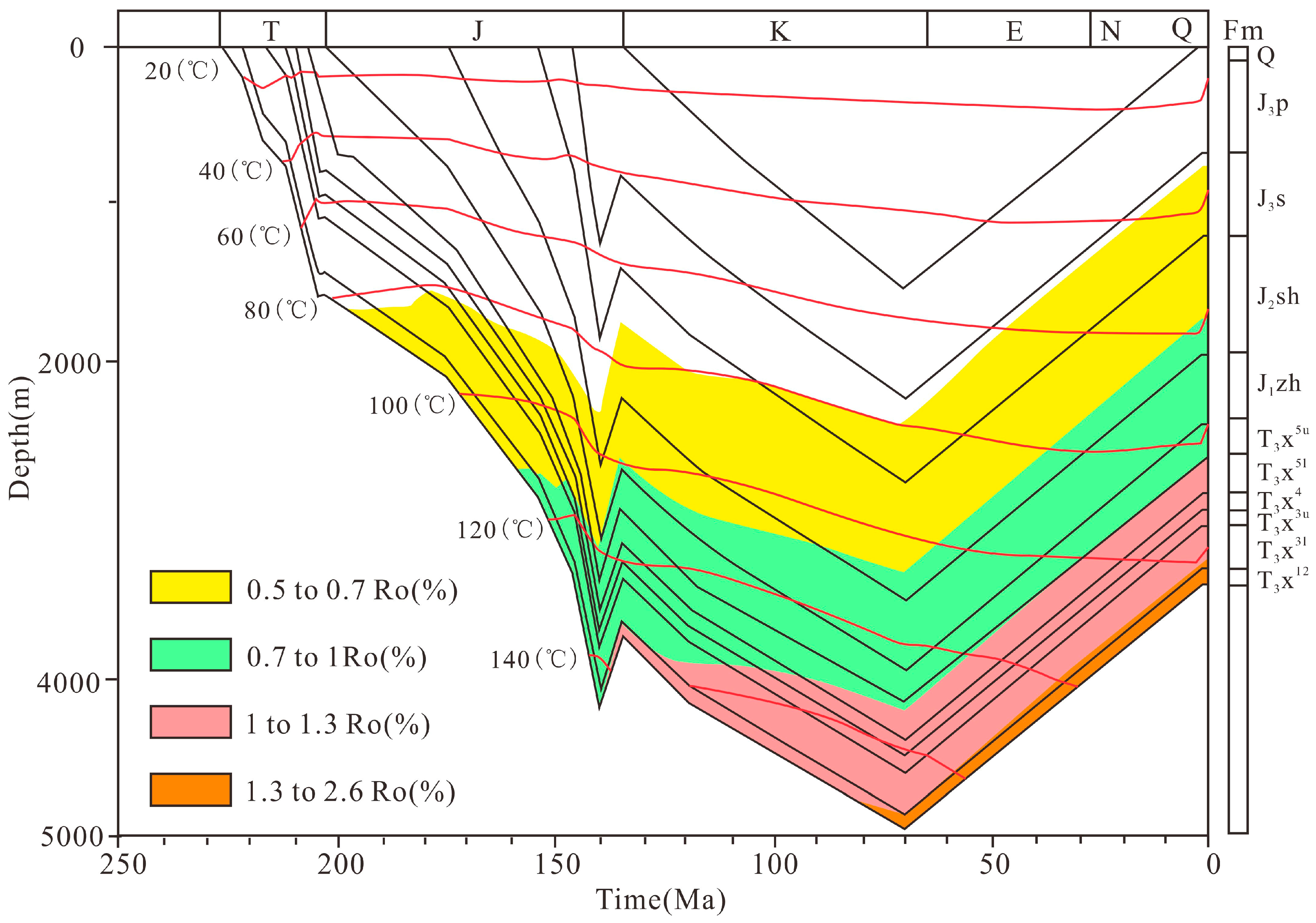
The burial and thermal history of the Xujiahe Formation source rocks in the southwestern Sichuan Basin are shown in Figure 10 and Figure 11, with representative wells Pingtan-1 (western Sichuan depression) and Jiantan-1 (lower slope area) illustrating the contrasting thermal evolution patterns. From the end of the Late Triassic to the end of the Early Jurassic (ca. 201–175 Ma), the Upper Triassic source rocks in the study area reached the hydrocarbon generation threshold (early stage), with Ro ranging from 0.5% to 0.7%, generating limited amounts of early kerogen cracking gas. The threshold depth is estimated at 2100 to 2400 m.
Figure 10.
Burial and thermal evolution history of well Pingtan-1.
Figure 11.
Burial and thermal evolution history of well Jiantan-1.
By the end of the Late Cretaceous (ca. 66 Ma), the T3x5 source rocks in the western Sichuan depression reached the mature stage, with Ro ranging from 0.9% to 1.3%, generating significant amounts of kerogen cracking gas, with primary migration initiating and gas being preserved in adjacent reservoirs. By the end of the Paleogene (ca. 23 Ma), the organic matter of the T3x5 member in the western Sichuan depression reached the high-mature stage, with Ro > 1.3%, entering the late gas generation stage, which represents the key period for natural gas generation. Subsequently, the Himalayan movement (from ca. 23 Ma to present) caused uplift and erosion, reducing the burial depth of the Xujiahe Formation source rocks. As a result, in the central and southern Sichuan areas, the organic matter did not evolve to higher thermal maturity stages and has essentially maintained the maturity it attained at the end of the Paleogene. Only in the main body of the western Sichuan depression did the organic matter continue to evolve to higher stages, reaching the over-mature stage.
In the lower slope area, the T3x5 source rocks entered the mature stage during the Early Cretaceous (ca. 135 Ma) (Figure 11), after which the burial depth continued to increase gradually. Following uplift at the end of the Late Cretaceous, thermal evolution largely ceased, and the source rocks have essentially remained in the mature stage (Ro ~1.0–1.2%) since then.
Two 1D basin models (Pingtan-1 and Jiantan-1) were calibrated using the measured Ro and borehole temperatures, giving local burial and thermal histories. To extend these models to the whole study area, we used a multi-step approach. First, maturity zones were defined from the present-day maturity map (Figure 6) based on the Ro from 15 wells and published data. Second, calibrated thermal parameters (paleo-heat flow, thermal conductivity, and erosion thickness) were interpolated with kriging, constrained by regional structures and seismic data. Third, the burial history for each grid cell was reconstructed from thickness maps (Figure 7 and Figure 8) and erosion data. Finally, gas generation was modeled in PetroMod for each cell, with TOC and kerogen type assigned from our maps and petrology data. This assumes smooth thermal variation across the basin, which is a reasonable first-order approximation, but local heat-flow variations may exist, and future work should include more calibration points.
4.2.2. Natural Gas Generation Intensity and Volume
The main input parameters included source rock volume (derived from thickness maps in Figure 7 and Figure 8), organic matter abundance (TOC mean values per submember), organic matter type (kerogen type assignments based on maceral composition), thermal maturity (Ro from measurements and model calibration), and gas generation kinetics [31]. Coal and mudstone were modeled separately. Coal (TOC > 30%) used Type III coal-measure kinetics [31], density 1.3 g/cm3, and HI 150–200 mg HC/g TOC. Mudstones (TOC < 30%) used mixed Type II/III kinetics [30], density 2.5 g/cm3, and HI 300–500 mg HC/g TOC. Sensitivity analysis shows that the gas generation estimate is most sensitive to TOC in mudstone intervals, which dominate the source rock volume. After determining the relevant parameters, this study used the PetroMod software to calculate the gas generation intensity and volume of the T3x5 source rocks.
The cumulative gas generation was calculated with PetroMod (version 2019) using a volumetric source rock model. The modeled area covers approximately 2.3 × 10⁴ km2, based on the T3x5 thickness maps (Figure 7 and Figure 8), with the upper and lower submembers modeled separately. The TOC means are from Table 1; coal was assigned Type III kinetics and a density of 1.3 g/cm3, while mudstone used mixed Type II/III kinetics [31] adjusted for Xujiahe coal measures [13,32]. Thermal history follows the calibrated 1D models in Section 4.2.1.
The main uncertainties are the extrapolation of two 1D models, thickness interpolation between wells, TOC and kerogen-type assignment (especially for coal), and paleo-heat flow reconstruction, giving an estimated uncertainty of approximately ±30% on the cumulative gas volume.
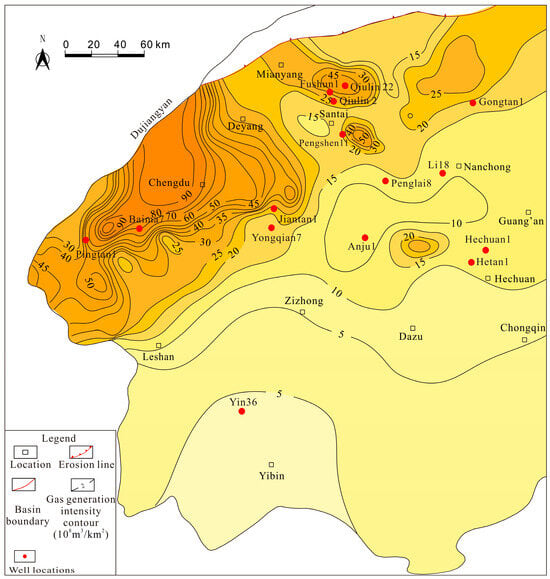
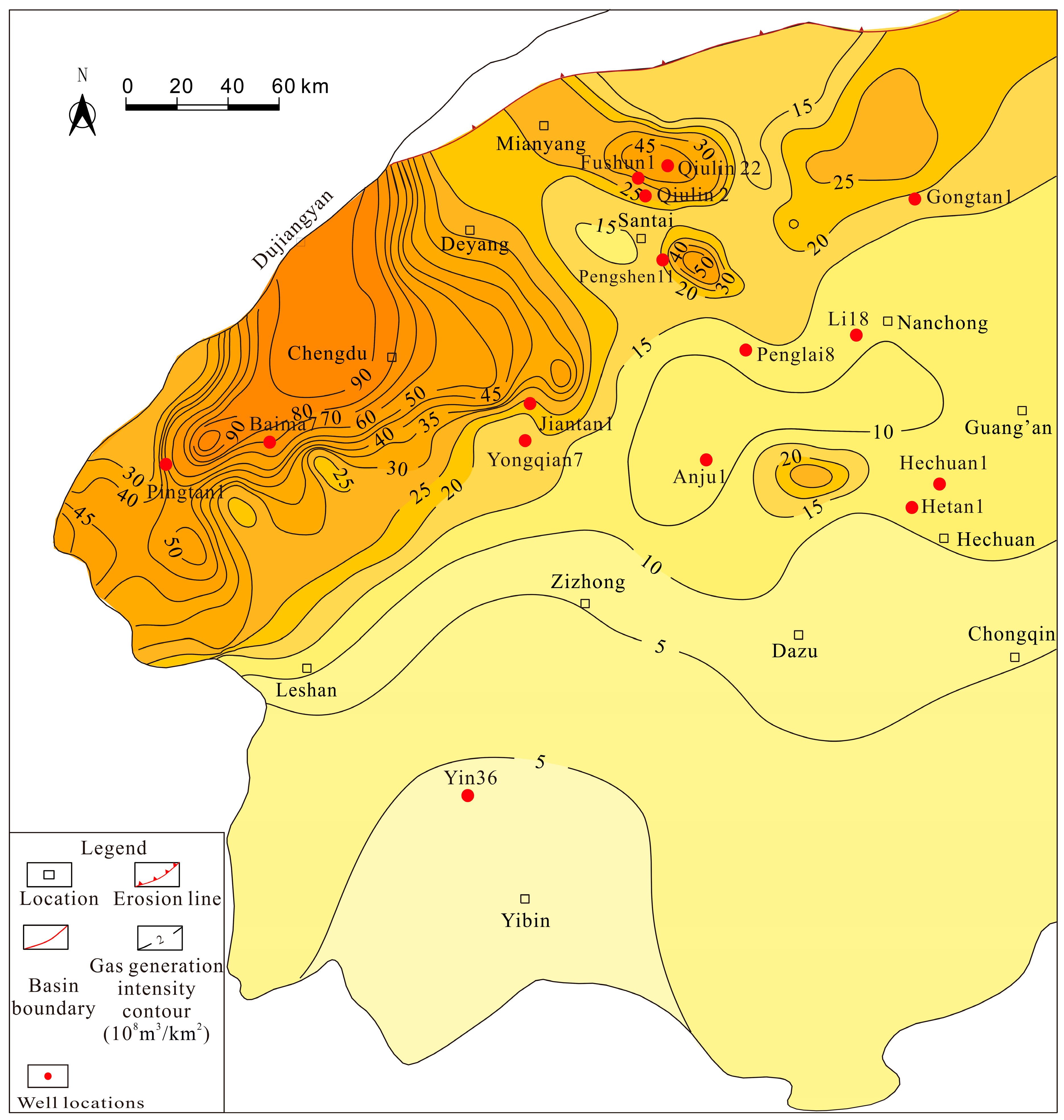
Overall, the T3x5 gas generation intensity is highest in the central–southern section of the western Sichuan depression, with a maximum value exceeding 70 × 108 m3/km2. The gas generation intensity in the Qiulin, Jinhua, Jianyang, and southwestern Sichuan areas is generally greater than 20 × 108 m3/km2. The area with gas generation intensity >20 × 108 m3/km2 covers about 2.3 × 10⁴ km2, representing the most favorable zone for gas accumulation. In the central Sichuan area, the intensity is generally 10–12 × 108 m3/km2, and in the area around well Mo-208 to well Tongnan-105, where coal seams of considerable scale are developed, the gas generation intensity is higher, reaching 15–20 × 108 m3/km2 (Figure 12). According to the simulation results, the cumulative gas generation from the T3x5 member is approximately 1.92 × 10¹⁴ m3 (192 trillion cubic meters).
Figure 12.
Gas generation intensity map of the T3x5 source rocks in the southwestern Sichuan Basin and adjacent areas.
This value represents the total gas generated over geological history. It does not represent accumulated gas, technically recoverable gas, or economic resources. Conversion to recoverable resources would require evaluation of the expulsion, migration, accumulation, and preservation efficiencies, which is beyond the scope of this study.
Gas generation intensity maps for the T3x5 interval have been presented previously for parts of the Sichuan Basin [13]. The maps presented here differ in that they cover the southwestern Sichuan Basin and adjacent areas, treat the upper and lower submembers separately, and are based on the updated TOC and thickness datasets. They should therefore be regarded as a refinement and extension of earlier maps rather than as entirely new products.
Considering the near-source accumulation characteristics of the T3x5 member areas with moderate to low gas generation intensity may still have considerable exploration potential where effective traps and reservoir quality are present. However, further research on the expulsion, migration, and accumulation efficiencies is needed to refine the resource assessment. In summary, the southwestern Sichuan Basin and adjacent areas exhibit high gas generation intensity and favorable gas source conditions for forming large gas fields, making it the preferred area for further exploration.
5. Discussion
The Upper Triassic Xujiahe Formation in the Sichuan Basin has traditionally been interpreted as a coal-measure source rock succession dominated by terrigenous higher-plant input [1,2,21,22]. In contrast, the organic petrological data obtained in this study indicate that the T3x5 source rocks contain a substantial sapropelic component, particularly in deep lacustrine and interdistributary bay settings. This observation is broadly consistent with recent studies by Zheng et al. [4] and Wang et al. [7], which also documented mixed Type II/III kerogen within the T3x5 interval. The apparent discrepancy with earlier interpretations may be attributed to several factors, including: (1) the spatially biased sampling in previous studies, which were commonly focused on marginal or coal-bearing facies; (2) differences in analytical approaches, such as Rock-Eval pyrolysis versus organic petrology; and (3) the pronounced lateral and vertical heterogeneity of the Xujiahe Formation. These findings underscore the necessity of integrating organic petrological observations with geochemical data for robust kerogen typing.
The novelty of this study does not rest on sample number alone. It is therefore useful to specify what previous studies utilized and what new information the present dataset provides. Guo et al. examined hydrocarbon generation and expulsion of the T3x5 source rocks in the western Sichuan depression but did not report well-by-well sample counts, depth coverage, or submember-level resolution and did not extend their analysis beyond that depression [13]. Zheng et al. evaluated the T3x5 organic geochemistry at the basin scale but did not integrate thickness mapping, maturity mapping, and quantitative basin modeling [4]. Wang et al. characterized the source rock geochemistry but did not quantify the gas generation intensity [7]. In contrast, the present study is based on 402 core samples from 15 wells, treats the upper and lower submembers separately, and integrates the TOC, organic petrology, Ro, thickness mapping, and calibrated 1D basin modeling. The new information provided therefore includes: the submember-scale TOC and the thickness statistics for the southwestern Sichuan Basin and adjacent areas; the separate maturity maps for the two submembers; and the quantitative gas generation intensity and cumulative gas generation for the T3x5 interval across this broader area.
The principal strengths of this study include the large TOC dataset (402 samples), the integration of multiple organic geochemical and petrological proxies, and the application of basin modeling to quantify gas generation. Nevertheless, several limitations should be acknowledged. The organic petrology dataset remains relatively small (n = 15), and the resulting kerogen type assignments should therefore be regarded as preliminary. In addition, the basin modeling is based on 1D models extrapolated across a broad region, which may not fully capture lateral variations in the thermal history. The estimated gas generation volume represents the total generated gas over geological time and does not account for the expulsion, migration, or accumulation efficiencies. These limitations should be addressed in future studies through expanded petrographic sampling, molecular geochemical validation, additional calibration wells, and integrated 2D/3D basin modeling.
6. Conclusions
(1) The T3x5 source rocks in the southwestern Sichuan Basin and adjacent areas have high organic matter abundance, with TOC values ranging from 0.5% to 71.73% and a mean of 2.09% (n = 402). Lacustrine mudstones, which dominate the source rock volume, have a mean TOC of 1.25%. The upper submember (mean 2.21%) is slightly more abundant than the lower submember (mean 1.98%). High-abundance source rocks are mainly distributed in the western lacustrine area along the paleo-shoreline.
(2) Organic matter types vary with depositional setting: Type II kerogen dominates in the deep lacustrine settings, Type II–III mixed types in the lower slope, and Type III kerogen near the basin margin. These classifications are based on organic petrology and would benefit from complementary molecular geochemical validation.
(3) Thermal maturity increases westward. The western Sichuan depression reached high to over-mature stages (Ro mostly 1.3–2.0%, locally >2.0%), while the eastern and southern areas are mainly mature to low-mature (Ro 0.7–1.3%), locally within the condensate–wet gas window.
(4) The T3x5 source rocks are thick (up to 320 m) and widely distributed, with the thickness decreasing from southwest to northeast. The southern areas are generally thin (<20 m) but locally reach 40–60 m.
(5) Basin modeling estimates a cumulative gas generation of 1.92 × 10¹⁴ m3 (192 trillion cubic meters), with high intensity (>20 × 108 m3/km2) covering an area of 2.3 × 10⁴ km2. This value represents the total generated gas, not recoverable resources. Nevertheless, the southwestern Sichuan Basin exhibits favorable gas source conditions and is a priority exploration target.
Author Contributions
Conceptualization, L.L., K.Y. and Z.W.; Methodology, L.L., Z.W. and M.D.; Formal analysis, L.L., M.D. and Y.Z.; Data curation, S.M., K.P. and R.G.; Writing—original draft, L.L. and K.Y.; Writing—review and editing, Z.W., R.G. and M.D.; Supervision, Z.W. All authors have read and agreed to the published version of the manuscript.
Funding
This research received no external funding.
Data Availability Statement
The original contributions presented in this study are included in the article. Further inquiries can be directed to the corresponding author.
Conflicts of Interest
Authors Lan Li, Ke Yang, Shijie Ma, Ke Pan, and Ruiying Guo were employed by PetroChina Southwest Oil & Gasfield Company. Author Zhihong Wang was employed by PetroChina Research Institute of Petroleum Exploration & Development. The remaining authors declare that the research was conducted in the absence of any commercial or financial relationships that could be construed as potential conflicts of interest.
References
- Dai, J.; Ni, Y.; Liao, F.; Hong, F.; Yao, L. The significance of coal-derived gas in major gas producing countries. Pet. Explor. Dev. 2019, 46, 435–450. [Google Scholar] [CrossRef] [Scilit]
- Qin, S.; Zhang, Y.; Zhao, C.; Zhou, Z. Geochemical evidence for in situ accumulation of tight gas in the Xujiahe Formation coal measures in the central Sichuan Basin, China. Int. J. Coal Geol. 2018, 196, 173–184. [Google Scholar] [CrossRef] [Scilit]
- Xie, Z.; Yang, C.; Li, J.; Zhang, L.; Guo, J.; Jin, H.; Hao, C. Accumulation characteristics and large-medium gas reservoir-forming mechanism of tight sandstone gas reservoir in Sichuan Basin, China: Case study of the Upper Triassic Xujiahe Formation gas reservoir. J. Nat. Gas Geosci. 2021, 6, 269–278. [Google Scholar] [CrossRef] [Scilit]
- Zheng, T.; Ma, X.; Pang, X.; Wang, W.; Zheng, D.; Huang, Y.; Wang, X.; Wang, K. Organic geochemistry of the Upper Triassic T3x5 source rocks and the hydrocarbon generation and expulsion characteristics in Sichuan Basin, central China. J. Pet. Sci. Eng. 2019, 173, 1340–1354. [Google Scholar] [CrossRef] [Scilit]
- Zecheng, W.; Shipeng, H.; Deyu, G.; Wei, W.; Chong, Y. Geochemical characteristics of natural gases in the Upper Triassic Xujiahe Formation in the southern Sichuan Basin, SW China. Int. J. Coal Geol. 2013, 120, 15–23. [Google Scholar] [CrossRef] [Scilit]
- Bai, H.; Pang, X.; Kuang, L.; Pang, H.; Wang, X.; Jia, X.; Zhou, L.; Hu, T. Hydrocarbon expulsion potential of source rocks and its influence on the distribution of lacustrine tight oil reservoir, Middle Permian Lucaogou Formation, Jimsar Sag, Junggar Basin, Northwest China. J. Pet. Sci. Eng. 2017, 149, 740–755. [Google Scholar] [CrossRef] [Scilit]
- Wang, Z.H.; Hao, C.G.; Jin, H.; Cun, J.F.; Wu, X.Q.; Bo, D.M.; Su, Y.Q. Geochemical characteristics and hydrocarbon generation potential of main source rocks in the Upper Triassic Xujiahe Formation, Sichuan Basin, China. Front. Earth Sci. 2023, 11, 1233959. [Google Scholar] [CrossRef] [Scilit]
- Zheng, C.; Wang, M.; Cui, J.F.; Yang, W.; Wang, X.J.; Chen, S.L.; Li, N.; Yang, G.R.; Jia, M.; Bo, D.M.; et al. Re-Evaluation of the Source Rocks of the Upper Triassic Xujiahe Formation in the Sichuan Basin. Appl. Sci. 2026, 16, 2614. [Google Scholar] [CrossRef] [Scilit]
- Yang, T.; Xu, K.; Lu, J.A.; Liu, B.; Liao, J.B. Hydrocarbon-generating characteristics of Xujiahe coal-bearing source rocks in the continuous sedimentary environment of the Southwest Sichuan. Open Geosci. 2025, 17, 20220754. [Google Scholar] [CrossRef] [Scilit]
- Deng, T.; Li, Y.; Wang, Z.; Yu, Q.; Dong, S.; Yan, L.; Hu, W.; Chen, B. Geochemical characteristics and organic matter enrichment mechanism of black shale in the Upper Triassic Xujiahe Formation in the Sichuan basin: Implications for paleoweathering, provenance and tectonic setting. Mar. Pet. Geol. 2019, 109, 698–716. [Google Scholar] [CrossRef] [Scilit]
- Zhao, Z.; Qiu, Y.; Li, N.; Zheng, C.; Jin, Z.; Yang, Q. Geological characteristics and main controls on the enrichment and high yield of tight gas in Xujiahe 4 Member, Jianyang area, Sichuan Basin. Nat. Gas Explor. Dev. 2025, 48, 27–36. [Google Scholar]
- Peng, T.; Qin, Q.; He, C.; Wu, Y.; Wang, Z. Identification and evaluation of fractures outside wellbores in tight sandstone reservoirs: A case study of Triassic Xujiahe Formation in Hexingchang area, western Sichuan Basin. Nat. Gas Explor. Dev. 2025, 48, 37–47. [Google Scholar]
- Guo, Y.C.; Song, Y.; Pang, X.Q.; Wang, Y.W.; Yang, K.M.; Li, B.Y. Hydrocarbon Generation and Expulsion of the Upper Triassic T3x5 Source Rocks in the Western Sichuan Depression: Assessment for Unconventional Natural Gas. Acta Geol. Sin.-Engl. Ed. 2015, 89, 175–186. [Google Scholar] [CrossRef] [Scilit]
- Eftekhari, S.H.; Memariani, M.; Maleki, Z.; Aleali, M.; Kianoush, P.; Shirazy, A.; Shirazi, A.; Pour, A.B. Employing Statistical Algorithms and Clustering Techniques to Assess Lithological Facies for Identifying Optimal Reservoir Rocks: A Case Study of the Mansouri Oilfields, SW Iran. Minerals 2024, 14, 233. [Google Scholar] [CrossRef] [Scilit]
- Li, Y.; Shao, L.; Eriksson, K.A.; Tong, X.; Gao, C.; Chen, Z. Linked sequence stratigraphy and tectonics in the Sichuan continental foreland basin, Upper Triassic Xujiahe Formation, southwest China. J. Asian Earth Sci. 2014, 88, 116–136. [Google Scholar] [CrossRef] [Scilit]
- Mu, H.X.; Yan, D.P.; Qiu, L.; Yang, W.X.; Kong, R.Y.; Gong, L.X.; Li, S.B. Formation of the Late Triassic western Sichuan foreland basin of the Qinling Orogenic Belt, SW China: Sedimentary and geochronological constraints from the Xujiahe Formation. J. Asian Earth Sci. 2019, 183, 103938. [Google Scholar] [CrossRef] [Scilit]
- Cheng, G.; Jiang, B.; Li, M.; Li, F.; Zhu, M. Structural evolution of southern Sichuan Basin (South China) and its control effects on tectonic fracture distribution in Longmaxi shale. J. Struct. Geol. 2021, 153, 104465. [Google Scholar] [CrossRef] [Scilit]
- Wang, Z.; Zhao, W.; Li, Z.; Jiang, X.; Li, J. Role of basement faults in gas accumulation of Xujiahe Formation, Sichuan Basin. Pet. Explor. Dev. 2008, 35, 541–547. [Google Scholar] [CrossRef] [Scilit]
- Liu, S.; Steel, R.; Zhang, G. Mesozoic sedimentary basin development and tectonic implication, northern Yangtze Block, eastern China: Record of continent–continent collision. J. Asian Earth Sci. 2005, 25, 9–27. [Google Scholar] [CrossRef] [Scilit]
- Meng, Q.-R.; Wang, E.; Hu, J.-M. Mesozoic sedimentary evolution of the northwest Sichuan basin: Implication for continued clockwise rotation of the South China block. GSA Bull. 2005, 117, 396–410. [Google Scholar] [CrossRef] [Scilit]
- Dai, J.; Ni, Y.; Zou, C. Stable carbon and hydrogen isotopes of natural gases sourced from the Xujiahe Formation in the Sichuan Basin, China. Org. Geochem. 2012, 43, 103–111. [Google Scholar] [CrossRef] [Scilit]
- Dai, J.; Ni, Y.; Zou, C.; Tao, S.; Hu, G.; Hu, A.; Yang, C.; Tao, X. Stable carbon isotopes of alkane gases from the Xujiahe coal measures and implication for gas-source correlation in the Sichuan Basin, SW China. Org. Geochem. 2009, 40, 638–646. [Google Scholar] [CrossRef] [Scilit]
- Hu, S.; Zhang, H.; Song, D.; Sun, H. Sedimentary characteristics and evolution of Upper Triassic Xujiahe Formation, northeastern Sichuan Basin. Nat. Gas Explor. Dev. 2024, 47, 15–27. [Google Scholar]
- Huang, H.; Chen, Z.Y.; Zhang, T.S.; Zhang, X.; Zhang, J.X. Sedimentary Environment and Organic Matter Enrichment of the First Member in the Upper Triassic Xujiahe Formation, Southeastern Sichuan Basin. Minerals 2025, 15, 1071. [Google Scholar] [CrossRef] [Scilit]
- Huang, H.; Zhang, T.S.; Zhang, X.; Liu, Y.L.; Gao, L.B.; Zhang, J.X. The Sedimentary Record of Marine-Continental Transitional Shales in the Upper Triassic of Xujiahe Formation, Southeast Sichuan Basin, China. J. Mar. Sci. Eng. 2025, 13, 646. [Google Scholar] [CrossRef] [Scilit]
- Luo, B.; Ran, Q.; Wang, X.J.; Zheng, C.; Zhang, A.B.; Xie, C.; Chen, S.J.; Xu, Q.; Wang, C.Y.; Li, Y. Accumulation characteristics and favorable exploration directions of tight sandstone gas in the Xujiahe Formation, western-central Sichuan Basin. Nat. Gas Geosci. 2026, 37, 59–77. [Google Scholar]
- Zhu, R.K.; Bai, B.; Liu, L.H.; Su, L.; Gao, Z.Y.; Luo, Z. Standardization of continental sequence stratigraphy and sequence lithofacies paleogeography: A case study of the Upper Triassic Xujiahe Formation in Sichuan Basin. Earth Sci. Front. 2011, 18, 131–143. [Google Scholar]
- Tang, D.H.; Wang, X.J.; Chen, S.L.; Wu, C.J. Main controlling factors for enrichment and high production of tight sandstone gas reservoirs in the Xujiahe Formation, Zhongtai Mountain area, Sichuan Basin. Nat. Gas Geosci. 2018, 29, 1575–1584. [Google Scholar]
- The International Committee for Coal and Organic Petrology. The new vitrinite classification (ICCP system 1994). Fuel 1998, 77, 349–358. [Google Scholar]
- Sweeney, J.J.; Burnham, A.K. Evaluation of a Simple Model of Vitrinite Reflectance Based on Chemical Kinetics1. AAPG Bull. 1990, 74, 1559–1570. [Google Scholar] [CrossRef] [Scilit]
- Pepper, A.S.; Corvi, P.J. Simple kinetic models of petroleum formation. Part I: Oil and gas generation from kerogen. Mar. Pet. Geol. 1995, 12, 291–319. [Google Scholar] [CrossRef] [Scilit]
- Wang, L.; Zou, Y.; Wei, Z.; Cai, Y. Study on the Hydrocarbon Generation Process of Coal from the Xujiahe Formation in the Guang’an Area, Sichuan Basin. Nat. Gas Geosci. 2012, 23, 153–160. [Google Scholar]
- Wygrala, B. Integrated Study of an Oil Field in the Southern Po Basin, Northern Italy; Kernforschungsanlage Jülich GmbH: Jülich, Germany, 1989; p. 217. [Google Scholar]

Disclaimer/Publisher’s Note: The statements, opinions and data contained in all publications are solely those of the individual author(s) and contributor(s) and not of MDPI and/or the editor(s). MDPI and/or the editor(s) disclaim responsibility for any injury to people or property resulting from any ideas, methods, instructions or products referred to in the content. |
© 2026 by the authors. Licensee MDPI, Basel, Switzerland. This article is an open access article distributed under the terms and conditions of the Creative Commons Attribution (CC BY) license.