


Abstract
The Lower Paleozoic carbonate reservoirs in the Yan’an Gas Field are characterized by low porosity, low permeability, and strong heterogeneity, which make effective stimulation difficult. Although supercritical CO2 (SC-CO2) acidizing has shown promising results in field applications, the effects of SC-CO2 concentration and acid type on the pore structure evolution of tight carbonate rocks remain poorly understood. In this study, matrix acidizing experiments were conducted using SC-CO2+acid multi-component fluids, and nuclear magnetic resonance (NMR) together with porosity–permeability measurements were employed to characterize the changes in pore structure before and after acidizing. The results indicate that compared with a single acid injection, SC-CO2+acid combined acidizing significantly improves core porosity and permeability. It promotes the dissolution and expansion of small and medium pores, enhances the connectivity of isolated pores, and increases the proportion of medium and large pores along with pore connectivity. SC-CO2 concentration is a key influencing factor: higher concentrations result in stronger dissolution and greater improvements in porosity and permeability. The acidizing effect of gelled acid mixed with SC-CO2 is superior to that of regular acid, attributed to the higher viscosity of gelled acid, which prolongs the acid–rock reaction time, enabling more uniform and sufficient dissolution and thus more significant improvements in pore structure and acid flow capacity. This research provides valuable guidance for the design of SC-CO2 acidizing treatments in carbonate reservoirs.
1. Introduction
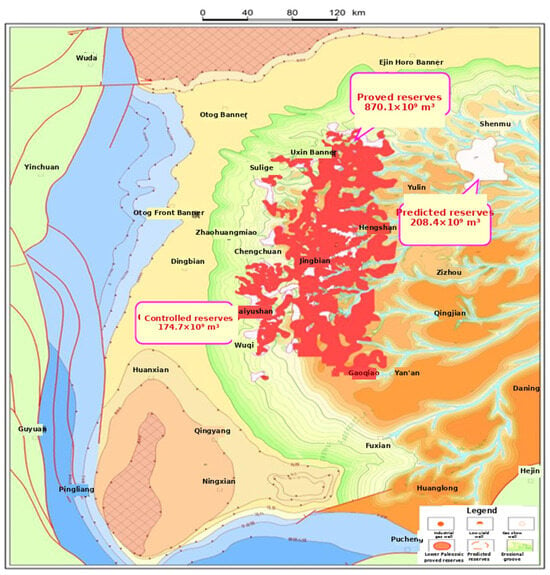
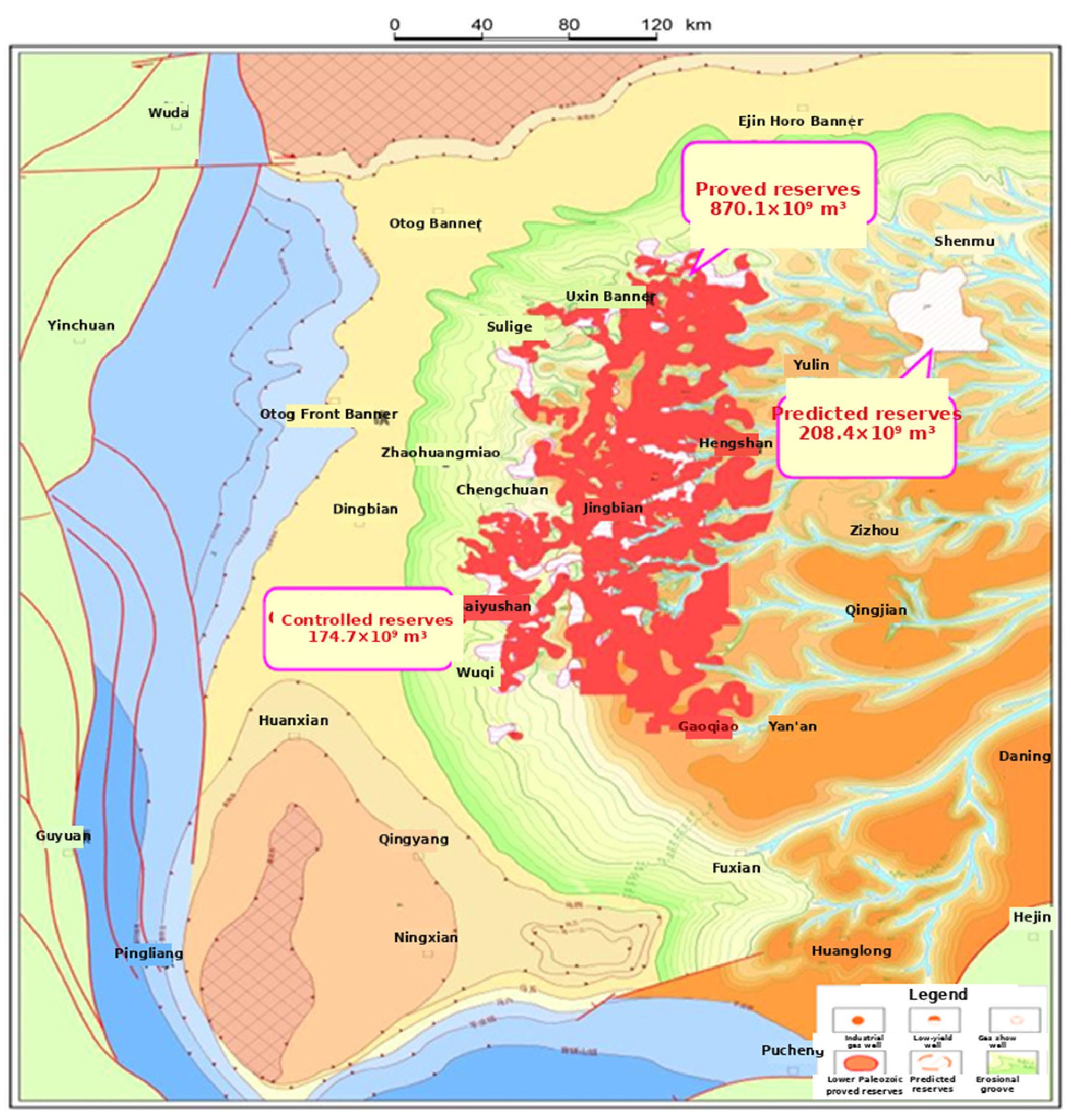
The Yan’an Gas Field is located in the southeastern part of the Ordos Basin, China (Figure 1), the Lower Paleozoic carbonate reservoirs in the Yan’an Gas Field are low-porosity (0.6~4.5%) and low-permeability (<0.1 mD) reservoirs, with high reservoir temperatures (90~120 °C), high closure pressures (50~70 MPa), and low pressure coefficients (0.7~0.9), posing significant challenges to stimulation [1,2]. Table 1 compares the reservoir properties of the Majiagou Formation in the study area with those of other representative tight carbonate gas reservoirs in China. As shown in Table 1, the Majiagou carbonates of the Yan’an Gas Field are comparable to or tighter than these reservoirs, which underscores the difficulty of effective stimulation.
Figure 1.
Schematic location map of the Yan’an Gas Field, Ordos Basin, China.
Table 1.
Comparison of reservoir properties between the Yan’an Gas Field and other representative tight carbonate gas reservoirs in China.
In recent years, CO2-based reservoir stimulation technology has attracted growing interest due to its potential to enhance oil and gas production [6,7]. With low viscosity, high density, and high diffusivity, supercritical/liquid CO2 can rapidly penetrate micro-pores and micro-fractures. CO2 fracturing reduces breakdown pressure, creates complex fracture networks, energizes the formation, improves flowback, and minimizes reservoir damage, thereby enhancing single-well production in an efficient and environmentally friendly manner [8]. As the wellbore temperature decreases, the CO2 density increases and the flow velocity decreases; consequently, the wellhead pressure declines in sync with the bottomhole temperature [9]. In CO2+acid fracturing of carbonate reservoirs, SC-CO2 reduces acid leak-off, improves fracture etching efficiency, forms large-volume, high-conductivity acid-etched fractures, and significantly enhances reservoir productivity [10,11]. Additionally, substituting CO2 for part of the liquid working fluid reduces water consumption during operations. SC-CO2 can also transport acid to areas inaccessible by regular acid fracturing, expanding the effective stimulation range. During flowback, the rapid pressure drop induces phase change of SC-CO2 in fractures, which vaporizes into gas, generating substantial energy and greatly improving flowback efficiency [12]. Moreover, CO2-based reservoir stimulation is consistent with carbon capture, utilization, and storage (CCUS) strategies: part of the injected CO2 can be retained in the reservoir, coupling enhanced gas recovery with geological carbon storage [13,14]. The current progress of CO2 injection for enhanced recovery and carbon storage has been reviewed by Jia et al. [15].
Currently, SC-CO2 stimulation technology has been field-applied in carbonate reservoirs with promising production enhancement results. In a pilot well in Saudi Arabia’s acid-bearing carbonate reservoir, CO2 acid fracturing increased production by 2.5 times compared to pre-fracturing levels, with single-well production reaching twice that of adjacent wells [11]. In the Jurassic gas reservoir in northern Kuwait, CO2 acid fracturing shortened acid flowback time, supplemented reservoir energy, and improved single-well production [12].
Numerous scholars have investigated the reaction mechanism of SC-CO2 in matrix acidizing. Cheng et al. (2016) [16] observed through core experiments that CO2 generated during matrix acidizing exists in dissolved and free states. At low pressures, gaseous CO2 increases wormhole diameter, while at high pressures, SC-CO2 completely dissolves in the acid, exerting no significant effect on wormhole propagation. Yan et al. (2019) [17] demonstrated that in situ generated CO2 forms stable SC-CO2 foamed fluid at formation pressures exceeding 8.0 MPa and temperatures exceeding 60 °C, which exhibits diverting effects during core displacement, improving matrix acidizing efficiency. Kartini et al. (2021) [18] observed that the acid-etched wormholes formed by mixing free SC-CO2 with acid are slender and characterized by expanded dissolution pores. Alarji et al. (2022) [19] observed that gaseous CO2, as a reaction product, has no obvious impact on wormhole growth during matrix acidizing but increases fluid flow resistance. However, most of these studies focused on the phase state of CO2 and on wormhole propagation behavior, while systematic experimental evidence on how SC-CO2 concentration and acid type govern the pore structure evolution of tight carbonate rocks remains scarce [20]. Related experimental and review studies on SC-CO2 stimulation of tight and unconventional reservoirs likewise indicate that the controlling factors and field-scale applicability of this technology are not yet fully understood [21,22].
To address these gaps, this study conducts matrix acidizing experiments on tight carbonate cores from the Majiagou Formation using SC-CO2+acid multi-component fluids. The objectives are threefold: (1) to compare the pore-permeability evolution induced by SC-CO2+acid combined acidizing with that of a single regular acid injection; (2) to quantify the effect of SC-CO2 concentration on acidizing performance; and (3) to evaluate the influence of acid type (regular acid versus gelled acid) on pore structure changes. The findings provide technical guidance for the application of CO2 acid fracturing in tight carbonate reservoirs.
2. Experimental Methodology
2.1. Materials
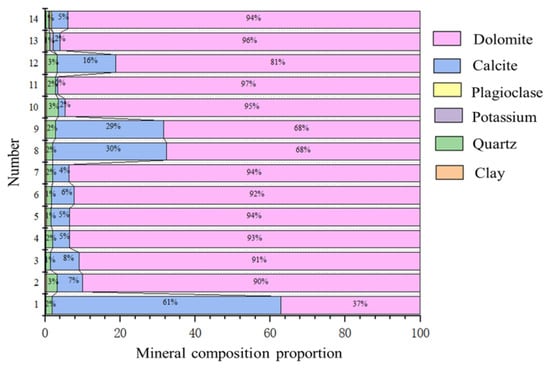
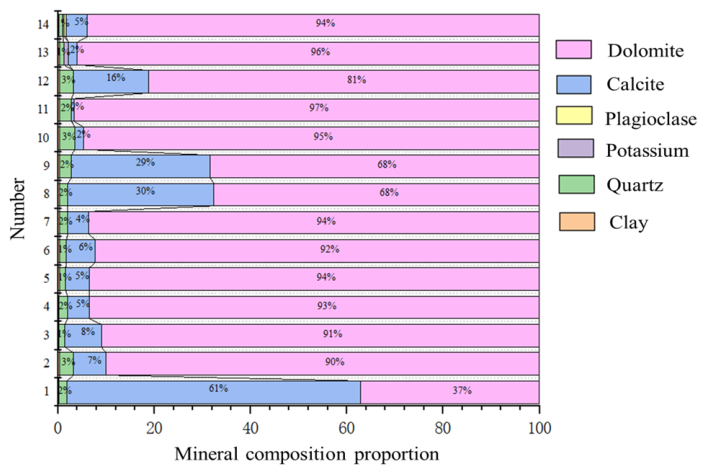
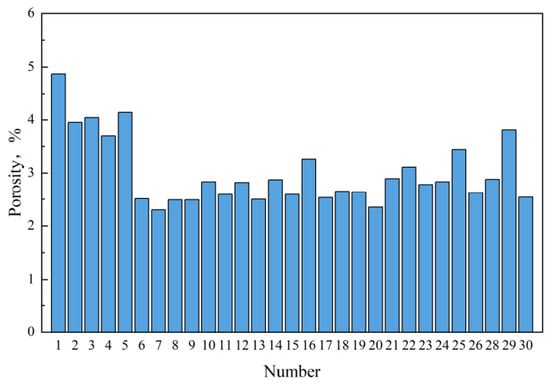
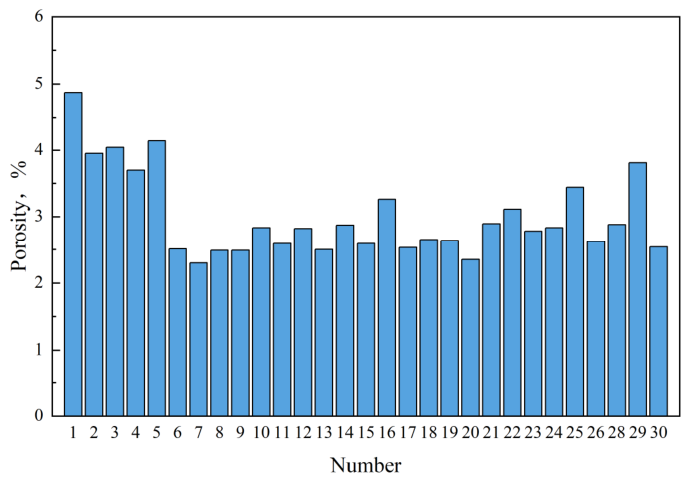
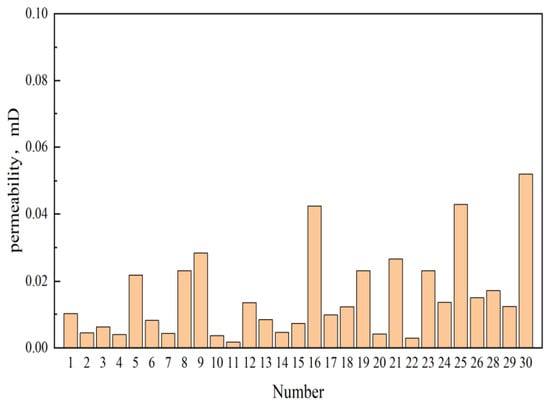
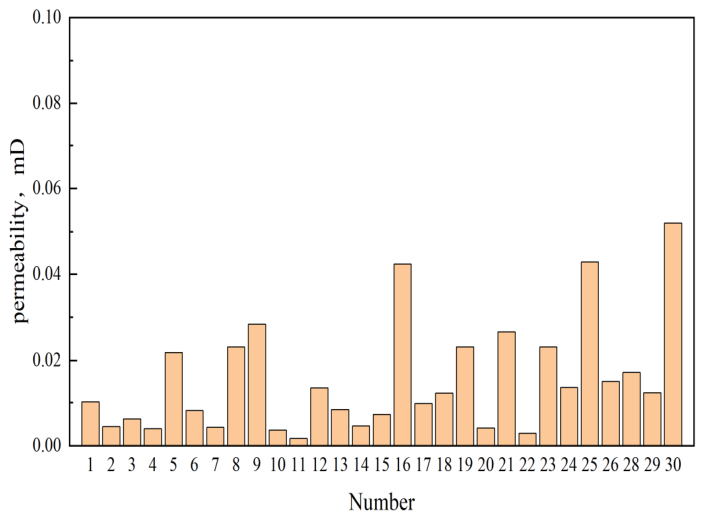
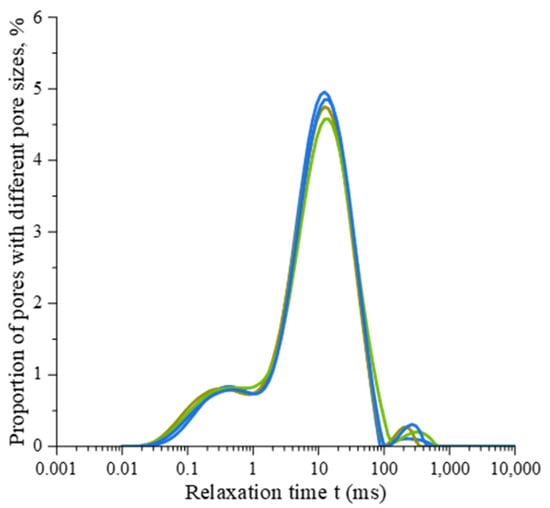
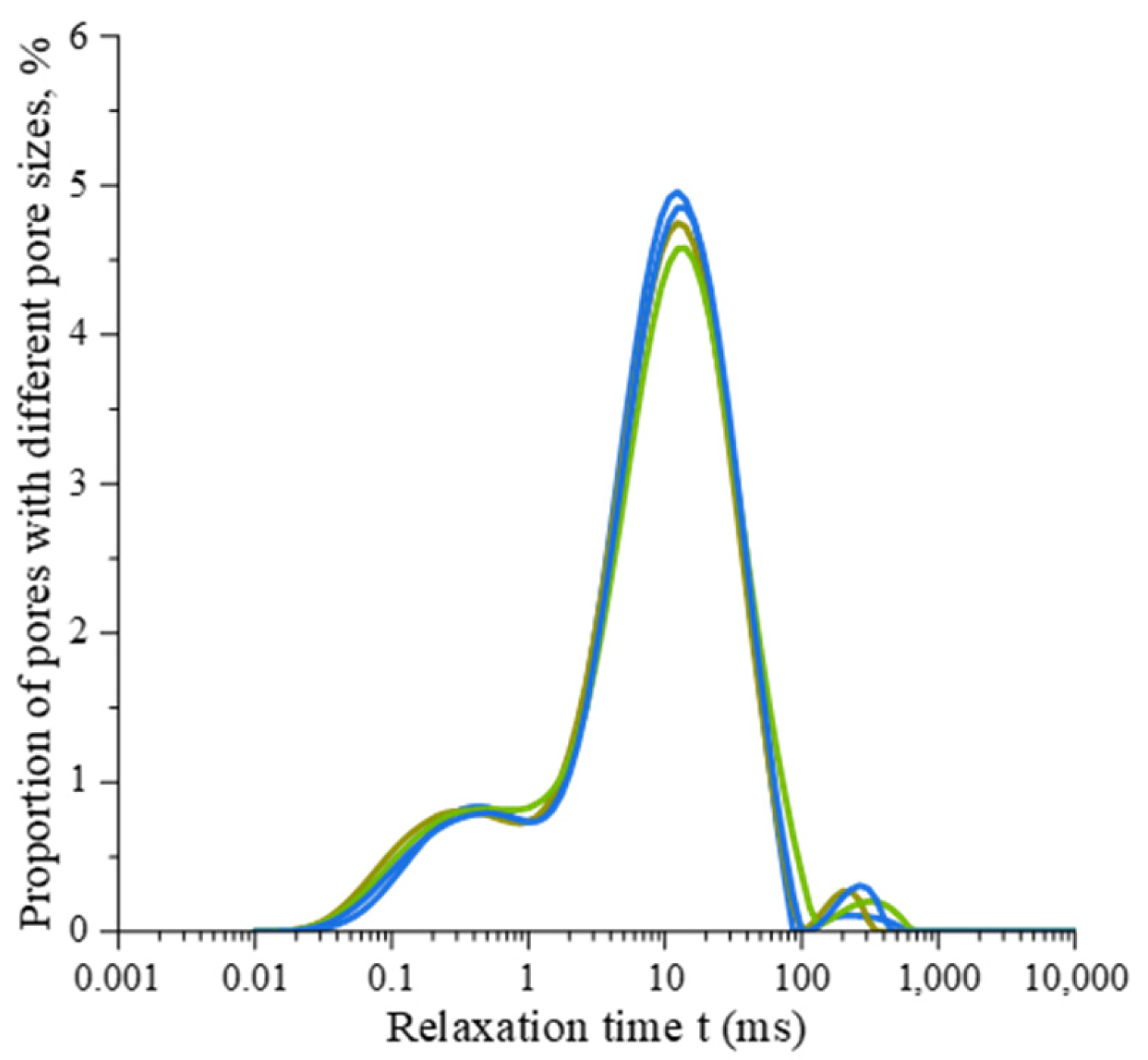
Core samples were collected from outcrops of the Ordovician Majiagou Formation carbonate rocks, with dolomite content exceeding 90%, and minor amounts of calcite, quartz, and clay minerals (Figure 2). The average porosity of the core samples was 3.0% (Figure 3), and the average permeability was 0.015 mD (Figure 4). The NMR curves of the cores in their initial state showed minimal differences, resulting in negligible impacts on experimental results (Figure 5). It should be noted that the mineral composition of the samples varies to some extent: Samples 1, 8, 9, and 12 contain a higher proportion of calcite than the other dolomite-dominated samples (Figure 2), and this mineralogical variability may contribute to the differences in acidizing response discussed below. The outcrop rock samples have an average dynamic Young’s modulus of 100.6 GPa and an average dynamic Poisson’s ratio of 0.301; the outcrop cores have an average static Young’s modulus of 70.7 GPa and an average static Poisson’s ratio of 0.283.
Figure 2.
Mineral composition.
Figure 3.
Porosity parameters.
Figure 4.
Permeability parameters.
Figure 5.
NMR curves of cores before acidizing.
Two acid systems were selected for the experiments: gelled acid and regular acid, with formulations and viscosity in Table 2.
Table 2.
Formulations of acid systems used in experiments.
2.2. Experimental Method
2.2.1. Experimental Device and Procedure
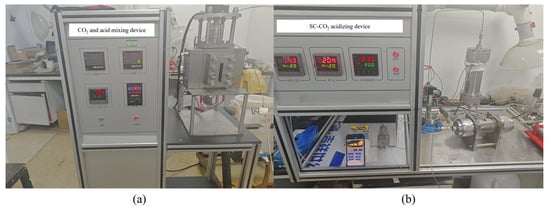
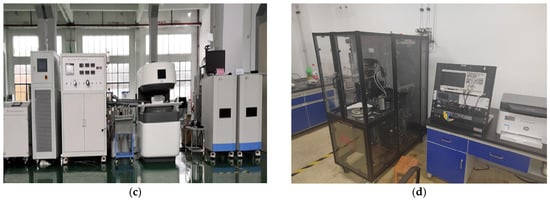
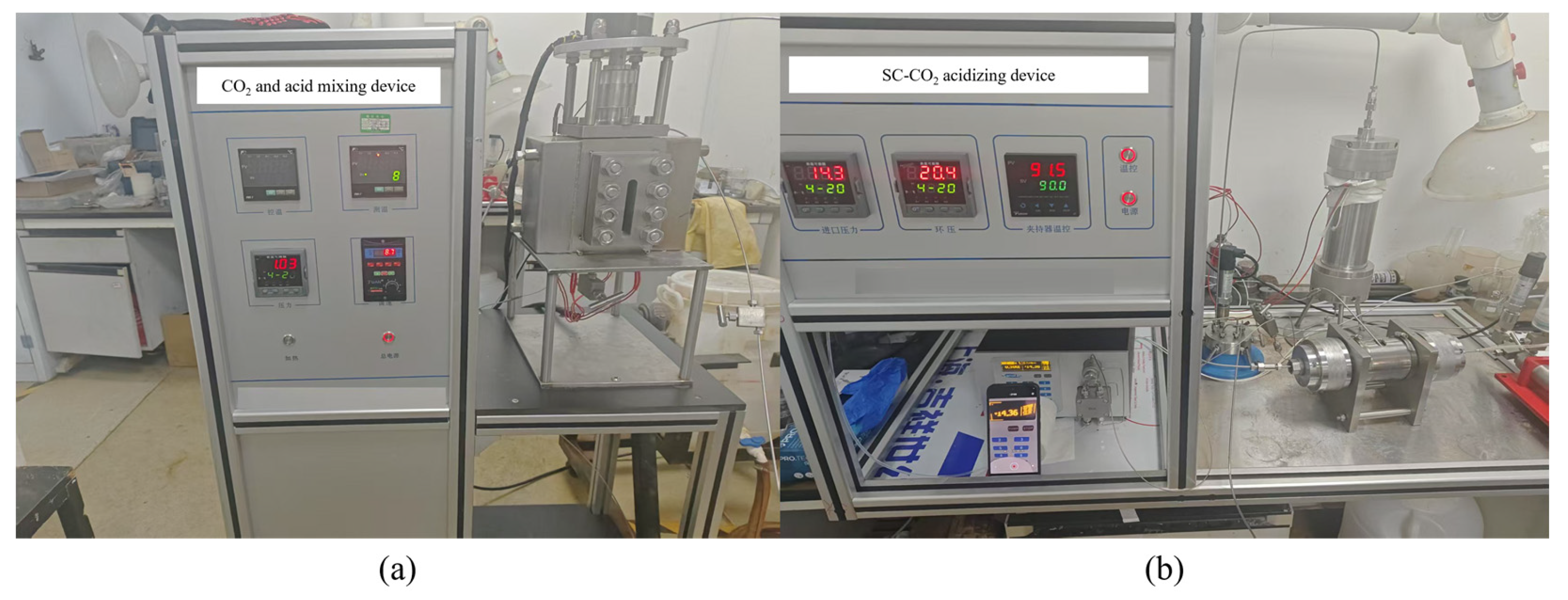
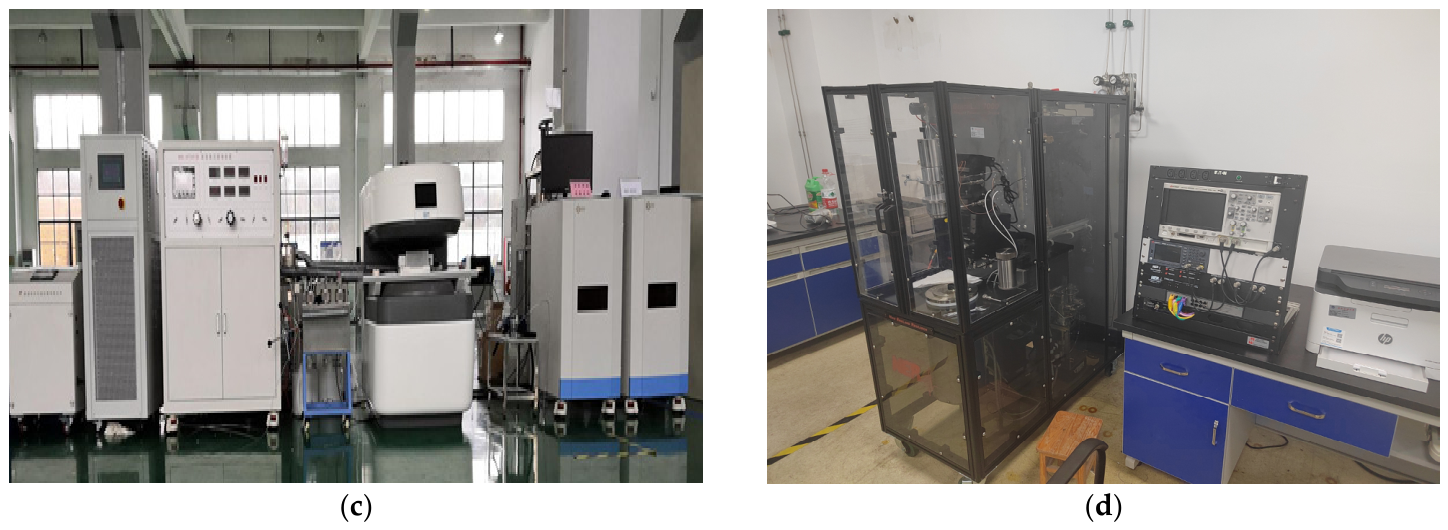
Two types of experiments were conducted: SC-CO2 matrix acidizing experiments and core porosity–permeability testing. The SC-CO2 matrix acidizing experiments were performed using an SC-CO2 and acid mixing device (Figure 6a), and SC-CO2 acidizing experimental setup (Figure 6b). The core porosity–permeability testing system consisted of an NMR device (Figure 6c) and a porosity–permeability testing device (Figure 6d).
Figure 6.
Experimental device. (a) CO2 and acid mixing device; (b) SC-CO2 acidizing device; (c) core NMR testing device; (d) porosity–permeability testing device.
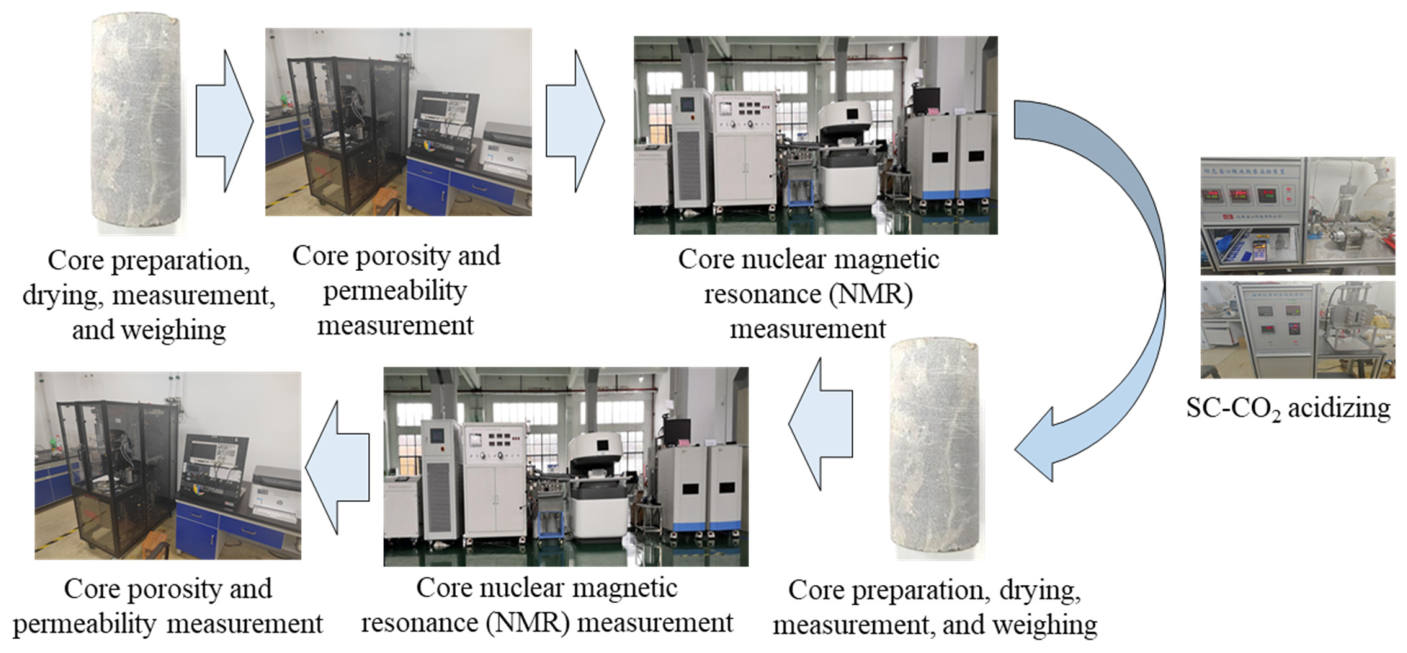
The experimental procedure is illustrated in Figure 7. The core porosity and permeability before acidizing were first measured using a porosity–permeability testing device. Subsequently, the pore structure of the core prior to acidizing was characterized via nuclear magnetic resonance (NMR). Then, an SC-CO2 acidizing device was employed to simulate the flow and reaction processes of SC-CO2+acid multi-component fluids in the rock matrix under reservoir conditions. Finally, the porosity and permeability of the core after acidizing were determined with the same porosity–permeability testing device, and the post-acidizing pore structure was obtained by NMR. This work reveals the variations in core porosity and permeability during SC-CO2 matrix acidizing. The detailed procedures are as follows:
Figure 7.
Main experimental flow chart.
- The core samples were cleaned thoroughly and dried to constant weight.
- The length and diameter of the core samples were measured, and their weights were weighed accurately.
- The core samples were placed into the porosity–permeability testing apparatus to determine their porosity and permeability before acidizing.
- The pore structure of the core samples prior to acidizing was characterized using nuclear magnetic resonance (NMR).
- The core samples were installed in the SC-CO2+acid multi-component displacement device, and the matrix acidizing experiment was initiated subsequently.
- The acidized core samples were cleaned thoroughly and dried to constant weight.
- The length, diameter and weight of the acidized core samples were measured and weighed again.
- The acidized core samples were placed into the porosity–permeability testing apparatus to test their porosity and permeability; the porosity and permeability change rates of the core samples before and after acidizing were calculated, with the calculation methods shown in Equations (1) and (2).
- Finally, the pore structure of the acidized core samples was obtained via nuclear magnetic resonance (NMR).
2.2.2. Experimental Parameter Determination
The pumping rate in field operations is 2~3 m3/min. Simulation results indicate a total fracture volume of 93.6 m3, a total fracture length of 278 m, and an average fracture width of 4 mm. Taking the average pumping rate of 2.5 m3/min, as shown in Equation (3), converting it using the contact ratio formula, the corresponding experimental injection rate is 0.52 mL/min; therefore, 0.5 mL/min was adopted in the experiments.
where Qf is the field pumping rate, m3/min; Af is the fracture area, m2; Ql is the experimental injection rate, mL/min; and Al is the cross-sectional area of the core, m2.
The geothermal gradient in the study area is 2.46~3.18 °C/100 m (average 2.8 °C/100 m), and the Majiagou Formation reservoir is buried at depths of 2500~4000 m, corresponding to reservoir temperatures of 70~110 °C. The experimental temperature was therefore set to 90 °C, the average reservoir temperature.
Logging data from this block indicate an average rock density of 2.71 g/cm3. The reservoir pressure coefficient ranges from 0.8 to 0.9, with an average of 0.82. The average overburden stress is 60 MPa and the average pore pressure is 20 MPa; as shown in Equation (4), according to the effective stress theory, the average effective stress is 40 MPa. Therefore, the confining pressure in the experiments was set to 40 MPa.
where σc is effective stress, MPa; σv is overburden stress, MPa; α is Biot coefficient, dimensionless; and Pp is pore pressure, MPa.
σc = σv − αPp
2.3. Experimental Schedule
In order to investigate the effects of SC-CO2 concentration and acid type on porosity and permeability improvement throughout matrix acidizing, experimental parameters including reaction temperature, back pressure, acid injection rate, and total acid injection time were kept constant. The experimental temperature was 90 °C, acid injection rate was 0.5 mL/min, total injection time was 30 min, and confining back pressure was 40 MPa. Both acid systems were based on 20% HCl. The specific experimental scheme is shown in Table 3.
Table 3.
Acidizing experiments scheme.
Experiments 1 and 4 investigate the effect of SC-CO2 acidizing on porosity and permeability, experiments 1 and 2 investigate the influence of SC-CO2 concentration, and experiments 1 and 3 investigate the effect of acid type. Due to the limited availability of outcrop cores with comparable initial properties, one core was used for each experimental condition in this study. This single-specimen design does not allow a statistical error analysis, which is a limitation of the present work; replicate experiments will be conducted in future studies to quantify the experimental uncertainty.
3. Results and Discussion
3.1. Characteristics of SC-CO2 Matrix Acidizing
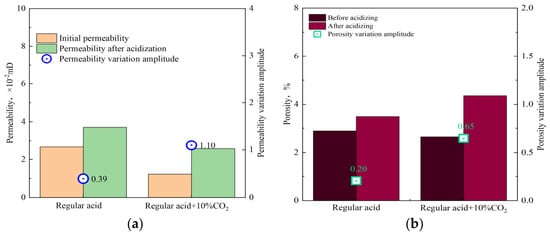
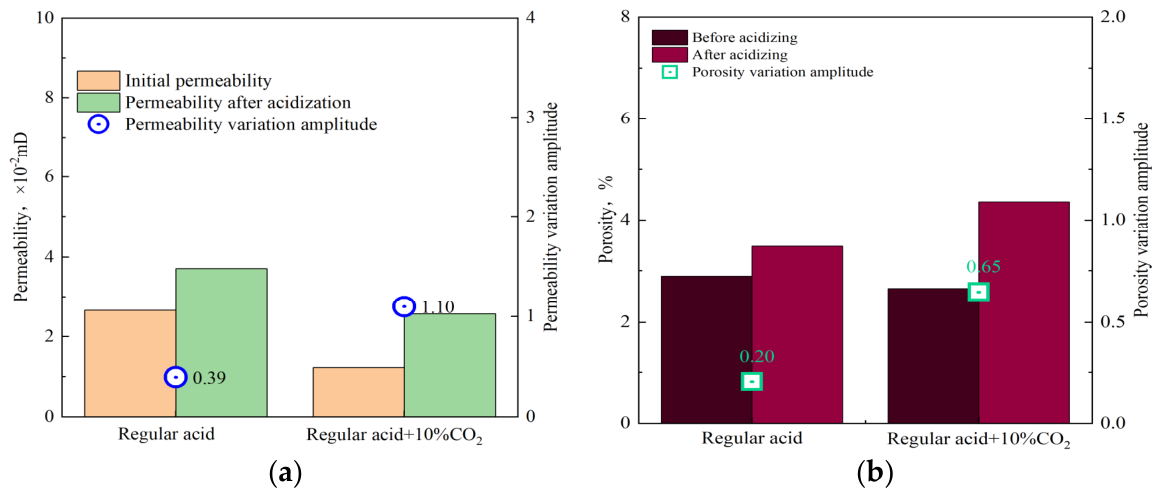
Compared with a single regular acid injection, the combination of SC-CO2 and acid significantly improved core porosity and permeability. After regular acidizing, the core permeability increased from 2.66 × 10⁻² mD to 3.71 × 10⁻² mD, representing a 39% improvement. In contrast, after acidizing with regular acid + 10% SC-CO2, the permeability increased from 1.22 × 10⁻² mD to 2.56 × 10⁻² mD, a remarkable 110% improvement (Figure 8a). For porosity, regular acidizing led to an increase from 2.89% to 3.48% (20% improvement), while regular acid + 10% SC-CO2 acidizing increased porosity from 2.65% to 4.36% (65% improvement) (Figure 8b).
Figure 8.
Comparison of porosity–permeability between single-acid injection and SC-CO2+acid combined acidizing. (a) Permeability variation of low-permeability core; (b) porosity variation of low-permeability core.
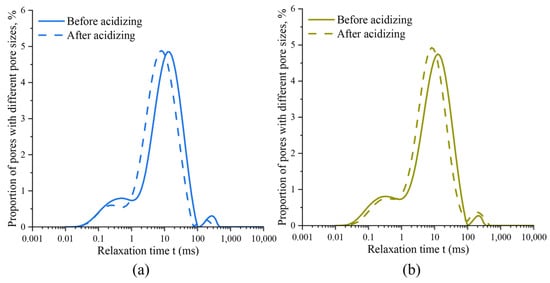
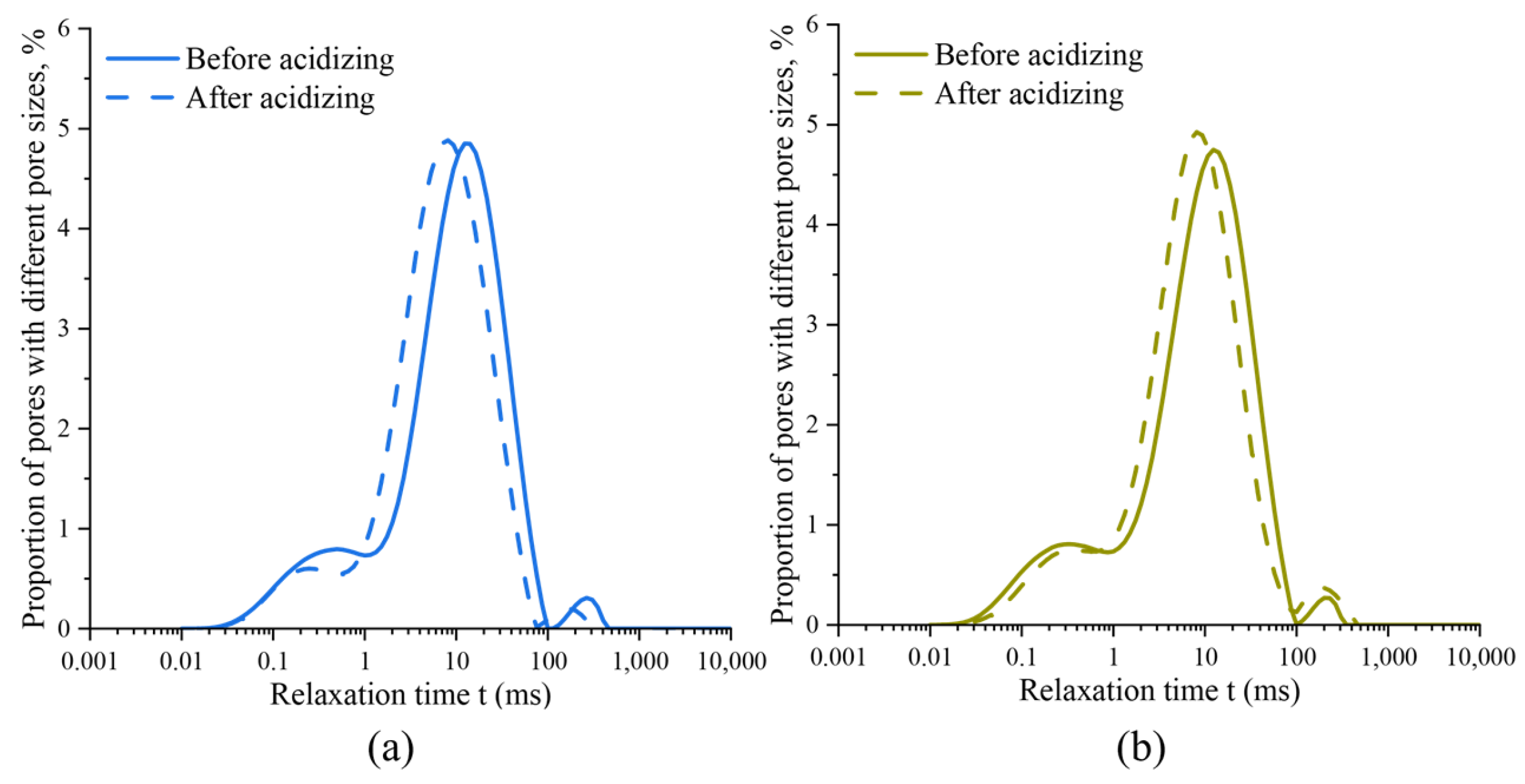
Figure 9 presents the NMR T spectra of cores after regular acidizing and regular acid + 10% SC-CO2 acidizing. The T value is positively correlated with pore size: smaller T values indicate smaller pores, and vice versa. As shown in Figure 9a, after regular acidizing, the T spectrum peak shifted mainly to the medium T interval (10 ms < T < 100 ms), indicating that some small pores (T < 10 ms) were dissolved and expanded into medium pores, increasing the proportion of medium pores. Additionally, some medium pores were further dissolved into small large pores (T > 100 ms), but the improvement in large pore proportion was limited. In contrast, Figure 9b shows that the T spectrum after regular acid + 10% SC-CO2 acidizing exhibited a multi-peak distribution. On one hand, a distinct small-pore peak appeared, suggesting the formation of new micro-pores during acidizing. On the other hand, the intensity of T peaks corresponding to medium and large pores increased significantly, indicating extensive dissolution and expansion of small and medium pores. Moreover, the results indicate that SC-CO2 enlarges the pore diameter of the core samples.
Figure 9.
Comparison of pore structure between single-acid injection and SC-CO2+acid combined acidizing. (a) Regular acid; (b) regular acid+10%SC-CO2.
3.2. Effecting Factors of SC-CO2 Matrix Acidizing
3.2.1. Effect of SC-CO2 Concentration
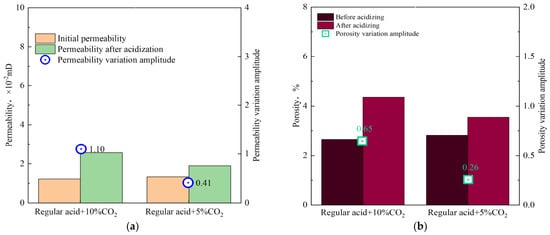
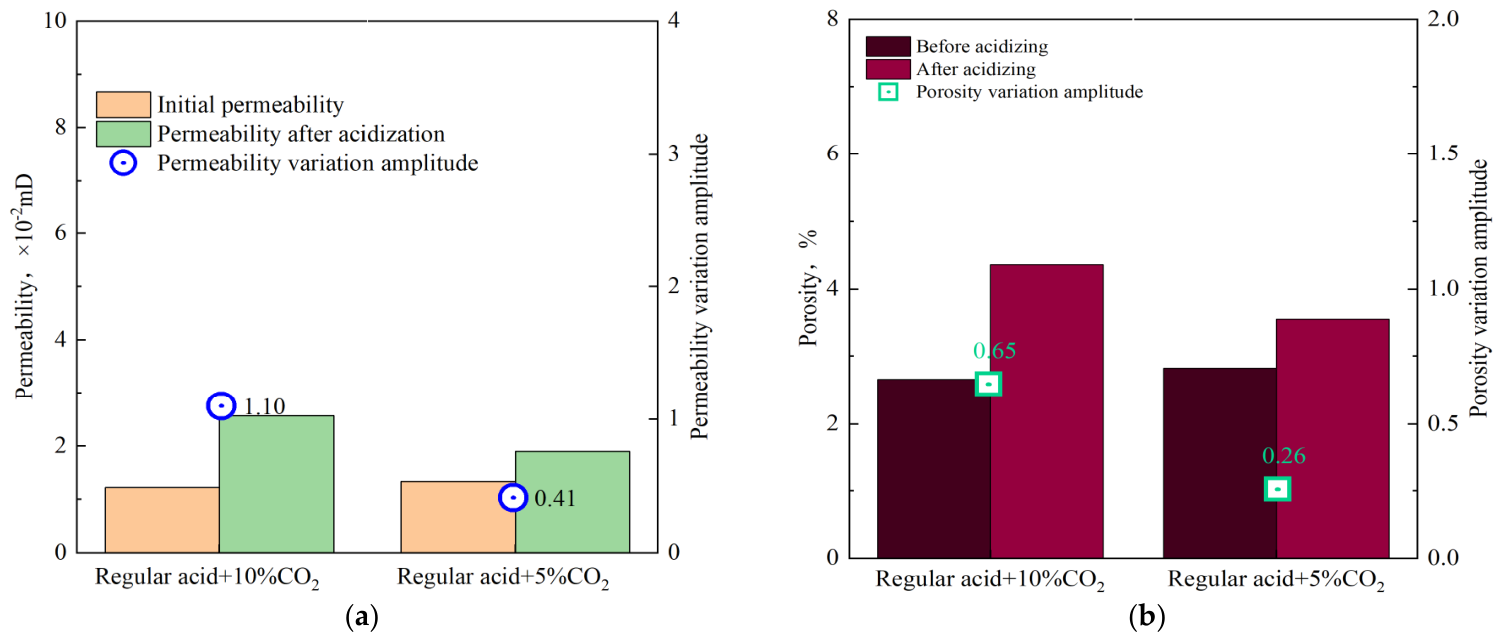
Figure 10 compares the changes in core porosity and permeability after acidizing with regular acid mixed with different SC-CO2 concentrations (5% and 10%). As shown in Figure 10a, regular acid + 5% SC-CO2 acidizing increased permeability from 1.34 × 10⁻² mD to 1.89 × 10⁻² mD (41% improvement), while regular acid + 10% SC-CO2 acidizing achieved a 110% permeability improvement, significantly higher than that of the 5% SC-CO2 concentration. For porosity (Figure 10b), regular acid + 5% SC-CO2 acidizing increased porosity from 2.82% to 3.54% (26% improvement), whereas regular acid + 10% SC-CO2 acidizing resulted in a 65% porosity improvement. These results indicate that the acidizing effect is significantly enhanced with increasing SC-CO2 concentration.
Figure 10.
Effect of SC-CO2 concentration on porosity and permeability. (a) Permeability variation of low-permeability core; (b) porosity variation of low-permeability core.
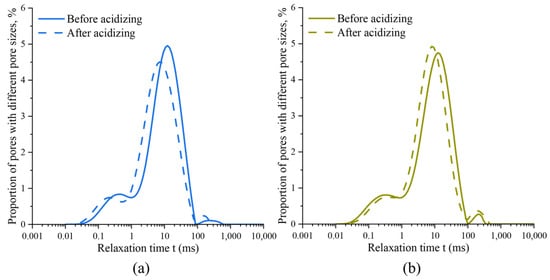
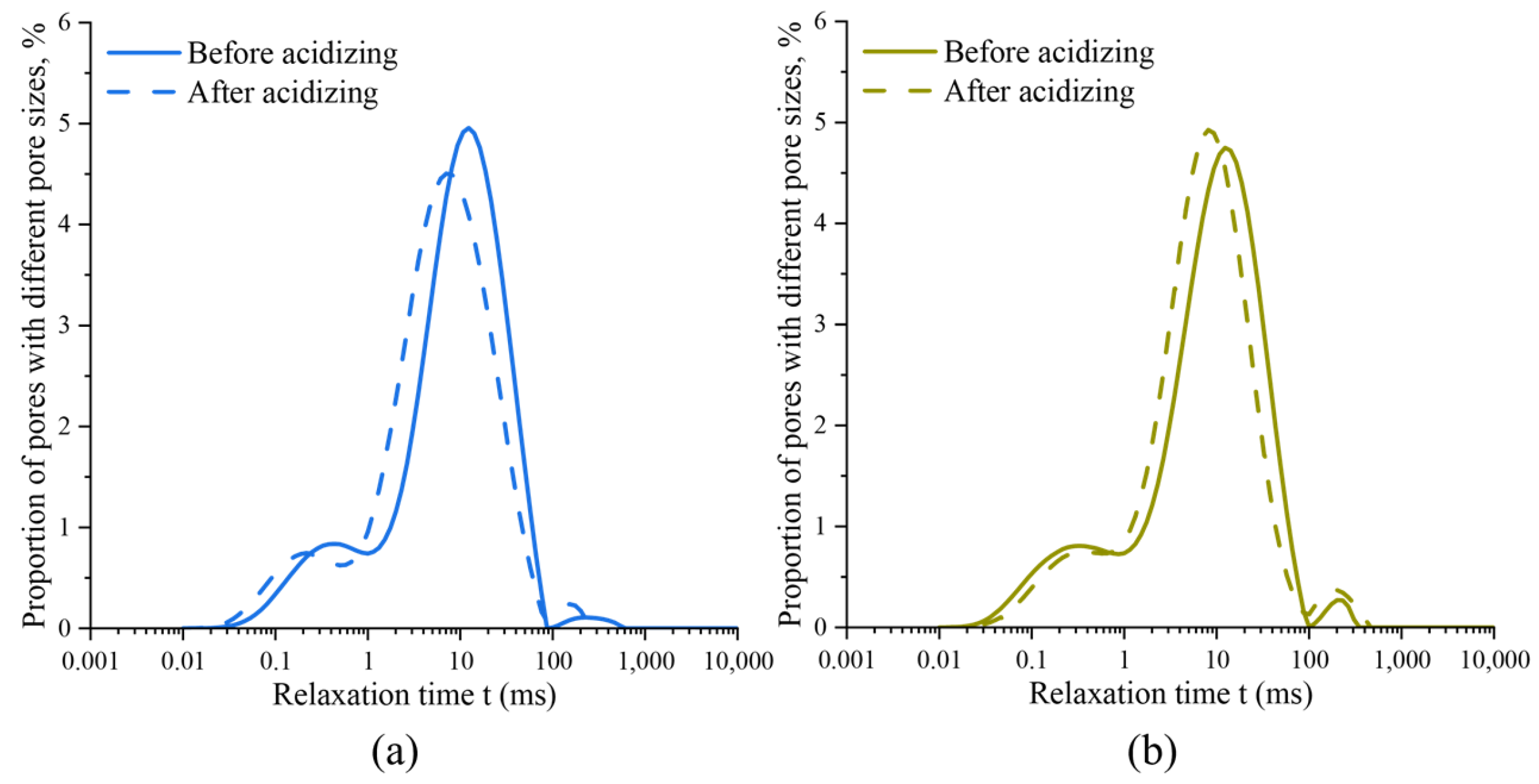
Figure 11 shows the NMR T spectra of cores after acidizing with different SC-CO2 concentrations. As shown in Figure 11a, after regular acid + 5% SC-CO2 acidizing, the T spectrum peaks were mainly concentrated in the small and medium pore intervals, with a significant increase in the proportion of small pores. Some small and medium pores were dissolved into smaller medium and large pores, but the improvement in large pore proportion was insignificant, indicating that low-concentration SC-CO2 has limited dissolution effect and tends to form small pores. In contrast, Figure 11b shows that after regular acid + 10% SC-CO2 acidizing, the T spectrum peaks shifted significantly to the medium and large pore intervals, with a substantial increase in the intensity of peaks corresponding to medium and large pores. This suggests that high-concentration SC-CO2 forms a stronger synergistic dissolution effect with acid, not only dissolving small and medium pores but also further expanding large pores and effectively connecting isolated pores, thereby significantly improving pore connectivity and achieving substantial enhancements in porosity and permeability.
Figure 11.
Effect of SC-CO2 concentration on pore structure. (a) Regular acid + 5%SC-CO2; (b) regular acid + 10%SC-CO2.
In summary, SC-CO2 concentration is a key factor influencing matrix acidizing performance. Lower concentrations result in poor pore expansion and permeability enhancement, with a tendency to form small pores. As SC-CO2 concentration increases, the synergistic dissolution effect with acid is strengthened, leading to deeper pore dissolution, improved pore connectivity, and greater improvements in porosity and permeability. It should be noted that only two SC-CO2 concentrations (5% and 10%) were tested in this study, so 10% cannot yet be regarded as the optimum concentration. The optimum value is expected to depend on the balance between the enhanced dissolution provided by SC-CO2 and the reduced acid volume fraction, as well as on field operational constraints such as pumping pressure and CO2 supply.
3.2.2. Effect of Acid Type
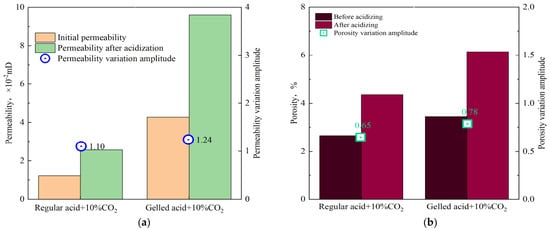
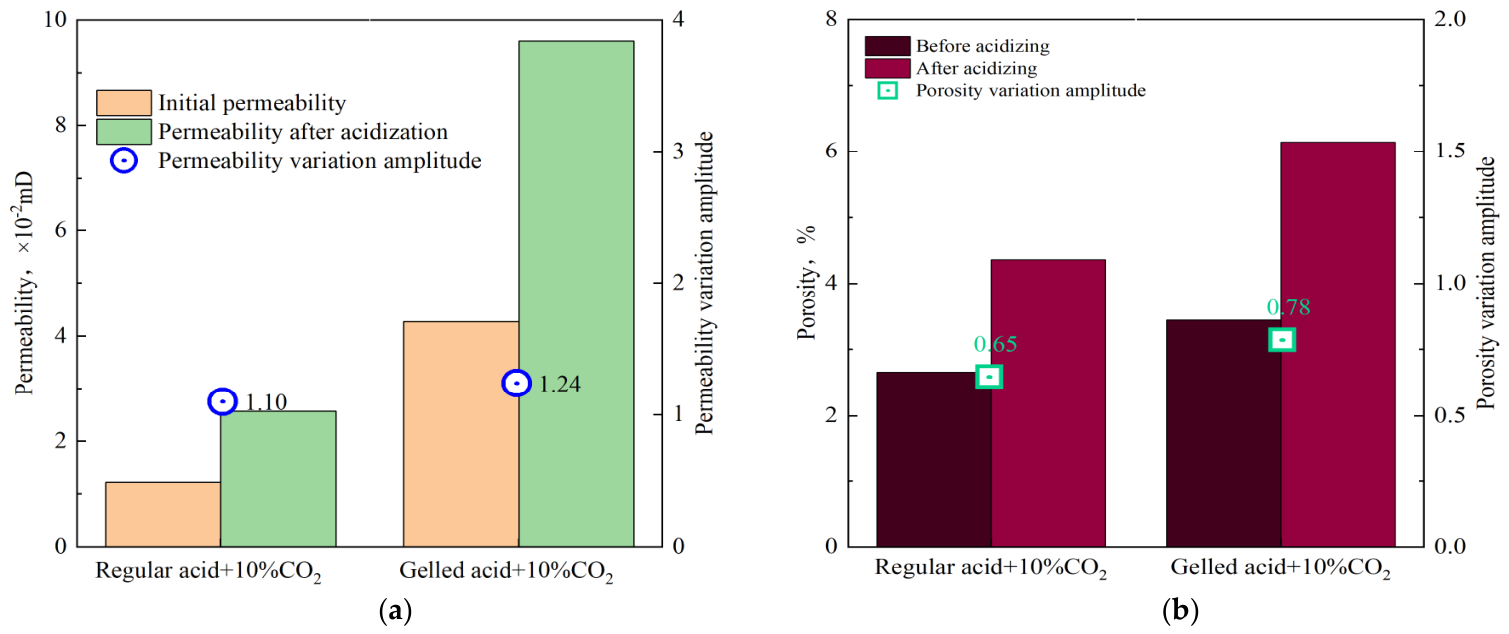
Figure 12 compares the changes in core porosity and permeability after acidizing with 10% SC-CO2 mixed with different acid types (regular acid and gelled acid). As shown in Figure 12a, regular acid + 10% SC-CO2 acidizing achieved a 110% permeability improvement, while gelled acid + 10% SC-CO2 acidizing increased permeability from 4.28 × 10⁻² to 9.60 × 10⁻² mD (124% improvement), outperforming the regular acid system. For porosity (Figure 12b), regular acid + 10% SC-CO2 acidizing led to a 65% improvement, whereas gelled acid + 10% SC-CO2 acidizing increased porosity from 3.44% to 6.14% (78% improvement), demonstrating more significant porosity–permeability improvements.
Figure 12.
Effect of acid type on porosity and permeability. (a) Permeability variation of low-permeability core; (b) porosity variation of low-permeability core.
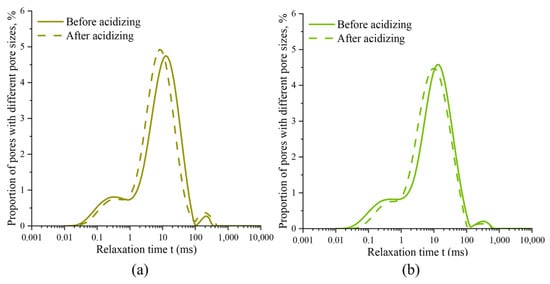
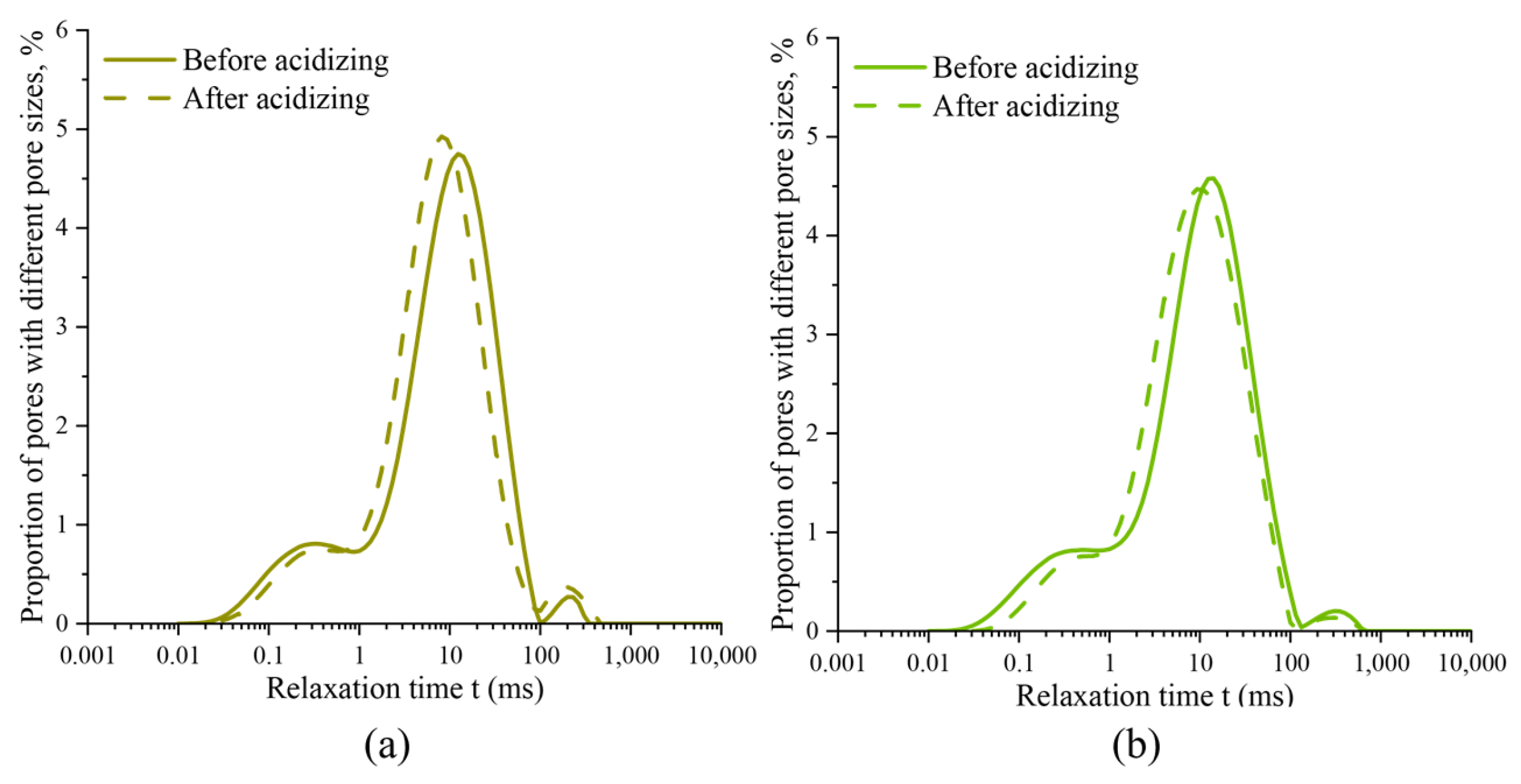
Figure 13 presents the NMR T spectra of cores after acidizing with 10% SC-CO2 mixed with different acid types. As shown in Figure 13a, regular acid + 10% SC-CO2 acidizing resulted in obvious dissolution of small, medium, and large pores, with a significant increase in the proportion of medium and large pores and improved pore connectivity. In contrast, Figure 13b shows that after gelled acid + 10% SC-CO2 acidizing, the T spectrum peaks were mainly concentrated in the medium pore interval, with a substantial increase in medium pore proportion and a noticeable decrease in small pore proportion. The dissolution of medium and large pores was relatively mild. This phenomenon is primarily attributed to the higher viscosity and stronger retarding capacity of gelled acid compared to regular acid, which prolongs the acid–rock reaction time and enables more uniform and sufficient dissolution.
Figure 13.
Effect of acid type on pore structure. (a) Regular acid + 10%SC-CO2; (b) gelled acid + 10%SC-CO2.
Comparing the acidizing performance of the two acid systems, gelled acid exhibits superior capacity to improve matrix porosity and permeability compared to regular acid. The pore size distributions of cores after acidizing with different acid types mixed with SC-CO2 are relatively similar, dominated by medium and large pores. However, gelled acid results in a higher proportion of medium pores and a more uniform pore structure.
3.3. Practical Limitations and Field-Scale Implications
The experimental results obtained at the core scale provide mechanistic insights, but several factors must be considered when transferring them to field-scale treatments. First, core-scale experiments cannot capture reservoir heterogeneity, natural fractures, or the in situ stress state; the improvement rates observed in this study should therefore be regarded as upper-bound indicators rather than direct predictions of well performance. Second, the field cases in Saudi Arabia and Kuwait demonstrate the feasibility of CO2-based acid fracturing at the well scale [11,12], suggesting that the laboratory trends identified here are directionally consistent with field observations. Nevertheless, pilot field tests in the Yan’an Gas Field are required to validate the laboratory conclusions under real reservoir conditions.
SC-CO2 acidizing also has economic, operational, technical, and environmental disadvantages that must be weighed against its benefits. Economically, CO2 supply, transportation, and high-pressure injection equipment increase the upfront cost relative to conventional acidizing, although partial savings may arise from reduced water consumption and improved flowback efficiency. Operationally, maintaining CO2 in a supercritical state requires strict control of wellhead pressure and temperature, and the strong cooling associated with CO2 injection may cause low-temperature damage to tubulars and wellhead equipment. Technically, the low viscosity of SC-CO2 can lead to early acid breakthrough in heterogeneous formations, and corrosion control is more demanding in the presence of carbonic acid. Environmentally, although part of the injected CO2 remains in the reservoir, incomplete retention leads to CO2 emissions during flowback; integrating the treatment with carbon capture, utilization, and storage (CCUS) schemes can mitigate this concern [13,14].
4. Conclusions
This study investigates the SC-CO2 matrix acidizing effect of carbonate rocks through comprehensive analysis of core porosity–permeability improvements and pore structure changes. The main conclusions are as follows:
- SC-CO2+acid combined matrix acidizing achieves better porosity and permeability improvements than single-acid regular acidizing. Compared with regular acidizing, the addition of SC-CO2 to acid promotes the dissolution of small pores, increases the proportion of medium pores, and enhances the proportion of large pores.
- Lower SC-CO2 concentrations lead to poor pore expansion and permeability enhancement, with a tendency to form small pores. As SC-CO2 concentration increases, the acidizing effect is significantly strengthened.
- Gelled acid exhibits superior capacity to improve matrix porosity and permeability compared to regular acid. The effects of gelled acid and regular acid mixed with SC-CO2 on core pore size distribution are relatively similar, with both systems favoring the development of medium and large pores.
Author Contributions
Conceptualization, C.L., B.G. and K.X.; Methodology, C.L., J.L. and K.X.; Validation: Y.G. and Q.H.; Formal analysis: C.L., J.L., Y.G. and K.X.; Investigation, C.L., Y.G., Q.H. and K.P.; Data curation: C.L., Y.G. and Q.H.; Writing—original draft, C.L. and K.P.; Writing—review and editing: C.L., B.G., J.L.; Visualization, C.L. and K.P. All authors have read and agreed to the published version of the manuscript.
Funding
This research was funded by Shaanxi Provincial Key Research and Development Program-General Project-Field of Future Emerging Industries, Study on the Regulation Mechanism of Supercritical CO2 Acid Fracturing Conductivity in Carbonate rocks of Yan’an Gas Field (2025CY-YBXM-612).
Data Availability Statement
We confirm that the data supporting the findings of this study are available within the article.
Conflicts of Interest
Author C.L., J.L., Y.G. and Q.H. were employed by the company Shaanxi Yanchang Petroleum (Group) Co., Ltd., Natural Gas Research Institute Branch. The authors declare that this study received funding from Shaanxi Provincial Key Research and Development Program (2025CY-YBXM-612). The funder was not involved in the study design, collection, analysis, interpretation of data, the writing of this article or the decision to submit it for publication.
References
- Guo, J.C.; Gou, B.; Qin, N.; Zhao, J.S.; Wu, L.; Wang, K.J.; Ren, J.C. An innovative concept on deep carbonate reservoir stimulation: Three-dimensional acid fracturing technology. Nat. Gas. Ind. B 2020, 7, 484–497. [Google Scholar] [CrossRef] [Scilit]
- Wang, Q.; Zhang, Y.; Xie, Z.; Zhao, Y.; Zhang, C.; Sun, C.; Wu, G. The Advancement and Challenges of Seismic Techniques for Ultra-Deep Carbonate Reservoir Exploitation in the Tarim Basin of Northwestern China. Energies 2022, 15, 7653. [Google Scholar] [CrossRef] [Scilit]
- Tian, K.; Qiao, X.; Zhou, J.; Xue, C.; Cao, J.; Yin, X.; Lv, S.; Zhugeng, B. Pore structure characteristics and influencing factors of dolomite reservoirs: A case study of the Lower Ordovician Majiagou Formation, Ordos Basin, China. Front. Earth Sci. 2024, 12, 1407967. [Google Scholar] [CrossRef] [Scilit]
- Wang, Y.; Chen, H.; Liu, Y.; Wang, S.; Han, C.; Li, Z.; Ma, Y. The structural and diagenetic coupling controls the distribution of deep carbonate rock reservoirs in the southern of Tahe Oilfield, Tarim Basin. Geosciences 2025, 15, 435. [Google Scholar] [CrossRef] [Scilit]
- Zhao, Y.; Gao, D.; Ngia, N.R.; Hu, M.; Zhao, S. Influence of sea-level changes and dolomitization on the formation of high-quality reservoirs in the Cambrian Longwangmiao Formation, central Sichuan Basin. J. Pet. Explor. Prod. Technol. 2025, 15, 99. [Google Scholar] [CrossRef] [Scilit]
- Lu, Y.Y.; Zhou, J.P.; Xian, X.F.; Tang, J.; Zhou, L.; Jiang, Y.; Xia, B.; Wang, X.; Kang, Y. Research progress and prospect of the integrated supercritical CO2 enhanced shale gas recovery and geological sequestration. Nat. Gas. Ind. 2021, 41, 60–73. [Google Scholar]
- Zou, C.; Wu, S.; Yang, Z.; Pan, S.; Wang, G.; Jiang, X.; Guan, M.; Yu, C.; Yu, Z.; Shen, Y. Progress, challenge and significance of building a carbon industry system in the context of carbon neutrality strategy. Petro. Exp. Dev. 2023, 50, 210–228. [Google Scholar] [CrossRef] [Scilit]
- Wang, X.Z.; Guo, X.; Sun, X. Basic research and technological progress of CO2 fracturing. Pet. Sci. Bull. 2024, 9, 931–943. [Google Scholar]
- Wu, L.; Luo, Z.F.; Zhao, L.Q.; Yao, Z.G.; Jia, Y.C. Study on Welobore “Temperature & Pressure and Phase Control in Supercritical Carbon Dioxide Fracturing. J. Southwest Pet. Univ. (Sci. Technol. Ed.) 2023, 45, 117–125. [Google Scholar]
- Abdullah, A.; Al-Othman, M.; AL-Enezi, A.; Meshari, S.; Mohammad, A.; Mohammad, A.; Kutbuddin, B.; Alaa, A.; Amr, A.; Walid, E. First CO2 Energized-Fracturing Technology in Highly Depleted and Tight Reservoir Unlocks Vast Potential: Case Study from North Kuwait Field. In Proceedings of the ADIPEC, Abu Dhabi, United Arab Emirates, 31 October–3 November 2022. [Google Scholar]
- Malik, A.R.; Dashash, A.A.; Driweesh, S.M.; Yousef, M.N.; Eduardo, S.; Alfredo, L. Successful Implementation of CO2 Energized Acid Fracturing Treatment in Deep, Tight and Sour Carbonate Gas Reservoir in Saudi Arabia that Reduced Fresh Water Consumption and Enhanced Well Performance. In Proceedings of the SPE Middle East Oil & Gas Show and Conference, Manama, Bahrain, 8–11 March 2015. [Google Scholar]
- Al-Muhanna, D.; Ahmed, Z.; Al-Qallaf, A.; Ayo, A.; Mohammad, A.; Erkan, F.; Yousef, A.S.; Moudi, A.A. Successful Completion of First Ever CO2-Foamed Hydraulic Acid Fracturing Campaign in Jurassic Gas Wells of KOC Delivering Exemplary Well Clean Up and Production Performance. In Proceedings of the ADIPEC, Abu Dhabi, United Arab Emirates, 31 October–3 November 2022. [Google Scholar]
- Bui, M.; Adjiman, C.S.; Bardow, A.; Anthony, E.J.; Boston, A.; Brown, S.; Fennell, P.S.; Fuss, S.; Galindo, A.; Hackett, L.A.; et al. Carbon capture and storage (CCS): The way forward. Energy Environ. Sci. 2018, 11, 1062–1176. [Google Scholar] [CrossRef] [Scilit]
- Bachu, S. Review of CO2 storage efficiency in deep saline aquifers. Int. J. Greenh. Gas Control 2015, 40, 188–202. [Google Scholar] [CrossRef] [Scilit]
- Jia, B.; Tsau, J.S.; Barati, R. A review of the current progress of CO2 injection EOR and carbon storage in shale oil reservoirs. Fuel 2019, 236, 404–427. [Google Scholar] [CrossRef] [Scilit]
- Cheng, H.; Zhu, D.; Hill, A.D. The effect of evolved CO2 on wormhole propagation in carbonate acidizing. SPE Prod. Oper. 2016, 32, 325–332. [Google Scholar] [CrossRef] [Scilit]
- Yan, Y.; Xi, Q.; Una, C.; He, B.; Wu, C.; Dou, L. A novel acidizing technology in carbonate reservoir: In-Situ formation of CO2 foamed acid and its self-diversion. Colloids Surf. A Physicochem. Eng. Asp. 2019, 580, 123787. [Google Scholar] [CrossRef] [Scilit]
- Kartini, R.; Kim, Y.; Lee, W. Evaluation of surfactant mixture for supercritical carbon dioxide foamed acid in carbonate matrix acidizing. Energies 2021, 14, 6567. [Google Scholar] [CrossRef] [Scilit]
- Alarji, H.; Clark, S.; Lieb, K.R. The effect of different CO2 phases on wormhole development in carbonate rocks. J. Nat. Gas. Sci. Eng. 2022, 108, 104779. [Google Scholar] [CrossRef] [Scilit]
- Khojastehmehr, M.; Bazargan, M.; Masihi, M. Reviewing CO2 dynamics in acidizing carbonate reservoirs: Mechanisms, impacts, and models. Geoenergy Sci. Eng. 2025, 249, 213767. [Google Scholar] [CrossRef] [Scilit]
- Zhang, X.; Lu, Y.; Tang, J.; Zhou, Z.; Liao, Y. Experimental study on fracture initiation and propagation in shale using supercritical carbon dioxide fracturing. Fuel 2017, 190, 370–378. [Google Scholar] [CrossRef] [Scilit]
- Middleton, R.S.; Carey, J.W.; Currier, R.P.; Hyman, J.D.; Kang, Q.; Karra, S.; Jiménez-Martínez, J.; Porter, M.L.; Viswanathan, H.S. Shale gas and non-aqueous fracturing fluids: Opportunities and challenges for supercritical CO2. Appl. Energy 2015, 147, 500–509. [Google Scholar] [CrossRef] [Scilit]

Disclaimer/Publisher’s Note: The statements, opinions and data contained in all publications are solely those of the individual author(s) and contributor(s) and not of MDPI and/or the editor(s). MDPI and/or the editor(s) disclaim responsibility for any injury to people or property resulting from any ideas, methods, instructions or products referred to in the content. |
© 2026 by the authors. Licensee MDPI, Basel, Switzerland. This article is an open access article distributed under the terms and conditions of the Creative Commons Attribution (CC BY) license.