


Abstract
As a disruptive technology to overcome the bottlenecks of conventional mechanical excavation and blasting, microwave-assisted rock fragmentation demonstrates tremendous potential in deep geo-resource development and extreme-environment engineering. This paper presents a comprehensive review of the latest advances in this field, thoroughly dissecting the electromagnetic–thermal–mechanical–chemical (THMC) multi-field coupling mechanisms governing microwave–rock interactions. Particular emphasis is placed on elucidating the mechanisms of thermal stress fracturing, phase-transition expansion, and thermo-chemical coupling damage triggered by mineral dielectric heterogeneity. The nonlinear effects of microwave radiation parameters, intrinsic rock properties, and complex in-situ stress environments on fracturing efficiency are rigorously analyzed, and precision multi-scale characterization methodologies—from macroscopic mechanical degradation to microscopic fracture networks—are comprehensively summarized. Building upon this foundation, the paper critically evaluates the current engineering application status and electromagnetic safety shielding challenges of this technology in frontier scenarios, including microwave-assisted tunnel boring machines (TBM), intelligent mineral sorting, deep unconventional oil and gas fracturing, and space in-situ resource utilization (ISRU). Finally, the limitations of existing research regarding cross-scale effects, high-temperature and high-pressure in-situ testing, and dynamic intelligent control are identified, and future development pathways oriented toward multi-source data fusion and adaptive power modulation are prospected, aiming to provide robust theoretical support and forward-looking guidance for the cross-scale engineering transformation of microwave rock-breaking technology.
1. Introduction
With the continuous advancement of global deep geo-resource development, deep underground space utilization, and the construction of cross-basin deeply buried traffic tunnels (such as mega-projects exemplified by the Sichuan–Tibet Railway), underground engineering is facing unprecedented extreme geological challenges. In complex occurrence environments characterized by burial depths exceeding one kilometer, high in-situ stress (often reaching tens of megapascals), high ground temperature, and high pore pressure, conventional mechanical rock fragmentation methods (such as full-face tunnel boring machines (TBM), boom-type roadheaders, and roller-bit drills) encounter insurmountable physical bottlenecks when confronting high-strength, highly abrasive hard rocks (e.g., granite, basalt, and quartzite). Specifically, cutter wear increases substantially, cutter penetration depths can decrease to very low levels, specific energy consumption for rock breakage rises sharply, and the prohibitive costs associated with cutter replacement downtime severely constrain construction progress [1]. Furthermore, life-cycle comparisons show that the environmental performance of drill-and-blast and mechanical extraction is scenario-dependent: blasting may have a lower global-warming impact in some cases, but can generate substantially higher PM2.5, PM10, and total suspended particulate emissions [2]. Against this backdrop, breaking away from the traditional paradigms of “pure mechanical” or “chemical explosive” excavation and exploring non-explosive, continuous, and green thermal-assisted rock fragmentation technologies have become core scientific issues urgently requiring resolution in the fields of rock mechanics and underground engineering (as shown in Figure 1).
Figure 1.
Schematic diagram of the microwave-mechanical rock fragmentation system (Reprinted with permission from Ref. [3]. Copyright 2026, Chinese Academy of Sciences).
As a novel rock pretreatment methodology with tremendous disruptive potential, microwave-assisted mechanical rock fragmentation technology has undergone an evolutionary trajectory from conceptual inception to the deepening of multi-field coupling theory. Lindroth et al. developed a microwave-assisted hard-rock cutting apparatus in the early 1990s [4], and subsequent theoretical and experimental developments have been summarized by Lu et al. [5]. An early review by Kingman and Rowson summarized advances in microwave treatment of minerals, including fundamental heating studies, microwave-assisted grinding, and potential applications in extractive metallurgy [6]. The heating mechanism of microwaves (typically operating at frequencies between 300 MHz and 300 GHz) fundamentally differs from conventional heat conduction, convection, and radiation. Microwave energy absorption is controlled by the temperature-dependent dielectric and thermophysical properties of the rock and its constituent minerals [7]. Owing to the fact that natural rock is a heterogeneous aggregate composed of multiple minerals, distinct minerals exhibit significant differences in microwave absorption capacity (dielectric properties) and thermal expansion coefficients. This heterogeneity can lead to localized temperature gradients within the rock under alternating high-frequency electromagnetic fields [7,8]. Under the free-boundary conditions typical of laboratory cavities, when local thermal stresses exceed the tensile or shear strength thresholds of the rock, abundant microcracks are induced at mineral grain boundaries and within grains, thereby substantially degrading the macroscopic mechanical strength of the rock. The theoretical framework of microwave-assisted rock fragmentation has evolved from early single thermoelastic models based on continuous wave (CW) heating to encompass complex physical mechanisms including the thermal fatigue effects of high-energy pulsed microwaves, electromagnetic–thermal–mechanical (THM) coupling responses in multiphase water–mineral matrix media, and the nonlinear evolution of temperature-dependent dielectric parameters.
Extensive empirical investigations have demonstrated that integrating microwave energy with conventional mechanical excavation equipment can effectively reduce the specific energy (SE) required for rock fragmentation, increase the amount of rock broken, and reduce cutter forces in controlled laboratory cutting tests [9]. Nevertheless, although laboratory-scale mechanistic studies have reached relative maturity, the technology still confronts numerous methodological and engineering challenges in its transition toward large-scale industrial deployment. Existing studies, including that of Lu et al. [10], have largely been confined to laboratory conditions and small-scale specimens. A comprehensive critique and synthesis remain lacking for critical bottlenecks such as the crack closure suppression effect in deep high-stress environments, scale effects under complex electromagnetic field distributions, and electromagnetic safety shielding for high-power microwave systems.
Existing reviews in this field have primarily concentrated on either fundamental dielectric heating mechanisms of minerals or experimental optimization of cavity configurations and breakage efficiencies for specific lithologies. The present review distinguishes itself by integrating the chemical component into the THMC multi-field coupling framework, foregrounding the suppressive effects of deep high-stress environments on thermal fracturing, and evaluating cross-scale engineering translation pathways from microscopic mineral heterogeneity to macroscopic equipment integration that have not been holistically addressed in earlier surveys. Additionally, this review organizes multi-scale damage characterization methodologies into a structured methodological matrix spanning macroscopic cutting indices, mesoscopic tomographic imaging, and microscopic fracture network analysis, rather than presenting isolated technique summaries. A further distinguishing feature is the critical examination of environmental modulation effects, including the suppressive influence of triaxial confining pressure on dielectric response and crack propagation, a dimension largely absent from reviews confined to free-boundary laboratory states. Despite their contrasting boundary conditions, deep underground and space applications can be unified within the broader framework of environmental modulation effects, in which stress, pressure, gravity, and heat-transfer conditions regulate microwave–rock interactions.
In light of the above, this paper aims to comprehensively dissect the theoretical underpinnings of the electromagnetic–thermal–mechanical–chemical (THMC) multi-field coupling that governs microwave-induced rock fragmentation, comprehensively synthesize the key nonlinear influencing factors elucidated in experimental studies, thoroughly investigate advanced multi-scale characterization methodologies for rock damage, and critically evaluate the engineering application prospects and future breakthrough directions of this technology across frontier domains including tunnel engineering, mineral processing, deep geo-energy development, and space in-situ resource utilization (ISRU). Ultimately, this work seeks to provide robust theoretical support and forward-looking guidance for the cross-scale engineering transformation of microwave-assisted rock fragmentation technology.
1.1. Literature Search and Review Methodology
To provide a comprehensive overview of recent advances in microwave-assisted rock fragmentation technology, the relevant literature was collected from major academic databases, including Web of Science, Scopus, and Google Scholar. The literature search focused on a combination of keywords related to microwave–rock interactions, microwave-assisted rock fragmentation, microwave-assisted excavation, microwave drilling, reservoir stimulation, electromagnetic applications, and space in-situ resource utilization (ISRU). Representative keywords included “microwave-assisted rock fragmentation”, “microwave-assisted rock breakage”, “microwave-induced rock fracture”, “microwave-assisted comminution”, “microwave pretreatment of rock”, “microwave-assisted excavation”, “microwave drilling”, and related terms.
Publications from 1990 to 2026 were considered, with particular attention given to recent studies published after 2015 while also incorporating earlier landmark studies that established the fundamental mechanisms of microwave–rock interactions. The collected literature was evaluated based on research relevance, scientific significance, and contribution to the understanding of electromagnetic–thermal–mechanical–chemical coupling mechanisms, damage characterization methods, and engineering applications. The selected studies were subsequently organized according to major research themes, including fundamental mechanisms, experimental investigations, numerical modelling, and emerging engineering applications.
1.2. Historical Development and Research Trends
To summarize the historical development and research trends of microwave-assisted rock fragmentation technology, Figure 2 presents a schematic timeline illustrating three major developmental stages: Stage I, Incubation: Concept Development and Early Experimental Studies (1990–2005); Stage II, Mechanistic Understanding and Lab-Scale Prototype Exploration (2006–2015); and Stage III, Multi-Field Coupling and Engineering-Scale Translation (2016–present). The temporal boundaries between these stages are intended as approximate milestones marking shifts in the dominant research focus rather than rigid chronological cut-offs, as different research themes partially overlap across adjacent periods. These stages reflect the progressive evolution of microwave-assisted rock fragmentation from early conceptual development and proof-of-concept experiments, through mechanistic elucidation and laboratory-scale prototype exploration, toward multi-field integration and engineering-scale translation. Representative studies are selected to highlight key technological advances and major research directions during different developmental stages.
Figure 2.
Historical evolution of microwave-assisted rock fragmentation research. The representative studies shown include Lindroth et al. [4], Jerby et al. [11], Hassani and Nekoovaght [12], Meisels et al. [13], Shadi et al. [14], and Feng et al. [15].
Figure 3 summarizes the major research directions and representative contributions in microwave-assisted rock fragmentation. Five interconnected research themes can be identified: (i) dielectric theory and selective heating mechanisms, focusing on the fundamental understanding of electromagnetic energy absorption and mineral heterogeneity; (ii) microwave-assisted excavation and TBM integration, emphasizing the application of microwave pretreatment in mechanical rock excavation; (iii) multi-scale damage characterization, involving experimental techniques for revealing fracture evolution from microscopic to macroscopic scales; (iv) numerical modelling and multi-field coupling, focusing on the simulation of electromagnetic, thermal, mechanical, and chemical interactions; and (v) space-related applications and lunar in-situ resource utilization (ISRU), extending microwave-assisted rock fragmentation concepts toward extraterrestrial resource exploration. These research themes reflect the progressive development of this field from fundamental mechanism investigation toward engineering-oriented applications.
Figure 3.
Major research themes and representative research groups in microwave-assisted rock fragmentation.
Table 1 summarizes representative studies according to their chronological development and major scientific contributions. These research themes reveal a clear developmental trajectory: from early single-physics (electromagnetic–thermal) investigations, through mechanistic studies and lab-scale prototype exploration, toward multi-field coupled frameworks and engineering-scale translation. Notably, while previous reviews have mainly focused on fundamental dielectric heating mechanisms or experimental optimization of microwave treatment conditions for specific lithologies, this review further considers chemical effects within the THMC framework, the influence of deep high-stress environments, and the transition from multi-scale damage understanding to engineering implementation.
Table 1.
Representative research themes and major contributions in microwave-assisted rock fragmentation.
2. Theoretical Foundations and Multi-Field Coupling Mechanisms
2.1. Electromagnetic and Thermodynamic Response Principles of Microwave Heating
The essence of microwave heating of rock is the efficient dissipation of electromagnetic energy into thermal energy, a complex physical phenomenon strictly governed by Maxwell’s Equations in classical electrodynamics. A recent numerical study developed and validated a coupled electromagnetic–thermal–flow–radiation model for microwave heating of rocks [16]. Haque provided an early comprehensive review of microwave energy applications in mineral treatment and metal recovery processes [17]. When high-frequency electromagnetic waves penetrate dielectric materials (such as natural rock), polar molecules, bound charges, and interfacial dipoles at mineral phase boundaries within the material undergo high-frequency flipping, displacement, and friction driven by the alternating electromagnetic field. Taking the industrially most commonly used frequency of 2.45 GHz as an example, the electromagnetic field direction reverses billions of times per second. Due to the inertia of internal particles and the viscous resistance they encounter, the polarization response cannot fully keep pace with the high-frequency switching of the electromagnetic field. Microwave absorption generates heterogeneous temperature and stress fields within the rock [13]. Such volumetric heating and selective heating mechanisms fundamentally overturn the conventional gradient heating mode of heat conduction from the surface inward, providing the physical prerequisite for thermal stress concentration within the rock (as shown in Figure 4).
Figure 4.
Schematic diagram of electromagnetic–thermal coupling and selective heating mechanisms in microwave–rock interactions: (a) evolution of non-uniform temperature fields and typical heating curves induced by volumetric and selective heating; (b) heating rate variation in Fe-bearing silicate minerals (diopside, biotite, and hornblende) with increasing iron content; (c) analytical calculation framework for thermal stresses induced by dielectric heterogeneity in a plagioclase-ilmenite inclusion system. (Reprinted with permission from Ref. [18]. Copyright 2024, Chen et al.).
Whittles et al. demonstrated through numerical modelling that microwave power density significantly affects stress formation in ore samples [19]. However, existing studies often simplify the aforementioned dielectric parameters as temperature-independent constants when addressing large temperature-difference conditions, an idealized assumption that inevitably introduces systematic deviations. Research has documented that the complex permittivity of industrially relevant ores varies with temperature and frequency [20]. Such a temperature–dielectric–heating positive feedback loop can trigger thermal runaway in reservoir rocks, as experimentally observed in sandstone and shale [21].
Beyond local power deposition, the spatial energy attenuation characteristics of microwave propagation in heterogeneous rock media are equally critical, and the energy transmission capability is quantified by the penetration depth (). The penetration depth is rigorously defined as the propagation distance at which the microwave electric field amplitude attenuates to a fraction of its surface value or the power decays to a specific proportion; its derivation is based on the complex wave-number solution of the Helmholtz equation in dissipative media [14]. Studies have shown that the penetration depth is negatively correlated with mineral electrical conductivity and dielectric loss: for strongly microwave-absorbing minerals (with high electrical conductivity or high ), the penetration depth is extremely small, and electromagnetic energy is rapidly converted into thermal energy primarily within the shallow rock layer, forming an intense surface thermal shock; conversely, for weakly absorbing rocks (such as pure quartz sandstone or the transparent silicate matrix of granite), the penetration depth is relatively large, allowing microwaves to penetrate deep into the rock mass. Regarding engineering frequency-band selection, academia has long witnessed a technical-route debate between 915 MHz and 2.45 GHz (and even the emerging 5.8 GHz option). Research indicates that a 915 MHz high-power microwave source can produce a larger penetration depth and fracture range than a 2.45 GHz source; in one hard-rock test, the fracture range reached approximately 160 mm, about three times that obtained at 2.45 GHz [15]. Nevertheless, the latest frontier comparative analyses point out that blindly pursuing lower frequencies to increase penetration depth leads to a significant decline in electromagnetic-to-thermal conversion efficiency, and the bulky volume and weight of high-power low-frequency magnetrons are difficult to reconcile with the integration requirements of mobile platforms (such as TBM cutterheads). Consequently, the current research trend has shifted toward multi-band collaborative or dynamic frequency modulation technologies, seeking Pareto optimality between penetration depth and energy utilization efficiency.
Frequency–lithology–application trade-offs. The selection of microwave frequency must reconcile the competing demands of penetration depth, energy concentration, and equipment integration constraints. Lower frequencies such as 915 MHz generally offer deeper penetration into the rock mass, which may be advantageous for achieving broader fracturing ranges in strongly microwave-absorbing lithologies such as basalt. In contrast, higher frequencies in the 2.45 GHz range tend to concentrate energy more superficially, potentially promoting rapid surface thermal shock and microcrack initiation in weakly absorbing rocks such as granite, where deep volumetric heating is less critical. The emerging 5.8 GHz option appears to follow this trend toward even more localized energy deposition, though published experimental data on its rock fragmentation performance remain limited.
From an equipment perspective, 2.45 GHz technology currently dominates laboratory and pilot-scale systems owing to its mature magnetron manufacturing base and compact waveguide dimensions. Lower-frequency hardware requires larger antenna structures that may present integration challenges on mobile platforms such as TBM cutterheads. A tentative optimization framework can therefore be outlined: 915 MHz may be preferred for scenarios emphasizing deep penetration and bulk heating in highly absorbent formations; 2.45 GHz appears to offer a practical compromise between penetration depth, energy concentration, and system portability for general hard-rock pretreatment; while 5.8 GHz may warrant consideration for surface-selective treatments once sufficient experimental validation becomes available. Dynamic frequency modulation or multi-band collaborative architectures that adapt to real-time lithology identification could potentially mitigate the inherent trade-offs of any single frequency.
Furthermore, the physical environmental state of the rock, particularly the confining pressure and pore structure, exerts a non-negligible modulating effect on its electromagnetic–thermal response. Joint in-situ testing and numerical simulation studies have revealed that fabrication pressure or in-situ triaxial confining pressure exerts a significant suppressive effect on the dielectric properties of both synthetic rocks and natural core samples. From a micromechanical perspective, as effective stress increases, micro-pores and primary fractures within the rock are forced to compact and close, leading to an increased contact area between mineral grains and a consequent weakening of interfacial polarization; simultaneously, the expulsion of pore water reduces the volume fraction of high-loss polar molecules. Macroscopically, this manifests as follows: the greater the pressure, the lower the overall equivalent dielectric loss factor of the rock, the larger the microwave penetration depth, and the lower the average heating rate. This finding carries major implications for deep underground engineering, indicating that in deep high-stress environments, the microwave energy absorption efficiency of rock masses will degrade due to the compaction effect. However, current in-situ measurement techniques for rock dielectric parameters under coupled high-temperature and high-pressure conditions still suffer from considerable limitations; existing coaxial probe methods are highly prone to sealing failure and electromagnetic leakage under extreme temperatures and ultra-high confining pressures, resulting in substantial errors in high-frequency dielectric spectroscopy data. Monti et al. developed a high-resolution dielectric characterization methodology for minerals, representing a significant step toward quantifying the basic microwave–mineral interactions under controlled laboratory conditions [22]. In the future, research should prioritize high-temperature, high-pressure, in-situ broadband dielectric testing systems based on resonant cavity perturbation or free-space transmission methods, so as to fill the gap in fundamental rock electromagnetic–thermodynamic data under extreme environmental conditions.
2.2. Mineralogical Heterogeneity and Thermal Stress Fracture Mechanics
Natural rock is not an ideal homogeneous continuous medium, but rather a complex heterogeneous aggregate interwoven with multiple mineral grains, micro-pores, and primary fractures. The macroscopic mechanical response of rock in a microwave field is essentially an emergent property arising from the spatial topological distribution of its microscopic mineral constituents and the disparities in their electromagnetic–thermal physical properties. Kingman et al. demonstrated that the effectiveness of microwave-assisted grinding depends strongly on the mineral species present, mineral particle size, and degree of dissemination [23]. In unconfined laboratory specimens, under microwave irradiation, rock-forming minerals exhibit markedly disparate heating rates due to significant differences in their dielectric characteristics. For microwave processing, rock-forming minerals are commonly described as microwave-transparent materials, strongly microwave-absorbing materials, or materials exhibiting intermediate microwave responses [24]. However, this tripartite classification is overly simplistic for practical rock mass applications. Taking the Fe-bearing silicate minerals shown in Figure 4b (e.g., diopside, biotite, and hornblende) as an example, these minerals exhibit moderate dielectric loss characteristics that are strongly dependent on iron content due to the presence of Fe2+/Fe3+ ions in their crystal lattices; their microwave heating rate increases monotonically with iron content, yet remains overall far below that of strongly microwave-absorbing minerals such as pyrite and magnetite. In natural granite and basalt, these Fe-bearing silicate minerals commonly occur as discrete inclusions or banded disseminations within transparent matrices such as quartz and feldspar, constituting a critical thermal stress transition zone between the binary system of transparent matrix—strongly absorbing mineral. Early homogenization models based on effective medium theory often neglected the thermodynamic contribution of this transition zone, simply classifying it as the transparent matrix; this may significantly underestimate the amplitude of local electromagnetic field distortion and thermal stress concentration when dealing with gabbro and basalt containing high contents of mafic minerals. Further research has revealed that the microwave response of minerals is not solely determined by intrinsic dielectric and thermal properties, but is also strongly influenced by mineral composition, electrical conductivity, crystal structure, moisture content, temperature, and microwave frequency. Such mineralogical heterogeneity constitutes the physical basis for selective microwave heating and the resulting localized thermal damage. Representative microwave interaction characteristics of common rock-forming minerals and pore fluids are summarized in Table 2.
Table 2.
Microwave interaction characteristics of typical rock-forming minerals and pore fluids.
This selective heating mechanism based on dielectric heterogeneity establishes extreme thermodynamic non-equilibrium states and spatial temperature gradients within the rock. Jones et al. used a two-dimensional thermo-mechanical model to investigate the effects of microwave power density and mineral grain size on heating, stress development, and damage in a two-phase mineral system [25]. Highly microwave-absorbing minerals (such as magnetite and pyrite) act as independent micro-nano heat sources in the microwave field, with their volumes undergoing drastic expansion as temperature jumps; however, the surrounding abundant low-absorption transparent matrix (such as quartz and feldspar), due to its slow temperature rise and restricted thermal expansion, exerts strong mechanical constraint on the free expansion of the highly absorbing minerals. This thermo-mechanical incompatibility induces highly concentrated local differential thermal stress fields at mineral phase boundaries [26]. From a fracture mechanics perspective, since the tensile strength of the vast majority of rocks is far lower than their compressive strength, when the accumulated local tangential tensile stress and radial normal stress at phase boundaries exceed the microscopic cementation strength threshold between minerals, intergranular microcracks are preferentially initiated at grain boundaries (as shown in Figure 5).
Figure 5.
Schematic diagram of the sequential evolution of selective heating and thermal stress cracking in rock under varying microwave power levels and irradiation durations (Reprinted with permission from Ref. [27]. Copyright 2024, Yin et al.).
With the continuous injection of microwave energy, the Stress Intensity Factor (SIF) at crack tips progressively increases, and microcracks begin to propagate and coalesce. Three-dimensional simulations by Toifl et al. showed that rock microstructure, quartz phase transformation, and elastic anisotropy strongly influence microwave-induced stress distributions [28]. Research on crack propagation paths has advanced through detailed microstructural observations. Experimental studies have shown that microwave-induced cracks may propagate either along mineral boundaries or through mineral grains, depending on mineralogical texture and irradiation conditions [29,30]. In the enstatite–feldspar system shown in Figure 6, differential microwave heating produces intergranular cracks along mineral boundaries, whereas transgranular cracks can develop within mineral grains as the irradiation temperature increases [30].
Figure 6.
Thermal stress fracturing mechanisms and crack evolution pathways based on mineral heterogeneity: (a) intergranular fracture; (b) transgranular fracture. (Reprinted with permission from Ref. [30]. Copyright 2020, The Royal Society of Chemistry.).
At the methodological level, the academic community currently faces a debate between two primary technical routes in simulating this heterogeneous fracturing process. Notably, Ali and Bradshaw pioneered the bonded-particle DEM approach for microwave-induced damage in ore particles, providing a discrete-scale alternative to continuum-based FEMs [31]. Traditional FEM combined with the Cohesive Zone Model (CZM) is applicable to macroscopic cracking in continuous media, whereas PF-CZM and thermal–mechanical DEM can simulate crack initiation and propagation without predefining crack paths [31,32]. However, the phase-field model in Ref. [32] remains simplified because mineral phase changes are excluded and the physical and mechanical properties of rocks are treated as temperature-independent owing to limited experimental data. To clarify the respective applicability boundaries of these competing numerical frameworks, Table 3 presents a comparative synthesis across key modeling dimensions, including computational efficiency, applicable scale range, parameter calibration difficulty, and methodological limitations. In the future, priority should be given to cross-scale surrogate models that balance computational efficiency with high-temperature multiphase constitutive precision, so as to bridge the theoretical gap between microscopic mineral-heterogeneity-driven fracture and macroscopic rock mass damage.
Table 3.
Comparison of numerical methods for simulating microwave-induced rock fracture.
The comparison in Table 3 reveals a clear trade-off between computational efficiency and geometric fidelity. FEM-CZM remains tractable for macro-scale design, yet its reliance on pre-defined crack paths limits spontaneous nucleation in heterogeneous rocks. PF-CZM eliminates this constraint through phase-field regularization, enabling automatic crack branching, but its cost escalates rapidly for 3D problems. TM-DEM naturally resolves mineral grain boundaries, though high-temperature contact-law calibration remains difficult and particle counts restrict simulations to laboratory scales. FDEM offers versatile post-fracture kinematics, yet its computational demands render meter-scale 3D modeling impractical. None of these methods currently combines the speed and high-temperature constitutive precision required for real-time engineering design; a hybrid multi-scale strategy appears to be the most viable path forward.
2.3. Thermo-Chemical (TC) Coupling Damage: Reaction Mechanisms, Pore Pressure Evolution, and Existing Constitutive Descriptions
For lithologies in which chemical reactions are negligible under the temperature ranges typically achieved during microwave pretreatment—such as dry granites and quartzites dominated by thermally stable silicate minerals—thermal–mechanical (THM) coupling often provides an adequate mechanistic description. Previous studies have shown that the chemical component becomes progressively more significant when local temperatures approach or exceed the activation thresholds of mineral-specific reactions. In sulfide-bearing rocks, previous studies have demonstrated that thermal oxidation of pyrite may generate gaseous products and additional heat release, thereby inducing damage mechanisms beyond pure thermal stress effects. Similarly, in carbonate rocks, thermal decomposition of calcite or dolomite at elevated temperatures introduces volume changes and pore-fluid chemistry alterations that are not captured by THM models alone. The presence of pore water further complicates this picture, as vapor-phase transitions and potential water–rock interactions introduce hydraulic and chemical couplings that become increasingly influential with rising temperature and pressure. Therefore, based on previous thermo-chemo-mechanical studies, the THMC framework can be regarded as an extended description applicable primarily to chemically reactive lithologies, water-bearing formations, and high-temperature irradiation conditions where phase transitions or thermo-chemical reactions are activated. For many hard-rock tunneling scenarios involving dry, low-reactivity silicate rocks, the additional complexity of full THMC coupling may offer limited predictive improvement over well-calibrated THM approaches.
2.3.1. Fundamentals of Thermo-Chemical Damage in Microwave-Irradiated Rocks
Beyond the mechanical stress concentration induced purely by thermophysical expansion mismatch, the thermophysical phase transitions and thermo-chemical reactions of rock-forming minerals in extreme high-temperature environments also play a crucial role as an energy amplifier in rock damage and fracture mechanisms. Since the development of rock thermal damage theories in the late 20th century, the understanding of microwave-induced fracture mechanisms has gradually evolved from thermoelastic stress-based interpretations toward more comprehensive thermo-mechanical and thermo-chemical coupling descriptions reported in recent studies. Early research primarily focused on differences in thermal expansion coefficients between minerals. More recent experiments on pyrite-bearing limestone have shown that heating above approximately 400 °C can activate pyrite oxidation and SO2 release, causing pore-pressure buildup and potentially abrupt explosive damage [33].
This coupled damage mechanism, driven by phase-transition volume jumps and chemical gas expansion, greatly enriches the theoretical foundation of microwave rock fragmentation. To further interpret these coupled processes within the THMC framework reported in previous studies, quantitative descriptions of reaction kinetics, gas generation, pore-pressure evolution, and their interactions with mechanical damage are required. The following subsections summarize representative quantitative formulations that have been developed in previous studies and integrate them to describe thermo-chemical effects during microwave-assisted rock fragmentation.
2.3.2. Reaction Kinetics and Thermo-Chemical Positive Feedback
The thermo-chemical coupling damage in microwave-irradiated rock is fundamentally influenced by the temperature-dependent reaction kinetics of mineral constituents. In this review, the reaction rate constant is described using an Arrhenius-type kinetic formulation, which has been widely adopted in mineral reaction kinetics and geochemical modeling to represent thermally activated reactions [34]. This formulation is not introduced as a new kinetic model, but is employed here to describe the temperature dependence of mineral reaction rates during microwave-induced thermo-chemical processes:
where is the pre-exponential factor, is the activation energy, is the universal gas constant, and is the absolute temperature. The evolution of reaction progress (0–1), representing the extent of mineral transformation, is described using a generalized solid-state reaction kinetic model. Such kinetic expressions, combining an Arrhenius temperature-dependent rate constant with a reaction model function , have been widely applied to describe thermally activated mineral transformations, decomposition reactions, and oxidation processes [35]. In this review, this formulation is adopted to represent the possible thermo-chemical reaction progress during microwave irradiation rather than as a newly developed kinetic equation:
where represents an nth-order reaction model commonly used for describing thermally activated transformations. The reaction order is reaction-specific and requires experimental calibration. The activation energy term in the Arrhenius formulation represents a mineral-specific kinetic parameter, while the pre-exponential factor A reflects the intrinsic reaction frequency. These kinetic parameters are highly dependent on mineral composition, reaction pathways, and experimental conditions; therefore, they should be obtained from reaction-specific measurements or validated thermodynamic databases rather than treated as universal constants.
Taking pyrite-bearing rocks as a representative chemically active system, pyrite oxidation is considered as an example of exothermic mineral reactions that may contribute to thermo-chemical coupling during high-temperature treatment. The overall oxidation reaction can be expressed according to established pyrite oxidation pathways reported in geochemical studies [36]:
For chemically reactive rocks, such as sulfide-bearing rocks, carbonate rocks, and organic-rich formations, thermally activated mineral reactions may generate additional chemical heat and reactive products during microwave irradiation. The released reaction enthalpy can provide an additional heat source term that interacts with electromagnetic energy deposition, thereby contributing to thermo-chemical coupling effects.
The chemical heat contribution associated with mineral reactions can be incorporated into the local energy balance through the reaction enthalpy and reaction conversion degree. Such heat-source formulations are widely used in thermo-chemical and reactive-transport modelling to represent energy exchange associated with mineral transformations. Here, a representative volumetric heat-source expression is adopted to illustrate the contribution of mineral reactions to microwave-induced thermo-chemical processes [37]:
where is the volumetric chemical heat source per unit bulk-rock volume (W·m−3), is the volume fraction of the reactive mineral phase, is the density of the reactive mineral (kg·m−3), is its molar mass (kg·mol−1), is the molar reaction enthalpy (J·mol−1), and is the reaction conversion degree. The negative sign follows the conventional thermodynamic sign convention: exothermic reactions with yield , whereas endothermic reactions with correspond to heat consumption.
Carbonate minerals represent another important thermo-chemical reactive component in geological materials. Their thermal decomposition pathways and associated thermochemical characteristics have been extensively investigated through experimental and kinetic studies [38,39]. Representative decomposition reactions of calcite and dolomite are expressed as:
These decomposition reactions consume thermal energy and generate gaseous products, which may influence pore-pressure evolution and fracture development during microwave irradiation depending on mineral content, reaction kinetics, and heat-transfer conditions.
These reactions are strongly dependent on mineral composition, surrounding atmosphere, heating rate, and reaction pathway. Unlike pyrite oxidation, carbonate decomposition is generally endothermic; however, the transformation of calcite/dolomite into oxide phases is accompanied by solid-phase volume contraction. The released CO2 may accumulate within confined pore networks, generating elevated pore pressure and contributing to crack initiation, permeability evolution, and mechanical weakening during microwave treatment.
2.3.3. Representative Coupling Relations for Gas Generation, Pore Pressure, and Mechanical Damage
Thermo-chemical reactions induced by microwave irradiation may generate gaseous products, including CO2, SO2, H2O vapor, CO, and hydrocarbon gases. The accumulation and migration of these reaction products can significantly alter the local stress state by increasing pore pressure, thereby accelerating crack initiation and propagation in chemically reactive rocks. To describe this process, the coupling pathway among chemical reaction kinetics, gas generation, pore-pressure evolution, and mechanical degradation can be summarized using representative relations reported in previous thermo-hydro-mechanical and reactive-transport studies. The gas-generation source term can be related to the stoichiometry and reaction progress of individual thermo-chemical reactions. Following the source-term treatment commonly adopted in reactive-transport formulations [37], a representative expression for the gas mass generated per unit bulk-rock volume can be written as:
where is the total gas mass source per unit bulk-rock volume (kg·m−3·s−1); is the stoichiometric molar yield of gas from reaction ; is the molar mass of the generated gas; , , and are the volume fraction, density, and molar mass of the reactive mineral, respectively; and is the reaction progress variable. This formulation links mineral reaction kinetics to the gas mass source required in the subsequent transport equation. For a simplified gas-filled pore approximation, in which liquid-phase saturation effects are neglected, the transport of reaction-generated gas can be represented by a simplified form of the gas mass-conservation relation adapted from conventional multiphase porous-media formulations [40]:
where is the porosity, is the gas density, is the gas mass source defined in Equation (7), and denotes the gas Darcy flux. Neglecting gravity and multiphase relative-permeability effects, the gas flux may be approximated using Darcy’s law as: , where is the absolute permeability, is the gas dynamic viscosity, and is the gas pressure. This simplified relation is introduced here to illustrate the coupling pathway between reaction-generated gas and pore-pressure evolution rather than to represent a complete multiphase transport model.
Combining the simplified mass balance in Equation (8) with the gas compressibility relation, a representative local pressure-evolution equation can be derived, consistent with the coupled porous-media framework of [40]:
where is the gas pressure, is the effective bulk modulus of the gas phase, is the volumetric thermal expansion coefficient of the gas, and the remaining variables are defined as in Equation (8). The terms , , and represent, respectively, the contributions of reaction-generated gas, pore-volume evolution, and transient thermal expansion to local gas-pressure evolution. For an ideal gas, and . This relation is used here only to illustrate the possible coupling pathway between gas generation, thermal evolution, pore-structure change, and pressure development.
The generated pore pressure provides an additional internal loading component that reduces effective confinement and promotes mechanical degradation. The mechanical consequences of thermo-chemical alteration may be characterized phenomenologically using a normalized strength-degradation indicator. Following the general strength-based damage concept commonly employed in thermal rock-damage mechanics [41], the indicator can be defined as:
where is a normalized strength-degradation indicator, is the initial cohesive strength of the intact rock at the reference state, and is the residual cohesive strength after thermo-chemical alteration. represents the reference intact state, whereas increasing indicates progressive strength degradation. In the present THMC framework, may be influenced by temperature, reaction progress, mineral composition, and reaction pathway; however, no universal constitutive relationship between these variables is assumed in this review.
The increase in pore pressure generated by gas production can reduce the effective confinement of the rock matrix and promote crack initiation and propagation. In coupled thermo-hydro-mechanical descriptions, this hydraulic effect is generally considered as an additional weakening mechanism that contributes to mechanical degradation during chemically active reactions. The mechanical consequences of thermo-chemical alteration can be represented by the strength-degradation indicator defined in Equation (10). This expression is intended only as a normalized descriptor of mechanical deterioration and does not imply a universal constitutive law for chemically reactive rocks. This damage-based description provides a simplified representation of the mechanical consequences associated with thermo-chemical alteration and gas-induced pressure evolution.
Chemical reactions and associated damage evolution may modify pore structures and transport properties of rocks. However, the relationship between chemical damage and permeability evolution is strongly dependent on rock type, mineral composition, fracture characteristics, and reaction conditions. Therefore, permeability variation is considered as a possible consequence of thermo-chemical degradation rather than a universal constitutive relationship in this review.
2.3.4. Quantitative Case Studies: Pyrite-Bearing, Carbonate, and Organic-Rich Rocks
To illustrate the thermo-chemical processes involved in the THMC framework established in Section 2.3.2 and Section 2.3.3, Table 4 summarizes representative chemical reactions occurring in chemically active rocks and their potential roles in microwave-induced damage evolution. These reactions represent three major thermo-chemical regimes relevant to deep geo-resource development: exothermic sulfide oxidation, endothermic carbonate decomposition, and organic-matter pyrolysis.
Table 4.
Representative thermo-chemical reactions involved in microwave-induced THMC evolution of chemically active rocks.
2.3.5. Current Limitations and Future Directions for the THMC Framework
However, current research on mineral phase transitions and thermo-chemical coupling damage still exhibits significant methodological limitations and theoretical blind spots. First, existing experiments are mostly confined to single minerals or idealized binary mineral assemblages, lacking systematic understanding of the synergistic or antagonistic phase-transition interactions in multi-mineral systems at elevated temperatures (such as the mechanical confinement effect of the solid feldspar matrix on the volumetric expansion of quartz during its α–β phase transition at ~573 °C). Second, kinetic parameters required for describing thermo-chemical reactions, such as activation energies () and pre-exponential factors (), are commonly derived from conventional thermogravimetric analysis (TGA) under relatively slow heating rates. Their direct applicability to the ultrafast heating conditions characteristic of microwave irradiation remains uncertain, because non-equilibrium kinetic regimes may dominate during rapid energy deposition. In addition, reaction enthalpy data used in thermo-chemical formulations are generally obtained from thermodynamic databases or calorimetric measurements, while their transferability to transient microwave heating conditions requires further validation. Third, existing numerical models often simplify latent heat associated with phase transitions and chemical reactions as equivalent thermal parameters, neglecting the dynamic interaction between reaction kinetics, gas generation, pore-pressure evolution, and mechanical damage. Such simplifications may lead to inaccurate predictions of fracture evolution in chemically reactive or water-bearing rocks under deep high-temperature and high-pressure conditions.
In the future, it is urgently necessary to advance the THMC framework summarized in Section 2.3.2 and Section 2.3.3 toward non-equilibrium three-dimensional numerical solvers and scalable engineering implementations, combined with machine learning algorithms to dynamically invert the constitutive parameters governing mineral phase transitions and chemical reactions at high temperatures, thereby achieving precise prediction and intelligent control of microwave damage evolution in complex rock masses under realistic engineering conditions.
3. Experimental Studies and Key Influencing Factors
3.1. Microwave Radiation Parameters: Power Density, Irradiation Duration, and Continuous/Pulsed Waveforms
The actual efficacy of microwave-induced rock damage is not invariant, but is deeply governed by the nonlinear coupling of multiple factors, including the radiation parameters of the microwave generator, intrinsic rock properties, and external environmental conditions. Among these, the microwave output power density and continuous irradiation duration are the most direct and core external operational variables determining the thermodynamic response and macroscopic mechanical degradation of rock.
A critical caveat pervades the experimental literature on microwave-induced rock damage: reported generator output power is not equivalent to the microwave energy actually absorbed by the rock specimen. Absorbed power depends on cavity geometry, coupling efficiency, specimen size and position, dielectric properties, and reflected-power conditions. Consequently, studies reporting identical nominal power levels may deliver substantially different energy doses to the rock, while studies using different cavity configurations or specimen geometries are not directly comparable on a power-normalized basis. This heterogeneity in reporting standards complicates cross-study synthesis and should be borne in mind when interpreting the parameter ranges and outcomes compiled in the following sections.
Laboratory experiments on nine igneous rocks showed that microwave treatment generally decreases both uniaxial compressive strength (UCS) and Brazilian tensile strength (BTS), with the magnitude of strength loss depending on microwave power, treatment duration, and mineral composition [42]. However, the simplified paradigm of the total-energy-only doctrine—i.e., the simplistic assumption that total input energy equals the product of power and time, and that damage degree can be predicted by this single variable—has long persisted in early research and reveals obvious limitations when explaining nonlinear thermal accumulation effects. Research has shown that, for the basalt samples and microwave configurations investigated, high-power, short-duration irradiation can produce stronger thermal gradients and mechanical stresses than low-power, long-duration irradiation at comparable energy input [43]. The underlying physical mechanism lies in the competition with the thermal conduction relaxation time: high power density can locally inject energy at a rate far exceeding the internal thermal conduction rate of the rock, establishing extreme non-equilibrium spatial temperature gradients between absorbing minerals and the transparent matrix within an extremely short time, thereby maximizing the thermal stress damage effect caused by thermal expansion mismatch; conversely, low-power, long-duration radiation allows heat sufficient time to dissipate into the surrounding cold matrix through thermal conduction, causing the temperature field to tend toward homogenization and substantially weakening local thermal stress concentration.
In examining the effect of irradiation duration, the threshold effect of irreversible thermal damage represents another crucial theoretical cornerstone. Experiments on granite under cyclic microwave irradiation demonstrated a minimum single-cycle irradiation threshold [44]. This finding carries significant guiding implications for engineering practice, requiring field equipment to precisely match the dielectric properties of the target rock mass with the optimal irradiation time window, and to establish a dynamic power–time coordinated control strategy based on lithology identification, so as to avoid ineffective energy waste or excessive damage.
To experimentally illustrate the thermal accumulation process and the potential consequences of extended heating, infrared thermographic observations from Wang et al. [45] are examined in Figure 7. As shown in Figure 7, the surface thermal profiles illustrate progressive temperature accumulation across extended irradiation durations. In that specific granite study, the authors identified progressive damage stages corresponding to particular surface temperatures, including initial hotspot formation around absorbing minerals at 130.5 °C, conductive hotspot expansion with microcrack initiation at 252.9 °C, thermal field homogenization associated with subcritical crack propagation at 412.4 °C, and extensive high-temperature damage development at 470.6 °C. These specific temperature values reflect the thermal response and mineralogical composition of the tested granite under those particular cavity and power parameters. Rather than representing universal damage thresholds across all rock types, this sequence provides a valuable qualitative demonstration of thermal accumulation dynamics, showing that insufficient exposure fails to trigger irreversible damage while excessive heating promotes energy dissipation and potential surface vitrification.
Figure 7.
Infrared thermographic evolution of rock surface temperature fields across progressive irradiation durations from 5 to 30 min (Reprinted with permission from Ref. [45]. Copyright 2026, Wang et al.).
Research has examined both continuous-wave and pulsed microwave treatment. Salsman et al. demonstrated the feasibility of short-pulse microwave treatment for disseminated sulfide ores [46]. Subsequent work emphasized that microwave-assisted fragmentation should be evaluated using both the energy absorbed by the rock and the resulting mechanical weakening. Hassani et al. introduced energy-based efficiency parameters and showed that sample geometry, position, and orientation relative to the microwave waveguide strongly affect treatment effectiveness [47].
Thermal gradient severity during cooling also exerts a strong influence on crack propagation morphology. As shown in Figure 8, rapid external cooling, such as liquid nitrogen quenching, creates steep temperature gradients at the rock surface, producing dense networks of cooling cracks, whereas slow cooling allows heat dissipation and yields lower crack densities [48]. SEM observations under water cooling in Figure 8b reveal intermediate gradient and crack density characteristics. It should be recognized that external fluid quenching represents an active thermal shock process and is not directly equivalent to the passive heat diffusion occurring during the off-time intervals of intermittent microwave treatment. Nonetheless, these external cooling observations provide valuable supporting mechanistic evidence regarding how thermal gradient severity governs thermal-stress crack density. In intermittent microwave systems, a rational off-time duration must similarly balance localized heat dissipation against overall temperature homogenization, preventing surface melting while maintaining the differential thermal shock required for subsequent pulses. High-energy pulsed microwave technology thus offers a promising path toward energy-efficient excavation, though engineering challenges related to pulsed magnetron longevity, power conditioning, and system integration remain to be addressed.
Figure 8.
Temperature gradient mechanism and SEM morphology of rock microcrack evolution under thermal shock at different cooling rates: (a) Temperature gradient; (b) Microcrack evolution. (Reprinted with permission from Ref. [48]. Copyright 2024, Wang et al.).
Experimental evidence suggests that high peak power combined with short on-time tends to yield more favorable weakening-to-energy ratios than continuous-wave irradiation. In single-mode cavity tests on basalt slabs, peak power levels on the order of tens of kilowatts delivered for several seconds appeared to induce appreciable weakening in Brazilian tensile strength, with rapid cooling amplifying the thermal fatigue effect relative to air-cooled specimens. For ore pretreatment, sub-second pulses at comparable power levels have reportedly achieved substantial strength reductions at energy inputs roughly an order of magnitude below typical continuous-wave dosages. Numerical simulations of mineral ores further indicate that pulsed power densities several orders of magnitude higher than those used in continuous-wave mode may generate equivalent mechanical damage at lower bulk temperatures, suggesting that thermal fatigue rather than cumulative heating likely dominates the fracture process under pulsed conditions. Energy-efficiency metrics appear to support this trend: single-mode treatment of slab-shaped basalt at optimized distances from the waveguide reportedly achieved weakening-over-microwave-energy (WOME) indices several times higher than multi-mode cavity equivalents. Reported duty cycles vary widely across studies—ranging from a few percent to roughly three-quarters—reflecting the current absence of standardized pulse definitions in the literature.
Synthesizing these findings, a tentative optimal parameter window for intermittent continuous wave (ICW) hard-rock pretreatment can be proposed: peak power in the range of several kilowatts to tens of kilowatts, on-time from approximately 0.1 s to several seconds, off-time sufficient to allow surface temperature to drop below the vitrification threshold, and duty cycle broadly dependent on whether near-field or cavity-based configurations are employed. This parameter window falls under the ICW regime, wherein heat diffusion during the off-time phase is a defining feature; it should not be conflated with true ultrashort-pulse microwave systems, which operate at microsecond-scale pulse widths and megawatt-level peak power as exemplified by the radar-grade equipment employed in early exploratory work. However, several engineering bottlenecks remain unresolved. High-power pulsed magnetrons appear to exhibit shorter service lives than continuous-wave counterparts, likely due to cathode degradation under repetitive high-voltage stress. The instantaneous grid impact of high-power pulse trains may demand dedicated power-conditioning infrastructure, potentially increasing capital cost. Moreover, inconsistent reporting of pulse parameters across studies—some emphasizing frequency, others pulse width—hinders cross-laboratory comparability and industrial scale-up. Until these hardware reliability and standardization challenges are addressed, intermittent continuous wave systems may remain confined to pilot-scale applications rather than achieving full-face TBM integration, whereas true ultrashort-pulse microwave technology awaits further experimental validation in rock fragmentation.
3.2. Intrinsic Physical Properties of Rock: Mineral Composition, Moisture Content, and Scale Effects
The mineral composition and spatial topological distribution of natural rocks constitute the physical foundation determining their microwave sensitivity. Early research primarily focused on dielectric parameter testing of individual rock-forming minerals, attempting to estimate the macroscopic equivalent dielectric constant of mixed rocks using Effective Medium Theories (EMT) such as Maxwell–Garnett or Bruggeman models. Jokovic et al. showed that particle size and the electromagnetic properties of highly microwave-responsive particles affect the heating of neighboring particles, demonstrating that particle interactions must be considered when predicting the thermal response of natural ore aggregates [49]. However, it must be critically noted that these classical homogenization models exhibit non-negligible applicability boundaries when applied to natural rocks with extremely high dielectric contrast between high-loss minerals (e.g., pyrite, magnetite) and transparent matrices, severely underestimating the distortion and amplification effects of local electromagnetic fields. Recent coupled numerical approaches have moved from bulk compositional descriptions toward explicit representations of mineral-scale heterogeneity. Using a two-dimensional FEM–DEM electromagnetic–thermal–mechanical model validated against open-ended microwave tests on basalt, Ma et al. showed that crack propagation is influenced by microwave power and boundary effects. Initial fractures were associated mainly with the rapid heating of microwave-absorbing enstatite, whereas continued heating transferred heat to highly expansive olivine and promoted further localized fracturing [50].
Among the numerous intrinsic properties of natural rock, initial moisture content strongly affects microwave response. Experiments on six water-bearing sandstones showed that fracturing and bursting are jointly governed by thermal stress and steam pressure. Zhao et al. proposed a prediction model incorporating microwave power, dielectric loss factor, water saturation, tensile strength, and permeability [51]. For red sandstone, Yao et al. found that pore water significantly increased the heating rate and altered the temperature distribution. NMR and SEM observations further showed increases in macro- and mesopore porosity and the development of intergranular and transgranular fractures after microwave treatment [52]. However, when investigating the influence of moisture content, existing studies have mainly focused on the phase-transition behavior of pore water. Zhao et al. found that microwave heating of water-bearing sandstone involves distinct stages governed by pore-water heating, vaporization, and steam escape. Microwave-induced bursting is affected by rock strength, permeability, water saturation, and microwave power [53]. Further research is needed to clarify the possible contributions of high-temperature water–rock interactions and vapor-phase changes to the mechanical deterioration and pore-pressure evolution of deep water-bearing rock masses.
In the process of translating laboratory small-scale core studies to field engineering applications, the scale effect constitutes an indispensable barrier. Standard laboratory specimens are typically irradiated under relatively free boundary conditions, whereas rock masses at actual tunnel faces or in deep reservoirs are constrained by the surrounding unheated rock. This difference in boundary conditions affects the distribution of microwave-induced thermal stress and increases the fracture-initiation threshold under external stress [54]. In addition, laboratory experiments have shown that specimen size affects temperature rise, crack-initiation position, crack-propagation path, and fracture mode during microwave heating [55]. To accurately characterize this phenomenon in numerical simulations and engineering design, the academic community has introduced the concept of the Representative Elementary Volume (REV). However, it must be noted that the scale definition of the microwave-thermodynamic REV remains highly controversial at present. A recent high-fidelity study of heterogeneous granite identified an REV dimension and showed that specimen size and confining pressure significantly affect the thermal-stress distribution and failure scale [56]. At present, full-resolution three-dimensional electromagnetic–thermal–mechanical coupled simulations of meter-scale engineering rock masses containing millimeter-scale mineral grains face insurmountable computational bottlenecks. Therefore, developing cross-scale computational approaches based on computational homogenization theory or data-driven machine learning surrogate models to achieve efficient cross-scale computation from the microscopic mineral scale to the macroscopic engineering scale represents a possible approach for addressing the computational limitations associated with scale effects [57].
The translation of laboratory small-scale core studies to field engineering applications confronts a fundamental boundary-condition mismatch. Standard laboratory specimens are typically subjected to unconstrained free-boundary irradiation within microwave cavities, allowing thermal expansion strains to release freely. In contrast, rock masses at actual tunnel faces or deep reservoirs exist in a semi-infinite space state, where the surrounding unheated cold rock exerts substantial mechanical compressive constraint on the central thermal expansion zone. This self-restraint effect not only suppresses the release efficiency of surface thermal stresses, but also alters crack propagation trajectories toward the interior of the rock mass.
The concept of the Representative Elementary Volume (REV) provides a theoretical framework for addressing this scale transition, yet its definition for microwave-thermodynamic problems remains contested. For rocks with relatively homogeneous mineral distributions, the REV dimension may be comparatively small, whereas for lithologies with pronounced heterogeneity, a substantially larger REV may be required to faithfully reproduce the correlation between thermal stress diffusion and macroscopic fracture patterns. At present, full-resolution three-dimensional simulations of meter-scale engineering rock masses containing millimeter-scale mineral grains face prohibitive computational demands.
Computational homogenization approaches, which extract effective macroscopic constitutive responses from mesoscale RVE analyses, offer one promising avenue. Alternatively, data-driven surrogate models trained on high-fidelity microscale simulations may provide computationally efficient substitutes for direct multiscale coupling. Both approaches remain in early development for microwave-induced damage problems, and their validation against experimental data spanning multiple length scales represents a critical research priority.
3.3. Complex In-Situ Stress and Environmental Factors: Suppressive Effect of Triaxial Confining Pressure
Deep underground engineering projects—such as kilometer-scale deep-buried traffic tunnels, deep metal mines, and hot dry rock (HDR) reservoirs—are inevitably situated in complex high in-situ stress environments. Early microwave-assisted rock fragmentation research was largely confined to atmospheric-pressure free-state conditions without confining pressure, an idealized assumption that seriously deviated from the true occurrence environment of deep rock masses. With the continuous deepening of the environmental effect theory in deep rock mechanics, the academic community has gradually recognized that stress boundary conditions exert a decisive modulating effect on thermally induced fracturing processes. The development and application of advanced true triaxial and conventional triaxial compression-coupled microwave irradiation experimental systems have, to a considerable extent, overturned certain traditional understandings derived from unconfined states, establishing the core position of the stress–thermal competition mechanism in microwave-induced rock damage and marking a paradigm shift in this field from single thermodynamic studies toward complex multi-field coupled environmental simulation (as shown in Figure 9).
Figure 9.
Schematic diagram of the true triaxial compression-coupled microwave irradiation experimental system: 1—chilled water circulation system; 2—magnetron; 3—circulator; 4—directional coupler; 5—impedance tuner; 6—drive motor; 7—rotary joint; 8—lifting platform; 9—pyramidal horn radiator; 10—microwave shielding chamber; 11—rock specimen; 12—coaxial radiator. (Reprinted with permission from Ref. [58]. Copyright 2021, Feng et al.).
At the micromechanical mechanism level, mineral differential thermal expansion induced by microwave irradiation tends to generate Mode I (tensile-opening) microcracks at grain boundaries. Confining pressure can close some microwave-induced microcracks and reduce the influence of microwave treatment on rock deformation and strength. Experiments on basalt showed that its conventional triaxial compressive strength decreased with increasing microwave exposure time, while the magnitude of strength reduction became smaller as the confining pressure increased [59]. However, microwave-induced borehole fracturing under true triaxial stress produced a complex crack network dominated by tensile cracks, and the degree of thermal fracturing showed an overall positive correlation with σ1 and σ2 [60]. At very high microwave-induced temperatures, the macroscopic failure mode of granite may gradually change from brittle failure to ductile failure [61].
It must be objectively recognized that current research on microwave-induced rock damage under triaxial confining pressure still faces several limitations in experimental calibration and constitutive modeling. In theoretical modeling, conventional strength criteria established at ambient temperature may not fully capture the temperature-dependent degradation of rock mechanical properties and the interaction between thermal deformation and plastic deformation. Therefore, temperature-dependent thermo-elasto-plastic formulations provide a possible basis for describing the coupled thermal, elastic, and plastic responses of rock at elevated temperatures [62]. However, their applicability to microwave-induced rock damage under confining pressure still requires further experimental validation. Future studies may combine acoustic emission (AE) and three-dimensional digital image correlation (3D-DIC) techniques to characterize the evolution of microcracks under coupled microwave heating and confining pressure.
Based on these considerations, high in-situ stress environments in deep formations present substantial engineering and operational challenges for microwave-assisted rock fragmentation. These observations suggest that empirical power–duration relationships derived under unconfined, atmospheric-pressure laboratory conditions cannot be directly extrapolated to deep-buried tunnel faces or deep reservoirs without accounting for confinement effects. To mitigate the crack closure and suppression effects associated with deep in-situ stress, several potential engineering pathways warrant exploration. On the one hand, tailoring microwave delivery parameters—such as exploring elevated power densities or pulsed-wave regimens—may help promote localized thermal stress accumulation before confining stress completely suppresses crack propagation. On the other hand, optimizing the spatial configuration and operational coordination between waveguide arrays and mechanical cutting tools represents another viable approach; for instance, a sequential coupling mode (e.g., directional microwave preheating closely coordinated with mechanical disc cutting) could utilize mechanical action to guide fracture propagation before thermal stresses are dissipated. Systematic parametric investigations and engineering-scale field evaluations remain necessary to clarify the optimal operational windows and techno-economic viability of such combined strategies under complex in-situ stress regimes.
3.4. Quantitative Synthesis of Microwave-Induced Mechanical Weakening
While the above sections have dissected the individual effects of radiation parameters, rock properties, and environmental conditions on microwave-induced damage, the literature remains fragmented with respect to cross-study quantitative comparability. To provide a quantitative overview of reported weakening effects, this section summarizes key indicators, including UCS reduction ratio, tensile strength reduction ratio, and their dependence on microwave power and exposure time, across several frequently investigated rock types (granite, basalt, sandstone, and limestone). Supplementary experimental data from Bisai et al. and Yang et al. are compiled alongside the core dataset from Hassani et al. [12,63,64]. Table 5 presents this synthesis, followed by a critical discussion of cross-study consistency, lithology-dependent patterns, and mechanistic interpretations. It should be noted that these supplementary studies employ auxiliary treatment protocols: Bisai et al. [63] used individual microwave pre-treatment, whereas Yang et al. [64] employed microwave–water-cooling coupling. These data are included to broaden the quantitative baseline, but the reported reductions cannot be attributed solely to microwave thermal stress.
Table 5.
Quantitative summary of microwave-induced UCS and tensile strength reduction across major rock types.
The quantitative data compiled in Table 5 reveal three key patterns. First, UCS reduction exhibits lithology-dependent variability, with some mafic igneous rocks (e.g., basalt) showing higher reduction levels than felsic granites under comparable reported conditions, likely due to differences in dielectric properties. Second, the available data suggest that tensile strength parameters may exhibit higher sensitivity to microwave treatment than UCS in several investigated rock types, particularly granite and basalt. However, this trend should be interpreted cautiously because tensile strength data are unavailable for some lithologies and different tensile testing methods (e.g., BTS and UTS) are included in the current dataset. Third, auxiliary treatment protocols amplify weakening: Bisai et al. achieved 26% UCS reduction in granite under individual microwave pre-treatment, whereas Yang et al. reported a 35% reduction in the UCS of sandstone after microwave irradiation followed by water cooling [63,64]. These observations suggest that rapid water cooling can further enhance microwave-induced damage through additional thermal shock, although this complicates direct comparison with microwave-only treatment.
It should be emphasized that the quantitative comparison presented in Table 5 is constrained by the limited number of available studies and the heterogeneity of experimental conditions, including microwave parameters, specimen preparation, moisture conditions, and mechanical testing methods. Therefore, the identified trends should be interpreted as indicative patterns derived from available datasets rather than universal relationships applicable to all rock types.
It should be noted that carbonate rocks (e.g., limestone and dolostone) are underrepresented in the quantitative synthesis because their weak microwave absorption and dominant thermo-chemical damage mechanism yield negligible thermal-stress-driven UCS reduction under typical irradiation conditions. Consequently, meaningful mechanical weakening of carbonate rocks requires substantially higher energy thresholds to trigger calcite decomposition, placing them outside the parameter ranges summarized in Table 5.
4. Characterization and Evaluation Methods for Rock Damage
4.1. Macroscopic Mechanical Performance Degradation and Specific Energy (SE) of Cutting
Accurate characterization and quantification of the irreversible damage inflicted by microwaves on rock internal structure constitute the prerequisite for optimizing field equipment operating parameters and assessing the overall economic viability of engineering projects. Throughout its technical evolution, early damage assessment systems relied heavily on single macroscopic static failure mechanics indices, such as uniaxial compressive strength (UCS), Brazilian tensile splitting strength (BTS), and point load strength (PLT). Numerous classical studies have consistently demonstrated that, after undergoing microwave thermal shock, rock exhibits a quasi-linear significant decrease in elastic modulus and Poisson’s ratio, displaying pronounced mechanical softening characteristics and a macroscopic trend of transition from brittleness to ductility [12]. However, with the rise of dynamic mechanical rock fragmentation equipment such as microwave-assisted tunnel boring machines (TBM), the academic community has gradually realized that the degradation of static mechanical indices cannot be fully equated to improvements in dynamic cutting efficiency. This cognitive shift has driven a profound paradigm transition in the assessment system from static strength testing toward dynamic cutting energy efficiency evaluation.
Within this evolutionary trajectory, and in order to directly correlate with the actual performance of tunnel construction and mining engineering, research has widely introduced specific energy (SE, defined as the energy consumed by mechanical cutting per unit volume of rock, typically expressed in kWh/m3 or MJ/m3) and the Cerchar Abrasiveness Index (CAI) as core evaluation benchmarks. In scaled cutting experiments using TBM disc cutters and boom-type roadheader pick cutters, large-scale physical testing and Discrete Element Method (DEM) simulations have supported the view that hard rocks pre-weakened by microwave irradiation experience a dramatic drop in the average normal thrust force and cutting force required during subsequent mechanical tool penetration. For example, high-power spot microwave treatment of granite has been shown to reduce cutting force and specific energy in subsequent linear cutting tests [65]. Concurrently, the CAI, which reflects the rock’s capacity to abrade cutting tools, also decreases significantly. This reconstruction of the microcrack network not only reduces peak cutting forces and smooths their fluctuations, but also substantially increases debris particle size, promoting a shift in the rock-breaking mode from fine dust-dominated fragmentation to large-scale brittle spalling, thereby greatly enhancing muck removal efficiency and reducing dust hazards [45,65]. Lu et al. also experimentally investigated microwave-induced fracturing of hard rock using an open-type microwave treatment configuration [66].
Nevertheless, existing assessment systems based on macroscopic mechanics and cutting specific energy still face severe challenges regarding cross-scale mapping and adaptability to deep environments. First, the nonlinear mapping relationship between static mechanical indices (such as UCS) and dynamic cutting specific energy (SE) has not yet been fully elucidated; some frontier studies have revealed an assessment gap characterized by significant static weakening yet limited dynamic cutting improvement, the underlying mechanism of which may be related to changes in the cutting interface friction coefficient caused by localized melting and phase transitions in rock after microwave treatment, as well as secondary fragmentation effects of the cuttings. Second, existing scaled cutting experiments are mostly conducted under free-boundary conditions at ambient temperature and atmospheric pressure, severely neglecting the coupled influence of deep high-stress environments and high temperatures at the cutting interface on rock dynamic fracture toughness; this may lead to serious overestimation of SE reduction amplitudes derived from laboratory testing when applied to actual deep engineering projects. Furthermore, SE values are affected by cutter geometry, penetration depth, cutter spacing, and test configuration; therefore, results obtained from linear and rotary cutting tests should be compared cautiously. TBM performance prediction is likewise sensitive to geological and operating conditions [67].
From a holistic system perspective of engineering rock-breaking cost efficiency and economic feasibility, microwave source generators consume substantial electrical energy during operation, and the total energy input (microwave electromagnetic energy plus subsequent mechanical cutting energy) in reported laboratory configurations typically exceeds the energy required for purely mechanical excavation. The economic rationale for microwave-assisted systems therefore rests not on net energy minimization, but on trading higher energy consumption for reduced mechanical loading, extended cutter service life, and diminished downtime for cutter replacement in hard-abrasive formations—where TBM cutter changes are among the most time-consuming and hazardous maintenance operations. Preliminary techno-economic models suggest that, under favorable conditions, the incremental electricity and capital costs of the microwave subsystem may be partially offset by gains in advance rate and reductions in cutter consumption, although these projections remain speculative in the absence of validated full-scale field data (see Section 5.1). Given the substantial variability in rock types, irradiation conditions, and evaluation methodologies reported in previous studies, the engineering effects of microwave-assisted rock weakening are summarized qualitatively in Table 6. This summary focuses on experimentally demonstrated trends and the current evidence status rather than presenting universal quantitative performance improvements.
Table 6.
Representative engineering effects of microwave-assisted rock weakening.
The available SE and CAI data compiled in Table 7 reveal considerable variability across rock types and experimental configurations. For granite, Hartlieb et al. reported SE reductions of 20–33% under high-power spot irradiation, with the magnitude depending on cutting spacing (8 mm vs. 12 mm) rather than microwave parameters alone; the corresponding mean cutting force reduction was 22.5% [65]. It should be noted that Hassani et al. investigated static strength degradation (BTS/UCS reduction) under multimode cavity irradiation but did not perform mechanical cutting tests; therefore, their results are excluded from this cutting-specific summary [12]. For basalt, full-scale linear cutting tests under 12-kW irradiation reported substantial reductions in SE (~80–90% for the first layer at 3.5 min), together with reductions of 43% in normal force and 45% in rolling force [9]. These results were obtained under specific irradiation and cutting configurations and should therefore be interpreted as case-specific observations rather than universal performance improvements. CAI data were not reported in these cutting tests. Limestone and other carbonate rocks are excluded from Table 7 because quantitative SE and CAI data from standardized cutting configurations remain unavailable in the reviewed literature. This absence reflects the dominance of thermo-chemical damage mechanisms and the weak microwave absorption of calcite, which together render thermal-stress-driven mechanical weakening negligible under typical irradiation conditions.
Table 7.
Quantitative summary of reported specific energy (SE) reduction and cutting performance changes during microwave-assisted mechanical cutting.
It should be emphasized that the quantitative cutting-performance comparisons summarized in Table 7 are based on a limited number of reported studies with different microwave systems, cutting configurations, and evaluation methods. Therefore, the observed reductions in SE and cutting forces should be considered as representative case observations rather than universally applicable performance improvements.
4.2. Precision Monitoring of Meso-Scale Structures and Microscopic Fracture Networks
Accurate characterization of microwave-induced internal rock damage at meso- and micro-scales is the core cornerstone for revealing multi-field coupled fracturing mechanisms, validating theoretical models, and optimizing engineering parameters. From the perspective of disciplinary evolution, early microstructural observations relied heavily on destructive core slicing and optical microscopy; such static, two-dimensional ex-situ analytical methods struggled to capture the dynamic evolution of cracks. With the rapid iteration of advanced non-destructive testing techniques and in-situ monitoring equipment, the microwave damage characterization system has undergone a profound paradigm shift from static morphological description to three-dimensional dynamic multi-physical-quantity reconstruction. At present, a multi-scale precision monitoring matrix represented by X-ray micro-computed tomography (Micro-CT), scanning electron microscopy (SEM), nuclear magnetic resonance (NMR), and acoustic emission (AE) provides powerful technical support for comprehensively decoding the spatiotemporal evolution of internal fracture networks in rock.
In terms of micro-morphology and crystallographic characterization at the nano- to micro-scale, SEM and its derivative techniques (such as backscattered electron (BSE) imaging and electron backscatter diffraction (EBSD)) play an irreplaceable role. High-resolution SEM images can clearly reveal the initiation and coalescence of microcracks at phase boundaries between transparent minerals such as quartz and strongly microwave-absorbing minerals such as biotite and magnetite under microwave thermal shock. Extensive empirical observations confirm that microwave-induced fracturing exhibits pronounced staged evolutionary characteristics: during the initial stage of thermal stress accumulation, due to differences in thermal expansion coefficients between minerals, microcracks primarily propagate along mineral grain boundaries, manifesting as typical intergranular fracture; as microwave energy continues to be injected and local temperatures rise sharply, when the degree of thermal stress concentration exceeds the fracture toughness threshold of the hard minerals themselves (such as quartz), cracks will deflect and violently cut through the grain bodies, evolving into large-scale transgranular fracture. However, conventional SEM can only provide two-dimensional surface morphology information, and its crack density and connectivity analyses based on cross-sectional statistics suffer from inherent stereological bias. To overcome this limitation, advanced techniques from related geological studies, exemplified by the focused ion beam scanning electron microscopy (FIB-SEM) reconstruction approach [68], offer high potential for rock damage analysis. Although initially applied to resolve nanoscale pore-mineral architectures in sedimentary formations rather than directly to microwave-treated rocks, such techniques provide an essential methodological framework for capturing the 3D topological evolution of transgranular and intergranular microcracks induced by localized thermal stresses.
In terms of tracking three-dimensional crack networks at the meso-scale (micrometer to millimeter scale), X-ray Micro-CT technology has become the gold standard for assessing microwave damage volume and fracture connectivity. Although conventional ex-situ CT scanning can reconstruct the macroscopic pore-fracture distribution within rock, it cannot exclude the interference of cumulative damage from multiple thermo-mechanical loading histories. The introduction of in-situ high-temperature X-ray CT and synchrotron phase-contrast CT has fundamentally transformed non-destructive structural characterization. These cutting-edge devices can continuously capture the full trajectory of microcrack evolution, spanning crack initiation at phase boundaries, subcritical propagation, and macroscopic coalescence, under thermal disturbance. To visualize how multi-stage fracture networks can be extracted and digitally mapped from raw volumetric scans, Figure 10 illustrates a representative CT segmentation and binarization workflow adapted from recent geomechanical fracture research. While derived from stress-induced fracturing rather than direct microwave radiation, this digital extraction paradigm exemplifies the processing pipeline required to quantitatively isolate microwave-induced crack networks from heterogeneous mineral backgrounds. Quantitative Micro-CT and ultrasonic analyses of microwave-treated granite confirm increasing internal damage and fracture development with increasing treatment intensity [69]. Nevertheless, Micro-CT remains limited by spatial resolution and beam hardening artifacts when characterizing nanoscale microcracks and distinguishing phase boundaries with extremely small mineral density differences. Therefore, deep-learning-based denoising, deblurring, and super-resolution reconstruction may further improve CT image fidelity [70].
Figure 10.
Dynamic evolution of the microcrack network from initiation to penetration in the YZ-section CT slices of the same rock sample: (a) original CT slice; (b–d) binarized crack extraction, showing the progressive development from sparse to dense crack density. (Reprinted with permission from Ref. [71]. Copyright 2026, Khimulia and Karev.).
In terms of pore fluid dynamics and macroscopic elastic degradation characterization, Nuclear Magnetic Resonance (NMR) relaxation techniques (T2 spectrum distribution) and ultrasonic wave dynamic testing provide complementary perspectives. NMR T2 spectra can sensitively reflect the pore-size distribution characteristics within rock. For water-bearing red sandstone, microwave treatment has been shown to alter the internal pore structure and promote fracture development [50]. Concurrently, the P-wave velocity of sandstone decreases with increasing microwave irradiation duration, with further deterioration observed after water cooling [64]. Microwave heating of tight sandstone can alter pore-size distribution through clay-mineral dehydration, cement-mineral decomposition, and microfracture generation [72].
Furthermore, Acoustic Emission (AE) technology, as a highly sensitive dynamic monitoring means, can capture in real time the high-frequency elastic wave signals released during microcrack initiation, propagation, and macroscopic fracture instants induced by thermal effects. Unlike static mechanical testing, AE monitoring reveals the nonlinear temporal characteristics of rock damage in high-energy microwave fields: AE event rates and energy release are not uniformly distributed, but rather exhibit staged burst features that closely match the accumulation of internal local thermal stress and mineral phase transition thresholds. Joint analysis based on AE waveform parameters (such as rise time RA and average frequency AF) is widely employed for macro-to-meso scale source-mechanism identification, where high AF and low RA values are typically associated with tensile failure modes, whereas low AF and high RA values indicate shear-dominated failure. However, this AE-based classification distinguishes source mechanisms (tensile versus shear) at the continuum scale, and cannot be directly or uniquely mapped onto microstructural crack paths (intergranular versus transgranular). Under microwave thermal shock, transgranular cracking within stiff minerals such as quartz may be driven by locally extreme thermoelastic tensile stress (tensile source, transgranular path), while thermally induced mismatch at grain boundaries can equally trigger intergranular shear slip (shear source, intergranular path). Consequently, AE waveform parameters must be interpreted in conjunction with direct microstructural observations (e.g., SEM/BSE or Micro-CT) to decouple fracture mechanism from grain-scale topological path. Complementary full-field optical techniques can further strengthen the cross-scale characterization of thermally induced rock fracture. Chen et al. combined digital image correlation (DIC), acoustic emission (AE), and three-dimensional (3D) laser scanning to investigate Mode I fracture of granite subjected to rapid thermal disturbances, enabling the integrated characterization of crack initiation and propagation, fracture process zone evolution, and three-dimensional fracture-surface morphology [73]. Although the imposed thermal disturbance differs from microwave irradiation, this multi-modal characterization framework provides a useful methodological reference for linking deformation-field evolution, acoustic activity, and post-fracture morphology in thermally damaged rocks. Regarding quantitative assessment of crack complexity, traditional studies mostly rely on fractal geometry to calculate the fractal dimension of crack surfaces or profiles, aiming to demonstrate that the three-dimensional spatial coverage of microwave-induced damage far exceeds that of conventional mechanical crushing. However, it must be pointed out that fractal dimension alone cannot comprehensively characterize the topological connectivity of crack networks. At present, emerging mathematical tools such as Topological Data Analysis (TDA) and persistent homology are being introduced to quantify fracture-network connectivity and identify connected paths spanning specimen boundaries [74].
In summary, although current multi-source non-destructive testing technologies have achieved fruitful results in microwave rock damage characterization, each individual technique possesses inherent scale blind spots and physical limitations. Effective cross-scale registration and multi-source heterogeneous data fusion mechanisms among microscopic SEM, mesoscopic CT, and macroscopic AE/NMR data are often lacking, resulting in a theoretical gap in the mapping relationship between microscopic mineral heterogeneity and macroscopic mechanical anisotropy. In the future, priority should be given to multi-physics in-situ synchronous characterization platforms under extreme environments (high temperature, high pressure, strong electromagnetic interference), and to combining data-driven algorithms such as Physics-Informed Neural Networks (PINNs) have been applied to multiphase poroelasticity problems, suggesting a potential computational framework for future coupled microwave-damage modelling [75].
5. Engineering Applications and Frontier Explorations
Development status of frontier applications. The four application domains discussed in this section span markedly different levels of technological maturity and experimental validation. Microwave-assisted mineral comminution and beneficiation has progressed furthest, with laboratory-scale liberation and flotation studies supported by pilot-scale conveyor-belt sorting trials and flowsheet simulations for specific ore types. Microwave-assisted tunnel boring machine integration and deep unconventional reservoir stimulation remain predominantly at the laboratory and numerical simulation stages, with no published full-scale field demonstrations to date. In-situ resource utilization for planetary surface operations occupies the earliest conceptual phase, grounded in simulant-based laboratory studies and theoretical multi-physics models, but lacking operational validation under extraterrestrial environmental conditions. These distinctions are important when assessing the evidentiary basis and near-term feasibility of each application pathway.
5.1. Microwave-Assisted Tunnel Boring Machine (Microwave-Assisted TBM) and Its Electromagnetic Safety Shielding Design
Integrating high-power microwave systems—including high-power magnetrons, low-loss waveguide transmission lines, and directional antenna arrays—directly onto the rotating cutterhead of a giant full-face tunnel boring machine (TBM) could enable a synergistic excavation mode in which the rock is first weakened in situ by microwave heating and then continuously cut by disc cutters. This approach is widely recognized by academia and industry as one of the most disruptive and promising strategies for addressing major engineering challenges, including low excavation efficiency and abnormal cutter wear in extremely hard rock formations (e.g., intact granite with high quartz content, highly abrasive basalt, and gabbro strata) (as shown in Figure 11) [76,77]. Since the germination of the concept at the end of the 20th century, microwave-assisted TBM technology has undergone an arduous leap from laboratory-scale verification to full-scale engineering integration. Ahmed et al. combined experiments and coupled numerical modelling to distinguish distributed and concentrated microwave-heating mechanisms and to analyse the associated rock-failure behaviour [78]. The frontier research focus has comprehensively shifted from single microwave-induced fracture mechanisms toward electromagnetic–mechanical multi-physics coupled integration design under the spatially constrained conditions of the cutterhead, striving to achieve efficient directional injection of microwave energy and perfect temporal matching with mechanical rock breaking in extreme and harsh underground construction environments.
Figure 11.
Schematic diagram of the integrated working principle of the microwave-assisted TBM cutterhead–disc cutter–waveguide antenna system (Reprinted with permission from Ref. [77]. Copyright 2023, Chen et al.).
In the industrial design of microwave-assisted TBM cutterheads, the aperture geometry and spatial arrangement of the emitting waveguides, together with the dynamic air gap between the antenna terminus and the rock face, are key parameters governing electromagnetic energy coupling and rock-breaking efficiency. Under idealized free-space conditions with simplified reflecting boundaries, a quarter-wavelength () spacing may arise as a characteristic standing-wave condition. However, this relation should be regarded only as a reference derived from an idealized free-space model rather than as a universal optimum for microwave–rock coupling. In practical TBM applications, the rock face constitutes a lossy, high-permittivity dielectric load located in the reactive near field of the waveguide aperture. This dielectric loading alters the equivalent port impedance, electromagnetic field distribution, and effective wavelength. Consequently, the optimum air gap depends nonlinearly on the complex permittivity of the target rock, microwave frequency, antenna geometry, and operating conditions, and cannot be prescribed as a fixed fraction of the free-space wavelength. Three-dimensional full-wave electromagnetic simulations, such as FDTD or FEM, incorporating the measured dielectric properties of the target lithology are therefore required to determine an appropriate coupling distance. Moreover, because cutterhead vibration and tunnel-face roughness continuously alter the air gap during excavation, real-time reflected-power monitoring and adaptive impedance-matching strategies may be required to maintain efficient microwave energy transfer.
Different open-ended antenna configurations produce different electromagnetic-energy distributions and rock-fracturing responses. Ma et al. compared four antenna types for rocks with different microwave fracturability indices and proposed an antenna-selection method based on rock microwave-fracturing characteristics [79]. Future research should optimize antenna configuration and spatial arrangement for heterogeneous rock masses.
From a techno-economic perspective, the potential value proposition rests on three pillars: reduction in specific energy consumption, extension of cutter service life, and mitigation of downtime for cutter replacement in hard-abrasive formations. However, translating laboratory gains into field-scale benefits requires resolving formidable integration barriers. The physical mounting of high-power microwave generators, waveguide arrays, and impedance-matching networks onto a rotating cutterhead imposes severe space, vibration, and thermal-management constraints. Dynamic air-gap fluctuations between the antenna and the uneven tunnel face introduce reflected-power risks, while conductive dust and mud-water splashing challenge long-term electromagnetic shielding integrity.
A simplified techno-economic framework can be outlined as follows: incremental capital costs for microwave hardware would need to be weighed against operational savings from reduced cutter consumption and lower thrust requirements. In formations where conventional TBM advance rates are severely constrained and cutter replacement costs dominate project economics, even modest reductions in wear rate could theoretically yield favorable returns. Nevertheless, without validated field data on equipment reliability and actual advance rate improvements under complex geological conditions, any quantitative payback estimate remains speculative. It must therefore be acknowledged that microwave-assisted TBM technology is presently at the laboratory-to-pilot transition stage, and its industrial deployment hinges on resolving electromagnetic-mechanical integration and dynamic impedance matching under harsh underground conditions.
Deploying open high-power microwave systems in extreme underground environments poses formidable challenges regarding electromagnetic leakage and shielding. The underground tunnel in which a TBM operates is essentially a relatively enclosed, narrow, tubular metal waveguide structure. Without rigorous shielding, microwave energy not effectively absorbed by the rock will undergo intense multipath reflection and electromagnetic scattering among metal components such as the steel cutterhead, shield, and tracks. This may lead to elevated reflected power and an increased voltage standing wave ratio (VSWR), thereby reducing system efficiency and potentially damaging microwave components. In addition, uncontrolled radio-frequency electromagnetic leakage may pose thermal exposure risks to personnel working near the equipment. To ensure that the operating environment absolutely complies with ICNIRP and national occupational health standards, precision complex anti-leakage shielding systems must be deployed in engineering design.
Current frontier protective designs rely primarily on the principle of electromagnetic interference cancellation via physical structures. For example, robust contactless noncircular choke-flange designs have been developed for waveguide applications [80]. For example, specially engineered RF traps or concentric-ring anti-leakage shielding choke suppressors are precisely machined around antenna apertures. These structures, through precisely designed metal corrugations with depths reaching one-quarter wavelength (), exploit the characteristic that a short-circuited stub is electromagnetically equivalent to an open circuit at the aperture, effectively trapping and canceling stray reflected waves escaping from cutting gaps. Simultaneously, at waveguide flanges and movable joints of the cutterhead, specially fabricated elastic sealing gaskets (waveguide anti-leak gaskets) with high electrical conductivity, resistance to high-temperature aging, and excellent electromagnetic shielding effectiveness must be employed to ensure the complete continuity of the Faraday cage effect. However, existing shielding designs are mostly based on idealized static metal boundary assumptions, seriously neglecting the dynamic degradation effects on shielding effectiveness (SE) caused by TBM excavation-induced strong vibrations, high-concentration conductive dust intrusion, high-temperature mud splashing, and mechanical wear. In the future, systematic investigations should examine electromagnetic leakage evolution under coupled conditions of intense mechanical vibration and multiphase contamination, while exploring metamaterial shielding configurations with self-healing capabilities or adaptive frequency tracking, thereby ensuring compliance with occupational radiation exposure standards during high-power microwave excavation.
Occupational exposure to radio-frequency electromagnetic fields in underground construction environments should comply with applicable occupational exposure guidelines and national regulations. For high-power microwave rock-fragmentation systems, particular attention should be paid to unintended electromagnetic leakage around waveguide apertures, movable joints, and shielding interfaces. Because actual exposure levels depend on microwave frequency, source configuration, operating power, shielding geometry, and personnel location, electromagnetic safety should be evaluated under representative operating conditions rather than inferred solely from the nominal output power of the microwave source.
In terms of shielding performance, conductive enclosures, choke structures, and electrically conductive gaskets can suppress microwave leakage under controlled conditions. However, the TBM environment introduces dynamic degradation mechanisms that are difficult to reproduce under static laboratory conditions. Cutterhead vibration may compromise the mechanical and electrical continuity of sealing interfaces; conductive dust may create unintended leakage paths; and mud or water contamination may alter the electromagnetic properties of shielding surfaces. Consequently, shielding performance obtained under static and clean conditions may not directly represent that achieved during actual excavation. Future studies should therefore emphasize in-situ electromagnetic leakage monitoring and the development of adaptive shielding systems capable of maintaining stable protective performance under vibration, wear, dust intrusion, and multiphase contamination.
5.2. Mineral Processing and Beneficiation, In-Situ Mining, and Deep Unconventional Oil and Gas Fracturing
In the modern mineral processing and metallurgical engineering domain, the comminution (crushing and grinding) of ores is extremely energy-intensive, accounting for a substantial share of total global mining electricity consumption. Microwave-assisted comminution research has focused on selective volumetric heating and the resulting intergranular thermal-stress damage [81]. Confronting the challenges of ore grade depletion and increasingly fine dissemination grain sizes, microwave technology offers an innovative pathway for achieving more crushing and less grinding. Microwave irradiation of selected sulfide ores can substantially reduce the Bond Work Index [82].
Beyond physical weakening, the application of microwaves in the field of intelligent ore sorting is becoming a new hotspot. Laboratory investigations have shown that differences in transient surface temperatures after microwave treatment can be detected by infrared (IR) thermography and used as a basis for sorting porphyry copper ores [83]. However, as this technology advances toward industrialization, non-negligible technical bottlenecks remain in aspects such as fine-particle sorting precision and the matching of dynamic thermal conduction time windows. Existing studies are mostly based on idealized coarse-grained samples; for fine-grained or complex associated ores with weakly differentiated dielectric properties, their thermal response signals are readily submerged by background noise, causing sorting precision to drop sharply. Furthermore, a substantial gap still exists between the thermal conduction time window matching of laboratory static microwave excitation and industrial continuous dynamic conveyor belts; how to achieve high-throughput, low-energy online real-time dielectric excitation and multi-modal data fusion (such as combined X-ray transmission and infrared thermography) is the key to breaking through the economic feasibility of this technology in the future.
It is essential to distinguish three sequential but non-equivalent outcomes of microwave pretreatment in mineral processing: mechanical weakening of the ore, enhanced liberation of valuable minerals, and improved metallurgical recovery. Laboratory evidence indicates that microwave-induced thermal stress fracturing along grain boundaries can increase the liberation of target minerals—such as chalcopyrite and pentlandite—at coarser grind sizes, thereby creating conditions favorable for reduced comminution energy. However, enhanced liberation does not automatically translate into higher flotation recovery or concentrate grade. Several studies have reported that while microwave treatment improved mineral liberation, subsequent flotation tests showed negligible or inconsistent recovery improvements, likely because surface oxidation of sulfide minerals or entrainment losses in gravity separation tails offset the liberation gains. The magnitude and consistency of downstream benefits appear to depend critically on ore mineralogy, grain size distribution, the specific comminution mode employed, and the compatibility between liberation size and flotation cell design. For example, coarse liberation achieved through microwave-induced intergranular fracture may exceed the effective floating size range of conventional mechanically agitated cells, requiring alternative recovery technologies such as flash flotation. Consequently, claims of economic benefit in mineral processing should be treated as contingent on integrated flowsheet optimization rather than as inherent consequences of microwave-induced weakening alone.
In the efficient development of deep unconventional oil and gas (such as tight sandstone gas and shale gas reservoirs) and hot dry rock (HDR) geothermal energy, microwave volumetric stimulation technology is gradually evolving from proof-of-concept toward a powerful complement to—and even a partial alternative for—conventional hydraulic fracturing. Traditional pure hydraulic fracturing not only consumes massive freshwater resources, but also faces intractable challenges including reservoir water-blocking effects, clay mineral swelling upon water contact that plugs pore channels, and the triggering of destructive microseismic events. The concept of waterless/low-water fracturing based on microwave thermo-mechanical coupling has emerged in response; its core lies in delivering microwave energy directly to the reservoir bedrock to induce extreme thermal stress concentration and mineral phase-transition expansion, thereby causing brittle rock fragmentation. Laboratory experiments have shown that microwave heating can alter shale pore–fracture structures and induce fractures. Practical downhole implementation, however, still requires the development of suitable microwave sources and power-delivery systems [84].
Extensive numerical simulations and large-scale triaxial physical tests have confirmed that microwave preheating can not only significantly reduce the fracture initiation pressure of reservoirs, but more importantly promote the formation of complex, highly connected fracture networks in the immediate near-wellbore region. The spatial extent of this stimulation, however, is critically governed by formation fluid salinity and saturation. In deep high-salinity formations, the extremely high electrical conductivity of brine reduces the microwave skin depth to millimetre-to-centimetre scales, causing incident energy to be absorbed almost entirely within a thin annulus around the borehole wall and creating an electromagnetic shield that precludes deep volumetric radiation. Under such conditions, microwave treatment is realistically limited to near-wellbore permeability enhancement, plug removal, and microcrack induction, rather than reservoir-scale three-dimensional fracturing. While the qualitative potential of microwave-induced permeability enhancement has been established, the magnitude, directional anisotropy, and stress-dependence of reported gains remain poorly synthesized. Table 8 compiles the available quantitative data to address this gap. However, the available dataset remains limited and heterogeneous due to differences in reservoir lithology, microwave parameters, stress conditions, and permeability measurement approaches.
Table 8.
Reported quantitative characteristics of permeability enhancement in tight reservoir rocks following microwave irradiation.
The available permeability data compiled in Table 8 indicate directional anisotropy and stress-dependent characteristics. For Longmaxi shale, bedding-parallel permeability increased by 2–4 orders of magnitude, whereas bedding-perpendicular permeability increased by only 1–2 orders under identical intermittent microwave irradiation [85]. This anisotropy is generally attributed to the preferential development of thermal-stress-induced fractures along bedding planes where cementation is relatively weak. Increasing effective stress from 2.5 to 59.5 MPa substantially reduced the permeability of the microwave-treated shale, indicating partial closure of thermally induced fractures under confinement [85]. For tight sandstone, Wang et al. confirmed permeability enhancement (increasing by several folds) accompanied by clay mineral dehydration and calcite/feldspar decomposition, although quantitative orders-of-magnitude values were not reported [72]. A critical gap remains for carbonate reservoir permeability data under microwave stimulation, as thermo-chemical dissolution mechanisms may alter pore connectivity pathways differently from thermal-stress fracturing in silicate rocks. The quantitative permeability enhancement summarized in Table 8 should be interpreted in the context of the limited number of available studies and the considerable variability in experimental conditions, including rock composition, bedding structure, microwave parameters, confining stress, and permeability measurement methods. Therefore, the reported enhancement levels represent case-specific observations from existing studies rather than universal values applicable to all tight reservoir systems.
Multi-scale thermal–hydraulic–mechanical–chemical (THMC) fully coupled models have further quantified this process, indicating that microwave-induced microcrack networks can enhance the equivalent permeability of shale reservoirs by several orders of magnitude. However, this technology still faces severe physical and materials science challenges in deep geo-engineering applications. As reservoir burial depth increases, the high-temperature and high-pressure environment imposes extremely stringent requirements on the dielectric window material at the front end of the microwave antenna; existing ceramic windows are highly prone to sealing failure or dielectric breakdown under extreme thermal shock and mechanical wear. In high-salinity aquifers, the severe attenuation of microwaves in conductive formation brine, characterized by a skin depth on the order of millimetres to centimetres, substantially restricts direct volumetric energy deposition to the immediate near-wellbore region. Under such conditions, achieving extensive three-dimensional fracture network propagation across the far-field reservoir may be challenging through electromagnetic heating alone. Numerical simulations comparing single and combined heating methods suggest that steam followed by microwave heating may improve the heating rate and range, pore connectivity, and oil and gas circulation [86]. Further research is needed to evaluate the feasibility of combining microwave pretreatment with other stimulation methods under reservoir conditions.
5.3. Microwave Applications for Planetary In-Situ Resource Utilization (ISRU)
In-situ resource utilization (ISRU) is regarded as an important enabling strategy for long-term lunar surface exploration because the processing and utilization of locally available materials can reduce dependence on resources transported from Earth [87,88]. Microwave-based approaches have attracted increasing attention for lunar ISRU because lunar regolith can effectively couple with microwave energy and may be processed through microwave heating and sintering for construction-related applications [87,88]. In drilling and rock-fragmentation applications, microwave technologies may also provide complementary approaches by reducing the reliance on purely mechanical rock-breaking processes [11,89].
Microwave drilling based on localized near-field heating has been experimentally demonstrated in a range of non-conductive materials [11]. For potential space-mining applications, Satish et al. investigated low-power microwave pretreatment of terrestrial basalt, which was selected because of its close chemical similarity to lunar and Martian rocks [89]. Their experiments showed that microwave irradiation induced thermal cracking and produced a decreasing trend in rock strength with increasing exposure duration, supporting the potential combination of microwave pretreatment and subsequent mechanical breakage for future drilling or rock-removal applications [89]. Nevertheless, the available evidence remains predominantly based on terrestrial laboratory experiments and analogue materials rather than operational demonstrations under actual lunar or Martian surface conditions.
Microwave heating has also been investigated specifically for lunar-regolith processing. Lim and Anand numerically modelled the microwave-heating behaviour of lunar regolith and showed that microwave coupling is feasible under suitable modelled conditions, highlighting the potential of microwave sintering for lunar construction and additive-manufacturing applications [87]. More recently, Gatto et al. experimentally demonstrated localized microwave consolidation of lunar-regolith simulants and successfully produced solid artefacts using a localized microwave source, further supporting the potential application of microwave processing to lunar ISRU and additive manufacturing [88]. However, translation of these laboratory and numerical demonstrations to planetary-surface operations will require further validation under representative environmental and system-level operating conditions.
Overall, microwave-based ISRU remains at an early stage of technological development. Existing studies demonstrate promising possibilities for microwave-assisted drilling, rock weakening, lunar-regolith processing, sintering, and construction, but the system-level feasibility and reliability of these technologies under realistic extraterrestrial environments still require further experimental and engineering validation [11,87,88,89].
6. Conclusions
Microwave-induced rock fragmentation technology offers a disruptive pathway to overcome the physical bottlenecks of conventional mechanical cutting and chemical blasting paradigms. By leveraging non-destructive penetration and selective volumetric heating of heterogeneous rock media, this approach can induce extreme temperature gradients at microscopic grain boundaries, driving avalanche-like microcrack propagation. Over the past two decades, the field has progressed from static homogeneous thermoelastic models toward dynamic electromagnetic–thermal–mechanical–chemical (THMC) fully coupled frameworks, with accumulating evidence quantifying temperature-dependent dielectric evolution, pulsed-wave thermal fatigue amplification, and multi-scale damage characterization.
Nevertheless, the leap from ideal laboratory conditions to large-scale industrial deployment remains constrained by substantial methodological and engineering barriers. Existing studies are predominantly confined to atmospheric-pressure, small-scale core specimens, leaving critical knowledge gaps regarding crack closure suppression under deep high-stress environments and the nonlinear evolution of dielectric parameters under coupled high-temperature and high-pressure conditions. At the equipment level, integrating high-power microwave systems into heavy machinery such as TBM cutterheads involves unresolved trade-offs among continuous-wave and pulsed-wave technical routes, alongside severe challenges in maintaining electromagnetic shielding integrity under coupled vibration, conductive dust, and mud-water exposure.
Addressing these limitations demands a phased research and development roadmap. In the short term (1–3 years), priority should be given to establishing high-temperature, high-pressure in-situ broadband dielectric testing systems to fill fundamental data gaps under extreme environmental conditions. Concurrently, systematic parametric studies on pulsed microwave protocols—encompassing duty cycle, peak power, and cooling strategies—are essential to define optimal operational windows for diverse lithologies. Over the medium term (3–5 years), advancing adaptive impedance matching networks based on real-time dielectric feedback, together with multi-band collaborative or dynamic frequency modulation architectures, will be necessary to reconcile penetration depth with energy utilization efficiency. Cross-scale computational frameworks that couple phase-field cohesive zone models with physics-informed neural networks should be validated against multi-scale experimental benchmarks, aiming to reduce predictive uncertainty to acceptable engineering tolerances. In the long term (5–10 years), full-scale field demonstrations of microwave-assisted TBM systems in controlled geological settings must be conducted to quantify actual advance rate improvements, cutter life extension, and overall techno-economic viability under realistic underground conditions. The maturation of high-power solid-state microwave sources, metamaterial shielding structures with self-healing or frequency-tracking capabilities, and closed-loop intelligent control systems based on real-time lithology identification will collectively determine whether this technology can transition from laboratory concept to core engineering practice.
Ultimately, microwave-assisted mechanical rock fragmentation stands at a critical juncture between scientific promise and industrial reality. Realizing its potential will require sustained interdisciplinary collaboration spanning rock mechanics, electromagnetics, materials science, and systems engineering, guided by clearly defined milestones at each stage of development.
Author Contributions
J.W.: conceptualization and writing—review & editing. L.Z.: supervision and writing—review and editing. W.Z.: conceptualization and writing—review and editing. L.W.: data curation and writing—original draft. X.L.: project administration and writing—review and editing. F.G.: methodology and writing—review and editing. Z.C.: resources and validation. All authors have read and agreed to the published version of the manuscript.
Funding
This research was funded by the Scientific Research Program Funded by Education Department of Shaanxi Provincial Government (No. 25JR130).
Data Availability Statement
No new data were created or analyzed in this study. Data sharing is not applicable to this article.
Conflicts of Interest
The authors declare that they have no known competing financial interests or personal relationships that could have appeared to influence the work reported in this paper.
References
- Zheng, Y.L.; He, L. TBM tunneling in extremely hard and abrasive rocks: Problems, solutions and assisting methods. J. Cent. South Univ. 2021, 28, 454–480. [Google Scholar] [CrossRef] [Scilit]
- Bascompta, M.; Sanmiquel, L.; Gangolells, M.; Sidki, N. LCA analysis and comparison in quarrying: Drill and blast vs mechanical extraction. J. Clean. Prod. 2022, 369, 133042. [Google Scholar] [CrossRef] [Scilit]
- Lin, F.; Liu, Y.; Feng, X.-T.; Tong, T.; Yang, Z. Breaking rocks using a mechanical disc cutter combined with dynamic/static microwave irradiation. J. Rock Mech. Geotech. Eng. 2026, in press. [Google Scholar] [CrossRef] [Scilit]
- Lindroth, D.P.; Morrell, R.J.; Blair, J.R. Microwave Assisted Hard Rock Cutting. U.S. Patent 5,003,144, 26 March 1991. [Google Scholar]
- Lu, G.M.; Li, Y.H.; Hassani, F. Review of theoretical and experimental studies on mechanical rock fragmentation using microwave-assisted approach. Chin. J. Geotech. Eng. 2016, 38, 1497–1506. [Google Scholar] [CrossRef]
- Kingman, S.W.; Rowson, N.A. Microwave treatment of minerals—A review. Miner. Eng. 1998, 11, 1081–1087. [Google Scholar] [CrossRef] [Scilit]
- Hartlieb, P.; Toifl, M.; Kuchar, F.; Meisels, R.; Antretter, T. Thermo-physical properties of selected hard rocks and their relation to microwave-assisted comminution. Miner. Eng. 2016, 91, 34–41. [Google Scholar] [CrossRef] [Scilit]
- Zheng, Y.; Sun, T. A method to derive the dielectric loss factor of minerals from microwave heating rate tests. Measurement 2021, 171, 108788. [Google Scholar] [CrossRef] [Scilit]
- Lu, G.; Zhou, J.; Zhang, L.; Gao, W. Experimental investigation on the influence of microwave exposure on the cutting performance of TBM disc cutter cutting of hard rocks. Results Eng. 2021, 12, 100285. [Google Scholar] [CrossRef] [Scilit]
- Lu, G.-M.; Feng, X.-T.; Li, Y.-H.; Hassani, F.; Zhang, X. Experimental investigation on the effects of microwave treatment on basalt heating, mechanical strength, and fragmentation. Rock Mech. Rock Eng. 2019, 52, 2535–2549. [Google Scholar] [CrossRef] [Scilit]
- Jerby, E.; Dikhtyar, V.; Aktushev, O.; Grosglick, U. The Microwave Drill. Science 2002, 298, 587–589. [Google Scholar] [CrossRef] [Scilit] [PubMed]
- Hassani, F.; Nekoovaght, P.M.; Gharib, N. The influence of microwave irradiation on rocks for microwave-assisted underground excavation. J. Rock Mech. Geotech. Eng. 2016, 8, 1–15. [Google Scholar] [CrossRef] [Scilit]
- Meisels, R.; Toifl, M.; Hartlieb, P.; Kuchar, F.; Antretter, T. Microwave propagation and absorption and its thermo-mechanical consequences in heterogeneous rocks. Int. J. Miner. Process. 2015, 135, 40–51. [Google Scholar] [CrossRef] [Scilit] [PubMed]
- Shadi, A.; Ahmadihosseini, A.; Rabiei, M.; Samea, P.; Hassani, F.; Sasmito, A.P.; Ghoreishi-Madiseh, S.A. Numerical and experimental analysis of fully coupled electromagnetic and thermal phenomena in microwave heating of rocks. Miner. Eng. 2022, 178, 107403. [Google Scholar] [CrossRef] [Scilit]
- Feng, X.-T.; Zhang, J.; Lin, F.; Yang, C.; Li, S.; Tong, T.; Su, X. An open-end high-power microwave-induced fracturing system for hard rock. J. Rock Mech. Geotech. Eng. 2023, 15, 3163–3172. [Google Scholar] [CrossRef] [Scilit]
- Ahmadihosseini, A.; Shadi, A.; Rabiei, M.; Samea, P.; Hassani, F.; Sasmito, A.P. Computational study of microwave heating for rock fragmentation; model development and validation. Int. J. Therm. Sci. 2022, 181, 107746. [Google Scholar] [CrossRef] [Scilit]
- Haque, K.E. Microwave energy for mineral treatment processes—A brief review. Int. J. Miner. Process. 1999, 57, 1–24. [Google Scholar] [CrossRef] [Scilit]
- Chen, J.; Li, X.; Gao, L.; Guo, S.; He, F. Microwave treatment of minerals and ores: Heating behaviors, applications, and future directions. Minerals 2024, 14, 219. [Google Scholar] [CrossRef] [Scilit]
- Whittles, D.N.; Kingman, S.W.; Reddish, D.J. Application of numerical modelling for prediction of the influence of power density on microwave-assisted breakage. Int. J. Miner. Process. 2003, 68, 71–91. [Google Scholar] [CrossRef] [Scilit]
- Bobicki, E.R.; Pickles, C.A.; Forster, J.; Marzoughi, O.; Hutcheon, R. High temperature permittivity measurements of selected industrially relevant ores: Review and analysis. Miner. Eng. 2020, 145, 106055. [Google Scholar] [CrossRef] [Scilit]
- An, B.; Yan, K.; Robinson, B.; Hu, J.; Yuan, Q. Characterizing thermal runaway of reservoir rocks under electromagnetic irradiation towards hydrogen generation from petroleum reservoirs. Appl. Therm. Eng. 2024, 252, 123687. [Google Scholar] [CrossRef] [Scilit]
- Monti, T.; Tselev, A.; Udoudo, O.; Ivanov, I.; Dodds, C.; Kingman, S. High-resolution dielectric characterization of minerals: A step towards understanding the basic interactions between microwaves and rocks. Int. J. Miner. Process. 2016, 151, 8–21. [Google Scholar] [CrossRef] [Scilit]
- Kingman, S.W.; Vorster, W.; Rowson, N.A. The influence of mineralogy on microwave assisted grinding. Miner. Eng. 2000, 13, 313–327. [Google Scholar] [CrossRef] [Scilit]
- Pickles, C.A. Microwaves in extractive metallurgy: Part 1—Review of fundamentals. Miner. Eng. 2009, 22, 1102–1111. [Google Scholar] [CrossRef] [Scilit]
- Jones, D.A.; Kingman, S.W.; Whittles, D.N.; Lowndes, I.S. Understanding microwave assisted breakage. Miner. Eng. 2005, 18, 659–669. [Google Scholar] [CrossRef] [Scilit]
- Zheng, Y.; Ma, Z.; Zhao, X.; He, L. Experimental investigation on the thermal, mechanical and cracking behaviours of three igneous rocks under microwave treatment. Rock Mech. Rock Eng. 2020, 53, 3657–3671. [Google Scholar] [CrossRef] [Scilit]
- Yin, T.; Wang, J.; Ma, J.; Lu, J.; Dai, H. Quantitative analysis of basalt damage under microwave radiation utilizing uniaxial compression and nuclear magnetic resonance (NMR) experiments. Appl. Sci. 2025, 15, 31. [Google Scholar] [CrossRef] [Scilit]
- Toifl, M.; Meisels, R.; Hartlieb, P.; Kuchar, F.; Antretter, T. 3D numerical study on microwave induced stresses in inhomogeneous hard rocks. Miner. Eng. 2016, 90, 29–42. [Google Scholar] [CrossRef] [Scilit]
- Nicco, M.; Holley, E.A.; Hartlieb, P.; Pfaff, K. Textural and mineralogical controls on microwave-induced cracking in granites. Rock Mech. Rock Eng. 2020, 53, 4745–4765. [Google Scholar] [CrossRef] [Scilit]
- Yang, X.; Zhu, H.; Zhou, X.; Nie, A. Experimental investigation on the evolution of structure and mechanical properties of basalt induced by microwave irradiation. RSC Adv. 2020, 10, 32723–32729. [Google Scholar] [CrossRef] [Scilit] [PubMed]
- Ali, A.Y.; Bradshaw, S.M. Bonded-particle modelling of microwave-induced damage in ore particles. Miner. Eng. 2010, 23, 780–790. [Google Scholar] [CrossRef] [Scilit]
- Wang, Z.; Zhang, C. Computational modelling of microwave-induced fractures in igneous rocks using phase field method. Int. J. Rock Mech. Min. Sci. 2024, 176, 105719. [Google Scholar] [CrossRef] [Scilit]
- Martínez-Ibáñez, V.; Benavente, D.; Hidalgo Signes, C.; Tomás, R.; Garrido, M.E. Temperature-induced explosive behaviour and thermo-chemical damage on pyrite-bearing limestones: Causes and mechanisms. Rock Mech. Rock Eng. 2021, 54, 219–234. [Google Scholar] [CrossRef] [Scilit]
- Aagaard, P.; Helgeson, H.C. Thermodynamic and kinetic constraints on reaction rates among minerals and aqueous solutions; I, Theoretical considerations. Am. J. Sci. 1982, 282, 237–285. [Google Scholar] [CrossRef] [Scilit]
- Vyazovkin, S.; Burnham, A.K.; Criado, J.M.; Pérez-Maqueda, L.A.; Popescu, C.; Sbirrazzuoli, N. ICTAC Kinetics Committee recommendations for performing kinetic computations on thermal analysis data. Thermochim. Acta 2011, 520, 1–19. [Google Scholar] [CrossRef] [Scilit]
- Zunino, F.; Scrivener, K. Oxidation of pyrite (FeS2) and troilite (FeS) impurities in kaolinitic clays after calcination. Mater. Struct. 2022, 55, 9. [Google Scholar] [CrossRef] [Scilit]
- Xu, T.; Sonnenthal, E.; Spycher, N.; Pruess, K. TOUGHREACT—A simulation program for non-isothermal multiphase reactive geochemical transport in variably saturated geologic media: Applications to geothermal injectivity and CO2 geological sequestration. Comput. Geosci. 2006, 32, 145–165. [Google Scholar] [CrossRef] [Scilit]
- Rodriguez-Navarro, C.; Ruiz-Agudo, E.; Luque, A.; Rodriguez-Navarro, A.B.; Ortega-Huertas, M. Thermal decomposition of calcite: Mechanisms of formation and textural evolution of CaO nanocrystals. Am. Mineral. 2009, 94, 578–593. [Google Scholar] [CrossRef] [Scilit]
- Olszak-Humienik, M.; Jablonski, M. Thermal behavior of natural dolomite. J. Therm. Anal. Calorim. 2015, 119, 2239–2248. [Google Scholar] [CrossRef] [Scilit]
- Rutqvist, J.; Wu, Y.-S.; Tsang, C.-F.; Bodvarsson, G. A modeling approach for analysis of coupled multiphase fluid flow, heat transfer, and deformation in fractured porous rock. Int. J. Rock Mech. Min. Sci. 2002, 39, 429–442. [Google Scholar] [CrossRef] [Scilit]
- Xu, X.; Gao, F.; Zhang, Z. Thermo-mechanical coupling damage constitutive model of rock based on the Hoek–Brown strength criterion. Int. J. Damage Mech. 2018, 27, 1213–1230. [Google Scholar] [CrossRef] [Scilit]
- Kahraman, S.; Canpolat, A.N.; Fener, M. The influence of microwave treatment on the compressive and tensile strength of igneous rocks. Int. J. Rock Mech. Min. Sci. 2020, 129, 104303. [Google Scholar] [CrossRef] [Scilit]
- Teimoori, K.; Cooper, R. Multiphysics study of microwave irradiation effects on rock breakage system. Int. J. Rock Mech. Min. Sci. 2021, 140, 104586. [Google Scholar] [CrossRef] [Scilit]
- Gao, M.-Z.; Yang, B.-G.; Xie, J.; Ye, S.-Q.; Liu, J.-J.; Liu, Y.-T.; Tang, R.-F.; Hao, H.-C.; Wang, X.; Wen, X.-Y.; et al. The mechanism of microwave rock breaking and its potential application to rock-breaking technology in drilling. Pet. Sci. 2022, 19, 1110–1124. [Google Scholar] [CrossRef] [Scilit]
- Wang, P.; Zhou, S.; Liu, F.; Zhang, Y.; Yin, T.; Li, X. Study of Cerchar abrasive parameters of granite under varying microwave penetration depths and its application for evaluating cutting efficiency. J. Mater. Res. Technol. 2026, 43, 1532–1555. [Google Scholar] [CrossRef] [Scilit]
- Salsman, J.B.; Williamson, R.L.; Tolley, W.K.; Rice, D.A. Short pulse microwave treatment of disseminated sulfide ores. Miner. Eng. 1996, 9, 43–54. [Google Scholar] [CrossRef] [Scilit]
- Hassani, F.; Shadi, A.; Rafezi, H.; Sasmito, A.P.; Ghoreishi-Madiseh, S.A. Energy analysis of the effectiveness of microwave-assisted fragmentation. Miner. Eng. 2020, 159, 106642. [Google Scholar] [CrossRef] [Scilit]
- Wang, Y.; Peng, J.; Wang, L.; Xu, C.; Dai, B. Micro-macro evolution of mechanical behaviors of thermally damaged rock: A state-of-the-art review. J. Rock Mech. Geotech. Eng. 2024, 16, 2833–2853. [Google Scholar] [CrossRef] [Scilit]
- Jokovic, V.; Antonio, C.; Morrison, R. MW heating of rock particles and their cross-dependencies. Miner. Eng. 2019, 141, 105834. [Google Scholar] [CrossRef] [Scilit]
- Ma, J.; Li, Z.-W.; Guo, W.-F.; Chen, L.-X. Micro-fracture mechanism of microwave induced fracturing of basalt based on a novel Electromagnetic–Thermal–Mechanical coupling model. Comput. Geotech. 2025, 177, 106874. [Google Scholar] [CrossRef] [Scilit]
- Zhao, Q.; Zheng, Y.; Li, J.; Zhao, X. Bursting of water-bearing sandstones under microwave irradiation: Mechanisms and a prediction model. Rock Mech. Rock Eng. 2025, 58, 5129–5141. [Google Scholar] [CrossRef] [Scilit]
- Yao, J.; Tao, M.; Zhao, R.; Hashemi, S.S.; Wang, Y. Effect of microwave treatment on thermal properties and structural degradation of red sandstone in rock excavation. Miner. Eng. 2021, 162, 106730. [Google Scholar] [CrossRef] [Scilit]
- Zhao, Q.H.; Zhao, X.B.; Zheng, Y.L.; Li, J.C.; He, L.; Zou, C.J. Microwave fracturing of water-bearing sandstones: Heating characteristics and bursting. Int. J. Rock Mech. Min. Sci. 2020, 136, 104495. [Google Scholar] [CrossRef] [Scilit]
- Wang, T.; Yang, N.; Hu, G.; Zhang, Y.; Lou, J.; Zhu, J.; Zhu, J. Thermal–Mechanical Coupling Model of Open-Ended Microwave-Induced Borehole Fracturing of Coal and Rock. Rock Mech. Rock Eng. 2025, 58, 2133–2163. [Google Scholar] [CrossRef] [Scilit]
- Gao, F.; Shao, Y.; Zhou, K. Analysis of microwave thermal stress fracture characteristics and size effect of sandstone under microwave heating. Energies 2020, 13, 3614. [Google Scholar] [CrossRef] [Scilit]
- Xiao, H.; Li, Y.; Wang, T.; Li, Y.; He, L. Microwave-induced thermo-mechanical response of heterogeneous rock considering size effect and confining pressure. J. Therm. Stress. 2026, 49, 892–925. [Google Scholar] [CrossRef] [Scilit]
- Wang, K.; Sun, W. A multiscale multi-permeability poroplasticity model linked by recursive homogenizations and deep learning. Comput. Methods Appl. Mech. Eng. 2018, 334, 337–380. [Google Scholar] [CrossRef] [Scilit]
- Feng, X.-T.; Zhang, J.; Yang, C.; Tian, J.; Lin, F.; Li, S.; Su, X. A novel true triaxial test system for microwave-induced fracturing of hard rocks. J. Rock Mech. Geotech. Eng. 2021, 13, 961–971. [Google Scholar] [CrossRef] [Scilit]
- Lu, G.; Feng, X.-T.; Li, Y.; Zhang, X. Influence of Microwave Treatment on Mechanical Behaviour of Compact Basalts under Different Confining Pressures. J. Rock Mech. Geotech. Eng. 2020, 12, 213–222. [Google Scholar] [CrossRef] [Scilit]
- Zhang, J.; Feng, X.-T.; Yang, C.; Lin, F.; Li, S.; Tong, T.; Su, X. The characteristics and mechanism of microwave-induced borehole fracturing of hard rock under true triaxial stress. Eng. Geol. 2022, 306, 106768. [Google Scholar] [CrossRef] [Scilit]
- He, L.; Huang, C.; Hu, Q.; Zeng, J.; Wang, H. Experimental Investigation on Failure Mechanism of Hot Dry Rock under Microwave Irradiation. Int. J. Geomech. 2023, 23, 04023021. [Google Scholar] [CrossRef] [Scilit]
- Gajo, A.; Bigoni, D. Elastoplastic coupling for thermo-elasto-plasticity at high temperature. Geomech. Energy Environ. 2015, 4, 29–38. [Google Scholar] [CrossRef] [Scilit]
- Bisai, R.; Palaniappan, S.K.; Pal, S.K. Influence of individual and combined pre-treatment on the strength properties of granite and sandstone. Arab. J. Geosci. 2020, 13, 7. [Google Scholar] [CrossRef] [Scilit]
- Yang, Z.; Tao, M.; Memon, M.B.; Zhuang, D.; Zhao, Y. Microwave irradiation-induced deterioration of rock mechanical properties and implications for mechanized hard rock excavation. J. Rock Mech. Geotech. Eng. 2025, 17, 275–290. [Google Scholar] [CrossRef] [Scilit]
- Hartlieb, P.; Grafe, B.; Shepel, T.; Malovyk, A.; Akbari, B. Experimental study on artificially induced crack patterns and their consequences on mechanical excavation processes. Int. J. Rock Mech. Min. Sci. 2017, 100, 160–169. [Google Scholar] [CrossRef] [Scilit]
- Lu, G.-M.; Feng, X.-T.; Li, Y.-H.; Zhang, X. The microwave-induced fracturing of hard rock. Rock Mech. Rock Eng. 2019, 52, 3017–3032. [Google Scholar] [CrossRef] [Scilit]
- Rostami, J. Performance prediction of hard rock tunnel boring machines (TBMs) in difficult ground. Tunn. Undergr. Space Technol. 2016, 57, 173–182. [Google Scholar] [CrossRef] [Scilit]
- Zhao, J.; Dong, X.; Zhang, J.; Chen, H.; Zhang, W. A 3D FIB-SEM technique for quantitative characterization of oil shale’s microstructure: A case study from the Shahejie Formation in Dongying Depression, China. Energy Sci. Eng. 2021, 9, 116–128. [Google Scholar] [CrossRef] [Scilit]
- Li, Q.; Li, X.; Yin, T. Effect of microwave heating on fracture behavior of granite: An experimental investigation. Eng. Fract. Mech. 2021, 250, 107758. [Google Scholar] [CrossRef] [Scilit]
- Bizhani, M.; Ardakani, O.H.; Little, E. Reconstructing high fidelity digital rock images using deep convolutional neural networks. Sci. Rep. 2022, 12, 4264. [Google Scholar] [CrossRef] [Scilit] [PubMed]
- Khimulia, V.V.; Karev, V.I. Geomechanically induced macrofracture networks in low-permeability reservoir rocks for near-wellbore productivity enhancement: CT-based digital flow assessment. Unconv. Resour. 2026, 14, 100412. [Google Scholar] [CrossRef] [Scilit]
- Wang, H.; Rezaee, R.; Saeedi, A. Preliminary study of improving reservoir quality of tight gas sands in the near wellbore region by microwave heating. J. Nat. Gas Sci. Eng. 2016, 32, 395–406. [Google Scholar] [CrossRef] [Scilit]
- Chen, Y.; Han, K.; Yin, T.; Ranjith, P.G.; Li, X.; Yin, Z. Mode I fracture analysis of granite under rapid thermal disturbances using digital image correlation and 3D laser scanning. J. Rock Mech. Geotech. Eng. 2026, 18, 5146–5177. [Google Scholar] [CrossRef] [Scilit]
- Suzuki, A.; Miyazawa, M.; Okamoto, A.; Shimizu, H.; Obayashi, I.; Hiraoka, Y.; Tsuji, T.; Kang, P.K.; Ito, T. Inferring fracture forming processes by characterizing fracture network patterns with persistent homology. Comput. Geosci. 2020, 143, 104550. [Google Scholar] [CrossRef] [Scilit]
- Haghighat, E.; Amini, D.; Juanes, R. Physics-informed neural network simulation of multiphase poroelasticity using stress-split sequential training. Comput. Methods Appl. Mech. Eng. 2022, 397, 115141. [Google Scholar] [CrossRef] [Scilit]
- Rui, F.; Zhao, G.-F.; Zheng, Y.; Gong, Q.; Zhao, X. Electromagnetic-thermo-mechanical coupled modelling of microwave-assisted TBM disc cutting. Tunn. Undergr. Space Technol. 2023, 138, 105171. [Google Scholar] [CrossRef] [Scilit]
- Chen, F.; Wu, Z.; Zhang, Z. Effect of waveguide aperture and distance on microwave treatment performance in rock excavation. Sensors 2023, 23, 1929. [Google Scholar] [CrossRef] [Scilit] [PubMed]
- Ahmed, H.M.; Ahmadihosseini, A.; Hassani, F.; Hefni, M.A.; Ahmed, H.A.M.; Saleem, H.A.; Moustafa, E.B.; Sasmito, A.P. Numerical and experimental analyses of rock failure mechanisms due to microwave treatment. J. Rock Mech. Geotech. Eng. 2023, 15, 2483–2495. [Google Scholar] [CrossRef] [Scilit]
- Ma, Z.; Zheng, Y.; Li, J.; Zhao, X.; Zhao, J. Enhancing rock breakage efficiency by microwave fracturing: A study on antenna selection. Energy 2024, 288, 129876. [Google Scholar] [CrossRef] [Scilit]
- Pyne, B.; Naruse, R.; Saito, H.; Hirokawa, J.; Ravindra, V.; Akbar, P.R. Robust contactless noncircular choke flange for wideband waveguide applications. IEEE Trans. Microw. Theory Tech. 2019, 67, 861–867. [Google Scholar] [CrossRef] [Scilit]
- Kingman, S.W.; Jackson, K.; Cumbane, A.; Bradshaw, S.M.; Rowson, N.A.; Greenwood, R. Recent developments in microwave-assisted comminution. Int. J. Miner. Process. 2004, 74, 71–83. [Google Scholar] [CrossRef] [Scilit]
- Vorster, W.; Rowson, N.A.; Kingman, S.W. The effect of microwave radiation upon the processing of Neves Corvo copper ore. Int. J. Miner. Process. 2001, 63, 29–44. [Google Scholar] [CrossRef] [Scilit]
- Batchelor, A.R.; Ferrari-John, R.S.; Katrib, J.; Udoudo, O.; Jones, D.A.; Dodds, C.; Kingman, S.W. Pilot scale microwave sorting of porphyry copper ores: Part 1—Laboratory investigations. Miner. Eng. 2016, 98, 303–327. [Google Scholar] [CrossRef] [Scilit]
- Hu, L.; Li, H.; Babadagli, T.; Xie, X.; Deng, H. Thermal stimulation of shale formations by electromagnetic heating: A clean technique for enhancing oil and gas recovery. J. Clean. Prod. 2020, 277, 123197. [Google Scholar] [CrossRef] [Scilit]
- Chen, T.; Zheng, X.; Qiu, X.; Feng, X.-T.; Elsworth, D.; Cui, G.; Jia, Z.; Pan, Z. Experimental study on the feasibility of microwave heating fracturing for enhanced shale gas recovery. J. Nat. Gas Sci. Eng. 2021, 94, 104073. [Google Scholar] [CrossRef] [Scilit]
- Cheng, Y.; Zhu, Y.; Zhao, L.; Ye, M. Numerical simulation of the physical response of shale oil reservoirs under microwave and steam synergy and single heating methods. Sci. Rep. 2024, 14, 28756. [Google Scholar] [CrossRef] [Scilit] [PubMed]
- Lim, S.; Anand, M. Numerical modelling of the microwave heating behaviour of lunar regolith. Planet. Space Sci. 2019, 179, 104723. [Google Scholar] [CrossRef] [Scilit]
- Gatto, A.; Defanti, S.; Bassoli, E.; Mattioni, A.; Martini, U.; Incerti, G. Preliminary study on localized microwave sintering of lunar regolith. Acta Astronaut. 2024, 218, 126–136. [Google Scholar] [CrossRef] [Scilit]
- Satish, H.; Ouellet, J.; Raghavan, V.; Radziszewski, P. Investigating microwave assisted rock breakage for possible space mining applications. Min. Technol. 2006, 115, 34–40. [Google Scholar] [CrossRef] [Scilit]
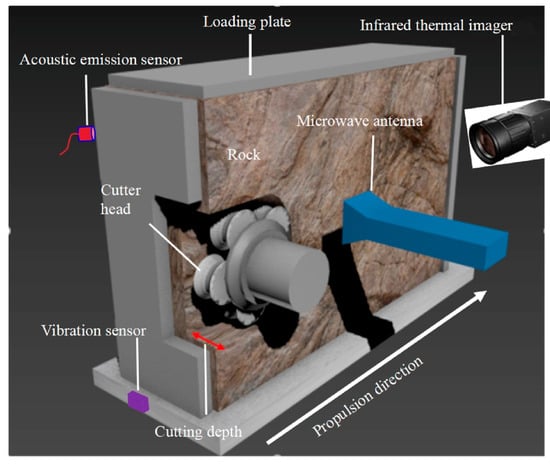
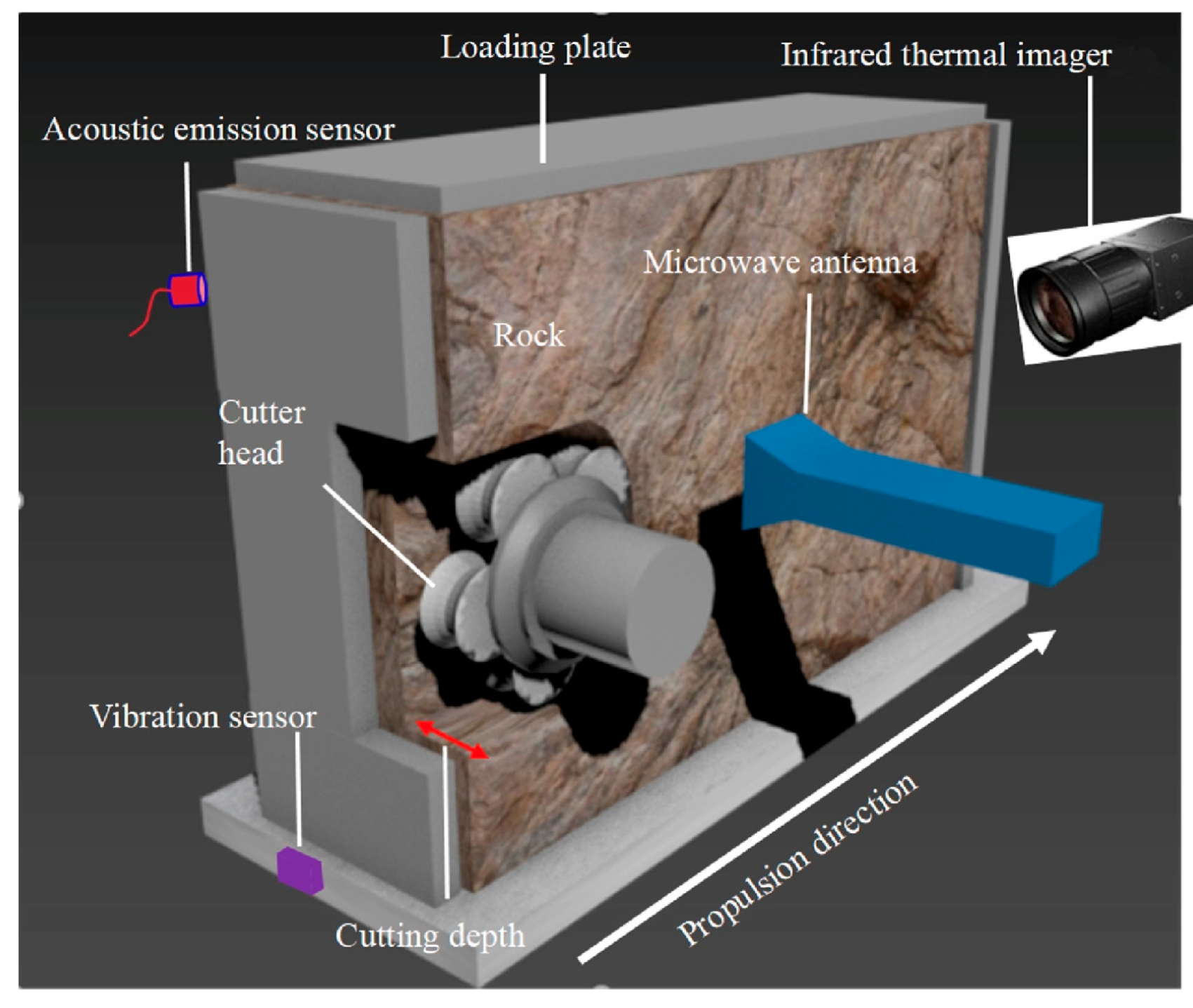
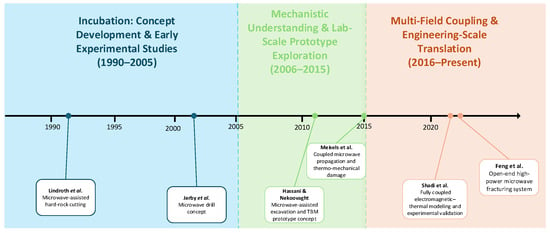
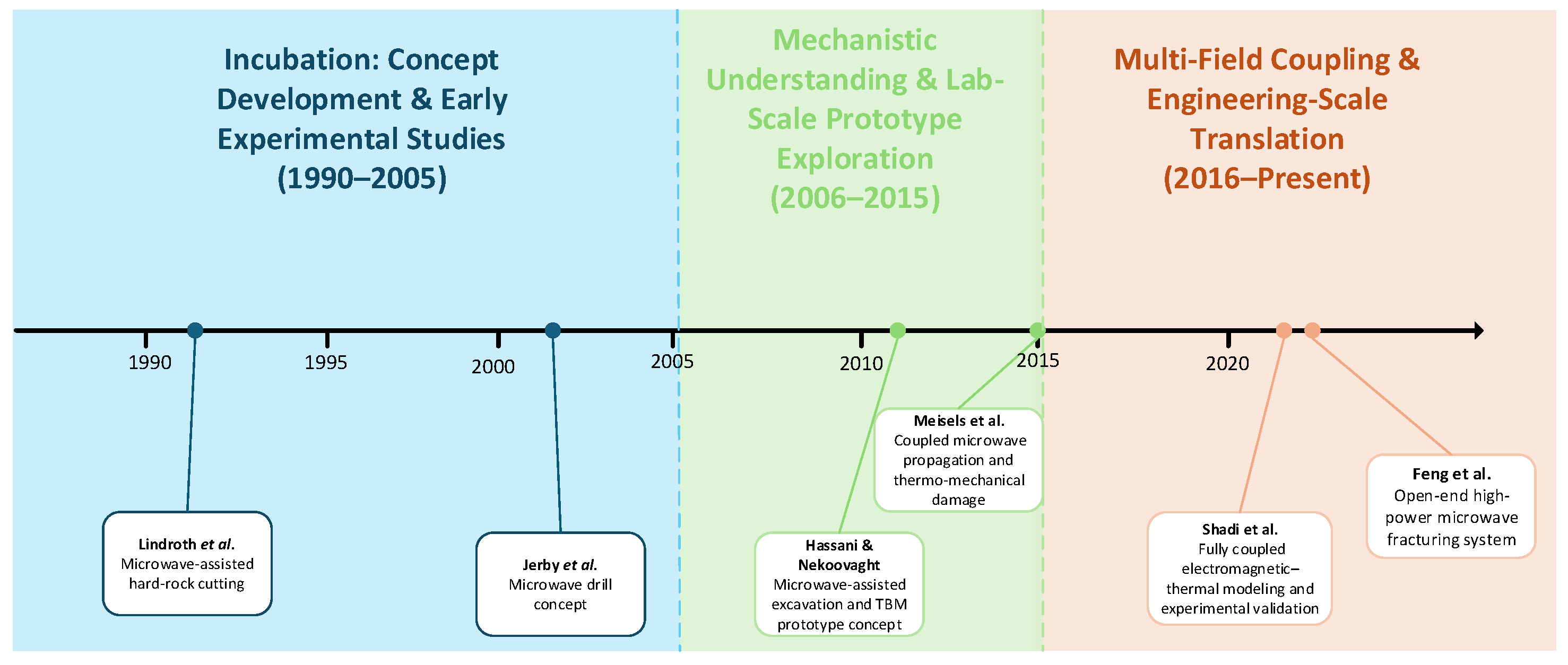
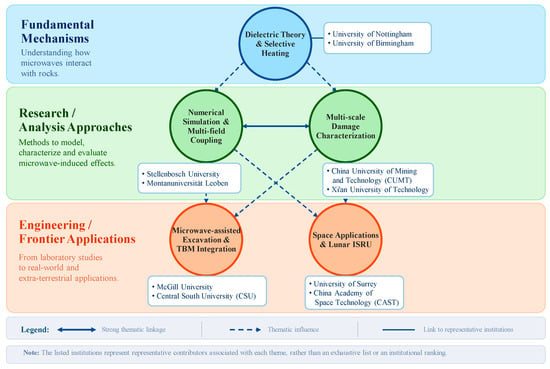
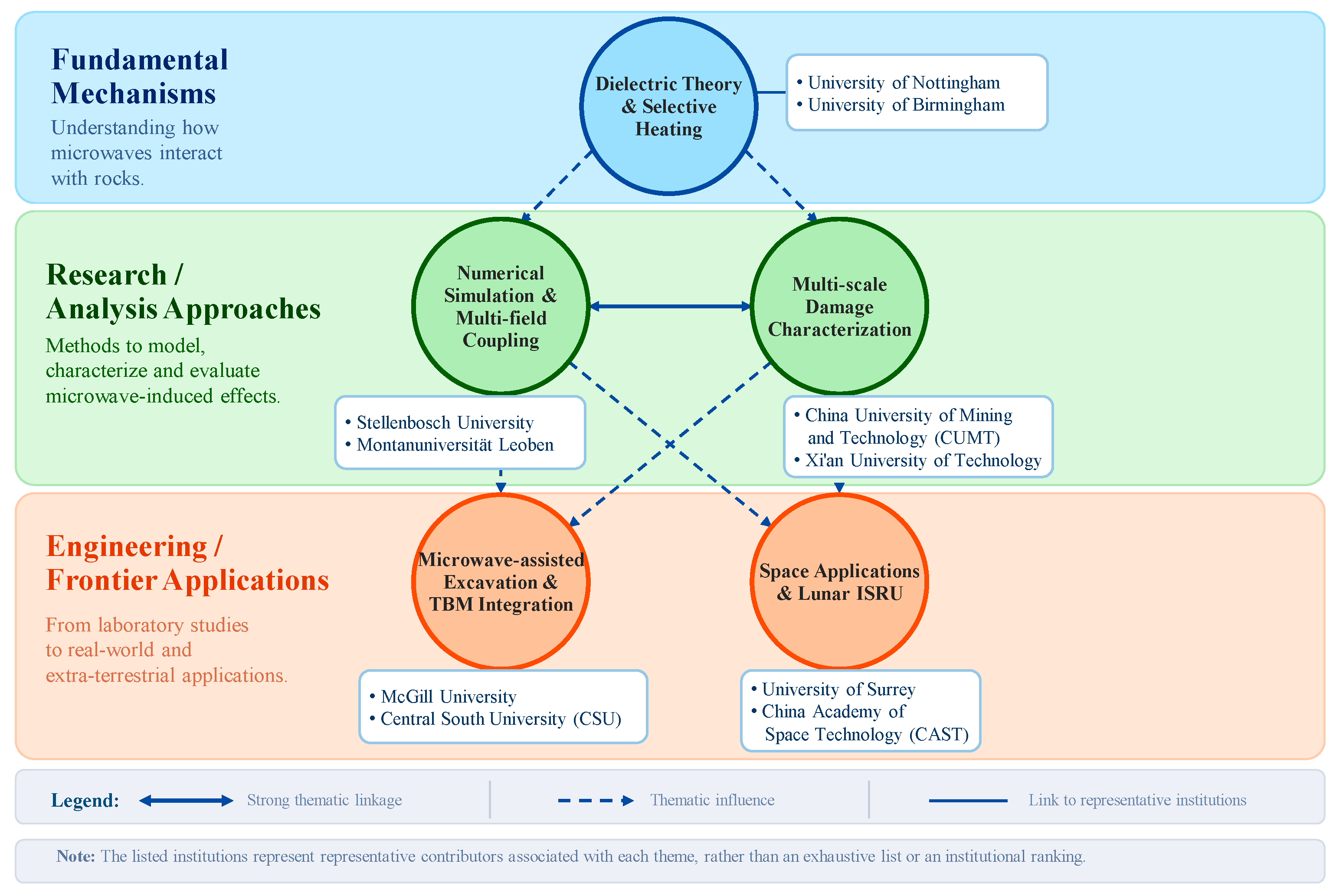
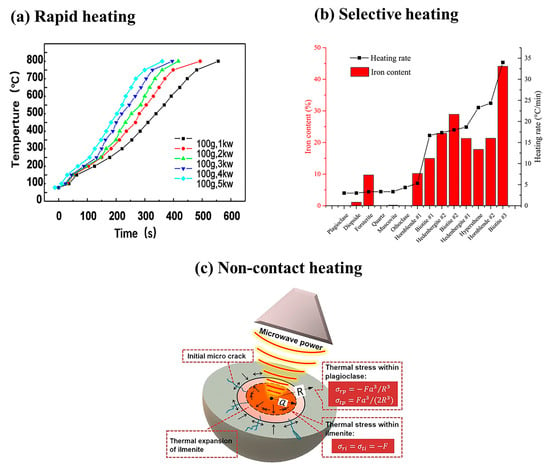
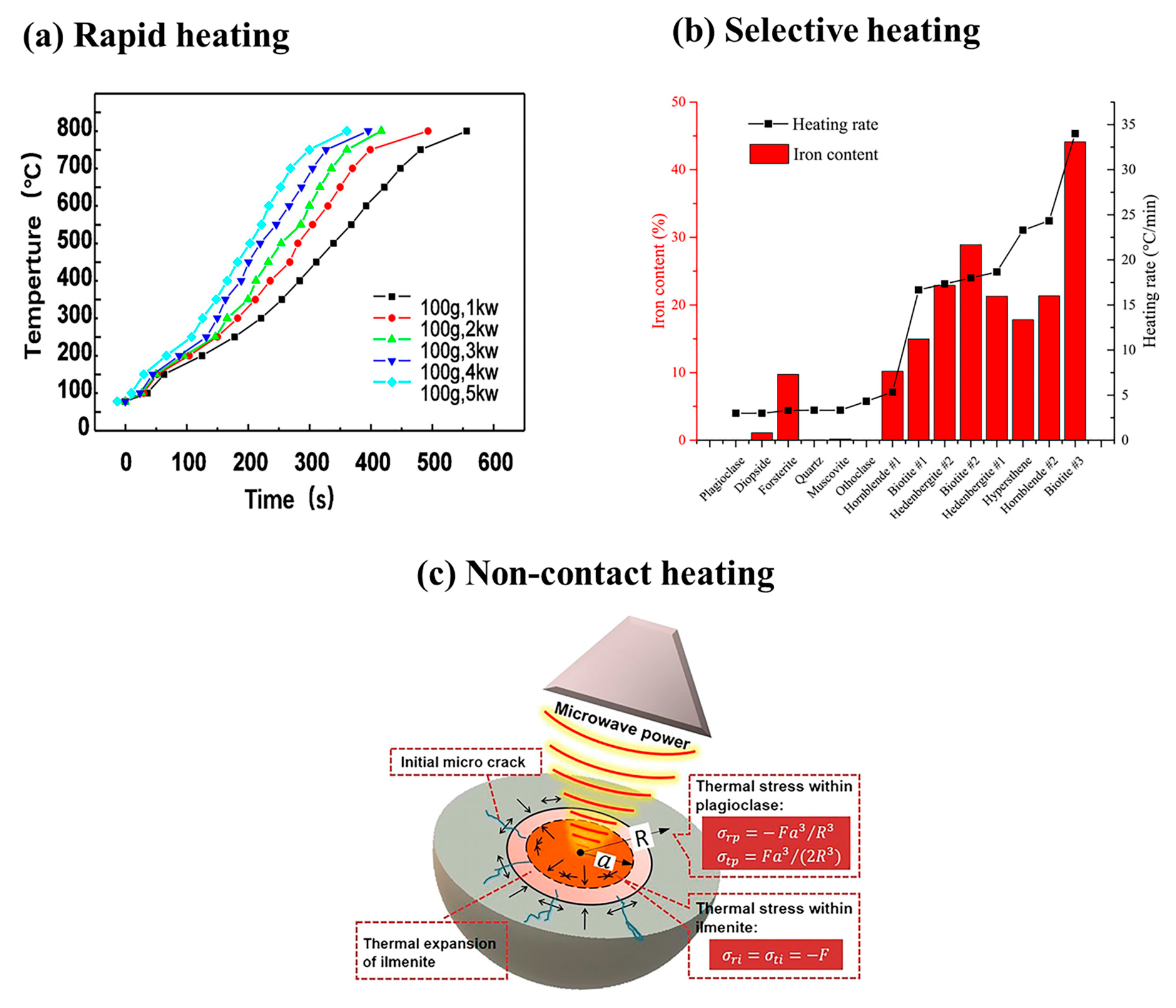
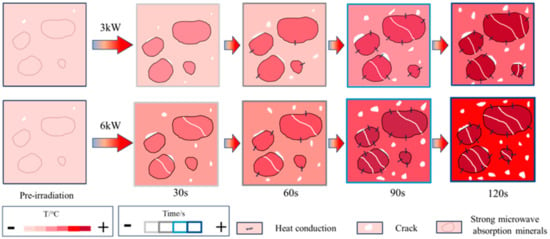
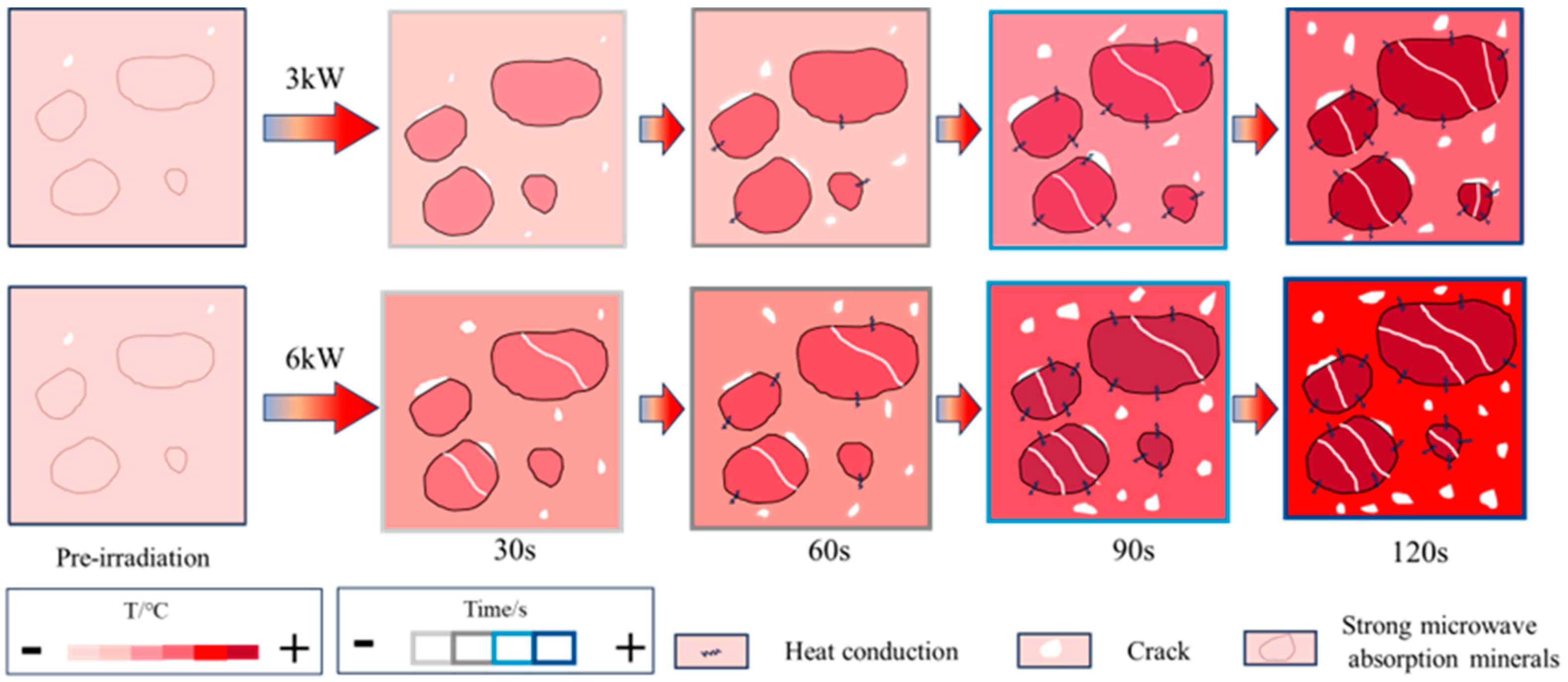
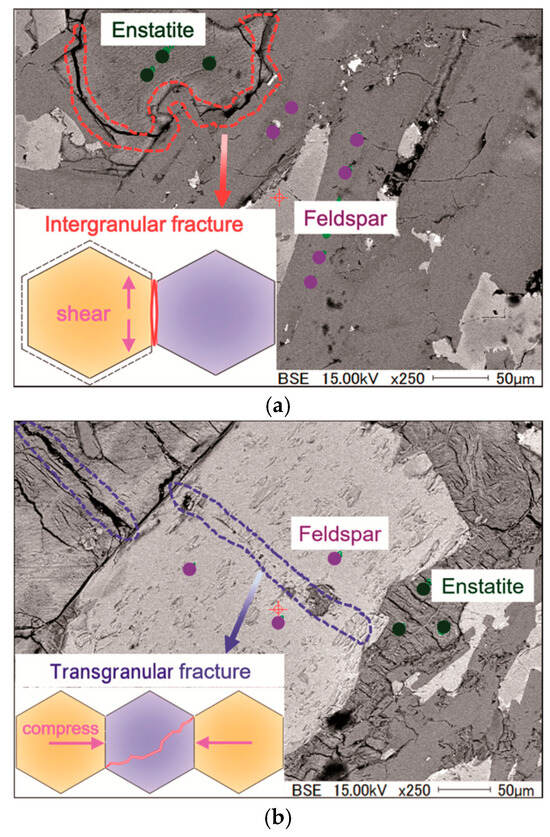
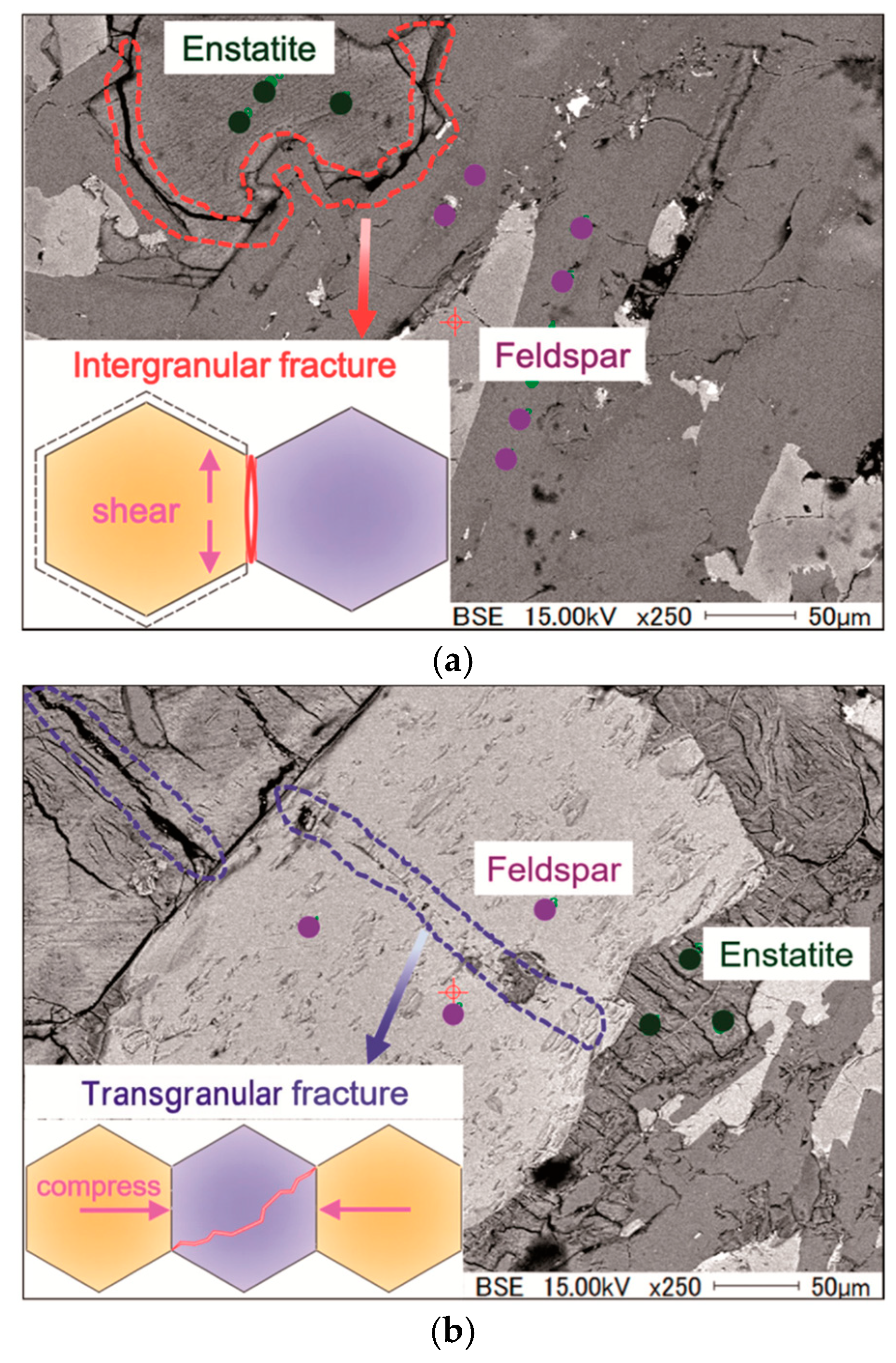
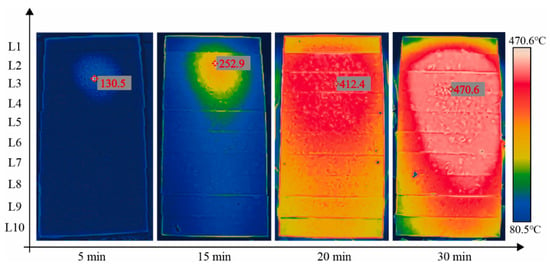
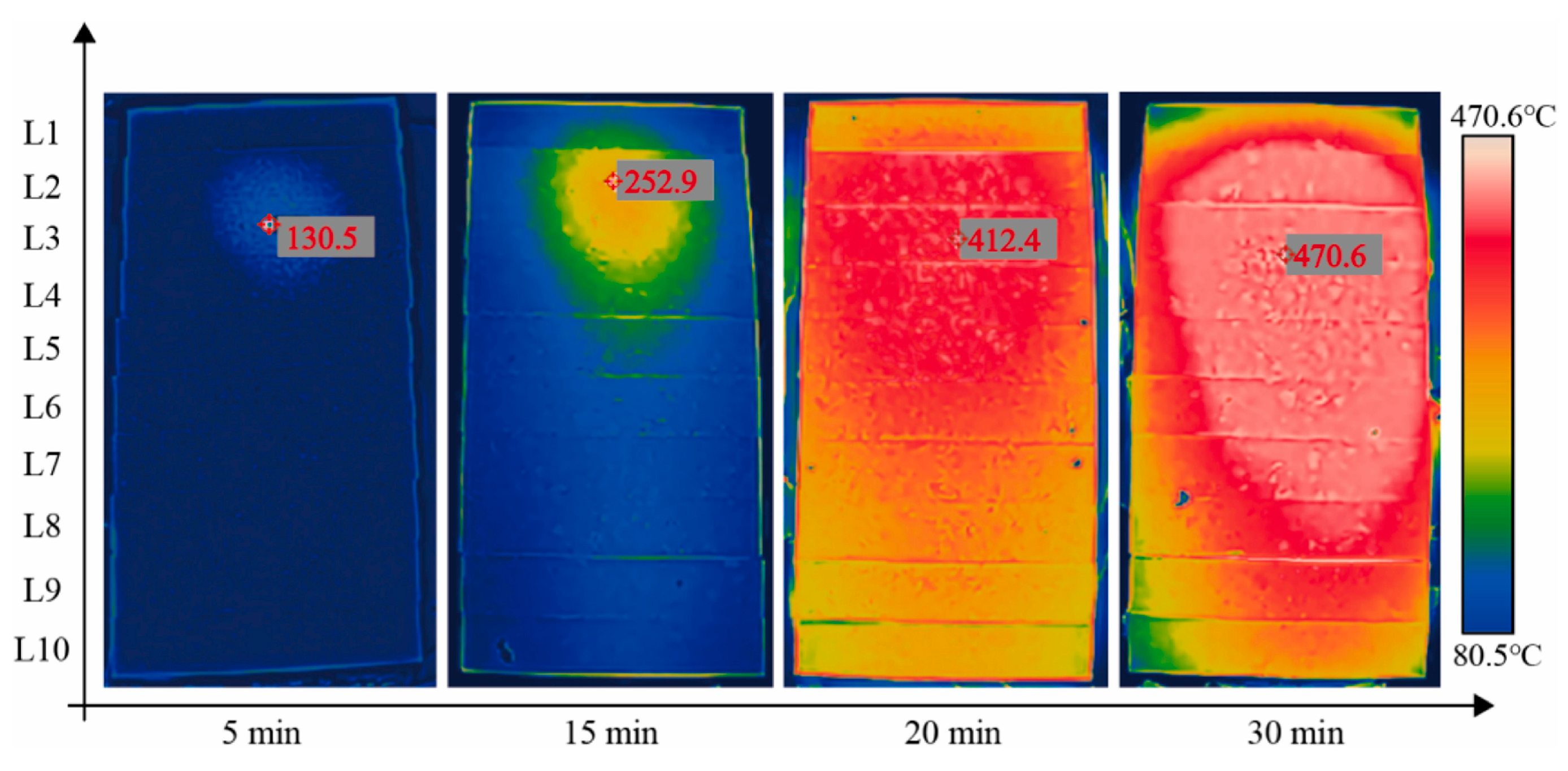
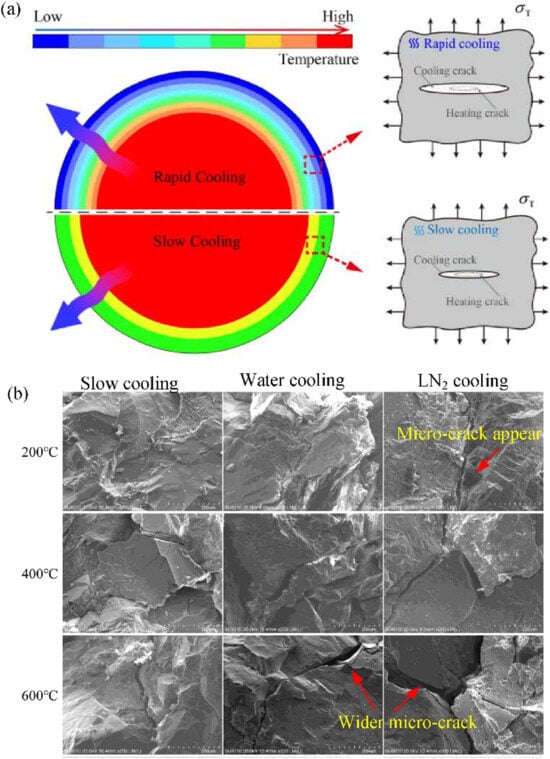
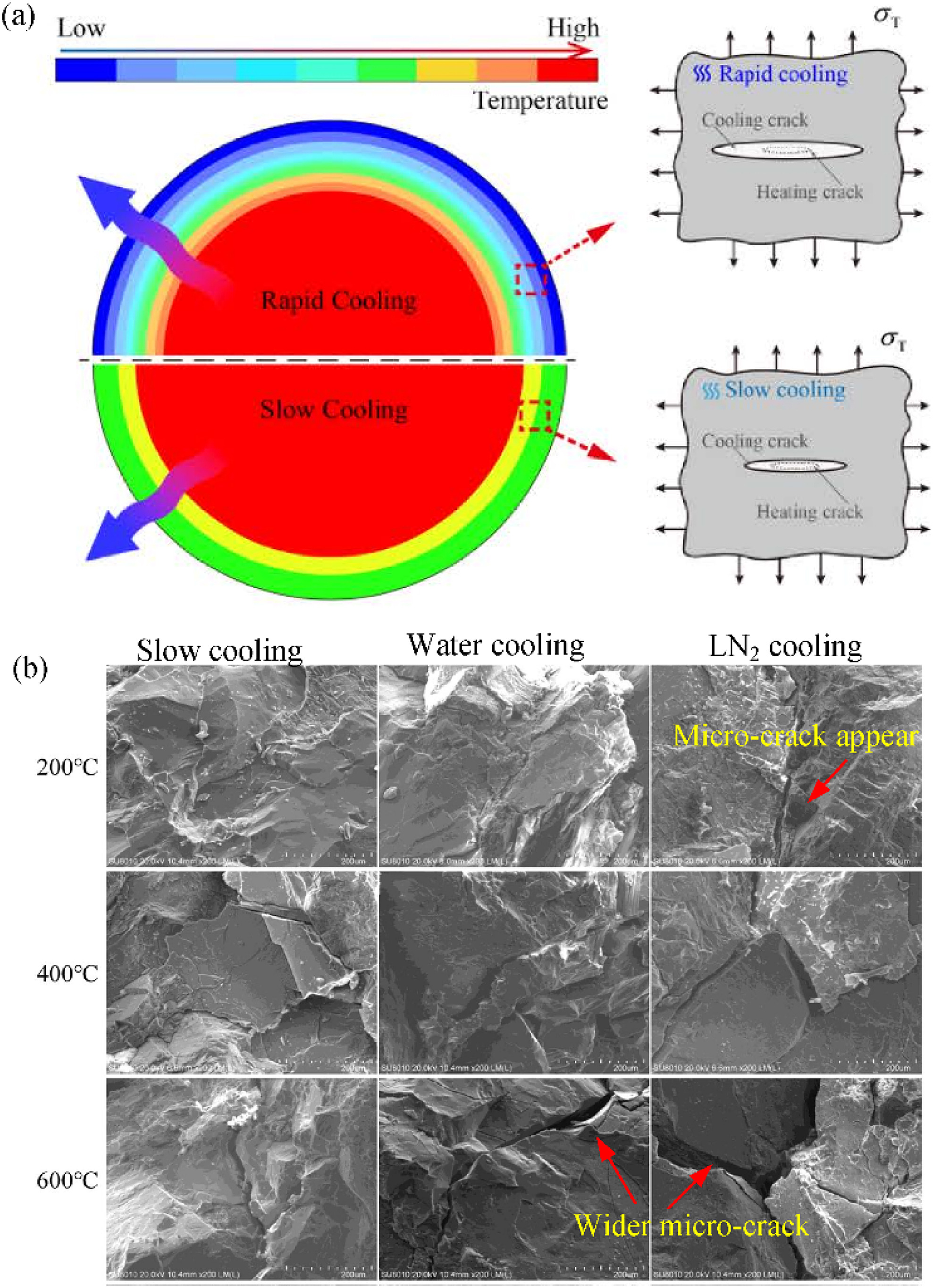
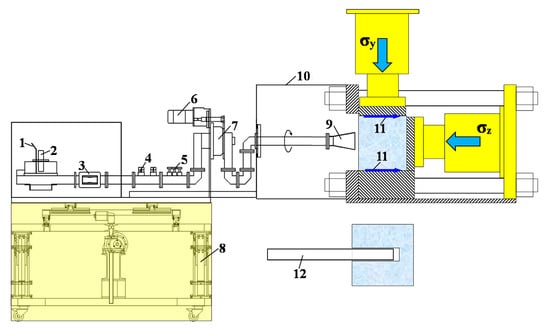
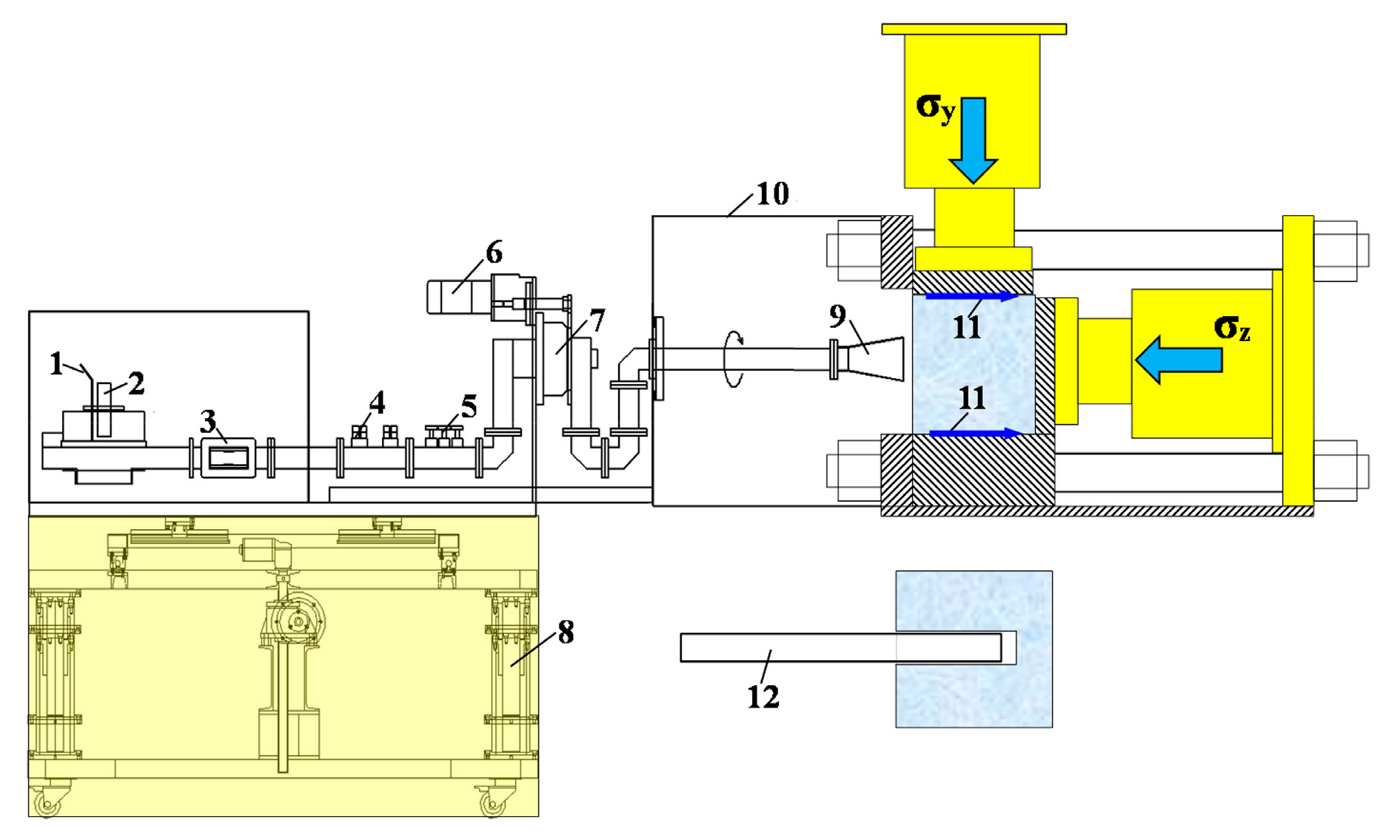
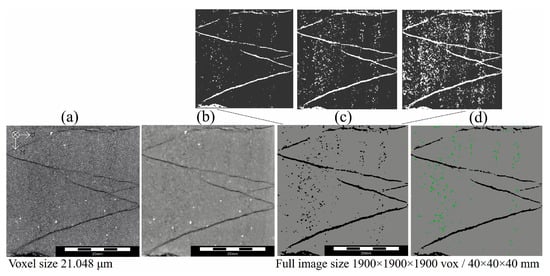
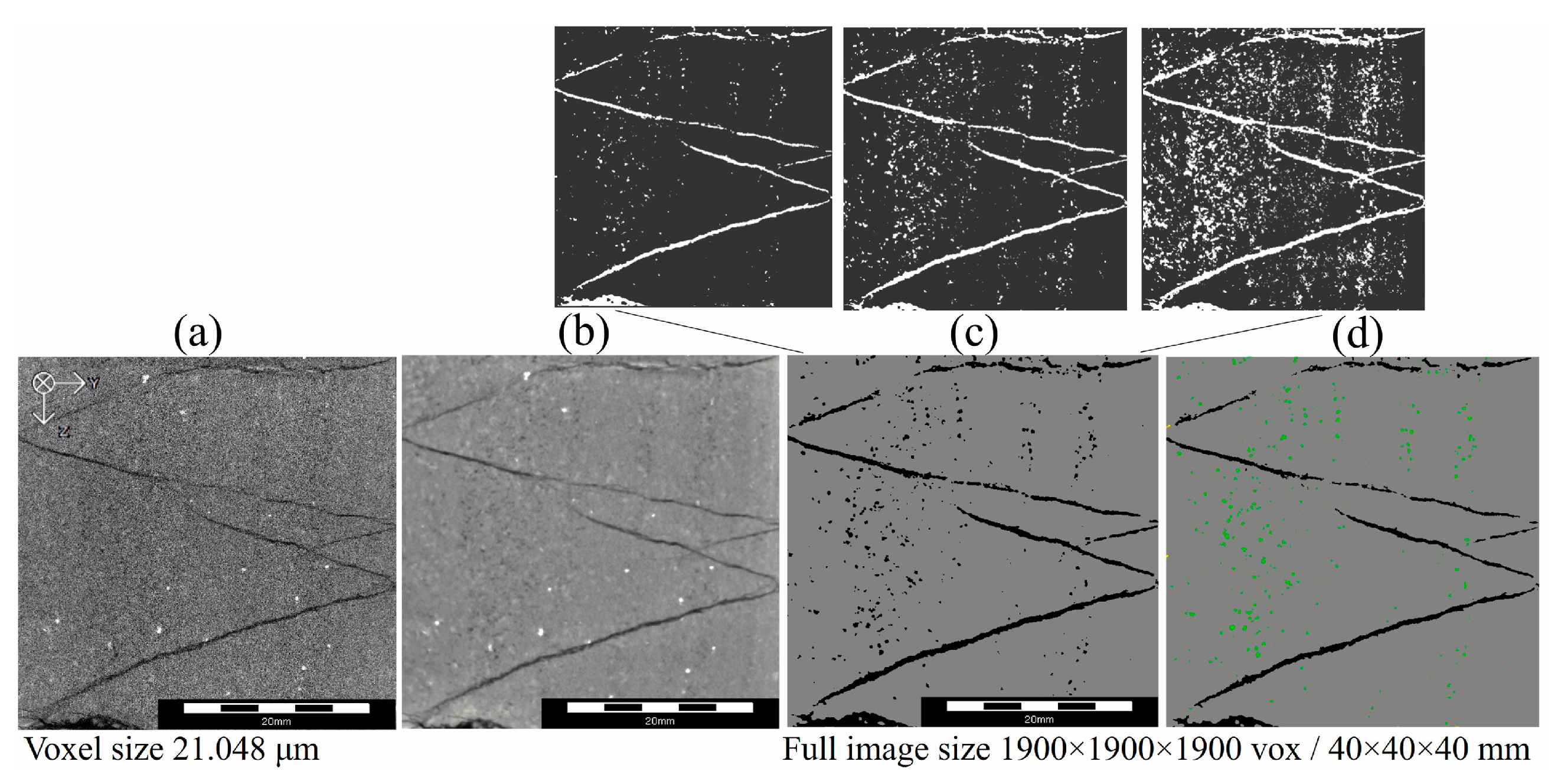
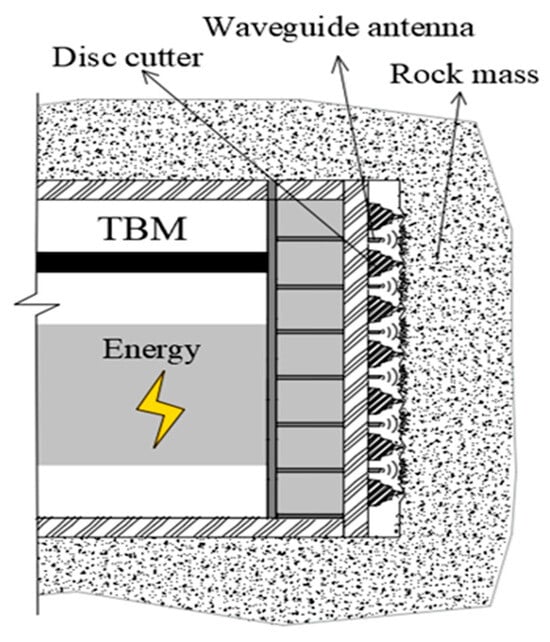
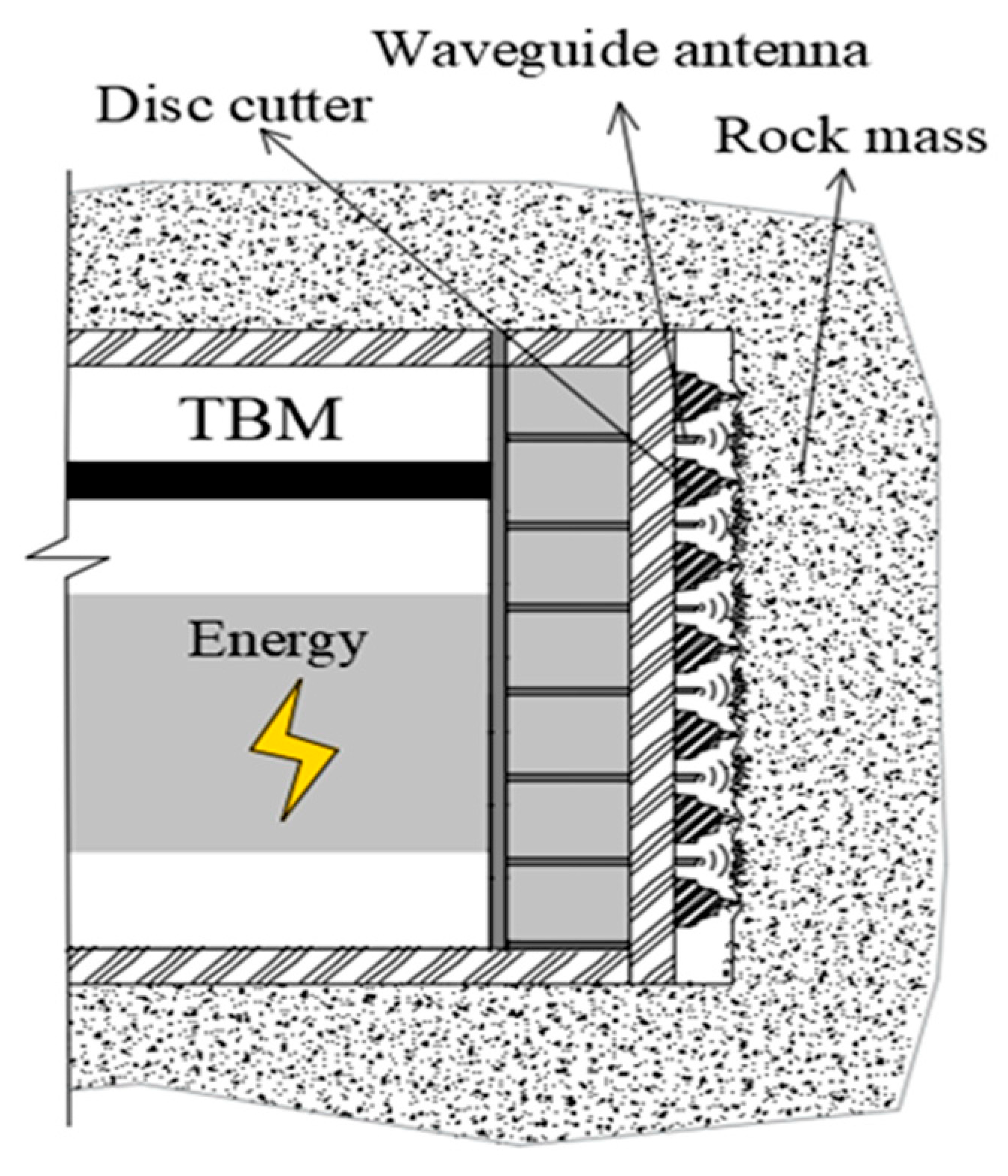

Disclaimer/Publisher’s Note: The statements, opinions and data contained in all publications are solely those of the individual author(s) and contributor(s) and not of MDPI and/or the editor(s). MDPI and/or the editor(s) disclaim responsibility for any injury to people or property resulting from any ideas, methods, instructions or products referred to in the content. |
© 2026 by the authors. Licensee MDPI, Basel, Switzerland. This article is an open access article distributed under the terms and conditions of the Creative Commons Attribution (CC BY) license.