


Abstract
The aim of this study was to develop a roasting–magnetic separation technology for ferruginous manganese fines generated during the processing of ores from the Tur deposit in order to reduce iron content and increase manganese concentration in products suitable for subsequent metallurgical applications. A process flowsheet involving magnetizing reduction roasting with a carbonaceous reductant (Shubarkol coal) followed by magnetic separation was proposed. The effects of key process parameters, including reductant dosage (20 and 30 wt.%), roasting duration (180 and 300 min), and particle size distribution, were systematically investigated. The separation efficiency of iron and manganese was found to depend strongly on the roasting conditions and the reduction degree of iron-bearing phases. The proposed technology demonstrated high efficiency, with the best results obtained at 30 wt.% coal and 300 min of roasting, achieving manganese recovery of up to 73.40% in the non-magnetic product while reducing iron content to 2.13%. Furthermore, the inclusion of a preliminary magnetic separation stage improved process selectivity, producing a manganese concentrate containing up to 31.9% Mn and 2.0% Fe. X-ray diffraction analysis confirmed the formation of (Fe,Mn)O, hausmannite, and braunite, while quartz remained the dominant gangue phase. The results demonstrate the potential for efficient utilization of ferruginous manganese fines and the expansion of the metallurgical raw material base in Kazakhstan.
1. Introduction
The steady growth of global steel production and the increasing demand for alloying elements have highlighted the strategic importance of manganese-containing ferroalloys, particularly ferromanganese and ferrosilicomanganese [1,2,3]. These materials are key components in the production of structural and alloy steels, acting as effective deoxidizers and strengthening additives [4,5]. However, the depletion of high-grade manganese ore reserves in many countries is forcing the processing industry to shift toward the utilization of low-grade and refractory ores that are difficult to beneficiate [6,7].
Kazakhstan possesses significant mineral resources of manganese ores; however, most of them are characterized by a high iron content (up to 30%) and a low manganese content (less than 25%), which limits their suitability for conventional ferroalloy smelting [8]. Geological exploration data indicate that more than 70% of the reserves belong to ferruginous manganese ores, while the remaining portion consists of oxidized and refractory varieties that are difficult to beneficiate. At the same time, the volume of substandard reserves and mining wastes exceeds 120 million tons, which simultaneously creates an environmental challenge and represents a potential secondary resource base for utilization [9,10].
Conventional processing methods, such as pyrometallurgical smelting with iron removal into slag or hydrometallurgical leaching, are often economically inefficient for such ores [11,12,13]. Therefore, increasing attention is being paid to alternative technologies that enable selective recovery of manganese while reducing iron content. One of the most promising approaches is the combination of oxidative roasting and magnetic separation.
In recent years, reduction and magnetizing roasting technologies combined with magnetic separation have been considered promising methods for the processing of low-grade iron-bearing ores and technogenic materials. During the roasting process, weakly magnetic iron oxides are converted into magnetite, which enhances the efficiency of subsequent magnetic separation and iron recovery [14,15]. Studies [16,17,18] have shown that process performance is largely governed by roasting conditions and the associated phase transformations.
A similar approach is also applied in the processing of ferruginous manganese raw materials, where during reduction roasting iron-bearing minerals acquire magnetic properties, whereas manganese phases predominantly remain weakly magnetic or non-magnetic. This enables their selective separation by magnetic separation and improves the quality of the obtained products [19,20,21,22].
A similar mechanism of phase transformations has been confirmed for both natural ferruginous manganese ores and complex technogenic materials. Studies have shown that iron reduction using various reductants, including hydrogen, enables efficient separation of the iron-bearing phase while manganese remains in a refractory form, thereby enhancing process selectivity [19,20]. Investigations of the magnetic properties of low-grade manganese carbonate ores also confirm that, after reduction treatment, a significant increase in the magnetic susceptibility of iron-bearing phases is observed, which improves the efficiency of their subsequent recovery [21].
Similar technological regularities have been established in the processing of metallurgical waste materials, including pyrite cinders and cyanide tailings. It has been shown that the application of flowsheets such as “reduction roasting–aqueous leaching–magnetic separation” or direct reduction roasting–magnetic separation ensures efficient recovery of iron into the magnetic fraction and improves the quality of the resulting concentrates [22,23,24,25,26]. Collectively, these findings confirm the potential of thermomagnetic methods for the processing of complex ferruginous manganese raw materials and technogenic materials in order to enhance their metallurgical value.
In recent years, a number of studies have been conducted on the possibility of direct processing of technogenic ferruginous manganese materials without a preliminary beneficiation stage. It has been established that the application of carbothermic reduction enables the production of complex alloys directly from waste materials, confirming the potential of their utilization as secondary metallurgical raw materials [27,28].
Ferruginous manganese ores and low-grade manganese raw materials are of considerable practical interest as potential sources for the production of manganese concentrates. However, their efficient utilization is complicated by the close association of manganese and iron minerals, as well as their complex mineralogical composition, which significantly hinders their separation by conventional beneficiation methods [29,30].
In recent years, considerable attention has been given to the development of technologies based on reduction roasting followed by magnetic separation. This approach enables the selective reduction of iron-bearing minerals to magnetic phases, primarily magnetite or metallic iron, while manganese remains in a weakly magnetic state, thereby facilitating their subsequent efficient separation [29,30,31]. One study [29] demonstrated the high efficiency of magnetizing roasting technology in a fluidized bed followed by magnetic separation for the separation of iron and manganese in low-grade ferruginous manganese ores.
The choice of reducing agent and thermal treatment conditions plays an important role in selective reduction processes. One study [32] demonstrated the significant influence of coal type on the reduction kinetics and magnetic separation performance of high-phosphorus oolitic iron ores, while the authors of [33] investigated reduction roasting processes in a fluidized bed using coal fuel, confirming the possibility of effective formation of magnetic iron-bearing phases.
A number of studies have focused on improving combined processing flowsheets involving magnetic separation integrated with flotation and chemical leaching. For instance, the study [34] proposed a technology based on sodium magnetizing roasting, magnetic separation, and subsequent acid and alkaline leaching, which enabled effective reduction of phosphorus content in the concentrate. The authors of [35] demonstrated the possibility of improving iron concentrate quality by combining low-intensity magnetic separation with reverse flotation, while one study [36] developed a combined scheme of oxidative roasting, gas reduction, and magnetic separation for simultaneous iron recovery and raw material dephosphorization.
Carbothermic reduction processes have also been actively investigated for ferruginous manganese ores. The authors of [37] established regularities in the morphological evolution of mineral phases during carbothermic reduction and demonstrated the possibility of effectively increasing the Mn/Fe ratio in the concentrate. The authors of [38] demonstrated the potential of reduction roasting for the separation of manganese and iron in high-alumina ferruginous manganese ores, while the authors of [39] confirmed the effectiveness of combining reduction roasting with magnetic separation to increase the Mn/Fe ratio in fine-grained raw materials.
Further improvement in process efficiency can be achieved through preliminary material preparation and the integrated utilization of various types of technogenic raw materials. In particular, the authors of [39] demonstrated the positive effect of a desliming stage on the magnetic separation performance of low-grade ferruginous manganese ores. The authors of [40] proposed a technology for the co-reduction of copper smelting slag and ferruginous manganese ore followed by magnetic separation, enabling the efficient utilization of secondary resources and enhancing the comprehensive recovery of valuable components.
Despite the considerable progress achieved in reduction roasting and magnetic separation of manganese-bearing ores, several important challenges remain unresolved. Most published studies have focused on natural manganese ores with relatively favorable Mn/Fe ratios, whereas considerably less attention has been paid to ferruginous manganese materials characterized by high iron content, low Mn/Fe ratio, and complex mineralogical composition. In such materials, the selective transformation of iron-bearing phases during roasting and its influence on the subsequent Mn–Fe separation efficiency are not yet fully understood. Furthermore, the combined effects of reductant dosage, roasting conditions, and magnetic separation parameters on manganese enrichment require further investigation, particularly for technogenic manganese materials.
Although significant advances have been achieved in recent years, including the development of reduction roasting–magnetic separation technologies for low-grade manganese resources, limited attention has been devoted to ferruginous manganese materials from Kazakhstan. In particular, there is a lack of systematic studies considering the specific mineralogical characteristics of the intermediate technogenic product from the Tur deposit and the application of locally available fine-grained carbonaceous reductants such as Shubarkol coal. Consequently, the development of an efficient beneficiation process for these materials remains an important scientific and technological challenge.
Therefore, the aim of this study is to develop and optimize a thermochemical processing technology for ferruginous manganese materials from the Tur deposit based on reduction roasting followed by magnetic separation. Particular attention is paid to the influence of roasting conditions and reductant dosage on phase transformations, manganese and iron separation, and the quality of the obtained products. The proposed processing route is intended to improve manganese recovery while simultaneously producing an iron-bearing product, thereby contributing to the comprehensive utilization of Kazakhstan’s ferruginous manganese resources.
2. Materials and Methods
In the present study, ferruginous manganese raw materials were processed using an intermediate technogenic product (hereinafter referred to as ITP), generated during the primary beneficiation of ores from deposits in Central Kazakhstan and stored in tailings facilities. This material had not previously been considered as a feedstock for ferroalloy production.
The long-term storage of these products in tailings is associated with their non-compliance with industrial requirements in terms of manganese and iron content. The main limitation is low manganese content (less than 20%) combined with a relatively high iron content (up to 15%), which precludes their direct use for the production of standard grades of manganese ferroalloys. The chemical composition of the studied sample is presented in Table 1.
Table 1.
Chemical composition of the investigated sample, wt. %.
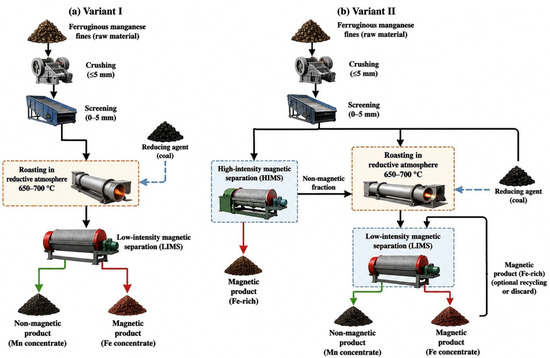
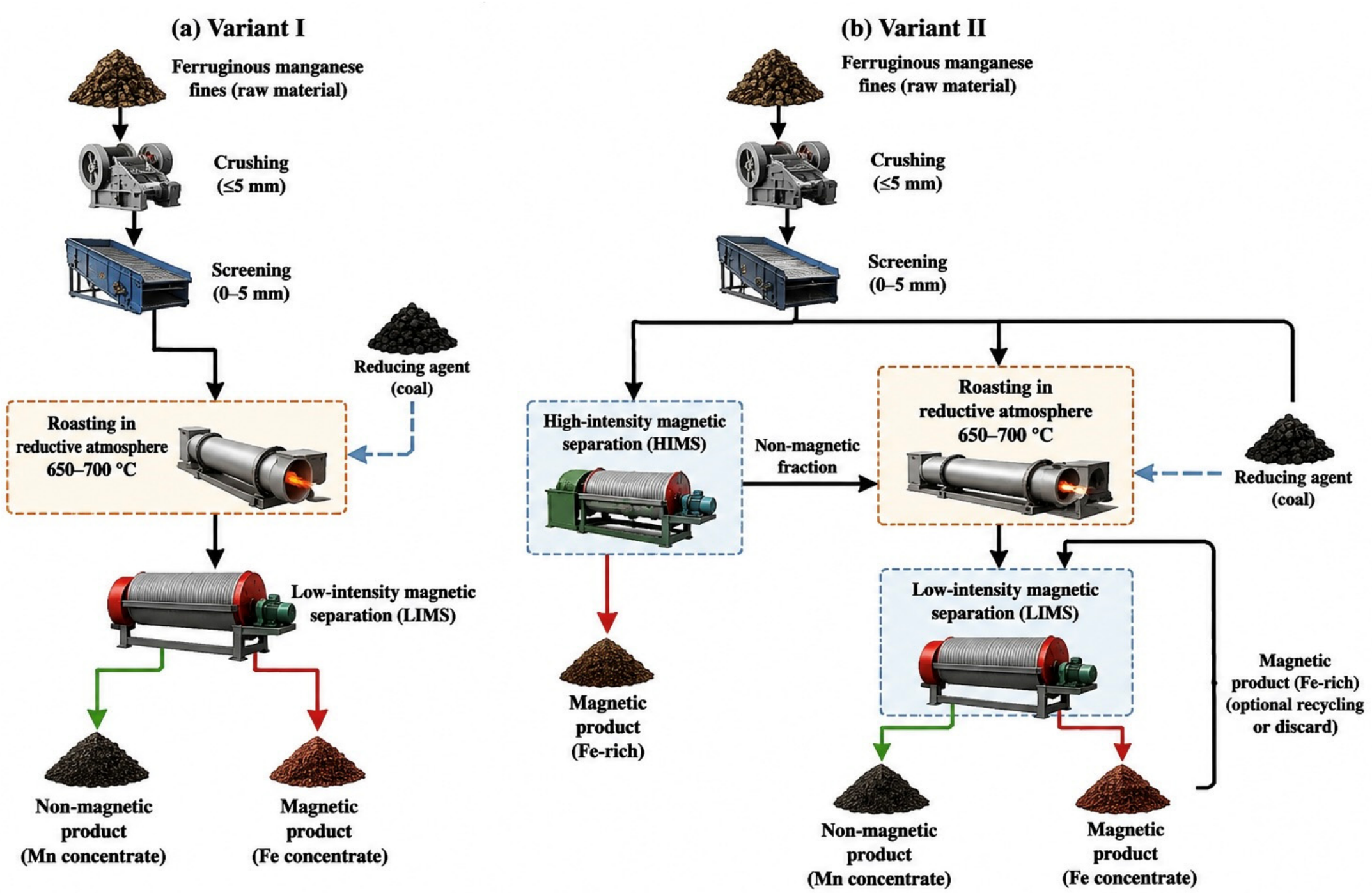
For the processing of the sample, a roasting–magnetic beneficiation flowsheet (Figure 1) was developed based on a review of the literature [41,42,43,44,45] and taking into account the physicochemical properties of the raw material. Within the framework of the study, two technological options were tested:
Figure 1.
Process flow sheet of roasting–magnetic beneficiation.
Option I (Figure 1a) involves preliminary preparation of the run-of-mine ore to a particle size of 0–10 mm, followed by separation into two size fractions, including crushing to a 0–5 mm class, screening, thermal treatment in a reducing atmosphere, and subsequent low-intensity dry magnetic separation.
Option II (Figure 1b) involves preliminary crushing to a 0–5 mm fraction, screening, and the application of both high- and low-intensity dry magnetic separation stages before and after thermal treatment in a reducing atmosphere. The finer particle size was selected to improve mineral liberation and to ensure efficient pre-magnetic separation prior to roasting, thereby enhancing the separation of iron-bearing and manganese-bearing phases.
Roasting was carried out in a CNZ-6.12.4/10-I2 chamber resistance electric furnace (Karaganda, Kazakhstan.) at a temperature of 650–700 °C for 180 and 300 min. The reduction roasting parameters were selected based on published studies and preliminary screening experiments. The roasting temperature range of 650–700 °C was chosen because it provides favorable conditions for the selective reduction of iron-bearing minerals to magnetic phases while minimizing the reduction of manganese oxides, thereby improving the efficiency of subsequent magnetic separation. The reductant dosages (20 and 30 wt.%) and roasting times (180 and 300 min) were selected based on preliminary optimization experiments to evaluate the effects of reducing potential and residence time on phase transformations and the separation behavior of iron and manganese. The selected temperature range is consistent with previous studies on the reduction roasting of ferruginous manganese ores reported in the work [42].
Roasting was performed under a reducing atmosphere generated by the carbon monoxide (CO) formed during the gasification of Shubarkol long-flame bituminous coal. As a reducing agent, Shubarkol long-flame bituminous coal was used. Its chemical composition and proximate analysis are presented in Table 2.
Table 2.
Chemical Composition and Proximate Analysis of Coal.
Magnetic separation of the roasted intermediate products was performed in accordance with GOST 25114-82 [46] using a 138T-SEM laboratory magnetic separator (Karaganda, Kazakhstan) designed for low- and high-intensity dry magnetic separation. Prior to magnetic separation, the roasted products were cooled to room temperature and screened to obtain a particle size fraction of −5 mm. The separation was initially carried out at a magnetic field intensity of 0.1 T. Residual magnetic susceptibility was monitored using a laboratory magnetic probe ERGA-T2622 (ERGA LLC, Kaluga, Russia).
The chemical and phase composition of the raw material and final concentrates was studied using wet chemical analysis and X-ray diffraction (XRD) in accordance with international analytical standards.
X-ray diffraction (XRD) analysis was carried out using a Bruker D8 Advance diffractometer (Bruker AXS GmbH, Karlsruhe, Germany) with Cu Kα radiation (λ = 1.5406 Å), operated at 40 kV and 40 mA. Prior to analysis, the samples were dried, ground to a particle size of less than 74 μm, and analyzed over a 2θ range of 10–90°. Phase identification was performed using the PDF-2 database (International Centre for Diffraction Data (ICDD), Newtown Square, PA, USA). The diffraction patterns were analyzed to identify the crystalline phases present in the samples. The results of the wet chemical analysis were obtained in certified specialized laboratories.
Thus, the integrated set of sample preparation, beneficiation, and analytical methods (wet chemical analysis and XRD) ensured reliable data on the chemical and phase composition of the feed material, intermediate products, and final concentrates, forming the basis for further evaluation of the processing results.
3. Results and Discussion
3.1. Granulometric Composition and X-Ray Diffraction (XRD) Analysis of the Initial Intermediate Technogenic Product (ITP)
At the initial stage, the chemical characteristics of intermediate technogenic products (ITP), formed during the primary beneficiation of ferruginous manganese ores, were investigated. It was established that the manganese content is 15.14%, while the iron content is 12.40%, indicating a significant presence of iron-bearing silicate phases. The Mn/Fe ratio is 1.22, which is substantially lower than the values required for ferromanganese (5–6) and ferrosilicomanganese (3–4) production. This indicates the high iron content of the material and the limited suitability of ITP for direct use in ferroalloy production without prior beneficiation [41].
The low Mn/Fe ratio confirms the necessity of selective iron removal and manganese phase concentration to improve the metallurgical value of the raw material.
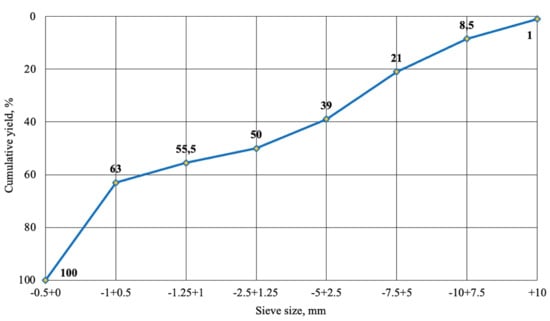
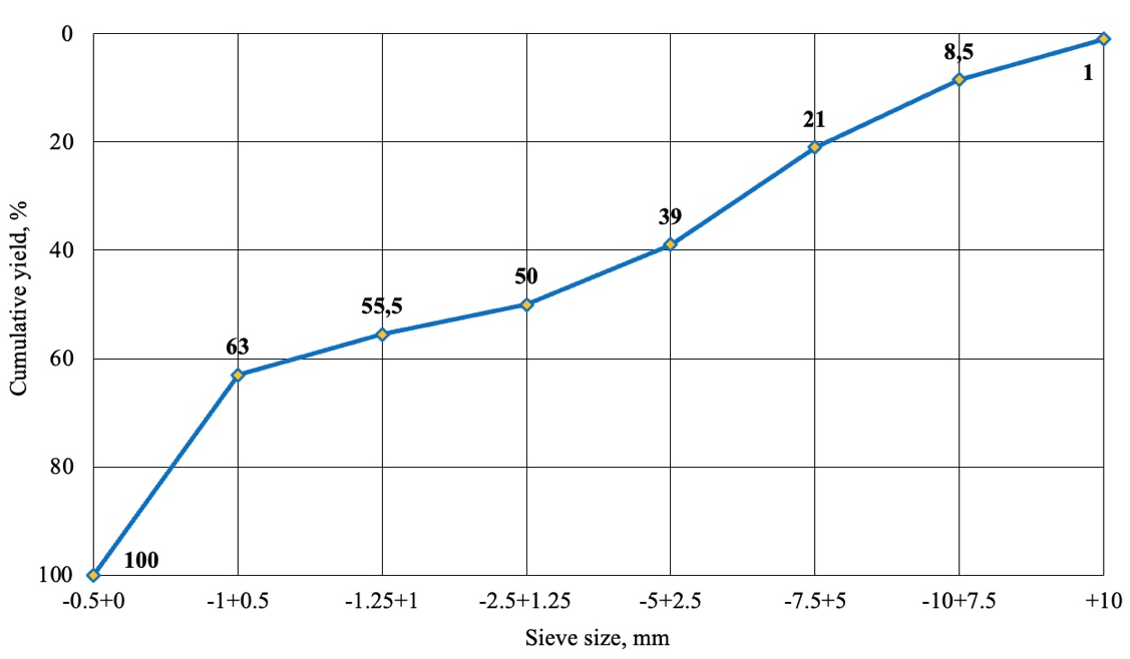
In addition to chemical and phase analyses, a detailed particle size analysis was performed, since the size distribution of the material significantly affects the efficiency of thermal treatment and magnetic separation. The results are presented in Figure 2 and Table 3.
Figure 2.
Cumulative particle size distribution of the investigated sample.
Table 3.
Results of granulometric analysis of ITP (fraction 0–10 mm).
It should be noted that prior to thermal treatment and magnetic separation, the ITP samples were pre-crushed to a −5.0 mm fraction in order to obtain a uniform particle size distribution consistent with the technological requirements of the equipment used. This operation eliminated the influence of coarse inclusions and ensured comparability of manganese recovery and iron removal results during magnetic beneficiation.
The analysis of manganese and iron distribution across different size fractions of ITP samples revealed a pronounced inverse relationship between these elements and particle size. The highest manganese content was observed in coarse fractions, whereas iron was predominantly concentrated in fine-grained particles.
The Mn content in the coarse fraction (+10 mm) reaches 29.70%, while in the finest fraction (−0.5 + 0 mm) it decreases to 10.00%. In contrast, the iron content in this fraction reaches 12.30%, which is more than twice the Fe level in coarse size classes. Particularly high iron concentrations are observed in the −2.5 + 0.5 mm fraction, where Fe exceeds 12% at relatively low manganese content.
The figure presents the cumulative particle size distribution of the investigated material. The results indicate a pronounced dominance of fine fractions in the sample. The largest proportion of material (63%) is represented by the −1.0 + 0.5 mm size class and finer fractions.
Coarser fractions, including +10.0 mm and −10.0 + 7.5 mm, account for a minor portion of the sample, with a combined share not exceeding 8.5%. This indicates a high degree of fragmentation of the material, with a significant shift toward fine particle sizes.
Such a particle size distribution may significantly influence subsequent processing behavior, including beneficiation efficiency, reduction roasting kinetics, and magnetic separation performance.
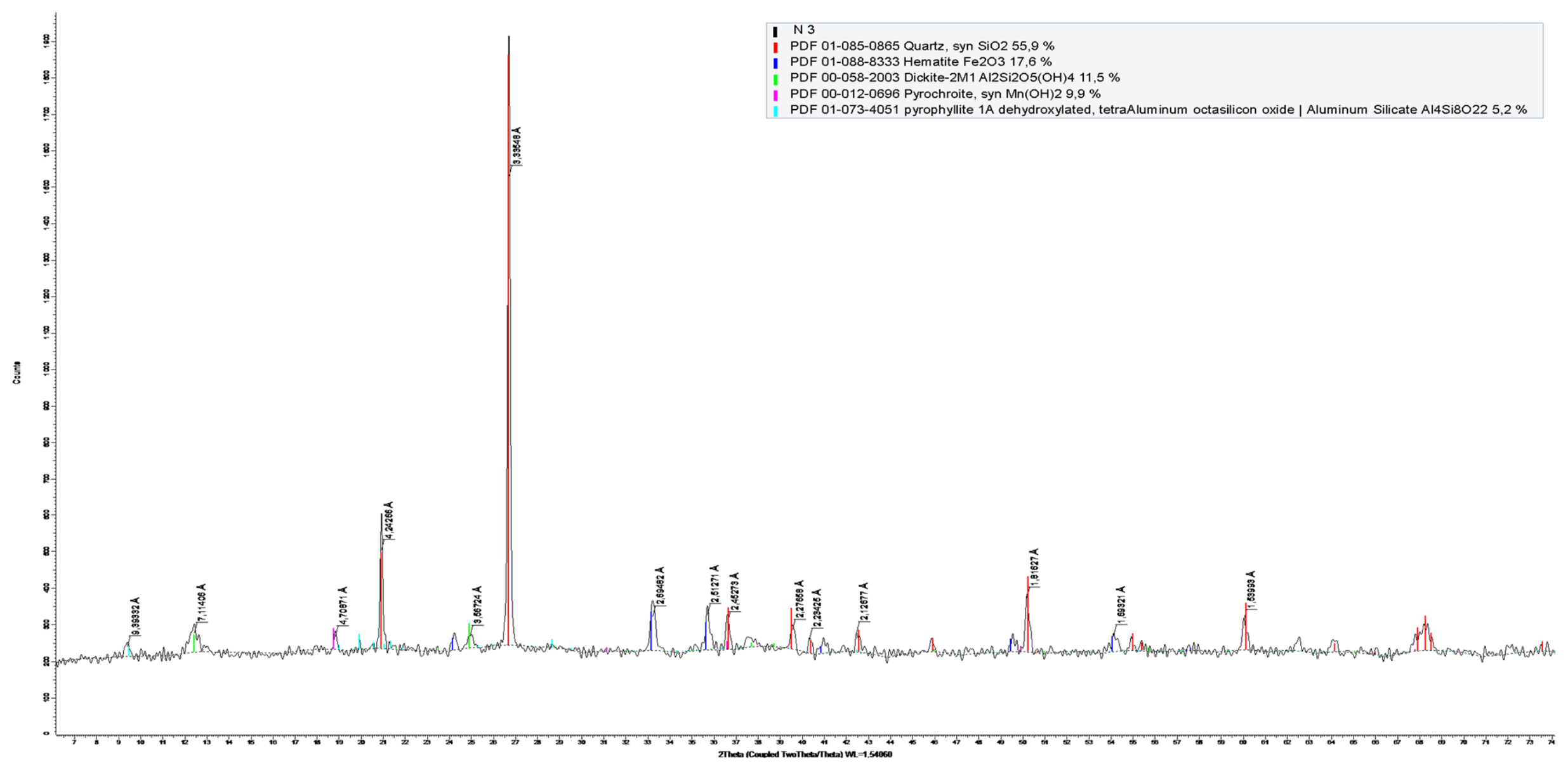
For ITP (0–10 mm fraction), the mineralogical composition is dominated by quartz (SiO2) (55.9%) and hematite (Fe2O3) (17.6%). Additionally, dickite-2M1 (Al2Si2O5(OH)4) (11.5%) and pyrochroite (Mn(OH)2) (9.9%) were identified, while dehydrated pyrochroite (1A) associated with aluminosilicates accounts for 5.2%. The results of XRD analysis of the ITP are presented in Figure 3 and Table 4.
Figure 3.
X-ray diffraction (XRD) pattern of the intermediate technological product (ITP).
Table 4.
Phase composition of the intermediate technological product (ITP) determined by XRD analysis.
Overall, the ITP is characterized by a silica–oxide composition with a high content of quartz and iron oxides, as well as a notable proportion of aluminosilicate and manganese hydroxide phases. This indicates the heterogeneous mineralogical nature of the initial raw material.
3.2. Roasting: Yield and Characteristics of the Obtained Products
3.2.1. Option I
Charge materials with a mass of 16 kg were mixed with Shubarkol coal screenings at reductant dosages of 20% and 30%. Roasting was carried out at a temperature of 650–700 °C with holding times of 180 and 300 min. These parameters ensured partial reduction of manganese and iron, promoting their redistribution between magnetic and non-magnetic products.
The charge materials were initially sieved through a +5 mm mesh screen. The +5–10 mm fraction was crushed in a jaw crusher and then mixed with the 0–5 mm fraction of the charge. The resulting mixture (0–5 mm fraction) was subsequently combined with Shubarkol coal screenings (−2.5 mm) under the same conditions: reductant dosage of 20% and 30%, roasting temperature of 650–700 °C, and holding times of 180 and 300 min.
The roasted product was subjected to magnetic separation in a low-intensity magnetic field. The non-magnetic fraction was used as manganese concentrate, while the magnetic fraction was considered as tailings. This scheme enabled efficient separation of iron and manganese while minimizing manganese losses to the magnetic product. Comparative data on the yield, grade, and recovery of the main components are presented in Table 5.
Table 5.
Mass balance and metal recovery of the intermediate thermal product (ITP) under Option I.
Concentrate No. 5, obtained using 20% coal and a roasting duration of 300 min, demonstrated relatively technological performance: the yield reached 53.16%, manganese content was 20.30%, while iron content decreased to 2.86%. Manganese recovery was 68.43%, indicating efficient transfer of manganese into the non-magnetic product. At the same time, iron recovery remained low at 12.39%, confirming its predominant concentration in the magnetic fraction.
Concentrate No. 6, obtained under the same coal dosage (20%) but with a reduced roasting time of 180 min, was characterized by the highest manganese grade of 22.30% and the lowest iron content of 2.80%. However, the improvement in concentrate quality was accompanied by a decrease in yield to 43.48% and a reduction in manganese recovery to 65.17%. Iron recovery in this case was 8.93%, the lowest among the investigated regimes.
With an increase in coal dosage to 30% and a roasting time of 300 min, Concentrate No. 7 was obtained, which provided the highest manganese recovery (73.40%) and the highest product yield (54.22%). However, manganese content decreased to 18.70%, while iron content increased to 3.22%, indicating improved recovery at the expense of concentrate grade.
Concentrate No. 8, produced using 30% coal and a roasting time of 180 min, exhibited intermediate characteristics. Manganese content reached 21.30% with iron content of 2.94%, yield was 46.07%, and manganese recovery was 66.95%. Iron recovery was 11.14%.
A comparison of the results shows that the efficiency of roasting–magnetic beneficiation is governed by the combined influence of reductant dosage and roasting duration. The maximum manganese recovery (73.40%) and highest yield (54.22%) were achieved using 30% coal and a roasting time of 300 min (Concentrate No. 7). In contrast, the highest-quality concentrate, with the maximum manganese content (22.30%), minimum iron content (2.80%), and the highest Mn/Fe ratio (~7.96), was obtained using 20% coal and a roasting time of 180 min (Concentrate No. 6). Thus, the selection of the optimal regime depends on the target product requirements, whether maximum manganese recovery or higher concentrate quality is prioritized.
3.2.2. Option II
Charge materials were pre-sieved through +2.5 mm and +5.0 mm mesh screens. The +5.0 mm fraction was subjected to crushing and subsequently mixed with the +2.5–5.0 mm fraction of the charge. The resulting mixture (0–5 mm fraction) was then subjected to high-intensity dry magnetic separation to obtain an iron–manganese intermediate product.
The obtained intermediate product (magnetic fraction) was mixed with Shubarkol coal screenings (−2.5 mm) at reductant dosages of 20% and 30%, followed by roasting at 600–650 °C with holding times of 180 and 300 min.
The preliminary magnetic separation removes a portion of the strongly magnetic iron-bearing minerals before roasting. Consequently, the feed entering the roasting stage contains a lower proportion of iron-rich phases and is relatively enriched in manganese-bearing minerals. This change in mineral composition affects the solid-state reduction reactions by decreasing the amount of readily reducible iron oxides and increasing the relative participation of manganese-containing phases in the roasting process. As a result, the reduction roasting becomes more selective, facilitating the subsequent magnetic separation and improving the separation efficiency between iron and manganese.
The roasted products were subjected to low-intensity magnetic separation. The non-magnetic fraction was used as manganese concentrate, while the magnetic fraction formed tailings suitable for further processing. This scheme enabled efficient separation of manganese from iron, ensuring the production of high-quality manganese concentrates. Comparative data on yield, grade, and recovery of the main components are presented in Table 6.
Table 6.
Mass balance and metal recovery of the intermediate thermal product (ITP) under Option II.
Concentrate No. 17, obtained using 20% coal and a roasting duration of 300 min, is characterized by a yield of 14.06%. The manganese content in the product reaches 31.90% with a low iron content of 2.00%, resulting in a high Mn/Fe ratio. Manganese recovery is 27.69%, whereas iron recovery does not exceed 2.30%, indicating high process selectivity and efficient separation of manganese- and iron-bearing phases.
Concentrate No. 18, obtained under the same coal dosage (20%) but with a reduced roasting time of 180 min, has a yield of 13.15%. The manganese content is 29.80%, while the iron content decreases to the lowest value among the studied samples—1.45%. Manganese recovery reaches 24.19%, while iron recovery is only 1.56%, indicating the production of a high-quality concentrate despite relatively low yield and recovery levels.
With an increase in coal dosage to 30% and a roasting time of 300 min, Concentrate No. 19 was obtained with the highest yield of 14.97%. The manganese content in the product is 31.10%, while iron content is 2.22%. At the same time, the highest manganese recovery of 28.75% was achieved, indicating improved process efficiency under these conditions. Iron recovery remained low at 2.72%.
Concentrate No. 20, obtained using 30% coal and a roasting time of 180 min, is characterized by a yield of 13.59%. The manganese content reached 30.00% with an iron content of 2.24%. Manganese recovery was 25.17%, while iron recovery was 2.49%, indicating high process selectivity, although the recovery level is lower compared to the longer roasting time regime.
Comparison of the results shows that increasing the roasting time to 300 min improves both product yield and manganese recovery regardless of the reductant dosage. The maximum product yield (14.97%) and the highest manganese recovery (28.75%) were achieved for Concentrate No. 19 obtained with 30 wt.% coal and a roasting time of 300 min. In contrast, the highest manganese grade (31.90 wt.%) combined with a relatively low iron content (2.00 wt.%) was obtained for Concentrate No. 17, whereas the lowest iron content (1.45 wt.%) was observed in Concentrate No. 18. These results indicate that the optimal roasting conditions depend on the intended application of the product, with a trade-off between maximizing manganese recovery and obtaining a higher-grade concentrate with a favorable Mn/Fe ratio.
Increasing the coal dosage enhances the reducing potential of the roasting atmosphere, thereby accelerating the reduction kinetics of iron-bearing minerals and promoting the formation of magnetic phases. Under these conditions, partial reduction of manganese-bearing minerals also occurs, increasing their association with the magnetic fraction during magnetic separation. As a result, manganese recovery increases; however, the simultaneous transfer of iron-bearing phases into the concentrate lowers its manganese grade. These observations demonstrate that the reductant dosage should be carefully optimized to achieve an appropriate balance between manganese recovery and concentrate quality.
It should also be noted that the Tur ferruginous manganese ore is a naturally siliceous ore characterized by a high content of quartz and other silicate minerals. Therefore, the relatively high SiO2 content in the concentrate primarily reflects the original mineralogical composition of the ore, as well as the incomplete liberation of quartz from manganese-bearing minerals during crushing and grinding. Although reduction roasting followed by magnetic separation improved the enrichment of manganese-bearing phases, complete removal of silica cannot be achieved by magnetic separation alone because quartz is a non-magnetic mineral. Additional beneficiation techniques, such as finer grinding followed by repeated magnetic separation, gravity separation, or flotation, may further reduce the silica content depending on the degree of mineral liberation. From a metallurgical perspective, elevated SiO2 levels increase slag formation during smelting, leading to higher flux, reductant, and energy consumption in ferroalloy production.
A qualitative comparison of the obtained results with previous studies on reduction roasting and magnetic separation of manganese-bearing ores was carried out. In [28], the authors demonstrated that fluidized magnetization roasting followed by magnetic separation is an effective approach for enhancing the separation of manganese and iron from low-grade ferromanganese ores, with selective phase transformation playing a key role in the process. Similarly, [30] reported that reduction roasting combined with magnetic separation significantly improved the Mn/Fe ratio of fine ferromanganese ore, confirming the effectiveness of thermal treatment in creating differences in the magnetic properties of iron- and manganese-bearing phases.
The results obtained in the present study are consistent with these findings, demonstrating that reduction roasting followed by magnetic separation effectively promotes manganese enrichment in the non-magnetic fraction and improves the separation of manganese and iron. However, direct quantitative comparison is limited due to differences in ore mineralogy, chemical composition, particle size, roasting conditions, reductants, and magnetic separation parameters. Nevertheless, the overall trends observed in this study agree well with previously published research and further confirm the potential of this approach for upgrading low-grade manganese-bearing ores.
3.3. X-Ray Diffraction (XRD) Analysis of the Obtained Concentrates
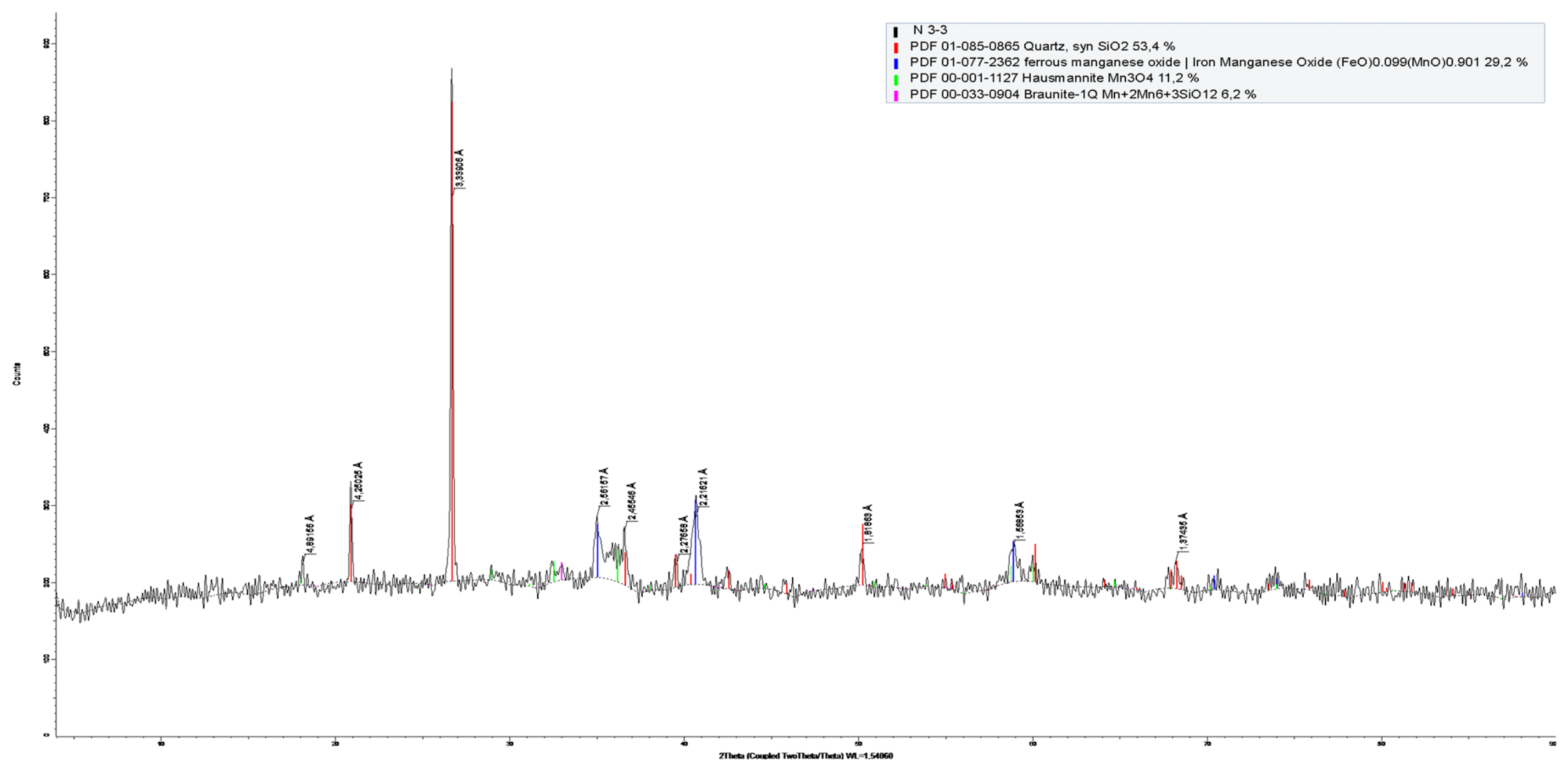
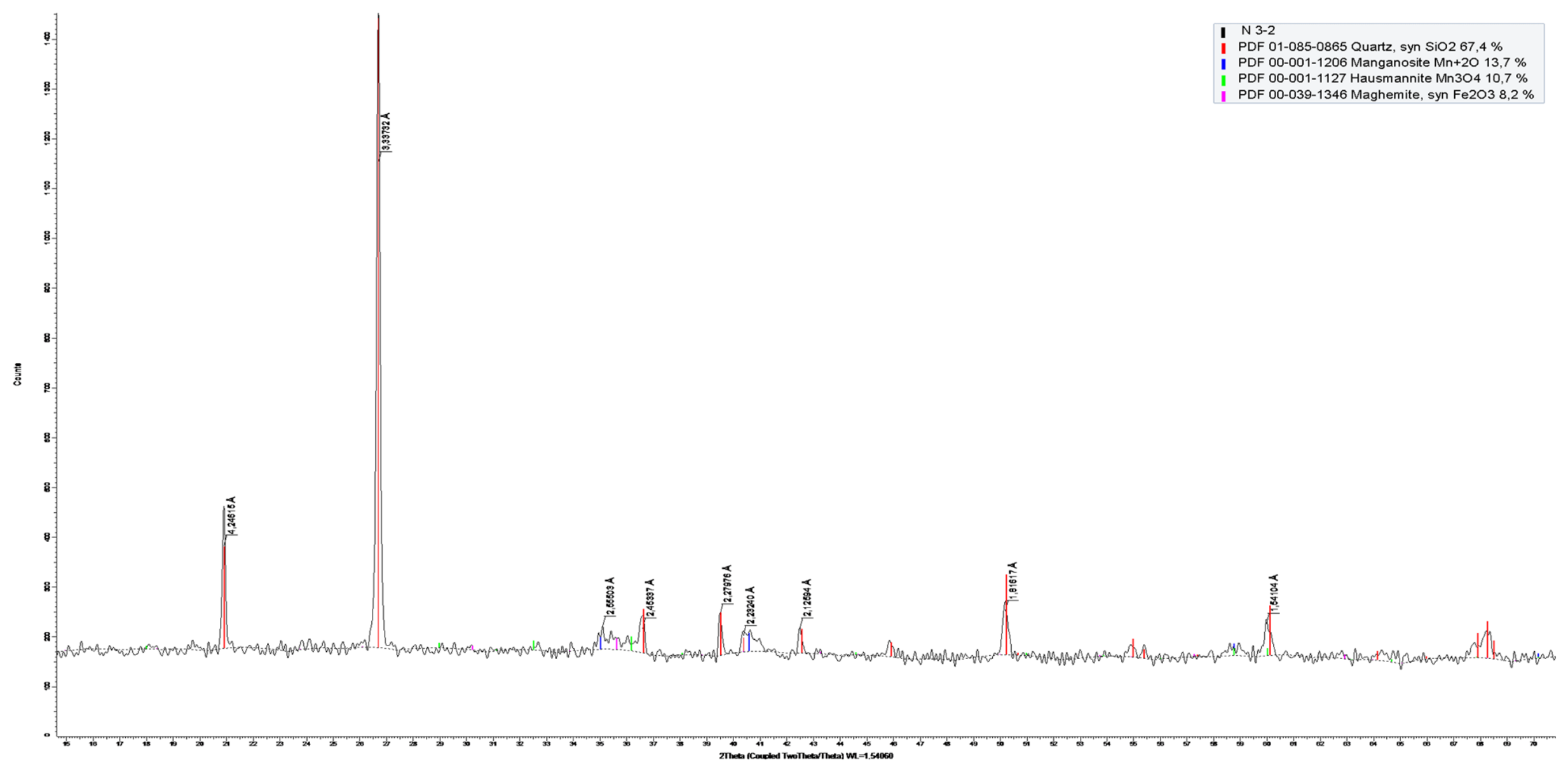
X-ray diffraction (XRD) analysis was performed on representative samples of concentrates obtained after reduction roasting and subsequent magnetic separation according to Options I and II (Figure 4 and Figure 5). The obtained results allow for the evaluation of phase transformations of iron- and manganese-bearing minerals during thermal treatment and provide insight into the mechanisms of their separation. The phase composition of Concentrate No. 7 and No. 17 , determined by XRD analysis, is presented in Table 7 and Table 8.
Figure 4.
XRD pattern of the representative sample (Concentrate No. 7, Option I).
Figure 5.
XRD pattern of the representative sample (Concentrate No. 17, Option II).
Table 7.
Phase composition of the Concentrate No. 7 determined by XRD analysis.
Table 8.
Phase composition of the Concentrate No. 17 determined by XRD analysis.
According to the diffraction pattern of the concentrate obtained via Option I (Figure 3), the dominant phase is quartz (SiO2) with a content of 53.4%. In addition, the product contains an (Fe,Mn)O-type oxide phase (29.2%), hausmannite (Mn3O4) (11.2%), and braunite (Mn2+Mn63+SiO12) (6.2%). The formation of mixed iron–manganese oxides indicates partial reduction of iron-bearing minerals and their transformation into magnetically active forms, which enhances the efficiency of subsequent magnetic separation.
For the concentrate obtained via Option II (Figure 4), quartz is also the predominant phase (67.4%), along with the presence of magnetite (Fe3O4, 8.2%), hausmannite (Mn3O4, 10.7%), and hematite-like iron structures. The higher proportion of quartz in this case is attributed to the features of preliminary magnetic separation and the redistribution of mineral components by size fraction prior to roasting.
Comparative analysis shows that in both schemes, the initial hydroxide and oxide forms of iron and manganese undergo transformation into more stable oxide and mixed phases. However, Option I results in the more pronounced formation of (Fe,Mn)O systems, which contributes to more efficient component separation and higher manganese recovery. In contrast, Option II is characterized by a higher concentration of quartz gangue in the final product, reflecting the effects of preliminary magnetic classification of the material.
Thus, the XRD results confirm that magnetizing reduction roasting leads to significant phase transformations that determine the selectivity of subsequent magnetic separation and the quality of the obtained concentrates.
4. Conclusions
- The investigated intermediate technogenic product (ITP) is characterized by a low Mn/Fe ratio (1.22) and a mineralogical composition dominated by quartz, iron oxides, and manganese hydroxide phases, highlighting the necessity of beneficiation prior to its utilization in ferroalloy production.
- The study demonstrated that the efficiency of manganese and iron separation strongly depends on the combined effects of particle size, reductant dosage, roasting time, and magnetic separation conditions. Selective phase transformations occurring during reduction roasting promote the enrichment of manganese in the non-magnetic fraction while concentrating iron in the magnetic product.
- X-ray diffraction analysis confirmed the formation of (Fe,Mn)O, hausmannite (Mn3O4), and braunite during roasting, providing insight into the phase transformation mechanisms responsible for the improved separation behavior.
- The optimum processing conditions identified in this study enabled a manganese recovery of up to 73.40%, while the highest-quality manganese concentrate contained 31.9% Mn and 2.0% Fe, demonstrating the effectiveness of the proposed roasting–magnetic separation approach for upgrading ferruginous manganese materials.
- The proposed technology provides a promising route for the integrated utilization of ferruginous manganese fines from the Tur deposit by producing both a manganese concentrate and an iron-bearing product, thereby contributing to more efficient resource utilization and sustainable processing of technogenic mineral resources.
- The present study was carried out under laboratory-scale conditions using a specific intermediate technogenic product from the Tur deposit. Therefore, further research should focus on pilot-scale validation, optimization of roasting atmosphere and reductant consumption, investigation of the influence of particle size and mineralogical variability, and evaluation of the metallurgical performance of the obtained concentrates in ferroalloy production. Future research should include pilot-scale validation of the proposed process together with a comprehensive techno-economic assessment to evaluate its industrial feasibility.
Author Contributions
Conceptualization, B.A., A.N. and T.Z.; methodology, B.A., A.N. and A.B.; validation, A.N., A.B. and T.Z.; formal analysis, A.B. and G.A.; investigation, B.A., B.D. and I.T.; resources, A.N. and T.Z.; data curation, B.D. and I.T.; writing—original draft preparation, B.A.; writing—review and editing, A.N., A.B., T.Z., G.A. and I.T.; visualization, G.A. and I.T.; supervision, A.N. and T.Z.; project administration, B.A.; funding acquisition, B.A. All authors have read and agreed to the published version of the manuscript.
Funding
This research was funded by Qarmet JSC as part of the co-financing of the funded project: This research was funded by the Science Committee of the Ministry of Science and Higher Education of the Republic of Kazakhstan (Grant No. AP22683270).
Data Availability Statement
The original contributions presented in this study are included in the article. Further inquiries can be directed to the corresponding author.
Acknowledgments
The authors express their sincere gratitude to the staff of the Zh. Abishev Chemical-Metallurgical Institute (Karaganda, Kazakhstan) for their assistance with laboratory experiments and analytical studies. The authors also acknowledge the support of Karaganda Industrial University (Temirtau, Kazakhstan) for providing research facilities and technical assistance during the course of this work.
Conflicts of Interest
The authors declare no conflicts of interest. The funders had no role in the design of the study; in the collection, analyses, or interpretation of data; in the writing of the manuscript; or in the decision to publish the results.
References
- Abdirashit, A.; Suleimen, B.; Uakhitova, B.; Uakhitov, R.; Taizhigitova, M.; Nurtayev, A. Thermodynamic and Pilot-Scale Experimental Analysis of Medium-Carbon Ferromanganese Production. Metals 2026, 16, 240. [Google Scholar] [CrossRef] [Scilit]
- Makhambetov, Y.N.; Abdirashit, A.M.; Myngzhassar, Y.A.; Burumbayev, A.G.; Zhakan, A.M.; Onuralp, Y. Research on the Possibility of Obtaining Medium-Carbon Ferromanganese from the Djezdinskoe Deposit. Kompleks. Ispolz. Miner. Syra 2024, 331, 101–108. [Google Scholar] [CrossRef] [Scilit]
- International Manganese Institute (IMnI). Manganese Alloys Statistics (FeMn, SiMn); ImnI: Paris, France, 2024; Available online: https://www.manganese.org/en/library/imni-2024-annual-booklet (accessed on 15 May 2026).
- Olsen, S.E.; Tangstad, M.; Lindstad, T. Production of Manganese Ferroalloys; SINTEF/NTNU: Trondheim, Norway, 2007; 247p. [Google Scholar]
- Tangstad, M.; Ichihara, K.; Ringdalen, E. Manganese ferroalloy production in submerged arc furnaces: Process fundamentals. In INFACON (International Ferro-Alloys Congress Proceedings); Outotec Oyj: Helsinki, Finland, 2010; pp. 1–10. [Google Scholar]
- Kabylkanov, S.; Makhambetov, Y.; Abdulina, S.; Burumbayev, A.; Zhakan, A.; Onuralp, Y. Production of chrome-manganese ligature using ferrosilicochrome dust as a reducing agent. Acta Metall. Slovaca 2025, 31, 141–148. [Google Scholar] [CrossRef] [Scilit]
- Makhambetov, Y.; Zhakan, A.; Gabdullin, S.; Akhmetov, A.; Burumbayev, A.; Zhunusov, A. Study on the synthesis of FeCrMnSi ferroalloy using technogenic raw materials. Acta Metall. Slovaca 2025, 31, 113–118. [Google Scholar] [CrossRef] [Scilit]
- Samuratov, Y.; Baisanov, A.; Tolymbekov, M. Complex processing of iron–manganese ore of Central Kazakhstan. In Proceedings of the Twelfth International Ferroalloys Congress, Helsinki, Finland, 6–9 June 2010; pp. 517–520. [Google Scholar]
- Tolymbekova, L.B. Development of a Smelting Technology for Ferrosilicomanganese from Pelletized High-Silica Manganese Raw Materials. Ph.D. Thesis, Ural Federal University, Yekaterinburg, Russia, 2014; 114p. Available online: http://www.imet-uran.ru/files/dis_Tolymbekova.pdf (accessed on 15 May 2026). (In Russian)
- Samuratov, E.K.; Baysanov, A.; Tolymbekov, M. Development of efficient technological processes for processing ferromanganese ores. Proc. Univ. 2007, 4, 33–35. [Google Scholar]
- Gasik, M. (Ed.) Handbook of Ferroalloys: Theory and Technology; Butterworth-Heinemann: Oxford, UK, 2013. [Google Scholar] [CrossRef] [Scilit]
- Gasik, M.I.; Lyakishev, N.P.; Emlin, B.I. Theory and Technology of Ferroalloy Production; Metallurgy Publisher: Moscow, Russia, 1988; p. 784. (In Russian) [Google Scholar]
- Gasik, M.I.; Lyakishev, N.P. Teoriya I Tekhnologiya Elektrometallurgii Ferrosplavov (Theory and Technology of Ferroalloys Electrometallurgy); Intermet Inzhiniring: Moscow, Russia, 1999. [Google Scholar]
- Roy, S.K.; Nayak, D.; Rath, S.S. A review on the enrichment of iron values of low-grade Iron ore resources using reduction roasting-magnetic separation. Powder Technol. 2020, 367, 796–808. [Google Scholar] [CrossRef] [Scilit]
- Shamase, A.; Nheta, W. Optimization of Magnetization Roasting and Magnetic Separation for the Recovery of Iron from Low-Grade Iron Plant Tailings. Minerals 2025, 15, 529. [Google Scholar] [CrossRef] [Scilit]
- Peng, T.; Gao, X.; Li, Q.; Xu, L.; Luo, L.; Xu, L. Phase transformation during roasting process and magnetic beneficiation of oolitic-iron ores. Vacuum 2017, 146, 63–73. [Google Scholar] [CrossRef] [Scilit]
- Monzavi, M.; Raygan, S. BenefIciation of an Oolitic-Iron ORE by Magnetization Roasting and Magnetic Separation. Iran. J. Mater. Sci. Eng. 2020, 17, 17–29. [Google Scholar]
- Rath, S.S.; Sahoo, H.; Dhawan, N.; Rao, D.S.; Das, B.; Mishra, B.K. Optimal Recovery of Iron Values from a Low Grade Iron Ore using Reduction Roasting and Magnetic Separation. Sep. Sci. Technol. 2014, 49, 1927–1936. [Google Scholar] [CrossRef] [Scilit]
- Kosdauletov, N.; Nurumgaliyev, A.; Zhautikov, B.; Suleimen, B.; Adilov, G.; Kelamanov, B.; Smirnov, K.; Zhuniskaliyev, T.; Kuatbay, Y.; Bulekova, G.; et al. Selective Reduction of Iron from Iron–Manganese Ore of the Keregetas Deposit Using Hydrogen. Metals 2025, 15, 691. [Google Scholar] [CrossRef] [Scilit]
- Kosdauletov, N.; Suleimen, B.; Adilov, G.; Nurumgaliyev, A.; Kelamanov, B.; Kuatbay, Y.; Zhunuskaliyev, T.; Bulekova, G.; Salikhov, S.; Abdirashit, A. Thermodynamic and Experimental Analysis of the Selective Reduction of Iron by Hydrogen from the Kergetas Iron–Manganese Ore. Metals 2025, 15, 1330. [Google Scholar] [CrossRef] [Scilit]
- Wu, Y.; Shi, B.; Ge, W.; Yan, C.J.; Yang, X. Magnetic Separation and Magnetic Properties of Low-Grade Manganese Carbonate Ore. JOM J. Miner. Met. Mater. Soc. 2014, 67, 361–368. [Google Scholar] [CrossRef] [Scilit]
- Kosdauletov, N.; Abilberikova, A.; Adilov, G.; Suleimen, B.; Kelamanov, B.; Sariyev, O.; Yessengaliyev, D.; Abdirashit, A.; Sholtaeva, K. Preliminary hydrogen reduction of iron from complex iron-bearing ores and subsequent liquid-phase separation. Results Eng. 2026, 30, 109768. [Google Scholar] [CrossRef] [Scilit]
- Zhang, G.F.; Yang, Q.R.; Yang, Y.D.; Wu, P.; McLean, A. Recovery of iron from waste slag of pyrite processing using reduction roasting–magnetic separation method. Can. Metall. Q. 2013, 52, 153–159. [Google Scholar] [CrossRef] [Scilit]
- Zhang, Y.; Li, H.; Yu, X. Recovery of iron from cyanide tailings with reduction roasting–water leaching–magnetic separation. J. Hazard. Mater. 2012, 213–214, 167–174. [Google Scholar] [CrossRef] [Scilit] [PubMed]
- Xu, L.-P.; Wei, D.; Liu, H.-B.; Li, G.-H.; Jiang, T. Super-High Bed Homogeneous Sintering for Iron Ores with Low Carbon Emissions. J. Clean. Prod. 2025, 529, 146848. [Google Scholar] [CrossRef] [Scilit]
- Li, G.-H.; Wei, D.; Fang, S.-L.; Xu, L.-P.; Liu, H.; Jiang, T. Regulation of Liquid Phase via Iron Ore Particle Size and Chemistry for High-Performance Sinter: Mechanisms, Experiments, and Industrial Application. J. Mater. Res. Technol. 2026, 42, 8400–8412. [Google Scholar] [CrossRef] [Scilit]
- Makhambetov, Y.; Zhakan, A.; Zhunusov, A.; Kabylkanov, S.; Burumbayev, A.; Sadyk, Z.; Akhmetov, A.; Uakhitova, B. Resource-Efficient Smelting Technology for FeCrMnSi Ferroalloy Production from Technogenic Wastes in an Ore-Thermal Furnace. Metals 2025, 15, 1318. [Google Scholar] [CrossRef] [Scilit]
- Makhambetov, Y.; Zhakan, A.; Zhunusov, A.; Kabylkanov, S.; Burumbayev, A.; Sadyk, Z.; Akhmetov, A.; Yücel, O. Thermodynamic Modeling and Development of Technology for Smelting a Complex Alloy Fe-Cr-Mn from Technogenic Wastes by Carbothermic Reduction. Metals 2026, 16, 283. [Google Scholar] [CrossRef] [Scilit]
- Yuan, S.; Zhou, W.; Han, Y.; Li, Y. Separation of manganese and iron for low-grade ferromanganese ore via fluidization magnetization roasting and magnetic separation technology. Miner. Eng. 2020, 152, 106359. [Google Scholar] [CrossRef] [Scilit]
- Liu, B.; Zhang, Y.; Lu, M.; Su, Z.; Li, G.; Jiang, T. Extraction and separation of manganese and iron from ferruginous manga-nese ores: A review. Miner. Eng. 2019, 131, 286–303. [Google Scholar]
- Mpho, M.; Samson, B.; Ayo, A. Evaluation of reduction roasting and magnetic separation for upgrading Mn/Fe ratio of fine ferromanganese. Int. J. Min. Sci. Technol. 2013, 23, 537–541. [Google Scholar] [CrossRef] [Scilit]
- Yu, W.; Sun, T.; Cui, Q.; Xu, C.; Kou, J. Effect of coal type on the reduction and magnetic separation of a high-phosphorus oolitic hematite ore. ISIJ Int. 2015, 55, 536–543. [Google Scholar] [CrossRef] [Scilit]
- Wang, X.H.; Wang, Z.H.; Liu, J.; Xiang, F.P.; Zhou, J.H.; Cen, K.F. Reduction roasting and magnetic separation of oolitic hema-tite ore by coal combustion in fluidized bed. J. Cent. South Univ. Technol. 2013, 47, 675–679. [Google Scholar]
- Pan, J.; Lu, S.; Li, S.; Zhu, D.; Guo, Z.; Shi, Y.; Dong, T. A new route to upgrading the high-phosphorus oolitic hematite ore by sodium magnetization roasting-magnetic separation-acid and alkaline leaching process. Minerals 2022, 12, 568. [Google Scholar]
- Xiao, J.; Zhou, L. Increasing iron and reducing phosphorus grades of magnetic-roasted high-phosphorus oolitic iron ore by low-intensity magnetic separation–reverse flotation. Processes 2019, 7, 388. [Google Scholar] [CrossRef] [Scilit]
- Wu, S.; Sun, T.; Kou, J.; Xu, H. A new iron recovery and dephosphorization approach from high-phosphorus oolitic iron ore via oxidation roasting-gas-based reduction and magnetic separation process. Powder Technol. 2023, 413, 118043. [Google Scholar]
- Yi, L.; Huang, Z.; Jiang, T.; Zhao, P.; Zhong, R.; Liang, Z. Carbothermic reduction of ferruginous manganese ore for Mn/Fe beneficiation: Morphology evolution and separation characteristic. Minerals 2017, 7, 167. [Google Scholar] [CrossRef] [Scilit]
- Gao, L.; Liu, Z.; Pan, Y.; Feng, C.; Ge, Y.; Chu, M. A study on separation of Mn and Fe from high-alumina ferruginous manga-nese ores by the carbothermal roasting reduction process. Adv. Powder Technol. 2020, 31, 51–60. [Google Scholar] [CrossRef] [Scilit]
- Tripathy, S.K.; Banerjee, P.K.; Suresh, N. Effect of desliming on the magnetic separation of low-grade ferruginous manganese ore. Int. J. Miner. Metall. Mater. 2015, 22, 661–673. [Google Scholar] [CrossRef] [Scilit]
- Zhu, D.; Xu, J.; Guo, Z.; Pan, J.; Li, S.; Pan, L.; Yang, C. Synergetic utilization of copper slag and ferruginous manganese ore via co-reduction followed by magnetic separation process. J. Clean. Prod. 2020, 250, 119462. [Google Scholar] [CrossRef] [Scilit]
- Svyatov, B.A.; Tolymbekov, M.Z.; Baisanov, S.O. Formation and Development of the Manganese Industry in Kazakhstan; Iskander: Almaty, Kazakhstan, 2002; 416p. (In Russian) [Google Scholar]
- Baisanov, A.S. Phase Equilibria and Kinetics of Pyrometallurgical Processing of Ferruginous Manganese Ores. Ph.D. Thesis, KhMI, Karaganda, Kazakhstan, 2007; 22p. Available online: https://kazneb.kz/la/catalogue/view/1118628 (accessed on 15 May 2026). (In Russian)
- Buketov, E.A.; Gabdullin, T.G.; Takenov, T.D. Metallurgical Processing of Manganese Ores of Central Kazakhstan; Nauka: Alma-Ata, Kazakhstan, 1979; 184p. (In Russian)
- Zhukovskii, V.I.; Khamzin, B.S. Current State and Prospects for Expanding the Iron and Manganese Resource Base of Central Kazakhstan. In Proceedings of the Scientific and Practical Conference “Raw Material Base of the Ferrous Metallurgy of Kazakhstan”, Karaganda, Kazakhstan, 2003; pp. 20–25. (In Russian) [Google Scholar]
- Baisanov, A.S.; Isagulov, A.; Loren, K.; Sirgetaeva, G.E.; Arinova, S.K. Investigation of the Possibility of Roast-Magnetic Beneficiation of Ferruginous Manganese Ore from the Vostochny Kamys Deposit by Oxidizing Roasting. Proc. Univ. 2016, 1, 24–27. Available online: https://tu.kstu.kz/archive/issue/23 (accessed on 15 May 2026). (In Russian)
- GOST 25114-82; Iron ores. Method of magnetic analysis. Izdatel’stvo Standartov: Moscow, Russia, 1983. (In Russian)

Disclaimer/Publisher’s Note: The statements, opinions and data contained in all publications are solely those of the individual author(s) and contributor(s) and not of MDPI and/or the editor(s). MDPI and/or the editor(s) disclaim responsibility for any injury to people or property resulting from any ideas, methods, instructions or products referred to in the content. |
© 2026 by the authors. Licensee MDPI, Basel, Switzerland. This article is an open access article distributed under the terms and conditions of the Creative Commons Attribution (CC BY) license.