Article

An A-SFS-Based Problem-Driven Scenario Reduction Framework for Large-Scale Annual Power System Analysis


1
ZJU-UIUC Institute, Zhejiang University, Haining 314400, China
2
East Branch of State Grid Corporation of China, Shanghai 200001, China
*
Author to whom correspondence should be addressed.
Processes 2026, 14(13), 2121; https://doi.org/10.3390/pr14132121
Submission received: 13 May 2026 / Revised: 25 June 2026 / Accepted: 26 June 2026 / Published: 29 June 2026

Abstract

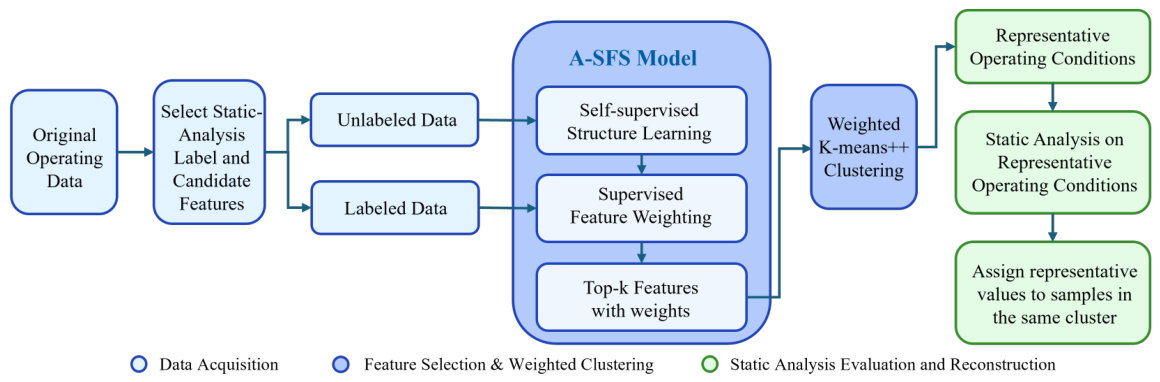
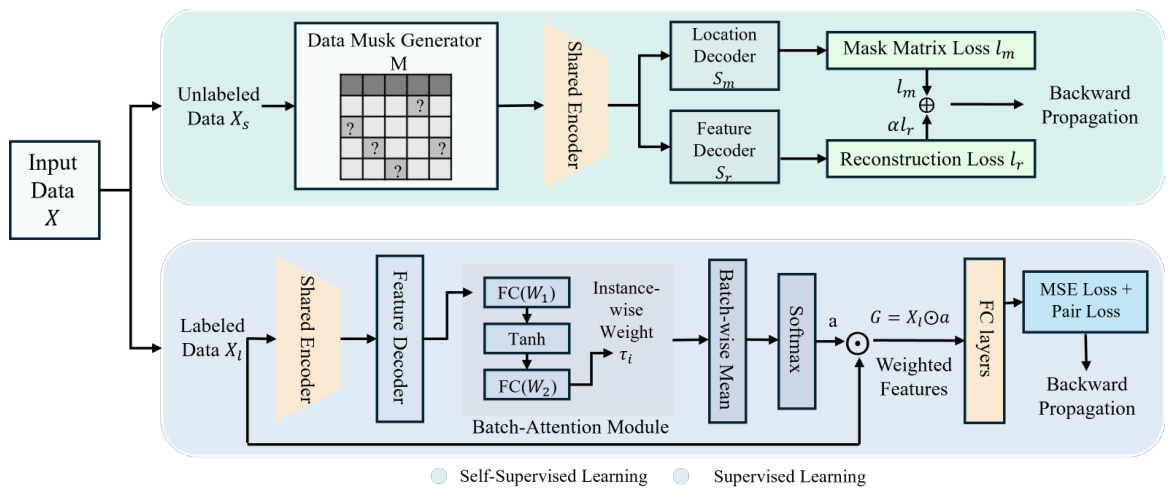
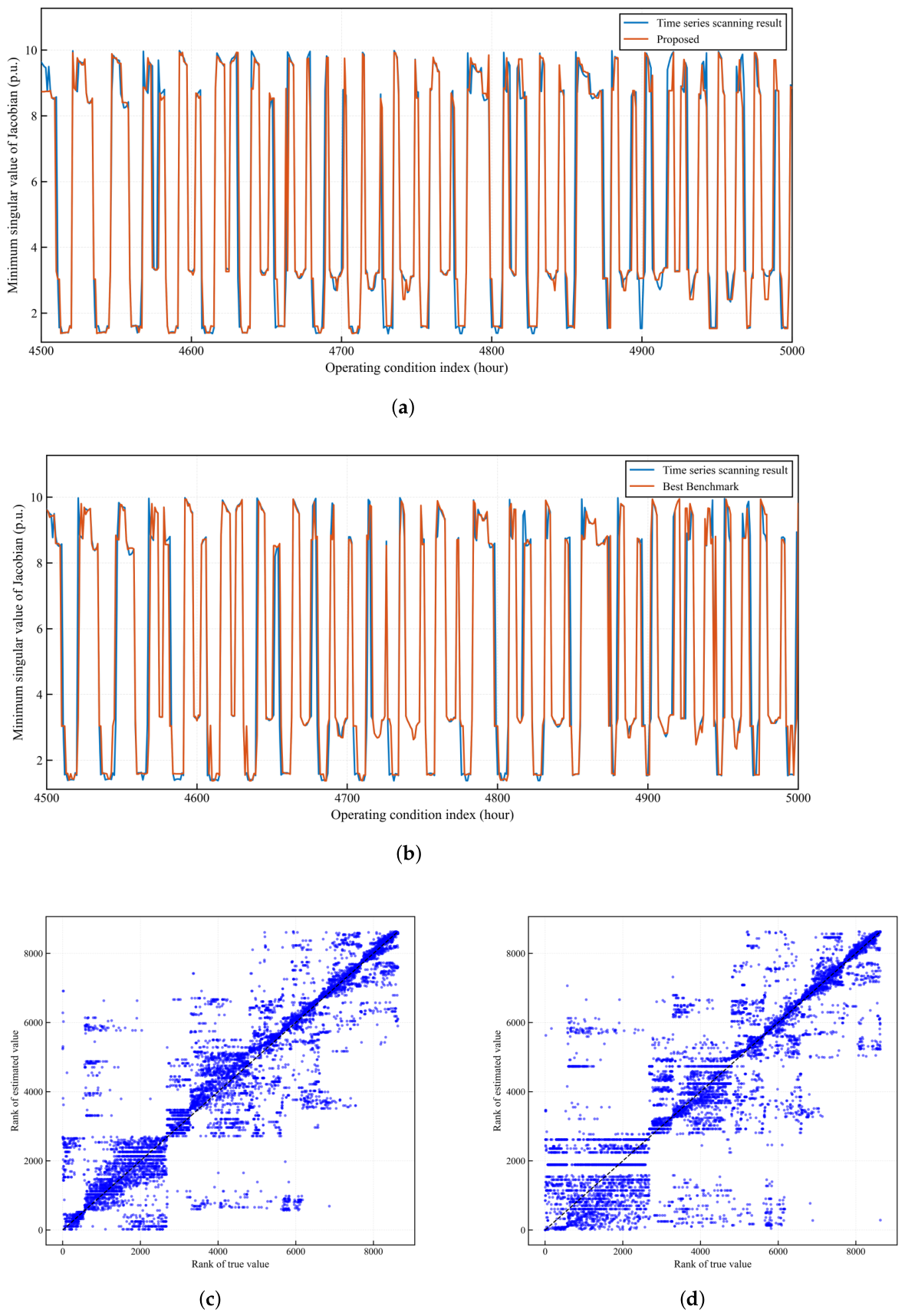
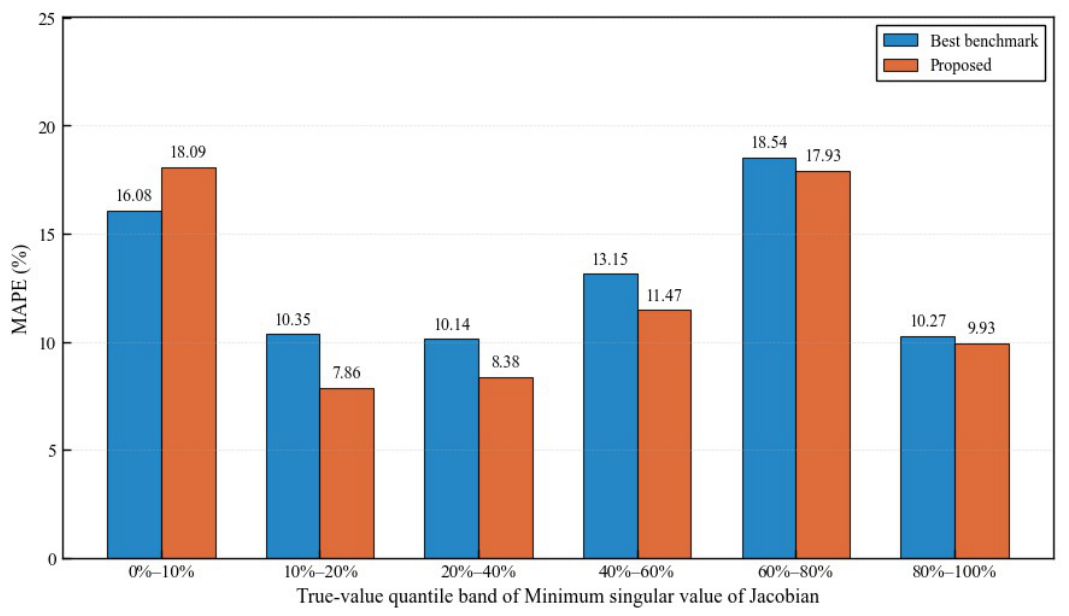
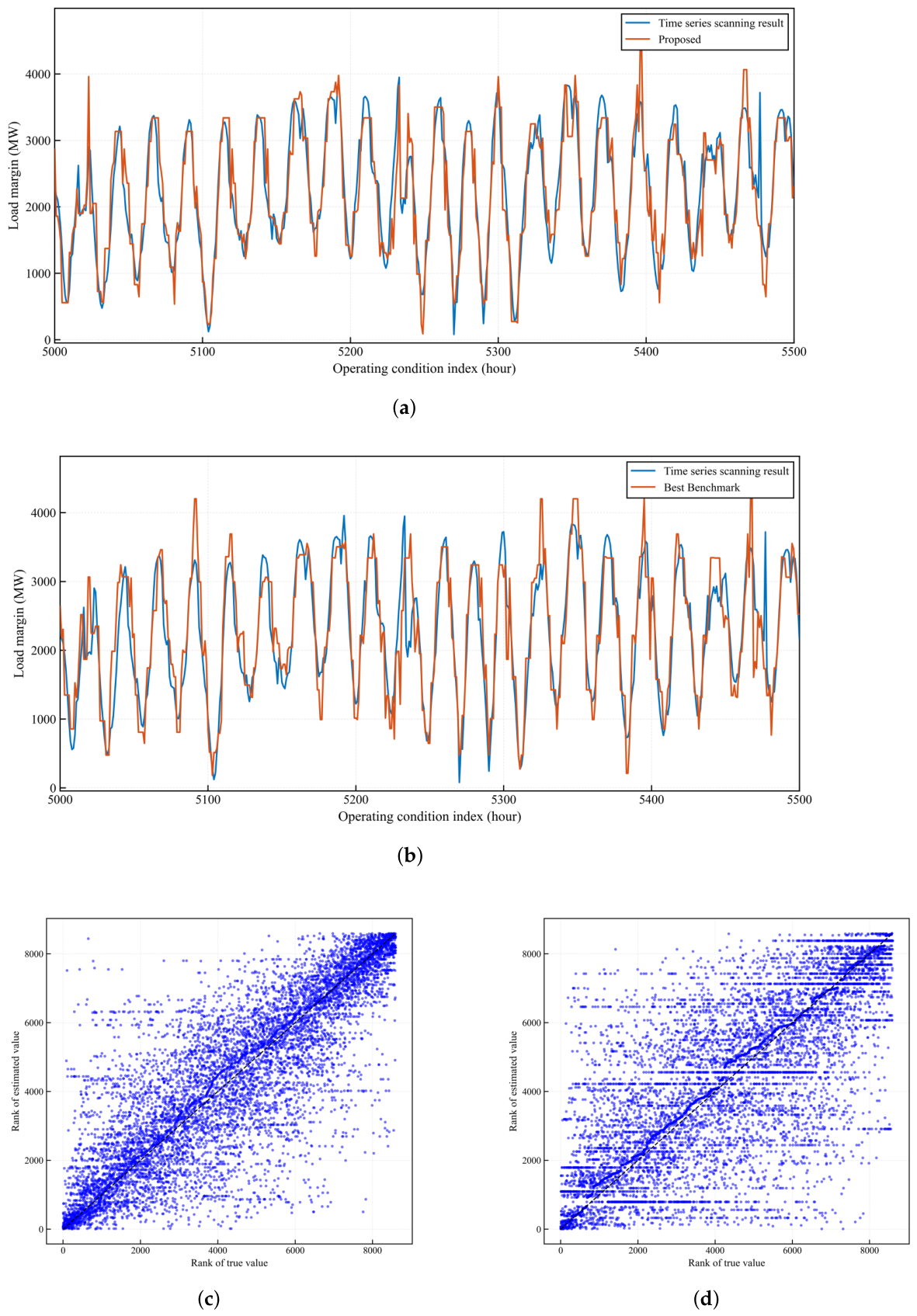
The increasing penetration of renewable generation and flexible loads has made modern power systems operate under highly variable and diverse conditions. For power-system planning studies, static power-system analysis plays an important role in characterizing the security and stability behavior of these operating conditions. In such planning tasks, annual or long-term hourly datasets are often needed to capture temporal variations in renewable generation, load, and power-flow patterns, but performing power-flow-based static analysis for every operating condition can be computationally expensive, especially for targets that require repeated power-flow-based calculations. Therefore, an effective operating-condition reduction framework is needed to select a compact yet representative subset and reconstruct the overall static-analysis profile required for variation trends and distribution analysis. To address this problem, this paper proposes a problem-driven scenario reduction framework based on batch-attention-based self-supervision feature selection (A-SFS) for simplifying large-scale power-flow-based static analysis. Instead of clustering operating conditions only according to their geometric similarity in the original feature space, the proposed framework incorporates the downstream static-analysis target into the reduction process. Target values are first computed for only a small portion of the operating-condition dataset, and A-SFS is then used to learn target-relevant features and their importance weights. Based on the learned weighted feature space, all operating conditions are clustered using weighted K-means++, and the actual operating condition closest to each cluster centroid is selected as the representative scenario. The downstream target evaluation is then performed only on these representative scenarios, and their target values are assigned to the operating conditions within the same clusters to reconstruct the overall target-value profile of the full dataset. The proposed framework is validated on a yearly RTS-GMLC operating-condition dataset using two representative static-analysis targets, namely load margin and the minimum singular value of the power-flow Jacobian, σmin. The results show that the proposed target-aware clustering framework can effectively reconstruct the overall static-analysis profile of the full operating-condition dataset while preserving the relative ranking of different operating conditions. In the best-M comparison, the proposed method achieves MAPEs of 19.56% for load margin and 12.85% for σmin, with corresponding Spearman coefficients of 0.8380 and 0.8755, respectively.
Keywords: scenario reduction; static power-system analysis; feature selection; clustering; target-aware learning scenario reduction; static power-system analysis; feature selection; clustering; target-aware learning