


Abstract
With the development of deep Earth engineering, the stability of surrounding rocks subjected to high temperatures from fire hazards has become an increasingly prominent issue. Therefore, studying the physical and mechanical properties of rocks under different thermal treatment modes is of great significance for the design of underground engineering. Taking red sandstone as the research object, this paper conducts physical parameter tests, uniaxial compression tests, and X-ray diffraction (XRD) on specimens under real-time high temperatures and natural cooling in the range of 600–1000 °C, to analyze the variations in specimen composition, the correlation between physical and mechanical properties and temperature, and to explore the underlying mechanisms. The results show that under both real-time high temperatures and natural cooling, the volume of sandstone increases while the mass decreases with rising temperature. At 1000 °C, the volume expansion rates are 3.30% and 3.80%, and the mass loss rates are 6.30% and 5.60%, respectively. Mechanical parameters, including peak strength, elastic modulus, and peak strain under the two treatments, all deteriorate significantly compared with those at room temperature. At 1000 °C, peak strength decreases by 54.83% and 36.26%, elastic modulus decreases by 74.55% and 67.96%, and peak strain increases by 65.63% and 43.75%, respectively. High-temperature-induced changes in the internal mineral structure and composition of sandstone are the main causes of rock mechanical property deterioration. During the cooling process, thermal shrinkage and recrystallization of mineral particles densify the rock structure; therefore, the compressive strength of naturally cooled sandstone is higher than that under real-time high temperatures. This study can provide theoretical guidance for the repair and reinforcement of rock engineering after high-temperature action.
1. Introduction
With the depletion of shallow resources on Earth, the development of deep resources has become the norm [1]. The surrounding rock of deep engineering is vulnerable to the influence of high-temperature environments, such as underground coal gasification, geothermal development, and support designs for surrounding rocks affected by fires in underground engineering [2]. The underground engineering field involves high-temperature and thermal stress problems. High temperatures will cause thermal stress in rock, as well as change its internal structure [3,4,5] and affect the stability of the project. Therefore, it is of great significance to study changes in the mechanical properties of rock under high temperatures to control the stability and improve the safety of the surrounding rock in a high-temperature environment.
Scholars at home and abroad have carried out a series of experiments to explore the influence of temperature on the physical and mechanical properties of rock, mainly focusing on two conditions: natural cooling and real-time high temperatures. A large number of experiments have obtained the influence of temperature on the peak strength, elastic modulus, longitudinal wave velocity, and porosity of rock [6,7,8,9,10,11,12,13,14]. Liu [8] studied the physical and mechanical properties of sandstone after high temperatures. It was found that the uniaxial compressive strength of sandstone decreased slowly with an increase in temperature up to 600 °C. When the temperature was higher than 600 °C, the uniaxial compressive strength of sandstone decreased sharply. Liang [10] explored the mechanical properties of siliceous sandstone after high temperatures, and found the law of rock strength, deformation characteristics, and rock wave velocity changing with temperature. Wang [9], based on the wavelet transform method, used the concept of spectral kurtosis to study sandstone after high temperatures. It was found that with an increase in temperature, the longitudinal wave velocity of sandstone samples decreased significantly; the waveform tended to be disordered, the peak strain increased, and the peak stress and elastic modulus showed nonlinear characteristics. Jing [13] studied the relationship between wave velocity and porosity of sandstone under the action of high-temperature thermal cycles, and found that with an increase in temperature, porosity increased and wave velocity decreased. Similar findings were also found in real-time high-temperature experiments. Ping [15] and Liu [16] studied the dynamic mechanical properties of sandstone at 25–1000 °C real-time temperatures. It was found that the elastic modulus of sandstone decreased gradually with an increase in temperature, the peak strain increased gradually with an increase in temperature, and compressive strength increased first and then decreased with an increase in temperature. In order to explore the influence of temperature mechanisms on rock strength, scholars have used a variety of means to explore high-temperature rocks. It has been found that in the process of rising temperature, due to the thermal stress inside the rock, the internal cracks of the rock expand and penetrate [17,18,19]. In the cooling process, uneven thermal expansion and contraction inside rock minerals will cause a secondary development of cracks [20,21,22]. Wu [19] studied the meso-structure and acoustic emission of granite under real-time high-temperature conditions, and found that the internal cracks of granite increased with an increase in temperature, and the crack propagation trend was positively correlated with the peak stress curve. Through the study of the physical and mechanical properties of granite under different cooling methods, Zhang [22] and others revealed the mechanism of the effect of high-temperature post-cooling on the mechanical properties of sandstone by studying the physical and mechanical properties of granite under different cooling modes.
Most previous studies have focused on single-factor tests to investigate the physical and mechanical behaviors of rock under either real-time high-temperature conditions or natural cooling after heat treatment. Few studies have systematically explored coupling among mineral structural evolution, internal crack propagation, and macroscopic mechanical properties of sandstone under the combined actions of real-time high-temperature conditions and subsequent natural cooling, which remains a question that requires ongoing investigation in the field of high-temperature rock mechanics. Targeting this issue, we conducted uniaxial compression tests on red sandstone by using self-developed high-temperature testing equipment for both real-time high-temperature and naturally cooled states, analyzed the correlations between temperature and stress–strain curves, peak strength, peak strain, and elastic modulus, and carried out X-ray diffraction (XRD) tests to identify the mineral composition of thermally treated specimens. Based on the evolutionary characteristics of minerals, microstructures, and cracks, this paper revealed the deterioration mechanism of red sandstone under high-temperature and cooling conditions. The major innovations of this study are threefold: first, a comparative analysis was implemented for two successive thermal conditions; second, a multi-scale link was established between macroscopic mechanical performance and microscopic mineral evolution; and third, the formation mechanism of dense rock structures, induced by mineral recrystallization during natural cooling, was clarified. The results are expected to provide theoretical support for the assessment of high-temperature damage and safety measures of surrounding rocks in deep underground engineering.
2. Materials and Methods
2.1. Specimen Preparation
The red sandstone used in this paper was collected from Ganzi Tibetan Autonomous Prefecture, Sichuan Province. The specimens underwent X-ray diffraction analysis, revealing that the primary mineral constituents included quartz, albite, illite, zeolite, and various other clay minerals. To ensure the consistency of the rock samples, all samples were selected from the same rock. Conforming to the requirements of the International Society for Rock Mechanics (ISRM), a cylindrical specimen with a diameter of 50 mm and a height of 100 mm was constructed. The specimen was polished and processed so that the flatness deviation of the two end surfaces was less than 0.02 mm, and the deviation of the end surface normal was less than 0.25°. Before commencing testing, the initial longitudinal wave speed of the red sandstone specimen was determined by a sonic velocimeter, and the red sandstone specimens with a large deviation of wave speed were excluded.
2.2. Test Equipment and Test Methods
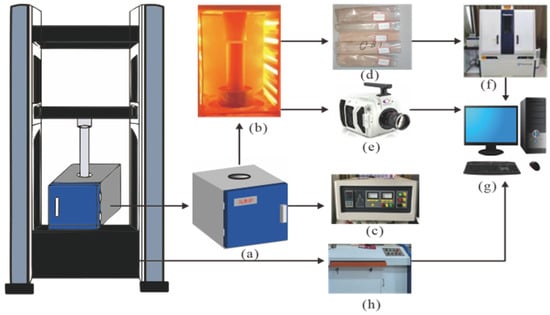
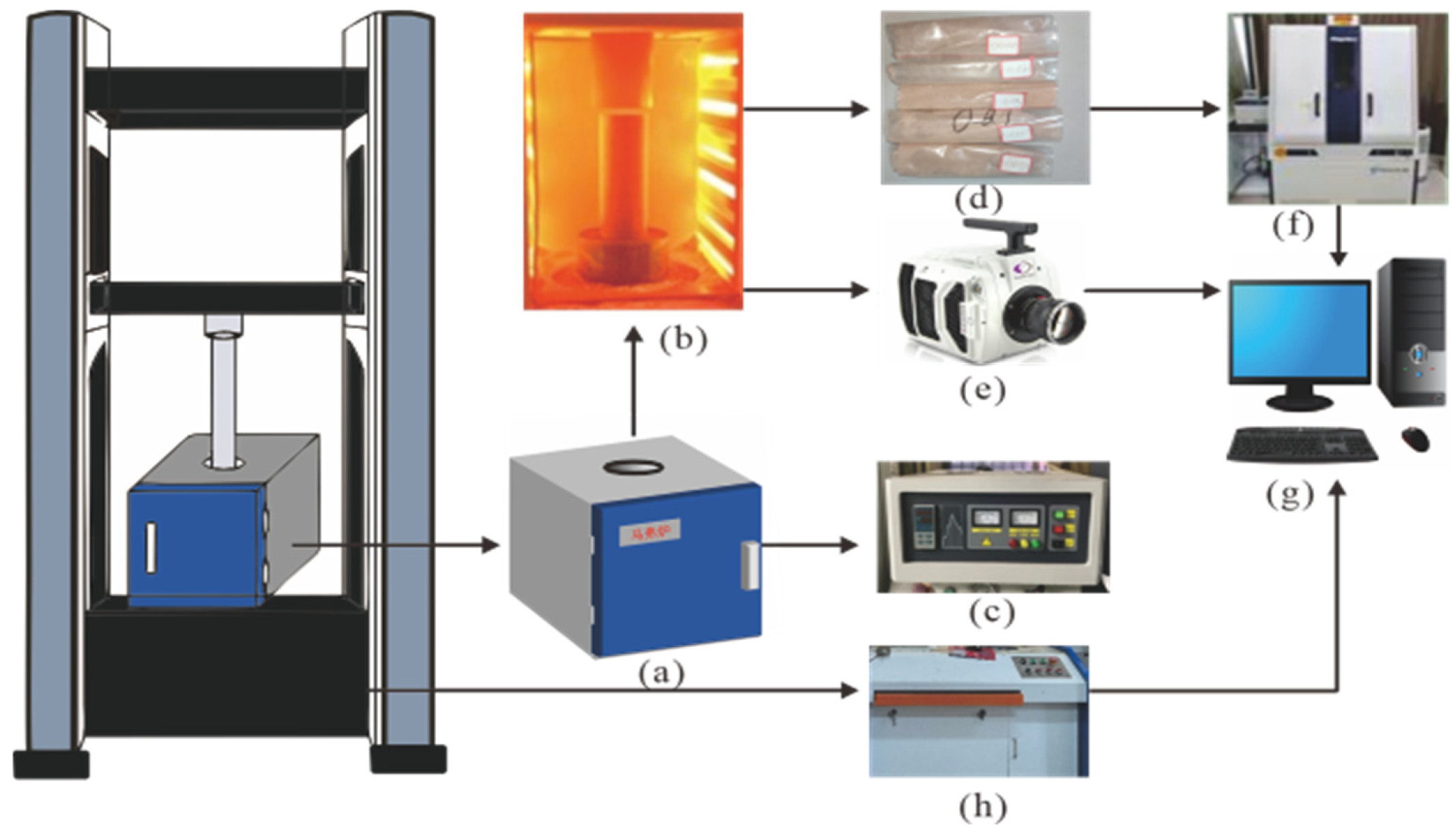
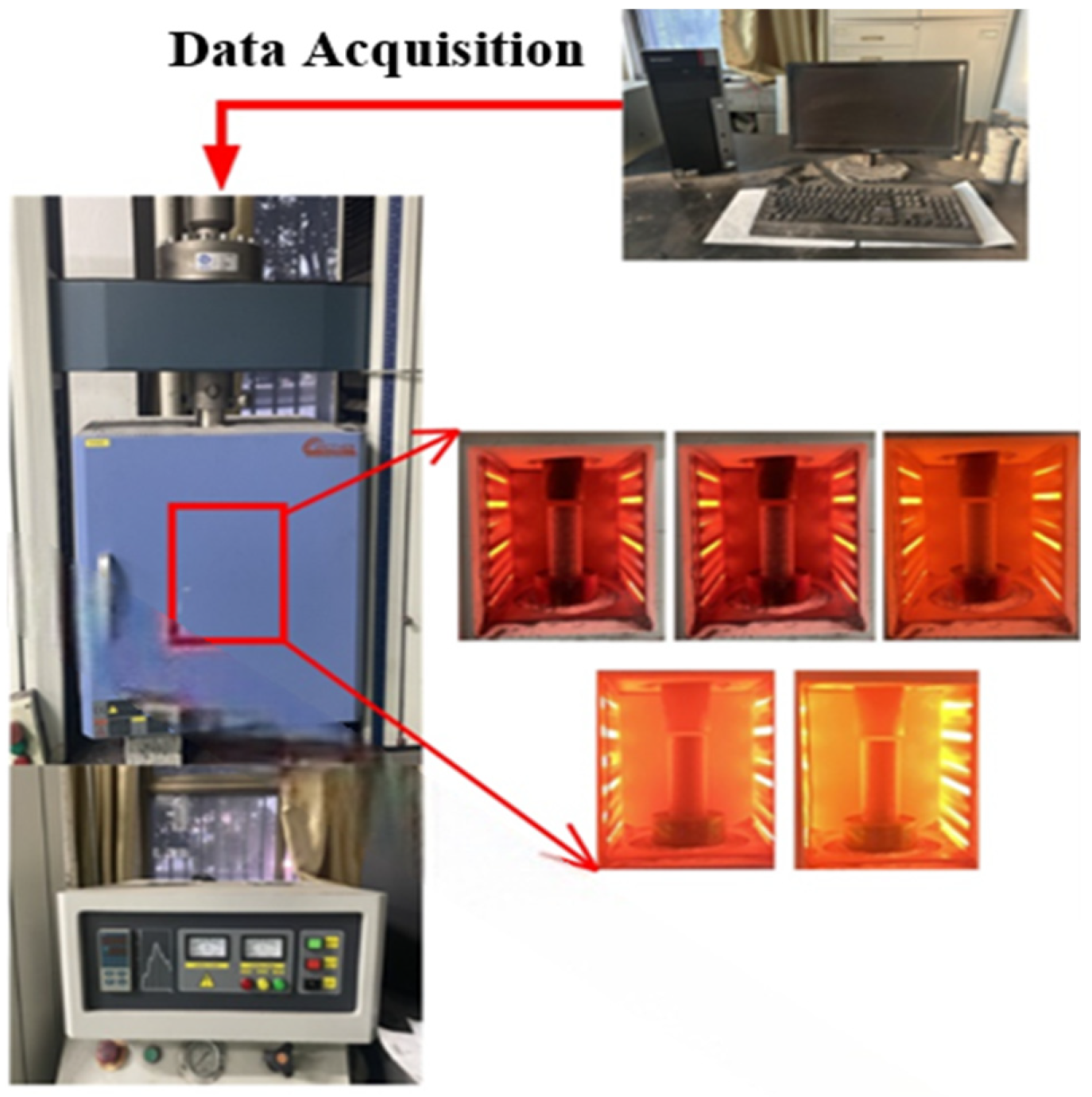
The uniaxial compression test under real-time high temperature was conducted utilizing a self-developed integrated high-temperature loading apparatus, matched with a BR-12N muffle furnace. This device enables in situ uniaxial compression testing while specimens remain inside the high-temperature cavity of the muffle furnace throughout the whole test process, avoiding temperature fluctuations, thermal shock, and secondary damage caused by specimen transfer. The apparatus maintains stable operation from room temperature to 1200 °C, with a constant temperature error of less than ±2 °C; its high-precision loading system fully meets the requirements of rock mechanical tests. The uniaxial compression test under real-time high-temperature conditions is carried out using the custom-made high-temperature test device, as shown in Figure 1. The partial experimental workflow is presented in Figure 2.
Figure 1.
Schematic diagram of the experimental equipment: (a) muffle furnace, (b) specimen at real-time temperature, (c) temperature controller, (d) specimen powder foam after high temperature, (e) DIC system, (f) XRD test, (g) data processing system, and (h) universal testing machine console.
Figure 2.
Photograph of the test equipment and data acquisition system.
The overall experimental procedures are as follows: First, standard red sandstone specimens were prepared and screened by P-wave velocity. Then, all samples were divided into six groups. Except for the room-temperature group, other samples were heated to 600 °C, 700 °C, 800 °C, 900 °C, and 1000 °C at 5 °C/min and held for 2 h. Afterwards, in situ uniaxial compression tests were carried out on high-temperature specimens. After natural cooling to room temperature, the residual specimens were used for uniaxial compression, physical parameter, and P-wave velocity tests. Finally, XRD tests were performed on powder samples to analyze mineral composition.
The temperature range of 600–1000 °C was selected for two reasons. On the theoretical side, it covers the critical temperatures of water loss, clay mineral decomposition, and quartz phase transition of red sandstone. On the engineering side, it corresponds to the typical temperature of underground engineering fires and geothermal environments, making the research results practically applicable.
3. Test Results and Analysis
3.1. Physical Properties
The variation rates of the physical parameters, including the mass change rate , volume expansion rate , and the P-wave velocity attenuation rate , can effectively reflect the internal evolution characteristics of rock specimens. It should be noted that all parameters discussed below refer to the relative change rates of physical properties rather than the original physical quantities of rock samples. Formula (1) is used to calculate the mass loss rate, volume expansion rate, and longitudinal wave velocity attenuation rate of sandstone after high-temperature treatment, as well as to quantitatively analyze the change law of physical properties of sandstone [23].
where is the mass, volume, and rate of change in the longitudinal wave speed of the sandstone specimen, is the amount of change occurring in the physical parameters, and is the initial value of the physical parameters of the sandstone specimen.
- (1)
- Apparent color change
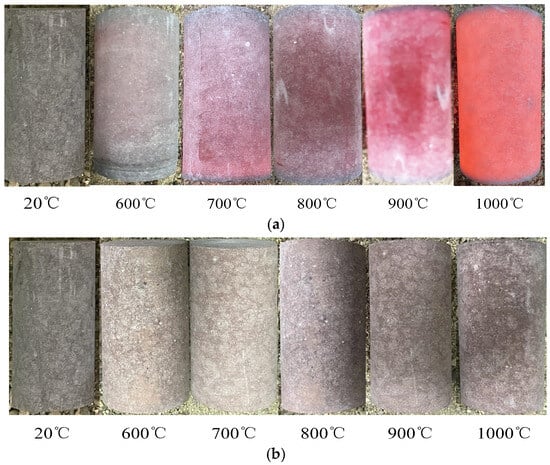
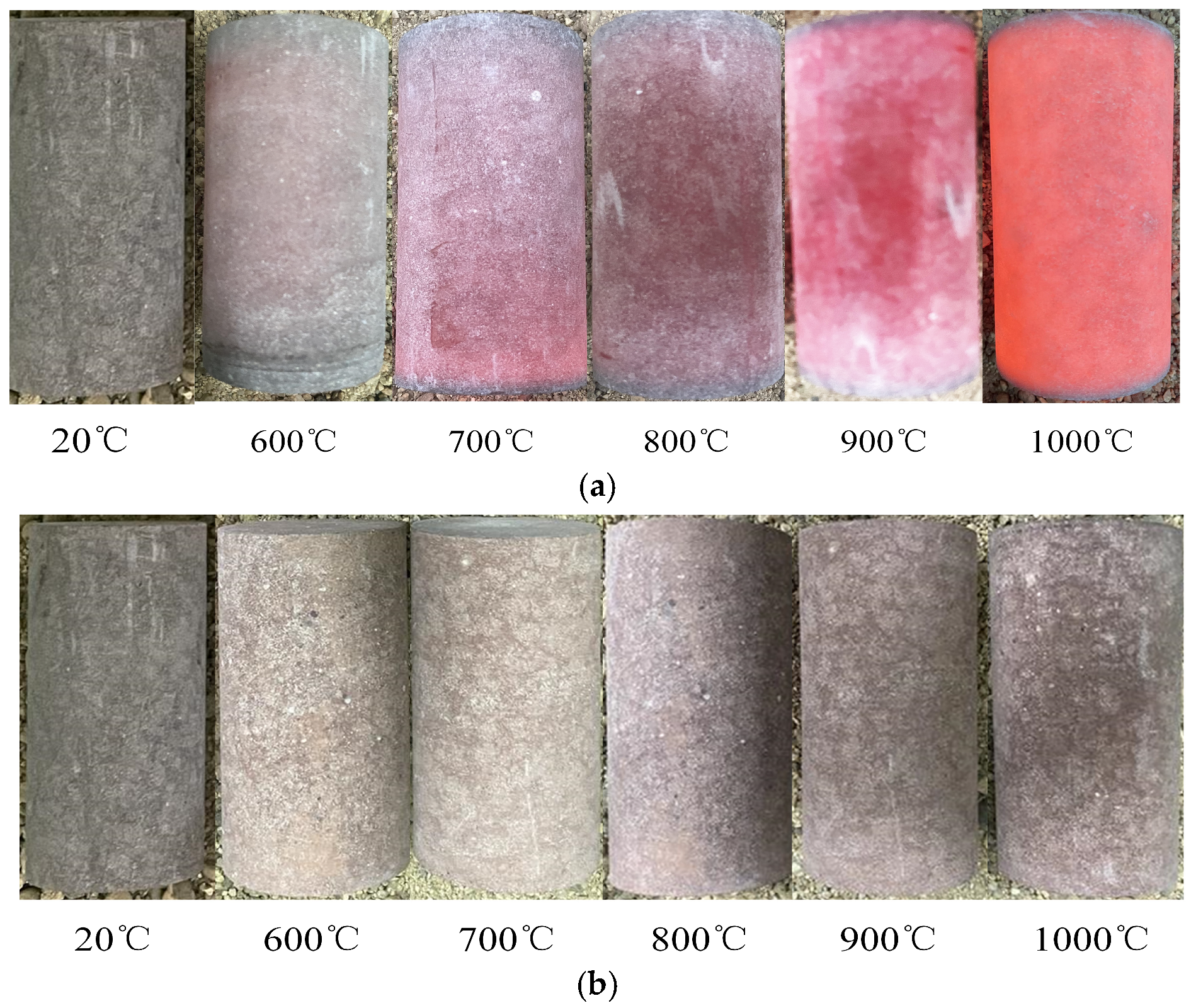
The apparent color of the rock is directly related to the color of its internal mineral composition. The internal mineral composition will change under different temperatures, which will lead to a change in the apparent color of the sandstone. During the heating process, as the temperature increased, the inside of the rock gradually heated up, and the color changed from dark red to brown-red and then to orange-red. The white spots on the surface of the rock increased first and then decreased with the increase in temperature. The rock samples were cooled to room temperature after high-temperature treatment, and their colors changed with the increase in heating temperature. At room temperature, the sandstone was grayish white. When the temperature increased to 600–700 °C, the surface of the sandstone was white-red, and when the temperature continued to increase to 800–1000 °C, the color of the sandstone gradually turned to brown-red and bright red, as shown in Figure 3.
Figure 3.
Apparent color of sandstone under two treatments: (a) color of sandstone at a high temperature in real time; (b) color of naturally cooled sandstone.
- (2)
- Mass loss rate
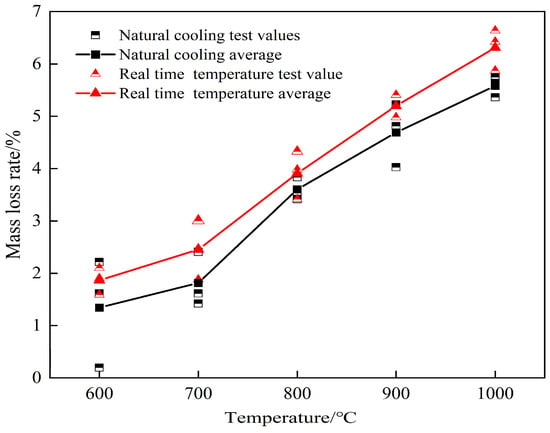
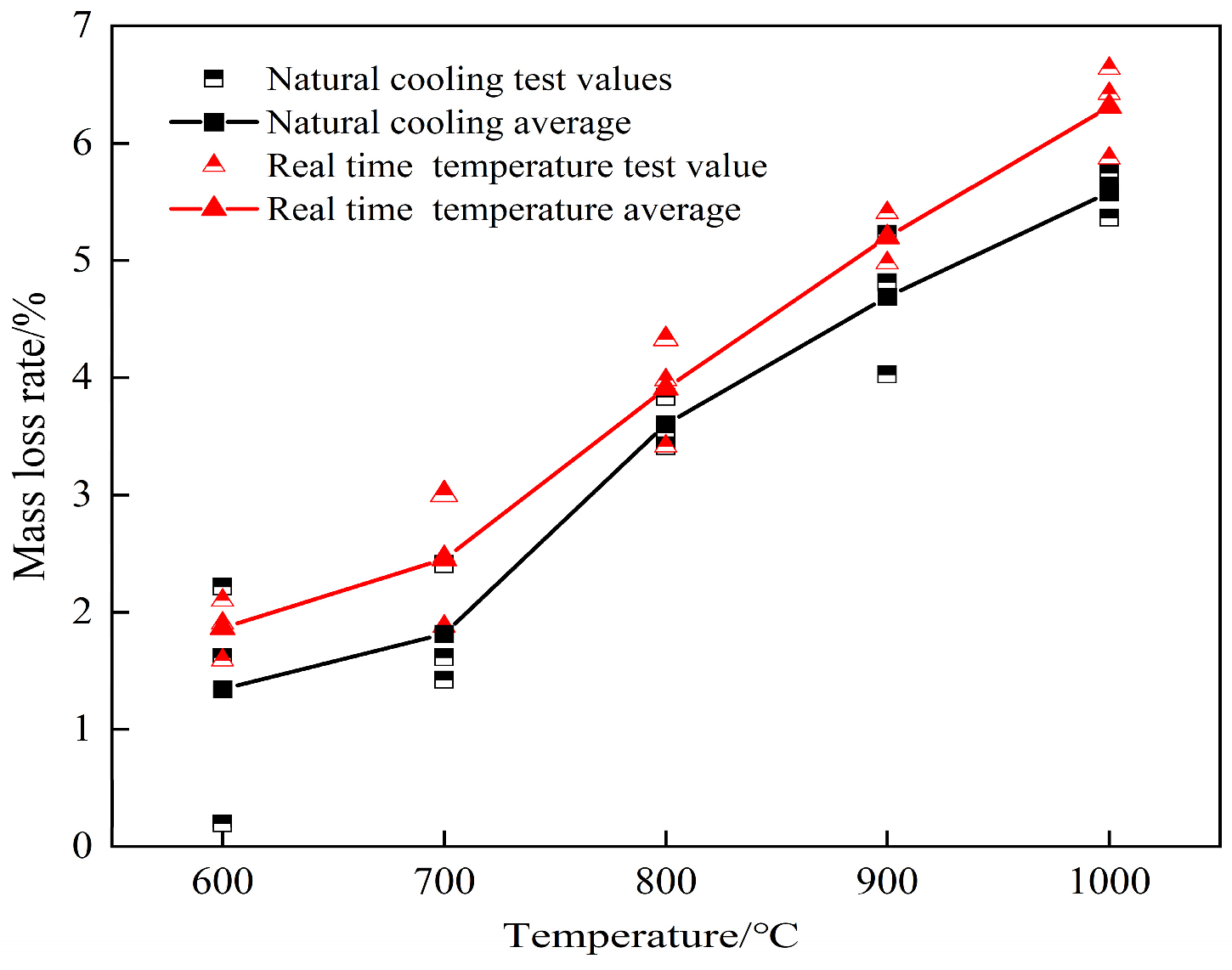
Figure 4 compares the mass loss rate of sandstone specimens under real-time high-temperature and natural cooling conditions. It can be observed that the mass loss rate rises with increasing temperature for both treatment groups, and specimens tested under real-time high temperatures exhibited a higher mass loss than those naturally cooled after heating. Two primary causes account for this phenomenon: first, this is due to the evaporation of structural water inside rock minerals; second, a detachment of substances is generated by mineral phase decomposition within the sandstone. At 600 °C, 700 °C, 800 °C, 900 °C, and 1000 °C, the mass loss rates of specimens under real-time high temperatures are 1.86%, 2.45%, 3.91%, 5.20%, and 6.30%, while the corresponding values for naturally cooled specimens are 1.34%, 1.81%, 3.60%, 4.69%, and 5.60%, respectively. When the temperature exceeds 700 °C, the growth rate of mass loss becomes much higher for specimens under real-time high temperatures. This is because intense thermal decomposition drastically alters the internal mineral composition of sandstone at elevated temperatures and forms interconnected macrocracks and pores. During natural cooling, the porous rock structure readily absorbs moisture from ambient air, which further reduces the final mass loss rate.
Figure 4.
Mass loss rate of red sandstone as a function of temperature.
- (3)
- Volume expansion rate
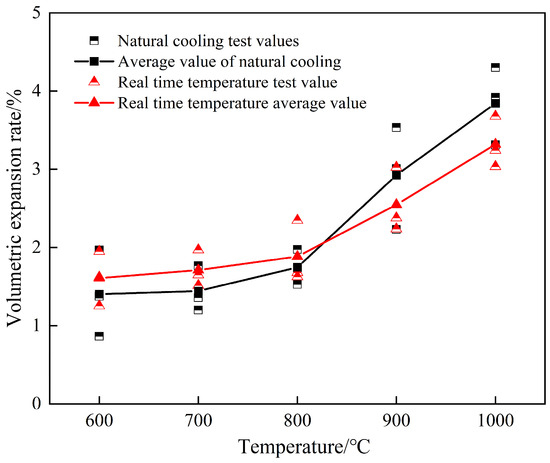
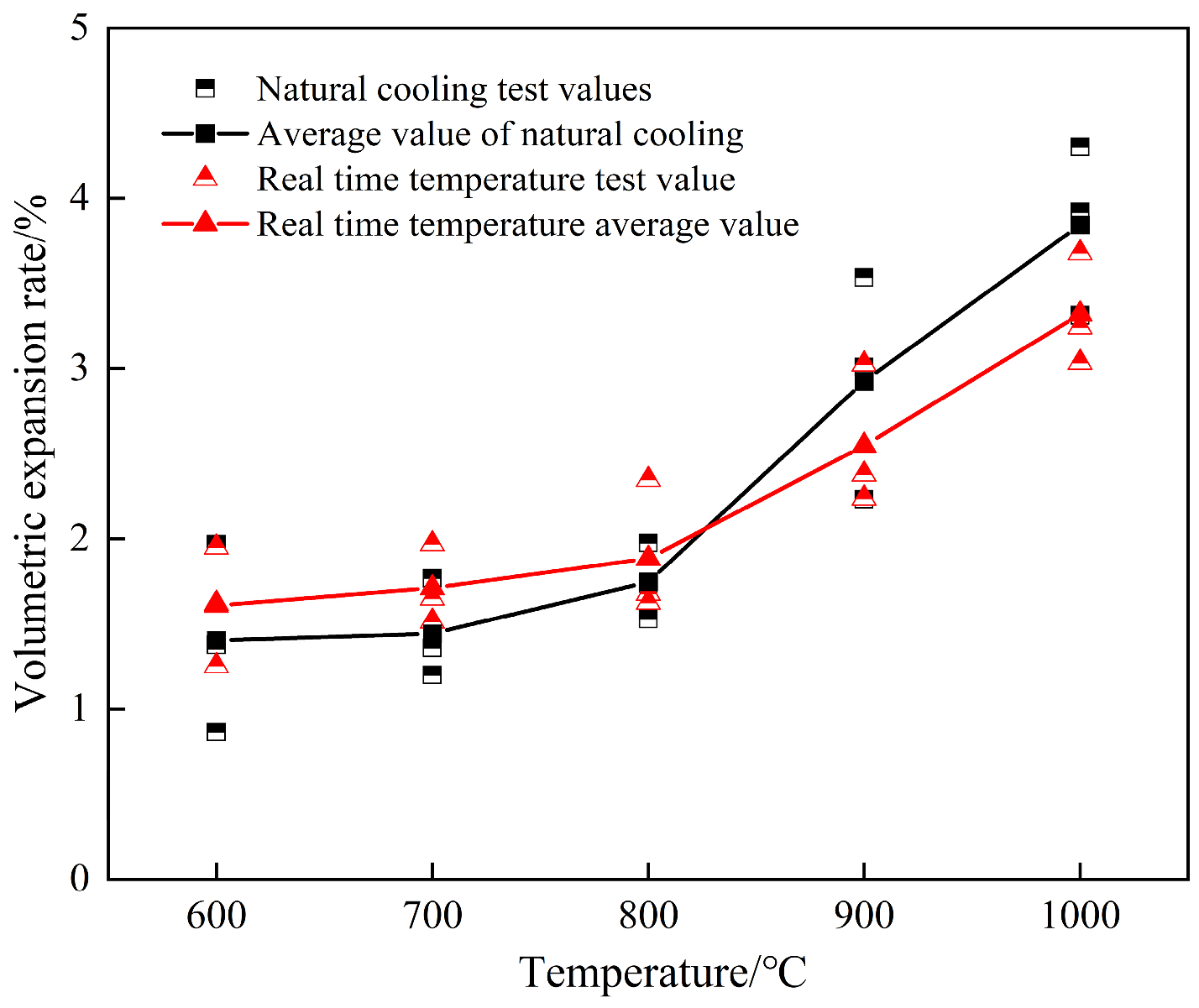
Figure 5 presents the comparison curves of the volume expansion rate of sandstone under real-time high-temperature and natural cooling conditions. It can be seen that the volume expansion rate of sandstone rises continuously as the temperature increases. At 1000 °C, the volume expansion rate is 3.80% for naturally cooled specimens and 3.30% for specimens under real-time high-temperature conditions, respectively. Two main factors account for this variation: first, each mineral component inside the rock undergoes differential thermal expansion under heating, which induces abundant new thermal cracks; second, the rising temperature elevates the internal pore pressure of the rock and further promotes crack propagation. A comparative analysis of the volume variation curves shows that the volume expansion rates of the two treatment groups are 1.40%, 1.44%, 1.75%, 2.92%, and 3.80%, and 1.61%, 1.71%, 1.89%, 2.55%, and 3.30% in sequence. In the temperature range of 600–800 °C, the volume expansion rate of naturally cooled sandstone is lower than that of sandstone under real-time high temperatures, and both values vary mildly and remain around 1.50%. When the temperature exceeds 800 °C, the volume expansion rate rises obviously for both groups, and the value of naturally cooled specimens gradually surpasses that under real-time high temperatures. Two potential mechanisms are proposed to explain this phenomenon. First, for temperatures below 800 °C, the internal structure of specimens is not severely damaged. The thermally expanded mineral particles partially recover and cause volume shrinkage during natural cooling. Second, quartz in red sandstone undergoes a phase transition at approximately 870 °C. This phase change triggers a sharp volume increase. Meanwhile, cracking occurs during the cooling process and generates additional microcracks, which further increase the overall volume of sandstone.
Figure 5.
Variation in volume expansion of red sandstone with temperature.
- (4)
- Longitudinal wave velocity
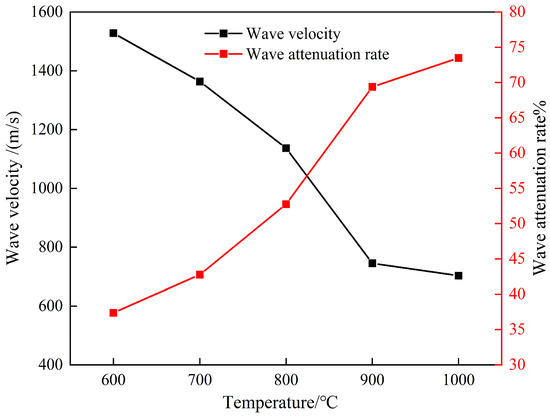
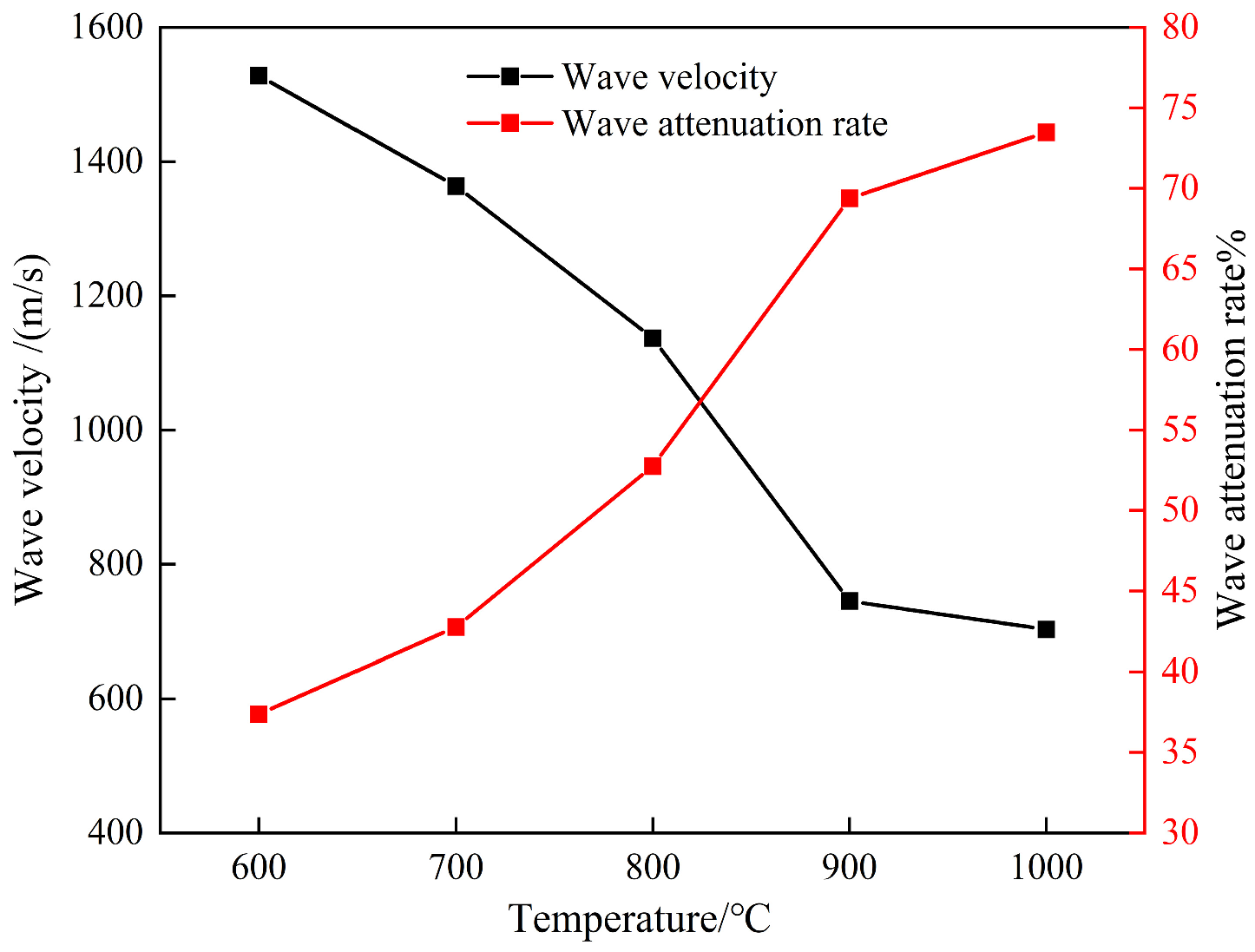
Figure 6 illustrates the variation in longitudinal wave velocity of sandstone with temperature after natural cooling. As the wave velocity probe cannot operate under real-time high-temperature conditions, this study only analyzes the changing law of longitudinal wave velocity for naturally cooled sandstone specimens. As shown in the curves, the longitudinal wave velocity declines continuously with rising temperature. Elevated temperatures induce the initiation and progressive coalescence of internal microcracks, which leads to a reduction in longitudinal wave velocity. The variation in the wave velocity attenuation rate can be divided into two distinct stages. In Stage I (600–900 °C), the attenuation rate rises steadily and reaches 69.4% at 900 °C. This phenomenon is attributed to the accumulation of internal damage and continuous propagation of fissures in sandstone as the temperature increases. In Stage II (900–1000 °C), although internal damage further develops, the growth rate of the attenuation rate slows down, and the final attenuation rate is 75.4%. This is because the internal mineral structure of sandstone tends to be stable once the temperature exceeds 900 °C.
Figure 6.
Variation in longitudinal wave velocity with temperature in red sandstone after high temperature.
3.2. Mechanical Properties
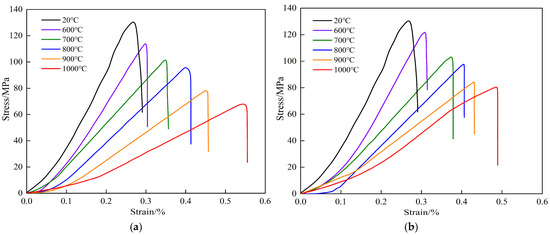
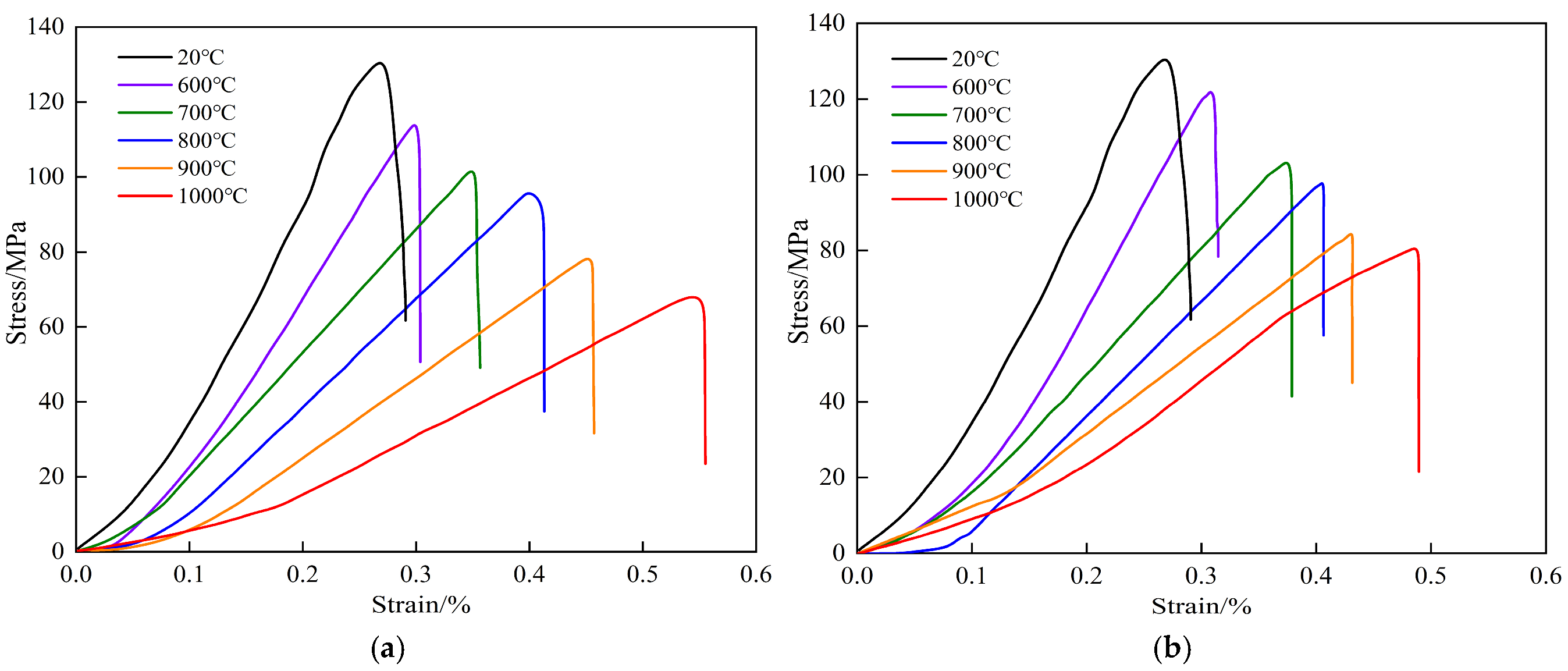
The basic mechanical parameters, such as peak strength, modulus of elasticity, and peak strain of red sandstone specimens under different treatments, were statistically analyzed, and the results are shown in Table 1. In order to intuitively illustrate the influence of high temperature cooling on the mechanical properties of sandstone samples, the stress–strain curves of uniaxial compression tests of sandstone samples under real-time high temperatures and after natural cooling are drawn, as shown in Figure 7. A comparison of the stress–strain curves of sandstone under real-time high-temperature and after natural cooling conditions is as follows: Although the overall characteristics of the stress–strain curves of sandstone in the two states were similar, there were obvious differences in the peak stress and strain states, especially in the range of temperatures from 900 °C to 1000 °C, where the peak stress of sandstone under the real-time high temperature was much lower and the peak strain was much larger and much higher. The main reason is that for sandstone in the real-time high-temperature state, the occurrence of thermal damage is more serious; there is a higher degree of brittleness, making it more difficult to withstand the load, and more prone to damage. With the increase in temperature, the peak strain became larger, the slope of the straight section became lower, the plastic stage was slightly obvious, the proportion of the weakening strain section in the whole fracture process became larger, and the residual strength of the rock sample remained after peak strength. This is due to the decrease in brittleness and the increase in ductility of red sandstone. Regarding the stress–strain curve of sandstone specimens after natural cooling, the higher the temperature, the more pronounced the plastic strain phase of the sandstone was, and it was most obvious at 1000 °C. At the same time, the proportion of the compression stage in the curve to the linear stage also showed a temperature correlation, which was specifically expressed: the higher the temperature, the higher the proportion of the compression stage; the lower the proportion of the linear stage, the higher the proportion of the compression stage. This is due to the fact that the plasticity of the rock is more pronounced when it cools naturally at high temperatures.
Table 1.
Mechanical properties of red sandstone under different temperatures and conditions.
Figure 7.
Stress–strain curves of red sandstone under the two treatments: (a) real-time temperature; (b) natural cooling.
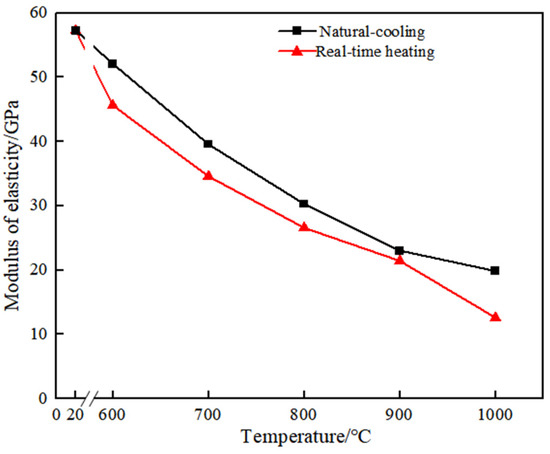
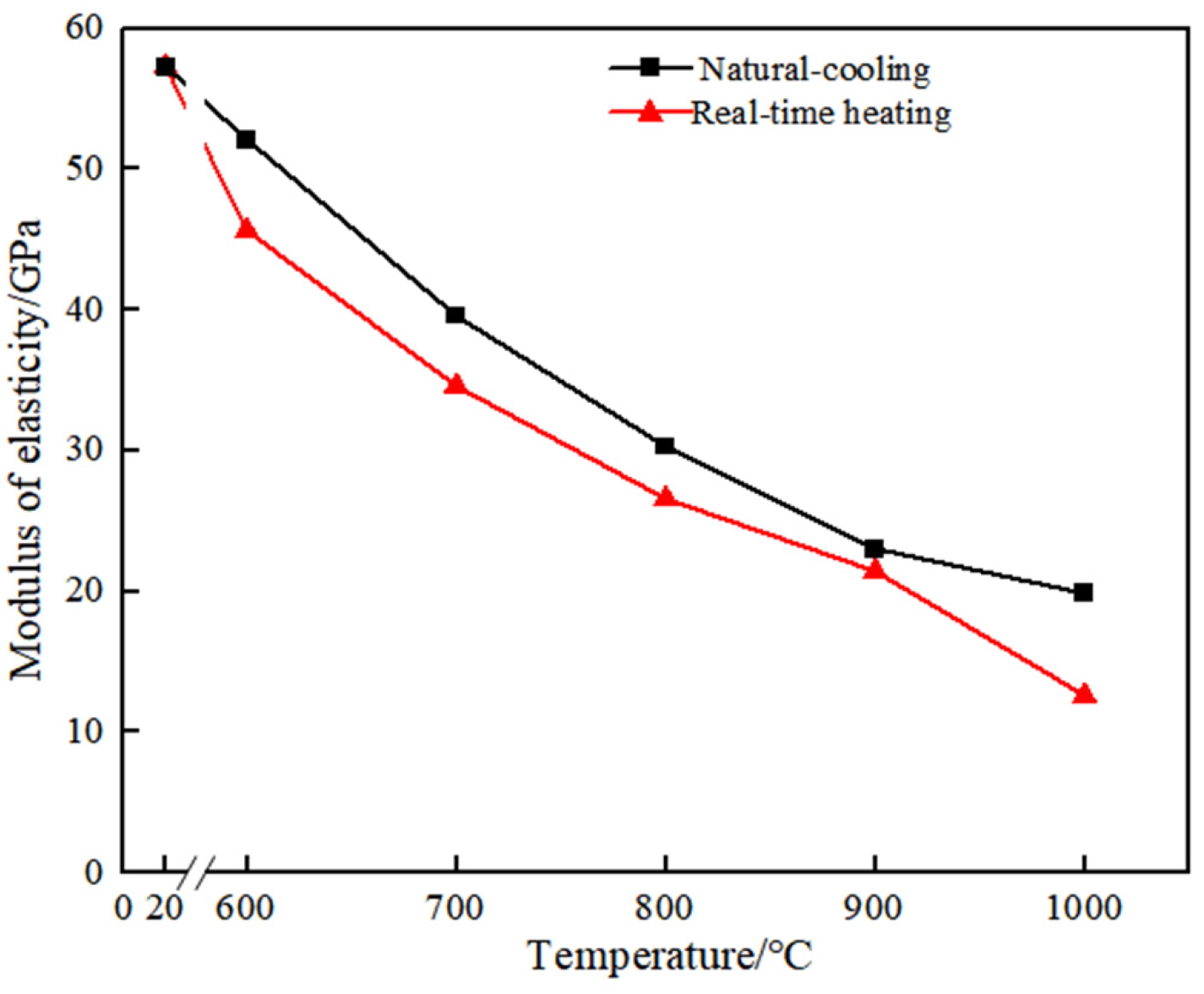
Figure 8 presents the variation in elastic modulus, calculated from the slopes of the stress–strain curves of sandstone. The elastic modulus of sandstone under the two treatment modes generally declined as the temperature increased. At 1000 °C, the elastic modulus of the specimens under real-time high-temperature conditions was 14.58 GPa, which was a reduction of 74.55% compared with the value of 57.28 GPa at 20 °C. For specimens after natural cooling, the elastic modulus was 18.35 GPa, with a decrease of 67.96% relative to the room temperature value. The main reason is that rising temperature aggravates the uneven deformation of mineral particles inside sandstone and propagates internal cracks. The progressive structural damage consequently leads to a continuous reduction in elastic modulus.
Figure 8.
Variations in the elastic modulus of specimens under different treatments.
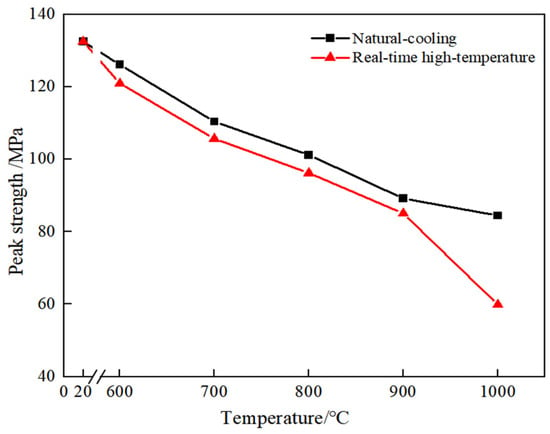
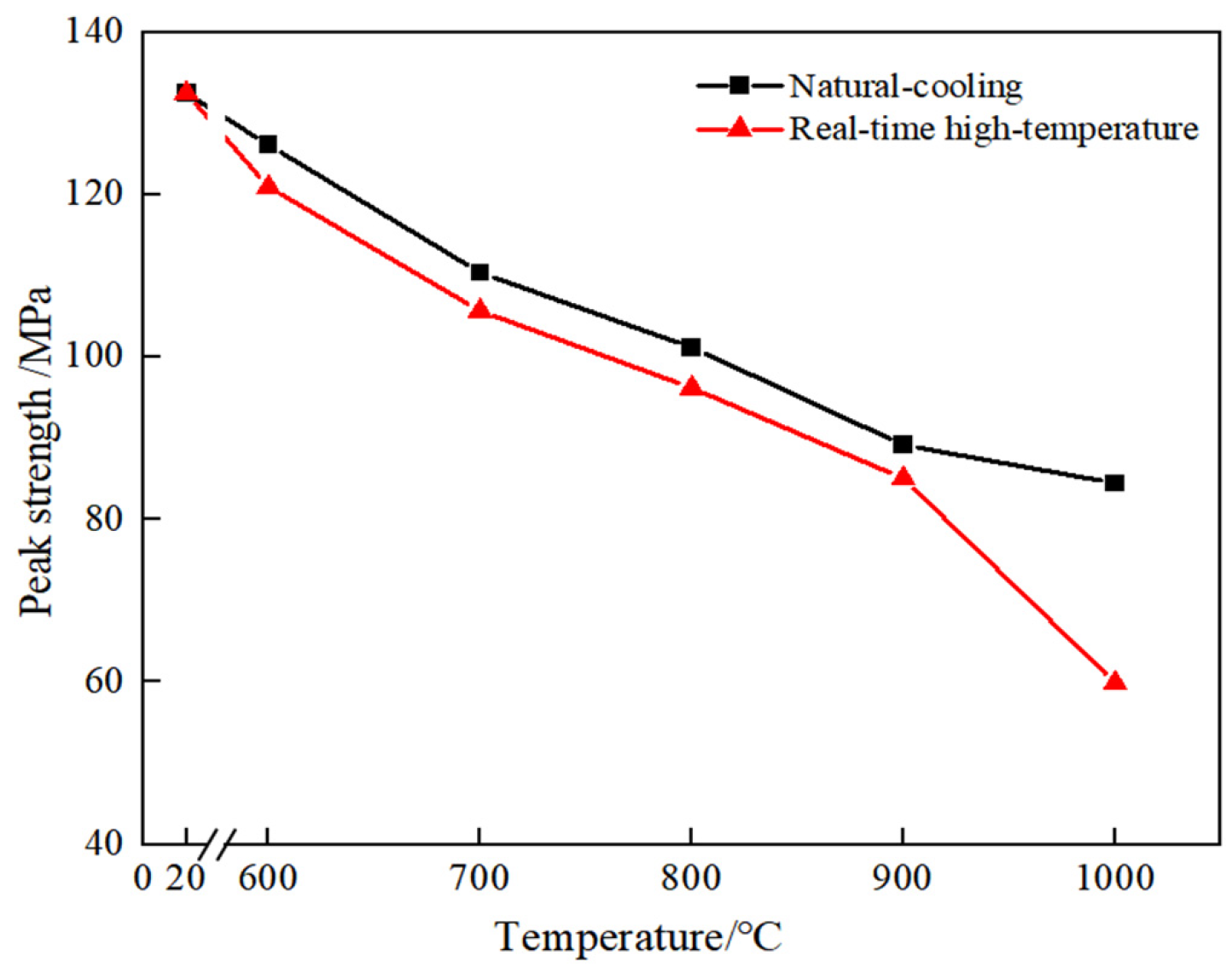
Figure 9 compares the peak strength under the two treatments. The peak strength of sandstone gradually decreases with the rise in temperature for both real-time high-temperature and natural cooling conditions. At 1000 °C, the peak strength of specimens under real-time high-temperature conditions is 59.83 MPa, which is 54.84% and 50.50% lower than the values at 20 °C (132.45 MPa) and 600 °C (120.88 MPa), respectively. The peak strength of naturally cooled specimens is 84.43 MPa, representing a decrease of 36.24% and 33.03% compared with the values at 20 °C (132.45 MPa) and 600 °C (126.06 MPa), respectively. Elevated temperature induces higher thermal stress and severe thermal damage, and changes the composition and distribution of internal minerals. These factors greatly weaken the bearing capacity of sandstone and result in a sharp drop in peak strength. Comparative analysis of the peak strength curves shows that the stress reduction rates are similar within the temperature range of 600–900 °C. In the range of 900–1000 °C, the peak strength of specimens under real-time high-temperature and natural cooling conditions decreases by 29.54% and 5.30%, respectively. This phenomenon indicates that continuous heating exacerbates the internal deterioration of sandstone and causes a rapid loss of strength. After natural cooling to room temperature, partial recovery of thermally induced damage slows down the attenuation of peak strength.
Figure 9.
Change in peak strength after two treatments.
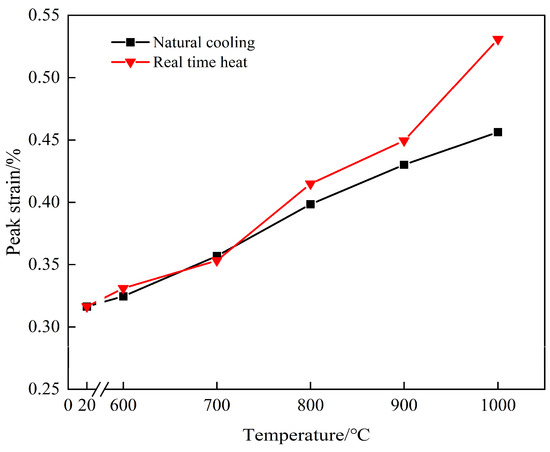
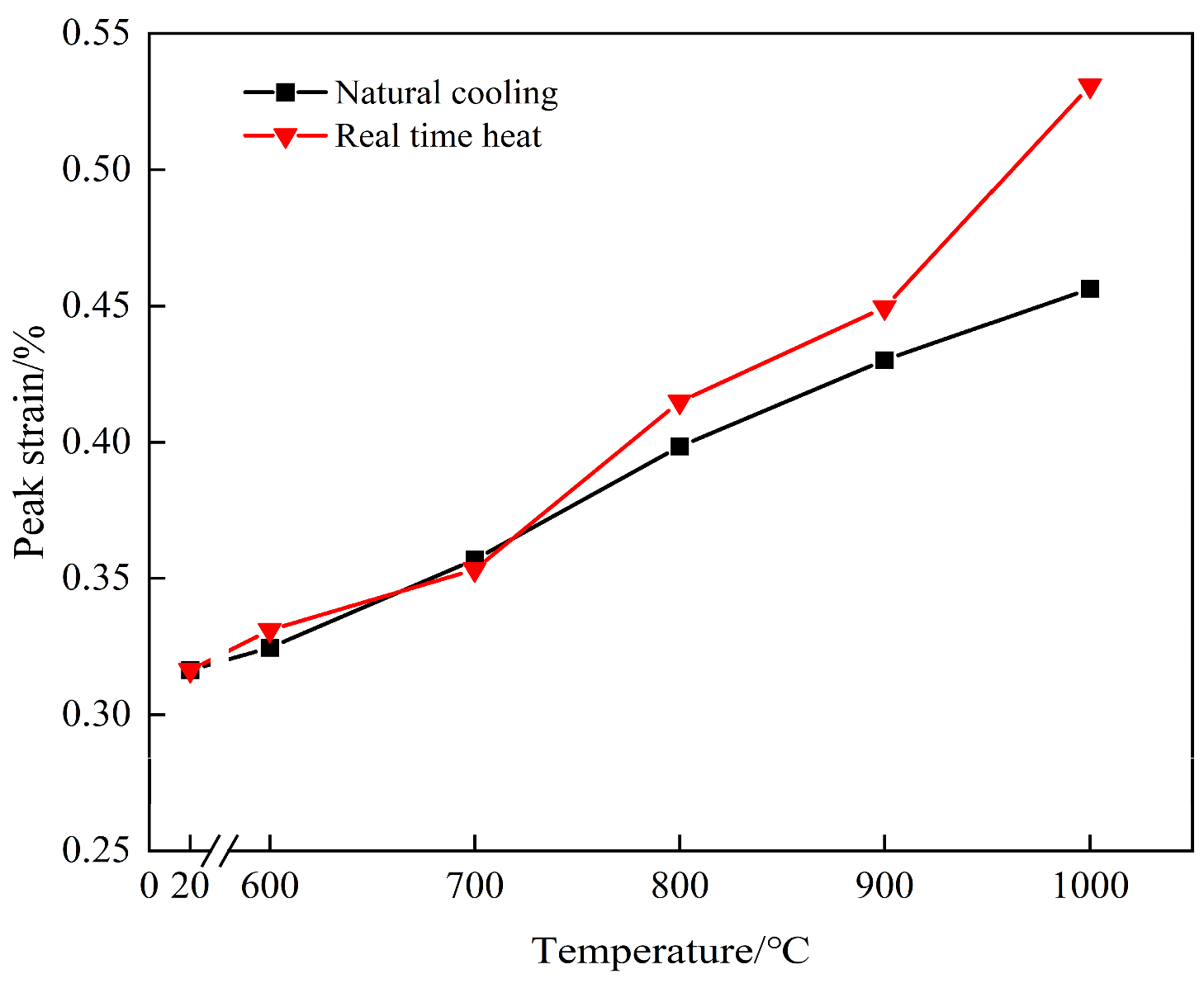
Figure 10 shows the peak strain curves of sandstone under the two treatments. The peak strain of sandstone specimens increases steadily with increasing temperature. At 1000 °C, the peak strain of specimens under real-time high temperature reaches 0.53%, which is 65.63% and 55.88% higher than the values at 20 °C (0.32%) and 600 °C (0.34%), respectively. For naturally cooled specimens, the peak strain is 0.46%, an increase of 43.75% and 39.39% compared with the values at 20 °C (0.32%) and 600 °C (0.33%), respectively. During continuous heating, progressive internal damage and mineral reactions generate new mineral phases. The uneven thermal expansion further promotes the initiation and propagation of fractures, which eventually leads to large deformation of the rock mass. According to the comparison results, the growth rate of peak strain is consistent for both treatment modes from 600 °C to 900 °C. In the range of 900–1000 °C, the peak strain of specimens under real-time high-temperature and natural cooling conditions increases by 17.78% and 6.98%, respectively. This is because the internal structure of sandstone becomes more compact and resistant to deformation after cooling.
Figure 10.
Changes in peak strain after two treatments.
4. Discussions
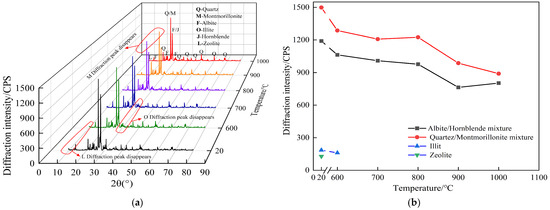
According to the results of the XRD test, the changes in mineral composition of sandstone at different temperatures were analyzed, as shown in Figure 11. Combined with the changes in physical and mechanical properties of sandstone samples at different temperatures, it could be seen that the main components of sandstone were quartz, albite, illite, and zeolite. The quartz and feldspar mineral contents were more than 80% of the sandstone. When the temperature is lower than 600 °C, illite, montmorillonite, zeolite, and other minerals in sandstone remove interlayer water and structural water, and decompose into fine particles, filling a small amount of voids with the increase in temperature. At the same time, rock mineral particles expand to varying degrees, and expansion cracks appear, but no secondary cracks occur. With the increase in temperature, the physical and chemical changes in mineral composition in sandstone are more obvious. When the temperature reaches 700 °C, zeolite and illite decompose, and no diffraction peak is detected in crystal diffraction. The quartz diffraction intensity changes at 800 °C due to the fact that quartz begins to undergo a phase transition from α-quartz to β-quartz at 573 °C, which is followed by the production of phosphor quartz at around 800 °C [24]. The diffraction peak of montmorillonite disappears at 900 °C because the crystal lattice of montmorillonite is destroyed when the temperature reaches 800–935 °C. The diffraction peak of montmorillonite disappears when the temperature reaches 900 °C. The reduction, phase transition, and disappearance of mineral components within the sandstone change the apparent morphology, number of pores, and sizes of the cracks in the sandstone. This results in a decrease in sandstone strength with increasing temperature.
Figure 11.
XRD test results: (a) X-ray diffraction waterfall diagram; (b) diffraction intensity of red sandstone minerals as a function of temperature.
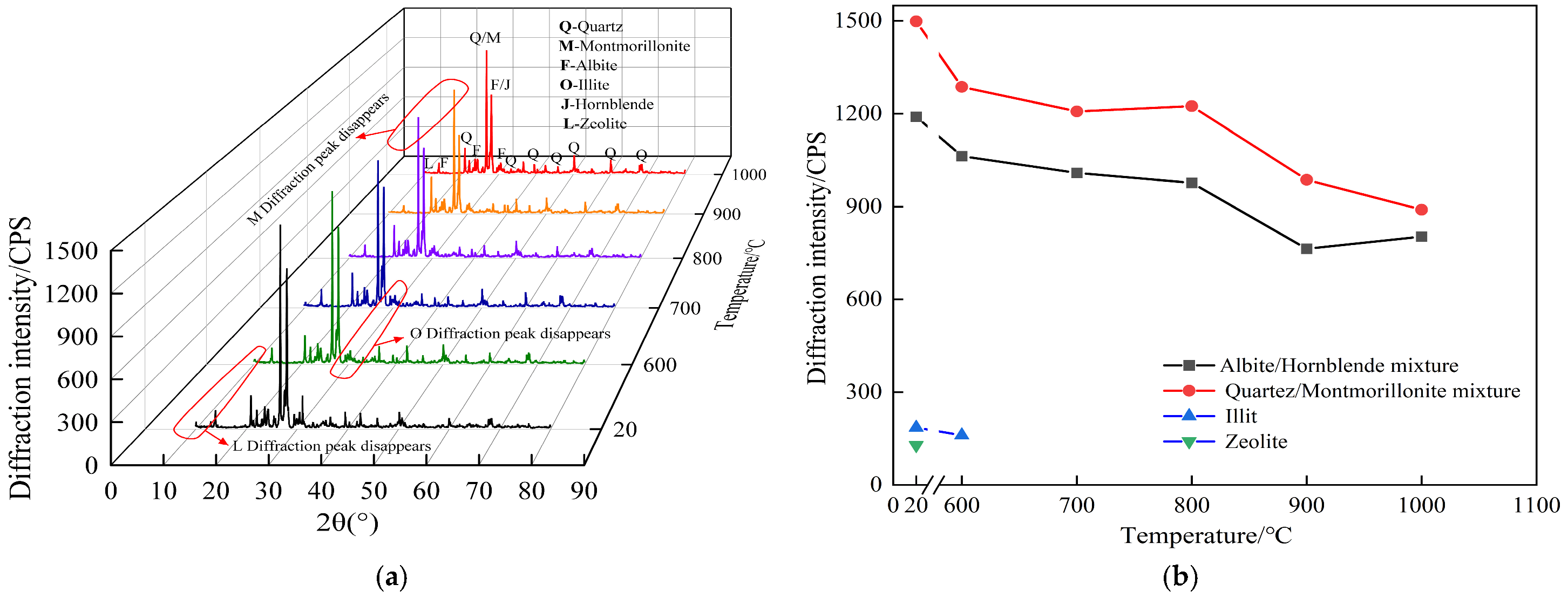
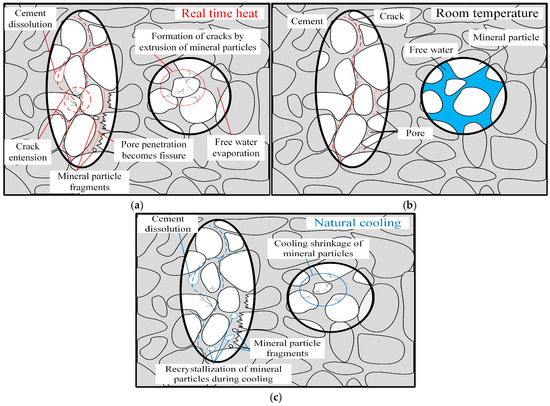
The role of high temperature on rock is a complex process; real-time high-temperature and natural cooling conditions on the rocks are different. High temperature will make the sandstone structure, composition, and mineral intergranular cementation change [25,26], which is the reason why the peak strength, peak strain, and modulus of elasticity of the sandstone specimens in the test show a trend of deterioration. The high-temperature cooling failure mechanism of red sandstone is shown in Figure 12. During the high-temperature treatment of sandstone, the free water and structural water inside the rock will evaporate, the cement will dissolve, and part of the minerals will decompose gradually with the increase in temperature. In addition, due to the different coefficients of thermal expansion of the mineral components of sandstone, thermal stress will be generated between the components inside the sandstone, which will lead to the expansion of cracks and fissures in the rock body; the process is shown in Figure 12b. Therefore, the peak strength of the specimen decreased greatly when the temperature reached 900 °C. This is because the unstable minerals inside the specimen are basically decomposed at 900 °C, and the expansion and penetration of cracks and fissures inside the specimen reach their maximum, resulting in a rapid decrease in strength, which corresponds to the results of the X-ray diffraction test. There are some research results [27,28] showing that after the natural cooling of sandstone, minerals inside the rock will shrink and deform during the cooling process, and the scattered powdery mineral particles will re-crystallize to form again, filling the voids between some minerals; the process is shown in Figure 12c. This is in line with the test that the peak strength, modulus of elasticity, and peak strain of the naturally cooled specimens are superior to those of real-time high-temperature performance.
Figure 12.
Damage mechanism of red sandstone during high-temperature cooling process: (a) room temperature (20 °C); (b) real-time heat; (c) natural cooling.
5. Conclusions
In this paper, the mechanical properties of red sandstone under real-time high-temperature conditions and after natural cooling were obtained by uniaxial compression tests, and the mineral compositions of sandstone after natural cooling were determined by XRD tests. These tests revealed the mechanism of the influence of high-temperature cooling on the deteriorated structural and compositional changes in red sandstone. The main conclusions are as follows:
(1) Under real-time high-temperature and natural cooling conditions, the mass loss rate of sandstone specimens increases with rising temperature. At 1000 °C, the mass loss rates are 6.30% and 5.60%, respectively. For temperatures below 800 °C (600 °C, 700 °C, and 800 °C), the volume expansion rate of specimens under real-time high temperature is higher than that of naturally cooled specimens, with corresponding values of 1.61%, 1.71%, and 1.89% versus 1.40%, 1.44%, and 1.75%. When the temperature exceeds 800 °C (900 °C and 1000 °C), the volume expansion rate under real-time high temperature becomes lower than that after natural cooling, with values of 2.55% and 3.30% for the real-time high-temperature group and 2.92% and 3.80% for the natural cooling group, respectively.
(2) The peak strength and elastic modulus of sandstone specimens decrease with rising temperature under both real-time high-temperature and natural cooling conditions. At 1000 °C, the peak strength is 59.83 MPa for specimens under real-time high temperature, and 84.43 MPa for naturally cooled specimens. Relative to the intact rock (132.45 MPa), the peak strength decreases by 54.83% and 36.26%, respectively. The corresponding elastic modulus values are 14.58 GPa and 18.35 GPa, representing a reduction of 74.55% and 67.96% compared with the intact rock (57.28 GPa). By contrast, peak strain increases as the temperature rises. At 1000 °C, the peak strains of the two groups are 0.53% and 0.46%, which are 65.63% and 43.75% higher than that of the intact rock (0.32%), respectively.
(3) During high-temperature treatment, zeolite, montmorillonite, and illite in sandstone decompose gradually. The uneven thermal expansion of mineral particles induces interconnected cracks and promotes the coalescence of primary fissures and pores, which leads to a significant reduction in the compressive strength of sandstone. During the natural cooling process, mineral particles undergo thermal shrinkage and recrystallization, which partially fill and close internal microcracks and pores and densify the rock structure. As a result, naturally cooled sandstone specimens exhibit higher compressive strength than those tested under real-time high temperatures.
Author Contributions
H.L.: Writing—original draft and Investigation. Y.X. (Yangyang Xu): Investigation, Data curation, and Formal analysis. Y.Z.: Conceptualization and Writing—review and editing. Q.W. (Qixuan Wang): Visualization and Investigation. D.Z.: Conceptualization and Methodology. Q.W. (Qinting Wang): Resources and Writing—review and editing. C.H.: Resources and Writing—review and editing. T.T.: Methodology and Investigation. Y.X. (Yi Xue): Resources, Investigation, and Writing—review and editing. Z.C.: Project administration, Supervision, Writing—original draft, and Funding. All authors have read and agreed to the published version of the manuscript.
Funding
This research was funded by the National Natural Science Foundation of China (12272126, 52274079, U24B2041); the Natural Science Foundation of Henan Province (262300421050); the Key Research and Development Program of Henan Province (251111320400); the Program for Science and Technology Innovation Talents in Universities of Henan Province (24HASTIT021); the Program for the Scientific and Technological Innovation Team in Universities of Henan Province (23IRTSTHN005); the Innovative Scientific Research Team of Henan Polytechnic University in China (T2026-2); and the Young Teacher Foundation of Henan Polytechnic University (2023XQG-01).
Data Availability Statement
All data, models, and code generated or used during this study appear in the submitted article.
Acknowledgments
The research work in the article was carefully supervised by Duan Zhang.
Conflicts of Interest
The authors have the appropriate permission from the responsible authorities to conduct the study on-site and have no conflicts of interest.
References
- Xie, H.; Ju, Y.; Ren, S.; Gao, F.; Liu, J.; Zhu, Y. Theoretical and technological concepts of fluidized mining of deep earth coal resources. J. China Coal Soc. 2017, 42, 547. [Google Scholar] [CrossRef]
- Liu, Z.; Wang, C.; Zhou, H.; Shen, W.; Shao, J. Development and application of high-temperature and high-pressure two-rigid and one-flexible true triaxial aging mechanical test system for rocks. Chin. J. Rock Mech. Eng. 2021, 40, 2477–2486. [Google Scholar] [CrossRef]
- Lin, H.; Jiang, Y.; Li, S.; Li, W.; Zhu, D.; Chen, J.; Teng, T.; Xue, Y.; Cao, Z. In situ study on high-temperature performance and structural deterioration mechanism of concrete. Processes 2026, 14, 1753. [Google Scholar] [CrossRef] [Scilit]
- Xie, S.; Yang, S.; Jia, W.; Chen, Y.; Wang, Y.; Huang, C.; Cao, Z. Evolution of pore and fracture structure in coal under mining-induced unloading conditions. Fractal Fract. 2026, 10, 391. [Google Scholar] [CrossRef] [Scilit]
- Zhu, D.; Griffiths, D.V.; Fenton, G.A.; Huang, J.; Gao, Y. Reliability analysis of slopes under slow drawdown conditions. Geotechnique 2026. [Google Scholar] [CrossRef] [Scilit]
- Xue, Y.; Wang, L.; Cao, Z.; Xie, H.; Ranjith, P.G.; Cai, C. Thermo-mechanical degradation and crack evolution of granite subjected to liquid nitrogen cooling cycles for thermal reservoir stimulation. J. Rock Mech. Geotech. Eng. 2026, 18, 3447–3470. [Google Scholar] [CrossRef] [Scilit]
- Cao, Z.; Miao, C.; Du, F.; Zhu, D.; Teng, T.; Xue, Y. A bifurcation dynamical analysis of a non-darcy seepage system in post-failure rock based on a novel truncated spectral method. Processes 2026, 14, 1468. [Google Scholar] [CrossRef] [Scilit]
- Liu, S.; Xu, J. An experimental study on the physico-mechanical properties of two post-high-temperature rocks. Eng. Geol. 2015, 185, 63–70. [Google Scholar] [CrossRef] [Scilit]
- Wang, P.; Xu, J.; Liu, S.; Liu, S. Mechanical and ultrasonic time-frequency characterization of thermally damaged sandstone. Chin. J. Rock Mech. Eng. 2014, 33, 1897–1904. [Google Scholar] [CrossRef]
- Zhang, W.; Sun, Q.; Hao, S.; Wang, B. Experimental Study on the Thermal Damage Characteristics of Limestone and Underlying Mechanism. Rock Mech. Rock Eng. 2016, 49, 2999–3008. [Google Scholar] [CrossRef] [Scilit]
- Liang, S.; Fang, S.; Wei, G.; Zhu, X.; Li, W.; Ma, J. Experiments on Mechanical Properties of Siliceous Sandstone after High Temperature. J. Zhengzhou Univ. (Eng. Ed.) 2021, 42, 87–92. [Google Scholar] [CrossRef]
- Inserra, C.; Biwa, S.; Chen, Y. Influence of thermal damage on linear and nonlinear acoustic properties of granite. Int. J. Rock Mech. Min. Sci. 2013, 62, 96–104. [Google Scholar] [CrossRef] [Scilit]
- Chen, S.; Yang, C.; Wang, G. Evolution of thermal damage and permeability of Beishan granite. Appl. Therm. Eng. 2017, 110, 1533–1542. [Google Scholar] [CrossRef] [Scilit]
- Jing, X.; Sun, Q.; Jia, H.; Ge, Z.; Wang, T. Influence of high-temperature thermal cycles on the pore structure of red sandstone. Bull. Eng. Geol. Environ. 2021, 80, 7817–7830. [Google Scholar] [CrossRef] [Scilit]
- Pathiranagei, V.S.; Gratchev, I. Engineering properties of sandstone heated to a range of high temperatures. Bull. Eng. Geol. Environ. 2021, 80, 2415–2432. [Google Scholar] [CrossRef] [Scilit]
- Ping, Q.; Wu, M.; Zhang, H.; Yuan, P. Experimental Study on Dynamic Mechanical Characteristics of Sandstone under Actual High Temperature Conditions. Chin. J. Undergr. Space Eng. 2019, 15, 691–698. [Google Scholar] [CrossRef]
- Zhang, Y.; Zhang, F.; Yang, K.; Cai, Z. Effects of Real-Time High Temperature and Loading Rate on Deformation and Strength Behavior of Granite. Geofluids 2022, 2022, 9426378. [Google Scholar] [CrossRef] [Scilit]
- Liu, R.; Liu, J. Experimental study on real-time temperature uniaxial tensile-compression strength of basalts from the northern Hainan province. Acta Sci. Nat. Univ. Sunyatseni 2024, 63, 19–28. [Google Scholar] [CrossRef]
- Wu, G.; Zhai, S.; Sun, H.; Zhang, Y. Experimental study on the acoustic emission characteristics of salt rock at high temperature. Chin. J. Rock Mech. Eng. 2014, 33, 1203–1211. [Google Scholar] [CrossRef]
- Wu, G.; Zhai, S.; Wang, Y. Research on characteristics of mesostructure and acoustic emission of granite under high temperature. Rock Soil Mech. 2015, 36, 351–356. [Google Scholar] [CrossRef]
- Li, M.; Yu, H.; Zhang, J.; Lin, G.; Zhu, F.; Mao, Y.; Zhang, L.; Chen, Y. Dynamic tensile mechanical properties of thermally damaged sandstone under impact loads and the influence mechanism of composition. Eng. Fract. Mech. 2023, 289, 109388. [Google Scholar] [CrossRef] [Scilit]
- Gomah, M.E.; Li, G.; Xu, J.; Omar, A.A.; Hao, H.; Zaki, M.M. Micro to macro-cracking mechanism in thermally treated granodiorite followed by different cooling techniques. Int. J. Fract. 2024, 246, 161–180. [Google Scholar] [CrossRef] [Scilit]
- Zhang, J.; Lu, Y.; Pang, J.; Bu, Y. Experimental Study on Mechanical Properties of High Temperature Granite with Different Cooling Methods. Appl. Sci. 2022, 12, 5968. [Google Scholar] [CrossRef] [Scilit]
- Wu, X.; Cai, M.; Ren, F.; Sun, J.; Guo, Q.; Wu, X.; Zhang, J.; Zhang, L. Evolutions of P-wave velocity and thermal conductivity of granite under different thermal treatments. Chin. J. Rock Mech. Eng. 2022, 41, 457–467. [Google Scholar] [CrossRef]
- Branlund, M.J.; Hofmeister, M.A. Thermal diffusivity of quartz to 1000 °C: Effects of impurities and the α-β phase transition. Phys. Chem. Miner. 2007, 34, 581–595. [Google Scholar] [CrossRef] [Scilit]
- Zhang, W.; Sun, Q.; Hao, S.; Geng, J.; Lv, C. Experimental study on the variation of physical and mechanical properties of rock after high temperature treatment. Appl. Therm. Eng. 2016, 98, 1297–1304. [Google Scholar] [CrossRef] [Scilit]
- Xiong, J.; Zhu, M.; Li, W.; Wei, J.; Liu, X.; Liang, L.; Lin, S. Evolution law of physical properties of rocks with different lithologies under high temperature. Nat. Gas. Ind. 2023, 43, 14–24. [Google Scholar] [CrossRef]
- Zhao, Y.Y.; Wei, K.; Zhou, J.Q.; Li, X.; Chen, Y. Experimental study and mesomechanical analysis on mechanical properties of three kinds of rocks subjected to thermal damage. Chin. J. Rock Mech. Eng. 2017, 36, 142–151. [Google Scholar] [CrossRef]

Disclaimer/Publisher’s Note: The statements, opinions and data contained in all publications are solely those of the individual author(s) and contributor(s) and not of MDPI and/or the editor(s). MDPI and/or the editor(s) disclaim responsibility for any injury to people or property resulting from any ideas, methods, instructions or products referred to in the content. |
© 2026 by the authors. Licensee MDPI, Basel, Switzerland. This article is an open access article distributed under the terms and conditions of the Creative Commons Attribution (CC BY) license.