Article

Gap-MK-DCCA-Based Intelligent Fault Diagnosis for Nonlinear Dynamic Systems

The Electrical Engineering College, Guizhou University, Guiyang 550025, China
*
Author to whom correspondence should be addressed.
Processes 2024, 12(2), 388; https://doi.org/10.3390/pr12020388
Submission received: 17 January 2024 / Revised: 7 February 2024 / Accepted: 8 February 2024 / Published: 15 February 2024

Abstract

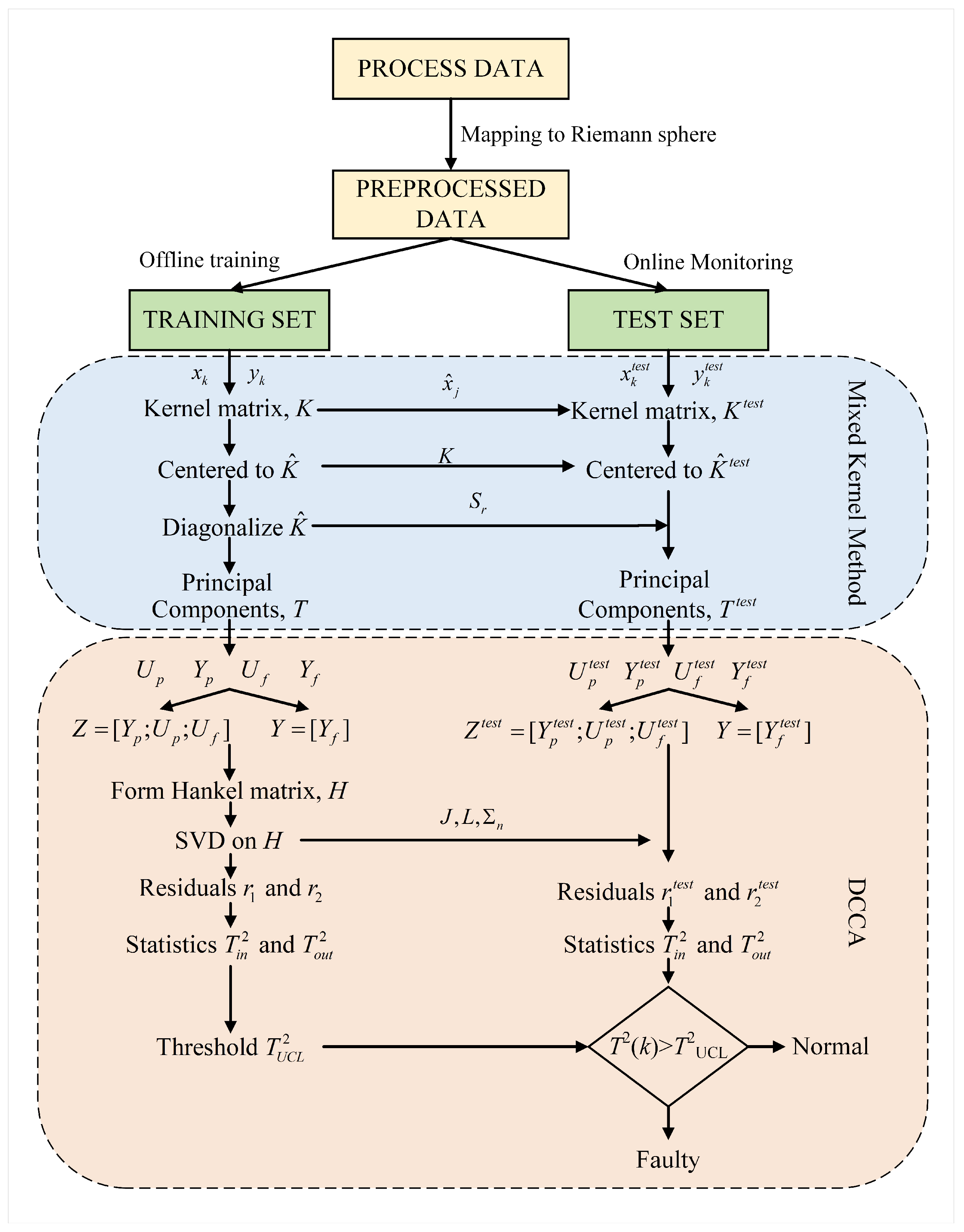
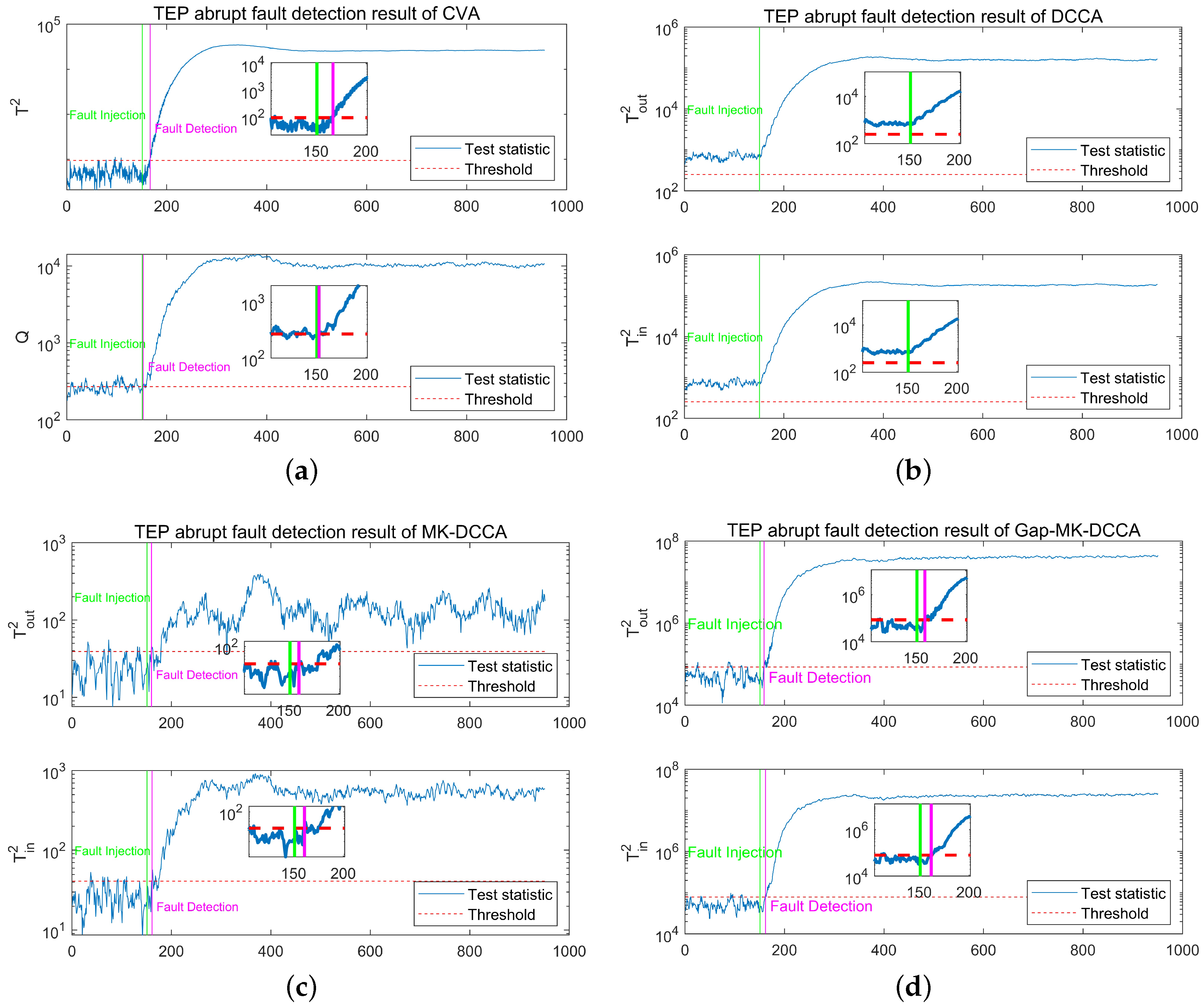
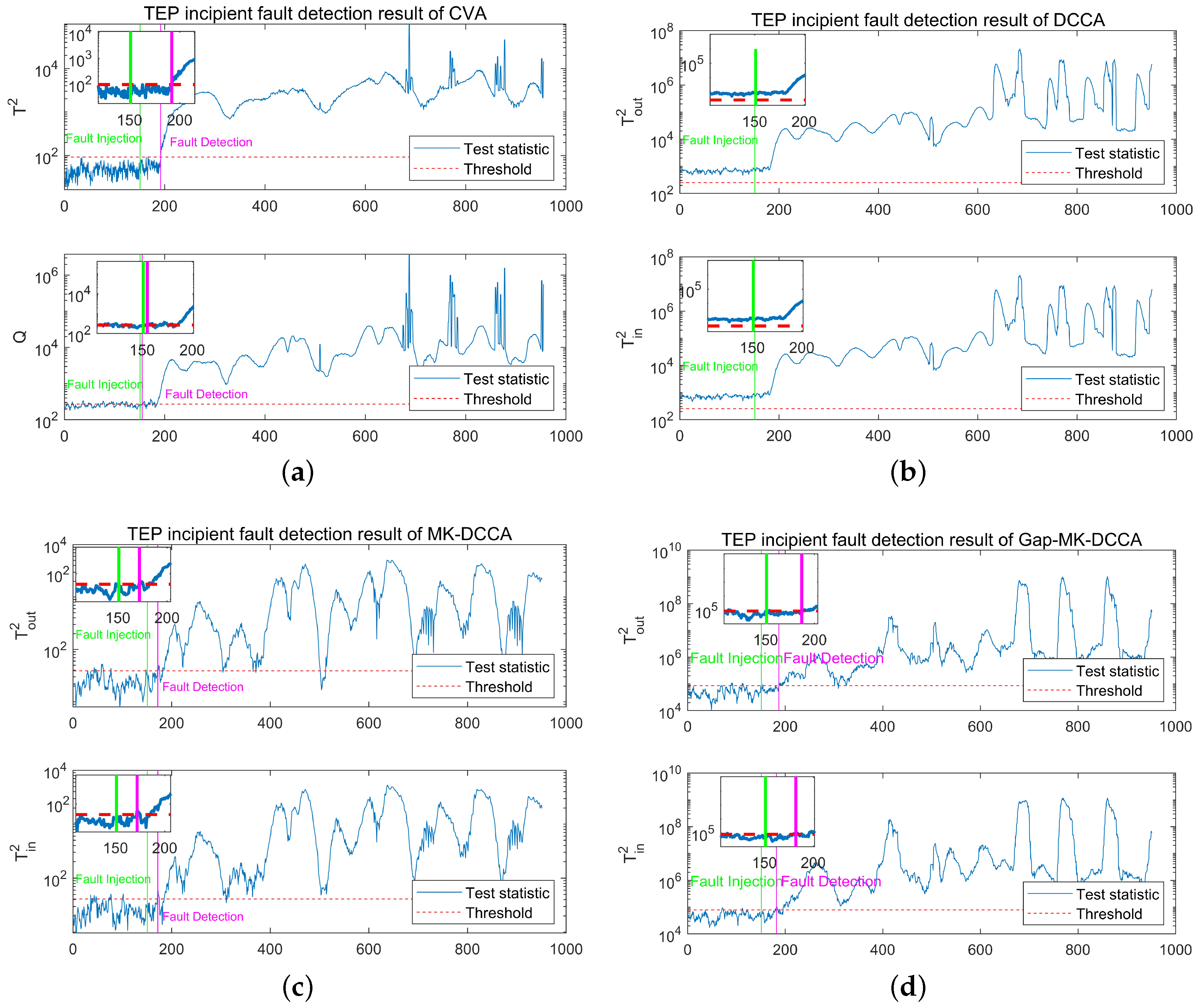
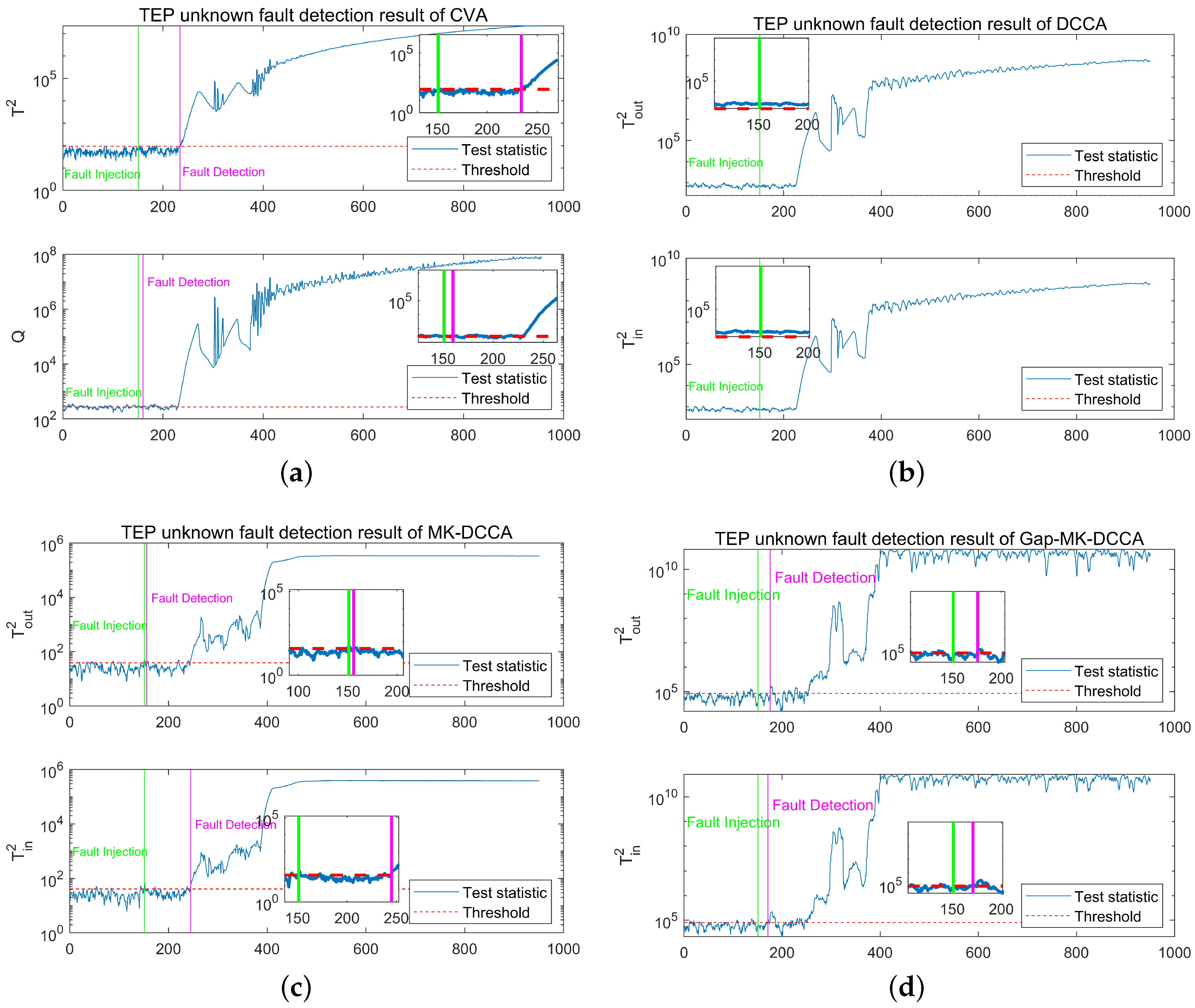
In intelligent process monitoring and fault detection of the modern process industry, conventional methods mostly consider singular characteristics of systems. To tackle the problem of suboptimal incipient fault detection in nonlinear dynamic systems with non-Gaussian distributed data, this paper proposes a methodology named Gap-Mixed Kernel-Dynamic Canonical Correlation Analysis. Initially, the Gap metric is employed for data preprocessing, followed by fault detection utilizing the Mixed Kernel-Dynamic Canonical Correlation Analysis. Ultimately, fault identification is conducted through a contribution method based on the T2 statistic. Furthermore, a comparative analysis was conducted using Canonical Variate Analysis, Dynamic Canonical Correlation Analysis, and Mixed Kernel-Dynamic Canonical Correlation Analysis on the Tennessee Eastman process. Experimental results indicate varying degrees of improvements in the detection rate, false alarm rate, missed detection rate, and detection time compared to the comparative methods, demonstrating the industrial value and academic significance of the method.
Keywords: gap metric; canonical correlation analysis; kernel density estimate; fault detection; Tennessee Eastman process gap metric; canonical correlation analysis; kernel density estimate; fault detection; Tennessee Eastman process