Article

The Influence of Different Rope Jumping Methods on Adolescents’ Lower Limb Biomechanics during the Ground-Contact Phase


1
Faculty of Sports Science, Ningbo University, Ningbo 315211, China
2
Faculty of Engineering, University of Szeged, H9700 Szeged, Hungary
*
Authors to whom correspondence should be addressed.
Children 2022, 9(5), 721; https://doi.org/10.3390/children9050721

Submission received: 28 March 2022 / Revised: 23 April 2022 / Accepted: 12 May 2022 / Published: 13 May 2022

Abstract

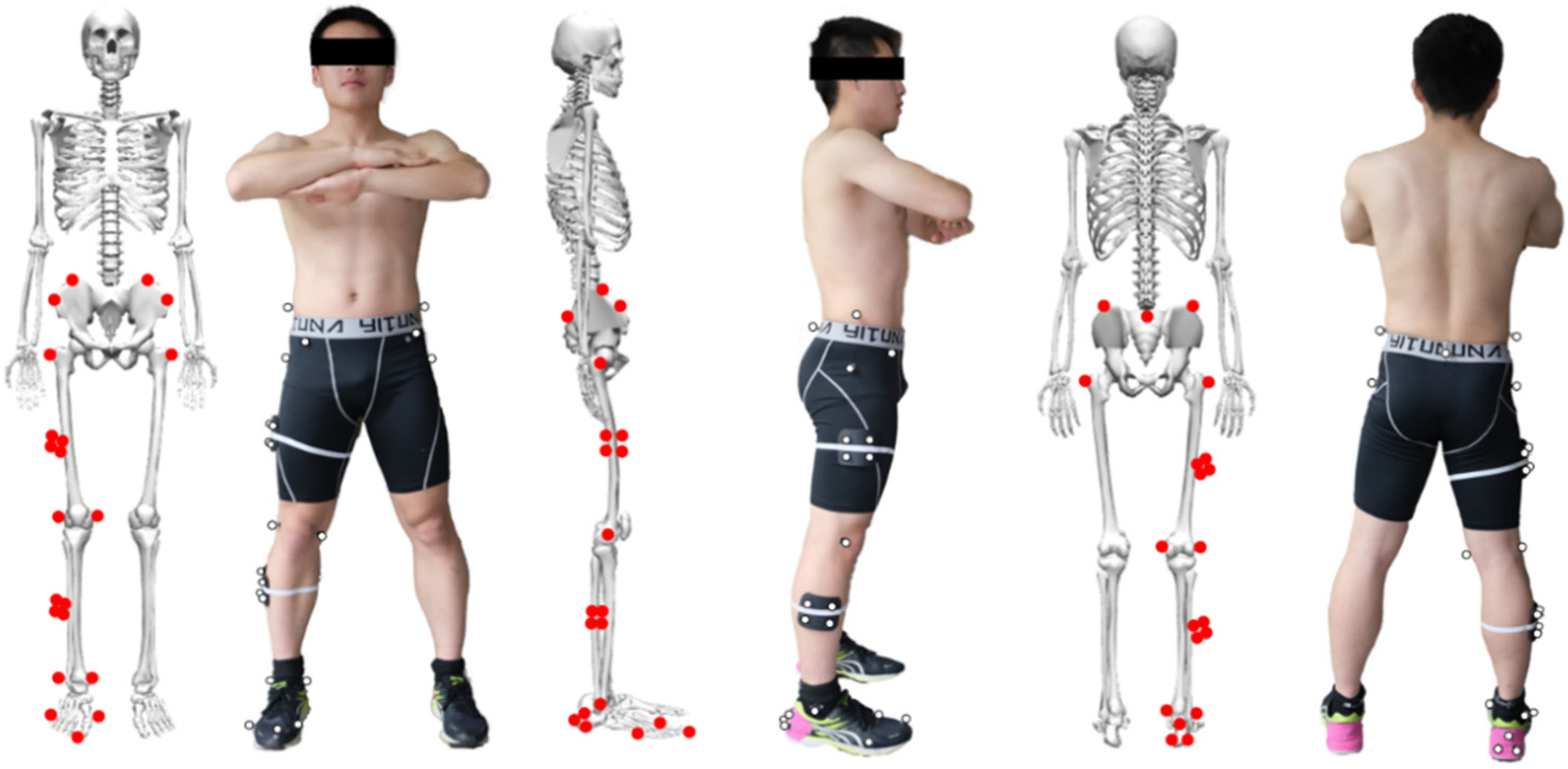
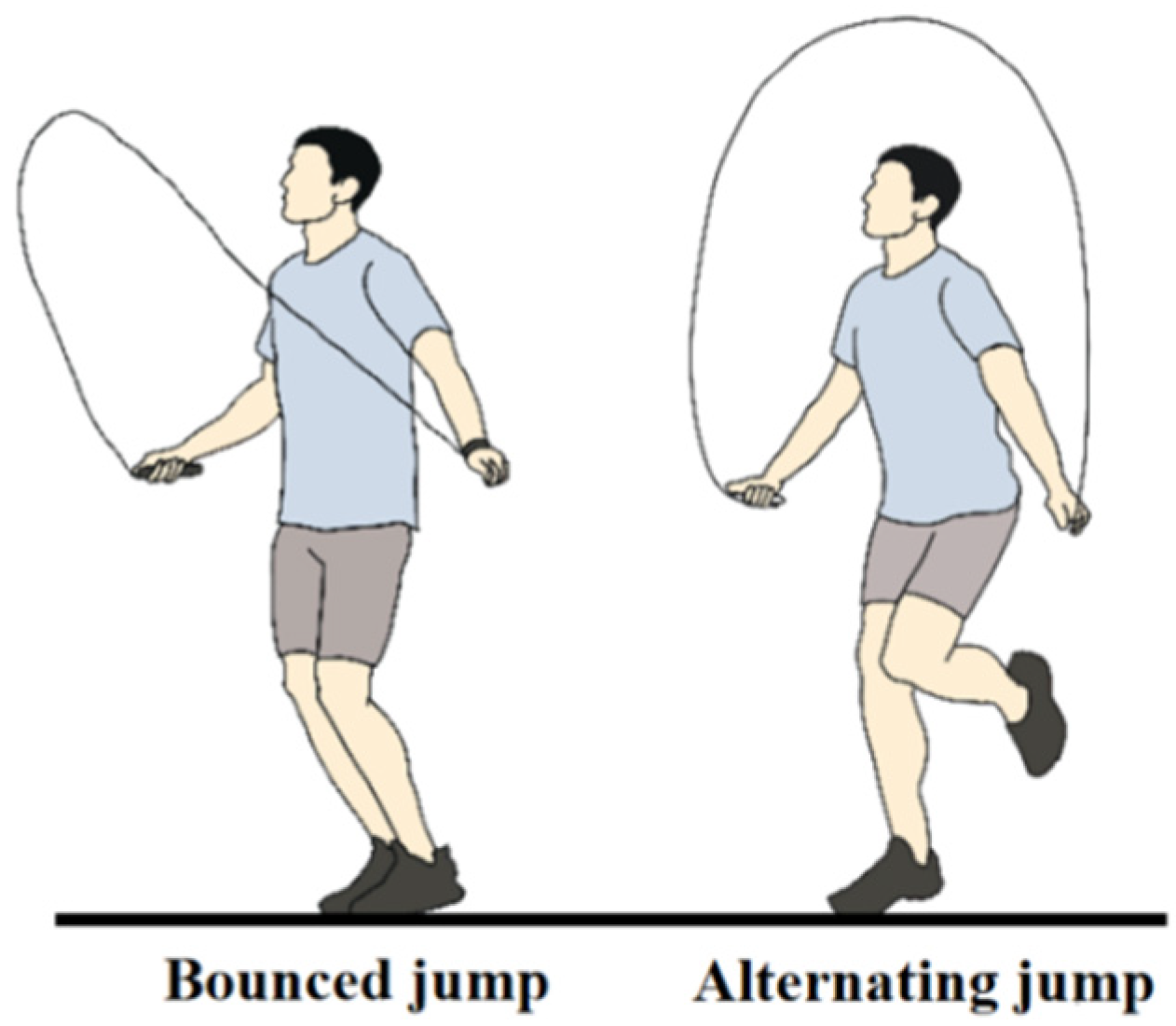
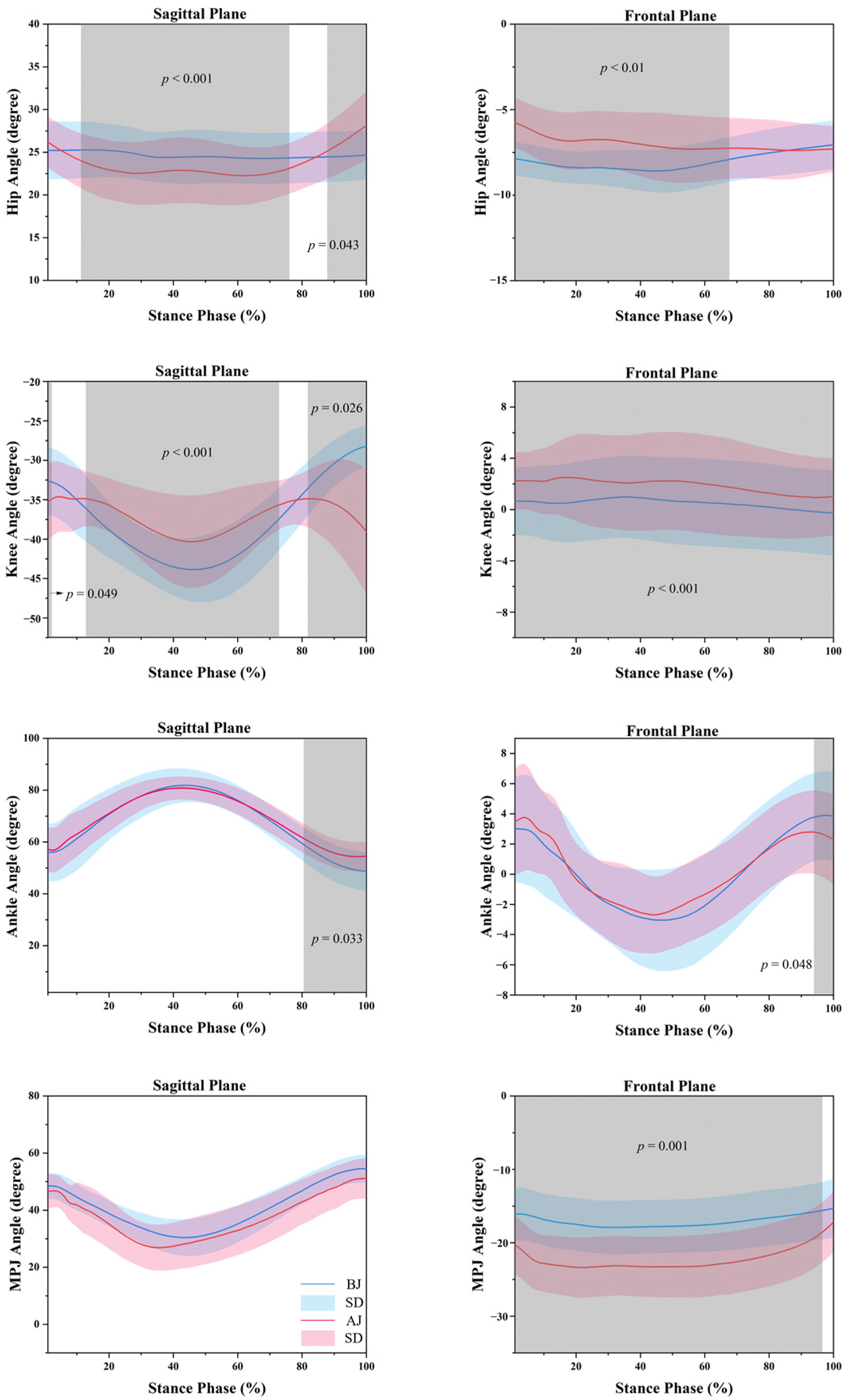
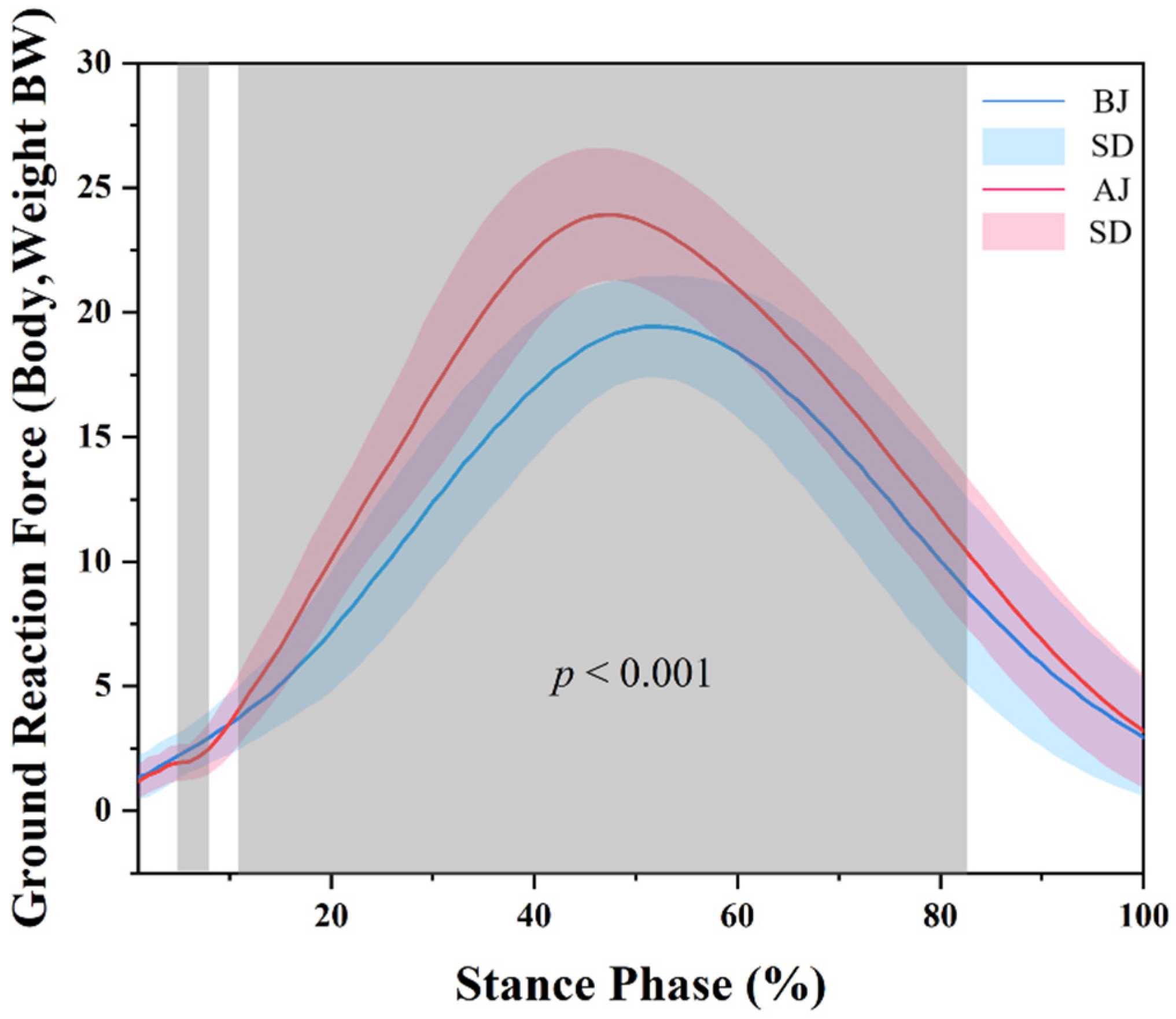
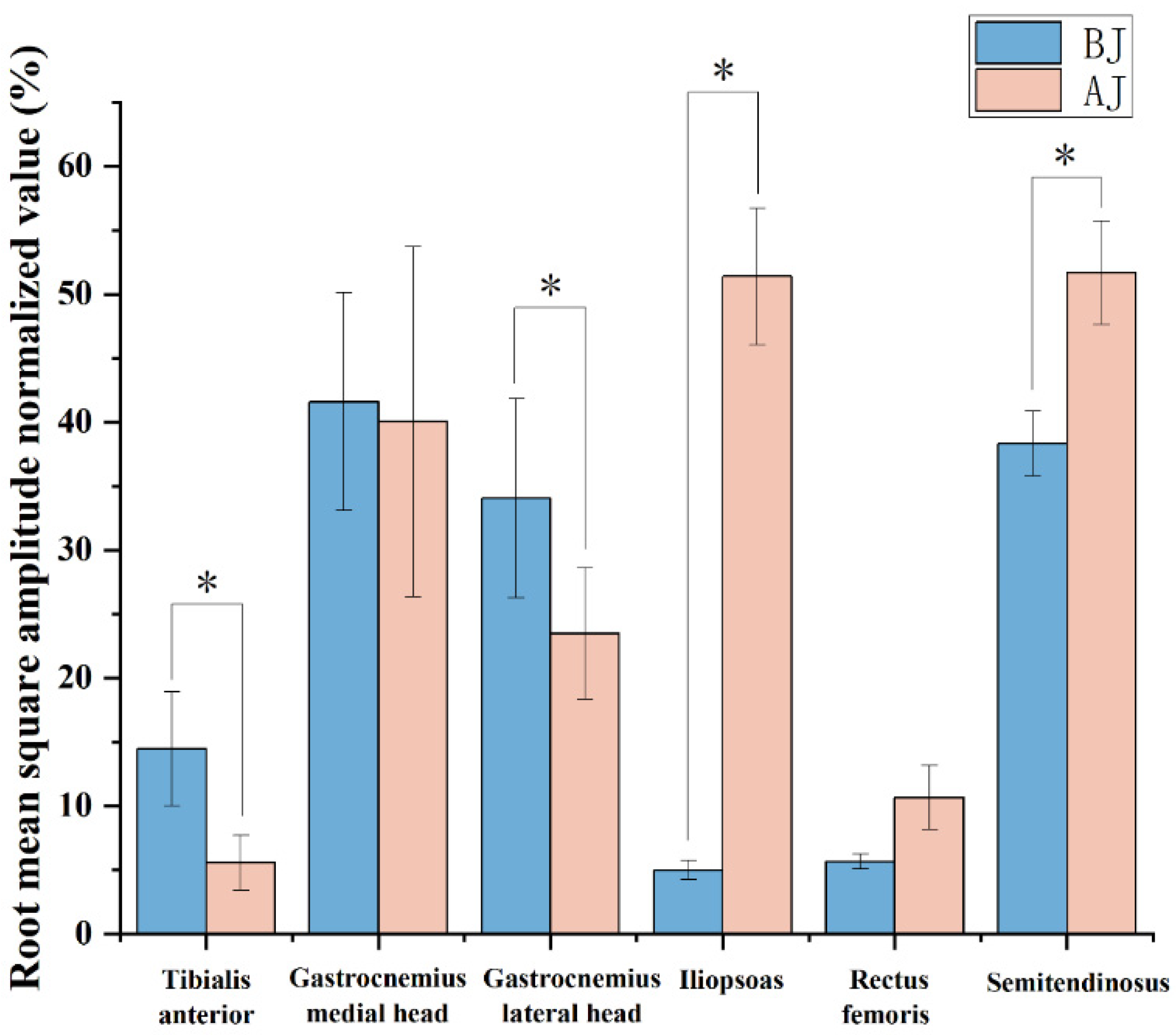
As a simple and beneficial way of exercise, rope skipping is favored by the majority of teenagers, but incorrect rope skipping may lead to the risk of injury. In this study, 16 male adolescent subjects were tested for bounced jump skipping and alternating jump rope skipping. The kinematic data of the hip, knee, ankle and metatarsophalangeal joint of lower extremities and the kinetics data of lower extremity touching the ground during rope skipping were collected, respectively. Moreover, the electromyography (EMG) data of multiple muscles of the lower extremity were collected by Delsys wireless surface EMG tester. Results revealed that bounced jump (BJ) depicted a significantly smaller vertical ground reaction force (VGRF) than alternate jump (AJ) during the 11–82% of the ground-contact stage (p < 0.001), and the peak ground reaction force and average loading rate were significantly smaller than AJ. From the kinematic perspective, in the sagittal plane, when using BJ, the flexion angle of the hip joint was comparably larger at 12–76% of the ground-contact stage (p < 0.01) and the flexion angle of the knee joint was significantly larger at 13–72% of the ground-contact stage (p < 0.001). When using two rope skipping methods, the minimum dorsal extension angle of the metatarsophalangeal joint was more than 25°, and the maximum was even higher than 50°. In the frontal plane, when using AJ, the valgus angle of the knee joint was significantly larger during the whole ground-contact stage (p < 0.001), and the adduction angle of the metatarsophalangeal joint (MPJ) was significantly larger at 0–97% of the ground-contact stage (p = 0.001). EMG data showed that the standardized value of root mean square amplitude of the tibialis anterior and gastrocnemius lateral head of BJ was significantly higher than AJ. At the same time, that of semitendinosus and iliopsoas muscle was significantly lower. According to the above results, compared with AJ, teenagers receive less GRF and have a better landing buffer strategy to reduce load, and have less risk of injury during BJ. In addition, in BJ rope skipping, the lower limbs are more inclined to the calf muscle group force, while AJ is more inclined to the thigh muscle group force. We also found that in using two ways of rope skipping, the extreme metatarsophalangeal joint back extension angle could be a potential risk of injury for rope skipping.
Keywords: rope jumping; adolescent; biomechanics; electromyography rope jumping; adolescent; biomechanics; electromyography