Article

Meteorin-like Protein and Zonulin in Polycystic Ovary Syndrome: Exploring Associations with Obesity, Metabolic Parameters, and Inflammation


by
Plamena Kabakchieva
1,
Antoaneta Gateva
2,
Tsvetelina Velikova
3,
Tsvetoslav Georgiev
4,*,
Kyosuke Yamanishi
5,6,
Haruki Okamura
5 and
Zdravko Kamenov
2
1
Clinic of Internal Medicine, Naval Hospital, Military Medical Academy, 9010 Varna, Bulgaria
2
Clinic of Endocrinology, University Hospital “Alexandrovska”, Department of Internal Medicine, Medical Faculty, Medical University—Sofia, 1431 Sofia, Bulgaria
3
Medical Faculty, Sofia University “St. Kliment Ohridski”, 1504 Sofia, Bulgaria
4
Clinic of Rheumatology, University Hospital “St. Marina”, First Department of Internal Medicine, Faculty of Medicine, Medical University—Varna, 9010 Varna, Bulgaria
5
Department of Psychoimmunology, Hyogo Medical University, 1-1 Mukogawa, Nishinomiya 663-8501, Hyogo, Japan
6
Department of Psychiatry, Hyogo Medical University, 1-1 Mukogawa, Nishinomiya 663-8501, Hyogo, Japan
*
Author to whom correspondence should be addressed.
Biomedicines 2024, 12(1), 222; https://doi.org/10.3390/biomedicines12010222

Submission received: 4 December 2023 / Revised: 30 December 2023 / Accepted: 7 January 2024 / Published: 19 January 2024

Abstract

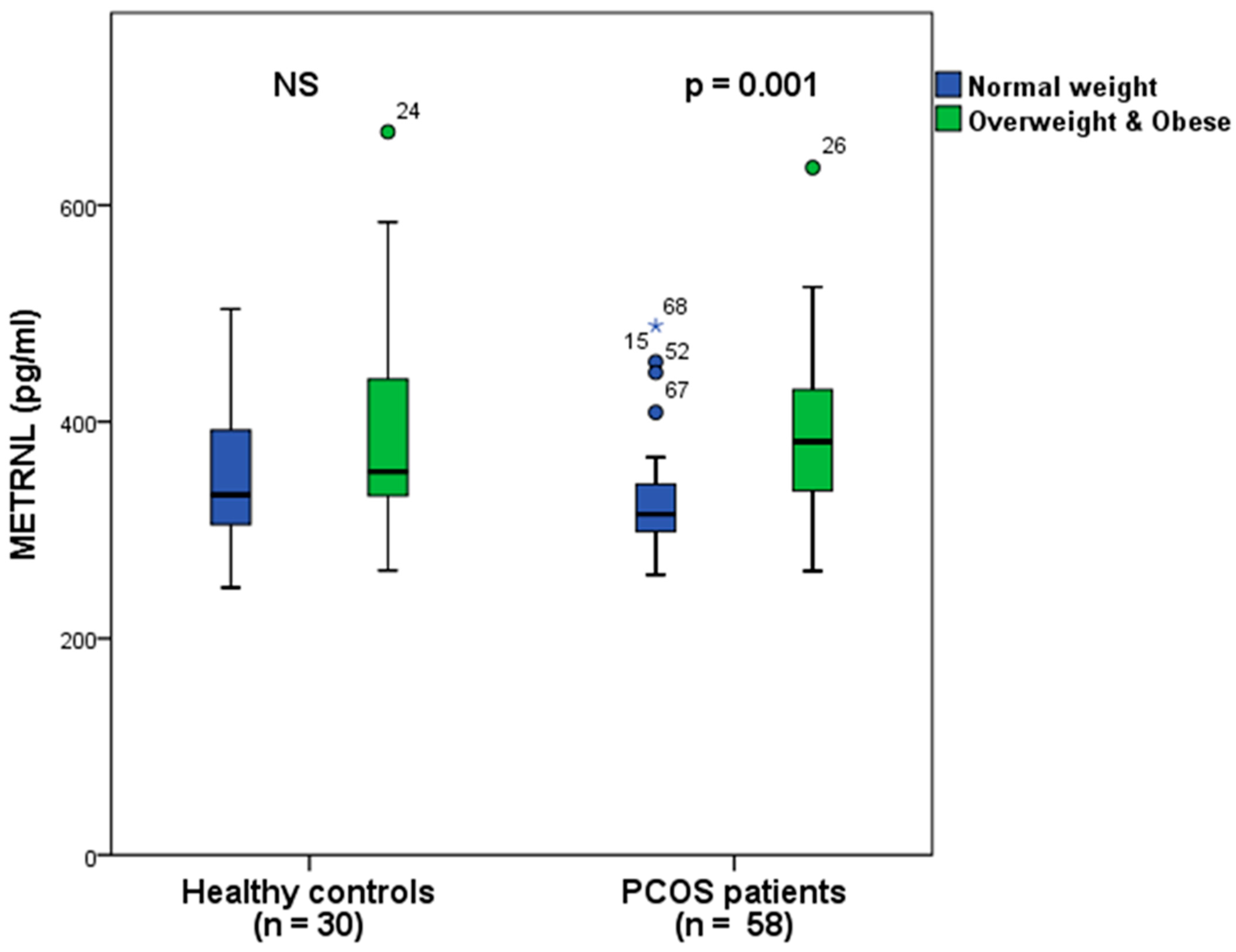
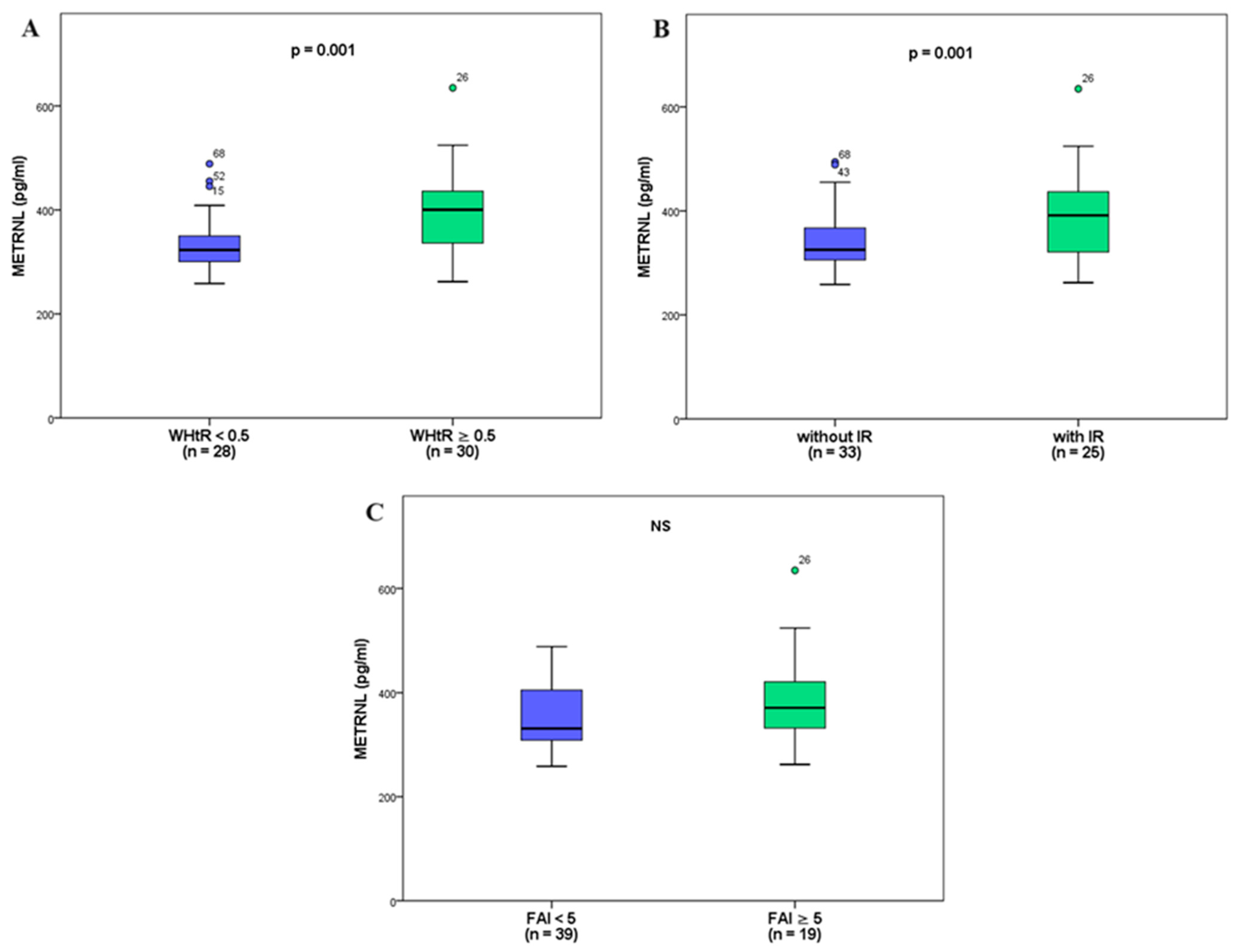
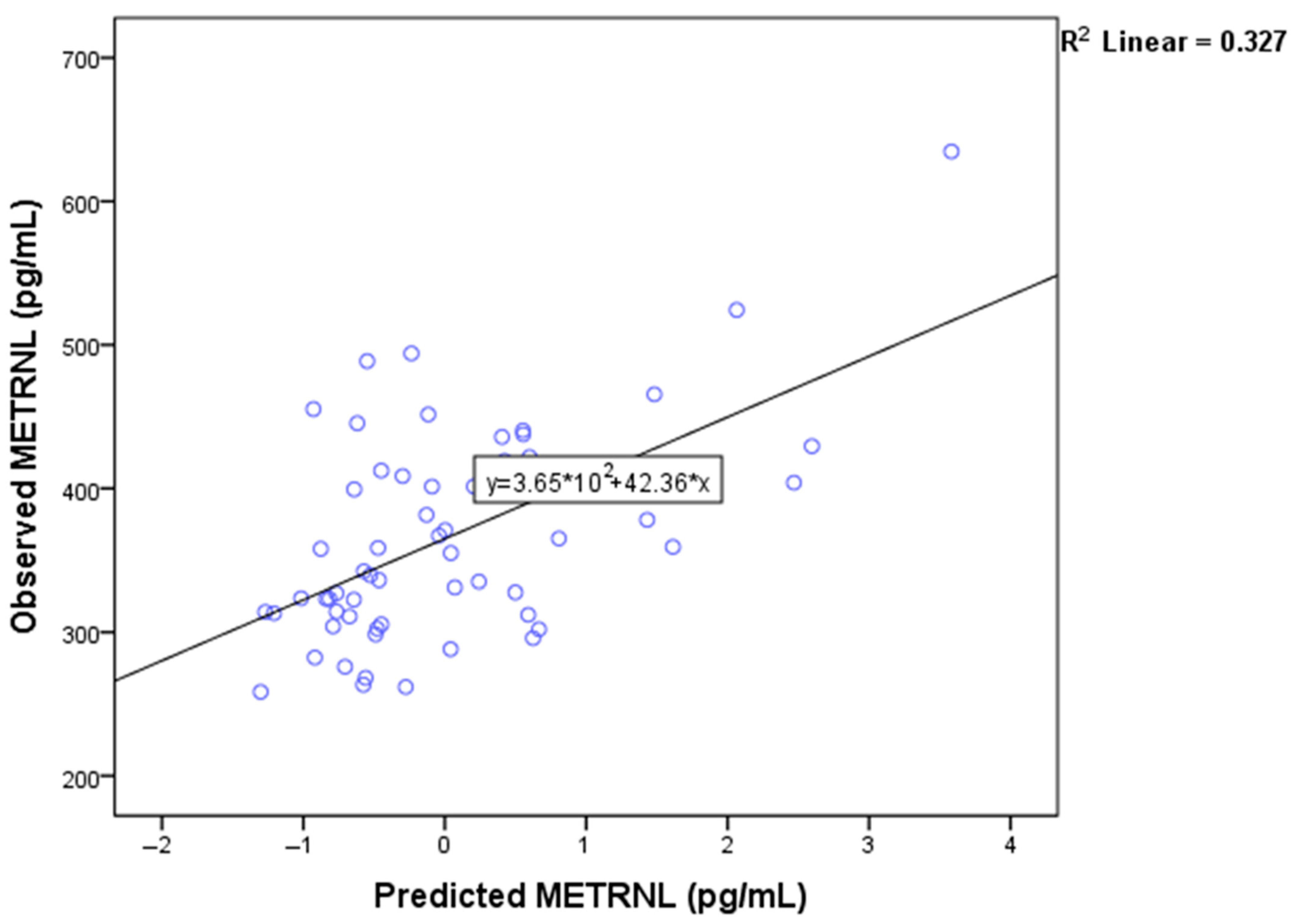
Objective: Polycystic ovary syndrome (PCOS) is a prevalent hormonal and metabolic disorder, wherein the adipose tissue and gut microbiome have been demonstrated to contribute to its pathogenesis. This study aims to assess the concentrations of the adipokine, meteorin-like protein (Metrnl) and the protein, zonulin, related to intestine permeability, in individuals with PCOS with a particular emphasis on their relationship with obesity, clinical manifestations, hormonal profiles, and metabolic parameters. Methods: A cohort comprising 58 women with PCOS, classified according to the Rotterdam criteria, was enrolled. The study also considered age, body mass index (BMI), and ethnicity-matched controls (n = 30). Comprehensive anthropometric and clinical evaluations, hormonal assays, and biochemical analyses were conducted during the follicular phase. Subsequent subgroup analyses were executed within the PCOS cohort based on waist-to-height ratio (WHtR), insulin resistance (IR), and free androgen index (FAI). Serum concentrations of Metrnl and zonulin were quantified via the enzyme-linked immunosorbent assay (ELISA) technique. Results: The Metrnl and zonulin levels exhibited no significant disparity between PCOS patients and controls. Nevertheless, within the entire participant cohort and the PCOS group exclusively, overweight/obese participants demonstrated higher Metrnl concentrations relative to their normal-weight counterparts (p < 0.001, p = 0.001, respectively). Furthermore, higher Metrnl concentrations were identified in subgroups characterized by high WHtR and IR in comparison to those with low WHtR (p = 0.001) and without IR (p = 0.001), respectively. A correlation emerged between Metrnl levels and various anthropometric and metabolic parameters, as well as sex-hormone-binding globulin (SHBG) and interleukin-18 (IL-18) within the PCOS group. Multiple linear regression analysis identified HOMA-IR as the sole independent predictor of Metrnl levels. Conclusion: While Metrnl and zonulin levels do not serve as diagnostic indicators of PCOS, elevated Metrnl concentrations exhibited robust associations with proinflammatory and metabolic irregularities within the PCOS population.
Keywords: polycystic ovary syndrome; meteorin-like protein; zonulin; obesity; insulin resistance polycystic ovary syndrome; meteorin-like protein; zonulin; obesity; insulin resistance