


Abstract
As wearable electronic products have been integrated into daily life, flexible pressure sensors, which convert pressure into electrical signals, have become a research focus because of their cross-industry application potential. Despite an increasing number of related studies, the systematic integration of discussions on sensing mechanisms, performance regulation, and multiscenario adaptability remains to be explored. In this paper, core sensing mechanisms such as piezoresistive, capacitive, piezoelectric, and triboelectric mechanisms are systematically reviewed; key performance indicators, including sensitivity, response time, and linearity, are analyzed; construction strategies for diverse substrates and conductive functional materials are explored; and applications in healthcare, human–computer interaction, and electronic skin are elaborated on. The aim of these analyses is to provide practical insights into the development and design of flexible pressure sensors, thus providing a useful reference for advancing these technologies and expanding their cross-domain use.
1. Introduction
In contemporary society, the synergistic advancement of scientific and technological innovation and rapid economic growth have propelled the explosive development of wearable electronic products, which have deeply penetrated all aspects of human life [1]. These devices have become critical supports in fields such as healthcare, fitness, and entertainment and have not only significantly improved the quality of public life but also strongly promoted the popularization and deepening of health management awareness and disease prevention concepts [2,3]. In recent years, numerous breakthroughs have been achieved in the field of flexible wearable electronic devices. Compared with traditional rigid electronic devices, they exhibit excellent flexibility, ductility, and deformation tolerance, thereby ensuring the accuracy of signal acquisition while significantly improving wearing comfort [4,5,6,7].
Flexible electronic devices can be subdivided into multiple functional categories, including power modules, sensing units, actuators, wireless transmission devices, etc., according to their functional attributes [8,9]. Among them, flexible sensors, which are core components for environmental information perception and signal conversion, play an irreplaceable role in the monitoring of physical quantities, chemical substances, and biological parameters [4]. As an important branch of the flexible sensor family, flexible pressure sensors can convert external pressure stimuli into electrical signal outputs, thereby enabling real-time capture of human physiological demand information and human–machine–environment interaction signals; thus, they occupy key positions in cutting-edge fields such as human–computer interaction interfaces [10], electronic skin systems [11], and personal medical health monitoring devices [4,12,13].
Researchers have developed various types of flexible pressure sensors. Despite differences in their working principles, they all use flexible electrodes, conductive materials, and flexible substrates as basic components [14]. The flexible substrate materials mainly include textile materials, paper-based substrates, and synthetic polymers with low Young’s modulus values. The conductive materials include carbon-based materials, metal materials, and conductive polymers [15,16,17,18]. Flexible substrates that are prepared by compounding sensitive materials with conductive active materials are even more core components of flexible pressure sensors. On this basis, this review focuses on flexible pressure sensors that are constructed from different substrates and conductive active materials and systematically reviews their sensing mechanisms, material systems, and application progress. Section 2 elaborates on the basic sensing principles of flexible pressure sensors. Section 3 introduces the key performance evaluation indicators. Section 4 discusses the research status of flexible pressure sensors that are based on different substrate materials. Section 5 introduces cutting-edge application scenarios for flexible pressure sensors. Section 6 analyzes the technical challenges and future development opportunities in this field. The overall framework of this review is presented in Figure 1.
Figure 1.
Overall frame diagram. Reproduced with permission [19]. Copyright 2024, Royal Society of Chemistry; Reproduced with permission [20]. Copyright 2025, Springer Nature; Reproduced with permission [21]. Copyright 2022, Elsevier; Reproduced with permission [22]. Copyright 2021, American Chemical Society; Reproduced under terms of the CC-BY license [23]. Copyright 2020, Yunlu Lian, Springer Nature; Reproduced with permission [24]. Copyright 2022, Elsevier; Reproduced with permission [25]. Copyright 2025, Springer Nature; Reproduced with permission [26]. Copyright 2022, Royal Society of Chemistry; Reproduced under terms of the CC-BY license [27]. Copyright 2025, Yanxi Zhang, OAEPublish; Reproduced with permission [28]. Copyright 2023, Springer Nature; Reproduced with permission [29]. Copyright 2023, Springer Nature.
2. Fundamentals of Flexible Pressure Sensors
The sensing mechanism of a flexible pressure sensor determines how it operates. Flexible pressure sensors can be broadly categorized into four types on the basis of their various operating principles: piezoresistive sensors [30], capacitive sensors [31], piezoelectric sensors [32], and triboelectric sensors [33].
2.1. Piezoresistive Sensors
The core sensing mechanism of piezoresistive sensors stems from the stress-induced change in the electrical resistance of the sensing element. When an external mechanical load is applied, the sensing material deforms, leading to a corresponding change in its resistance characteristics [3,34,35]. As illustrated in Figure 2a, the total resistance comprises three components: the constant electrode resistance, the interface contact resistance between the electrode and the sensing material, and the bulk resistance of the sensing material itself [36,37]. Mechanistically, the resistance change can be attributed to two distinct effects as described by Equation (1):
Figure 2.
Diagrams of the sensing mechanisms of pressure sensors: (a) Piezoresistive sensors, (b) capacitive sensors, (c) piezoelectric sensors, and (d) triboelectric sensors.
(i) A geometric effect, where pressure alters the conductive path’s length () and cross-sectional area (); and (ii) an intrinsic piezoresistive effect, where the material’s resistivity () changes due to strain-induced modulation of the band structure or carrier mobility [38]. In most composite materials (e.g., graphene, CNTs, CB, AgNWs embedded in polymers), the dominant mechanism is often the disconnection/reconnection of conductive networks and the variation in tunneling resistance between adjacent fillers upon deformation [39,40,41,42,43,44]. While piezoresistive sensors dominate the field due to their simple structure, high sensitivity, and wide measurement range, they face challenges such as temperature-dependent resistivity and significant hysteresis in human-body interface applications [45].
2.2. Capacitive Sensors
Capacitive sensors transduce external pressure into measurable capacitance variations [46]. A typical device consists of two parallel electrodes sandwiching a dielectric layer [47], with the sensing mechanism illustrated in Figure 2b. Neglecting edge effects, the capacitance is given by Equation (2):
Based on this principle, three distinct working mechanisms exist for capacitive pressure sensing: (i) Distance () change mode—Compressing the sensor reduces the electrode gap, thereby increasing capacitance; (ii) Area () change mode—Stretching or bending the device alters the overlapping area of the electrodes; (iii) Dielectric constant () change mode—Compressing a porous or composite dielectric layer increases its effective permittivity by reducing air gaps [45,48]. To enhance sensitivity, researchers often introduce microstructures (e.g., micropyramids, microhemispheres, porous foams) into low-modulus dielectrics like polydimethylsiloxane (PDMS), polyurethane (PU), or Ecoflex, which facilitate reversible energy storage and release while mitigating viscoelastic creep [48,49,50,51]. Common conductive materials for electrodes include AgNWs, CNTs, graphene, and MXene [52,53,54,55].
Beyond conventional parallel-plate designs, iontronic capacitive sensors have emerged as a high-performance alternative. By replacing the solid dielectric with an ionic conductor (e.g., ion gel or electrolyte), these sensors form nanoscale electrical double layers (EDLs) at the electrode-electrolyte interface under pressure. This mechanism yields an ultrahigh capacitance (up to several μF/cm2) and significantly enhances sensitivity compared to traditional designs [56].
2.3. Piezoelectric Sensors
The operating principle of piezoelectric sensors is grounded in the piezoelectric effect, where mechanical stress induces a macroscopic polarization within anisotropic crystal structures or poled polymers [10,35]. This internal charge separation generates bound charges at the electrode surfaces, producing a potential difference that can be quantitatively correlated to the applied pressure (Figure 2c). The effect is typically characterized by the piezoelectric coefficient, which relates the generated charge density to the applied stress. A key characteristic of piezoelectric sensors is their dynamic response: they primarily respond to varying or dynamic pressures (e.g., vibrations, impacts, pulse waves) rather than static loads, as the generated charges tend to leak or recombine under constant strain due to the finite internal resistance of the material [34].
Piezoelectric materials can be categorized into four types: ceramics, single crystals, polymers, and composite materials [5]. To date, various materials with piezoelectric properties have been identified, such as lead zirconate titanate (PZT), polyvinylidene fluoride (PVDF), aluminum nitride (AlN), zinc oxide (ZnO), and lead titanate (PbTiO3) [57,58,59]. Among these materials, PZT ceramics, which are common inorganic piezoelectric materials, have excellent dielectric and piezoelectric properties [10]. Compared with single-crystal materials, PZT ceramics have greater strength and significant advantages in the fabrication of complex-shaped and large-area devices. However, their brittleness, high hardness, and lead-containing nature render them unsuitable for wearable sensing devices [12,60]. Given the urgent need to address environmental and health issues that are caused by lead-based materials, the development of lead-free piezoelectric materials has become a key research direction in this field [9]. PVDF and its copolymers, as potential alternatives to lead-based materials, have garnered extensive attention, with notable advantages in terms of flexibility and biocompatibility [61,62].
Piezoelectric sensors can convert pressure into electrical pulse signals. With their excellent dynamic performance, high sensitivity, and fast response times, they have become core components in modern medical monitoring technologies. For instance, they can achieve noninvasive continuous monitoring of blood pressure and heart rhythm by accurately capturing arterial pulse wave signals and are also applicable to measurement scenarios that involve sound and sliding vibration [34,35]. Additionally, piezoelectric sensors do not require an external power supply, which makes them highly suitable for low-power or self-powered sensing systems and energy harvesting systems [63].
2.4. Triboelectric Sensors
Triboelectric sensors operate based on the coupling of contact electrification (triboelectrification) and electrostatic induction [38]. When two materials with different triboelectric properties come into contact under pressure, equal and opposite charges accumulate on their surfaces. Upon separation (or even during contact), this charge separation induces a potential difference, driving electron flow through an external circuit to establish electrostatic equilibrium [6,9]. This displacement current constitutes the sensor’s output signal, enabling quantitative pressure measurement (Figure 2d).
Depending on the electrode configuration and relative motion, triboelectric nanogenerators (TENGs) typically operate in four fundamental modes: (i) vertical contact-separation, (ii) lateral sliding, (iii) single-electrode, and (iv) freestanding triboelectric-layer mode. This versatility allows triboelectric sensors to adapt to various pressure and motion sensing scenarios [64]. Material selection is critical, governed by the triboelectric series. Common positive layers include polyurethane (PU), nylon, and cotton, while negative layers include polydimethylsiloxane (PDMS), polytetrafluoroethylene (PTFE), fluorinated ethylene propylene copolymer (FEP), and polyimide (PI) [61]. Since the seminal work on TENGs by Wang’s group in 2012, extensive efforts have focused on harvesting mechanical energy from human motion and the environment [64].
Triboelectric sensors typically exhibit advantages such as self-powered operation, high output power reaching up to several milliwatts, low cost, ease of fabrication, and good biocompatibility [38]. However, their low stability, coupled with the sensitivity of triboelectric charges to multiple factors (e.g., temperature, humidity, pressure magnitude, and loading rate), makes establishing unified pressure sensing conditions for triboelectric nanogenerators challenging in practical applications [14].
3. Key Performance Parameters
Pressure sensitivity, linearity, detection range, hysteresis, response time, recovery time, stability, and consistency are the core indicators for evaluating the performances of flexible pressure sensors. An ideal flexible pressure sensor should possess the following characteristics: high sensitivity to distinguish subtle pressure changes; excellent linearity to ensure a reliable relationship between output signal and input pressure; a wide operating range to adapt to diverse detection scenarios; fast response and recovery times to enable real-time monitoring; low hysteresis to guarantee measurement accuracy in dynamic pressure cycling; and superior stability and consistency to extend service life, reduce costs, and ensure reliable mass production [6]. These parameters collectively form a comprehensive performance evaluation system, providing a quantitative basis for sensor design optimization.
3.1. Sensitivity
Pressure sensitivity is typically characterized by the slope of the curve that represents the change in electrical signal output with external pressure. It determines the ability of the sensor to detect tiny pressure changes and the accuracy of signal measurement [65,66]. Due to the characteristics of initial signals, the sensitivity formulas for piezoelectric and triboelectric sensors differ from those for piezoresistive and capacitive sensors. The sensitivity of piezoresistive and capacitive sensors is defined as and , respectively, whereas that of piezoelectric and triboelectric sensors is usually expressed as [67,68], where and denote the changes in resistance and capacitance, and represent the initial resistance and capacitance values under no pressure, denotes the output voltage or current of the piezoelectric or triboelectric sensor, and represents the applied pressure.
3.2. Linearity and Detection Range
Linearity reflects the consistency of sensor sensitivity across the operating pressure range, while the detection range defines the minimum to maximum pressure that the sensor can reliably measure. In practical applications, these two parameters are closely intertwined. However, due to the nonlinear elastic properties of soft materials, achieving both high sensitivity and a wide linear detection range remains a fundamental challenge in flexible sensor research. The inherent trade-off between these metrics arises because sensitivity often peaks at low pressure ranges (due to microstructure deformation) but decreases at higher pressures as the material approaches mechanical saturation [69]. To address this, researchers have developed strategies such as designing graded microstructures, introducing conductive nanomaterial networks, or employing bilayer material systems to extend the linear region while maintaining high sensitivity [2,69].
3.3. Hysteresis
Hysteresis refers to the discrepancy in sensor output between the loading and unloading cycles under the same applied pressure. It is primarily caused by the viscoelastic nature of polymeric materials and the frictional sliding between interfaces. High hysteresis leads to inaccurate and unreliable measurements, particularly in applications involving dynamic or cyclic pressures, such as human motion monitoring or robotic tactile sensing [2,45]. Quantitatively, hysteresis is often evaluated by comparing the output curves during increasing and decreasing pressure sweeps. To minimize hysteresis, researchers employ strategies including: (i) designing microstructures (e.g., pyramidal, porous, or interlocking architectures) that promote rapid mechanical recovery; (ii) enhancing interfacial bonding between sensing layers and electrodes; and (iii) selecting materials with lower viscoelasticity or incorporating rigid fillers to constrain polymer chain movement [48].
3.4. Response Time and Recovery Time
Response time is defined as the duration required for the electrical signal to increase from the initial state to 90% of the maximum output upon pressure application. Conversely, recovery time refers to the time needed for the signal to decrease to 10% (or 90% return to baseline) of the stable output after pressure removal [70]. These two parameters collectively determine the sensor’s temporal resolution and its ability to capture rapid pressure fluctuations, such as acoustic vibrations or high-frequency pulse waves. The viscoelastic properties of active materials, the contact states between materials and electrodes, and the mechanical resilience of microstructures all influence response and recovery dynamics. Strategies for shortening these time parameters include employing folded or spring-like microstructures, improving interfacial adhesion, and reducing the thickness of the sensing layer [2].
3.5. Stability and Consistency
Stability is a core indicator of the long-term reliability of pressure sensors, as devices are susceptible to mechanical fatigue, environmental degradation, and performance drift over repeated use [2,71]. Stability is typically evaluated by subjecting the sensor to thousands of continuous loading-unloading cycles and monitoring the electrical signal output. Although no universally standardized cycle number exists, 5000 cycles is commonly adopted as a benchmark in most studies [72]. Minimal signal attenuation or baseline shift after cycling indicates good stability.
Consistency, closely related but distinct from stability, refers to the reproducibility of sensor performance across multiple devices fabricated under the same conditions or across multiple measurement runs on the same device. Poor consistency hinders practical applications by requiring individual calibration and reducing yield in mass production [14]. Consistency is typically assessed by comparing key performance metrics (e.g., sensitivity, baseline resistance/capacitance) among multiple samples. Achieving high consistency necessitates precise control over material synthesis, microstructure fabrication, and device assembly processes.
4. Flexible Pressure Sensors with Diverse Substrate Materials
A flexible pressure sensor fundamentally consists of two distinct components: a flexible substrate that provides mechanical support and structural integrity, and a conductive material (or functional layer) that transduces mechanical stimuli into electrical signals [73]. The substrate must possess characteristics such as light weight, thinness, flexibility, stretchability, insulation, and corrosion resistance to meet the requirements of wearable electronics. The conductive material, which may be deposited, embedded, or grown onto the substrate, is responsible for the force-to-electricity conversion. Its performance is highly dependent on the synergistic interaction with the substrate—including mechanical matching and interfacial adhesion—while the substrate’s intrinsic properties (e.g., elasticity, surface morphology) dictate the sensor’s deformation behavior and overall performance. This section reviews flexible pressure sensors categorized by substrate type, with emphasis on how substrate characteristics influence material integration strategies and device performance. Table 1 summarizes the key components and performance parameters of representative devices.
Table 1.
Compositions, performance and types of pressure sensors.
4.1. Polymer Substrates
The performance optimization of flexible pressure sensors as core components of wearable electronic devices, artificial skin, and health monitoring systems has long relied on the synergistic innovation of functional material systems and fabrication processes. Over the past decade, flexible pressure sensors that are based on polymer nanocomposites have emerged as a focal area of research globally owing to their combination of excellent elasticity and high sensitivity [78].
4.1.1. Inelastic Polymer Substrates
In the selection of polymer substrates, inelastic polymers (e.g., polyethylene terephthalate (PET) and polyimide (PI)) were widely used in early flexible pressure sensors because of their rigid molecular chains, which confer outstanding dimensional stability and mechanical strength [63,79]. PET, for instance, exhibits high surface flatness and good compatibility with conductive materials, which makes it suitable for fabricating devices with low requirements for dynamic deformation. Kumari et al., for example, grew zinc oxide nanowires on an indium tin oxide (ITO)-modified PET substrate, and the resulting piezoresistive/piezoelectric dual-mode sensor achieved a significant resistance change from 100 Ω to 2400 Ω during bending and relaxation cycles, which confirmed the stable response capability of inelastic substrates under static or small-deformation scenarios (Figure 3a) [74]. PI, which is another important inelastic polymer, offers superior temperature resistance and chemical stability; its interfacial adhesion with functional materials can be further improved through surface modification. Zhao et al. used an ultraviolet laser to modify the surfaces of PI films to enable intimate contact with a silicone rubber-polyamide sponge. The constructed triboelectric flexible sensor (FS-TENG) exhibited an open-circuit voltage of 48.19 V and a short-circuit current of 1.243 μA, with a performance that was approximately three times higher than that of the pristine PI substrate, thus demonstrating that the application scope of inelastic substrates can be effectively expanded through interfacial optimization (Figure 3c) [22]. However, the elongation at break of inelastic polymers is typically less than 50%, and their molecular chains cannot withstand large stretches, which limits their use in dynamic deformation scenarios (e.g., limb movement monitoring) [73].
Figure 3.
Flexible pressure sensors based on polymer nanocomposites. (a) PET-based piezoresistive/piezoelectric dual-mode flexible pressure sensor. Reproduced with permission [74]. Copyright 2024, American Chemical Society. (b) Piezoresistive flexible pressure sensor that is based on PDMS. Reproduced with permission [75]. Copyright 2019, Elsevier. (c) Triboelectric flexible pressure sensor that is based on PI. Reproduced with permission [22]. Copyright 2021, American Chemical Society. (d) PU-based flexible piezoresistive pressure sensor. Reproduced with permission [76]. Copyright 2020, American Chemical Society.
4.1.2. Elastic Polymer Substrates
To overcome the stretchability limitations of inelastic substrates, researchers have turned to elastic polymers (e.g., polydimethylsiloxane (PDMS), polyurethane (PU), and Ecoflex). These materials, which are characterized by the reversible deformation capability of their molecular chains (with elongation at break usually exceeding 100%), have become the primary choices for flexible pressure sensors in dynamic scenarios. PDMS, which is a representative silicone-based elastomer, combines a low elastic modulus (1–10 MPa), high transparency (>90% visible light transmittance), and excellent chemical inertness, which makes it particularly suitable for applications that require optical compatibility or contact with biological tissues (e.g., artificial skin) [80]. Zhao et al. fabricated a PDMS substrate with lotus-leaf-like surface micropatterns in combination with a multilayer Ti2C-MXene film and polyimide-based interdigital electrodes. By leveraging the pressure-amplifying effect of the micropatterns to improve contact resistance changes, the sensor exhibited high sensitivity, a large linear range, excellent cyclic stability, and a rapid response (Figure 3b) [75]. PU, with a relatively high elastic recovery rate (>95%) and fatigue resistance (performance degradation <5% after 100,000 cycles), is widely preferred for dynamic motion applications. Zhu et al. recently developed a piezoresistive flexible pressure sensor that is based on silver nanowire (AgNW)-embedded polyurethane (PU). By pouring liquid PU onto a AgNW-coated mold and removing the PU film after curing, a AgNW network was embedded just below the surface of the cured PU film. The resulting PU/AgNW pressure sensor demonstrated a rapid response (20 ms), a wide detection range, and high sensitivity (Figure 3d) [76]. Clearly, elastic polymer substrates enable a wide range of pressure responses through the reversible deformation of their molecular chains, and the interfacial bonding strength between the substrate and conductive nanomaterials is critical for regulating sensor stability (e.g., the hydrophobicity of PDMS requires plasma treatment to optimize compatibility with MXenes).
4.1.3. Conductive Functionalization of Polymer Substrates
While the substrate provides mechanical support, the sensing function relies on the integration of conductive materials onto or into the substrate. The performance of the resulting sensor depends critically on the uniformity, thickness, and interfacial bonding of the conductive layer. Several techniques are available for depositing or forming conductive layers on polymer substrates. The performance of substrate materials not only depends on their intrinsic properties but is also closely related to the fabrication techniques for conductive nanomaterial films. The uniformity, thickness, and interfacial bonding state of the film with the substrate directly affect the electrical response behavior of the sensor. Currently, film fabrication techniques are mainly categorized into solution-based physical deposition techniques and chemical vapor deposition (CVD), with significant differences in terms of controllability and applicable scenarios.
Solution-based techniques, such as spin coating, blade coating, dip coating, and spray coating, rely on mechanical processes to uniformly apply solutions onto substrates, which facilitates a shortened fabrication time and good material compatibility. However, the achievable film thickness is significantly influenced by mechanical principles and process parameters [81]. Spin coating involves dispensing a liquid conductive material onto the center of a substrate and spreading it radially through rapid rotation. This technique produces uniform films and is compatible with various materials but is limited to small, planar substrates and struggles to control film thickness below 10 nm [81,82]. Scratch coating uses a blade to remove excess solution, forming a film of uniform thickness. It is suitable for large-area fabrication but thickness uniformity decreases with increasing substrate area, and it is applicable only to planar substrates [81]. Dip coating forms a uniform coating through surface adhesion and gravity by immersing the flexible substrate into a functional material solution and lifting it at a controlled speed [82,83]. This technique can be used to coat complex and irregular surfaces, can offer controllable film thickness, and is easy to perform [82]. However, parameter adjustment is challenging, and there is a risk of solution contamination. Spray coating is a simple, cost-effective, and rapid deposition method that involves the use of a spray gun for layer-by-layer deposition, which enables control over film thickness and morphology. For example, He et al. used spray coating to prepare a hybrid nanomaterial sensor that was composed of multiwalled carbon nanotubes (MWCNTs) and graphene nanoplatelets (GNPs) on a highly flexible PI substrate [78]. However, high-viscosity solutions tend to clog the spray gun because of the atomization mechanism [80].
In comparison with physical deposition techniques, chemical vapor deposition (CVD) generates thin films through chemical reactions of gaseous precursors on the substrate surface and enables atomic-level control over film thickness and crystallinity. This makes it suitable for preparing highly stable conductive films. Xia et al. used CVD to grow 3D graphene (with a porosity exceeding 90%) on copper foil, which was then transferred to a layered PDMS substrate. By leveraging the high conductivity of graphene and the deformation sensitivity of the 3D structure, the resulting sensor achieved an ultralow detection limit of 0.2 Pa and maintained excellent cyclic stability for more than 10,000 cycles [52]. The core advantages of this approach lie, on the one hand, in the van der Waals force-mediated interfacial bonding between graphene and PDMS, which avoids potential interfacial defects that are inherent in physical deposition methods, and, on the other hand, in the ability of the 3D structural pores to buffer the stress that is generated by substrate deformation, thereby significantly increasing the fatigue resistance of the device. However, the applicability of CVD technology is limited in large-scale applications because of its high equipment cost (exceeding 100,000 RMB) and long preparation cycle (over 24 h).
4.1.4. Summary and Design Considerations for Polymer-Based Sensors
In summary, the performance optimization of flexible pressure sensors follows the synergistic logic of “substrate mechanical properties–film electrical performance–fabrication technology controllability”. For static scenarios (e.g., pulse monitoring), PDMS substrates in combination with spin-coating or spray-coating techniques are preferred, with microstructure designs (such as lotus-leaf-like patterns) to increase sensitivity. For dynamic scenarios (e.g., motion monitoring), PU substrates paired with dip-coating or blade-coating techniques are emphasized, with the synergistic deformation of elastomers and conductive networks used to expand the detection range. For high-performance scenarios (e.g., micropressure detection), graphene or MXene films that are prepared by CVD in combination with layered substrate structures are needed to achieve low detection limits and high stability. Future research should focus on overcoming two major bottlenecks: the interfacial aging issue between elastic substrates and conductive materials and balancing the scalability of the fabrication processes with the performance uniformity. Through the molecular design of materials and process intelligence, flexible pressure sensors are expected to have wider applications in fields such as wearable healthcare and human–computer interactions.
4.2. Textile Substrates
Although polymers are widely used as substrates in flexible pressure sensors, their inherent drawbacks—including viscoelastic time-dependent deformation (leading to signal drift), insufficient interfacial bonding with conductive nanomaterials (causing coating delamination), and poor breathability—significantly restrict their practical application and commercialization [25,63]. In contrast, textiles composed of natural or synthetic fibers offer intrinsic elasticity, high breathability, and mechanical compliance with human skin due to their fibrous network structure, making them ideal alternatives for next-generation wearable sensing systems [84].
The porous network structure formed by interwoven fibers inherently provides excellent flexibility and deformation buffering capacity, which perfectly matches the requirements of flexible pressure sensors: stretchability, low modulus, and high breathability. This three-dimensional network provides natural deformation space to synergistically respond to pressure with conductive materials, while the porous structure effectively facilitates skin respiration, addressing the stuffiness issue of traditional polymer substrates. However, textiles are inherently insulating and require functionalization to become conductive. Three main strategies are employed for textile functionalization: physical coating, spinning-based conductive fiber construction, and in situ growth. These technologies directly affect sensor sensitivity and stability by regulating the interfacial interactions and distribution of fiber-conductive phases.
4.2.1. Physical Coating
As the most straightforward means for textile functionalization, physical coating technology enables large-scale and low-cost modification by depositing conductive materials in the form of physical dispersion on fiber surfaces. Its core principle involves uniformly dispersing conductive nanomaterials (e.g., silver nanowires and carbon nanotubes) in a solvent; attaching the materials to textile substrates through impregnation, blade coating, or spray coating; and forming a conductive network after drying to remove the solvent. This technology boasts simple processes and strong compatibility and is applicable to various textile substrates, such as cotton and polyester [85]. For example, Lian et al. developed an all-textile piezoresistive pressure sensor by immersing AgNW-coated cotton fabric in a AgNW solution to strengthen the conductive network, combining it with a laser-etched cotton mesh spacer, and constructing a double-layer sensing structure by face-to-face stacking. This design uses the synergistic contact enhancement effect of the “fiber–yarn–fabric” multilevel structure under pressure and achieves high sensitivity, fast response/recovery (32/24 ms), and stability over 1000 cycles. It has been successfully applied to monitor weak physiological signals such as pulse pressure [23], thus confirming the effectiveness of physical coatings in constructing multilevel conductive networks (Figure 4a).
Figure 4.
Textile-based flexible pressure sensors. (a) Morphology of the AgNW-coated fabric. Reproduced under terms of the CC-BY license [23]. Copyright 2020, Yunlu Lian, Springer Nature. (b) Yarn-based triboelectric flexible pressure sensor. Reproduced with permission [24]. Copyright 2022, Elsevier. (c) Flexible pressure sensor that is based on wet spinning printing. Reproduced with permission [86]. Copyright 2022, Elsevier.
4.2.2. Spinning-Based Conductive Fiber Construction
Spinning technology addresses the functionalization of textiles from the perspective of material structure by directly constructing intrinsically conductive fibers [84]. Electrospinning, which can be used to prepare nanoscale fibers driven by electric fields, serves as an important means for constructing conductive fibers with high specific surface areas. By incorporating conductive fillers such as graphene and carbon nanotubes into polymer spinning solutions, nanofibers with both flexibility and conductivity can be prepared. Their porous structure and high aspect ratio provide sufficient deformation–conduction conversion sites for pressure response, which makes them particularly suitable for wearable and medical monitoring scenarios [3,84,87]. For instance, Zhou et al. continuously prepared uniaxially aligned core–shell triboelectric yarns using electrospinning technology and controlled the orientation and core–shell interfacial bonding by regulating the spinning parameters. When woven into fabrics, these yarns exhibit excellent wear resistance and triboelectric output performance, thus providing reliable sensing units for dynamic motion monitoring (Figure 4b) [24].
As another mainstream spinning technology, wet spinning is typically used in large-scale fiber manufacturing for the continuous production of conductive fibers. After being extruded through a spinneret, the fibers are formed in a coagulation bath that contains solvents and nonsolvents and then wound on a collector. Various microstructures can be generated by adjusting the relative sizes of materials and mass transfer during gelation, which makes this approach suitable for the industrial preparation of large-scale conductive fibers [84]. For example, Qian et al. used 3D wet spinning technology to print prepared polyethylene formate (PVFm) 3D-printed inks layer by layer into complex 3D mesh structures. Subsequently, polypyrrole (PPy) was polymerized onto the PVFm surface in situ to prepare conductive PPy@PVFm scaffolds. The resulting brace can detect body movement signals such as swallowing and neck extension, as well as the frequency and intensity of gait movements and human body weight; thus, it has a variety of potential applications in monitoring human activity and health care (Figure 4c) [86].
4.2.3. In Situ Growth
In situ growth technology further strengthens the interfacial bonding between conductive phases and substrates by chemically constructing conductive layers on the surfaces of fibers or yarns, which effectively solves the problem of the easy peeling of physical coatings. In situ polymerization, which is a typical example of this technology, can be used to form a uniform and tightly bonded conductive coating on fabric surfaces by initiating the chemical synthesis of conductive polymers (e.g., polyaniline and polypyrrole) on the fabric surfaces while avoiding damage to the inherent mechanical properties and breathability of the textiles. Vapor phase polymerization (VPP), which is an important type of in situ growth, is widely used to modify textiles with poly(3,4-ethylenedioxythiophene) (PEDOT). It forms ultrathin and highly conductive PEDOT films through the adsorption and polymerization of gaseous monomers on fiber surfaces, which not only exhibit better conductivity than physical coatings but also retain the flexibility and breathability of fabrics, thereby significantly improving the long-term cycling stability of sensors [5].
Textiles, owing to their structural advantages, are progressively replacing traditional polymer substrates in flexible pressure sensors. Three major functionalization technologies—physical coating, spinning construction, and in situ growth—address the problem of textile conductivity from the perspectives of “surface modification”, “intrinsic construction”, and “interface enhancement”, respectively, thus laying a key foundation for the application of sensors in fields such as wearable medical care and smart clothing. In future research, the dynamic stability of the conductive phase–fiber interface needs to be optimized to address performance degradation under long-term dynamic deformation.
4.3. Paper Substrates
Compared with flexible polymer nanomaterials and fabrics, paper, as a substrate material for flexible pressure sensors, is more in line with the core requirements of current green manufacturing and sustainable development because of its excellent sustainability, biodegradability, and low cost [26,28]. In addition, the inherent porous structure and interwoven fibrous network of paper provide a unique structural basis for optimizing sensor performance. The distribution of pores offers sufficient buffer space for pressure-induced deformation, the contact interfaces between fibers can produce significant resistance changes under pressure, and the high specific surface area helps shorten charge transport paths. These characteristics collectively endow paper-based sensors with potential advantages in terms of sensitivity and response speed; thus, they have unique application prospects in wearable electronic devices.
Bai et al. constructed an ion-conductive pressure sensor on the basis of a sandpaper template, whose core structure consisted of an ion membrane sandwiched between two PI-Au electrodes. This design improves the pressure responsiveness of ion conduction paths through the micronanostructure, which is regulated by the sandpaper template, with an ultrahigh pressure resolution of 18 Pa, a high sensitivity of 220 kPa−1, and a wide detection range from 0.08 Pa to 360 kPa ultimately achieved, thus fully demonstrating the potential of paper-derived structures in micropressure detection (Figure 5a) [77]. Through chemical vapor deposition (CVD) technology, Li et al. modified paper by coating cellulose fibers with methyltrichlorosilane (MTS) and then compounding them with an MXene microconvex structure layer to construct an all-paper-based flexible pressure sensor. This sensor exhibited excellent core performance, with a detection range of 0–60 kPa; a sensitivity of 39.58 kPa−1 in the 0–1.01 kPa range and 11.95 kPa−1 in the 1.01–60 kPa range; a low detection limit of 2.8 Pa; response/recovery times of 93 ms and 69 ms, respectively; and stable performance after 10,000 cycles. It also has outstanding environmental adaptability and sustainability, such as good moisture resistance, breathability, and biodegradability. It can monitor human physiological signals in various environments, including air, high humidity, and water, in real time, thus further expanding the practical application scenarios of paper-based sensors (Figure 5b) [29].
Figure 5.
Paper-based flexible pressure sensors. (a) Capacitive flexible pressure sensor that is based on sandpaper. Reproduced with permission [77]. Copyright 2020, Springer Nature. (b) Paper-based flexible piezoresistive pressure sensor. Reproduced with permission [29]. Copyright 2024, John Wiley and Sons.
5. Applications
Recent advances in flexible pressure sensors not only highlight the core appeal of this technology for performance optimization and functional expansion but also drive its transition from basic research to practical applications in multiple cutting-edge fields. This technology has successfully been applied in key scenarios such as electronic skin (e-skin) [88], personal health monitoring [27,89], and human–machine interaction (HMI) [90].
It is important to note that different application scenarios impose distinct requirements on sensor performance. For instance, human–machine interfaces often prioritize fast response times and environmental stability, electronic skin demands high sensitivity and multi-stimulus detection capability, while personal healthcare monitoring requires broad detection ranges, low hysteresis, and long-term reliability for physiological signal acquisition. Table 2 summarizes the key performance metrics of representative flexible pressure sensors across these application domains, providing a rapid overview of how sensor characteristics align with application-specific requirements.
Table 2.
Representative flexible pressure sensors and their key performance metrics for different applications.
5.1. Human–Machine Interfaces
The core function of HMI systems, which integrate hardware and software, is enabling efficient communication and collaboration between humans and digital systems. Flexible pressure sensors, with their unique ability to convert mechanical inputs (such as pressing and touching) into electrical signals, have become key components for optimizing HMI performance. Human–machine interface applications impose specific performance requirements on flexible pressure sensors. Real-time interaction demands fast response times (typically <50 ms) to ensure seamless control, while prolonged use requires excellent durability (>10,000 cycles) and resistance to environmental factors such as moisture or sweat. Additionally, HMI systems often operate in dynamic conditions, necessitating stable signal output under repeated deformation [21,97,98]. Traditional robotic interactions rely mostly on rigid hardware such as keyboards and mice, with interaction methods being mechanical and lacking naturalness. However, the introduction of flexible pressure sensors has significantly improved the intuitiveness and adaptability of HMI through the simulation of human tactile perception patterns. This characteristic endows flexible pressure sensors with irreplaceable value in fields such as soft robots, flexible actuators, and intelligent interaction interfaces.
Specifically, the application of flexible pressure sensors in HMI has been validated by several studies. Vu et al. fabricated a waterproof piezoresistive sensor on the basis of a wet tissue substrate that was modified with carbon nanotubes (CNTs). Its prominent advantage lies in its stable operation in underwater environments, which enables precise operations in scenarios such as wireless music control. After the system was trained on five commands using an autoencoder, the system achieved a classification accuracy of 94%, thus confirming the reliability of flexible sensors in human–machine interactions in complex environments [91]. Using a rapid gas foaming technique, Cheng et al. constructed MXene aerogels with adjustable interlayer structures and developed a self-healing flexible pressure sensor with excellent sensing capabilities. This device not only exhibits ultrahigh sensitivity (1799.5 kPa−1), rapid response (11 ms), and outstanding cyclic stability (>25,000 cycles)—meeting the demanding requirements for real-time feedback and long-term durability in HMI systems. When integrated into robot palms, it accurately tracks motor behavior and precisely identifies pressing actions [92]. A sensor that is based on Ti3C2Tₓ MXene/bacterial cellulose (BC) aerogel was developed by Hong et al. It has unique advantages, including the ability to distinguish subtle curvature differences that are caused by different cylinder diameters and excellent robustness. These characteristics make it highly suitable for applications such as precise object size discrimination and the development of haptic feedback in augmented reality/virtual reality (AR/VR) spaces (Figure 6a) [93]. These research advances not only reflect the technical breakthroughs of flexible pressure sensors in terms of sensitivity, stability, and environmental adaptability but also highlight their core role in promoting the development of HMIs toward naturalization, precision, and contextualization, thus providing important technical support for the development of next-generation intelligent interaction systems.
Figure 6.
Applications of flexible pressure sensors. (a) Applications of human–machine interfaces. Reproduced with permission [93]. Copyright 2024, American Chemical Society. (b) Electronic skin devices. Reproduced with permission [20]. Copyright 2025, Springer Nature. (c) Personal medical care equipment. Reproduced with permission [19]. Copyright 2024, Royal Society of Chemistry. (d) Personal medical care equipment. Reproduced with permission [96]. Copyright 2024, John Wiley and Sons.
5.2. Electronic Skin Devices
E-skin, which is a type of flexible wearable bionic tactile sensing system, is characterized by its ability to conform to complex curved surfaces and endow intelligent devices with skin-like tactile perception capabilities. Owing to the potential for its large-scale fabrication through simple processes, e-skin can be used to not only simulate the basic sensory functions of human skin but also achieve enhanced responses to multidimensional environmental stimuli such as pressure and temperature. Electronic skin applications require sensors that mimic the tactile perception of human skin, demanding high sensitivity (<10 Pa) for detecting light touch, a wide pressure range (up to hundreds of kPa) to encompass various daily activities, and multi-stimulus detection capability (pressure, temperature, etc.) [2,99]. To address the inherent challenge of crosstalk in integrated multimodal systems, data-driven methods, including decoupling algorithms, can be implemented to enhance signal fidelity [100]. Conformability to curved surfaces and breathability are also critical for comfortable, long-term wear.
Xiao et al. recently reported the construction of an e-skin on the basis of poly(lactic-co-glycolic acid) (PLGA) nanofibers and silver nanowires wrapped in polyvinyl alcohol (PVA) nanofibers that enables the real-time monitoring of whole-body physiological signals (e.g., microexpressions, pulse, respiration, and vocalization) and motion states (e.g., movements of finger joints, elbows, knees, and ankles) [94], thus demonstrating its application value in full-body sign monitoring. Additionally, the crosslinked deep eutectic gel sensor that was developed by Liu et al. focuses on ultrasensitive monitoring and can synchronously capture five types of stimulus signals, including nasal airflow temperature and pressure, thoracoabdominal movement pressure, and pulse during sleep (Figure 6b) [96]. Such e-skins, which are environmentally friendly and of low cost, provide highly promising technical solutions for biomedical monitoring. To further simulate the fine tactile sensation of human hands, an e-skin needs to possess texture recognition capabilities. The realization of this function relies on the design of microstructures on the sensor surface—by constructing microstructures such as parallel ridges and pyramids, vibration signals that are induced by textures can be effectively transmitted and amplified. When the sensor moves over a textured surface, these vibrations are converted into time-varying electrical signals, thereby enabling accurate texture recognition [2]. The basic skin-electrode mechanical sensing structure (SEMS) that was developed by Zhu et al., with high pressure resolution and spatial resolution, can stably detect touch actions and weak physiological signals such as fingertip pulses under different skin humidity conditions, thus providing a structural basis for texture recognition and fine sign monitoring [11]. Zheng et al. prepared compressible top electrodes by uniformly coating 3D carbon materials with PEDOT:PSS, placing them on screen-printed interdigital electrodes, and encapsulating them with tape. The constructed all-paper pressure sensor can monitor human-related signals such as joint bending, finger tapping, body acoustic signals, and pulse in real time [18], which further verifies the feasibility of using an e-skin with simple structures in multiscenario tactile perception.
5.3. Personal Medical Care Equipment
Accelerated population aging and changing lifestyles have driven a surge in demand for chronic disease management, which has resulted in continuous personal health monitoring becoming a core component of the health management system. With their continuous tactile perception and pressure detection capabilities, flexible pressure sensors have become increasingly prominent in personal health monitoring, and they have been widely applied in scenarios such as cardiovascular function assessment, heart rate, and respiratory monitoring. Personal healthcare monitoring, particularly for cardiovascular assessment, imposes stringent performance requirements: high sensitivity (down to Pa level) for detecting subtle pulse waves, appropriate detection range (typically 0–100 kPa) covering both weak pulses and stronger body movements, low hysteresis (<5%) for accurate signal reproduction, and long-term stability for continuous monitoring [2,4,6,35]. These requirements favor sensor designs with linear response over the relevant pressure range, minimal viscoelastic creep, and robust encapsulation against environmental interference.
In clinical practice, the noninvasive monitoring of pulse, which is a core physiological indicator for evaluating blood pressure, along with heart rate and vascular elasticity, can provide an important basis for the early screening of cardiovascular diseases. Traditional monitoring devices, such as infrared photoelectric devices and rigid pressure sensors, are effective but suffer from limitations, including high cost and poor wearing comfort. In contrast, flexible electronic devices, with their good biocompatibility and wearing comfort, provide technical support for the development of a new generation of comfortable, portable pulse health monitoring systems, thus holding promise for long-term, noninvasive monitoring of cardiovascular health [35]. Studies have shown that both piezoresistive and capacitive pressure sensors can accurately acquire pulse signals, which contain abundant physiological and pathological information. For example, Tian et al. developed a flexible pulse monitoring sensor on the basis of thin-film thermistors and the natural pyroelectric conversion of human skin that can accurately measure radial artery pulse waves with high fidelity and strong anti-interference capability. This flexible pulse sensor features a wide pressure detection range (<228.2 kPa), low detection limit (4 Pa), excellent linearity (R2 = 0.999), low hysteresis (2.45%), fast response (88 ms), and good stability and durability (Figure 6c) [19]; hence, it provides an effective solution for highly accurate pulse signal monitoring. Zhang et al. designed a resistive pressure sensor using an MXene-coated PET 3D spacer fabric, which exhibits excellent linear sensitivity. It can effectively monitor a wide range of physiological activities and body movement signals, such as movements of the fingers, wrists, elbows, head, face, and ankles, and performs well in pulse wave detection [95], thus demonstrating its versatility in full-body sign monitoring. Inspired by pulse diagnosis in traditional Chinese medicine, Wang et al. proposed an adaptive pressure sensing platform (PSP) that integrates fully printed flexible pressure sensors with an adaptive wristband-type pressure system to enable accurate identification of ideal pulse signals. When the PSP is combined with machine learning-based linear regression modeling, it can not only detect pulse rate/width/length, “Cun, Guan, Chi” positions, and pulse characteristics such as “floating, moderate, sinking” but also accurately predict blood pressure, including systolic blood pressure, diastolic blood pressure, and mean arterial pressure values (Figure 6d) [96], thus opening a new path for in-depth analysis of pulse signals and assessment of cardiovascular parameters.
6. Conclusions and Outlook
As the demand for flexible pressure sensors has increased across various fields and as they have been gradually integrated into daily life, they have become a research hotspot in the scientific community. In this paper, the detection mechanisms, performance evaluation metrics, conductive functional materials, and construction strategies that are based on various substrates of flexible pressure sensors are systematically reviewed; their application scenarios in multiple fields are discussed; and the challenges and potential breakthrough directions in the development of this technology are analyzed.
In the research and development of high-performance flexible pressure sensors, challenges range from basic performance to application adaptation issues and require breakthroughs layer by layer. As the foundation for applications in dynamic deformation scenarios, most existing sensors have achieved flexibility, but the synergy between stretchability and flexibility is insufficient. Pure flexibility can only meet the needs of static fitting; however, in dynamic movements (such as joint flexion/extension and skin stretching), the lack of stretchability directly leads to the failure of the sensing structure. Therefore, achieving synergy between flexibility and high stretchability is the primary prerequisite for overcoming the limitations in dynamic applications. Future research should focus on developing intrinsically stretchable conductive materials and designing serpentine or kirigami-inspired electrode geometries. On this basis, balancing the core performances becomes the next challenge. Cutting-edge fields such as human–computer interaction and electronic skin require sensors to not only perceive weak signals (e.g., pulse fluctuations) but also cover a wide range of pressure changes (e.g., limb compression). Thus, high sensitivity must be maintained over a wide measurement range while ensuring stable performance in both microscale and macroscale motion monitoring. This “wide range–high sensitivity” dual requirement imposes stricter demands on sensing mechanisms and structural design than basic applications do. Promising directions include graded microstructures that deform sequentially and bilayer sensing systems with different layers dominating different pressure regimes. Furthermore, the expansion of functional dimensions constitutes another challenge. Uniaxial strain detection can obtain only the amplitude information of pressure, whereas in complex scenarios (e.g., robot operation and wearable posture monitoring), movements are often accompanied by multidirectional deformation, thus requiring simultaneous analysis of the direction and amplitude of strain. The lack of multiaxial strain detection capability leads to distorted analysis of motion characteristics, which limits the penetration of sensors into refined applications. To address this, anisotropic sensing structures and sensor arrays with orthogonal electrode configurations should be explored. Ultimately, the achievement of the aforementioned performance characteristics is also constrained by environmental adaptability. Interference from factors such as temperature fluctuations, humidity changes, and motion artifacts directly weakens the previously optimized performance indicators (e.g., sensitivity stability and signal fidelity) and reduces data reliability [101]. Thus, stably capturing high-quality signals in complex environments is crucial for ensuring the practical applicability of the aforementioned methods. Research efforts should focus on hydrophobic surface coatings, temperature compensation circuits, and motion artifact cancellation algorithms.
In response to the application demands in fields such as environmental ecology, artificial intelligence, and biomedicine, the future development of flexible pressure sensors presents clear trends. On one hand, with the deepening of environmental protection awareness and the concept of sustainable development, the development of environmentally friendly sensors with both high sensitivity and good biocompatibility has become inevitable. On the other hand, self-powered wearable flexible pressure sensors have become a research focus because of their energy-saving characteristics and long-term working capability [1,13]. Designs that are based on the triboelectric effect provide an effective path for achieving this function, and their multifunctional integration capabilities need to be expanded to adapt to more application scenarios in future studies. These trends not only address current technical challenges but also lay the foundation for the industrialization and cross-field application of flexible pressure sensors.
Author Contributions
Conceptualization, L.L., P.Q., X.G. and K.L.; methodology, L.L., H.Z. and X.G.; validation, L.L., P.H. and P.Q.; investigation, L.L., H.Z., Y.C., P.Q. and K.L.; resources, L.L.; writing—original draft preparation, L.L. and H.Z.; writing—review and editing, L.L., K.L. and P.Q.; visualization, H.Z.; supervision, Y.C.; funding acquisition, L.L. and P.Q. All authors have read and agreed to the published version of the manuscript.
Funding
This research was funded by Key Research and Development Program of Zhejiang Province, grant number 2024C03055; the National Natural Science Foundation of China, grant numbers 62301583 and 62301494.
Institutional Review Board Statement
Not applicable.
Informed Consent Statement
Not applicable.
Data Availability Statement
The corresponding author can provide the relevant data supporting this study’s findings, subject to reasonable request.
Conflicts of Interest
The authors report no conflicts of interest, financial or personal, that might be perceived as influencing this work.
References
- Hu, J.G.; Dun, G.H.; Geng, X.S.; Chen, J.; Wu, X.M.; Ren, T.L. Recent progress in flexible micro-pressure sensors for wearable health monitoring. Nanoscale Adv. 2023, 5, 3131–3145. [Google Scholar] [CrossRef] [Scilit] [PubMed]
- Huang, Y.; Fan, X.Y.; Chen, S.C.; Zhao, N. Emerging technologies of flexible pressure sensors: Materials, modeling, devices, and manufacturing. Adv. Funct. Mater. 2019, 29, 1808509. [Google Scholar] [CrossRef] [Scilit]
- Yang, Y.D.; Liu, Y.; Yin, R. Fiber/yarn and textile-based piezoresistive pressure sensors. Adv. Fiber Mater. 2024, 2, 34–71. [Google Scholar] [CrossRef] [Scilit]
- Liu, M.Y.; Hang, C.Z.; Zhao, X.F.; Zhu, L.Y.; Ma, R.G.; Wang, J.C.; Lu, H.L.; Zhang, D.W. Advance on flexible pressure sensors based on metal and carbonaceous nanomaterial. Nano Energy 2021, 87, 106181. [Google Scholar] [CrossRef] [Scilit]
- Zhang, J.W.; Zhang, Y.; Li, Y.Y.; Wang, P. Textile-based flexible pressure sensors: A review. Polym. Rev. 2021, 61, 65–94. [Google Scholar] [CrossRef] [Scilit]
- Shi, Z.Y.; Meng, L.X.; Shi, X.L.; Li, H.L.; Zhang, J.Y.; Li, Q.; Zhao, Z.Q.; Chen, H.W.; Yang, J.; Li, X. Morphological engineering of sensing materials for flexible pressure sensors and artificial intelligence applications. Nano-Micro Lett. 2022, 14, 141. [Google Scholar] [CrossRef] [Scilit]
- Duan, Y.; He, S.; Wu, J.; Su, B.; Wang, Y. Recent progress in flexible pressure sensor arrays. Nanomaterials 2022, 12, 2495. [Google Scholar] [CrossRef] [Scilit]
- Ma, Y.J.; Zhang, Y.C.; Cai, S.S.; Han, Z.Y.; Liu, X.; Wang, F.L.; Cao, Y.; Wang, Z.H.; Li, H.F.; Chen, Y.H.; et al. Flexible hybrid electronics for digital healthcare. Adv. Mater. 2020, 32, 1902062. [Google Scholar] [CrossRef] [Scilit]
- Min, S.; An, J.; Lee, J.H.; Kim, J.H.; Joe, D.J.; Eom, S.H.; Ahn, H.-S.; Hwang, J.-Y.; Xu, S.; Rogers, J.A.; et al. Wearable blood pressure sensors for cardiovascular monitoring and machine learning algorithms for blood pressure estimation. Nat. Rev. Cardiol. 2025, 22, 629–648. [Google Scholar] [CrossRef] [Scilit]
- Wei, C.; Lin, W.S.; Wang, L.; Cao, Z.C.; Huang, Z.J.; Guo, Z.Q.; Su, Y.H.; Liao, X.Q.; Chen, Z.; Liao, Q.L.; et al. Conformal human-machine integration using highly bending-insensitive, unpixelated, and waterproof epidermal electronics toward metaverse. Nano-Micro Lett. 2023, 15, 199. [Google Scholar] [CrossRef] [Scilit]
- Zhu, P.; Du, H.; Hou, X.; Lu, P.; Wang, L.; Huang, J.; Bai, N.; Wu, Z.; Fang, N.X.; Guo, C.F. Skin-electrode iontronic interface for mechanosensing. Nat. Commun. 2021, 12, 4731. [Google Scholar] [CrossRef] [Scilit]
- Wang, C.Y.; Xia, K.L.; Wang, H.M.; Liang, X.P.; Yin, Z.; Zhang, Y.Y. Advanced carbon for flexible and wearable electronics. Adv. Mater. 2019, 31, 1801072. [Google Scholar] [CrossRef] [Scilit]
- Li, J.; Bao, R.R.; Tao, J.; Peng, Y.Y.; Pan, C.F. Recent progress in flexible pressure sensor arrays: From design to applications. J. Mater. Chem. C 2018, 6, 11878–11892. [Google Scholar] [CrossRef] [Scilit]
- Qin, R.Z.; Nong, J.; Wang, K.Q.; Liu, Y.S.; Zhou, S.B.; Hu, M.J.; Zhao, H.B.; Shan, G.C. Recent advances in flexible pressure sensors based on MXene materials. Adv. Mater. 2024, 36, 2312761. [Google Scholar] [CrossRef] [Scilit] [PubMed]
- Kim, K.; Park, Y.G.; Hyun, B.G.; Choi, M.; Park, J.U. Recent advances in transparent electronics with stretchable forms. Adv. Mater. 2018, 30, 1804690. [Google Scholar] [CrossRef] [Scilit]
- Liu, H.; Liu, C.; Luo, J.; Wang, L.; Wang, X.; Li, Y.; Yang, J. Micromesh reinforced strain sensor with high stretchability and stability for full-range and periodic human motions monitoring. InfoMat 2024, 6, e12511. [Google Scholar] [CrossRef] [Scilit]
- Wang, P.; Hou, Z.; Chen, S.; Ren, S.; Zhao, M.; Yang, L. Biomaterials for flexible pressure sensors: Innovations and advancements. J. Mater. Chem. C 2024, 12, 18138–18166. [Google Scholar] [CrossRef] [Scilit]
- Zheng, B.; Guo, R.; Dou, X.; Fu, Y.; Yang, B.; Liu, X.; Zhou, F. Blade-coated porous 3D carbon composite electrodes coupled with multiscale interfaces for highly sensitive all-paper pressure sensors. Nano-Micro Lett. 2024, 16, 267. [Google Scholar] [CrossRef] [Scilit]
- Tian, S.; Wang, L.; Zhu, R. A flexible multimodal pulse sensor for wearable continuous blood pressure monitoring. Mater. Horiz. 2024, 11, 2428–2437. [Google Scholar] [CrossRef] [Scilit]
- Liu, T.; Wu, Q.N.; Liu, H.S.; Zhao, X.Y.; Yi, X.; Liu, J.; Nong, Z.Z.; Zhou, B.P.; Wang, Q.W.; Liu, Z.Z. A crosslinked eutectogel for ultrasensitive pressure and temperature monitoring from nostril airflow. Nat. Commun. 2025, 16, 3334. [Google Scholar] [CrossRef] [Scilit]
- Fan, W.; Lei, R.X.; Dou, H.; Wu, Z.; Lu, L.L.; Chen, W.C.; Wang, S.J.; Liu, X.Q.; Rezakazemi, M.; Aminabhavi, T.M.; et al. Sweat permeable and ultrahigh strength 3D PVDF piezoelectric nanoyarn fabric strain sensor. Nat. Commun. 2024, 15, 3509. [Google Scholar] [CrossRef] [Scilit]
- Cho, H.; Jo, S.; Kim, I.; Kin, D. Film-sponge-coupled triboelectric nanogenerator with enhanced contact area based on direct ultraviolet laser ablation. ACS Appl. Mater. Interfaces 2021, 13, 48281–48291. [Google Scholar] [CrossRef] [Scilit] [PubMed]
- Lian, Y.L.; Yu, H.; Wang, M.Y.; Yang, X.N.; Zhang, H.F. Ultrasensitive wearable pressure sensors based on silver nanowire-coated fabrics. Nanoscale Res. Lett. 2020, 15, 70. [Google Scholar] [CrossRef] [Scilit]
- Zhou, M.J.; Xu, F.; Ma, L.Y.; Luo, Q.; Chen, W.; Wang, Z.L.; Dai, K. Continuously fabricated nano/micro aligned fiber based waterproof and breathable fabric triboelectric nanogenerators for self-powered sensing systems. Nano Energy 2022, 104, 107885. [Google Scholar] [CrossRef] [Scilit]
- Wang, Y.; Sun, C.; Ahmed, D. A smart acoustic textile for health monitoring. Nat. Electron. 2025, 2, 138–147. [Google Scholar] [CrossRef] [Scilit]
- Yao, Z.; Coatsworth, P.; Shi, X.; Zhi, J.; Hu, L.; Yan, R.; Güder, F.; Yu, H. Paper-based sensors for diagnostics, human activity monitoring, food safety and environmental detection. Sens. Diagn. 2022, 1, 312–342. [Google Scholar] [CrossRef] [Scilit]
- Zhang, Y.X.; Zhang, B.J.; Lv, Y.X.; Wang, P.F.; Liu, T.; Meng, C.Z. Flexible and breathable MXene-modified paper based piezoresistive pressure sensors integrated into airbag pillow for sleep monitoring. Soft Sci. 2025, 5, 17. [Google Scholar] [CrossRef] [Scilit]
- Wei, Y.W.; Shi, X.W.; Yao, Z.Q.; Zhi, J.C.; Hu, L.X.; Yan, R.; Shi, C.Q.; Yu, H.D.; Huang, W. Fully paper-integrated hydrophobic and air permeable piezoresistive sensors for high-humidity and underwater wearable motion monitoring. npj Flex. Electron. 2023, 7, 13. [Google Scholar] [CrossRef] [Scilit]
- Li, A.; Xu, J.; Zhou, S.; Yang, J.; Zhang, L.; Liu, S.; Wang, Y. All-paper-based, flexible, and bio-degradable pressure sensor with high moisture tolerance and breathability through conformally surface coating. Adv. Funct. Mater. 2024, 34, 2410762. [Google Scholar] [CrossRef] [Scilit]
- Li, A.; Xu, J.; Xu, D.; Xian, M.; Wang, R.; Li, P.; Liu, S. High-performance, breathable, and degradable fully cellulose-based sensor for multifunctional human activity monitoring. Chem. Eng. J. 2025, 505, 159564. [Google Scholar] [CrossRef] [Scilit]
- Mathew, S.; Chintagumpala, K. A review of recent progress in flexible capacitance pressure sensors: Materials design, printing methods, and applications. Adv. Compos. Hybrid Mater. 2025, 2, 236. [Google Scholar] [CrossRef] [Scilit]
- Chen, Y.; Zhang, X.; Lu, C. Flexible piezoelectric materials and strain sensors for wearable electronics and artificial intelligence applications. Chem. Sci. 2024, 15, 16436–16466. [Google Scholar] [CrossRef] [Scilit]
- Luo, J.; Gao, W.; Wang, Z.L. The triboelectric nanogenerator as an innovative technology toward intelligent sports. Adv. Mater. 2021, 33, 2004178. [Google Scholar] [CrossRef] [Scilit]
- Qiu, J.; Liu, S.; Guo, Y.; Yang, L.; Jiang, K. Anisotropic flexible pressure/strain sensors: Recent advances, fabrication techniques, and future prospects. Chem. Eng. J. 2025, 490, 158799. [Google Scholar] [CrossRef] [Scilit]
- Chen, W.F.; Yan, X. Progress in achieving high-performance piezoresistive and capacitive flexible pressure sensors: A review. J. Mater. Sci. Technol. 2020, 37, 175–188. [Google Scholar] [CrossRef] [Scilit]
- Li, Y.; Jiang, D.; An, Y.; Chen, W.; Huang, Z.; Jiang, B. Wearable flexible pressure sensors: An intriguing design towards microstructural functionalization. J. Mater. Chem. A 2024, 12, 6826–6874. [Google Scholar] [CrossRef] [Scilit]
- Zhao, Y.; Miao, L.; Xiao, Y.; Sun, P. Research progress of flexible piezoresistive pressure sensor: A review. IEEE Sens. J. 2024, 24, 31624–31644. [Google Scholar] [CrossRef] [Scilit]
- Meng, K.; Xiao, X.; Wei, W.; Chen, G.; Nashalian, A.; Shen, S.; Xiao, X.; Chen, J. Wearable pressure sensors for pulse wave monitoring. Adv. Mater. 2022, 34, 2109357. [Google Scholar] [CrossRef] [Scilit]
- Kedambaimoole, V.; Kumar, N.; Shirhatti, V.; Nuthalapati, S.; Nayak, M.M.; Rajanna, K. Electric spark induced instantaneous and selective reduction of graphene oxide on textile for wearable electronics. ACS Appl. Mater. Interfaces 2020, 12, 15527–15537. [Google Scholar] [CrossRef] [Scilit]
- Zhang, Z.; Liu, Q.; Ma, H.; Li, P.; Wang, Y.; Zhao, J.; Chen, X. Recent advances in graphene-based pressure sensors: A review. IEEE Sens. J. 2024, 24, 25227–25248. [Google Scholar] [CrossRef] [Scilit]
- Qi, K.; Wang, H.B.; You, X.L.; Tao, X.M.; Li, M.; Zhou, Y.; Zhang, Y. Core-sheath nanofiber yarn for textile pressure sensor with high pressure sensitivity and spatial tactile acuity. J. Colloid Interface Sci. 2020, 561, 93–103. [Google Scholar] [CrossRef] [Scilit]
- Chen, D.; Cai, Y.; Cheng, L.; Guo, S.; Liu, T.; Jiang, X. Structure and function design of carbon nanotube-based flexible strain sensors and their application. Measurement 2024, 225, 113992. [Google Scholar] [CrossRef] [Scilit]
- Mhamadzade, S.; Safavi-Mirmahalleh, S.-A.; Habibzadeh, S.; Eslami, F.; Saeb, M.R. A review on application of nanomaterials in flexible pressure sensors. Mater. Today Nano 2025, 20, 100627. [Google Scholar] [CrossRef] [Scilit]
- Chen, S.; Fan, S.; Qi, J.; Xiong, Z.; Zhang, Z.; Guo, X.; Li, R.W. Ultrahigh strain-insensitive integrated hybrid electronics using highly stretchable bilayer liquid metal based conductor. Adv. Mater. 2022, 34, 2208569. [Google Scholar] [CrossRef] [Scilit] [PubMed]
- Qin, J.; Yin, L.J.; Hao, Y.N.; Zhong, S.L.; Zhang, D.L.; Bi, K.; Zhang, Y.X.; Zhao, Y.; Dang, Z.M. Flexible and stretchable capacitive sensors with different microstructures. Adv. Mater. 2021, 33, 2008267. [Google Scholar] [CrossRef] [Scilit]
- Wang, J.; Chen, Y.; Tu, S.; Cui, X.; Chen, J.; Zhu, Y. Recent advances in flexible iontronic pressure sensors: Materials, microstructure designs, applications, and opportunities. J. Mater. Chem. C 2024, 12, 14202–14221. [Google Scholar] [CrossRef] [Scilit]
- Basarir, F.; Madani, Z.; Vapaavuori, J. Recent advances in silver nanowire based flexible capacitive pressure sensors: From structure, fabrication to emerging applications. Adv. Mater. Interfaces 2022, 9, 2200866. [Google Scholar] [CrossRef] [Scilit]
- Cheng, Y.; Ma, Y.; Li, L.; Zhu, M.; Yue, Y.; Liu, W.; Wang, L.; Jia, S.; Li, C.; Qi, T.; et al. Bioinspired microspines for a high-performance spray Ti3C2Tx MXene-based piezoresistive sensor. ACS Nano 2020, 14, 2145–2155. [Google Scholar] [CrossRef] [Scilit]
- Tang, R.; Lu, F.; Liu, L.; Pan, H.; Du, J.; Li, Z. Flexible pressure sensors with microstructures. Nano Sel. 2021, 2, 1874–1901. [Google Scholar] [CrossRef] [Scilit]
- Wang, H.; Li, Z.; Liu, Z.; Fu, J.; Shan, T.; Yang, X.; Lei, Q.; Yang, Y.; Li, D. Flexible capacitive pressure sensors for wearable electronics. J. Mater. Chem. C 2022, 10, 1594–1605. [Google Scholar] [CrossRef] [Scilit]
- Wang, L.; Liu, J.; Qi, X.; Zhang, X.; Wang, H.; Tian, M.; Qu, L. Flexible micro/nanopatterned pressure tactile sensors: Technologies, morphology and applications. J. Mater. Chem. A 2024, 12, 8065–8099. [Google Scholar] [CrossRef] [Scilit]
- Xia, K.; Wang, C.; Jian, M.; Wang, Q.; Zhang, Y. CVD growth of fingerprint-like patterned 3D graphene film for an ultrasensitive pressure sensor. Nano Res. 2017, 10, 1124–1134. [Google Scholar] [CrossRef] [Scilit]
- Fowler, J.D.; Allen, M.J.; Tung, V.C.; Yang, Y.; Kaner, R.B.; Weiller, B.H. Practical chemical sensors from chemically derived graphene. ACS Nano 2009, 3, 301–306. [Google Scholar] [CrossRef] [Scilit]
- Wang, Y.; Yue, Y.; Cheng, F.; Cheng, H.; Liu, J.; Zhang, X.; Li, T. Ti3C2Tx MXene-based flexible piezoresistive physical sensors. ACS Nano 2022, 16, 1734–1758. [Google Scholar] [CrossRef] [Scilit]
- Wang, A.; Gao, Z.; Wu, S.; Fan, X.; Chen, J.; Wang, X.; Zhang, X.; Li, Y. Superelastic and ultra-soft MXene/CNF aerogel@PDMS-based dual-modal pressure sensor for complex stimuli monitoring. Adv. Sci. 2025, 12, 2602797. [Google Scholar] [CrossRef] [Scilit] [PubMed]
- Zhang, X.; Chai, J.; Zhan, Y.; Wang, X.; Chen, J.; Gao, L. Design, fabrication, and application of large-area flexible pressure and strain sensor arrays: A review. Micromachines 2025, 16, 330. [Google Scholar] [CrossRef] [Scilit]
- Chen, M.; Liu, J.; Hu, Y.; Zhou, Z.; Zhang, W.; Wang, X. Silk fibroin-based flexible pressure sensors: Processing and application. Mater. Futures 2024, 3, 032501. [Google Scholar] [CrossRef] [Scilit]
- Li, J.; Fang, Z.; Wei, D.; Liu, Y. Flexible pressure, humidity, and temperature sensors for human health monitoring. Adv. Healthc. Mater. 2024, 13, 2401532. [Google Scholar] [CrossRef] [Scilit]
- Cui, X.; Xi, Y.; Yu, S.; Zhu, Y. An overview of flexible sensors from ionic liquid-based gels. TrAC Trends Anal. Chem. 2024, 172, 117662. [Google Scholar] [CrossRef] [Scilit]
- Tressler, J.F.; Alkoy, S.; Newnham, R.E. Piezoelectric sensors and sensor materials. J. Electroceram. 1998, 2, 257–272. [Google Scholar] [CrossRef] [Scilit]
- Park, K.I.; Son, I.H.; Hwang, G.T.; Jeong, C.K.; Ryu, J.; Koo, M.; Choi, I.; Lee, S.H.; Byun, M.; Wang, Z.L.; et al. Highly-efficient, flexible piezoelectric PZT thin film nanogenerator on plastic substrates. Adv. Mater. 2014, 26, 2514–2520. [Google Scholar] [CrossRef] [Scilit]
- Wan, C.; Bowen, C.R. Multiscale-structuring of polyvinylidene fluoride for energy harvesting: The impact of molecular-, micro- and macro-structure. J. Mater. Chem. A 2017, 5, 3091–3128. [Google Scholar] [CrossRef] [Scilit]
- Ferreira, R.G.; Silva, A.P.; Nunes-Pereira, J. Current on-skin flexible sensors, materials, manufacturing approaches, and study trends for health monitoring: A review. ACS Sens. 2024, 9, 1104–1133. [Google Scholar] [CrossRef] [Scilit] [PubMed]
- Fan, F.R.; Lin, L.; Zhu, G.; Wu, W.; Zhang, R.; Wang, Z.L. Transparent triboelectric nanogenerators and self-powered pressure sensors based on micropatterned plastic films. Nano Lett. 2012, 12, 3109–3114. [Google Scholar] [CrossRef] [Scilit]
- Guo, W.T.; Tang, X.G.; Tang, Z.; Sun, Q. Recent advances in polymer composites for flexible pressure sensors. Polymers 2023, 15, 2176. [Google Scholar] [CrossRef] [Scilit]
- Cui, X.; Huang, F.; Zang, X.; Chen, D.; Wang, T.; Li, X. Flexible pressure sensors via engineering microstructures for wearable human-machine interaction and health monitoring applications. iScience 2022, 25, 104148. [Google Scholar] [CrossRef] [Scilit]
- Hang, G.; Wang, X.; Zang, J.; Zhang, L.; Liu, Y.; Wang, Z. Review of MXene nanosheet composites for flexible pressure sensors. ACS Appl. Nano Mater. 2022, 5, 14191–14208. [Google Scholar] [CrossRef] [Scilit]
- Lai, Q.T.; Zhao, X.H.; Sun, Q.J.; Tang, Z.; Tang, X.G.; Roy, V.A.L. Emerging MXene-based flexible tactile sensors for health monitoring and haptic perception. Small 2023, 19, e2300283. [Google Scholar] [CrossRef] [Scilit] [PubMed]
- Yang, R.; Dutta, A.; Li, B.; Tiwari, N.; Zhang, W.; Niu, Z.; Gao, Y.; Erdely, D.; Xin, X.; Li, T.; et al. Iontronic pressure sensor with high sensitivity over ultra-broad linear range enabled by laser-induced gradient micro-pyramids. Nat. Commun. 2023, 14, 2907. [Google Scholar] [CrossRef] [Scilit]
- Tai, G.; Wei, D.; Su, M.; Yang, P.; Xu, W.; Yang, Z. Force-sensitive interface engineering in flexible pressure sensors: A review. Sensors 2022, 22, 2652. [Google Scholar] [CrossRef] [Scilit]
- Lee, J.H.; Cho, K.; Kim, J.K. Age of flexible electronics: Emerging trends in soft multifunctional sensors. Adv. Mater. 2024, 36, 2310505. [Google Scholar] [CrossRef] [Scilit]
- Sharma, A.; Ansari, M.Z.; Cho, C. Ultrasensitive flexible wearable pressure/strain sensors: Parameters, materials, mechanisms and applications. Sens. Actuators A Phys. 2022, 349, 113934. [Google Scholar] [CrossRef] [Scilit]
- Chen, S.W.; Qi, J.M.; Fan, S.C.; Qiao, Z.; Yeo, J.C.; Lim, C.T. Flexible wearable sensors for cardiovascular health monitoring. Adv. Healthc. Mater. 2021, 10, 2100116. [Google Scholar] [CrossRef] [Scilit] [PubMed]
- Kumari, M.; Prasad, R.K.; Singh, M.K.; Iyer, P.K.; Singh, D.K. Piezoresistive/piezoelectric pressure sensor based on CVD-grown ZnO nanowires on polyethylene terephthalate substrate. ACS Appl. Electron. Mater. 2024, 6, 6165–6173. [Google Scholar] [CrossRef] [Scilit]
- Zhao, X.F.; Hang, C.Z.; Lu, H.L.; Xu, K.; Zhang, H.; Yang, F.; Ma, R.G.; Wang, J.C.; Zhang, D.W. A skin-like sensor for intelligent Braille recognition. Nano Energy 2020, 68, 104353. [Google Scholar] [CrossRef] [Scilit]
- Zhu, G.J.; Ren, P.G.; Wang, J.; Duan, Q.; Ren, F.; Xia, W.M.; Yan, D.X. A highly sensitive and broad-range pressure sensor based on polyurethane mesodome arrays embedded with silver nanowires. ACS Appl. Mater. Interfaces 2020, 12, 19988–19999. [Google Scholar] [CrossRef] [Scilit]
- Bai, N.N.; Wang, L.; Wang, Q.; Deng, J.; Wang, Y.; Lu, P.; Huang, J.; Li, G.; Zhang, Y.; Yang, J.L.; et al. Graded intrafillable architecture-based iontronic pressure sensor with ultra-broad-range high sensitivity. Nat. Commun. 2020, 11, 209. [Google Scholar] [CrossRef] [Scilit]
- Her, S.C.; Liang, Y.M. Carbon-based nanomaterials thin film deposited on a flexible substrate for strain sensing application. Sensors 2022, 22, 5039. [Google Scholar] [CrossRef] [Scilit]
- Gao, F.F.; Zhao, X.; Zhang, Z.; An, L.L.; Xu, L.X.; Xun, X.C.; Zhao, B.; Ouyang, T.; Zhang, Y.; Liao, Q.L.; et al. A stretching-insensitive, self-powered and wearable pressure sensor. Nano Energy 2022, 91, 106695. [Google Scholar] [CrossRef] [Scilit]
- Li, Z.M.; Mi, B.S.; Ma, X.; Ma, Z.J.; Li, P.; Liu, Y.C.; Zhang, Y.H.; Zhang, Z.X. Review of thin-film resistor sensors: Exploring materials, classification, and preparation techniques. Chem. Eng. J. 2023, 477, 147029. [Google Scholar] [CrossRef] [Scilit]
- Lai, W.X.; Di, L.S.; Zhao, C.Y.; Wang, Z.W.; Zhang, X.; Chen, Y. Electrospray deposition for electronic thin films on 3D freeform surfaces: From mechanisms to applications. Adv. Mater. Technol. 2024, 9, 2400192. [Google Scholar] [CrossRef] [Scilit]
- Seesaard, T.; Wongchoosuk, C. Flexible and stretchable pressure sensors: From basic principles to state-of-the-art applications. Micromachines 2023, 14, 1638. [Google Scholar] [CrossRef] [Scilit]
- Lin, J.X.; Hu, H.W.; Luo, J.; Wang, L.; Chen, X.Y.; Li, Z.; Zhang, Y. Micro/nanoarrays and their applications in flexible sensors: A review. Mater. Today Nano 2022, 19, 100224. [Google Scholar] [CrossRef] [Scilit]
- Liu, Z.K.; Zhu, T.X.; Wang, J.R.; Zheng, Z.J.; Li, Y.; Li, J.S.; Zhang, Y.Y. Functionalized fiber-based strain sensors: Pathway to next-generation wearable electronics. Nano-Micro Lett. 2022, 14, 61. [Google Scholar] [CrossRef] [Scilit]
- Guo, Y.W.; Li, Y.N.; Sun, J.Y.; Wang, Z.H.; Liu, L.; Zhang, X.; Chen, T. Status, applications, and challenges of flexible pressure sensors based on 2D materials: A review. IEEE Sens. J. 2024, 24, 9251–9277. [Google Scholar] [CrossRef] [Scilit]
- Qian, J.; Xiao, R.; Su, F.; Zhou, Z.; Zhang, X.; Liu, Y.; Wang, C. 3D wet-spinning printing of wearable flexible electronic sensors of polypyrrole@polyvinyl formate. J. Ind. Eng. Chem. 2022, 106, 490–498. [Google Scholar] [CrossRef] [Scilit]
- Su, M.; Li, P.; Liu, X.; Wei, D.; Yang, J. Textile-based flexible capacitive pressure sensors: A review. Nanomaterials 2022, 12, 1495. [Google Scholar] [CrossRef] [Scilit]
- Lai, Q.T.; Sun, Q.J.; Tang, Z.; Tang, X.G.; Zhao, X.H.; Roy, V.A.L. Conjugated polymer-based nanocomposites for pressure sensors. Molecules 2023, 28, 1627. [Google Scholar] [CrossRef] [Scilit]
- Shu, Q.; Pang, Y.; Li, Q.; He, J.; Liu, Z.; Liu, Z.W. Flexible resistive tactile pressure sensors. J. Mater. Chem. A 2024, 12, 9296–9321. [Google Scholar] [CrossRef] [Scilit]
- Liu, E.Z.; Cai, Z.M.; Ye, Y.W.; Zhou, M.Y.; Liao, H.; Yi, Y. An overview of flexible sensors: Development, application, and challenges. Sensors 2023, 23, 817. [Google Scholar] [CrossRef] [Scilit]
- Vu, C.C.; Kim, J. Waterproof, thin, high-performance pressure sensors-hand drawing for underwater wearable applications. Sci. Technol. Adv. Mater. 2021, 22, 718–728. [Google Scholar] [CrossRef] [Scilit] [PubMed]
- Cheng, Y.F.; Xie, Y.; Liu, Z.; Yan, S.C.; Ma, Y.; Wang, Y.Q.; Wang, J.; Li, J. Maximizing electron channels enabled by MXene aerogel for high-performance self-healable flexible electronic skin. ACS Nano 2023, 17, 1393–1402. [Google Scholar] [CrossRef] [Scilit]
- Hong, X.; Du, Z.R.; Li, L.; Cai, Y.J.; Wang, X.; Zhang, J.H. Biomimetic honeycomb-like Ti3C2Tx MXene/bacterial cellulose aerogel-based flexible pressure sensor for the human-computer interface. ACS Sens. 2024, 9, 417–426. [Google Scholar] [CrossRef] [Scilit]
- Xiao, P.; Kai, D.; Ye, C.Y.; Yu, J.L.; He, H.W.; Chen, T. A breathable, biodegradable, antibacterial, and self-powered electronic skin based on all-nanofiber triboelectric nanogenerators. Sci. Adv. 2020, 6, eaba9624. [Google Scholar] [CrossRef] [Scilit]
- Zhang, Q.; Zhang, H.; Liang, J.; Zhao, X.; Li, B.; Zang, J.; Gao, L.; Zhang, Z.; Xue, C. Ti3C2Tx-MXene/PET textile-based flexible pressure sensor for wearable pulse monitoring. J. Mater. Chem. C 2023, 11, 15638–15648. [Google Scholar] [CrossRef] [Scilit]
- Wang, X.; Wu, G.; Zhang, X.; Lv, F.; Yang, Z.; Nan, X.; Zhang, Z.; Xue, C.; Cheng, H.; Gao, L. Traditional Chinese medicine (TCM)-inspired fully printed soft pressure sensor array with self-adaptive pressurization for highly reliable individualized long-term pulse diagnostics. Adv. Mater. 2024, 37, 2410312. [Google Scholar] [CrossRef] [Scilit]
- Xu, S.; Xu, Z.; Li, D.; Cui, T.; Li, X.; Yang, Y.; Liu, H. Recent advances in flexible piezoresistive arrays: Materials, design, and applications. Polymers 2023, 15, 2699. [Google Scholar] [CrossRef] [Scilit] [PubMed]
- Xu, C.S.; Chen, J.; Zhu, Z.F.; Chen, G.; Wang, Z.L.; Yang, R.S. Flexible pressure sensors in human-machine interface applications. Small 2024, 20, e2306655. [Google Scholar] [CrossRef] [Scilit]
- Liu, X.; Wei, Y.; Qiu, Y. Advanced flexible skin-like pressure and strain sensors for human health monitoring. Micromachines 2021, 12, 695. [Google Scholar] [CrossRef] [Scilit]
- Yang, Q.; Li, B.; Wang, M.; Chen, J.; Wang, T.; Liu, Z.; Zhang, L.; Liu, Y. Machine Learning-Enhanced Modular Ionic Skin for Broad-Spectrum Multimodal Discriminability in Bidirectional Human–Robot Interaction. Adv. Mater. 2025, 37, e08795. [Google Scholar] [CrossRef] [Scilit]
- Chen, S.; Fan, S.; Qiao, Z.; Qi, J.; Li, T.; Yeo, J.C.; Lim, C.T. Transforming healthcare: Intelligent wearable sensors empowered by smart materials and artificial intelligence. Adv. Mater. 2025, 37, 2500412. [Google Scholar] [CrossRef] [Scilit] [PubMed]
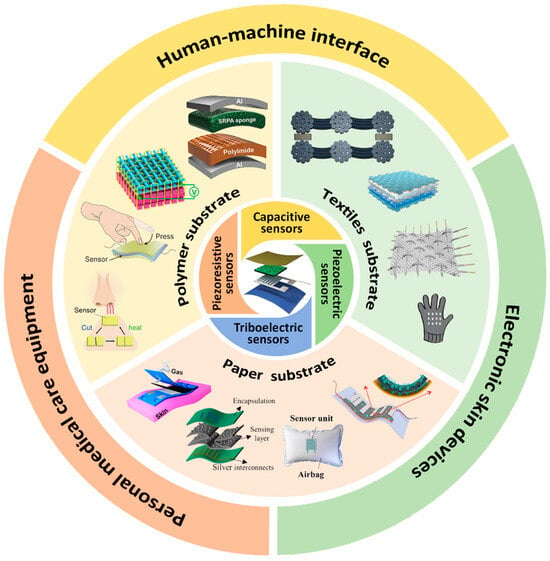
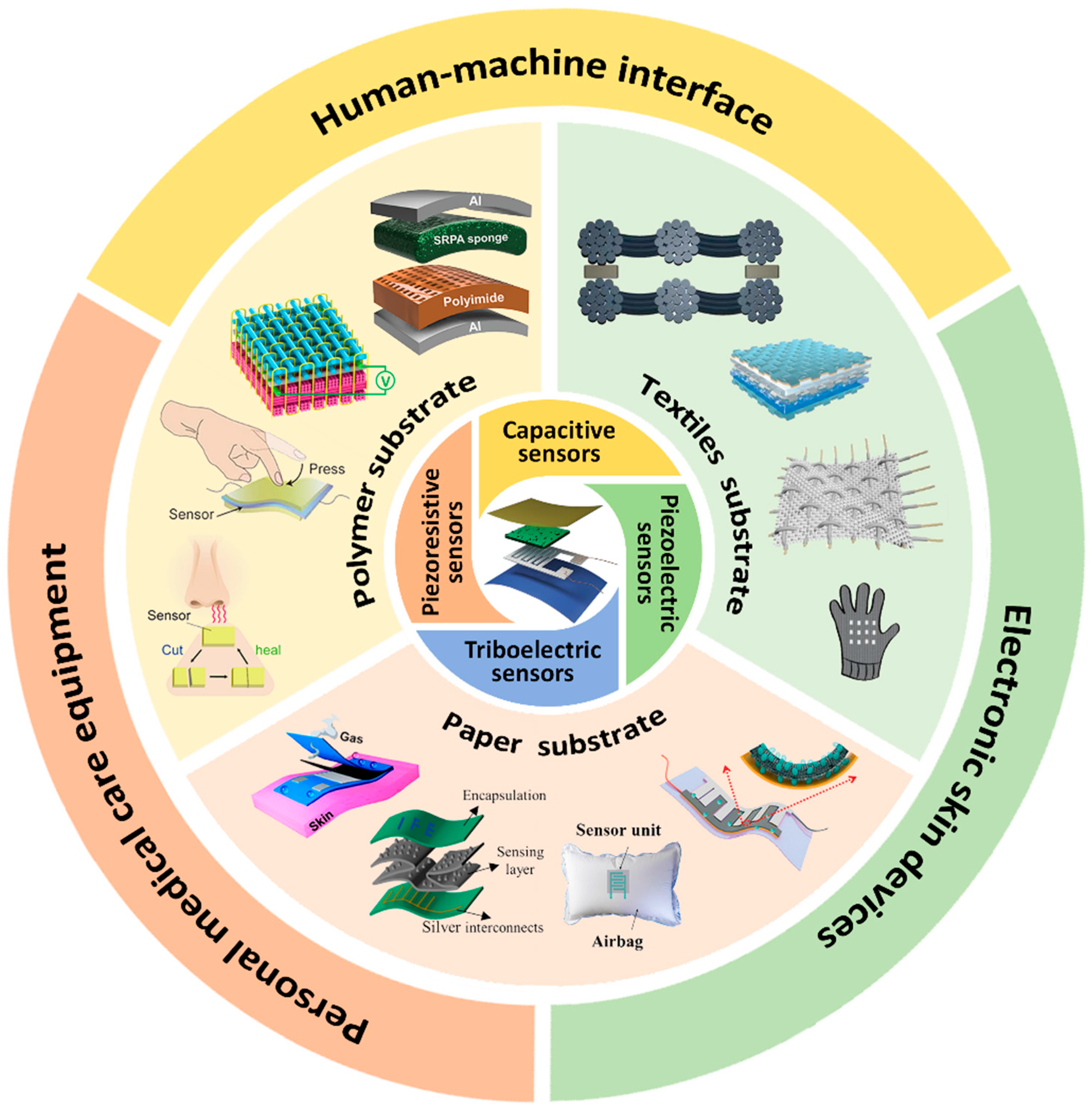
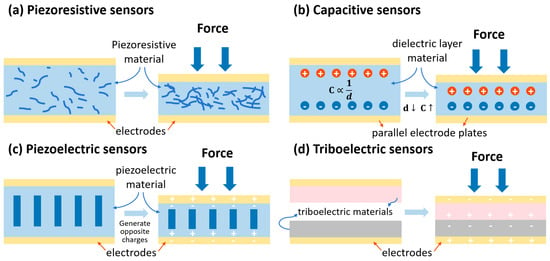
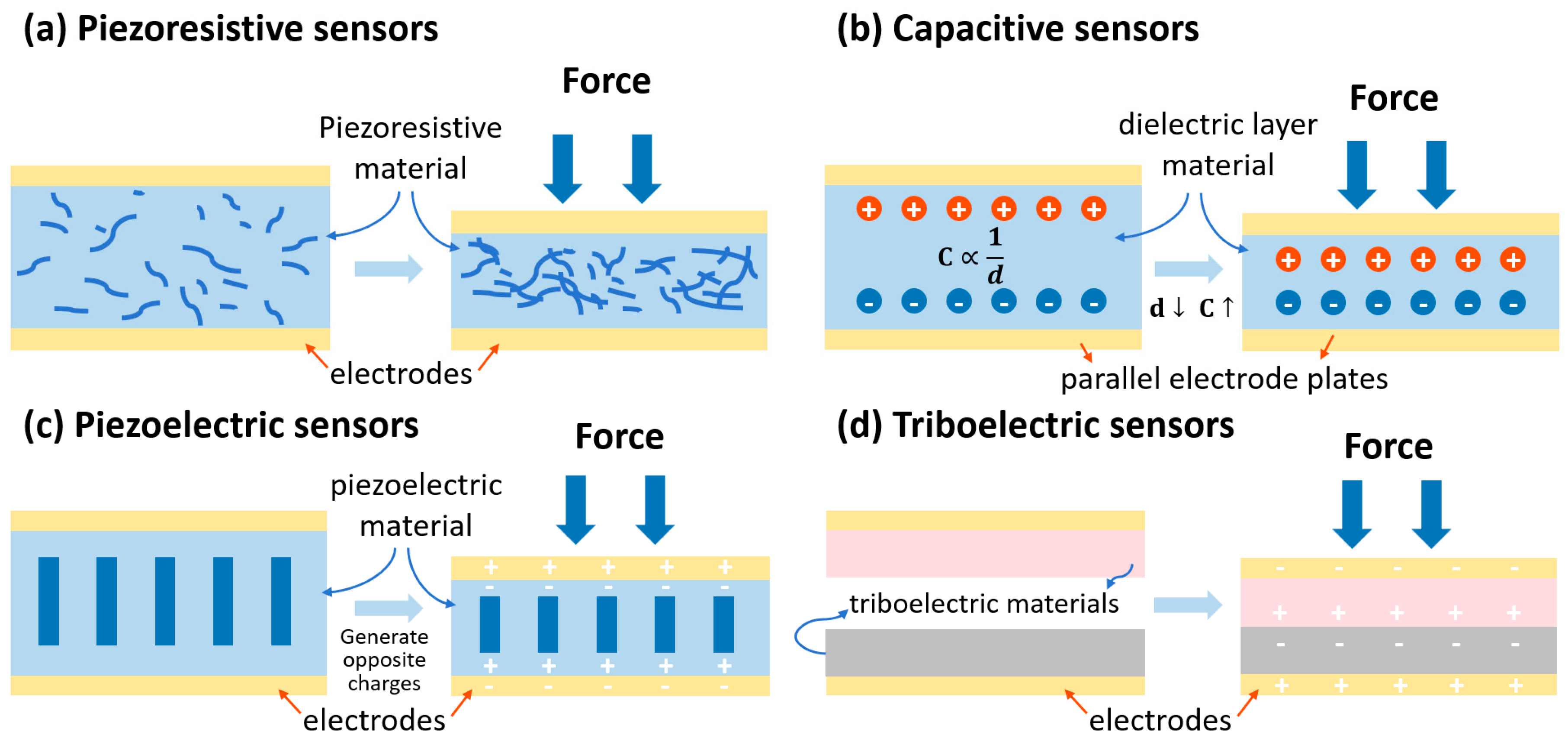
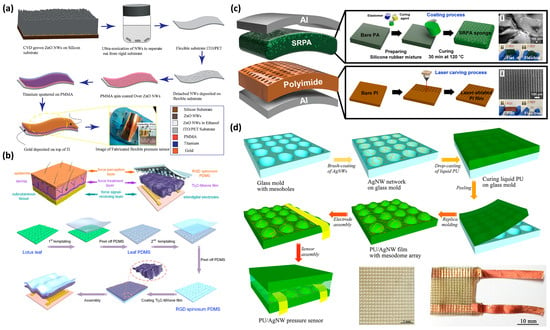
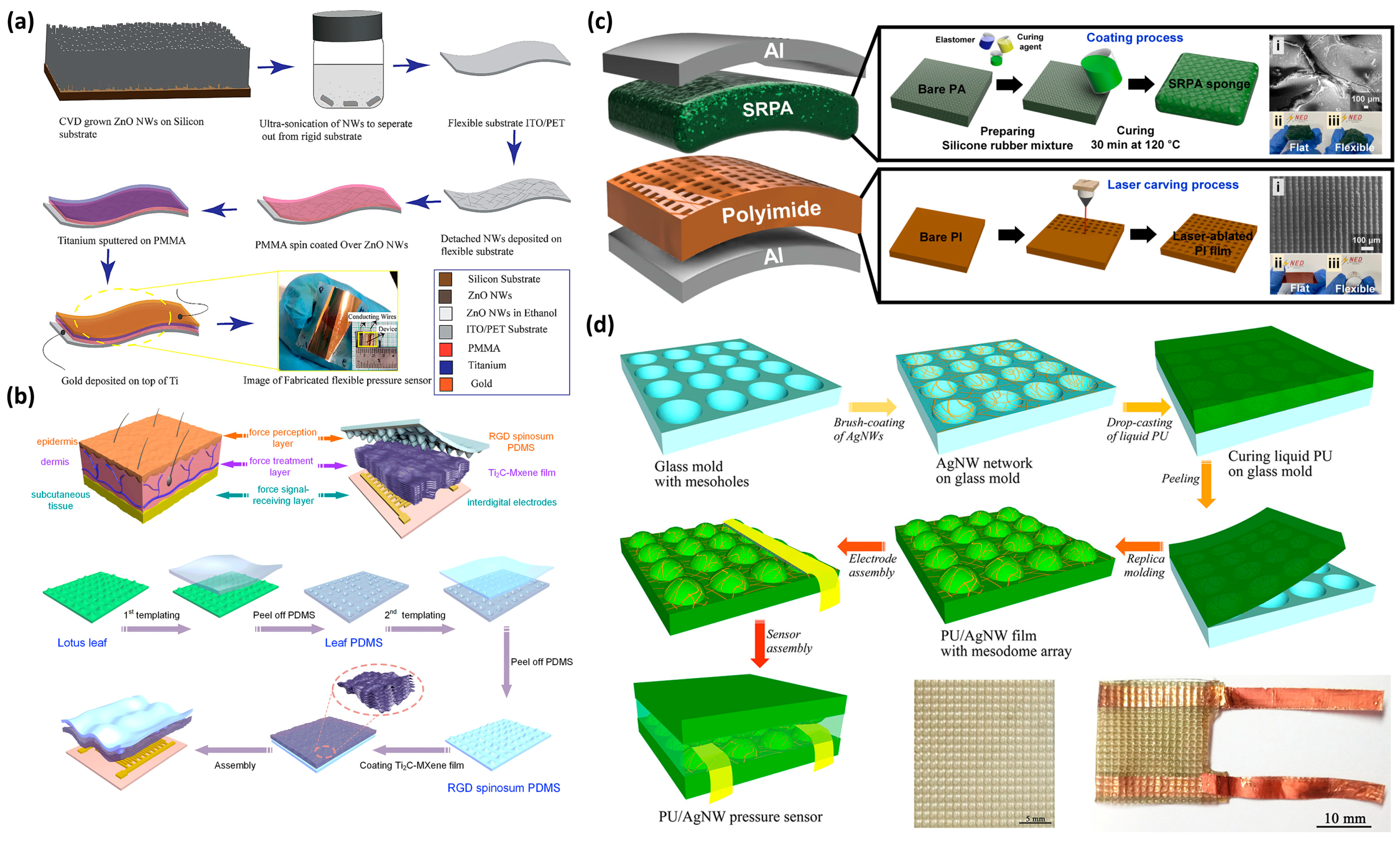
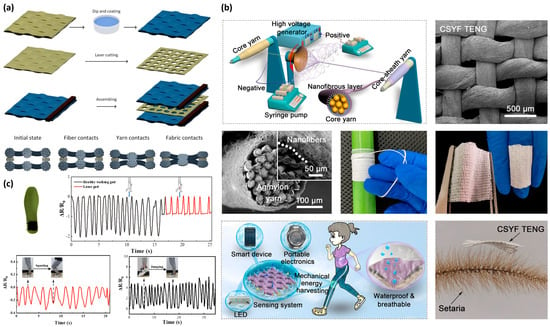
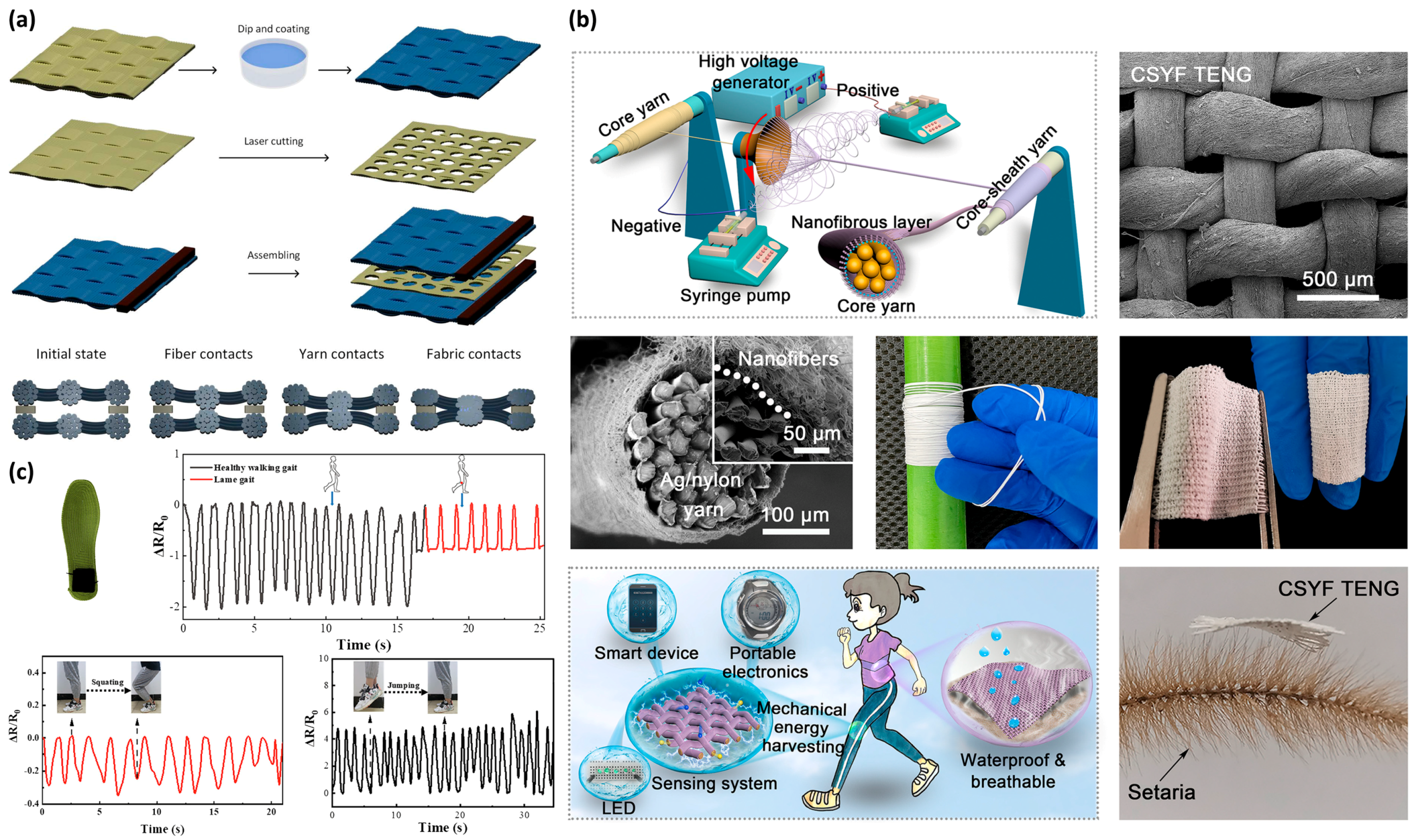
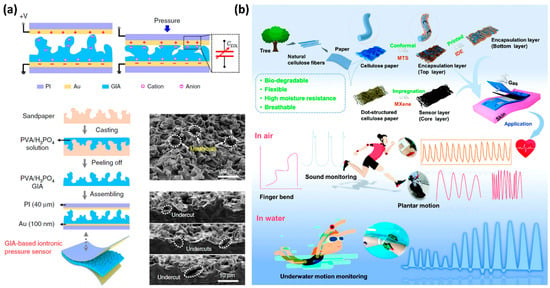
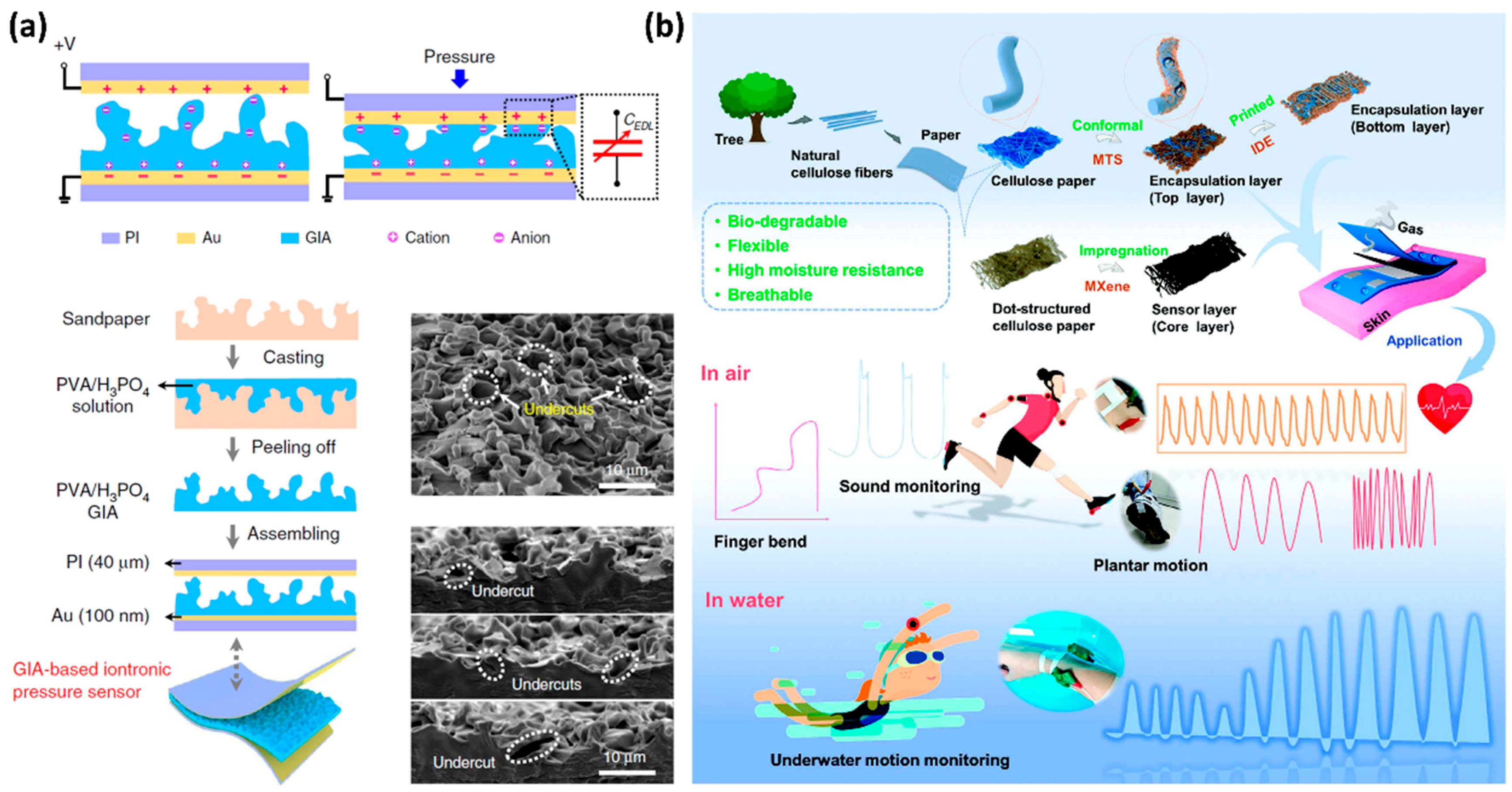
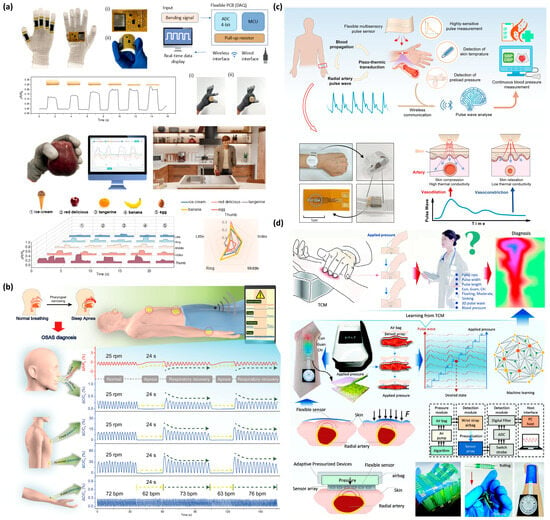
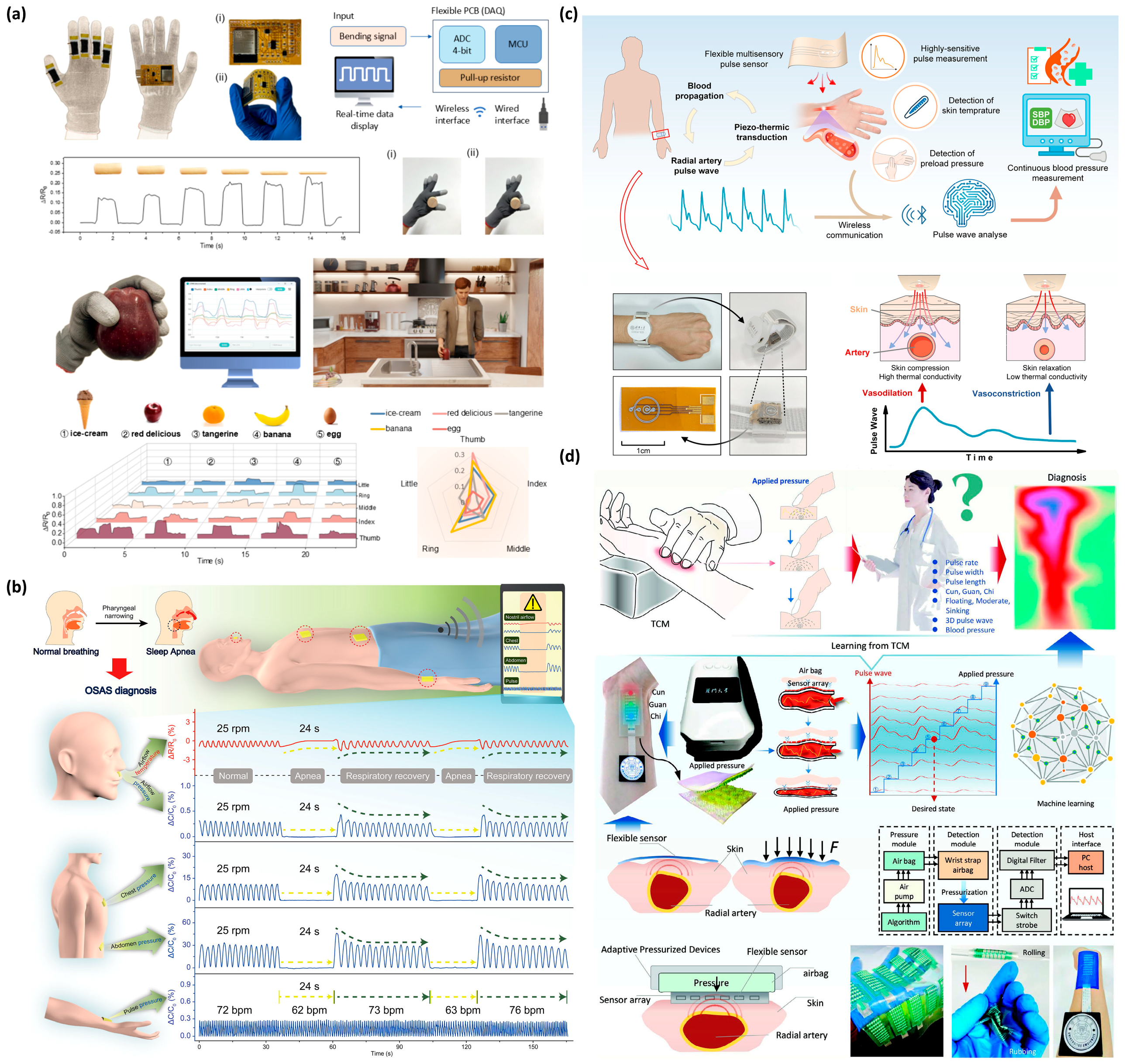

Disclaimer/Publisher’s Note: The statements, opinions and data contained in all publications are solely those of the individual author(s) and contributor(s) and not of MDPI and/or the editor(s). MDPI and/or the editor(s) disclaim responsibility for any injury to people or property resulting from any ideas, methods, instructions or products referred to in the content. |
© 2026 by the authors. Licensee MDPI, Basel, Switzerland. This article is an open access article distributed under the terms and conditions of the Creative Commons Attribution (CC BY) license.