


Abstract
The tumor microenvironment (TME) is spatially and temporally heterogeneous, limiting the specificity of single-biomarker strategies for resolving complex tumor states. The sequence programmability and predictable base pairing of DNA allow multiple biological inputs to be recognized, logically processed, and translated into defined analytical outputs. Here, we review recent advances in DNA logic-gated biosensors and associated nanodevices for multicomponent TME profiling, spanning nucleic acids, proteins, extracellular vesicles, and physicochemical cues. Particular attention is directed to how molecular recognition, Boolean computation, signal amplification, and transduction collectively govern analytical specificity, signal-to-noise ratio, reaction kinetics, and operational reliability in complex biological matrices. We further compare chemical stabilization, smart delivery, and spatial confinement strategies, together with applications in tumor phenotyping, immune-response monitoring, molecular imaging, and conditional therapeutic activation. Emerging directions include continuous and wearable monitoring, spatially organized molecular circuits, and advanced DNA molecular computing. Translation, however, will require improved nuclease resistance, delivery efficiency, threshold robustness, fabrication reproducibility, clinical-matrix validation, and system-level integration. By converting multicomponent TME signals into programmable molecular decisions, DNA logic-gated biosensing may support more reliable tumor characterization, precision diagnosis, and context-dependent therapy.
1. Introduction
The tumor microenvironment (TME) is a heterogeneous ecosystem comprising tumor cells, infiltrating immune cells, stromal cells, and a complex extracellular matrix (ECM) [1,2,3]. Within this ecosystem, biophysical conditions such as hypoxia and acidic pH interact dynamically with biochemical signals, including cytokines, extracellular vesicles, and circulating nucleic acids, across spatial and temporal scales. These coupled interactions contribute to tumor progression, metabolic reprogramming, and immune evasion [4,5,6,7,8,9,10]. Comprehensive multicomponent profiling of the TME is therefore important for early cancer detection and for evaluating responses to immunotherapy [11]. It may also inform individualized treatment strategies.
Recent biosensing platforms enable static and dynamic monitoring of TME-associated biomarkers, often with high analytical sensitivity [12,13]. Conventional systems, however, generally retain a “single-target-single-signal” format that is poorly suited to the multidimensional, nonlinear networks of the TME, where individual biomarkers may provide insufficient specificity and yield false-positive results. Multimodal [14] and multiparametric sensing [15] expand the number of measurable channels, but parallel acquisition alone does not resolve their relationships at the molecular level. The remaining challenge is to integrate biological inputs according to predefined rules and translate their combinations into analytical decisions. Molecular computing addresses this gap by coupling recognition, processing, and reporting within a single sample-to-signal workflow. DNA-based logic computing is especially suitable for this purpose [16]. Unlike general DNA computing, biosensing-oriented logic gates use TME-associated biomarkers as inputs and exploit both sequence programmability and predictable base-pairing thermodynamics to execute Boolean operations, converting complex inputs into discrete, measurable outputs [17,18]. An output is generated only when predefined input conditions are met, which can sharpen discrimination and reduce the ambiguity of single-biomarker measurements. These operations can be coupled to electrochemical [18], fluorescent [19], colorimetric [20], and surface-enhanced Raman scattering (SERS) readouts [21,22]. Within the resulting architecture, molecular circuits integrate and process the inputs [23], whereas amplification and transduction modules enhance signals from low-abundance targets. DNA molecular classifiers built on this principle have been evaluated in clinical serum samples and have shown potential for classifying cancer-associated molecular patterns in clinical samples, including those from non-small-cell lung cancer (NSCLC) [24] and prostate cancer [25].
DNA molecular computing has progressed from early conceptual demonstrations designed to solve classical mathematical problems [26] to functional circuits that perform increasingly complex analytical operations [27]. Current DNA logic systems execute these operations mainly through DNAzyme-mediated catalysis [28], DNA strand displacement (DSD) [29], and spatial organization on nucleic-acid nanoscaffolds [30]. Beyond elementary Boolean gates, these reaction networks can form arithmetic modules for addition, subtraction, and multiplication [31,32], as well as higher-order units such as half adders, majority gates, and one-vote veto circuits [33]. In parallel, DNA logic-based molecular classifiers have processed multibiomarker patterns in clinical serum samples to generate diagnostically relevant outputs [34].
The analytical value of DNA logic gates lies in their ability to process multiple molecular inputs according to predefined rules, thereby reducing the ambiguity associated with individual biomarkers [35]. Conditional outputs can suppress nonspecific background and signal crosstalk while limiting subjectivity in manual interpretation. Their sequence-programmable, modular architectures facilitate circuit redesign and can be implemented with relatively low material requirements [36]. Integration with biosensing platforms brings together the biocompatibility and nanoscale addressability of DNA materials [37,38], the multi-input processing capacity of logic circuits [39], and the sensitive, diverse readouts of optical and electrochemical transducers [15,40]. DNA logic-gated biosensors thus unite molecular recognition, logical reasoning, and readable reporting for multicomponent sensing and imaging in the complex TME.
Here, we review recent advances in DNA logic-gated biosensors for multicomponent analysis of the TME. We first examine logic-based recognition of TME-associated nucleic acids, proteins, extracellular vesicles, and physicochemical cues. We then assess how Boolean operations convert these inputs into conditional analytical outputs, with particular attention to stability, leakage, and reaction-kinetic constraints in complex biological environments. Throughout, representative systems are compared in terms of design principles, analytical performance, and application boundaries to define priorities for further development and potential clinical translation. Figure 1 maps this multilevel framework from molecular sensing and logic computation to phenotypic characterization, clinical classification, and conditional intervention in the TME. To provide a field-level overview, Table 1 summarizes representative DNA logic-gated biosensors according to sensing modality, logic architecture, molecular inputs, biological model, core design, and analytical performance. Collectively, these studies illustrate a progressive transition from analytical proof-of-concept in defined or spiked samples, through cell-based and preclinical in vivo demonstrations, to preliminary evaluation in human biofluids. Importantly, these stages should not be interpreted as equivalent levels of clinical readiness: systems exhibiting ultralow detection limits may still be constrained by multistep assembly, matrix interference, threshold calibration, fabrication reproducibility, or limited validation in representative clinical cohorts. Table 1 therefore serves as a roadmap for the following sections, which examine input-specific sensing mechanisms, engineering strategies for stability and delivery, and application-level translation.
Figure 1.
Conceptual framework of DNA logic-gated biosensing for multicomponent profiling and molecular decision-making in the tumor microenvironment. Tumor-associated nucleic acids, proteins, extracellular vesicles, and physicochemical cues serve as molecular inputs. Programmable recognition captures these inputs, logic circuits compute their combinations, and signal transduction reports the outputs, with amplification enhancing weak responses from low-abundance targets. The resulting framework encompasses precision tumor subtyping, immune monitoring, logic-gated theranostics, and AI-assisted molecular-system design. In the Precision Subtyping panel, the check mark (✓) indicates antibody binding when the corresponding target protein is present, whereas the cross (×) indicates no antibody binding when the target protein is absent. Created with BioGDP.com [41].
Table 1.
Representative DNA logic-gated biosensors for multicomponent analysis of TME-relevant inputs: design features and analytical performance.
2. DNA Logic-Gated Processing of Multidimensional TME Inputs
The tumor microenvironment (TME) contains heterogeneous molecular and physicochemical information, including nucleic acids, proteins, extracellular vesicles (EVs), and local environmental cues. Single-target measurements are therefore often insufficient to represent this complex biological state. DNA logic-based sensors combine nucleic-acid programmability with complementary hybridization, aptamer recognition, and other affinity-recognition mechanisms. These systems convert chemically distinct inputs into standardized nucleic-acid reactions and measurable outputs, providing a programmable framework for multicomponent TME analysis.
Adding inputs and logic layers introduces analytical challenges, including background leakage, slower reaction kinetics, and reduced stability in complex biological matrices. These limitations become more pronounced in multistep amplification networks. Each additional reaction layer introduces kinetic delay and a potential source of nonspecific initiation, while leakage generated upstream may itself be amplified downstream. In crowded biological matrices, restricted molecular diffusion, steric hindrance, and nonspecific interactions can further narrow the separation between OFF and ON outputs, thereby compromising truth-table fidelity even when analytical sensitivity is improved. Thermodynamic regulation raises the energetic barriers to nonspecific strand-displacement reactions and thereby suppresses leakage, whereas spatial confinement increases local reactant concentrations and effective collision frequencies to accelerate productive reactions. Both strategies may also increase the complexity of circuit design, assembly, and fabrication. This section therefore examines logic-transduction mechanisms and signal-output strategies for different classes of TME-associated inputs, including ctDNA, miRNAs, proteins, and physicochemical cues, with particular emphasis on analytical sensitivity, specificity, reaction efficiency, and applicability to complex samples.
2.1. Logic-Gated Detection with ctDNA Inputs
Circulating tumor DNA (ctDNA) carries tumor-derived genetic alterations, including copy-number variations, gene rearrangements, and other genomic abnormalities, and is an important analyte in liquid biopsy [52,53,54,55,56,57]. Epigenetic signatures in circulating cfDNA, including promoter methylation, are also being investigated as complementary biomarkers for noninvasive cancer detection [58]. Digital PCR and next-generation sequencing are widely used for ctDNA analysis but generally require relatively complex instrumentation, multistep workflows, and specialized personnel, with additional constraints on assay time and cost [59,60]. DNA logic gates provide a complementary route by integrating multiple molecular-recognition events into a conditional output and can be further coupled with signal amplification, thereby extending ctDNA analysis beyond conventional single-target quantification. Matrix interference is a major source of error in ctDNA measurements from complex biological samples. A dual-wavelength ratiometric electrochemiluminescence (ECL) biosensor developed by Li et al. integrated programmable DNA reactions for the combined detection of ctDNA and carcinoembryonic antigen (CEA) and achieved a ctDNA detection limit of 0.21 fM [61]. The design couples multicomponent recognition with an internal ratiometric reference, partially compensating for matrix effects and instrumental fluctuations while retaining a low detection limit. This form of error control is more directly relevant to robust liquid-biopsy analysis than the simple addition of amplification steps.
For low-abundance nucleic acids, a system developed by Miao et al. coupled strand displacement amplification (SDA) with a walking nanomachine and incorporated a pH-responsive DNA triplex to regulate background reactions. The system achieved a ctDNA detection limit of 2.2 aM over a linear range of 10 aM–100 fM [62]. This sensitivity gain may be offset by longer assay times, variable assembly yields, and lower batch-to-batch reproducibility as the multicomponent reaction network expands. Its practical value should therefore be assessed in clinical samples by weighing the analytical benefits of the complex multistep architecture against those of simplified sensing systems. For the more challenging task of single-nucleotide variant discrimination, a fluorescence platform developed by Cao et al. combined strand displacement amplification with a DNA–RNA hybrid G-quadruplex for highly specific detection of PIK3CA H1047R ctDNA and miRNA-21. The platform detected ctDNA down to 95 aM and miRNA-21 down to 1.88 aM, with a relative standard deviation (RSD) of 3.12% [63]. The two analytes followed separate reaction pathways rather than a formal Boolean operation. Even so, the platform couples sequence-selective recognition with programmable nucleic-acid amplification and thus provides functional modules for multicomponent molecular sensing. Figure 2a summarizes representative programmable DNA-based architectures for ctDNA-related multicomponent sensing.
Figure 2.
Representative programmable DNA-based strategies for multicomponent nucleic-acid sensing. (a) Author-drawn schematic of representative programmable DNA-based ctDNA-sensing architectures, including combined ctDNA/CEA ratiometric sensing and SDA-amplified fluoresc ence detection of ctDNA/miRNA [61,63]. (b) Dual-miRNA AND/OR logic circuits using miR-221 and miR-96 as molecular inputs for fluorescence-based discrimination of ovarian cancer cells [64]. Within panel (b), A and B show the assembly schemes of the AND and OR logic circuits, respectively, whereas C illustrates the intracellular operation of the AND and OR logic circuits. Panel (a) was created by the authors based on Refs. [61,63]; panel (b) was adapted from Ref. [64] under the Creative Commons Attribution 4.0 International License.
Beyond sensitivity and sequence specificity, recent efforts have examined the integration of nucleic-acid sensing with flexible and wearable platforms [65]. A wearable microneedle platform developed by Yang et al. incorporated nucleic-acid recognition, with target-induced changes in Donnan potential enabling long-term monitoring of ultratrace nucleic acids [66]. The platform extends programmable nucleic-acid sensing to wearable bioelectronics, but its direct application to tumor-recurrence monitoring remains prospective. Dedicated validation is still needed to determine whether ctDNA reaches microneedle-sampled interstitial fluid at sufficiently stable and measurable concentrations and whether the resulting signals correlate reliably with tumor burden. At present, the platform is better regarded as a prototype for continuous molecular monitoring than as an established cancer-surveillance tool.
ctDNA logic sensing is gradually shifting from an exclusive emphasis on ultralow detection limits toward ratiometric calibration, mismatch discrimination, reproducibility, and continuous readout. Further progress will likely depend less on adding amplification layers than on simplifying assay architectures, demonstrating reliable recovery and reproducibility in low-abundance clinical samples, and establishing diagnostic gains over single-marker baselines [67]. This shift is consistent with broader trends in clinical biosensing. Berkel et al. showed that electrochemical immunosensors with favorable analytical sensitivity may still face substantial translational barriers arising from matrix effects, reproducibility, assay standardization, storage stability, and limited validation in well-characterized patient cohorts, underscoring that analytical performance alone is insufficient to establish clinical utility [68].
2.2. Programmable Logic Sensing of miRNA Expression Profiles
MicroRNAs (miRNAs) are key post-transcriptional regulators [69] whose dysregulated expression is closely associated with tumor initiation, progression, and immune evasion [70,71,72,73]. Their release from multiple tissues and tumor cells into the circulation makes miRNAs attractive candidates for liquid-biopsy applications. Detection remains analytically challenging because miRNAs are short, often present at low abundance, and highly homologous within individual miRNA families. Multi-miRNA logic sensors must therefore couple sensitive signal amplification with sequence recognition capable of single-nucleotide discrimination. This requirement increases the design complexity of multi-miRNA logic sensing.
Dual-miRNA AND and OR logic circuits developed by Wang et al. used miR-221 and miR-96 as inputs. Programmable strand-displacement reactions generated fluorescence outputs that enabled discrimination of ovarian cancer cells (Figure 2b) [64]. Amplification modules are frequently coupled with logic-based miRNA recognition to improve sensitivity. An AND gate developed by Tang et al. integrated the trans-cleavage activity of CRISPR/Cas12a: miR-944 and miR-205 jointly triggered the release of glucose oxidase (GOx), enabling visual colorimetric detection at approximately 1 pM [51]. The same group subsequently integrated four miRNAs into a dual-AND-gated strip assay for combinatorial analysis of lung-cancer-associated miRNA patterns [74]. These systems convert multi-miRNA logic operations into visually readable outputs that support rapid screening. Limited grayscale resolution and subjective interpretation nevertheless make colorimetric and strip-based readouts better suited to preliminary screening than to high-precision quantification.
To mitigate slow reaction kinetics and background leakage in freely diffusing systems, logic components have increasingly been organized on nanoscale scaffolds. A nanostructured framework developed by Bai et al. spatially organized duplex-specific nuclease/primer exchange reaction (DSN/PER) components to form a three-input AND gate [75]. DNA tetrahedral scaffolds used by Yue et al. confined hairpin probes and thereby enhanced the SERS signals triggered by miR-21 and miR-155 [46]. A sea-anemone-like multilevel logic nanomachine developed by Li et al. integrated YES–AND–YES operations; programmable DNA strand-displacement reactions enabled intracellular multitarget discrimination [76]. Rather than relying solely on additional enzymatic amplification steps, these architectures increase local effective concentrations and molecular collision frequencies, thereby accelerating productive reactions while reducing nonspecific interactions. For multilevel logic circuits in particular, rational spatial organization may be more effective than further extension of the reaction cascade. Spatial confinement also increases system complexity. DNA tetrahedra and sophisticated logic nanomachines typically require larger numbers of oligonucleotide strands, higher synthesis costs, and more stringent assembly conditions, all of which may introduce additional analytical variability. These platforms should therefore be evaluated through paired measures of signal enhancement and engineering reliability, including assembly yield, batch-to-batch reproducibility, and long-term storage stability [77,78]. Nanoconfinement provides an engineering advantage only when the resulting analytical improvement justifies the additional fabrication complexity.
In addition to circulating as free species, miRNAs can be encapsulated within extracellular vesicles (EVs), where they participate in tumor-associated intercellular communication, distal regulation, and metastatic processes [79]. Because the vesicular membrane restricts direct access to intravesicular nucleic acids, in situ sensing must couple membrane traversal with logic-based recognition within the vesicular context. An AND logic system developed by Liu et al. used gold-nanoparticle-assisted membrane penetration to enable in situ fluorescence detection of multiple miRNAs in tumor-derived exosomes [80]. Conventional EV isolation commonly relies on preprocessing procedures such as ultracentrifugation, which may cause sample loss and introduce variability into downstream nucleic-acid analysis [81]. To reduce the need for isolation and lysis, protocells engineered by Xiao et al. contained DNA logic circuits and selectively fused with exosomes through surface-receptor recognition. Membrane fusion exposed exosomal miRNAs to the internal circuitry and initiated downstream signal amplification, achieving a detection limit of 0.4 fM [82]. The analytical performance of these membrane-fusion-based systems still requires careful evaluation. EV surface-protein expression is heterogeneous [83], while membrane lipid composition and the surrounding sample matrix may alter fusion efficiency. A low detection limit alone therefore does not establish robust clinical applicability. Future studies should further assess selectivity across different EV subpopulations, target accessibility following membrane fusion, and analytical specificity and false-positive rates in clinical samples.
2.3. DNA Logic-Gated Analysis of TME-Associated Proteins
Tumor-associated membrane proteins, extracellular vesicle (EV) surface proteins, and intracellular enzymes encode information about cellular origin, malignant phenotype, and functional state, making them important inputs for multicomponent TME analysis [84]. Nucleic acids enter DNA circuits directly through complementary base pairing, whereas proteins generally require affinity elements such as aptamers or antibodies to translate binding events into nucleic-acid signals [85,86,87]. Steric constraints at the cell membrane, lateral target mobility, and variation in surface protein expression levels jointly govern logic-component assembly and reaction efficiency. Protein-based logic sensors must therefore convert affinity events into stable, well-defined nucleic-acid inputs without sacrificing recognition sensitivity.
Feng et al. constructed an AND gate that used MUC1 and EpCAM as dual inputs and initiated rolling circle amplification (RCA) only when the two membrane proteins were in sufficient spatial proximity on the same cell surface [88]. Wang et al. likewise developed aptamer–receptor-responsive DNA devices that executed NOT, NOR, OR, and AND operations and used a hybridization chain reaction (HCR) to amplify the logic output (Figure 3a) [89]. By imposing a stricter criterion than the simple coexistence of two proteins in one sample, the spatially constrained design reduced false-positive outputs from separate cells expressing only one marker. The response still depended on intertarget distance and local surface density. Even coexpressed proteins may fail to activate the circuit when their spatial arrangement is unfavorable; membrane-protein logic should therefore not be treated as an ideal binary process.
Figure 3.
Representative DNA logic-gated strategies for multicomponent analysis of TME-associated proteins. (a) Aptamer–receptor-responsive NOT, NOR, OR, and AND gates coupled with hybridization chain reaction amplification for cell-surface protein-dependent cell identification and bioimaging [89]. In panel (a), the check mark (✓) indicates a positive logic output with HCR activation (fluorescence ON), whereas the cross (×) indicates a negative logic output without HCR activation (fluorescence OFF). (b) OR-gated recognition of exosomal EpCAM and CEA coupled with HCR amplification and ratiometric electrochemical readout for the analysis of NSCLC-derived exosomes [44]. In panel (a), different colors are used to distinguish the individual DNA strands/probes constituting the logic gates. In panel (b), the colored signals distinguish the two electrochemical reporters, with MB and Fc representing methylene blue and ferrocene, respectively; other colors are used schematically to distinguish different components. Panels were adapted from Refs. [44,89] under the Creative Commons Attribution 4.0 International License.
To lessen this dependence on target spacing, subsequent systems confined logic components to fluid cell-membrane interfaces and used multivalent recognition to raise local reaction efficiency. An integrated multivalent logic-gate element (iLGE)-based membrane-confined system combined two-dimensional diffusion with a Ca2+-dependent DNAzyme cascade, increasing logic-operation efficiency by approximately threefold [90]. The performance gain arose from reaction-space regulation rather than an additional amplification layer: a higher probability of effective molecular encounters accelerated membrane-confined logic reactions. A remaining limitation is that cholesterol-based membrane anchors may exchange or compete with serum lipoproteins and partially desorb from the membrane. Thus, the approach has been demonstrated primarily in cellular and ex vivo models, while its long-term in vivo stability remains to be established.
Within the TME, soluble factors and extracellular vesicles (EVs) mediate dynamic communication among different cell populations. EV protein composition and abundance reflect cellular origin and tumor status in biofluids [91,92], providing distributed surface inputs for logic sensing. One OR-gated platform treated EpCAM and CEA as alternative exosomal surface-protein inputs and coupled HCR amplification with a ratiometric electrochemical readout for NSCLC-associated exosome analysis (Figure 3b) [44]. Extending logic sensing from cell membranes to circulating EVs thus provides a feasible route for combinatorial protein analysis through liquid biopsy. Zhao et al. developed a dual-aptamer platform targeting EpCAM and CD24 on ovarian-cancer-derived exosomes; logic-triggered amplification yielded a dynamic detection range spanning approximately six orders of magnitude [93]. Combined with proteomic information, the platform was further evaluated for distinguishing healthy individuals, patients with ovarian cancer, and samples from other malignancies, demonstrating its potential for multibiomarker EV analysis in liquid biopsy. Tumor-related enzyme activities provide a second class of functional logic inputs. Wang et al. exploited the sequential relationship between the DNA repair-associated enzymes apurinic/apyrimidinic endonuclease 1 (APE1) and flap endonuclease 1 (FEN1) to construct a sequentially activated AND probe. APE1-mediated cleavage and conformational rearrangement first enabled FEN1 recognition and subsequent fluorescence activation, rather than relying on the colocalization of two membrane receptors [94]. This temporal gate reduced background responses arising from either enzyme alone and enabled correlated monitoring of dual-enzyme activities in living cells, providing an in situ tool for investigating enzyme-activity changes associated with chemoresistance. Because enzyme activity varies continuously with concentration, reaction time, and cellular state, the resulting logic output should not be interpreted as an absolute ON/OFF response.
Protein-based logic sensing has progressed from membrane-protein colocalization to membrane-confined computation, multiprotein EV analysis, and temporally ordered sensing of enzyme activities. Spatial constraints and the intrinsic order of biological reactions add spatial and functional information without simply multiplying molecular inputs. Future studies should prioritize intertarget-distance tolerance, logic-threshold stability, nonspecific adsorption in complex matrices, and batch-to-batch reproducibility over increasingly elaborate logic architectures and amplification cascades.
2.4. DNA Logic-Gated Sensing of TME Physicochemical Cues
Beyond biomacromolecules such as nucleic acids and proteins, the TME contains physicochemical abnormalities that distinguish tumor tissue from its normal counterpart, including extracellular acidosis [95,96], hypoxia, metabolite accumulation, and altered ion homeostasis. Extracellular pH may decrease to approximately 6.2–6.9 [97], and extracellular ATP concentrations may reach 100–500 μM [98,99]. Alterations in K+ and Na+ homeostasis [100] frequently accompany pathological hypoxia [101]. These features both contribute to tumor development and progression and serve as endogenous inputs for DNA logic devices, adding contextual constraints for distinguishing pathological from non-pathological states [102]. Small-molecule metabolites and inorganic ions, unlike nucleic-acid targets, lack sequence information that can participate directly in hybridization or nucleic-acid amplification. Converting these non-nucleic-acid cues into molecular inputs compatible with DNA circuits therefore represents the key transduction step in constructing multi-input logic-sensing systems.
Target-responsive functional nucleic acids, including aptamers, i-motifs, and G-quadruplexes, provide molecular interfaces for transducing physicochemical cues through conformational switching. These elements translate changes in pH, ion concentrations, and metabolites into nucleic-acid signals: i-motifs fold reversibly under mildly acidic conditions [103]; ions such as K+ modulate G-quadruplex formation and stability; and ATP aptamers convert ligand binding into strand exposure or structural rearrangement [104,105]. Earlier work directly encoded H+- and K+-dependent G-quadruplex/i-motif transitions into Boolean logic outputs using pH 7.4 and pH 5.0 as discrete input conditions (Figure 4a) [106]. The pH 5.0 condition was used to generate a clearly distinguishable i-motif state for binary 0/1 logic discrimination, rather than to reproduce the physiological extracellular pH of tumors. Importantly, i-motif formation is not restricted to such strongly acidic conditions; subsequent studies have demonstrated i-motif-mediated structural switching within the mildly acidic TME range. For example, He et al. demonstrated i-motif-mediated quadruplex formation and nanohybrid assembly at pH 6.5, enabling tumor accumulation and NIR imaging [107]. Sequence-level coupling of these switches to downstream DNA circuits places chemically distinct cues within a common nucleic-acid-based reaction framework. Whereas conventional affinity-recognition schemes require distinct recognition elements for different analytes, functional nucleic acids provide favorable structural compatibility for connecting non-nucleic-acid inputs to DNA computing circuits. Zheng et al. used H+- and K+-responsive triplex-boosted G-quadruplexes to gate proximity aptasensing of ATP at the cell surface, enabling environmental context-dependent monitoring of ATP release during apoptosis [108]. Sima et al. further integrated an H+-responsive i-motif, an ATP-binding aptamer, and the PTK7-targeting aptamer Sgc8c into a single DNA molecular logic circuit. Weakly acidic and ATP-rich conditions jointly exposed the PTK7-recognition conformation, enabling TME-gated tumor-cell recognition [109]. The analytical significance of these designs lies in using local physicochemical conditions to control when and where a molecular signal is interpreted, rather than simply increasing the number of inputs. ATP-dependent outputs, for example, can be restricted to predefined microenvironmental conditions and thereby reduce background responses from freely distributed targets or non-target regions. This added context introduces threshold coupling: a shift in the response range or transition threshold of any conformational switch can alter the final logic output. Relative to architectures assembled from independently diffusing probes, integrated multi-input designs can reduce the number of freely diffusing components and stochastic molecular encounters, potentially limiting background leakage and simplifying operation. Their performance nevertheless depends on compatibility and threshold matching among the individual responsive modules.
Figure 4.
Representative DNA logic-gated strategies for sensing physicochemical cues relevant to the tumor microenvironment. (a) Proof-of-concept H+- and K+-responsive G-quadruplex/i-motif conformational transitions encoded into nucleic-acid logic operations using pH 7.4 and pH 5.0 as discrete input conditions [106]. Within panel (a), labels a–d denote four structural states: a, duplex at pH 7.4 without K+; b, G-quadruplex with a C-rich random coil at pH 7.4 in the presence of K+; c, i-motif with a G-rich random coil at pH 5.0 without K+; and d, G-quadruplex and i-motif at pH 5.0 in the presence of K+. The arrows indicate reversible structural transitions driven by changes in K+ and H+/pH. Green and purple represent the C-rich and G-rich strands, respectively, whereas the yellow particles represent PEI–Ag NCs. (b) Author-drawn schematic illustrating the conversion of physicochemical inputs through pH-responsive i-motif/triplex structures, K+-responsive G-quadruplexes, and ATP-responsive aptamers, followed by their integration into DNA logic circuits for conditional fluorescence activation or tumor-cell recognition [49,108,109]. Panel (a) was adapted from Ref. [106] under the Creative Commons Attribution 4.0 International License; panel (b) was created by the authors based on Refs. [48,107,108].
pH, ATP concentration, and ionic composition are continuous variables whose biological ranges and decision thresholds may vary with tumor type, spatial location, and sample-processing conditions. Discretizing these signals as positive/negative or ON/OFF outputs through DNA logic operations can therefore discard quantitative information. Because these conformational transitions are gradual rather than ideally binary, physiological fluctuations near the transition threshold may switch the assignment of an input between OFF and ON states, and such threshold errors can propagate through downstream logic layers. In parallel, the conformational transitions of i-motifs and G-quadruplexes respond to temperature, ionic strength, and steric constraints imposed by neighboring structures, creating additional threshold drift and output variability [110]. The central challenge is therefore to shift from simply producing a logic response to stabilizing input thresholds, matching conformational modules, and preserving biological and analytical information when continuous physicochemical variables are discretized into logic states. Resolving these constraints is essential for reliable multi-input physicochemical logic sensing in multicomponent tumor analysis.
3. Stability Engineering, Spatial Confinement, and Smart Delivery of DNA Logic Devices
DNA logic devices can execute predefined molecular operations under well-controlled buffer conditions, yet serum, cells, and tissues impose three linked constraints: nuclease-mediated degradation, physiological transport barriers, and insufficient local concentrations [111,112]. Nuclease cleavage compromises circuit integrity; inefficient transport limits access to target tissues; nonspecific biodistribution dilutes the fraction that reaches the tumor region. These losses can weaken target recognition and reduce logic-triggering efficiency even when some devices reach the target. Biomedical translation therefore requires rational circuit design coupled to systematic engineering that stabilizes the circuit, improves delivery, and achieves sufficient accumulation at target sites for reliable operation.
Engineering approaches can be organized into three coupled strategies. Chemical modification, structural assembly, and interfacial immobilization stabilize logic devices against nuclease degradation. Inorganic nanomaterials, hydrogels, and lipid carriers protect the components and deliver them across biological barriers. Active targeting, multivalent recognition, and microenvironment-responsive release then localize the components at target sites and raise their effective concentration. These strategies can operate together. Spatial confinement, for example, can shield the circuit, shorten diffusion distances, and enrich reactants locally, linking protection and proximity to improved reaction kinetics. Its broader use remains constrained by structural complexity, target accessibility, and batch-to-batch reproducibility.
The natural phosphodiester backbone of DNA remains susceptible to degradation by serum nucleases. Cleavage of hairpin probes, aptamers, or strand-displacement components can raise background signals, shift triggering thresholds, and disrupt the intended logic relationships. Structural stabilization is therefore a prerequisite for retaining circuit fidelity in complex biological environments and extending DNA logic devices to complex samples and in vivo applications.
3.1. Chemical Stabilization and Interfacial Confinement
Chemical modification provides a direct route to molecular-scale nuclease resistance. L-DNA is highly resistant to nuclease degradation and can form reaction channels orthogonal to those based on naturally occurring D-DNA (Figure 5a) [113]. Backbone and sugar modifications, including phosphorothioate, 2′-F, and 2′-O-Me substitutions, can likewise stabilize logic probes in serum [114]. Because these modifications require no additional bulky carriers, they can be applied directly to aptamers, hairpins, and trigger strands. Their effects remain dependent on modification type, position, and extent: excessive or improperly positioned modifications may alter aptamer affinity, hairpin stability, or strand-displacement kinetics. A rigorous evaluation should extend beyond nucleic-acid half-life to background signal, reaction time, input threshold, and logic-truth-table fidelity before and after modification.
Spatial organization offers a complementary route that can protect DNA components while preserving reaction activity [115]. Transferring freely diffusing logic components from bulk solution onto nanoscale two-dimensional interfaces or into three-dimensional cavities can stabilize the assembly, raise local effective concentrations, and shorten diffusion distances. Hou et al. used DNA origami to position molecular components at nanoscale-addressable sites, showing that nanoconfinement can regulate proximity-dependent interactions and logical signal processing [116]. Tang et al. localized AND and OR logic circuits on a DNA origami surface; the resulting proximity shortened effective reaction distances and accelerated strand-displacement-based logic operations (Figure 5b) [117].
Figure 5.
Representative protection–proximity–performance strategies for stabilizing, organizing, and delivering DNA logic systems. (a) L-DNA-based heterochiral nucleic-acid circuitry incorporating an inversion gate to enhance nuclease resistance while preserving programmable signal amplification [113]. (b) DNA origami-mediated confinement of elementary AND and OR logic circuits to shorten effective reaction distances and facilitate scalable molecular computation [117]. (c) Aptamer-mediated tumor targeting coupled to survivin mRNA-dependent activation of an AND-gated photodynamic DNA probe for selective therapeutic activation [118]. In panels (a–c), arrows indicate the direction of molecular assembly or signal processing, while different colors and labels are used to distinguish individual nucleic acid components, molecular modules, and functional elements. Panels (a–c) were adapted from Refs. [113,117,118], respectively, under the Creative Commons Attribution 4.0 International License.
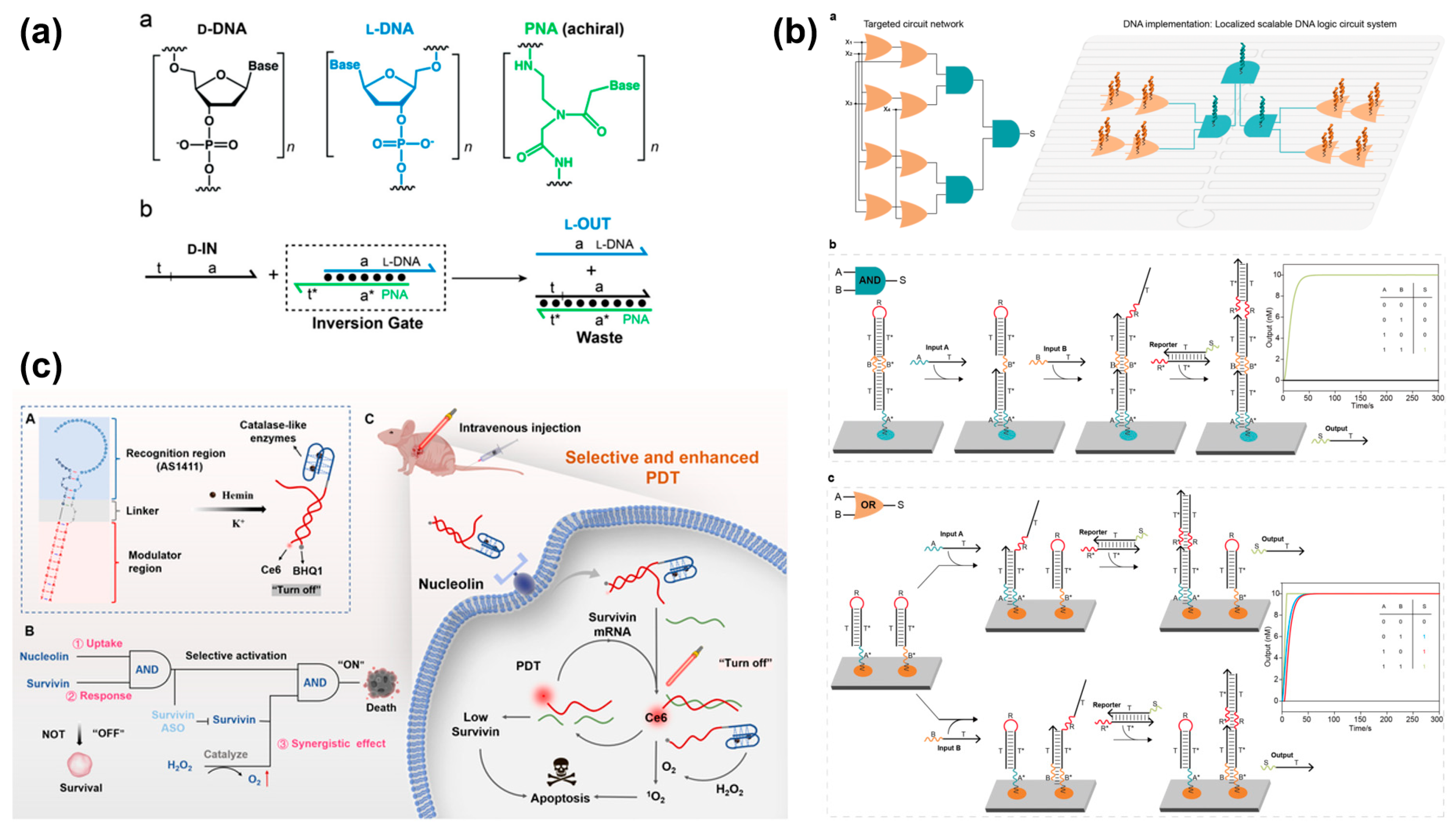
Interfacial immobilization extends this protection–proximity principle to gold-nanoparticle surfaces, lipid membranes, and related material interfaces. Dense nucleic-acid layers can sterically restrict nuclease access to the DNA backbone while converting three-dimensional diffusion-controlled reactions into localized two-dimensional reactions. Cell-interface-deciphering lipid nanotablets (CID-LNTs), for example, show that laterally fluid interfaces can increase effective molecular encounters and accelerate logic assembly [119]. Their relevance here is mechanistic rather than target-specific: two-dimensional organization protects the components, concentrates reactants, and regulates reaction kinetics. This benefit is strongly probe-density-dependent. Insufficient coverage affords limited protection and local enrichment, whereas excessive density introduces steric hindrance and electrostatic repulsion that reduce target accessibility. Interfacial design must therefore balance structural stability, target accessibility, and recognition efficiency.
Gold nanomaterials can serve concurrently as nucleic-acid immobilization interfaces and signal-transduction elements. Fu et al. used DNA sequences to regulate gold-nanoparticle surface growth and plasmonic response, then coupled this process to CRISPR-mediated reactions, converting DNA-computation outputs directly into detectable optical changes [120]. The integrated design reduces the need for additional fluorescent labeling and elaborate probe modification. Its principal contribution is the direct coupling of molecular computation to interfacial signal transduction, rather than nuclease protection alone.
These approaches define a progression from protection to proximity and, ultimately, computational performance. Chemical modification primarily stabilizes individual nucleic-acid components; framework assembly and interfacial immobilization additionally shield the circuit, enrich reactants locally, and regulate reaction kinetics. Spatial organization can thus improve both biological stability and computational efficiency. However, protection and confinement also introduce trade-offs: increasing local probe density may accelerate productive reactions but can simultaneously increase unintended interactions or reduce target accessibility. These strategies should therefore be evaluated not only by stability or signal enhancement, but also by their effects on reaction kinetics, input thresholds, and truth-table fidelity in complex biological matrices. Translation still requires joint optimization of structural complexity, probe density, target accessibility, and fabrication reproducibility.
3.2. Smart Delivery and Spatial Confinement
Intrinsic stabilization alone does not ensure in vivo performance: DNA logic devices must cross vascular barriers and accumulate at sufficient concentrations within the TME [121]. Nanodelivery systems address both requirements by protecting logic components during circulation, facilitating transport across physiological barriers, and concentrating them at target sites. Active targeting can further couple local delivery to conditional probe activation. Zhu et al. combined AS1411-mediated tumor targeting with survivin mRNA-dependent activation in a photodynamic DNA probe, linking selective delivery to intracellular logic-gated therapeutic activation (Figure 5c) [118]. Metal–organic frameworks (MOFs), particularly zeolitic imidazolate framework-8 (ZIF-8), provide high nucleic-acid loading capacity and acid-responsive disassembly, making them suitable for encapsulating and delivering DNA logic components [122].
Wei et al. integrated a primer exchange reaction (PER) amplification module with a three-input AND logic circuit and encapsulated both modules within ZIF-8 by one-pot mineralization. Coating the nanoparticles with HeLa cell-derived membranes provided a biomimetic surface. During circulation, this architecture reduced nuclease exposure, protein adsorption, and macrophage uptake, thereby protecting the encapsulated logic components. Mild acidity in the tumor microenvironment then triggered pH-responsive ZIF-8 disassembly, releasing the circuit and amplification components locally and promoting their accumulation and activation in HeLa tumors [123]. This sequence links protection in transit, release at the target, and local functional activation. Hydrogel matrices provide a complementary mode of spatially confined delivery and prolonged retention [124]. Their networks can act as physical barriers that protect DNA logic devices [125,126], while tunable pores and surface chemistry can locally enrich therapeutic macromolecules [127] or analytical targets. These properties support sustained, localized molecular interactions in miniaturized sensing and therapeutic platforms. Nucleic acids themselves can also form programmable confined architectures. Tu et al. encapsulated an AND-gated DNAzyme sensing system within the cavity of a DNA nanocage for logic-gated molecular imaging of miRNAs and metal ions; spatial confinement improved the biological stability of the sensor [128]. In this design, the dense double-stranded DNA shell can restrict nuclease access, while the confined cavity raises local reactant concentrations and shortens diffusion distances, jointly accelerating logic-gated reactions.
DNA itself can be assembled into supramolecular hydrogel networks through isothermal amplification processes such as rolling circle amplification (RCA) [129]. Tang et al. developed a multivalent aptamer-functionalized DNA hydrogel for the nondestructive isolation of exosomes [130]. CD63-recognizing aptamer sequences were incorporated into the RCA products, which formed a three-dimensional crosslinked network through complementary hybridization. The resulting architecture selectively captured exosomes from complex biological media. Enzymatic degradation or strand-displacement reactions initiated by specific displacement strands subsequently enabled controlled release of the captured targets. The same design principle could, in theory, embed logic-recognition sequences directly in DNA hydrogel scaffolds, allowing one material to recognize targets, perform molecular computation, confine reactants, and protect circuit integrity. Realizing this integration will require careful evaluation of target accessibility, reaction kinetics within the hydrogel network, and long-term structural stability. The representative engineering strategies discussed above provide distinct but complementary advantages in biological protection, spatial organization, target localization, stimulus-responsive activation, and in vivo implementation, as summarized in Table 2.
Table 2.
Comparative capabilities of engineering strategies for stabilizing, spatially organizing, and delivering DNA logic devices.
4. DNA Logic-Gated Biosensing for TME Classification, Monitoring, and Intervention
4.1. Tumor Phenotype Classification and Molecular Subtyping
Precision oncology requires tumor states to be classified across three linked levels: cancer type, molecular subtype, and cellular state. TME heterogeneity means that these features vary among patients, between lesions, and within a single tumor [131]. Single-cell sequencing and spatial omics have substantially improved cellular and spatial resolution, but their cost, workflow complexity, and data-analysis burden can limit rapid classification [132]. DNA logic sensors are not substitutes for these omics technologies; instead, they can process a focused panel of biologically informative markers according to predefined AND, OR, or cascaded rules, enabling selected phenotypes to be classified with comparatively compact circuits. Single-marker assays provide a useful analytical baseline. Li et al., for example, combined rolling circle amplification (RCA) with enzyme-catalyzed deposition to quantify serum N6-methyladenosine (m6A) and explored its diagnostic utility across cancer types [133]. This benchmark also exposes the ambiguity of a single marker across heterogeneous patient populations. To sharpen conditional specificity, Zhao et al. constructed a cascaded OR–AND platform that integrates intracellular APE1, membrane MUC1, and miRNA-21 for combinatorial identification of MCF-7 and HepG2 cells [134]. Wei et al. coupled a three-input AND gate to a primer exchange reaction (PER), reaching a detection limit of 0.68 pM and differentiating HeLa-, MCF-7-, and A549-derived tumors in tumor-bearing mice on the basis of their combinatorial fluorescence outputs [123]. Collectively, these systems recast the analytical question from whether one marker is present to whether a marker pattern matches a predefined phenotype, thereby reducing single-input classification ambiguity.
DNA logic can further resolve tumor subtypes defined by coordinated molecular features. Zong et al. employed AFP and miRNA-122 as dual inputs to an AND gate in which catalytic hairpin assembly (CHA) regulated exciton–plasmon coupling between CdTe quantum dots and gold nanoparticles (AuNPs). The resulting photoelectrochemical signal reported the simultaneous presence of both biomarkers [135]. At the extracellular vesicle (EV) scale, EVs carry molecular information associated with their cells of origin [136], but their small size, limited payload, and marked heterogeneity make single-vesicle multibiomarker analysis technically challenging [137]. Li et al. developed a thermophoresis-mediated DNA computation platform that used EpCAM and HER2 as dual inputs to an aptamer-based AND gate on individual exosomes. Co-recognition of both markers triggered HCR, and thermophoretic accumulation amplified the fluorescence output for molecular phenotyping of breast-cancer-derived EVs [138]. Single-particle profiling can reveal heterogeneity obscured by population-averaged EV signals [139]. Its translation, however, still depends on reliable cell-of-origin assignment, representative sampling, and cross-platform quantitative concordance.
Combinatorial recognition is especially relevant to cancer stem-like cell (CSC) subpopulations and epithelial–mesenchymal transition (EMT) states. Cao et al. engineered a cooperative logic system from cell-surface-confined DNAzymes: a G4 DNAzyme was directed to CD44, whereas an Mg2+-dependent RNA-cleaving DNAzyme targeted CD24. This arrangement preserved G4 catalytic activity on cells with the CD44+/CD24− phenotype and was extended by adding EpCAM as a third input for the isolation and electrochemical quantification of target cell subpopulations [140]. By combining marker colocalization with marker absence, the circuit can selectively resolve a discrete phenotype. EMT, by contrast, is continuous and dynamic, making strict binary outputs poorly suited to intermediate states. Wang et al. developed multicolor rare-earth-doped carbon nitride probes for parallel detection of EpCAM, N-cadherin, and sialic acid [141]. Although this platform is not a DNA logic gate, its multiplexed optical readout illustrates why future logic sensors may need quantitative multistate or probabilistic outputs to represent continuous phenotypic transitions.
4.2. Logic-Gated Immune Targeting and Response Monitoring
Immunotherapies, including chimeric antigen receptor T-cell (CAR-T) therapy and immune checkpoint blockade (ICB), have substantially expanded treatment options for multiple malignancies [142,143,144], yet antigen heterogeneity and on-target, off-tumor toxicity continue to limit targeting specificity and safety. Synthetic-biology CAR circuits provide a useful conceptual benchmark for addressing these constraints [145]. The LINK CAR system, for example, implements intracellular AND logic so that effector activity is triggered only when two antigens are present simultaneously [142]. A related OR–NOT strategy was implemented in the SENTI-202 CAR-NK system, in which FLT3 or CD33 recognition promotes targeting of acute myeloid leukemia cells, whereas EMCN recognition provides a NOT input intended to protect normal hematopoietic stem cells [143]. Related AND-gated CAR-T designs also use combinatorial antigen recognition to sharpen targeting specificity [146]. Conversely, NOT- or conditionally gated circuits can suppress or restrict cytotoxicity toward normal tissues while preserving tumor targeting [147,148,149]. These engineered-cell circuits are not conventional DNA biosensors, but their multi-input/conditional-output architecture offers transferable design logic. Magic-NA provides a direct DNA-based example: this double-tetrahedral nanoadapter senses acidic pH, PTK7, and MUC1 and exposes its binding sites only when all three inputs are present, thereby promoting interactions between natural killer (NK) cells and tumor cells [150]. Relative to genetically encoded CAR circuits, extracellular DNA adapters are modular and molecularly tunable; their in vivo stability, biodistribution, and functional persistence remain to be established.
Logic sensing can monitor not only immune-cell engagement but also whether that engagement culminates in tumor-cell death. Ma et al. developed an AND-gated dual-resonance energy-transfer (DRET) nanoprobe that sequentially detects granzyme B (GrB) released by CD8+ T cells and caspase-3 activation in tumor cells [151]. A complete output emerges only when effector release and target-cell apoptosis coincide. This event-paired readout reflects functional immune-mediated cytotoxicity more directly than drug accumulation or a single immune biomarker. Its use in screening immunomodulatory agents and assessing treatment responses illustrates a shift from static biomarker measurement to time-ordered monitoring of immune action and tumor response.
Systemic monitoring must distinguish tumor-associated immune activity from nonspecific inflammation. A complementary, non-DNA AND-gated sensor developed by Sivakumar et al. used multivalent iron oxide nanoparticles (IONPs) responsive to granzyme B and matrix metalloproteinases (MMPs), such that reporter release required the co-occurrence of tumor-associated proteolysis and immune cytotoxicity [152]. This function-plus-context logic can reduce interference from non-tumor inflammatory conditions such as infection. In parallel, Wu et al. constructed a dual-switch network from combinatorial aptamers to jointly interrogate EpCAM+ tumor-derived and PD-L1+ immunosuppression-associated exosomes [153]. Relative to single-marker EV measurements, this phenotype-paired logic more tightly constrains vesicle origin and functional state, providing more specific molecular information for the noninvasive assessment of tumor immune escape. Figure 6b summarizes these strategies for immune-cell targeting and functional-response monitoring.
Figure 6.
Logic-gated classification of tumor phenotypes and monitoring of immune responses. (a) Spatially localized DNA integrated-circuit linear classifier implementing multiplication and summation for molecular classification of cancer-associated miRNA patterns [24]. (b) Author-drawn overview of logic-gated immune-cell targeting and functional-response monitoring: dual-antigen AND-gated LINK CAR-T activation [142]; FLT3 OR CD33 NOT EMCN logic for selective CAR-NK targeting of acute myeloid leukemia [143]; paired monitoring of granzyme B (GrB) release and caspase-3 activation during immune-mediated tumor-cell killing [151]; and GrB/MMP-responsive AND-gated nanosensing of antitumor immune activity [152]. In panel (b), arrows indicate the direction of signal processing or biological response progression, while different colors are used to distinguish different recognition modules, molecular components, and functional outputs. The labels represent the corresponding biological components, including CAR-T/CAR-NK receptors, immune effector molecules, and logic-gating elements. Panel (a) was adapted from Ref. [24] under the Creative Commons Attribution 4.0 International License; panel (b) was created by the authors based on Refs. [142,143,151,152].
Taken together, immune-related logic systems perform three distinct tasks: recognition logic constrains effector-cell targeting, functional logic verifies tumor-cell killing, and monitoring logic resolves immunosuppressive states. Each task demands its own evidence. Targeting-oriented systems should be evaluated primarily for selectivity and off-target activity, whereas functional and monitoring systems depend more strongly on temporal resolution, biological relevance, and background control in complex samples. Immune logic sensors should therefore be judged not by analytical detection limits alone but by application-specific analytical and biological endpoints.
4.3. Conditional Theranostic Activation Toward Closed-Loop Control
Conventional cancer treatment commonly separates molecular diagnosis from therapeutic administration, delaying adaptation of treatment to changes in tumor status and potentially increasing nonspecific drug exposure and associated toxicity. Theranostic systems seek to integrate molecular recognition, imaging, and therapeutic activation within a single platform, thereby providing a basis for feedback-controlled intervention [154]. Importantly, the operating requirements of in vivo therapeutic nanodevices differ substantially from those of the predominantly in vitro or ex vivo analytical platforms discussed above. Beyond analytical specificity, in vivo therapeutic systems must additionally achieve effective delivery, controlled biodistribution, acceptable pharmacokinetics and biocompatibility, and demonstrable therapeutic efficacy. Within the circulation and solid-tumor interstitium, however, the central challenge is context-restricted activation: therapy should proceed only when predefined spatial and molecular conditions are jointly satisfied. DNA logic gates can operate as biomarker-conditioned control modules, combining multiple inputs to improve lesion discrimination and coupling the resulting outputs to fluorescence or magnetic resonance imaging as well as therapeutic-payload release. By using local microenvironmental signals as additional permissive inputs, these systems can narrow therapeutic activation and potentially reduce nonspecific effects in non-target tissues [155,156]. Nevertheless, most current systems are more accurately described as conditionally activated theranostic platforms, because they do not yet constitute fully closed-loop systems that autonomously monitor evolving tumor states and adjust therapeutic intensity through real-time feedback.
Early cell-surface logic interventions primarily exploited the rigidity, spatial organization, and steric effects of DNA nanostructures. Zhang et al. constructed a dual-input recognition system on a DNA tetrahedral scaffold responsive to nucleolin and HER2. Only concurrent recognition of both membrane proteins relieved aptamer masking and activated fluorescence; the resulting steric hindrance also disrupted membrane-protein interactions, thereby suppressing tumor-cell proliferation and promoting apoptosis-related responses [157]. By coupling conditional recognition with physical interference, this design enabled drug-free anticancer intervention. Extending this principle, Xu et al. used extracellular acidity and ATP as AND-gate inputs to regulate cancer-cell behavior and promote DNA-mediated bridging and aggregation between cancer cells and T cells [158].
Beyond physical intervention, more recent systems have coupled cell-surface logic computation directly to therapeutic-payload delivery. Zhang et al. integrated three allosteric aptamer inputs with a doxorubicin-loaded tetrahedral DNA module in a membrane-anchored nanodevice. Simultaneous recognition of all three cell-surface targets triggered AND-gated disassembly and release of the drug-loaded tetrahedron, thereby linking multibiomarker classification to spatially restricted chemotherapy (Figure 7b) [159]. Chen et al. further paired dual-biomarker proximity recognition with a split-initiator HCR: recognition of both inputs initiated DNA–drug-conjugate polymerization, followed by cellular internalization and intracellular payload release (Figure 7a) [160]. This proximity-gated mechanism amplified the recognition output while retaining conditional drug delivery. Cell-interface logic based on steric regulation or DNA-mediated cellular bridging, however, remains sensitive to membrane-protein density, probe distribution, and intercellular-contact efficiency; in vivo performance may also be limited by probe dissociation, redistribution, and nonspecific rebinding.
Figure 7.
Representative DNA logic-gated architectures for biomarker-conditioned therapeutic activation and drug delivery. (a) Dual-biomarker proximity sensing coupled to split-initiator HCR for amplified assembly, cellular internalization, and intracellular release of DNA–drug conjugates [160]. (b) Three-input AND-gated membrane DNA nanodevice coupling parallel cell-surface biomarker recognition to the release and intracellular delivery of a doxorubicin-loaded tetrahedral DNA framework [159]. Panels were adapted from Refs. [159,160].
To impose additional spatial and molecular constraints, logic operations have been extended across subcellular compartments and coupled with CRISPR/Cas systems. Zhang et al. developed a transmembrane cascaded logic nanomachine in which cell-surface sgc8-aptamer recognition provided the first input and cytoplasmic miRNA-21 recognition provided the second. The photodynamic therapy (PDT) module was activated only after both spatially and sequentially distinct recognition events had occurred [161], which could reduce nonspecific therapeutic activation by a single biomarker. Incorporation of CRISPR/Cas systems further extends conditional recognition to the nucleic acid sequence level. Yang et al. developed the InCasApt system, in which miRNA-155 and miRNA-21 act as dual inputs that regulate Cas13a activation. Only when the intracellular miRNA-expression pattern satisfied the predefined conditions did the system initiate Cas13a-mediated signal amplification, restore fluorescence, and activate the chlorin e6 (Ce6) photosensitizer [162]. By coupling sequence-selective recognition with Cas13a trans-cleavage, this architecture combined signal amplification with sequence discrimination while integrating classification and therapeutic activation within one reaction network.
Progression from conditional activation to genuinely closed-loop theranostics will require continuous state monitoring, quantitative feedback, and feedback-dependent modulation of therapeutic intensity, so that treatment is not merely triggered once but repeatedly adjusted as the measured state evolves.
4.4. Advanced DNA Molecular Computing for Molecular Classification
Although DNA molecular classifiers offer considerable potential for multibiomarker pattern recognition, many existing systems remain constrained by amplification-dependent workflows, multistep sample preparation, and diffusion-limited reaction kinetics [163]. Beyond Boolean classification, DNA strand-displacement networks have also been extended to scalable pattern-recognition architectures, including winner-take-all neural networks capable of distinguishing complex and noisy molecular input patterns [164]. Collectively, these constraints slow molecular decision making and restrict modular scaling while complicating translation toward point-of-care testing (POCT).
Spatial organization provides one route to relieve the kinetic limitations imposed by free diffusion. As illustrated in Figure 6a, Yang et al. developed a spatially localized DNA integrated-circuit classifier (DNA IC-CLA) in which a two-dimensional DNA origami scaffold positioned individual logic modules at predefined nanoscale sites. By shortening the effective diffusion distance between reacting components, this circuit enabled linear classification of miRNA input patterns, with cancer-sample classification completed within approximately 3 h. The same module-level localization reduced crosstalk from nonspecific diffusion and enabled molecular-scale implementation of a classification algorithm in a multistep reaction network [24]. Nevertheless, fabrication cost, assembly yield, and batch-to-batch consistency remain potential constraints on the scalable implementation of such DNA-origami-based computing platforms.
In parallel with spatial organization, algorithm- and reaction-network-level simplification provides another route to more efficient molecular classification. An isothermal molecular classifier based on linear-after-the-exponential rolling circle amplification (LATE-RCA) simplified the classification architecture by reorganizing its amplification and decision processes [165]. The system nevertheless remains dependent on nucleic-acid amplification, and its reaction time and network complexity may constrain high-throughput and real-time applications. To implement higher-order nonlinear decision making, Lv et al. constructed a three-layer DNA programmable gate array (DPGA) comprising 30 dual-rail logic gates, including AND, OR, NOT, and XOR operations, and coupled it to DNA-origami-based registers for decision-tree-like cancer classification. By integrating analog-to-digital conversion (ADC), the DPGA, molecular registers, and fluorescence readout, this general-purpose architecture performed nonlinear disease-classification tasks while extending the programmability and scalability of molecular logic circuits [166]. Increasing the number of logic layers and circuit components, however, also increases manual handling, reaction time, and calibration requirements; greater integration therefore does not necessarily yield greater analytical efficiency.
For clinical translation, complex biochemical decisions must be converted into readily acquired and interpretable signals. Kong et al. developed a transistor-based DNA molecular computing (TDMC) platform that coupled DNA logic operations to graphene field-effect transistors, enabling simultaneous electrical detection and logic analysis of multiple miRNA inputs. The platform performed basic AND and OR operations as well as cascaded computation, while machine-learning algorithms interpreted multidimensional electrical outputs to improve classification of cancer types and states. By integrating the platform with a microfluidic chip, the study reduced several manual-processing steps and moved DNA molecular computing toward a compact, portable analytical format [167]. Compared with optical readouts, electrical outputs can be integrated more directly with microelectronic and portable healthcare devices. Further translation, however, will depend on the long-term stability of biorecognition elements at electronic interfaces, chip-to-chip reproducibility, and reliable calibration in complex clinical samples. Across these application domains, the representative systems discussed above exhibit increasing levels of functional integration, ranging from single-marker analytical baselines and multibiomarker phenotype classification to context- or event-coupled functional sensing and higher-order molecular decision-making. Table 3 summarizes this progression according to input integration, biological context, functional output, and validation endpoint.
Table 3.
Functional integration rubric for DNA logic-enabled applications in tumor analysis and intervention.
5. Conclusions and Future Perspectives
DNA logic-gated biosensors have progressed from proof-of-concept molecular computation toward programmable platforms that integrate multiple biological inputs and generate conditional analytical outputs. By combining sequence programmability, molecular recognition, and signal transduction, these systems provide an alternative to conventional single-marker detection for recognizing and classifying complex tumor-associated patterns. Recent studies have implemented logic-based recognition of nucleic acids, proteins, extracellular vesicles, and physicochemical cues through diverse gate operations and amplification strategies. Collectively, the convergence of molecular-circuit design, nanostructure engineering, and optical or electrochemical readout has expanded DNA logic systems from multicomponent tumor profiling and molecular imaging toward molecular classification, immune-response monitoring, and biomarker-conditioned therapeutic activation.
Despite these advances, several formidable bioengineering barriers still separate DNA logic-gated biosensors from practical biomedical use. First, manufacturing reproducibility becomes increasingly challenging as circuit complexity increases. Multi-strand DNA origami and nanomachines require controlled strand stoichiometry, assembly conditions, purification, and surface functionalization; variations in folding yield, probe density, or carrier loading may alter reaction kinetics and logic thresholds even when the nominal sequence design is unchanged. Second, matrix stability extends beyond nuclease resistance. In real serum and in vivo environments, nonspecific protein adsorption and protein-corona formation can alter surface properties and mask recognition elements, while uptake and clearance by the mononuclear phagocyte/reticuloendothelial system may reduce the fraction of intravenously administered nanodevices that reaches the intended site. Consequently, stability established in buffer or by nuclease challenge alone cannot predict in vivo logic performance. Third, the additional computational capability of DNA logic systems must justify their cost and operational complexity relative to established clinical methods. Multiplex ELISA, digital PCR, and flow cytometry already provide clinically familiar workflows for protein, nucleic-acid, and cellular analysis, whereas multilayer DNA circuits may require oligonucleotide synthesis, nanostructure assembly, purification, amplification, and multiple incubation steps. Because published studies rarely report standardized cost and turnaround-time comparisons, future head-to-head benchmarking should evaluate sample-to-answer time, hands-on steps, analytical accuracy, reproducibility, and incremental diagnostic or therapeutic benefit rather than detection limit alone. Clinical implementation will therefore require stable and transferable decision thresholds, scalable and reproducible fabrication, robustness across heterogeneous clinical matrices, and demonstrable benefit over simpler analytical strategies.
Beyond overcoming these translational barriers, future DNA logic systems are likely to evolve from static endpoint measurements toward continuous, spatiotemporally resolved, and higher-order molecular analysis. Miniaturized or locally deployable sensing interfaces may enable repeated monitoring of dynamic TME-associated signals, while spatially organized circuits could integrate molecular identity with the location and temporal order of biological events. In parallel, advanced molecular classifiers and data-driven approaches may assist in biomarker selection, threshold optimization, circuit design, and interpretation of multidimensional outputs, thereby extending DNA logic beyond fixed binary decisions toward more adaptive molecular classification. Importantly, increasing computational complexity should not be regarded as an end in itself; future systems will need to balance information-processing capability with reaction speed, robustness, manufacturability, and clinical interpretability. Progress along these directions may ultimately connect molecular sensing, computation, and context-dependent intervention within increasingly integrated platforms for multicomponent TME analysis.
Author Contributions
Conceptualization, M.L., Y.C., X.L., Q.W. and S.D.; investigation and data curation, M.L., Y.C., Y.L. (Yicong Li), Y.D., J.S., J.T., Y.L. (Yinan Li) and J.X.; writing—original draft preparation, M.L. and Y.C.; writing—review and editing, X.L., Q.W. and S.D.; supervision, X.L., Q.W. and S.D. All authors have read and agreed to the published version of the manuscript.
Funding
This work was financially supported by the Natural Science Foundation of Xinjiang Uyghur Autonomous Region (No. 2024D01C268); the Basic Research Operating Costs of Universities in Xinjiang (No. XJEDU2024P016); Major science and technology program in Xinjiang Uygur Autonomous Region (2026B03005-2, 2025A03007-1); the Scientific project between Jia Yin Hospital and Xinjiang University, (No. JYXD2023005); the National Natural Science Foundation of China (No. 22504061); the Fundamental Research Funds for the Central Universities (No. 2026201013); the Fundamental Research Funds for the Central Universities (No. 30926030114); the Large-scale Instrument Open Fund of Nanjing University of Science and Technology (2026); and the 2026 Undergraduate Innovation and Entrepreneurship Training Program (Innovation Training Project) of Nanjing University of Science and Technology.
Institutional Review Board Statement
Not applicable.
Informed Consent Statement
Not applicable.
Data Availability Statement
No new data were created or analyzed in this study. Data sharing is not applicable to this article.
Acknowledgments
The authors used DeepSeek (https://deepseek.com, accessed on 7 October 2026) for language polishing and grammatical refinement of the text. The authors have reviewed and edited all AI-generated suggestions and take full responsibility for the final content of this publication. No AI tools were used for data generation, analysis, or interpretation.
Conflicts of Interest
The authors declare no conflicts of interest.
References
- Bejarano, L.; Jordao, M.J.C.; Joyce, J.A. Therapeutic Targeting of the Tumor Microenvironment. Cancer Discov. 2021, 11, 933–959. [Google Scholar] [CrossRef] [Scilit] [PubMed]
- Sahai, E.; Astsaturov, I.; Cukierman, E.; DeNardo, D.G.; Egeblad, M.; Evans, R.M.; Fearon, D.; Greten, F.R.; Hingorani, S.R.; Hunter, T.; et al. A framework for advancing our understanding of cancer-associated fibroblasts. Nat. Rev. Cancer 2020, 20, 174–186. [Google Scholar] [CrossRef] [Scilit] [PubMed]
- Cox, T.R. The matrix in cancer. Nat. Rev. Cancer 2021, 21, 217–238. [Google Scholar] [CrossRef] [Scilit] [PubMed]
- Anderson, N.M.; Simon, M.C. The tumor microenvironment. Curr. Biol. 2020, 30, R921–R925. [Google Scholar] [CrossRef] [Scilit] [PubMed]
- Oya, Y.; Hayakawa, Y.; Koike, K. Tumor microenvironment in gastric cancers. Cancer Sci. 2020, 111, 2696–2707. [Google Scholar] [CrossRef] [Scilit] [PubMed]
- Brassart-Pasco, S.; Brezillon, S.; Brassart, B.; Ramont, L.; Oudart, J.-B.; Monboisse, J.C. Tumor Microenvironment: Extracellular Matrix Alterations Influence Tumor Progression. Front. Oncol. 2020, 10, 397. [Google Scholar] [CrossRef] [Scilit] [PubMed]
- Rossi, G.R.; Trindade, E.S.; Souza-Fonseca-Guimaraes, F. Tumor Microenvironment-Associated Extracellular Matrix Components Regulate NK Cell Function. Front. Immunol. 2020, 11, 73. [Google Scholar] [CrossRef] [Scilit] [PubMed]
- Zhou, Z.; Lu, Z.-R. Molecular imaging of the tumor microenvironment. Adv. Drug Deliv. Rev. 2017, 113, 24–48. [Google Scholar] [CrossRef] [Scilit] [PubMed]
- Hanahan, D. Hallmarks of Cancer: New Dimensions. Cancer Discov. 2022, 12, 31–46. [Google Scholar] [CrossRef] [Scilit] [PubMed]
- Quail, D.F.; Joyce, J.A. Microenvironmental regulation of tumor progression and metastasis. Nat. Med. 2013, 19, 1423–1437. [Google Scholar] [CrossRef] [Scilit] [PubMed]
- Binnewies, M.; Roberts, E.W.; Kersten, K.; Chan, V.; Fearon, D.F.; Merad, M.; Coussens, L.M.; Gabrilovich, D.I.; Ostrand-Rosenberg, S.; Hedrick, C.C.; et al. Understanding the tumor immune microenvironment (TIME) for effective therapy. Nat. Med. 2018, 24, 541–550. [Google Scholar] [CrossRef] [Scilit] [PubMed]
- Shan, C.-W.; Chen, Z.; Han, G.-C.; Feng, X.-Z.; Kraatz, H.-B. Electrochemical immuno-biosensors for the detection of the tumor marker alpha-fetoprotein: A review. Talanta 2024, 271, 125638. [Google Scholar] [CrossRef] [Scilit] [PubMed]
- Gorgani, L.; Mohammadi, M.; Darzi, G.N.; Raoof, J.B. Metal-organic framework (MOF)-based biosensors for miRNA detection. Talanta 2024, 273, 125854. [Google Scholar] [CrossRef] [Scilit] [PubMed]
- Algama, C.H.; Basir, J.; Wijesinghe, K.M.; Dhakal, S. Fluorescence-Based Multimodal DNA Logic Gates. Nanomaterials 2024, 14, 1185. [Google Scholar] [CrossRef] [Scilit] [PubMed]
- Han, Q.; Wang, H.; Wang, J. Multi-Mode/Signal Biosensors: Electrochemical Integrated Sensing Techniques. Adv. Funct. Mater. 2024, 34, 2403122. [Google Scholar] [CrossRef] [Scilit]
- Seelig, G.; Soloveichik, D.; Zhang, D.Y.; Winfree, E. Enzyme-Free Nucleic Acid Logic Circuits. Science 2006, 314, 1585–1588. [Google Scholar] [CrossRef] [Scilit] [PubMed]
- Zhang, C.; Paluzzi, V.E.; Sha, R.; Jonoska, N.; Mao, C. Implementing Logic Gates by DNA Crystal Engineering. Adv. Mater. 2023, 35, 2302345. [Google Scholar] [CrossRef] [Scilit] [PubMed]
- Liu, L.; Liu, P.; Ga, L.; Ai, J. Advances in Applications of Molecular Logic Gates. ACS Omega 2021, 6, 30189–30204. [Google Scholar] [CrossRef] [Scilit] [PubMed]
- Fang, G.; Wen, K.; Zhao, Q.; Chen, Y.; Wang, Y.; Han, H.; Li, Q. An aptazyme-based logic gate biosensor for tumor detection in postoperative analysis. Sens. Actuators B Chem. 2025, 434, 137594. [Google Scholar] [CrossRef] [Scilit]
- Zeng, T.; Wu, S.; Liang, Q.; Shi, H.; Gong, J.; Duan, N.; Li, W.; Li, G.; Yin, Y. A colorimetric biosensor to track Trop-2 status of tumor cells for diagnosis of breast cancer. Sens. Actuators B Chem. 2023, 390, 134020. [Google Scholar] [CrossRef] [Scilit]
- Lyu, N.; Hassanzadeh-Barforoushi, A.; Rey Gomez, L.M.; Zhang, W.; Wang, Y. SERS biosensors for liquid biopsy towards cancer diagnosis by detection of various circulating biomarkers: Current progress and perspectives. Nano Converg. 2024, 11, 22. [Google Scholar] [CrossRef] [Scilit] [PubMed]
- Chatterjee, G.; Dalchau, N.; Muscat, R.A.; Phillips, A.; Seelig, G. A spatially localized architecture for fast and modular DNA computing. Nat. Nanotechnol. 2017, 12, 920–927. [Google Scholar] [CrossRef] [Scilit] [PubMed]
- Soloveichik, D.; Seelig, G.; Winfree, E. DNA as a universal substrate for chemical kinetics. Proc. Natl. Acad. Sci. USA 2010, 107, 5393–5398. [Google Scholar] [CrossRef] [Scilit] [PubMed]
- Yang, L.; Tang, Q.; Zhang, M.; Tian, Y.; Chen, X.; Xu, R.; Ma, Q.; Guo, P.; Zhang, C.; Han, D. A spatially localized DNA linear classifier for cancer diagnosis. Nat. Commun. 2024, 15, 4583. [Google Scholar] [CrossRef] [Scilit] [PubMed]
- Yin, F.; Zhao, H.; Lu, S.; Shen, J.; Li, M.; Mao, X.; Li, F.; Shi, J.; Li, J.; Dong, B.; et al. DNA-framework-based multidimensional molecular classifiers for cancer diagnosis. Nat. Nanotechnol. 2023, 18, 677–686. [Google Scholar] [CrossRef] [Scilit] [PubMed]
- Adleman, L.M. Molecular computation of solutions to combinatorial problems. Science 1994, 266, 1021–1024. [Google Scholar] [CrossRef] [Scilit] [PubMed]
- Srinivas, N.; Parkin, J.; Seelig, G.; Winfree, E.; Soloveichik, D. Enzyme-free nucleic acid dynamical systems. Science 2017, 358, eaal2052. [Google Scholar] [CrossRef] [Scilit] [PubMed]
- Zheng, X.; Yang, J.; Zhou, C.; Zhang, C.; Zhang, Q.; Wei, X. Allosteric DNAzyme-based DNA logic circuit: Operations and dynamic analysis. Nucleic Acids Res. 2019, 47, 1097–1109. [Google Scholar] [CrossRef] [Scilit] [PubMed]
- Qian, L.; Winfree, E. Scaling Up Digital Circuit Computation with DNA Strand Displacement Cascades. Science 2011, 332, 1196–1201. [Google Scholar] [CrossRef] [Scilit] [PubMed]
- Wang, D.; Li, S.; Zhao, Z.; Zhang, X.; Tan, W. Engineering a Second-Order DNA Logic-Gated Nanorobot to Sense and Release on Live Cell Membranes for Multiplexed Diagnosis and Synergistic Therapy. Angew. Chem. Int. Ed. 2021, 60, 15816–15820. [Google Scholar] [CrossRef] [Scilit] [PubMed]
- Zhou, Z.; Wang, J.; Levine, R.D.; Remacle, F.; Willner, I. DNA-based constitutional dynamic networks as functional modules for logic gates and computing circuit operations. Chem. Sci. 2021, 12, 5473–5483. [Google Scholar] [CrossRef] [Scilit] [PubMed]
- Tandon, A.; Song, Y.; Mitta, S.B.; Yoo, S.; Park, S.; Lee, S.; Raza, M.T.; Ha, T.H.; Park, S.H. Demonstration of Arithmetic Calculations by DNA Tile-Based Algorithmic Self-Assembly. ACS Nano 2020, 14, 5260–5267. [Google Scholar] [CrossRef] [Scilit] [PubMed]
- Fan, D.; Wang, K.; Zhu, J.; Xia, Y.; Han, Y.; Liu, Y.; Wang, E. DNA-based visual majority logic gate with one-vote veto function. Chem. Sci. 2015, 6, 1973–1978. [Google Scholar] [CrossRef] [Scilit] [PubMed]
- Zhang, C.; Zhao, Y.; Xu, X.; Xu, R.; Li, H.; Teng, X.; Du, Y.; Miao, Y.; Lin, H.; Han, D. Cancer diagnosis with DNA molecular computation. Nat. Nanotechnol. 2020, 15, 709–715. [Google Scholar] [CrossRef] [Scilit] [PubMed]
- Emanuelson, C.; Bardhan, A.; Deiters, A. DNA Logic Gates for Small Molecule Activation Circuits in Cells. ACS Synth. Biol. 2024, 13, 538–545. [Google Scholar] [CrossRef] [Scilit] [PubMed]
- Yan, C.; Hua, Y.; Guo, J.; Miao, P. Programmable DNA hydrogels construction with functional regulations for biosensing applications. TrAC Trends Anal. Chem. 2024, 173, 117628. [Google Scholar] [CrossRef] [Scilit]
- Shen, L.; Wang, P.; Ke, Y. DNA Nanotechnology-Based Biosensors and Therapeutics. Adv. Healthc. Mater. 2021, 10, 2002205. [Google Scholar] [CrossRef] [Scilit] [PubMed]
- Feng, L.; Li, J.; Sun, J.; Wang, L.; Fan, C.; Shen, J. Recent Advances of DNA Nanostructure-Based Cell Membrane Engineering. Adv. Healthc. Mater. 2021, 10, 2001718. [Google Scholar] [CrossRef] [Scilit] [PubMed]
- Liu, X.; Li, B.; Liu, Q.; Zhang, L.; Zhao, R.; Wu, D.; Wang, L.; Wang, Z.; Xie, G.; Feng, W. Multifunctional dumbbell probes-based logic circuits: MicroRNAs logic detection and tumor cells identification. Anal. Chim. Acta 2023, 1280, 341856. [Google Scholar] [CrossRef] [Scilit] [PubMed]
- Liu, C.; Wu, T.; Deng, L.; Li, X.; Fu, X.; Liao, S.; Ma, W.; Zou, G.; Yang, H. Programmed DNA walkers for biosensors. Chin. Chem. Lett. 2024, 35, 109307. [Google Scholar] [CrossRef] [Scilit]
- Jiang, S.; Li, H.; Zhang, L.; Mu, W.; Zhang, Y.; Chen, T.; Wu, J.; Tang, H.; Zheng, S.; Liu, Y.; et al. Generic Diagramming Platform (GDP): A comprehensive database of high-quality biomedical graphics. Nucleic Acids Res. 2025, 53, D1670–D1676. [Google Scholar] [CrossRef] [Scilit] [PubMed]
- Bi, S.; He, H.; Gao, F.; Zhao, Y. Ultrasensitive Photoelectrochemical Biosensor for Dual-miRNAs Detection Based on Molecular Logic Gates and Methylene Blue Sensitized ZnO@CdS@Au Nanorods. ACS Appl. Mater. Interfaces 2024, 16, 36194–36203. [Google Scholar] [CrossRef] [Scilit] [PubMed]
- Yang, L.Y.; Huang, J.L.; Lin, Y.; Cai, Q.Q.; Zheng, Y.J.; Wu, Y.; Chen, J.Y.; Lin, X.H. A split-type electrochemical biosensor using enzyme-linked DNA magnetic beads realizes the detection of BCR/ABLp210 fusion gene in clinical samples: Duplex ligation chain reaction coupled with OR logic gate design. Chem. Eng. J. 2024, 479, 147683. [Google Scholar] [CrossRef] [Scilit]
- Meng, F.; Yu, W.; Niu, M.; Tian, X.; Miao, Y.; Li, X.; Zhou, Y.; Ma, L.; Zhang, X.; Qian, K.; et al. Ratiometric electrochemical OR gate assay for NSCLC-derived exosomes. J. Nanobiotechnol. 2023, 21, 104. [Google Scholar] [CrossRef] [Scilit] [PubMed]
- Tang, J.; Ji, C.; Lu, X.; Cao, H.; Ling, Y.; Wu, Y.; Qian, L.; He, Y.; Song, B.; Wang, H. DNA Origami Plasmonic Nanoantenna for Programmable Biosensing of Multiple Cytokines in Cancer Immunotherapy. Anal. Chem. 2023, 95, 12345–12353. [Google Scholar] [CrossRef] [Scilit] [PubMed]
- Yue, S.; Qiao, Z.; Wang, X.; Bi, S. Enzyme-free catalyzed self-assembly of three-dimensional hyperbranched DNA structures for in situ SERS imaging and molecular logic operations. Chem. Eng. J. 2022, 446, 136838. [Google Scholar] [CrossRef] [Scilit]
- Cai, Z.; Fu, Y.; Qiu, Z.; Wang, Y.; Wang, W.; Gu, W.; Li, Z.; Wu, S.; Gao, F. Multitarget Reaction Programmable Automatic Diagnosis and Treatment Logic Device. ACS Nano 2021, 15, 19150–19164. [Google Scholar] [CrossRef] [Scilit] [PubMed]
- Li, L.; Zhang, B.; Wang, Y.; Han, H.; Chen, K.; Li, M.; Fan, Q.; Zhang, H.; Shen, Q. NIR-II DNA Nanodevice for Spatiotemporal MicroRNAs Imaging Based on “and” Logic-Gate Strategy. Adv. Funct. Mater. 2025, 35, 2502250. [Google Scholar] [CrossRef] [Scilit]
- Chen, B.; Qi, L.; Wu, Y.; Chen, M.; Zhou, Y.; He, L.; Zhang, B.; Zhang, M.; Wang, K.; He, X. Cell Membrane-Anchored AND Logic Gate Aptasensor for Tumor Cell-Specific Imaging with Improved Accuracy. Anal. Chem. 2024, 96, 14775–14782. [Google Scholar] [CrossRef] [Scilit] [PubMed]
- Lin, W.; Ding, T.; He, D.; Zhang, N.; Li, H.; Luo, W.; Wei, Z.; Ke, M.; Jia, S.; Fan, C.; et al. DNA Logic-Integrated Quantum Nanosensor for MicroRNA Diagnostics. JACS Au 2025, 5, 2123–2134. [Google Scholar] [CrossRef] [Scilit] [PubMed]
- Gong, S.H.; Wang, X.; Zhou, P.; Pan, W.; Li, N.; Tang, B. AND Logic-Gate-Based CRISPR/Cas12a Biosensing Platform for the Sensitive Colorimetric Detection of Dual miRNAs. Anal. Chem. 2022, 94, 15839–15846. [Google Scholar] [CrossRef] [Scilit] [PubMed]
- Duffy, M.J.; Crown, J. Circulating tumor DNA (ctDNA): Can it be used as a pan-cancer early detection test? Crit. Rev. Clin. Lab. Sci. 2024, 61, 241–253. [Google Scholar] [CrossRef] [Scilit] [PubMed]
- Pessoa, L.S.; Heringer, M.; Ferrer, V.P. ctDNA as a cancer biomarker: A broad overview. Crit. Rev. Oncol./Hematol. 2020, 155, 103109. [Google Scholar] [CrossRef] [Scilit] [PubMed]
- Ignatiadis, M.; Sledge, G.W.; Jeffrey, S.S. Liquid biopsy enters the clinic—Implementation issues and future challenges. Nat. Rev. Clin. Oncol. 2021, 18, 297–312. [Google Scholar] [CrossRef] [Scilit] [PubMed]
- Cescon, D.W.; Bratman, S.V.; Chan, S.M.; Siu, L.L. Circulating tumor DNA and liquid biopsy in oncology. Nat. Cancer 2020, 1, 276–290. [Google Scholar] [CrossRef] [Scilit] [PubMed]
- Pantel, K.; Alix-Panabières, C. Liquid biopsy and minimal residual disease—Latest advances and implications for cure. Nat. Rev. Clin. Oncol. 2019, 16, 409–424. [Google Scholar] [CrossRef] [Scilit] [PubMed]
- Diaz, L.A.; Bardelli, A. Liquid Biopsies: Genotyping Circulating Tumor DNA. J. Clin. Oncol. 2014, 32, 579–586. [Google Scholar] [CrossRef] [Scilit] [PubMed]
- Shi, Y.; Wang, H.; Liu, B.; Sheng, K.; Liu, L.; Cao, Z.; Pan, X.; Hou, W.; Li, X.; Wang, H. Circulating cfDNA promoter methylation: An emerging biomarker for early detection of advanced adenoma and colorectal cancer. TransMed 2026, 1, 100004. [Google Scholar] [CrossRef] [Scilit]
- Peng, R.; Zhang, R.; Li, J. Continual Improvement of the Reliability of Next-Generation Sequencing-Based ctDNA Analysis: A Long-Term Comparison of ctDNA Detection in China. Clin. Chem. 2022, 68, 940–952. [Google Scholar] [CrossRef] [Scilit] [PubMed]
- Heitzer, E.; Haque, I.S.; Roberts, C.E.S.; Speicher, M.R. Current and future perspectives of liquid biopsies in genomics-driven oncology. Nat. Rev. Genet. 2019, 20, 71–88. [Google Scholar] [CrossRef] [Scilit] [PubMed]
- Li, Z.; Wang, B.; Yin, T.; Jie, G. Self-reinforced D-MOF and autocatalytic AuPd@SnS2 dual-wavelength electrochemiluminescence biosensor for detection of ctDNA and CEA. Sens. Actuators B Chem. 2025, 422, 136679. [Google Scholar] [CrossRef] [Scilit]
- Miao, P.; Chai, H.; Tang, Y. DNA Hairpins and Dumbbell-Wheel Transitions Amplified Walking Nanomachine for Ultrasensitive Nucleic Acid Detection. ACS Nano 2022, 16, 4726–4733. [Google Scholar] [CrossRef] [Scilit] [PubMed]
- Cao, G.; Long, K.; Qiu, Y.; Peng, L.; Han, H.; Wang, Y.; Huo, D.; Hou, C. A light-up fluorescence platform based DNA: RNA hybrid G-quadruplet for detecting single nucleotide variant of ctDNA and miRNA-21. Talanta 2023, 257, 124373. [Google Scholar] [CrossRef] [Scilit] [PubMed]
- Wang, G.; Li, Y.; Liu, S.; Li, J.; Yao, M.; Cheng, J.; Chen, T.; Zhang, J.; Gao, F.; Du, W.; et al. “AND” or “OR” logic operations of DNA probes: Fluorescent detection and discrimination of ovarian cancer cells via dual-microRNA in complex environments. Mater. Today Bio 2025, 35, 102454. [Google Scholar] [CrossRef] [Scilit] [PubMed]
- Abdelfattah, M.A.; Jamali, S.S.; Kashaninejad, N.; Nguyen, N.-T. Wearable biosensors for health monitoring: Advances in graphene-based technologies. Nanoscale Horiz. 2025, 10, 1542–1574. [Google Scholar] [CrossRef] [Scilit] [PubMed]
- Yang, B.; Wang, H.; Kong, J.; Fang, X. Long-term monitoring of ultratrace nucleic acids using tetrahedral nanostructure-based NgAgo on wearable microneedles. Nat. Commun. 2024, 15, 1936. [Google Scholar] [CrossRef] [Scilit] [PubMed]
- Merker, J.D.; Oxnard, G.R.; Compton, C.; Diehn, M.; Hurley, P.; Lazar, A.J.; Lindeman, N.; Lockwood, C.M.; Rai, A.J.; Schilsky, R.L.; et al. Circulating Tumor DNA Analysis in Patients with Cancer: American Society of Clinical Oncology and College of American Pathologists Joint Review. J. Clin. Oncol. 2018, 36, 1631–1641. [Google Scholar] [CrossRef] [Scilit] [PubMed]
- Berkel, C.; Ozbek, O.; Azam, H.M.H.; Altunoluk, O.C.; Viteri, J.S.H.; El Fadili, M. Electrochemical immunosensors for KIM-1 and NGAL: Recent advances toward early and point-of-care diagnosis of acute kidney injury. Clin. Chim. Acta 2026, 593, 121313. [Google Scholar] [CrossRef] [Scilit] [PubMed]
- Bartel, D.P. Metazoan MicroRNAs. Cell 2018, 173, 20–51. [Google Scholar] [CrossRef] [Scilit] [PubMed]
- Hussen, B.M.; Hidayat, H.J.; Salihi, A.; Sabir, D.K.; Taheri, M.; Ghafouri-Fard, S. MicroRNA: A signature for cancer progression. Biomed. Pharmacother. 2021, 138, 111528. [Google Scholar] [CrossRef] [Scilit] [PubMed]
- Rupaimoole, R.; Slack, F.J. MicroRNA therapeutics: Towards a new era for the management of cancer and other diseases. Nat. Rev. Drug Discov. 2017, 16, 203–222. [Google Scholar] [CrossRef] [Scilit] [PubMed]
- Hayes, J.; Peruzzi, P.P.; Lawler, S. MicroRNAs in cancer: Biomarkers, functions and therapy. Trends Mol. Med. 2014, 20, 460–469. [Google Scholar] [CrossRef] [Scilit] [PubMed]
- Pritchard, C.C.; Cheng, H.H.; Tewari, M. MicroRNA profiling: Approaches and considerations. Nat. Rev. Genet. 2012, 13, 358–369. [Google Scholar] [CrossRef] [Scilit] [PubMed]
- Zhou, P.; Pan, Y.; Pan, W.; Lu, S.; Yin, J.; Li, N.; Tang, B. Dual-AND Logic Gate-Based Strip Assay for Amplified Detection of Four miRNAs and Diagnosis of Lung Cancer. Anal. Chem. 2023, 95, 1280–1286. [Google Scholar] [CrossRef] [Scilit] [PubMed]
- Bai, D.; Zhang, Y.; Pu, J.; Zhang, L.; Yu, H.; Han, X.; Lv, K.; Wang, L.; Li, J.; Tang, A.; et al. Sequence-Unconstrained DNA Computing: DSN cycling and PER circuitry for dynamic miRNAs analysis and multifunctional logic operations. Chem. Eng. J. 2024, 499, 156045. [Google Scholar] [CrossRef] [Scilit]
- Li, Y.; Zhou, P.; Wang, Z.; Ren, Y.; Zhu, X.; Wang, J.; Yan, H.; Hua, L.; Gao, F. Sea Anemone-like Nanomachine Based on DNA Strand Displacement Composed of Three Boolean Logic Gates: Diversified Input for Intracellular Multitarget Detection. Anal. Chem. 2024, 96, 4120–4128. [Google Scholar] [CrossRef] [Scilit] [PubMed]
- Mestdagh, P.; Hartmann, N.; Baeriswyl, L.; Andreasen, D.; Bernard, N.; Chen, C.; Cheo, D.; D’Andrade, P.; DeMayo, M.; Dennis, L.; et al. Evaluation of quantitative miRNA expression platforms in the microRNA quality control (miRQC) study. Nat. Methods 2014, 11, 809–815. [Google Scholar] [CrossRef] [Scilit] [PubMed]
- van Niel, G.; D’Angelo, G.; Raposo, G. Shedding light on the cell biology of extracellular vesicles. Nat. Rev. Mol. Cell Biol. 2018, 19, 213–228. [Google Scholar] [CrossRef] [Scilit] [PubMed]
- Kalluri, R.; LeBleu, V.S. The biology, function, and biomedical applications of exosomes. Science 2020, 367, eaau6977. [Google Scholar] [CrossRef] [Scilit] [PubMed]
- Liu, B.; Zhao, D.; Chen, J.; Shi, M.; Yuan, K.; Sun, H.; Meng, H.-M.; Li, Z. DNA Logical Device Combining an Entropy-Driven Catalytic Amplification Strategy for the Simultaneous Detection of Exosomal Multiplex miRNAs In Situ. Anal. Chem. 2024, 96, 1733–1741. [Google Scholar] [CrossRef] [Scilit] [PubMed]
- Welsh, J.A.; Goberdhan, D.C.I.; O’Driscoll, L.; Buzas, E.I.; Blenkiron, C.; Bussolati, B.; Cai, H.; Di Vizio, D.; Driedonks, T.A.P.; Erdbrügger, U.; et al. Minimal information for studies of extracellular vesicles 2023 (MISEV2023): Guidelines from the International Society for Extracellular Vesicles. J. Extracell. Vesicles 2023, 12, e12394. [Google Scholar] [CrossRef] [Scilit] [PubMed]
- Xiao, M.; Wang, X.; Yao, Q.; Li, L.; Fan, C.; Pei, H. Boosting selective fusion of protocells with DNA logic circuits for in situ detection of exosomal microRNA. Chem 2024, 10, 3634–3643. [Google Scholar] [CrossRef] [Scilit]
- Willms, E.; Johansson, H.J.; Mäger, I.; Lee, Y.; Blomberg, K.E.M.; Sadik, M.; Alaarg, A.; Smith, C.I.E.; Lehtiö, J.; El Andaloussi, S.; et al. Cells release subpopulations of exosomes with distinct molecular and biological properties. Sci. Rep. 2016, 6, 22519. [Google Scholar] [CrossRef] [Scilit] [PubMed]
- Tian, M.; Wu, R.; Xiang, C.; Niu, G.; Guan, W. Recent Advances in Fluorescent Probes for Cancer Biomarker Detection. Molecules 2024, 29, 1168. [Google Scholar] [CrossRef] [Scilit] [PubMed]
- Mercier, M.-C.; Dontenwill, M.; Choulier, L. Selection of Nucleic Acid Aptamers Targeting Tumor Cell-Surface Protein Biomarkers. Cancers 2017, 9, 69. [Google Scholar] [CrossRef] [Scilit] [PubMed]
- Cerchia, L.; de Franciscis, V. Targeting cancer cells with nucleic acid aptamers. Trends Biotechnol. 2010, 28, 517–525. [Google Scholar] [CrossRef] [Scilit] [PubMed]
- Rudchenko, M.; Taylor, S.; Pallavi, P.; Dechkovskaia, A.; Khan, S.; Butler, V.P., Jr.; Rudchenko, S.; Stojanovic, M.N. Autonomous molecular cascades for evaluation of cell surfaces. Nat. Nanotechnol. 2013, 8, 580–586. [Google Scholar] [CrossRef] [Scilit] [PubMed]
- Feng, C.; Chen, T.; Mao, D.; Zhang, F.; Tian, B.; Zhu, X. Construction of a Ternary Complex Based DNA Logic Nanomachine for a Highly Accurate Imaging Analysis of Cancer Cells. ACS Sens. 2020, 5, 3116–3123. [Google Scholar] [CrossRef] [Scilit] [PubMed]
- Wang, Y.; Wu, D.; Cao, X.; Guo, Y. The Amplified DNA Logic Gates Based on Aptamer–Receptor Recognition for Cell Detection and Bioimaging. Biosensors 2023, 13, 968. [Google Scholar] [CrossRef] [Scilit] [PubMed]
- Guo, Z.; Qiu, Y.; Wang, Y.; Zhang, J.; Jiang, X.; Wang, D.; Yi, H.; Huang, M.; Chen, P.; Zhang, F.; et al. Integrated DNA logic gate-driven cell membrane confined amplification system for imaging cellular events. Nano Today 2026, 66, 102934. [Google Scholar] [CrossRef] [Scilit]
- Li, J.; Wang, A.; Guo, H.; Zheng, W.; Chen, R.; Miao, C.; Zheng, D.; Peng, J.; Wang, J.; Chen, Z. Exosomes: Innovative biomarkers leading the charge in non-invasive cancer diagnostics. Theranostics 2025, 15, 5277–5311. [Google Scholar] [CrossRef] [Scilit] [PubMed]
- Kowal, J.; Arras, G.; Colombo, M.; Jouve, M.; Morath, J.P.; Primdal-Bengtson, B.; Dingli, F.; Loew, D.; Tkach, M.; Thery, C. Proteomic comparison defines novel markers to characterize heterogeneous populations of extracellular vesicle subtypes. Proc. Natl. Acad. Sci. USA 2016, 113, E968–E977. [Google Scholar] [CrossRef] [Scilit] [PubMed]
- Zhao, M.; Li, Q.; Zhao, Y.; Zhou, H.; Yan, Y.; Kong, R.-M.; Tan, Q.; Kong, W.; Qu, F. Dual-Aptamer Recognition of DNA Logic Gate Sensor-Based Specific Exosomal Proteins for Ovarian Cancer Diagnosis. ACS Sens. 2024, 9, 2540–2549. [Google Scholar] [CrossRef] [Scilit] [PubMed]
- Wang, X.; Yi, D.Y.; Li, M.Y.; Li, Z.P. Sequential Activation of DNA Sensor Enables Correlated Imaging of Dual-Enzyme Activities in Living Cells. Anal. Chem. 2025, 97, 4373–4378. [Google Scholar] [CrossRef] [Scilit] [PubMed]
- Corbet, C.; Feron, O. Tumour acidosis: From the passenger to the driver’s seat. Nat. Rev. Cancer 2017, 17, 577–593. [Google Scholar] [CrossRef] [Scilit] [PubMed]
- Parks, S.K.; Chiche, J.; Pouysségur, J. Disrupting proton dynamics and energy metabolism for cancer therapy. Nat. Rev. Cancer 2013, 13, 611–623. [Google Scholar] [CrossRef] [Scilit] [PubMed]
- Boedtkjer, E.; Pedersen, S.F. The Acidic Tumor Microenvironment as a Driver of Cancer. Annu. Rev. Physiol. 2020, 82, 103–126. [Google Scholar] [CrossRef] [Scilit] [PubMed]
- Mimoto, F.; Tatsumi, K.; Shimizu, S.; Kadono, S.; Haraya, K.; Nagayasu, M.; Suzuki, Y.; Fujii, E.; Kamimura, M.; Hayasaka, A.; et al. Exploitation of Elevated Extracellular ATP to Specifically Direct Antibody to Tumor Microenvironment. Cell Rep. 2020, 33, 108542. [Google Scholar] [CrossRef] [Scilit] [PubMed]
- Di, Z.; Zhao, J.; Chu, H.; Xue, W.; Zhao, Y.; Li, L. An Acidic-Microenvironment-Driven DNA Nanomachine Enables Specific ATP Imaging in the Extracellular Milieu of Tumor. Adv. Mater. 2019, 31, 1901885. [Google Scholar] [CrossRef] [Scilit] [PubMed]
- Leslie, T.K.; Brackenbury, W.J. Sodium channels and the ionic microenvironment of breast tumours. J. Physiol. 2023, 601, 1543–1553. [Google Scholar] [CrossRef] [Scilit] [PubMed]
- Singleton, D.C.; Macann, A.; Wilson, W.R. Therapeutic targeting of the hypoxic tumour microenvironment. Nat. Rev. Clin. Oncol. 2021, 18, 751–772. [Google Scholar] [CrossRef] [Scilit] [PubMed]
- Vultaggio-Poma, V.; Sarti, A.C.; Di Virgilio, F. Extracellular ATP: A Feasible Target for Cancer Therapy. Cells 2020, 9, 2496. [Google Scholar] [CrossRef] [Scilit] [PubMed]
- Zeraati, M.; Langley, D.B.; Schofield, P.; Moye, A.L.; Rouet, R.; Hughes, W.E.; Bryan, T.M.; Dinger, M.E.; Christ, D. I-motif DNA structures are formed in the nuclei of human cells. Nat. Chem. 2018, 10, 631–637. [Google Scholar] [CrossRef] [Scilit] [PubMed]
- Abou Assi, H.; Garavís, M.; González, C.; Damha, M.J. i-Motif DNA: Structural features and significance to cell biology. Nucleic Acids Res. 2018, 46, 8038–8056. [Google Scholar] [CrossRef] [Scilit] [PubMed]
- Varshney, D.; Spiegel, J.; Zyner, K.; Tannahill, D.; Balasubramanian, S. The regulation and functions of DNA and RNA G-quadruplexes. Nat. Rev. Mol. Cell Biol. 2020, 21, 459–474. [Google Scholar] [CrossRef] [Scilit] [PubMed]
- Wang, S.; Qu, F.; Han, W.; You, J. A resonance Rayleigh scattering sensor for sensitive differentiation of telomere DNA length and monitoring special motifs (G-quadruplex and i-motif) based on the Ag nanoclusters and NAND logic gate responding to chemical input signals. J. Nanobiotechnol. 2018, 16, 78. [Google Scholar] [CrossRef] [Scilit] [PubMed]
- He, L.; Zheng, N.; Wang, Q.; Du, J.; Wang, S.; Cao, Z.; Wang, Z.; Chen, G.; Mu, J.; Liu, S.; et al. Responsive Accumulation of Nanohybrids to Boost NIR-Phototheranostics for Specific Tumor Imaging and Glutathione Depletion-Enhanced Synergistic Therapy. Adv. Sci. 2022, 10, e2205208. [Google Scholar] [CrossRef] [Scilit] [PubMed]
- Zheng, J.; Wang, Q.; Shi, L.; Peng, P.; Shi, L.; Li, T. Logic-Gated Proximity Aptasensing for Cell-Surface Real-Time Monitoring of Apoptosis. Angew. Chem. Int. Ed. 2021, 60, 20858–20864. [Google Scholar] [CrossRef] [Scilit] [PubMed]
- Sima, Y.; Ai, L.; Wang, L.; Zhang, P.; Zhang, Q.; Wu, S.; Xie, S.; Zhao, Z.; Tan, W. A DNA Molecular Logic Circuit for Precise Tumor Identification. Nano Lett. 2024, 24, 12070–12079. [Google Scholar] [CrossRef] [Scilit] [PubMed]
- Nishio, M.; Tsukakoshi, K.; Ikebukuro, K. G-quadruplex: Flexible conformational changes by cations, pH, crowding and its applications to biosensing. Biosens. Bioelectron. 2021, 178, 113030. [Google Scholar] [CrossRef] [Scilit] [PubMed]
- Keller, A.; Linko, V. Challenges and Perspectives of DNA Nanostructures in Biomedicine. Angew. Chem. Int. Ed. 2020, 59, 15818–15833. [Google Scholar] [CrossRef] [Scilit] [PubMed]
- Lacroix, A.; Sleiman, H.F. DNA Nanostructures: Current Challenges and Opportunities for Cellular Delivery. ACS Nano 2021, 15, 3631–3645. [Google Scholar] [CrossRef] [Scilit] [PubMed]
- Kabza, A.M.; Sczepanski, J.T. L-DNA-Based Catalytic Hairpin Assembly Circuit. Molecules 2020, 25, 947. [Google Scholar] [CrossRef] [Scilit] [PubMed]
- Chandrasekaran, A.R. Nuclease resistance of DNA nanostructures. Nat. Rev. Chem. 2021, 5, 225–239. [Google Scholar] [CrossRef] [Scilit] [PubMed]
- Knappe, G.A.; Wamhoff, E.-C.; Bathe, M. Functionalizing DNA origami to investigate and interact with biological systems. Nat. Rev. Mater. 2023, 8, 123–138. [Google Scholar] [CrossRef] [Scilit] [PubMed]
- Hou, X.L.; Zhang, Y.; Liu, Y.Q.; Xia, Q.L.; Zhang, Y.N.; Wang, J.B.; Li, J.; Wang, F.; Wang, L.H.; Liu, H.J.; et al. A DNA origami framework cryptosystem with nanoconfinement control of fluorescence logic permutations. Sci. Adv. 2025, 11, eaea7518. [Google Scholar] [CrossRef] [Scilit]
- Tang, Z.; Li, S.; Chen, C.; Zhou, Z.; Yin, Z. A Localized Scalable DNA Logic Circuit System Based on the DNA Origami Surface. Int. J. Mol. Sci. 2025, 26, 2043. [Google Scholar] [CrossRef] [Scilit] [PubMed]
- Zhu, J.; Peng, L.; Jehan, S.; Wang, H.; Chen, X.; Zhao, S.; Zhou, W. Activable Photodynamic DNA Probe with an “AND” Logic Gate for Precision Skin Cancer Therapy. Research 2024, 7, 0295. [Google Scholar] [CrossRef] [Scilit] [PubMed]
- Choi, S.Y.; Yu, Y.S.; Park, E.; Baek, S.H.; Nam, J.M. Cell-Interface-Deciphering Lipid Nanotablet for Nanoparticle Logic Gate-Based Real-Time Single-Cell Analysis. Nano Lett. 2025, 25, 2725–2731. [Google Scholar] [CrossRef] [Scilit] [PubMed]
- Fu, R.J.; Hou, J.J.; Wang, Z.X.; Xianyu, Y.L. DNA Molecular Computation Using the CRISPR-Mediated Reaction and Surface Growth of Gold Nanoparticles. ACS Nano 2024, 18, 14754–14763. [Google Scholar] [CrossRef] [Scilit] [PubMed]
- Wamhoff, E.-C.; Knappe, G.A.; Burds, A.A.; Du, R.R.; Neun, B.W.; Difilippantonio, S.; Sanders, C.; Edmondson, E.F.; Matta, J.L.; Dobrovolskaia, M.A.; et al. Evaluation of Nonmodified Wireframe DNA Origami for Acute Toxicity and Biodistribution in Mice. ACS Appl. Bio Mater. 2023, 6, 1960–1969. [Google Scholar] [CrossRef] [Scilit] [PubMed]
- Li, Y.T.; Zhang, K.; Liu, P.R.; Chen, M.; Zhong, Y.L.; Ye, Q.S.; Wei, M.Q.; Zhao, H.J.; Tang, Z.Y. Encapsulation of Plasmid DNA by Nanoscale Metal-Organic Frameworks for Efficient Gene Transportation and Expression. Adv. Mater. 2019, 30, 1805679. [Google Scholar] [CrossRef] [Scilit] [PubMed]
- Wei, K.; He, M.; Zhang, J.; Zhao, C.; Nie, C.; Zhang, T.; Liu, Y.; Chen, T.; Jiang, J.; Chu, X. A DNA Logic Circuit Equipped with a Biological Amplifier Loaded into Biomimetic ZIF-8 Nanoparticles Enables Accurate Identification of Specific Cancers In Vivo. Angew. Chem. Int. Ed. 2023, 62, e202307025. [Google Scholar] [CrossRef] [Scilit] [PubMed]
- Kahn, J.S.; Hu, Y.; Willner, I. Stimuli-Responsive DNA-Based Hydrogels: From Basic Principles to Applications. Acc. Chem. Res. 2017, 50, 680–690. [Google Scholar] [CrossRef] [Scilit] [PubMed]
- Chen, S.Q.; Wu, C.Z.; Wang, D.D.; Zhuang, J.H.; Li, Z.Y.; Li, B.W.; Pan, W.D.; Liu, B. Lock-and-Shield Strategy Enables Stable and Stimuli-Responsive Tumor-Targeted Gene Delivery. Adv. Mater. 2026, 38, e18041. [Google Scholar] [CrossRef] [Scilit] [PubMed]
- Gačanin, J.; Synatschke, C.V.; Weil, T. Biomedical Applications of DNA-Based Hydrogels. Adv. Funct. Mater. 2020, 30, 1906253. [Google Scholar] [CrossRef] [Scilit]
- Feng, C.Y.; Yang, Z.Y.; Lan, Y.F.; Fu, X.; Zhang, W.X.; Lu, W.X.; Huang, Z.H.; Wang, Y.H.; Zhang, Z.R.; Fan, J.Y.; et al. STAR Therapy: Spatiotemporal Antitumor Regimen via a Size-Gated DNA Hydrogel Drug Delivery System. Adv. Mater. 2026, 38, e17487. [Google Scholar] [CrossRef] [Scilit] [PubMed]
- Tu, T.T.; Huan, S.Y.; Feng, X.Y.; Ke, G.L.; Li, L.L.; Zhang, X.B. Spatial Confinement of a Dual Activatable DNAzyme Sensor in the Cavity of a DNA Nanocage for Logic-Gated Molecular Imaging. Angew. Chem. Int. Ed. 2025, 64, e202424684. [Google Scholar] [CrossRef] [Scilit] [PubMed]
- Um, S.H.; Lee, J.B.; Park, N.; Kwon, S.Y.; Umbach, C.C.; Luo, D. Enzyme-catalysed assembly of DNA hydrogel. Nat. Mater. 2006, 5, 797–801. [Google Scholar] [CrossRef] [Scilit] [PubMed]
- Tang, J.P.; Jia, X.M.; Li, Q.; Cui, Z.; Liang, A.Q.; Ke, B.; Yang, D.Y.; Yao, C. A DNA-based hydrogel for exosome separation and biomedical applications. Proc. Natl. Acad. Sci. USA 2023, 120, e2303822120. [Google Scholar] [CrossRef] [Scilit] [PubMed]
- Xu, Y.; Wang, X.; Li, Y.; Mao, Y.; Su, Y.; Mao, Y.; Yang, Y.; Gao, W.; Fu, C.; Chen, W.; et al. Multimodal single cell-resolved spatial proteomics reveal pancreatic tumor heterogeneity. Nat. Commun. 2024, 15, 10100. [Google Scholar] [CrossRef] [Scilit] [PubMed]
- Vandereyken, K.; Sifrim, A.; Thienpont, B.; Voet, T. Methods and applications for single-cell and spatial multi-omics. Nat. Rev. Genet. 2023, 24, 494–515. [Google Scholar] [CrossRef] [Scilit] [PubMed]
- Li, H.; Xie, X.; Liu, X.; Wu, P.; He, J.; Lin, F.; Shi, L.; Huang, Y. Ultrasensitive Biosensors Detecting m6A in Blood: Achieving Early Screening and Typing of Tumors. ACS Sens. 2024, 9, 6011–6021. [Google Scholar] [CrossRef] [Scilit] [PubMed]
- Zhao, T.; Shi, J.; Wang, J.; Cui, Y.; Yang, Y.; Xu, S.; Luo, X. Fluorescence-Enhanced Dual-Driven “OR-AND” DNA Logic Platform for Accurate Cell Subtype Identification. Anal. Chem. 2023, 95, 3525–3531. [Google Scholar] [CrossRef] [Scilit] [PubMed]
- Zong, C.; Kong, L.; Qiu, W.; Xv, H.; Li, C.; Li, C. Photoelectrochemical detection of dual biomarker based on AND logic gate for subtype identification of gastric cancer. Sens. Actuators B Chem. 2025, 424, 136930. [Google Scholar] [CrossRef] [Scilit]
- Zhai, C.; Xie, F.; Xu, J.; Yang, Y.; Zheng, W.; Hu, H.; Ding, X.; Yu, H. Correlation between membrane proteins and sizes of extracellular vesicles and particles: A potential signature for cancer diagnosis. J. Extracell. Vesicles 2023, 12, e12391. [Google Scholar] [CrossRef] [Scilit] [PubMed]
- Ma, B.; Li, L.; Bao, Y.; Yuan, L.; Liu, S.; Qi, L.; Tong, S.; Xiao, Y.; Qi, L.; Fang, X.; et al. Optical Imaging of Single Extracellular Vesicles: Recent Progress and Prospects. Chem. Biomed. Imaging 2023, 2, 27–46. [Google Scholar] [CrossRef] [Scilit] [PubMed]
- Li, Y.; Deng, J.; Han, Z.; Liu, C.; Tian, F.; Xu, R.; Han, D.; Zhang, S.; Sun, J. Molecular Identification of Tumor-Derived Extracellular Vesicles Using Thermophoresis-Mediated DNA Computation. J. Am. Chem. Soc. 2021, 143, 1290–1295. [Google Scholar] [CrossRef] [Scilit] [PubMed]
- Bordanaba-Florit, G.; Royo, F.; Kruglik, S.G.; Falcón-Pérez, J.M. Using single-vesicle technologies to unravel the heterogeneity of extracellular vesicles. Nat. Protoc. 2021, 16, 3163–3185. [Google Scholar] [CrossRef] [Scilit] [PubMed]
- Cao, Y.; Yu, X.M.; Zhou, L.; Bo, B.; Zou, Z.H.; Jin, X.; Zhao, J.; Zuo, X.L. Cell Surface-Confined DNAzyme Coordination-Facilitated Logical Engineering for Precise Cell Identification. Adv. Mater. 2025, 37, 2504363. [Google Scholar] [CrossRef] [Scilit] [PubMed]
- Wang, S.; Guo, Y.; Wang, X.; Zhang, X.; Yang, T.; Wang, J.-H. Multiplex Sensing of Biomarkers on the Cancer Cell Surface by an Epithelial-Mesenchymal Transition (EMT) Sensing Panel Enables Precise Differentiating of Cancer Cells at Various EMT Stages. Anal. Chem. 2024, 96, 13270–13277. [Google Scholar] [CrossRef] [Scilit] [PubMed]
- Tousley, A.M.; Rotiroti, M.C.; Labanieh, L.; Rysavy, L.W.; Kim, W.-J.; Lareau, C.; Sotillo, E.; Weber, E.W.; Rietberg, S.P.; Dalton, G.N.; et al. Co-opting signalling molecules enables logic-gated control of CAR T cells. Nature 2023, 615, 507–516. [Google Scholar] [CrossRef] [Scilit] [PubMed]
- Garrison, B.S.; Deng, H.; Yucel, G.; Frankel, N.W.; Guzman-Ayala, M.; Gordley, R.; Hung, M.; Lee, D.; Gainer, M.; Loving, K.; et al. FLT3 OR CD33 NOT EMCN Logic Gated CAR-NK Cell Therapy (SENTI-202) for Precise Targeting of AML. Blood 2021, 138, 2799. [Google Scholar] [CrossRef] [Scilit]
- Song, L.; Liao, Y.; Shu, Y.; Shao, W.; Zhu, C.; Zhang, H.; Guo, Y.; Zhang, W. Unlocking new horizons in immunity: The roles and mechanisms of immune checkpoints in inflammation regulation. TransMed 2026, 1, 100021. [Google Scholar] [CrossRef] [Scilit]
- Roybal, K.T.; Rupp, L.J.; Morsut, L.; Walker, W.J.; McNally, K.A.; Park, J.S.; Lim, W.A. Precision Tumor Recognition by T Cells With Combinatorial Antigen-Sensing Circuits. Cell 2016, 164, 770–779. [Google Scholar] [CrossRef] [Scilit] [PubMed]
- Zhao, Z.; Sadelain, M. CAR T cell design: Approaching the elusive AND-gate. Cell Res. 2023, 33, 739–740. [Google Scholar] [CrossRef] [Scilit] [PubMed]
- Williams, J.Z.; Allen, G.M.; Shah, D.; Sterin, I.S.; Kim, K.H.; Garcia, V.P.; Shavey, G.E.; Yu, W.; Puig-Saus, C.; Tsoi, J.; et al. Precise T cell recognition programs designed by transcriptionally linking multiple receptors. Science 2020, 370, 1099–1104. [Google Scholar] [CrossRef] [Scilit] [PubMed]
- Hamburger, A.E.; DiAndreth, B.; Cui, J.; Daris, M.E.; Munguia, M.L.; Deshmukh, K.; Mock, J.-Y.; Asuelime, G.E.; Lim, E.D.; Kreke, M.R.; et al. Engineered T cells directed at tumors with defined allelic loss. Mol. Immunol. 2020, 128, 298–310. [Google Scholar] [CrossRef] [Scilit] [PubMed]
- Srivastava, S.; Salter, A.I.; Liggitt, D.; Yechan-Gunja, S.; Sarvothama, M.; Cooper, K.; Smythe, K.S.; Dudakov, J.A.; Pierce, R.H.; Rader, C.; et al. Logic-Gated ROR1 Chimeric Antigen Receptor Expression Rescues T Cell-Mediated Toxicity to Normal Tissues and Enables Selective Tumor Targeting. Cancer Cell 2019, 35, 489–503.e8. [Google Scholar] [CrossRef] [Scilit] [PubMed]
- Wang, Y.; Zhang, Q.; Xing, Z.; Wang, Y.; Huang, Y.; Zhu, J.-J.; Min, Q. Crafting Immune-Cancer Cell Crosstalk via Modular Multilayer Logic DNA Nanoadaptors. Angew. Chem. Int. Ed. 2025, 64, e202513673. [Google Scholar] [CrossRef] [Scilit] [PubMed]
- Ma, X.; Mao, M.; Liu, Z.; Liang, C.; He, J.; Qu, Y.; Xu, L.; Cheng, R.; Zhuang, W.; Lei, Y.; et al. AND-Gate Logic Forster Resonance Energy Transfer/Magnetic Resonance Tuning Nanoprobe for Programmable Antitumor Immunity Imaging. J. Am. Chem. Soc. 2024, 146, 31873–31884. [Google Scholar] [CrossRef] [Scilit] [PubMed]
- Sivakumar, A.; Phuengkham, H.; Rajesh, H.; Mac, Q.D.; Rogers, L.C.; Trenkle, A.D.S.; Bawage, S.S.; Hincapie, R.; Li, Z.; Vainikos, S.; et al. AND-gated protease-activated nanosensors for programmable detection of anti-tumour immunity. Nat. Nanotechnol. 2025, 20, 441–450. [Google Scholar] [CrossRef] [Scilit] [PubMed]
- Wu, Q.; Wu, Q.; Lin, H.; Zhang, C.; You, Z.; Kang, S.; Xu, Y.; Chen, X.; Yang, C.; Song, Y.; et al. Microfluidic Replication and Phenotypic Profiling of Extracellular Vesicles from the Tumor Microenvironment Using Dual-Switch Aptamer Logic Gates. Anal. Chem. 2025, 97, 5313–5323. [Google Scholar] [CrossRef] [Scilit] [PubMed]
- Rajak, P. Tailoring nanomaterials for cancer therapy: A comprehensive insight into theranostics and limitations. TransMed 2026, 1, 100040. [Google Scholar] [CrossRef] [Scilit]
- Yu, D.; Liu, M.; Ding, Q.; Wu, Y.; Wang, T.; Song, L.; Li, X.; Qian, K.; Cheng, Z.; Gu, M.; et al. Molecular imaging-guided diagnosis and treatment integration for brain diseases. Biomaterials 2025, 316, 123021. [Google Scholar] [CrossRef] [Scilit] [PubMed]
- Sun, W.; Wang, X.-F.; Yang, F.; Tong, M.-Q.; Dong, R.; He, C.; Wang, J.-E.; Zhu, C.; Zhao, Y.-W.; Lu, Z.-L. Fluorescence and photothermal dual-modal image guided integrated diagnosis and treatment. Colloids Surf. B Biointerfaces 2025, 254, 114828. [Google Scholar] [CrossRef] [Scilit] [PubMed]
- Zhang, Y.; Lin, M.; Yao, J.; Xu, X. A DNA tetrahedron dimer for dual membrane protein logic recognition and interaction inhibition. Chem. Commun. 2024, 60, 3721–3724. [Google Scholar] [CrossRef] [Scilit] [PubMed]
- Xu, W.; Wang, Q.; Tang, C.; Qiao, Y.; Feng, L.; Song, D.; Ling, P.; Gao, F. Intelligent DNA Nanodevice for Accurate Modulation of Cellular Behaviors and Intercellular Interactions In Vitro. ACS Appl. Mater. Interfaces 2025, 17, 38669–38677. [Google Scholar] [CrossRef] [Scilit] [PubMed]
- Zhang, M.; Cheng, Y.; Chen, N.; Huang, W.; Lan, L.; Yuan, Y.; Du, J.; Zhang, L.; Chen, X.; Shen, Z.; et al. Membrane-anchored DNA nanodevice with allosteric aptamer arms enables parallel probing and on-site drug delivery. Nat. Commun. 2026, 17, 8394. [Google Scholar] [CrossRef] [Scilit] [PubMed]
- Chen, S.-K.; López-Tena, M.; Russo, F.; Watson, E.E.; Dockerill, M.; Cabello Garcia, J.; Barluenga, S.; Winssinger, N. DNA–drug conjugates enable logic-gated drug delivery amplified by hybridization chain reactions. Nat. Biotechnol. 2026. [Google Scholar] [CrossRef] [Scilit] [PubMed]
- Zhang, Y.; Chen, W.; Fang, Y.; Zhang, X.; Liu, Y.; Ju, H. Activating a DNA Nanomachine via Computation across Cancer Cell Membranes for Precise Therapy of Solid Tumors. J. Am. Chem. Soc. 2021, 143, 15233–15242. [Google Scholar] [CrossRef] [Scilit] [PubMed]
- Yang, Q.; Dong, M.-J.; Xu, J.; Xing, Y.; Wang, Y.; Yang, J.; Meng, X.; Xie, T.; Li, Y.; Dong, H. CRISPR/RNA Aptamer System Activated by an AND Logic Gate for Biomarker-Driven Theranostics. J. Am. Chem. Soc. 2025, 147, 169–180. [Google Scholar] [CrossRef] [Scilit] [PubMed]
- Lopez, R.; Wang, R.; Seelig, G. A molecular multi-gene classifier for disease diagnostics. Nat. Chem. 2018, 10, 746–754. [Google Scholar] [CrossRef] [Scilit] [PubMed]
- Cherry, K.M.; Qian, L. Scaling up molecular pattern recognition with DNA-based winner-take-all neural networks. Nature 2018, 559, 370–376. [Google Scholar] [CrossRef] [Scilit] [PubMed]
- Feng, T.; Zhang, L.; Wang, D.; Zuo, C.; Zhang, Y.; Wu, D.; Wang, W.; Yu, H.; Bai, D.; Zhao, H.; et al. Logical Analysis of Multiple miRNAs with Isothermal Molecular Classifiers Based on LATE-RCA. Nano Lett. 2025, 25, 2576–2585. [Google Scholar] [CrossRef] [Scilit] [PubMed]
- Lv, H.; Xie, N.; Li, M.; Dong, M.; Sun, C.; Zhang, Q.; Zhao, L.; Li, J.; Zuo, X.; Chen, H.; et al. DNA-based programmable gate arrays for general-purpose DNA computing. Nature 2023, 622, 292–300. [Google Scholar] [CrossRef] [Scilit] [PubMed]
- Kong, D.; Zhang, S.; Ma, X.; Yang, Y.; Dai, C.; Geng, L.; Liu, Y.; Wei, D. DNA Logical Computing on a Transistor for Cancer Molecular Diagnosis. Angew. Chem. Int. Ed. 2024, 63, e202407039. [Google Scholar] [CrossRef] [Scilit] [PubMed]
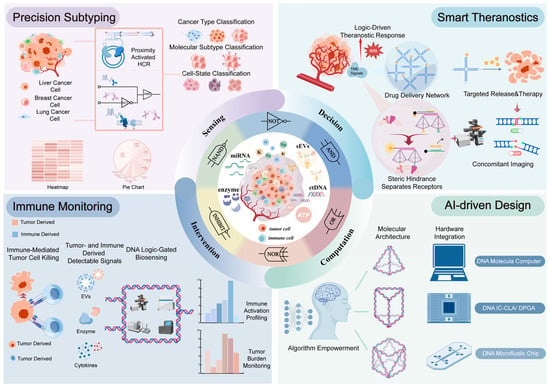
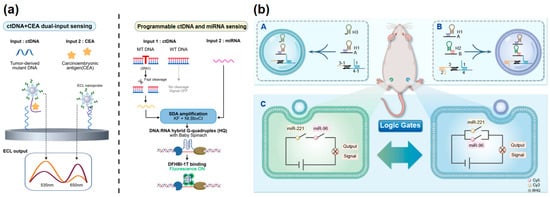
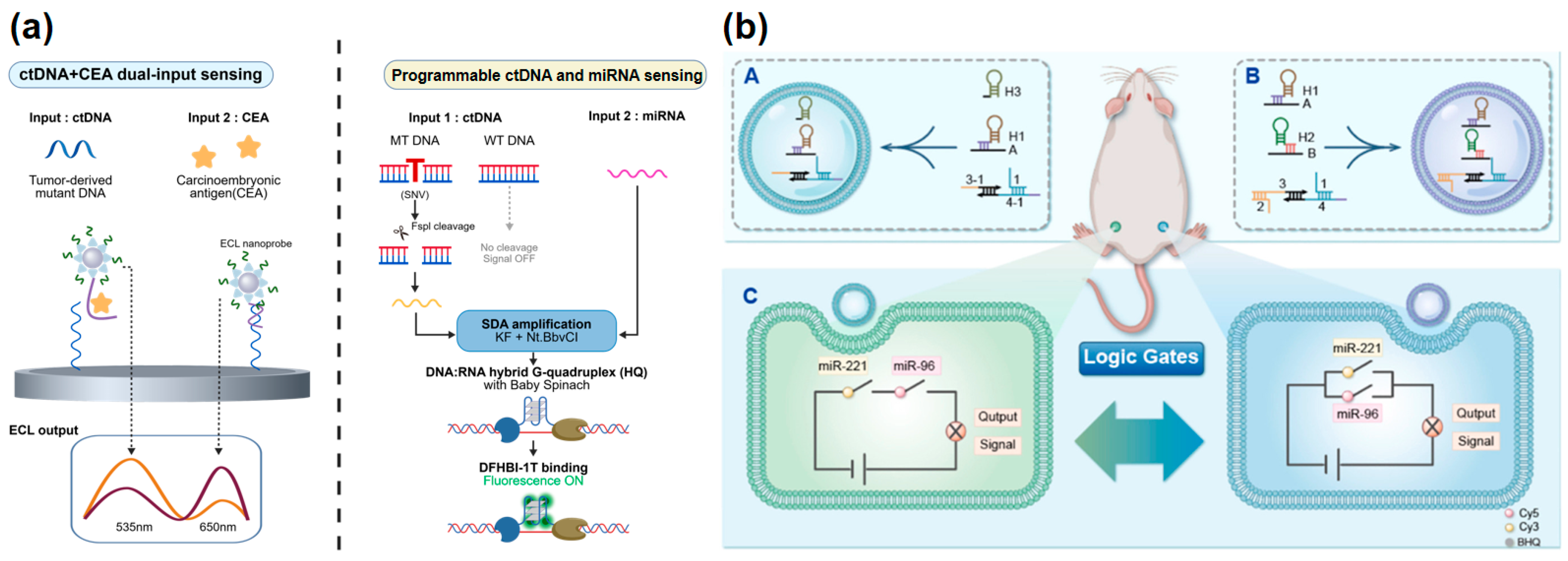
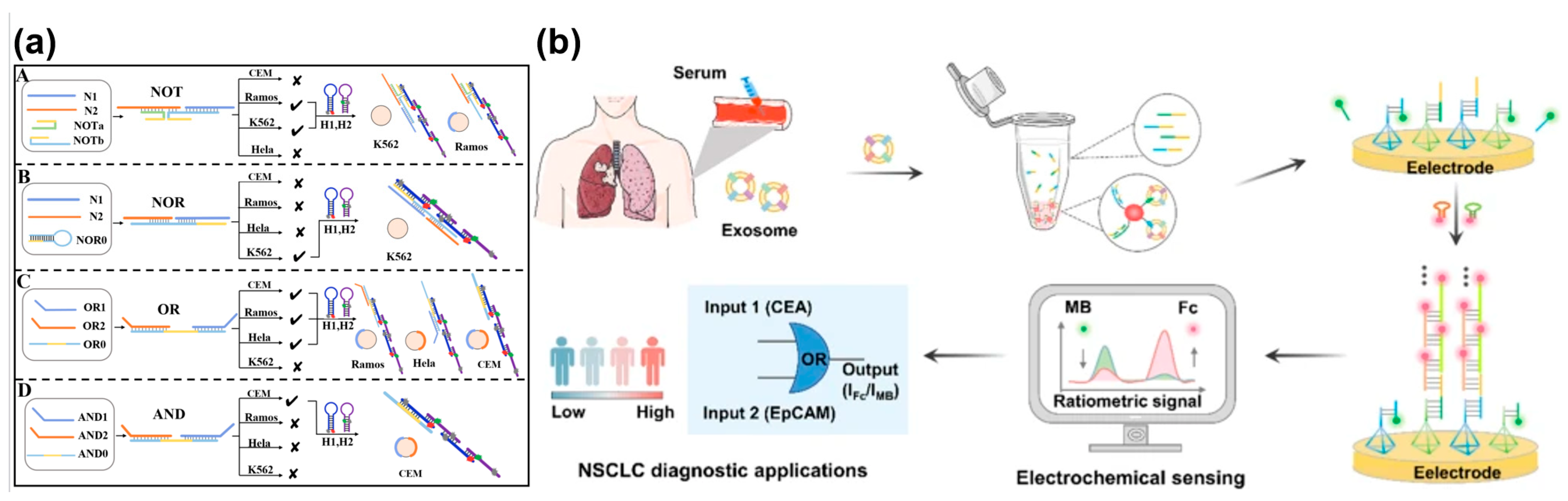
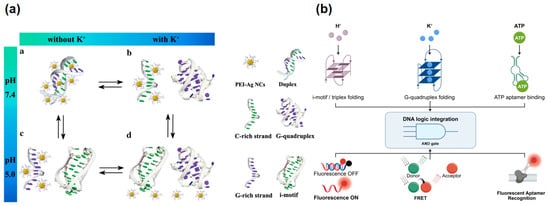
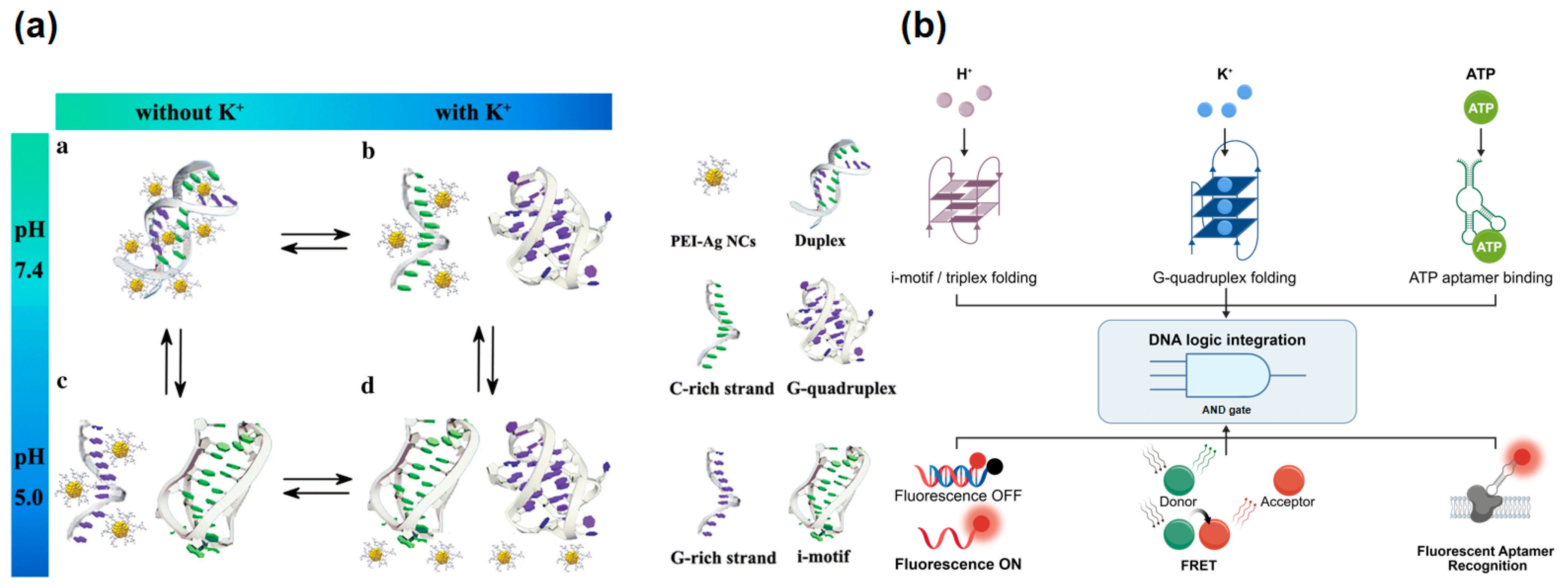
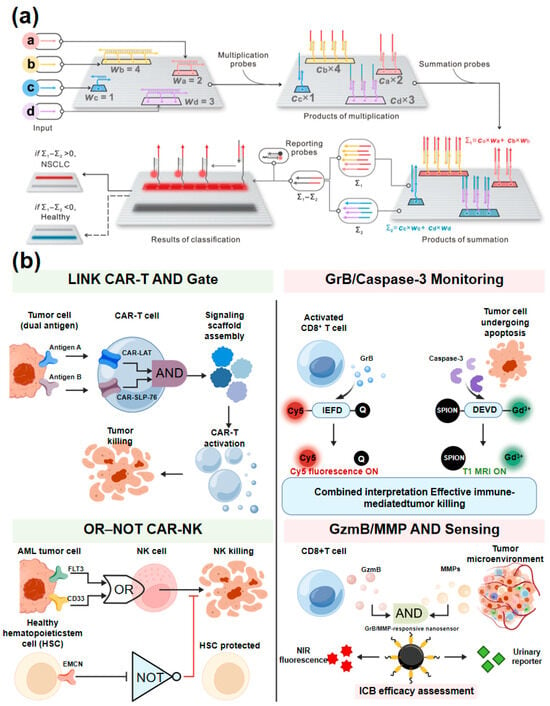
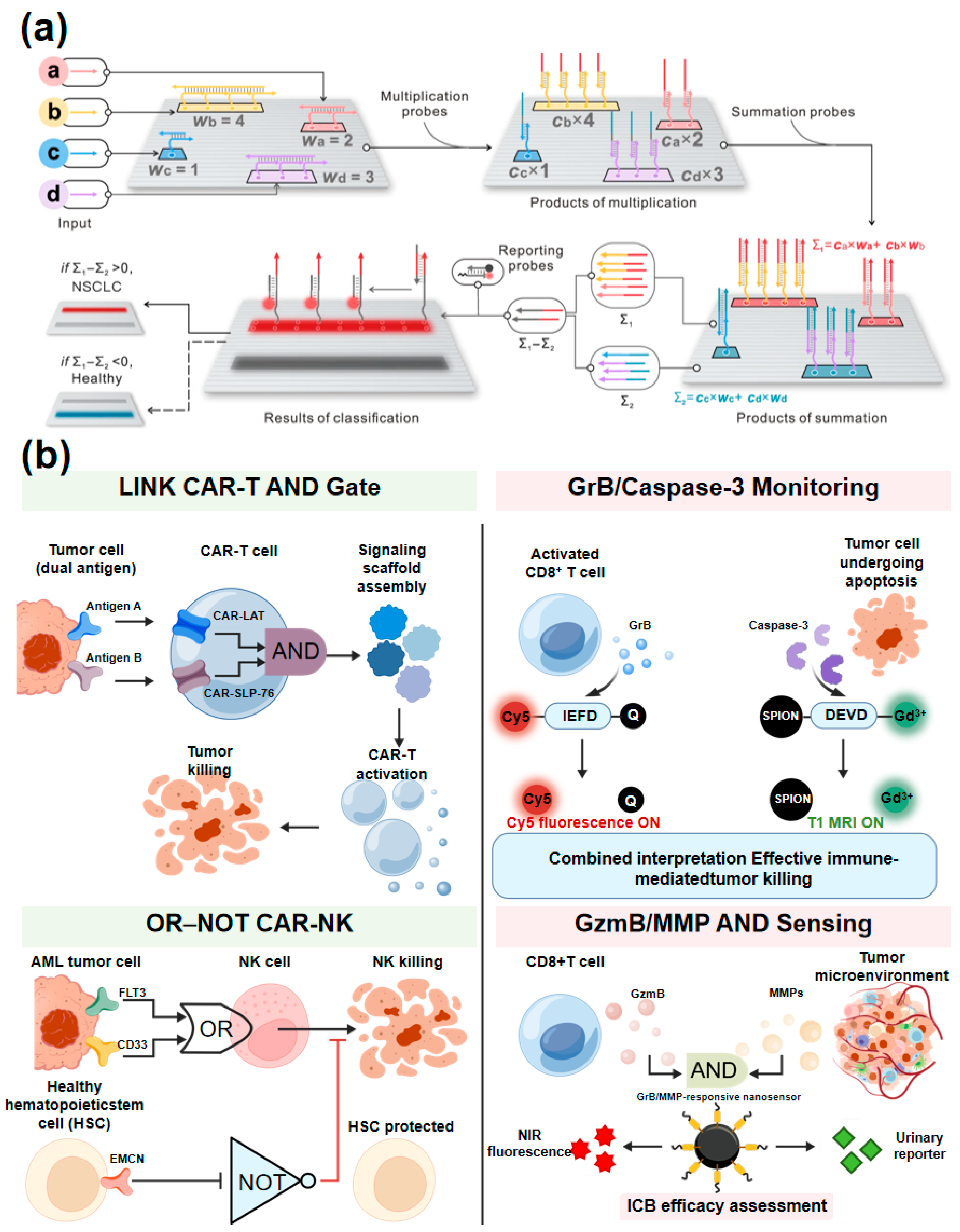
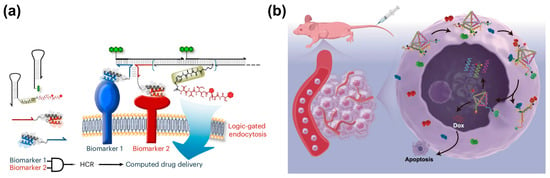
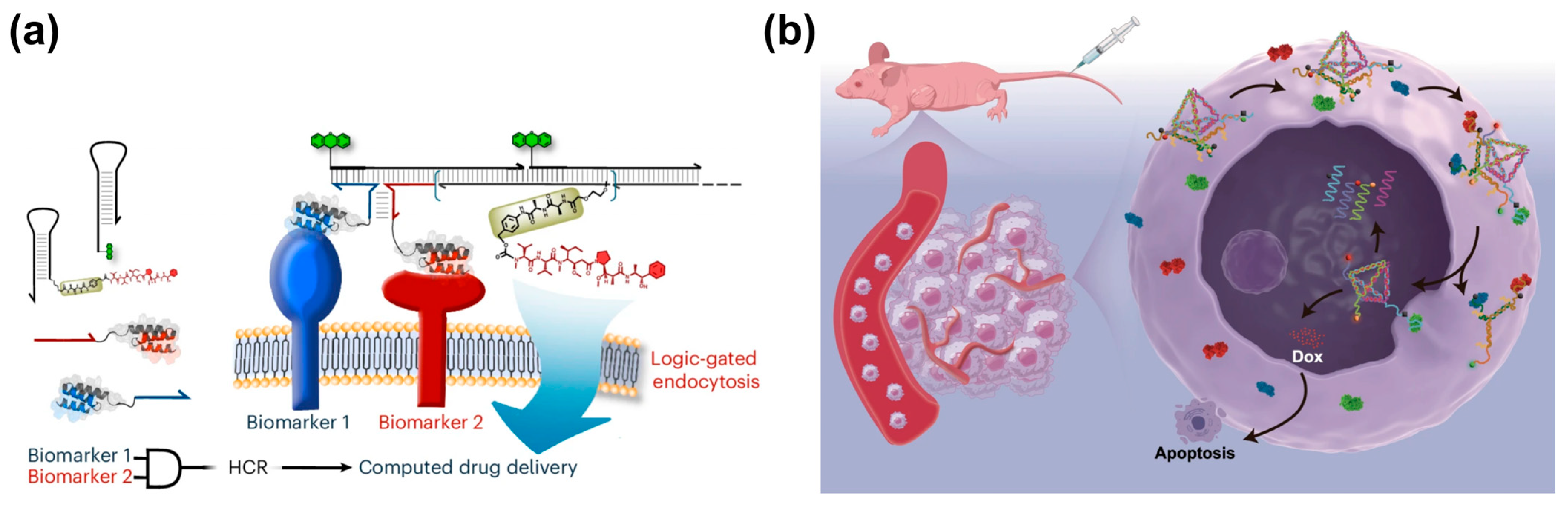

Disclaimer/Publisher’s Note: The statements, opinions and data contained in all publications are solely those of the individual author(s) and contributor(s) and not of MDPI and/or the editor(s). MDPI and/or the editor(s) disclaim responsibility for any injury to people or property resulting from any ideas, methods, instructions or products referred to in the content. |
© 2026 by the authors. Licensee MDPI, Basel, Switzerland. This article is an open access article distributed under the terms and conditions of the Creative Commons Attribution (CC BY) license.