


Abstract
Aim: This study aimed to evaluate the effect of intrauterine mepivacaine on pain during intrauterine device (IUD) insertion and to assess its effects on other pain-related and patient-reported experience and acceptability outcomes. Methods: We systematically searched six databases from inception until 30 September 2026, for randomized controlled trials (RCTs) comparing intrauterine mepivacaine with saline placebo during IUD insertion. Study quality was assessed using the Cochrane Risk of Bias 2 tool. Certainty of evidence was evaluated for the primary outcome (pain during IUD insertion). Outcomes were pooled as mean differences (MDs) or risk ratios (RRs) with 95% confidence intervals (CIs) using random-effects models. Leave-one-out sensitivity analyses were performed, and certainty of evidence was assessed using GRADE. Results: Three double-blind RCTs involving 607 randomized participants were included. Two studies had a low overall risk of bias, while one had some concerns. Intrauterine mepivacaine significantly reduced pain during IUD insertion (MD −13.92 mm, 95% CI −17.71 to −10.13; p < 0.001, low certainty of evidence), with no detected statistical heterogeneity (I2 = 0%). Mepivacaine also reduced pain during drug instillation (MD −5.66 mm, 95% CI −9.21 to −2.11), although this effect was not statistically significant after exclusion of the most recent trial (leave-one-out). Mepivacaine increased the likelihood of perceiving insertion as “easier than expected” (RR 1.58, 95% CI 1.29–1.93) and choosing the IUD method again (RR 1.15, 95% CI 1.07–1.24). It also increased the likelihood of recommending the selected pain-relief method (RR 1.12, 95% CI 1.03–1.22) and considering insertion pain tolerable (RR 1.09, 95% CI 1.03–1.15). However, Hartung–Knapp–Sidik–Jonkman sensitivity analyses showed that most secondary patient-reported outcomes were no longer statistically significant, except for pain during drug instillation and perception that insertion was “easier than expected.” No serious adverse events were reported in the two trials providing safety data. Overall, safety evidence remains limited. Conclusions: Intrauterine mepivacaine probably reduces pain during IUD insertion and drug instillation, although the clinical importance of these reductions remains uncertain. Evidence regarding patient acceptability and safety remains limited. Larger RCTs are needed to confirm these findings.
1. Introduction
Intrauterine devices (IUDs) are among the most effective forms of reversible contraception and provide long-term pregnancy prevention without requiring daily adherence [1]. Both copper and levonorgestrel-releasing IUDs are widely used and can be inserted in an outpatient setting [2]. Despite their effectiveness and widespread use, IUD insertion can be painful for some patients [3].
Pain during IUD insertion is influenced by several factors, including age, pregnancy history, mental health history, self-perceived knowledge of IUDs, baseline menstrual pain, and individual differences in pain perception [4]. Parity is among the most consistently reported factors, with nulliparous women generally experiencing greater pain during IUD insertion than parous women [5,6]. Pain is particularly experienced during cervical manipulation, uterine sounding, and passage of the IUD through the cervix. Although the procedure is usually brief, pain and discomfort may affect the overall patient experience and willingness to undergo IUD insertion [7]. These findings underscore the importance of addressing pain during IUD insertion through patient-centered counseling and effective pain-management strategies [8].
Several pharmacological approaches have been used to reduce pain during IUD insertion, including oral analgesics, nonsteroidal anti-inflammatory drugs, local anesthetic techniques, and cervical or paracervical anesthesia [3,9]. However, the effectiveness of these approaches has been variable, and the available evidence remains heterogeneous, with no single pharmacological intervention established as a clear best practice for pain management during IUD insertion [10]. Intrauterine administration of a local anesthetic offers an alternative to injectable local anesthesia for pain management during IUD insertion by delivering the anesthetic directly into the uterine cavity shortly before the procedure [11].
Mepivacaine is an amide-type local anesthetic that reduces nerve impulse transmission by blocking voltage-gated sodium channels and is characterized by a rapid onset of action [12,13]. However, evidence is insufficient to establish a clinical safety or pharmacokinetic advantage over lidocaine. Intrauterine mepivacaine has been evaluated in randomized controlled trials (RCTs) as a method of reducing pain during IUD insertion [14,15,16]. These trials have compared mepivacaine with a saline placebo, but they have differed in participant characteristics, IUD type, mepivacaine concentration, and administration protocols. Bringing these findings together may provide a clearer estimate of the effect of intrauterine mepivacaine on pain during IUD insertion.
A previous meta-analysis evaluated the effectiveness of intrauterine anesthesia using different local anesthetic agents during IUD insertion [11]. However, the present review focuses specifically on intrauterine mepivacaine, incorporating the most recent RCT [16] and evaluating additional patient-reported experience and acceptability outcomes. Therefore, we conducted this systematic review and meta-analysis to assess the effectiveness of intrauterine mepivacaine in reducing pain during IUD insertion and its effects on procedural tolerability and acceptability.
2. Methods
2.1. Study Design and Registration
We conducted a systematic review and meta-analysis of RCTs comparing intrauterine mepivacaine with placebo during IUD insertion. The review was conducted according to the Preferred Reporting Items for Systematic Reviews and Meta-Analyses (PRISMA 2020) guidelines [17] and the Cochrane Handbook for Systematic Reviews of Interventions [18]. Ethical approval was not needed because this study used data from previously published studies and did not involve the collection or analysis of patient data. Although the review was not prospectively registered in PROSPERO, the eligibility criteria, search strategy, data extraction procedures, and statistical analysis methods were established a priori to ensure methodological rigor and minimize potential bias. Table S1 displays the PRISMA checklist.
2.2. Eligibility Criteria
Studies were eligible if they met the following PICOS criteria: (i) Population: women undergoing IUD insertion; (ii) Intervention: intrauterine mepivacaine; (iii) Comparator: intrauterine matched normal saline placebo; (iv) Outcome: pain during IUD insertion; and (v) Study Design: published, peer-reviewed RCTs. No restrictions were applied based on IUD type, mepivacaine dose or concentration, or follow-up duration.
Studies were excluded if they were observational or non-randomized studies, case reports, reviews, or conference abstracts without sufficient data for analysis. Studies were also excluded if mepivacaine was combined with another intervention that was not provided to the control group.
2.3. Information Sources
A comprehensive literature search was performed in PubMed, Embase, Scopus, Web of Science, and the Cochrane Central Register of Controlled Trials (CENTRAL) from database inception to 30 September 2026, with all identified citations considered for screening. Google Scholar was searched from inception to 30 September 2026, with the first 60 citations screened for eligibility. The search strategy included terms related to IUDs, mepivacaine, local anesthesia, pain, and RCTs. No restrictions were imposed based on language, date of publication, or geographical site. Clinical trial registries were not independently searched, as this review focused exclusively on published, peer-reviewed RCTs.
2.4. Search Strategy
The complete search strategies for each database, including database-specific controlled vocabulary where applicable, free-text terms, Boolean operators, and search limits, are provided in Table S2. The search strategy comprised the following terms: (IUD OR “intrauterine device” OR “intrauterine contraceptive device” OR “intrauterine contraception”) AND (mepivacaine OR “mepivacaine hydrochloride” OR carbocaine) AND (placebo OR saline OR “normal saline” OR “sodium chloride”) AND (pain OR analgesia OR anesthesia OR anaesthesia) AND (randomly OR randomized OR randomised OR trial).
2.5. Study Selection
All identified records were imported into Microsoft Excel (Microsoft Corporation, Redmond, WA, USA), and duplicates were removed. Two investigators independently screened the titles and abstracts of the retrieved records. Potentially relevant studies were then assessed in full text against the eligibility criteria. The reasons for exclusion at the full-text stage were recorded. The reference lists of relevant studies and systematic reviews were also screened to identify additional eligible studies. Any disagreements between the two investigators at any stage of the selection process were resolved through discussion and consensus, with consultation with a third investigator when necessary.
2.6. Data Items (Outcomes) and Extraction
Two investigators independently extracted data using a predefined data extraction form in Microsoft Excel (Microsoft Corporation, Redmond, WA, USA). The following information was collected: study characteristics (first author, publication year, country, study setting, and sample size); participant characteristics (age, worst menstrual pain assessed by visual analogue scale [VAS], previous IUD use, previous surgical abortion, and IUD type); drug-related characteristics (mepivacaine dose and concentration, method and timing of administration, and placebo used); and pain assessment scale and timing. Any disagreements between the two investigators were resolved through discussion and, when necessary, consultation with a third investigator.
The primary outcome was pain during IUD insertion. Secondary outcomes included pain during drug instillation, pain after IUD insertion, the proportion of participants who considered the overall IUD insertion experience “easier than expected,” the proportion who considered IUD insertion pain tolerable, the proportion who would recommend the assigned pain-relief method, and the proportion who would choose IUD insertion again. Pain intensity was assessed using a VAS, reported on either a 10 cm or 100 mm scale. Additionally, data on unsuccessful IUD insertions and adverse events were extracted, where available, and summarized descriptively. These outcomes were not prespecified for quantitative synthesis.
For continuous outcomes, means, standard deviations (SDs), and sample sizes were extracted for each group. Envall 2019 [14] reported continuous pain outcomes as medians and interquartile ranges (IQRs), which were converted to means and SDs using established methods by Wan et al. [19]. The remaining studies reported means and SDs directly. For dichotomous outcomes, the number of events and the total number of participants in each group were extracted.
2.7. Risk-of-Bias Assessment
Two investigators independently assessed the risk of bias of the included RCTs for the primary outcome (pain during IUD insertion) using the Cochrane Risk of Bias 2 (RoB 2) tool. The assessment covered five domains: bias arising from the randomization process, bias due to deviations from the intended interventions, bias due to missing outcome data, bias in measurement of the outcome, and bias in selection of the reported result [20]. Each domain was judged as having a low risk of bias, some concerns, or a high risk of bias. The overall risk of bias for each study was determined according to the RoB 2 framework. Disagreements, if any, were resolved by discussion or meeting with a third investigator.
2.8. Statistical Analysis
Meta-analyses were performed using 19.5 for Windows (StataCorp LLC., College Station, TX, USA). Meta-analyses were based on the available outcome data and corresponding sample sizes reported in the original RCTs. When both intention-to-treat and per-protocol analyses were available, preference was given to intention-to-treat data. No missing outcome data were independently imputed or reconstructed. Continuous outcomes were pooled as weighted mean differences (MDs) with 95% confidence intervals (CIs). For pain measured using a 0–10 cm VAS, scores were converted to a common 0–100 mm scale by multiplying the reported means and standard deviations from the 0–10 cm scale by 10. Because these scales are equivalent, pooling the converted data as MDs allows the treatment effect to be expressed in millimeters, facilitating clinical interpretation and comparison with established minimal clinically important differences (MCIDs). A negative mean difference favored mepivacaine, indicating lower pain compared with placebo. Post-insertion pain was summarized descriptively rather than quantitatively pooled because of differences in the timing and conditions of outcome assessment across studies. Dichotomous outcomes were pooled as risk ratios (RRs) with 95% CIs. The pooled effect estimates were presented using forest plots. A random-effects (Restricted Maximum Likelihood, REML) model was used for all meta-analyses because differences in study populations, mepivacaine administration, IUD type, and clinical settings were expected [21]. Given the small number of included studies, confidence intervals were interpreted cautiously. Additionally, sensitivity analyses were performed using the Hartung–Knapp–Sidik–Jonkman adjustment to assess the robustness of the random-effects CIs. Prediction intervals were not calculated because the limited number of studies precluded reliable estimation of between-study variability. Statistical heterogeneity was assessed using the I2 statistic and Cochran’s Q test. An I2 value greater than 50% and a Q-test p value < 0.10 were considered indicative of significant statistical heterogeneity. Leave-one-out sensitivity analyses were conducted to evaluate the robustness of the pooled estimates by sequentially excluding each RCT and recalculating the overall effect estimate based on the remaining studies. Where sufficient studies were available, subgroup analyses were considered based on factors such as mepivacaine dose, method of administration, IUD type, and risk of bias. Statistical significance was set at a two-sided p-value < 0.05 for all primary and secondary outcomes.
2.9. Certainty of Evidence
The certainty of evidence for the primary outcome (pain during IUD insertion) was assessed using the GRADE (Grading of Recommendations Assessment, Development, and Evaluation) approach [22]. Evidence was considered across the domains of risk of bias, inconsistency, indirectness, imprecision, and publication bias. The certainty of evidence was classified as high, moderate, low, or very low. Two investigators independently assessed the certainty of evidence, and any disagreements were resolved through discussion and, when necessary, consultation with a third investigator.
3. Results
3.1. Summary of Database Screening and Selection of Studies
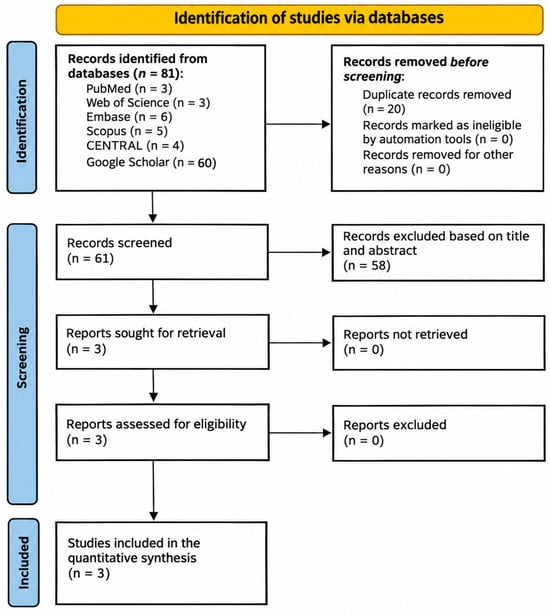
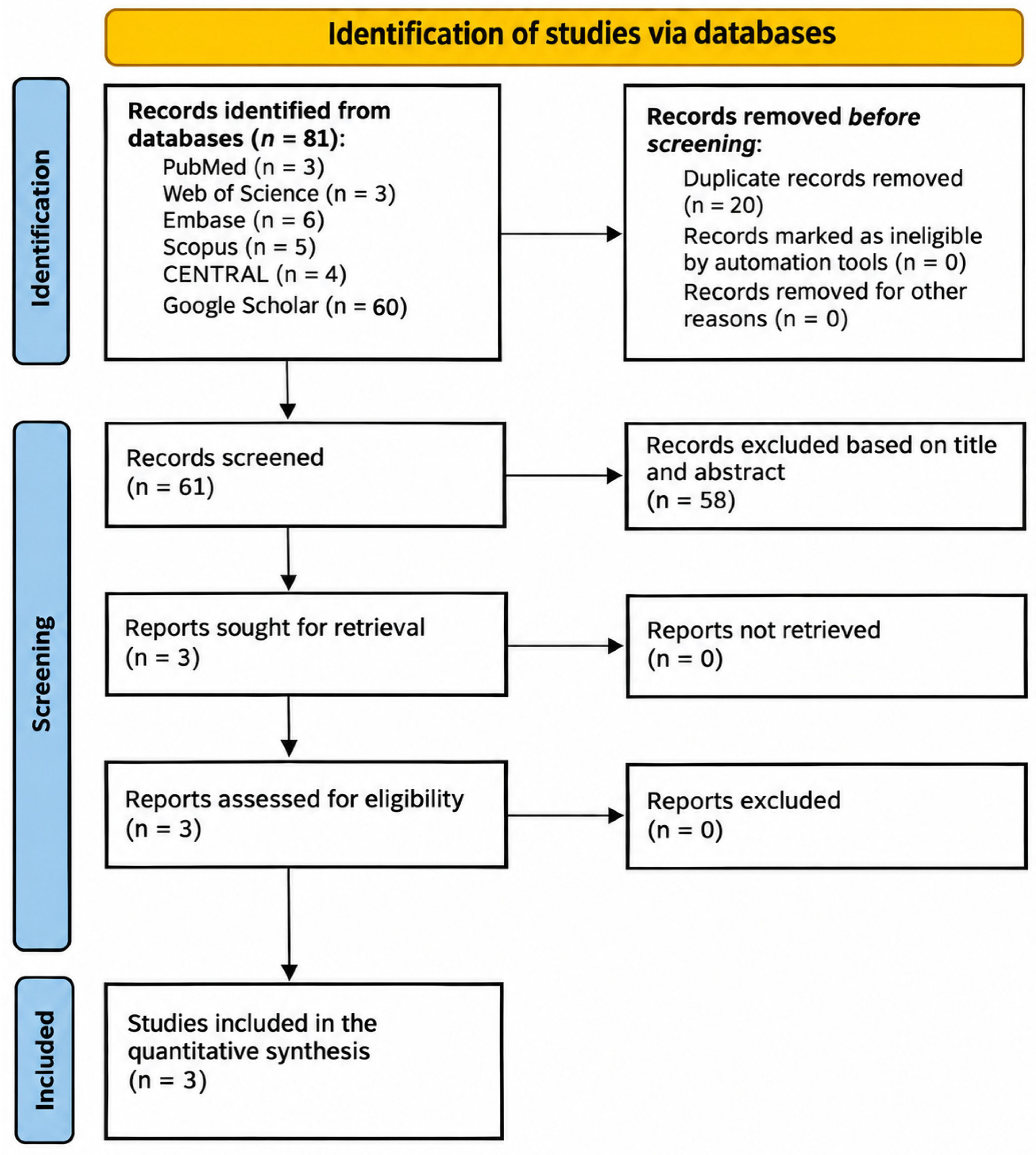
Eighty-one citations were retrieved from the databases, of which 20 duplicates were removed. Title and abstract screening of the remaining 61 citations excluded 58 records because they clearly did not meet the predefined PICOS eligibility criteria regarding population, intervention, comparator, outcomes, or study design. The remaining 3 studies underwent full-text assessment, all of which met the eligibility criteria and were included in the review [14,15,16]. No studies were excluded at the full-text assessment stage. Furthermore, no additional records were identified through screening the reference lists of relevant studies and systematic reviews. The study selection process is presented in the PRISMA flowchart (Figure 1).
Figure 1.
The PRISMA flowchart for database screening and study selection.
3.2. Summary of the Included Studies and Participants
Three double-blind RCTs conducted in Sweden were included, comprising 607 randomized participants [14,15,16]. All studies enrolled nulliparous women or individuals, with sample sizes ranging from 86 to 370, with 304 participants allocated to mepivacaine and 303 to placebo. Across the trials, baseline characteristics were generally comparable between treatment groups, with no meaningful differences reported in previous IUD use, history of surgical abortion, or worst menstrual pain. The studies varied in the types of IUDs evaluated, including levonorgestrel-releasing and copper IUDs.
All studies evaluated intrauterine instillation of mepivacaine before IUD insertion. Envall 2019 [14] administered 10 mL of 1% mepivacaine 5 min before IUD insertion, whereas Envall 2024 [15] and Elgemark 2026 [16] administered 10 mL of 2% mepivacaine 2 min before insertion. In all three trials, the intervention and placebo were delivered using a 1.6 mm hydrosonography catheter, and the placebo consisted of 10 mL of 0.9% sodium chloride (NaCl).
Pain was assessed using the VAS in all studies, although the scale format differed. Envall 2019 [14] used a 10 cm VAS, whereas Envall 2024 [15] and Elgemark 2026 [16] used a 100 mm VAS. Pain during IUD insertion was the primary outcome in all three trials. Pain following drug instillation was also assessed in all studies. Pain following drug instillation was also assessed in all studies. Post-insertion pain was assessed 10 min after insertion in Envall 2024 [15] and 10 min after speculum removal in Elgemark 2026 [16], whereas Envall 2019 [14] assessed pain before leaving the clinic. Detailed study characteristics are presented in Table 1.
Table 1.
Characteristics of the included randomized controlled trials.
3.3. Meta-Analysis of Pain Outcomes
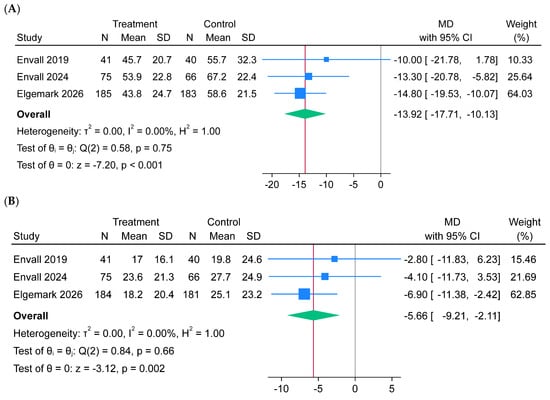
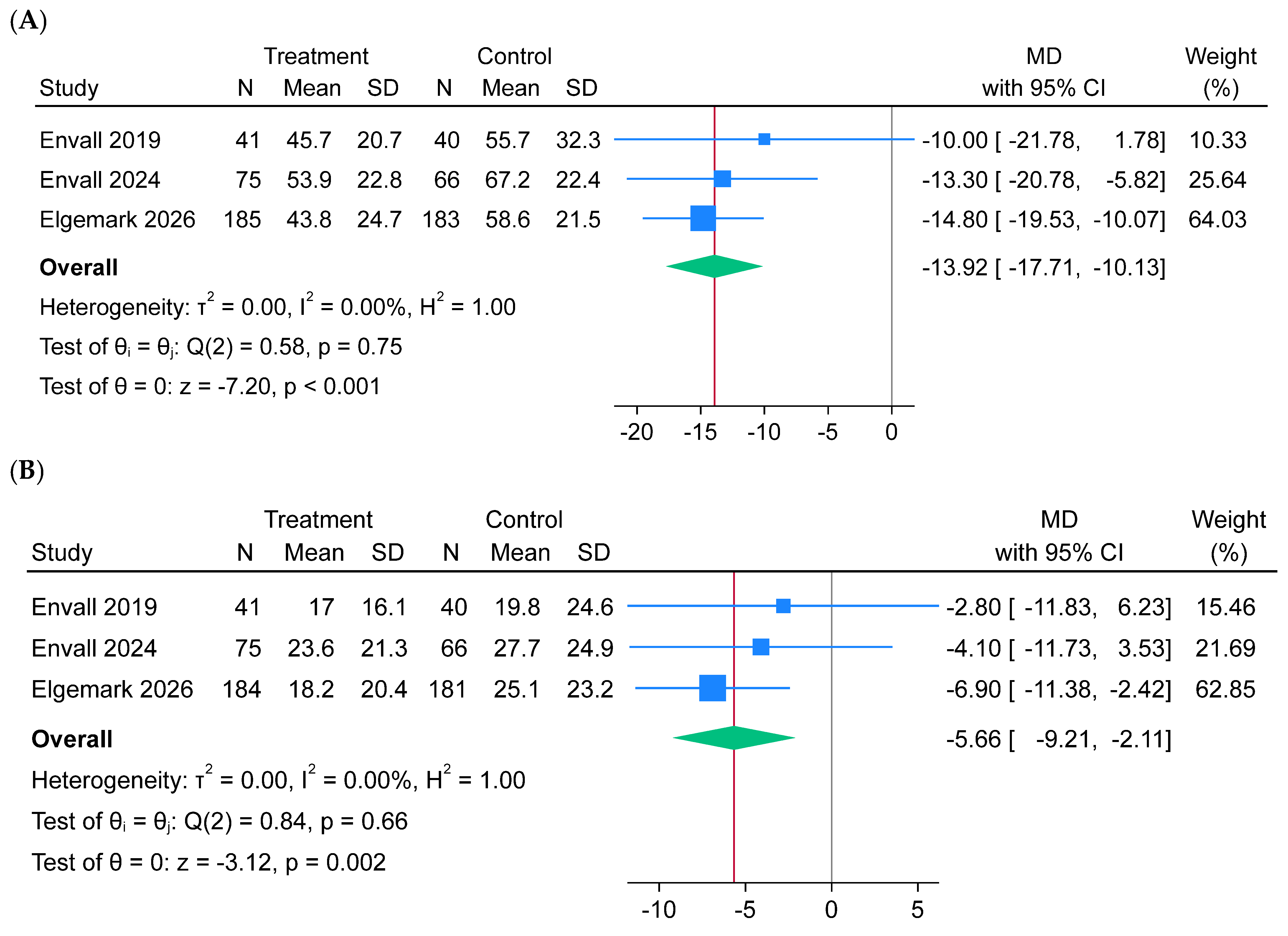
For the primary outcome, pain during IUD insertion was significantly lower in the mepivacaine group than in the placebo group (n = 3 RCTs; MD = −13.92 mm, 95% CI [−17.71, −10.13]; p < 0.001). Pain during drug instillation was also significantly lower with mepivacaine (n = 3 RCTs; MD = −5.66 mm, 95% CI [−9.21, −2.11]; p = 0.002). No statistical heterogeneity was detected for these outcomes (I2 = 0%; p > 0.10) (Figure 2).
Figure 2.
Forest plots of the meta-analysis of the continuous pain outcomes: (A) pain during IUD insertion and (B) pain during drug instillation. CI: confidence interval; IUD: intrauterine device; MD: mean difference [14,15,16].
Sensitivity analysis confirmed the robustness of the primary outcome, pain at IUD insertion. However, for pain during drug instillation, exclusion of the Elgemark et al. 2026 study [16] resulted in a nonsignificant pooled effect (n = 2 RCTs; MD = −3.56 mm, 95% CI [−9.39, 2.27]; p = 0.231) (Figure S1).
Sensitivity analyses using the Hartung–Knapp–Sidik–Jonkman adjustment yielded CIs comparable to those of the primary random-effects analyses. The reductions in pain during IUD insertion (3 RCTs; MD = −13.92 mm, 95% CI [−18.41, −9.43]; p = 0.006) and drug instillation (3 RCTs; MD = −5.66 mm, 95% CI [−10.71, −0.61]; p = 0.041) remained statistically significant.
Post-insertion pain was summarized descriptively rather than quantitatively pooled because assessment timing differed across studies. In Envall 2019 [14], pain assessed before leaving the clinic was similar between the mepivacaine (n = 41) and placebo (n = 40) groups (median VAS: 1.3 [IQR 0.5–2.5] vs. 1.3 [IQR 0.6–3.7]; p = 0.545). In Envall 2024 [15], pain assessed 10 min after IUD insertion was lower with mepivacaine (n = 75) compared to placebo (n = 66), although the difference was not statistically significant (mean VAS: 37.3 ± 24.2 vs. 42.4 ± 25.7 mm; p = 0.23). In Elgemark 2026 [16], pain assessed 10 min after speculum removal was significantly lower in the mepivacaine group (n = 178) than in the placebo group (n = 177) (mean VAS: 25.5 ± 23.0 vs. 34.2 ± 25.0 mm; MD −8.7 mm, 95% CI −13.8 to −3.7).
3.4. Meta-Analysis of Patient-Reported Experience and Acceptability Outcomes
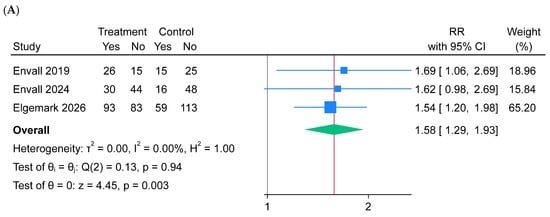
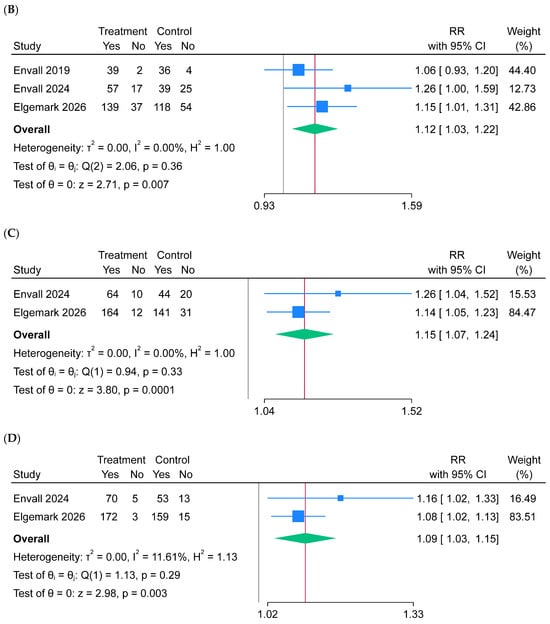
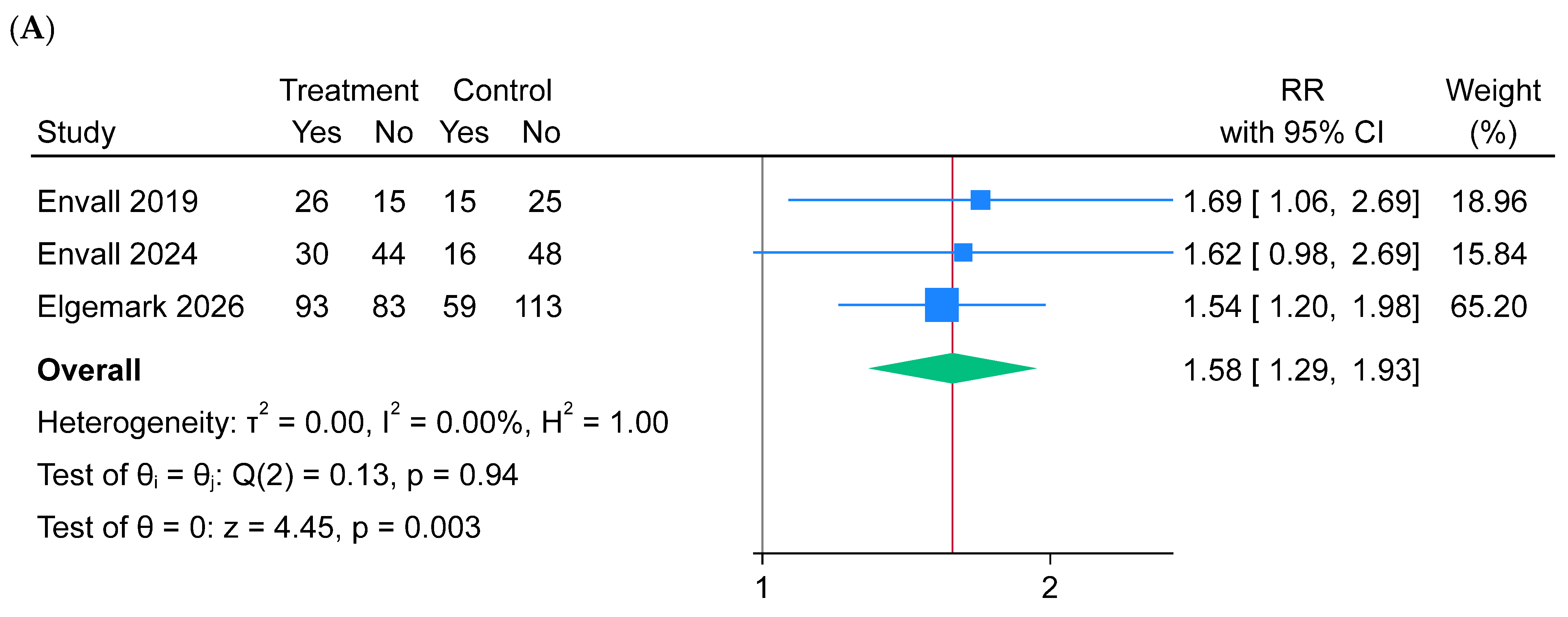
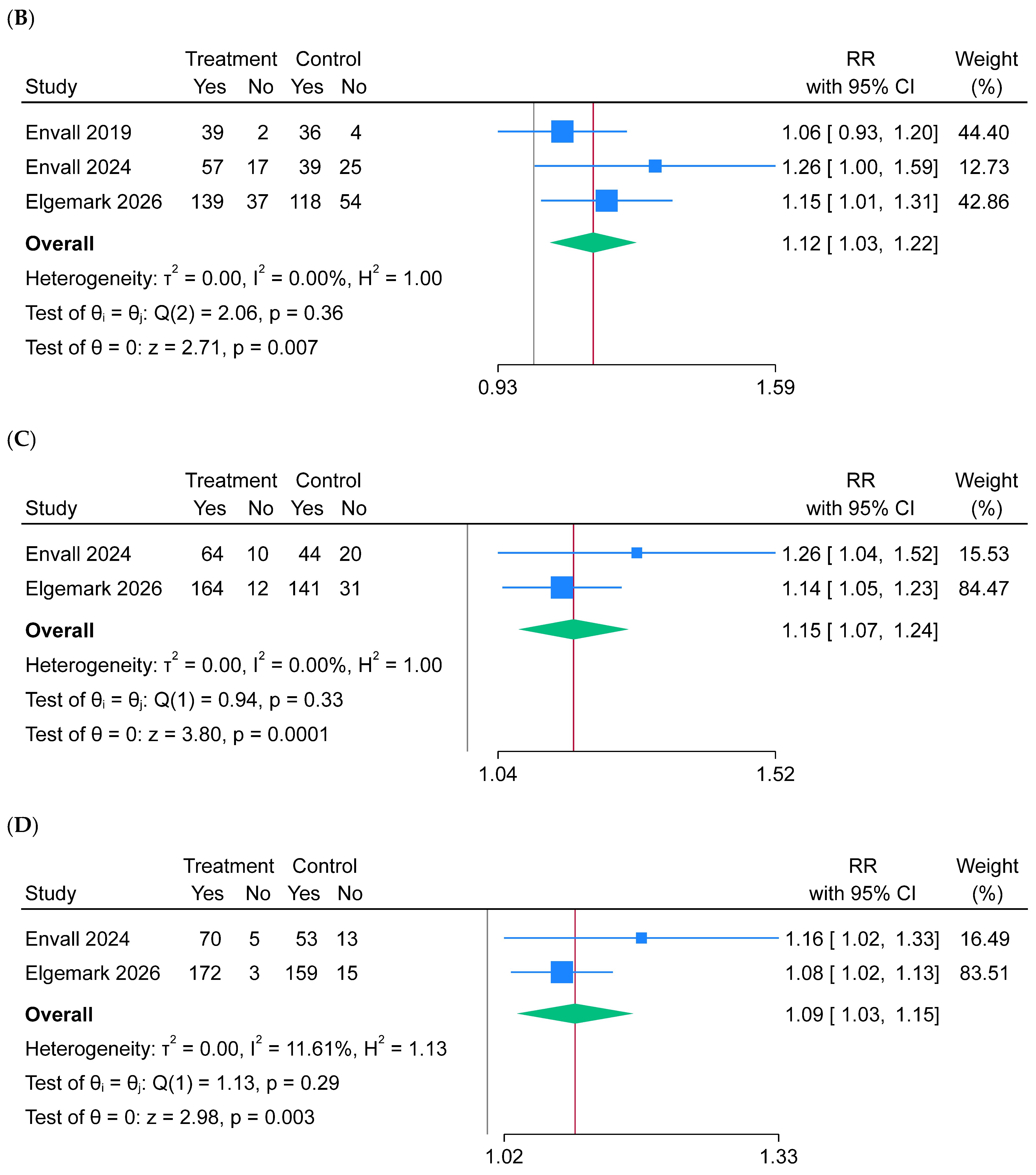
Patients in the mepivacaine group were more likely than those in the control group to report that the IUD insertion experience was “easier than expected” (n = 3 RCTs; RR = 1.58, 95% CI [1.29, 1.93]; p = 0.003), recommend the selected pain-relief method (n = 3 RCTs; RR = 1.12, 95% CI [1.03, 1.22]; p = 0.007), indicate that they would choose the IUD method again (n = 2 RCTs; RR = 1.15, 95% CI [1.07, 1.24]; p = 0.0001), and report that the pain experienced during IUD insertion was tolerable (n = 2 RCTs; RR = 1.09, 95% CI [1.03, 1.15]; p = 0.003). The pooled analyses showed negligible to low statistical heterogeneity (I2 = 0–11.61%; p > 0.10) (Figure 3).
Figure 3.
Forest plots of the meta-analysis of the dichotomous patient-reported experience and acceptability outcomes: (A) overall experience perceived as “easier than expected,” (B) recommendation of the selected pain-relief method, (C) willingness to choose the IUD method again, and (D) pain during IUD insertion considered tolerable. CI: confidence interval; IUD: intrauterine device; RR: risk ratio [14,15,16].
Sensitivity analyses confirmed the robustness of the pooled estimates for all binary outcomes except for the outcome assessing whether patients would recommend the selected pain-relief method. Exclusion of the Elgemark et al. 2026 study [16] rendered this association statistically nonsignificant (n = 2 RCTs; RR = 1.12, 95% CI [0.95, 1.33]; p = 0.169), indicating that this finding was sensitive to the inclusion of this study (Figure S2).
Sensitivity analyses using the Hartung–Knapp–Sidik–Jonkman adjustment confirmed the significant association for an insertion experience that was “easier than expected” (95% CI [1.41, 1.77]; p = 0.003). However, the associations for recommending the selected pain-relief method (95% CI [0.93, 1.35]; p = 0.116), choosing the IUD method again (95% CI [0.72, 1.84]; p = 0.159), and reporting tolerable insertion pain (95% CI [0.76, 1.57]; p = 0.206) were no longer statistically significant.
3.5. Summary of Failed IUD Insertions and Adverse Events
Failed IUD insertions were reported in all three RCTs. In Envall 2019 [14], failed insertion occurred in 0/43 (0%) randomized participants receiving mepivacaine and 2/43 (4.7%) receiving placebo. In Envall 2024 [15], the corresponding rates were 1/76 (1.3%) and 6/75 (8.0%), respectively. In Elgemark 2026 [16], failed insertion occurred in 7/185 (3.8%) participants receiving mepivacaine and 5/185 (2.7%) receiving placebo (Table 1).
Regarding safety, Envall 2019 [14] did not report information on serious adverse events, whereas Envall 2024 [15] reported no serious adverse events associated with mepivacaine. Elgemark 2026 [16] reported no serious adverse events and fewer vasovagal reactions in the mepivacaine group than in the placebo group (14/178 [7.9%] vs. 32/176 [18.2%]; RR 0.43, 95% CI 0.24–0.78). At the 3-month follow-up, no statistically significant between-group differences were observed in the reported adverse events.
3.6. Summary of Study Quality
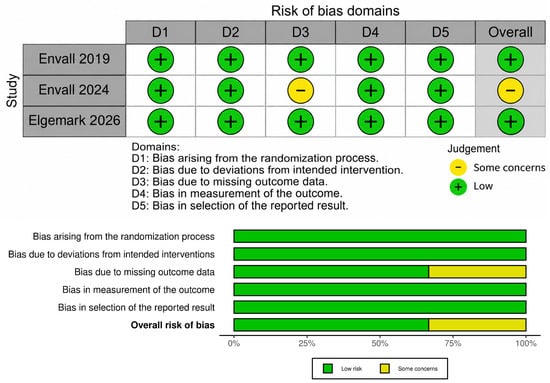
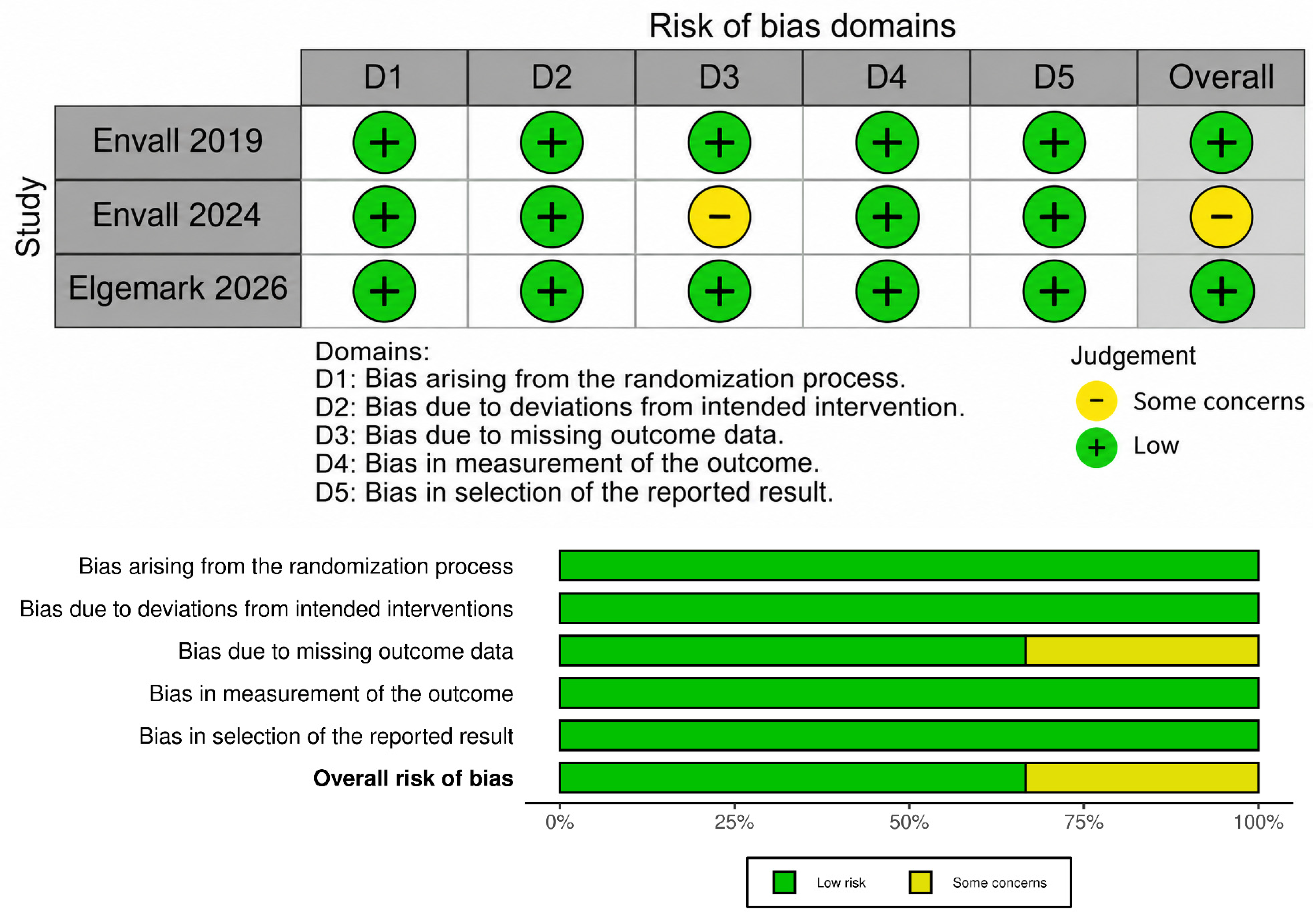
The overall risk of bias for the primary outcome (pain during IUD insertion) was judged as low in two RCTs [14,16] and as having some concerns in one RCT [15]. Envall 2019 [14] and Elgemark 2026 [16] were judged at low risk of bias across all RoB 2 domains. Envall 2024 [15] had an overall judgment of some concerns due to missing outcome data (Domain 3). In Envall 2019 [14], missing data were limited and relatively balanced between the mepivacaine and placebo groups (2/43 [4.7%] vs. 3/43 [7.0%], respectively). In contrast, Envall 2024 showed a greater imbalance in missing outcome data (0/76 [0%] vs. 9/75 [12.0%], respectively), raising concerns about potential bias associated with missingness (Figure 4).
Figure 4.
Risk-of-bias assessment of the included randomized controlled trials for the primary outcome (pain during IUD insertion), using the Cochrane RoB 2 tool [14,15,16].
3.7. Summary of Certainty of Evidence
The certainty of evidence was assessed for the primary outcome (pain during IUD insertion) using the GRADE approach (Table S3). The evidence was rated as low certainty, with a one-level downgrade for risk of bias because one contributing RCT had some concerns related to missing outcome data. No downgrades were applied for inconsistency or indirectness. Imprecision was evaluated in relation to the confidence interval and the proposed minimal clinically important difference. Publication bias could not be formally assessed because fewer than 10 studies were included.
4. Discussion
4.1. Summary of Principal Findings
This systematic review included three double-blind RCTs involving 607 randomized participants. Two studies were judged to have a low overall risk of bias, while one had some concerns, mainly related to missing outcome data. Low-certainty evidence indicated that intrauterine mepivacaine probably reduces pain during IUD insertion. It also probably improves some aspects of the immediate patient experience, including perceptions that insertion was easier than expected and willingness to choose the IUD method again. Evidence for pain during drug instillation, pain after insertion, recommending the selected pain-relief method, and considering insertion pain tolerable was limited. Overall, the evidence most clearly supports reduced pain during IUD insertion, while the effects on other pain time points and patient-reported outcomes remain less certain.
4.2. Interpretation of Findings
4.2.1. Analgesic Effects
The clearest finding was the reduction in pain during IUD insertion. The pooled reduction of 13.92 mm on the 100 mm VAS was statistically significant and slightly exceeded the previously reported 13 mm minimal clinically important difference (MCID) for acute pain [23,24]. However, this threshold was derived from within-person changes in pain intensity and may not directly translate to between-group differences during IUD insertion. Furthermore, the 95% CI (10.13 to 17.71 mm reduction) included effects below this threshold, indicating uncertainty regarding the clinical importance of the observed benefit. Importantly, mepivacaine reduced but did not eliminate insertion-related pain, as participants in the intervention groups continued to report residual pain. This is clinically plausible because insertion involves cervical passage and uterine manipulation, which are important sources of procedural pain [7]. Intrauterine administration delivers mepivacaine directly into the uterine cavity shortly before insertion [11]. As an amide local anesthetic, mepivacaine blocks voltage-gated sodium channels and reduces nerve impulse transmission [12,13]. This local action may reduce nociceptive signaling during the insertion procedure.
The smaller and less certain effects observed at other time points may reflect differences in the sources of procedural pain. Pain during IUD insertion involves cervical and uterine components, while pain after insertion may reflect a longer-lasting uterine or fundal component. Therefore, the analgesic effect would not necessarily be expected to remain the same throughout the entire procedure and its immediate aftermath.
The stability of the primary finding in sensitivity analysis provides greater confidence in the effect on insertion pain. In contrast, the secondary pain outcome was no longer statistically significant after exclusion of the most recent trial [16]. These differences suggest that the evidence is stronger for pain occurring during IUD placement than for pain occurring before or after it.
4.2.2. Patient Experience and Acceptability
The findings also suggest that the potential benefit of mepivacaine may extend beyond pain intensity. Participants receiving mepivacaine were more likely to perceive the procedure as easier than expected and to indicate that they would choose the IUD method again in the primary analyses. These findings are relevant because pain and discomfort can influence patients’ perceptions of IUD insertion and their willingness to undergo the procedure again [7,8]. However, Hartung–Knapp–Sidik–Jonkman sensitivity analyses confirmed statistical significance only for an insertion experience rated as “easier than expected,” whereas the associations with willingness to choose an IUD again, recommending the selected pain-relief method, and tolerability of insertion pain were no longer statistically significant. Furthermore, these outcomes reflect immediate or short-term acceptability rather than long-term contraceptive continuation. Similarly, recommending the selected pain-relief method reflects participants’ experiences with the intervention rather than a broader assessment of its effectiveness. These findings, together with the limited number of included RCTs, support a cautious interpretation of patient-reported acceptability outcomes.
4.3. Comparison with Previous Evidence
Several approaches have been used to manage pain during IUD insertion, including oral analgesics, NSAIDs, local anesthetic techniques, and cervical or paracervical anesthesia [3,9]. Previous evidence has been inconsistent, and no single pharmacological approach has been established as a universal standard [10]. Differences in analgesic agent, route, timing, patient characteristics, and outcome assessment make direct comparison between interventions difficult.
The present findings add to this literature by focusing specifically on intrauterine mepivacaine. The observed reduction in insertion pain is consistent with evidence suggesting that local anesthetic techniques can reduce pain associated with IUD placement [25]. However, intrauterine administration differs from cervical or paracervical anesthesia in both route and target tissues, so the findings should not be assumed to apply equally to other local anesthetic techniques.
Nulliparity is another relevant consideration. Previous studies have consistently reported greater insertion-related pain among nulliparous women than among parous women [5,6]. Because all three included trials focused on nulliparous participants, the findings may be particularly applicable to this group. Whether a similar benefit occurs among parous patients remains uncertain.
4.4. Dose, Administration, and Clinical Heterogeneity
The included trials used similar intrauterine administration methods but differed in mepivacaine concentration, timing, and IUD type [14,15,16]. These differences could potentially influence the magnitude or duration of analgesia. Nevertheless, the primary outcome showed a consistent direction of effect across the three trials. The available evidence is insufficient to determine the optimal mepivacaine dose or the ideal interval between administration and insertion. The small number of trials also prevents reliable assessment of whether the effect differs according to IUD type. Differences in device size and design may influence insertion difficulty and pain. Although statistical heterogeneity was not detected, this should be interpreted cautiously because only three studies were available. A lack of statistical heterogeneity does not mean that the clinical characteristics of the studies were identical. The consistency of the findings is reassuring, but additional trials are needed to determine whether the effect is maintained across different doses, IUD types, and patient populations.
4.5. Clinical Implications
These findings suggest that intrauterine mepivacaine may be a useful option for patients concerned about pain during IUD insertion. It provides a local approach that can be administered shortly before the procedure and does not require a paracervical injection. This may be relevant for patients who prefer to avoid injectable anesthesia. However, the evidence does not establish intrauterine mepivacaine as the preferred approach for all patients. Pain during IUD insertion varies between individuals and is influenced by factors such as parity, baseline menstrual pain, and individual pain perception [4,5,6]. Pain management should therefore remain individualized and should consider patient preferences and the available options. The low certainty of evidence for the primary outcome supports a probable reduction in insertion pain. Intrauterine mepivacaine can therefore be considered a potential component of patient-centered pain management rather than a replacement for other approaches. The descriptive findings showed no consistent difference in failed IUD insertion rates across the three RCTs. No serious adverse events were reported in the two more recent trials, and Elgemark et al. (2026) [16] reported fewer vasovagal reactions with mepivacaine. However, the limited number of studies and inconsistent safety reporting prevent firm conclusions regarding safety and insertion success.
The clinical use of intrauterine mepivacaine also requires consideration of procedural feasibility. Administration involves inserting a catheter into the uterine cavity, instilling the anesthetic, and allowing a waiting period before IUD placement. These additional steps may increase procedural time and require appropriate equipment and clinician training. Intrauterine mepivacaine should therefore be considered alongside established pain-management options, including intrauterine lidocaine and paracervical block. The 2025 American College of Obstetricians and Gynecologists (ACOG) guidance supports discussing and offering local anesthetic options for IUD insertion, particularly lidocaine-based approaches, with treatment individualized through shared decision-making [10]. However, the absence of direct comparative trials prevents conclusions about the relative effectiveness or safety of mepivacaine versus these alternatives.
5. Strengths and Limitations
This review has several strengths. It focused on RCTs comparing intrauterine mepivacaine with saline placebo, providing a direct assessment of the intervention. The search covered multiple major databases and Google Scholar without restrictions on language or publication date. Independent data extraction and risk-of-bias assessment were also performed by two investigators. Another strength was the inclusion of patient-reported experience and acceptability outcomes in addition to pain intensity. These outcomes provide information that is directly relevant to patients. Sensitivity analyses were also conducted to examine the influence of individual studies, and GRADE was used to ensure that the strength of the conclusions reflected the certainty of the available evidence.
The main limitation is the small evidence base, with only three eligible RCTs. All were conducted in Sweden and focused on nulliparous participants, limiting generalizability to other populations and healthcare settings. The studies also differed in mepivacaine concentration, administration timing, and IUD type [14,15,16], although the primary findings remained consistent. Several secondary outcomes were sensitive to exclusion of the most recent trial. Similarly, while reductions in pain during IUD insertion and drug instillation remained statistically significant after Hartung–Knapp–Sidik–Jonkman adjustment, several secondary patient-reported outcomes lost statistical significance. These findings highlight the uncertainty surrounding secondary outcomes and the need for cautious interpretation given the limited number of included studies. In addition, one study had some concerns related to missing outcome data. Although the number of affected participants was small, this contributed to lower certainty for the primary outcome. Although unsuccessful IUD insertions and adverse events were summarized descriptively, these outcomes were not prespecified for quantitative synthesis, and safety reporting varied across studies. Publication bias could not be assessed because fewer than 10 studies contributed to each outcome. The available trials were also not large enough to provide reliable estimates of uncommon adverse events or longer-term outcomes. These limitations should be considered when interpreting the findings and applying them to clinical practice. Furthermore, the available aggregate data did not permit an assessment of the proportion of participants achieving a clinically meaningful reduction in pain. Additionally, the review was not prospectively registered, which limits transparency regarding potential deviations from the predefined methodology.
Future Directions
Future RCTs should include larger and more diverse populations, particularly studies involving both nulliparous and parous patients and participants from different healthcare settings. This would help determine whether the observed benefit is generalizable beyond the population represented in the current evidence. Further research should directly compare different mepivacaine concentrations and administration intervals to identify the most appropriate regimen. Studies should also use standardized pain measures and consistent assessment time points for pain during instillation, insertion, and after insertion. Patient-reported outcomes should remain an important component of future trials because pain scores alone do not fully capture the experience of IUD insertion. Larger studies with longer follow-up should also assess safety, satisfaction, willingness to continue IUD use, and contraceptive continuation. Such evidence would help determine whether the short-term benefits observed with intrauterine mepivacaine translate into longer-term improvements in patient experience and contraceptive acceptability.
6. Conclusions
Based on three RCTs, intrauterine mepivacaine probably reduces pain during IUD insertion and drug instillation compared with placebo, although the clinical importance of these reductions remains uncertain. Evidence for improvements in patient-reported acceptability outcomes is less robust. Available safety data are reassuring but insufficient to establish definitive safety conclusions. Larger, well-designed RCTs involving diverse populations are needed to confirm these findings, determine the optimal dose and administration timing, and evaluate long-term acceptability and safety.
Supplementary Materials
The following supporting information can be downloaded at https://www.mdpi.com/article/10.3390/healthcare14234079/s1, Table S1: The PRISMA 202 checklist; Table S2: The detailed search strategies for each database; Table S3: Certainty of evidence of the primary endpoint according to the GRADE approach; Figure S1: Leave-one-out sensitivity analyses of the continuous pain outcomes: (A) pain during IUD insertion and (B) pain during drug instillation. CI: confidence interval; IUD: intrauterine device; MD: mean difference; Figure S2: Leave-one-out sensitivity analyses of the dichotomous patient-reported experience and acceptability outcomes: (A) overall experience perceived as “easier than expected,” (B) recommendation of the selected pain-relief method, (C) willingness to choose the IUD method again, and (D) pain during IUD insertion considered tolerable. CI: confidence interval; IUD: intrauterine device; RR: risk ratio.
Author Contributions
N.T.M., O.A. and A.A.-Z. contributed to study conception, study design, study supervision, data analysis, resources, and manuscript writing. S.O.A., T.A.M., M.A., A.N., S.B., M.S.A., H.A., M.Z.J. and A.A. contributed to the literature review, investigation, data collection, data validation, data interpretation, and revision of the manuscript for editorial and intellectual content. All authors have read and agreed to the published version of the manuscript.
Funding
The authors received no funding for this work.
Institutional Review Board Statement
Not applicable.
Informed Consent Statement
Not applicable.
Data Availability Statement
No new data were created or analyzed in this study. Data sharing is not applicable to this article.
Conflicts of Interest
The authors declare no conflicts of interest.
References
- Margaritis, K.; Margioula-Siarkou, G.; Margioula-Siarkou, C.; Petousis, S.; Galli-Tsinopoulou, A. Contraceptive methods in adolescence: A narrative review of guidelines. Eur. J. Contracept. Reprod. Health Care 2023, 28, 51–57. [Google Scholar] [CrossRef] [Scilit] [PubMed]
- Liu, P.; Meng, J.; Xiong, Y.; Wu, Y.; Xiao, Y.; Gao, S. Contraception with levonorgestrel-releasing intrauterine system versus copper intrauterine device: A meta-analysis of randomized controlled trials. EClinicalMedicine 2024, 78, 102926. [Google Scholar] [CrossRef] [Scilit] [PubMed]
- Sheffield, S.M.; Gilbert, A.F.R.; Chang, K.R.; Dotters-Katz, S.K.; Gleeson, E.I.; Hagey, J.M.; Kerner, N.P. Pain Management for IUD Insertion: A Review of the Clinical Evidence on Pharmacologic and Nonpharmacologic Options. Obstet. Gynecol. Surv. 2025, 80, 516–529. [Google Scholar] [CrossRef] [Scilit] [PubMed]
- Camoes-Costa, V.; Kwok, C.; Pascoe, M.; White, S.; Mazza, D. Factors Associated With Pain Related to Insertion of a Contraceptive Intrauterine Device: Findings of a National Survey. Aust. N. Z. J. Obstet. Gynaecol. 2026, 66, e70125. [Google Scholar] [CrossRef] [Scilit] [PubMed]
- Sinning, K.M.; Jude, D.C.; Yoost, J.L. Postinsertional Pain after Intrauterine Device Placement among Nulliparous Adolescents. J. Pediatr. Adolesc. Gynecol. 2018, 31, 400–404. [Google Scholar] [CrossRef] [Scilit] [PubMed]
- Chaves, I.A.; Baeta, T.; Dolabella, G.B.; Barbosa, L.R.; Almeida, N.M.; Oliveira, F.R.; Oliveira, E.C.; Silva-Filho, A.L.; Rocha, A.L.L. Pain scores at the insertion of the 52 MG levonorgestrel-releasing intrauterine system among nulligravidas and parous women. Eur. J. Contracept. Reprod. Health Care 2021, 26, 399–403. [Google Scholar] [CrossRef] [Scilit] [PubMed]
- Callahan, D.G.; Garabedian, L.F.; Harney, K.F.; DiVasta, A.D. Will it Hurt? The Intrauterine Device Insertion Experience and Long-Term Acceptability Among Adolescents and Young Women. J. Pediatr. Adolesc. Gynecol. 2019, 32, 615–621. [Google Scholar] [CrossRef] [Scilit] [PubMed]
- Tsevat, D.G.; Larkin, S.; Vollrath, L.; Muir, C.; Allison, B.A.; Arora, K.S. Patient experiences and priorities for pain management with IUD placement: A qualitative study. Womens Health 2026, 22, 17455057261487156. [Google Scholar] [CrossRef] [Scilit] [PubMed]
- Ashour, A.; Saad, A.H.; Elzahaby, I. Network Meta-Analysis of Randomized Controlled Trials Comparing Safety and Efficacy of Pharmacological Treatments in Reducing Pain During Intrauterine Device Insertion. Sultan Qaboos Univ. Med. J. 2025, 25, 813–838. [Google Scholar] [CrossRef] [Scilit] [PubMed]
- American College of Obstetricians and Gynecologists’ Committee on Clinical Consensus-Gynecology. Pain Management for In-Office Uterine and Cervical Procedures: ACOG Clinical Consensus No. 9. Obstet. Gynecol. 2025, 146, 161–177. Available online: https://pubmed.ncbi.nlm.nih.gov/40373312/ (accessed on 17 November 2026). [PubMed]
- De Azevedo, R.F.; Silva, I.A.; Dominguez, A.C.M.; Molisani, J.T.; Rodrigues, E.S.; da Silva, P. Effectiveness of intrauterine anesthesia on pain management during IUD insertion: A meta-analysis of randomized controlled trials. Contraception 2026, 161, 111463. [Google Scholar] [CrossRef] [Scilit] [PubMed]
- Tagariello, V.; Caporuscio, A.; De Tommaso, O. Mepivacaine: Update on an evergreen local anaesthetic. Minerva Anestesiol. 2001, 67, 5–8. [Google Scholar] [PubMed]
- Kasaba, T.; Onizuka, S.; Takasaki, M. Procaine and mepivacaine have less toxicity in vitro than other clinically used local anesthetics. Anesth. Analg. 2003, 97, 85–90. [Google Scholar] [CrossRef] [Scilit] [PubMed]
- Envall, N.; Lagercrantz, H.G.; Sunesson, J.; Kopp Kallner, H. Intrauterine mepivacaine instillation for pain relief during intrauterine device insertion in nulliparous women: A double-blind, randomized, controlled trial. Contraception 2019, 99, 335–339. [Google Scholar] [CrossRef] [Scilit] [PubMed]
- Envall, N.; Elgemark, K.; Kopp Kallner, H. Mepivacaine instillation for pain reduction during intrauterine device placement in nulliparous women: A double-blinded randomized trial. Am. J. Obstet. Gynecol. 2024, 231, 524.e1–524.e7. [Google Scholar] [CrossRef] [Scilit] [PubMed]
- Elgemark, K.; Envall, N.; Kopp Kallner, H. Intrauterine Mepivacaine Instillation vs Placebo for Pain During IUD Placement: A Randomized Clinical Trial. JAMA 2026, 336, 1436–1443. [Google Scholar] [CrossRef] [Scilit] [PubMed]
- Higgins, J.P.T.; Thomas, J.; Chandler, J.; Cumpston, M.; Li, T.; Page, M.J.; Welch, V.A. (Eds.) Cochrane Handbook for Systematic Reviews of Interventions, 2nd ed.; John Wiley & Sons: Chichester, UK, 2019. [Google Scholar]
- Page, M.J.; McKenzie, J.E.; Bossuyt, P.M.; Boutron, I.; Hoffmann, T.C.; Mulrow, C.D.; Shamseer, L.; Tetzlaff, J.M.; Akl, E.A.; Brennan, S.E.; et al. The PRISMA 2020 statement: An updated guideline for reporting systematic reviews. BMJ 2021, 372, n71. [Google Scholar] [CrossRef] [Scilit] [PubMed]
- Wan, X.; Wang, W.; Liu, J.; Tong, T. Estimating the sample mean and standard deviation from the sample size, median, range and/or interquartile range. BMC Med. Res. Methodol. 2014, 14, 135. [Google Scholar] [CrossRef] [Scilit] [PubMed]
- Sterne, J.A.C.; Savović, J.; Page, M.J.; Elbers, R.G.; Blencowe, N.S.; Boutron, I.; Cates, C.J.; Cheng, H.Y.; Corbett, M.S.; Eldridge, S.M.; et al. RoB 2: A revised tool for assessing risk of bias in randomised trials. BMJ 2019, 366, l4898. [Google Scholar] [CrossRef] [Scilit] [PubMed]
- Partlett, C.; Riley, R.D. Random effects meta-analysis: Coverage performance of 95% confidence and prediction intervals following REML estimation. Stat. Med. 2017, 36, 301–317. [Google Scholar] [CrossRef] [Scilit] [PubMed]
- Guyatt, G.H.; Oxman, A.D.; Vist, G.E.; Kunz, R.; Falck-Ytter, Y.; Alonso-Coello, P.; Schünemann, H.J.; Group, G.W. GRADE: An emerging consensus on rating quality of evidence and strength of recommendations. BMJ 2008, 336, 924–926. [Google Scholar] [CrossRef] [Scilit] [PubMed]
- Todd, K.H.; Funk, K.G.; Funk, J.P.; Bonacci, R. Clinical significance of reported changes in pain severity. Ann. Emerg. Med. 1996, 27, 485–489. [Google Scholar] [CrossRef] [Scilit] [PubMed]
- Gallagher, E.J.; Liebman, M.; Bijur, P.E. Prospective validation of clinically important changes in pain severity measured on a visual analog scale. Ann. Emerg. Med. 2001, 38, 633–638. [Google Scholar] [CrossRef] [Scilit] [PubMed]
- Perez-Lopez, F.R.; Martinez-Dominguez, S.J.; Perez-Roncero, G.R.; Hernandez, A.V. Uterine or paracervical lidocaine application for pain control during intrauterine contraceptive device insertion: A meta-analysis of randomised controlled trials. Eur. J. Contracept. Reprod. Health Care 2018, 23, 207–217. [Google Scholar] [CrossRef] [Scilit] [PubMed]

Disclaimer/Publisher’s Note: The statements, opinions and data contained in all publications are solely those of the individual author(s) and contributor(s) and not of MDPI and/or the editor(s). MDPI and/or the editor(s) disclaim responsibility for any injury to people or property resulting from any ideas, methods, instructions or products referred to in the content. |
© 2026 by the authors. Licensee MDPI, Basel, Switzerland. This article is an open access article distributed under the terms and conditions of the Creative Commons Attribution (CC BY) license.