


Highlights
What are the main findings?
- A total of 488 coordination rules govern hospital-to-intramural care (IMC) transfers, with substantial variation in admission and Consultation requirements across IMC locations.
- Most identified coordination rules (96%) are applied in the final stage of the transfer process, during or after registration at an IMC facility.
What are the implications of the main findings?
- The concentration of coordination rules in the final stage of the transfer process suggests an open-loop coordination system; earlier information exchange and assessment of admission requirements could support a more closed-loop process and may facilitate a more timely transfer process.
- The substantial variation in coordination requirements across IMC organizations suggests a need for greater alignment of admission practices and more consistent decision-making to improve coordination efficiency.
Abstract
Background/Objectives: Aging populations and persistent healthcare workforce shortages put pressure on healthcare systems, making efficient patient flow more critical. Delayed transfers from hospitals to intramural care (IMC) may result in bed blocking. Previous research suggests that these delays may be related to coordination processes rather than capacity constraints alone. This study examined which coordination rules govern the transfer of hospitalized patients to IMC and how these rules relate to patient flow and bed blocking. Methods: A qualitative case study using a naturalistic inquiry approach was conducted on the care chain from one hospital to five IMC organizations, across 19 locations. Data were collected through document analysis (n = 237), observations (n = 5), and semi-structured interviews (n = 7). Coordination rules were formalized using IF-THEN structures and aggregated to generic rule types. Inductive qualitative content analysis was used to classify the rules according to their content and potential influence on patient flow. Results: A total of 488 coordination rules were identified. Most concerned patient conditions (n = 344; 70%), with variation across IMC locations. Of all rules, 470 (96%) are applied during or after registration at an IMC facility. Six flow-related rule categories were identified, with rules related to consultation of healthcare professionals on requirements regarding acceptance of patients being the largest (n = 287; 59%). Conclusions: Hospital-to-IMC transfers are governed by diverse coordination rules which vary across organizations and application of these rules often requires consultation and professional judgment. The findings suggest that the cumulative effect of multiple coordination efforts, rather than individual admission decisions alone, may have implications for the timeliness of hospital-to-IMC transfers. Improving patient flow requires coordination taking place earlier in the process, greater alignment of admission practices across IMC providers, better alignment of specialized IMC beds with patient needs, and stronger integration of downstream information into hospital discharge planning.
1. Introduction
The population of older adults will increase in the coming years [1]. By 2050, one in every four persons in Europe and North America will be aged 65 years or over [2]. In order to meet this increase, adaptation across all sectors in society is necessary, and in particular in healthcare [3]. Older adults constitute a substantial proportion of the population using healthcare as they are more likely to experience multiple chronic conditions, frailty, and functional decline [3,4]. Given the global shortages of healthcare professionals, which were already substantial prior to the COVID-19 pandemic and have since been increased by factors such as an aging workforce, burnout, and insufficient investment in education and workforce development [5,6,7], this is expected to lead to a growing mismatch between healthcare demand and supply.
To adapt to this increased need for healthcare, it is important to enhance the efficiency of healthcare services and reduce delays experienced by patients. Delays in the transfer of patients across care settings may lead to bed blocking [4]. Bed blocking occurs when patients are ready for discharge but remain hospitalized because transfer to an appropriate aftercare facility is delayed [4]. This commonly concerns patients awaiting admission to geriatric rehabilitation, short-term residential care, hospice care, or long-term care facilities. One way to reduce delays and consequently bed blocking is to improve the coordination of patient flow across the healthcare system [8,9,10]. Patient flow concerns how patients move through the healthcare system [9,11,12].
Within organizational theory, coordination is a key concept for achieving integration, defined as the alignment of differentiated subsystems to support organizational performance [13]. Effective coordination ensures that processes and activities across organizational units are aligned and synchronized, reducing delays, preventing inefficiencies, and enabling the organization to achieve its objectives more effectively. Coordination can be achieved through formal rules and standardized procedures, which reduce uncertainty and enable interdependent activities to be carried out with limited direct communication, particularly when work situations can be anticipated in advance [14].
While these theories primarily address coordination within organizations, bed blocking is influenced by interactions within and between multiple organizations involved in patient transfers and aftercare. Consequently, coordination must be understood at the level of the healthcare chain rather than just within individual organizations. This is consistent with more recent research suggesting that healthcare systems increasingly face complex ‘wicked’ problems that cannot be addressed by single organizations alone, requiring collaboration across organizational boundaries [15]. From a healthcare chain perspective, interventions aimed at improving performance within a single organization are unlikely to be effective when constraints persist elsewhere in the patient pathway, and may even reinforce the open-loop characteristics of the system. An open-loop system is characterized by insufficient synchronization and feedback between departments and organizations, limiting their ability to make coordinated decisions [16,17,18]. In contrast, a closed-loop system uses feedback from downstream to upstream processes, allowing the healthcare chain to function as an integrated whole [17,18]. Given this, maximizing patient flow must consider the interdependencies between healthcare organizations and requires a system-wide approach [9,11,12,19,20,21].
Cross-organizational coordination can be achieved through mechanisms such as the standardization of work processes, outputs, and skills [22]. In the context of patient transfers from hospital to IMC, these mechanisms are reflected in arrangements such as discharge protocols, transfer procedures, and IMC admission criteria. Examining these rules provides insight into how coordination between healthcare organizations is organized in practice.
Building on earlier findings that transfers between hospitals and IMC providers exhibit coordination challenges, demonstrating characteristics of an open-loop system [10], this study examines the coordination rules that govern patient transfer between these organizations. Whereas previous studies have primarily focused on capacity challenges and their consequences for patient flow [1,4], less attention has been paid to coordination and the specific rules underlying transfer decisions. By identifying and analyzing these rules, this study contributes to a more in-depth understanding of how coordination between hospitals and IMC providers is organized in practice and how it may relate to patient flow and bed blocking.
The research question is: Which coordination rules govern the transfer of hospitalized patients to intramural care (IMC), and what possible implications do these rules have for patient flow and bed blocking?
2. Materials and Methods
2.1. Setting
This article presents a case study on the patient flow and coordination of older patients in a cross-organizational setting, situated in the Eastern part of West Brabant, in the southwest of the Netherlands. This region is served primarily by one hospital (Amphia Hospital) and five intramural care (IMC) organizations. These organizations collaborate in a regional network called ‘Transmural Healthcare West-Brabant Oost’. To facilitate patient flow across organizational boundaries, the hospital and IMC organizations established a Regional Coordination Center (RCC).
Amphia Hospital is situated in the city of Breda and is a top clinical teaching hospital. In 2025, Amphia Hospital had a workforce of 4665 employees (3560 FTE) and generated total revenues of €708.5 million [23]. The regional network includes five IMC organizations: De MARQ, Mijzo, Surplus, Avoord and Thebe. Together they serve a population of approximately 1.2 million inhabitants. Combined revenues amounted to €871.2 million in 2025 [24,25,26,27,28]. Across these organizations, 19 locations provide intramural care, including geriatric rehabilitation (GR), short-term residential care (STRC), hospice, and long-term care (LTC) (Appendix A).
2.2. Study Design
This research employed a qualitative case study design with a naturalistic inquiry approach to examine coordination processes in a real-world context. A qualitative approach was considered appropriate to understand which coordination rules impact the transfer of hospitalized patients to IMC and how these rules can cause delays in patient flow. A triangulated qualitative design was applied, consisting of relevant internal documents, observations, and interviews to gather data on coordination rules.
For the definition of ‘rule,’ we used the definition of Van der Ham et al. [29]: “A defined, accepted or agreed way of performing tasks, which includes what is done, how it is done and what is allowed and what is not allowed.” Additionally, for the purpose of this study, only rules related to the patient flow from hospital to intramural care were considered. This included rules that facilitate or constrain patient transfer and, consequently, may have an impact on bed blocking.
For this research, a conceptual model was developed (Figure 1) based on findings of Janssens, van der Ham, Ruwaard and Merode [10], who identified coordination steps 1–7.
Figure 1.
Conceptual model.
The upper part of the figure represents the coordination process of patient flow from hospital to IMC, consisting of the following coordination steps:
- Hospital admission: Rules about whether a patient can be admitted to the hospital, only for patients who need IMC.
- Medically ready: Rules about whether a patient is medically ready for discharge to IMC.
- Order to transfer: This includes rules about when to send an order to the transfer department in the hospital for transfer of the patient to IMC.
- Open the order: These rules are about the timing and order of accessing the transfer file order and reviewing the patient file to determine the required IMC type.
- Registration at IMC facility: This includes the rules that guide the triage nurse (who identifies the type of aftercare required) in determining whether a specific IMC location is appropriate for the patient and which IMC organization should be contacted.
- Confirmation from IMC-facility: These rules are about whether a patient will be admitted, declined, or when consultation is needed before admission.
- Hospital discharge: These rules are about what is needed for a patient to be discharged and discharge timing.
The middle part of Figure 1 categorizes the coordination rules according to the phase of the patient flow to which they apply. Admission rules at the hospital correspond to coordination step 1 and relate to the patient’s admission to the hospital. Medically ready rules are concentrated in step 2 and relate to the moment the patient’s treatment in the hospital is finished. Transfer rules are mainly associated with coordination steps 3 and 4 and concern activities performed by transfer nurses and triage nurses during the transfer process. Finally, RCC rules and admission rules IMC (step 5 and 6) and hospital discharge rules (step 7) correspond to the final stages of the patient flow, covering registration at and confirmation of the IMC facility and discharge from the hospital.
The lower part of the figure represents the patient flow from hospital to IMC. Coordination rules are part of the patient flow management system, as they govern different stages of the transition process. The conceptual model was used to position identified coordination rules within the coordination process and the patient flow from hospital to IMC.
2.3. Data Collection
Data were collected from three sources: relevant internal documents, observations, and semi-structured interviews. The collection of the documents took place between October and December 2025 and included documents from 2019 until 2025. The observations were made between April and November 2025. The semi-structured interviews took place between September 2022 and April 2025.
Documents were used to identify formally documented coordination rules. Relevant documents were collected from the hospital and the RCC. Sources included working procedures, management reports, meeting minutes, internal presentations, emails, and other materials recommended by interviewed and observed employees. Documents were retrieved from Zenya, the hospital’s quality and document management system, as well as from hard-copy records provided by professionals involved in the coordination process. In total, 237 documents were collected, read, and analyzed. Documents were screened for coordination rules and were classified as containing coordination rules when they specified, either explicitly or implicitly, a condition, requirement, decision criterion, responsibility, action, procedure, or inclusion and exclusion criterion related to patient transfer, placement, admission, discharge, or other coordination activities. Documents that did not contain any coordination rule elements were not included in the coordination rule inventory. After screening, 16 documents were identified as containing coordination rules related to the transfer of hospitalized patients requiring IMC. These documents included hospital process rules, operational rules, discharge procedures, and admission rules used by IMC organizations.
The departments observed (by author J.M.F.) were all involved in the coordination process from the hospital to the IMC. This provided a comprehensive understanding of the coordination process of hospitalized patients going to IMC. The first two observations were at the transfer department of the hospital, one with a triage nurse responsible for short-term intramural care and one with a triage nurse responsible for long-term intramural care. The third observation took place at the ward of internal medicine, observing a discharge nurse. The fourth observation was of a nurse at the pre-admission clinic, and the fifth observation was of a triage nurse at the RCC for short-term residential care (STRC), geriatric rehabilitation (GR), and hospice.
Seven semi-structured interviews were held: one with a medical specialist at the hospital, five interviews with six RCC triage nurses (one interview was with two triage nurses at the same time), and one with the RCC triage nurse manager. These participants were selected because they play all key roles in the patient transfer process between the hospital and IMC organizations and are directly involved in discharge, triage, coordination activities, or admission at IMC. The participants involved in interviews and observations were healthcare professionals participating in the TMZ collaboration in their professional role. Prior to each interview or observation, participants were informed about the purpose of the study, the nature of their participation, the confidential handling of the collected information, and the intended use of the data for research purposes. Participation was voluntary, and verbal informed consent was obtained before conducting interviews or observations and before making any audio recordings. The goal of these interviews was to better understand the current admission and discharge processes of the IMC organizations. During the interviews, participants were shown the coordination process model developed by Janssens, van der Ham, Ruwaard and Merode [10]. The model was used as a visual aid to facilitate discussion of coordination activities, coordination rules, and patient transfer processes. Appendix B shows the subjects of the interview with the medical specialist at the hospital, and Appendix C shows the subjects of the semi-structured interviews with the triage nurses and the triage nurse manager.
The rules identified in the documents and derived from the observations and interviews were reviewed in April and May 2026 with the team leaders of the transfer nurses and the triage nurses. This review was conducted because a considerable period had elapsed during the study, and staff changes had occurred, including role transitions and new personnel. The aim was to assess whether the rules were up to date, identify any rules that were missing, outdated, or incorrect, and clarify which professionals are responsible for and involved in each rule. Rules collected from different data sources and time periods were assessed for consistency, validity, and applicability. Outdated, duplicate, or incorrect rules were removed, and only rules confirmed to be valid and applicable at the time of validation were retained in the final rule set.
2.4. Data Analysis
All 249 qualitative data sources, i.e., 237 documents, five observations, and seven semi-structured interviews, were analyzed to find coordination rules for hospitalized patients needing IMC. The interviews and observations were used to identify coordination rules that were not formally documented, to clarify the interpretation of documented rules, and to verify how rules were applied in practice. This resulted in 588 candidate rules across all data sources. Findings from documents, observations, and interviews were subsequently triangulated by comparing identified coordination rules across data sources. During rule refinement and validation, duplicate rules identified in multiple sources were merged, and differences between sources were identified, discussed with a triagist or transfer nurse, and revised when necessary. Candidate rules were excluded when they were duplicates, outdated, not applicable to hospitalized patients requiring IMC, or represented operational work instructions rather than coordination rules. Following this process, the final rule set consisted of 488 coordination rules.
For the analysis preparation, all 488 coordination rules were registered in an Excel file. In the Excel file, the rule with a rule number was registered. For each rule, it was registered whether the information was documented in a formal document, derived from the Hospital Information System (HIS), or based on people’s knowledge. For each rule, the source location, name of the source, and the date on which the source was created or most recently modified were documented.
The analysis of the rules consisted of an iterative process consisting of three sequential phases. The first phase was the rule identification and formulation, as described above. The rules were repeatedly checked against source materials or discussed with triage professionals when clarification was required. However, some rules could not be fully formalized because not all decision elements were explicitly documented; this was considered part of the findings, indicating that some decisions rely on knowledge of the professional. In the second phase, the identified rules were formalized using standardized IF-THEN or IF-THEN-ELSE logic structures; the framework is presented in Appendix D and Appendix E. In this formalization, a specific patient condition (like obesity), event (like admission time/day), or circumstance (like a maximum admission capacity) (IF) was linked to a specific action or decision outcome (THEN/ELSE). Third, the standard formulized rules were aggregated to identify recurring combinations of conditions and actions. This aggregation resulted in a set of generic rule types that capture the underlying decision logic across multiple IMC facilities and helped to answer the research question.
Each coordination rule was examined to identify whether essential elements required for achieving the intended outcome were explicitly specified in the formal rule description; missing elements could contribute to inefficiencies in patient flow. This assessment was based on the definition of rules by Van der Ham, Van Raak, Ruwaard and van Merode [29]: “A defined, accepted or agreed way of performing tasks, which includes what is done, how it is done and what is allowed and what is not allowed.” Each rule was examined for specification of the following parts:
- What is done (action, decision or outcome specified in the THEN- and/or ELSE-part)
- How it is done (the manner in which the action or decision should be carried out, when specified in the THEN- and/or ELSE-part)
- What is allowed or not allowed (permission or restriction specified in the THEN- and/or ELSE-part)
While these parts of the rules focus on the prescribed action and outcome of a rule, the IF-part was analyzed separately to capture the conditions that trigger or activate the rule.
Two additional factors were considered relevant for assessing whether a coordination rule can achieve its intended outcome: the actor applying the rule and the timing of its application. These factors were not necessarily explicitly specified in the rule itself but were derived from the empirical data, including observations, interviews, and documents. The actor was identified as the person or role responsible for applying the rule in practice, while the timing was determined by the coordination step in which the rule was applied.
A two-point scale for each part of the rule of Van der Ham, Van Raak, Ruwaard and van Merode [29] was used: either the part was specified (yes) or absent (no). The coding was based on a semantic and context-sensitive interpretation of the data, as coordination rules were not always explicitly formulated but reconstructed by the researcher (J.M.F.) from documents, observations, and interviews.
To further address the first part of the research question, information on the applying and involved professionals, coordination steps, and corresponding hospital or IMC organization and location were used to identify where each coordination rule was applied, by whom, and at which stage of the coordination process.
Finally, the coordination rules were analyzed using inductive qualitative content analysis [30], a method in which analytical categories are derived from the data rather than predefined. Rule subcategories were inductively developed based on the specific issue referred to in the IF condition of each coordination rule. Examples of these subcategories include dementia, behavioral problems, and admission and capacity limits. An overview of all subcategories is provided in Appendix F. The subcategories provided a structured overview of the coordination rules and facilitated the identification of overlapping, differing, and potentially conflicting rules across IMC organizations and locations. Subsequently, related subcategories were grouped into broader rule categories, including admission days/hours, condition of patient, process-related, and volume. These broader categories enabled comparison and interpretation at a higher level of abstraction.
To answer the second part of the research question: ‘…does this relate to patient flow and subsequently bed blocking?’, the relationship between each coordination rule and patient flow was examined. Patient flow refers to the progression of patients through the care pathway [11]. Using inductive content analysis [30], coordination rules were grouped into flow-related rule categories based on how they influenced patient transfers from hospital to IMC. These categories represent different mechanisms through which rules may affect patient flow, for example by restricting access to particular IMC facilities location (‘IF Client[clientID] has Characteristic[‘Active Addiction Problems’] THEN AdmissionTo[LOCATION] is not allowed’) or by requiring additional coordination activities before transfer can occur (‘IF Client[ClientID] Requires Equipment[‘Obesity-Related Equipment’] AND AdmissionTo[LOCATION] is considered THEN ConsultationWith Actor[‘Care Team’] is required’).
The identification and categorization of coordination rules were performed by the first author (J.M.F.). Throughout the analysis, rule definitions and categorization decisions were discussed within the research team and refined iteratively. After completion of the rule inventory, a final validation was conducted with one transfer nurse and one triage nurse to verify whether the identified rules had been correctly interpreted and documented and whether the assigned applying and involved professionals were accurately linked to each rule.
Approval from the Non-WMO Review Committee
This study was reviewed and approved by the Non-WMO Review Committee under the project name ‘Transmurale Zorg regio Breda (TMZ)’, approval number FHML-REC/2021/122, approval date: 14 March 2022. This study involved healthcare professionals only and did not involve patients or medical interventions.
3. Results
To address the research question, the results have been divided into two parts. The first part identifies and characterizes the coordination rules governing transfer from hospital to IMC. Specifically, it describes the number of rules per coordination step, the rule categories and subcategories, the applied organizations and locations, the involved actors, and the components of the rules. The second part examines the relationship between these coordination rules and patient flow, including their potential contribution to bed blocking. For this purpose, the analysis draws on the flow-related rule categories and their occurrence across the coordination steps.
3.1. Which Coordination Rules Govern the Transfer of Hospitalized Patients to IMC?
In this section, the results addressing the first part of the research question are presented. A total of 488 rules are identified in the coordination process from hospital to IMC. The following subsection describes how these rules are related to various coordination steps, actors, locations, rule (sub)categories, and the components of the coordination rules.
3.1.1. Rules per Coordination Step
Coordination step 5, Registration at IMC facility accounts for 81% of all rules (n = 394), followed by coordination step 6, Confirmation of IMC facility (13%; n = 62) and coordination step 7, Hospital discharge (3%; n = 14). In the first steps of the coordination process, the number of rules ranges from 2 to 7 per step: coordination step 1, Hospital admission (n = 2), step 2, Medically ready (n = 7), step 3, order to transfer (n = 4), and step 4, Open the order (n = 5). These steps take place in the hospital. Observations indicated that the first direct involvement of IMC organizations in the transfer process generally occurred at coordination step 5, Registration at IMC facility. During observations of earlier hospital-based activities, including the internal medicine ward, discharge nurse, and the pre-admission clinic, no direct communication with IMC organizations was observed.
3.1.2. Applying and Involved Actors
In total, ten different actors perform tasks associated with applying a rule or contributing to its implementation (consultation/information exchange/approval). These actors work in four parts of the network: hospital care (pre-admission nurse, medical specialist, ward nurse and transfer nurse), IMC (IMC nurse, IMC care manager, IMC care coordinator and elderly care physician), primary care (general practitioner) and the RCC (triage nurse). Although this study focuses on hospital-to-IMC transfers, general practitioner (GP) involvement is included where consultation between the triage nurse and GP is required to support IMC placement decisions. Table 1 shows the actors involved in each coordination step. Appendix G provides definitions of the actors.
Table 1.
Actors involved in the coordination process.
3.1.3. Location Specific Rule Variation
Two of the five organizations with the highest number of rules also have the largest number of locations and the greatest diversity in types of care (Appendix A). The two rules that apply to the largest number of locations (8/19 locations) concern patients with psychiatric problems and with Acquired Brain Injury (ABI) problems and require consultation with an elderly care physician. Three rules apply to seven locations: one concerns an admission time of 10:30, while the other two concern patients with a tracheostomy and intellectual disability, respectively; both require consultation with an elderly care physician. Finally, three rules apply to six locations, covering ALS, Huntington’s disease, and delirium. All three require consultation with an elderly care physician. Of the identified coordination rules, 74 are applicable to two to five locations, whereas 206 are applicable to only one location. There are no rules that are identical and applicable to all 19 locations.
3.1.4. Rule Subcategories and Rule Categories
The analysis identifies 73 rule subcategories, grouped into four rule categories (Table 2). Eighteen subcategories contain ten or more rules, whereas the remaining subcategories contain fewer than ten rules. There are 37 (8%) rules that relate to Admission timing & scheduling, followed by 26 (5%) rules that relate to Crisis admission and 26 (5%) that relate to patients with psychiatric problems. In total, 51 subcategories are related to patient condition and 20 subcategories are process-related. An overview of all rule subcategories is provided in Appendix F.
Table 2.
Distribution of rules across coordination steps by rule category.
In total, 344 rules relate to patient condition (70%), followed by 93 process-related rules (19%). Coordination steps 1–4 and 7 contain only process-related rules. In contrast, coordination steps 5 and 6 contain rules from multiple categories (Table 2).
For identical patient conditions, variations are observed in both the need for consultation and the actors involved in the admission decision-making. Some IMC locations permit direct admission, whereas others require consultation with one or more healthcare professionals before an admission decision can be made. The professionals involved vary across organizations and locations. As a result, admission decisions in some settings depend on the availability and responsiveness of specific professionals, potentially introducing additional waiting time before a transfer decision can be made. For example, within the subcategory Addiction problems, seven locations require consultation with an elderly care physician, two locations require consultation with an IMC care manager, and two locations require consultation with an IMC nurse. In contrast, six locations do not admit patients with Addiction problems and one location allows admission without additional consultation.
3.1.5. Components of Coordination Rules
All identified rules specify what is done within the transfer process from hospital to IMC (488/488; 100%). Furthermore, 361 rules (74%) describe how actions, decisions, or outcomes should be carried out. In addition, 177 rules (36%) specify what is permitted or prohibited, whereas 311 rules (64%) do not contain such specifications (Table 3).
Table 3.
What is done, how it is done, and what is allowed or not allowed.
3.2. Do These Rules Relate to Patient Flow and Bed Blocking?
To better understand how coordination rules may contribute to patient flow and bed blocking, six flow-related rule categories are distinguished that relate to this: Administrative requirements, Operational prerequisites, Consultation requirements, Admission eligibility and suitability requirements, Capacity and allocation constraints, and Scheduling constraints. Table 4 provides a description of each category and its potential contribution to bed blocking. The large majority of identified coordination rules (96%) originated from documents, while observations and interviews were primarily used to clarify, validate, refine, and contextualize the interpretation of these rules. Only 4% of the rules were identified through observations or interviews without being documented.
Table 4.
Flow-related rule category and impact on patient flow.
For 287 identified rules (59%), requirements related to consultation represent the category with the highest number of flow-related rules. These rules govern the transfer process by requiring consultation before a transfer decision can be made, rather than permitting or denying transfer immediately. Consultation requirements: situations requiring additional professional judgment and interprofessional communication, which can potentially be time-consuming and involve coordination among multiple stakeholders, potentially affecting the timeliness of the transfer process.
Admission eligibility and suitability requirements constitute the second-largest flow-related rule category (19%; n = 95). These rules determine whether a patient meets the criteria for admission to a specific IMC facility. When patients do not satisfy the eligibility requirements of the most suitable or preferred destination, or another patient has priority, the triage nurse must explore alternative placement options, which may require additional time and coordination to identify a suitable placement.
Scheduling constraints (8%; n = 37) and Capacity and allocation constraints (5%; n = 25) have a more immediate impact on patient flow, because they directly limit transfer opportunities through restricted admission windows, limited resource availability, or specific allocation policies. Consequently, patients who are medically ready for transfer and meet all procedural requirements may not always be immediately eligible for admission at IMC.
The remaining two flow-related rule categories are Operational prerequisites (4%; n = 19) and Administrative requirements (5%; n = 25). Whereas scheduling and capacity rules directly restrict transfer opportunities, Operational prerequisites refer to conditions that must be met before transfer, whereas Administrative requirements involve the completion of administrative procedures. Both categories introduce additional steps into the transfer process and may influence how quickly a transfer can be arranged when prerequisites or administrative tasks cannot be completed promptly.
Table 5 shows that for the first four steps in the coordination process of hospitalized patients needing IMC, 56% (n = 10) of the rules have Administrative requirements. Coordination step 5, Registration at IMC facility, is primarily characterized by Consultation requirements (70%; n = 276). In coordination step 6, Confirmation from IMC facility, 25 rules (40%) are classified as Scheduling constraints. Finally, coordination step 7, Hospital discharge contains 11 Administrative requirements (79%).
Table 5.
Each coordination step and the number of the associated flow-related rule categories.
Overall, 96% (n = 470) of the coordination rules related to the final three steps of the coordination process, starting with Registration at the IMC facility (Figure 2). Coordination steps 5 and 6 account for the largest number of rules and exhibit the greatest diversity in rule categories and flow-related rule categories. Coordination step 6 includes four distinct rule categories, while both steps contain all six identified flow-related rule categories.
Figure 2.
Conceptual model enriched with the study findings. Within each coordination step, rule categories and flow-related rule categories are ranked according to the number of identified rules, with the most frequent category displayed at the top. AR = Administrative requirements; AE&SR = Admission eligibility and suitability requirements; C&AC = Capacity and allocation constraints; CR = Consultation requirements; OP = Operational prerequisites; SC = Scheduling constraints.The numbers shown in the orange bars represent the total number of coordination rules associated with each coordination step.
4. Discussion
This study aimed to identify the coordination rules governing the transfer of hospitalized patients to IMC and to examine whether these rules are related to patient flow and, subsequently, bed blocking. The large number of coordination rules in the final phase of the coordination process (96%; n = 470), as shown in Figure 2, was supported by observations indicating that direct communication with IMC organizations generally started at coordination step 5, Registration at the IMC facility, whereas no direct communication with IMC organizations was observed during earlier hospital-based transfer activities. This suggests that IMC organizations are generally involved when hospital discharge is approaching or when patients are already medically ready for transfer. These findings extend earlier work in the same transfer setting, which showed that most waiting time occurred during the final coordination steps before admission to IMC [10]. While that study identified where delays occurred in the transfer process, the present study provides further insight into the coordination requirements present in this phase by demonstrating a strong concentration of coordination rules during the final stages of the coordination process. From a patient flow perspective, this pattern reflects characteristics of an open-loop system, in which discharge planning decisions are insufficiently informed by the admission requirements and capacities of downstream IMC organizations. Consequently, IMC organizations may have limited opportunity to anticipate hospital demand when patients’ post-discharge care needs are communicated only at the late stage. Potential admission barriers may only be identified late in the process, which may help explain the transfer delays and bed blocking observed in an earlier study conducted within the same regional network [10]. To close these loops (thus making the open-loop system less ‘open’), coordination could be strengthened by communicating to IMC organizations earlier in the patient process. Early exchange of information and timely assessment of admission requirements (of IMC organizations) would allow discharge planning further ahead, during the medical treatment process, rather than after completing the treatment first, and may help reduce the likelihood of transfer delays and bed blocking.
A second key finding is that the identification of 73 rule subcategories demonstrates a large variety of coordination requirements. Additionally, similar patient characteristics may trigger different decision-making processes, depending on the receiving IMC organization, indicating substantial variation in how patient transfers are coordinated across IMC organizations. Differences in admission criteria may be justified by variation in the available resources, professional expertise, care capacity, specialization, and patient safety considerations across IMC organizations. Nevertheless, the large variation in coordination rules observed in this study suggests that coordinating patient transfers across organizations may be challenging. This is reinforced by the finding that most rules require consultation (59%; n = 287). Frequent Consultation requirements suggest that uncertainty and variation cannot be fully managed through formal procedures alone, requiring direct communication and professional judgment [14]. Although this study does not measure delays directly, Consultation requirements add additional coordination activities before a transfer decision can be finalized. In addition, standardization of professional skills through shared professional standards, training, and knowledge development [22], particularly among the triage nurses and elderly care physicians, could support more consistent decision-making across organizations.
Furthermore, the completeness of coordination rules varied considerably. Although all rules specified what should be done, when it should be done, and by whom, many lacked operational detail regarding how activities should be performed (26%; n = 127) and what was explicitly allowed or not allowed (64%; n = 311). Such ambiguity leaves room for local interpretation and discretionary decision-making. Additionally, relevant information was dispersed across numerous documents and supplemented by information obtained through observations and interviews. This suggests that professionals may not always have a single, clearly identifiable source for coordination requirements, which may make it more difficult to obtain a complete overview of transfer procedures and responsibilities. Together with the observed variation between organizations, this suggests that coordination continues to rely partly on local interpretation and professional judgment rather than on fully standardized processes, indicating limitations in standardization as a coordination mechanism. Future harmonization of coordination rules across organizations may help reduce unnecessary variation in patient transfers from hospital to IMC. This is a step following increasing collaboration on a strategic level by the involved organizations.
4.1. Limitations
The first limitation concerns the completeness of the identified set of coordination rules. Although rules were collected from multiple sources, including documents, interviews and observations, additional rules may exist that were neither documented nor shared with the researcher. Previous research [31] has shown that coordination rules are not always formally documented and may partly reside in professional routines and tacit knowledge. Consequently, despite combining documentation analysis with interviews and observations, not all informal coordination rules may have been identified.
A second limitation relates to the interpretation of the collected rules. Admission criteria and transfer requirements were often formulated as inclusion or exclusion criteria for admission at IMC, frequently presented as bullet points rather than complete sentences. As a result, it was necessary to transform these statements into analyzable coordination rules. Following a systematic process, in which the resulting rule formulations were discussed with involved stakeholders and reviewed within the research team, their validity was enhanced. Nevertheless, the identification and formulation of coordination rules involved researcher interpretation, particularly when combining information from multiple data sources (triangulation). Although these interpretations were discussed with stakeholders and reviewed within the research team, alternative interpretations cannot be entirely excluded.
A third limitation of this study is that direct measurements of transfer times, delay frequencies, or bed blocking were not included. Although previous research [10] in the same regional network identified variation in the duration of different transfer process stages (coordination steps), with the longest delays occurring in the final coordination stages, the present study did not examine whether specific coordination rules were associated with transfer delays and, if so, to what extent. In addition, the study did not assess how frequently individual coordination rules were applied in practice. Consequently, the identified rules were analyzed as distinct coordination requirements, irrespective of whether they occurred rarely or were encountered in most transfer cases.
Fourth, this study was conducted within a single regional healthcare network in the Netherlands. Coordination practices, admission criteria, organizational resources and interorganizational agreements may differ across regions and healthcare systems. Furthermore, coordination rules are subject to change over time as organizations adapt their policies, capacities, and collaborative arrangements. Therefore, the transferability of these findings to other settings should be considered carefully. However, the analytical approach used to identify and classify coordination rules may be applicable in other healthcare settings.
Another limitation concerns the dynamic nature of the study setting. During and after data collection, the organization of the regional coordination continued to evolve through the implementation of information systems and governance principles at the Regional Coordination Center (RCC). As a result, the identified coordination rules and processes should be viewed as a snapshot of a healthcare network that remains under active development.
Finally, the study focused on hospital-to-IMC transfers and did not explicitly examine admissions to IMC originating from other referral sources, such as general practitioners or hospitals outside the region. Although these patient flows may influence IMC bed availability and capacity utilization, they were beyond the scope of the present study.
4.2. Future Research
Future research could explore how coordination rules can be applied earlier in the coordination process and whether this is associated with differences in more timely coordination activities, patient flow, transfer delays, or bed blocking. In addition, future studies could investigate the potential benefits of standardizing coordination rules across IMC organizations. Greater standardization may facilitate information exchange between organizations and reduce the information-processing demands associated with the involved IMC. Building on Galbraith’s information-processing perspective, future research could examine whether such standardization is associated with lower coordination complexity and improved patient flow and reduced bed blocking. In addition, the framework developed in this research is intended to serve as a foundation for future modeling of care coordination. This can include predictive models that estimate transfer lead times, identify suitable IMC placements, and anticipate stakeholder involvement based on patient characteristics. Finally, combining coordination rule analysis with capacity information from IMC organizations may provide insights into transfer bottlenecks and support the evaluation of alternative approaches to discharge planning and patient placement.
5. Conclusions
Together, the findings demonstrate that hospital-to-IMC transfers are governed by a set of coordination rules that vary in topic, scope, and application in one or many organizations, locations, and stages of the transfer process. Rather than functioning solely as explicit admission criteria, many rules require consultation, interpretation, and professional judgment, underscoring the importance of information exchange and interorganizational coordination.
Further findings suggest that coordination of patient transfers is rarely shaped by a single rule or decision. Instead, patients transferred from hospital to IMC often encounter multiple admission requirements, consultation processes, administrative procedures, and Operational prerequisites throughout the transfer process. The accumulation of these coordination rules may create a cumulative burden on the transfer process and thereby potentially affect patient flow. These challenges may be further influenced by variation in local admission practices, the differences in how similar patient characteristics are dealt with for admission, Consultation requirements related to IMC locations, and the uneven distribution of specialized IMC beds. Future research is needed to measure and analyze the delay in transfer as a result of the accumulation of coordination rules.
Overall, the results indicate that patient flow from hospital to IMC should not be regarded solely as a capacity problem, but also as an interorganizational coordination problem. Consequently, patient flow from hospital to IMC depends not only on bed availability, but also on the ability of organizations to coordinate activities, exchange information, and align admission decisions across organizational boundaries. The findings suggest that opportunities exist to strengthen the coordination of patient transfer of hospitalized patients to IMC through earlier coordination and decision-making, greater alignment of admission practices across IMC providers, better alignment of specialized IMC beds with patient needs, and stronger integration of downstream information into hospital discharge planning.
Author Contributions
Conceptualization, J.M.F.J., A.v.d.H. and F.v.M., methodology, J.M.F.J., A.v.d.H., D.R. and F.v.M., investigation, J.M.F.J., A.v.d.H. and F.v.M., datacuration, J.M.F.J., writing—original draft preparation, J.M.F.J., visualization, J.M.F.J., writing—review and editing A.v.d.H., D.R. and F.v.M., supervision F.v.M. All authors have read and agreed to the published version of the manuscript.
Funding
This research was funded by ZonMw (grant number 11100012310003) and by the Regional Continuum of Care transformation plan (Transformatieplan Regionale Vervolgzorg), funded through the Integraal Zorgakkoord (IZA) by the Dutch Ministry of Health, Welfare and Sport (VWS).
Institutional Review Board Statement
The study was conducted in accordance with the Declaration of Helsinki and received approval from the Non-WMO Review Committee under the project name Transmurale Zorg regio Breda (TMZ), approval number FHML-REC/2021/122, approval date: 14 March 2022. For the data collection, Maastricht University and the insurer CZ signed a Data Transfer Agreement.
Informed Consent Statement
The participants involved in interviews and observations were healthcare professionals participating in the TMZ collaboration in their professional role. Prior to each interview or observation, participants were informed about the purpose of the study, the nature of their participation, the confidential handling of the collected information, and the intended use of the data for research purposes. Participation was voluntary, and verbal informed consent was obtained before conducting interviews or observations and before making any audio recordings.
Data Availability Statement
Data are not available (as stipulated in the DTA). Further inquiries can be directed to the corresponding author(s).
Conflicts of Interest
The authors declare no conflicts of interest. A. van der Ham holds a part-time position at Rhythm, a healthcare consultancy company. Rhythm was not involved in the funding, design, conduct, analysis, interpretation, or publication of this study. The funders had no role in the design of the study; in the collection, analysis, or interpretation of data; in the writing of the manuscript; or in the decision to publish the results.
Abbreviations
The following abbreviations are used in this manuscript:
| IMC | Intramural care |
| RCC | Regional Coordination Center |
| GR | Geriatric rehabilitation |
| STRC | Short-term residential care |
| LTC | Long-term care |
| HIS | Hospital Information System |
| GP | General practitioner |
| ABI | Acquired Brain Injury |
| ALS | Amyotrophic Lateral Sclerosis |
| CVA | Cerebrovascular accident |
Appendix A. IMC Organization and Location, Type of Care, Bed Capacity and Number of Rules
Only the locations to which the RCC refers patients were included. These are all short-term care beds (STRC, Hospice, IBS and WLZ crisis). The number of rules mentioned at ‘Total’ per organization is the number of rules that are applied to all locations of that organization, not the sum of the number of rules per location.
| IMC Organization | Location | Type of Care | Bed Capacity | Number of Rules |
| Avoord | Het Anbarg | ELV hoog, WLZ crisis | 19 | 24 |
| Het Anbarg IBS bed | WLZ crisis | 1 | 31 | |
| Hospice Marianahof | ELV palliatief/Hospice, WLZ ZZP10 | 12 | 25 | |
| Avoord Total | - | - | - | |
| De MARQ | Etten-Leur and Zevenbergen | ELV hoog, DBC/GRZ, ZZP9B | 51 | 3 |
| Molengracht A-B-C | ELV hoog, DBC/GRZ, ZZP9B | 108 | 3 | |
| MARQ Total | - | - | 24 | |
| Mijzo | Altenahove | ELV hoog, DBC/GRZ, ZZP9B | 16 | 20 |
| Eikendonk | ELV hoog, DBC/GRZ, ZZP9B | 22 | 21 | |
| Hospice Volckaert | ELV palliatief/Hospice, WLZ ZZP10 | 6 | 7 | |
| Kasteellaan | ELV hoog, DBC/GRZ, ZZP9B | 17 | 23 | |
| Slotjesveste | ELV hoog, DBC/GRZ, ZZP9B | 34 | 23 | |
| Mijzo Total | - | - | 1 | |
| Surplus | AA Haven | ELV hoog, WLZ | 7 | 18 |
| AA Haven IBS bed | WLZ crisis | 1 | 31 | |
| de zeven schakels | ELV laag, ELV hoog, WLZ crisis | 6 | 11 | |
| Lindemolen | ELV laag, ELV hoog, WLZ crisis | 14 | 17 | |
| Westerwiek | WLZ crisis | 2 | 32 | |
| Surplus Totaal | - | - | - | |
| Thebe | Grieglaan | ELV palliatief/hospice | 6 | 32 |
| Heilaarstaete observatie GP | ELV hoog | 10 | 14 | |
| Ijpelaar | ELV laag | 4 | 10 | |
| Mastbos | ELV palliatief/hospice, WLZ ZZP10 | 8 | 13 | |
| Valkenierplein 3 IBS bed | WLZ crisis | 1 | 31 | |
| Valkeniersplein Obs (PGOBS) | ELV hoog | 11 | 23 | |
| Valkeniersplein REVA-PG | WLZ9B | 8 | 9 |
Appendix B. Semi-Structured Interview with Orthopedics
Purpose
The interview aimed to understand how coordination activities, decision-making processes, and coordination rules were organized in the transfer of orthopedic patients from hospital care to intramural post-acute care between 2019 and 2024. The participant was asked to reflect on her role in the coordination process, the information used, the actors involved, and the formal and informal rules governing patient transfers.
Materials used during the interview
Participants were shown the coordination process model developed by Janssens, Ham, Ruwaard and Merode [10]. In addition, quantitative findings from the transfer process of orthopedic patients, including the number of bed blocking days and waiting-time distributions across coordination steps, were used to facilitate discussion.
Example questions per coordination step
For each coordination step, the respondent was asked about her role, responsibilities, coordination activities, information exchange, involved actors, and the formal or informal rules governing the process.
Step 1: Hospital admission
- Role and responsibilities in the admission process.
- Criteria used to decide on hospital admission.
- Coordination with other professionals.
- Use of formal rules, protocols, or work instructions.
- Consideration of IMC capacity during elective admissions.
Step 2: Medically ready
- Determination and registration of medical readiness.
- Information used and actors involved in this decision.
- Use of formal rules or procedures.
- Explanations for missing or modified registrations of medical readiness and their implications.
Step 3: Order to transfer
- Identification of the need for IMC.
- Timing and initiation of transfer requests.
- Information requirements and coordination with other actors.
- Use of formal rules and consideration of patient preferences.
- Explanations for missing transfer orders and their implications.
Step 4: Open the order
- Respondent involvement after a transfer order is submitted.
- Additional information requests and communication between actors.
- Explanations for missing registrations and their implications.
Step 5: Registration at IMC facility
- Respondent involvement in the registration process.
- Communication with transfer nurses and care providers.
- Procedures for submitting applications to organizations, locations, or regional coordination structures.
Step 6: Confirmation of IMC facility
- Respondent involvement following registration.
- Consultation with triage nurses, elderly care physicians, or other actors.
- Explanations for missing confirmations and their implications.
Step 7: Hospital discharge
- Activities and requirements preceding discharge.
- Decision-making and coordination between actors.
- Use of formal discharge rules, procedures, and work instructions.
Appendix C. Semi-Structured Interview Guide for Triage Nurses and IMC Managers
The interview guide was used to explore admission rules, bed allocation, and coordination practices related to short-term residential care (STRC), hospice, and geriatric rehabilitation (GR).
Theme 1: Availability of care facilities
- Available STRC and GR facilities within the region.
- Types of care and service differentiation across facilities.
- Organizational and location-specific characteristics.
Theme 2: Admission policies and eligibility criteria
- Admission policies of participating organizations and locations.
- Differences in admission criteria across facilities.
- Reasons for combining or distinguishing care categories and labels.
Theme 3: Admission, transfer, and discharge processes
- Intake, assessment, admission, and discharge procedures.
- Roles and responsibilities of triage nurses and other professionals.
- Coordination and communication during decision-making.
Theme 4: Capacity management
- Registration and monitoring of bed availability.
- Use and updating of referral and capacity management systems.
- Matching patients to available care locations.
Theme 5: Coordination challenges
- Operational challenges in patient placement.
- Barriers to timely admission and transfer.
- Strategies used to manage capacity shortages and other disruptions.
Appendix D. Syntactic Framework
The syntactic framework defines the formal language used to represent coordination knowledge for the admission and transfer of hospitalized patients to IMC. It specifies the allowable concepts, attributes, actions, outcomes, and rule structures used in the coordination rules.
Appendix D.1. Rule Syntax
| Construct | Syntax | Example |
| Rule | IF <Condition> THEN <Outcome> | IF Condition[Dementia] THEN ConsultationWith Actor[Elderly Care Physician] is required |
| Concept Expression | <ConceptType>[Value] | Condition[Dementia] |
| Attribute Expression | <Attribute> <Operator> <Value> | Age ≥ 65 |
| Relationship Expression | Client <Relation> <ConceptType>[Value] | Client has Condition[Dementia] |
| Action Expression | <Action> <Target> | Request Assessment[CIZ Indication] |
| Outcome Expression | <Target> is <Outcome> | AdmissionTo[Location] is allowed |
| Logical Operators | AND, OR, NOT | Condition[Dementia] AND CareNeed[Aftercare] |
Appendix D.2. Attribute Types
| Attribute Type | Examples |
| Numeric | Age, Weight, LengthOfStay |
| Date | EndDate, ExpectedDischargeDate |
| Time | CurrentTime, ScheduledAdmissionTime |
| Boolean | MedicalReady, AftercareRequired |
| Enumerated | BedAvailability, TransferPriority, DischargeStatus |
| Text | InfusionPurpose |
| Note: The full attribute catalog is available from the authors upon request. | |
Appendix D.3. Actions
| Action |
| AdmissionTo |
| Assessment |
| AssessmentBy |
| AssessmentOf |
| ConsultationWith |
| ContactWith |
| TelephoneConsultation |
| Record |
| Communicate |
| Prepare |
| Send |
| Provide |
| Submit |
| Request |
| Perform |
| Require |
| Prioritize |
| VerifyAvailability |
Appendix D.4. Outcome
| Outcome |
| Allowed |
| NotAllowed |
| Required |
Appendix D.5. Placeholders
| Placeholder | Meaning | Examples |
| [LOCATION] | IMC location where admission takes place | Mijzo Slotjesveste, Thebe Grieglaan, Breda, Home, Hospital |
| [DAY] | Specific day of the week | Monday, Tuesday, Saturday |
| [TIME] | Specific time of day | 11:00, 13:00, 13:30 |
| [INTEGER] | Numeric value | 1, 2, 3 |
| [TIME_UNIT] | Unit of time | Day, Days, Week, Month |
| [ADMISSION_TYPE] | Category of admission | Elective, Simple, Unplanned |
| [TIME_LIST] | Time period | Evening, Morning, Afternoon |
| [ClientID] | Medical ID of client | 1234567 |
Appendix E. Semantic Framework
This appendix presents the core concepts that are required to understand and evaluate the proposed framework. The complete semantic model, including the full concept catalog and associated definitions, is maintained by the authors as additional research material and is available upon request.
| Concept | Meaning | Example |
| Condition | Diagnosed medical condition of a patient | Acquired Brain Injury |
| Characteristic | Behavioral, cognitive, psychiatric, or functional characteristic | Behavioral Problems |
| ClinicalCondition | Current clinical status requiring consideration during admission | Tracheostomy |
| CareNeed | Specific treatment, intervention, supervision, or support required by the patient. | Physiotherapy |
| CareType | Category of care or service provided to meet a patient’s needs. | Hospice Care |
| Capability | Ability, competence, or functional capacity of a patient or healthcare professional relevant to care provision or rehabilitation. | Learnable and Trainable |
| Equipment | Medical device, aid, or specialized equipment required for care delivery. | Anti-Decubitus Mattress with Pump |
| Assessment | Evaluation activity, procedure, or professional judgment used to support admission, placement, or treatment decisions. | Rehabilitation Suitability |
| Actor | Healthcare professional, care provider, department, or organization involved in care processes or decision-making. | Elderly Care Physician |
| Document | Information artifact, record, or document required for communication, coordination, or decision-making. | Transfer Forms |
Appendix F. Rule Subcategories Grouped by Rule Categories
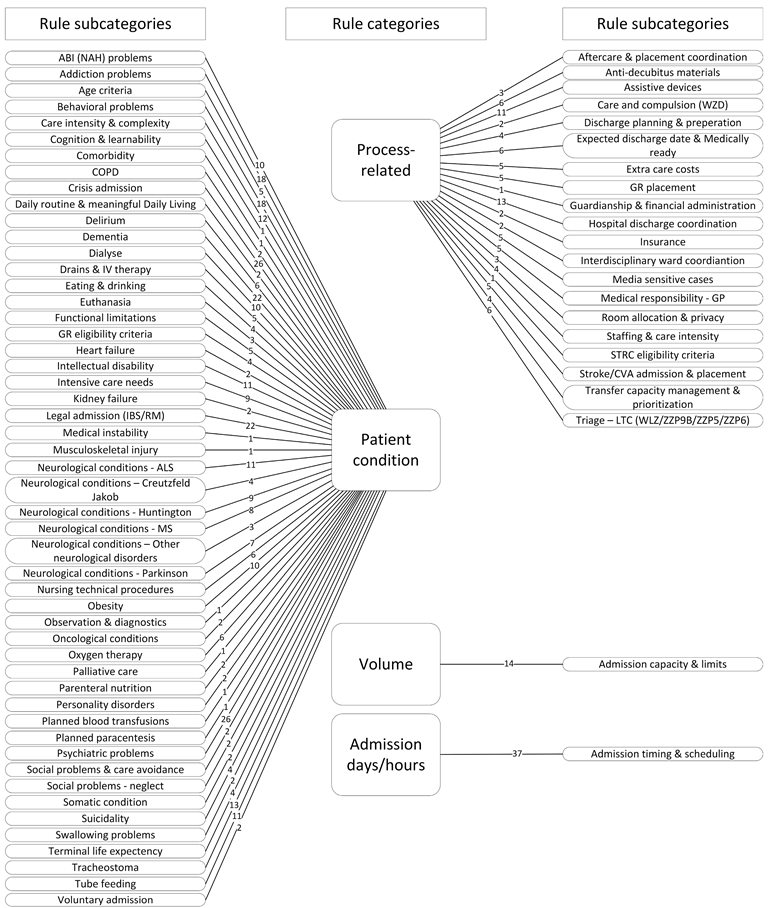
Process-related rules concern coordination and procedures; the condition part of patient rules concerns patient characteristics, conditions, and care needs; volume rules concern admission and length-of-stay limits; admission days/hours concern admission timing. The number on the arrows indicates the number of rules within this theme that belong to the specific rule category.
Appendix G. Definition of Key Concepts
| Concept | Definition |
| Coordination rules | The formal and informal procedures, routines and agreements that guide the alignment of tasks, responsibilities and information exchange between actors in interdependent care processes |
| Hospitalized patients | Individuals admitted to a hospital who require inpatient medical care and may subsequently transition to IMC |
| Intramural care (IMC) | Geriatric rehabilitation (GR), short-term residential care (STRC), hospices, and long-term care (LTC) [10] |
| Patient flow | Patient flow is how patients move through the healthcare system, enabling patient throughput [9,11,12]. |
| Bed blocking | “Patients who require admission to intramural aftercare (IMC) facilities, such as geriatric rehabilitation (GR), short-term residential care (STRC), hospices, and long-term care (LTC), remain in the hospital longer than medically necessary.” [10] |
| Admission rules hospital | It refers to the formal and informal criteria, procedures, and decision-making guidelines that determine whether, when, and how patients are admitted to a hospital for inpatient care. It includes coordination step 1: Hospital admission. |
| Transfer rules | It refers to the formal and informal criteria, procedures, and agreements that guide decisions and processes involved in transferring patients between healthcare providers or care settings. It includes coordination steps 3: Order to transfer, 4: Open the order, and 5: Registration at IMC facility. |
| Treatment and medically ready rules | It refers to the formal and informal criteria, responsibilities, and routines that guide the assessment, communication, and management of when a patient is considered medically ready for discharge or transfer from hospital to IMC. It includes coordination step 2: Medically ready. |
| Admission rules IMC | Refer to the formal and informal criteria, procedures, and decision-making guidelines that determine whether, when, and under what conditions patients are admitted to the IMC facility. It includes coordination steps 5: Registration at IMC facility and 6: Confirmation from IMC facility. |
| Hospital discharge rules | It refers to the formal and informal criteria, procedures, responsibilities, and coordination practices that guide the planning, timing, and execution of patient discharge. It includes step 7: Hospital discharge. |
| Hospital admission | Rules about whether a patient could be admitted to the hospital, only for patients who need IMC. |
| Medically ready | Rules about whether a patient is medically ready for discharge to IMC. |
| Order to transfer | This includes rules about when to send an order to the transfer department in the hospital for transfer of the patient to IMC. |
| Open the order | These rules are about the timing and order of accessing the transfer file order and reviewing the patient file to determine the required IMC type. |
| Registration at IMC facility | This includes the rules that guide the triage nurse in determining whether a specific IMC location is appropriate for the patient and which IMC organization should be contacted. |
| Confirmation from IMC facility | These rules are about whether a patient will be admitted, declined, or when consultation is needed before admission. |
| Hospital discharge | These rules are about what is needed for a patient to be discharged and discharge timing. |
| Rule category | It refers to analytically defined types of coordination rules that classify rules based on the specific aspect of the care process they regulate: Admission days/hours Patient condition Process-related Volume |
| Admission days/hours | Rules specifying the permitted days and times for admission at IMC. |
| Patient condition | Rules addressing patient-related characteristics, including medical, functional, cognitive, behavioral, or eligibility-related factors that determine admission suitability, required assessment, or care needs. |
| Process-related | Rules structuring procedural and organizational aspects of the care process, including required arrangements, responsibilities, and coordination activities before or during admission at IMC. |
| Volume | Rules specifying numerical limits on patient flow, such as the maximum number of admissions within a given time period. |
| Applying actors | Elderly care physician IMC care coordinator Medical specialist Pre-admission nurse Transfer nurse Triage nurse Ward nurse |
| Involved actors | Elderly care physician General practitioner IMC care coordinator IMC care manager IMC nurse Medical specialist Transfer nurse Triage nurse Ward nurse |
| Elderly care physician | A medical specialist responsible for the diagnosis, treatment, and overall medical management of older patients in STRC, GR, hospice, or LTC facility. |
| General practitioner | A primary care physician providing general medical care, often responsible for ongoing treatment and coordination of care before, during, or after admission. |
| IMC care coordinator | A professional responsible for coordinating care processes, ensuring alignment between different services and facilitating patient flow within the IMC setting. |
| IMC care manager | A manager at one of the IMC facilities. This professional oversees care delivery and resource allocation within the IMC facility. |
| IMC nurse | Nurse responsible for providing direct patient care and monitoring patients’ daily health status within the IMC facility. |
| Medical specialist | A physician with advanced expertise in a specific medical field, consulted for specialized diagnosis, treatment, or clinical decision-making. |
| Pre-admission nurse | A nurse involved in assessing patients prior to admission at the hospital, ensuring that necessary information and conditions are in place for safe and appropriate hospital admission. |
| Transfer nurse | A nurse coordinating patient discharge and transfer processes, including arranging follow-up care and communication between healthcare providers. |
| Triage nurse | A professional responsible for assessing patient needs and urgency, determining suitability for admission, and directing patient flow to appropriate care settings. |
| Ward nurse | A nurse providing day-to-day clinical care to patients on a ward, including treatment, monitoring, and support during their stay. |
| Flow-related rule category | Flow-related rule categories refer to analytically defined types of coordination rules that classify how rules influence the movement of patients through the care process, by specifying permissions, constraints, requirements, or priorities that shape patient flow. It includes: Administrative requirement Admission eligibility and suitability requirements Capacity and allocation constraints Consultation requirements Operational prerequisites Scheduling constraints |
| Administrative requirements | Rules defining administrative procedures and responsibilities that must be fulfilled to enable or formalize patient flow processes. |
| Admission eligibility and suitability requirements | Rules determining whether a patient is eligible, appropriate, or unsuitable for admission to a specific care setting based on clinical, behavioral, legal, demographic, social, or care-related criteria. |
| Capacity and allocation constraints | Rules addressing limitations in capacity and resource allocation that restrict the number, type, or placement of patients. |
| Consultation requirements | Rules specifying situations in which consultation with relevant professionals is mandatory before proceeding with admission at IMC or care decisions in the patient flow. |
| Operational prerequisites | Rules defining essential operational conditions or arrangements that must be in place prior to admission to the IMC facility or continuation of care within the patient flow. |
| Scheduling constraints | Rules specifying temporal conditions and timing requirements that structure admissions, discharges, or care activities. |
| Rule subcategories | It refers to analytically derived thematic groupings of coordination rules based on the content they address, such as medical conditions, care needs, organizational requirements, and social or contextual factors influencing care processes. It includes: ABI problems Addiction problems Admission capacity and limits Admission timing and scheduling Aftercare and placement coordination Age criteria Anti-decubitus materials Assistive devices Behavioral problems Care and Compulsion (WZD) Care intensity and complexity Cognition and Learnability Comorbidity COPD Crisis admissions Daily routine and Meaningful Daily Living Delirium Dementia Dialysis Discharge planning and preparation Drains and IV therapy Eating/drinking Euthanasia Expected discharge date and medically ready Extra care costs Functional limitations GR eligibility criteria GR placement Guardianship and financial administration Heart failure Hospital Discharge coordination Insurance Intellectual disability Intensive care needs Interdisciplinary ward coordination Kidney failure Legal admission (IBS/RM) Media-sensitive cases Medical instability Medical responsibility—GP Musculoskeletal injury Neurological conditions—ALS Neurological conditions—Creutzfeld Jakob Neurological conditions—Huntington Neurological conditions—MS Neurological conditions—Other neurological disorders Neurological conditions—Parkinson Nursing technical procedures Obesity Observation and diagnostics Oncological conditions Oxygen therapy Palliative care Parenteral nutrition Personality disorders Planned blood transfusions Planned paracentesis Psychiatric problems Room allocation and privacy Social problems—Care avoidance Social problems—Neglect Somatic condition Staffing and care intensity STRC Eligibility Criteria Stroke/CVA Admission and Placement Suicidality Swallowing problems Terminal life expectancy Tracheostoma Transfer capacity management and prioritization Triage—LTC (WLZ/ZZP9B/ZZP 5/ZZP 6) Tube feeding Voluntary admission |
| ABI problems | Rules addressing Acquired Brain Injury (ABI) and its implications for admission. |
| Addiction problems | Rules addressing substance use (e.g., alcohol or drugs) and its implications for admission. |
| Admission capacity & limits | Rules defining limits on number of admissions or length of stay to regulate capacity and workload. |
| Admission timing & scheduling | Rules structuring the timing and planning of patient admissions. |
| Aftercare & placement coordination | Rules guiding the organization of post-hospital care and patient placement, including coordination with IMC facilities and alignment with patient needs. |
| Age criteria | Rules specifying age-based eligibility and thresholds for admission. |
| Anti-decubitus materials | Rules concerning the use of specialized pressure-relieving equipment requiring a pump and consultation with the care team prior to admission. |
| Assistive devices | Rules concerning the availability and suitability of assistive devices needed for patient care. |
| Behavioral problems | Rules addressing behavioral or psychosocial issues that may affect care delivery, often requiring assessment, restrictions, or additional consultation. |
| Care and Compulsion (WZD) | Rules addressing care provided under the Dutch Care and Compulsion Act (WZD). |
| Care intensity & complexity | Rules addressing the level and complexity of care needs, determining whether patients can be managed within a specific care setting. |
| Cognition & Learnability | Rules addressing patients’ motivation, cognitive abilities, and capacity to participate in treatment or rehabilitation. |
| Comorbidity | Rules addressing the presence and severity of co-existing conditions, influencing patient suitability and requiring careful clinical assessment or restriction for admission. |
| COPD | Rules concerning Chronic Obstructive Pulmonary Disease (COPD) and its requirement for admission. |
| Crisis admissions | Rules governing urgent or temporary admissions in crisis situations, including prioritization, duration, and coordination of follow-up care. |
| Daily routine & Meaningful Daily Living | Rules concerning residents’ ability to independently maintain a daily routine and give meaningful structure to their day. |
| Delirium | Rules addressing the presence of delirium as a clinical condition, typically requiring stabilization and additional consultation before admission. |
| Dementia | Rules addressing dementia and associated behavioral or cognitive symptoms. |
| Dialysis | Rules addressing the need for dialysis treatment. |
| Discharge planning & preparation | Rules structuring the planning and preparation of patient discharge, including timing of ward round. |
| Drains & IV therapy | Rules concerning the presence or use of drains and intravenous therapy that require consultation prior to admission. |
| Eating/drinking | Rules addressing nutritional needs and eating or drinking-related care, requiring assessment or consultation when support is needed. |
| Euthanasia | Rules concerning euthanasia requests, including Consultation requirements prior to admission and whether euthanasia can be provided at the location. |
| Expected discharge date and medically ready | Rules concerning the determination, documentation, and monitoring of medical readiness for discharge and the expected discharge date. |
| Extra care costs | Rules concerning additional care-related costs that require consultation with the care manager prior to admission. |
| Functional limitations | Rules concerning the acceptance of residents with functional limitations in activities of daily living, mobility, cognition, communication, or behavior. |
| GR eligibility criteria | Rules defining eligibility for geriatric rehabilitation (GR), based on patient characteristics, care needs, and rehabilitation potential. |
| GR placement | Rules governing placement decisions and processes to and within geriatric rehabilitation (GR), including staffing requirements, case discussions and allocation across facilities. |
| Guardianship & financial administration | Rules addressing the presence of legal and financial arrangements, requiring clear responsibility and representation before admission. |
| Heart failure | Rules concerning heart failure that require consultation with an elderly care physician prior to admission. |
| Hospital Discharge coordination | Rules structuring the coordination and communication processes involved in hospital discharge, including alignment with RCC or IMC facilities by the transfer department. |
| Insurance | Rules addressing insurance requirements and constraints that determine eligibility for IMC admission. |
| Intellectual disability | Rules addressing the presence of intellectual disabilities and their implications for admission at IMC and required support. |
| Intensive care needs | Rules addressing high or intensive care needs that may exceed standard care capacity, often requiring additional assessment or restricting admission. |
| Interdisciplinary ward coordination | Rules structuring collaboration and coordination between healthcare professionals within the ward. |
| Kidney failure | Rules concerning kidney failure that require consultation with an elderly care physician prior to admission. |
| Legal admission (IBS/RM) | Rules governing legally mandated or crisis-related admissions. |
| Media-sensitive cases | Rules addressing admissions involving media sensitivity, requiring additional consultation with the care team. |
| Medical instability | Rules concerning the medical instability of patients and whether it is allowed or not for admission at IMC. |
| Medical responsibility—GP | Rules addressing the role and responsibility of the general practitioner in providing and coordinating medical care during and after admission at IMC. |
| Musculoskeletal injury | Rules concerning musculoskeletal injuries as a criterion for admission to the location. |
| Neurological conditions—ALS | Rules addressing amyotrophic lateral sclerosis (ALS) and its implications for admission. |
| Neurological conditions—Creutzfeld Jakob | Rules addressing Creutzfeldt-Jakob disease and its implications for admission. |
| Neurological conditions—Huntington | Rules addressing Huntington disease and its implications for admission. |
| Neurological conditions—MS | Rules addressing multiple sclerosis (MS) and its implications for admission. |
| Neurological conditions—Other neurological disorders | Rules addressing other neurological or neurocognitive disorders, such as Korsakov syndrome, young-onset dementia, or delirium. |
| Neurological conditions—Parkinson | Rules addressing Parkinson disease and its implications for admission. |
| Nursing technical procedures | Rules concerning nursing technical procedures such as IV lines, drains, VAC therapy. |
| Obesity | Rules addressing obesity that may impact care needs, requiring additional assessment or consultation before admission at IMC. |
| Observation & diagnostics | Rules addressing observation and diagnostic assessment to determine eligibility for admission. |
| Oncological conditions | Rules addressing oncological conditions and recent cancer-related treatments, requiring additional assessment or consultation before admission at IMC. |
| Oxygen therapy | Rules addressing the use of oxygen therapy, particularly at higher levels, requiring additional consultation before admission. |
| Palliative care | Rules concerning palliative care. |
| Parenteral nutrition | Rules concerning parenteral nutrition administered through a central venous line. |
| Personality disorders | Rules concerning personality-related problems that may affect admission or care. |
| Planned blood transfusions | Rules concerning planned blood transfusions in patients considered for admission. |
| Planned paracentesis | Rules concerning planned paracentesis in patients considered for admission. |
| Psychiatric problems | Rules addressing the presence and severity of psychiatric conditions affecting eligibility for admission, including exclusion at specific IMC facilities or the need for consultation with a professional. |
| Room allocation & privacy | Rules defining patient room assignment and privacy, including gender separation and special arrangements for couples. |
| Social problems—Care avoidance | Rules specifying how situations involving care avoidance and related social problems are assessed and when consultation is required prior to admission at IMC. |
| Social problems—Neglect | Rules specifying how situations involving neglect and related social problems are assessed and when consultation is required prior to admission. |
| Somatic condition | Rules concerning rehabilitation for somatic conditions, such as rehabilitation following a stroke. |
| Staffing & care intensity | Rules specifying the required level of care intensity and staffing, including whether patients can be managed by a single caregiver and when additional staffing needs must be assessed prior to admission at IMC. |
| STRC Eligibility Criteria | Rules defining eligibility for short-term residential care (STRC), including requirements related to expected discharge destination, rehabilitation potential, and care objectives. |
| Stroke/CVA Admission & Placement | Rules defining the prioritization, timing, and placement of patients with stroke (CVA), including admission priority, rapid initiation of rehabilitation, and limits to placement capacity. |
| Suicidality | Rules concerning suicidality or suicidal behavior in patients considered for admission. |
| Swallowing problems | Rules addressing the presence of swallowing disorders and when consultation is required prior to admission to ensure safe and appropriate care. |
| Terminal life expectancy | Rules addressing patients’ life expectancy and end-of-life considerations, including eligibility for admission, palliative care needs, and when medical or organizational consultation is required. |
| Tracheostoma | Rules specifying how the presence of a tracheostoma is assessed and when multidisciplinary consultation is required prior to admission. |
| Transfer capacity management & prioritization | Rules governing the prioritization, allocation, and processing of transfer requests, taking into account factors such as available capacity, urgency, timing, and operational workload. |
| Triage—LTC (WLZ/ZZP9B/ZZP 5/ZZP 6) | Rules specifying how long-term care indications (WLZ) and care intensity packages (e.g., ZZP9B) affect admission eligibility, including criteria, exclusions, and factors requiring additional assessment. |
| Tube feeding | Rules concerning tube feeding and associated equipment, such as feeding pumps, in patients considered for admission. |
| Voluntary admission | Rules defining that admission is allowed when it is based on the patient’s voluntary consent and willingness to be admitted. |
References
- Bidhandi, H.M.; Patrick, J.; Noghani, P.; Varshoei, P. Capacity planning for a network of community health services. Eur. J. Oper. Res. 2019, 275, 266–279. [Google Scholar] [CrossRef] [Scilit]
- United Nations. World Population Prospects 2022: Summary of Results; United Nations-Department of Economic and Social Affairs: New York, NY, USA, 2022. [Google Scholar]
- WHO. Ageing and Health. Available online: https://www.who.int/news-room/fact-sheets/detail/ageing-and-health (accessed on 19 September 2025).
- Zychlinski, N.; Mandelbaum, A.; Momcilovic, P.; Cohen, I. Bed Blocking in Hospitals Due to Scarce Capacity in Geriatric Institutions-Cost Minimization via Fluid Models. Manuf. Serv. Oper. Manag. 2020, 22, 396–411. [Google Scholar] [CrossRef] [Scilit]
- Buchan, J.; Catton, H.; Shaffer, F. Sustain and Retain in 2022 and Beyond: The Global Nursing Workforce and the COVID-19 Pandemic; International Centre on Nurse Migration: Philadelphia, PA, USA, 2022; pp. 1–71. [Google Scholar]
- World Health Organization. Health and Care Workforce in Europe: Time to Act; World Health Organization Regional Office for Europe: Copenhagen, Denmark, 2022. [Google Scholar]
- McCarthy, C.; Boniol, M.; Daniels, K.; Cometto, G.; Diallo, K.; Lawani, A.; Campbell, J. State of the World’s Nursing 2020: Investing in Education, Jobs, and Leadership; World Health Organization: Geneva, Switzerland, 2020. [Google Scholar]
- Chaussalet, T.J.; Xie, H.; Millard, P. A closed queueing network approach to the analysis of patient flow in health care systems. Methods Inf. Med. 2006, 45, 492–497. [Google Scholar] [CrossRef] [Scilit]
- Hall, R. Patient Flow: Reducing Delay in Healthcare Delivery; International Series in Operations Research & Management Science; Springer: New York, NY, USA, 2013. [Google Scholar] [CrossRef] [Scilit]
- Janssens, J.M.F.; van der Ham, A.V.; Ruwaard, D.; Merode, F.V. Bed Blocking by Hospitalized Patients Awaiting Admission to Intramural Aftercare: A Case Study on Transfer Coordination. Healthcare 2025, 13, 2038. [Google Scholar] [CrossRef] [Scilit] [PubMed]
- Benjamin, E.; Jacelon, C. An analysis of the concept of patient flow management. Nurs. Forum 2022, 57, 429–436. [Google Scholar] [CrossRef] [Scilit] [PubMed]
- De Freitas, L.; Goodacre, S.; O’Hara, R.; Thokala, P.; Hariharan, S. Interventions to improve patient flow in emergency departments: An umbrella review. Emerg. Med. J. 2018, 35, 626–637. [Google Scholar] [CrossRef] [Scilit] [PubMed]
- Lawrence, P.R.; Lorsch, J.W. Differentiation and integration in complex organizations. Adm. Sci. Q. 1967, 12, 1–47. [Google Scholar] [CrossRef] [Scilit]
- Galbraith, J.R. Organization design: An information processing view. Interfaces 1974, 4, 28–36. [Google Scholar] [CrossRef] [Scilit]
- Peeters, R.E.J. All That Glitters Isn’t Gold: Examining How and Why Organizations Collaborate to Address Wicked Problems in Healthcare. Doctoral Thesis, Maastricht University, Maastricht, The Netherlands, 2025. [Google Scholar]
- van Merode, F.; Boersma, H.; Tournois, F.; Winasti, W.; Passos, N.A.R.D.; Ham, A.V. Using Entropy Metrics to Analyze Information Processing Within Production Systems: The Role of Organizational Constraints. Logistics 2025, 9, 46. [Google Scholar] [CrossRef] [Scilit]
- van der Voort, M.R.; Vijverberg, A.R.; van Merode, F. Hospital Flow, in International Examples of Lean in Healthcare. In International Examples of Lean in Healthcare; Mead, E., Stark, C., Thompson, M., Eds.; Productivity Press: New York, NY, USA, 2022; pp. 41–58. [Google Scholar]
- Liberopoulos, G. Production Release Control: Paced, WIP-Based or Demand-Driven? Revisiting the Push/Pull and Make-to-Order/Make-to-Stock Distinctions. In Handbook of Stochastic Models and Analysis of Manufacturing System Operations; Smith, J.M., Tan, B., Eds.; Springer: New York, NY, USA, 2013; pp. 211–247. [Google Scholar]
- Haraden, C.; Resar, R. Patient flow in hospitals: Understanding and controlling it better. Front. Health Serv. Manag. 2004, 20, 3–15. [Google Scholar] [CrossRef] [Scilit]
- Winasti, W.; Elkhuizen, S.; Berrevoets, L.; van Merode, G.; Berden, H. Inpatient flow management: A systematic review. Int. J. Health Care Qual. Assur. 2018, 31, 718–734. [Google Scholar] [CrossRef] [Scilit] [PubMed]
- Schuurmans, J.J.; Felder, M.; Bal, R.; Wallenburg, I. Reorganizing medical care for older persons in times of scarcity: A cybernetics analysis of work pressure and organizational change. Soc. Sci. Med. 2025, 366, 117634. [Google Scholar] [CrossRef] [Scilit] [PubMed]
- Mintzberg, H. Structure in Fives: Designing Effective Organizations; Prentice-Hall: Englewood Cliffs, NJ, USA, 1983. [Google Scholar]
- Stichting Amphia Breda. Jaarverslag 2025 Stichting Amphia Breda; Stichting Amphia Breda: Breda, The Netherlands, 2026. [Google Scholar]
- Jaarrekening Surplus. Available online: https://surplus.nl/wp-content/uploads/2026/04/Jaarrekening-2025-Stichting-Surplus-incl.-controleverklaring.pdf (accessed on 19 September 2025).
- Jaarverslag Thebe. Available online: https://webshare.zenya.work/802n79bb6q115nyr/Document.aspx?websharedocumentid=4af642fc-8400-4e05-9246-63c8f0156324 (accessed on 19 September 2025).
- Jaarverantwoording Avoord. Available online: https://www.avoord.nl/media/uploads/pdf/3/3/332_jaarverantwoording-avoord-2025.pdf (accessed on 19 September 2025).
- Jaarbeeld Mijzo. Available online: https://cdn.prod.website-files.com/68088e7e210187edc0711385/69e0f372e5ce83d2dee602fd_Mijzo%20jaarbeeld%202025_def.pdf (accessed on 19 September 2025).
- Jaarverslaggeving De MARQ. Available online: https://www.demarq.nl/wp-content/uploads/Jaarverslaglegging-De-MARQ-2025.pdf (accessed on 19 September 2025).
- Van der Ham, A.; Van Raak, A.; Ruwaard, D.; van Merode, F. Exploring changes in integration, differentiation, rules, coordination and performance following the introduction of a hospital planning centre: A case study. J. Health Organ. Manag. 2022, 36, 158–178. [Google Scholar] [CrossRef] [Scilit] [PubMed]
- Elo, S.; Kyngas, H. The qualitative content analysis process. J. Adv. Nurs. 2008, 62, 107–115. [Google Scholar] [CrossRef] [Scilit] [PubMed]
- van der Ham, A.; van Raak, A.; Ruwaard, D.; van Merode, F. Explaining integration and differentiation by identifying the rules and coordination mechanisms in a hospital’s logistical system. J. Health Organ. Manag. 2021, 35, 66–84. [Google Scholar] [CrossRef] [Scilit] [PubMed]
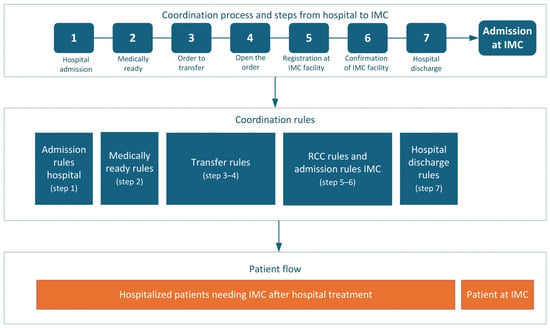
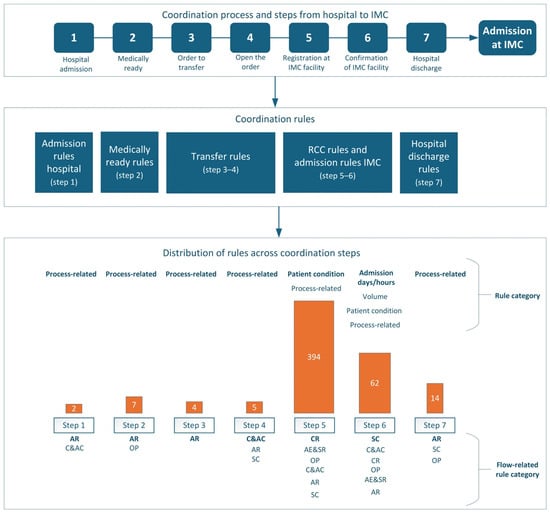
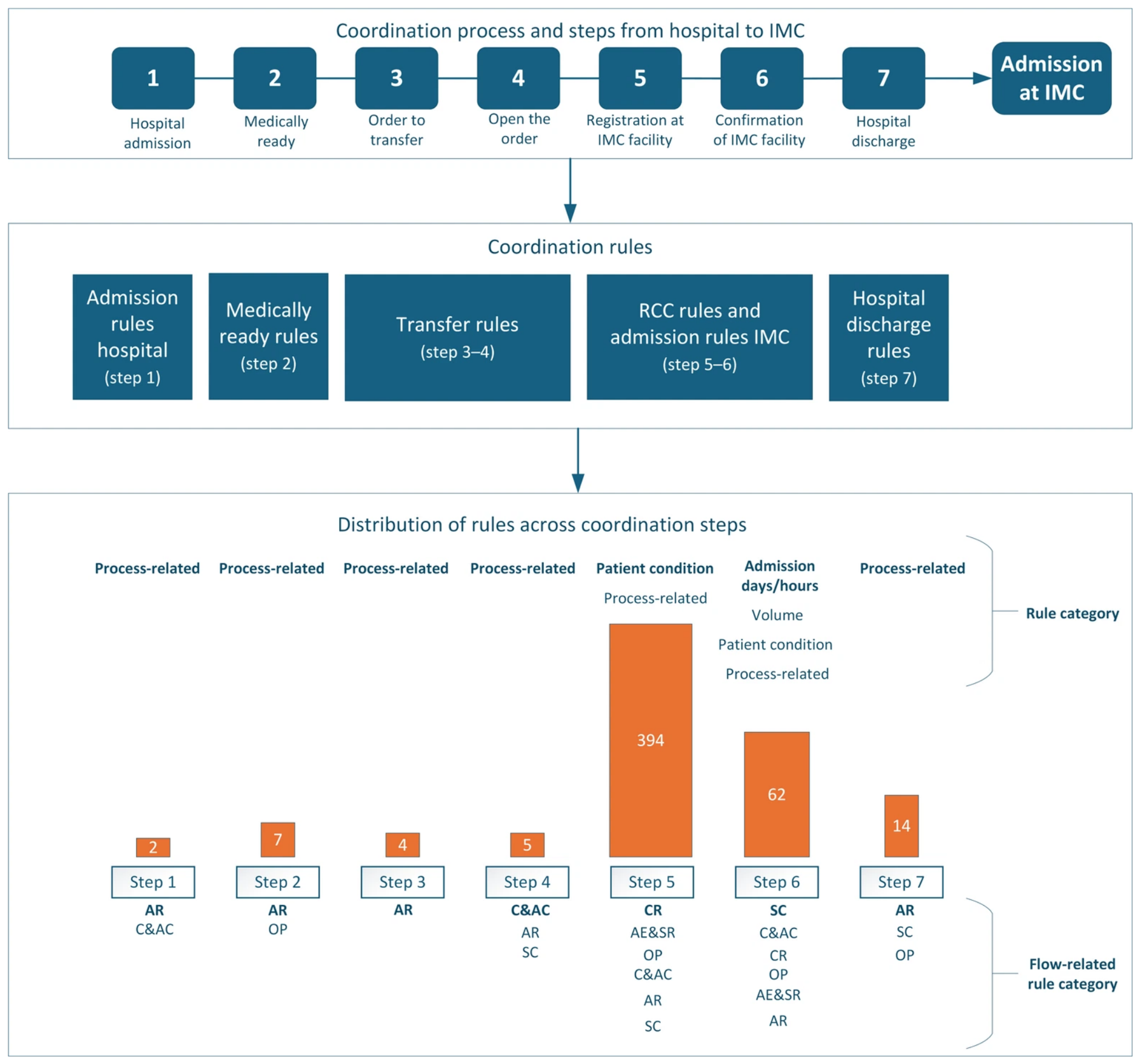

Disclaimer/Publisher’s Note: The statements, opinions and data contained in all publications are solely those of the individual author(s) and contributor(s) and not of MDPI and/or the editor(s). MDPI and/or the editor(s) disclaim responsibility for any injury to people or property resulting from any ideas, methods, instructions or products referred to in the content. |
© 2026 by the authors. Licensee MDPI, Basel, Switzerland. This article is an open access article distributed under the terms and conditions of the Creative Commons Attribution (CC BY) license.