


Abstract
Background/Objectives: The rise in unhealthy habits such as a sedentary lifestyle, coupled with increasing obesity rates among children and young people, presents a health problem that must be addressed from various perspectives. Thus, the educational context, and specifically physical education, offers a prime setting for implementing programmes that reduce the levels of physical inactivity and improve pupils’ nutritional behaviours. Therefore, the aim of this study was to conduct a systematic review to collect and analyse the scientific literature addressing the effects of school-based intervention programmes on physical activity and nutrition. Methods: To this end, a systematic review was carried out, based on the PRISMA method, in the ERIC, PubMed, Scopus, SportDiscus and Web of Science databases, analysing the scientific literature that included school-based interventions combining physical activity and nutrition. A total of 410 articles were identified, with 16 studies ultimately included following the application of the inclusion and exclusion criteria. Results: The results indicated that the implementation of school programmes combining physical activity and nutrition can bring benefits in both areas, or at least in one of them. Similarly, several of the studies analysed showed improvements within the community, which helped to increase health literacy. Conclusions: The main conclusion is that the educational setting can serve as a platform for implementing programmes that improve the physical activity and nutritional habits of pupils and their wider environment, and, crucially, enhance health literacy.
1. Introduction
Currently, there is an increase in sedentary lifestyles and unhealthy habits among young people, as indicated by the World Health Organization (WHO) [1]. In this regard, the educational context in general, and physical education (PE) in particular, offers favourable conditions for addressing health-related issues through programmes that combine nutrition and physical activity (PA) [2,3,4].
The educational context can be one of the key elements for promoting physical and nutritional health through programmes that combine these aspects, but establishing a link with the community and educational policies is essential for this to have real and sustainable effects [2,5]. Given the possibility of incorporating health-based strategies into PE, due to its curricular nature, many countries have chosen to integrate physical and health literacy into the subject itself as a further context for intervention within comprehensive PA programmes [6]. With regard to educational policies, a recent study confirms the value of incorporating lessons on nutrition and PA into the educational curriculum, alongside other complementary activities, to increase health literacy and improve anthropometric habits and values [7].
Furthermore, with regard to the implementation of PA and nutrition programmes, there are a number of key factors that determine whether the programme developed is capable of bringing about improvements in participants and whether these improvements can be attributed to the programme [8]. These key factors are adherence, acceptability, and the barriers and facilitators to the implementation of the intervention.
For instance, several school-based nutrition and PA programmes have evaluated their interventions not only for overall effectiveness but also in terms of implementation fidelity, acceptability, barriers, and facilitators [9,10,11].
These concepts can be considered the foundations of the sustainability of interventions. Regarding the feasibility of implementing these programmes in schools, the presence of school administrators who are sensitive to these issues and of teaching staff with the necessary skills and motivation to promote interventions based on nutrition and PA has a positive impact on their sustainability [12]. In this regard, in addition to the programme’s own characteristics, teachers’ competencies are fundamental to its implementation. Thus, a study conducted with 203 schoolchildren, in which an intervention proposal based on team pentathlon was implemented, revealed that the teacher themselves and their methodology, together with the resources employed, were the determining factors for a significant increase in PA among the pupils [13].
In line with the sustainability of interventions, a recent systematic review addressing barriers and facilitators in the implementation of PA and nutrition programmes for adults concluded that social support received from the context is key to the success of the intervention [8]. This is also observed in a study in an educational setting involving 1630 primary school pupils in China, in which a 12-month programme involving families and pupils was implemented, concluding that following the programme, the pupils had improved in terms of weight, dietary intake and higher levels of PA compared to the control group [14].
Thus, and in terms of programme effectiveness, school-based PA interventions tend to have a greater impact in longer-term programmes [15], whilst the effectiveness of school-based nutrition interventions should be directed towards a multi-component approach [16]. The existing literature on this topic focuses on the effectiveness of nutrition or PA programmes [15], but there are little data on their integration through programmes in an educational context, despite the fact that recent publications have called for this [17] and others have highlighted the value of a multi-component approach [18]. The aim of this study was therefore to conduct a systematic review to compile, analyse and describe the scientific literature addressing the effects of school-based intervention programmes on PA and nutrition.
2. Materials and Methods
A systematic review was conducted in accordance with the PRISMA guidelines [19] (Supplementary Material S1) for the identification, selection and synthesis of the included studies. Furthermore, the PICO strategy [20] was used to define the eligibility criteria, and the methodological recommendations for systematic reviews proposed by Moher et al. [21] were taken into account. Studies conducted between 2020 and 2026 were analysed.
The review methods were defined prior to the start of the study and registered in the International Prospective Register of Systematic Reviews (PROSPERO) under identification number CRD420261394552, available at https://www.crd.york.ac.uk/PROSPERO/view/CRD420261394552 (accessed on 17 May 2026).
2.1. Eligibility Criteria
The inclusion criteria were as follows:
- (a)
- Availability of the full text.
- (b)
- Original articles (excluding systematic reviews, meta-analyses and protocols).
- (c)
- Written in English, Spanish or Portuguese.
- (d)
- Studies conducted in school-age populations (5–18 years) that included educational interventions combining nutrition education and PA.
- (e)
- Studies evaluating outcomes related to implementation, effectiveness, or both.
- (f)
- Experimental, quasi-experimental or implementation studies (including qualitative or mixed-methods approaches when addressing implementation processes).
The exclusion criteria were based on the absence or omission in the reviewed articles of the inclusion criteria listed above. Consequently, studies that addressed only PA or only nutrition without a combined component, observational studies without an intervention, and research that did not assess variables related to the implementation or effects of the intervention were excluded. The application of these criteria ensured the selection of studies aligned with the objective of analysing multi-component school-based interventions and their implementation.
Studies that did not meet the eligibility criteria defined for the review were excluded. Specifically, systematic reviews, meta-analyses, scoping reviews or corrections, such as Navidad et al. (2021) [15]; protocols without empirical results, such as [22]; studies conducted outside the school context, such as Ashton et al. (2024) [23]; research involving university students or adults, such as Al-Qahtani et al. (2022) [24] or Hoosen et al. (2024) [25]; observational studies without intervention, such as Pérez-Mármol et al. (2021) [26]; interventions focused exclusively on nutrition, such as Michael & Talias (2024) [27], or exclusively on PA, such as [28]; qualitative studies not linked to a specific intervention, such as Mohammadi et al. (2021) [29]; methodological or planning studies without implementation results, such as O’Byrne et al. (2024) [30]; specific clinical protocols or interventions, such as Zhang et al. (2024) [31]; and programmes developed mainly in out-of-school or non-curricular contexts, such as Weaver et al. (2024) [32] (Supplementary Material S2).
In order to present information that met the quality standards of high-impact journals, all the documents reviewed were drawn from the scientific literature, excluding the grey literature or non-indexed publications.
2.2. Search Strategy
The literature search was conducted in accordance with the PRISMA guidelines [19]. To this end, a search strategy was designed based on a combination of terms related to school-based interventions, nutrition, PA and implementation. The search query used was as follows:
(“primary education” OR “primary school” OR “elementary school” OR “basic education” OR “secondary school” OR “compulsory secondary education” OR “obligatory secondary education” OR “secondary education”) AND (school* OR “school-based” OR “educational setting*” OR classroom* OR “physical education” OR “after-school” OR “school programme*”) AND ((“physical activity” OR exercise OR sport* OR “physical education”) AND (nutrition OR diet* OR “nutrition education” OR “healthy eating”)) AND ((intervention OR experimental OR quasi-experimental OR “randomised controlled trial” OR RCT OR “controlled trial”) AND (implementation OR “implementation science” OR “programme implementation” OR fidelity OR adherence OR “process evaluation” OR “implementation fidelity” OR barrier* OR facilitator* OR acceptability OR feasibility OR “reach” OR “dose delivered” OR “dose received” OR adoption OR “RE-AIM” OR “CFIR” OR “implementation framework*” OR “mixed methods”)).
Searches were conducted in the ERIC, PubMed, Scopus, SportDiscus and Web of Science databases during the period from 6 November 2025 to 27 February 2026. In addition, filters were applied based on publication type, date range, and languages. The search strategy was adjusted to suit each database.
Following the retrieval of records, duplicates were removed and an initial screening of the results was carried out.
2.3. Study Selection and Data Processing
In the first phase, titles and abstracts were reviewed to identify potentially relevant studies [33]. Subsequently, the full texts of the selected articles were read to verify compliance with the inclusion criteria.
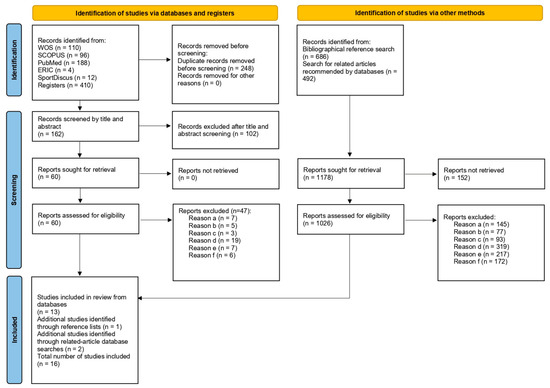
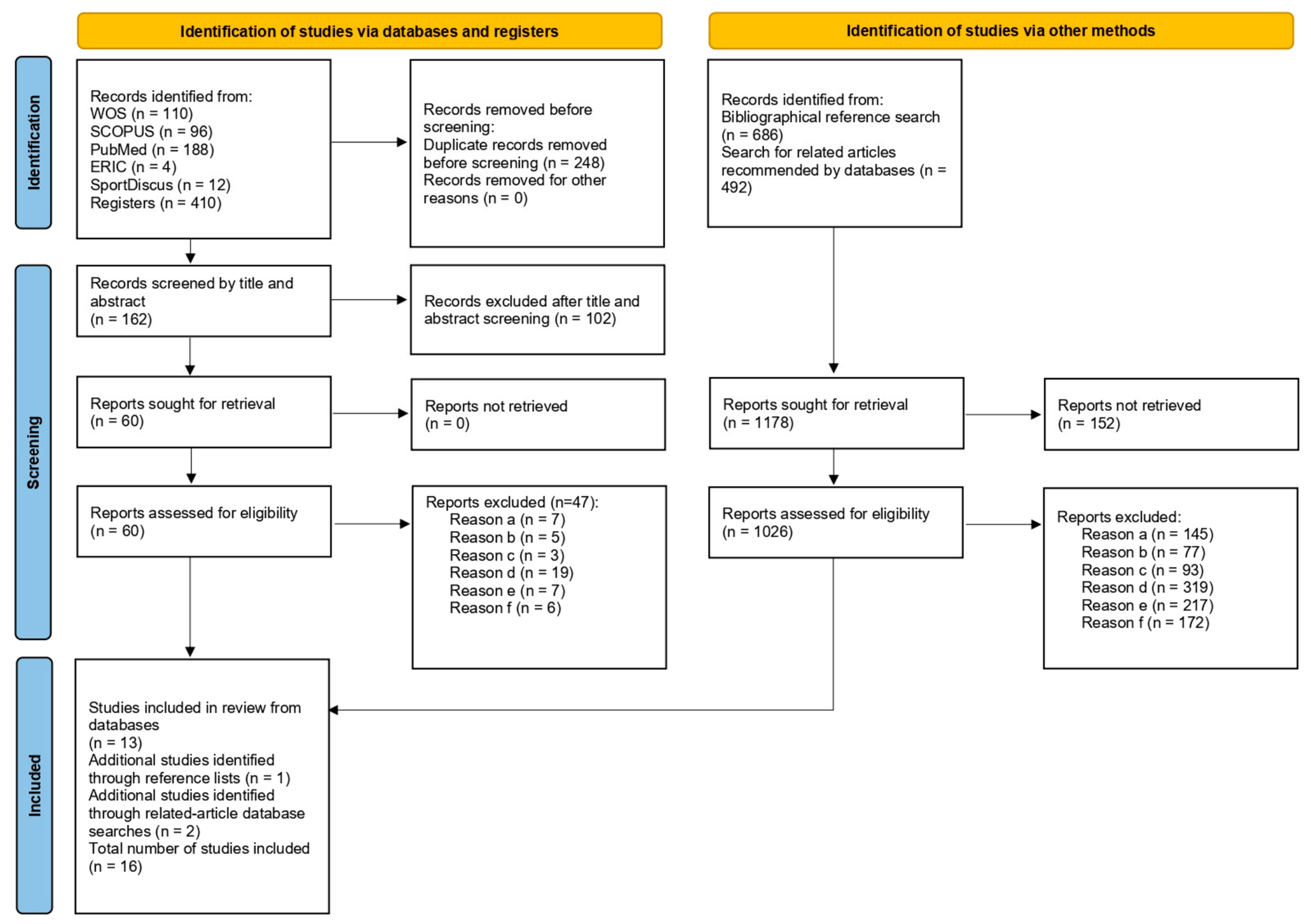
The selection process was carried out independently by two researchers. In the event of discrepancies, these were resolved by consensus or, where necessary, with the intervention of a third researcher, ensuring the objectivity of the process [34]. The study selection flow is presented in Figure 1.
Figure 1.
Flow diagram (PRISMA, 2020) (Supplementary Material S3).
2.4. Methodological Quality and Risk-of-Bias Assessment
The methodological quality of the included studies was assessed using the Standard Quality Assessment Criteria tool [35]. This tool was retained because the review included studies with different methodological designs, including quantitative, quasi-experimental, mixed-methods, protocol/design and implementation-focused studies. Scores were calculated as proportions of the maximum applicable score. Two researchers independently analysed each study, considering aspects such as design, sample, methods, analysis and presentation of results.
The items were scored according to the degree of compliance. Thus, 2 points were awarded where the criterion was fully met, 1 point where compliance was partial, and 0 points where it was not met. Where the criterion was not applicable, NA’ was indicated. The final score for the quantitative studies was calculated using the formula: [(‘satisfactory items’ × 2) + (‘partially satisfactory items’ × 1)/28 − (‘not applicable items’ × 2)]. The results for the qualitative studies were obtained using the formula: [(‘satisfactory items’ × 2) + (‘unsatisfactory items’ × 1)/20]. The results were expressed on a scale from 0 to 1.
The level of agreement between assessors was determined using the intraclass correlation coefficient, yielding a value of 0.876 (p < 0.001), which indicated a good level of agreement [36]. A minimum cut-off point of 65% was established for the inclusion of studies in the final analysis with the aim of setting a conservative standard regarding the quality of the included studies.
In addition, a complementary domain-based risk-of-bias assessment was conducted according to study design. Randomised controlled trials and cluster-randomised controlled trials were assessed using the revised Cochrane risk-of-bias tool for randomised trials, RoB 2 [37]. For cluster-randomised studies, the cluster-specific version of RoB 2 was applied. Non-randomised, quasi-experimental and pre–post-intervention studies were assessed using ROBINS-I [38]. Studies focused on protocols, intervention design or implementation processes without a primary causal effect estimate were not assessed with RoB 2 or ROBINS-I and were appraised using Kmet et al. [35] and considered narratively.
The risk-of-bias assessment was conducted at outcome level, focusing on the main outcome or set of outcomes included in the synthesis. The assessment was not used as an exclusion criterion, but rather to interpret the robustness of the evidence. Disagreements between reviewers were resolved by consensus and, when necessary, by consultation with a third reviewer (Supplementary Material S4).
2.5. Data Extraction
Data extraction was carried out in accordance with the PRISMA guidelines [19]. Two researchers independently collected relevant information from each study, including methodological characteristics, variables analysed, instruments used, and main results. In the event of discrepancies, a third researcher intervened to resolve them. The extracted data were organised into summary tables, which present the study characteristics and the variables assessed, respectively.
3. Results
3.1. Study Selection
The initial database search identified a total of 410 records. After removing 248 duplicate records, 162 records were screened based on their title and abstract. Of these, 102 records were excluded because they did not meet the eligibility criteria. Sixty full-text reports were assessed for eligibility, of which 47 were excluded. Thirteen studies from database searches were included. One additional study was identified by reviewing reference lists, and a further two studies were identified through searches for related articles in the databases. Consequently, 16 studies were included in the final synthesis (Figure 1).
3.2. Methodological Quality and Risk of Bias
The methodological quality scores assessed using Kmet et al. ranged from 0.69 to 0.91, indicating moderate to high methodological quality across the included studies (Table 1). The level of agreement between assessors was 0.876 (p < 0.001), indicating a good degree of agreement [36].
Table 1.
Quality assessment of the studies.
Overall, the studies demonstrated adequate methodological quality, although limitations were identified in some cases relating to sample size, the duration of interventions or the absence of standardised measures of implementation.
The supplementary assessment using the RoB 2 method revealed that several cluster-randomised trials presented ‘some concerns’ or ‘low risk’ overall, whilst two studies were considered to present a ‘high risk’ of bias [46,49]. The main concerns were related to incomplete reporting of allocation procedures, lack of blinding inherent to school-based interventions, missing outcome data, post-randomisation exclusions, use of self-reported behavioural outcomes and variability in intervention implementation.
The ROBINS-I assessment showed a higher risk of bias among non-randomised and quasi-experimental studies. Most studies were judged as having serious or critical risk of bias, mainly due to confounding, selection of participants, lack of random allocation, missing data, reliance on self-reported outcomes and limited availability of prespecified protocols. These findings were considered when interpreting the strength of the evidence, particularly for anthropometric outcomes and causal effectiveness claims.
Table 2 summarises the main methodological and design characteristics of the included studies. Overall, the studies analysed showed considerable heterogeneity in terms of methodological approaches, types of intervention and contexts of application. Furthermore, quasi-experimental quantitative studies or randomised controlled trials predominated, although research using mixed methodologies and studies focused on the evaluation of implementation processes were also identified [10,11,44].
Table 2.
Main characteristics of the study sample.
All interventions took place in schools, at primary and secondary level, with participants aged between 6 and 18 years. Regarding the design of the interventions, a general trend was observed towards multi-component programmes combining nutrition education and the promotion of PA, sometimes incorporating behavioural, digital or family components [9,46,47]. The duration of the interventions varied, ranging from brief programmes lasting a few weeks to prolonged interventions lasting several months or even including follow-up. Given the substantial methodological and clinical heterogeneity among the included studies, a meta-analysis was not conducted. Consequently, the I2 statistic was not calculated, as the included studies did not provide sufficiently comparable effect estimates for the same outcomes, time points, populations and intervention contrasts.
Table 3 presents the variables analysed, the instruments used and the main results of the included studies, enabling the identification of the dimensions assessed in each intervention. In general, the studies addressed a combination of behavioural, cognitive and anthropometric variables, with frequent measurements relating to dietary habits, levels of PA and nutritional status [39,44,47]. Additionally, several studies incorporated cognitive and attitudinal variables, such as knowledge of nutrition or attitudes towards healthy lifestyles [41,45,50].
Table 3.
Treatment variables and main outcomes.
Furthermore, a significant group of studies focused on evaluating implementation, including aspects such as programme fidelity, acceptability, barriers and facilitators, as well as their sustainability within the school context [9,11]. This approach complements effectiveness analyses, providing key information on the feasibility and scalability of the interventions.
In terms of outcomes, most studies reported improvements in at least one of the dimensions assessed, particularly in eating habits, levels of PA or health-related knowledge [44,46,50]. However, the evidence on changes in anthropometric indicators, such as Body Mass Index (BMI), is more variable, suggesting a need for longer-term or more intensive interventions to achieve sustained effects [39,40].
Due to the heterogeneity in study design, intervention duration, age group, outcome measures and reporting of effect estimates, the findings were synthesised narratively. The synthesis was structured according to intervention duration. Shorter interventions (up to 12 weeks) [45,49,50] tended to report improvements mainly in knowledge, attitudes or selected behavioural outcomes, but provided limited evidence of anthropometric change. Medium-duration interventions (from 3 months to one school year) [39,40,41,42,43,44,47,51] more frequently reported changes in dietary behaviours, PA or sedentary behaviour, although effects on BMI and weight status were inconsistent. Longer interventions (one year or more than one year) [9,46,48] appeared more suitable for examining sustainability, school capacity and multilevel implementation processes, but their effects were strongly influenced by contextual and organisational factors.
Overall, the results showed that school-based interventions combining nutrition education and the promotion of PA tended to have positive effects, particularly on behavioural and cognitive variables. However, the lack of data on effect size or heterogeneity in study designs, measures used and dimensions assessed makes direct comparison between studies difficult. Furthermore, the inclusion of studies focusing on implementation highlighted the importance of contextual and organisational factors for the success of interventions, emphasising the role of the school environment, available resources and institutional support in the adoption and sustainability of programmes [9,10,11,49].
4. Discussion
The aim of this review was to analyse school-based programmes combining PA and nutrition, considering both their reported effects and the extent to which implementation-related outcomes were described. Based on the findings presented in the results, several notable elements can be identified in the interventions reviewed.
Firstly, it was observed that the studies analysed had a positive and significant impact in terms of PA or anthropometric measures [10,49,51], nutrition [41,42,50] or both variables [39,40,43,44,45,46,47,48], although the results were inconsistent in terms of the variables analysed. This aligns with and reinforces the idea put forward by previous research regarding the potential of PE and PA in the school context to improve habits related to these variables [3,4,6,14,17,61]. It therefore provides a relevant context for meaningfully addressing the rise in unhealthy habits highlighted by the WHO [1].
The studies also found improvements in community culture and capacity to promote healthy lifestyles [9,11,45,51]. These findings reinforce the conclusions of recent research highlighting the value of the educational context in promoting healthy lifestyles and increasing health literacy, the impact of which extends not only to pupils but also to their wider environment [2,5,6,8]. In this regard, studies indicating improvements that can be extrapolated to the community context or culture are directly linked to the competence of teachers and to teams of educational professionals who are aware of and committed to improving health and health literacy [12,13].
In the same way, several studies analysed the feasibility of programme implementation, sustainability, fidelity, and acceptability, as well as barriers and facilitators [9,11,45].
In this context, barriers such as the time required to implement the initiatives or the academic workload were identified, while institutional support, instructional design, community involvement, and a committed and well-prepared faculty were identified as key facilitators for these programmes [9,11,45]. These implementation factors are fundamental to the sustainability and success of interventions, which are closely related to the findings of previous studies [7,12].
On the other hand, studies that found improvements in anthropometric and/or PA-related aspects [10,49,51], those yielding positive data on nutrition or dietary habits [41,42,50], and those indicating improvements in both PA and nutrition [39,40,43,44,45,46,47,48] were consistent with the existing literature in terms of efficacy. In this regard, it can be noted that those studies that improved or aimed to improve variables related to PA, anthropometric measurements or sporting habits increased their effectiveness in longer-term programmes [15] and with greater contextual involvement [8,14]. With regard to programmes aimed at improving, or which did improve, dimensions related to nutrition or dietary habits require a more holistic approach [6,16], incorporating satisfaction with contextual and emotional [42] or cognitive [41,50] variables, with social and institutional support again being relevant to promote the success of the intervention [8,14]. This is consistent with previous reviews that focus on obesity prevention [18]. With regard to the duration of the interventions, it is worth noting that significant improvements were observed across a range of variables in all of them. Longer-term interventions [9,46,48], including those of medium duration [39,40,41,42,43,44,47,51], showed more profound significant changes in anthropometric measures, community culture, and nutritional and physical activity habits. In particular, the longer-term interventions [9,46,48] demonstrated greater sustainability, implementability and influence on the context. This is consistent with the previous literature regarding the greater effectiveness of longer-term programmes [15].
The findings presented in this systematic review should be interpreted with caution due to the limitations of the research. Although numerous studies report effects on health, dietary or PA variables, not all describe implementation-related aspects with sufficient precision. In many cases, information on fidelity, dose administered, reach, adoption, maintenance, costs or contextual barriers is limited or heterogeneous, making it difficult to draw direct comparisons between studies and to draw firm conclusions about the determinants of effectiveness. In addition, the assessment of the risk of bias in non-randomised studies indicated a risk of bias ranging from serious to critical. No minimum intervention dose or duration was established as an eligibility criterion. Although this allowed the review to capture the diversity of school-based programmes combining PA and nutrition, it also increased heterogeneity and limits the strength of cross-study comparisons. To address this issue, the narrative synthesis was structured according to intervention duration, study focus and outcome domain.
This lack of homogeneity reinforces the need to systematically incorporate implementation indicators into future research. In this regard, it should be noted that the study of implementation factors and the effectiveness of the studies was conducted in a general manner, incorporating aspects relating to BMI, screen time, frequency of PA, nutritional habits, and emotional or cognitive variables, amongst other issues. Consequently, the systematic review does not focus on a single variable, but rather addresses various factors present in the analysed studies. This provides a more comprehensive view of these variables but prevents a more concrete and specific focus on any one of them. For all these reasons, the results must be interpreted with caution, since the data contain such a wide variety of information that it is difficult to draw highly accurate conclusions. Similarly, a time limit of 6 years was established, which, whilst it may be seen as an advantage in terms of keeping the review up to date, may also be considered a limitation as it provides a narrower view of the current state of the field. Furthermore, the language aspect may be considered another limitation, as the languages of the reviewed studies were restricted to English, Spanish and Portuguese. Additionally, the lack of the grey literature or specialist journals may also be considered a limitation.
On the other hand, it should be noted that, although the educational and PE context offers numerous opportunities to promote health and health literacy, the potential of this context must be addressed through a holistic educational approach, rather than from a clinical perspective [62]. Consequently, future lines of research should analyse the various variables in a more specific manner and in relation to other psychological, social, socio-emotional and cognitive aspects, or those linked to the pupils’ areas of interest. About implementation factors, the findings suggested that future interventions should systematically integrate both effectiveness and implementation evaluation, to optimise their impact and facilitate their transfer to other educational contexts.
5. Conclusions
The results of this systematic review allow us to conclude that school programmes combining PA and nutrition education could be an effective strategy for health promotion in children and adolescents, especially when developed using multi-component, participatory approaches adapted to the educational context. Overall, the included studies show that this type of intervention can help improve knowledge, dietary habits, levels of PA, anthropometric indicators and other outcomes linked to child and adolescent well-being. However, the magnitude and stability of these effects appear to depend, to a large extent, on how the programmes are implemented in schools.
In relation to the main objective of the review, the findings highlight that the effectiveness of interventions cannot be interpreted solely on the basis of their final outcomes but must be analysed alongside the implementation factors that influence their delivery. Fidelity, acceptability, teacher training, availability of resources, involvement of the educational community, curricular integration and programme are emerging as key dimensions for facilitating the implementation of interventions that combine PA and nutrition. In this regard, studies that incorporate process evaluations, qualitative approaches or implementation frameworks such as RE-AIM provide particularly valuable information for identifying the mechanisms that facilitate or hinder the transfer of interventions into actual school practice.
Furthermore, the results suggest that the interventions with the greatest potential are those that do not merely convey information about healthy eating or PA, but rather modify the school environment, incorporate practical activities, involve teachers and families, and promote sustained changes in school routines. The inclusion of components such as improving school menus, promoting water consumption, reorganising healthy spaces, training school staff, and increasing real opportunities for PA appears to foster greater alignment between programme objectives and actual implementation conditions.
From an applied perspective, the results have significant implications for the design of education and public health policies. For school PA and nutrition programmes to be scalable and sustainable, it is not enough to demonstrate that they are effective under controlled conditions; it is necessary to ascertain whether they can be adopted by schools, whether they have sufficient resources, whether teachers receive adequate training, and whether the proposed activities can be realistically integrated into the school’s organisation. Thus, the review may be useful for opening new lines of research regarding the current state of the field. Similarly, the value of this systematic review in compiling the most recent experiences in PA and nutrition within the educational context should be highlighted. Consequently, it may be useful for teachers, school management teams and multidisciplinary teams committed to implementing PA and nutrition programmes in the educational context.
The available evidence supports the need to move towards more comprehensive interventions, better described and evaluated not only in terms of effectiveness, but also in terms of fidelity, acceptability, reach and sustainability. Explicitly incorporating implementation science into the design, evaluation and communication of these programmes will improve their practical utility and help to consolidate them as effective health promotion strategies in the school setting.
Supplementary Materials
The following supporting information can be downloaded at: https://www.mdpi.com/article/10.3390/healthcare14132029/s1, SM S1: PRISMA 2020 Checklist [63]; SM S2: Examples of references excluded from the bibliography and cited in the text [15,22,23,24,25,26,27,28,29,30,31,32]; SM S3: PRISMA 2020 flow diagram; SM S4: risk of bias. RoB-2 and ROBINS-I analysis tables [9,10,39,40,41,42,43,44,45,46,47,48,49,50,51].
Author Contributions
Conceptualisation, R.F.C.-C., J.M.A.-C. and M.T.A.R.; methodology, R.F.C.-C. and M.T.A.R.; software, R.F.C.-C., J.M.A.-C. and M.T.A.R.; validation, R.F.C.-C., F.R.G., J.M.A.-C. and M.T.A.R.; formal analysis, R.F.C.-C. and J.M.A.-C.; investigation, R.F.C.-C., F.R.G., J.M.A.-C. and M.T.A.R.; resources, R.F.C.-C., F.R.G., J.M.A.-C. and M.T.A.R.; data curation, R.F.C.-C., J.M.A.-C. and M.T.A.R.; writing—original draft preparation, R.F.C.-C., J.M.A.-C. and M.T.A.R.; writing—review and editing, R.F.C.-C., J.M.A.-C. and M.T.A.R.; visualisation, R.F.C.-C., F.R.G., J.M.A.-C. and M.T.A.R.; supervision, R.F.C.-C., F.R.G., J.M.A.-C. and M.T.A.R.; project administration, J.M.A.-C. and M.T.A.R.; funding acquisition, R.F.C.-C. and F.R.G. All authors have read and agreed to the published version of the manuscript.
Funding
This research received no external funding.
Institutional Review Board Statement
Not applicable.
Informed Consent Statement
Not applicable.
Data Availability Statement
No new data were created or analyzed in this study.
Acknowledgments
The authors would like to thank the editors of this volume and the journal for the opportunity to publish in this Special Issue.
Conflicts of Interest
The authors declare no conflicts of interest.
Abbreviations
The following abbreviations are used in this manuscript:
| WHO | World Health Organization |
| PA | Physical activity |
| PE | Physical education |
| PRISMA | Preferred Reporting Items for Systematic reviews and Meta-Analyses |
| PROSPERO | International prospective register of systematic reviews |
| BMI | Body Mass Index |
| NR | Not reported |
| NCG | No control group |
| NA | Not applicable |
References
- WHO. The World Health Report 2002: Reducing Risks, Promoting Healthy Life. 2002. Available online: https://iris.who.int/server/api/core/bitstreams/a47f00a6-4b58-4e53-b1ce-ed71d2256208/content (accessed on 10 January 2026).
- Armada-Crespo, J.M.; Benítez-Sillero, J.d.D.; Castejón, C. Strategies to Strengthen the Relationship between Schools and Communities. In Fostering Health Literacy Through Physical Education in Primary and Secondary Schools; Raya-González, J., Portela-Pino, I., Eds.; Nova: Hauppauge, NY, USA, 2026; pp. 103–113. [Google Scholar]
- Lynn Nielsen-Bohlman, A.M.; Panzer, D.A. Health Literacy: A Prescription to End Confusion; The National Academies Press: Washington, DC, USA, 2004. [Google Scholar]
- Koplan, J.P.; Liverman, C.T.; Kraak, V.A. Preventing Childhood Obesity: Health in the Balance; National Academies Press: Washington, DC, USA, 2005. [Google Scholar]
- Nally, S.; Carlin, A.; Blackburn, N.E.; Baird, J.S.; Salmon, J.; Murphy, M.; Gallagher, A.M. Correction to: The Effectiveness of School-Based Interventions on Obesity-Related Behaviours in Primary School Children: A Systematic Review and Meta-Analysis of Randomised Controlled Trials. Children 2024, 11, 1092. [Google Scholar] [CrossRef] [Scilit]
- Llorente-Cantarero, F.J. Health Literacy Through Integrated School and Community Initiative. In Fostering Health Literacy Through Physical Education in Primary and Secondary Schools; Raya-González, J., Portela-Pino, I., Eds.; Nova: Hauppauge, NY, USA, 2026; pp. 83–103. [Google Scholar]
- Balderas-Arteaga, N.; Mendez, K.; Gonzalez-Rocha, A.; Pacheco-Miranda, S.; Bonvecchio, A.; Denova-Gutiérrez, E. Healthy Lifestyle Interventions Within the Curriculum in School-Age Children: Systematic Review and Meta-Analysis. Health Promot. Int. 2024, 39, daae020. [Google Scholar] [CrossRef] [Scilit]
- Deslippe, A.L.; Soanes, A.; Bouchaud, C.C.; Beckenstein, H.; Slim, M.; Plourde, H.; Cohen, T.R. Barriers and Facilitators to Diet, Physical Activity and Lifestyle Behavior Intervention Adherence: A Qualitative Systematic Review of the Literature. Int. J. Behav. Nutr. Phys. Act. 2023, 20, 14. [Google Scholar] [CrossRef] [Scilit] [PubMed]
- van Dongen, B.M.; de Vries, I.M.; Ridder, M.A.M.; de Boer, M.; Steenhuis, I.H.M.; Renders, C.M. Building Community Capacity to Stimulate Physical Activity and Dietary Behavior in Dutch Secondary Schools: Evaluation of the FLASH Intervention Using the REAIM Framework. Front. Public Health 2022, 10, 926465. [Google Scholar] [CrossRef] [Scilit] [PubMed]
- Rosenkranz, R.R.; Dixon, P.M.; Dzewaltowski, D.A.; McLoughlin, G.M.; Lee, J.A.; Chen, S.; Vazou, S.; Lanningham-Foster, L.M.; Gentile, D.A.; Welk, G.J. A Cluster-Randomized Trial Comparing Two SWITCH Implementation Support Strategies for School Wellness Intervention Effectiveness. J. Sport Health Sci. 2023, 12, 87–96. [Google Scholar] [CrossRef] [Scilit] [PubMed]
- Chan, C.M.J.; Müller-Riemenschneider, F.; Chia, M.Y.H.; Chong, M.F.-F.; Hildon, Z.J.-L. Exploring the Implementation and Theory of a School-Based Diet and Active Lifestyle Intervention Among Primary School Children. Front. Public Health 2025, 13, 1708767. [Google Scholar] [CrossRef] [Scilit] [PubMed]
- Herlitz, L.; MacIntyre, H.; Osborn, T.; Bonell, C. The Sustainability of Public Health Interventions in Schools: A Systematic Review. Implement. Sci. 2020, 15, 4. [Google Scholar] [CrossRef] [Scilit] [PubMed]
- Gadais, T.; Caron, T.; Ayoub, M.-B.; Karelis, A.; Nadeau, L. The Role of the Teacher in the Implementation of a School-Based Intervention on the Physical Activity Practice of Children. Int. J. Environ. Res. Public Health 2020, 17, 7344. [Google Scholar] [CrossRef] [Scilit] [PubMed]
- Li, B.; Pallan, M.; Liu, W.J.; Hemming, K.; Frew, E.; Lin, R.; Liu, W.; Martin, J.; Zanganeh, M.; Hurley, K.; et al. The CHIRPY DRAGON Intervention in Preventing Obesity in Chinese Primary-School—Aged Children: A Cluster-Randomised Controlled Trial. PLoS Med. 2019, 16, e1002971. [Google Scholar] [CrossRef] [Scilit] [PubMed]
- Navidad, L.; Padial-Ruz, R.; González, M.C. Nutrition, Physical Activity, and New Technology Programs on Obesity Prevention in Primary Education: A Systematic Review. Int. J. Environ. Res. Public Health 2021, 18, 10187. [Google Scholar] [CrossRef] [Scilit] [PubMed]
- Pongutta, S.; Ajetunmobi, O.; Davey, C.; Ferguson, E.; Lin, L. Impacts of School Nutrition Interventions on the Nutritional Status of School-Aged Children in Asia: A Systematic Review and Meta-Analysis. Nutrients 2022, 14, 589. [Google Scholar] [CrossRef] [Scilit] [PubMed]
- Rodríguez-Cayetano, A.; Becerro, Y.; De Mena, J.; Sánchez, A.; Pérez, S. Nutrición Infantil, Actividad Física y Adherencia a La Dieta Mediterránea En Alumnos de Educación Primaria. J. Sport Health Res. 2021, 13, 259–270. [Google Scholar]
- Hassan, M.A.; McDonough, D.J.; Ryu, S.; Zhou, W.; Oginni, J.; Gao, Z. Comparative Effectiveness of School-Based Obesity Prevention Programs for Children and Adolescents: A Systematic Review and Network Meta-Analysis. Front. Public Health 2024, 12, 1504279. [Google Scholar] [CrossRef] [Scilit] [PubMed]
- Page, M.J.; McKenzie, J.E.; Bossuyt, P.M.; Boutron, I.; Hoffmann, T.C.; Mulrow, C.D.; Shamseer, L.; Tetzlaff, J.M.; Moher, D. Updating Guidance for Reporting Systematic Reviews: Development of the PRISMA 2020 Statement. J. Clin. Epidemiol. 2021, 134, 103–112. [Google Scholar] [CrossRef] [Scilit] [PubMed]
- da Costa, C.M.; de Mattos, C.A.; Cuce, M.R. The PICO Strategy for the Research Question Construction and Evidence Search. Rev. Lat. Am. Enferm. 2007, 15, 508–511. [Google Scholar] [CrossRef] [Scilit] [PubMed]
- Moher, D.; Shamseer, L.; Clarke, M.; Ghersi, D.; Liberati, A.; Petticrew, M.; Shekelle, P.; Stewart, L.A. Preferred Reporting Items for Systematic Review and Meta-Analysis Protocols (PRISMA-P) 2015 Statement. Syst. Rev. 2015, 4, 1. [Google Scholar] [CrossRef] [PubMed]
- Al-Haroni, H.; Nik Farid, N.D.; Azanan, M.S. Effectiveness of Education Intervention, with Regards to Physical Activity Level and a Healthy Diet, among Middle Eastern Adolescents in Malaysia: A Study Protocol for a Randomized Control Trial, Based on a Health Belief Model. PLoS ONE 2024, 19, e0289937. [Google Scholar] [CrossRef] [Scilit] [PubMed]
- Ashton, L.M.; Rayward, A.T.; Pollock, E.R.; Kennedy, S.-L.; Young, M.D.; Eather, N.; Barnes, A.T.; Lee, D.R.; Morgan, P.J. Twelve-Month Outcomes of a Community-Based, Father-Daughter Physical Activity Program Delivered by Trained Facilitators. Int. J. Behav. Nutr. Phys. Act. 2024, 21, 101. [Google Scholar] [CrossRef] [Scilit] [PubMed]
- Al-Qahtani, A.M. Lifestyle Habits among Najran University Students, Najran, Saudi Arabia. Front. Public Health 2022, 10, 938062. [Google Scholar] [CrossRef] [Scilit] [PubMed]
- Hoosen, F.; Faber, M.; Nel, J.H.; Steyn, N.P.; Senekal, M. Feasibility Testing of the Health4LIFE Weight Loss Intervention for Primary School Educators Living with Overweight/Obesity Employed at Public Schools in Low-Income Settings in Cape Town and South Africa: A Mixed Methods Study. Nutrients 2024, 16, 3062. [Google Scholar] [CrossRef] [Scilit] [PubMed]
- Pérez-Mármol, M.; Chacón-Cuberos, R.; García-Mármol, E.; Castro-Sanchez, M. Relationships among Physical Self-Concept, Physical Activity and Mediterranean Diet in Adolescents from the Province of Granada. Children 2021, 8, 901. [Google Scholar] [CrossRef] [Scilit] [PubMed]
- Michael, K.; Talias, M.A. Evaluation of a School Intervention to Improve Adherence to the Mediterranean Diet. Health Educ. J. 2024, 83, 215–227. [Google Scholar] [CrossRef] [Scilit]
- Cepni, A.B.; Walsh, D.W.; Kim, H.; Yoon, C.Y.; Hughes, S.O.; Ledoux, T.A.; Johnston, C.A. Assessing the Efficacy of Sport-Based Physical Education on Children’s Activity Behaviors: A Randomized Controlled Trial. J. Phys. Act. Health 2025, 22, 205–215. [Google Scholar] [CrossRef] [Scilit] [PubMed]
- Mohammadi, S.; Su, T.T.; Papadaki, A.; Jalaludin, M.Y.; Dahlui, M.; Mohamed, M.N.A.; Jago, R.; Toumpakari, Z.; Johnson, L.; Abdul Majid, H.A. Perceptions of Eating Practices and Physical Activity among Malaysian Adolescents in Secondary Schools: A Qualitative Study with Multi-Stakeholders. Public Health Nutr. 2021, 24, 2273–2285. [Google Scholar] [CrossRef] [Scilit] [PubMed]
- O’Byrne, Y.; Dinneen, J.; Coppinger, T. Methodology for Evaluation of Complex School-Based Health Promotion Interventions. J. Public Health Policy 2024, 45, 623–638. [Google Scholar] [CrossRef] [Scilit] [PubMed]
- Zhang, P.; Wang, Y.; Shen, F.; Xing, Y.-F.; Gu, J.; Li, X.-Y.; Jin, H.; Jin, S.-F.; Xu, M.; Wang, H.-J.; et al. Lifestyle Intervention in Children with Obesity and Nonalcoholic Fatty Liver Disease (NAFLD): Study Protocol for a Randomized Controlled Trial in Ningbo City (the SCIENT Study). Trials 2024, 25, 196. [Google Scholar] [CrossRef] [Scilit] [PubMed]
- Weaver, R.G.; Beets, M.W.; Adams, E.L.; Kaczynski, A.T.; Chen, B.; Armstrong, B.; Burkart, S.; Kiely, K.P.; Cepni, A.B.; White, J.W.; et al. Rationale and Design of Healthy Kids Beyond the Bell: A 2 × 2 Full Factorial Study Evaluating the Impact of Summer and after-School Programming on Children’s Body Mass Index and Health Behaviors. Trials 2024, 25, 714. [Google Scholar] [CrossRef] [Scilit] [PubMed]
- Viswanathan, M.; Patnode, C.D.; Berkman, N.D.; Bass, E.B.; Chang, S.; Hartling, L.; Murad, M.H.; Treadwell, J.R.; Kane, R.L. Recommendations for Assessing the Risk of Bias in Systematic Reviews of Health-Care Interventions. J. Clin. Epidemiol. 2018, 97, 26–34. [Google Scholar] [CrossRef] [Scilit] [PubMed]
- Higgins, J.P.T.; López-López, J.A.; Becker, B.J.; Davies, S.R.; Dawson, S.; Grimshaw, J.M.; McGuinness, L.A.; Moore, T.H.M.; Rehfuess, E.A.; Thomas, J.; et al. Synthesising Quantitative Evidence in Systematic Reviews of Complex Health Interventions. BMJ Glob. Health 2019, 4, e000858. [Google Scholar] [CrossRef] [Scilit] [PubMed]
- Kmet, L.M.; Lee, R.C.; Cook, L.S. Standard Quality Assessment Criteria for Evaluating Primary Research Papers from a Variety of Fields; Alberta Heritage Foundation for Medical Research: Edmonton, AB, Canada, 2004. [Google Scholar]
- Koo, T.K.; Li, M.Y. A Guideline of Selecting and Reporting Intraclass Correlation Coefficients for Reliability Research. J. Chiropr. Med. 2016, 15, 155–163. [Google Scholar] [CrossRef] [Scilit] [PubMed]
- Sterne, J.A.C.; Savović, J.; Page, M.J.; Elbers, R.G.; Blencowe, N.S.; Boutron, I.; Cates, C.J.; Cheng, H.-Y.; Corbett, M.S.; Eldridge, S.M.; et al. RoB 2: A Revised Tool for Assessing Risk of Bias in Randomised Trials. BMJ 2019, 366, l4898. [Google Scholar] [CrossRef] [Scilit] [PubMed]
- Sterne, J.A.; Hernán, M.A.; Reeves, B.C.; Savović, J.; Berkman, N.D.; Viswanathan, M.; Henry, D.; Altman, D.G.; Ansari, M.T.; Boutron, I.; et al. ROBINS-I: A Tool for Assessing Risk of Bias in Non-Randomised Studies of Interventions. BMJ 2016, 355, i4919. [Google Scholar] [CrossRef] [Scilit] [PubMed]
- Sanromán-Martínez, M.V.; Peña-Avelino, L.Y.; Navarro-Álvarez, G.L.; Rivera-Mellado, M.C.; Ceballos-Olvera, I. Intervención Educativa En Niños de Escuelas de Tiempo Completo En Ciudad Mante, Tamaulipas. RESPYN Rev. Salud Pública Nutr. 2020, 19, 1–9. [Google Scholar] [CrossRef] [Scilit]
- Barnes, C.; Hall, A.; Nathan, N.; Sutherland, R.; McCarthy, N.; Pettet, M.; Brown, A.; Wolfenden, L. Efficacy of a School-Based Physical Activity and Nutrition Intervention on Child Weight Status: Findings from a Cluster Randomized Controlled Trial. Prev. Med. 2021, 153, 106822. [Google Scholar] [CrossRef] [Scilit] [PubMed]
- Franceschi, R.; Fornari, E.; Ghezzi, M.; Buzzi, E.; Toschi, M.; Longhi, S.; Maimone, R.; Forti, S.; Carneri, S.; Pirous, F.M.; et al. Educational Intervention of Healthy Life Promotion for Children with a Migrant Background or at Socioeconomic Disadvantage in the North of Italy: Efficacy of Telematic Tools in Improving Nutritional and Physical Activity Knowledge. Nutrients 2021, 13, 3634. [Google Scholar] [CrossRef] [Scilit] [PubMed]
- Kwok, S.W.H.; Wu, C.S.T.; Tong, H.T.; Ho, C.N.; Leung, K.L.; Leung, Y.C.P.; Lui, K.C.; Wong, C.K.C. Effects of the School-Based Integrated Health Promotion Program With Hydroponic Planting on Green Space Use and Satisfaction, Dietary Habits, and Mental Health in Early Adolescent Students: A Feasibility Quasi-Experiment. Front. Public Health 2021, 9, 740102. [Google Scholar] [CrossRef] [Scilit] [PubMed]
- Šumonja, S.; Jevtić, M. Impact of the Cross-Curricular Education Program on Food Intake, Physical Activity, and Body Mass Index of School Children in a Local Community in Northern Serbia. Children 2021, 8, 947. [Google Scholar] [CrossRef] [Scilit] [PubMed]
- Arellano-Gómez, L.P.; Chávez-Palencia, C.; Ramos-García, C.O.; Orozco-Hernández, R.P.; Rodríguez-Preciado, S.I.; Ochoa-González, H.; Balderas-Arteaga, N.; Gónzalez-Rocha, A.; Denova-Gutiérrez, E. Participatory Intervention to Improve Nutrition and Physical Activity of School-Age Children in Mexico. Contemp. Clin. Trials 2023, 127, 107138. [Google Scholar] [CrossRef] [Scilit] [PubMed]
- Babic, M.; Maynard, J.; McLeod, R.; Ford, C.; Torell, C.; Eather, N. Evaluation of Yantiin Kalabara—5 Ways to a Healthier You: A Primary School-Based Education Program Targeting Healthy Living Choices through Interactive Workshops. Aust. J. Indig. Educ. 2023, 52. [Google Scholar] [CrossRef] [Scilit]
- Rawal, T.; Muris, J.W.M.; Mishra, V.K.; Arora, M.; Tandon, N.; van Schayck, O.C.P. Effect of an Educational Intervention on Diet and Physical Activity among School-Aged Adolescents in Delhi -The i-PROMISe (PROMoting Health Literacy in Schools) Plus Study. Dialogues Health 2023, 2, 100123. [Google Scholar] [CrossRef] [Scilit] [PubMed]
- Gansterer, A.; Moliterno, P.; Neidenbach, R.; Ollerieth, C.; Czernin, S.; Scharhag, J.; Widhalm, K. Effect of a Web-Based Nutritional and Physical Activity Intervention with Email Support (the EDDY Program) on Primary School Children’s BMI Z-Score During the COVID-19 Pandemic: Intervention Study. JMIR Pediatr. Parent. 2024, 7, e50289. [Google Scholar] [CrossRef] [Scilit] [PubMed]
- Kobel, S.; Wartha, O.; Steinacker, J.M.; Dreyhaupt, J. Does the Intervention of the School-Based Health Promotion Programme “Join the Healthy Boat” Have Equal or Differential Effects on Weight Status and Health-Related Behaviours in Children from a High or Low Socio-Economic Background?—A Randomised Controlled Trial. BMC Public Health 2024, 24, 3385. [Google Scholar] [CrossRef] [Scilit] [PubMed]
- Roman-Vinas, B.; Vasileva, F.; Font-Llado, R.; Aznar-Lain, S.; Jimenez-Zazo, F.; Lopez-Bermejo, A.; Lopez-Ros, V.; Prats-Puig, A. Lifestyle as a Modulator of the Effects on Fitness of an Integrated Neuromuscular Training in Primary Education. J. Funct. Morphol. Kinesiol. 2024, 9, 117. [Google Scholar] [CrossRef] [Scilit] [PubMed]
- Gravino, G.; Palmiero, F.; Di Palma, D.; Tafuri, F. Eating Disorders: A School-Based Nutrition Education and Physical Activity Didactic Intervention. J. Hum. Sport Exerc. 2025, 20, 682–693. [Google Scholar] [CrossRef] [Scilit]
- Wang, Y.; Wang, H.; Zhang, P.; Gu, J.; Shen, F.; Qiu, D.; Yang, Y.; Yang, S.; Wang, M.; Wu, Y.; et al. Tiered School-Family-Clinic Intervention for Childhood Obesity Prevention in China: A Nested Cluster Randomized Controlled Trial. Med 2026, 7, 100894. [Google Scholar] [CrossRef] [Scilit] [PubMed]
- del Rio, F.V. Validación de un Instrumento para Evaluar Consumo, Hábitos y Prácticas Alimentarias en Escolares de 8 a 11 Años. Nutr. Hosp. 2015, 31, 1977–1988. [Google Scholar] [CrossRef] [Scilit] [PubMed]
- Obesity and Overweight. Available online: https://www.who.int/es/news-room/fact-sheets/detail/obesity-and-overweight (accessed on 13 January 2026).
- Sentíes, Y. Control de La Nutrición, Crecimiento y Desarrollo Del Niño y Del Adolescente. Criterios y Procedimientos Para La Prestación Del Servicio. 1993. Available online: https://www.ucol.mx/content/cms/13/file/NOM/NOM_008_SSA2.pdf (accessed on 13 January 2026).
- Andrews, F.M.; Crandall, R. The validity of measures of self-reported well-being. Soc. Indic. Res. 1976, 3, 1–19. [Google Scholar] [CrossRef] [Scilit]
- WHO. Global School-Based Student Health Survey (GSHS). 2017. Available online: https://www.who.int/teams/noncommunicable-diseases/surveillance/systems-tools/global-school-based-student-health-survey (accessed on 19 January 2026).
- Tsai, F.-J.; Huang, Y.-H.; Liu, H.-C.; Huang, K.-Y.; Huang, Y.-H.; Liu, S.-I. Patient Health Questionnaire for School-Based Depression Screening Among Chinese Adolescents. Pediatrics 2014, 133, e402–e409. [Google Scholar] [CrossRef] [Scilit] [PubMed]
- Ware, J., Jr.; Kosinski, M.; Keller, S.D. A 12-Item Short-Form Health Survey: Construction of scales and preliminary tests of reliability and validity. Med. Care 1996, 34, 220–233. [Google Scholar] [CrossRef] [Scilit] [PubMed]
- Welk, G.J.; Saint-Maurice, P.F.; Dixon, P.M.; Hibbing, P.R.; Bai, Y.; McLoughlin, G.M.; da Silva, M.P. Calibration of the Online Youth Activity Profile Assessment for School-Based Applications. J. Meas. Phys. Behav. 2021, 4, 236–246. [Google Scholar] [CrossRef] [Scilit] [PubMed]
- Serra-Majem, L.; Ribas, L.; Ngo, J.; Ortega, R.M.; García, A.; Pérez-Rodrigo, C.; Aranceta, J. Food, Youth and the Mediterranean Diet in Spain. Development of KIDMED, Mediterranean Diet Quality Index in Children and Adolescents. Public Health Nutr. 2004, 7, 931–935. [Google Scholar] [CrossRef] [Scilit] [PubMed]
- Luna-Villouta, P.F.; Matus-Castillo, C.; Alarcón-Rivera, M.; Hernández-Mosqueira, C.; Flores-Rivera, C.; Faúndez-Casanova, C.; Castillo-Retamal, M.; Vargas Vitoria, R. Coordinación Motora, Calidad de Vida Percibida e Índice de Masa Corporal En Escolares Con y Sin Participación En Deportes Extraescolares. J. Sport Health Res. 2025, 17, 122–138. [Google Scholar] [CrossRef] [Scilit]
- Rajkovic Vuletic, P.; Pranjic, T.; Gilic Skugor, B.; Lešnik, B.; Sekulic, D.; Šajber, D. Physical Literacy-Focused Education Improves Fitness Markers in Preadolescents: Implications for School-Based Health Promotion. Healthcare 2026, 14, 695. [Google Scholar] [CrossRef] [Scilit] [PubMed]
- Page, M.J.; McKenzie, J.E.; Bossuyt, P.M.; Boutron, I.; Hoffmann, T.C.; Mulrow, C.D.; Shamseer, L.; Tetzlaff, J.M.; Akl, E.A.; Brennan, S.E.; et al. The PRISMA 2020 statement: An updated guideline for reporting systematic reviews. BMJ 2021, 372, n71. [Google Scholar] [CrossRef] [Scilit] [PubMed]

Disclaimer/Publisher’s Note: The statements, opinions and data contained in all publications are solely those of the individual author(s) and contributor(s) and not of MDPI and/or the editor(s). MDPI and/or the editor(s) disclaim responsibility for any injury to people or property resulting from any ideas, methods, instructions or products referred to in the content. |
© 2026 by the authors. Licensee MDPI, Basel, Switzerland. This article is an open access article distributed under the terms and conditions of the Creative Commons Attribution (CC BY) license.