


Highlights
What are the main findings?
- The majority of the reviewed studies (including both randomized and non-randomized trials) suggest that Mindfulness-Based Interventions (MBIs) lowered the psychological stress levels reported by medical students. The studies are heterogenous in what concerns the intervention procedures and experimental design.
- MBIs led to broad improvements in mental health issues, specifically reducing levels of anxiety and depression while improving emotion regulation and overall mindfulness skills.
What are the implications of the main findings?
- Medical schools should consider the possibility of increasing the offer of MBIs to their students. This may lead to improvement of psychological resilience of medical students.
- To integrate these tools effectively, researchers must identify the specific dosages and formats of MBIs that offer the greatest benefit within high-intensity academic environments.
Abstract
Background/Objectives: Medical students are frequently exposed to high levels of psychological stress due to demanding academic workloads and individual responsibilities. Mindfulness-Based Interventions (MBIs) have been increasingly explored as strategies to improve mental well-being of this population. The objective of this systematic review is to evaluate the effects of MBIs on psychological stress among medical students. Methods: A systematic search of three databases (PubMed, Scopus, and Web of Science) was conducted following PRISMA guidelines upon protocol registration in PROSPERO. Randomized controlled trials (RCTs) and non-randomized studies assessing mindfulness interventions in medical students were included. Risk of bias was evaluated using the Cochrane RoB 2 tool for RCTs and the ROBINS-I tool for non-randomized studies. Results: Twenty-one studies met the inclusion criteria, including fourteen RCTs and seven non-randomized studies. The types of MBIs were variable between the included studies, including mainly Mindfulness-Based Stress Reduction (MBSR) but also Compassion Cultivation Training (CCT). The interventions were also heterogeneous in what concerns duration and format. Conclusions: Although further research is required to address current methodological gaps, namely the variable types, formats, and duration of MBIs, this study suggests putative benefits of integrating mindfulness into medical education to promote psychological resilience.
1. Introduction
Medical students are exposed to high levels of stress during training due to the heavy workload and individual responsibilities, along with demanding situations related to patient illness [1,2,3]. This stress is further exacerbated by a competitive, high-pressure academic environment and growing uncertainty regarding future medical careers. Furthermore, poor coping mechanisms during medical school strongly predict inadequate stress management, professional distress, and compassion fatigue later in practice—ultimately compromising both self-care and clinical efficacy [4,5,6,7]. The consequences of poor stress management are multifaceted, ranging from compromised patient care and increased absenteeism to psychological challenges—such as anxiety and depression—that can ultimately culminate in burnout [8,9].
In 1984, Lazarus and Folkman defined psychological stress as a “relationship between the person and the environment that is appraised by the person as taxing or exceeding his or her resources and endangering his or her well-being” [10]. Psychological stress manifests in medical students across multiple domains. Physically, it can induce fatigue, palpitations, and muscle tension, while cognitively, it often impairs concentration and causes forgetfulness or persistent worry. Emotionally, students may experience irritability, depressive symptoms, and social isolation; behaviorally, stress frequently disrupts sleep patterns, alters appetite, and increases the risk of substance use [11]. Academic stress can be defined as a form of psychological stress experienced by students in response to the demands of the academic environment, including heavy workload, time pressure, performance expectations, and adaptation to higher education, which are appraised as challenging or exceeding their coping resources [12]. Psychological stress among medical students is a well-recognized issue, stemming from a distressing emotional and physiological state that occurs when the rigorous demands of medical training exceed their perceived ability to cope [8,9].
According to the most operational definitions, mindfulness consists of “paying attention in a particular way: on purpose, in the present moment, and nonjudgmentally” [13]. Mindfulness can be practiced formally (e.g., structured practices such as focusing on breathing, body scan, sounds or open awareness) and informally (e.g., bringing mindfulness awareness to everyday activities) [14]. There are several Mindfulness-Based Interventions (MBIs) that mostly combine formal and informal practices. The most well-known program is the Mindfulness-Based Stress Reduction (MBSR) educational program, created by Jon Kabat-Zinn [15,16]. The MBSR program is a structured, eight-week course that includes both formal and informal practices [15,16]. It aims to shift participants from a state of automatic reactivity (the stress response) to a state of conscious responding. The MBSR program typically consists of weekly group classes, lasting for 2.5/3 h each, along with a mandatory 6–7 h silent retreat [15,16]. Participants are also assigned daily home practices that progressively increase in duration. The intervention incorporates somatic exercises, such as the body scan and mindful stretching, alongside practices designed to cultivate cognitive awareness, specifically through seated meditation. The participant is also trained in foundational attitudes such as “non-judging”, “patience”, and “acceptance” [15,16]. In the wake of MBSR’s development, subsequent programs have evolved to more explicitly integrate compassion, drawing deeply upon this central pillar of Buddhist philosophy. Compassion is a core principle of Mindfulness practices directed to the one who practices Mindfulness meditation, namely Mindfulness Self-Compassion [MSC; [17]], but also to other sentient beings. Another commonly used MBI is Compassion Cultivation Training (CCT), which is also an 8-week program designed to cultivate compassion, kindness, and well-being [18]. Furthermore, multiple shorter mindfulness-based courses have been developed [19], as well as audio-guided and online programs [20,21]. In spite of their heterogeneity, all MBIs share common principles. The mind is invited to rest and focus in an anchor (e.g., breath, body sensations) and to replace its “natural features”, such as being busy and judgmental, by acceptance and open curiosity. This may lead to decentering and emotional regulation [19]. It should, however, be noticed that MBIs are very heterogenous in their structure, which leads to challenges in comparing the results of different studies, as shown by systematic reviews and meta-analyses [22]. Findings from a specific MBI cannot be universally applied to different demographic populations or healthcare.
Since it is important to focus the studies of the effects of MBIs on specific populations and given the profound impact of stress on both emotional and physical health of medical students, there has been growing interest in mindfulness interventions in contexts of medical education. It is important to help medical students cope with mental and emotional challenges during the medical course and also develop a best stress managing in their future as healthcare professionals [23,24,25]. Evidence from systematic reviews suggests that MBIs may improve medical students’ well-being by reducing stress, anxiety, and depression as well as improving mindfulness skills [23,26,27]. However, these studies were published several years ago and may not reflect the most recent evidence. Furthermore, findings across reviews remain heterogeneous, with variability in type of intervention, participants’ characteristics, and outcome measures. It is important to focus on the specificities of the medical student population. This variability highlights the need for a more comprehensive and rigorous synthesis of the existing literature to better understand the potential benefits and limitations of MBIs in reducing psychological stress in medical students.
Herein, the main objective of this systematic review is to evaluate and synthesize the current evidence on the effects of MBIs on medical students’ psychological stress. By focusing exclusively on this population, this review seeks to identify the main practices and findings of the current literature and determine if it is possible to support the development of mindfulness strategies to promote improved mental health outcomes of medical students.
2. Materials and Methods
This systematic review adhered to the Preferred Reporting Items for Systematic Reviews and Meta-Analyses (PRISMA) guidelines. To ensure transparency and reproducibility, the search followed a protocol registered in the PROSPERO database (ID: CRD420251184089). The protocol is publicly available for consultation, and it was reviewed and approved by all the authors. The review’s PICO question was: “In medical students (P), do mindfulness interventions (I) as compared with usual care or other interventions (C) reduce psychological stress (O)?”.
A search in three electronic bibliographic databases, namely PubMed, Scopus, and Web of Science, was carried out on 15th December 2025. The search strategy was built up combining search words (Mindfulness, Medical Students, Psychological Stress) and MeSH terms (Mindfulness; Students, Medical; Stress, Psychological). The search strategy used for PubMed was the following: (“Mindfulness”[Mesh]) AND (“Students, Medical”[Mesh]) AND (“Stress, Psychological”[Mesh]); for Scopus, we used: “Mindfulness” AND “Students, Medical” AND “Stress, Psychological”; and for Web of Science, we used: Mindfulness AND Medical Students AND “Psychological Stress” (All Fields).
To be included in the following steps of the analysis, the studies should follow the inclusion criteria: (1) medical students who have completed a mindfulness intervention; (2) measures of psychological stress levels and/or psychological stress-related outcomes; (3) publishing in English; and (4) Randomized Controlled Trials (RCTs) or non-randomized studies.
The exclusion criteria were as follows: (1) studies involving non-medical students or mixed populations in which the specific effects on medical students were not reported separately from the other student populations; (2) studies with medical students that had not completed a mindfulness intervention; (3) studies that did not include measures of psychological stress levels and/or psychological stress-related outcomes; and (4) duplicated studies, systematic reviews, opinion papers, commentaries, and studies focusing on the effects of the COVID-19 pandemic. These latter studies were excluded to minimize methodological variability within the current systematic review. Conceptually, research conducted during the COVID-19 pandemic spanned vastly different phases—such as lockdown versus non-lockdown periods—and frequently carried limitations, including small sample sizes, a lack of active controls, and a reliance on online interventions. The inherent challenges of generalizing and extrapolating data from such a unique historical period further justified this exclusion criterion.
Titles and abstracts of the identified records were independently screened by two reviewers using the Rayyan tool [28] to determine eligibility. To prevent reviewers from being influenced by each other’s decisions and reduce bias, the “blind mode” on the Rayyan platform was used during all of the screening process. Subsequently, full texts of potentially relevant studies were reviewed in detail. The degree of concordance between the reviewers was evaluated using Cohen’s Kappa statistic [29]. Data were extracted from the eligible studies in a collaborative manner. The information extracted included authors, year, study design, country, sample size, participants’ characteristics (age, gender, and year of training), type of mindfulness intervention, control, duration of intervention, main results (psychological stress based on the query defined above), secondary outcomes (mostly related to anxiety, depression, and other mental health issues), along with the main limitations of the studies. The main focus was psychological stress and not mental issues, although reduction of stress is important to reduce anxiety and depression.
The primary outcomes were based in psychological stress, which is frequently associated with mental health issues, such as depression and anxiety. The latter were mostly analyzed as secondary outcomes in the current systematic review.
The risk of bias of randomized controlled trials was assessed with the Cochrane RoB 2 tool [30], whereas non-randomized studies were evaluated with the ROBINS-I tool [31]. Results were visualized using the Risk-of-bias VISualization (robvis) tool [32].
Finally, a narrative synthesis was conducted to summarize the findings of the included studies.
3. Results
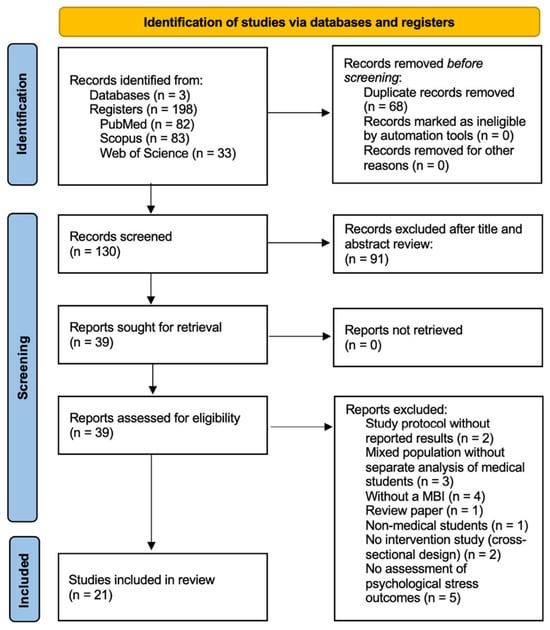
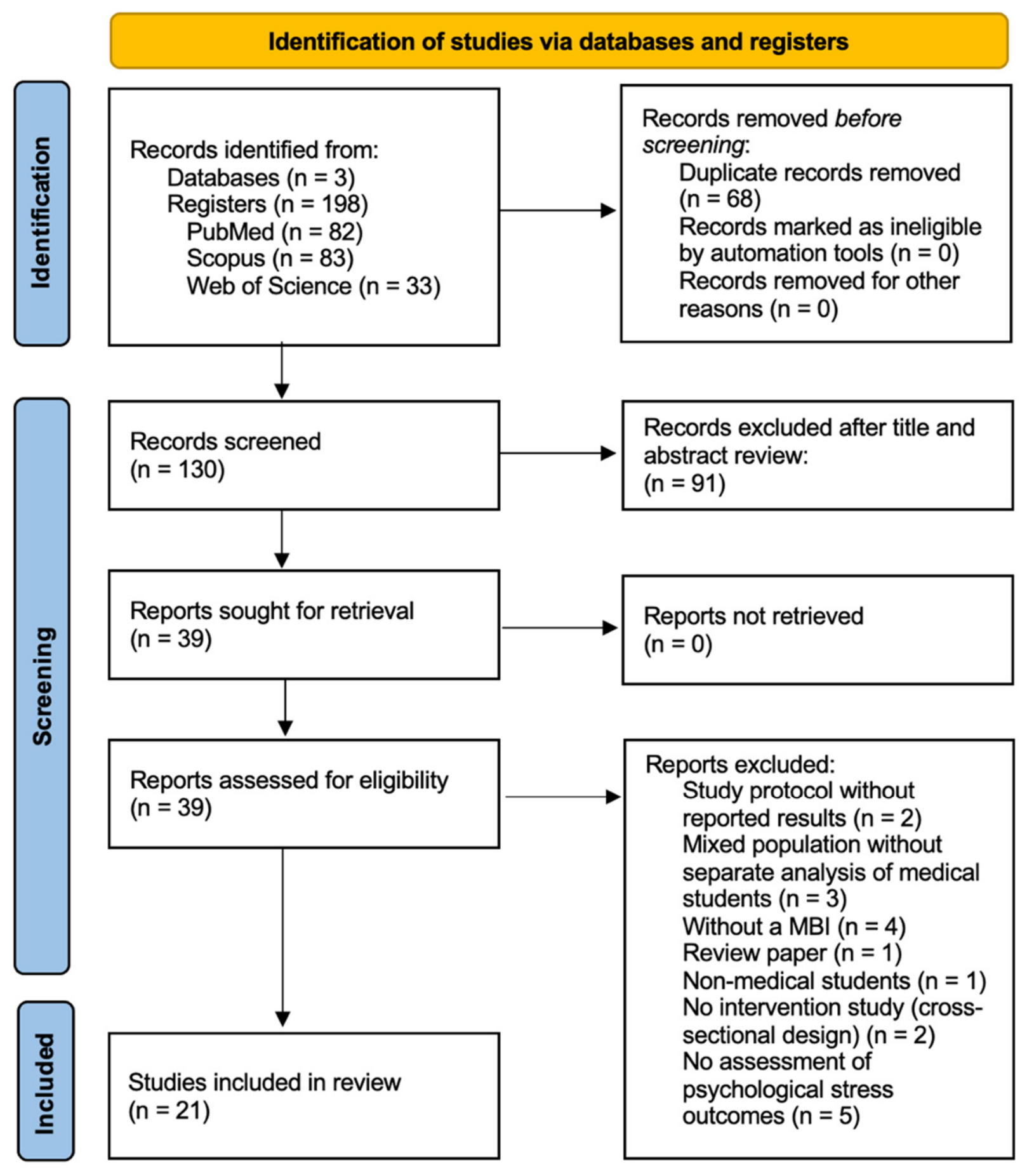
The PRISMA flow diagram outlining the selection of included studies is shown in Figure 1.
Figure 1.
PRISMA 2020-compliant flow diagram of the study selection process, including identification, screening, eligibility, and inclusion of studies.
The literature search resulted in 198 records identified from three databases (82 from PubMed, 83 from Scopus and 33 from Web of Science). After removing 68 duplicate records, 130 articles remained for screening. Of these, 91 were excluded after title and abstract review for not fulfilling the inclusion criteria and/or meeting the exclusion criteria.
A total of 39 reports were selected for full-text examination. Of these, 18 were excluded for the following reasons: 2 were study protocols without reported results; 3 had a mixed population without separate analysis of medical students; 4 did not have a Mindfulness-Based Intervention (MBI); 1 was a review paper; 1 included non-medical students; 2 did not include an intervention; and 5 did not assess psychological stress outcomes.
Ultimately, 21 studies were included in this review, comprising 14 randomized controlled trials (67%) and 7 non-randomized studies (33%).
The Kappa coefficient was 1.00, indicating perfect agreement between the reviewers.
3.1. Description of Included Studies
The core characteristics of the 21 studies included in this systematic review are presented in detail in Table 1. A total of 2484 students were included in the data analysis of the selected studies. All of the studies that specified the year of the medical course included undergraduate students. The studies mostly assessed the effects of MBSR (n = 8), CCT (n = 3), and other MBIs (n = 10). The results are presented based on the type of mindfulness intervention. The most common used questionnaire to evaluate psychological distress was the Perceived Stress Scale (PSS), which was used in 15 studies (71%), followed by the Depression, Anxiety, and Stress Scale-21 (DASS-21, which was used in 3 studies (14%). The secondary outcomes were much more variable and mostly related to mental health issues. The results of the studies are summarized based on the intervention type, duration, and main limitations.
3.1.1. Intervention Type
MBSR programs represent the most frequent evaluated intervention, with eight articles focusing on its effects, followed by three studies using cultivation compassion training (CTT). Regarding MBSR, most interventions followed the standard format of 8 weeks, with some variations such as a 10-week program or six 2-h courses [33,34]. Most trials compared MBSR with a waitlist or an active control group. Two studies did not include a control/comparison group [34,35].
As the primary focus of this analysis, MBSR demonstrated an impact on stress reduction. Significant reductions in the PSS from baseline to post-intervention was reported [35,36]. However, in the study conducted by Yay-Pence et al. (2025), there were no significant differences between the intervention and control [36]. Lampe et al. (2021) demonstrated a protective effect, as the MBSR group maintained stable stress levels, while the control group showed a significant increase [34]. In contrast, Moore et al. (2024) and Alzahrani et al. (2023) found no significant differences between intervention and control groups in stress scores [37,38]. Additionally, in the study conducted by van Dijk et al. (2017), the MBSR group reported lower levels of psychological distress during the follow-up period, as evaluated using the Brief Symptom Inventory (BSI) [39]. Summarizing the present findings in what concerns the main outcome (stress reduction), all the compassion-based interventions [18,40,41] decreased stress, which also occurred with the majority of MBSR interventions [32,34,37,38,39]. The large majority of interventions lasted for 8 weeks [18,32,33,34,35,36,37,38,39,42,43], but the efficacy in stress reduction was variable. As to the effects of brief/online interventions [43,44,45] the studies were scarce, and it is not possible to draw any conclusions.
MBSR influenced other mental health dimensions. For example, Yan et al. (2024) reported significant reductions in anxiety (Generalized Anxiety Disorder-7—GAD-7), depression (Patient Health Questionnaire-9—PHQ-9), and posttraumatic stress symptoms (Posttraumatic Stress Disorder Checklist from the DSM-5—PCL-5), post MBSR [40]. In the study conducted by Yay-Pence et al. (2025), both intervention and control groups showed significant reductions in depression and anxiety (HADS) but MBSR was significantly more effective than Cognitive Behavioral Stress Reduction (CBSR) in reducing anxiety in per-protocol analysis [36]. Furthermore, Rosenzweig et al. (2003) reported a significant reduction in tension-anxiety, as measured by the Profile of Mood States (POMS) [33]. However, Alzahrani et al. (2023) showed no significant differences between groups in the PHQ-9 and GAD-7 [38].
Regarding mindfulness skills, a significant increase was observed across several scales, including the Mindful Attention and Awareness Scale (MAAS) (Yan et al., 2024; Lampe et al., 2021), the Freiburg Mindfulness Inventory (FMI) (Moore et al., 2024), and the Five Facet Mindfulness Questionnaire (FFMQ) (van Dijk et al., 2017) [34,37,39,40]. However, Alzahrani et al. (2023) reported that there were no significant differences between groups in the MAAS [38].
In the study conducted by van Dijk et al. (2017), medical students reported improvements in mental health (Mental Health Continuum-Short Form—MHC—SF) and life satisfaction (Life-Satisfaction Questionnaire-9—LiSat-9) and less dysfunctional cognition (Irrational Beliefs Inventory—IBI), which were sustained over a 20-month follow-up period [39]. Yan et al. (2024) also showed improvements in resilience, evaluated with the Connor-Davidson Resilience Scale-10 (CD-RISC-10), and in life satisfaction, assessed with the Satisfaction with Life Scale (SWLS) [40].
Finally, Erogul et al. (2014) revealed a significant improvement in self-compassion, assessed with the Self-Compassion Scale (SCS), although participants did not achieve higher scores on the Resilience Scale (RS) when compared to the control group [35].
Of the three studies that assessed the effects of CCT, two (Rodriguez-Moreno et al., 2024; Rojas et al., 2023) were derived from the same clinical trial conducted with 40 medical students in Spain [41,46]. Overall, CCT showed a significant effect on reducing psychological stress, as evaluated using the Depression, Anxiety, and Stress Scale-21 (DASS-21). Weingartner et al. (2019) substantiated these findings through qualitative reports of stress reduction, despite methodological limitations, such as a small sample size and the absence of a control group [18].
Beyond the impact on stress, CCT showed significant improvements in mindfulness skills as evaluated by the Five Facet Mindfulness Questionnaire (FFMQ) and the Kentucky Inventory of Mindfulness Skills (KIMS). Additionally, Rodriguez-Moreno et al. (2024) highlighted that the development of these mindfulness facets acted as a mediator for anxiety reduction [41].
Furthermore, the Spanish trial conducted by Rodriguez-Moreno et al. (2024) reported significant improvements in emotion regulation, assessed with the Difficulties in Emotion Regulation Scale—DERS. Rojas et al. (2023) showed a notable decrease in burnout (evaluated with the Maslach Burnout Inventory-Student Survey—MBI-SS) as well as greater self-compassion (evaluated with the Self-Compassion Scale-Short Form—SCS-SF) [46].
The CCT interventions varied from five to eight weeks. In the randomized trials, the intervention groups were compared to a waitlist control group.
In this review, ten studies used MBIs that were more general, shorter, or did not define a structured protocol. Fazia et al. (2023) used 10 twice-a-week Integral Meditation classes (e.g., breath, posture, etc.), combined with dietary recommendations and yoga sessions [47]. Kakoschke et al. (2021) implemented a 5-week program combining formal mindfulness meditation with informal practices that integrate mindfulness into daily life [44].
Both interventions were effective in reducing perceived stress (PSS) [44,47]. Moreover, Fazia et al. (2023) described improvements in resilience (using the Resilience Scale-14—RS-14), mental well-being (with the Warwick-Edinburgh Mental Wellbeing Scale—WEMWBS), and emotion regulation (applying the DERS) as well as a reduction in mind wandering (with the Mind Wandering Spontaneous—MW-S) and in overall distress (Positive and Negative Affect Schedule—PANAS) [47]. Similarly, Kakosche et al. (2021) reported significant increases in mental health (MHC-SF), mindfulness (FMI), and study engagement (Utrecht Work Engagement Scale for Students—UWES-S) from pre- to post-intervention [44].
Ray et al. (2025) [48] conducted a 12-week online mind-body wellness program with weekly sessions on meditation (e.g., grounding and letting go) combined with breathwork, yoga, and nutrition. A large majority of medical students (74.8%) found this program accessible and satisfying (scale 0–100). Despite a high dropout rate, the program led to reductions in stress (PSS-10), anxiety (HADS), and depression (PHQ-9), alongside improvements in mindfulness (FFMQ) and quality of life (1–100 Self-Assessment Scale. Waetcher et al. (2021) reported significant improvements in PSS and anxiety, as measured by the State-Trait Anxiety Inventory (STAI), through a 12-week wellness intervention involving mindfulness, yoga, or walking [49]. Regarding mindfulness, the roots in the three-step process outlined by Tibetan teacher Yongey Mingyur were followed (relaxation, stabilization of attention, and training for clarity). In contrast, Neto et al. (2020) found no significant differences in stress, anxiety, and depression (DASS-21), quality of life (World Health Organization Quality of Life—WHOQOL-BREF), or mindfulness (FFMQ) after a 6-week mindfulness meditation course, but the authors outlined limiting data on adherence as a confounding factor [42].
Regarding interventions delivered via audio, Warnecke et al. (2011) conducted an 8-week intervention, using guided practice CDs, that reported reduced stress (PSS) and anxiety (DASS), with effects maintained at follow-up [45]. Yang et al. (2018) [50] observed that a 30-day audio-guided program, with short sessions (10–20 min per audio), significantly decreased perceived stress (PSS) and increased general well-being (General Well-Being Scale—GWBS). The program included guidance about awareness of body at rest, breathing with intention, and breathing normally to noticing sounds, sensing emotions, and acknowledging thoughts without assigning judgment. No consistent significant between-group differences were observed in mindfulness levels (FFMQ).
Other protocols produced diverse outcomes. Moore et al. (2020) [51] showed a significant reduction in stress (PSS) and an increase in self-compassion (SCS) at a 4-month follow-up after an 8-week Mindfulness Training Program (MTP). By the end of the program, 50% of participants practiced mindfulness at least weekly, with 32% maintaining this frequency four months later. Phang et al. (2015) found that the Mindfulness-Based Stress Management program led to reductions in stress (PSS) and mental distress (General Health Questionnaire—GHQ), as well as improvements in mindfulness (MAAS) and self-efficacy (General Self-Efficacy—GSE), though only self-efficacy remained significant after six months [43]. Contrarily, the SMART (Stress Management and Resilience Training) program evaluated by Dyrbye et al. (2017) showed an increase in perceived stress (PSS) and decreases in mental quality of life (Medical Outcomes Study Short Form-8—SF-8) and happiness [52].
3.1.2. Duration
Since the duration of the intervention may be an important aspect to evaluate the efficacy of an intervention, we highlight some of the findings described above based on the duration. The classic 8-week duration intervention was the most common (43%), mainly those based in structured programs, such as MBSR [32,33,34,35,36,37,38,39]. Some studies used variable durations of interventions, namely 5–8 weeks or 10–12 h [18,50]. This also represents a trend to decrease the duration of the interventions, and only 3 out of the 21 studies expanded the duration over 8 weeks, using interventions of 10 or 12 weeks [44]. Very short interventions were used by some studies, namely about 6 h [46]. Based on the results referred above (Section 3.1.1) and presented in Table 1, it is not possible to establish a causal relation between the duration of the intervention and the effects of the MBIs on psychological stress.
3.1.3. Limitations of the Studies
Table 1 also summarizes the main limitations of the studies. Small sample sizes, moderate adherence to the intervention, short follow-up period, lack of blindness, and absence of active control groups are the main constrains of the studies. Another limitation may derive from a possible conflict of interests since in some studies the instructor of the sessions was also the principal investigator [33,42,51].
Table 1.
Overview of the characteristics of the included studies, ordered by type of most common mindfulness intervention (MBSR, CCT and other MBIs).
3.2. Risk of Bias
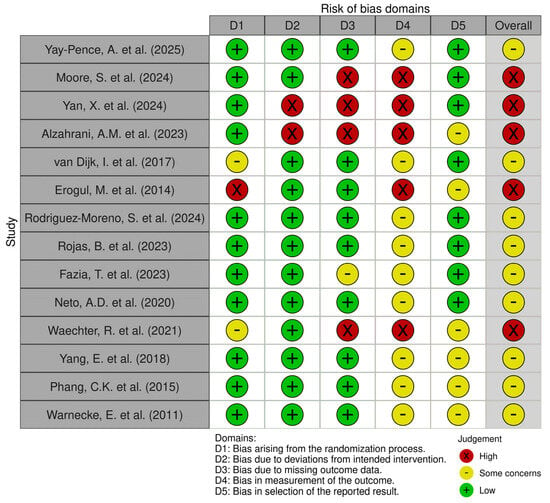
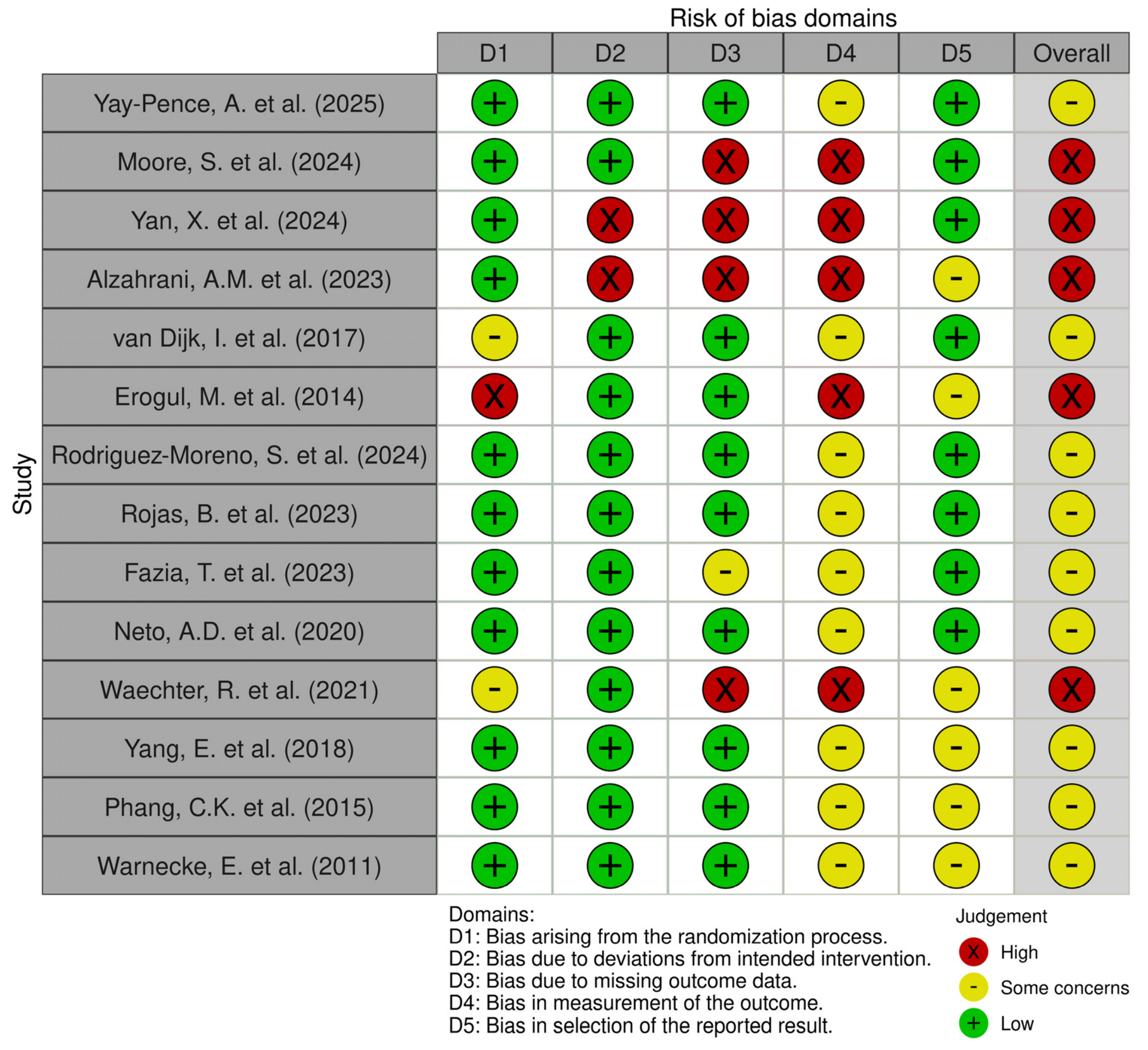
The graphical representation of the risk of bias of the RCTs included in this review is illustrated in Figure 2. Regarding the overall score, nine studies revealed some concerns, and five studies were classified as having a high risk of bias.
Figure 2.
Risk of bias of the included RCTs using the Cochrane RoB 2 tool, represented in five domains with three levels of judgment (low risk, some concerns, and high risk) and the overall score for each study [6,7,8,9,11,12,15,16,17,20,21,23,25,26].
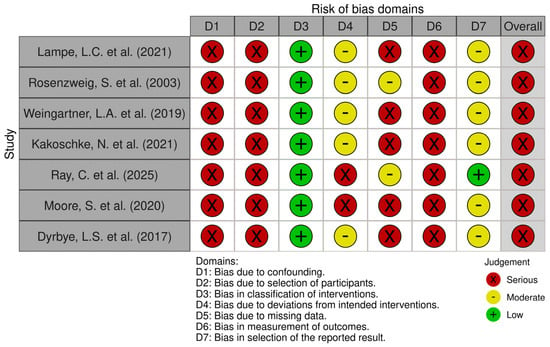
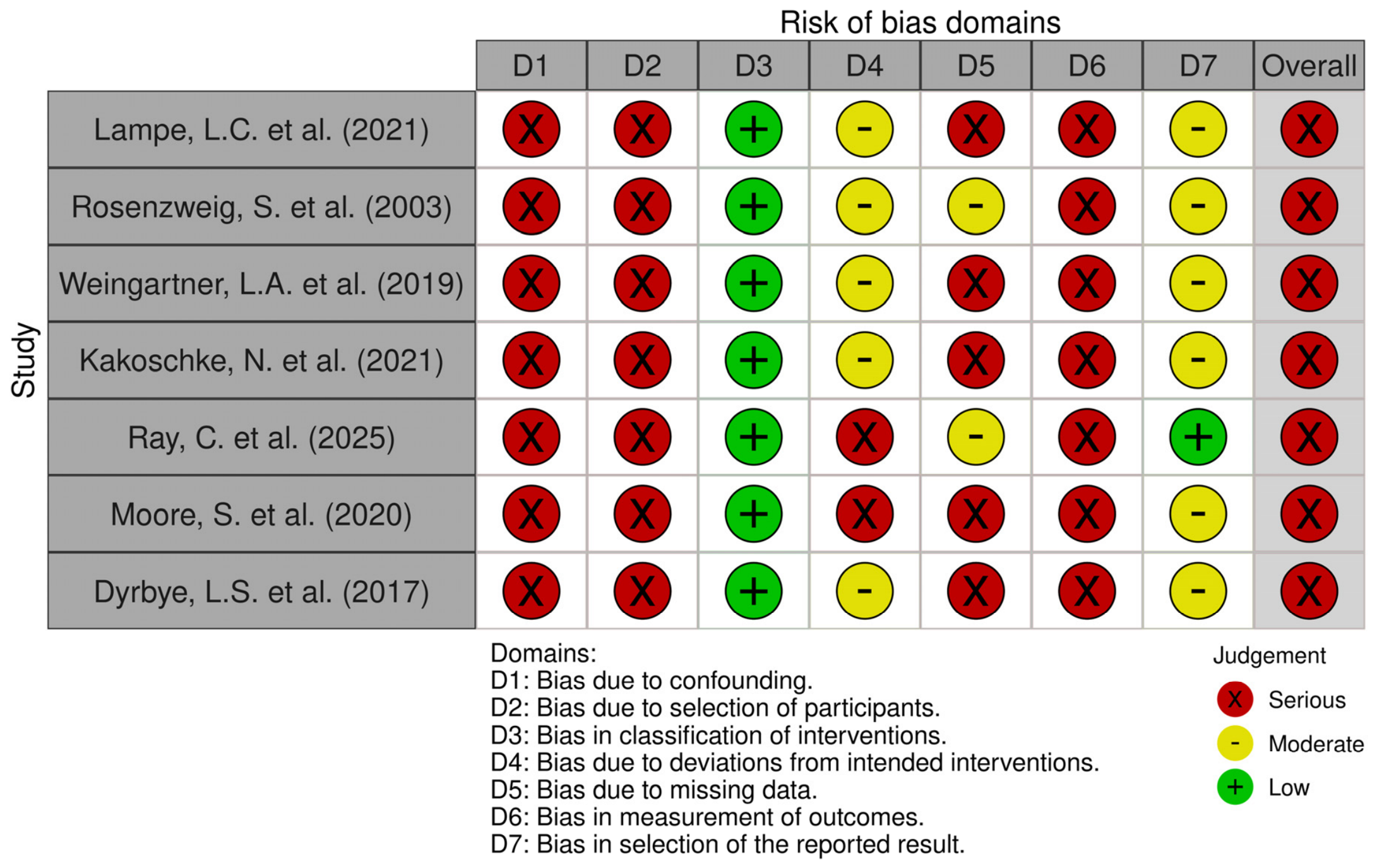
The graphical representation of the risk of bias of the seven non-randomized studies is illustrated in Figure 3. Regarding the overall score, all of the studies were classified as having a risk of bias.
Figure 3.
Risk of bias of the included non-randomized studies using the ROBINS-I tool, represented in seven domains with three levels of judgment (low, moderate, and serious) and the overall score for each study [10,13,14,18,19,22,24].
4. Discussion
This systematic review evaluated the literature about the use and effectiveness of MBIs in reducing the psychological stress of medical students and improving other mental health outcomes, such as anxiety, depression symptoms and mindfulness skills. Notably, 13 of the 21 reviewed studies were published from 2020 onward, providing a more up-to-date analysis than previous systematic reviews. This allows the identification of emerging trends, such as mobile-based interventions and condensed programs, that are shorter than the traditional eight-week format. As to the former, mobile mindfulness meditation interventions, using mobile devices such as smartphones and apps, are increasingly popular and have shown effectiveness in reducing stress and anxiety and in increasing the well-being of university students [53].
The included studies evaluated multiple interventions such as the MBSR, the CCT, and other mindfulness-based programs. Overall, most studies reported reductions in perceived stress after the intervention, although the results were not entirely consistent across all studies. In addition to stress reduction, several studies also showed improvements in stress-related outcomes, including anxiety, depression, emotion regulation, and mindfulness skills. Notably, several studies failed to demonstrate the superiority of mindfulness interventions over control conditions [37,38,42]. Collectively, these mixed findings indicate that the precise mechanisms driving the putative effects of MBIs in medical education require further investigation.
MBSR was the most frequently evaluated intervention and most studies [32,34,37,38,39] reported reductions in perceived stress among medical students. These findings are consistent with previous systematic reviews reporting that MBSR may reduce stress levels and improve psychological well-being [54,55]. The current systematic review highlights a growing interest in cultivating compassion among medical students. The compassion-based interventions [18,40,41] decreased stress and improved mindfulness skills and emotion regulation. These findings carry significant implications for medical education, aligning with a growing body of research that demonstrates how compassion-based interventions enhance mindfulness and stress management among medical trainees and residents [56]. Recent evidence indicates that higher levels of self-compassion are associated with lower compassion fatigue and better mental health among physicians [57]. Herein, the effects of interventions promoting self-compassion should be tested in medical training contexts, both in medical students and trainees, with the aim of promoting well-being in future healthcare professionals.
Several studies included interventions that were not organized in an 8-week format. Some MBIs included adapted or shorter mindfulness programs delivered in non-presential formats. Since these interventions varied considerably in structure and duration, it is challenging in the present systematic review and with the results gathered to demonstrate the effects on perceived stress and related psychological outcomes among medical students. Studies with shorter durations (e.g., [46,50]) demonstrated some effects in reducing psychological stress and medical students have some time constraints. Herein, it will be important to focus future studies on the effects of shorter interventions. Prior studies indicated that online mindfulness programs can significantly reduce stress and improve related psychological outcomes [3,25,58,59]. The variations in duration, delivery format, and content likely influenced the outcomes. While shorter or online interventions provided practical solutions for students facing severe time constraints, it remains difficult to determine whether their benefits are sustained over time compared to traditional protocols. Regarding content, all types of MBIs, including MBSR, compassion-based programs, and brief formats, demonstrated reductions in perceived stress, although compassion-based programs yielded more consistent effects in stress reduction. All CTT programs showed a decrease in stress levels of medical students [18,40,41]. This is a finding that deserves to be further studied since compassion is important in medical care because it serves as a primary defense against clinician burnout [17,18]. The heterogeneity among the interventions complicates both a direct comparison of their effectiveness with structured protocols and the definitive establishment of a causal relationship.
Additionally, to implement MBIs in medical education contexts, it may be important to improve the experimental design of the studies. The evaluation should ideally follow a longitudinal approach, introducing foundational mindfulness skills during the preclinical years and providing reinforced sessions during high-stress clinical rotations. Furthermore, to overcome student resistance and perceived time constraints, these interventions should be embedded into protected time rather than added as extracurricular burdens. Flexible delivery models, including hybrid and online formats, may further improve accessibility and participation among medical students with demanding schedules. Future studies should evaluate feasibility and acceptability of the MBIs in medical schools, since this may be a constraint as previously shown by our research group [50]. By cultivating an institutional culture that prioritizes self-care and emotional intelligence, it is possible that medical schools can integrate mindfulness as a proactive component of professional identity formation, rather than merely reactive stress management [60,61,62].
Beyond the putative personal benefits, exposure to MBIs during medical training may have a profound ripple effect on future clinical practice. As students experience the tangible impact of these practices on their own mental health and resilience, they are likely to develop a deeper clinical intuition regarding the mind-body connection. This firsthand validation fosters greater sensitivity and openness toward integrative therapies, potentially increasing the likelihood that these future physicians will recommend or incorporate evidence-based mindfulness strategies into the care plans of their patients [60,61,62].
This systematic review has some limitations. The included studies were heterogeneous in what concerns the types and structure of the MBIs, duration, and delivery methods. Many studies had small sample sizes, which may reduce the statistical power and precision of the results, and the follow-up periods were short, making it difficult to determine whether the beneficial effects of mindfulness interventions were sustained over time. In addition, the included studies relied on self-reported questionnaires to assess psychological stress and related outcomes, which may introduce response bias, as blinding of participants was generally not possible. Several studies were also classified as having high or serious risk of bias, particularly non-randomized studies, due to methodological limitations such as lack of allocation concealment. High attrition rates and limited adherence to the intervention were also reported in some studies, which may have influenced the results. Furthermore, there was considerable methodological heterogeneity among the included studies. Most studies were single-center and had predominantly female samples, which limits the generalizability of the findings to all medical students and to medical schools with different programs or cultural contexts. Multiple scales were also used to measure psychological stress and secondary outcomes, making direct comparisons between studies challenging. Due to this heterogeneity, a meta-analysis was not conducted.
Overall, the findings of this systematic review suggest that MBIs could represent a viable option for inclusion in medical school curricula, as they may play a role in supporting student psychological well-being and mitigating perceived stress. These interventions could better equip medical students to navigate academic pressure and future clinical demands while fostering mindfulness and self-regulation skills. Since medical students usually face heavy workloads and time constraints, flexible online or hybrid delivery models may offer a practical means of supporting mental health. Nevertheless, we need to discuss the risk of bias of the included studies which may temper the confidence we can place in our overall conclusions. Chief among these is the high risk of performance and detection bias across 57% of the analyzed studies, mainly driven by confounding factors and selection of participants combined with a heavy reliance on student-reported outcomes. These constraints are common in studies using MBIs, as referred above [19,22]. In this type of interventions, the participants may become aware of their treatment allocation and potentially overestimate the intervention’s efficacy. Furthermore, the absence of active control groups in several of the analyzed studies mean we cannot rule out confounding variables or determine if the intervention outperforms current standard care. Consequently, while the initial trends are promising, our conclusions must be interpreted as tentative until validated by future studies with more homogeneous interventions, actively controlled trials. Based on the importance of promoting environments with better welfare in medical schools, it is important to continue the research of the effects of MBIs.
The present study outlines several gaps in the current research. For example, there is a lack of studies with long-term follow-up, the need for more objective outcome measures (like physiological stress markers), and the fact that most studies had mostly female participants. Future research should focus on larger, multicenter, and more diverse samples, use active control groups, and include longer term follow-up to assess the sustainability of the effects of MBIs on stress and stress-related outcomes. To measure stress levels, objective measures should be used in the future such as cortisol levels or heart rate variability to reduce the response bias associated with self-reported scales and strengthen the evidence. It would also be interesting to conduct studies comparing different types of interventions to determine which approaches are most effective, instead of more general MBIs. For example, future randomized studies should directly compare the different interventions, namely MBSR, compassion-based interventions, and brief or online mindfulness programs. The importance of using active control groups and standardized outcome measures, to clarify which formats provide the greatest benefit for medical students should also be considered in future studies. Moreover, future studies should evaluate feasibility and acceptability, not just efficacy. Strategies to improve adherence and reduce attrition should also be explored, and future studies should include more diverse populations, both in terms of gender and cultural background, to make the findings more generalizable.
5. Conclusions
This systematic review identified some studies showing the positive effects of MBIs in reducing perceived stress and improving related psychological outcomes, such as anxiety, depression, mindfulness, and emotion regulation, among medical students. Nevertheless, more research is necessary since this systematic review shows variable MBIs, methodological heterogeneity, small sample sizes, attrition, and reliance on self-reported questionnaires, which comes in line with our previous alert in the population of medical students [63]. Overall, MBIs may represent promising approaches to promote psychological well-being in future medical doctors and help prepare them for the demands of medical practice.
Author Contributions
Conceptualization, A.L.C. and I.T.; methodology, A.L.C., D.H.P. and I.T.; validation, A.L.C., D.H.P. and I.T.; formal analysis, A.L.C., D.H.P. and I.T.; investigation, A.L.C., D.H.P., R.J.T. and I.T.; data curation, A.L.C., D.H.P. and I.T.; writing—original draft preparation, A.L.C. and I.T.; writing—review and editing, A.L.C., D.H.P., R.J.T. and I.T.; visualization, A.L.C., D.H.P., R.J.T. and I.T.; supervision, I.T.; project administration, A.L.C. and I.T. All authors have read and agreed to the published version of the manuscript.
Funding
This research was funded by Course “Mindfulness in Health Contexts” of the Faculty of Medicine of Porto, Portugal.
Institutional Review Board Statement
Not applicable.
Informed Consent Statement
Not applicable.
Data Availability Statement
No new data were created or analyzed in this study. Data sharing is not applicable to this article.
Conflicts of Interest
The authors declare no conflicts of interest.
References
- Shiralkar, M.T.; Harris, T.B.; Eddins-Folensbee, F.F.; Coverdale, J.H. A systematic review of stress-management programs for medical students. Acad. Psychiatry 2013, 37, 158–164. [Google Scholar] [CrossRef] [Scilit] [PubMed]
- van Dijk, I.; Lucassen, P.L.; Speckens, A.E. Mindfulness training for medical students in their clinical clerkships: Two cross-sectional studies exploring interest and participation. BMC Med. Educ. 2015, 15, 24. [Google Scholar] [CrossRef] [Scilit] [PubMed]
- Sperling, E.L.; Hulett, J.M.; Sherwin, L.B.; Thompson, S.; Bettencourt, B.A. The effect of mindfulness interventions on stress in medical students: A systematic review and meta-analysis. PLoS ONE 2023, 18, e0286387. [Google Scholar] [CrossRef] [Scilit] [PubMed]
- Fares, J.; Al Tabosh, H.; Saadeddin, Z.; El Mouhayyar, C.; Aridi, H. Stress, Burnout and Coping Strategies in Preclinical Medical Students. N. Am. J. Med. Sci. 2016, 8, 75–81. [Google Scholar] [CrossRef] [Scilit] [PubMed]
- Voltmer, E.; Rosta, J.; Aasland, O.G.; Spahn, C. Study-related health and behavior patterns of medical students: A longitudinal study. Med. Teach. 2010, 32, e422–e428. [Google Scholar] [CrossRef] [Scilit] [PubMed]
- Graves, J.; Joyce, C.; Ahmed, M.; Hegazi, I. Compassion Fatigue in Medical Students and Recent Medical Graduates: A Scoping Review. Teach. Learn. Med. 2025. [Google Scholar] [CrossRef] [Scilit] [PubMed]
- Garnett, A.; Hui, L.; Oleynikov, C.; Boamah, S. Compassion fatigue in healthcare providers: A scoping review. BMC Health Serv. Res. 2023, 23, 1336. [Google Scholar] [CrossRef] [Scilit] [PubMed]
- Lane, A.; McGrath, J.; Cleary, E.; Guerandel, A.; Malone, K.M. Worried, weary and worn out: Mixed-method study of stress and well-being in final-year medical students. BMJ Open 2020, 10, e040245. [Google Scholar] [CrossRef] [Scilit] [PubMed]
- Romani, M.; Ashkar, K. Burnout among physicians. Libyan J. Med. 2014, 9, 23556. [Google Scholar] [CrossRef] [Scilit] [PubMed]
- Flood, A.; Keegan, R.J. Cognitive Resilience to Psychological Stress in Military Personnel. Front. Psychology 2022, 13, 809003. [Google Scholar] [CrossRef] [Scilit] [PubMed]
- Attia, M.; Ibrahim, F.A.; Elsady, M.A.-E.; Khorkhash, M.K.; Rizk, M.A.; Shah, J.; Amer, S.A. Cognitive, emotional, physical, and behavioral stress-related symptoms and coping strategies among university students during the third wave of COVID-19 pandemic. Front. Psychiatry 2022, 13, 933981. [Google Scholar] [CrossRef] [Scilit] [PubMed]
- Teixeira, R.J.; Brandão, T.; Dores, A.R. Academic stress, coping, emotion regulation, affect and psychosomatic symptoms in higher education. Curr. Psychology 2022, 41, 7618–7627. [Google Scholar] [CrossRef] [Scilit]
- Kabat-Zinn, J. Wherever You Go There You Are: Mindfulness Meditation in Everyday Life, 11th ed.; Hyperion: New York, NY, USA, 2023. [Google Scholar]
- Zhang, D.; Lee, E.K.P.; Mak, E.C.W.; Ho, C.Y.; Wong, S.Y.S. Mindfulness-based interventions: An overall review. Br. Med. Bull. 2021, 138, 41–57. [Google Scholar] [CrossRef] [Scilit] [PubMed]
- Kabat-Zinn, J.; Lipworth, L.; Burney, R. The clinical use of mindfulness meditation for the self-regulation of chronic pain. J. Behav. Med. 1985, 8, 163–190. [Google Scholar] [CrossRef] [Scilit] [PubMed]
- Kaisti, I.; Kulmala, P.; Hintsanen, M.; Hurtig, T.; Repo, S.; Paunio, T.; Miettunen, J.; Halt, A.-H.; Jääskeläinen, E. The effects of mindfulness-based interventions in medical students: A systematic review. Adv. Health Sci. Educ. 2024, 29, 245–271. [Google Scholar] [CrossRef] [Scilit] [PubMed]
- Germer, C.K.; Neff, K.D. Self-compassion in clinical practice. J. Clin. Psychol. 2013, 69, 856–867. [Google Scholar] [CrossRef] [Scilit] [PubMed]
- Weingartner, L.A.; Sawning, S.; Shaw, M.A.; Klein, J.B. Compassion cultivation training promotes medical student wellness and enhanced clinical care. BMC Med. Educ. 2019, 19, 139. [Google Scholar] [CrossRef] [Scilit] [PubMed]
- Creswell, J.D. Mindfulness Interventions. Annu. Rev. Psychol. 2017, 68, 491–516. [Google Scholar] [CrossRef] [Scilit] [PubMed]
- Cavallero, F.; Gold, M.C.; Tirrell, E.; Kokdere, F.; Donachie, N.; Steinfink, D.; Kriske, J.; Carpenter, L.L. Audio-Guided Mindfulness Meditation During Transcranial Magnetic Stimulation Sessions for the Treatment of Major Depressive Disorder: A Pilot Feasibility Study. Front. Psychol. 2021, 12, 678911. [Google Scholar] [CrossRef] [Scilit] [PubMed]
- Spijkerman, M.P.; Pots, W.T.; Bohlmeijer, E.T. Effectiveness of online mindfulness-based interventions in improving mental health: A review and meta-analysis of randomised controlled trials. Clin. Psychol. Rev. 2016, 45, 102–114. [Google Scholar] [CrossRef] [Scilit] [PubMed]
- Goldberg, S.B.; Riordan, K.M.; Sun, S.; Davidson, R.J. The Empirical Status of Mindfulness-Based Interventions: A Systematic Review of 44 Meta-Analyses of Randomized Controlled Trials. Perspect. Psychol. Sci. 2022, 17, 108–130. [Google Scholar] [CrossRef] [Scilit] [PubMed]
- Daya, Z.; Hearn, J.H. Mindfulness interventions in medical education: A systematic review of their impact on medical student stress, depression, fatigue and burnout. Med. Teach. 2018, 40, 146–153. [Google Scholar] [CrossRef] [Scilit] [PubMed]
- McKerrow, I.; Carney, P.A.; Caretta-Weyer, H.; Furnari, M.; Miller Juve, A. Trends in medical students’ stress, physical, and emotional health throughout training. Med. Educ. Online 2020, 25, 1709278. [Google Scholar] [CrossRef] [Scilit] [PubMed]
- Yogeswaran, V.; El Morr, C. Effectiveness of online mindfulness interventions on medical students’ mental health: A systematic review. BMC Public Health 2021, 21, 2293. [Google Scholar] [CrossRef] [Scilit] [PubMed]
- McConville, J.; McAleer, R.; Hahne, A. Mindfulness Training for Health Profession Students-The Effect of Mindfulness Training on Psychological Well-Being, Learning and Clinical Performance of Health Professional Students: A Systematic Review of Randomized and Non-randomized Controlled Trials. Explorer 2017, 13, 26–45. [Google Scholar] [CrossRef] [Scilit] [PubMed]
- Teixeira, R. Programa de redução do stress baseado no mindfulness em estudantes de medicina: Reflexão sobre os efeitos e implicações para o apoio psicológico. In Proceedings of the 1º Congresso Nacional da RESAPES-AP–Apoio Psicológico no Ensino Superior: Modelos e Práticas, Aveiro, Portugal, 20–21 May 2010. [Google Scholar]
- Ouzzani, M.; Hammady, H.; Fedorowicz, Z.; Elmagarmid, A. Rayyan—A web and mobile app for systematic reviews. Syst. Rev. 2016, 5, 210. [Google Scholar] [CrossRef] [Scilit] [PubMed]
- McHugh, M.L. Interrater reliability: The kappa statistic. Biochem. Medica 2012, 22, 276–282. [Google Scholar] [CrossRef] [Scilit]
- Sterne, J.A.C.; Savović, J.; Page, M.J.; Elbers, R.G.; Blencowe, N.S.; Boutron, I.; Cates, C.J.; Cheng, H.Y.; Corbett, M.S.; Eldridge, S.M.; et al. RoB 2: A revised tool for assessing risk of bias in randomised trials. BMJ 2019, 366, l4898. [Google Scholar] [CrossRef] [Scilit] [PubMed]
- Sterne, J.A.; Hernán, M.A.; Reeves, B.C.; Savović, J.; Berkman, N.D.; Viswanathan, M.; Henry, D.; Altman, D.G.; Ansari, M.T.; Boutron, I.; et al. ROBINS-I: A tool for assessing risk of bias in non-randomised studies of interventions. BMJ 2016, 355, i4919. [Google Scholar] [CrossRef] [Scilit] [PubMed]
- McGuinness, L.A.; Higgins, J.P.T. Risk-of-bias VISualization (robvis): An R package and Shiny web app for visualizing risk-of-bias assessments. Res. Synth. Methods 2021, 12, 55–61. [Google Scholar] [CrossRef] [Scilit] [PubMed]
- Rosenzweig, S.; Reibel, D.K.; Greeson, J.M.; Brainard, G.C.; Hojat, M. Mindfulness-based stress reduction lowers psychological distress in medical students. Teach. Learn. Med. 2003, 15, 88–92. [Google Scholar] [CrossRef] [Scilit] [PubMed]
- Lampe, L.C.; Müller-Hilke, B. Mindfulness-based intervention helps preclinical medical students to contain stress, maintain mindfulness and improve academic success. BMC Med. Educ. 2021, 21, 145. [Google Scholar] [CrossRef] [Scilit] [PubMed]
- Erogul, M.; Singer, G.; McIntyre, T.; Stefanov, D.G. Abridged mindfulness intervention to support wellness in first-year medical students. Teach. Learn. Med. 2014, 26, 350–356. [Google Scholar] [CrossRef] [Scilit] [PubMed]
- Yay-Pence, A.; Aslan, S.; Coldur, M.; Atalay, Z.; Beba, B.; Coskun-Sayin, C.; Aydin, E.; Gumus, Z.; Uckan, A.S.; Sahinoglu, E.N.; et al. Online mindfulness-based vs. cognitive-behavioural stress reduction for medical students: A randomized controlled trial. Psychiatry Res. 2025, 351, 116632. [Google Scholar] [CrossRef] [Scilit] [PubMed]
- Moore, S.; Mavaddat, N.; Auret, K.; Hassed, C.; Chambers, R.; Sinclair, C.; Wilcox, H.; Ngo, H. The Western Australian medical schools mindfulness project: A randomised controlled trial. BMC Med. Educ. 2024, 24, 1182. [Google Scholar] [CrossRef] [Scilit] [PubMed]
- Alzahrani, A.M.; Hakami, A.; AlHadi, A.; Al-Maflehi, N.; Aljawadi, M.H.; Alotaibi, R.M.; Alzahrani, M.M.; Alammari, S.A.; Batais, M.A.; Almigbal, T.H. The effectiveness of mindfulness training in improving medical students’ stress, depression, and anxiety. PLoS ONE 2023, 18, e0293539. [Google Scholar] [CrossRef] [Scilit] [PubMed]
- van Dijk, I.; Lucassen, P.; Akkermans, R.P.; van Engelen, B.G.M.; van Weel, C.; Speckens, A.E.M. Effects of Mindfulness-Based Stress Reduction on the Mental Health of Clinical Clerkship Students: A Cluster-Randomized Controlled Trial. Acad. Med. 2017, 92, 1012–1021. [Google Scholar] [CrossRef] [Scilit] [PubMed]
- Yan, X.; Wang, X.; Chen, Y.; Xu, X.; Peng, L.; Xu, Y. Feasibility and effects of mindfulness-based stress reduction (MBSR) for improving resilience, posttraumatic stress disorder symptoms and posttraumatic growth among military medical college students. Acta Psychol. 2024, 251, 104556. [Google Scholar] [CrossRef] [Scilit] [PubMed]
- Rodriguez-Moreno, S.; Rojas, B.; Roca, P. Mechanisms of change in compassion-based programs for medical students. Sci. Rep. 2024, 14, 29945. [Google Scholar] [CrossRef] [Scilit] [PubMed]
- Damião Neto, A.; Lucchetti, A.L.G.; da Silva Ezequiel, O.; Lucchetti, G. Effects of a Required Large-Group Mindfulness Meditation Course on First-Year Medical Students’ Mental Health and Quality of Life: A Randomized Controlled Trial. J. Gen. Intern. Med. 2020, 35, 672–678. [Google Scholar] [CrossRef] [Scilit] [PubMed]
- Phang, C.K.; Mukhtar, F.; Ibrahim, N.; Keng, S.L.; Mohd Sidik, S. Effects of a brief mindfulness-based intervention program for stress management among medical students: The Mindful-Gym randomized controlled study. Adv. Health Sci. Educ. 2015, 20, 1115–1134. [Google Scholar] [CrossRef] [Scilit] [PubMed]
- Kakoschke, N.; Hassed, C.; Chambers, R.; Lee, K. The importance of formal versus informal mindfulness practice for enhancing psychological wellbeing and study engagement in a medical student cohort with a 5-week mindfulness-based lifestyle program. PLoS ONE 2021, 16, e0258999. [Google Scholar] [CrossRef] [Scilit] [PubMed]
- Warnecke, E.; Quinn, S.; Ogden, K.; Towle, N.; Nelson, M.R. A randomised controlled trial of the effects of mindfulness practice on medical student stress levels. Med. Educ. 2011, 45, 381–388. [Google Scholar] [CrossRef] [Scilit] [PubMed]
- Rojas, B.; Catalan, E.; Diez, G.; Roca, P. A compassion-based program to reduce psychological distress in medical students: A pilot randomized clinical trial. PLoS ONE 2023, 18, e0287388. [Google Scholar] [CrossRef] [Scilit] [PubMed]
- Fazia, T.; Bubbico, F.; Nova, A.; Buizza, C.; Cela, H.; Iozzi, D.; Calgan, B.; Maggi, F.; Floris, V.; Sutti, I.; et al. Improving stress management, anxiety, and mental well-being in medical students through an online Mindfulness-Based Intervention: A randomized study. Sci. Rep. 2023, 13, 8214. [Google Scholar] [CrossRef] [Scilit] [PubMed]
- Ray, C.; Jha, S.; Watt, M.; Hyde, A.; McGowan, K.; Tymchuk, S.; Tandon, P. The feasibility of an innovative online mind-body wellness program for medical students. Can. Med. Educ. J. 2025, 16, 76–82. [Google Scholar] [CrossRef] [Scilit] [PubMed]
- Waechter, R.; Stahl, G.; Rabie, S.; Colak, B.; Johnson-Rais, D.; Landon, B.; Petersen, K.; Davari, S.; Zaw, T.; Mandalaneni, K.; et al. Mitigating medical student stress and anxiety: Should schools mandate participation in wellness intervention programs? Med. Teach. 2021, 43, 945–955. [Google Scholar] [CrossRef] [Scilit] [PubMed]
- Yang, E.; Schamber, E.; Meyer, R.M.L.; Gold, J.I. Happier Healers: Randomized Controlled Trial of Mobile Mindfulness for Stress Management. J. Altern. Complement. Med. 2018, 24, 505–513. [Google Scholar] [CrossRef] [Scilit] [PubMed]
- Moore, S.; Barbour, R.; Ngo, H.; Sinclair, C.; Chambers, R.; Auret, K.; Hassed, C.; Playford, D. Determining the feasibility and effectiveness of brief online mindfulness training for rural medical students: A pilot study. BMC Med. Educ. 2020, 20, 104. [Google Scholar] [CrossRef] [Scilit] [PubMed]
- Dyrbye, L.N.; Shanafelt, T.D.; Werner, L.; Sood, A.; Satele, D.; Wolanskyj, A.P. The Impact of a Required Longitudinal Stress Management and Resilience Training Course for First-Year Medical Students. J. Gen. Intern. Med. 2017, 32, 1309–1314. [Google Scholar] [CrossRef] [Scilit] [PubMed]
- Chen, B.; Yang, T.; Xiao, L.; Xu, C.; Zhu, C. Effects of Mobile Mindfulness Meditation on the Mental Health of University Students: Systematic Review and Meta-analysis. J. Med. Internet Res. 2023, 25, e39128. [Google Scholar] [CrossRef] [Scilit] [PubMed]
- da Silva, C.C.G.; Bolognani, C.V.; Amorim, F.F.; Imoto, A.M. Effectiveness of training programs based on mindfulness in reducing psychological distress and promoting well-being in medical students: A systematic review and meta-analysis. Syst. Rev. 2023, 12, 79. [Google Scholar] [CrossRef] [Scilit] [PubMed]
- Polle, E.; Gair, J. Mindfulness-based stress reduction for medical students: A narrative review. Can. Med. Educ. J. 2021, 12, e74–e80. [Google Scholar] [CrossRef] [Scilit] [PubMed]
- Wong, F.; Ashtiani, N.; Cuomo, R.; Shirazi, A.; Herbert, M.; Chu, G.; Lewis, R.; Shapiro, D. The impact of a mindful compassion program for medical trainees. BMC Med. Educ. 2025, 25, 890. [Google Scholar] [CrossRef] [Scilit] [PubMed]
- Balki Tekin, S.; Matsar Ay, A.; İnci Kenar, A.N. Mental health, self-compassion, and compassion fatigue in physicians: A cross-sectional study. Sci. Rep. 2025, 15, 18245. [Google Scholar] [CrossRef] [Scilit] [PubMed]
- Zuo, X.; Tang, Y.; Chen, Y.; Zhou, Z. The efficacy of mindfulness-based interventions on mental health among university students: A systematic review and meta-analysis. Front. Public Health 2023, 11, 1259250. [Google Scholar] [CrossRef] [Scilit] [PubMed]
- Soares, A.R.; Soares, S.; Brandão, T.; Teixeira, R.J.; Tavares, I. Developing and evaluating a Portuguese-language meditation App for medical students: Motivation, adherence, and emotional effects. Front. Psychol. 2025, 16, 1422205. [Google Scholar] [CrossRef] [Scilit] [PubMed]
- Scullion, R.; Icke, K.; Tissen-Diabaté, T.; Adam, D.; Ortiz, M.; Witt, C.M.; Brinkhaus, B.; Stöckigt, B. Self-care strategies for medical students: An uncontrolled mixed-methods evaluation of a mind-body-medicine group course. BMC Med. Educ. 2023, 23, 816. [Google Scholar] [CrossRef] [Scilit] [PubMed]
- Sköld, C.; Steen, A.; Niemi, M.; Vinnars, B.; Kiessling, A. Sustainable benefits of mindfulness training in health professions education. BMC Med. Educ. 2025, 25, 451. [Google Scholar] [CrossRef] [Scilit] [PubMed]
- Vidal, E.I.O.; Ribeiro, L.F.A.; de Carvalho-Filho, M.A.; Fukushima, F.B. Mindfulness training in medical education as a means to improve resilience, empathy, and mental health in the medical profession. World J. Psychiatry 2024, 14, 489–493. [Google Scholar] [CrossRef] [Scilit] [PubMed]
- Leça, S.; Tavares, I. Research in Mindfulness Interventions for Patients With Fibromyalgia: A Critical Review. Front. Integr. Neurosci. 2022, 16, 920271. [Google Scholar] [CrossRef] [Scilit] [PubMed] [PubMed Central]
Disclaimer/Publisher’s Note: The statements, opinions and data contained in all publications are solely those of the individual author(s) and contributor(s) and not of MDPI and/or the editor(s). MDPI and/or the editor(s) disclaim responsibility for any injury to people or property resulting from any ideas, methods, instructions or products referred to in the content. |
© 2026 by the authors. Licensee MDPI, Basel, Switzerland. This article is an open access article distributed under the terms and conditions of the Creative Commons Attribution (CC BY) license.