


Abstract
Large–small model collaboration (LSMC) has emerged as a promising paradigm for intelligent vehicular services in the Internet of Vehicles (IoV), yet its collaborative mechanisms (inference routing, model-tier scheduling, privacy-preserving learning, and continuous refinement) remain heuristic and lack provable guarantees under fluctuating channels, stochastic arrivals, and drifting data distributions. Mathematical methods provide rigorous formulations and provable bounds but lack the flexibility required for unstructured real-world data. This survey reviews how mathematical tools can be integrated with LSMC to reconcile these two sides. We examine five families of mathematical methods (optimization, graph theory, differential games, probability and statistics, and queuing theory) and map them onto five IoV application domains, then analyze four integration challenges and outline open issues. This work serves as a reference for building robust, interpretable, and theoretically grounded collaborative vehicular intelligence.
Keywords:
Internet of Vehicles; large–small model collaboration; mathematical methods; collaborative inference; edge–cloud computing; optimization theory; queuing theory MSC:
68M20; 90B18
1. Introduction
Large–small model collaboration (LSMC) has demonstrated transformative capabilities in intelligent vehicular services, enabling autonomous driving, cooperative perception, and personalized in-vehicle interaction by organizing cloud-side large models and on-board small models into a cooperative inference system [1,2,3]. By exploiting the strong generalization of large models and the low-latency efficiency of small models, LSMC excels at reconciling accuracy, latency, and energy constraints [1,3,4,5]. However, cloud-centric execution alone is often hindered by high latency, limited bandwidth, and privacy concerns, making it insufficient for time-sensitive IoV applications [4,6,7]. The end–edge–cloud architecture of IoV addresses this limitation by decentralizing computation and storage across vehicles, roadside units (RSUs), edge nodes, and cloud data centers, thereby significantly reducing transmission delays and enhancing real-time responsiveness [2,8,9,10]. The fusion of LSMC and IoV enables applications like autonomous driving and cooperative perception to process and act on data across the continuum, alleviating cloud burdens and facilitating next-generation intelligent transportation systems [2,3,8].
However, their integration faces critical limitations in practical deployment. The collaborative mechanisms inside an LSMC system (where to route each inference request, how to schedule heterogeneous model tiers, how to protect privacy during distributed learning, and when to refresh on-board student models) require coordinated decisions across model tiers, network resources, and data distributions [3,9,11,12,13,14]. Such decisions can degrade under fluctuating channels, stochastic task arrivals, vehicle mobility, and drifting data distributions, motivating explicit online optimization and adaptive resource management [6,9,11,15,16,17]. Mathematical methods, known for their rigorous theoretical foundations and precise modeling capabilities, offer enhanced robustness, reliability, and interpretability for collaborative vehicular intelligence. Nevertheless, they lack the flexibility and adaptability required to handle unstructured or uncertain real-world data streams. Therefore, the integration of mathematical methods and LSMC offers a synergistic pathway, where LSMC contributes adaptability and large-scale data handling, while mathematical tools provide structure, guarantees, and theoretical rigor [11,13,15,16,17,18]. This hybrid paradigm is particularly vital for solving complex problems such as dynamic task routing, energy-aware scheduling, privacy-preserving collaborative learning, and long-tail adaptation in resource-constrained and heterogeneous IoV scenarios [9,11,12,19,20,21,22].
Several recent surveys have examined parts of this convergence, but from architectural or algorithmic perspectives rather than mathematical ones. Yan et al. [8] reviewed edge intelligence for the IoV, covering layered vehicular architectures, cooperative inference, distributed training, and vehicle–road–cloud integration, yet treated routing and scheduling as system-design choices rather than derivable optimizations. Pfeiffer et al. [23] and Zhu et al. [21] surveyed federated learning under device heterogeneity and non-IID data, focusing on aggregation protocols and convergence behavior, but did not analyze how the resulting guarantees interact with model-tier collaboration or with stochastic vehicular channels. Sathyam and Li [5] surveyed foundation models for autonomous-driving perception, emphasizing generalization, robustness to distribution shift, and real-time deployment, without examining the conditions under which a cloud large and on-board small split remains provably safe. Luo et al. and Chen et al. [13,14] examined LLM-enabled edge intelligence across centralized, hybrid, and decentralized architectures, orchestration, and privacy, again at the system-architecture layer. Liang et al. [24] further surveyed large language model compression techniques for edge deployment, including pruning, quantization, and distillation, and systematically reviewed the accuracy–footprint trade-offs under on-device budgets.
Comparison with existing reviews. The distinctions drawn above are made explicit in Table 1, which aligns the surveyed works along four axes: the scope that they cover, their strengths, where their analysis stops, and what remains unaddressed. The last row states the position of the present review together with its acknowledged limits. This is a structured, criterion-by-criterion comparison of the surveys discussed here, not a systematic review of the field; the review methodology and its biases are stated at the end of this section.
Table 1.
Comparison of existing related reviews by coverage, strengths, limitations, and the parts left unaddressed.
While recent studies have explored the technical integration of LSMC and the IoV, the mathematical foundations that underpin this convergence remain fragmented. Existing work provides individual treatments of online inference optimization, vehicle–edge–cloud service placement, dynamic vehicular resource management, non-IID federated learning, privacy-preserving aggregation, and long-tail driving-data generation [9,11,12,15,16,17,19,20,21,22]. This survey fills this gap by offering a structured, mathematically oriented analysis of the role of mathematical methods in enabling and enhancing LSMC-based IoV systems. Rather than aiming at exhaustive coverage, we organize the literature along five families of mathematical methods and five IoV application domains, and we state the scope and selection logic of this narrative review at the end of this section. It aims to unify scattered insights from mathematical optimization, graph theory, differential game theory, probability and statistics, and queuing theory in the context of the IoV; demonstrate how mathematical modeling complements LSMC in solving real-time, scalable, and interpretable problems across the end–edge–cloud continuum; and highlight application domains such as autonomous driving, cooperative perception and safety, intelligent traffic management, platooning and vehicle–road–cloud collaboration, and intelligent cockpit and personalized mobility services, where this synergy is reported to improve responsiveness, reliability, and decision quality under the conditions of the respective studies.
The main contributions of this survey are summarized as follows:
- We present a structured review of mathematical methods integrated with large–small model collaboration in the IoV, organized around five families of mathematical tools and their mapping onto five IoV application domains, highlighting how mathematical rigor enhances the robustness, interpretability, and efficiency of collaborative vehicular intelligence.
- We develop a taxonomy linking mathematical methods to core IoV tasks and to the collaborative mechanisms of LSMC, offering a structured guide for system-level optimization in vehicular edge intelligence.
- We survey five cross-domain application scenarios (autonomous driving, cooperative perception and safety, intelligent traffic management, platooning and vehicle–road–cloud collaboration, and intelligent cockpit and personalized mobility services) and illustrate how the fusion of mathematical modeling and large–small model collaboration enables real-time, resource-constrained decision making.
- We focus on addressing four key challenges in the integration: uncertainty and dynamics in collaborative routing, resource heterogeneity and scheduling, privacy and security in collaborative learning, and long-tail adaptation and continuous refinement. We summarize state-of-the-art schemes to address these challenges and identify several open issues and promising future research directions.
Review methodology and scope. This is a narrative review and does not claim exhaustive or systematic coverage; accordingly, we did not conduct a registered systematic search and we do not report a PRISMA-style screening flow. Candidate studies were assembled through (i) topic-driven screening of the literature along five topical dimensions: large–small model collaboration and cloud–edge big/small models; vehicular and edge computing, offloading and scheduling; model preparation and update (federated and split learning, knowledge distillation, model compression and partitioning, and continual learning); explicit mathematical tools (optimization, game theory, queuing, stochastic network calculus, chance-constrained and robust formulations, and conformal inference and uncertainty quantification); and the five IoV application domains considered in this review. For reproducibility, the topic-driven screening used the following representative search strings, grouped by the five dimensions above; each string occurs in the title of at least one retained study: (1) large–small model collaboration: “large language model”, “large-small model collaboration” and “collaborative inference”; (2) vehicular and edge computing, offloading and scheduling: “edge computing”, “task offloading”, “resource allocation” and “computation offloading”; (3) model preparation and update: “federated learning”, “knowledge distillation”, “model partitioning” and “split federated learning”; (4) explicit mathematical tools: “stochastic network calculus”, “conformal uncertainty quantification”, “conformal inference” and “distributionally robust”; and (5) IoV application domains: “autonomous driving”, “cooperative perception”, “traffic signal control”, “platooning” and “intelligent cockpit”. These strings are representative topical terms rather than a registered Boolean query, and no PRISMA-style counts are claimed. Candidate records were then checked against publisher and indexing records in IEEE Xplore, Scopus, arXiv, Google Scholar and the MDPI platform, where title, authors, venue, year and DOI were verified before inclusion; (ii) backward and forward citation chaining from the surveys discussed in Section 1; and (iii) the reference lists of the retained studies. The covered window is 2017–2026, with the majority of retained studies published from 2023 onward. A study was retained when it (a) proposes or analyzes an explicit mathematical formulation, (b) concerns the IoV or a closely related vehicular edge setting, (c) reports enough detail to identify its assumptions and the type of guarantee, and (d) is available as an English-language full text. We excluded pure implementation reports without a model, inaccessible full texts, duplicate versions of the same work, and dataset-only papers; one arXiv preprint is retained because it provides the only survey of LLM backdoor threats in our corpus, and all other retained items are peer-reviewed journal or conference articles. The retained studies are appraised descriptively along four dimensions (clarity of the problem definition, explicitness of assumptions, statement of the guarantee type, and reproducibility of the evaluation); this appraisal is used for stratification only and not for quantitative meta-analysis. As reflected by the publication venues in the reference list, the corpus draws on IEEE, ACM, Elsevier, MDPI, Springer and arXiv sources. The synthesis is organized around the five families of mathematical methods and the five application domains defined above. We do not claim completeness: the corpus is concentrated in IEEE venues and in recent publications, is entirely English-language, and is weighted toward enabling techniques (federated and split learning, distillation, offloading and partitioning) rather than toward direct inference-routing mechanisms. These publication, language, visibility and topical biases, and their implications for the conclusions drawn here, are revisited in the Conclusions.
The remainder of this paper is organized as follows, and Figure 1 illustrates the taxonomy of the discussed topics. Section 2 presents the background of LSMC in the IoV. Section 3 reviews the mathematical methods applied to IoV tasks, spanning optimization, graph theory, differential games, probability, and queuing. Section 4 discusses the application domains supported by mathematical methods and LSMC. Section 5 explores the integration of mathematical methods with LSMC and the IoV, highlighting key challenges and future directions. Finally, Section 6 concludes the paper.
Figure 1.
The taxonomy of the discussed topics.
2. Large–Small Model Collaboration in Internet of Vehicles
2.1. Internet of Vehicles
The Internet of Vehicles (IoV) constructs a hierarchical end–edge–cloud architecture in which vehicles, roadside units (RSUs), edge nodes, and cloud data centers are interconnected through vehicle-to-everything (V2X) communication [25]. The vehicle end performs local perception and real-time decision making [26]; edge nodes provide low-latency computation and regional fusion [27]; and the cloud aggregates global data for large-scale training and long-horizon optimization [28]. Throughout the remainder of this paper, the abbreviation IoV is used; apart from its first definition in the abstract, the full term is retained only in the title, the keywords, section headings and captions.
IoV is a flagship scenario for intelligent systems: V2X fusion overcomes occlusion and beyond-line-of-sight limits any single-vehicle perception [29]; vehicles act as mobile sensors that continuously accumulate spatiotemporal driving data, especially for long-tail corner cases [30]; and network-wide optimization improves safety, throughput, and energy efficiency [31]. Recent advances span autonomous driving with end-to-end foundation models [28], cooperative perception for beyond-visual-range understanding [29], vehicle–road–cloud coordination at intersections and platoon merges [32], cloud-empowered intelligent cockpits [33], and AI-based in-vehicle security monitoring [34].
2.2. Large–Small Model Collaboration
Large–small model collaboration (LSMC) coordinates models of distinct capacities and deployment costs toward a common task [35,36]. Here, “large” and “small” are system-relative, not fixed parameter counts: a large model supplies capabilities too costly to run locally, while a smaller model serves low-resource requests, and their placement across vehicles, edge nodes, and the cloud trades task quality, latency, computation, and privacy [37,38].
Knowledge distillation and model compression transfer capabilities and shrink deployment footprints [39,40]; federated and distributed learning organize training across participants [41,42]. Within this survey, they are supporting mechanisms insofar as they produce, update, or refresh the models used by the inference system.
Definition 1 (Large–Small Model Collaboration).
Large–small model collaboration (LSMC) denotes the joint inference-time decision problem for a single service request: which model tier (an on-board small model, an edge-resident model, or a cloud large model) should process the request, whether an output produced by a smaller tier should be escalated to a larger one, and, under partitioned execution, where the segments of the chosen model run. Collaborative training, knowledge distillation, split learning, and generic computation offloading are treated throughout this survey as enabling mechanisms: they produce, update, or provision the models and resources on which these inference-time decisions act. They are therefore reviewed as supporting evidence, not as instances of LSMC.
Our central focus is inference-time collaboration among distinct models, namely request routing and escalation from a smaller to a larger model [43]. Partitioning a single model across devices [44,45] does not, by itself, constitute large–small collaboration. We therefore examine how mathematical methods formulate, analyze, and optimize model selection, resource allocation, and model updates in LSMC, together with the assumptions and limits of their performance guarantees under IoV conditions.
2.3. Combination of Large–Small Model Collaboration and Internet of Vehicles
Following Definition 1, the subsections below separate the single inference-time mechanism, collaborative inference, from the enabling mechanisms that produce, update, or provision the model tiers; their roles and decision variables differ even when they are combined in one IoV system.
2.3.1. Motivations
The integration of large–small model collaboration and IoV is both natural and inevitable. IoV offers large–small-model-collaboration-rich application scenarios and deployment platforms: massive real-world driving data and heterogeneous end–edge–cloud resources continuously drive the evolution of collaborative inference and broaden its applicability [46]. The enabling and inference-time mechanisms discussed below are summarized in Figure 2.
Figure 2.
Taxonomy of LSMC mechanisms in the IoV.
2.3.2. Knowledge Distillation
Knowledge distillation (KD) is a knowledge-transfer technique within the model-compression family: a teacher–student architecture transfers the implicit knowledge of a large cloud-side teacher into a lightweight on-board student, in either offline or online form [47,48,49]. Within the scope of this survey, knowledge distillation is a model-preparation step: it produces and refreshes the small tier on which inference-time routing later operates, rather than an inference-time decision mechanism itself.
In IoV services such as autonomous-driving perception and intelligent cockpits, cloud-side large models serve as high-quality teachers, while resource-constrained vehicle terminals act as students, and adaptive distillation scheduling enables a dynamic trade-off between model fidelity and on-vehicle computational cost [50,51]. Furthermore, end–edge–cloud platforms can use distillation procedures to refresh deployable student models with newly collected driving data. As a representative edge-local cross-modal KD framework for intelligent cockpits, FedCMD [52] achieves privacy-preserving driver emotion recognition, as illustrated in Figure 3. In this framework, the teacher model is trained on high-precision physiological signals collected from wearable sensors, and transfers the learned emotion recognition knowledge to the student model, which takes facial visual data from the in-vehicle camera and facial landmarks as input. The reliability of this deployment process depends on the teacher–student architecture, distillation objective, data and calibration protocol, update validation, and rollback mechanism; knowledge distillation does not by itself imply a universally standardized deployment protocol or a guaranteed level of retained performance. KD can reduce model size and deployment cost, but it remains sensitive to teacher quality, distillation hyperparameters, data coverage, and long-tail scenarios [53].
Figure 3.
Illustration of the FedCMD cross-modal knowledge distillation framework for in-vehicle driver emotion recognition.
2.3.3. Federated and Collaborative Training
Federated and collaborative training is a distributed learning paradigm within the collaborative-training family that employs a server–client learning architecture [54,55]: it jointly optimizes a shared model across vehicles, roadside units (RSUs), and edge servers without centralizing raw driving data [54,56], and uses gradient-aggregation or knowledge-exchange-based variants to coordinate model updates among heterogeneous vehicular clients [57,58].
In IoV services such as privacy-critical perception models and personalized in-vehicle assistants, federated and collaborative training spans vehicles, edge nodes, and the cloud [56,59]: vehicles serve as data-owning clients that contribute locally computed gradients, while edge servers and the cloud act as aggregation nodes, and privacy-aware scheduling enables a dynamic trade-off between model convergence and communication cost. Furthermore, federated frameworks ensure reliable collaborative training through secure aggregation protocols, supported by vehicle–road–cloud cooperative platforms that continuously adapt shared models to heterogeneous driving-data distributions [57,59,60].
Federated and collaborative training offers data-privacy preservation and utilization of massive distributed driving data but is often hindered by non-IID data heterogeneity, unreliable vehicular connectivity, and significant communication overhead during gradient exchange [55].
Within the scope of this survey, federated and collaborative training supports LSMC when it updates models of different capacities or contributes to the training and maintenance of a collaborative inference system. Federated training of a shared model, without an identified connection to large–small model coordination, is discussed as background rather than treated as direct evidence of LSMC.
2.3.4. Split Learning
Split learning (SL) is a distributed training paradigm that partitions a deep model into sequential segments, with each participant holding only a portion of the network architecture [61,62]: the vehicle end trains lightweight front-end layers while the cloud retains the heavy back-end layers [63]. Unlike federated learning, SL exchanges intermediate activations and gradients rather than complete model parameters, and trains without sharing raw data [61].
In perception tasks that demand both local responsiveness and cloud-scale capacity, split learning requires tight vehicle–cloud cooperation [62,63]: vehicles act as data-side clients that extract compact feature representations through shallow front-end layers, while edge or cloud servers process the deep back-end layers, and communication-aware scheduling enables a dynamic balance between training fidelity and uplink bandwidth consumption. Furthermore, split-learning frameworks ensure privacy-preserving training through activation obfuscation and label-sharing protocols, supported by vehicle–road–cloud platforms that orchestrate layer assignment across heterogeneous participants [64].
Split learning offers low on-vehicle computational burden and data privacy but is often constrained by sequential training latency, sensitivity to unstable vehicular connectivity, and communication overhead arising from per-round intermediate transfer [65].
Split learning describes a training arrangement rather than an inference-time model-selection mechanism. It is relevant here when it supports the training or maintenance of models used in LSMC. Splitting one network into a lightweight front end and a computationally intensive back end does not, by itself, establish the presence of distinct large and small models. The distinction between split training and partitioned inference is therefore maintained throughout this survey.
2.3.5. Collaborative Inference: Model Routing, Cascades, and Partitioned Execution
As stated in Definition 1, inference-time collaboration is the joint decision of which model tier processes a request, whether its output is escalated, and where the segments of a partitioned model run. A router selects an appropriate model for a request according to the task requirements, estimated output quality, and available resources; in a cascade, a smaller model processes the request first and selected requests are escalated to a larger model when the initial output is insufficient. These decisions balance task quality against computation and communication costs and, in the IoV, must also account for changing connectivity and service deadlines.
Partitioned execution addresses a related but different decision. It divides the computation graph of a trained model into segments deployed across local devices and remote servers [66,67]. Static or dynamic partitioning determines where these segments execute and how intermediate representations are transferred, balancing local computation against communication and remote processing costs [68,69]. In this survey, evidence of single-model partitioning is distinguished from evidence of collaboration between separate large and small models.
In vehicular deployments, partitioned inference requires coordination across vehicle terminals, roadside units, and edge servers, including decisions about resource allocation and model placement [70,71]. Network-aware configuration and offloading strategies can adapt the execution arrangement to available resources and communication conditions [72]. However, reducing on-vehicle computation does not by itself guarantee bounded end-to-end latency: performance remains sensitive to wireless connectivity, latency jitter, and the choice of partition points [45,67,70].
A collaborative system may combine model routing or cascades with partitioned execution. Model selection determines which model serves a request, whereas partitioning determines where the selected model is executed. For this survey, their interaction motivates mathematical formulations that relate model choice and execution placement to task quality, resource demand, and end-to-end latency. Such formulations must make communication conditions and deadline constraints explicit, and any resulting performance guarantees must be interpreted under their stated assumptions.
2.3.6. Role of Combination of Large–Small Model Collaboration in IoV
Large–small model collaboration reconciles task accuracy, inference latency, computational cost, and data privacy in the IoV [73,74]; Table 2 summarizes the enabling and inference-time mechanisms described above and the role of each in the end–edge–cloud architecture.
Table 2.
Summary of the enabling and inference-time mechanisms discussed in Section 2.3.
To enhance the manageability and adaptability of large-scale IoV deployments, vehicle–road–cloud cooperative platforms integrate continuous knowledge-refinement mechanisms into the collaboration architecture. By closing the loop between data collection and model updating, these platforms enable a centralized scheduler that dynamically monitors driving-data distributions, refreshes on-board student models through distillation, and refines cloud large models with accumulated long-tail samples [75]. This architecture enables more responsive and accurate collaborative inference in heterogeneous vehicular environments. In large–small model collaboration, such closed-loop mechanisms facilitate global optimization by providing real-time visibility into task complexity, data distribution shifts, and computational loads across distributed vehicular nodes. This centralized orchestration not only improves system adaptability but also supports energy-aware scheduling, bandwidth-efficient transmission, and fine-grained privacy policies. As vehicular applications become more complex and time-sensitive, vehicle–road–cloud cooperative platforms serve as a crucial enabling technology for delivering agile and continuously evolving vehicular intelligence [76].
2.3.7. Key Challenges of Large–Small Model Collaboration in the Internet of Vehicles
Real progress has been made in coupling large–small model collaboration with the IoV, yet dependable, wide-scale deployment still runs into recurring obstacles [77,78]. These include: (1) model and hardware mismatch, as computation-hungry large models frequently do not fit the varied, limited hardware installed on vehicles [45]; (2) privacy and security exposure, because driving data are sensitive and federated or split training only partially fends off model inversion, gradient leakage, and poisoning attacks [79]; (3) weak adaptation to a dynamic road environment, characterized by fluctuating wireless bandwidth, vehicle mobility, and devices joining or leaving [80]; (4) energy and compute ceilings, where real-time inference must be reconciled with the limited battery and heat budgets of vehicles and roadside units [81]; and (5) sparse, non-IID long-tail data, where rare corner cases and uneven driving-data distributions across regions and fleets curb collaborative training and generalization [82]. These hurdles are exactly where mathematical methods can help, and the next section examines these opportunities in detail [83].
2.4. Summary
Knowledge distillation and distributed training support the preparation and maintenance of these models, while partitioned execution provides a related strategy for distributing a model’s computation. These roles lead to different mathematical questions: which model to invoke, where to execute it, how to allocate resources, and when to update deployed models. The following section reviews the mathematical tools relevant to these decisions and the assumptions under which their analyses apply. Table 2 summarizes the mechanisms and their roles. The category labels in the tables also make a gap visible: the mathematical methods reviewed in Section 3 and Table 3 are uniformly category (iii), and even the collaborative-inference mechanism in Table 2 is currently evidenced by partitioning and orchestration work rather than by studies of inference-time routing itself.
Table 3.
Compact assumptions/guarantee/failure-mode boxes for the five mathematical families surveyed in Section 3.
3. Mathematical Methods in Internet of Vehicles
3.1. Motivations
Many tasks that define the operation of IoV (e.g., computation offloading, resource and bandwidth allocation, speed and trajectory control, task scheduling, cooperative perception, and energy management) share two features: they must be executed under tight latency and resource constraints, and they involve a large number of interacting vehicles and infrastructures. These features turn typical IoV tasks into constrained optimization, dynamic decision, and uncertainty reasoning problems that heuristic rules and purely data-driven models cannot reliably solve. Hand-designed heuristics may lack instance-independent performance guarantees unless their behavior is analyzed for a specified problem class. End-to-end learning methods provide flexibility and can achieve strong empirical performance, while statistical, robustness, or safety guarantees may be available in particular settings when their assumptions are stated and validated. Mathematical methods complement these approaches by expressing objectives and constraints explicitly and, for selected problem classes, providing optimality, approximation, stability, or trade-off bounds. These results are conditional on the adopted system model, information pattern, distributional assumptions, and solution accuracy; they do not automatically transfer to unseen vehicular scenarios or eliminate the need for recalibration or retraining under distribution shift. This motivates a structured treatment of the mathematical tools that underpin the modeling and solution of IoV tasks, which the remainder of this section provides. The taxonomy of these methods is presented in Figure 4, and the remainder of this section examines each method in turn.
Figure 4.
Taxonomy of mathematical methods applied to IoV optimization and decision-making problems.
3.2. Optimization Theory
Optimization theory provides the mathematical backbone for resource allocation, task offloading, and scheduling in IoV. The optimization models surveyed here rely on a set of common premises to remain analytically tractable: task arrival rates and resource demands are known in advance, the network topology stays static or changes only slowly within an optimization cycle, objective functions are convex or at least quasi-convex, and system states are fully or partially observable. These premises enable provable performance bounds, yet they sit uncomfortably with real vehicular networks, where traffic is bursty, mobility is high, and connectivity is intermittent. Recent studies document this degradation explicitly: Sun et al. [84] found that frequent handovers caused by high mobility noticeably increase task delay in MEC-enabled 5G IoV, and Xia et al. [85] reported that decisions built on inaccurate predictions must be corrected through recourse actions in mobile edge networks with uncertain workloads.
Depending on the structure of the objective and constraints, an optimization problem takes the general form
which, according to the properties of f, , and , specializes to a linear program, an integer program, or a convex program. In the IoV, the offloading decision is a canonical integer program: following the modeling convention of [84], let vehicle n generate a task described by data size , required CPU cycles , and deadline . The local execution delay is
where is the local CPU frequency in cycles per second.
For an offloaded task, let denote the allocated uplink bandwidth in Hz, and let denote the corresponding uplink data rate in bits per second. We write the rate in the general form
where and represent the channel state and transmit-power parameters. The offloaded execution delay is
where is the edge CPU frequency allocated to vehicle n. In this simplified model, the offloaded delay includes uplink transmission and edge execution only; queuing, result-return, handover, encoding, and model-startup delays are omitted. This omission is deliberate: Equation (3) is a feasibility-screening lower bound, whereas the full latency budget of Equation (40) is what deadline guarantees require. Because the omitted terms are non-negative, a bound obtained from any relaxation of this reduced problem is a lower bound on a lower bound; the duality or relaxation gap of the formulations in Section 3.2 therefore characterizes the simplified model only and becomes less informative as the omitted terms dominate.
Introducing a binary variable , where denotes local execution and denotes offloading, the weighted latency-energy problem is written as
The realized latency is
where the offloaded term is evaluated only when . The constraints are
Here, is the aggregate edge CPU capacity in cycles per second, and is the total uplink bandwidth budget in Hz. Thus, is a data rate, whereas and are bandwidth quantities. Problem (4)–(5) is generally NP-hard.
When the nonconvexity of problem (4)–(5) prevents direct solution, convex-relaxation techniques, such as LP relaxation of the binary variables or semidefinite relaxation, provide tractable approximations, and Karush–Kuhn–Tucker-based dual decomposition yields exact solutions when strong duality holds. These tools trade optimality for computability and are most effective when the relaxation gap is provably small.
To handle uncertainty in channel quality and workload, robust formulations replace point estimates with uncertainty sets and optimize for the worst case. Xia et al. [85] modeled worst-case channel fluctuations with a bounded uncertainty set and optimized
where is the offloading policy, the nominal channel state in slot t, a channel perturbation constrained to the uncertainty set , the per-slot cost (delay, energy, or a weighted combination) incurred under policy , and T the decision horizon; recourse actions compensate for prediction errors in a two-stage stochastic program.
When system-side information is unavailable, online methods make decisions from real-time feedback. Dai et al. [86] combined Lyapunov optimization with multi-armed bandit learning for dependent-task offloading: the drift-plus-penalty framework converts the long-term cost constraint into per-slot decisions, and bandit feedback substitutes for unknown transmission rates and resource states.
Beyond scalar objectives, multi-objective formulations expose the trade-off frontier explicitly. Wu et al. [87] formulated collaborative edge–cloud offloading as a three-objective problem and solved it with an invasive tumor growth optimization algorithm, obtaining a diverse set of Pareto-optimal solutions in terms of delay, energy, and cost.
The modeling of latency–energy trade-offs in these works falls into two families. Weighted-sum models, as in [84], minimize a single scalar objective with adjustable coefficients, which is simple but yields only one Pareto point per coefficient setting; Pareto-based methods, as in [87], compute a set of non-dominated solutions that reveal the entire trade-off spectrum, at the cost of higher computational complexity. The theoretical guarantees likewise differ: convex optimization and its relaxations enjoy formal optimality and convergence results, whereas metaheuristic solvers such as [87] lack analytical guarantees and are assessed empirically through convergence to the Pareto front or via hypervolume indicators.
3.3. Graph Theory and Network Optimization
Graph theory provides a unified mathematical language for modeling IoV as an interconnection of vehicles, roadside units, and edge servers. Formally, a network is described by a graph
where V collects the vehicles, roadside units, and edge nodes, E the communication links, and w assigns each link a cost such as latency, bandwidth, or energy consumption. Under this abstraction, routing becomes a shortest-path problem, infrastructure deployment becomes a connectivity or coverage problem, radio-resource assignment becomes a coloring or matching problem, and capacity analysis becomes a flow problem.
A vehicular application consisting of multiple dependent subtasks is naturally represented as a directed acyclic graph (DAG)
where nodes are subtasks and edges encode precedence constraints. Chen et al. [88] studied priority-based DAG task offloading in IoT edge-computing environments, deriving subtask priorities from the structure of the task graph and determining where each subtask should be executed, followed by a secondary resource-allocation stage that refines CPU and bandwidth shares to satisfy per-task requirements.
Path and connectivity problems sit at the core of data dissemination and infrastructure planning. Data forwarding between vehicles and roadside units (RSUs) is a classic shortest-path problem, which minimizes the cumulative cost of a path P:
solvable in polynomial time by Dijkstra’s algorithm. Deployment problems, by contrast, are typically NP-hard: deciding where to place RSUs to guarantee connectivity or coverage reduces to minimum-vertex-cover- or set-cover-type problems. Gu et al. [89] proposed a network-renormalization method that hierarchically identifies key cluster heads of the road network and deploys RSUs on them, outperforming genetic-algorithm and memetic baselines in coverage and information reception rate.
Resource assignment in vehicular networks can be formulated using graph coloring and matching. To model interference avoidance, construct a conflict graph , where each vertex represents a communication link and an edge connects two links that cannot reuse the same resource block under the adopted interference model. Each color represents one resource block. Therefore, adjacent vertices must be assigned different colors, whereas non-adjacent vertices may reuse the same color. Under this abstraction, the chromatic number gives the minimum number of resource blocks required for a feasible coloring. Computing the chromatic number is NP-hard in general, so practical schemes often use greedy or other heuristic coloring algorithms. This interpretation is conditional on the conflict-graph abstraction and does not by itself capture continuous interference power, channel fading, or joint power control. Matching theory handles task–server pairing. Let and denote the sets of tasks and servers, and let be the benefit of assigning task t to server s; the optimal assignment solves
which is solvable in polynomial time by the Kuhn–Munkres algorithm when the graph is bipartite and complete.
Capacity bottlenecks are characterized by the max-flow min-cut theorem. For a network with source s and sink t, the maximum achievable flow equals the capacity of the minimum cut separating s and t:
which identifies the links whose upgrade yields the greatest throughput gain. Despite their analytical power, the static graph models above sit uncomfortably with the high mobility of vehicular environments: topology changes force the recomputation of paths, colorings, and matchings, and graph abstractions inevitably discard physical-layer details such as channel fading and queuing dynamics. The efficient maintenance of graph solutions under fast-varying vehicular topologies remains an open problem.
3.4. Differential Game Theory
Differential game theory extends optimal control to settings with multiple interacting decision-makers, providing a rigorous framework for modeling the continuous-time strategic interactions that pervade the IoV, such as multi-vehicle collision avoidance, lane merging, and platoon coordination. Formally, consider N vehicles, each controlling its own input . The joint state evolves according to the coupled dynamics
and each vehicle minimizes its own cost functional
where is the running cost, typically combining control effort, deviation from a reference trajectory, and proximity to other vehicles, and penalizes the terminal state. The interaction of these coupled optimal control problems is what distinguishes a differential game from single-agent optimal control.
The most tractable solution concept is the open-loop Nash equilibrium, in which each player treats the others’ strategies as given time functions and solves a standard optimal control problem. By Pontryagin’s maximum principle, the optimal input of player i minimizes its Hamiltonian
where the costate obeys the adjoint equation and collects the other players’ fixed strategies. The equilibrium is obtained by solving a coupled two-point boundary-value problem. Open-loop equilibria are computationally cheap but generally time-inconsistent: an equilibrium planned at time 0 is not necessarily optimal for the player to continue at a later time, which limits their use in real-time driving.
For closed-loop (feedback) strategies , the appropriate tool is the Hamilton–Jacobi–Bellman equation, which, for a two-player zero-sum game, reduces to the Hamilton–Jacobi–Isaacs (HJI) equation. The value function of player i solves the first-order PDE
and feedback Nash equilibria derived from such value functions are time-consistent by construction. Chen et al. [90] derived the equilibrium strategies of the pursuit-evasion game in three-dimensional space through this HJI framework, characterizing capture conditions and optimal evasion maneuvers; the same machinery applies to adversarial on-road interactions, where one vehicle attempts to intercept or escape another. The price of feedback equilibrium is computational: the PDE lives in the state space, and its cost scales exponentially with the state dimension.
Two IoV-relevant applications illustrate the theory. In platoon security, Xia et al. [91] modeled false-data-injection attacks on vehicular platoon systems as a hierarchical (Stackelberg) differential game, where the attacker moves first and the defending platoon responds optimally; the defender’s optimal control under the worst-case attack is obtained by solving the nested problem
yielding an optimal defense response against the modeled FDI attack. In collision avoidance, Yan et al. [92] studied reach–avoid games with polygonal obstacles and derived winning strategies for the pursuer, characterizing the winning set of initial states under the modeled dynamics and obstacle geometry. Both are statements about the modeled game; their scope and their relation to practical safety are made explicit below.
Differential game theory supplies equilibrium-based guarantees absent from one-sided control, but its practical reach is limited: feedback solutions suffer the curse of dimensionality, open-loop equilibria are time-inconsistent, existence and uniqueness of Nash equilibria require convexity-type conditions on costs and dynamics, and precise vehicle dynamics are hard to obtain in heterogeneous traffic. These limitations are complemented by the probabilistic and queuing-theoretic tools examined next, which quantify uncertainty and latency under explicit stochastic assumptions.
Scope and assumptions. The formulations above address a narrow class of problems: a small, fixed set of identifiable decision-makers whose inputs enter a shared continuous-time state equation, whose cost functionals are known, and whose interaction has a fixed structure (non-cooperative Nash, Stackelberg, or zero-sum reach–avoid). Within that class, they answer a well-posed question—which strategy profile is optimal, or from which initial states a player can force a win, when every participant follows the assumed structure—under explicit assumptions: common knowledge of the dynamics f and the costs , full or commonly modeled state observation, rational best-response behavior, an unchanged player set and information structure over the horizon, negligible communication delay and packet loss, and an adversary whose actions lie inside the modeled strategy set. These premises are reasonable for structured maneuvers on a known road geometry, such as merging, platooning, and pursuit–evasion, and are exactly what fails in mixed traffic with unmodeled human drivers, heterogeneous sensors, handovers, and bursty losses. Outside this scope, an equilibrium need not exist, need not be unique, and may describe no behavior that occurs on the road.
Relation to practical safety. An equilibrium, a Stackelberg best response, or a reach–avoid winning set is a property of the modeled game, not of a deployed vehicle. “Resilient” means optimal against the worst attack inside the modeled action set, and a “safe region” means the winning set under the modeled dynamics and obstacle geometry; neither certifies the behavior of a physical vehicle. In the typology of Section 3.7, such results are worst-case only relative to the model’s uncertainty set, and they are not per-request deadline guarantees: they say nothing about perception error, actuator saturation, unmodeled road users, communication loss, non-rational or colluding opponents, distribution shift, or the time needed to compute the solution on board. Practical safety in this review is an architectural property rather than a game-theoretic one. It rests on the on-board fail-safe perception and control path of Section 5.2.5, with escalation confined to planning, advisory, and diagnostic functions, and it requires the ISO 26262 [99] and ISO 21448 [100] (SOTIF) processes discussed there. Game-theoretic solutions may inform non-safety-critical planning and may contribute quantitative evidence to a safety argument, but they substitute for neither the fail-safe tier, nor the common adversary model of Section 5.2.7, nor functional-safety certification.
3.5. Probability and Statistics
Probability and statistics provide the mathematical language for quantifying the uncertainty that pervades IoV. Channel fading, vehicle arrivals, task sizes, and sensing noise are all random, and every performance claim that a deterministic optimization model makes must, in practice, be replaced by a probabilistic one. This section reviews three roles that probabilistic methods play in IoV task modeling: stochastic modeling for coverage and connectivity analysis, chance-constrained optimization for resource allocation under uncertainty, and statistical inference for parameter and state estimation.
Stochastic geometry and point processes supply the standard models for the spatial randomness of vehicles and roadside infrastructure. Vehicles on a highway segment are commonly modeled as a Poisson point process with intensity , and task arrivals at an RSU follow a Poisson process, for which the number of arrivals in a region of measure A obeys
while the communication quality is characterized by the coverage probability . Ahmad et al. [93] modeled a C-V2X network with full-duplex base stations and dual connectivity under a Poisson point process and derived closed-form expressions for the coverage probability and area spectral efficiency, showing how the vehicle density and interference statistics jointly shape communication reliability.
When a deterministic constraint involves random parameters, it is reformulated as a chance constraint. A typical probabilistic latency requirement takes the form
where collects the random task sizes, channel states, or arrival rates. Since the feasible region of a chance constraint is generally non-convex, tractable surrogates are obtained from moment-based inequalities. For a random variable X with mean and variance , Chebyshev’s inequality
turns a probabilistic delay or energy requirement into a deterministic bound on the mean and variance, at the cost of conservatism. For a long-term average resource constraint under random arrivals, Lyapunov optimization introduces a virtual queue. Let be the resource consumption in slot t and let be its allowed time-average budget. The virtual queue evolves as
so that stability of enforces the corresponding average constraint under the usual queuing assumptions. Define the quadratic Lyapunov function and the conditional drift under a feasible decision as
For an instantaneous objective , the drift-plus-penalty decision is represented by
where is the feasible decision set and controls the trade-off between queue stability and the time-average objective. Practical algorithms generally minimize a tractable upper bound on (20) at each slot. Their near-optimality and queue-stability guarantees require the feasibility, boundedness, and stochastic-process assumptions of the corresponding theorem; Equation (20) alone is not a universal performance guarantee. Jiang et al. [94] apply this type of framework to joint task offloading and resource allocation under a long-term energy constraint, with the specific guarantee depending on their stated queue model and assumptions.
Statistical inference closes the loop by estimating the unknown quantities on which the above models depend. Given i.i.d. observations , the maximum likelihood estimator
provides consistent and asymptotically efficient estimates of arrival rates, channel statistics, and task-size distributions, and Bayesian recursions such as the Kalman filter estimate the latent vehicle state from noisy measurements. Xu et al. [95] designed an improved adaptive extended Kalman filter for distributed-drive vehicles, jointly estimating vehicle states under model and measurement uncertainties, which underpins the perception and state-estimation layer of IoV intelligence.
Probabilistic methods replace point guarantees with quantifiable confidence, but their practical value is bounded by model fidelity: Chebyshev-type bounds are conservative and require only moments, yet are loose for heavy-tailed delays; Poisson and PPP assumptions deviate from real traffic with platoons and intersection clustering; and statistical inference degrades when sample sizes are small or the assumed distributions are misspecified. These limitations motivate the queuing-theoretic analysis presented in the next section. The section summary then compares the assumptions and limitations of the five mathematical families.
3.6. Queuing Theory
Queuing theory provides the analytical machinery for characterizing the delay experienced by tasks and messages as they traverse the computational and communication resources of the IoV. Arriving offloading requests and safety messages form queues at vehicles, roadside units, and edge servers, and the end-to-end latency decomposes into transmission, queuing, and processing components. This section reviews the queuing models underlying IoV latency analysis, from classical single-server results to priority queues and stochastic network calculus.
The most fundamental relation in queuing theory is Little’s law, which links the mean number of customers in a system to the arrival rate and the mean sojourn time,
and holds under remarkably mild conditions, requiring only stationarity of the long-run averages rather than any specific distribution. For the workhorse model, in which arrivals are Poisson with rate and service times are exponential with rate , the stability condition guarantees a steady state, and the mean sojourn time is
showing that the delay grows without bound as the utilization approaches one. In the IoV context, modeling the tasks offloaded to an RSU or an edge server as an queue yields a closed-form estimate of the average task response time, and directly quantifies how aggressively the system can be loaded before queuing delay dominates.
Real service times, however, are rarely exponential, and the model accommodates a general service-time distribution through the Pollaczek–Khinchine formula,
which reveals that the mean sojourn time depends on the service-time distribution only through its first two moments: the queuing component scales with the second moment , so highly variable task sizes inflate delay even at moderate utilization. Priority disciplines refine this analysis for mixed traffic. When safety-critical messages must overtake ordinary data traffic, a non-preemptive priority queue serves class p before lower-priority classes, and the mean waiting time of each class follows from the conservation law of the system. Bruneel [96] analyzed a threshold-based priority queue in which the server switches between priority regimes depending on queue occupancy, deriving the generating functions of queue contents and waiting times, a mechanism directly relevant to V2X service differentiation under varying load.
For ultra-reliable low-latency communication, tail rather than mean delay is the quantity of interest, and stochastic network calculus provides a rigorous framework for bounding it. Modeling arrivals by a stochastic arrival curve and the server by a stochastic service curve , the backlog and delay are bounded in probability, yielding guarantees of the form
where is a QoS exponent derived from the moment-generating functions of the traffic, and K is a constant. Xu et al. [97] applied this framework to grant-free access for URLLC service and derived delay bounds that explicitly capture the effect of contention and retransmission, while Chong and Lu [98] used stochastic network calculus to analyze the statistical delay performance of URLLC uplink transmissions, both of which underpin the reliability guarantees required by V2X safety applications.
Queuing models translate latency requirements into tractable mathematics, but their fidelity to vehicular reality is limited: the analysis presumes Poisson arrivals and memoryless service, the Pollaczek–Khinchine formula requires knowledge of the service-time second moment, stochastic network calculus bounds are conservative and require bounded moment-generating functions, and steady-state assumptions sit uneasily with the bursty, non-stationary traffic of real roadways. These limitations, together with those of the other four families surveyed in this section, are consolidated in Section 3.7, which positions the complementary roles of the five mathematical tools for LSMC-based IoV decision making.
3.7. Summary
This section has surveyed five families of mathematical methods that underpin the modeling and solution of IoV tasks. Optimization theory (Section 3.2) provides the backbone for resource allocation and task offloading through mixed-integer programming, robust and online formulations, and multi-objective search, yet its guarantees rely on convexity, known statistics, and quasi-static topologies. Graph theory and network optimization (Section 3.3) translate routing, deployment, resource assignment, and capacity analysis into shortest-path, coloring, matching, and flow problems with polynomial-time or NP-hard complexity, but the static graph abstraction sits uneasily with fast-varying vehicular topologies. Differential game theory (Section 3.4) supplies equilibrium-based guarantees for multi-vehicle interactions within the modeled game through open-loop Nash equilibria, the HJI framework, and Stackelberg formulations, at the price of the curse of dimensionality and time-inconsistency and of assumptions that do not amount to functional-safety certification. Probability and statistics (Section 3.5) quantify uncertainty via stochastic geometry, chance-constrained optimization, Lyapunov techniques, and statistical inference, but their bounds are conservative and their models rely on distributional assumptions. Queuing theory (Section 3.6) characterizes latency through Little’s law, and models, priority queues, and stochastic network calculus, which are nonetheless limited by steady-state and moment assumptions under bursty traffic. Individually, each family addresses one facet of IoV decision making; none, however, accounts for the system-level coupling among model tiers, network resources, and data distributions that large–small model collaboration introduces. A summary of the five methods is presented in Table 3. The formulations of Section 3 are the mathematical substrate rather than LSMC-specific models. The variables that characterize the collaboration are the model-tier assignment, the escalation decision and the placement of partitioned segments; Section 5.2 assigns them to the five families, and the common formulation introduced later records the associated constraints and solution methods. Guarantees derived from Section 3 therefore apply to an LSMC system only after these variables and the tier, connectivity and deadline constraints that they induce have been substituted into the formulation.
Assumption–guarantee–failure boxes. Premises, guarantees, and failure modes of the five families were scattered across the closing paragraphs of Section 3.2, Section 3.3, Section 3.4, Section 3.5 and Section 3.6, the scope discussion of Section 3.4, the typology below, and the integration challenges of Section 5.2. Table 3 consolidates them into one short box per family. This only reorganizes material already present in the manuscript: no new result, reference, or claim is introduced, and the guarantee labels follow Section 3.7.
Guarantee typology. An average-performance result bounds only the long-run mean and says nothing about any individual request; a high-probability result bounds the tail as ; a worst-case result holds for every realization in an uncertainty set; and a per-request result holds deterministically for every admitted request. Little’s law, the and means, priority conservation laws and drift-plus-penalty are of the first kind, stochastic network calculus and chance constraints of the second, robust min–max and HJI reach–avoid strategies of the third (“worst” ranges only over the modeled uncertainty set), and the full budget of Equation (40) of the fourth. Each rests on explicit traffic and service assumptions (stationarity, Poisson arrivals, finite second moments, bounded moment-generating functions, or a bounded uncertainty set), summarized in Section 3.6 and in Table 3, whose deadline-relevant entries are marked inline. A per-request deadline can be enforced only by admission control and the on-board fail-safe tier of Section 5.2.5; edge and cloud escalation can support only average- or high-probability guarantees.
4. Mathematical Methods and Large–Small Model Collaboration-Based Applications
4.1. Autonomous Driving
Autonomous driving is the most computation-intensive application in the IoV ecosystem, where perception, prediction, and planning must run end-to-end under strict real-time constraints. The end-to-end paradigm has made remarkable progress, with foundation models unifying perception and planning into a single differentiable system [28]. However, a core challenge persists: deploying such large models on vehicles is limited by on-board computation, memory, and energy budgets, while cloud-only execution cannot meet the millisecond-level response demanded by safety-critical control. This tension has motivated vehicle–road–cloud architectures in which mathematical methods and large–small model collaboration jointly allocate the perception-to-decision workload [46].
Vehicle–road–cloud collaboration redistributes the pipeline across the end–edge–cloud continuum. Mathematically, the perception stage relies on Bayesian filtering for state estimation. Let denote the vehicle state at time step k and the noisy observation from cameras, LiDAR, or radar; the extended Kalman filter recursively fuses these heterogeneous modalities through the prediction-update recursion
where is the predicted state, the Kalman gain, the predicted error covariance, the linearized measurement model, and the measurement noise covariance. Trajectory planning is then cast as an optimal control problem minimizing a cost functional of tracking error, control effort, and collision risk,
where is the reference trajectory, , are positive definite weights, f the vehicle dynamics, and g encodes safety constraints. On this mathematical backbone, large models are placed at the cloud tier for global reasoning: Hybrid-Driving [101] integrates large language models with knowledge graphs and driving rules, enabling interpretable high-level decision making under complex urban scenarios that exceed the capacity of on-board perception. The cloud large model supplies the global scene interpretation, while the on-board small models execute local perception and low-level control with bounded latency.
As set out in Definition 1 (Section 2.2) and Table 2, knowledge distillation is a model-preparation step that transfers cloud-side capability into deployable on-board models. Zhang et al. [102] propose learning from voxel-based teachers to supervise pillar-based student detectors for LiDAR 3D object detection, demonstrating that high-capacity cloud-grade perception can be compressed into lightweight on-vehicle architectures with retained accuracy on benchmark datasets. Complementary efforts such as multi-teacher distillation in cooperative driving [49] (as illustrated in Figure 5) and cross-modal distillation for 4D radar detection [51] further enrich the teacher pool with heterogeneous sensing modalities. These schemes enable the on-board tier to approximate cloud-grade perception at a fraction of the computational cost, while the cloud continues to refine the teachers with newly collected fleet data.
Figure 5.
Multi-teacher knowledge distillation architecture for end-to-end autonomous driving perception.
Long-tail scenarios remain the decisive bottleneck. Edge cases (rare, safety-critical situations underrepresented in training data) are precisely where small models fail silently, and recent surveys systematically catalog their detection methods [30] and uncertainty-quantification techniques for safe intended functionality [103]. A confidence-based routing rule mitigates this failure mode: let be the confidence that the on-board model assigns to input and a tunable threshold; the inference path is
so that routine frames are handled locally and uncertain samples escalate to the cloud, trading a small communication cost for a large accuracy gain. Yet the threshold must be re-tuned under distribution shift, and the round-trip delay of cloud inference still restricts this mechanism to non-safety-critical assistance rather than hard real-time control. Federated training of large models across the fleet [104] further closes the loop by continuously adapting the cloud teachers to region-specific long-tail data, at the cost of communication overhead and non-IID heterogeneity.
4.2. Cooperative Perception and Safety
Cooperative perception extends the sensing range of individual vehicles by fusing data from neighboring vehicles and roadside units through V2X communication, overcoming occlusion and beyond-line-of-sight limitations that single-vehicle perception cannot resolve. Heterogeneous fleets, however, make fusion nontrivial: vehicles differ in sensor configuration, field of view, and perception quality, and the shared data arrive over wireless links subject to interruption and delay [105,106]. Ren et al. [106] developed an interruption-aware cooperative perception framework that maintains fused environmental understanding when V2X links are intermittently lost, while Zha et al. [105] addressed the heterogeneity problem by aligning multi-scale features from vehicles with different sensing capabilities into a common representation.
The redundant and bandwidth-hungry nature of raw data sharing motivates a mathematical formulation of what should be transmitted. Let denote the confidence that an on-board small model assigns to detected object , and let measure the spatial novelty of with respect to the local and neighboring fields of view. The value of sharing is quantified as
and the vehicle shares only if , where is a tunable threshold. Objects already covered by neighboring views (low S) or confidently detected locally (high c) are suppressed, whereas uncertain, novel objects are transmitted preferentially. Tan et al. [107] instantiated this principle in Confidence-V2X, a confidence-driven sparse communication scheme that transmits only high-value targets and substantially reduces bandwidth consumption while preserving cooperative detection accuracy. Coverage analysis of the V2X link, topology of the sharing graph, and delay bounds of safety messages follow from the stochastic-geometry, graph-theoretic, and queuing models reviewed in Section 3.
Large–small model collaboration reshapes the fusion architecture across the end–edge–cloud continuum. On-board small models perform local detection and output compact feature representations together with confidence scores; edge nodes aggregate the features received from multiple vehicles; and a cloud-side large model performs cross-vehicle semantic fusion and global scene reasoning, disambiguating cases that local features leave uncertain. This three-tier structure keeps bandwidth demand low by exchanging features rather than raw sensor data, a design point that becomes critical as cooperative perception scales to dense traffic: mmWave V2V links offer the high bandwidth needed for raw-level sharing but suffer from blockage and limited range [108], whereas feature-level exchange [105] remains viable under moderate channel conditions. Before such features enter the fusion pipeline, delay-critical small-object detection can be adapted at the edge by batching and slicing images across nodes [109]; this is a category (iii) execution-substrate technique that shapes the detection workload rather than the inference-time routing decision.
Despite its promise, cooperative perception remains vulnerable on several fronts. Redundant overlapping data inflate communication load even under value-based selection, and interruption or delay of the V2X link degrades fusion quality in safety-critical moments [106]. More fundamentally, the fusion process trusts the received data, and a misbehaving or compromised vehicle can inject false detections that propagate through the fused view. Khan et al. [110] systematically characterized the threat model of LiDAR-based perception in connected vehicles and surveyed defenses against spoofing and adversarial injection, underscoring that reputation mechanisms, outlier rejection, and privacy-preserving aggregation are necessary complements to cooperative fusion before it can underpin safety-critical decision making.
4.3. Intelligent Traffic Management
Intelligent traffic management leverages the aggregated mobility data of connected vehicles to optimize signal timing, predict congestion, and coordinate traffic flow across the road network. It operates at the interface of per-vehicle decisions and network-wide coordination: intersections must be served within bounded delay, while corridor-level strategies must adapt to time-varying demand. Edge intelligence has become central to this task, with roadside units and edge servers absorbing raw sensing data and closing the control loop locally [46]. The core challenge, however, is the coexistence of connected and non-connected vehicles: analytical models must remain accurate under partial penetration, and reactive local control must not conflict with globally planned strategies.
Queuing theory provides the macroscopic backbone for intersection analysis. Modeling the arrivals at an approach of an isolated intersection as a stochastic process with rate and the signal as a periodic server, the average delay per vehicle follows from queuing formulas, and the signal timing problem becomes a constrained optimization over the cycle length C and the green splits ,
where is the mean queuing delay of approach i, L the lost time, and the minimum green. Under uniform arrivals, the classical Webster formula gives the near-optimal cycle length
where is the flow ratio of approach i and the critical flow ratio. Ma et al. [111] extend this analytical line to mixed traffic with self-organizing connected and automated vehicles, deriving signal timing that explicitly accounts for the reduced start-up lost time and saturation flow enabled by CAV cooperation, and demonstrating measurable delay reductions in mixed-penetration scenarios.
When the penetration of connected vehicles is high enough, signal infrastructure itself can be bypassed. Ahmadi et al. [112] propose signal-free, path-free intersection control under automated driving, in which vehicles negotiate crossing order through a scheduler formulated as an optimization problem over arrival times, with the control law validated on both theoretical and simulation grounds. Such formulations rely on the graph-theoretic and game-theoretic machinery discussed in Section 3: the intersection is a resource-allocation problem among competing agents, and the crossing schedule can be viewed as a matching or priority-assignment instance on a time-expanded graph.
Large–small model collaboration augments these models with data-driven adaptability at the strategic layer. Movahedi and Choi [113] systematically study large language models in adaptive traffic signal control, showing that LLM-based agents can interpret high-level traffic descriptions and generate signal strategies that approach or match specialized reinforcement learning baselines, while offering interpretability of the decision rationale. In a vehicle–road–cloud deployment, a cloud-side large model serves as the strategic planner (learning spatiotemporal congestion patterns from city-wide data and issuing global signal policies) while on-board small models and edge controllers execute the policies locally with real-time sensing feedback, combining the near-optimal signal timing of queuing-based planning with the responsiveness of lightweight execution. The limitations are threefold: the accuracy of analytical signal models degrades under mixed traffic with pedestrians and bicycles, LLM-based planning inherits latency and safety-verification concerns for real-time control, and calibrating arrival models from noisy probe data remains an open challenge.
4.4. Platooning and Vehicle–Road–Cloud Collaboration
Platooning coordinates a group of connected vehicles to travel in close formation, reducing aerodynamic drag, increasing road throughput, and improving traffic-flow stability, with field and simulation evidence of its macroscopic benefits on highways [32]. The control layer is inherently mathematical: the longitudinal dynamics of each vehicle are coupled through the spacing policy, and the fundamental requirement is that string stability-spacing errors must not amplify along the vehicle chain. When control is distributed between the cloud and the vehicle terminals, as in vehicle–road–cloud collaboration, the loop additionally traverses a wireless network whose latency and packet loss enter the dynamics, so the mathematical guarantees must account for communication imperfections.
String stability is analyzed through the transfer function of the spacing-error propagation. Let denote the Laplace transform of the spacing error of vehicle i; the platoon is string stable if the error transfer function
satisfies for all frequencies , ensuring that a disturbance injected at the leader decays rather than grows along the chain. Model predictive control provides the natural synthesis tool: each vehicle solves a receding-horizon problem that minimizes a cost of spacing error and control effort, subject to the vehicle dynamics and actuator constraints. Zhao et al. [114] integrate both elements in a cloud predictive control framework for platoons under random time delay, where the cloud computes the control sequence and explicitly characterizes the string-stability region as a function of the delay distribution, showing that cloud-based planning is viable when the delay statistics are known and bounded. Dai et al. [115] further develop stochastic longitudinal control for platooning, replacing deterministic worst-case designs with a stochastic formulation that accounts for measurement noise and random disturbances, yielding control policies with probabilistic performance guarantees on highways.
Vehicle–road–cloud collaboration reshapes the control hierarchy. The cloud, endowed with a large model, performs long-horizon trajectory planning, route-level coordination, and anomaly detection over the entire platoon; the edge fuses roadside sensing and mediates between cloud and vehicles; on-board small models execute the low-level longitudinal and lateral control with millisecond-level responses. Merging at highway on-ramps, the most safety-critical maneuver, is naturally cast as a coordination problem among competing agents, and the analytical tools of intersection and on-ramp coordination [31] carry over to platoon merging, with game-theoretic formulations characterizing equilibrium merging strategies. Mathematical guarantees ensure the safety of the collaboration: the string-stability condition (32) certifies the formation against error amplification, and predictive control provides feasible trajectories under actuator constraints.
The remaining challenges are the sensitivity of string-stability conditions to communication delay and packet loss, the computational cost of receding-horizon optimization on vehicle hardware, and the difficulty of validating safety guarantees across heterogeneous vehicle dynamics. The cloud-based predictive framework mitigates the first issue but at the price of relying on delay statistics that vary with network load and vehicle mobility; a hierarchical split, in which the cloud plans and the terminal executes with a safety fallback, remains the dominant engineering compromise.
4.5. Intelligent Cockpit and Personalized Mobility Services
Intelligent cockpit systems employ large language models to enable natural multi-turn dialogue, proactive assistance, and personalized recommendations, transforming the in-vehicle experience into an interactive service platform. The requirements are, however, conflicting: high-quality responses demand large models that cannot run on vehicle hardware, cloud-only dialogue violates the latency budget of in-car interaction, and the continuous sensing of driver behavior raises privacy concerns. These constraints make the cockpit a canonical deployment for large–small model collaboration, where a cloud-side large model generates high-quality responses and refines the user profile, while a distilled on-board small model serves routine queries locally with bounded latency and keeps sensitive interaction data on the vehicle.
Probability and statistics support user modeling at the core of personalization. Let denote the latent preference profile of a driver, and let be the observed interaction history; Bayesian inference maintains the posterior
which is recursively updated as new dialogue turns and driving-context observations arrive, providing a principled foundation for recommendation and proactive assistance. Building on this model, Dong et al. [116] develop PC-LLMRec, a large language model for personalized interaction recommendations in intelligent cockpits, which grounds recommendation decisions in the learned user profile and demonstrates improved personalization over non-adaptive baselines in in-vehicle interaction settings.
Driver-state monitoring adds a safety dimension to the cockpit. Recognizing fatigue from multimodal in-vehicle signals is a statistical pattern-recognition problem, and Ding et al. [117] propose a multilevel EEG-EOG fusion framework for driver fatigue detection using evidential reasoning, in which evidence-theoretic combination quantifies the uncertainty of each physiological modality before fusion. Aggregating such biometric data across the fleet is privacy-critical, which motivates collaborative learning without centralizing raw driver data; yet non-IID data distributions across regions and fleets degrade convergence and fairness, prompting influence-based fair federated schemes for the IoV [118]. Differential privacy provides the mathematical guarantee for the profiling pipeline: a randomized mechanism is -differentially private if, for any adjacent datasets D and and any output set S,
bounding the information leakage about any individual driver’s data, at the cost of a utility–privacy trade-off controlled by the privacy budget .
The deployment hierarchy follows the same end–edge–cloud pattern as the other scenarios. Efficient compression-and-tuning techniques [40] make the on-board tier viable, the distilled small model guarantees bounded response latency for routine queries, and the routing decision between the two tiers is an optimization problem over response quality, delay, and privacy under fluctuating network conditions. The practical limitations are the degradation of the distilled small model under out-of-distribution queries, the difficulty of evaluating subjective interaction quality, and the residual risk that personalized profiling amplifies privacy exposure despite local processing. The privacy budget in (34) must be allocated carefully across the profiling, recommendation, and dialogue components, and surveys of the unique security and privacy threats of large language models [119] caution against over-reliance on the cloud tier for sensitive personalization.
4.6. Summary
The five application domains reviewed in this section (autonomous driving, cooperative perception and safety, intelligent traffic management, platooning and vehicle–road–cloud collaboration, and intelligent cockpit and personalized mobility services) reveal a recurring division of labor between mathematical methods and large–small model collaboration. In each domain, the vehicle–road–cloud architecture delegates real-time, resource-bounded operations to on-board small models, delegates global reasoning and long-tail handling to cloud-side large models, and relies on edge nodes for regional fusion and coordination [73,74]. Mathematical methods enter at the decision points where this delegation must be made safe and provable: Bayesian filtering and optimal control structure the perception-to-planning pipeline in autonomous driving, while teacher–student distillation compresses cloud-grade perception into deployable on-board detectors [102]; value-based sharing rules and threat models govern which perception evidence is transmitted in cooperative perception [107]; queuing and signal-timing models bound intersection delay in traffic management [111], while a cloud-side large model serves as the strategic planner that adapts signal policies to city-wide demand [113]; string-stability analysis and stochastic predictive control guarantee platoon safety under communication imperfections [114]; and Bayesian personalization together with differential privacy protects driver-facing services [116]. At the same time, large–small model collaboration supplies what the mathematical models lack. Analytical formulations require known or slowly varying statistics, yet driving scenes, channel conditions, and user preferences drift; the on-board small model absorbs this drift through local adaptation and distillation-based refresh, while the cloud large model generalizes to rare corner cases that exceed the analytical model’s coverage. The two paradigms therefore complement each other in a consistent pattern: mathematics converts a task constraint (a latency budget, a privacy budget, a stability condition, a coverage requirement) into a tractable and analyzable problem, and LSMC makes the resulting solution adaptive to the heterogeneity and dynamics that the mathematical abstraction discards. Read across the five domains, the surveyed schemes share four shortcomings that the domain-by-domain discussion leaves implicit. First, every guarantee is conditional: string stability presumes known delay statistics, queuing bounds presume stationary arrivals, differential privacy presumes a budgeted mechanism, and confidence-based routing presumes calibrated scores, yet fluctuating channels, non-IID data and long-tail scenes violate exactly these premises (Section 4.1, Section 4.2, Section 4.3, Section 4.4 and Section 4.5). Second, routing, sharing and offloading are governed by fixed thresholds or offline-calibrated policies, so the per-request deadline motivating the designs is not itself guaranteed. Third, cloud availability and V2X connectivity are treated as given rather than as assumptions to be survived, so interruption, blockage and cloud-tier reliance recur across domains, and the platooning safety fallback remains an engineering compromise rather than a verified fail-operational mode. Fourth, the same end–edge–cloud division of labor recurs everywhere, yet each domain derives it with a different formulation and objective, so no shared formulation or transferable validation criterion binds them. These design-level gaps are compounded by the evidence-level gaps of Table 4: with no shared dataset, baseline tuple or worst-case guarantee, they cannot even be compared across studies. A summary of the five applications is given in Table 5. The evidence underlying these studies is consolidated in Table 4, which excludes studies that are themselves surveys. The matrix now records, for every study, the application and model tiers, the data or simulator, the mobility and network assumptions, the baselines, the metrics, and the type of guarantee, using the typology of Section 3.7. It deliberately records these descriptors rather than numerical gains.
Table 4.
Benchmark and evidence matrix for the representative studies analyzed in Section 4: application and model tiers, data or simulator, mobility and network assumptions, baselines, metrics, and guarantee type.
Table 5.
Summary of applications: decision problems, mathematical tools, and large–small model collaboration in the Internet of Vehicles, together with the main limitations and open problems.
Read column by column, the matrix yields three comparative conclusions that a study-by-study narrative cannot. First, no entry names a dataset or a simulator platform, and no entry reports reproducible mobility or channel parameters; the evaluation setting is described only qualitatively (“urban scenarios”, “bandwidth-limited V2X”, “highway platoon”). Second, only three of the seventeen studies (Movahedi et al., Dai et al., Dong et al.) name an external baseline, and no two studies share the same (data, mobility, baseline, metric) tuple; no ranking of the reported improvements is therefore defensible, and quantitative pooling is explicitly not attempted. Third, the guarantee column is empty where it matters most: eight studies state no guarantee type, one gives a high-probability statement, and none give a worst-case or per-request deadline guarantee, even though the deadline is the constraint that motivates most of the surveyed designs. The evidence also clusters by domain—analytical and simulation results in traffic management and platooning, empirical results in autonomous driving and intelligent cockpit—so even qualitative comparison must be made within a domain rather than across domains. These are exactly the gaps that the common benchmark of Section 5.3.6 is designed to close: its canonical metric set (deadline-violation rate, routing-conditioned accuracy, energy per completed request, and time-averaged backlog) and its two reference routers supply the shared metric and baseline that the matrix currently lacks.
5. Integration of Mathematical Methods with Large–Small Model Collaboration and Internet of Vehicles
5.1. Motivations
Large–small model collaboration has become a dominant paradigm for delivering intelligent vehicular services, coupling cloud-side large models with on-board small models through the enabling and inference-time mechanisms classified in Section 2.3 [36,120]. Yet the associated inference-time decisions remain largely heuristic: routing decisions, resource scheduling, privacy protection, and model-refresh policies inside the system are typically designed by engineering intuition rather than derived from first principles [121]. Consequently, collaborative systems lack the guarantees that deployment in safety-critical and resource-constrained vehicular environments demands: no provable convergence for distributed training, no closed-form latency bounds for cooperative inference, and no quantified privacy budget for learning over sensitive driving data. Compounding this, the IoV operates under fluctuating wireless channels, stochastic task arrivals, and drifting data distributions, conditions under which heuristic designs degrade unpredictably.
Mathematical methods surveyed in Section 3, by contrast, provide rigorous modeling and provable guarantees for task-level problems, yet they rely on explicit structural assumptions (convexity, static or slowly varying topologies, known distributions) and thus lack the flexibility and adaptability required by large-scale, unstructured, and uncertain data streams. Neither side suffices alone. This section closes the gap between what mathematics can do for IoV tasks and how these mechanisms behave, by applying mathematical frameworks to the associated decisions and update policies: formulating routing as a stochastic optimization problem, scheduling as a constrained resource allocation problem, privacy as a budgeted information-leakage problem, and continuous refinement as a regularized continual-learning problem. The end–edge–cloud structure of the IoV, with its layered and often separable problem structure, is precisely what makes these formulations tractable in practice rather than merely formal. The resulting integration offers systematic solutions to the critical challenges of dynamic task routing, energy-aware scheduling, privacy-preserving learning, and long-tail adaptation, and its value is most pronounced exactly in the resource-constrained vehicular scenarios where both paradigms are individually insufficient.
5.2. Integration Challenges and Opportunities
5.2.1. Uncertainty and Dynamics in Collaborative Routing
Routing instantiates the inference-time decision of Definition 1 and the collaborative-inference row of Table 2: every arriving task or sample must be assigned to the on-board small model, an edge node, or the cloud large model, and the assignment determines latency, accuracy, and privacy simultaneously. In the IoV, however, the decision is made under pervasive uncertainty. Wireless channels fluctuate with vehicle mobility and obstacles, task arrivals are stochastic, and most insidiously, the confidence scores of the on-board model are poorly calibrated under distribution shift, so a threshold-based router may forward either too little (trusting unreliable local predictions) or too much (overloading the cloud) [122]. Static or heuristic routing policies designed for a nominal operating point degrade unpredictably when any of these conditions drift, violating latency budgets in safety-critical perception tasks or wasting bandwidth on samples that the local model already handles well.
Mathematics converts routing from an engineering rule into a well-posed decision problem. A first formulation treats routing as stochastic optimization with chance constraints: the system minimizes expected latency or cost subject to the requirement that the end-to-end delay stays within a budget with high probability,
where is the routing policy, the cost of local execution, offloading, and communication, the resulting delay, and the tolerable violation probability. Robust counterparts replace distributional assumptions with uncertainty sets over channel and workload parameters and optimize the worst case; Tajallifar et al. [122] adopt a mixed-timescale robust formulation for task offloading in vehicular edge computing, jointly handling slow topology dynamics and fast channel variations and providing worst-case performance guarantees. A complementary route is online learning: instead of assuming known statistics, the router learns them on the fly, and multi-armed-bandit formulations treat each execution location as an arm whose delay and accuracy rewards are revealed after each decision, with algorithms achieving sublinear regret [123,124]. Wang et al. [123] design a decentralized online-learning framework for multi-user offloading in which users learn good policies without exchanging private information, and Zhong et al. [124] extend the bandit formulation to communication-efficient multi-agent settings, showing that exploration overhead can be controlled without sacrificing regret guarantees. Multi-agent deep reinforcement learning has further been applied to cooperative edge caching and profit-driven offloading, providing near-optimal policies under dynamic vehicular demands [125].
Each formulation carries a distinct trade-off. Chance-constrained and robust policies provide hard or high-probability guarantees but require distributional or set-level knowledge and are recomputed as conditions evolve; online bandit policies adapt with no prior knowledge but only guarantee average performance over time, which may be insufficient for safety-critical single-shot decisions. Combining calibrated uncertainty quantification from the small model with bandit-style exploration of the routing decision, using local confidence to warm-start the arms, is a promising middle ground, but the formal regret analysis of such hybrid policies in non-stationary vehicular environments remains largely open.
5.2.2. Resource Heterogeneity and Scheduling
Scheduling instantiates the tier-assignment decision of Definition 1, whose tiers and enabling layers are summarized in Table 2; unlike scheduling in a generic edge cluster, the objects being scheduled are not arbitrary tasks but inference requests that must be assigned to one of three model tiers (the on-board small model, an edge-deployed distilled variant, or the cloud large model), and the tier itself determines the achievable accuracy, latency, communication cost, and energy footprint of the request. The underlying resources are profoundly heterogeneous: vehicle platforms differ in GPU, memory, and thermal budgets; edge nodes vary in capacity and coverage; and the cloud provides elastic but distant accelerators. Where to place these tiers in the first place is itself a combinatorial decision: collaborative edge server placement maximizes network QoS while accounting for distributed data cleaning across heterogeneous edge sites [126]. Crucially, the model tiers and the resources are coupled by hard compatibility constraints: the large model physically lives only on the cloud, the small model only on the vehicle, and the edge tier exists only because distillation produced a deployable intermediate variant. Estimating the true latency of each tier is itself nontrivial in vehicular environments, as channel quality, edge load, and handover events change over short horizons [127,128]. Heuristic schedulers that ignore this structure either overload bottleneck tiers or leave capacity idle, violating delay budgets for safety-critical tasks and wasting scarce vehicle energy. A further LSMC-specific coupling is that inference traffic competes for the same wireless links with training traffic-student-model refresh by distillation and gradient uploads in federated training—so the scheduler must also decide when model updates may proceed.
Mathematics frames scheduling as a simplified model-tier assignment problem. Let denote the available deployment tiers, and let if request t is served by tier l. Let denote the estimated delay-energy cost, the expected task-quality score, and an eligibility indicator specifying whether the model and hardware configuration at tier l can serve request t. A quality-aware assignment can be written as
Here, is the service capacity of tier l over the scheduling window, is the minimum acceptable quality for request t, and captures model availability and hardware compatibility. The quality and cost terms may be estimated from validation data or an online performance model; they are not assumed to be exact under distribution shift. This formulation is an illustrative abstraction: it makes model eligibility and quality explicit but does not by itself model model-memory placement, wireless resource allocation, or model-update traffic. For generative services, adaptive multi-edge collaboration improves AIGC service efficiency by distributing service stages across edge nodes [129]; it is likewise a category (iii) execution-substrate method, since it provisions the serving infrastructure rather than deciding the tier for an individual inference request.
Coupled formulations can extend (36) by adding memory and model-residency variables, communication and computation budgets, or a separate queue for distillation and federated-update traffic. Ren et al. [130] study joint scheduling of dynamic slice resources and task offloading in user–edge–cloud systems, as illustrated in Figure 6; their results provide a transferable scheduling foundation, whereas an explicit large–small model interpretation requires the additional model-eligibility and quality terms above. Energy-efficiency formulations minimize energy consumption subject to delay constraints; Wang et al. [131] develop an energy-efficient offloading and resource-allocation scheme for delay-constrained edge–cloud networks, balancing battery lifetime against task deadlines; complementary work on grouping-based energy minimization in directionally rechargeable vehicular and sensor networks [132] further shows that grouping nodes reduces energy cost under directional charging, a constraint increasingly relevant to battery-limited on-board platforms. Lyapunov drift-plus-penalty techniques provide an online framework for balancing queue backlog and energy cost. Let collect the queues considered in the model, and define . The drift-plus-penalty objective is
where controls the trade-off between time-average energy cost and average queue backlog. In the standard stationary setting, under the feasibility, bounded-moment, and strict-feasibility conditions required by drift-plus-penalty analysis, the energy optimality gap scales as , while the average queue backlog scales as . Thus, increasing V improves the bound on energy optimality at the expense of a larger backlog bound. For queues representing actual requests, backlog can be related to average delay under the conditions of Little’s law; this trade-off does not provide a hard deadline guarantee for individual requests.
Figure 6.
Dynamic multi-tier resource orchestration framework for vehicle–edge–cloud collaborative inference with network slicing.
Decomposable scheduling structures offer a practical middle path: low-coupling request partitioning has been shown to minimize sensor-cloud resource makespan under embedded edge constraints, by splitting tightly coupled jobs from loosely coupled ones [133]. The resulting schedulers face a trilemma that is sharper in the collaborative setting. Jointly optimal, centrally computed schedules achieve the best theoretical performance but require global state and scale poorly; distributed and online schemes degrade gracefully under dynamics but sacrifice optimality and, often, hard delay guarantees; and model-aware scheduling that routes each request to the tier matching its accuracy–latency profile improves efficiency but complicates the optimization with heterogeneous resource types and the periodic refresh of student models. Receding-horizon and drift-based policies that combine provable bounds with per-slot adaptability remain the most practical compromise, yet their worst-case guarantees are derived under queue-stability assumptions that vehicle mobility frequently violates, leaving the analysis of model-tier scheduling under fast-varying vehicular topologies, and the joint scheduling of inference and distillation traffic, an open problem. Quality-of-experience-oriented scheduling with feedback diffusion generative models [134] is a complementary category (iii) route: it optimizes how edge tasks are generated and grouped for service quality, without instantiating the tier-assignment decision of Definition 1.
5.2.3. Privacy and Security in Collaborative Learning
Collaborative learning distributes exactly the artifacts that privacy protects: federated training exchanges gradients that can be inverted to reconstruct training samples, split learning transmits intermediate activations that leak label and feature information, and distillation transfers teacher outputs that encode sensitive knowledge. In the IoV, these threats are amplified by the environment itself: vehicles and roadside units are semi-trusted at best, some may be compromised, and driving data embed precise location and behavioral biometrics. Heuristic protections, such as simple masking or naive anonymization, provide no quantifiable guarantee, and naive reliance on the aggregation server as a trusted party is unjustifiable when the server may be adversarial or subject to regulatory audit. Moreover, security and privacy goals conflict with the other objectives of collaborative learning: encryption and perturbation cost communication and accuracy, while the dynamic membership of vehicular clients invalidates protocols that assume a fixed client set.
Mathematics turns these threats into budgeted problems with measurable guarantees. Secure aggregation protocols aim to prevent the aggregation server from recovering an individual client’s update beyond the information revealed by the aggregate. A simplified masking relation illustrates the cancellation mechanism: client i submits , where the masks satisfy
The equation shows that the masks cancel in the aggregate; it is not, by itself, a security proof. The actual privacy guarantee depends on the mask-generation and key-establishment protocol, the server and client threat model, the tolerated collusion threshold, the minimum number of honest participants, and the handling of client dropouts. In particular, if a server colludes with sufficiently many clients and observes the exact aggregate, the remaining client’s contribution may be inferable from the known contributions. Therefore, secure aggregation should be described as protecting individual updates under a specified protocol and threat model, rather than as providing protection against any colluding subset. The tolerated client-dropout level is likewise a protocol parameter, not a consequence of the masking identity: a round presupposes that enough masked contributions survive to the unmasking step, and a larger dropout fraction forces an abort or restart, which is an availability risk in a vehicular fleet. The collusion threshold is bounded by the number of honest participants assumed in Section 5.2.3 and by the single adversary model of Section 5.2.7; beyond either threshold, an individual contribution can still be attributed even though the masks cancel.
He et al. [135] extend secure aggregation to weighted contributions, whereas Bouamama et al. [136] add verifiability so that participants can audit whether aggregation was performed correctly without revealing their inputs. These properties address different goals: secure aggregation limits exposure of individual updates, differential privacy bounds the effect of an individual record or client on the released output, robust aggregation targets malicious or poisoned updates, and verifiable aggregation checks the correctness of the computation. They should not be treated as interchangeable guarantees. Poisoning and backdoor attacks are addressed by robust aggregation: instead of averaging, the server combines updates through robust statistics (median, trimmed mean, or reputation-weighted schemes) that are provably insensitive to a bounded fraction of malicious clients. Prodigal [137] goes beyond robust aggregation for backdoor defense in federated learning, combining model-level detection with per-client attribution, and defends against attacks that adaptive robust aggregators miss. Differential privacy, already formalized in Section 4.5 for profiling pipelines, applies equally to the exchanged gradients: noise calibrated to the privacy budget bounds the information leakage of any single client’s contribution while degrading model utility in a quantified way.
The guarantees are real but come at a price that is particularly visible in the vehicular setting. Secure aggregation and verifiable protocols add communication and computation overheads that battery-limited vehicles can ill afford, differential privacy trades accuracy for privacy on already long-tailed driving data, and robust aggregation degrades, or fails outright, when malicious clients exceed the assumed fraction or collude across RSUs. LSMC adds two further exposure surfaces: the teacher–student distillation path, where the teacher’s outputs and the student’s queries must be protected, and collaborative inference, where intermediate features leave the vehicle. The joint design of privacy budgets across training, distillation, and inference, rather than per-protocol isolation, remains an open problem.
5.2.4. Long-Tail Adaptation and Continuous Refinement
The data distribution faced by a deployed collaborative system is never stationary. Driving scenes drift with weather, season, city, and traffic policy; rare corner cases (unusual objects, degraded sensors, atypical maneuvers) constitute a long tail that is exactly where the on-board small model fails first, because its training distribution is dominated by routine scenes. Refreshing the student model with newly collected data closes the loop, but naive fine-tuning suffers from catastrophic forgetting: the model overfits recent samples and erases previously learned knowledge, which is especially damaging in safety-critical perception where old competencies must not regress. The refinement process itself is also resource-bound: refresh consumes bandwidth, edge computation, and energy, and must be triggered, scheduled, and budgeted rather than performed greedily.
Mathematical methods can formulate continuous refinement as a constrained optimization problem, but the resulting guarantees depend on the continual-learning objective and its assumptions. Elastic-weight-consolidation-type regularization can mitigate catastrophic forgetting by penalizing parameter changes along directions that were important for previous tasks. A representative update solves
where denotes an importance estimate, is the previous parameter vector, and controls the trade-off between fitting new data and retaining previous representations. This regularization encourages retention; it does not by itself guarantee unchanged accuracy on all previous tasks.
Zhou and Song [138] further consider projecting updates onto a primary null space associated with previous-task representations. Such a projection may preserve a specified representation, output, or loss component under the assumptions of the corresponding method. It should not be described as guaranteeing zero loss on all old data unless the cited theorem explicitly establishes that claim for the stated data, model, and optimization conditions. In the absence of such a theorem, the conservative statement is that null-space projection aims to reduce interference with previously learned representations while adapting to new data. Distribution-shift monitoring can help to decide when refinement is needed: instead of refreshing the deployed model at a fixed interval, the system can track calibration statistics, residuals, or other drift indicators. Online conformal methods with retrospective adjustment can adapt prediction sets under the calibration, temporal-dependence, and drift assumptions of the corresponding method [139]. The coverage statement must specify the target quantity and the guarantee being used, such as marginal coverage over a calibration or evaluation window, long-run average coverage, or coverage at each time step. A finite-sample result under a stated assumption does not automatically imply conditional coverage for every subgroup or per-time-step coverage under arbitrary distribution shift. In the absence of the exact theorem and assumptions from [139], the conservative conclusion is that online conformal inference provides a principled way to monitor and adapt uncertainty sets, while its coverage under rapidly changing vehicular data requires explicit validation. On the resource-constrained vehicle side, test-time adaptation offers a lightweight complement to full retraining: the deployed model adjusts its normalization statistics or decision thresholds using the stream of incoming test samples alone, with multimodal test-time adaptation in constrained environments [140] showing that such adjustments remain effective when compute and memory budgets are tight.
The residual difficulties are the ones that make the problem genuinely hard in the IoV. When to trigger refinement is an open design choice: drift detection reduces waste but risks delayed reaction to sudden hazards; periodic refresh is predictable but wastes bandwidth when nothing has changed; the forgetting–adaptation trade-off controlled by has no universal setting across heterogeneous fleets; and test-time adaptation, while cheap, can be unstable under rapid, alternating distribution shifts and provides weaker guarantees than full re-estimation. In the collaborative setting, the cloud large model acts as the permanent teacher that continuously supervises student refresh, but the guarantees that hold for centralized continual learning have yet to be established for the distributed, bandwidth-limited, and mobility-driven refinement loops of vehicle–road–cloud systems.
These four challenges recur across the collaborative pipeline and expose a common pattern: each arises when a mathematical guarantee meets a vehicular condition that violates its assumptions. Routing guarantees assume calibrated confidence and known channel statistics, scheduling bounds assume queue stability and stationary arrivals, privacy guarantees assume an explicit threat model and a minimum fraction of honest participants, and continual-learning guarantees depend on a forgetting objective whose conditions can be validated. In each case, large–small model collaboration both aggravates the difficulty, since model tiers, resources, and update traffic are coupled in ways that classical formulations ignore, and offers the adaptive degrees of freedom with which the guarantees can be restored, such as escalation, tier-aware scheduling, budgeted aggregation, and supervised student refresh. Table 6 summarizes the four challenges, the mathematical techniques applied to each, and their representative references.
Table 6.
Integration challenges: mathematical formulations, their guarantees, and the vehicular conditions that break them.
5.2.5. End-to-End Safety Case and Fail-Operational Modes
The guarantees surveyed above are component-level: a latency bound here, a calibration requirement there, a stability condition elsewhere. Assembling them into an end-to-end safety argument requires an architectural decision about who is responsible when the collaboration fails. The principle adopted in this review is that safety-critical perception and control remain on-board and are designed as fail-safe: the vehicle must always be able to reach a minimum-risk condition (controlled deceleration and stop, or degradation to a lower automation level) using only on-board resources. Edge and cloud tiers are fail-operational enhancements, not dependencies: they carry functions whose temporary loss degrades capability but never immediate safety, such as non-immediate planning and advisory functions, fleet-level learning, diagnostics, and delayed semantic reasoning. Escalation to a larger model is therefore an optimization, never a requirement, for safe operation.
The failure modes most relevant to collaborative inference, each with its detection signal, fallback action, and residual risk, are:
- (i)
- Connectivity loss (heartbeat or link-budget timeout): routing is locked to the on-board tier and cloud escalation is suspended; the residual risk is the accuracy ceiling of the local model.
- (ii)
- Cloud unavailable or slow (request round-trip time beyond the latency budget): the request is rerouted to the edge or on-board tier and non-urgent tasks are queued; long-tail samples remain temporarily unescalated.
- (iii)
- Edge reply after the control deadline (deadline-miss counter): the late result is discarded, the vehicle continues on its fail-safe path, and the edge output is used only for non-real-time updates; decisions during the discard window are purely local.
- (iv)
- Uncertain distant outputs (validation-check failure or ensemble disagreement on the edge or cloud reply): the reply is demoted to advisory use only, the decision reverts to the on-board tier, and the source model is down-weighted in routing until its outputs re-pass validation; the residual risk is the temporary loss of accurate distant assistance.
- (v)
- Confidence miscalibration ( on a probe set): the routing threshold is raised toward more conservative escalation and recalibration is triggered; the residual risk is additional edge load from over-escalation [141].
- (vi)
- Model version drift (version hash and regression suite): rollback to the last validated version until the new version passes the gate.
- (vii)
- Compute contention and queue backlog (backlog above ): admission control and input downsampling are applied, with safety-relevant tasks served first; non-safety tasks are dropped.
A safety case also requires an honest latency budget. The end-to-end delay of an escalated request decomposes into the eight terms in (40):
of which Equation (3) retains only the transmission and inference terms. Equation (3) should therefore be read as a lower bound on the true escalation latency: it is suitable for feasibility screening of candidate designs, but not for deriving safety margins, because the omitted terms (queuing under contention, handover, model start-up on an edge container, result return) can dominate the retained ones precisely in the congested conditions where escalation is most tempting. Deadline guarantees must be derived from the full budget, with the omitted terms either measured on the deployment platform or bounded probabilistically. A bound derived from the full budget is a per-request guarantee only when it is enforced by admission control together with the on-board fail-safe path of Section 5.2.5; without such enforcement, the same budget supports at most an average-performance or high-probability statement.
Finally, the argument can be stated in goal-structuring form: the top-level goal (no hazardous behavior) is addressed by the strategy above (a local fail-safe floor plus escalation restricted to non-real-time functions), supported by evidence of three kinds (latency upper bounds from the full budget, calibration error bounds for the routing confidence, and failure-detection coverage for the modes above), and conditional on explicit assumptions (a maintained calibration protocol and a known connectivity availability model). We stress that such probabilistic guarantees do not constitute functional-safety certification: deployment in production vehicles additionally requires the processes of ISO 26262 and the treatment of insufficiencies of intended functionality under ISO 21448 (SOTIF). The mathematics surveyed here supplies the quantitative evidence; the certification framework remains complementary.
Assumption vulnerability under challenging communication conditions. The guarantees surveyed above rest on premises that vehicular deployments violate regularly; the table above summarizes, for the four conditions that most directly expose the weakest assumptions, the premise that breaks and the corresponding limitation of existing methods.
On this basis, the surveyed guarantees separate into structural ones that survive all four conditions—Little’s law, the drift-plus-penalty trade-off, and approximation and equilibrium-existence results, none of which depend on a specific distribution—and distributional ones whose numerical values (closed-form coverage, sojourn times, exponential tail constants) must be re-derived or re-calibrated per deployment. The latency model is treated the same way: Equation (3) is a lower bound within the eight-term budget of Equation (40) (Section 5.2.5), so the impact of any omitted term is assessed against the control deadline rather than assumed away.
5.2.6. Risks Specific to Large Language and Foundation Models
Beyond the training-time threats of gradient leakage, poisoning, and backdoor insertion, a large language or foundation model adds inference-time risks that are properties of generative outputs rather than of the communication protocol. Surveys of LLM security [79,119,142] and of foundation models for automated driving [33] identify hallucinated or ungrounded content, prompt injection through V2X messages or cabin speech, memorization of training corpora, backdoors planted in instruction or retrieval data rather than in gradients, and confidence that cannot be calibrated or verified against a ground truth for free-text replies.
The five mathematical families of Section 3 do not address these risks. They constrain how a request is routed, scheduled, and served—bounding latency, utilization, stability, and equilibrium—irrespective of whether the returned content is true or safe. Several tools only limit exposure: conformal prediction and calibrated confidence govern abstention and escalation but presuppose an enumerable output space and say nothing about semantic correctness; differential privacy bounds the influence of one record on an output, not the data already memorized in pre-trained weights; robust aggregation bounds malicious gradients, not poisoned prompts or retrieval corpora; and stochastic network calculus with the budget of Equation (40) bounds when a reply arrives, not what it contains. Content-level trustworthiness is therefore covered by none of the five families, and what currently keeps these risks out of the safety-critical loop is the architectural rule of Section 5.2.5, which is a design constraint rather than a theorem derived from the mathematics.
Additional measures are consequently required, and they are complementary to the surveyed tools: structured, deterministically parsed outputs instead of free text to any actuator; validation against traffic rules, map constraints, and on-board perception; signed V2X inputs, isolation of instruction and data channels, least-privilege tool whitelists, and injection screening; retrieval answers bound to verifiable citations and cross-checked by model or sample agreement; fail-closed demotion to advisory use on any timeout, validation failure, or disagreement, reusing the fallbacks of Section 5.2.5; and red-teaming, safety fine-tuning, signed model versions, machine unlearning, and an AI-specific safety case extending ISO 26262 and SOTIF [103,143], with hallucination and injection rates included in the benchmark of Section 5.3.6. These are engineering and process controls, not consequences of the mathematical guarantees above; a formal content-level guarantee for generative outputs remains open, which is why the escalation boundary must stay in place even if the latency and privacy guarantees are strengthened.
Game-theoretic allocation of detection resources between the edge and the cloud [144] is one such engineering control for LLM security and efficiency, but it remains a category (iii) execution-substrate measure: it budgets where detection is performed, not whether a generated output is trustworthy.
5.2.7. A Unified End-to-End Threat Model
The protection mechanisms above are stated at different places and under different implicit assumptions: secure aggregation in Section 5.2.3, fail-safe degradation in Section 5.2.5, and content-level controls in Section 5.2.6. Table 6 refers to a “stated threat model” that has not been made explicit. We therefore state one adversary model for the whole pipeline and assign a protection mechanism to each interface. The only trusted computing base is the on-board fail-safe perception and control path; every external partner—other vehicles, RSUs, edge servers, the cloud, and the model-update channel—is untrusted by default. An adversary may control: (a) compromised vehicles that inject forged perception data, impersonate multiple identities, or submit malicious gradients; (b) compromised RSUs that modify, replay, delay, or selectively drop V2X messages and advertise a false topology; (c) compromised edge servers that inspect offloaded inputs, return incorrect or delayed inference results, or tamper with aggregation; (d) colluding parties that coordinate across these roles to exceed the malicious fraction tolerated by any single mechanism and to defeat cross-checks by agreeing on the same false value; and (e) message manipulation on any wireless hop, including eavesdropping, tampering, injection, replay, and dropping. The adversary seeks to violate safety, exfiltrate data or models, degrade availability, or poison the deployed tiers. We assume sound cryptographic primitives and a certification root, and that the on-board safety path cannot be physically rewritten; we do not assume honest-but-curious edge servers, trustworthy RSUs, intact messages, or a bound on how many distinct roles are compromised at once.
- Sensor to on-board control.Mechanism: the local fail-safe path with multi-modal cross-checks against on-board perception. Assumptions: the on-board safety path is intact and at least one sensing modality is honest. Overhead: redundant sensing and local compute, with the accuracy ceiling of the small model as the capability cost. Residual risk: coordinated physical adversarial examples and common-mode sensor failure.
- Vehicle and RSU messages.Mechanism: signed and time-stamped V2X messages with replay windows, certificate revocation, isolation of instruction and data channels, and injection screening; facts are cross-checked across independent senders. Assumptions: a sound certification root, loosely synchronized clocks, and at least one honest source per claimed fact. Overhead: signature generation and verification latency and bandwidth, charged to Equation (40), plus certificate management. Residual risk: a credentialed but compromised RSU can still emit well-formed false messages, and colluding senders can agree on the same false value.
- Vehicle/RSU to edge offloading.Mechanism: authenticated channel and key establishment, result validation by model or sample agreement, and discard of replies arriving after the deadline. Assumptions: key establishment is sound, validation rules cover the returned output, and the deadline is locally enforceable. Overhead: handshake and encryption plus duplicated validation compute, which is the communication and computation cost that battery-limited vehicles can ill afford. Residual risk: a compromised edge returns syntactically valid but semantically wrong results, the content-level gap of Section 5.2.6.
- Edge-to-cloud escalation.Mechanism: admission control, rate limiting, timeout discard within the eight-term budget of Equation (40), and fallback to the on-board tier. Assumptions: escalation is an optimization rather than a requirement for safety, and the control deadline can be enforced locally. Overhead: local fallback compute, repeated requests, and queuing. Residual risk: a sustained denial of service keeps the system in a conservative degraded mode, losing capability but not safety.
- Model-update channel.Mechanism: secure aggregation masks , differential privacy with an budget, robust median and trimmed-mean aggregation, verifiable aggregation with Byzantine robustness, and signed model versions with rollback. Assumptions: the malicious fraction stays below the aggregation threshold and the mask-generation and key-establishment protocol is sound. Overhead: extra communication rounds, mask and proof computation, and the accuracy loss induced by differential-privacy noise. Residual risk: collusion beyond the threshold, cross-round poisoning, and backdoors planted in instruction or retrieval data that gradient-level defenses do not reach.
- Distant output to planning and actuation.Mechanism: structured, deterministically parsed outputs, validation against traffic rules, map constraints and on-board perception, fail-closed demotion to advisory use, and down-weighting of the failing source. Assumptions: rule and map coverage is complete, on-board perception is not simultaneously compromised, and the validator itself is trusted. Overhead: validation latency, false rejections, and local fallback on reject. Residual risk: long-tail semantics outside rule coverage and bypass of the validator; no formal content-level guarantee exists.
All six interfaces converge on one residual pattern: when an external tier is untrustworthy, the system withdraws to the on-board fail-safe path, so safety is preserved by architectural separation while capability degrades. The five mathematical families of Section 3 contribute only the timing and stability bounds of interfaces (iii) and (iv) and the privacy and aggregation bounds of interface (v); they make no statement about the truthfulness of messages, updates, or returned content. Two residual risks cannot be removed by any mechanism above—collusion that exceeds the assumed threshold, and the semantic correctness of generative outputs—and are therefore recorded as open problems in Section 5.3 and Section 5.2.6, respectively. This single adversary model is the one meant by the “stated threat model” entry of Table 6.
5.2.8. Pre-Deployment Validation of Refreshed Models
The continual-refinement discussion of Section 5.2.4 acknowledges catastrophic forgetting, calibration drift under non-stationary data, and the absence of end-to-end guarantees, while Section 5.2.5 already lists confidence miscalibration and model-version drift among the failure modes to be detected. What has been missing is the procedure that connects a candidate refresh to a deployment decision. We therefore state the validation gate explicitly: a refreshed model may enter an operational tier only after it passes every check below, and any failed or incomplete check leaves the last validated version in place. The gate is an engineering control; it adds no mathematical guarantee and does not substitute for functional-safety certification.
- Scenario-level regression testing.A frozen, versioned scenario suite is executed against both the candidate and the currently deployed version. It is stratified by the application domains of Section 4 and by the long-tail and assumption-breaking conditions recorded above—handover, mixed connectivity, bursty and correlated losses, urban canyons, heterogeneous sensors, and compute contention—rather than reduced to a single aggregate score. Results are compared per scenario, so that an improvement in routine scenes cannot mask a regression in a rare one, and any regression on a safety-relevant scenario rejects the candidate. Versioning the suite itself gives the shared scenario testbed and canonical metric set called for in Section 5.3.6 a concrete role.
- Calibration checks.On a held-out probe set, the expected calibration error is re-estimated against the same threshold used by the miscalibration mode of Section 5.2.5, and conformal coverage is re-estimated with its target quantity and evaluation window stated explicitly, as required in Section 5.2.4. Results are reported per vehicle and per sensor class so that a fleet-wide average cannot hide a miscalibrated subgroup. A candidate that fails calibration is not released by adjusting thresholds through test-time adaptation; it is rejected and recalibrated.
- Version control and provenance.Every candidate carries an immutable version identifier, a content hash, and a signature, reusing the signed model versions of the model-update channel in Section 5.2.7. Its record binds the version to the training-data snapshot, the continual-learning hyper-parameters (including the regularization strength ), the calibration set, the tier configuration that it is released for, and the version of the scenario suite. A mismatch in any of these fields is treated as a failed check.
- Rollback triggers and fail-closed default.The gate rejects the candidate and returns to the last validated version on any of: a scenario-level regression, , coverage below its declared target, a hash or signature mismatch, an incomplete audit record, a validation timeout, or a deadline miss observed during shadow operation. This makes explicit the “rollback to the last validated version until the new version passes the gate” entry of Section 5.2.5. While under validation, a candidate runs only in shadow or canary mode and is confined to non-safety-critical planning, advisory, and diagnostic functions; it is never placed on the on-board fail-safe perception and control path.The three conditions highlighted here map to the gate as follows. Calibration degradation (an above or conformal coverage below its declared target on the held-out probe set) triggers a rollback and withholds deployment of the candidate; thresholds are not relaxed through test-time adaptation to clear the check. A regression-test failure on any safety-relevant scenario, including the handover, bursty-loss, urban-canyon and heterogeneous-sensor conditions above, likewise triggers a rollback even when the fleet-wide aggregate improves, so a rare-scenario regression cannot be masked by an average-case gain. An unexpected performance change observed during shadow or canary operation, such as a deadline miss or a validation timeout, prevents deployment and returns the tier to the last validated version; more generally, any behavior outside the envelope declared for the candidate is treated as a failed check. In all three cases, the fail-closed default applies: the last validated version remains in service until the candidate re-enters and passes the gate, and the candidate is confined to shadow or advisory use throughout.
- Audit trails.Each refresh attempt records the candidate hash, the scenario-suite version, per-scenario outcomes, calibration statistics, the gate decision and its timestamp, and any rollback together with its trigger. Records are append-only and sufficient to reproduce the decision offline. They supply the failure-detection and calibration evidence required by the goal-structuring argument of Section 5.2.5 and give the certification process an inspectable history.
- Refresh-rate and resource limits.Refresh is bounded rather than greedy, as Section 5.2.4 requires: a minimum interval between candidate evaluations, a maximum refresh frequency, a bounded validation window, a cap on concurrent validation jobs, and explicit budgets for on-board and edge compute, energy, and the bandwidth shared with inference traffic are fixed before deployment. Validation traffic has lower priority than in-flight inference requests and must not interrupt them, consistent with the eight-term budget and admission control of Equation (40). When the budget is exhausted, the refresh is deferred; the validation standard is never relaxed to meet a refresh schedule.
The trigger policy itself—drift detection versus periodic refresh—remains the open design choice identified in Section 5.2.4, but every trigger leads through the same gate. The procedure turns the two single-line version and calibration modes of Section 5.2.5 into an executable release decision and gives the digital-twin testbed of Section 5.3 a defined place in it. It is deliberately a process answer to a gap that the mathematical families cannot close: the guarantees of Section 3.7 remain component-level, per-request deadlines are still enforced only by the on-board fail-safe tier, and the residual risks of collusion beyond the assumed threshold and of generative-output correctness recorded in Section 5.2.7 are unchanged.
5.3. Future Directions
The integration of mathematical methods with LSMC in the IoV will be shaped by emerging technologies and interdisciplinary research. To address the challenges in Section 5, future work should align with five areas: unified uncertainty modeling for collaborative routing, cross-layer resource coordination and scalable scheduling, joint privacy–security–utility guarantees for collaborative learning, lifelong refinement under distribution drift, and a common benchmark for LSMC in the IoV. Conformal prediction, distributionally robust optimization, verifiable secure aggregation, world-model-based synthetic data, and semantic communication offer promising tools, though none has yet reached mature vehicular deployment.
5.3.1. A Common Formulation Template
The five areas listed above share a structure that is rarely stated explicitly. None of the five families surveyed in Section 3 account, by themselves, for the system-level coupling that LSMC introduces, and none of the surveyed studies state all five components that a deployed collaborative system must decide jointly: which model tier serves a request (cross-tier model selection), how the vehicular network evolves (network dynamics), how requests accumulate and are served (queues), how raw data are protected (privacy), and when the deployed models are refreshed (ongoing update). We make this gap concrete by stating a common formulation template in which each component appears as an explicit block. The template is a scaffold, not a new model: no closed-form or polynomial-time solution for the joint problem is currently known, and the template’s role is to expose where each mathematical family enters.
At time slot t, the system state comprises the time-varying network , the request queues , and an uncertainty vector that collects the wireless channel state, the request arrivals, and the on-board confidence estimates. The decisions are the tier assignment (the decision variable x of Section 3.5, here restricted to the tier index: which of the K model tiers, from the on-board small model to the cloud large model, serves the request), the routing and escalation decision , the resource allocation (bandwidth and compute), the privacy mechanism (e.g., the noise scale of a differentially private model update), and the update schedule (when knowledge distillation or federated rounds refresh the deployed tiers). A generic template is
where ℓ is the task loss under the chosen tier and route, is the end-to-end delay bounded by the eight-term budget of Equation (40), and is the communication and computation cost of model updates. The minimization is subject to four families of constraints: (i) a deadline constraint applied to the full budget of Equation (40); (ii) queue dynamics together with a stability requirement on ; (iii) a privacy constraint on , such as an budget accumulated over the federated rounds; and (iv) a staleness constraint on , bounding the version lag between the deployed tiers. Table 7 assigns each mathematical family of Section 3 to the variables, constraints, and solution methods that it contributes to this template. Figure 7 states the same assignment as a chain from method family, through the decision problem that it serves and the guarantee type that it delivers, to the vehicular condition that invalidates that guarantee, so that Table 3, Table 4, Table 5, Table 6, Table 7 and Table 8 can be read as one argument rather than as five independent summaries. A fully integrated architecture that instantiates and solves Equation (41) end-to-end remains the central open problem identified by this review, and the directions below decompose it into tractable research threads.
Table 7.
Assignment of the five mathematical families to the variables, constraints, and solution methods of the common formulation template in Equation (41).
Figure 7.
Relationships among the five mathematical method families (Section 3), the LSMC decision problems that they address (Equation (41)), the type of guarantee obtained (Section 3.7), and the vehicular condition under which that guarantee fails (Section 5.2). Each row is one representative chain: the assumptions and guarantee of the method are boxed in Table 3, the decision problems and their application domains in Table 5, the per-study empirical status of each link in the evidence matrix of Table 4, the assignment of families to the variables and constraints of Equation (41) in Table 7, and the integration challenges behind the breaking conditions in Table 6.
Table 8.
Most vulnerable theoretical assumptions and corresponding method limitations under challenging communication conditions. The mapping consolidates failure modes already recorded in Section 3.2, Section 3.3, Section 3.4, Section 3.5 and Section 3.6, Section 5.2.5 and Section 5.2.8; no new result is claimed.
Illustrative IoV instantiation. To make the template concrete, consider a signalized urban intersection at which connected vehicles request cooperative perception of a crossing in a blind spot. Three tiers are available, so : an on-board small detector, an edge-resident model at the roadside server, and a cloud large model. At slot t, one vehicle submits a perception frame with an illustrative deadline parameter ms. The five decisions are: selects the tier for the frame; decides whether a low-confidence on-board output is escalated to a higher tier, and through which RSU; allocates uplink bandwidth and edge compute; sets the noise scale of a differentially private model update, drawing on an illustrative budget accumulated over federated rounds; and fixes when the deployed tiers are refreshed by knowledge distillation or federated rounds. The four constraint families bind the example as follows. The deadline is checked against the full eight-term budget of Equation (40), not only transmission and inference. The queue accumulates frames that miss their slot, and stability requires the service rate enabled by to exceed the arrival rate under the realized . The privacy constraint caps the cumulative spent on model updates, so a smaller noise scale consumes more of that budget. The staleness constraint limits the version lag between the deployed tiers to a few refresh rounds; a larger lag lowers the update cost but degrades the confidence estimates in and hence the escalation decision. The numbers are illustrative and are not reported from any deployment; no claim is made that the joint problem has been solved for this or any other instantiation.
5.3.2. Unified Uncertainty Modeling for Collaborative Routing
Static threshold policies fail when on-board confidence is miscalibrated under distribution shift, and hybrid policies combining calibrated uncertainty quantification with bandit-style exploration lack formal regret analysis in non-stationary vehicular environments. Conformal uncertainty quantification for trajectory prediction provides finite-sample calibration that degrades gracefully under shift, while retaining selective deferral of low-confidence samples to the cloud [145]. Distributionally robust optimization further relaxes distributional assumptions, minimizing the worst-case cost over an ambiguity set and showing strong empirical performance in offloading with unknown channel statistics [146]. Formal guarantees for such calibrated, robust, and adaptive hybrids remain open.
5.3.3. Cross-Layer Resource Coordination and Scalable Scheduling
Inference requests and model-refresh traffic compete for the same wireless links, yet joint scheduling of inference and distillation or gradient traffic has no satisfactory solution. Priority-aware offloading allocates scarce edge capacity to heterogeneous vehicular tasks under unknown network conditions, using either multi-armed-bandit learning [147] or task-driven deep reinforcement learning [148]; both are category (iii) execution-substrate methods rather than inference-time routing decisions. Semantic communication, which transmits task-relevant rather than raw information, can reduce the bandwidth footprint of both inference offloading and cooperative perception, with deep semantic models already demonstrating effective knowledge sharing in the IoV [149]; scaling such schemes across heterogeneous vehicle platforms remains to be validated.
5.3.4. Joint Privacy-Security-Utility Guarantees
Verifiable aggregation with decentralized Byzantine robustness protects gradient exchange while letting participants audit the result [150], yet its overhead remains non-negligible for battery-limited vehicles. Beyond robust aggregation, backdoor attacks and defenses in federated learning are far from settled, with attack sophistication outpacing defensive guarantees [151], and large language models introduce a further class of backdoor threats that existing vehicular security frameworks do not yet address [142]. Jointly designing privacy budgets across training, distillation, and inference, rather than per-protocol isolation, is largely open; future work should target lightweight, verifiable, budgeted protocols affordable on on-board hardware.
5.3.5. Lifelong Refinement Under Distribution Drift
World-model-based generation of long-tail and scenario-specific driving enriches training distributions without collecting rare real-world events [152], while knowledge-guided controllable diffusion steers synthetic scenes toward safety-critical configurations [153]. Edge-based digital twin frameworks provide scene fidelity and a testbed for validating refreshed models before deployment [154]; calibrating such synthetic data against physical reality remains an open challenge.
5.3.6. Toward a Common Benchmark for LSMC in the IoV
A recurring obstacle throughout this review is the absence of a shared evaluation testbed: the surveyed studies evaluate on private simulators, incompatible load models, and heterogeneous metrics, which prevents quantitative comparison of mathematically guided and heuristic LSMC designs (Table 4). A minimal common benchmark would require (i) a standardized request-arrival process with configurable vehicular mobility traces; (ii) a fixed confidence-calibration protocol for the on-board model, so that routing policies are compared under equal calibration quality; (iii) a canonical metric set—end-to-end latency violation rate at declared deadlines, accuracy conditioned on the routing decision, energy per completed request, and time-averaged queue backlog; and (iv) reference implementations of one heuristic router and one mathematics-derived router under identical network conditions. Establishing such a benchmark is a prerequisite for the comparative claims that the field currently makes only qualitatively.
Scenario suite. The suite fixes two mobility settings that bracket the conditions appearing in Table 4: an urban grid with frequent infrastructure handovers and short RSU sojourn times, and a highway corridor with long transfers and rare topology change. Both settings are exercised under a stationary Poisson request stream, the baseline load assumed by the queuing analyses of Section 3.6, and under a Markov-modulated arrival process that reproduces the bursty, correlated traffic identified as a breaking condition in Section 5.2.5. Each request carries one of two declared deadlines—a real-time control class and a non-real-time planning class—so that every policy must trade the two classes against each other under the deadline constraint of Equation (41).
Reference baselines. Four reference policies anchor every comparison: an always-local policy that never escalates; an always-escalate policy that never uses the on-board tier; a confidence-threshold heuristic router representative of current practice; and a mathematics-derived router built on the drift-plus-penalty decomposition of Section 5.2.2. The latter two supply the reference implementations required by item (iv) above, while the two extreme policies bound the achievable region and prevent a router from being credited for gains that come from the tiers themselves rather than from the routing decision.
Canonical metrics. Every run reports the canonical metric set stated above—end-to-end latency violation rate at declared deadlines, accuracy conditioned on the routing decision, energy per completed request, and time-averaged queue backlog—together with the expected calibration error of the on-board model, so that routing gains cannot be attributed to unequal calibration quality, and, for generative workloads, the hallucination and injection rates of Section 5.2.6. Results are reported over a fixed number of seeds with confidence intervals, and the simulator, mobility traces, and protocol version are named, so that the entries that Table 4 currently marks as not reported become reportable by construction.
Robustness protocol. Robustness is evaluated by replaying the suite under the four perturbations (i)–(iv) of the assumption stress-test in Section 5.2.5—handover and mixed connectivity, bursty and correlated losses, degraded coverage, and heterogeneous on-board sensors—under a load sweep that scales the mean arrival rate, and under adversarial injection of the forged messages of the threat model in Section 5.2.7. A design passes a perturbation only if its stated guarantee type is preserved, not merely its average performance, which makes the guarantee typology of Section 3.7 testable rather than declarative.
Table 9 consolidates the package: each component, its specification, and the deficiency in the evidence matrix that it is designed to remove. The package is deliberately minimal. Every component reuses techniques that the surveyed literature already applies in isolation—Poisson and Markov-modulated arrival models (Section 3.6), confidence calibration (Section 5.2.5), drift-plus-penalty routing (Section 5.2.2), and the stress-test perturbations—so the benchmark requires no new theory; what it adds is the shared frame in which the seventeen studies of Table 4 become comparable.
Table 9.
The minimal common-benchmark package proposed in Section 5.3.6: components, specifications, and the deficiencies in the evidence matrix of Table 4 that each component removes.
Ultimately, a unified theoretical framework that preserves guarantees across model tiers, time scales, and trust boundaries, rather than within each layer in isolation, is what remains missing.
6. Conclusions
The convergence of mathematical methods, LSMC, and IoV offers a promising path toward intelligent, efficient, and trustworthy vehicular systems. This review examined how mathematical foundations are applied to the modeling, analysis, and optimization of collaborative inference across vehicles, edge nodes, and the cloud: we classified the mathematical toolkit into five families, optimization theory, graph theory, differential games, probability and statistics, and queuing theory, mapped each onto the decision problems of model selection, execution placement, resource allocation, and model updates, and illustrated across five application domains how this fusion enables adaptive, analyzable, and safety-aware services under strict latency, energy, and privacy constraints. We further identified open directions, including unified uncertainty modeling for routing, cross-layer resource coordination, joint privacy–security–utility guarantees, lifelong refinement under distribution drift, and the establishment of a common benchmark, whose advancement is pivotal for robust and energy-efficient vehicular collaborative intelligence.
The scope stated at the end of Section 1 implies a limitation: we cover predominantly peer-reviewed, English-language studies with an explicit mathematical formulation and exclude implementation-only reports. Industrial practice—production deployments, vendor platforms and pilot programs—is therefore not surveyed: public descriptions rarely disclose the premise sets, guarantee types and evaluation settings required by Table 4 for a like-for-like comparison, and we do not repeat vendor claims unverifiable from technical sources. We record this alongside the publication, language, visibility and topical biases of the review-methodology paragraph, not as a claim of completeness. Deployment constraints are still discussed where the literature permits: Section 2.3.7 (scaling obstacles), Section 5.2.8 (validation gate), Section 5.3.6 (missing testbed) and Section 4.6 (four shortcomings). A systematic, evidence-verifiable account of industrial practice remains a separate study.
Author Contributions
Conceptualization, Y.W. and X.K.; methodology, Y.W., X.F. and J.X.; formal analysis, Y.W., H.W., X.K. and H.Z.; investigation, H.W., H.Z., J.X. and Y.W.; data curation, Y.W., X.K. and J.X.; writing—original draft preparation, Y.W. and H.W.; writing—review and editing, X.F., X.K. and J.X.; supervision, X.F. and X.K.; funding acquisition, X.F. All authors have read and agreed to the published version of the manuscript.
Funding
This research received no external funding.
Data Availability Statement
No new data were created or analyzed in this study. Data sharing is not applicable to this article.
Conflicts of Interest
The authors declare no conflicts of interest.
References
- Cheng, L.; Zhang, S.; Zhang, H.; Liu, Q.; Di, B.; Niyato, D.; Song, L. Large-small model collaboration in mobile edge networks with heterogeneous computational resources. IEEE J. Sel. Areas Commun. 2025, 33, 1–40. [Google Scholar] [CrossRef] [Scilit]
- Bai, L.; Cao, J.; Zhang, M.; Li, B. Collaborative edge intelligence for autonomous vehicles: Opportunities and challenges. IEEE Netw. 2025, 39, 52–60. [Google Scholar] [CrossRef] [Scilit]
- Zhou, X.; Zheng, C.; Liu, W.; Hu, W.; Gao, L.; Xiao, K. Delay–Accuracy Trade-off Optimization for Collaborative LLM–SLM Inference in Vehicular Edge Computing. IEEE Internet Things J. 2026, 13, 32854–32866. [Google Scholar] [CrossRef] [Scilit]
- Hawlader, F.; Robinet, F.; Frank, R. Leveraging the edge and cloud for V2X-based real-time object detection in autonomous driving. Comput. Commun. 2024, 213, 372–381. [Google Scholar] [CrossRef] [Scilit]
- Sathyam, R.; Li, Y. Foundation models for autonomous driving perception: A survey through core capabilities. IEEE Open J. Veh. Technol. 2025, 6, 2554–2582. [Google Scholar] [CrossRef] [Scilit]
- Binh, T.H.; Vo, H.; Nguyen, B.M.; Binh, H.T.T. Reinforcement learning for optimizing delay-sensitive task offloading in vehicular edge–cloud computing. IEEE Internet Things J. 2023, 11, 2058–2069. [Google Scholar] [CrossRef] [Scilit]
- Wang, Y.C.; Xue, J.; Wei, C.; Kuo, C.C.J. An overview on generative AI at scale with edge–cloud computing. IEEE Open J. Commun. Soc. 2023, 4, 2952–2971. [Google Scholar] [CrossRef] [Scilit]
- Yan, G.; Liu, K.; Liu, C.; Zhang, J. Edge intelligence for internet of vehicles: A survey. IEEE Trans. Consum. Electron. 2024, 70, 4858–4877. [Google Scholar] [CrossRef] [Scilit]
- Huang, M.; Zhang, W.; Zhang, G. Joint service placement and task offloading in vehicle-edge-cloud collaborative networks. IEEE Trans. Intell. Transp. Syst. 2025, 26, 20577–20591. [Google Scholar] [CrossRef] [Scilit]
- Wang, T.; Liang, Y.; Shen, X.; Zheng, X.; Mahmood, A.; Sheng, Q.Z. Edge computing and sensor-cloud: Overview, solutions, and directions. ACM Comput. Surv. 2023, 55, 1–37. [Google Scholar] [CrossRef] [Scilit]
- Li, R.; Ouyang, T.; Zeng, L.; Liao, G.; Zhou, Z.; Chen, X. Online optimization of DNN inference network utility in collaborative edge computing. IEEE/ACM Trans. Netw. 2024, 32, 4414–4426. [Google Scholar] [CrossRef] [Scilit]
- Chen, Y.; Dai, W.; Han, J.; Qin, Z.; Deng, S. Model-Oriented Training with Two-Stage Hierarchical Knowledge Distillation under Non-IID Conditions in Federated Edge–Cloud Collaboration. IEEE Trans. Cloud Comput. 2025, 13, 1205–1221. [Google Scholar] [CrossRef] [Scilit]
- Luo, H.; Liu, Y.; Zhang, R.; Wang, J.; Sun, G.; Niyato, D.; Yu, H.; Xiong, Z.; Wang, X.; Shen, X. Toward edge general intelligence with multiple-large language model (Multi-LLM): Architecture, trust, and orchestration. IEEE Trans. Cogn. Commun. Netw. 2025, 11, 3563–3585. [Google Scholar] [CrossRef] [Scilit]
- Chen, H.; Deng, W.; Yang, S.; Xu, J.; Jiang, Z.; Ngai, E.C.; Liu, J.; Liu, X. Toward edge general intelligence via large language models: Opportunities and challenges. IEEE Netw. 2025, 39, 263–271. [Google Scholar] [CrossRef] [Scilit]
- Wang, Y.; He, Y.; Yu, F.R.; Wu, K.; Chen, S. Intelligence-based reinforcement learning for dynamic resource optimization in edge computing-enabled vehicular networks. IEEE Trans. Mob. Comput. 2024, 24, 2394–2406. [Google Scholar] [CrossRef] [Scilit]
- Geng, J.; Qin, Z.; Jin, S. Dynamic resource allocation for cloud-edge collaboration offloading in VEC networks with diverse tasks. IEEE Trans. Intell. Transp. Syst. 2024, 25, 21235–21251. [Google Scholar] [CrossRef] [Scilit]
- Zhao, L.; Li, T.; Meng, G.; Hawbani, A.; Min, G.; Al-Dubai, A.Y.; Zomaya, A.Y. Novel lagrange multipliers-driven adaptive offloading for vehicular edge computing. IEEE Trans. Comput. 2024, 73, 2868–2881. [Google Scholar] [CrossRef] [Scilit]
- Liang, Y.; Bi, X.; Shen, R.; He, Z.; Wang, Y.; Xu, J.; Zhang, Y.; Fan, X. When Mathematical Methods Meet Artificial Intelligence and Mobile Edge Computing. Mathematics 2025, 13, 1779. [Google Scholar] [CrossRef] [Scilit]
- Orlandi, F.C.; Dos Anjos, J.C.; Leithardt, V.R.; Santana, J.F.D.P.; Geyer, C.F. Entropy to mitigate non-iid data problem on federated learning for the edge intelligence environment. IEEE Access 2023, 11, 78845–78857. [Google Scholar] [CrossRef] [Scilit]
- Yan, X.; Zou, Z.; Feng, S.; Zhu, H.; Sun, H.; Liu, H.X. Learning naturalistic driving environment with statistical realism. Nat. Commun. 2023, 14, 2037. [Google Scholar] [CrossRef] [Scilit] [PubMed]
- Zhu, H.; Xu, J.; Liu, S.; Jin, Y. Federated learning on non-IID data: A survey. Neurocomputing 2021, 465, 371–390. [Google Scholar] [CrossRef] [Scilit]
- Pan, Y.; Su, Z.; Wang, Y.; Zhou, J.; Mahmoud, M. Privacy-preserving byzantine-robust federated learning via deep reinforcement learning in vehicular networks. IEEE Trans. Veh. Technol. 2025, 74, 9461–9475. [Google Scholar] [CrossRef] [Scilit]
- Pfeiffer, K.; Rapp, M.; Khalili, R.; Henkel, J. Federated learning for computationally constrained heterogeneous devices: A survey. ACM Comput. Surv. 2023, 55, 1–27. [Google Scholar] [CrossRef] [Scilit]
- Liang, Y.; Xu, C.; Mei, Y.; Zou, H.; Guo, J.; Fan, X.; Wang, T.; Huang, H. A Comprehensive Survey on Large Language Model Compression for Artificial Intelligence Applications in Edge Systems. IEEE Internet Things J. 2026, 13, 20583–20599. [Google Scholar] [CrossRef] [Scilit]
- Pashazadeh, A.; Nardini, G.; Stea, G. A comprehensive survey exploring the multifaceted interplay between mobile edge computing and vehicular networks. Future Internet 2023, 15, 391. [Google Scholar] [CrossRef] [Scilit]
- Xu, Q.; Zhang, G.; Wang, J. Research on cloud-edge-end collaborative computing offloading strategy in the Internet of Vehicles based on the M-TSA algorithm. Sensors 2023, 23, 4682. [Google Scholar] [CrossRef] [Scilit] [PubMed]
- Wang, Y.; Yang, C.; Lan, S.; Zhu, L.; Zhang, Y. End-edge-cloud collaborative computing for deep learning: A comprehensive survey. IEEE Commun. Surv. Tutor. 2024, 26, 2647–2683. [Google Scholar] [CrossRef] [Scilit]
- Chen, L.; Wu, P.; Chitta, K.; Jaeger, B.; Geiger, A.; Li, H. End-to-End Autonomous Driving: Challenges and Frontiers. IEEE Trans. Pattern Anal. Mach. Intell. 2024, 46, 10164–10183. [Google Scholar] [CrossRef] [Scilit] [PubMed]
- Huang, T.; Liu, J.; Zhou, X.; Nguyen, D.C.; Rahimi Azghadi, M.; Xia, Y.; Han, Q.L.; Sun, S. Vehicle-to-Everything Cooperative Perception for Autonomous Driving. Proc. IEEE 2025, 113, 443–477. [Google Scholar] [CrossRef] [Scilit]
- Rahmani, S.; Rieder, S.; de Gelder, E.; Sonntag, M.; Mallada, J.L.; Kalisvaart, S.; Hashemi, V.; van Arem, B.; Calvert, S.C. Edge Case Detection in Automated Driving: Methods, Challenges, and Future Directions. IEEE Trans. Intell. Transp. Syst. 2026, 27, 10466–10489. [Google Scholar] [CrossRef] [Scilit]
- Rios-Torres, J.; Malikopoulos, A.A. A Survey on the Coordination of Connected and Automated Vehicles at Intersections and Merging at Highway On-Ramps. IEEE Trans. Intell. Transp. Syst. 2017, 18, 1066–1077. [Google Scholar] [CrossRef] [Scilit]
- Martínez-Díaz, M.; Al-Haddad, C.; Soriguera, F.; Antoniou, C. Impacts of Platooning of Connected Automated Vehicles on Highways. IEEE Trans. Intell. Transp. Syst. 2024, 25, 6366–6396. [Google Scholar] [CrossRef] [Scilit]
- Cui, C.; Ma, Y.; Cao, X.; Ye, W.; Zhou, Y.; Liang, K.; Chen, J.; Lu, J.; Yang, Z.; Liao, K.D.; et al. A Survey on Multimodal Large Language Models for Autonomous Driving. In Proceedings of the 2024 IEEE/CVF Winter Conference on Applications of Computer Vision Workshops (WACVW), Waikoloa, HI, USA, 4–8 January 2024; pp. 958–979. [Google Scholar] [CrossRef] [Scilit]
- Lampe, B.; Meng, W. Intrusion Detection in the Automotive Domain: A Comprehensive Review. IEEE Commun. Surv. Tutor. 2023, 25, 2356–2426. [Google Scholar] [CrossRef] [Scilit]
- Zhao, W.X.; Zhou, K.; Li, J.; Tang, T.; Dong, Z.; Hou, Y.; Zhang, B.; Min, Y.; Zhang, J.; Liu, P.; et al. A survey of large language models. Front. Comput. Sci. 2026, 20, 2012627. [Google Scholar] [CrossRef] [Scilit]
- Wang, X.; Tang, Z.; Guo, J.; Meng, T.; Wang, C.; Wang, T.; Jia, W. Empowering edge intelligence: A comprehensive survey on on-device AI models. ACM Comput. Surv. 2025, 57, 1–39. [Google Scholar] [CrossRef] [Scilit]
- Wan, Z.; Wang, X.; Liu, C.; Alam, S.; Zheng, Y.; Liu, J.; Qu, Z.; Yan, S.; Zhu, Y.; Zhang, Q.; et al. Efficient Large Language Models: A Survey. Trans. Mach. Learn. Res. 2024. [Google Scholar] [CrossRef] [Scilit]
- Singh, R.; Gill, S.S. Edge AI: A survey. Internet Things Cyber Phys. Syst. 2023, 3, 71–92. [Google Scholar] [CrossRef] [Scilit]
- Fang, L.; Yu, X.; Cai, J.; Chen, Y.; Wu, S.; Liu, Z.; Yang, Z.; Lu, H.; Gong, X.; Liu, Y.; et al. Knowledge distillation and dataset distillation of large language models: Emerging trends, challenges, and future directions. Artif. Intell. Rev. 2025, 59, 17. [Google Scholar] [CrossRef] [Scilit] [PubMed]
- Kim, G.I.; Hwang, S.; Jang, B. Efficient compressing and tuning methods for large language models: A systematic literature review. ACM Comput. Surv. 2025, 57, 1–39. [Google Scholar] [CrossRef] [Scilit]
- Sirohi, D.; Kumar, N.; Rana, P.S.; Tanwar, S.; Iqbal, R.; Hijjii, M. Federated learning for 6G-enabled secure communication systems: A comprehensive survey. Artif. Intell. Rev. 2023, 56, 11297–11389. [Google Scholar] [CrossRef] [Scilit] [PubMed]
- Tu, J.; Yang, L.; Cao, J. Distributed machine learning in edge computing: Challenges, solutions and future directions. ACM Comput. Surv. 2025, 57, 1–37. [Google Scholar] [CrossRef] [Scilit]
- Miao, X.; Oliaro, G.; Zhang, Z.; Cheng, X.; Jin, H.; Chen, T.; Jia, Z. Towards efficient generative large language model serving: A survey from algorithms to systems. ACM Comput. Surv. 2025, 58, 1–37. [Google Scholar] [CrossRef] [Scilit]
- Hao, Y.; Ding, N.; Xia, W.; Ge, H.; Xu, L. DNN partitioning for cooperative inference in edge intelligence: Modeling, solutions, toolchains. ACM Comput. Surv. 2026, 58, 1–34. [Google Scholar] [CrossRef] [Scilit]
- Zhang, X.; Razavi-Far, R.; Isah, H.; David, A.; Higgins, G.; Zhang, M. A survey on deep learning in edge–cloud collaboration: Model partitioning, privacy preservation, and prospects. Knowl. Based Syst. 2025, 310, 112965. [Google Scholar] [CrossRef] [Scilit]
- Gong, T.; Zhu, L.; Yu, F.R.; Tang, T. Edge intelligence in intelligent transportation systems: A survey. IEEE Trans. Intell. Transp. Syst. 2023, 24, 8919–8944. [Google Scholar] [CrossRef] [Scilit]
- Li, Z.; Xu, P.; Chang, X.; Yang, L.; Zhang, Y.; Yao, L.; Chen, X. When object detection meets knowledge distillation: A survey. IEEE Trans. Pattern Anal. Mach. Intell. 2023, 45, 10555–10579. [Google Scholar] [CrossRef] [Scilit] [PubMed]
- Lan, Q.; Tian, Q. Instance, scale, and teacher adaptive knowledge distillation for visual detection in autonomous driving. IEEE Trans. Intell. Veh. 2022, 8, 2358–2370. [Google Scholar] [CrossRef] [Scilit]
- Li, Z.; Liang, H.; Wang, H.; Zhao, M.; Wang, J.; Zheng, X. MKD-cooper: Cooperative 3D object detection for autonomous driving via multi-teacher knowledge distillation. IEEE Trans. Intell. Veh. 2023, 9, 1490–1500. [Google Scholar] [CrossRef] [Scilit]
- Liu, J.; Du, Y.; Yang, K.; Wu, J.; Wang, Y.; Hu, X.; Wang, Z.; Liu, Y.; Sun, P.; Boukerche, A.; et al. Edge-cloud collaborative computing on distributed intelligence and model optimization: A survey. IEEE Commun. Surv. Tutor. 2026, 28, 5049–5080. [Google Scholar] [CrossRef] [Scilit]
- Xu, R.; Xiang, Z.; Zhang, C.; Zhong, H.; Zhao, X.; Dang, R.; Xu, P.; Pu, T.; Liu, E. Sckd: Semi-supervised cross-modality knowledge distillation for 4d radar object detection. In Proceedings of the AAAI Conference on Artificial Intelligence, Philadelphia, PA, USA, 25 February–4 March 2025; Volume 39, pp. 8933–8941. [Google Scholar]
- Bano, S.; Tonellotto, N.; Cassarà, P.; Gotta, A. FedCMD: A federated cross-modal knowledge distillation for drivers’ emotion recognition. ACM Trans. Intell. Syst. Technol. 2024, 15, 1–27. [Google Scholar] [CrossRef] [Scilit]
- Yang, C.; Zhu, Y.; Lu, W.; Wang, Y.; Chen, Q.; Gao, C.; Yan, B.; Chen, Y. Survey on knowledge distillation for large language models: Methods, evaluation, and application. ACM Trans. Intell. Syst. Technol. 2025, 16, 1–27. [Google Scholar] [CrossRef] [Scilit]
- Gecer, M.; Garbinato, B. Federated learning for mobility applications. ACM Comput. Surv. 2024, 56, 1–28. [Google Scholar] [CrossRef] [Scilit]
- Quan, M.K.; Pathirana, P.N.; Wijayasundara, M.; Setunge, S.; Nguyen, D.C.; Brinton, C.G.; Love, D.J.; Poor, H.V. Federated learning for cyber physical systems: A comprehensive survey. IEEE Commun. Surv. Tutor. 2025, 28, 3751–3790. [Google Scholar] [CrossRef] [Scilit]
- Eid Kishawy, M.M.; Abd El-Hafez, M.T.; Yousri, R.; Darweesh, M.S. Federated learning system on autonomous vehicles for lane segmentation. Sci. Rep. 2024, 14, 25029. [Google Scholar] [CrossRef] [Scilit] [PubMed]
- Wu, J.; Dong, F.; Leung, H.; Zhu, Z.; Zhou, J.; Drew, S. Topology-aware federated learning in edge computing: A comprehensive survey. ACM Comput. Surv. 2024, 56, 1–41. [Google Scholar] [CrossRef] [Scilit]
- Shao, J.; Li, Z.; Sun, W.; Zhou, T.; Sun, Y.; Liu, L.; Lin, Z.; Mao, Y.; Zhang, J. A survey of what to share in federated learning: Perspectives on model utility, privacy leakage, and communication efficiency. ACM Comput. Surv. 2023, 59, 1–34. [Google Scholar]
- Deng, D.; Wu, X.; Zhang, T.; Tang, X.; Du, H.; Kang, J.; Liu, J.; Niyato, D. Fedasa: A personalized federated learning with adaptive model aggregation for heterogeneous mobile edge computing. IEEE Trans. Mob. Comput. 2024, 23, 14787–14802. [Google Scholar] [CrossRef] [Scilit]
- Li, H.; Ge, L.; Tian, L. Survey: Federated learning data security and privacy-preserving in edge-Internet of Things. Artif. Intell. Rev. 2024, 57, 130. [Google Scholar] [CrossRef] [Scilit]
- Zhang, Z.; Pinto, A.; Turina, V.; Esposito, F.; Matta, I. Privacy and efficiency of communications in federated split learning. IEEE Trans. Big Data 2023, 9, 1380–1391. [Google Scholar] [CrossRef] [Scilit]
- Wu, M.; Cheng, G.; Ye, D.; Kang, J.; Yu, R.; Wu, Y.; Pan, M. Federated split learning with data and label privacy preservation in vehicular networks. IEEE Trans. Veh. Technol. 2023, 73, 1223–1238. [Google Scholar] [CrossRef] [Scilit]
- Qiang, X.; Chang, Z.; Hu, Y.; Liu, L.; Hämäläinen, T. Adaptive and parallel split federated learning in vehicular edge computing. IEEE Internet Things J. 2024, 12, 4591–4604. [Google Scholar] [CrossRef] [Scilit]
- Chen, Y.; Zeng, X.; Luo, X.; Liu, Z. Joint client–server selection and resource allocation based on split federated learning in Edge-to-Cloud computing environments. Comput. Netw. 2025, 270, 111502. [Google Scholar] [CrossRef] [Scilit]
- Rasheed, I.; Mostafa, H. Mobility-Aware Predictive Split Federated Learning for 6G vehicular networks with ultra-low latency guarantees. Comput. Netw. 2025, 270, 111553. [Google Scholar] [CrossRef] [Scilit]
- Liao, Z.; Zhang, X.; He, S.; Tang, Q. PMP: A partition-match parallel mechanism for DNN inference acceleration in cloud–edge collaborative environments. J. Netw. Comput. Appl. 2023, 218, 103720. [Google Scholar] [CrossRef] [Scilit]
- Liang, H.; Sang, Q.; Hu, C.; Cheng, D.; Zhou, X.; Wang, D.; Bao, W.; Wang, Y. DNN surgery: Accelerating DNN inference on the edge through layer partitioning. IEEE Trans. Cloud Comput. 2023, 11, 3111–3125. [Google Scholar] [CrossRef] [Scilit]
- Lim, J.A.; Lee, J.; Kwak, J.; Kim, Y. Cutting-edge inference: Dynamic DNN model partitioning and resource scaling for mobile AI. IEEE Trans. Serv. Comput. 2024, 17, 3300–3316. [Google Scholar] [CrossRef] [Scilit]
- Hou, X.; Guan, Y.; Choi, N.; Han, T. BPS: Batching, pipelining, surgeon of continuous deep inference on collaborative edge intelligence. IEEE Trans. Cloud Comput. 2024, 12, 830–843. [Google Scholar] [CrossRef] [Scilit]
- Fan, W.; Yu, Y.; Bao, C.; Liu, Y. Vehicular edge intelligence: DRL-based resource orchestration for task inference in vehicle-RSU-edge collaborative networks. IEEE Trans. Mob. Comput. 2025, 24, 10927–10944. [Google Scholar] [CrossRef] [Scilit]
- Zhang, W.; Han, S.; Xu, X.; Zhang, P. Joint service placement and model partitioning for accelerating DNN inference in edge intelligence empowered vehicle networks. IEEE Trans. Veh. Technol. 2025, 74, 14645–14660. [Google Scholar] [CrossRef] [Scilit]
- Yang, Z.; Ji, W.; Wang, Z. Adaptive joint configuration optimization for collaborative inference in edge-cloud systems. Sci. China Inf. Sci. 2024, 67, 149103. [Google Scholar] [CrossRef] [Scilit]
- Li, S.; Wang, H.; Xu, W.; Zhang, R.; Guo, S.; Yuan, J.; Zhong, X.; Zhang, T.; Li, R. Collaborative inference and learning between edge slms and cloud LLMs: A survey of algorithms, execution, and open challenges. ACM Comput. Surv. 2025. [Google Scholar] [CrossRef] [Scilit]
- Zhang, J.; Wei, Z.; Liu, B.; Wang, X.; Yu, Y.; Zhang, R. Cloud-edge-terminal collaborative AIGC for autonomous driving. IEEE Wirel. Commun. 2024, 31, 40–47. [Google Scholar] [CrossRef] [Scilit]
- Hu, S.; Lin, J.; Lu, Z.; Du, X.; Duan, Q.; Huang, S.C. CoLLaRS: A cloud–edge–terminal collaborative lifelong learning framework for AIoT. Future Gener. Comput. Syst. 2024, 158, 447–456. [Google Scholar] [CrossRef] [Scilit]
- Ran, B.; Zheng, Y.; Luo, K.; Ma, H.; Rui, Y.; Li, L.; Li, X.; Hu, J.; Hu, Y. Architecture design of a vehicle–road-cloud collaborative automated driving system. Urban Lifeline 2023, 1, 9. [Google Scholar] [CrossRef] [Scilit]
- Tian, Y.; Zhang, Z.; Yang, Y.; Chen, Z.; Yang, Z.; Jin, R.; Quek, T.Q.; Wong, K.K. An edge-cloud collaboration framework for generative AI service provision with synergetic big cloud model and small edge models. IEEE Netw. 2024, 38, 37–46. [Google Scholar] [CrossRef] [Scilit]
- Li, X.; Li, H.; Sun, C.; Fan, Q.; Han, Z.; Leung, V.C. Edge-enhanced intelligence: A comprehensive survey of large language models and edge-cloud computing synergy. IEEE Commun. Surv. Tutor. 2025, 28, 1248–1284. [Google Scholar] [CrossRef] [Scilit]
- Das, B.C.; Amini, M.H.; Wu, Y. Security and privacy challenges of large language models: A survey. ACM Comput. Surv. 2025, 57, 1–39. [Google Scholar] [CrossRef] [Scilit]
- Feng, Y.; Shen, H.; Shan, Z.; Yang, Q.; Shi, X. Semantic communication for edge intelligence enabled autonomous driving system. IEEE Netw. 2024, 39, 149–157. [Google Scholar] [CrossRef] [Scilit]
- Lin, Y.; Xiao, L.; Tao, Y.; Zhang, Y.; Shu, F.; Li, J. Multi-agent computing-energy-efficiency optimization in vehicular edge computing: Non-cooperative versus cooperative solutions. IEEE Trans. Wirel. Commun. 2025, 24, 5461–5476. [Google Scholar] [CrossRef] [Scilit]
- Saadat, N.G.; Kumar, S.G. FedEMMD: Entropy and MMD-based data and aggregation selection for non-iid and long-tailed data in federated learning. Pervasive Mob. Comput. 2025, 117, 102159. [Google Scholar] [CrossRef] [Scilit]
- Zhao, S.; Liao, T.; Fu, L.; Chen, C.; Bian, J.; Zheng, Z. Data-free knowledge distillation via generator-free data generation for non-IID federated learning. Neural Netw. 2024, 179, 106627. [Google Scholar] [CrossRef] [Scilit] [PubMed]
- Sun, G.; Wang, Z.; Su, H.; Yu, H.; Lei, B.; Guizani, M. Profit maximization of independent task offloading in MEC-enabled 5G internet of vehicles. IEEE Trans. Intell. Transp. Syst. 2024, 25, 16449–16461. [Google Scholar] [CrossRef] [Scilit]
- Xia, S.; Yao, Z.; Li, Y.; Xing, Z.; Mao, S. Distributed computing and networking coordination for task offloading under uncertainties. IEEE Trans. Mob. Comput. 2023, 23, 5280–5294. [Google Scholar] [CrossRef] [Scilit]
- Dai, X.; Xiao, Z.; Jiang, H.; Lei, M.; Min, G.; Liu, J.; Dustdar, S. Offloading dependent tasks in edge computing with unknown system-side information. IEEE Trans. Serv. Comput. 2023, 16, 4345–4359. [Google Scholar] [CrossRef] [Scilit]
- Wu, X.; Dong, S.; Hu, J.; Hu, Q. Multi-objective computation offloading based on Invasive Tumor Growth Optimization for collaborative edge-cloud computing. Soft Comput. 2023, 27, 17747–17761. [Google Scholar] [CrossRef] [Scilit]
- Chen, Y.; Luo, X.; Liang, P.; Han, J.; Xu, Z. Priority-based DAG task offloading and secondary resource allocation in IoT edge computing environments. Computing 2024, 106, 3229–3254. [Google Scholar] [CrossRef] [Scilit]
- Gu, X.; Wang, S.; Wei, Z.; Feng, Z. Cluster-based RSU deployment strategy for vehicular ad hoc networks with integration of communication, sensing and computing. J. Inf. Intell. 2024, 2, 325–338. [Google Scholar] [CrossRef] [Scilit]
- Chen, N.; Li, L.; Mao, W. Equilibrium strategy of the pursuit-evasion game in three-dimensional space. IEEE/CAA J. Autom. Sin. 2024, 11, 446–458. [Google Scholar] [CrossRef] [Scilit]
- Xia, Z.; Liu, C.; Ren, X.; Chen, H.; Wang, X. Hierarchical Game-Based Optimal Security Control of Vehicular Platoon Systems Against FDI Attacks. IEEE Trans. Veh. Technol. 2026, 75, 9629–9640. [Google Scholar] [CrossRef] [Scilit]
- Yan, R.; Mi, S.; Duan, X.; Chen, J.; Ji, X. Pursuit winning strategies for reach-avoid games with polygonal obstacles. IEEE Trans. Autom. Control 2024, 70, 814–829. [Google Scholar] [CrossRef] [Scilit]
- Ahmad, A.; Sial, M.N.; Ahmed, J.; Ullah, S. Coverage probability and area spectral efficiency of full duplex communication in c-v2x network with dual connectivity. IEEE Open J. Veh. Technol. 2024, 5, 1256–1272. [Google Scholar] [CrossRef] [Scilit]
- Jiang, H.; Dai, X.; Xiao, Z.; Iyengar, A. Joint task offloading and resource allocation for energy-constrained mobile edge computing. IEEE Trans. Mob. Comput. 2022, 22, 4000–4015. [Google Scholar] [CrossRef] [Scilit]
- Xu, Y.; Ye, J.; Xu, Z.; Jin, J.; Su, R.; Huang, B. State estimation of distributed drive vehicles based on an improved adaptive extended Kalman filter. Veh. Syst. Dyn. 2025, 64, 2701–2721. [Google Scholar] [CrossRef] [Scilit]
- Bruneel, H. Analysis of a threshold-based priority queue. Queueing Syst. 2025, 109, 8. [Google Scholar] [CrossRef] [Scilit]
- Xu, C.; Liu, Y.; Wang, C.; Nallanathan, A. Analysis of grant-free access for URLLC service: A stochastic network calculus perspective. IEEE Trans. Veh. Technol. 2025, 74, 14949–14954. [Google Scholar] [CrossRef] [Scilit]
- Chong, B.; Lu, H. Statistical delay performance analysis for URLLC in uplink cell-free massive MIMO systems: A stochastic network calculus perspective. IEEE Trans. Wirel. Commun. 2024, 24, 1162–1177. [Google Scholar] [CrossRef] [Scilit]
- ISO 26262:2018; Road vehicles—Functional safety. International Organization for Standardization: Geneva, Switzerland, 2018.
- ISO 21448:2022; Road vehicles—Safety of the intended functionality. International Organization for Standardization: Geneva, Switzerland, 2022.
- Wang, J.; Wu, Z.; Dong, Q.; Meng, L.; Xue, Y.; Yang, Y. Hybrid-driving: An autonomous driving decision framework integrating large language models, knowledge graphs and driving rules. In Proceedings of the AAAI Conference on Artificial Intelligence, Philadelphia, PA, USA, 25 February–4 March 2025; Volume 39, pp. 826–833. [Google Scholar]
- Zhang, J.; Liu, J.; Pei, Y.; Zhang, J.; Zhao, X. Learn from voxels: Knowledge distillation for pillar-based 3d object detection with lidar point clouds in autonomous driving. IEEE Trans. Intell. Veh. 2024. [Google Scholar] [CrossRef] [Scilit]
- Wang, K.; Ma, Q.; Jiang, Y.; Lu, J. Uncertainty quantification for safety of the intended functionality of autonomous driving: A comprehensive survey. IEEE Trans. Instrum. Meas. 2025, 74, 2545122. [Google Scholar] [CrossRef] [Scilit]
- Xiang, T.; Bi, Y.; Zhi, M.; Cai, L. FLAD: Federated-Trained Large Language Models for Autonomous Driving. IEEE Netw. 2025, 40, 243–249. [Google Scholar] [CrossRef] [Scilit]
- Zha, Y.; Shangguan, W.; Chen, J.; Chai, L.; Qiu, W.; López, A.M. Heterogeneous multiscale cooperative perception for connected autonomous vehicles via V2X interaction. IEEE Internet Things J. 2025, 12, 26633–26645. [Google Scholar] [CrossRef] [Scilit]
- Ren, S.; Lei, Z.; Wang, Z.; Dianati, M.; Wang, Y.; Chen, S.; Zhang, W. Interruption-aware cooperative perception for V2X communication-aided autonomous driving. IEEE Trans. Intell. Veh. 2024, 9, 4698–4714. [Google Scholar] [CrossRef] [Scilit]
- Tan, X.; Wang, R.; Wang, J.; Wang, S.; Wang, X.; Wu, D. Confidence-V2X: Confidence-driven sparse communication for efficient V2X cooperative perception. Adv. Eng. Inform. 2026, 69, 103914. [Google Scholar] [CrossRef] [Scilit]
- Mollah, M.B.; Wang, H.; Karim, M.A.; Fang, H. mmWave enabled connected autonomous vehicles: A use case with V2V cooperative perception. IEEE Netw. 2023, 38, 485–492. [Google Scholar] [CrossRef] [Scilit]
- Zou, H.; Guo, J.; Sun, S.; Liang, Y.; Xu, C.; Zhao, Y.; Zhao, S.; Wang, T. Adaptive Image Batching and Slicing in Edge Networks for Delay-Critical Small Object Detection. IEEE Trans. Parallel Distrib. Syst. 2026, 37, 1657–1670. [Google Scholar] [CrossRef] [Scilit]
- Khan, M.A.; Menouar, H.; Abdallah, M.; Abu-Dayya, A. Lidar in connected and autonomous vehicles-perception, threat model, and defense. IEEE Trans. Intell. Veh. 2024, 10, 5023–5041. [Google Scholar] [CrossRef] [Scilit]
- Ma, C.; Yu, C.; Zhang, C.; Yang, X. Signal timing at an isolated intersection under mixed traffic environment with self-organizing connected and automated vehicles. Comput. Aided Civ. Infrastruct. Eng. 2023, 38, 1955–1972. [Google Scholar] [CrossRef] [Scilit]
- Ahmadi, E.; Olama, A.; Carlson, R.C.; Camponogara, E. Signal-free path-free intersection control for connected vehicles under automated driving. IEEE Trans. Intell. Veh. 2024. [Google Scholar] [CrossRef] [Scilit]
- Movahedi, M.; Choi, J. The crossroads of LLM and traffic control: A study on large language models in adaptive traffic signal control. IEEE Trans. Intell. Transp. Syst. 2024, 26, 1701–1716. [Google Scholar] [CrossRef] [Scilit]
- Zhao, F.; Li, H.; Wang, J.; Li, J. String stability based cloud predictive control of vehicle platoon with random time delay. IEEE Trans. Veh. Technol. 2025, 74, 8784–8796. [Google Scholar] [CrossRef] [Scilit]
- Dai, M.; Wu, C.; Wen, J. Vehicle longitudinal stochastic control for connected and automated vehicle platooning in highway systems. IEEE Trans. Intell. Transp. Syst. 2025, 26, 9563–9578. [Google Scholar] [CrossRef] [Scilit]
- Dong, H.; Wang, W.; Jiang, D.; He, Y.; Ge, X.; Li, C.; Chen, Y.; Li, X.; Gao, F.; Wang, J. PC-LLMRec: Large Language Model for Personalized Interaction Recommendations in Intelligent Cockpit. IET Intell. Transp. Syst. 2026, 20, e70154. [Google Scholar] [CrossRef] [Scilit]
- Ding, M.; Li, B.; Fang, M.; Wei, Z.; Zhang, M. A multilevel EEG-EOG fusion framework for driver fatigue detection using evidential reasoning. Biomed. Signal Process. Control 2026, 120, 110176. [Google Scholar] [CrossRef] [Scilit]
- Zhou, Y.; Li, J.; Zuo, X.; Liu, Y. Influence Evaluation-Based Fair Federated Learning on Non-IID Data in Internet of Vehicles. IEEE Internet Things J. 2025, 12, 40906–40918. [Google Scholar] [CrossRef] [Scilit]
- Wang, S.; Zhu, T.; Liu, B.; Ding, M.; Ye, D.; Zhou, W.; Yu, P. Unique security and privacy threats of large language models: A comprehensive survey. ACM Comput. Surv. 2025, 58, 1–36. [Google Scholar] [CrossRef] [Scilit]
- Ji, X.; Gong, F.; Wang, N.; Xu, J.; Yan, X. Cloud-edge collaborative service architecture with large-tiny models based on deep reinforcement learning. IEEE Trans. Cloud Comput. 2025, 13, 288–302. [Google Scholar] [CrossRef] [Scilit]
- Hao, Y.; Ding, N.; Gao, H. Collaborative deep neural network inference via distributed partitioning and resource optimization in vehicular edge computing. Eng. Appl. Artif. Intell. 2026, 172, 114346. [Google Scholar] [CrossRef] [Scilit]
- Tajallifar, M.; Zorba, N.; Mokari, N.; Saeedi, H. Open RAN-Based Mixed-Timescale and Robust Task Offloading in Vehicular Edge Computing. IEEE Trans. Mob. Comput. 2026, 25, 10148–10165. [Google Scholar] [CrossRef] [Scilit]
- Wang, X.; Ye, J.; Lui, J.C. Online learning aided decentralized multi-user task offloading for mobile edge computing. IEEE Trans. Mob. Comput. 2023, 23, 3328–3342. [Google Scholar] [CrossRef] [Scilit]
- Zhong, X.; Li, H.; Li, L.; Zhang, S.; Liu, F. Communication-efficient task-offloading in mobile edge computing system: A multi-agent multi-armed bandit approach. IEEE Trans. Cloud Comput. 2025, 13, 1147–1160. [Google Scholar] [CrossRef] [Scilit]
- Liang, Y.; Huang, H.; Xu, C.; Zou, H.; Fan, X.; Li, Y.; Wang, T. Cooperative Edge Caching for Profit Maximization Based on Multi-agent Deep Reinforcement Learning. IEEE Trans. Mob. Comput. 2026, 25, 19974–19987. [Google Scholar] [CrossRef] [Scilit]
- Liang, Y.; Yin, M.; Wang, W.; Liu, Q.; Wang, L.; Zheng, X.; Wang, T. Collaborative Edge Server Placement for Maximizing QoS with Distributed Data Cleaning. IEEE Trans. Serv. Comput. 2025, 18, 1321–1335. [Google Scholar] [CrossRef] [Scilit]
- Zhang, W.; Feng, M.; Krunz, M. Latency estimation and computational task offloading in vehicular mobile edge computing applications. IEEE Trans. Veh. Technol. 2023, 73, 5808–5823. [Google Scholar] [CrossRef] [Scilit]
- Liang, Y.; Li, G.; Zhang, G.; Guo, J.; Liu, Q.; Zheng, J.; Wang, T. Latency reduction in immersive systems through request scheduling with digital twin networks in collaborative edge computing. ACM Trans. Sens. Netw. 2026, 22, 1–22. [Google Scholar] [CrossRef] [Scilit]
- Xu, C.; Guo, J.; Zeng, J.; Qiu, H.; Wang, T.; Chu, X.; Cao, J. Enhancing AIGC Service Efficiency with Adaptive Multi-Edge Collaboration in A Distributed System. IEEE Trans. Serv. Comput. 2026, 19, 323–336. [Google Scholar] [CrossRef] [Scilit]
- Ren, Y.; Yu, S.; Guo, A. Joint Scheduling Mechanism for Dynamic Slice Resource Allocation and Task Offloading in User-Edge-Cloud Systems. IEEE Trans. Cloud Comput. 2026, 14, 276–292. [Google Scholar] [CrossRef] [Scilit]
- Wang, S.; Li, X.; Gong, Y. Energy-efficient task offloading and resource allocation for delay-constrained edge-cloud computing networks. IEEE Trans. Green Commun. Netw. 2023, 8, 514–524. [Google Scholar] [CrossRef] [Scilit]
- Liang, Y.; Yin, M.; Zhang, Y.; Wang, W.; Jia, W.; Wang, T. Grouping reduces energy cost in directionally rechargeable wireless vehicular and sensor networks. IEEE Trans. Veh. Technol. 2023, 72, 10840–10851. [Google Scholar] [CrossRef] [Scilit]
- Liang, Y.; Zou, H.; Mei, Y.; Huang, H.; Fan, X. Minimizing Sensor-Cloud Resource Makespan via Low-Coupling Request Scheduling for Embedded Edge Systems. In Proceedings of the 2026 22nd Annual IEEE International Conference on Sensing, Communication, and Networking (SECON), Pisa, Italy, 3–5 June 2026; pp. 433–441. [Google Scholar] [CrossRef] [Scilit]
- Xu, C.; Guo, J.; Liang, Y.; Zou, H.; Zeng, J.; Dai, H.; Jia, W.; Cao, J.; Wang, T. Enhancing QoE in Collaborative Edge Systems with Feedback Diffusion Generative Scheduling. IEEE Trans. Mob. Comput. 2025, 24, 12983–12998. [Google Scholar] [CrossRef] [Scilit]
- He, Y.; Yu, J. Toward secure weighted aggregation for privacy-preserving federated learning. IEEE Trans. Inf. Forensics Secur. 2025, 20, 3475–3488. [Google Scholar] [CrossRef] [Scilit]
- Bouamama, J.; Benkaouz, Y.; Ouzzif, M. VeSAFL: Verifiable secure aggregation for privacy-preserving federated learning. IEEE Trans. Dependable Secur. Comput. 2025, 22, 6592–6609. [Google Scholar] [CrossRef] [Scilit]
- Liu, G.; Lin, W.; Huang, T.; Shi, F.; Wang, X.; Shen, L. Prodigal: Backdoor defense for federated learning beyond robust aggregation. Knowl. Based Syst. 2025, 333, 114903. [Google Scholar] [CrossRef] [Scilit]
- Zhou, D.; Song, Y. PNSP: Overcoming catastrophic forgetting using Primary Null Space Projection in continual learning. Pattern Recognit. Lett. 2024, 179, 137–143. [Google Scholar] [CrossRef] [Scilit]
- Jun, J.; Ohn, I. Online conformal inference with retrospective adjustment for faster adaptation to distribution shift. Pattern Recognit. 2026, 180, 114406. [Google Scholar] [CrossRef] [Scilit]
- Liu, Z.; Zhang, Y.; Zhu, H. Multimodal visual Test-Time Adaptation in resource constrained environments. Pattern Recognit. 2026, 180, 114199. [Google Scholar] [CrossRef] [Scilit]
- Li, Y.; Xiong, M.; Wu, J.; Hooi, B. ConfTuner: Training Large Language Models to Express Their Confidence Verbally. In Proceedings of the Advances in Neural Information Processing Systems 38, San Diego, CA, USA, 2–7 December 2025; pp. 59517–59546. [Google Scholar] [CrossRef] [Scilit]
- Zhou, Y.; Ni, T.; Lee, W.B.; Zhao, Q. A survey on backdoor threats in large language models (llms): Attacks, defenses, and evaluations. arXiv 2025, arXiv:2502.05224. [Google Scholar] [CrossRef] [Scilit]
- Zhong, Y.; Fang, J.; Wang, X.; Liu, Q.; Meng, Y.; Chen, X. Research on functional safety design for passenger vehicles based on STPA at the vehicle level. Secur. Saf. 2026, 5, 2026013. [Google Scholar] [CrossRef] [Scilit]
- Huang, H.; Guo, J.; Meng, T.; Yang, W.; Wang, T.; Jia, W. GMDRA: Optimizing Edge-Cloud LLM Security and Efficiency via Game-Theoretic Detection Resource Allocation. IEEE Trans. Mob. Comput. 2026, 25, 13929–13946. [Google Scholar] [CrossRef] [Scilit]
- Huang, H.; He, S.; Miao, F. CUQDS: Conformal uncertainty quantification under distribution shift for trajectory prediction. In Proceedings of the AAAI Conference on Artificial Intelligence, Philadelphia, PA, USA, 25 February–4 March 2025; Volume 39, pp. 17422–17430. [Google Scholar]
- Jia, Z.; Jiang, G.; He, L.; Zhu, Y.; Wu, Q.; Yuen, C.; Han, Z. Distributionally Robust Computation Offloading and Trajectory Optimization in Low-Altitude Wireless Networks. IEEE Trans. Mob. Comput. 2026, 25, 16871–16884. [Google Scholar] [CrossRef] [Scilit]
- Azizi, S.; Fatahi, A.; Bozorgchenani, A.; Shojafar, M. PACOB: Priority-aware computation offloading in vehicular edge computing based on multi-armed bandit learning. Comput. Commun. 2026, 257, 108622. [Google Scholar] [CrossRef] [Scilit]
- Hao, H.; Xu, C.; Zhang, W.; Yang, S.; Muntean, G.M. Task-Driven Priority-Aware Computation Offloading Using Deep Reinforcement Learning. IEEE Trans. Wirel. Commun. 2025, 24, 8114–8128. [Google Scholar] [CrossRef] [Scilit]
- Wang, Z.; Leng, S.; Zhang, H.; Yuen, C. Deep semantic communication for knowledge sharing in Internet of Vehicles. IEEE Internet Things J. 2025, 12, 19202–19214. [Google Scholar] [CrossRef] [Scilit]
- Liu, D.; Li, Q.; Shen, J.; Tan, H. VDBFL: Verifiable privacy-preserving federated learning with decentralized Byzantine-robust aggregation in edge computing. Comput. Commun. 2026, 256, 108575. [Google Scholar] [CrossRef] [Scilit]
- Li, Z.; Lan, J.; Yan, Z.; Gelenbe, E. Backdoor attacks and defense mechanisms in federated learning: A survey. Inf. Fusion 2025, 123, 103248. [Google Scholar] [CrossRef] [Scilit]
- Zhang, C.; Wei, B.; Liu, Y.; Labi, S. World model-based long-tail and scenario-specific generation for autonomous driving. J. Intell. Connect. Veh. 2026, 9, 9210080. [Google Scholar] [CrossRef] [Scilit]
- Shan, C.; Guo, L.; Chen, H. Knowledge guided controllable diffusion for enhanced autonomous driving scenarios generation. Neurocomputing 2025, 648, 130616. [Google Scholar] [CrossRef] [Scilit]
- Campolo, C.; Genovese, G.; Molinaro, A.; Pizzimenti, B.; Ruggeri, G.; Zappalà, D.M. An edge-based digital twin framework for connected and autonomous vehicles: Design and evaluation. IEEE Access 2024, 12, 46290–46303. [Google Scholar] [CrossRef] [Scilit]
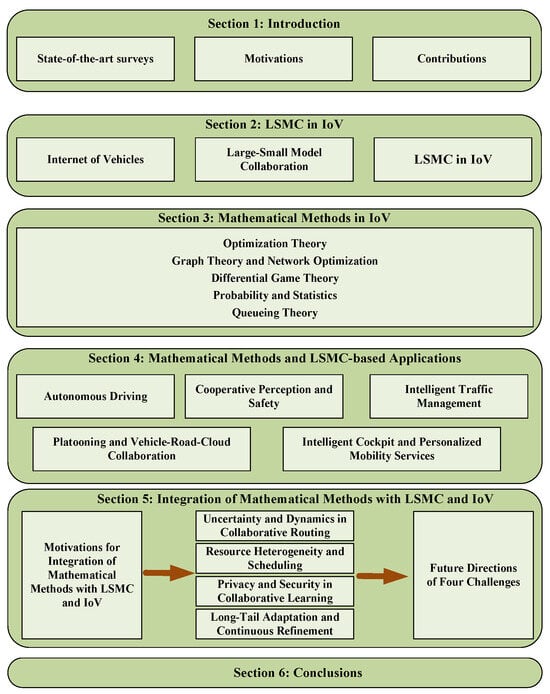
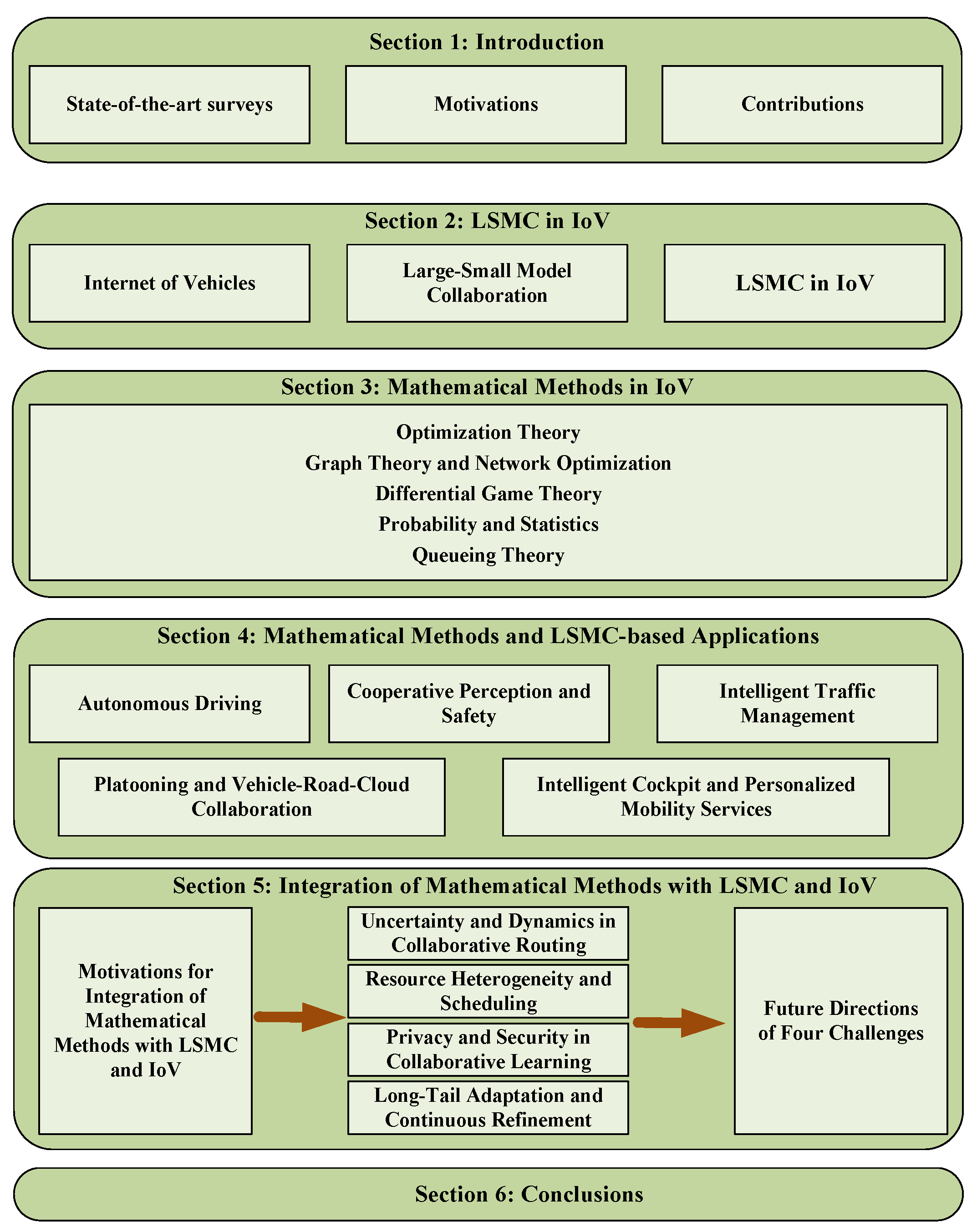
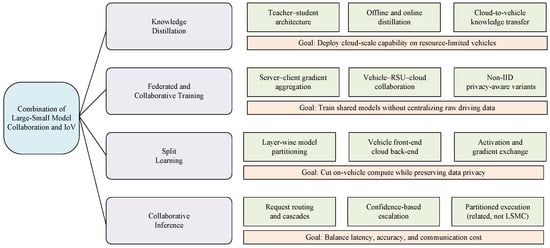
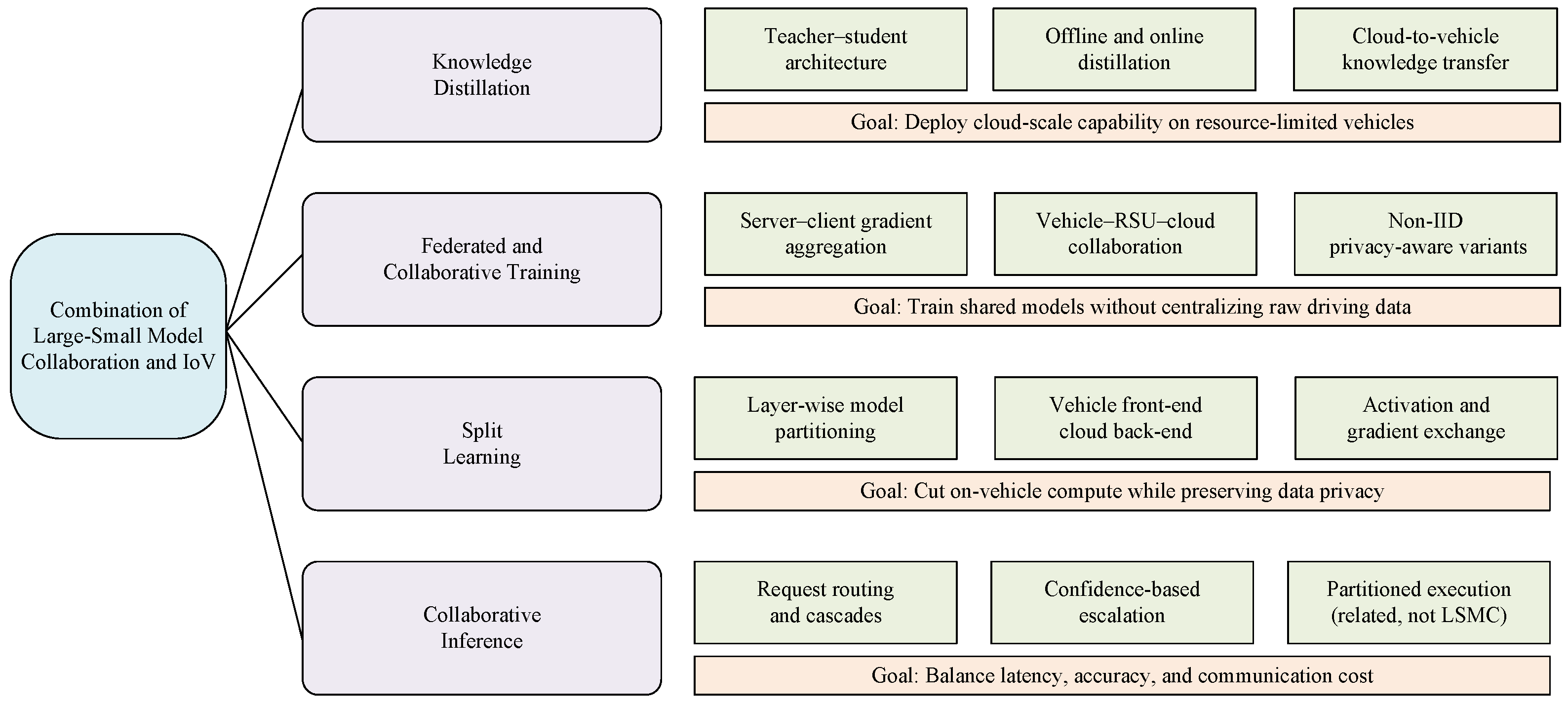
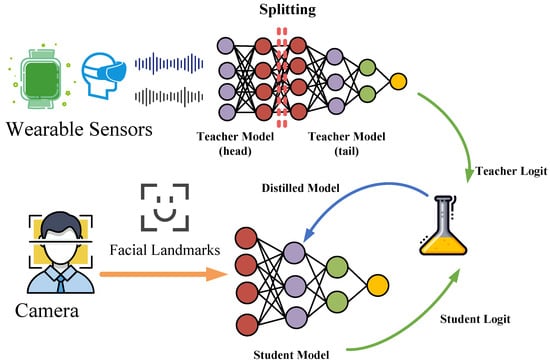
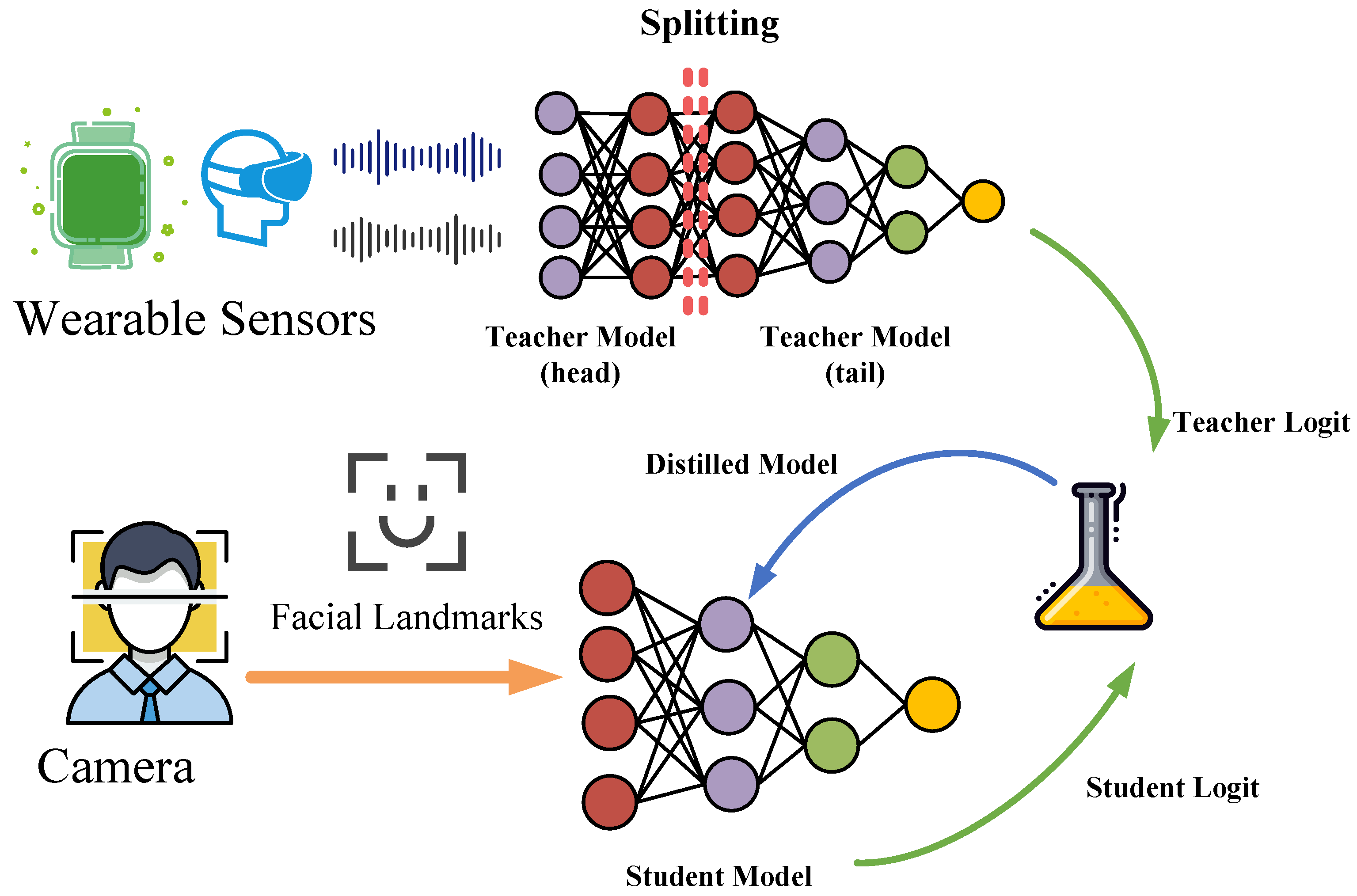
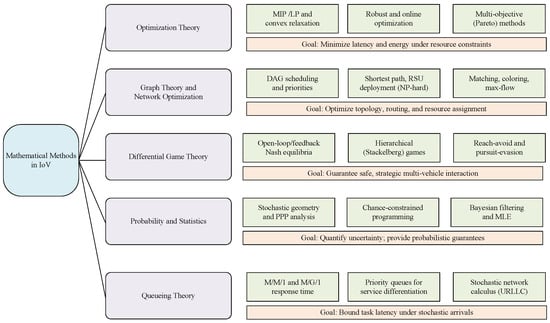
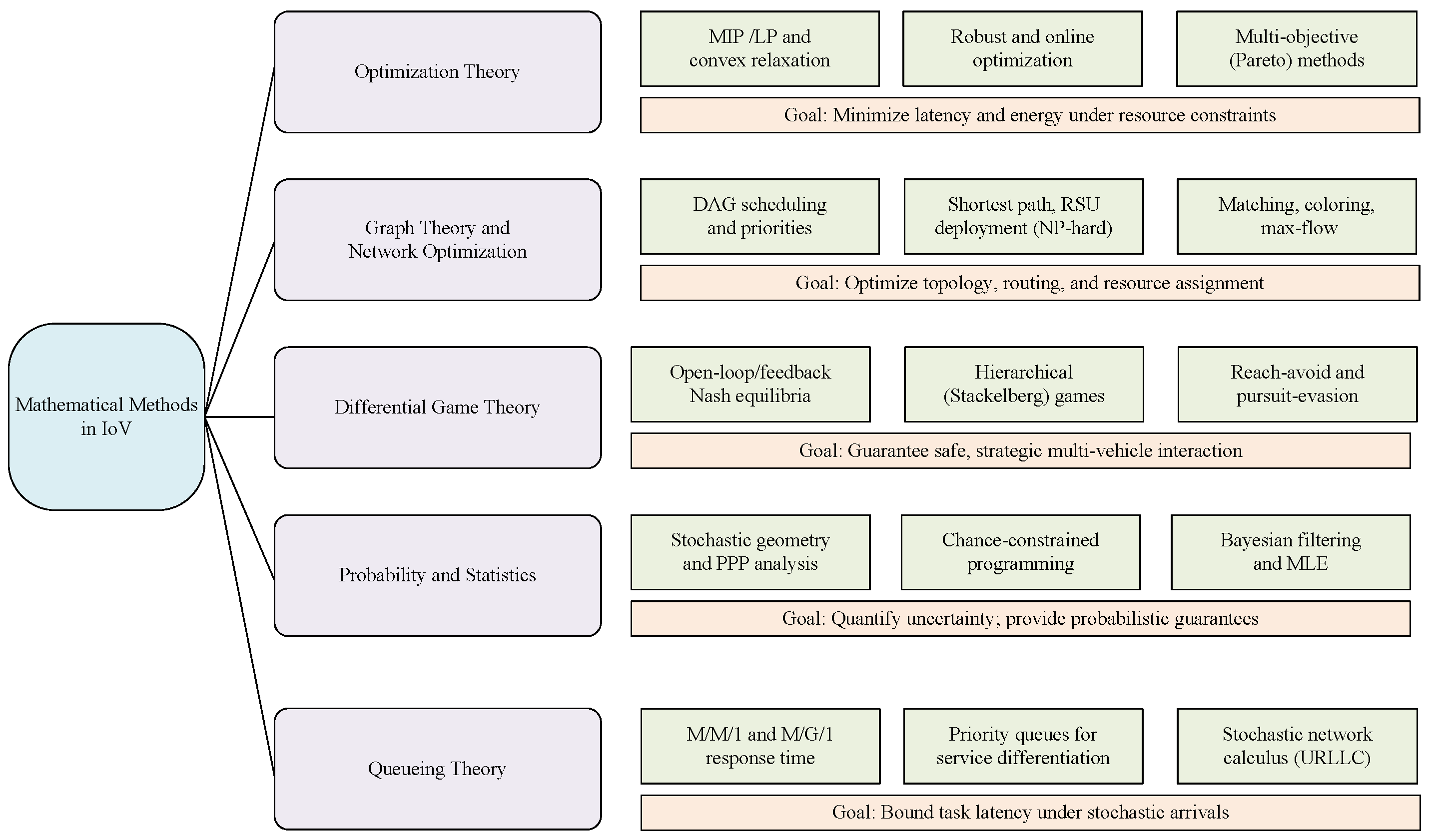
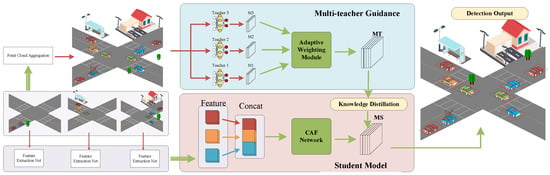
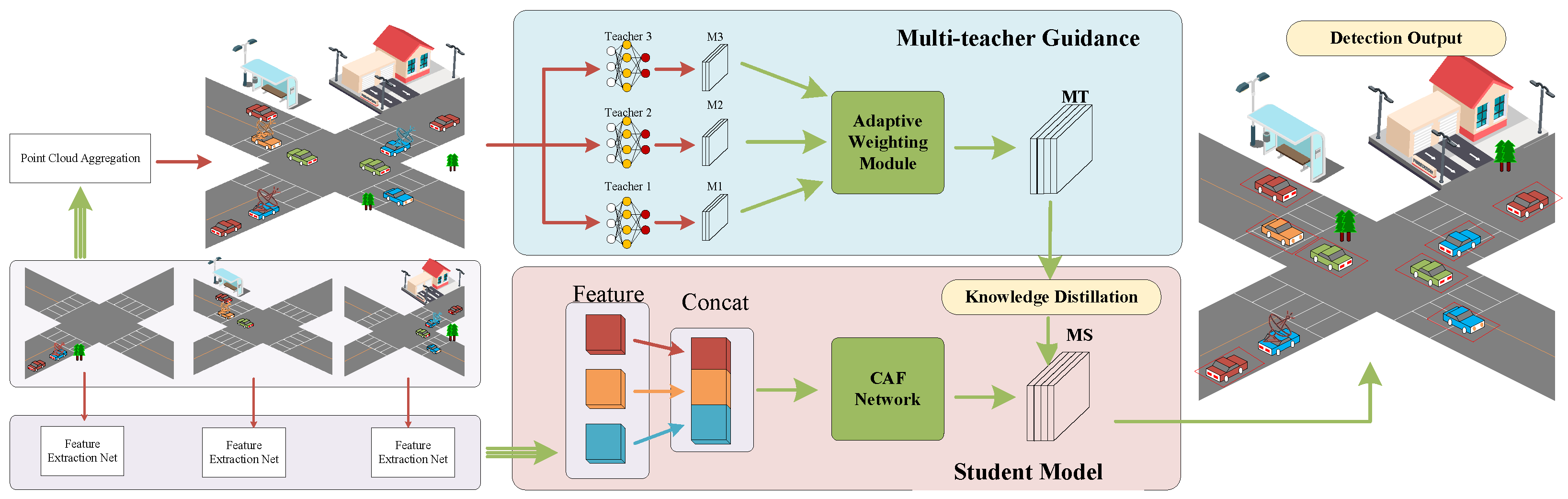
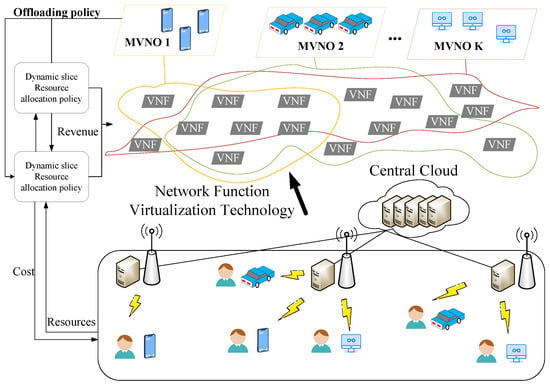
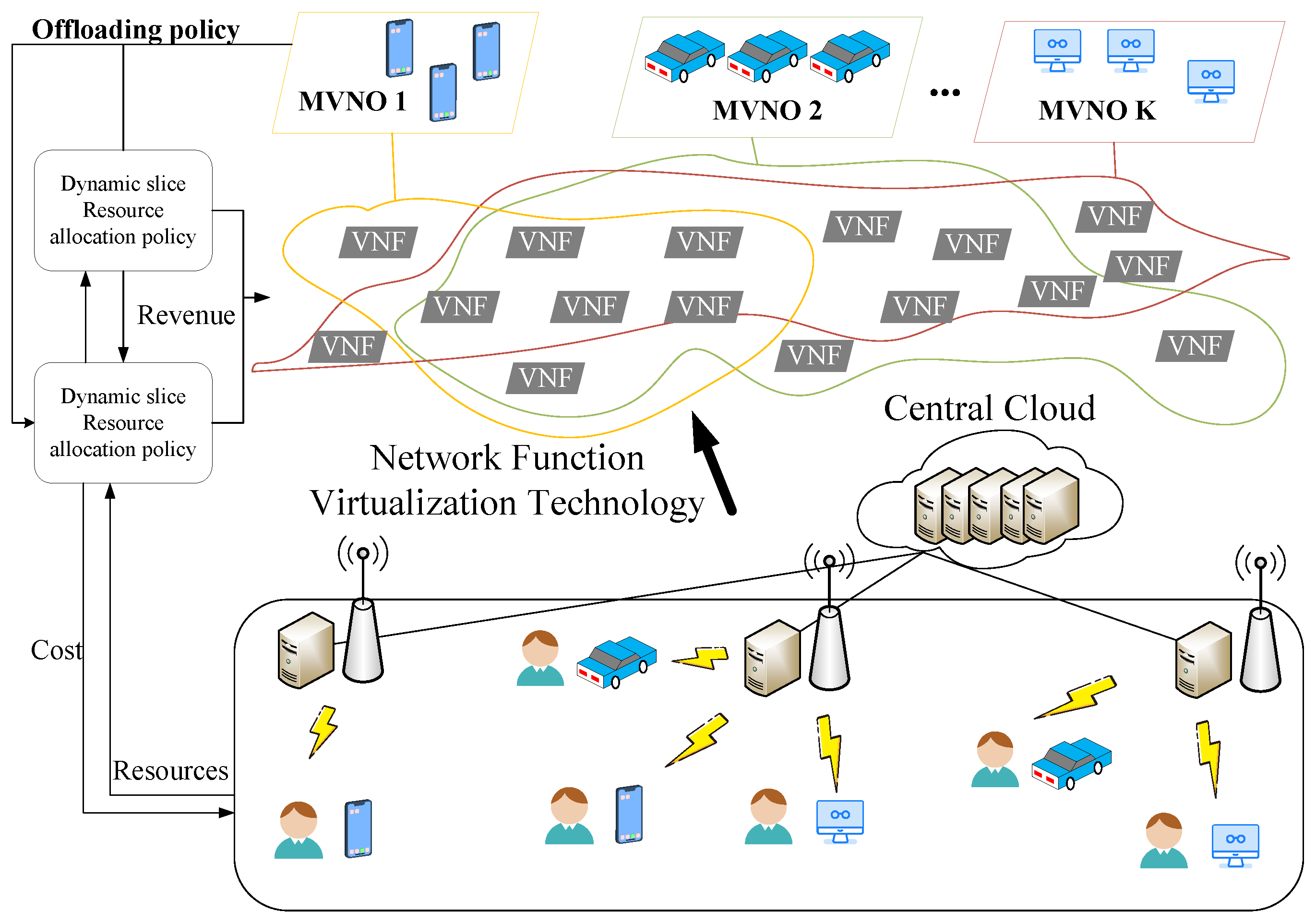
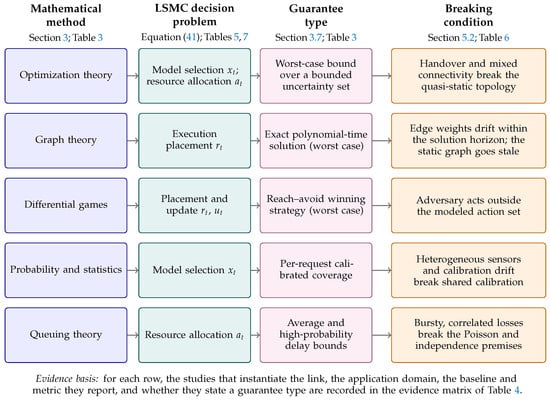
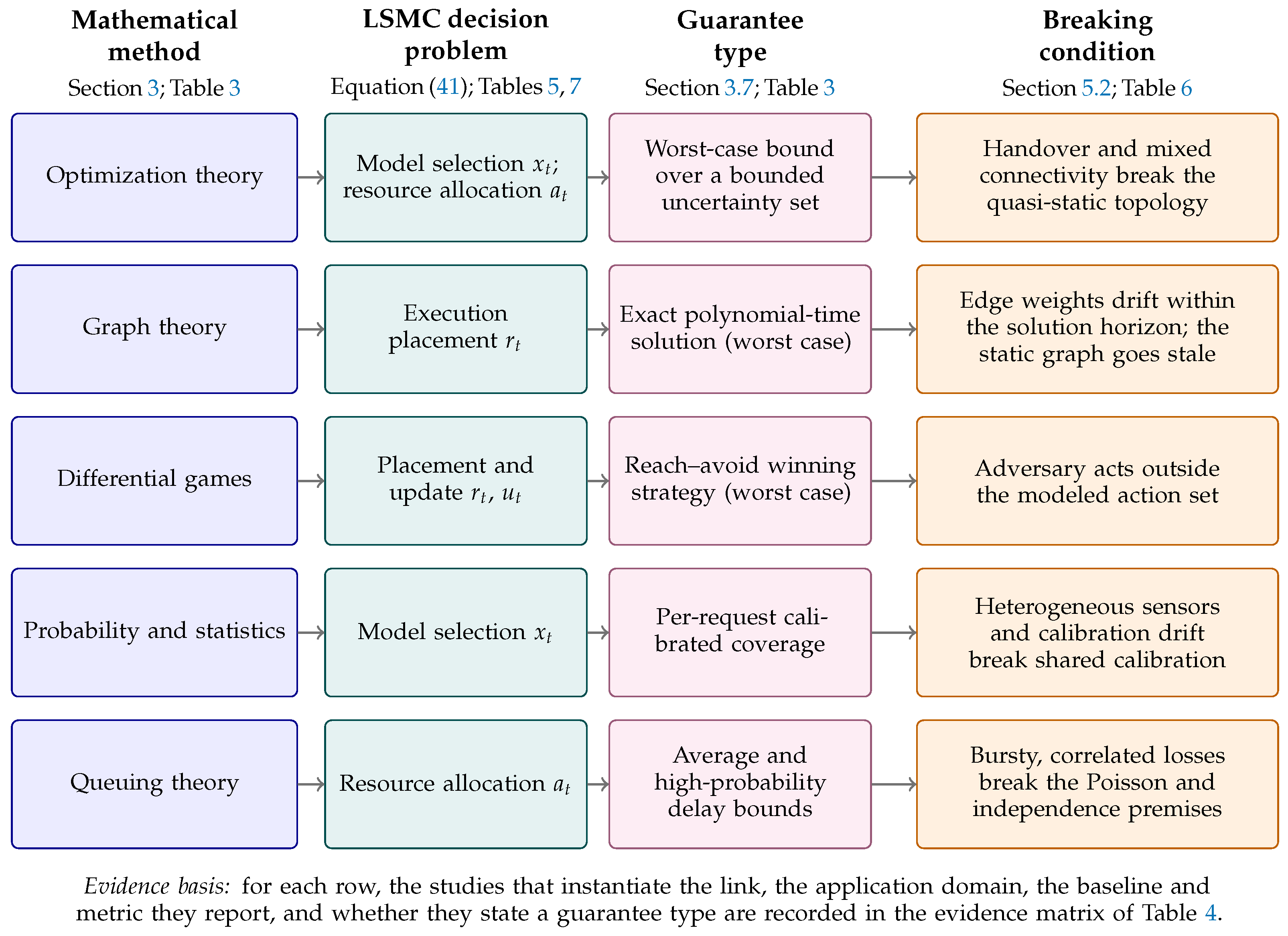

Disclaimer/Publisher’s Note: The statements, opinions and data contained in all publications are solely those of the individual author(s) and contributor(s) and not of MDPI and/or the editor(s). MDPI and/or the editor(s) disclaim responsibility for any injury to people or property resulting from any ideas, methods, instructions or products referred to in the content. |
© 2026 by the authors. Licensee MDPI, Basel, Switzerland. This article is an open access article distributed under the terms and conditions of the Creative Commons Attribution (CC BY) license.