


Abstract
This paper introduces a model-free distributed broadcast control (DBC) framework for multi-agent systems, with a novel application to fast coordination of connected and automated vehicles (CAVs) at urban intersections in a cyber-physical framework. At the end of the red phase, cyber-vehicle agents use vehicle-state and turning intention information to determine optimal intersection crossing times to minimize overall delay while avoiding conflicts. Under this DBC framework, multiple sub-coordinators replace a single global coordinator-based broadcast control (BC), enabling context-based coordination in which agents determine required time adjustments using multiple stochastic gradient estimates. Given a target crossing or turning time assigned by the cyber-agents, each vehicle uses a model predictive controller to ensure a conflict-free maneuver. Through distributed updates, vehicles cooperatively adjust their timings to reduce overall delay while avoiding intersection conflicts. We evaluate the proposed framework numerically in a single-lane T-junction and compare performance with traditional driving scenarios. Numerical simulations under single- and multiple-turning scenarios demonstrate that the proposed DBC framework achieves convergence within approximately 40 iterations, faster than conventional SBC in the evaluated simulation, and reduces the average overall traffic delay from 27.78 s to 17.19 s across the evaluated scenarios, corresponding to a 38.12% reduction compared with the non-cooperative traffic operation under the considered conditions.
Keywords:
distributed broadcast control; multi-agent systems; connected and automated vehicles (CAVs); traffic flow modeling; intersection coordination; cooperative control systems; autonomous vehicle control; simulation-based optimization MSC:
93A16; 90B20; 93B45; 62L20
1. Introduction
1.1. Challenges in Transportation Systems
Traffic congestion has become a critical challenge in modern transportation systems due to rapid urbanization, rising vehicle ownership, and limited infrastructure expansion. Traffic congestion not only reduces mobility efficiency but also contributes significantly to energy consumption, greenhouse gas emissions, and travel delays [1]. Intersections are particularly vulnerable bottlenecks in urban networks, as vehicles often experience stop-and-go conditions that increase energy consumption and reduce throughput [2].
A major contributing factor to these inefficiencies is the prevalence of non-cooperative driving behavior in conventional traffic systems, where human drivers make decisions independently without coordination. In conventional traffic systems, right-turn maneuvers at single-lane intersections introduce additional delays, as turning vehicles must wait for acceptable gaps in opposing traffic. Such scenarios highlight the need for intelligent vehicle-level coordination strategies that can manage conflicting movements more efficiently.
Recent advances in connected and automated vehicles (CAVs) and vehicle-to-everything (V2X) communication technologies have created new opportunities for cooperative traffic management. Through real-time information exchange and coordinated control strategies, CAV technologies can potentially improve traffic flow, safety, and energy efficiency [3,4]. In this context, multi-agent systems (MAS) have emerged as a powerful framework for modeling and controlling large-scale cooperative systems, where individual agents interact to achieve a global objective. Recent studies further reinforce the significance of multi-agent and learning-based approaches in advancing intelligent transportation systems. For example, multi-agent deep reinforcement learning has been applied to adaptive traffic signal control, where multiple intersection agents cooperate to improve traffic throughput and system stability in complex traffic environments [5]. Similarly, fuzzy-guided exploration strategies have been integrated with multi-agent reinforcement learning to improve urban traffic signal coordination by incorporating domain knowledge such as phase pressure into the learning process [6]. These studies demonstrate the potential of agent-based traffic coordination, but most of them focus on signal phase optimization rather than direct vehicle-level coordination at conflict points.
1.2. Multi-Agent Systems and Broadcast Control
Multi-agent systems (MASs) provide a fundamental framework for modeling, analyzing, and controlling large-scale systems composed of multiple autonomous entities. Their development has been strongly inspired by collective behaviors in nature, including bird flocking, ant foraging, honeybee swarming, and insect colonies, in which relatively simple individuals follow local interaction rules to produce coordinated, adaptive, and robust group behavior [7]. These biological mechanisms have motivated coordination algorithms for robotics, sensor networks, autonomous vehicles, and distributed control. Coverage control distributes agents efficiently over a target region for applications such as sensing, surveillance, and environmental monitoring [8]; rendezvous and consensus enable agents to converge to a common location or agreement state; and formation control maintains a desired geometric configuration in applications involving unmanned aerial vehicles, mobile robots, vehicle platoons, and cooperative transportation [9]. These coordination principles also support connected and automated vehicle systems, in which vehicles regulate their timing, spacing, and motion to improve safety and traffic efficiency.
Recent MAS studies have increasingly focused on communication-aware and resource-efficient coordination, including sampled-data consensus under communication delays [10], event-triggered consensus with intermittent information exchange [11], and packet-loss-aware quasi-consensus over unreliable channels [12]. Related studies have further investigated bipartite consensus over asynchronous signed networks, consensus tracking under asynchronous cooperation–competition networks, and convergence behavior of multi-agent consensus under communication delays [13,14,15]. Although these methods improve communication efficiency and robustness, many still rely on neighbor-to-neighbor information exchange, which can increase communication and computational burdens as the number of agents and coordination objectives grows.
Broadcast control (BC) provides an alternative bio-inspired coordination architecture in which a global coordinator transmits common feedback to all agents without requiring direct inter-agent communication [16]. Each agent combines the broadcast feedback with locally generated perturbations to update its state and collectively optimize a global objective. This communication-efficient and model-free approach has been applied to coverage, consensus, and distributed optimization problems [16]. However, conventional BC requires agents to execute random perturbations physically and uses separate perturbation and state-update stages, leading to unnecessary motion and slower convergence. Pseudo-perturbation-based broadcast control (PBC) addresses these limitations by replacing physical perturbations with virtual ones [17]. The global coordinator evaluates the corresponding hypothetical objective variations, enabling gradient-related information to be estimated without actual random motion. Consequently, PBC reduces motion cost and improves convergence while preserving the communication-efficient broadcast architecture. Its applicability has been demonstrated in coordinated vehicle merging, where connected vehicles achieve smooth coordination without explicit inter-vehicle communication [18]. Despite these improvements, reliance on a single global coordinator can limit the scalability of BC and PBC in large-scale or multi-objective systems. Distributed broadcast control (DBC) extends the framework through a hierarchical architecture comprising a global coordinator and multiple local sub-coordinators [19]. This architecture underpins the proposed intersection-control framework, in which objective-dependent sub-coordinators cooperatively optimize vehicle crossing times to achieve safe, conflict-free right-turn coordination.
1.3. Motivation and Research Gap
Existing intersection coordination studies primarily rely on centralized optimization, model predictive control, rule-based strategies, or learning-based traffic management [20,21]. Although these approaches can improve safety and traffic efficiency, they may require detailed system models, substantial computation, or intensive communication, which can limit scalability in vehicle-level coordination problems. Recent multi-agent reinforcement learning, fuzzy-control, and connected mobility frameworks have also shown promising performance, but their main focus is typically on traffic signal optimization, traffic flow balancing, or infrastructure-assisted coordination rather than direct optimization of individual vehicle crossing times at intersection conflict points [22,23,24].
Broadcast-control-based approaches provide a communication-efficient alternative, but their application to intersection coordination remains limited. Existing PBC-based traffic applications have mainly considered merging or lane-changing scenarios, where vehicle interactions are comparatively structured. In contrast, right-turn coordination introduces direct conflicts between turning and opposing through vehicles, and the problem becomes more challenging when multiple right-turning vehicles are involved. Moreover, the application of distributed broadcast control (DBC) to vehicle-level intersection scheduling has not been sufficiently explored. Since vehicles are already spatially distributed along predefined lanes, an upper-level agent redistribution mechanism is unnecessary. This motivates a traffic-oriented DBC framework in which traffic-dependent sub-coordinators directly optimize the crossing times of interacting vehicle groups in a distributed manner.
Accordingly, this study addresses vehicle-level crossing-time coordination, rather than traffic signal optimization, to facilitate smooth flows of any conflicting vehicles within the same green signal. The proposed DBC framework directly adjusts the crossing times of interacting CAVs through multiple traffic-dependent sub-coordinators using broadcast objective feedback, without requiring analytical gradients or pairwise inter-vehicle negotiation. This provides a model-free, objective-decomposed approach specifically tailored to CAV coordination at intersection conflict points.
1.4. Contributions
To address these challenges, this paper proposes a distributed broadcast control framework to coordinate connected automated vehicles at urban intersections with right-turn maneuvers. In contrast to existing traffic signal optimization, the proposed framework directly optimizes vehicle crossing times using traffic-dependent sub-coordinators and distributed broadcast feedback, thereby avoiding repeated pairwise inter-vehicle negotiation and eliminating the need for upper-level agent distribution control. The main contributions of this work are summarized as follows:
- A traffic-tailored DBC formulation for coordinating vehicles that are already distributed along predefined road lanes, without requiring upper-level agent redistribution.
- A scalable objective-driven sub-coordinator architecture in which active sub-coordinators are assigned according to traffic conditions and the number of right-turning vehicles.
- A cyber-physical formulation that represents vehicle crossing times as cyber-agent states and optimizes them through distributed broadcast feedback before physical execution.
- A demonstration that the proposed DBC framework achieves faster convergence compared to the conventional broadcast control and reduces traffic delay compared with uncoordinated traffic.
The remainder of this paper is organized as follows. Section 2 formulates the right-turn coordination problem by introducing the intersection scenario, vehicle dynamics, natural arrival time prediction, and scheduling constraints; the basic BC and PBC foundations are summarized in Appendix A. Section 3 presents the proposed traffic-oriented DBC framework, including the adaptation of the original DBC concept, the cyber-physical formulation, the distributed optimization of vehicle crossing times, and physical vehicle-motion execution. Section 4 presents the simulation setup and evaluates the proposed framework under single- and multiple-right-turn scenarios. Finally, Section 5 concludes the paper and outlines directions for future research.
2. Problem Formulation
2.1. Intersection Scenario and Modeling Assumptions
Consider a single-lane signalized intersection, as illustrated in Figure 1, where vehicles approach from two opposite directions, under the same signal phase. The west-side stream contains vehicles that may continue straight or turn right, whereas the east-side stream contains vehicles traveling straight through the intersection. The corresponding vehicle sets are defined as
where the indexing follows the arrival order in each stream. The set of right-turning vehicles in the west-side stream is denoted by
The intersection is assumed to be signalized, and the right-turn demand is sufficiently low such that neither a dedicated right-turn lane nor a separate right-turn signal phase is available, a typical scenario found in Japan. Therefore, a right-turning vehicle must find a safe temporal gap in the opposing east-side stream before entering the conflict zone. This gap-acceptance behavior is commonly characterized by a critical gap, i.e., the minimum headway in the opposing stream that a driver accepts to complete the turn [25,26]. If no admissible gap is available, the turning vehicle may stop near the intersection, which can propagate queues into the west-side stream. This study adopts the following assumptions:
Figure 1.
Typical traffic flow through a signalized single-lane intersection, with queue formation caused by a right-turning vehicle waiting for a sufficient temporal gap in the opposing traffic stream.
- All vehicles move along predefined lane centerlines and are represented using one-dimensional longitudinal coordinates.
- Right-turning vehicles follow a predetermined turning path after initiating the maneuver.
- Vehicle acceleration and speed are bounded and evolve in discrete time.
- Safety at the intersection is enforced through temporal separation constraints at the conflict point.
- Vehicles are connected and can transmit their state and maneuver intention to the intersection coordination unit via V2X communication [4].
2.2. Vehicle Dynamics and Baseline Car-Following Model
Let the longitudinal position, speed, and commanded acceleration of vehicle i at discrete time index k be denoted by , , and , respectively. With sampling interval , the vehicle dynamics are modeled as
In the baseline non-cooperative traffic condition, the longitudinal motion of human-driven vehicles is modeled using a car-following law, as is common in microscopic traffic flow studies [3,27]. Let vehicle denote the immediate predecessor of vehicle i. The nominal car-following acceleration is expressed as
where represents a nonlinear spacing-based interaction model. In this study, the Intelligent Driver Model (IDM) is adopted as a practical realization [27]:
where is the current spacing, is the vehicle length, and
is the desired minimum dynamic spacing. Here, is the desired free-flow speed, is the standstill clearance, is the desired time headway, and is the comfortable deceleration.
Specifically, when approaching the intersection, a vehicle may need to decelerate or stop at a halt position . The remaining distance to this halt position is
A distance-dependent reference speed profile is introduced as
where are polynomial coefficients obtained from the reference stopping-speed profile used in previous studies on driving at signalized intersections [1,2] and R is the polynomial order. The corresponding stopping acceleration is obtained as
The halt-response acceleration is then selected as
where denotes the activation distance of the halt-response mode. The final baseline acceleration command is conservatively selected as
A vehicle intended to turn right at the intersection approaches with at the center of the intersection, and when a pair of oncoming vehicles creates or has a timely sufficient gap, it executes the turn by resetting to some large value or the next stopping target. With these methods, we model traditional traffic flows for both passing through and turning at the intersection.
2.3. Early Estimation of Arrival Times
The right-turn scheduling problem first estimates each approaching vehicle’s natural arrival time at the relevant crossing or conflict point. Short-horizon prediction of vehicle arrival states is commonly used in predictive urban driving and intersection-control formulations [2,3]. Let denote the predicted natural arrival time of vehicle i at the reference crossing point . A short-horizon discrete prediction is used with prediction index
and prediction interval . The predicted position and speed are denoted by and , with initial conditions
The predicted dynamics are given by
The crossing index is determined as the first prediction step satisfying
and the corresponding natural arrival time is
To preserve the same-lane order, the natural arrival time of a following vehicle must also satisfy a minimum arrival time gap as
Accordingly, the stream-wise natural arrival times are computed as
where denotes the minimum arrival time separation required between two consecutive vehicles within the same traffic stream.
2.4. Right-Turn Scheduling Problem
The predicted natural arrival times define the baseline traffic condition before coordination. The right-turn scheduling problem modifies the crossing times of affected vehicles so that right-turning vehicles can pass through the conflict point safely while minimizing the total delay imposed on both streams. Similar vehicle-level intersection management problems have been addressed using centralized scheduling, reservation-based coordination, and joint signal-and-speed optimization [20,21,28,29,30]. In contrast, the present formulation represents the coordinated crossing times as cyber-agent states and subsequently optimizes them through broadcast-based objective feedback. Consider a right-turning vehicle . Suppose that a candidate insertion position in the east-side stream is indexed by
Here, means that the right-turning vehicle passes before all currently considered east-side vehicles, whereas means that it turns after all considered east-side vehicles. Intermediate values imply that the turn is inserted between east-side vehicles and . Let and denote the coordinated crossing times of west-side and east-side vehicles, respectively. For the right-turning vehicle q, the ideal conflict-free crossing conditions between two consecutive vehicles approaching from the east are described by
where denotes the minimum required temporal safety gap. These inequalities characterize the desired conflict-free temporal separations associated with a safe turning maneuver. However, unlike many CAV intersection coordination formulations in which such crossing-order and safety conditions are imposed as hard constraints of a centralized or decentralized optimal control problem [29,30,31], they are not enforced as explicit hard constraints in the proposed DBC optimization framework. Instead, the corresponding safety requirements are incorporated through continuously differentiable risk-based objective functions, which penalize insufficient temporal separations while preserving an unconstrained optimization structure.
The coordination objectives differ by vehicle, though overall delay reduction is globally desired. Specifically, vehicles’ desired arrivals should not conflict with others, which can be expressed by a risk function as
where the maximum risk of magnitude 1 occurs when , and is the shaping or decaying factor of the exponential function. Using this risk function, we define various objectives with weights , as follows. Specifically, all the straight-going vehicles from the west and east should minimize the sum of the collision risks and , respectively, given by
For each turning vehicle q from the west, it requires a safety gap with oncoming vehicles from the east, given by
Another risk of critical red signal violation is defined as
where and denote the vehicles with natural arrival times close to the red signal appearances and may be affected by the signal when their coordinated crossing times are shifted. Let and denote the coordinated crossing-time vectors of the west-side and east-side streams, respectively. These partial objective functions can be combined to form the global objective as
Instead of using hard constraints, minimizing this objective function reduces conflict risks among vehicles on their desired paths and facilitates smooth flows, including right turns. Accordingly, a low objective value indicates well-separated target crossing times but does not by itself guarantee conflict-free operation; safety during execution is enforced by the spacing, speed, and acceleration constraints of the vehicle controller in Section 3.4 and by the gap-acceptance fallback when a coordinated maneuver cannot be completed.
This scheduling formulation defines the target crossing-time optimization problem. Instead of solving it through centralized optimization or pairwise vehicle negotiation, this paper solves the problem using DBC [19]. In the proposed framework, the crossing times are interpreted as cyber-agent states and optimized through broadcast-based stochastic updates.
3. Right-Turn Coordination with Distributed Broadcast Control
3.1. Traffic-Oriented DBC Architecture
The proposed traffic coordination framework adapts the hierarchical DBC architecture introduced in [19] to right-turn coordination at signalized intersections. Unlike traditional DBC applications in which sub-coordinators are generated through spatial partitioning of the agents’ workspace [19], the proposed framework creates traffic-dependent sub-coordinators (SCs) according to the active coordination objectives. This objective-oriented architecture enables the coordination process to scale naturally with changing traffic conditions while preserving the distributed optimization mechanism of DBC. The cyber layer consists of an Intersection Coordination Unit (ICU) and a set of SCs. The ICU collects vehicle-state information, predicts the natural arrival times of approaching vehicles, identifies potential traffic conflicts, and activates the required SCs. Three SCs are always assigned to the lane-following and signal-related objectives, whereas an additional SC is created for each right-turning vehicle participating in the coordination process. Consequently, the total number of active SCs depends on the traffic scenario and is given by
where denotes the set of right-turning vehicles. The active SC set is therefore defined as
where the SC assignments are
Here, , , and represent the west-side lane-following safety objective, east-side lane-following safety objective, and signal transition safety objective, respectively. The objective represents the turning-conflict objective associated with right-turning vehicle q. Each SC optimizes only its assigned objective and broadcasts a feedback signal to the affected vehicles. The overall traffic coordination objective is defined by Equation (30). Accordingly, the DBC architecture does not introduce a new optimization objective, but it provides a distributed mechanism through which multiple objective-driven SCs cooperatively minimize the established traffic cost. This objective decomposition is similar in spirit to distributed multi-agent optimization, in which a global cost expressed as a sum of local components is minimized by agents that each have access to only part of the cost [32]; in the present case, however, the local components are evaluated by sub-coordinators and communicated through broadcast feedback rather than through neighbor-to-neighbor exchange. For a given traffic scenario, the ICU constructs a neighborhood for each active SC. The neighborhood of includes all affected west-side vehicles, while the neighborhood of includes all affected east-side vehicles. For each , the neighborhood of contains the corresponding right-turning vehicle and the east-side vehicles that may create conflict during the turning maneuver. The neighborhood of contains vehicles whose admissible crossing-time adjustments interact with signal transitions. Since a vehicle may influence multiple objectives simultaneously, overlapping neighborhoods are permitted. The resulting architecture allows local objective optimization and distributed broadcast feedback while maintaining a unified global coordination objective. As the number of right-turning vehicles increases, additional conflict-management SCs are activated automatically, enabling scalable coordination without modifying the underlying DBC optimization framework.
The proposed architecture is therefore more precisely characterized as a hierarchically orchestrated DBC framework with distributed objective evaluation, rather than a fully decentralized control architecture. The ICU performs vehicle-state collection, arrival time prediction, conflict identification, and activation of the relevant sub-coordinators. Each active sub-coordinator receives only the cyber-state variables required for its assigned objective, evaluates the corresponding objective variation, and broadcasts this information to the associated cyber-vehicle agents. The sub-coordinators do not independently determine the final crossing times or directly exchange control decisions; the crossing-time states are updated at the cyber-agent level using the aggregated broadcast feedback. In this respect, the ICU plays a role similar to the infrastructure-side agents in connected mobility and reservation-based intersection frameworks [24,28], while the objective evaluation and the crossing-time updates remain distributed.
3.2. Cyber-Physical DBC Framework
The proposed framework adopts a cyber-physical architecture, as illustrated in Figure 2.
Figure 2.
Cyber-physical structure of the proposed traffic-oriented DBC framework, in which selected sub-coordinators optimize the target crossing times of interacting vehicles through distributed local broadcast feedback.
In the physical layer, each vehicle periodically transmits its position, speed, and maneuver intention to the Intersection Coordination Unit (ICU). For vehicle i, the transmitted information packet is
where and denote the position and speed, respectively, and indicates the turning intention. Using this information, the ICU identifies the set of vehicles affected by the coordination task,
The affected set includes right-turning vehicles, conflicting oncoming vehicles, and any following vehicles whose crossing times are influenced by the turning maneuver. Here, denotes the set of affected vehicles at coordination instant k. Each affected vehicle is represented by a cyber agent whose state corresponds to its planned crossing time. Thus, the cyber state of vehicle i at iteration h is
and the collective cyber state is
The optimization process starts from the natural arrival time prediction,
The ICU then activates the required sub-coordinators and constructs their corresponding neighborhoods. Each neighborhood contains the vehicles whose crossing times directly influence the objective assigned to that SC. All affected west-side vehicles belong to the neighborhood of , while all affected east-side vehicles belong to that of . For each , the neighborhood of contains right-turning vehicle q and the east-side vehicles with which it may conflict. Vehicles whose admissible crossing-time adjustments approach a signal transition additionally belong to the neighborhood of . Because a vehicle may influence several objectives simultaneously, these neighborhoods may overlap and each update aggregates the corresponding feedback signals.
3.3. Multi-Objective SC-Based Distributed Optimization
The proposed DBC algorithm minimizes the traffic coordination objective through the cooperative operation of all active SCs, whose number is determined by (31). At each iteration, all cyber agents generate virtual perturbations of their current crossing times. For the ℓth perturbation sample,
where denotes the perturbation magnitude tuned based on the relative vehicle position, and
is a Bernoulli random variable. The use of independent Bernoulli perturbations follows the simultaneous perturbation stochastic approximation principle [33]. The perturbed crossing-time vector is therefore
Unlike conventional BC [16], these perturbations exist only in the cyber layer and are never physically executed by the vehicles, following the pseudo-perturbation principle of PBC [17]. Each SC evaluates the variation of its assigned objective caused by the virtual perturbation. For SC c,
where
Thus, each SC evaluates only its assigned objective instead of the complete global objective. Since a vehicle may belong to multiple SC neighborhoods, the local feedback signals are combined using weighted aggregation. Let denote the neighborhood associated with sub-coordinator c, and let
denote the set of SCs influencing vehicle i. The aggregated feedback becomes
where denotes the influence weight of SC c on vehicle i. The aggregation weights are selected as non-negative and normalized over the sub-coordinators associated with each cyber agent, analogous to the convex-combination weights used in consensus-based multi-agent schemes [9]. With independent zero-mean Bernoulli perturbations and a sufficiently small perturbation magnitude , each sub-coordinator provides an asymptotically consistent local gradient estimate [33]. Owing to the weighted aggregation in (48), the resulting feedback is interpreted as a weighted stochastic descent direction; it is not, in general, an exactly unbiased estimator of the gradient of the unweighted global objective in (30).
Using the aggregated feedback, the stochastic descent direction is obtained as
where is the descent gain tuned based on relative position of the vehicles and denotes the number of virtual perturbation samples used for stochastic gradient estimation. The update in (49) follows a multi-sample simultaneous-perturbation gradient approximation [17,33]. To prevent unrealistic timing variations, the update is bounded through
The sub-coordinators do not independently determine vehicle crossing times; rather, each sub-coordinator evaluates its assigned objective using the relevant cyber-state variables and broadcasts the resulting objective variation to the associated cyber-vehicle agents. For a vehicle affected by multiple objectives, the corresponding feedback contributions are combined according to Equations (45), (48), and (49) to obtain the stochastic update direction. The resulting update then modifies the coordinated target crossing times, which are then provided to the local controller for physical trajectory generation and safe driving subsequently.
The most important gains that drive the multi-agents toward convergence need to be selected and tuned appropriately as learning progresses. A lead vehicle in a queue may cross immediately and has little scope to adjust its timing, whereas a vehicle expected to arrive at the end of a green signal can adjust its arrival more flexibly. Therefore, the initial values of both gains are set based on their expected natural arrival time (similar to merging coordination in [18]); specifically, for the first vehicle in the queue, because it cannot reduce its crossing time further. Then over iterations, they are discounted by a factor as
With such discounted gains, the agents gradually narrow down to local points, reducing random exploration.
The cyber state is then updated according to
where denotes projection onto the feasible crossing-time domain , i.e., the set of crossing times that each vehicle can reach from its current state under the speed and acceleration bounds of the vehicle controller in Section 3.4. Under the standard assumptions of smooth objective functions, independent zero-mean Bernoulli perturbations, and sufficiently small perturbation and descent gains, the stochastic gradient estimate provides an approximate descent direction [16,33]. Moreover, the projection in (52) keeps the cyber states within the feasible crossing-time domain. Thus, in line with standard results on projected stochastic approximation [34], the distributed cyber-state updates approach a stationary solution under these assumptions. This convergence statement applies to the cyber-layer optimization and does not constitute a formal closed-loop stability guarantee for the coupled DBC–MPC vehicle dynamics.
The iterative optimization is terminated when the change in the collective objective satisfies
Upon convergence,
is selected as the optimized crossing time of vehicle i. The proposed framework therefore distributes the optimization process among the active objective-driven SCs while minimizing the overall coordination objective through cooperative broadcast feedback. The complete procedure is summarized in Algorithm 1.
| Algorithm 1 Traffic-Oriented DBC Crossing-Time Coordination |
|
3.4. Vehicle Motion Execution
Once the cyber-level DBC converges, the system transmits the optimized crossing times to the corresponding physical vehicles. For vehicle i, the assigned crossing time serves as the temporal target for motion planning. The vehicle controller needs to compute a feasible speed profile that enables the vehicle to reach the conflict point at the desired time while satisfying speed and acceleration limits, conflict-point safety, and car-following requirements. Rather than relying on a traditional car-following model, predictive optimization with a sufficiently long horizon to cover the entire green signal can ensure arrival at the correct times with the desired states. Model predictive control (MPC) is well suited to this task because it handles state and input constraints explicitly, and it has been used extensively for longitudinal vehicle control on urban roads and at intersections [3,29,35].
Specifically, with the preceding vehicles’ states and crossing times, a predictive optimization problem of K steps is solved to obtain the control acceleration of vehicle i with initial states measured at time t, as
subject to (3), (4) and the following additional conditional constraints
where is the estimated future position of the preceding vehicle, is the target arrival or crossing time step at the intersection, corresponding to the given (depending on the step size in the horizon) and it is tuned based on the preceding vehicle’s state when it reaches the turning execution zone (with full visibility of intersection situations). However, when there are significant changes in the arrival of the preceding vehicles or oncoming vehicles (for turning) due to external reasons or disturbances, the target is set outside the horizon, and the vehicle switches to the traditional priority-based mode, i.e., gap acceptance with respect to the oncoming stream [25]. The target velocity at the crossing point varies based on the vehicle’s turning status and sequence.
The overall operational procedure consists of four stages:
- Vehicle-state and maneuver-intention acquisition.
- Natural arrival time prediction and SC assignment.
- Multi-objective DBC optimization of crossing times.
- MPC-based execution of the optimized schedule.
Consequently, the proposed framework transforms right-turn coordination into a distributed cyber-layer optimization problem, where the active sub-coordinators collectively minimize the scenario-dependent traffic objectives and generate an efficient, conflict-free, and signal-compliant crossing schedule.
4. Simulation Evaluation
The proposed distributed broadcast control (DBC) framework is evaluated in a typical traffic coordination scenario at a signalized intersection, where turning vehicles conflict with oncoming vehicles and often cause congestion. The simulation study focuses on three aspects. First, we compare the convergence characteristics of the DBC and estimated traffic performance with those of the conventional single-broadcast control (SBC) framework for a single right-turning vehicle. Second, we investigate the coordination performance across multiple right-turning-vehicle configurations. Finally, we analyze vehicle speed profiles to illustrate the physical impact of the optimized coordination strategy on traffic flow smoothness and stopping behavior.
4.1. Simulation Setup
A microscopic traffic simulation environment is developed to replicate realistic traffic flows at a signalized T-junction intersection. The traffic geometry, vehicle streams, and cyber-physical coordination architecture are illustrated in Figure 1 and Figure 2, respectively. The simulated road segment has a total length of 1000 m, with the intersection located at the midpoint (500 m). Vehicles approaching from the west may either continue straight or perform right-turn maneuvers, whereas vehicles approaching from the east travel straight through the intersection. This configuration creates conflict points between turning and oncoming traffic, providing a representative environment for evaluating the proposed DBC-based coordination framework.
For reproducibility, the traffic signal settings, vehicle arrival and initialization conditions, vehicle and IDM parameters, safety parameters, DBC parameters, and MPC parameters used in the simulations are summarized in Table 1. Unless otherwise stated, the reported scenarios use the parameter values listed in this table. The initial positions and speeds of the vehicles are assigned according to the individual scenario configuration described in the corresponding simulation case.
Table 1.
Main numerical parameters used in the simulations.
Traditional traffic is simulated using a human-driven vehicle control model given by the intelligent driver model [27] as the baseline traffic flow scenario, where right turns are subject only to the slot availability of higher-priority oncoming vehicles. At the last moment of the red signal, the proposed coordination provides each vehicle with a target arrival time, which it achieves using MPC-based driving. The main design parameters of the DBC framework include the parameters of the exponential risk functions, the perturbation magnitude , the descent gain , and the number of perturbation samples . These parameters were selected based on their physical interpretation together with preliminary numerical tuning, rather than arbitrary trial and error. For the exponential risk functions, approximately 2 s is considered as the reference temporal gap for normal car following, whereas approximately 4 s is considered for the interaction between a right-turning vehicle and the corresponding oncoming traffic, which is consistent with typical critical-gap values for turning across opposing traffic [25,26]. The risk function parameters are selected such that the corresponding risk values decrease to approximately 10–20% of their maximum values when these reference gaps are reached. For the stochastic update, determines the magnitude of the virtual perturbation, whereas controls the magnitude of the cyber-state update; excessively large values may increase fluctuations, while very small values may slow convergence. Increasing reduces stochastic variation through averaging at the expense of additional computational effort; in the present simulations, was used.
4.2. SBC vs. DBC in Single Right-Turning Vehicle Scenario
The first experiment considers a single right-turning vehicle existing within the traffic stream. The objective is to compare the convergence characteristics of the proposed DBC framework with the conventional SBC approach. First, we compare typical convergence characteristics with respect to iterations. Figure 3 shows the evolution of the optimization objective function J and the expected total traffic delay over the broadcast-control iterations. Both approaches successfully reduce the objective function; however, significant differences can be observed in their convergence behavior. The DBC framework exhibits a substantially faster convergence rate, reaching a near-steady-state solution within approximately 40 iterations. In contrast, SBC continues to exhibit noticeable fluctuations and requires a considerably larger number of iterations before approaching a similar objective value.
Figure 3.
Comparison of optimization performance between the conventional single broadcast control (SBC) and the proposed distributed broadcast control (DBC) for a single right-turning vehicle. (Left): evolution of the objective function J. (Right): evolution of the total traffic delay D. The proposed DBC exhibits faster convergence than SBC and approaches a comparable stationary solution with fewer broadcast-control iterations.
Since SBC and DBC optimize the same global objective in (30), the principal advantage of DBC is its improved convergence behavior rather than a guaranteed lower final objective value. Small differences between the converged solutions may arise from the stochastic gradient estimates and termination criterion; therefore, DBC is interpreted as converging faster toward a comparable stationary solution.
A similar trend is observed in the total delay metric. The DBC scheme rapidly decreases the accumulated delay and stabilizes at a low value within the early iterations, whereas SBC requires additional iterations and demonstrates larger oscillations during the optimization process. These results indicate that the use of multiple traffic-dependent local broadcast signals enables more effective optimization of interacting vehicle groups, leading to improved convergence efficiency.
This observation agrees with the original DBC study [19], in which hierarchical coordination through multiple sub-coordinators improved convergence compared with a single global coordinator. It is also consistent with the reasoning behind PBC [17,18], where averaging multiple virtual perturbations reduces the variance of the gradient estimate; although a single perturbation sample () was used in the present simulations, this variance-reduction mechanism remains available in DBC by increasing . In the present traffic problem, assigning each conflicting interaction to a dedicated SC further reduces the interference between unrelated objective components that occurs when a single composite broadcast signal is sent to all vehicles.
Figure 4 presents the projected trajectory (connection between initial and crossing point) evolution at representative iterations for both SBC and DBC. This figure illustrates the evolution of vehicle trajectories during the optimization process under SBC (left column) and DBC (right column). The upper trajectories correspond to east-side through vehicles that contribute to the formation of a turning gap, whereas the lower trajectories represent west-side vehicles. Among the west-side vehicles, the orange trajectory indicates the vehicle requesting a right-turn maneuver. The green and red horizontal lines denote the green and red signal phases, respectively. It can be observed that the proposed DBC approach coordinates vehicle movements more effectively, generating a suitable turning gap earlier than SBC. As a result, the right-turning vehicle is able to execute the maneuver sooner with reduced waiting time, while maintaining smoother trajectories and minimizing disruptions to the surrounding traffic flow. At the initial iterations, the right-turning vehicle cannot find a sufficiently large temporal gap in the opposing traffic stream and is therefore forced to wait near the intersection. This waiting behavior propagates backward and affects the following vehicles. As the optimization progresses, both approaches gradually modify the arrival timings of the surrounding vehicles to create a feasible turning gap. However, DBC generates the required temporal separation considerably faster than SBC. Consequently, the right-turning vehicle completes its maneuver earlier, and the following vehicles can pass through the intersection without prolonged delays. Overall, DBC converges faster than SBC and achieves lower delay during the considered finite optimization process, while both approaches optimize the same global objective.
Figure 4.
Vehicle trajectory comparison for a single right-turning vehicle under SBC and DBC coordination. The proposed DBC generates a feasible turning gap more rapidly, allowing the turning vehicle to complete the maneuver earlier while reducing disturbances to the following traffic stream. Consequently, smoother traffic progression and lower overall delay are achieved compared with SBC.
4.3. Multiple Right-Turning Vehicle Scenarios
The second experiment evaluates the scalability of the proposed framework under multiple right-turning vehicle configurations. Several representative cases were considered, including two and three simultaneous right-turning vehicles distributed within the traffic stream. The multiple-turning cases introduce overlapping coordination objectives and are therefore used to evaluate the proposed DBC framework under increased interaction complexity. The corresponding DBC results are presented for six representative configurations.
Figure 5 illustrates six representative coordination outcomes obtained using the proposed DBC framework. In these scenarios, different combinations of vehicles were assigned right-turn intentions, including the sets , , , , , and . The optimized trajectories show that the framework successfully coordinates the interaction among multiple turning and through vehicles while preserving conflict safety and lane-order constraints.
Figure 5.
Traffic trajectories obtained under the proposed DBC framework for various multiple right-turning vehicle configurations. The traffic-dependent SC coordination mechanism successfully creates conflict-free turning opportunities while maintaining smooth through-vehicle movements.
An important observation is that these scenarios are difficult to handle using a conventional SBC architecture. As the number of turning vehicles increases, the interaction structure becomes increasingly complex, and the optimization landscape grows significantly. The distributed structure of DBC mitigates this challenge by assigning the relevant interaction terms to multiple traffic-dependent SCs. Each SC optimizes its neighborhood, and vehicles influenced by overlapping neighborhoods combine the corresponding local feedback signals.
In all six configurations, DBC substantially reduced the total traffic delay compared with the non-cooperative operation; the average performance over repeated runs is evaluated in Section 4.5.
For context, substantial delay reductions have also been reported for other cooperative intersection-control schemes, such as cooperative vehicle intersection control [36], reservation-based autonomous intersection management [28], combined signal-optimization and speed-control methods [21], and agent-based fuzzy signal control [22]. A direct numerical comparison is not meaningful, because these studies consider different intersection layouts, demand levels, and performance measures, and most of them do not consider permissive right turns in a single lane. The large reduction obtained here mainly comes from avoiding the blocking effect of a waiting right-turning vehicle, which in the non-cooperative case can delay following vehicles by a full red period.
Recent cooperative-control approaches have explicitly addressed heterogeneous time-varying communication delays and provided stability guarantees under bounded delays [37]. In contrast, the present DBC framework focuses on model-free crossing-time coordination through objective-based broadcast feedback and currently assumes reliable and timely communication. Extending the DBC formulation to explicitly account for heterogeneous communication delays and establishing the corresponding convergence properties constitute important directions for future research.
4.4. Coordinated Traffic Flow Performance
The above results demonstrate only the multi-agent decision process and expected traffic flows and delay reduction. Such coordination results are fed back to the vehicles as target crossing times to drive them while ensuring local safety. The actually observed trajectories for all vehicles passing through the intersection are analyzed. Specifically, using the targeted crossing or right-turning time, each vehicle is controlled using MPC. To investigate the physical impact of the coordinated timing optimization and vehicle control, the speed trajectories of the vehicles were analyzed for the example scenario involving two right-turning vehicles (vehicles 4 and 7). Figure 6 and Figure 7 compare the baseline non-cooperative case and the optimized DBC solution, respectively.
Figure 6.
Baseline non-cooperative traffic operation showing position–time trajectories and speed profiles with prolonged waiting, complete stops, and speed fluctuations.
Figure 7.
DBC-coordinated traffic operation showing smoother position–time trajectories, fewer complete stops, and reduced speed variation.
In the baseline scenario in Figure 6, right-turning vehicles wait longer near the intersection because the opposing traffic stream has insufficient temporal gaps. As shown in the speed profiles, several vehicles decelerate sharply behind a vehicle that fails to turn and reach near-zero speed. These abrupt speed changes propagate to the following vehicles. Although the vehicles eventually turn within the green signal after all oncoming vehicles, a few vehicles still need to idle for the entire red period. This extra idling and stop-and-go traffic reduce overall traffic efficiency.
After applying the DBC-based coordination as in Figure 7, the vehicle trajectories become significantly smoother. Some oncoming vehicles speed up while others slow down in a preplanned way to create sufficient gaps for the turning vehicles. The optimized crossing times allow both right-turning vehicles to utilize appropriately generated temporal gaps without excessive waiting. As a result, surrounding vehicles require fewer speed adjustments and maintain more continuous motion as they approach the intersection. The lower speed plots clearly show reduced speed fluctuations. Compared with the baseline case, the optimized solution exhibits smoother acceleration and deceleration patterns, fewer complete stops, and improved traffic stability. Since stop-and-go driving at intersections is a major source of excess energy consumption and emissions [1,2], this smoother behavior is also expected to reduce energy use and improve driving comfort; future work should evaluate these effects quantitatively.
From a practical deployment perspective, the sub-coordinators can be implemented as parallel computational units, allowing objective evaluations to be distributed as the number of coordinated vehicles and turning movements increases. Nevertheless, the computational and communication requirements increase with the number of active vehicles and sub-coordinators. The present framework also assumes reliable and timely V2X communication [4] for vehicle-state information and broadcast feedback. Communication delays and packet losses were not explicitly considered in the present simulations, although their effects on multi-agent coordination have been studied for sampled-data and delayed consensus [10,11,15] and for packet-loss-aware coordination [12]. Event-triggered communication [38] is a promising way to reduce the broadcast load as the number of coordinated vehicles grows; therefore, evaluating the scalability and robustness of the proposed DBC framework under such communication constraints remains an important direction for future work.
In DBC coordination, the cost function is designed to create sufficient safe gaps through appropriate parameter selection, provided that the coordinated vehicles can be accommodated within the available green time. However, under complex traffic conditions, such as an excessive number of vehicles, there may be cases where a safe turning gap cannot be created or a vehicle cannot reach its assigned crossing time with the required safe gap. In such cases, the framework could be extended to adjust the signal timing and extend the green period, as in traffic-responsive signal-control systems based on multi-agent reinforcement learning [5,6], fuzzy logic [22], or multi-objective signal-priority control [23]; this is considered a future extension of the present work. If such an extension is not feasible, the affected vehicles should not be assigned the coordinated turning maneuver; alternatively, only a manageable subset of vehicles should be coordinated, while the remaining vehicles are delayed to the subsequent signal cycle. Even when a vehicle is properly coordinated, disturbances or other unexpected conditions may prevent the required turning criteria from being satisfied during physical execution. In such cases, the local controller follows the applicable intersection priority and safety rules rather than enforcing an infeasible coordinated turning maneuver.
4.5. Overall Performance Under Various Traffic Demands
The above comparisons only described the respective single scenarios. Given the stochastic nature of traffic flows, we examine average performance under different traffic-demand conditions (i.e., different numbers of vehicles per cycle or flows per hour ) based on multiple runs. For such a meaningful statistical comparison, we evaluated four flow cases (Flow A–D), as follows: Flow A (, or veh/h, veh/h), Flow B (, or veh/h, veh/h), Flow C (, or veh/h, veh/h), and Flow D (, or veh/h, veh/h). One or two right-turning vehicles at different positions were randomly selected in each flow condition.
Before conducting a full comparison, we conducted a statistical test on sample runs to ensure statistical significance. Specifically, we ran a paired t-test on several runs and found , indicating significance; we then proceeded to the full comparison for scenarios A–D. To further examine variability in the stochastic DBC updates, we evaluated each of the four traffic flow configurations over 10 independent runs, using different random seeds and varying initial vehicle positions and the sequence of turning vehicles. We regenerated the stochastic perturbations for each run and compared the resulting vehicle crossing-time distributions between the non-coordinated and DBC-coordinated cases, as described in Figure 8 and Figure 9.
Figure 8.
Comparison of mean vehicle crossing times under four traffic flow conditions. The non-coordinated traffic-driving scenario and DBC-coordinated operation are compared.
Figure 9.
Distribution of vehicle crossing times for non-coordinated and DBC-coordinated operation under four traffic flow conditions, based on 10 independent runs for each flow configuration.
Figure 8 compares the mean vehicle crossing times under the four traffic flow conditions. For the west-side vehicles, which include the right-turning vehicles and are therefore directly affected by the conflicting traffic interaction, DBC provides a pronounced reduction in mean crossing time for Flows A–C and a smaller reduction for Flow D. For the east-side vehicles, the differences between the non-coordinated and DBC-coordinated cases are comparatively small because the coordination primarily adjusts the interacting vehicle timings to create suitable temporal opportunities for the turning vehicles. Considering the vehicles from both sides, DBC achieves a lower mean crossing time than the non-coordinated case under each of the four evaluated traffic flow conditions; averaged over Flows A–D, the mean crossing time of all vehicles decreases from 27.78 s to 17.19 s, corresponding to a 38.12% reduction. These results indicate that DBC remains effective under the considered variations in traffic demand, with the main improvement occurring for the west-side vehicles directly affected by the turning–opposing traffic interaction.
Figure 9 shows a histogram of individual vehicle crossing-time probabilities: non-coordinated cases generally exhibit wider crossing-time distributions with pronounced long-delay tails (as some vehicles fail to cross before the red signal due to obstruction by a turning vehicle), whereas DBC-coordinated cases produce more concentrated distributions. In several non-coordinated cases, crossing times extend to approximately 80–90 s (i.e., the green signal of the next cycle), while most DBC-coordinated observations remain below approximately 40 s (within the green period). Similar behavior is observed across Flows A–D, indicating that the improvement obtained with DBC is reflected not only in the average crossing time but also in reduced variability and fewer excessively long crossing times over the repeated evaluations.
These results demonstrate that the proposed DBC framework effectively coordinates conflicting traffic movements, prevents queue propagation, and generates feasible temporal gaps for multiple right-turning vehicles. Furthermore, the relatively small variation in the optimized delay values indicates consistent performance across the evaluated turning-vehicle configurations. Broader scalability and robustness require validation under larger traffic networks and communication-impaired conditions.
4.6. Discussion
Comparison with Related Coordination Approaches: The numerical results should also be interpreted in relation to existing intersection coordination and multi-agent control approaches. Conventional centralized intersection management and MPC-based approaches can explicitly optimize vehicle trajectories and safety constraints but generally require a prescribed model and centralized solution of the coordination problem [20,21]. In contrast, the proposed DBC framework optimizes vehicle crossing times through objective function evaluations and distributed broadcast feedback without requiring analytical gradients or pairwise inter-vehicle negotiation. Similarly, recent multi-agent learning approaches have demonstrated effective traffic coordination [5,6]; however, these studies primarily address traffic signal control, whereas the present framework directly coordinates the crossing times of interacting CAVs at a conflict point. The observed convergence behavior is also consistent with the motivation for pseudo-perturbation-based broadcast control, where virtual rather than physical perturbations reduce unnecessary exploratory motion and improve optimization efficiency [17,18]. The present study extends this concept by decomposing the traffic objective among multiple traffic-dependent sub-coordinators. The comparison with SBC in Section 4.2 indicates that this decomposition provides faster convergence toward a comparable stationary solution under the evaluated scenario. On the other hand, communication-aware multi-agent methods explicitly addressing delays and packet losses provide capabilities that are not established by the present framework [10,12,37]. Therefore, the reported results demonstrate the potential of DBC for model-free vehicle-level timing coordination under the considered ideal communication conditions, rather than superiority over these methods under communication-impaired conditions.
The main aim of this paper is to enhance the multi-agent BC framework, a model-free method, and its corresponding theoretical development to more efficiently solve complex real-world problems, such as traffic coordination. In this first step of DBC development, we kept the scope limited and did not numerically compare it with existing model-based CAV coordination methods, which were discussed only qualitatively above. In line with the aim, we numerically compare it only with SBC and the dominant non-cooperative traditional traffic; in future work, we would coordinate network traffic more flexibly using DBC and compare it with other model-based optimal control methods [29,30,31].
In most cases with multiple turning vehicles, SBC may fail for two main reasons. The BC framework is guaranteed to reach only a local optimum [16], and due to the high nonlinearity imposed by multiple turning vehicles, it often gets stuck in such local optima because of random movements of agents and their initialization before the iterative process (like the initial solution of any nonlinear optimization). As complexity increases, the iteration must continue for a long time, exploring with large random steps sufficient to jump out of local minima, then gradually decreasing the gain parameters for smooth convergence. In DBC, however, a sub-coordinator often pulls back some vehicles to a new direction when some objectives are not satisfied, which is not effectively possible in SBC, as it uses only composite objective values as a broadcast signal. Such partly conflicting requirements, where some vehicles must arrive earlier and others later to create a turning gap, resemble the mixed cooperative and competitive interactions studied through bipartite consensus over signed networks and consensus tracking over cooperation–competition networks [13,14]; assigning each conflicting interaction to a separate SC lets DBC handle these opposing requirements locally.
5. Conclusions
This paper proposed a model-free distributed broadcast control (DBC) framework for coordinating connected automated vehicles (CAVs) during right-turn maneuvers at an intersection. The proposed DBC employs a traffic-dependent set of sub-coordinators whose number adapts to the number of right-turning vehicles. These sub-coordinators guide overlapping vehicle groups through distributed local broadcast feedback and estimate the stochastic descent directions required to obtain efficient intersection-crossing schedules. Each subtask addresses different levels of temporal closeness among agents for smooth following and coordinated turning, as defined by a one-dimensional projection of vehicles in the time domain. The intersection coordination problem was formulated to optimize vehicle crossing times and reduce overall traffic delay through an SC-guided coordination structure using estimated stochastic gradients. The optimized crossing times are subsequently executed by the lower-level model predictive controllers. Compared with conventional single broadcast control (SBC), the proposed DBC exhibited faster convergence in the evaluated simulation, while the use of multiple traffic-dependent sub-coordinators enabled the coordination of scenarios involving multiple right-turning vehicles. Simulation results demonstrated that the proposed method improves traffic performance in the evaluated scenarios by reducing traffic delay and stop-and-go behavior and improving traffic progression compared with the considered non-cooperative traffic operation. In comparison with existing centralized, signal-level, and communication-aware multi-agent coordination approaches, the present results highlight the potential of objective-decomposed broadcast feedback for vehicle-level crossing-time coordination, while broader comparative evaluation under common traffic and communication conditions remains necessary. Under the four traffic flow conditions with repeated runs, the mean crossing time of all vehicles was reduced from 27.78 s to 17.19 s, corresponding to a 38.12% reduction. As clarified in the numerical evaluation, this result represents the average improvement over the specific scenarios considered in this study rather than a statistically generalized performance measure. The present results should be interpreted as a proof-of-concept evaluation for a single-lane T-junction under fully connected CAV operation and ideal communication conditions. Broader validation under varying traffic demand and CAV penetration rates, larger vehicle queues and intersection networks, and communication delays or packet losses is required to further assess the scalability and robustness of the framework. Future work will therefore extend the proposed approach to mixed-traffic and larger-scale intersection environments, investigate communication-impaired conditions [12,37], and evaluate the computational and communication requirements for real-time implementation within the available signal-red interval.
Author Contributions
Conceptualization, M.H. and M.A.S.K.; Methodology, M.H.; Software, M.H.; Validation, M.H., P.P. and A.S.M.B.; Formal analysis, M.H.; Writing – original draft, M.H. and M.A.S.K.; Writing – review & editing, P.P., A.S.M.B., M.A.S.K. and K.Y.; Supervision, A.S.M.B., M.A.S.K. and K.Y.; Project administration, M.A.S.K. and K.Y. All authors have read and agreed to the published version of the manuscript.
Funding
This research is partly supported by the Japan Society for the Promotion of Science (JSPS) Grants-in-Aid for Scientific Research (C) 26K07547.
Data Availability Statement
The original contributions presented in this study are included in the article. Further inquiries can be directed to the corresponding author.
Conflicts of Interest
The authors declare no conflicts of interest.
Nomenclature
| Symbol | Meaning |
| Sets of vehicles approaching from the west and east, respectively | |
| Set of right-turning vehicles | |
| Numbers of vehicles approaching from the west and east, respectively | |
| Set of vehicles affected at coordination instant k | |
| Position, speed, and acceleration of vehicle i | |
| Reference crossing or conflict-point location | |
| Predicted natural arrival time of vehicle i | |
| Minimum arrival time separation between consecutive vehicles | |
| Crossing-time state of cyber-agent i at iteration h | |
| Optimized crossing time of vehicle i | |
| Minimum temporal safety gap at the conflict point | |
| Red-signal transition time | |
| Temporal conflict-risk function | |
| Decay factors of the risk functions | |
| West-side and east-side lane-following safety objectives | |
| Turning-conflict objective associated with vehicle q | |
| Signal transition risk objective | |
| J | Global traffic coordination objective |
| Number of active sub-coordinators | |
| Set of active sub-coordinators | |
| Neighborhood of sub-coordinator c | |
| Set of sub-coordinators influencing vehicle i | |
| Virtual perturbation magnitude | |
| Number of virtual perturbation samples | |
| Objective variation evaluated by sub-coordinator c | |
| Aggregated feedback received by vehicle i | |
| Influence weight of sub-coordinator c on vehicle i | |
| Stochastic descent gain | |
| Unbounded and bounded crossing-time updates | |
| Maximum crossing-time update magnitude | |
| Projection onto the feasible crossing-time domain | |
| Convergence tolerance |
Abbreviations
The following abbreviations are used in this manuscript:
| Abbreviation | Description |
| CAV | Connected and Automated Vehicle |
| DBC | Distributed Broadcast Control |
| ICU | Intersection Coordination Unit |
| IDM | Intelligent Driver Model |
| MARL | Multi-Agent Reinforcement Learning |
| MAS | Multi-Agent Systems |
| MPC | Model Predictive Control |
| PBC | Pseudo-Perturbation-Based Broadcast Control |
| SBC | Single Broadcast Control |
| SC | Sub-Coordinator |
| V2X | Vehicle-to-Everything |
| LD | Linear dichroism |
Appendix A. Basic Broadcast Control Framework
Broadcast control (BC) is a bio-inspired coordination framework for multi-agent systems in which a global coordinator transmits a common feedback signal to all agents without requiring explicit agent-to-agent communication [16]. Rather than exchanging local information among neighboring agents, each agent utilizes the same signal together with an individually generated perturbation to cooperatively optimize a global objective function, known and broadcast only by the coordinator agent. Owing to its low communication requirement and simple model-free architecture, BC has been successfully applied to coverage control, consensus problems, and distributed optimization tasks [16,33], which are canonical MAS problems [8,9]. Consider a discrete-time multi-agent system composed of a set of agents
where the d-dimensional state of individual agent at time step (iteration) k is
The collective system state is defined as
The agent dynamics are expressed as
where denotes the control displacement that an agent has to decide. The overall task is described by a nonnegative objective function
and the goal is to drive the agents toward a stationary point corresponding to a minimum of . In conventional BC, each agent generates a Bernoulli perturbation , and physically applies the exploratory input
where is the perturbation magnitude. The resulting trial state becomes
and the corresponding collective trial (or intended/predicted) state is
The states of agents are observed by the coordinator [16] or they are passed to the coordinator as the intended value using an agent-to-coordinator communication framework [17]. The global coordinator evaluates the objective variation
and broadcasts this single scalar value to all agents. Using this broadcast signal, each agent updates its state according to the deterministic control input
where denotes the descent gain. The BC framework achieves stochastic gradient estimation using only objective function evaluations and therefore eliminates the need for inter-agent communication. However, the original BC [16] has two practical drawbacks. First, the exploratory perturbations are physically executed, creating unnecessary motion and energy consumption. Second, the optimization process requires separate exploration and update stages, resulting in relatively slow convergence. To address these limitations, Ito et al. [17] proposed pseudo-perturbation-based broadcast control (PBC), which preserves the simplicity of BC while eliminating physical random motion. Instead of applying perturbations to the actual agents, PBC introduces virtual perturbations and estimates gradient information from hypothetical objective variations. Let denote the number of virtual perturbation samples. For each perturbation sample ,
where
is a Bernoulli random vector. These perturbations are not physically applied. The virtual trial state is defined as
and the corresponding collective virtual state is
The broadcast feedback is computed as
Using all virtual perturbation samples, the state update becomes
Compared with conventional BC, PBC removes unnecessary exploratory motion and performs a direct one-step descent update. Furthermore, averaging multiple virtual perturbations significantly reduces gradient-estimation variance, leading to improved convergence speed and motion efficiency while preserving the original broadcast-control architecture. These advantages make PBC particularly attractive for transportation and vehicle-coordination applications, including connected vehicle merging and traffic optimization problems [18].
References
- Jayson, T.; Bakibillah, A.S.M.; Tan, C.P.; Kamal, M.A.S.; Monn, V.; Imura, J.I. Electric vehicle eco-driving strategy at signalized intersections based on optimal energy consumption. J. Environ. Manag. 2024, 368, 122245. [Google Scholar] [CrossRef] [Scilit] [PubMed]
- Atykhan, M.; Bakibillah, A.S.M.; Kamal, M.A.S.; Yamada, K. Adaptive look-ahead driving for enhancing traffic flow performance at urban signalized intersections. Int. J. Transp. Sci. Technol. 2026, in press. [Google Scholar] [CrossRef] [Scilit]
- Bakibillah, A.S.M.; Hasan, M.; Rahman, M.M.; Kamal, M.A.S. Predictive car-following scheme for improving traffic flows on urban road networks. Control Theory Technol. 2019, 17, 325–334. [Google Scholar] [CrossRef] [Scilit]
- Garcia, M.H.C.; Molina-Galan, A.; Boban, M.; Gozalvez, J.; Coll-Perales, B.; Şahin, T.; Kousaridas, A. A tutorial on 5G NR V2X communications. IEEE Commun. Surv. Tutor. 2021, 23, 1972–2026. [Google Scholar] [CrossRef] [Scilit]
- Cao, K.; Yang, S.; Yang, C.; Yu, M.; Geng, J.; Jung, H. Research on Intelligent Traffic Signal Control Based on Multi-Agent Deep Reinforcement Learning. Mathematics 2026, 14, 149. [Google Scholar] [CrossRef] [Scilit]
- Ćiprovski, D.; Ilić, N.; Božilović, B.; Vučetić, M. Fuzzy-Guided Exploration for Multi-Agent Reinforcement Learning in Traffic Signal Control. Mathematics 2026, 14, 1942. [Google Scholar] [CrossRef] [Scilit]
- Couzin, I.D.; Krause, J. Self-Organization and Collective Behavior in Vertebrates. Adv. Study Behav. 2003, 32, 1–75. [Google Scholar] [CrossRef] [Scilit]
- Cortés, J.; Martínez, S.; Karatas, T.; Bullo, F. Coverage Control for Mobile Sensing Networks. IEEE Trans. Robot. Autom. 2004, 20, 243–255. [Google Scholar] [CrossRef] [Scilit]
- Olfati-Saber, R.; Fax, J.A.; Murray, R.M. Consensus and Cooperation in Networked Multi-Agent Systems. Proc. IEEE 2007, 95, 215–233. [Google Scholar] [CrossRef] [Scilit]
- Nguyen, K.H.; Kim, S.H. Improved Sampled-Data Consensus Control for Multi-Agent Systems via Delay-Incorporating Looped-Functional. Mathematics 2025, 13, 299. [Google Scholar] [CrossRef] [Scilit]
- Ji, Y.; Li, W.; Wang, G. Event-Triggered Consensus Control in Euler–Lagrange Systems Subject to Communication Delays and Intermittent Information Exchange. Mathematics 2024, 12, 942. [Google Scholar] [CrossRef] [Scilit]
- Chen, R.; Peng, S. Leader-Follower Quasi-Consensus of Multi-Agent Systems with Packet Loss Using Event-Triggered Impulsive Control. Mathematics 2023, 11, 2969. [Google Scholar] [CrossRef] [Scilit]
- Li, W.; Wen, C.; Shi, M.; Qin, K.; Shi, L. On Asynchronous Bipartite Consensus Over Quasi-Structurally Balanced Signed Networks. IEEE Trans. Control Netw. Syst. 2026. early access. [Google Scholar] [CrossRef] [Scilit]
- Li, W.; Yan, S.; Shi, L.; Yue, J.; Shi, M.; Lin, B.; Qin, K. Multiagent Consensus Tracking Control Over Asynchronous Cooperation–Competition Networks. IEEE Trans. Cybern. 2025, 55, 4347–4360. [Google Scholar] [CrossRef] [Scilit] [PubMed]
- Shi, L.; Yan, S.; Li, W. Consensus and Products of Substochastic Matrices: Convergence Rate With Communication Delays. IEEE Trans. Syst. Man Cybern. Syst. 2025, 55, 4752–4761. [Google Scholar] [CrossRef] [Scilit]
- Azuma, S.I.; Yoshimura, R.; Sugie, T. Broadcast control of multi-agent systems. Automatica 2013, 49, 2307–2316. [Google Scholar] [CrossRef] [Scilit]
- Ito, Y.; Kamal, M.A.S.; Yoshimura, T.; Azuma, S.I. Pseudo-perturbation-based broadcast control of multi-agent systems. Automatica 2020, 113, 108769. [Google Scholar] [CrossRef] [Scilit]
- Ito, Y.; Kamal, M.A.S.; Yoshimura, T.; Azuma, S.I. Coordination of connected vehicles on merging roads using pseudo-perturbation-based broadcast control. IEEE Trans. Intell. Transp. Syst. 2018, 20, 3496–3512. [Google Scholar] [CrossRef] [Scilit]
- Hasan, M.; Saifullah, M.K.; Kamal, M.A.S.; Yamada, K. Distributed Broadcast Control of Multi-Agent Systems Using Hierarchical Coordination. Biomimetics 2024, 9, 407. [Google Scholar] [CrossRef] [Scilit] [PubMed]
- Miculescu, D.; Karaman, S. Polling-systems-based autonomous vehicle coordination in traffic intersections with no traffic signals. IEEE Trans. Autom. Control 2019, 65, 680–694. [Google Scholar] [CrossRef]
- Xu, B.; Ban, X.J.; Bian, Y.; Li, W.; Wang, J.; Li, S.E.; Li, K. Cooperative method of traffic signal optimization and speed control of connected vehicles at isolated intersections. IEEE Trans. Intell. Transp. Syst. 2018, 20, 1390–1403. [Google Scholar] [CrossRef] [Scilit]
- Chala, T.D.; Kóczy, L.T. Agent-Based Intelligent Fuzzy Traffic Signal Control System for Multiple Road Intersection Systems. Mathematics 2025, 13, 124. [Google Scholar] [CrossRef] [Scilit]
- Dong, Y.; Huang, H.; Zhang, G.; Jin, J. Adaptive Transit Signal Priority Control for Traffic Safety and Efficiency Optimization: A Multi-Objective Deep Reinforcement Learning Framework. Mathematics 2024, 12, 3994. [Google Scholar] [CrossRef] [Scilit]
- He, J.; Xi, F.; Pei, D.; Zheng, J.; Yang, H. AI Agent- and QR Codes-Based Connected and Autonomous Vehicles: A New Paradigm for Cooperative, Safe, and Resilient Mobility. Mathematics 2026, 14, 451. [Google Scholar] [CrossRef] [Scilit]
- Brilon, W.; Koenig, R.; Troutbeck, R.J. Useful Estimation Procedures for Critical Gaps. Transp. Res. Part A Policy Pract. 1999, 33, 161–186. [Google Scholar] [CrossRef] [Scilit]
- Transportation Research Board. Highway Capacity Manual, Sixth Edition: A Guide for Multimodal Mobility Analysis; The National Academies Press: Washington, DC, USA, 2016. [Google Scholar] [CrossRef] [Scilit] [PubMed]
- Treiber, M.; Hennecke, A.; Helbing, D. Congested Traffic States in Empirical Observations and Microscopic Simulations. Phys. Rev. E 2000, 62, 1805–1824. [Google Scholar] [CrossRef] [Scilit] [PubMed]
- Dresner, K.; Stone, P. A Multiagent Approach to Autonomous Intersection Management. J. Artif. Intell. Res. 2008, 31, 591–656. [Google Scholar] [CrossRef] [Scilit]
- Kamal, M.A.S.; Imura, J.I.; Hayakawa, T.; Ohata, A.; Aihara, K. A Vehicle-Intersection Coordination Scheme for Smooth Flows of Traffic Without Using Traffic Lights. IEEE Trans. Intell. Transp. Syst. 2015, 16, 1136–1147. [Google Scholar] [CrossRef] [Scilit]
- Rios-Torres, J.; Malikopoulos, A.A. A Survey on the Coordination of Connected and Automated Vehicles at Intersections and Merging at Highway On-Ramps. IEEE Trans. Intell. Transp. Syst. 2017, 18, 1066–1077. [Google Scholar] [CrossRef] [Scilit]
- Malikopoulos, A.A.; Cassandras, C.G.; Zhang, Y.J. A Decentralized Energy-Optimal Control Framework for Connected Automated Vehicles at Signal-Free Intersections. Automatica 2018, 93, 244–256. [Google Scholar] [CrossRef] [Scilit]
- Nedić, A.; Ozdaglar, A. Distributed Subgradient Methods for Multi-Agent Optimization. IEEE Trans. Autom. Control 2009, 54, 48–61. [Google Scholar] [CrossRef] [Scilit]
- Spall, J.C. Multivariate stochastic approximation using a simultaneous perturbation gradient approximation. IEEE Trans. Autom. Control 1992, 37, 332–341. [Google Scholar] [CrossRef] [Scilit]
- Kushner, H.J.; Yin, G.G. Stochastic Approximation and Recursive Algorithms and Applications, 2nd ed.; Springer: New York, NY, USA, 2003. [Google Scholar] [CrossRef] [Scilit]
- Kamal, M.A.S.; Mukai, M.; Murata, J.; Kawabe, T. Model Predictive Control of Vehicles on Urban Roads for Improved Fuel Economy. IEEE Trans. Control Syst. Technol. 2013, 21, 831–841. [Google Scholar] [CrossRef] [Scilit]
- Lee, J.; Park, B. Development and Evaluation of a Cooperative Vehicle Intersection Control Algorithm Under the Connected Vehicles Environment. IEEE Trans. Intell. Transp. Syst. 2012, 13, 81–90. [Google Scholar] [CrossRef] [Scilit]
- Hajimani, M.; Bayat, F.; Mobayen, S.; Gholami, M.; Skruch, P. Robust Adaptive Cooperative Control of Aerial Agents under Heterogeneous Time-Varying Communication Delays. Ain Shams Eng. J. 2026, 17, 104317. [Google Scholar] [CrossRef] [Scilit]
- Yi, X.; Liu, K.; Dimarogonas, D.V.; Johansson, K.H. Dynamic event-triggered and self-triggered control for multi-agent systems. IEEE Trans. Autom. Control 2018, 64, 3300–3307. [Google Scholar] [CrossRef] [Scilit]
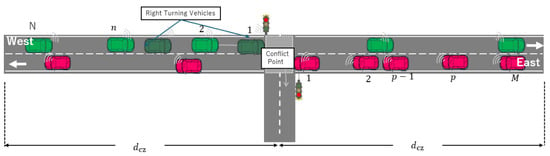
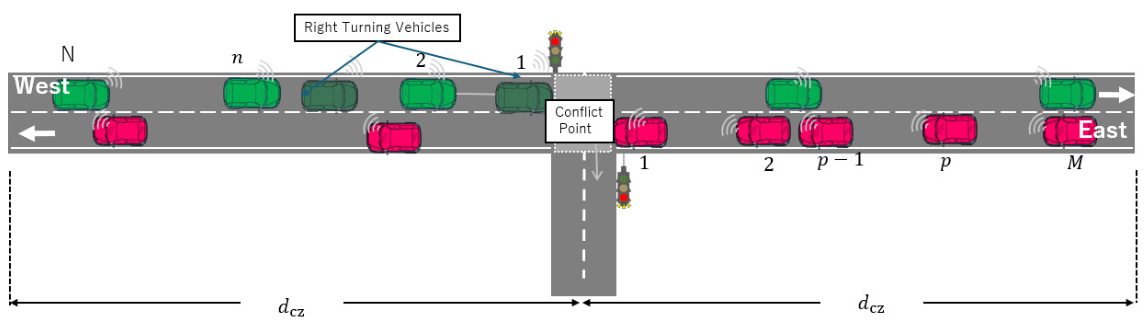
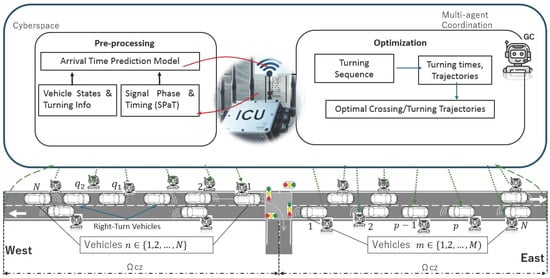
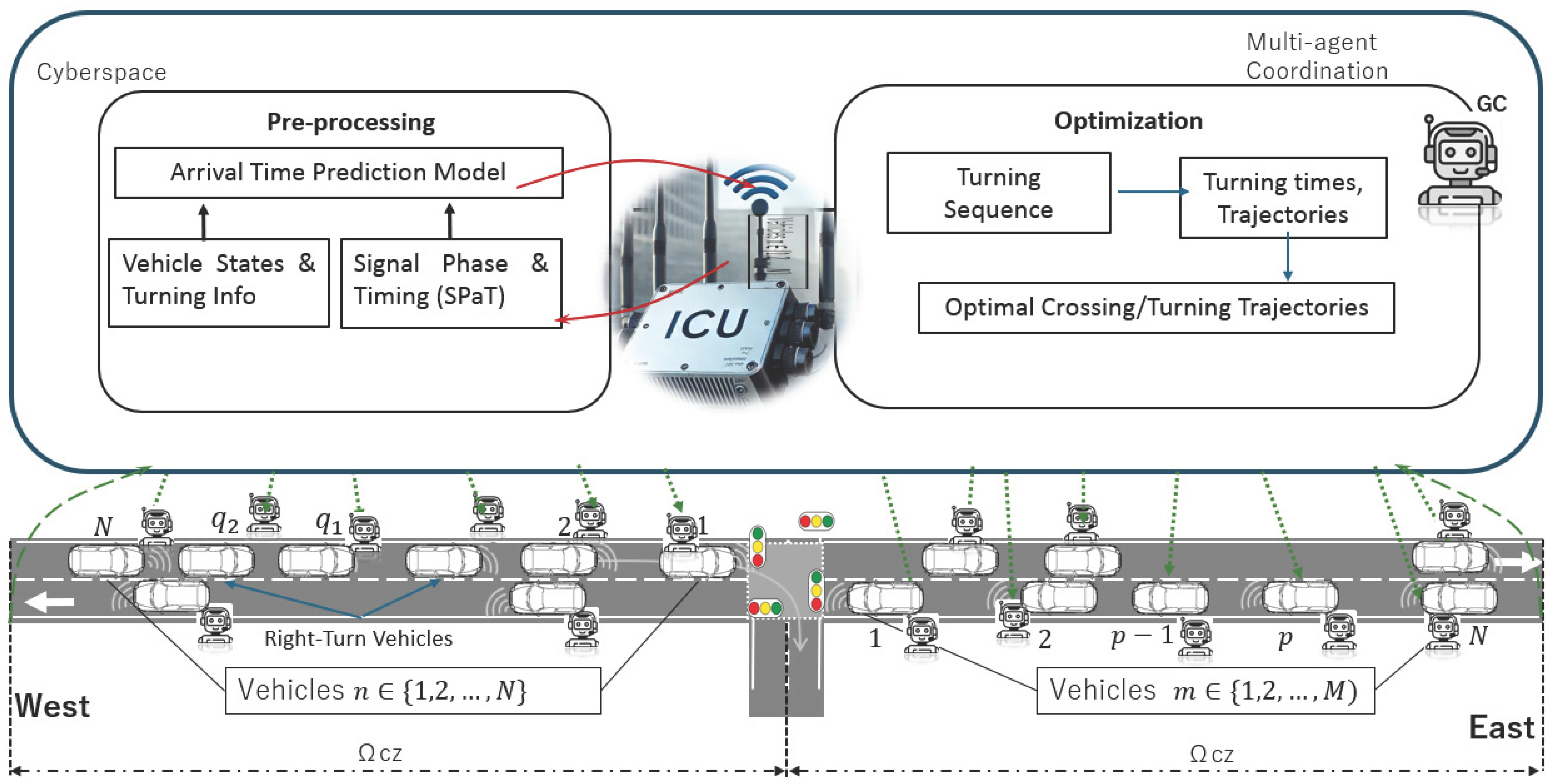
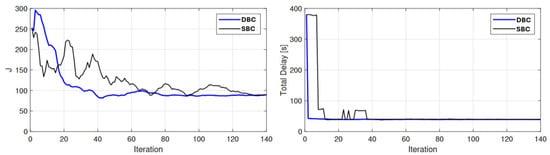
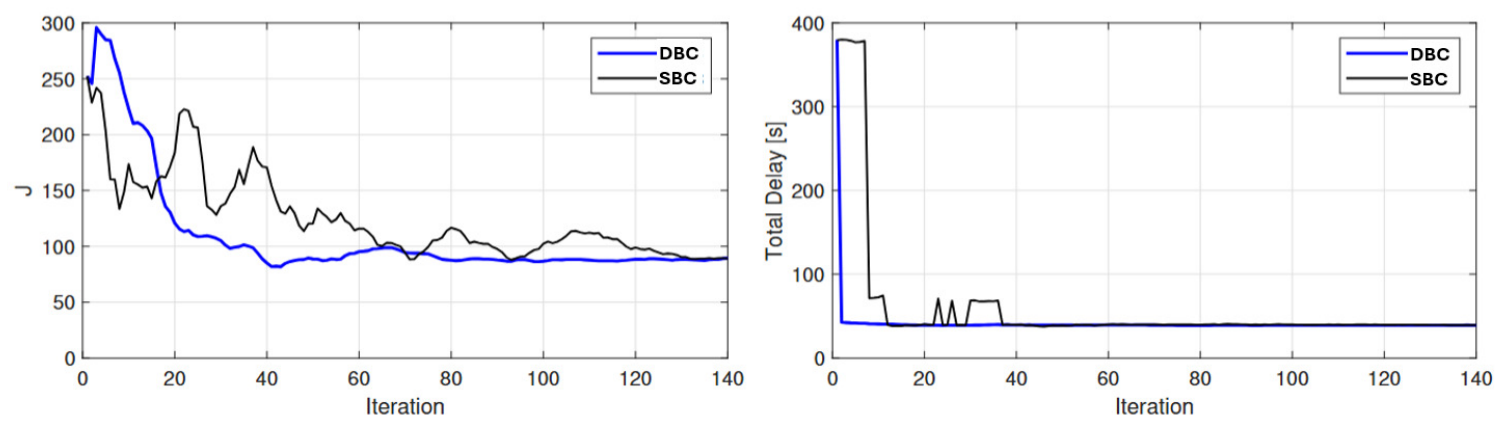
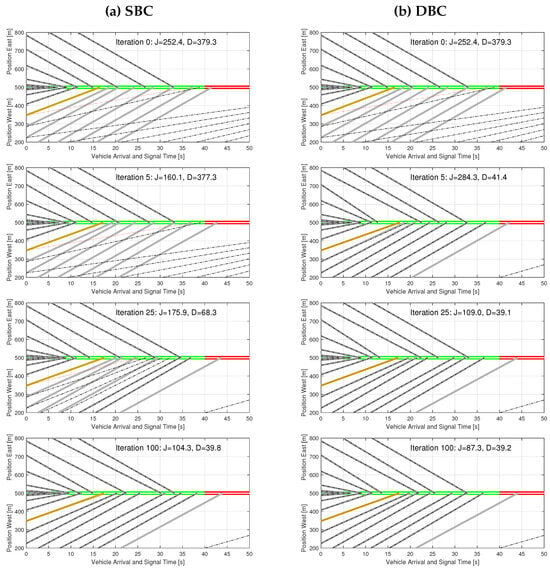
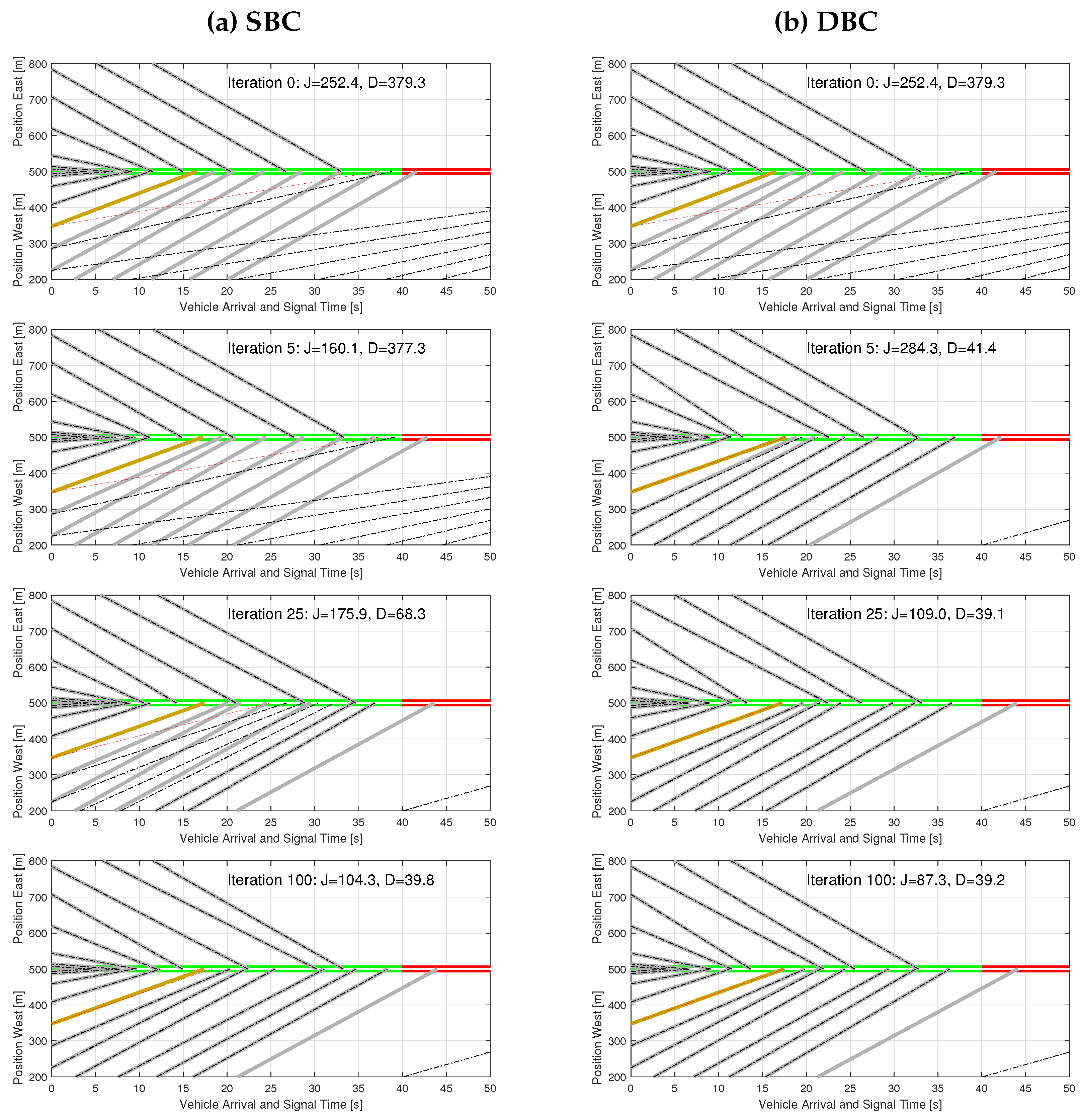
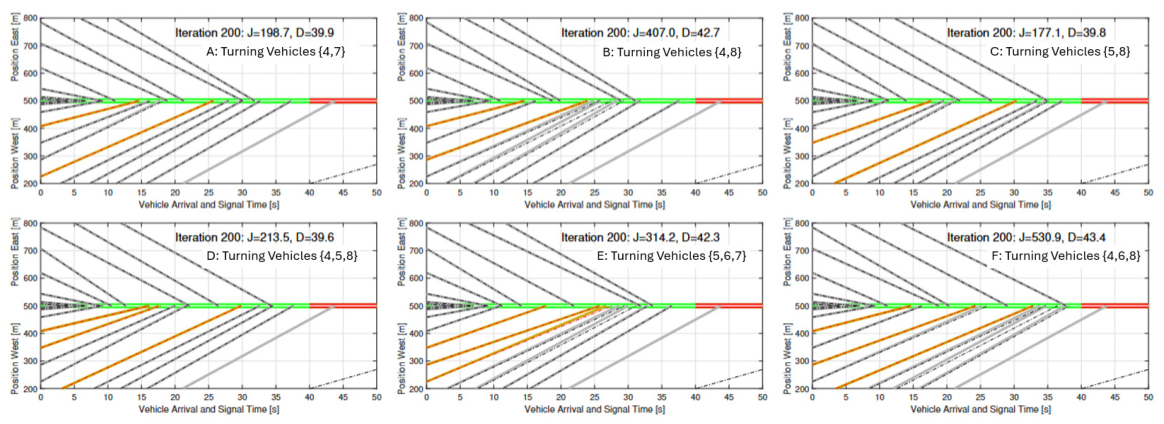
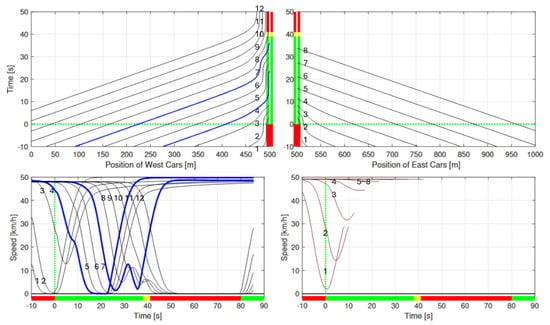
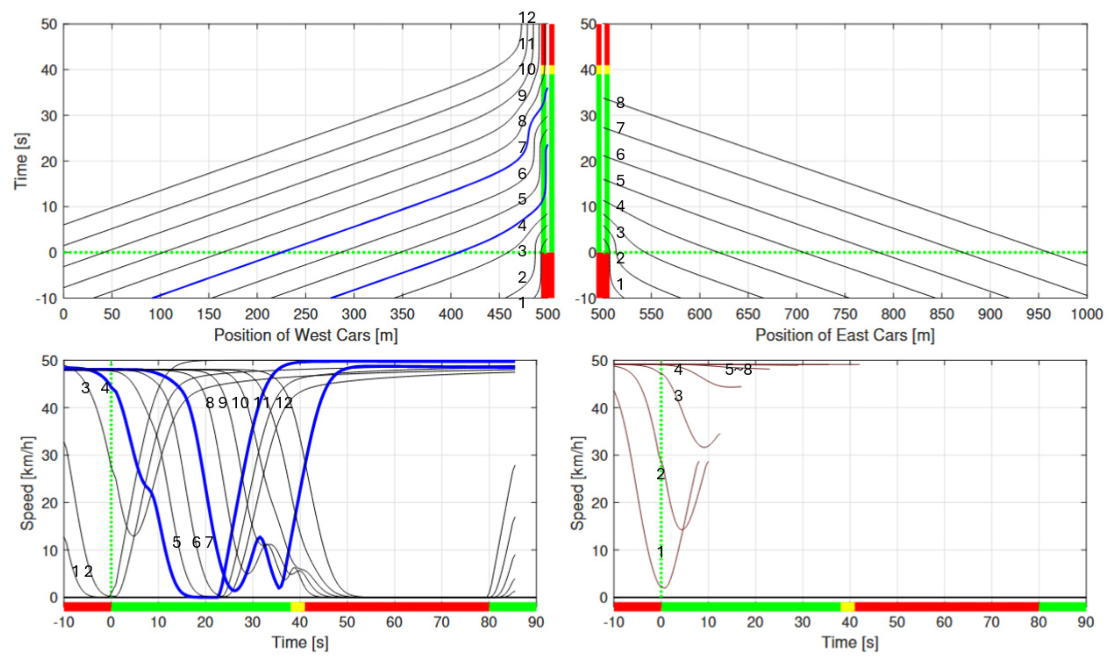
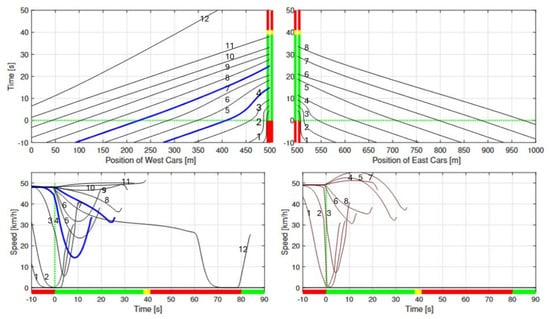
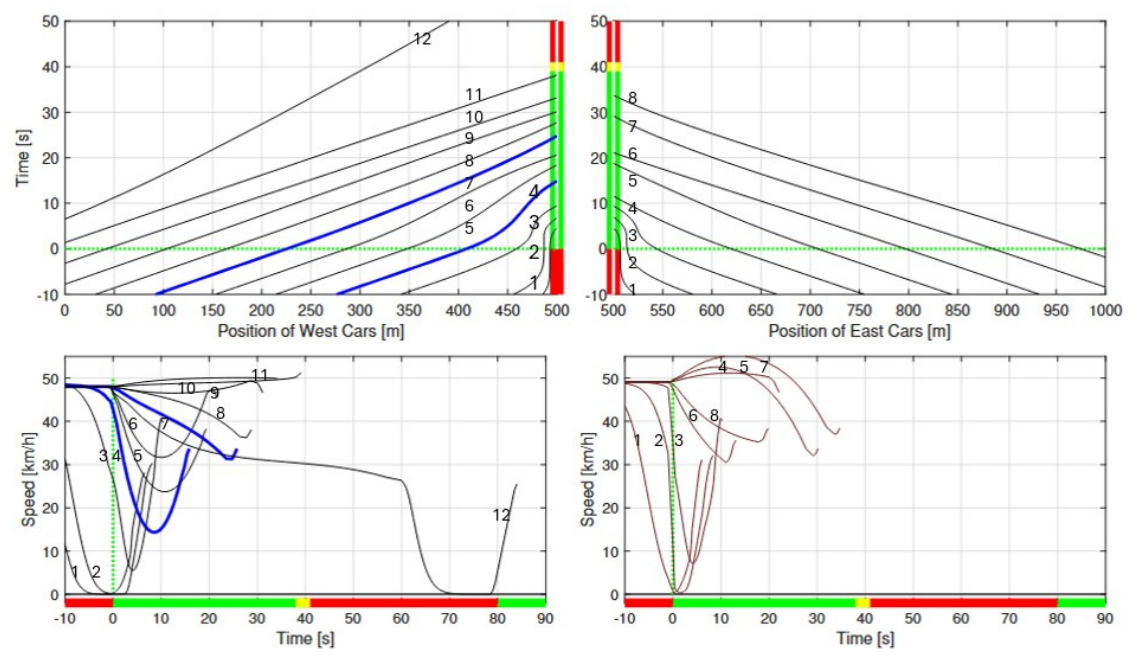
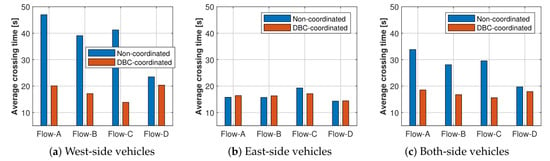
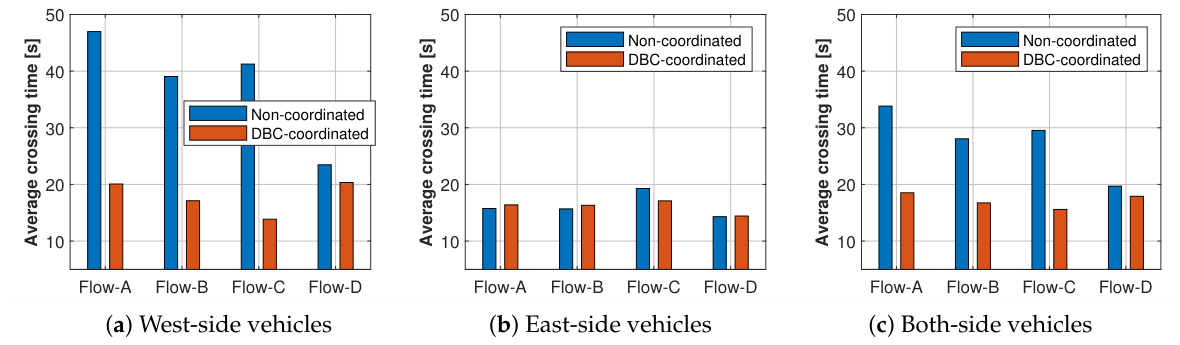
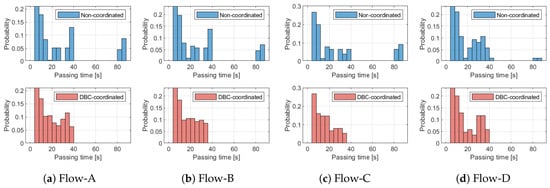
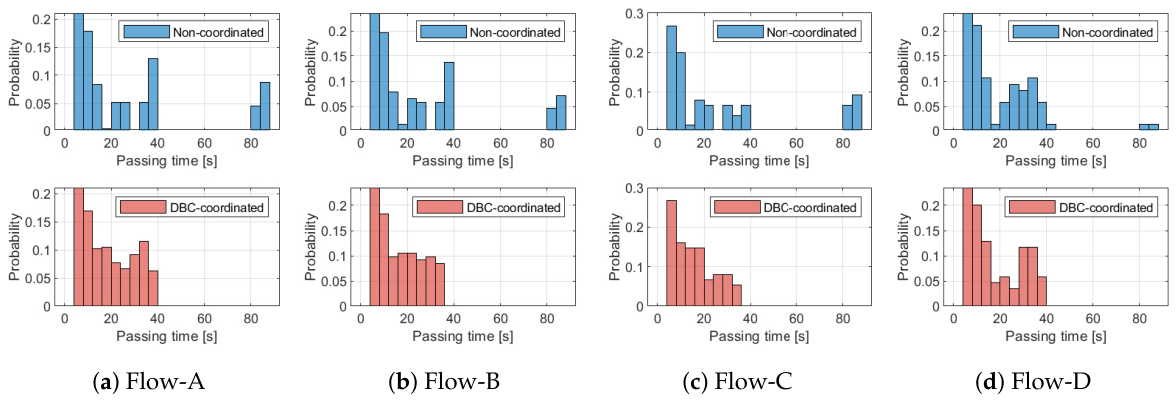

Disclaimer/Publisher’s Note: The statements, opinions and data contained in all publications are solely those of the individual author(s) and contributor(s) and not of MDPI and/or the editor(s). MDPI and/or the editor(s) disclaim responsibility for any injury to people or property resulting from any ideas, methods, instructions or products referred to in the content. |
© 2026 by the authors. Licensee MDPI, Basel, Switzerland. This article is an open access article distributed under the terms and conditions of the Creative Commons Attribution (CC BY) license.