


Abstract
Hybrid electric vehicles (HEVs) have become a hot topic in adaptive motive and academic fields owing to their high energy efficiency and low emissions. There are a large number of candidate schemes in the configuration design and parameter optimization stages of their powertrains that require performance evaluation. To address the problem of balancing computational burden and accuracy in traditional performance simulation algorithms for HEVs, such as dynamic programming (DP), an adaptive-efficient DP algorithm is proposed in this study, which introduces optimal SOC grid density identification and an optimal control point boundary relaxation method to simplify both state variable and control variable space simultaneously. Based on the series-parallel HEV configuration, the results show that the proposed method sacrifices fuel economy by 2.03% to 2.63% compared to DP, improves the simulation calculation speed by 232–319 times under various cycle conditions, and the engine operating points of the two are also relatively similar. In addition, the fuel economy performance of this method is very close to that of the Rapid-DP algorithm, and the calculation speed is also 2–3 times that of the latter, which effectively verifies that the proposed algorithm achieves high simulation accuracy while significantly improving computational efficiency.
Keywords:
hybrid electric vehicles; dynamic programming; series-parallel; powertrain design; fuel economy MSC:
93C40; 90C39
1. Introduction
The increasing depletion of fossil energy sources and increasingly stringent CO2 emission regulations have caused the sustained and healthy growth of the global automotive industry to face unprecedented challenges in recent years [1]. Hybrid electric vehicles (HEVs) combine the advantages of internal combustion engines (ICEs) and electric motors (EMs), offering the long-range and convenience of conventional vehicles, as well as the low emissions and high energy efficiency of electric vehicles [2]. The configuration design and parameter optimization of hybrid vehicles is an important method for improving their performance, especially for the multi-mode configuration design stage, where a large number of candidate configurations need to be simulated sequentially to evaluate the performance [3,4], and the powertrain parameter optimization stage requires a large amount of computation to search for the optimal parameter combinations [5,6,7]. Therefore, fast and accurate energy management strategies are needed to efficiently evaluate powertrain performance during the design and optimization phases.
With such a large design feasibility domain for multi-mode hybrid systems, it is difficult to accurately evaluate the performance of many candidate solutions using conventional methods. Existing rule-based energy management strategies, optimization-based Pontriagin’s minimum principle (PMP) [8,9], and equivalent consumption minimization strategy (ECMS) are computationally efficient but with large errors. ECMS are computationally efficient but have large errors and cannot guarantee accuracy [10]. Dynamic programming (DP) is a globally optimal control method [11], but its large computational volume and dimensional catastrophe problem make it computationally inefficient [12,13]. Zhang [14] utilized the total weighted efficiency maximization of a hybrid system to characterize the total weighted efficiency of the hybrid system and to characterize the optimal fuel economy of the transmission configuration, and proposed a power-weighted efficiency analysis for rapid sizing (PEARS) to achieve rapid evaluation of multi-mode configurations. Zhuang [15] considered that the PEARS algorithm ignores the feasibility problem of mode switching; therefore, the DP algorithm was combined with PEARS, and DP was utilized to determine a reasonable optimal mode switching strategy to form PEARS+. To address the problem that PHEVs are not suitable for sparse SOC grids, Xu [16] proposed Fast DP to minimize the search region of the state space for DP to improve the computational speed of DP. Chen [17] proposed an improved dynamic programming algorithm, called CQU-DP, for eliminating redundant control for the multi-mode HEV, which is based on the principle of matrix expansion and filtering, saving 96.36% of the time. Meanwhile, Zou [18] considers the effect of battery life further and proposes an aging-aware fast real-time control strategy (AFRCS), and Jia [19] proposed an aging-aware deep reinforcement learning (DRL) EMS that optimized the battery life by 3.79%. Anselma [20] proposed Slope-weighted Rapid Dynamic Programming (SRDP), which eliminates redundant controls through sub-problem exploration and nearest control point definition, and then solves the global optimal control by DP, with the additional consideration of battery life, saving 78% of the time.
However, the above methods are primarily used for power-split configurations. For series-parallel configurations, specialized design methods are required. Xu [21] proposed an NN-based speed–power requirement–working mode-based rapid analysis (SPMRA) method that increases computational efficiency by about 1571 times. Zou [22] proposed a Hyper Rapid DP (HR-DP) algorithm that uses a parallel computation method to accelerate computational efficiency by 24 times. An advanced ultra-rapid real-time hierarchical control algorithm (URHCA) [23] was used for a thorough comparison of series-parallel and power-split designs at different vehicle classes. Anselma [24] proposed a slope-weighted energy-based rapid control analysis (SERCA) algorithm, with 2.2% fuel accuracy and saving 99.5% time. To improve the adaptability of predictive EMS to different driving scenarios, Wang [25] proposed a “prediction-control” hierarchical architecture. For stratospheric airships, Ji [26] used multidimensional dynamic programming (MDP), which improves optimization efficiency by implementing vectorization, state-to-state traversal, feasibility checking, and state reduction. This improves speed by more than 1000 times compared to conventional methods.
The above studies show that DP and other optimization algorithms have struggled to balance efficient computation with optimal results. Considerable success has been achieved, but a fast evaluation algorithm optimized from the state-variable grid density is lacking. To address this research gap, this study makes the following main contributions:
(1) The dynamics modeling method of the series-parallel hybrid configuration i-mmd is investigated, and the component model and the Simulink model are constructed.
(2) An adaptive-efficient DP algorithm is proposed, and the optimal SOC mesh density identification is introduced in combination with the optimal control point boundary relaxation method, which improves the computational efficiency by about 232–319 times.
2. Series-Parallel Hybrid Vehicle Model
2.1. Powertrain Component Modeling
(1) Engine model. In this study, the model was simplified to a quasi-steady-state model based on the data obtained from bench tests, and the power and fuel consumption were calculated as follows:
In Equation (1), Pe represents the output power of the engine (kW), Te represents the output torque of the engine (Nm), and represents the speed of the engine (r/min).
In Equation (2), Q represents the fuel consumption rate of the engine per unit time (mL/s), b represents the fuel consumption rate of the engine [g(kWh)], ρ is the fuel density (g/L), and g is the local gravitational acceleration.
(2) Motor model. Without considering the electromagnetic characteristics of the motor, the power calculation Equation (3) for the motor models is as follows:
where subscript m denotes the motor power output, refers to the positive power delivered by the electric motor to the drivetrain; subscript g denotes the motor power generation, refers to the negative power when the electric motor operates in regenerative braking mode; P is the output power at the motor power output, T is the corresponding torque, n is the corresponding rotational speed, and is the corresponding efficiency.
(3) Battery model. The current and state of charge calculation formulas for the equivalent model of the power battery are given by Equations (4) and (5), respectively.
where Rbatt, Ebatt, SOC0, and Qbatt are the internal resistance, electric potential, initial state of charge, and total capacity of the battery pack, respectively.
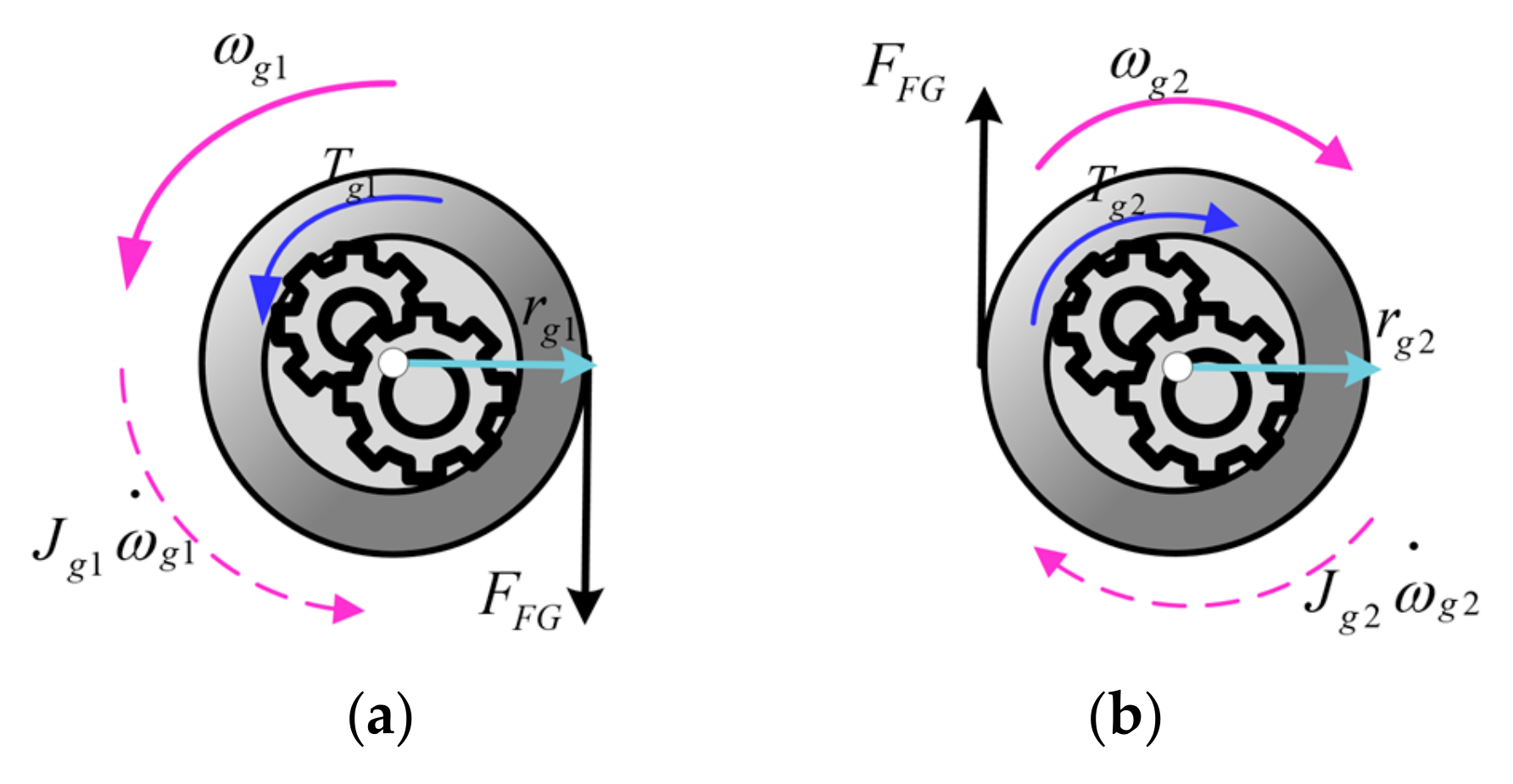
(4) Gearing model. The hybrid configuration under study is a series-parallel multimode configuration containing multiple parallel shaft gear pairs and clutches; therefore, it is necessary to model the dynamics of its gearing. The forces on a single gear pair meshing can be seen in Figure 1, and the kinetic equations can be seen in Equation (6):
Figure 1.
Force analysis of single mesh gear pairs. (a) Gear 1; (b) Gear 2.
In the figure, is the gear moment of inertia, is the torque applied to the gear, is the force applied to the gear, is the gear radius, and is the angular acceleration of the gear.
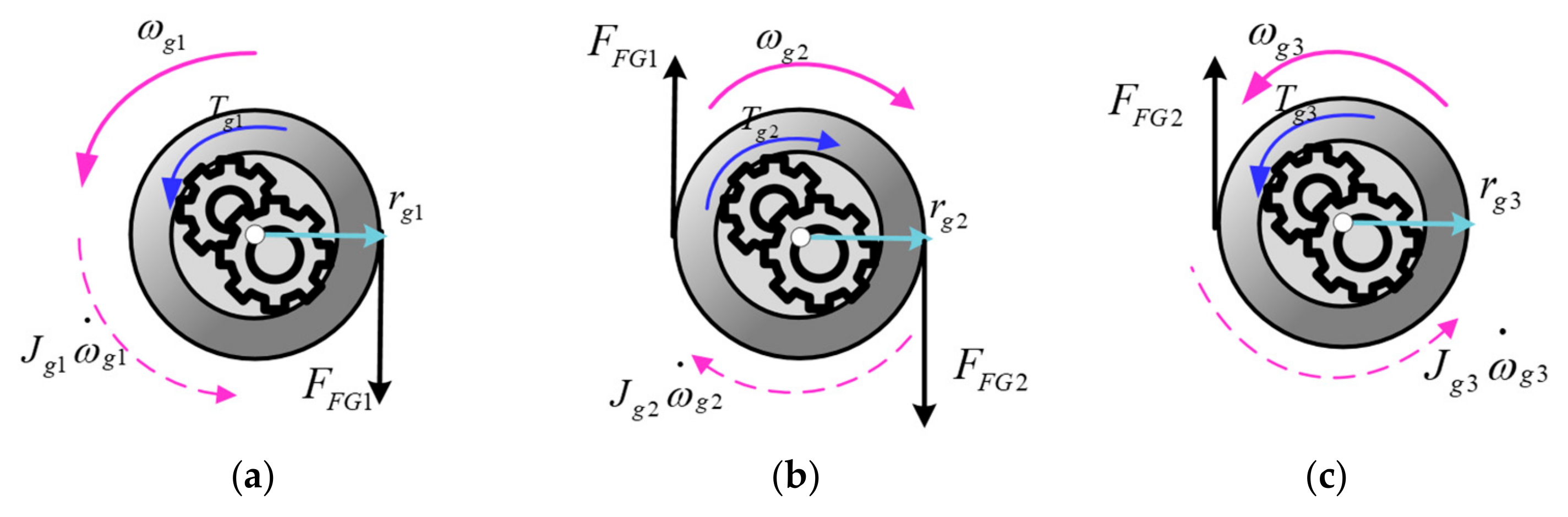
The force analysis of the double-meshed gear pair is shown in Figure 2.
Figure 2.
Force analysis of double mesh gear pairs. (a) Gear 1; (b) Gear 2; (c) Gear 3.
The dynamic equations of the double meshed gear pair are as follows:
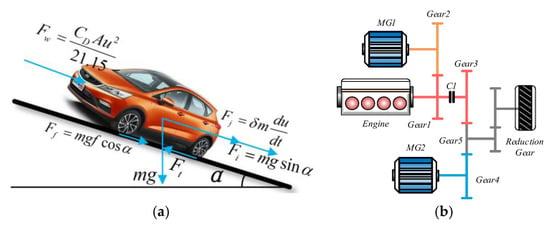
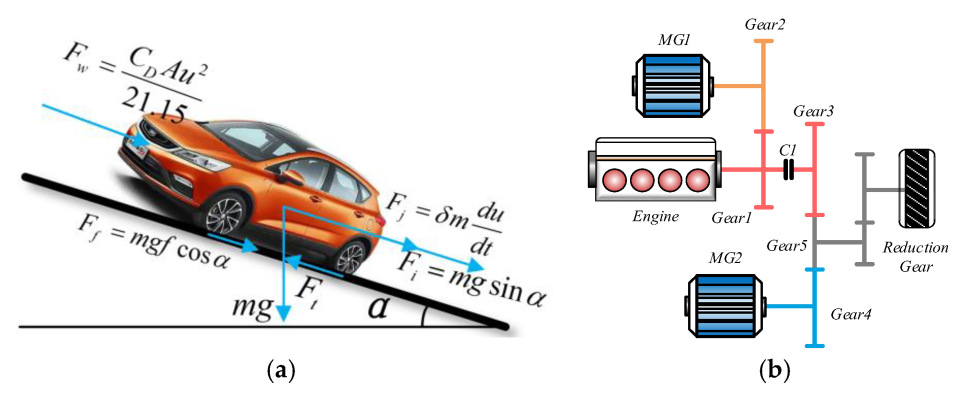
(5) Vehicle dynamics model. The vehicle is simultaneously subjected to the driving force transmitted to the wheels by the power source and the resistance in the driving process at the same time. The formula for calculating the resistance of a car during travel is shown in Equation (8):
where m represents the overall mass of the vehicle (kg), f represents the roll resistance coefficient, and α represents the road gradient during driving. is the air resistance coefficient, is the windward area of the vehicle (m2), and is the vehicle speed (km/h). is the rotating mass conversion coefficient of the vehicle, and r is the radius of the wheel of the vehicle (m).
2.2. Modeling of Series-Parallel Hybrid Systems
The configuration chosen in this study is an i-mmd series-parallel hybrid powertrain containing two electric motors, an engine, a clutch, and four pairs of gear ratios, as shown in Figure 3, where multiple operating modes are realized by controlling the engagement of clutch C1.
Figure 3.
(a) Vehicle dynamics model; (b) the i-mmd series-parallel configuration.
When clutch C1 is disengaged, motor MG1 and the engine are not directly involved in the wheel-end drive; this is the MG2 pure electric driving mode or tandem mode, and the corresponding dynamic Equation (9) is as follows:
Details of each of these matrices are given below:
where , , are the rotational inertia of the engine, motor MG1, motor MG2, and wheel output, respectively; Ig1–Ig5 denotes the rotational inertia of Gear 1 to Gear 5; and Ti {i = e, mg1, mg2, v} are the corresponding angular acceleration and torque, respectively; As and Ts are the matrices of angular acceleration and torque, respectively.
When clutch C1 is engaged, the engine can drive the wheels directly, which are in parallel mode, and the corresponding dynamics matrix is
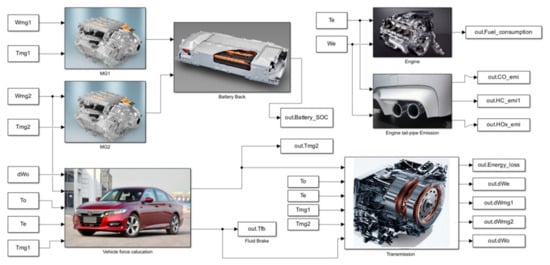
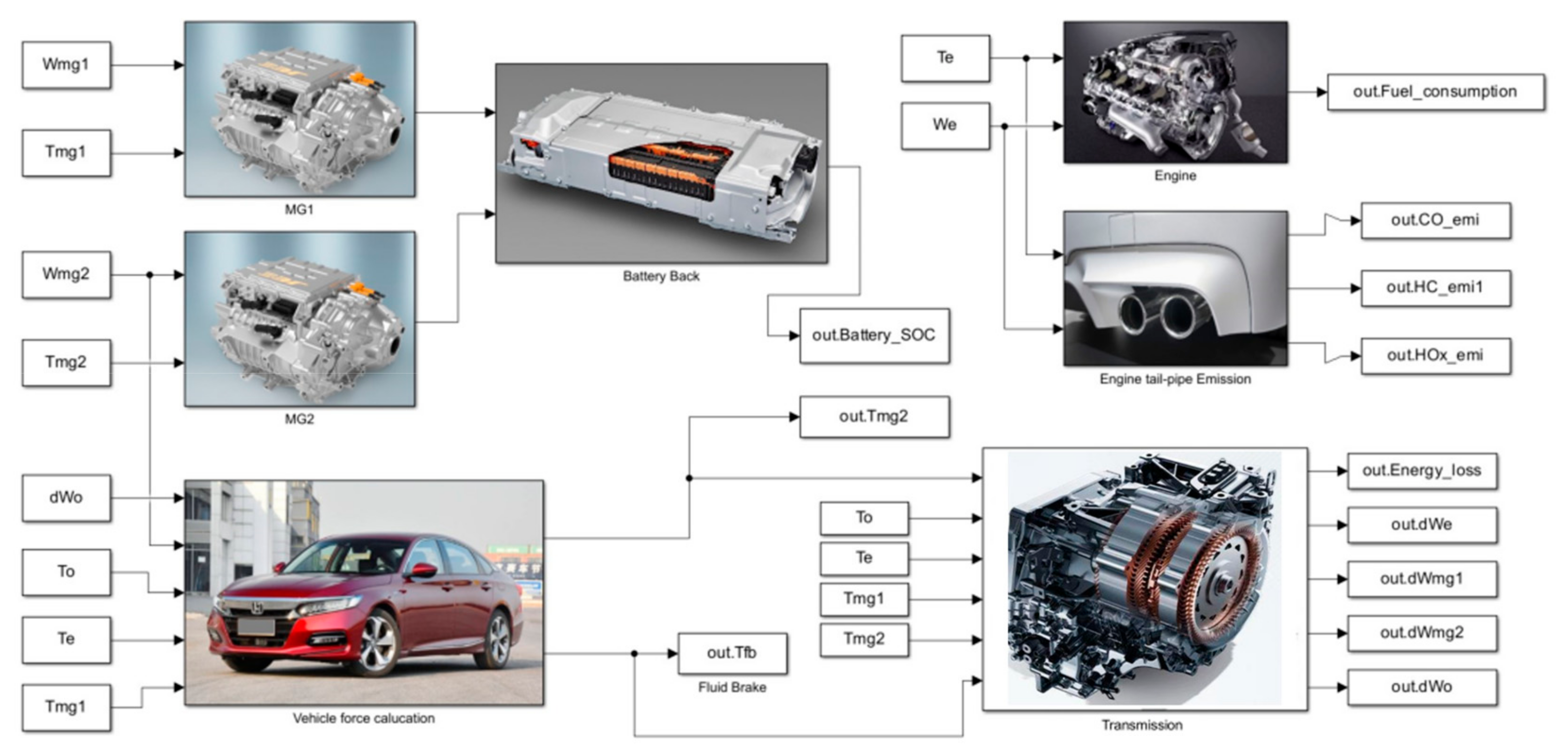
To ensure the reliability and validity of the subsequent design verification, MATLAB 2022b software was used to build a forward simulation Simulink model of the i-mmd hybrid system, as shown in Figure 4.
Figure 4.
Simulink model of i-mmd hybrid power system.
3. Adaptive-Efficient DP Algorithm
3.1. Identification Method for Optimal SOC Grid Density
The DP energy management strategy (EMS) has been the benchmark solution for energy management strategies for hybrid vehicles owing to its global optimality, but this also causes a rapid increase in dimensionality, leading to very slow computation.
DP requires the problem to be gridded in time and state, which means that the computational cost and accuracy are defined on the time and state grids. Fine meshing ensures excellent control sequences at the cost of an extremely high computational burden. Some studies have found that the most direct way to reduce the computational effort of DP is to use sparser SOC discrete grids [8], but grids that are too sparse can lead to a decrease in the simulation accuracy of DP.
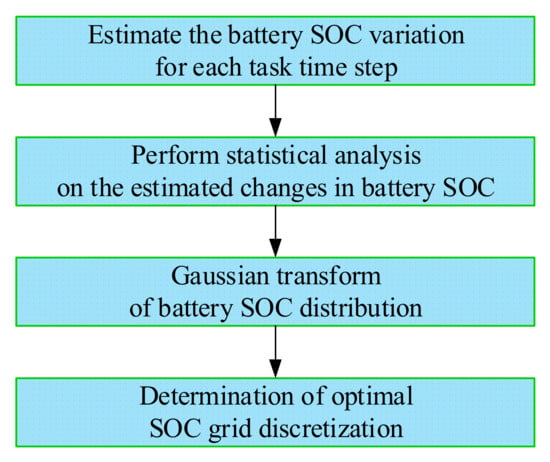
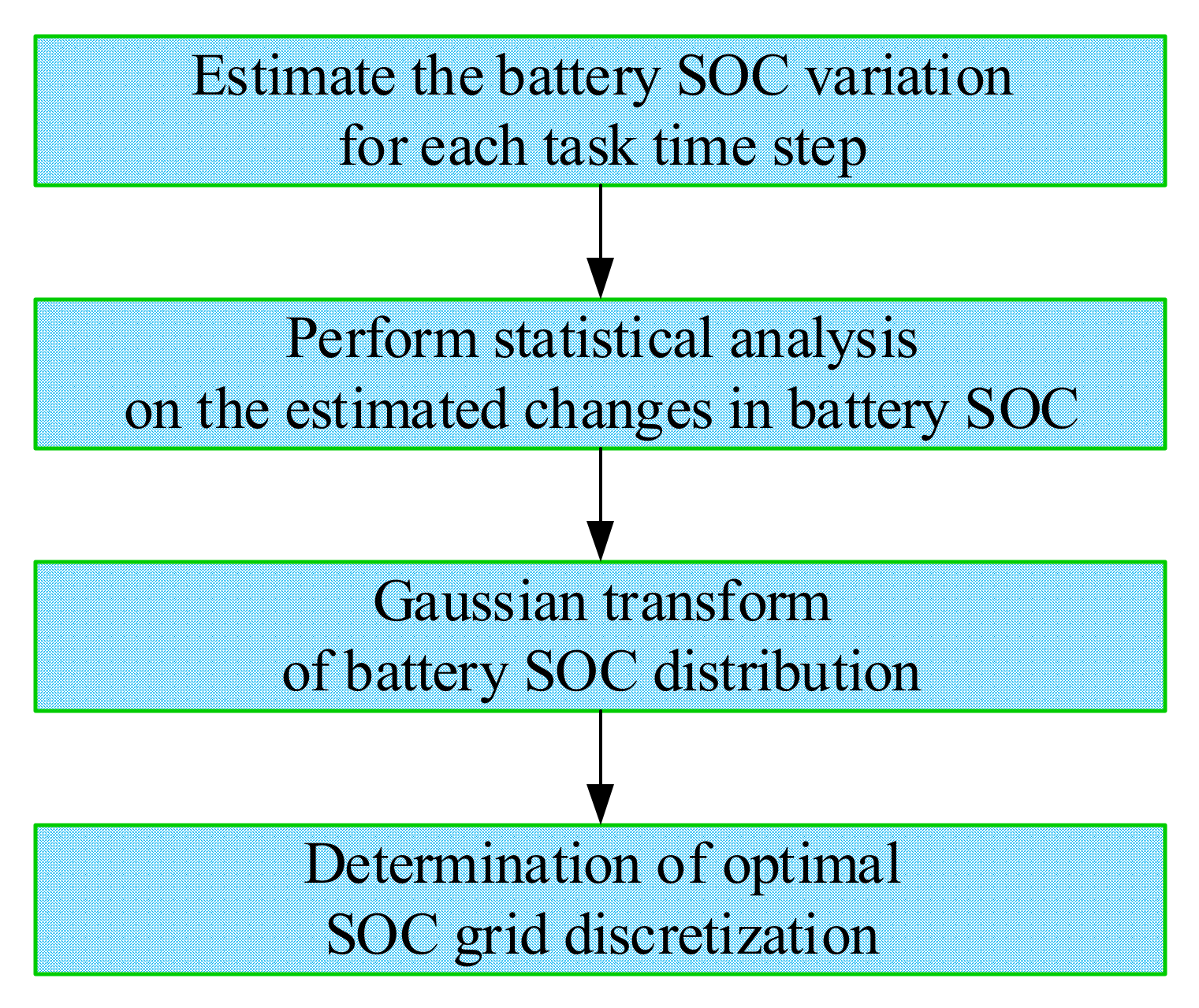
Therefore, in this study, we adopted a method based on statistical analysis of the frequency of battery energy changes to automatically identify the optimal SOC grid density and realize high computational accuracy while improving the computational speed. The flowchart of this method is shown in Figure 5.
Figure 5.
Flow chart for identifying the optimal SOC grid density.
The first segment of the procedure for determining the appropriate SOC grid for the DP does not yet know the optimal control strategy, and the battery power can be evaluated using the simulation results from the Simulink model in the previous section. Starting from the driving condition, by applying the vehicle dynamics equations, the power required by any powertrain component can be obtained for each time step and combination of control variables. The battery SOC change can be estimated by numerically integrating the battery power under any feasible condition using the following transformation equation (Equation (17)):
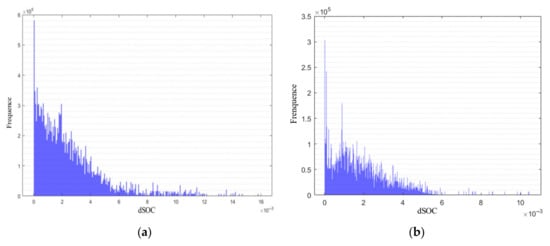
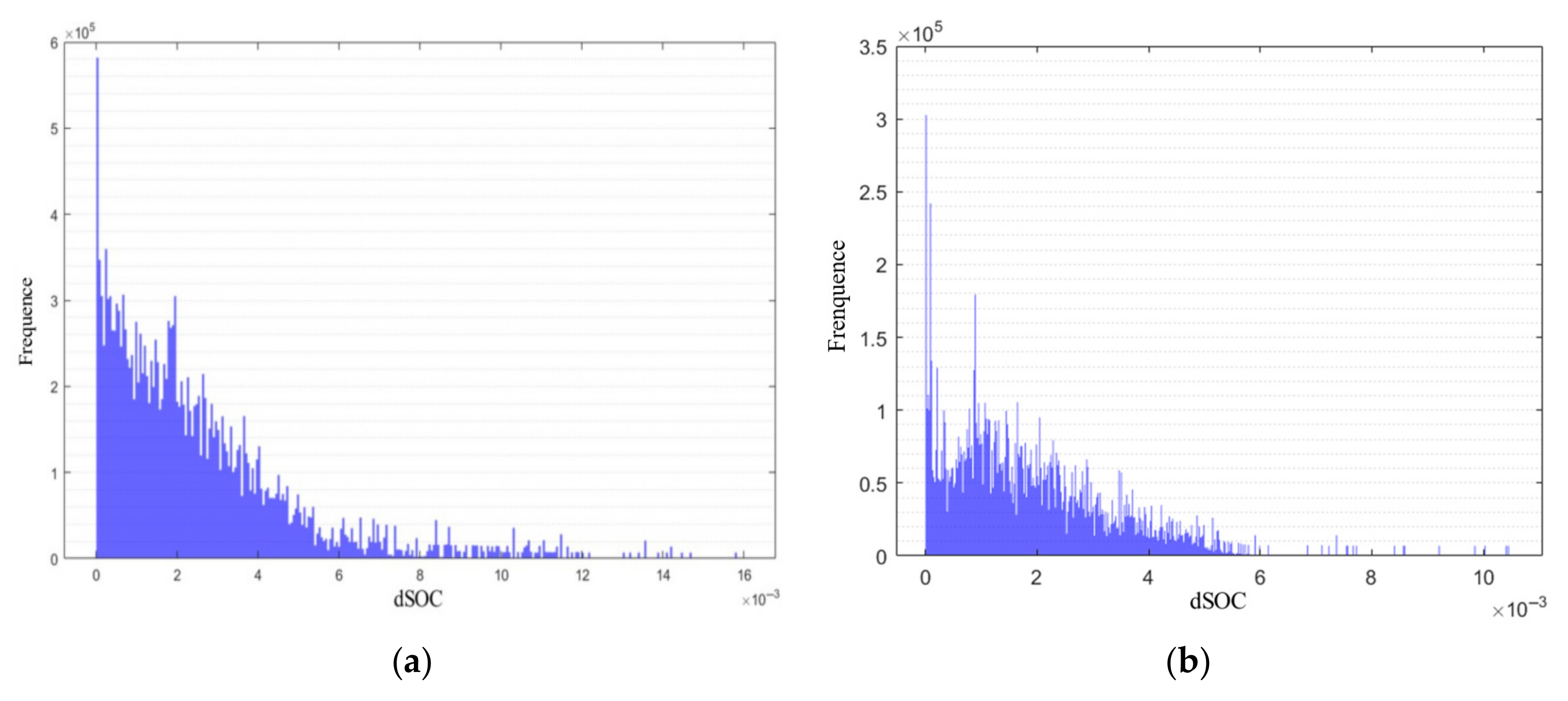
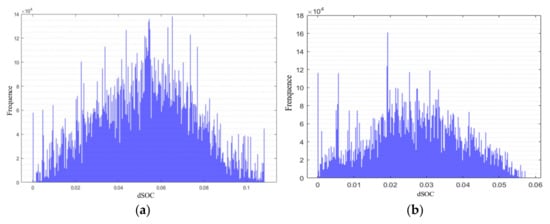
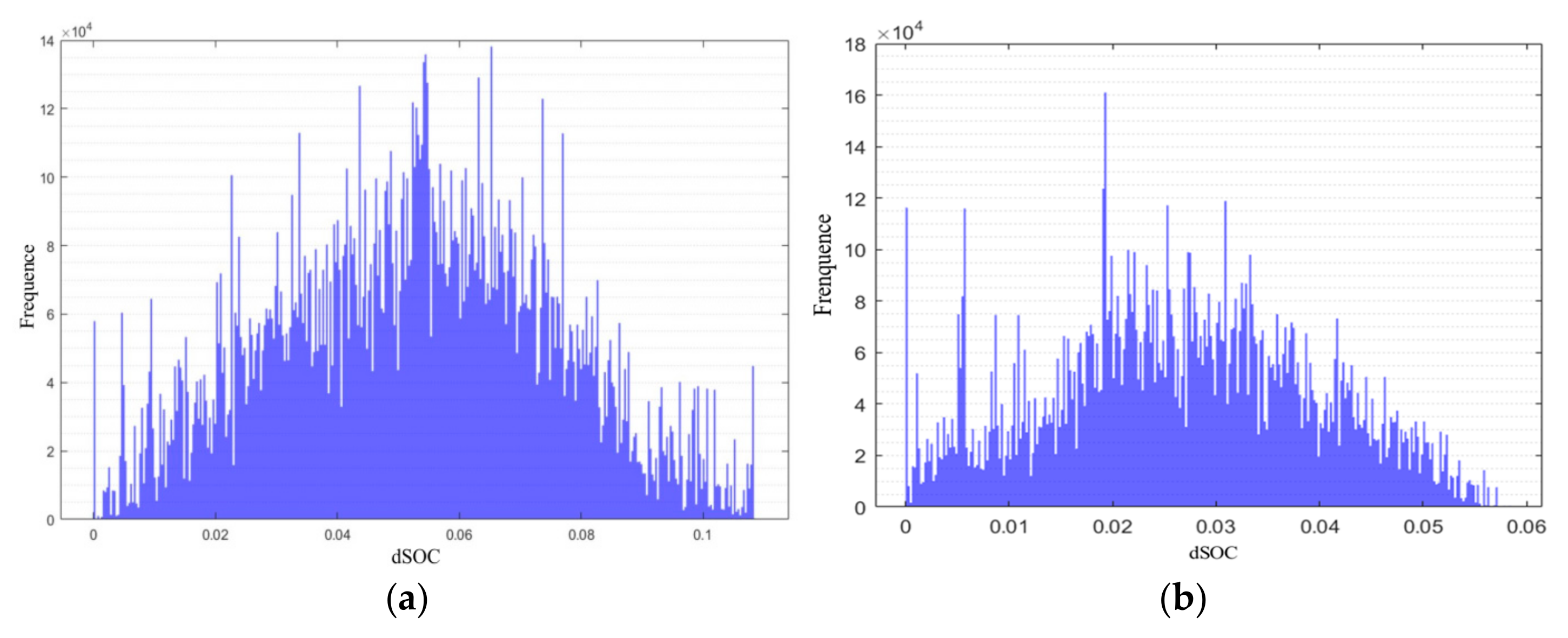
Once the mapping of the energy changes is completed, the frequency distribution of the estimates can be calculated. Figure 6 illustrates the frequency distribution of the energy changes for the i-mmd configuration for the Worldwide Harmonized Light Vehicles Test Procedure (WLTP) and Full Urban Driving Cycle (FUDS) case, and shows a clear non-Gaussian distribution.
Figure 6.
The dSOC distribution of i-mmd under (a) WLTP, (b) FUDS.
Skewness s is an indicator of the asymmetry of the distribution [27], and a Gaussian shape (perfectly symmetric) has a zero value, as shown in Equation (18):
where is the mean of the distribution, is the actual value of the ith sample, and n is the number of distribution values. Indeed, negative skewness indices represent negative asymmetries, whereas positive skewness indices arise from the appearance of positive asymmetries. A distribution that is slightly asymmetric (s ≈ 0) can be called Gaussian only if the criteria of Equation (19) are satisfied [28].
where Z is an indicator characterizing the overall skewness of the data and Za denotes the Gaussian distribution standardized variable, which refers to the level of tolerance [15]. In this study, a was set as 95% (Za = 1.96), 90% (Za = 1.65), and 68% (Za = 1).
The logic of the iterative procedure is summarized as follows:
Step 1: After generating the energy transformation frequency distribution graph, calculate the skewness index using Equation (18) and check whether the condition of Equation (19) is satisfied.
Step 2: If the condition of Equation (19) is satisfied, the program runs directly to Step 6. Otherwise, Step 3 is executed.
Step 3: Depending on the skewness value, negative or positive asymmetry is found, and the transformation of the distribution is performed as follows [15]:
The initial value is set to m0 = 1.1. When m ≥ 1.1, the update method for m is
where represents the m-value corresponding to the kth iteration and is the skewness value corresponding to the kth iteration. In this study, we used = 0.04 and = 0.07.
When 1 ≤ m < 1.1, takes 0.07, and m is updated in the following way:
When m < 1, reset the m value:
Step 4: Calculate the skewness index of the transformed distribution, and check the condition of Equation (19).
Step 5: If the condition of Equation (19) is satisfied, the process continues to Step 6; otherwise, m is changed and the process returns to Step 3.
Step 6: Calculate the mean and standard deviation of the obtained transformed distribution, and select the tolerance level a and its relative. The confidence interval of the transformed distribution is estimated using the following parametric method:
Step 7: The lower bound of the transformed confidence interval is chosen to be the smallest statistically consistent energy change in the batch of data owned and recognized in the original domain, owing to the inverse transformation of the distribution.
Figure 7 shows the energy distribution results after the original energy distribution was iteratively transformed under both the WLTP and the FUDS driving cycles. Both cycles effectively transform the state shown in Figure 6 into a normal distribution while satisfying the condition in Formula (19). These results demonstrate that the novel iterative transformation method proposed in this paper can be applied to series-parallel HEVs. This lays the foundation for the subsequent automatic identification of the optimal number of discrete state of charge (SOC) grid points. The number of SOC discretization levels, NSOC, used for DP is calculated using the following equation:
where is the fraction of battery energy associated with the range of the available SOC ( = 40%, = 70%).
Figure 7.
The dSOC after transformation under (a) WLTP, (b) FUDS.
The optimal number of discrete SOC grids for the automatic identification of i-mmd configurations under multiple operating conditions was finally obtained, as shown in Table 1, where N95 is the optimal SOC grid density obtained at a 95% confidence interval, and N90 and N68 are the same.
Table 1.
The optimal number of SOC grid discretization for automatic identification under different cycles.
3.2. Optimal Control Point Extraction and Boundary Relaxation Method
The Rapid DP algorithm proposed in studies [18,22] screens candidate control actions at each moment. By focusing on both the battery power and fuel consumption in the hybrid mode, locally optimal control actions are extracted and retained through multi-objective optimization. It realizes the rapid removal of inefficient control actions, which significantly improves computational efficiency.
It was found that the optimal control points of the Rapid DP were extracted at equal intervals. The problem is that if the interval is too large, there are too few candidate control points, and the optimality is difficult to guarantee; if the interval is too small, the computational speed is not obviously improved. Therefore, on this basis, this study adopts the slope calculation method to further extract “better points” to improve the convexity, to make the boundary of the optimal control points smoother and convex, and to realize the effect of boundary relaxation. First, the slope between two neighboring points of the optimal boundary point is defined as θ, as shown in Equation (26).
where k denotes the kth boundary point. The discriminating criterion for the neighboring points proposed in Equation (26) was verified. The decision to discard or retain k points is based on whether Equation (27) is satisfied.
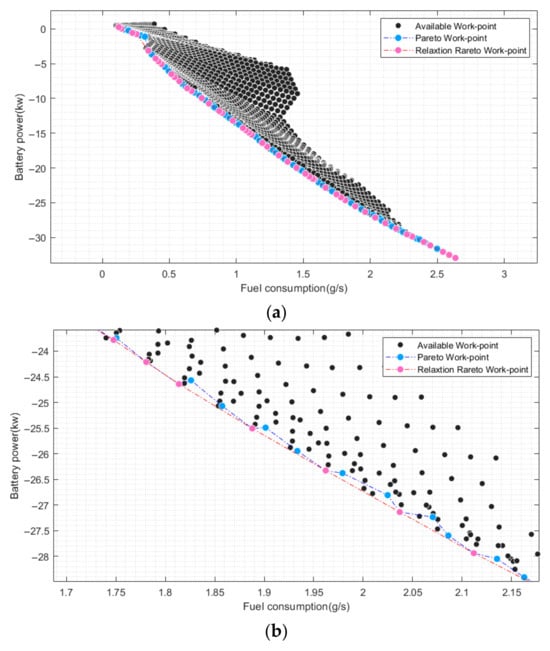
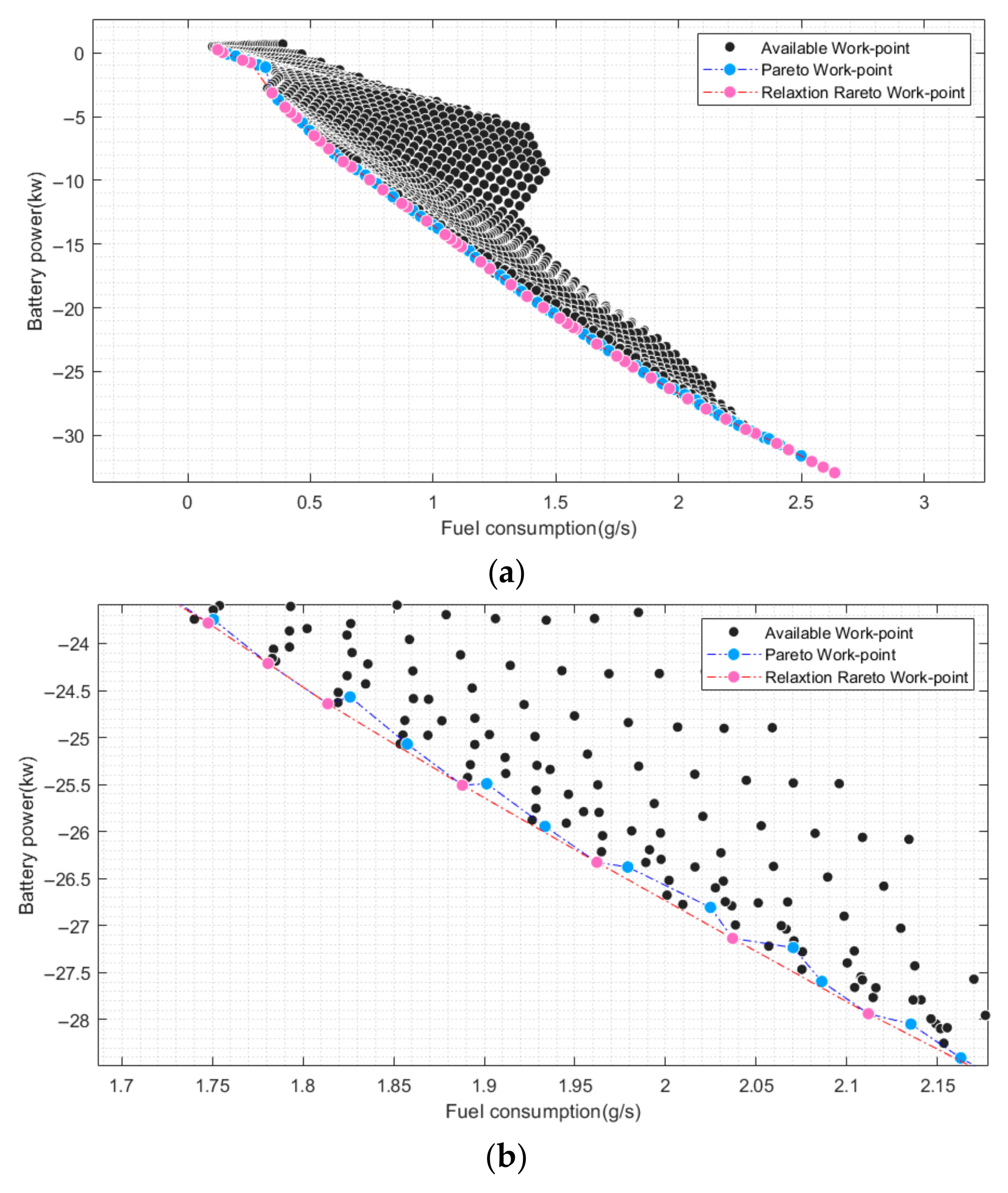
The effect of boundary relaxation is shown in Figure 8, where the working condition is fuds, the black dots in the figure indicate all the control action combinations, the blue color represents the Pareto boundary points extracted by the original method of Rapid DP, and the pink dots indicate the boundary points further extracted after boundary relaxation.
Figure 8.
Optimal control point boundary relaxation results at 96th second under FUDS cycle. (a) Global workpoint map; (b) localized enlarged view.
The results of the number of control points obtained from different treatments of the control variable space at each time point of the Fuds cycle are shown in Table 2, which shows that the boundary relaxation operation can further exclude inefficient control actions based on Rapid DP. The proposed method accelerates computational efficiency by reducing the number of working points.
Table 2.
Comparison of the number of i-mmd control action points before and after processing.
3.3. Adaptive-Efficient DP Algorithm Framework
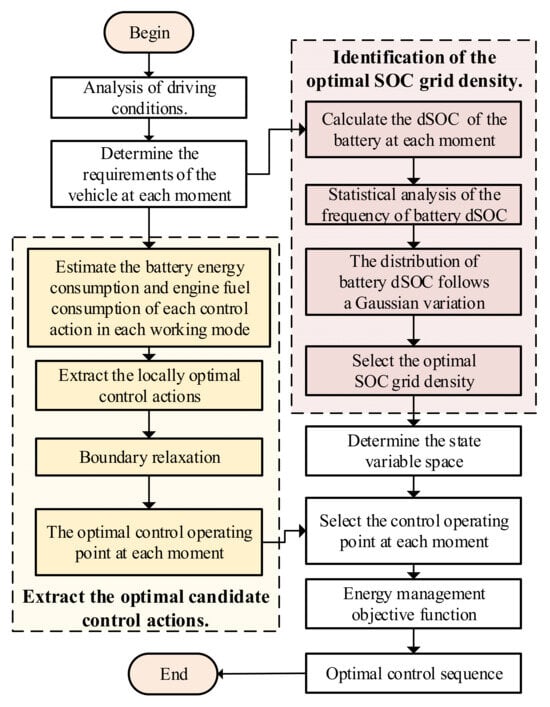
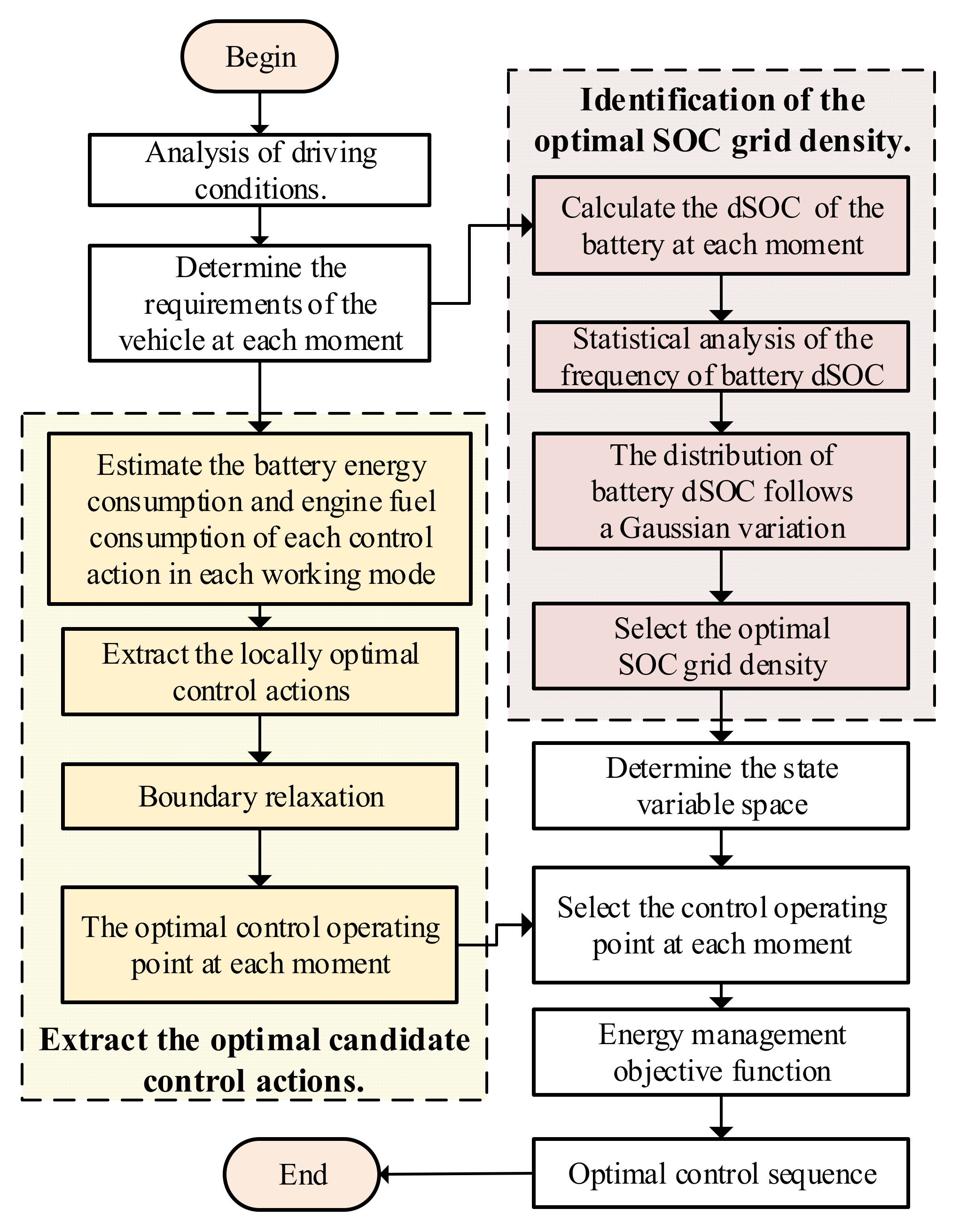
The adaptive-efficient DP algorithm combines the optimal SOC grid density identification with the optimal control point boundary relaxation method while simplifying the state variable space and control variable space of DP to significantly improve computational efficiency and ensure good optimality.
A flowchart of the adaptive-efficient DP is shown in Figure 9. After analyzing the power requirements of the vehicle according to the operating conditions, the SOC state space and control action space are simplified according to the two methods. Finally, the optimal control sequence is calculated using DP and input into the vehicle model. Its state variables, control variables, and objective function are set as follows:
Figure 9.
Framework of the adaptive-efficient DP algorithm.
(1) State variables: engine speed and SOC;
(2) Control variables: engine torque, MG1 and MG2 torque, operating mode;
(3) Objective function. The most important performance factor of hybrid vehicles is their fuel-saving potential, and fuel consumption is generally chosen as the objective function. Considering factors such as battery lifespan and the next normal operation of the battery, it is generally necessary to maintain the battery SOC within an appropriate range, while considering the stability of the system during operation. Frequent mode and gear switching should be avoided. Therefore, the objective function J is established as follows:
where q represents the fuel consumption of the engine, is the penalty function introduced to maintain the battery SOC within a certain range, is a penalty function introduced to avoid frequent mode and gear switching. , , and represent the engine speed, torque, and fuel consumption rate in the k-stage, respectively, with a duration of for each stage; for the weighting factor, is the expected battery level state at the end of the car’s operation period; , and represent weight factors; and represent the moment of inertia of the engine and motor, and represent the speed difference of the power component changes during mode switching, which is the loss of energy during the mode switching process.
(4) Constraints. Based on the charging and discharging capabilities of power components and batteries, establish the following constraints during the operation of the transmission system:
where and , with , represent the rotational speed and torque of the engine and motor, respectively. represents the charging and discharging powers of the battery. and represent the state of charge of the battery in the initial state and the state of charge of the battery at the end of operation, respectively.
To clarify the applicability of the proposed method, it is important to note that the improvements introduced here, namely, the optimal SOC grid density determination and the optimal Pareto control point extraction and boundary relaxation method, serve to accelerate the computation of dynamic programming by sparsely selecting the control point set. These steps are carried out without altering the underlying cost function or optimization principle of DP, thereby ensuring that the optimality of the results is preserved.
Consequently, the proposed method does not introduce additional failure modes or underperformance risks. Since the optimization logic remains consistent with standard DP, the robustness to model uncertainties and external disturbances is inherently maintained. The contribution of the method is therefore computational efficiency enhancement, while retaining the same theoretical guarantees as conventional DP.
4. Results and Analysis
Section 4 presents two main aspects of the analysis. First, this section analyzes the optimal SOC grid identification method, which is a key component of the proposed framework. Second, we compared the performance of the proposed adaptive-efficient DP algorithm with that of the traditional DP approach under different driving cycles.
4.1. Analysis of the Optimal SOC Grid Identification Method
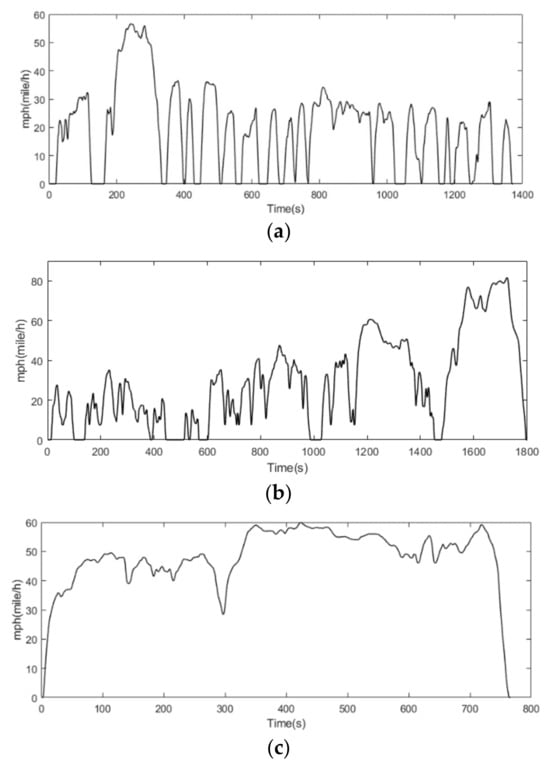
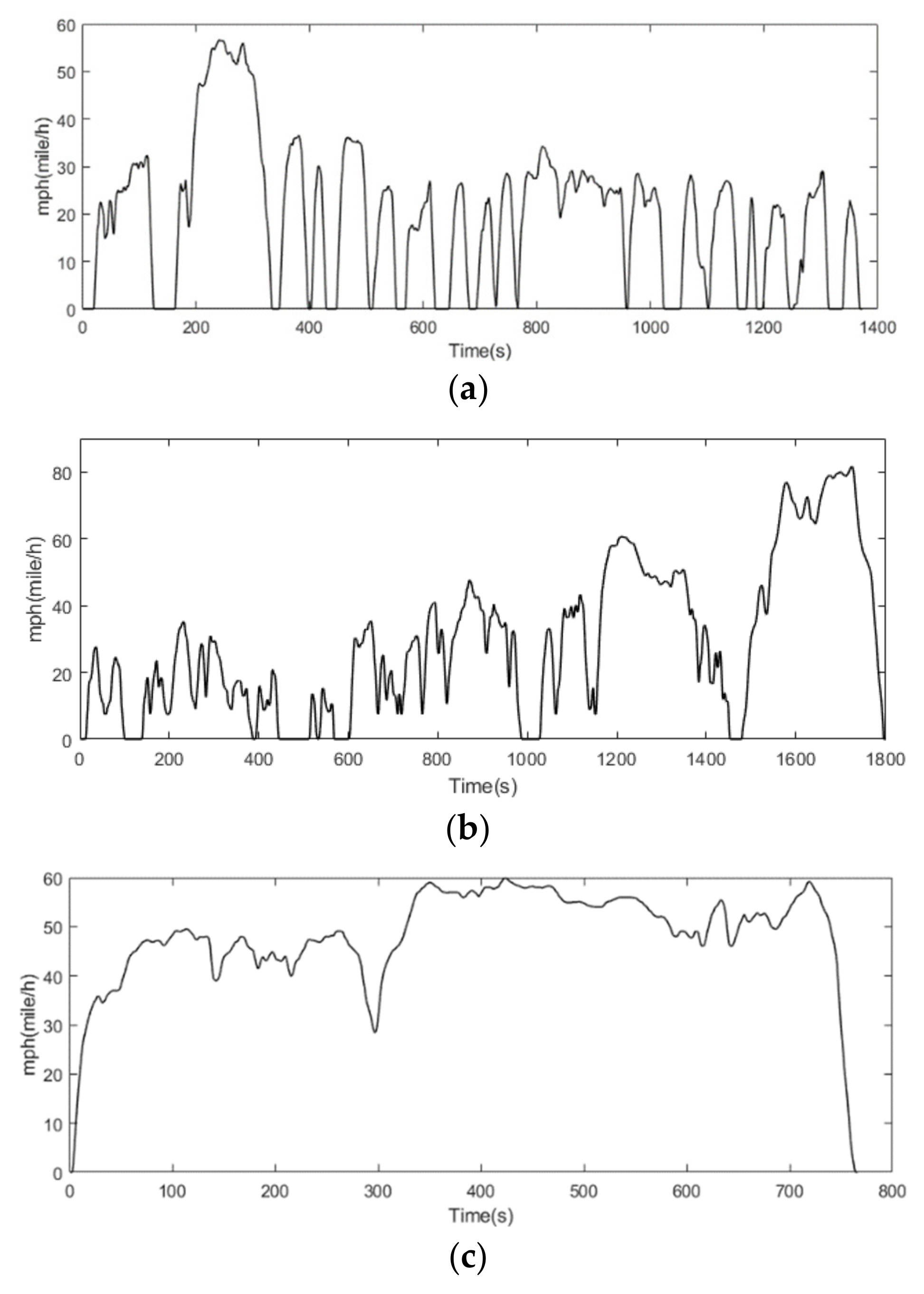
To unify the configuration parameters, the parameters of the power system adopted in the subsequent simulation experiments are shown in Table 3, which are the original parameters of i-mmd. Figure 10 shows the simulation test driving cycle, with FUDS, HWFET, and WLTP representing city, highway, and combined driving conditions, respectively.
Table 3.
Parameters of i-mmd hybrid power system.
Figure 10.
Standard driving cycle operating conditions. (a) FUDS; (b) WLTP; (c) HWFET.
To test and determine the superiority and inferiority of the three confidence intervals of the optimal SOC grid density identification method mentioned above, simulation experiments were conducted on different SOC grid densities of the DP under various working conditions, the results of which are in Table 1. The fuel consumption levels and calculation time results are listed in Table 4. In the table, Nbase represents the reference quantity of the SOC grid density with a value of 500.
Table 4.
Simulation results of i-MMD using different SOC grid densities.
It can be clearly observed that the calculation efficiency was significantly improved after adopting automatic identification of the SOC grid. In particular, the use of N90 achieves a balance between speed and accuracy. Compared with the reference Nbase, it can ensure a fuel consumption simulation error within 1% and reduce the calculation time by 56.7–66.8%. Thus, N90 was selected as the optimal SOC grid density.
4.2. Analysis of the Adaptive-Efficient DP
To verify the performance and effectiveness of the proposed method, multiple energy management strategies (EMSs) were used for simulation tests under various driving cycle conditions. The control objects were all i-mmd hybrid power systems with identical dynamic parameters. The simulation results are listed in Table 5. The references include DP and Rapid DP.
Table 5.
Comparison of calculation time and fuel consumption results of different EMS.
To further explore the differences between the proposed method and other energy management strategies, the fuel consumption error rate and computational time multiplier are used to measure the calculations as follows:
where mpgi represents the fuel consumption value obtained by the ith EMS; similarly, ComputingTimei refers to the computation time of the ith EMS.
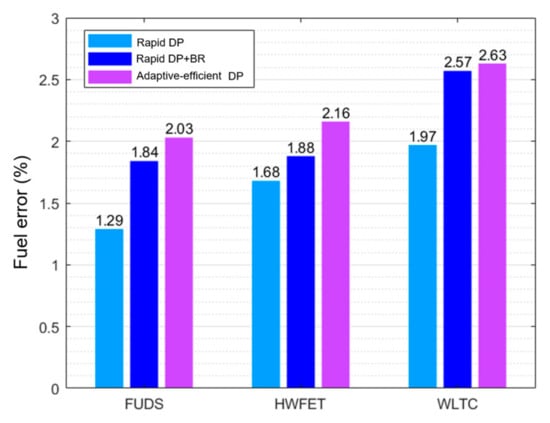
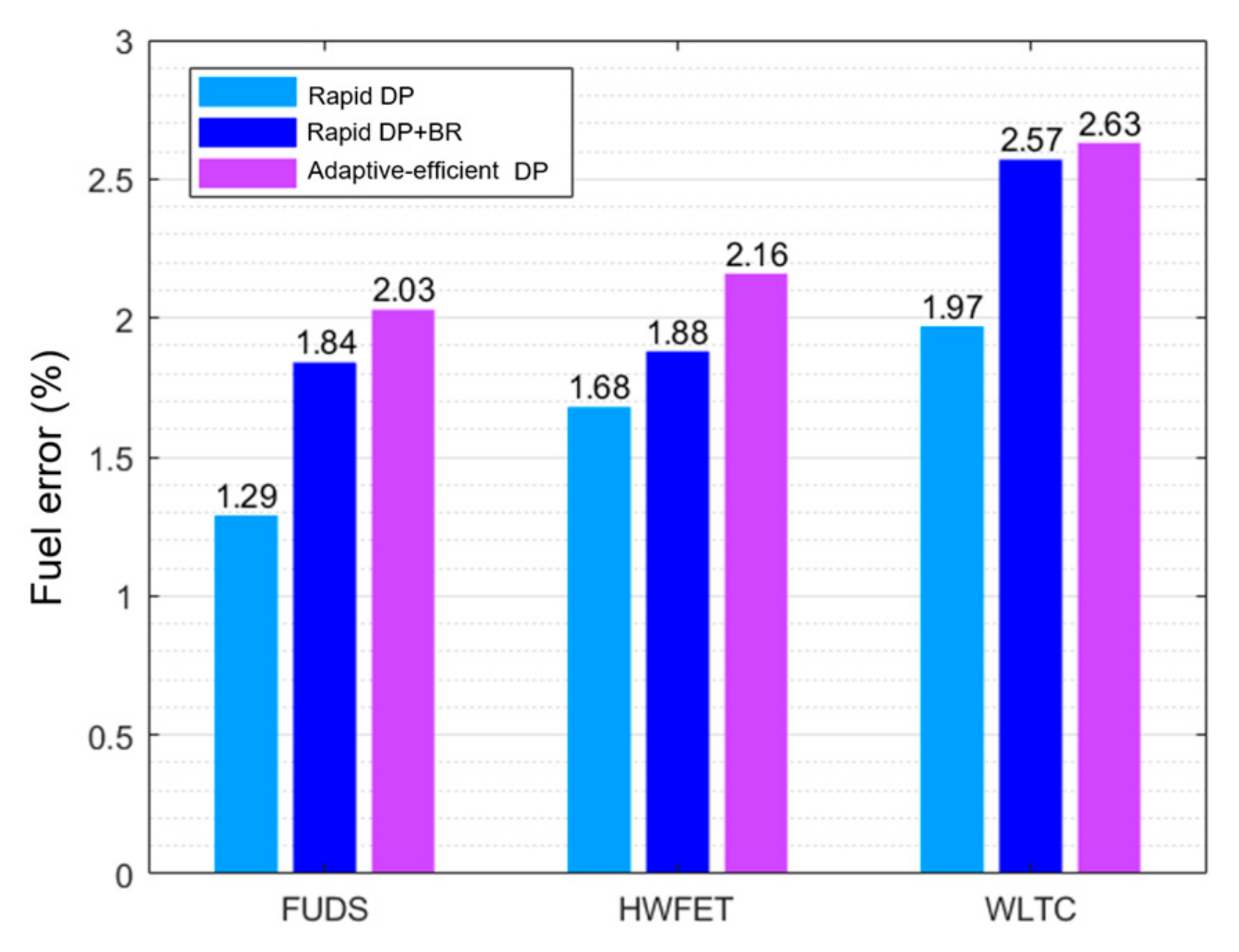
As a global optimal method, DP can achieve the best fuel economy and is generally used as the benchmark method for hybrid energy management strategies. To represent the performance of each method more intuitively, the fuel consumption in Table 5 was compared with that of DP, and the fuel consumption error rates were obtained, as shown in Figure 11. Compared with DP, the fuel consumption error of adaptive-efficient DP is 2.03% to 2.63%, which is slightly higher than that of Rapid DP, which is 1.29% to 1.97%, but the overall error rate is still relatively small, meeting the requirements of the simulation and optimization tasks of hybrid electric vehicles.
Figure 11.
Comparison of fuel economy error.
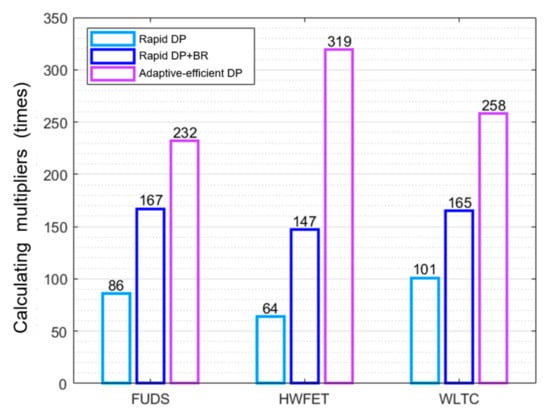
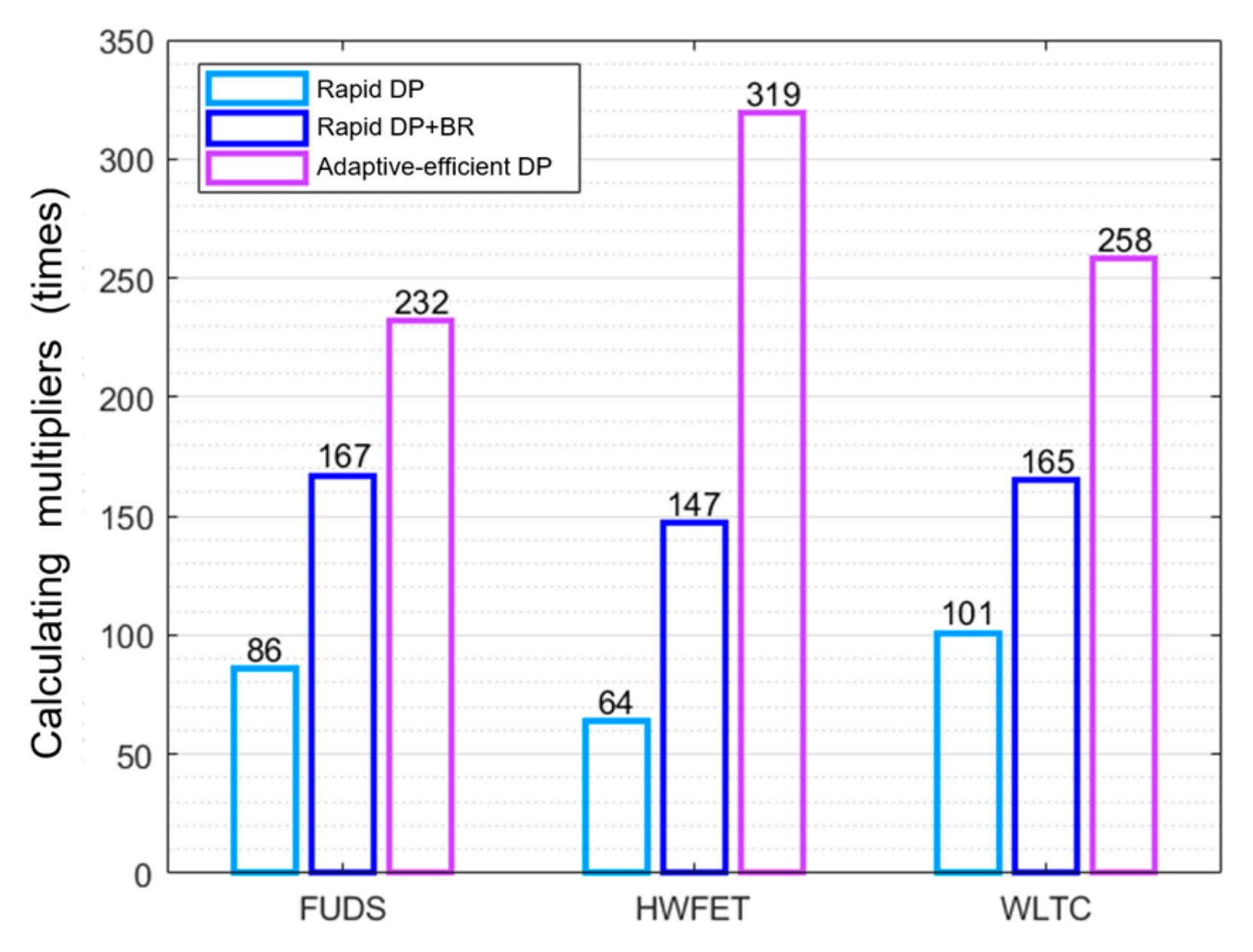
In terms of calculation efficiency, the DP was used as the benchmark, and the proposed method was calculated. The results of the comparison with the calculation ratio of DP (calculation ratio = calculation time of DP/calculation time of method) are shown in Figure 12. The calculation speed of the adaptive-efficient DP algorithm is approximately 232–319 times that of DP and 3–5 times that of Rapid DP, achieving a significant improvement in calculation efficiency and being able to greatly shorten the time period in the design and optimization stages.
Figure 12.
Comparison of calculation speed.
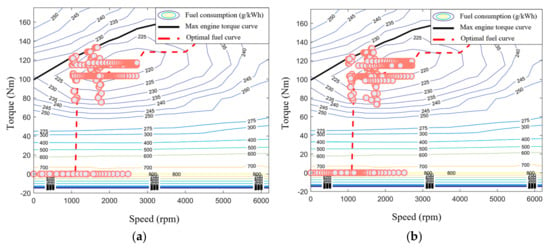
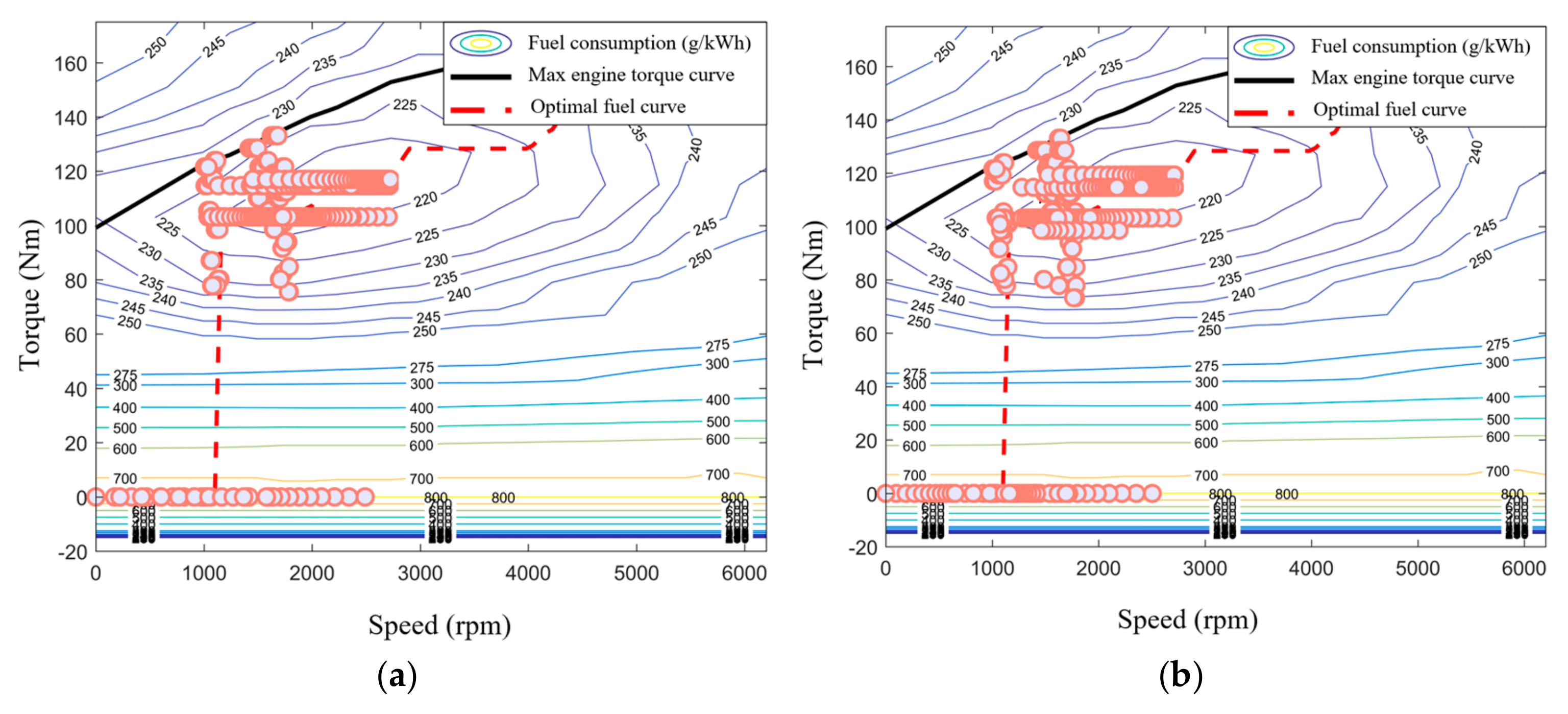
To further demonstrate that the adaptive-efficient DP can still accurately simulate the performance of the hybrid power system after reducing a large number of redundant state variable spaces and control variable spaces, this study compares the working points (the red circle points in Figure 13) of the Rapid-DP and Adaptive–efficient DP, as shown in Figure 13. It can be found that, both the DP algorithm and the adaptive efficient DP algorithm effectively concentrate their operating points within the engine’s high-efficiency range. However, the Adaptive–efficient DP algorithm still exhibits certain differences compared to the Rapid-DP algorithm, particularly in the low-power region. The proposed method has more operating points outside the optimal economic region, which is one reason for the difference in fuel economy between the two approaches.
Figure 13.
Comparison of engine operating points under FUDS driving cycle. (a) Rapid-DP; (b) Adaptive–efficient DP.
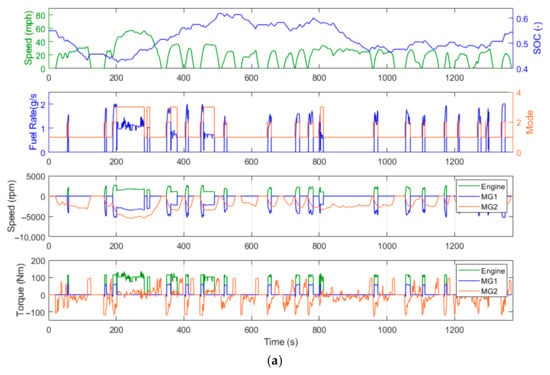
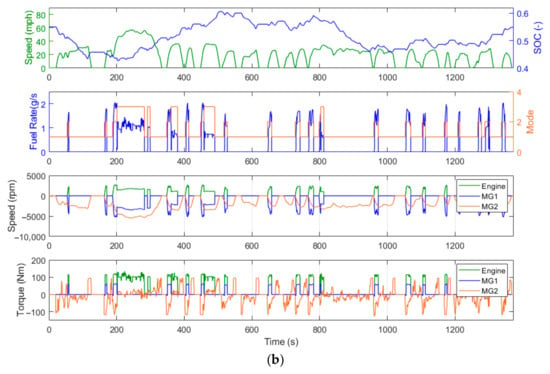
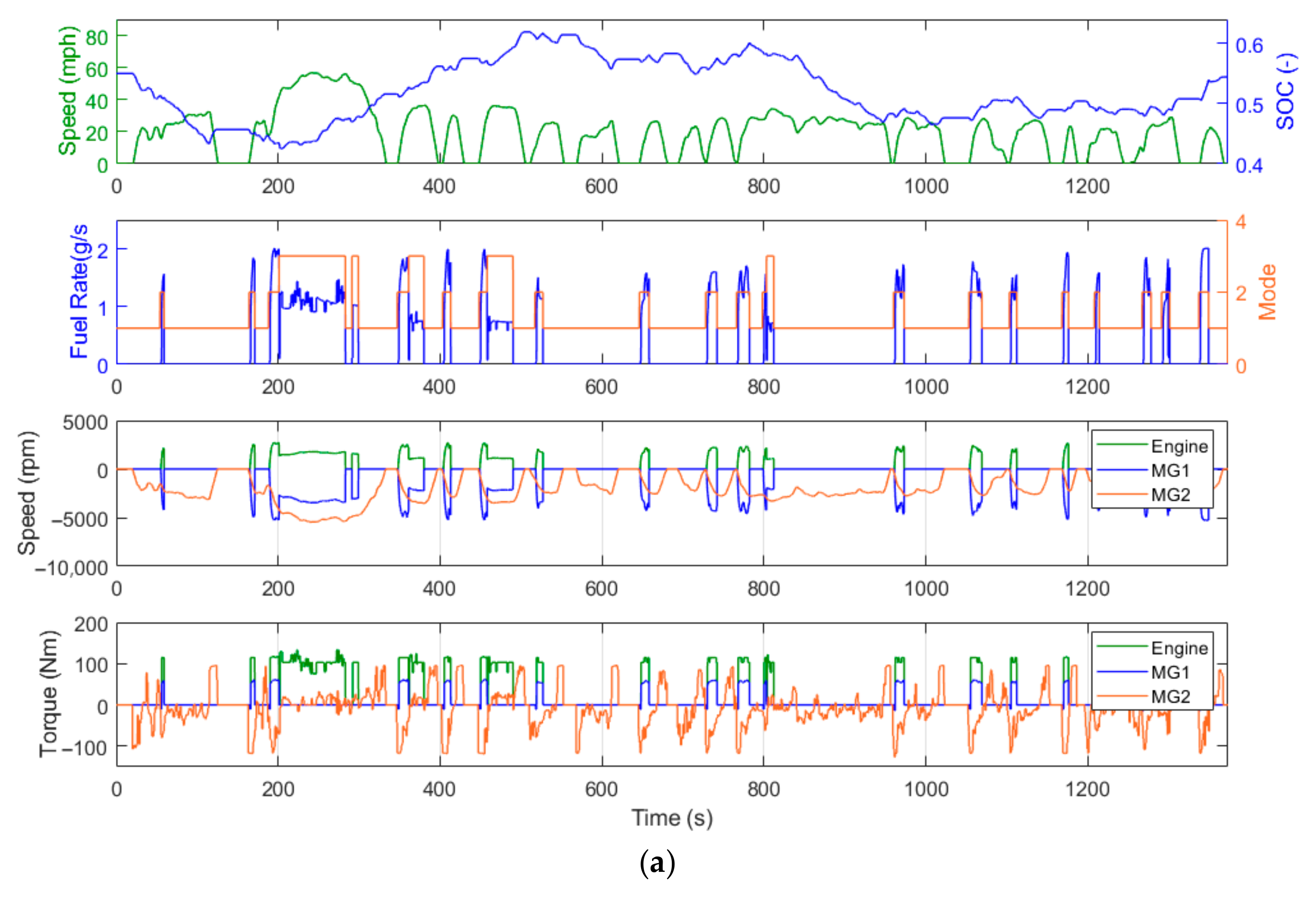
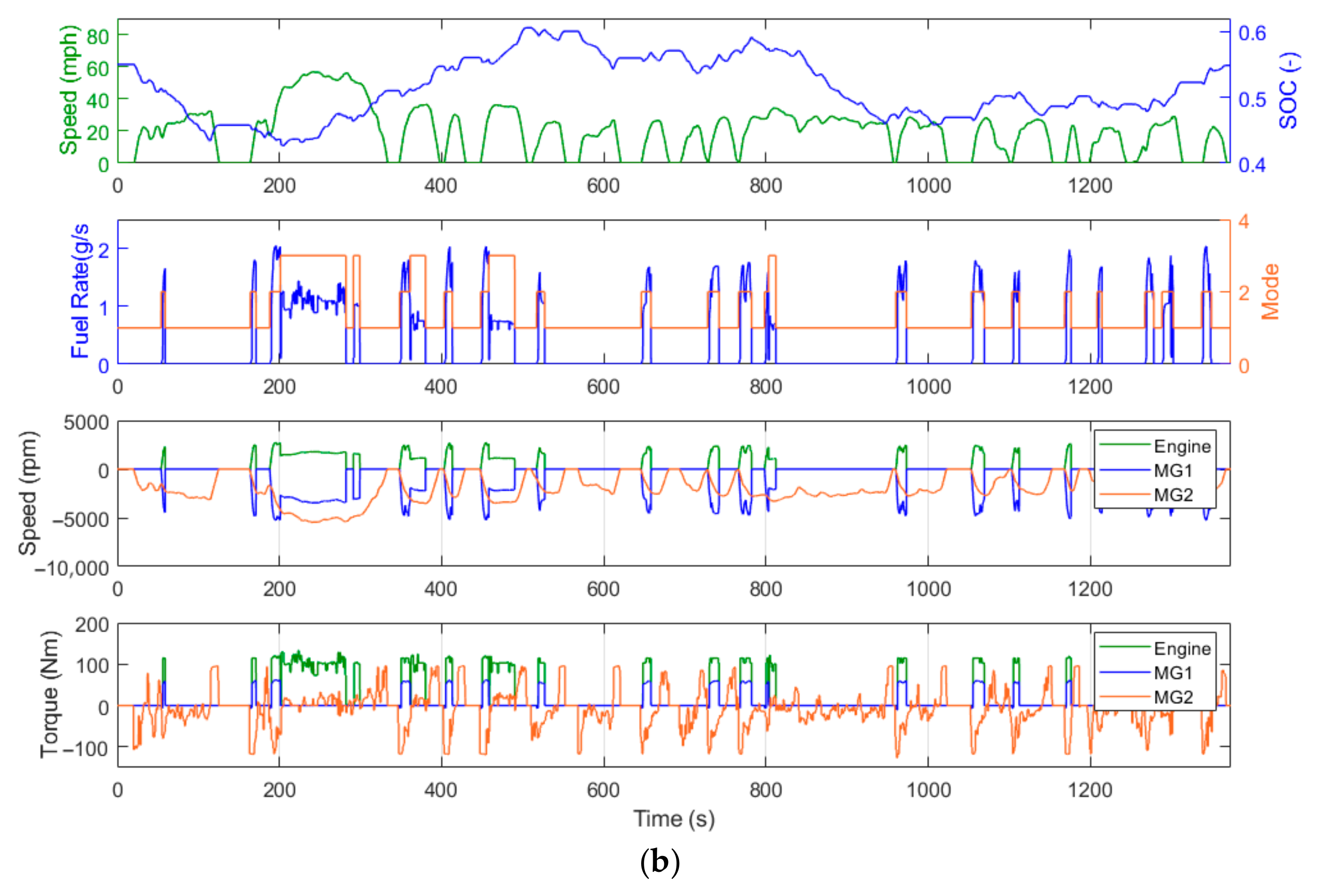
As shown in Figure 14, the SOC curve, mode switching, torque curve, and Engine/MG1/MG2 speed curve indicate that Adaptive -Efficient dynamic programming (DP) exhibits trends similar to traditional Rapid-DP in terms of optimal energy management modes curve, SOC curve and the selection set of control actions. The validity of the SOC grid method and optimal control point extraction and boundary relaxation method is verified.
Figure 14.
Analysis of the two rapid energy management strategies (EMS). (a) Rapid DP; (b) Adaptive–efficient DP.
5. Conclusions
In this study, an advanced Adaptive–efficient DP algorithm is proposed to solve the challenge of balancing computational efficiency and simulation accuracy in HEV powertrain performance simulation. The main conclusions are as follows:
(1) A DP-optimized SOC grid density identification method is proposed. The method is based on the statistical method of battery energy change frequency, and the SOC state network of DP is adaptively discretized to reduce the number of data dimensions and simplify the calculation. The grid density corresponding to the 90% confidence interval (N90) ensures that the fuel consumption simulation error is within 1% and the calculation time is reduced by 56.7–66.8%.
(2) Compared with DP, the Adaptive–efficient DP is 232 to 319 times faster under different driving cycles, with a fuel consumption error of only 2.03% to 2.63%. Additionally, the operating points of the two engines and mode curve are relatively close to each other. This methodology ensures high simulation accuracy while significantly improving computational efficiency.
The proposed Adaptive–efficient DP algorithm can break through the bottleneck of the traditional method in computational efficiency and ensure high simulation accuracy, thus providing a new technical path for the rapid design and optimization of HEVs. The method has important application value in engineering practice and can greatly shorten the development cycle. Our next goal is to consider online applications in an intelligent, connected environment [29] and lane-changing scenarios [30].
Author Contributions
Conceptualization, C.L., Y.Y. and Y.Z.; Methodology, C.L., A.L. and Y.Z.; Validation, C.L.; Formal analysis, Y.Z.; Investigation, Y.Y., A.L. and Y.Z.; Resources, A.L.; Writing—original draft, C.L.; Writing—review & editing, Y.Z.; Visualization, A.L.; Supervision, A.L. and Y.Z.; Project administration, Y.Y.; Funding acquisition, C.L. and Y.Y. All authors have read and agreed to the published version of the manuscript.
Funding
This work was supported in part by the Key Project of Chongqing Municipal Science and Technology Bureau (Grant No. CSTB2022TIAD-KPX0038), National Key Research and Development Program of China (Grant No. 2021YFE0193800), and Project of the State Key Laboratory of Mechanical Transmission (Grant No. SKLMT-ZZKT2022M09). The authors thank them for their support.
Data Availability Statement
The original contributions presented in this study are included in the article. Further inquiries can be directed to the corresponding author.
Conflicts of Interest
The authors declare no conflicts of interest.
Abbreviations
| AFRCS | Aging-aware fast real-time control strategy |
| DP | Dynamic Programming |
| ECMS | Equivalent consumption minimization strategy |
| EV | Electric vehicle |
| FUDS | Full Urban Driving Cycle |
| FTP 72 | Federal Test Procedure 72 |
| HEV | Hybrid electric vehicles |
| HWFET | Highway Fuel Economy Test Cycle |
| ICE | Internal combustion engines |
| MOPSO | Multi-Objective Particle Swarm Optimization |
| MPC | Model Predictive Control |
| NEDC | New European Driving Cycle |
| PMP | Pontriagin’s minimum principle |
| Rapid-DP | Rapid Dynamic Programming |
| SOC | State of Charge |
| SPMRA | Speed–power requirement–working mode-based rapid analysis |
| SRDP | Slope-weighted Rapid Dynamic Programming |
| URHCA | Ultra-rapid real-time hierarchical control algorithm |
| WLTP | Worldwide Harmonized Light Vehicles Test Procedure |
References
- Cui, W.; Cui, N.; Li, T.; Du, Y.; Zhang, C. Multi-objective hierarchical energy management for connected plug-in hybrid electric vehicle with cyber–physical interaction. Appl. Energy 2024, 360, 122816. [Google Scholar] [CrossRef] [Scilit]
- Zhuang, W.; Li, S.; Zhang, X.; Kum, D.; Song, Z.; Yin, G.; Ju, F. A survey of powertrain configuration studies on hybrid electric vehicles. Appl. Energy 2020, 262, 114553. [Google Scholar] [CrossRef] [Scilit]
- Sun, X.; Dong, Z.; Cai, Y.; Jin, Z.; Lei, G.; Tian, X. A comprehensive review of design optimization methods for hybrid electric vehicles. Renew. Sustain. Energy Rev. 2025, 217, 115765. [Google Scholar] [CrossRef] [Scilit]
- Zhou, X.; Guo, Y.; Hao, W.; Zhang, X.; Wang, W. Kinematic state adaptive based novel powertrain for the next generation of vehicle electrification: Design optimization and simplification. Appl. Energy 2025, 395, 126128. [Google Scholar] [CrossRef] [Scilit]
- Zou, Y.; Yang, Y.; Zhang, Y. Configuration and Parameter Design of Electrified Propulsion Systems for Three-Dimensional Transportation: A Comprehensive Review. Green Energy Intell. Transp. 2025, 100286. [Google Scholar] [CrossRef] [Scilit]
- Zhang, X.; Peng, H.; Sun, J. A near-optimal power management strategy for rapid component sizing of multimode power split hybrid vehicles. IEEE Trans. Control Syst. Technol. 2014, 23, 609–618. [Google Scholar] [CrossRef] [Scilit]
- Tang, X.; Zhang, J.; Cui, X.; Lin, X.; Grzesiak, L.M.; Hu, X. Multi-Objective Design Optimization of a Novel Dual-Mode Power-Split Hybrid Powertrain. IEEE Trans. Veh. Technol. 2021, 71, 282–296. [Google Scholar] [CrossRef] [Scilit]
- Xie, S.; Hu, X.; Xin, Z.; Brighton, J. Pontryagin’s minimum principle based model predictive control of energy management for a plug-in hybrid electric bus. Appl. Energy 2019, 236, 893–905. [Google Scholar] [CrossRef] [Scilit]
- Sun, X.; Xu, Z.; Cai, Y.; Chen, L.; Tian, X.; Jin, Z.; Xue, M. Improved energy management strategy for plug-in hybrid electric buses based on Pontryagin’s minimum principle plus snack optimization. Energy 2025, 320, 135402. [Google Scholar] [CrossRef] [Scilit]
- He, H.; Guo, X. Multi-objective optimization research on the start condition for a parallel hybrid electric vehicle. Appl. Energy 2018, 227, 294–303. [Google Scholar] [CrossRef] [Scilit]
- Tian, Y.; Miao, Y.; Qin, J.; Zhang, Y.; Zhang, N.; Wen, G. A search method integrating configuration synthesis, screening, and optimization for a dual-planetary gear set four-mode configuration in battery electric vehicles. Mech. Mach. Theory 2025, 211, 106021. [Google Scholar] [CrossRef] [Scilit]
- Larsson, V.; Johannesson, L.; Egardt, B. Analytic solutions to the dynamic programming subproblem in hybrid vehicle energy management. IEEE Trans. Veh. Technol. 2014, 64, 1458–1467. [Google Scholar] [CrossRef] [Scilit]
- Pan, M.; Cao, S.; Zhang, Z.; Ye, N.; Qin, H.; Li, L.; Guan, W. Recent progress on energy management strategies for hybrid electric vehicles. J. Energy Storage 2025, 116, 115936. [Google Scholar] [CrossRef] [Scilit]
- Zhang, X.; Peng, H.; Sun, J. A near-optimal power management strategy for rapid component sizing of power split hybrid vehicles with multiple operating modes. In Proceedings of the 2013 American Control Conference, Washington, DC, USA, 17–19 June 2013; IEEE: New, York, NY, USA, 2013; pp. 5972–5977. [Google Scholar]
- Zhuang, W.; Zhang, X.; Zhao, D.; Peng, H.; Wang, L. Optimal design of three-planetary-gear power-split hybrid powertrains. Int. J. Adapt. Technol. 2016, 17, 299–309. [Google Scholar] [CrossRef] [Scilit]
- Xu, N.; Kong, Y.; Yan, J.; Zhang, Y.; Sui, Y.; Ju, H.; Liu, H.; Xu, Z. Global optimization energy management for multi-energy source vehicles based on “Information layer-Physical layer-Energy layer-Dynamic programming” (IPE-DP). Appl. Energy 2022, 312, 118668. [Google Scholar] [CrossRef] [Scilit]
- Chen, S.; Hu, M.; Guo, S. Fast dynamic-programming algorithm for solving global optimization problems of hybrid electric vehicles. Energy 2023, 273, 127207. [Google Scholar] [CrossRef] [Scilit]
- Zou, Y.; Yang, Y.; Zhang, Y.; Tang, X. Aging-aware real-time multi-layer co-optimization approach for hybrid vehicles: Across configuration, parameter, control. Energy Convers. Manag. 2025, 332, 119748. [Google Scholar] [CrossRef] [Scilit]
- Jia, C.; Liu, W.; He, H.; Chau, K. Deep reinforcement learning-based energy management strategy for fuel cell buses integrating future road information and cabin comfort control. Energy Convers. Manag. 2024, 321, 119032. [Google Scholar] [CrossRef] [Scilit]
- Anselma, P.G. Dynamic Programming Based Rapid Energy Management of Hybrid Electric Vehicles with Constraints on Smooth Driving, Battery State-of-Charge and Battery State-of-Health. Energies 2022, 15, 1665. [Google Scholar] [CrossRef] [Scilit]
- Dong, P.; Zhao, J.; Xu, X.; Wang, R.; Lin, X.; Liu, Y.; Wang, S.; Guo, W. Rapid assessment of series–parallel hybrid transmission comprehensive performance: A near-global optimal method. Etransportation 2023, 15, 100221. [Google Scholar] [CrossRef] [Scilit]
- Zou, Y.; Yang, Y.; Zhang, Y.; Liu, C. Computationally efficient assessment of fuel economy of multi-modes and multi-gears hybrid electric vehicles: A Hyper Rapid Dynamic Programming Approach. Energy 2024, 313, 133811. [Google Scholar] [CrossRef] [Scilit]
- Zou, Y.; Zhang, Y.; Yang, Y. Multi-perspective evaluation of a novel powertrain integrating series-parallel and power-split modes: An ultra-rapid hierarchical control approach. Mech. Mach. Theory 2025, 210, 106034. [Google Scholar] [CrossRef] [Scilit]
- Anselma, P.G.; Biswas, A.; Belingardi, G.; Emadi, A. Rapid assessment of the fuel economy capability of parallel and series-parallel hybrid electric vehicles. Appl. Energy 2020, 275, 115319. [Google Scholar] [CrossRef] [Scilit]
- Wang, S.; Yao, K.; Guo, W.; Xu, X.; Liu, Y.; Qian, P.; Zhao, J.; Dong, P. Approximate Optimal Energy Management Strategy for Multi-Speed Series-Parallel PHEV Integrating Global Prediction and Real-Time Control. Energy 2025, 335, 138164. [Google Scholar] [CrossRef] [Scilit]
- Ji, X.; Sun, K.; Liang, H.; Guo, X.; Yang, X.; Shan, C. Energy management in hybrid energy system for long-duration stratospheric airship mission. Energy 2025, 332, 136021. [Google Scholar] [CrossRef] [Scilit]
- Arnold, B.C.; Groeneveld, R.A. Measuring skewness with respect to the mode. Am. Stat. 1995, 49, 34–38. [Google Scholar] [CrossRef] [Scilit]
- Bradley, J.V. Studies in Research Methodology: IV. A Sampling Study of the Central Limit Theorem and the Robustness of One-Sample Parametric Tests; Aerospace Medical Research Laboratories: Pensacola, FL, USA, 1963. [Google Scholar]
- Yang, K.; Tang, X.; Qiu, S.; Jin, S.; Wei, Z.; Wang, H. Towards robust decision-making for autonomous driving on highway. IEEE Trans. Veh. Technol. 2023, 72, 11251–11263. [Google Scholar] [CrossRef] [Scilit]
- Pan, C.; Li, Y.; Wang, J.; Jinyama, H. Research on multi-lane energy-saving driving strategy of connected electric vehicle based on vehicle speed prediction. Green Energy Intell. Transp. 2023, 2, 100127. [Google Scholar] [CrossRef] [Scilit]

Disclaimer/Publisher’s Note: The statements, opinions and data contained in all publications are solely those of the individual author(s) and contributor(s) and not of MDPI and/or the editor(s). MDPI and/or the editor(s) disclaim responsibility for any injury to people or property resulting from any ideas, methods, instructions or products referred to in the content. |
© 2025 by the authors. Licensee MDPI, Basel, Switzerland. This article is an open access article distributed under the terms and conditions of the Creative Commons Attribution (CC BY) license (https://creativecommons.org/licenses/by/4.0/).