Article

Impact of Polar Ice Layers on the Corrosion-Related Static Electric Field of a Submerged Underwater Vehicle


1
Department of Basic Sciences, Naval University of Engineering, Wuhan 430033, China
2
Hubei Key Laboratory of Marine Electromagnetic Detection and Control, Wuhan 430064, China
3
Wuhan Second Ship Design and Research Institute, Wuhan 430064, China
*
Authors to whom correspondence should be addressed.
Mathematics 2025, 13(17), 2882; https://doi.org/10.3390/math13172882
Submission received: 29 May 2025 / Revised: 1 September 2025 / Accepted: 3 September 2025 / Published: 6 September 2025

Abstract

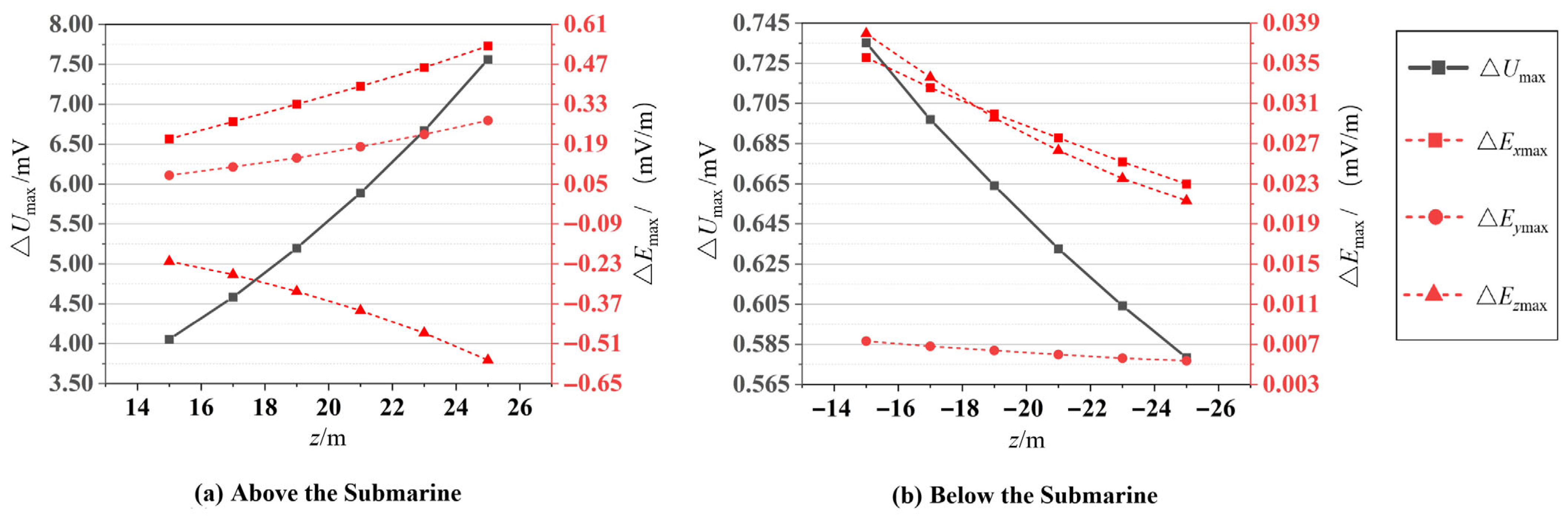
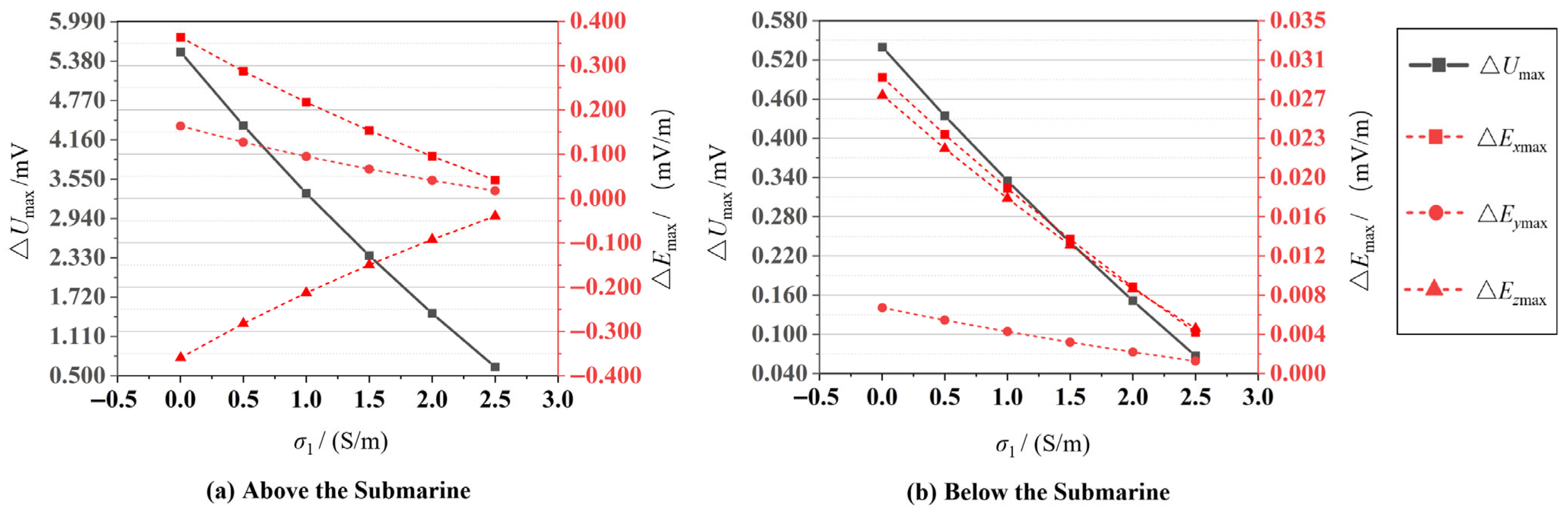
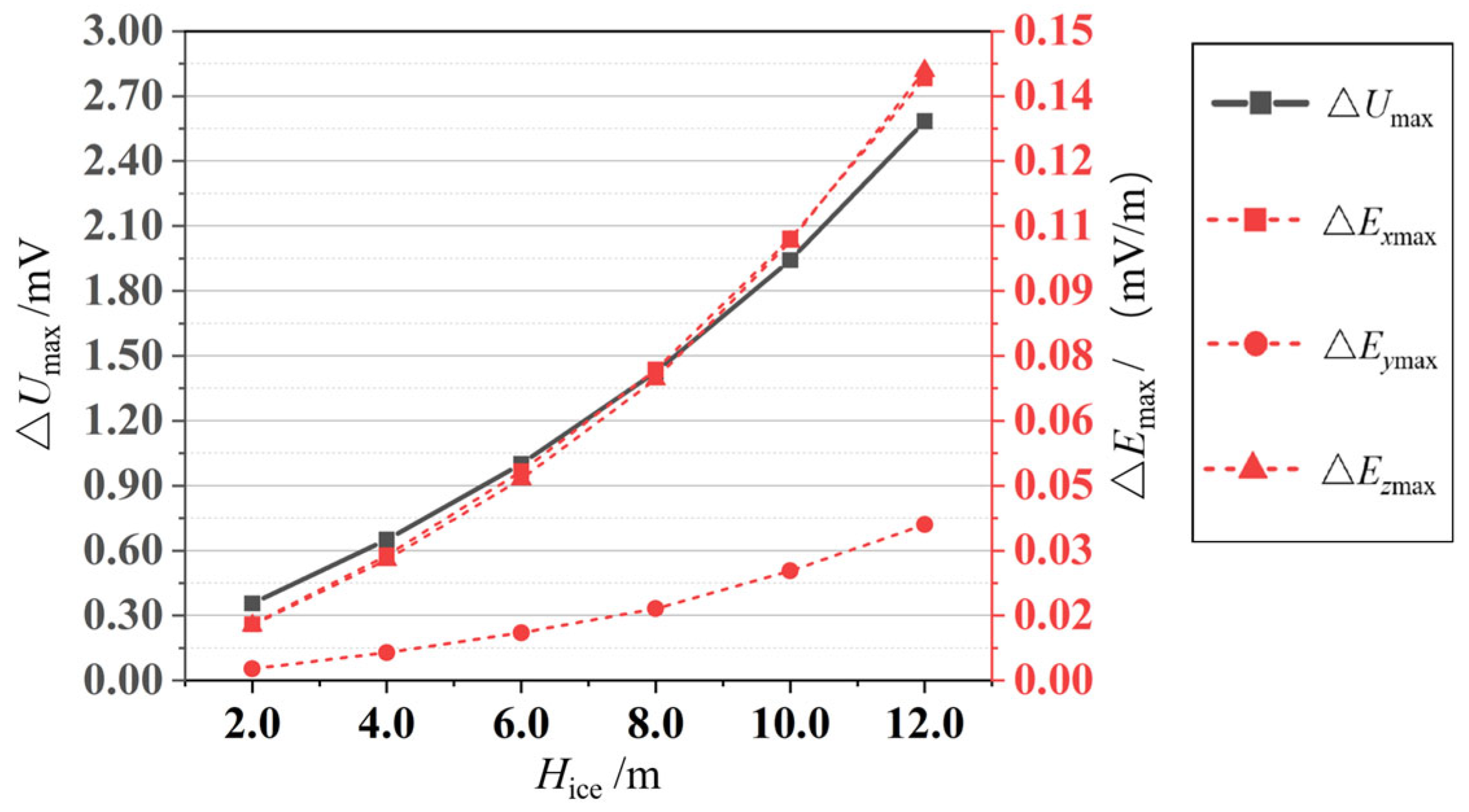
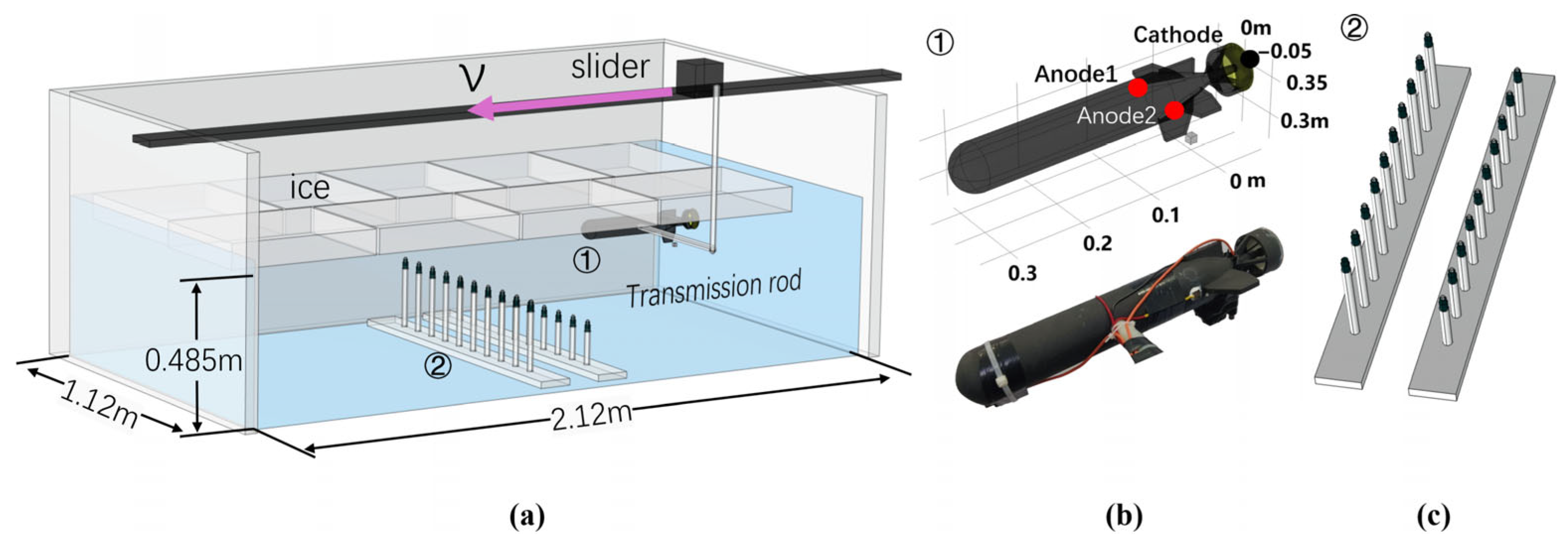
The influence of polar ice-covered environments on the corrosion-related static electric field (CRSE) of underwater vehicles is critical for understanding and applying the characteristics of underwater electric fields in polar regions. This study utilizes a combined methodology involving COMSOL Multiphysics 6.1 simulations and laboratory-simulated experiments to systematically investigate the distribution characteristics of underwater vehicle electric fields under ice-covered conditions. By comparing the electric field distributions in scenarios with and without ice coverage, this study clarifies the effect of ice presence on the behavior of underwater electric fields. The simulation results demonstrate that the existence of ice layers enhances both the electric potential and field strength, with the degree of influence depending on the ice layer conductivity, thickness, and proximity of the measurement points to the ice layer. The accumulation of error analysis and laboratory experiments corroborates the reliability of the simulation results, demonstrating that ice layers enhance electric field signals by modifying the conductive properties of the surrounding medium, whereas the overall spatial distribution characteristics remain largely consistent. These findings offer a theoretical and technical basis for the optimization of stealth strategies in polar underwater vehicles and contribute to the advancement of electric field detection technologies.
Keywords: polar; ice layer; underwater vehicle; corrosion-related static electric field; influence laws polar; ice layer; underwater vehicle; corrosion-related static electric field; influence laws