


Abstract
Integrating data science into undergraduate teaching in the United States requires educators to navigate disciplinary boundaries, integrating knowledge in ways that reshape teaching practices and disciplines themselves. While existing models of teaching and learning effectively describe expertise within single disciplines, they do not account for interdisciplinary knowledge movement or the specific challenges of bringing data science into established curricula. The Apian Model addresses this gap using bee behavior as a metaphor: instructors (bees) gather insights (nectar) from diverse curricular domains (flowers), transform them into learning experiences (honey), and disseminate them within and beyond their disciplines (hives). Through incorporation, communication, pollination, and hive splitting dynamics, this model explains how teaching evolves from individual learning to broader disciplinary change, processes especially relevant for navigating the complexity and interdisciplinarity of data science education. The model was developed with data science education in higher education in mind, but future research may establish its broader utility for interdisciplinary education more generally, particularly as a complement to existing models designed for single-discipline instruction.
1. Introduction
As data science transforms every domain of society, universities face a quietly urgent challenge: who teaches it, and how do they learn to do so across disciplinary boundaries? Almost every area of life is becoming data-driven because we develop more ways to analyze data, and society and the economy grow ever more reliant on data-driven decision-making. This transformation requires educators and policymakers to create more access to data science education for the next generation to learn both the technical skills and critical thinking required in a data-driven world (Institute of Education Sciences, 2026; National Academies of Sciences, Engineering, and Medicine, 2018). Higher education is critical for offering data science components to students and expanding the supply of data science talent, aligning with the National Academies of Sciences, Engineering, and Medicine’s recommendation: “To prepare their graduates for this new data-driven era, academic institutions should encourage the development of a basic understanding of data science in all undergraduates.” Yet despite this urgency, little research focuses on how instructors, particularly those teaching outside their primary expertise, actually navigate the intellectual demands of bringing data science into their courses.
Data science is an interdisciplinary paradigm whose definition is still vague and continues to evolve (Brodie, 2023; Institute of Education Sciences, 2026). It combines computer science, statistics, mathematics, and disciplinary knowledge, applying scientific methods to gain knowledge and insights from both structured and unstructured data (Bednarowska-Michaiel & Uprichard, 2026; Donoho, 2017; Finzer, 2013; Kursav et al., 2025). While the term data scientist describes workers skilled in handling complex data sets, data science is a broader concept visible across over 40 disciplines and hundreds of research areas (Brodie, 2023), involving principles for data collection, storage, integration, analysis, inference, communication, and ethics appropriate for a data-driven era (Institute of Education Sciences, 2026; National Academies of Sciences, Engineering, and Medicine, 2018). This broad scope explains the fluid, multi-disciplinary, and evolving nature of the field (Egger & Yu, 2022; Zakaria, 2023).
This interdisciplinary complexity creates challenges for undergraduate instructors, particularly those teaching data science from outside their primary disciplinary expertise. Despite growing emphasis on data science education in undergraduate settings, few conceptual models explain how instructors navigate, adopt, and transform knowledge in data science across fields. In particular, less is known about the dynamic process through which instructors acquire knowledge across disciplinary boundaries, adapt it to their teaching contexts, share it within and across disciplines, and contribute to broader curricular or disciplinary change. To address this gap, we developed a conceptual framework, the Apian Model, for understanding how instructors acquire, adapt, integrate, and disseminate knowledge across disciplinary boundaries in data science education. Inspired by the natural behaviors of bees, it offers a dynamic, process-oriented framework for tracing how instructors move beyond siloed expertise to incorporate, adapt, and disseminate data science knowledge through creating meaningful, interdisciplinary learning experiences (see Figure 1).
Figure 1.
Illustration of the Apian Model. This schematic shows the components of the Apian model in a specific circumstance. The hive, to the upper right, is associated with the field of Engineering. To the lower left, we see three disciplinary flowers—for Biology, Engineering, and Data Science. Bees emerge from the hive to visit one or more of these flowers, collecting nectar and returning to the hive.
The purpose of this paper is conceptual rather than empirical; examples from Data Science Infusion into Undergraduate STEM Education (DIFUSE) project are used to illustrate how components of the model may appear in practice rather than to empirically test or validate the model. By conceptualizing interdisciplinary teaching as a dynamic process of knowledge movement, the model captures how knowledge is acquired across disciplinary boundaries, adapted to teaching contexts, shared within and across disciplines, and potentially extended into broader curricular or disciplinary change. Accordingly, this paper is guided by the following conceptual question: What conceptual framework can help explain how instructors integrate interdisciplinary knowledge into their teaching in the context of data science education? We believe the Apian Model contributes to the literature in several ways. First, it offers a process-oriented perspective on interdisciplinary teaching by focusing on how educators acquire, adapt, and disseminate knowledge across disciplinary boundaries. Second, it provides a conceptual lens for understanding faculty learning in data science education. Finally, it also provides a foundation for future research on interdisciplinary teaching, faculty development, and institutional support. The remainder of the paper first reviews the theoretical foundations informing the Apian Model before introducing its structural components and dynamic processes. We then illustrate the model using examples from our previous project and conclude with implications for interdisciplinary teaching and directions for future research.
2. Theoretical Foundation
Shulman (1986, 1987) introduced Pedagogical Content Knowledge (PCK) as a distinct category of knowledge blending subject-matter expertise with an understanding of how to teach that subject effectively. He proposed seven categories of teacher knowledge, including content knowledge, general pedagogical knowledge, curriculum knowledge, pedagogical content knowledge, knowledge of learners, knowledge of educational contexts, and knowledge of educational ends, purposes, and values. Among these, PCK is unique to the work of teaching. It represents “the blending of content and pedagogy into an understanding of how particular topics, problems, or issues are organized, represented, and adapted to the diverse interests and abilities of learners, and presented for instruction” (Shulman, 1987, p. 8). PCK therefore includes both the most useful representations of content (e.g., analogies, illustrations, examples, demonstrations) and an understanding of student conceptions and misconceptions. This framework was instrumental in distinguishing teaching knowledge from general expertise. However, its primary focus is knowledge needed for teaching within a disciplinary context, rather than the processes through which educators acquire, adapt, and share knowledge across disciplinary boundaries. Shulman’s PCK continues to provide an important foundation in research on teacher knowledge (e.g., Demirci et al., 2025). However, teaching interdisciplinary fields such as data science introduces challenges that extend beyond discipline-specific teaching (Bednarowska-Michaiel & Uprichard, 2026).
Ball et al. (2008) expanded Shulman’s framework through the Egg Model, developing a practice-based theory of mathematical knowledge for teaching. Through extensive qualitative analyses and survey measures, they distinguished Common Content Knowledge (CCK), referring to mathematical knowledge used in settings beyond teaching, from Specialized Content Knowledge (SCK), referring to knowledge unique to the work of teaching mathematics, such as analyzing student errors, evaluating non-standard solution methods, and unpacking mathematical procedures for learners. Within pedagogical content knowledge, they identified two additional subdomains: Knowledge of Content and Students (KCS), combining knowledge of mathematics with familiarity with student conceptions and misconceptions, and Knowledge of Content and Teaching (KCT), combining mathematical understanding with knowledge of instructional design, sequencing, and representation choices. Although the Egg Model was developed in the context of mathematics, Ball et al. (2008) explicitly state that they “sought to contribute to a broader discussion by researchers in different school subjects” (p. 390), suggesting that their practice-based approach could inform studies of content knowledge across disciplines. Teaching data science often requires instructors to draw on knowledge, methods, and tools from different disciplines (Brodie, 2023; Bednarowska-Michaiel & Uprichard, 2026; Egger & Yu, 2022). These interdisciplinary demands motivated the development of the Apian Model, which shifts attention from categories of teacher knowledge toward the processes through which knowledge is acquired, adapted, and shared across disciplinary boundaries.
The Apian Model builds upon Shulman’s (1986, 1987) PCK framework and Ball et al.’s (2008) Egg Model while shifting attention toward the dynamic processes of interdisciplinary knowledge movement. Whereas these earlier models primarily characterize forms of knowledge relevant to teaching within disciplinary contexts, the Apian Model focuses on the processes through which instructors acquire, adapt, integrate, and disseminate knowledge across disciplinary boundaries. It conceptualizes teaching as an iterative, knowledge-moving process that emphasizes not only what instructors know, but how they learn, innovate, and collaborate across knowledge domains. The Apian Model offers a conceptual lens for understanding the work of interdisciplinary teaching and for considering professional development and institutional supports aligned with these demands. In this way, the Apian Model complements teacher knowledge frameworks by foregrounding interdisciplinary knowledge movement and curriculum innovation. Thus, the focus of the Apian Model is not on introducing another category of teacher knowledge, but on conceptualizing how knowledge moves and changes as instructors extend and integrate interdisciplinary content. The dynamic components of the model are grounded in the constructivist perspectives and Bandura’s social learning theory. From a constructivist perspective, instructors actively interpret and integrate new knowledge in relation to their existing disciplinary knowledge and teaching contexts. Social learning theory further highlights how learning occurs through observation of and interaction with others. Together, these perspectives help explain how instructors develop and integrate new knowledge through both individual learning and interactions with others.
Our experiences working in interdisciplinary data science education drew our attention to processes of knowledge movement across disciplinary boundaries and motivated the development of the Apian Model. Our work on DIFUSE, a faculty development initiative that supports instructors in bringing data science into undergraduate courses, motivated the development of the Apian Model. Throughout the paper, we use examples from this project to help explain different components of the model. These examples are intended only as illustrations to make the framework more concrete and are not presented as empirical evidence. Examples from DIFUSE illustrate how instructors navigated this work and help make the model’s conceptual components more concrete. DIFUSE centers on three core components: faculty workshops, interdisciplinary module co-design, and classroom implementation with iterative support. Participating instructors attend national workshops where they explore foundational data science ideas and examine example modules (Kursav et al., 2025). Instructors then work collaboratively with DIFUSE teams to design or adapt data science modules aligned with their own curricular goals. These modules are implemented in undergraduate STEM or social science courses, with ongoing support from the DIFUSE team (Kursav et al., 2025). Narratives drawn from DIFUSE are used to illustrate components of the Apian Model throughout the paper.
3. The Apian Model
At the center of our model is a metaphor inspired by the life cycle and collective behaviors of bees, which gives the Apian Model its name. Like the bees venturing from the hive seek out nectar from diverse collections of flowers, instructors who teach across disciplinary boundaries move beyond familiar expertise to gather ideas, methods, and tools from the unfamiliar fields. Upon returning to the hive, bees transform that nectar into honey, which nourishes larvae. The characteristics of the honey vary depending on the types of flowers visited, mirroring how instructors adapt curricula or teaching methods by integrating insights from different fields. Within the hive, bees communicate detailed information about where to find these new resources, emphasizing a collaborative and dynamic knowledge-sharing process. In parallel, educators share these new strategies, resources, and disciplinary knowledge with peers, potentially shaping teaching practices and the trajectory of academic disciplines. This cyclical exchange of gathering, transforming, and disseminating knowledge forms the essence of the Apian Model, illustrating how interdisciplinary teaching for data science evolves through ongoing interaction between individual inquiry and communal growth. These processes are represented in the model through five interconnected dynamics—Incorporation, Honey Creation, Communication, Pollination, and Hive Splitting—which describe different forms of interdisciplinary knowledge movement rather than a fixed sequence of stages.
3.1. Structural Components of the Apian Model
There are three core components of our model: (1) the bees, representing disciplinary experts who teach others; (2) the flowers, representing curricular design for a specific discipline; and (3) the hive, representing the locus where bees create new learning opportunities and connect them with their broader curriculum. These structural components have connections to existing pedagogical frameworks (e.g., Ball et al.’s (2008) framework). Likewise, these components reflect the interdisciplinary nature of data science, in which instructors may draw on knowledge and resources beyond their primary disciplinary expertise. To make these insights more concrete, we provide a visual illustration of the components of the model and how they connect with one another (see Figure 1).
3.1.1. Who Do the Bees Represent?
In our model, bees are instructors who are simultaneously experts in their primary fields and learners in a new field, often through self-directed learning. As they bring new techniques and skills into their teaching, they integrate that knowledge with existing expertise to expand their knowledge and teaching practices. This process reflects a constructivist perspective on learning: new knowledge (e.g., data science) and new materials are integrated with their prior learning and training and contextualized through their experience as educators. We call this integration of different areas of knowledge Integrative Insight, which allows instructors to incorporate new content and techniques in ways that are aligned with the existing curriculum and responsive to their teaching context. The result is a learning environment greater than the sum of its parts.
Larvae represent instructors who are well established in their discipline but have not yet engaged with data science strategies, tools, or content. They are not inexperienced teachers but encounter data science as a new and unfamiliar domain. At this stage, they rely on honey, which represents integrated, discipline-relevant materials and approaches, produced by bees who have already gathered and transformed nectar from data science flowers. By working with these resources, larvae begin to see how data science can be meaningfully connected to their own teaching contexts. Over time, exposure to these materials and the processes behind them may enable larvae to “mature” into bees who can seek out nectar themselves, adapting and creating their own data science infused teaching materials. This framing emphasizes that the larval stage is not about general teaching skill, but about limited prior experience with integrating data science into teaching. This metaphorical progression is consistent with the constructivist perspective on learning, in which instructors actively construct new knowledge in relation to their existing knowledge and experiences (Piaget, 1964; Schunk, 2012; Taber, 2024; Vygotsky, 1978).
3.1.2. What Do Flowers Represent?
In our model, a flower represents Curricular Disciplinary Design (CDD), comprising all components of design: goals, methods, materials, and assessments. The structure of the flower is aligned with Ball et al.’s (2008) framework on Content Knowledge for Teaching (see Figure 2), highlighting the relationship between curriculum design and the professional knowledge that guides instruction of data science. Although we explore these connections in greater detail later in the paper, it is important to note here that this alignment underpins the theoretical foundation of the model.
Figure 2.
Flowers represent Curricular Disciplinary Design where the pistil and each petal represent one of its different aspects.
Flowers represent Curricular Disciplinary Design, where the pistil and each petal represent one of its different aspects. The pistil represents Foundational Disciplinary Mastery (FDM), while the three petals represent Pedagogical Disciplinary Expertise (PDE), Instructional Disciplinary Techniques (IDT), and Learner-Centric Disciplinary Focus (LCDF).
Foundational Disciplinary Mastery (FDM): The pistil represents the core disciplinary knowledge required to teach a subject. As such, it contains CCK and SCK from the Egg model (Ball et al., 2008). FDM supports instructors in developing a foundational understanding of core disciplinary concepts, such as data science, which can enhance their ability to incorporate these ideas into other fields. For instance, a biology instructor might introduce data visualization techniques to help students analyze ecological data, while a social science educator could use statistical methods to interpret survey results. These applications illustrate how disciplinary knowledge from data science can be incorporated into different teaching contexts.
Petals represent the pedagogical knowledge and instructional strategies necessary for effective teaching.
- Pedagogical Disciplinary Expertise (PDE): The first petal reflects the importance of knowing how to represent the disciplinary content to students in a comprehensible way. This portion is related to the Egg model’s PCK and KCT. It emphasizes selecting and adapting representations and pedagogical approaches to support students’ understanding of disciplinary content.
- Instructional Disciplinary Techniques (IDT): The second petal focuses on teaching practices. According to the Egg model (Ball et al., 2008), instructional techniques must be tailored to both the content and the learners’ needs. IDT represents the instructional techniques instructors use to enact disciplinary content in their teaching.
- Learner-Centric Disciplinary Focus (LCDF): The third petal is for the knowledge of content and students and is connected to the Egg model’s KCS. Teachers need to anticipate how students might struggle with the content. Effective teaching requires recognizing these challenges and adapting the curriculum to scaffold student learning.
The union of these components forms Curricular Disciplinary Design, combining content mastery (FDM) with instructional and pedagogical expertise (PDE, IDT, and LCDF), as illustrated in Figure 2. Instructors (bees) visit flowers to gather content knowledge and pedagogical strategies, which they use to create interdisciplinary teaching practices. In our metaphor, this represents the act of bees gathering nectar from a flower.
3.1.3. What Does the Hive Represent?
But where does the integrative work of bees happen? In our metaphor, it is the hive. The hive represents the primary disciplinary context in which teaching and learning, and integration occur. Returning from visits to the flowers, bees use nectar, representing new content and teaching strategies, to create honey, representing learning opportunities for students. In practice, the hive may take different forms but broadly represents a community of practitioners and learners who share disciplinary and educational goals. The broader disciplinary community represented by the hive may include conferences, journals, courses, conversations, and other avenues of communication and dissemination.
The hive is also the locus where knowledge, materials, and techniques gathered from the flowers are integrated into the broader primary curriculum. As learning environments and curricula evolve, bees continue to visit other flowers to continue to innovate and gather new ideas. The hive represents the instructor’s primary teaching context, which could be a specific course, a program, a department, or another clearly defined disciplinary space. Within the hive, knowledge gathered from other domains (the flowers) is integrated into instructional strategies and components. The hive is both a pedagogical and epistemic space where teaching materials are designed, activities tested, and collegial exchange shapes how content evolves. Unlike the flower, which is an external source of new content or tools, the hive is where those ideas are synthesized into coherent learning opportunities. Over time, repeated cycles of incorporating and adapting ideas within the hive may contribute to lasting curricular change and, in some cases, the emergence of new academic fields or subfields (see Hive Splitting Dynamics).
The distinction between hive and flower is essential to understanding how the model works in practice. Flowers represent disciplinary knowledge, goals, methods, and tools, and curricular resources from which the bee visits to gather nectar. The hive, in contrast, represents the bee’s home environment where the nectar is transformed into honey for the benefit of the bee’s own community. In educational terms, the flower might be a data science paper read by an engineering instructor, whereas the hive is where the instructor incorporates the new ideas into an engineering course. The relationship is cyclical. Bees return to the flower to gather more nectar while the hive continues to evolve as those ideas are refined, adapted, and shared. This clear division keeps the metaphor grounded in practical instructional design rather than becoming overly abstract.
3.2. Dynamic Processes
A central component of our theoretical framework is the set of dynamic processes that connect and interact with its structural components. These dynamics operate across multiple scales, from individual learning to broader disciplinary change, and reflect different roles for educators at various points in the process. Our bees, educators with disciplinary expertise, for example, move from the role of experts in their primary field to that of learner in a new field and, over time, develop expertise that integrates knowledge across domains. Bees may also take different roles when interacting with different people, students, disciplinary peers, and colleagues from other fields. At a broader level, the collective activity of educators may contribute to disciplinary change through cross-communication and dissemination. These interactions can be non-linear, ad hoc, and are shaped by prior experiences and interactions. We delineate five dynamic processes to clarify key aspects of how data science is incorporated into existing disciplines through instructor learning, collaboration, knowledge exchange, and iterative curricular innovation.
For conceptual clarity, we organize the five dynamics around a broad progression of interdisciplinary learning and knowledge movement. Educators may first encounter and acquire knowledge from outside their discipline (Incorporation Dynamics). They may then interpret and adapt this knowledge within their own teaching context (Honey Creation Dynamics). As these ideas mature, the resulting practices may be shared and refined with disciplinary colleagues (Communication Dynamics), exchanged across disciplinary contexts (Pollination Dynamics), and over time, may contribute to novel curricular or disciplinary development (Hive Splitting Dynamics). These processes are presented in sequence for clarity, but in practice they often overlap and occur iteratively. Therefore, we describe five dynamic processes that show how data science is integrated into existing disciplines through instructor learning, collaboration, and ongoing curriculum development.
3.2.1. Incorporation Dynamics
Incorporation Dynamics describe the process through which instructors encounter and acquire knowledge, methods, or tools from outside their primary discipline and begin connecting them with their existing disciplinary expertise. This dynamic captures the initial movement of new disciplinary knowledge into an instructor’s existing knowledge base. In data science, this may involve learning unfamiliar methods such as statistical modeling, algorithm design, or data visualization, and weaving them into existing prior knowledge. The process differs by role. A bee takes on the role of a learner by engaging with ideas and techniques from outside their expertise and connecting them with their disciplinary knowledge. For example, a chemistry instructor might begin learning data wrangling techniques or machine learning tools to incorporate into a lab-based curriculum. A key aspect of Incorporation Dynamics is therefore the shift from disciplinary expert to learner as the instructor engages with knowledge outside their primary field.
Larvae, on the other hand, engage in Incorporation Dynamics through supported exposure to interdisciplinary knowledge and resources developed or shared by others. They begin connecting the new ideas and skills with their existing disciplinary expertise while considering how they might apply them within their own teaching contexts. For instance, a political science instructor new to data science might engage with an existing resource that introduces Python-based data scraping for analysis policy datasets. In Incorporation Dynamics, instructors draw on FDM in both their primary field and the new field as they begin connecting knowledge across disciplinary contexts. Incorporation Dynamics requires instructors to mediate their PDE and IDT in their field with techniques from the new one. Similarly, instructors bring their LCDF from their own field to determine successful ways of designing integrated materials that serve data science goals. For future application of the model, potential indicators of Incorporation Dynamics may include instructors seeking learning opportunities outside their primary discipline, engaging with unfamiliar disciplinary concepts or tools, and beginning to connect those resources with their existing disciplinary knowledge. Limited Incorporation would describe situations in which instructors engage with knowledge, methods, or tools from outside their primary discipline but make limited connections between this new knowledge and their existing disciplinary expertise.
3.2.2. Honey Creation Dynamics
Honey Creation Dynamics occur within the hive and describe the process through which instructors transform newly acquired interdisciplinary knowledge into learning materials, activities, and environments suited to their primary teaching context. In data science education, this could include creating assignments where students clean and analyze real datasets or designing interdisciplinary units that blend statistical inference with contextual decision-making. This process draws on instructors’ knowledge of content, students, and teaching as they decide how newly acquired interdisciplinary knowledge can be represented, structured, and sequenced within their teaching context.
In our model, honey comprises the objectives, teaching methods, assignments, projects, and other materials that help students learn and apply interdisciplinary techniques in discipline-specific contexts, with data science as the unifying theme. Honey Creation is evident when instructors turn knowledge from another discipline into learning opportunities within their own teaching context. Honey Creation is limited when this knowledge results in little adaptation of existing learning opportunities, and it is absent when the knowledge is not translated into the instructor’s teaching context.
3.2.3. Communication Dynamics
Communication Dynamics occur within a disciplinary community as instructors share their interdisciplinary ideas and teaching practices with others in their primary field and learn from their experiences. This process is consistent with social learning theory (Bandura & Walters, 1977) through interaction with and observation of others. Communication may occur through both formal and informal interactions as instructors share experiences, receive feedback, and learn from disciplinary peers (Rumjaun & Narod, 2025). For example, a biology instructor might share how they embedded R-based data visualizations into lab activities, or a history instructor might discuss their use of text mining for archival analysis. Through these exchanges, instructors can discuss how interdisciplinary knowledge relates to disciplinary content, students, and teaching practices.
Through Communication Dynamics, interdisciplinary ideas and teaching practices can be discussed, adapted, and developed within the disciplinary community. Communication Dynamics occur when instructors share their interdisciplinary teaching experiences with colleagues in their primary field and learn from one another. With limited communication, these ideas may stay with individual instructors and have fewer opportunities to develop through discussion and feedback from colleagues.
3.2.4. Pollination Dynamics
Pollination Dynamics captures the movement and exchange of interdisciplinary knowledge across disciplinary boundaries. For example, an instructor may share an interdisciplinary approach developed in one disciplinary context with colleagues in another field, where it can be considered, adapted, or applied within a different teaching context. In this process, knowledge that has been integrated within one disciplinary context moves into another. Bees transfer their integrated knowledge from one field to another, fostering further disciplinary community, where it may support further interdisciplinary learning and adaptation. Pollination builds on Integrative Insights as instructors share knowledge that has already been connected across disciplinary domains with colleagues beyond their primary disciplinary community. Pollination emphasizes movement between contexts.
In the Apian Model, this movement allows interdisciplinary ideas and practices developed in one disciplinary setting to enter another, enabling further adaptation. Pollination Dynamics occur when interdisciplinary ideas and teaching practices move across disciplinary boundaries and are shared with colleagues in other fields. When there is little interaction across fields, these ideas may stay within the disciplinary community where they were developed, limiting opportunities for their use and adaptation in other contexts.
3.2.5. Hive Splitting Dynamics
Hive Splitting Dynamics describe a broader process through which an interdisciplinary area may develop into a more established academic field with its own programs, curricula, and disciplinary communities. Data science provides an example of this process, as interdisciplinary work has contributed to the development of dedicated data science programs, degrees, institutes, and conferences. Eventually, a new hive begins to form as the emerging field develops its own curricular structures, practices, and community. Hive Splitting may occur over time as interdisciplinary work grows into a distinct field with its own curricula, programs, and academic community. However, interdisciplinary work does not always develop into a new field—it may simply continue to influence teaching within existing disciplines.
Altogether, the structural components and the five dynamic processes constitute the Apian Model. These components describe how educators (bees) continuously gather knowledge and resources (nectar) from other disciplinary contexts (flowers), adapt them within their primary disciplinary contexts (hives), and share them within and across disciplinary communities.
4. Illustrating the Apian Model Through DIFUSE Examples
4.1. Methodology
The development of the Apian Model was informed by our experiences working in interdisciplinary data science education, the theoretical perspectives discussed in Section 2, and our ongoing discussions about how instructors acquire, adapt, integrate, and share knowledge across disciplinary boundaries. Through this conceptual development process, we identified and refined the structural components and five dynamic processes that form the Apian Model.
This is a conceptual paper that presents the development of the Apian Model. The goal of the paper is to develop and explain the model, not to test hypotheses or empirically validate it. For this reason, we did not conduct a formal analysis of DIFUSE data to develop or test the model. Examples from DIFUSE are included below to show how different parts of the model may appear in practice, not as evidence that the model has been empirically validated. Both authors began developing the ideas behind the Apian Model early in the DIFUSE, and the model continued to take shape throughout the project. We regularly discussed these ideas during our weekly project meetings. Our experiences with interdisciplinary data science education led us to think more closely about how instructors learn outside their primary disciplines, connect new knowledge with their existing expertise, bring it into their teaching, and share it with others. These questions became the starting point for the model. Both authors developed ideas for the model and its components and brought them to our regular discussions. We considered what each part of the metaphor represented, how the components related to one another, and whether they captured the processes we were trying to describe. Our ideas did not always align, so we continued discussing and revising them until we both agreed on how they should be represented in the model. No component or dynamic was included in the model unless both authors agreed on its meaning and place within the framework. As a result, the model, its structural components, and the five dynamic processes changed several times before reaching their current form.
DIFUSE was an initiative supporting interdisciplinary data science education through faculty workshops, module development, classroom implementation, and experiential learning. Across six years, the project supported 209 students and 49 instructors participated in DIFUSE workshops. More than 20 data science modules were developed across disciplines including Earth sciences, ecology, psychology, astronomy, engineering, anthropology, sociology, and environmental studies. One module was also piloted with 30 high school students, including 19 students in AP Statistics and 11 in Statistical Reasoning courses. The examples of instructor experiences with DIFUSE provide illustrative examples for the Apian model.
As part of DIFUSE, we evaluated the effectiveness and impact of the workshop on participants. Methodological choices around participant selection, data collection, and analysis are detailed in that analysis (Kursav et al., 2025). In that study, 23 instructors participated in the workshops and 19 completed the survey. Five were invited for follow-up interviews six months later, and three participated. The interviews lasted 30–40 min and focused on their workshop experiences and teaching practices. In this current paper, these interviews are used only to illustrate the Apian Model; they were not collected to develop or validate it. Appendix A provides additional background information about the individuals whose experiences are used as illustration only in this paper.
4.2. DIFUSE Instructor Experiences
As part of DIFUSE, we recruited instructors from multiple institutions who proposed ideas for data science modules and joined development teams to create and implement them in their courses. We also worked with instructors through two two-day workshops and associated grant programs. Through the lens of the Apian Model, these experiences illustrate instructors (bees) engaging with new ideas and educational strategies (visiting the data science flower to collect nectar), connecting them with their disciplinary expertise through Incorporation Dynamics, and using them to develop modules for their courses through Honey Creation Dynamics. The workshops and the collaborative module teams also gave instructors opportunities to learn from one another and share ideas within and across disciplinary fields, illustrating Communication and Pollination Dynamics. For a detailed description of the workshop, recruiting of instructors, and outcomes, see (Kursav et al., 2025).
4.2.1. Identifying the Need: Motivation for Visiting the Data Science Flower
Instructors who worked with the project joined with different reasons for bringing data science into their disciplines. One of our participants, Professor Darcy, is a physics professor who teaches a course on Remote Sensing. Students in the course explore remote sensing through hands-on experience with analysis of geographic information systems (GIS) data. Through a scenario-based, problem-solving approach, students examine real-world data and learn to make spatial decisions. In reflecting on the course, Darcy described the challenge of moving students beyond basic GIS mapping toward deeper data analysis. As Darcy explains
The whole idea was to get them to realize that the maps are just the starting point, that they should be looking for relationships between the remote sensing information that they could extract from the GIS map to a set of questions that we made them [to] come up with before.
For some instructors, the motivation also came from changes they were seeing outside of the classroom. Professor Beatrice, an engineering professor, saw a growing need for data science skills in industry and questioned whether the existing curriculum was preparing students for those expectations. As Beatrice noted,
I was noticing a lot more need in the industry side in the workplace, that data science is becoming more and more important, but we are not really teaching our students what data science is in our curriculum, and there was a big gap between what industry needs and what we are providing to our students.
In the Apian Model, experiences such as these can give instructors a reason to look beyond their primary discipline for new knowledge, methods, or tools. In the model, this is what brings the bee to another flower.
4.2.2. Drawing Nectars from Flowers
After identifying a reason to bring data science into their courses, instructors may begin exploring new content, tools, and approaches. Professor Frodo, an engineering professor, recognized that while his courses contained elements of data science in ideas he was already using in his course, although he had not previously framed them in those terms. Frodo explains, “My initial thoughts were more in terms of computational thinking... deductive inductive reasoning, decomposition algorithms, and all those things to reach a specific solution or goal”.
Instructors also considered how data science could fit into their teaching. Professor Frodo also wanted to move beyond traditional textbook examples and give students opportunities to work with authentic problems and data. Similarly, Professor Vlad, a business analytics instructor, described using a data science module to connect statistical ideas with real-world applications. He contrasted this with his previous use of simulated data and described students as enthusiastic about working with data connected to a contemporary problem. He said that
Before DIFUSE, I used mostly simulated data. But when I gave them this DIFUSE data and showed them how we can analyze information about something that happened in the recent past, a contemporary problem, that created a lot of acceptability among students, and students were very, very enthusiastic.
Reflecting on how the module fit his teaching, he explained
It was very helpful for me in my teaching. So, last semester I taught a business analytics course, which is equivalent to statistics for economics. And in that course, I taught students the basics... And this module helped me a lot in terms of showing them how they can use the statistical formulas and tools that we studied in real-life situations.
Professor Beatrice’s experience centered more on the tools students encountered across the curriculum. She described that student exposure to tools—e.g., MATLAB, Python, and Excel—varied widely depending on the courses students took. She believed this inconsistency could hinder deeper learning in data science, as Beatrice observed,
… even the tools are not the same. It’s not standardized within the curriculum, and that’s confusing from the student’s perspective. So, they are building skills, but they’re spread around, and that hinders deeper learning on the data science aspect.
This led Beatrice to explore ways of creating greater coherence in how data science and coding were approached across the engineering curriculum. Vlad described a different context: “In business administration, students, they’re mostly trained on Excel.” His module included both Python and Excel, giving students’ an opportunity to work with Python while still allowing them to use the more familiar Excel environment. Instructors encountered new ideas in different ways. Some learning took place through workshops or collaboration with others, while some came through their own explanation. In terms of the Apian Model, these experiences illustrate bees gathering nectar from different sources and beginning to connect what they encounter with their existing disciplinary knowledge.
4.2.3. Return to the Hive: From Incorporation to Honey Creation
Bees return to the hive to begin the process of creating honey. For instructors, returning to the hive represents bringing new knowledge, methods, and tools into their primary teaching context and considering how they can be used with what they already know. How this takes shape depends on the instructor, the discipline, and teaching context.
Professor Darcy’s effort to move students “beyond the map” provides one example. Working with a biology professor at another institution, he incorporated data science techniques, such as k-means clustering and Principal Component Analysis into a module focused on questions and data relevant to remote sensing. Students examined relationships among geographic, demographic, and environmental variables and Lyme disease prevalence over time. The module addressed a concern about students’ coding experience by providing the tools through Python notebooks, allowing students to use the data science techniques without requiring coding as a prerequisite.
Professor Frodo provides another example. He designed a module in which students evaluated potential wind farm locations using wind power equations, turbine design concepts, and regional wind speed data. As in Darcy’s module, students accessed these tools through Python notebooks, reducing the amount of prior coding experience needed to engage with the activity. These examples show the transition from Incorporation to Honey Creation. The instructors brought data science knowledge and tools into their existing disciplinary contexts and used them to develop learning experiences that fit their courses and students.
4.2.4. Communication and Pollination Dynamics Within the Workshops
The two-day DIFUSE workshops gave instructors dedicated time to explore data science ideas and work with colleagues from different fields. Working with other instructors was an important part of the workshop experience, particularly because participants came from different backgrounds. We see this as both an avenue for learning about new fields (i.e., visiting other flowers) and for communication dynamics (when participants are in the same field) and pollination dynamics (when participants are in different fields). These interactions could also expose instructors to knowledge, tools, and approaches outside their own fields. Reflecting on her workshop experience, Beatrice shared, “Your workshop helped me not only with the engineering aspect but with the broader aspect as well. And that was the big awareness. It’s not only like this domain, but also more applicable to other domains as well.” Similarly, Darcy’s collaboration with a biology instructor at another institution crossed disciplinary boundaries, bringing data science techniques into both a physics course and one in biology linked by the common application. While Darcy’s class focused on the application and interpretation of remote sensing techniques, the biology students’ priority was on the ecological questions.
These examples also show that an instructor’s role in the model depends on the context. Even those represented as bees remain learners when they encounter unfamiliar ideas, tools, or practices from another field. The distinction between Communication and Pollination therefore rests on where the exchange occurs: Communication takes place within a disciplinary community, while Pollination involves knowledge moving across disciplinary boundaries.
4.2.5. Honey Creation Dynamics: Module Development Teams
Once bees have returned to the hive, they pack nectar into honeycomb cells and dry it to make honey. These cells are then ready for larvae to begin the bee life cycle anew. In the Apian model, Honey Creation begins when instructors use the knowledge and techniques they have encountered, together with their existing disciplinary expertise, to develop learning materials and experiences for their own teaching contexts. Within DIFUSE, we facilitated this by building teams of instructors, undergraduate and/or graduate student interns, and DIFUSE team members to complete a module during a 10-week development cycle. This intensive collaboration saw team members taking different roles at different points. Instructors acted as bees for their disciplines, interns often had significant expertise in aspects of data science and always brought the experience of being a current student in classes, and DIFUSE team members brought data science pedagogical expertise and the experience of building many modules over the course of the project. Instructors could learn about the student experience from the interns and about pedagogical design and project management from DIFUSE members while students almost gained disciplinary expertise from the instructors and DIFUSE project members. [Project] team members were learning from other members given the different disciplinary contexts and to improve their understanding and capabilities in creating data science interventions.
As a graduate student intern, Shaggy saw DIFUSE as an opportunity to develop teaching and mentoring skills while deepening his understanding of data science. “I learned a ton about what goes into curriculum development and how to make data science more accessible to students. It really changed the way I think about education and interdisciplinary learning,” he explained. His role required balancing both research and instructional design. Similarly, Velma, an undergraduate intern, saw DIFUSE as an opportunity to explore how data science can be applied across different domains. “DIFUSE helped me see the diverse possibilities of data science. I feel more confident in conducting research and analyzing real-world data, which has made me more interested in pursuing data science projects in the future,” she reflected. Her experience in handling large datasets reinforced her technical confidence and expanded her career aspirations.
4.3. Student Insights: Illustrations from the Apian Model
While the Apian Model was not originally used as a guiding framework in DIFUSE’s research design, the student experiences described below are used to illustrate how some of the model’s dynamics may appear from the student perspective, making these parts of the model more concrete.
These examples came from two student groups: undergraduate students, whose engagement with DIFUSE modules was assessed through pre- and post-module surveys and instructor observations, and high school students, who participated in a pilot DIFUSE module, with direct interview data providing deeper individual perspectives. As with the instructor examples above, these examples are illustrative and are not presented as an empirical test of the model.
Examples for Incorporation Dynamics
DIFUSE used a survey instrument to student attitudes towards data science (Li et al., 2018). The survey addresses four constructs: beliefs about data science, interest in data science, career aspirations in data science, and self-efficacy in data science tools and techniques. As reported in (Kursav et al., 2026), students ‘self-efficacy and career aspirations in data science, increased following their participation in the data science modules. However, interest in data science showed less change over the same period. Professor Vlad made a related observation, noting “Students became more comfortable as they worked with real data, even those who were initially hesitant. I noticed a shift in how they approached statistical analysis, moving from surface-level interpretation to deeper questioning. “
Evangeline, a high school junior who participated in the pilot module, described her experience working with different visualizations: “Looking at the three different types of graphs, the matrix, the map, and the scatterplot, was really useful because each one revealed something different about the data.” She also described working with unfamiliar forms of data and considering additional variables:
I don’t think I’d worked with map data before, so that was really cool for me. And then also just looking for outside variables, like vaccines or how well people complied with regulations, and seeing how that could have played a role in the death rates was really interesting.
Her comments provide an example of how students encountered the interdisciplinary learning experiences created through the processes represented in the model.
In sum, these examples help illustrate how interdisciplinary learning experiences created by instructors can be experienced by students. DIFUSE examples also help make concrete the iterative relationships among instructor learning, collaboration, and the development of interdisciplinary experiences were represented in the model. To further clarify the elements of the Apian Model and how they operate in the context of data science education, see Table 1. The indicators in Table 1 are conceptual and are intended to support future empirical work; they have not yet been validated as measures of the model dynamics.
Table 1.
Summary of the Apian Model, including its structural components, dynamic processes, and associated educational meaning.
5. Discussion
We developed the Apian Model as a conceptual model for understanding how instructors in data science acquire, adapt, integrate, and disseminate interdisciplinary knowledge while incorporating data science into their teaching. Using the imagery of bees, flowers, and hives, the model represents how knowledge can move across disciplinary boundaries and be adapted to an instructor’s teaching context. The bee metaphor helps organize and explain these processes throughout the framework. The primary focus of the model is the instructor and the movement of interdisciplinary knowledge into and across teaching contexts. Within this process, instructors are both disciplinary experts and learners who engage with unfamiliar knowledge, methods, and tools and consider how these can be used in their teaching contexts.
Relation to the Literature and Other Models
To clarify the contributions of the Apian model, we return to the frameworks discussed earlier and consider where the Apian model sits in relation to them. Shulman’s work on PCK has had an enduring influence on how teachers’ knowledge is conceptualized, particularly in bringing content and pedagogy together. Shulman (1987, as cited in Berry et al., 2015) also reflected on dimensions that received less attention in his earlier formulation, including “emotion, affect, feelings, and motivation” (p. 9).
The Apian Model takes a different focus by attending to the movement of knowledge as instructors engage with ideas from outside their primary disciplines. Where PCK helps to characterize knowledge relevant to teaching, the Apian Model focuses on processes through which instructors encounter, adapt, and share knowledge across disciplinary boundaries. These processes focus on knowledge movement and integration across disciplines. Affective dimensions are not explicitly represented in the current model and remain an area for future conceptual and empirical work.
Ball et al.’s (2008) framework provides a detailed account of domains of mathematical knowledge used in teaching. Its focus, however, is mathematical knowledge for teaching rather than the movement of knowledge across disciplinary boundaries. Additionally, the boundaries between knowledge categories (SCK, PCK, CCK) are often blurred in practice (Ball et al., 2008; Resinck & Kolikant, 2022). The Apian Model reorganizes these knowledge categories, embedding CCK and SCK within Foundational Disciplinary Mastery (FDM) as instructors integrate expertise across curricular domains. The Apian Model then adds a process-oriented layer by considering how knowledge is acquired, adapted into learning experiences, shared within disciplinary communities, and carried across disciplinary boundaries.
Because Ball et al.’s framework was developed to characterize mathematical knowledge for teaching, cross-disciplinary knowledge movement is outside its primary focus. The Apian model places this cross-disciplinary movement at the center of the framework. The Apian Model acknowledges that teaching involves adaptation and interaction (Grossman et al., 2009; Sawyer, 2019), particularly for data science, with educators making real-time decisions (Blackley et al., 2021; Hamilton et al., 2009). Its distinctive contribution is therefore its focus on how interdisciplinary knowledge moves, changes, and is shared as instructors work across disciplinary boundaries (see Table 2).
Table 2.
Comparison of the Egg Model and the Apian Model.
The Apian Model extends this discussion by shifting attention from domains of the knowledge for teaching to the process through which knowledge moves across disciplinary boundaries. In the Apian Model, instructors engage with knowledge, methods, and tools beyond their primary disciplines, connect them with their existing expertise, adapt them within their teaching contexts, and share what they learn with others. Collaboration and interdisciplinary exchange are therefore represented through the model’s dynamic processes. The model may also provide a useful way to think about faculty professional development for interdisciplinary teaching. For example, professional development can create opportunities for instructors to encounter knowledge outside their primary fields, work with colleagues from other disciplines, and adapt new ideas for their own courses.
DIFUSE provides an illustration of how these processes can occur in a faculty development setting through workshops, collaborative module development, and classroom implementation. In this way, the Apian Model provides a conceptual structure for connecting instructor learning, curriculum development, and knowledge sharing across disciplinary contexts. Its practical value, however, remains an area for future empirical study.
This process-oriented view places particular attention on what happens when instructors work across disciplinary boundaries and bring knowledge from different fields into their teaching. This focus also provides a useful point of comparison with other frameworks that address knowledge, pedagogy, and teaching across contexts. For example, the Technological Pedagogical Content Knowledge (TPCK) framework (Mishra & Koehler, 2006) focuses on relationships among content, pedagogy, and technology in teaching (Fabian et al., 2024; Koehler et al., 2013). A central feature of TPCK is the interaction among these knowledge domains and the importance of context in shaping technology integration (Koehler et al., 2013). However, TPCK’s structure is inherently subject-specific: it presumes that technological integration occurs within well-defined disciplinary boundaries that maintain a relatively stable body of content and established pedagogical strategies (Angeli & Valanides, 2009). This distinction becomes important in interdisciplinary teaching, where instructors may need to encounter unfamiliar disciplinary knowledge, connect it with their existing expertise, and adapt it for new teaching content. The Apian Model places this ongoing movement at the center of the framework by representing interdisciplinary teaching as iterative, with instructors repeatedly encountering, adapting, sharing, and revisiting knowledge across disciplinary contexts.
Beyond TPCK and the Egg Model, other interdisciplinary frameworks also offer useful perspectives for understanding interdisciplinary learning and knowledge exchange. For example, networked learning (Siemens, 2005) and communities of practice (Wenger, 1998) emphasize the importance of connectivity and social interaction for knowledge exchange. These perspectives help explain how learning develops through participation, interaction, and the sharing of knowledge and practices within communities. Their focus, however, is on the social and relational dimensions of learning and knowledge exchange, rather than on tracing how knowledge from different disciplines is adapted and integrated into curriculum. Similarly, boundary-crossing theory (Akkerman & Bakker, 2011) and knowledge-building communities (Scardamalia & Bereiter, 2006, 2010) are relevant to interdisciplinary work because it examines learning and interaction across different practices and contexts. Knowledge-building perspectives (Scardamalia & Bereiter, 2006, 2010), in turn, emphasize the collaborative development and improvement of knowledge through shared inquiry. While these models stress the significance of traversing disciplinary borders to stimulate innovation, they give less attention to how knowledge is repeatedly adapted and integrated.
Building on these connections, the Apian Model describes interdisciplinary movement of knowledge through defined dynamics. The model shares important ideas with networked learning, communities of practice, boundary crossing theory, and knowledge building communities, particularly the importance of social interaction and movement between contexts. It also provides a clear, structured framework for understanding the continuous integration and adaptation of interdisciplinary knowledge.
Recent articles in interdisciplinary education provide additional theoretical grounding for these core mechanisms. For instance, Kali (2024) emphasizes that interdisciplinary learning should be reconceptualized through an ecological paradigm that, like our model, highlights the social, material, and distributed dimensions of teaching across disciplinary boundaries. While the Apian Model emphasizes dynamic processes that facilitate knowledge movement, this emerging research in the teaching and learning sciences develops our understanding of how such movement is shaped by broader ecosystems of practice. The ecological perspective on interdisciplinary learning aligns with our conceptualization of the hive in the Apian Model. Just as bees transform nectar into honey within the environment of the hive, interdisciplinary teaching takes place within broader institutional contexts that can shape this study. This perspective also connects with Communication Dynamics described earlier, where instructors share their insights and collectively shape disciplinary evolution through ongoing exchange. The DIFUSE workshops provide an illustration of this type of collaborative environment, where educators from diverse disciplines could collaborate, share insights, and co-develop new curricular approaches.
Our Honey Creation Dynamics parallel what researchers have identified as collaborative knowledge object construction in interdisciplinary settings. Muukkonen and Kajamaa (2024) describe how knowledge objects, shared artifacts such as lesson plans, data visualizations, or analytic tools, embody epistemic practices that scaffold collaborative inquiry. Professor Darcy’s collaboration with a biology instructor to develop a module integrating remote sensing techniques with ecological questions provides an example of this type of shared artifact, bringing knowledge from multiple disciplines into the module. Similarly, when Professor Beatrice’s concern about inconsistent data science tools across the engineering curriculum points to the importance of coherence in materials and tools t students encounter across courses.
The identity development in both instructors and students reflect the trajectory documented in recent interdisciplinary learning research. Papendieck and Clarke (2024) describe how students in interdisciplinary courses develop productive syncretic engagement—a form of participation that enables learners to blend and navigate multiple disciplinary identities. In our model, bees are disciplinary experts who also become learners when they engage in unfamiliar knowledge, methods, or tools through Incorporation Dynamics. Professor Frodo’s example illustrates how an instructor can begin with existing disciplinary expertise while engaging with new ideas and approaches from data science. This connection raises the possibility that repeated engagement across disciplinary boundaries may also shape how instructors understand their disciplinary roles. By situating the Apian Model within these contemporary perspectives on interdisciplinary learning, we aim to strengthen its theoretical foundations and clarify its contribution to understanding the processes involved in interdisciplinary teaching.
6. Implications
The Apian Model offers a roadmap for considering four interrelated areas of interdisciplinary teaching: faculty learning and professional development, curricular design, knowledge integration, and the possible emergence of new disciplines.
6.1. Faculty Learning and Professional Development
Faculty learning and professional development are important contexts for applying the model. Educators, branching out from their areas of expertise, need to learn new data science ideas and methods to bring to their teaching. Faculty development initiatives should support structured incorporation, communication, and integration of interdisciplinary content, ensuring that instructors are not only exposed to new disciplinary knowledge but are also equipped with effective strategies to integrate these concepts into their teaching. Institutions interested in adding data science to the curriculum can recognize faculty as both learners and knowledge disseminators and develop programs that support these different roles. Research highlights the importance of trust-based relationships, shared structures, and “people-first” cultures for sustaining interdisciplinary partnerships (e.g., Knapp et al., 2015; Sahneh et al., 2021). The Communication Dynamics of the Apian Model provides a way to consider these relationships and the pathways through which ideas, resources, and practices are shared among faculty. Programs could also use the model as a reflective tool to help instructors consider their engagement with the different dynamics and identify areas for further development (Papendieck & Clarke, 2024).
6.2. Curricular Design
As educators develop new knowledge and expertise, they can begin adapting that knowledge into curricular materials and learning experiences. The Apian Model can provide a way to think about these curricular design choices. Just as bees construct their hives to store and organize honey efficiently, educators and institutions should design curricula that balance foundational disciplinary content with new integrative elements. The Honey Creation Dynamics emphasizes collaborative artifact-building, resonating with Passi and Sengers’ (2020) findings that successful interdisciplinary work depends on continuous negotiation of goals, metrics, and trade-offs. This perspective shows the need for pedagogical strategies that support students’ ability to synthesize knowledge across fields rather than passively consuming fragmented content. The model’s Incorporation Dynamics together draw attention to how instructors encounter interdisciplinary knowledge and adapt into material suited to their teaching contexts (e.g., Torruellas Garcia et al., 2022; Pournaras, 2017). These dynamics can help instructors consider which ideas, methods, and tools from another discipline fit their disciplinary “hives” and how might be adapted while retaining interdisciplinary relevance.
6.3. Knowledge Integration
The Apian model also provides a theoretical foundation for understanding knowledge transfer and dissemination. Through pollination dynamics, instructors transfer interdisciplinary insights across disciplines, fostering collaboration and evolving teaching paradigms. Much like bees unknowingly facilitate genetic diversity by carrying pollen from one flower to another, educators play a crucial role in spreading pedagogical and disciplinary ideas beyond their immediate field. This highlights the importance of professional learning communities, interdisciplinary faculty collaborations, and institutional support for knowledge-sharing initiatives. Several studies highlight the need for explicit mechanisms to integrate heterogeneous knowledge systems (e.g., Akkerman & Bakker, 2011). The Pollination Dynamics in the Apian Model make this process visible and intentional, encouraging educators to not only bring in outside ideas but also adapt them for export to other contexts, thereby supporting productive “boundary-crossing” as a skill set in its own right.
6.4. Emergence of New Disciplines
Hive Splitting represents one possible longer-term outcome of sustained interdisciplinary integration. Just as new bee colonies can emerge from existing hives, sustained interdisciplinary work may, in some cases, contribute to the development of new subfields, programs, or disciplines. The framework may help institutions consider when interdisciplinary work has developed enough to warrant discussion of more formal structures, such as degree programs or research initiatives. Recognizing the signs of an emerging discipline such as growing faculty expertise, student interest, external funding, and workforce needs allows institutions to strategically support this transition rather than leaving it to unfold in an ad hoc manner. The model’s accessible metaphor provides a communicative advantage for advocacy.
We believe that the Apian Model can offer both a conceptual lens and a practical guide for advancing interdisciplinary teaching in data science. By making visible the underlying dynamics of incorporation, honey creation, communication, pollination, and hive splitting, its five dynamics provide educators, curriculum designers, and institutions with a structure for considering how interdisciplinary work is developed, shared, and sustained.
6.5. Limitations and Future Directions for the Apian Model
Despite these strengths, the model faces certain limitations. The development of the model was grounded in our experiences with data science integration in STEM and social science contexts, so its applicability to other disciplines requires further investigation. Additionally, faculty readiness is a significant challenge, as not all instructors have the institutional support, training, or time to engage in interdisciplinary teaching. Faculty development programs may not adequately support instructors in transitioning between disciplines, particularly if they lack formal training in new areas. Administrative barriers, such as discipline-specific department structures and tenure systems that undervalue interdisciplinary teaching, can further hinder knowledge transfer and collaboration across academic fields.
Scalability and sustainability remain critical concerns. While the model provides a conceptual framework, it does not directly address how interdisciplinary teaching can be effectively scaled across multiple courses, programs, or institutions. Long-term interdisciplinary efforts may depend on sustained faculty collaboration, administrative commitment, and resource availability. Without systemic institutional support, interdisciplinary courses may remain isolated rather than embedded within broader curricular frameworks.
Another key area for further exploration is student engagement with interdisciplinary content. While the model primarily focuses on instructors as active learners, it does not fully explore how students synthesize knowledge across disciplines. Future research could examine how students develop confidence in new fields and assess how interdisciplinary education can be structured to support long-term learning outcomes. The Apian model is intended to provide a conceptual foundation for understanding interdisciplinary teaching of data science and guide our future research in this area. Future studies can build on this work by exploring how the model applies across different educational settings. As a conceptual paper, the present study focuses on developing and explaining the Apian Model. The examples from DIFUSE are included solely to illustrate how the model’s components may appear in practice and are not presented as empirical validation. Future studies could investigate the use of the Apian Model in data science education by gathering structured feedback from instructors, disciplinary experts, and students to examine its clarity, practical relevance, and applicability across different educational and disciplinary contexts.
To enhance the model’s applicability and address these challenges, future research should focus on empirically validating the framework through case studies, longitudinal research, and mixed-methods studies that examine faculty and student experiences with interdisciplinary teaching. Additionally, exploring discipline-specific adaptations can help determine the model’s relevance across a broader range of academic fields, particularly in non-STEM and qualitative disciplines. Future work could also investigate institutional strategies for addressing administrative barriers, supporting sustainable faculty development, and recognizing interdisciplinary work within tenure and promotion structures. Further research should also examine student learning trajectories to develop more effective interdisciplinary learning environments. By improving the model through empirical research and practical adaptations, the Apian Model can serve as a more robust framework for fostering interdisciplinary teaching and learning across diverse educational settings.
7. Conclusions
The Apian Model offers a conceptual framework for understanding interdisciplinary teaching of data science by focusing on how knowledge moves, changes, and is shared across disciplinary boundaries. Inspired by the tireless work of bees, this model illustrates how educators traverse disciplinary landscapes, gathering insights (nectar) and cultivating them into innovative pedagogies (honey) that sustain both students and institutions. Its distinctive focus is on this movement of knowledge and the process through which instructors acquire, adapt, integrate, and share knowledge across disciplines.
The model also provides a way to consider connections among faculty learning, curriculum development, and interdisciplinary collaboration in data science education. Hive Splitting Dynamics also provides a way to consider how sustained interdisciplinary work may, in some cases, contribute to the development of new programs, subfields or disciplines. Meanwhile, Pollination Dynamics draws attention to how knowledge is not hoarded but shared, refined, and expanded across diverse intellectual landscapes.
As data-driven reasoning becomes increasingly relevant across fields in higher education, the need to understand interdisciplinary teaching and knowledge exchange becomes increasingly important. The Apian Model places this movement at the center of the framework, emphasizing that interdisciplinary knowledge can be acquired, adapted, integrated, and shared over time. It challenges educators to step beyond their disciplinary comfort zones, to seek new intellectual pollen, and to return to their hives ready to build something greater than the sum of its parts. Like the movement of bees among flowers and hives, interdisciplinary teaching involves ongoing movement among sources of knowledge, teaching contexts, and disciplinary communities. Future empirical research can examine how these processes operate across disciplines and institutional contexts and further refine the model as a framework for understanding interdisciplinary teaching.
Author Contributions
Conceptualization, M.N.K. and S.D.P.; Methodology, M.N.K. and S.D.P.; Investigation, M.N.K. and S.D.P.; Resources, M.N.K. and S.D.P.; Writing—original draft, M.N.K. and S.D.P.; Writing—review and editing, M.N.K. and S.D.P.; Visualization, M.N.K.; Project administration, S.D.P. All authors have read and agreed to the published version of the manuscript.
Funding
Authors were partially supported by NSF-1917002.
Institutional Review Board Statement
No new human-participant data were collected for this conceptual paper. The previously collected DIFUSE materials used for illustrative purposes were collected under a protocol deemed exempt from human subjects review by the Trustees of Dartmouth College Committee for Protection of Human Subjects (protocol number STUDY0031870).
Informed Consent Statement
The IRB office has deemed the study exempt, and as a result, obtaining informed consent from participants is not required for this project. The manuscript uses illustrative cases rather than analyzed participant data.
Data Availability Statement
No new data were collected or analyzed for this conceptual paper. The illustrative examples are drawn from previously conducted DIFUSE project work reported in Kursav et al. (2025). Information about the availability of the underlying DIFUSE data is provided in that publication (DIFUSE GitHub, 2023).
Conflicts of Interest
The authors declare no conflicts of interest.
Abbreviations
The following abbreviations are used in this manuscript:
| AP | Advanced Placement |
| CCK | Common Content Knowledge |
| CDD | Curricular Disciplinary Design |
| FDM | Foundational Disciplinary Mastery |
| GIS | Geographic Information Systems |
| IDT | Instructional Disciplinary Techniques |
| KCS | Knowledge of Content and Students |
| KCT | Knowledge of Content and Teaching |
| LCDF | Learner-Centric Disciplinary Focus |
| PCK | Pedagogical Content Knowledge |
| PDE | Pedagogical Disciplinary Expertise |
| SCK | Specialized Content Knowledge |
| STEM | Science, Technology, Engineering, and Mathematics |
| TPCK | Technological Pedagogical Content Knowledge |
Appendix A
Table A1.
Some features of examples illustrated from DIFUSE.
References
- Akkerman, S. F., & Bakker, A. (2011). Boundary crossing and boundary objects. Review of Educational Research, 81(2), 132–169. [Google Scholar] [CrossRef] [Scilit]
- Angeli, C., & Valanides, N. (2009). Epistemological and methodological issues for the conceptualization, development, and assessment of ICT–TPCK: Advances in technological pedagogical content knowledge (TPCK). Computers & Education, 52(1), 154–168. [Google Scholar] [CrossRef] [Scilit]
- Ball, D. L., Thames, M. H., & Phelps, G. (2008). Content knowledge for teaching: What makes it special? Journal of Teacher Education, 59(5), 389–407. [Google Scholar] [CrossRef] [Scilit]
- Bandura, A., & Walters, R. H. (1977). Social learning theory. Prentice-Hall. [Google Scholar]
- Bednarowska-Michaiel, Z., & Uprichard, E. (2026). Bringing interdisciplinary data science education challenges into the classroom. Journal of Statistics and Data Science Education, 34(1), 72–87. [Google Scholar] [CrossRef] [Scilit]
- Berry, A., Friedrichsen, P. J., & Loughran, J. (2015). Re-examining pedagogical content knowledge in science education. Routledge. [Google Scholar]
- Blackley, C., Redmond, P., & Peel, K. (2021). Teacher decision making in the classroom: The influence of cognitive load and teacher affect. Journal of Education for Teaching, 47(4), 548–561. [Google Scholar] [CrossRef] [Scilit]
- Brodie, M. L. (2023). Defining data science: A new field of inquiry. arXiv, arXiv:2306.16177. [Google Scholar]
- Demirci, S., Doğucu, M., Zieffler, A., & Rosenberg, J. M. (2025). Understanding pedagogical content knowledge of data science instructors: An inaugural framework. arXiv, arXiv:2508.14009. [Google Scholar]
- DIFUSE GitHub. (2023). Data science infusion into undergraduate stem education (DIFUSE) project team. Available online: https://github.com/difuse-dartmouth (accessed on 30 August 2026).
- Donoho, D. (2017). 50 years of data science. Journal of Computational and Graphical Statistics, 26, 745–766. [Google Scholar] [CrossRef] [Scilit]
- Egger, R., & Yu, J. (2022). Data science and interdisciplinarity. In Applied data science in tourism: Interdisciplinary approaches, methodologies, and applications (pp. 35–49). Springer. [Google Scholar] [CrossRef] [Scilit]
- Fabian, A., Backfisch, I., Kirchner, K., & Lachner, A. (2024). A systematic review and meta-analysis on TPACK-based interventions from a perspective of knowledge integration. Computers and Education Open, 7, 100200. [Google Scholar] [CrossRef] [Scilit]
- Finzer, W. (2013). The data science education dilemma. Technology Innovations in Statistics Education, 7(2), 1–9. [Google Scholar] [CrossRef] [Scilit]
- Grossman, P., Hammerness, K., & McDonald, M. (2009). Redefining teaching, re-imagining teacher education. Teachers and Teaching: Theory and Practice, 15(2), 273–289. [Google Scholar] [CrossRef] [Scilit]
- Hamilton, L., Halverson, R., Jackson, S., Mandinach, E., Supovitz, J., & Wayman, J. (2009). Using student achievement data to support instructional decision making (NCEE 2009-4067). National Center for Education Evaluation and Regional Assistance, Institute of Education Sciences, U.S. Department of Education. Available online: https://ies.ed.gov/ncee/wwc/Docs/PracticeGuide/dddm_pg_092909.pdf (accessed on 15 August 2024).
- Institute of Education Sciences. (2026). Institute of education sciences. U.S. Department of Education. Available online: https://ies.ed.gov (accessed on 18 September 2024).
- Kali, Y. (2024). An ecological paradigm of interdisciplinary learning: Implications for design. Journal of the Learning Sciences, 33(2), 450–464. [Google Scholar] [CrossRef] [Scilit]
- Knapp, B., Bardenet, R., Bernabeu, M. O., Bordas, R., Bruna, M., Calderhead, B., Cooper, J., Fletcher, A. G., Groen, D., Kuijper, B., Lewis, J., McInerny, G., Minssen, T., Osborne, J., Paulitschke, V., Pitt-Francis, J., Todoric, J., Yates, C. A., & Gavaghan, M. D. (2015). Ten simple rules for a successful cross-disciplinary collaboration. PLoS Computational Biology, 11(4), e1004214. [Google Scholar] [CrossRef] [Scilit] [PubMed]
- Koehler, M. J., Mishra, P., & Cain, W. (2013). What is technological pedagogical content knowledge (TPACK)? Journal of Education, 193(3), 13–19. [Google Scholar] [CrossRef] [Scilit]
- Kursav, M. N., Pauls, S. D., Bonfert-Taylor, P., Loeb, L., & Ray, L. (2025). Accelerating change of practice through targeted professional development in data science. Journal of Statistics and Data Science Education, 34(2), 144–159. [Google Scholar] [CrossRef] [Scilit]
- Kursav, M. N., Pauls, S. D., Ray, L., Bonfert-Taylor, P., & Loeb, L. (2026). Intersections of identity and interventions in the impact on student attitudes towards data science [Unpublished manuscript]. Dartmouth College. [Google Scholar]
- Li, Z., Pauls, S., & Szendey, O. (2018). Survey of attitudes towards data science [Data set]. Zenodo. [Google Scholar] [CrossRef]
- Mishra, P., & Koehler, M. J. (2006). Technological pedagogical content knowledge: A framework for teacher knowledge. Teachers College Record, 108(6), 1017–1054. [Google Scholar] [CrossRef] [Scilit]
- Muukkonen, H., & Kajamaa, A. (2024). Knowledge objects and knowledge practices in interdisciplinary learning: Example of an organization simulation in higher education. Journal of the Learning Sciences, 33(2), 365–404. [Google Scholar] [CrossRef] [Scilit]
- National Academies of Sciences, Engineering, and Medicine. (2018). Envisioning the data science discipline: The undergraduate perspective. Interim Report. National Academies Press. [Google Scholar]
- Papendieck, A., & Clarke, J. A. (2024). Curiosity to question: Tracing productive engagement in an interdisciplinary course-based research experience. Journal of the Learning Sciences, 33(2), 323–364. [Google Scholar] [CrossRef] [Scilit]
- Passi, S., & Sengers, P. (2020). Making data science systems work. Big Data & Society, 7(2), 2053951720939605. [Google Scholar] [CrossRef] [Scilit]
- Piaget, J. (1964). Cognitive development in children: Development and learning. Journal of Research in Science Teaching, 2, 176–186. [Google Scholar] [CrossRef] [Scilit]
- Pournaras, E. (2017). Interdisciplinary higher education of data science–beyond the computer science student. Data Science, 1(1–2), 101–117. [Google Scholar] [CrossRef] [Scilit]
- Resinck, V., & Kolikant, Y. B. (2022). Conceptual framework to articulate teachers’ knowledge in an interdisciplinary, skills-centered, ever-evolving school. Global Journal of Human-Social Science, 22(7), 33–45. [Google Scholar] [CrossRef] [Scilit]
- Rumjaun, A., & Narod, F. (2025). Social learning theory—Albert bandura. In Science education in theory and practice: An introductory guide to learning theory (pp. 65–82). Springer Nature. [Google Scholar]
- Sahneh, F., Balk, M. A., Kisley, M., Chan, C.-K., Fox, M., Nord, B., Lyons, E., Swetnam, T., Huppenkothen, D., Sutherland, W., Walls, R. L., Quinn, D. P., Tarin, T., LeBauer, D., Ribes, D., Birnie, D. P., Lushbough, C., Carr, E., Nearing, G., … Merchant, N. (2021). Ten simple rules to cultivate transdisciplinary collaboration in data science. PLoS Computational Biology, 17(5), e1008879. [Google Scholar] [CrossRef] [Scilit] [PubMed]
- Sawyer, K. (2019). The creative classroom: Innovative teaching for 21st-century learners. Teachers College Press. [Google Scholar]
- Scardamalia, M., & Bereiter, C. (2006). Knowledge building: Theory, pedagogy, and technology. In K. Sawyer (Ed.), Cambridge handbook of the learning sciences (pp. 97–118). Cambridge University Press. [Google Scholar] [CrossRef] [Scilit]
- Scardamalia, M., & Bereiter, C. (2010). A brief history of knowledge building. Canadian Journal of Learning and Technology, 36(1), 1–16. [Google Scholar] [CrossRef] [Scilit]
- Schunk, D. H. (2012). Learning theoriesan educational perspective. Pearson Education, Inc. [Google Scholar]
- Shulman, L. S. (1986). Those who understand: Knowledge growth in teaching. Educational Researcher, 15(2), 4–14. [Google Scholar] [CrossRef] [Scilit]
- Shulman, L. S. (1987). Knowledge and teaching: Foundations of the new reform. Harvard Educational Review, 57(1), 1–22. [Google Scholar] [CrossRef] [Scilit]
- Siemens, G. (2005). Connectivism: Learning as network-creation. ASTD Learning News, 10(1), 1–28. [Google Scholar]
- Taber, K. S. (2024). Educational constructivism. Encyclopedia, 4(4), 1534–1552. [Google Scholar] [CrossRef] [Scilit]
- Torruellas Garcia, J., López-Moreno, K., Côté, V., & Crump, K. (2022). Creating an interdisciplinary curriculum within the undergraduate arts and sciences through agar art. Journal of Microbiology & Biology Education, 23(1), e00160-21. [Google Scholar] [CrossRef] [Scilit] [PubMed]
- Vygotsky, L. S. (1978). Mind in society. Harvard University Press. [Google Scholar]
- Wenger, E. (1998). Communities of practice: Learning as a social system. Systems Thinker, 9(5), 2–3. [Google Scholar]
- Zakaria, M. S. (2023). Data science education programmes in middle eastern institutions: A survey study. IFLA Journal, 49(1), 157–179. [Google Scholar] [CrossRef] [Scilit]
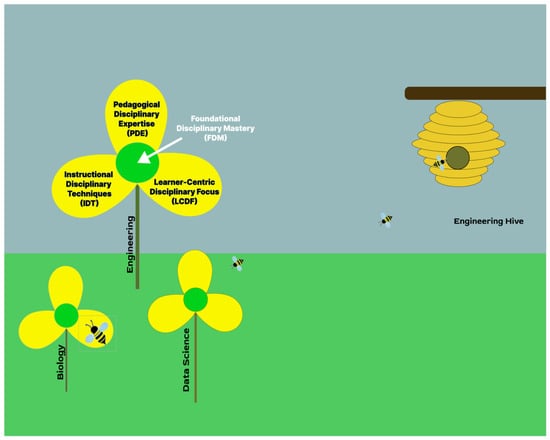
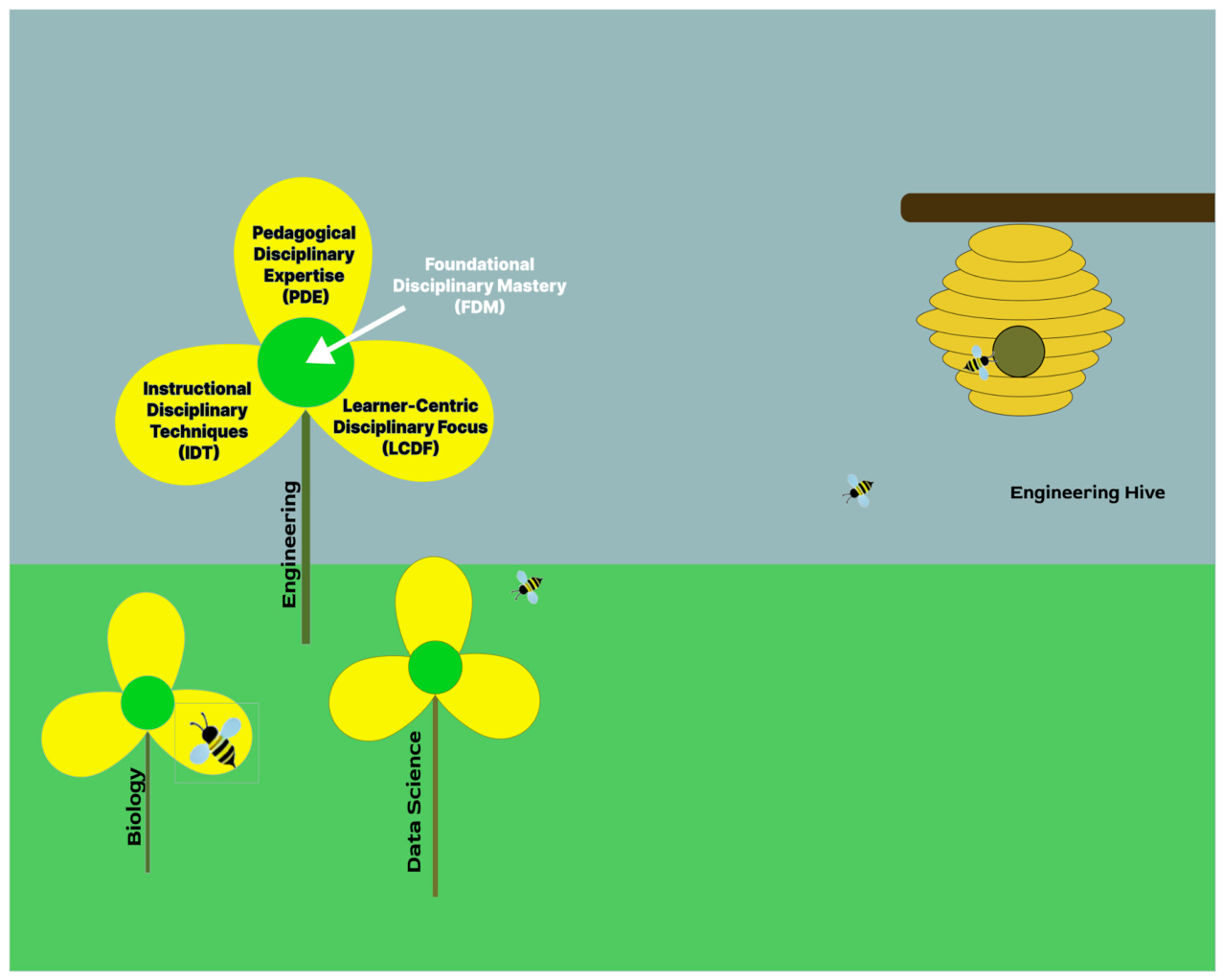
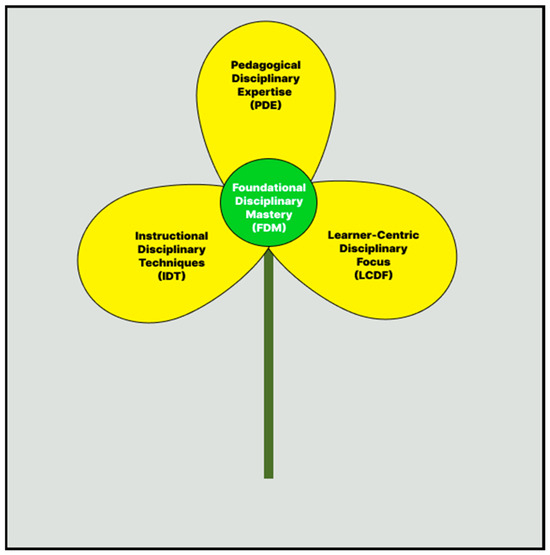
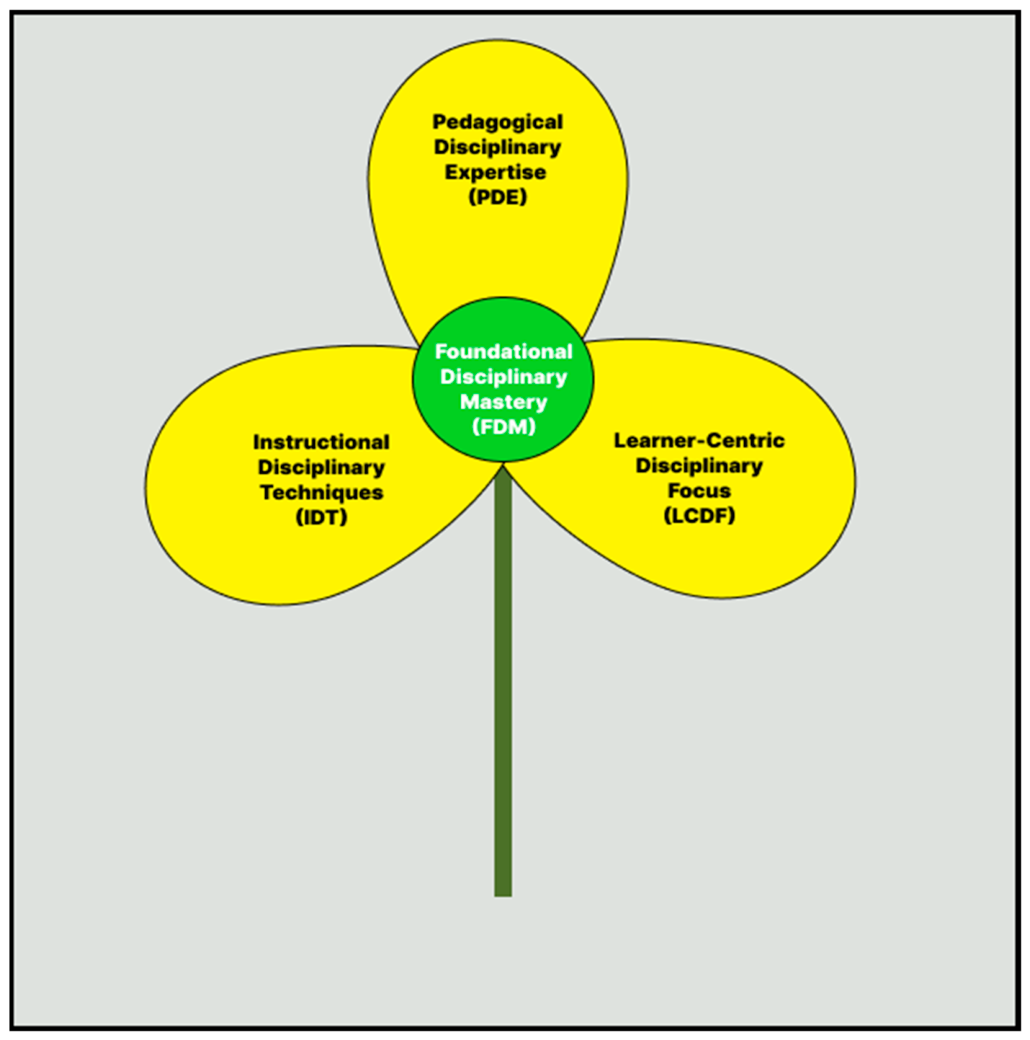

Disclaimer/Publisher’s Note: The statements, opinions and data contained in all publications are solely those of the individual author(s) and contributor(s) and not of MDPI and/or the editor(s). MDPI and/or the editor(s) disclaim responsibility for any injury to people or property resulting from any ideas, methods, instructions or products referred to in the content. |
© 2026 by the authors. Licensee MDPI, Basel, Switzerland. This article is an open access article distributed under the terms and conditions of the Creative Commons Attribution (CC BY) license.