


Abstract
The transition to a circular economy requires professionals to adopt new strategies and a systemic approach to product development. This shift demands continuous learning and the development of new competencies to understand and apply circular economy principles. In this context, innovative educational approaches that foster engagement and lifelong learning (LLL) are essential. Gamification can support this process by enhancing motivation, creativity, problem-solving, and knowledge retention, while interactive tools help learners critically examine and operationalise circular economy principles. This article discusses the design and application of the “Circularity Deck of Cards,” a learning resource developed as part of a European-funded project Be@t, to facilitate the circular design of products and services. The study follows a mixed-methodological approach encompassing three phases: a systematic mapping of international tools and methodological approaches; the conceptual and visual development of the resource; and its implementation and evaluation through a workshop involving undergraduate, master’s, and doctoral students and researchers in fashion design and textile engineering in Portugal. The data were collected using a questionnaire that combined quantitative and qualitative questions, designed to assess the receptiveness to, challenges of, and opportunities arising from gamification in the teaching of circular design. The findings indicate that participants responded positively to the tool, recognising its value as both a pedagogical resource and a professional instrument for promoting sustainability and circularity in the textile and clothing industry. Ultimately, gamification catalyses training students, designers, and industry professionals to address the challenges of circularity, fostering new perspectives on circular design in professional practice.
1. Introduction
When sustainability and circularity are considered within the textile and clothing industry, it becomes evident that existing production and consumption systems require fundamental re-evaluation. The sector represents a significant pillar of the global economy. It plays an essential role in everyday life (Abtew et al., 2025), with textiles accompanying individuals throughout the entire human lifecycle, fulfilling key functions such as protection, decoration, identification, and safety. However, increasing global population levels, combined with increasingly diverse consumer demands, have contributed to a continuous rise in textile production, thereby intensifying the environmental and social impacts associated with the industry (Radev & Marinova, 2023).
Addressing these challenges requires more than technological advancement alone. It also requires the integration of educational and pedagogical approaches within design education, enabling both current and future professionals to effectively engage with the complexity of sustainability and related issues in the field. While many sustainability initiatives focus on policy and industry-level measures, there is growing recognition that the transition towards more sustainable and circular systems also depends on the competencies and practices developed by future professionals, highlighting the importance of education within design and textile disciplines (Wood et al., 2023). In this regard, the European Parliament (Parlamento EU, 2021) has played a significant role in recent years by introducing frameworks and policy measures aligned with the principles of the circular economy, aiming to reduce waste generation and promote the development of more sustainable products and systems.
These concerns, along with the growing urgency to transition towards more sustainable models, are also reflected in recent European research initiatives focused on textile science and technology (Rubik et al., 2024). In this regard, several collaborative projects have sought solutions for the transformation of the textile and clothing sectors, placing strong emphasis on sustainability, circularity, and the upskilling of professionals. In this context, this article aims to present the development of a gamified methodological tool, designed by a multidisciplinary team of researchers as part of a large-scale, funded project dedicated to bioeconomy in the textile industry. The tool was specifically conceived to support the understanding and practical application of circular design principles through a methodology centered on active education models and lifelong learning (LLL).
To enhance the understanding of the developed tool and the methodological process behind its creation, both of which are presented in the following sections, this paper provides a practical discussion of the key concepts that informed the decisions of the development team: gamification as an active approach to design education and LLL as a foundational principle.
Considering the central aim of this article, situated at the intersection of sustainable design education, principles of circularity, innovative pedagogical practices, and participatory methodologies, gamification is identified as an approach capable of enhancing motivation, creativity, and problem-solving skills (Kalogiannakis et al., 2021). These competencies are essential for integrating circular economy principles into products and service design. In the same study, the authors define gamification as the use of game elements, mechanics, design, and game-based thinking. Furthermore, they argue that this approach fosters proactivity, experimentation, and problem-solving, while simultaneously reducing fear and failure in contexts that require decision-making. In addition to this approach, other complementary strategies can contribute to the creation of an active learning environment in both educational and professional contexts within the textile and clothing industry. These include collaborative learning, which promotes group-based work grounded in the sharing of experiences and knowledge, and experiential learning, in which participants’ practical experience is considered as a key factor in the development of strategies and problem-solving processes (Oliveira et al., 2024).
The methodological approach of gamification, as previously discussed, is particularly relevant when associated with teaching practices oriented towards LLL, especially in the context of adult education within the textile and clothing industry. This approach plays a crucial role in enabling professionals to adapt to the transformations and complexities characteristic of the sector (Oliveira et al., 2024), while simultaneously fostering the development of real and impactful sustainability solutions through the integration of academic knowledge and experiential insights derived from workplace contexts. According to Davis et al. (2023), it is important to expand and diversify short courses that support LLL and respond to individual learning pathways. Furthermore, the authors emphasize the need to strengthen the links between design education and vocational training. These recommendations align with the principles set out by UNESCO and Shanghai Open University (2023), which recognizes LLL as essential for developing the competencies required for transitioning towards a more sustainable world. LLL is also identified as a foundational principle for reshaping knowledge within the world of work, enabling the integration of contemporary academic discourse and approaches, particularly those related to technology and the implementation of sustainable models (Davis et al., 2023; UNESCO & Shanghai Open University, 2023). Within the framework of the United Nations Sustainable Development Goals (SDGs) (UNESCO, 2025), these educational approaches contribute to the objectives established under SDG 4—Quality Education, particularly Target 4.3, which promotes equal access to quality technical, vocational, and tertiary education, and Target 4.7, which emphasises the acquisition of the knowledge and skills required to promote sustainable development. By supporting non-formal and lifelong learning opportunities for professionals in the textile and clothing industry, the Circularity Deck of Cards contributes to the development and practical application of knowledge and competencies related to sustainability and circularity.
It is within this approach that the European project is situated, aligning with European frameworks such as the “Micro-Credentials Higher Education Consultation Group” (Shapiro Futures et al., 2020), which provides short educational programs that foster interaction between formal education and labor market requirements. This perspective also reinforces the importance of initiatives that prioritize continuous learning, highlighting the urgent need to upskill the European workforce over the coming decade, as well as to implement new and flexible forms of learning (Davis et al., 2023; World Economic Forum, 2026).
Within this broader educational and industrial context, the Be@t Project—Bioeconomy in the Textile Industry (Be@t, 2025) focuses on educational and industrial development, with the aim of supporting the transition of the textile and clothing industry towards more sustainable and circular practices. By fostering collaboration among research institutions, educational organisations, industry stakeholders, and professionals, the project supports the development and dissemination of knowledge and competencies relevant to the sector’s transition towards sustainability. Its education and capacity-building initiatives create opportunities to connect academic knowledge with professional practice while encouraging interdisciplinary collaboration and the development of practical responses to contemporary industrial challenges. It was within this context that the Circularity Deck of Cards was developed as an educational resource intended to support lifelong learning (LLL) and facilitate the practical application of circularity principles within the textile and clothing industry.
Building on these objectives, the gamified methodological tool “Circularity Deck of Cards” is presented, developed through an exploratory research approach guided by an inductive and creative perspective rooted in design, sustainability, and circularity. The tool originally emerged in a Portuguese context, shaped by specific local needs and conditions, and was subsequently expanded and adapted into an English version to broaden its scope and applicability. The methodological process involved the identification and selection of relevant guiding and inspirational tools, constructing a framework to represent the creative process, and collecting and analyzing empirical data obtained during the project’s training sessions. The questionnaire responses enabled an evaluation of the tool’s applicability and the identification of key challenges and opportunities associated with its use.
2. Research Project Methodology
To promote a learning experience centred on solving real-world problems and laying the foundations for the continuous transformation of knowledge, there was a need to develop a teaching tool. This tool, underpinned by the active methodology characteristic of design education, was conceived and designed with the aim of bridging the gap between academic knowledge in design and the practical realities of the textile and clothing industry. In line with the thinking of Demirbas and Timur Ogut (2020), this interconnection fosters an effective link between theory and practice, contributing directly to the development of professionals capable of responding critically and creatively to contemporary challenges, particularly those related to sustainability and circularity. In this context, the development of the tool was aligned with SDG 4 (UNESCO, 2025), particularly Targets 4.3 and 4.7, by supporting technical and vocational learning opportunities and the development of knowledge and skills related to sustainable development.
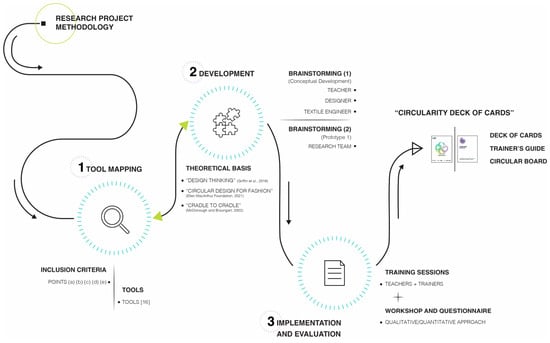
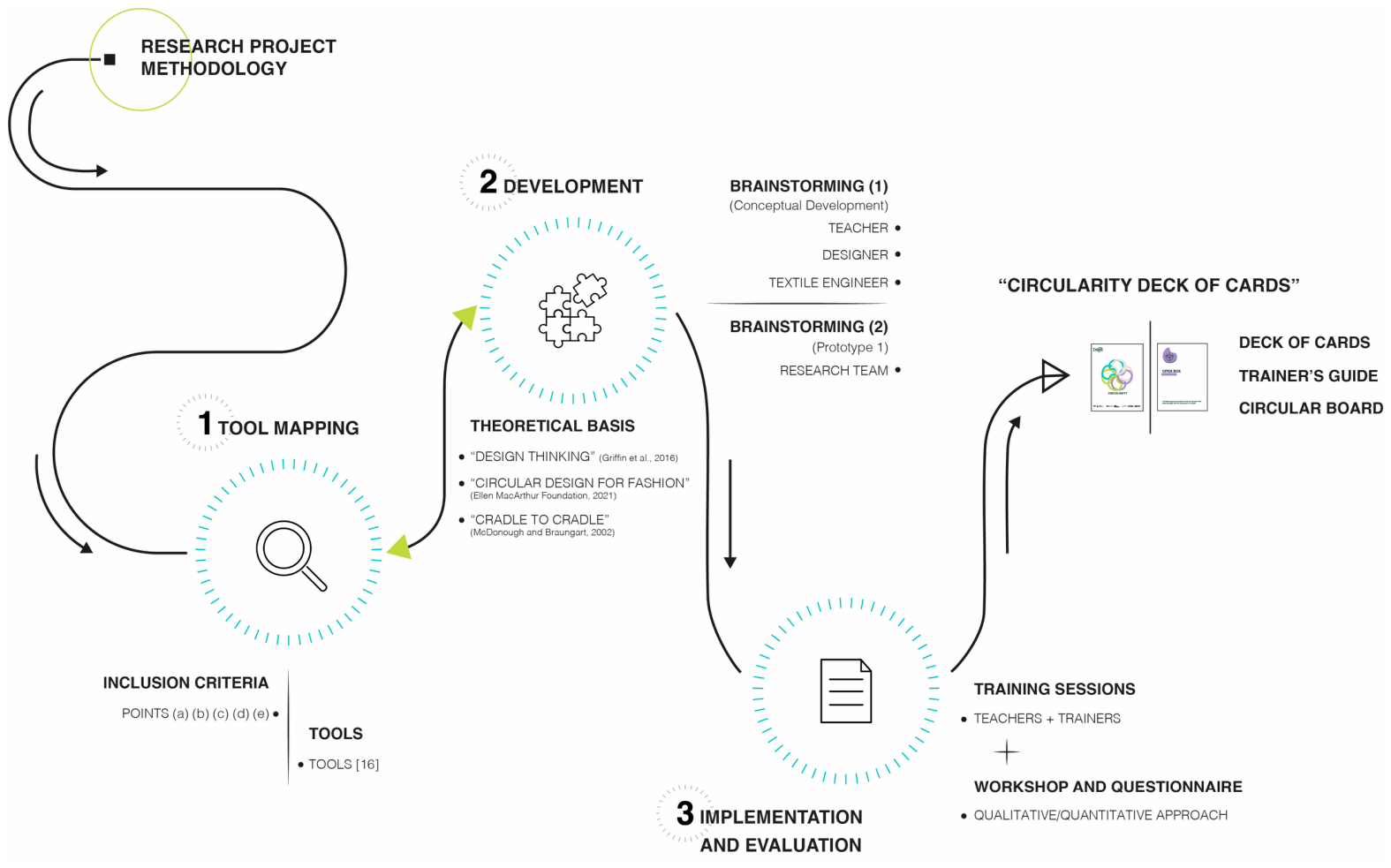
The development process for the “Circularity Deck of Cards” followed a mixed-methods approach, structured into three main phases: the first two were qualitative, while the third was both qualitative and quantitative. These phases also serve as guiding principles for the preparation of this article (Figure 1).
Figure 1.
Research Project Methodology framework (Griffin et al., 2016; Ellen MacArthur Foundation, 2021; McDonough & Braungart, 2002).
2.1. Tool Mapping
The initial phase of this study consisted of a survey of international tools designed to support the teaching of design for sustainability. This preliminary mapping exercise was carried out exclusively online, using the Safari web browser, during October and November 2023. The search process followed the principles of saturation and repetition, with tools being repeatedly identified and reviewed until no substantially new examples emerged. To mitigate algorithmic bias and ensure the impartiality of the search results, an incognito browsing mode was employed throughout the process. The search was guided by individual keyword searches, including: “circular methodologies,” “textile methods”, “active methods design,” “creative learning,” “sustainable education,” “deck of design cards,” “toolbox design,” “tool kits,” and “textile tool kits”. This initial phase resulted in the identification of 20 tools, of which 18 were selected for further analysis (Section 3, Tables 1 and 2). The two tools not selected for further analysis did not correspond to any of the five analytical dimensions established in this study. Following the selection process, the 18 tools were comparatively assessed across five analytical dimensions:
- (a)
- Relevance to the thematic domains of fashion and textile design and/or textile engineering.
- (b)
- Integration of sustainability and circularity principles.
- (c)
- Adoption of active learning methodologies, including gamification and project-based learning.
- (d)
- Multidisciplinary orientation, fostering the convergence of technical, creative, and strategic knowledge.
- (e)
- Demonstration of pedagogical innovation in teaching and learning practices, in association with active and multidisciplinary methodological frameworks.
2.2. Development of Circularity Deck of Cards
In the conceptual development of the Circularity Deck of Cards, a collaborative approach was adopted, integrating theoretical, practical, and professional perspectives. As illustrated in Figure 1, the initial phase (I) enabled the definition of the tool’s structural content and the organisation of the two collaborative stages held in phase (II). The first stage, “Conceptual Development”, involved five professionals with multidisciplinary expertise across education, design, and textile engineering. Participants were individually invited by e-mail to reflect on and evaluate the tool’s conceptual development and to record their observations in a structured evaluation table. The evaluation focused on the texts, content, examples, and card categories presented in Section 3.2. The second stage, “Prototyping”, incorporated the observations provided by the multidisciplinary team. A project-specific team from European-funded project Be@t (2025), comprising seven professionals, was subsequently granted access to the prototype and assessed its overall design. This team included two professionals with expertise in graphic design, communication and marketing; three professionals in education; and two professionals with interdisciplinary expertise spanning design, engineering, and education. The assessment considered factors such as card dimensions, the suitability of the paper and printing finish, color selection, font size, the visual relationship between the tool and the project’s identity, and its alignment with the project’s academic and educational requirements.
This gradual and highly collaborative development culminated in the creation of the Circularity Deck of Cards, a tool grounded in teaching methodologies focused on creativity, sustainability and circularity, such as “Design Thinking” (Griffin et al., 2016), “Circular Design for Fashion”(Ellen MacArthur Foundation, 2021) and “Cradle to Cradle” (McDonough & Braungart, 2002).
Furthermore, in line with the thinking of Wölfel and Merritt (Wölfel & Merritt, 2013) and Legaard et al. (Legaard et al., 2025), the physical nature of the cards, their simplicity, and ease of use reinforce the suitability of the Circularity Deck of Cards as an effective teaching tool. In recognition of the fact that playing cards are a widely used teaching aid in the field of design, as evidenced by the analysis carried out, the tool developed was produced in printed format.
2.3. Research Project Methodology: Implementation and Evaluation
Although textile design and engineering curricula address issues pertaining to sustainability and the future of the textile and clothing industry, both students and professionals must apply their knowledge beyond formal curricular frameworks, thereby equipping themselves to navigate the emerging paradigms and challenges surrounding sustainability and circularity (Davis & Dubberly, 2023).
Within this complementary training framework, active methodological approaches, such as the Circularity Deck of Cards, play a central role. The tool was initially introduced to teachers and trainers to familiarize them with this active methodology and encourage its potential adoption in classroom settings, professional training programs, and LLL contexts. These engagements provided the foundational understanding necessary for participants to evaluate the potential of the resource and consider its integration into their own teaching, professional training, and LLL practices.
Subsequently, to broaden the scope of the tool’s validation, the implementation and evaluation process was structured in two phases. The first phase consisted of training sessions held with teachers and trainers involved in the project, with the aim not only of presenting the Circularity Deck of Cards but also of gathering preliminary feedback on its acceptance and relevance amongst these professionals. The second phase comprised a four-hour workshop held in April 2026, with the participation of eight undergraduate, master’s, and doctoral students in fashion design from the University of Minho in Guimarães, in northern Portugal, and one researcher in the field of textile engineering, recruited through voluntary registration. This group was deliberately selected on the grounds that its members constitute the primary end-users of the tool, encompassing the academic and professional profiles for which the “Circularity Deck of Cards” was originally conceived.
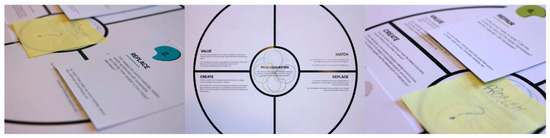
During the workshop, participants were organized into three groups to engage directly with the “Circularity Deck of Cards” and its associated circular board. The activity was structured as a practical, collaborative exercise in which participants used the tool to explore sustainability and circularity challenges and develop possible responses through the card-based methodology. The session was facilitated by the research team, who introduced the tool, explained the activity and its procedures, and remained available throughout the exercise to clarify questions and support the participants’ interaction with the methodology. The facilitation was intended to guide the process without directing the content or solutions developed by the participants.
With respect to this latter group, a questionnaire was administered at the end of the session to examine participants’ interaction with the tool and assess its strategic and creative value, as well as its relevance in addressing professional challenges related to the development of sustainable and circular products.
To structure the analysis and interpretation of the data collected through the evaluation questionnaire, the results were organized into five thematic categories, defined in accordance with the objectives of the implementation and evaluation phases. The responses to the open-ended questions were reviewed and organized according to these five thematic categories, with recurring ideas and common points of feedback identified within each category. Selected participant quotations were subsequently used to illustrate the main points emerging from these responses. This categorization provides a coherent and systematic framework for the presentation of the findings, thereby supporting their subsequent interpretation.
The first category, “General Workshop Assessment,” encompasses questions related to participants’ overall perceptions of the content covered and their experience throughout the workshop.
The second category, “The Impact of the ‘Circularity Deck of Cards’ on Learning,” consolidates the results derived from questions designed to examine the tool’s contribution to the development of knowledge on sustainability and circularity in the textile and clothing industry, as well as the suitability of the tool’s content.
The third category, “Educational Assessment of the Resource,” groups questions that evaluate the tool’s relevance as reported through the user experience of workshop participants.
The fourth category, “Professional Applicability,” encompasses questions focused on participants’ perceptions regarding the potential application of the tool within a professional context.
The fifth and final category, “Feedback and Improvements,” collates suggestions, observations, and proposals for enhancement, pertaining not only to the tool itself but also to the activities carried out during the workshop.
Taken together, these five categories provide a structured and comprehensive evaluative framework, enabling a rigorous assessment of the Circularity Deck of Cards across its educational, professional, and methodological dimensions and ultimately informing future iterations of the tool.
3. Results and Discussion
This section presents and critically discusses the findings obtained through the methodological framework outlined above, with the overarching aim of addressing the research objectives, most notably, the development and evaluation of the “Circularity Deck of Cards” as a pedagogical instrument applied to LLL in the textile and clothing industry. The discussion is structured across three interconnected dimensions: I. Tool Mapping, which surveys and analyses existing tools and active methodological approaches; II. Development of the Circularity Deck of Cards, which details the conceptual and visual development of the resource; and III. Implementation and Evaluation, which applies the analytical categories established and presented in the preceding section while examining the tool’s performance, considering workshop participants’ responses. Each stage is examined in relation to the theoretical foundations established in the introduction, thereby enabling a rigorous and contextualized interpretation of the results.
3.1. Tool Mapping
Based on the analytical dimensions presented above, Table 1 summarizes the educational resources identified through the mapping process, comprising gamified tools, educational platforms, websites, and teaching methodologies related to sustainability, circularity, and design education. Spanning from 1996 to 2022, these initiatives illustrate the progressive evolution of educational resources from sustainability-oriented design support towards increasingly collaborative, participatory, and card-based approaches. This mapping provides the methodological basis for identifying educational trends and, more importantly, the existing gap that informed the development of the proposed tool.
The analysis showed that most initiatives are firmly rooted in the field of design, confirming that educational resources addressing sustainability have predominantly evolved within design practice rather than textile engineering or textile-specific education.
Among the mapped initiatives, “The TEN—Textile Environment Design Toolbox” (Earley & Politowicz, 1996) is one of the few resources explicitly related to textile and fashion design, presenting a gamified approach to support sustainable product development. This finding highlights the relatively limited number of educational resources specifically developed for the textile and clothing sector despite its increasing demand for circular competencies.
Regarding sustainability, the topic is consistently addressed across all proposals, although through different perspectives. “Sustainable Design Cards” (Design School Kolding, 2018) and “Circular Design” (Franconi, 2016) adopt broader strategic approaches to sustainable design, whereas “Anatomy of Action” (UN Environment & UnSchool, 2019) focuses on behavioral change and sustainable lifestyles. Likewise, “Design Play Cards” (Acaroglu, 2011) contributes by framing creative problem-solving through a sustainability lens, encouraging systems thinking and eco-design awareness through card-based activities. Circularity is similarly integrated into the mapped methodologies, either through conceptual frameworks, applied tools, or educational resources supporting the transition from linear to circular production models. In this respect, “The Circular Classroom” (Walki Group Oy, 2018) and the “Ellen MacArthur Foundation” (Ellen MacArthur Foundation, 2021) are particularly noteworthy. While the former provides practical educational resources suitable for different educational contexts, the latter offers internationally recognized frameworks, case studies, and educational materials supporting circular design throughout the textile and clothing value chain.
Table 1.
Overview of the educational resources mapped in this study.


Regarding the use of active methodologies, all initiatives incorporate explicit participatory approaches through gamification, challenge kits, project-based learning, simulations, or collaborative workshops. This widespread adoption reflects the growing importance of learner-centered methodologies capable of promoting experiential learning and collaborative problem-solving. In this context, “MethodKit” (Möller, 2012) and “Learning Loop Card Decks” (Learning Loop, 2007) are particularly noteworthy for their structured card-based facilitation systems, which support communication, team alignment, and shared understanding across educational and professional settings. Similarly, the “21st Century Business Skills Card Decks” (Novalead Limited, 2022) demonstrate the applicability of modular card-based methodologies for workplace learning and professional upskilling. A multidisciplinary perspective is also evident across the surveyed initiatives, integrating design, sustainability, business, communication, engineering, and innovation while promoting pedagogical approaches aligned with the Sustainable Development Goals (SDGs).
To further examine the methodological scope of these initiatives, Table 2 compares each resource according to the five analytical dimensions established in this study: (A) textile design and/or textile engineering; (B) sustainability and circularity; (C) active learning methodologies; (D) multidisciplinary approach; and (E) pedagogical innovation.
Table 2.
Comparative assessment of the mapped educational resources according to the analytical dimensions adopted in the methodology approach.
The comparative analysis demonstrates that sustainability, circularity, active learning methodologies, multidisciplinary approaches, and pedagogical innovation are represented to varying degrees across the surveyed initiatives. Notably, five of the analyzed resources fulfil all five analytical dimensions established in this study. However, these initiatives were primarily developed as general educational or professional design resources rather than as pedagogical tools explicitly intended for LLL within the textile and clothing industry. Although they may be successfully adapted to LLL contexts, lifelong learning does not constitute their central educational purpose. Consequently, the identified gap lies not in the absence of these methodological dimensions, but in the lack of an integrated educational resource specifically conceived to support LLL through the combination of textile-specific knowledge, sustainability, circularity, active learning, and multidisciplinary collaboration.
This identified gap provided the conceptual and methodological rationale for developing the Circularity Deck of Cards, conceived as an active gamified methodology that bridges academic teaching and industrial practice while promoting systemic learning focused on sustainability and circularity. Furthermore, it is important to note that the most recent publicly available resource directly addressing some of the analytical dimensions established in this study is the “21st Century Business Skills Card Decks” (Novalead Limited, 2022), although it does not fulfil all five dimensions, particularly Dimensions A and B. This reinforces both the relevance and timeliness of developing new educational methodologies capable of responding to the contemporary challenges of the textile and clothing industry.
This analysis informed the design of the Circularity Deck of Cards, guiding the development of its conceptual, textual, and visual structure, presented in the following section.
3.2. Development of Circularity Deck of Cards
The Circularity Deck of Cards is a tool developed based on empirical knowledge in design, focusing on circularity and sustainability. The main aim of this tool is to promote the circular development of new ideas, problem-solving, and the redesign of products, services, materials, and components.
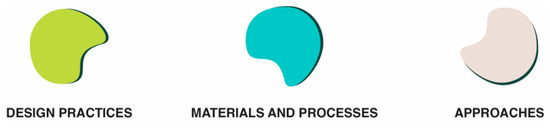
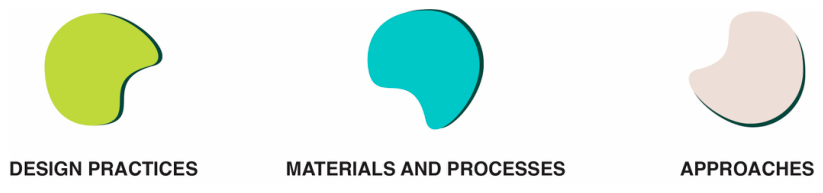
During the development of the tool, several methodological implications were identified which require creative and carefully considered solutions to ensure the conceptual coherence, applicability, and effectiveness of the resource. One of the main implications is the need to integrate, clearly and concisely, the various concepts from the fields of design, textiles, sustainability, and circularity. Consequently, during the first stage: “Conceptual Development”, three distinct sets of key strategies were defined and refined (Figure 2). These key strategies are based on conceptual explanations, suggestions, and guiding examples that were studied and analysed in accordance with the theoretical framework “Design Thinking” (Griffin et al., 2016), “Circular Design for Fashion” (Ellen MacArthur Foundation, 2021), and “Cradle to Cradle” (McDonough & Braungart, 2002).
Figure 2.
Three Distinct Sets of Key Strategies.
In this stage of the study, sessions with professionals, the challenge lay in simultaneously condensing both the broad underlying interdisciplinary theoretical framework and the entirety of the content deemed essential, whilst ensuring that the material remained comprehensible, accessible and faithful to the strategy’s fundamental principles. Many of the terms used in the field of circularity and sustainability can have different meanings, depending on the user’s vocabulary, their academic background or even their cultural context. This realisation led the research team to seek to adopt clear and objective terminology, accompanied, wherever possible, by examples or additional explanations, to minimise interpretative ambiguities. Consequently, the need to incorporate these elements indirectly contributed to the definition of the graphic language of the chart, discussed within the second stage: Prototyping Phase. In this regard, each key strategy consists of an introductory chart and a set of constituent charts. Each of these constituent cards features a title, a concise definition, and, in a smaller font, an example of its application. The cards that make up the strategy also have an identification number, as well as a specific shape and colour.
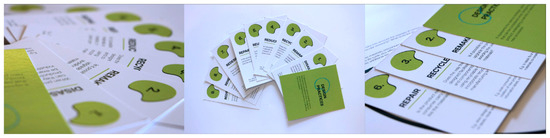
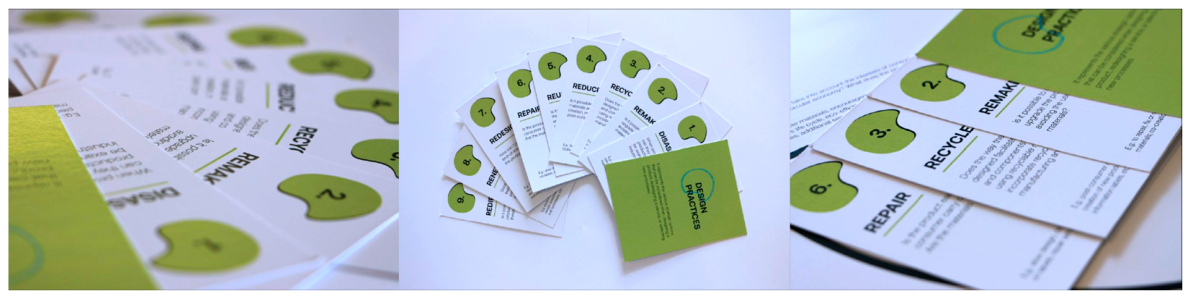
Firstly, regarding “Design Practices”, it is important to note that this set offers a range of strategic possibilities to be considered when developing a product, redesigning it, providing a service, or selecting new processes. It therefore comprises a range of deliberate options to integrate circularity principles from the earliest stages of development. These strategic options include: “disassemble”, “remake”, “recycle”, “reduce”, “reuse”, “repair”, “redesign”, “renew”, and “redirect” (Figure 3).
Figure 3.
“Design Practices” Cards.
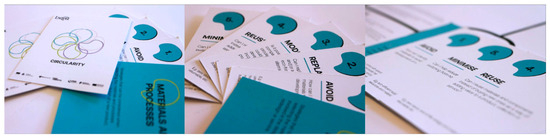
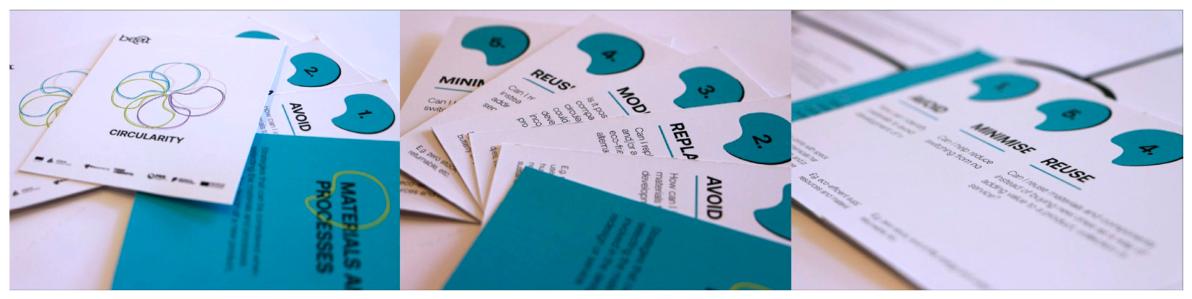
About “Materials and Processes”, this set offers a range of strategic guidelines to consider when selecting the materials and processes involved in the design of a new product, a redesign, or the provision of a service. The relevance of these guidelines lies in the recognition that the selection of production methods is one of the most critical stages for incorporating principles of circularity and sustainability. Thus, these strategies include: “avoid”, “replace”, “modify”, “reuse”, and “minimize” (Figure 4).
Figure 4.
“Materials and Processes” Cards.
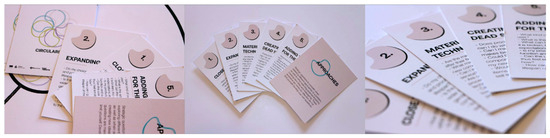
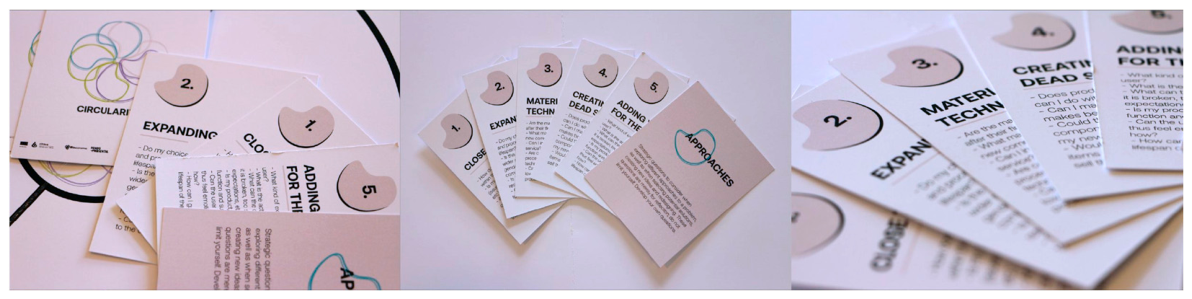
Regarding “Approaches”, this set proposes a range of reflective questions that invite the user to explore different perspectives on how to tackle the problem, focusing on the selection of options for resolution, creation, and redesign. The reflections include: “closing the circle”, “expanding use”, “materials, technologies”, “creating value/dead stock”, and “adding value for the user” (Figure 5).
Figure 5.
“Approaches” Cards.
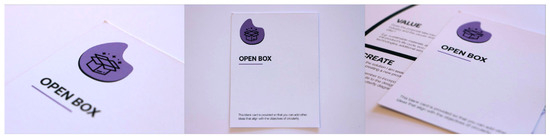
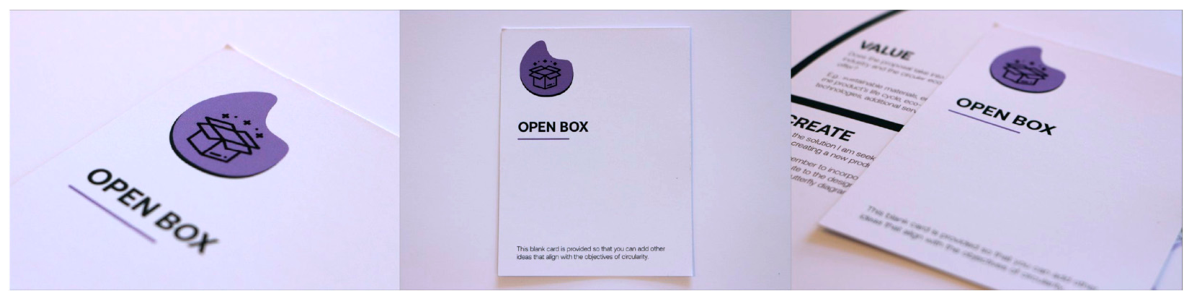
Finally, to round off these four sets of key strategies, we have the “Open Box”, a blank card designed to allow for the addition of new ideas, strategies, questions, and solutions. This card makes it easier for each participant to include contexts that encompass both academic and/or industrial approaches (Figure 6).
Figure 6.
“Open Box” Card.
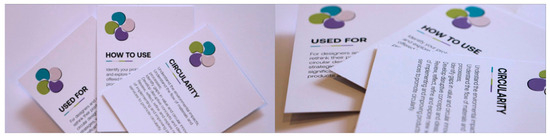
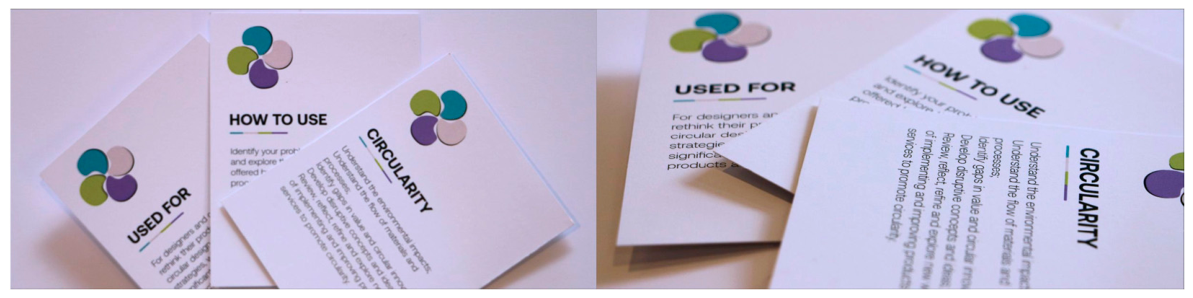
To complete the 26-card deck, there are still three cards left to introduce. The cards “Circularity”, “Used For”, and “How to Use” are designed to explain how this tool works in general (Figure 7).
Figure 7.
“Circularity”, “Used For” and “How to Use” Cards.
As shown in the figures presented earlier, this tool consists of a deck of 26 cards, each card provides a brief explanation of its content, accompanied by illustrative examples that demonstrate possible applications. By linking the different sets of key strategies described above, the cards help to establish connections between them, thereby reinforcing the feasibility of the solutions to be developed. The inherent versatility of this tool allows the trainer to adapt it to the educational needs and specific context of the participants.
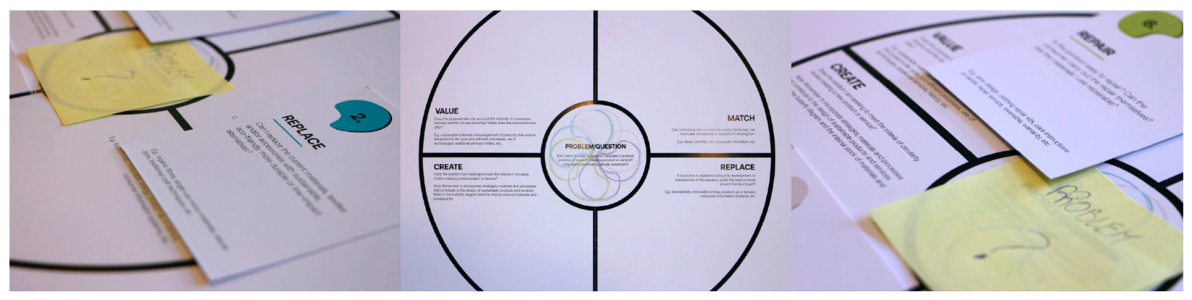
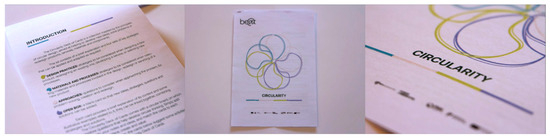
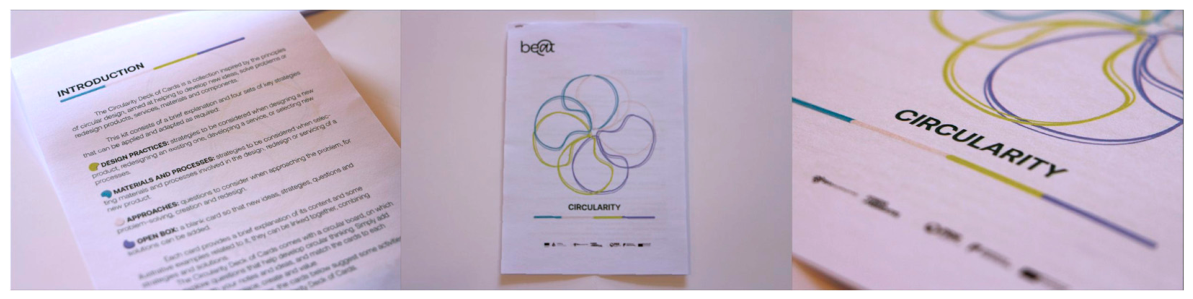
This educational resource is accompanied by a circular board and a trainer’s manual. The circular board (Figure 8) features, initially, an inner circle where the problem is to be placed; and secondly, a set of questions organized into four distinct areas, “value” “match”, “create” and “replace”, which are designed to foster critical thinking about circularity and to assist in the development of viable solutions to complex and relevant problems in the textile and clothing industry. The trainer’s manual (Figure 9) serves as a support tool for implementing the Circularity Deck of Cards; it not only provides a detailed description of the tool but also offers a set of activities that can be carried out using the “Circularity Deck of Cards”.
Figure 8.
Circular Board.
Figure 9.
Trainer’s Guide.
Through this methodology, it is hoped that users will develop skills related to sustainability and the circular economy, both in theory and in practice. These educational objectives cover two areas: the academic and the professional. As highlighted by Davis and Dubberly (2023), it is essential to adopt educational approaches capable of addressing both the practical and professional dimensions of the contemporary context, whilst also addressing theoretical issues in the field of design. In this regard, the “Circularity Deck of Cards” is characterized by its ability to meet this need for versatility. Taken together, these learning objectives demonstrate the educational relevance and adaptability of the tool, not only as a training aid but also as a means of promoting deeper critical thinking and sustainable innovation within the field of textile design.
3.3. Implementation and Evaluation
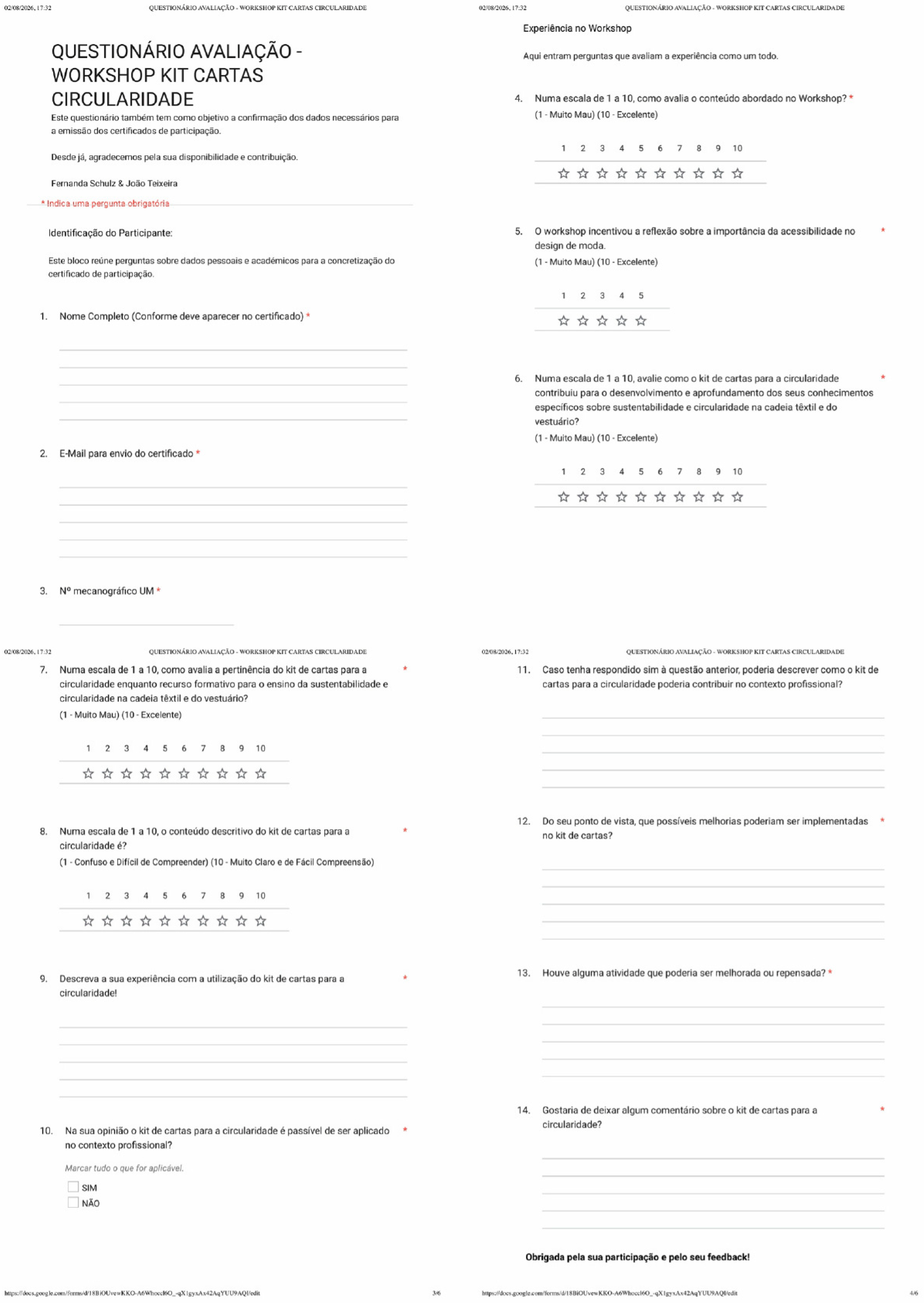
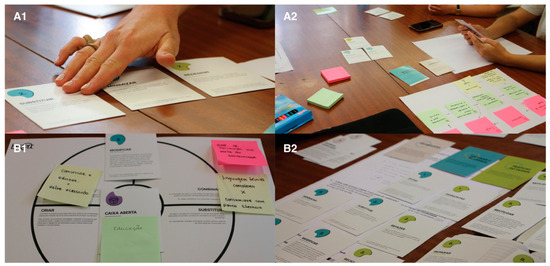
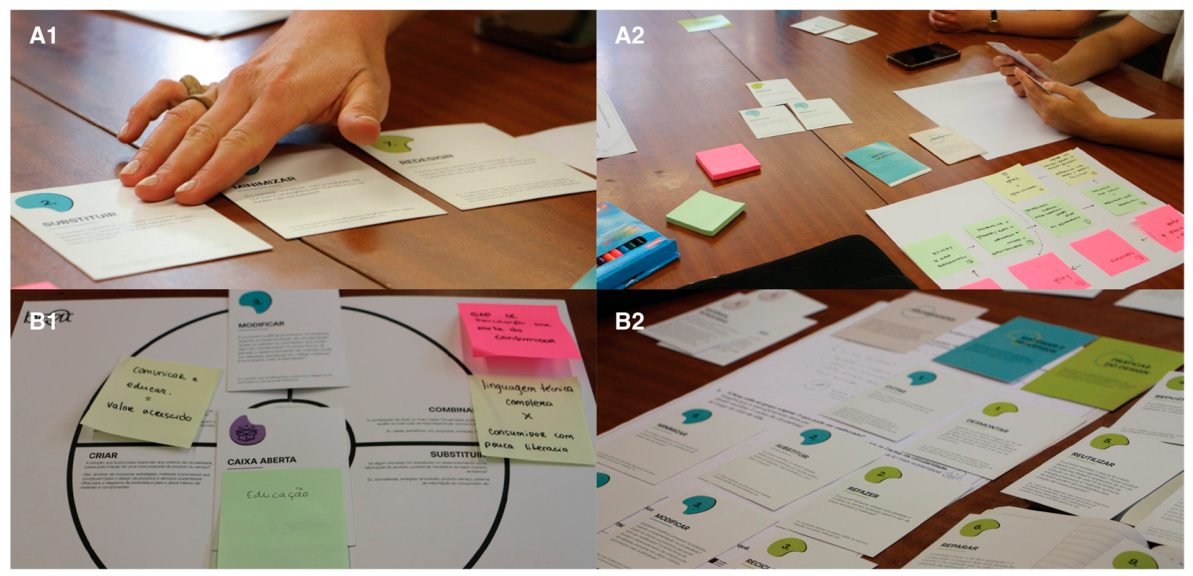
To evaluate the development of the proposed tool, a questionnaire in Portuguese (Appendix A) was created using Google Forms and completed by the nine workshop participants, as previously mentioned in the methodology section. Before the questionnaire, the workshop provided participants with a hands-on experience of the “Circularity Deck of Cards” in an academic setting, as illustrated in Figure 10, which documents the session conducted in April 2026 at the University of Minho, Guimarães, Portugal. The images capture participants actively engaging with the card sets and the circular board, offering a visual account of the tool’s application in practice. The results of the questionnaire (Appendix B) are presented below, according to the five different areas.
Figure 10.
Overview of the workshop session conducted in April 2026 at the University of Minho, Guimarães, Portugal: (A1,A2) participants engaging with the “Circularity Deck of Cards”; (B1,B2) group activity using the circular board.
General Workshop Assessment (Q1; Q2): The results of the first two questions indicate that participants responded positively to the overall content of the workshop and to the extent to which the workshop encouraged reflection on the importance of accessibility in fashion design. Both items achieved the maximum score (Q1: Average = 10, Range = 10/10; Q2: Average = 10, Range = 10/10), reflecting a highly positive assessment of these aspects. Graphs illustrating the responses to all quantitative questions are available in Appendix B.
The Impact of the “Circular Deck of Cards” on Learning (Q3; Q5): The responses to this category reveal that participants perceived the tool as a meaningful contributor to their understanding of sustainability and circularity within the textile and clothing industry. The quantitative results (Q3: Average = 10; Q5: Average = 9.67, Range = 8/10) indicate a strong alignment between the tool’s content and participants’ learning expectations, with most respondents affirming that the “Circularity Deck of Cards” was perceived as supporting the development of knowledge in these areas.
Educational Assessment of the Resource (Q4; Q6): When invited to describe their experience with the tool, participants offered consistently positive feedback, underscoring its relevance as both an academic and professional resource (Q4: Average = 10, Range = 10/10). Several respondents highlighted the tool’s accessibility and clarity: one participant noted that it “allowed me to see the nuances of circular fashion more clearly,” while another described it as “a well-thought-out tool for the proposed methodology, easy to use, simple, and straightforward.” The gamified format was frequently referenced as a key strength, with participants describing the experience as “fun,” “enriching,” and “different from conventional problem-solving approaches.” One respondent, a fashion design student, noted that the workshop allowed them to “learn many new things” and that they “would undoubtedly repeat the experience.” Notably, one participant, a researcher, explicitly stated their intention to implement the tool in their own teaching practice, indicating its perceived potential for adoption in LLL and professional training contexts.
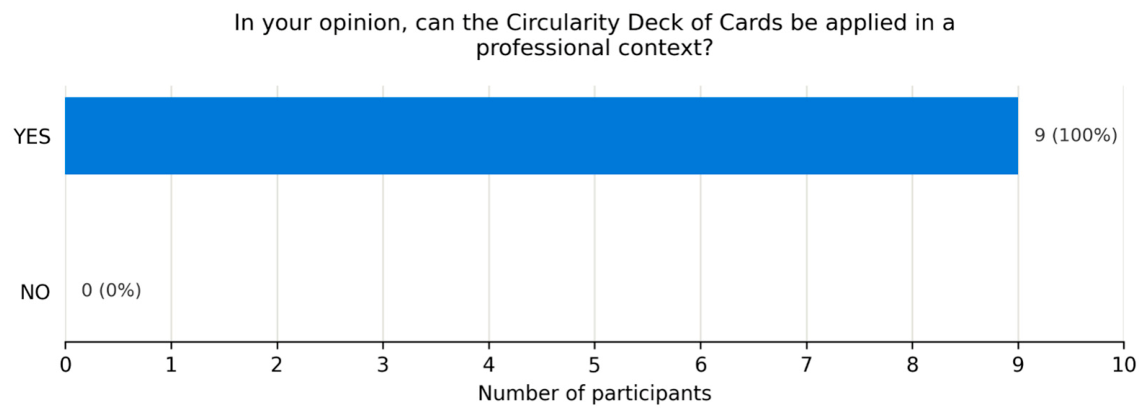
Professional Applicability (Q7; Q8): A significant proportion of participants indicated that they could envisage the application of the “Circularity Deck of Cards” in a professional context (Q7: All the nine participants answered “yes” to the question: In your opinion, can the circularity deck of cards be used in a professional context?). Among those who elaborated on this perception, responses pointed to the tool’s perceived potential as a brainstorming instrument for the development of sustainable and circular solutions within organizations. One participant described the cards as a “visual tool that guides the resolution of possible improvement points within the business ecosystem, serving as a transversal axis understandable by all team members.” Others highlighted applications in internal training, team collaboration, and the promotion of continuous questioning of organizational processes. These responses suggest that the tool may have potential for use beyond academic settings, particularly in corporate upskilling and continuing professional development initiatives.
Feedback and Improvements (Q9; Q10; Q11): Overall, participants expressed high levels of satisfaction with both the tool and the workshop activities, with the majority indicating that no significant improvements were necessary. When specific suggestions were offered, they pointed to minor enhancements rather than structural changes: one respondent proposed the addition of cards addressing communication strategies, while another suggested that the language and number of cards could be simplified for audiences with no background in fashion, such as younger participants from non-design disciplines. One respondent offered an innovative material suggestion, proposing that the cards be produced on textile substrates, a proposal that aligns conceptually with the tool’s focus on the textile and clothing industry. In their closing remarks, participants reinforced the tool’s broader relevance: one described it as “a methodology that can be adapted to other contexts,” while another emphasized its potential to “help many companies and people seek increasingly sustainable processes and systems.” These responses collectively indicate that the “Circularity Deck of Cards” was well received as a pedagogical resource and that its core structure and content were considered appropriate for the target audience, while also highlighting specific areas for iterative refinement in future versions of the tool.
Together, these findings suggest that the “Circularity Deck of Cards” was well received as a pedagogical resource, with its core structure and content considered appropriate for the target audience, while also highlighting specific areas for iterative refinement in future versions of the tool.
Beyond the immediate workshop context, in a higher education setting, the pedagogical innovation of the tool lies in its potential to facilitate the conceptual application of theoretical approaches to sustainability and circularity, as explored across multiple disciplines, and to support students in developing solutions to real-world problems in a creative, strategic, sustainable, and multidisciplinary manner, tailored to the actual needs of the textile and clothing industry. Within this same multidisciplinary educational context, the “Circularity Deck of Cards”, when combined with other active and participatory teaching methods, as described in previous research (Oliveira et al., 2024), may support students’ professional development by broadening opportunities to make connections between different fields and industry sectors, thereby potentially enabling them to better address contemporary complexities. As argued by Davis et al. (2023), Jiang et al. (2020), and Kalogiannakis et al. (2021), students need to develop a close connection with the real world and its complexities, and methodological approaches such as the one proposed in this research may represent a strategic approach for supporting these dynamics.
Regarding the use of the tool by textile and clothing industry professionals in contexts of continuing professional development and training workshops, participants’ responses indicate considerable potential for its use in terms of updating theoretical concepts relating to sustainability, circularity, strategies, innovation, and the development of critical thinking. This perceived potential is supported by the fact that the tool is structured around an easily recognisable gamified logic, drawing on common games present in everyday social life from childhood onwards, as discussed by Wölfel and Merritt (2013) and Legaard et al. (2025). In addition, the personal and professional context of each user may reinforce its adaptability, as the tool was designed to support the development and application of skills acquired by participants in their various contexts: professional, educational, academic, and social environments.
4. Key Findings and Implications
This section synthesizes the key contributions of the “Circularity Deck of Cards” across the three dimensions examined in this study: tool mapping, tool development, and implementation and evaluation, situating the findings within the broader theoretical framework discussed in the introduction and addressing their educational, conceptual, and methodological implications.
The tool mapping exercise revealed a significant gap in the existing landscape of active methodological resources: while a growing number of card-based and gamified tools have been developed across design, sustainability, and business education since the late 1990s, none comprehensively addressed the convergence of textile design, textile engineering, circularity, and LLL within a single pedagogical instrument. This finding provided the foundational rationale for the development of the “Circularity Deck of Cards” and confirms the timeliness of its contribution to the field.
With respect to the gamification dimension of the proposed tool, the findings align with Kalogiannakis et al. (2021), who argue that gamification increases participant engagement and facilitates a more effective and indirect approach to teaching. By drawing on the logic of familiar card-based games, a format widely recognized from everyday social life, as discussed by Wölfel and Merritt (2013) and Legaard et al. (2025), the tool contextualizes complex and contemporary challenges related to sustainability and circularity within an accessible and dynamic framework. The workshop results corroborate this observation: participants consistently described the experience as engaging, enriching, and conducive to new ways of thinking about circular design problems. Furthermore, the proposed methodological structure was found to favor collaborative pedagogical practice, promoting reflective thinking oriented toward the development of circular textile products and services.
The implementation and evaluation phase further substantiated the tool’s relevance across both academic and professional dimensions. The strong alignment between the tool’s content and participants’ learning expectations, combined with the explicit willingness of a researcher participant to adopt the resource in their own practice, suggests that the “Circularity Deck of Cards” effectively bridges the gap between formal design education and the demands of LLL, as theorized by Davis and Dubberly (2023) and UNESCO and Shanghai Open University (2023). This finding is particularly significant considering the tool’s original conception as a resource for LLL in the textile and clothing industry, confirming that its pedagogical design resonates with both academic and professional end-users. The feedback collected further reveals that the tool’s core architecture is considered sound by its target audience, with improvement suggestions concentrated on content expansion and accessibility rather than structural redesign, an indication of conceptual maturity that supports its readiness for broader dissemination. These findings collectively reinforce the argument advanced by Demirbas and Timur Ogut (2020) that effective pedagogical tools must establish a meaningful connection between theoretical knowledge and real-world professional practice. As acceptance of interactive and participatory methodologies may be influenced by the predominance of traditional teaching approaches in certain educational contexts, the gamified structure of the “Circularity Deck of Cards” is positioned as a strategic and accessible alternative, one that is grounded in empirical evidence and responsive to the evolving demands of sustainability education in the textile and clothing sector.
Nevertheless, despite the contributions identified, it is important to acknowledge certain limitations of this research. Firstly, the implementation and evaluation of the Circularity Deck of Cards took place within a single institutional context, as the workshop involved participants exclusively from the University of Minho, which limits the possibility of generalizing the results to other academic and institutional contexts. Secondly, the sample used, comprising just nine participants, is small, which highlights the need to increase both the number and diversity of participants. Moreover, the immediate post-workshop self-report design may have been influenced by novelty and social-desirability effects, as participants evaluated the tool immediately after their first experience with it and were aware of its development context. The evaluation also relied primarily on participants’ self-reported perceptions and did not include objective measures of learning, skill development, or behavioural change. Finally, this study reports only on an initial phase of implementation and evaluation and therefore does not provide evidence regarding the long-term use of the resource. Further research involving repeated or longitudinal assessment and objective outcome measures would therefore be necessary to examine the sustained educational and professional relevance of the tool.
5. Conclusions and Future Work
The adoption of gamification as a creative approach was perceived by participants as supporting engagement and active participation with the “Circularity Deck of Cards”. Furthermore, the use of such active methodologies may support the development of essential skills, such as creativity, critical thinking, and problem-solving, which are particularly relevant to the contemporary challenges faced by the textile industry. This aligns with Kalogiannakis et al. (2021) and Meyer and Norman’s (2020) argument that such competencies are crucial for preparing designers to meet emerging industry demands.
Moreover, the “Circularity Deck of Cards” is conceptually aligned with SDG 4—Quality Education for All (UNESCO, 2025) and has the potential to support inclusive LLL opportunities. This initiative fits within the emerging trends in education and vocational training, which, in line with Davis et al. (2023), offer flexible, accessible, and market-relevant educational alternatives. This is precisely exemplified by the project underpinning this study, which was designed to provide accessible education and practical knowledge for professionals in the textile and clothing industry.
A key distinguishing feature of the tool is its ability to integrate theory and practice, formal education and professional experience, through its development by a multidisciplinary design team. Unlike other tools reviewed, this one offers a synthesis of the theoretical themes of circularity with direct application to the textile and apparel sector, addressing an identified methodological gap within the European context. It is important to note that methodological tools tailored to the specific needs of designers are essential, particularly given that they face complex networks of interdependencies in their professional environments. Accordingly, the role of the designer in this new work context transcends the traditional maxim “form follows function” (Davis & Dubberly, 2023), evolving to encompass mediation between natural, technical, and social systems to create sustainable and circular solutions for the textile and clothing industry. The tool presented in this article was perceived by participants as a useful resource for supporting critical reflection and the explorations of skills aligned with the principles of circularity.
In terms of future developments, several points raised in the evaluation survey were considered, leading to an assessment of the possibility of further developing and broadening the potential applicability of this resource. Among the improvements suggested by participants, the addition of cards specifically addressing the communication of sustainability was identified as a relevant direction for future iterations of the tool. As highlighted in the report published by the Portuguese Observatory on Disability and Human Rights (Observatório da Deficiência e Direitos Humanos, 2024), there are currently 4063 students with disabilities in higher education, representing an 8.3% increase compared to the previous year. Therefore, the inclusion of accessibility enhancements is considered imperative for the future development of the tool, such as the incorporation of a braille version, with the aim of supporting its potential use among users with visual impairments. Finally, these proposed developments require further research and interactive evaluation, including quantitative monitoring over time and the assessment of those involved, to examine the tool’s relevance and potential applicability for professionals in the textile and clothing industry. These considerations highlight the need to continue and expand the research through a new phase more closely connected to the textile and clothing industry and supported by an interdisciplinary team comprising education professionals, researchers, and industry representatives. This phase should include further testing and workshops involving a larger and more diverse group of professionals from the textile and clothing industry to evaluate the tool’s relevance, applicability, and potential contribution to professional practice. Its implementation will require an extended timeframe, as it entails the adoption of new research approaches and the adaptation of the resource to address specific accessibility and social inclusion needs. Such an approach would enable the tool to respond more effectively to the lifelong learning (LLL) needs of professionals across the textile and clothing value chain while fostering dialogue and supporting the development of practical solutions for circularity and sustainability. Achieving these objectives will require sustained funding and collaborative partnerships among research institutions, educational organisations, industry stakeholders, and companies, thereby translating the principles and objectives of circularity into practice.
Author Contributions
Conceptualization and methodology F.E.S., J.P.T., I.C. and J.C.; software, J.P.T.; validation, F.E.S., J.P.T., I.C. and J.C.; investigation, F.E.S. and J.P.T.; writing—original draft preparation, F.E.S. and J.P.T.; writing—review and editing, F.E.S., J.P.T., I.C. and J.C.; supervision, A.D.M. and J.C., funding acquisition F.E.S., J.P.T., A.D.M., I.C. and J.C. All authors have read and agreed to the published version of the manuscript.
Funding
This work is financed by integrated project Be@t—Textile Bioeconomy (TC-C12-i01, Sustainable Bioeconomy No. 02/C12- i01.01/2022), promoted by the Recovery and Resilience Plan (RRP), Next Generation EU, for the period 2021–2026, and by national funds through FCT—Fundação para a Ciência e a Tecnologia, I.P. and Programa de Recuperação e Resiliência (PRR) through NextGener-ationEU from the European Union, under the Strategic Projects UID/00264/2025 and UID/PRR/00264/2025 of the 2C2T—Centro de Ciência e Tecnologia Têxtil (https://doi.org/10.54499/UID/00264/2025 and https://doi.org/10.54499/UID/PRR/00264/2025). Fernanda Schulz, João Teixeira and Isabel Cabral also acknowledge FCT for a PhD scholarship (https://doi.org/10.54499/2023.04439.BD), 2025. 06008.BD and junior researcher contract (https://doi.org/10.54499/2022.08710.CEECIND/CP1718/CT0031), respectively.
Institutional Review Board Statement
This study was conducted in accordance with the ethical principles established in the Code of Ethical Conduct of the University of Minho (available at: https://www.uminho.pt/PT/uminho/Etica/Codigo-de-conduta-etica/Documents/CODIGO-ETICA-CONDUTA-UMINHO-25.pdf accessed on 10 September 2022), which provides institutional guidelines for teaching, research, interaction with society, and the overall mission of the University, including conduct in research involving human beings. This Code is grounded in values such as respect for human dignity, equity, justice, integrity, transparency, and personal and professional responsibility. All participants were provided with written information about the research objectives, the voluntary nature of participation, and their rights, including the right to refuse to participate or withdraw at any time without negative consequences. Informed consent was obtained from all participants through a Google Forms consent form, including explicit permission for the use of photographs and participant responses for scientific purposes (academic presentations and publications). Participant names and e-mail addresses were collected separately for administrative purposes, specifically for the issuance of participation certificates, and were kept separate from the questionnaire responses and the analytical dataset. To protect participants’ privacy, no personally identifying information was included in the analytical dataset used for the study. Data processing and protection were carried out in full compliance with the EU General Data Protection Regulation (GDPR; Regulation (EU) 2016/679), particularly the principles set out in Article 5 (lawfulness; fairness and transparency; purpose limitation; data minimization; accuracy; storage limitation; integrity and confidentiality; and accountability). Appropriate technical and organisational measures were implemented to ensure the confidentiality, integrity, and secure storage of the collected data.
Informed Consent Statement
Written informed consent was obtained from all workshop participants. Participation was voluntary, and participants were informed of their right to refuse to participate or withdraw at any time without negative consequences. Consent included permission for the use of photographs and participant responses, including quotations, for scientific purposes, including academic presentations and publications.
Data Availability Statement
The original contributions presented in this study are included in the article. Further inquiries can be directed to the corresponding author.
Acknowledgments
We thank all the participants who voluntarily participated in this study.
Conflicts of Interest
The authors declare no conflicts of interest.
Abbreviations
The following abbreviations are used in this manuscript:
| LLL | lifelong learning |
| SDGs | Sustainable Development Goals |
Appendix A
Figure A1.
Four-page evaluation questionnaire, available at [https://forms.gle/s3RHegz2o7VBtxUn7] (accessed on 11 August 2026).
Appendix B
Figure A2.
Quantitative Answers.
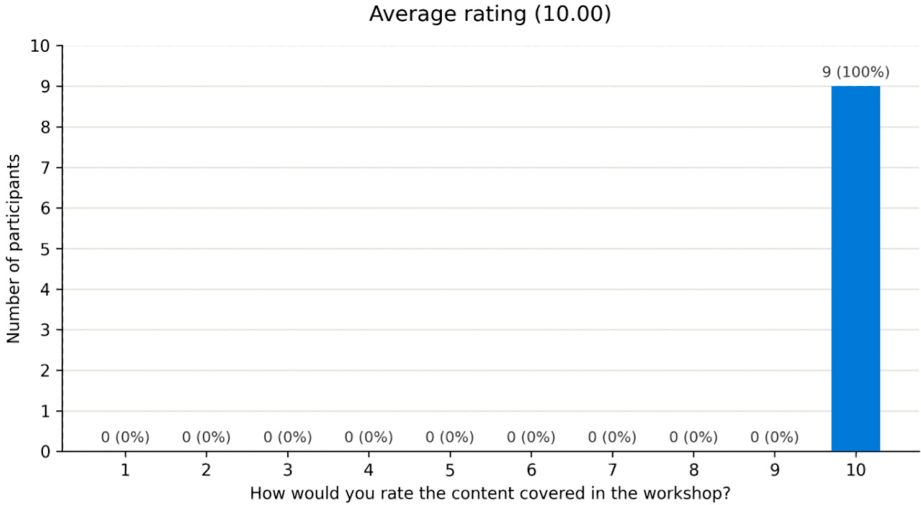
Figure A3.
Q2 Quantitative Answers.
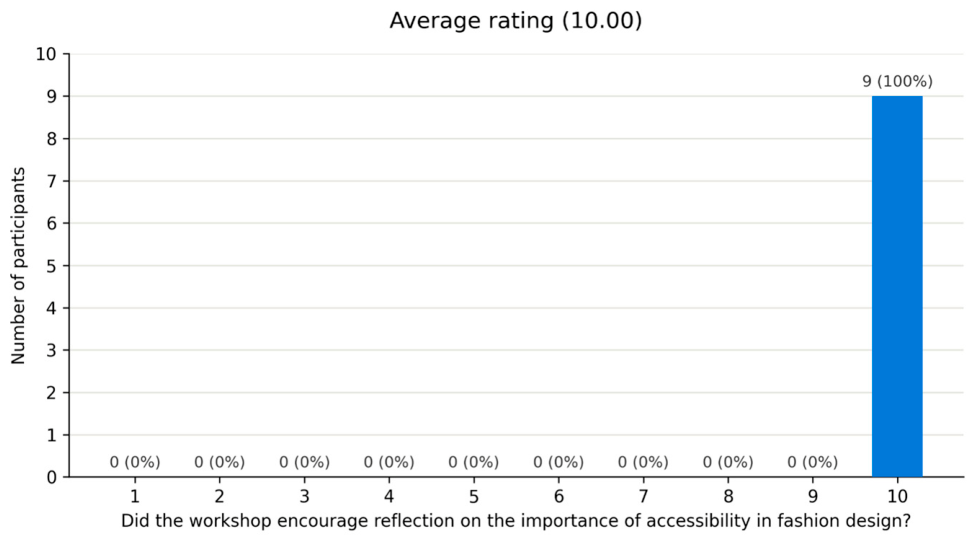
Figure A4.
Q3 Quantitative Answers.
Figure A5.
Q4 Quantitative Answers.
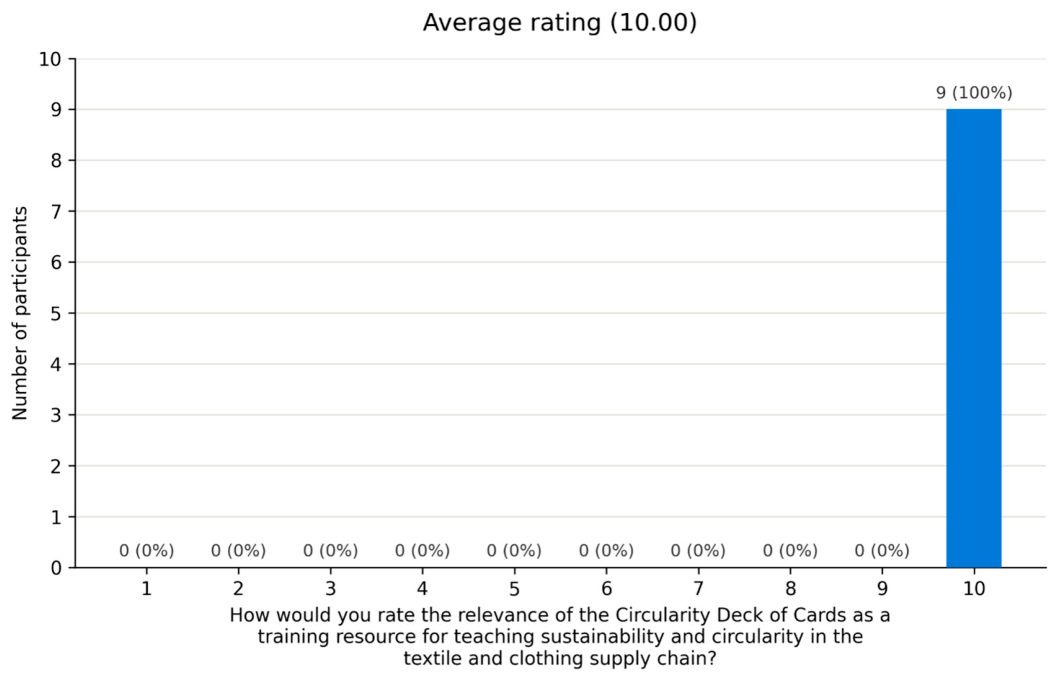
Figure A6.
Q5 Quantitative Answers.
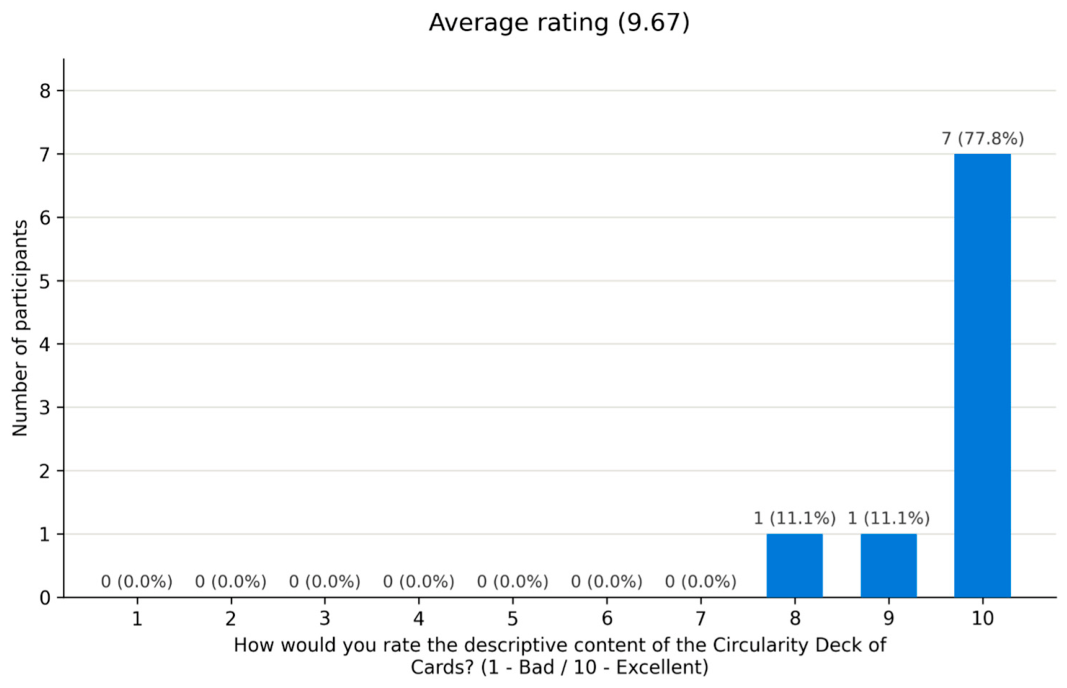
Figure A7.
Q7 Quantitative Answers.
References
- Abtew, M. A., Atalie, D., & Dejene, B. K. (2025). Recycling of cotton textile waste: Technological process, applications, and sustainability within a circular economy. Journal of Industrial Textiles, 55, 15280837251348663. [Google Scholar] [CrossRef] [Scilit]
- Acaroglu, L. (2011). Design play cards. Available online: https://leylaacaroglu.com/portfolio/design-play-cards/ (accessed on 20 July 2026).
- Be@t. (2025). Be@t—Bioeconomia na indústria têxtil. Available online: https://bioeconomy-at-textiles.com (accessed on 12 May 2026).
- Davis, M., De Bari, J., & Maschi, S. (2023). Credentialling: Educational pathways in design. She Ji: The Journal of Design, Economics, and Innovation, 9(2), 117–134. [Google Scholar] [CrossRef] [Scilit]
- Davis, M., & Dubberly, H. (2023). Rethinking design education. She Ji: The Journal of Design, Economics, and Innovation, 9(2), 97–116. [Google Scholar] [CrossRef] [Scilit]
- Demirbas, D., & Timur Ogut, S. (2020). Re-designing the design brief as a digital learning tool with participatory design approach. Turkish Online Journal of Distance Education, 21(1), 83–100. [Google Scholar] [CrossRef] [Scilit]
- Design School Kolding. (2018). Sustainable design cards. Approaches to Sustainable Design. Available online: https://sustainabledesigncards.dk (accessed on 20 July 2026).
- Earley, R., & Politowicz, K. (1996). THE TEN: Sustainable design tool. Textiles Environment Design (TED). Available online: https://ualresearchonline.arts.ac.uk/id/eprint/23304/ (accessed on 20 July 2026).
- Ellen MacArthur Foundation. (2021). Circular design for fashion. Ellen MacArthur Foundation Publishing. [Google Scholar]
- Franconi, A. (2016). Circular design. Available online: https://www.circulardesign.it (accessed on 20 July 2026).
- Griffin, A., Luchs, M. G., & Swan, S. K. (2016). Design thinking: New product development essentials from the PDMA. Wiley. [Google Scholar] [CrossRef] [Scilit]
- Jiang, Y., Jachna, T. J., & Dong, H. (2020). Game for complete care: A means of connecting ‘user-centered design’ with sustainability. Sustainability, 12(24), 10555. [Google Scholar] [CrossRef] [Scilit]
- Kalogiannakis, M., Papadakis, S., & Zourmpakis, A.-I. (2021). Gamification in science education. A systematic review of the literature. Education Sciences, 11(1), 22. [Google Scholar] [CrossRef] [Scilit]
- Learning Loop. (2007). Learning loop card decks. Available online: https://shop.learningloop.io/collections/card-decks?srsltid=AfmBOopQnQ_bl6LD9bXDe6VtqMk9eb7H3U-pA2VuHoTzZL9LuvLkYGSX (accessed on 20 July 2026).
- Legaard, J., Suhaimi, S., Ward, J., & Walters, A. (2025, September 22–24). Prompting reflective learning through card-based approaches. LearnXDesign 2025, Aveiro, Portugal. [Google Scholar] [CrossRef] [Scilit]
- McDonough, W., & Braungart, M. (2002). Cradle to cradle: Remaking the way we make things (1st ed.). North Point Press. [Google Scholar]
- Meyer, M. W., & Norman, D. (2020). Changing design education for the 21st century. She Ji: The Journal of Design, Economics, and Innovation, 6(1), 13–49. [Google Scholar] [CrossRef] [Scilit]
- Möller, O. (2012). MethodKit. Available online: https://methodkit.com (accessed on 20 July 2026).
- Novalead Limited. (2022). 21st century business skill card decks. Available online: https://www.novalead.co.uk/training/card-decks/ (accessed on 20 July 2026).
- Observatório da Deficiência e Direitos Humanos. (2024). Pessoas com Deficiência em Portugal—Indicadores de Direitos Humanos 2024. Instituto Superior de Ciências Sociais e Políticas—Universidade de Lisboa. Available online: https://oddh.iscsp.ulisboa.pt/wp-content/uploads/2025/05/relatorio_oddh2024-final.pdf (accessed on 8 May 2026).
- Oliveira, J. C. G., Schulz, F. E., & Cunha, J. (2024). Circular design education for fashion: Practical approach. In FL fashion & sustainability international conference—Book of abstracts. LF Conference—Lusófona University. Available online: https://flconf.ulusofona.pt/wp-content/uploads/2025/01/FLConf_bookOfAbstracts24.pdf (accessed on 3 February 2026).
- Parlamento EU. (2021). Economia circular. Parlamento Europeu. Available online: https://www.europarl.europa.eu/topics/pt/topic/circular-economy (accessed on 15 April 2026).
- Radev, R., & Marinova, V. (2023). Textile waste in the context of the circular economy. E3S Web of Conferences, 402, 08048. [Google Scholar] [CrossRef] [Scilit]
- Rubik, F., Nebel, K., Klusch, C., Karg, H., Hecht, K., Gerbig, M., Gärtner, S., & Boldrini, B. (2024). Textiles on the path to sustainability and circularity—Results of application tests in the business-to-business sector. Sustainability, 16(14), 5954. [Google Scholar] [CrossRef] [Scilit]
- Shapiro Futures, H., Andersen, T., & Commission, E. (Eds.). (2020). A European approach to micro-credentials: Output of the micro-credentials higher education consultation group: Final report. Publications Office. [Google Scholar] [CrossRef] [PubMed]
- UN Environment & UnSchool. (2019). #anatomyofaction. Available online: https://www.anatomyofaction.org (accessed on 20 July 2026).
- UNESCO. (2025). UNESCO and sustainable development goals. Available online: https://www.unesco.org/en/sdgs (accessed on 18 July 2026).
- UNESCO & Shanghai Open University. (2023). International trends of lifelong learning in higher education: Research report. UNESCO. [Google Scholar] [CrossRef] [Scilit]
- Walki Group Oy. (2018). The circular classroom. Available online: https://circularclassroom.com (accessed on 20 July 2026).
- Wood, J., Redfern, J., & Verran, J. (2023). Developing textile sustainability education in the curriculum: Pedagogical approaches to material innovation in fashion. International Journal of Fashion Design, Technology and Education, 16(2), 141–151. [Google Scholar] [CrossRef] [Scilit] [PubMed]
- World Economic Forum. (2026). World economic forum. World Economic Forum. Available online: https://www.weforum.org (accessed on 18 July 2026).
- Wölfel, C., & Merritt, T. (2013). Method card design dimensions: A survey of card-based design tools. In IFIP conference on human-computer interaction (pp. 479–486). Lecture Notes in Computer Science. Springer. [Google Scholar] [CrossRef] [Scilit]
Disclaimer/Publisher’s Note: The statements, opinions and data contained in all publications are solely those of the individual author(s) and contributor(s) and not of MDPI and/or the editor(s). MDPI and/or the editor(s) disclaim responsibility for any injury to people or property resulting from any ideas, methods, instructions or products referred to in the content. |
© 2026 by the authors. Licensee MDPI, Basel, Switzerland. This article is an open access article distributed under the terms and conditions of the Creative Commons Attribution (CC BY) license.